
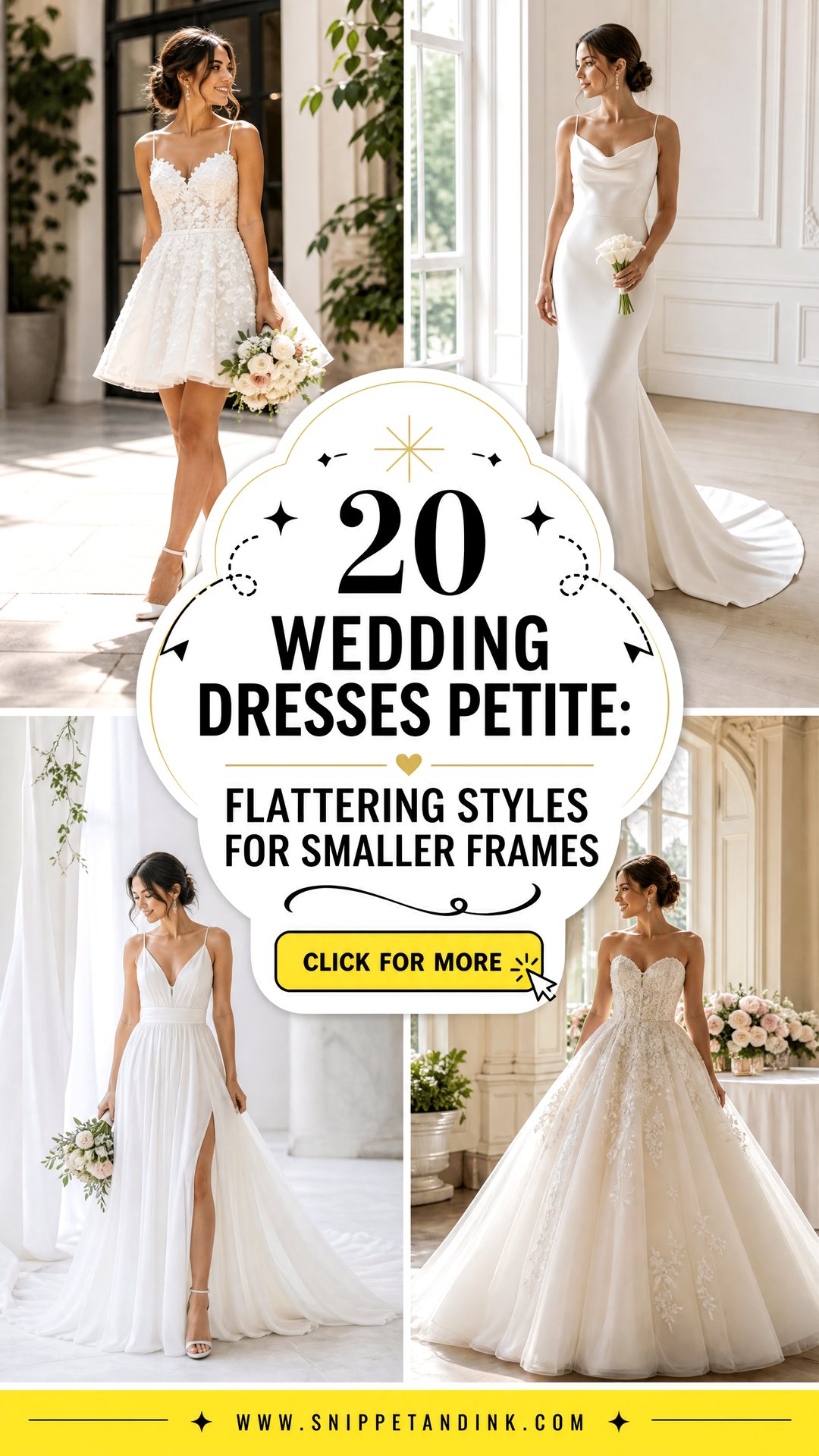
Being petite doesn’t shrink your options in bridal; it changes where the fitting work goes. Petite sizing isn’t just a shorter hem. The bodice length, waist seam, armholes, skirt length and even the scale of the lace are all cut for a shorter frame, and in standard sizes those are the things a seamstress ends up moving. The gowns below run from sleek satin and lace to a mini and a scaled-down ball gown, each with the shoes, veil and fitting notes I’d give a petite client. None of them asks you to hide your shape; they ask for clean lines and details in proportion to you.
Three Measurements I Take Before a Petite Bride Tries Anything On
Petite usually means around five foot three and under, but height alone doesn’t tell me much. Two brides of the same height can have very different torsos and legs, and that changes which gowns need the most work. So before the first try-on I take three measurements:
- Shoulder to natural waist: tells me where the waist seam should land. A short measurement means most standard gowns will sit low.
- Waist to floor in your wedding shoes: sets the hem and shows how much skirt has to come off, which matters on lace borders and trains.
- Shoulder point to wrist: only needed if you want sleeves, but long sleeves on a standard gown almost always need shortening.
With these in hand, I can tell a bride at a sample appointment whether a gown needs a simple hem or a rebuilt bodice. That affects both the alteration bill and how long you need before the wedding.
1. Petite A-Line Wedding Dress
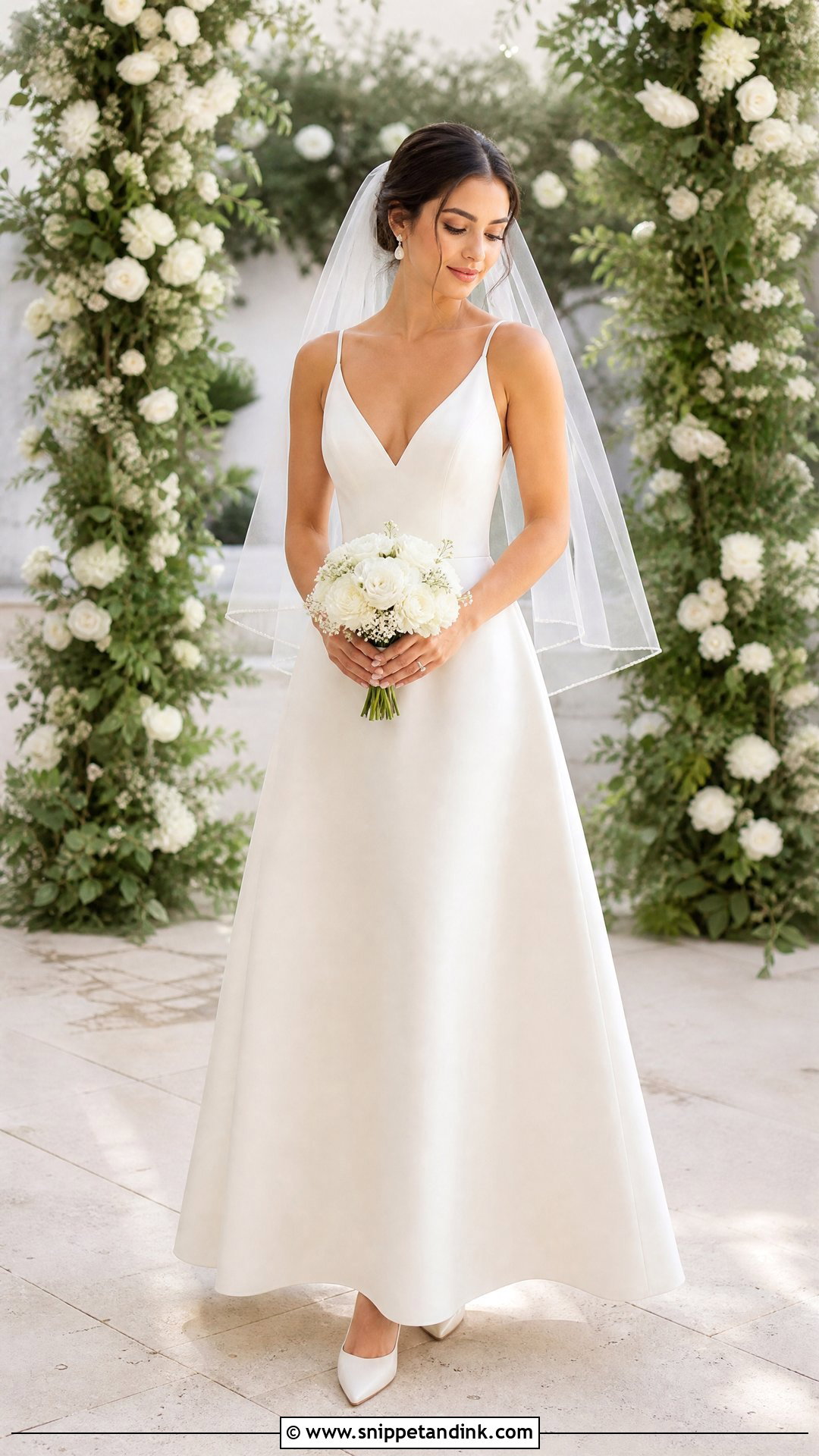
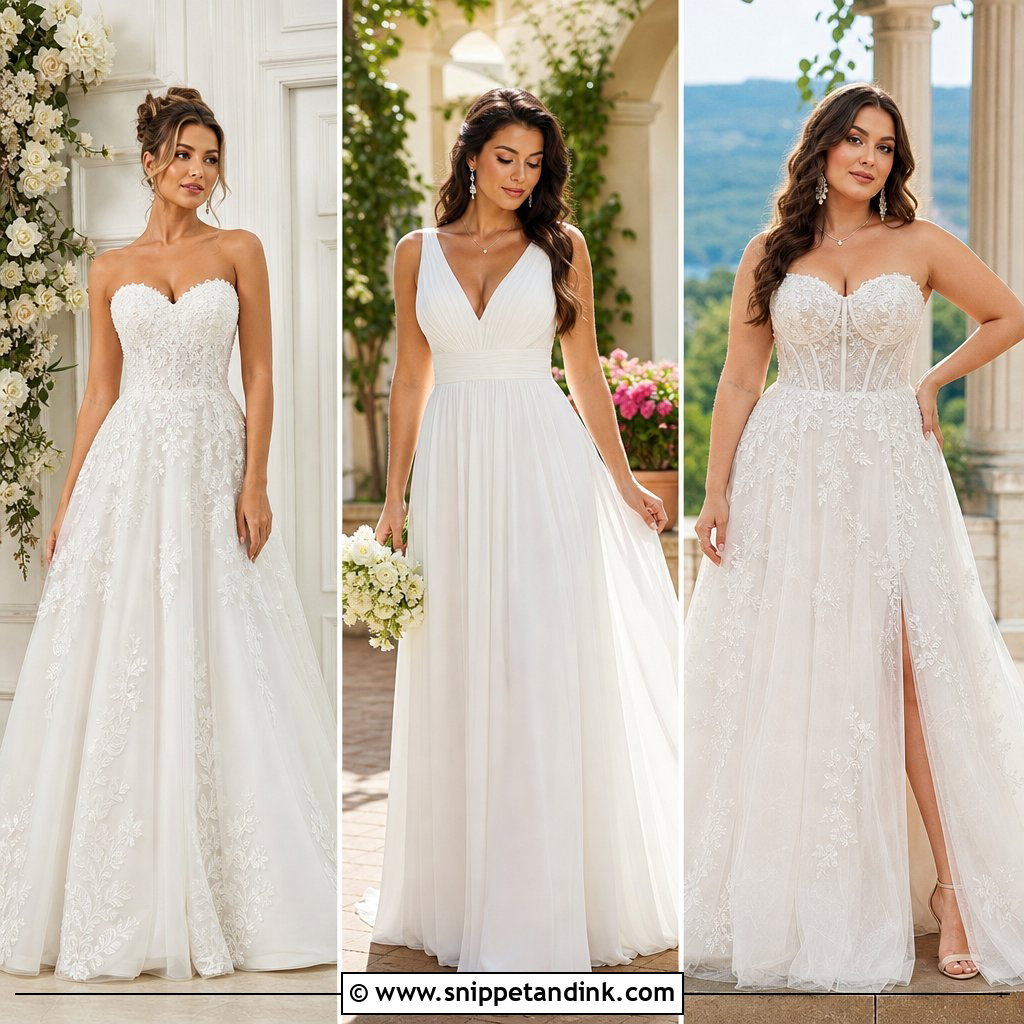
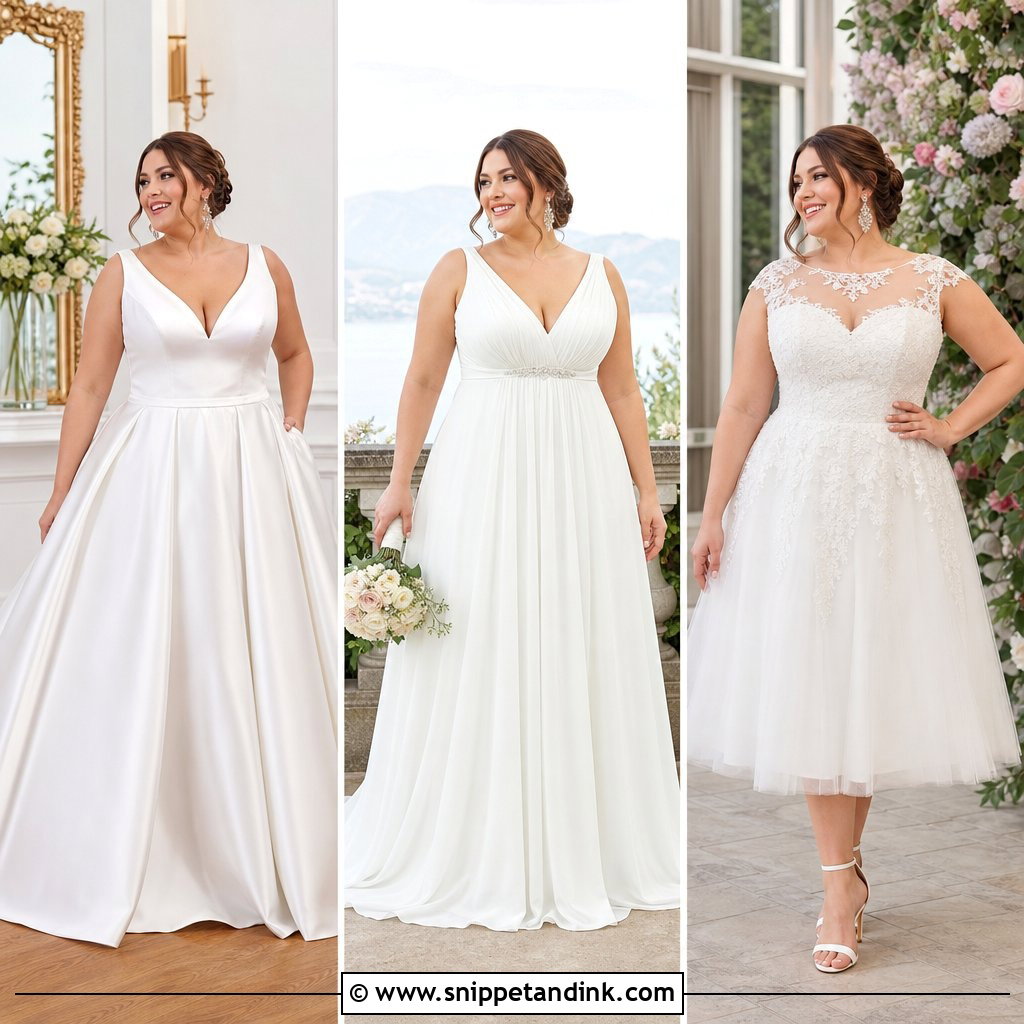
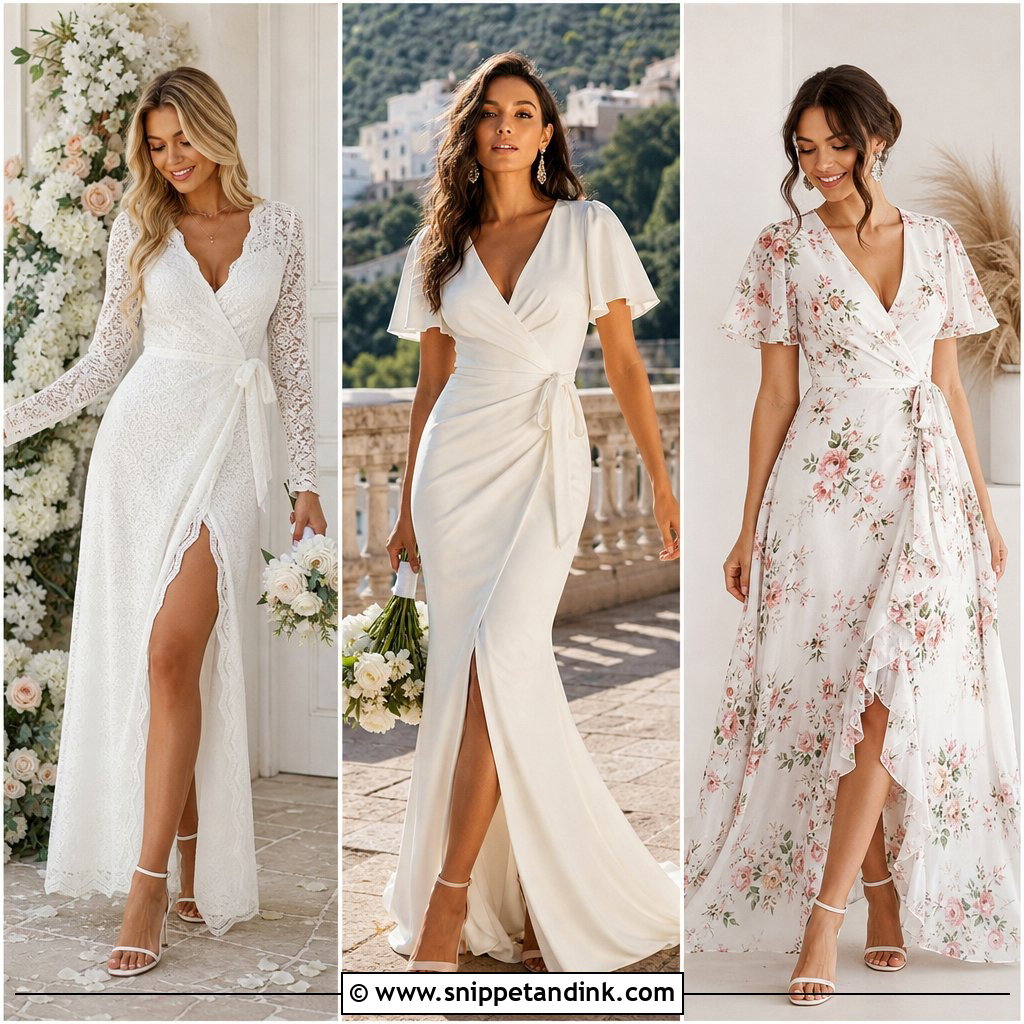
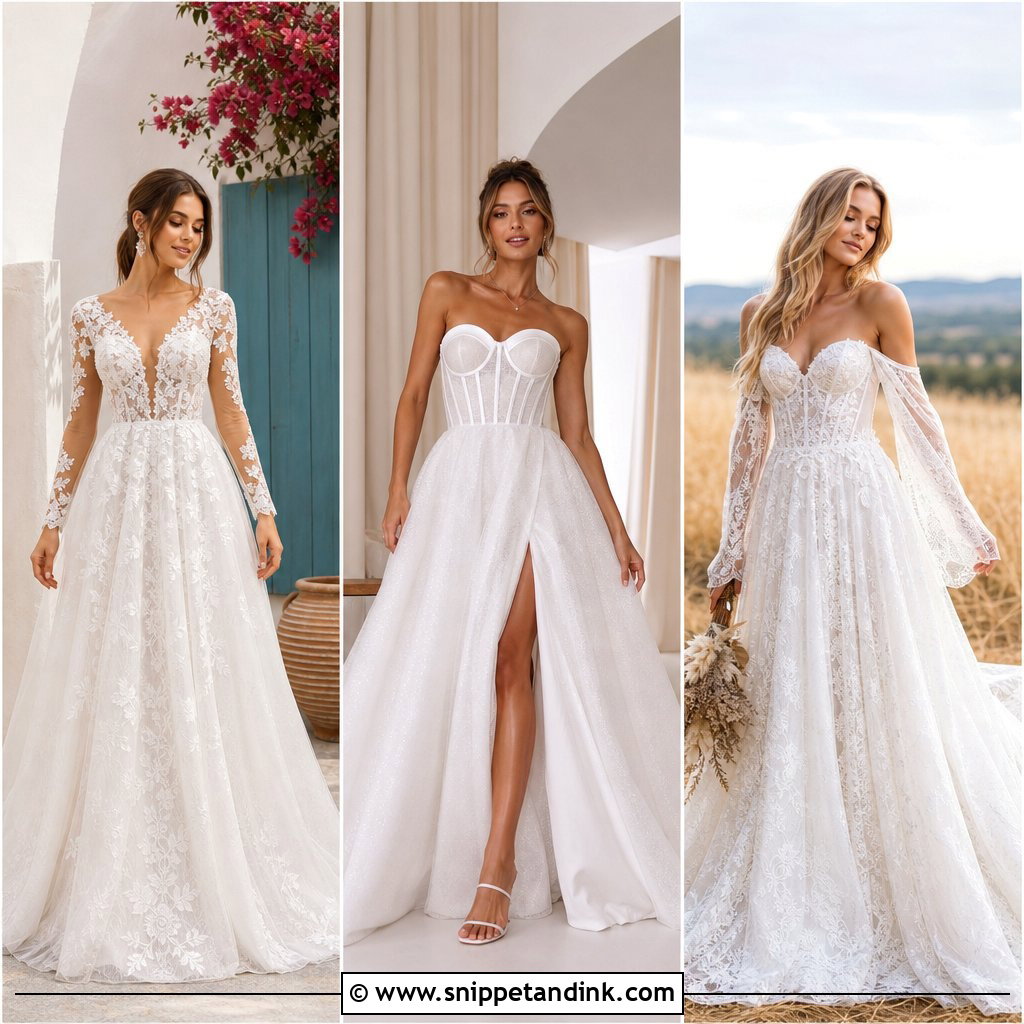
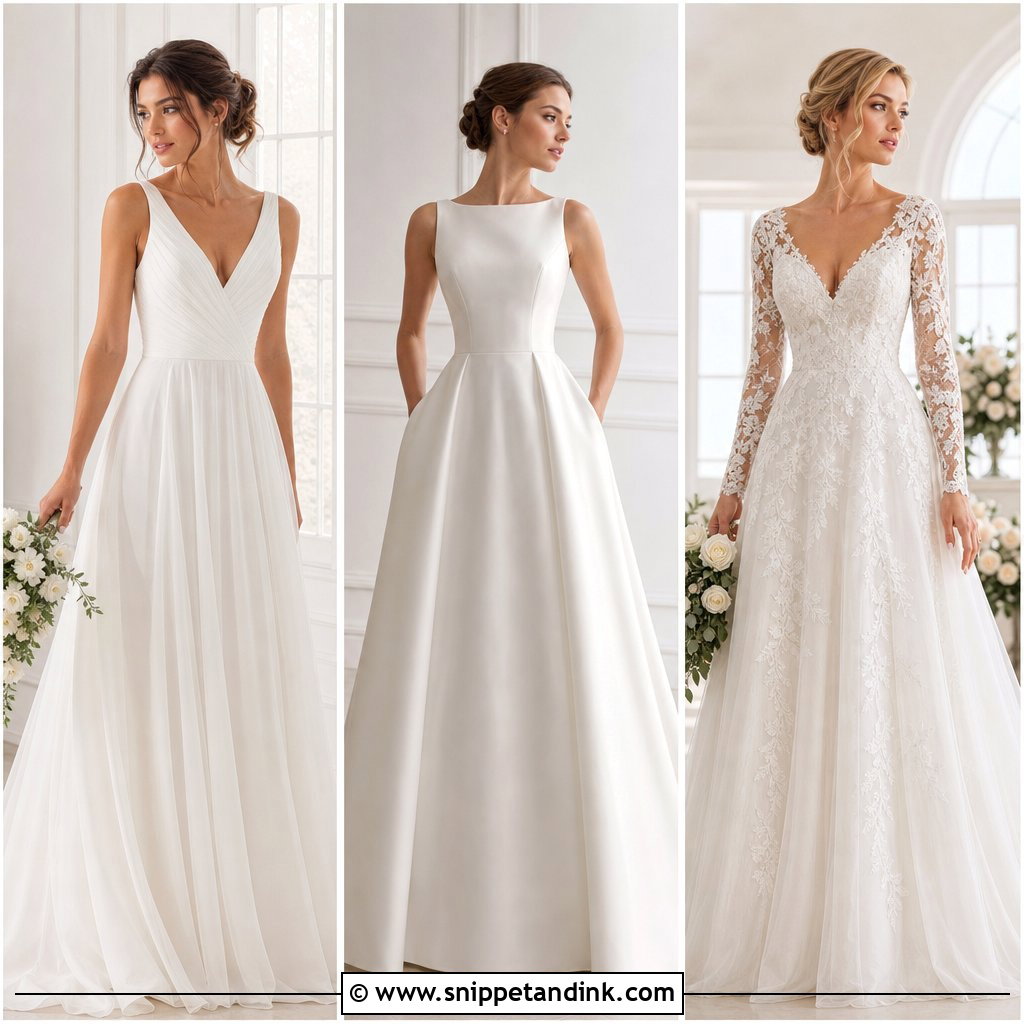
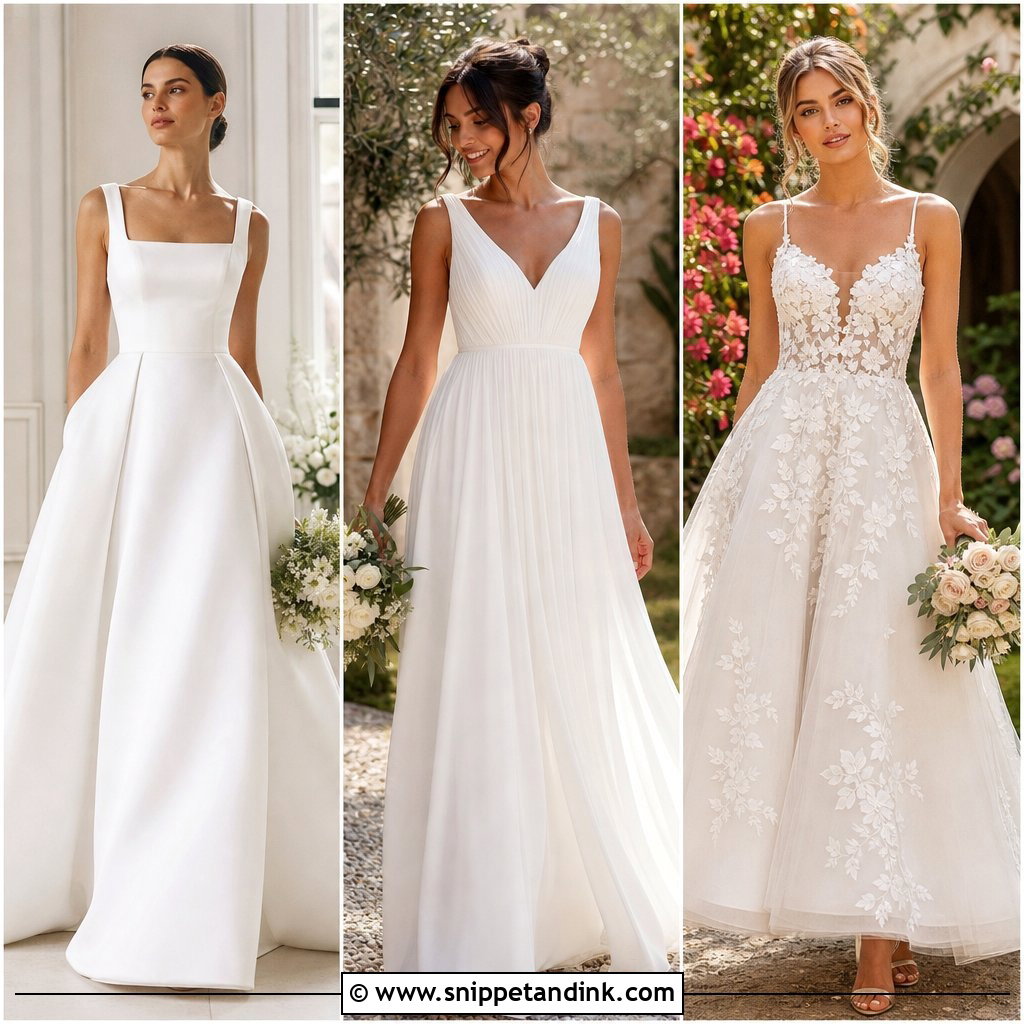
I reach for an A-line first with most petite brides because the long, unbroken line from bodice to hem works on almost every body size. The fitted bodice defines the upper body and the skirt widens gradually, without the bulk of a full ball gown. A V-neck or soft scoop with narrow straps keeps the neckline open, and lightweight satin, chiffon or tulle lets the skirt move. Check the waist seam first: on a standard-size sample it often sits below a petite bride’s natural waist, which drops the skirt too low and shortens the legs. Pointed-toe pumps, a fingertip veil, pearl drops and a small bouquet.
2. Petite Sheath Wedding Dress
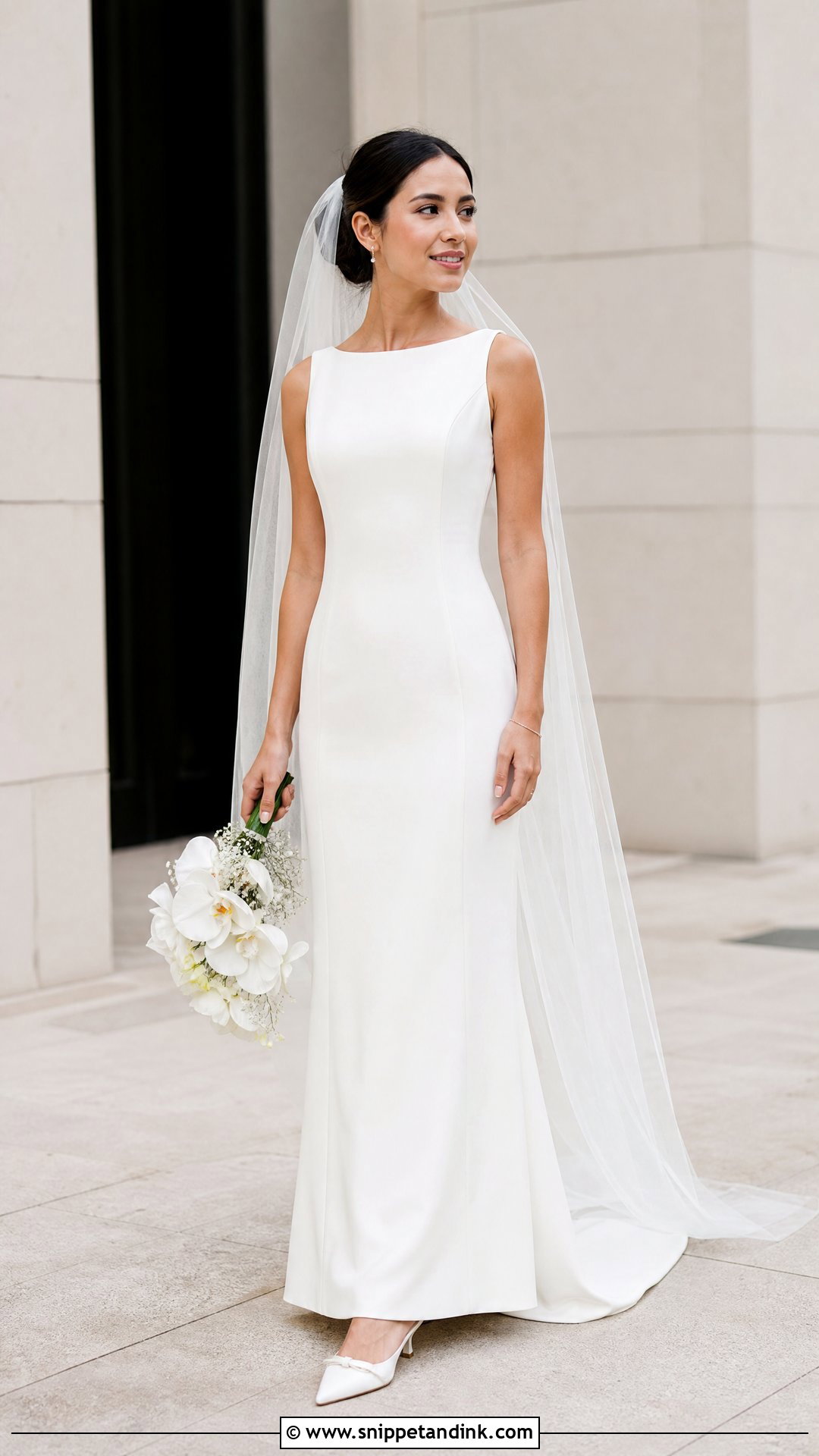
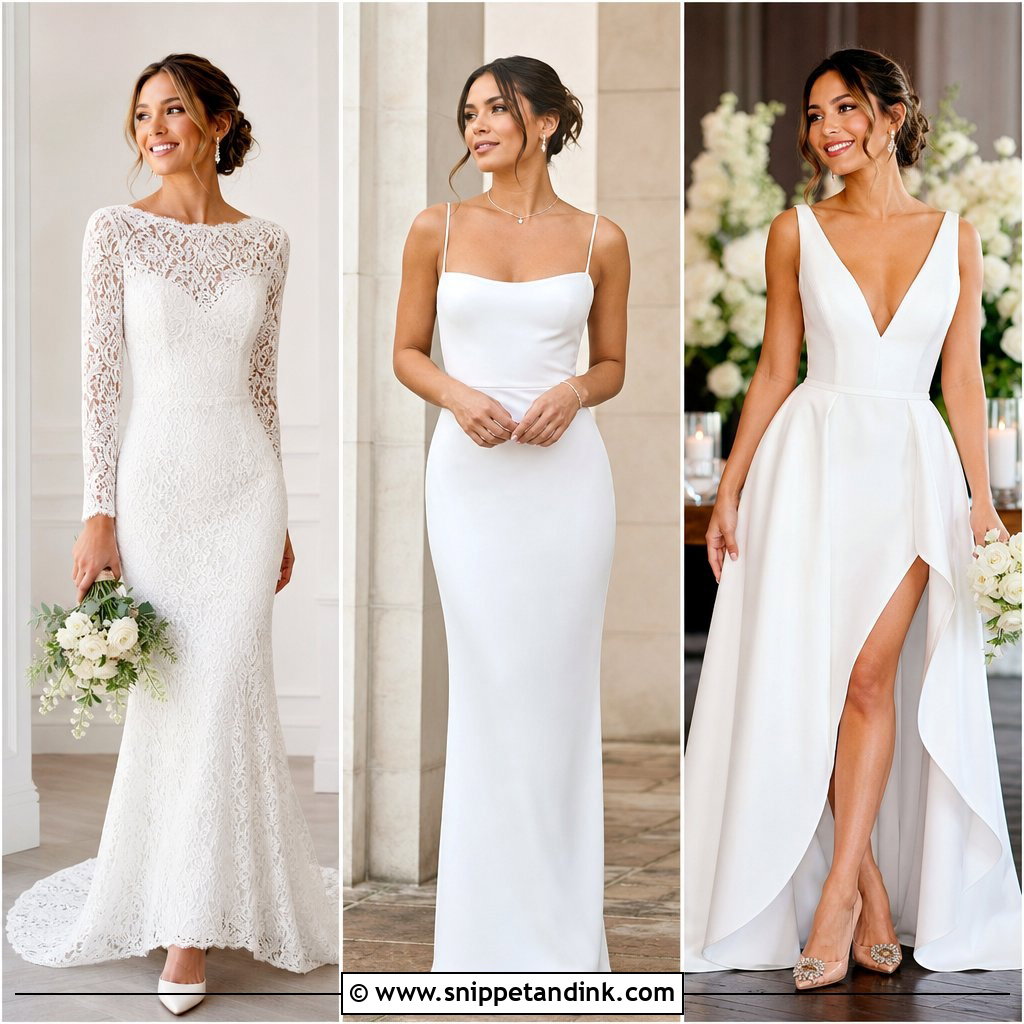
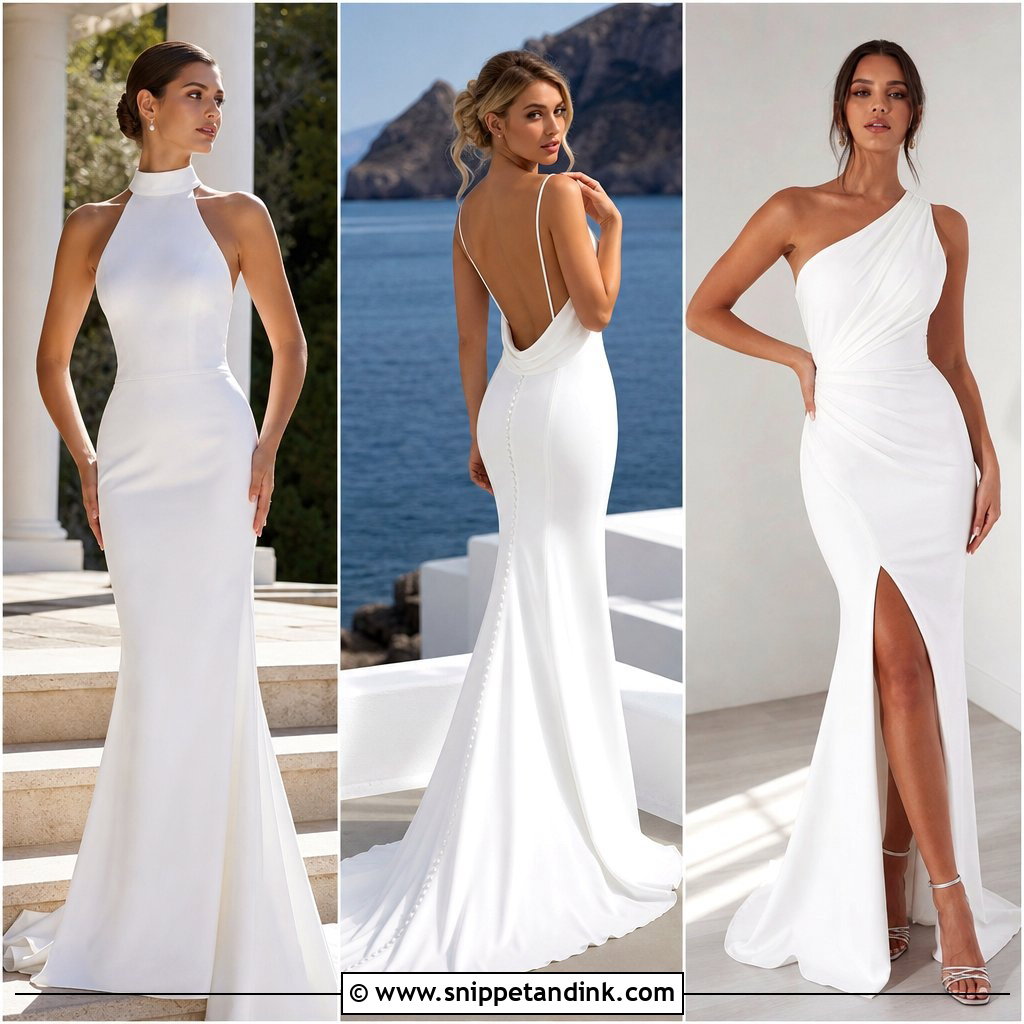
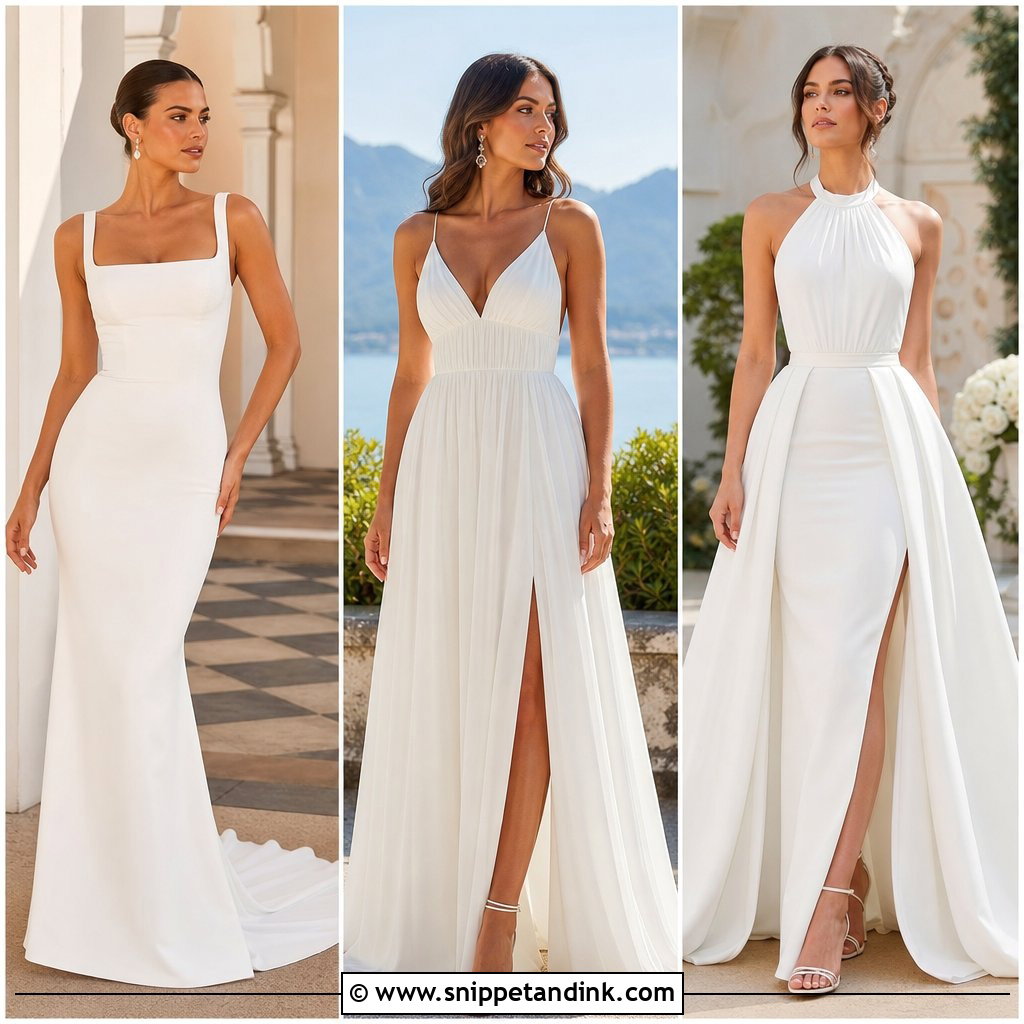
Simplicity is the hardest thing to fit. A petite sheath wedding dress follows the body with no volume to hide behind, so every wrinkle at the shoulder or waist shows. Princess seams or vertical panels running from neckline to hem do the most for a shorter frame. Crepe gives soft structure, while silk satin is more fluid and more revealing. I’d pair it with a narrow chapel or shoulder-length veil rather than a wide cathedral one, which can swamp the slim outline. Pointed kitten heels, slim earrings, a compact clutch and a low bun or polished ponytail. It suits city weddings, courthouses and minimal venues.
3. Petite Fit And Flare Wedding Dress
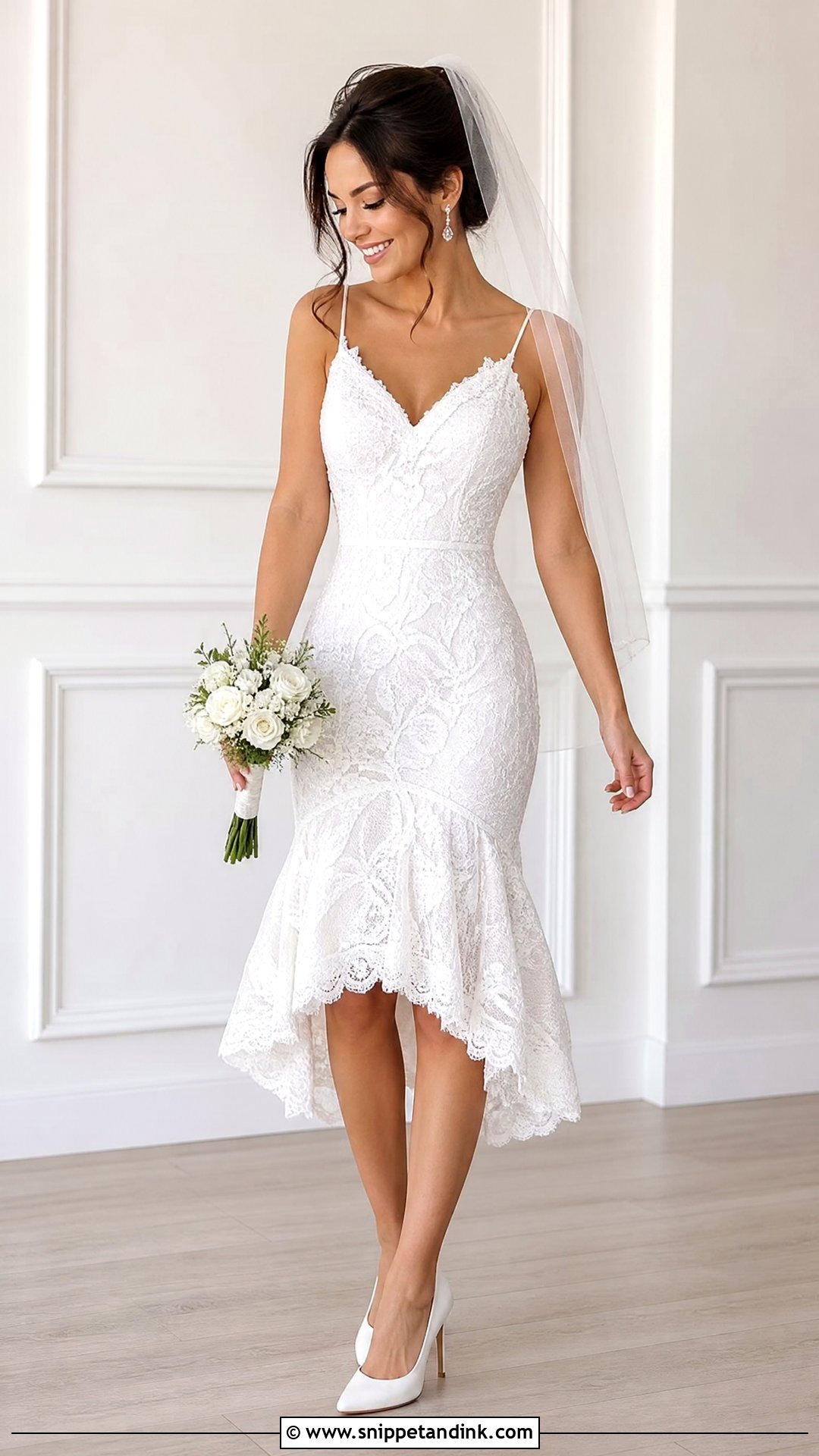
The flare point decides whether this gown works on you. A fit-and-flare opens below the hips with less drama than a mermaid, and on a petite bride I want that flare around the upper thigh or just above the knee. Drop it lower and everything looks compressed. Stretch crepe, soft lace and light mikado support the shape and still let you walk. Keep appliqués small or running vertically; big motifs read as clutter on a shorter body. Almond-toe heels, a narrow waist-length veil, delicate earrings and a bracelet. Walk and sit at every fitting.
4. Petite Mermaid Wedding Dress
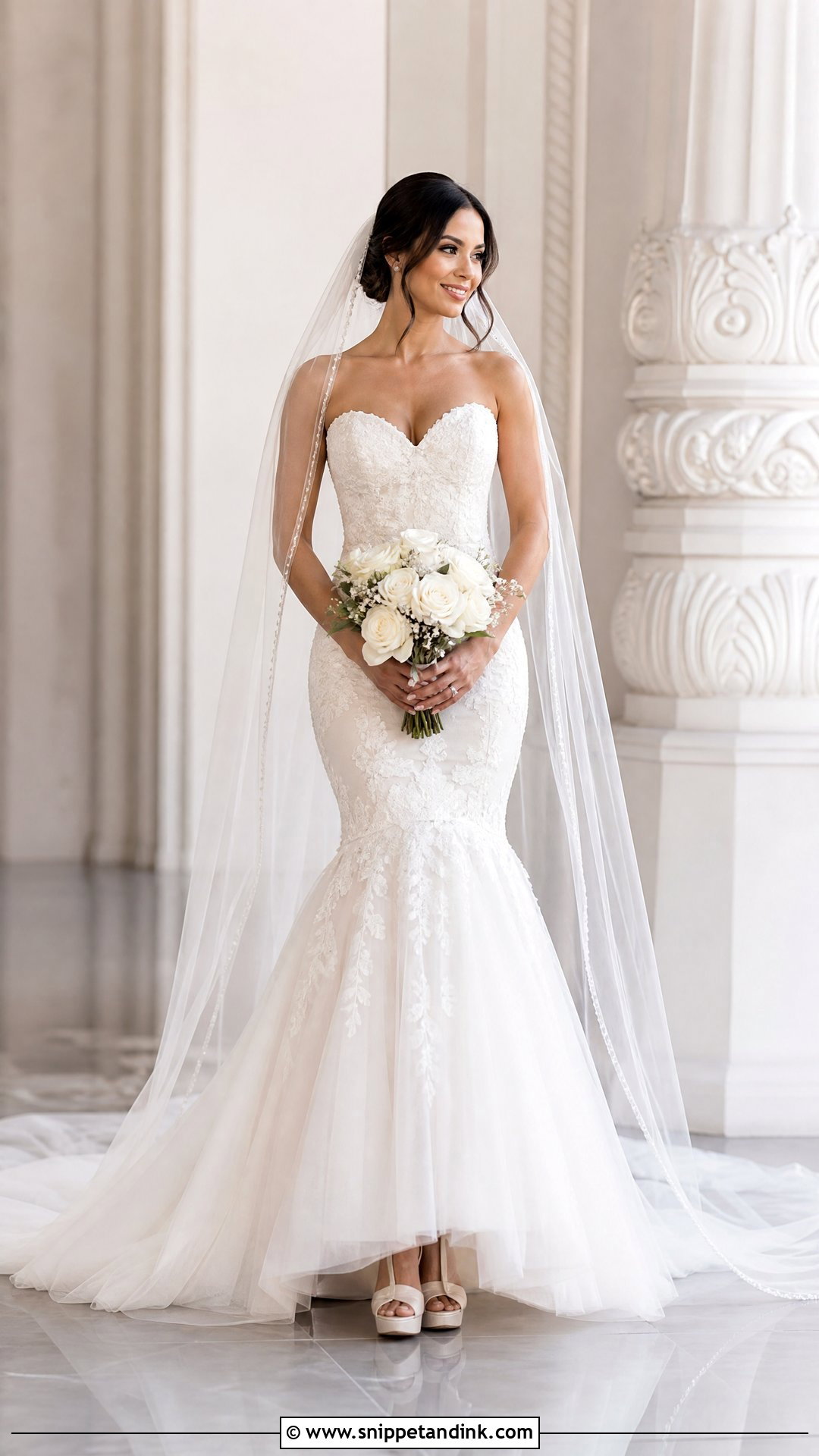
Mermaids can absolutely work on petite brides, but only with the flare placed for your height. A gown designed around a taller sample usually flares too low, and on you that can end up at mid-calf. Around the knee is a better balance point. The bodice stays fitted through the torso and hips, and a sweetheart or V-neck opens up the top. Choose light lace, crepe or layered tulle so the skirt doesn’t drag. When the hem comes up, ask the seamstress to move the appliqués and reshape the train so the design still looks finished. Comfortable platform sandals, crystal studs and a narrow veil that falls past the train.
5. Petite Empire Waist Wedding Dress
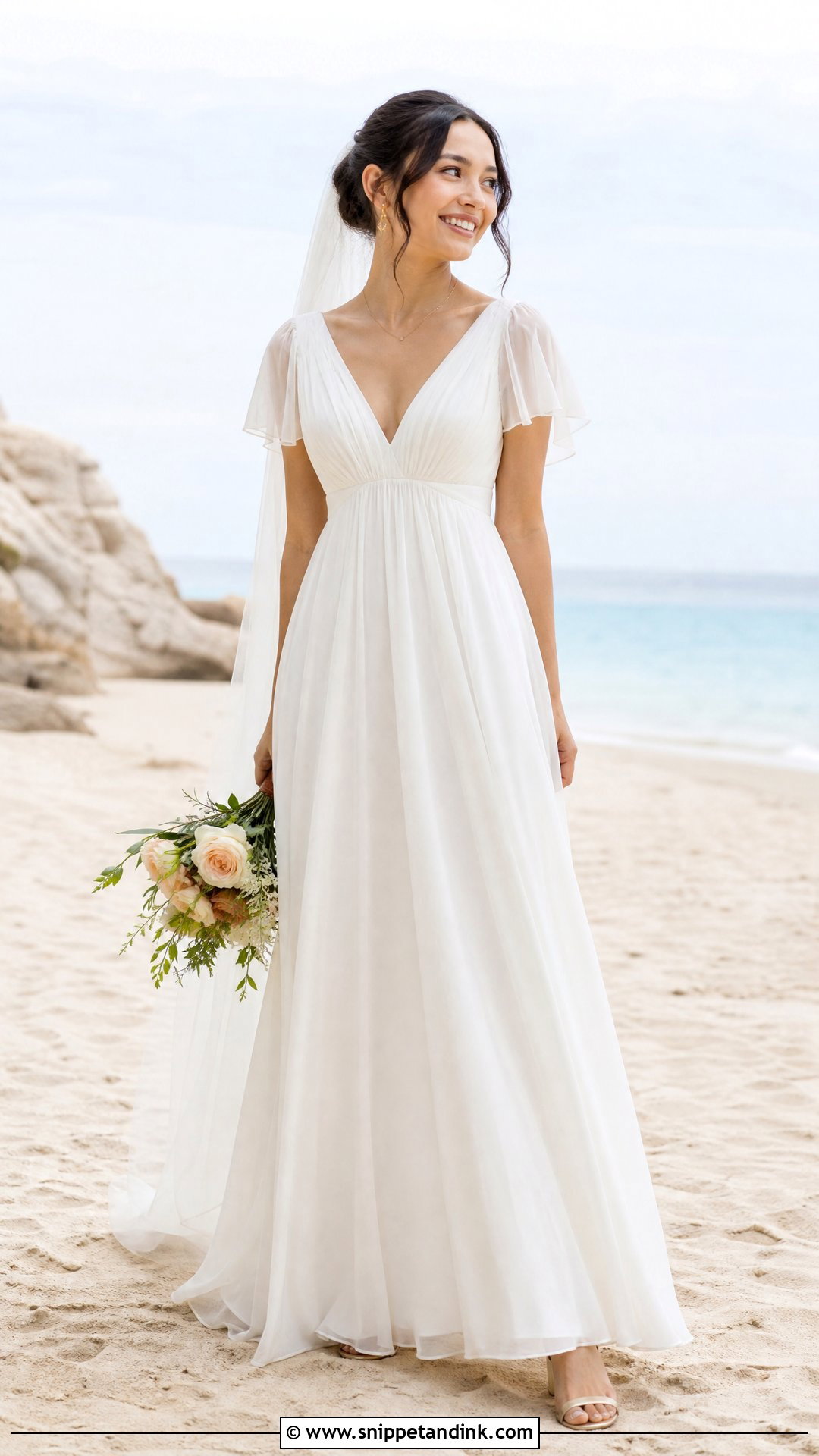
The seam on a petite empire waist wedding dress sits just under the bust, and the skirt falls straight instead of opening from the natural waist. That vertical drop is kind to a short torso and comfortable on a beach or in a garden. I’d avoid heavy gathering under the bust, which adds bulk exactly where a petite frame has least room. A narrow V, flutter sleeves or fine straps, low block-heel sandals, fine gold jewelry, a loose updo and a light chiffon veil. Hem it to nearly skim the floor with the toe of the shoe showing; any longer and you’ll be tripping on it.
6. Petite Tea Length Wedding Dress
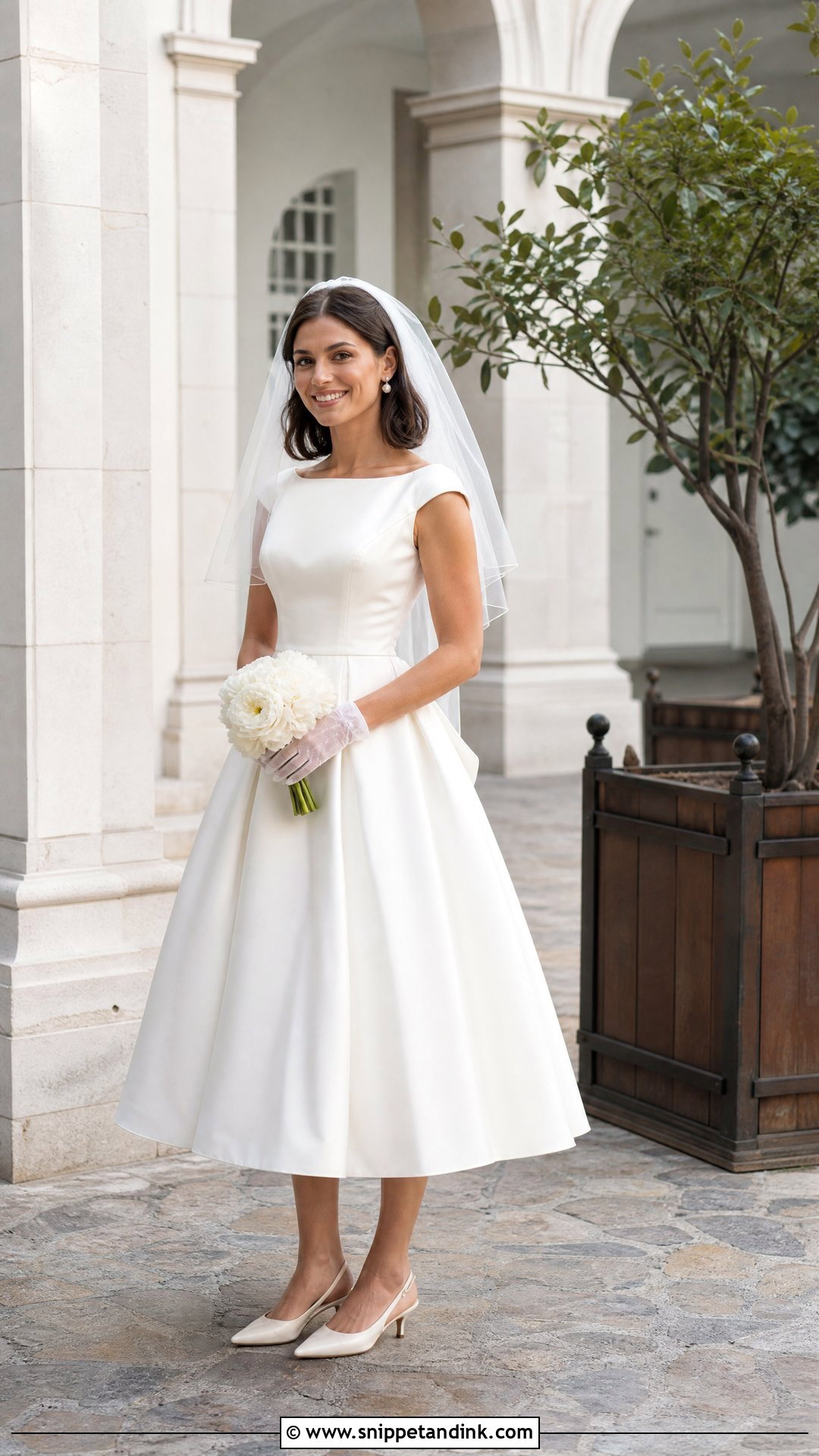
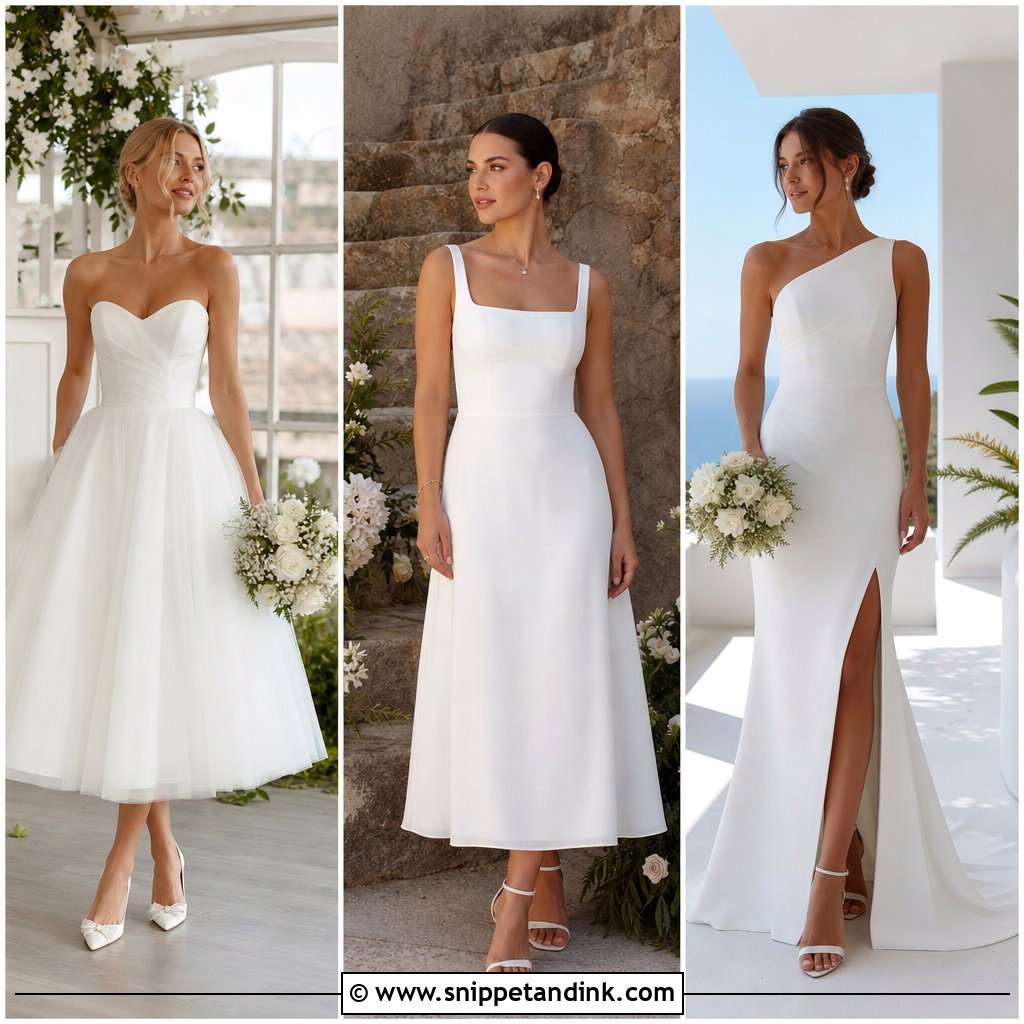
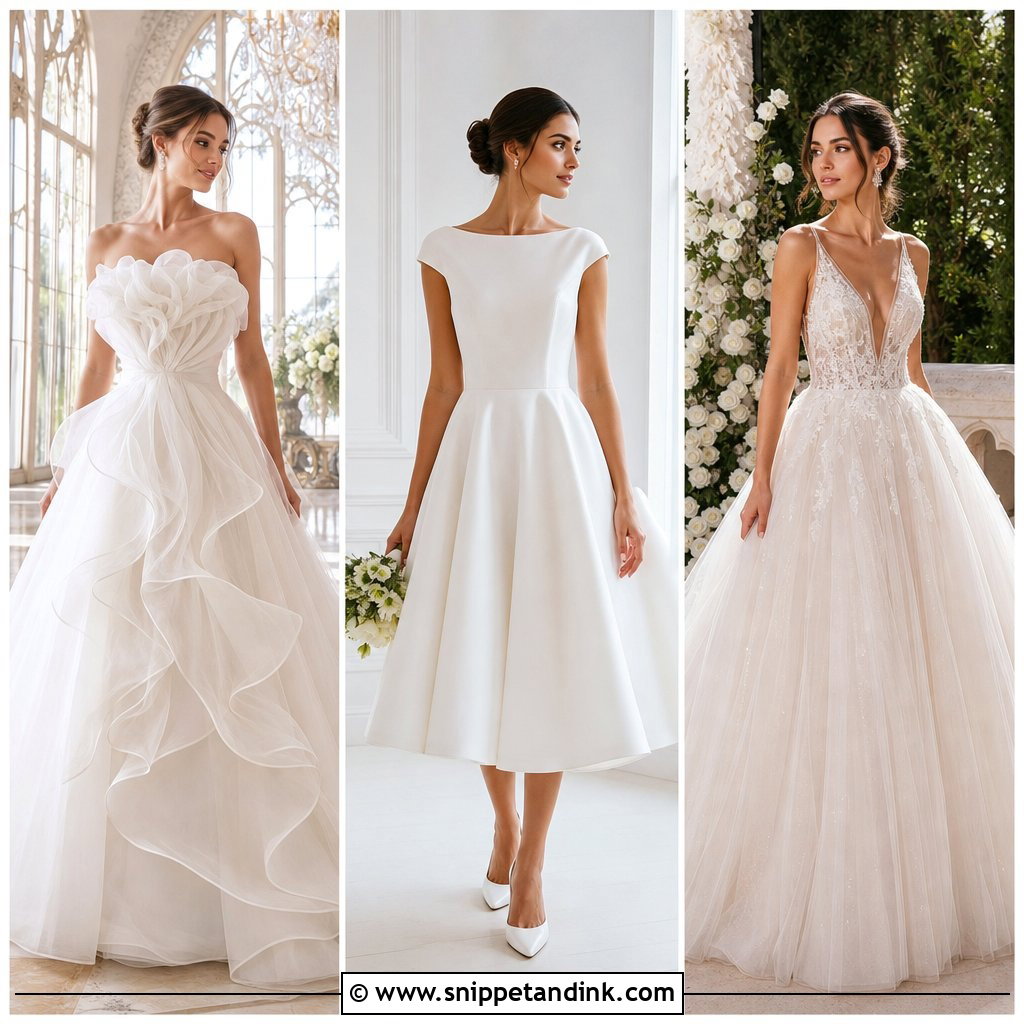
Tea length is easy to move in and has a vintage charm, but on a petite bride the hem placement is everything. Somewhere between knee and ankle is the range; the exact spot should be set on your leg, not copied from a sample made for someone taller. A fitted bodice and lightly structured skirt in satin, organza or lace with a clean waist seam keep it defined. Because the shoes show, choose them carefully: pointed slingbacks, embellished pumps or ankle straps. Pearl earrings, short gloves if you like them, and a birdcage or shoulder-length veil. Keep the petticoat controlled, as a very full one makes a short bride look wider than tall.
7. Petite Midi Wedding Dress
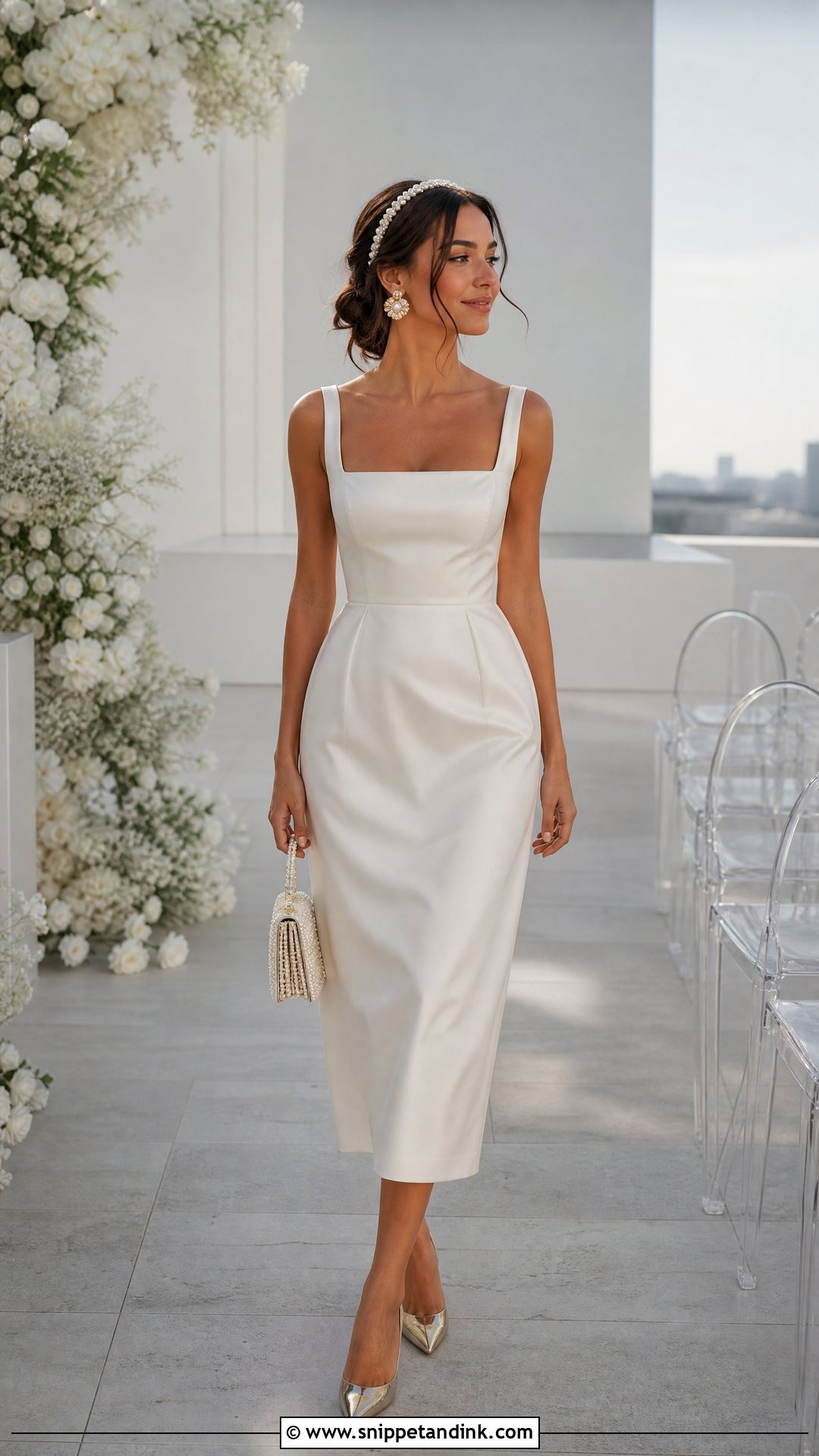
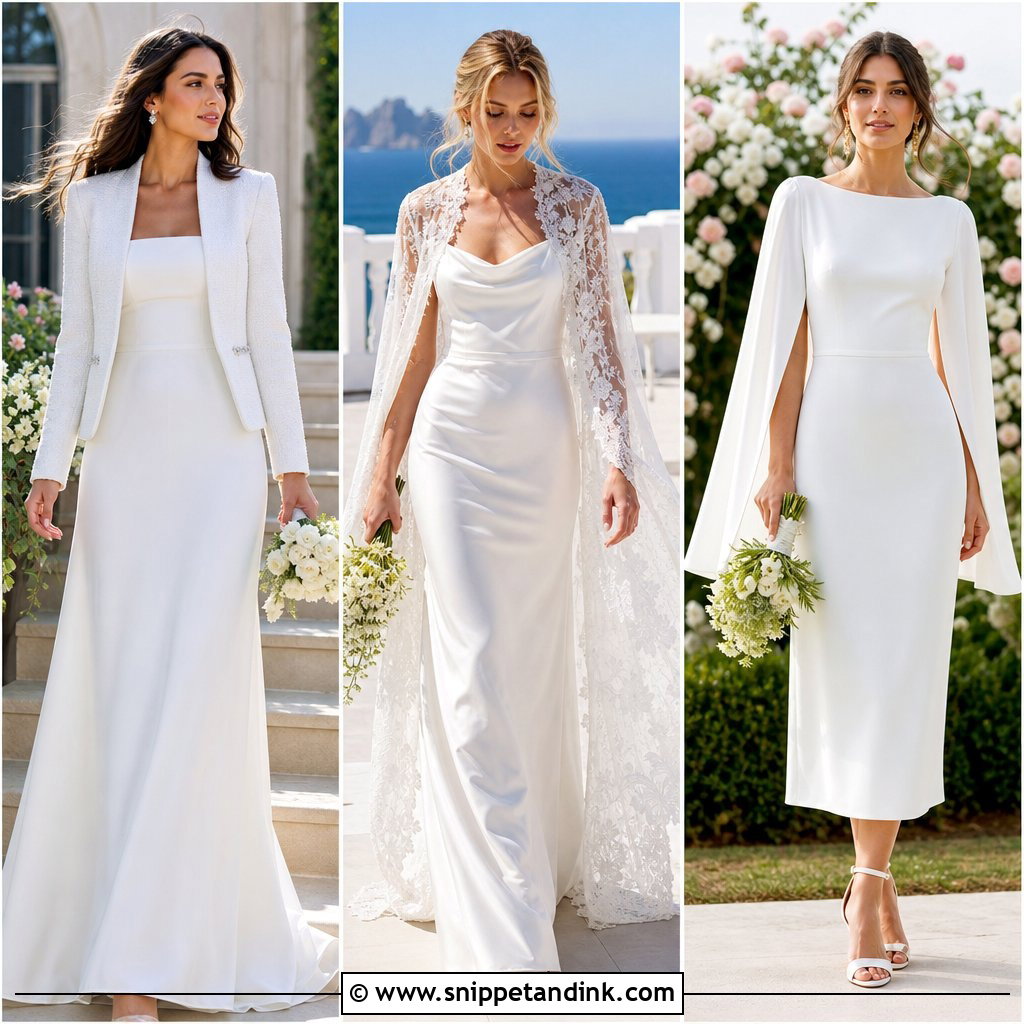
Midi lengths look modern and travel well from a civil ceremony to a restaurant reception. The hem should land on a narrow part of the lower leg, usually below the calf, never across its widest point. Above the skirt, a wrap bodice, square neck or fitted corset top adds definition; clean satin reads modern and floral lace reads softer. I’d tell you that tailoring the torso matters as much as shortening the skirt here, especially if the dress has cups, boning or a waist seam. Pointed pumps in ivory or metallic, sculptural earrings, a small structured bag and a short veil or a pearl headband.
8. Petite Mini Wedding Dress
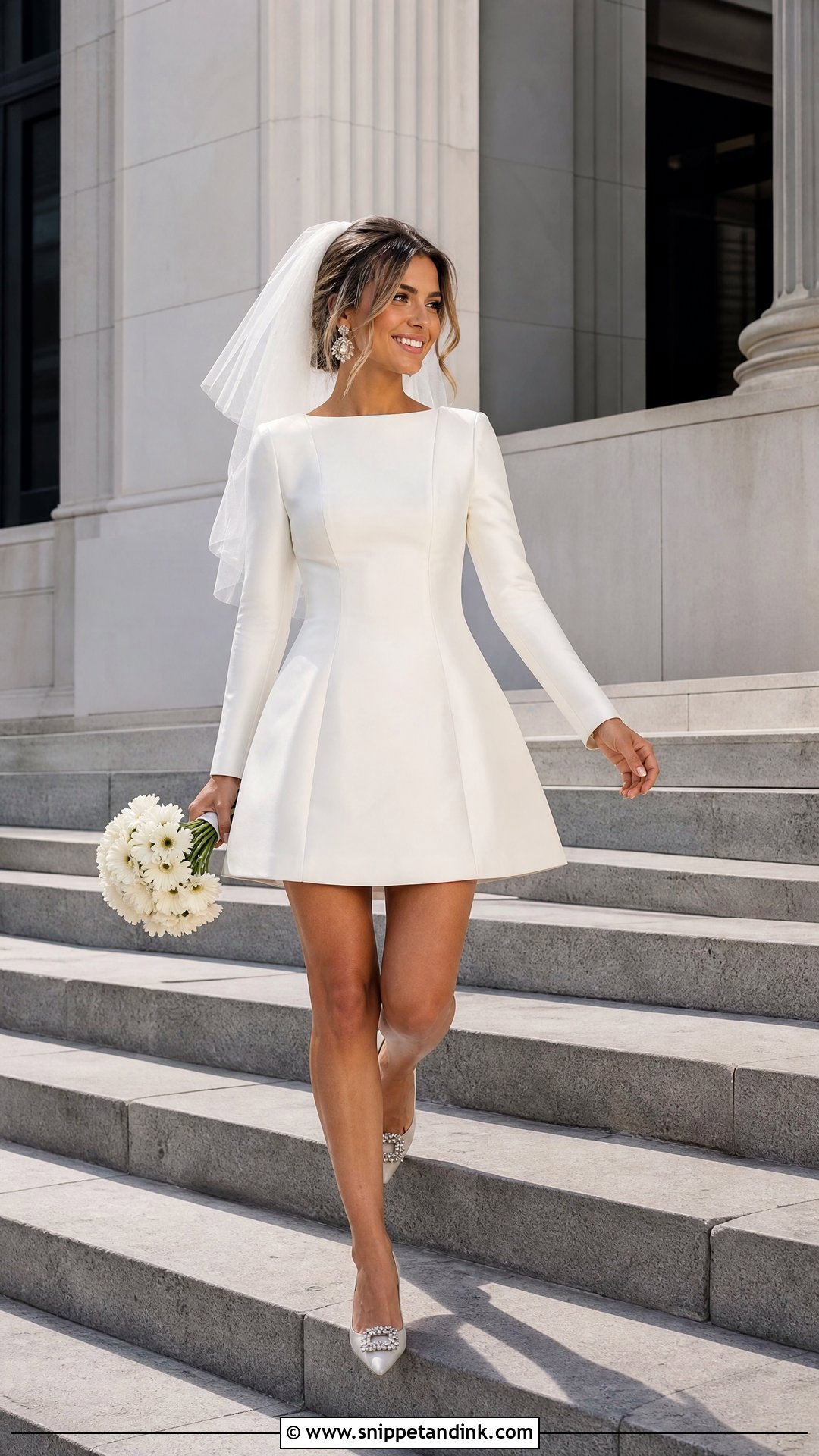
A mini is a confident choice for a civil ceremony, a reception change or a relaxed wedding, and short hems show more leg, which reads as height. A structured bodice keeps it bridal rather than party-dress. Look for a shift, tailored A-line or fitted column rather than ruffles, in satin, crepe or textured jacquard. If it has long sleeves, they must end neatly at the wrist; sleeves that bunch at the hand undo the clean lines. I always add hidden shorts or a secure lining so you can sit and dance without tugging. Pointed pumps, slingbacks or crystal heels, statement earrings and a shoulder-length veil.
9. Petite Slip Wedding Dress
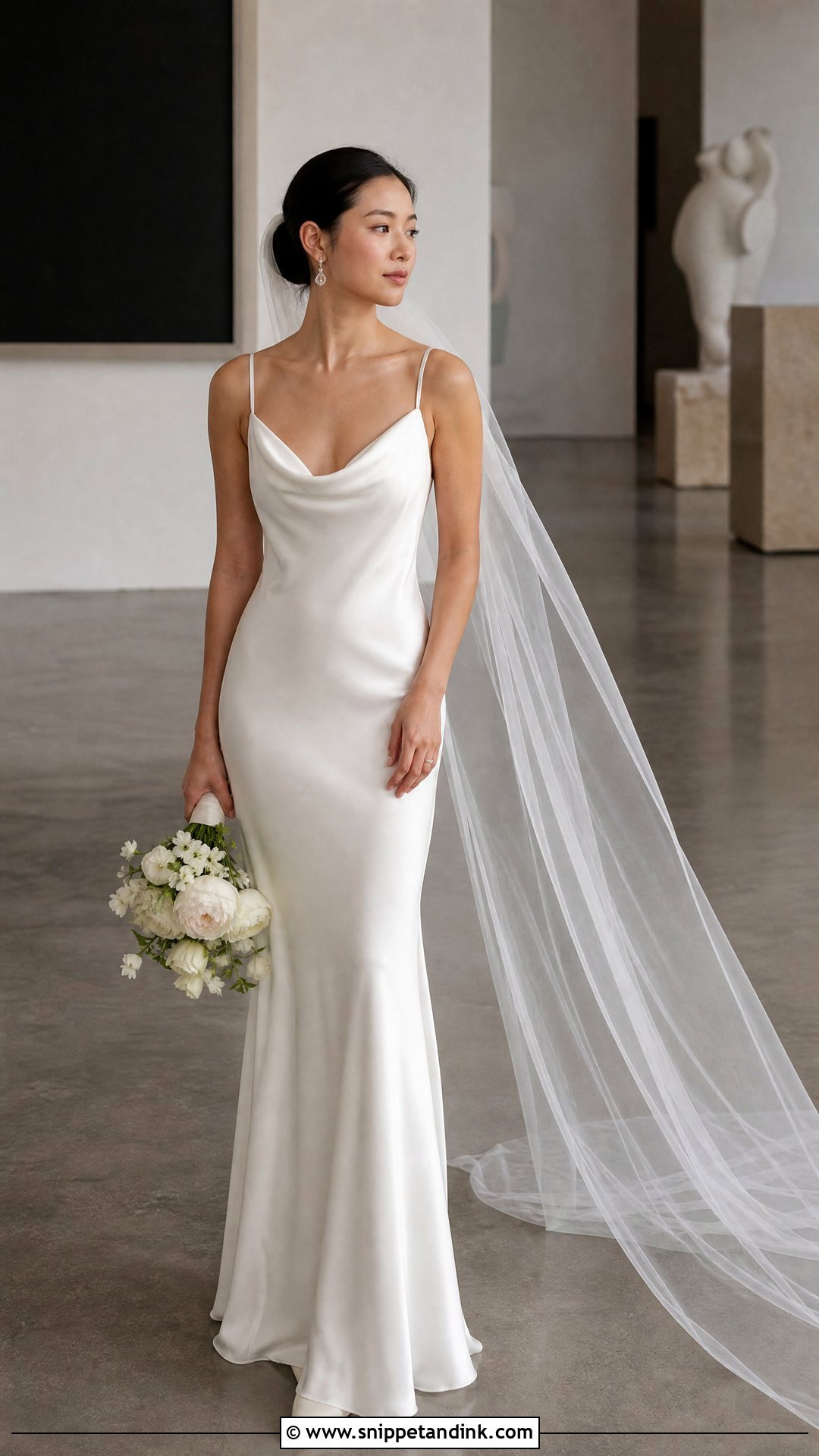
Bias-cut silk or satin drapes over the body with no heavy seams, which is why a slip can look so clean on a small frame. It also shows everything: underwear lines, a strap that’s half an inch too long, a back that gapes. Adjustable straps, a well-placed cowl or V and a back that sits flat are what I look for, with a skirt that skims instead of clinging. Professional alterations are worth paying for on this one. Smoothing underwear and a careful steam on the morning keep it fluid. Pointed kitten heels, a fine pendant, small drops, a narrow cathedral veil and a sleek bun.
10. Petite Lace Wedding Dress
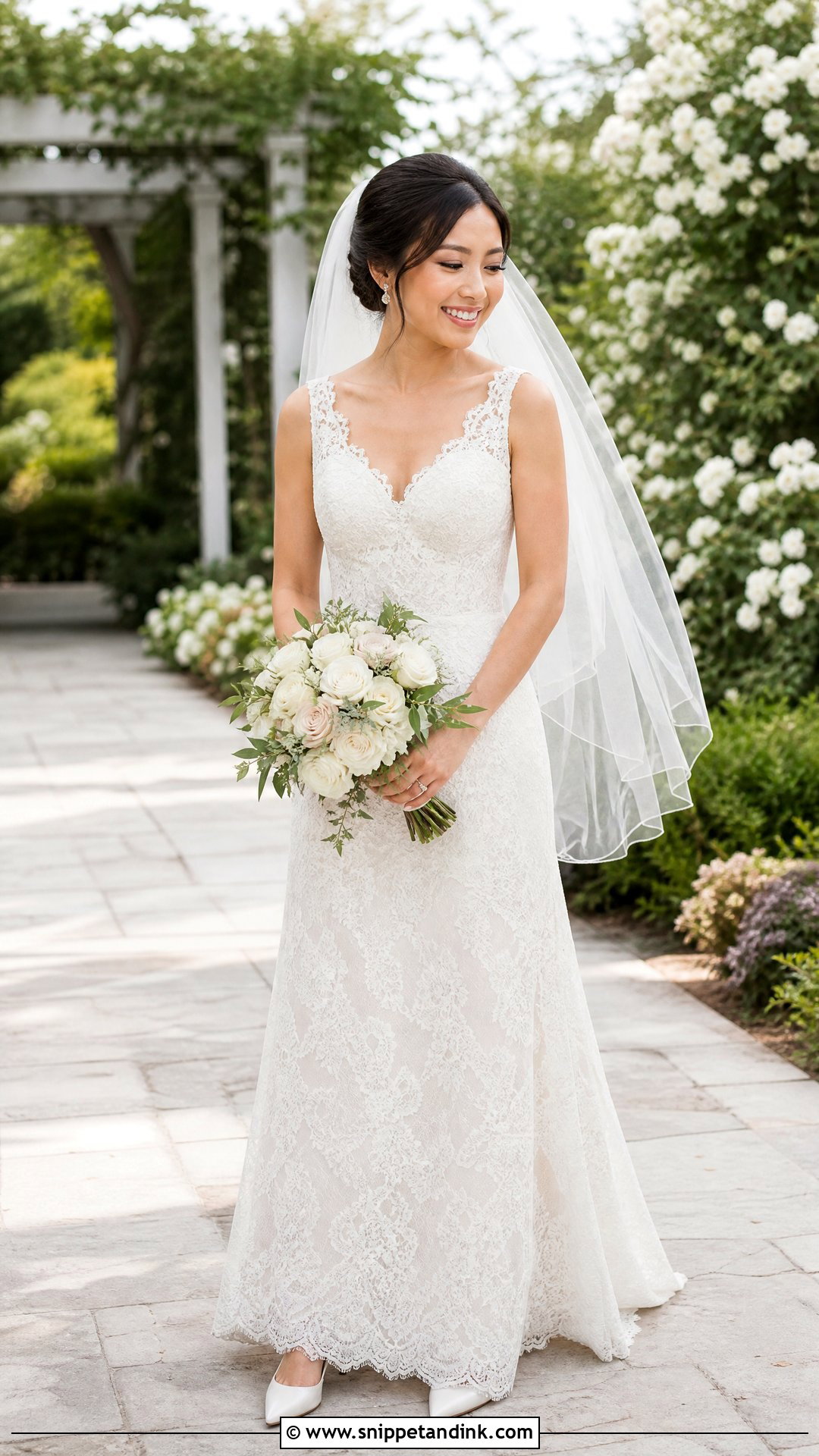
Lace scale is the thing petite brides overlook. Big, bold motifs can swallow a shorter frame, while small florals, fine vines and vertically arranged appliqués lead the eye up and down the dress. An A-line or fitted sheath underneath keeps it balanced, and a scalloped neckline means you won’t need a necklace. Before hemming, I check where the lace border ends, because a scalloped edge has to be removed and re-sewn at the new length, which is skilled work and worth asking about. Simple pointed heels, pearl studs and a plain tulle veil so nothing competes with the lace.
11. Petite Long Sleeve Wedding Dress
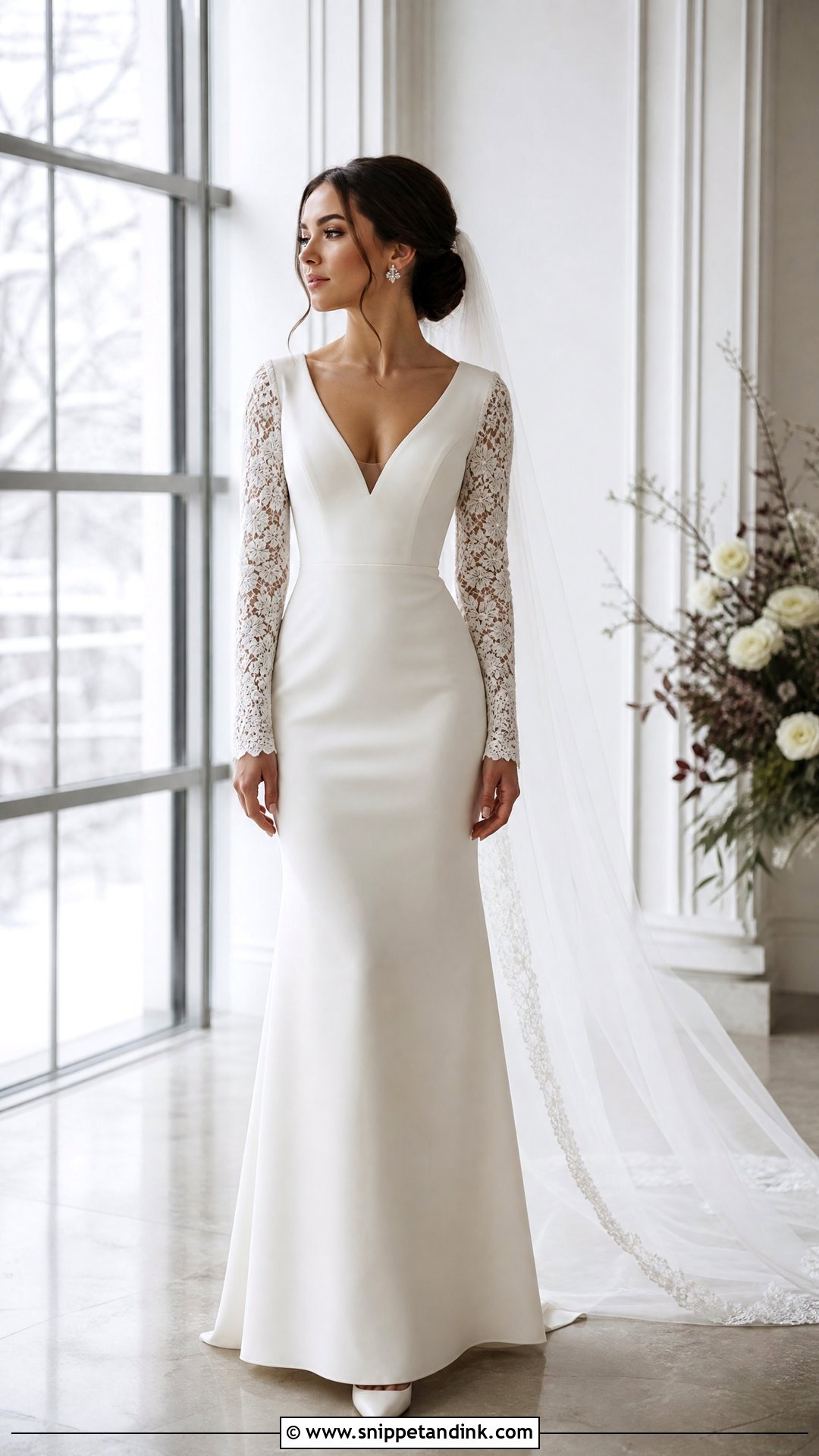
Long sleeves give elegant coverage for formal, autumn or winter weddings. Fitted sleeves keep a cleaner outline than oversized bishop sleeves, though a lightly gathered shoulder works if the fabric is sheer. Illusion tulle, soft lace or smooth crepe stop the top half feeling heavy, and a V-neck or open square neck frames the face. Sleeves are where petite alterations show most: the shoulder seam has to sit on your shoulder, the cuff must end at the wrist, and lace motifs have to match left and right. Closed-toe pumps, a narrow veil, crystal earrings and a polished low bun.
12. Petite Off Shoulder Wedding Dress
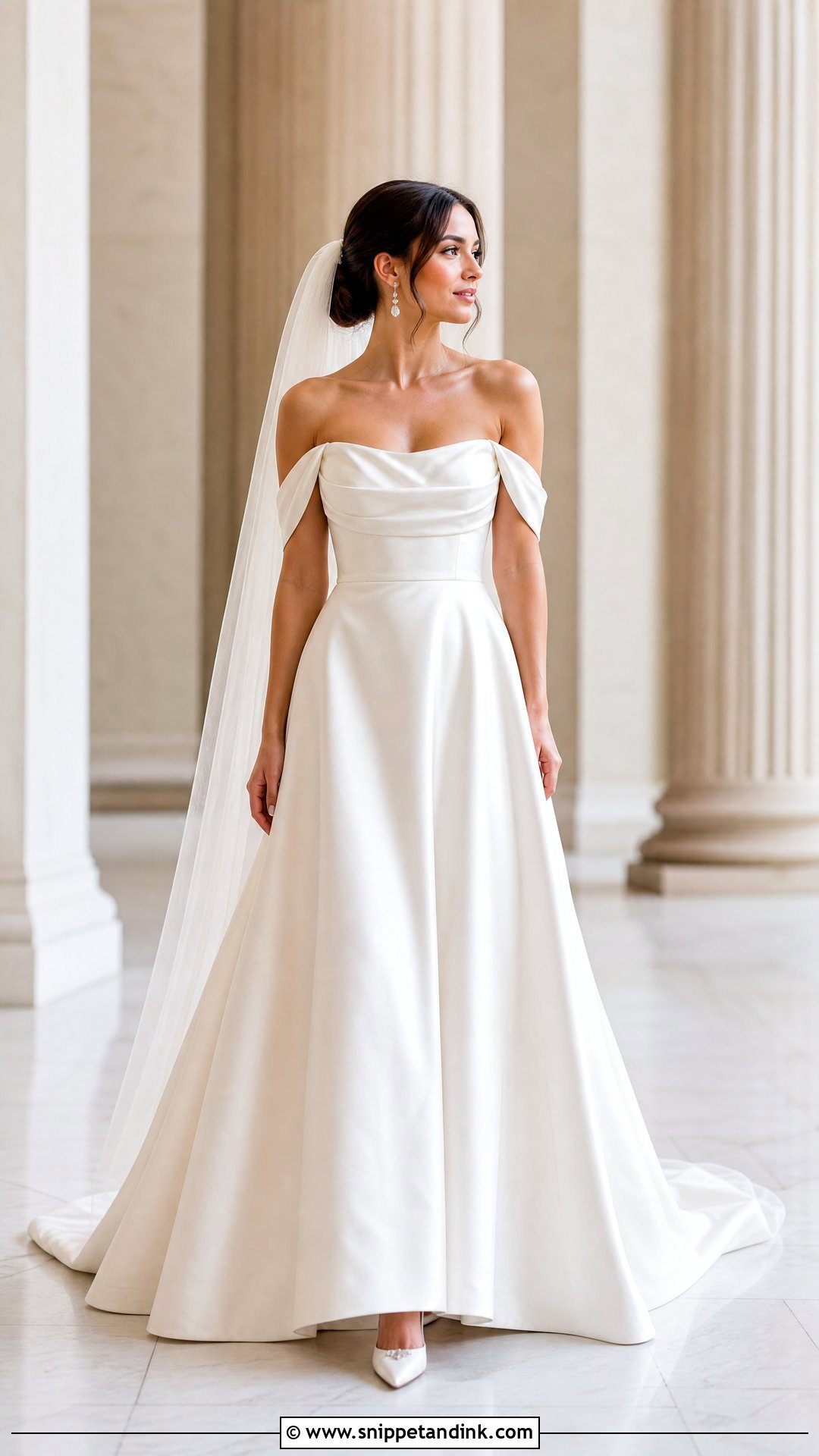
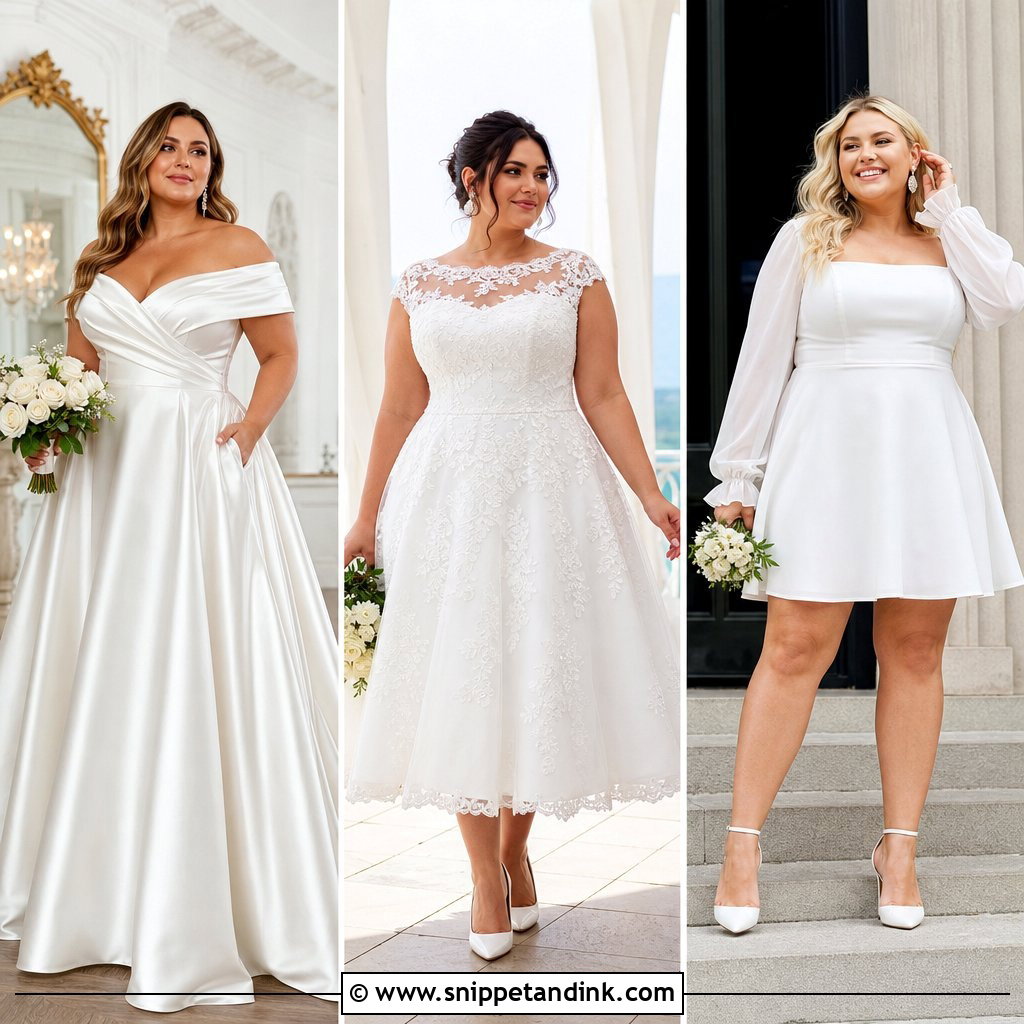
An off-shoulder neckline puts the focus on the collarbones, but on a petite bride the band needs to be narrow. A wide ruffle eats up the distance between shoulder and waist and makes the torso look shorter. A narrow fold-over band or softly draped sleeves work far better, over a fitted A-line, column or fit-and-flare skirt. Satin reads modern, lace traditional. At fittings, raise your arms and sit: the sleeves should settle back into place on their own. Drop earrings, a simple bracelet, pointed heels and a veil anchored under a low chignon, with no heavy necklace.
13. Petite V Neck Wedding Dress
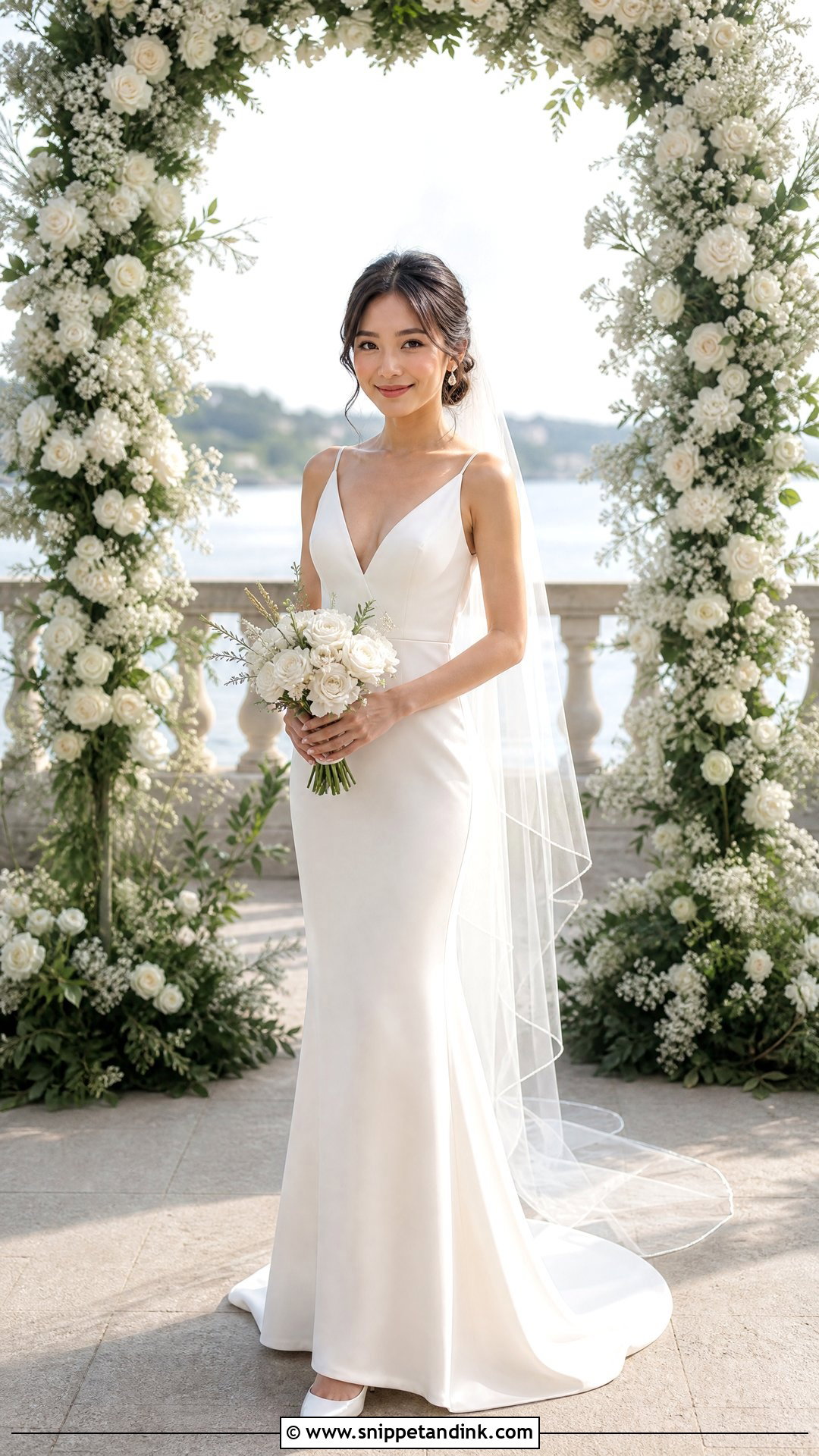
A V neck wedding dress creates a strong vertical line and leaves the neckline uncluttered. You’ll hear that petite brides must wear a deep V, but I’d choose the depth by comfort and how the bodice is built, with illusion mesh for support if you go deeper. A sleek sheath, gentle A-line or fitted lace skirt all suit it. On standard-size gowns, the V often lands too low on a short torso; a good seamstress can shorten the bodice at the shoulder seams without changing the angle. Small earrings, a fine pendant only if there’s room, pointed heels and a fingertip veil.
14. Petite Square Neck Wedding Dress
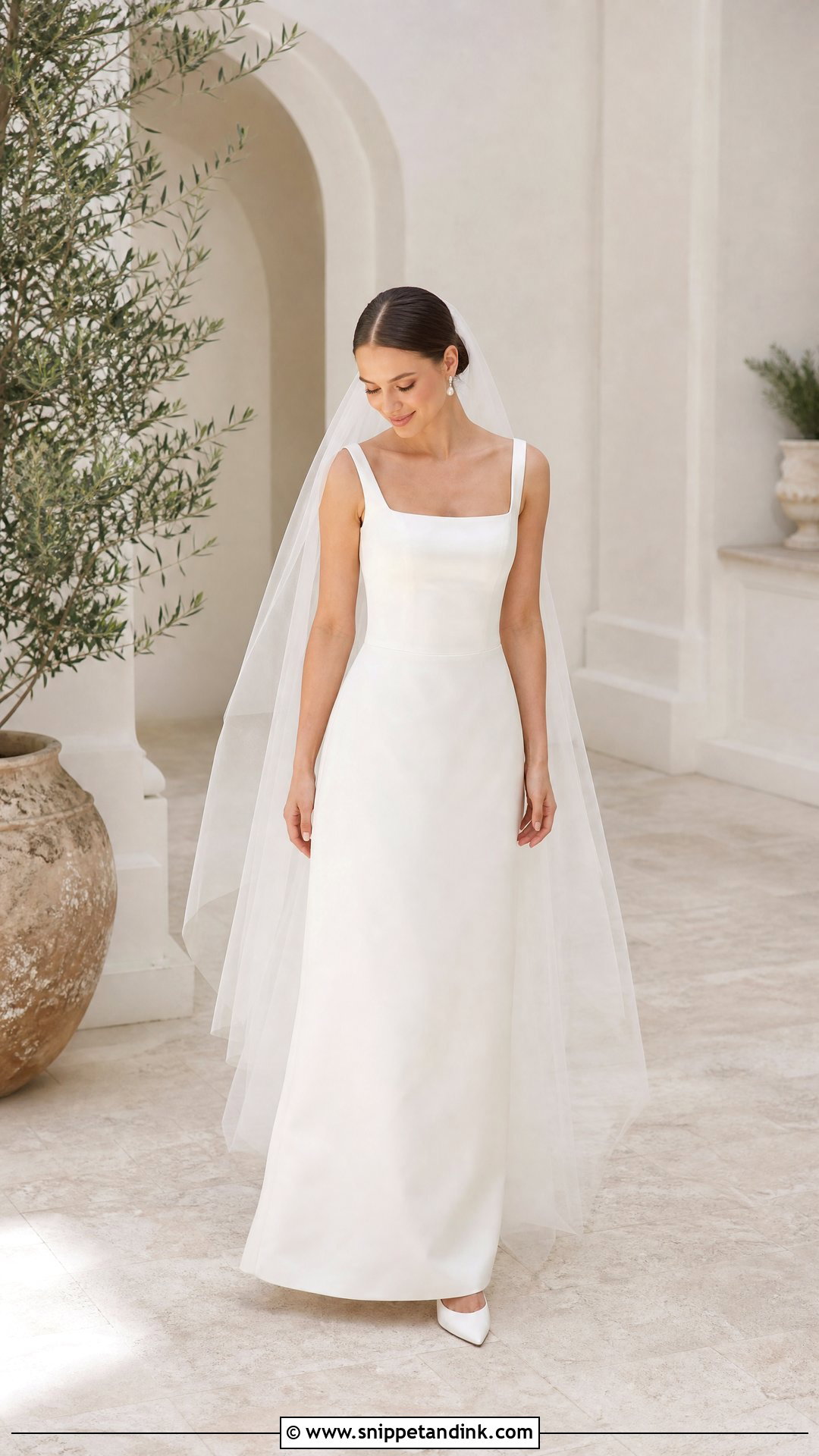
The square neck feels structured and slightly vintage, framing the collarbone while vertical bodice seams keep the length. Straps should line up with your shoulders and the neckline should sit high enough to feel secure. A fitted satin bodice over a narrow A-line is the classic version; fine lace sleeves and a chiffon skirt make a softer one. If the bodice has boning or built-in cups, expect petite-specific alterations so the bust, waist and straps sit where your body actually is. Pearl drops, a low bun, pointed pumps and a plain chapel veil, with no large necklace.
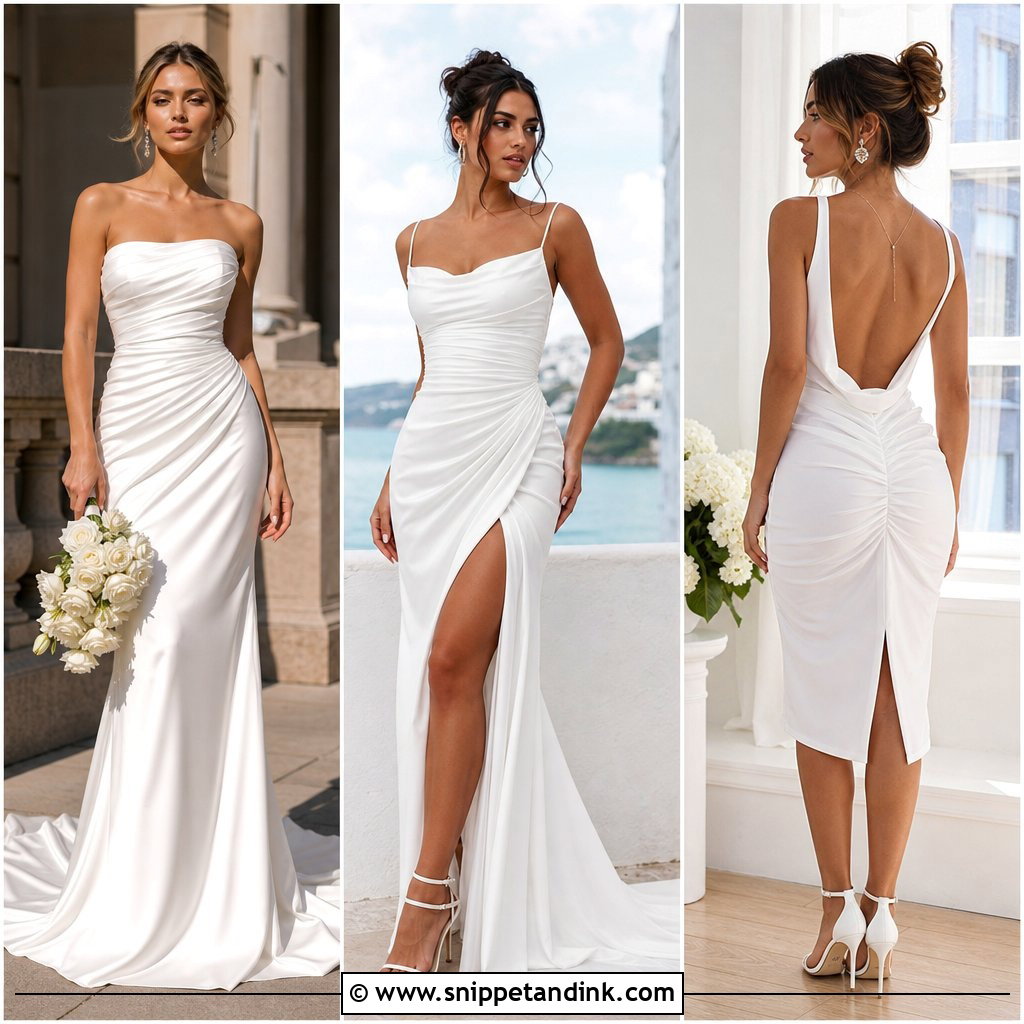
15. Petite Halter Wedding Dress
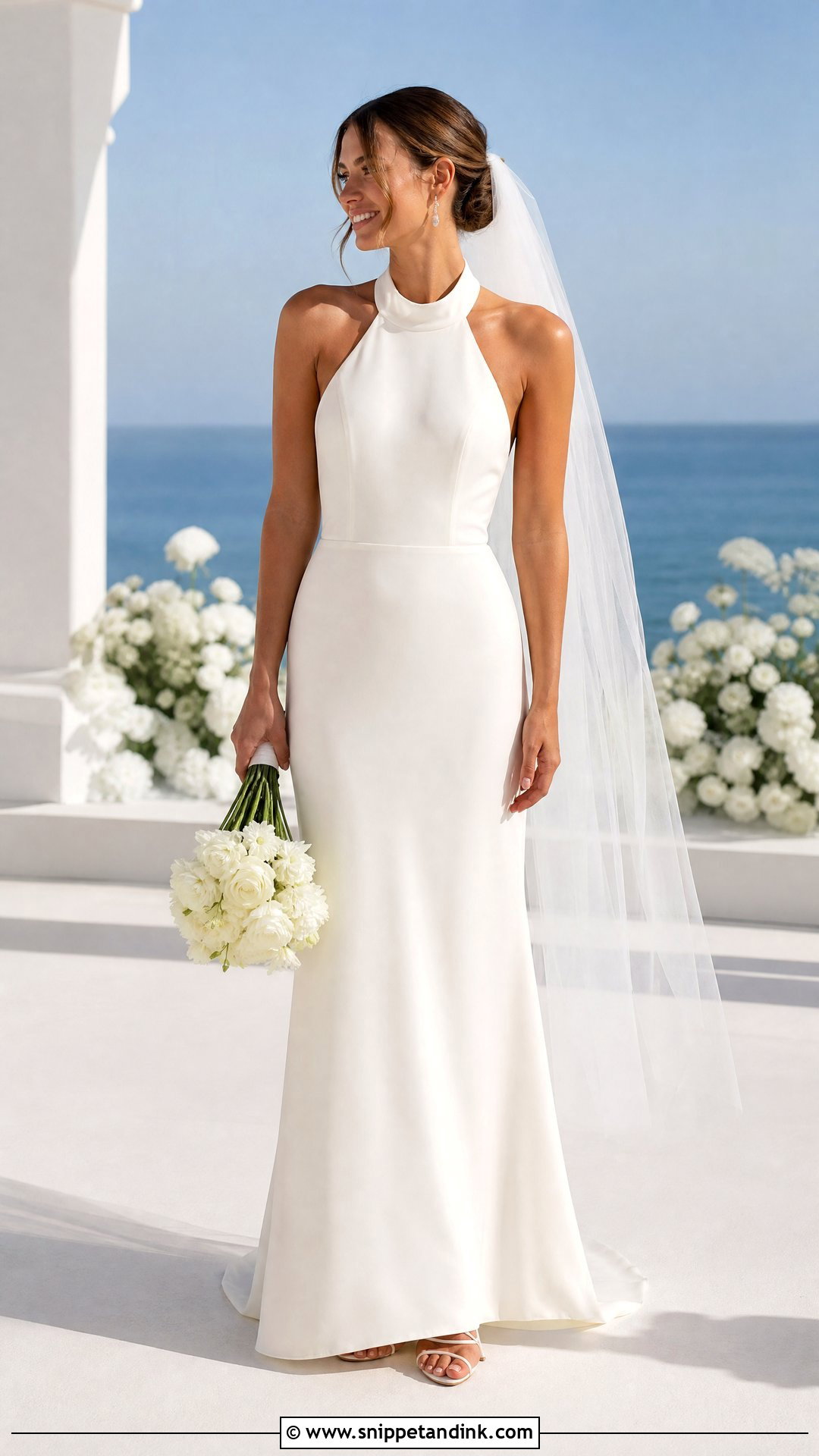
A petite halter wedding dress shows the shoulders and draws a clean line up to the face, and in light crepe or satin it copes well with summer heat and destination travel. Keep the halter narrow and the skirt streamlined: column, slip or soft A-line. Before you buy, wear it for a good ten minutes and notice the back of your neck. The weight should be carried by the bodice construction, not hung from the neck strap, or you’ll have a headache by the first dance. Sleek sandals, small hoops or drops and a smooth low bun; with a backless cut, pin the veil beneath the hair so the back stays visible.
16. Petite Strapless Wedding Dress
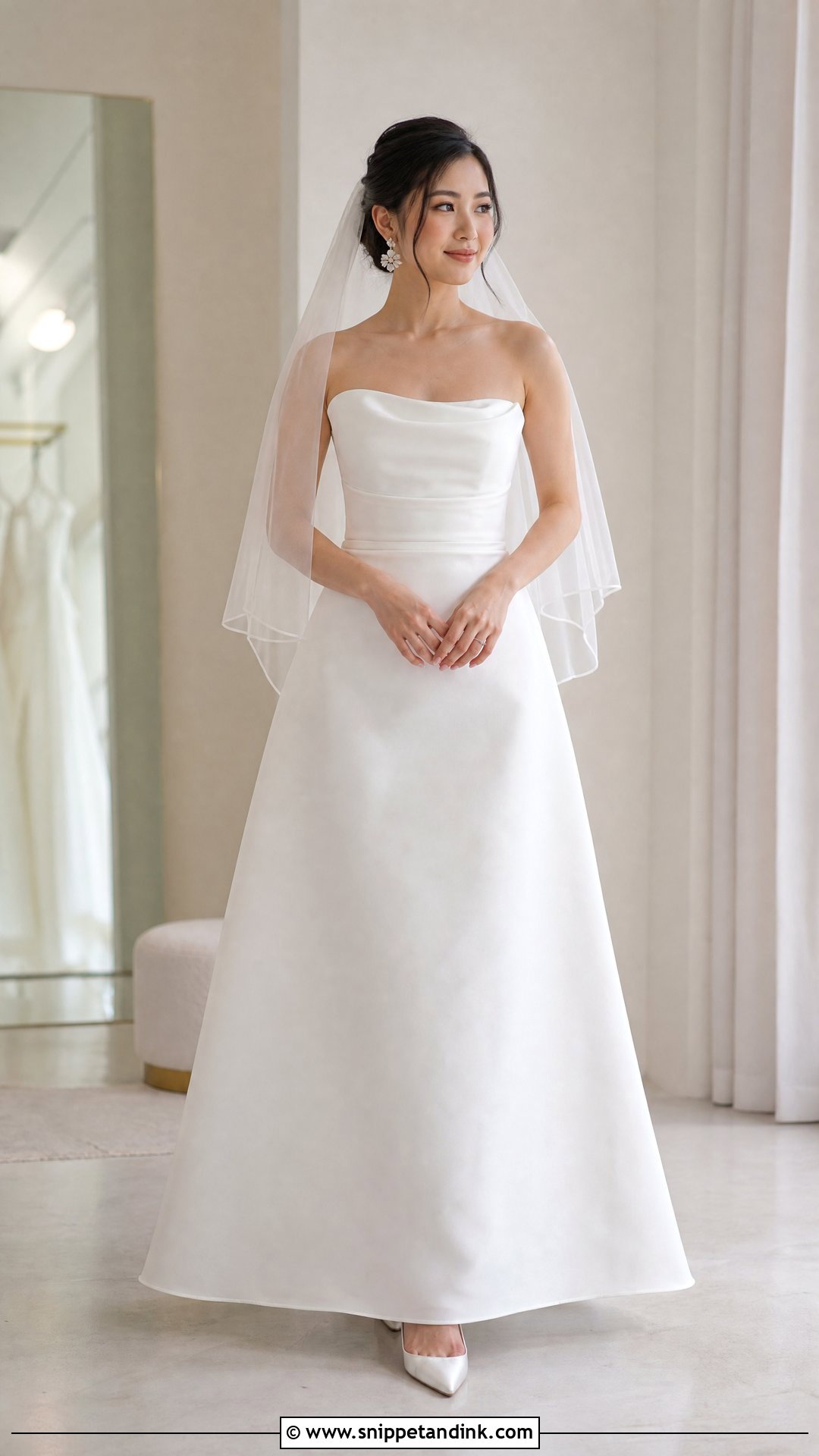
Strapless is about scale and security. A petite strapless wedding dress needs a bodice sized to a shorter torso, because a standard bodice often sits too high under the arms or too low at the bust. Sweetheart and curved necklines add soft shape; a straight neckline looks cleaner. Internal boning, cups and a waist stay should hold it up, not tightness. Choose an A-line, column or controlled ball gown skirt. In the fitting room I ask brides to walk, sit and raise both arms; if you’re hitching it up, it isn’t fitted yet. Pointed pumps, a short necklace or statement earrings and a veil in proportion to the skirt.
17. Petite Satin Wedding Dress
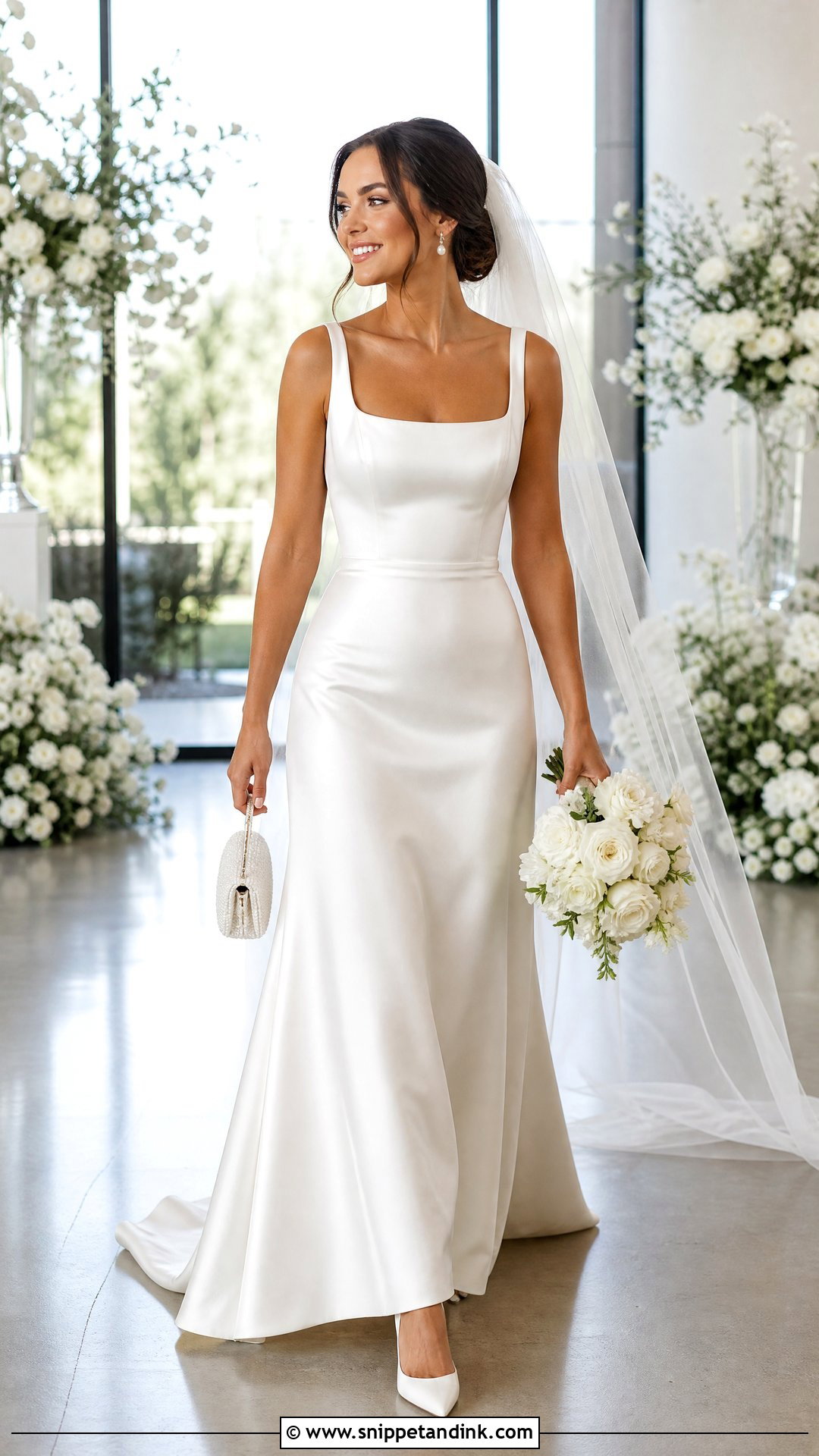
Satin reflects light and shows every seam, so cut matters more than any decoration. A softly structured A-line, clean sheath or bias-cut slip lets the fabric lead, with a V or square neck and a defined natural waist. Too many shiny accessories compete with the sheen. Satin creases at the hips the moment you sit in the car, so I’d steam it at the venue and let it hang freely until you dress. Pearl earrings, pointed satin pumps, a sheer veil with a raw edge and a small structured bag for the reception.
18. Petite Chiffon Wedding Dress
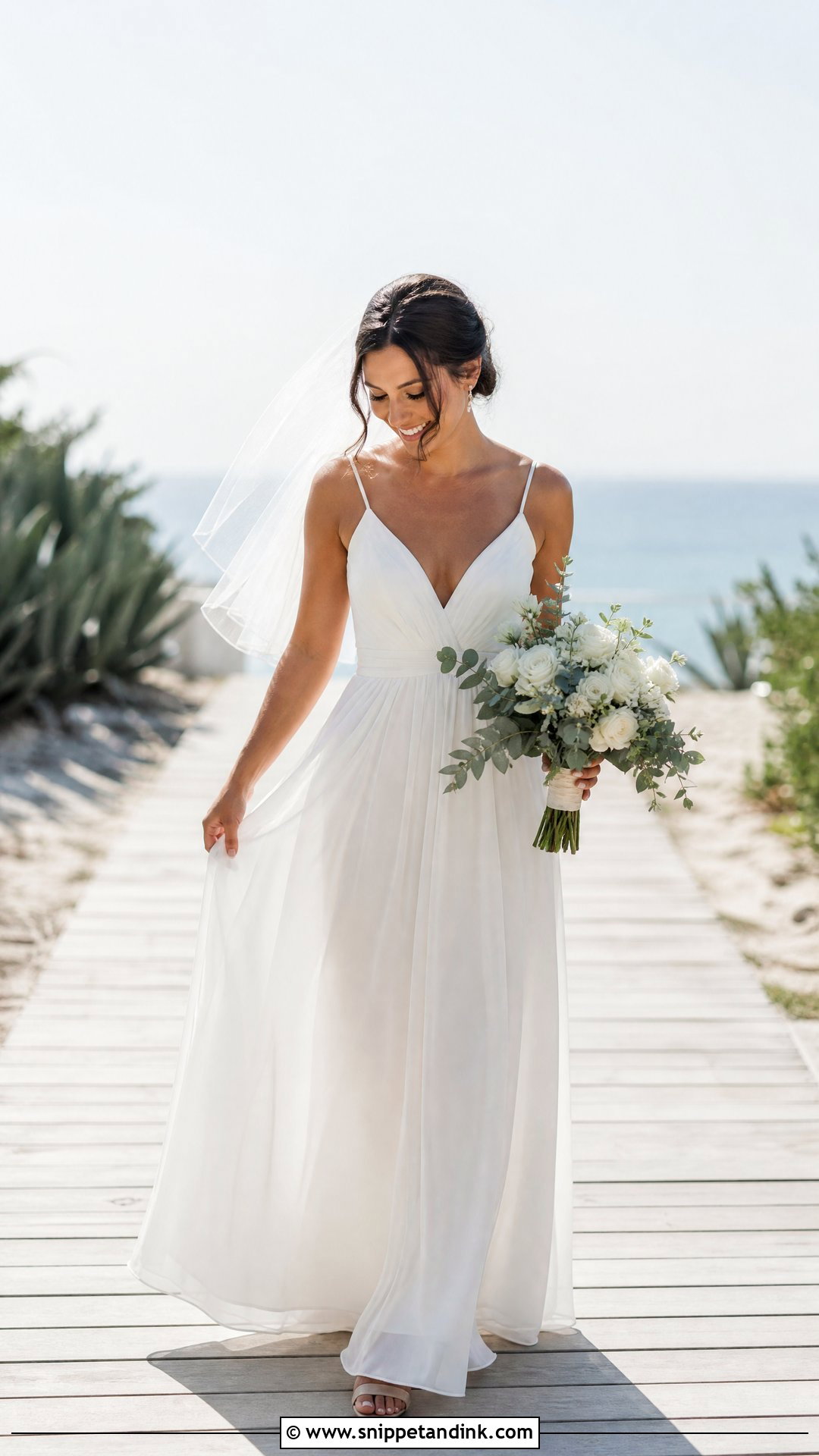
Chiffon moves easily without adding bulk, which is why it suits beach, outdoor and warm-weather weddings on a smaller frame. A fitted lining under a flowing overlay keeps your shape visible; without one, the dress can look like a nightgown. An empire waist or narrow A-line gives movement with controlled volume. Chiffon skirts usually have several layers, and each has to be hemmed level, which takes time. Ask for enough clearance to walk on sand or grass without holding the skirt. Low block-heel sandals, delicate earrings, a fine bracelet, a light fingertip veil and soft waves or a loose updo.
19. Petite Ball Gown Wedding Dress
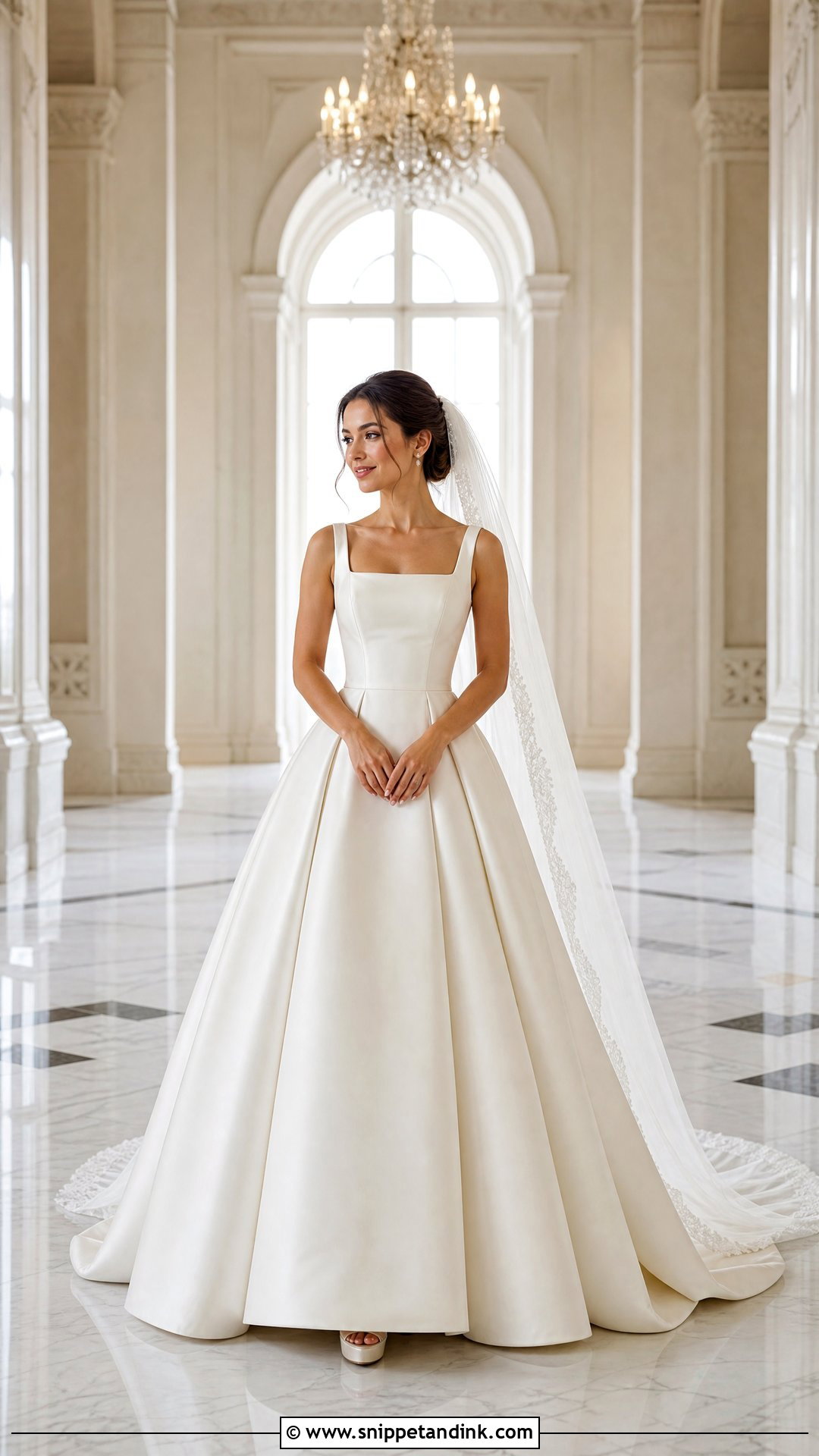
Yes, petite brides can wear a ball gown, with the volume controlled. Rather than an enormous skirt with heavy layers, choose a compact dome that starts at the natural waist. Light tulle, organza or mikado give structure without weight, and a fitted V-neck, strapless or square bodice keeps the waist defined. Keep bows and appliqués in scale. At fittings, stand in your real shoes on the floor, not on a tall pedestal; pedestals hide how wide the skirt really is next to your height. Platform heels, small earrings and a chapel veil that follows the train.
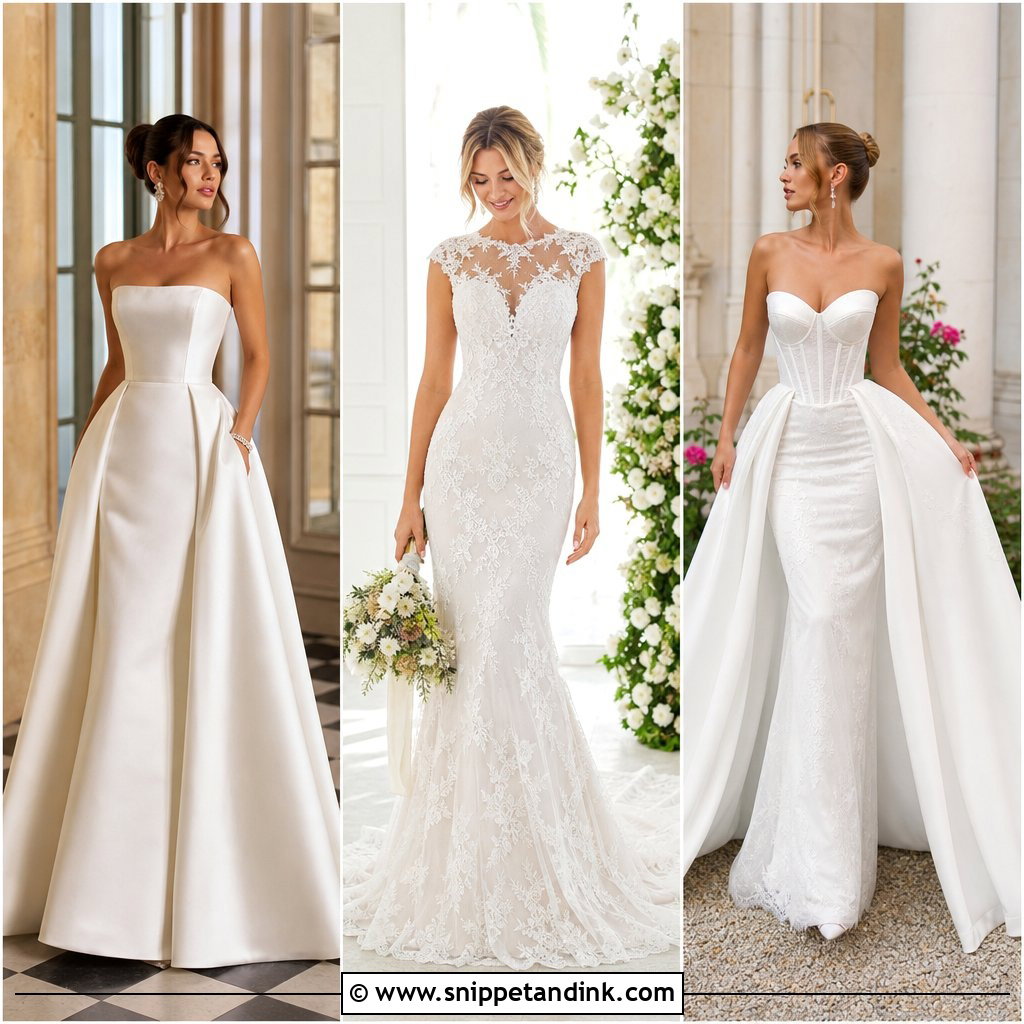
20. Petite Drop Waist Wedding Dress
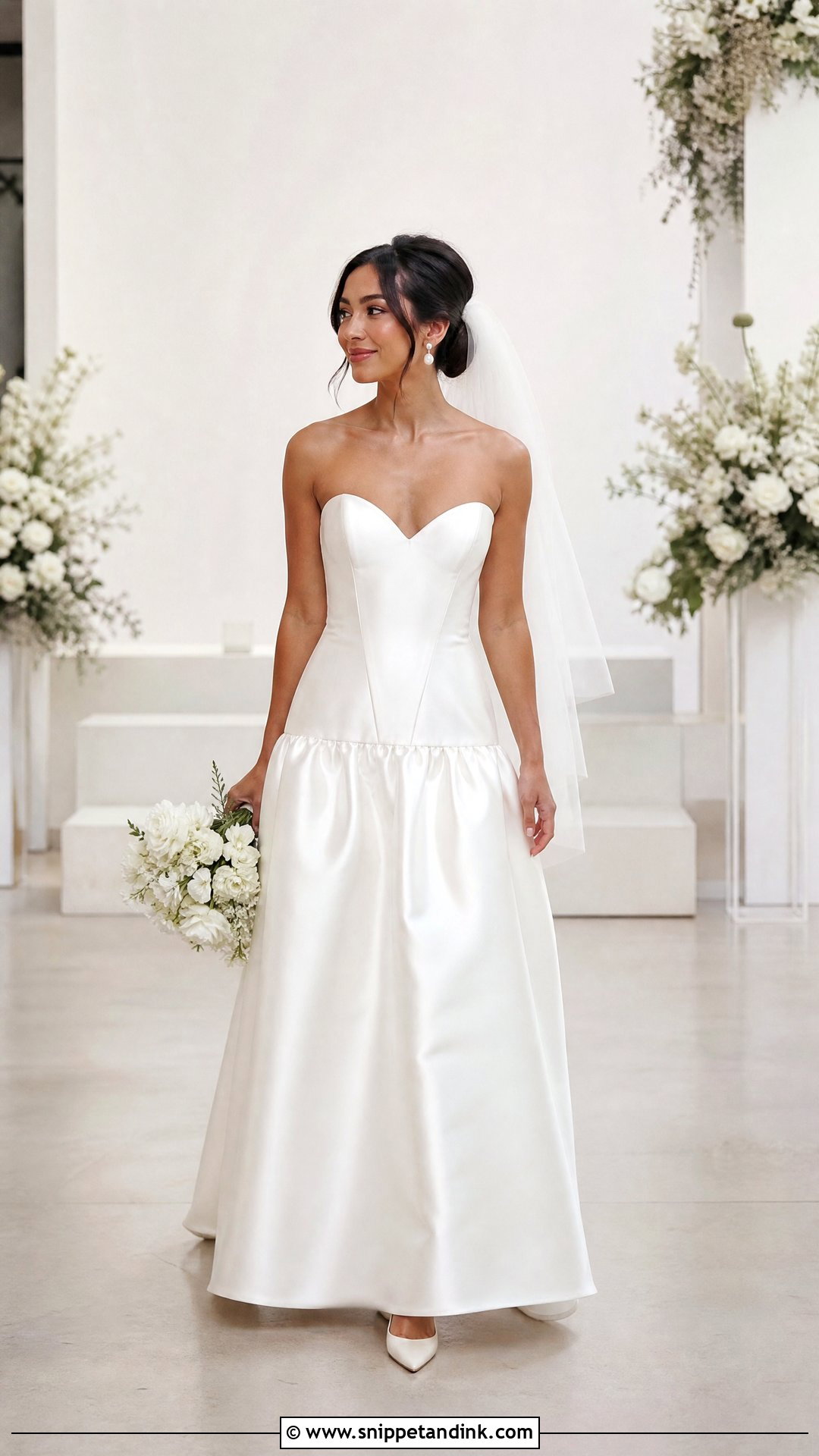
A drop waist extends the bodice toward the upper hips before the skirt opens, which creates a long torso line. On a petite bride that can work brilliantly or make the legs look short, and the difference is placement. Choose a petite-cut design or budget for detailed alterations, and consider a subtle basque point that gives the effect without dropping the seam too far. Keep the skirt soft rather than very full. Compare it from every angle off the pedestal; the seam should follow your proportions and let you sit. Pointed heels, a simple veil and earrings that draw the eye up.
How High a Heel Should a Petite Bride Wear?
Many petite brides assume they need the tallest heel they own, and then they’re in pain by the cocktail hour. A heel adds height, but so does a hem that just clears the floor and a waist seam in the right place. I’d rather see a comfortable heel you can stand in for ten hours than a towering one you take off before the first dance.
Two practical points. First, choose the shoes before the first fitting, because the hem is set to that exact height and changing shoes later means re-hemming. Second, a platform under a long skirt gives height with less slope on the foot, and nobody sees it.
Scaling the Veil, Train and Bouquet Down
- Veil: a narrow cut keeps the silhouette slim. Wide, heavily gathered veils add width at the shoulders.
- Train: a chapel train is usually plenty. Long trains look dramatic in photos but are heavy to bustle and to walk in.
- Bouquet: keep it about the width of your waist. An oversized bouquet hides the waist and makes the whole outfit look shorter.
- Hair: a little height at the crown lengthens the line from head to hem without looking like a costume.
Proportion Beats Any Petite Dressing Rule
No single silhouette or neckline belongs to petite brides. The right gown fits your proportions, supports your body, suits the venue and lets you move. A-line, sheath, mermaid, mini, lace, satin and ball gown shapes can all work when the shoulders sit correctly, the waist is in the right place, the skirt volume is scaled and the hem is set to your actual shoes. Petite sizing can cut down alterations, but a good seamstress still makes the final difference. Try on different shapes, move naturally at appointments and take a full-length photo of each one, because the camera shows proportion more honestly than the mirror.
You'll Like These Ideas:


Leave a Reply