
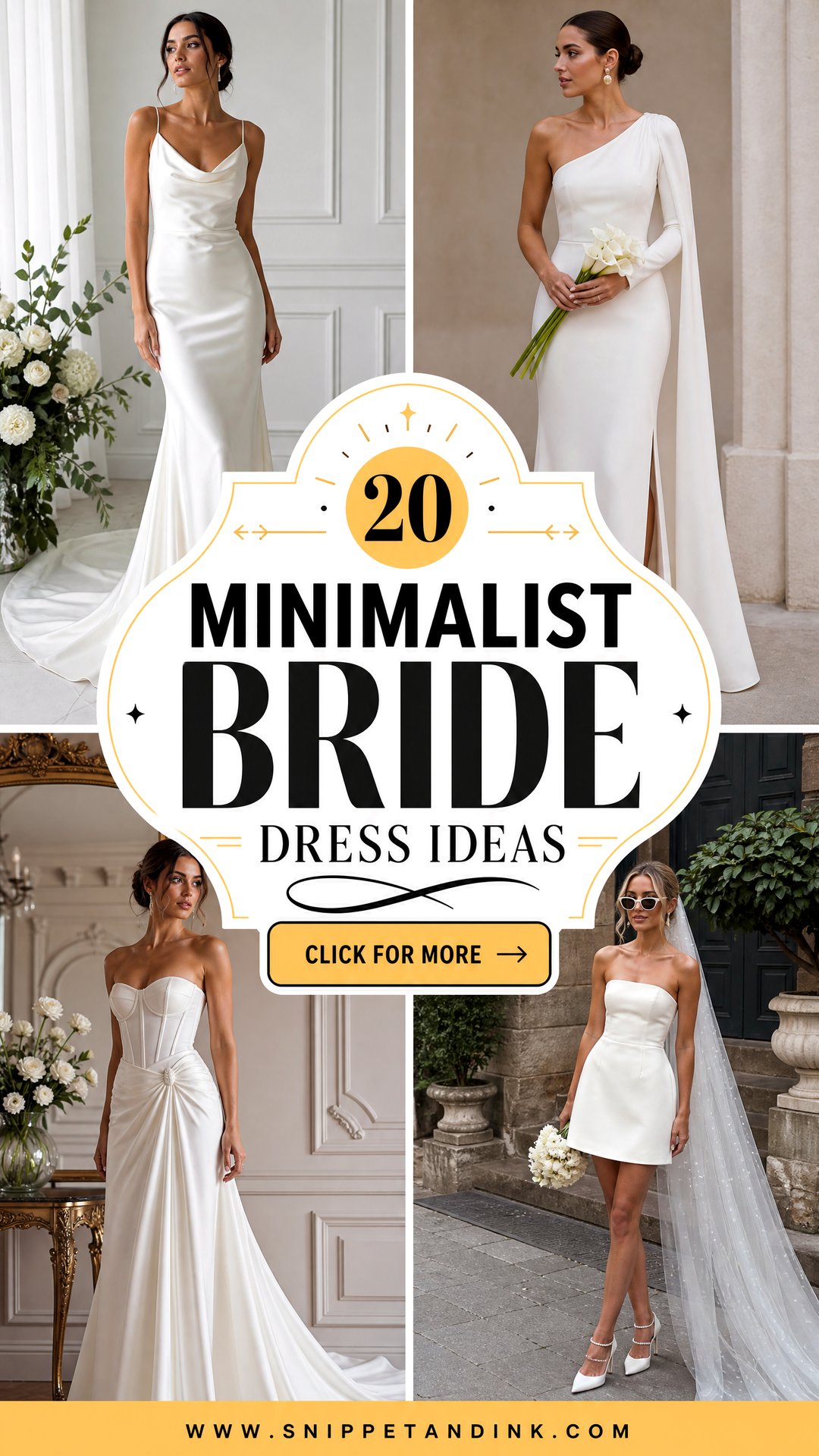
A wedding dress doesn’t need beading, layers of lace or heavy decoration to feel like a wedding dress. When I style a minimalist bride, the work moves to places most people never look: the weight of the fabric, the accuracy of the tailoring, and what’s happening underneath. Venue, season, how much you’ll move, undergarments and alterations matter more here than with an embellished gown, because nothing on the surface covers a mistake. Below are twenty plain-surfaced looks, from bias-cut silk slips to structured ball gowns and short courthouse dresses, each with the shoes, veil, jewelry and flowers I’d put with it.
Judging a Plain Gown by Its Fabric, Lining and Seams
With no lace or beading on the surface, a minimalist dress is only as good as its cloth and its sewing. When a bride shows me a plain gown she loves, I turn it inside out before I look at it on the hanger.
How the usual fabrics behave
- Crepe: matte, drapes close to the body and creases less than satin. Thin crepe shows underwear lines, so look for a weight that hangs heavy in your hand.
- Mikado: a stiff silk or blend with a slight sheen. It holds A-line and ball gown shapes without petticoats, but it marks if crushed for hours in a car.
- Satin and charmeuse: the most reflective. They flatter in soft light and show every ripple, seam and damp patch under flash.
- Duchess satin: heavier and denser, so it suits structured bodices and cooler months better than a summer garden.
Then check the inside. Seams should be finished cleanly and pressed flat, the lining should be cut to its own shape rather than bunched, and boning should sit in channels that don’t show through as ridges. Pinch a fold of the skirt for a few seconds and let go: if the crease stays, it will look crumpled by the reception. Ask to see the dress under ordinary room light and near a window, not only under the shop’s warm spotlights.
1. Minimalist Satin Slip Wedding Dress
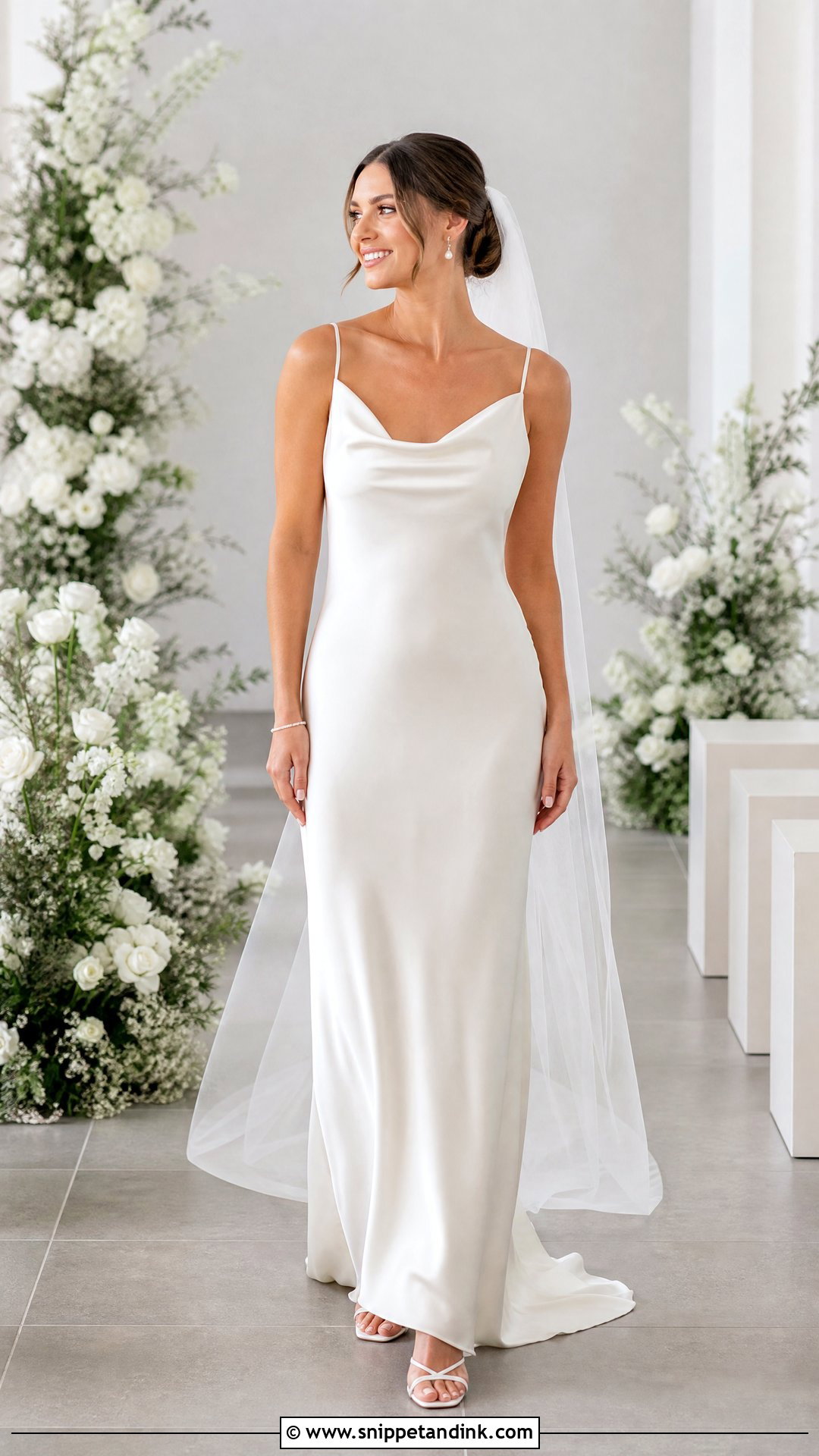
Bias-cut satin is the fabric I test hardest, because it shows everything. Look for an ivory slip with slim straps, a softly draped neckline and a hem that just skims the floor, cut from satin heavy enough to fall straight rather than cling to every line. Pair it with low strappy heels, pearl drops and a fine bracelet, and keep the hair in a sleek bun or tucked waves so the neckline stays clear. A plain cathedral veil gives the ceremony its moment and comes off for the reception. Satin throws light back at the camera, so I always look at a slip in daylight and under flash before a bride commits; smooth, invisible underwear and precise tailoring do the rest, since fit is the whole design here.
2. Minimalist Square Neck Wedding Dress
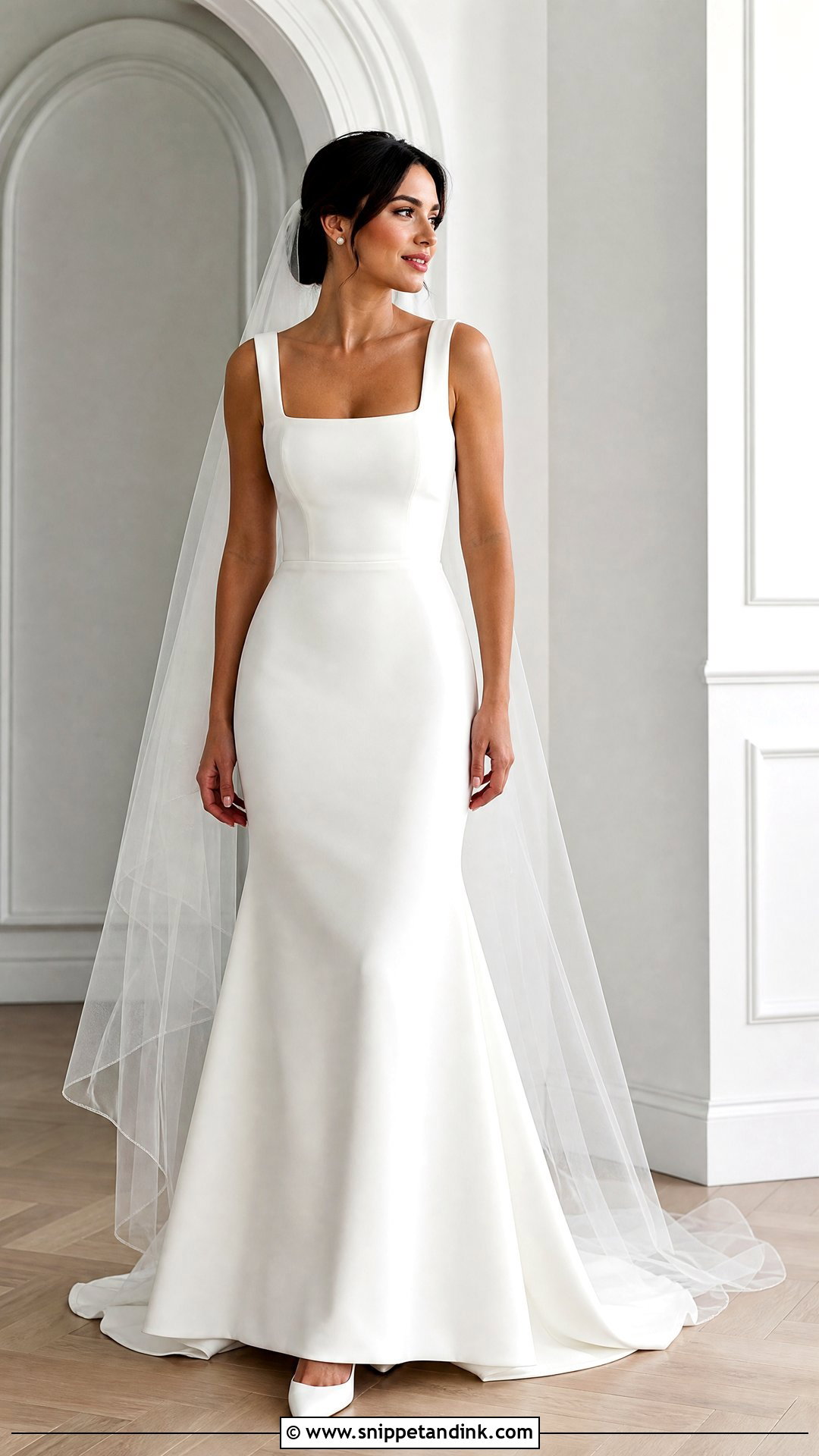
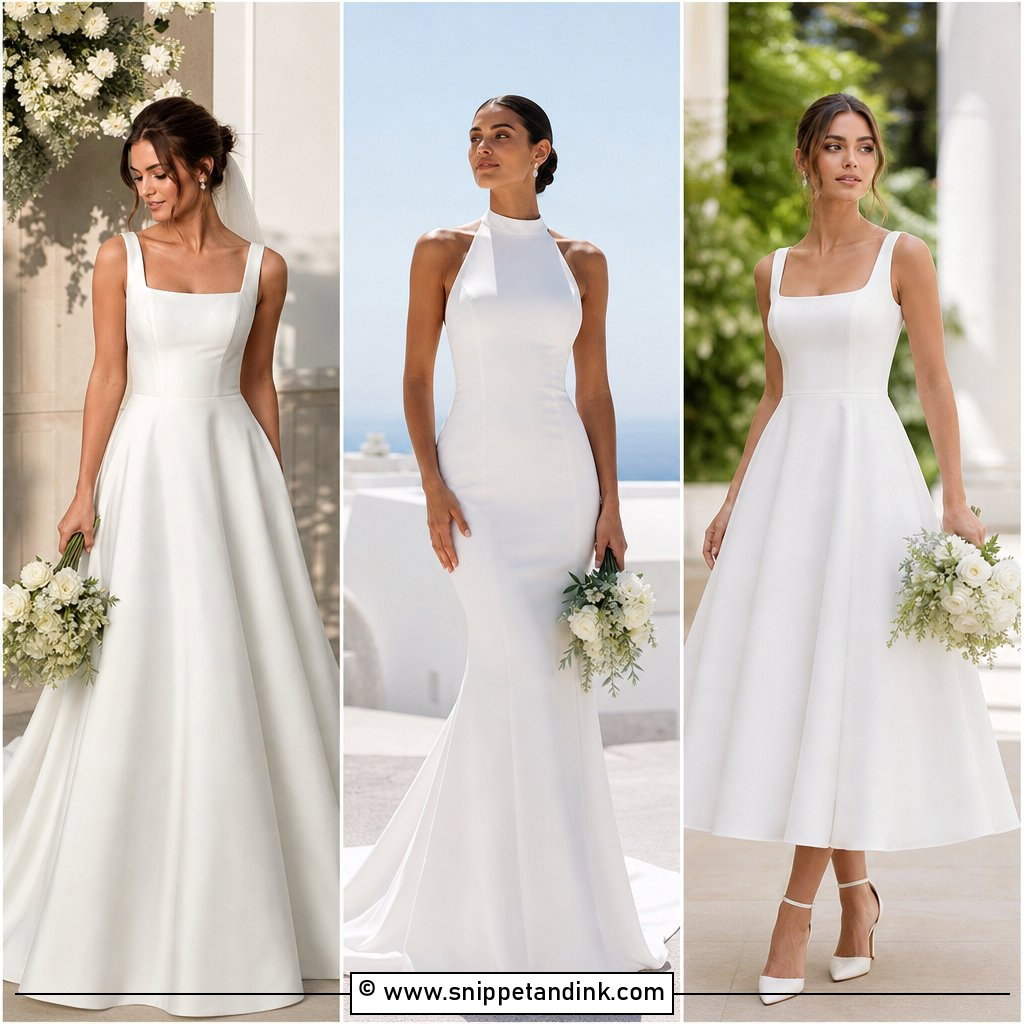
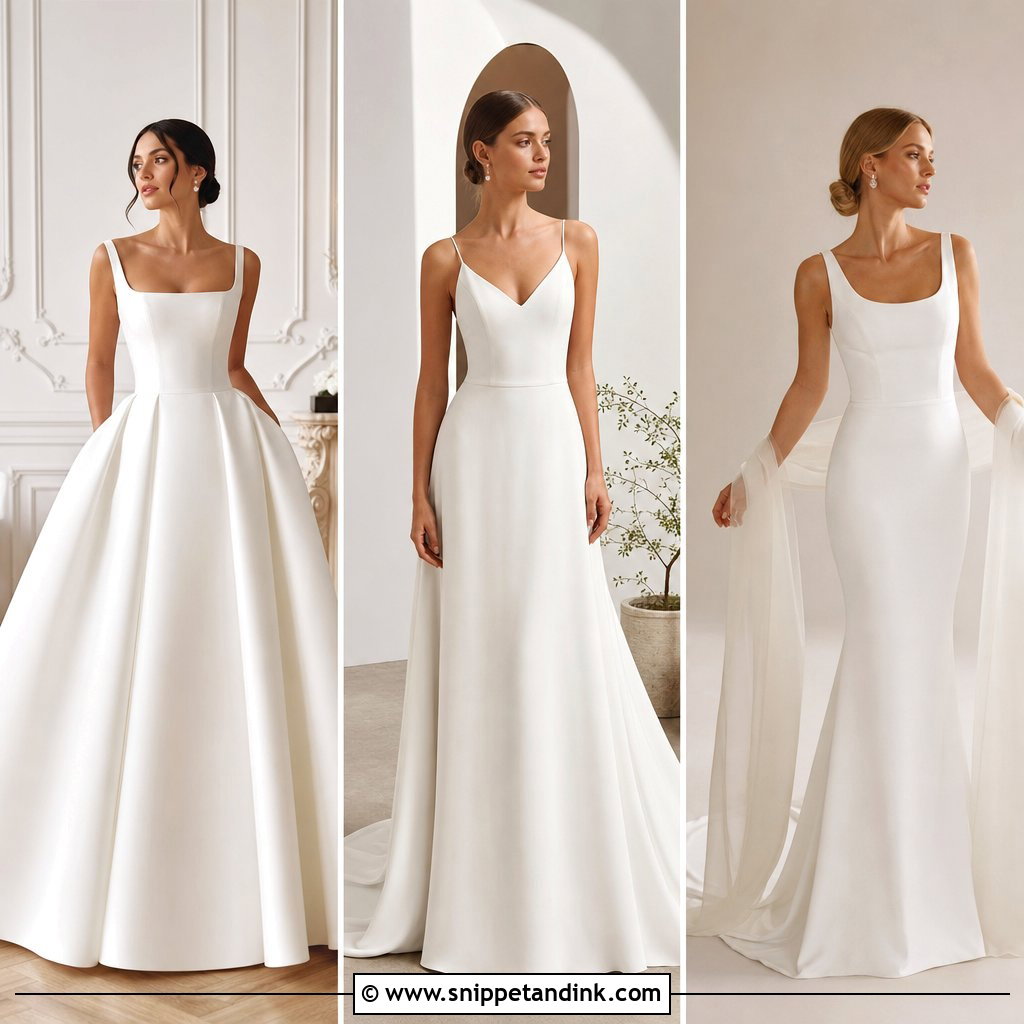
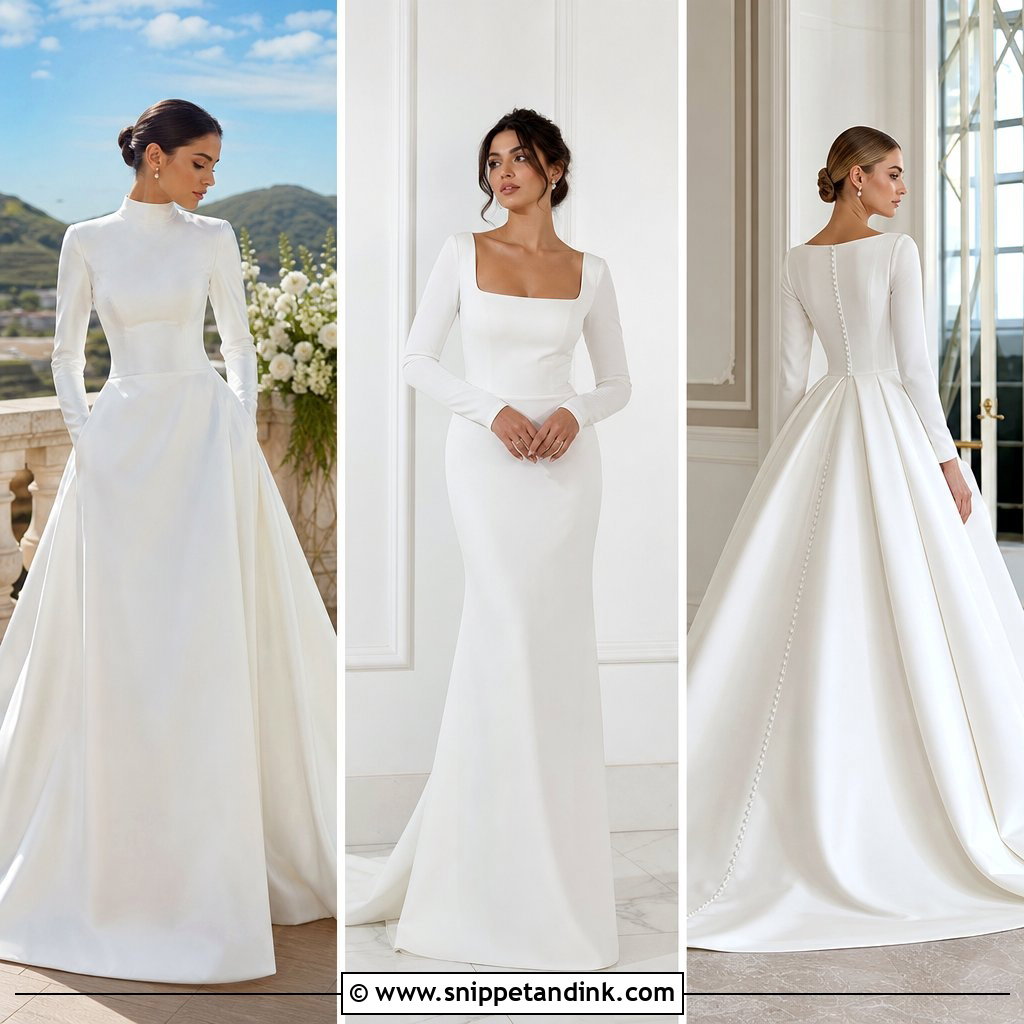
The test I run on a square neck is simple: raise both arms and see whether the corners of the neckline pull away from the chest. Fitted crepe or matte satin with wide straps, a shaped waist and a straight or slightly flared skirt gives the cleanest frame across the collarbones. I’d pair it with a low bun, small pearl studs, pointed ivory pumps and a fingertip veil with an unembellished edge. If you want a little warmth, a compact bouquet of white flowers and fresh green stems does it. Ask your tailor to check strap length and the underarm, because a square bodice only looks crisp when it stays put while you walk, sit and hug people.
3. Minimalist Strapless A-Line Wedding Dress
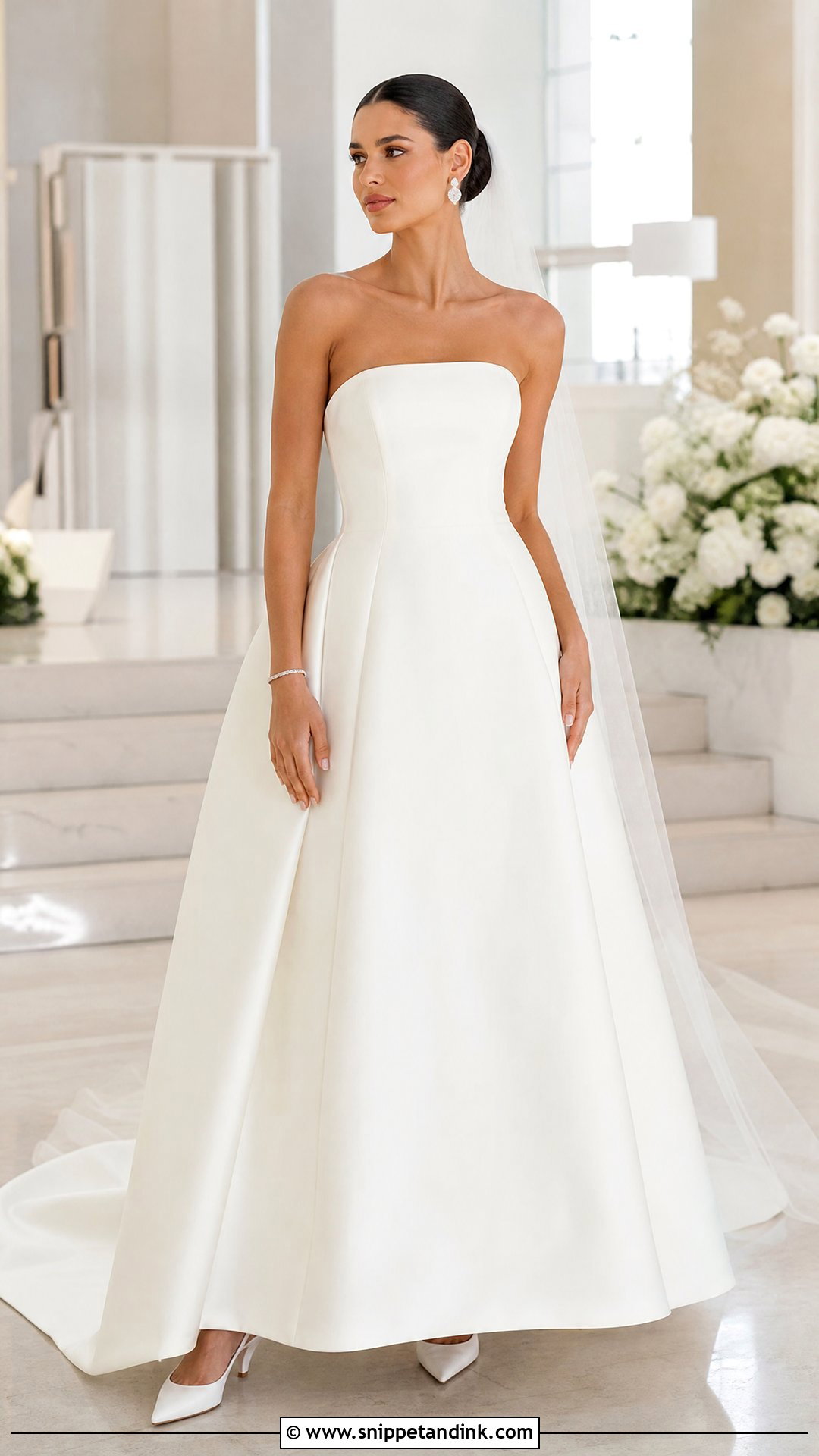
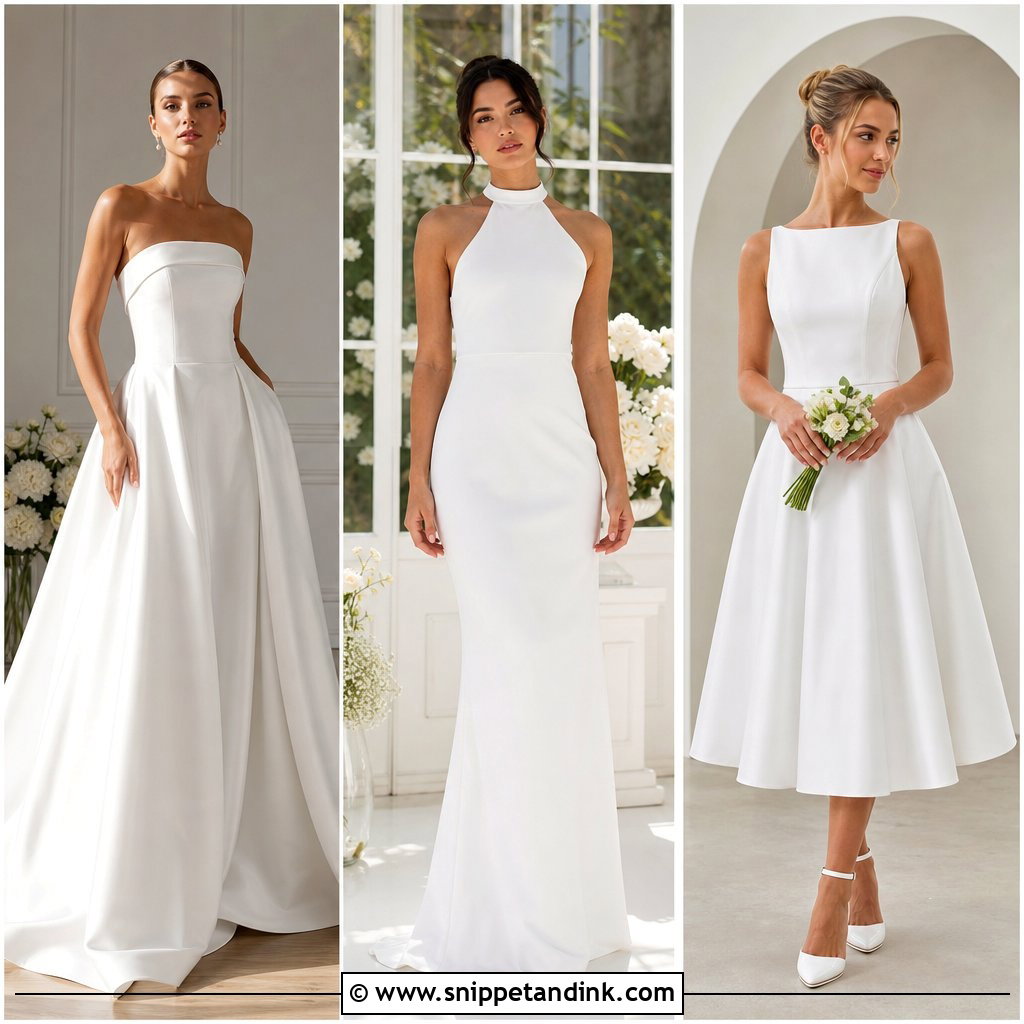
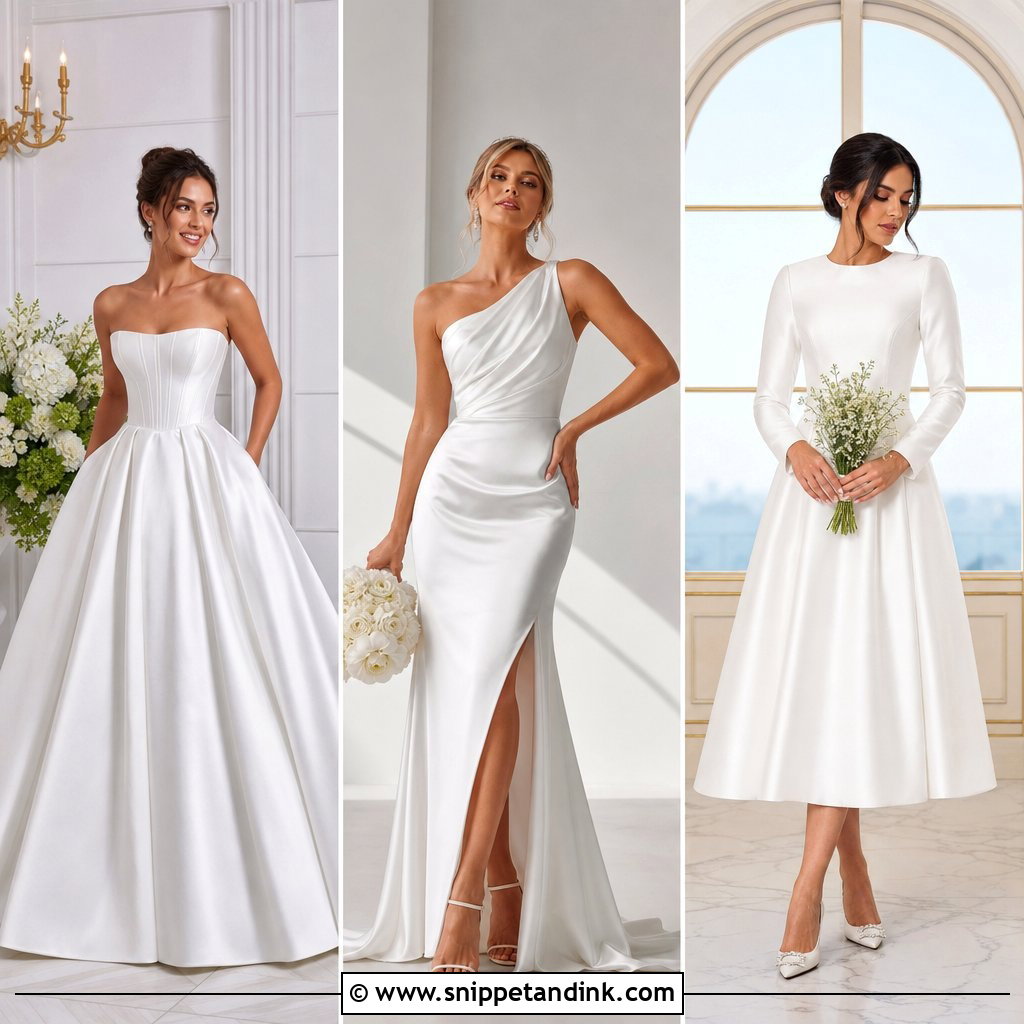
Strapless bodices fail for one reason: the internal structure isn’t doing the work, so the bride spends the day hitching it up. Look for a smooth mikado dress with a boned, supportive bodice, a natural waist and a skirt that gets its volume from the fabric’s stiffness rather than extra layers. Pointed slingbacks, a fine tennis bracelet and small sculptural earrings suit it, with a long plain veil moving behind the structure and a neat chignon keeping the neckline open. If you’d like coverage for the ceremony, a detachable satin wrap or tailored cape solves it. At fittings I have brides bend, sit and lift their arms; if the bodice moves, it goes back to the tailor.
4. Minimalist Long Sleeve Wedding Dress
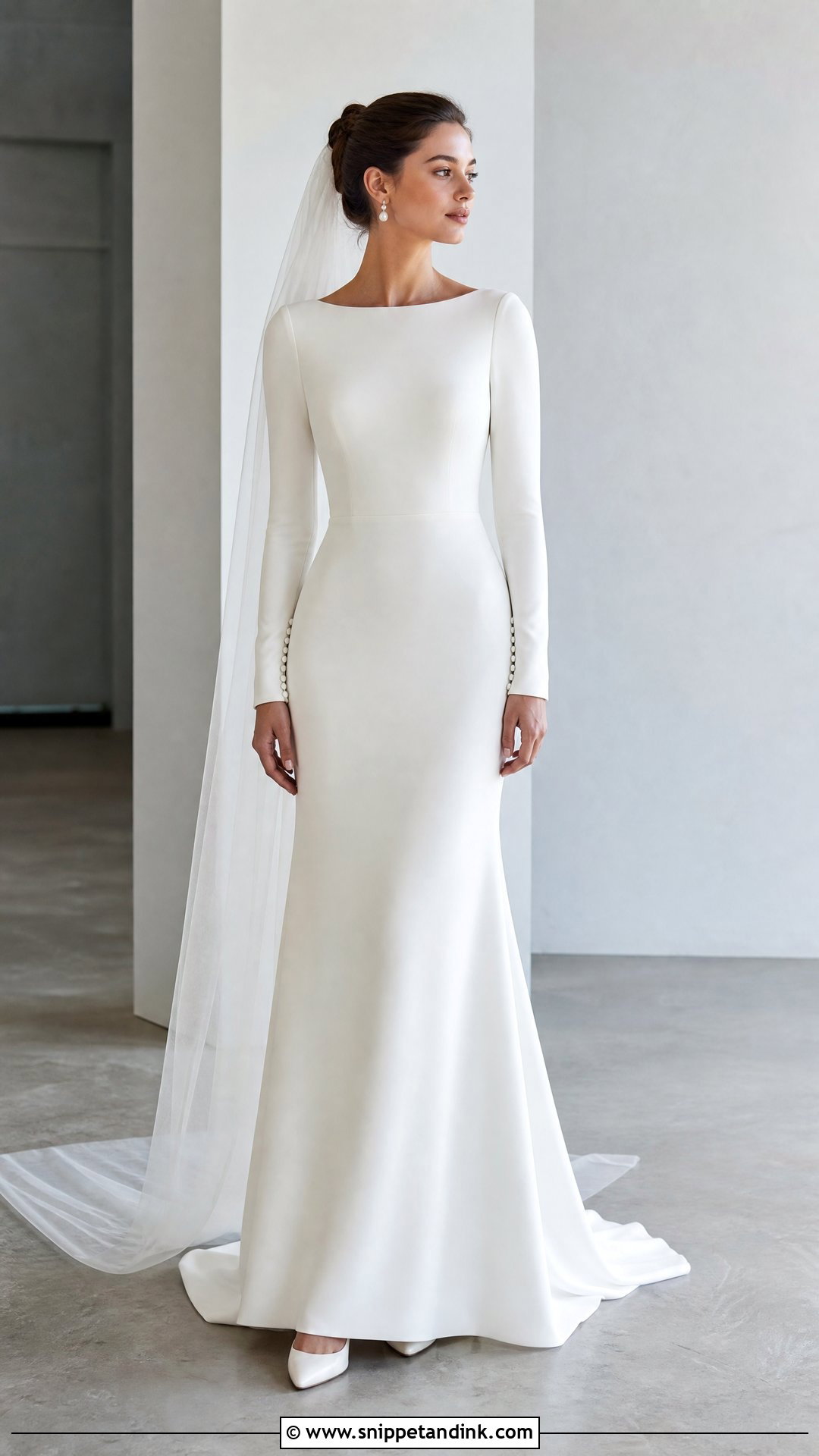
Long sleeves read modern when the sleeve is narrow and the rest of the dress stays spare. Smooth crepe with a bateau, round or modest V-neck and sleeves ending cleanly at the wrist, over a column or gentle fit-and-flare skirt, is the version I reach for. Pearl earrings, closed-toe pumps and a low twisted bun finish it, and a plain chapel-length veil or a single minimal comb is enough on the head. The trade-off is heat: crepe sleeves in a warm indoor reception get uncomfortable fast, so ask for a breathable lining. Reach forward and hug someone in the fitting room, because a sleeve set in too tightly pulls across the shoulder blades. Covered buttons along the cuffs or back add detail without breaking the clean surface.
5. Minimalist Halter Neck Wedding Dress
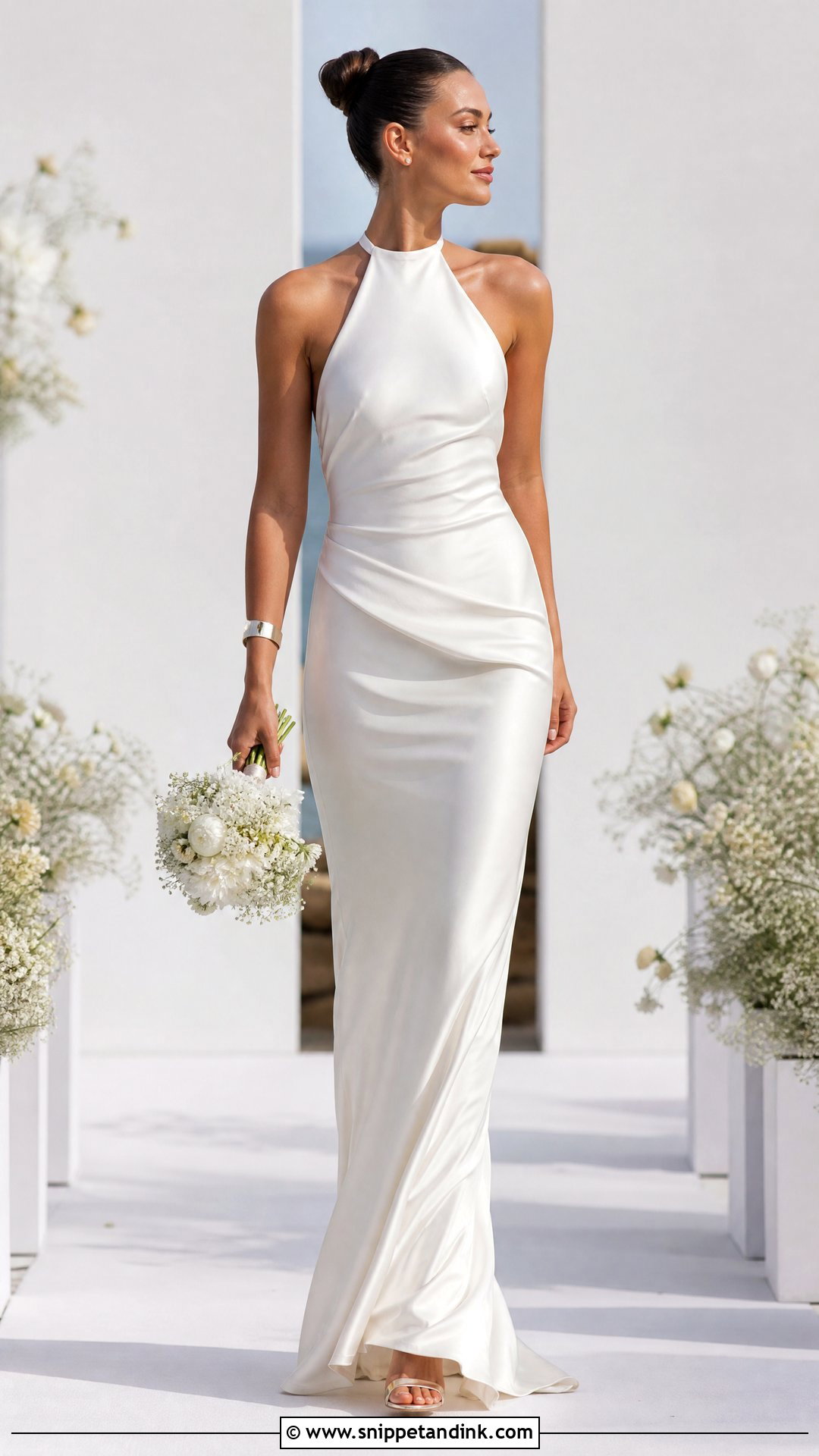
A halter carries the weight of the bodice from the back of the neck, which is why I’d steer brides with neck or shoulder tension toward another cut. When it fits, it lifts the eye and lengthens the whole line. Try a fluid ivory gown with a high gathered neck, bare shoulders and a softly draped skirt; satin relaxes the look, crepe sharpens it. Wear the hair in a polished bun or high twist, add slim metallic sandals, small studs and one narrow cuff, and swap the veil for a clean floor-length cape if you want drama. Wear it for a long stretch at your last fitting, sitting included, and check the neck strap isn’t biting by the end.
6. Minimalist High Neck Wedding Dress
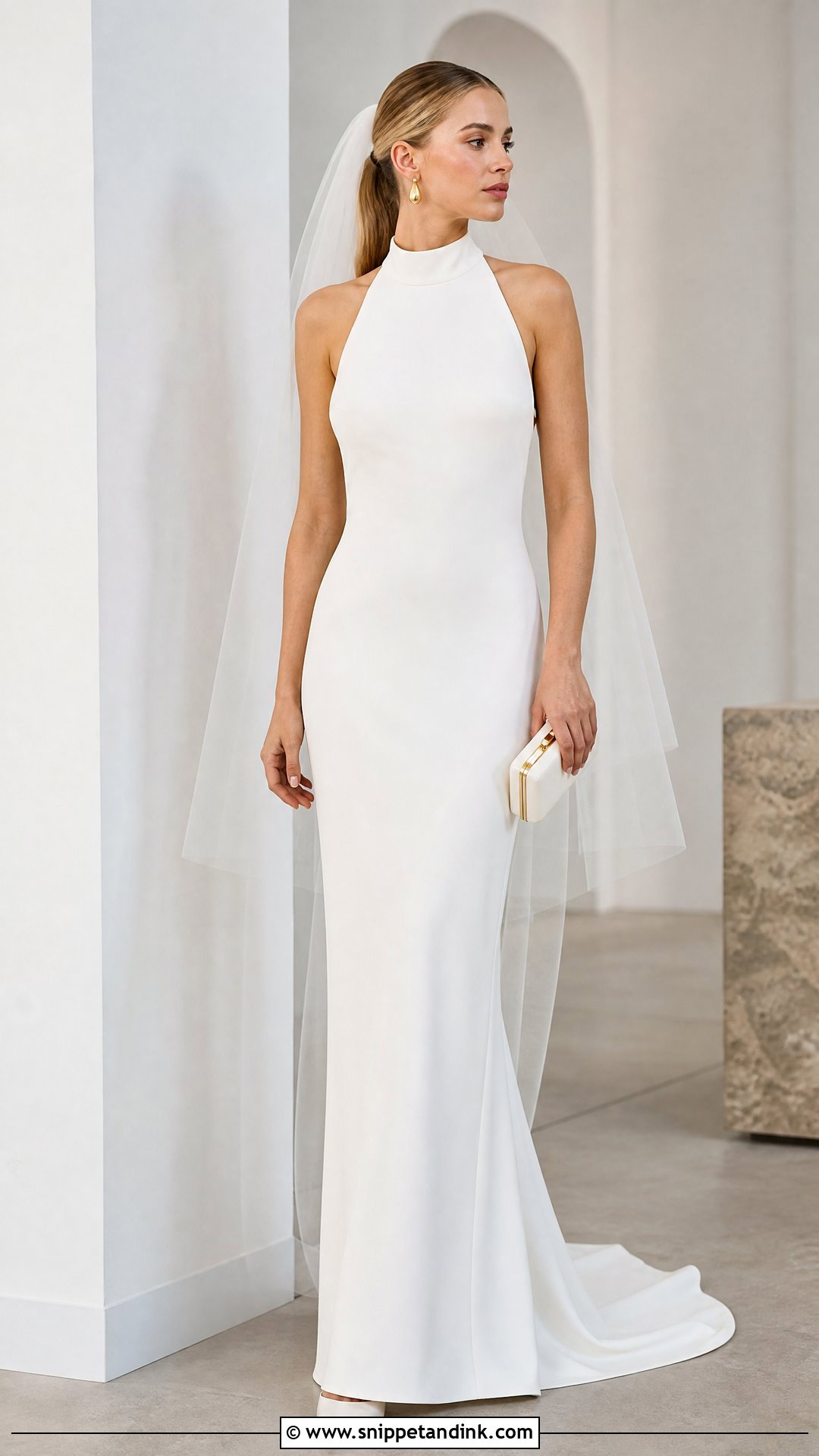
High necks are the hardest cut to tailor, because a collar that’s slightly off shows every time you turn your head. A sleeveless crepe column with a softly raised neckline, fitted waist and small train looks current, especially when the seaming does the shaping. Simple pearl or gold earrings, pointed pumps and a structured ivory clutch keep the accessories quiet, and a low ponytail or smooth bun keeps the neck clear. A sheer plain veil softens the strong line; leaving the veil off is the more modern choice. Turn your head and lift your arms during fittings. The collar should stand on its own without pressing, and good lining keeps the covered shape from looking heavy.
7. Minimalist Off Shoulder Wedding Dress
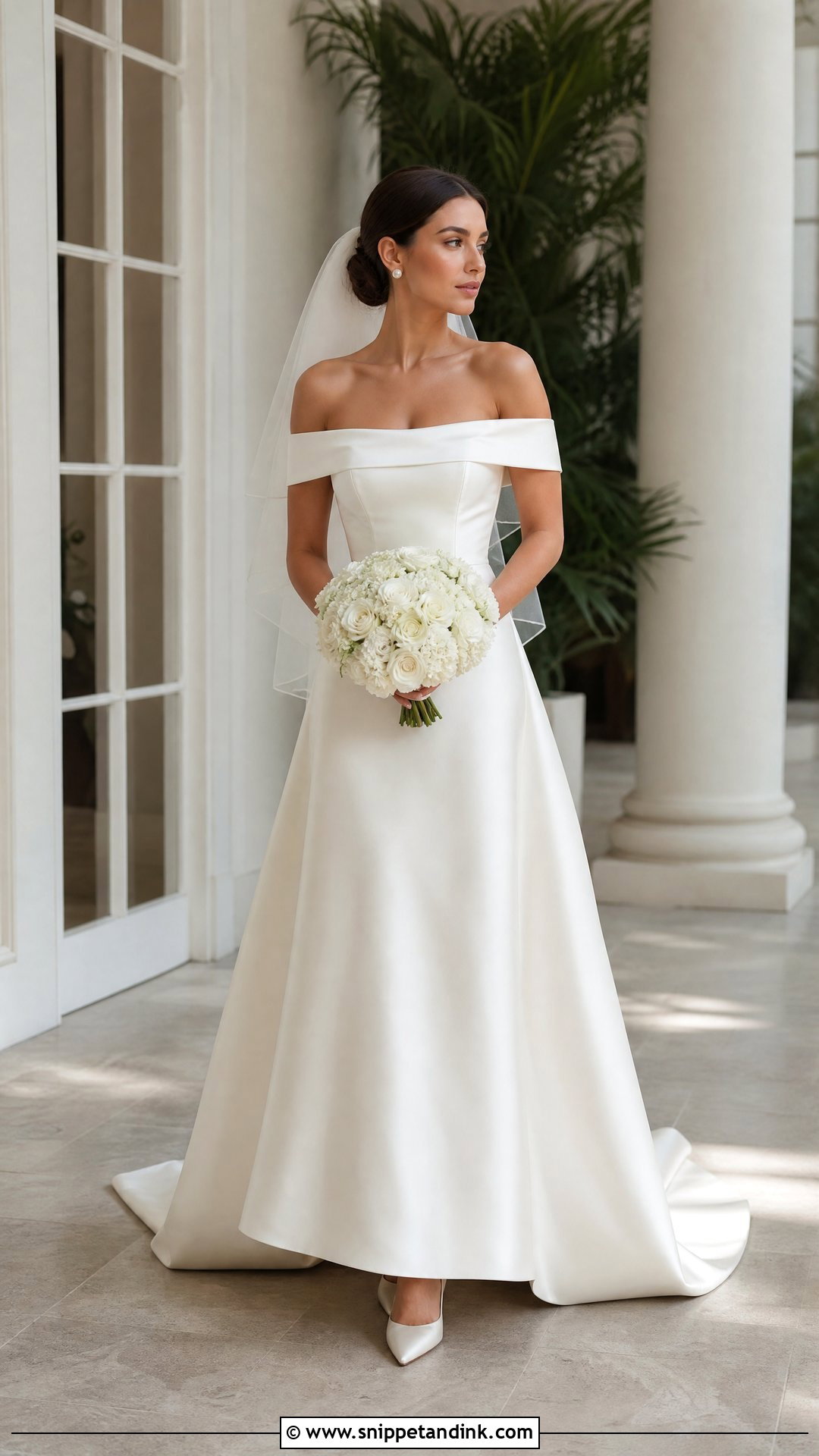
Off-shoulder necklines limit how high you can lift your arms, and I tell every bride that before she falls for one. A smooth satin or mikado gown with a folded neckline, shaped bodice and gently flared skirt gives softness without lace or crystals. Keep jewelry to pearl button earrings and a fine bracelet, wear ivory pointed heels, and set a low bun that shows the shoulders and anchors a plain mid-length veil. If the dress has detachable straps or a folded collar, practise reaching and hugging before the wedding. The bodice needs real internal structure so it holds without squeezing, and a rounded bouquet in white and pale green finishes it.
8. Minimalist One Shoulder Wedding Dress
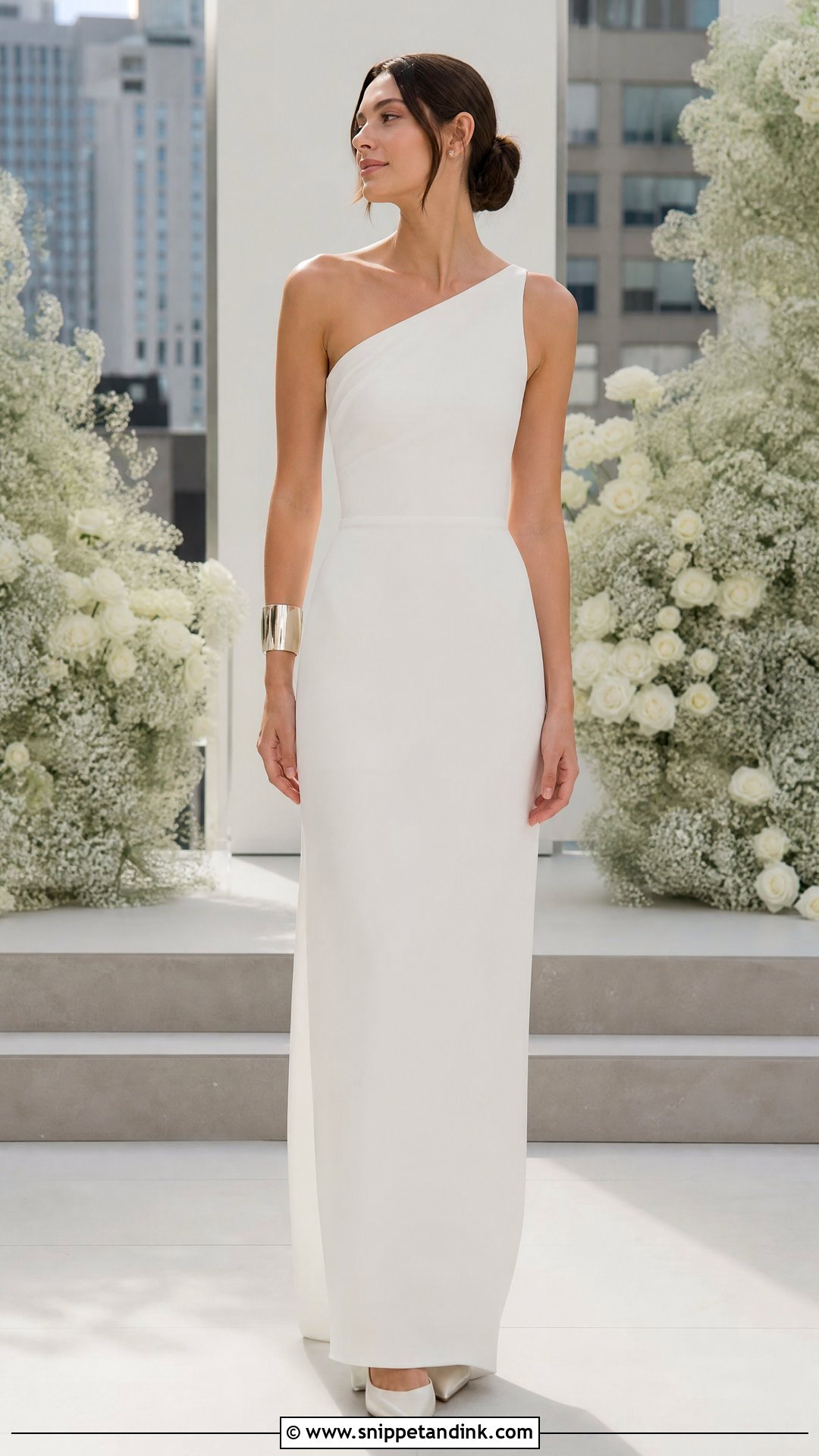
Asymmetry gives a plain dress its interest, but it also makes any fitting error obvious, since the eye compares both sides. A one-shoulder crepe gown with a diagonal neckline, fitted waist and straight floor-length skirt is the strongest modern shape on this list. I balance the bare side with a sleek low bun set slightly off center, small studs and one sculptural cuff, with pointed heels to keep the line sharp. A traditional veil often fights the strap, so a short plain veil tucked beneath the bun is my usual answer. In alterations, check that the bodice sits level and the single strap doesn’t slide; the skirt should skim the hips, not grip them. A simple white bouquet is all it needs.
9. Minimalist Cowl Neck Wedding Dress
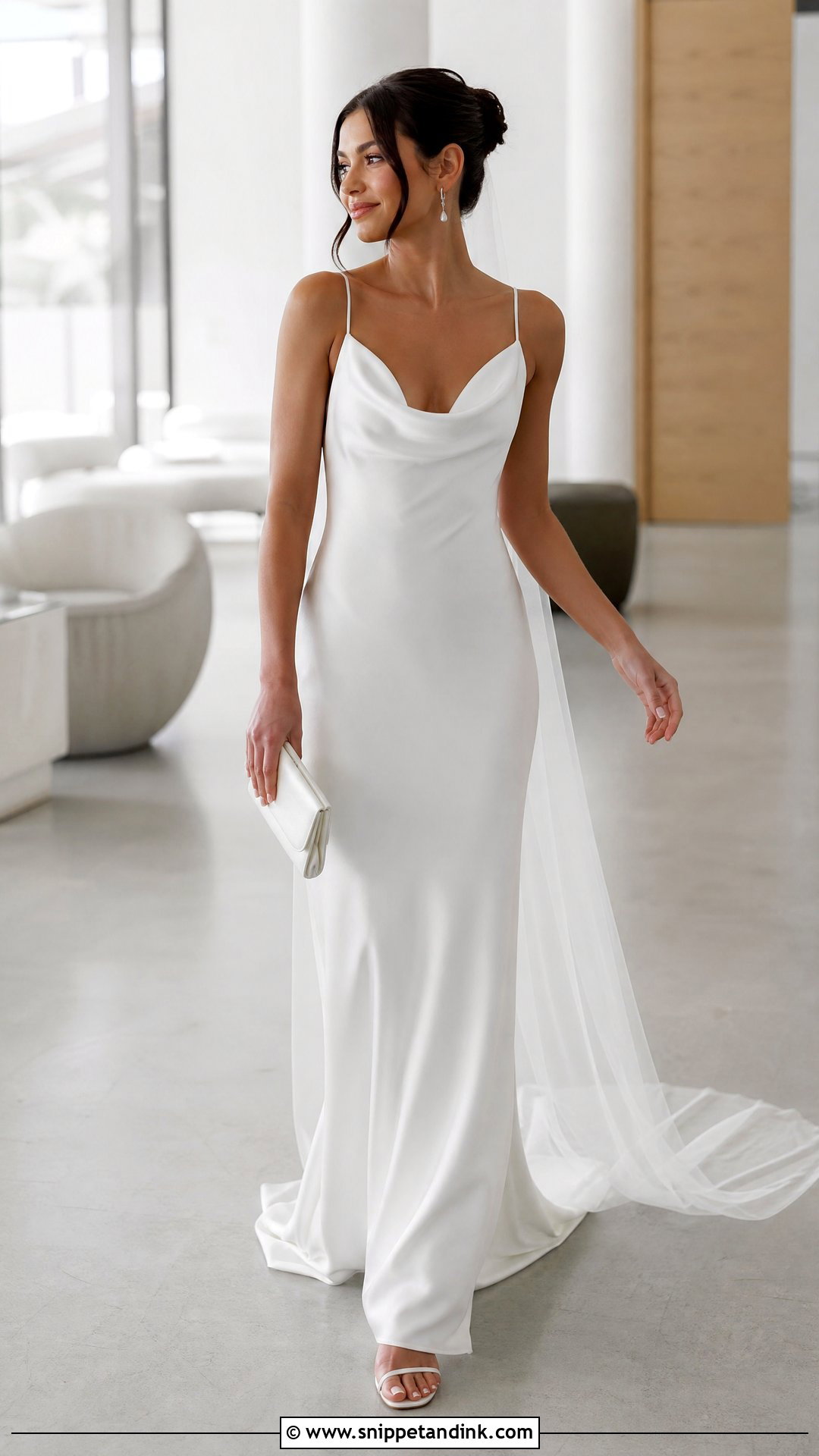
A cowl neckline moves with you, which is its charm and its risk. In silk or satin cut on the bias, with slim straps, a softly folded front and an open or lightly draped back, it pours over the body. Delicate drop earrings, low-heeled sandals, a small satin clutch and loose waves or a relaxed bun suit the fluid fabric, and a narrow raw-edge veil adds a layer without hiding the dress. Cowls shift when you lean forward, so I check the depth from above and from the side at every fitting and add discreet tape or a small stitched weight if it gapes. Steam it carefully on the morning, because satin shows every crease from the garment bag.
10. Minimalist Corset Wedding Dress
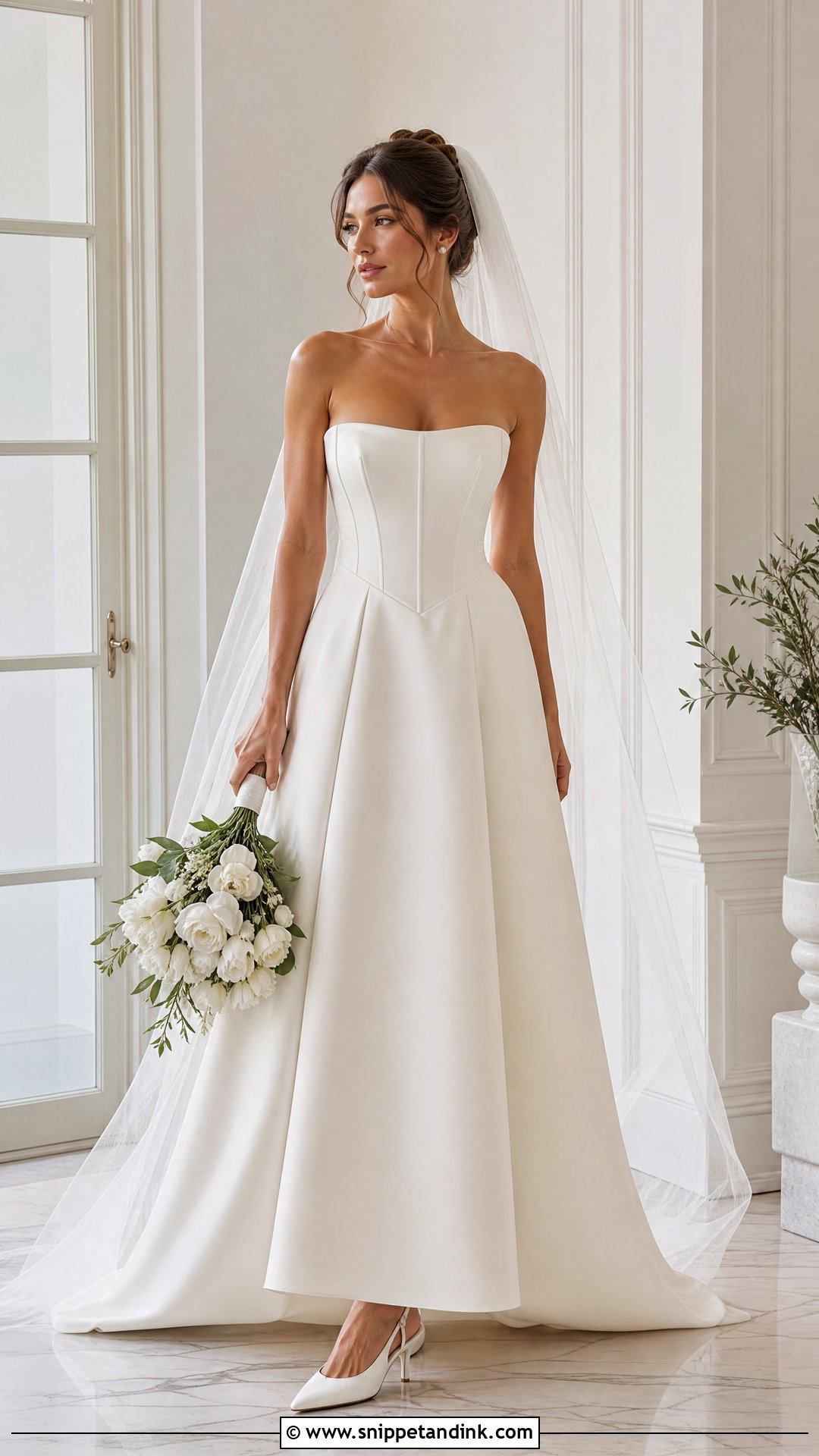
Visible boning is what turns a corset dress from minimal to busy, so look for channels that sit flat under smooth fabric. A structured strapless ivory bodice with a softly curved neckline over a straight or A-line skirt keeps attention on the waist without any surface decoration. Pearl studs, closed-toe slingbacks, a plain long veil and a neat bun suit the structure, and a loose bouquet softens it. My rule at fittings: you should be able to take a full breath and sit through dinner without the top edge digging in or leaving marks. Bring the exact shoes and undergarments to every appointment, or the hem and waist proportions will be wrong.
11. Minimalist Column Wedding Dress
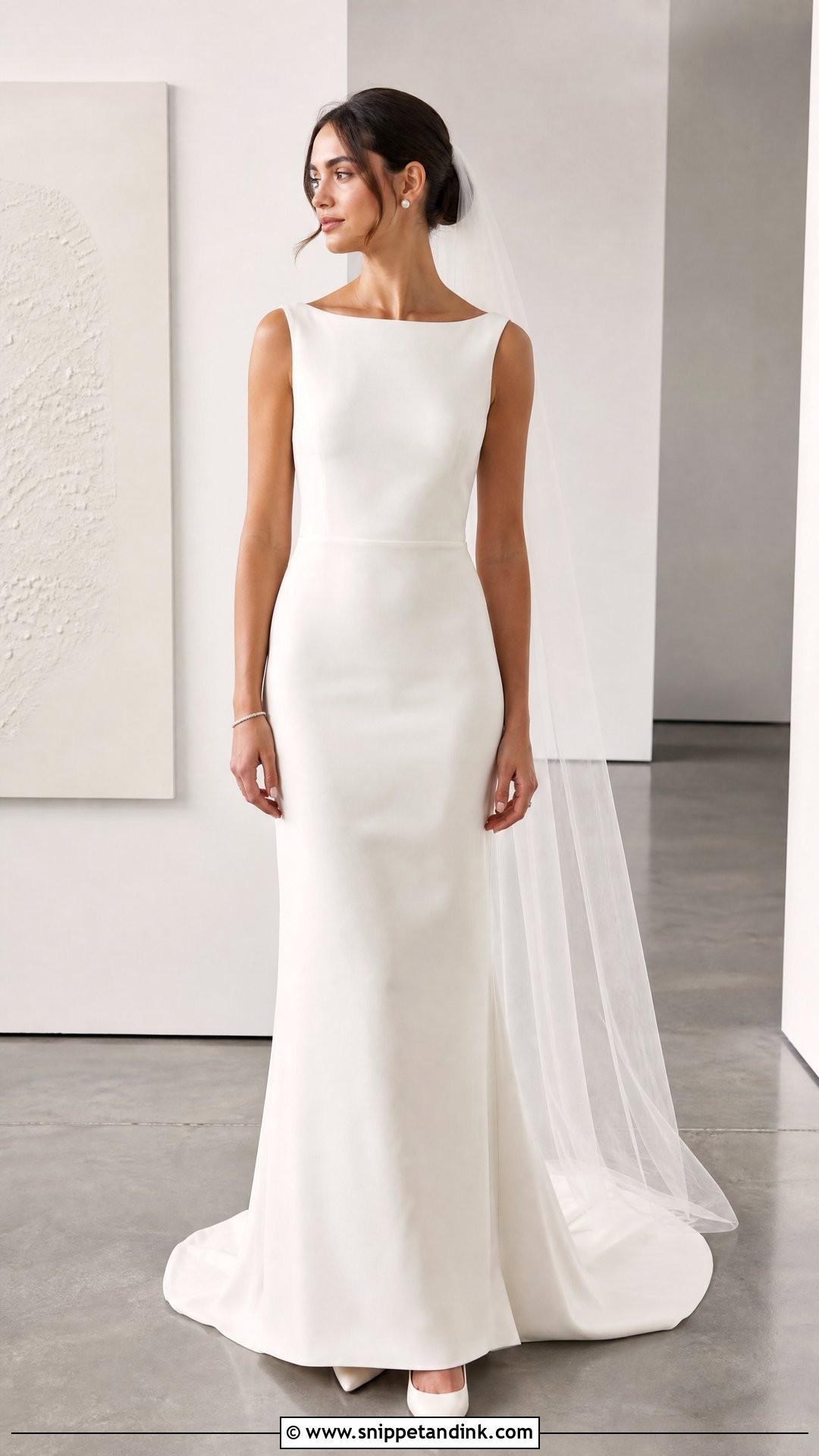
Column gowns look simple and are unforgiving, because the straight line exposes every ripple from underwear and every error in the hem. Matte crepe or heavy silk that follows the body without gripping it is the fabric, ideally with a bateau neckline, sleeveless bodice and a small back slit so you can actually walk. Pointed pumps, pearl studs and a narrow bracelet keep it clean. A long veil makes it ceremonial, a short one lighter, and long-stemmed flowers repeat the vertical line. The hem should just graze the floor in your wedding shoes without pooling. If there’s a small train, add a hidden wrist loop or bustle before the reception.
12. Minimalist Fit And Flare Wedding Dress
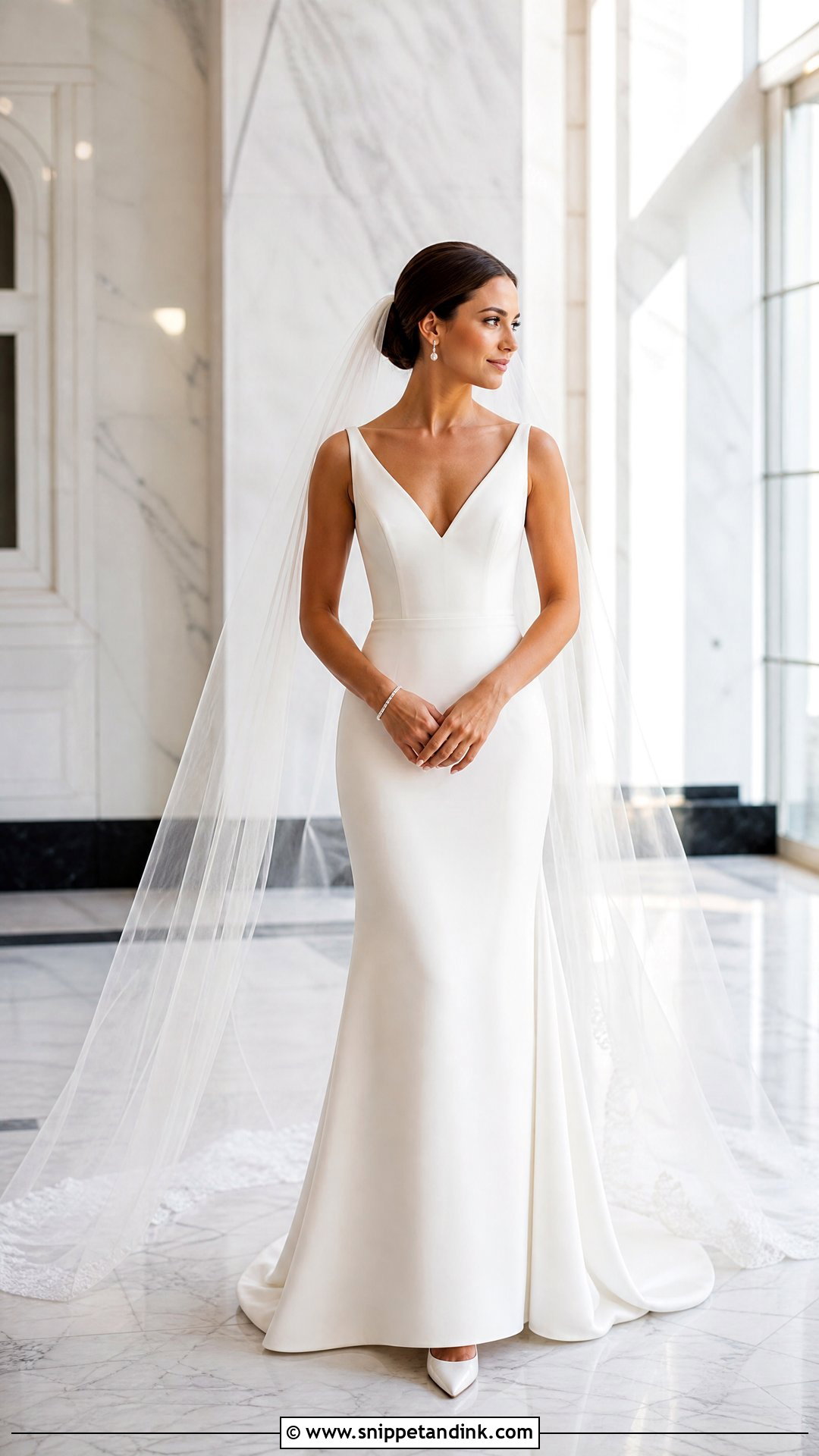
Where the flare starts decides everything. On a stretch crepe fit-and-flare with a clean V-neck and supportive straps, a skirt that opens around the upper thigh lets you walk normally; one that opens at the knee looks more dramatic and turns stairs into a project. Pointed heels, small pearl earrings, a sleek bun and a plain cathedral veil give contrast and movement for photographs, and fabric-covered buttons down the back are enough detail. Horizontal lines pulling across the hips mean the seat needs letting out. Sit, walk and climb a few steps at the fitting, and let the tailor adjust waist, seat and hem together.
13. Minimalist V Neck Wedding Dress
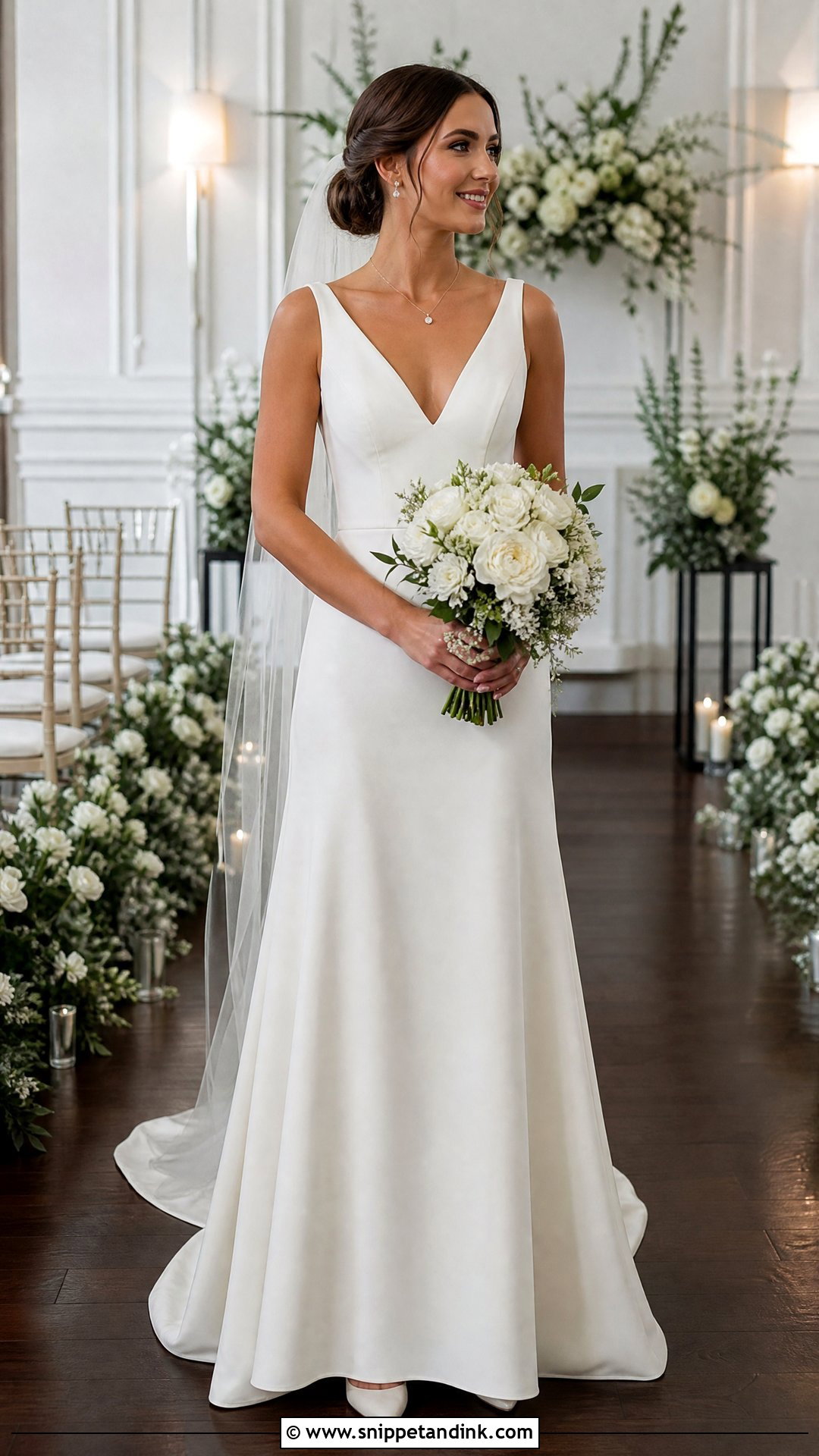
A V-neck lengthens the torso and works over almost any skirt, which makes it the safest cut here for brides who are undecided. For a minimal outfit, smooth crepe with wide supportive straps, a fitted waist and a quiet A-line skirt is plenty. Pick a depth you won’t spend the evening adjusting. A fine pendant that sits above the point of the V, small earrings, pointed pumps and a softly structured bouquet complete it, with a low chignon and plain fingertip veil keeping focus near the face. If the back is a V too, raise support and undergarments at the first fitting, not the last. The neckline edges should lie flat against the skin with no gaping when you lean.
14. Minimalist Backless Wedding Dress
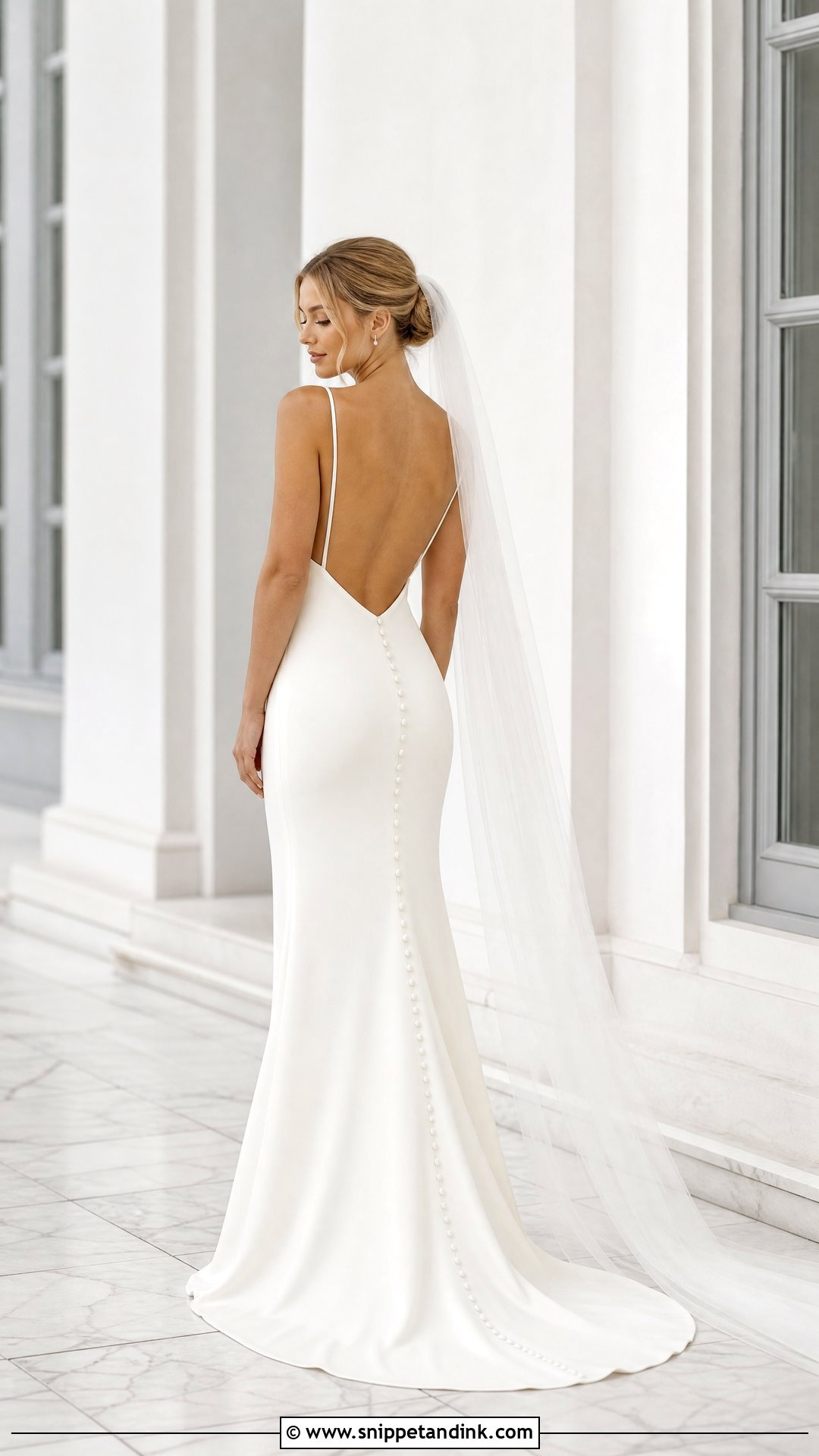
An open back makes the walk back up the aisle the moment people remember, so the front can stay almost bare of detail. A high-neck or scoop-neck crepe gown with long clean lines, slim straps and a gently fitted skirt does this well. I put the hair in an updo, add tiny earrings and delicate heels, and attach any veil beneath the bun so it frames the back rather than hiding it. Skip a necklace; its clasp sits right where the eye is going. Standard bras will show, so talk to your tailor early about built-in cups and seam placement, and check the back edge doesn’t gape when you sit. A row of covered buttons gives the opening a defined edge.

15. Minimalist Cape Wedding Dress
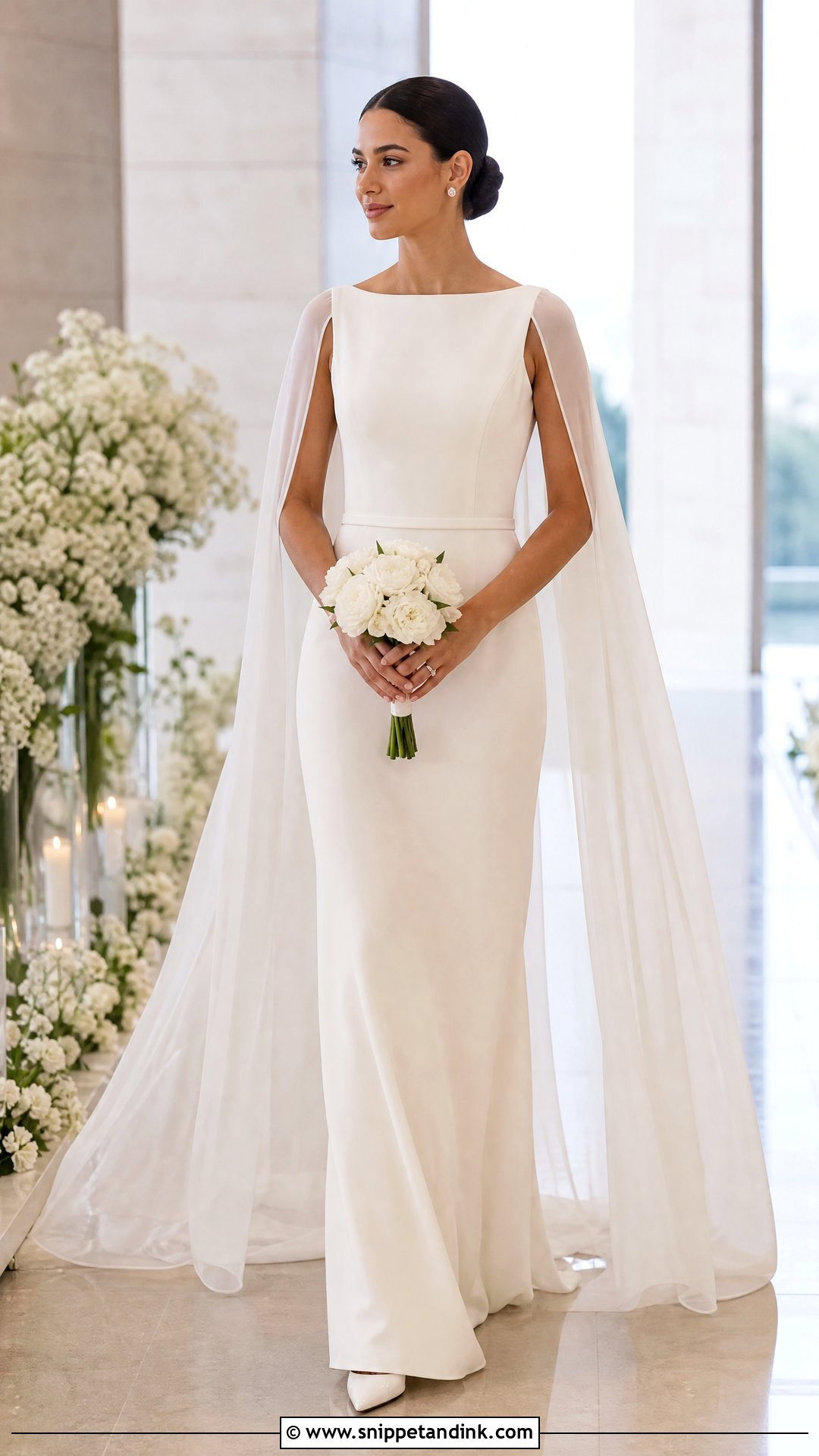
Brides who find a veil fussy on the head often love a cape, since the drama sits on the shoulders instead. Start with a sleeveless ivory column with a clean neckline, defined waist and smooth floor-length skirt, then layer a plain sheer or lightweight crepe cape that falls from the shoulders toward the train. Pointed pumps, simple earrings and a structured low bun keep the rest quiet, and the bouquet should stay compact so it doesn’t tangle in the cape. Go detachable if you plan to dance, and ask how it fastens: hooks or snaps should disappear once it’s off. Practise taking it off yourself so you’re not hunting for help at the reception.
16. Minimalist Tea Length Wedding Dress
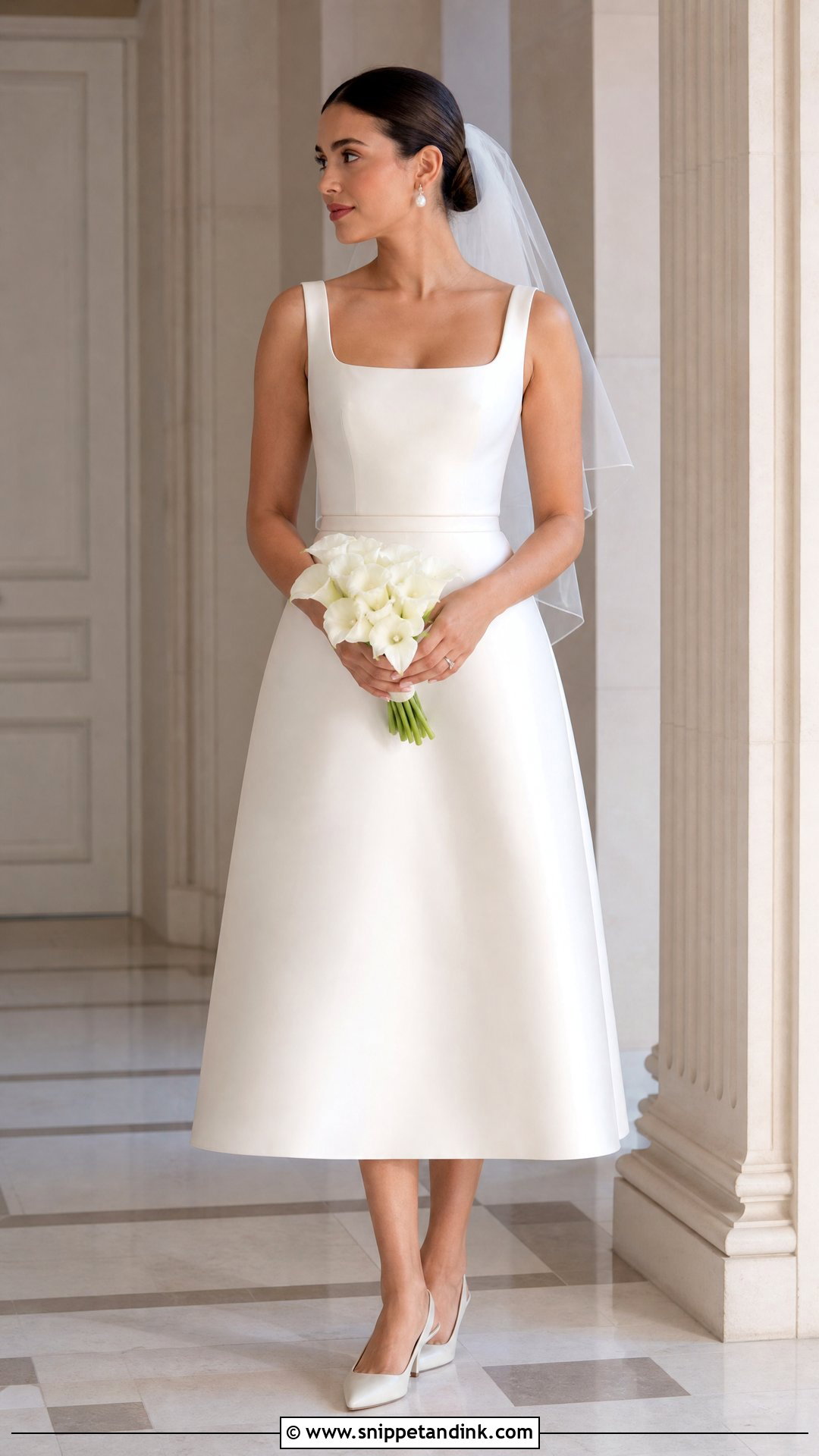
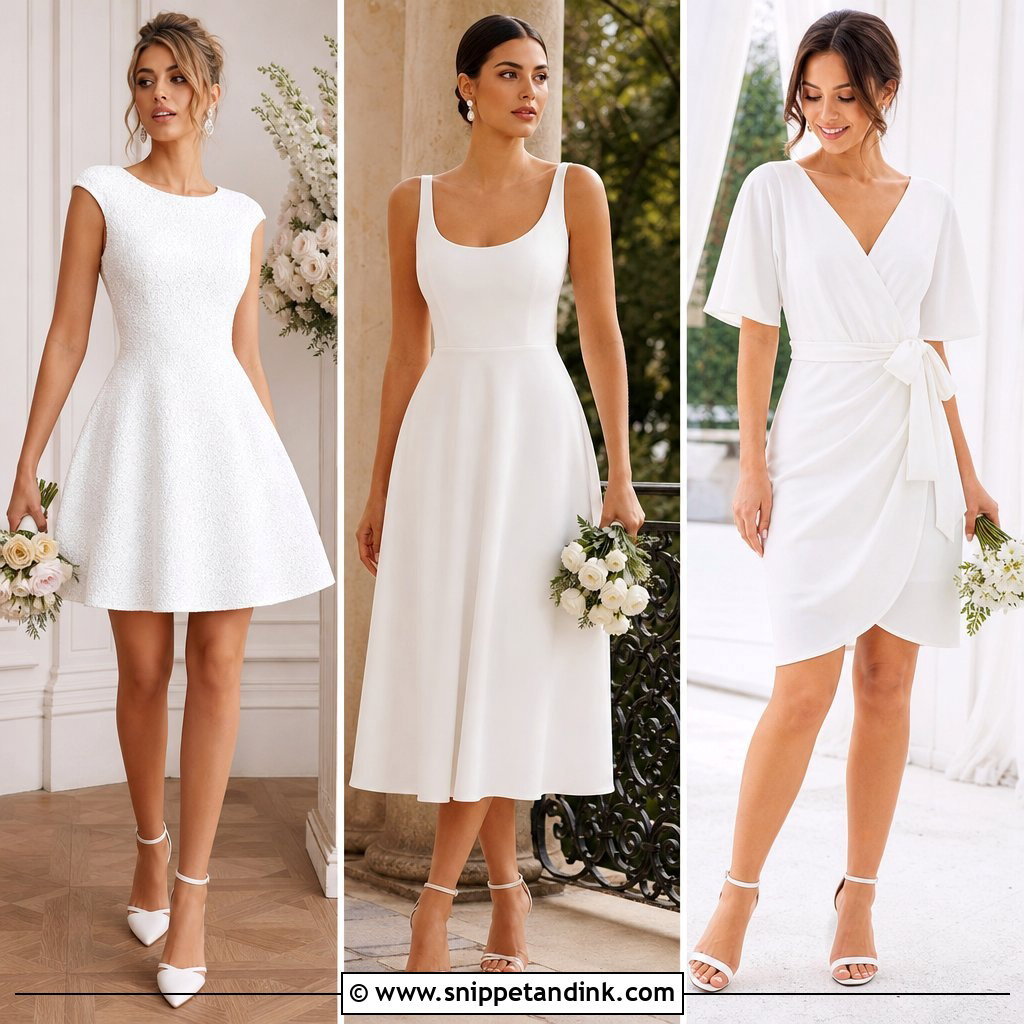
Tea length puts your shoes and ankles on show, so I choose the shoes first and set the hem around them. A structured satin dress with a square or bateau neckline, fitted waist and skirt ending between knee and ankle suits a smaller ceremony or a daytime party. Slingbacks, pointed pumps or ankle-strap heels all work, with pearl earrings, a small bouquet and a short plain veil or neat hair bow. Keep the bun smooth. The one thing I measure carefully is where the hem lands: just below the widest part of the calf flatters, right on it shortens the leg. Leave room in the skirt to dance, and let good fabric and minimal seams make it read bridal rather than simply white.
17. Minimalist Mini Wedding Dress
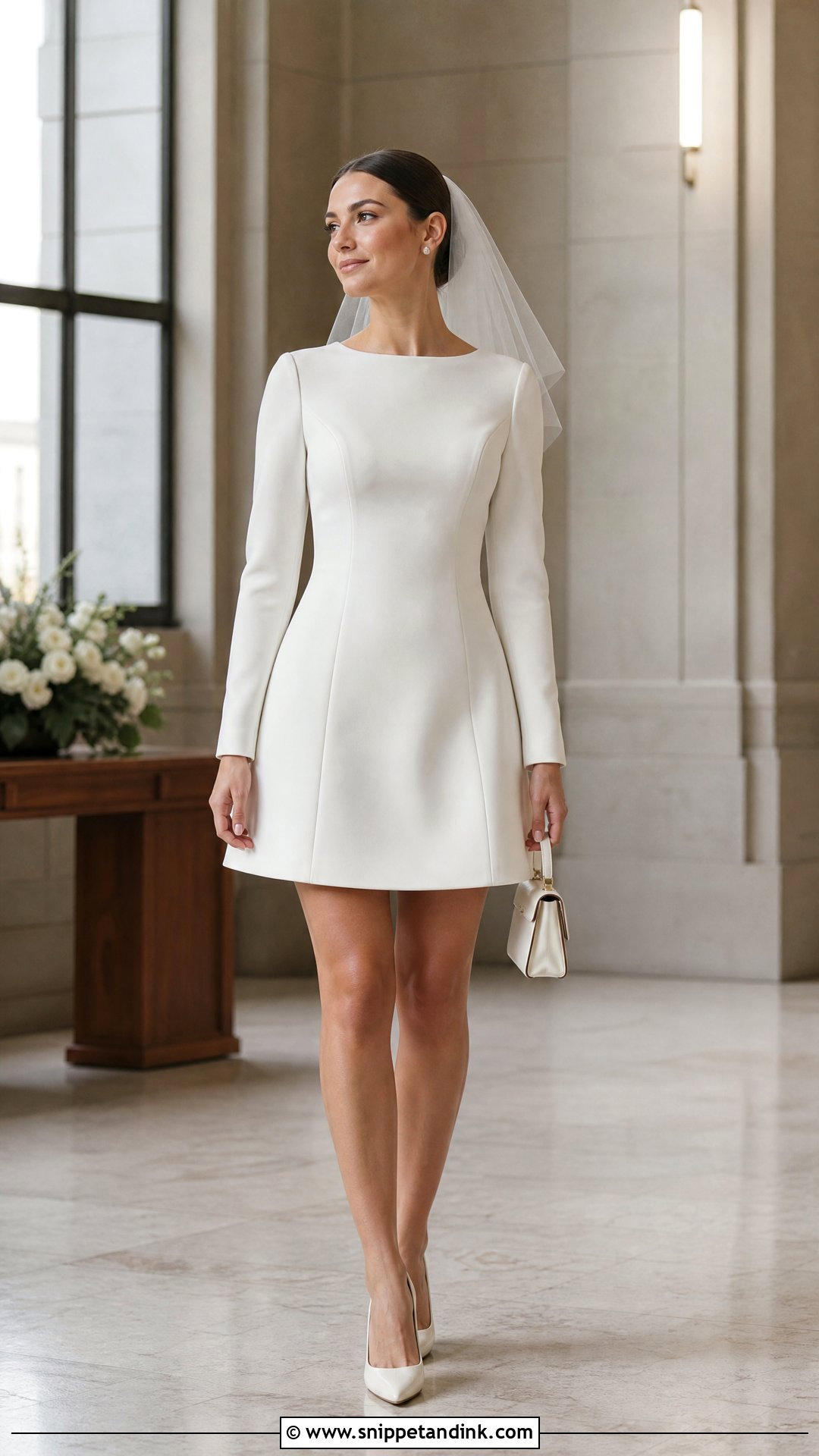
A short dress has to be sharper than a long one, because there’s less of it to carry the occasion. For a courthouse ceremony, a small gathering or a second outfit, I like a tailored shift or fitted A-line with a high neck, clean long sleeves or a structured strapless bodice, in heavy crepe or mikado so it holds its shape and doesn’t look casual. Shoes depend on the walking: pointed pumps or slingbacks for a short day, low block heels if there are city streets involved. Add a short veil, pearl studs, a compact handbag and a small bouquet in proportion. Sit down and climb a step in front of a mirror to check the hem, and wear discreet shorts underneath for comfort.
18. Minimalist Wrap Wedding Dress
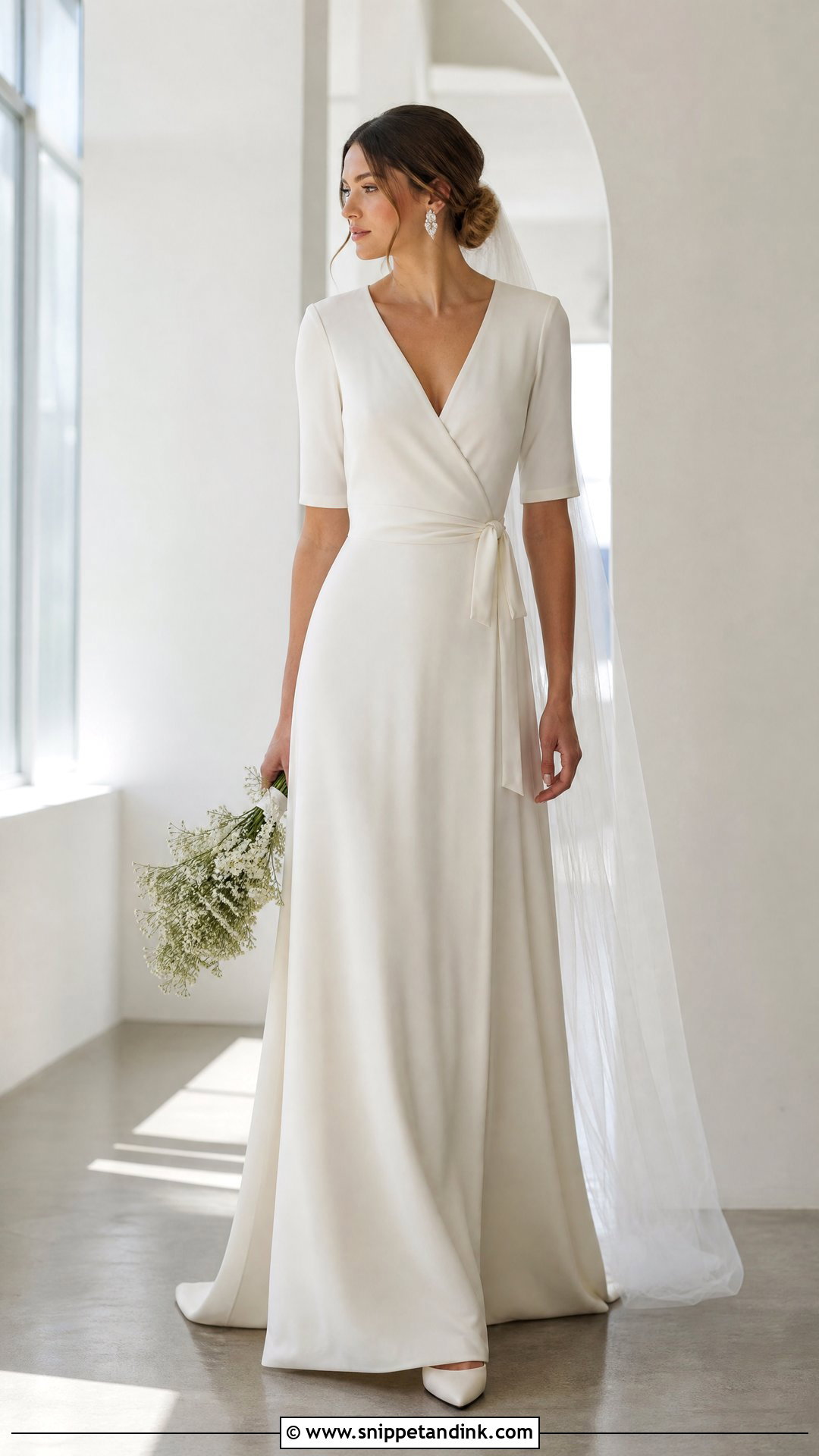
Wraps are the most forgiving fit on this list, since the waist adjusts on the day, but the outer sash alone won’t hold the neckline in place. Look for matte satin or crepe with a clean V-neck, long or elbow-length sleeves and a floor-length skirt, closed with hidden snaps or an internal tie. Pointed heels, delicate earrings, a low textured bun and a plain fingertip veil suit the relaxed shape. Keep the waist tie flat and skip oversized bows if you want it to stay minimal. At fittings, walk, sit and cross your legs, because wrap skirts open further than most brides expect.
19. Minimalist Empire Waist Wedding Dress
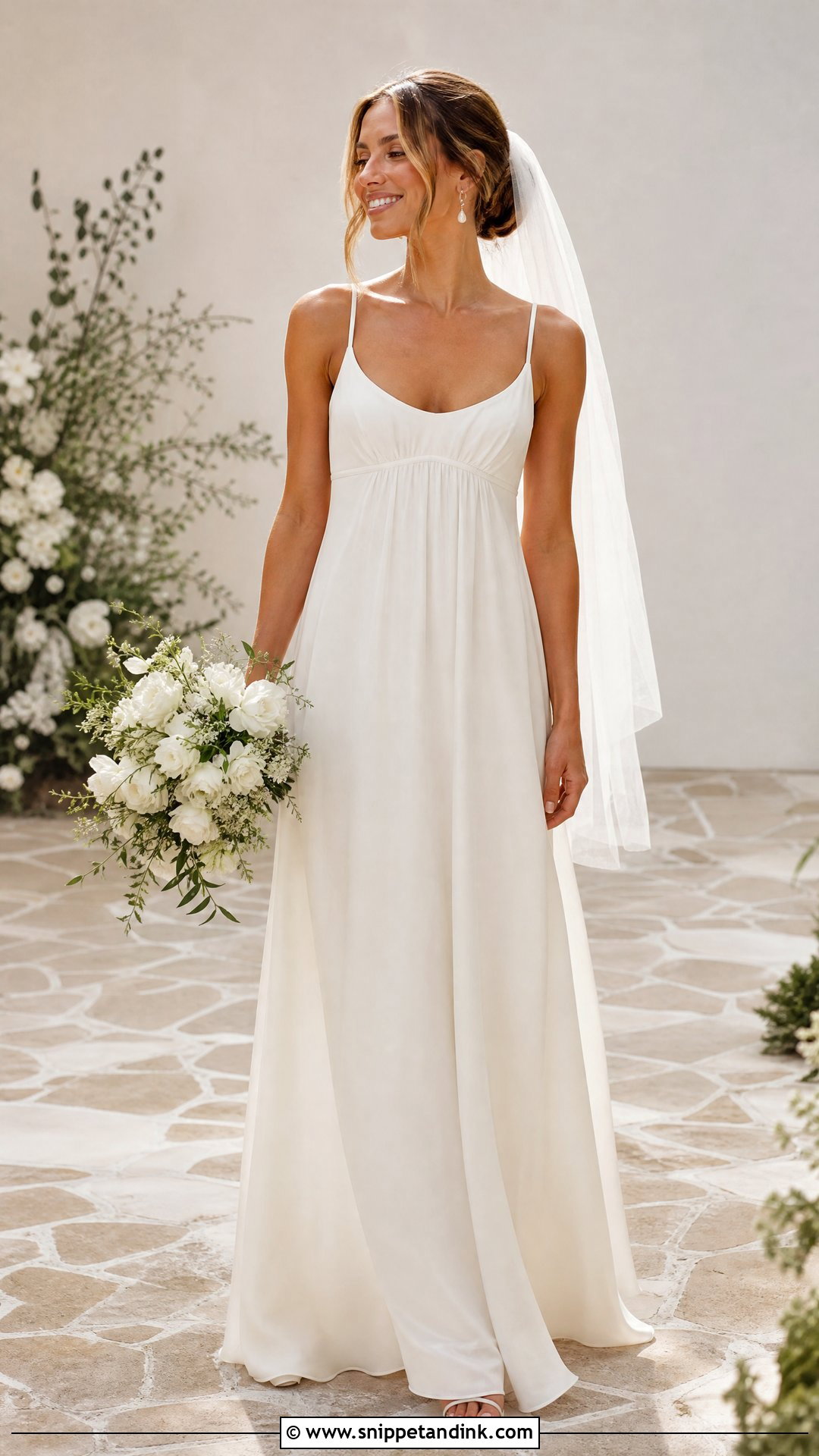
Empire waists give room through the waist and hips, which is why brides planning a long, warm day often like them. The seam sits just under the bust and the skirt falls freely, best in lightweight silk, satin or crepe with slim straps, a soft neckline and very little gathering. Delicate sandals, small drop earrings, a loose low bun and a shoulder-length or fingertip veil keep it airy. The fitting work happens above the seam: the bust has to be fully supported, because there’s no natural waist to anchor the dress. Too much fabric gathered under the seam adds bulk, so a narrow ribbon or a clean seam line is all the definition it needs.

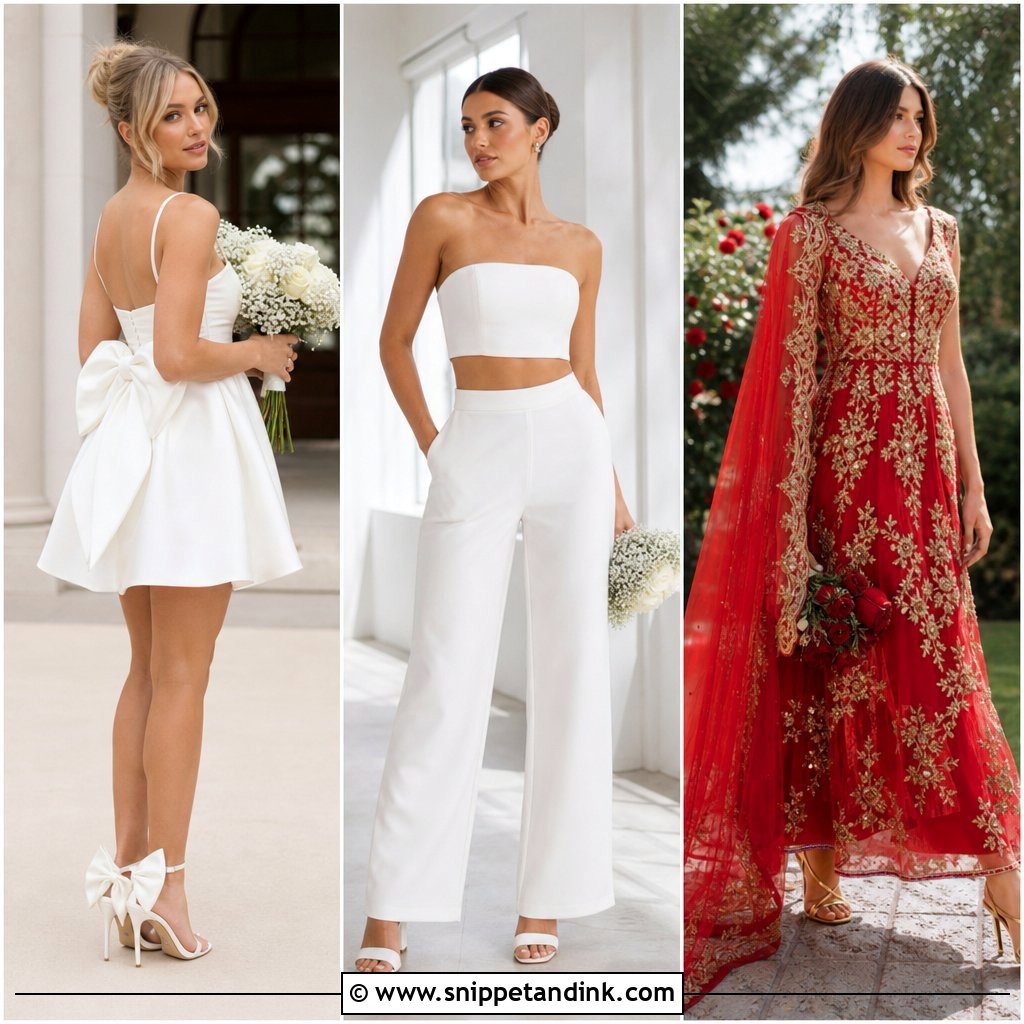
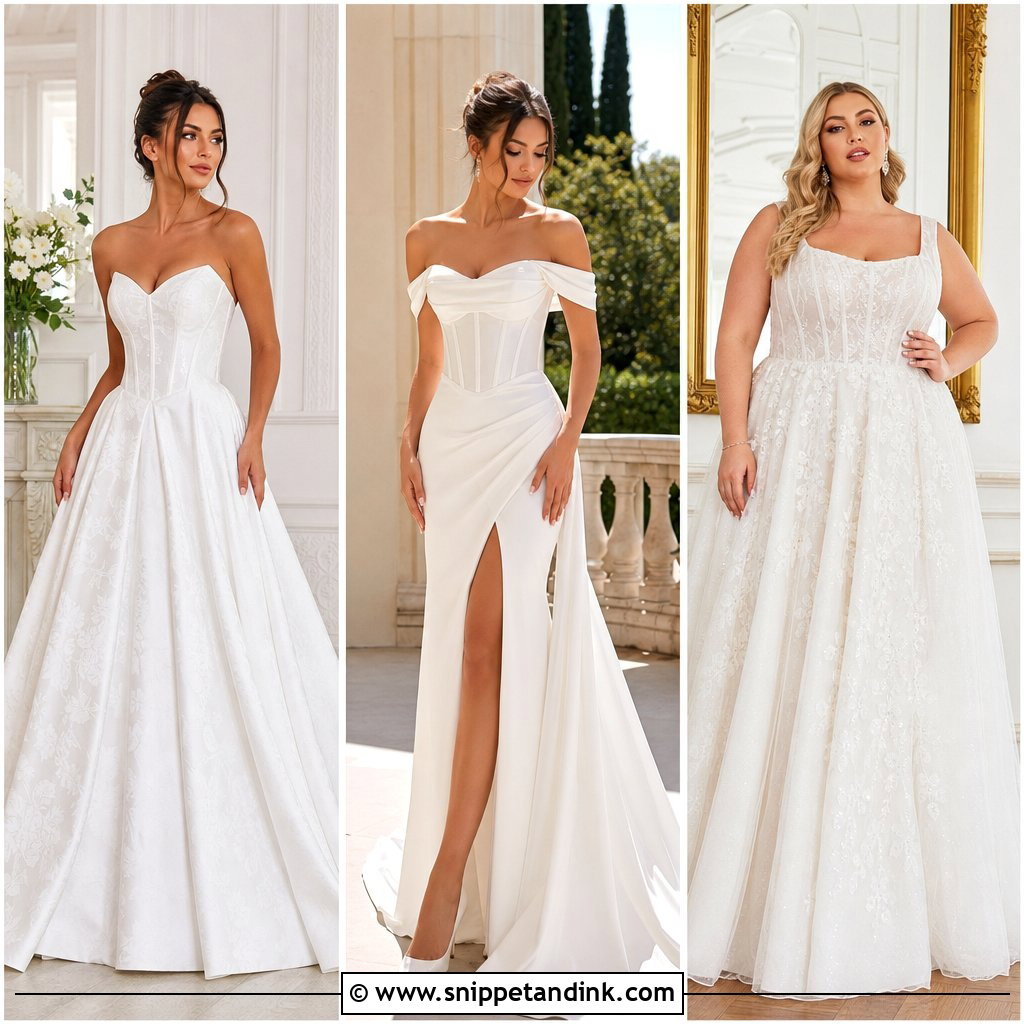
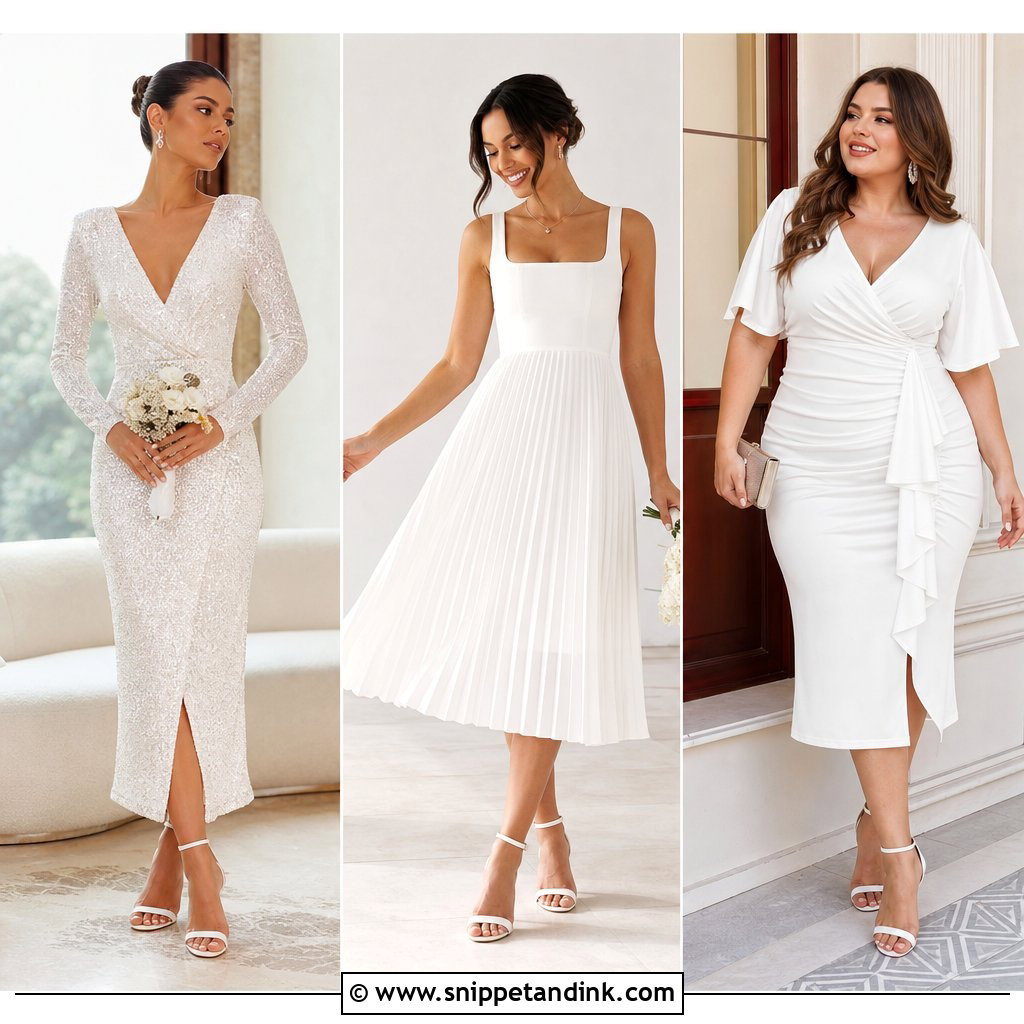

20. Minimalist Ball Gown Wedding Dress
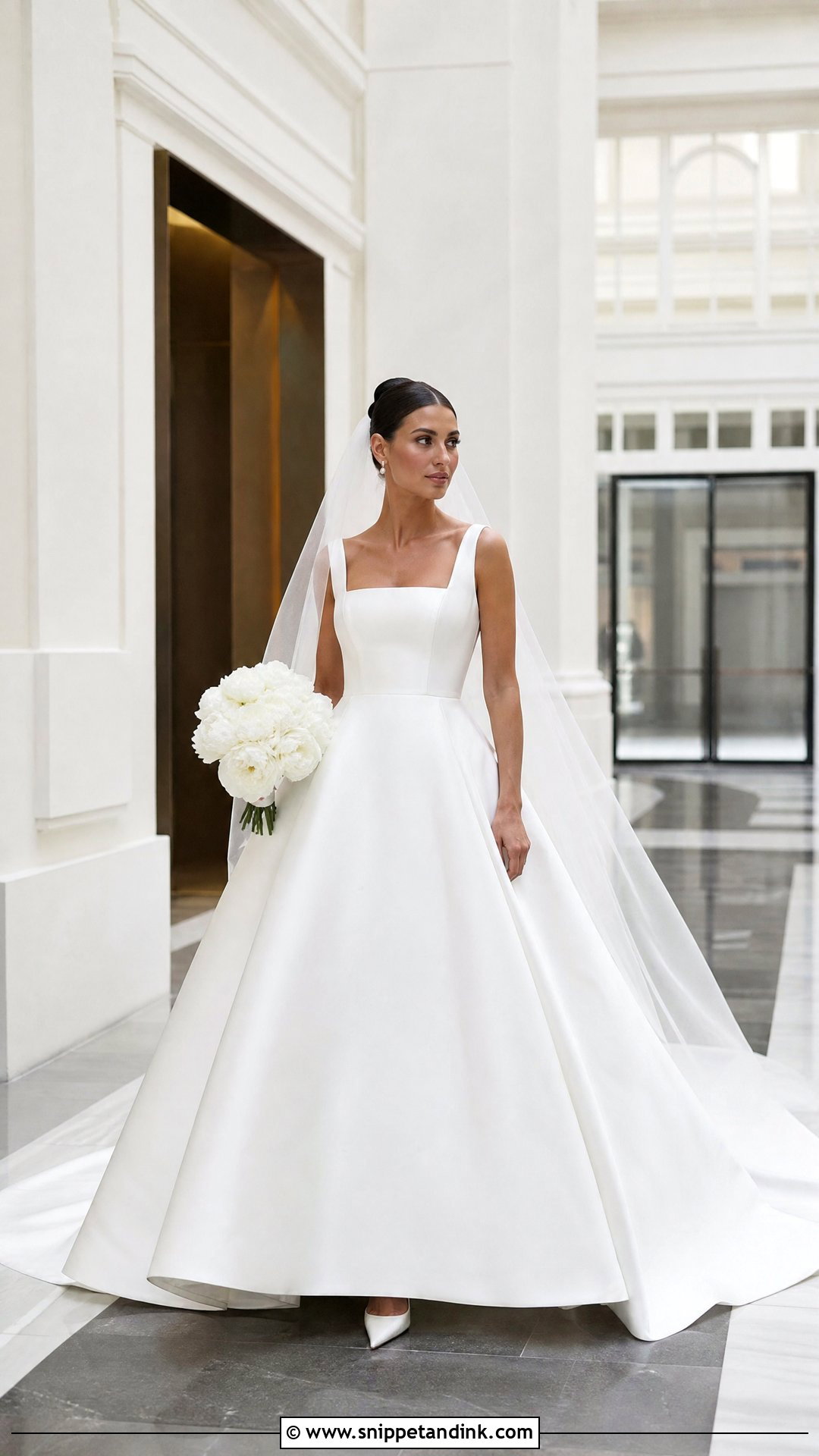
A ball gown stays minimal when the shape is the decoration. Crisp mikado with a strapless or square-neck bodice, a defined waist and a full skirt free of lace or beading holds its volume on its own. Pointed pumps, pearl earrings, a sleek bun and a plain cathedral veil match the scale, and an all-white bouquet with limited greenery keeps the flowers in check. Before you buy, ask how heavy the skirt is, what bustle it takes and how you’ll sit in it, since a full mikado skirt needs a wide chair and some practice. The bodice must stay smooth while carrying all that weight below it.
Underwear Lines Show First on Crepe and Satin
A beaded bodice hides a lot. Smooth crepe and satin hide nothing, which is why I settle undergarments before the first fitting rather than after it.
- Pick underwear close to your skin tone, not white. White shows through ivory fabric under flash.
- Laser-cut edges lie flatter than lace or elastic trims, which print through satin as a visible line.
- For backless, low-back and halter dresses, ask the tailor to sew cups into the bodice. Adhesive cups can loosen with heat and dancing.
- Light shaping shorts stop a bias-cut skirt catching on the thighs, but avoid anything that rolls at the waist when you sit.
Bring the exact pieces, and your wedding shoes, to every fitting. Changing the bra after alterations changes the bust fit, and a different heel height changes the hem.
Steaming, Sitting and Spills on the Morning Itself
Plain fabric shows creases far more than embellished fabric, and most of them happen in the hours before the ceremony. Have the dress steamed the day before or that morning, hang it from its internal loops rather than the straps so the shoulders don’t stretch, and keep it in a breathable bag, never plastic.
Satin creases across the lap the moment you sit, especially in a car. I have brides lift the back of the skirt and sit on the lining, which saves the outer fabric. Crepe recovers faster. For the day, keep a handheld steamer, white chalk for light marks, fashion tape, ivory safety pins and a clean white cloth with whoever is looking after you. Blot spills and never rub; rubbing satin raises a dull patch, and water can leave a ring on silk, so anything bigger waits for the cleaner.
After the wedding, get the gown to a specialist cleaner within a few weeks. Sugar from champagne or cake can be invisible at first and turn yellow over time, and on a plain dress there’s no lace to hide it.
A Plain Dress Still Needs a Point of View
Minimal never means unfinished. The plain gowns that work come from deliberate choices: good fabric, proportions that suit you, and alterations done properly. Start with a silhouette you can move and sit in at your venue, then make the neckline, train, shoes, veil, jewelry, hair and flowers agree with each other. Restraint doesn’t mean stripping out everything personal, though. One heirloom, a sculptural earring or a dramatic plain veil is often what makes a simple dress unmistakably yours, and the sleek, romantic, structured and relaxed options above leave room for every body type, setting and season.
You'll Like These Ideas:



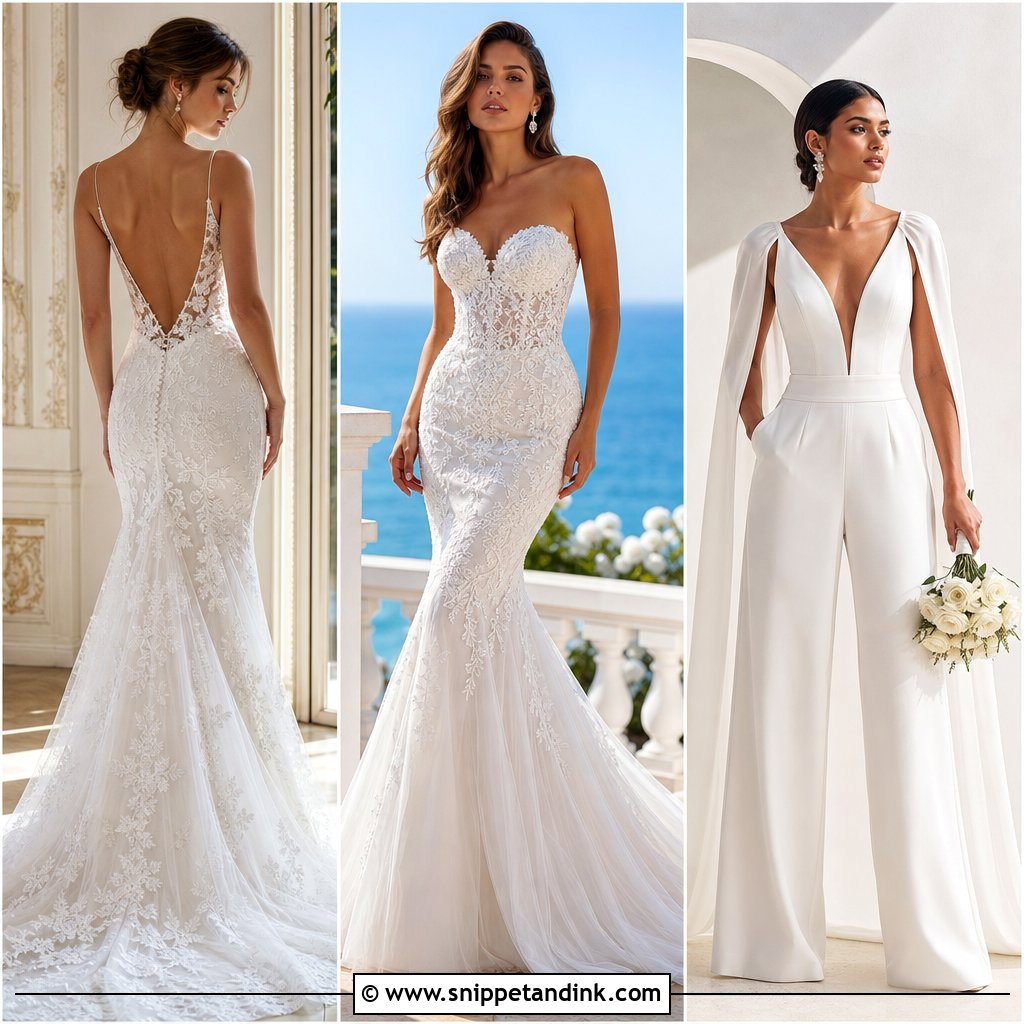
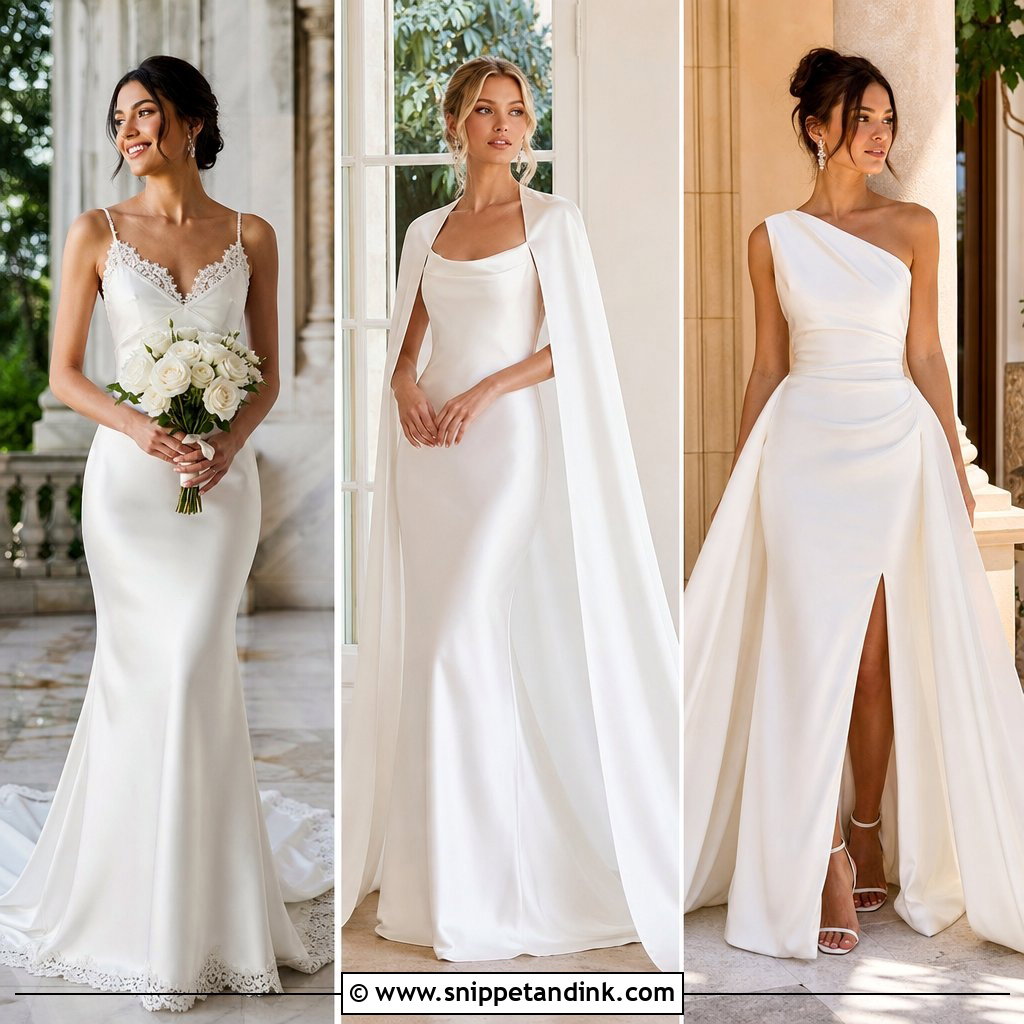
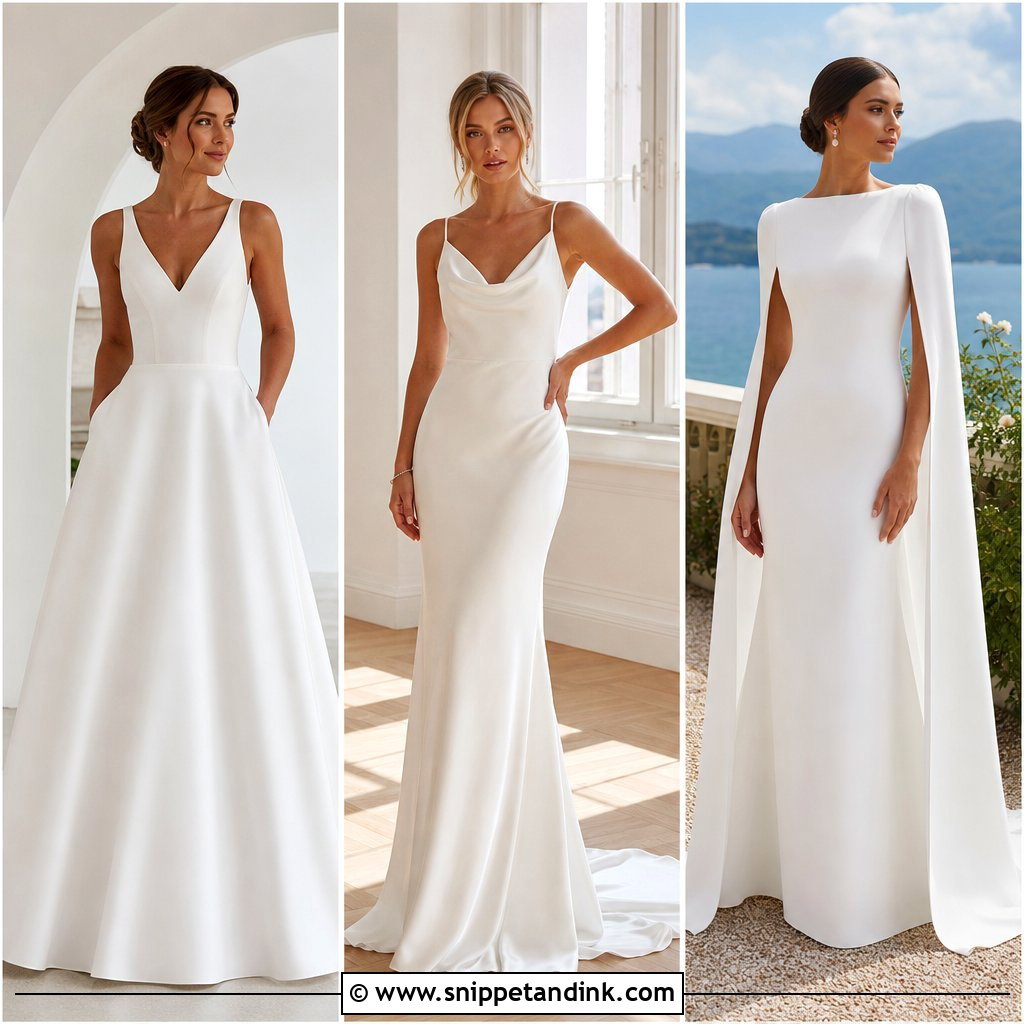
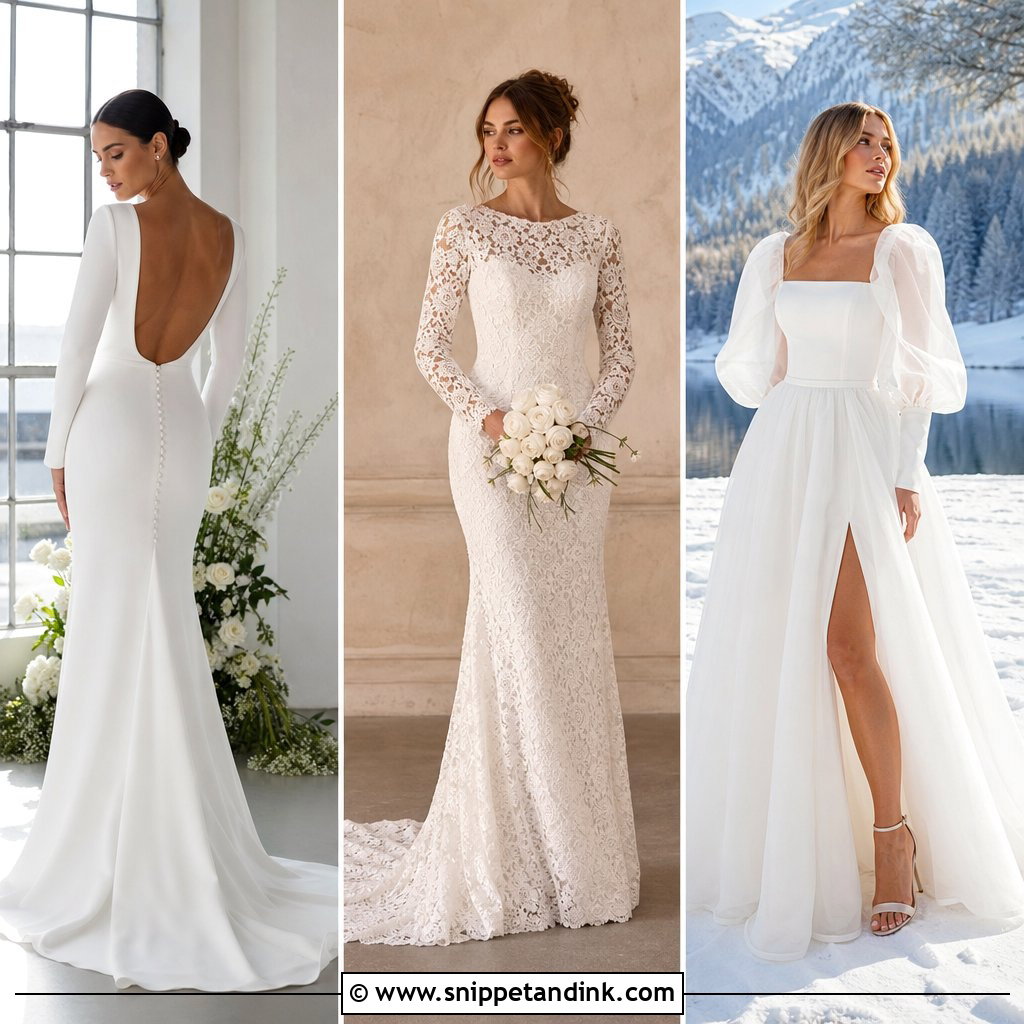


Leave a Reply