
A luxury ballgown is mostly about fabric and engineering. The skirt has to hold its shape for hours, and the bodice has to carry that weight without you noticing it. The twenty gowns here run from plain duchess satin to lace, corsetry, pearls, organza tiers and jacquard, including the dipped Basque waist that bridal designers keep returning to. With each one I’ve added what I look at in the fitting room: how it sits, what it weighs, how it moves on stairs. Shoes you can walk in, jewelry that suits the neckline and a veil sized to the train finish every look.
How Long a Made-to-Order Ballgown Actually Takes
Most luxury ballgowns aren’t sitting on a rail in your size. The salon sample is ordered for you, and production usually takes several months, longer for heavy beading or custom changes. That’s why I suggest starting appointments nine to twelve months out. Lead times vary by designer and season, so ask for the expected ship date in writing when you order.
- Nine to twelve months before: shop, compare fabrics, order.
- Three months before: the gown should arrive; book your first fitting.
- Six to eight weeks before: main alterations, bustle and support.
- Two weeks before: final fitting in your shoes and underwear, bustle demonstration for whoever will do it.
Rush fees exist, but a full skirt with lace or tiers needs time to alter well, and squeezing that stage is where things go wrong.
When the gown arrives, open the bag straight away and check the color, the beading and the label size against your order. Hang it from its internal loops rather than the straps, so the weight of the skirt doesn’t stretch the shoulders before your first fitting.
1. Strapless Satin Wedding Dress Ballgown
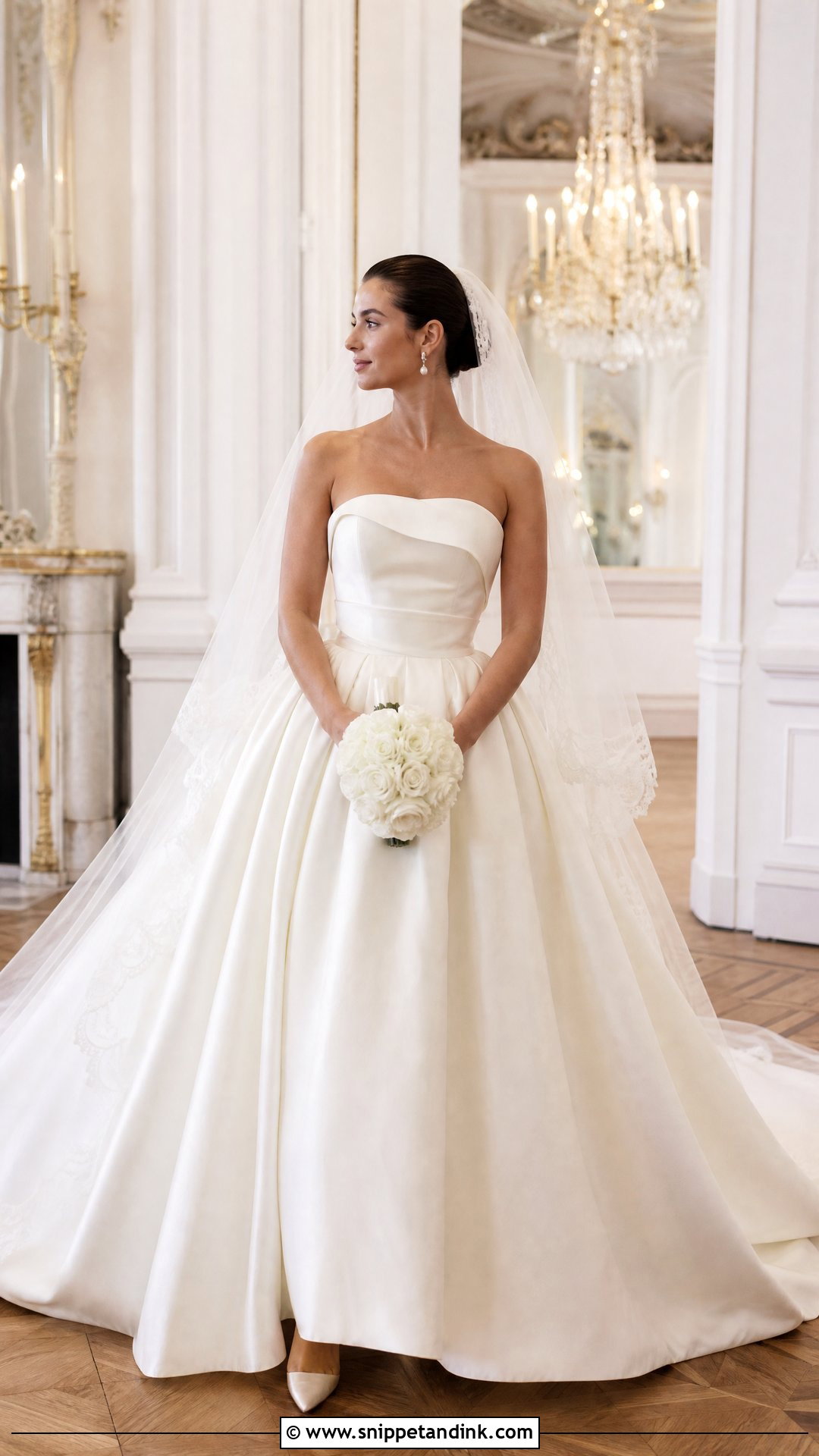
Duchess satin is heavy and slightly stiff, which is exactly why a strapless ballgown in it falls in clean, unbroken folds. That weight has to hang from the bodice, so the first thing I check is the internal corsetry: there should be boning and a waist stay, not just a lined top. Sit, walk and raise your arms at every fitting. Ivory satin reflects light softly, so pointed ivory pumps, pearl drops and a sleek low bun are all it needs. A cathedral veil adds ceremony without fighting the plain fabric, and a compact bouquet of white roses or calla lilies keeps the mood restrained.
2. Basque Waist Corset Wedding Dress Ballgown
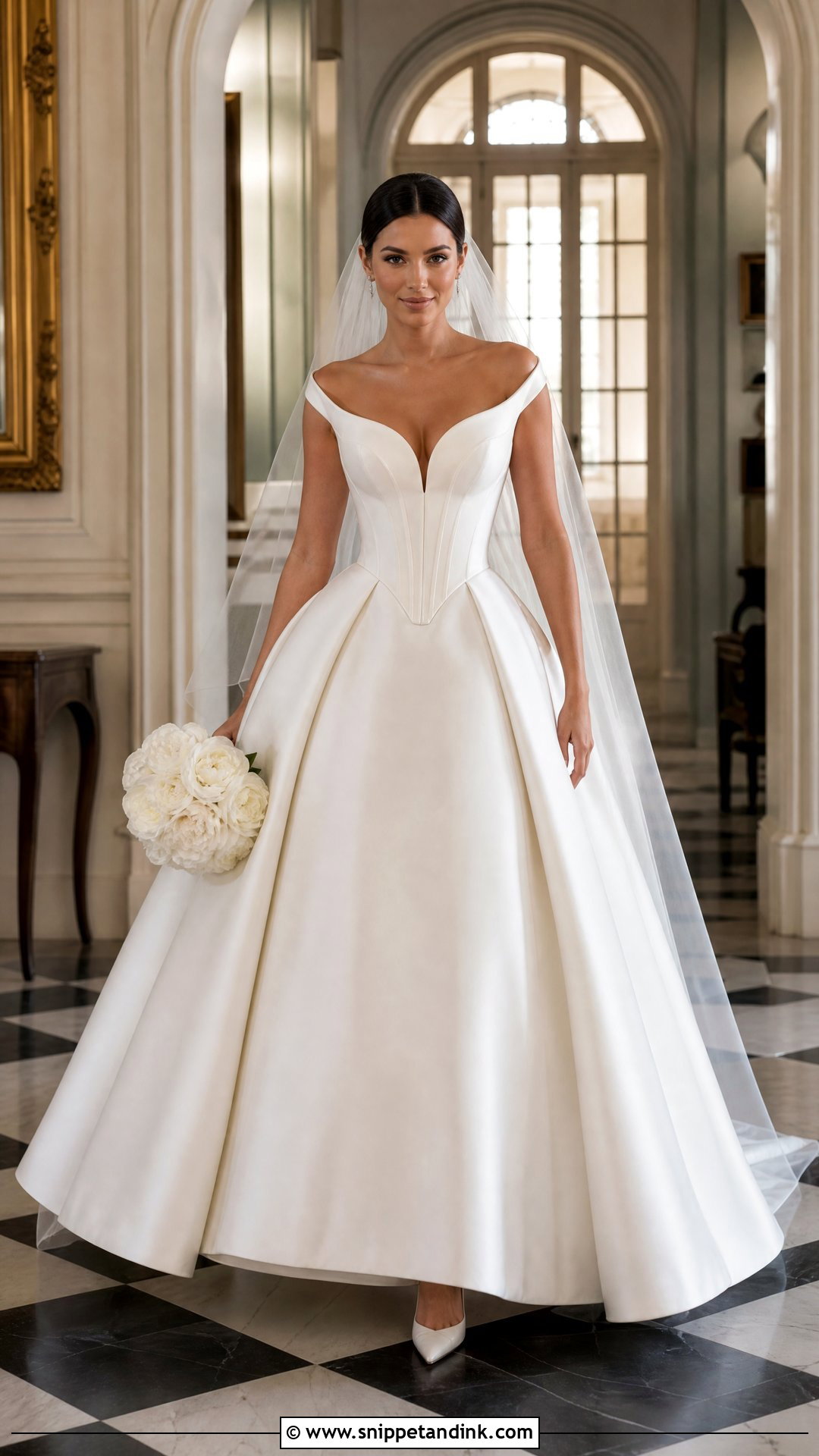
A Basque waist dips into a V or U below the natural waistline, so the bodice looks longer before the skirt opens out. It’s one of the most flattering ballgown shapes, and also one of the hardest to fit, because that low point has to sit exactly on your body’s center line and rest flat against the hips. If it lifts when you sit, it needs reshaping. You’ll find it in lace, Mikado and duchess satin. Choose a corset with real boning and a neckline that stays against the skin. A fingertip veil, crystal studs, satin pumps and a small structured bouquet are enough, since the waist is the detail.
3. Long Sleeve Lace Wedding Dress Ballgown
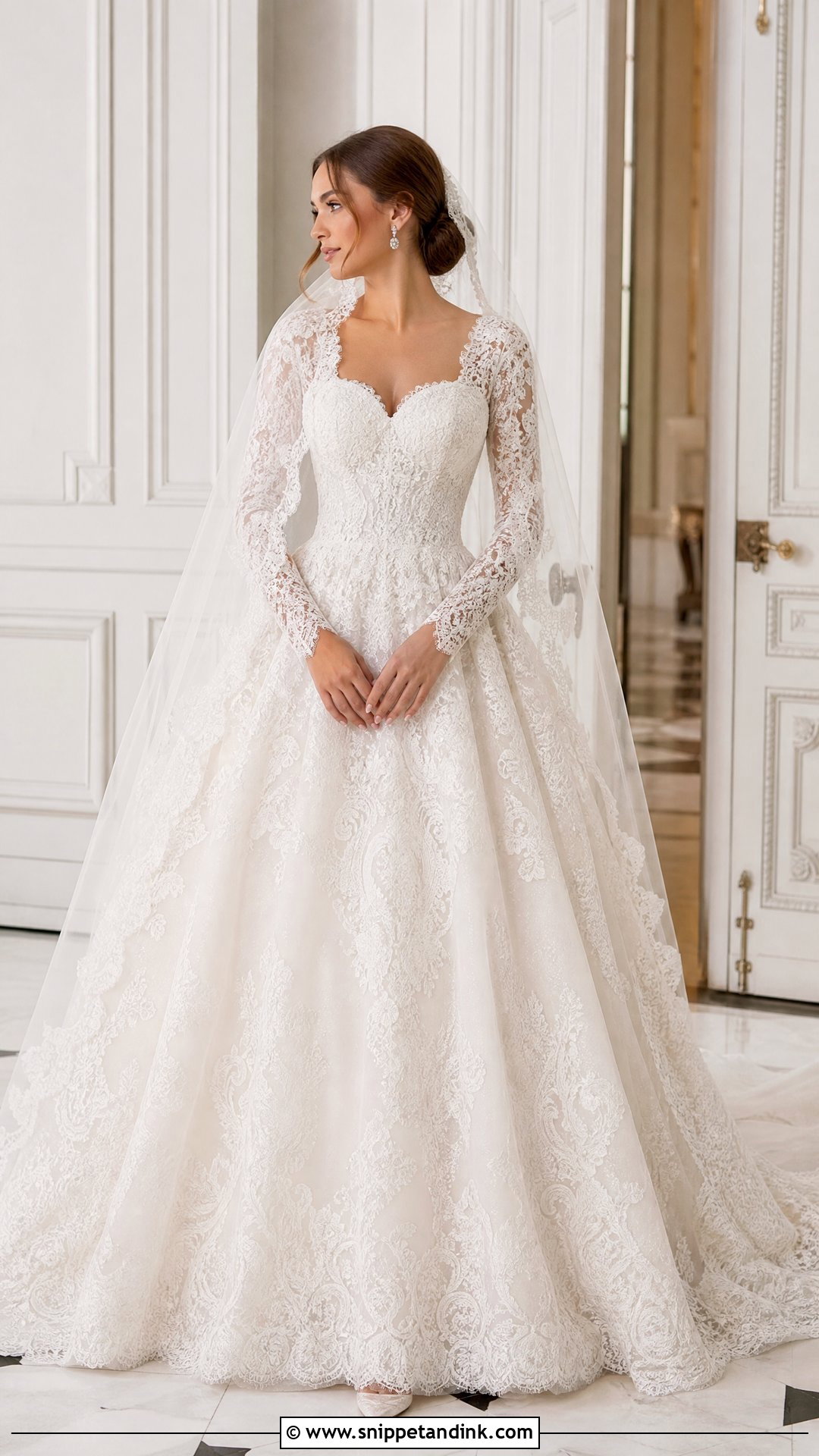
Lace sleeves on a ballgown are lovely, but they’re the first place a poor fit shows. Watch the elbows: if the lace pulls taut when you bend your arm, the sleeve is too narrow and it’ll tear at the seam by evening. Look for lace that runs continuously from shoulder to sleeve to waist, with a lightly lined sweetheart or bateau neckline underneath for shape. A clear, repeating motif reads far better on camera than a busy one. Closed-toe heels, a lace-edged cathedral veil and small diamond or crystal earrings suit it, with a loose chignon so the pattern stays visible. A smooth inner lining stops embroidery scratching.
4. Off Shoulder Mikado Wedding Dress Ballgown
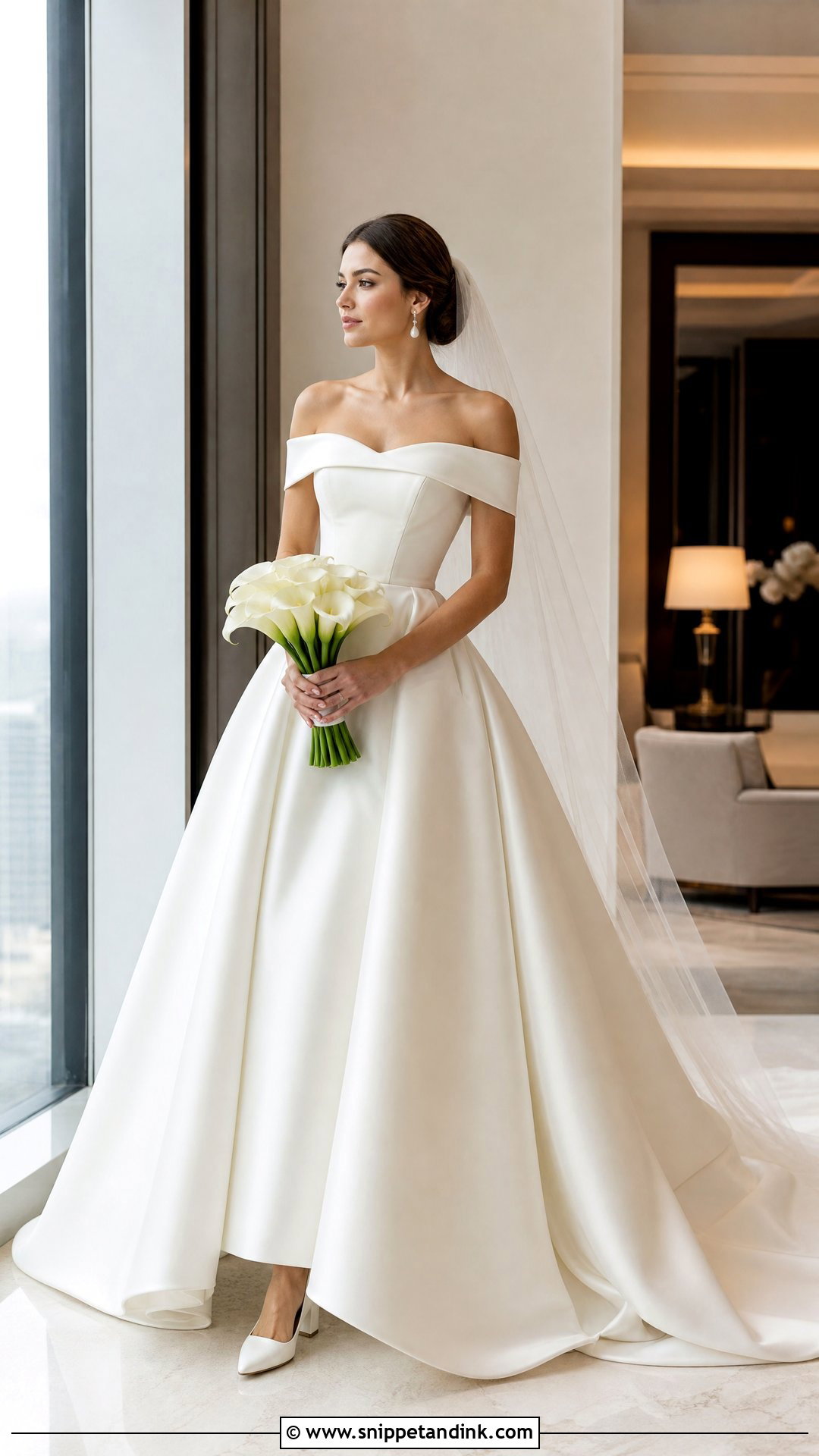
Mikado is a crisp, heavy silk-blend weave that holds a fold without padding, which makes the off-the-shoulder neckline look almost sculpted. The problem is the arm band. Firm fabric doesn’t stretch, so I ask brides to hug me during the fitting; if the band stops them, it gets let out or re-angled. Ballrooms, grand hotels and estates suit the formality. A chapel or cathedral veil, pearl earrings and a fine tennis bracelet are enough jewelry. Choose low or medium block heels under the skirt, as nobody sees them and you’ll stand for hours. A neat bun keeps hair off the neckline, where it can catch.
5. Square Neck Satin Wedding Dress Ballgown
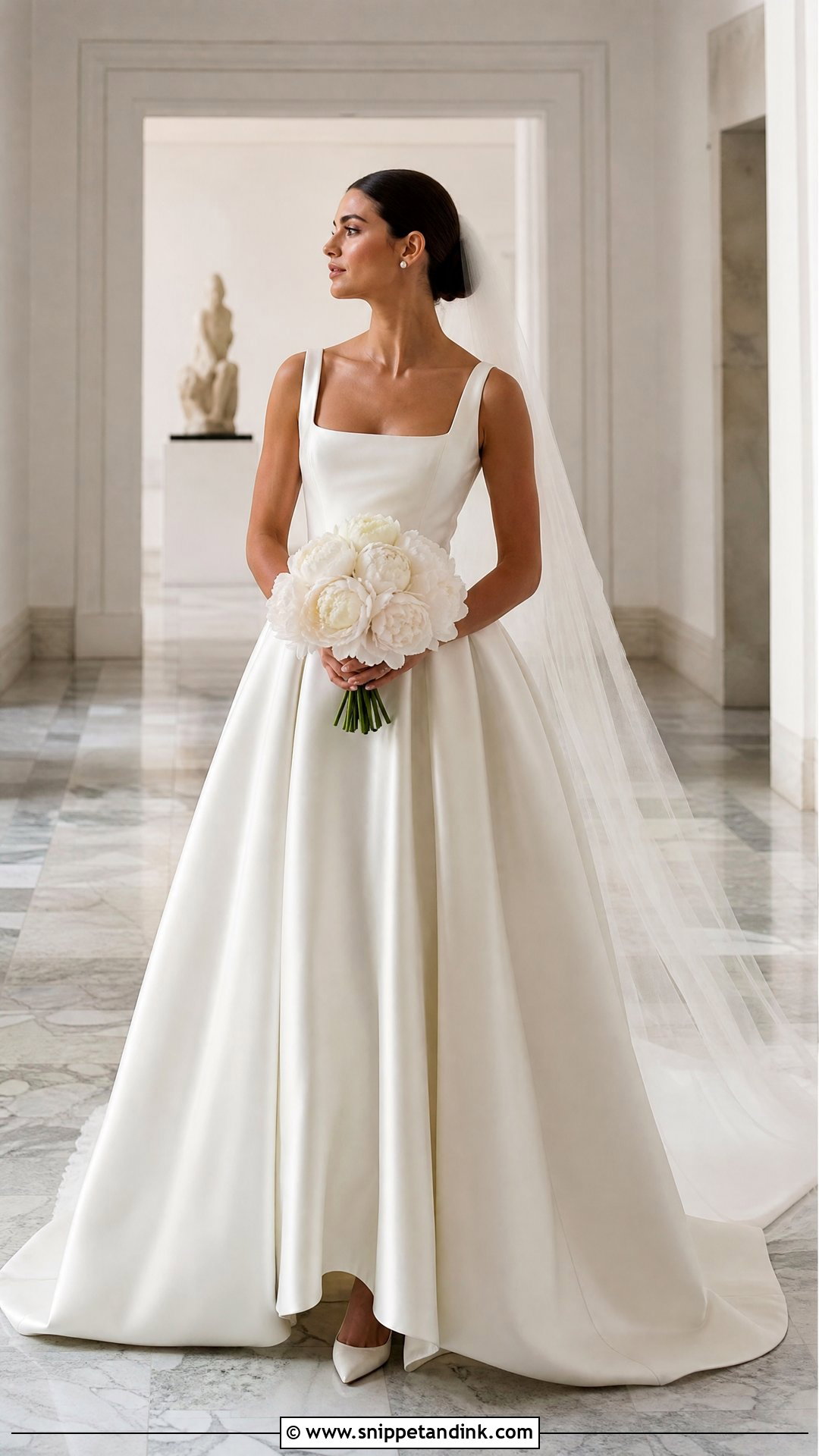
Square necklines make a satin ballgown look modern. The neckline is straight and architectural, so the bodice needs wide straps and a close fit to keep the corners crisp. Bend forward at your fitting: square necks gape at the corners more than other shapes, and the fix is usually a small dart or taking the straps up. Pearl studs, a sleek bun and no necklace keep it clean. Satin pumps, a raw-edge veil and white peonies with greenery finish it. Covered buttons down the back add interest without fuss, and discreet cups or boning can go in without changing the smooth front.
6. Sweetheart Tulle Wedding Dress Ballgown
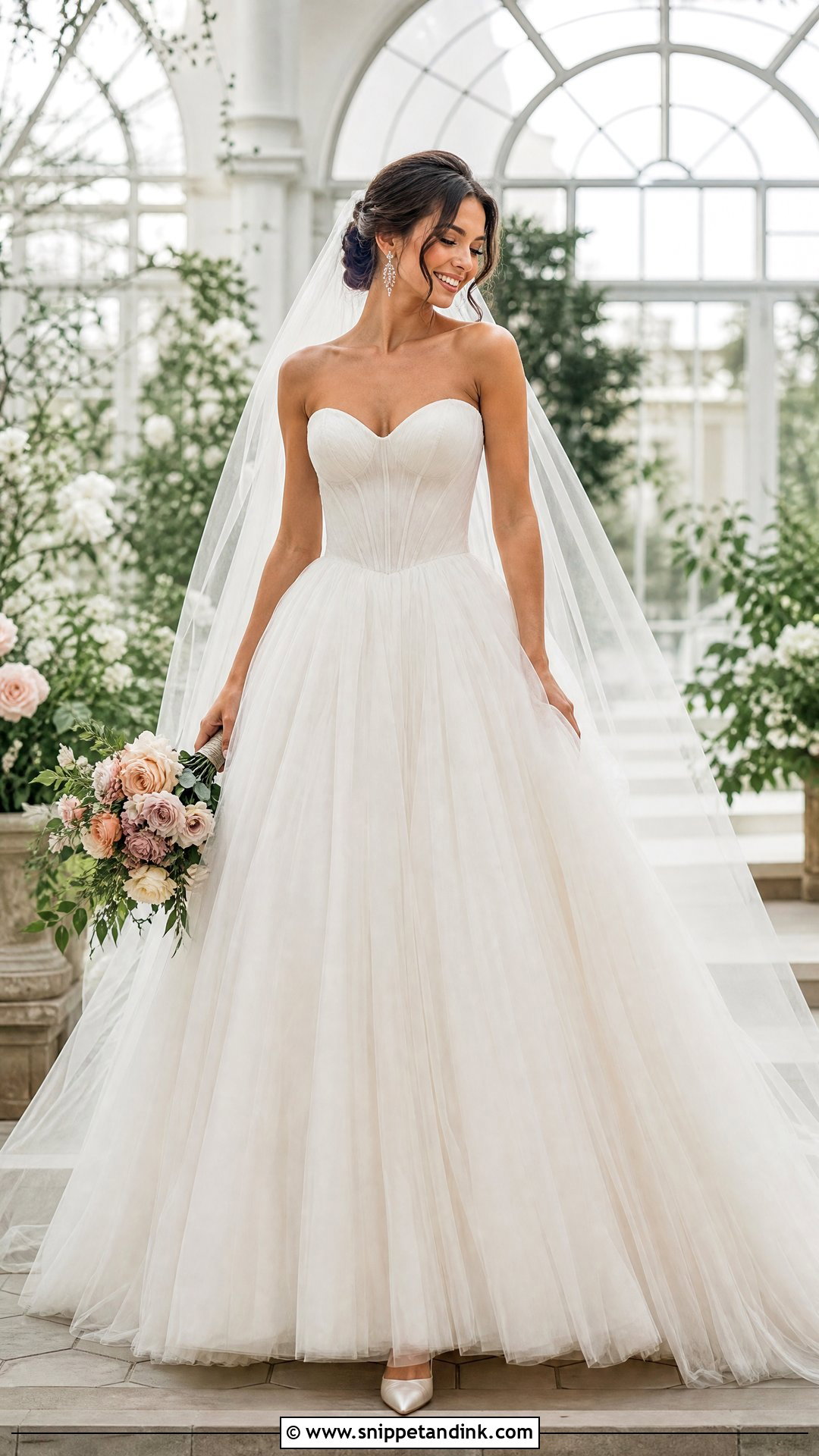
Tulle can look like a cloud or like a costume, and the difference is how many layers there are and how fine they are. For a sweetheart ballgown, I look for many light layers rather than a single stiff one, and a corset bodice to give the soft skirt something to fall from. Ask whether the petticoat is removable. Taking it out for a smaller venue or the reception changes the volume dramatically. Sparkling drops, pointed satin shoes and a sheer veil a little longer than the train work well, and a waved updo keeps the curved neckline clear. Garden roses with seasonal flowers suit the softness.
7. High Neck Lace Wedding Dress Ballgown
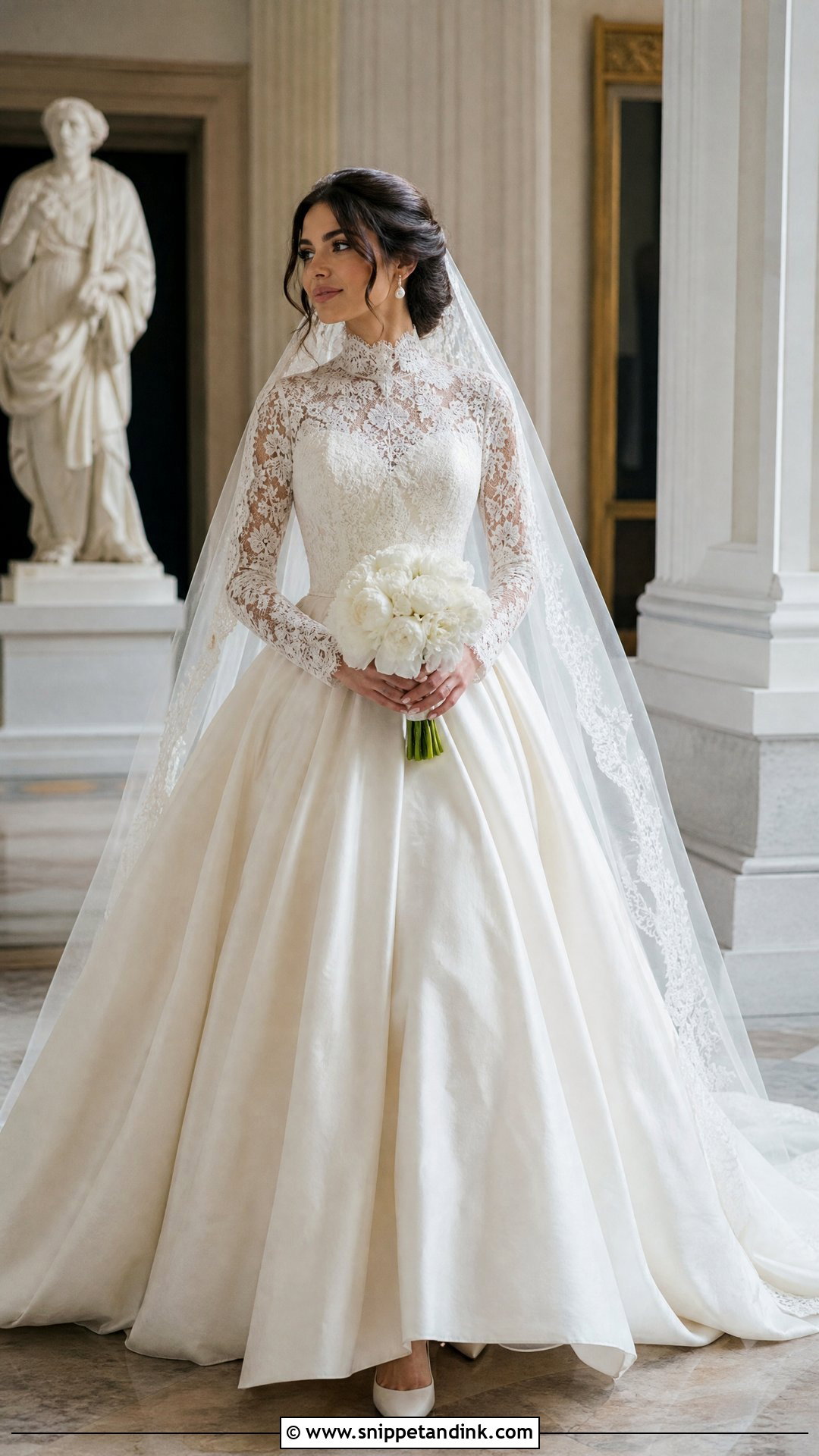
High-neck lace covers a lot, so the collar has to be comfortable or you’ll feel it all day. Turn your head side to side at the fitting; if the lace edge rubs your jaw, ask for soft backing at the neck and cuffs. A fitted lace bodice with long or bracelet sleeves over a matching lace or plain satin skirt reads formal and classic. A slightly sheer neckline lets the pattern show. Skip the necklace, wear small pearls and a polished bun, and add a narrow lace-trimmed veil and pointed ivory pumps. Keep the bouquet modest, as the top already carries the detail.
8. Beaded Corset Wedding Dress Ballgown
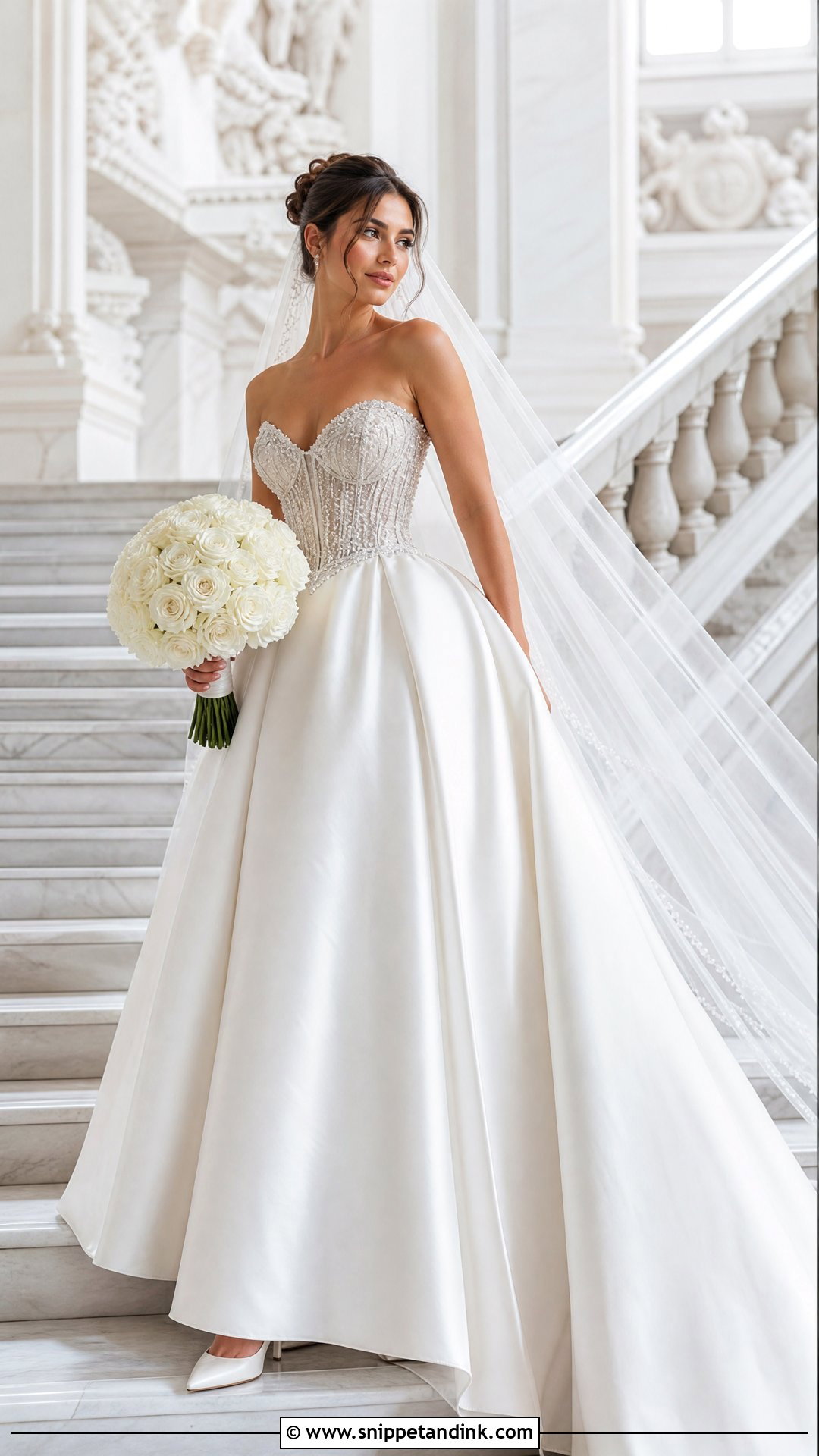
Beading belongs on the bodice in a ballgown; a plain skirt balances it and keeps the dress from getting too heavy. Crystals, pearls or fine seed beads on a scoop, sweetheart or slightly pointed neckline catch light while the corset handles support. I always turn the bodice inside out before a bride buys: beads should be hand-stitched and backed, not glued, and the lining underneath must be soft, or it’ll scratch under the arms. Hold the veil against the beading too, since tulle snags on sharp stones. Plain satin heels, small crystal studs and a sheer cathedral veil keep focus where it belongs, with smooth, structured hair.
9. Floral Applique Tulle Wedding Dress Ballgown
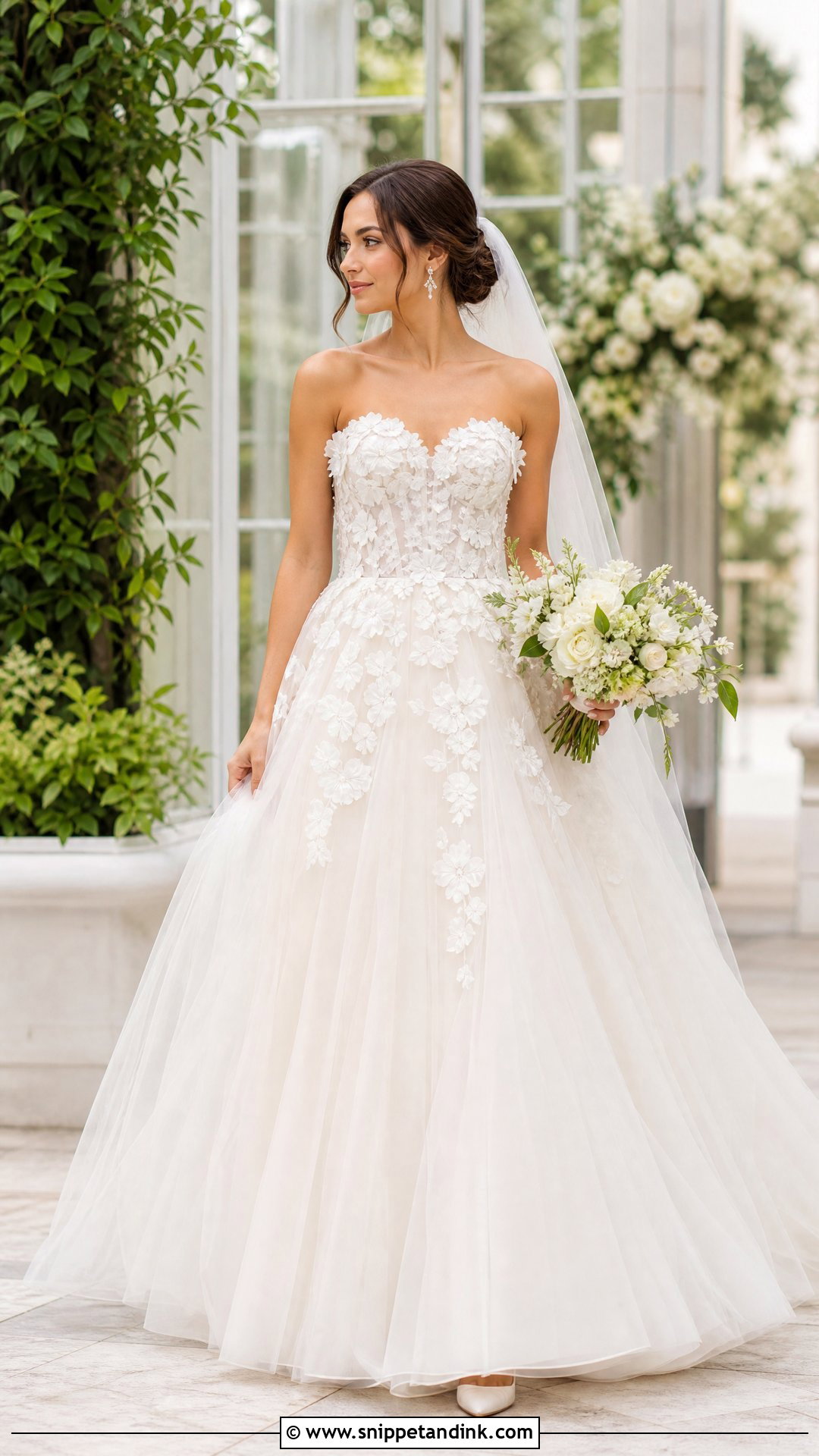
Raised appliqués look best when they’re thickest on the bodice and scatter down the skirt, so the tulle still shows between them. Too many at the waist add bulk exactly where you want definition. When a bride walks in one of these, I watch the veil, because loose petals and raised leaves are the first thing a tulle veil catches on. A strapless or softly scooped corset keeps the shape balanced. Delicate studs, ivory pumps and a plain veil let the flowers be the decoration. A low textured bun and white seasonal blooms finish it.
10. Pearl Embellished Wedding Dress Ballgown
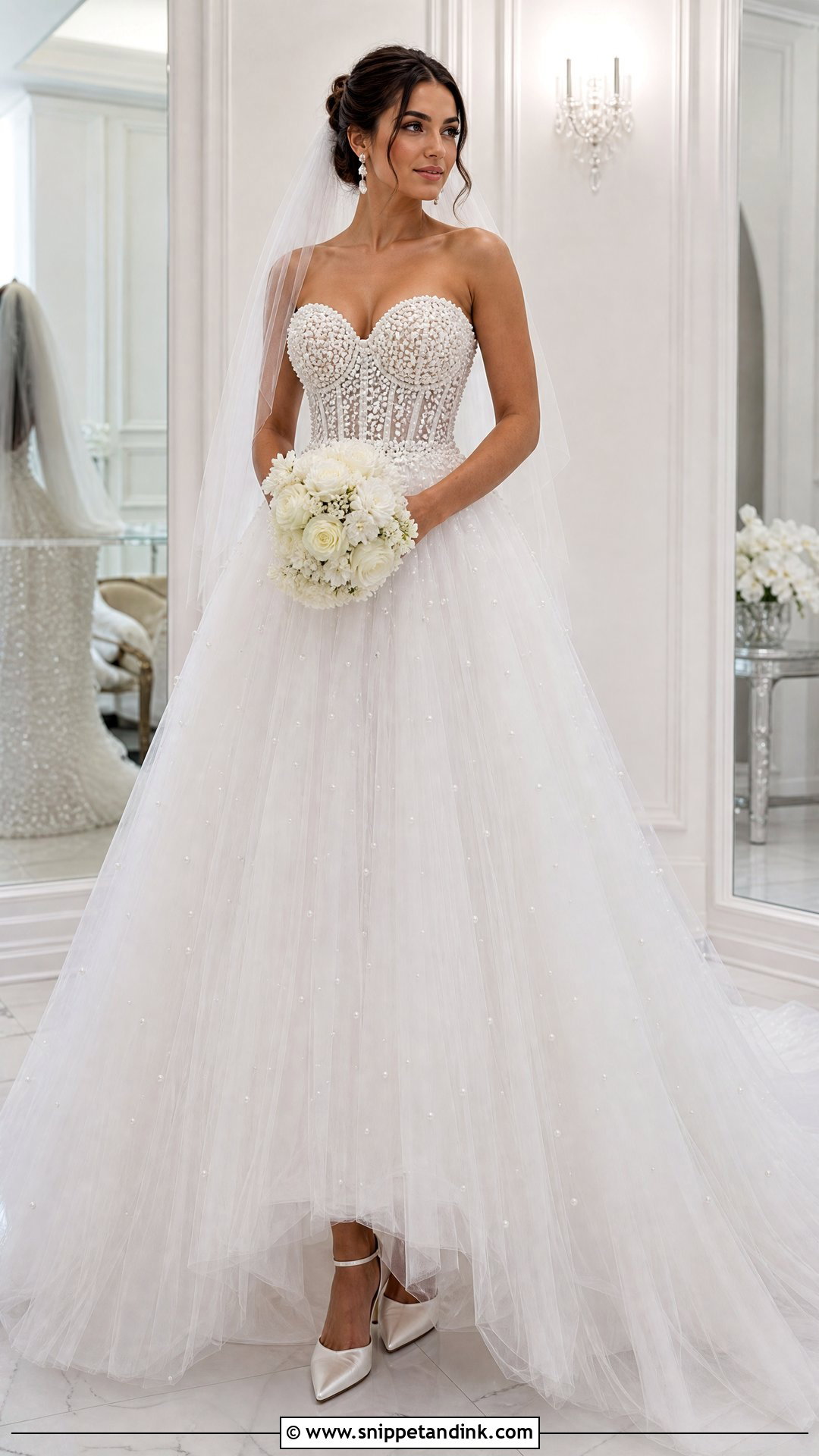
Pearls glow rather than sparkle, so this dress reads luxurious without the glitter of crystal. Look for pearls scattered over a corset bodice, neckline or upper skirt with plain satin or fine tulle around them, as clustered pearls lose their shape. Under daylight they look creamy; under flash they can turn grey-white, so photograph the dress in both at your fitting. Check the arms, waist and veil attachment points for rough edges. Pearl drop earrings, satin pumps and a plain fingertip veil are enough; no necklace if the neckline is already decorated. A sleek bun or polished waves complete it.
11. Bow Back Satin Wedding Dress Ballgown
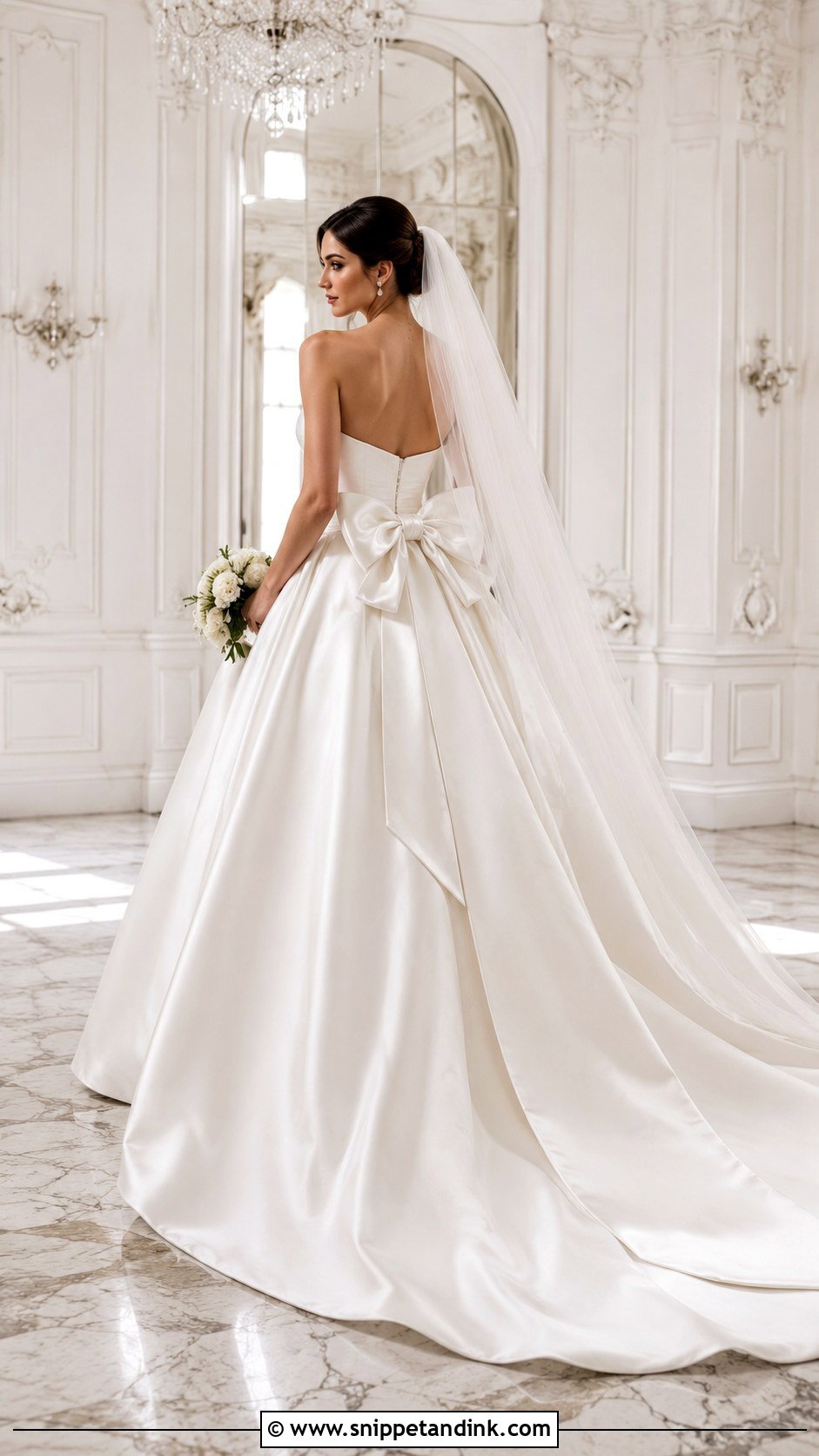
An oversized back bow on clean satin is the detail people remember, and I’d always make it detachable. Bows at the lower back get crushed every time you sit, and long tails trail into everything. Have the seamstress fix it with hidden hooks or snaps, then take it off for the reception. A structured strapless or square-neck bodice keeps the front plain so the back can be the moment. Pearl studs, satin pumps and a sheer veil above a sleek chignon are all you need. Check it from the side in a mirror; a bow that’s too big for your frame swallows the waist.
12. Detachable Overskirt Wedding Dress Ballgown
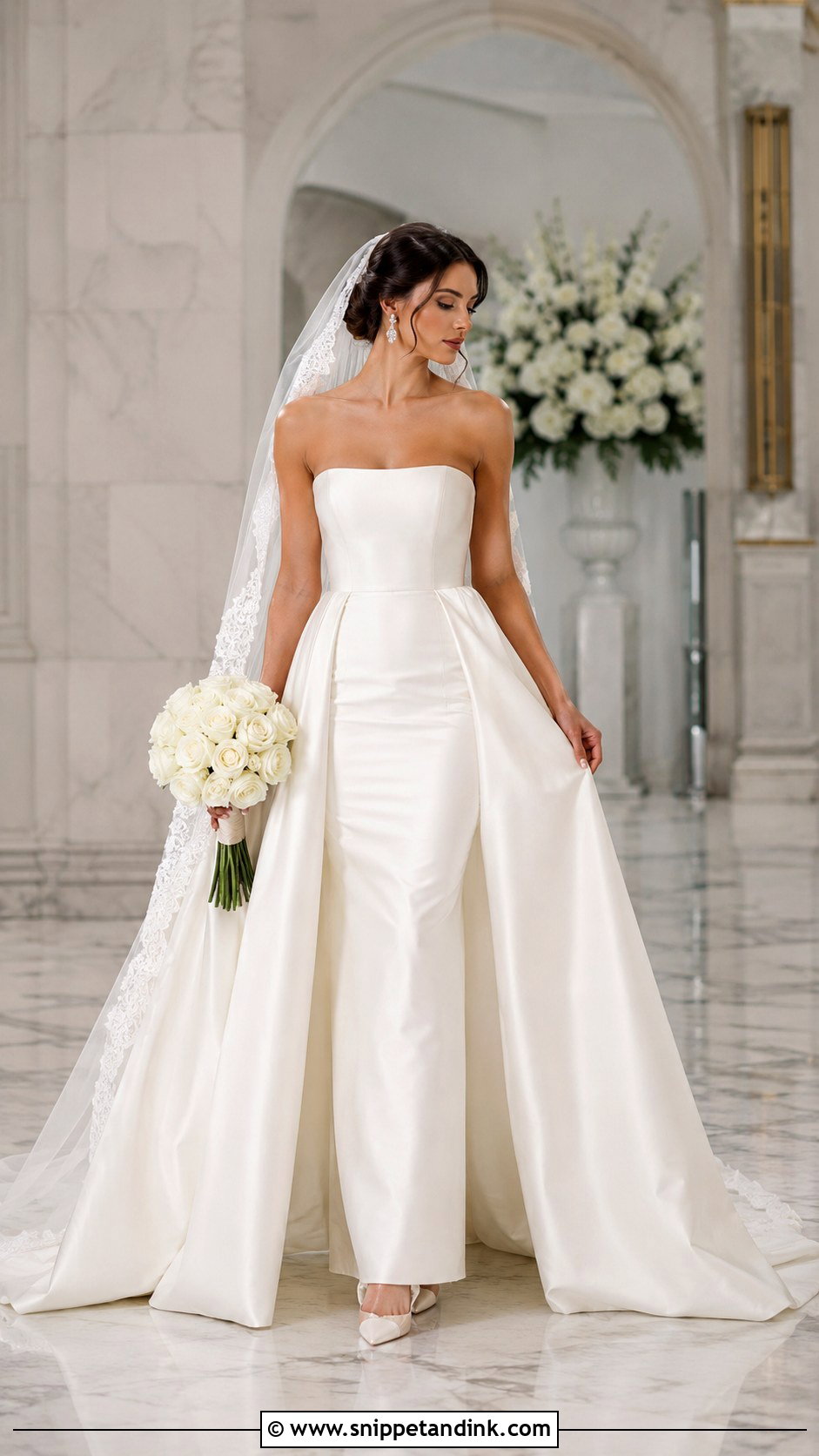
Two gowns in one: a fitted column, trumpet or soft flare underneath and a full satin or tulle overskirt for the ceremony. You get the ballgown entrance and then real freedom to dance. The waistband is what I inspect, as a bulky closure makes a visible ridge at the waist all evening. Rehearse the removal with whoever will help on the day, because hooks under a heavy skirt are fiddly and tulle tears if it’s rushed. Pointed heels, crystal earrings and a long veil for the ceremony, then swap to a sparkling comb or bolder earrings for the party.
13. Illusion Sleeve Wedding Dress Ballgown
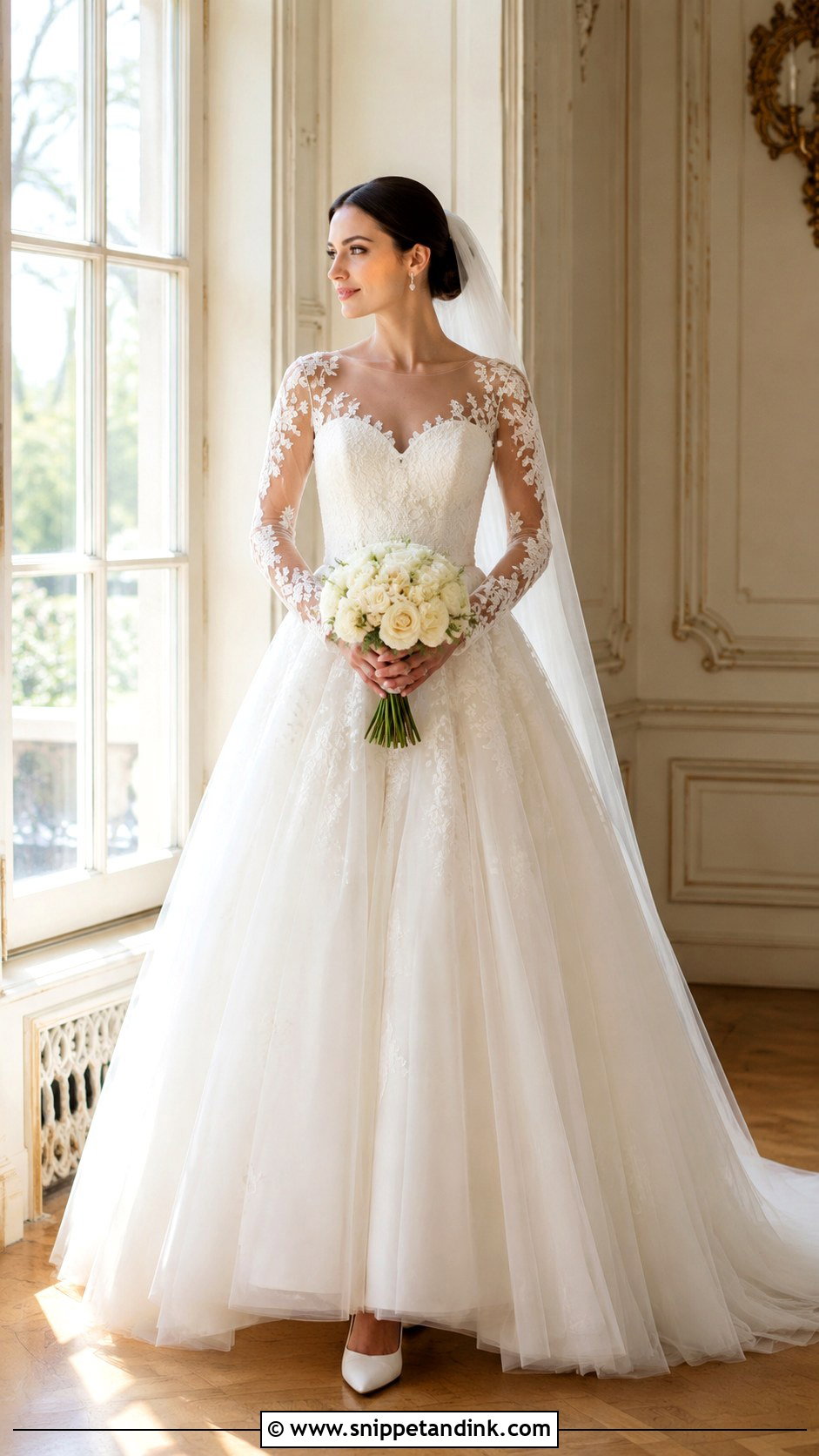
Illusion sleeves are sheer mesh with lace, beading or appliqué laid on top, so the detail looks as if it sits on bare skin. The mesh color is everything. I compare it against the inner wrist in daylight and under flash, because a shade that’s slightly off shows as a grey or pink band in photos. A structured bodice under the mesh does the supporting. Bend your arms to check the sleeve stays smooth; wrist loops keep fragile cuffs from dragging over your hands. Closed-toe pumps, understated earrings, a lightly embellished veil and hair worn up finish it.
14. Cap Sleeve Lace Wedding Dress Ballgown
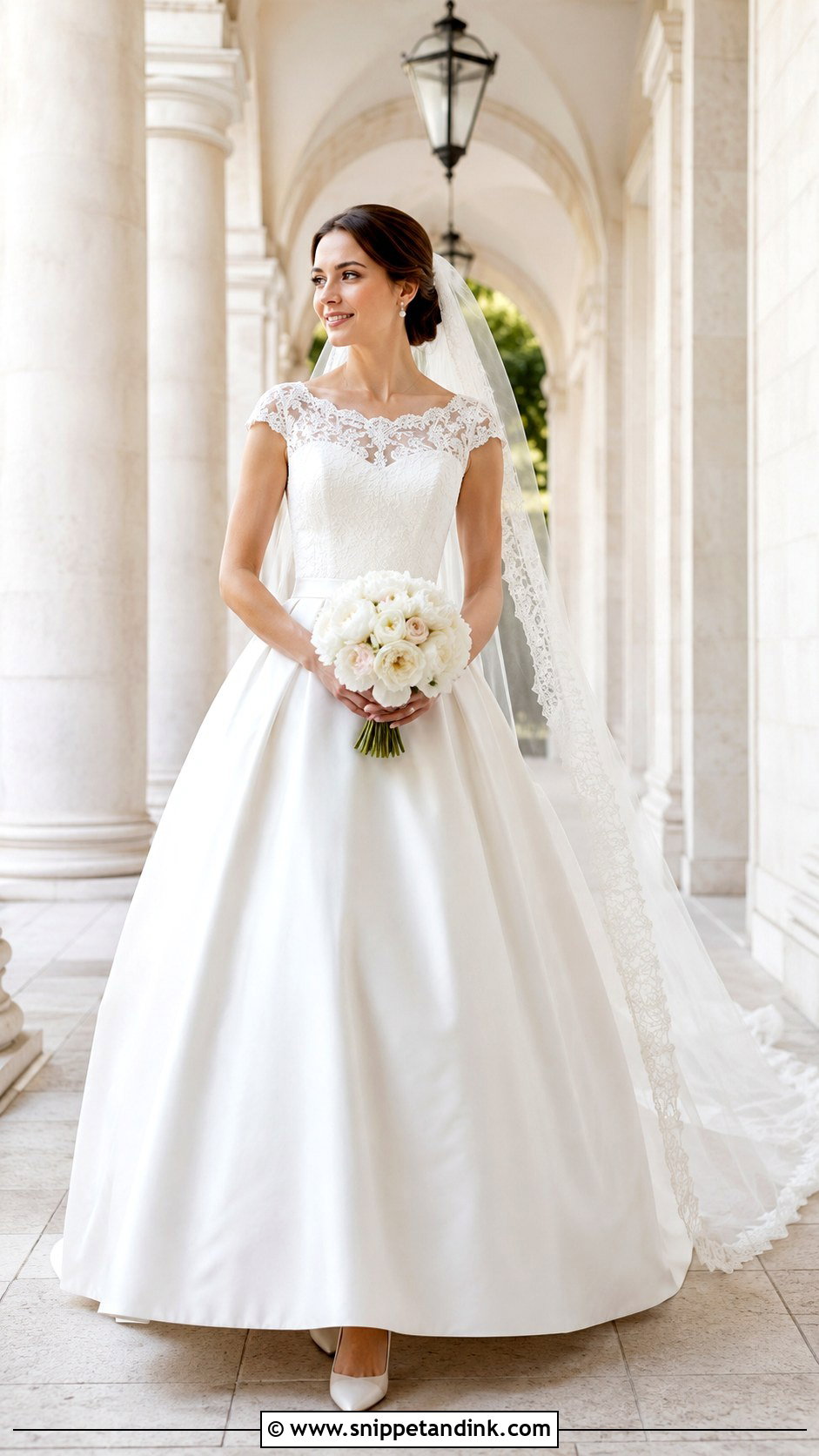
Cap sleeves sit just over the top of the shoulder, so they need to be fitted precisely: too tight and they cut into the upper arm, too loose and they gape when you move. A lace bodice with a curved neckline over satin, Mikado or tulle feels classic but light enough for indoor or mild-weather weddings. Pair it with pearl earrings, a narrow bracelet, ivory pumps and a chapel veil. Wear hair low or swept to one side so the sleeves aren’t hidden. If the lace is detailed, repeat it once, in a lace-edged veil for example, rather than adding more texture elsewhere.
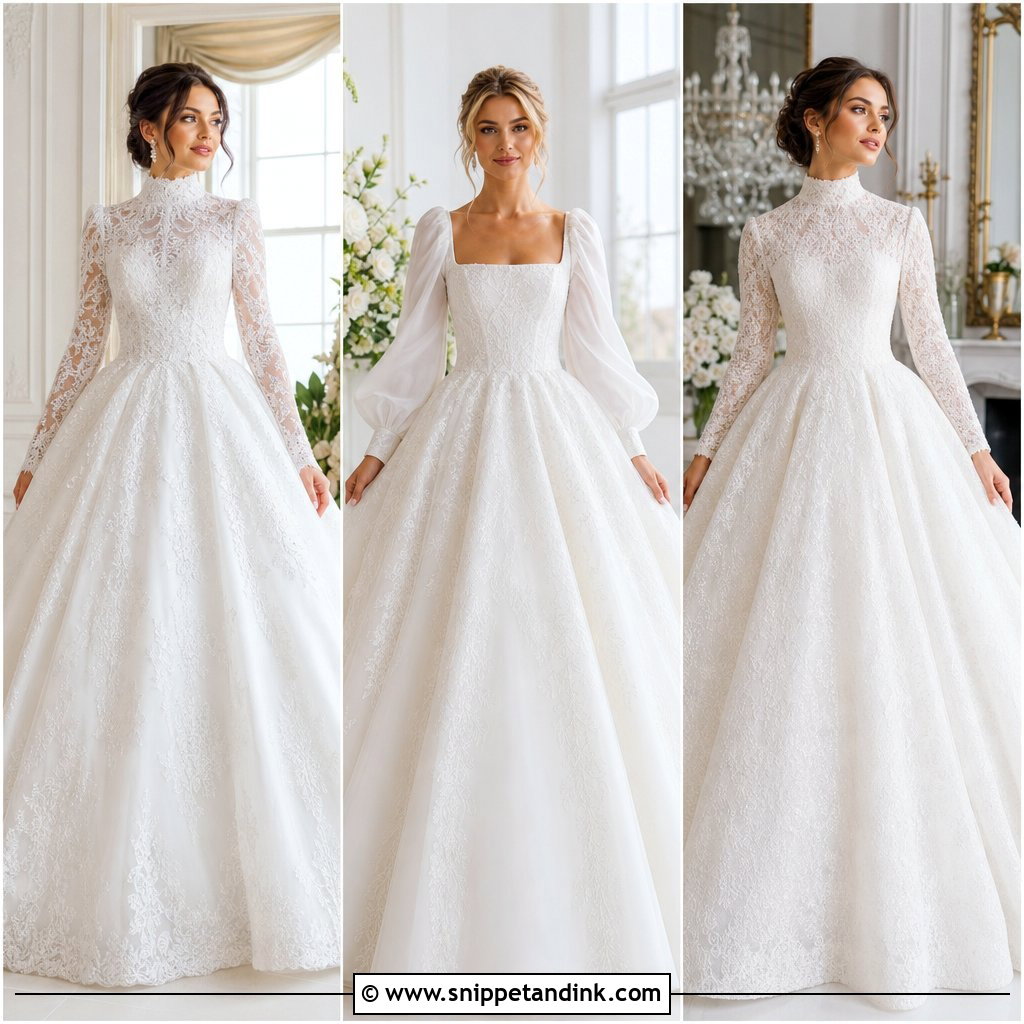

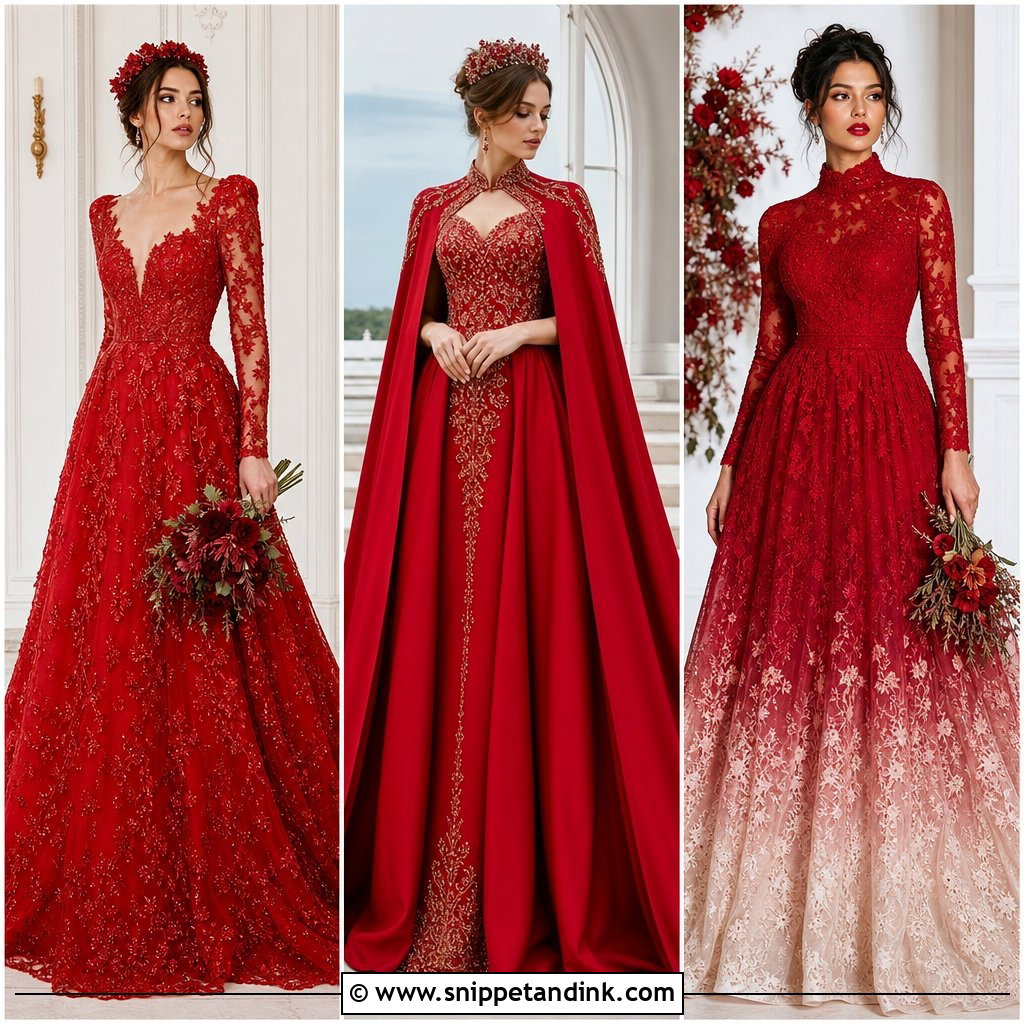
15. Champagne Gold Wedding Dress Ballgown
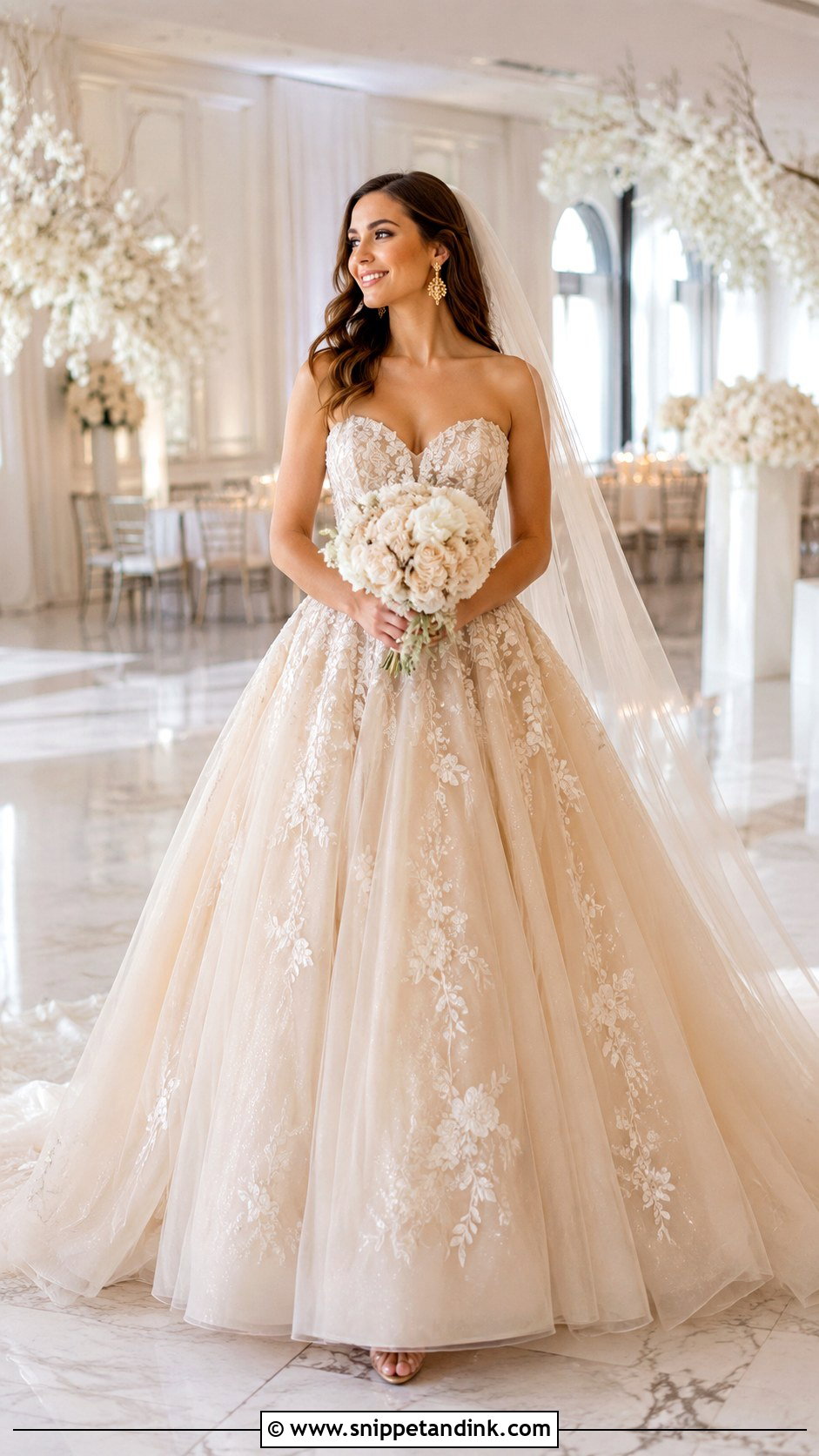
Champagne and soft gold warm up a ballgown, especially beneath ivory lace, crystal embroidery or sheer tulle. The risk is undertone: some champagne shades look golden on one complexion and sallow on another. Ask to see the gown beside true white and ivory fabric samples, then step outside and check again in daylight. Look at the lining, lace and beading together, since they’re often dyed separately and can photograph as slightly different colors. Neutral satin heels, gold earrings and a light ivory veil let the dress color come through. An ivory bouquet with pale greenery gives quiet contrast.
16. Minimalist Duchess Satin Wedding Dress Ballgown
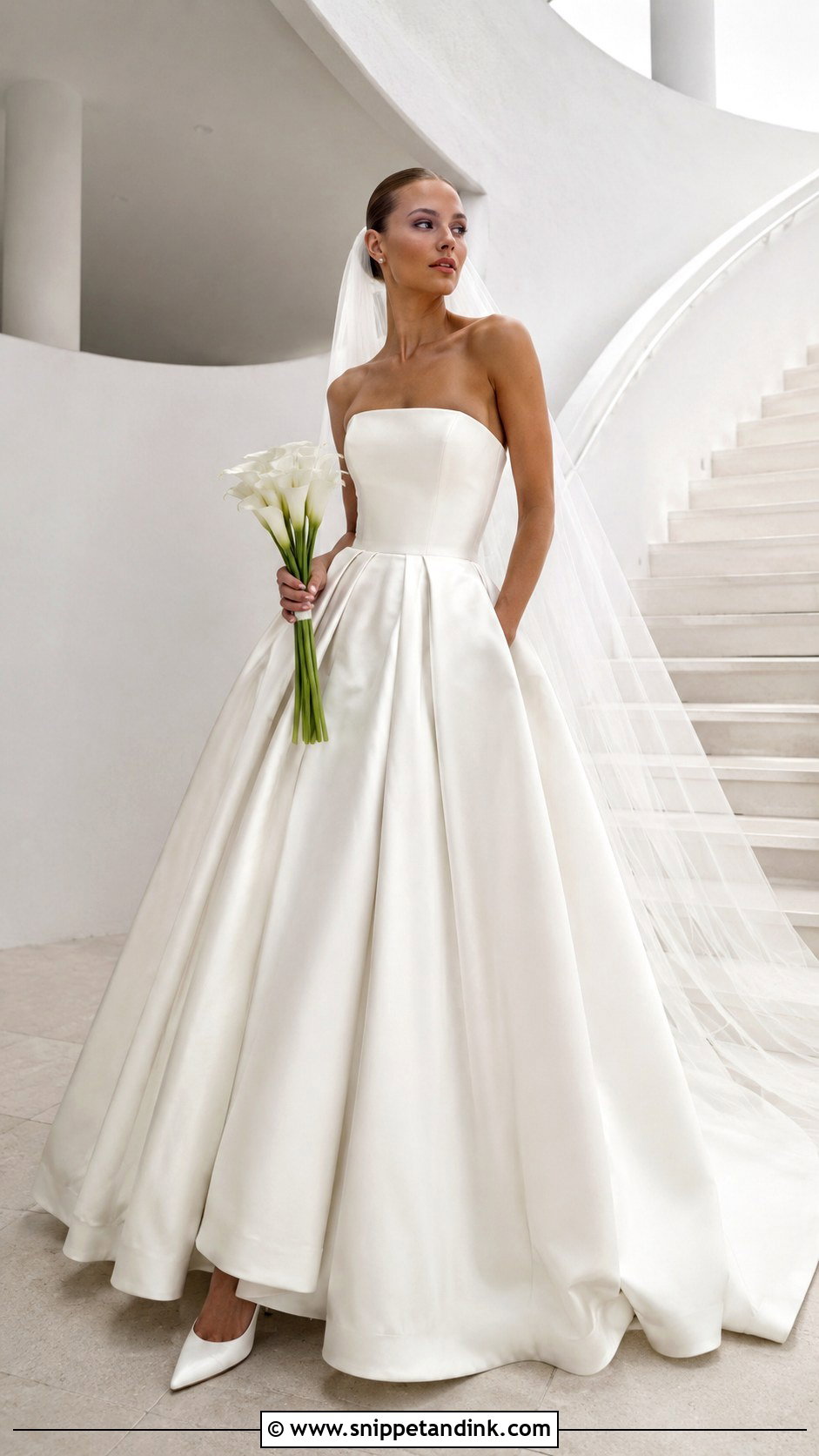
With no beading to hide behind, a minimalist duchess satin ballgown is judged entirely on cut. I look at the seams first: they should run perfectly straight, with no puckering at the waist. A close bodice, defined waist and wide sculptural skirt folds do all the work. Strapless, square or bateau necklines change the coverage, not the clean effect. Hidden pockets are a good bonus. Diamond or crystal studs, pointed satin pumps, a long plain veil and calla lilies or roses suit it. Plain satin shows every crease, so transport it hanging full length and steam it on the morning.
17. Cathedral Train Lace Wedding Dress Ballgown
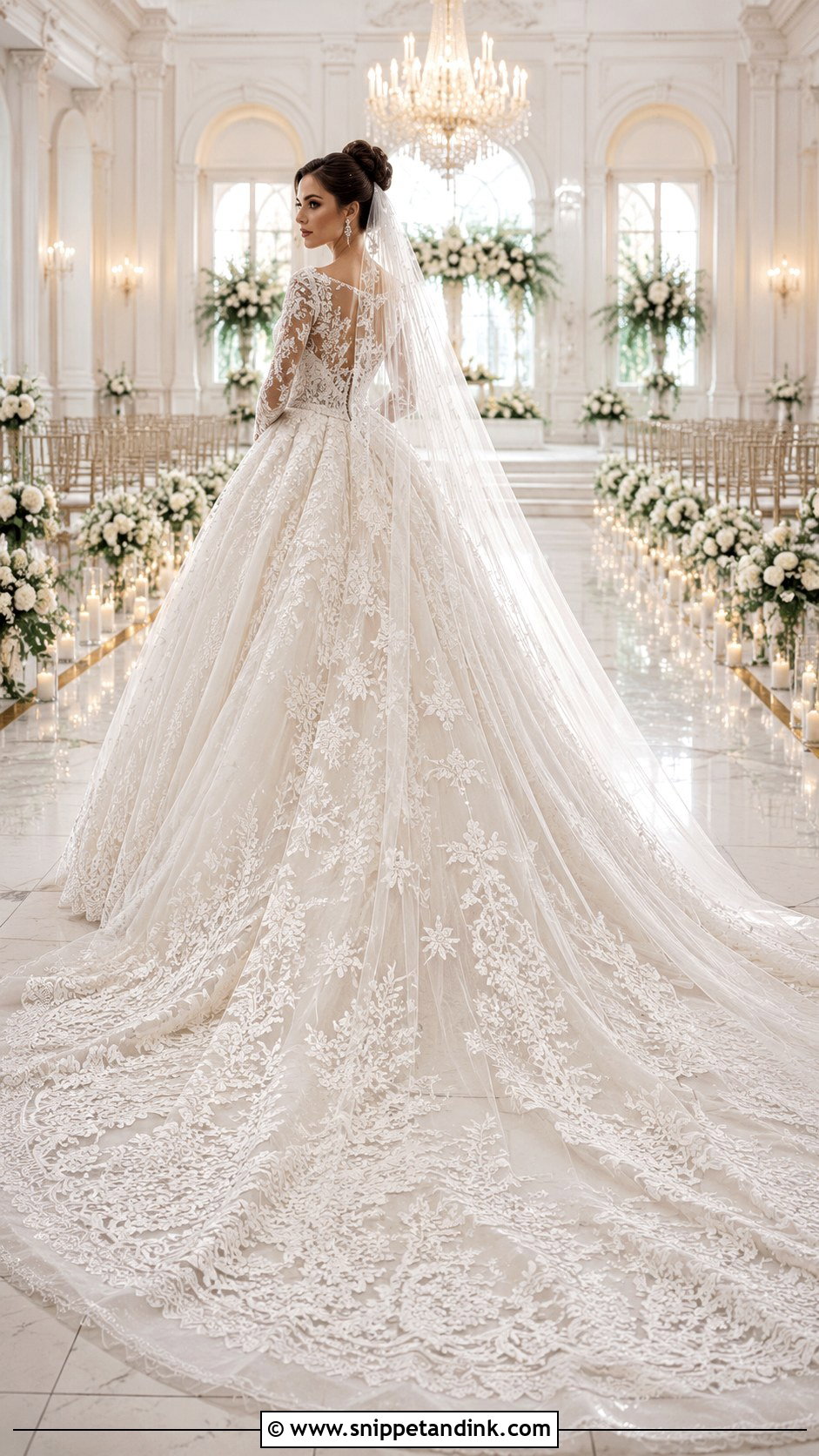
A cathedral train turns the aisle walk into the main event, with lace motifs continuing past the hem into the train. What needs planning is the after. The bustle has to lift that length evenly, and lace tears at the bustle points unless they’re reinforced with small patches behind the fabric, so ask your seamstress about that specifically. A matching cathedral veil extends the line, but its pattern shouldn’t cover the dress lace. Practice walking, turning and climbing steps with an attendant. Comfortable closed-toe heels, delicate earrings and an updo keep the focus on the train.
18. Tiered Organza Wedding Dress Ballgown
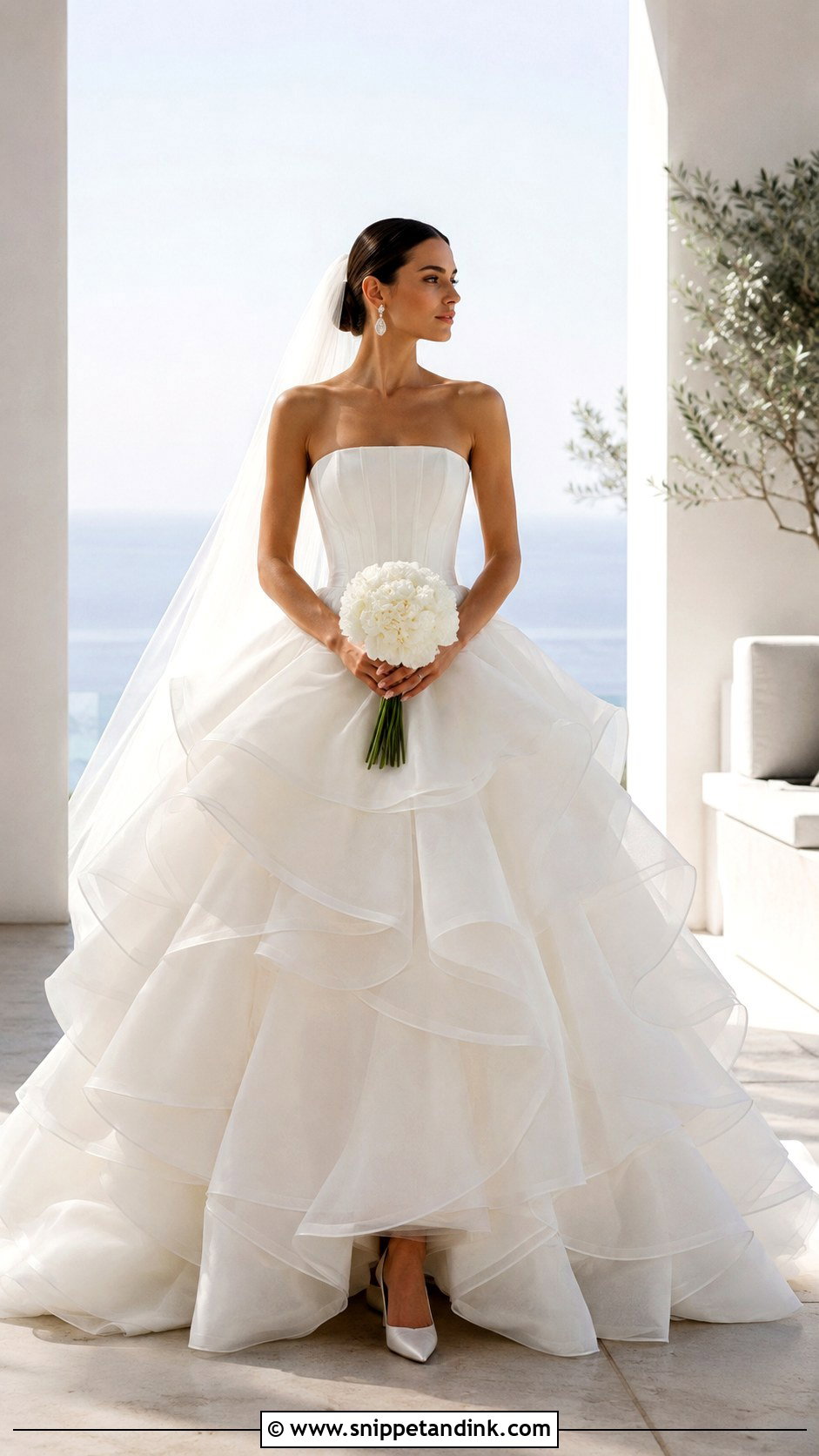
Organza is stiff and slightly translucent, so tiers of it build volume with very little weight and catch light at every edge. Wide, gently structured layers falling from a fitted bodice work best; a strapless corset or simple scoop neck keeps the top quiet. The bustle is the tricky part, since lifting several tiers can crush them flat, so have your seamstress demonstrate it before the final fitting. Ask too whether the bottom tier can be shortened if it catches your shoes. Sleek earrings, satin pumps and a plain veil falling behind the upper tiers suit it, with a compact bouquet. Bright, spacious rooms show the movement best.
19. Draped Satin Wedding Dress Ballgown
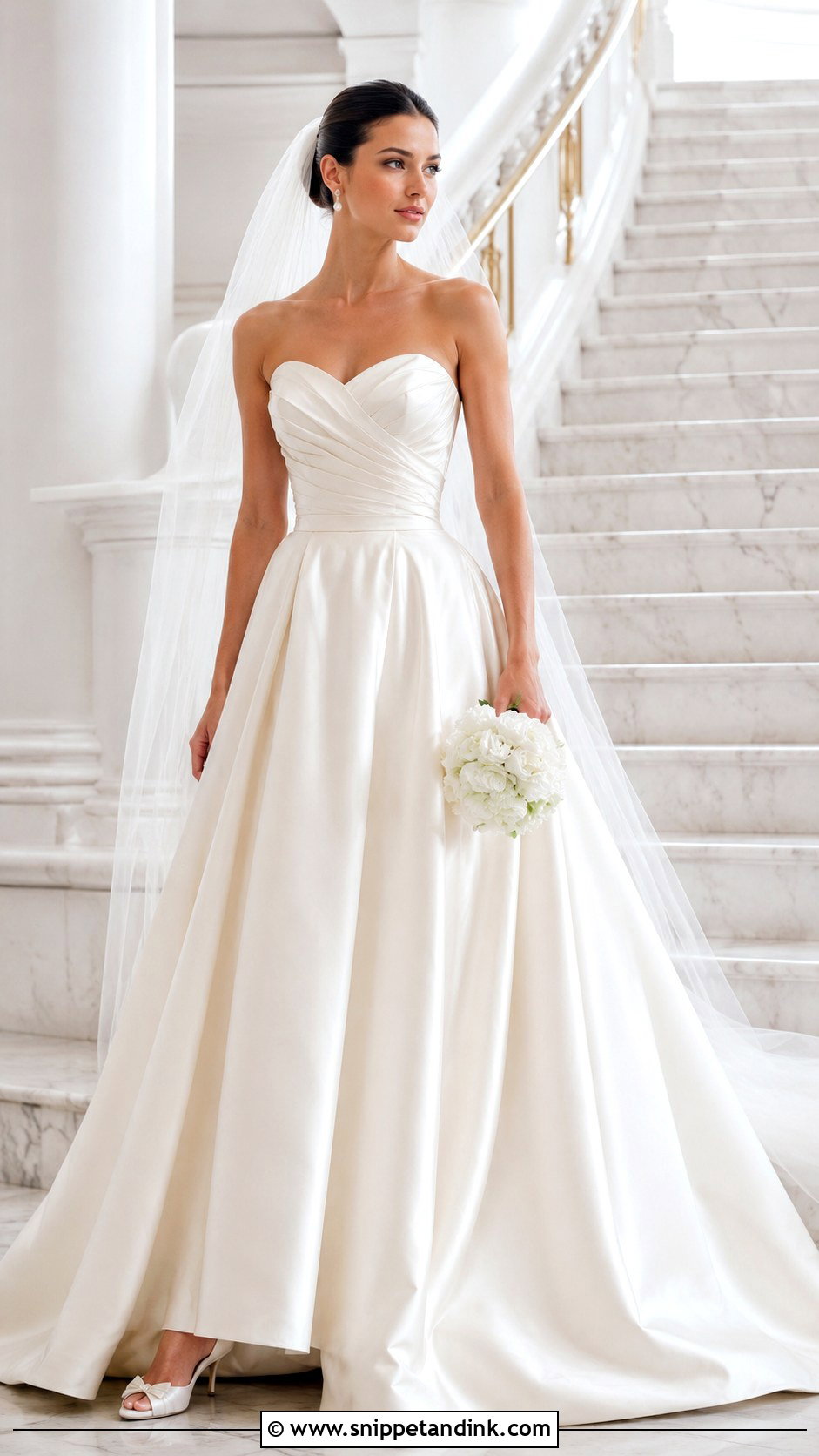
Draped satin adds movement to a structured ballgown through diagonal pleats across the bodice or waist that open into a smooth skirt. Each fold should look placed, not crumpled, so inspect the draping from every side. If the dress laces up, tighten it at the fitting and watch: an overtight corset pulls the pleats out of line. A curved strapless or off-the-shoulder fold suits the fluid shape. Pearl earrings, closed-toe satin heels and a sheer veil with no border keep it refined, with a polished bun showing the draping. Have it professionally pressed, as home steaming can flatten the folds.
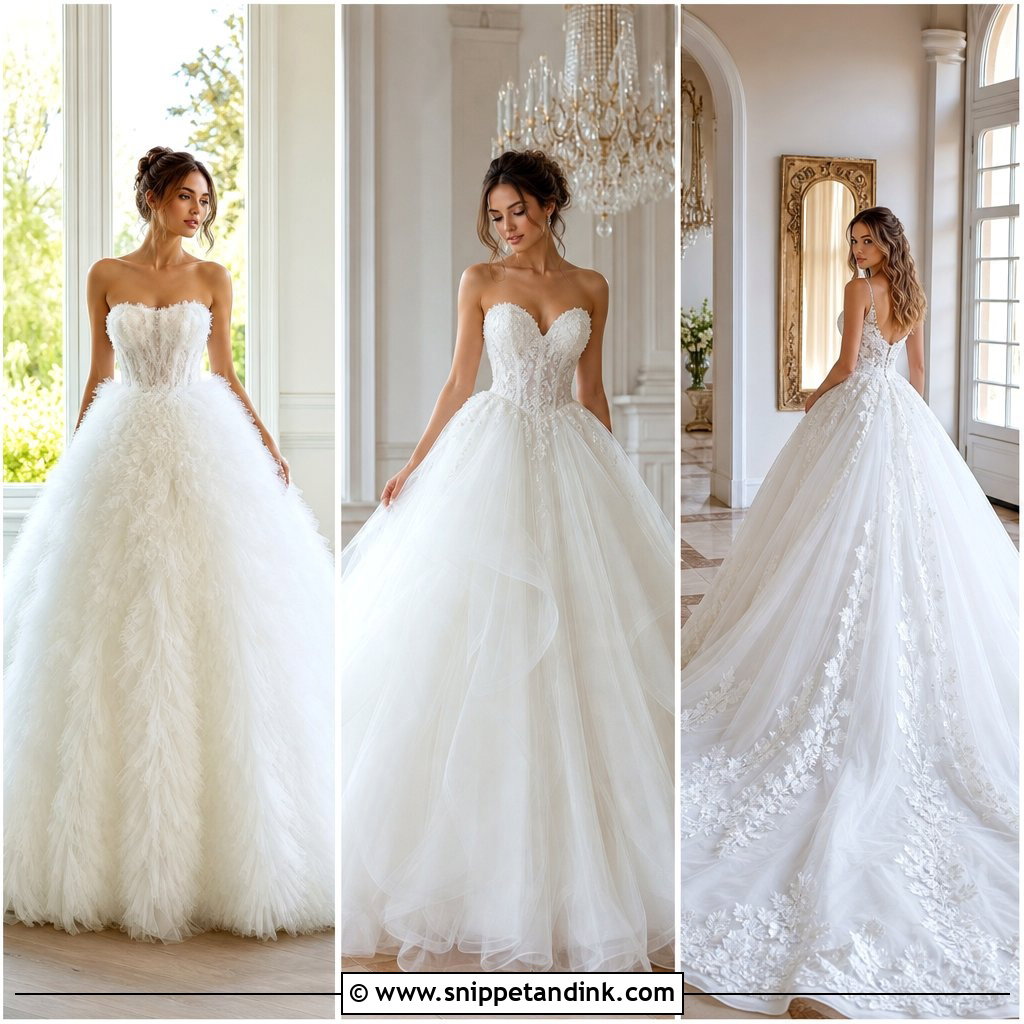
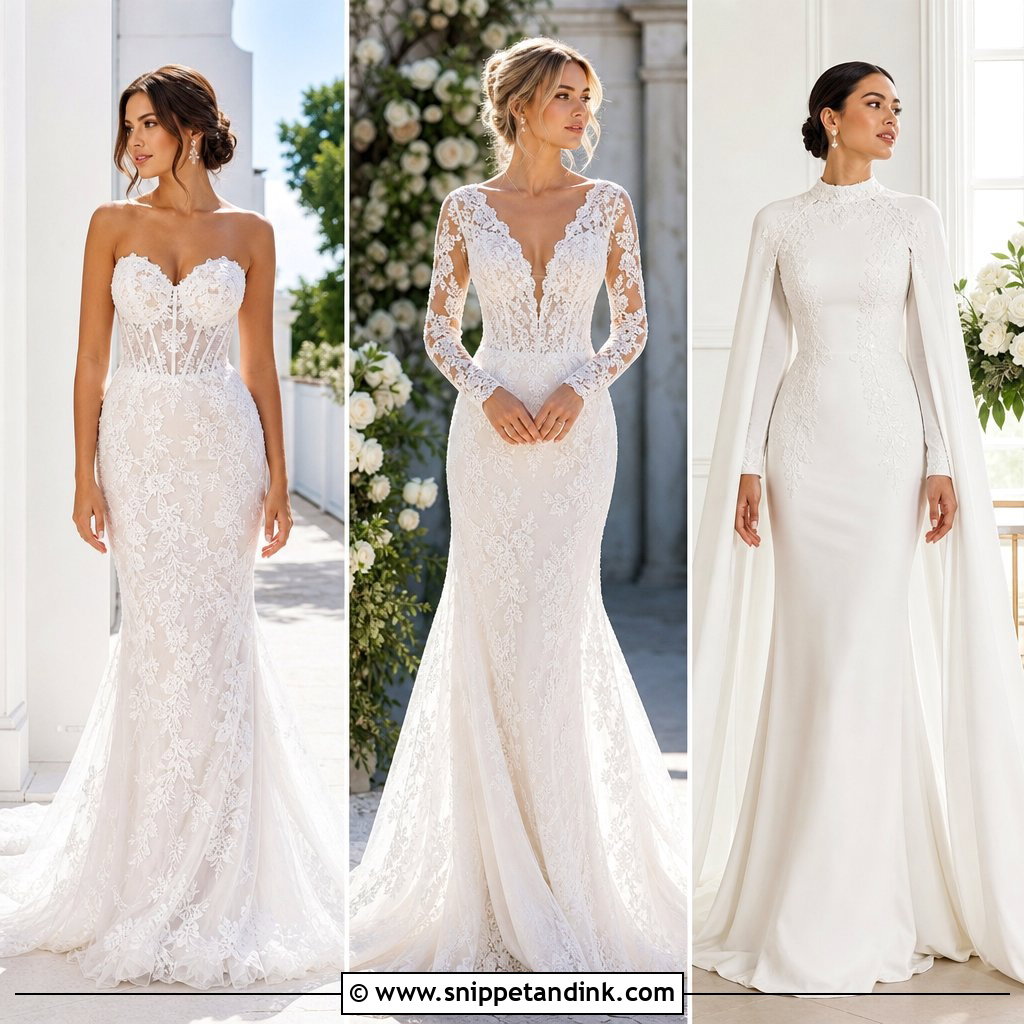
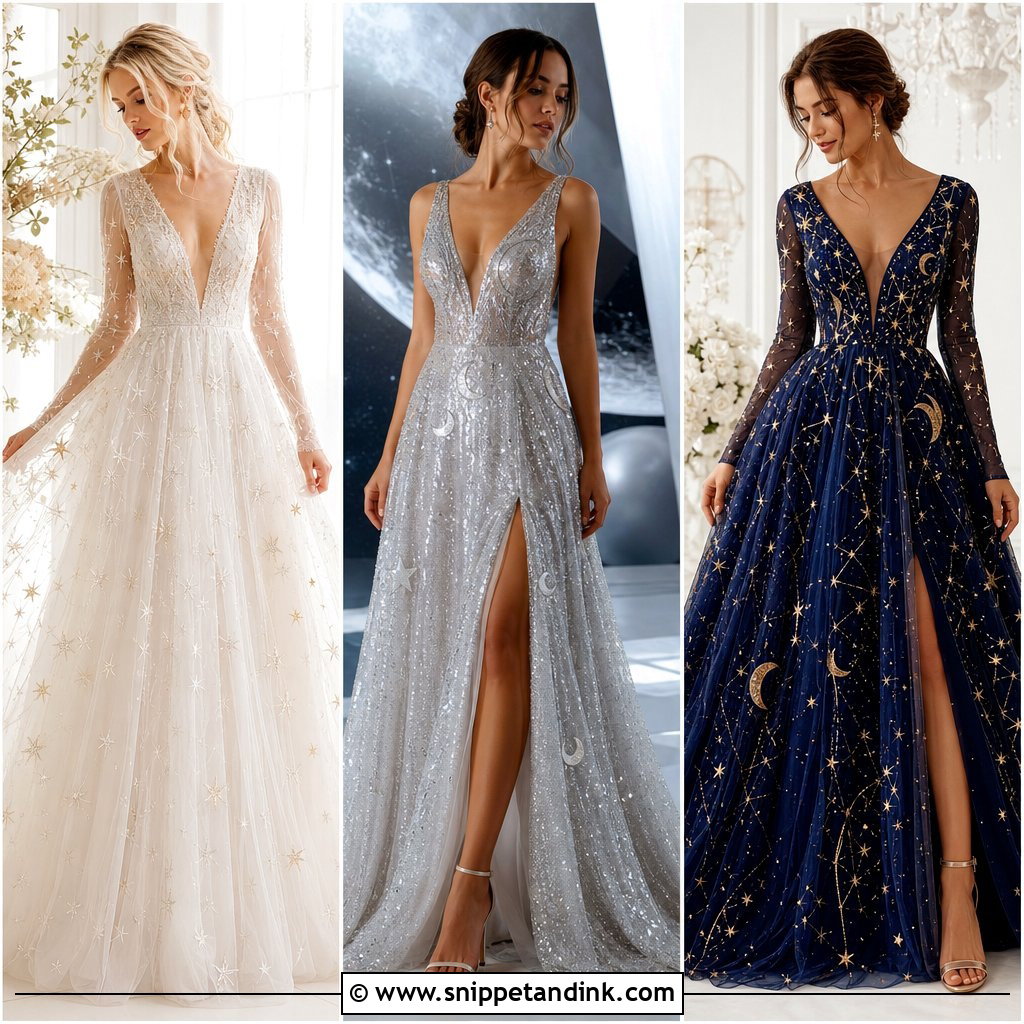
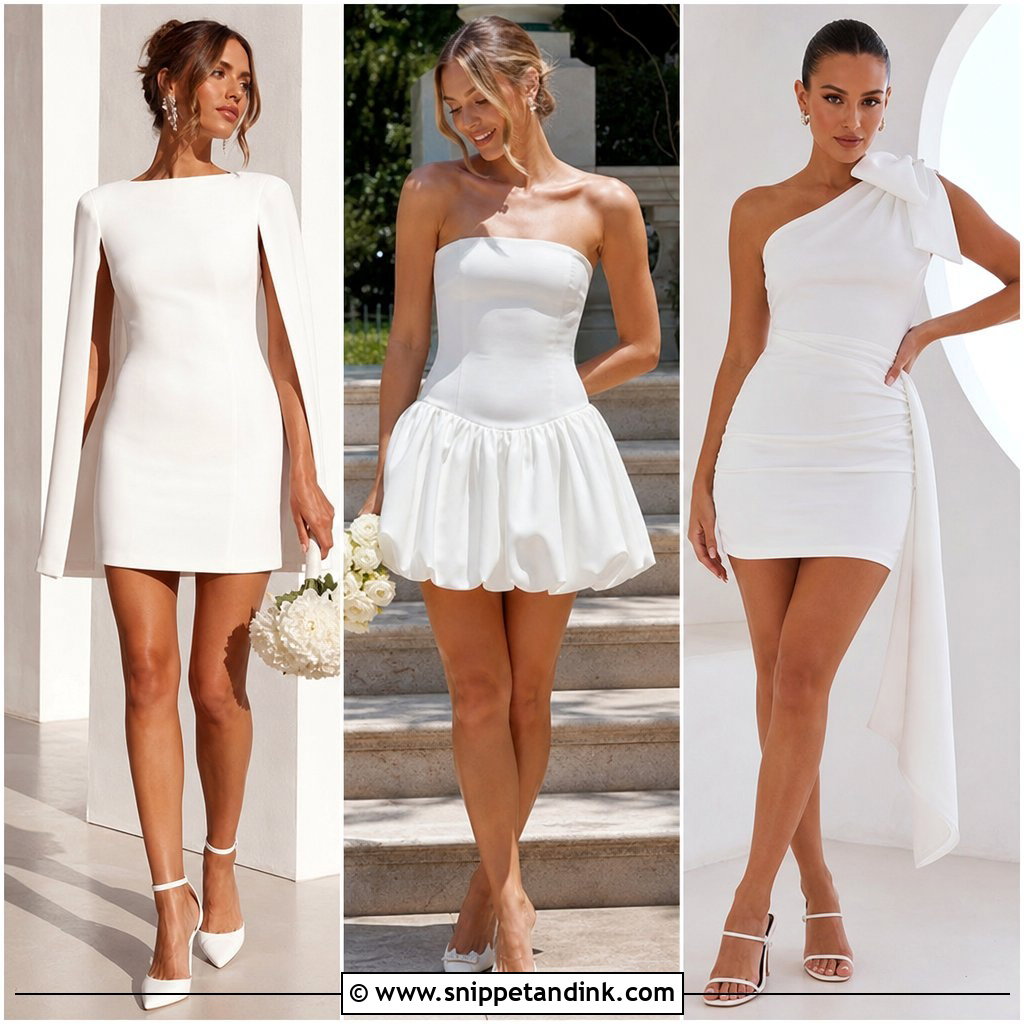
20. Jacquard Wedding Dress Ballgown
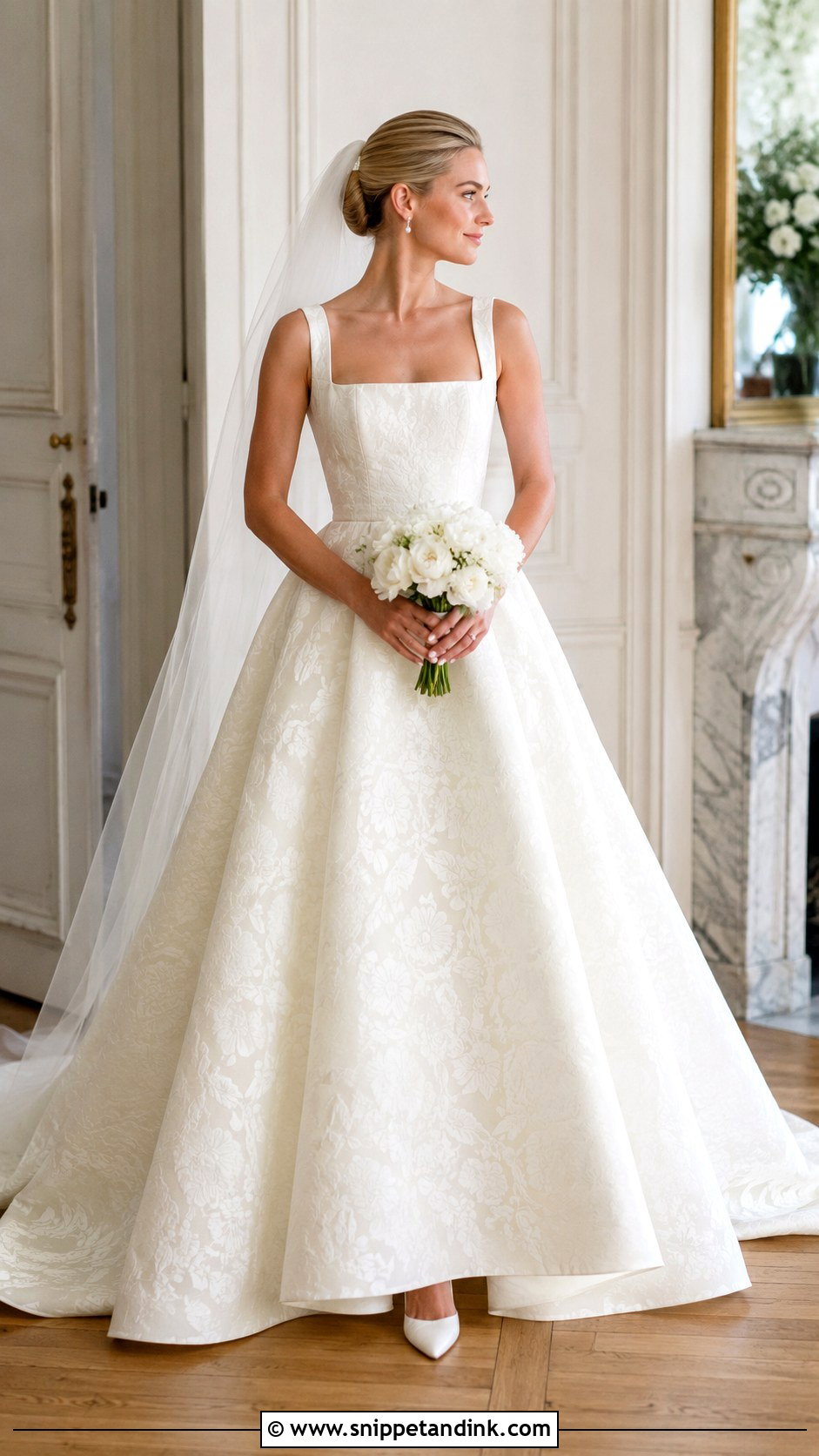
A jacquard ballgown gets its richness from woven pattern rather than added sparkle. A subtle floral, damask or botanical design appears as the fabric moves through light. It’s often heavier than satin or tulle, so I lift the skirt and check the inner support before anything else: a waist stay or internal belt should take the weight off your shoulders. A structured square, strapless or scoop bodice suits the substantial skirt. Plain ivory pumps, pearl earrings, a simple veil and a bouquet with a defined shape balance the pattern. Get a sturdy bustle, as a heavy skirt is tiring to hold up by hand.
The Practical Side of Wearing All That Skirt
A full ballgown can be surprisingly heavy, and nearly every problem I’ve helped fix on a wedding day comes from moving in it, not from how it looks. Rehearse a few ordinary things at your final fitting so the day itself holds no surprises.
Cars, stairs and chairs
Get into the car seat first, then lift and swing the skirt in after you, with someone tucking the hem. On stairs, hold the front of the skirt up and let the train follow; going down, step slowly so your heel doesn’t catch the hem. Before you sit, gather the back of the skirt so you’re not sitting on a lump of crinoline.
The bathroom
Sit facing the cistern, backwards, and gather the skirt up in front of you. It sounds odd, but it’s far easier than having a friend hold armfuls of tulle. Practice once at home in the dress before the day.
A small kit for the gown
- Safety pins and a needle threaded in ivory.
- A chalk stick or white blotting paper for marks on satin.
- Fashion tape for a neckline that shifts.
- A large clean sheet to lay under the skirt when you sit outdoors.
A Ballgown That Still Feels Good at Midnight
Compare fabric, neckline, waist placement, sleeves and skirt volume side by side, then try the shortlist on with the shoes you’ll actually wear. Plain satin, lace, pearls and corsetry all suit different brides and venues, but every one of them depends on alterations: support, hem, bustle and proportion. Repeat details carefully in your accessories and put comfortable footwear first. The gown that’s right is the one you can walk, sit, dance and hug people in for the whole day while still feeling completely like yourself.
You'll Like These Ideas:









Leave a Reply