
What Holds a Ballgown Skirt Up, and Why It Matters at Your Fitting
Most of the princess shape you see in a photo is not the outer fabric. It comes from what sits under it: layers of stiff tulle or horsehair built into the lining, a separate petticoat, or occasionally a hoop. I always ask which of these a gown uses before a bride falls for it, because each one wears differently. Built-in layers are the easiest to live with. A separate hoop gives the most volume but swings when you walk and makes sitting awkward.
Sample gowns are often clipped at the back to fit, and they may be worn without the petticoat that will come with your order. So the dress you try on can look smaller or larger than the one you’ll wear. Ask the consultant to put the full underskirt on, then judge the volume.
Shoes and hem length
A ballgown is hemmed to your shoe height, usually so the skirt just clears the floor at the front. Change your heels after that and you’ll either trip on the hem or show your ankles. I tell brides to choose shoes before the first alteration appointment and bring them every time.
Timing the order
- Made-to-order gowns commonly take several months to arrive, so many salons suggest ordering around eight to ten months ahead. Lead times vary by designer, so ask yours directly.
- Alterations on a full skirt and structured bodice usually need two or three fittings spread over the last two or three months.
- Leave the final fitting close enough to the date that your weight is settled, but not so close that there’s no time for a fix.
1. Strapless Satin Princess Ballgown Wedding Dress
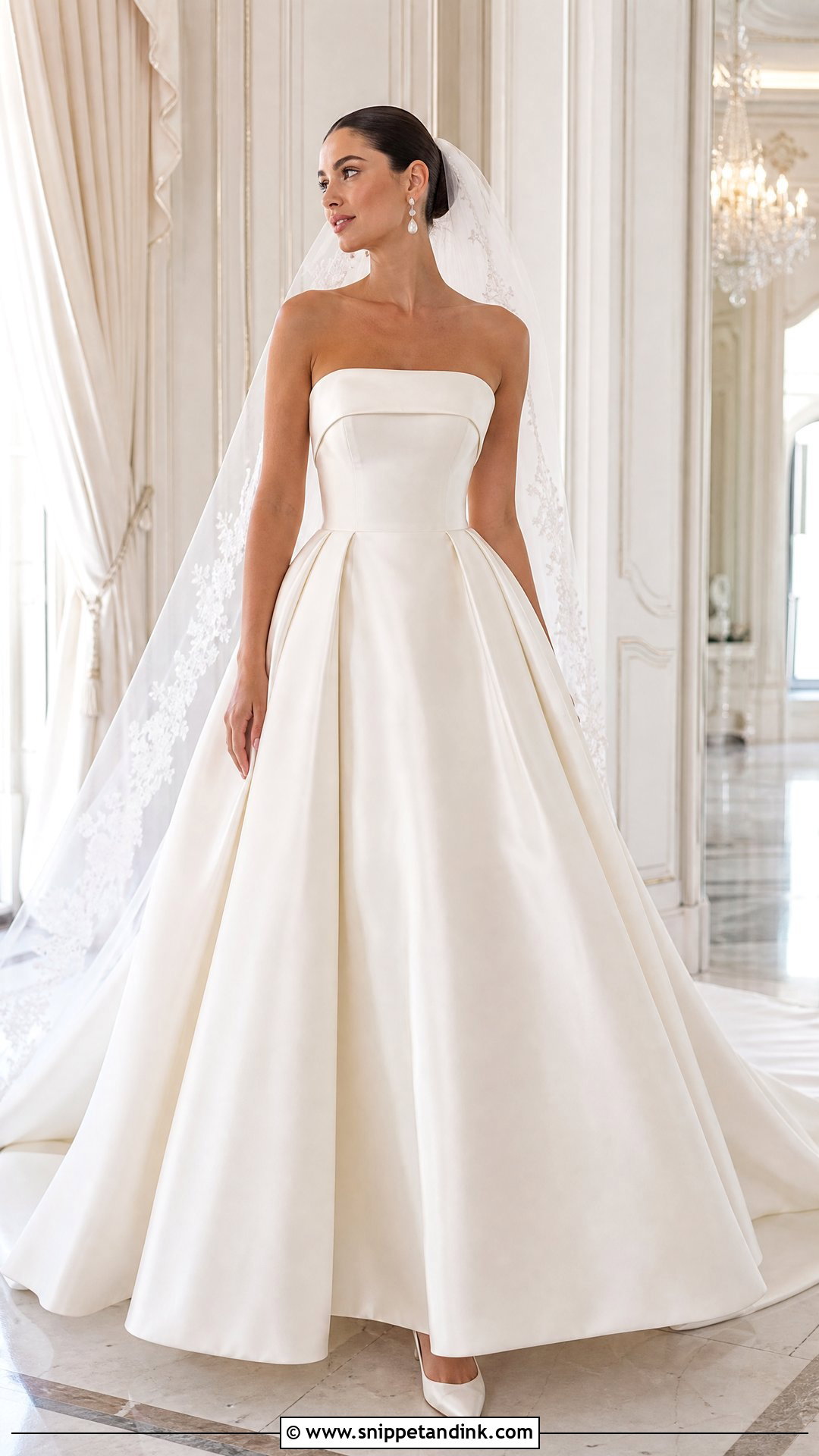
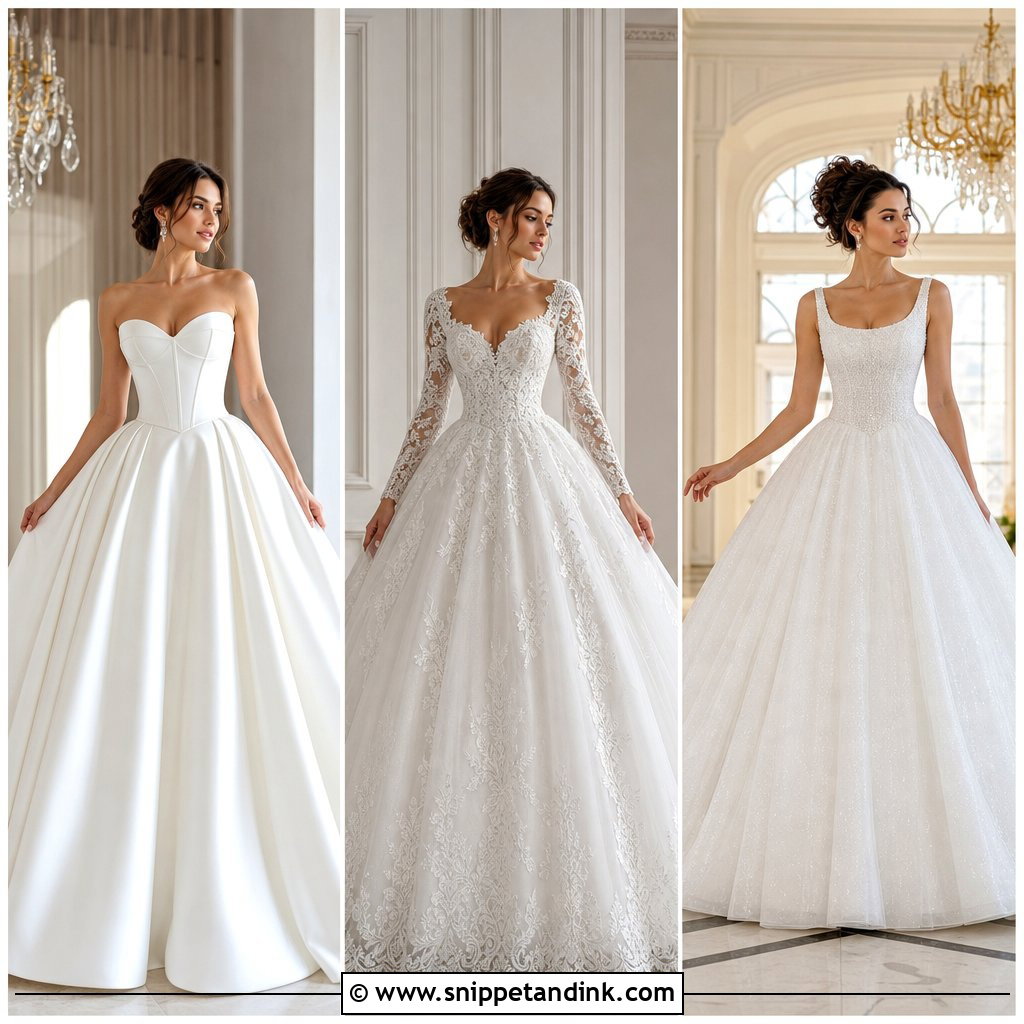
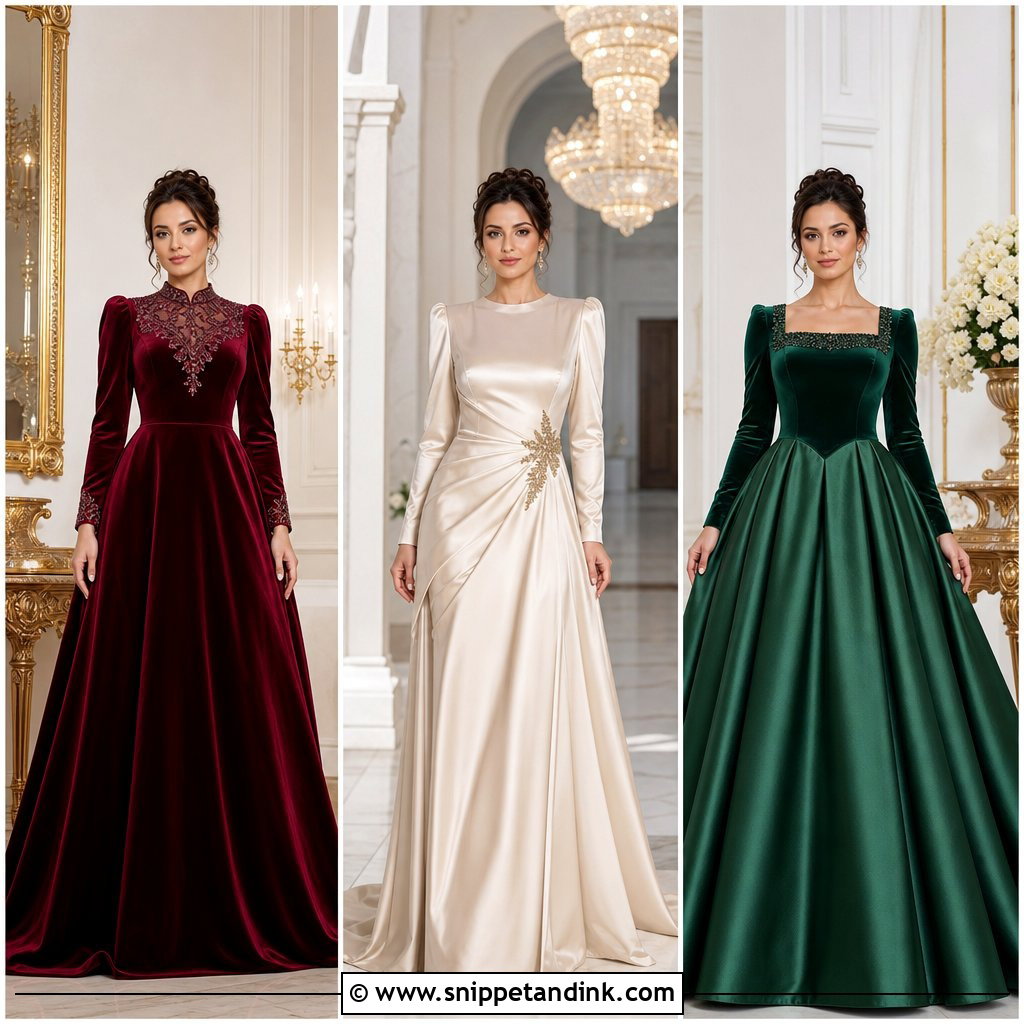
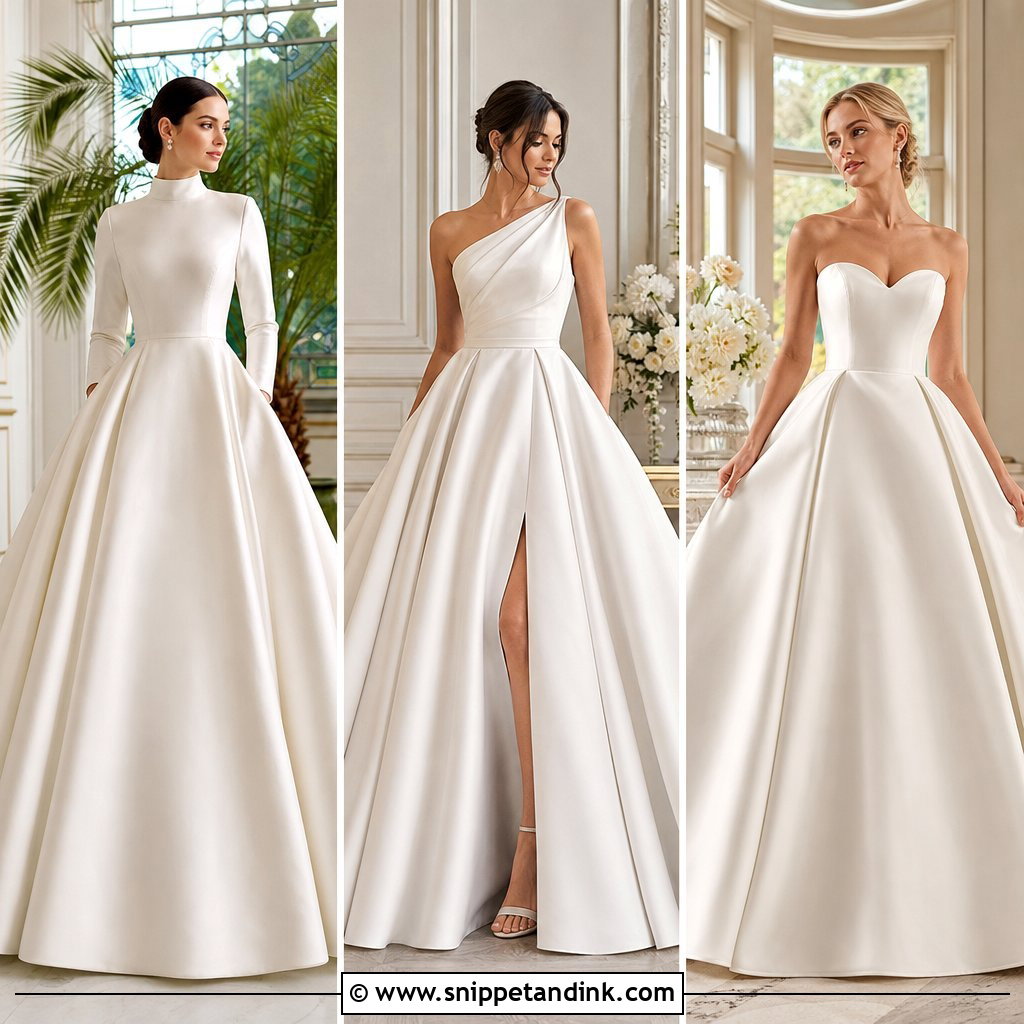
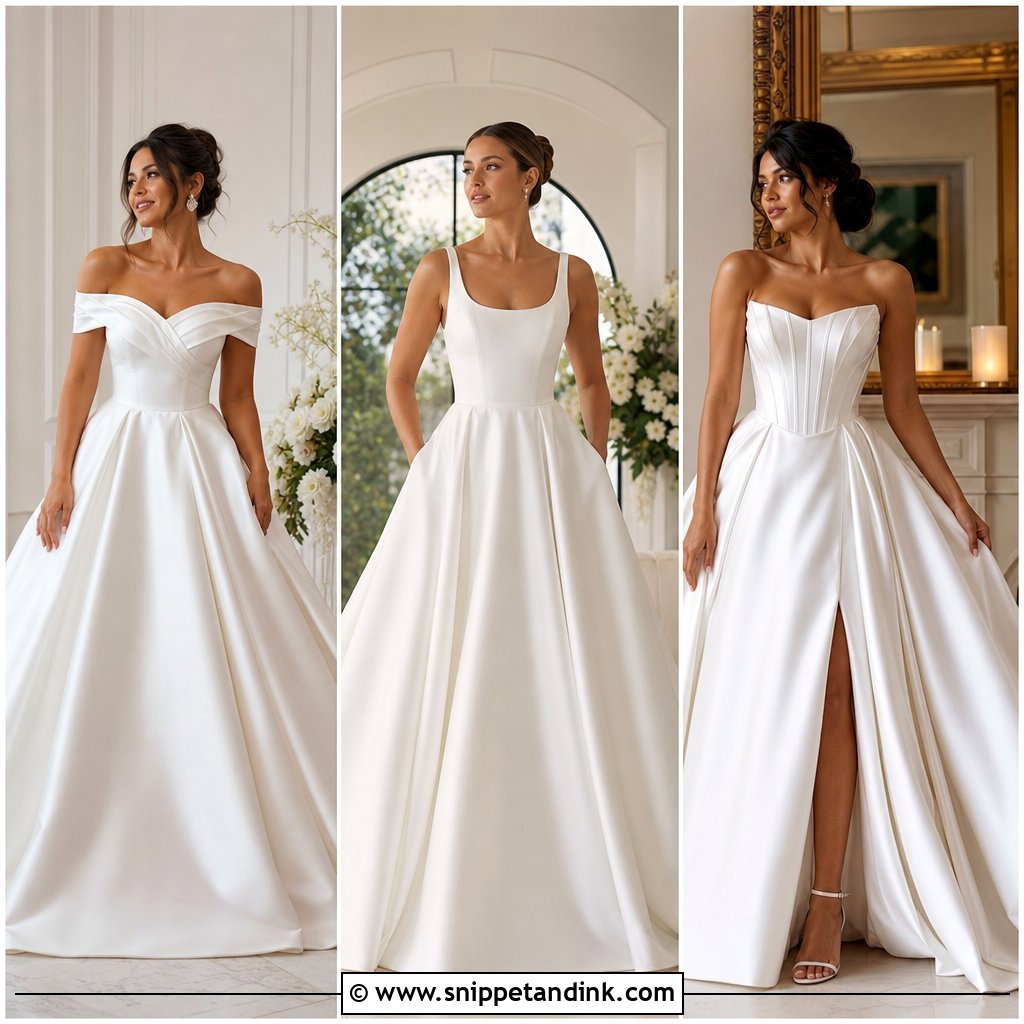
Strapless satin is the ballgown I pull first when a bride asks for structure and very little decoration. The whole look depends on the bodice, so I check for internal boning and a gently curved neckline before I look at anything else; a straight-across edge can cut into the chest when you sit. Soft pleats let the satin skirt gain volume without breaking up that smooth surface. I keep the rest quiet: a cathedral veil, pearl drops, pointed satin pumps and a compact white bouquet. With the shoulders bare, a sleek bun or side-parted waves finishes the frame. Hotel ballrooms, museums and formal estates suit it. At every fitting, sit down and raise both arms; if the bodice slides, it needs taking in, not more tape.
2. Sweetheart Corset Princess Ballgown Wedding Dress
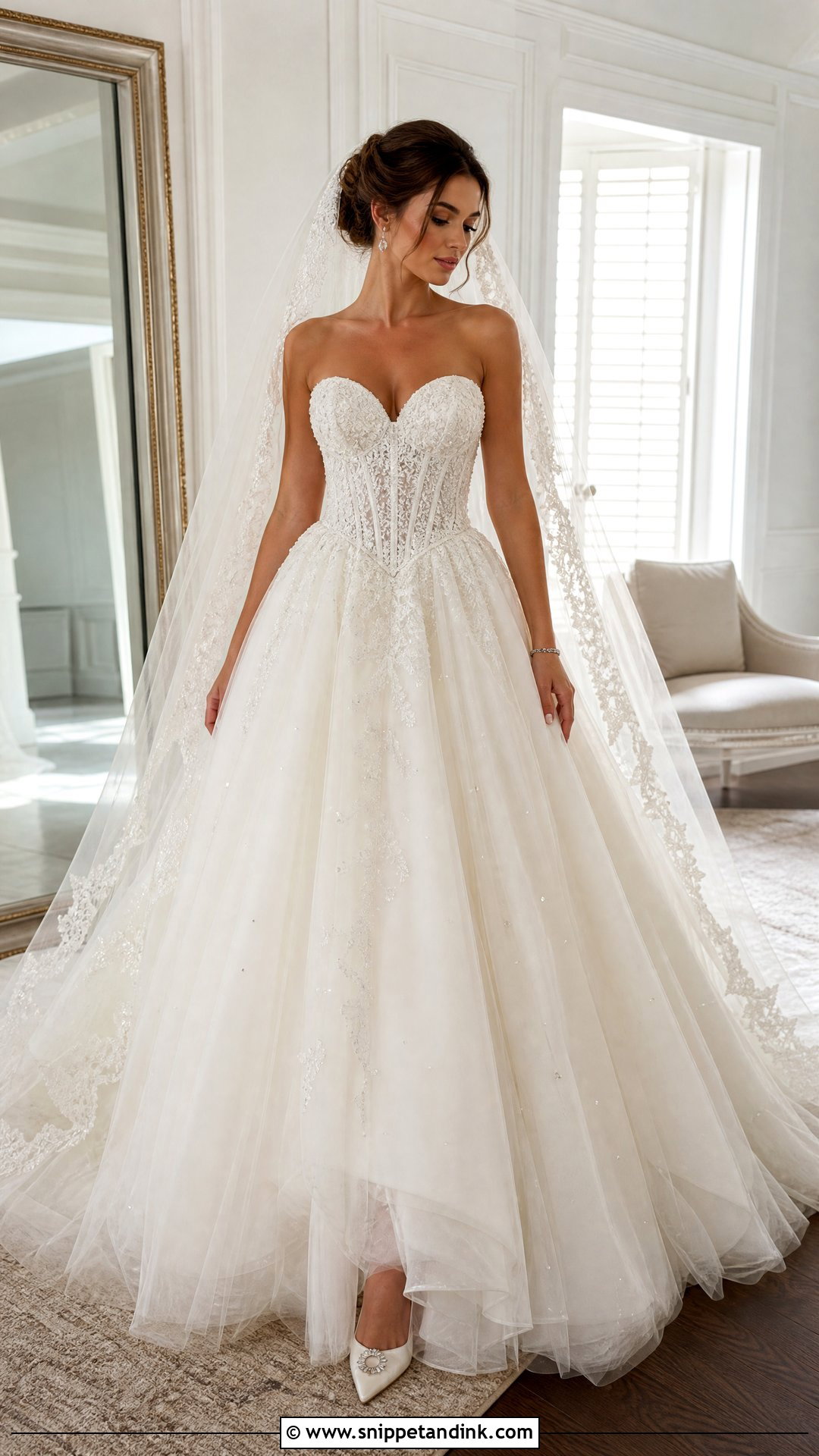
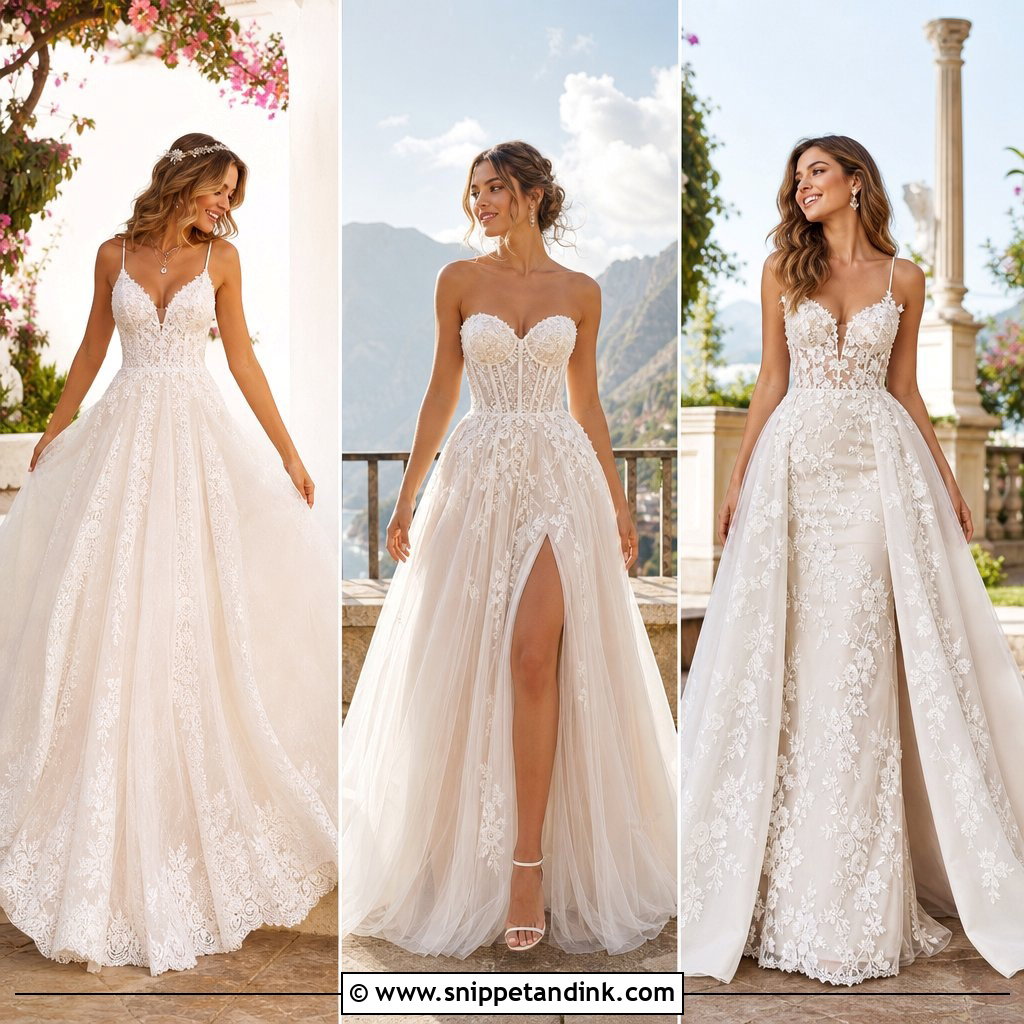
A sweetheart corset ballgown gets its shape from the boning, and the sweetheart line shows off the collarbone. The closure changes how it wears. A lace-up back gives you a few centimetres of adjustment on the day, which I like for brides whose weight tends to shift before a wedding; covered buttons look more traditional but leave no margin. Layered tulle underneath keeps the fitted top from looking stiff. Crystal studs, a thin tennis bracelet, ivory heels and a lace-edged fingertip veil are plenty. The fitting point I watch hardest is cup placement. If the cups sit even slightly low, you’ll be tugging the bodice up all evening.
3. Basque Waist Princess Ballgown Wedding Dress
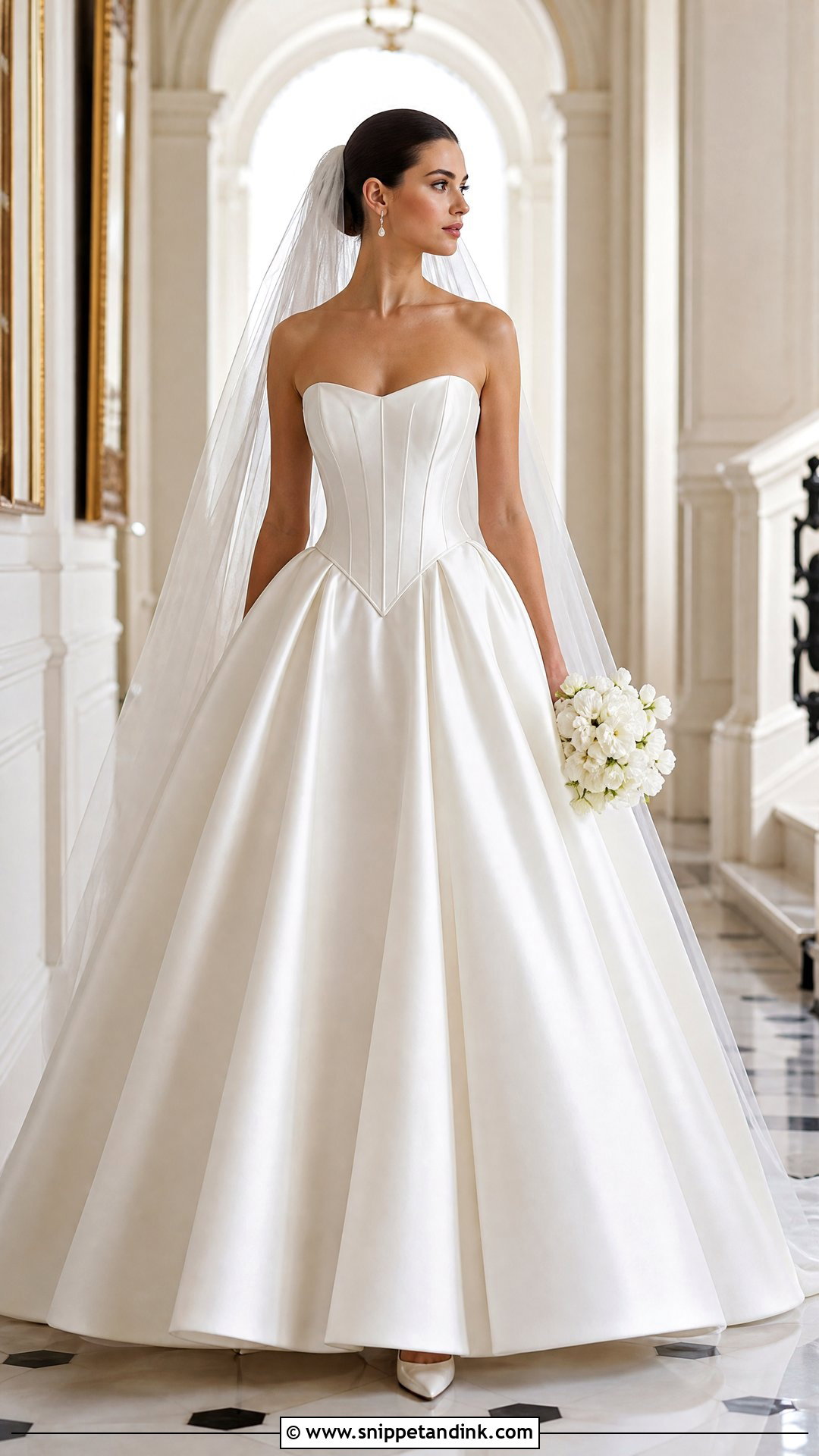
The Basque waist bodice dips into a V below the natural waist, and that point is what makes the torso look longer and the skirt look fuller. Bridal designers keep returning to it in plain satin, lace and visible corsetry. I style it simply: a long plain veil, drop earrings, pointed pumps and a tidy bouquet, so nothing pulls the eye away from the seam lines. The detail I check at alterations is where the point lands when you sit. On a shorter torso it can press into the lower stomach, and lifting the point by even a little solves it.
4. Off-Shoulder Princess Ballgown Wedding Dress
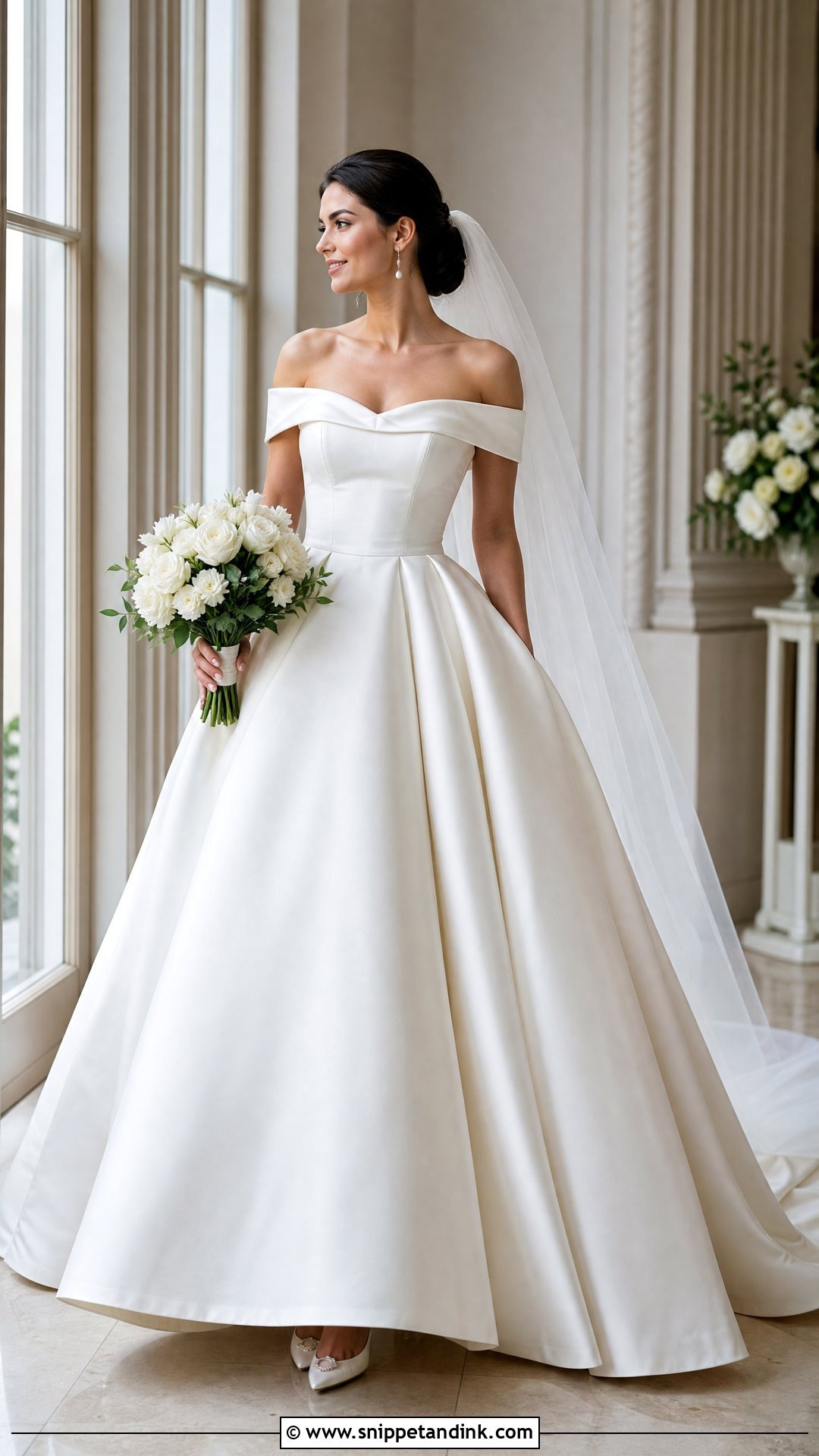
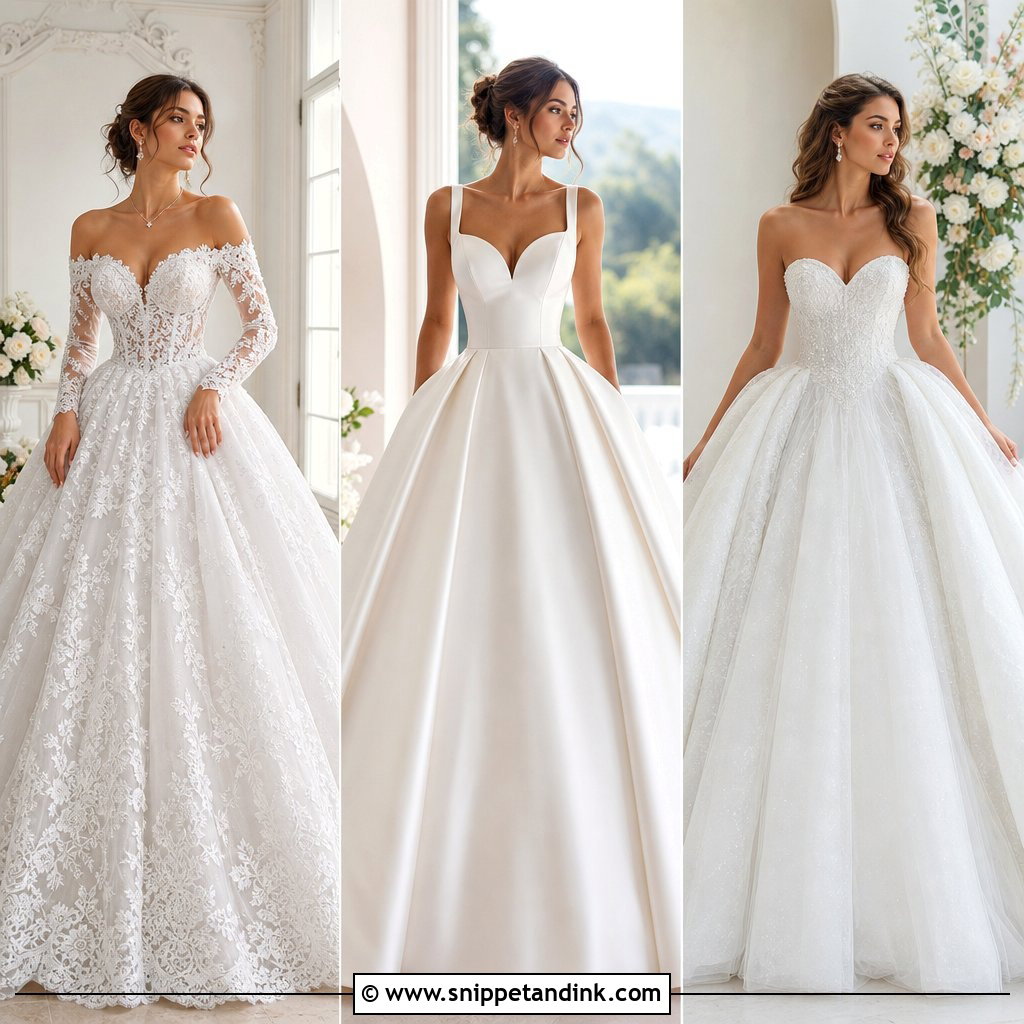
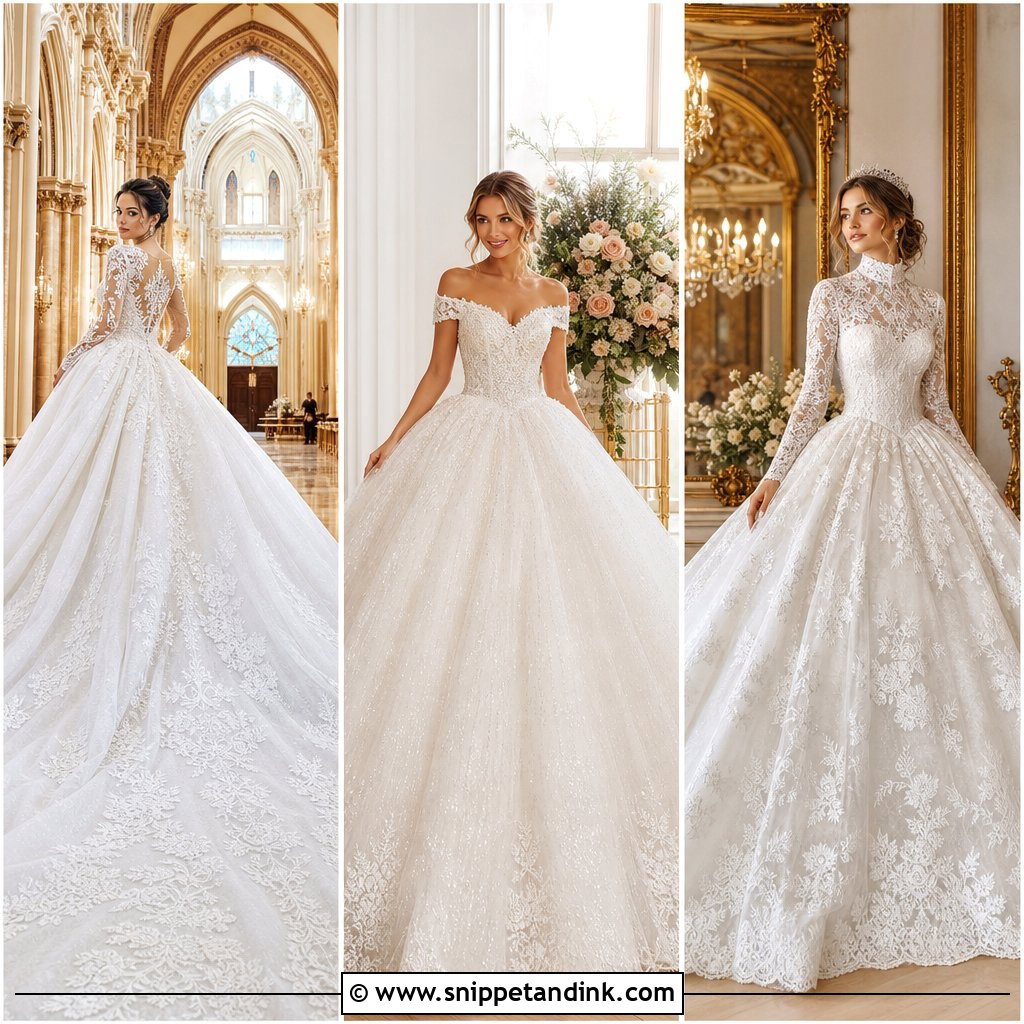
Off-shoulder bands give you the line of a sleeve while leaving the neckline open. The bands are the tricky part. They need to rest on the upper arm without pinning it to your side, so I have brides lift their arms and mime a first dance before we commit. Mikado over a structured bodice reads formal and architectural; tulle with appliqués scattered toward the hem is softer. I’d skip a necklace here because the neckline already frames the shoulders, and a low chignon, pearl earrings, a long veil and closed ivory heels complete it. If the bands restrict you, ask whether they can be made detachable for the reception.
5. Long Sleeve Lace Princess Ballgown Wedding Dress
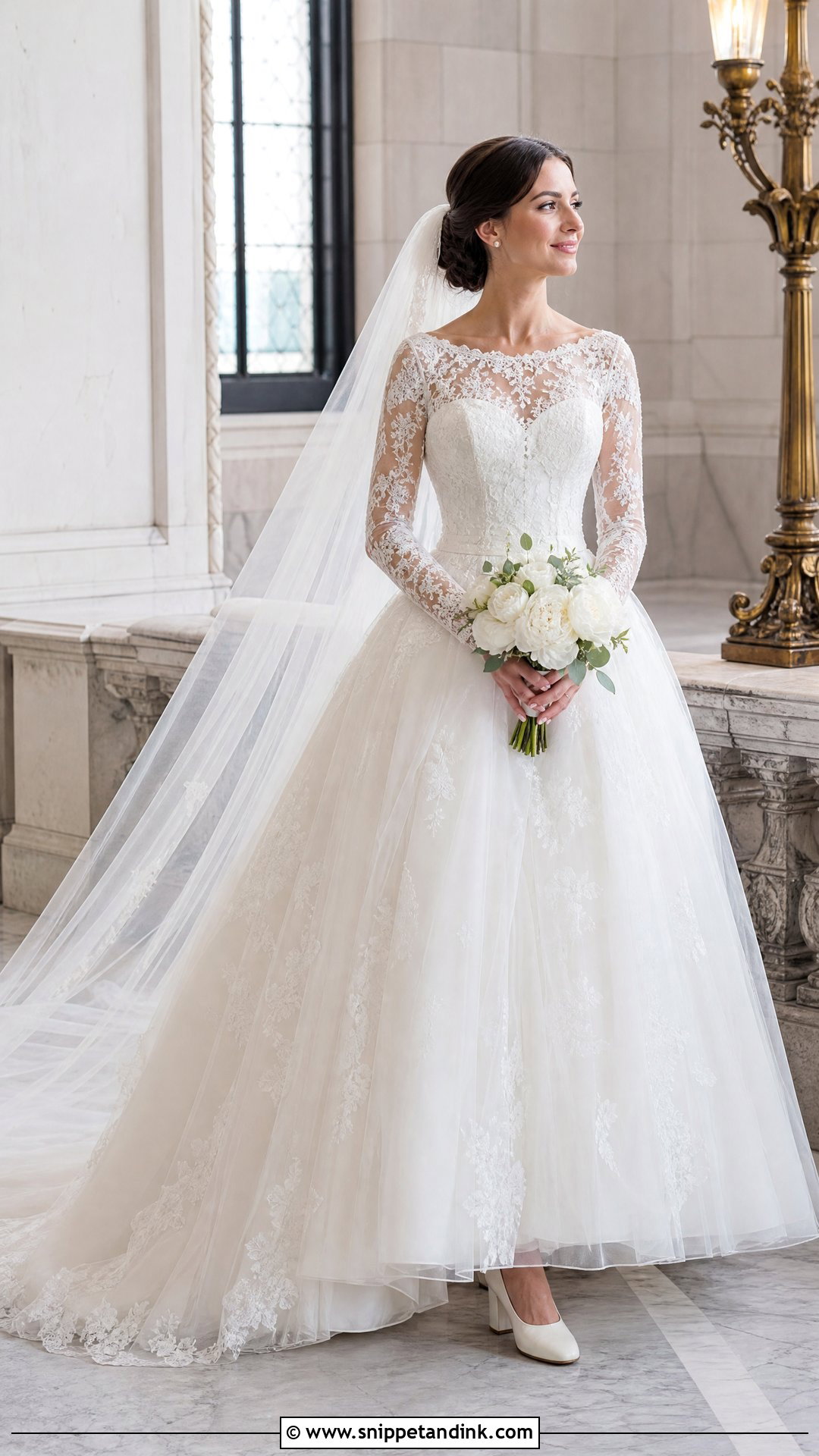
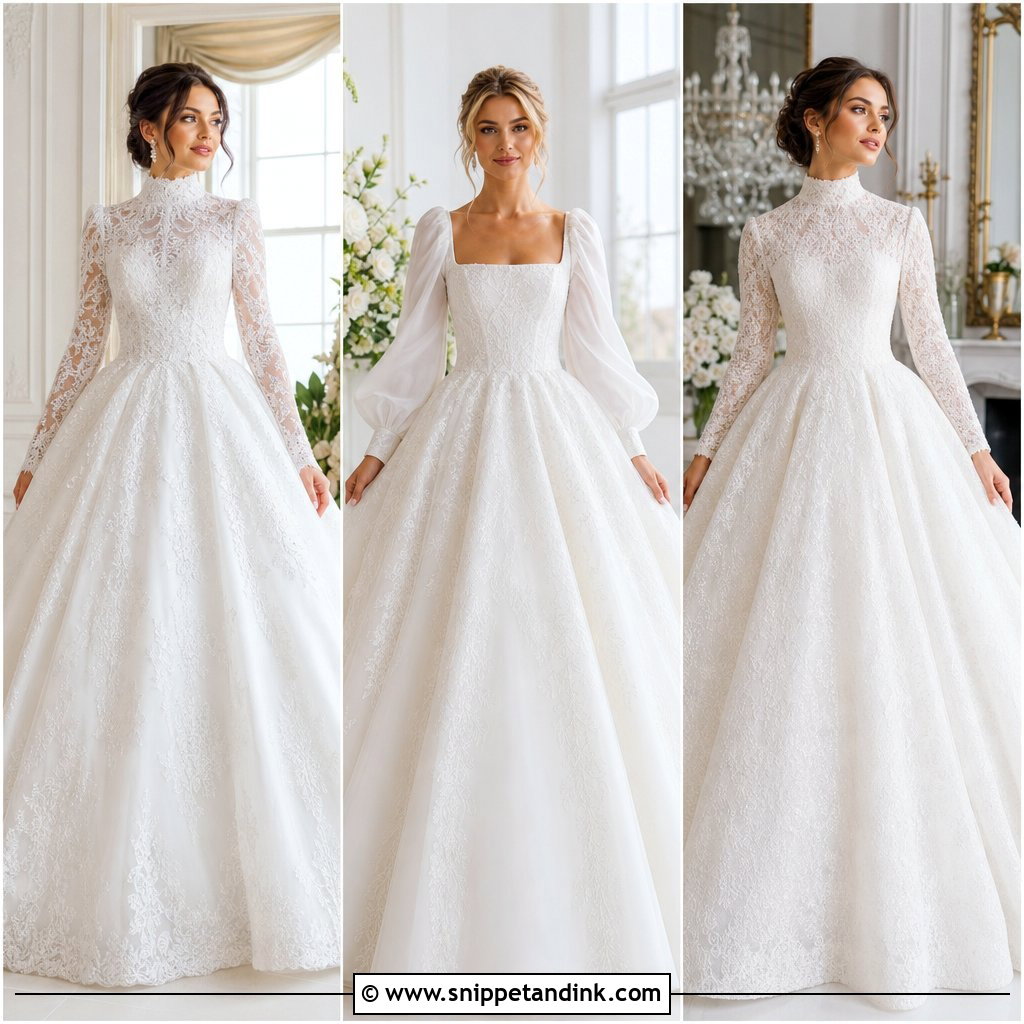
Long lace sleeves suit cooler months and churches, and they make a ballgown feel more formal straight away. Illusion sleeves with placed appliqués give light coverage; lined lace hides more. Under all that detail I still want a structured bodice, otherwise the lace loses definition where it meets the skirt. My finishing set is studs, a cathedral veil, block heels and a loosely gathered bouquet, with a sleek low bun so the sleeves and neckline stay visible. Lace edges scratch at the wrist and underarm after a few hours, so I rub them against the skin at the fitting. Ask for a little ease across the upper back too; that’s what lets you hug people and hold flowers comfortably.
6. Square Neck Princess Ballgown Wedding Dress
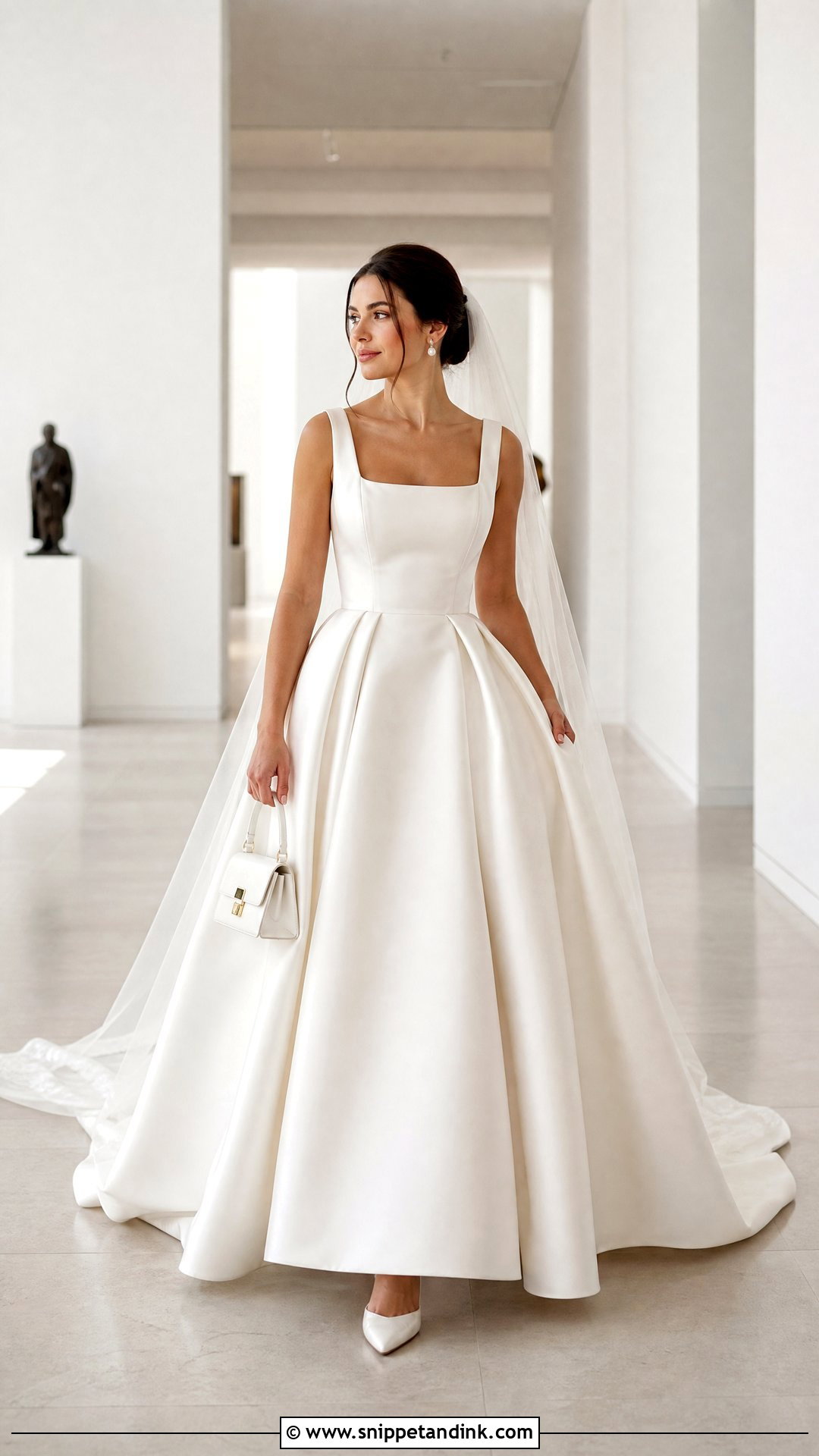
A square neck is geometric and calm, and it sits naturally with wide straps, short sleeves or a sleeveless structured bodice. For a clean result I steer brides toward smooth satin or Mikado and let deep pleats in the skirt create the volume. A chapel veil, pearl studs, a small structured bag for portraits and pointed ivory shoes are all it needs, with a centre-parted bun or polished waves. It also gives more support than strapless, which matters to brides who don’t want to think about their neckline for ten hours. Strap length is where these go wrong. Straps that are a touch long make the corners of the square gape; too short and they dig in.
7. Floral Lace Princess Ballgown Wedding Dress
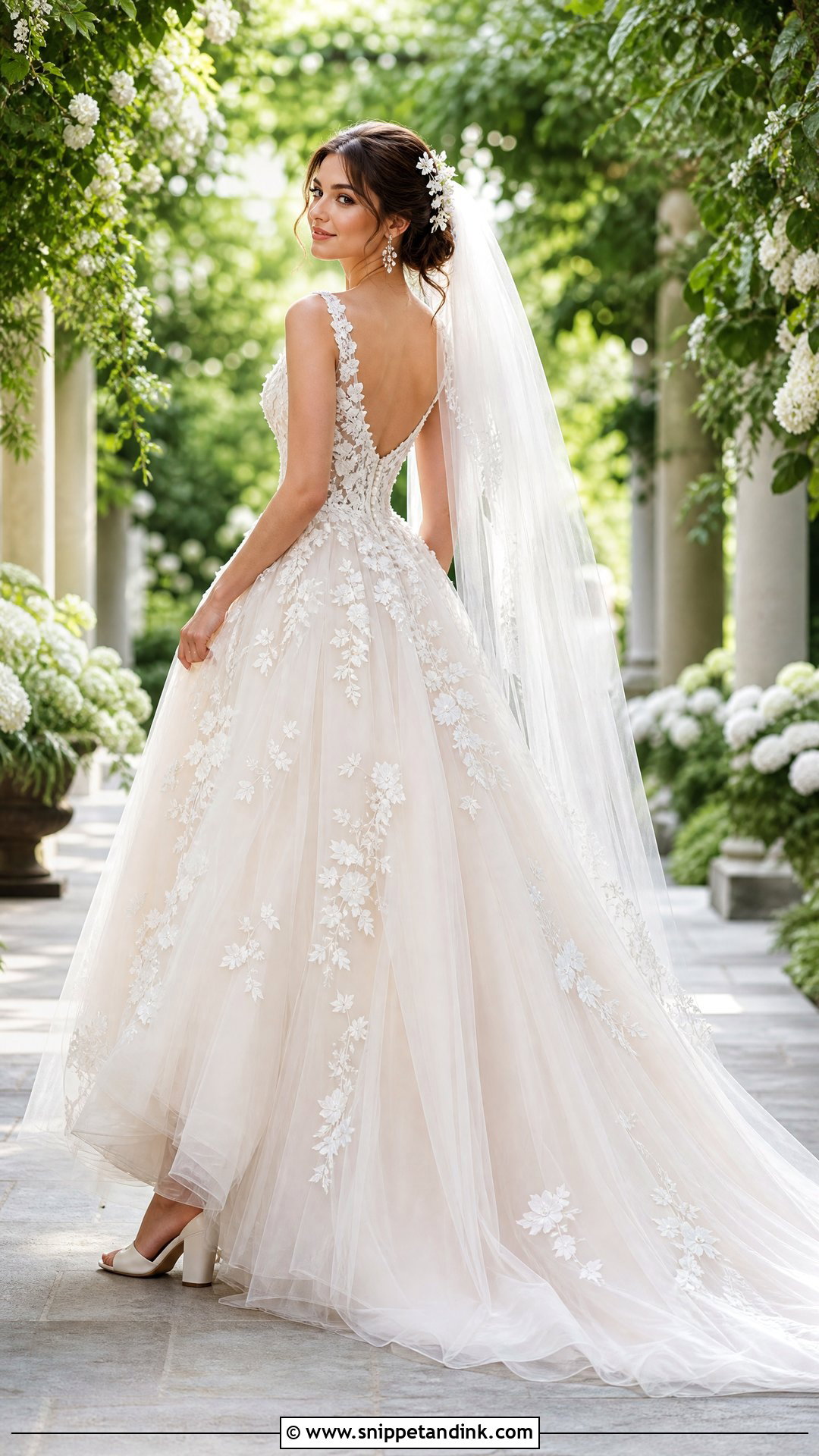
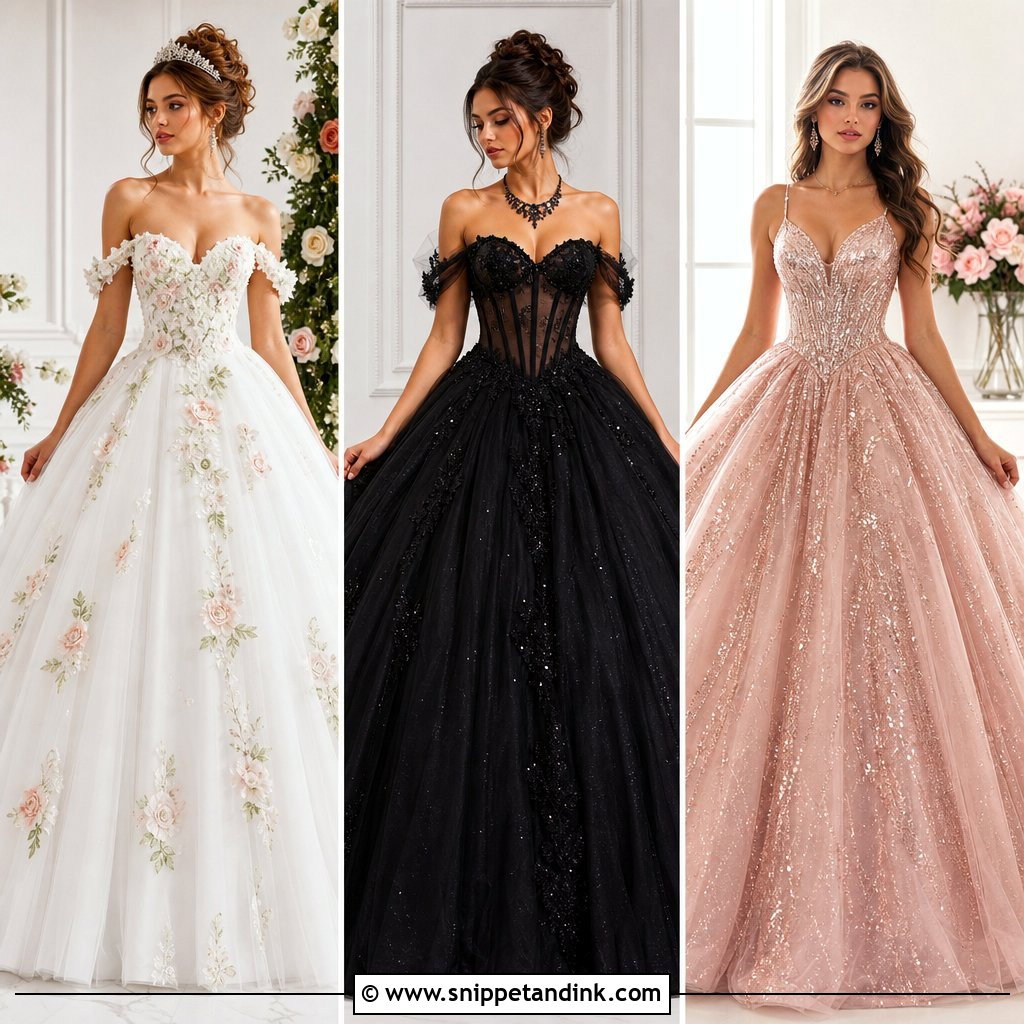
Floral lace on a ballgown works best when the appliqués are dense on the bodice and thin out as they travel down the tulle. That gradual scatter gives depth without making the skirt look heavy. I ask for an ivory lining rather than a nude one under ivory lace, because the pattern reads more clearly in photos. Floral pins, small drops, a sheer veil and block-heel pumps that won’t sink into grass suit a garden setting, with a loose low bun. Larger, more sculptural flowers have been showing up on recent gowns too, if you want the detail to feel current. Keep the bouquet simple. A busy bouquet held against busy lace turns into one blur in pictures.
8. Beaded Princess Ballgown Wedding Dress
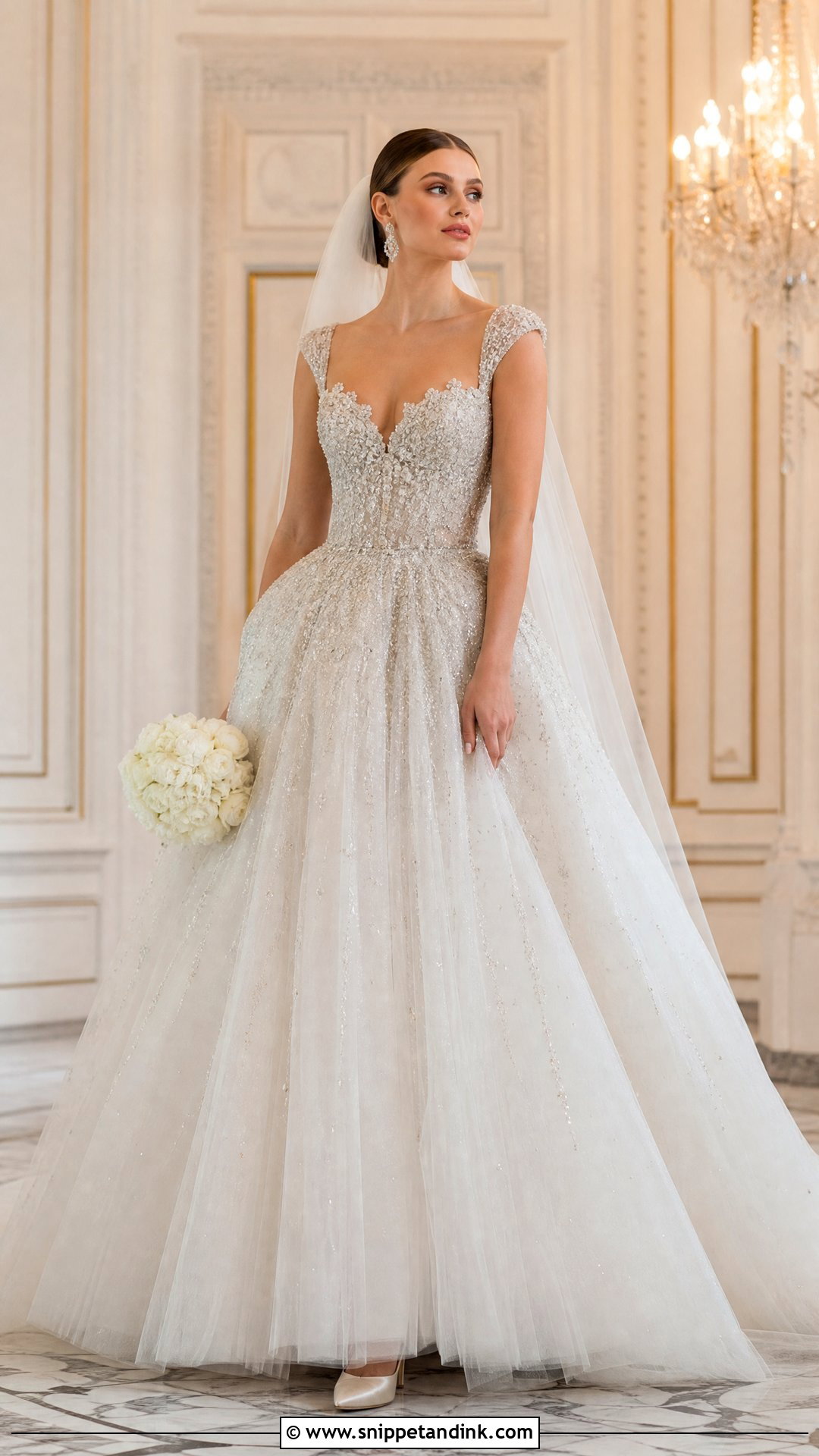
Beading needs light to work, so I recommend it mainly for ballrooms and evening ceremonies. The best versions concentrate the beads on the bodice and thin them out across the skirt; a neutral tulle base softens crystals, sequins and pearls together. With that much shine, I keep the hair either a polished updo or smooth old-Hollywood waves and leave out a jewelled headpiece entirely. Weight is the honest drawback. A heavily beaded bodice pulls down and forward, so walk the sample around the salon for a few minutes and ask whether extra bust support and a firm waist stay can be built in. That waist stay carries the load so your shoulders don’t.
9. Pearl Princess Ballgown Wedding Dress
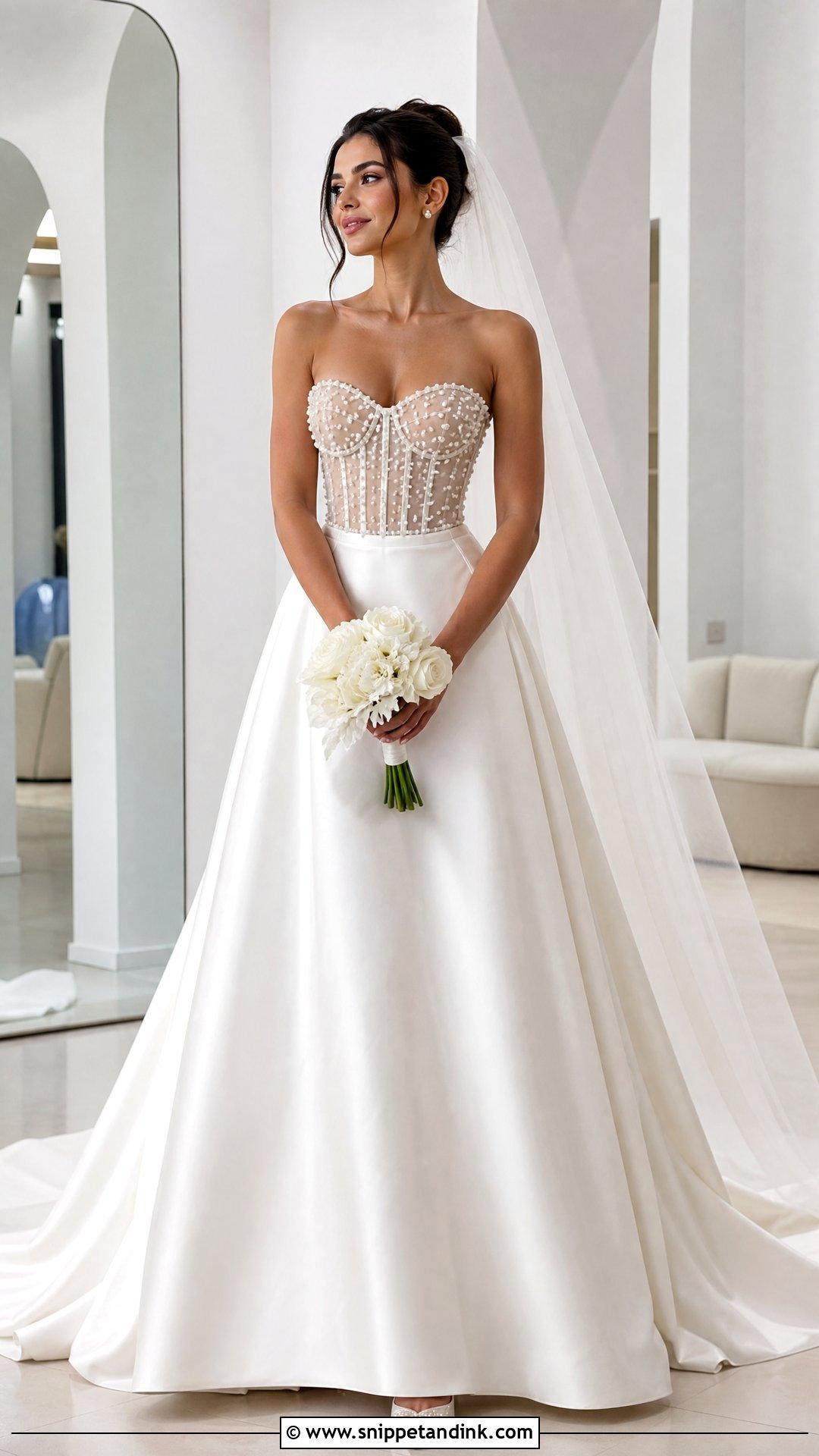
Pearls give a softer glow than crystals, which is why I suggest them to brides who find sparkle too loud. Tiny scattered pearls suit a sheer corset bodice; larger ones look best tracing appliqués, straps or a neckline edge. A clean satin or layered tulle skirt keeps the balance. I hold back on pearl accessories, one pair of studs is enough, and a sleek bun stops loose strands from catching on raised beads. The spot I always inspect is under the arm. Pearls sewn too close to that seam rub the skin raw by the reception, and a seamstress can usually move them or add a lining strip.
10. High Neck Princess Ballgown Wedding Dress
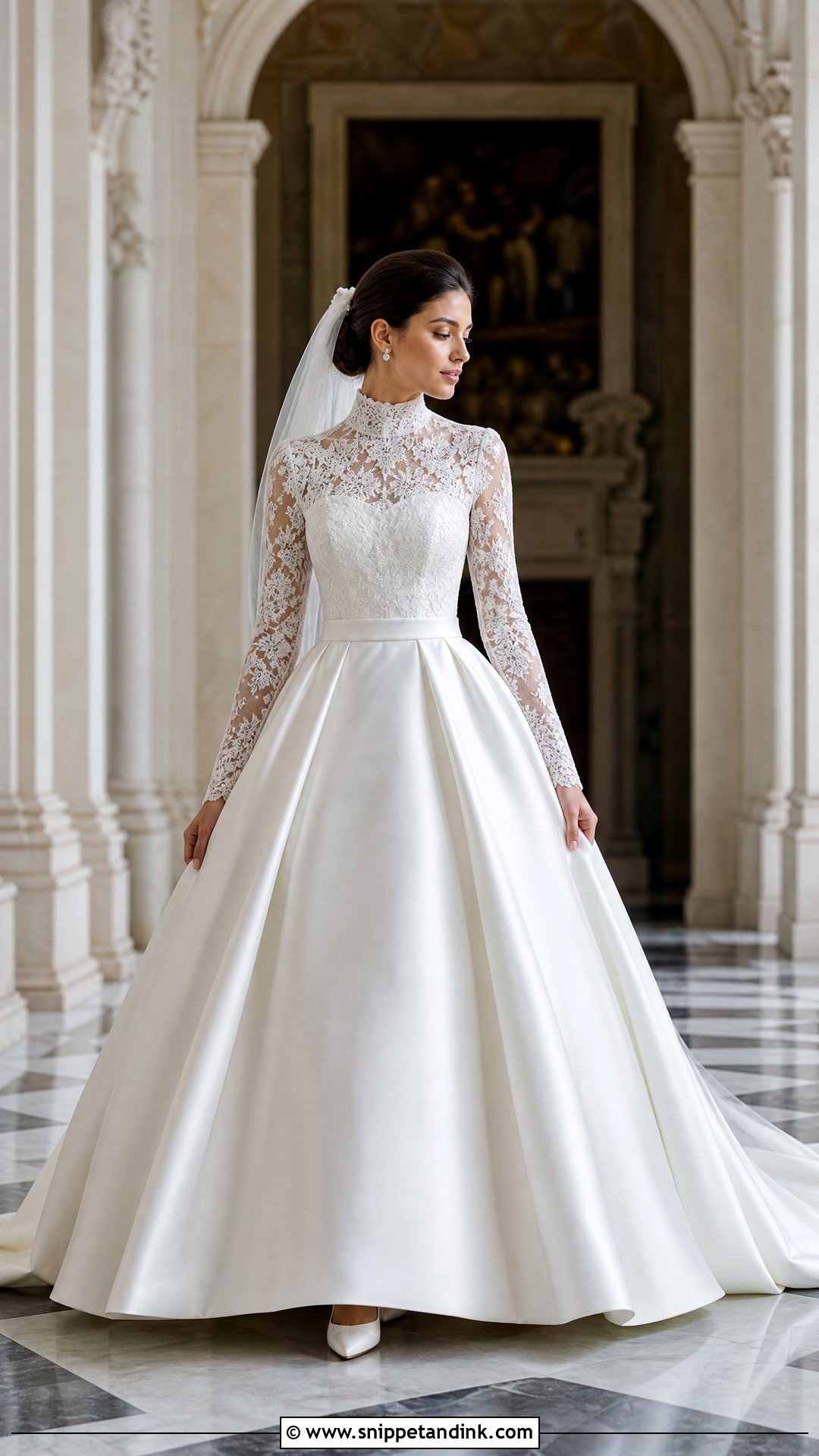
With a high neck, the fit of the collar decides how comfortable you’ll be all day. An illusion neckline with lace motifs feels lighter; a fully lined bateau-style bodice covers more. Either way, the top should be close-fitting so the skirt has something to contrast against. Small earrings, a low bun, a light veil and closed pumps are enough, and I never add a necklace because it crowds the collar. Historic buildings and cool-season venues suit this shape well. At the fitting, turn your head fully left and right. If the collar pulls or folds, it needs resizing before anything else is touched.
11. V-Neck Princess Ballgown Wedding Dress
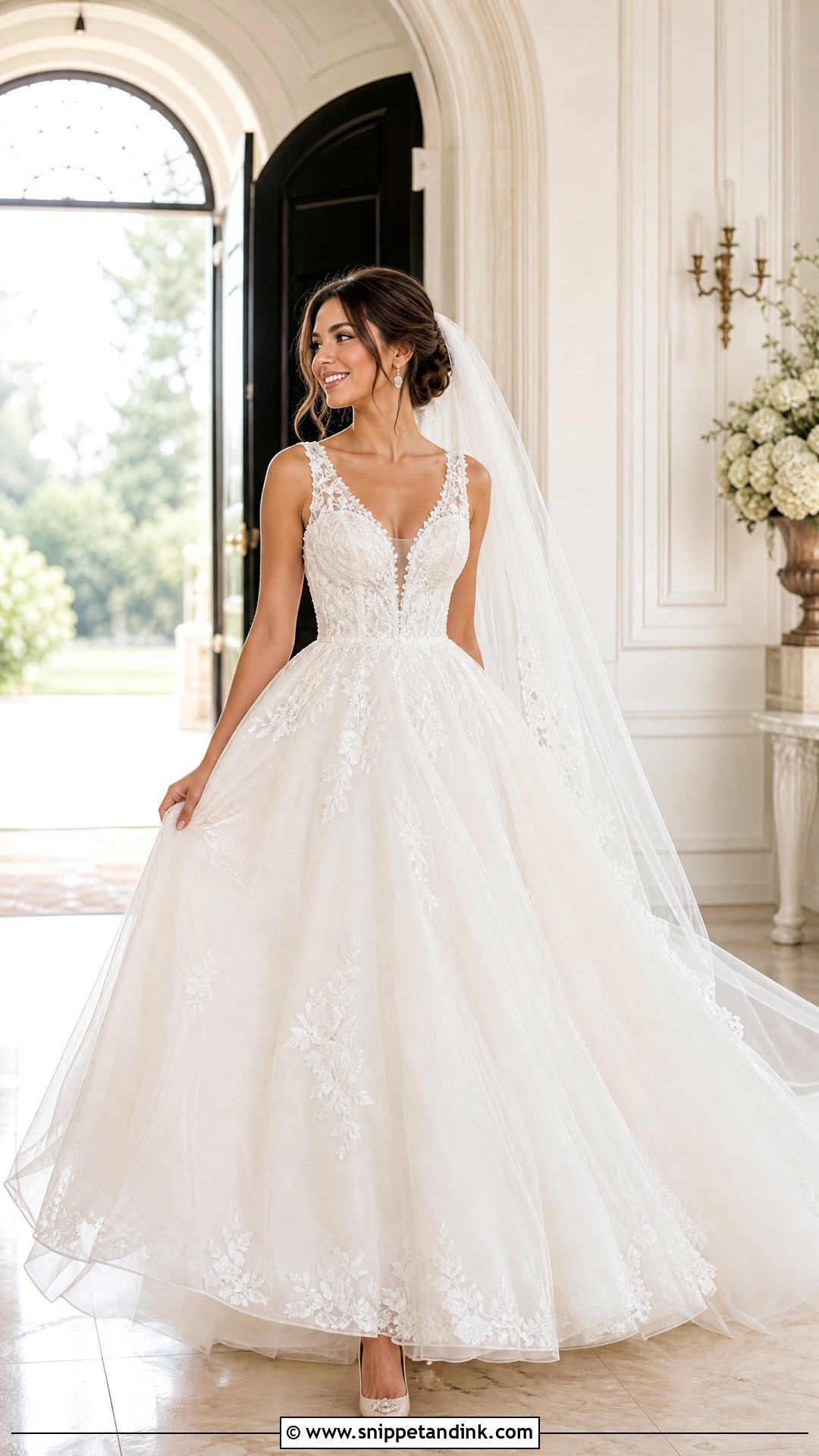
A V-neck draws a vertical line through all that volume, which helps petite brides especially. If you want support, wide straps and illusion mesh inside the V do more than a deep plunge ever will, and lace appliqués along the edges help the mesh blend into the skin. I pair it with a full tulle skirt, a chapel veil, drop earrings and neutral heels, and a half-up wave keeps the mood relaxed. Fashion tape helps with a deep V, but it can’t fix a neckline that’s cut too wide. That’s a tailoring job. Bend, sit and walk while the seamstress watches the neckline.
12. Scoop Neck Princess Ballgown Wedding Dress
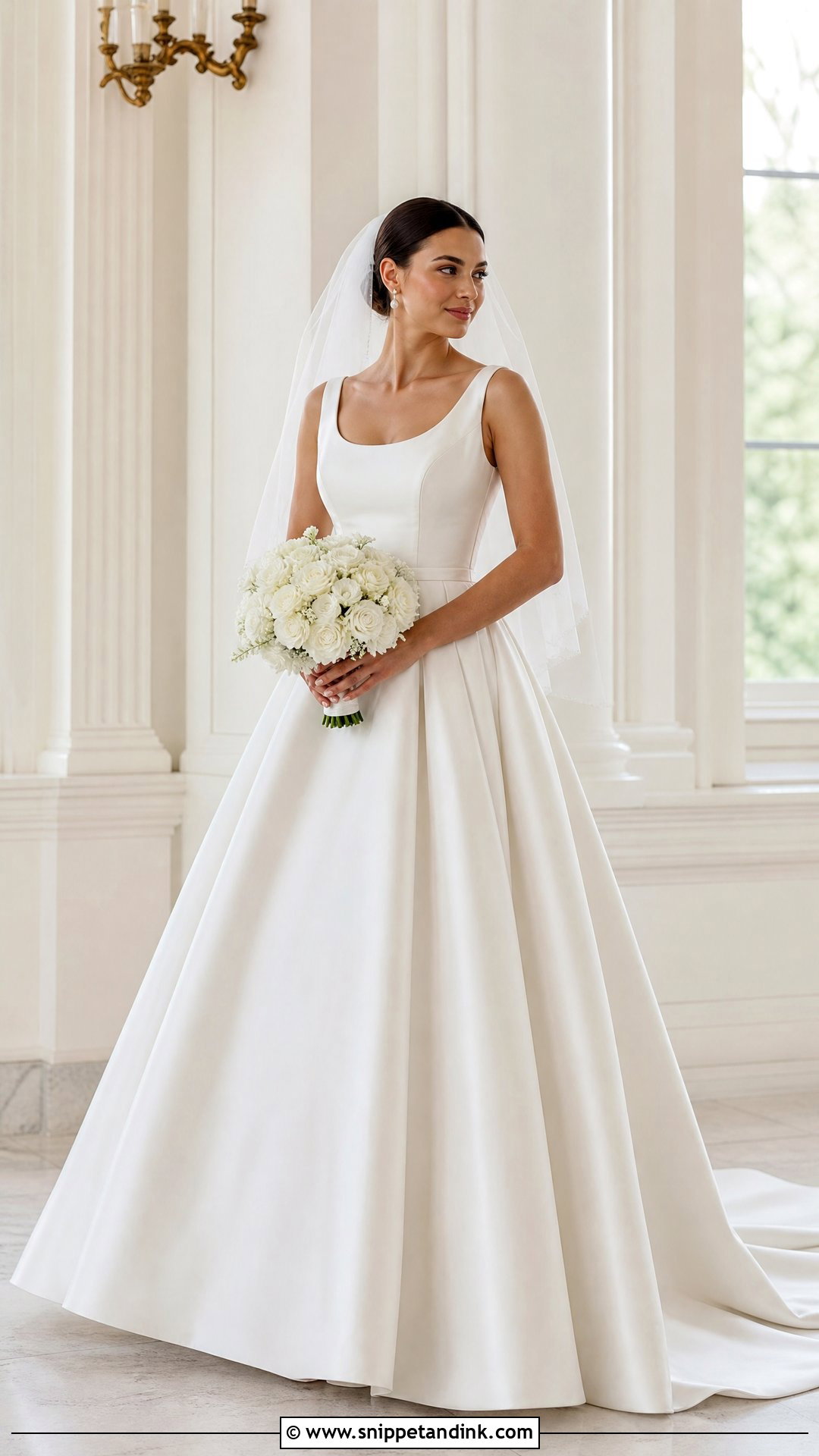
Brides who find square or plunging necklines too sharp usually settle happily on a scoop. The rounded line softens the face and covers more of the bust without feeling closed. My usual build is a fitted bodice with wide straps, a defined natural waist and a sweeping satin skirt, with covered buttons down the back as the only decoration. Pearl earrings, a fingertip veil, a neat bun and low block heels hidden under the skirt finish it, and a small bouquet of rounded flowers echoes the curve. One thing to watch during alterations is that shortening the straps lifts the scoop toward the throat. Take in the side seams first.
13. Bow Back Princess Ballgown Wedding Dress
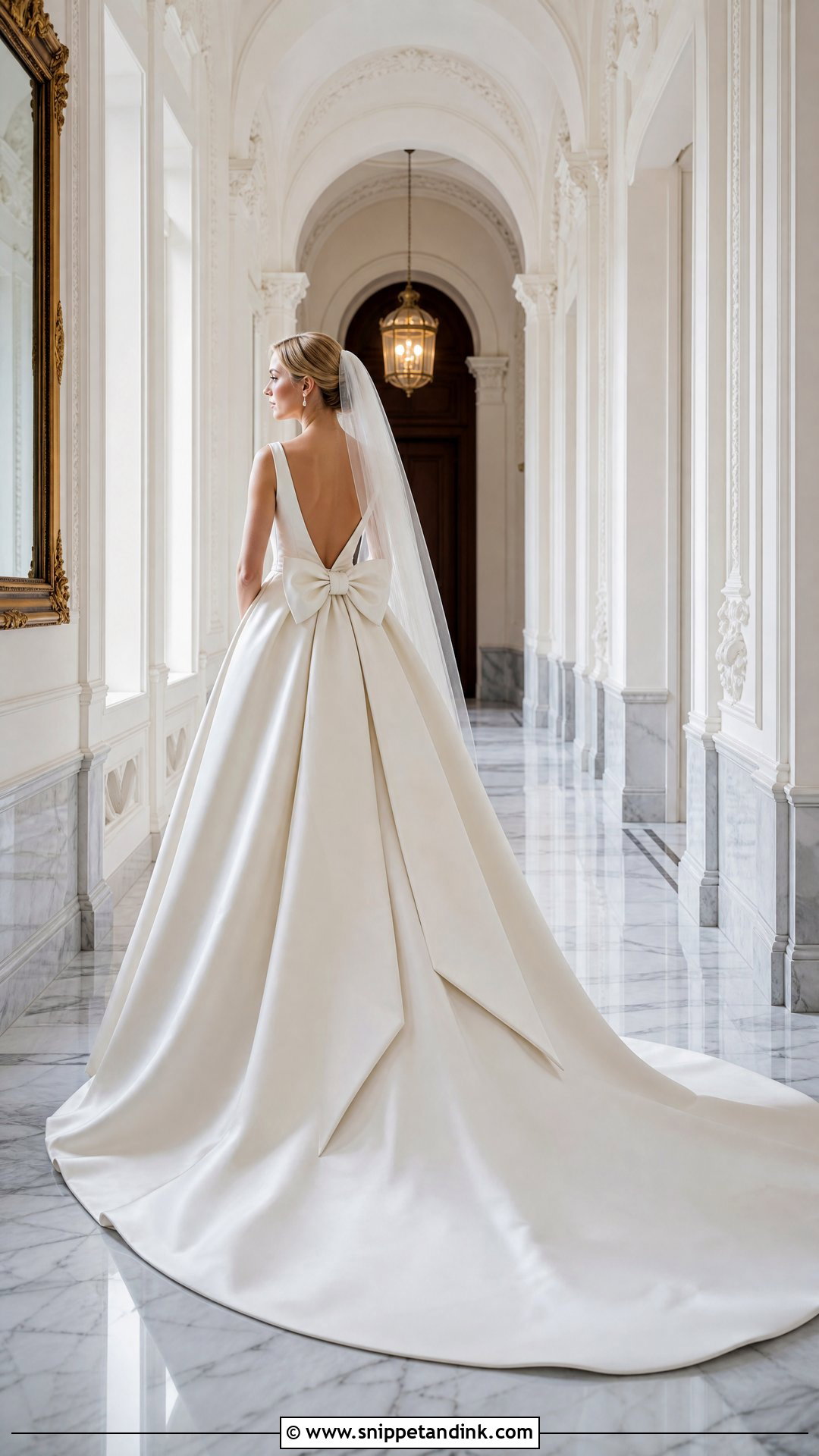
A big bow at the back gives a plain satin or Mikado ballgown something for guests to look at during the vows, since that’s the view they have. Keep the bodice simple so the bow reads as the main idea. Long tails falling into a chapel train move well as you walk. Pearl studs, a plain veil, ivory heels and a polished updo keep the back on show. The question I settle before the day is whether the veil goes over or under the bow. Most of the time I anchor the veil above it so both stay visible, and a detachable bow makes dancing easier later.
14. Detachable Sleeve Princess Ballgown Wedding Dress
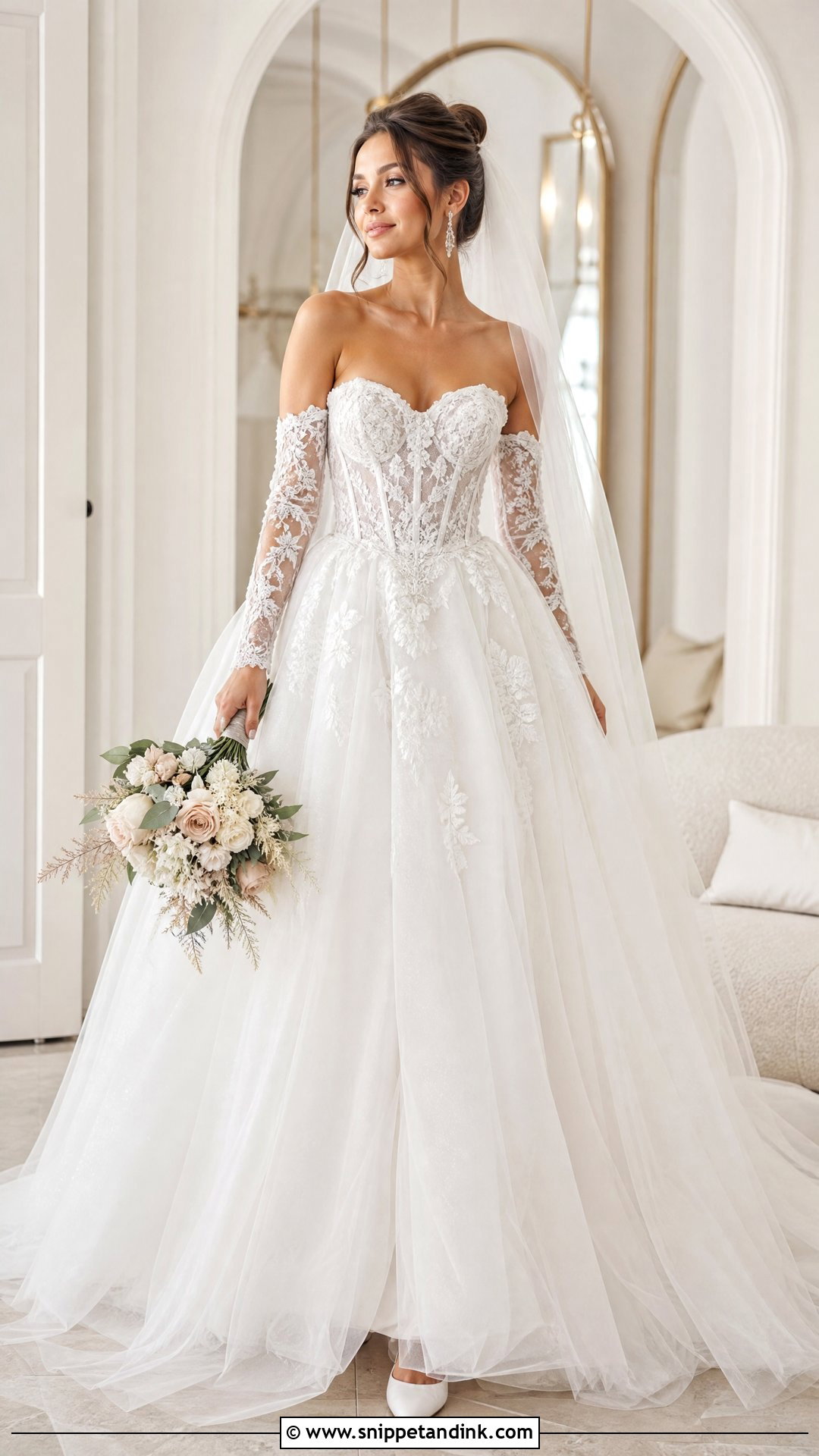
Detachable sleeves give you two gowns: fitted lace, draped off-shoulder bands or sheer puffs for the ceremony, then a clean strapless corset for the party. The bodice underneath has to look finished on its own, so I check it without the sleeves at the first fitting. Drop earrings, a chapel veil, pointed pumps and a structured bouquet suit both versions, and a low bun is the one hairstyle that works with either. Ask the salon to show your helper how the snaps or hooks release. Then move your arms with the sleeves on; sleeves that twist at the fastening will do it all day.
15. Detachable Overskirt Princess Ballgown Wedding Dress
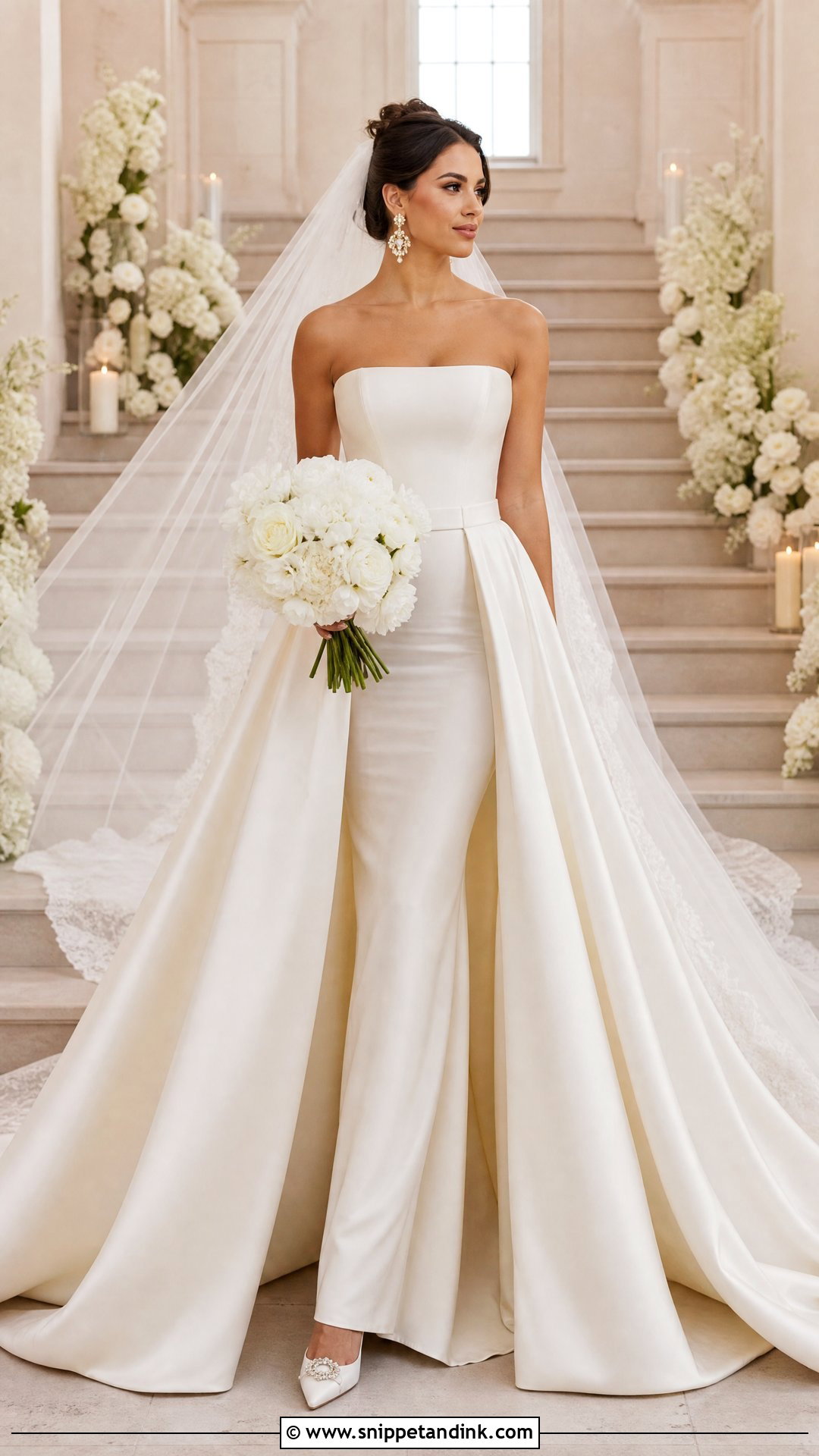
A detachable overskirt lets you walk in with full princess volume and dance in something far lighter. A fitted dress goes underneath, and the tulle, satin or organza skirt closes around the waist. From the front, the joined gown should look like one ballgown, not two pieces. For the ceremony I’d go with a cathedral veil, statement earrings and a formal bouquet, then switch to smaller earrings or a shorter veil after the change. Run your hand along the waist at the fitting. A ridge from the fastening shows through satin in side-on photos. Also plan where the overskirt goes once it’s off; a large garment bag hung in a quiet room keeps it from creasing.
16. Ruffle Tulle Princess Ballgown Wedding Dress
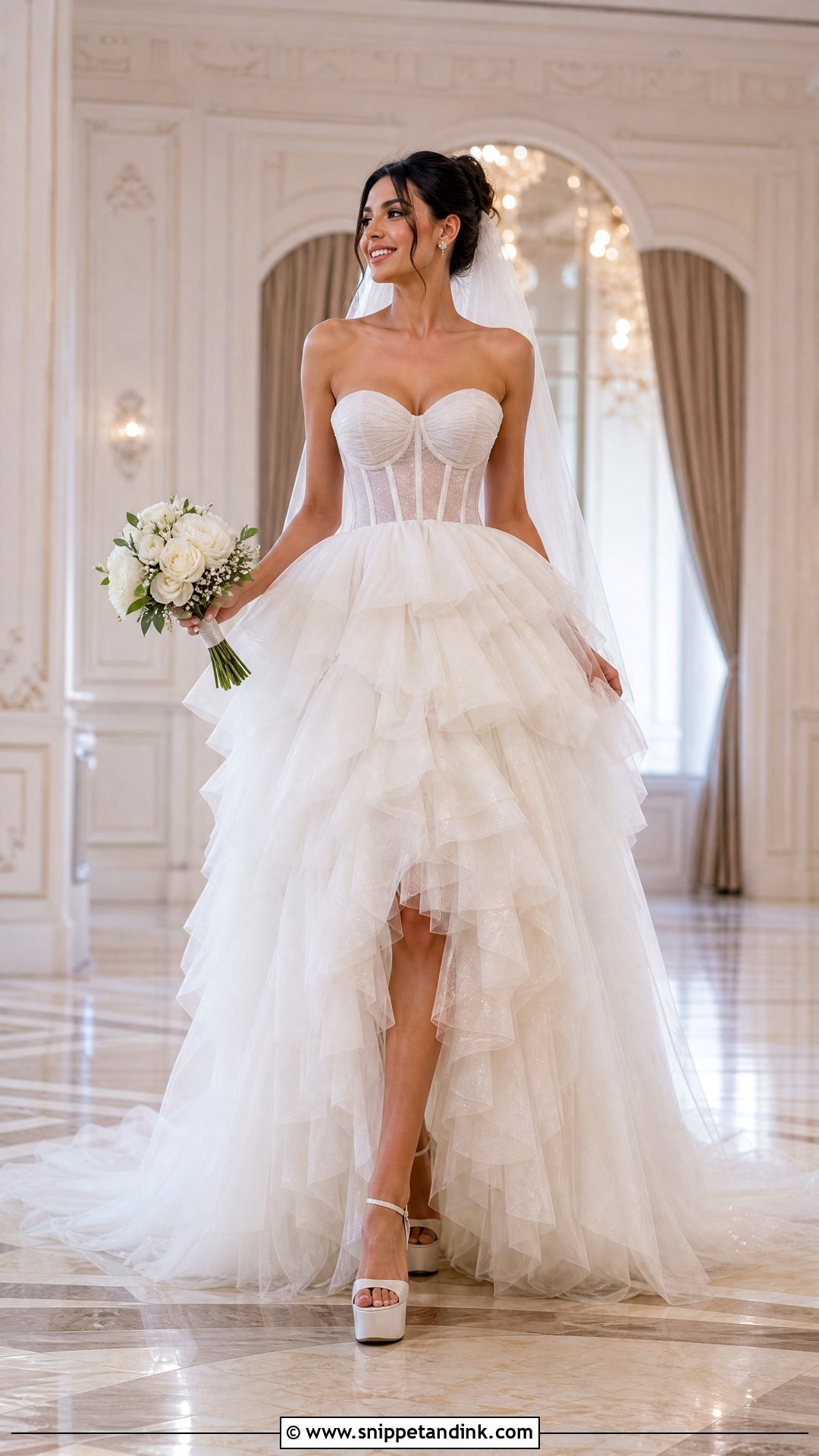
Ruffled tulle moves more than any other skirt in this list. I prefer graduated, softly gathered tiers over stiff horizontal ones, which can look like a tiered cake when you stand still. A clean corset or fitted lace bodice calms the top half. Simple studs, a sheer veil, platform heels and a compact bouquet that doesn’t hide the waist are enough, with a smooth updo. Ruffles take up space on stairs and in narrow aisles, so turn and climb a step in the sample. Ask how the bustle will lift the train; ruffled layers tangle around shoes if the bustle points are badly placed.
17. Sparkling Tulle Princess Ballgown Wedding Dress
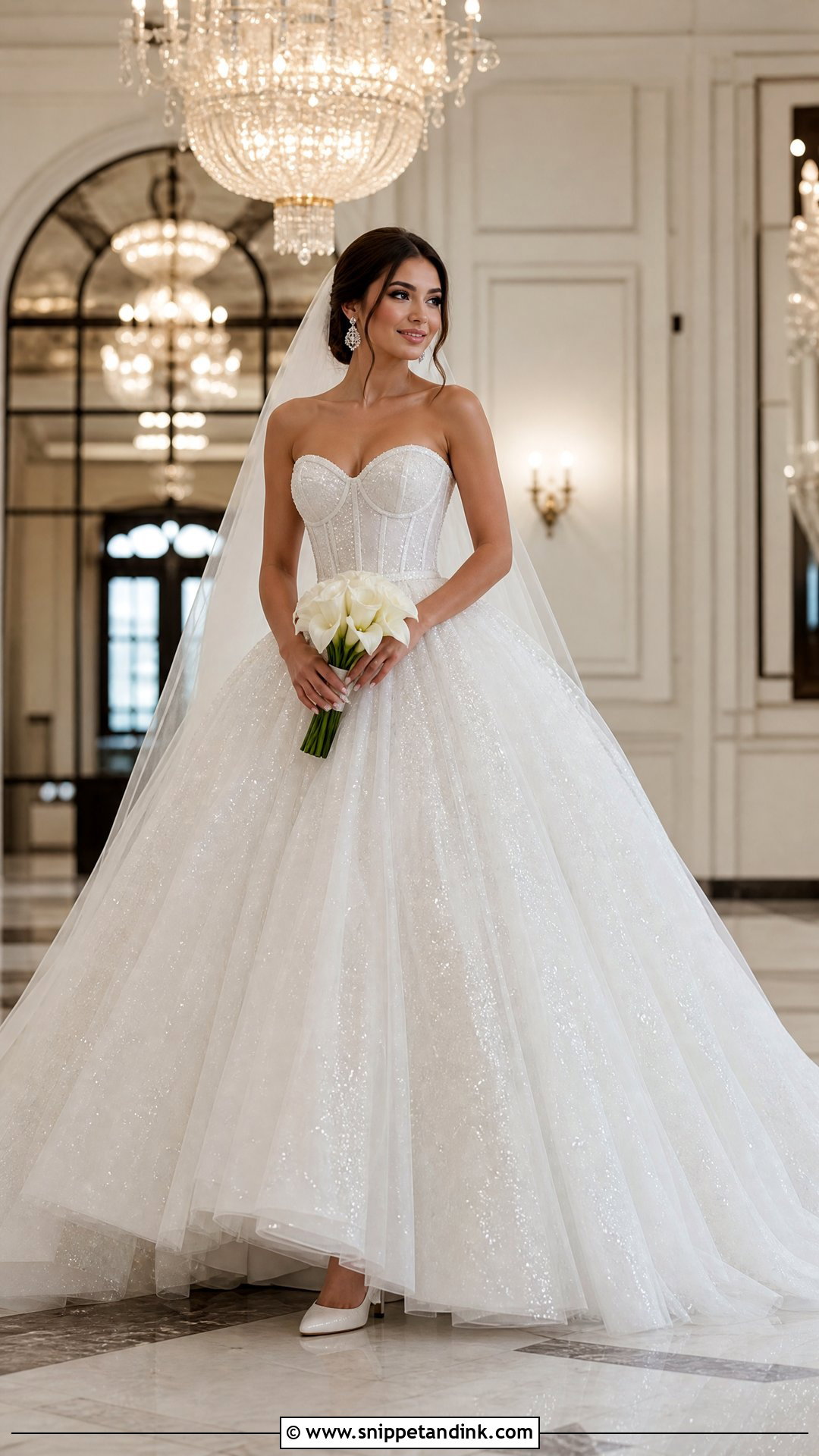
Glitter tulle shimmers with less weight and less cost than full beading. Fine glitter, small sequins or metallic threads sit under a plain top layer, so the skirt catches light as you move. A structured corset and a defined waist keep the silhouette from disappearing under the shine. Crystal studs, a simple veil, closed pumps and a bouquet with plain wrapping are enough. My non-negotiable test is light: look at the swatch by a window and again under warm indoor bulbs, because some glitter tulles look subtle by day and very bright at night. Also rub it on your inner arm. Some shed, and some scratch unless lined.
18. Blush Princess Ballgown Wedding Dress
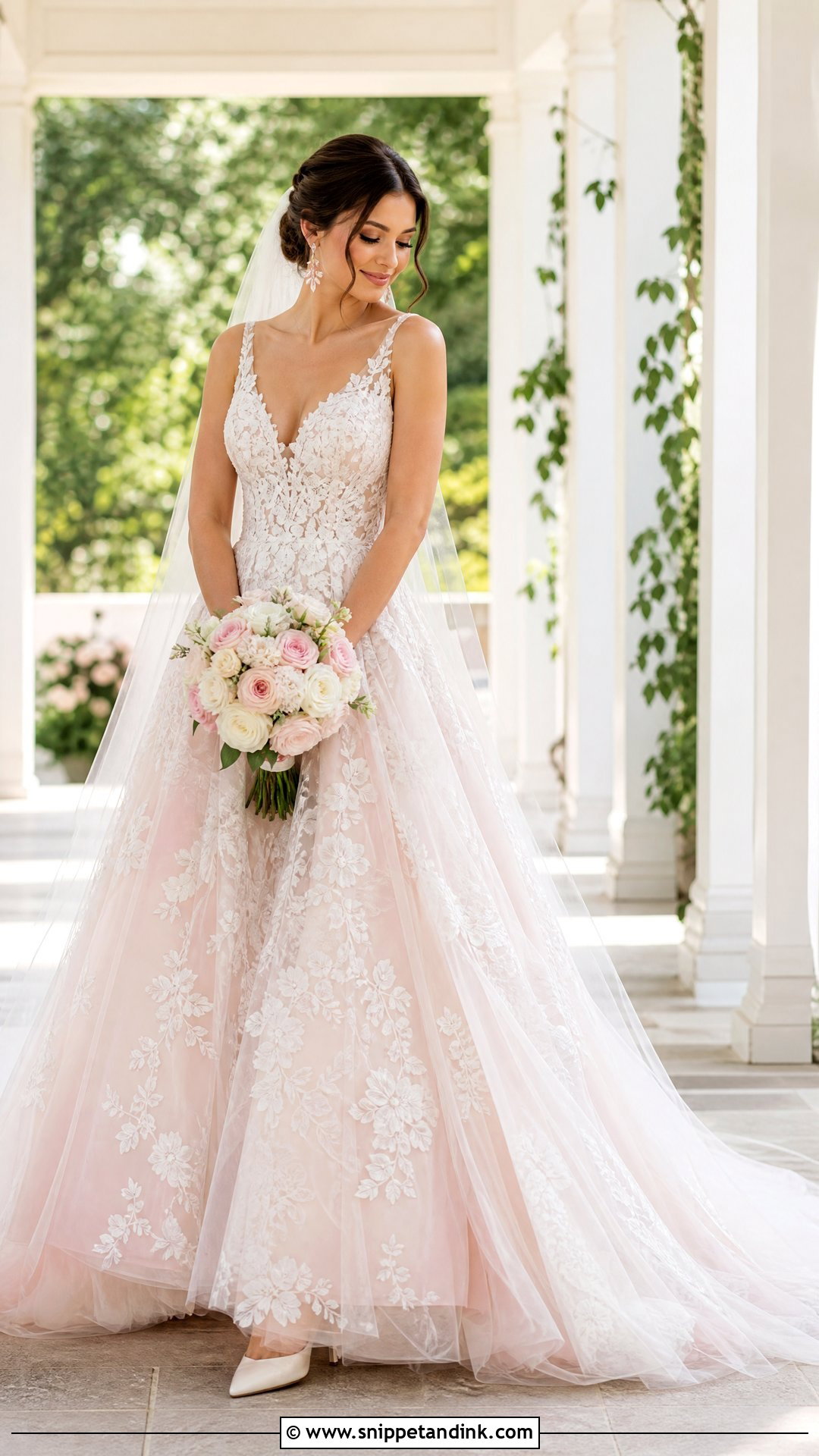
Blush is still clearly bridal, but it adds warmth. A pale pink, champagne or rose lining under ivory tulle gives depth and makes lace motifs stand out. I like floral appliqués on the bodice with a few repeated on the skirt so the colour feels connected. Rose-gold earrings, ivory shoes, a sheer veil and white flowers with a hint of pink suit it, and the makeup should stay fresh and neutral. Blush varies enormously from one fabric to the next. I hold swatches against the bride’s face in daylight, because a shade with too much peach can make some skin tones look sallow in photos.
19. Modest Princess Ballgown Wedding Dress
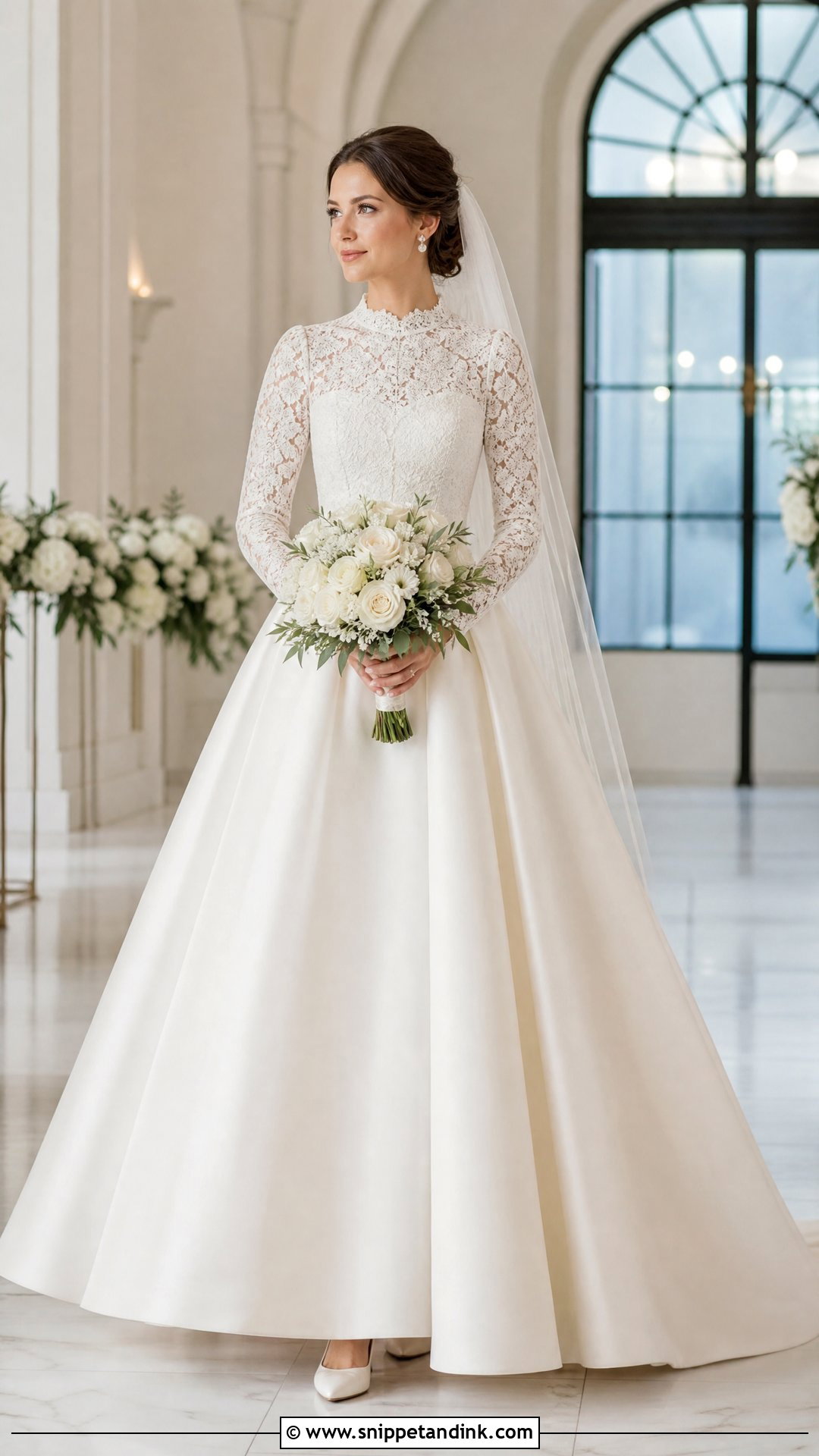
A modest ballgown can feel just as grand as a strapless one. My starting point is a lined lace bodice with a higher neckline, three-quarter or full sleeves and a defined waist, over a full satin skirt with no sheer panels or low back. Pearl earrings, a long veil, closed block heels and a structured bouquet finish it, with a smooth bun or pinned curls. The mistake I see most is accepting a loose fit because the gown is covered up. Coverage still needs tailoring at the shoulders, bust, waist and sleeves, or the fabric bunches. For warm venues, ask for a breathable lining and enough sleeve ease to lift your arms.
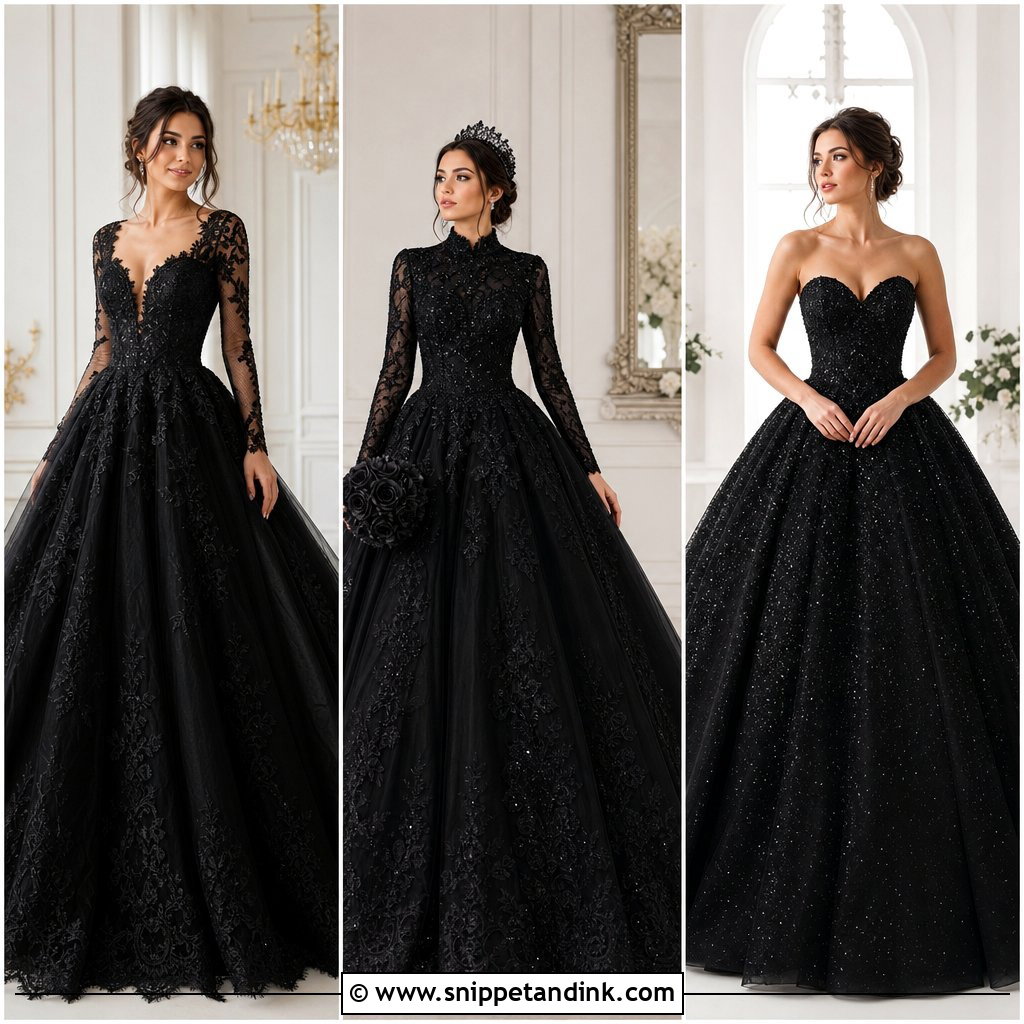
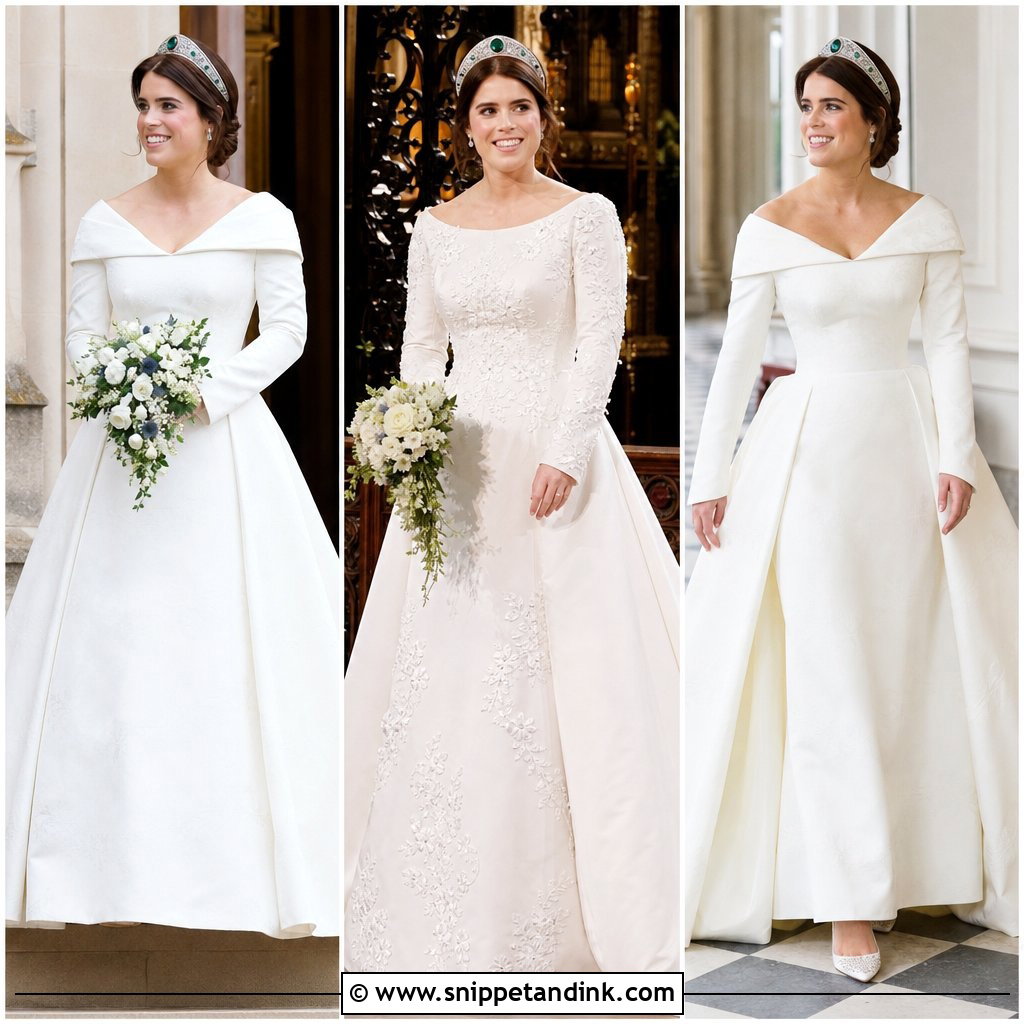
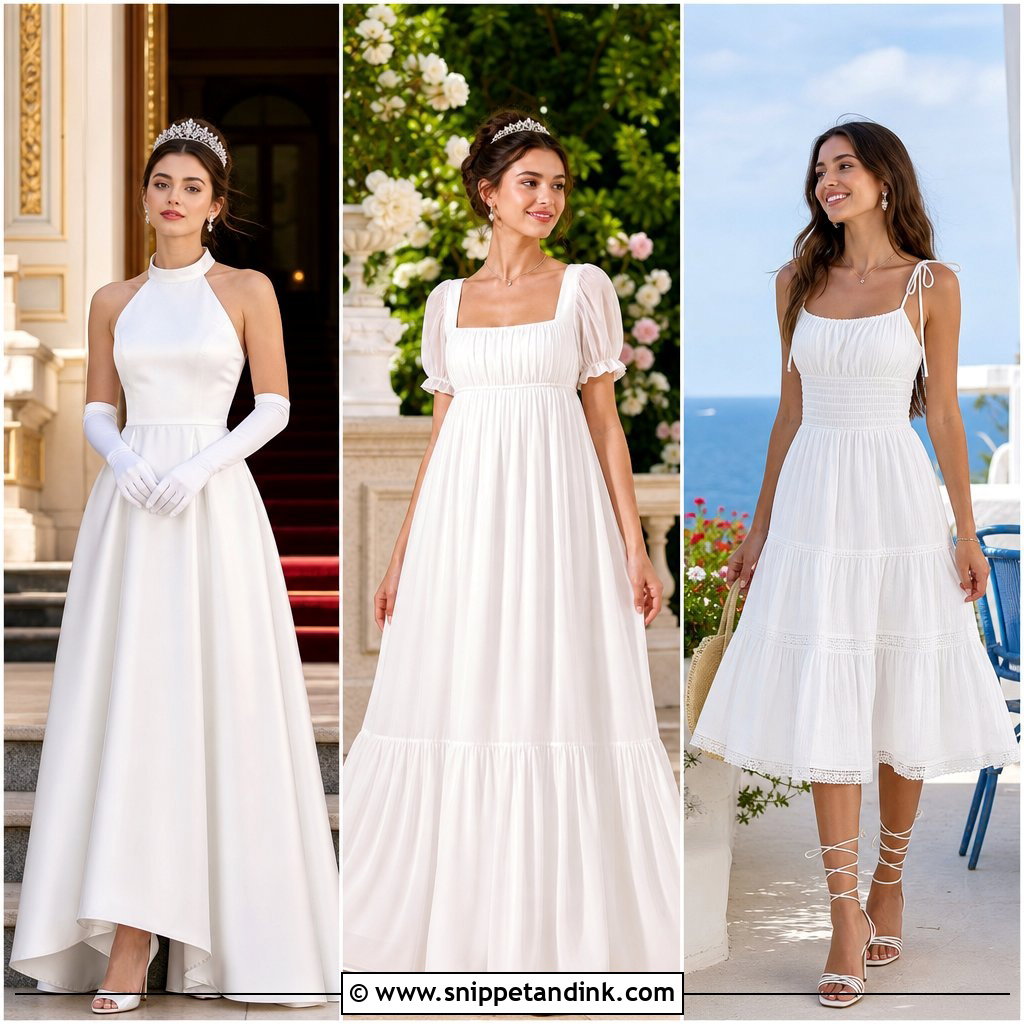

20. Cathedral Train Princess Ballgown Wedding Dress
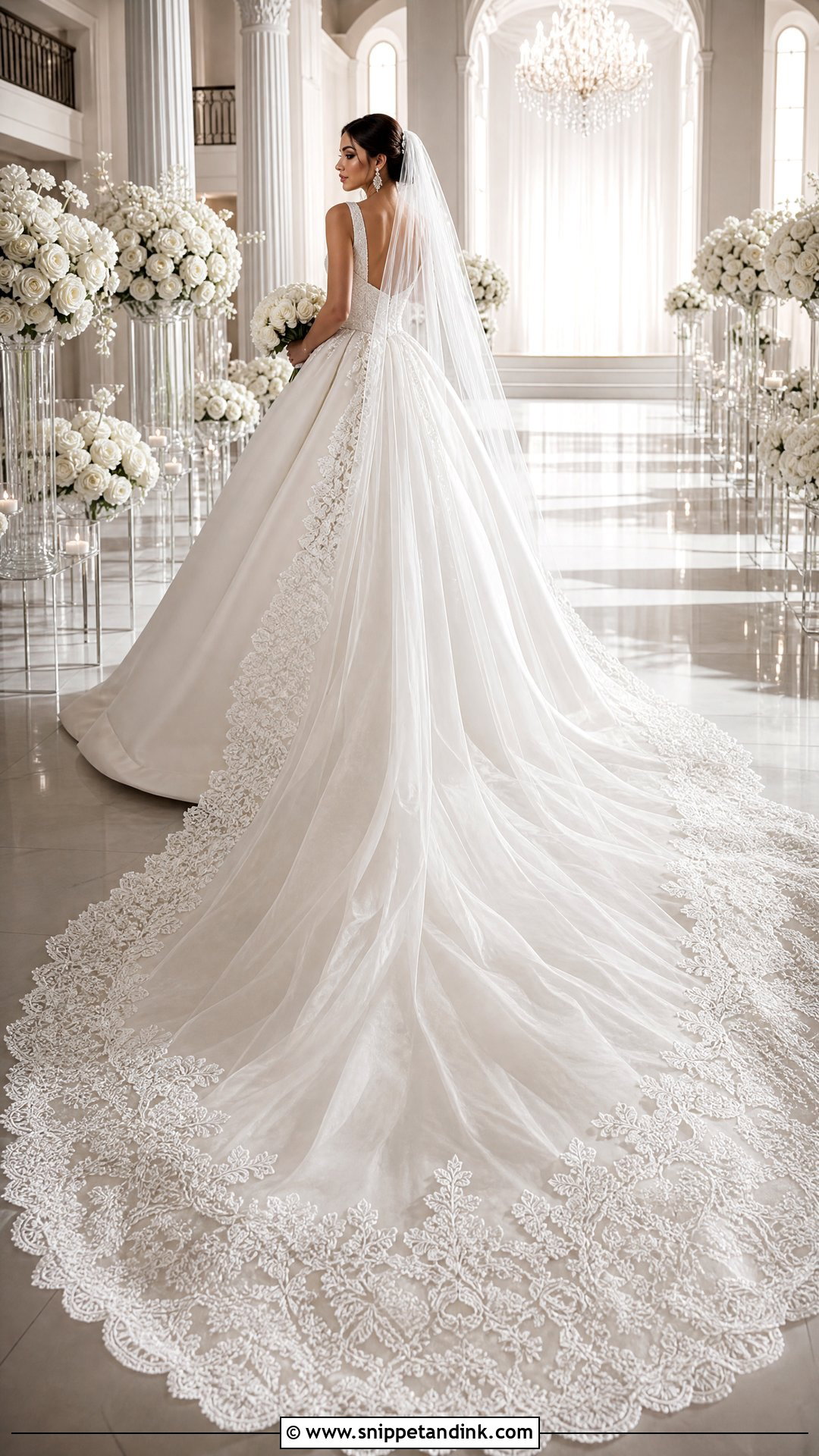
A cathedral train belongs in a long aisle, and I’d be honest that it’s wasted in a small room where it just piles up. Smooth satin shows the length and shape of the train; lace or appliquéd tulle adds detail for close-up photos. A structured bodice balances the scale, and a long veil, supportive heels, a formal bouquet and a sleek updo keep the look tidy from behind. Decide on the bustle at alterations and practise fastening it with your helper. Someone also needs to straighten the train before you walk and again before portraits, because it twists the moment you turn.
Cars, Doorways and Bathroom Trips in a Full Skirt
The parts of the day nobody photographs are where a ballgown gets hard work. I plan these with every bride who chooses one, because a skirt that measures well over a metre across doesn’t behave like a normal dress.
Getting into the car
Sit down backwards onto the seat first, then swing your legs in while someone gathers the skirt and feeds it in after you. Ask for a car with a wide rear door, and lay a clean sheet on the seat if the upholstery is dark or dusty. Getting out works in reverse: legs out first, then stand while your helper lifts the skirt clear of the door sill.
The bathroom
The trick most brides learn on the day is to face the toilet rather than sit forward, gathering the skirt in front of you. It’s far easier, and it usually needs only one helper or none. Try it once at home in your petticoat before the wedding so it doesn’t feel strange.
Bustling and steaming
Ask your seamstress which bustle suits your fabric. An over-bustle lifts the train with hooks and loops on top, which suits satin; an under-bustle tucks it beneath the skirt and keeps lace and tulle looking smooth. Mark each tie with a coloured thread so your helper can match them quickly. Have the whole gown steamed the day before and hang it from a high door so the skirt never touches the floor overnight.
The Entrance, the Dance Floor and Everything Between
Start with how you want to feel walking in. Satin gives you clean structure; tulle, lace, pearls and beading bring softness or sparkle. The neckline, where the waist sits, how the sleeves are built and how long the train runs all change how the gown looks and how it feels by evening. Bring your real shoes and underwear to every fitting, and walk, sit, turn and lift your arms each time. Weigh the season, the size of the venue, the aisle surface and your reception plans before adding extra volume or length. Then go with the ballgown that suits you, not the detail that happens to be popular this year.
You'll Like These Ideas:








Leave a Reply