
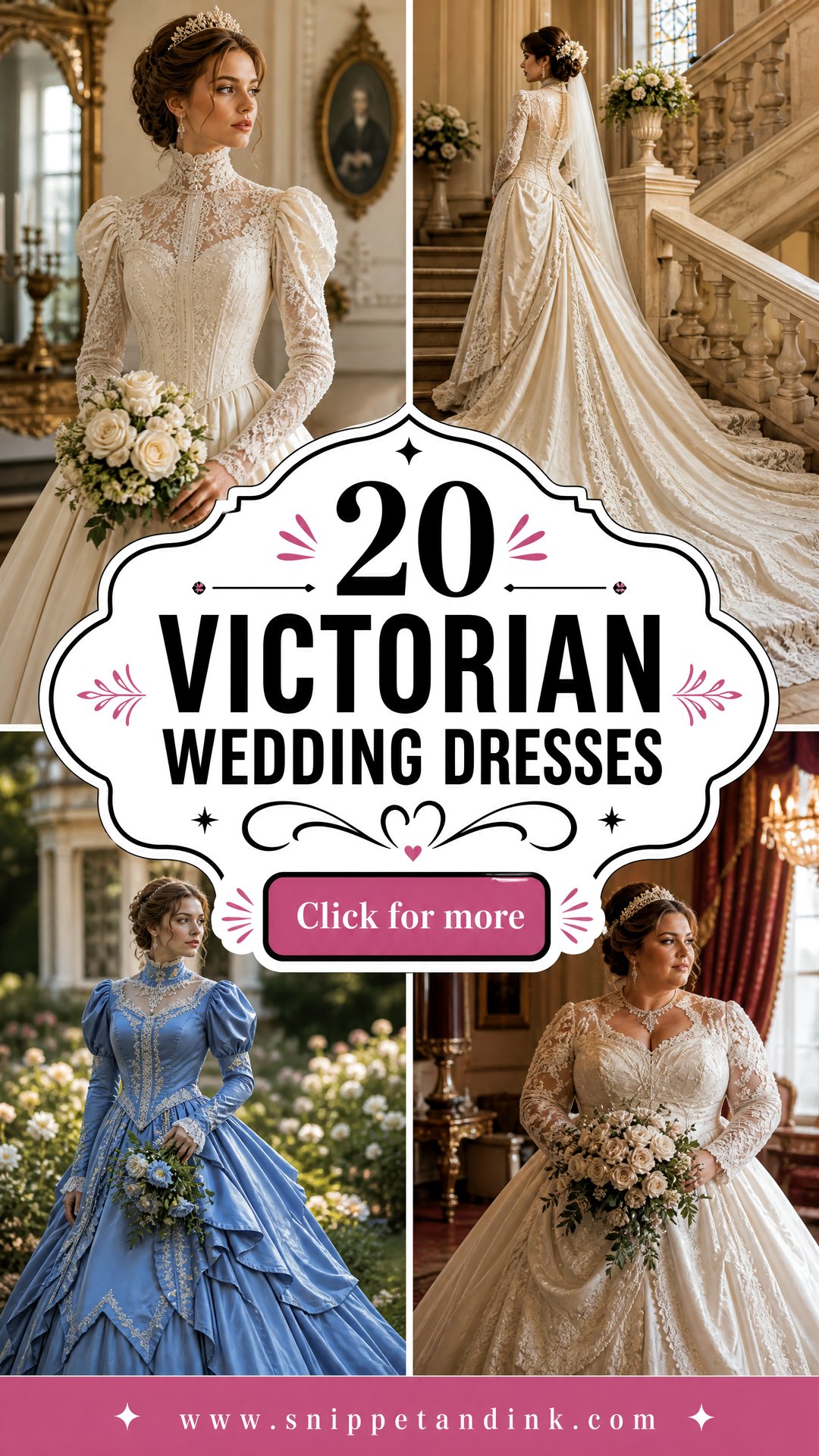
Victorian bridalwear is all structure and detail: high lace necklines, big sleeves, pointed basque waists, bustles and trains that need their own helper. It’s also where the white wedding dress really began, since Queen Victoria’s white silk satin and Honiton lace gown in 1840 set a fashion that most of the Western world still follows. The trick for a bride now is borrowing those elements without stepping into a costume. Below are twenty Victorian-inspired dresses, each with the veil, shoes, jewelry and flowers I’d style it with, and notes on the ones that need extra fitting care. Some suit a grand estate, others a small courthouse ceremony.
One or Two Period Details, Not Ten
The line between Victorian-inspired and costume is crossed when every element comes from the same era. When I style this look, I let the dress carry one or two strong period signals, maybe a high lace collar and covered buttons, or puff sleeves and a basque waist, and then keep the hair, makeup and shoes current.
- Hair: a low, smooth bun reads as period. Tight ringlets on top of that push it into fancy dress.
- Makeup: fresh skin and soft definition. Heavy contour fights a high lace neckline.
- Jewelry: pearls or one brooch, never both a brooch and a necklace with a high collar.
- Veil: lace-edged or plain tulle; a cathedral length makes even a simple gown look formal.
- Shoes: modern pumps or block heels hidden under the skirt are fine. Nobody sees them in most photos.
1. Queen Victoria Inspired Wedding Dress
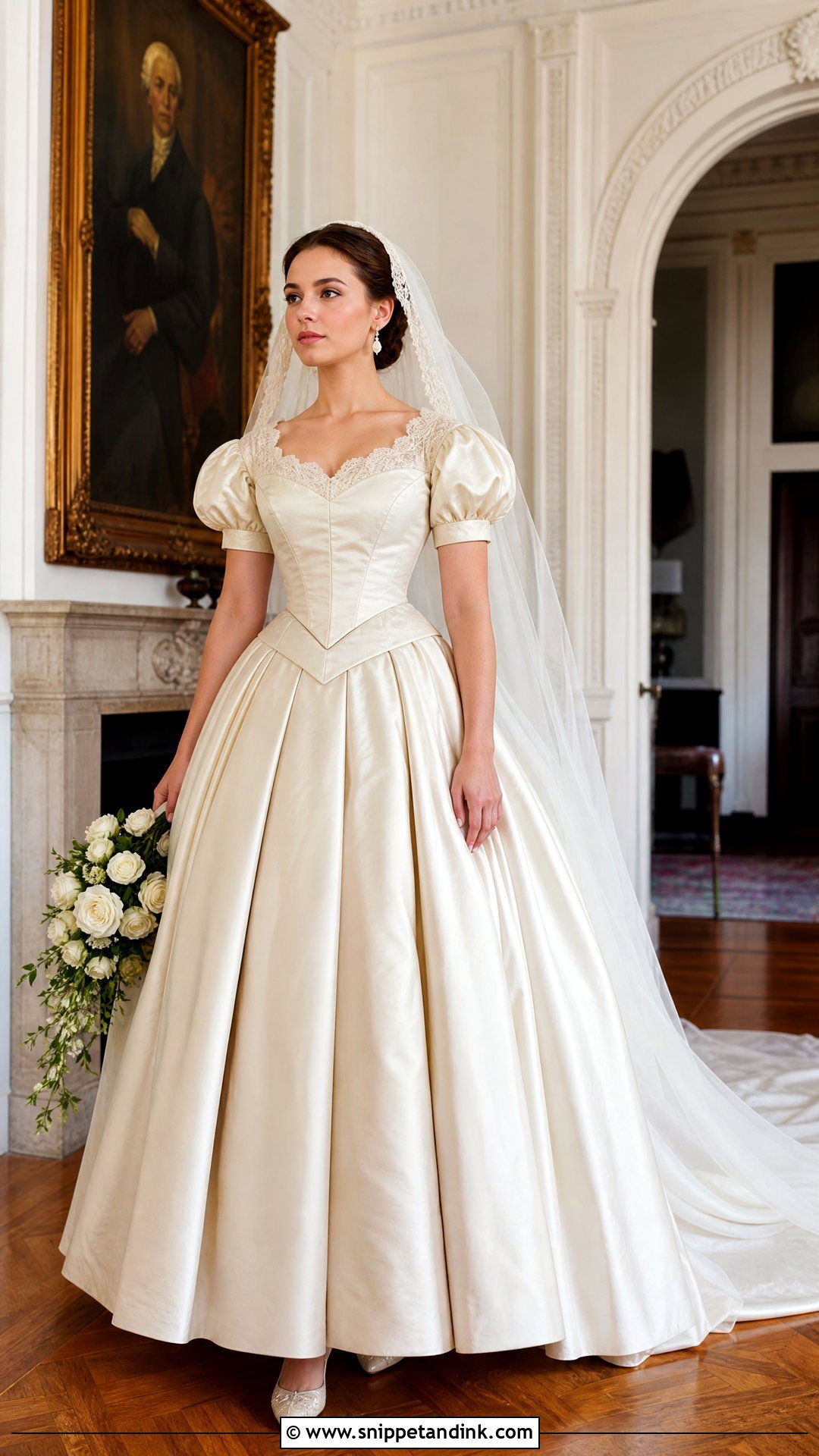
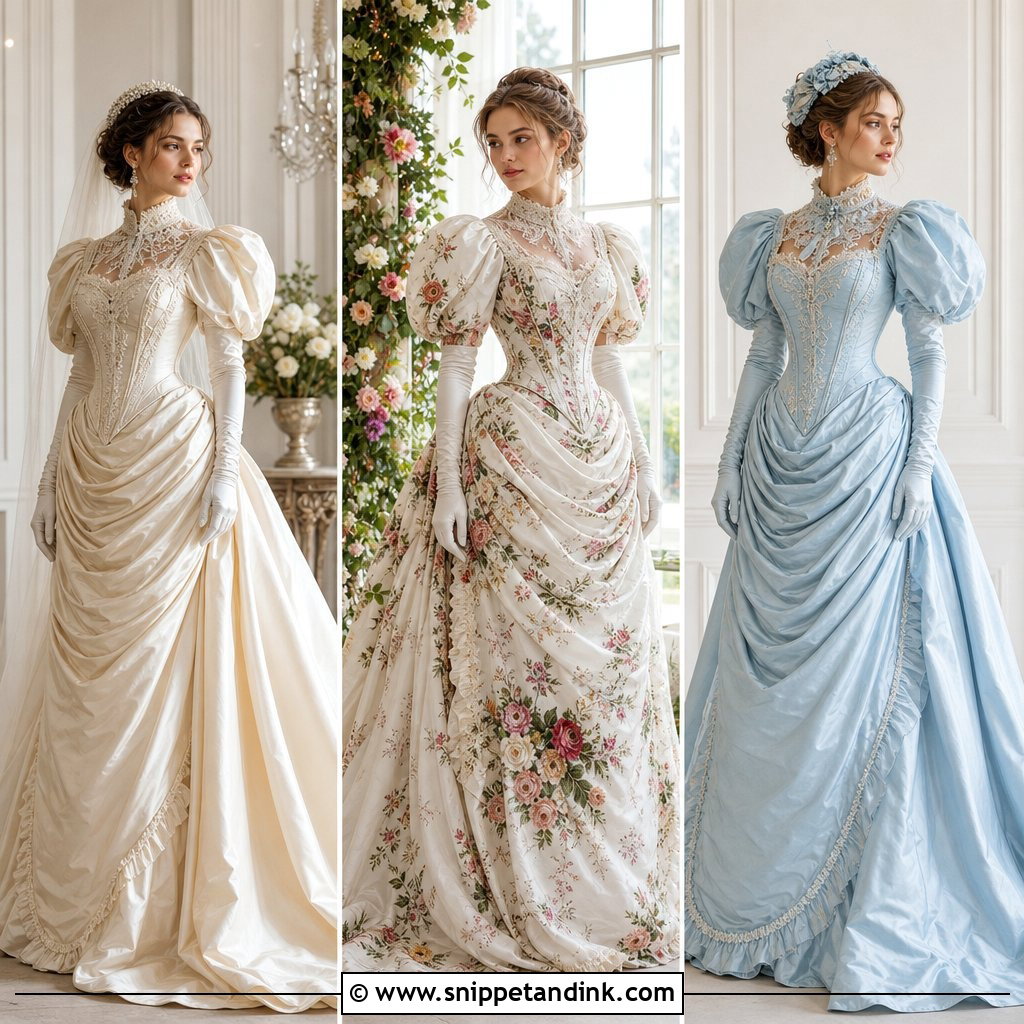
A Queen Victoria inspired wedding dress is where most brides who love this era start. Choose an ivory silk satin ball gown with a fitted, pointed bodice, a softly gathered skirt and lace trim at the neckline. Short puff sleeves give the authentic shape; keep them modest in size and the gown stays out of costume territory. A lace-edged cathedral veil, pearl drops, ivory satin slippers and short wrist gloves complete it, with a small bouquet of garden roses. Wear the hair in a low center-parted bun, as the queen did, so the neckline and veil stay clear. Satin slippers have almost no grip, so have a cobbler add a thin rubber sole before the day.
2. High Neck Victorian Wedding Dress
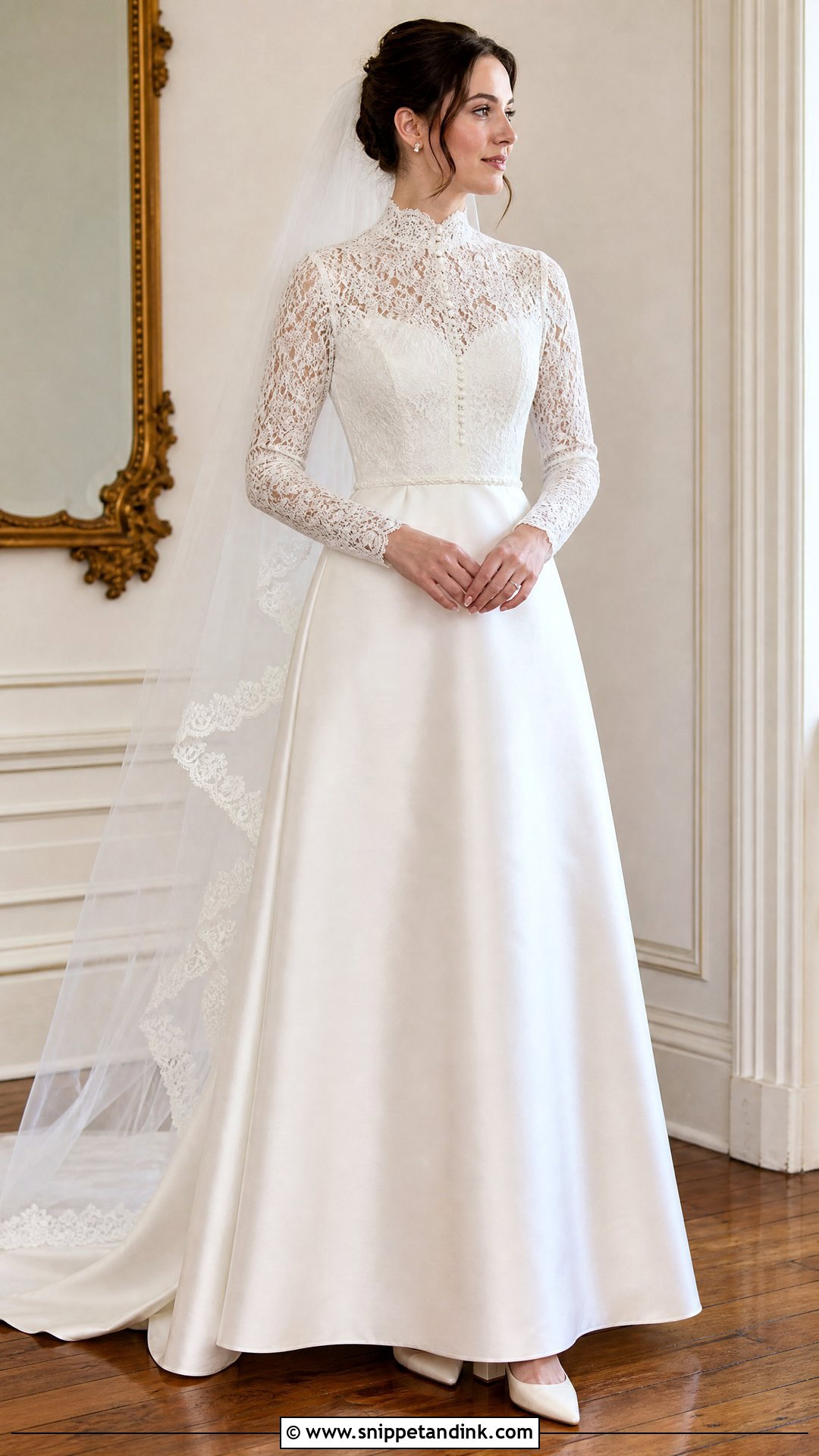
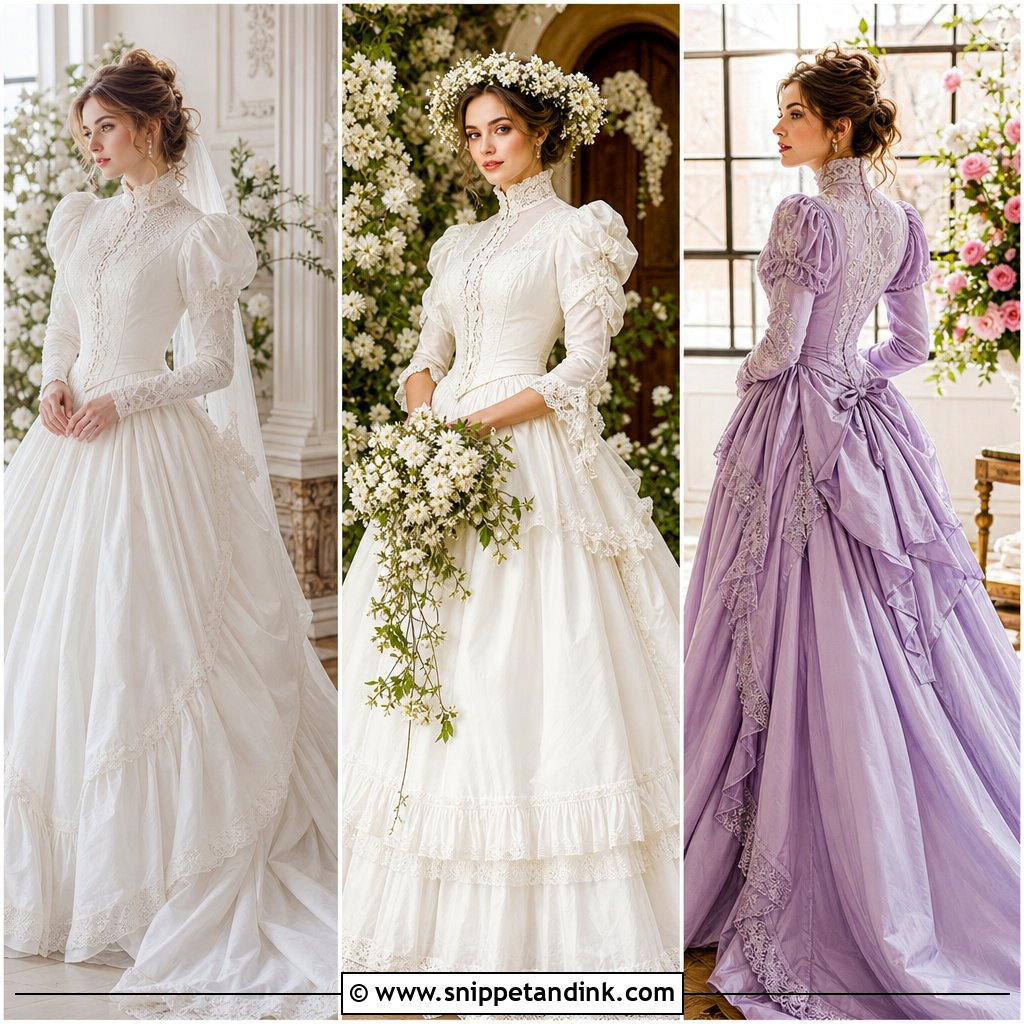
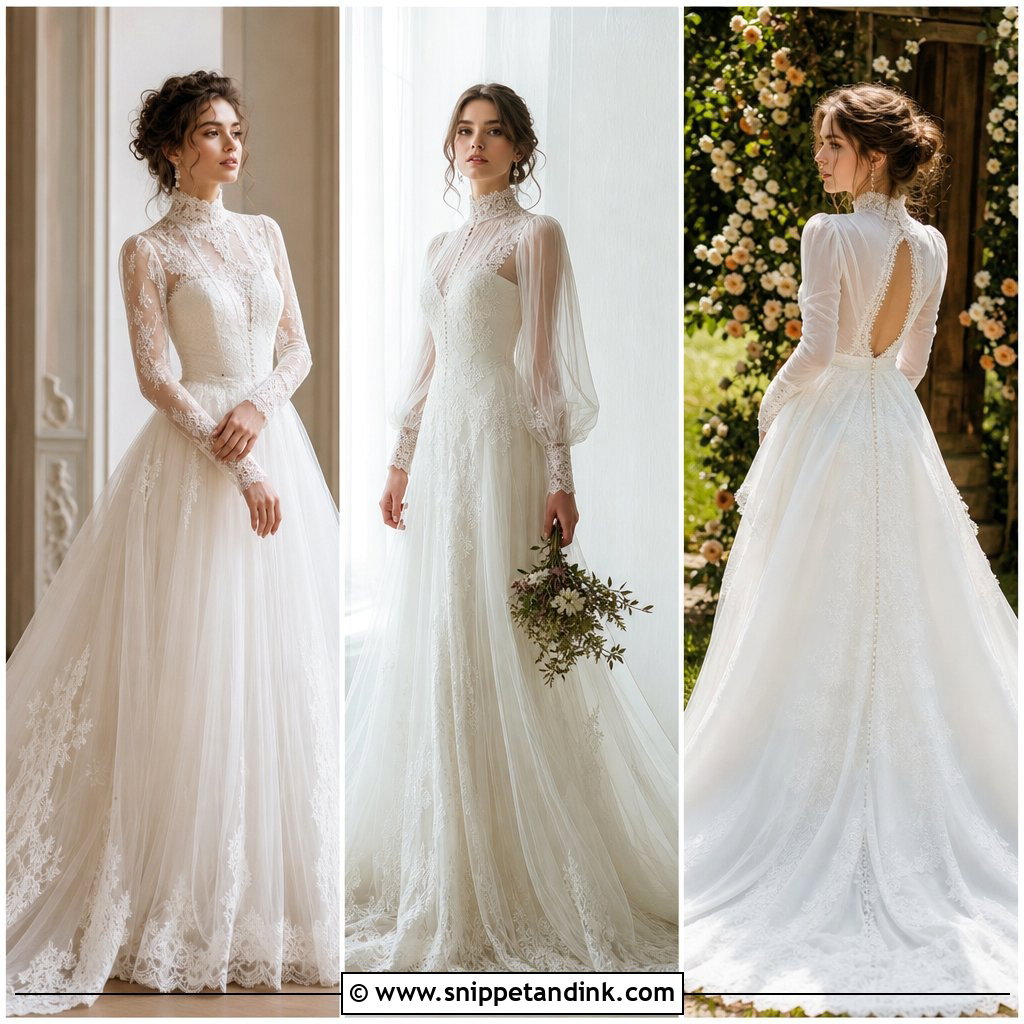
Soft lace over a satin lining, a scalloped collar, covered buttons and long tapered sleeves give this high-neck gown its period character. Below the waist, a smooth A-line skirt and a manageable chapel train keep it from feeling heavy. Pearl studs, a small antique-style brooch at the collar and a fingertip lace veil add detail without crowding the throat. Pointed block heels hidden under the skirt give height and stability. A loose low bun with a few soft pieces around the face stops the high neck looking severe. Heavier lace suits autumn and winter, though in a warm room it gets hot fast, so ask that the lining be breathable.
3. Puff Sleeve Victorian Wedding Dress
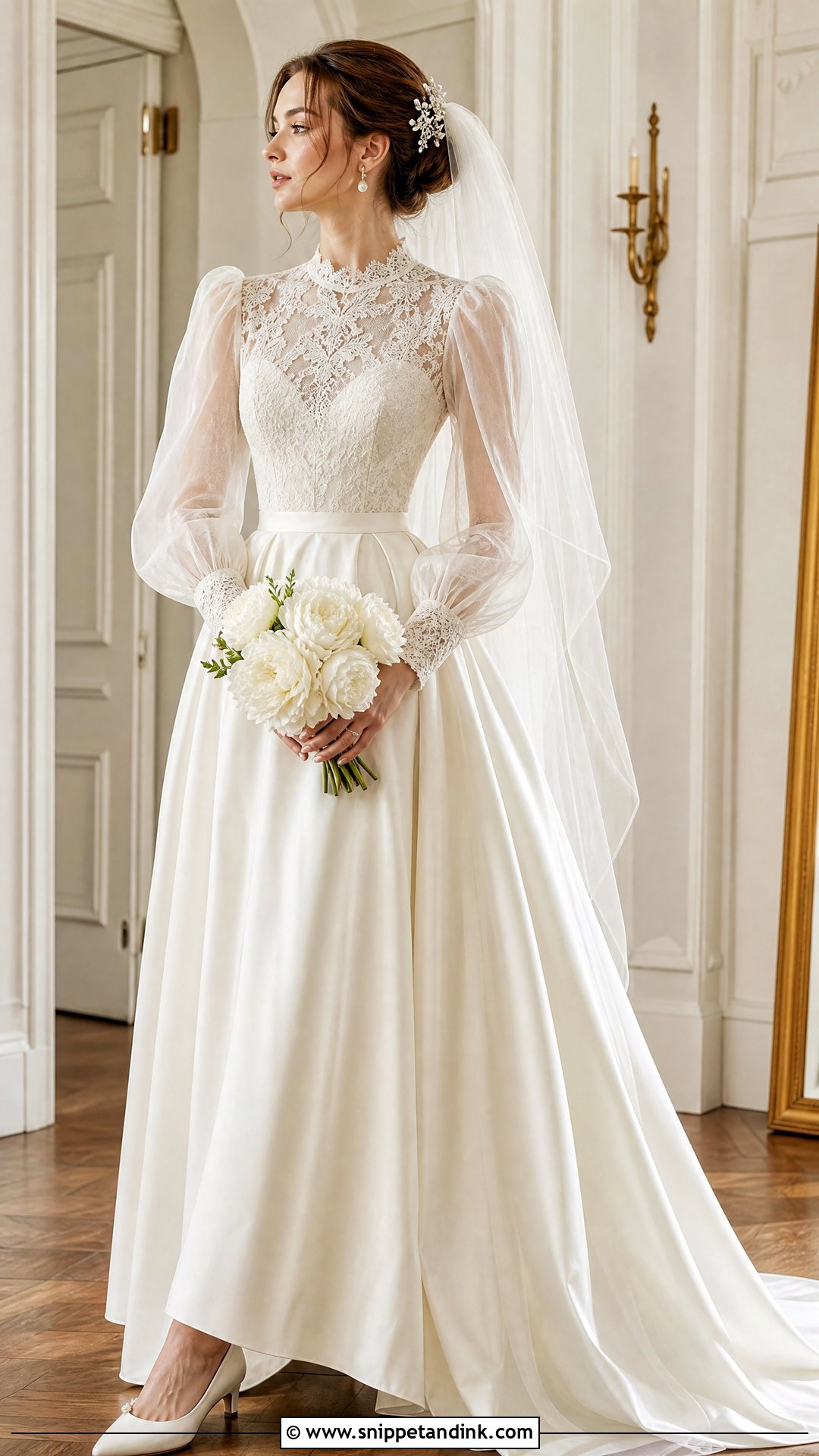
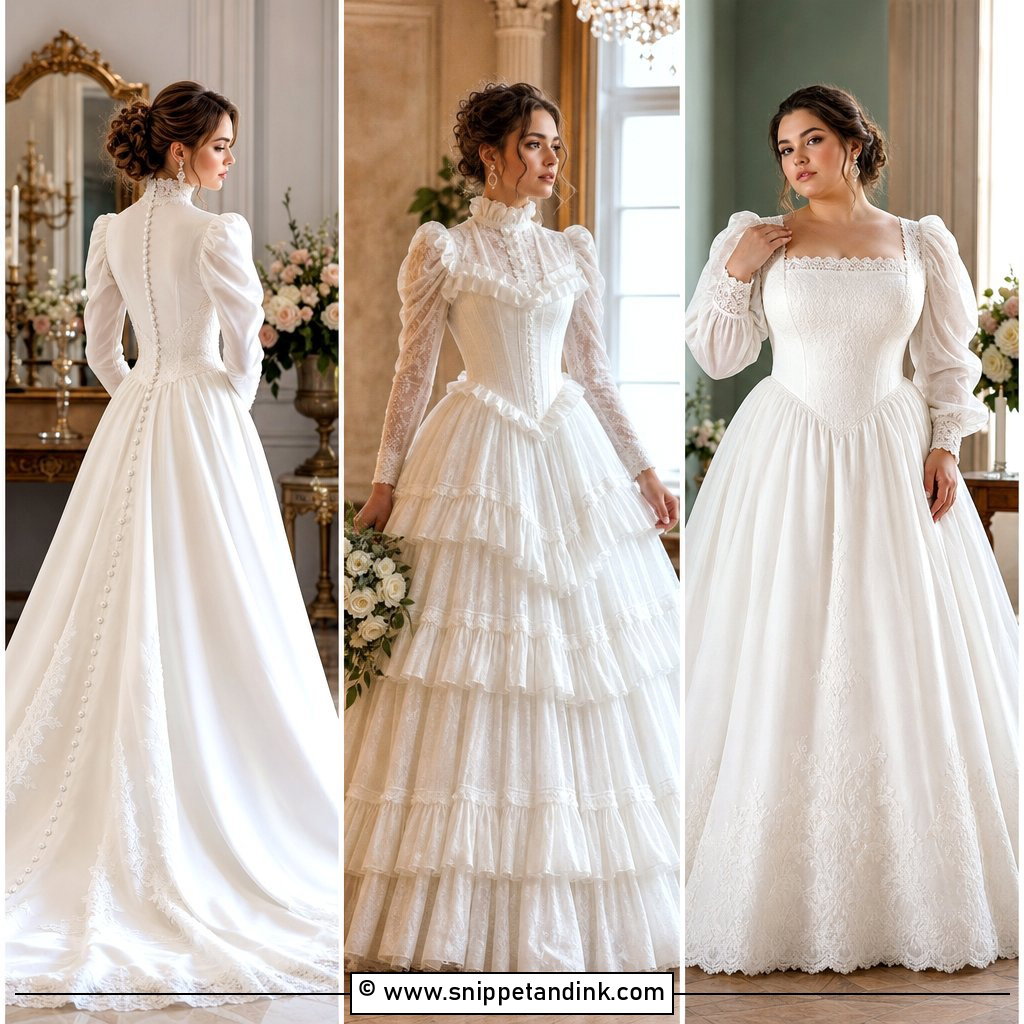
Puff sleeves give a dress volume at the top and keep the rest light. The shape I look for has the fullness right at the shoulder, with the lower sleeve narrowing to a fitted cuff; when the puff sits lower on the arm, it widens the bust line instead of balancing it. Sheer lace puffs with a defined waist and a flowing satin or chiffon skirt work well. Add a simple tulle veil, crystal hairpins, pearl earrings and low-heeled ivory pumps, and a compact bouquet of peonies. Keep the bodice plain so the sleeves have the stage. Sheer puffs crush in a garment bag, so steam them gently on the day; a cool hairdryer can also help them fill back out.
4. Leg Of Mutton Sleeve Victorian Wedding Dress
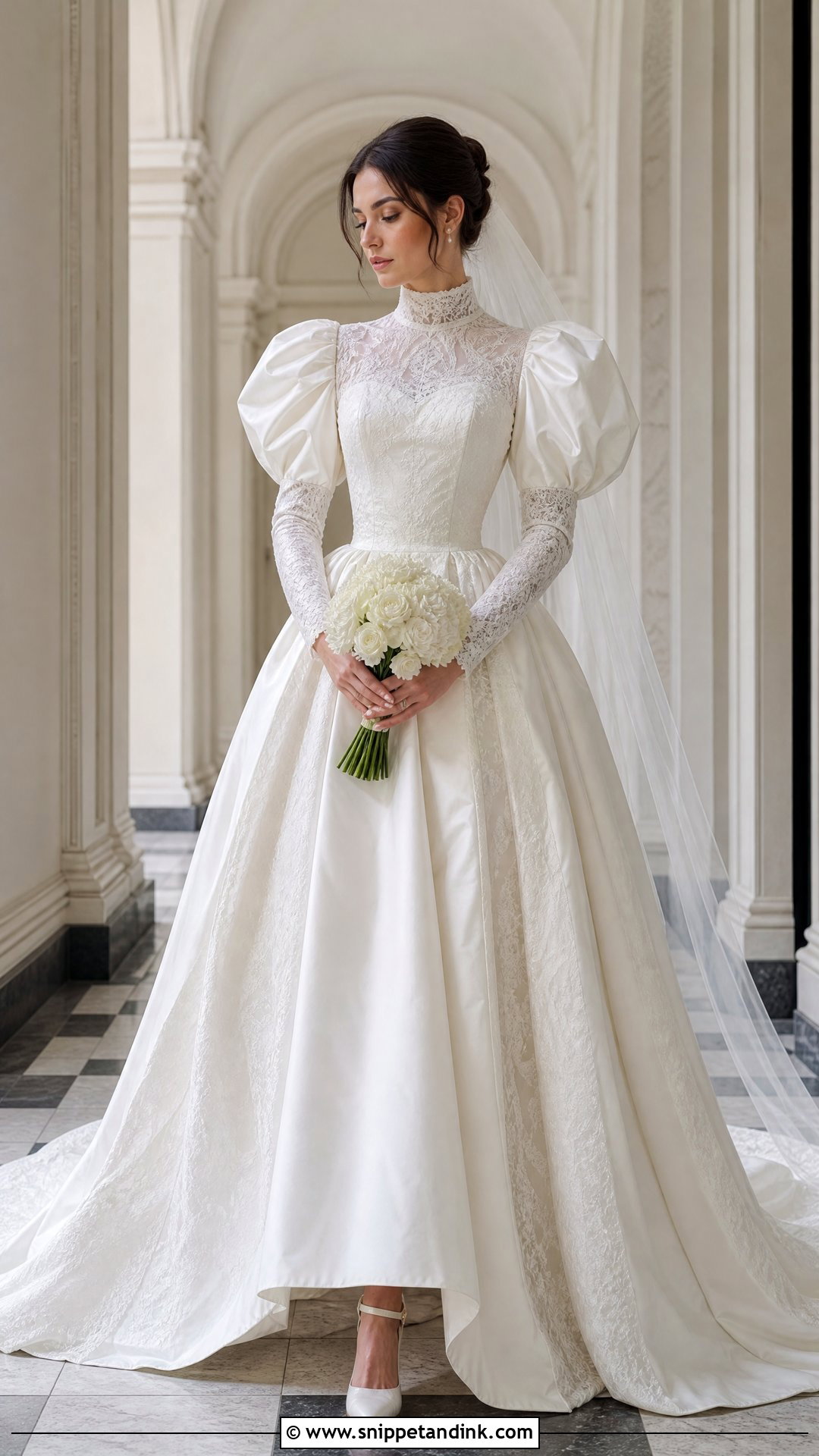
A leg of mutton sleeve is full at the shoulder and tight from the elbow down, and it changes your whole silhouette. Paired with a high lace neckline, a shaped bodice, a narrow waist and a full skirt, it draws the eye upward and can visually balance fuller hips. Matte crepe, silk faille or lighter satin keep it from looking theatrical. A slim cathedral veil set below a smooth bun, small pearl earrings, ivory ankle-strap shoes and a structured bouquet are enough. Leave the necklace off. Ask for a stretch lining at the shoulder and elbow, because a fitted forearm in a rigid fabric makes it hard to raise a glass or hug anyone.
5. Off Shoulder Victorian Wedding Dress
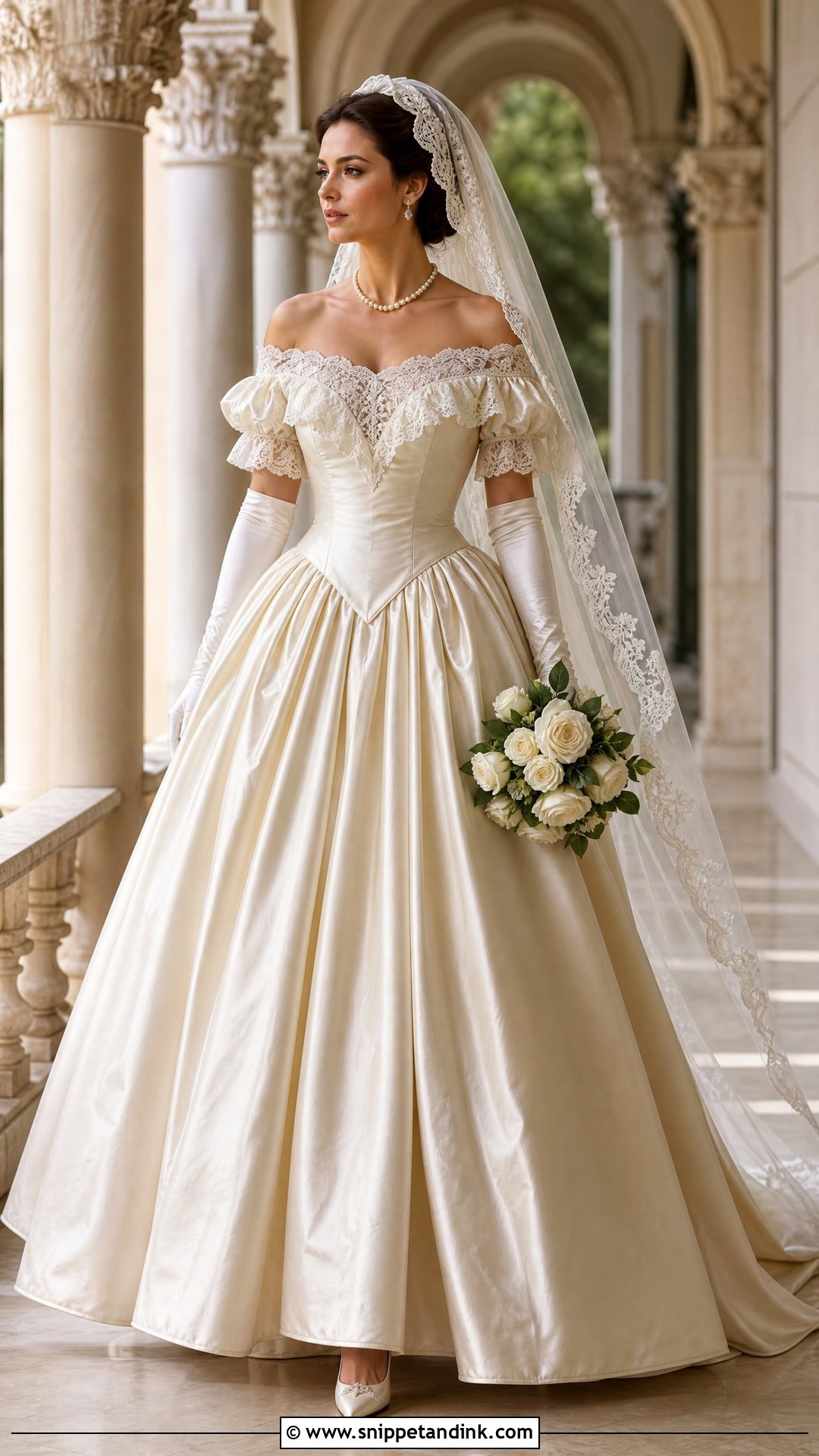
The off-shoulder version is softer than the era’s high necks. Choose a satin ball gown with a wide lace-trimmed neckline, short gathered sleeves, a pointed waist and a well-pleated skirt. The internal bodice does the work of keeping the neckline in place, so it needs to fit snugly at the ribs. A lace mantilla, a short pearl necklace, pearl and crystal earrings and ivory satin heels suit it. Long gloves look formal; wrist gloves are easier for the ring exchange. Carry rounded white roses with trailing greenery, and wear a polished low bun or soft half-up style. Check that you can raise your arms to shoulder height, since a dropped sleeve limits your reach.
6. Basque Waist Victorian Wedding Dress
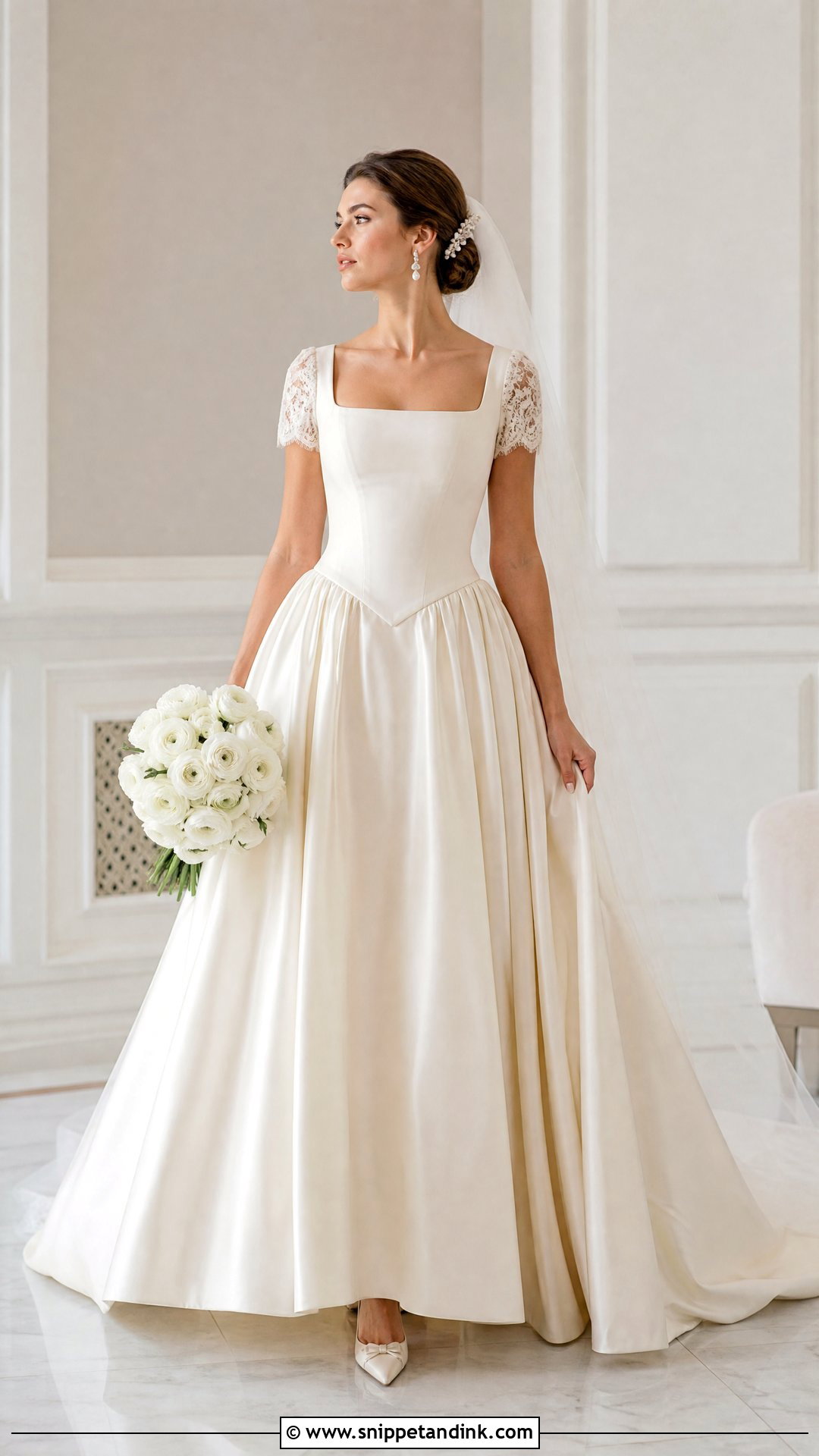
The pointed basque waist lengthens the torso and makes the transition into a full skirt look sharp. It pairs well with a structured satin bodice, light boning, a square neckline and short lace sleeves. Controlled pleating rather than huge volume keeps it modern. A long plain veil, a pearl comb, drop earrings and pointed ivory heels finish it, with ranunculus and a little foliage. Proportion is everything. If your torso is short, ask for a shallower point, because a deep one cuts into your hips when you sit. Have the point marked at your fitting while seated, not just standing.
7. Corset Bodice Victorian Wedding Dress
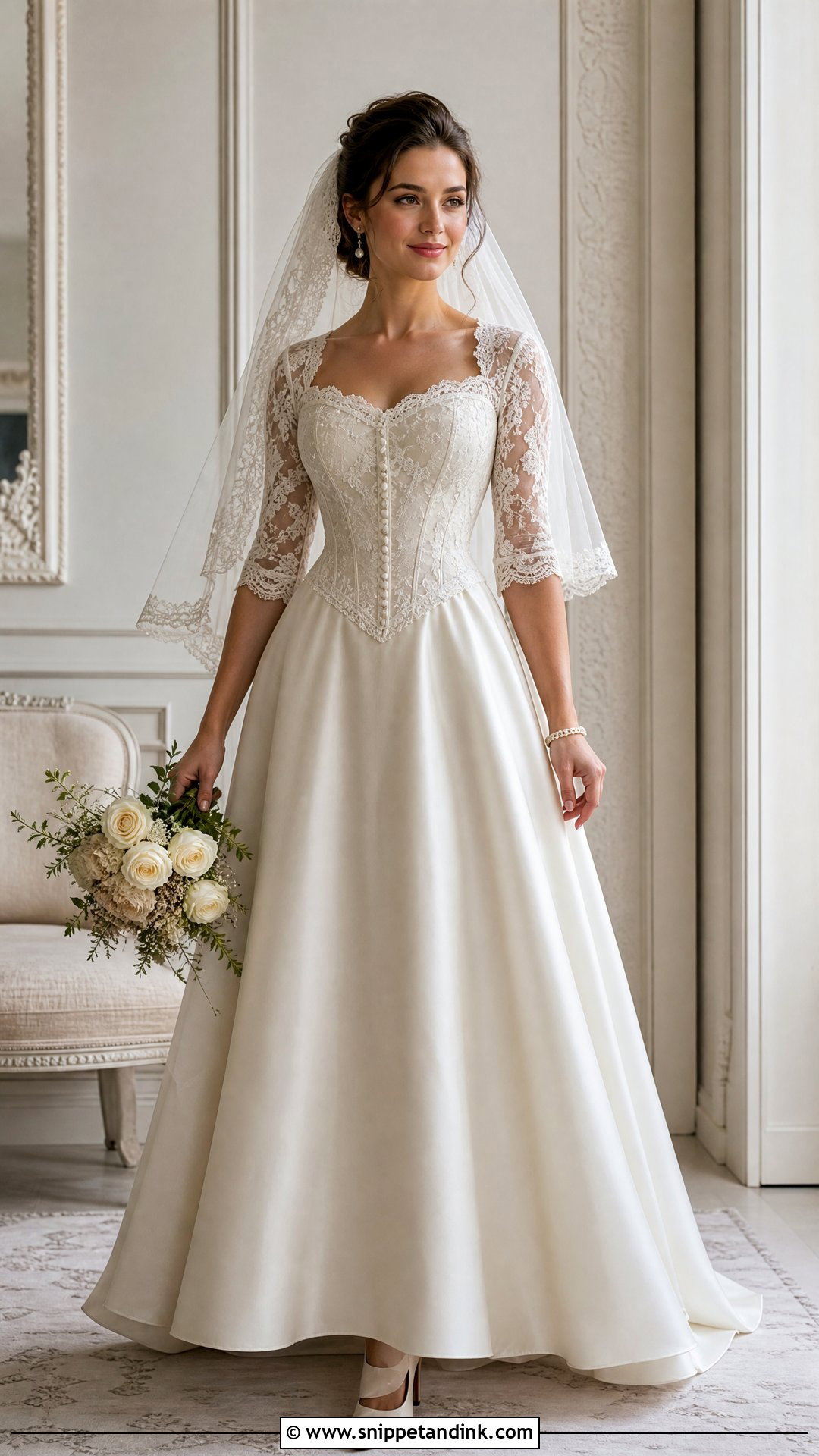
A corset bodice gives this dress its sculpted shape and does most of the supporting, too. Look for visible seam work, a gently pointed waist, lace-covered straps or sleeves and an opaque lining. A full silk or satin A-line skirt balances the fitted top. Style it with a medium lace veil, pearl drops, ivory pumps, a delicate bracelet and a loose bouquet of cream roses and sweet peas. Internal lacing or flexible boning lets the fit adjust slightly through the day. A corset should hold you firmly without stopping a full breath; if you can’t eat a few bites of dinner comfortably at the fitting, it’s too tight. Keep the hair to a simple textured bun.
8. Bustle Back Victorian Wedding Dress
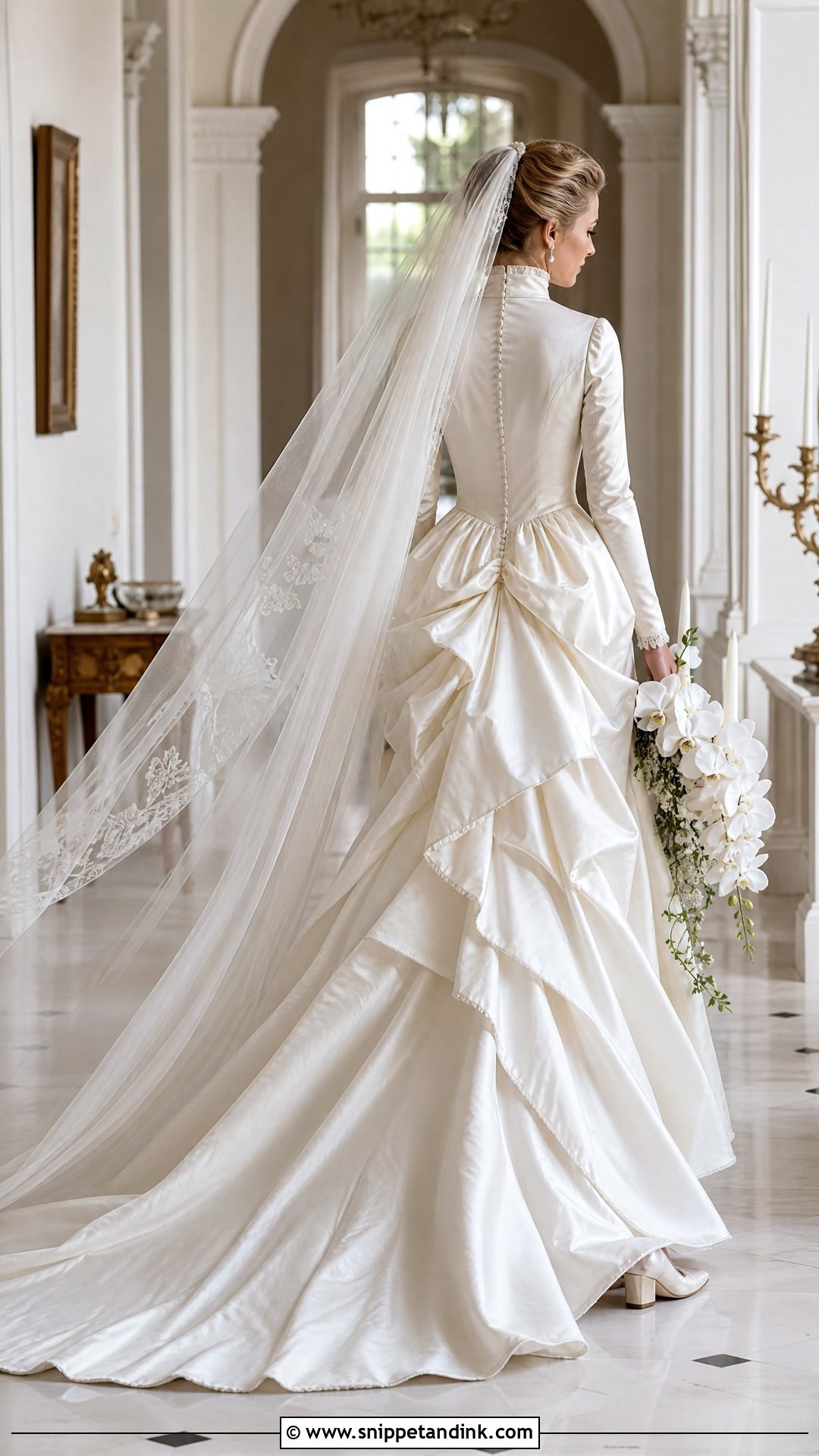
A bustle back Victorian wedding dress has gathered volume behind the waist that flows into a sweeping train. Modern versions use draped fabric rather than the rigid frames of the 1880s, so they’re far lighter. Look for a fitted bodice, soft back draping, covered buttons and a long train, with a fairly simple front so the shape stays balanced. A removable cathedral veil, pearl earrings, satin block heels and a small structured bag suit it. A trailing orchid bouquet echoes the movement at the back. Then ask your seamstress for a proper reception bustle, separate from the decorative one, so the train lifts securely for dancing.
9. Lace Overskirt Victorian Wedding Dress
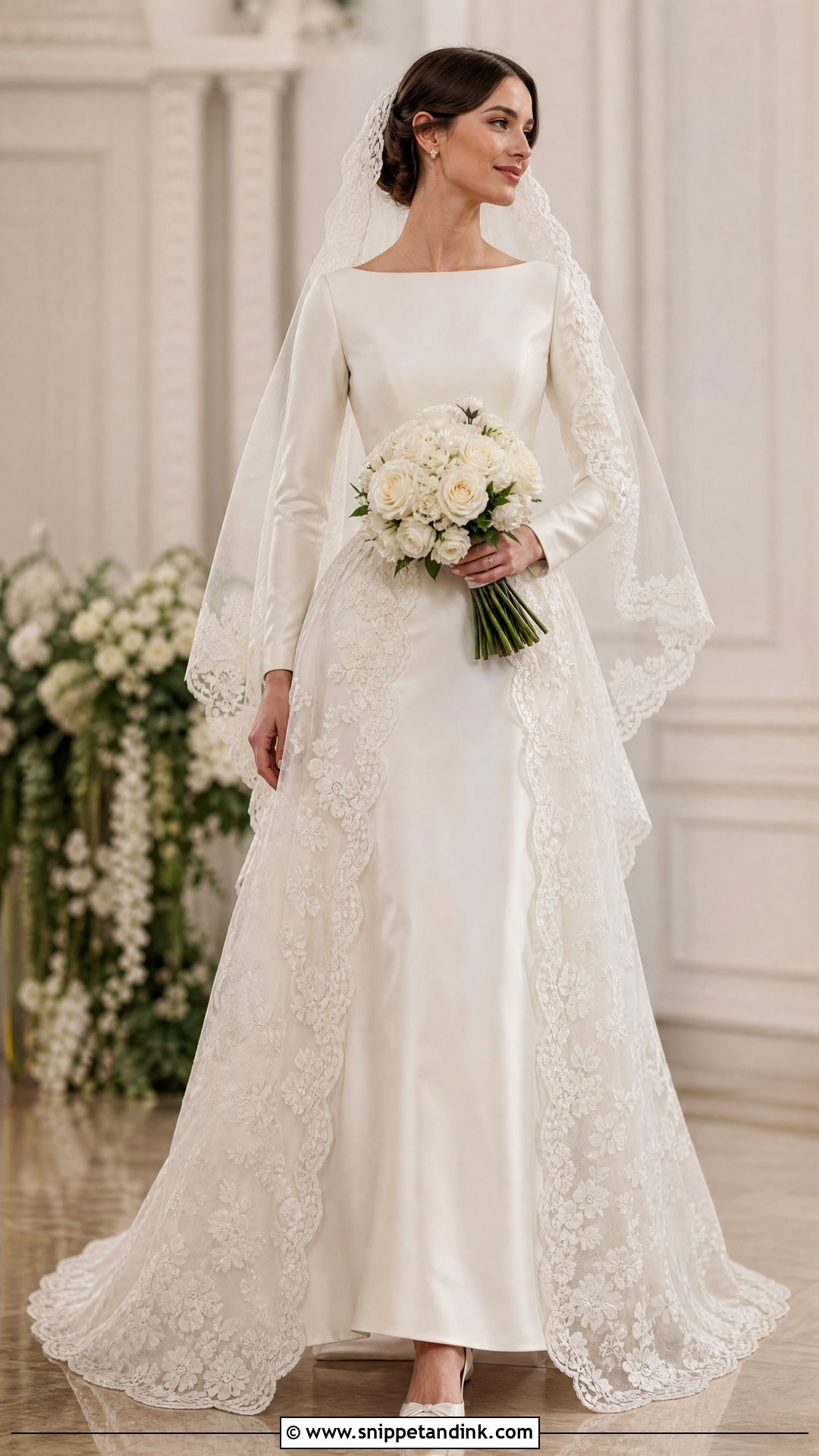
A lace overskirt on a satin base gives depth without heavy beading. Choose a smooth satin foundation, a fitted bodice, long sleeves and a detachable floral lace overskirt with a scalloped hem. A fingertip veil in similar lace, pearl studs, ivory kitten heels and a small bouquet of white roses complete it. A narrow velvet ribbon at the waist can define the shape; keep it ivory or cream so it blends in. Wear the full layered gown for the ceremony, then remove the outer skirt for a lighter reception look. Lace overskirts catch on heels and chair legs, so have the hem checked for loose threads before the day.
10. Long Train Victorian Wedding Dress
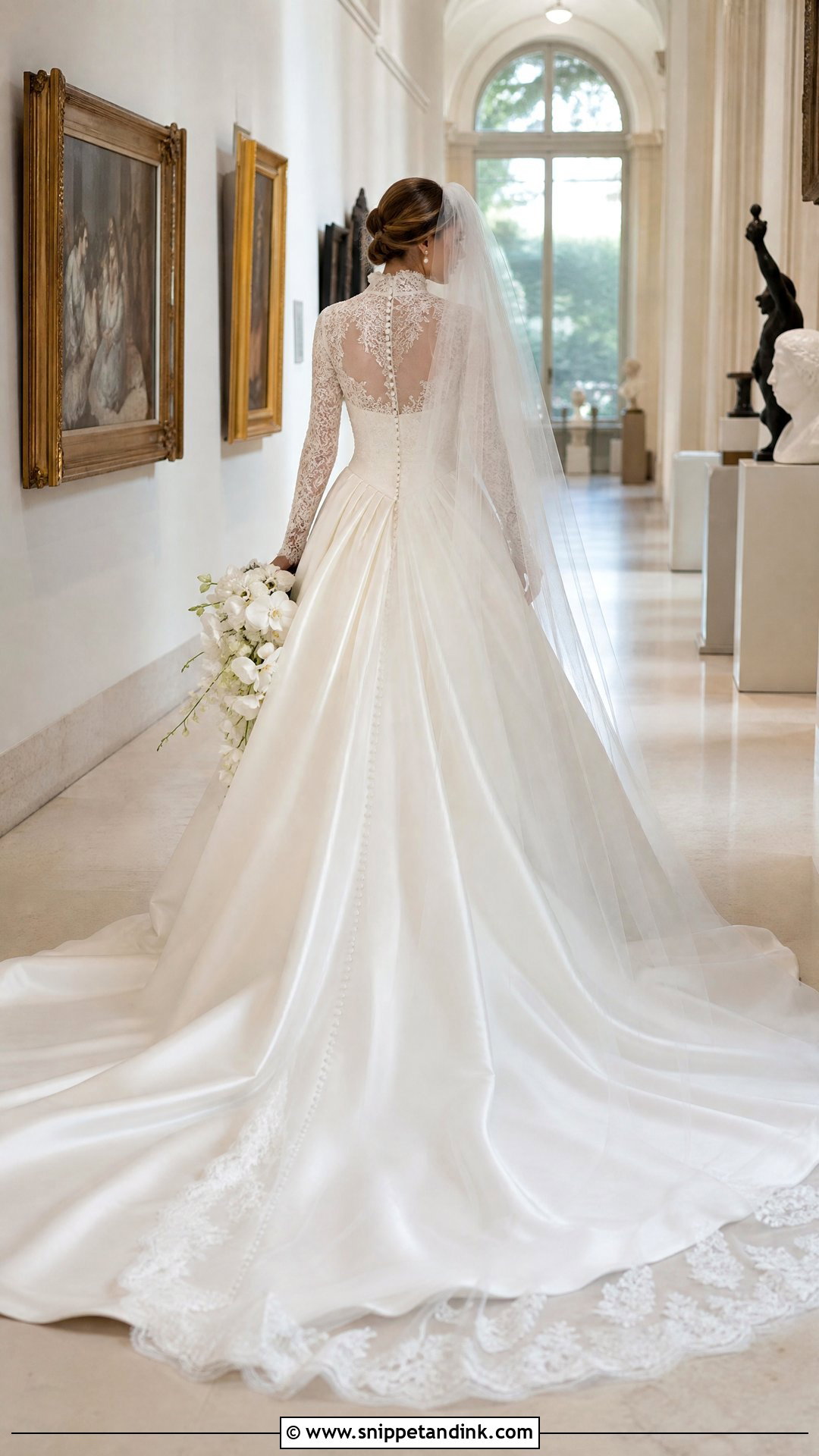
A long train makes an entrance, but only in a venue that can show it. A fitted lace bodice, defined waist, full satin skirt and cathedral-length train look stately without extra decoration, and covered buttons running from neck to hem lengthen the back view. A sheer cathedral veil, a crystal comb, pearl earrings and comfortable closed-toe heels suit it, with a narrow cascading bouquet. A train this long needs a smooth aisle; gravel and grass snag and stain it. Ask for a wrist loop and hidden bustle points, and have whoever will bustle you practice it once at the final fitting.
11. Square Neck Victorian Wedding Dress
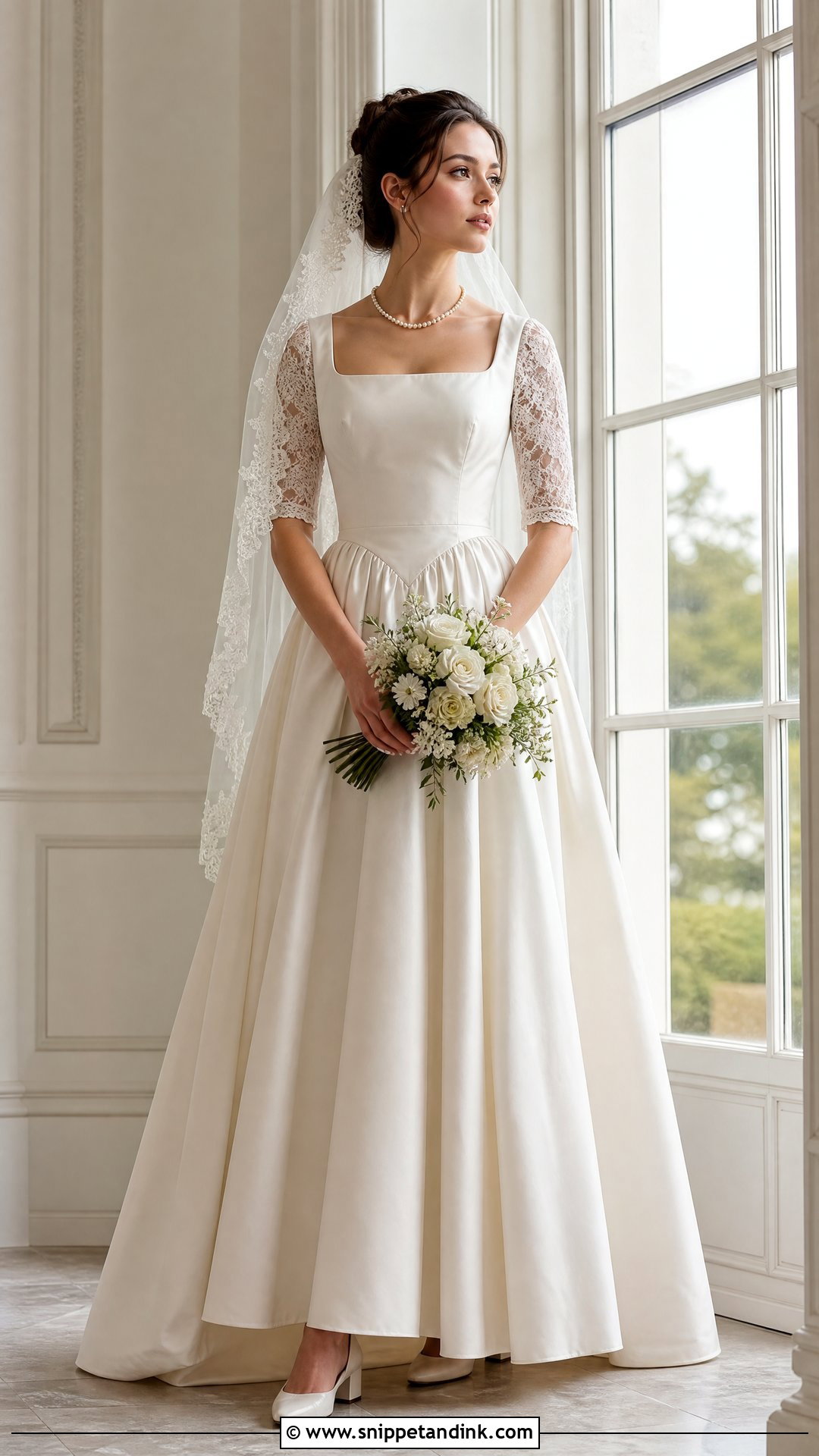
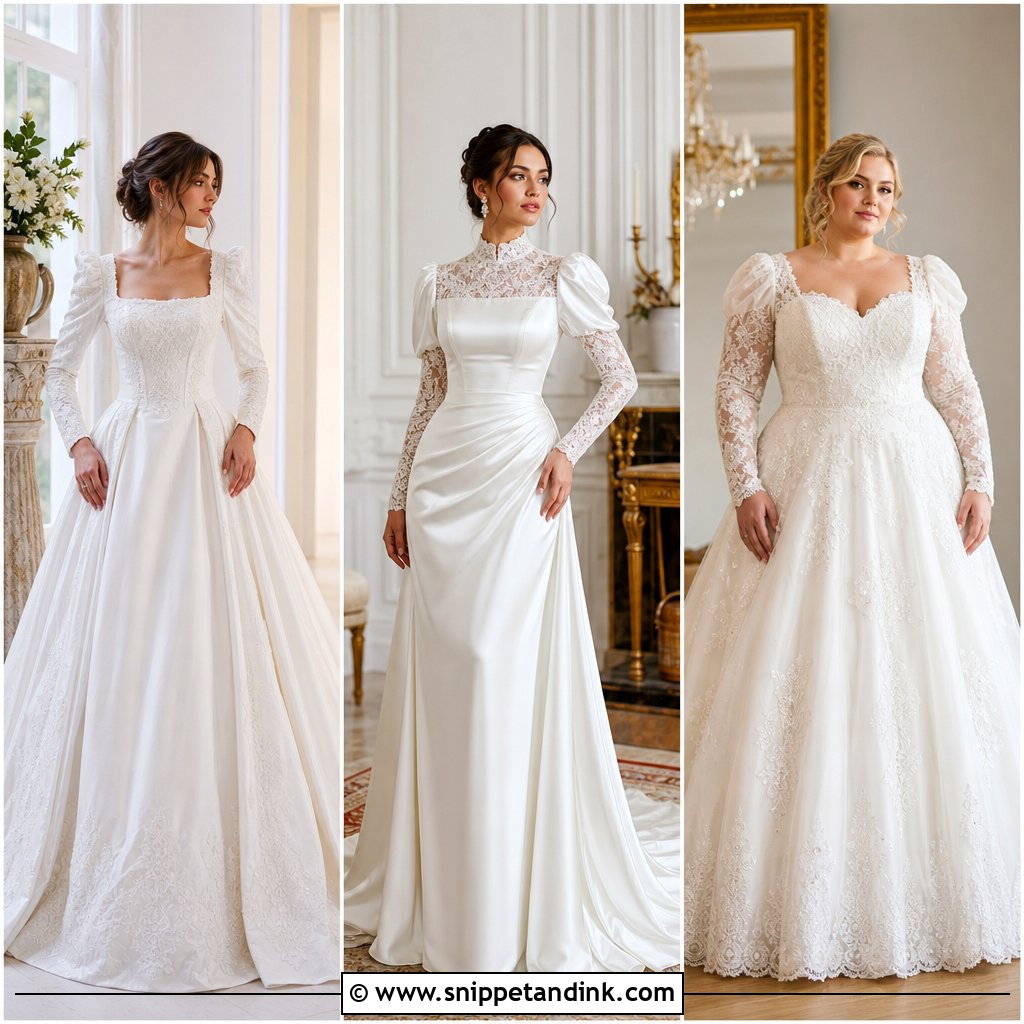
A square neckline frames the collarbones while giving more coverage than a plunge. Pair it with a fitted silk bodice, elbow-length lace sleeves, a natural waist and a softly gathered floor-length skirt. A short pearl strand sits nicely inside the square, with matching earrings, a lace-edged veil and ivory block heels. A low braided bun keeps the mood traditional. Carry a garden bouquet of white roses, small daisy-like flowers and pale foliage. Skip oversized jewelry or a heavily trimmed veil, because the neckline already has a strong shape. It’s comfortable enough to wear from a morning ceremony through to a late dinner.
12. Button Back Victorian Wedding Dress
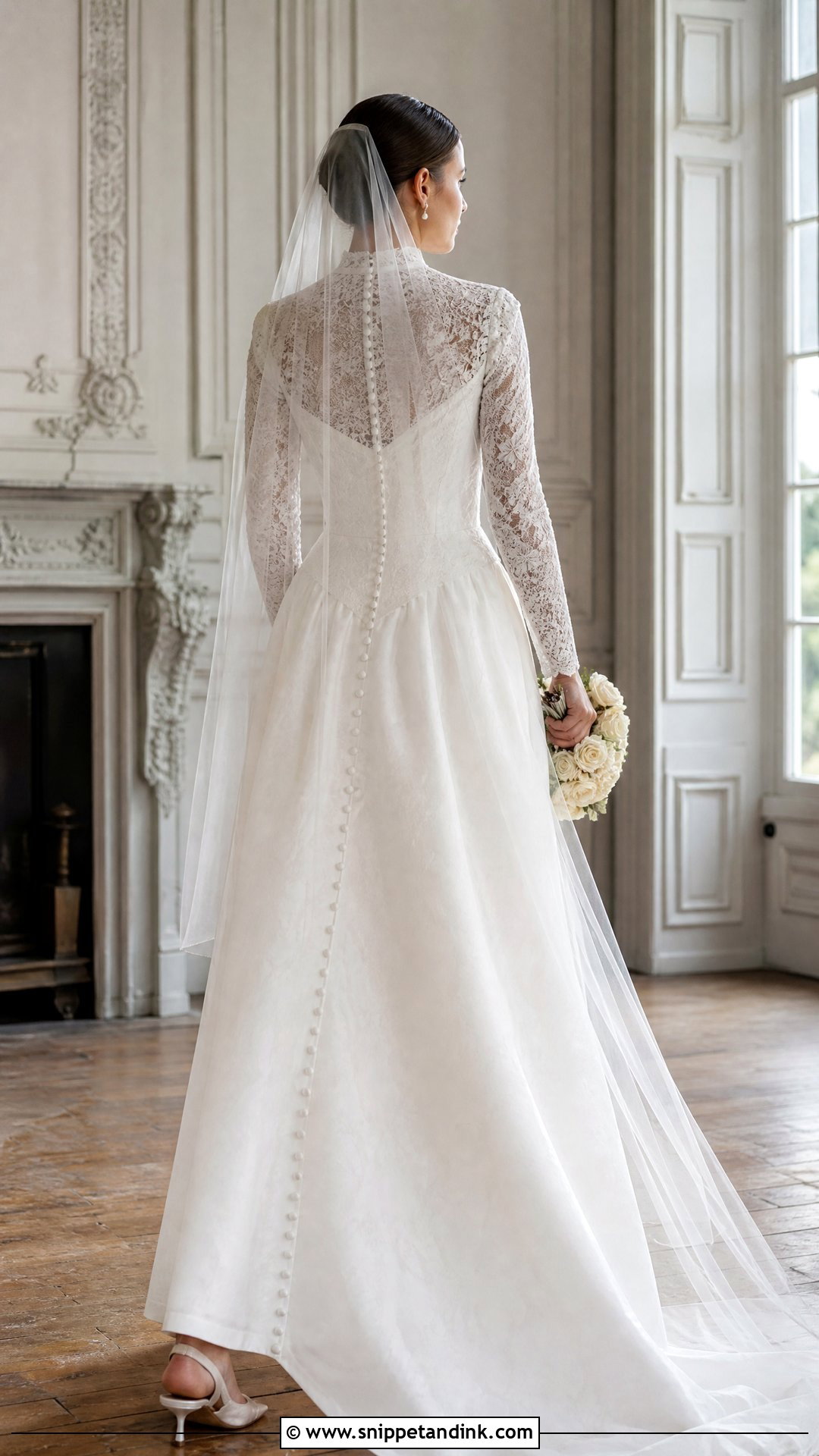
Covered buttons are the gentlest way to bring Victorian character into a modern gown. Choose a high illusion neckline, fitted lace sleeves, a shaped waist and a line of fabric buttons down the bodice and skirt, with a smooth A-line so the back stays visible. A sheer chapel veil under a low bun, pearl earrings, ivory slingbacks and a vintage-style bracelet are enough. Carry cream roses with soft green leaves. A real button back of forty or more loops takes a long time to close, so I always ask for a hidden zip or hooks underneath the decorative buttons. It looks identical and saves a lot of fumbling while the photographer waits.
13. Cape Sleeve Victorian Wedding Dress
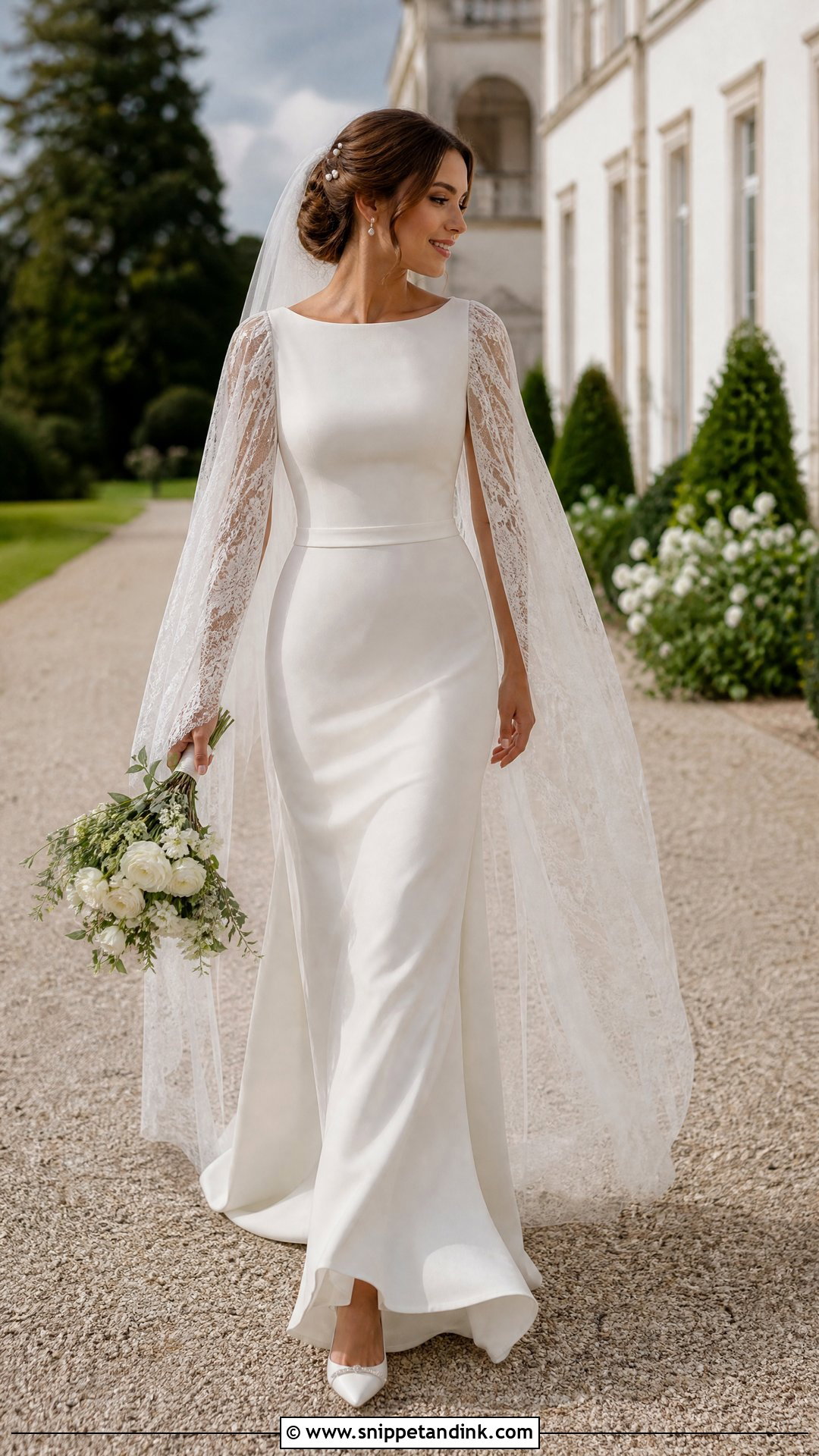
Cape sleeves add coverage and movement without the restriction of fitted sleeves. Start with a fitted crepe or satin gown with a defined waist and softly flared skirt, then attach lace capes that fall from the shoulder to the elbow or wrist. The cape should frame the body, not hide it. A narrow tulle veil, pearl hairpins, drop earrings and pointed ivory shoes suit it, with a loose bouquet trailing greenery. Keep the neckline simple, a bateau or shallow V, so nothing clutters the shoulders. Lace capes are attached at only a few points, so check they don’t drag the shoulder seam back as you walk.
14. Tiered Skirt Victorian Wedding Dress
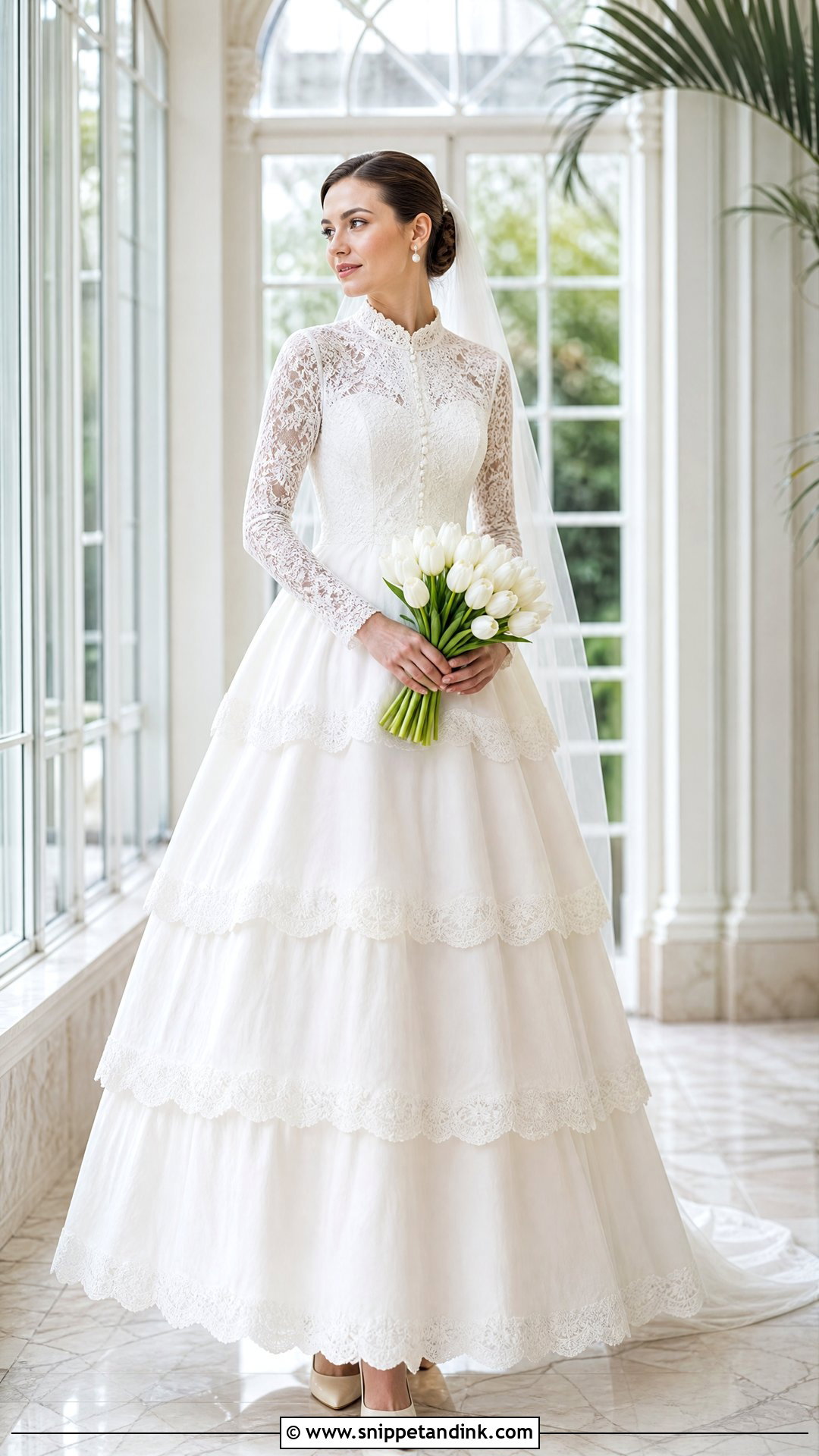
Two or three wide tiers give a skirt texture and swing. Pair them with a fitted satin or lace bodice, a modest neckline and slim sleeves. Soft lace edging on each tier defines the layers without looking busy. Add a plain fingertip veil, pearl drops, ivory pumps and a slim bracelet, with a gathered low bun and a simple bouquet of tulips or roses. Avoid a big cascade, which hides the tiers. Lightweight tiers hang more evenly and feel cooler than stiff ruffles, and they hold up much better during hours of standing. Check that each tier hangs level all the way round; uneven tiers are hard to fix once the dress is finished.


15. Ivory Satin Victorian Wedding Dress
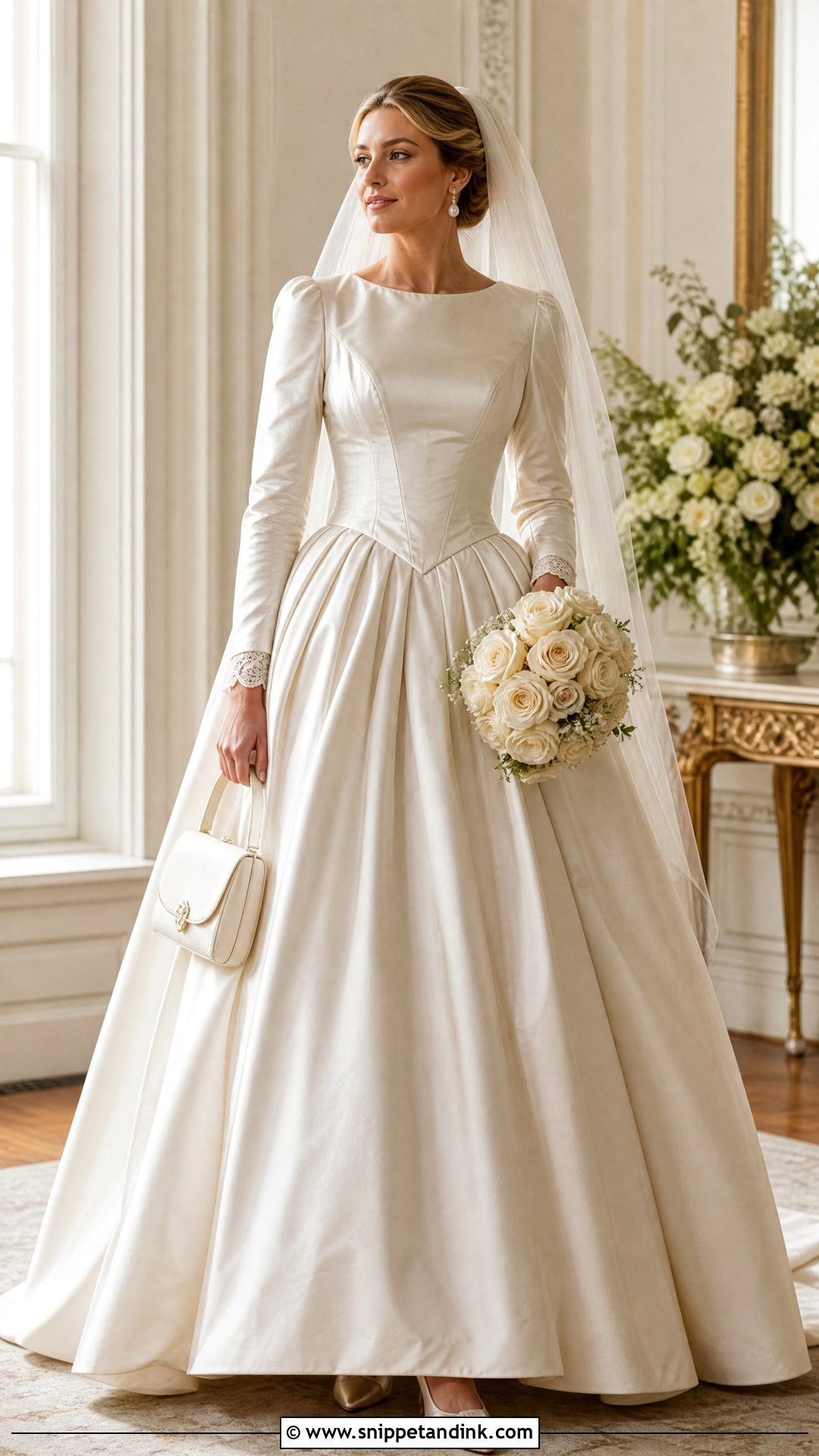
Ivory satin has a warm glow that feels softer than bright white, and it’s closer to how the era’s silk looked. Look for a sculpted bodice, a rounded neckline, fitted sleeves, a defined waist and a full pleated skirt, with only a little lace at the cuffs and neck. An ivory tulle veil, pearl earrings, satin heels and a small structured bag finish it. Cream roses, white anemones and pale greenery add gentle tonal variation. The mistake I correct most often with this dress is a bright white veil or shoes beside warm ivory satin, which makes the gown look yellowed. Compare every accessory against the fabric in daylight before buying.
16. Floral Jacquard Victorian Wedding Dress
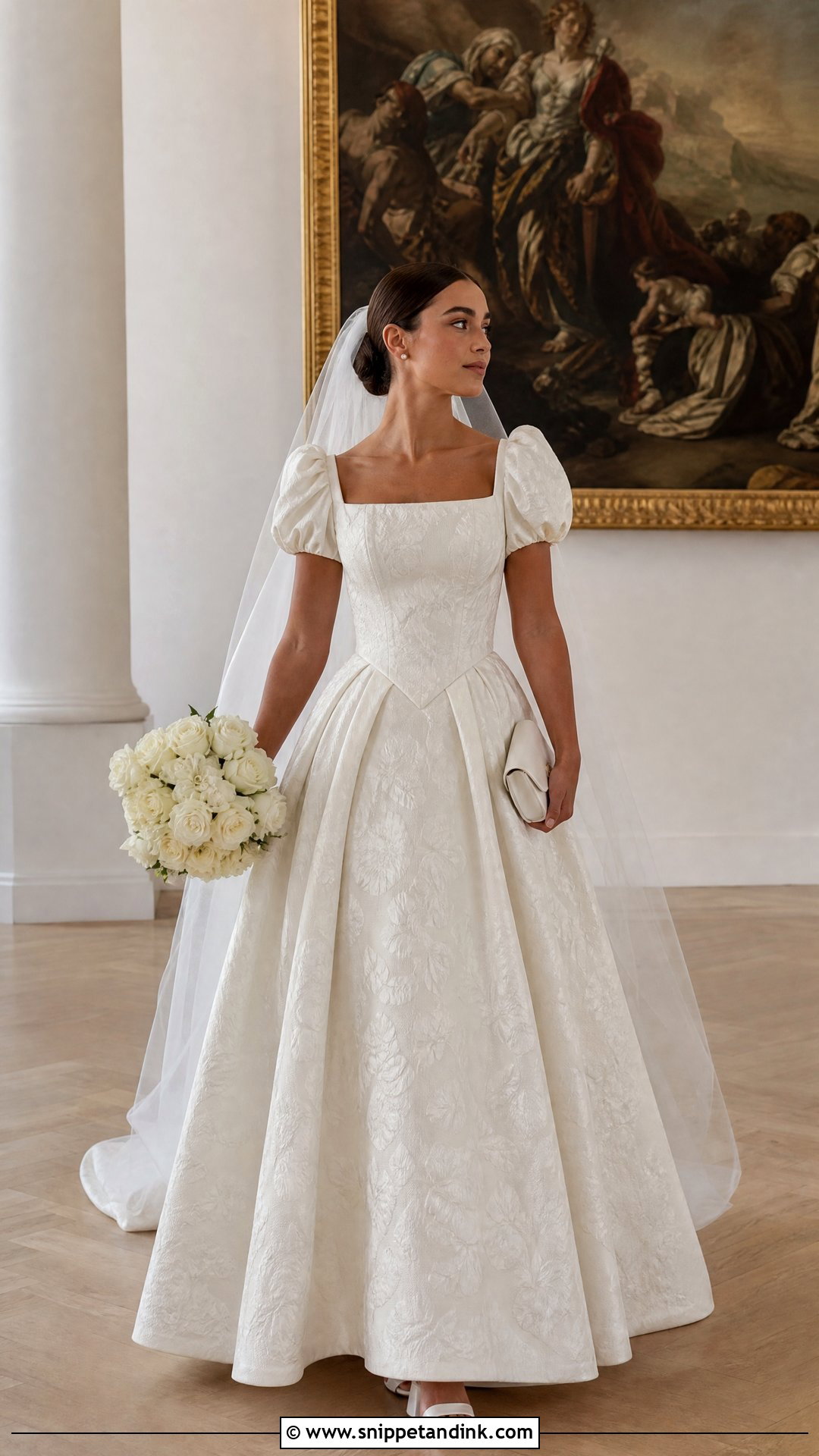
Jacquard has its flowers woven into the fabric rather than stitched on top, so the pattern shows as light moves across it. Choose a structured square-neck bodice, short puff sleeves, a basque waist and a full skirt in ivory floral jacquard. Keep the accessories very simple: a plain tulle veil, pearl studs, ivory block heels and a smooth satin clutch, with white roses and a few green stems. Pattern placement matters more than in any other fabric here. A good dressmaker centers the largest motif on the bodice and matches it at the side seams, and that’s worth asking about before you buy. It suits a bride who wants richness without sparkle.
17. Blue Victorian Wedding Dress
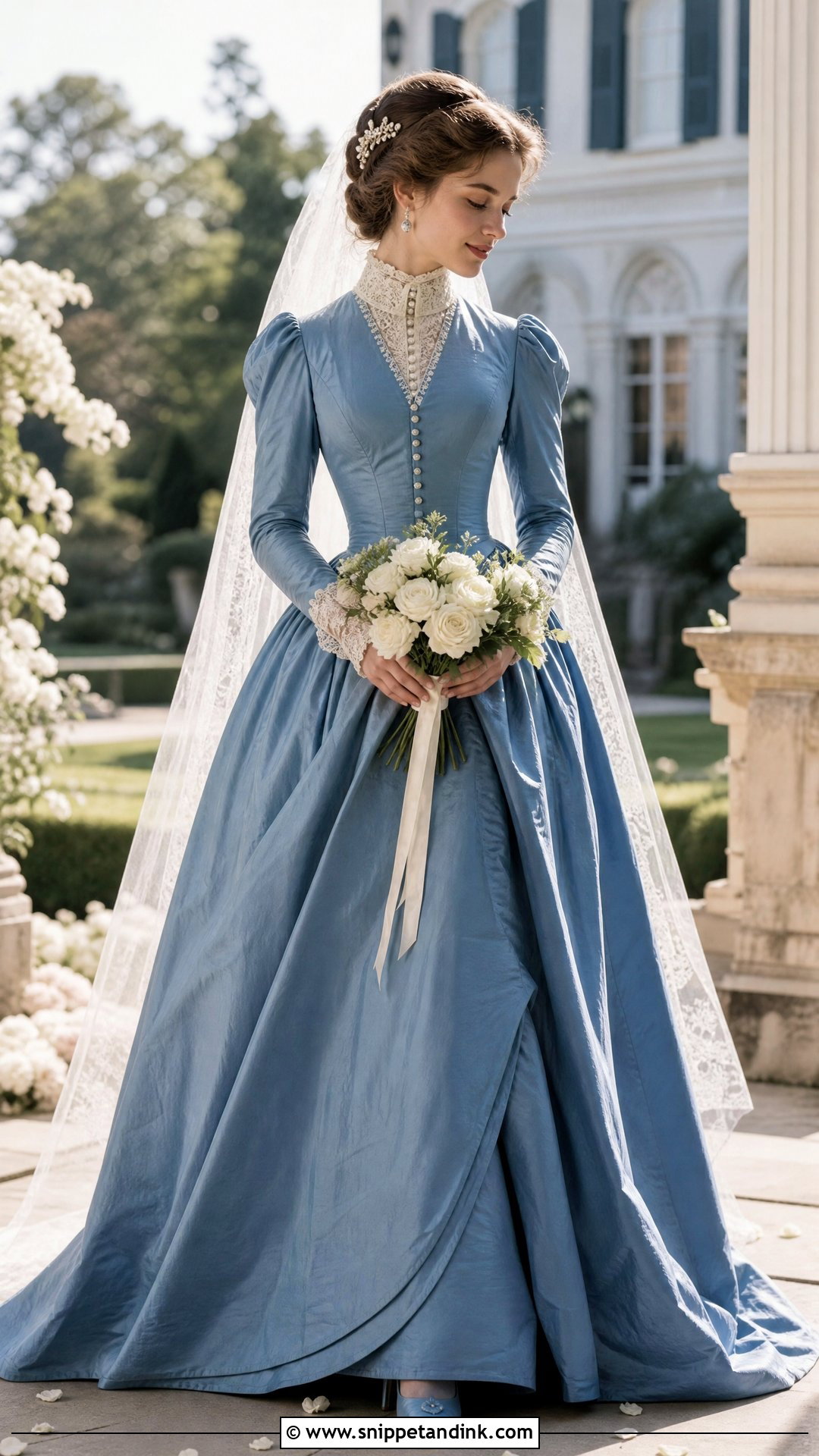
A pale blue Victorian wedding dress is a gentle departure from ivory, and colored gowns were common for brides before white became the custom. Choose a dusty blue silk gown with a fitted bodice, high lace collar, long sleeves and a full skirt, with ivory lace at the neck and cuffs so it still reads as bridal. An ivory chapel veil, pearl earrings, light blue satin shoes and white roses with silvery foliage suit it, with a pearl comb above a low bun. Keep the blue muted. Always view swatches in daylight, as pale blue can look grey, silver or lavender under different lights. Estates, gardens and historic houses suit it.
18. Tea Length Victorian Wedding Dress
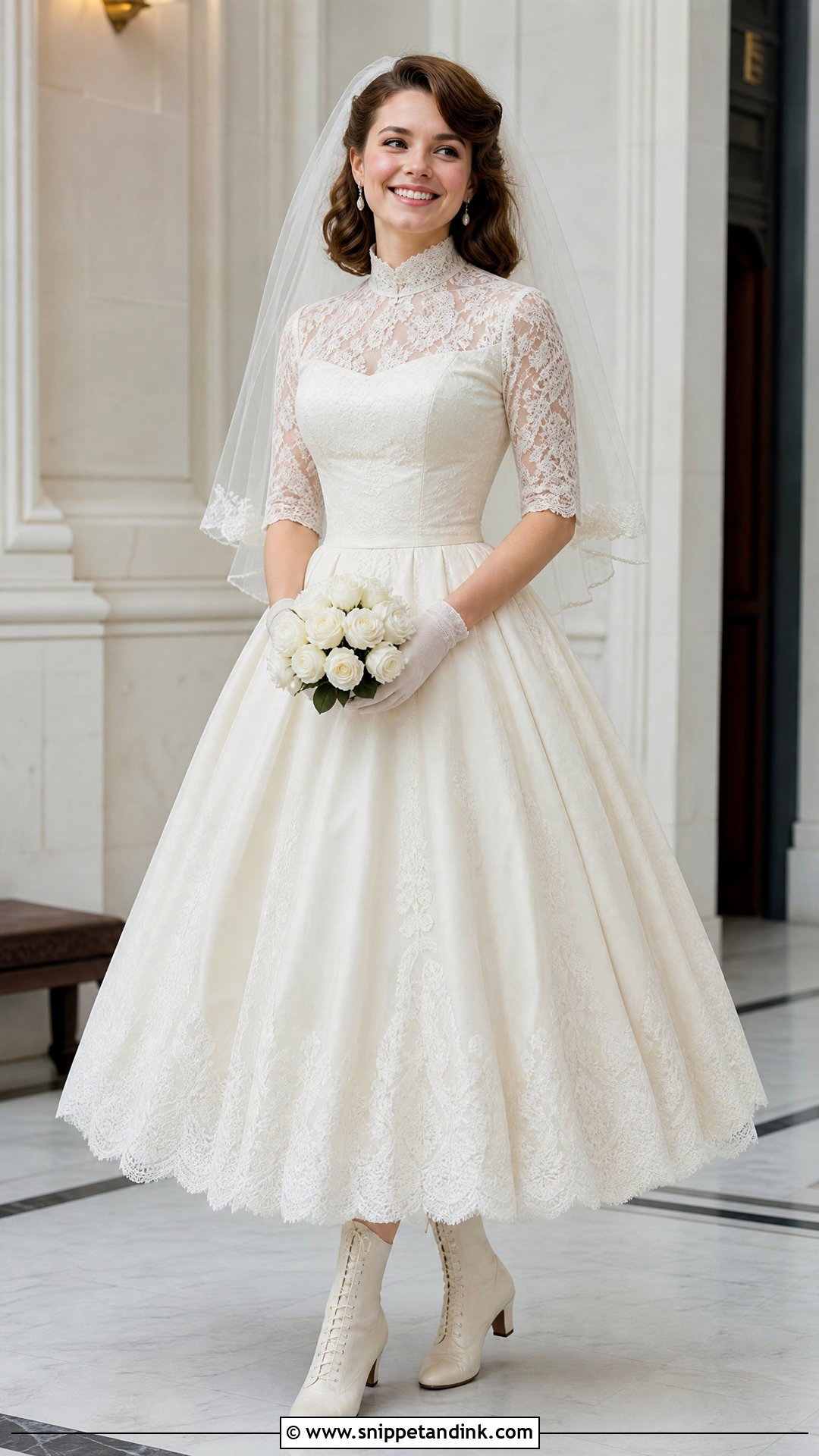
Tea length keeps the Victorian detail but loses the weight. Choose a lace gown with a high neckline, fitted elbow sleeves, a defined waist and a full skirt ending between the knee and ankle, with a light petticoat for shape. For shoes, lace-up ivory ankle boots or buttoned shoes look right for the era; pair them with pearl earrings, short gloves and a shoulder-length veil. A compact bouquet keeps the proportions in check. The hem is visible all day, so check it’s level while you’re standing in your boots. A low twisted bun and soft makeup finish it. Courthouse ceremonies and small gatherings suit it well.
19. Plus Size Victorian Wedding Dress
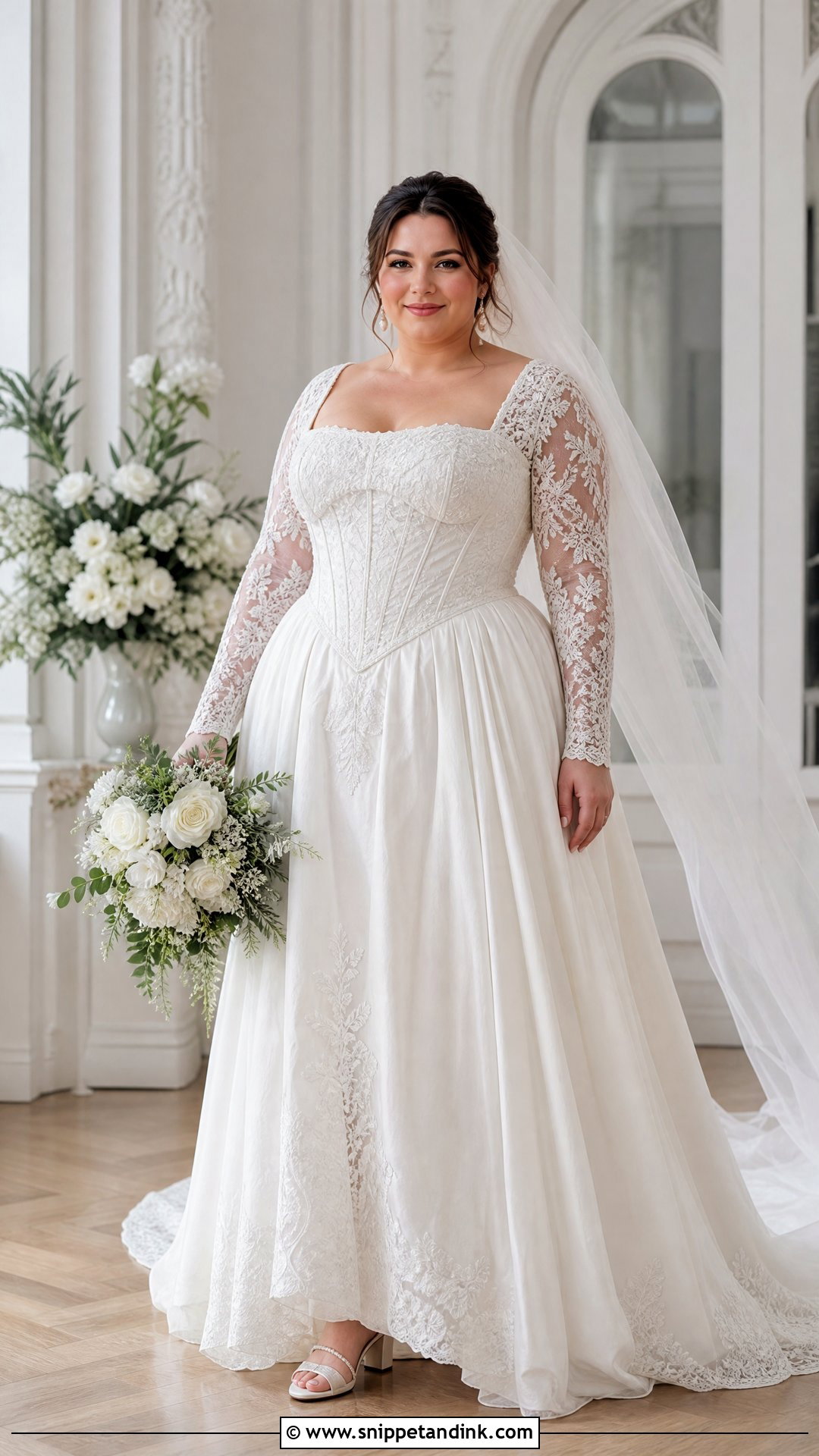
Victorian structure can flatter a plus-size figure very well when the support is built in properly. Look for an A-line gown with a corset-style bodice, a square neckline, fitted lace sleeves and a basque waist shaped for your proportions, not taken from a standard pattern. A softly pleated skirt adds movement without bulk at the hips, and wider straps or sleeves add support while framing the neckline. A long sheer veil, pearl drops, supportive block heels and a bouquet in proportion to the skirt complete it. Don’t size down for a tighter look. A dress that fits your real measurements and is then tailored will always look better and let you breathe through dinner.
20. Simple Victorian Wedding Dress
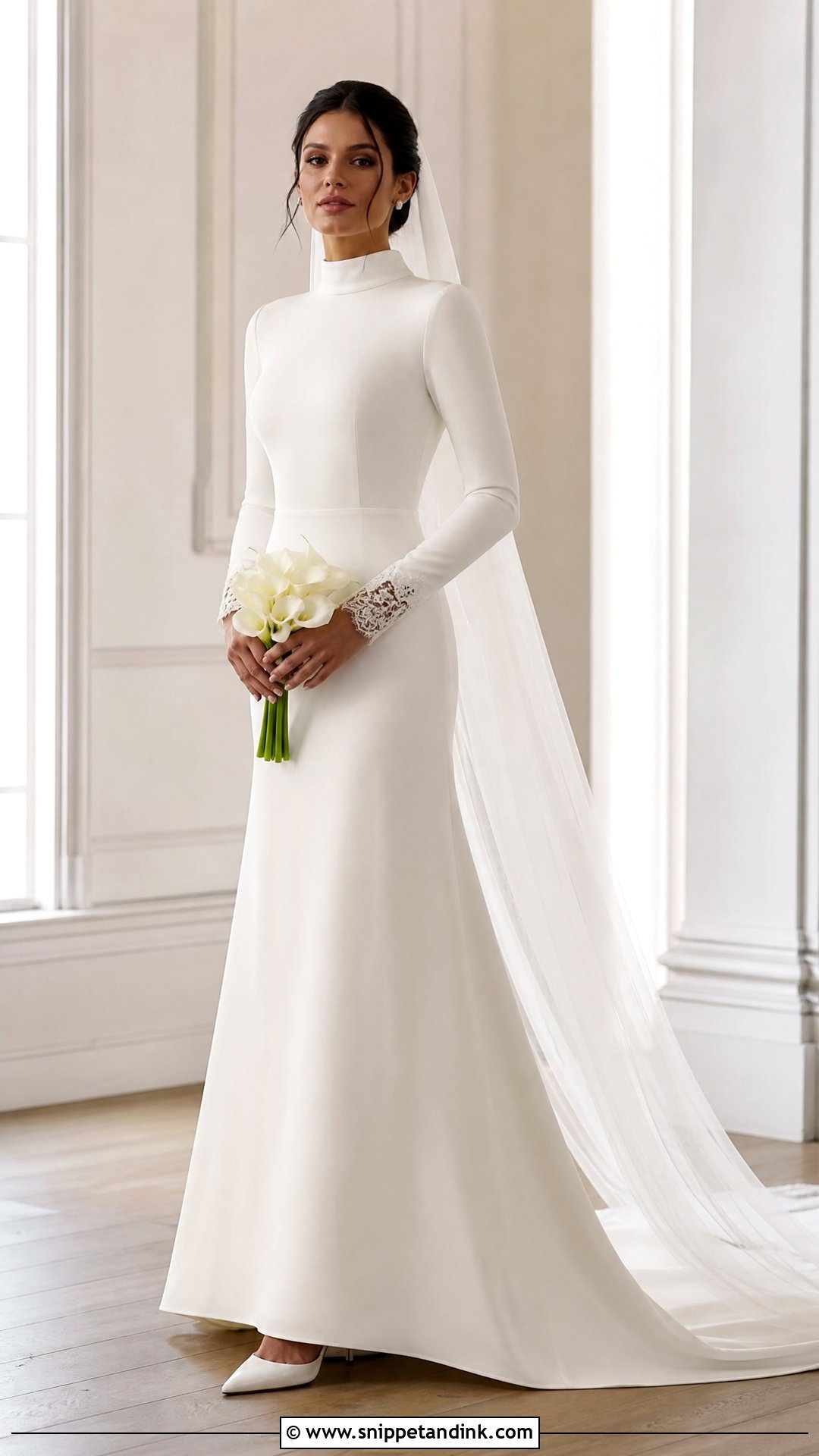
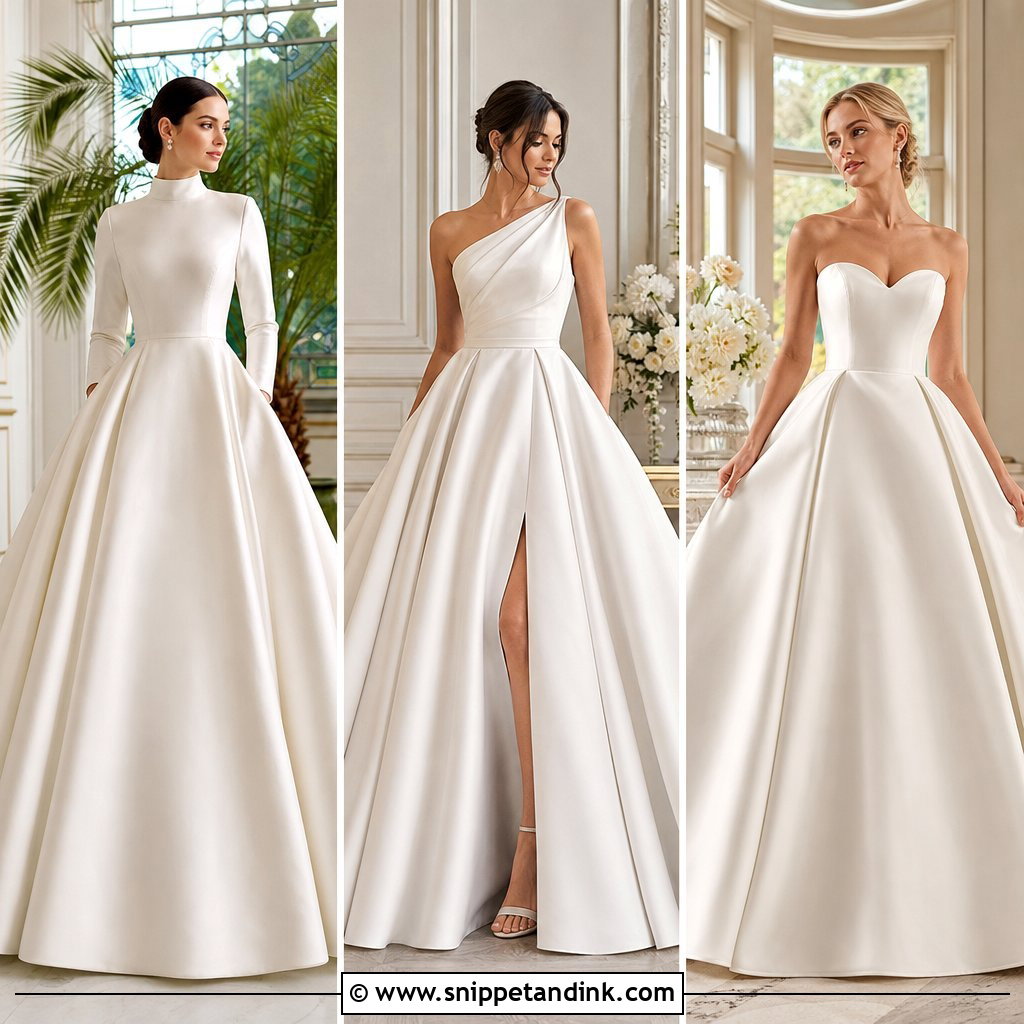
Victorian influence doesn’t need ruffles. Smooth ivory crepe, a high neckline, long fitted sleeves, a shaped waist and a softly flared skirt are enough, with a row of covered buttons and narrow lace cuffs as the period details. Pair it with a plain chapel veil, pearl studs, pointed ivory heels and a small bouquet of calla lilies or roses, and a neat center-parted low bun. It suits modern venues and civil ceremonies. On a dress this plain, crepe quality and tailoring decide everything, since there’s no lace to hide a puckered seam. Spend your budget on fabric and fit.
Buying a Genuine Antique Gown
Some brides want the real thing, a gown actually made in the 1800s. It’s possible, but most surviving dresses are fragile and many are too small. People wore tight corsets and were often shorter, so waists and arm lengths rarely match a modern body, and old seams have little fabric left to let out.
Silk from that period was often weighted with metal salts to make it feel heavier, and over time that silk splits into fine cracks, known as shattered silk. Hold the fabric up to the light and look for splits along folds. Shattered silk can’t be repaired, only supported. Yellowing and brown spots can sometimes be reduced by a specialist textile cleaner, but never by a regular dry cleaner. If the gown is too delicate to wear all day, consider having a dressmaker copy it in new fabric, or reuse its lace on a modern dress.
Gloves at the Ring Exchange, Buttons at Midnight
Two small details from this era cause the most fuss on the day. Gloves first: you can take the left glove off before the vows and hand it to your maid of honor, or ask for a glove with a small opening along the ring finger so the band slides on without removing it. Practice whichever you choose.
Then the buttons. Fabric-covered buttons with loops take a long time to fasten, and they take just as long to undo at the end of the night. A crochet hook or a proper buttonhook makes the job much faster. Put one in the getting-ready kit and tell whoever is helping you dress where it is.
Pearls, Buttons and a Little Restraint
The Victorian look works best when history meets modern tailoring. Lace collars, puff sleeves, basque waists, covered buttons, bustles and long trains can suit many body types and venues, but rarely all at once. Start with the silhouette you feel comfortable in, then add one or two period details rather than all of them. Let the veil, pearls, gloves, shoes and flowers carry the rest. Sit, walk and lift your arms in the dress before final alterations. Kept in balance, it reads as romantic and regal, never as fancy dress.
You'll Like These Ideas:





Leave a Reply