
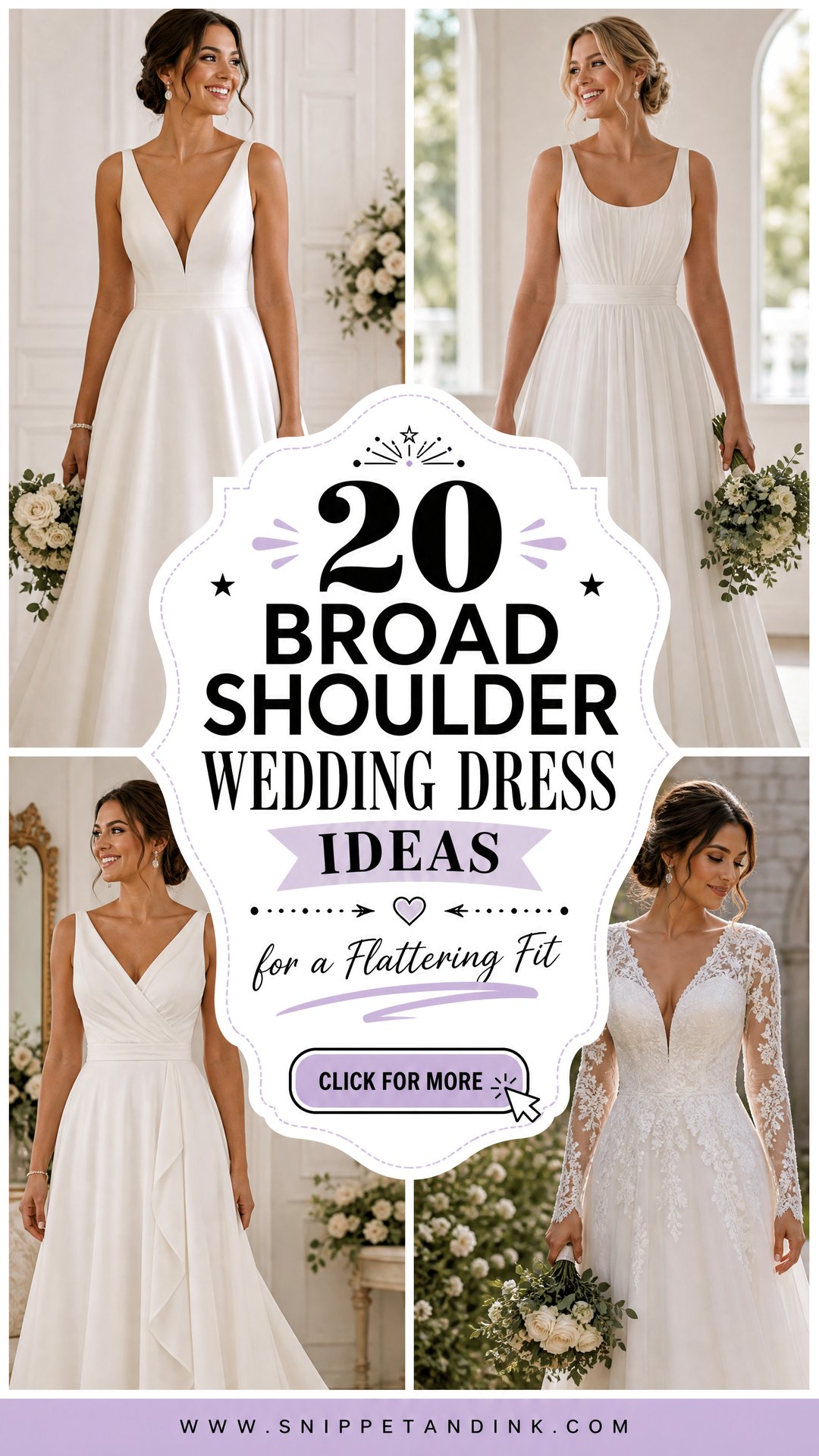
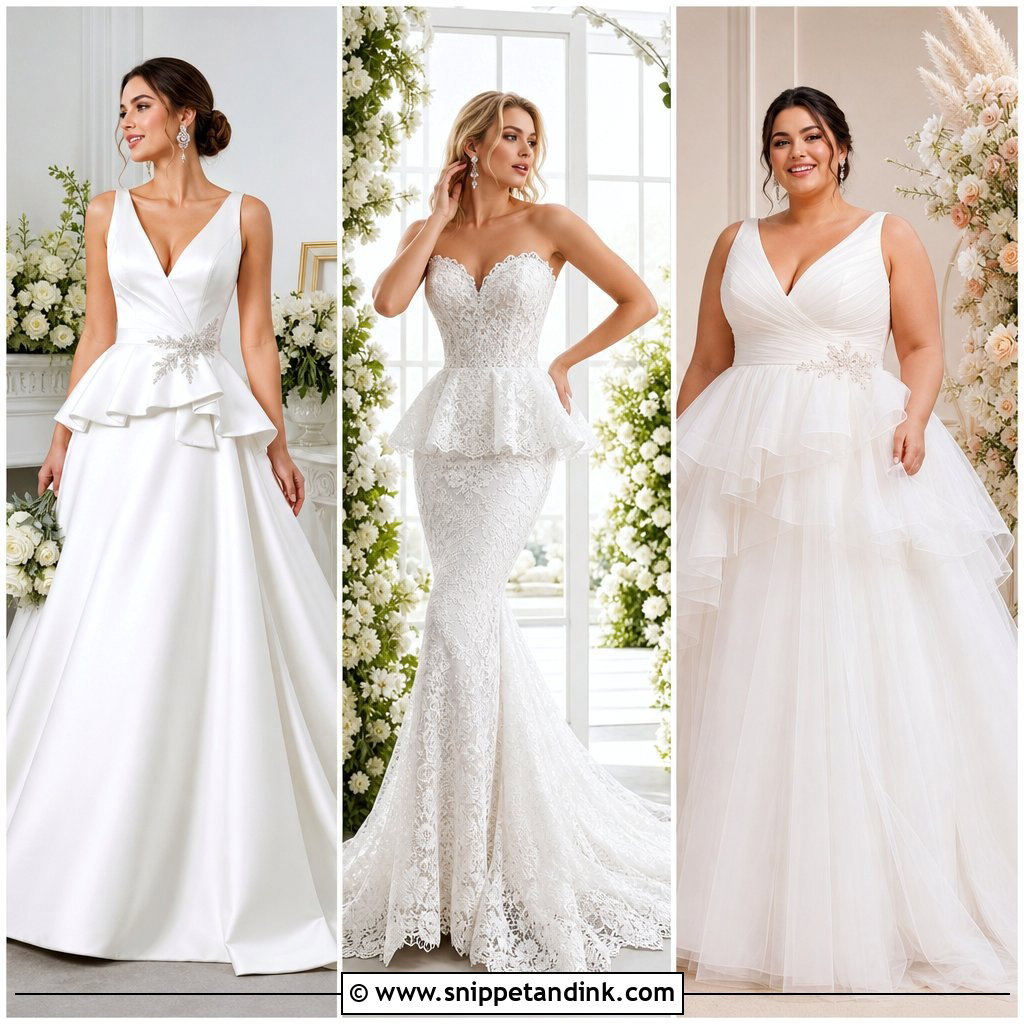
Broad shoulders give a bride a strong, elegant frame, and plenty of bridal shapes suit them. A V-neck draws the eye down the centre; A-line and ball gown skirts add volume below the waist so everything balances. Sweetheart curves, draped sleeves, asymmetric necklines and well-placed detail can soften the shoulder line or show it off, depending on how you feel about it. I say this at every appointment with a bride who’s worried about her shoulders: these are options, not rules. Fabric, construction, alterations and your own taste matter far more than any body-shape chart. Below are twenty gowns, from minimalist satin to romantic lace, with notes on what to check when you try each one.
Bridal Size Charts Ignore Your Shoulders
Here’s why so many sample gowns feel wrong on broad shoulders: bridal size charts are built on bust, waist and hip. The width across your back isn’t on them at all. So a dress can match your measurements on paper and still pull tight across the shoulder blades, or leave the straps sitting halfway down your arms.
Before I pull a single dress, I ask a bride to stand with her arms relaxed and look at two things in the mirror. Is the widest point of her shoulders wider than the widest point of her hips? And does she want to balance that, or show it off? Those answers shape the whole appointment more than any trend.
- Order for your largest measurement. Taking a gown in is routine; letting it out is often impossible.
- Ask whether the bodice has seam allowance across the back. Some do, many don’t.
- Try on lifting your arms. Most shoulder problems only show when you hug, reach for a glass or throw a bouquet.
- Bring a strapless bra and a regular one, since the straps on a gown and on your bra need to line up.
1. V-Neck A-Line Wedding Dress
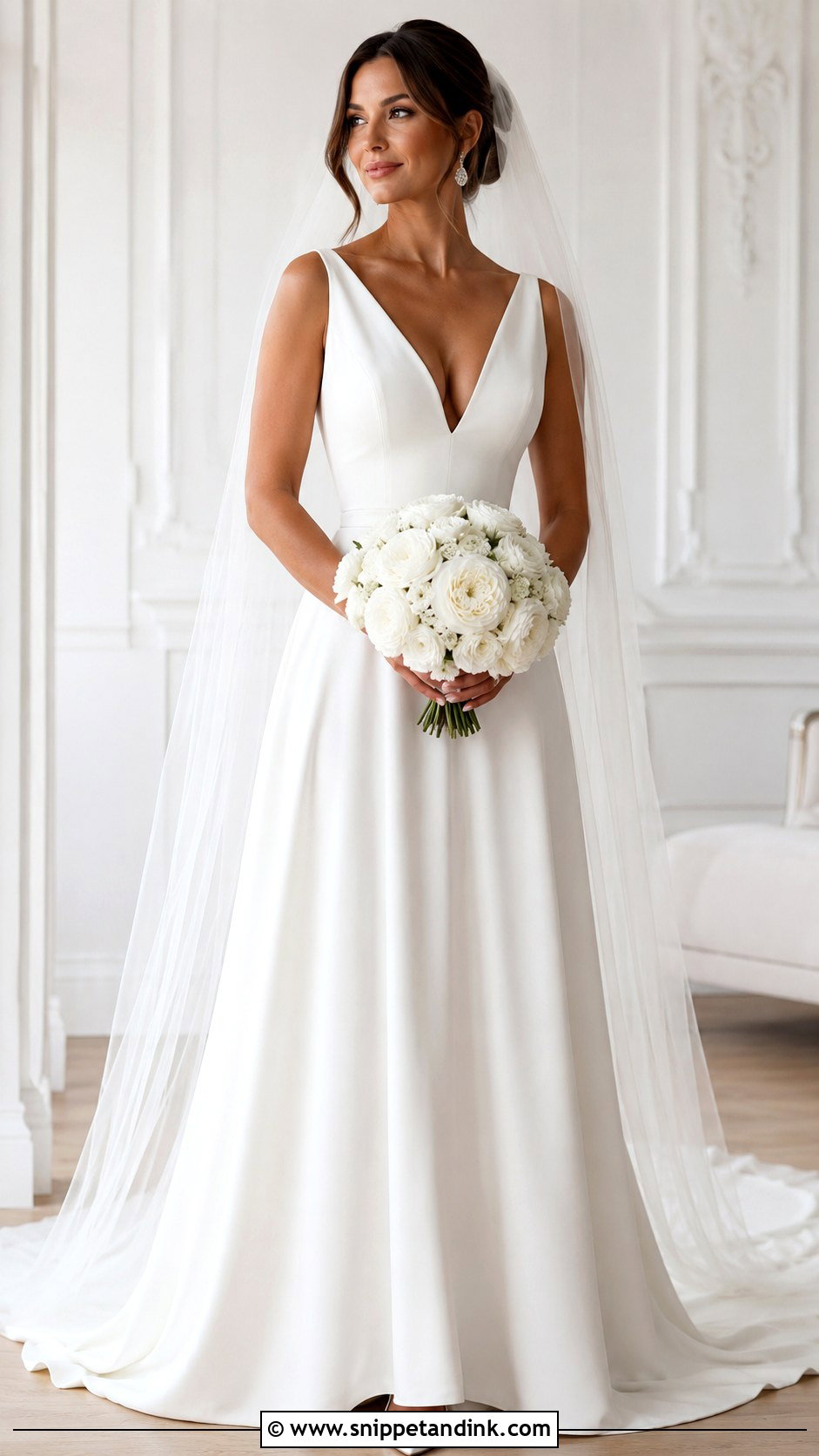
A V-neck A-line draws a clean vertical line through the bodice and then flows away from the waist. That lengthens the upper body and adds balance below. Go medium or deep on the V depending on how much support you need, and look for wider straps that sit comfortably without looking heavy. Smooth crepe reads modern; lace appliqués read softer. Pointed pumps, a fingertip veil, small drops and a rounded bouquet. Keep embellishment at the waist or skirt, not on the shoulder points. The thing I watch for is a V that drifts off-centre when you move, which almost always means the side seams need taking in rather than the straps shortening.
2. Sweetheart Ball Gown Wedding Dress
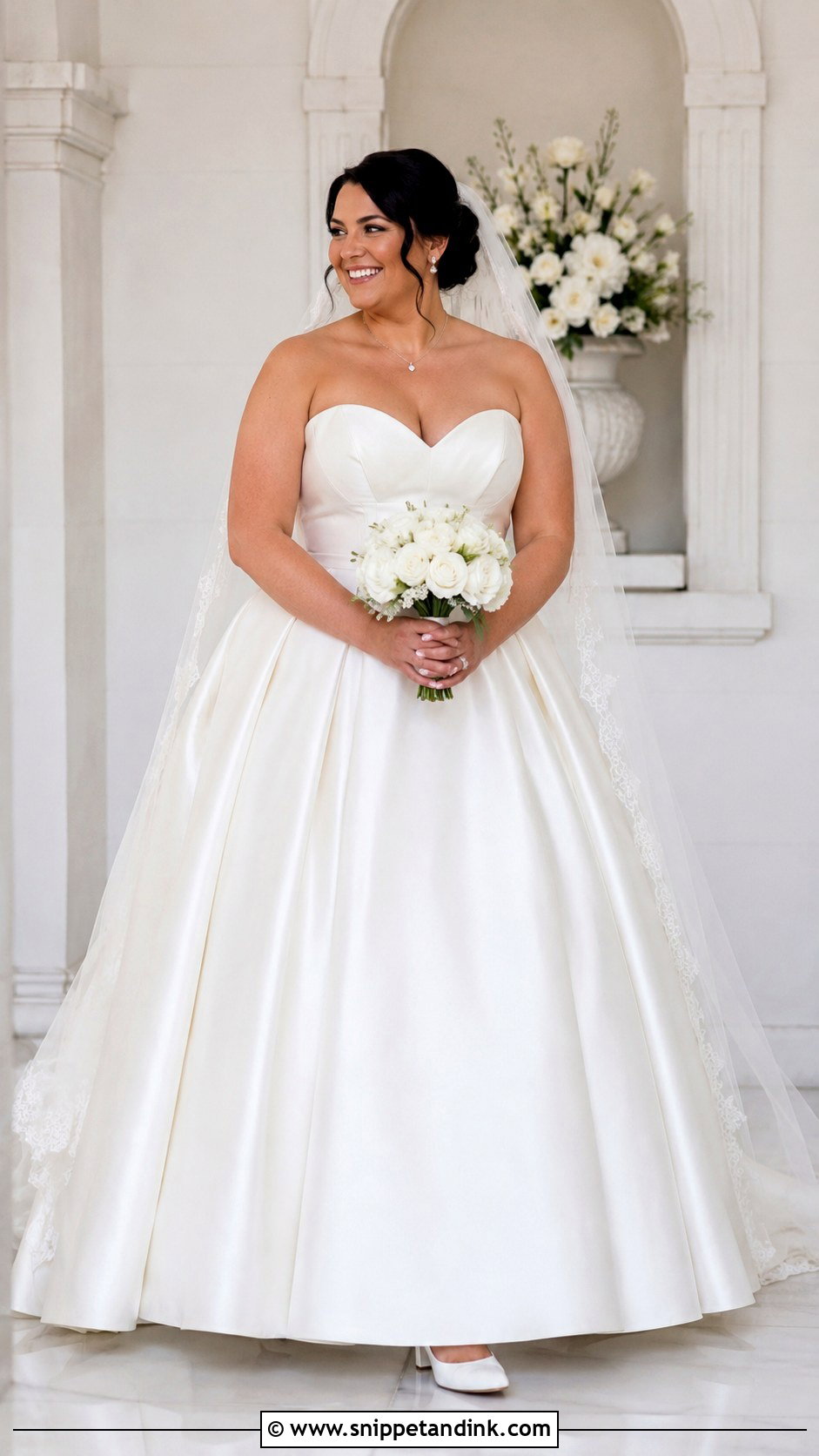
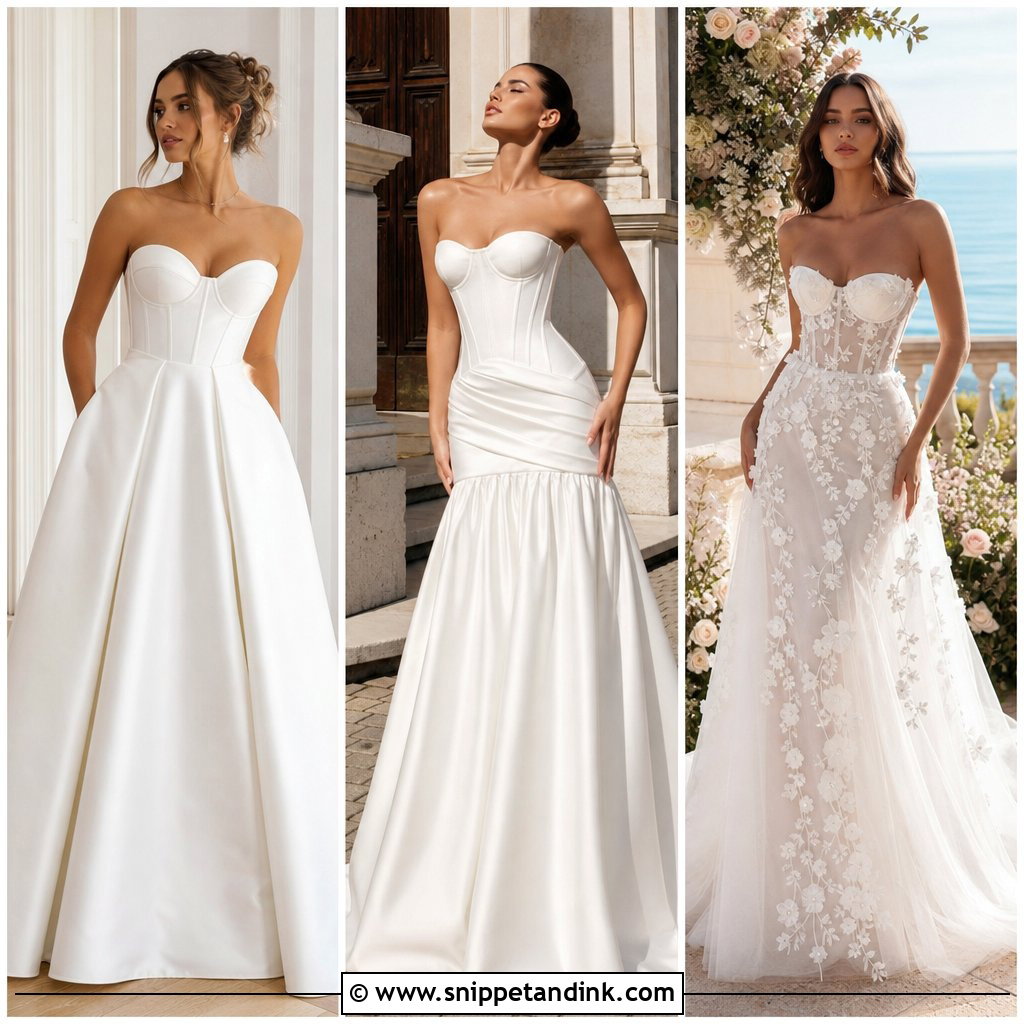
A sweetheart ball gown is a confident choice. The dip at the centre of the neckline pulls the eye inwards and the full skirt balances everything below. Choose a structured bodice with internal boning so it holds itself up instead of relying on tight straps that cut into the shoulder. Satin is polished and formal; layered tulle is lighter. Cathedral veil, pearl studs, a fine pendant, and block-heel pumps hidden under the skirt. A natural-waist seam gives the clearest definition. If you’d like less volume, ask whether a petticoat layer can come out; often it can, and the shape barely changes.
3. Off-the-Shoulder A-Line Wedding Dress
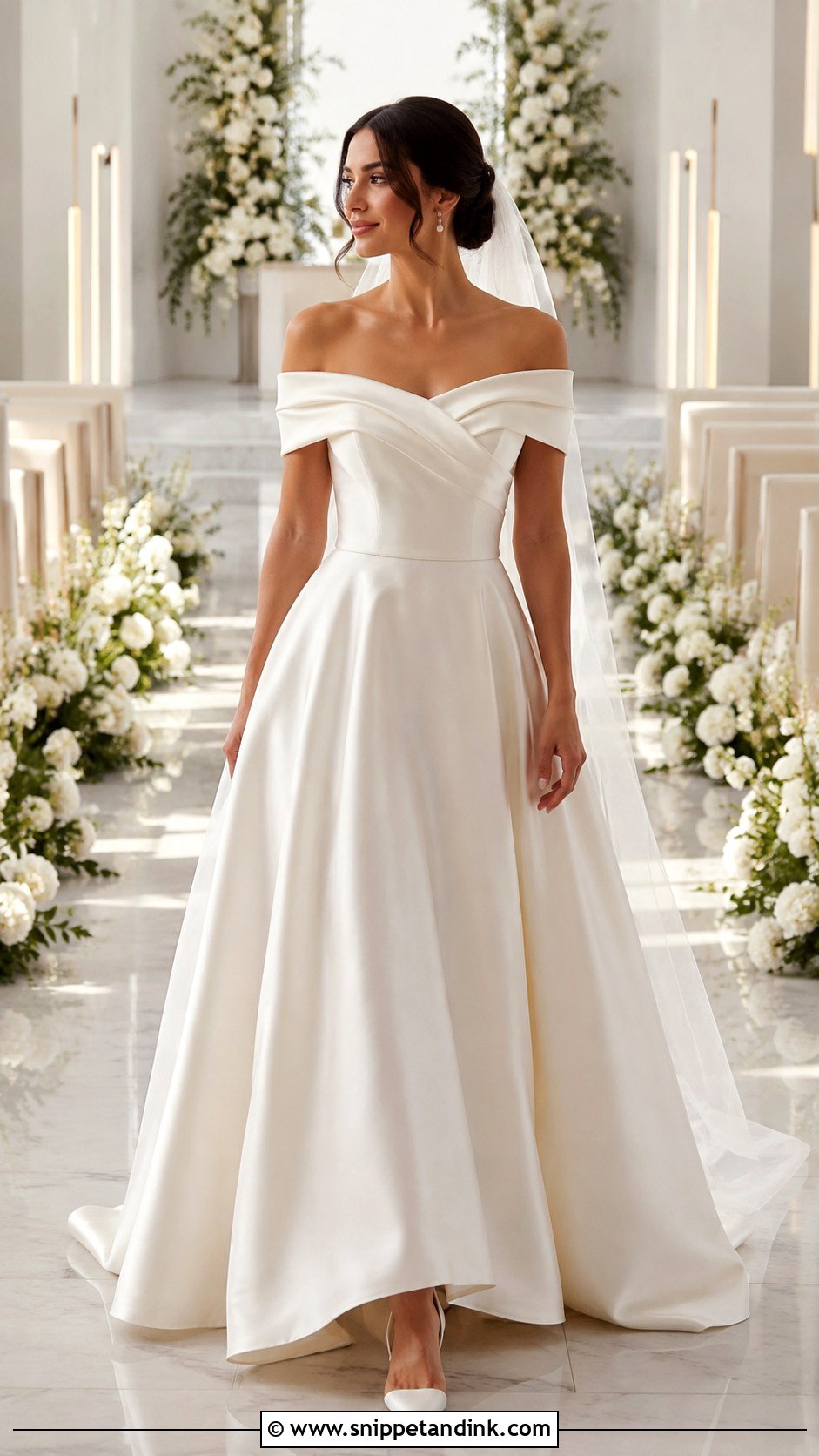
Bands that sit just below the shoulder point, not stiff sleeves sticking straight out: that’s the version of off-the-shoulder I’d put on a broad-shouldered bride. It frames the collarbones and softens a strong upper body, and an A-line skirt keeps the shape balanced. Satin, mikado, chiffon or soft layered tulle all suit it. A low chignon, short drops, pointed slingbacks and a simple veil fixed under the hair. Skip a wide necklace. At the fitting, raise your arms, sit and walk. Off-the-shoulder bands either dig in or creep down, and the fix is usually a firmer bodice with grip tape rather than tighter bands.
4. Plunging V-Neck Lace Wedding Dress
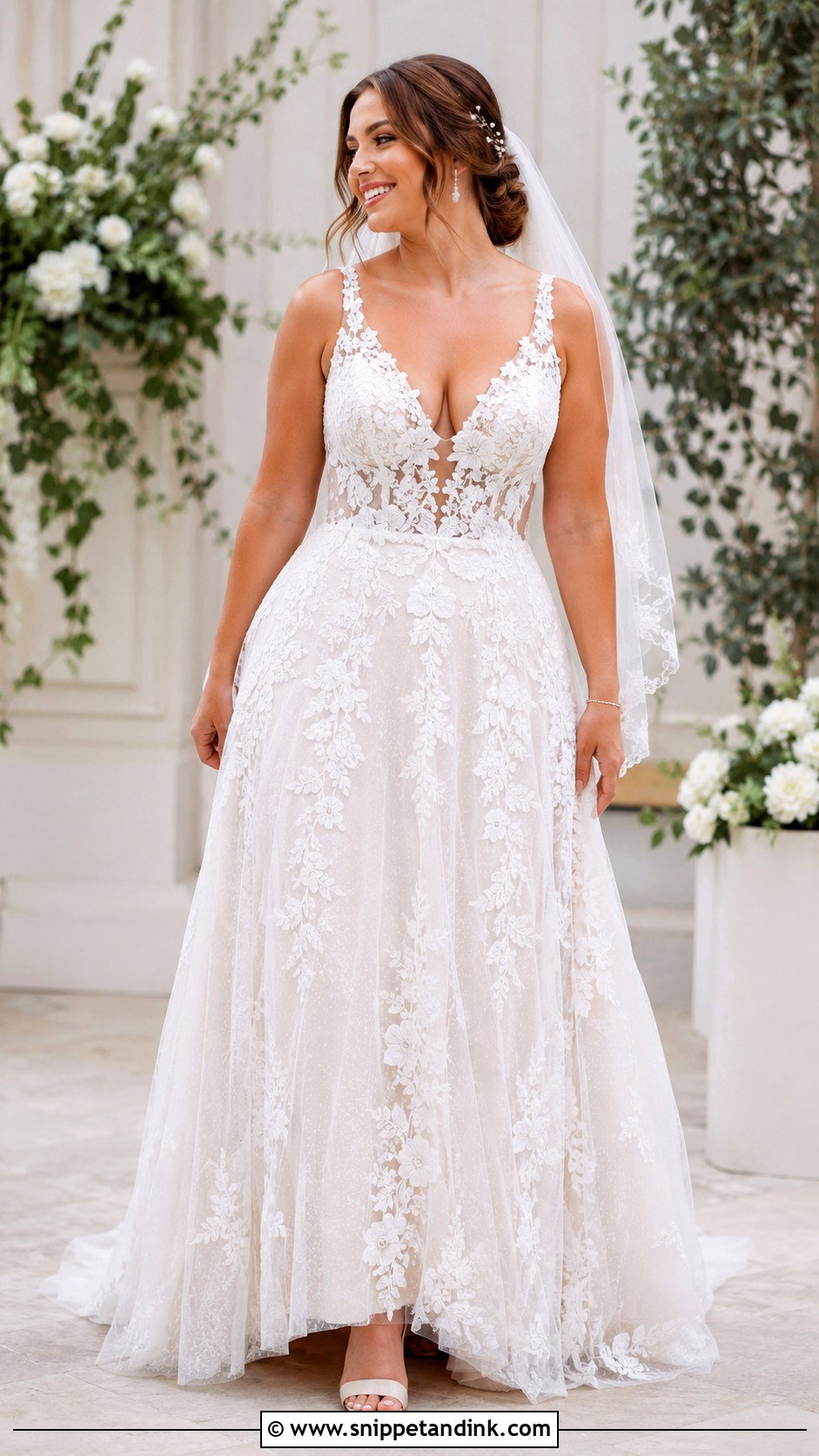
Lace on a plunging V-neck wedding dress adds texture without drawing a heavy line across the chest. The deep V points to the centre of the torso, and illusion mesh can give coverage and hold the shape. An A-line or softly flared skirt balances the shoulders. Choose lace motifs that run vertically from neckline to waist rather than spreading sideways across the chest. Pearl hairpins, narrow drops, ivory heels and a light chapel veil. Ask your seamstress to match the illusion mesh to your skin tone, because mesh one shade too light shows up as a grey panel in flash photos.
5. Scoop Neck Chiffon Wedding Dress
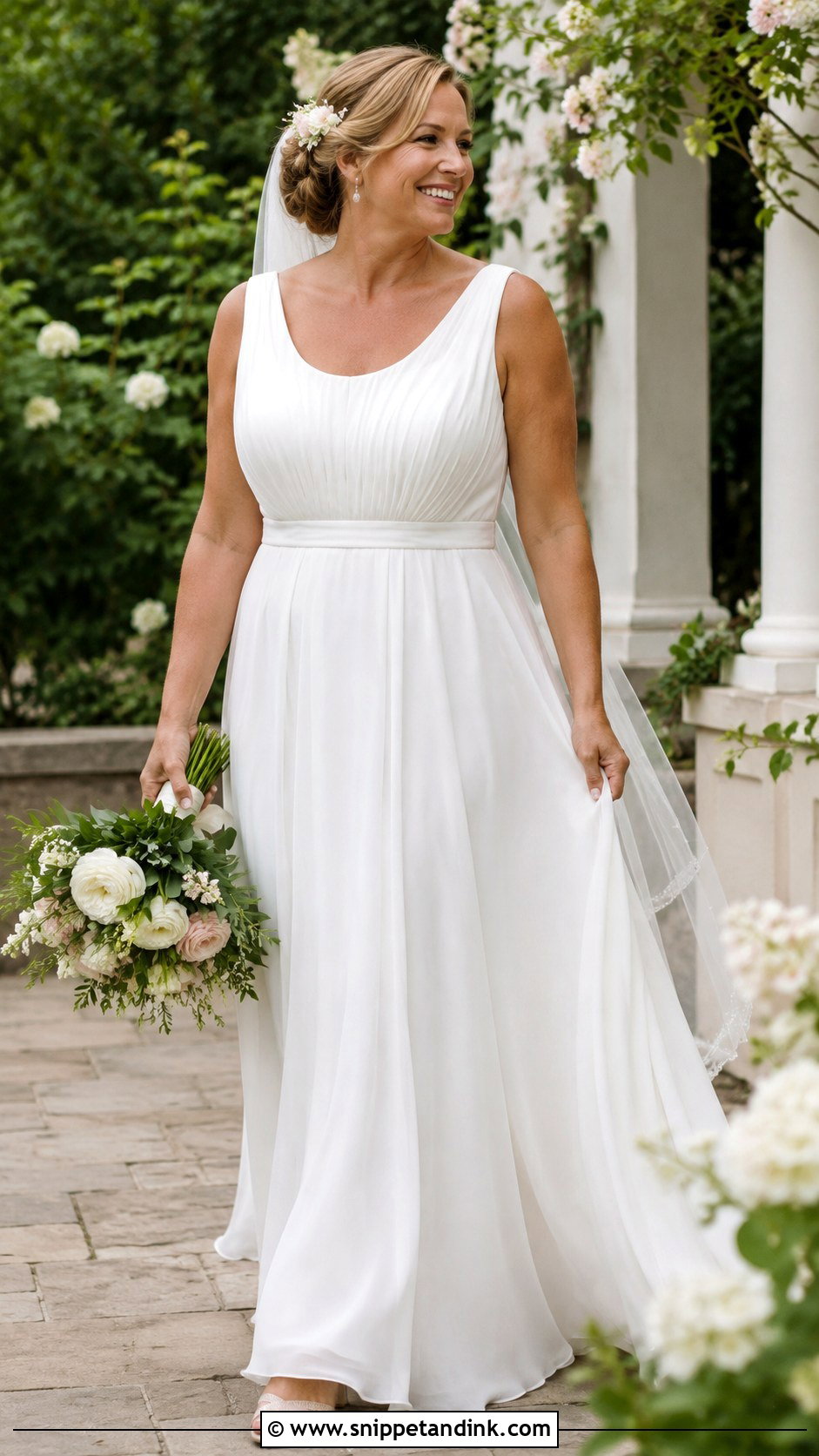
Chiffon with a scoop neck is the relaxed option. The rounded neckline softens angular lines, and the light skirt falls naturally and moves well outside. Keep the scoop moderately narrow; one that reaches the outer edges of the shoulders makes them look wider. A gathered or wrap-style bodice gives definition without bulk. Low block-heel sandals, a floral comb, delicate earrings and a fingertip veil. Gardens, beaches and informal daytime weddings suit it. Chiffon has no structure of its own, so whatever support you need has to come from the lining. Check it before anything else.
6. One-Shoulder Wedding Dress With Full Skirt
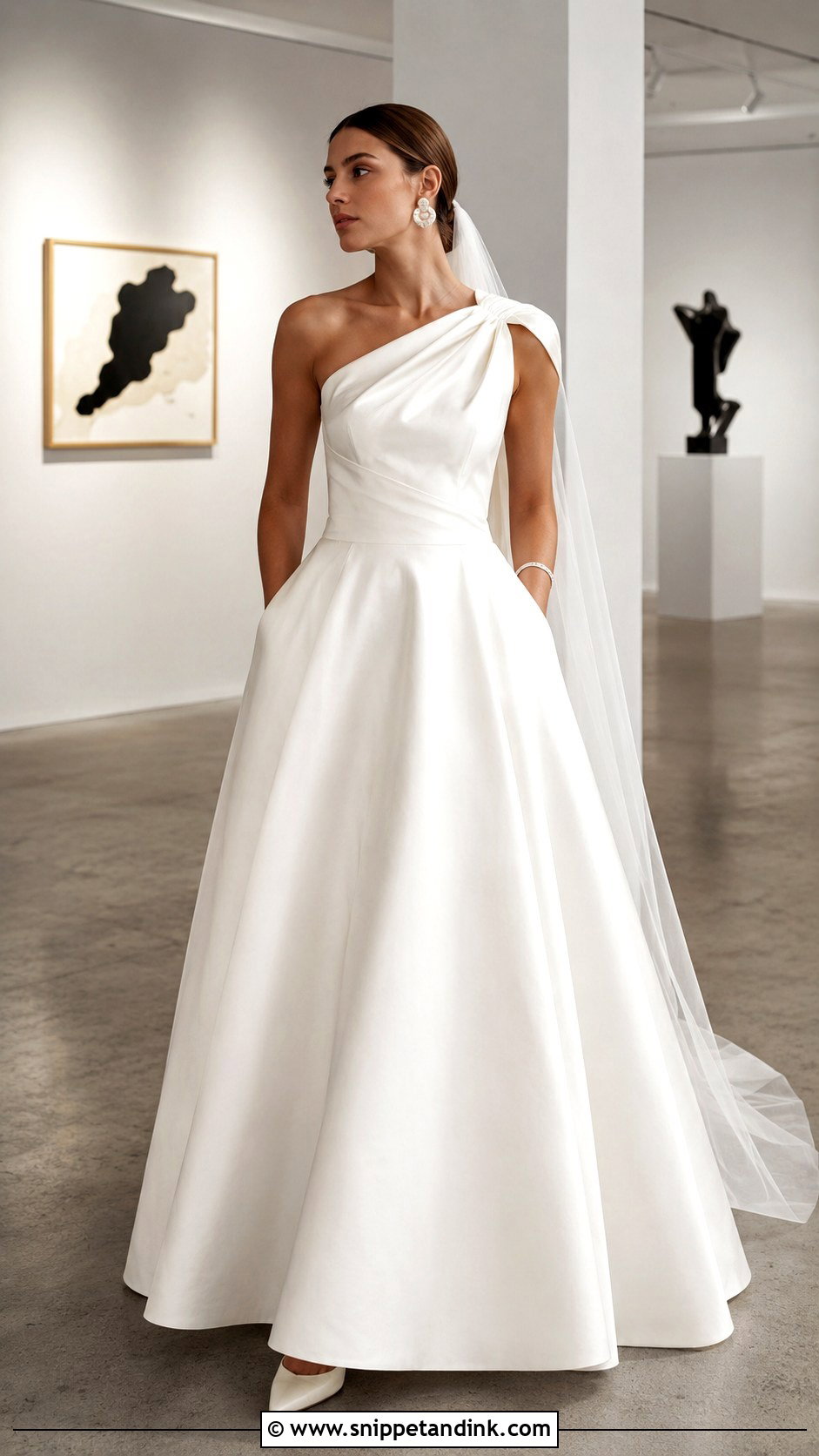
Why hide strong shoulders when an asymmetric neckline can show them off? One shoulder breaks the horizontal line and makes a diagonal across the bodice instead. Pair it with a full A-line or a softly structured ball gown. Keep the shoulder itself sleek; a big bow or ruffle at the outer edge adds width exactly where you don’t want it. Fitted waist, clean fabric, controlled drape. An updo, earrings that suit the neckline, pointed pumps and a bracelet on the bare arm. I’d attach any veil low at the back of the head so it doesn’t cover the shoulder detail, or skip it for a modern hair accessory.
7. Strapless Sweetheart Basque Waist Wedding Dress
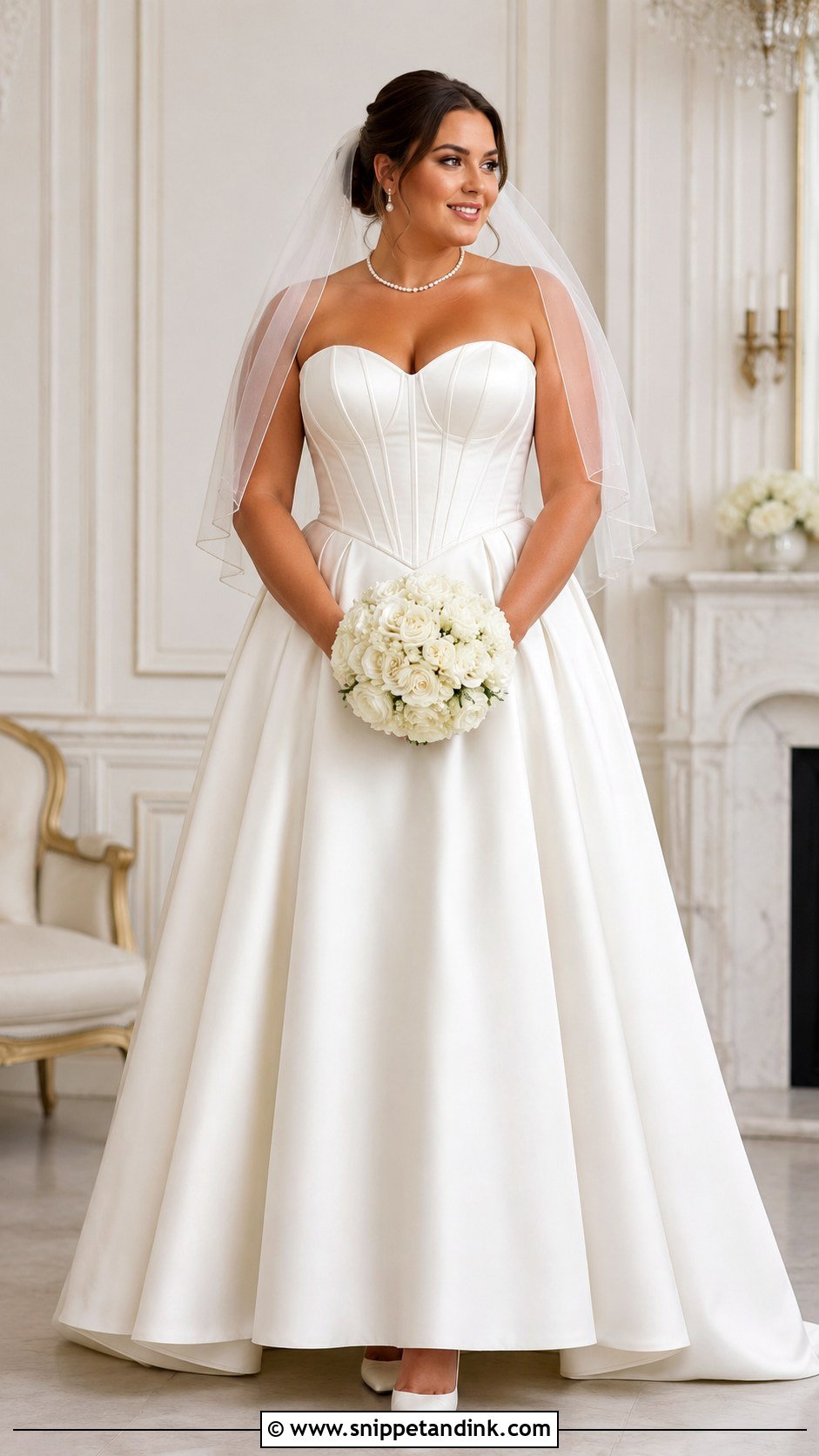
Curves at the neckline and a V at the waist: a strapless sweetheart with a basque waist creates both. The centre dip pulls the eye inward and the lowered waist leads into a full skirt, so the silhouette looks statuesque without covering the shoulders. Firm internal boning, supportive cups and a back closure that really holds. Elbow veil, fine pendant, pearl earrings and ivory pumps, with a rounded bouquet. When trying it on, wear it for several minutes and move. A strapless bodice that fits stays put without you tugging it up; if you’re hitching it every few minutes, it’s not fitted to you yet.
8. Halter Neck Wedding Dress With A-Line Skirt
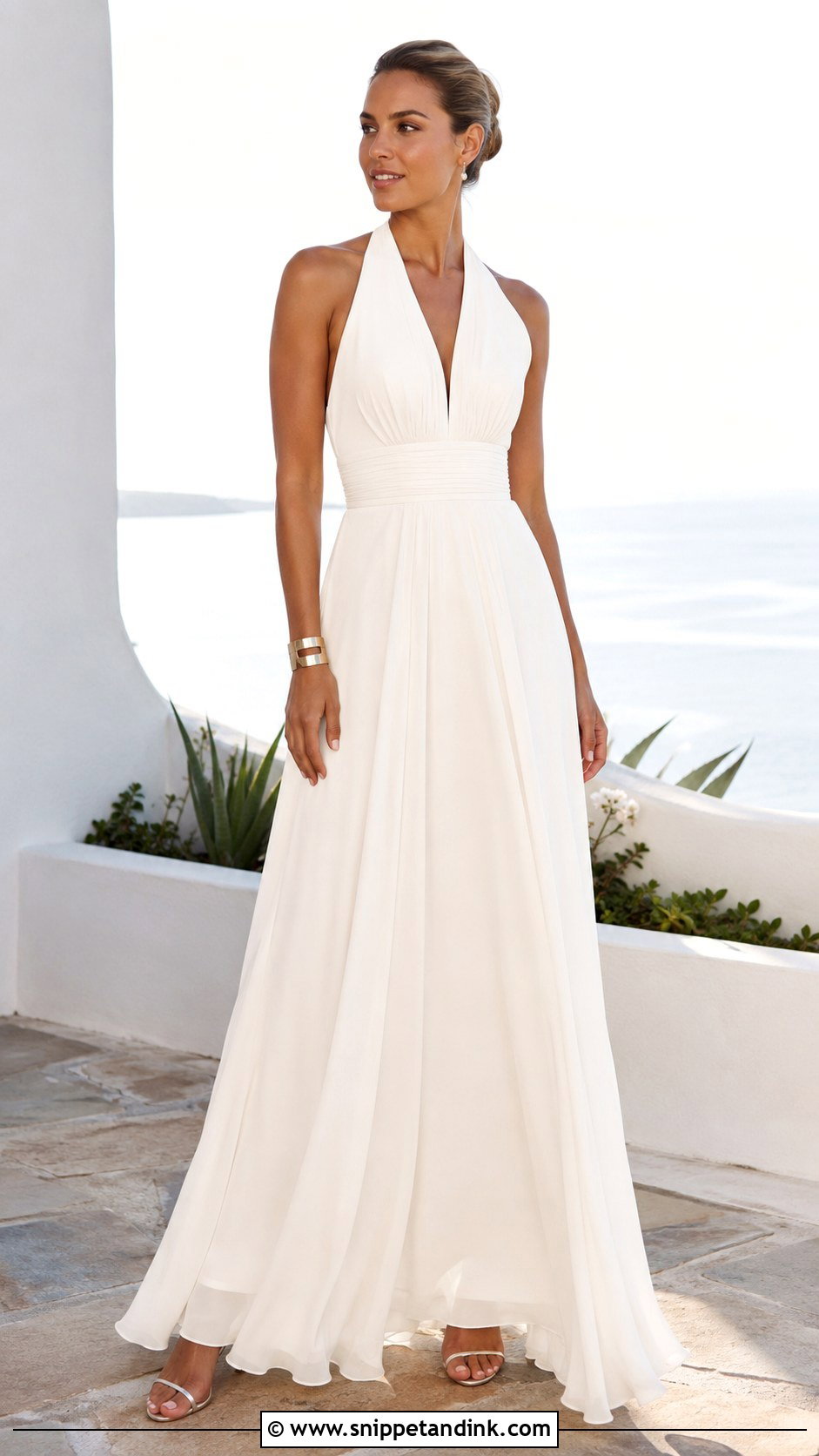
A halter turns athletic shoulders into the feature rather than something to manage. The straps angle in towards the neck, which frames the arms and draws the eye up. A V-front or soft drape at the centre, with an A-line skirt to distribute volume below. Crepe is contemporary; chiffon is lighter and travels well. Swept-back hair, small earrings, a cuff bracelet and sleek sandals or pumps. No necklace; the neckline already fills that space. Halter ties carry the weight of the bodice from your neck, so on a heavy fabric I’d always ask for an internal corset to take the load off, or you’ll feel it by the speeches.
9. Empire Waist V-Neck Wedding Dress
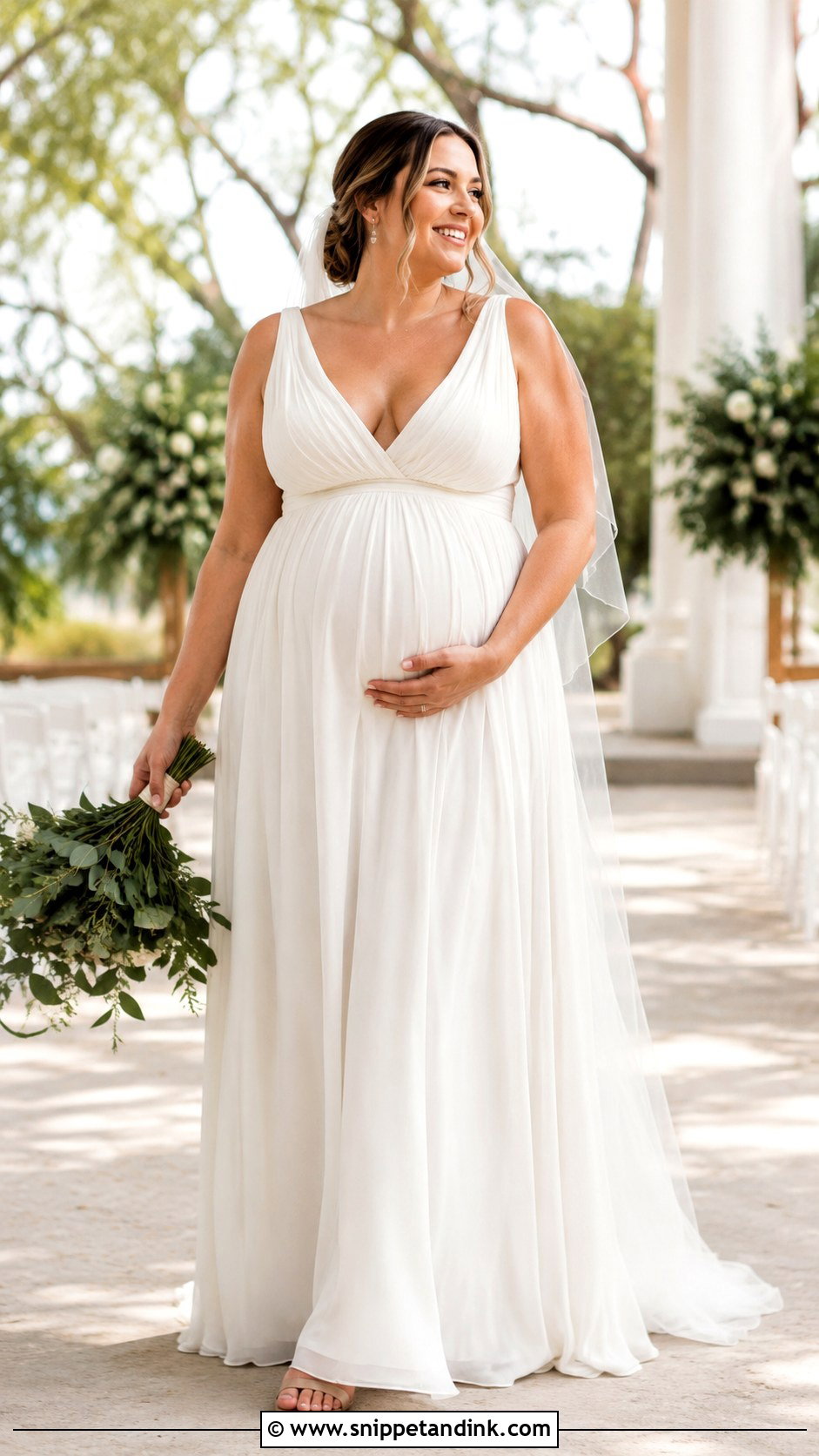
An empire waist V-neck wedding dress runs one long line from neckline to hem. With the seam under the bust, the fabric skims the torso rather than gripping the natural waist. Brides looking for comfort, a maternity-friendly fit or an easy destination dress often end up here. Vertical pleats, narrow lace panels or fine beading down the centre of the bodice. Nothing dense across the outer shoulders. Low sandals, a light chapel veil, drop earrings and a loose bouquet with trailing greenery. Chiffon and soft tulle move without stiffness. Get the underbust seam right before anything else is altered, since everything else hangs from it.
10. Wrap Bodice A-Line Wedding Dress
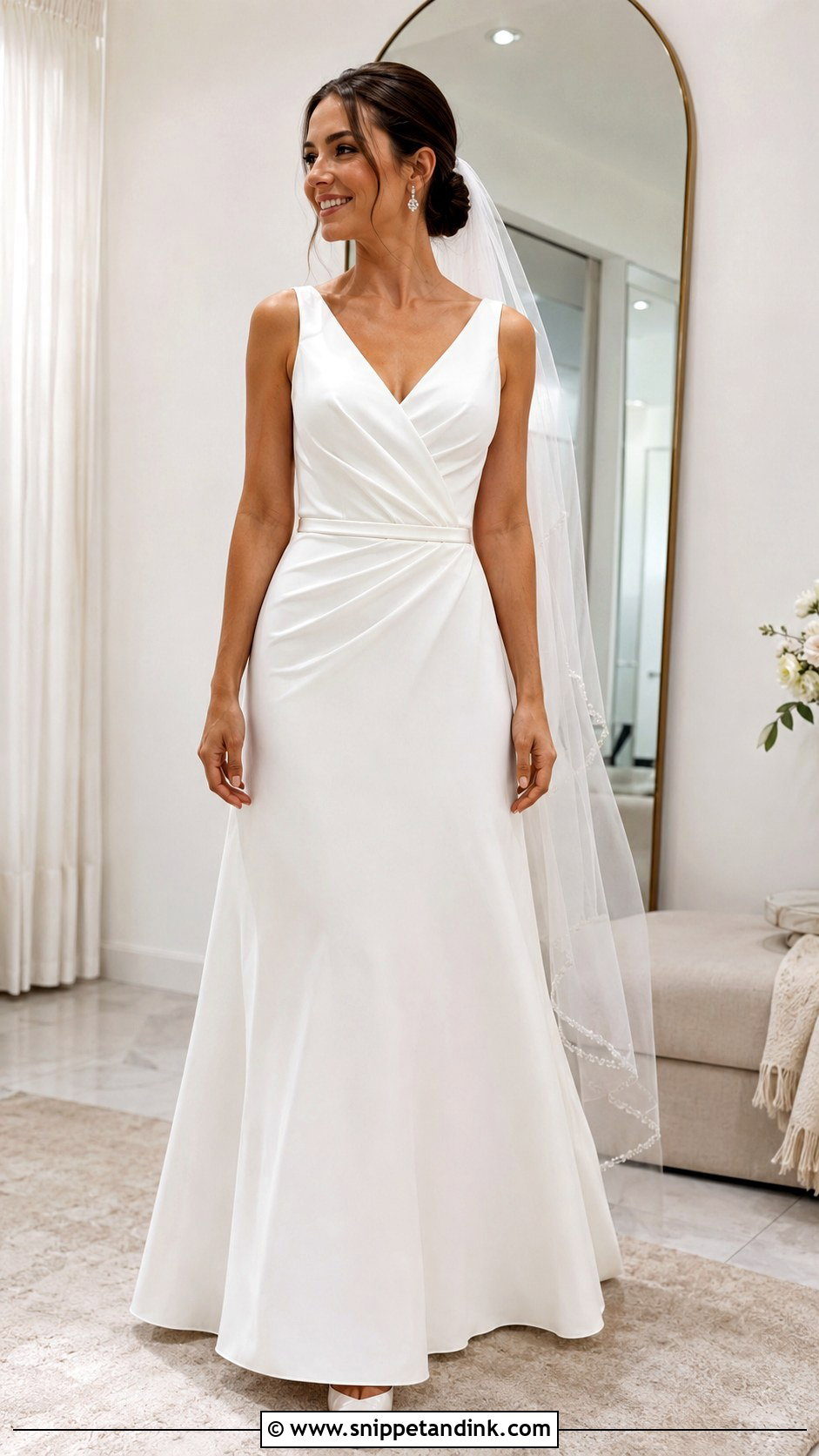
Diagonal lines soften the step from broad shoulders to waist, and that’s what a wrap bodice does. Choose a true or fixed wrap front, a defined V and an A-line skirt. The ruching should lie flat; bunched fabric adds bulk. Matte crepe, chiffon, satin, or a lined stretch jersey for a casual ceremony. Low bun, crystal drops, pointed heels and a fingertip veil. A narrow belt helps only if it blends in. Real wrap fronts can open when you bend forward, so I nearly always add a hidden snap at the cross point. Look at the neckline from the side during the fitting, too.
11. Corset Bodice Ball Gown Wedding Dress
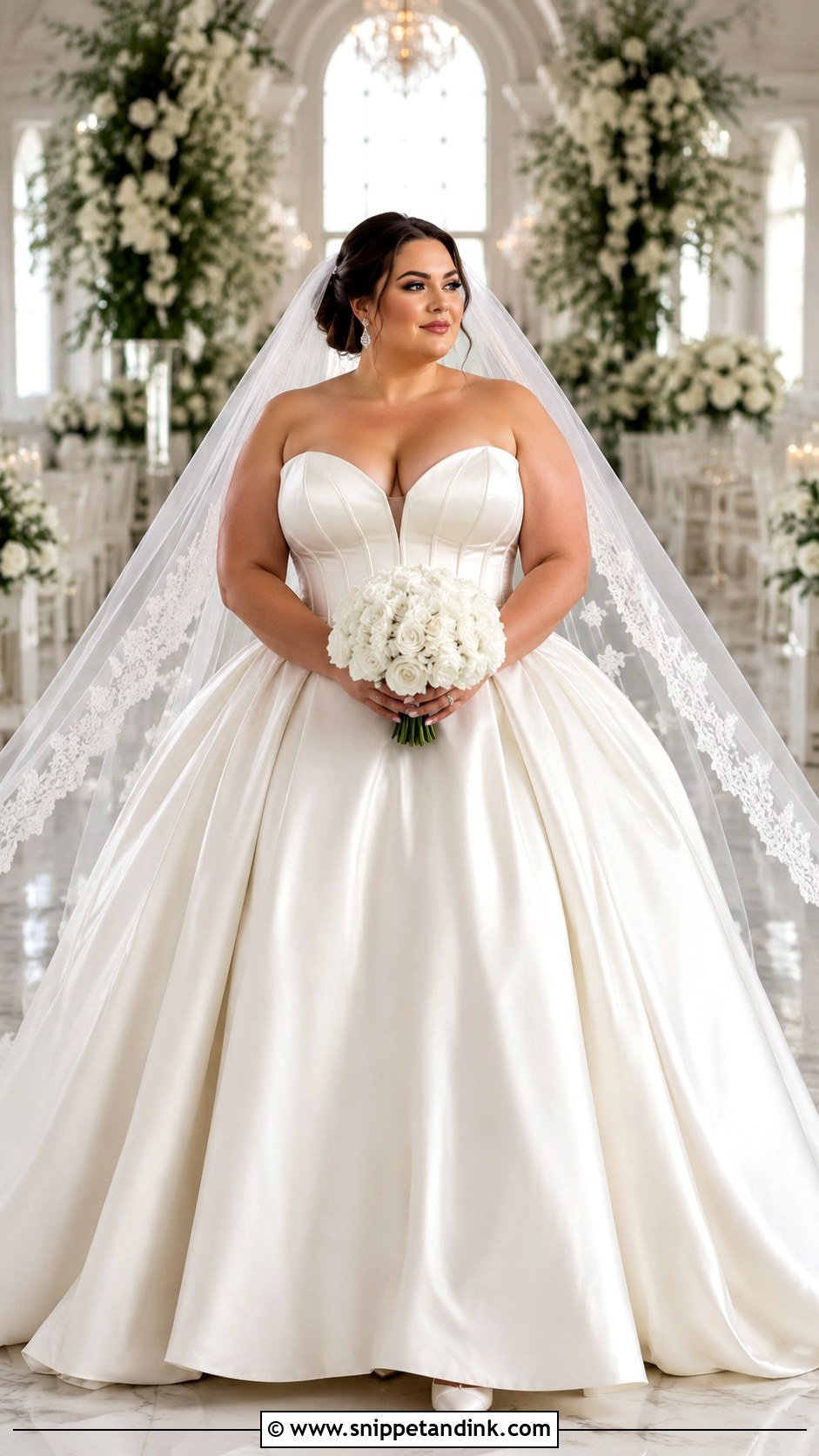
A corset bodice over a ball gown skirt gives the strongest waist definition on this list. The neckline matters more than the corset here: a sweetheart or dipped neck brings the eye to the centre, while a straight-across neckline stretches the chest wider. Visible boning looks contemporary; covered boning more traditional. Cathedral veil, teardrop earrings, satin pumps and a compact bouquet that doesn’t hide the bodice. If the skirt is enormous, keep the top half clean. A lace-up back gives flexibility, but it should still lie smoothly across the upper back with no ridges. Ask about bust cups and a waist stay at alterations.
12. Cap Sleeve V-Neck Wedding Dress
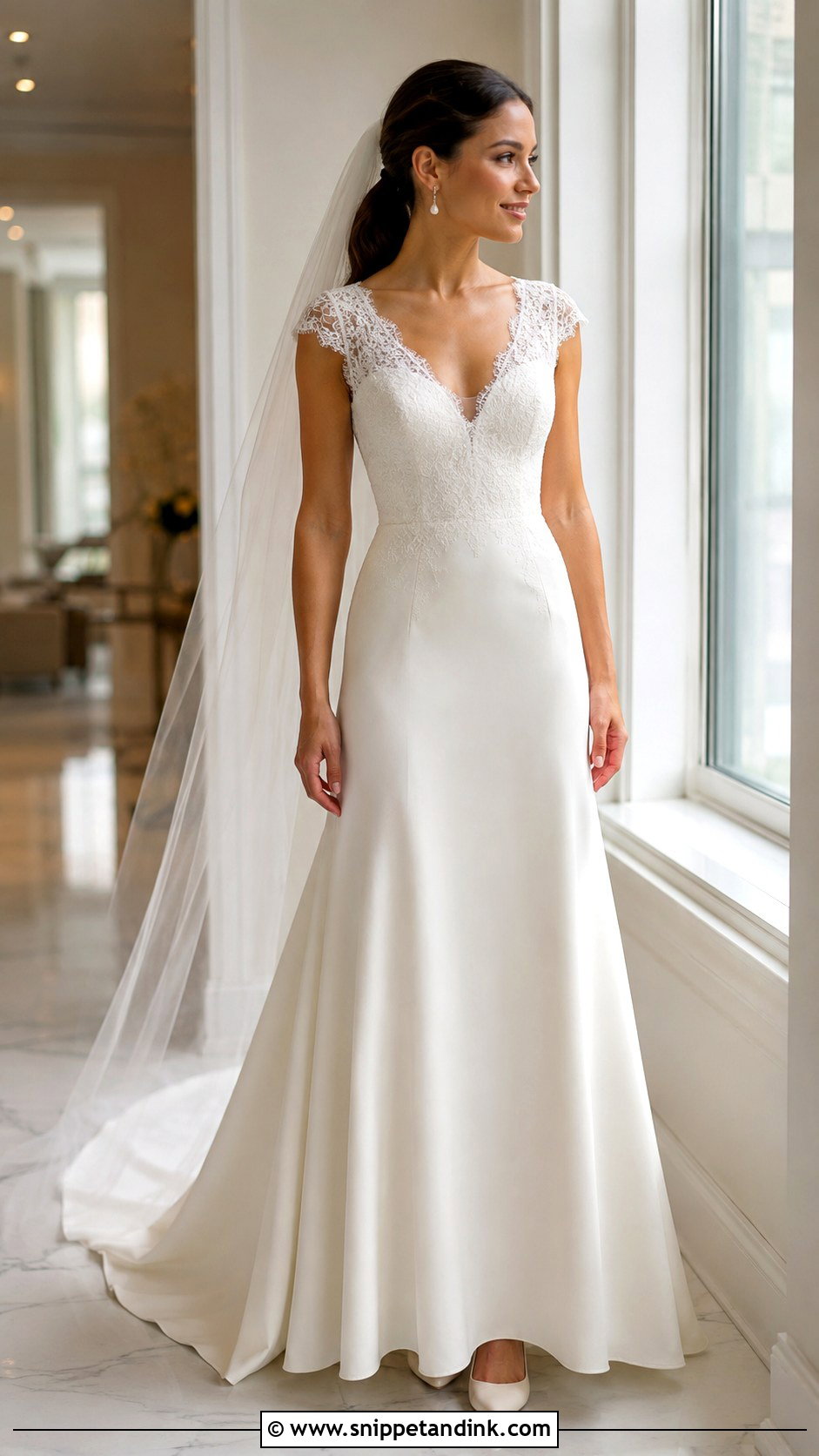
Cap sleeves can work, as long as they’re soft, narrow and angled inwards. Pair them with a V-neck so the eye moves down instead of stopping on a straight line across the body. Stiff cap sleeves that end right at the widest point of the shoulder are the ones I’d avoid. Delicate lace, sheer tulle or light chiffon gives a softer transition. An A-line or fit-and-flare skirt. Low ponytail, small pearl drops, closed-toe heels and a veil with minimal edging. Cap sleeves on strong arms often cut in under the armpit, but a seamstress can usually recut the arm opening. Test by reaching forward and hugging someone.
13. Flutter Sleeve A-Line Wedding Dress
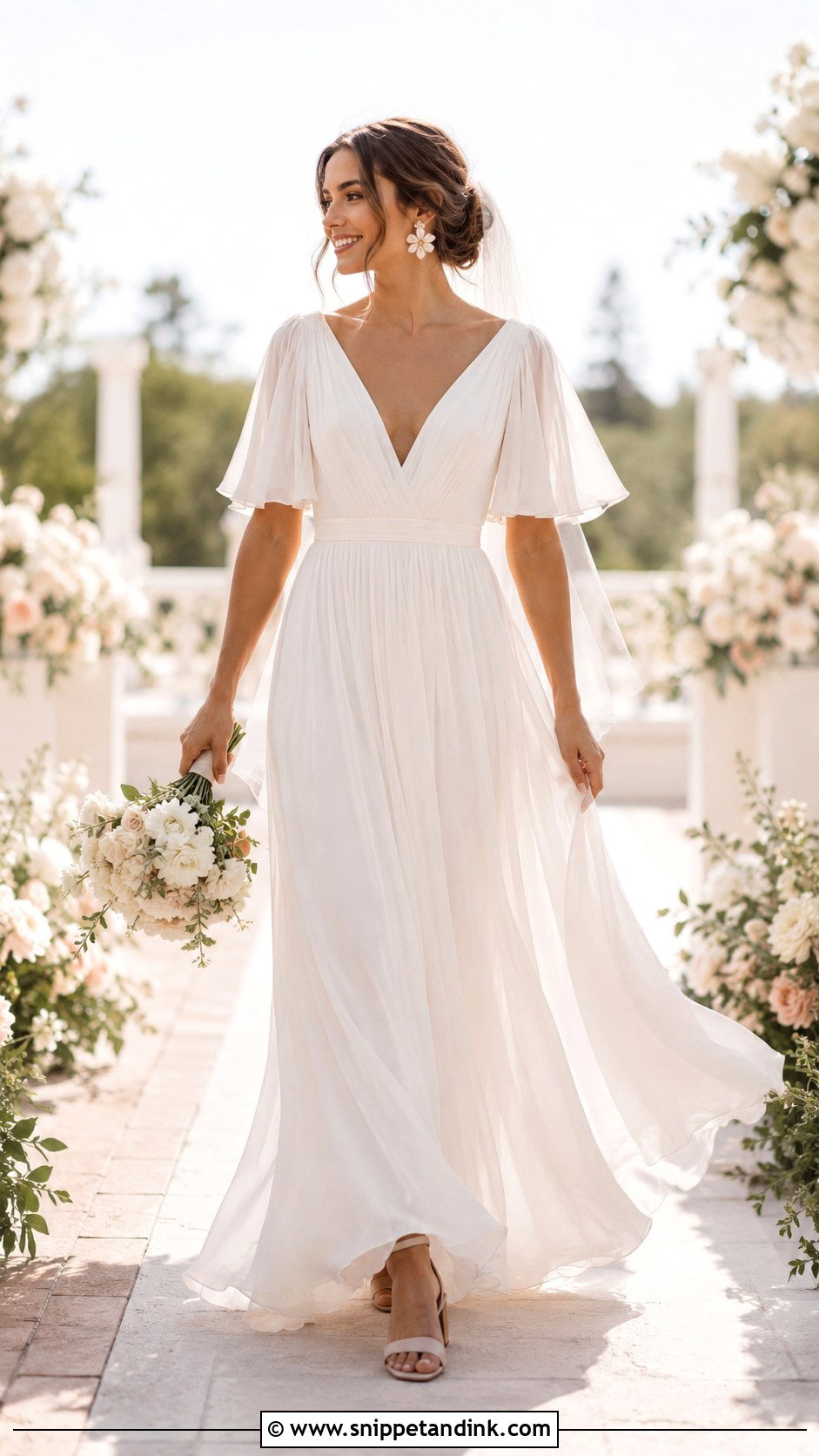
Flutter sleeves add movement, but only when they fall from the bodice rather than standing out from it. Choose chiffon or tulle that drapes straight down the arm. A V-neck or narrow scoop keeps the upper body open. A flowing skirt, defined waist and little underskirt volume. Loose waves or a soft updo, floral earrings, block-heel sandals and a simple veil. It gives gentle arm coverage for outdoor and warm-weather ceremonies. If the sleeve is caught too tightly into the shoulder seam, it flips upwards when you move and adds width. Ask for it to be set a little looser.
14. Long Sleeve V-Neck Wedding Dress
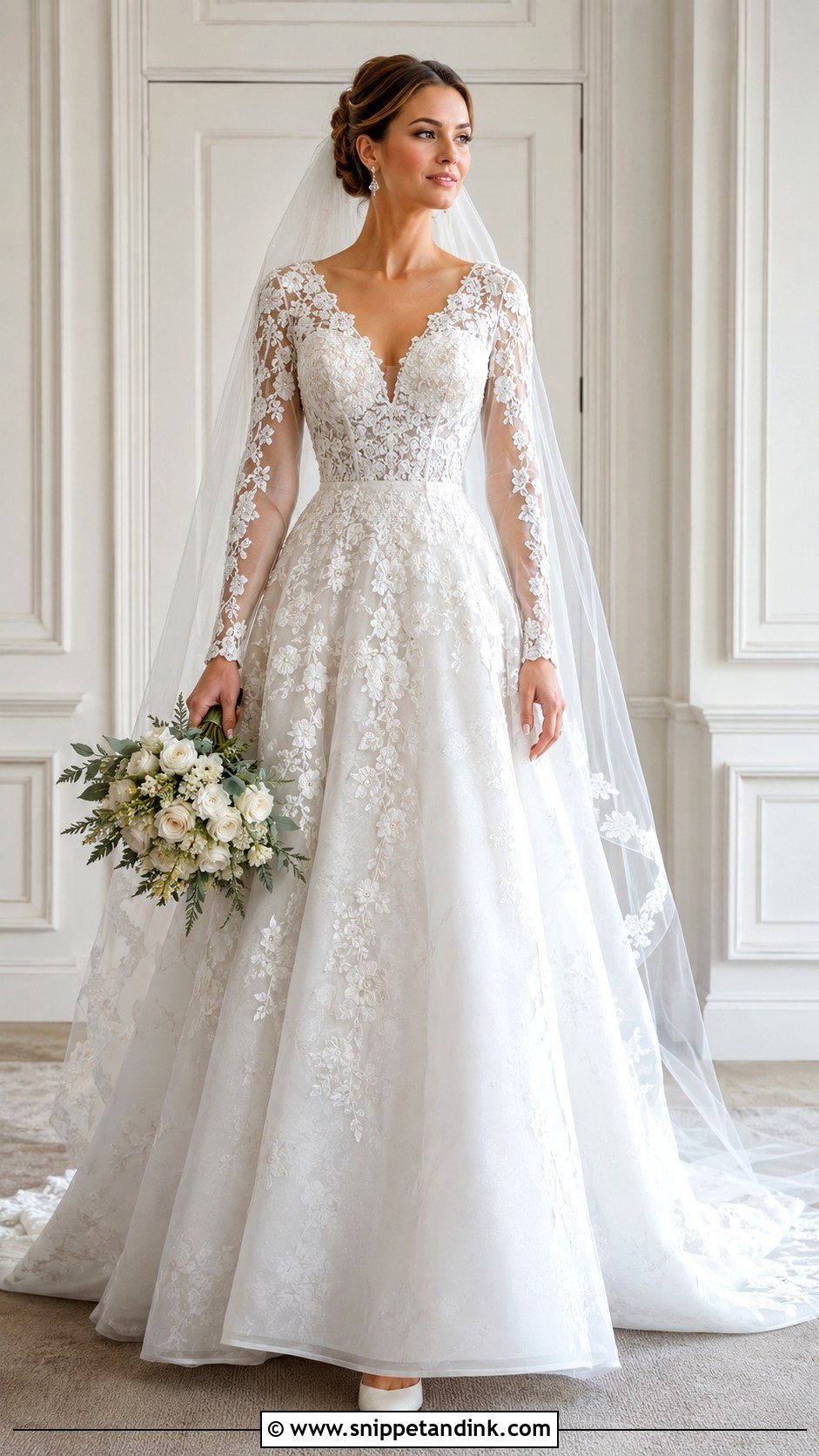
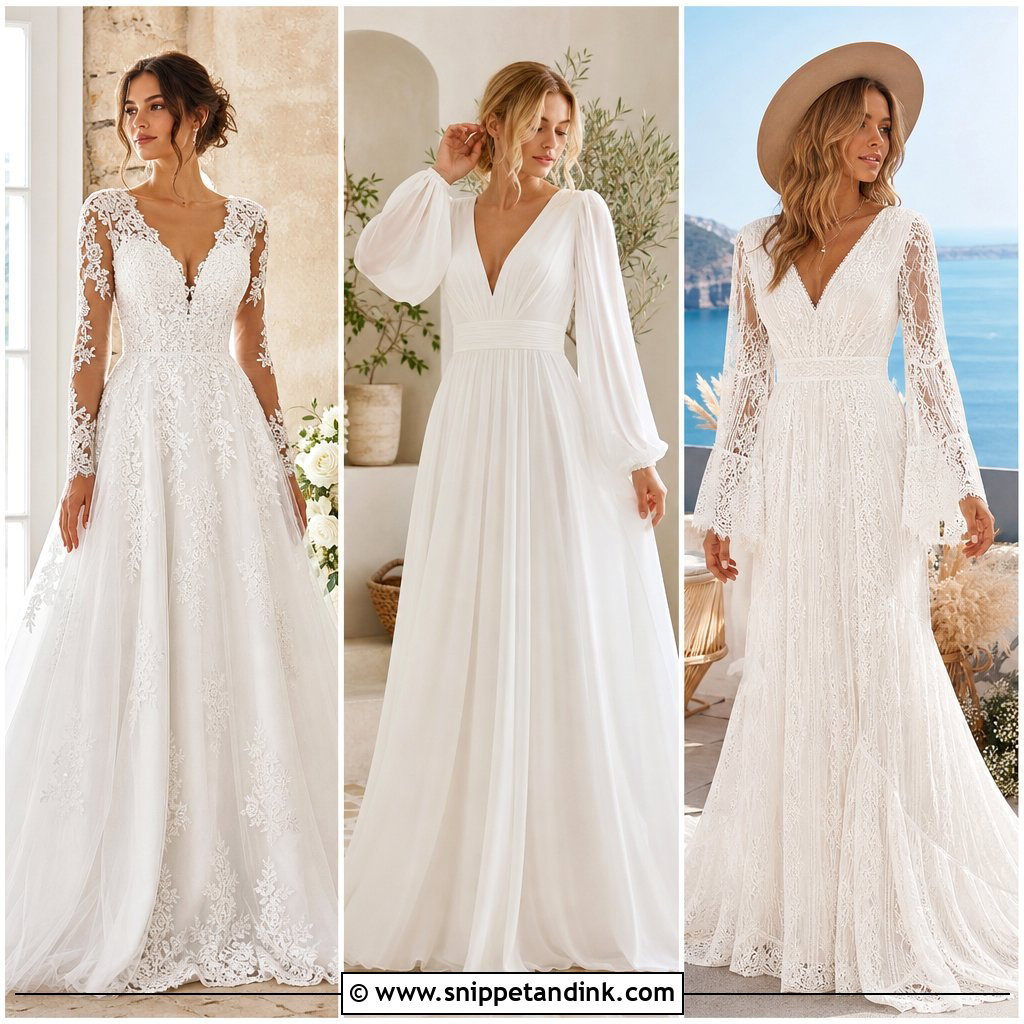
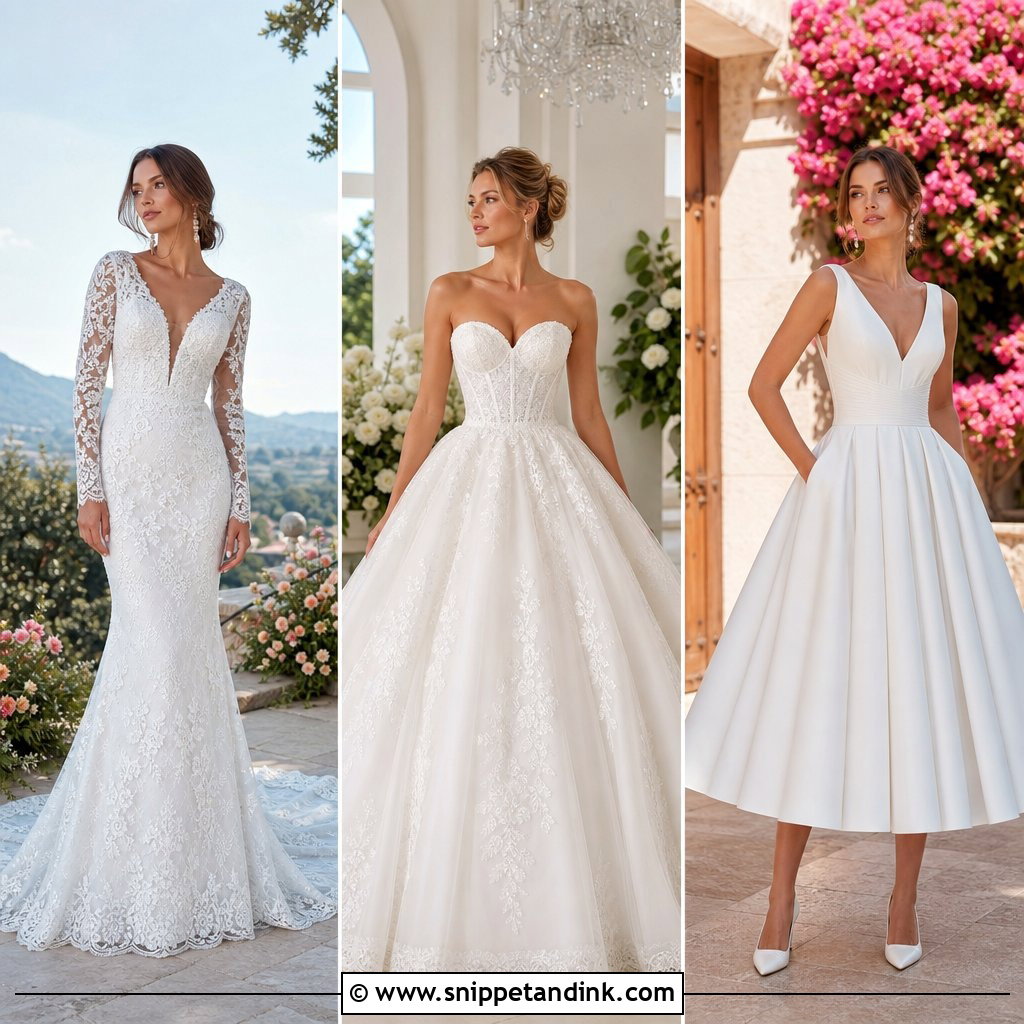
Long sleeves don’t have to add weight to broad shoulders. A V-neck with fitted illusion sleeves keeps the focus vertical while giving coverage. Fine tulle, light lace or smooth crepe, never thick fabric with dense embellishment over the upper arm. Lengthwise lace motifs lead the eye to the waist. Balance it with an A-line or softly flared skirt. Clean updo, slim drops, pointed pumps and a chapel veil without a bulky border at shoulder level. The sleeve cap has to fit precisely or it pulls across the upper back every time you reach; I have brides bend their elbows and raise their arms before the sleeve length is finalised.
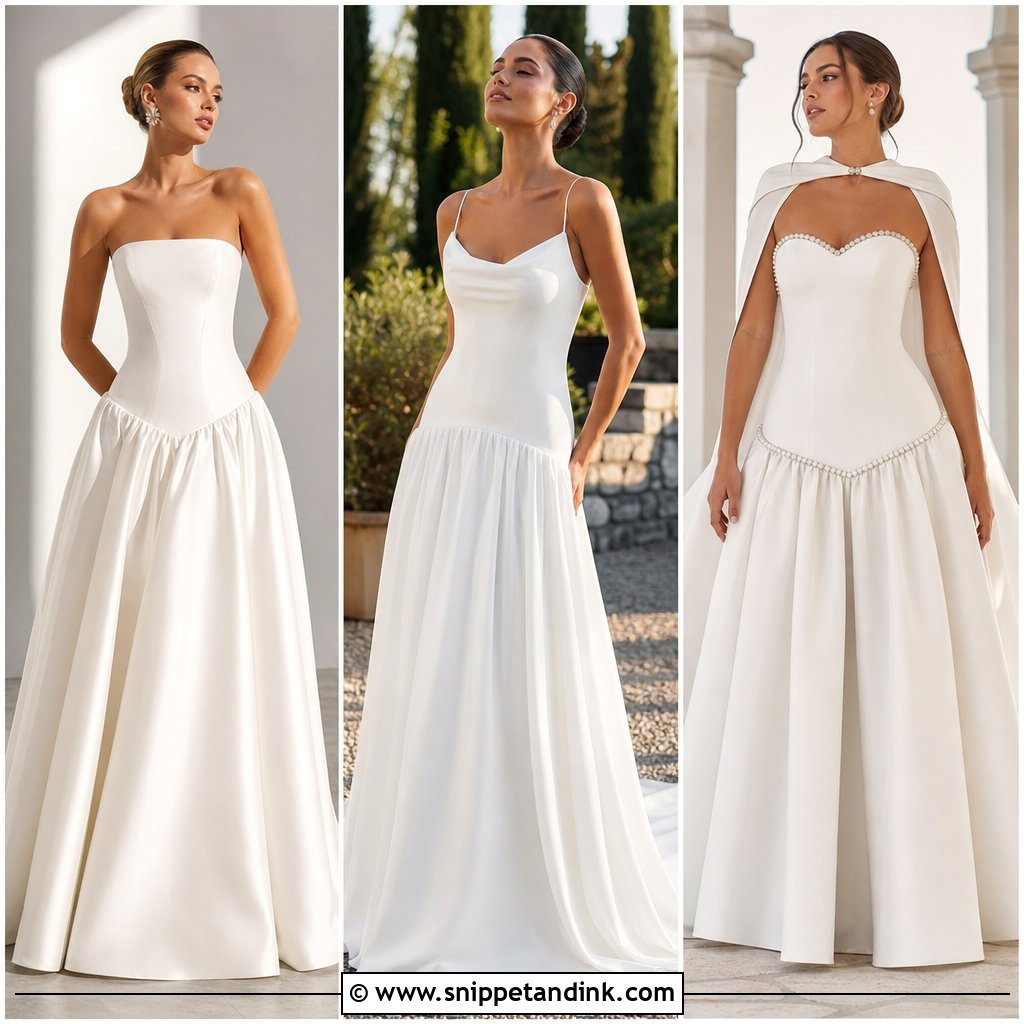

15. Cape Sleeve Wedding Dress
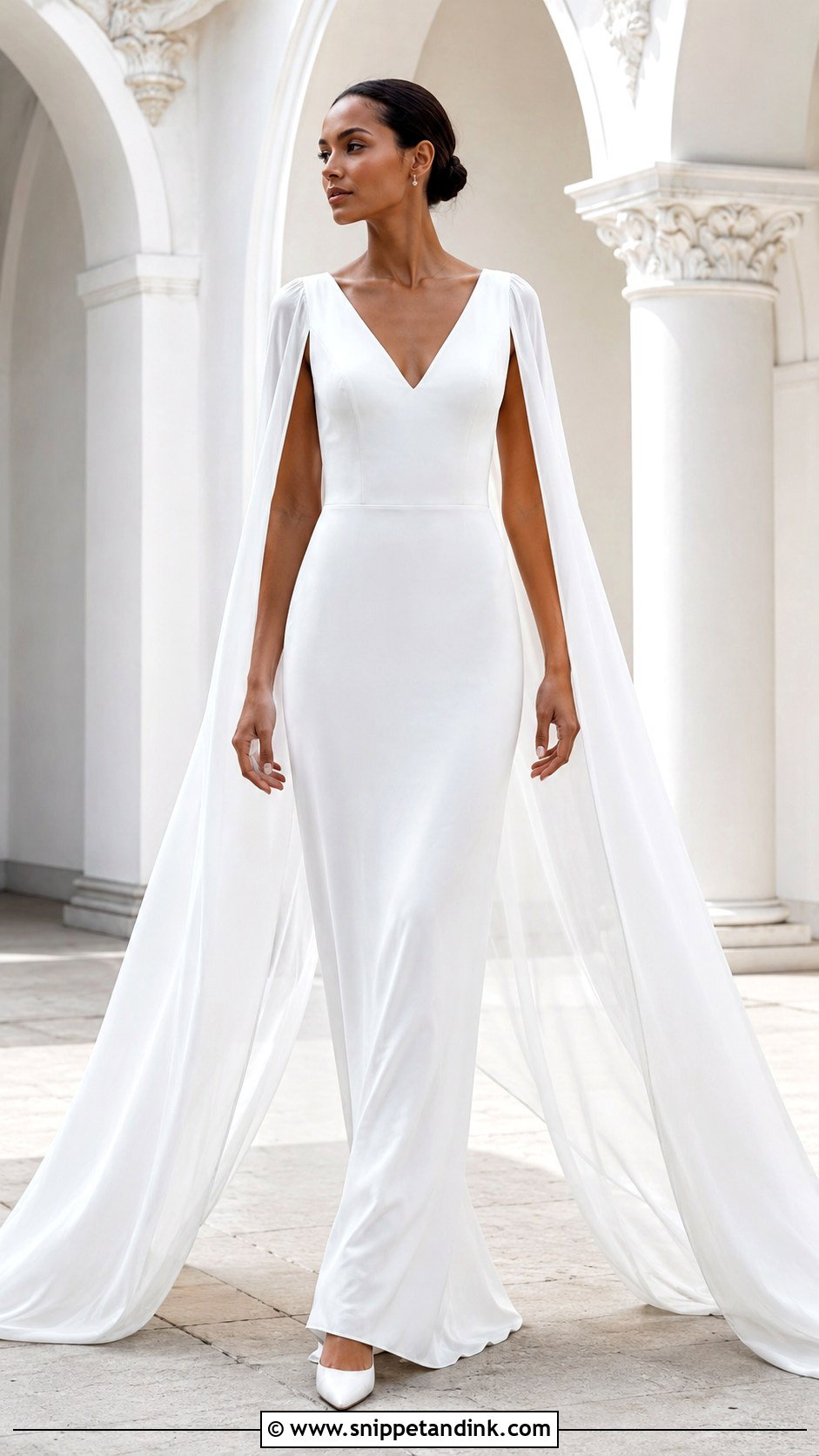
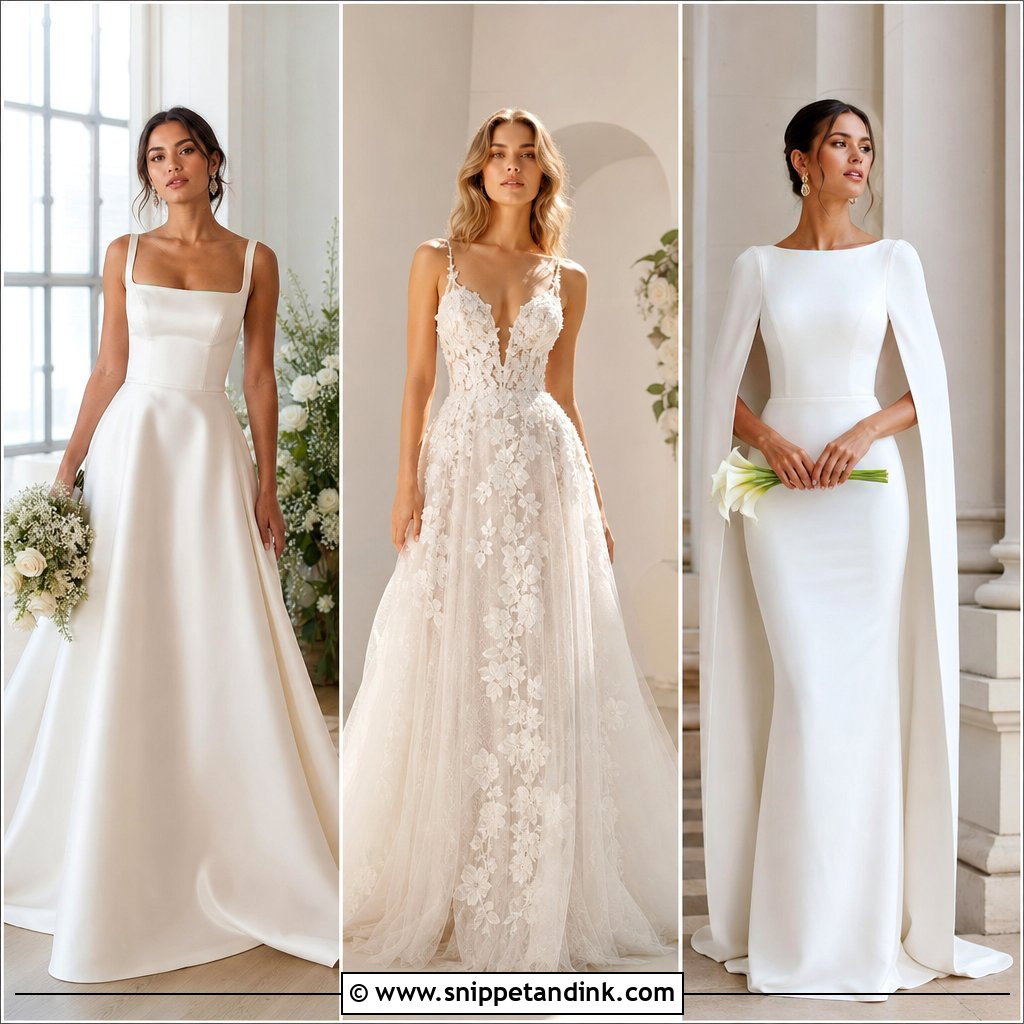
A cape gives coverage and long vertical movement at once. Choose one that falls from the neckline or upper back in fluid panels, not one that juts out from the shoulder points. Underneath, a V-neck or softly curved bodice keeps the centre open, with a column, A-line or understated fit-and-flare skirt. Sleek bun, small earrings, pointed heels and no veil; the cape is the accessory. Crepe looks architectural, chiffon softer. A detachable cape is easier at the reception. Heavy capes drag the gown’s neckline backwards, so check where it attaches and how much it weighs before you commit.
16. Narrow Square Neck A-Line Wedding Dress
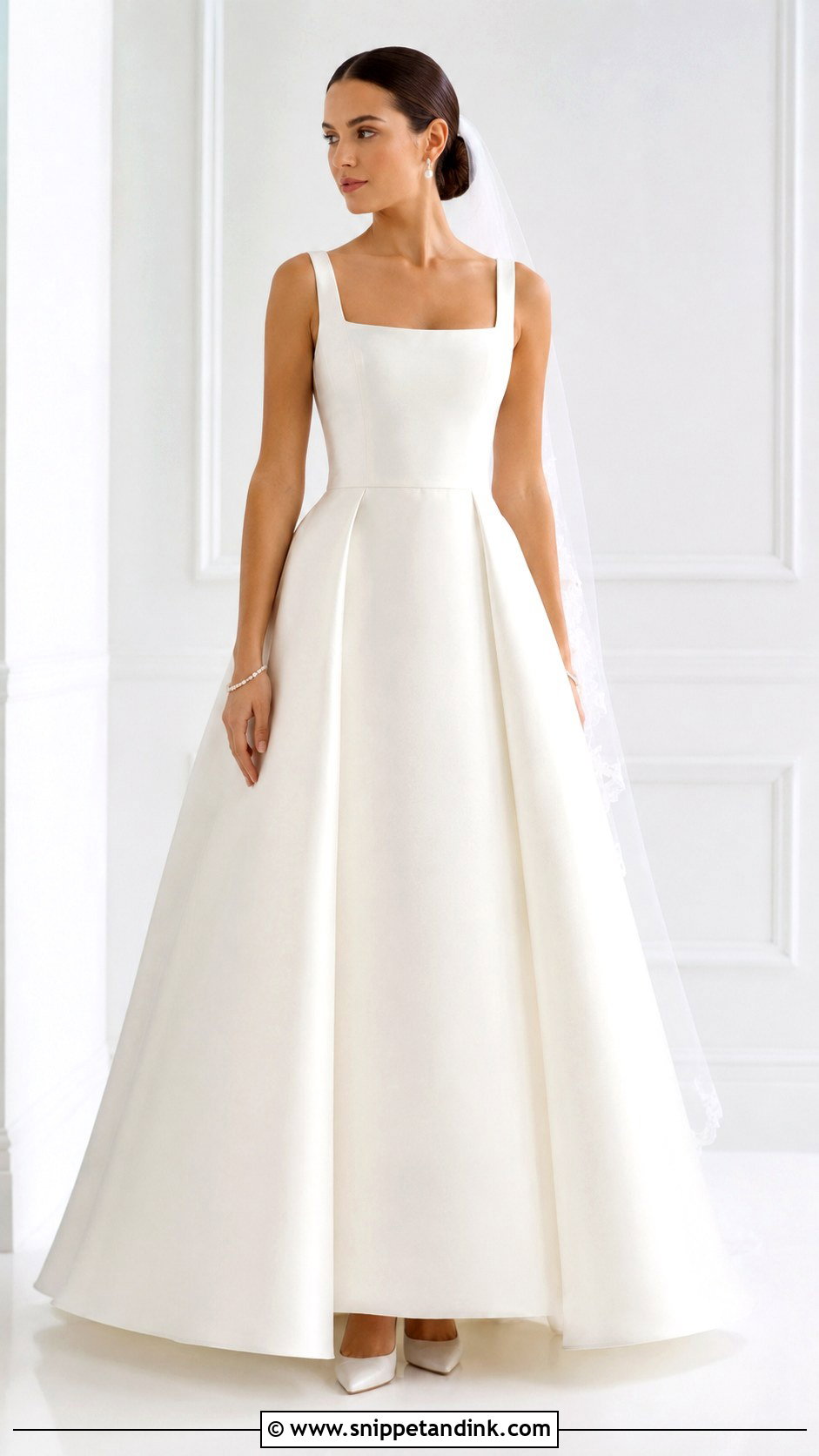
A square neck can suit broad shoulders when its corners sit nearer the centre of the chest, not out towards the arms. The vertical sides add structure, and a slightly rounded bust seam keeps it from looking severe. An A-line skirt, fitted waist and wide straps for comfort. Matte satin or mikado for polish, crepe for a lighter modern look. Low chignon, pearl earrings, a slim bracelet, pointed pumps and a veil under the hair. No oversized sleeves or heavy detail at the strap edges. Square necklines show any asymmetry in your fit, so I check both corners sit level and flat while the bride walks and turns.
17. Cowl Neck Wedding Dress With Overskirt
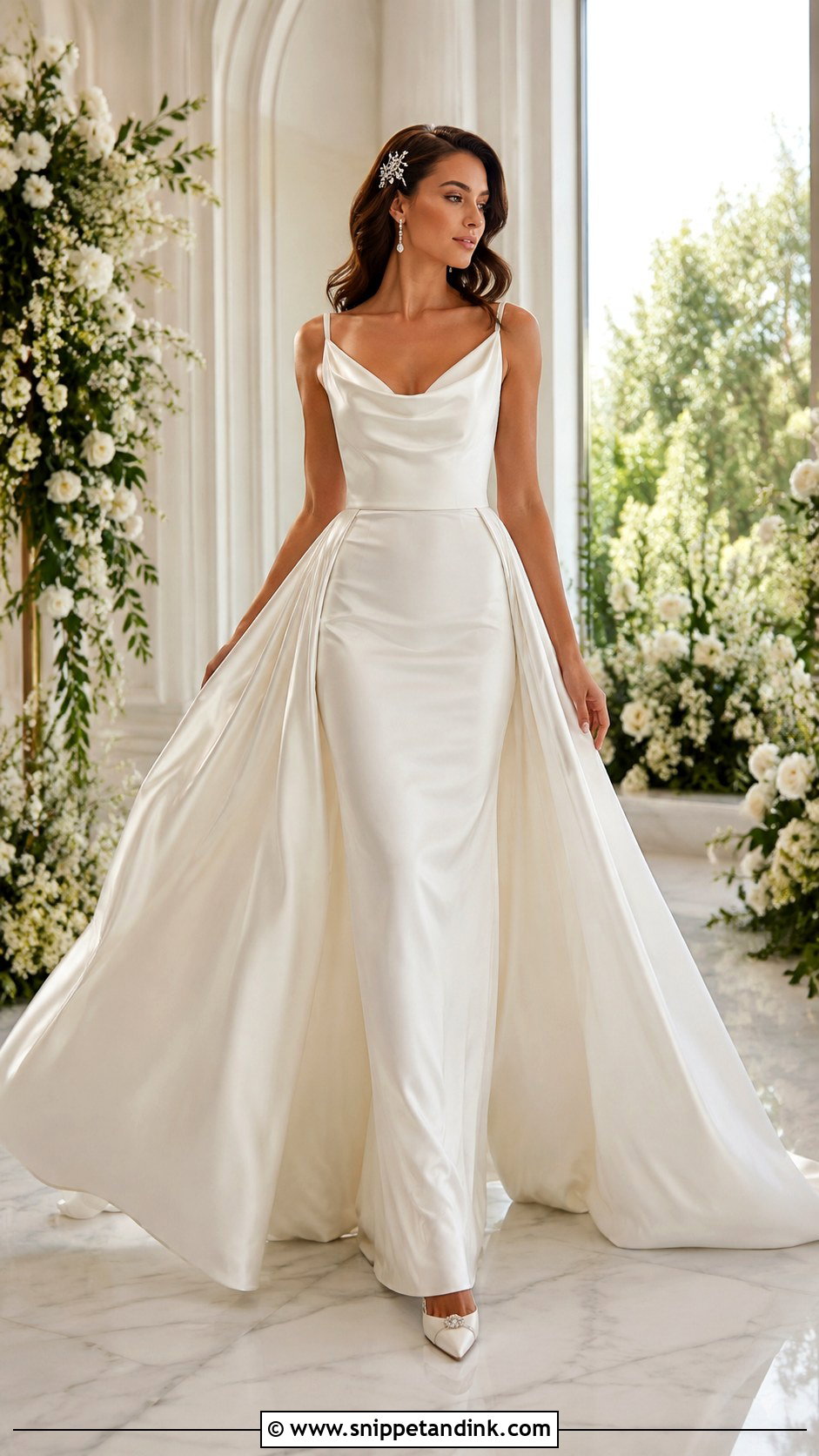
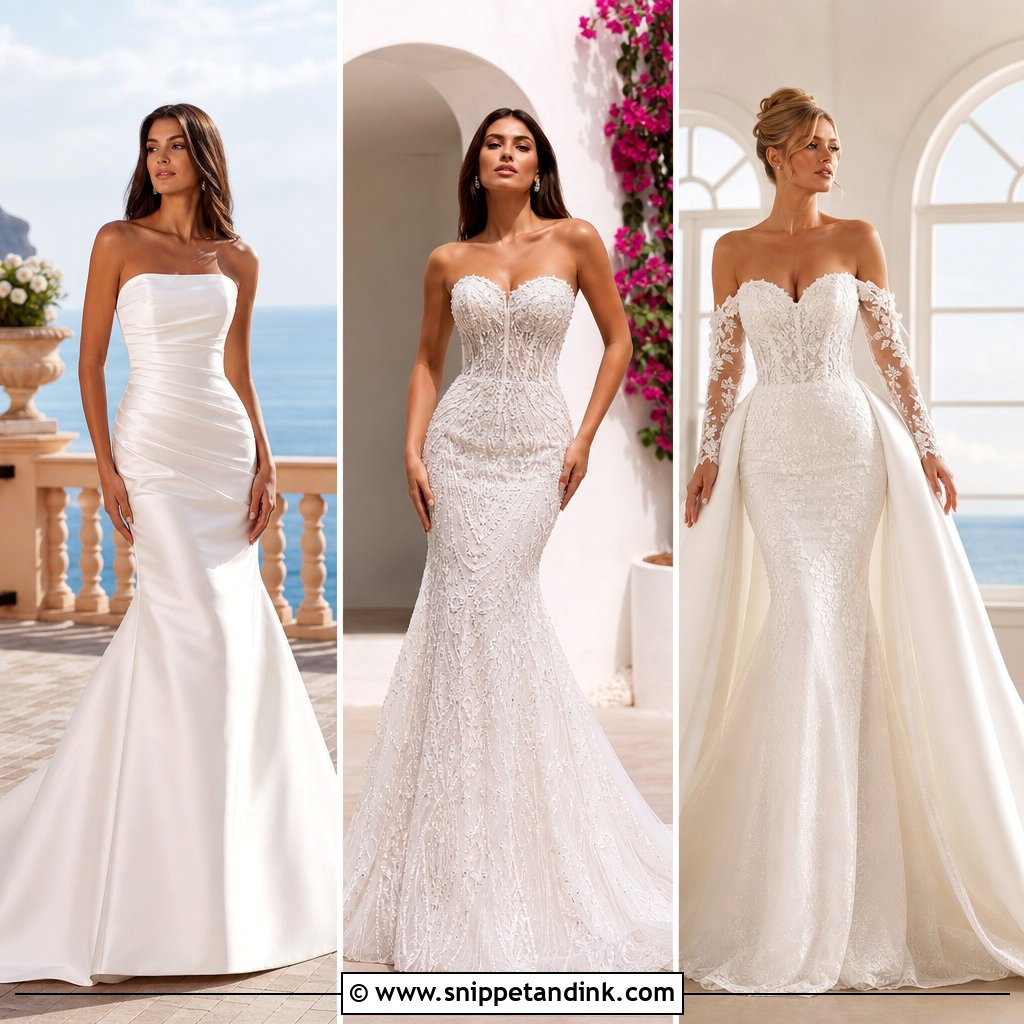
A cowl neck is fluid rather than structured. Keep the cowl modest, falling straight down the centre rather than spreading across the shoulders. A slim column base with a detachable A-line overskirt adds volume for the ceremony; take it off for a streamlined reception. Polished waves, drops, pointed slingbacks and a simple veil or sculptural hairpin. A narrow bouquet keeps the lines visible. Silk satin drapes with a soft glow, but it marks with water and shows every pull, so it needs careful fitting. Ask whether the overskirt waistband can tuck into the waist seam so you don’t see a join.
18. Tea-Length V-Neck Wedding Dress
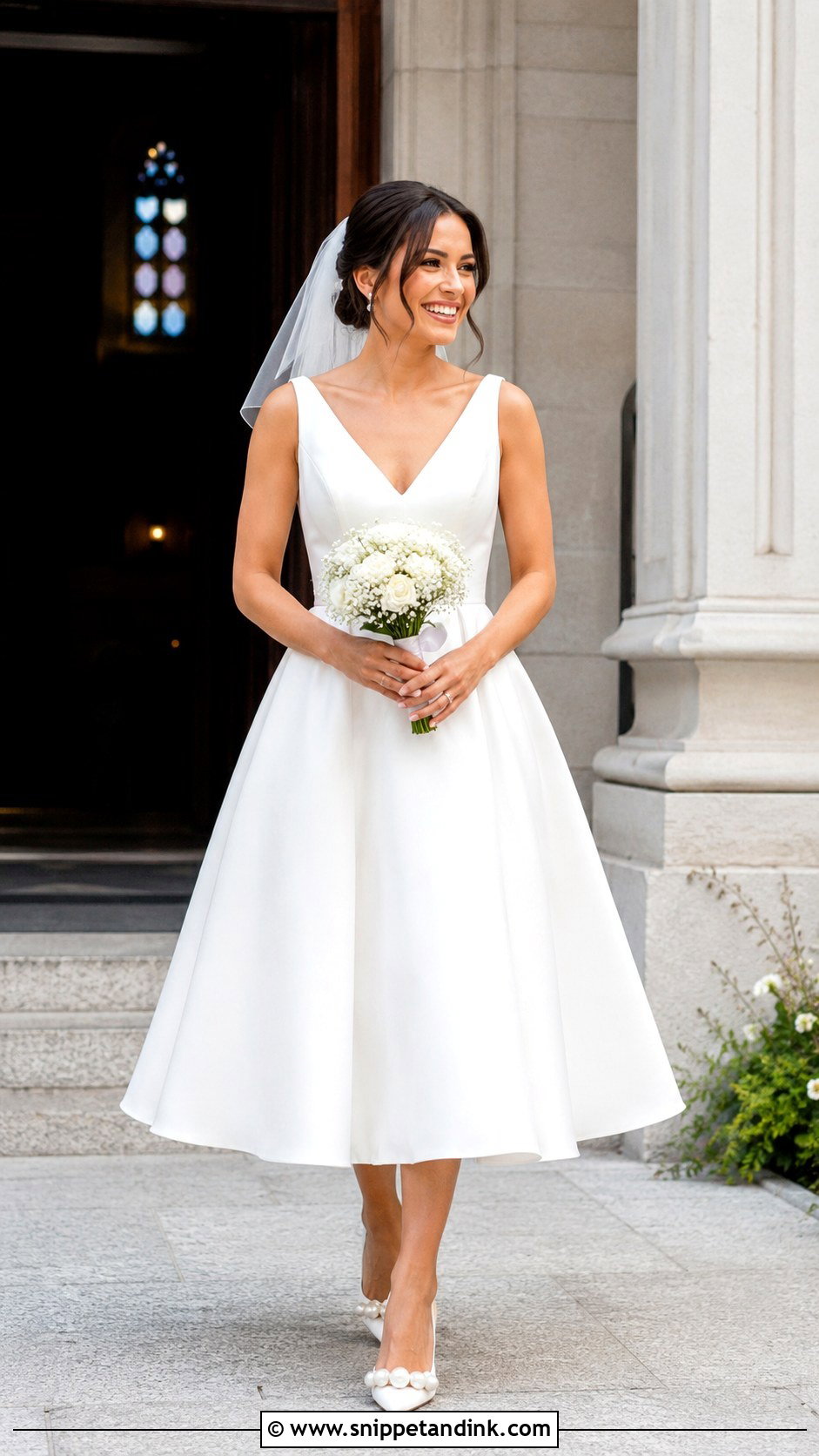
Tea length moves the attention to the waist and legs, which gives broad shoulders a playful counterpoint. A structured A-line skirt ending between knee and ankle, with a clean V-neck, angled straps and a natural waist seam. Statement pumps, pearl earrings, a short veil and a compact bouquet. The shoes are visible, so they should be special and still comfortable to dance in. Satin feels classic; embroidered tulle adds texture without weighing the bodice down. Always hem it while wearing your final shoes. Half an inch makes a real difference to where the skirt lands on your leg, and I’d rather adjust it twice than guess.
19. Two-Piece V-Neck Wedding Dress
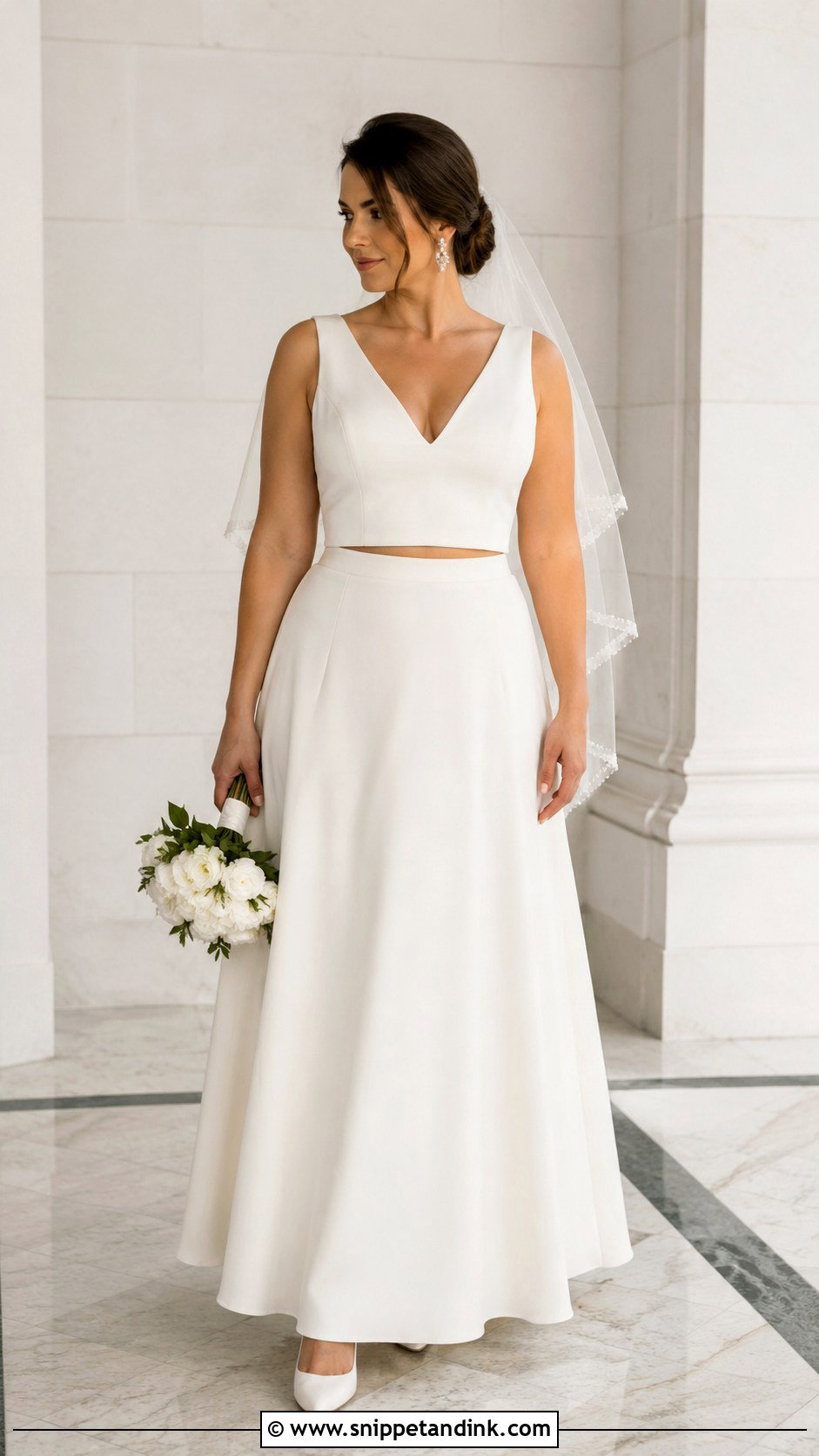
Separates let you fit the top and the skirt independently, which helps when your shoulders, bust, waist and hips fall in different bridal sizes. A fitted V-neck top with supportive straps and a high-waisted A-line skirt. A narrow strip of skin can show, or the pieces can overlap for full coverage. Matching crepe is minimal; matching lace is romantic. Sleek heels, a low bun, modern earrings and a fingertip veil. Keep both pieces in the same fabric family; two different whites side by side are obvious. At alterations, check that the top stays aligned with the skirt when you sit, reach and dance.

20. Mermaid Wedding Dress With Detachable Sleeves
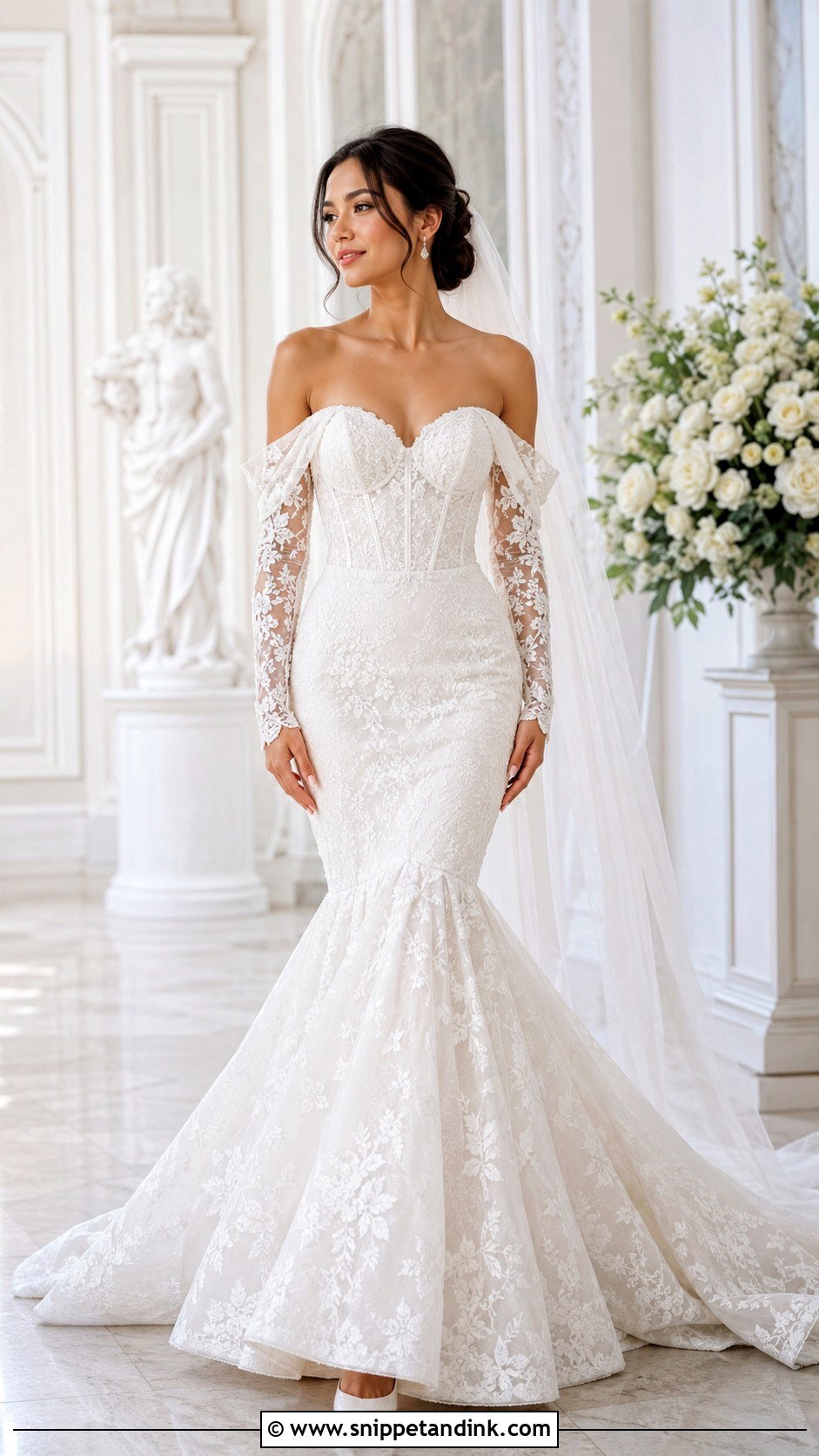
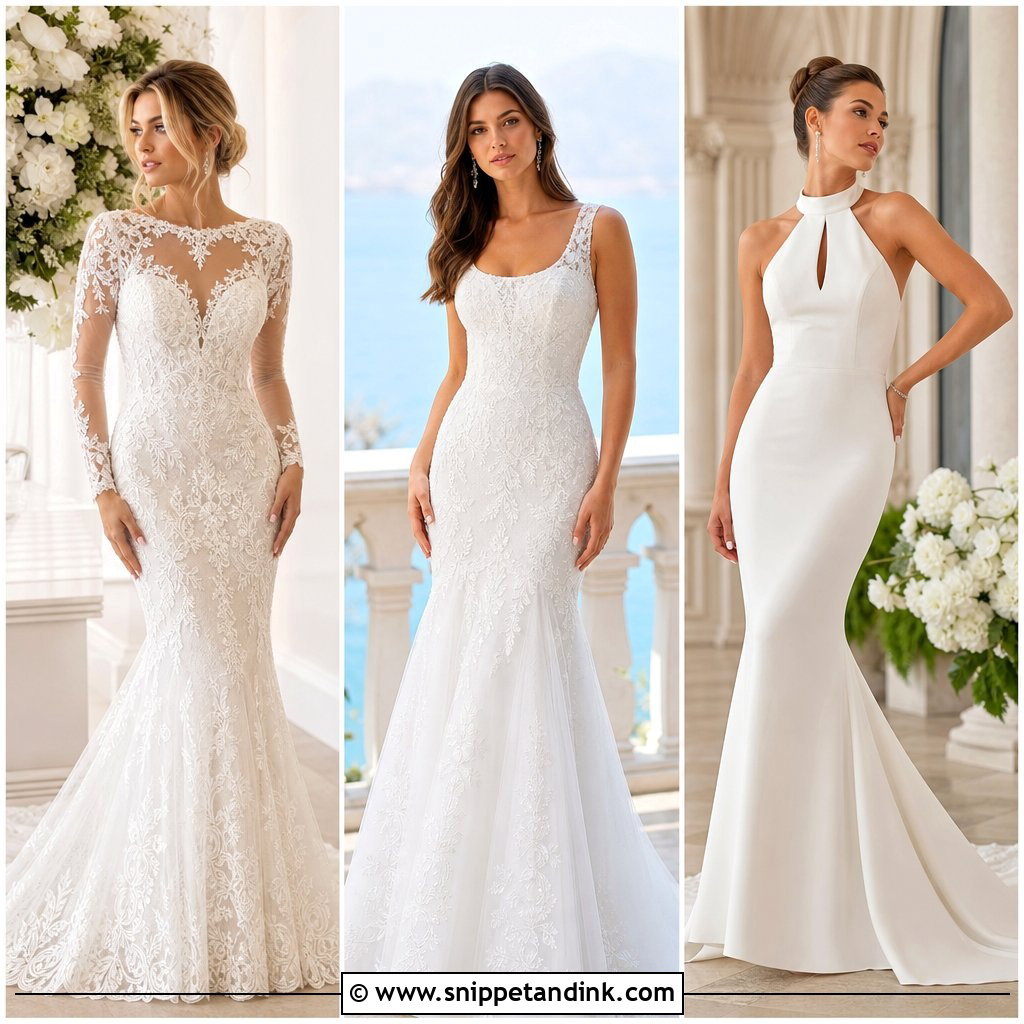
A mermaid can flatter broad shoulders when neckline, waist and flare work together. A sweetheart or V-neck bodice, a defined waist and a skirt flaring above or around the knee; that lower volume answers the upper body. Detachable draped sleeves for the ceremony, then off for a clean strapless reception. An updo, fine earrings, pointed pumps and a long veil attached low. No dense shoulder appliqués. Walk and sit before buying. Where the flare starts decides how far you can step, and a flare set too low means shuffling all evening.
Alterations That Help Across the Back, and Ones That Can’t
A good seamstress can change a lot about how a gown sits on strong shoulders. It helps to know which requests are simple and which are wishful before you buy a dress you plan to fix later.
Usually straightforward
- Moving straps inward so they sit on the shoulder rather than sliding off the edge.
- Adding straps, or illusion straps, to a strapless gown for extra security.
- Swapping a zip for a corset back, which gives a few inches of flexibility across the back.
- Recutting an armhole that digs in under the arm.
Difficult or not possible
Adding width across the back of a fitted bodice is the big one. If there’s no spare fabric in the seams, there’s nothing to let out, and matching lace or beading for a new panel rarely blends in. Shortening a sleeve that’s too tight at the upper arm doesn’t help either, because the tightness is in the cap, not the length. I’d rather a bride walks away from a dress than buys one that needs these fixes.
Alterations normally start two to three months before the wedding, with two or three fittings. Timings vary between seamstresses, and back and sleeve work takes longer than a hem, so book early if your gown needs it.
Fit the Back First and the Style Follows
The right gown doesn’t follow every body-shape rule. It fits securely, moves comfortably and feels like you. V-necks, sweetheart bodices, diagonal draping, defined waists and fuller skirts are useful starting points, but broad shoulders can look striking in a halter, a strapless gown or an asymmetric design too. Try several unexpected silhouettes before deciding, and judge each one head to toe. Bring your shoes and underwear to fittings, then sit, walk, hug and raise your arms. Good construction and a skilled seamstress will do the rest.
You'll Like These Ideas:



Leave a Reply