
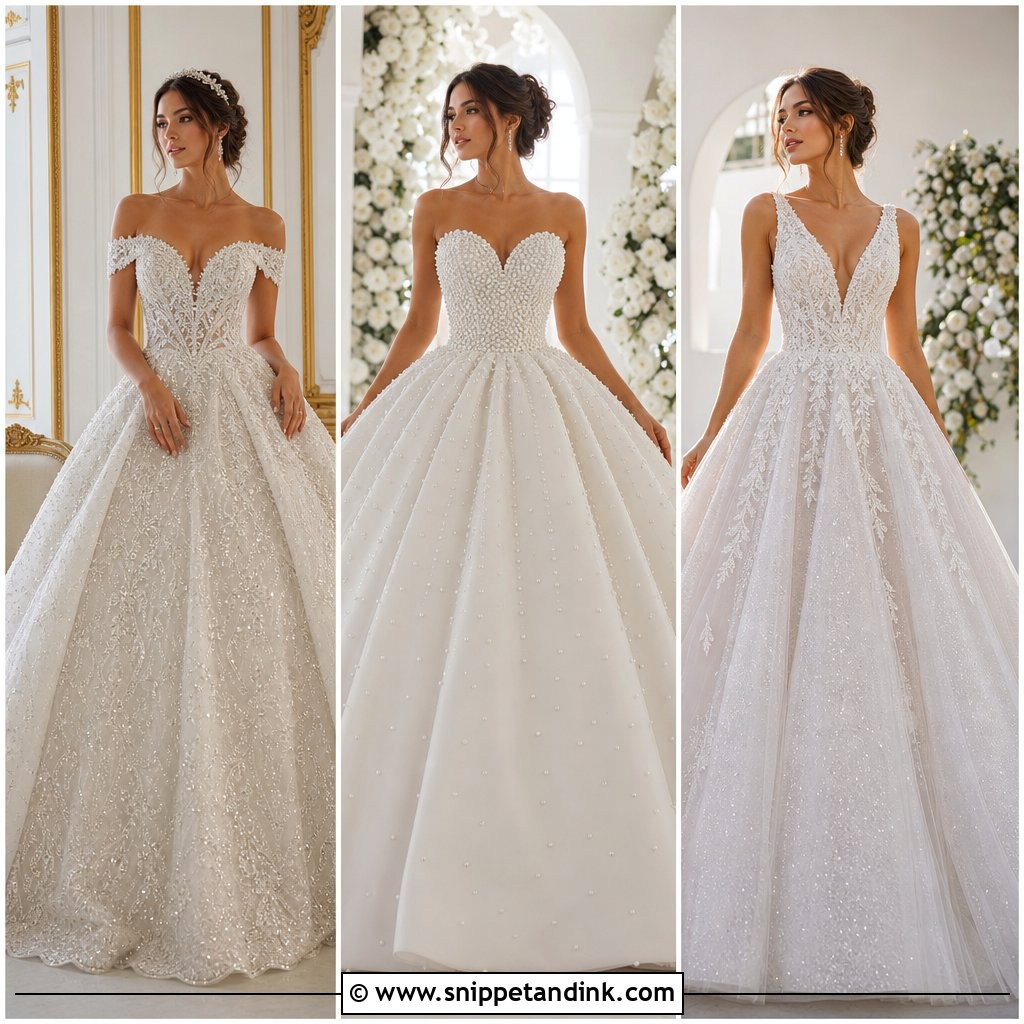
A full skirt, a defined waist and a train behind you: the ballgown is the silhouette people remember from a wedding, and bridal designers have been bringing back fuller skirts, sculpted waists, statement bows and convertible pieces. It is also the shape that asks the most of you on the day. In the twenty gowns below I cover satin, lace, corsetry, flowers, pearls and sparkle, and with each one I note the fitting checks I’d make, because a ballgown that looks perfect standing still can be miserable to sit, walk or dance in. Match the neckline to your jewelry, test how the fabric moves, and ask early how the train will be bustled.
What Holds a Ballgown Skirt Up
The volume in a ballgown comes from underneath, and it affects comfort far more than the outer fabric. Some gowns build it in with several layers of stiff tulle or net sewn to the waist; others rely on a separate petticoat, and a few use a hoop with flexible rings. When I compare two gowns with the same look, I lift the skirts and check what is doing the work.
- Built-in layers are simplest on the day, but they can make the dress heavy and hot. Ask if one can be removed.
- A separate petticoat lets you adjust the fullness and can come off for the reception if the gown allows it.
- Hoops give the widest, smoothest shape and are surprisingly light, but they swing when you walk and need practice to sit in.
- Stiff net scratches bare legs. A soft lining layer between you and the net makes a big difference after a few hours.
Ask too about the waist. Several kilos of skirt hanging from your waistline pull the bodice down unless there is a waist stay, a firm inner band that takes the weight. It is the single detail I’d check on every ballgown.
1. Strapless Satin Wedding Dress Ballgown
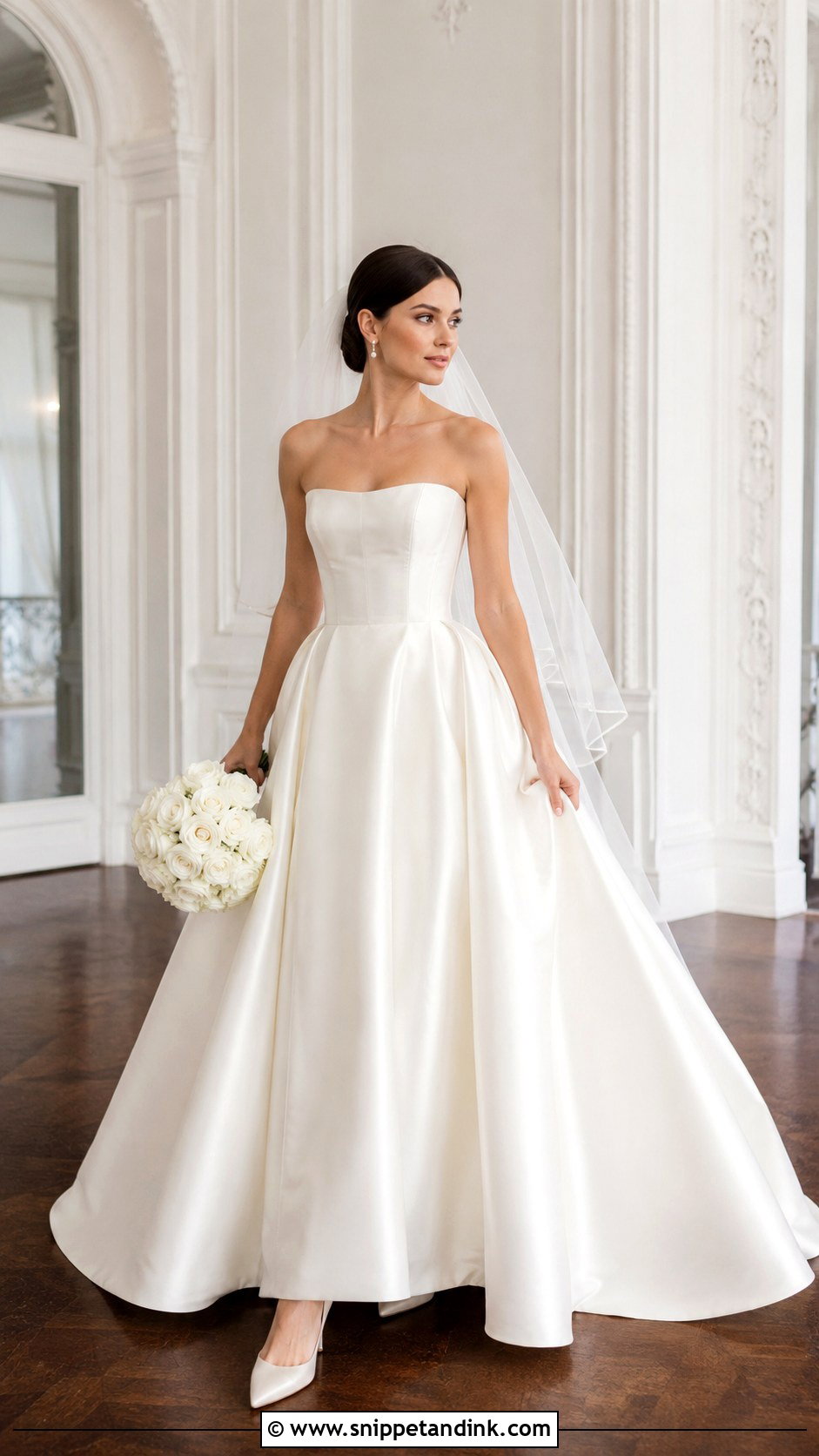
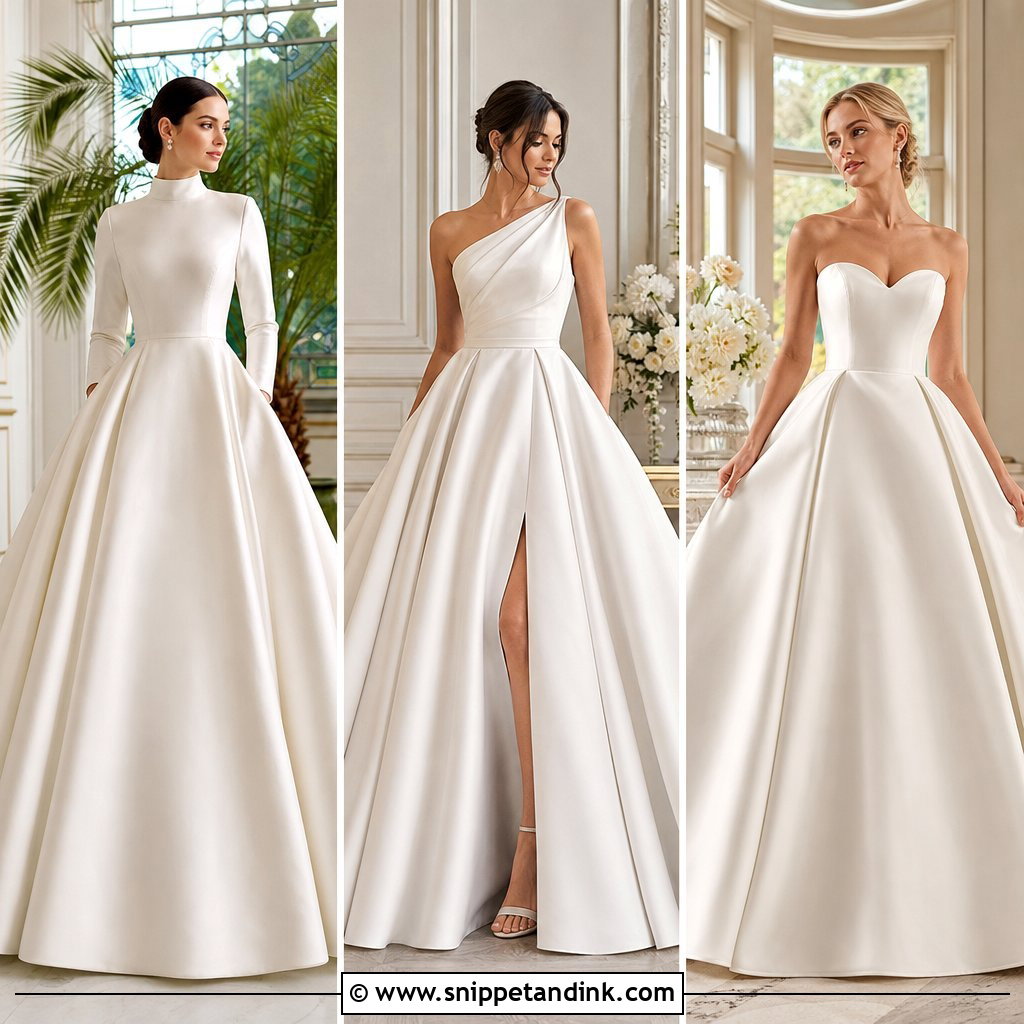
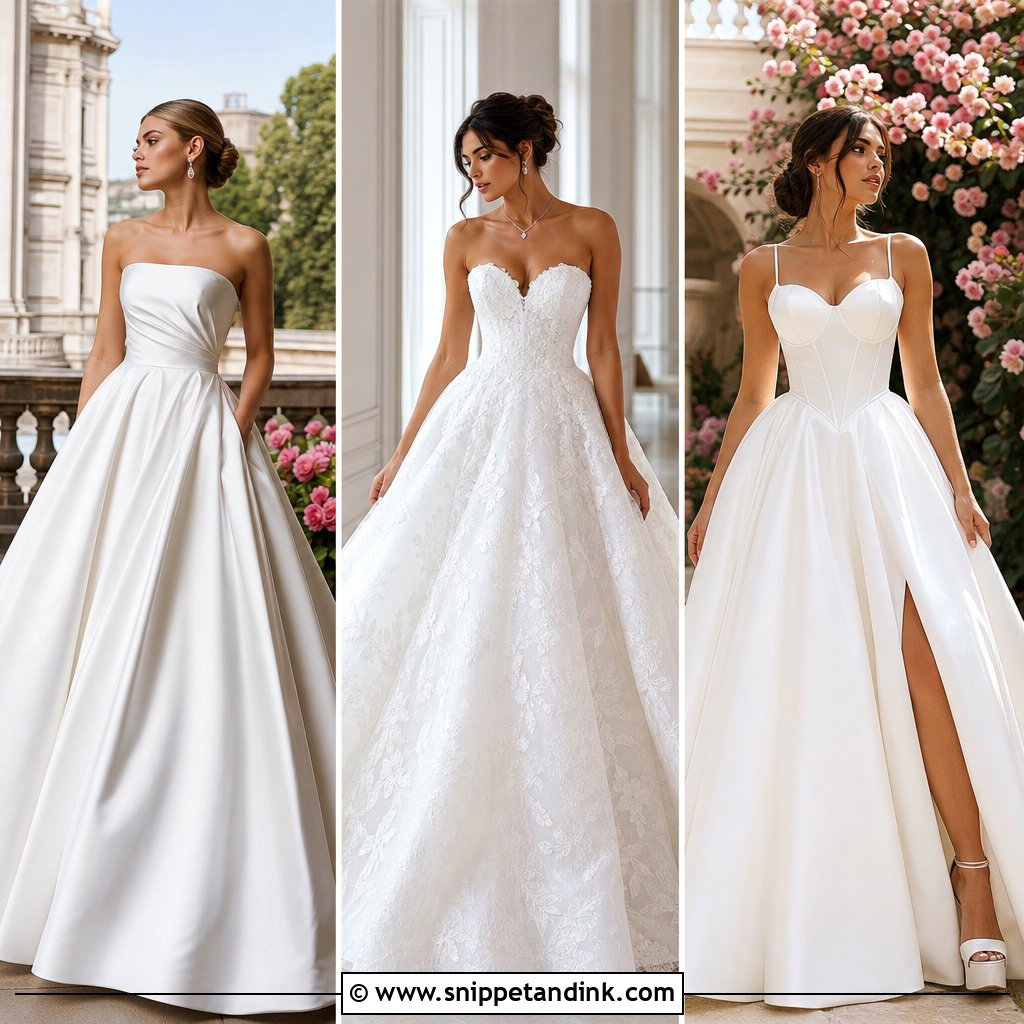
Strapless satin is the purest version of the ballgown, with nothing between you and the shape. Everything depends on the bodice: internal boning, a neckline that grips without cutting in, gentle shaping at the waist. The skirt needs no lace or crystals. Pointed ivory pumps and pearl drop earrings keep it refined; a fingertip veil is crisp, a cathedral veil more ceremonial. White roses or calla lilies suit the clean mood. At fittings, sit, walk and lift both arms above your head. If the top edge moves more than a little, it needs taking in at the side seams. Ballrooms, hotels and estates suit it.
2. Long Sleeve Lace Wedding Dress Ballgown
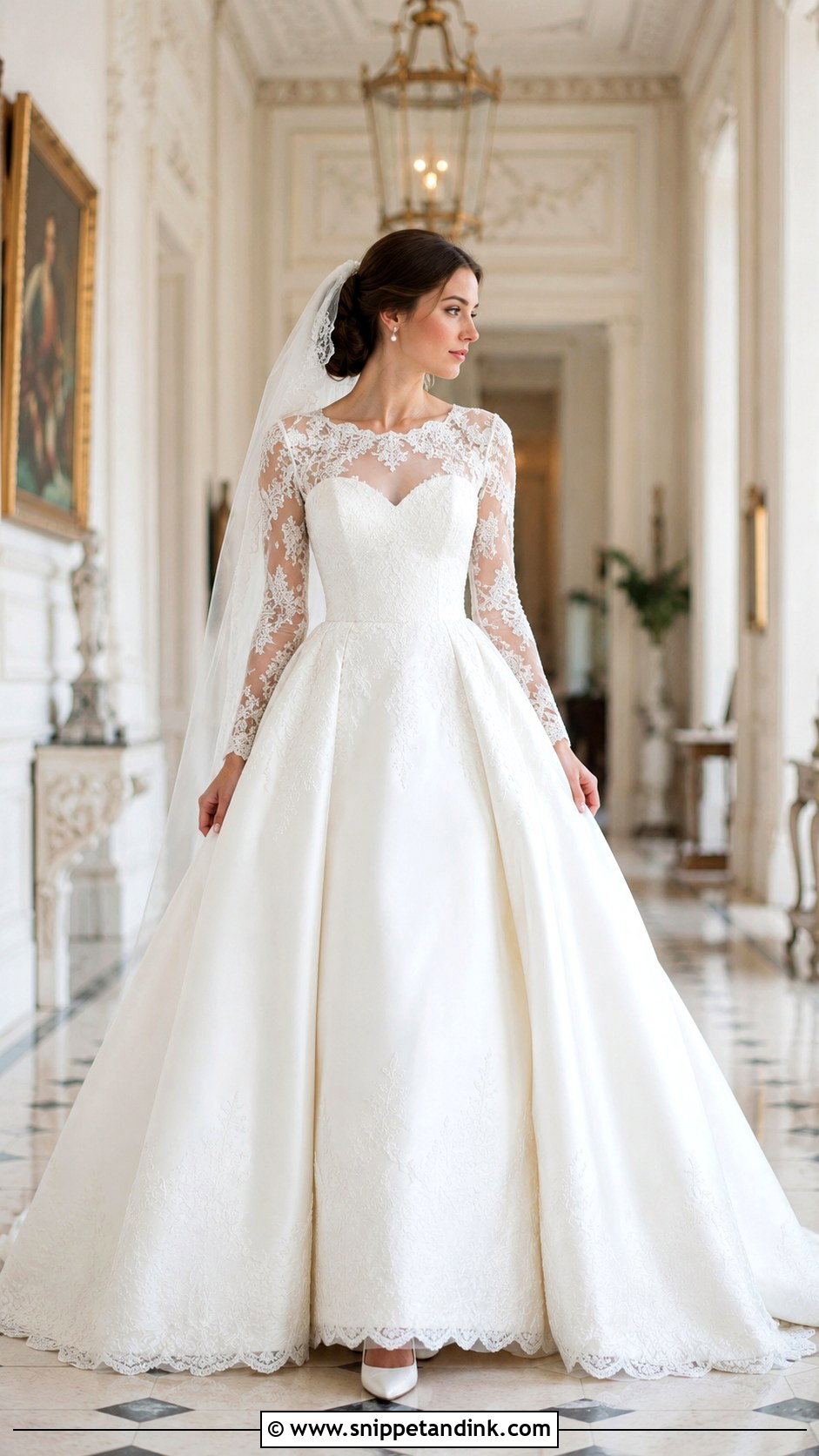
Delicate lace sleeves soften all that skirt volume and give coverage without weight, as long as the appliqués are spaced so the arm still looks light. A lined sweetheart or bateau bodice underneath gives a quiet contrast. Let the lace carry onto the skirt sparingly, leaving plain fabric between motifs. Pearl studs, a low chignon, a lace-edged veil and closed satin pumps complete it for cooler or indoor ceremonies. The fitting test is simple: hold your bouquet at waist height and reach out for a hug. Sleeves set too tight at the shoulder or elbow will pull the bodice every time you do.
3. Off The Shoulder Wedding Dress Ballgown
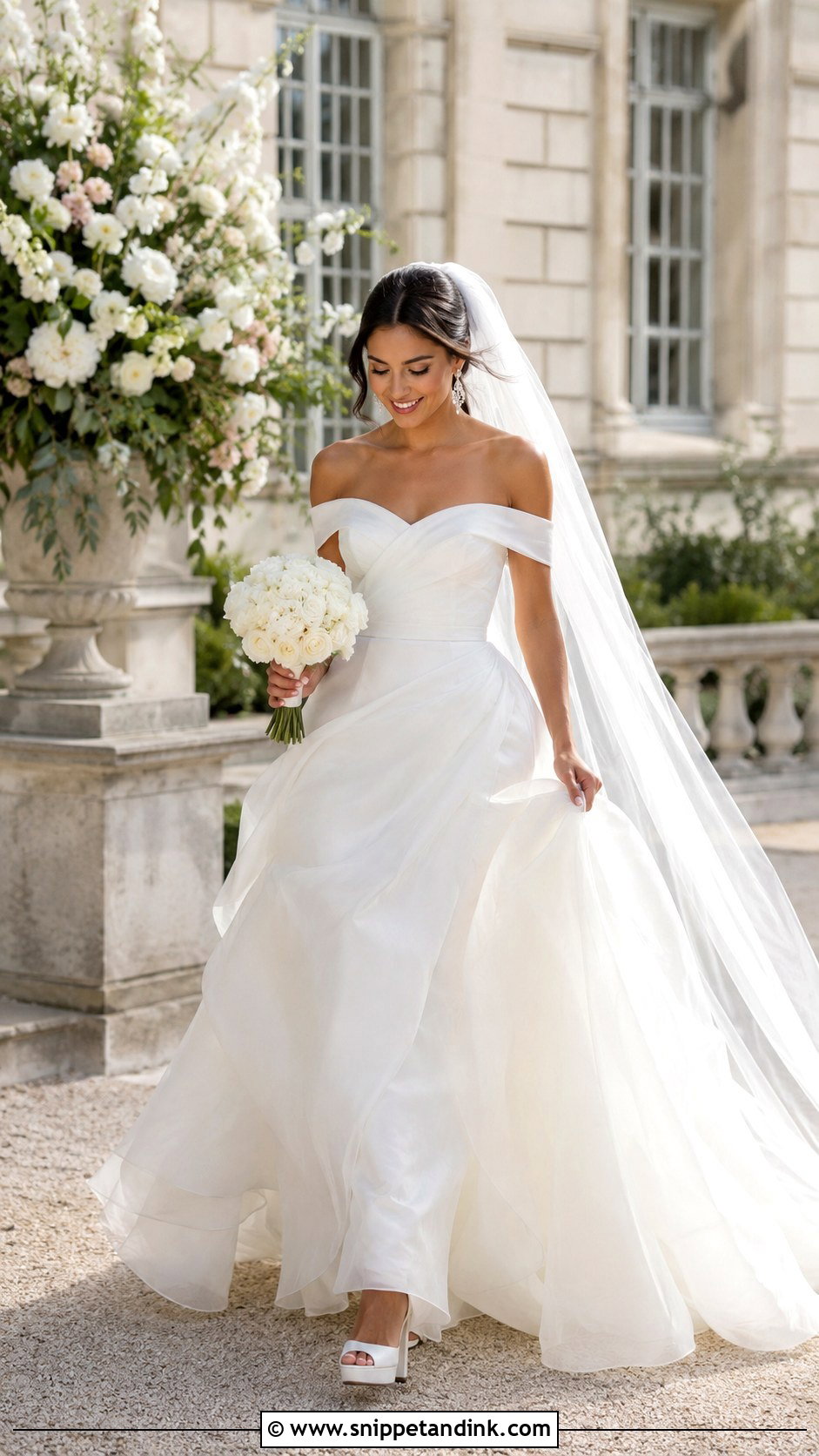
Off-the-shoulder necklines balance a big skirt by widening the shoulder line, so the volume below looks intentional rather than heavy. Structured bands or draped sleeves can create it, and either one has to be fitted so you can still raise your arms. A smooth corseted bodice defines the waist before satin, organza or tulle layers open out. Choose a fine pendant or skip the necklace for sparkling drops. Sweep the hair back and add a cathedral veil for height. Ivory block heels are steadier under a heavy skirt than stilettos, which matters when you can’t see your feet. It needs a spacious aisle.
4. Basque Waist Wedding Dress Ballgown
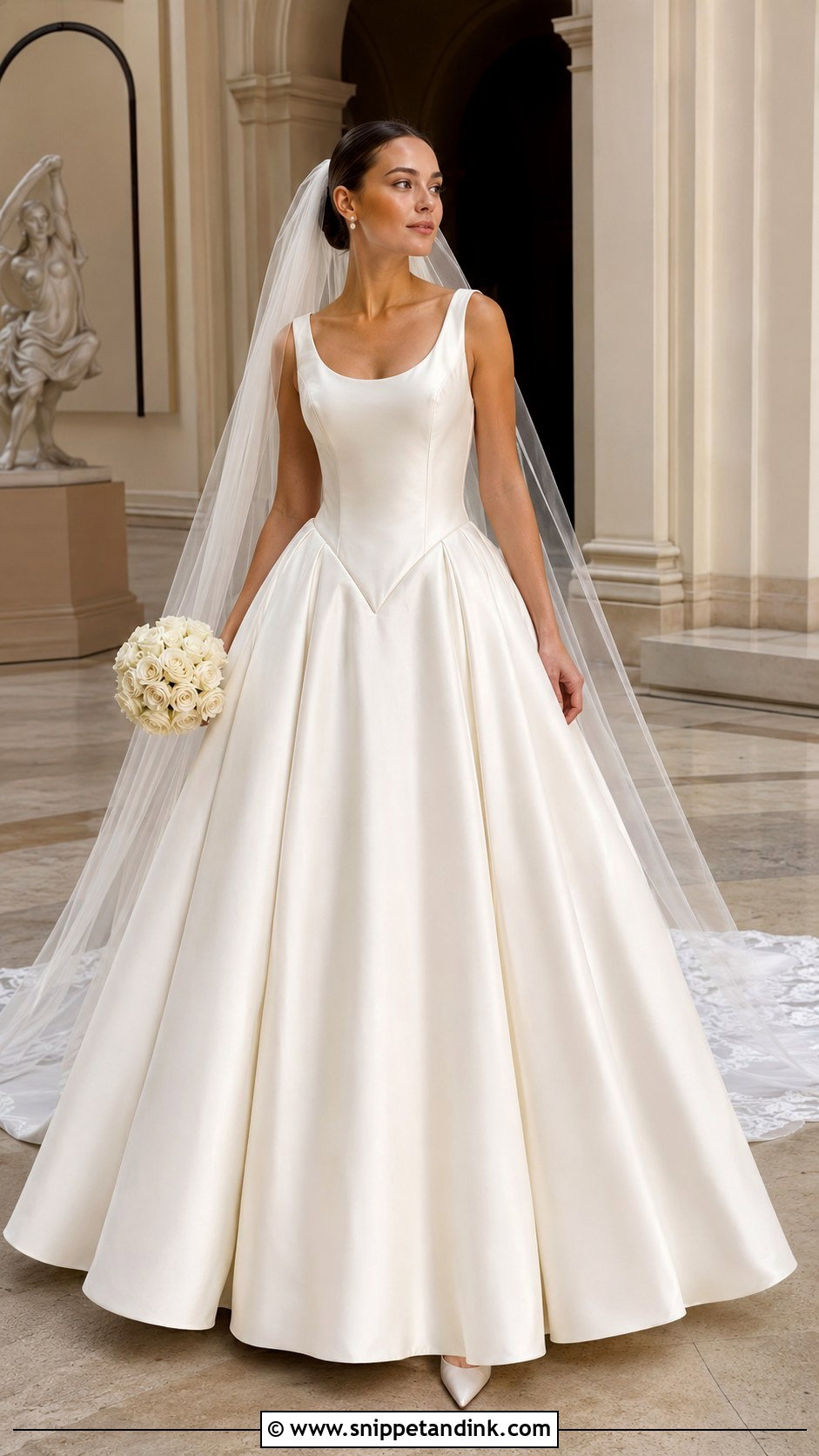
The pointed seam of a Basque waist wedding dress ballgown lengthens the torso and makes the skirt look as if it springs from the hips. In smooth satin or structured mikado it reads surprisingly modern. Choose a scoop, square or strapless neckline for the support you need, and keep accessories to pearl earrings, a clean bun, pointed pumps and a sheer cathedral veil. Sit down at every fitting: the point should lie flat without folding into your stomach. The skirt should also start where your hips can move under it, not press against them, or walking gets tiring by evening.
5. Drop Waist Wedding Dress Ballgown
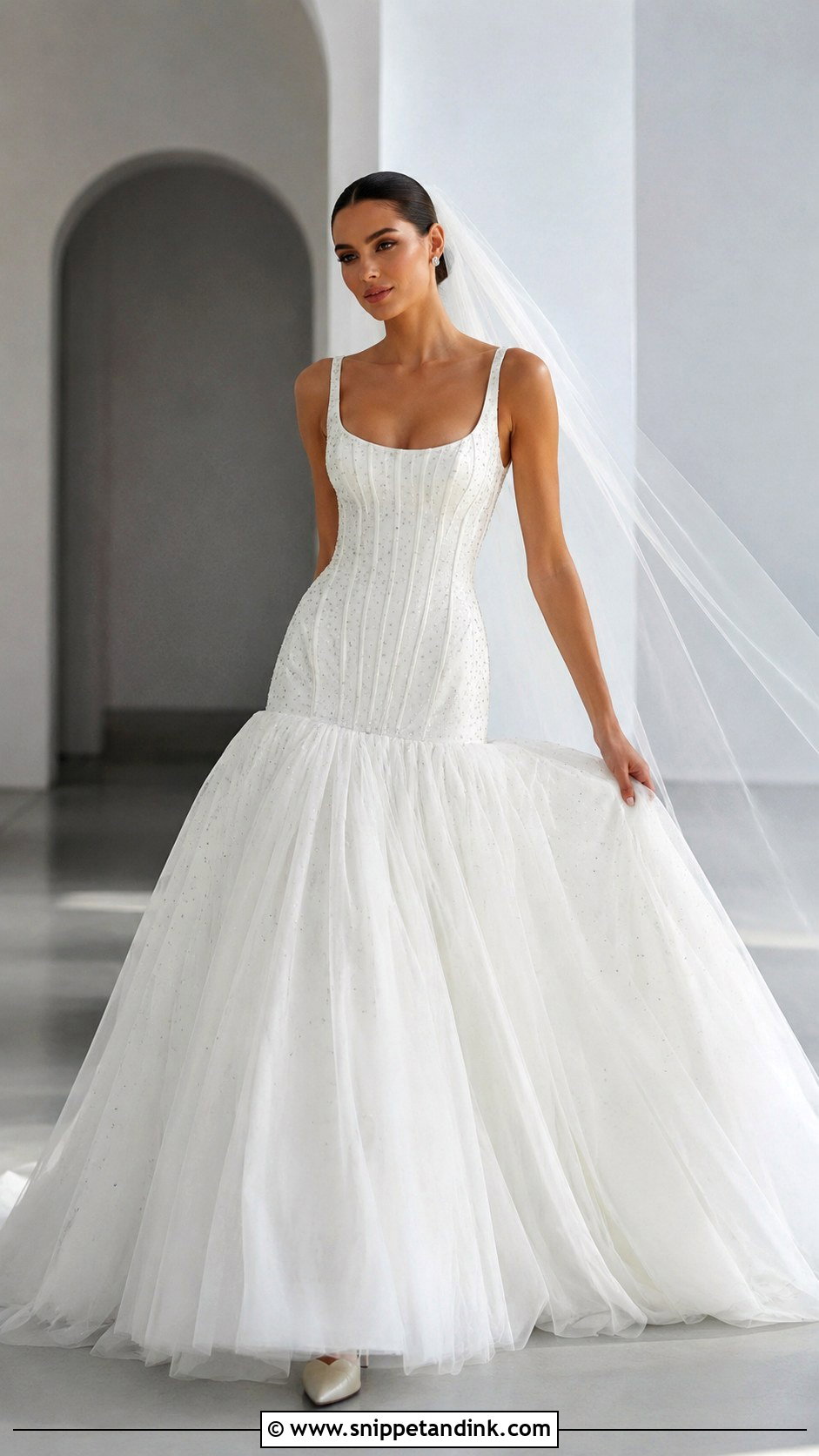
Drop waists suit brides who love a fitted gown and a full skirt equally, since the bodice stays close well past the natural waist before releasing. It can show corset seams, smooth satin panels or light draping, and a scoop or straight neckline keeps it modern. Crystal studs, a sleek veil and simple ivory heels let the long proportions speak. Because the fitted section covers the hips, it has to allow you to sit and climb a step; I have brides do both in the fitting room. Short-waisted figures can find it shortens the legs, so try it before falling for photos. Museums, galleries and industrial spaces suit it.
6. Sweetheart Wedding Dress Ballgown
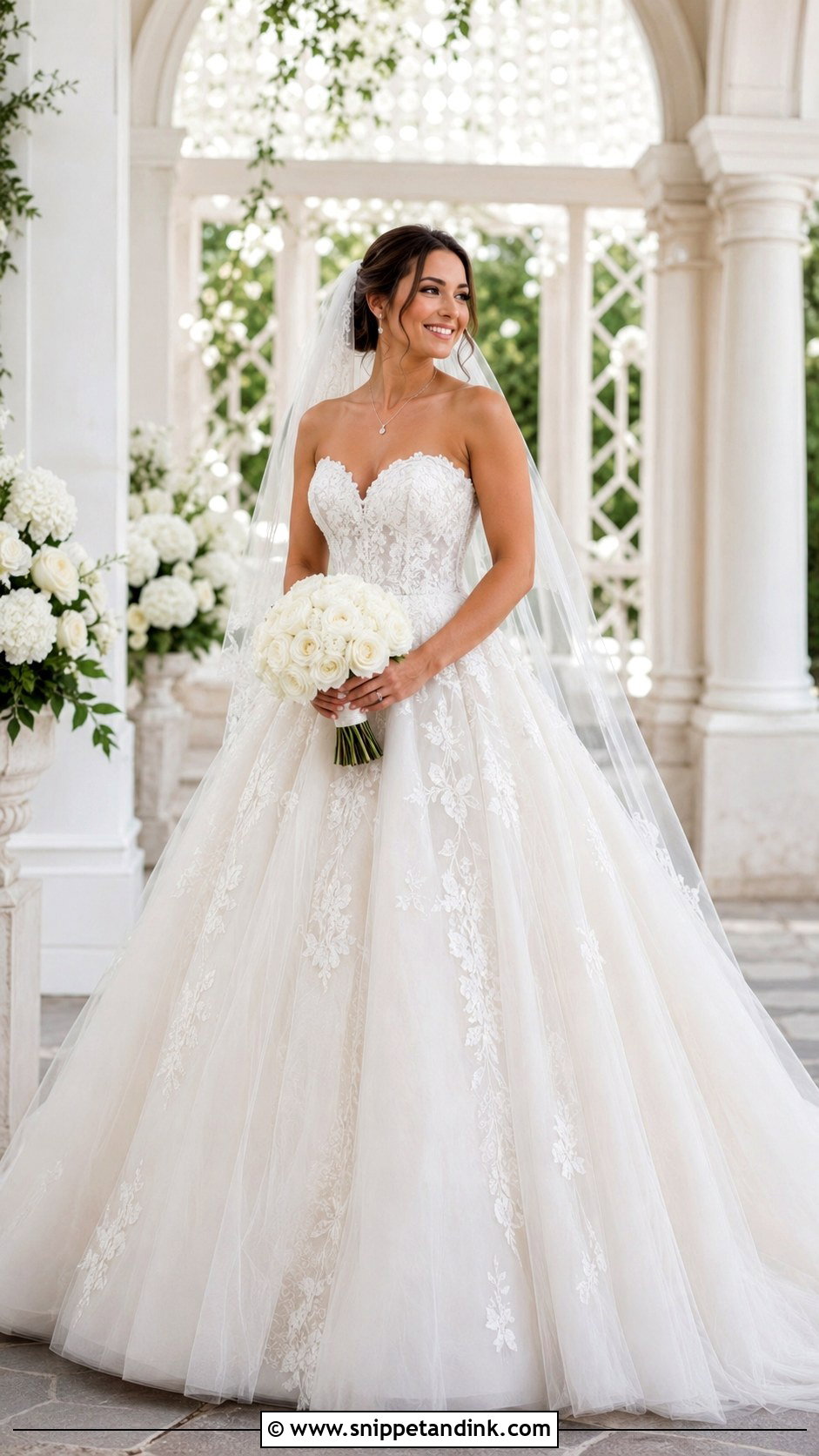
Sweetheart necklines are flattering on most busts because the curve draws the eye upward. A sweetheart wedding dress ballgown can be modest or open depending on depth and how much coverage is built into the bodice. Pair it with a natural waist and a layered tulle skirt for the classic shape. Lace around the neckline softens it; plain satin looks more formal. A fine pendant, pearl earrings and a waved updo suit it, with a chapel veil and round bouquet. Under the skirt, wear padded ivory heels that are already broken in. Without straps, the construction does all the holding, so check it carefully.
7. Square Neck Wedding Dress Ballgown
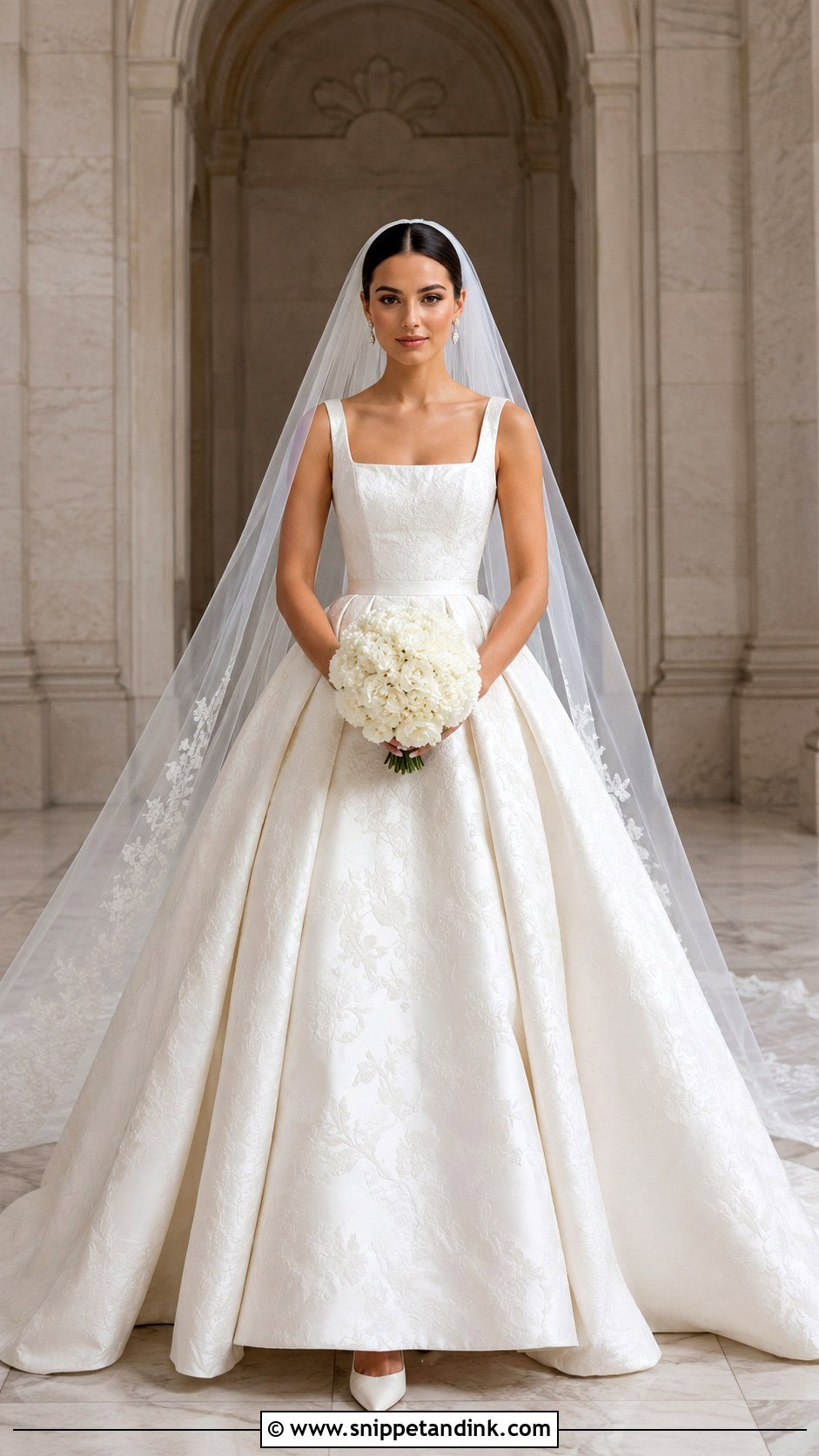
A square neck gives a ballgown crisp structure, and the wide straps that usually come with it are the most dependable support you can get without sleeves. Smooth satin keeps it minimal; floral jacquard adds subtle texture. A fitted bodice at the natural waist keeps proportions clear. Wear a sleek bun, short drop earrings and a plain cathedral veil set under the hairstyle, plus pointed pumps and a structured white bouquet. The corners of a square neck can gape when you bend forward; a small tuck at the strap usually solves it. Formal, uncluttered venues suit its lines.
8. High Neck Wedding Dress Ballgown
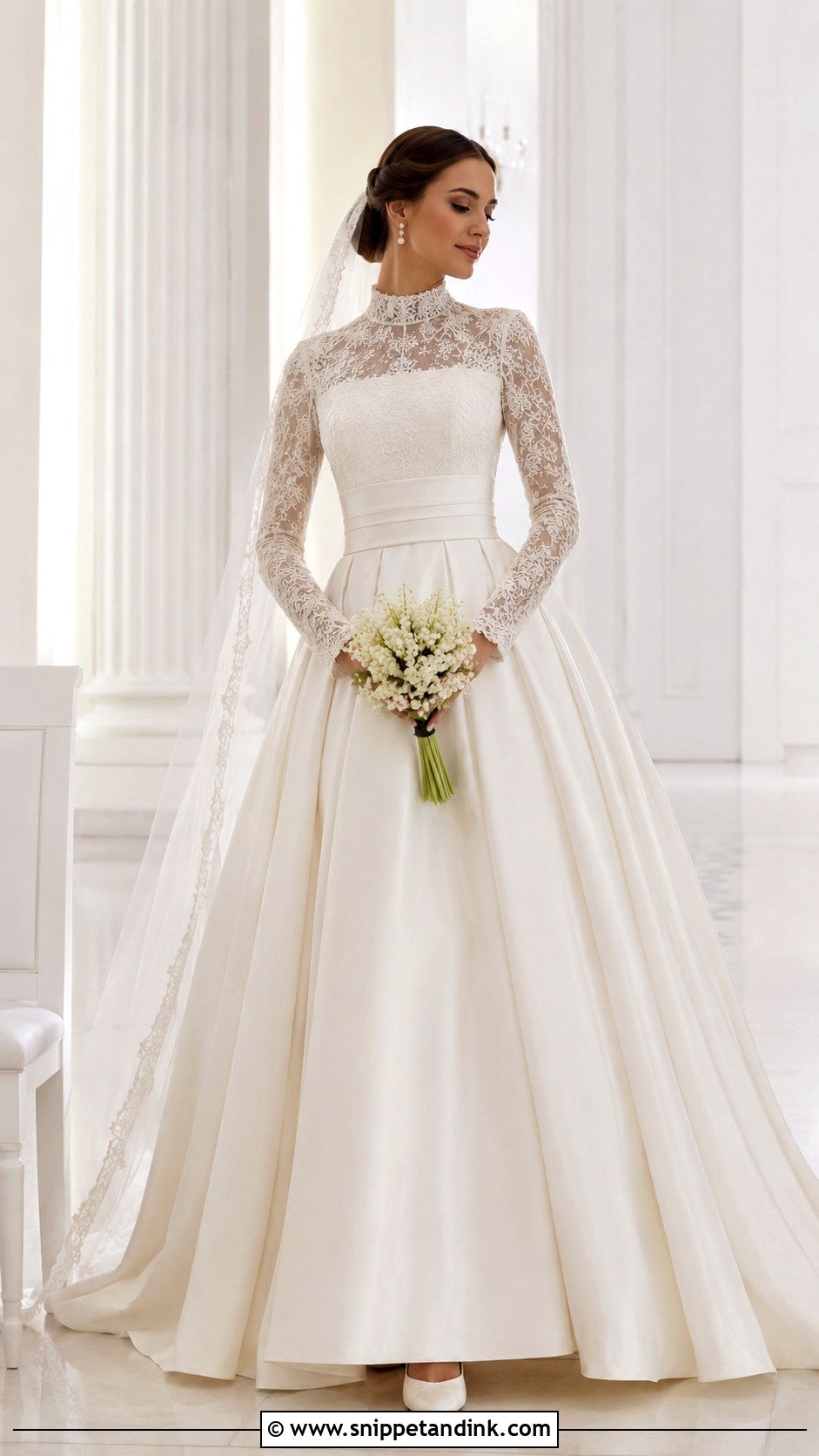
High necklines bring coverage without losing the drama of the skirt. Sheer lace, embroidered tulle or plain fabric can shape the upper bodice, and a fitted waist stops it looking buttoned-up. Long sleeves look traditional; a sleeveless high neck looks lighter and newer. Skip the necklace for pearl or crystal earrings, and wear a neat bun with the veil set low so the back detail shows. Closed satin shoes and a narrow bouquet finish it. The collar should let you turn your head fully and look down at your bouquet without tugging, so leave some room at the neck when it is altered.
9. Corset Wedding Dress Ballgown
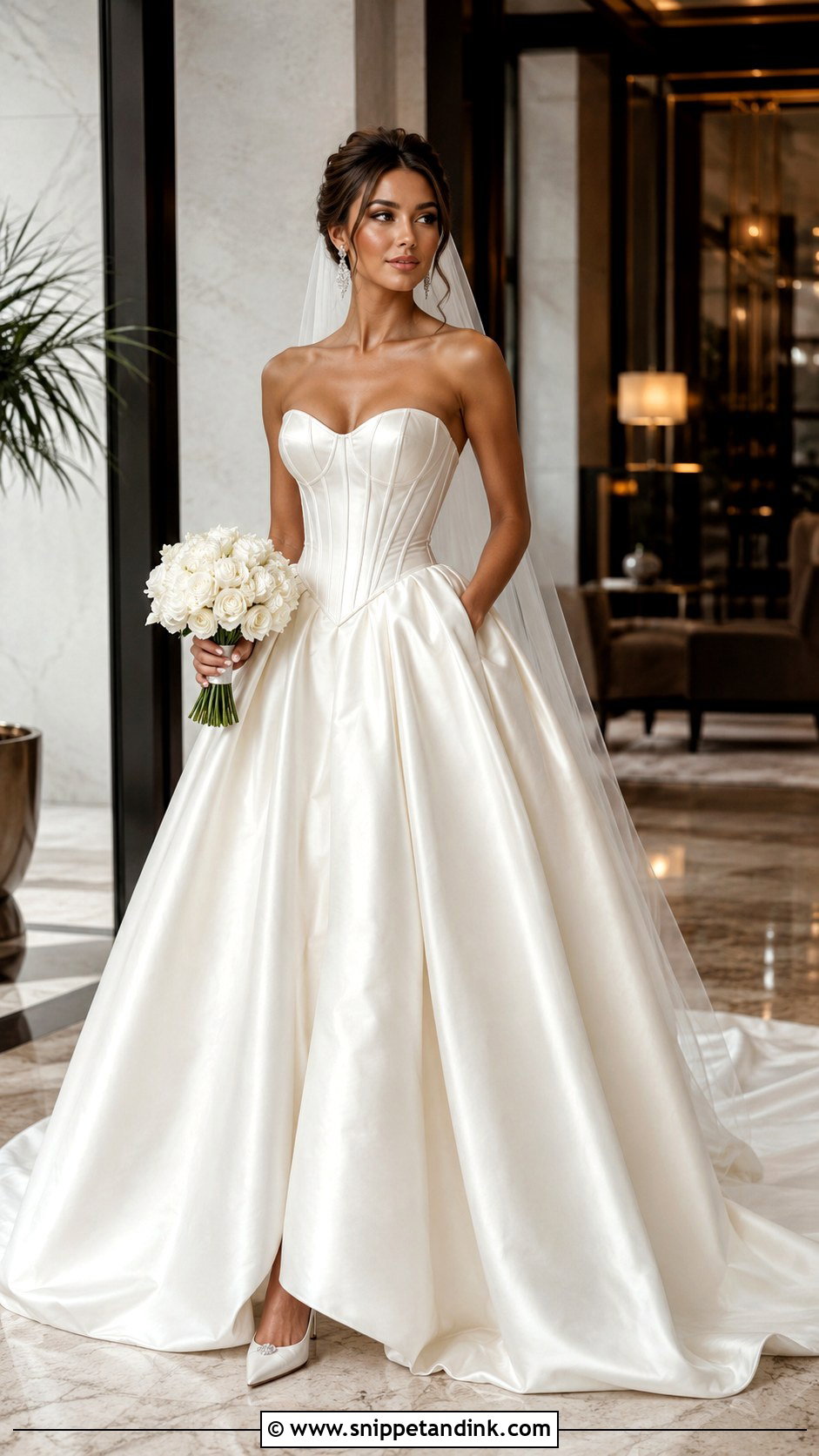
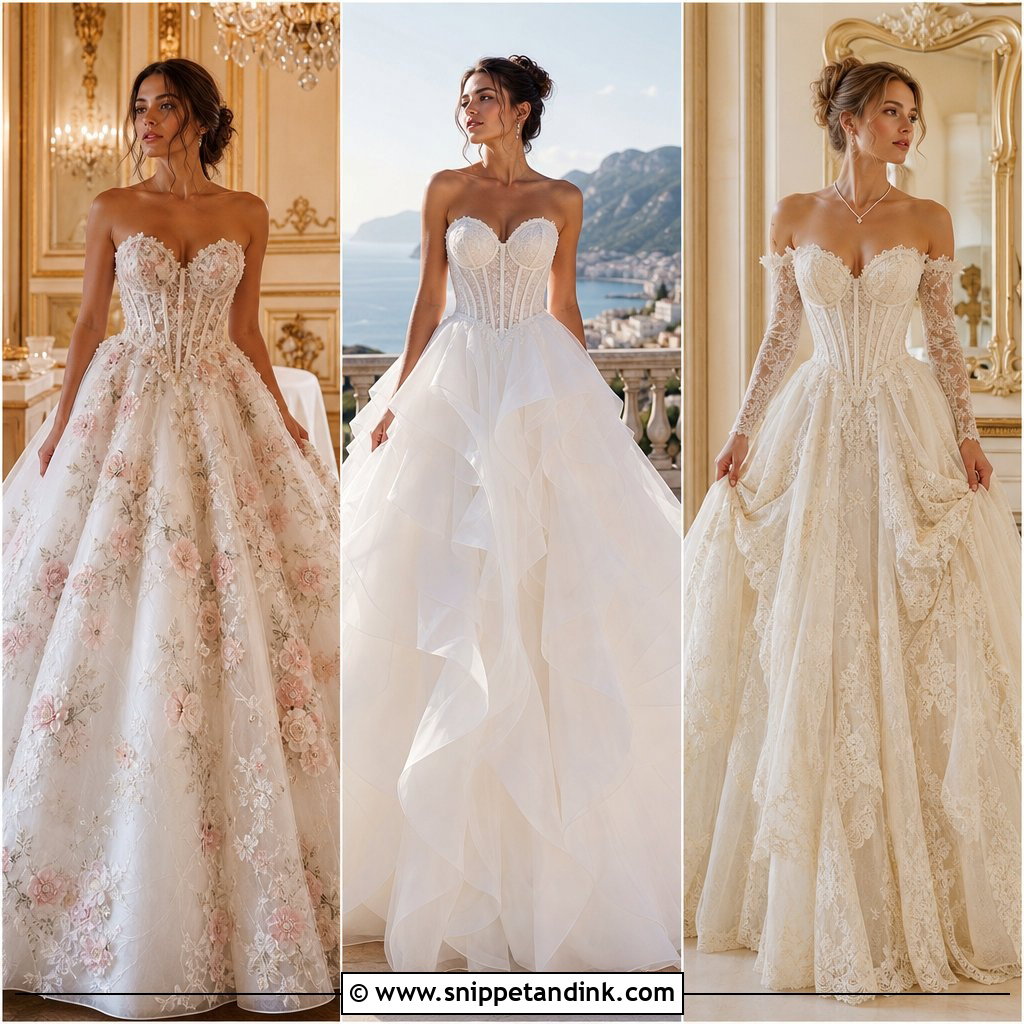
Visible boning makes a corset ballgown look fashion-led rather than traditional. The bodice can be fully lined or have sheer panels for lightness, and a full satin or tulle skirt contrasts structure with movement. A straight or softly curved neckline keeps it refined. Crystal earrings, a sheer veil, pointed ivory pumps and a compact bouquet are enough, since the seams are already the decoration. Ask about built-in cups, where the bones sit and how it closes; lace-up backs give more adjustment if your weight shifts before the wedding. A good corset feels firm around the ribs but still lets you breathe deeply and sit down.
10. Floral Appliqué Wedding Dress Ballgown
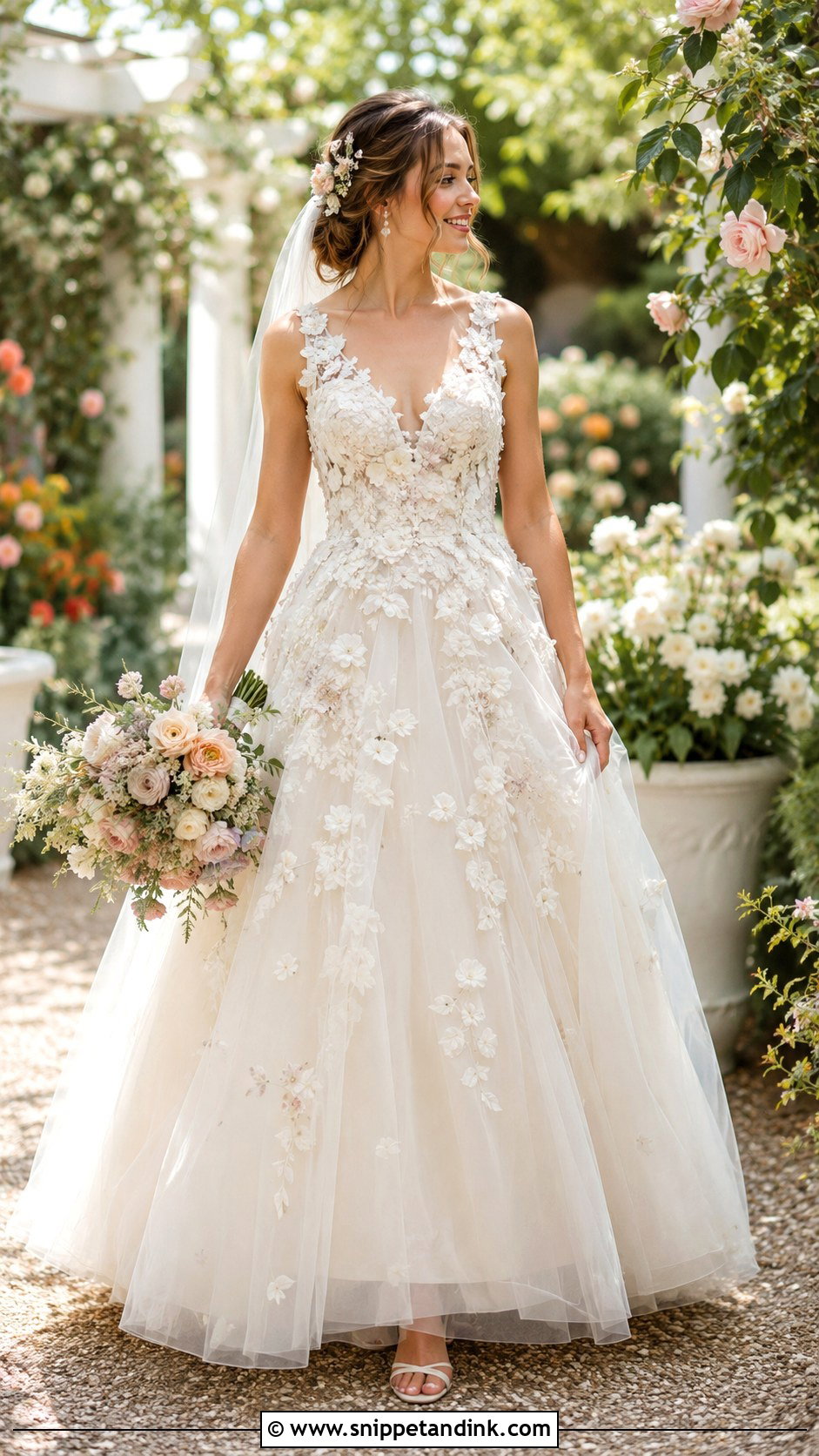
Appliqué flowers look best when they cluster, on the bodice or near the waist, and then fade out toward the hem, so the skirt doesn’t feel weighed down. A soft tulle base keeps it airy and a lightly structured bodice gives support. Floral hairpins, small earrings, ivory sandals and a plain veil support it without repeating every flower. Choose a loose bouquet in coordinating, not identical, blooms. Raised appliqués catch veil tulle, so walk a few steps in the veil at your fitting and see whether it drags on the back flowers. Spring weddings and garden venues suit it.
11. Pearl Wedding Dress Ballgown
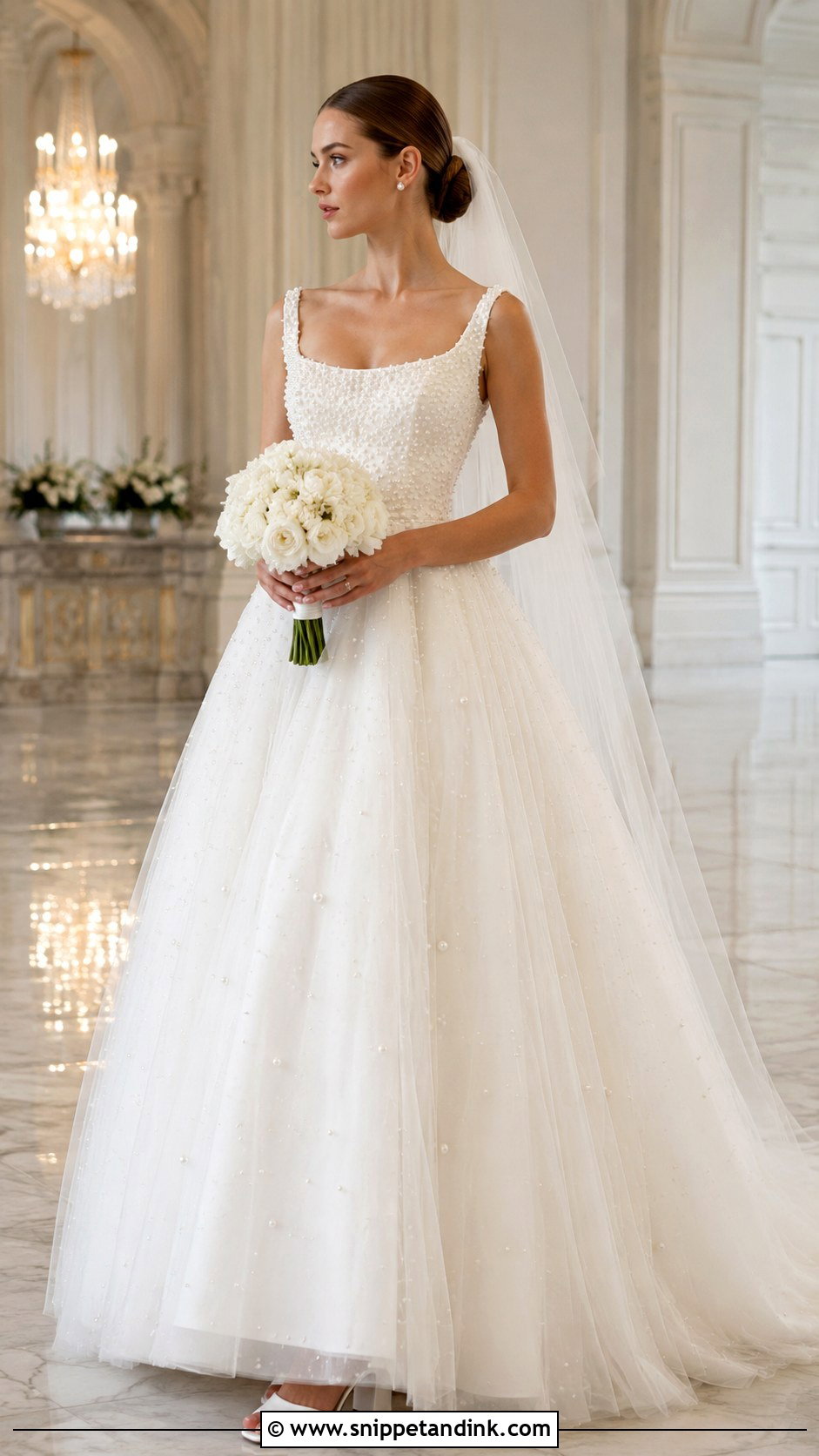
Small pearls give a plain ballgown a soft, textured glow. They can scatter over sheer tulle, line corset seams or cluster around the neckline and waist; in my experience a moderate amount shows up better in photos than dense coverage, which flattens into one pale surface. Pearl studs, a smooth bun and a plain veil keep it coordinated without overdoing it. Satin pumps or low block heels sit under the skirt. Tug gently at a few pearls before buying, and run a hand over the inner arms of the bodice for scratchy threads. A lined bodice and soft underlayers keep it comfortable for hours.
12. Bow Back Wedding Dress Ballgown
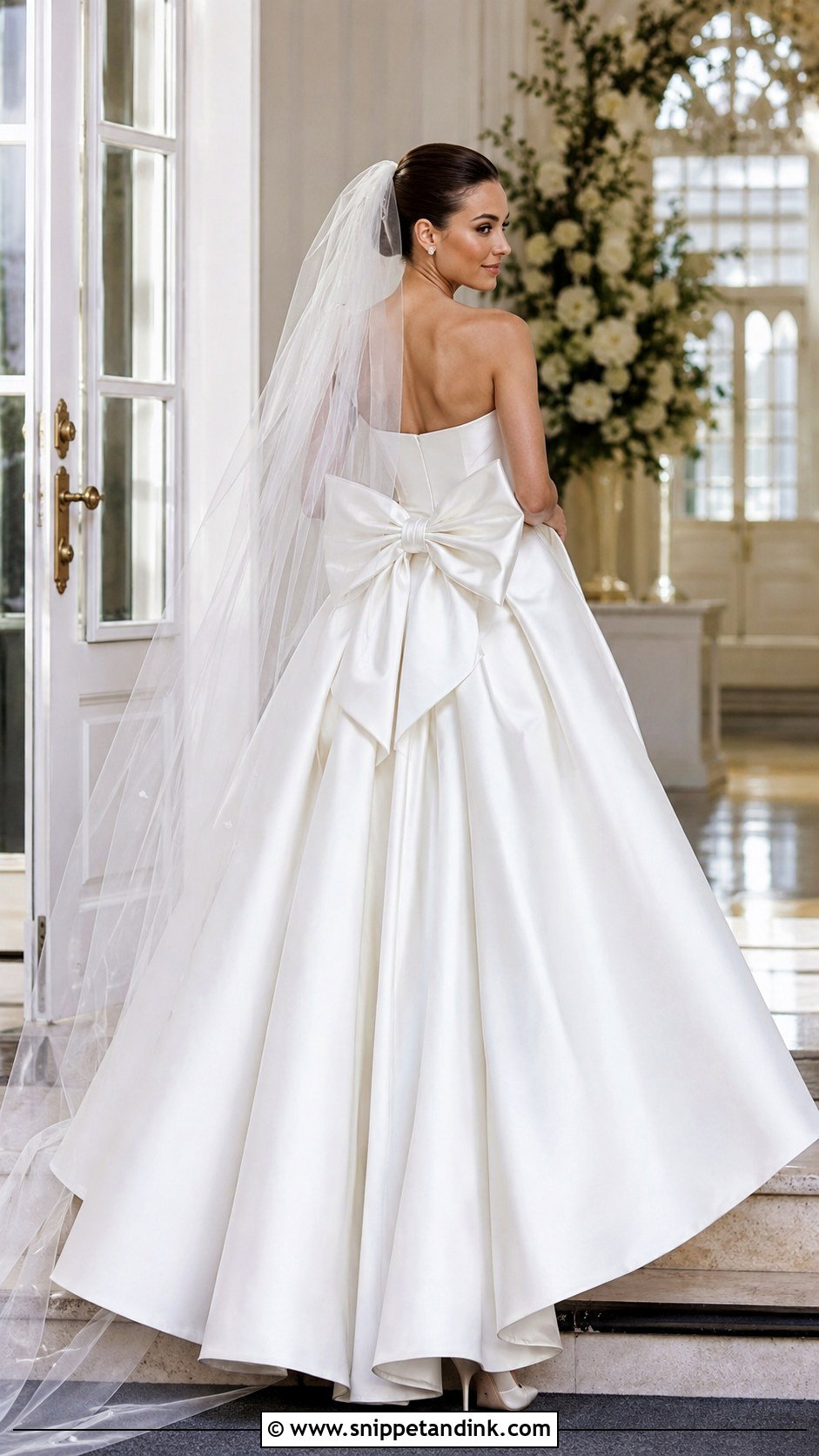
Guests spend the ceremony looking at your back, which is the whole argument for a bow. A structured bow gives a bold shape, soft trailing loops a looser one. Smooth satin or Mikado holds the form and looks clean against a full skirt. Keep the front simple, with a straight, scoop or off-shoulder neckline. Stud earrings, a polished updo, pointed pumps and a transparent veil finish it; place the veil comb above or below the hair depending on how high the bow sits. Ask whether it detaches, since a big bow can get in the way of bustling and sitting back in a chair.
13. Ruffle Wedding Dress Ballgown
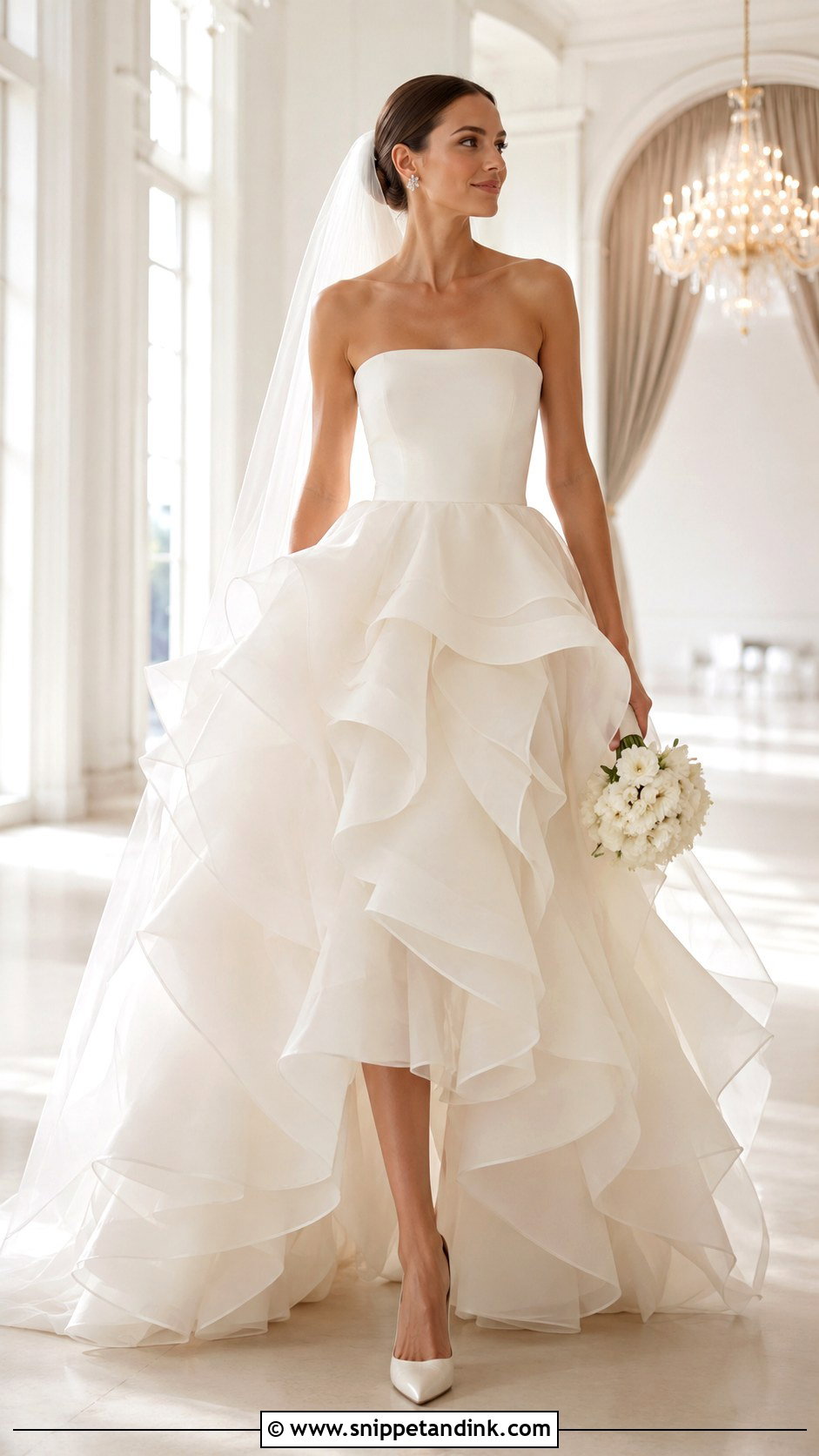
Ruffles bring movement and a strong editorial feel to a ballgown. Organza and tulle make light, floating layers; stiffer fabrics give sharper sculptural waves. A clean fitted bodice keeps the shape defined, and a strapless or square neckline avoids competing with the skirt. Small earrings, a plain veil, simple ivory heels and a compact bouquet are all it needs. Walk at different speeds and turn around at your fitting to see how the layers behave, and make sure the front hem clears your toes, because tripping on a ruffle on a staircase is a real risk. It needs aisle width, so think ballrooms and estates.
14. Tiered Tulle Wedding Dress Ballgown
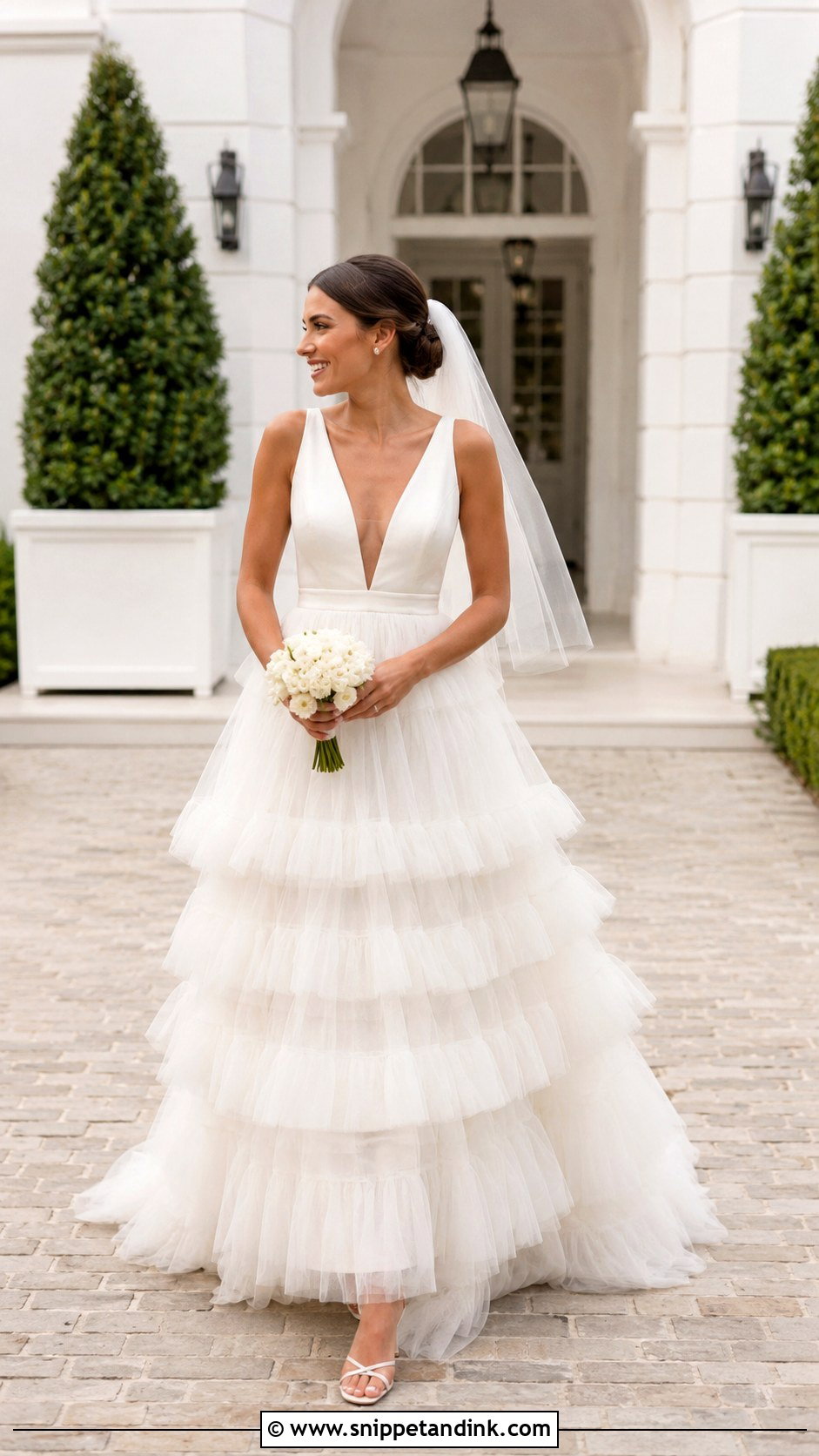
Tiered tulle is lighter than it looks, which makes it one of the easier ballgowns to dance in. The tiers can be subtle or crisp depending on the gathering. A smooth fitted bodice keeps the volume from swallowing you, and a strapless, V-neck or narrow scoop suits different support needs. Crystal studs, a low bun, delicate ivory sandals and a light veil finish it, with a small bouquet to keep proportions. Check where the first tier starts; too high and it widens the hips. If the skirt feels too wide or heavy, ask whether a petticoat layer can be removed rather than changing the gown.
15. Minimalist Mikado Wedding Dress Ballgown
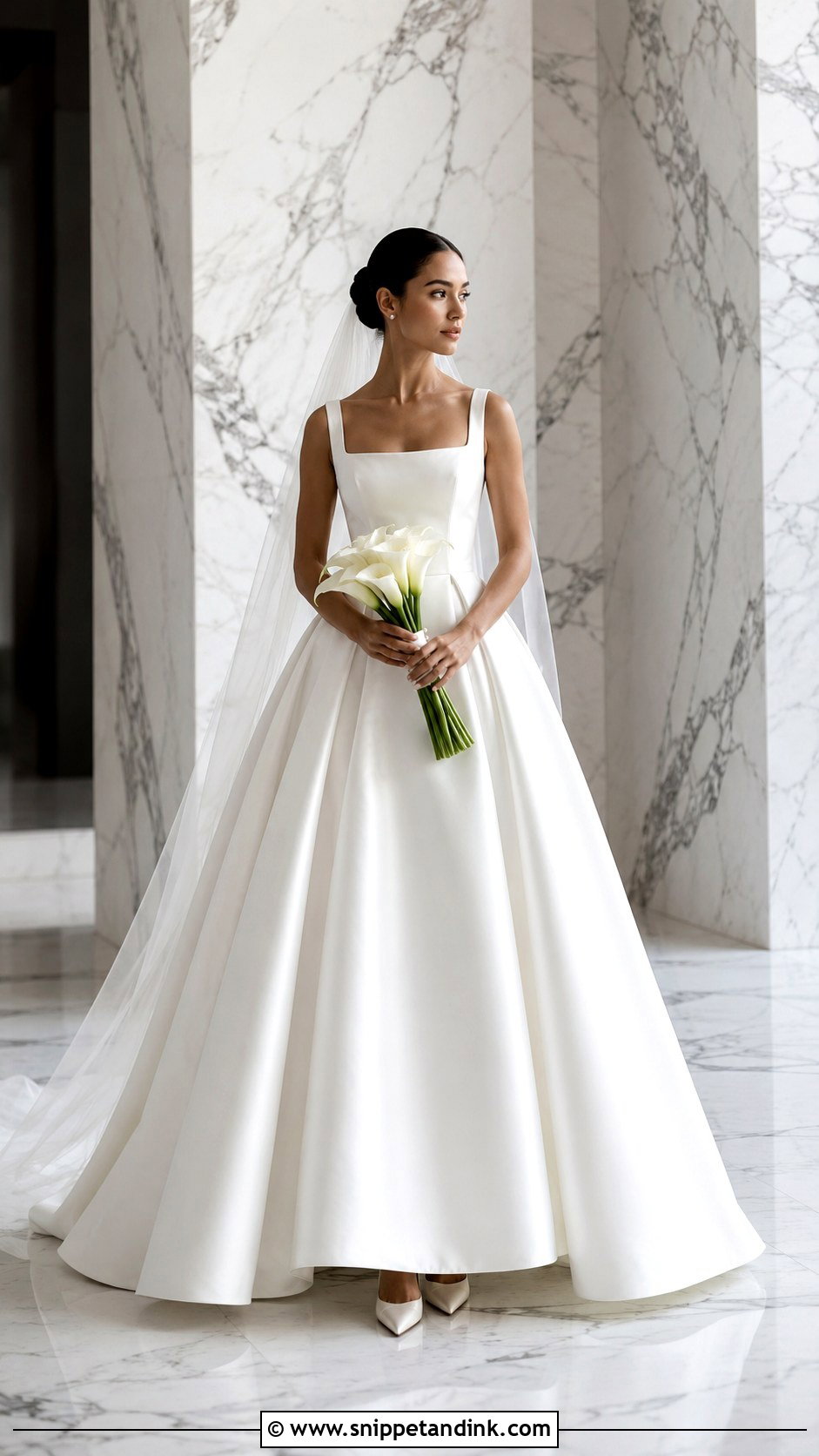
Mikado holds its own shape, so a minimalist ballgown in it can be full with fewer underlayers than tulle. That means less weight around the waist, which brides notice late in the evening. Look for precise seams, a smooth bodice and well-placed pleats at the waist. A straight neckline or wide square neck suits the mood. Pearl studs, a sleek bun, pointed satin pumps and a long plain veil complete it, with calla lilies or another shaped bouquet. Plain fabric shows every fold and seam, so tailoring quality is non-negotiable. Practice sitting and bustling the train before the day.
16. Floral Lace Wedding Dress Ballgown
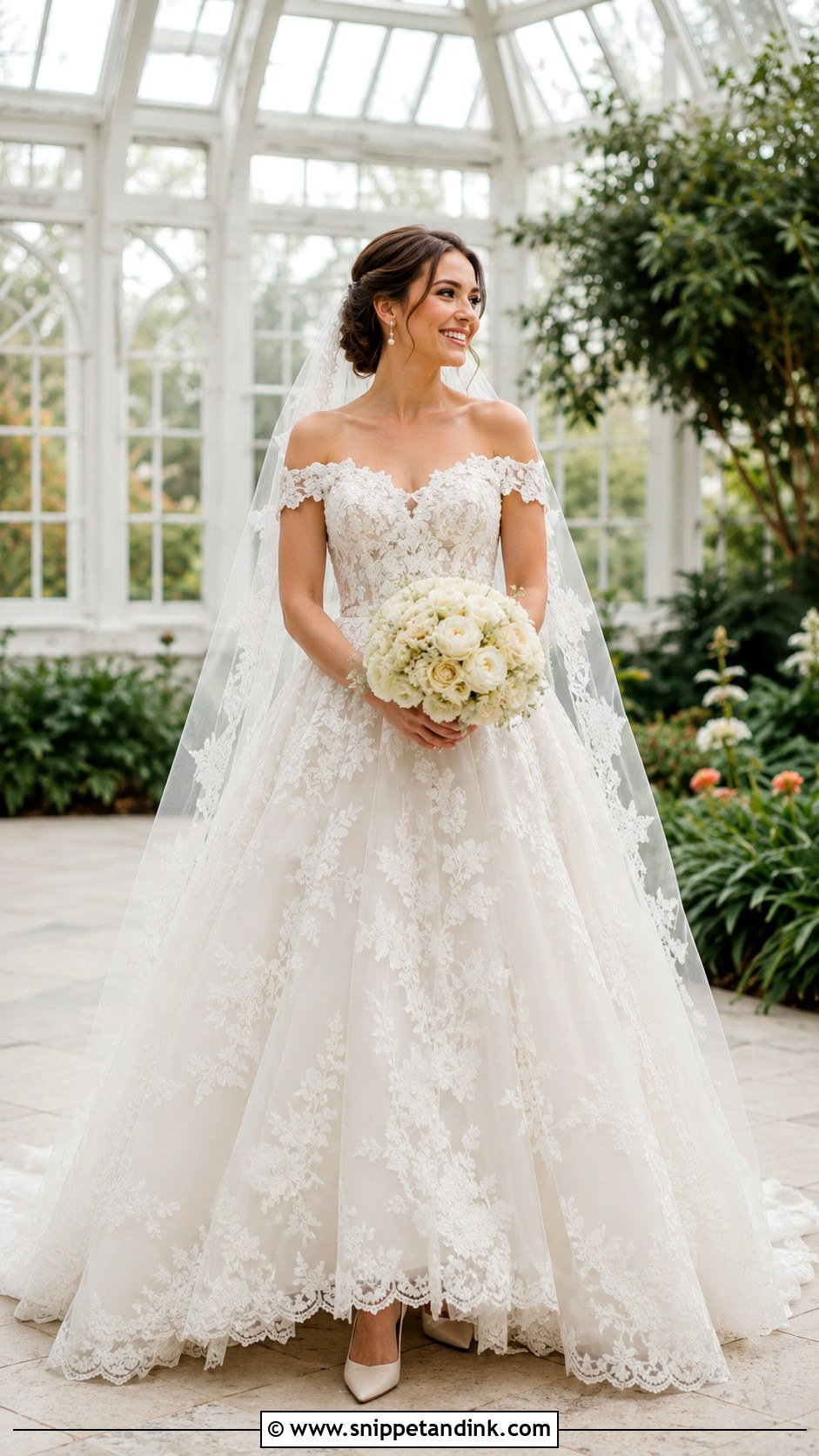
Floral lace reads from both close up and across a room, which is why it never really dates. Larger motifs look bolder, fine lace more delicate. A fitted lace bodice flowing into an appliquéd tulle skirt keeps continuity without density. Add cap sleeves, straps or an off-shoulder neckline for the coverage you want. Pearl earrings, a lace-edged veil, ivory pumps and a softly gathered bouquet are enough; skip extra sparkle. During alterations, watch where motifs land at the neckline, waist and seams. A good seamstress will move a motif rather than slice through it.
17. Detachable Sleeve Wedding Dress Ballgown
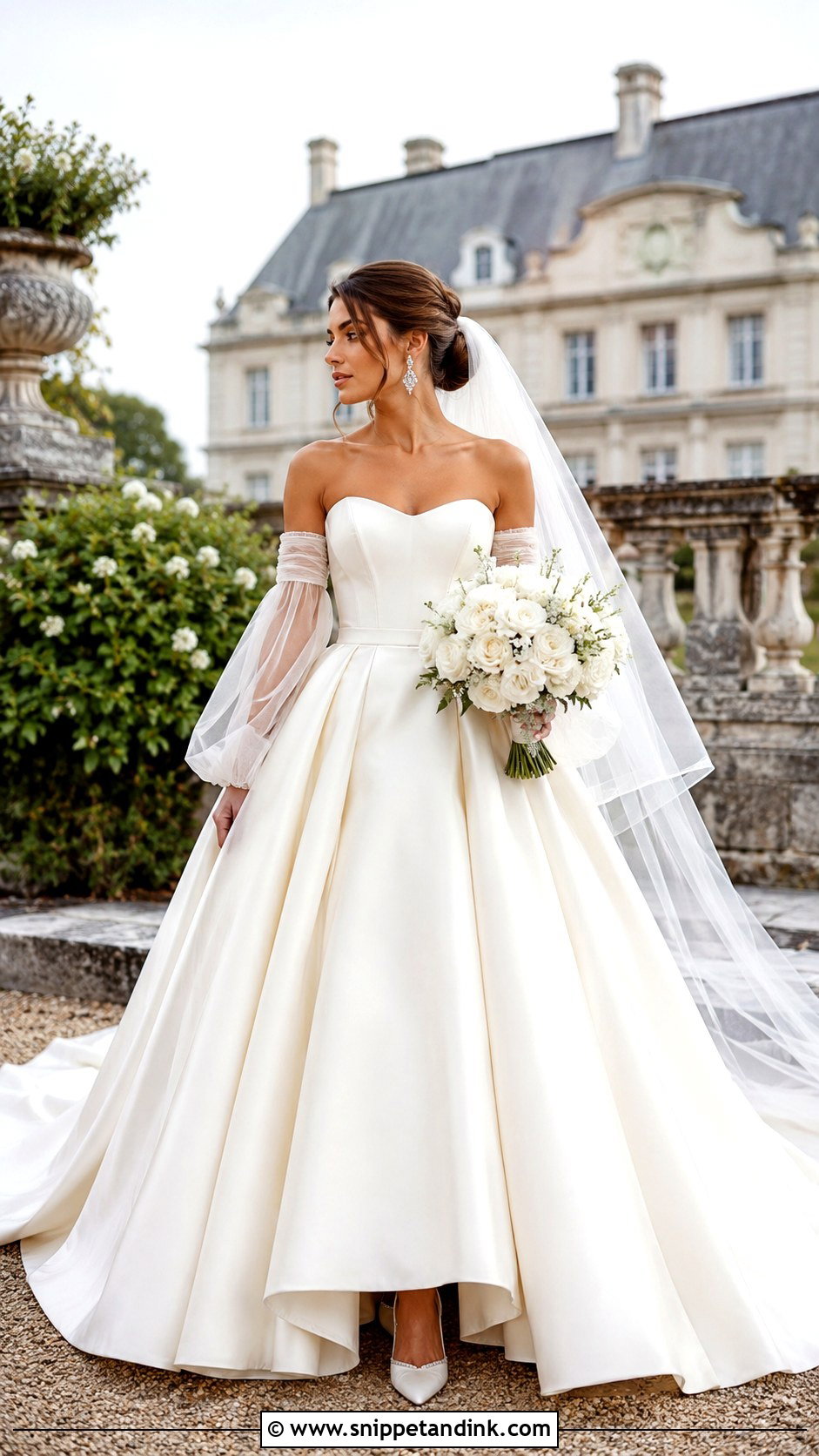
Two looks from one gown: wear sheer lace, gathered tulle or fitted satin sleeves for the ceremony, then take them off for the reception. Underneath sits a strapless or sleeveless corset bodice, a defined waist and a full skirt. Pick earrings that suit both versions, ivory heels, and a veil that won’t snag on the sleeve fastenings. Once the sleeves are off, a statement bracelet freshens the look. I always test the fastenings at a fitting; snaps can show through sheer fabric, and hooks can scratch. Keep the removed sleeves in a labeled bag with someone you trust so they don’t vanish during the party.
18. Detachable Overskirt Wedding Dress Ballgown
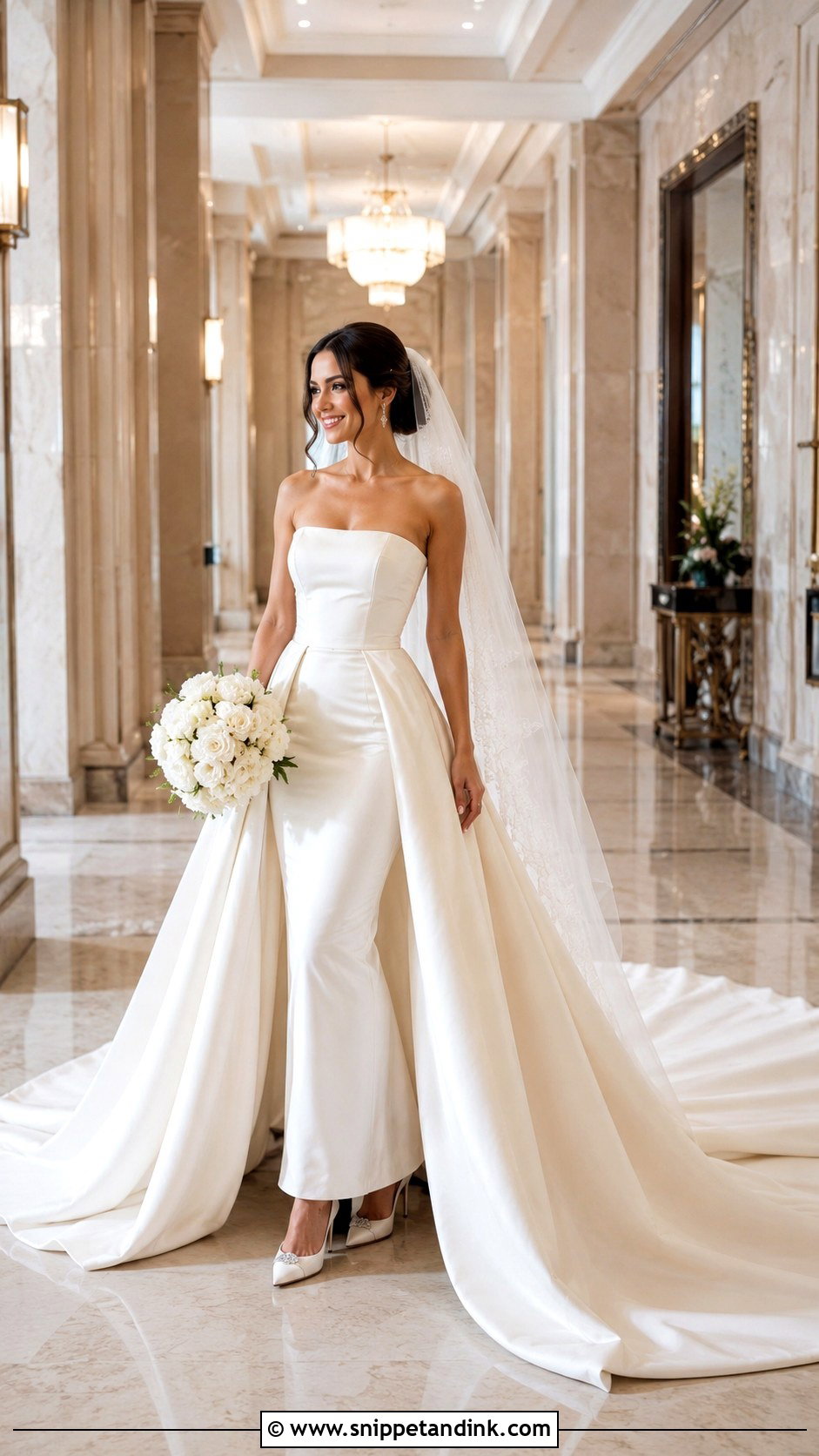
An overskirt gives you full ballgown scale for the ceremony and a slimmer dress for dancing. The outer layer can be satin, tulle, lace or organza, with a sweeping train; underneath, a fitted dress or slim A-line moves freely. Keep both layers in the same color family or the change looks like a costume swap. A cathedral veil, drop earrings and pointed pumps suit the ceremony half; a shorter veil or jeweled hairpiece suits the second. The waistband has to close smoothly and stay hidden from every angle. Rehearse the change once with the person helping you, so it takes minutes instead of half the cocktail hour.
19. Blush Wedding Dress Ballgown
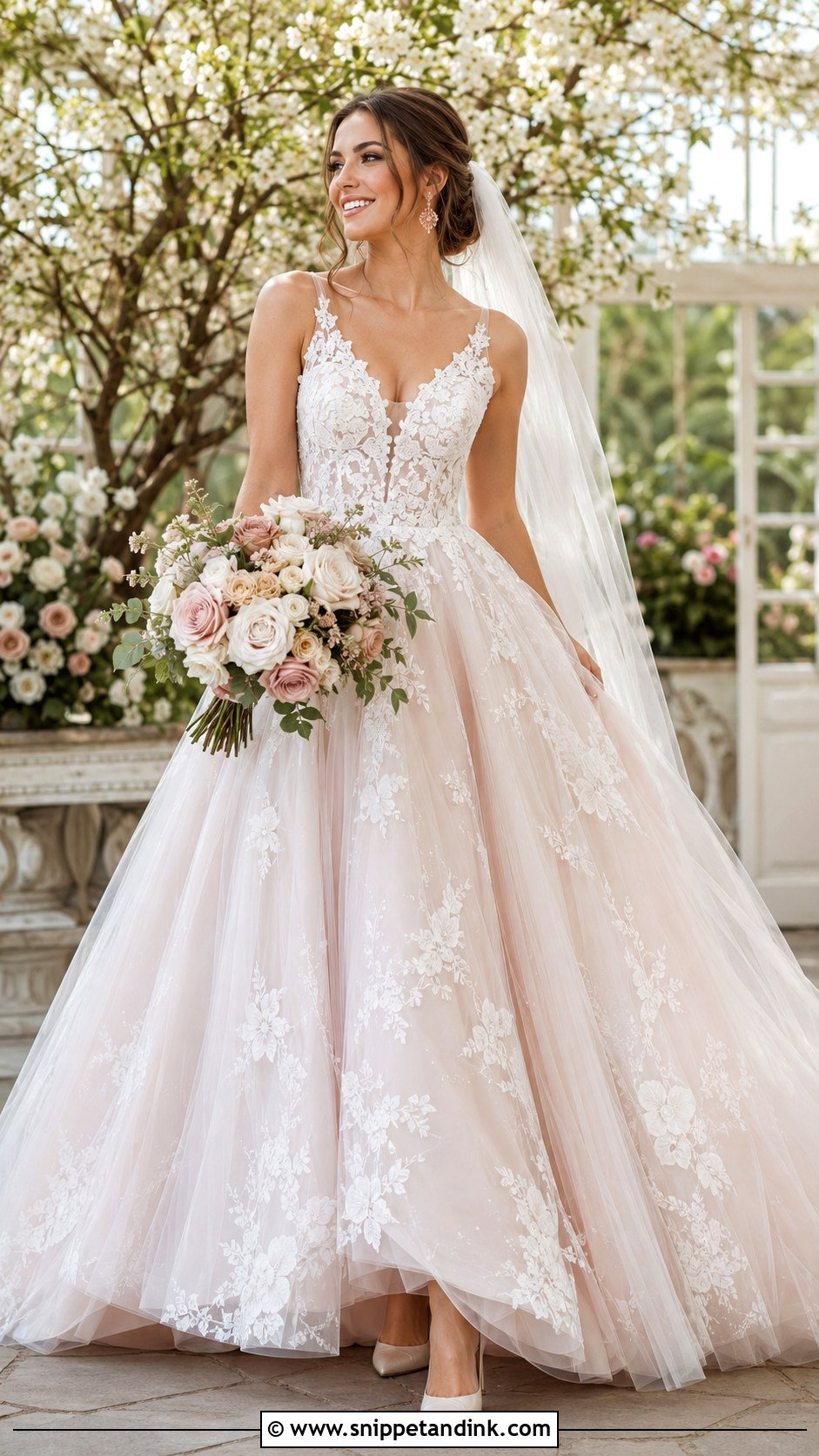
Blush adds gentle color while keeping the ballgown romantic. Pale pink, champagne-blush and nude linings can warm white lace or ivory tulle from underneath. Pick a shade that flatters your skin in daylight, indoor light and flash; those three can look like different dresses. A floral appliqué bodice and layered skirt feel dreamy; plain satin feels more modern. Rose-gold earrings, neutral ivory heels and a sheer veil matched to the lightest part of the dress finish it, with white, cream and muted pink flowers. Carry a fabric swatch to every accessory shop, because undertones clash in ways you only see side by side.
20. Sparkle Wedding Dress Ballgown
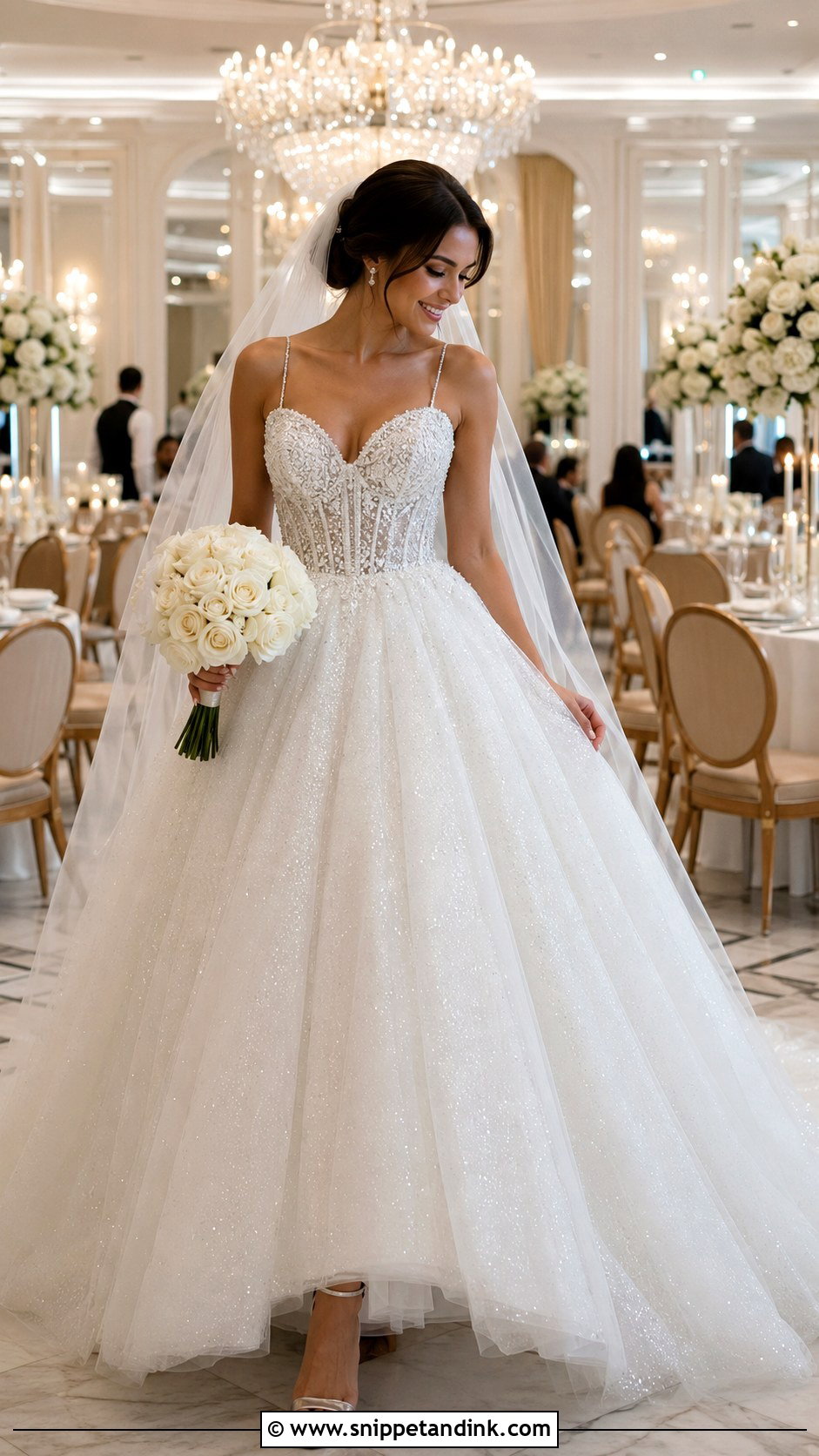
Sparkle needs placement, or it overwhelms the shape. Glitter tulle, crystal beading or sequined embroidery all work; concentrate shine on the fitted bodice and scatter it lightly over the skirt, or use one glittering fabric throughout with a plain neckline. Small crystal earrings, a plain veil, metallic ivory heels and a bouquet without jeweled wire are enough. View it in daylight, under venue lighting and with flash before deciding. Glitter tulle can shed onto a partner’s dark suit, and heavy beading adds real weight. Check the underarm and inner lining for scratchy edges, since you’ll be in it for hours.
Cars, Doorways and the Bathroom in a Full Skirt
Nobody photographs the logistics, but they shape your day. A wide skirt needs a car with a roomy back seat; you sit first, then a helper gathers the skirt in after you, keeping the train on your lap so it doesn’t drag on the door sill. Measure the doorways and the aisle at your venue if the gown is very full, and walk through them in your mind before you choose.
The bathroom plan
Many brides find it easiest to face the cistern and let a helper hold the gathered skirt from behind. A slip-style garment that gathers the skirt into a bag, sometimes sold as a bridal skirt holder, helps if you’d rather go alone. Choose your helper in advance and do one trial run in the dress at a fitting.
At the reception table
Ask the venue for a chair without arms and a little extra space at the top table. Sit toward the front of the seat and sweep the skirt to one side; perching on a full train crushes the layers and makes them sit unevenly in later photos.
How Much Skirt Does Your Venue Have Room For?
A ballgown should feel impressive without stopping you enjoying your own wedding. Compare necklines, waist placement, fabric, volume and train length first, then think about support, movement, the size of the room, the weather and the alteration time you have. Satin suits a clean formal day; lace, pearls, flowers or ruffles soften it. Detachable sleeves and overskirts give you two silhouettes from one dress. Test the whole outfit, veil, shoes, jewelry and undergarments, before final alterations. If you can sit, hug and walk a flight of stairs in it, you’ve found the right one.
You'll Like These Ideas:




Leave a Reply