
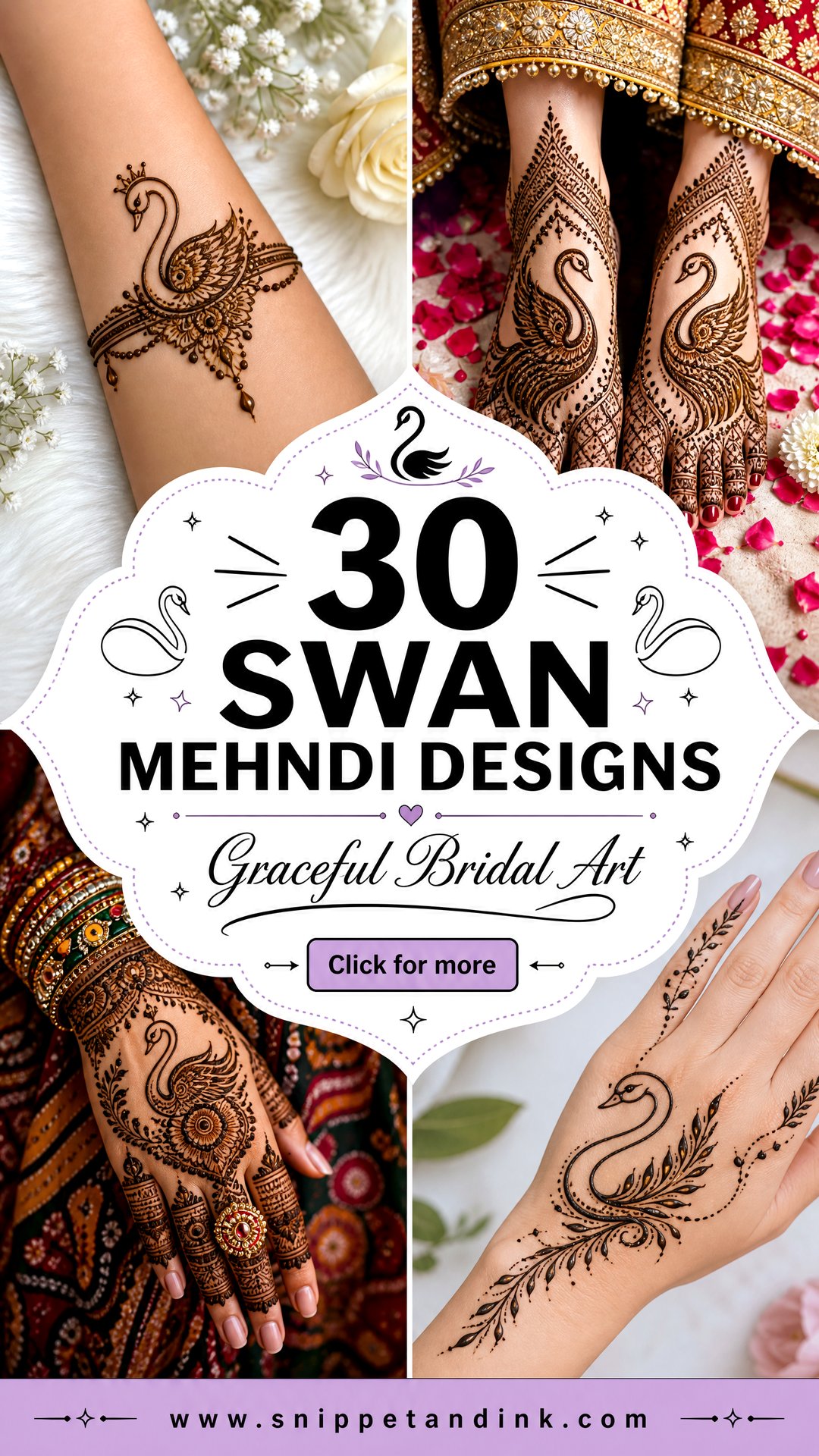
A swan is one of my favorite motifs to draw in henna because it is almost entirely curves. The long neck, rounded breast and folded wing let the cone move without stopping, and that flow is what makes a design look hand-drawn rather than stamped. It can sit alone in the palm, travel diagonally across the back hand, or anchor a full-hand bridal pattern alongside lotus flowers, paisleys, mandalas, jaali and Arabic trails. The ideas below range from a single small bird to dense bridal work, with notes on placement and how each one stains.
Where the Palm Creases Break a Swan’s Neck
A swan looks simple, but it is unforgiving. The whole motif depends on one smooth S-curve, and a hand is not a flat page. Here is what I think about before the cone touches the skin.
- Creases. The palm folds along its main lines every time you close your hand. A neck drawn across a crease looks kinked once the stain develops, so I fit the bird between the lines.
- Paste consistency. For a long neck stroke the paste has to flow without breaking. Too thick and the line stutters; too thin and it spreads into a blob.
- Stain depth. Fingertips and the palm center stain darkest, the back hand and forearm lighter. I place the swan where I want the boldest color.
- Size. Small hands fit a smaller swan with fewer feathers. Cramming detail into a tiny bird produces a muddy shape once the lines darken and spread slightly.
If you are showing your artist a photo from someone else’s hands, expect the design to be adjusted to your hand’s size and creases. That adjustment is a sign of a careful artist, not a lazy one.
1. Simple Swan Mehndi Design
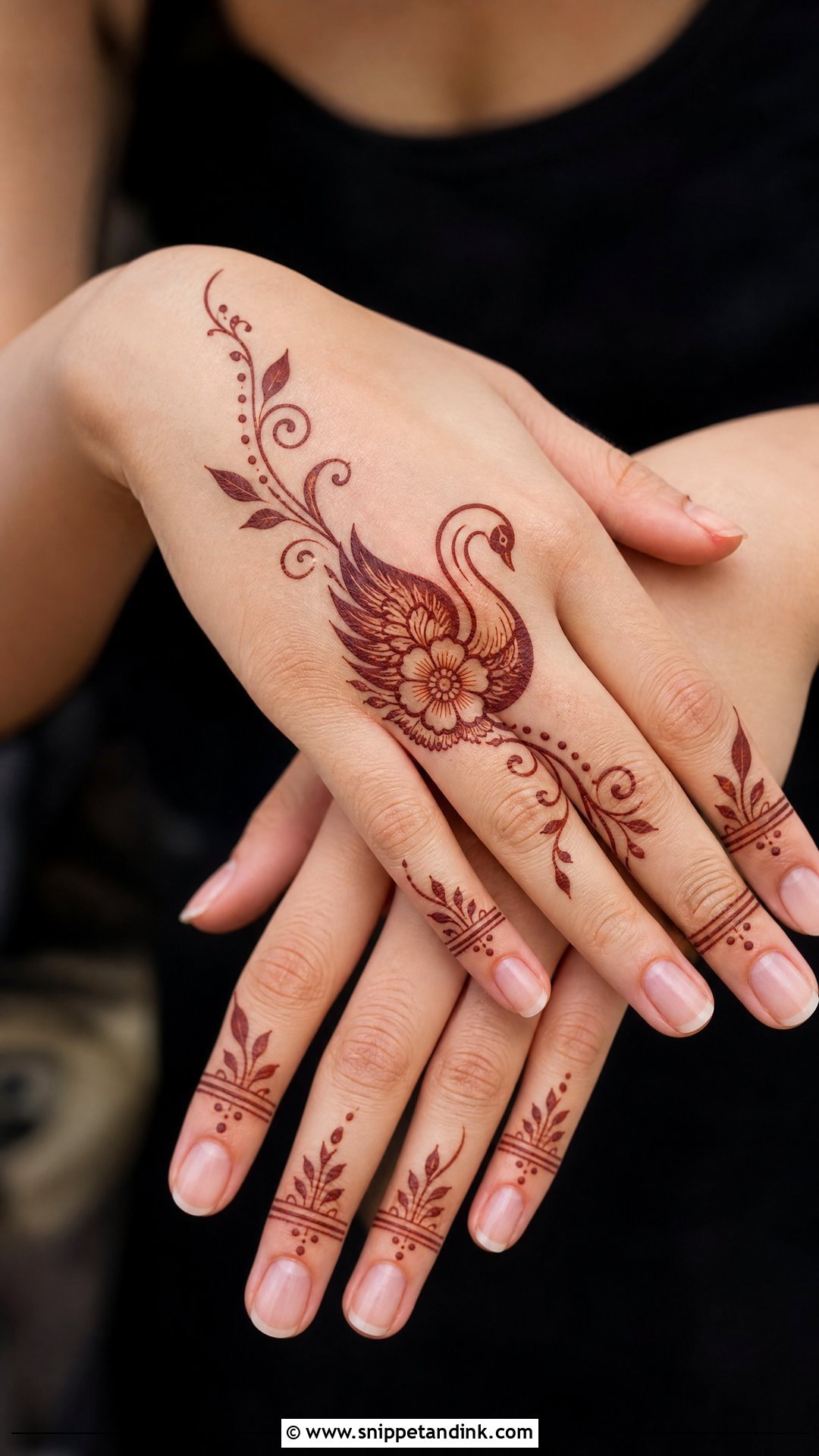
One swan, open space around it and a few dots: this is the design I’d give someone trying mehndi for the first time or attending a small gathering. Keep the neck as a single unbroken stroke, because a joined neck shows a visible blob once the paste dries. Small flowers and leafy vines frame it, and the fingers only need tiny bands or tips. The open skin around the motif is what lets the shape read clearly once it stains.
2. Swan Mehndi Design For Front Hand
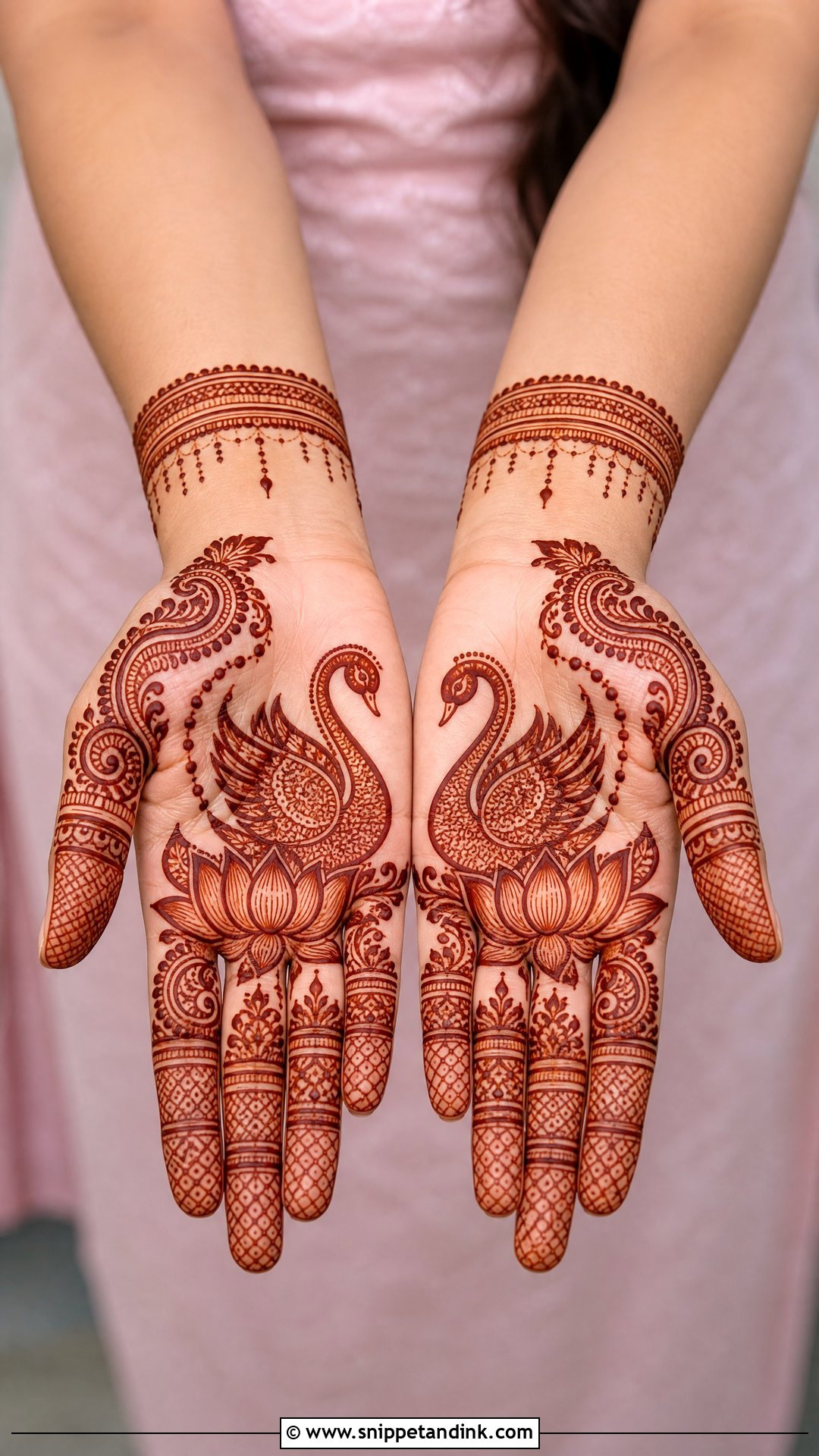
The center of the palm is where henna stains darkest, so a swan placed there comes up rich and clear. There is room for a full curved neck, a rounded wing and flowing tail feathers, with lotus petals, paisley borders and fine leafy lines around it. I position the swan’s body between the main palm creases rather than across them, since a crease running through the neck makes it look broken when the hand relaxes. Matching finger vines and a simple wrist band finish it.
3. Swan Mehndi Design For Back Hand
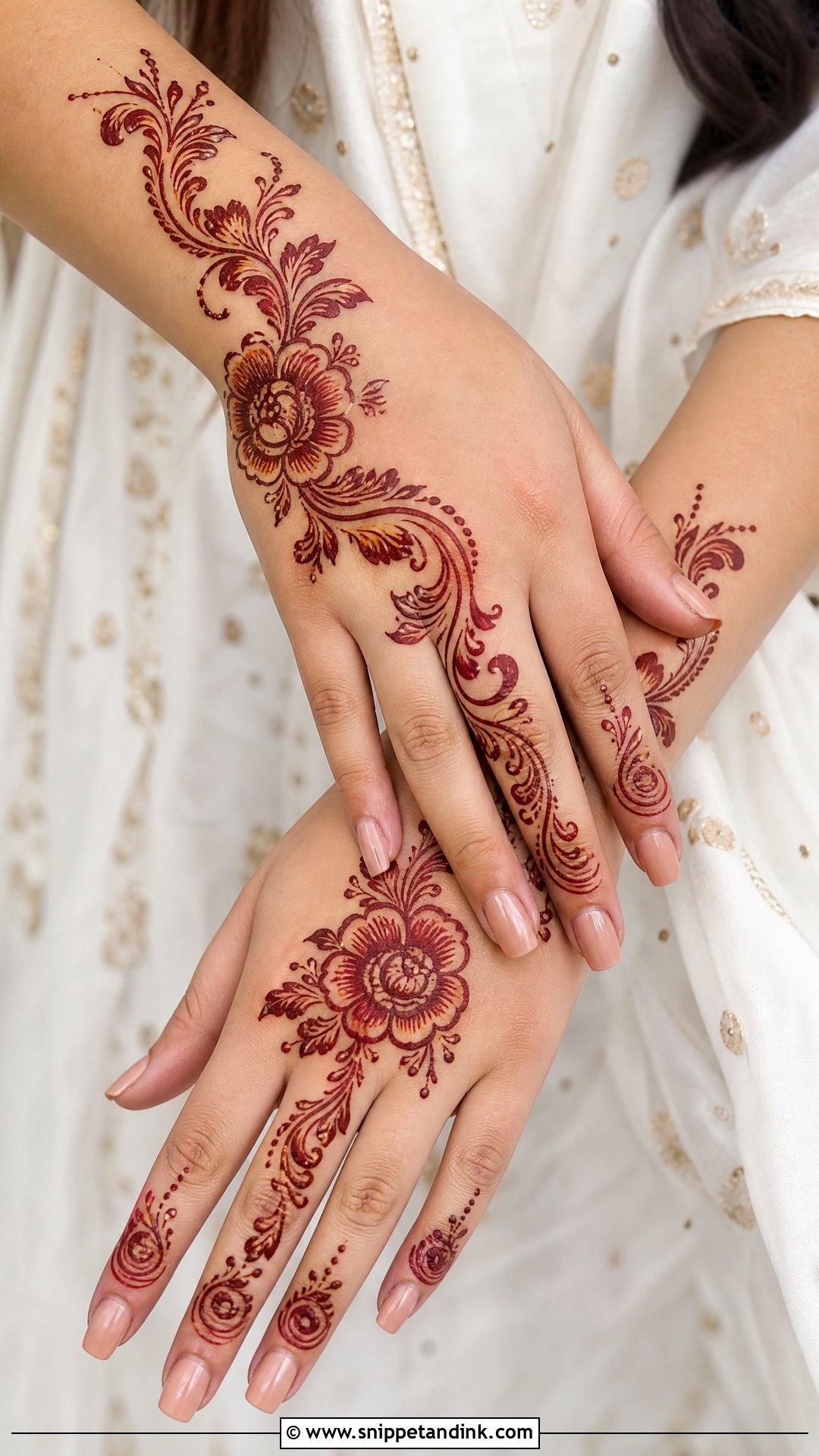
A swan mehndi design for back hand usually runs diagonally from the wrist toward the index finger, with the swan riding the curve. Arabic flowers, curved leaves and dotted chains suit it. Back-hand skin is thinner and stains lighter than the palm, so I draw the swan’s outline slightly bolder here than I would inside the hand. Leave the center open for a lighter look or fill with fine mesh. Bridesmaids and festival guests suit it, and it sits well beside rings and bangles.
4. Bridal Swan Mehndi Design
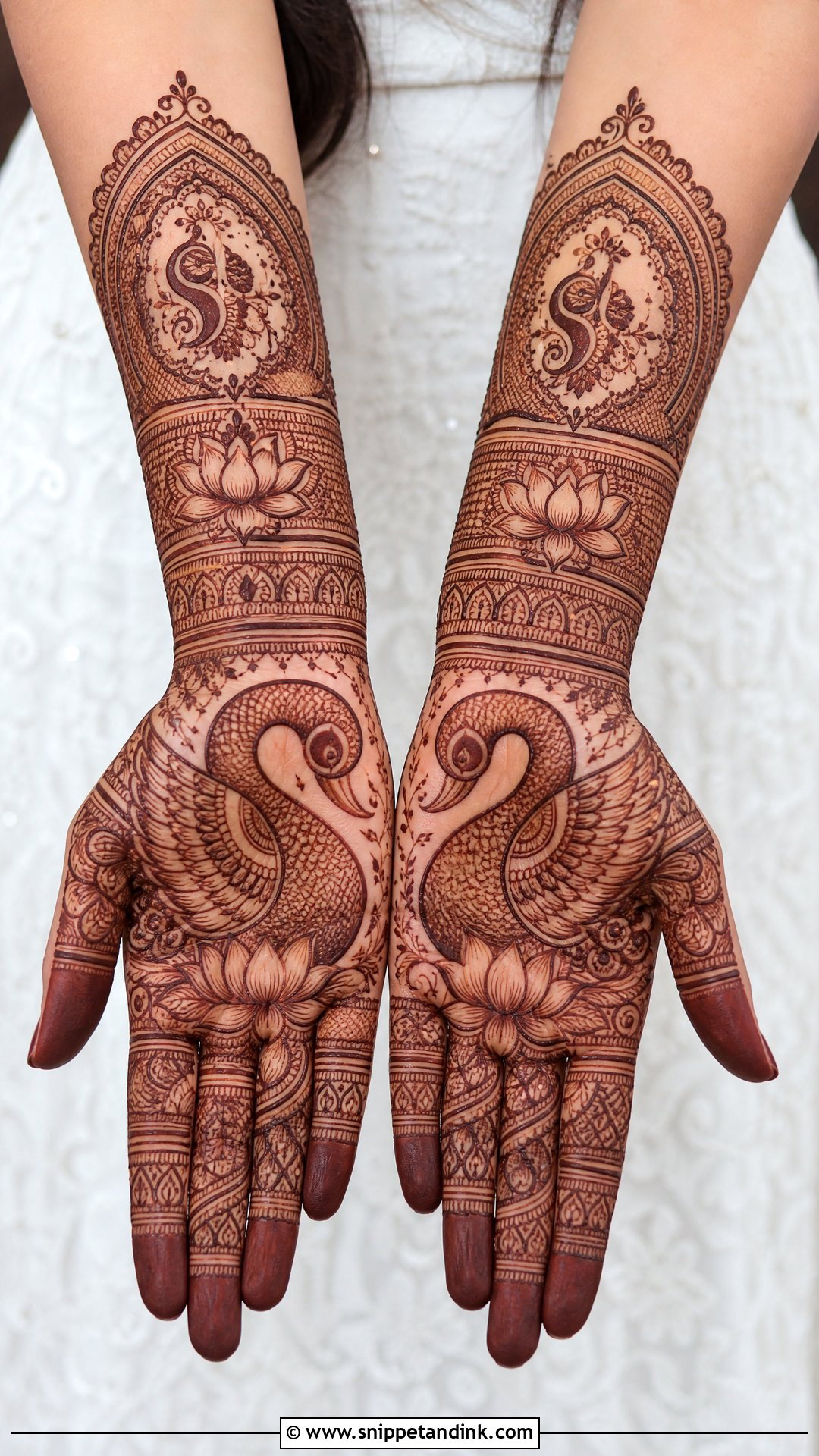
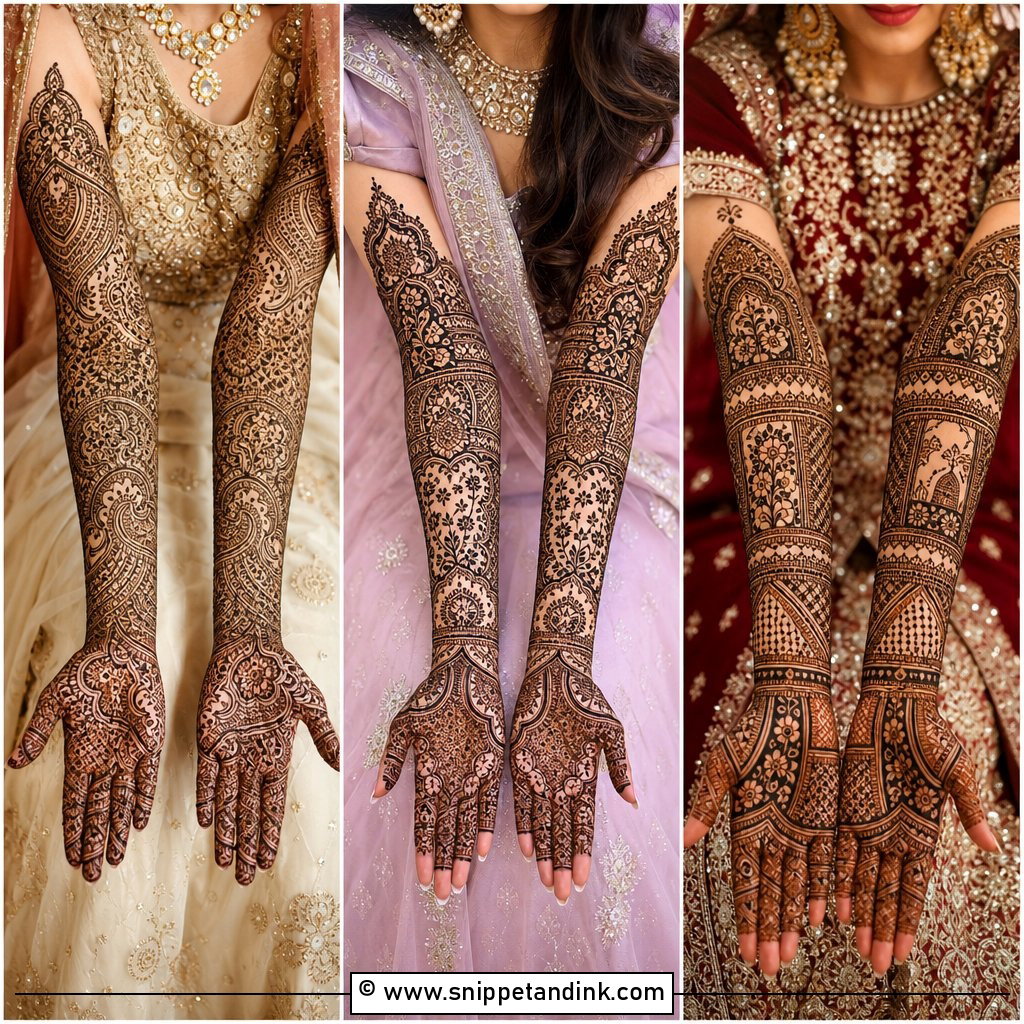
In bridal work, a pair of swans facing each other across the palm or forearm makes a strong centerpiece among lotus flowers, peacocks, paisleys, mandalas and jaali. I add shaded feathers in the wings and a few curved water lines beneath the birds, which grounds them so they don’t float in the filler. Fingers take dense florals and net patterns; the wrist takes bracelet borders. It is a way to give the bride a motif of her own beyond the usual dulhan figures.
5. Full Hand Swan Mehndi Design
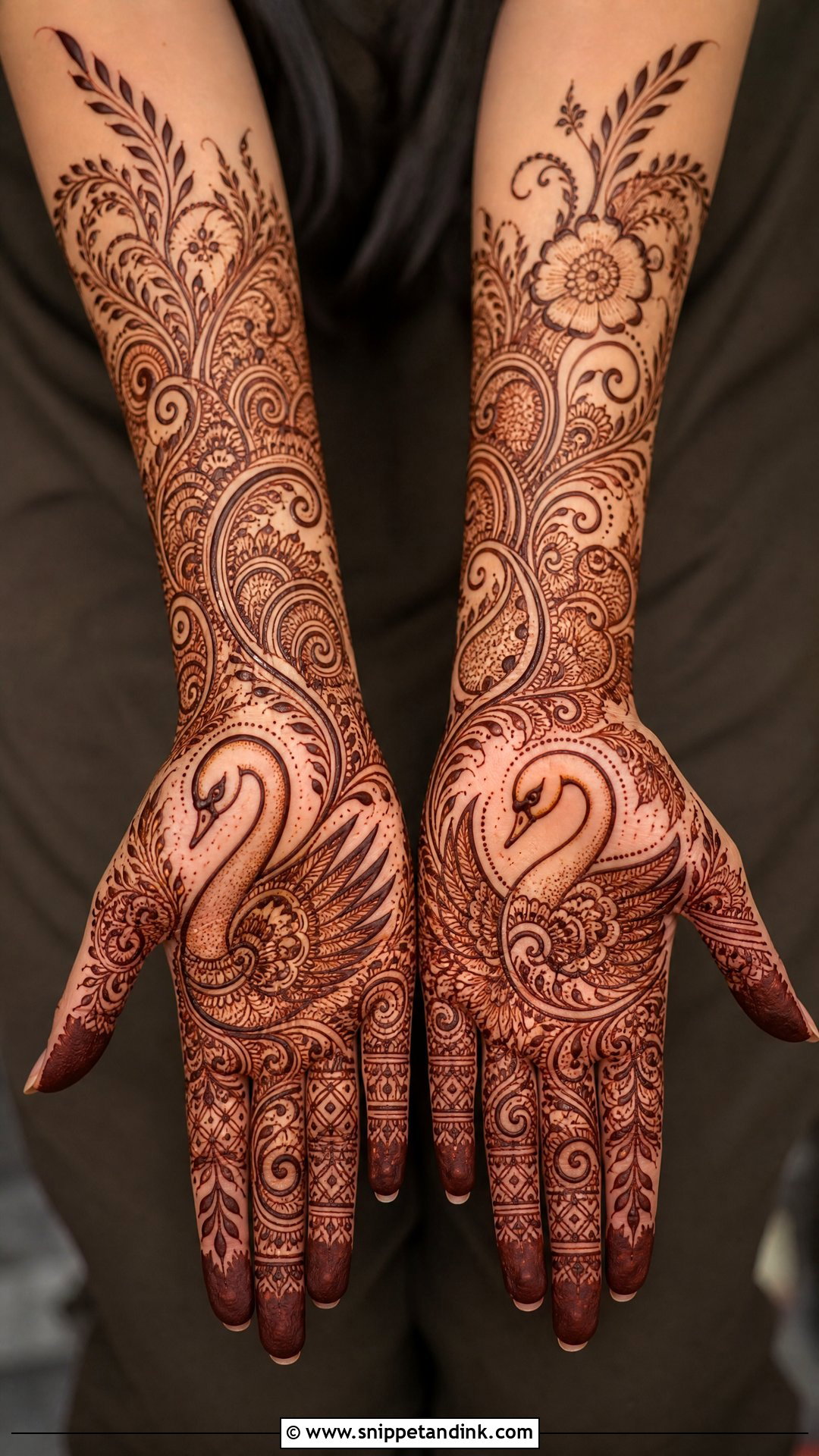
Full coverage with one theme starts with a large swan on the palm or back hand and spreads toward the wrist and forearm with flowers, paisleys, vines and feather-like strokes. Dense filler can swallow the bird, so I always leave a thin ring of bare skin around the swan’s outline. That gap becomes a dark-edged halo once the stain develops and keeps the shape readable. Weddings, sangeet nights and family celebrations suit it.
6. Arabic Swan Mehndi Design
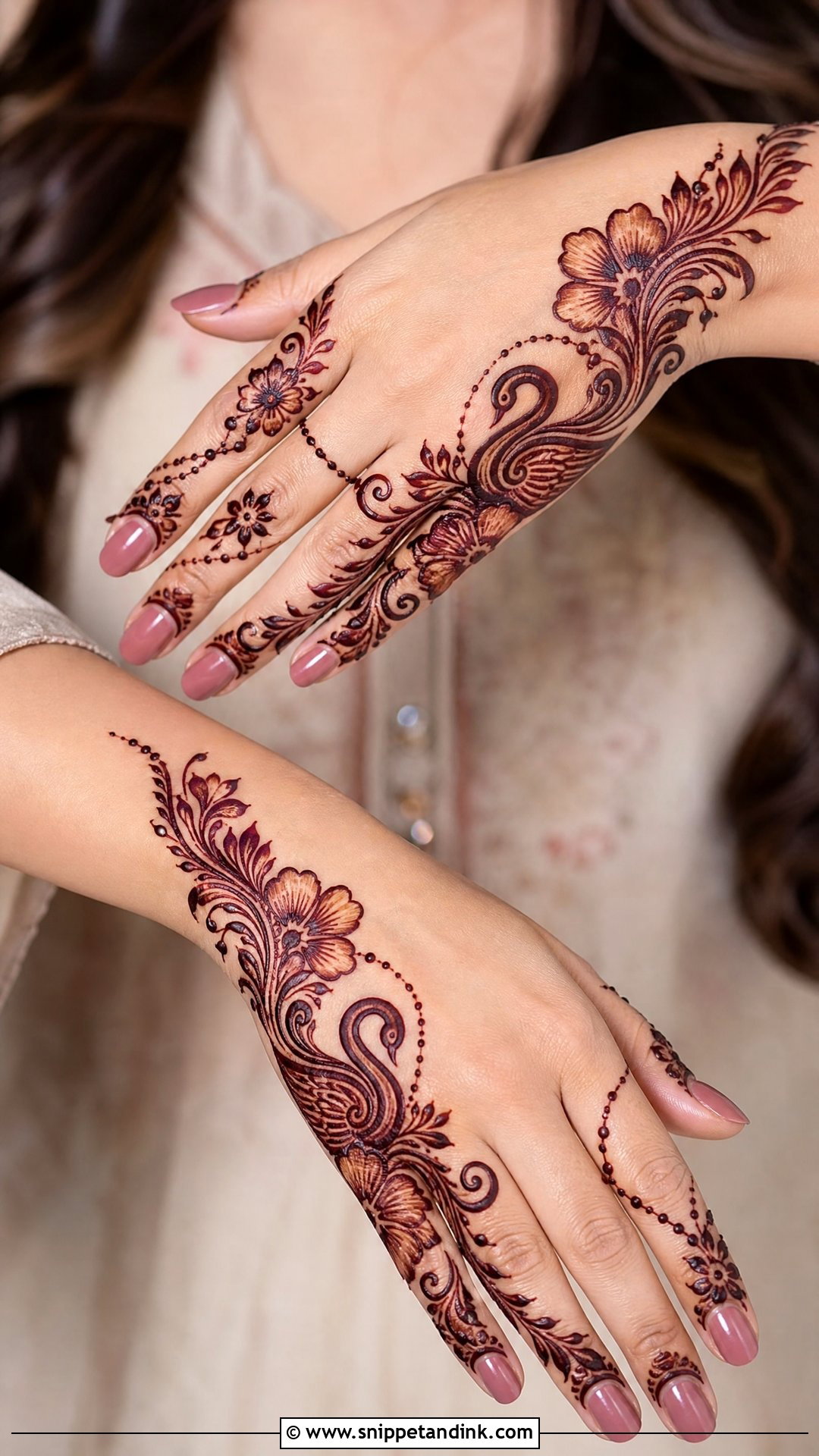
Arabic style is about flow and spacing. A diagonal trail carries the swan along its curve, with large flowers, leafy vines and shaded petals moving from wrist to fingers and clean gaps left between. Bold outlines matter here: I use a slightly wider cone tip for Arabic work so the lines stain thick and confident. It is quick to apply and suits anyone who wants graceful henna without a full-hand pattern.
7. Indian Swan Mehndi Design
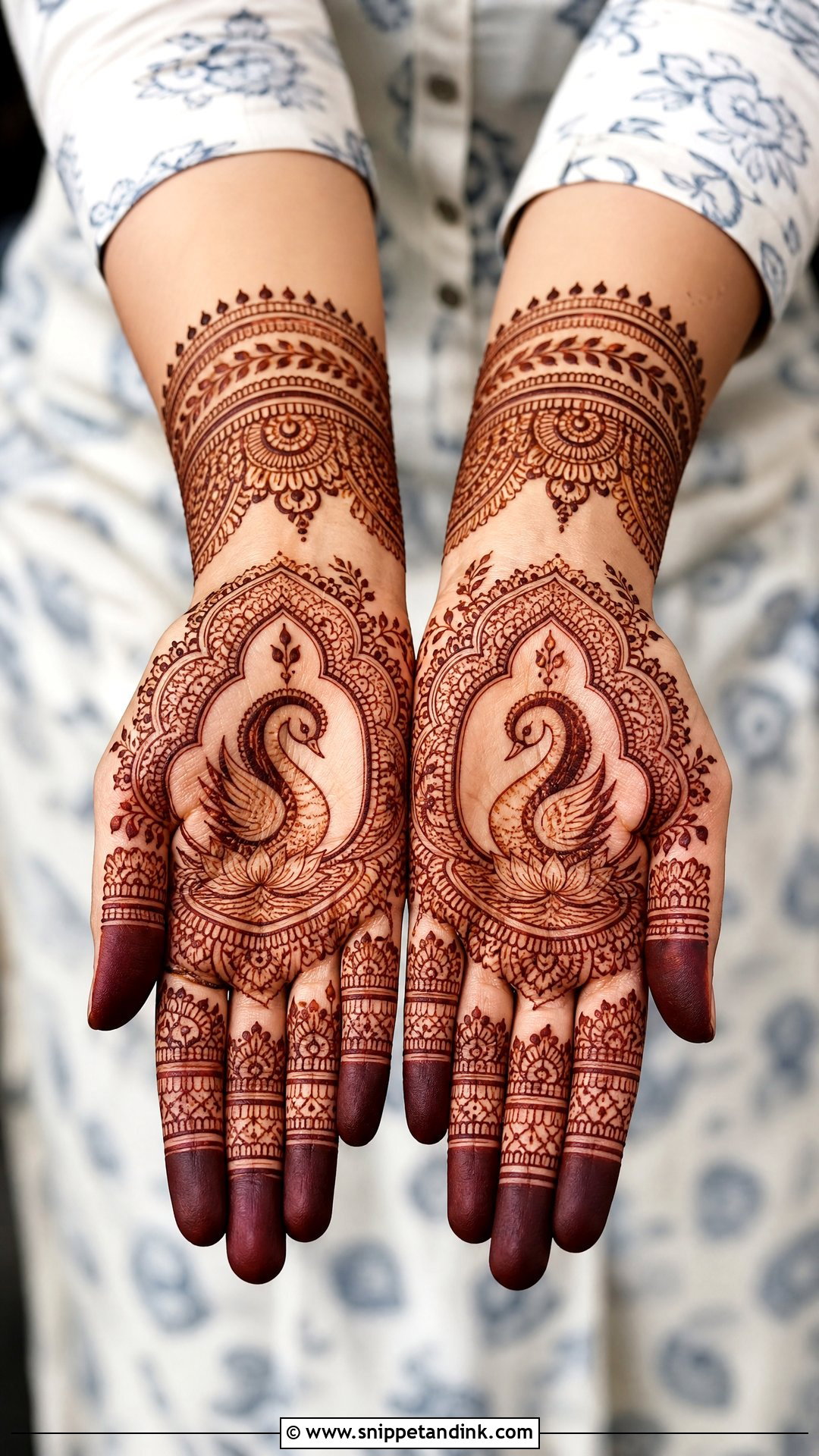
Indian-style swan mehndi is detailed and symmetrical. On the palm, the swan sits in a circular frame surrounded by paisleys, mandalas, small flowers and dots, with traditional bands on the fingers. On the back hand, it sits in the center with matching details on either side. Symmetry is where most errors show, so I sketch light guide dots on both sides before committing the outline. Weddings, Karwa Chauth, Diwali and engagements all suit it.
8. Indo Arabic Swan Mehndi Design
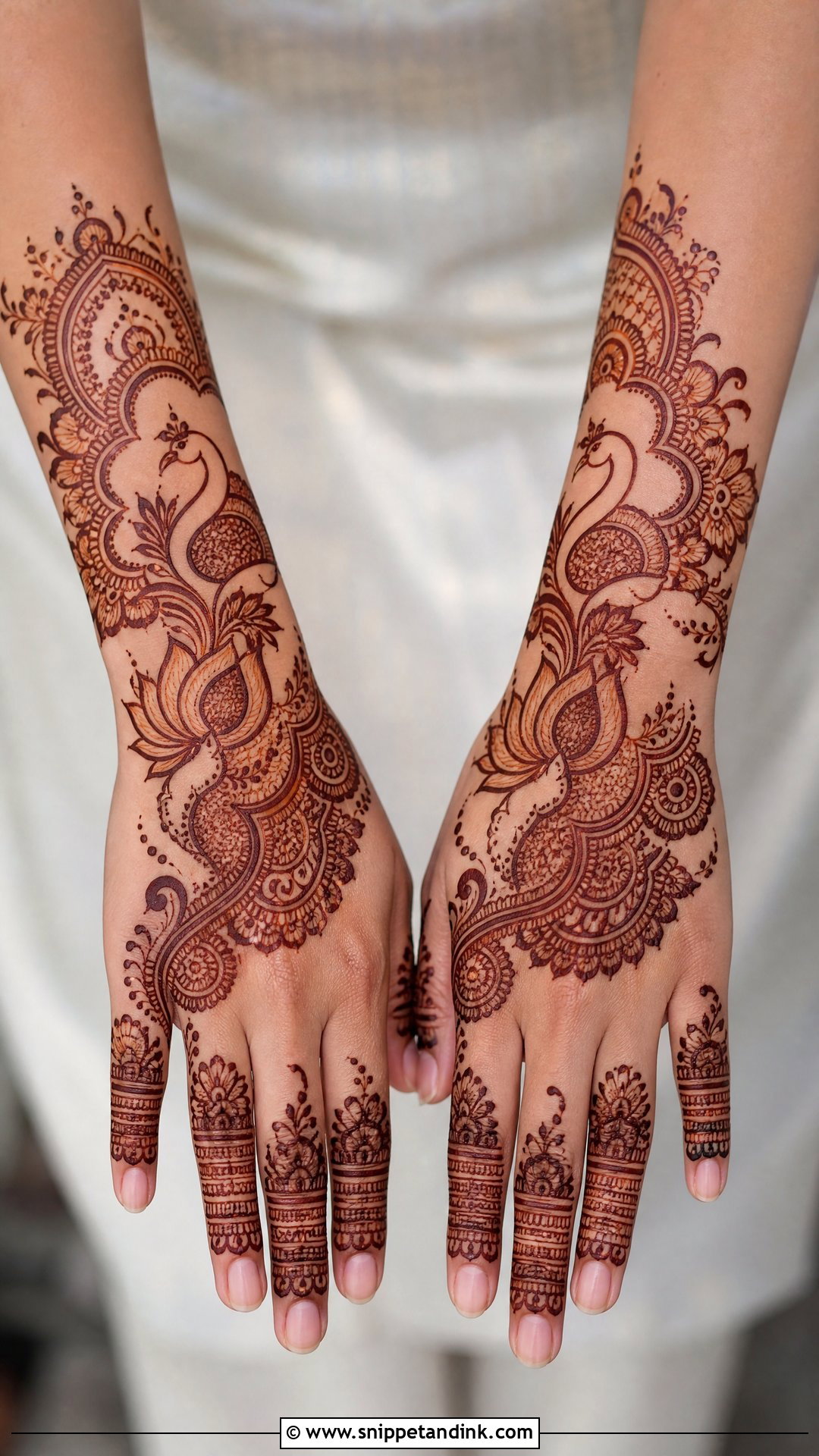
Indo-Arabic blends the bold flow of Arabic henna with the fine filling of Indian mehndi. The swan sits in a diagonal vine, with paisleys, lotus petals, mandala curves and small jaali sections around it. I decide in advance which areas stay open and which get filled, because improvising usually ends with everything filled and the Arabic character lost. Bridesmaids, engagement guests and festival wear suit it.
9. Swan And Lotus Mehndi Design
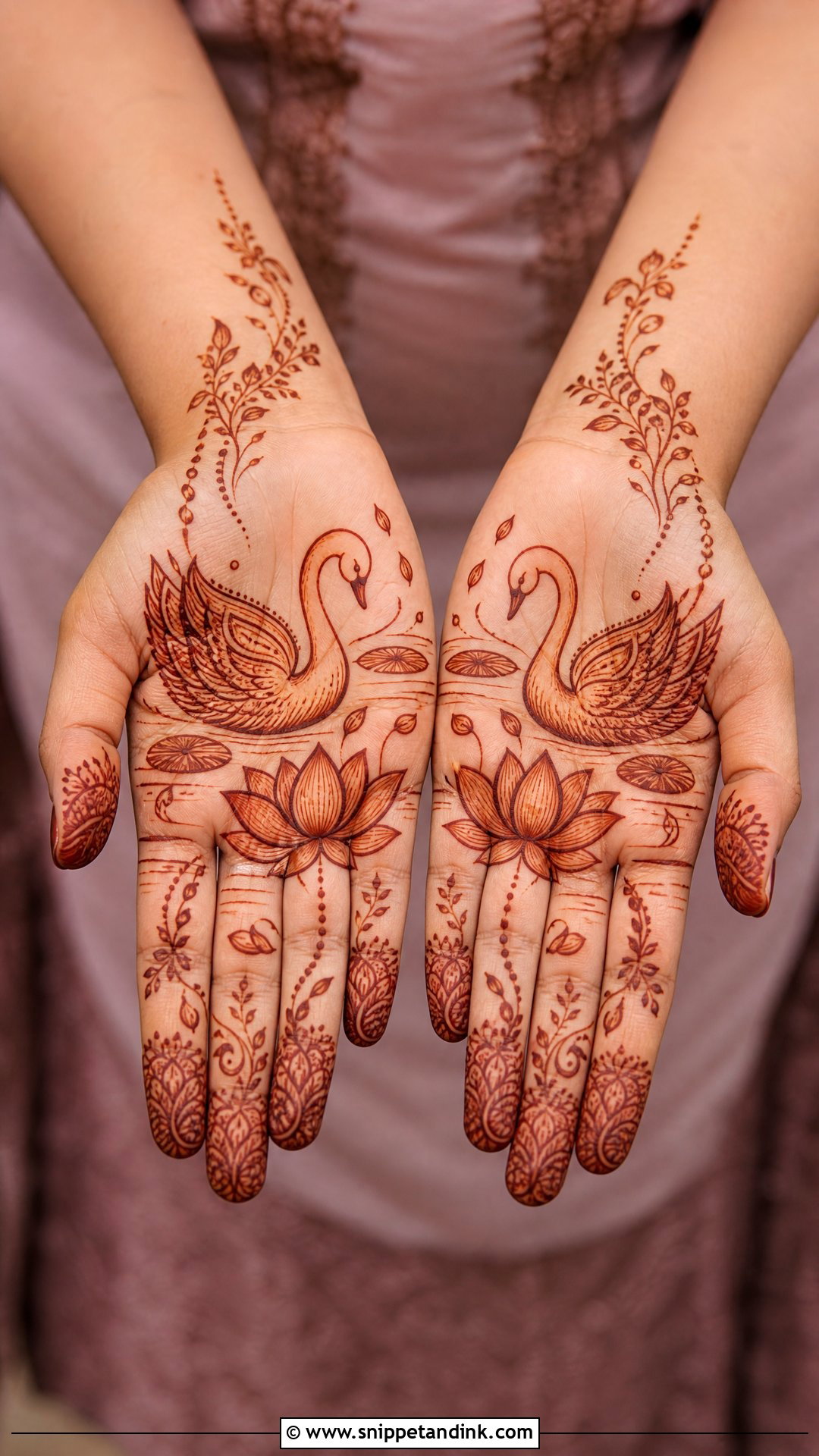
Lotus and swan belong together: both are water motifs, and both have quiet, rounded shapes. I draw the lotus first as a base on the palm, then shape the swan above it with feather details and soft shading, with a few curved lines and dots suggesting water. Repeat small lotus petals on the fingers. In a deep maroon stain, the layered petals and wing feathers read especially well.
10. Swan And Peacock Mehndi Design
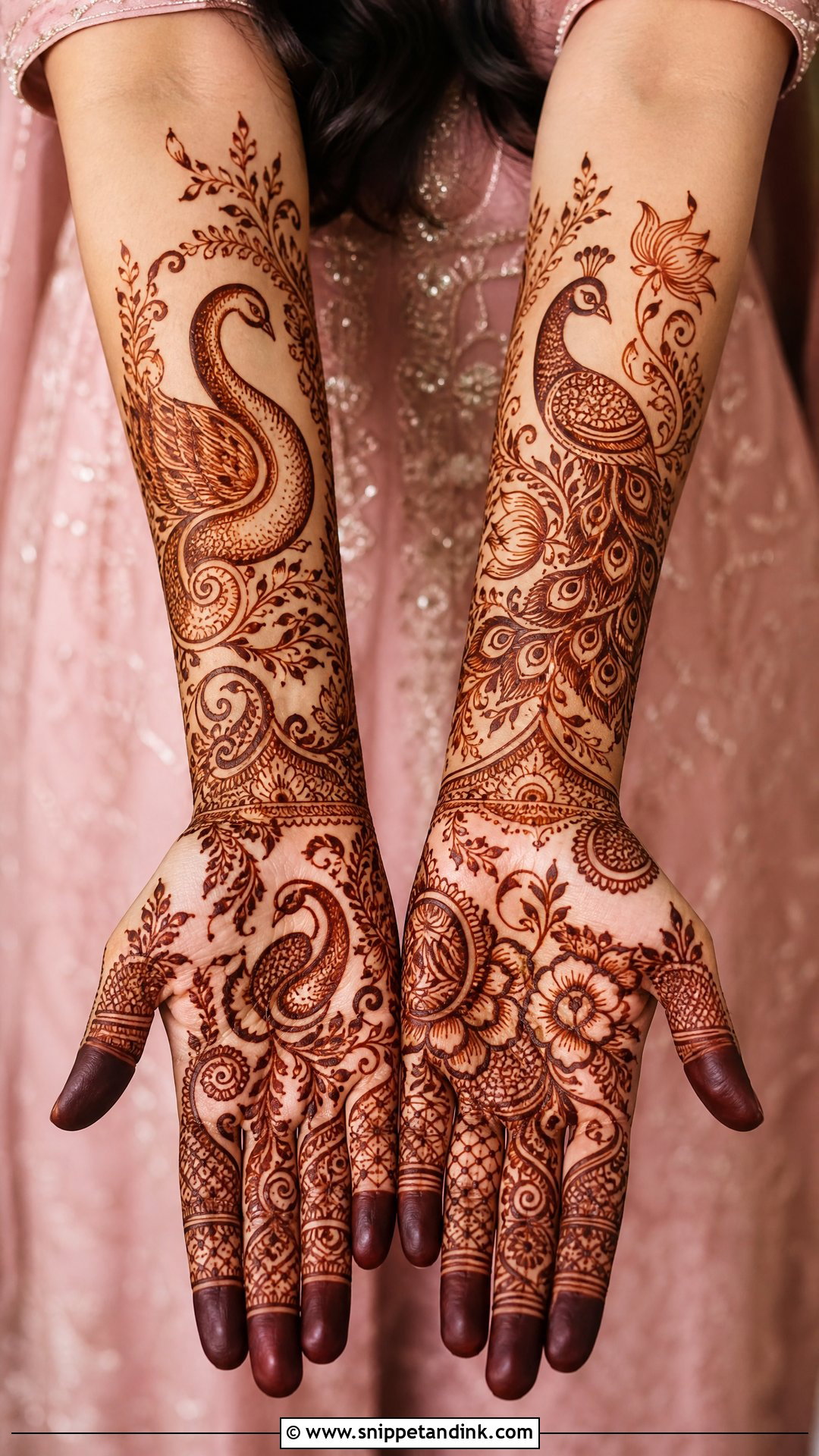
A swan and a peacock together give contrast: the swan soft and smooth, the peacock ornate. I usually put the swan on the palm and the peacock on the wrist or forearm, linked by flowers, paisleys and vines, or draw them facing each other in a bridal composition. Keep the swan’s neck clean and give the peacock the feather detail, so the two birds don’t compete for attention. Bridal and grand festive occasions suit it.
11. Swan Mandala Mehndi Design
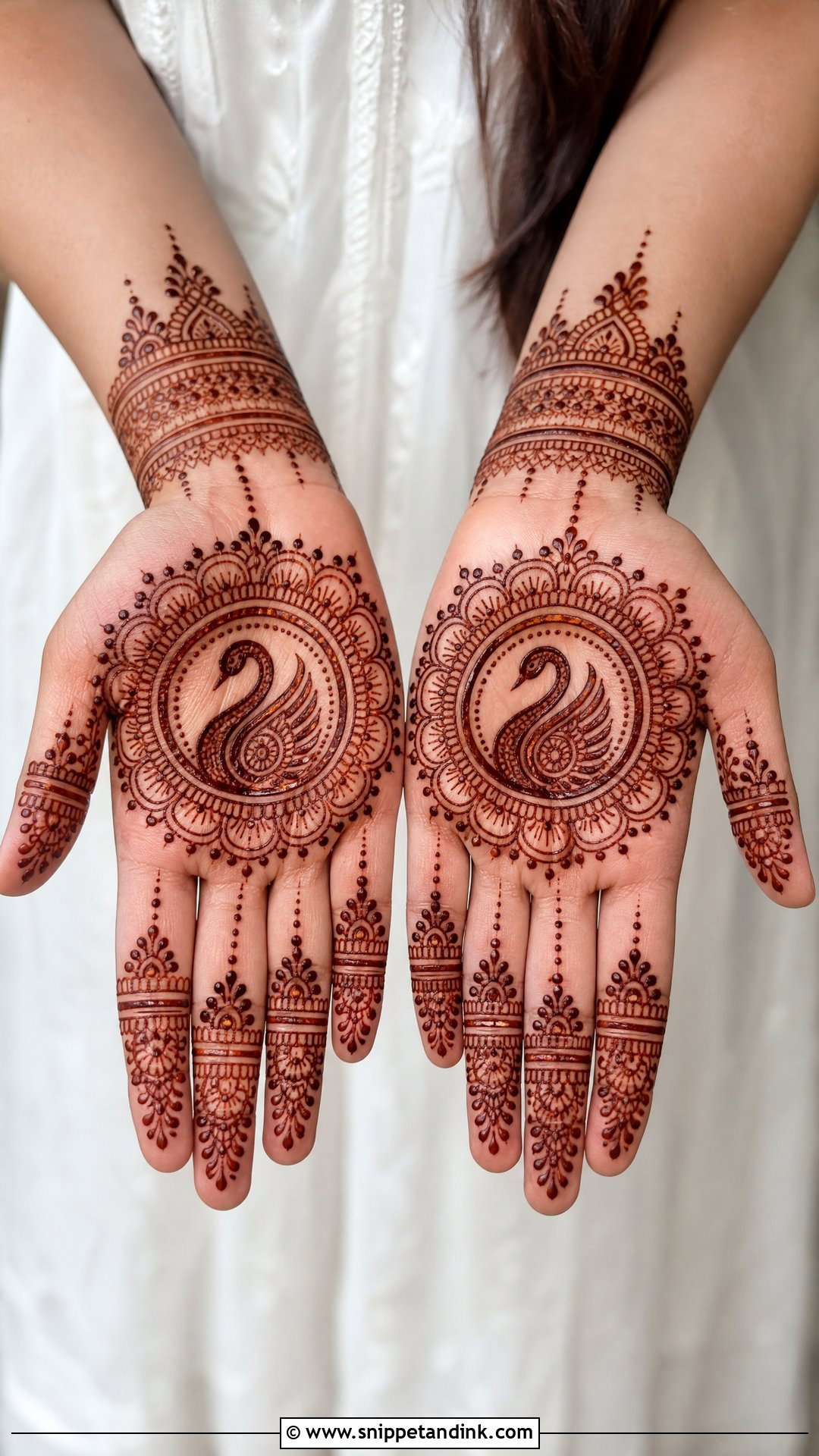
A round mandala gives the swan a frame and the palm a clear structure. Petals, dots, arches and fine rings surround the bird. I draw the mandala’s outer rings first and fit the swan inside afterwards, because sizing a circle around a finished bird almost always leaves it lopsided. Matching finger bands and small florals connect the hand. Pujas, festivals and engagements suit it.
12. Swan Jaali Mehndi Design
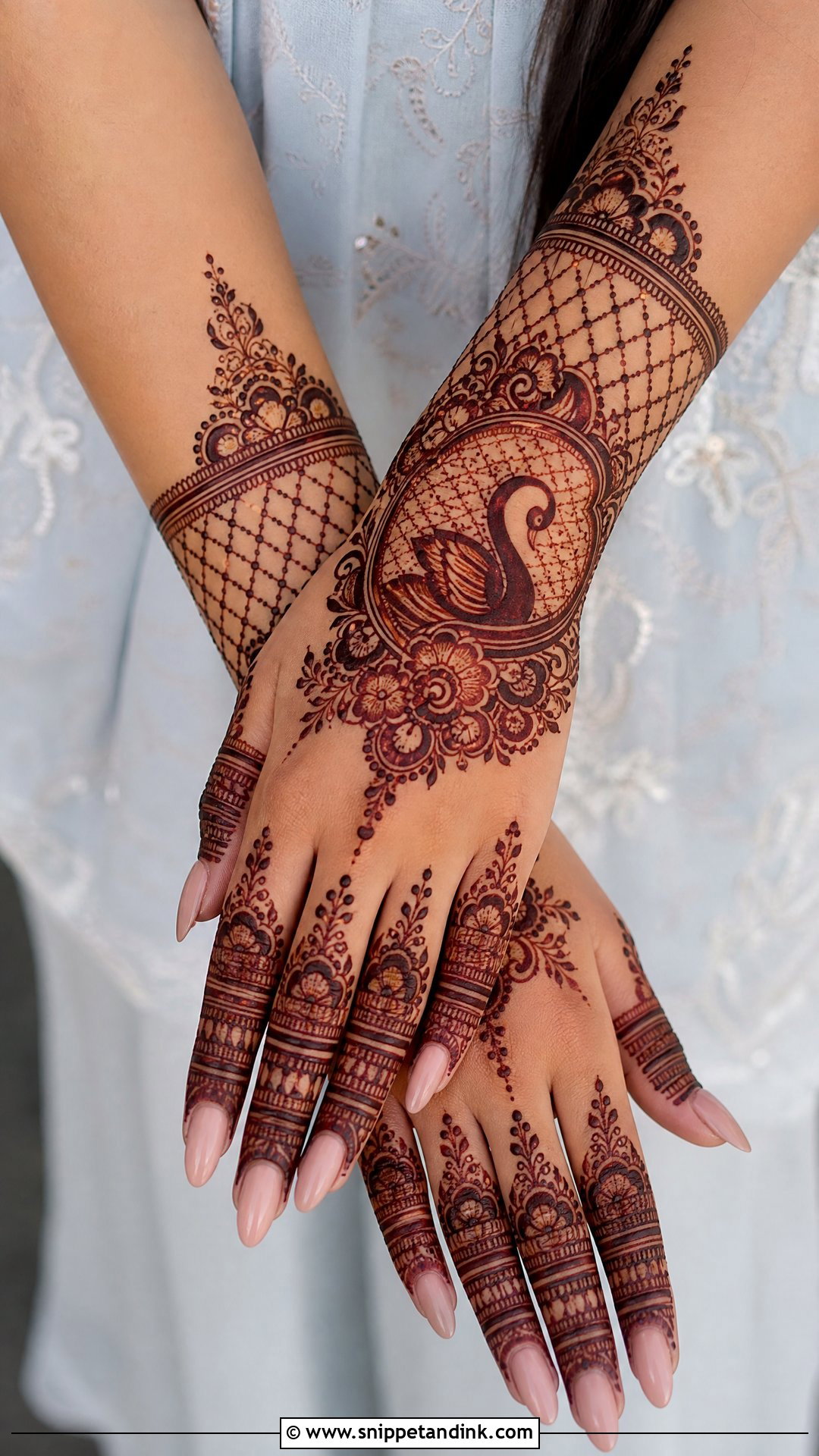
Jaali mesh gives a lace-like background that makes a bold swan stand out. On the back hand, it looks like a delicate glove. Mesh lines must be thin and evenly spaced; if the cone tip is too wide, the squares fill in and turn into a dark patch once stained. Keep the swan bold with lighter jaali around it for a modern look, or fill the wrist and fingers densely for bridal.
13. Swan Paisley Mehndi Design
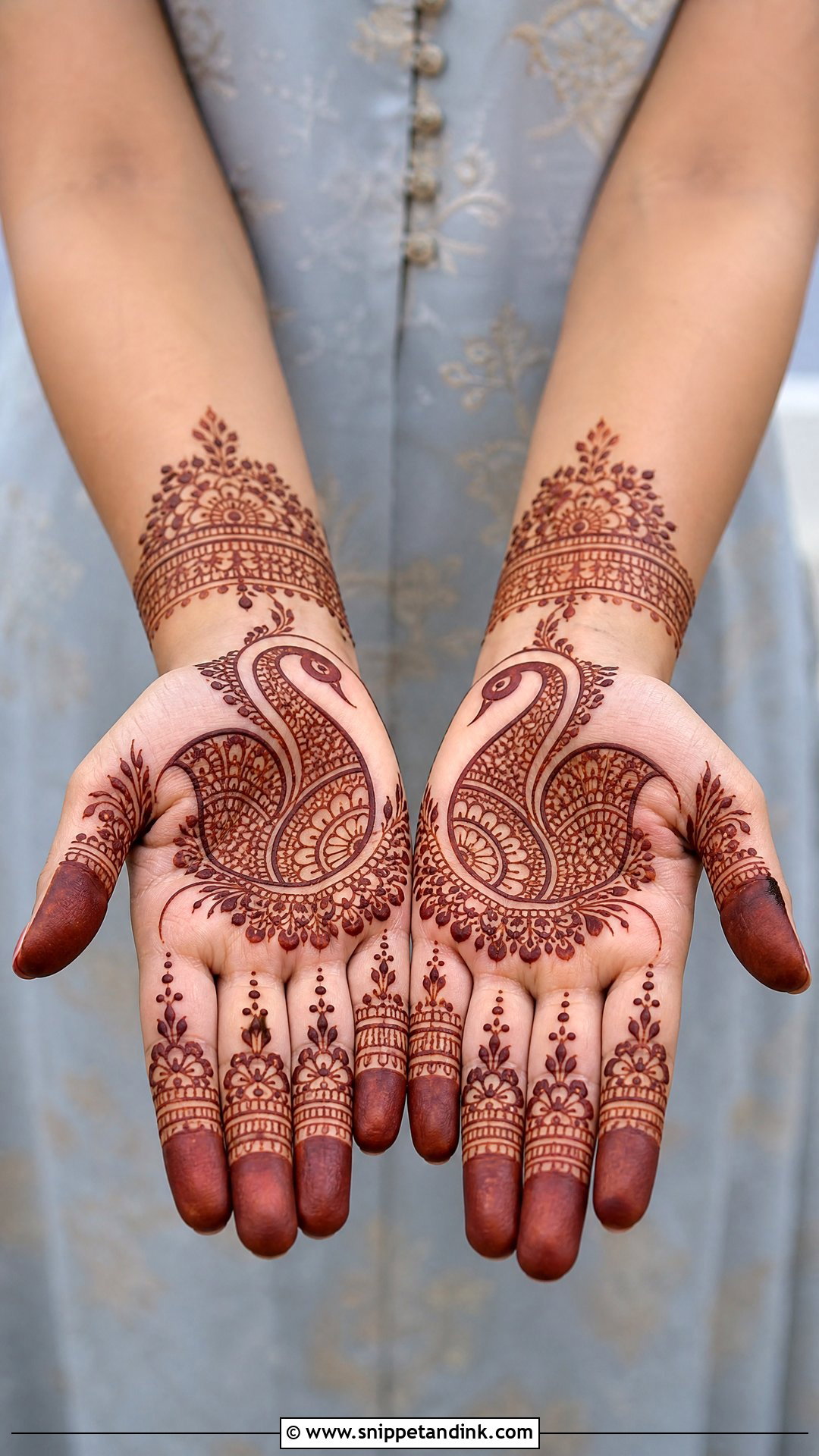
A swan’s body already curves like a paisley, so the two blend naturally. I often form the wing itself from a paisley shape and fill it with petals, dots and tiny curved lines. More paisleys around the palm or wrist complete the look. Keep medium coverage for a festival, or go heavy for a bridal function.
14. Swan Floral Mehndi Design
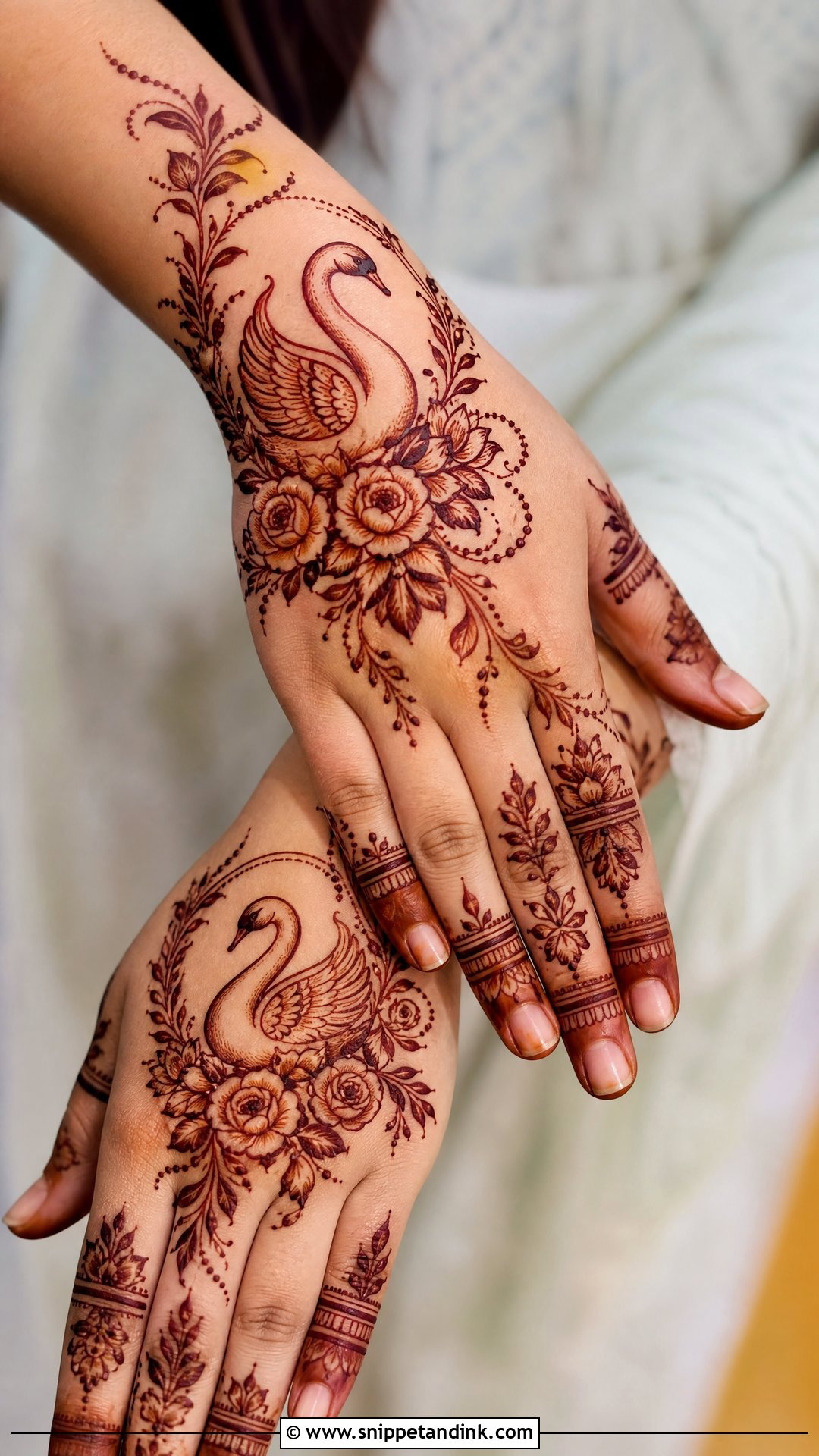
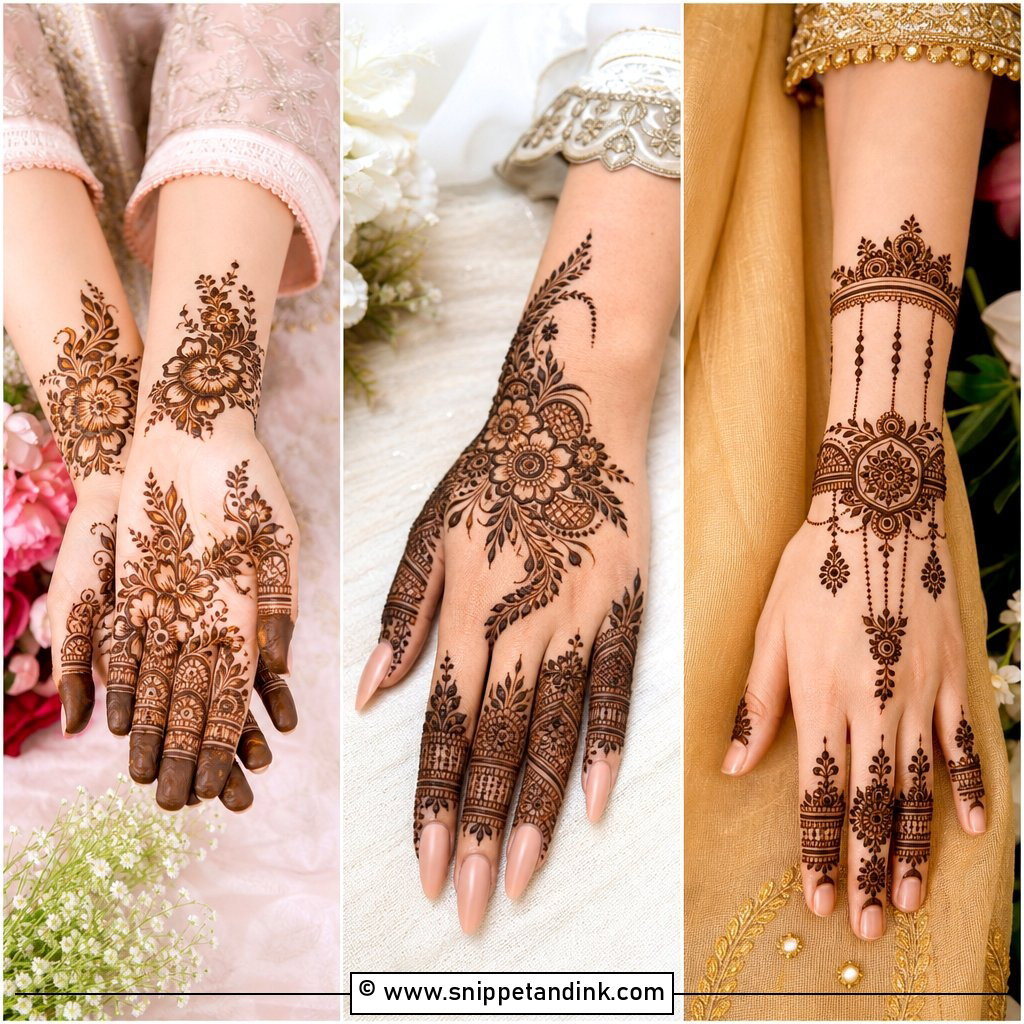
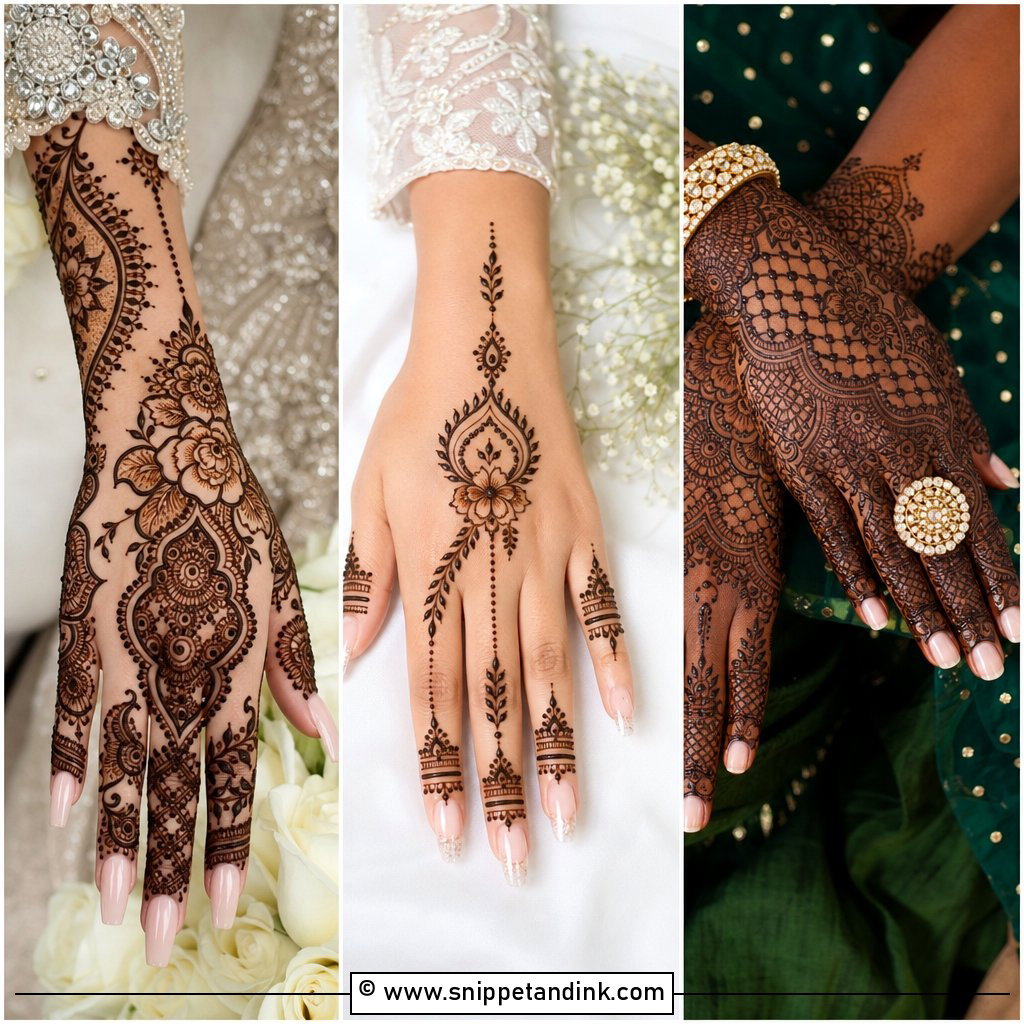
Flowers around a central swan make an easy, flexible design. Roses, lotus petals, small blossoms and leafy trails can frame the bird or flow diagonally from wrist to fingers. I shade only the inner third of each petal, which gives depth without making the flowers look heavy. It scales well from minimal to full hand, which is why I suggest it to bridesmaids and baby shower guests alike.
15. Swan Bracelet Mehndi Design
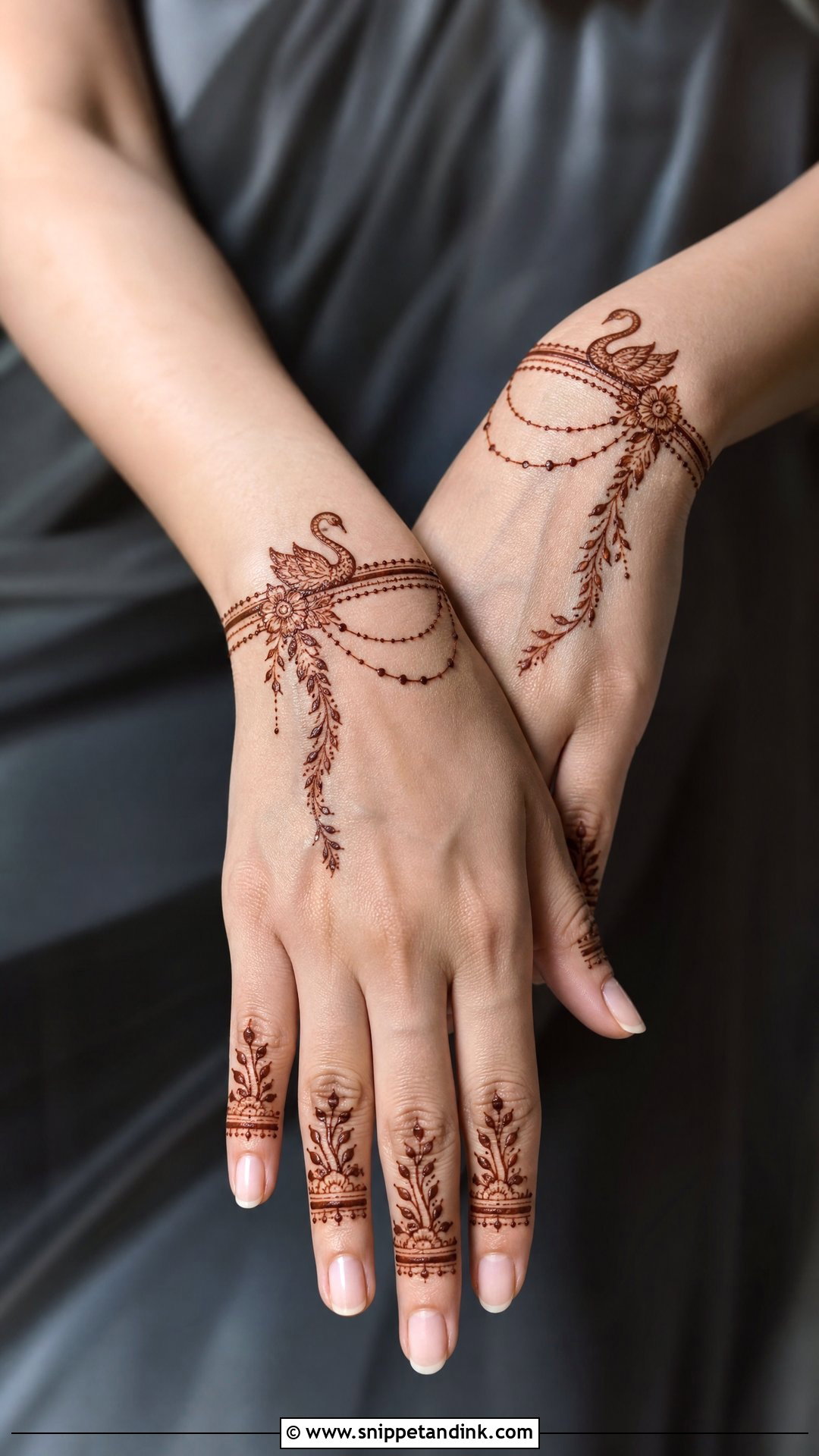
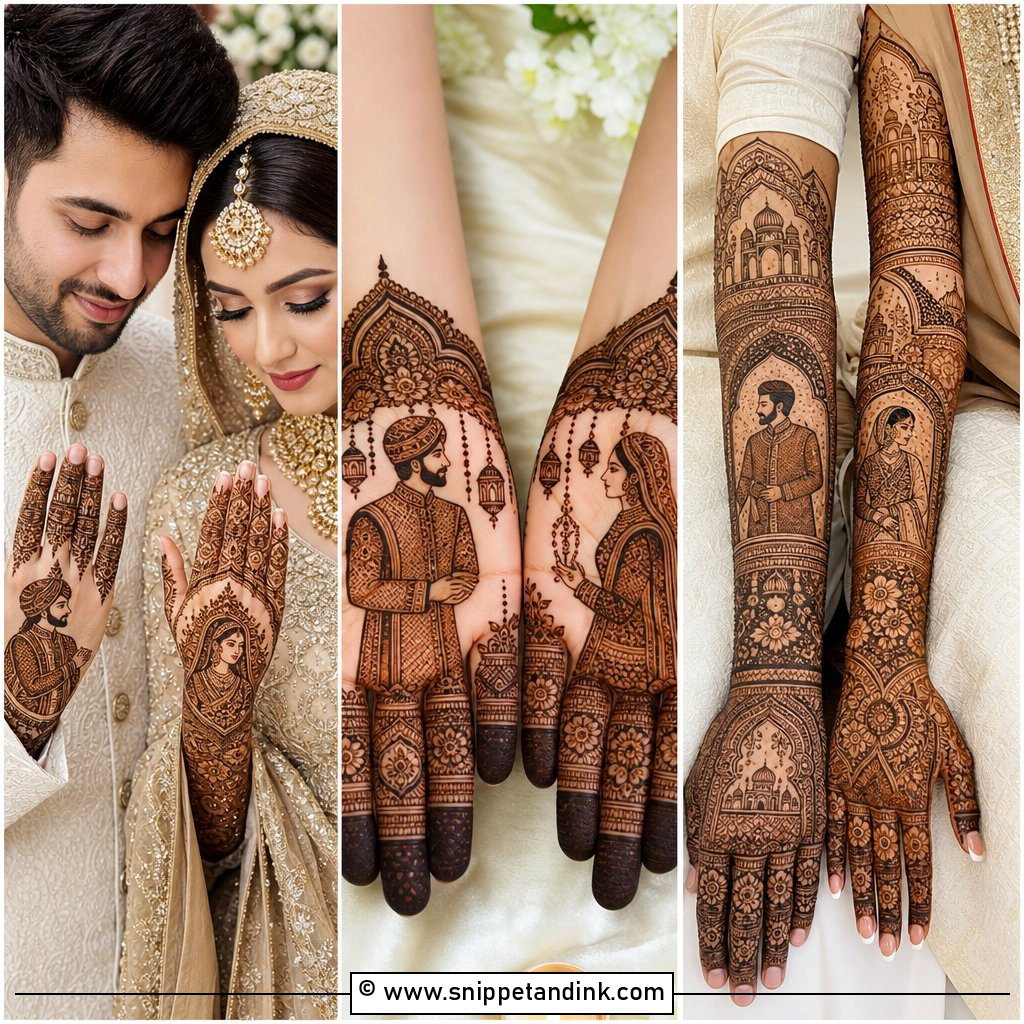
Here the swan hangs above a bracelet band like a charm on henna jewelry, with chain dots, small flowers, curved leaves and a thin border. Fingers stay light. The wrist bends constantly, so I keep bracelet lines a little thicker than finger lines; thin lines across a moving joint crack while drying and leave gaps in the stain. It pairs well with real bangles.
16. Swan Finger Mehndi Design
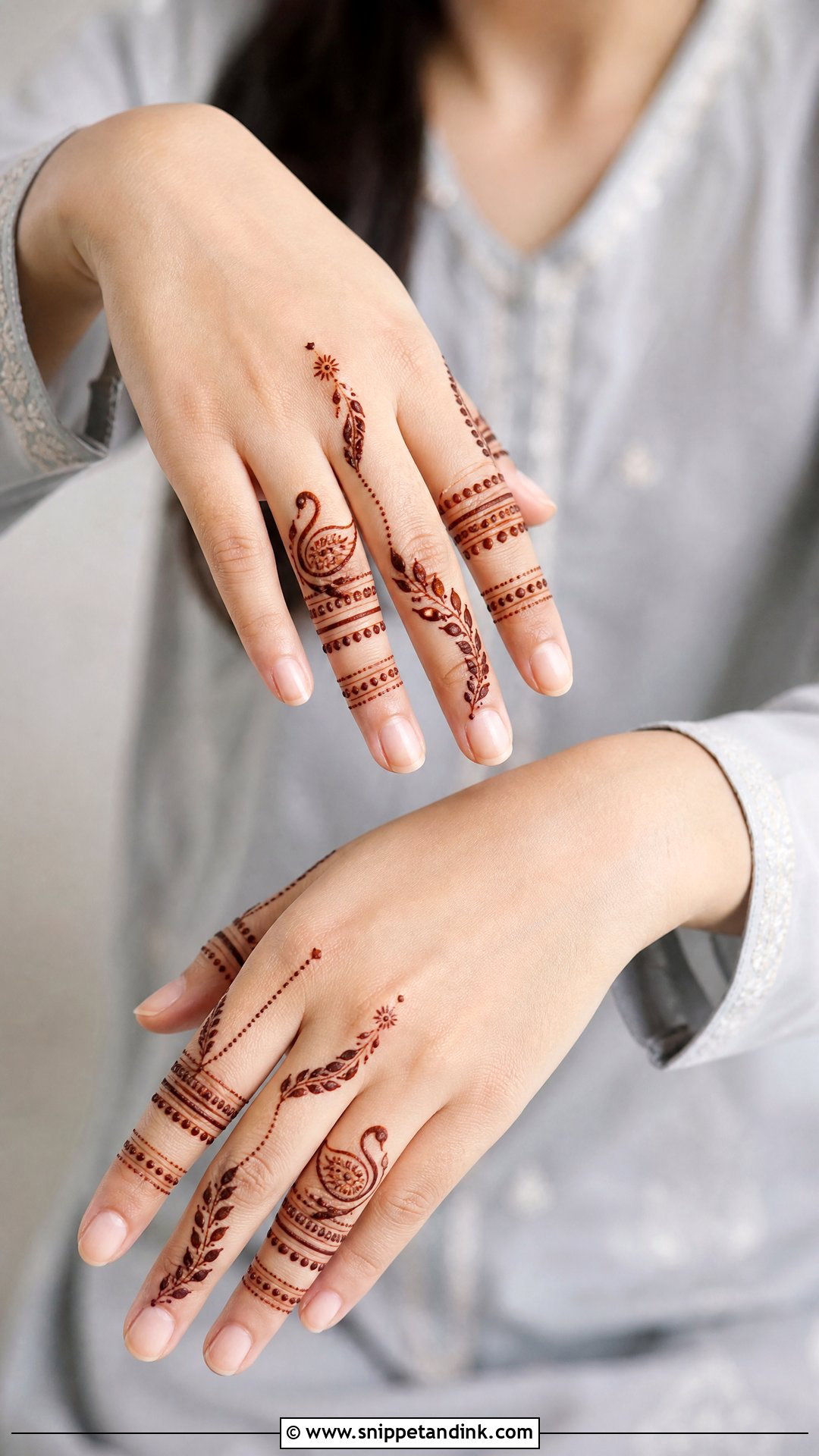
A tiny swan at the base of one finger or along a finger trail, with slim bands, dots and small leaves on the other fingers, is about as minimal as mehndi gets. Fingers stain very dark, so even a small swan reads clearly. I’d keep the wrist bare or add one thin line. It is a quick design, often under fifteen minutes per hand.
17. Swan Palm Mehndi Design
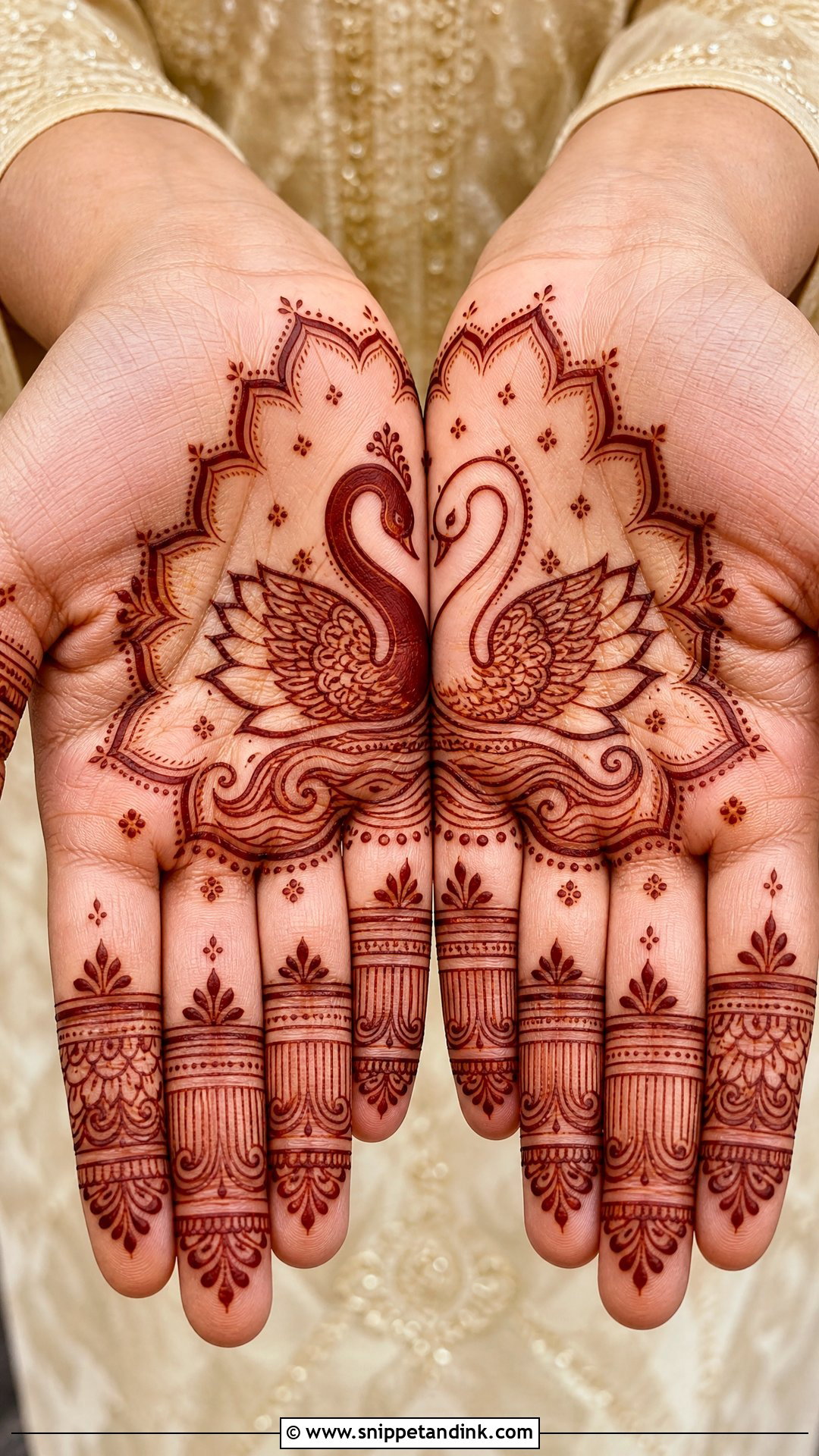
When the swan is the main event, the palm is the place for it. A pond frame with lotus petals and water waves, or a round mandala, gives it context. Fingers should stay neat and lighter so they don’t overpower the center. Palm stains are usually the darkest on the body, so this is also the placement I’d suggest for anyone whose henna tends to come up pale.
18. Swan Back Hand Trail Mehndi Design
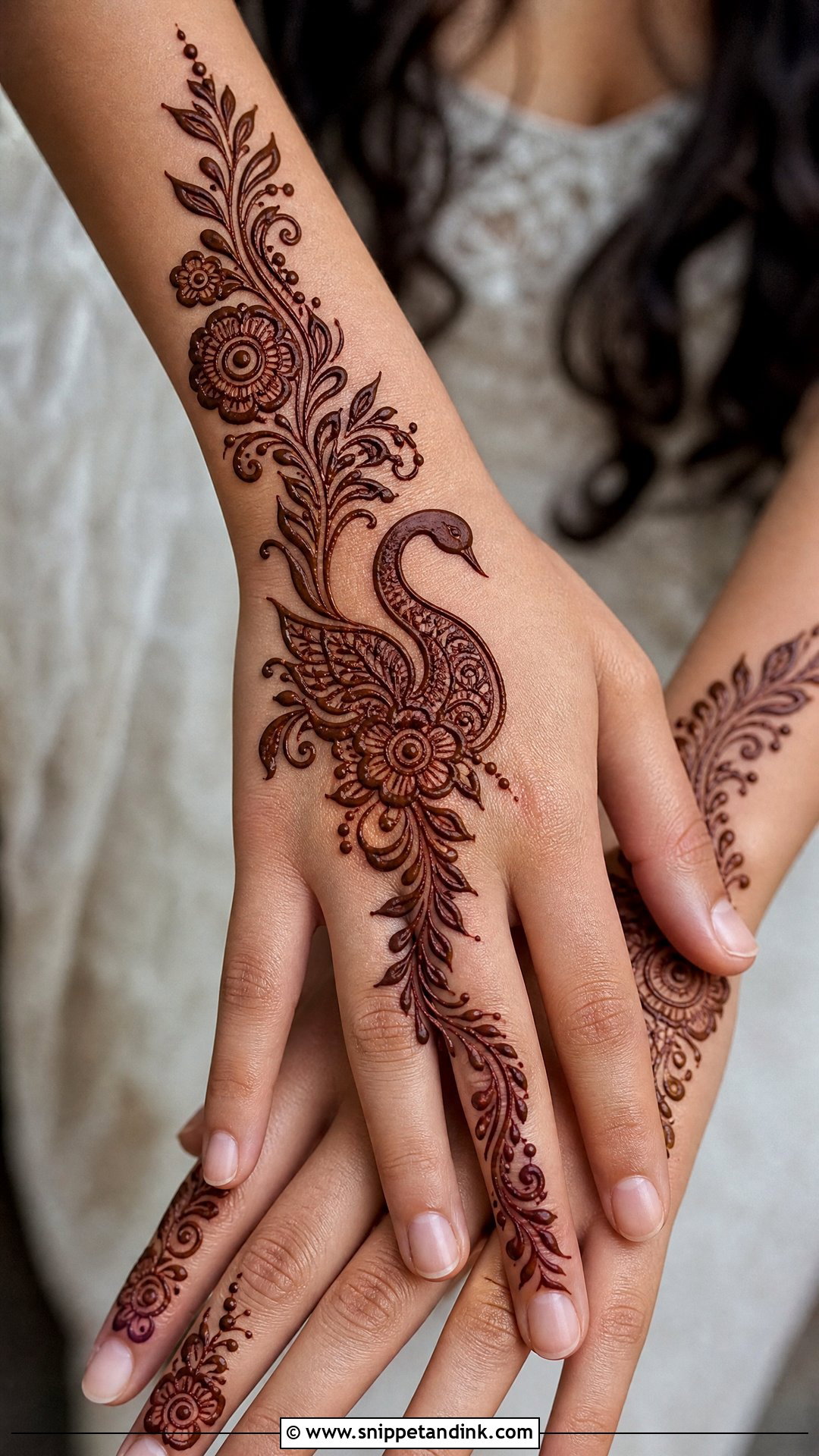
A back-hand trail starts at the wrist with flowers or paisleys, puts the swan near the center and continues toward one or two fingers. It is quick and very wearable. I make sure the trail ends on a finger, not in the middle of the hand, because a vine that stops halfway looks unfinished. Dots, leaves and fine curves soften it. Arabic and Indo-Arabic lovers, sisters of the bride and festive guests all suit it.
19. Swan Minimal Mehndi Design
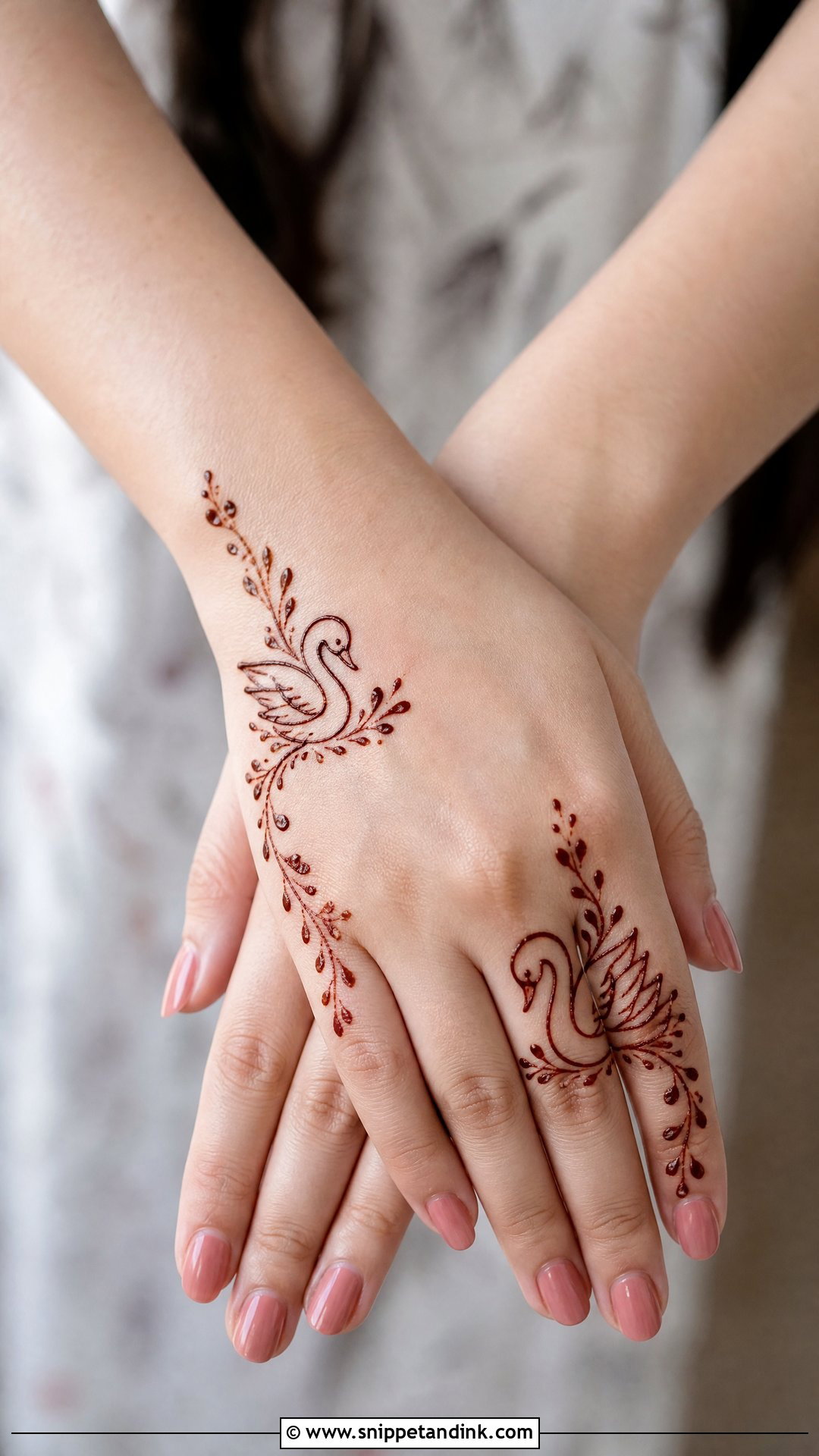
One small swan, clean outlines and very little filling: minimal mehndi depends on neat spacing and smooth lines. A few dots, tiny leaves or a short vine are enough. It can go on the back hand, wrist or palm corner, and suits modern events and anyone who dislikes full coverage. With so little on the skin, any shaky line is obvious, so I’d ask for an artist with a steady fine-line hand.


20. Swan Bridal Feet Mehndi Design
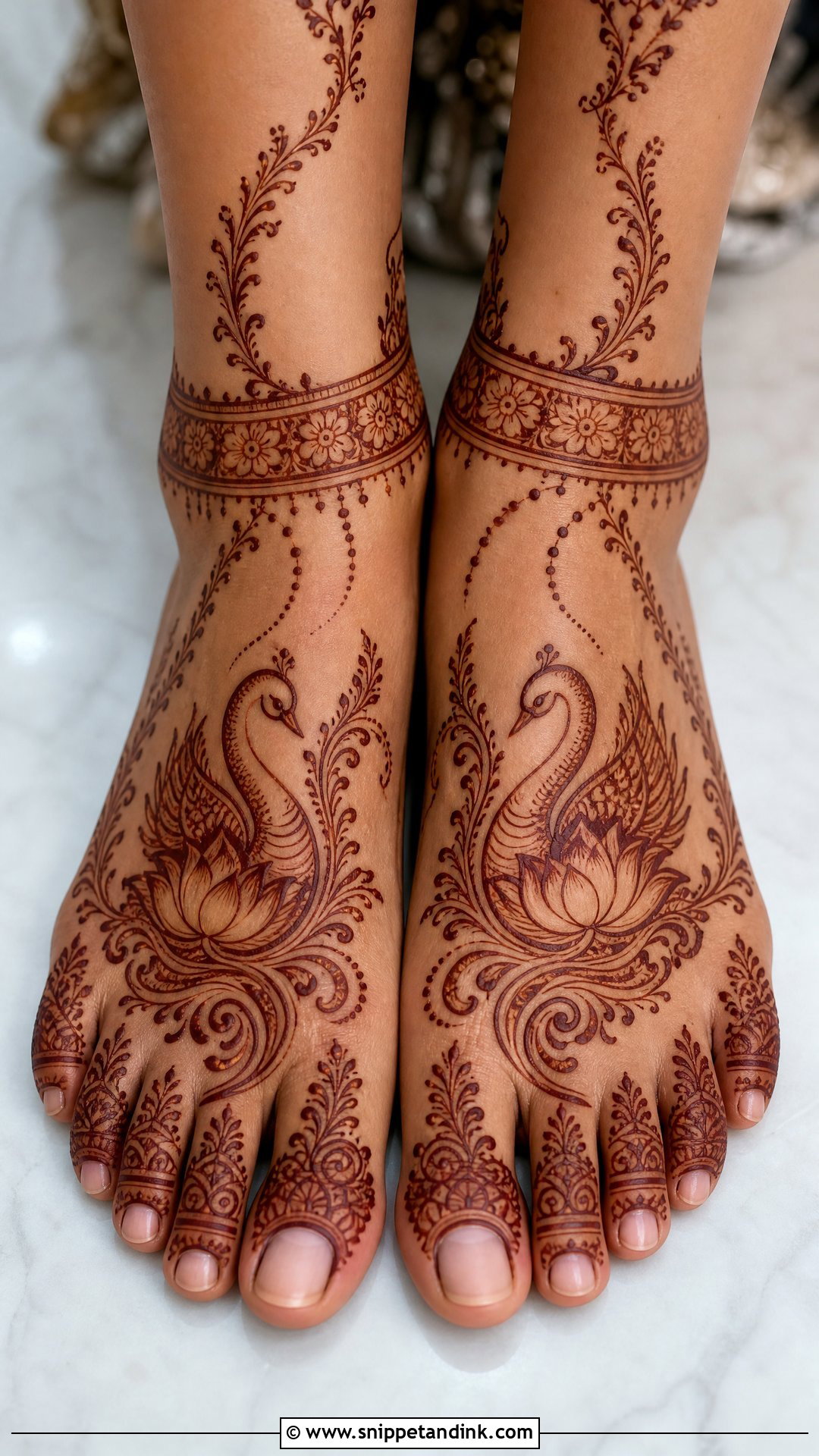
Bridal feet with a swan on each foot, near the top center or the ankle, framed by lotus flowers, paisleys, anklet bands and vines, look different from the usual foot patterns. Toes take tiny petals and dots. Feet stain well, but paste on the soles and sides rubs off quickly if the bride walks, so I ask her to stay seated with feet raised until the paste is fully dry. Matching swans on the hands tie the look together.
21. Swan Pair Mehndi Design
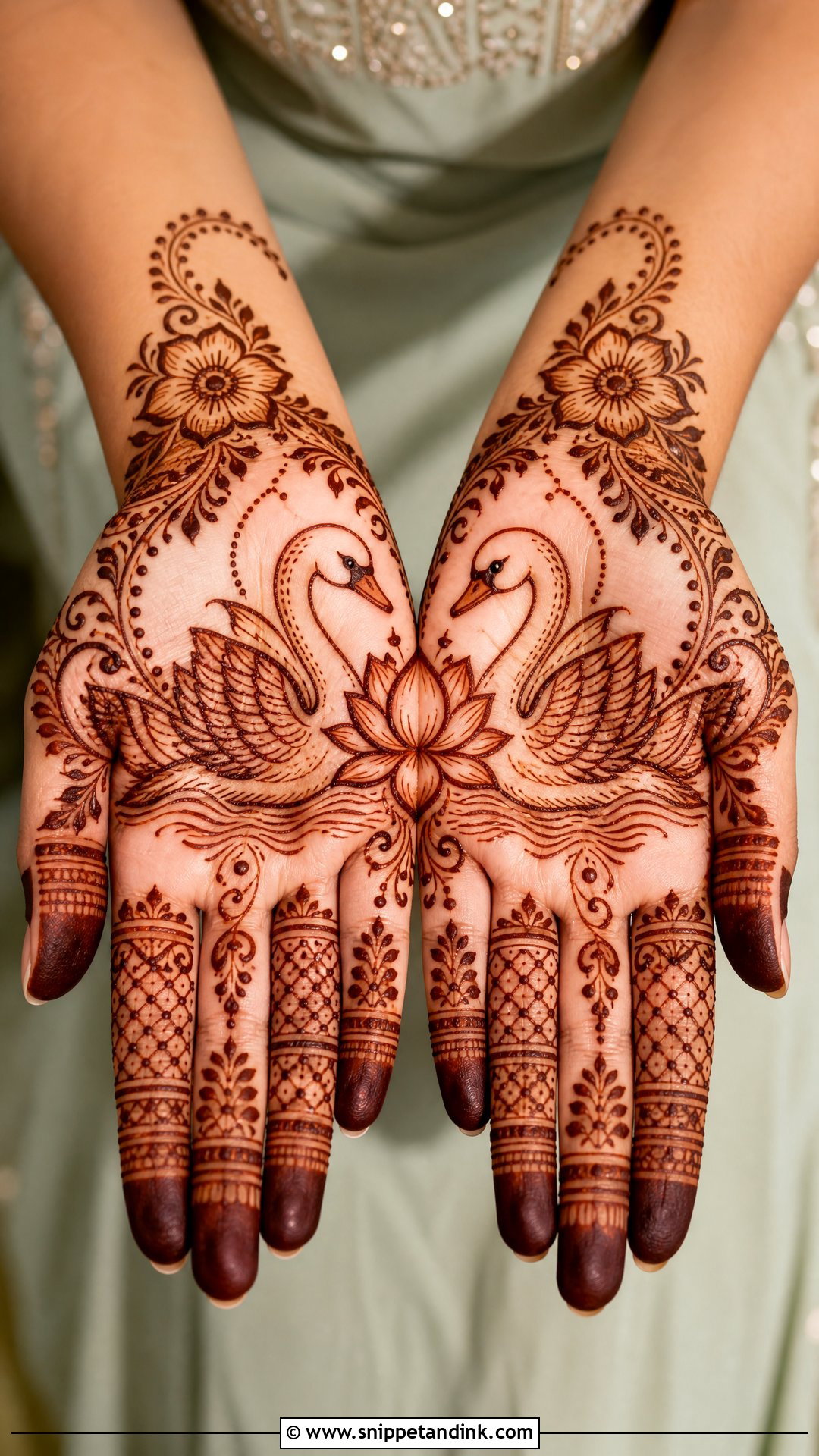
Two swans facing each other on the palms, back hands or forearms form a mirrored composition, with a heart curve, lotus, mandala or water-wave pattern between them. Keep both birds the same size. I draw the first swan, then mirror the second using the knuckles and wrist bone as reference points, which keeps them matched even on two different hands. For a lighter version, put one swan on each back hand.
22. Swan Forearm Mehndi Design
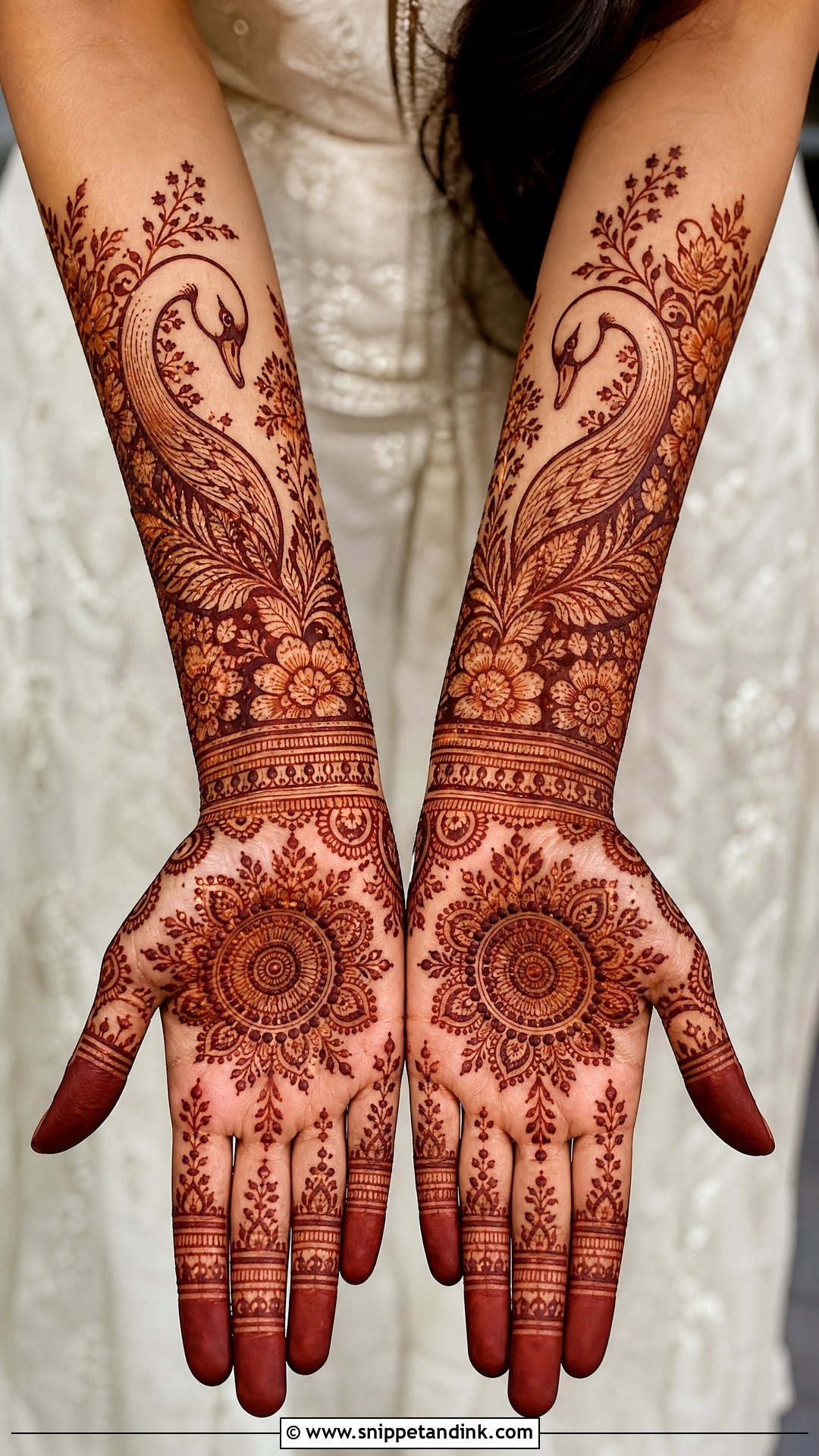
The forearm offers room for a larger swan with feather lines, curved wings and water details, extending up from the wrist with flowers, vines, paisleys and borders. Matching mandalas or floral trails on the hand keep the forearm from looking separate. Forearm skin stains lighter than the hands, so I leave the paste on longer there and expect a slightly softer brown. Brides and statement looks suit it.
23. Swan Wrist Mehndi Design
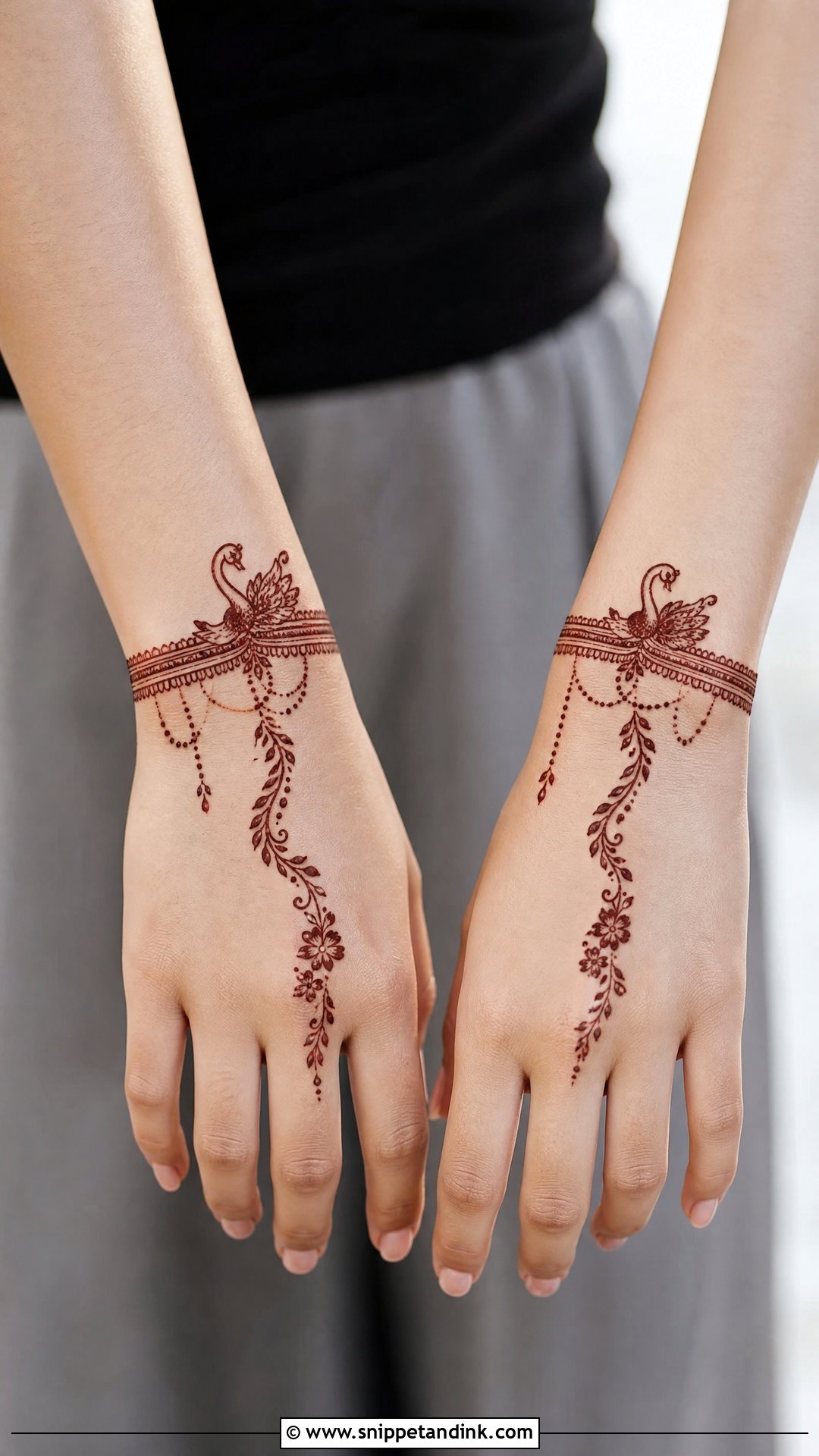
A wrist swan with chains, dots, leaves and floral bands wrapping around like a bracelet is small but distinctive. It can connect to the back hand with a short vine or stay on the wrist. Keep the swan’s outline bold enough to stand out if the rest is fine. Wrist skin creases with every movement, so I’d ask the wearer to keep the hand still and slightly bent back until the paste sets.
24. Swan Half Hand Mehndi Design
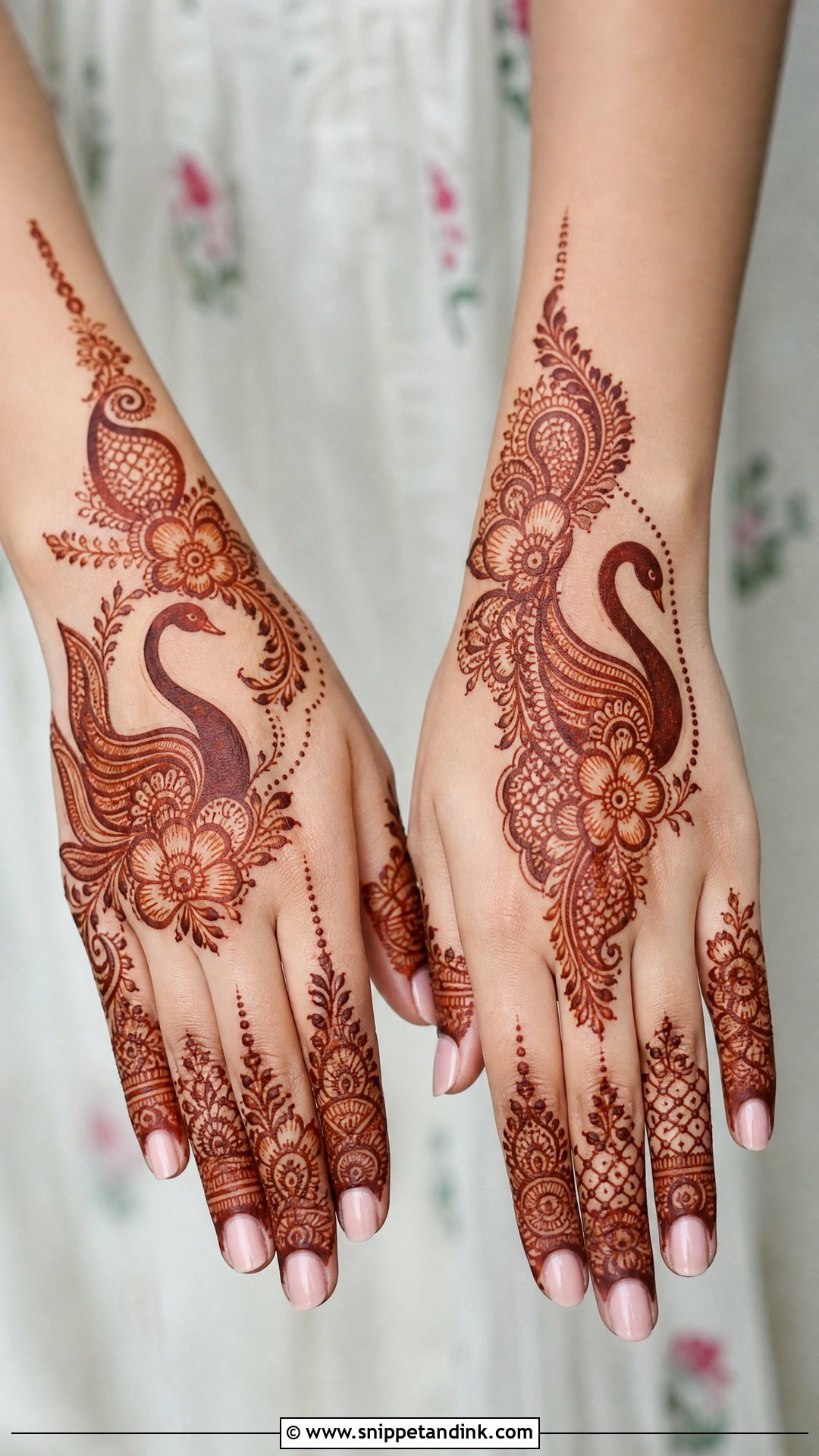
Half-hand coverage covers the palm and fingers, or the back hand and wrist, leaving part of the hand open. The swan goes in the most visible area, with florals, paisleys or jaali patches around it and neat border lines. It looks complete and takes much less time than full coverage, which matters at a busy mehndi night with many guests waiting.


25. Swan Mehndi Design For Kids
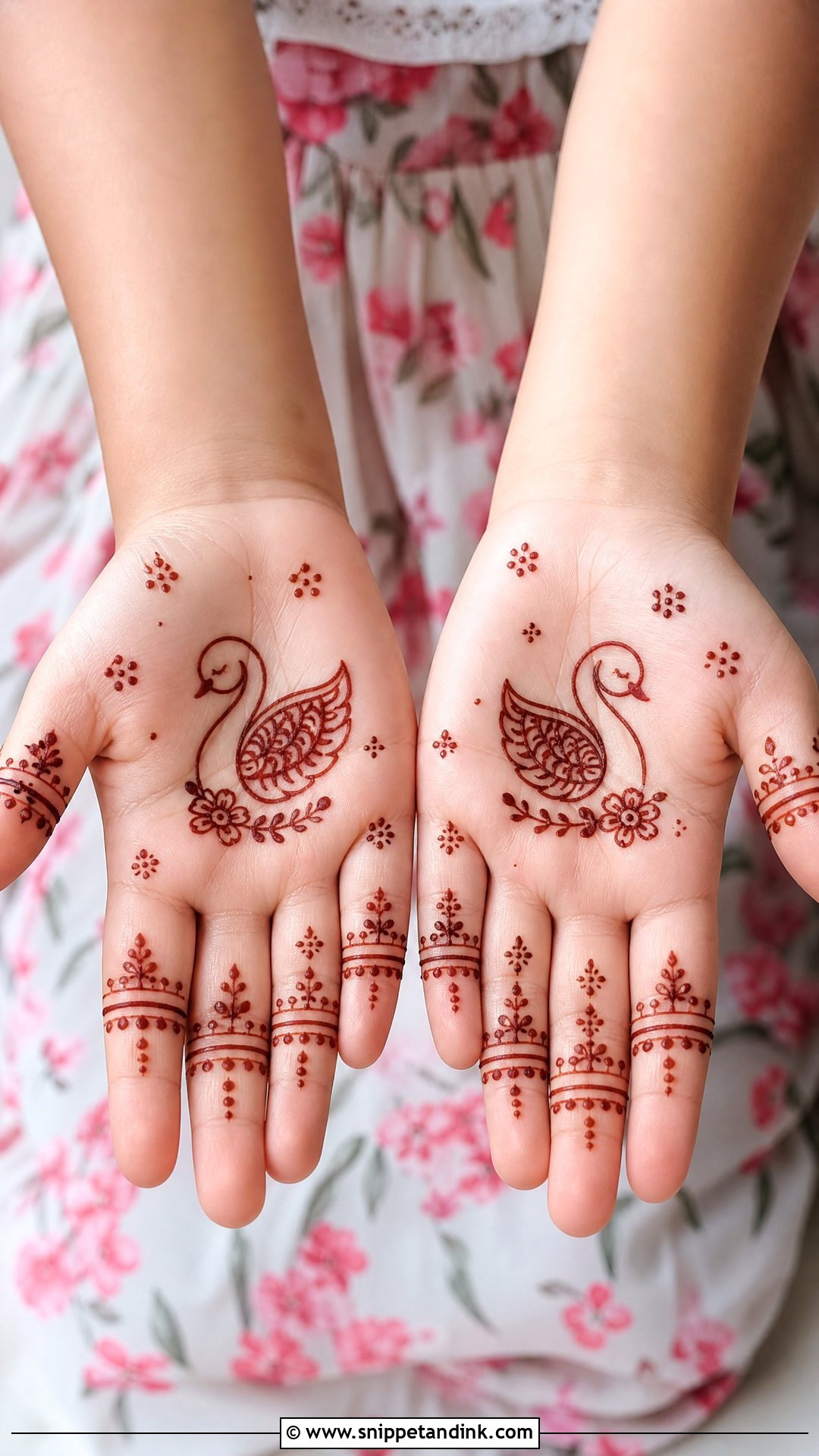
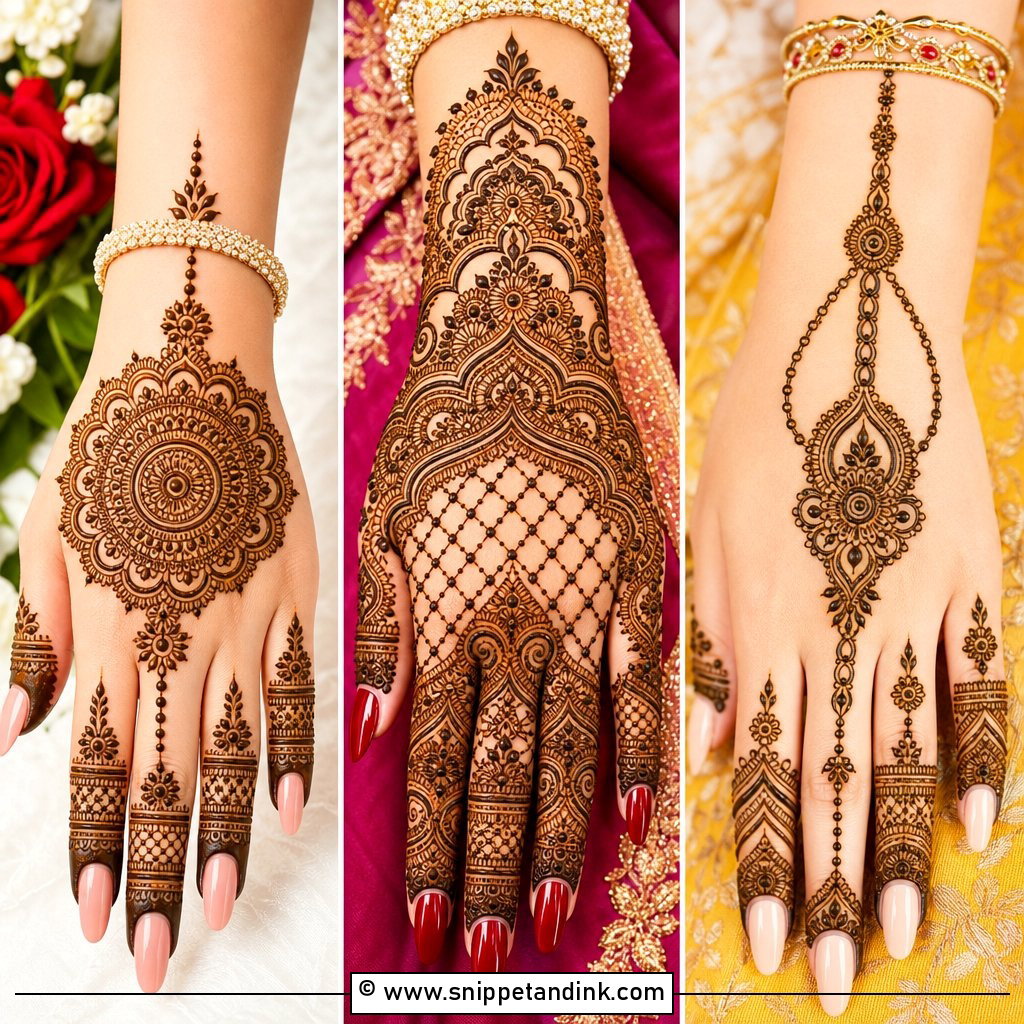
For children, the swan should be small, rounded and quick: a simple wing, a few flowers or stars, and nothing fine. Children move while the paste dries, so I skip detailed linework that smudges and keep the whole design under a few minutes. Place it where the child can see it, on the back hand or palm. Only use natural henna on children; chemical black henna can cause serious skin reactions.
26. Swan Eid Mehndi Design
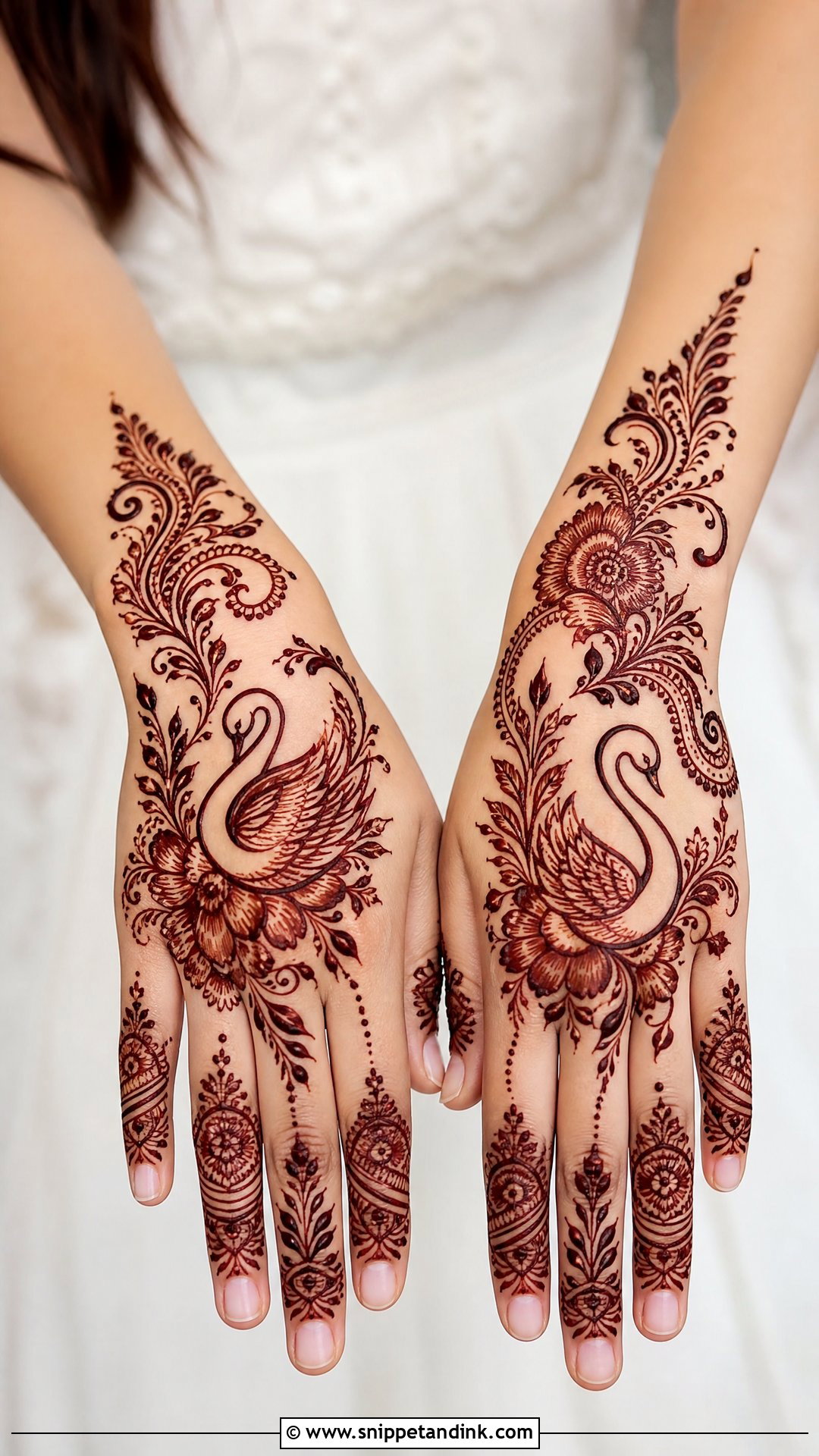
Eid henna suits Arabic trails that look festive without covering every inch. A swan along a floral vine on the back hand, with leaves, dots and paisley curves toward the fingers, pairs well with traditional outfits. The palm can stay lighter or carry a small matching motif. Leave enough open skin to highlight the swan. Since Eid mehndi is usually applied the night before, the stain will still be darkening during the celebration, which works in its favor.
27. Swan Engagement Mehndi Design
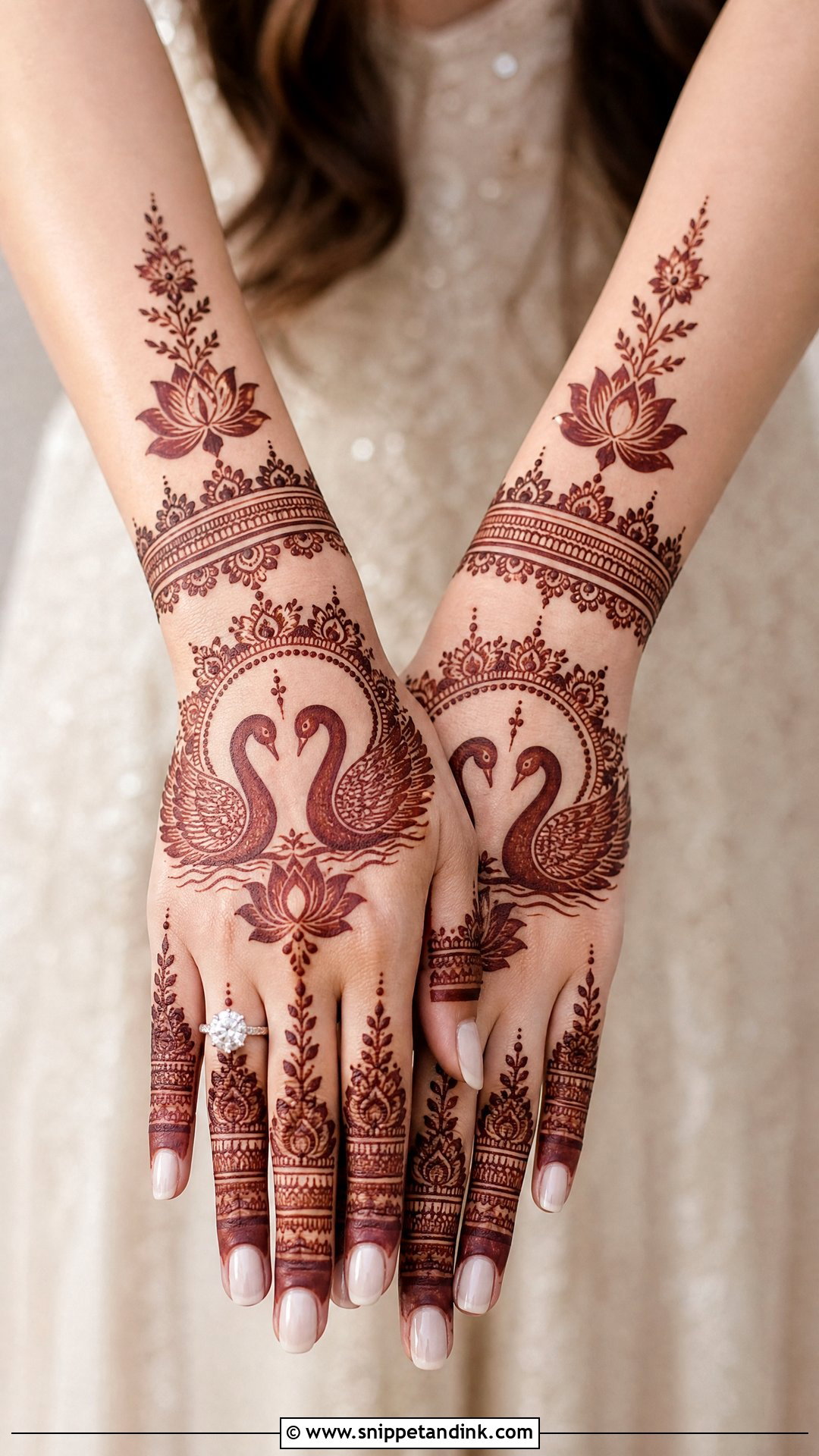
A swan engagement mehndi design can feel romantic without bridal density. A pair of swans, a swan with lotus flowers or a swan in a soft mandala all work. I put the main motif on the back of the ring hand, since that is the hand in every ring photo, and keep the ring finger itself fairly clear so the ring isn’t lost in pattern. Slim finger details and small wrist trails complete it.
28. Swan Wedding Guest Mehndi Design
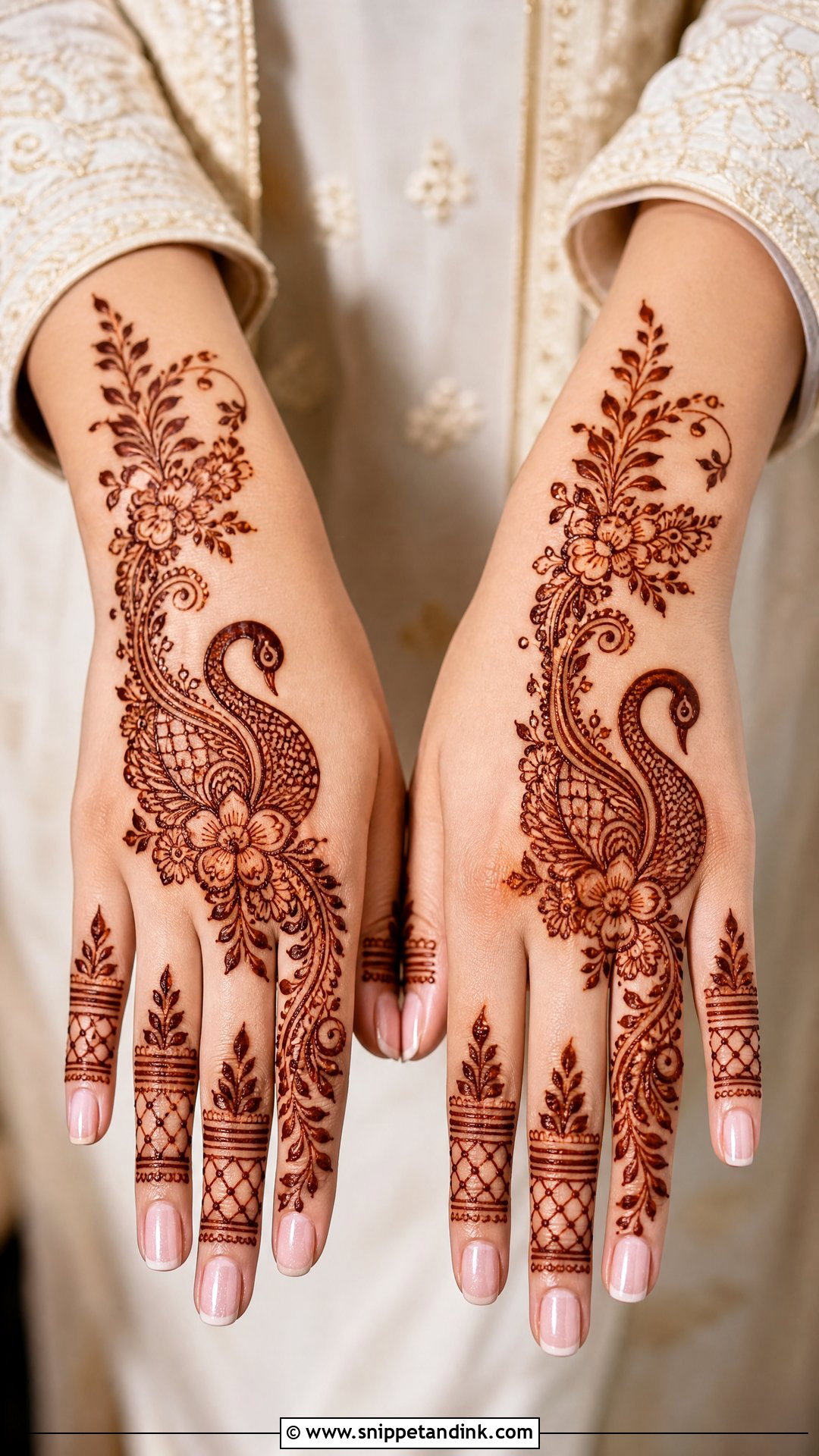
Guests should look dressed up without competing with the bride, so I keep guest designs at medium coverage. One swan, floral vines and clean finger details on the back hand or palm work well. A diagonal Arabic swan trail is a good choice because it looks festive while staying light. Small jaali sections, dots and paisley curves add detail, and it pairs with sarees, lehengas and shararas.
29. Swan Rajasthani Mehndi Design
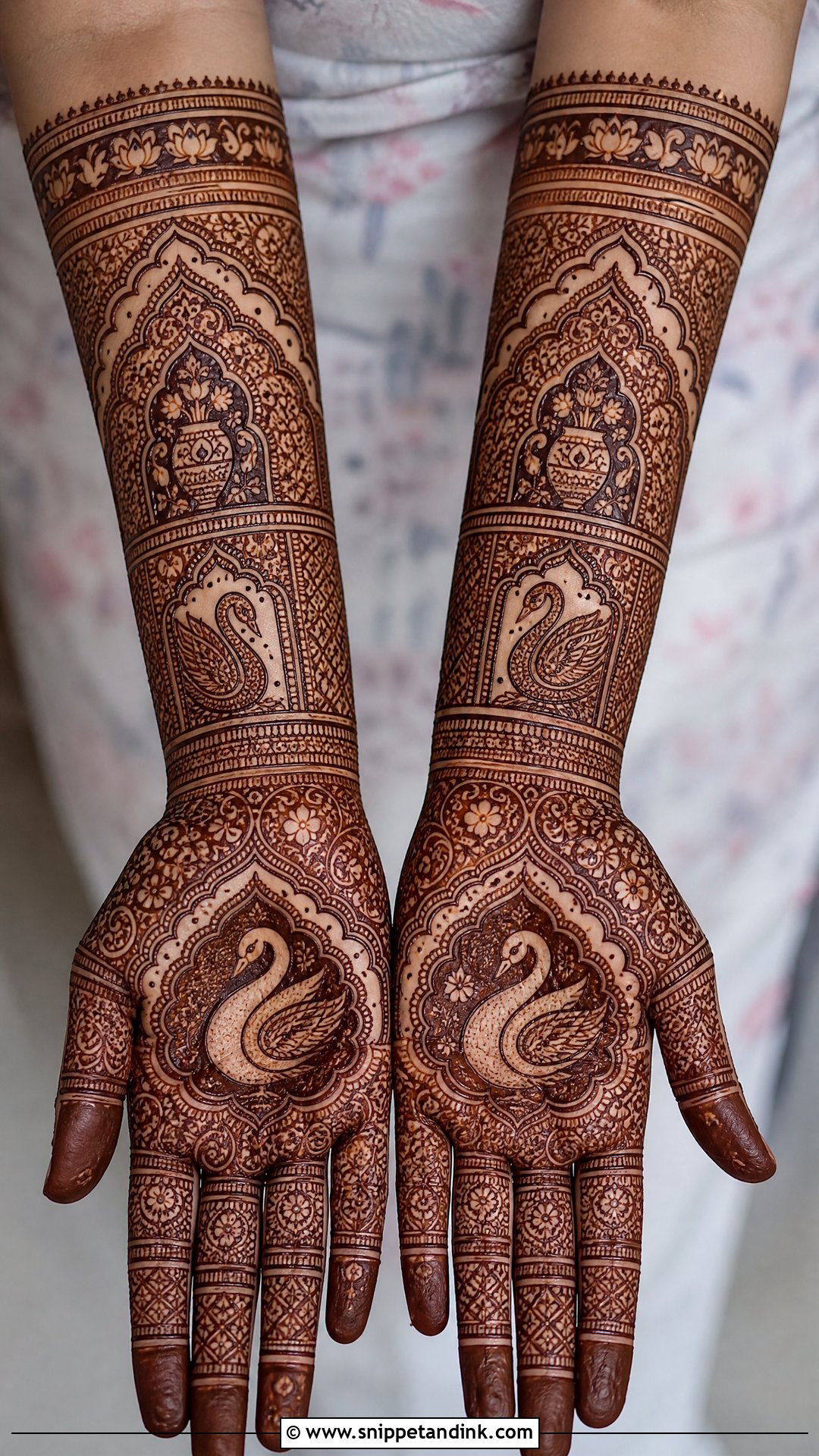
Rajasthani mehndi tells a story through dense detail. The swan sits inside a royal frame of paisleys, arches, floral borders and fillers, with fine lines, dots and ornamental bands. For a grand version, the design runs from the palm up the forearm with palace-inspired borders. This style takes the longest of any here, often several hours for a bride, so I’d book it early in the day and plan meals around it.
30. Modern Swan Mehndi Design
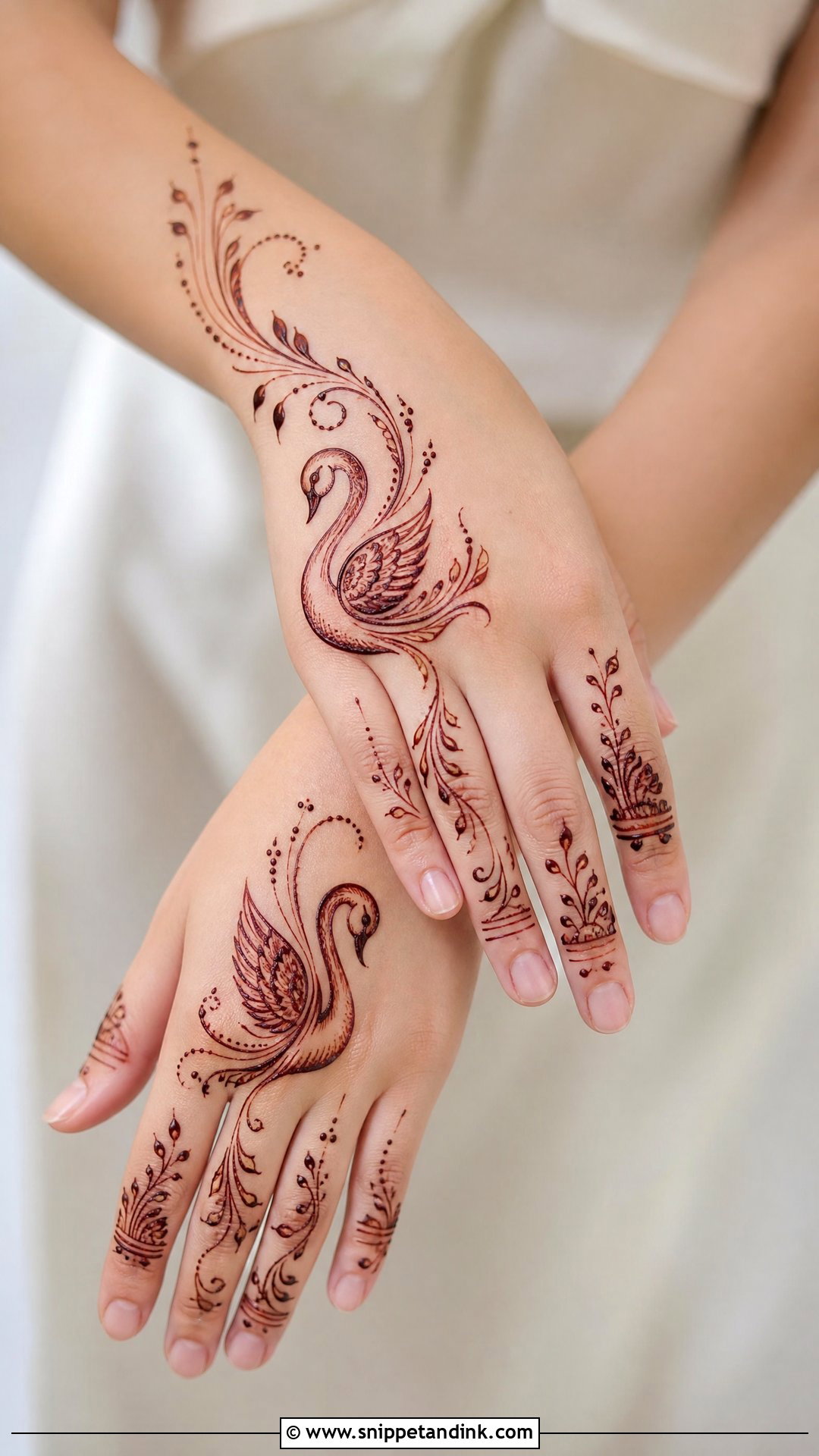
Modern swan mehndi uses clean outlines, open space, asymmetrical placement and light finger details. The swan can sit near the wrist, at a palm corner or in the back-hand center, with slim vines or abstract curves around it. Instead of dense filling, I use selective shading and tiny dots. It is very wearable for social events and suits anyone who likes contemporary henna.
Getting Deep Maroon Wings by the Wedding Morning
Natural henna starts orange when the paste comes off and darkens to brown or maroon over the next one to two days. That timing should shape your schedule: I’d apply bridal mehndi one or two days before the wedding so the color peaks on the day itself.
- Leave the dried paste on for as long as you comfortably can, ideally six hours or overnight.
- Dab a little lemon and sugar mix over the dry paste to help it stay on the skin. Don’t soak it.
- Scrape the paste off with a blunt edge or rub it off. Avoid washing it with water.
- Keep the area away from water for the first several hours, and keep hands warm. Warmth helps the stain deepen.
- Skip soap scrubs, hand sanitizer and waxing on hennaed skin in the days before the wedding.
One firm warning: avoid any cone sold as black henna or promising an instant dark stain. These often contain chemical dyes that can cause painful skin reactions and scarring. Natural henna never stains black; deep brown and maroon are as dark as it gets.
Let the Swan’s Neck Lead the Whole Hand
A swan gives henna a calm, flowing focal point that ordinary floral patterns don’t. It adapts from a single palm motif to full bridal coverage, and it works in Indian, Arabic, Indo-Arabic, minimal and Rajasthani styles alike. Pair it with lotus, jaali, paisleys, mandalas, vines or bracelet bands. Whichever version you choose, show your artist the photos you like, mention your skin’s usual stain, and give the paste the time it needs.
You'll Like These Ideas:






Leave a Reply