
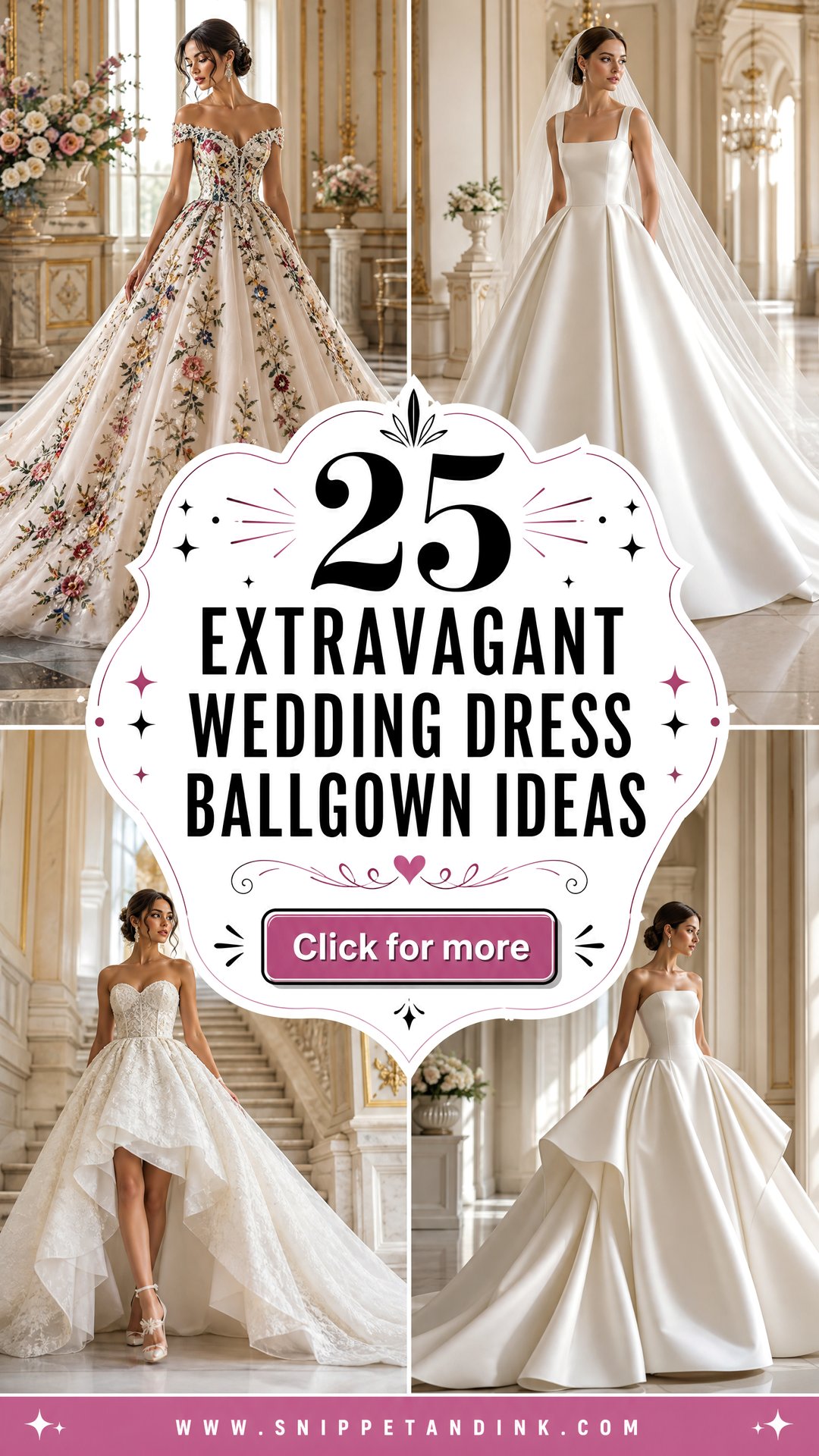
Big skirts are back in my fitting room, and brides are asking for them with real confidence. Sculpted Mikado, basque waists, corsetry, bows and detachable overskirts are all in demand, and a full ballgown still makes an entrance nothing else can. But volume is a commitment. A ballgown has to suit the size of your venue, your frame and how long you’ll be on your feet, and it changes how you sit, walk and even use the bathroom. Below are 25 grand gowns, from princess drama to modern couture and soft garden romance, with what I’d tell a bride about each one before she says yes.
Petticoat, Hoop or Built-In Volume?
Every full skirt is held up by something, and what’s underneath changes how the gown feels to wear. It’s the first thing I ask about when a bride falls for a ballgown.
- Built-in layers: many modern ballgowns have tulle or crinoline sewn into the lining. Nothing extra to wear, but the volume is fixed.
- Separate petticoat: a tulle or net underskirt you step into. It can be adjusted or removed for the reception, and it’s easier to sit in than a hoop.
- Hoop skirt: rigid rings sewn into a slip. It gives the widest, most even shape but tilts up when you sit carelessly and needs practice on stairs.
Ask the boutique to try the sample with its intended support, not just pinned. A ballgown can look very different without the right petticoat, and the extra layer adds warmth, which matters in a summer ceremony.
Weight is the other question. A heavy satin or Mikado skirt with a full petticoat can feel tiring by the evening, mostly at the waist where it hangs. A well-made gown spreads that load through a firm inner waistband, so check for one and ask the seamstress to adjust it snugly rather than letting the bodice carry everything.
1. Satin Wedding Dress Ballgown With Cathedral Veil
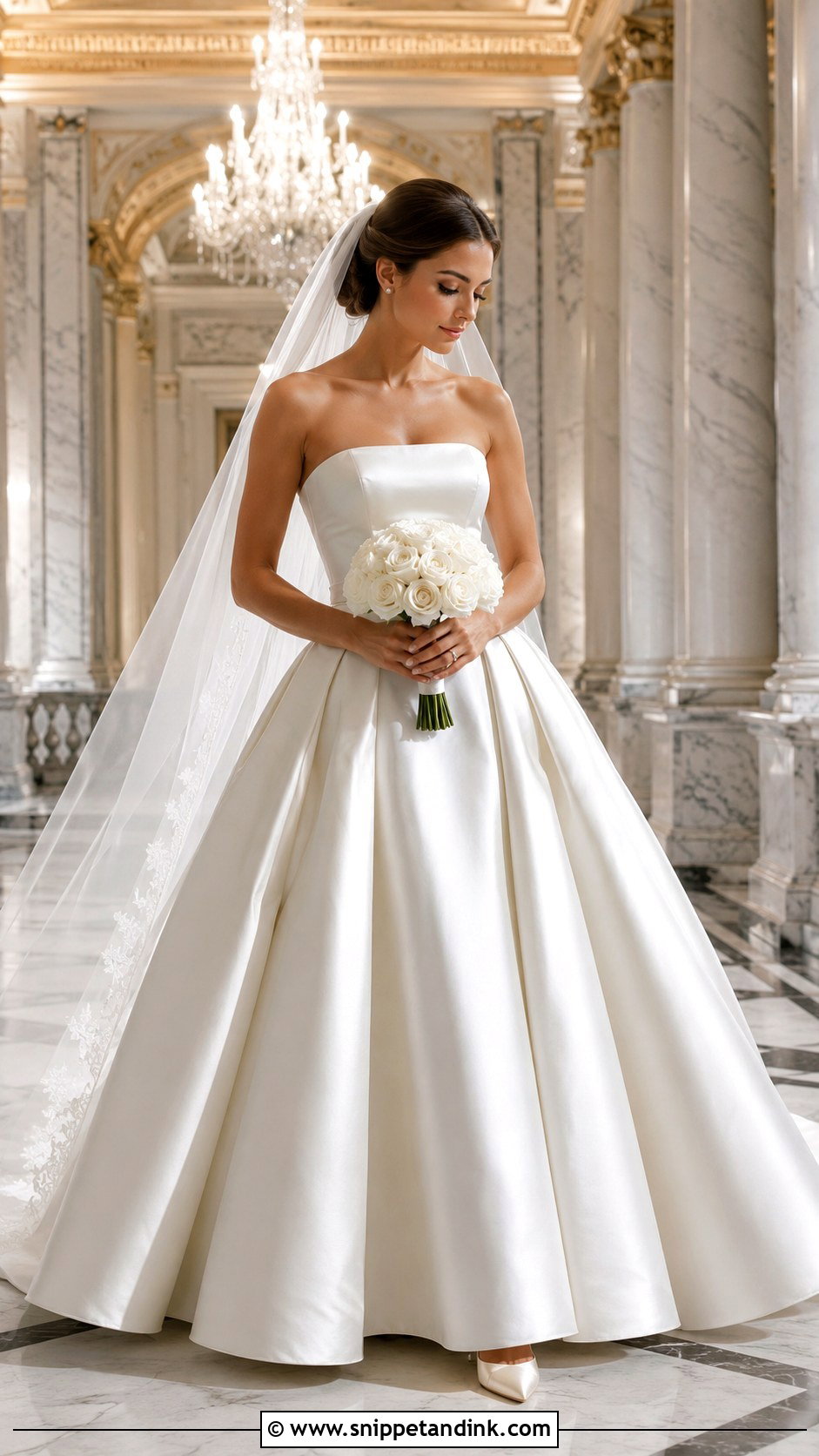
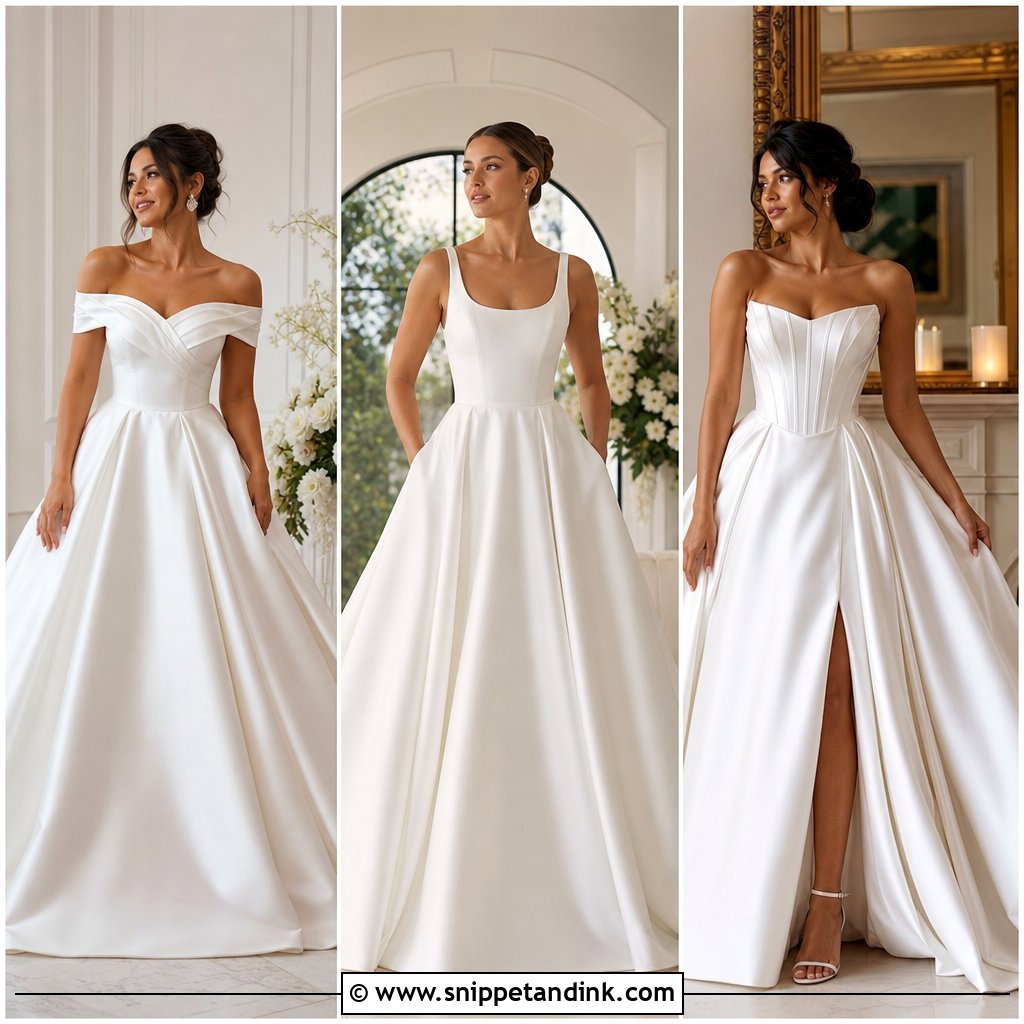
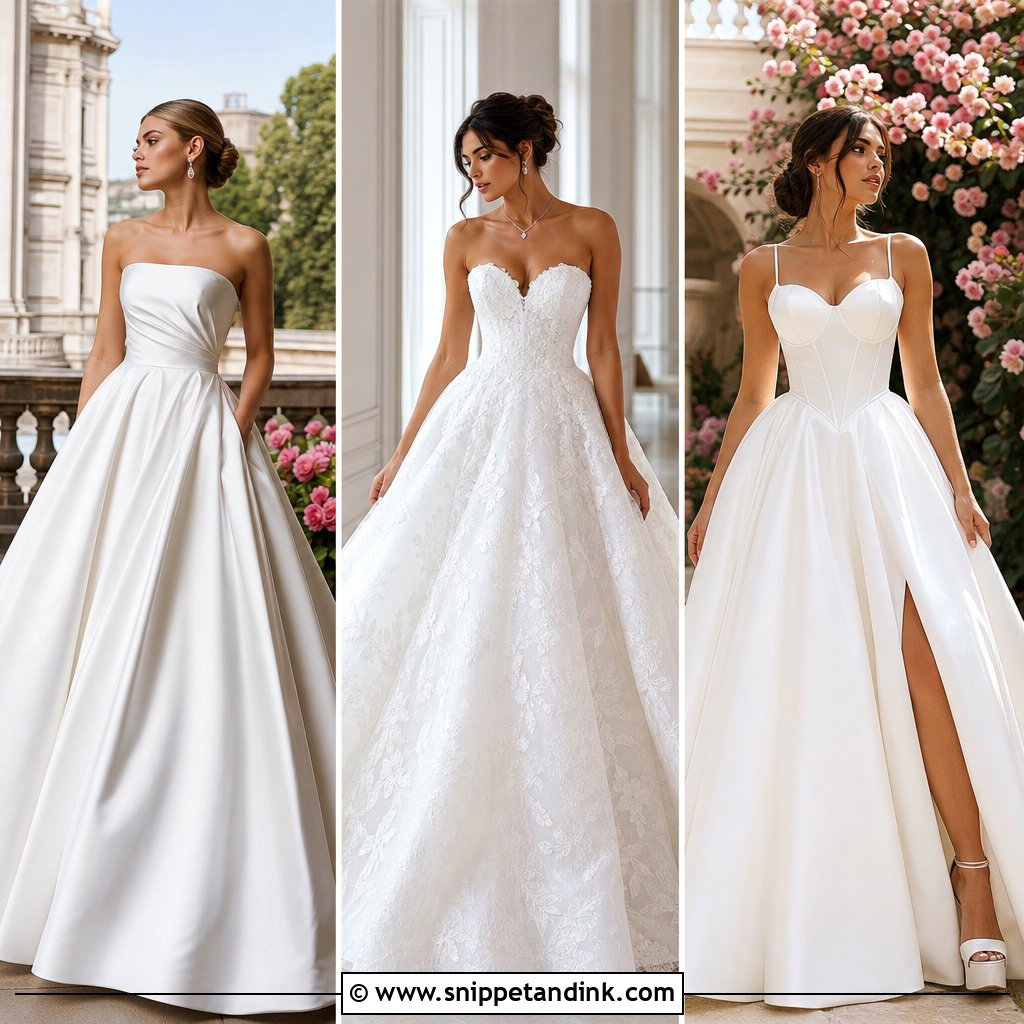
Satin and a cathedral veil are about as classic as bridal gets, and the combination still works because satin holds a clean dome shape without much help. Strapless or square necklines keep the top light. I’d keep the jewellery to pearl studs and a slim bracelet with a low bun, because the skirt and veil already take up a lot of visual space. One thing to watch: satin crushes when you sit, so plan your formal portraits before the seated dinner. Hotel ballrooms and formal estates are its natural home.
2. Lace Wedding Dress Ballgown With Long Sleeves
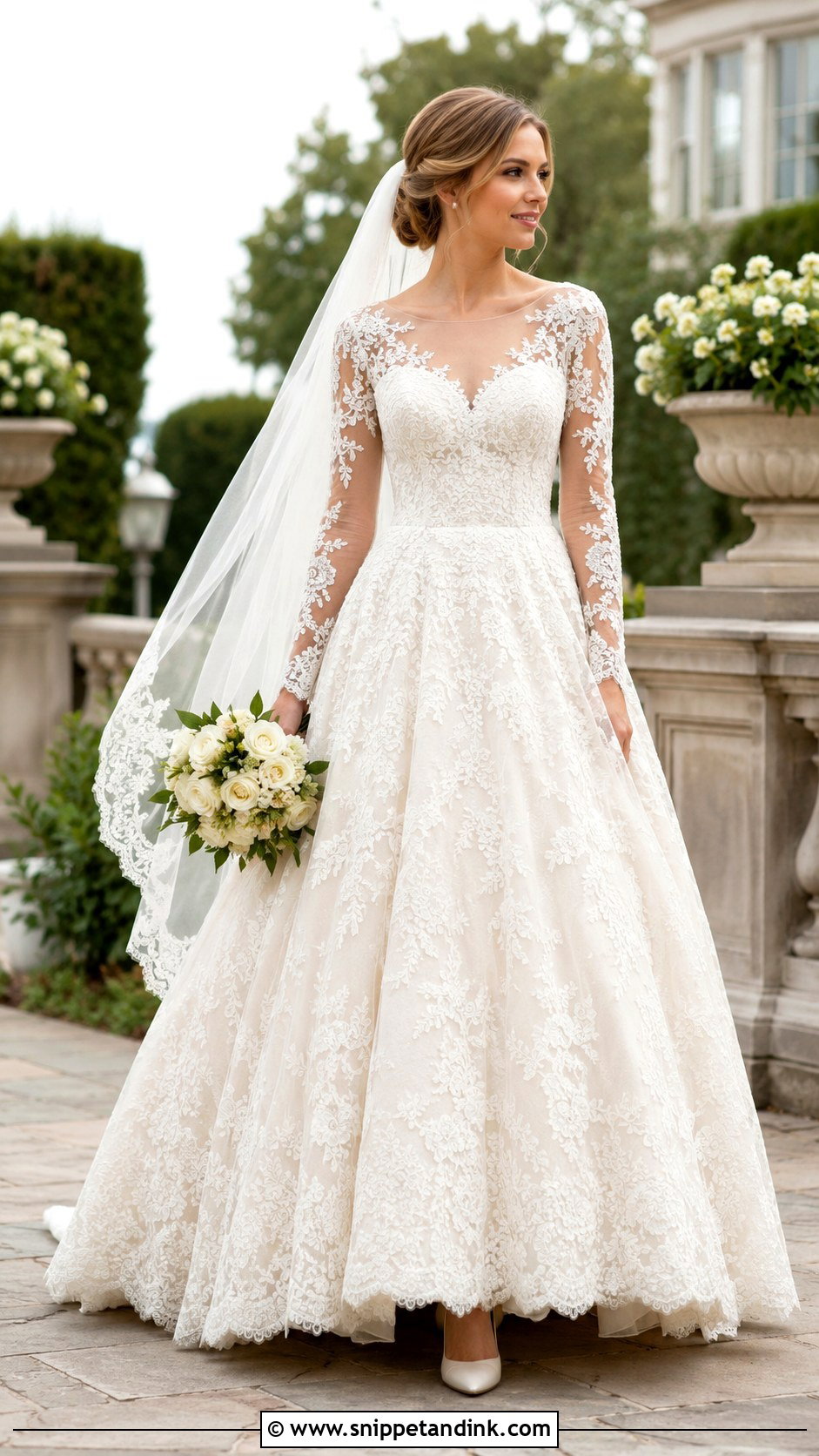
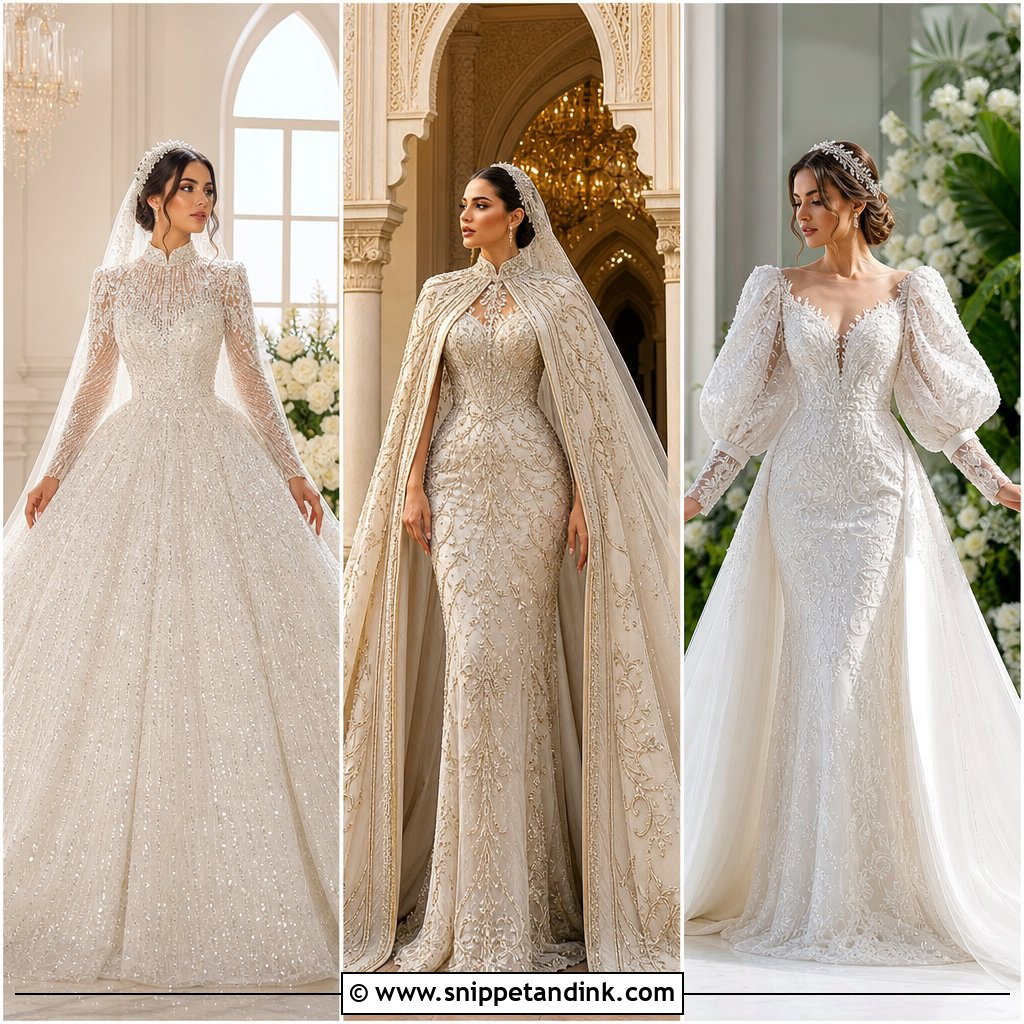
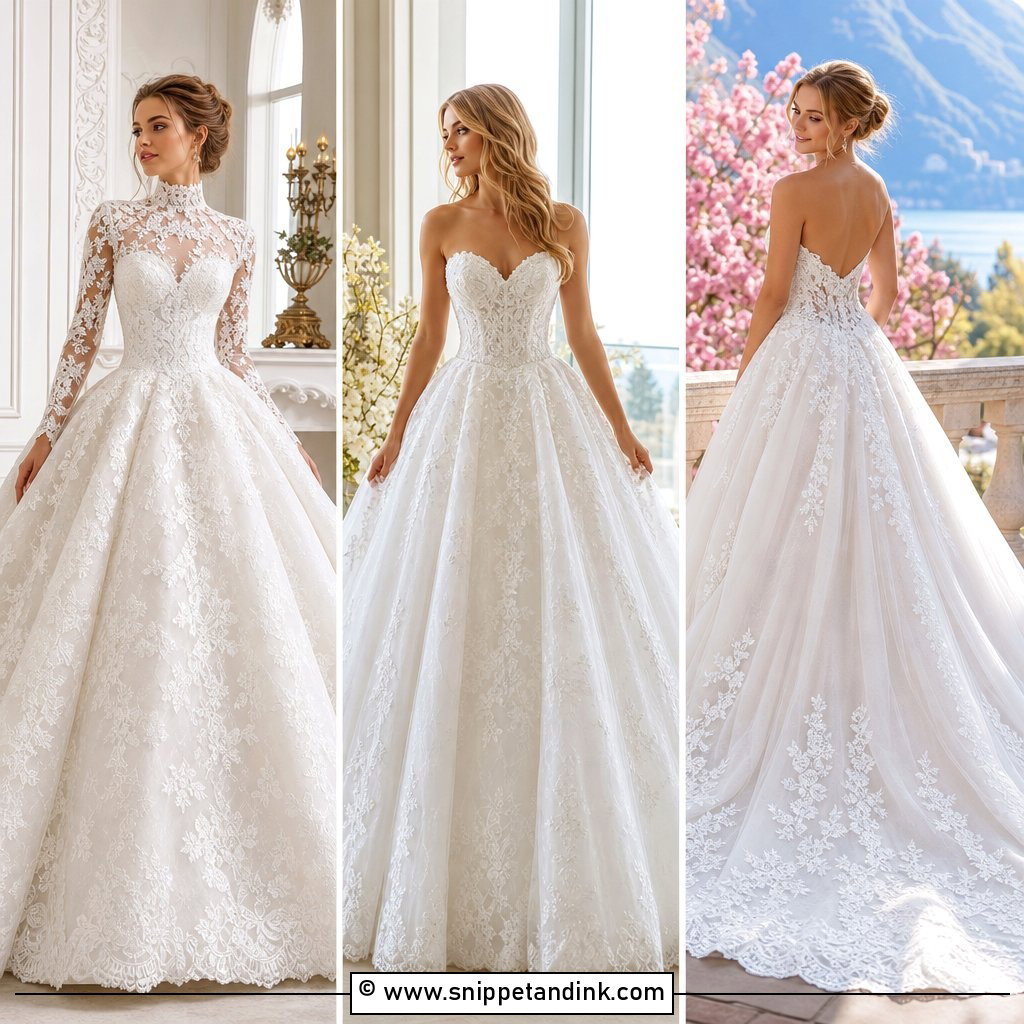
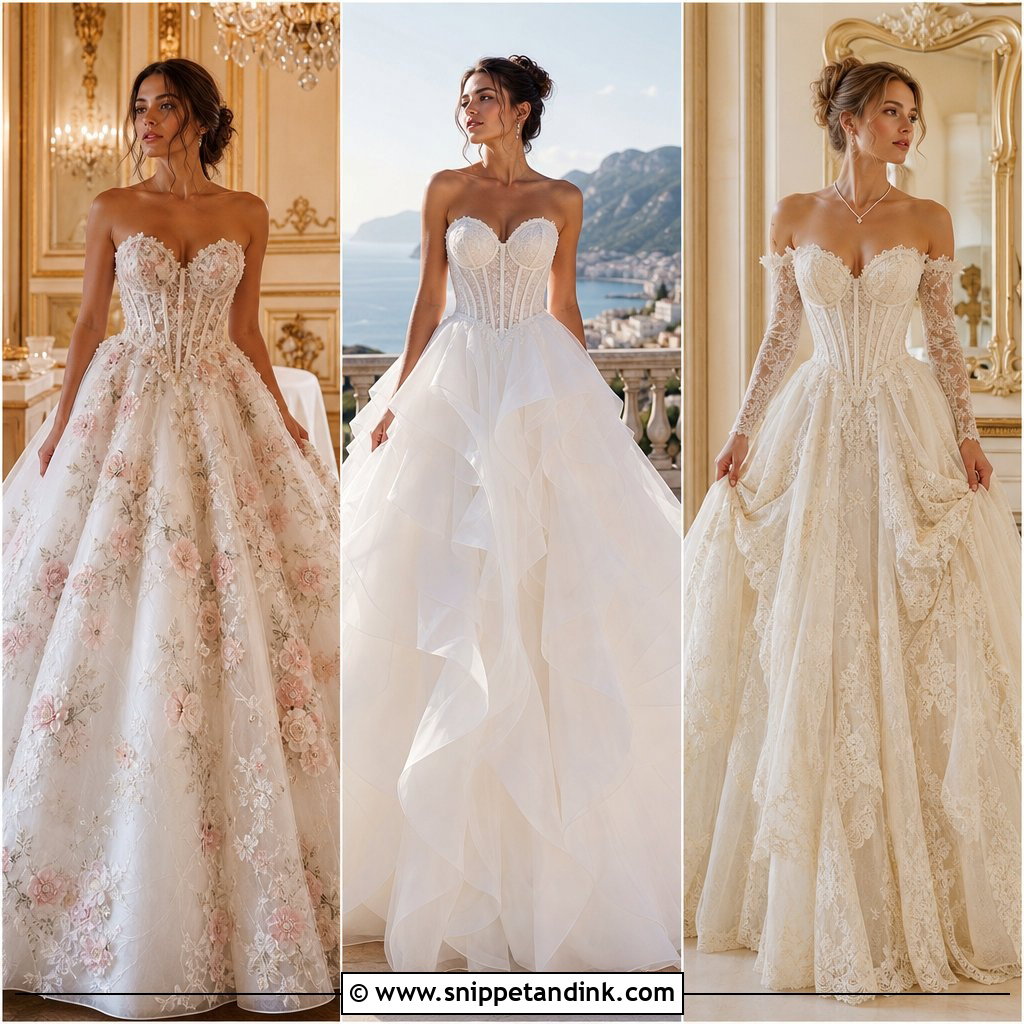
Long lace sleeves on a ballgown give coverage with an heirloom feel. Look for lace that runs from the bodice down into the skirt rather than stopping at the waist, so the design reads as one piece. A sheer sleeve with placed floral motifs is cooler and lighter than a fully lined one, which matters in spring and early autumn. The fit point I always test is the elbow: lace sleeves cut too slim pull when you hold your bouquet. A fingertip veil, classic pumps and a low chignon keep it graceful, and heavy jewellery isn’t needed.
3. Off Shoulder Wedding Dress Ballgown With Pearl Jewelry
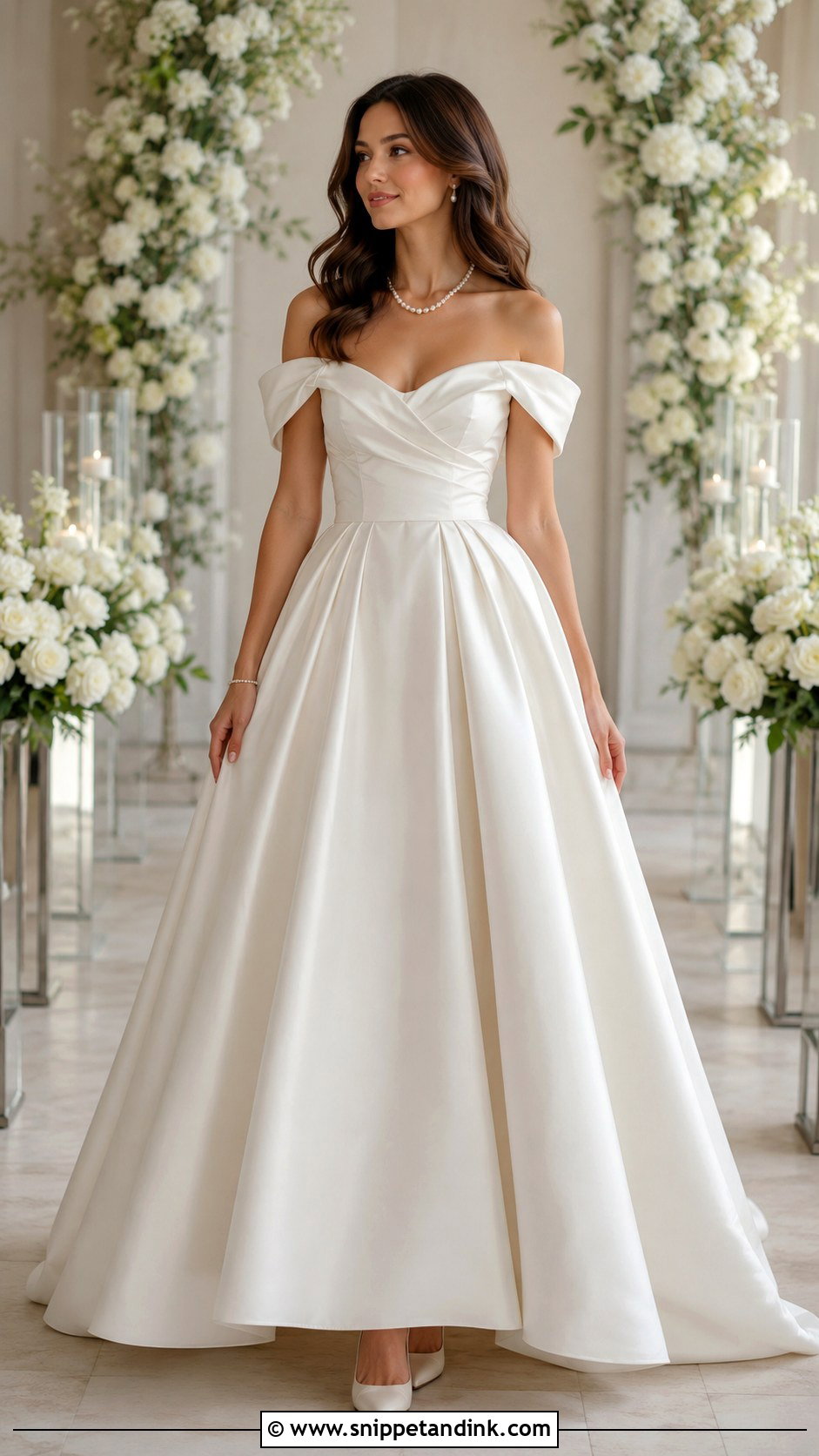
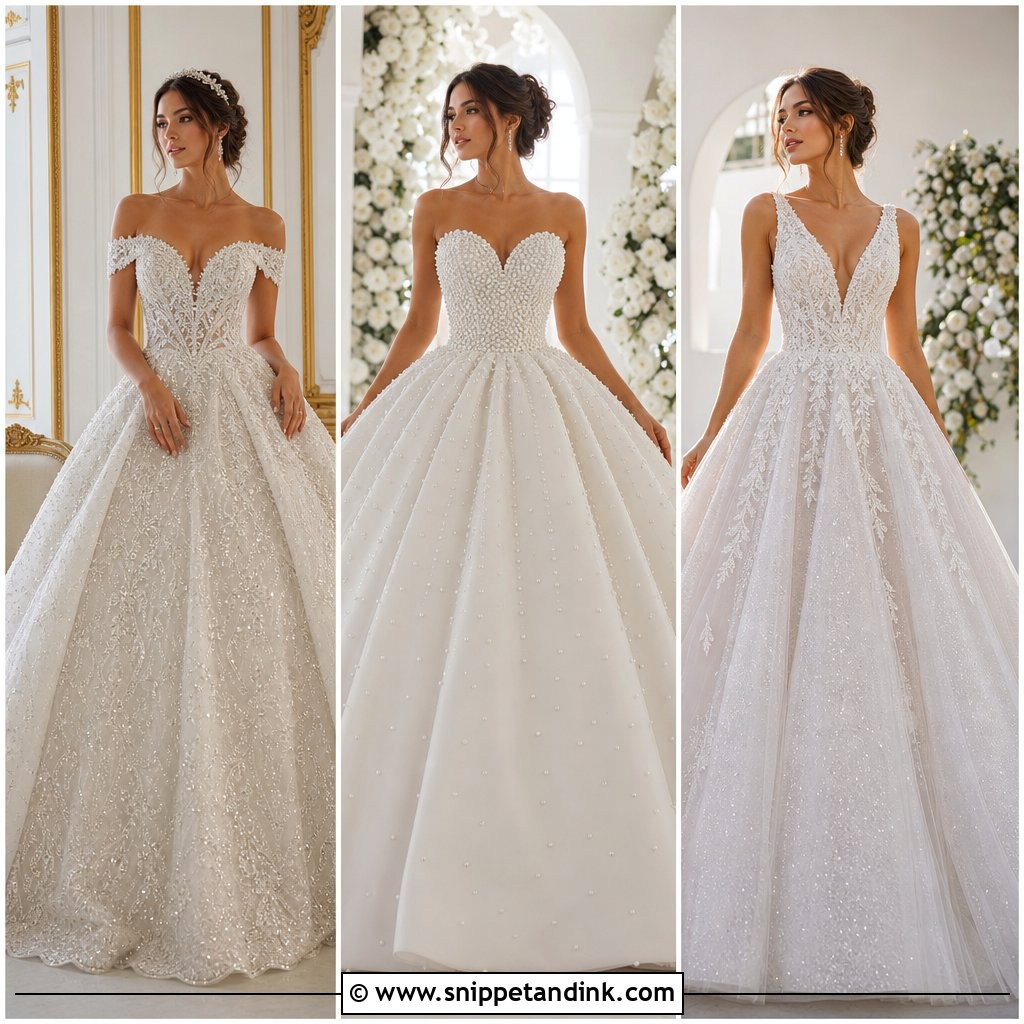
Off-the-shoulder bands frame the collarbone, but on a heavy ballgown they need a firm, boned bodice underneath or the weight of the skirt drags everything down. Ask your seamstress to check that the band stays put when you lift your arms. Folded satin, lace trim or draped tulle can soften the neckline. Pearls suit it, and loose waves or a half-up style balance the open shoulders. Grand indoor venues and garden estates both work.
4. Strapless Wedding Dress Ballgown With Basque Waist
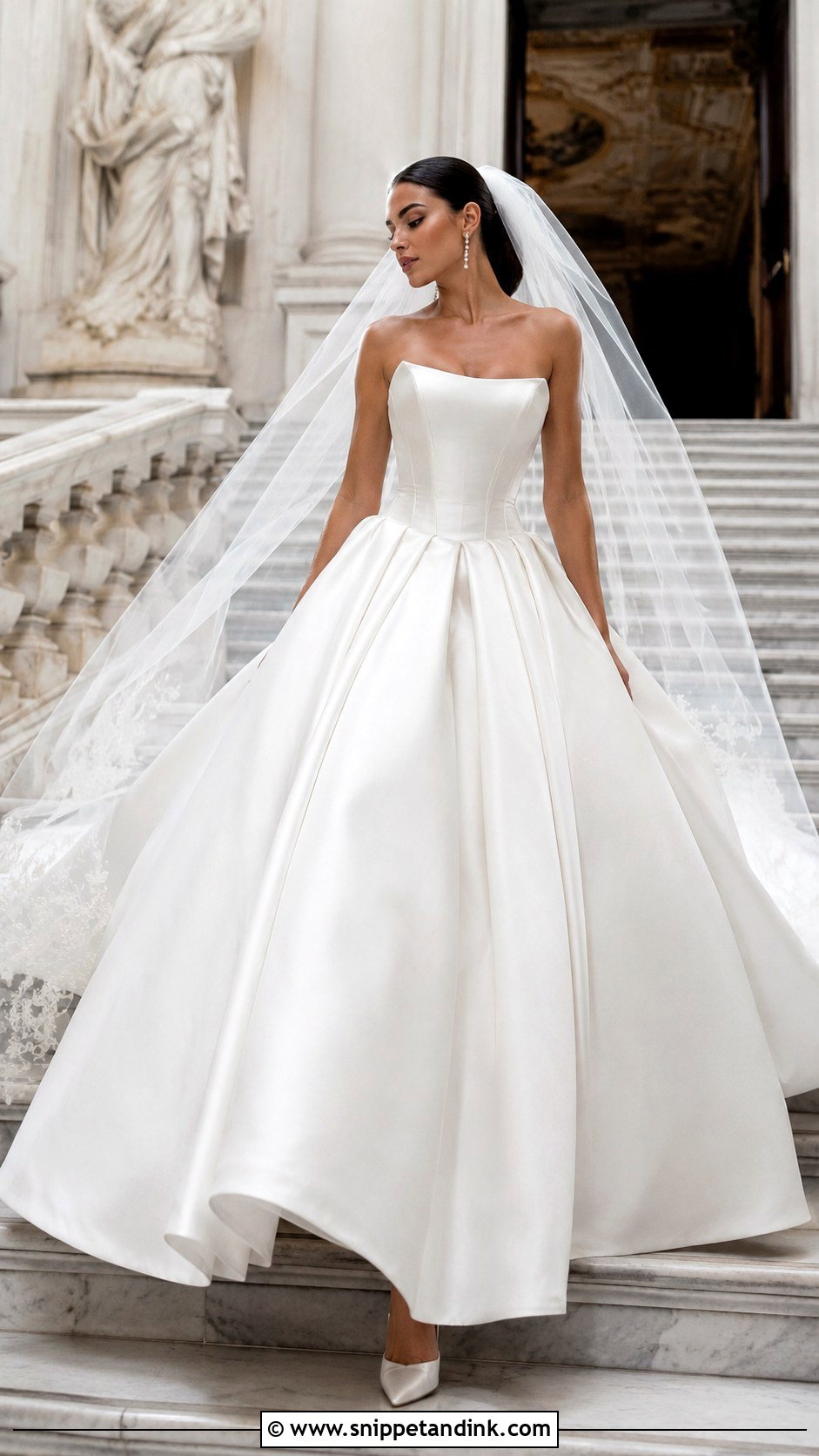
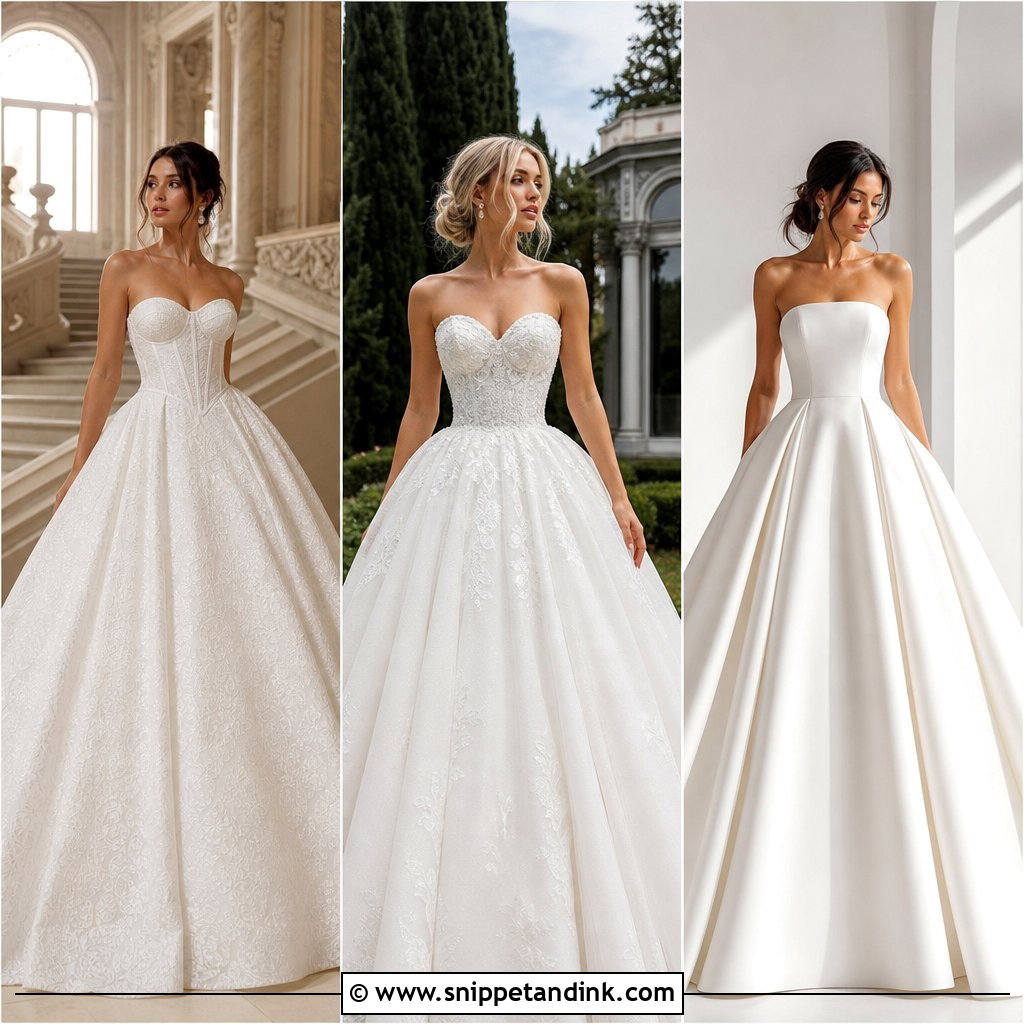
The basque waist dips into a V below the natural waist, which lengthens the torso and makes the skirt flare out more dramatically from the hips. It’s flattering on many figures, though very short-waisted brides should try it on before committing, because the point can sit awkwardly low. Satin, Mikado and layered tulle all hold the shape. Keep the strapless bodice plain or lightly beaded, and add pointed heels, a dramatic veil and drop earrings.
5. Tulle Wedding Dress Ballgown With Floral Appliqué
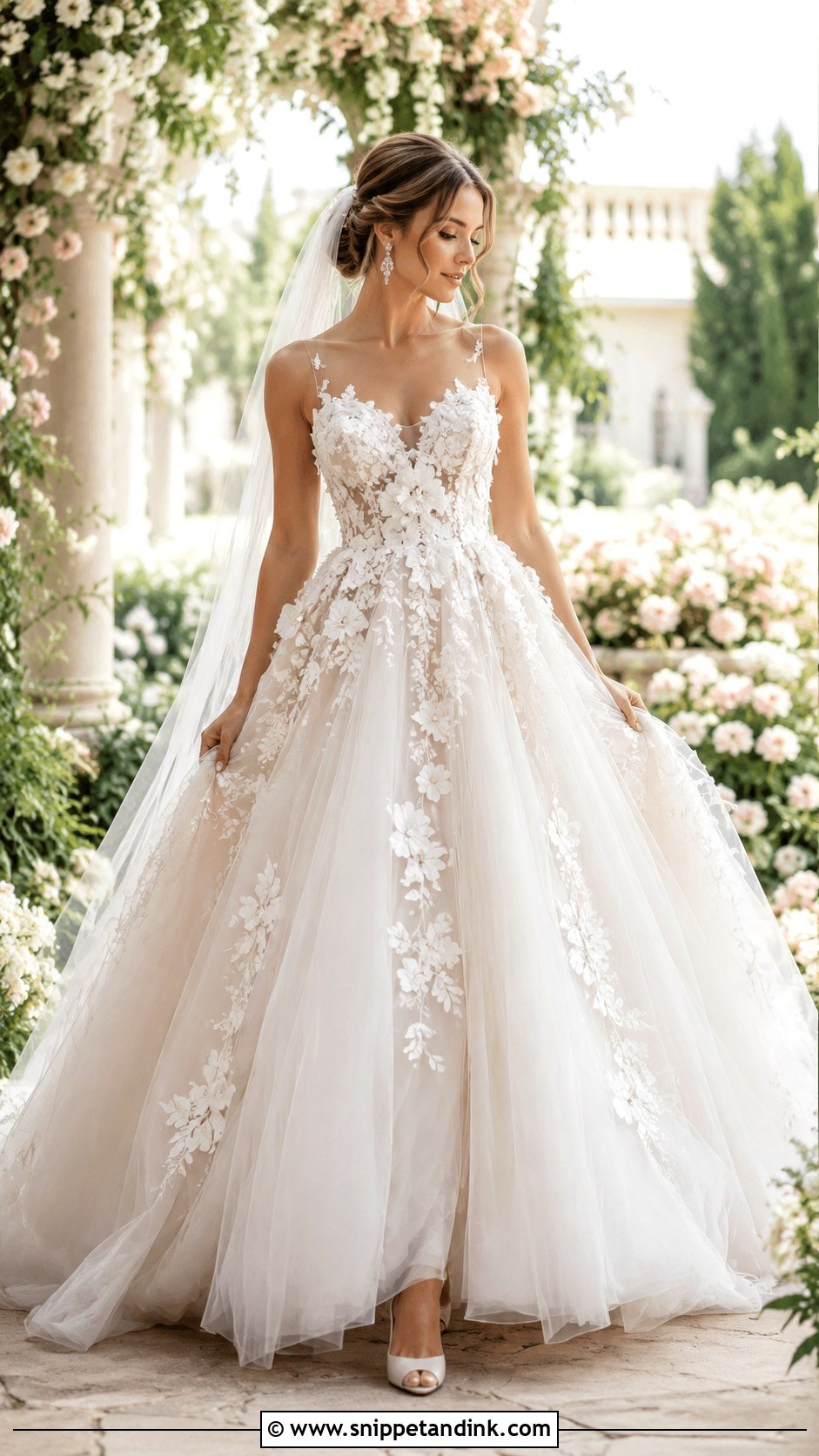
Floral appliqué works best when it fades gradually across the bodice and into the skirt instead of ending in a hard line at the waist. That gradual scatter looks custom. Layered tulle gives volume without stiffness and suits gardens and spring estates. Barely there earrings, soft pink makeup and a loose updo with a few face-framing pieces keep it fresh. A sheer veil with matching flowers can work, but only if the dress itself isn’t heavily covered.
6. Mikado Wedding Dress Ballgown With Bow Back
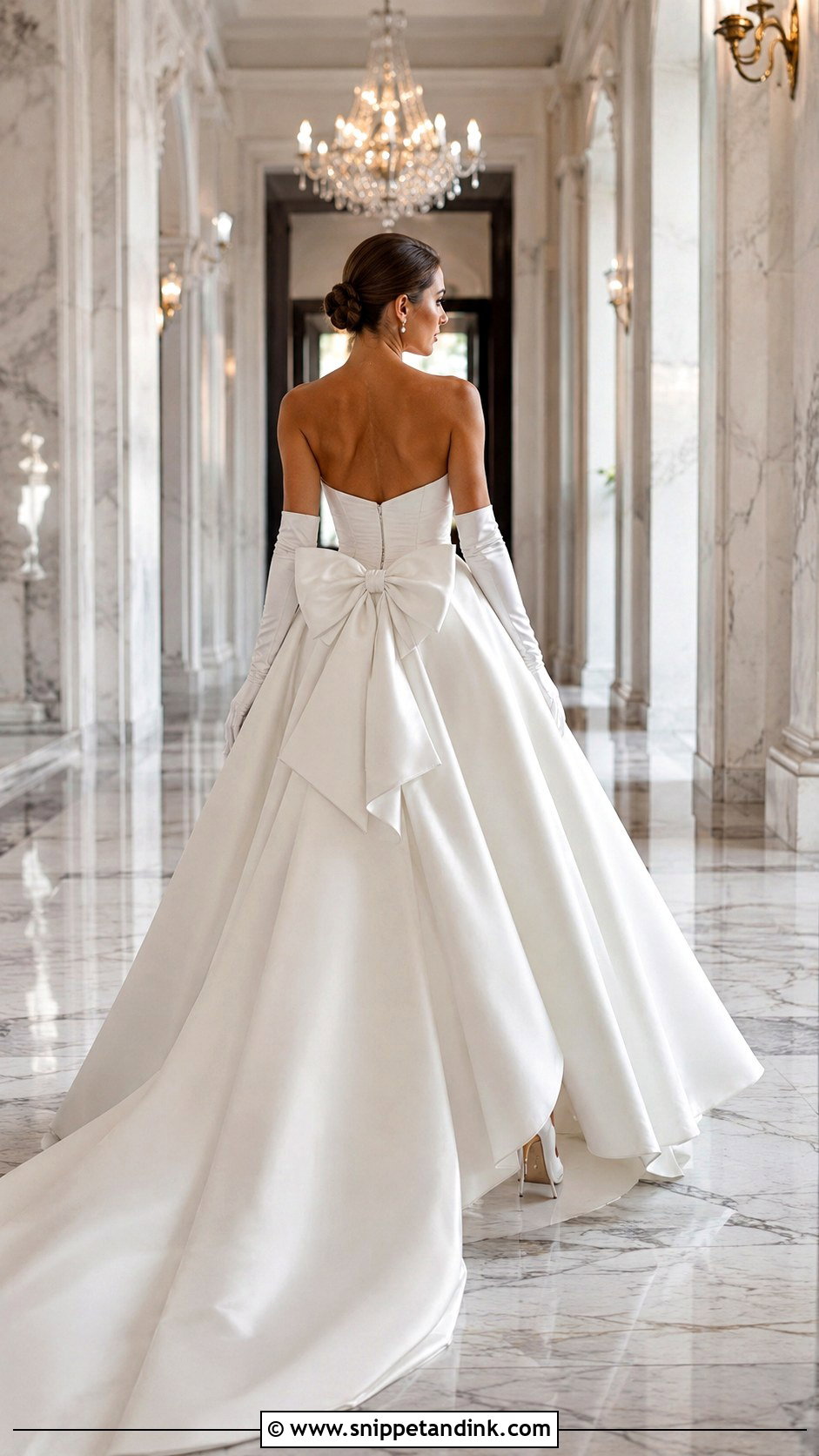
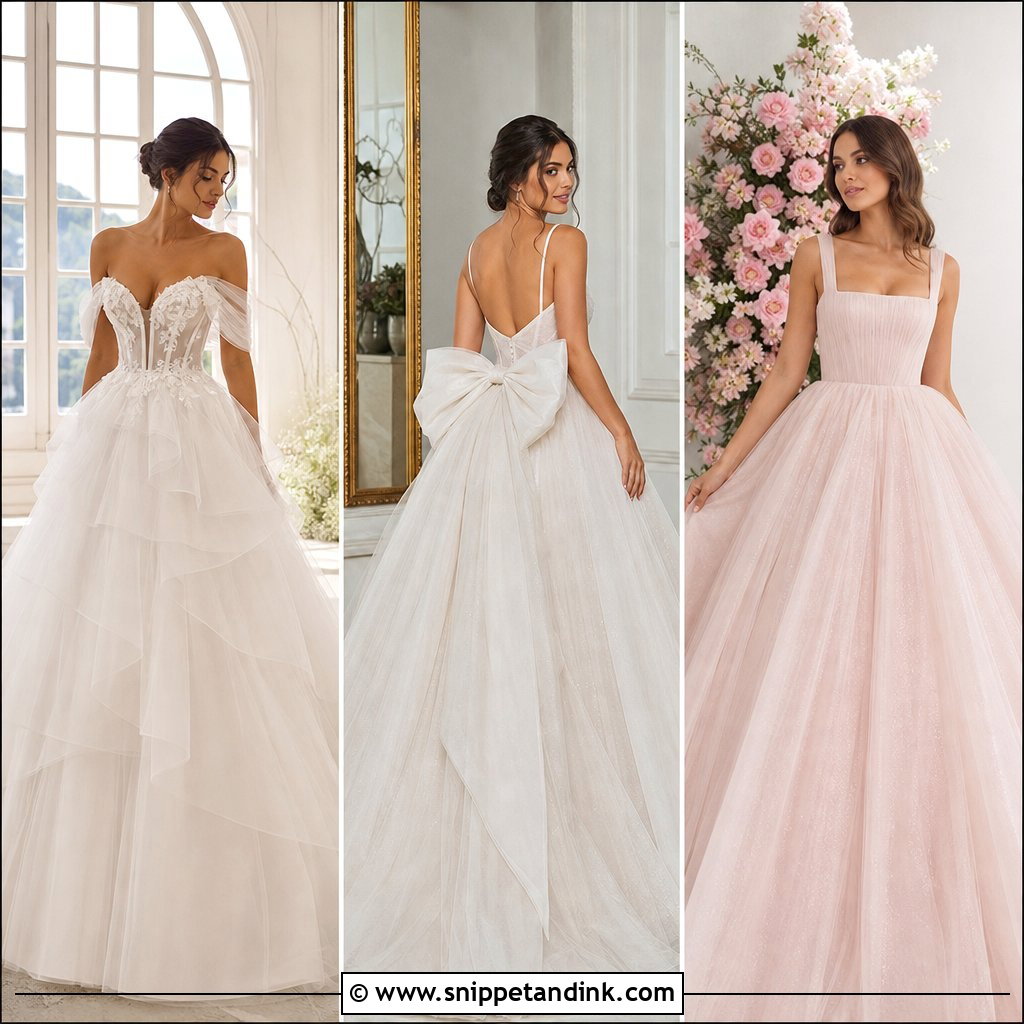
Mikado is a heavy, slightly crisp silk or silk-blend that holds sculptural shapes, which is why the skirt reads as architecture rather than fluff. A bow at the back adds a couture note; it can sit at the waist, trail into the train or clip on as a removable piece. Remember the bow is what guests see during the ceremony. Keep the front simple with a scoop, strapless or cat-eye neckline, then add sleek gloves, satin pumps and a smooth bun. Staircases and marble floors suit it.
7. Beaded Wedding Dress Ballgown With Sheer Bodice
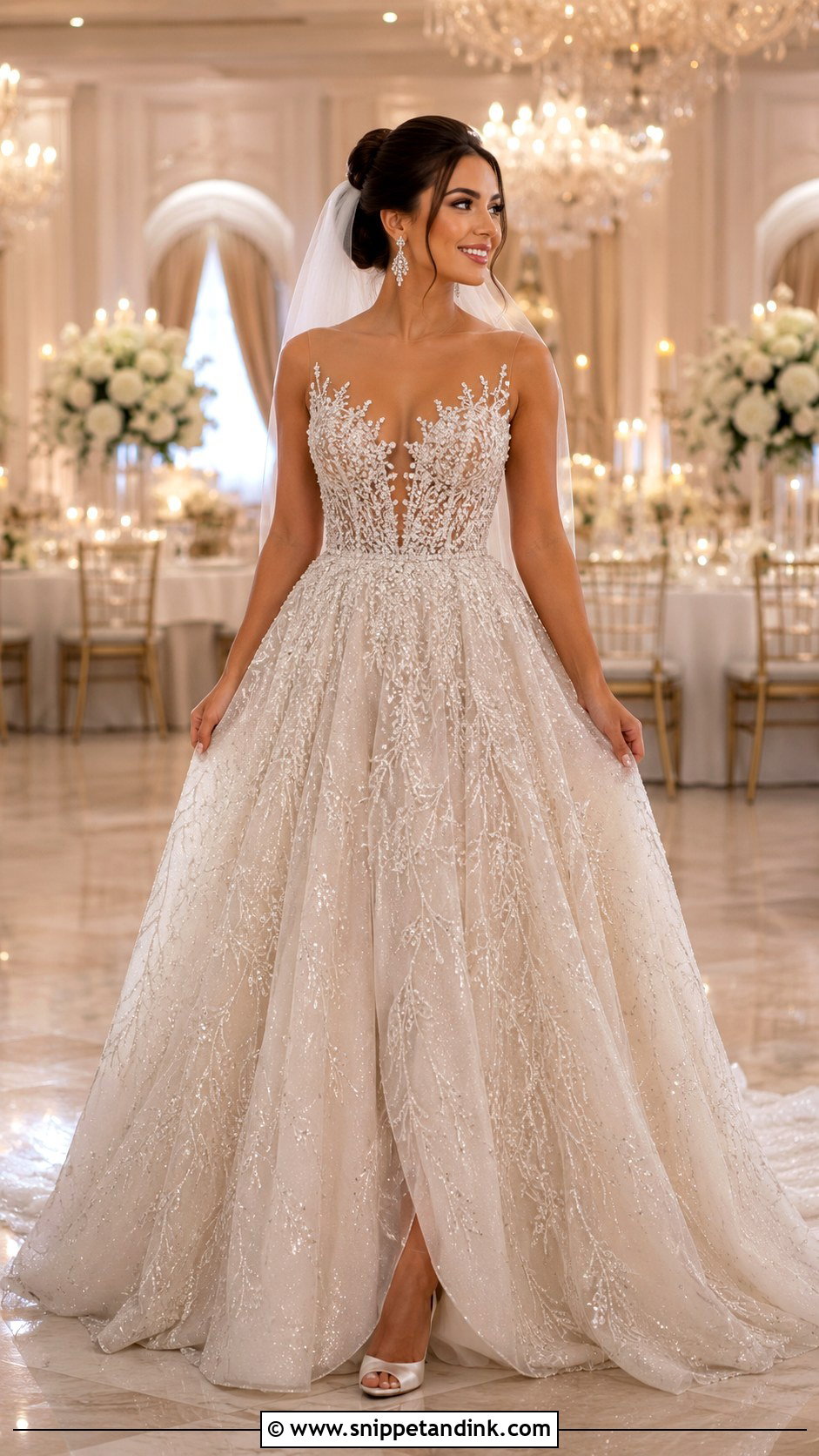
Beading needs a quiet partner, and on this gown that’s the full plain skirt. Let the sheer bodice carry the beadwork, with soft lining placed so the embroidery looks like it sits directly on skin. A sheer bodice must be fitted precisely; if it’s loose, the mesh wrinkles and the illusion is lost. Crystal earrings, a clean veil and glowing skin are all it needs for evening weddings and candlelit ballrooms.
8. Corset Wedding Dress Ballgown With Layered Skirt
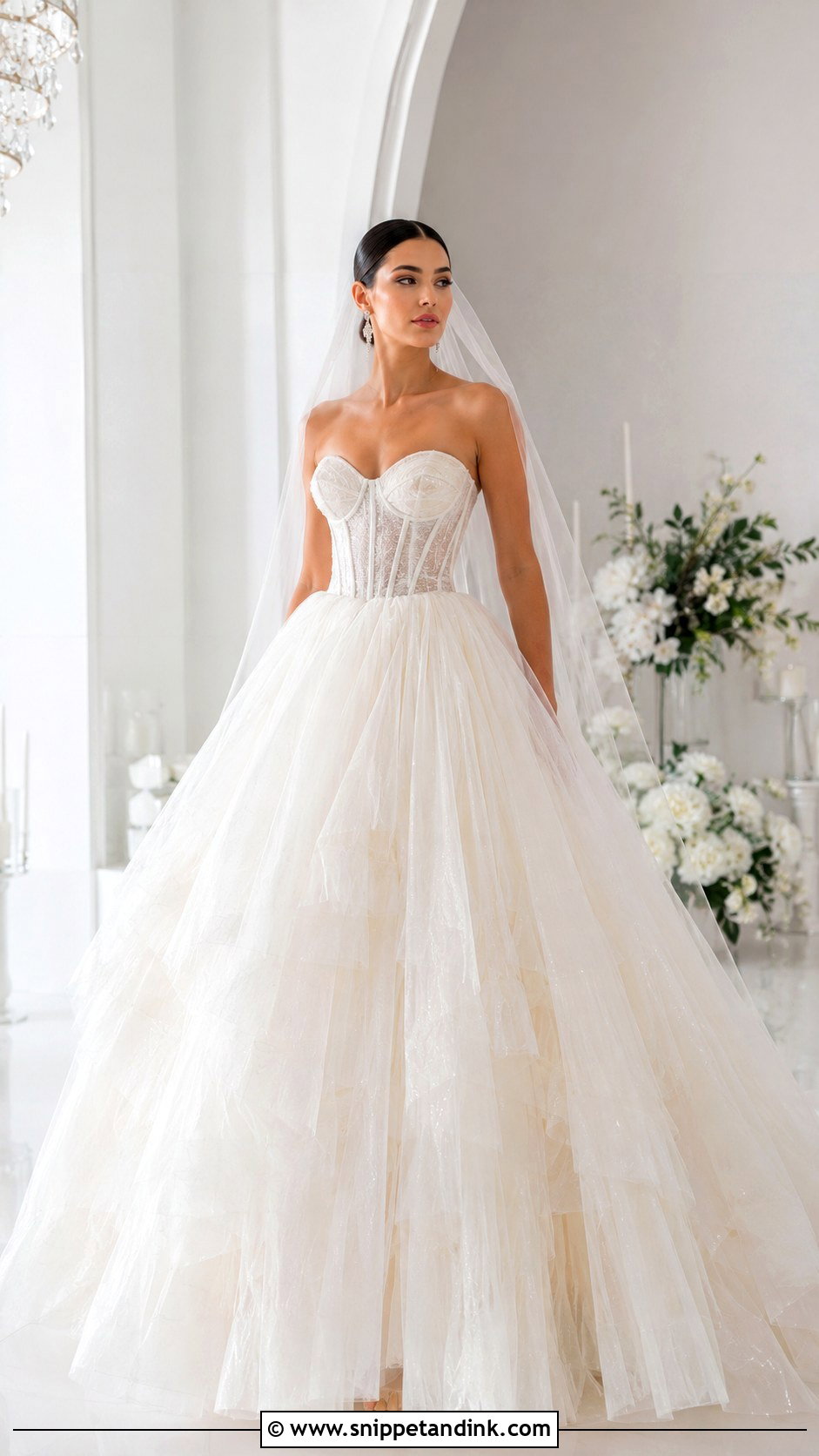
A corset bodice gives the most support of any ballgown style, which is why brides with a fuller bust often feel most secure in one. Visible boning reads vintage or modern depending on the fabric. Pair it with a layered tulle or organza skirt for contrast. I always ask brides to sit and eat a snack in the corset at the final fitting; if you can’t breathe comfortably, it’s too tight. Platform heels hidden under the hem are a smart call for long days.
9. Drop Waist Wedding Dress Ballgown With Gloves
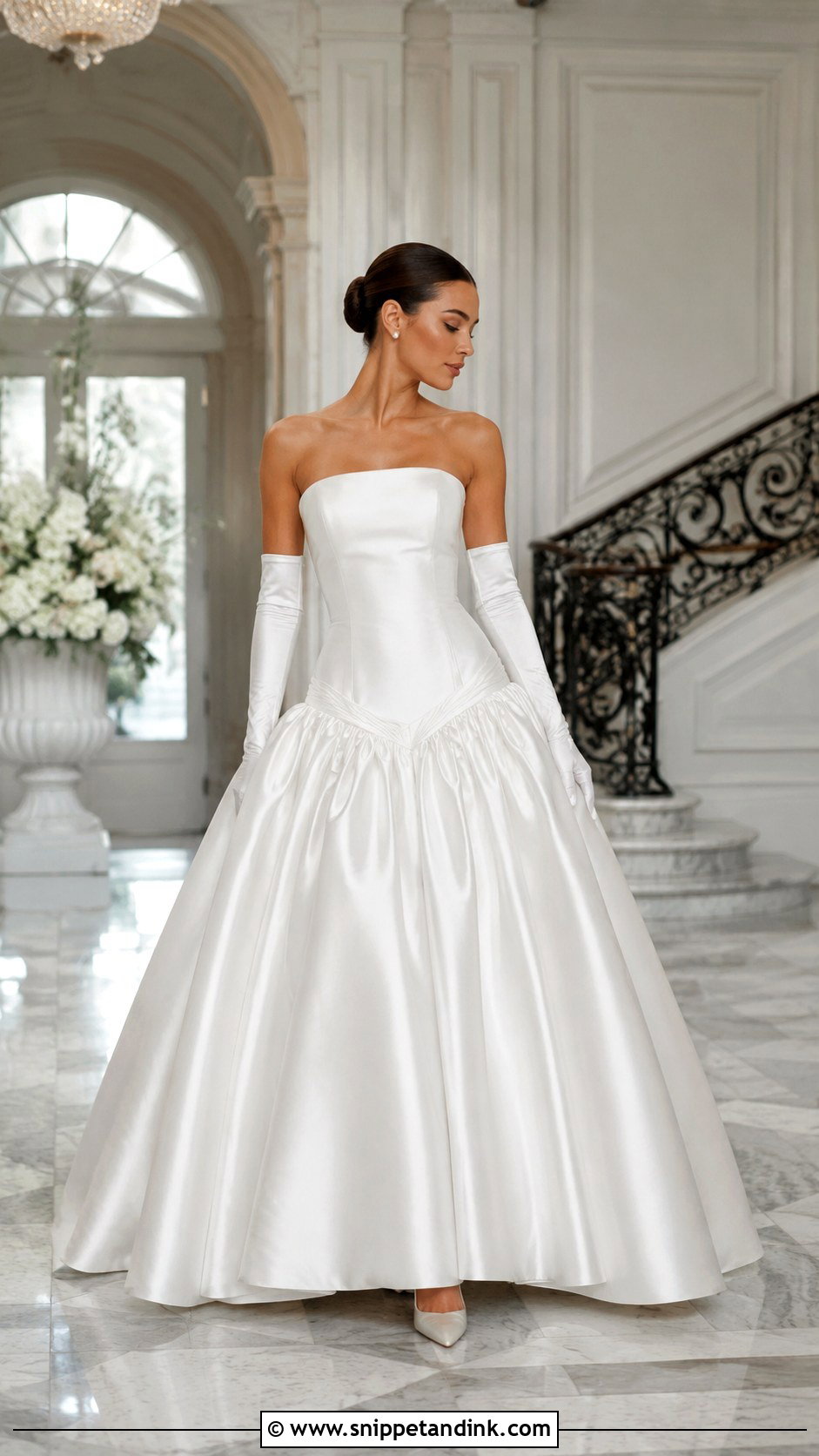
Drop waists move the start of the skirt lower on the torso, creating a long bodice line before the volume begins. That transition needs fabric with body, such as satin, Mikado or structured taffeta, or the skirt collapses at the seam. Opera gloves give it an old Hollywood feel. Keep the neckline straight or strapless so the waistline stays the focus, with a sleek bun, pearl studs and pointed heels. I’d suggest petite brides try it carefully, since a long bodice can shorten the legs.
10. Floral Wedding Dress Ballgown With Color Embroidery
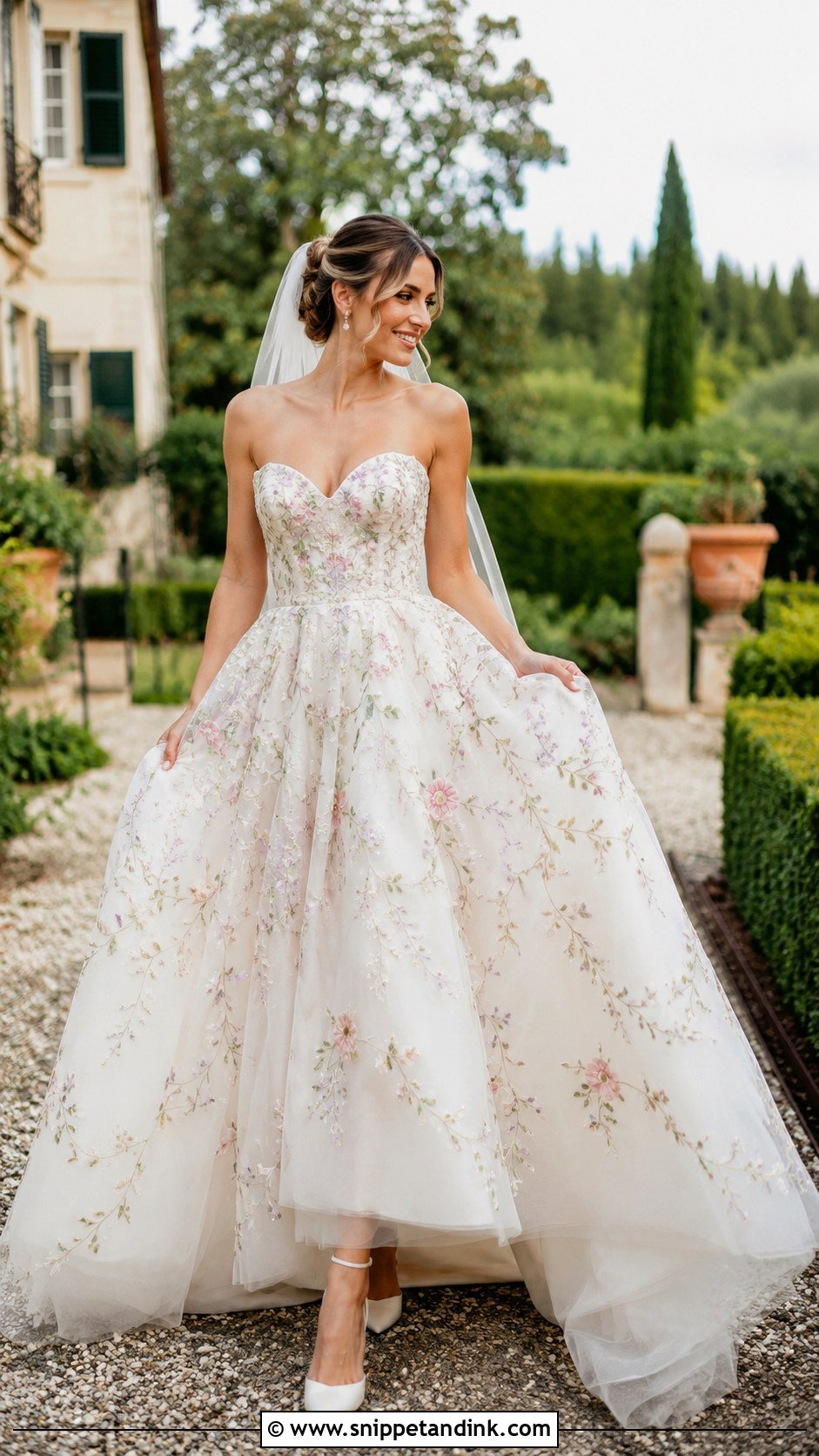
Colour embroidery is a way to make a ballgown feel personal while keeping it bridal. Thread in blush, pale blue, champagne or soft green over an ivory base works across the bodice, hem or train. Ask for a swatch of the thread against the base fabric in daylight, as some pastels disappear in photos and others look stronger than expected. Ivory shoes, or a shade pulled from the embroidery, and a soft veil finish it. Gardens and spring or summer weddings suit it.
11. Ruffled Wedding Dress Ballgown With Statement Train
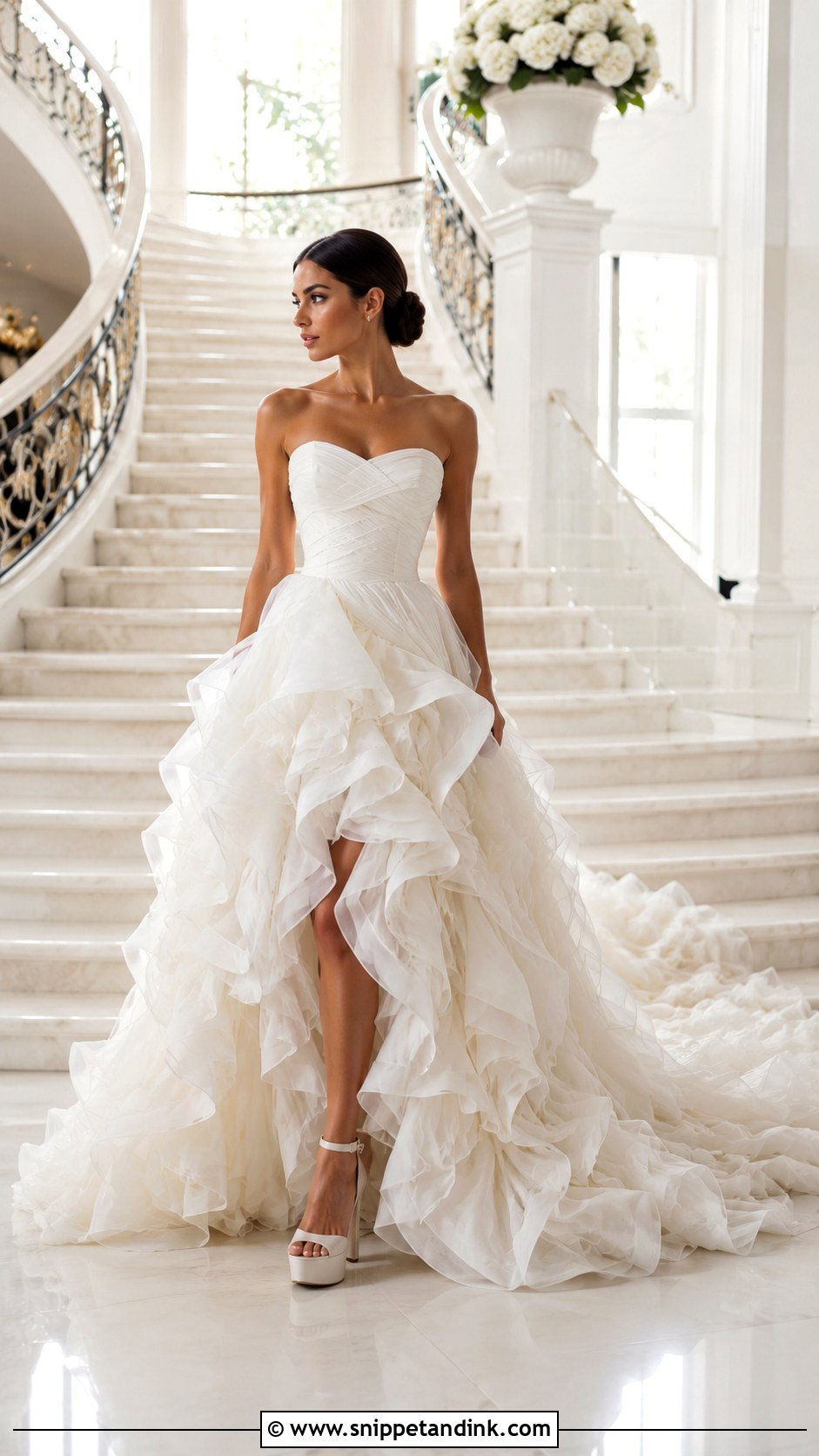
Ruffles in organza, tulle or horsehair trim give a skirt movement from every side, and a statement train adds even more on a long aisle or staircase. Horsehair braid is the stiff edging that makes ruffles hold their curl. To stop the whole look from feeling busy, choose a clean top such as a strapless corset or a plain sweetheart neckline. Keep jewellery minimal and the hair smooth. Hidden platform heels give height under the volume.
12. Square Neck Wedding Dress Ballgown With Simple Veil
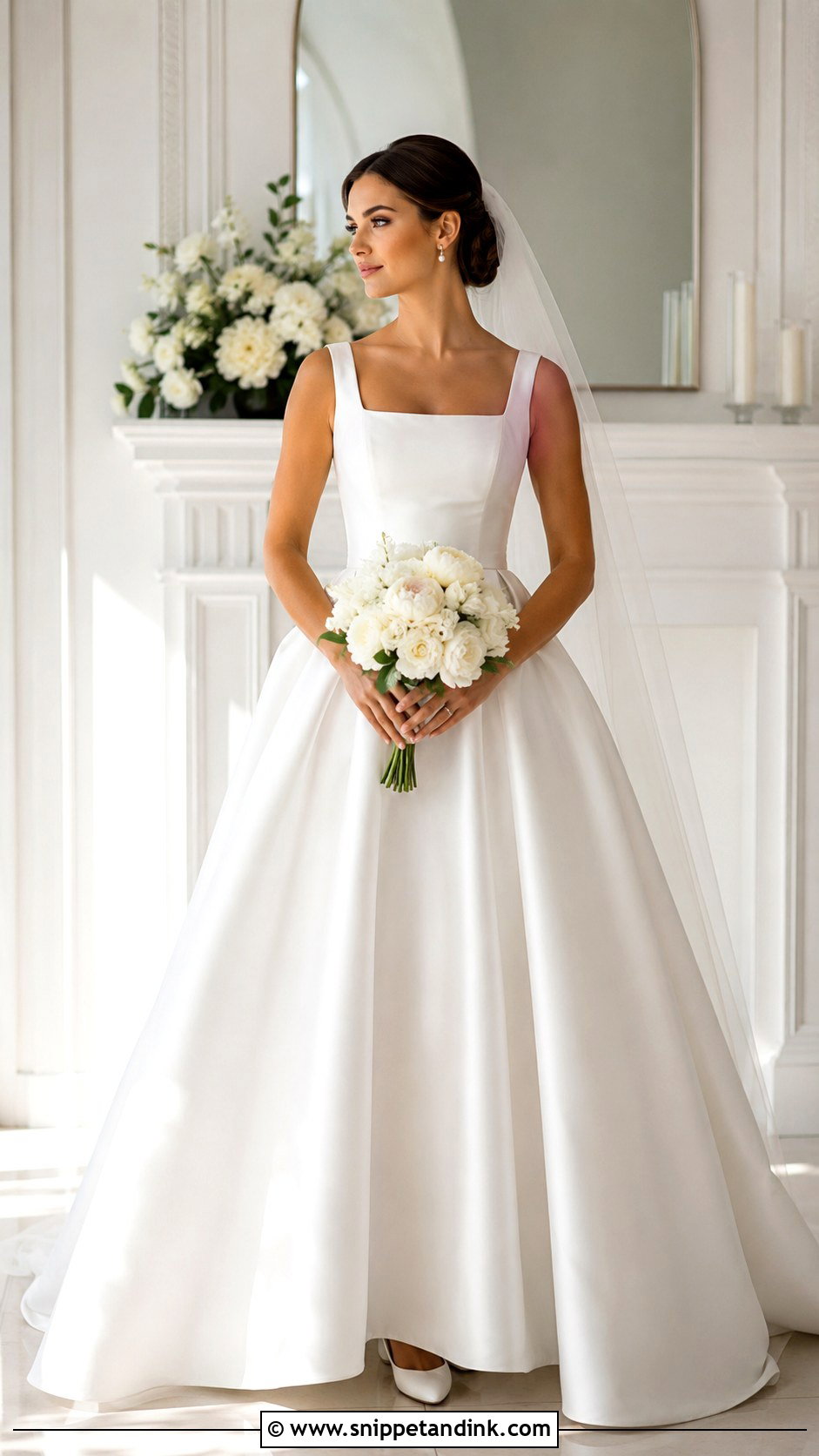
Square necks frame the face and collarbone without needing any embellishment, so this is a ballgown that gets its drama purely from proportion. Wide straps give more support than strapless, which brides who dislike tugging at a bodice appreciate. A full satin or tulle skirt pairs well. A simple veil, pearl drops, soft makeup and closed-toe heels complete the look. Plan to have the straps checked while standing naturally, as they tend to gape if they’re slightly long.
13. Halter Wedding Dress Ballgown With High Neck
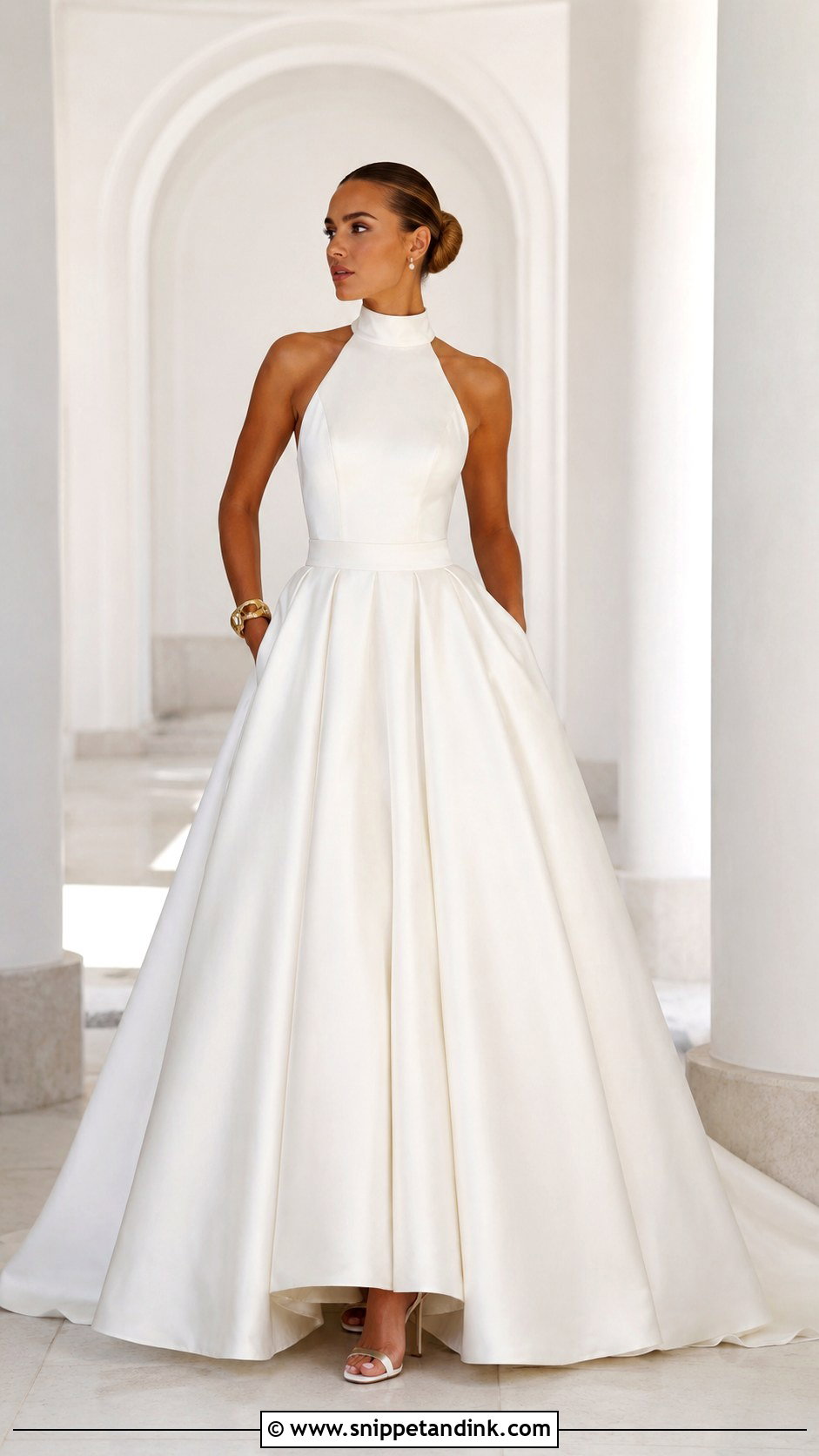
Halter necks draw the eye upward and give support at the bust without sleeves. Satin, crepe-backed satin or clean-seamed lace work well. The halter strap carries weight from the neck, so on a heavy skirt it should be anchored to a firm inner bodice; otherwise you’ll feel it by evening. Lift the hair into a bun or sleek ponytail so the neckline shows. Small earrings, a sculptural cuff and simple heels keep it modern.
14. Sheer Sleeve Wedding Dress Ballgown With Lace Train
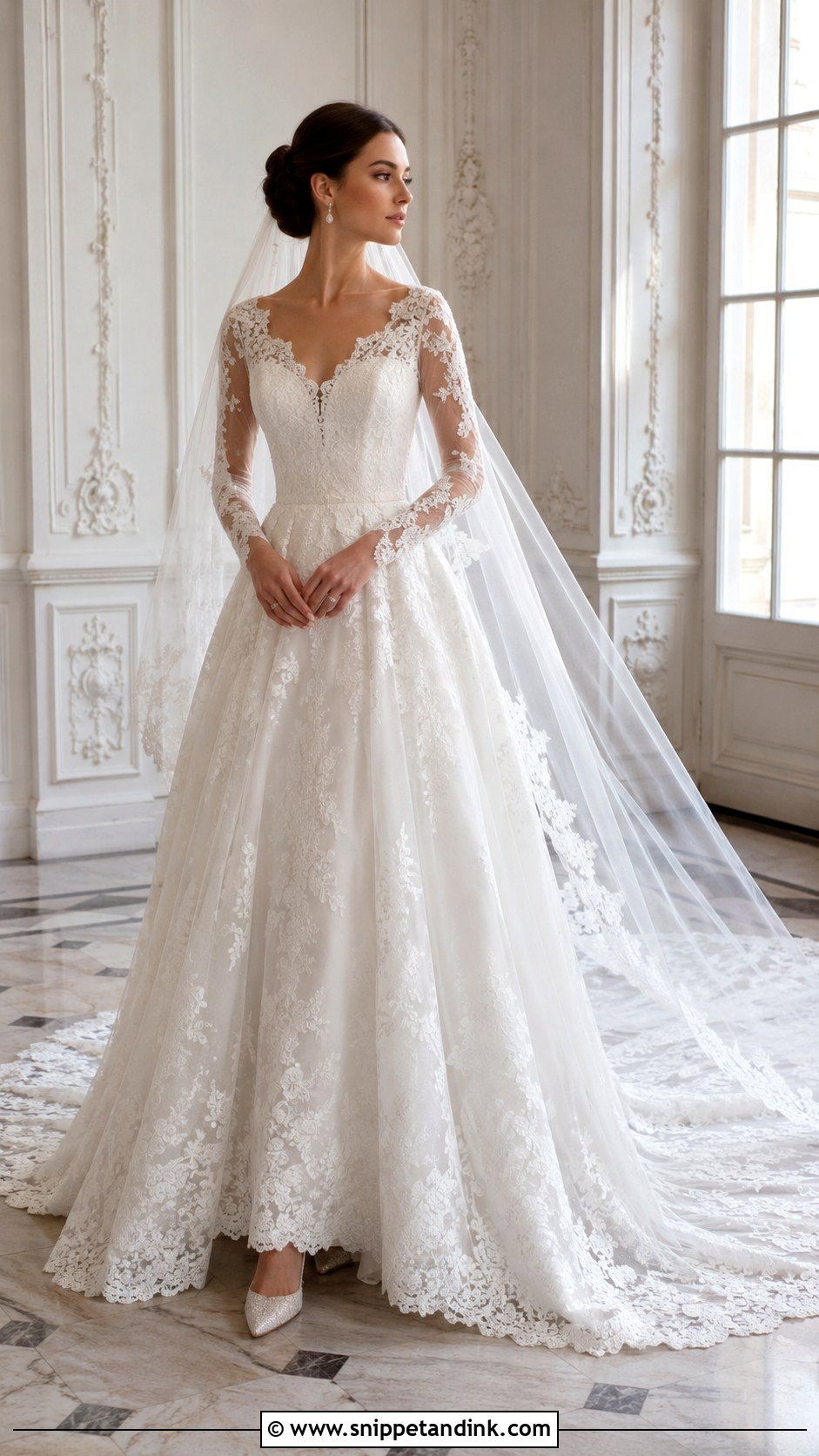
Sheer sleeves give coverage without the weight of lined fabric, and a lace train makes the back view as detailed as the front, which matters because guests watch your back for most of the ceremony. Look for a fitted waist so the sleeves and skirt don’t swamp you. Sleeve trim with lace appliqué, small pearls or embroidery that continues into the bodice ties it together. Pair with a long veil, soft bun and delicate earrings for cooler seasons or traditional venues.
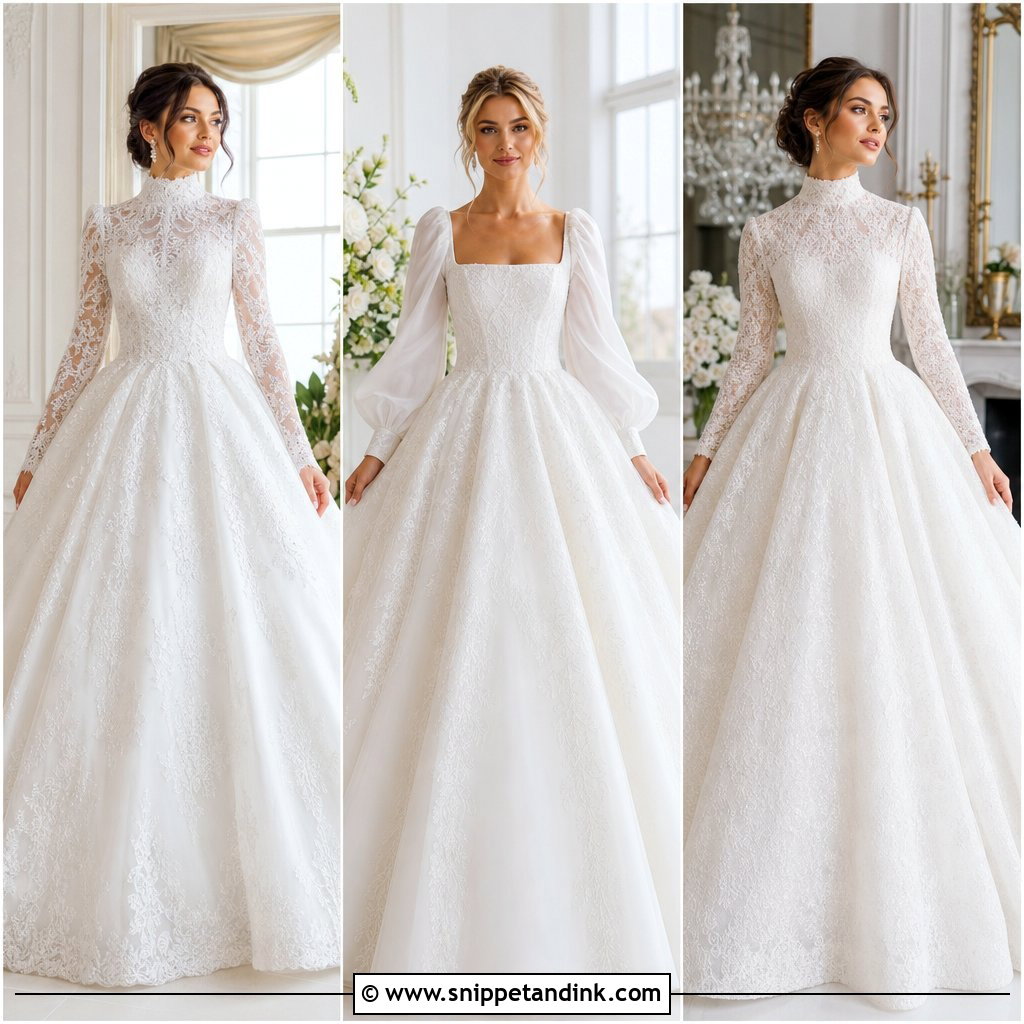

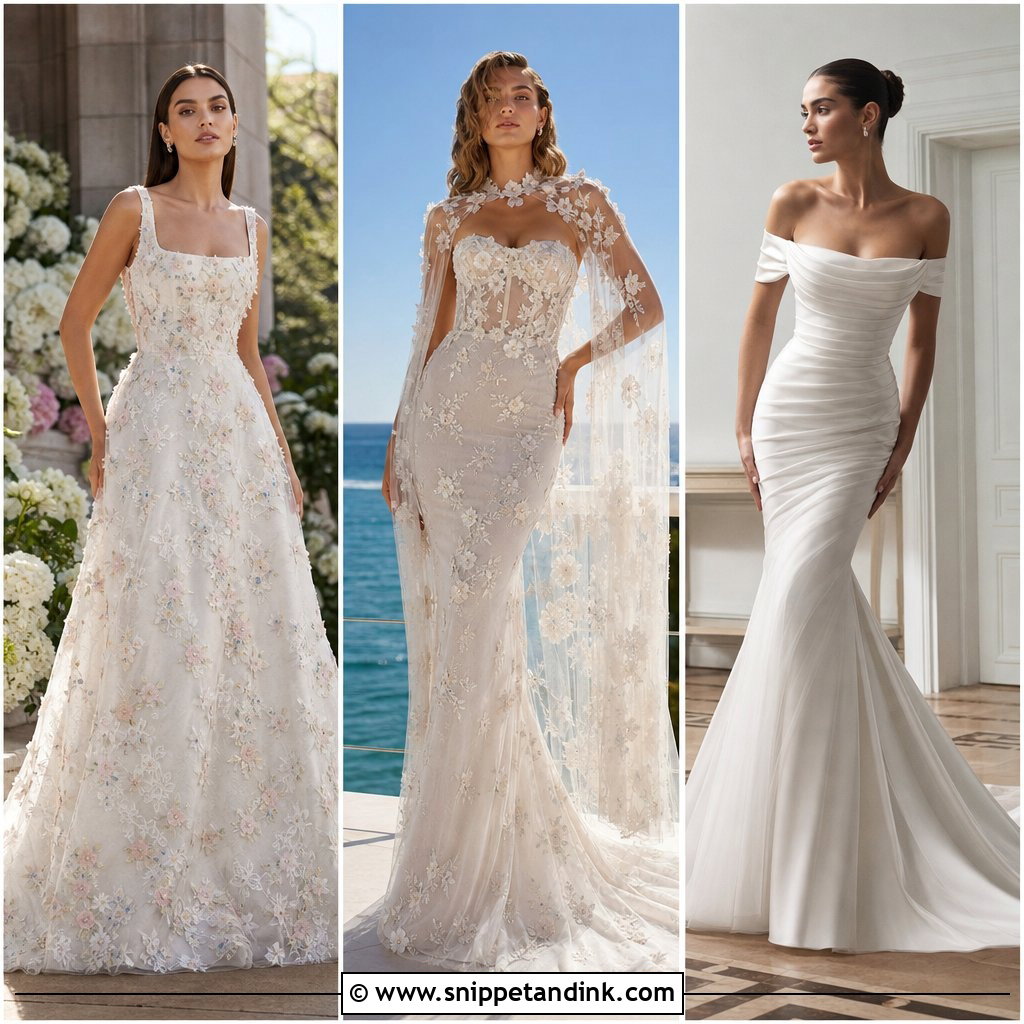
15. Champagne Wedding Dress Ballgown With Gold Accessories
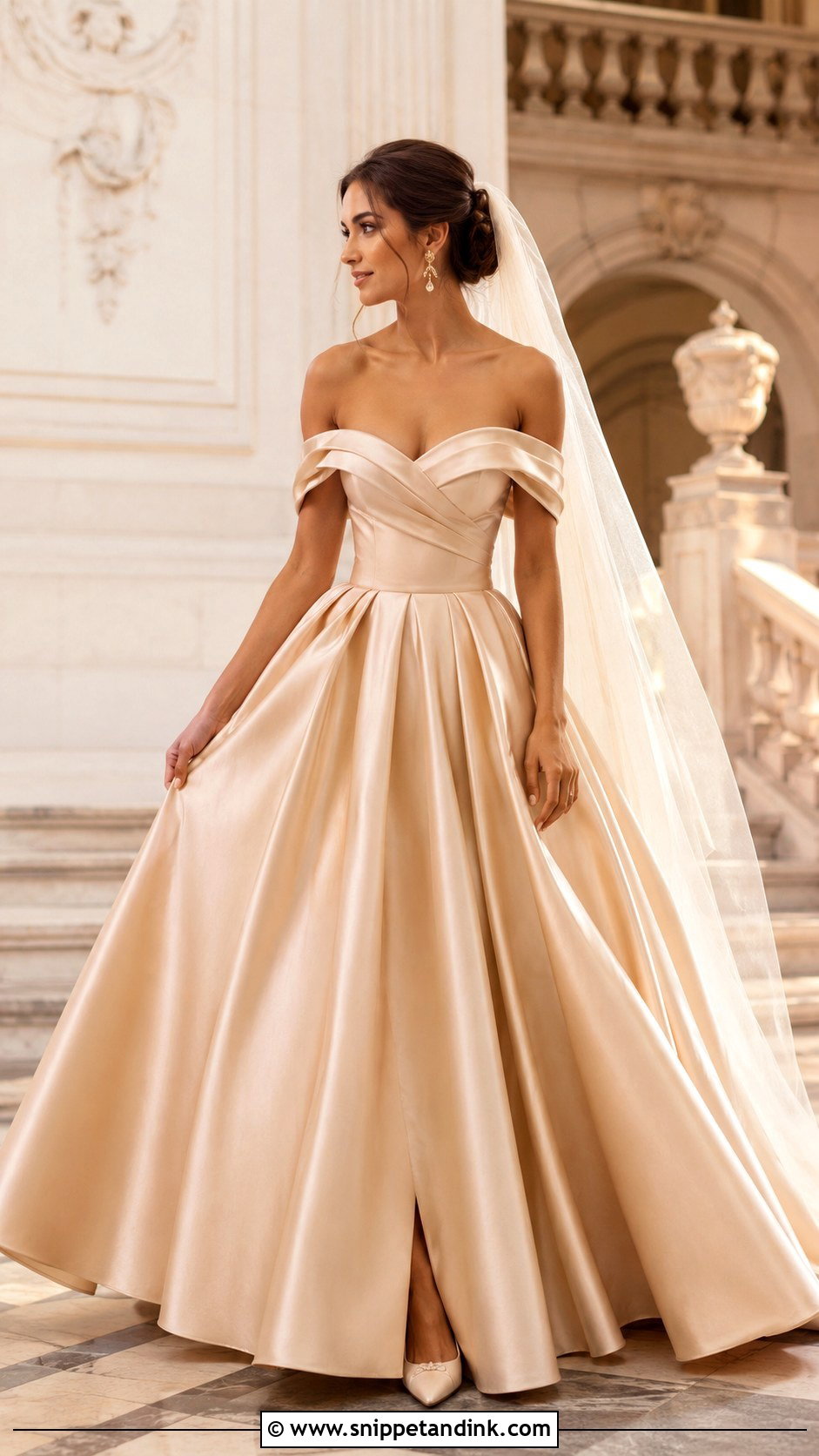
Champagne tones are warmer than white, and they flatter many skin tones that look washed out in bright ivory. Try the colour next to your face in natural light before deciding. Satin, tulle and embroidered lace all take the shade well. Gold drop earrings, a thin bracelet and champagne heels suit it, and the veil should be ivory or light champagne, since a stark white veil looks grey against it. Historic venues and autumn evening weddings are a good match.
16. Blush Wedding Dress Ballgown With Floral Veil
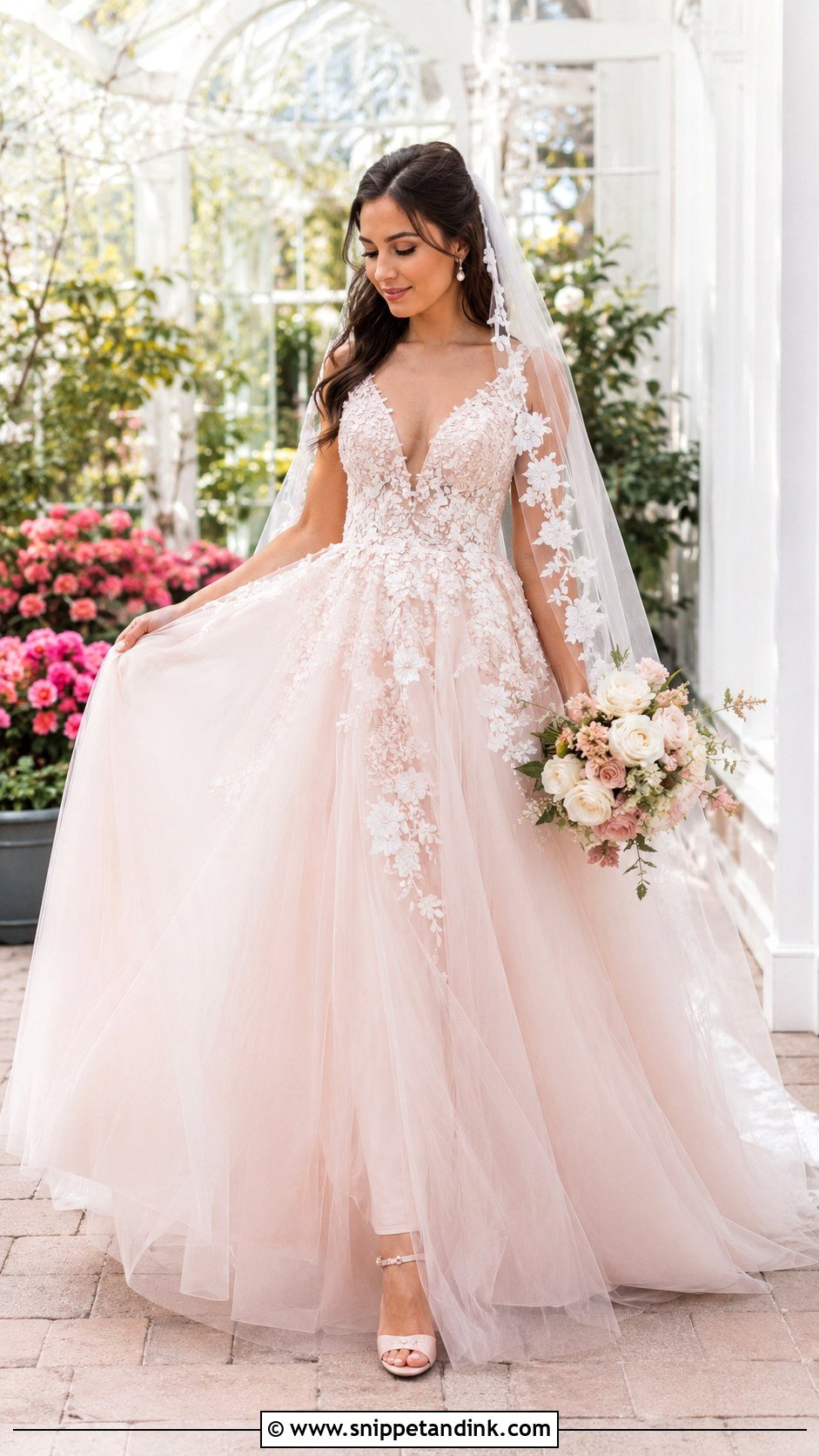
Blush ranges from barely pink to clearly rosy, and the difference shows strongly in photos, so ask to see the fabric outdoors. Soft tulle gives a floating effect; satin underlayers add structure. A floral veil completes the look if the gown has subtle appliqué or embroidery. Pearl earrings, pale pink shoes and natural makeup keep it light. Spring weddings and bright indoor spaces suit blush best.
17. High Low Wedding Dress Ballgown With Bridal Heels
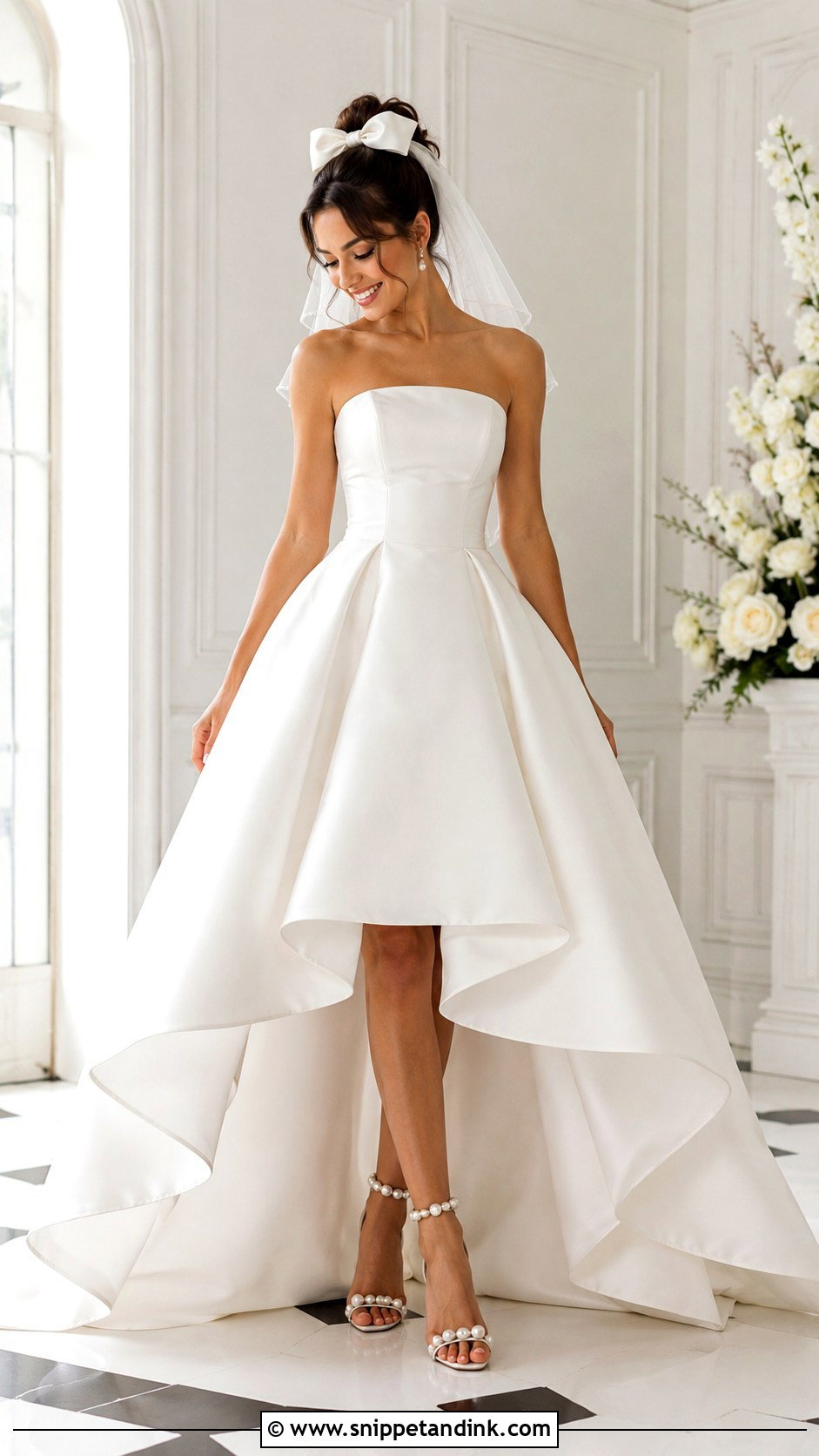
A high-low hem shows the shoes at the front while keeping a sweep behind, so it gives volume without dragging on the floor. It only looks intentional in fabrics with body, such as structured tulle, organza or layered satin. Because the shoes are on show, choose ones with real detail and break them in properly. A fitted bodice balances the skirt, and a short veil or bow accessory keeps it playful. It’s also a sensible option if you’re worried about tripping on a train.
18. Feather Wedding Dress Ballgown With Clean Bodice
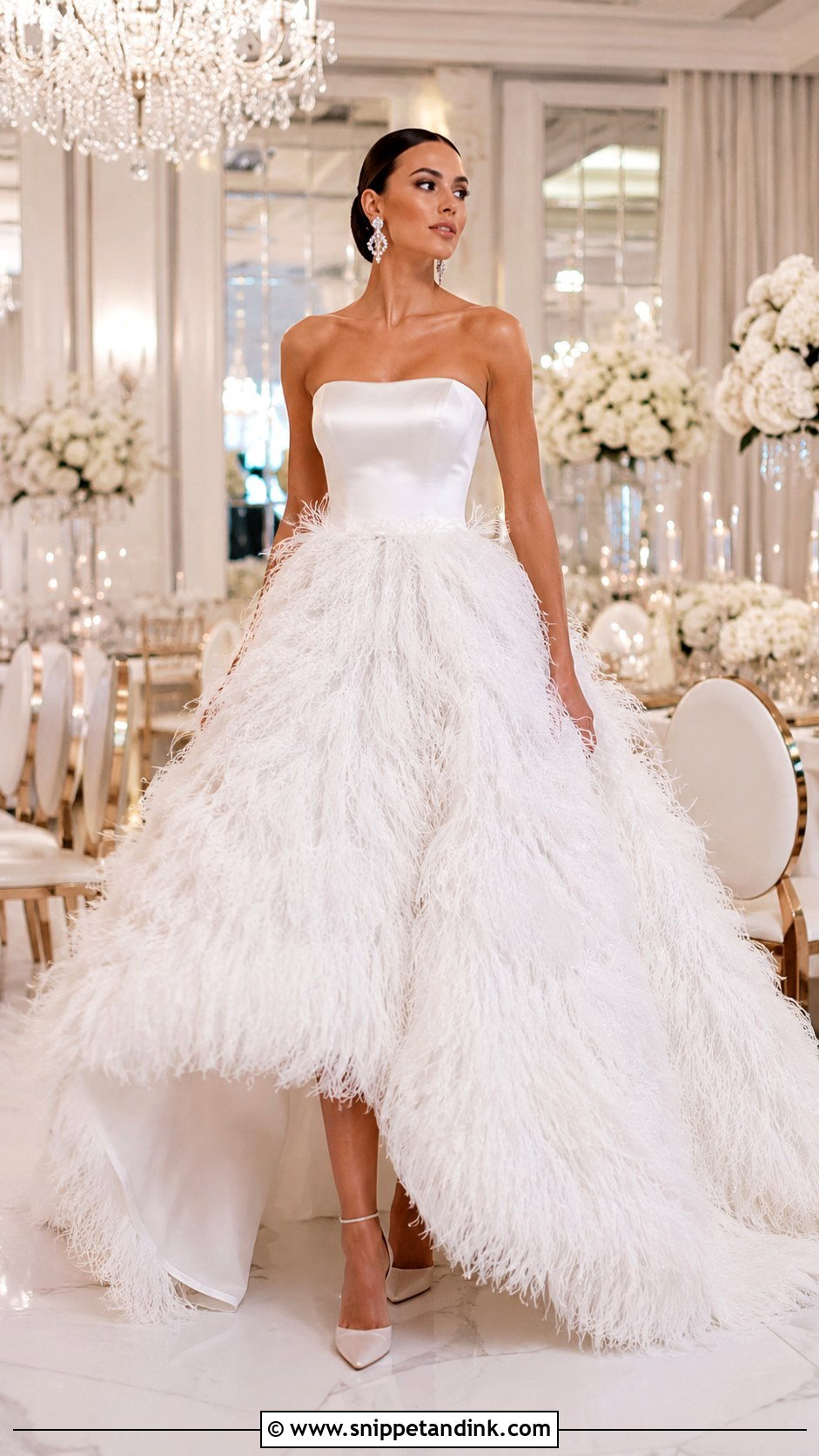
Feathers move with every step, which is the appeal of a feather wedding dress ballgown. The most wearable versions keep feathers to the skirt, hem or a detachable overskirt and leave the bodice plain. A strapless satin bodice, fitted corset or square neckline gives the eye a calm place to rest. Feathers don’t like rain or humidity, so this suits an indoor evening venue more than a garden. Simple crystal earrings and sleek hair complete it.
19. Overskirt Wedding Dress Ballgown With Reception Reveal
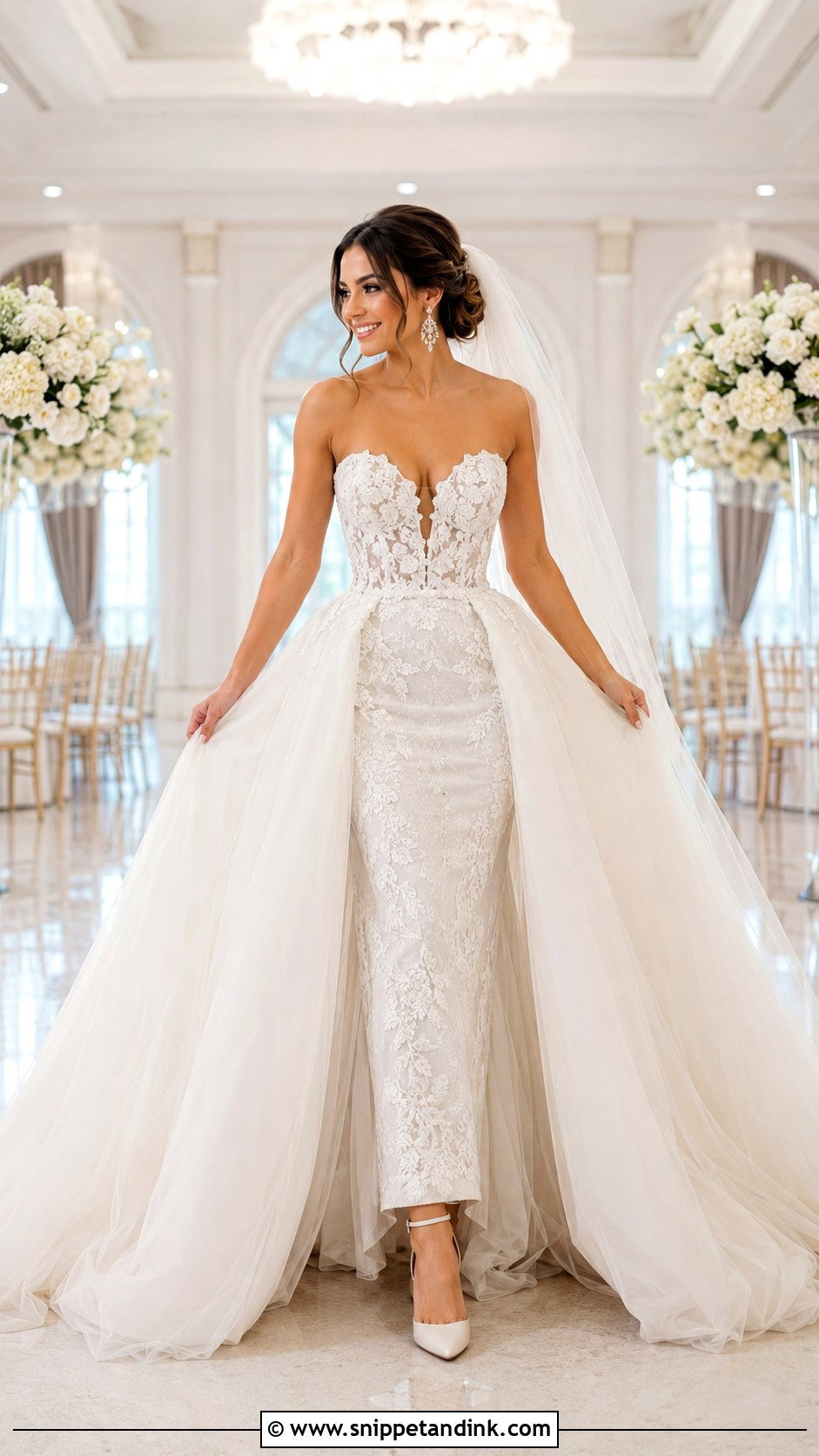
Overskirts give you two looks in one dress: a full ballgown for the ceremony and a slimmer gown for dancing. Tulle, satin or organza overskirts each change the mood. A fitted base gown with lace or beadwork keeps things interesting after the reveal. Choose earrings that suit both versions and a veil you can remove easily. Rehearse taking the overskirt off at your final fitting with whoever will help you on the day.


20. Tiered Wedding Dress Ballgown With Strapless Bodice
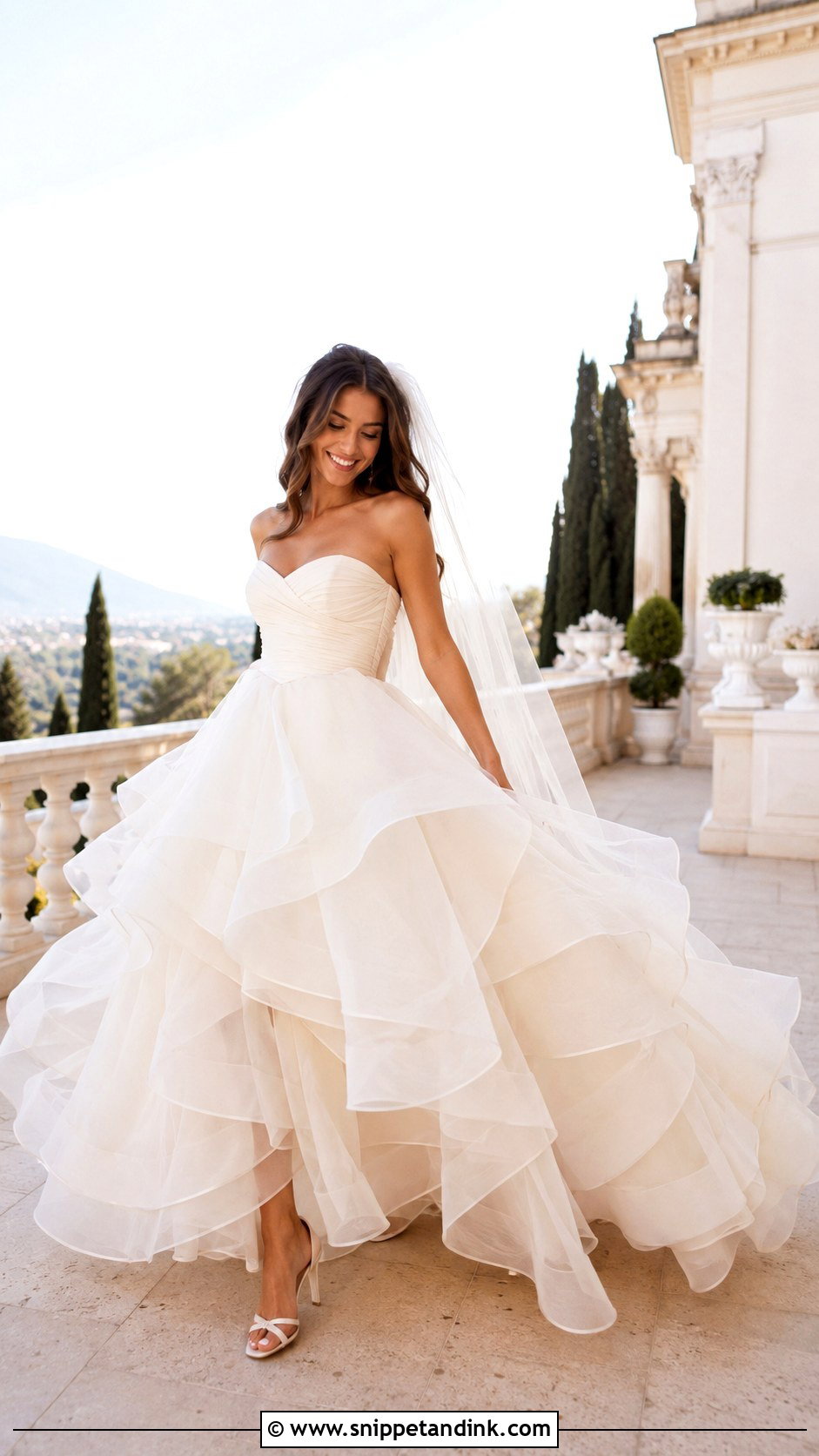
Tiered skirts build volume in layers rather than one solid sweep, which gives them movement and a slightly playful feel. Soft organza tiers look cloud-like; lace or ruffled tiers are more dramatic. A strapless bodice keeps the top clean. Tiers can catch on chair legs and heels, so walk around the shop with the skirt to get a sense of how wide it really is. Simple jewellery and comfortable heels are enough.
21. Pleated Wedding Dress Ballgown With Modern Neckline
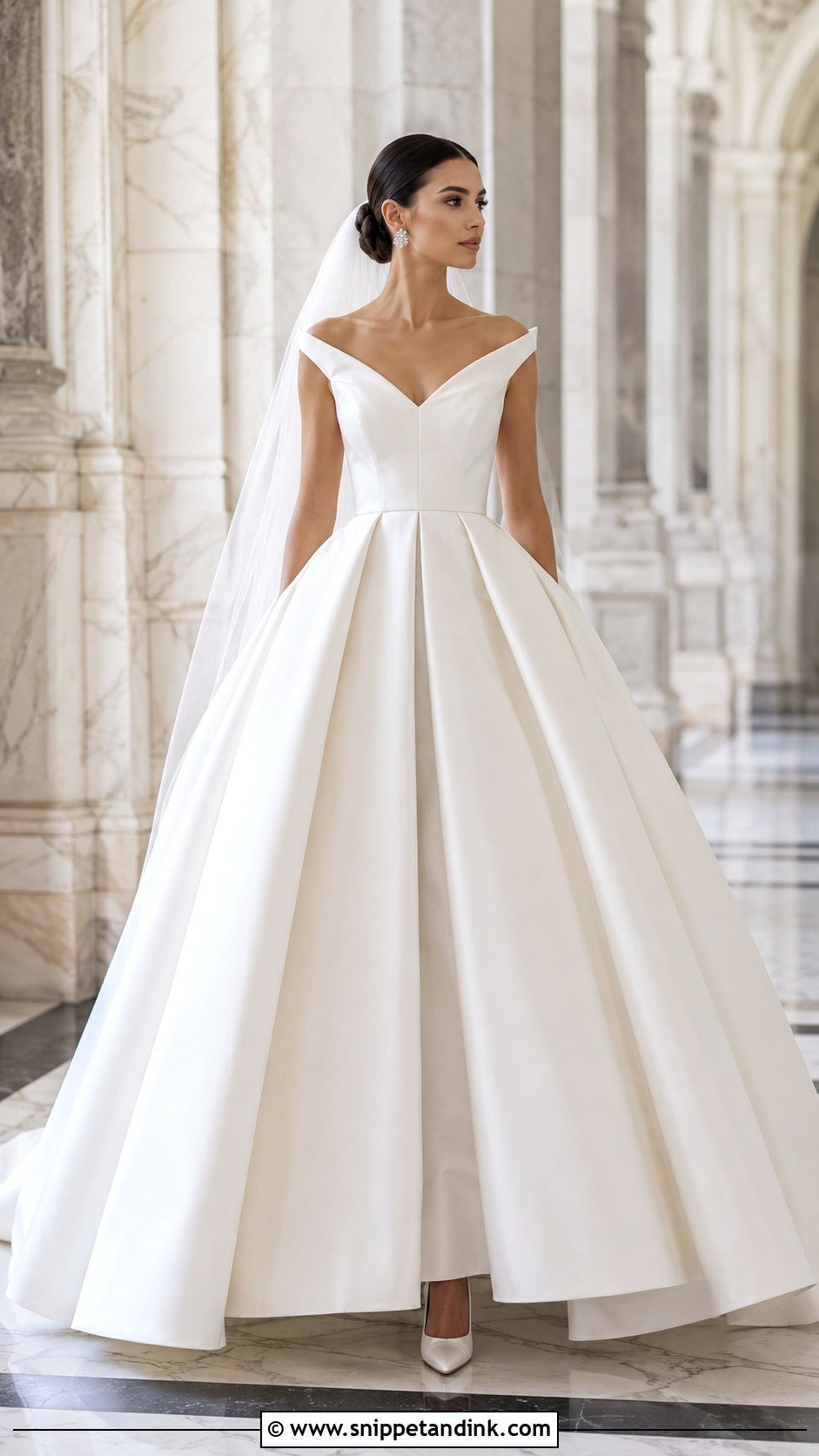
Pleats give structure through construction instead of embellishment, shaping the bodice, defining the waist or adding volume to the skirt. Mikado, satin and taffeta hold a sharp pleat. A cat-eye, scoop or asymmetric neckline gives it a current feel. Pleats are pressed in, so ask how the gown should be steamed; heavy steam can soften pleat lines. A sleek veil, sculptural earrings and smooth hair keep the focus on the fabric.
22. Beaded Lace Wedding Dress Ballgown With Cape
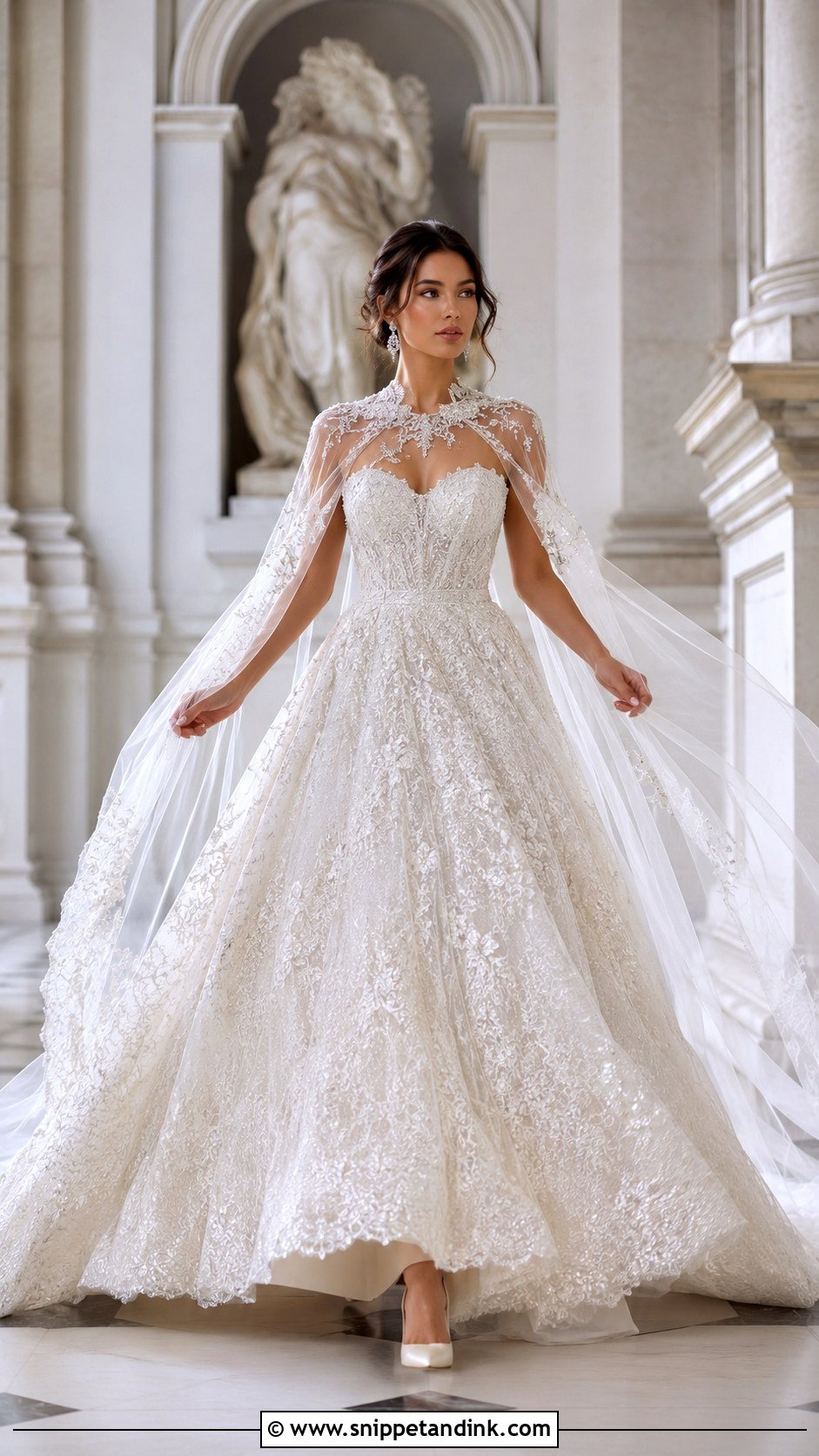
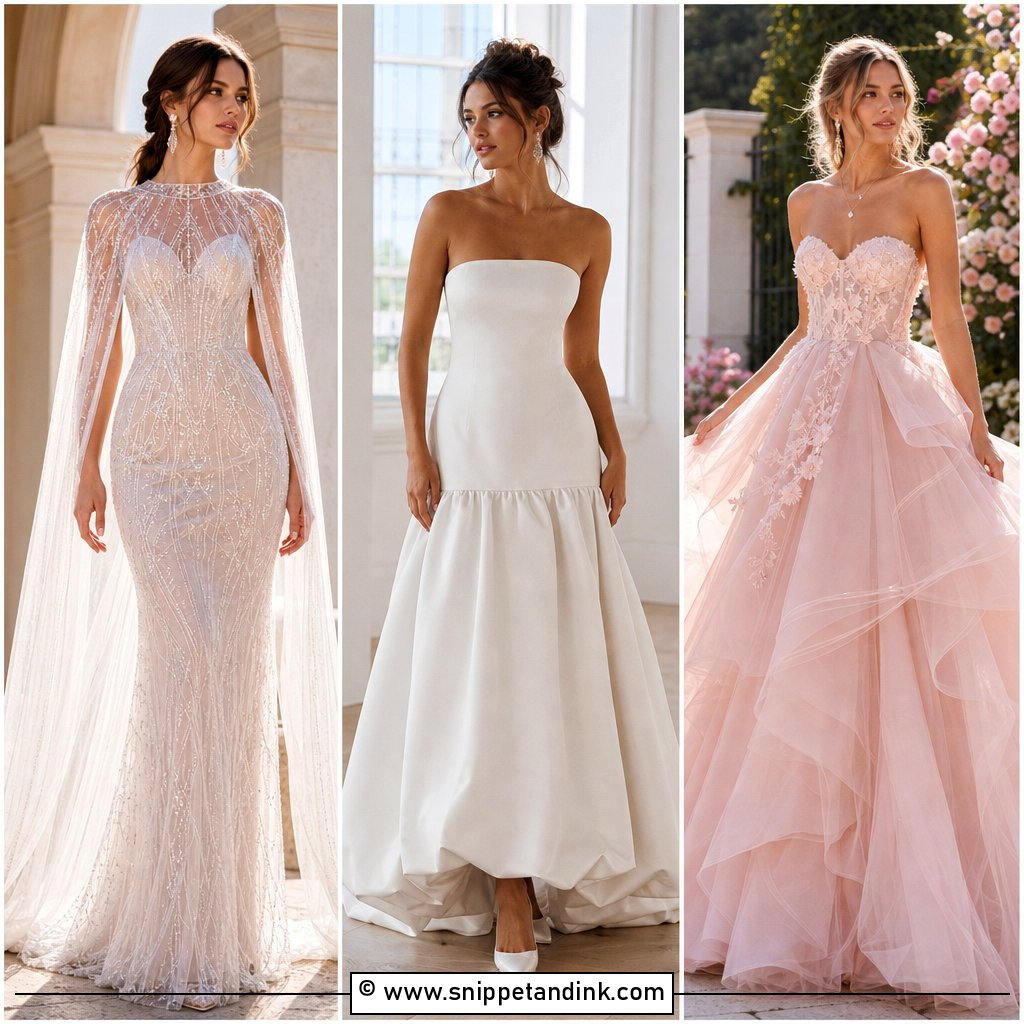
Capes can replace a veil, adding movement as you walk. A sheer cape with lace edging or scattered beadwork complements the gown without hiding it. The ballgown underneath should have a defined waist so the cape doesn’t make the silhouette look heavy. Check how it fastens at the shoulders and whether it can come off easily for the reception. Crystal earrings, soft makeup and simple heels suit formal indoor ceremonies and museum venues.
23. Minimal Wedding Dress Ballgown With Dramatic Skirt
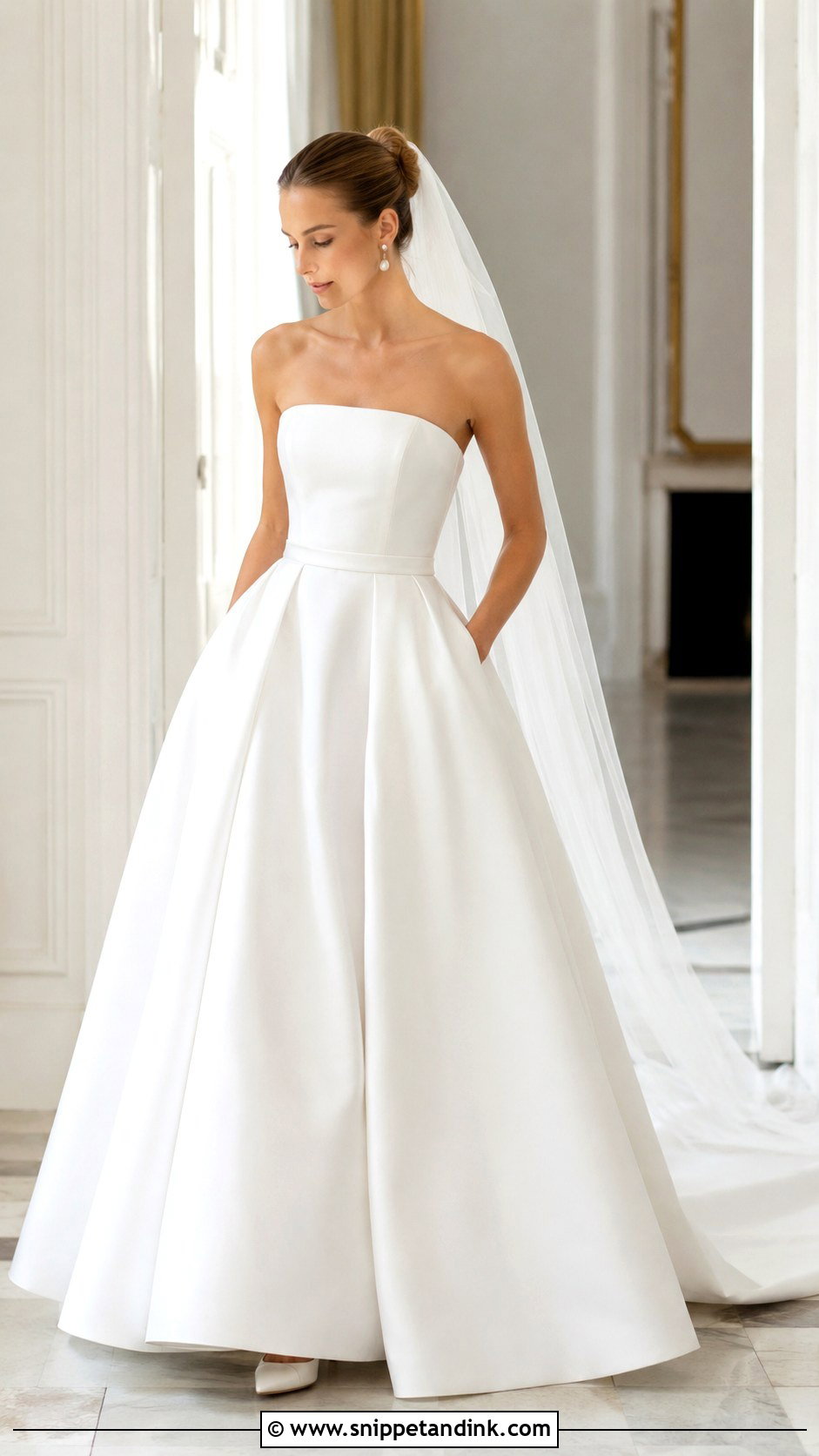
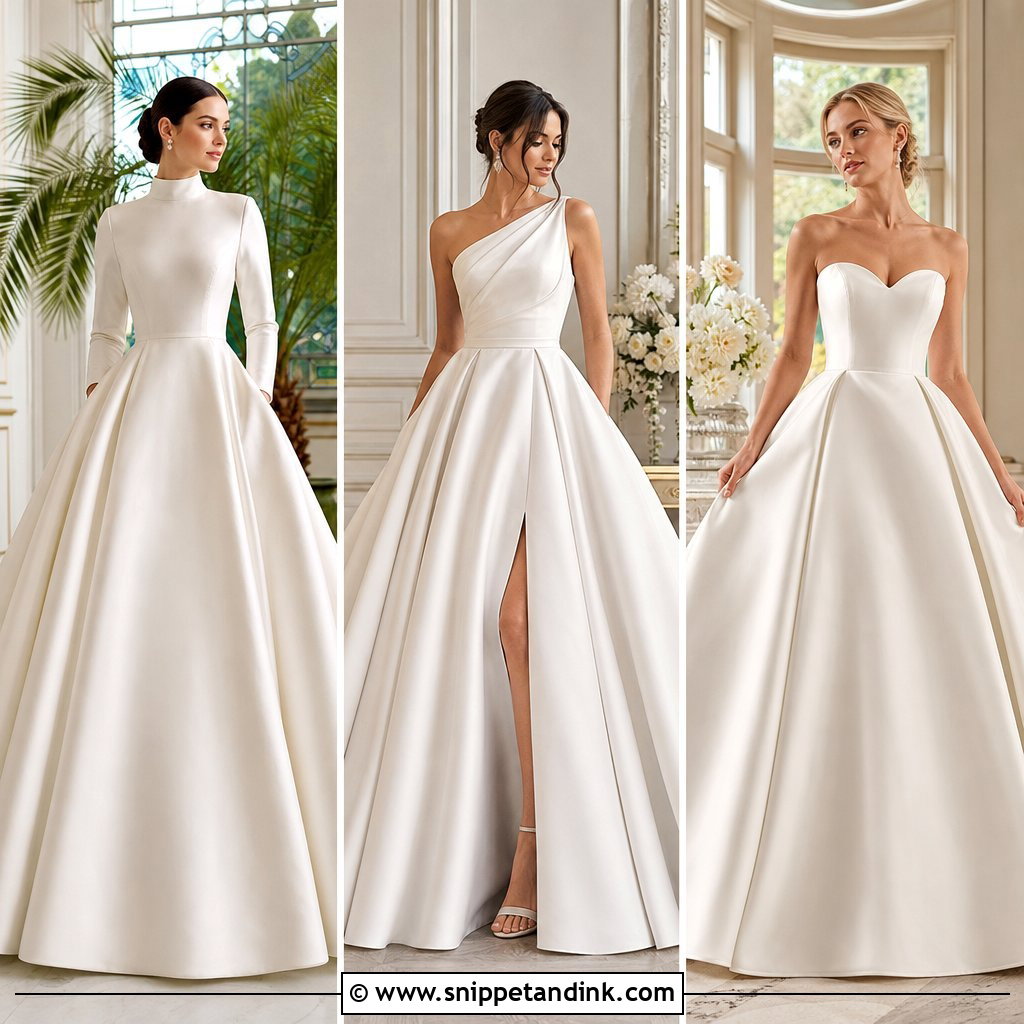
Minimal ballgowns rely on cut, which means tailoring has to be precise. Choose luxurious fabrics like Mikado, duchess satin or crisp taffeta, with a defined waist, smooth neckline and balanced train. With no beading to distract, I check every seam line and the hem against your shoes. Pearl earrings, a long plain veil and a polished bun finish it. Brides drawn to quiet luxury tend to love this one.
24. Sequin Wedding Dress Ballgown With Soft Tulle
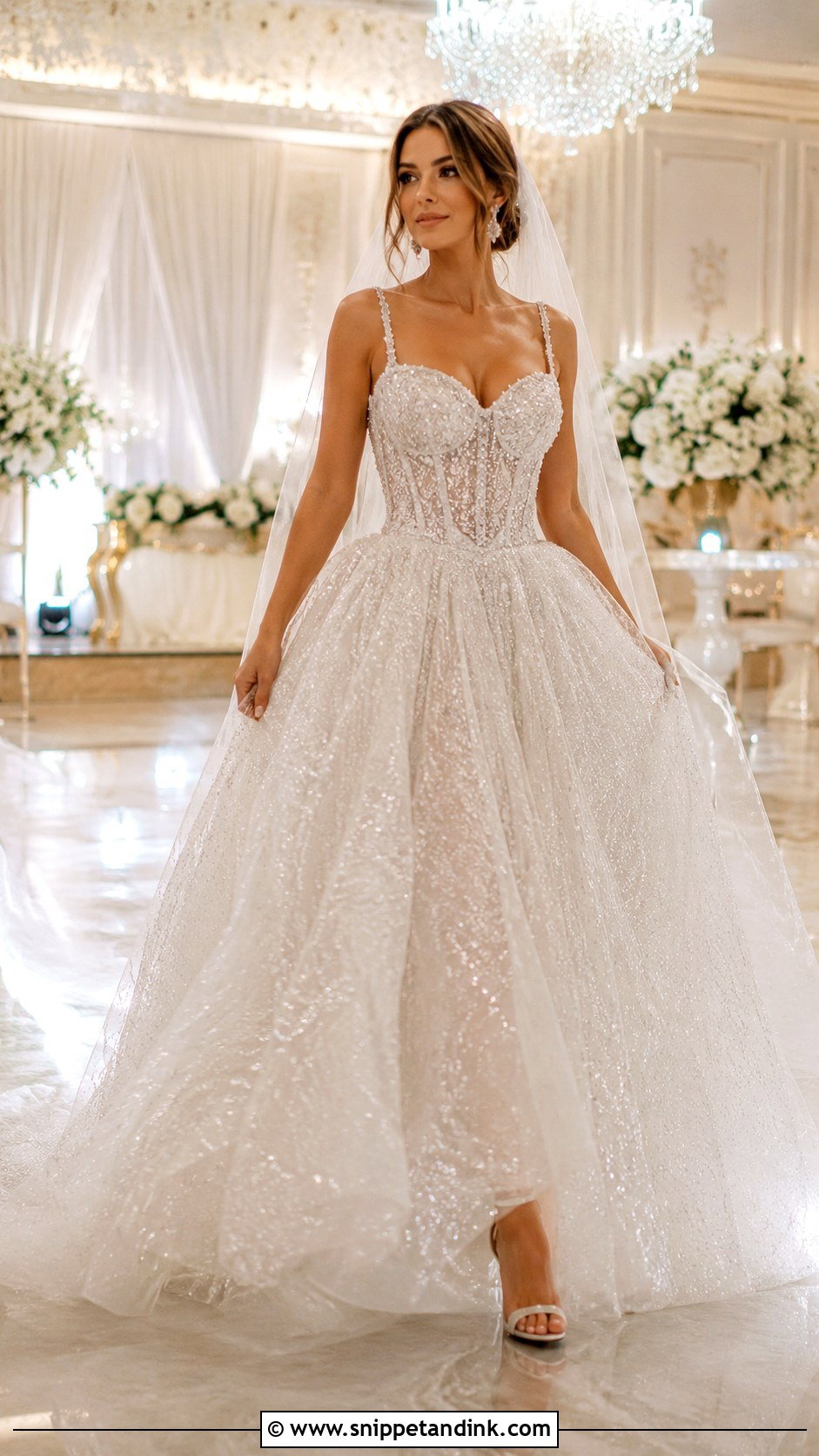
Tulle layered over sequins softens their shine into a glow, so the gown sparkles under lights without looking stiff. That glow is strongest under evening venue lighting and camera flash. Choose a structured bodice so the full skirt looks balanced, and keep accessories small: crystal studs and satin heels. A sheer veil without extra sparkle softens the look further. Sequins can scratch the inner arm, so ask whether the underarm is lined.


25. Princess Wedding Dress Ballgown With Tiara
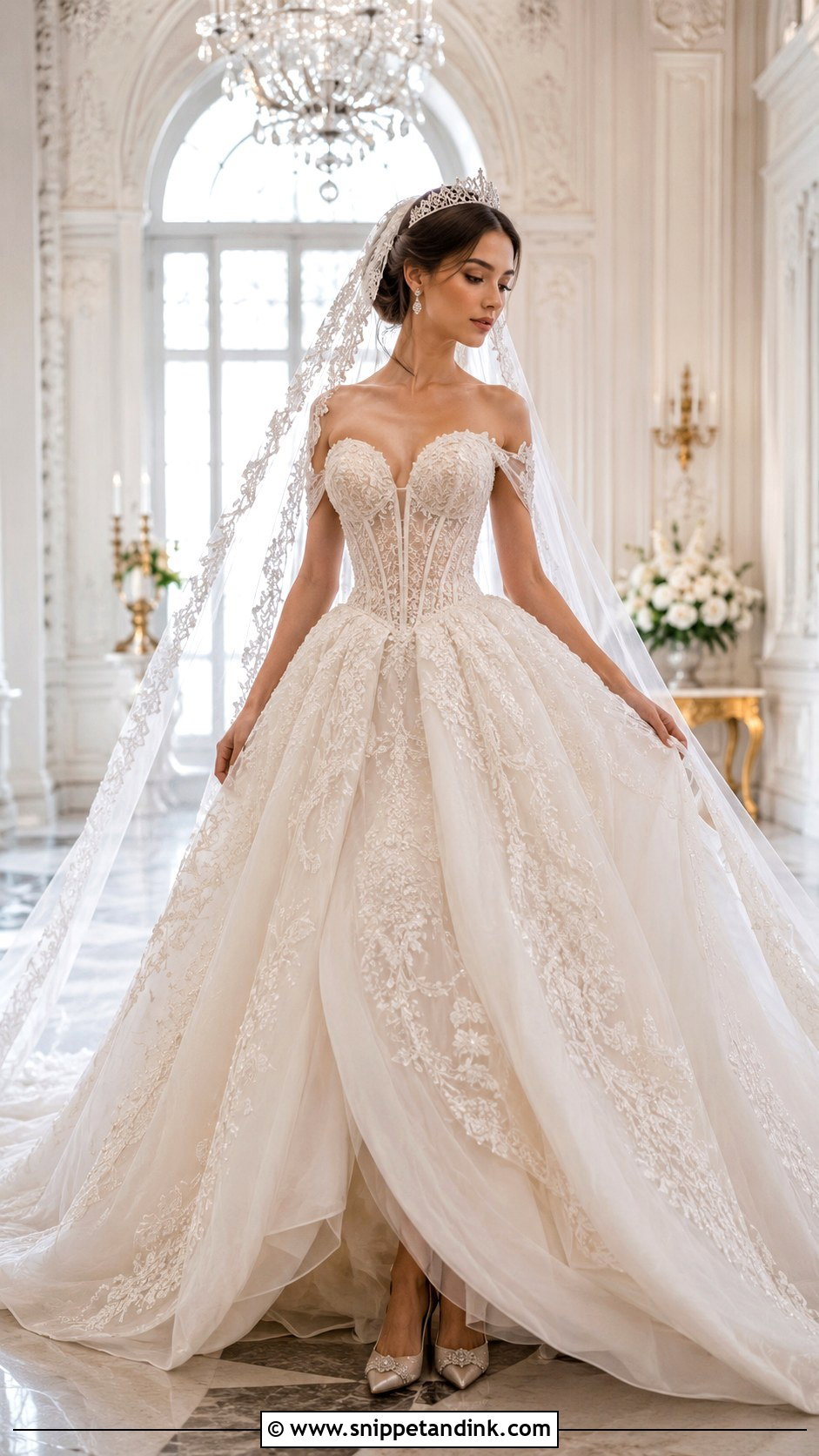
The princess wedding dress ballgown is the fairytale version, and the trick is keeping it grown-up. A fitted corset bodice, full layered skirt, long train and a delicate tiara work when styled with restraint. Soft sparkle, lace appliqué or satin structure all suit the shape. Pair it with a cathedral veil, classic earrings and heels hidden under the skirt. Keep the hair polished so the tiara sits securely; a tiara needs pins anchored into a firm base, not loose curls.
Car Doors, Bathrooms and Staircases in a Full Skirt
A ballgown takes up more space than most brides expect. A few small arrangements make the day much easier.
- Transport: book a car with a wide rear door and get in seat first, then gather the skirt in after you. Your helper lifts the train last.
- Bathroom: it’s easiest to face the toilet and have someone gather the skirt from behind. Practise once at home with the petticoat on.
- Stairs: hold the front of the skirt slightly up and step with your toes first. Going down, look ahead, not at your feet.
- Seating: ask for a chair without arms at dinner and a little extra space at the head table.
Planning the Bustle Before the First Dance
Trains are usually lifted with a bustle, hooks or ribbon ties that bring the train up for dancing. Bustles vary a lot in style and complexity, so ask your seamstress to show your maid of honour how to do it at the last fitting, and take a photo of the steps on her phone.
A Ballgown Should Still Let You Breathe and Dance
Volume alone doesn’t make a ballgown right for you. Fabric decides how the skirt holds its shape, the waistline decides how it flatters you, and the venue decides how much space you’ll have to move. Satin and Mikado feel structured. Tulle and organza feel lighter. Lace, beading, flowers, bows, feathers and capes bring personality. Try the gown on, sit down in it, walk a few steps and lift your arms, and pick the one that still feels comfortable when you do.
You'll Like These Ideas:




Leave a Reply