
Full skirts are where vintage bridal style feels most like theater, and they borrow from several very different eras. The twenty ballgowns below draw on Victorian refinement, Edwardian lace, fifties glamour and the big shoulders of the 1980s. Corset bodices, pointed basque waists, fine lace, heavy satins and sculpted skirts have all come back into modern bridal collections. I’ve styled each gown head to toe with veil, shoes and jewelry, because a ballgown is the one silhouette where the wrong accessory tips the whole look into costume. Some are quiet enough for a classic church service; others are built for a grand staircase. Satin, embroidery, pearls or long lace sleeves, there’s a version for most brides who want volume.
How Much Skirt Can Your Day Actually Hold?
A ballgown looks weightless in photos and feels very different on the body. Satin, lining, tulle layers and a train add up, and the skirt can be wider than a standard doorway. Before I pull gowns for a client, I ask four practical questions.
- How wide is the aisle once chairs are set out? A full skirt brushing chair legs on both sides slows the walk and snags tulle.
- What car is taking you? Ballgowns need a back seat to yourself, ideally in a vehicle with a high roof and wide doors.
- How long will you stand? Heavy skirts pull on the waist and shoulders. If the ceremony and photos run long, a lighter tulle skirt is kinder than layered satin.
- Do you want to dance freely? If yes, plan a bustle or a lighter second dress before you fall for a long train.
None of these rule a ballgown out. They tell me which fabric, how many underlayers and what train length will let you enjoy wearing it.
1. Victorian High Neck Vintage Ballgown Wedding Dress
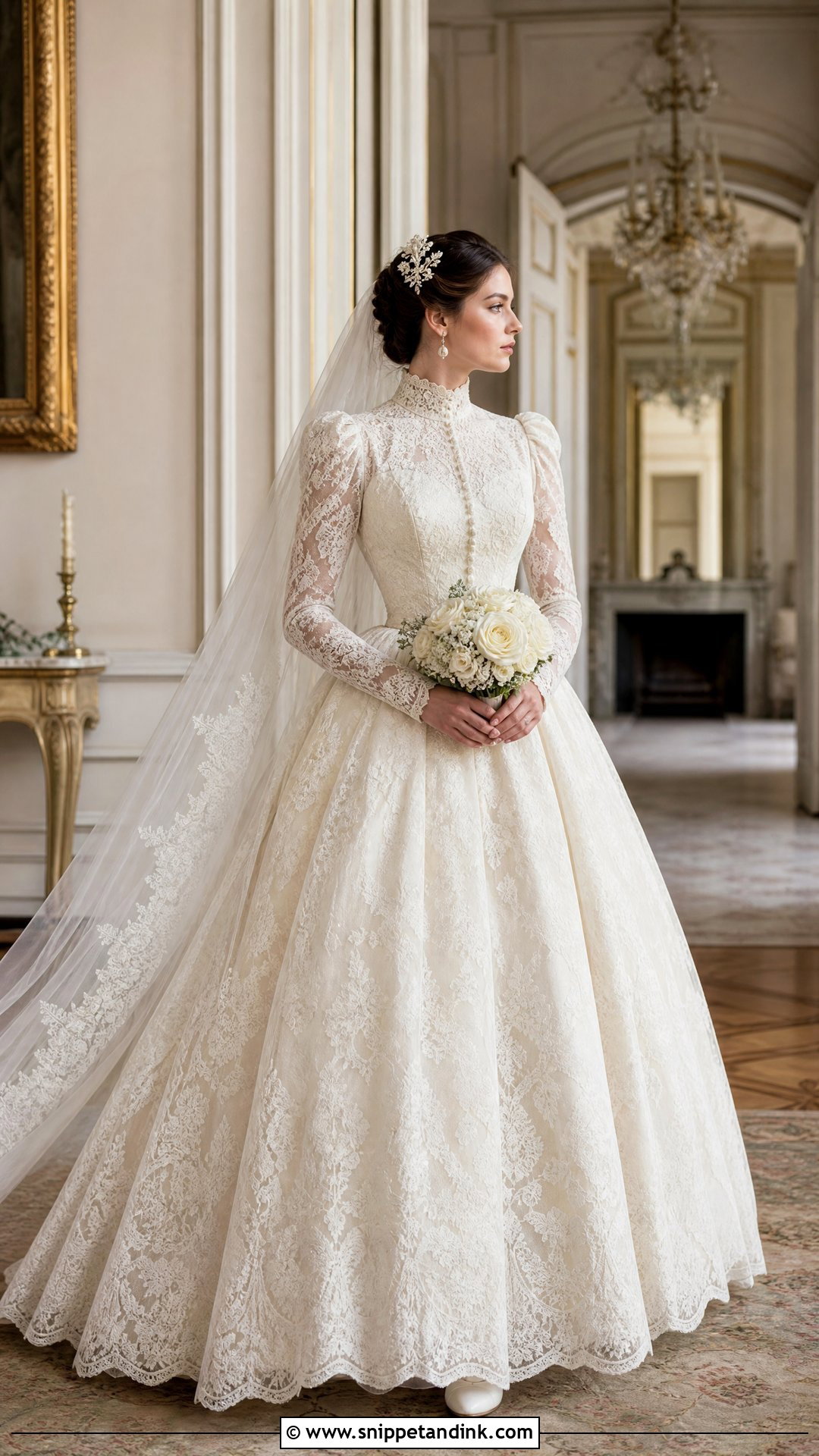
A Victorian high neck reads formal before you’ve added a single accessory. I’d choose an ivory ballgown with a fitted lace bodice, covered buttons and sheer long sleeves, over a softly structured skirt that holds its shape without weighing a ton. Placing floral lace at the collar, cuffs and waist frames the face and marks the waist. Pearl drops, an antique-style comb and closed-toe ivory pumps finish it, with a cathedral veil edged in narrow lace. A low chignon keeps the collar clear. Historic hotels and formal estates suit it best. The sleeves are where I spend fitting time: sheer lace stretches very little, so if the armhole is cut low you can’t lift your arms to hug anyone.
2. Basque Waist Vintage Ballgown Wedding Dress
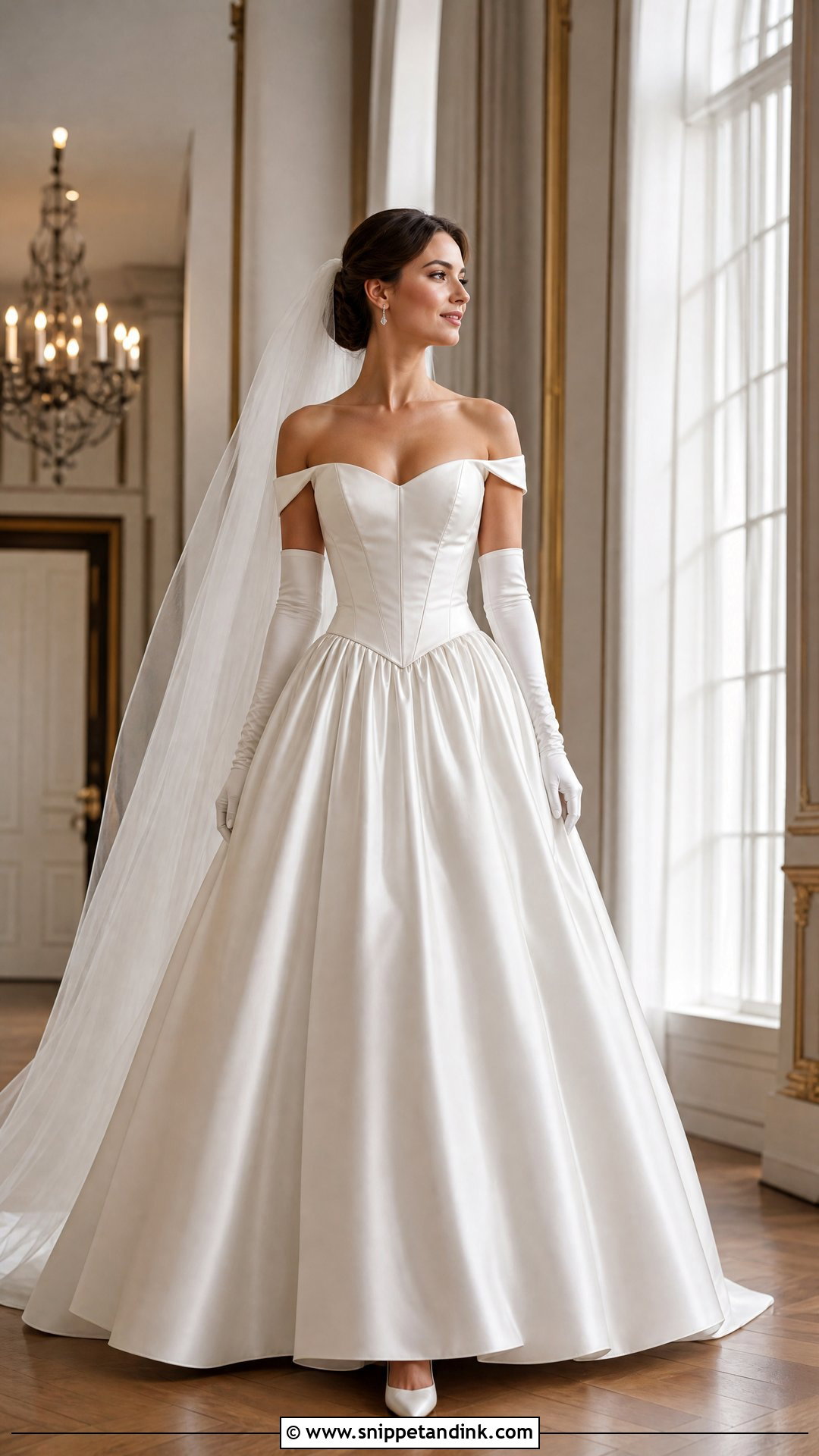
A basque waist dips into a point below the natural waist, which lengthens the bodice before the skirt opens out. It’s an old shape that has found its way back into current bridal collections, and it suits a crisp fabric. Pearl satin or silk-finish mikado holds the sculpted line well. Delicate drop earrings, satin pumps and elbow gloves complete the look; a plain tulle veil balances the strong waist better than a beaded one. Keep the hair smooth and pinned low at the back. The point has to sit exactly at your center front, and on short-waisted brides it can push into the hips when they sit. Allow time for two or three fittings so the dressmaker can adjust the depth of the point.
3. 1950s Lace Vintage Ballgown Wedding Dress
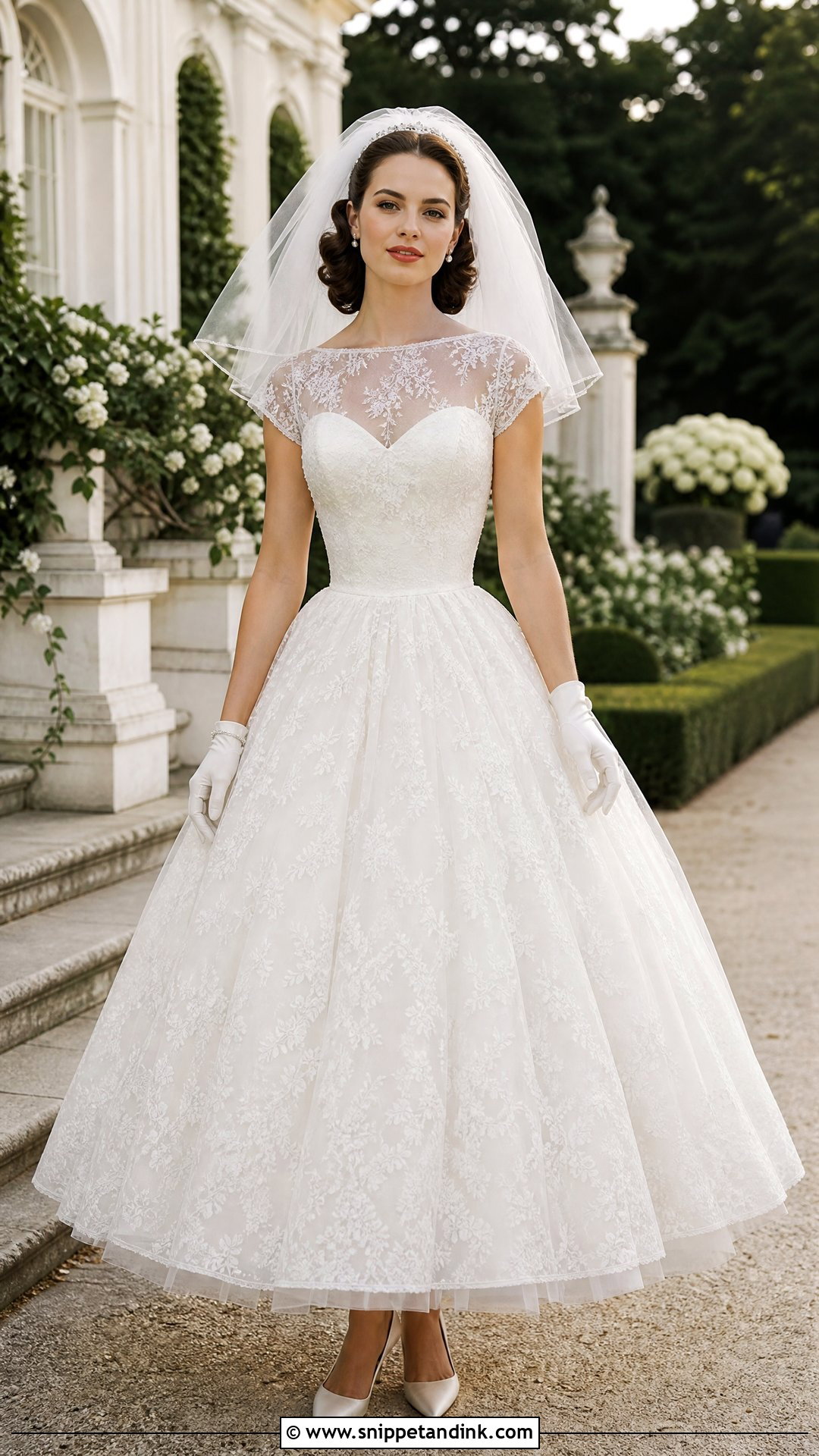
A fitted lace bodice into a rounded skirt is the fifties ballgown in a sentence. A 1950s-inspired vintage ballgown wedding dress puts the waist first and keeps everything else graceful. I’d choose a sweetheart neckline under a sheer lace overlay, then a layered tulle or organza skirt for volume without stiffness. Pearl studs, short gloves and pointed ivory heels suit it. A shoulder-length blusher veil feels right for the period and leaves the back of the dress visible. Soft curls with a neat side part and rose-toned makeup complete it. Get the overlay checked at the neckline; sheer lace laid over a sweetheart can gape when you lean forward to sign the register.
4. Edwardian Long Sleeve Vintage Ballgown Wedding Dress
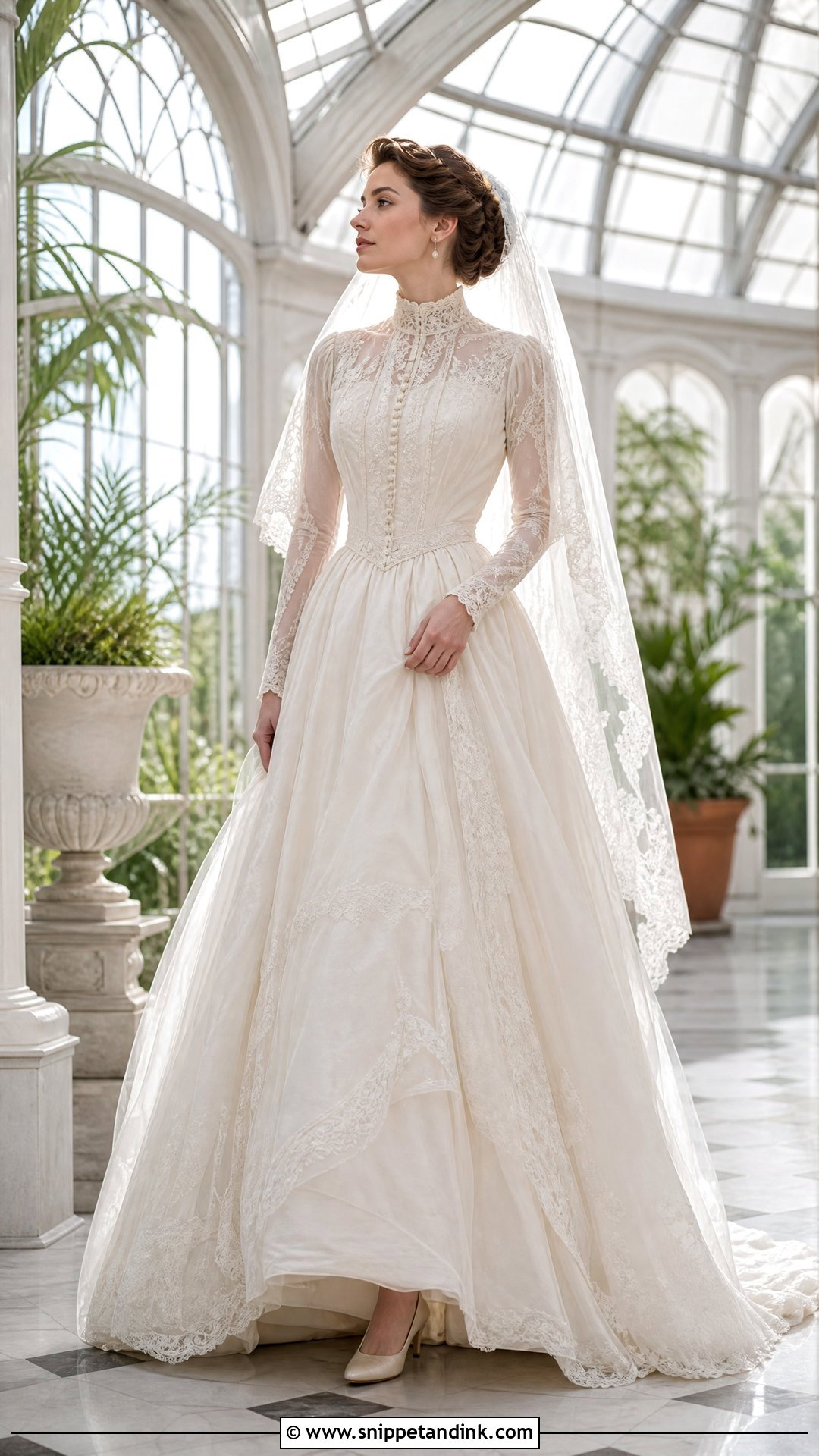
Edwardian gowns are softer than their Victorian predecessors, which keeps the long sleeves from looking severe. Start with a high illusion neckline, long fitted sleeves and a gently defined waist, then add a full chiffon or layered tulle skirt that stays airy. Fabric-covered buttons down the back add the period touch. A lace-trimmed veil, pearl earrings and low ivory heels you can stand in all day finish it, with a loose low bun and a few face-framing waves. I’d pick cream, oyster or pale ivory over bright white for an heirloom feel; those warmer shades also flatter more skin tones in natural light. Chiffon catches every breeze, which looks lovely outdoors or in a conservatory.
5. Queen Anne Neckline Vintage Ballgown Wedding Dress
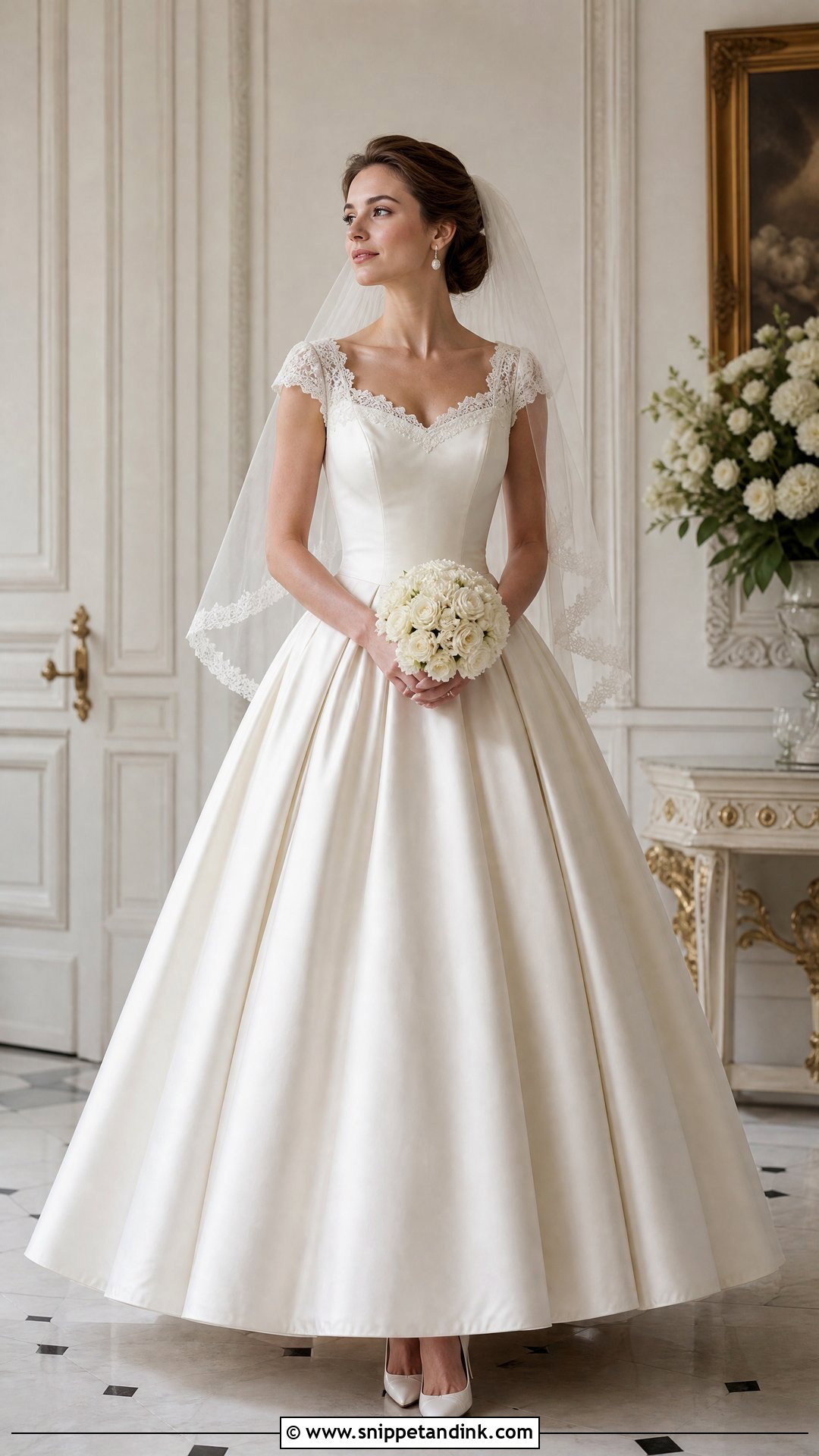
The Queen Anne neckline rises at the back of the neck and curves down at the front, framing the shoulders with more coverage than strapless. I pair it with lace along the edge, a fitted waist and a full satin skirt with soft pleats. Covered buttons can run from the bodice right to the end of the train. Pearl and crystal earrings, pointed pumps and a fingertip veil under a low updo complete it, and I skip the necklace entirely. A compact bouquet of ivory roses keeps the bodice visible. The raised back collar has to clear your hairline, so do the hair trial wearing the gown or at least a mock-up of the neckline.
6. Off Shoulder Satin Vintage Ballgown Wedding Dress
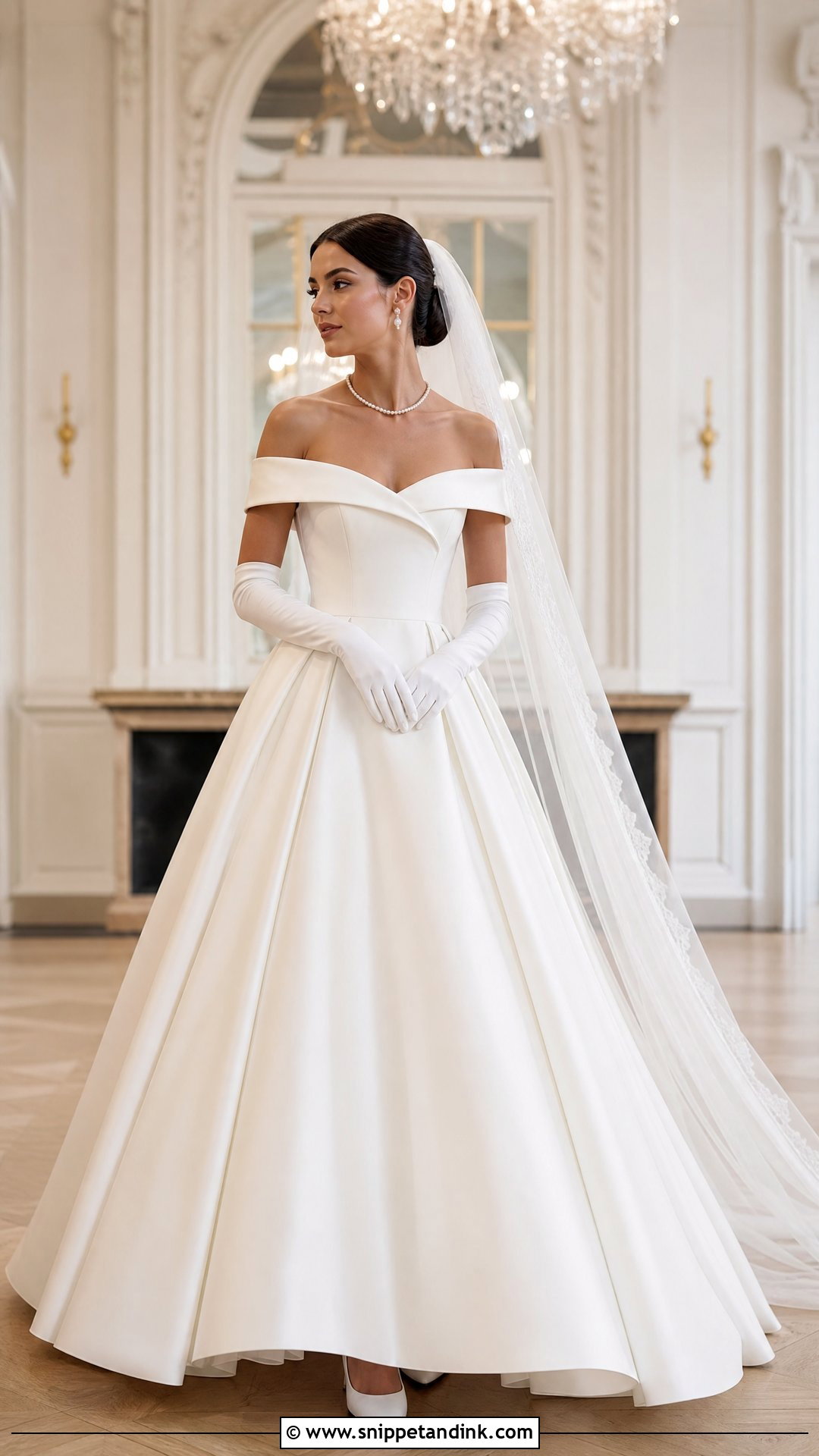
Plain satin with an off-the-shoulder neckline lets the fabric do the talking. Look for a structured bodice with folded cuffs or draped sleeves that grip the upper arm, a full pleated skirt and a defined natural waist. A single strand of pearls, small earrings and classic satin pumps suit it, and long gloves can add drama if they’re plain. A clean cathedral veil looks right against unembellished satin, and a glossy low bun keeps the shoulders clear. The weak point is the sleeve band. If it’s too loose it slips and you spend the day pulling it up; too tight and it leaves a red ridge on your arms that shows in every photo. Grand ballrooms and formal estates suit it.
7. Chantilly Lace Vintage Ballgown Wedding Dress
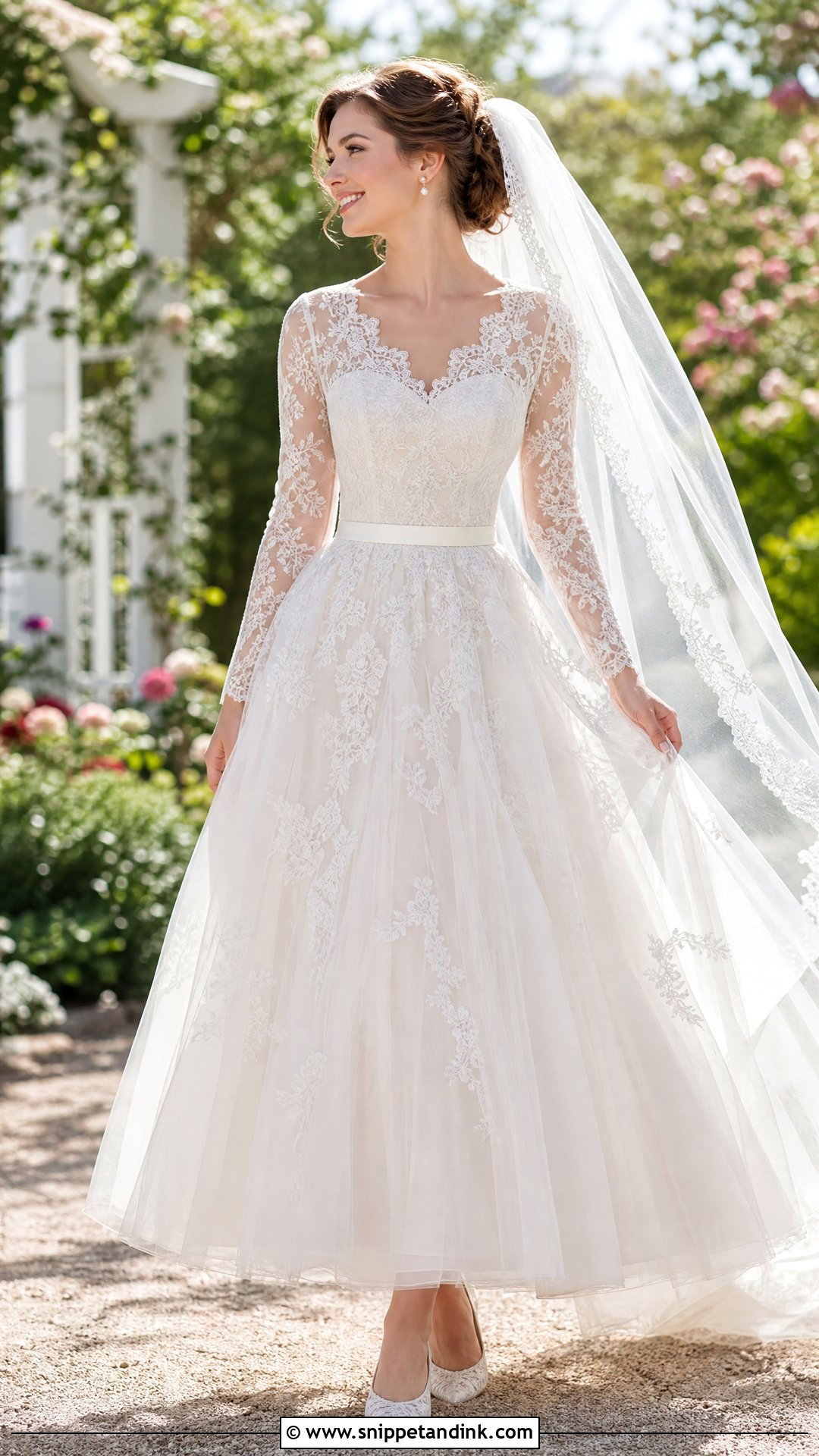
Fine Chantilly lace lightens a big gown because it’s thin, with a fine net ground and softly outlined flowers. Choose an allover lace bodice with long sheer sleeves and a scalloped neck, and a skirt of tulle layers with scattered lace appliqués so the volume still moves. A narrow satin belt gives definition. Pearl studs, lace-covered pumps and a sheer veil with matching trim finish the look, plus a half-up style with controlled waves. With this much pattern, the bouquet and jewelry should stay quiet. Chantilly snags on rings and bracelet clasps, so I tape or remove anything sharp before dressing. It’s at its best in spring, in gardens and bright rooms.
8. Brocade Vintage Ballgown Wedding Dress
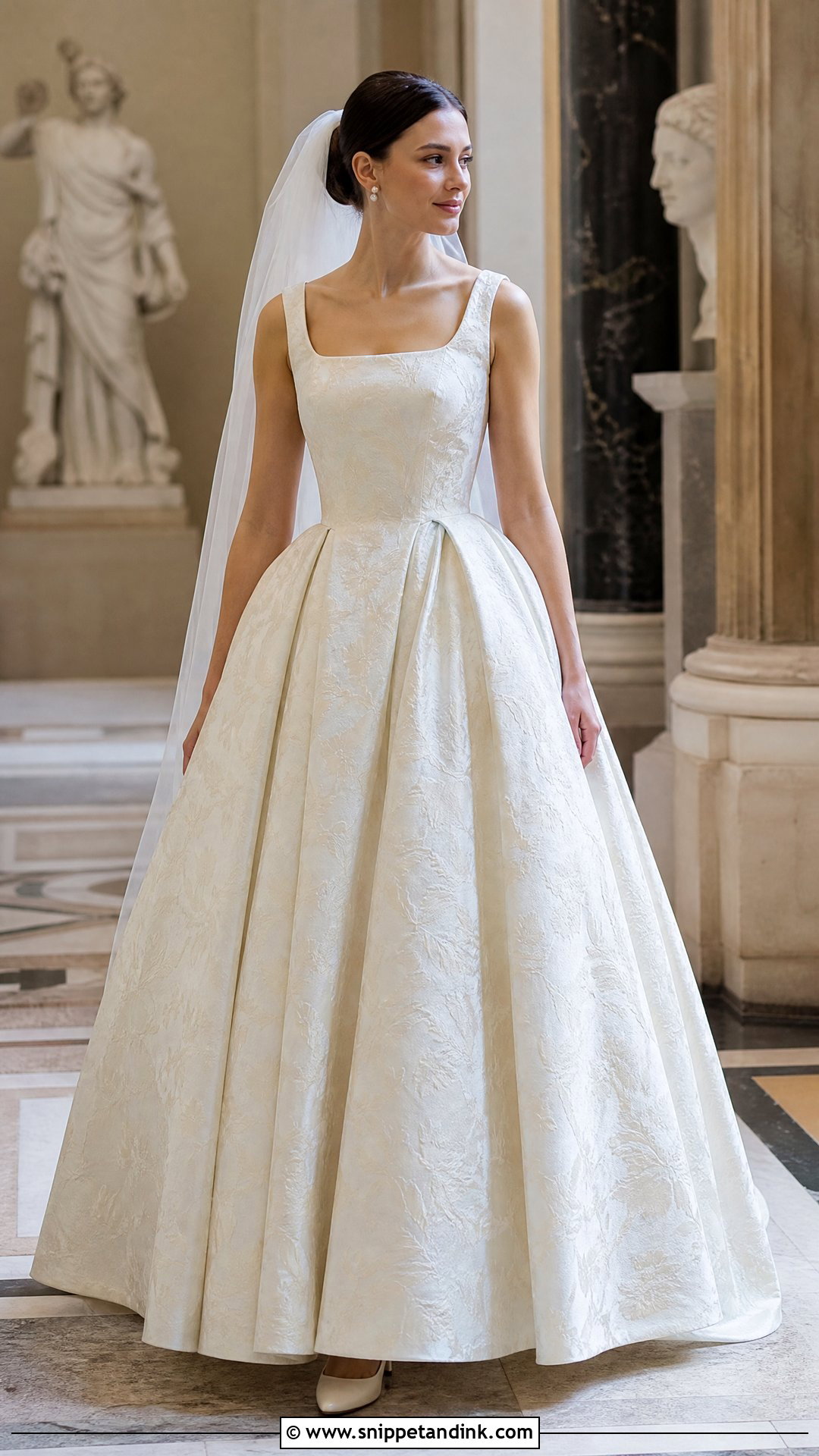
Brocade has presence without sparkle; the woven pattern appears and disappears as light moves across it. Select a structured ivory gown with a fitted bodice, a square or scoop neck and a generously pleated skirt. Plain satin heels, pearl earrings and a smooth tulle veil let the fabric lead, with a neat bun and defined makeup. A detachable train or covered buttons at the back add detail. Brocade is heavy and warm, so I’d keep it for cooler months and indoor venues like a stately home, a museum or a winter ballroom. In midsummer heat it becomes a burden by the first dance.
9. Square Neck Vintage Ballgown Wedding Dress
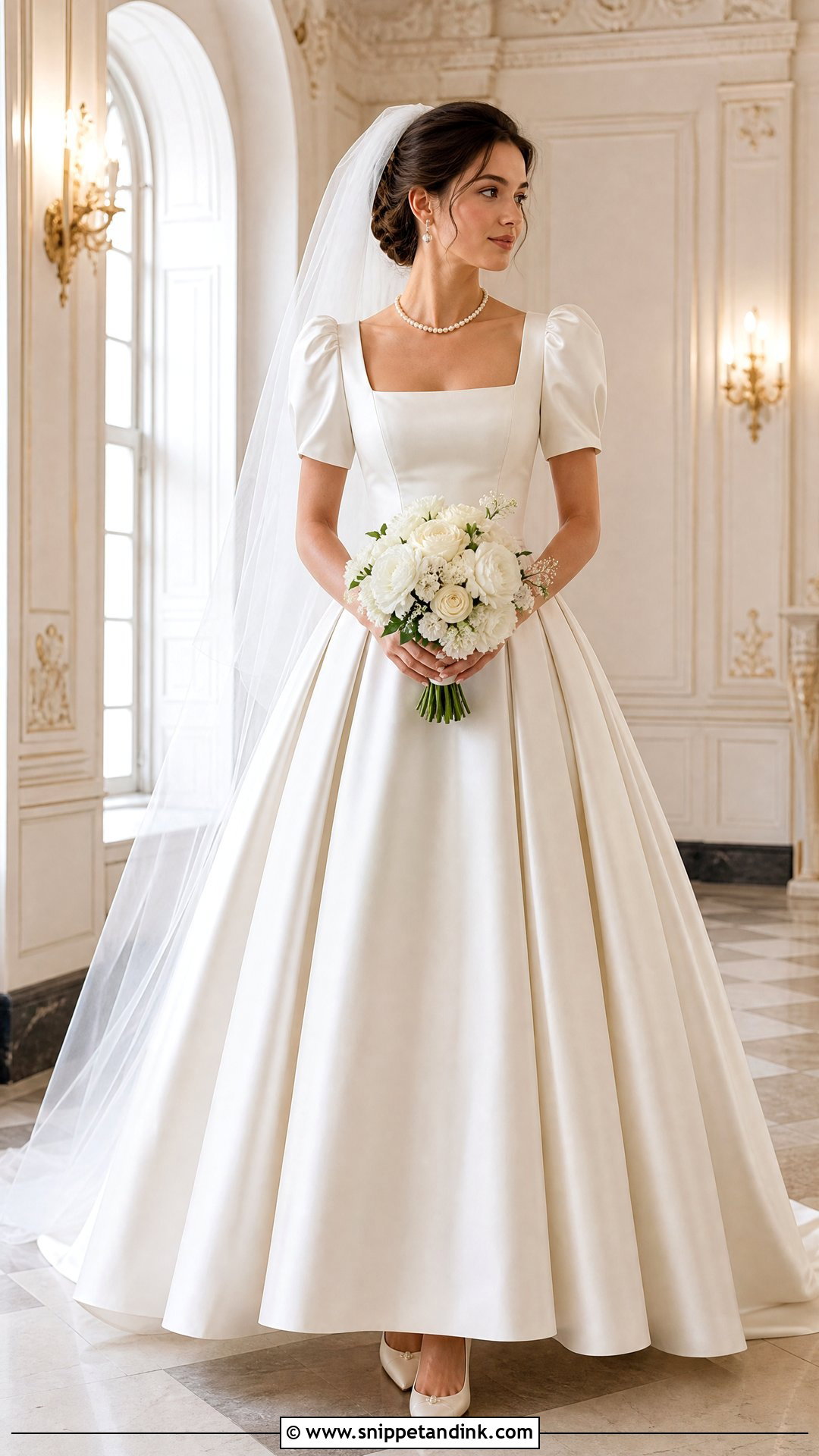
Square necklines give a clean frame and show off the collarbones. Choose a fitted bodice with short puff sleeves or slim three-quarter sleeves depending on the season, and a structured satin skirt with deep pleats. A short pearl necklace, matching studs and almond-toe ivory shoes suit it, with a chapel veil fixed below a smooth bun. If the gown is plain, a slightly textured bouquet of white flowers adds interest. It suits most body types once the neck width, sleeve volume and waist are adjusted in fittings. My rule of thumb: the outer corners of the square should line up roughly with the middle of the collarbone, so on narrow shoulders I bring them in.
10. Pearl Beaded Vintage Ballgown Wedding Dress
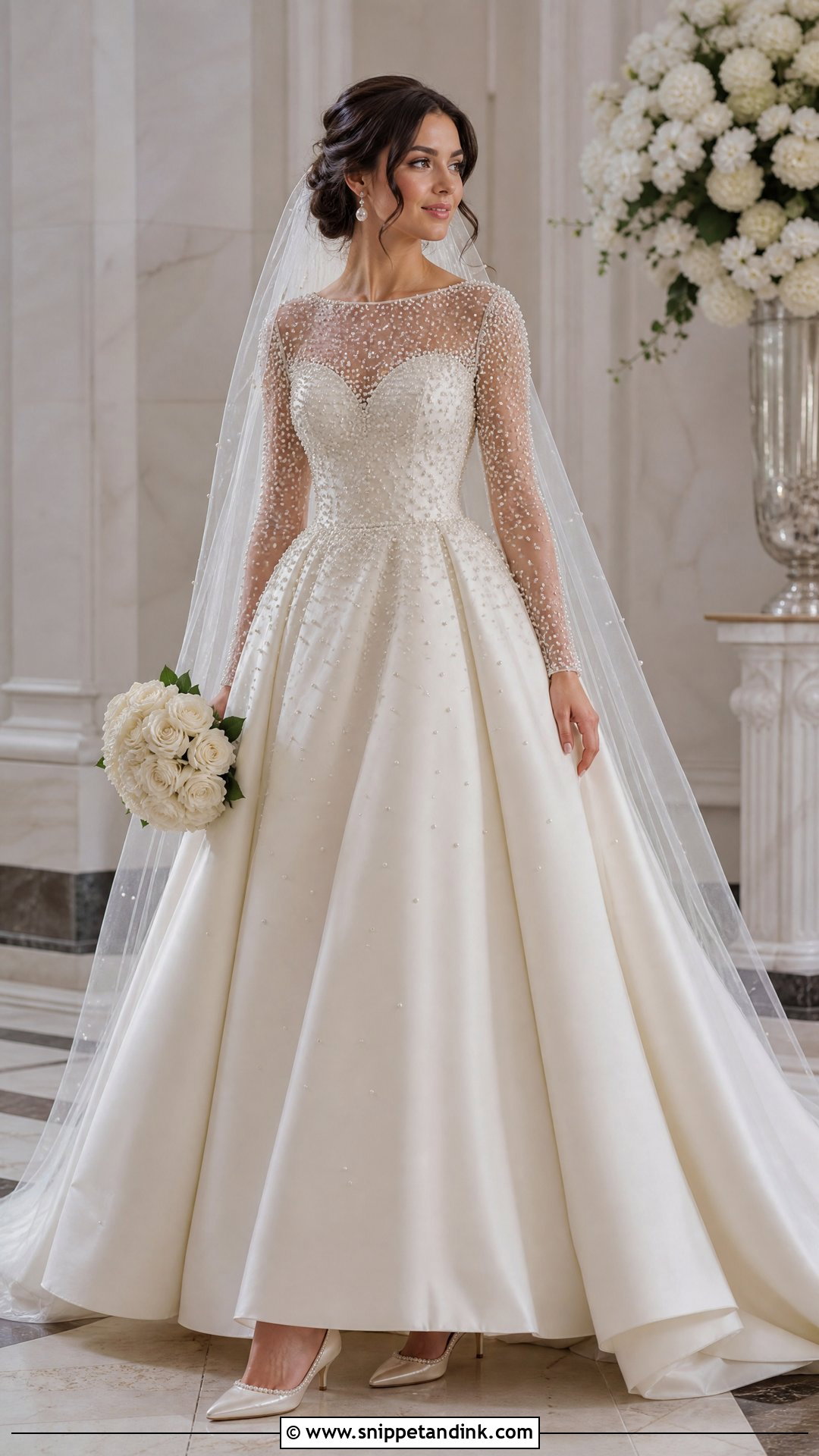
Tiny pearls can turn a plain ballgown into something that looks inherited. I’d choose scattered beading on a fitted bodice rather than dense rows, which add surprising weight and pull the bodice down. A sheer neckline and illusion sleeves can carry the pearls toward the shoulders while a plain satin or tulle skirt balances the look. Pearl earrings, ivory heels and a veil with a few matching beads near the edge complete it; resist adding a pearl necklace and bracelet too. A sleek low chignon gives the bodice a clean background. Check that the pearls are hand-sewn individually, since glued or chain-stitched beading unravels fast once one thread breaks.
11. Floral Embroidered Vintage Ballgown Wedding Dress
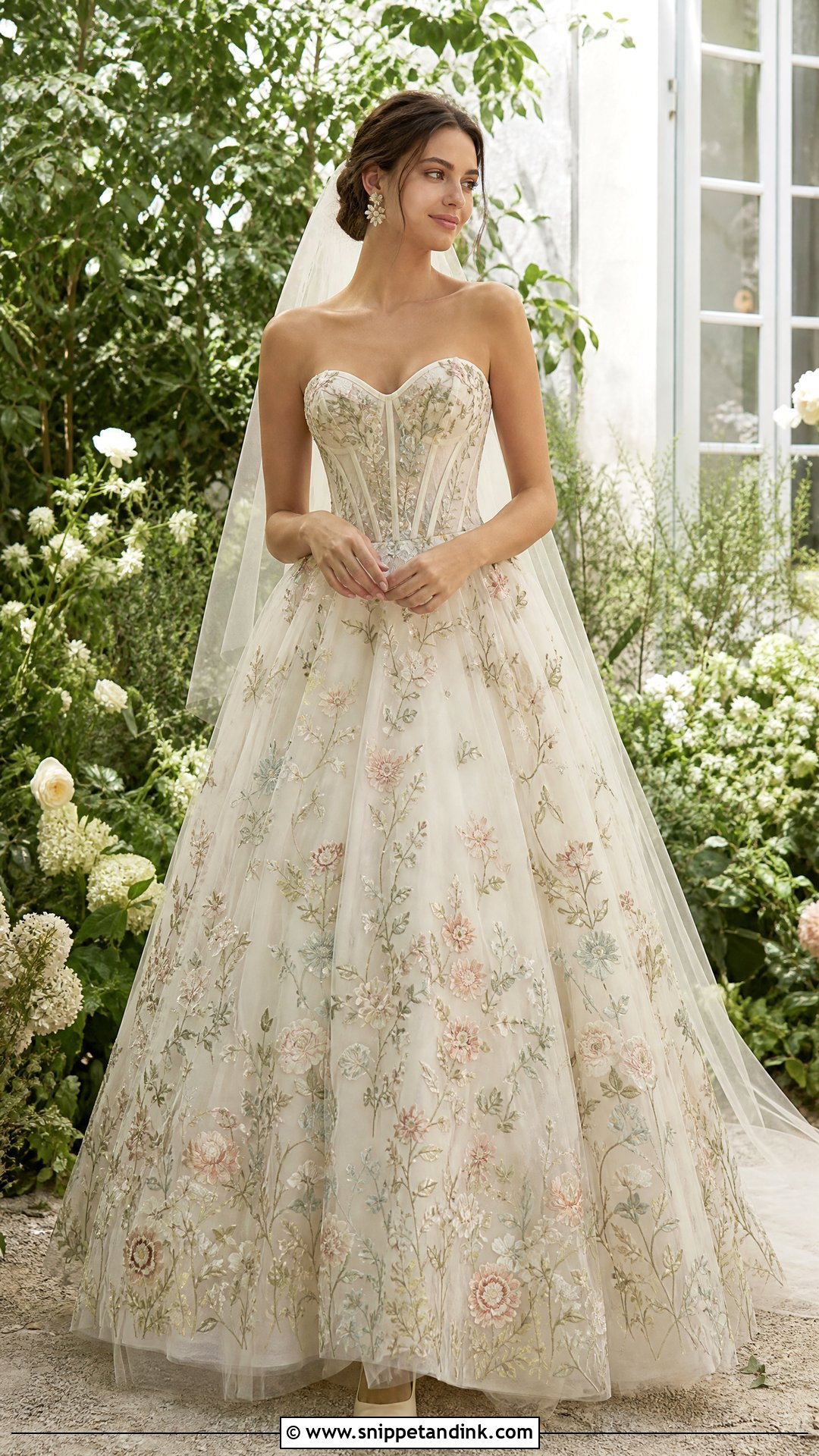
Floral embroidery lets a vintage gown carry a little color. I like a cream ballgown with muted blush, sage or pale blue flowers scattered across bodice and skirt, a corseted waist and full tulle layers underneath. Simple ivory pumps, small floral earrings and a plain fingertip veil keep it calm, and a loose bun with a few fresh or fabric flowers can echo the dress without matching it exactly. A mostly neutral bouquet stops it competing with the pattern. Spring estates and conservatories suit it best. When choosing thread colors, view the gown in daylight: pale embroidery that looks clear under boutique spotlights can fade to almost nothing outdoors.
12. Lace Jacket Vintage Ballgown Wedding Dress
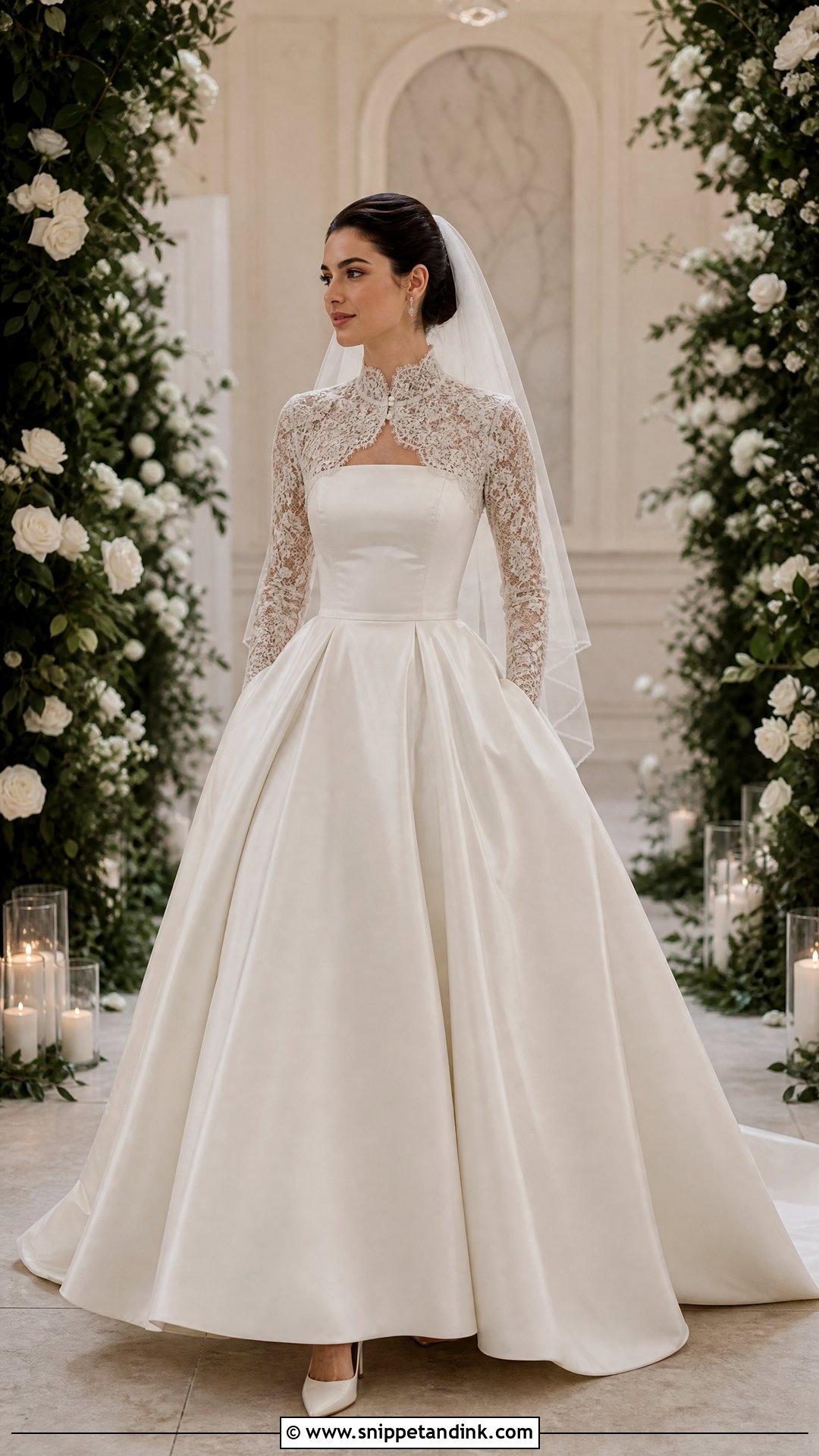
A detachable lace jacket gives you two looks from one strapless ballgown. Start with a clean satin dress with a fitted bodice, defined waist and full skirt, then add a high-neck lace jacket with long sleeves and covered buttons for the ceremony. Take it off for the reception and the plainer neckline appears. Pearl earrings, pointed ivory heels and a mid-length veil suit both versions, and so does a low twisted bun. The jacket must be fitted while you wear the gown and the same bra. I’ve seen jackets made separately that sit perfectly on a hanger and then ride up over a structured bodice, so the two pieces need fittings together.
13. Cathedral Veil Vintage Ballgown Wedding Dress
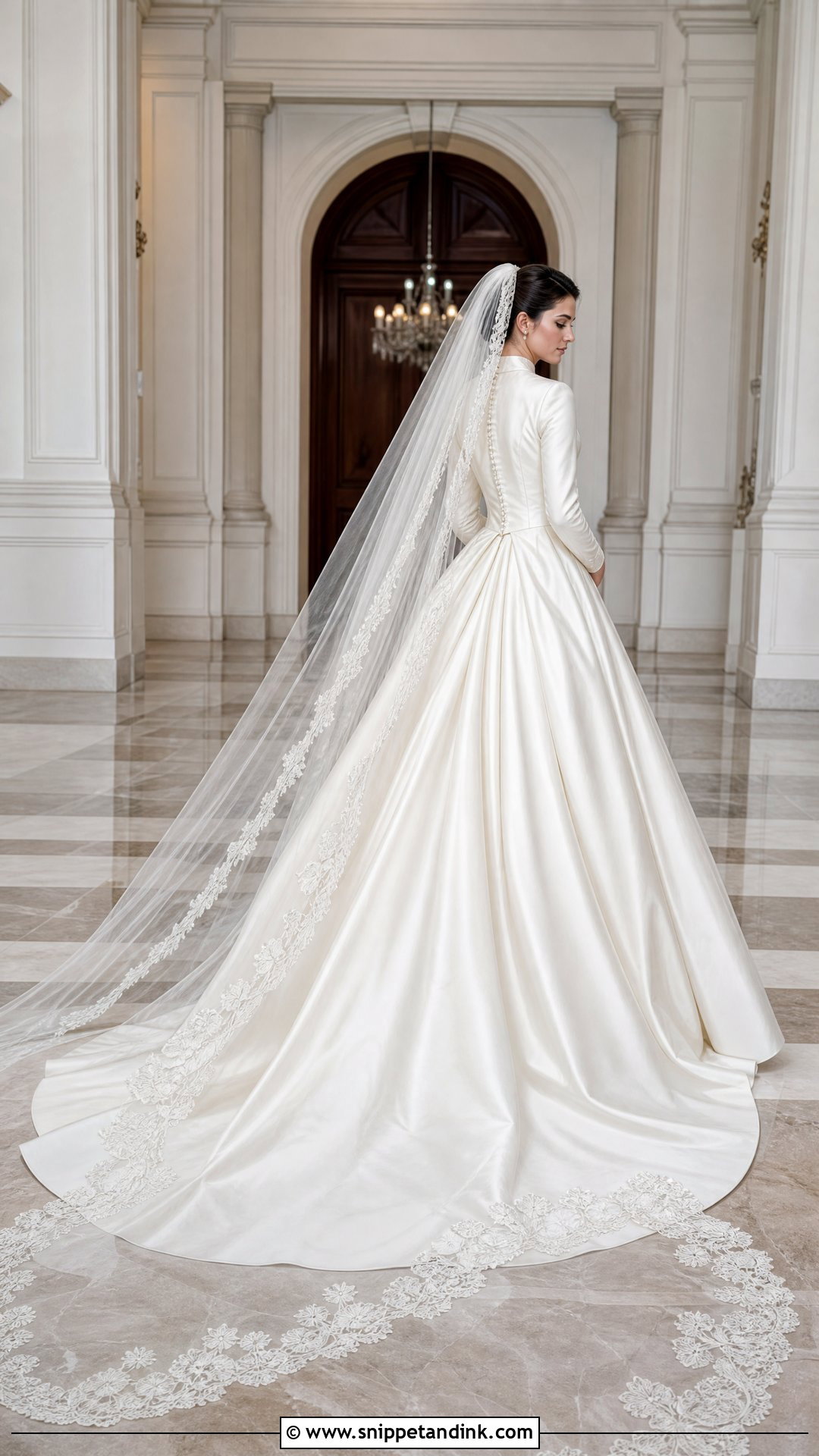
A long cathedral veil can be the main event when the dress stays plain, which suits a simple vintage ballgown. I’d choose ivory satin with a modest scoop neck, fitted long sleeves and a full skirt running into a chapel train, then add a veil with a fine lace border or scattered appliqués near the hem. Pearl studs, satin pumps and a small structured bouquet finish it. The veil needs a firm, low bun to anchor its comb, or it drags the hair back as you walk. It shows best in a spacious venue where both train and veil can be laid out. Name one person to straighten it before you turn at the altar, and keep candles well away from tulle.
14. Drop Waist Vintage Ballgown Wedding Dress
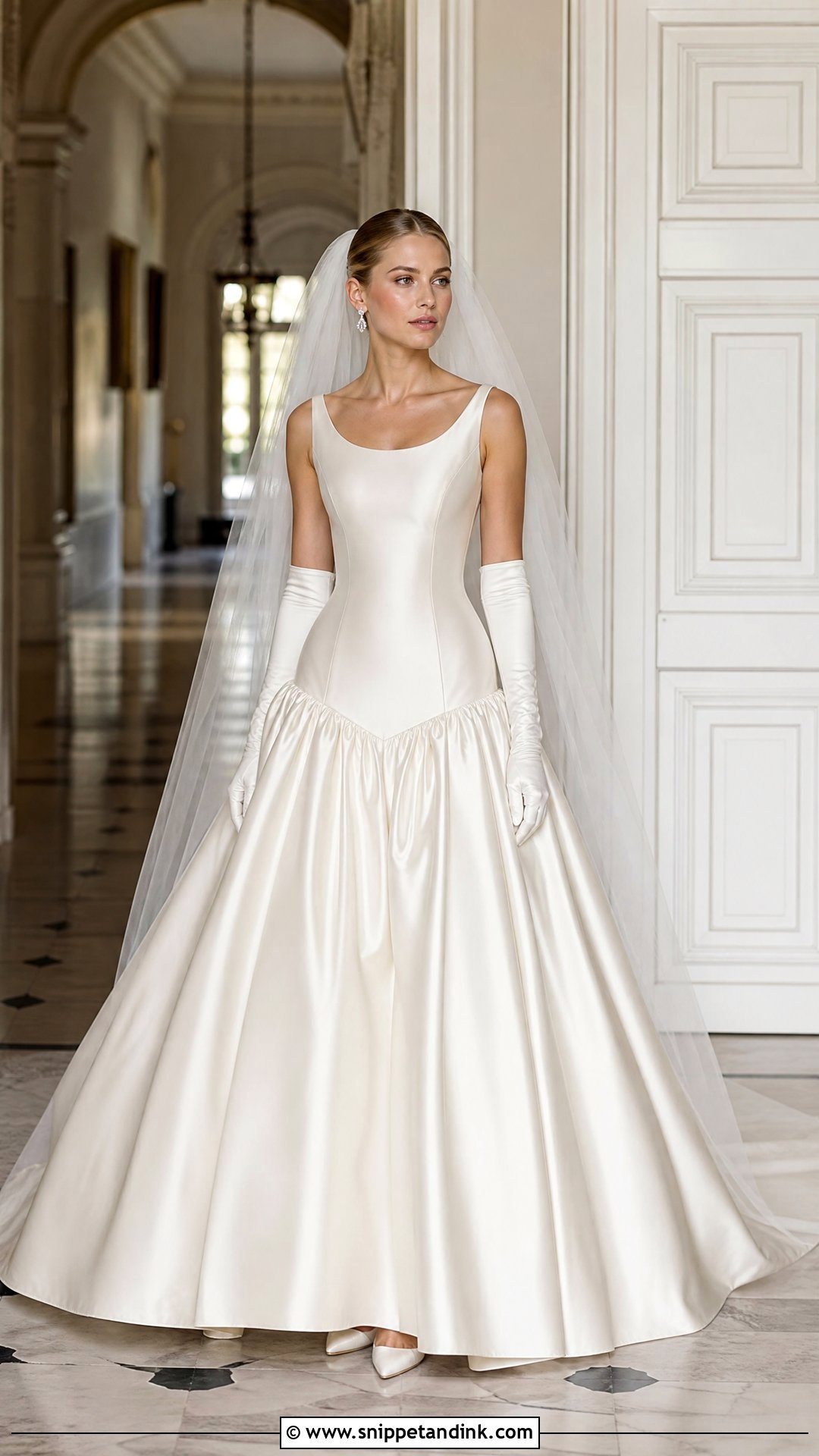
A drop waist lengthens the bodice over the hips before the skirt flares, and it’s gentler than a sharp basque point. Choose ivory silk or satin with princess seams, a scoop neck and minimal decoration, with tulle layers underneath holding out a smooth outer skirt. Elbow gloves, crystal earrings and closed-toe pumps suit it, with a plain chapel veil and a smooth French twist. Proportion is everything here. On a shorter torso, a low seam can shorten the legs, so I try bodices at a couple of lengths in fittings. The final seam should still feel comfortable when you sit, walk and dance.



15. Corset Bodice Vintage Ballgown Wedding Dress
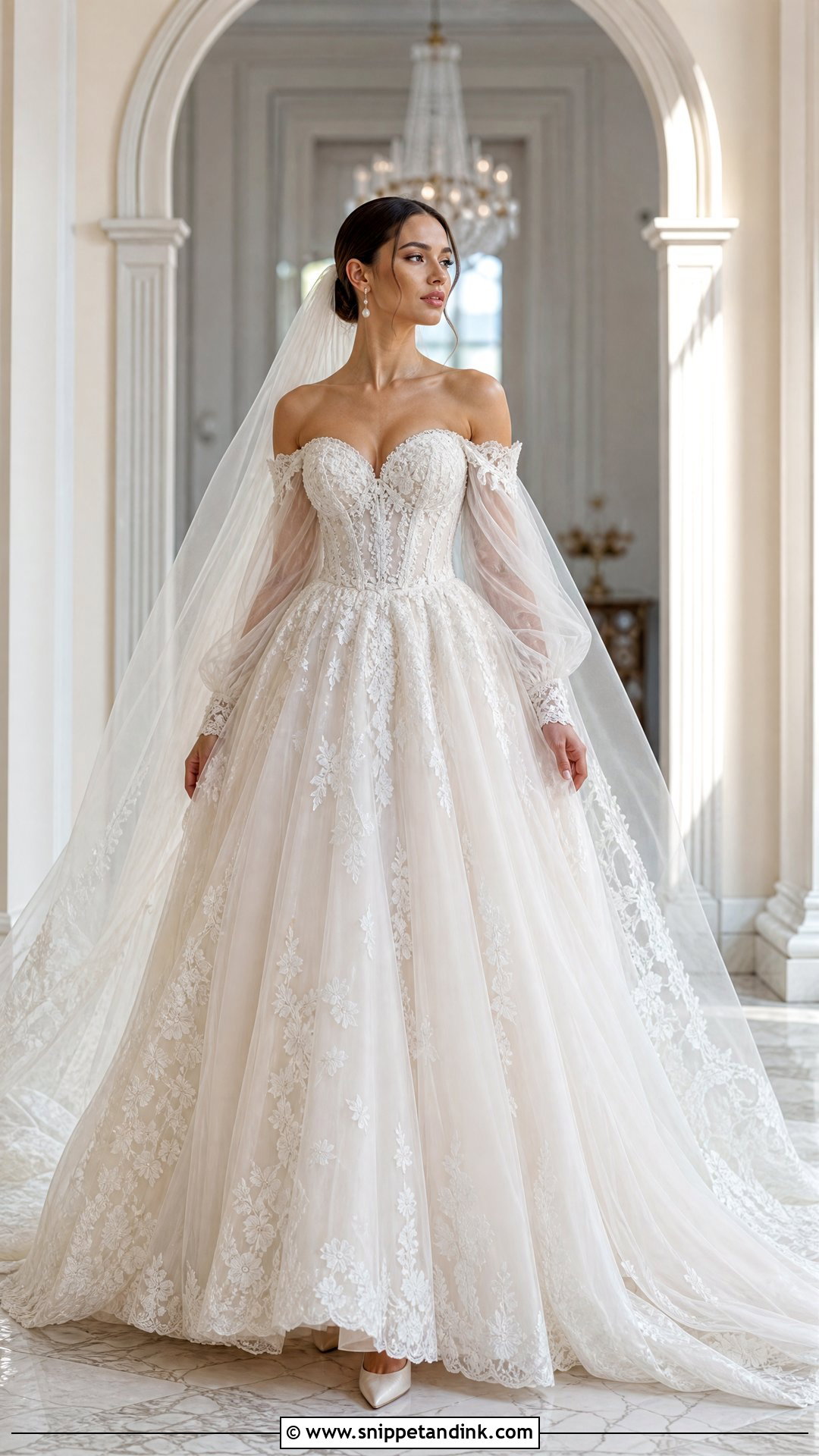
Visible corsetry gives a ballgown real definition, and done well it looks like dressmaking, not costume. Choose a bodice with carefully placed seams, internal support and a soft sweetheart or scoop neck, over a full tulle skirt with light lace appliqués. A sheer shoulder wrap or detachable sleeves add coverage for the ceremony. Pearl drops, ivory heels and a plain veil falling past the train complete it, with a soft updo. At fittings, I have the bride sit, eat a few bites of something and laugh. A corset that lets her do all three without shifting is fitted correctly; one that stops her breathing deeply is too tight.
16. Scalloped Lace Vintage Ballgown Wedding Dress
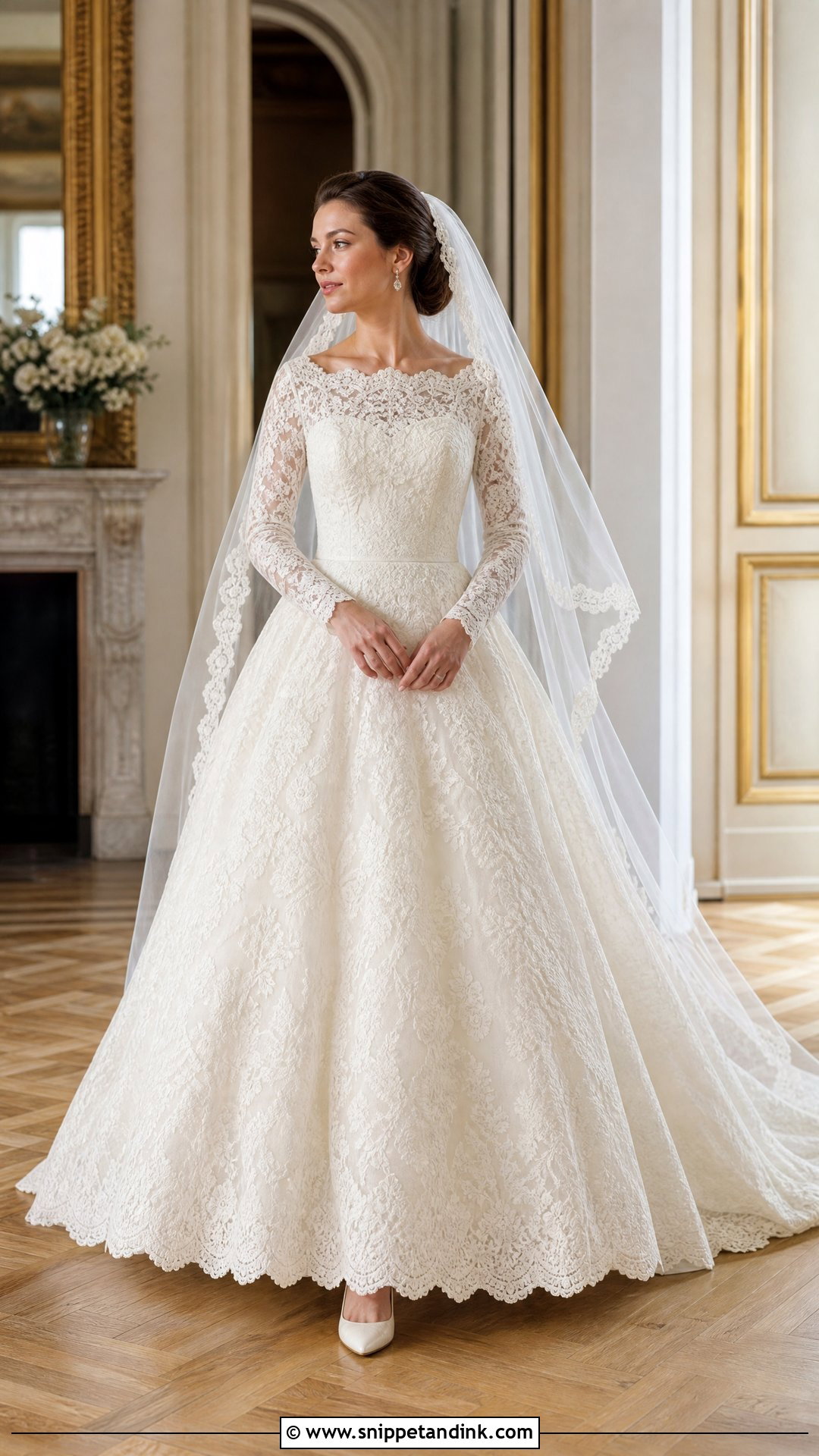
Scalloped lace edges a ballgown where people look most: the neckline, the sleeves and the hem. I’d look for a scalloped bateau neck, fitted sleeves and matching lace at the hem, over a skirt lined in pale ivory satin so the pattern shows. Understated pearls, ivory pumps and a veil edged in the same lace complete it; mixing unrelated laces makes it busy. A soft low bun and a muted rose lip suit it for a formal daytime ceremony or an elegant indoor venue. Hemming is the catch. A scalloped edge can’t simply be cut shorter, so the seamstress has to take up the skirt from the waist or lift and reapply the lace border, which takes time and skill.
17. Ivory Silk Vintage Ballgown Wedding Dress
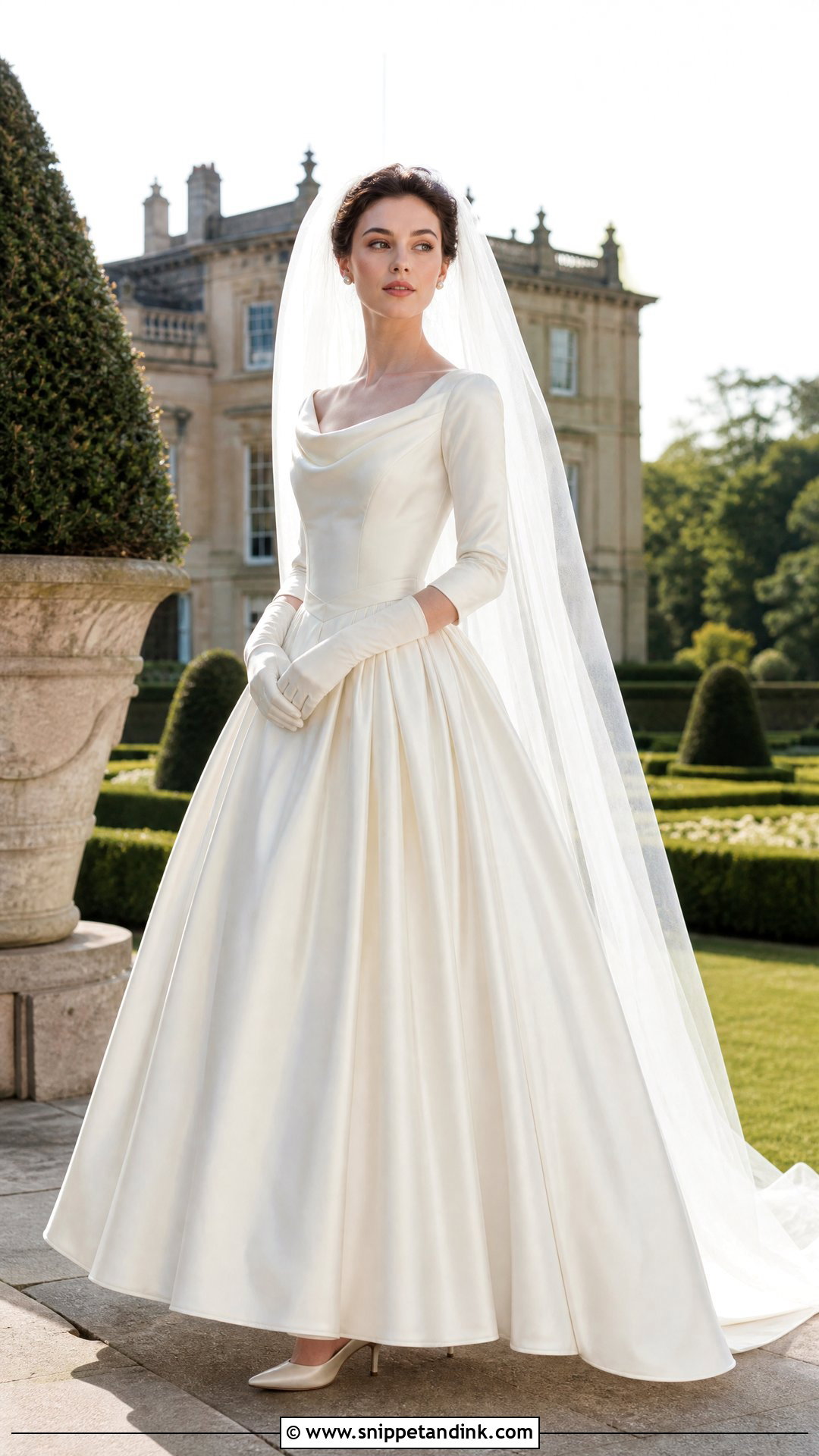
Ivory silk has a quiet richness and moves more naturally than synthetic satin. Choose a fitted bodice with a draped neckline and three-quarter sleeves, with a full skirt gathered neatly at the waist. Covered buttons and a modest train add detail. Wrist gloves, pearl studs and ivory satin pumps suit it, with a plain tulle veil and polished waves gathered at the nape. Silk creases and water-spots easily, so I steam it on site and keep a dry cloth handy. Even a drop of rain or a spilled glass of water can leave a ring on silk, which is why I’d have a large umbrella ready for any outdoor moment. Historic houses, gardens and bright ballrooms all suit it.
18. Bow Back Vintage Ballgown Wedding Dress
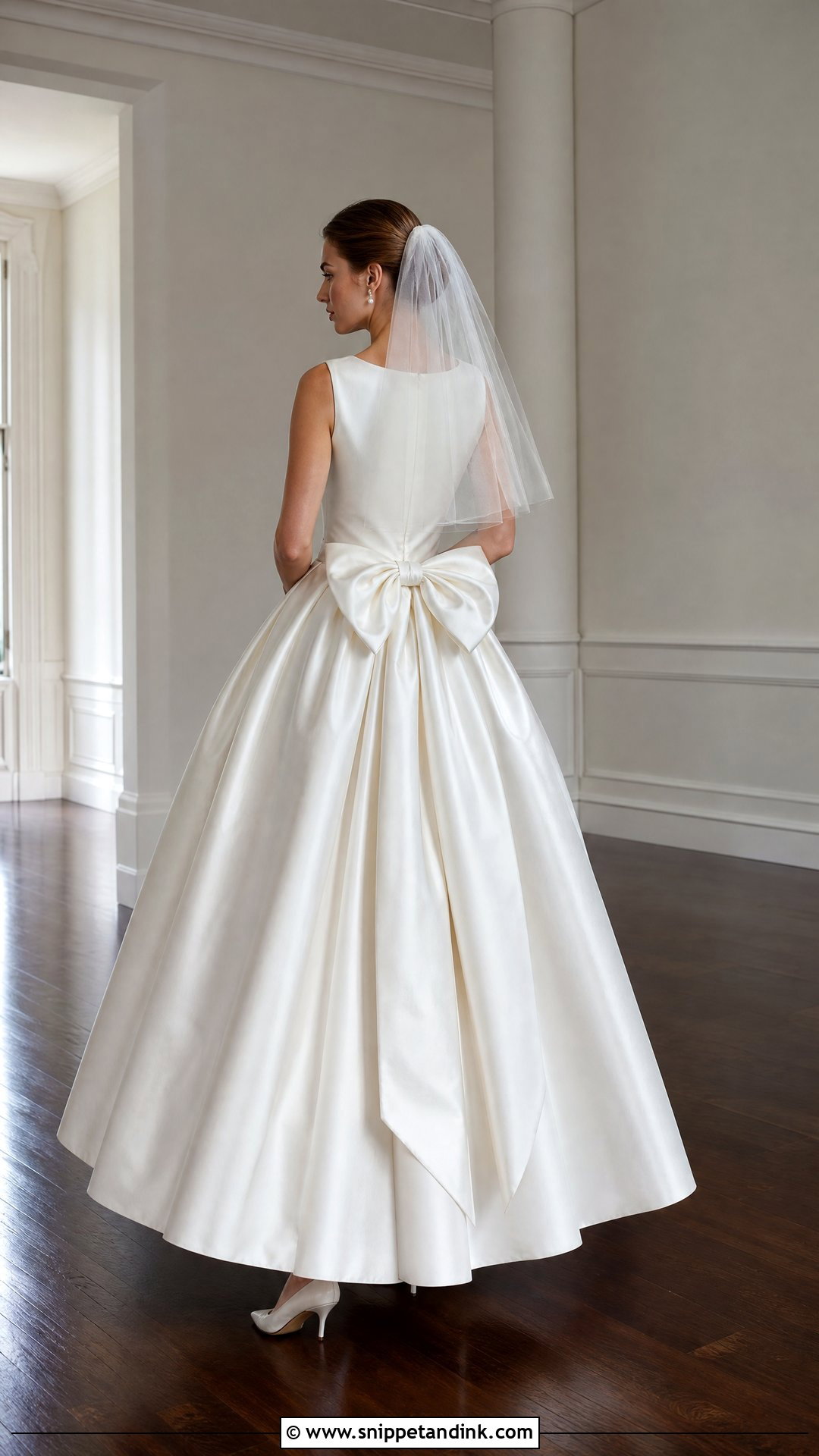
A big back bow adds a playful note to a simple ballgown. Choose structured satin with a fitted sleeveless bodice, a natural waist and a wide pleated skirt, with the bow at the waist flowing into long tails. Pearl studs, pointed pumps and a sheer veil ending above or below the bow (never cutting across it) complete the look, with a smooth high bun as a clean background. Keep the front minimal so the dress balances from every side. Large bows wilt after sitting, so ask the seamstress to interface the loops with a stiffer fabric, and test how it holds after you’ve sat in a chair for ten minutes. It’s a good choice if you want impact without lace or beading.
19. Cap Sleeve Vintage Ballgown Wedding Dress
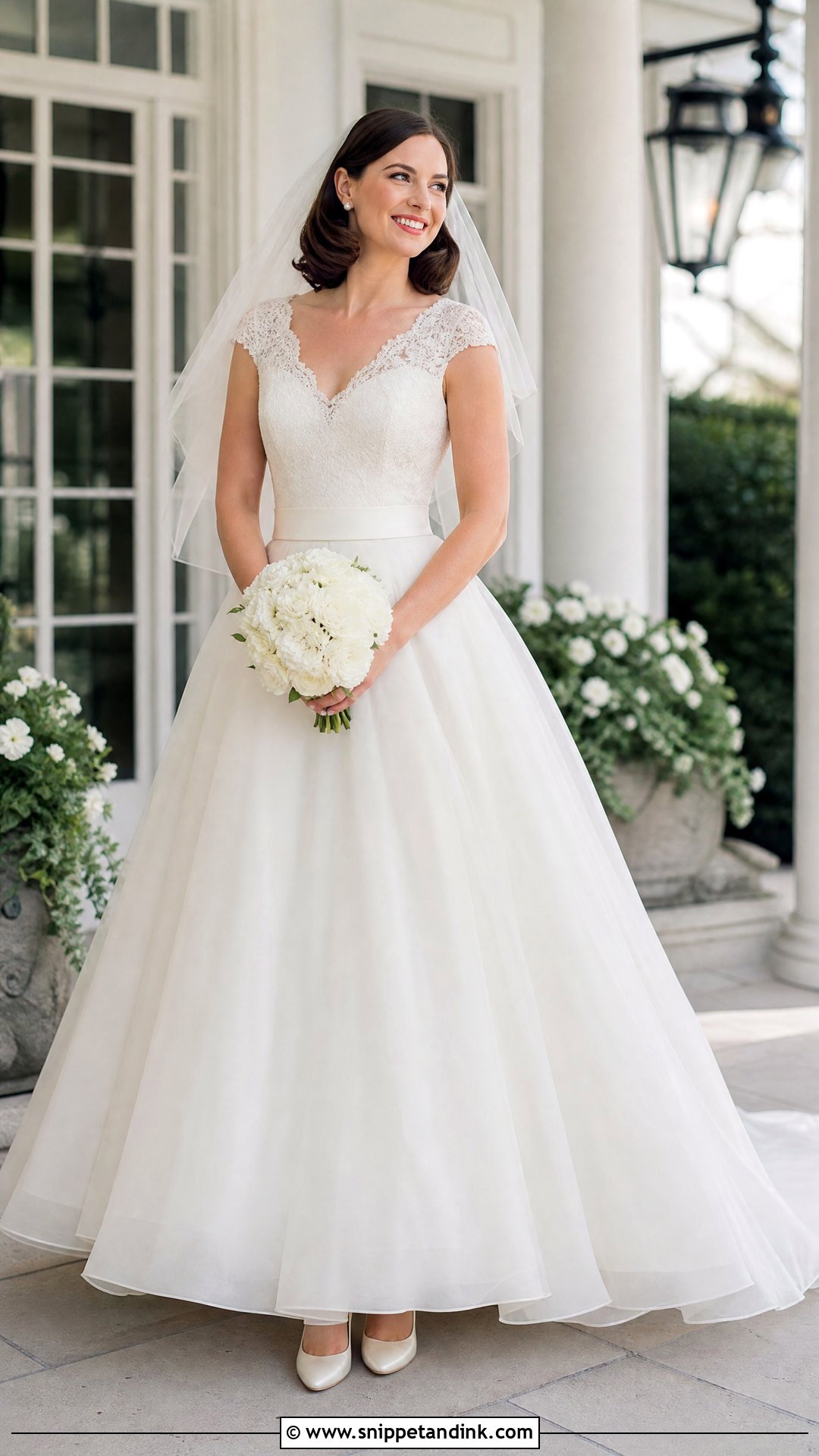
Cap sleeves give a little coverage and a soft frame to a classic ballgown. I’d pair a lace bodice with a soft V-neck and defined waist with a full organza skirt, joined by a satin waistband that gives a clean break between the textured top and airy skirt. The sleeves should rest on the shoulder without cutting into the arm. Pearl studs, rounded ivory pumps and a shoulder veil suit it, with loose waves pinned back for a mid-century feel. A compact bouquet keeps the bodice visible. It’s a good warm-weather option; organza is light and holds volume without the heat of satin, though it does crease if you sit on it for long.

20. Puff Sleeve Vintage Ballgown Wedding Dress
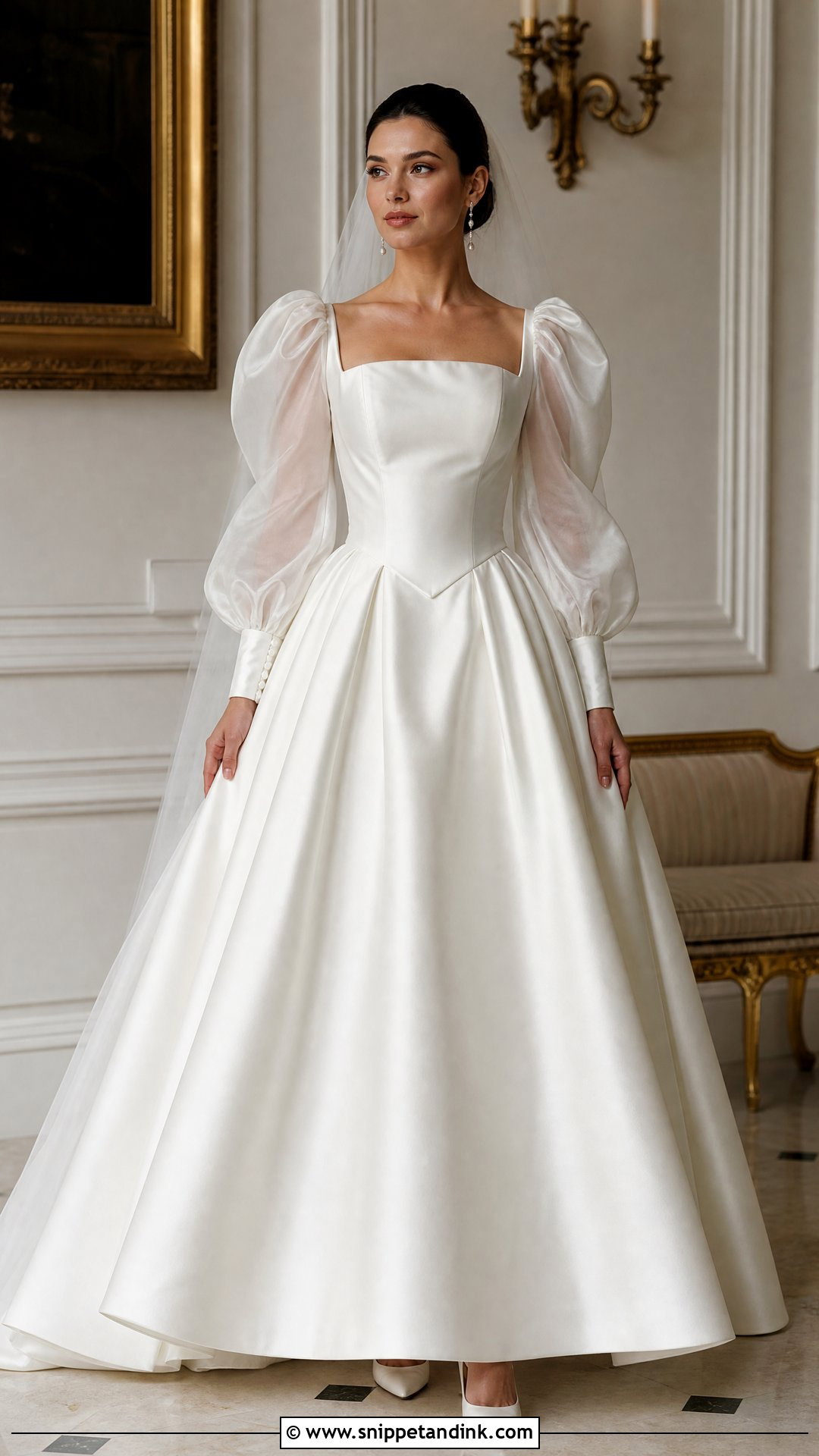
Big puff sleeves are pure eighties drama, and the way to make them feel current is to keep everything else clean. I’d choose sheer organza sleeves gathered at the shoulder and narrowed to the wrist, with a plain satin bodice, a slightly pointed waist and a voluminous skirt. Small pearl buttons on the cuffs and back finish it, with simple drop earrings, ivory pumps and a plain chapel veil under a low bun. Skip the big necklace and the elaborate headpiece. Organza sleeves lose their puff if they’re packed flat, so travel them stuffed with tissue and fluff them on site. For a bride who enjoys bold proportions, this is the most confident gown on the list.
The Order I Dress a Ballgown Bride In
Getting into a full skirt is a two-person job, and doing it in the wrong order means bending in a corseted bodice. This is the sequence I follow on the morning.
- Hair and makeup finished, with a button-front shirt worn throughout so nothing goes over the head afterward.
- Underwear, shapewear and the petticoat or hoop first, then shoes, since you won’t see your feet once the skirt is on.
- The gown goes on by stepping into it from a circle laid on a clean sheet on the floor, with a helper lifting it up rather than lowering it over your hair.
- Fasten from the bottom up: zip or hooks, then buttons, then any corset lacing, tightened gradually in two or three passes.
- Veil and jewelry last, followed by a slow walk across the room and a test sit before you leave.
Bustling for the reception
Ask your seamstress which bustle suits your skirt. An over bustle hooks the train up onto the back of the skirt; a French or under bustle tucks it beneath; a ballroom bustle lifts it so the hem looks level all around. Have two people practice it at the final fitting, as bustle ties in matching ivory are hard to find in a dim room.
Volume Is a Commitment, So Fit It Like One
The vintage ballgowns that work best mix their history with modern comfort and your own taste. This list moves from romantic lace and sculpted satin to pearl beading, bold sleeves, embroidered tulle and shaped waistlines. When you compare them, think about how the fabric, neckline, skirt volume and train will behave in your venue and season. Keep the accessories in support of the dress, not in competition with it. Bring your actual shoes and underwear to every fitting so the hem and bodice are set correctly. Victorian coverage, fifties glamour or eighties drama, good tailoring is what makes a big skirt feel like yours rather than borrowed.
You'll Like These Ideas:







Leave a Reply