
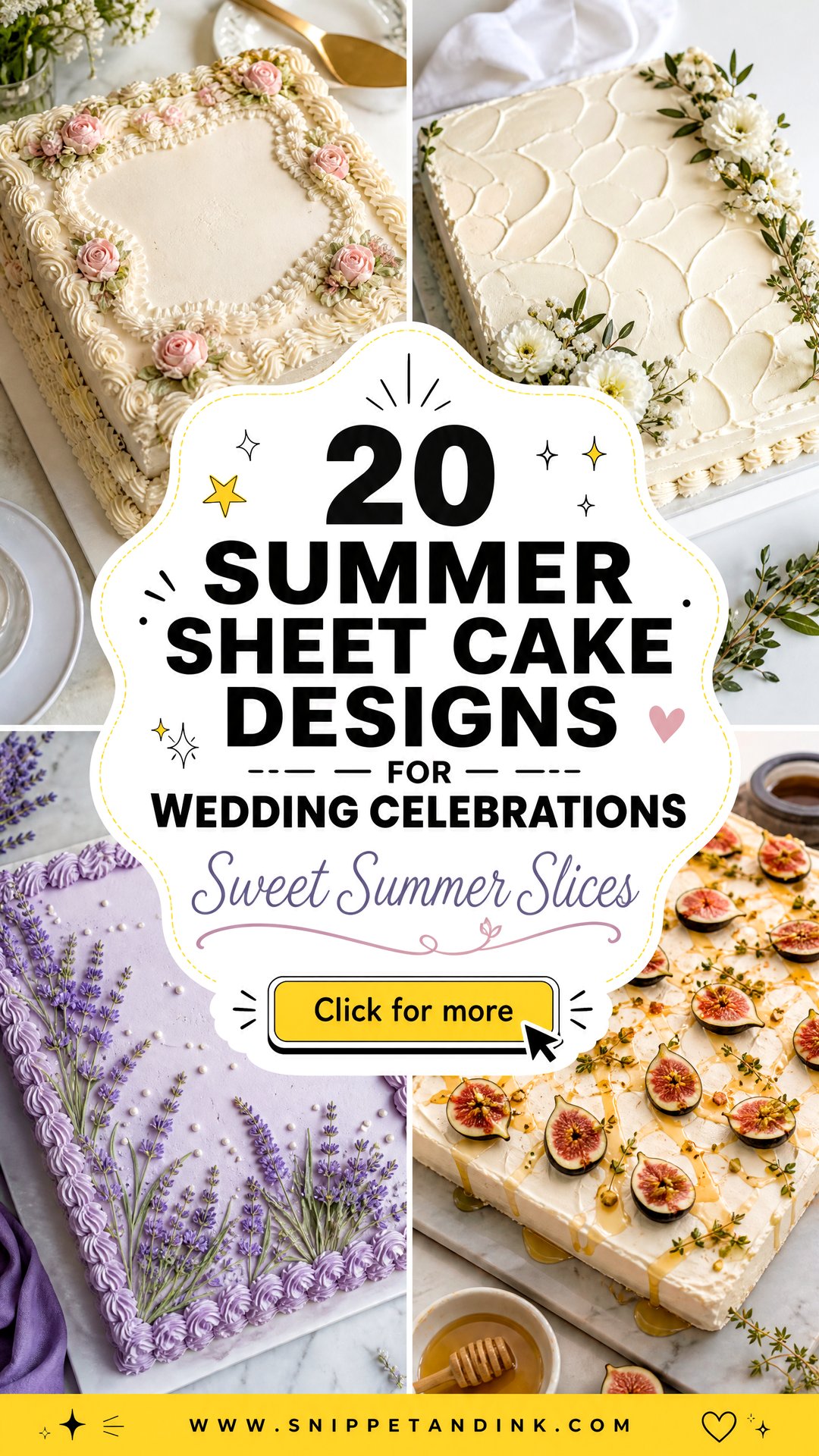
A sheet cake is the most practical wedding cake I make for summer. It’s low and wide, so it can’t lean or slide in the heat the way a tall tier can, it feeds a crowd from one surface, and it gives me a broad top to decorate. With the right frosting, fruit, flowers or piping it looks every bit like a wedding cake. Current wedding cake trends suit the format well: textured buttercream, seasonal fruit, pressed flowers, long runner cakes and vintage piping all read beautifully from above. Here are twenty designs I’d put on a summer dessert table, with notes on flavor and on how each one copes with a warm room.
Which Frostings Hold Up at a Warm Outdoor Reception
The frosting decides more about a summer cake than the design does. I ask every couple where the cake will stand, for how long, and whether the room or tent is air-conditioned, before we talk about flowers.
- American buttercream forms a light crust and copes best with warmth. It’s the sweetest, but it’s the one I trust for an outdoor table.
- Swiss meringue buttercream is silkier and less sweet, but it softens noticeably in a warm room and can begin to slump at the edges.
- Cream cheese frosting and whipped cream must stay chilled for food-safety reasons and shouldn’t sit out in the sun at all.
- Ganache sets firmer than buttercream and makes a good base under a thin decorative layer.
Wherever the cake goes, keep it out of direct sun and away from heaters, glass walls and the dance floor. I’d rather it come out of the fridge or a cool room shortly before guests see it than sit on display through the whole cocktail hour.
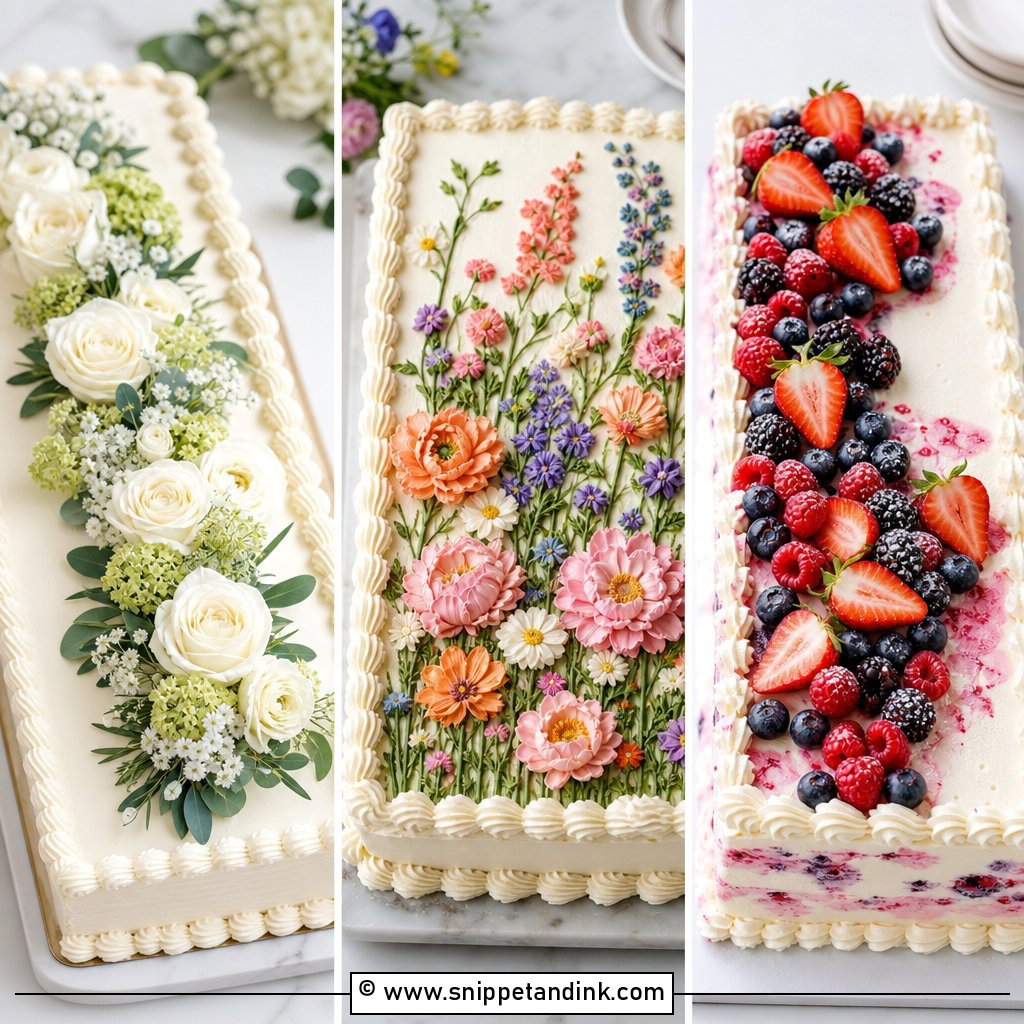
1. Summer Berry Wedding Sheet Cake
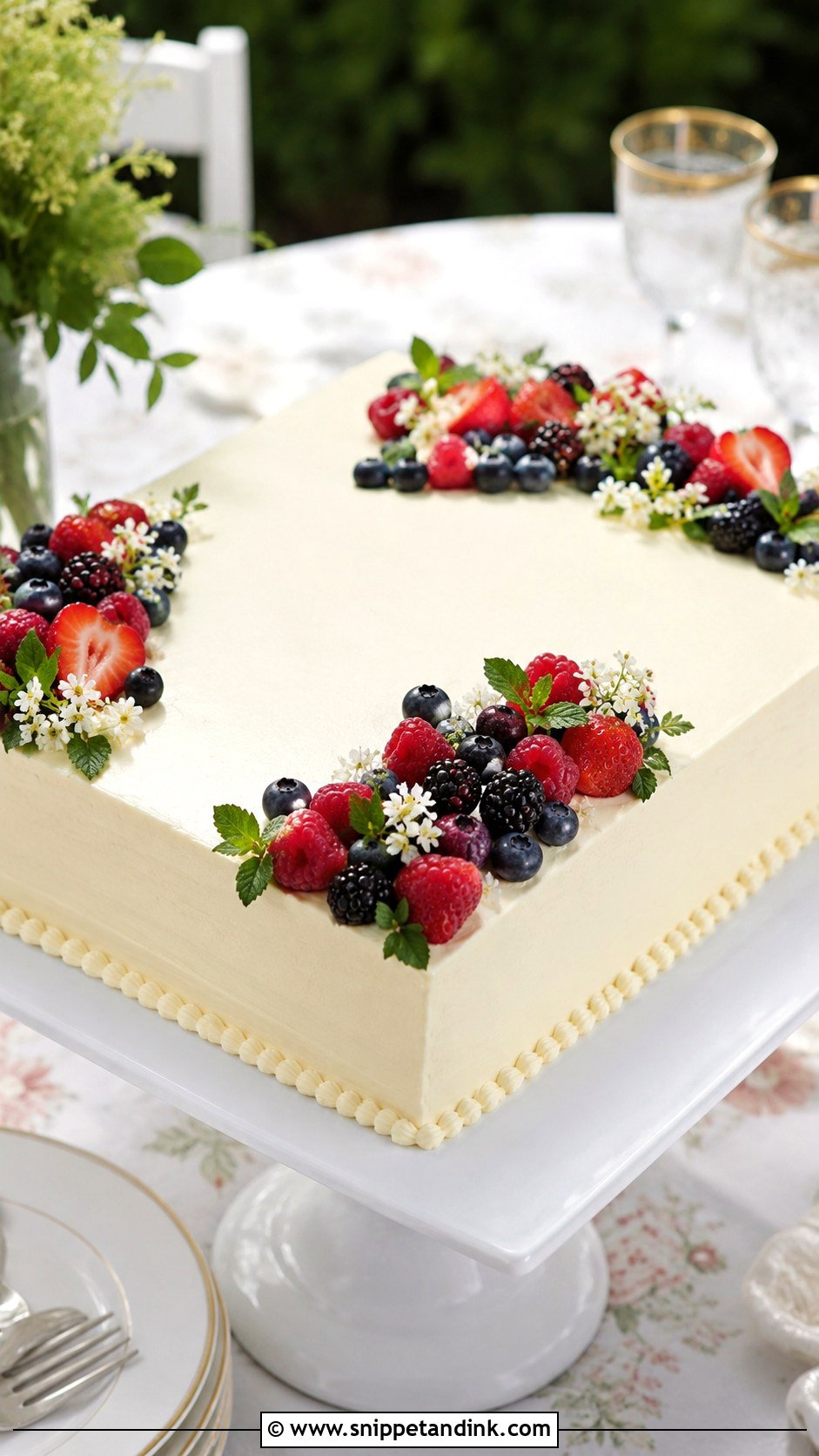
Berries make a flat cake look lush with almost no effort. I like vanilla or almond under smooth ivory buttercream, with strawberries, raspberries, blueberries and blackberries in clusters. Placement matters more than quantity: a flowing diagonal or two heavy corners look designed, while scattered berries look like a birthday cake. Cut strawberries bleed juice into buttercream within an hour or two, so I use them whole or halved and add them as late as possible. Mint leaves or a few tiny white blossoms soften the edges.
2. Lemon Elderflower Wedding Sheet Cake
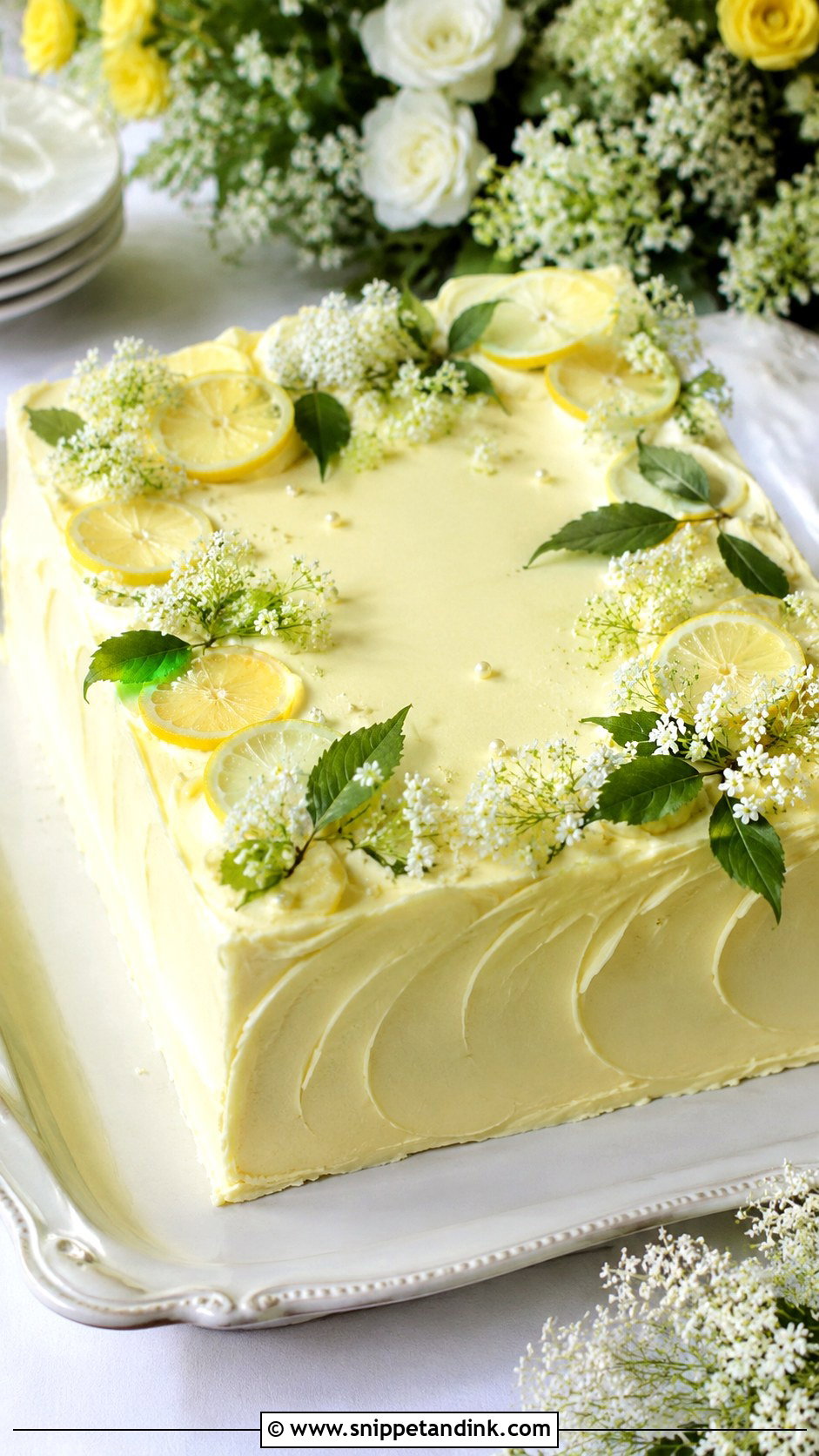
Lemon and elderflower is the flavor I suggest most for afternoon receptions, because it tastes light even in the heat. A pale lemon sponge with lemon curd between the layers, and an elderflower buttercream on top. Curd is soft, so I pipe a dam of buttercream around each layer to stop it squeezing out. Decorate with very thin lemon slices, small white flowers and a few pale green leaves, and give the frosting a few gentle swoops rather than a dead-flat finish. It suits yellow, white and sage palettes.
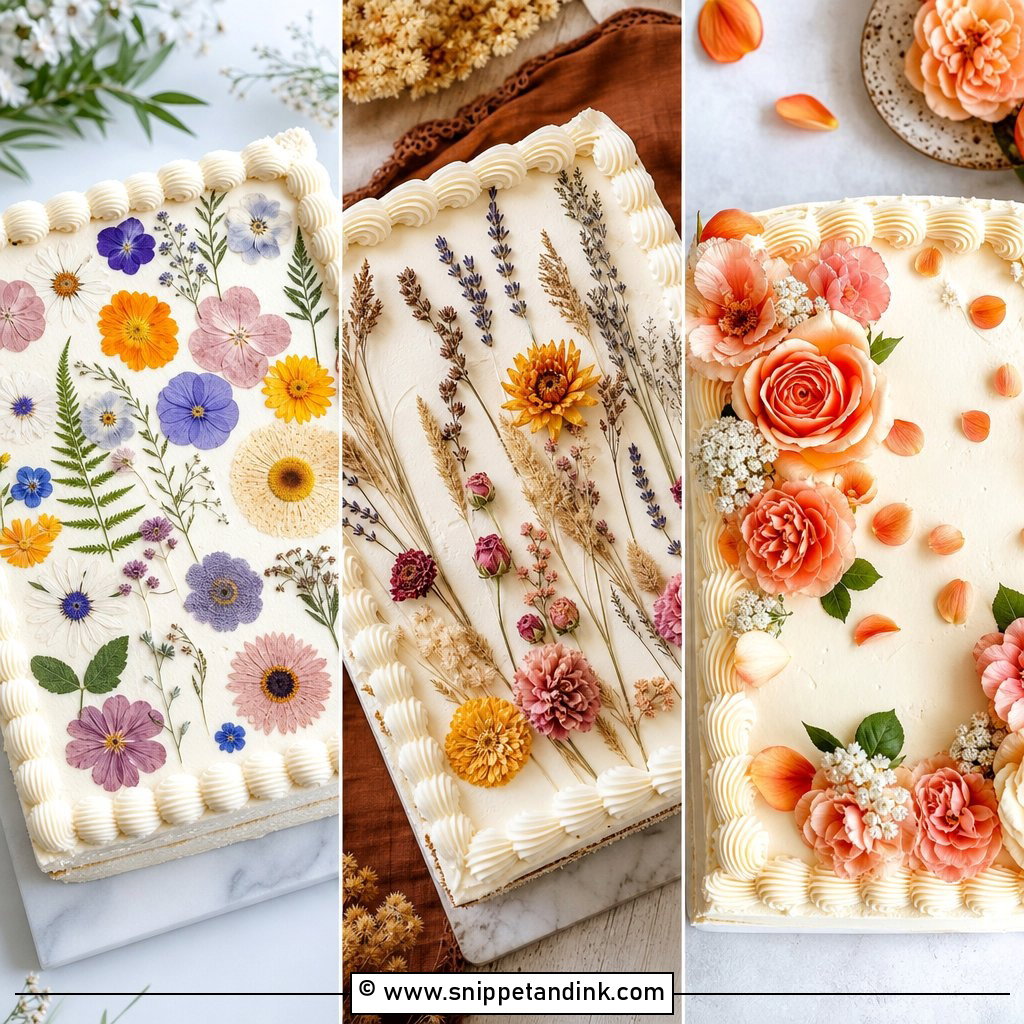
3. Pressed Flower Wedding Sheet Cake
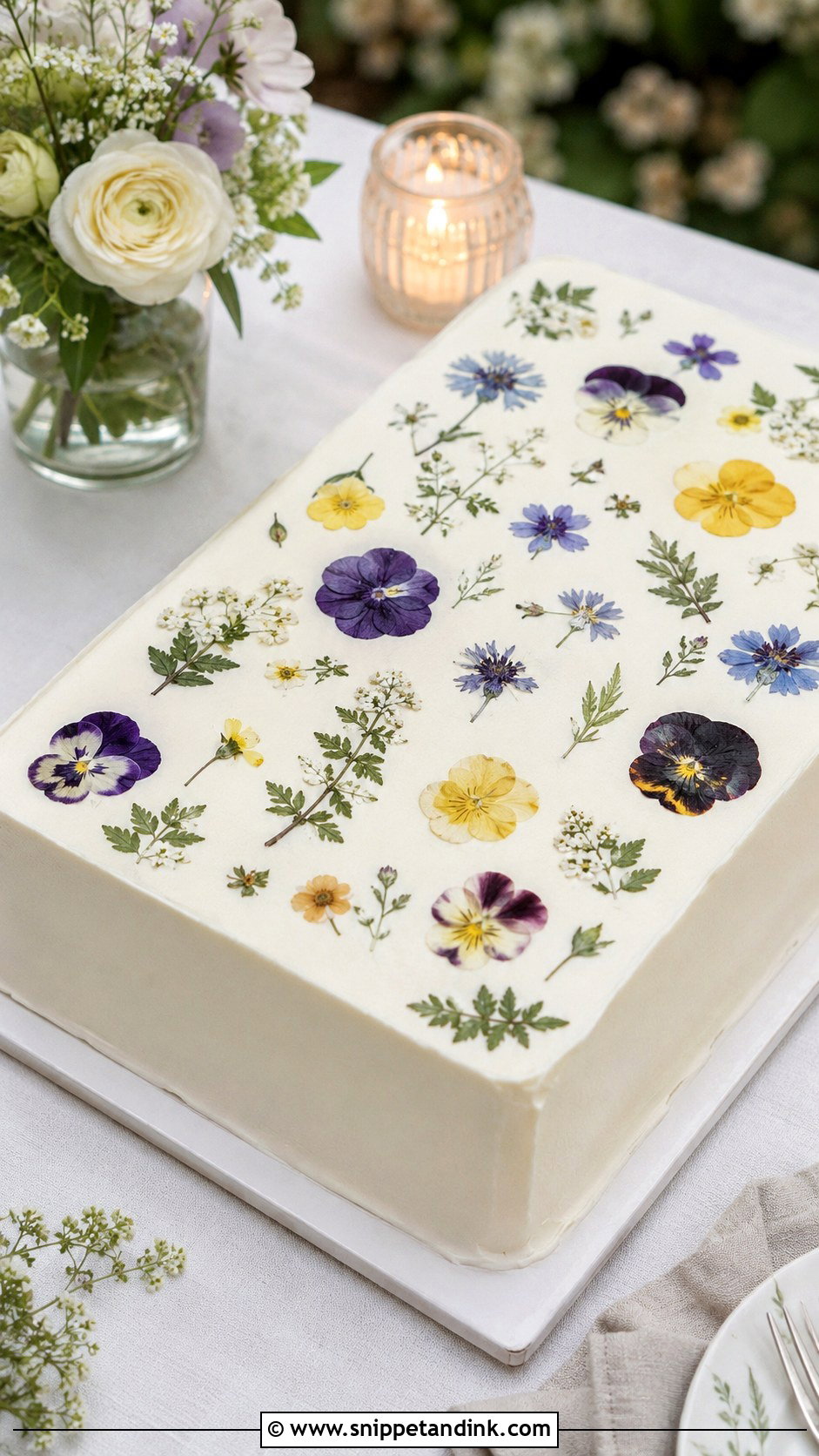
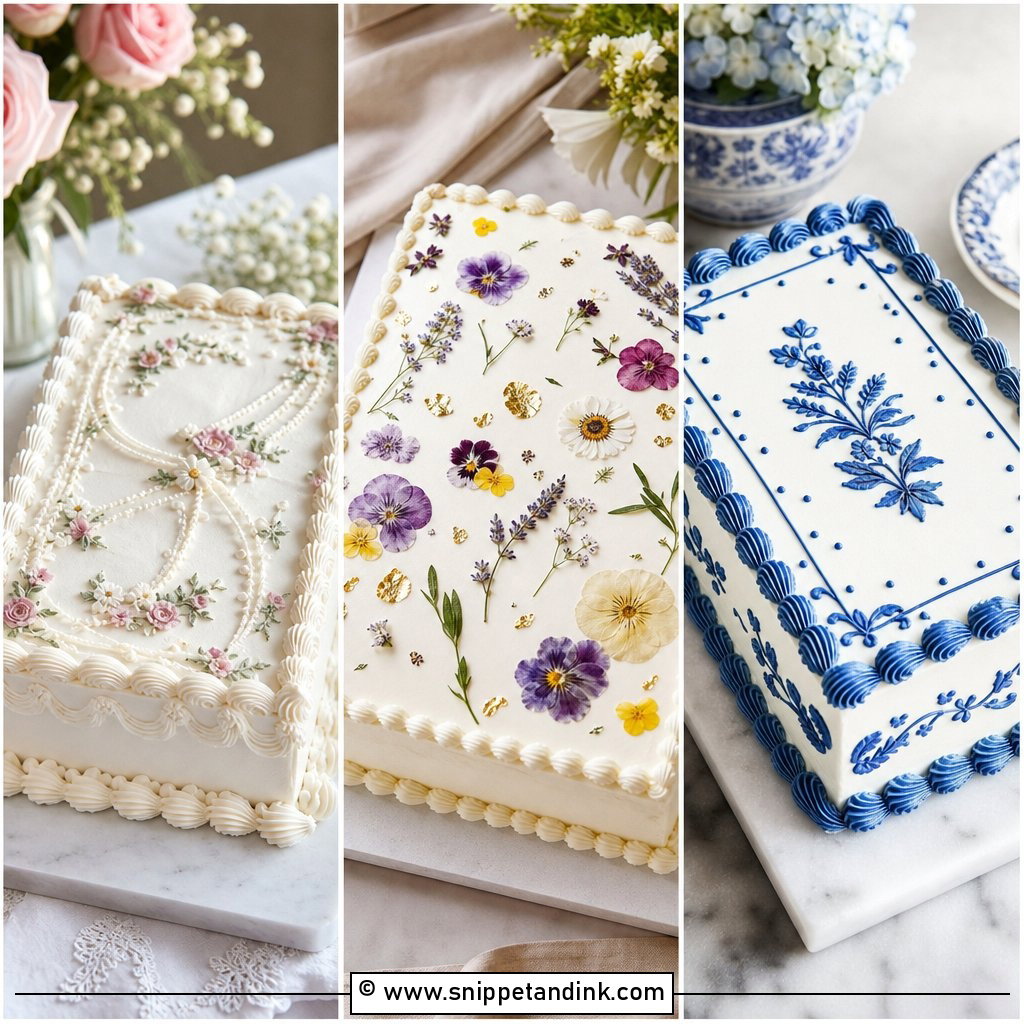
A pressed flower wedding sheet cake turns a plain rectangle into something botanical. Edible pressed pansies, violas, cornflowers and small herb leaves lie flat on white or ivory buttercream in a planned pattern. The secret is negative space; leave plenty of bare frosting between the flowers. Pressed petals draw moisture from buttercream and can darken after several hours, so I press them on the morning of the wedding, not the day before. Pair it with a plain stand, linen and a little greenery.
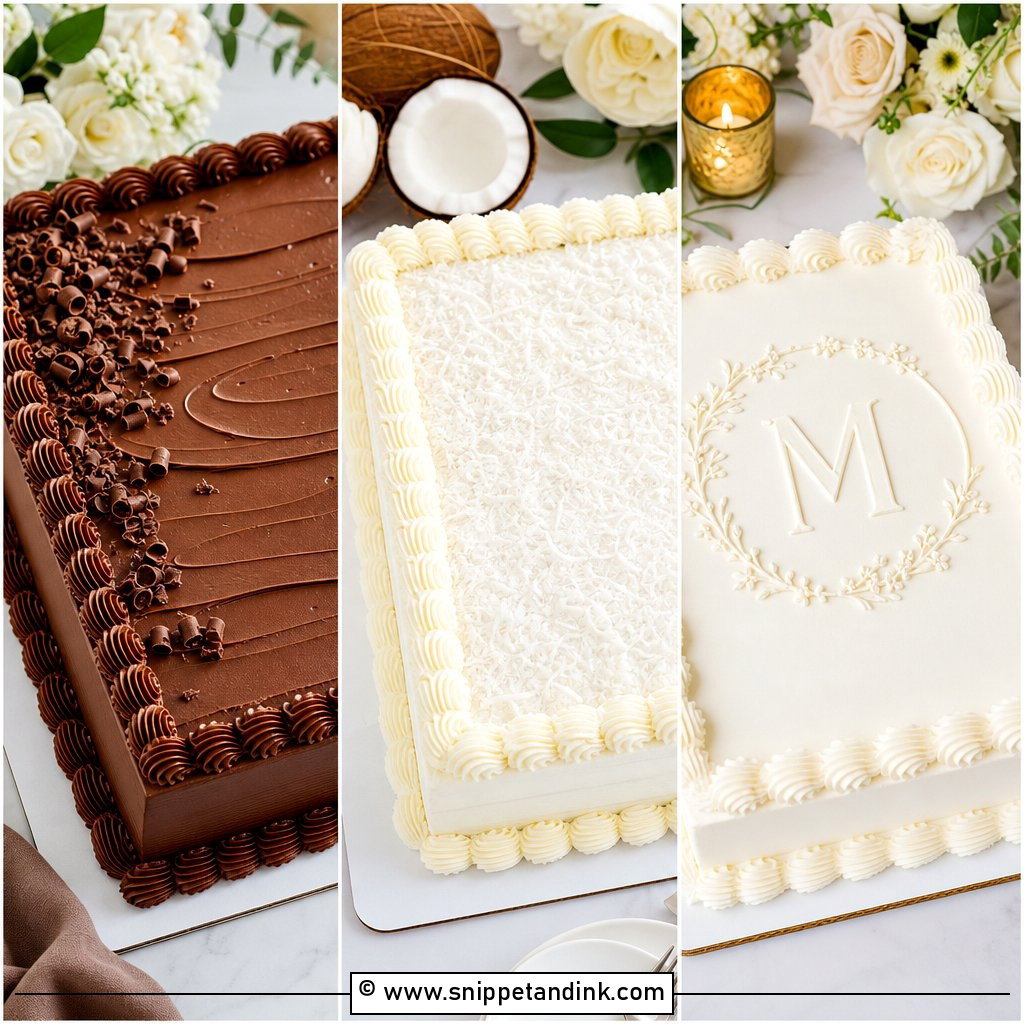
4. Vintage Piped Wedding Sheet Cake
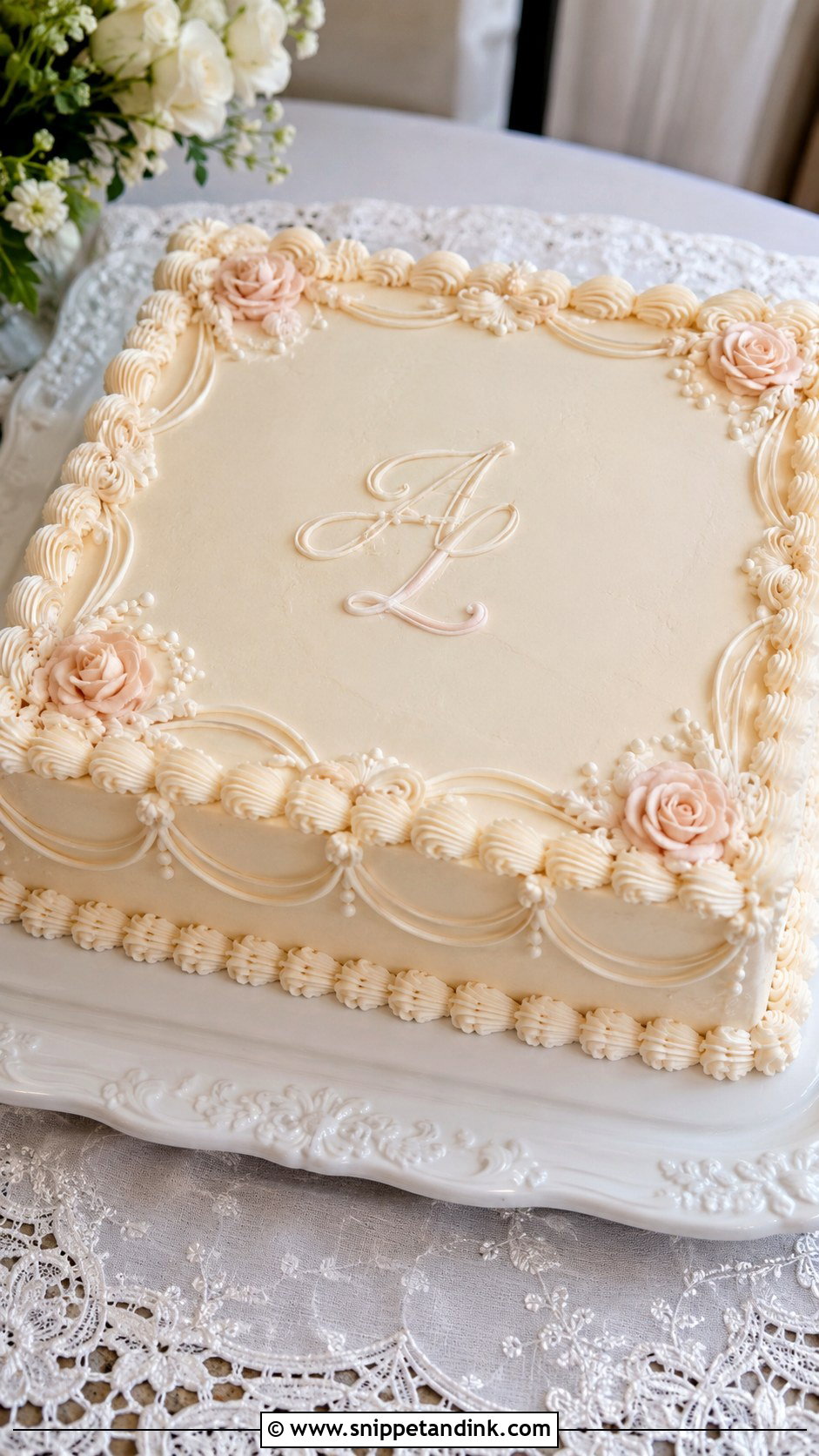
Vintage piping is all about the bakery classics: shell borders, pearl dots and buttercream swags on an ivory, blush or pale butter yellow cake. On a sheet cake, the piping has to be even all the way round, because the eye travels along a long straight edge and catches any wobble. A monogram, short message or wedding date can sit in the center. Piped detail holds best in a crusting buttercream if the room will be warm. It suits courthouse weddings and small, retro-styled receptions.
5. Peach Wedding Sheet Cake
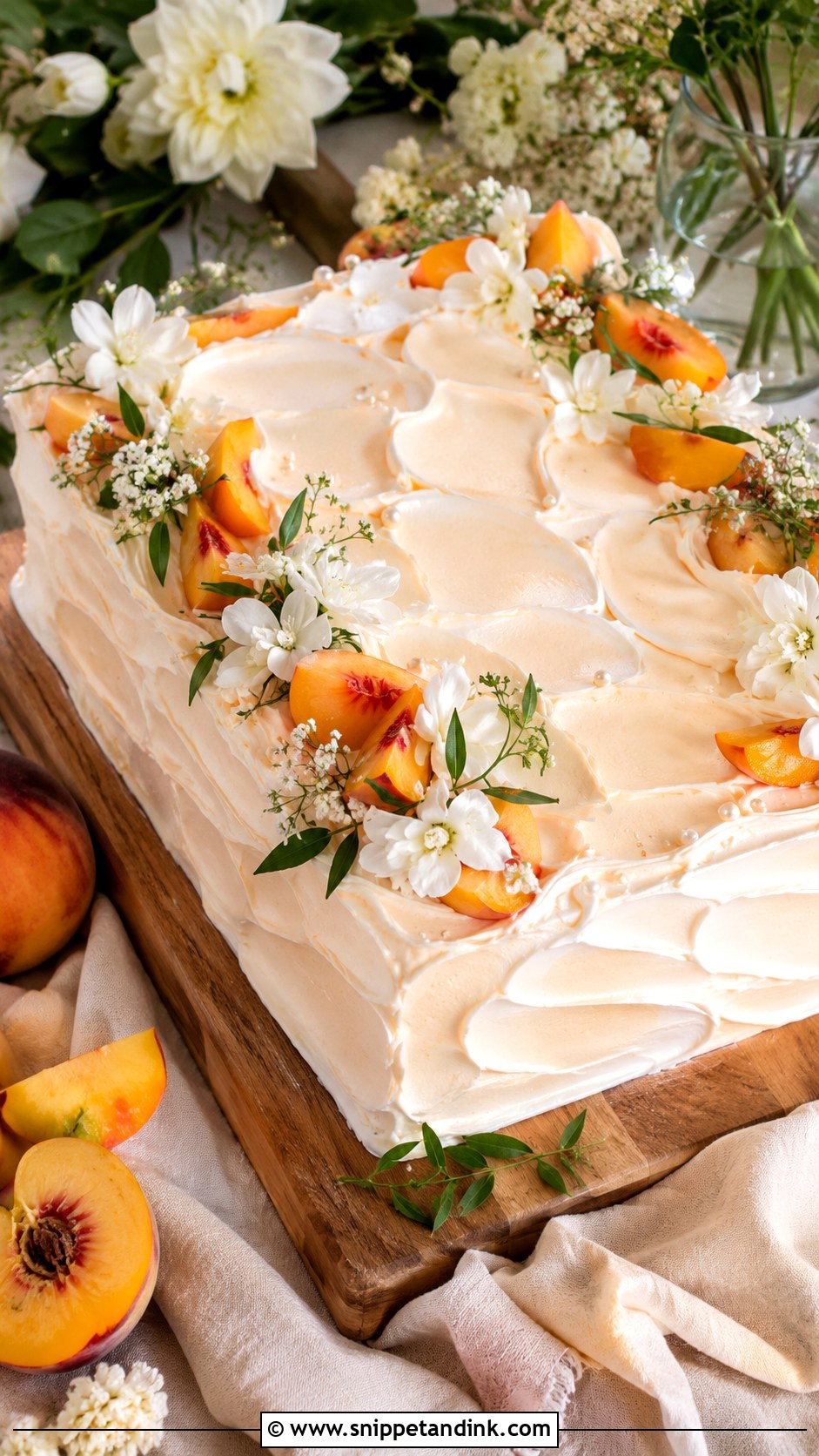
Peach is the fruit of late summer, and it pairs well with vanilla, almond or brown butter cake. I fill it with a cooked peach compote rather than raw slices, which release juice and make the layers slide. Frost with cream cheese buttercream or Swiss meringue buttercream, then fan thin fresh slices across the top in waves with small white flowers between. Brush the slices with a little apricot glaze so they don’t brown. It suits barns and tables styled in cream, terracotta or blush.
6. Tropical Wedding Sheet Cake
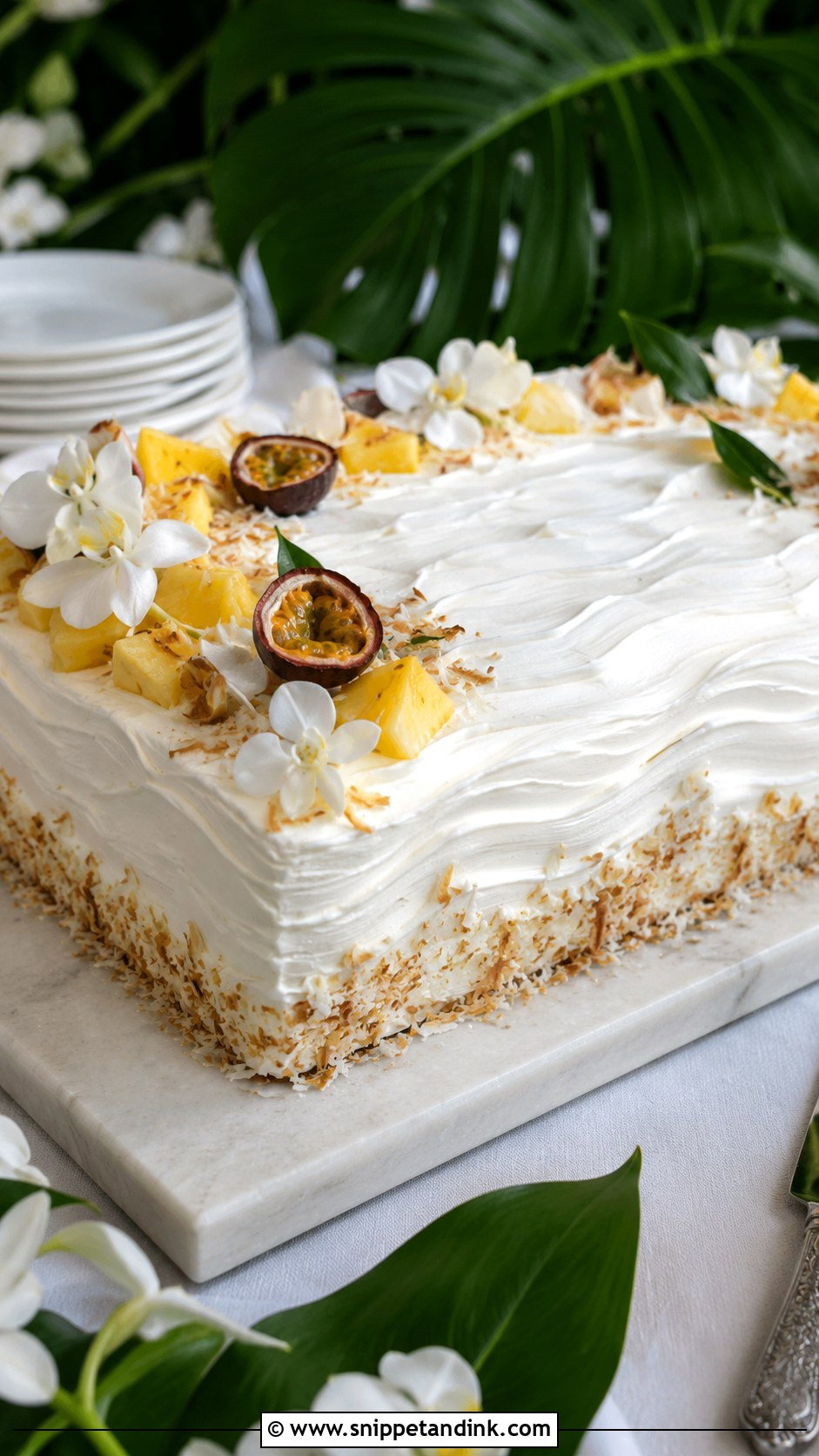
A tropical wedding sheet cake looks elegant when the frosting stays creamy white and the fruit supplies the color. Coconut cake with pineapple or passion fruit filling is my pick, under stabilized whipped frosting or a silky buttercream. Top it with pineapple, passion fruit, toasted coconut and small white orchids or edible flowers. Keep in mind that whipped frosting won’t last outdoors for long in tropical heat, so for a poolside reception I’d switch to buttercream. It suits beaches and relaxed warm-weather celebrations.
7. Textured Buttercream Wedding Sheet Cake
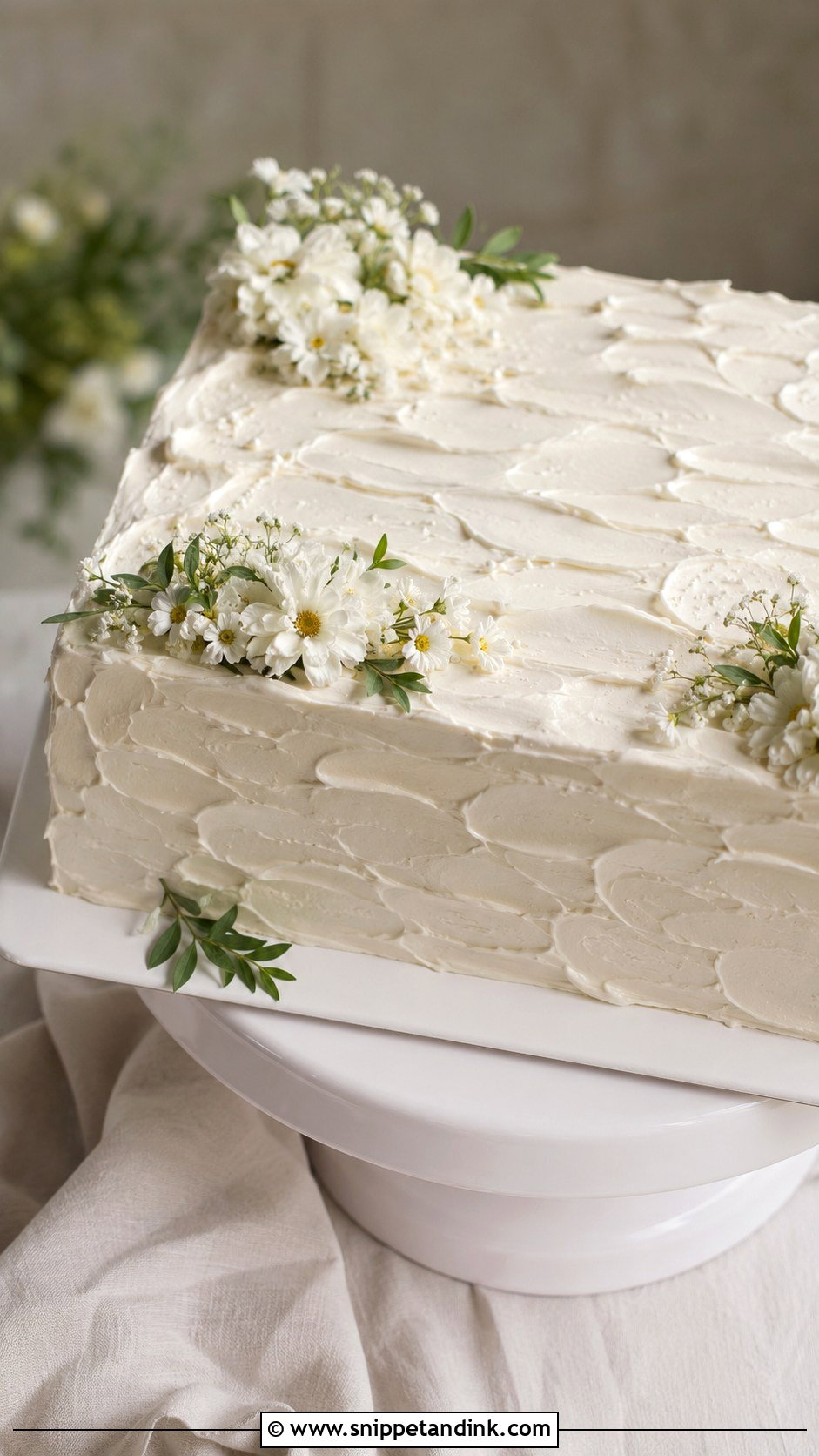
Texture is the cheapest way to make a sheet cake look expensive. I cover the whole cake in ivory or soft white buttercream, then drag a palette knife or an offset spatula through it to make waves, ridges or swoops. That’s the decoration, so the extras stay minimal: a few flowers, some pearls or fruit at the corners. The texture catches light and shadow from above, which is exactly the angle most guests see a sheet cake from. It also hides small marks from transport better than a perfectly smooth finish.
8. Wildflower Wedding Sheet Cake
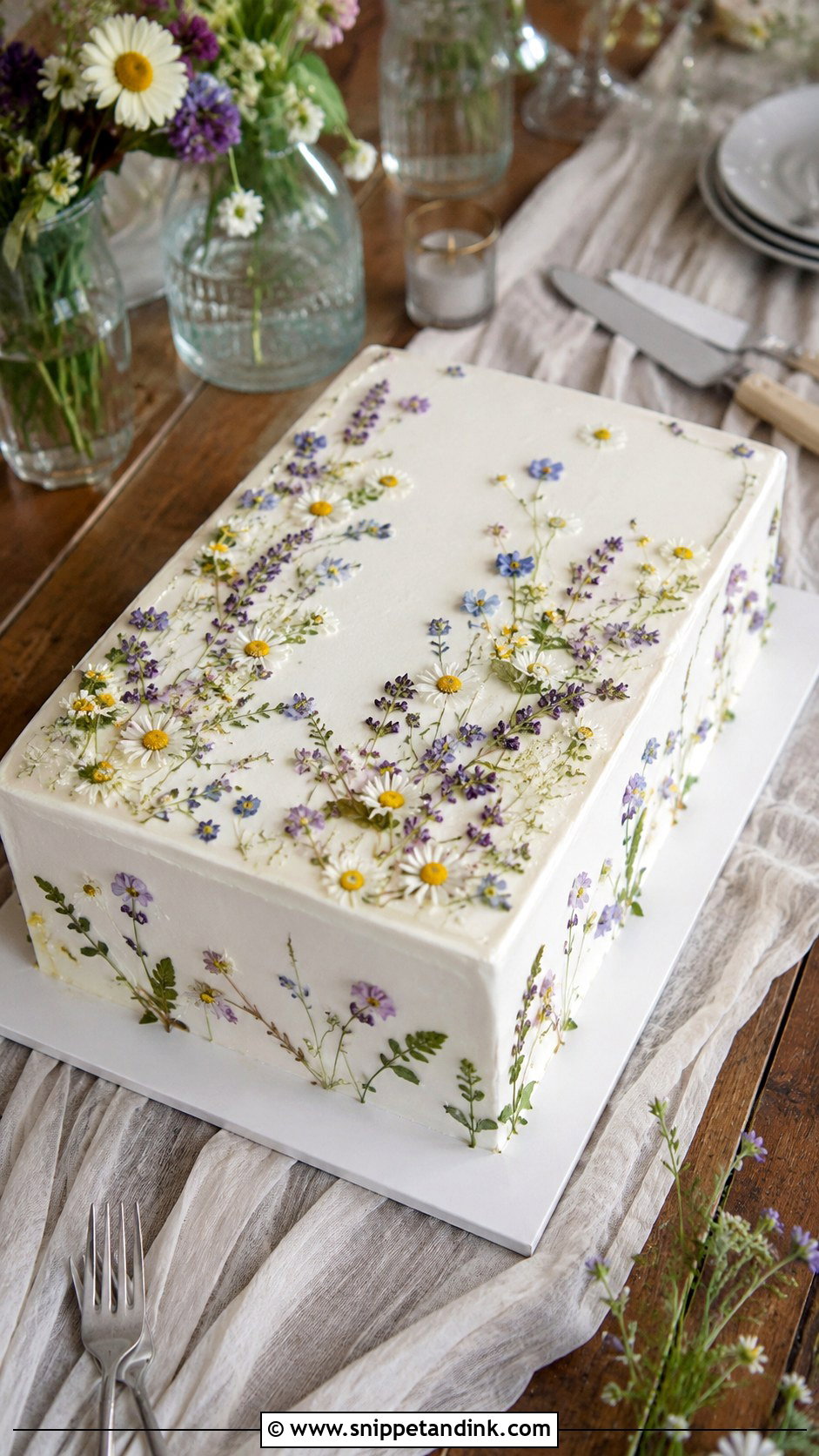
Wildflowers suit a garden-party wedding. I frost the cake in white or pale cream and arrange edible wildflowers, small daisies, lavender-toned blooms and tiny green sprigs as a border or a meadow trail along the top. Edible means grown for eating, without pesticides; florist flowers often aren’t safe on food. Keep the sides clean so the top carries the design. It looks right on wooden tables with linen runners and simple glass vases.
9. Citrus Wedding Sheet Cake
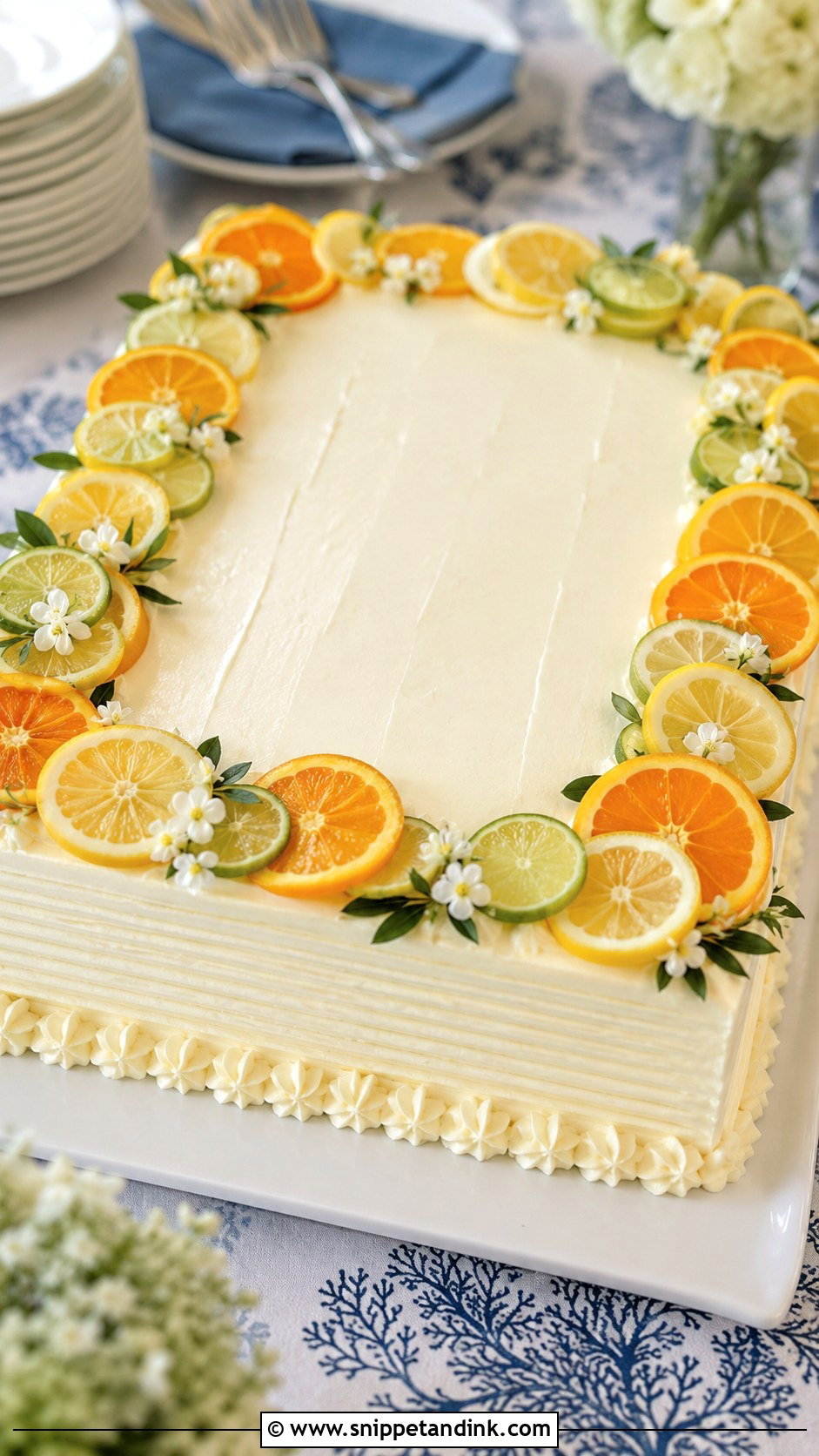
Citrus makes a dessert table look bright and clean. Thin rounds of lemon, orange and lime overlap on smooth white buttercream, over a vanilla citrus, orange blossom or lemon sponge. Slices cut thick look clumsy and drip, so I slice them very thin, blot them dry and finish them with a light glaze for shine. A few small leaves and white flowers are all it needs. It suits daytime and coastal weddings in yellow, coral, green or white.
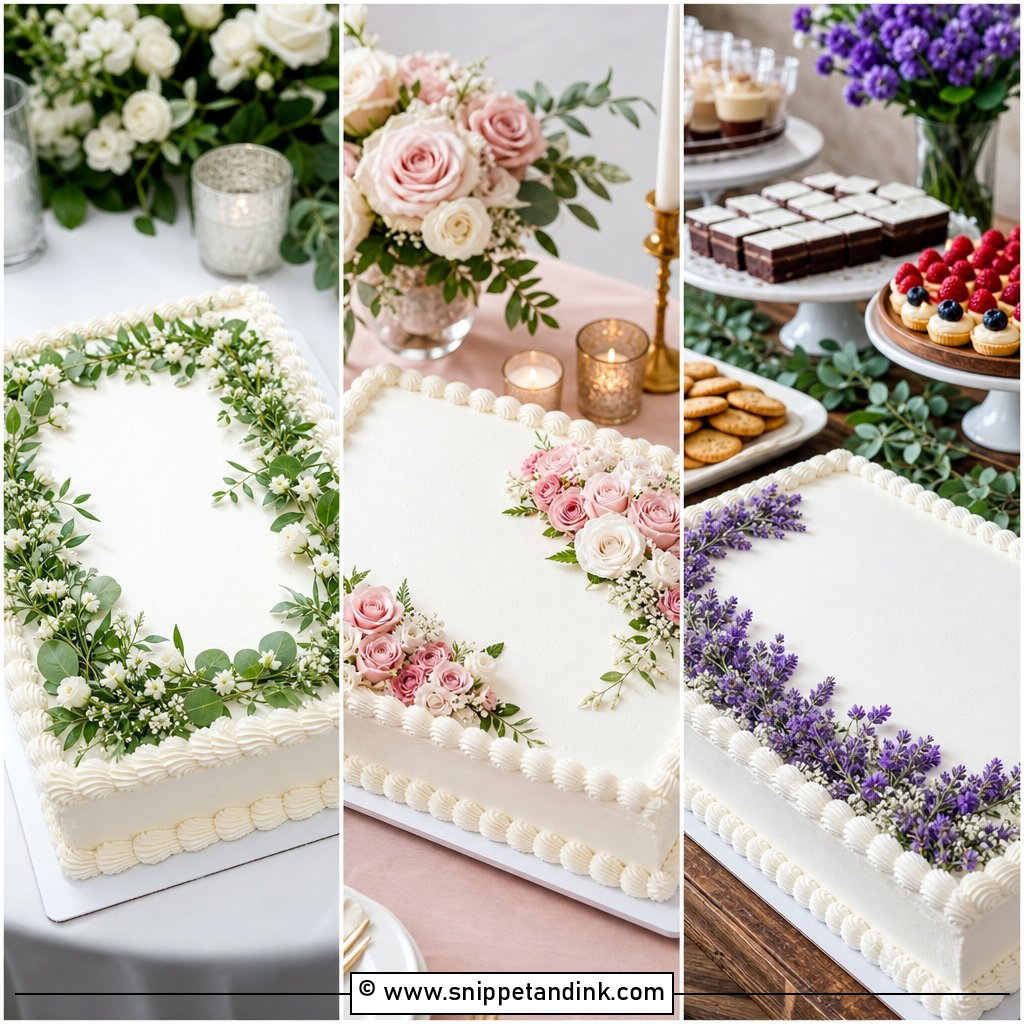
10. Garden Rose Wedding Sheet Cake
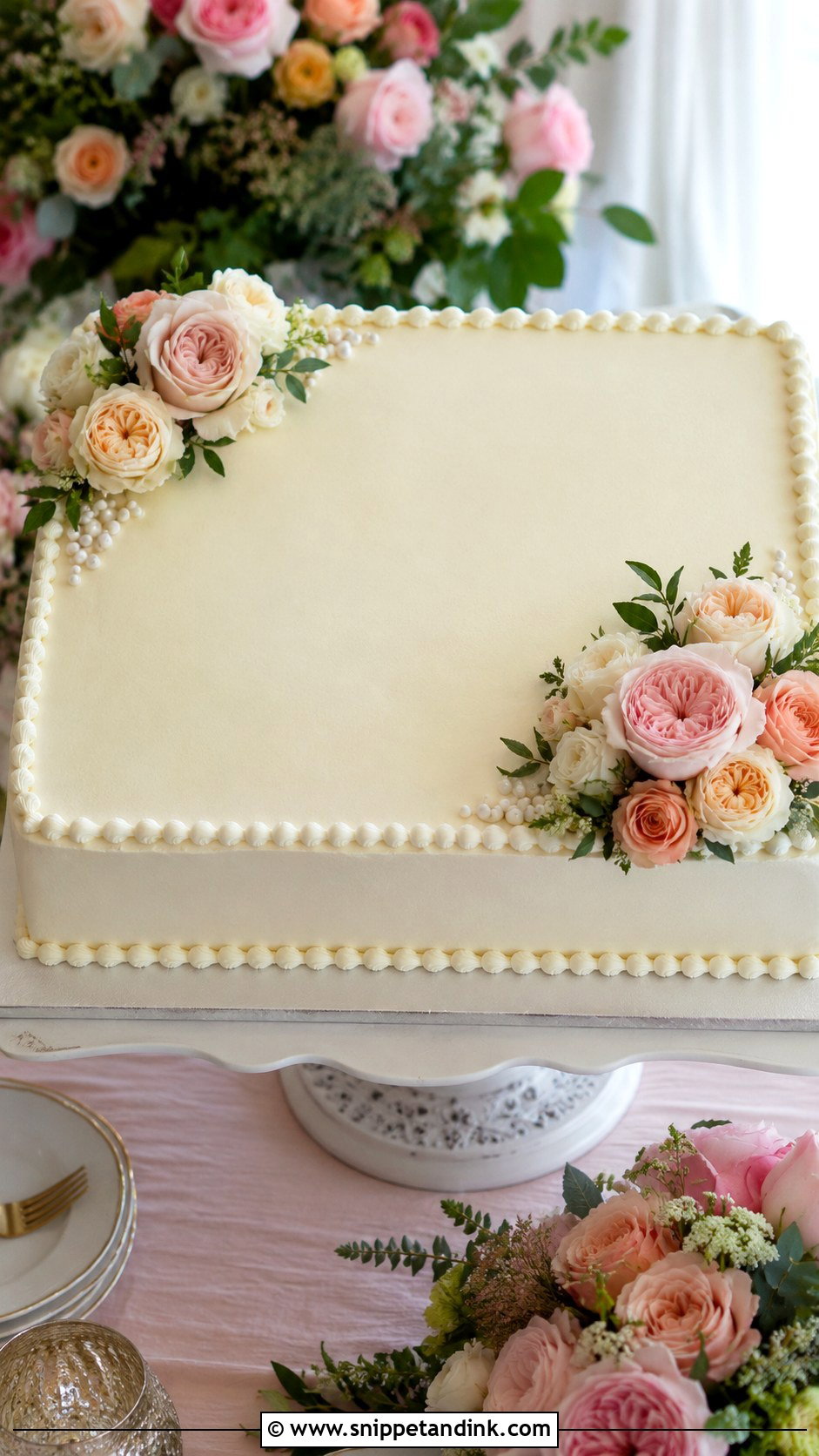
Roses have so much visual weight that a sheet cake needs very little else. I frost it in smooth ivory and place clusters of blush, cream and pale peach roses along one side or at two opposite corners. Fresh roses must be wrapped at the stem or set on a food-safe disc so sap and any treatment never touch the frosting. A few leaves, pearls or a light piped border finish it. When the cake roses echo the bouquet, the dessert table ties into the rest of the day.
11. Long Table Runner Wedding Sheet Cake
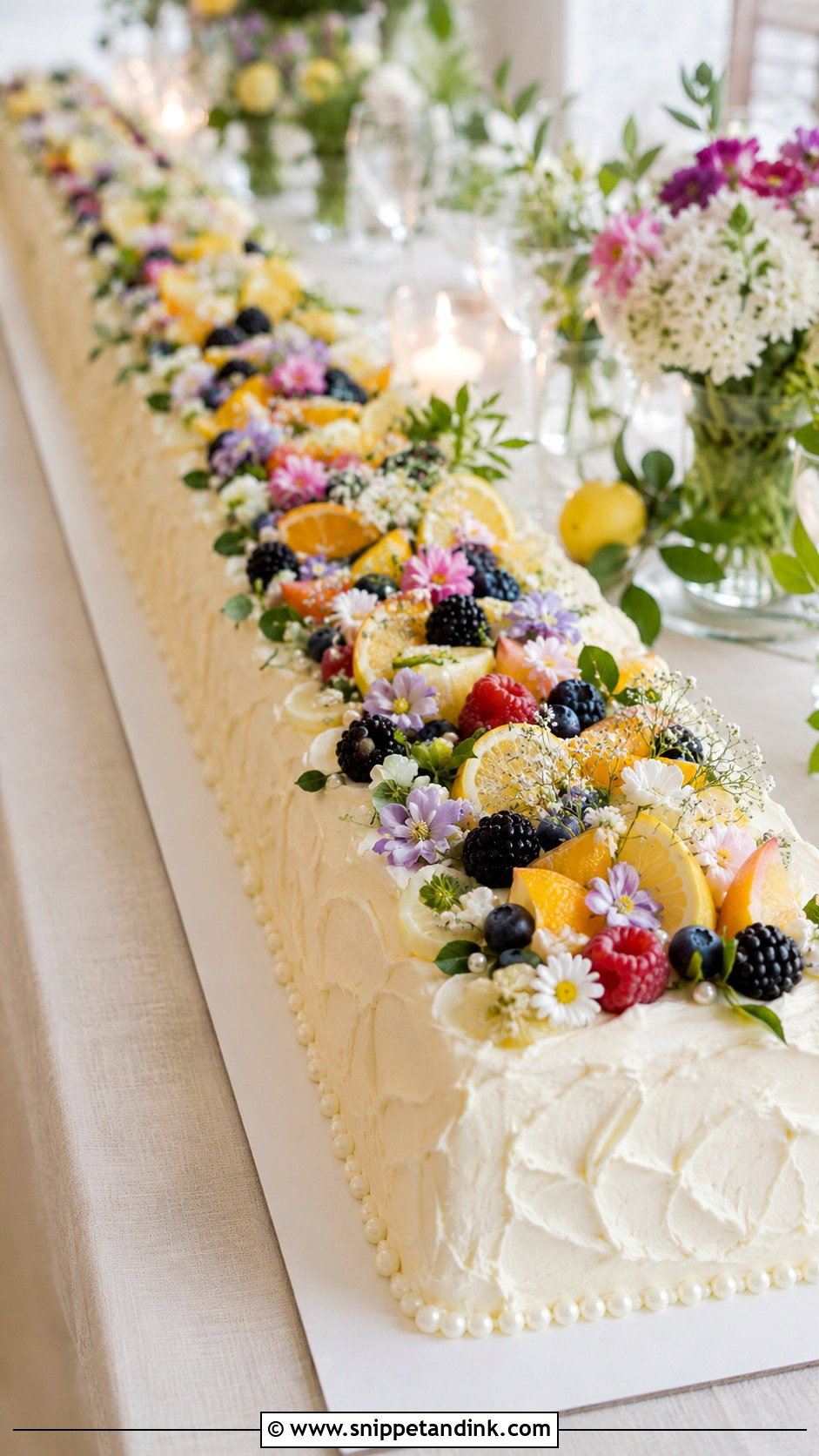
The table runner cake stretches down a banquet table as an edible centerpiece. It’s built from several sheets joined end to end on a long board, so I plan the joins under a band of decoration where nobody sees them. Textured white buttercream with berries, flowers, citrus and greenery in flowing sections suits it. Family-style receptions suit it best, and it’s easy to serve because the caterer can cut straight from the table. It needs a sturdy board and a delivery vehicle long enough to carry it flat.
12. Blush Buttercream Wedding Sheet Cake
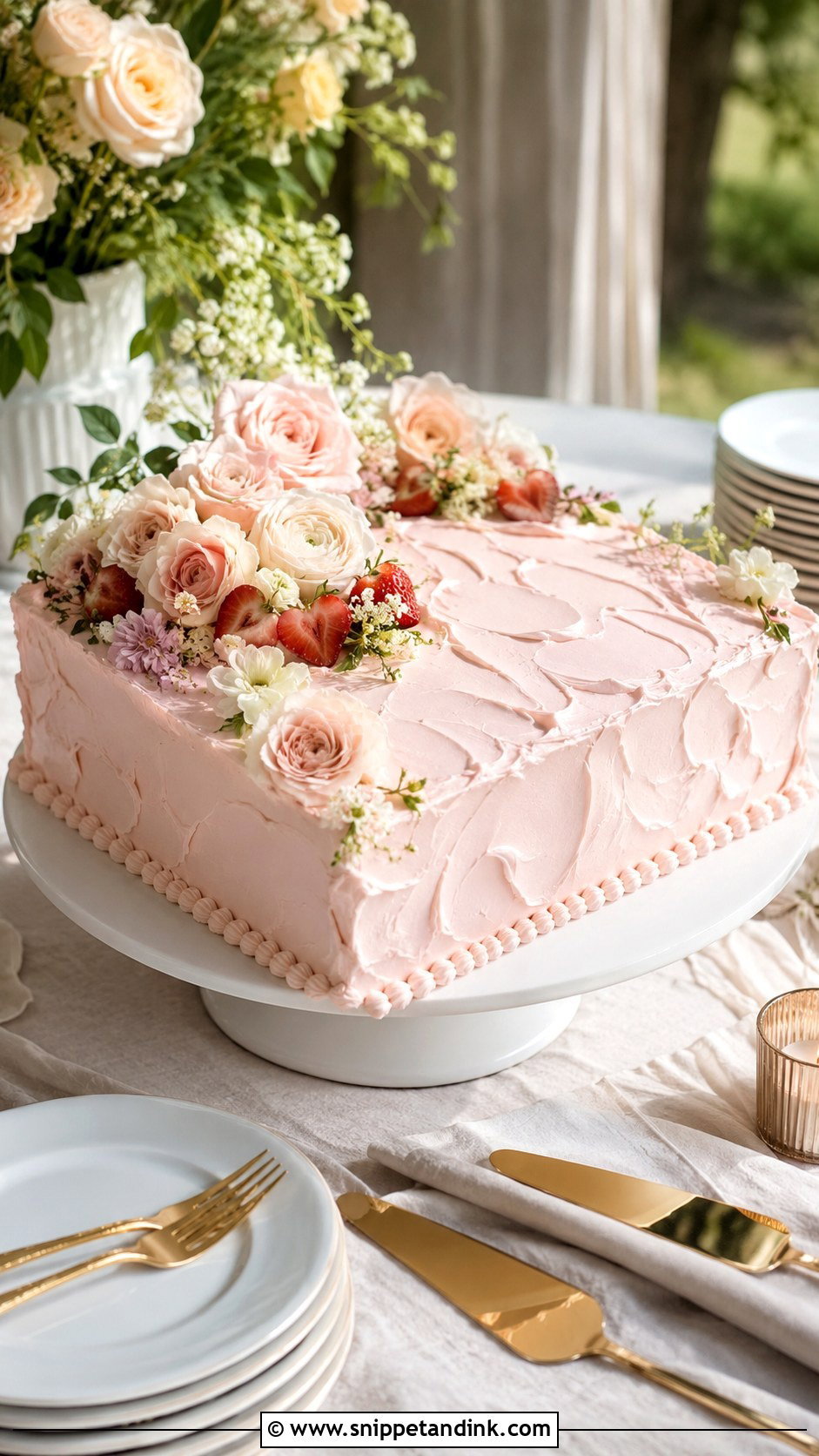
Blush buttercream is easy to pair with summer flowers, but the shade needs to be very pale. A strong pink tips a sheet cake toward a birthday party. I tint with the tiniest amount of gel color and let it sit for an hour, because pink deepens as the buttercream rests. Smooth sides, gentle swirls on top, and fresh roses, ranunculus, strawberries or small edible blossoms. A thin piped border or pearl detail makes the rectangle look formal.
13. Coastal Wedding Sheet Cake
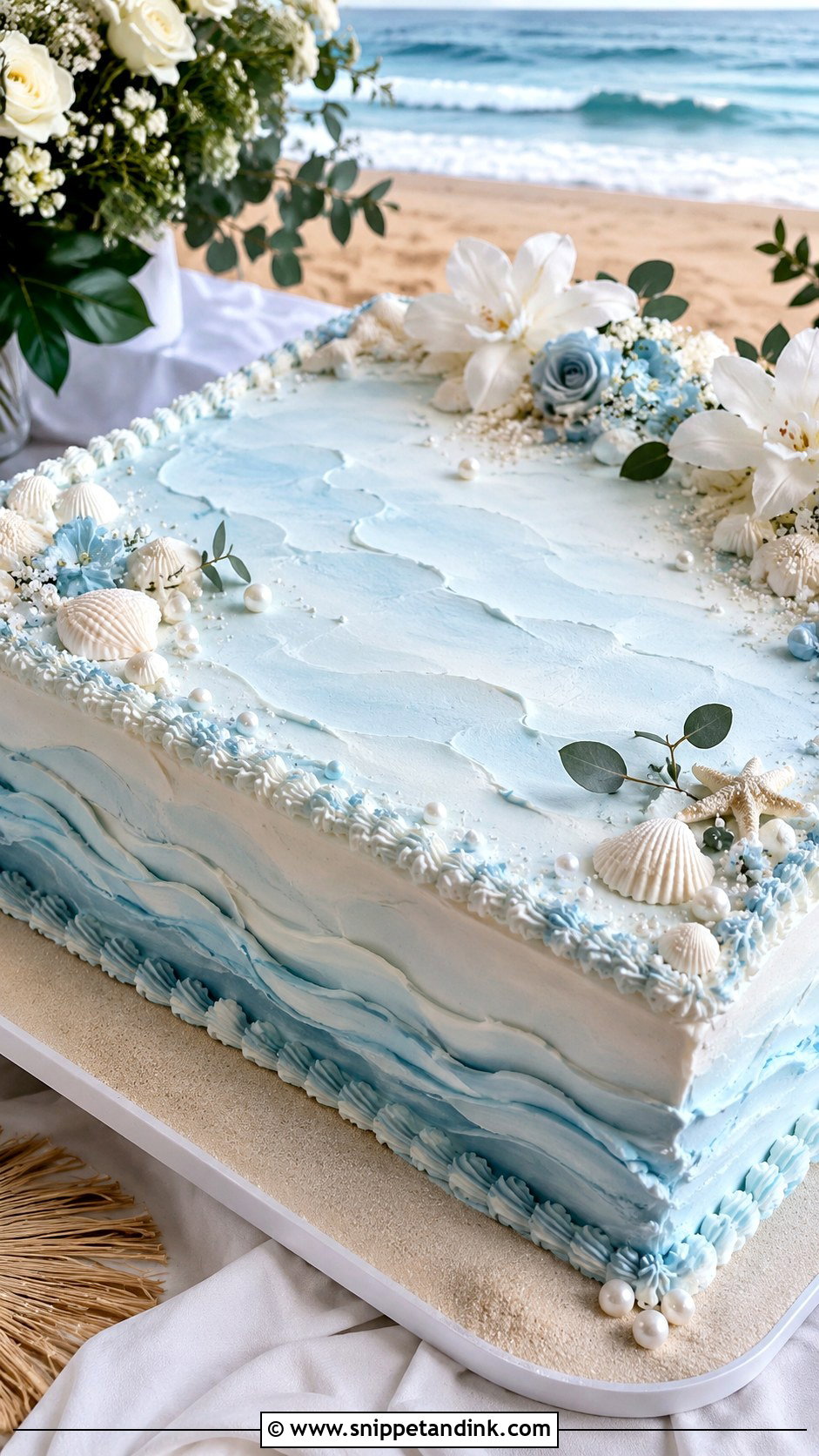
A coastal cake should feel fresh, not themed. White or pale blue buttercream with a soft wave-like texture across the top, white flowers, sugar pearls and a few delicate blue touches instead of shells and starfish props. Lemon, coconut or vanilla cake suit it. Pale blue buttercream tends to turn slightly green in a warm-toned frosting, so I start from a very white base. Keep the palette to ivory, sand, blue and pale green for a seaside or lakeside venue.
14. Daisy Wedding Sheet Cake
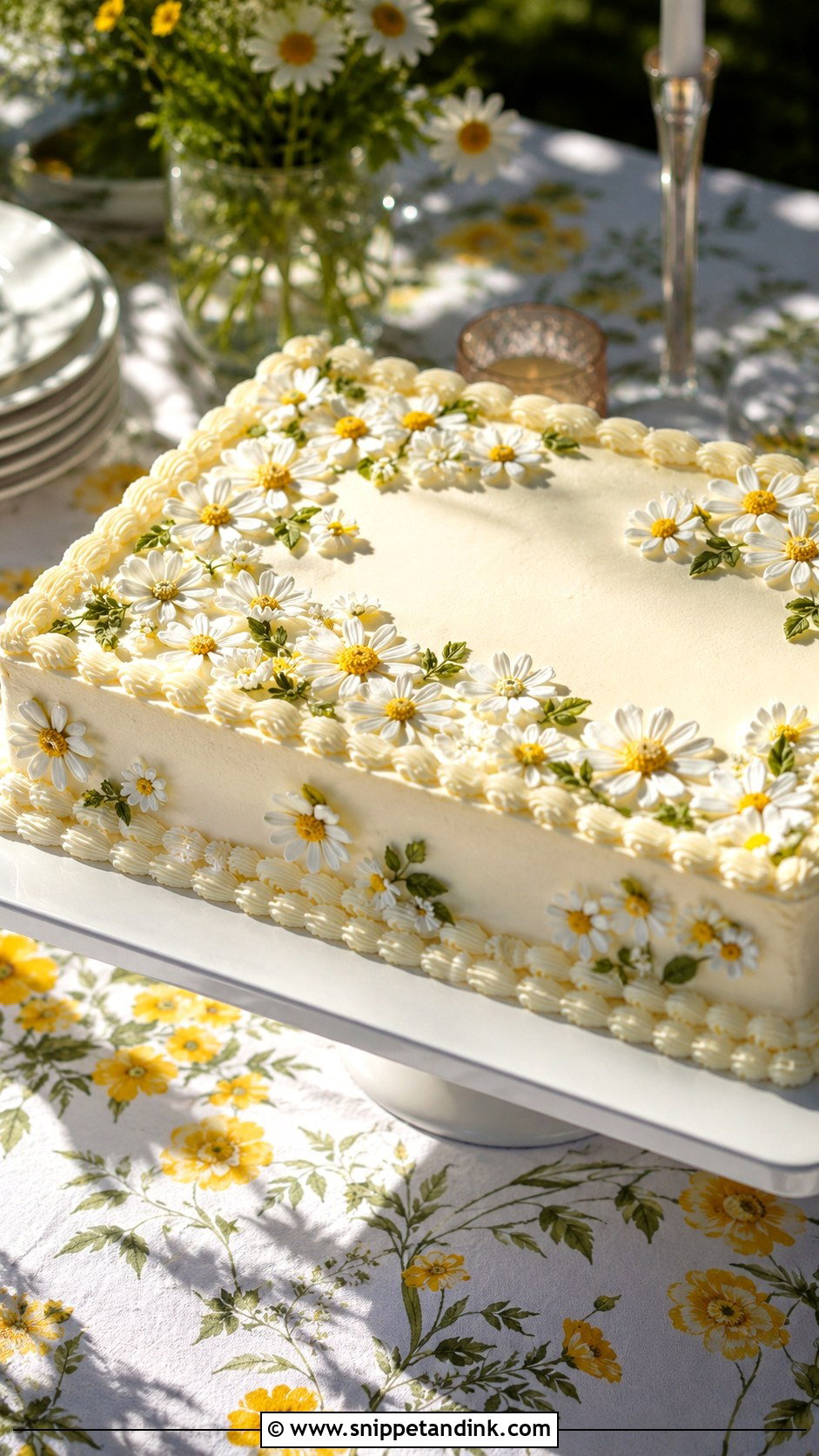
Daisies are cheerful and simple. On white buttercream, small piped daisies, edible daisies or a mix of both, each with a pale yellow center. Piped daisies hold up better in heat than fresh ones, which wilt quickly on a cake, so for an outdoor reception I’d use piped flowers. Arrange them around the border or in a loose corner cluster. Lemon, vanilla or almond cake goes with it, and it suits picnic-style receptions.
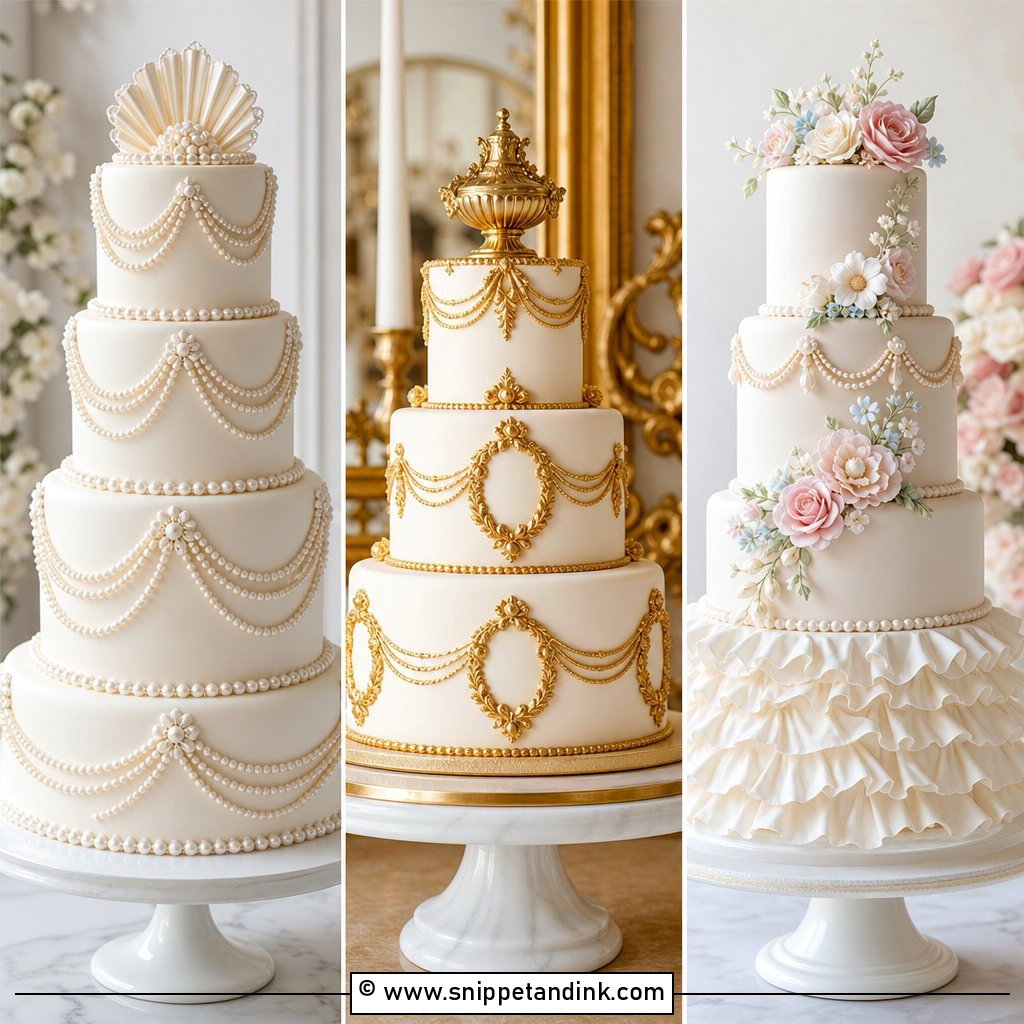
15. Lavender Wedding Sheet Cake
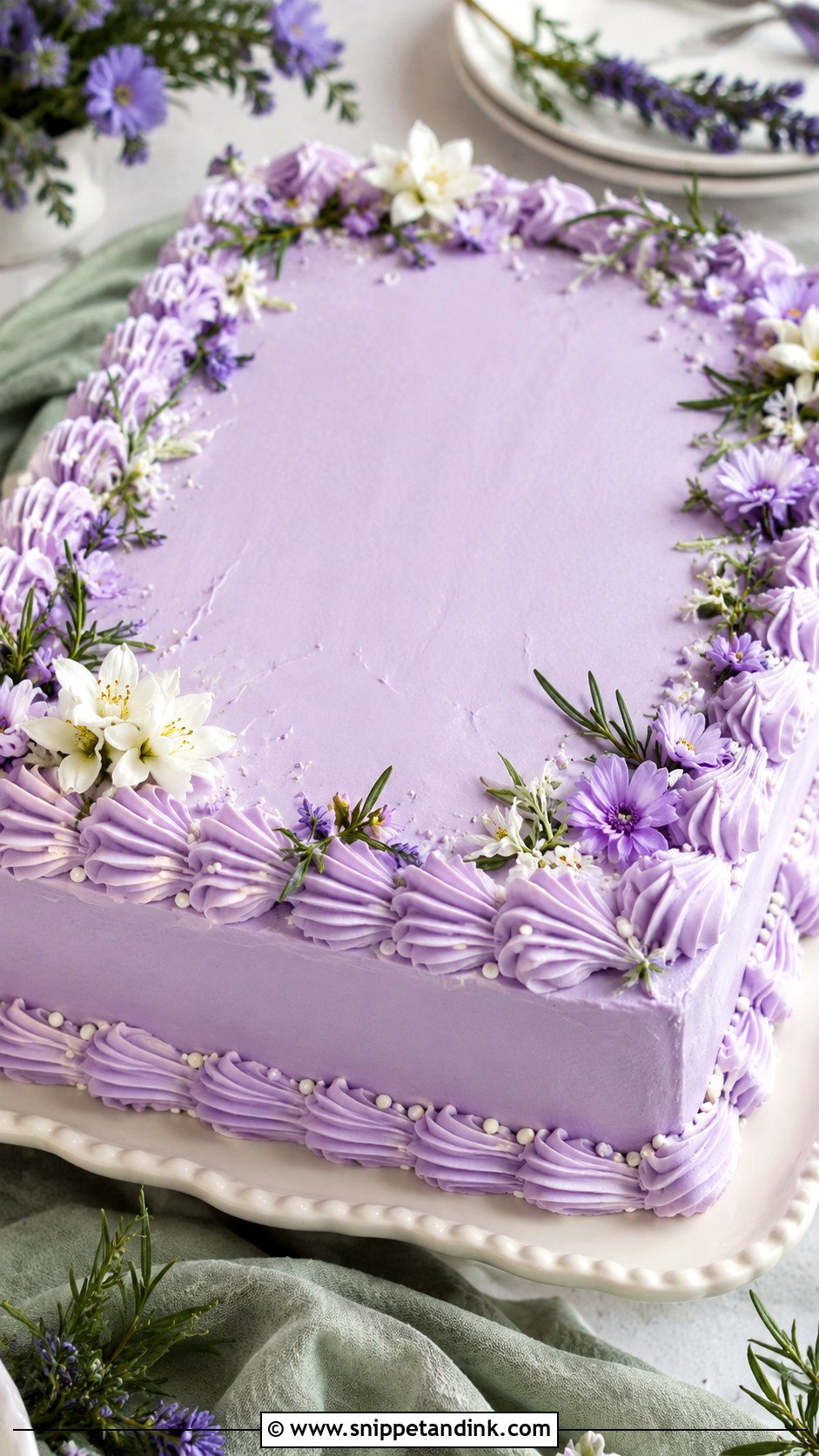
Lavender is calm and fragrant, but heavy-handed lavender tastes like soap, so I infuse it gently into milk or syrup rather than adding dried buds to the batter. Vanilla lavender, lemon lavender or honey almond all work. Frost in pale lavender or ivory and decorate with small edible purple flowers, herb sprigs and a few white blossoms. Keep the color soft. It suits countryside venues and palettes of purple, sage, ivory or dusty blue.
16. Naked Wedding Sheet Cake
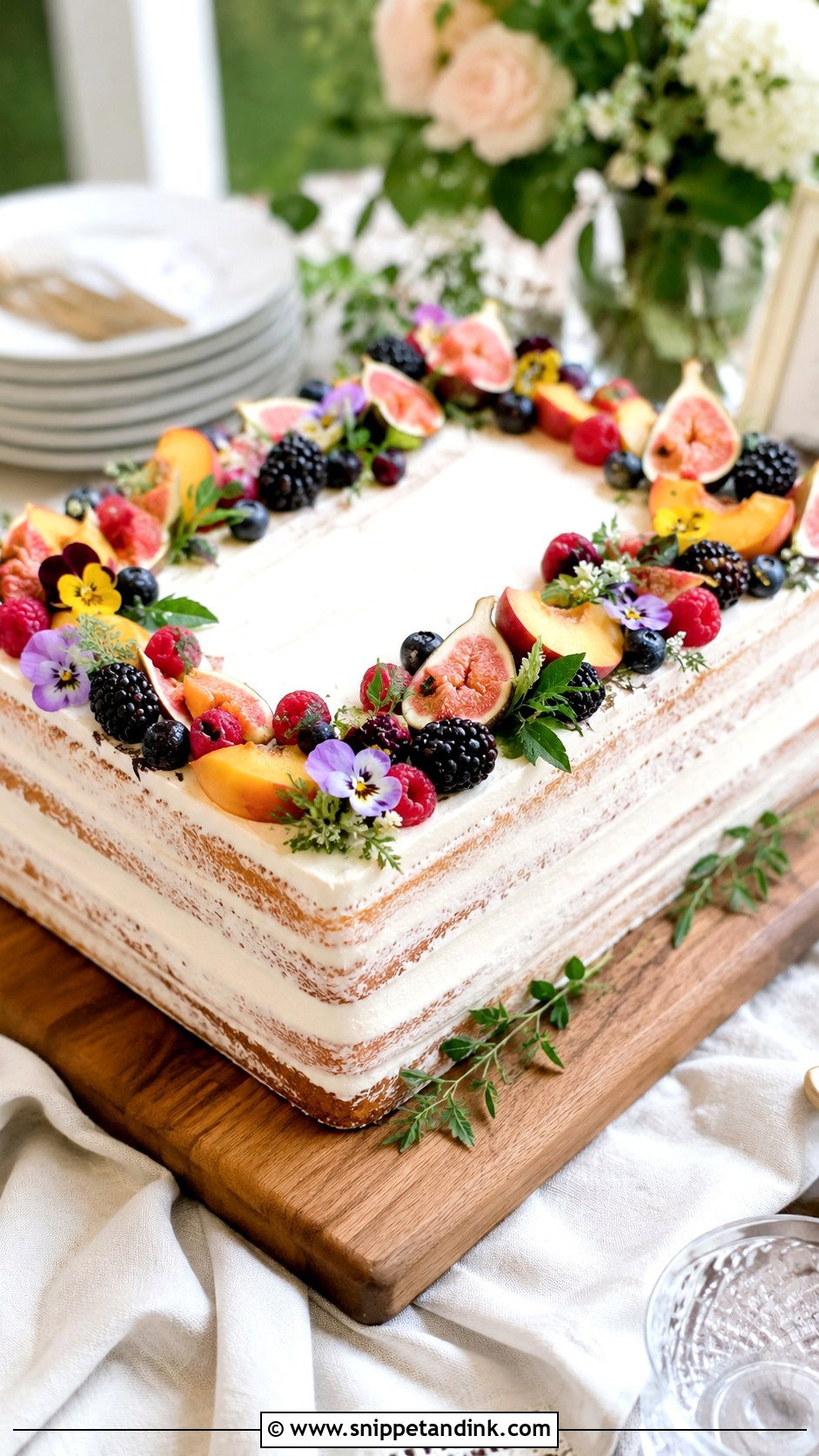
A naked sheet cake shows the layers through a thin coat of buttercream, which gives it a handmade look. Vanilla, almond, berry or lemon suit it because the crumb color stays light. The risk is drying out: with so little frosting to seal it, exposed sponge dries fast in a warm room, so I brush each layer with syrup and assemble it as close to the wedding as I can. Top with berries, sliced figs, peaches or edible flowers. It suits barns and backyard receptions.
17. Gold Accent Wedding Sheet Cake
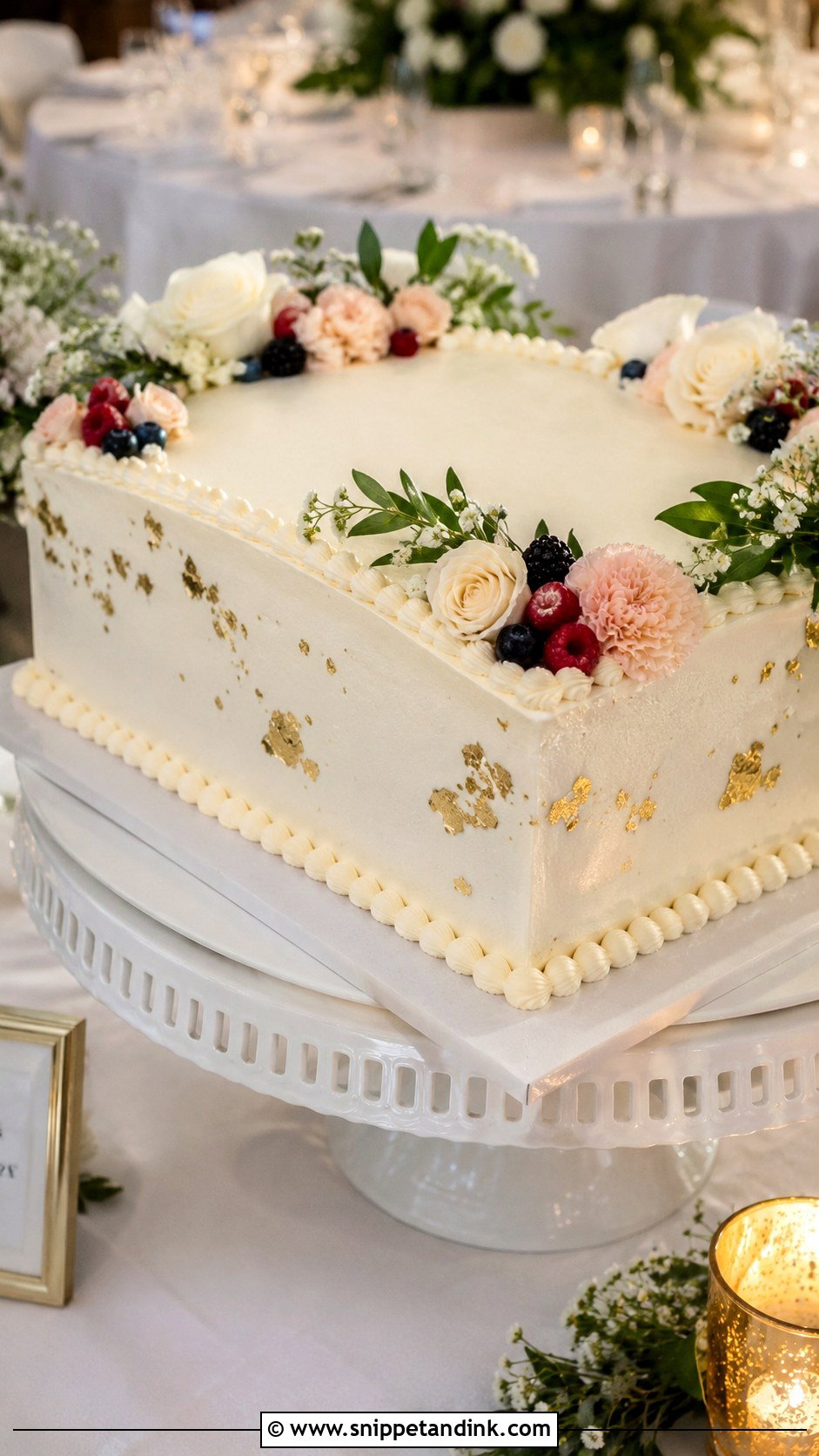
Gold makes a sheet cake feel formal without height. I start with smooth white buttercream or fondant and add small touches of edible gold leaf, pearl piping and fresh flowers. Gold leaf is very thin and sticks to anything, so it goes on with a dry brush in small patches. Use it sparingly; a lot of gold looks heavy in summer. Blush flowers, white roses, berries or citrus soften it. It suits evening weddings, ballrooms and modern outdoor events where the couple wants something a little more polished.
18. Ombre Wedding Sheet Cake
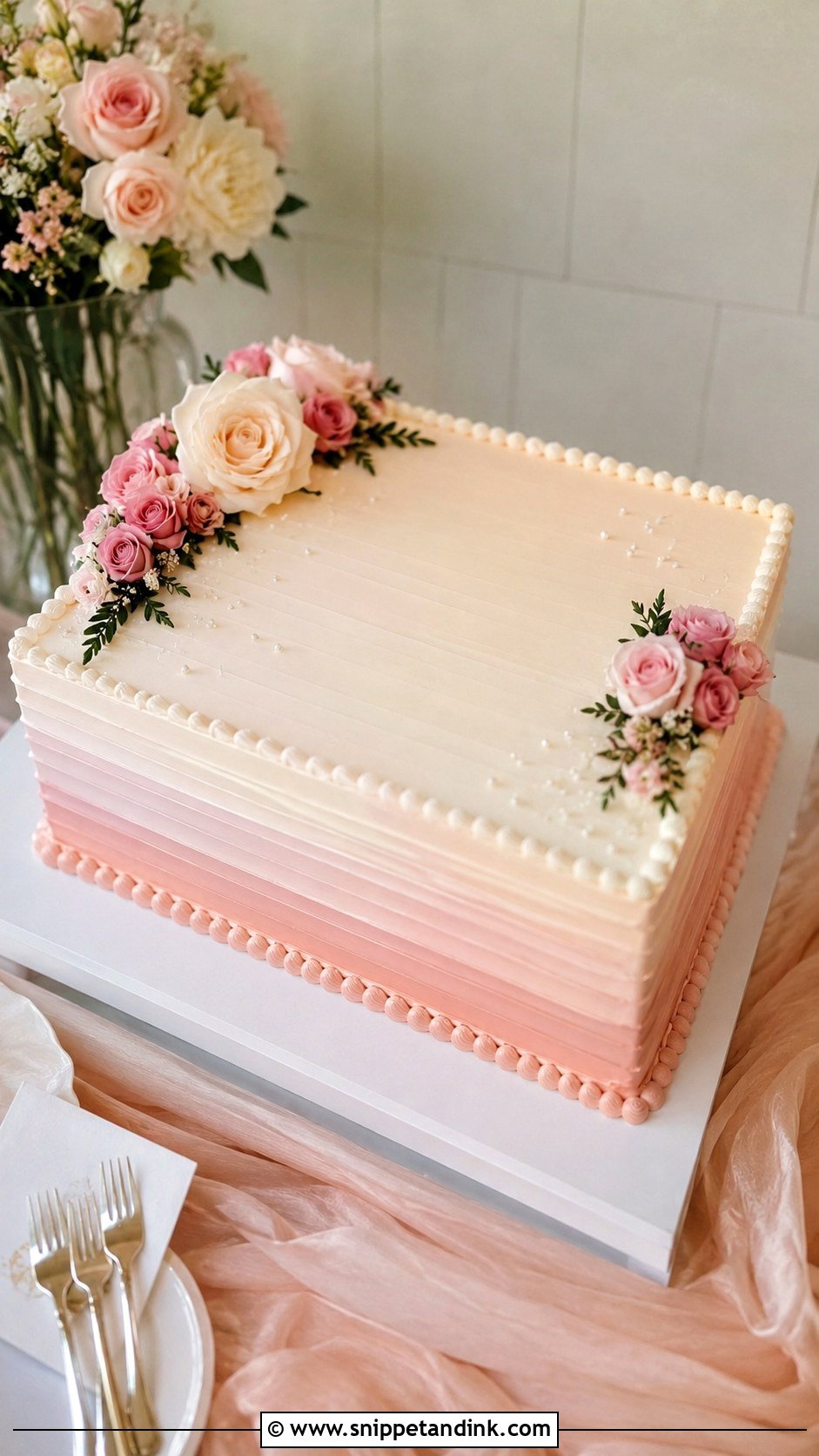
Ombre fades white into blush, peach, yellow, blue or lavender, and a rectangle is a good canvas for it because the shift can run across the top or along the sides. I mix three or four tints from one batch of buttercream so the steps blend smoothly, then soften the lines with a scraper. Keep the decoration simple: a few flowers, piped borders or pearls. Vanilla, lemon, berry or almond cake all work under it.
19. Fig And Honey Wedding Sheet Cake
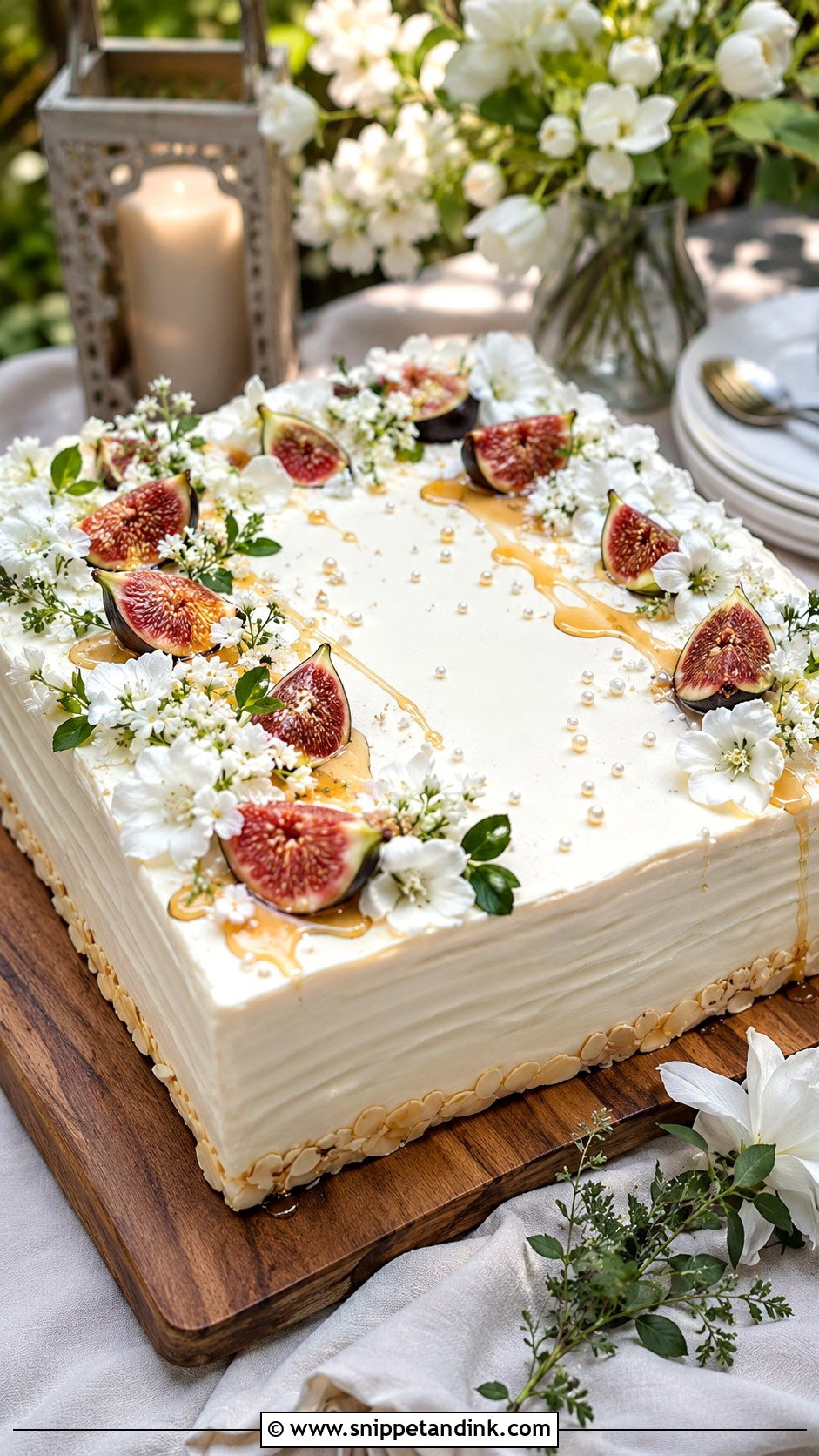
Fig and honey is richer than most summer cakes, which makes it a good fit for late summer. A honey vanilla or almond cake under smooth buttercream, finished with fresh figs, a drizzle of honey and soft white flowers. Honey runs as it warms, so I drizzle it just before serving or swap it for a thicker honey buttercream piping. The purple and green of the figs looks rich against ivory. Keep the fruit in neat clusters. It suits vineyard-style and garden venues with wood, linen and candlelight.
20. Minimal White Wedding Sheet Cake
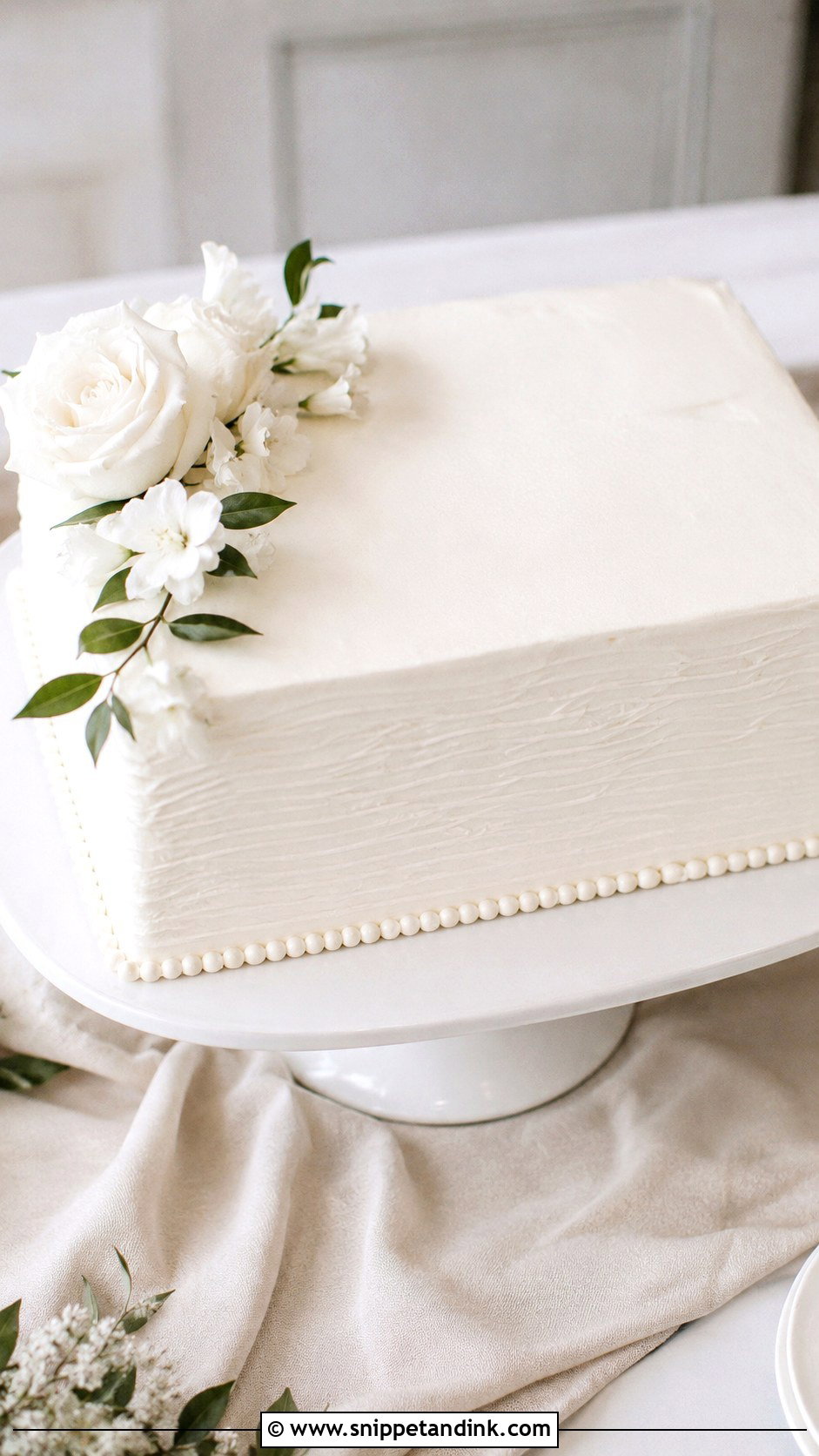
A minimal white cake proves how little a sheet cake needs. Smooth white buttercream, sharp rectangular edges and one focal point: a corner cluster of flowers, a thin pearl border or a single line of piped texture. Sharp edges are the hard part on a sheet cake; I chill it and finish with a hot scraper. Vanilla bean, almond, coconut or lemon inside. It’s the right cake for small weddings where the table styling does the work. A good stand or linen-covered tray completes it.
Sizing a Sheet Cake to Your Guest Count
Sheet cakes are sold by pan size, and those sizes vary between bakeries, so always ask how many servings a baker means and at what slice size. Wedding servings are usually cut smaller than party servings, roughly two inches square for a single layer of height. As a rough guide, a quarter sheet feeds a small gathering, a half sheet feeds around fifty, and a full sheet feeds around a hundred, but confirm the numbers with your baker before you order.
If you want a small tier to cut together, many couples order a little decorated cake for the ceremony moment and a plain kitchen sheet cake behind the scenes. Guests can’t tell the difference on the plate, and it keeps the display cake small.
Fruit and petals go on last
Cut fruit weeps, edible flowers wilt, and both look tired after hours on frosting in summer. I arrange them on site or as close to delivery as possible, with any fresh florals wrapped or set on food-safe picks. If your caterer is placing the decoration, send them a photo of the layout and keep the fruit chilled until then.
A Flat Cake Can Still Be the Wedding Cake
A sheet cake can hold its own beside any tiered cake if the design is intentional. Use the season: fresh fruit, soft flowers, light frosting and colors that match your setting. The format adapts to rustic, modern, vintage, coastal or romantic styles without losing its practical side. Pick one clear style, keep the decoration balanced, and picture the cake on the full dessert table from above, because that’s how your guests will meet it.
You'll Like These Ideas:






Leave a Reply