
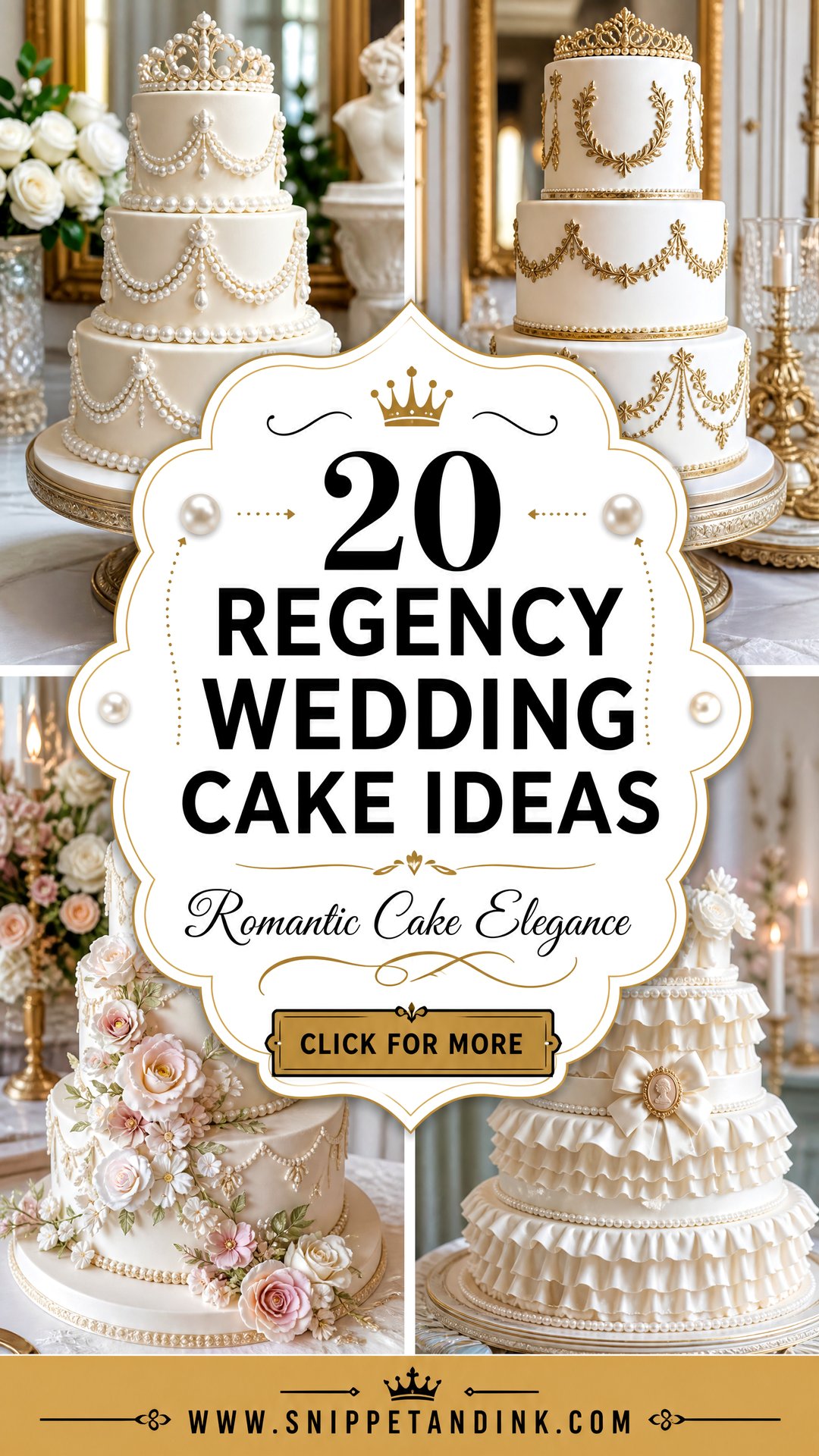
When a couple asks me for a Regency cake, they usually mean a feeling more than a period recipe: pale colors, height, fine piping, pearls, sugar flowers and the kind of restraint you’d expect in an old drawing room. It suits ballrooms, country houses, spring gardens and candlelit indoor receptions. Every design below can be built in buttercream or fondant, but each one asks for something specific from the baker, whether that’s steady hands for lace work or a painter’s eye. I’ve added notes on that, so you know which ideas need a specialist before you fall for them.
Where the Regency Look Really Comes From
An actual wedding cake from the Regency years would surprise most couples. It was usually a rich fruit cake covered in almond paste and hard white sugar icing, nothing like the light sponge we serve now. Tall, stacked white wedding cakes became fashionable later in the century.
So what I design is an impression, borrowed from the decorative arts of the time rather than its kitchens. Wedgwood’s pale blue pottery with white raised figures gives us the cameo and the powder blue tier. Empire-line dresses give us draping and ribbon. Period plasterwork and lace give us swags, scrolls and fine piping. Keeping those references in mind helps you spot when a design has drifted into generic pastel.
If you want a nod to the real thing, a fruit cake tier is still possible. I’d make it the smallest tier or a keepsake, since many guests expect sponge.
1. Regency Wedding Cake With Pearls
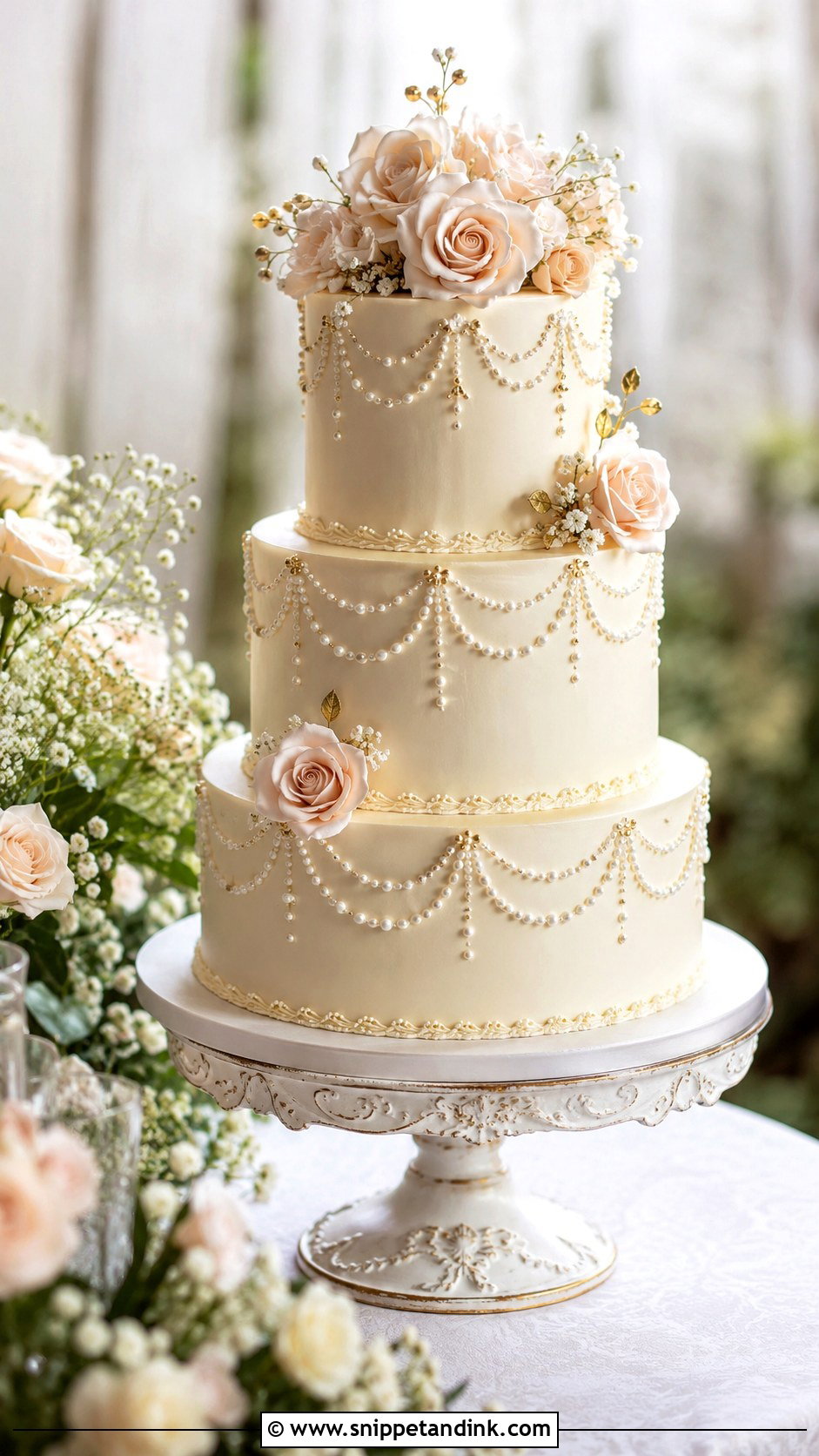
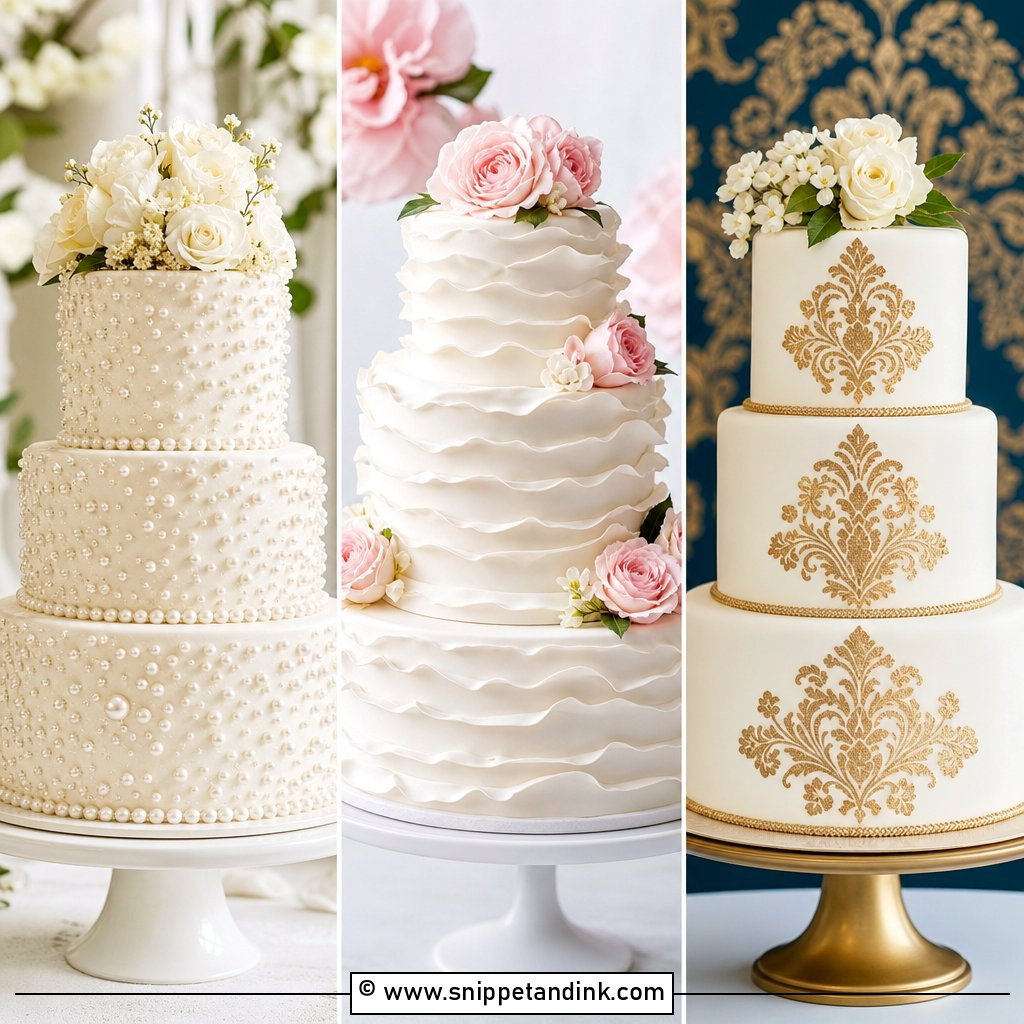
Pearls are the simplest way into this style. I either scatter tiny ones across smooth ivory buttercream or pipe them in swags that dip between points around each tier, and the swags are what make it read as Regency rather than just pretty. Spacing those swags evenly is the hard part; I mark the points with a paper template first. Two or three tiers give the pearls room. Vanilla bean, almond or lemon elderflower keep the flavor light, and blush roses, white sugar blossoms or a small gold monogram finish it.
2. Blue Regency Wedding Cake
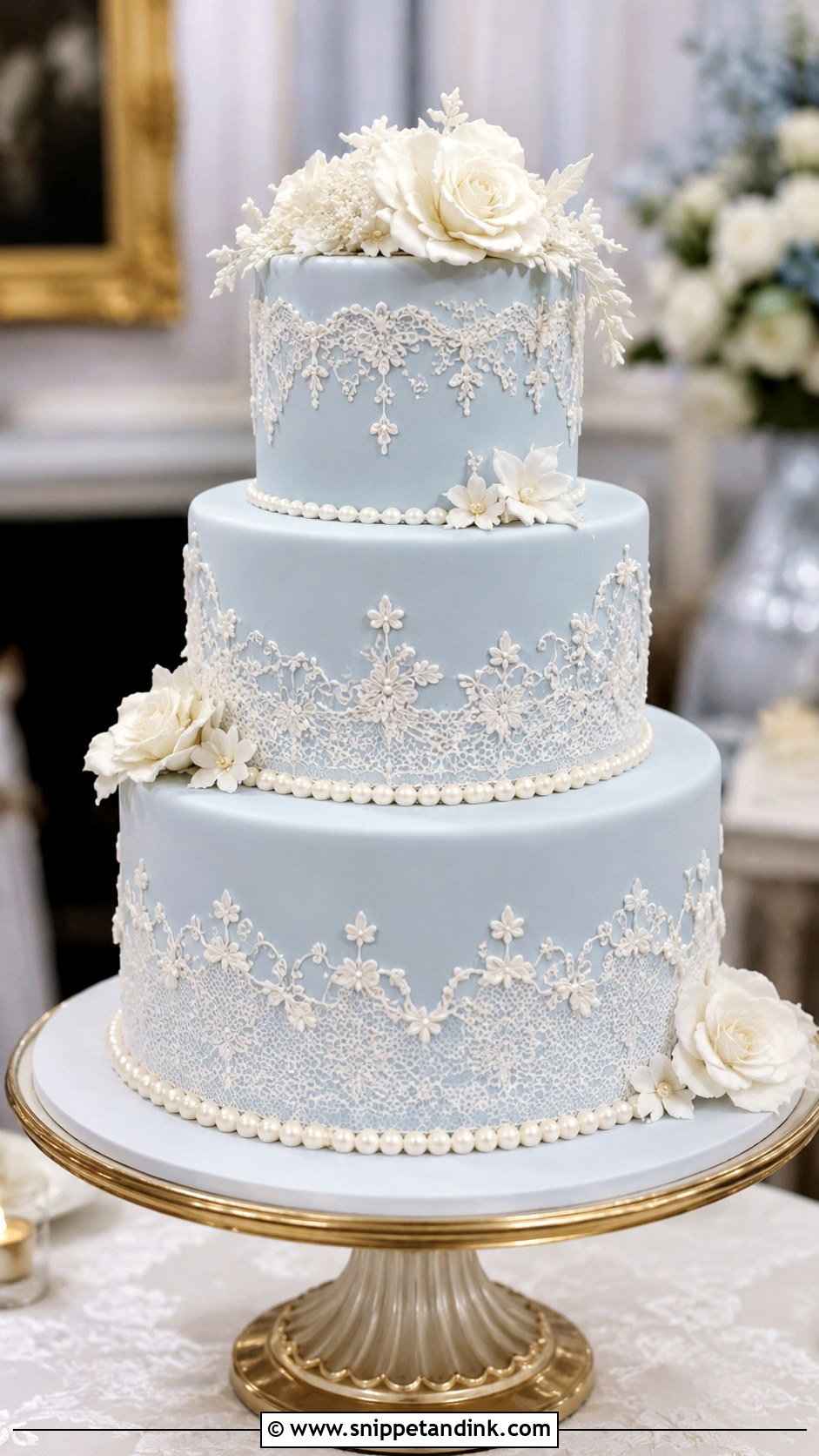
Powder blue is the classic shade, and it has to be mixed carefully. Blue frosting over a yellowish butter base can drift green, so I tint against a whitened buttercream or use fondant. For more contrast, put a deeper Wedgwood blue on one tier and keep the others ivory. White piping, pearl borders and small sugar roses all look crisp against it. Inside, vanilla, lavender honey or almond. Be aware that blue fades in strong sunlight, so this cake shouldn’t sit by a bright window for hours.
3. Regency Wedding Cake With Gold Details
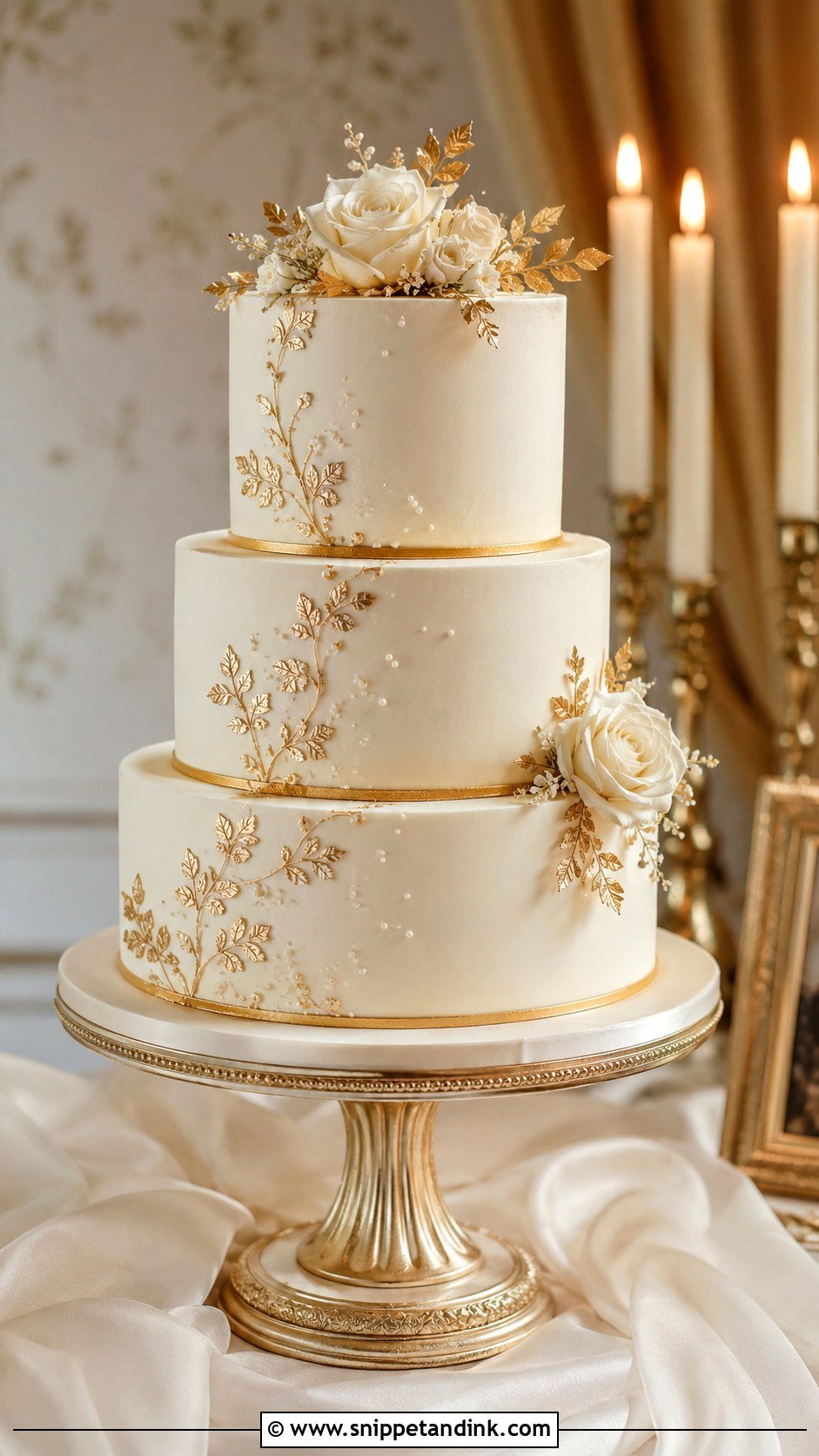
Gold reads as royal only when it’s used sparingly: a thin trim around each tier, a painted monogram, a leafed edge or a fine frame around a cameo. Ivory fondant is the cleanest surface for it, because edible gold paint goes on smoother over fondant than over soft buttercream. White chocolate raspberry and vanilla almond suit it. I’d add white roses, a little greenery or pearl piping, and stop there. Gold on every surface stops looking Regency and starts looking like a hotel lobby.
4. Regency Wedding Cake With Sugar Flowers
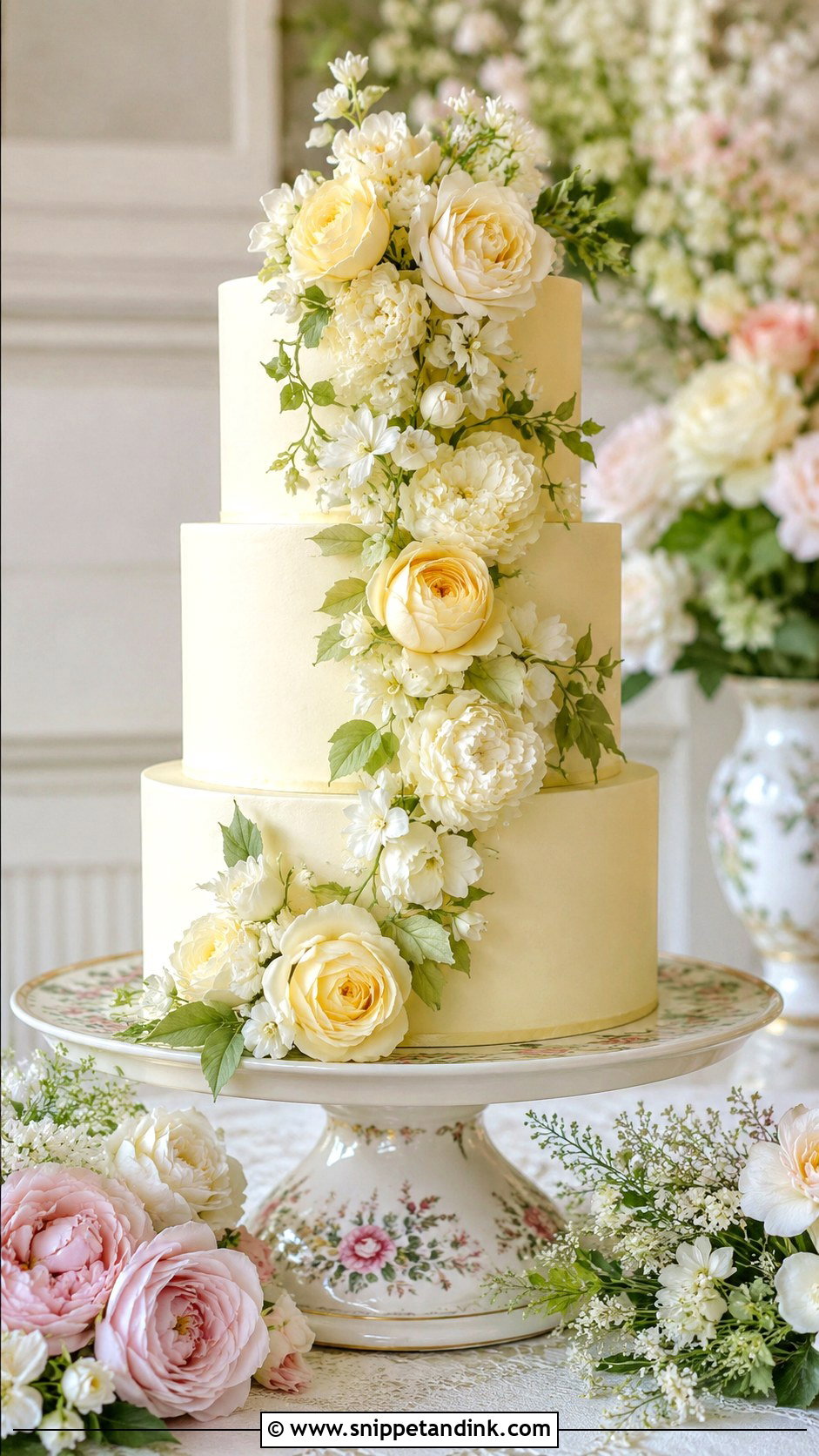
English garden flowers in sugar suit this style better than anything tropical. Roses, peonies, sweet peas, ranunculus and small blossoms in ivory, blush, pale yellow, soft lavender or dusty blue all fit. On a three tier cake I let them climb from the bottom tier up one side, which gives the eye a path. Each sugar rose is built petal by petal and needs days to dry, so this is a design to order well ahead. Lemon, vanilla bean or strawberry cream keep the flavor fresh.
5. Regency Wedding Cake With Lace Piping
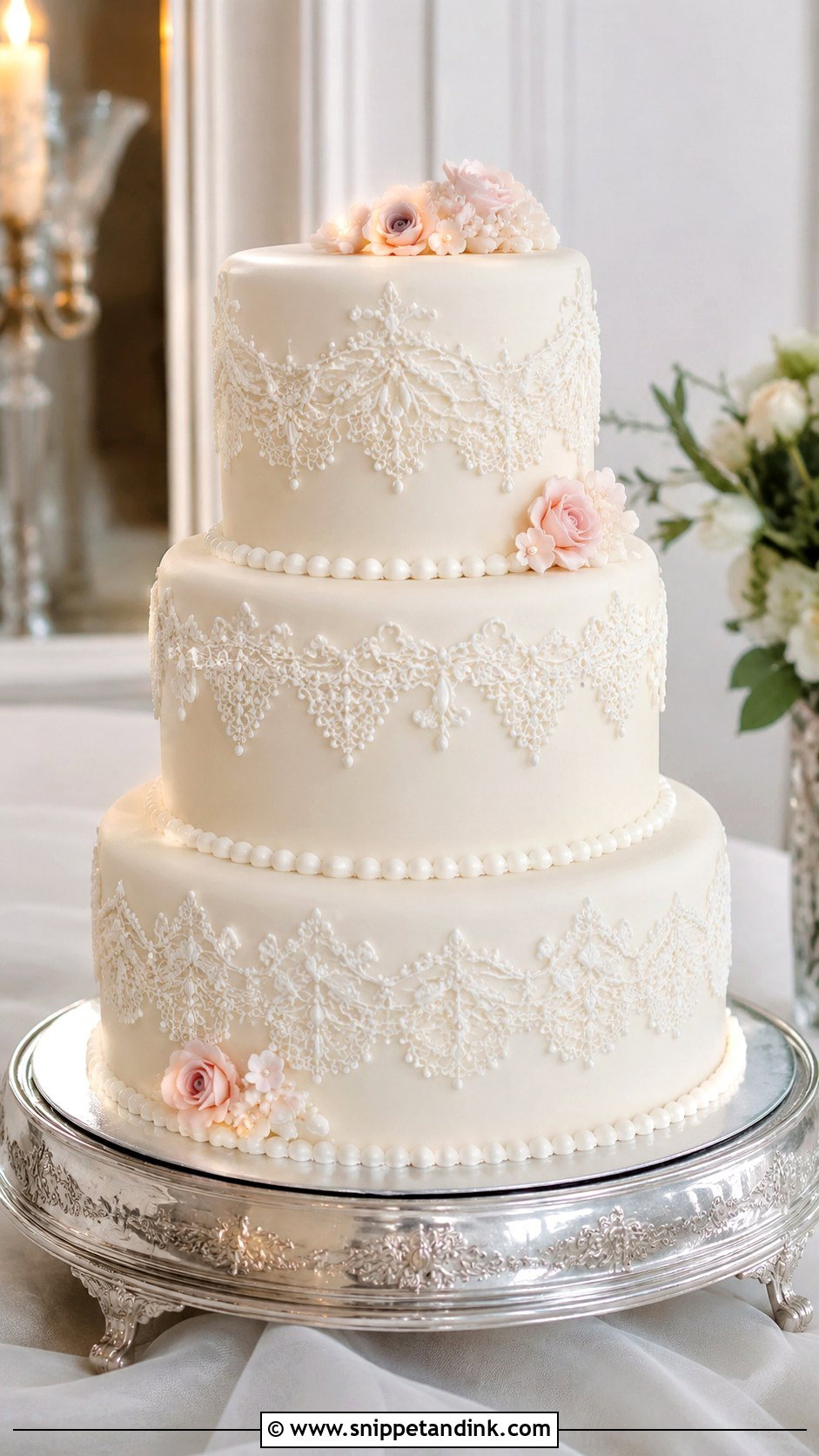
Lace piping copies the trim of a gown or a veil, and it’s the most time consuming idea here. I pipe it in royal icing on ivory fondant, because royal icing sets hard and holds fine lines; buttercream lace looks softer but the detail blurs. If your dress has lace sleeves or an embroidered veil, bring a photo or a scrap and I’ll echo the motif. Pearl borders and small floral clusters complete it, and almond, vanilla or lemon cake keep the inside simple. Royal icing doesn’t like humidity, so a damp outdoor tent is not its friend.
6. Regency Wedding Cake With Cameo Detail
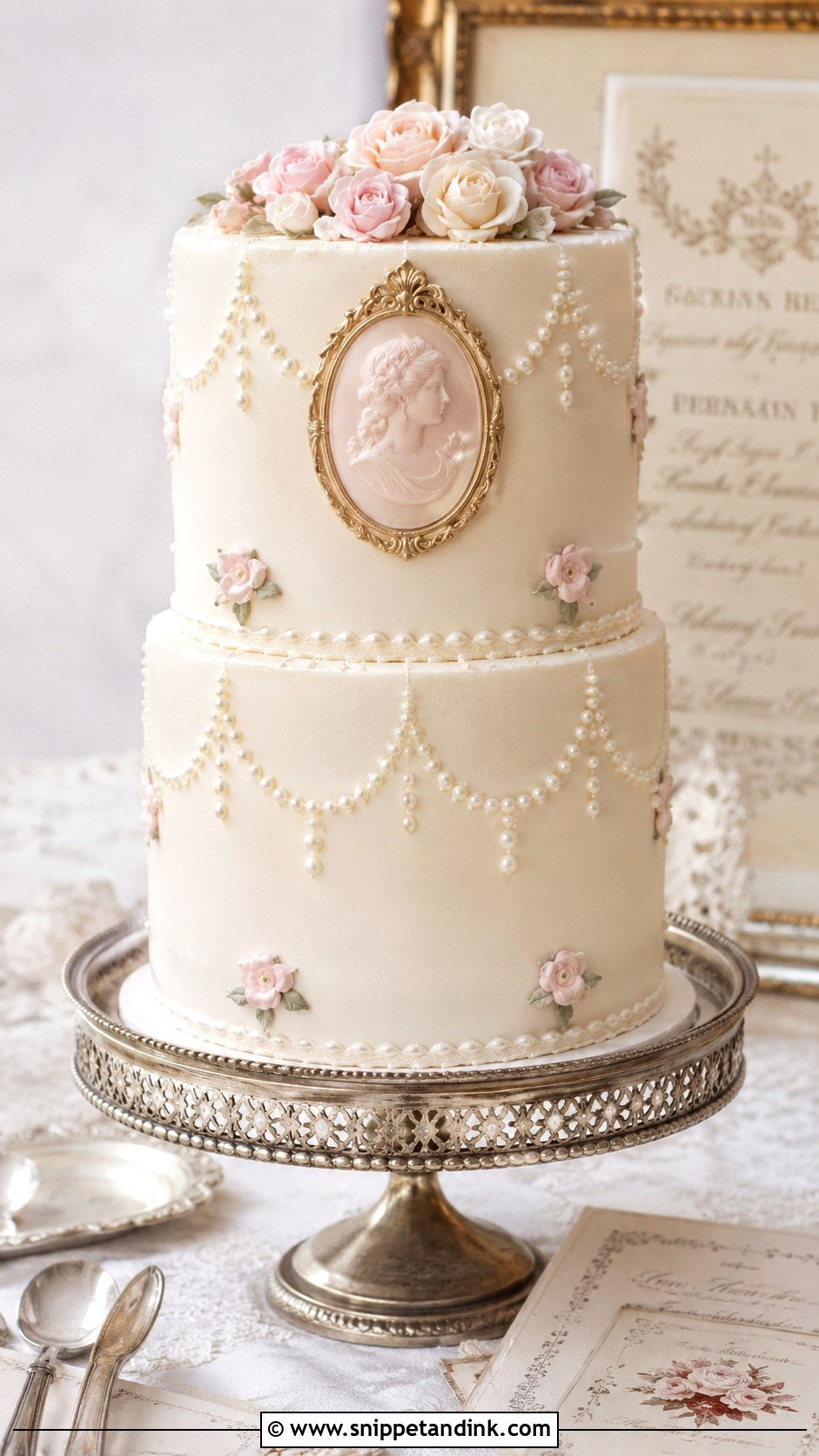
Cameos come straight from the period, when oval portrait brooches and Wedgwood’s white relief on blue were everywhere. On a cake, it can be a raised sugar plaque made in a mold, a painted silhouette or a small oval frame holding your initials. It needs plain space around it, so I keep that tier smooth and put any other decoration on the tiers above and below. Ivory, blush, pale blue and gold all suit it. Vanilla bean, almond or raspberry cream filling keeps the flavor quiet.
7. Regency Wedding Cake With Vintage Columns
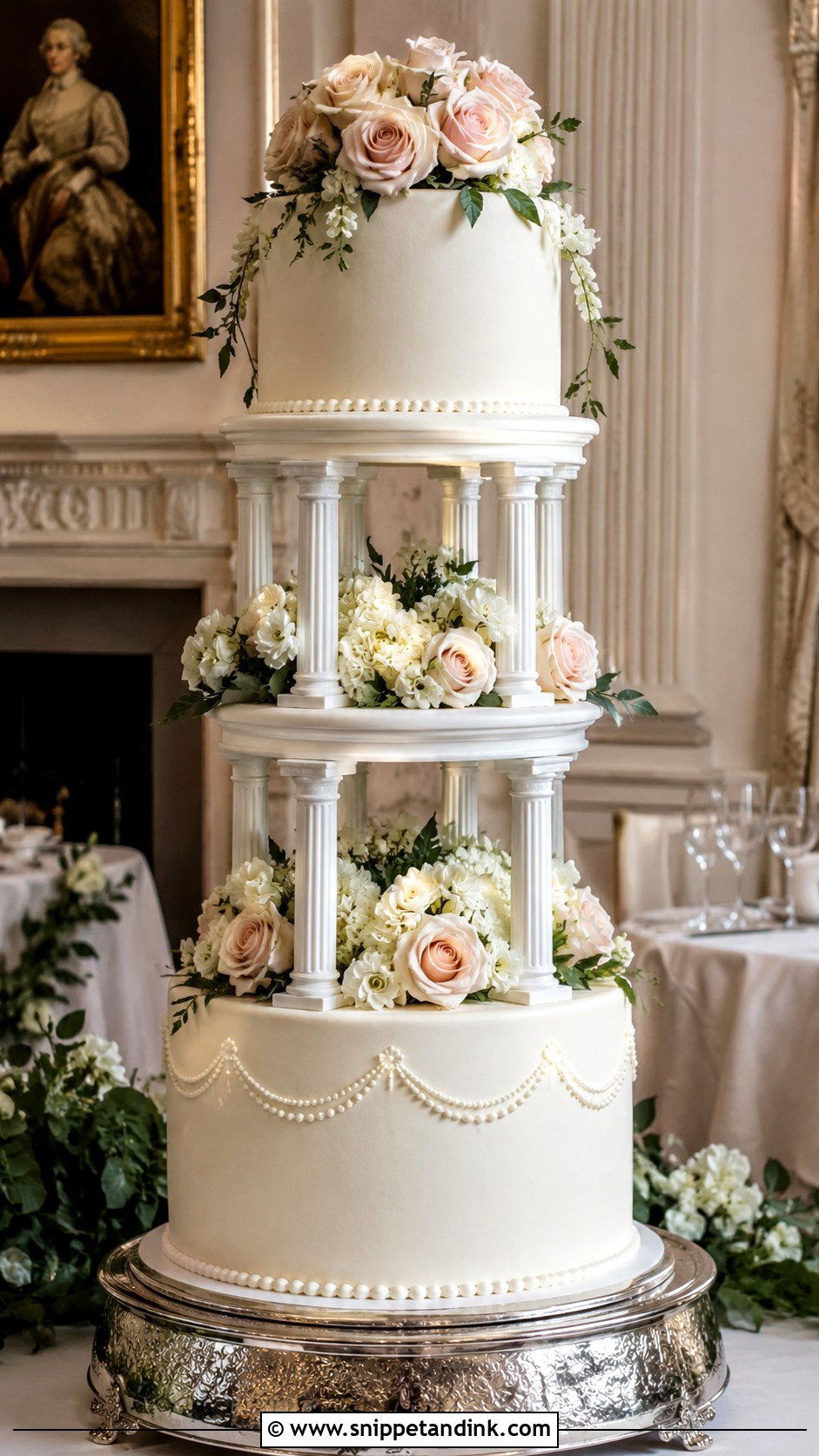
Columns lift tiers apart and give the cake the grand silhouette older wedding cakes had. They need careful engineering: each separated tier sits on its own board, and the columns must rest on dowels hidden inside the tier below, or the top tier slowly sinks. Slim columns look more current than heavy ones. I fill the gaps with fresh or sugar flowers. Ivory buttercream or pale blue fondant with gold trim, and a white cake with raspberry or lemon curd, suit a ballroom or historic house.
8. Regency Wedding Cake With Bow Detail
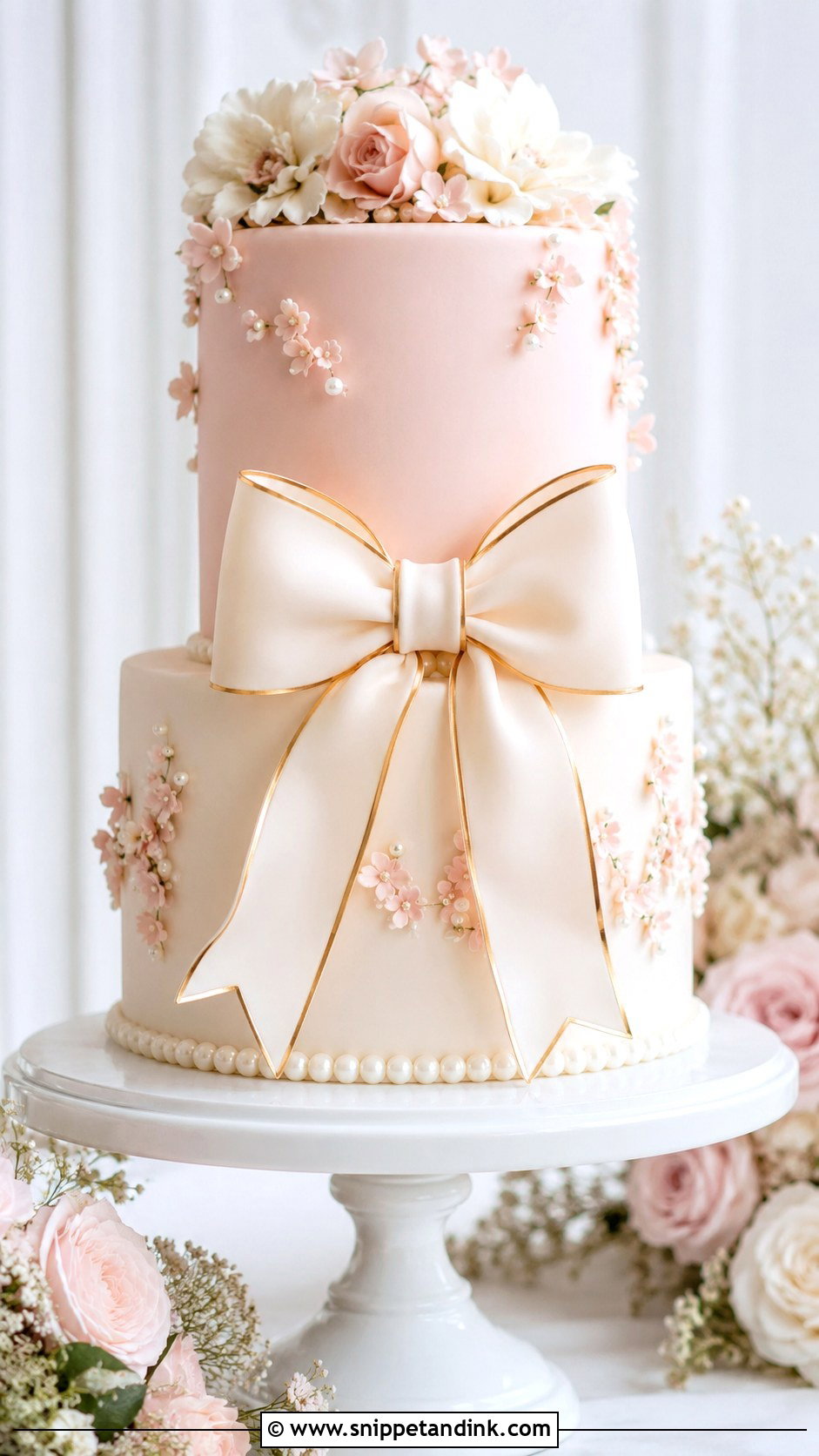
A bow can be gum paste, fondant, piped buttercream or real silk ribbon. I prefer gum paste for a large bow because it dries firm and keeps its loops, while fondant bows tend to sag in warm rooms. One big bow at the base of a tier, or small bows between pearl borders, is enough. Ivory, pale pink, powder blue and champagne all suit it, as do vanilla almond, strawberry vanilla or lemon cream. If you use real ribbon, it needs a food-safe barrier behind it so the frosting doesn’t stain it.
9. Regency Wedding Cake With Floral Garland
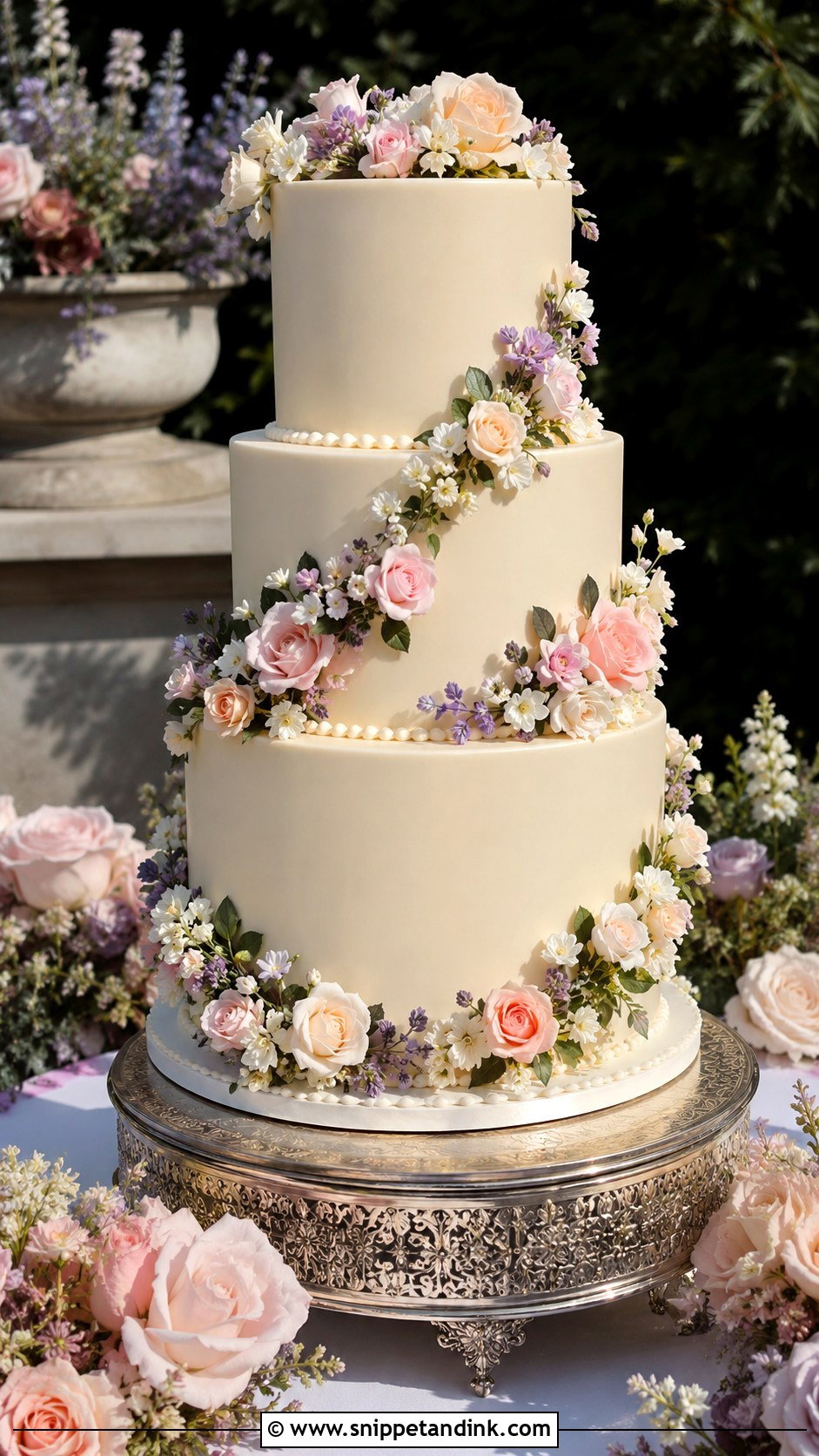
A garland wraps around the tiers like a vine instead of sitting in clusters, which gives the cake a garden-party feel. It can be sugar flowers, piped flowers or fresh blooms, as long as fresh ones are confirmed safe and pesticide free. Pale roses, small blossoms and soft greenery look natural. A tall three tier lets the garland travel all the way down. I attach fresh garlands at the venue, never before transport, because they shift on the drive. Vanilla, lemon blueberry or almond raspberry suit it.
10. Regency Wedding Cake With Ruffle Tiers
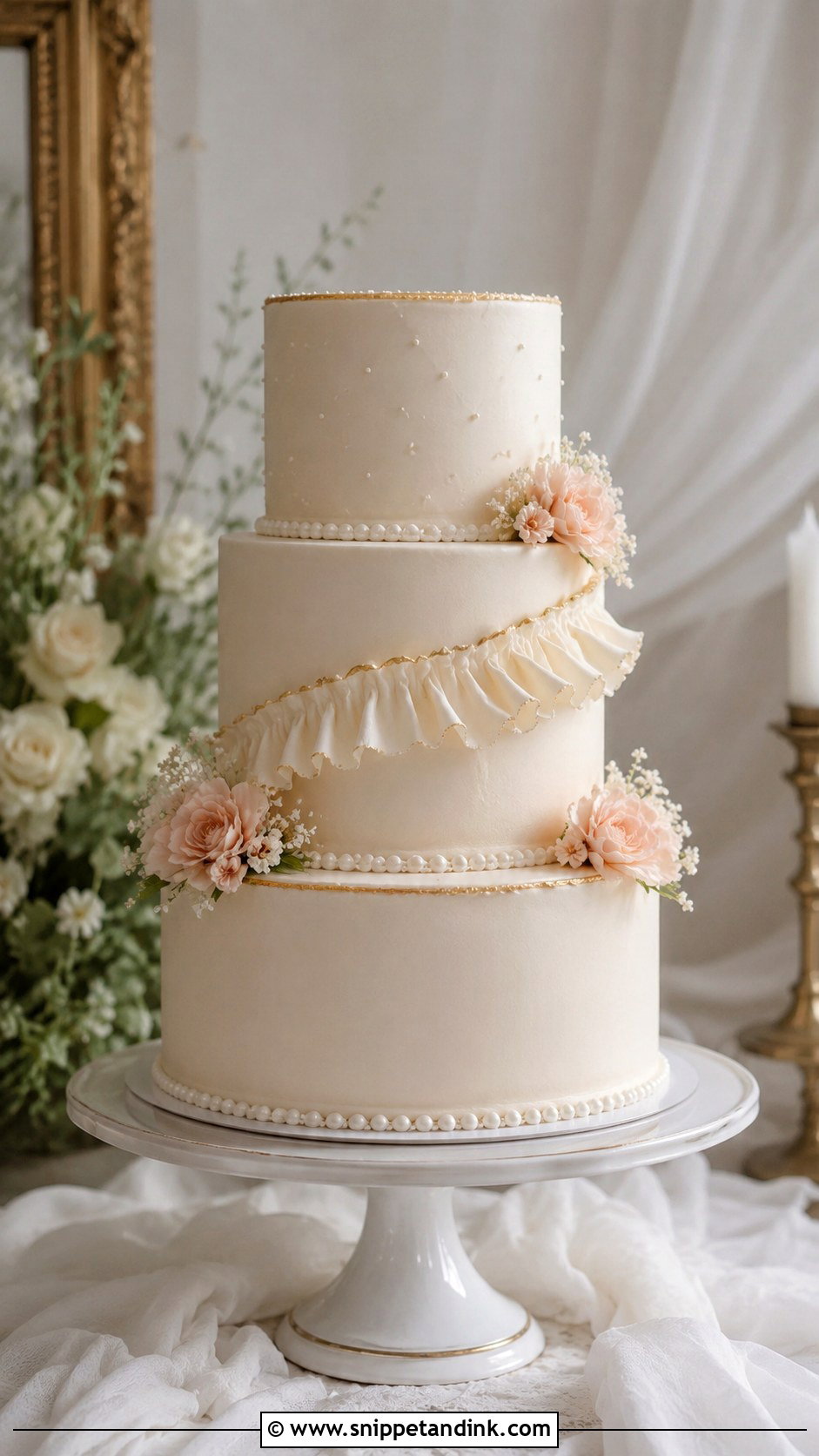
Ruffles should look like fabric. Thin fondant or wafer paper ruffles feel elegant; thick buttercream ruffles can look heavy and add a lot of sweetness. I usually put ruffles on one tier between two smooth ones, which balances the cake. Keep the palette simple, ivory, blush or soft cream. Wafer paper is the lightest option and moves almost like silk, but it curls in humidity, so I’d steer you to fondant for an outdoor summer wedding. Vanilla bean, coconut cream or raspberry almond are good partners.
11. Regency Wedding Cake With Pastel Flowers
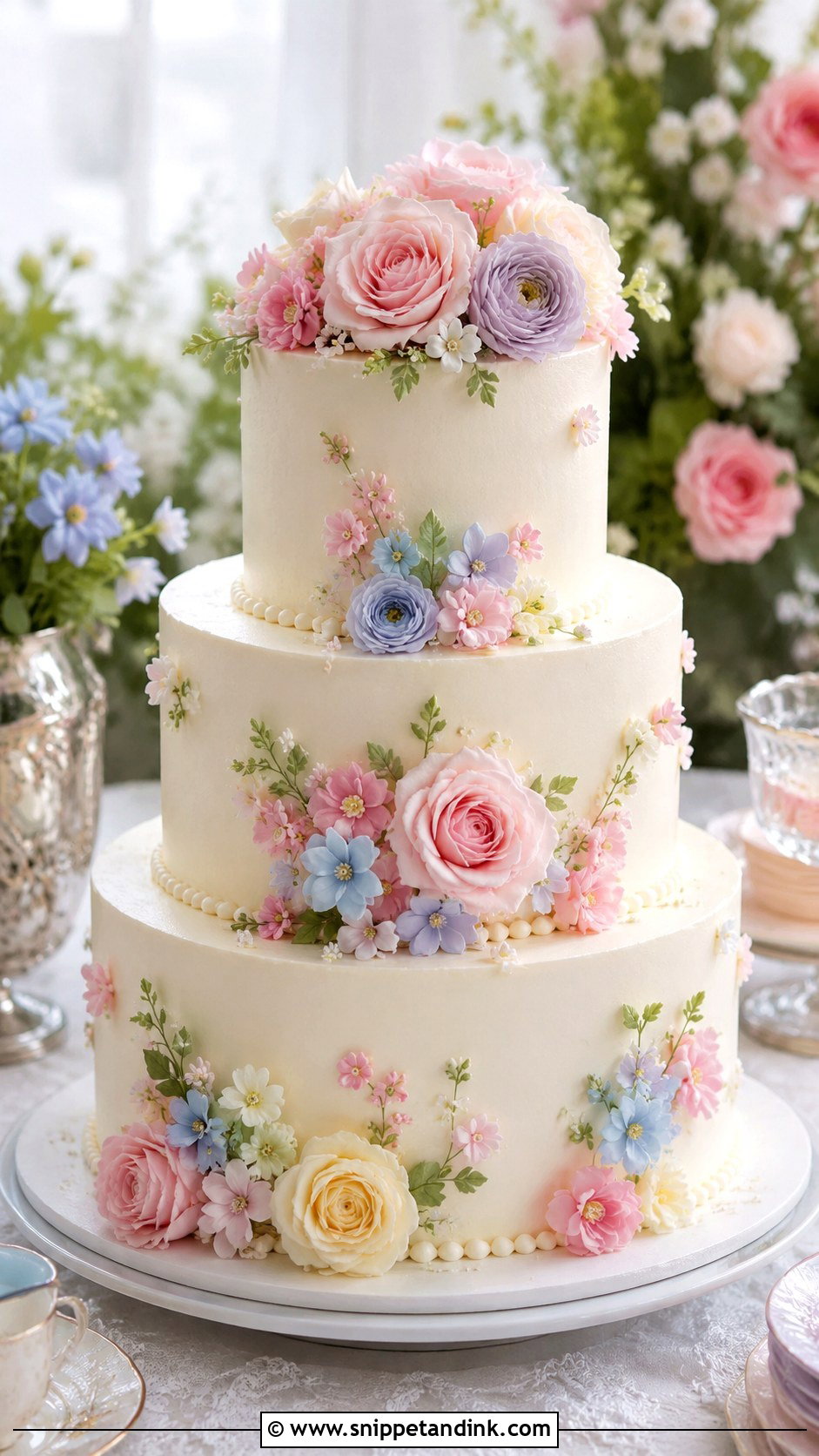
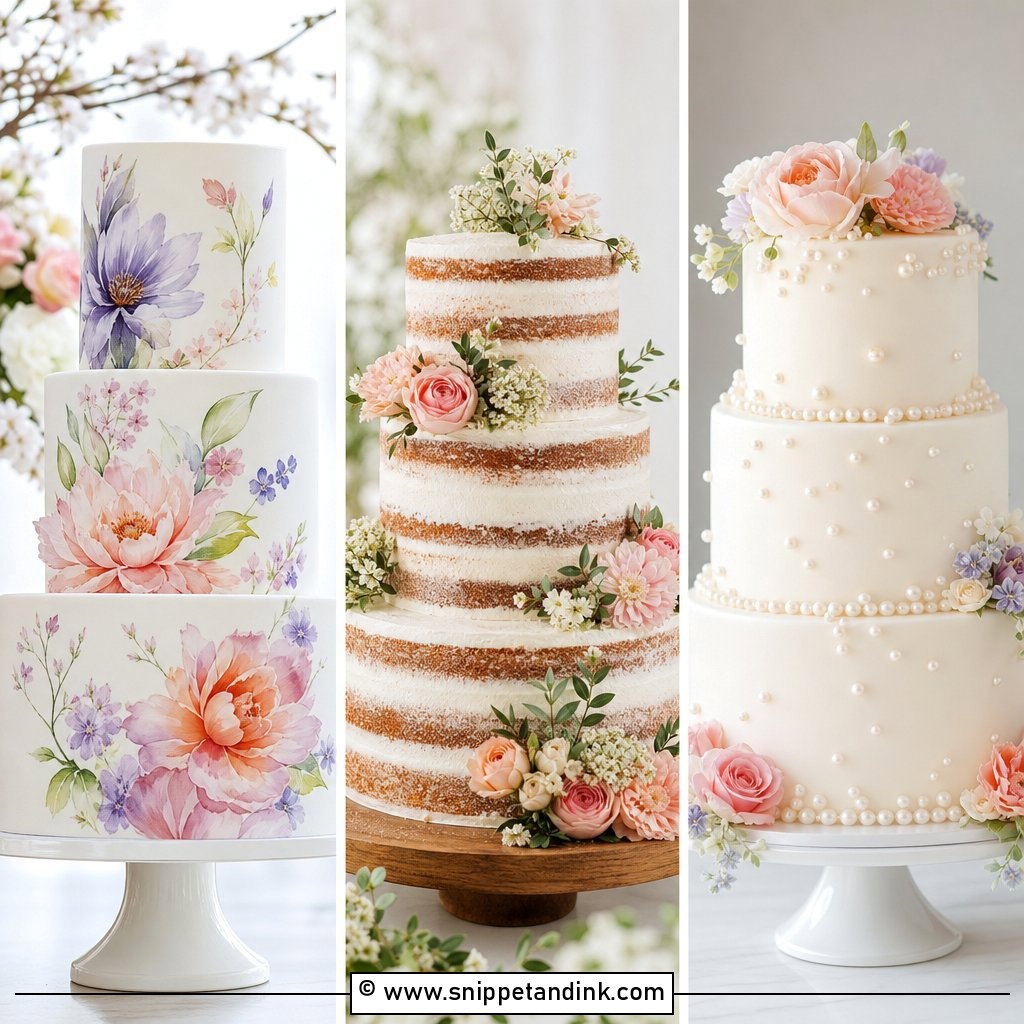
Pastel flowers work with almost any palette. Pale pink, lavender, butter yellow, ivory and powder blue can sit along the base, climb one side or frame the top tier. Buttercream gives a fresher, softer surface and fondant a more formal one. I keep the number of flower colors to three at most; past that, pastels start to look like a children’s party. It suits spring and summer best, and lemon, vanilla, strawberry or almond keep the cake light.
12. Regency Wedding Cake With Monogram
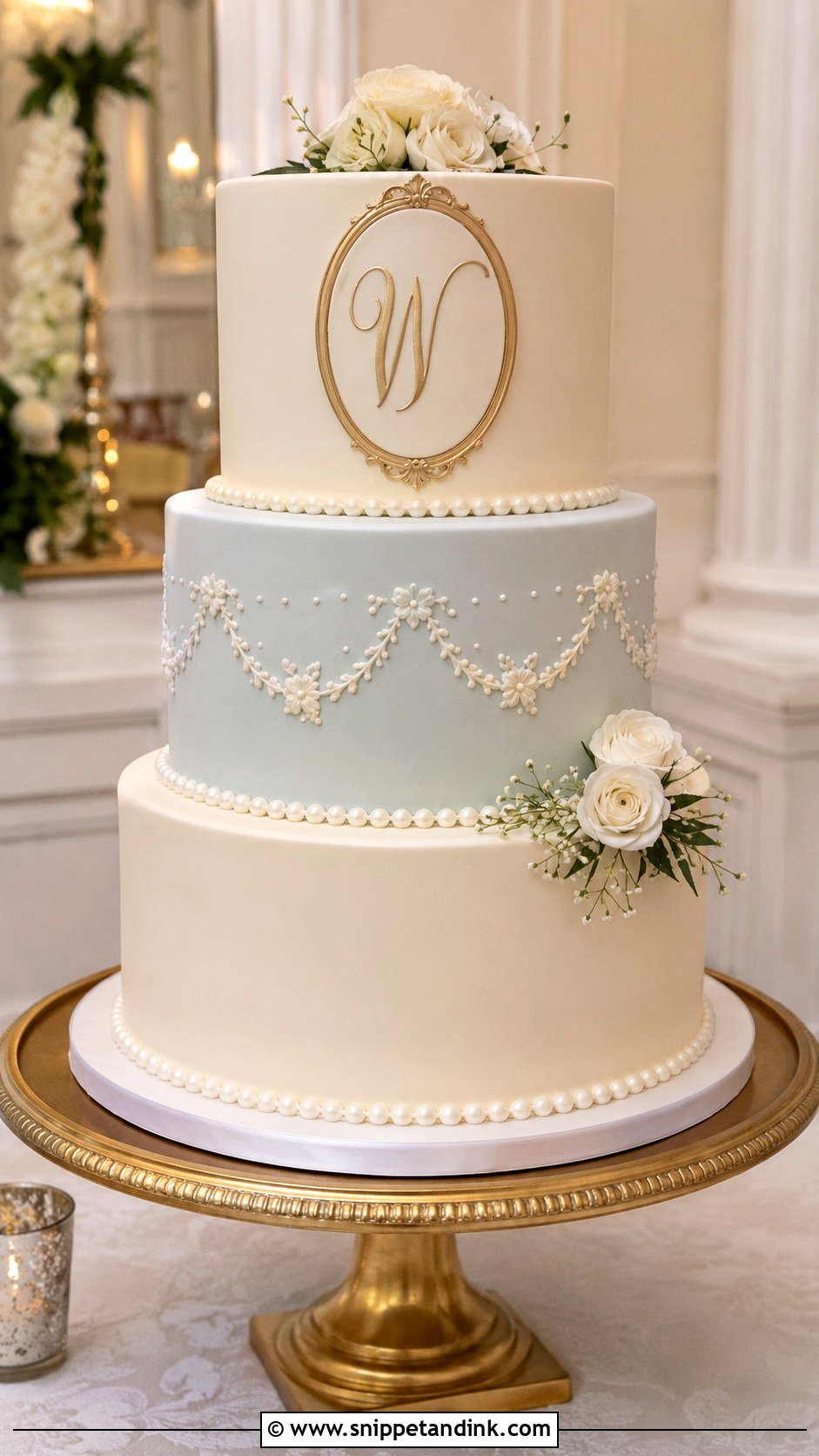
A monogram makes the cake yours. It can be painted in gold, piped in royal icing, embossed on a fondant plaque or set inside an oval frame. I always ask for the lettering in writing and sketch it at full size before it goes on the cake, because a script that looks fine on a screen can be hard to read on a curved tier. Smooth tiers, pearl borders and one restrained floral accent suit it. Vanilla bean, white chocolate raspberry or almond cream fit a formal ballroom.
13. Regency Wedding Cake With Draped Icing
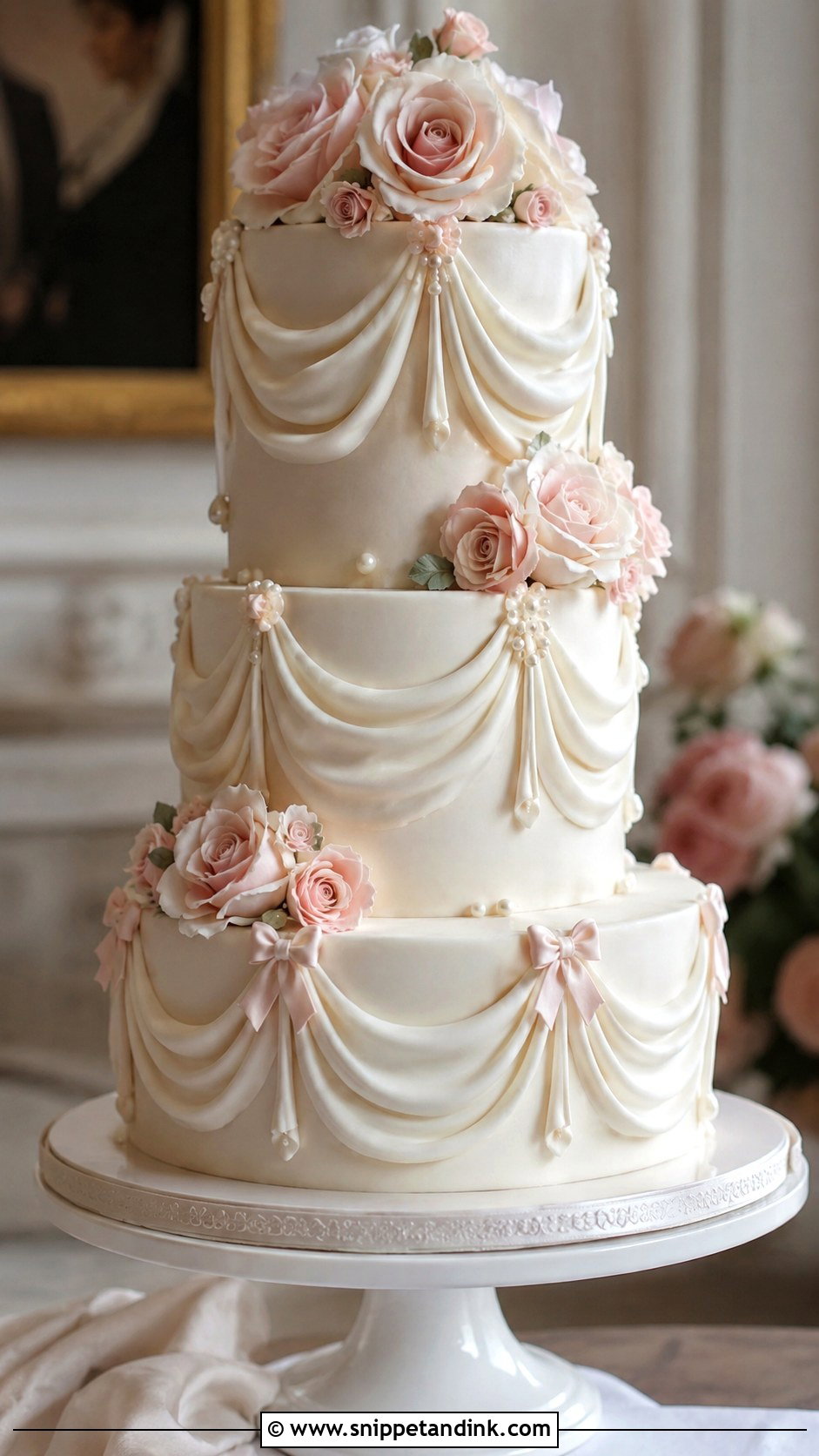
Draped icing looks like fabric gathered around each tier, and it pairs naturally with flowing gowns, empire waist styling or soft sleeves. Fondant drapes hold their folds; buttercream gives a softer, less defined version. Where the drapes meet, I tuck tiny pearls, a sugar bow or a small rose to hide the join. Ivory is classic, though pale blush or powder blue works too. Drapes add weight to the sides of a tier, so I keep the cake inside light, vanilla, almond or lemon.
14. Regency Wedding Cake With Edible Pressed Flowers
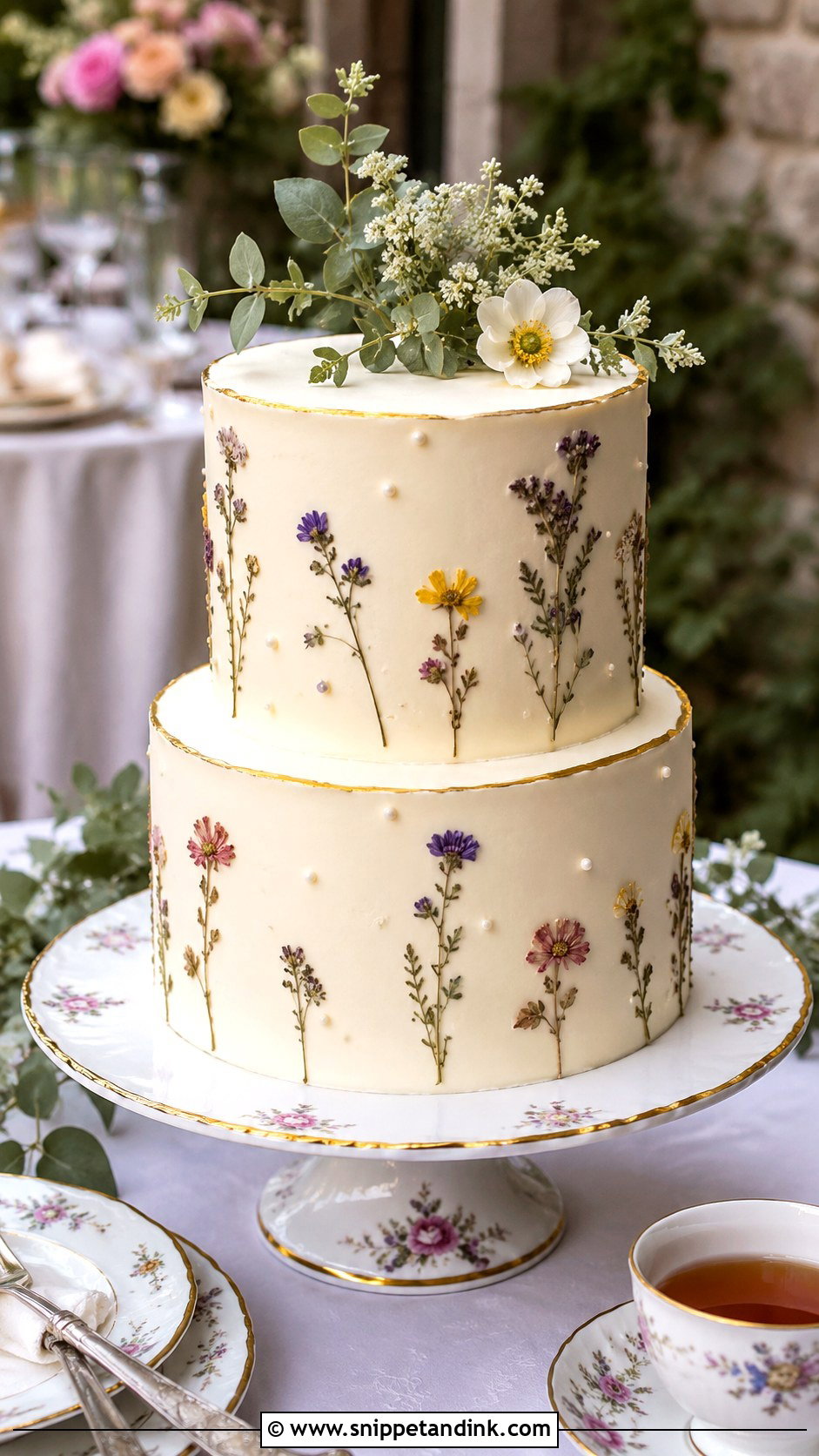
Pressed blooms give a delicate botanical look that suits garden weddings. Use only edible pressed flowers grown for eating, such as violas, pansies and cornflowers, laid gently onto smooth buttercream or fondant. Space them out rather than covering every inch. Pressed petals can fade and curl if they sit on moist buttercream too long, so I add them as close to delivery as I can. Lemon, honey vanilla or lavender cake suits them, with a pearl border or thin gold edge.
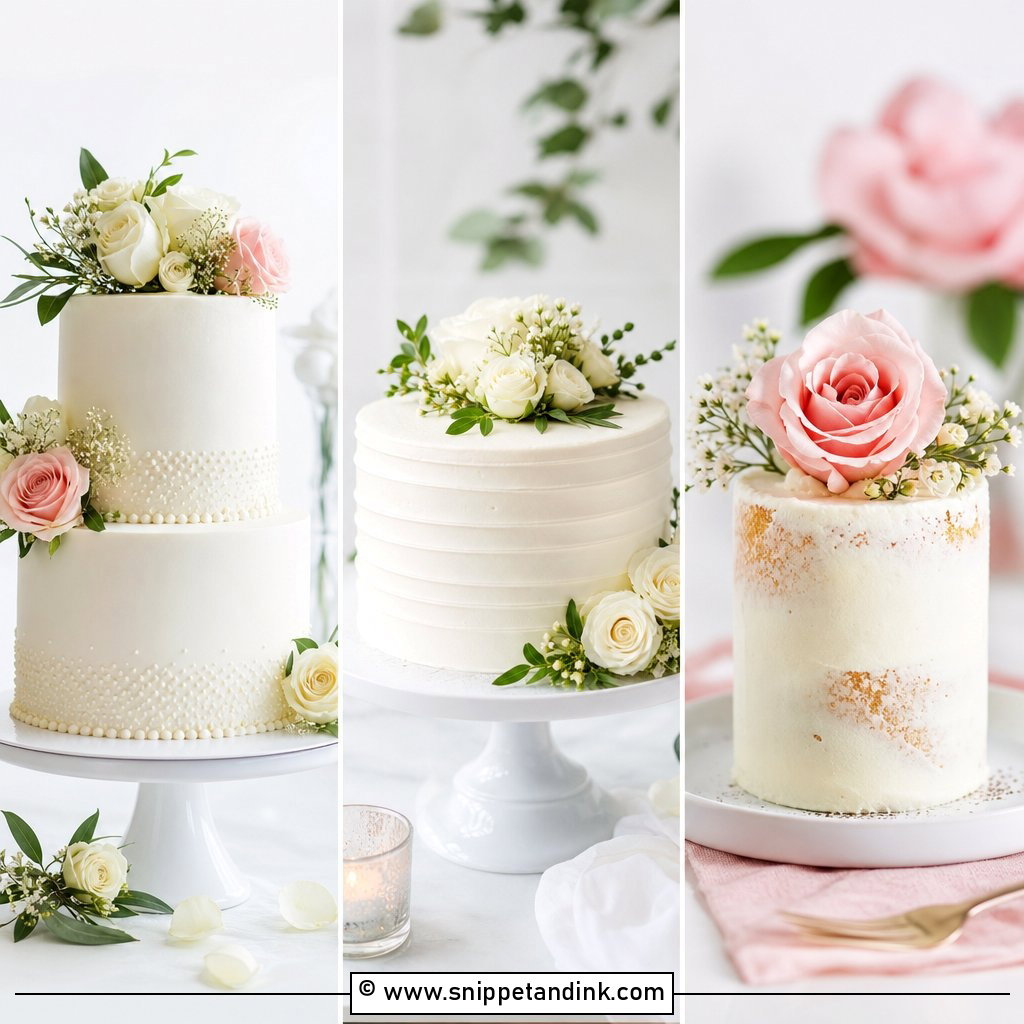
15. Regency Wedding Cake With Buttercream Piping
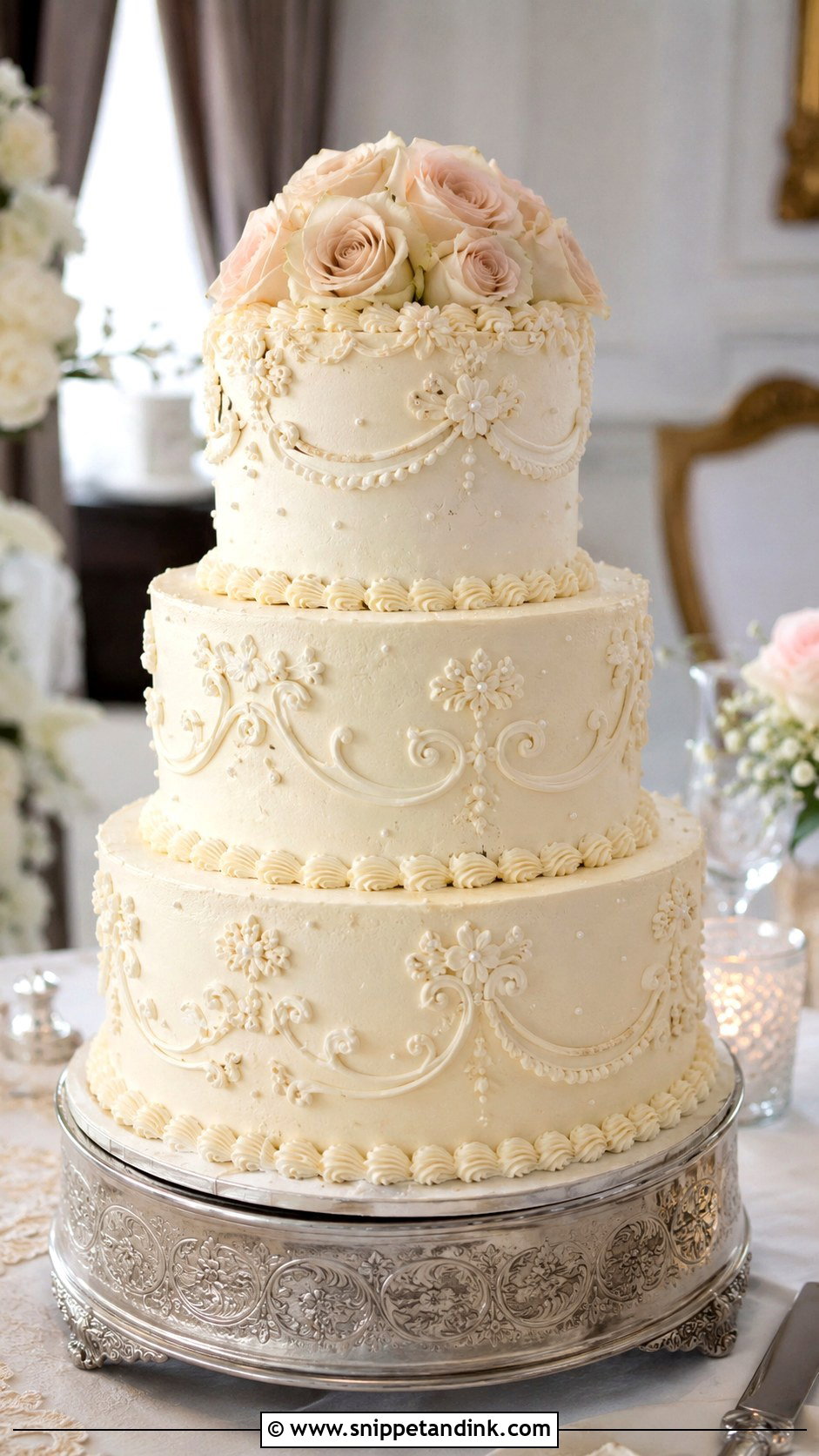
Piped shells, scrolls, dots and tiny flowers give a handmade finish without fondant. Neat buttercream piping is everything here, so I use a firm buttercream that holds a crisp edge and pipe from a chilled cake. Use it to frame each tier, outline small panels or run delicate borders. Ivory is classic, with pale blue, blush or cream as alternatives. Vanilla, almond or lemon, and a few fresh roses or a small monogram, finish it.
16. Regency Wedding Cake With Chinoiserie Pattern
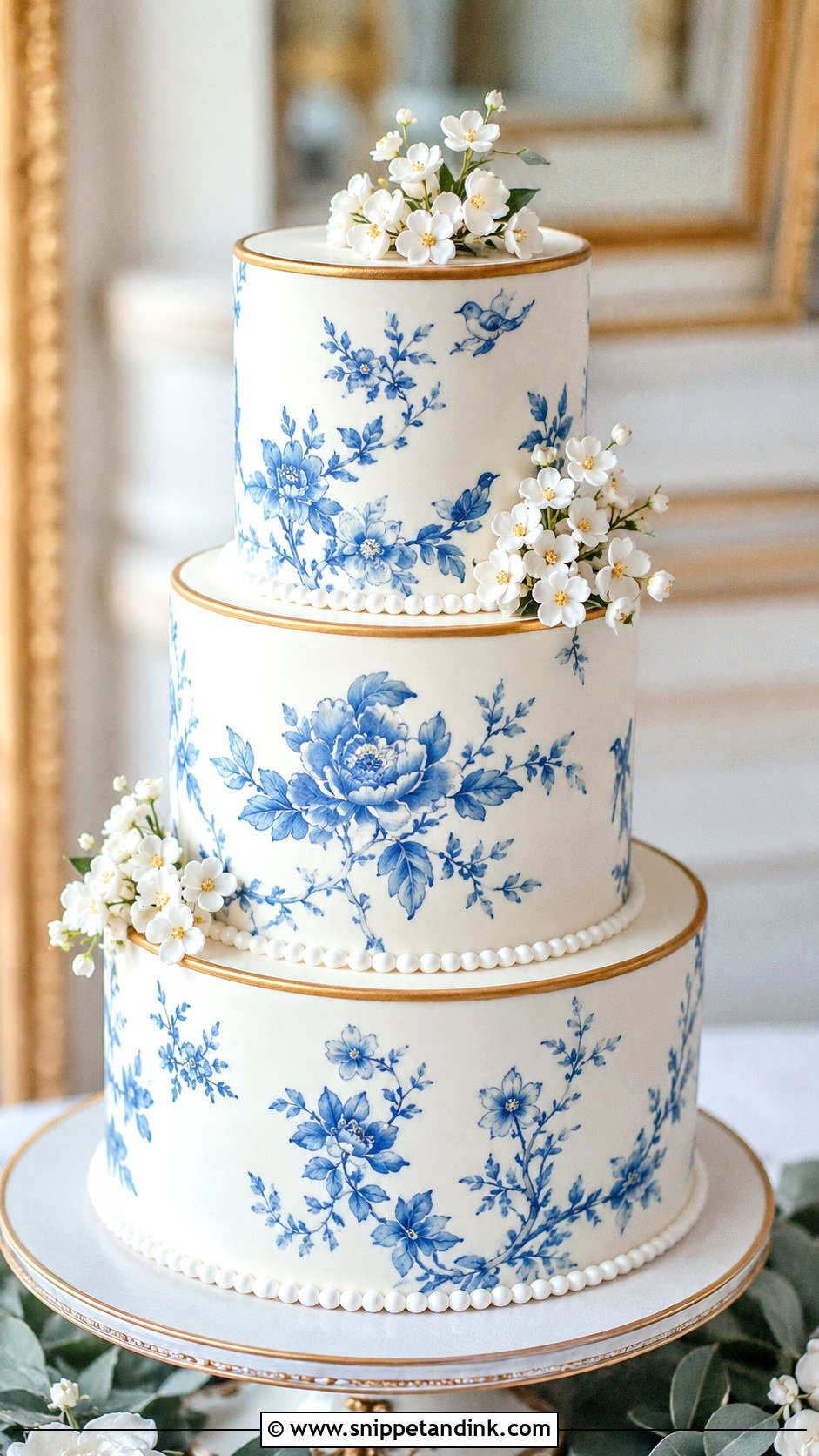
Chinoiserie, the fashion for Chinese-inspired painted porcelain, was popular in grand houses of the period, and blue floral scenes on white are the version everyone recognizes. Pink, green or gold accents work too. It’s hand painted with food coloring on fondant, so it depends entirely on your baker’s painting skill; ask to see their painted work before booking. I paint one tier and leave the other two plainer, with tiny sugar blossoms, pearl borders or a gold rim. Almond, vanilla bean or lemon cream suit it.
17. Regency Wedding Cake With Rose Cascade
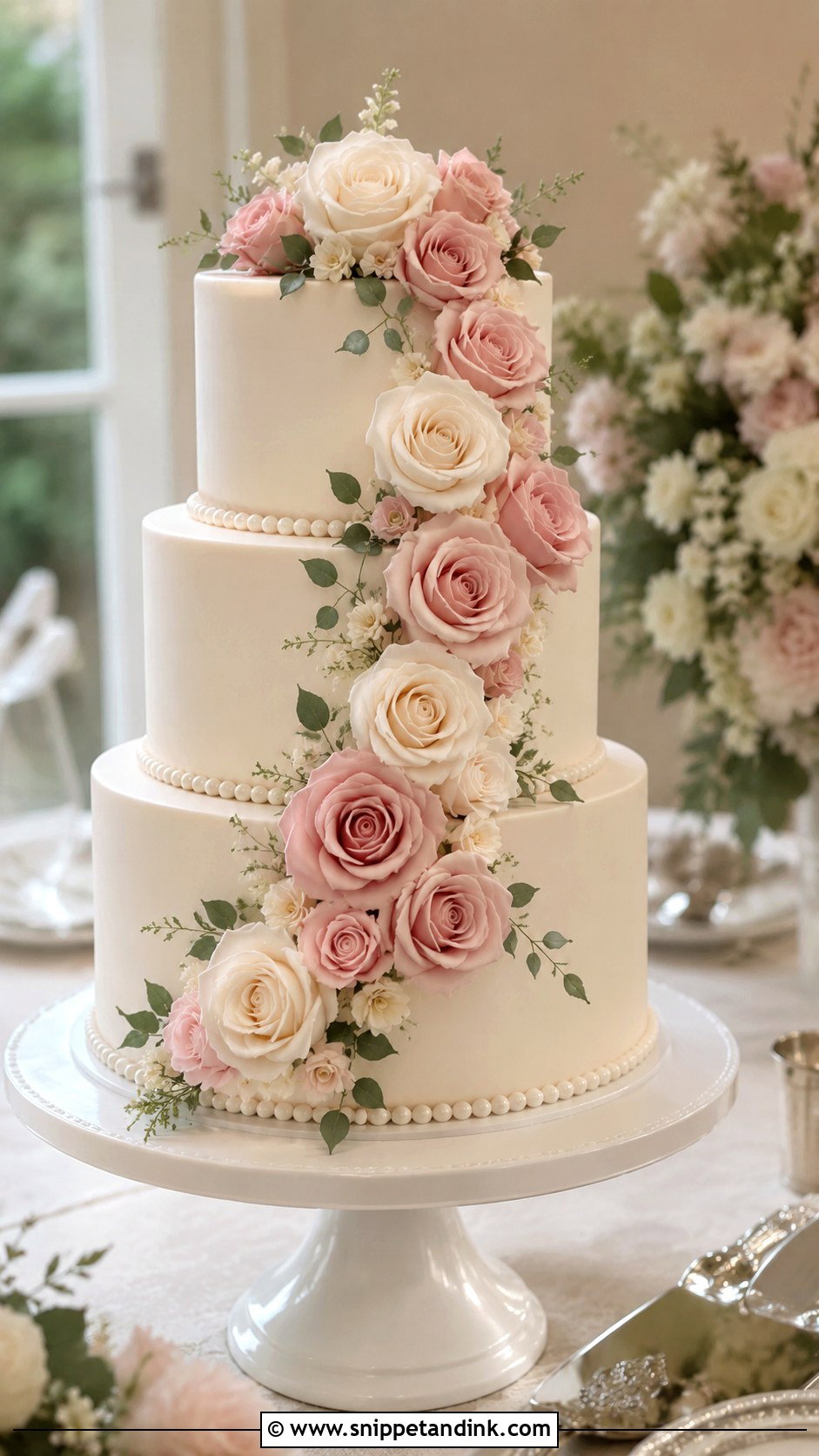
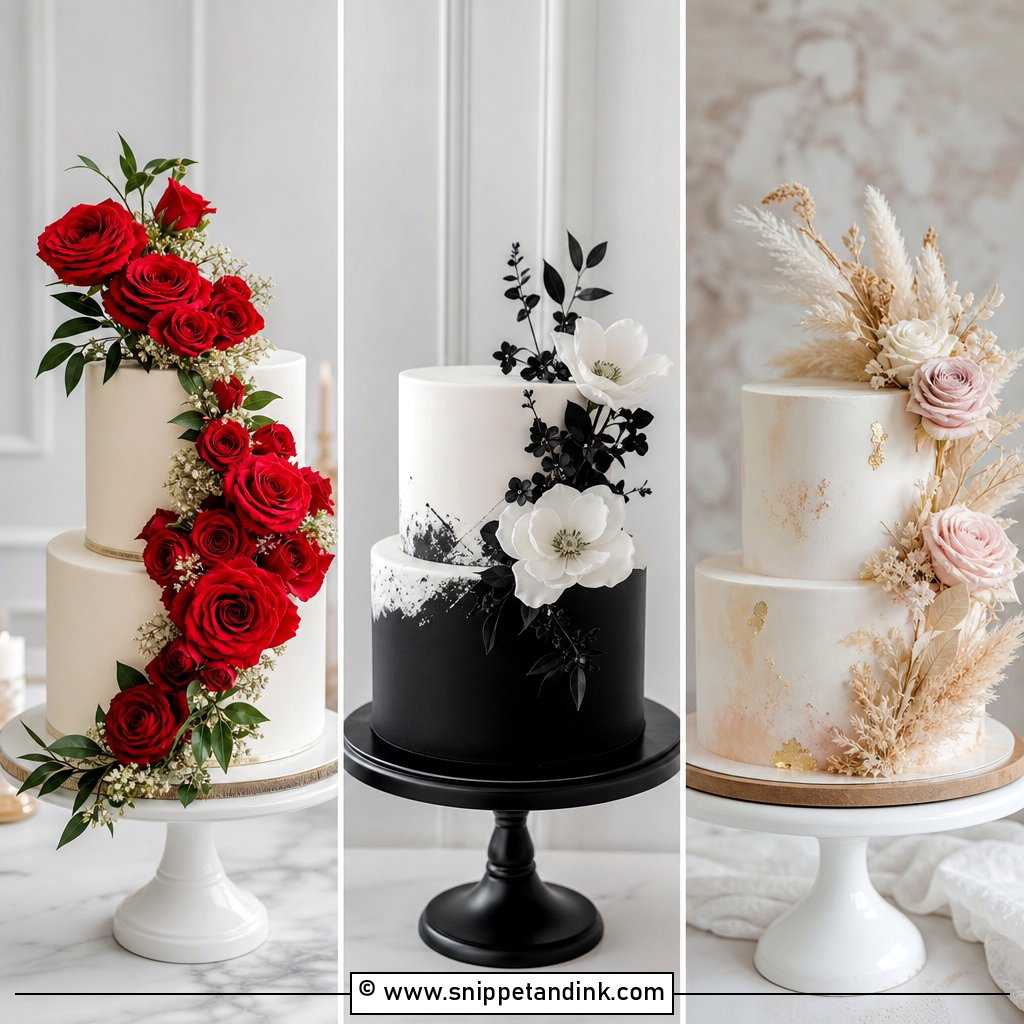
A cascade flows from the top tier down one side and gives the cake movement from every angle. Blush, ivory, peach and pale pink roses work well. Sugar roses look polished and last all night; fresh roses look more natural but need wrapped stems and a spray-free source. The background should stay smooth so the roses stand out. I plan the cascade from the side the cake will be photographed and cut, which is easy to forget. Vanilla raspberry, almond cream or lemon match it.
18. Regency Wedding Cake With Mini Tiers
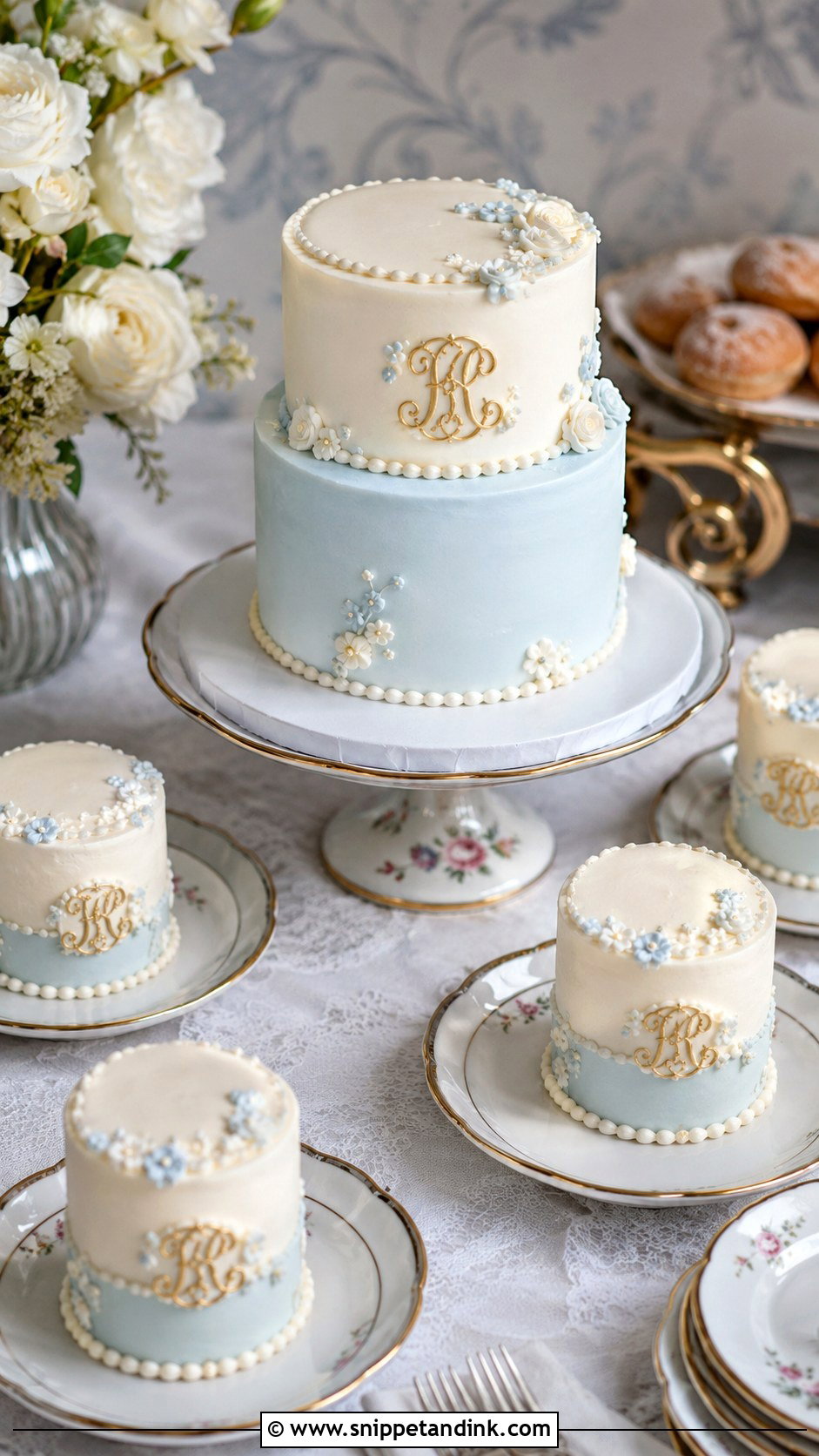
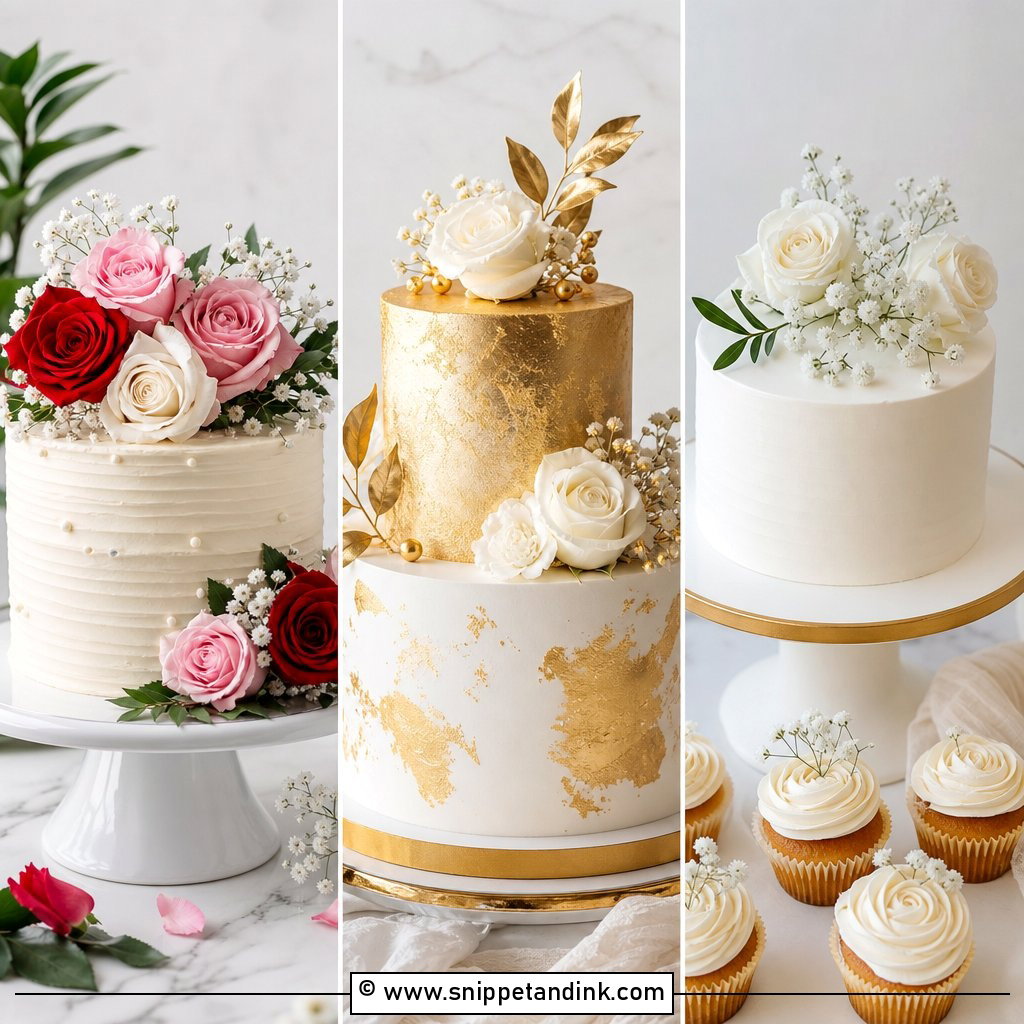
A petite two tier cake with matching mini cakes nearby keeps the formality without a large display cake. The main cake carries the pearls, piping, flowers or monogram, and the minis echo one detail each. It suits intimate weddings, afternoon receptions and tea-style parties. Ivory, blush and powder blue keep everything cohesive. Choose classic flavors like vanilla, lemon, almond or strawberry cream. Minis are labor heavy for their size, so don’t expect them to cost less than a slice of a large cake.
19. Regency Wedding Cake With Crown Topper
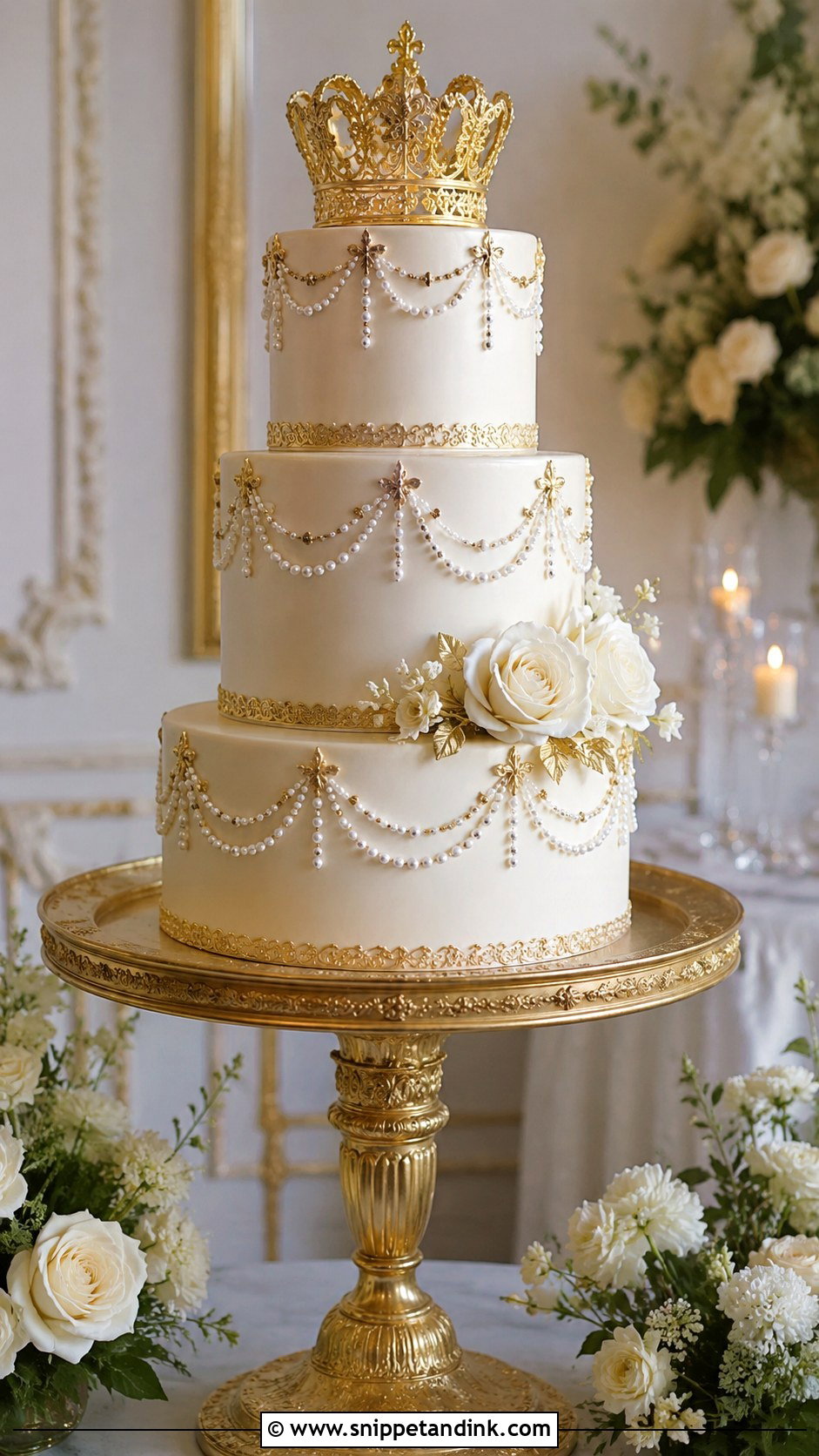
A crown on top gives a royal note, but a heavy one overwhelms the cake. I use a small gold, pearl or sugar crown, and if it’s a keepsake metal piece, it sits on a small board or plate so it doesn’t press into the frosting. Smooth ivory frosting, gold trim, pearls and soft flowers at the base suit it. A three tier cake gives the topper enough height to look balanced. Vanilla bean, almond, lemon or white chocolate raspberry fit a ballroom.
20. Regency Wedding Cake With Garden Tea Style
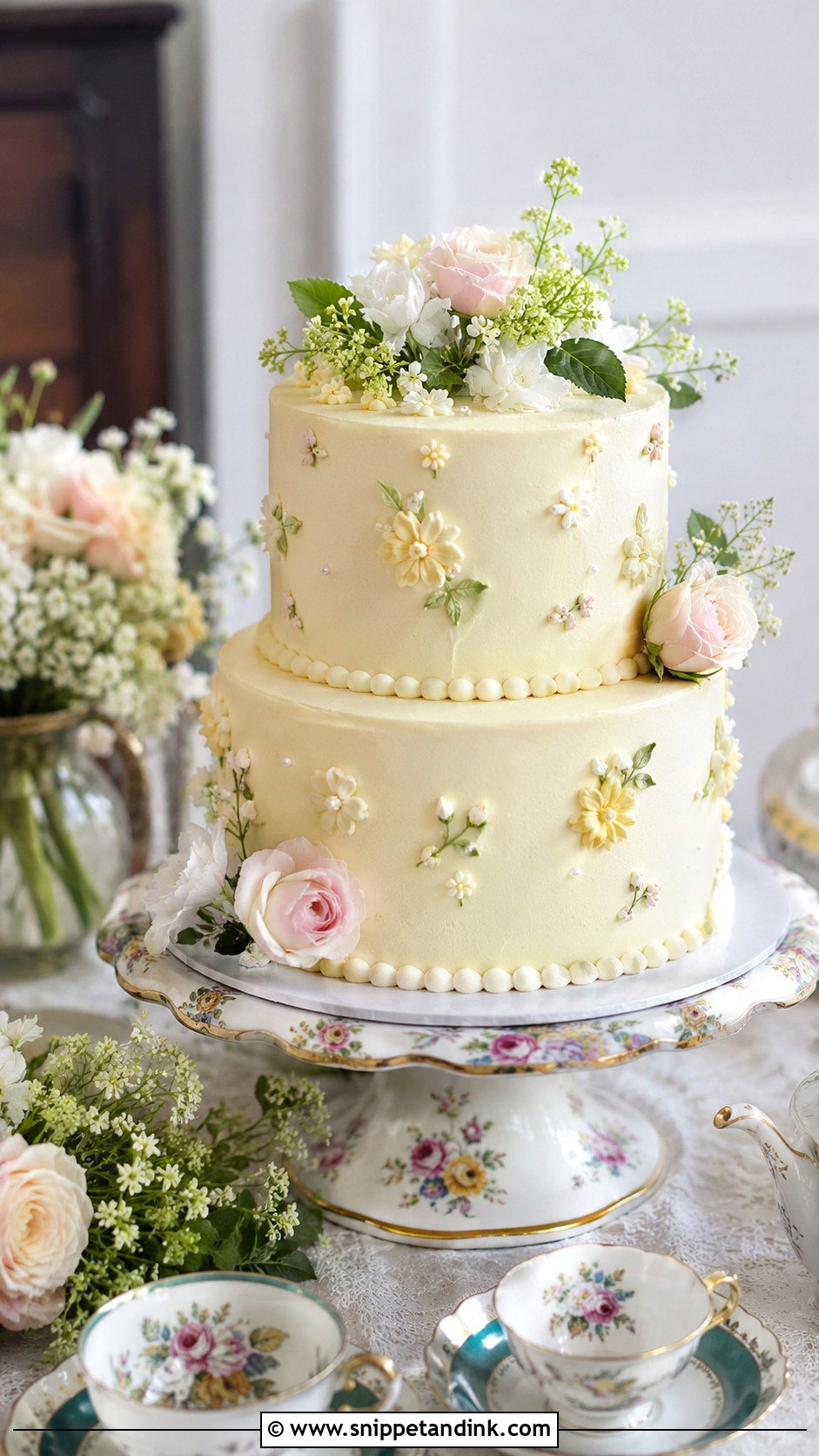
This is the most relaxed version, made for afternoon receptions and dessert tables with tea sandwiches, fruit and small pastries. Two or three tiers of soft buttercream with tiny piped flowers, pearl borders and pastel blooms, set on a vintage stand. Lemon elderflower, vanilla cream, strawberry or almond fit it. Afternoon receptions often mean daylight and warmth, so I avoid heavy decoration that could slide and keep the frosting firm. Ivory, pale yellow, blush and powder blue keep it fresh.
One Showpiece Technique Per Cake
Hand painting, royal icing lace, sugar flowers and draped fondant are each skilled, slow work. Put all four on one cake and you pay for all four, and the cake ends up looking crowded. I advise couples to choose one showpiece technique and keep the rest of the decoration simple in support of it.
On a tighter budget, I put the showpiece where people actually look: the top tier and the front of the cake. A painted chinoiserie panel or a cluster of sugar peonies on the front, with simple piping around the back, photographs just as well and costs noticeably less. Ask for the cutting side to be the plain one.
Give your baker enough time
Detailed sugar work and painting fill a baker’s calendar early. I’d start conversations several months out, and sooner for a peak season Saturday. Ask to see photos of their own lace piping, painting or sugar flowers, not just inspiration images, because these skills vary a lot between bakers.
- A fabric swatch or photo of your dress detail for color and lace matching
- Your guest count, so the tier sizes are right before the design is drawn
- Whether the venue is warm or humid, since royal icing and wafer paper react to it
- Who is supplying any fresh flowers, and whether they are safe for cake
Grand Ballroom or Garden Tea?
Regency cakes can be grand with columns and a crown, delicate with pearls and lace or fresh with pressed flowers and a tea table. Start with your room. A formal reception can carry height, gold, monograms and structure; an airy, floral wedding suits pastel flowers, soft buttercream and garden details. Then pick one showpiece technique and let the rest of the cake support it. Bring your favorite images, your colors and a fabric swatch to your baker, and ask what they’d change.
You'll Like These Ideas:






Leave a Reply