
Spring flowers on a wedding cake only work when the cake designer has thought about what each bloom does once it leaves the cooler. Pressed petals lie flat and stay put, sugar flowers never wilt, piped buttercream blossoms are fully edible, and fresh stems bring scent but need real care. I plan every floral cake around three questions: what is safe to sit on food, what survives the room temperature, and how the flowers tie back to the bouquet. Lemon, elderflower, almond, strawberry and honey sponges suit this season because they taste as light as the decoration looks. Below are thirty spring flower cakes, each with what I watch for when I make one.
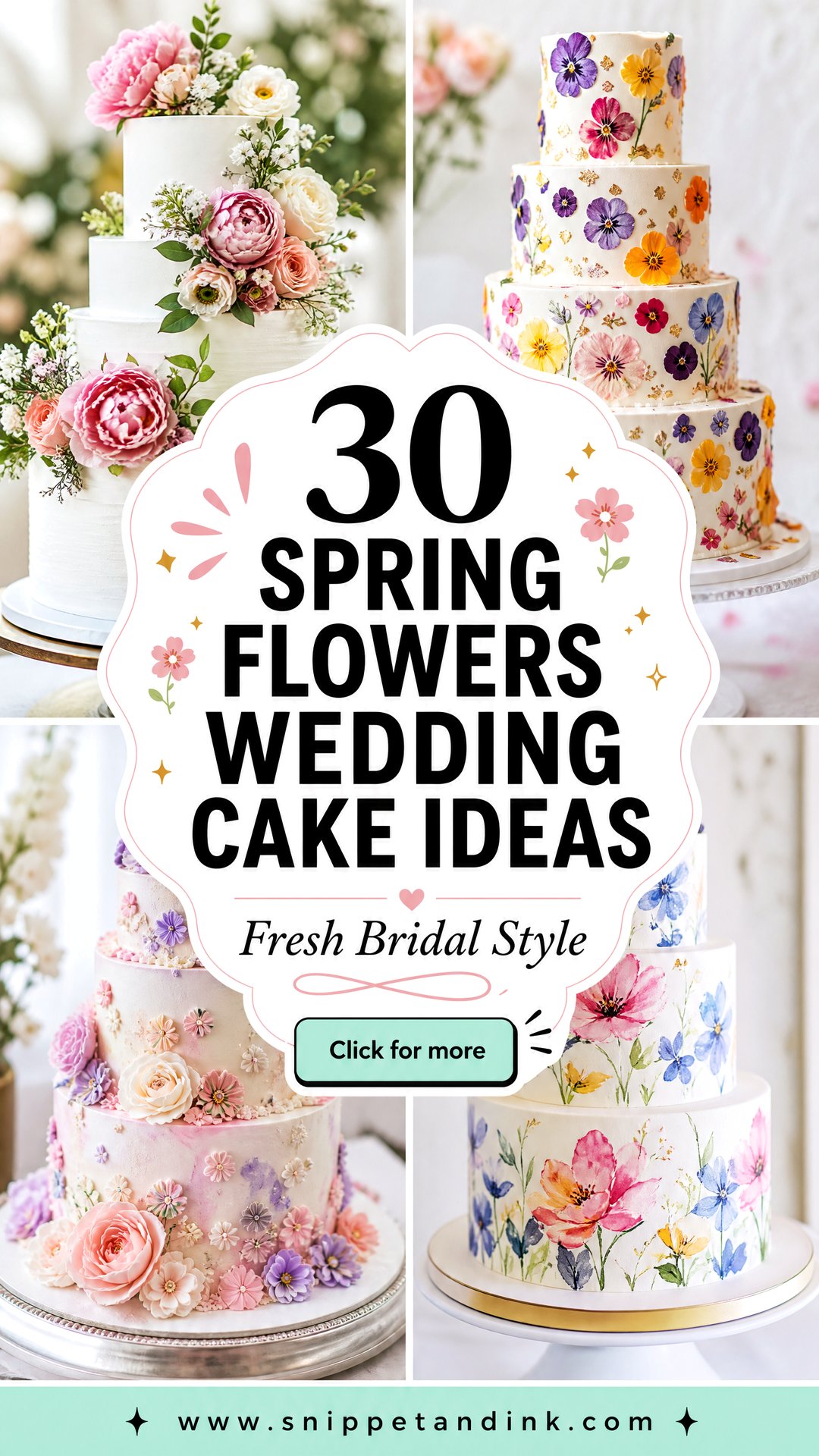
Sugar, Pressed, Piped or Fresh: Deciding What Your Flowers Are Made Of
Before you pick a flower, pick the material. It changes the price, the timing and who is responsible for the cake on the day, and couples are often surprised by how much.
- Sugar flowers: made weeks ahead, they never wilt and can be kept afterwards. They cost the most because each petal is shaped and dried by hand, so the order needs to go in early.
- Pressed petals: flat, light and very stable once set. They suit small and single tier cakes and almost never move in transit.
- Piped buttercream flowers: fully edible and usually the gentlest on a budget, but they soften in heat and need a cool room.
- Fresh flowers: they match the bouquet exactly and smell of spring, but they need a florist or baker on site to add them, and they need protecting from the frosting.
The fresh flower rules I don’t bend
Not every pretty spring flower is safe near food. Lily of the valley, daffodils, sweet peas, hydrangeas and hellebores are all toxic, so they only appear on my cakes in sugar. Flowers bought from a florist are usually grown for the vase and may have been sprayed, so I either source edible blooms from a grower who sells them for food or treat fresh stems purely as decoration that never touches the cake. Every stem is taped and sleeved in a straw or pick, and a small disc of parchment goes under any bloom that sits flat on the top tier.
If your florist is supplying the flowers, ask for a separate small box of cake flowers rather than offcuts from the centerpieces. I want short stems, buds that are open but not blown, and nothing that sheds pollen onto the icing.
1. Pressed Flower Wedding Cake
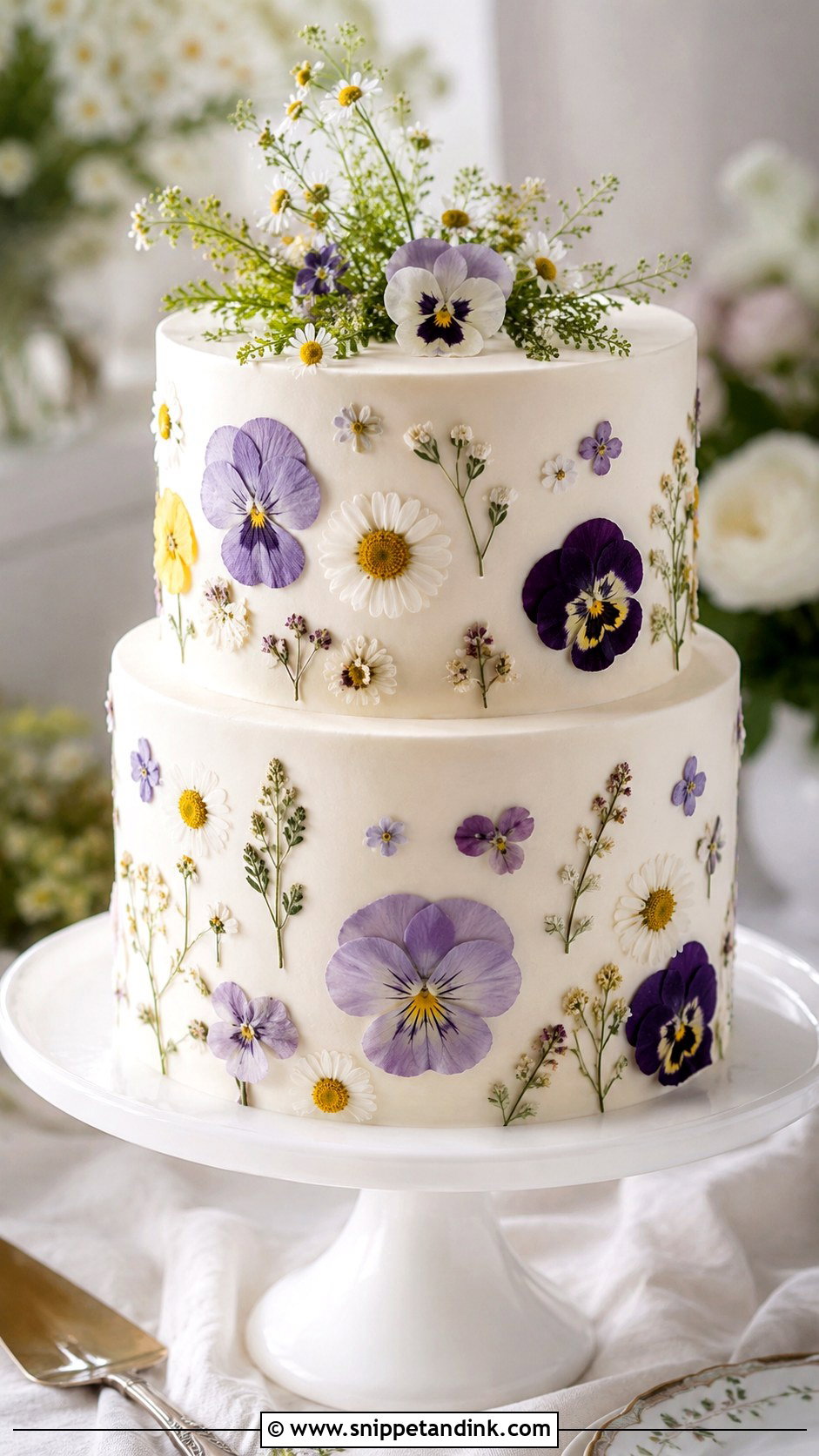
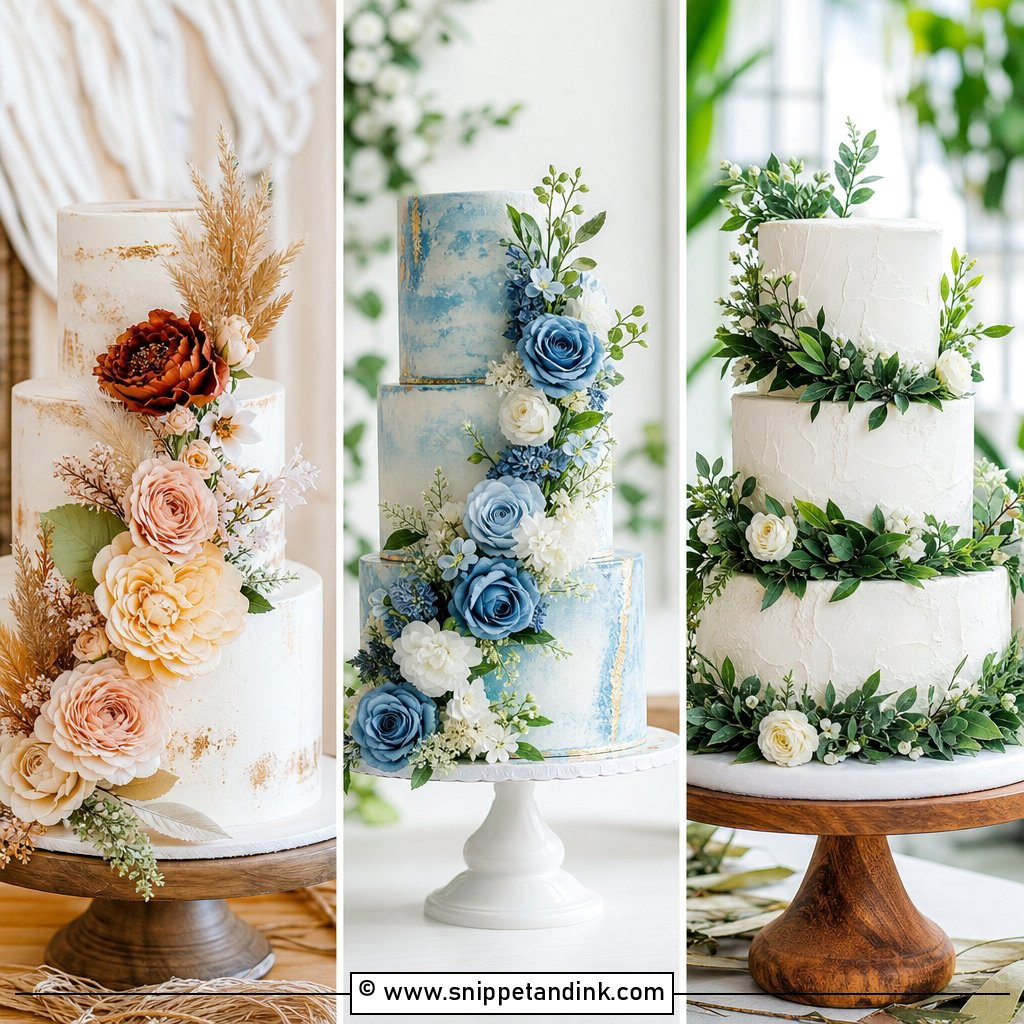
A pressed flower wedding cake is the spring design I find most forgiving to deliver, because flat petals don’t droop, bruise or shed. They sit best on smooth white buttercream, pressed in while the crust is still slightly tacky so they grip without glue. Violas, small pansies and cornflower petals press well; thick-petalled flowers don’t, and they go brown at the edges. Leave breathing room between them. A crowded pressed cake reads as wallpaper rather than a garden, and a small cutting cake with twelve well-spaced petals often looks better than a big tier with eighty.
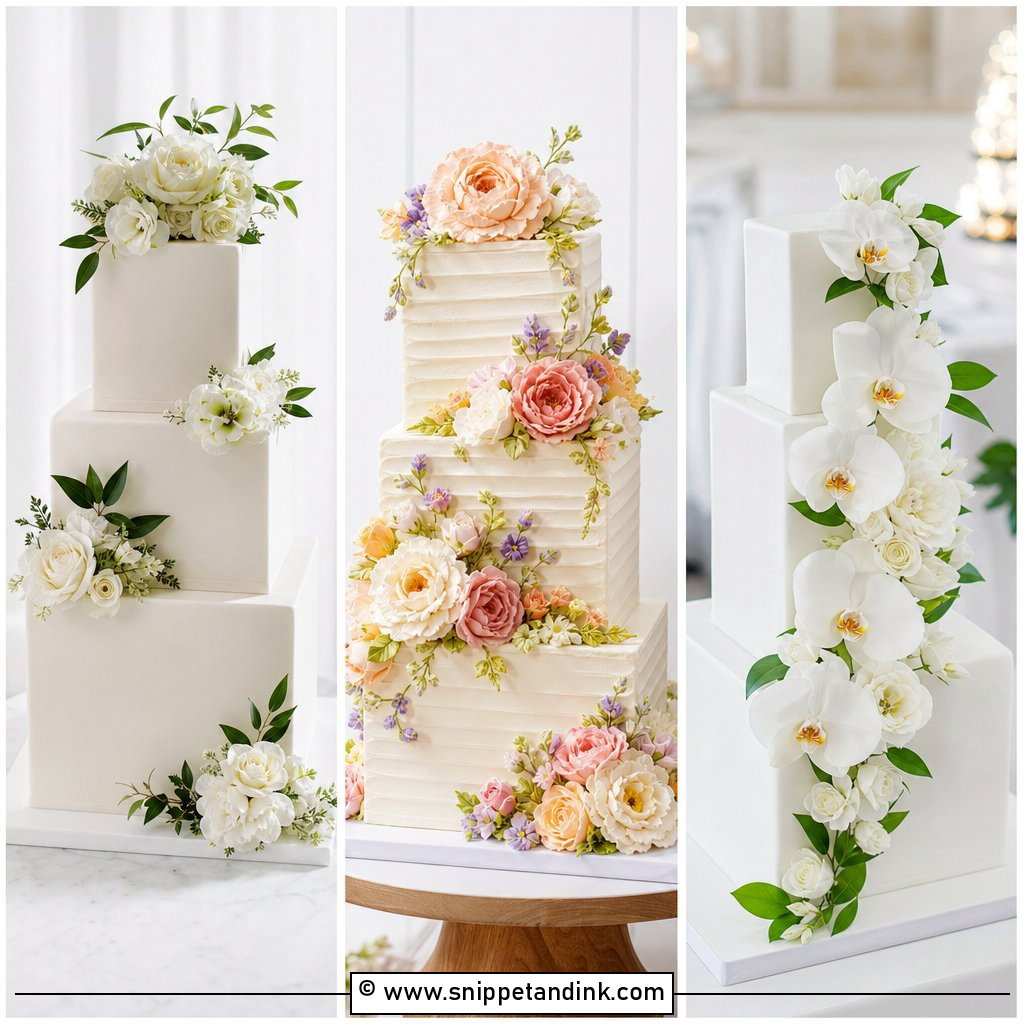
2. Fresh Flower Wedding Cake
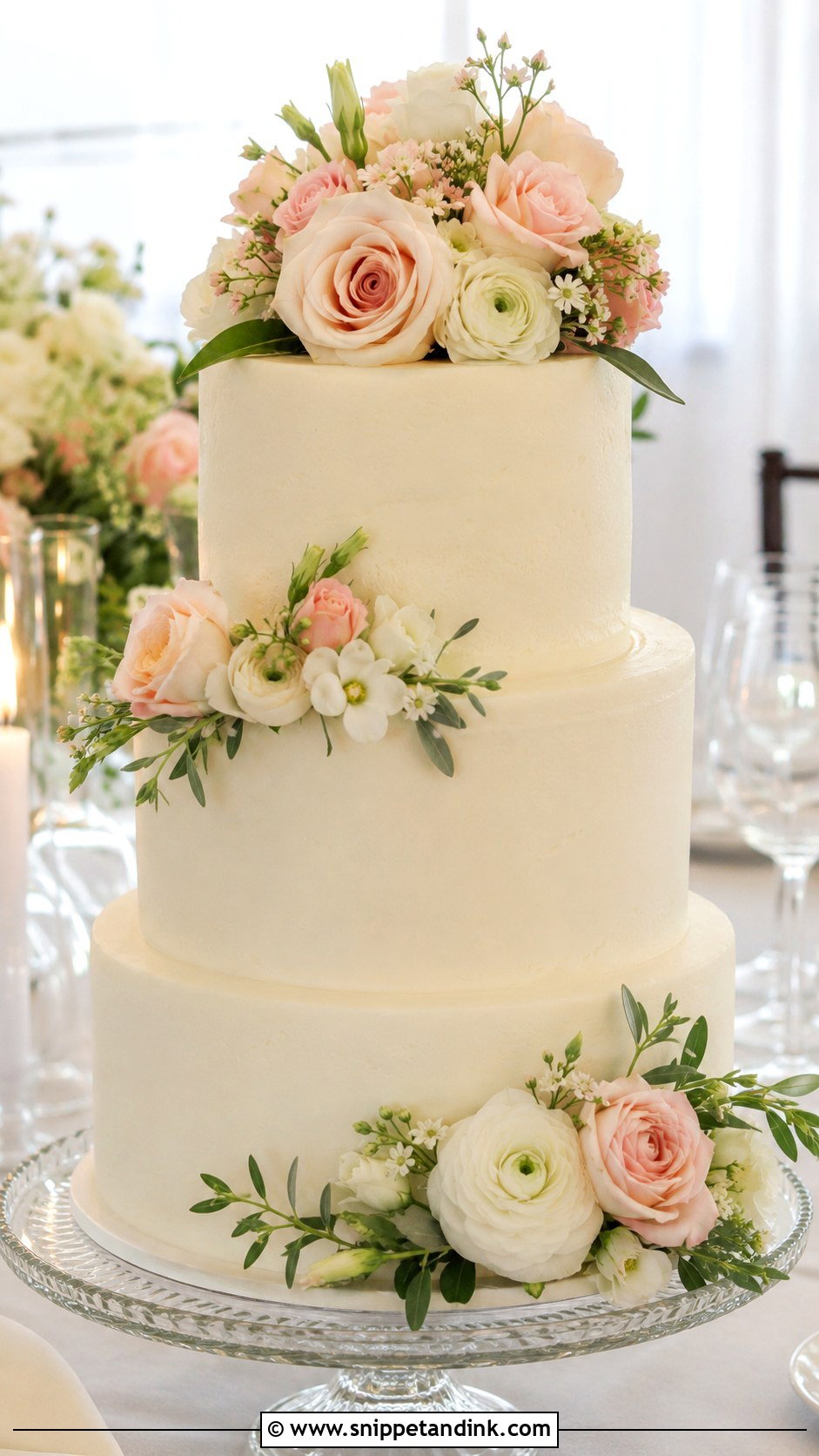
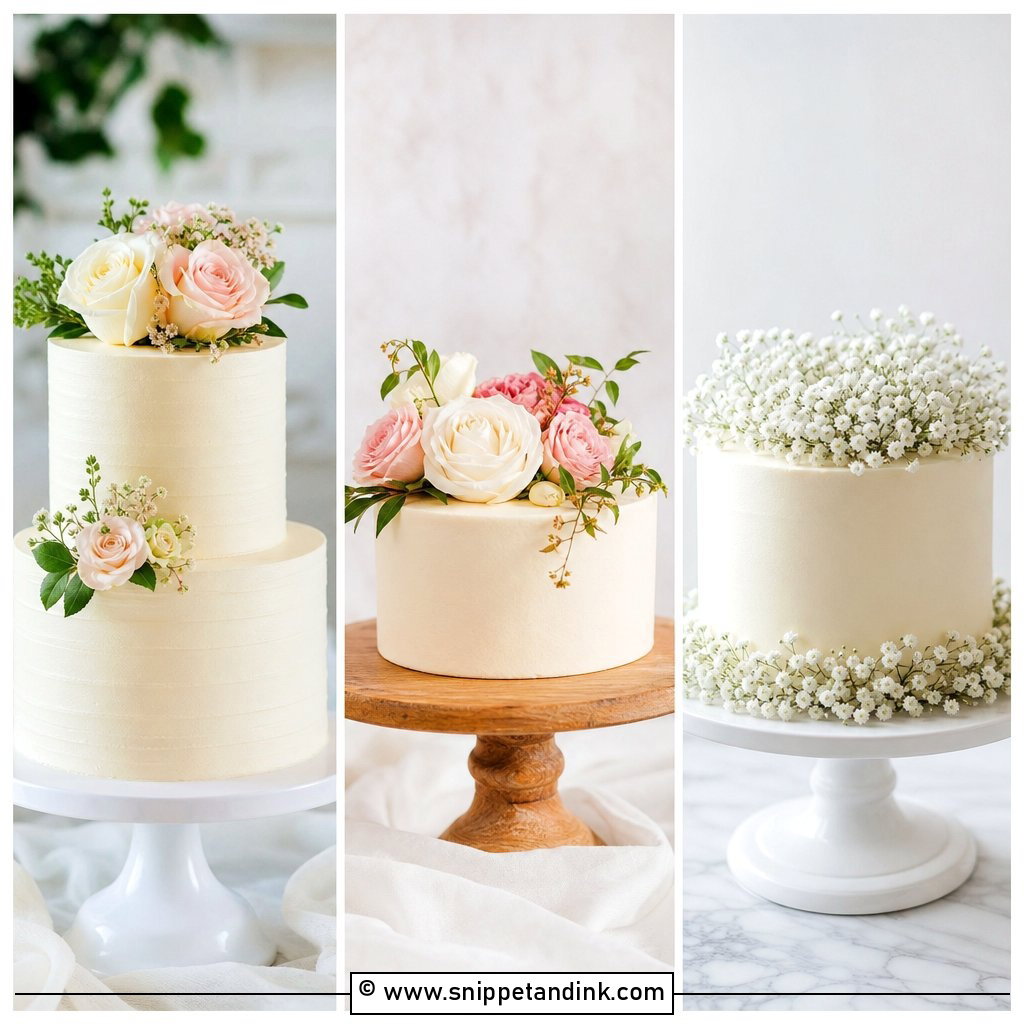
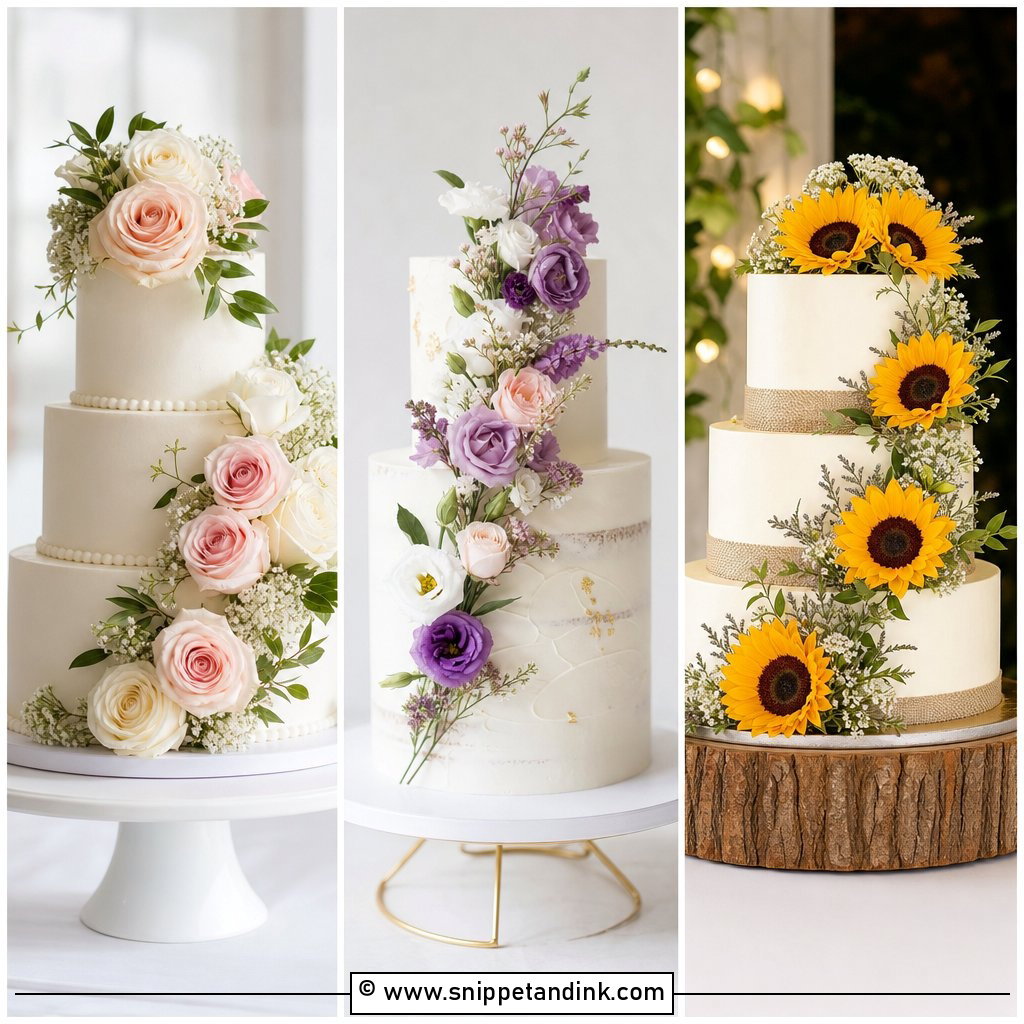
Fresh flowers let the cake echo the bouquet and centerpieces exactly, which is why florists and bakers so often work on this one together. Placement does most of the work: a cluster on top, a small group at the base and maybe one trail down the side. The part couples don’t see is the prep. I wrap every stem in floral tape and push it into a drinking straw or a cake pick so sap and any florist preservative never touch the frosting. Roses, chamomile and violas are the usual safe picks; anything sprayed or unidentified stays off the cake.
3. Sugar Flower Wedding Cake
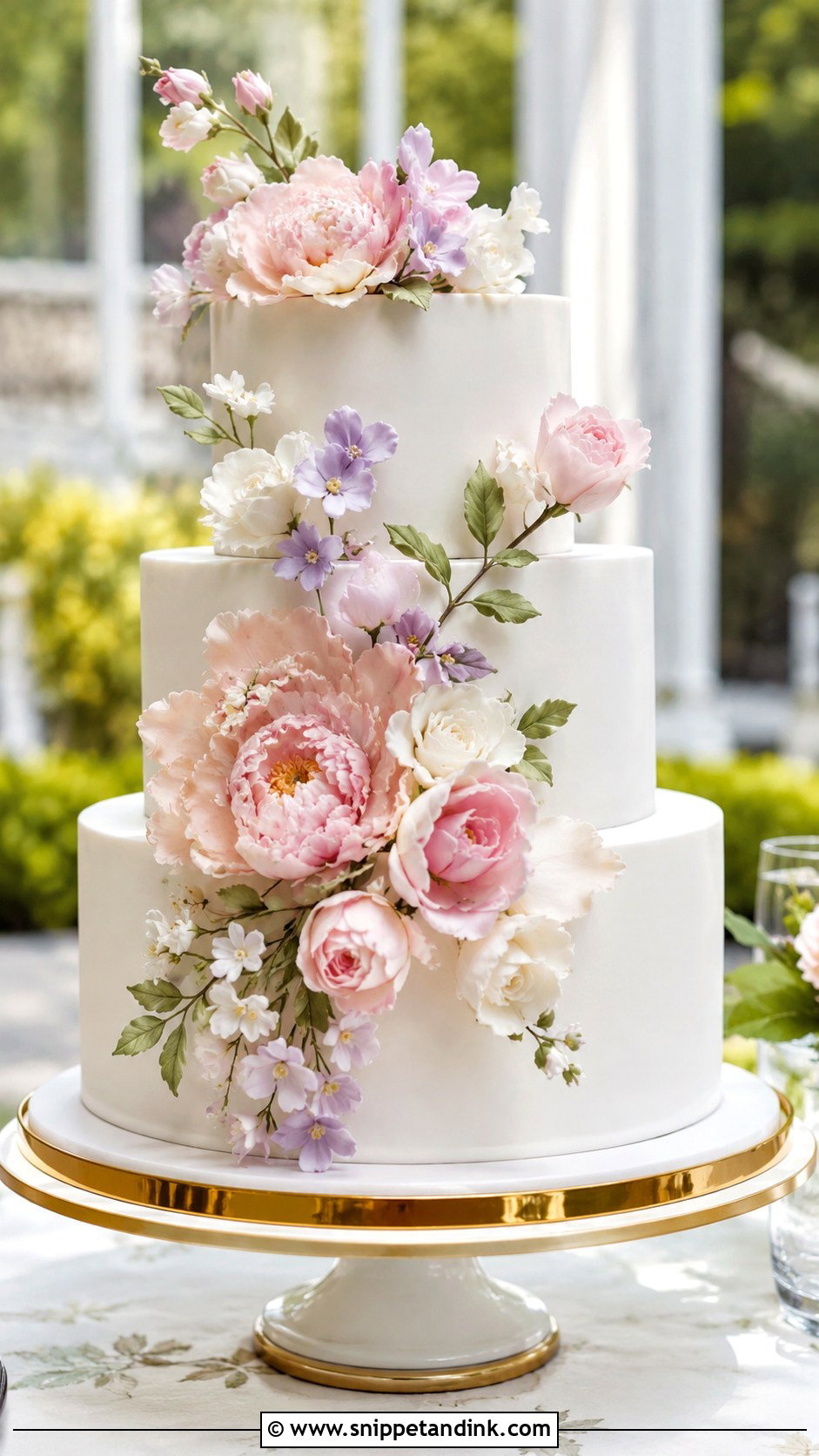
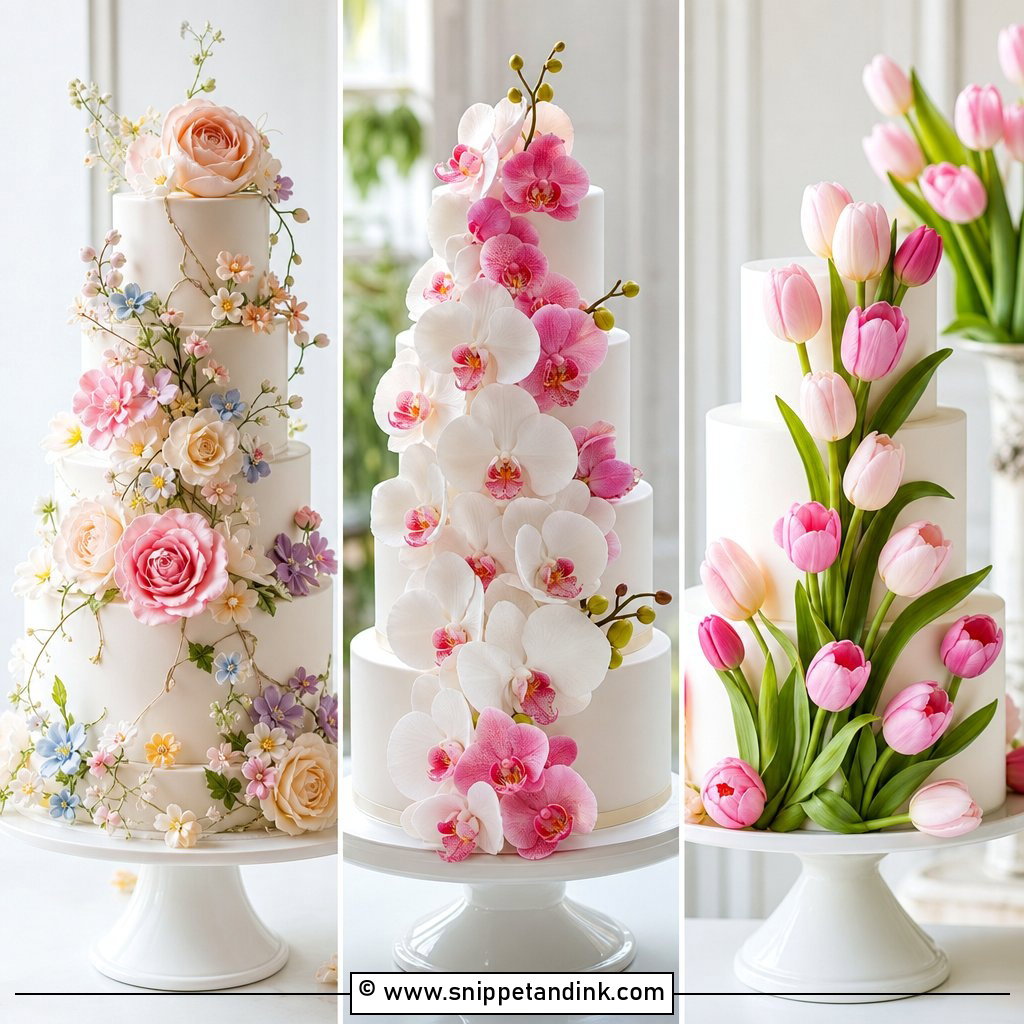
Sugar flowers solve the two worries of spring weddings at once, wilting and pollen. Peonies, sweet peas, cherry blossom and ranunculus are all shaped petal by petal from gum paste, wired, dried and dusted to match a fabric swatch or a paint chip. That control is the point. They take real hours to make, so this is where a cake budget usually goes, and the order has to be placed early enough for the flowers to dry fully. Blush, cream and peach sugar blooms on an ivory tier hold their color under every kind of light, and the top spray can be kept afterwards in a box away from damp.
4. Buttercream Flower Wedding Cake
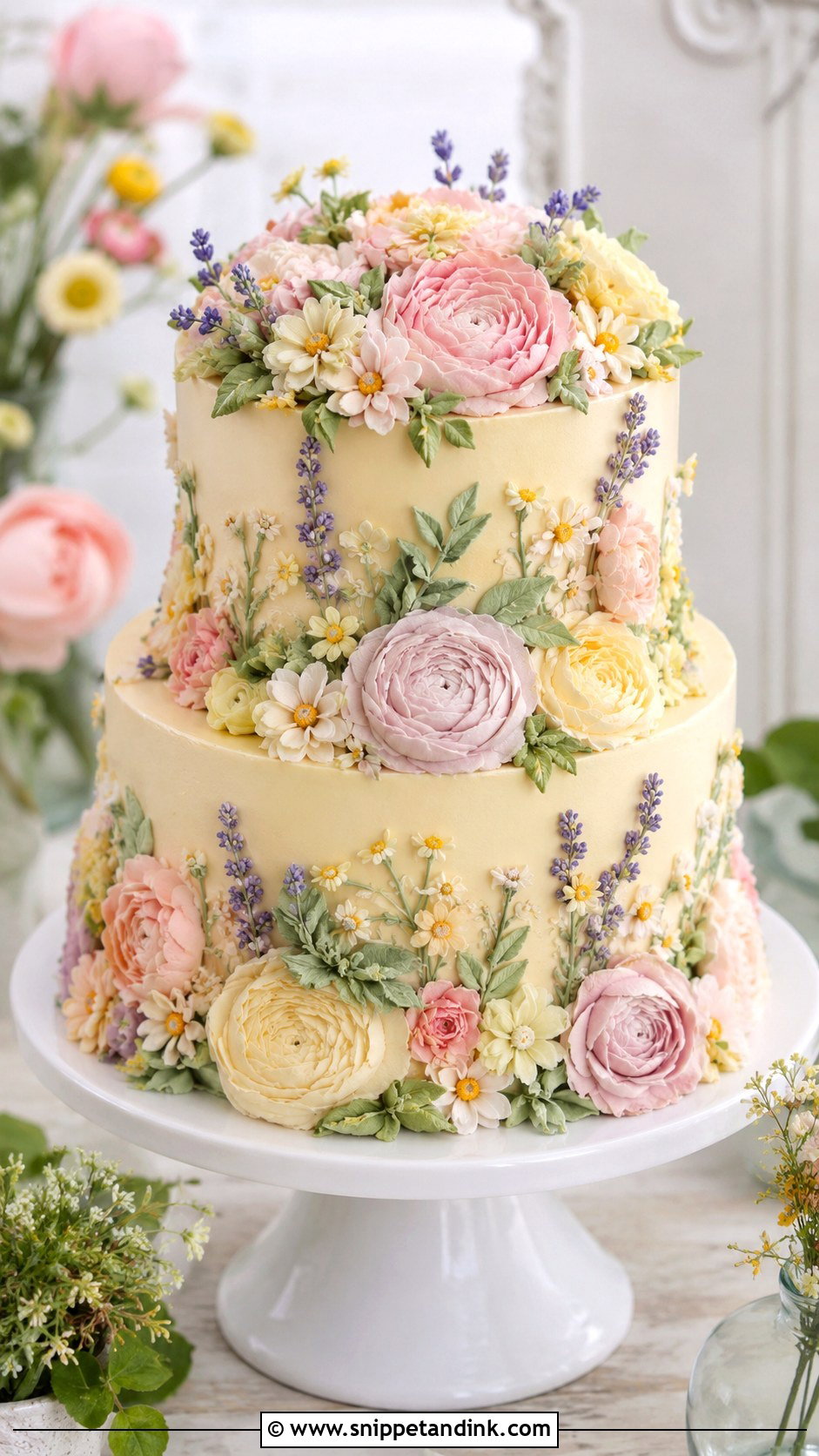
Piped flowers are made with the cake rather than added to it, so every petal is edible and nothing has to be removed before slicing. I pipe roses and tulips on a flower nail, chill them hard, then lift them onto the tiers; daisies and lavender sprigs go straight on. The catch is warmth. Buttercream petals start to soften in a warm room, so for an afternoon reception in a glasshouse I’d stiffen the recipe or switch to a ganache coat underneath. Blush, lilac, butter yellow and sage are easy colors to tint without the bitter taste deep gel colors can leave.
5. Floral Cascade Wedding Cake
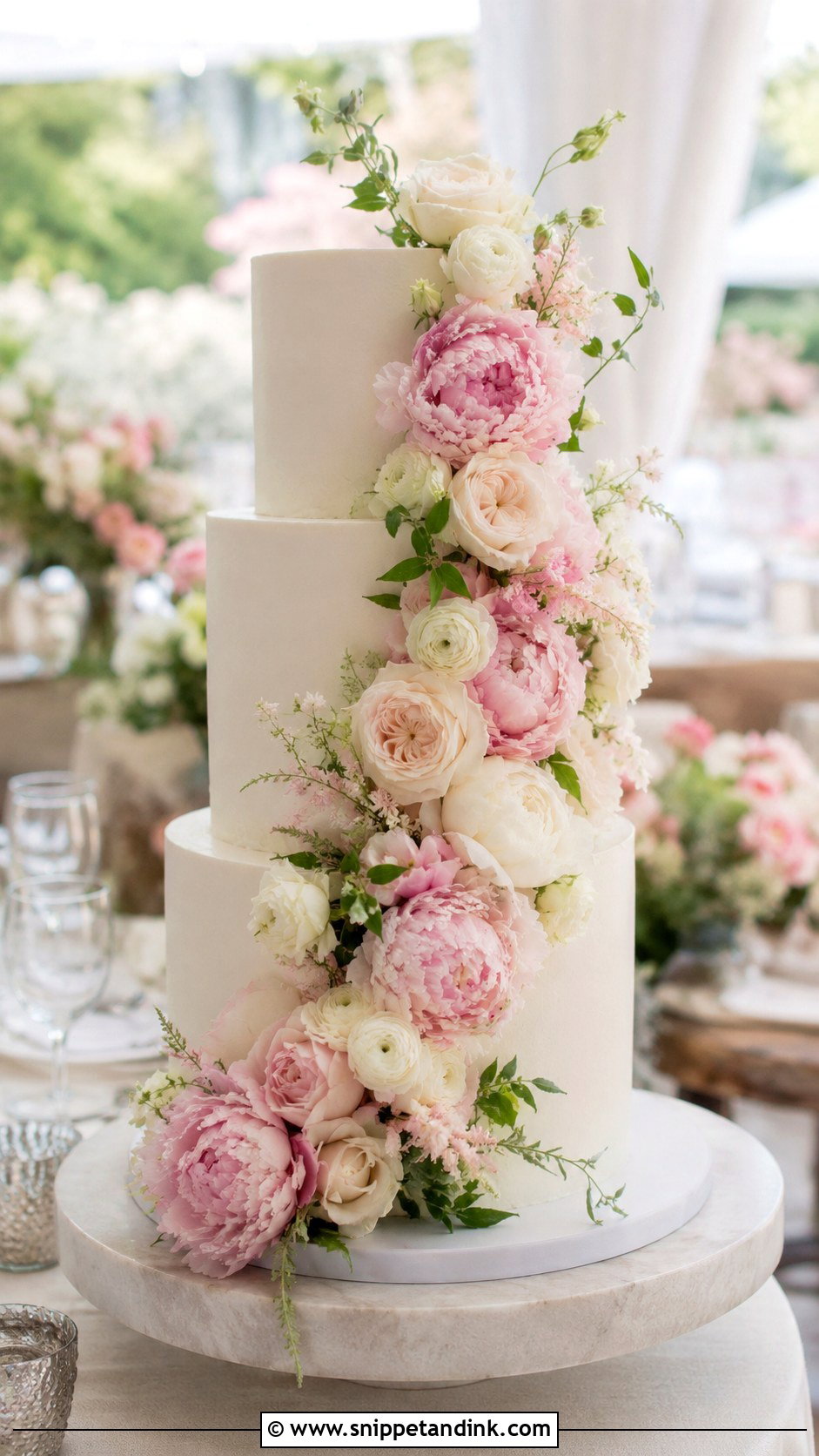
A cascade is the floral design where structure matters most. Peonies, ranunculus, lisianthus and trailing greenery have to be anchored on picks or a hidden armature, or the weight drags the lower blooms off the tier halfway through the evening. I build it on three or four tiers so the drop has distance to travel, and I keep the frosting plain so the flowers carry the eye. Color controls the mood more than the flower choice does: blush and cream read soft, peach and yellow read warm and sunny.
6. Wildflower Wedding Cake
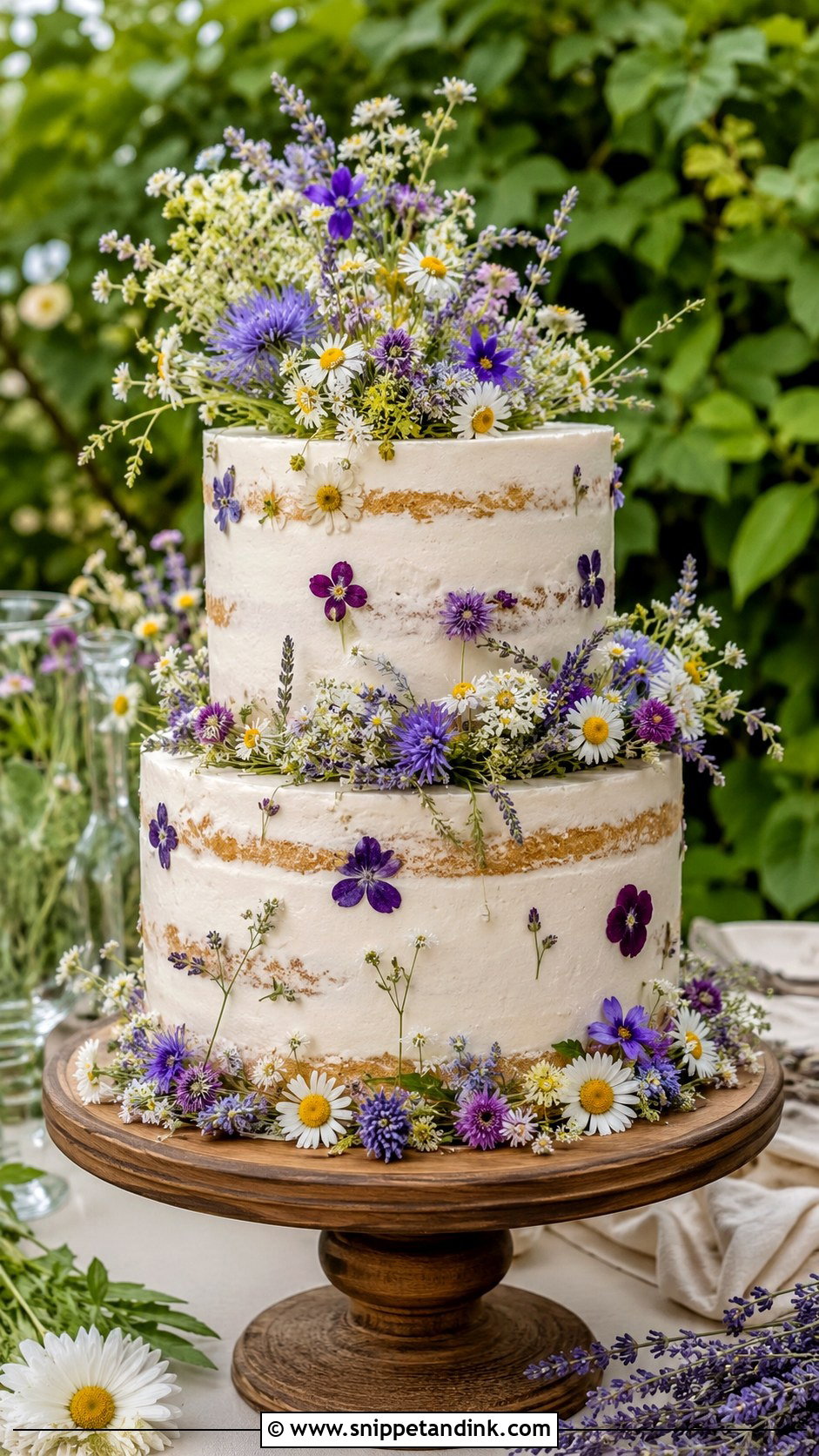
A wildflower wedding cake belongs at barns, meadows and garden venues, and it is harder to make look casual than it seems. Edible pansies, violas, chamomile, cornflowers and lavender are scattered so each tier has a similar density, otherwise one side looks finished and the other looks forgotten. I place the biggest flowers first, then fill with the tiny ones. A semi-naked finish keeps it honest and rustic. Lemon, honey or a gentle lavender sponge suits it, and a plain wooden stand finishes the picture.
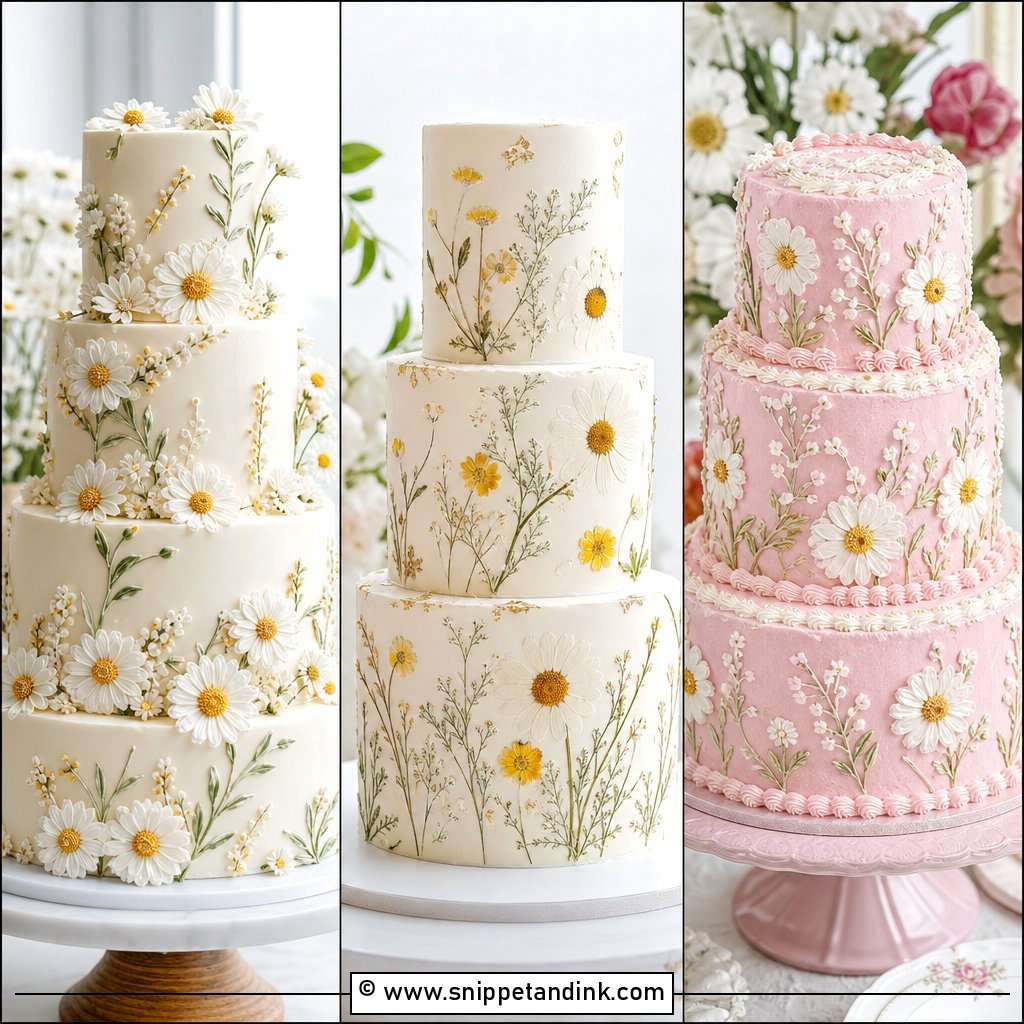
7. Daisy Wedding Cake
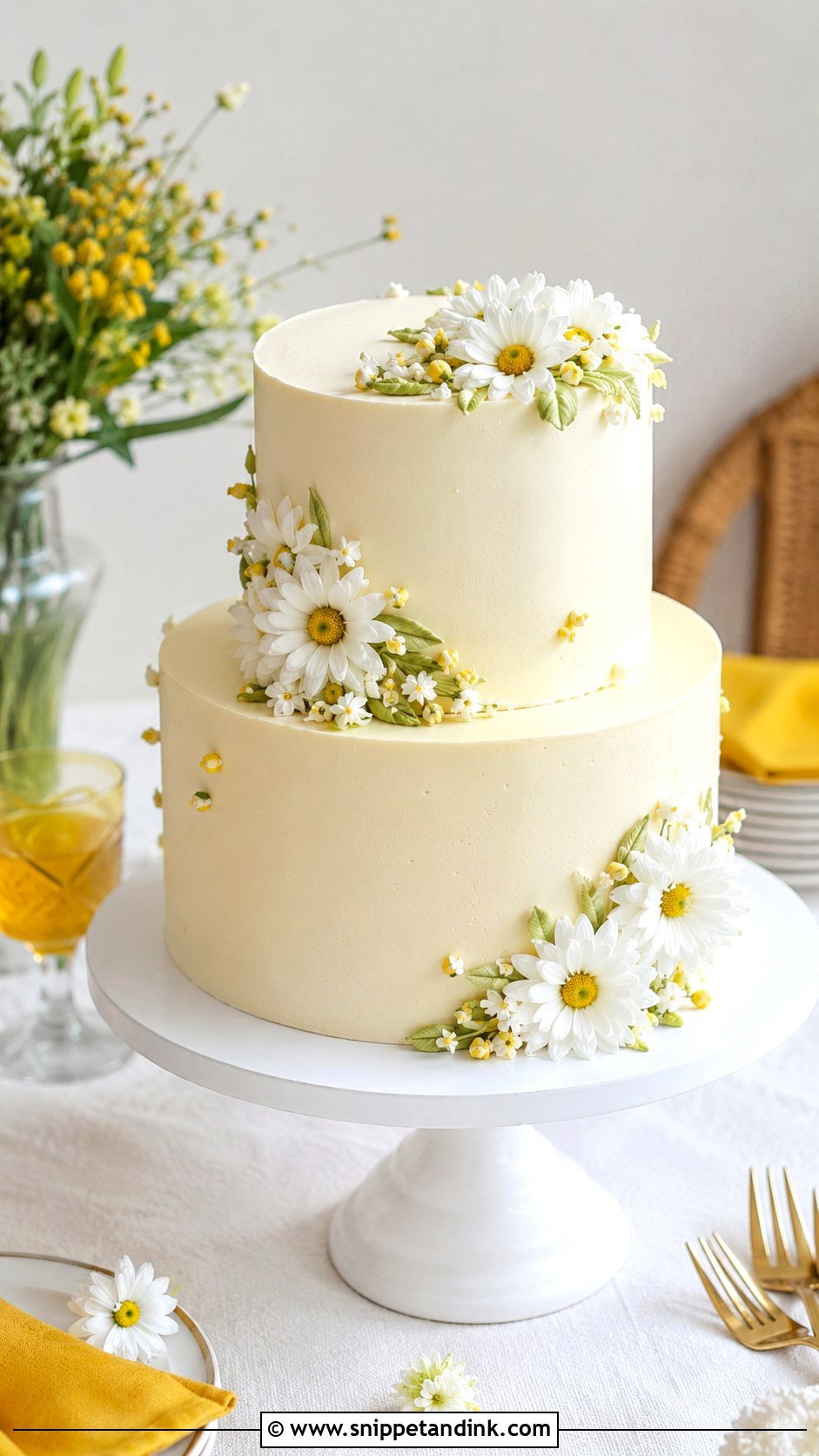
Daisies are cheerful and almost impossible to overthink, which is why they suit brunch weddings and backyard receptions so well. On white or pale yellow buttercream their simple petals read clearly from across a room. I tend to make them in sugar or pipe them, since fresh daisies sold for the vase are rarely grown for eating. Small clusters around the tiers look more current than an all-over pattern. Lemon, vanilla or coconut cake keeps the flavor as sunny as the decoration, and a few green leaves stop the white petals from disappearing against white frosting.
8. Tulip Wedding Cake
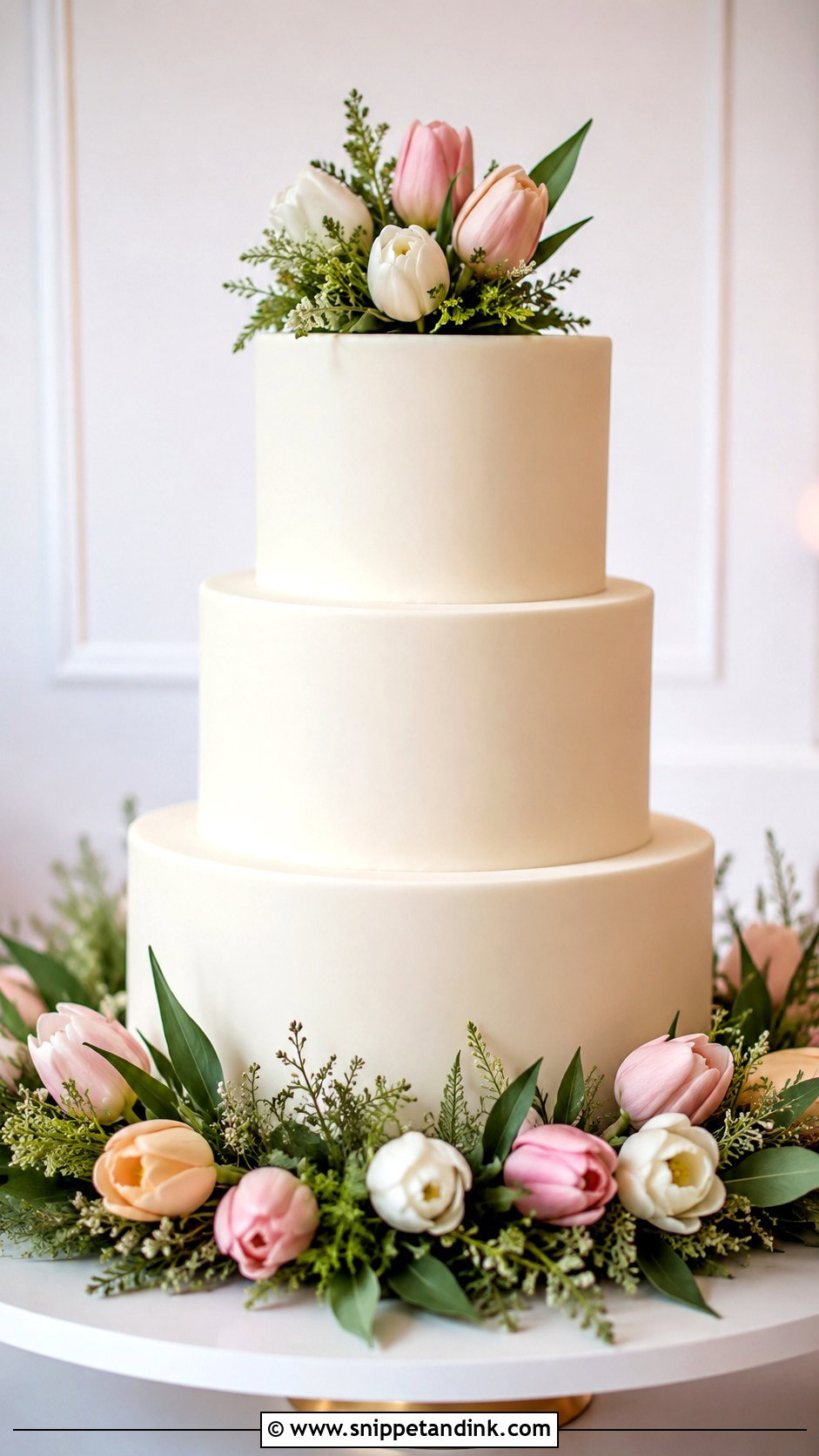
Tulips are an early spring flower with a clean, cupped shape, and they look most at home either ringed around the base or gathered as a small bouquet on top. Fresh tulips keep growing and opening after they’re cut, so a bud that looked closed at noon can be wide open by the speeches. For that reason I either make them in sugar or ask the florist for stems that are just starting to show color. Their bold shape needs a calm background, so I keep the fondant or buttercream smooth. Vanilla almond or lemon elderflower matches them well.
9. Cherry Blossom Wedding Cake
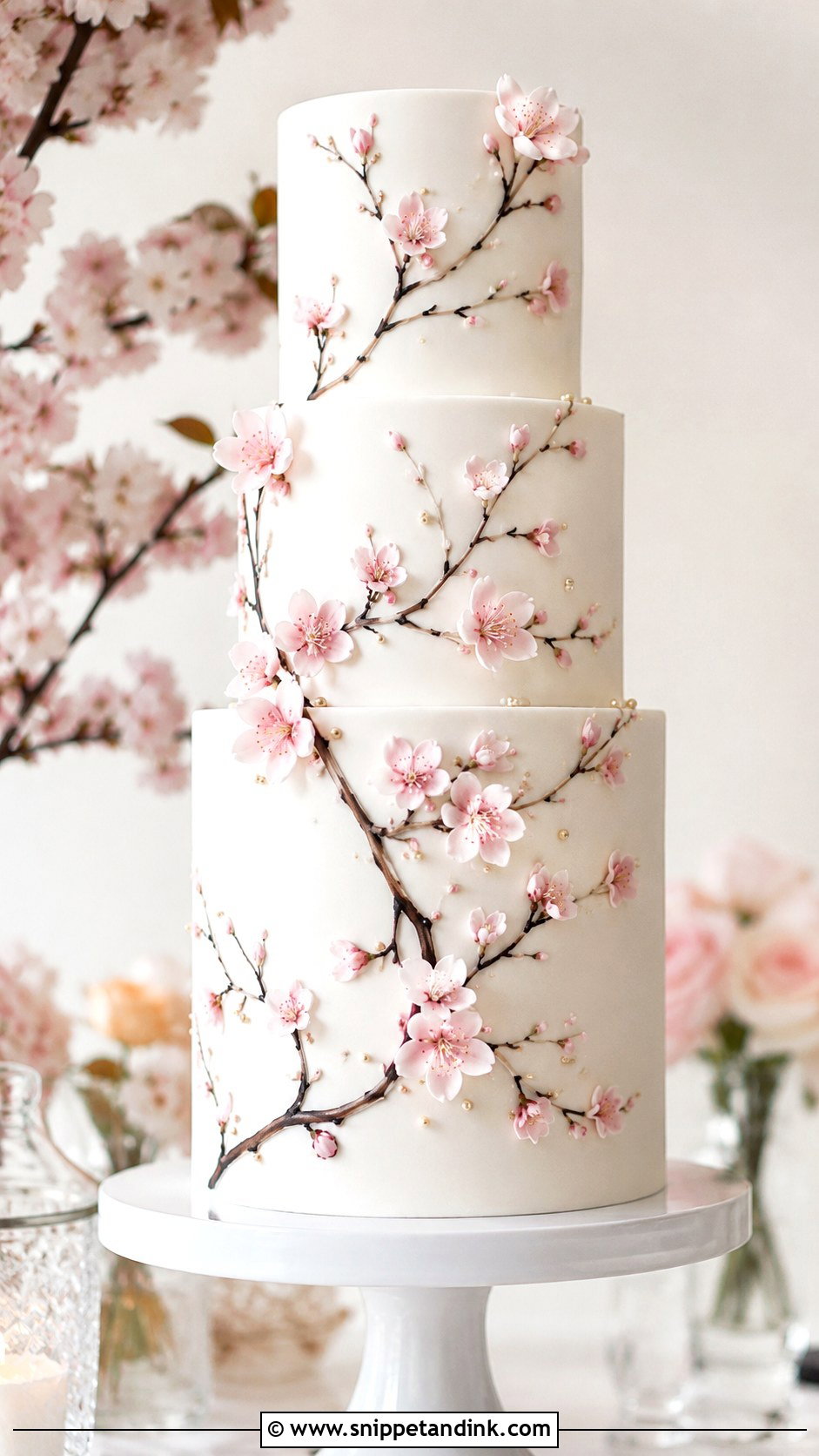
A cherry blossom wedding cake is all about the branch. I paint the brown stems first so they curve up a tall white tier, then add the blossoms in sugar or piped buttercream where a real branch would carry them, never evenly spaced. The palette stays narrow: pale pink, ivory and that thread of brown. It suits a ceremony under flowering trees or a Japanese garden. Almond, cherry or white chocolate raspberry sponge works, and the painted version is a good choice when you want the look without anything three-dimensional to protect.
10. Peony Wedding Cake
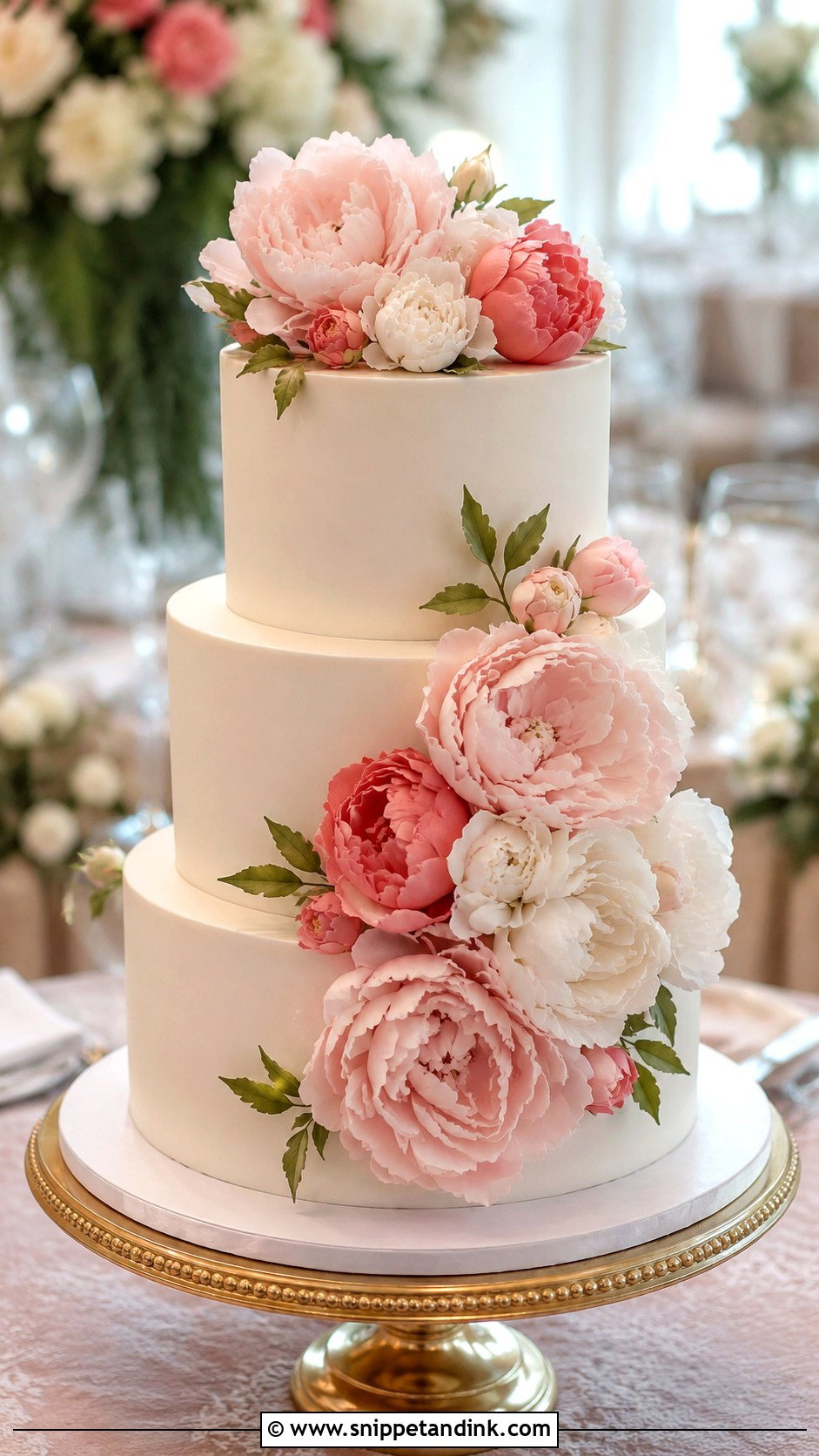
Peonies are big, so a few blooms do the job of a dozen roses. I recommend sugar peonies for most couples because fresh ones open fast in a warm room and drop petals onto the tiers, and sugar lets you match coral or blush exactly. On smooth white buttercream they look striking, especially as one large cluster on the side of a three-tier cake with a smaller echo on top. Strawberry, vanilla bean or a light rose-flavored sponge suits them. I’d steer away from peonies on a very small cake, where one flower can swallow the whole tier.
11. Rose Wedding Cake
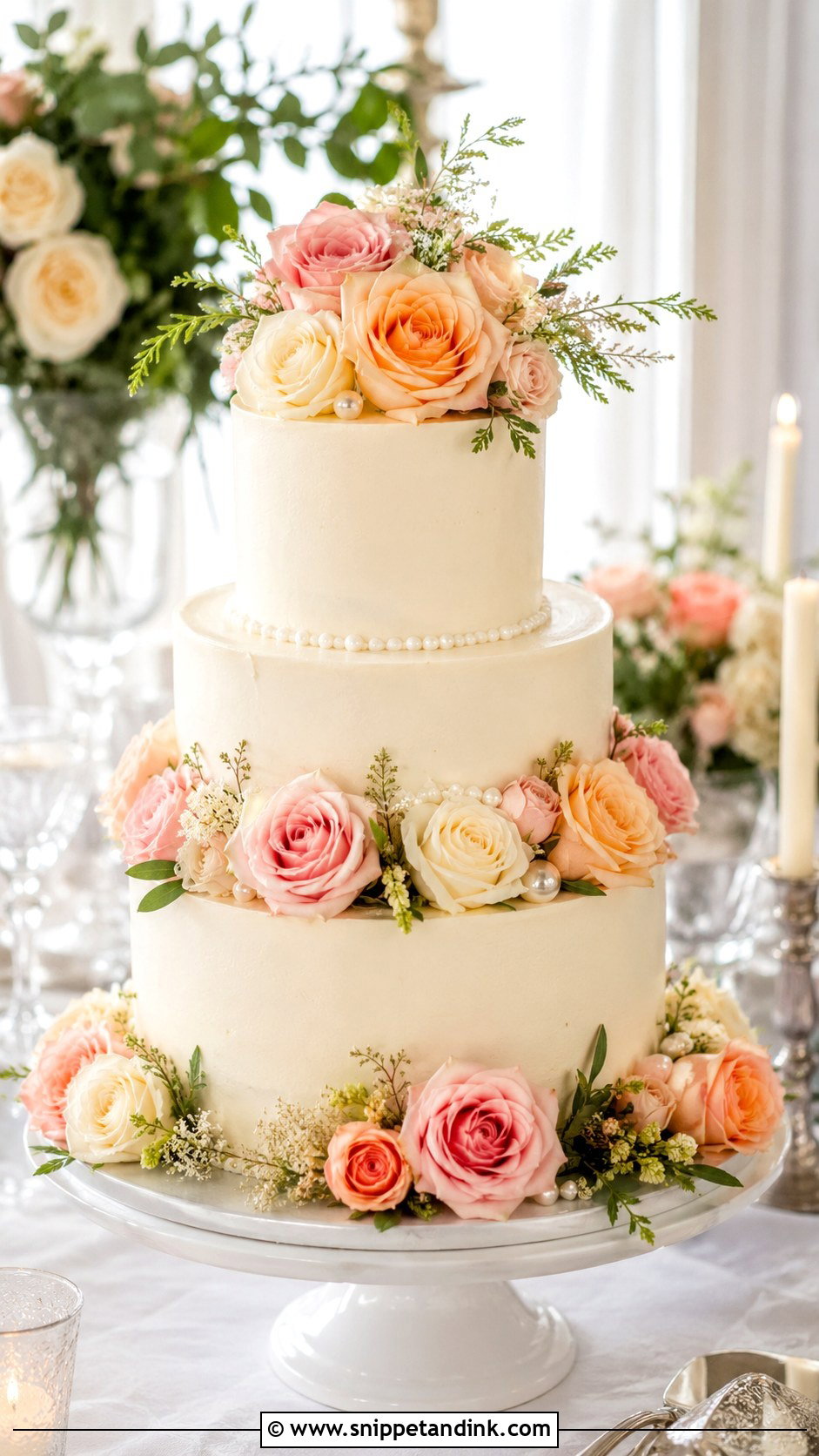
Roses can look dated on a wedding cake when they arrive in deep red, so for spring I push toward blush, cream, peach, butter yellow and pale lavender. Any rose that goes on fresh should be unsprayed and grown for food use, which is something to raise early because ordinary florist roses usually aren’t. Sugar or piped roses avoid the question completely. Between the tiers and at the base gives a classic finish; one asymmetric cluster looks more modern. Vanilla, almond and raspberry are dependable flavors with it.
12. Ranunculus Wedding Cake
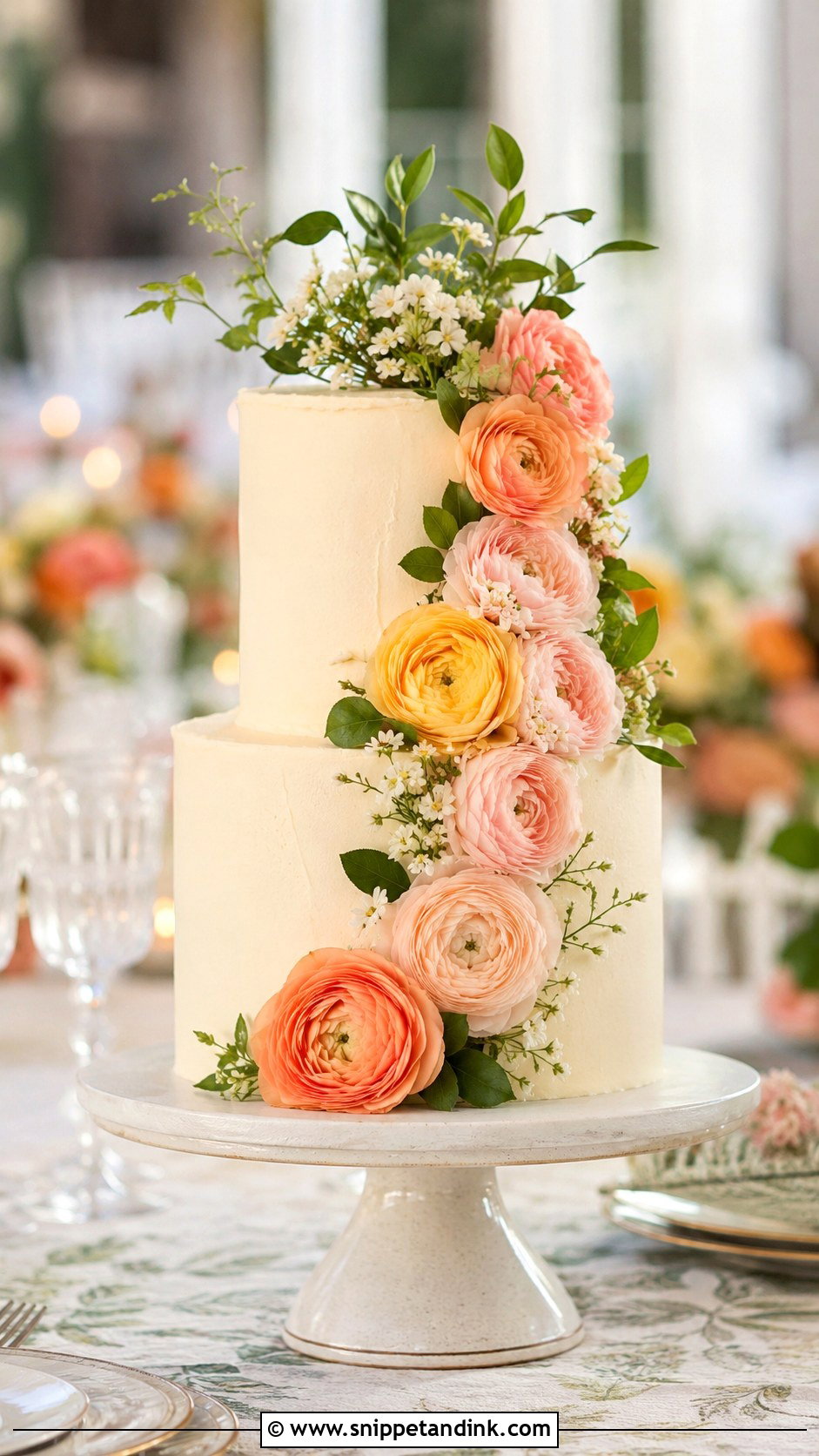
Ranunculus have tight, layered petals and come in the best spring colors, peach and coral especially. They are smaller than peonies and more detailed than daisies, so they suit clusters on a two-tier cake or a diagonal line across a taller one. Fresh ranunculus belong to the buttercup family and shouldn’t be eaten, so if the florist supplies them I keep them on picks with a barrier, and I remind the couple to lift them off before cutting. Sugar ranunculus avoid that step entirely. Lemon, honey and vanilla sponges sit nicely with them.
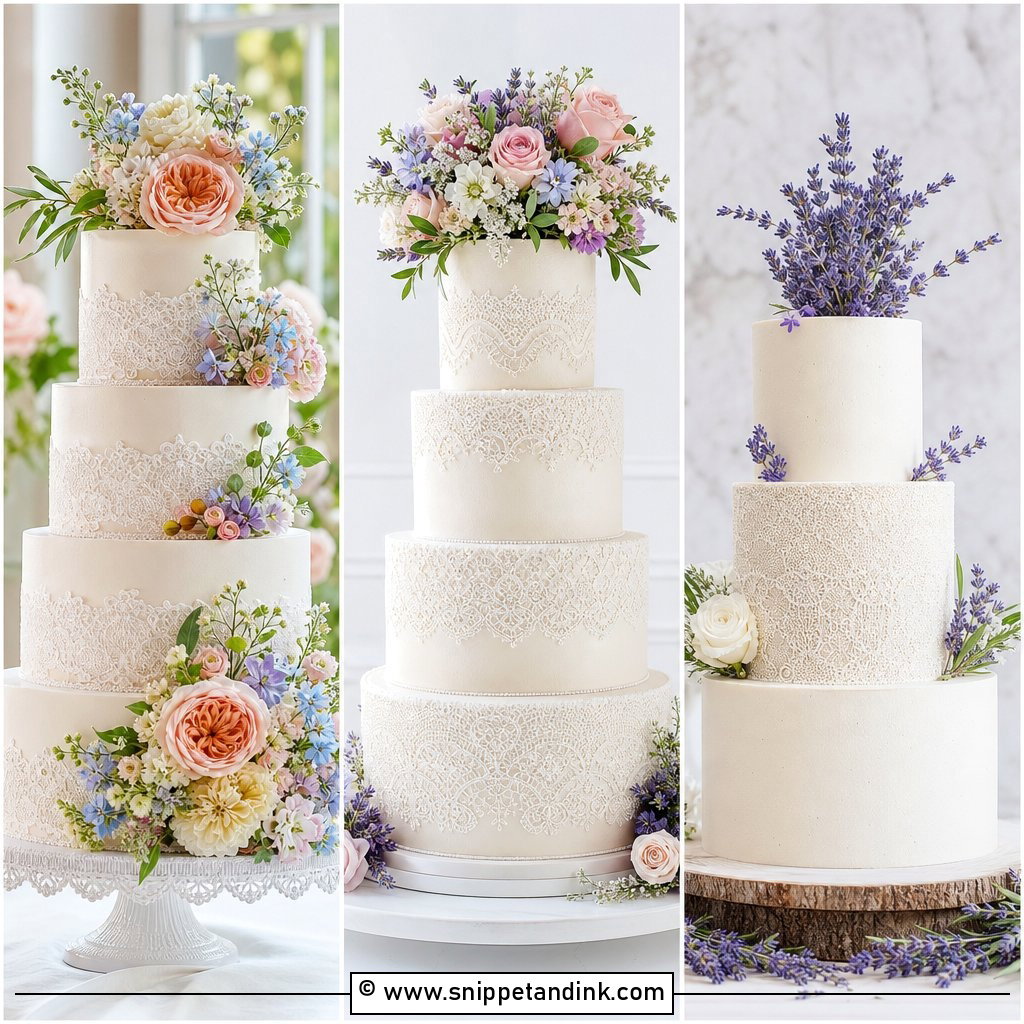
13. Lavender Wedding Cake
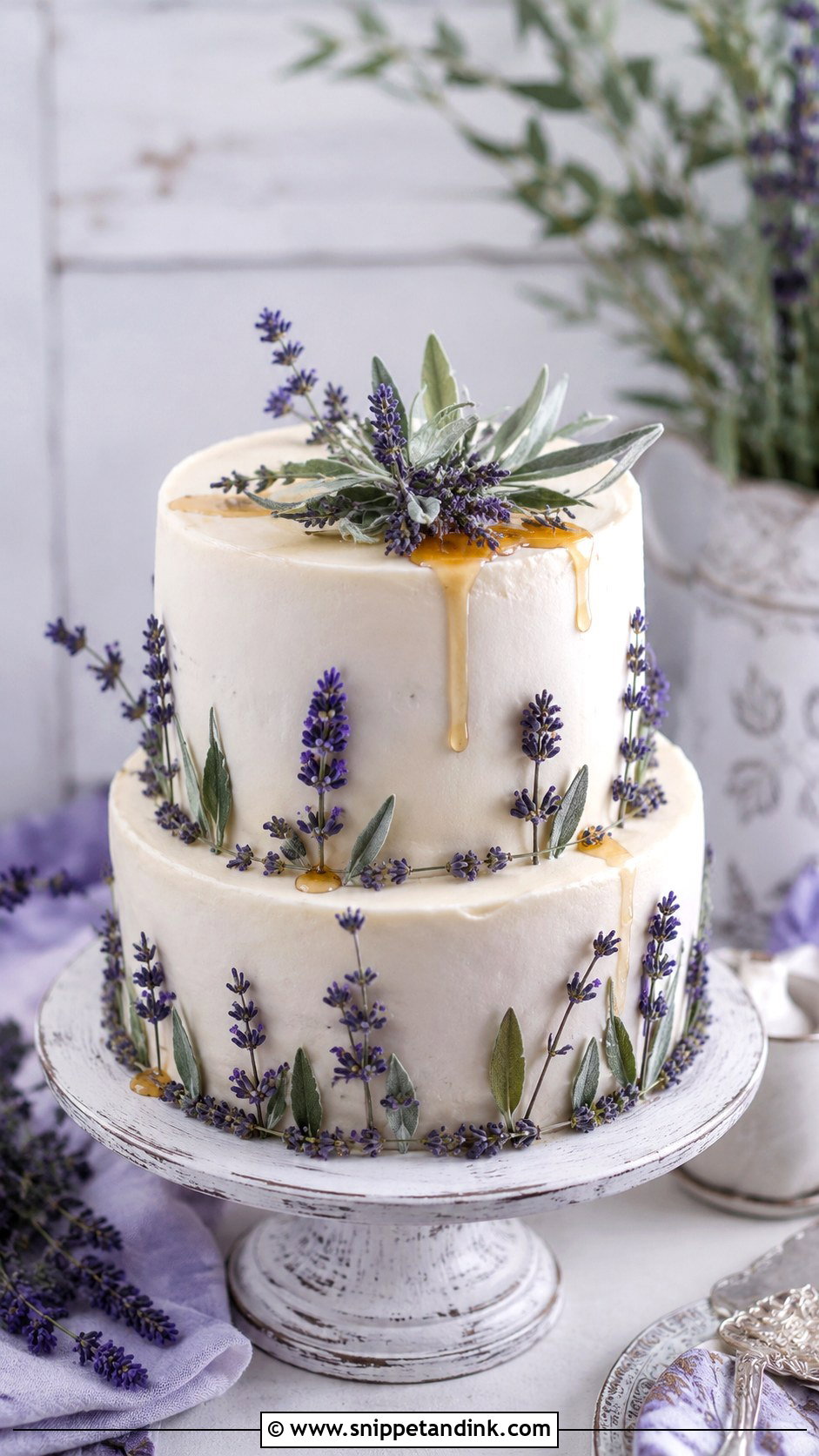
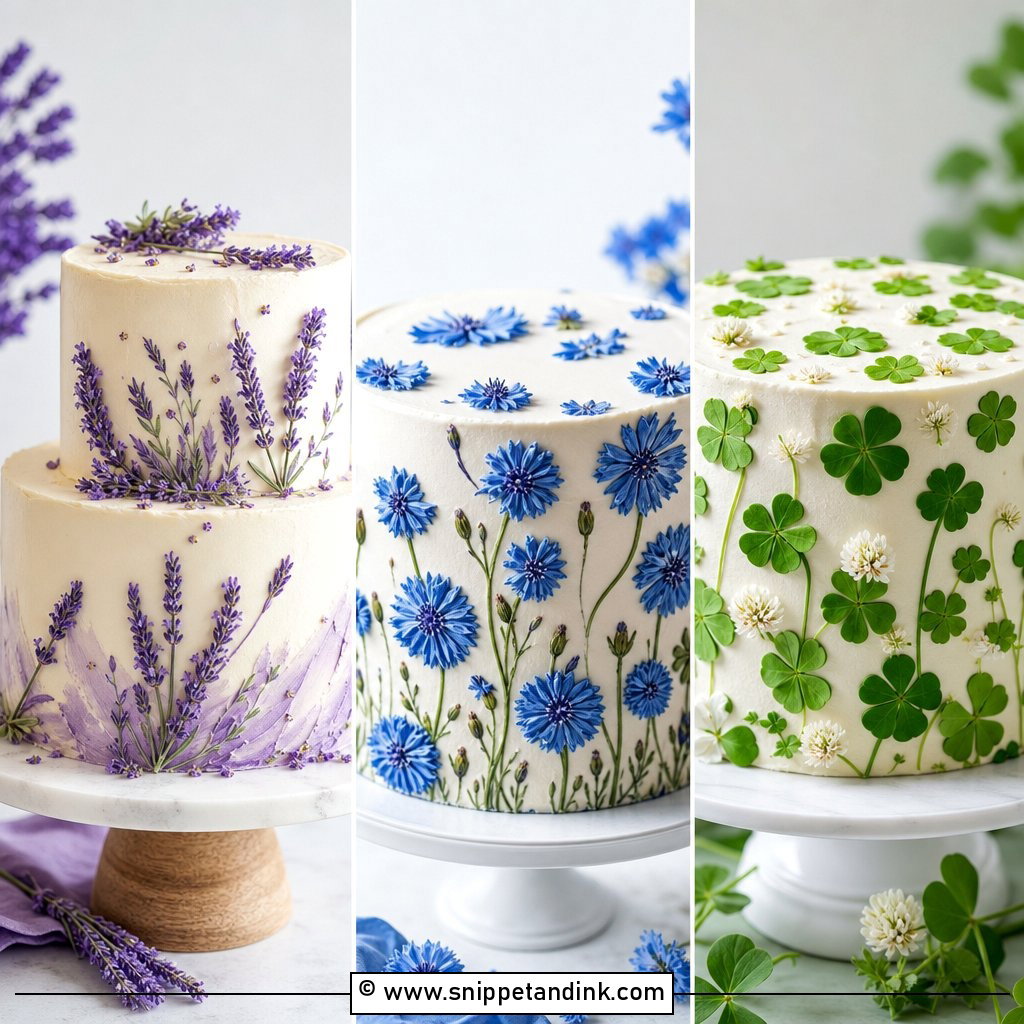
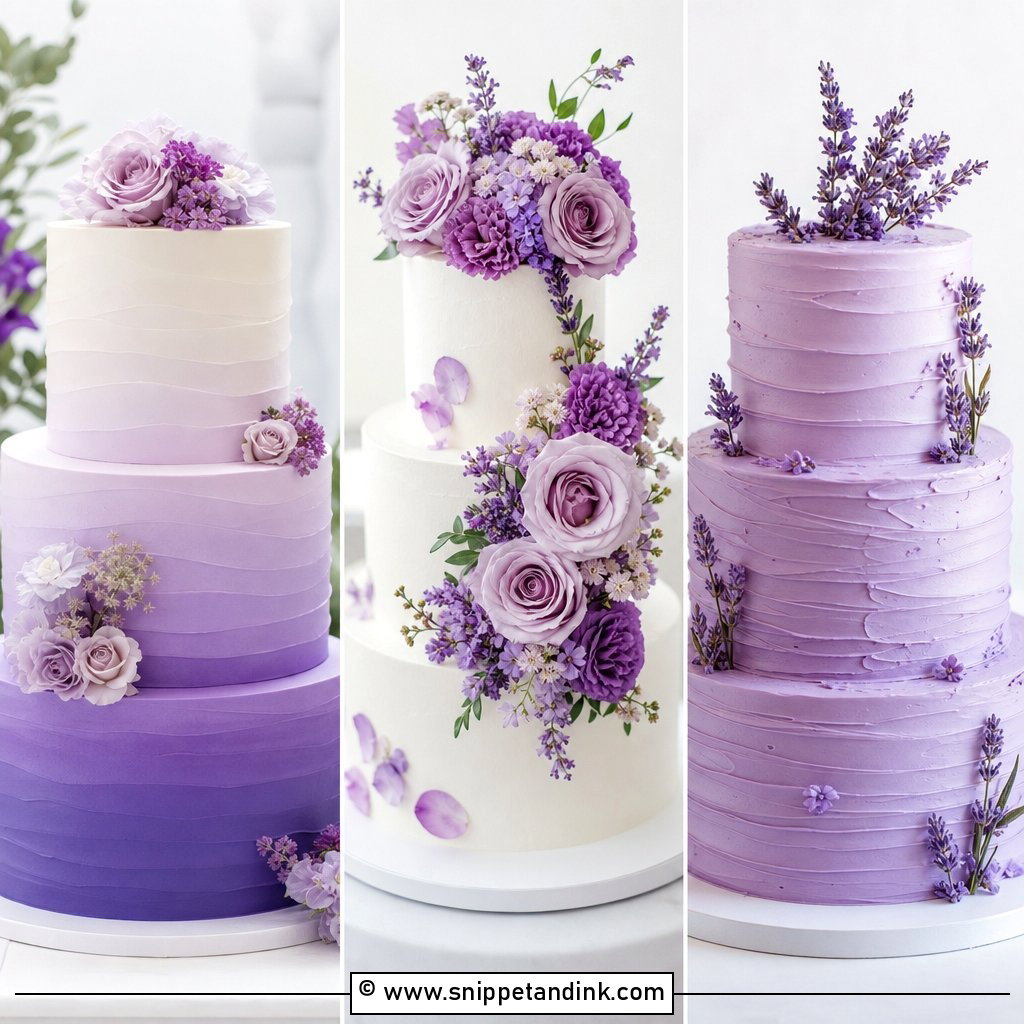
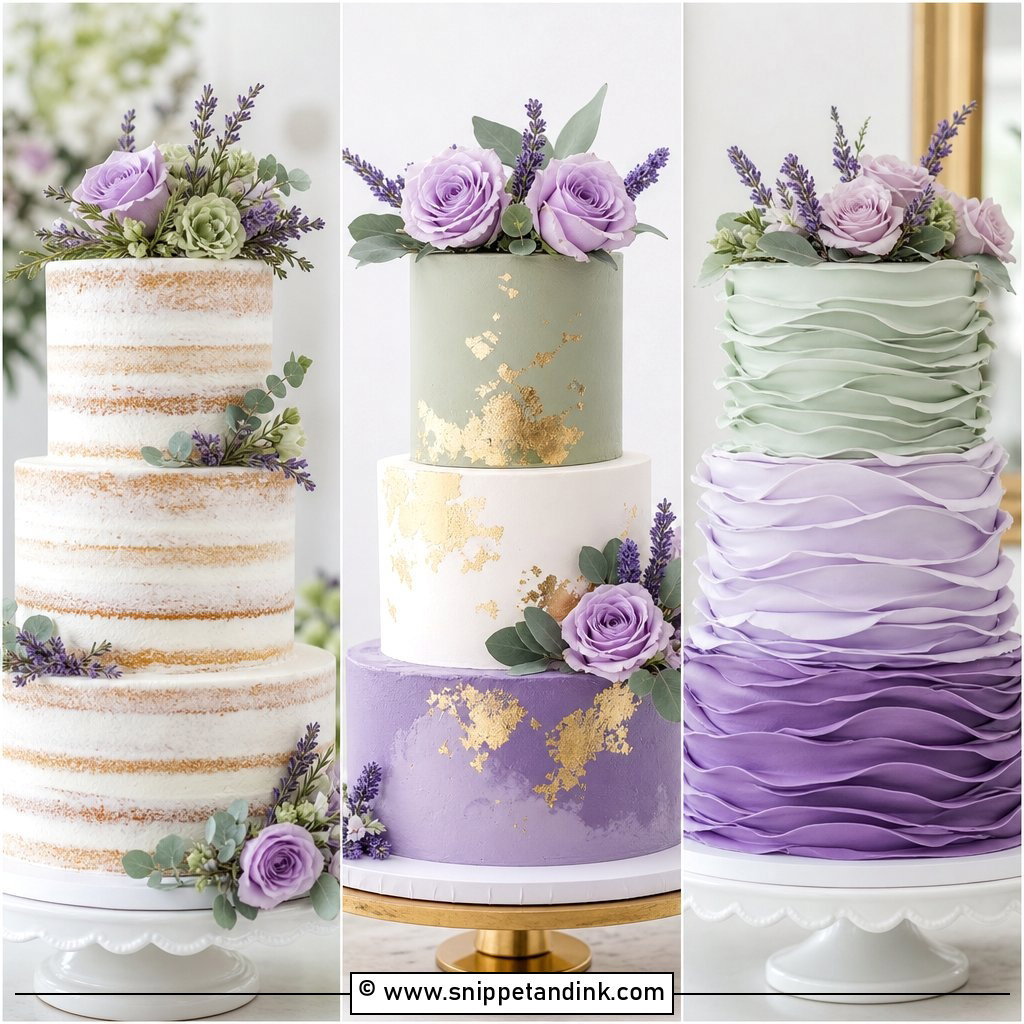
Lavender is a good example of a flower that can be both decoration and flavor, as long as the flavor is used lightly. Too much culinary lavender tastes like soap, so I infuse the milk or syrup gently rather than adding buds to the batter. On the outside, piped sprigs or painted stems on white buttercream look fresh and slightly French. White, ivory, pale lilac and sage green keep the palette calm. Honey buttercream with lemon or vanilla sponge is the pairing I return to most.
14. Pansy Wedding Cake
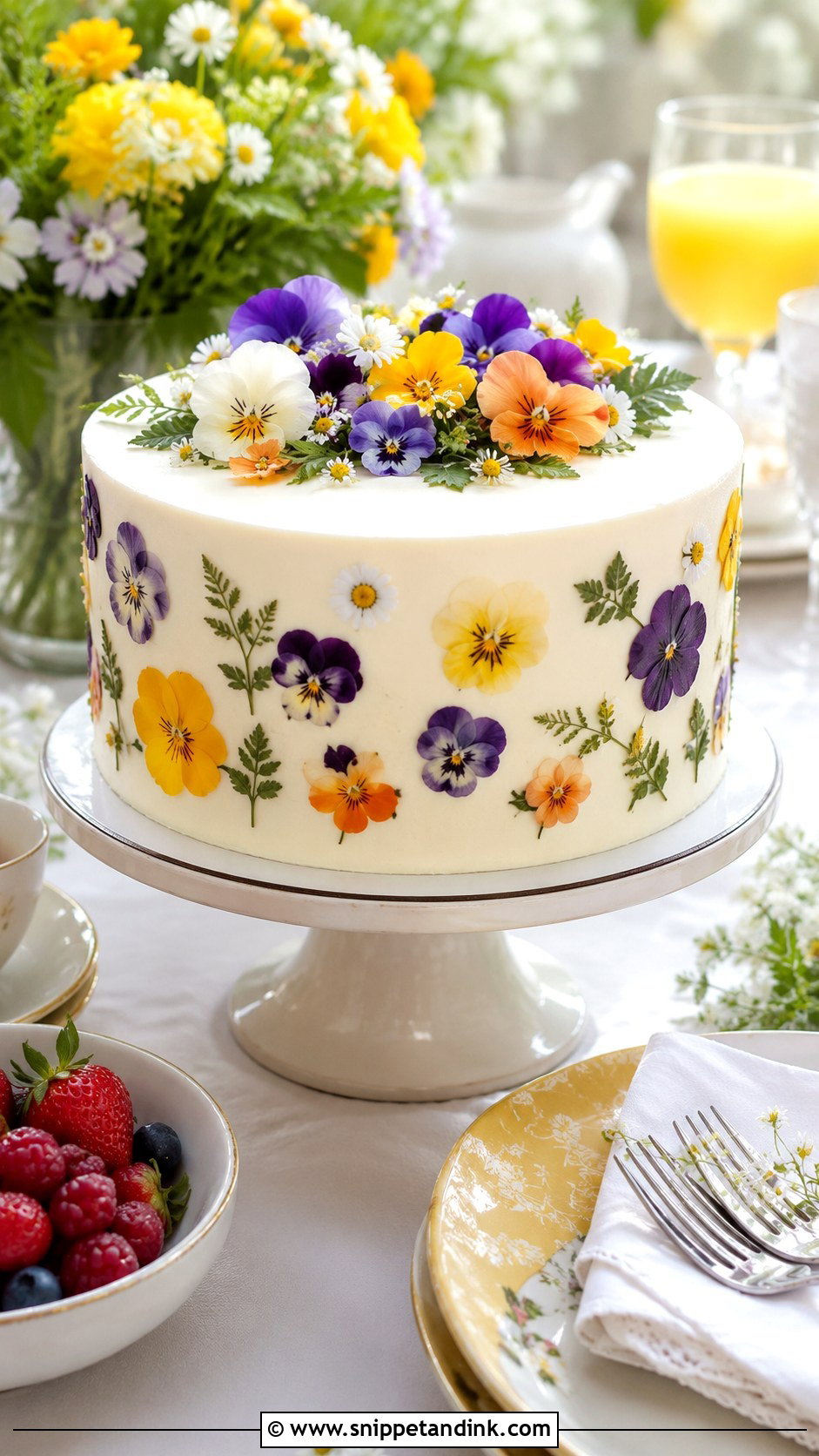
A pansy wedding cake is joyful, and pansies are one of the safest edible flowers to work with. Their flat faces press beautifully, so they are ideal for scattering across white buttercream. Purple, yellow, white, peach and blue all exist, but I’d limit a cake to two or three of them or it starts to look like a seed packet. Small weddings and afternoon receptions suit this design, and a single tier carries it just as well as several. Vanilla, lemon or orange sponge keeps it bright.

15. Hydrangea Wedding Cake
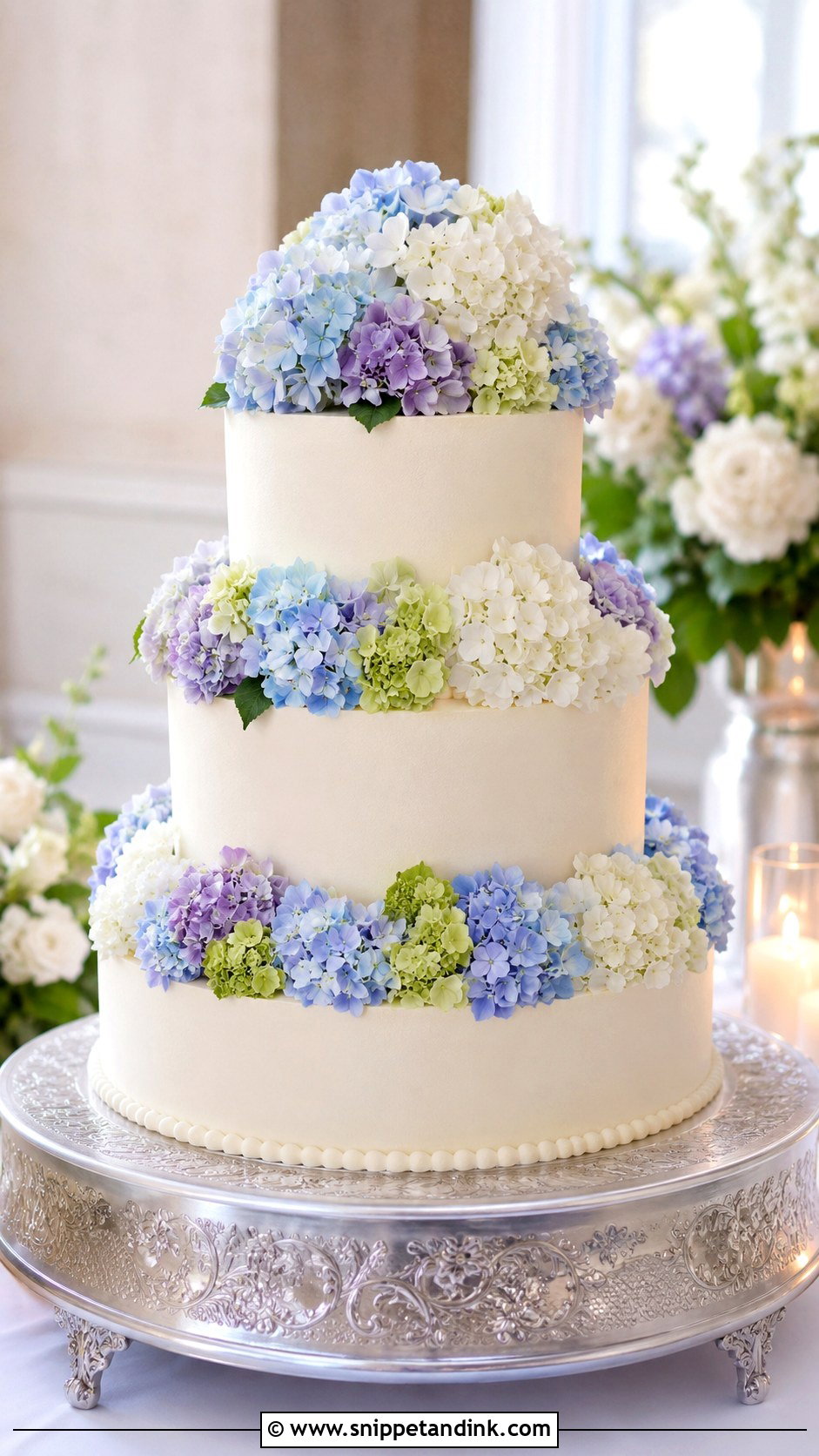
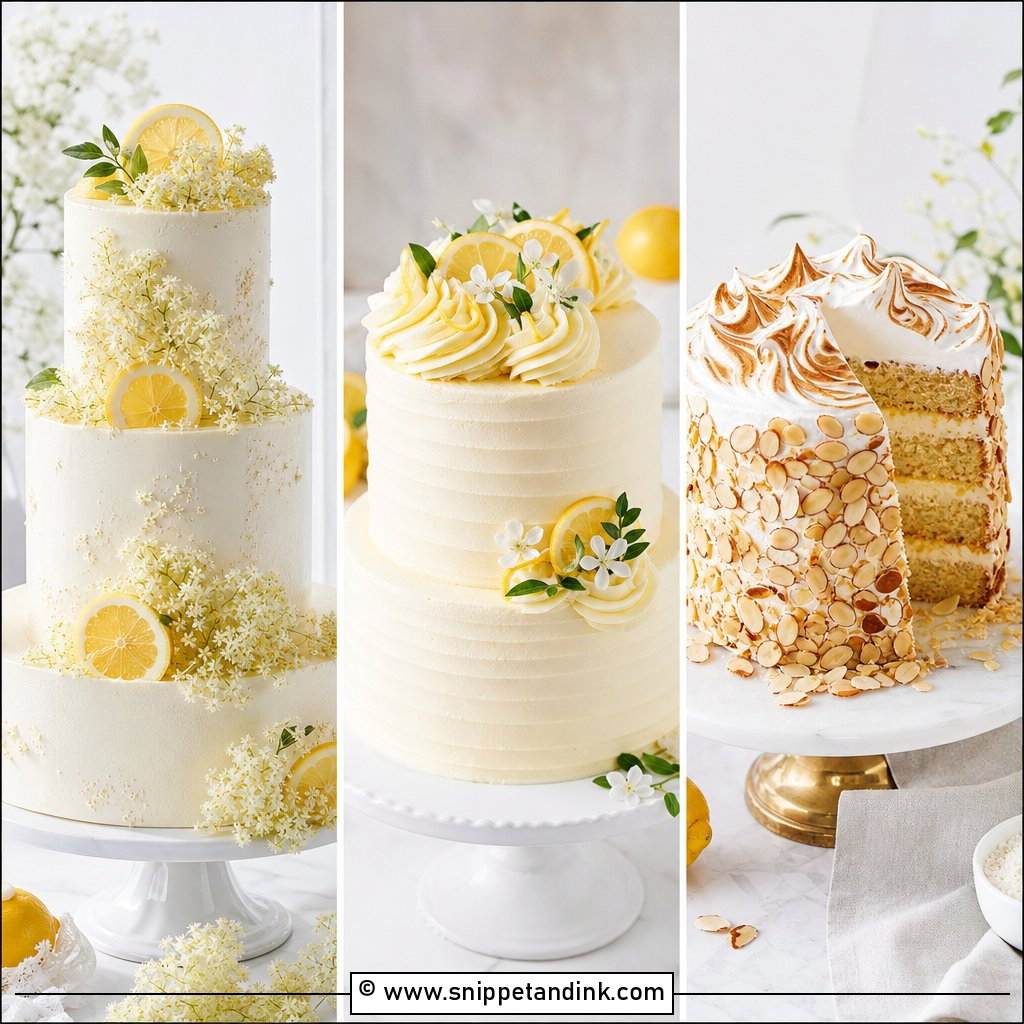
Hydrangeas give lots of volume from a single head, which is why florists love them for spring and summer. On a cake, though, fresh hydrangea is not a flower I’d put near frosting: it isn’t edible and it wilts quickly out of water. Sugar or piped buttercream hydrangeas are the better route, and the tiny four-petal florets pipe surprisingly fast with a petal tip. Blue, white, lavender and pale green all sit well on ivory. Keep the tiers plain so the clusters stay the focus, and choose vanilla bean, lemon or almond for the sponge.
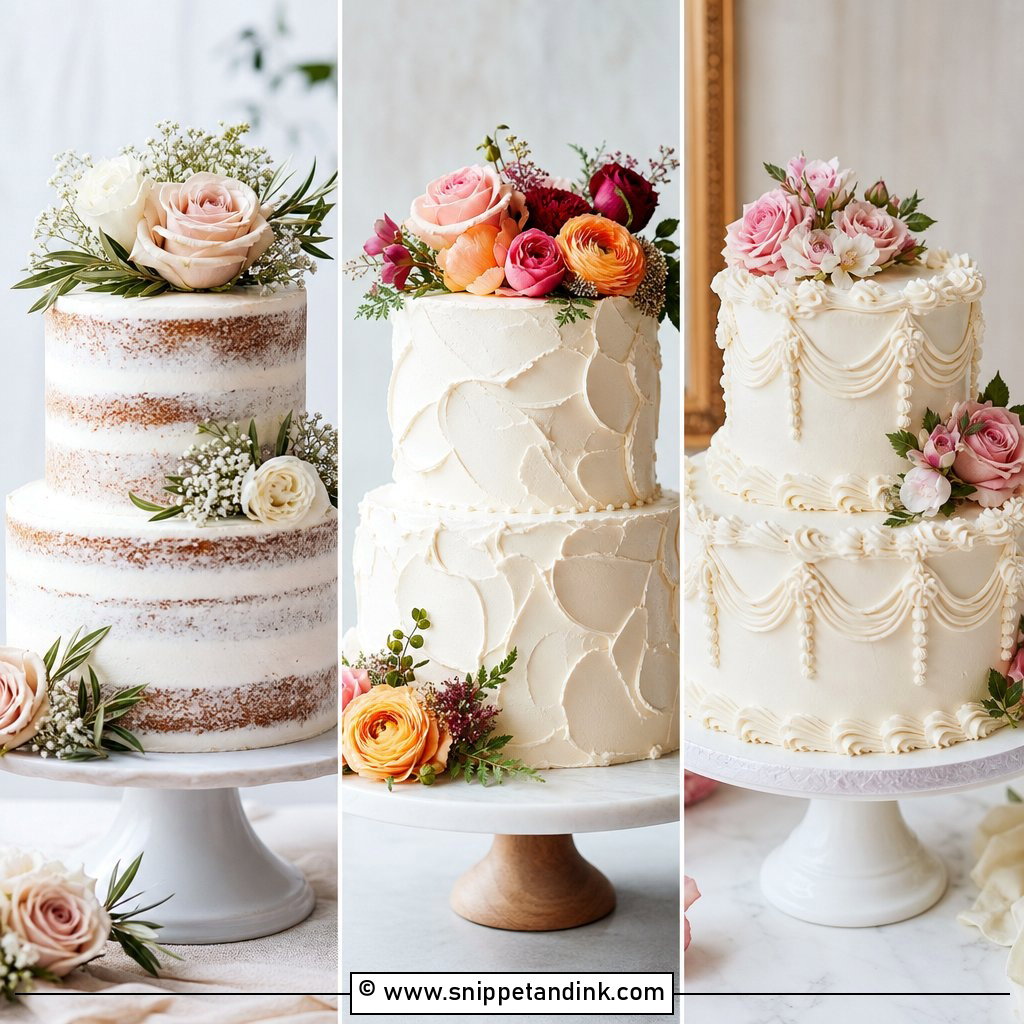
16. Garden Rose Wedding Cake
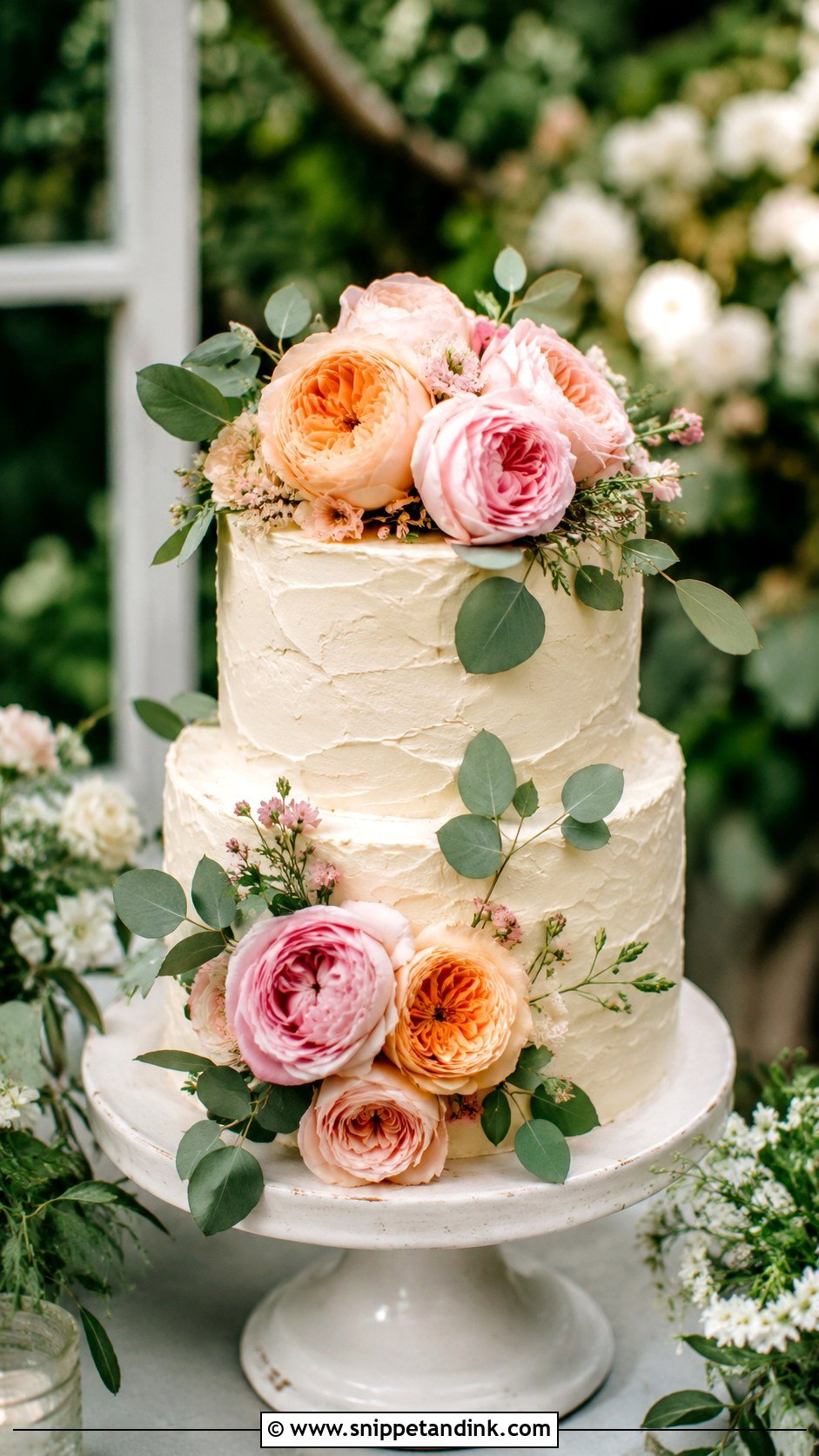
Garden roses have ruffled, open petals that make them feel looser than a formal rose. I pair them with textured buttercream, using a palette knife or a spatula finish, because the soft texture suits their shape. Loose clusters look right; rows of garden roses look like they were cloned. Blush, peach, cream and dusty pink with a little greenery connect the cake to an outdoor ceremony or tent. If the roses are fresh, check that they were grown without sprays. Almond, vanilla or strawberry sponge works with it.
17. Edible Flower Wedding Cake
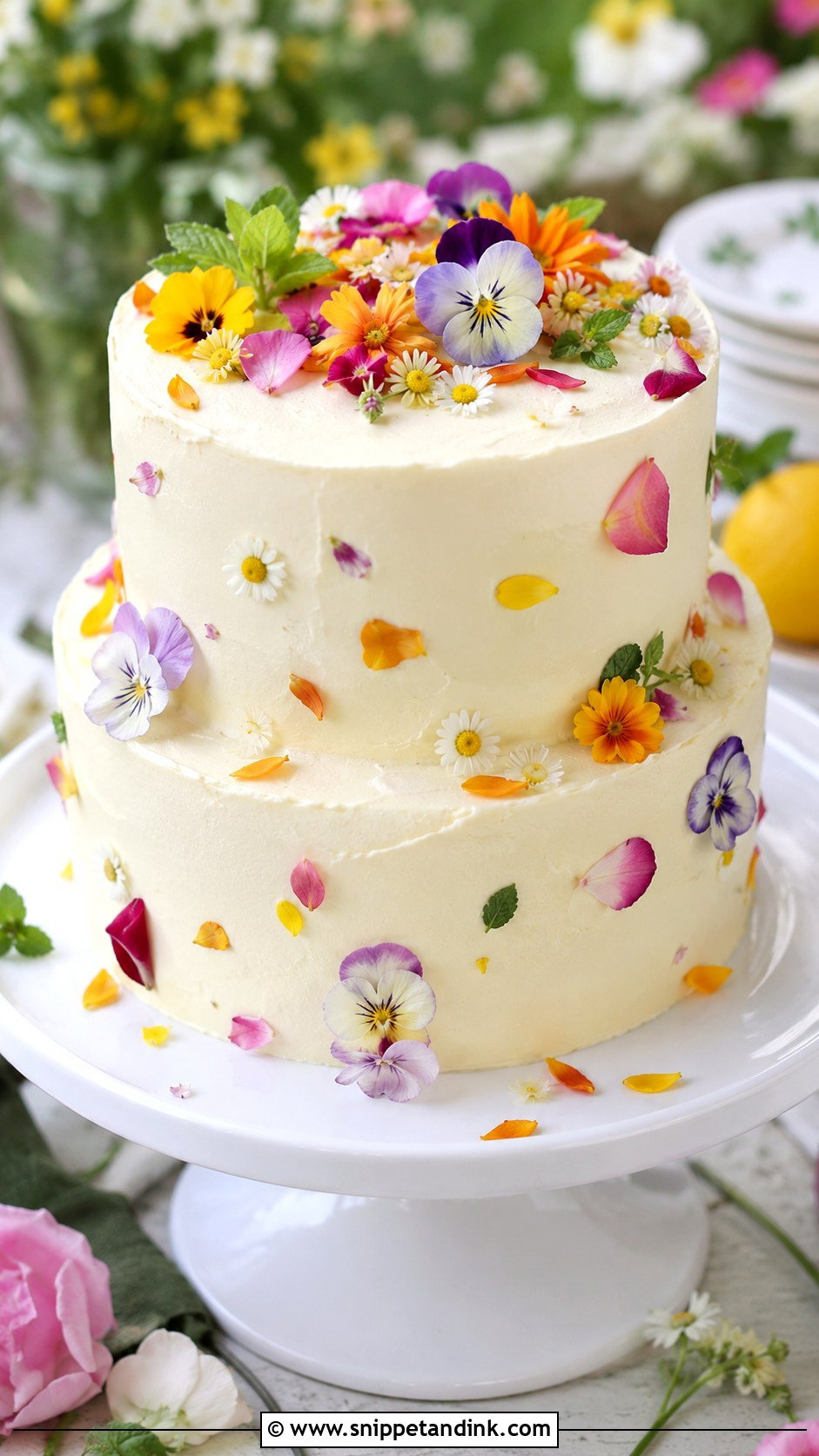
An edible flower wedding cake means flowers grown and sold for eating, not just flowers that happen to be pretty. Pansies, violas, calendula, chamomile and certain rose petals all qualify when they come from a supplier who grows them without sprays. I press them into buttercream, scatter them on top or arrange them around each tier, and I add them close to delivery because delicate petals wilt within hours. A white, cream or pale yellow base shows them best, and lemon, elderflower, honey or orange blossom flavors fit them naturally.
18. Pastel Floral Wedding Cake
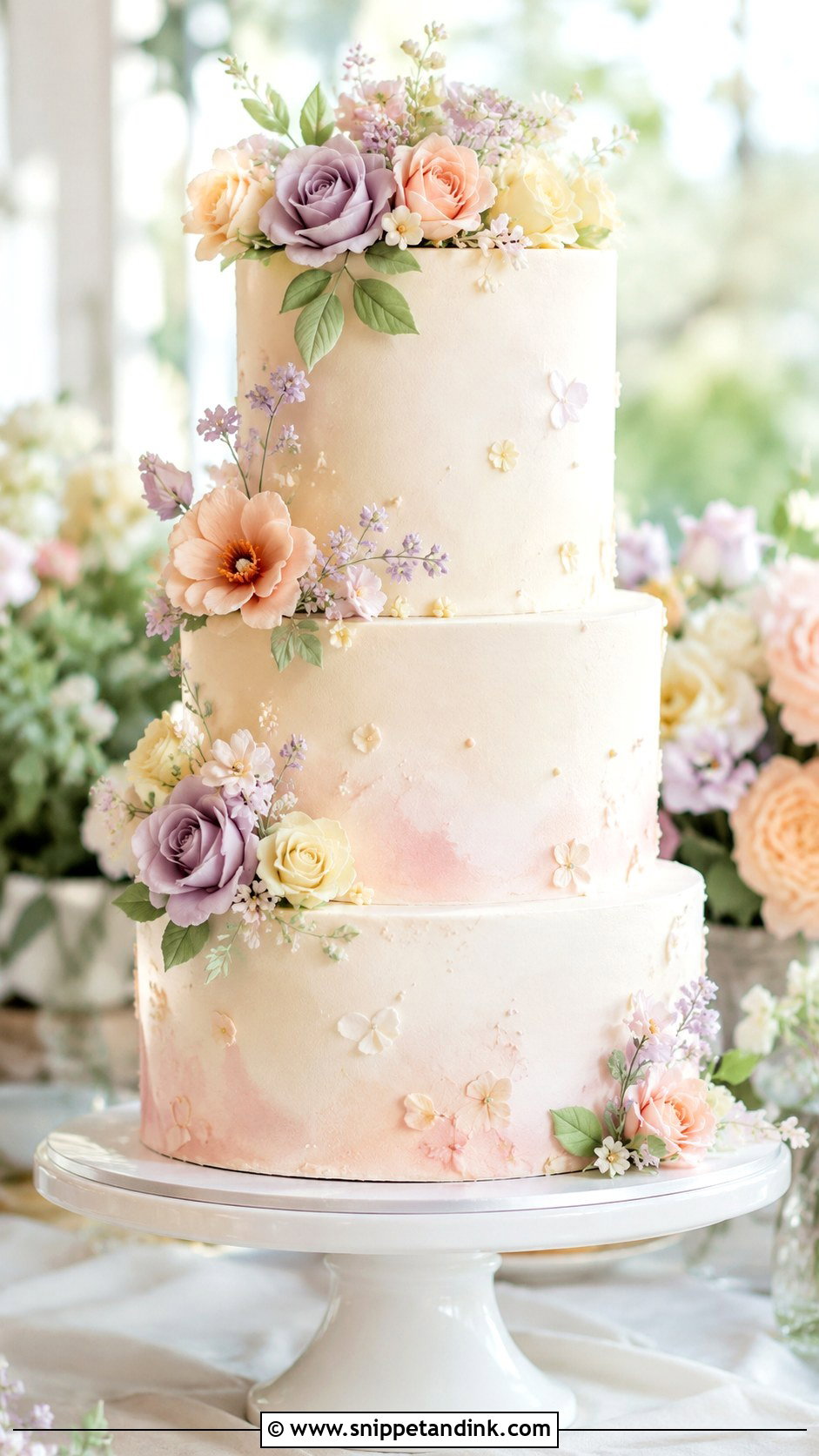
Pastel florals are the easiest way into a spring mood, and also the easiest way to end up with a cake that looks like a children’s party. My rule is one main pastel and two accents, for instance blush with lilac and butter yellow, rather than all six colors at once. The flowers can be fresh, sugar, painted or piped; the base can stay white or carry a faint wash. Vanilla, lemon, strawberry and almond sponges all suit it. If your linens or bridesmaid dresses are already pastel, I’d take the cake one shade lighter so it doesn’t blend into the room.
19. Watercolor Flower Wedding Cake
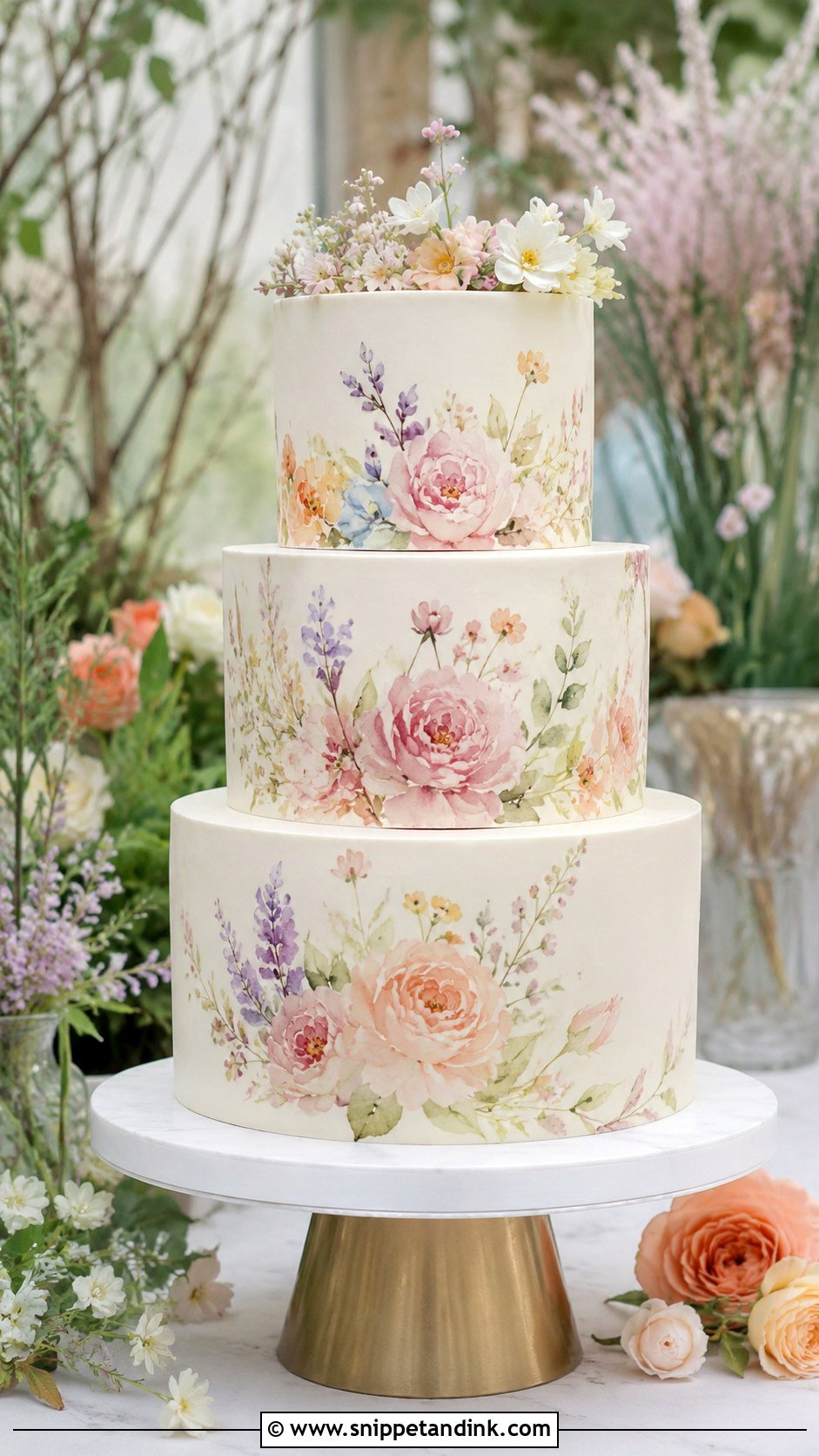
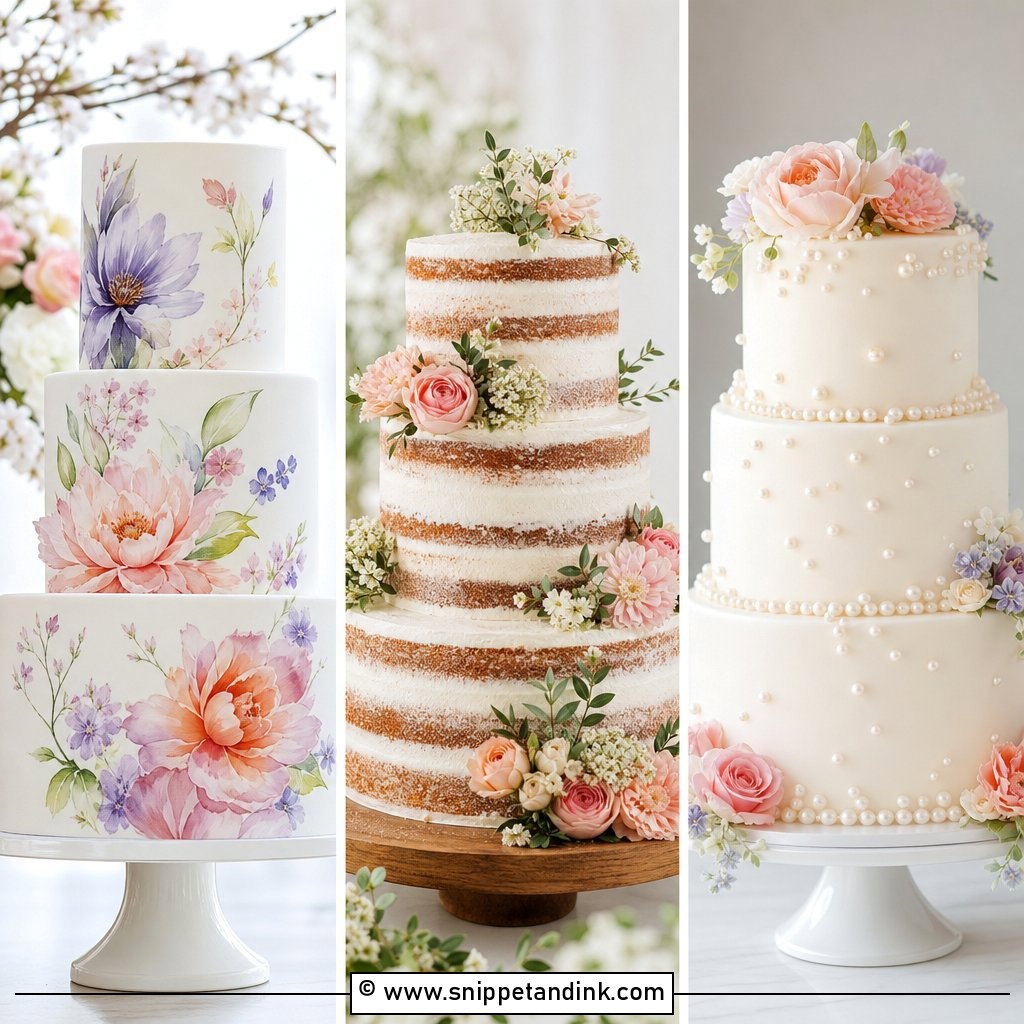
A watercolor flower cake is painted rather than decorated, so it has softness without height or weight. I paint on fondant because the surface is smooth and dry, using food color thinned with a little alcohol that evaporates and leaves only pigment. Buttercream can be painted too, but the strokes blur. Blush, lavender, peach and pale green layer well. A few sugar flowers or pearls add texture if the flat finish feels too quiet. Lemon, vanilla or raspberry sponge suits it, and it’s a good fit for couples who want art rather than abundance.
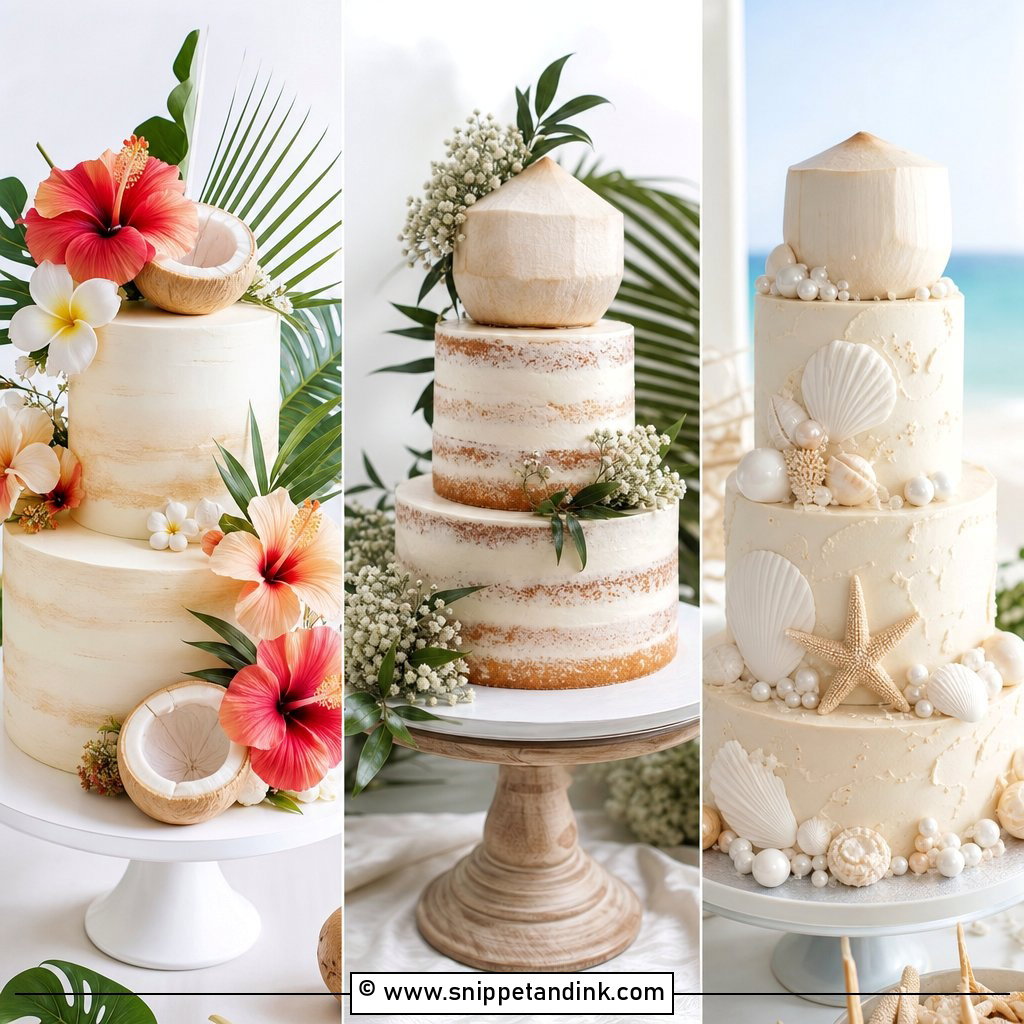
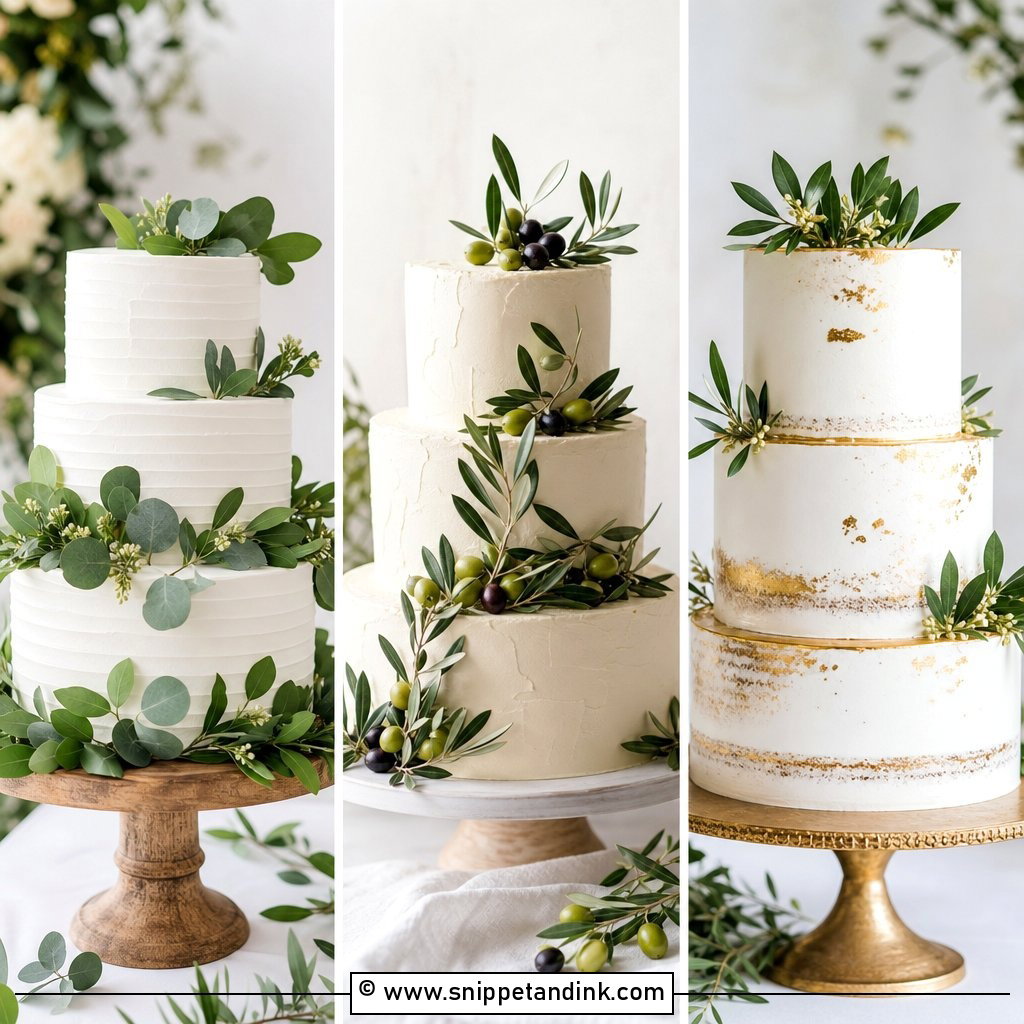
20. Floral Wreath Wedding Cake
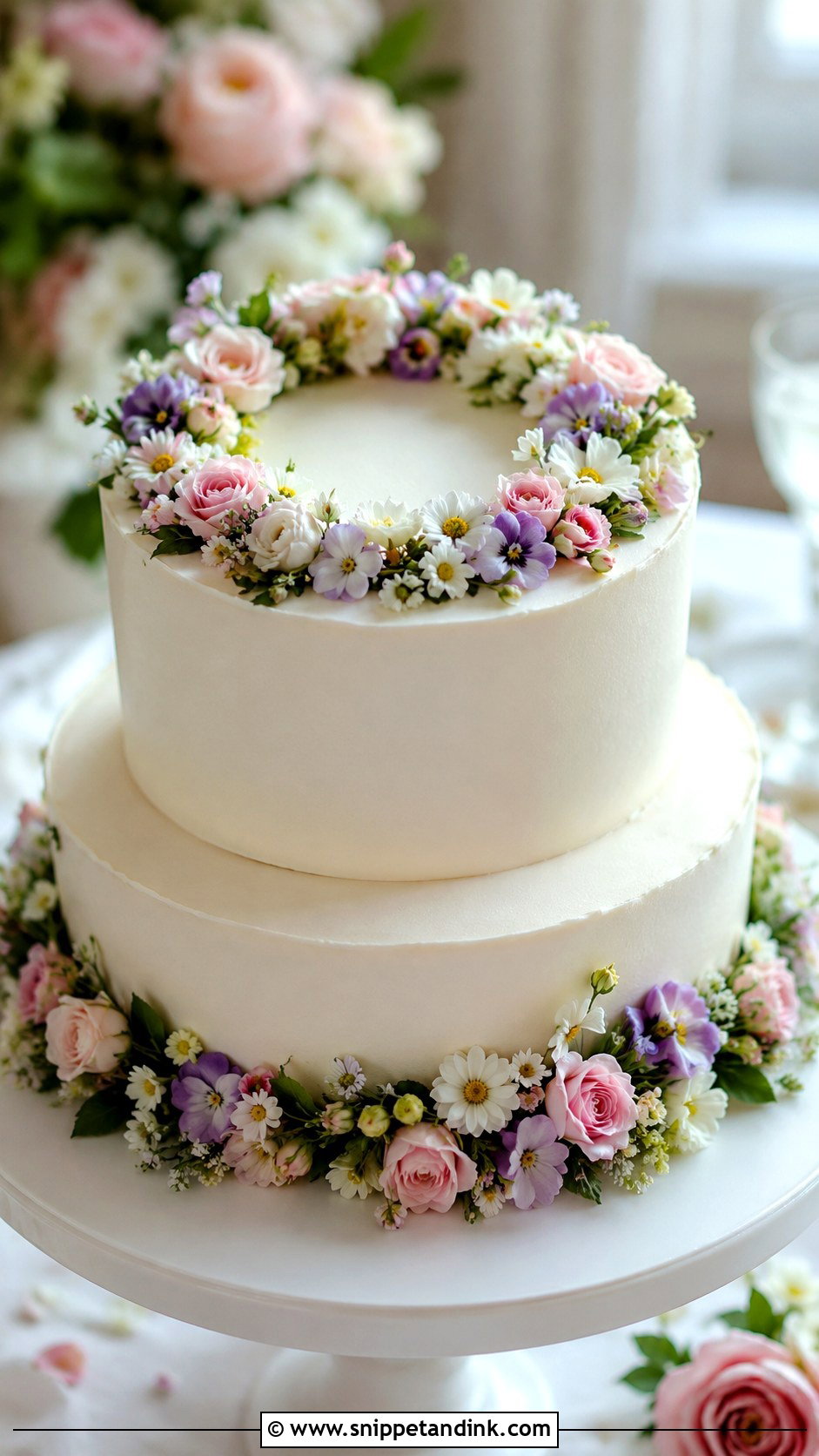
A wreath is the tidy alternative to a cascade: flowers arranged in a ring around the top tier, the base or each tier. It frames the cake in photos and suits small spring flowers with greenery in pastel shades. I like it for couples who want flowers but find a cascade too dramatic. The frosting should stay smooth or only lightly textured so the ring reads clearly. Garden receptions, brunch weddings and small dinners all fit this design.
21. Flower Meadow Wedding Cake
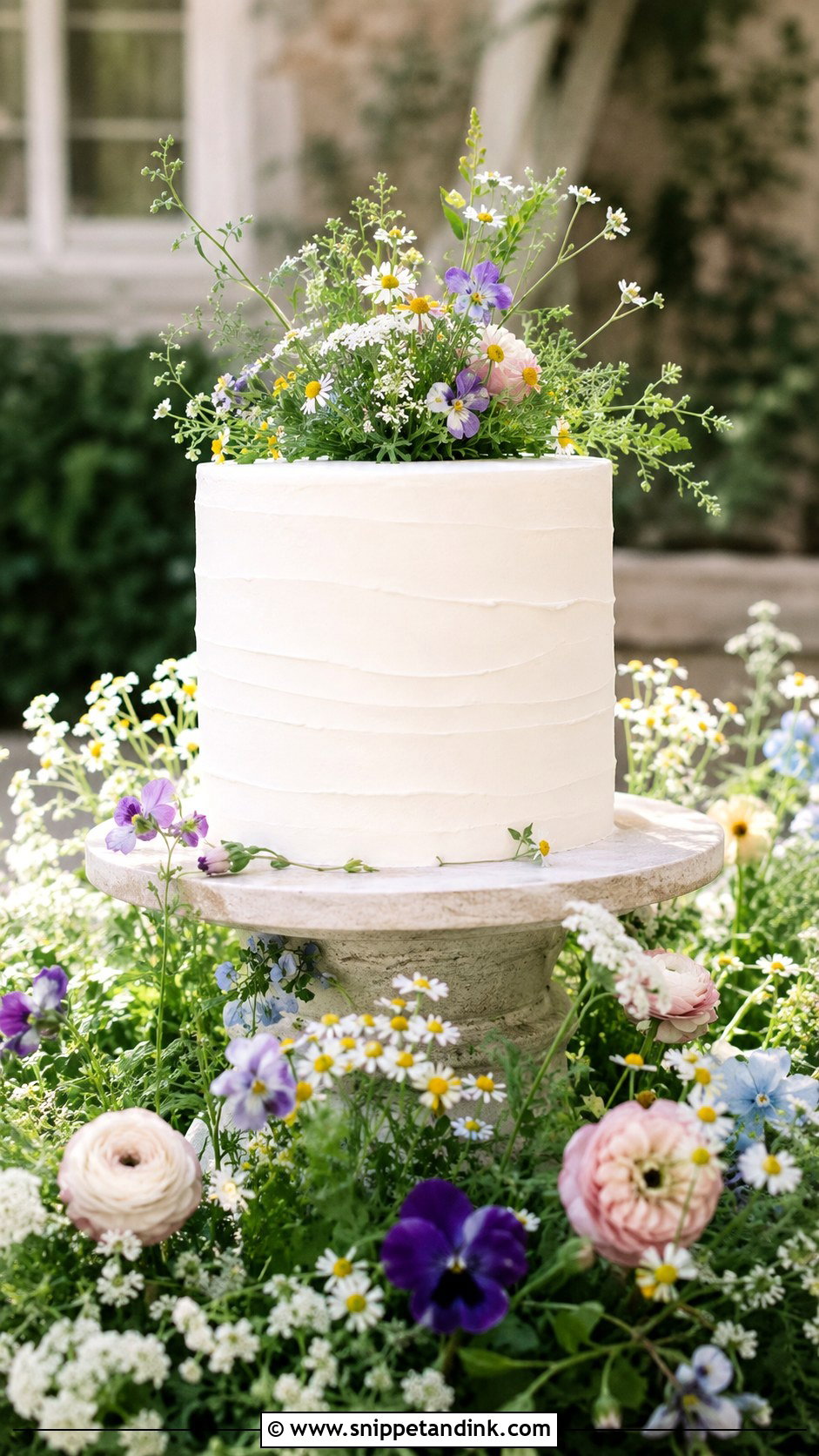
The meadow cake keeps most of the flowers off the cake. Blooms, herbs and greenery gather around the base and the stand, with only a few climbing up the lower tier, which means less handling of fresh stems on frosting. I like this for outdoor weddings, because the dessert table starts to look like part of the landscape. White buttercream, semi-naked or lightly textured finishes all suit it. Lemon, honey, vanilla or elderflower sponge rounds it out.
22. Floral Monogram Wedding Cake
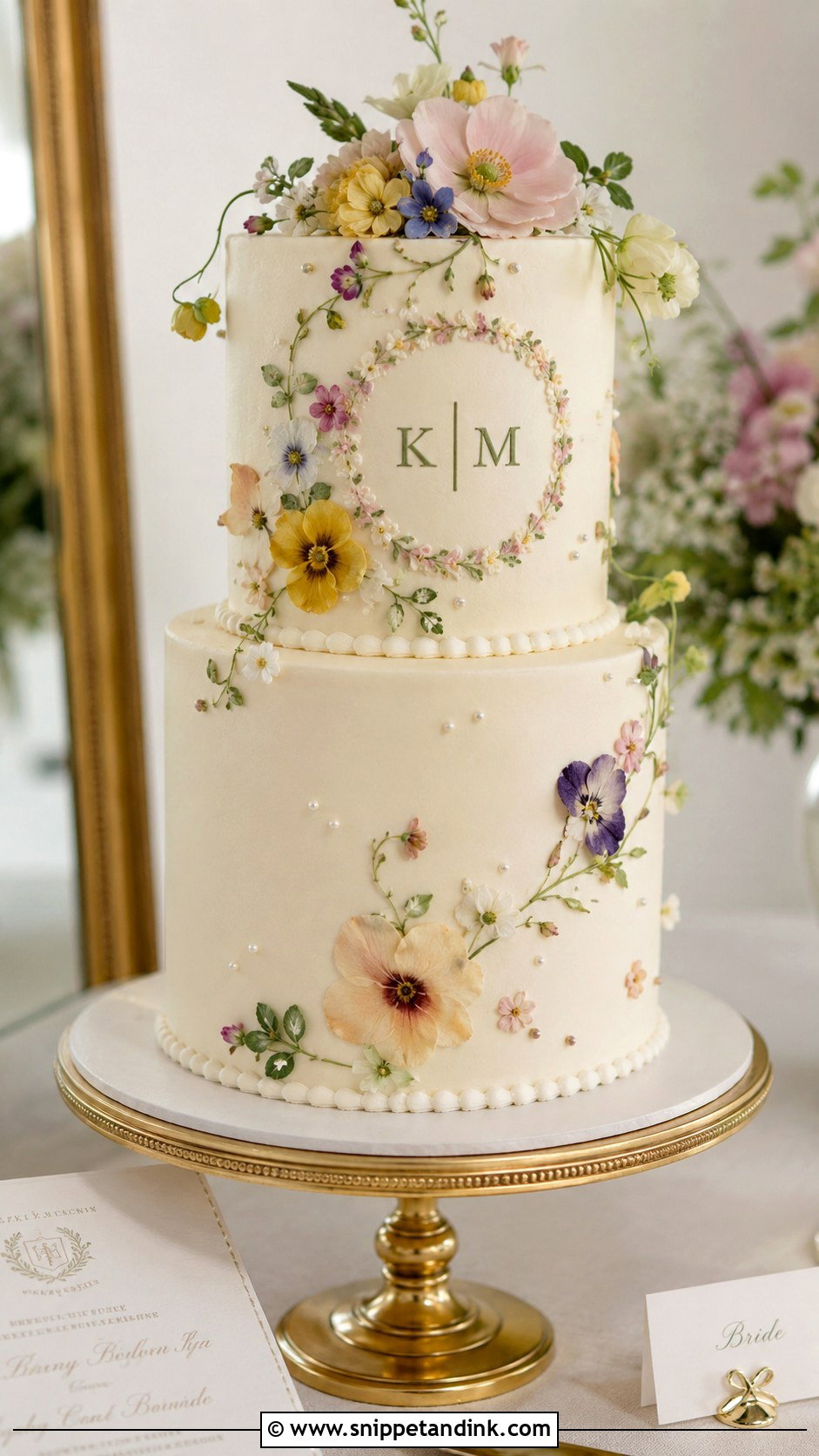
A monogram gives the cake a personal mark, and the flowers frame it. Keep the letters simple: two initials in a clean serif or a light script are much easier to read across a reception room than an ornate three-letter cypher. I pipe or paint them on white or ivory, then surround them with tiny sugar flowers, pressed petals or painted vines. It suits couples who want something custom without a busy cake. Vanilla, almond, lemon or white chocolate raspberry are dependable flavors.
23. Floral Sheet Wedding Cake
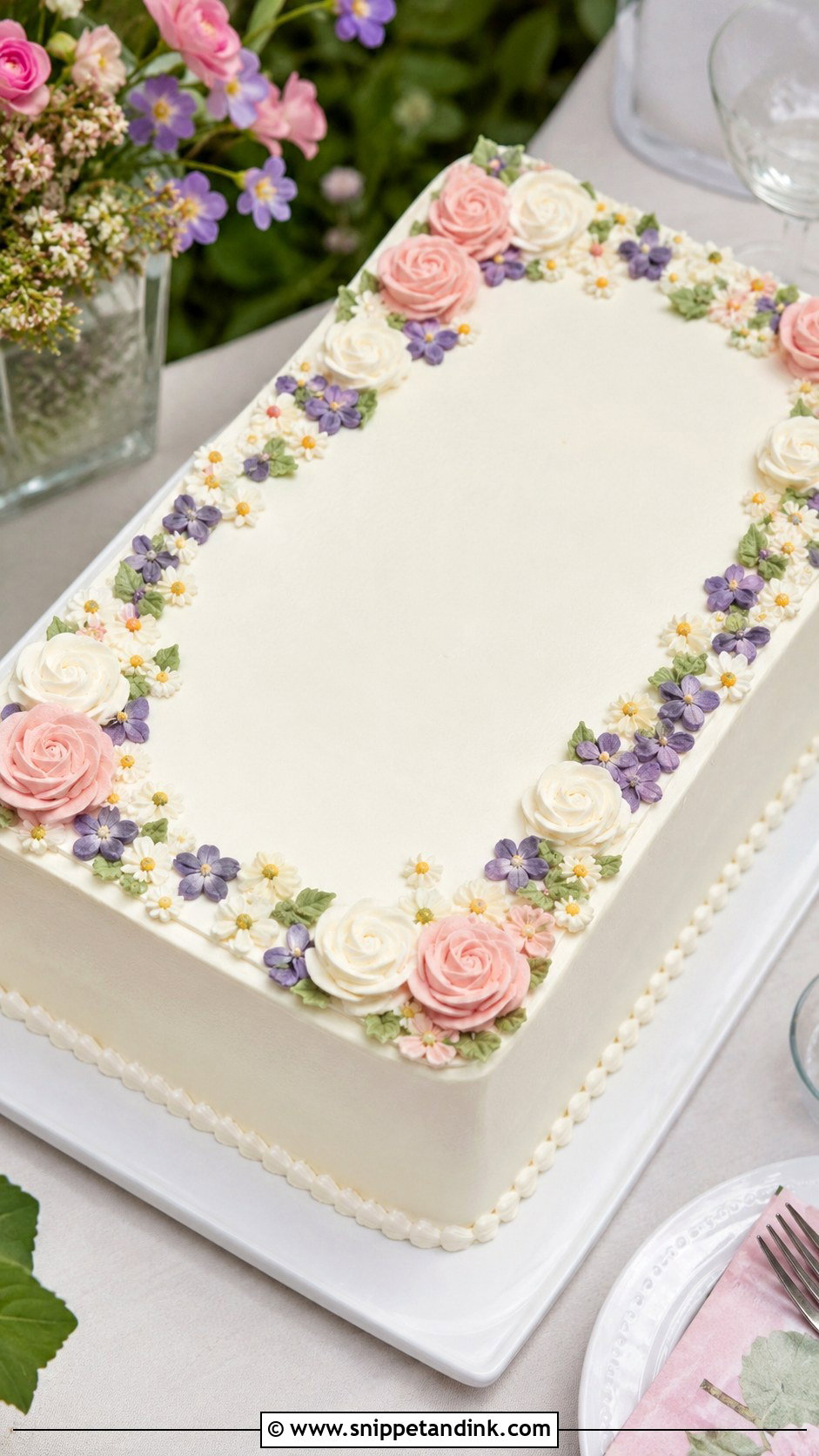
A floral sheet wedding cake is the practical answer for a big guest list, and it doesn’t have to look like a supermarket slab. A clean rectangle with a smooth top and a floral border, or small clusters in two corners, looks deliberate. Sheet cakes also cut into neat, even portions, which caterers appreciate. They suit backyard weddings and dessert tables with several sweets. Lemon, vanilla, strawberry or almond sponge keeps it light.
24. Mini Floral Wedding Cake
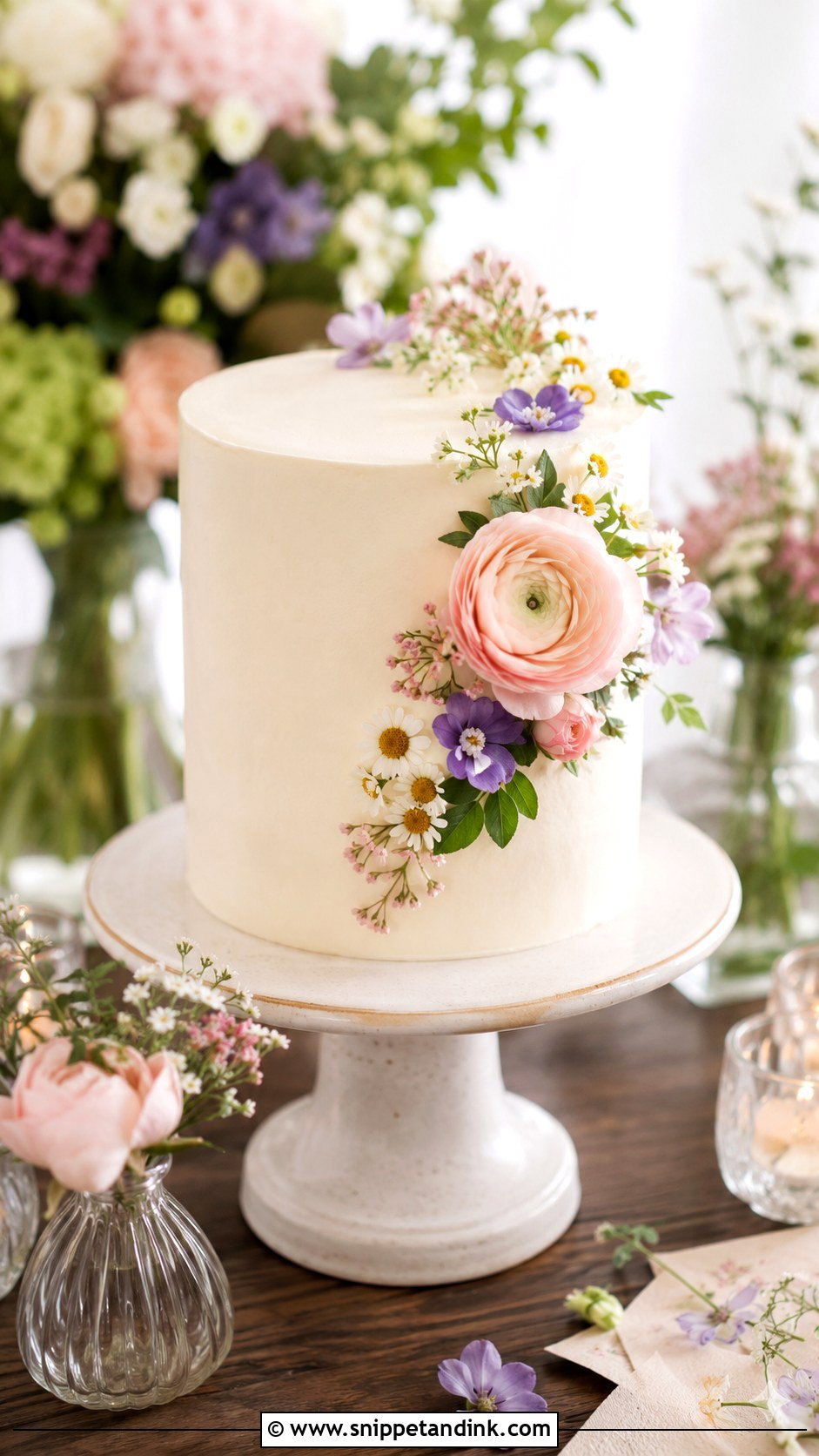
A mini cake is made for elopements and micro weddings, or as a small cutting cake beside a dessert table. One or two tiers carry a small cluster of blooms on top or along one side, and pressed flowers suit the scale because they add detail without height. I make small cakes slightly taller per tier than usual so they don’t look squat in photos. A raised stand with candles or bud vases gives it presence. Vanilla, lemon, almond or strawberry are easy choices.
25. Floral Lambeth Wedding Cake
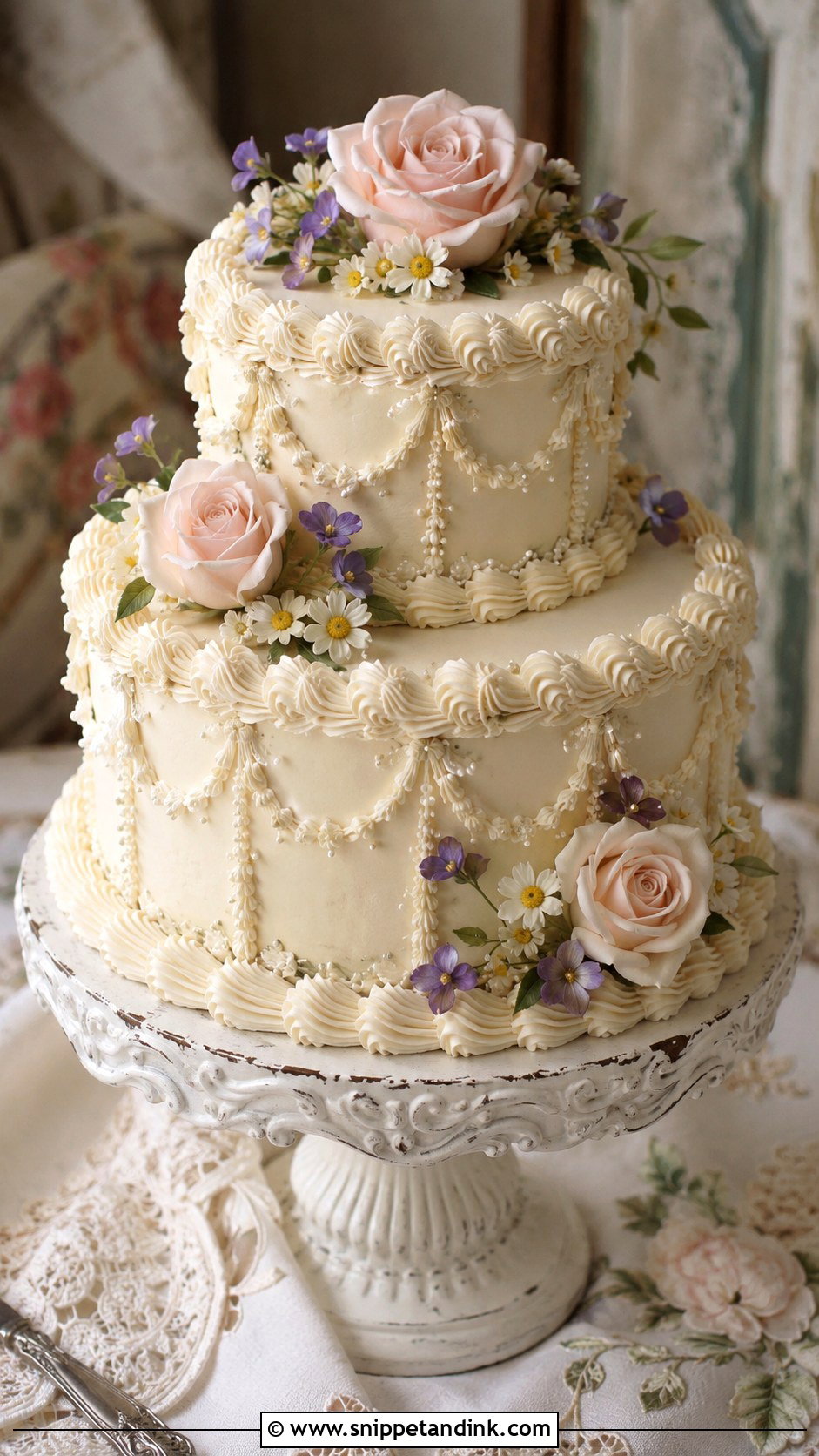
Lambeth piping is the heavily layered, overpiped style of borders, swags and shells, and it takes patience to pipe well. For spring I keep it lighter than the traditional version and add blush roses, tiny daisies, sugar violets and green leaves on ivory buttercream. The piping relies on a stiff buttercream that holds sharp ridges, so a hot room is its enemy. Two tiers look charming; four look grand. Vanilla, almond or raspberry layers suit it.
26. Floral Lace Wedding Cake
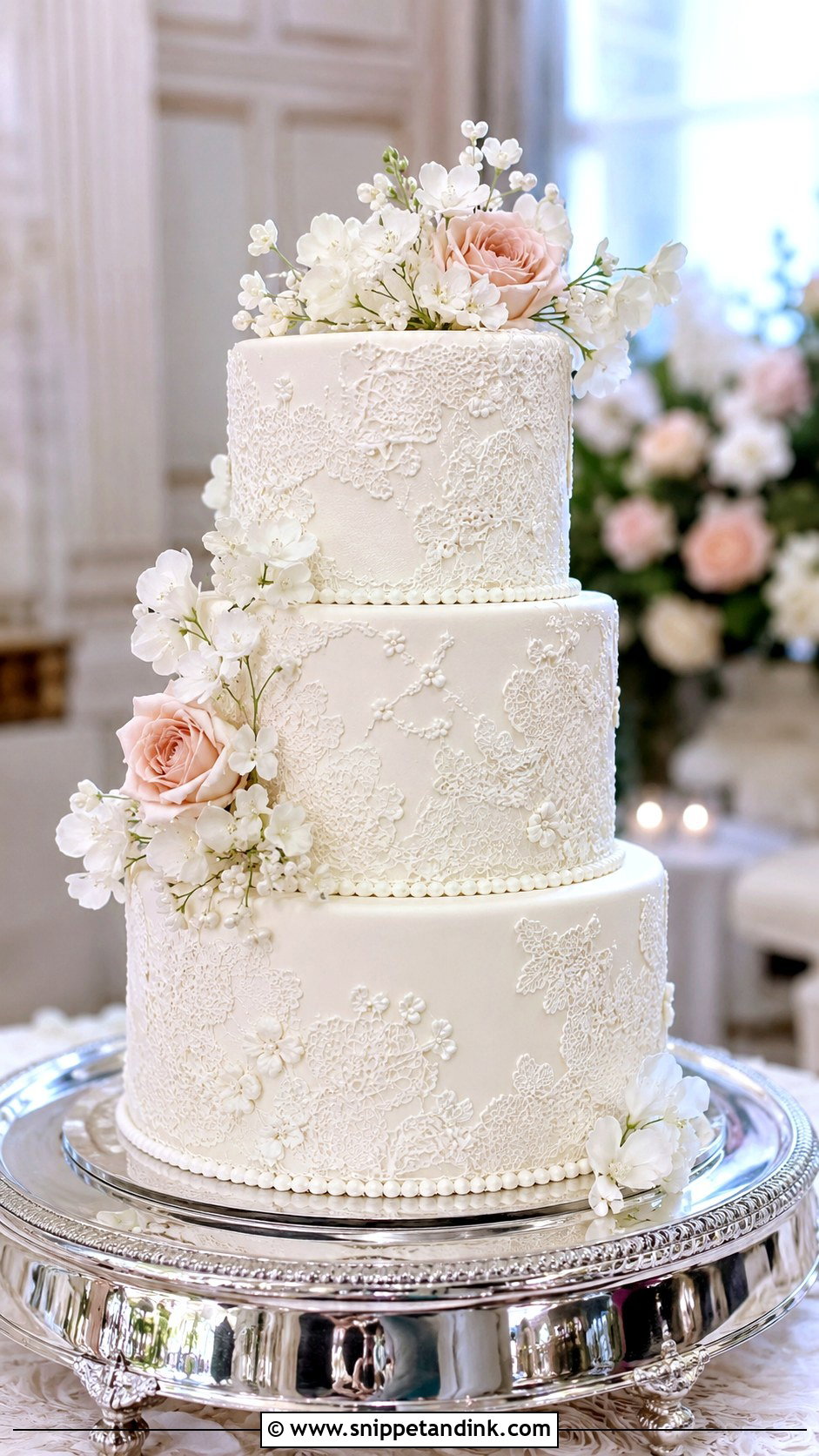
Lace on a cake can be piped in buttercream, pressed into fondant with an embosser or made as edible lace from a silicone mat. The edible lace looks the most like fabric, and I can sometimes match a pattern from the dress. Because the lace is busy, the flowers have to be small: sugar roses, sugar sweet peas or tiny blossoms. White, ivory, champagne and pale blush suit classic and church weddings. Vanilla, almond, coconut or lemon sponge sits underneath.
27. Floral Drip Wedding Cake
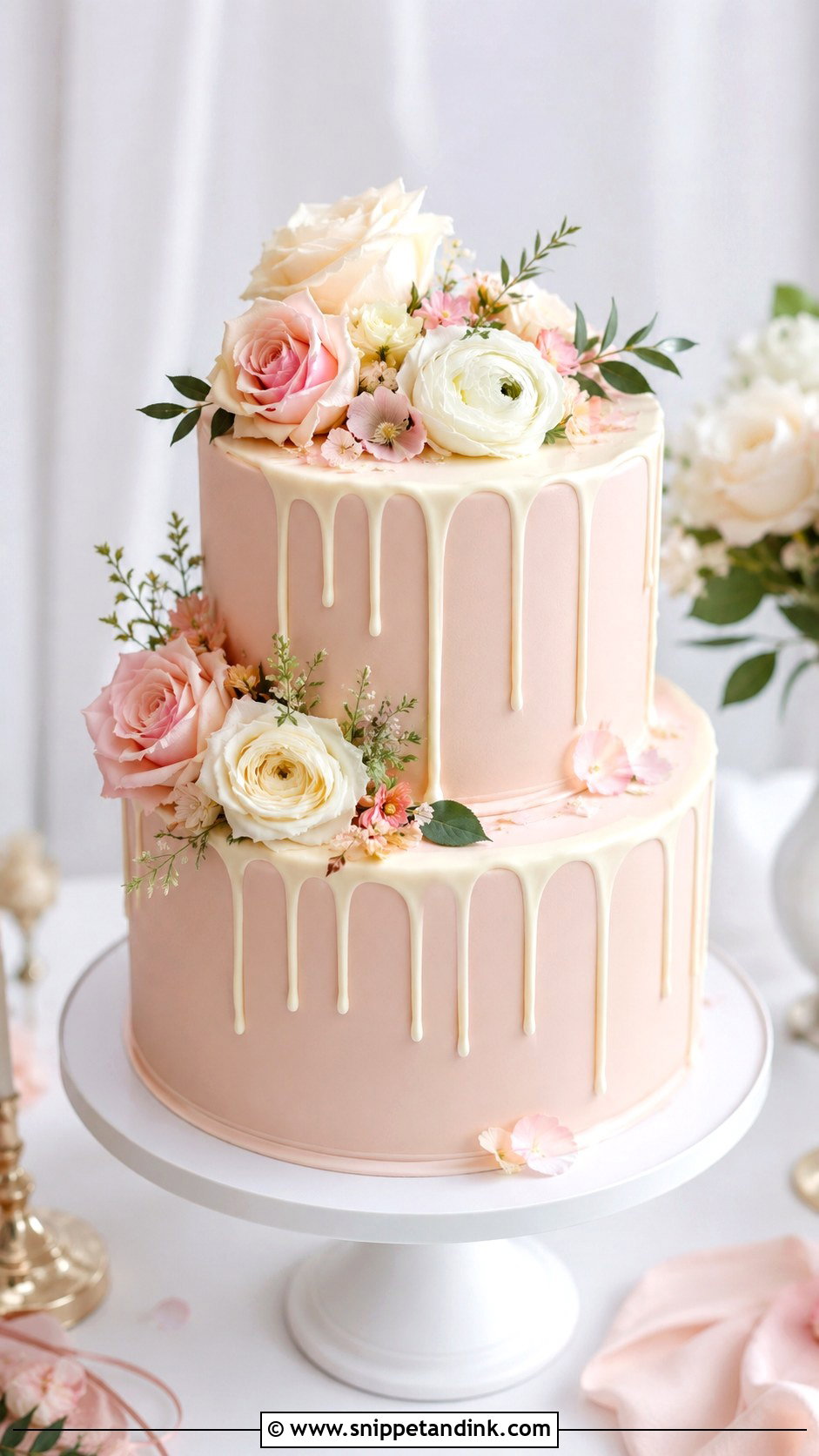
A drip cake is the modern option in this list. A white chocolate ganache drip tinted ivory, blush, peach or pale yellow keeps it bridal, and the drip has to go on at the right temperature: too warm and it runs to the board, too cool and it stops in stubby blobs. I test one drip on the back first. Flowers then go around the top and down one side without crowding. Two smooth buttercream tiers carry it best, with strawberry, lemon, vanilla or raspberry inside.
28. Floral Naked Wedding Cake
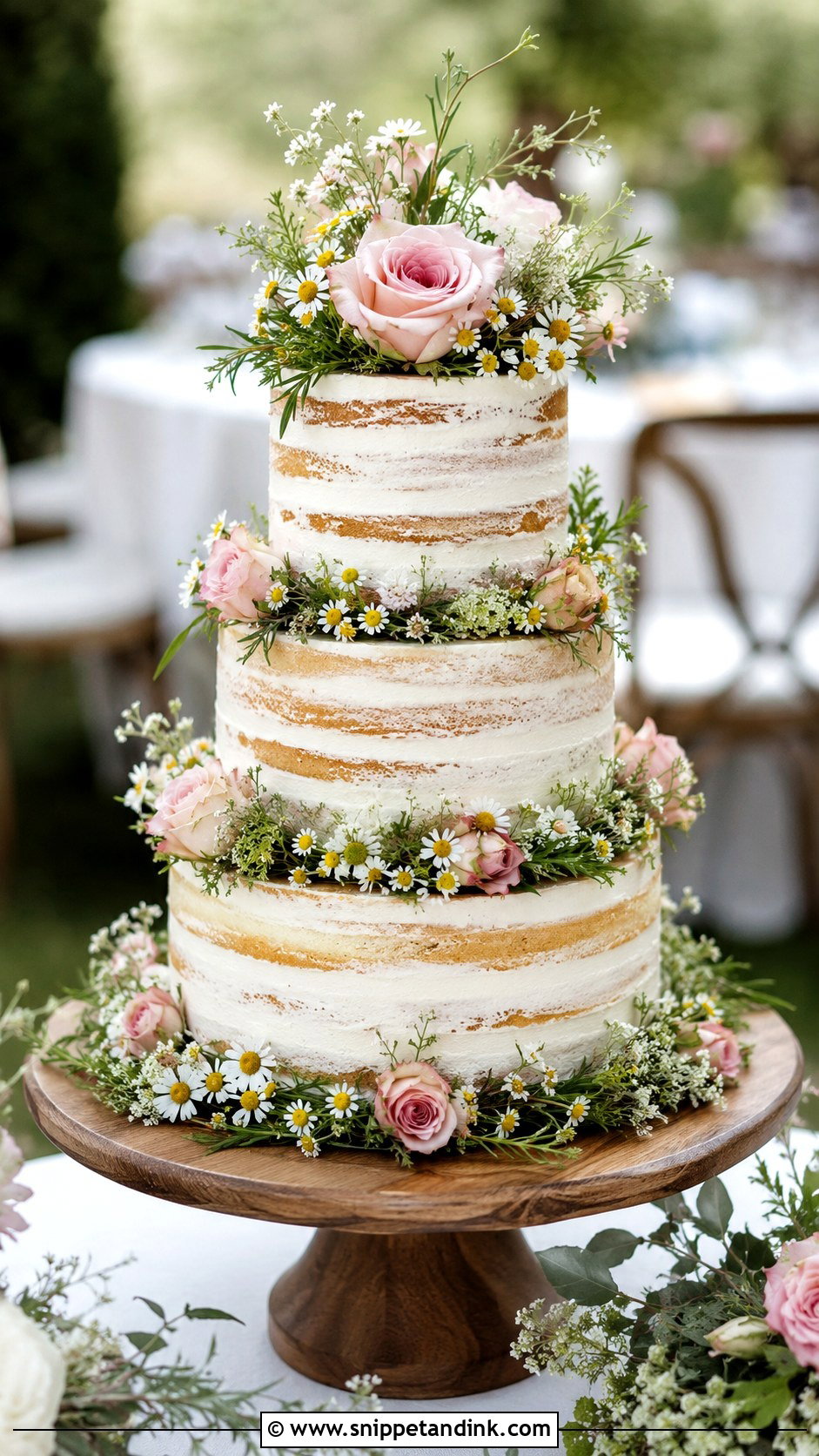
A naked cake has almost no frosting on the outside, so the bake itself is on show. Even layers and a straight stack matter more here than anywhere else, and because the sponge is exposed it dries faster, so I assemble it as close to the event as possible. Flowers between tiers, at the base or as a topper suit it, with greenery, chamomile and small roses. A wooden stand or a plain ceramic plate keeps the mood natural for outdoor receptions.
29. Floral Pearl Wedding Cake
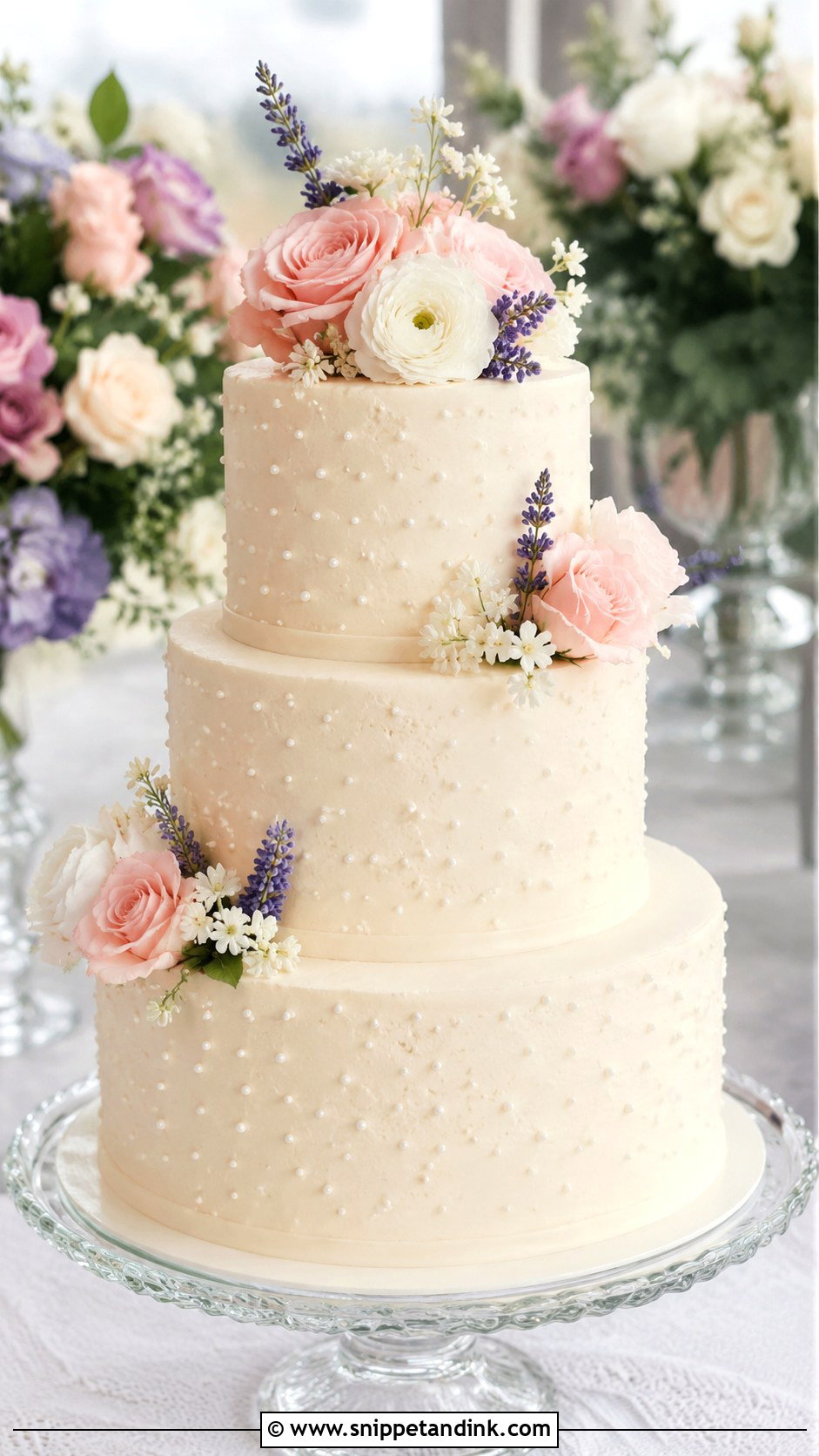
Edible pearls add a little shine and a vintage feel. I place them in neat rows or scatter them, setting each one into soft buttercream so they stay put; dragees pushed into a hard crust tend to roll off. Soft spring flowers keep the pearls from feeling formal, and blush roses, white ranunculus in sugar or a few lavender sprigs all suit them. Vanilla bean, almond, coconut or white chocolate sponge matches the polished finish.
30. Floral Cupcake Wedding Cake
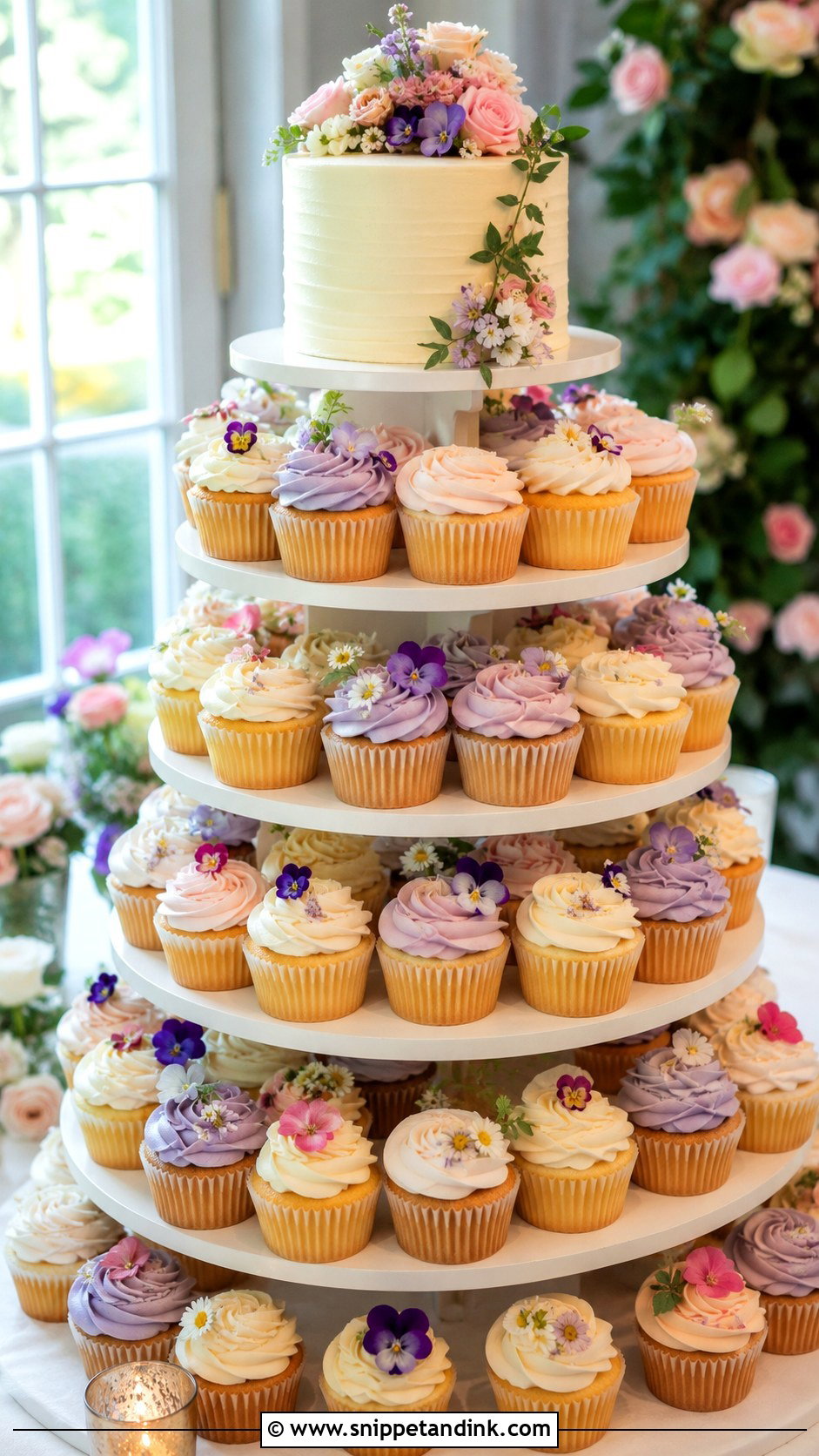
A cupcake tower answers two problems at once: serving is simple and guests get several flavors. I put a small floral cutting cake on top so there is still a moment for the couple, then decorate the cupcakes below with a piped flower, a tiny edible bloom or a pressed petal each. Lemon, vanilla, strawberry, almond and coconut give real variety. Keep the cupcake colors tied to the wedding palette, and a few fresh flowers around the stand make the whole display read as one cake.
A Warm Spring Afternoon Is Harder on a Cake Than You Think
Spring catches people out. The morning is cool, then the sun hits a marquee or a conservatory and the room climbs fast. Buttercream starts to slump in that warmth, piped petals lose their edges and fresh flowers that looked perky at delivery begin to droop. I always ask where the cake table will stand and whether it gets direct sun at any point in the afternoon.
- Put the cake table in shade, away from windows, heaters and the dance floor lights.
- Ask whether your baker uses a firmer buttercream or a ganache coat under the decoration for warm venues.
- Plan for fresh flowers to go on as late as possible, ideally after the cake is set up, not before it travels.
- Sugar flowers dislike damp: a humid tent or a cake left in a fridge can make them soften and droop, so they are stored dry and added at the venue.
How far ahead to order
Spring is a busy season for cake designers, so booking several months ahead is normal and a sugar flower design needs the most notice of all. A tasting a few months out lets you settle flavors, and the final details, including which flowers your florist is sending and when they arrive, should be confirmed in the last couple of weeks. If you want to keep your sugar topper, tell your baker in advance so it can be lifted off cleanly and boxed before the cake is cut.
Bring These Photos to Your Baker and Your Florist Together
Spring flower cakes change completely depending on the bloom, the frosting and the shape you put them on. The best one is rarely the tallest; it is the one that suits your venue’s temperature, your guest count and your colors. Pressed flowers give delicacy, sugar flowers give control and keep forever, piped buttercream flowers are fully edible, and fresh blooms look wonderful when someone handles them properly. Save the designs that feel like your wedding, then bring them to your baker and florist together so they can agree who does what on the day.
You'll Like These Ideas:






Leave a Reply