
A cake shaped like a kiondo, the woven sisal basket so many Kenyan families keep at home, carries more meaning than almost any themed cake I make. People order them for birthdays, ruracio celebrations, homecomings, anniversaries and family milestones. The recognizable parts are a rounded basket body, woven texture in earth tones, a strap or handle, and usually edible fruit spilling from the top. Whether it reads as a real basket comes down to two things: the shape of the carve and how honestly the weave is done. Below are twenty versions, from rustic market baskets to ivory wedding pieces, with what I watch for when making each.
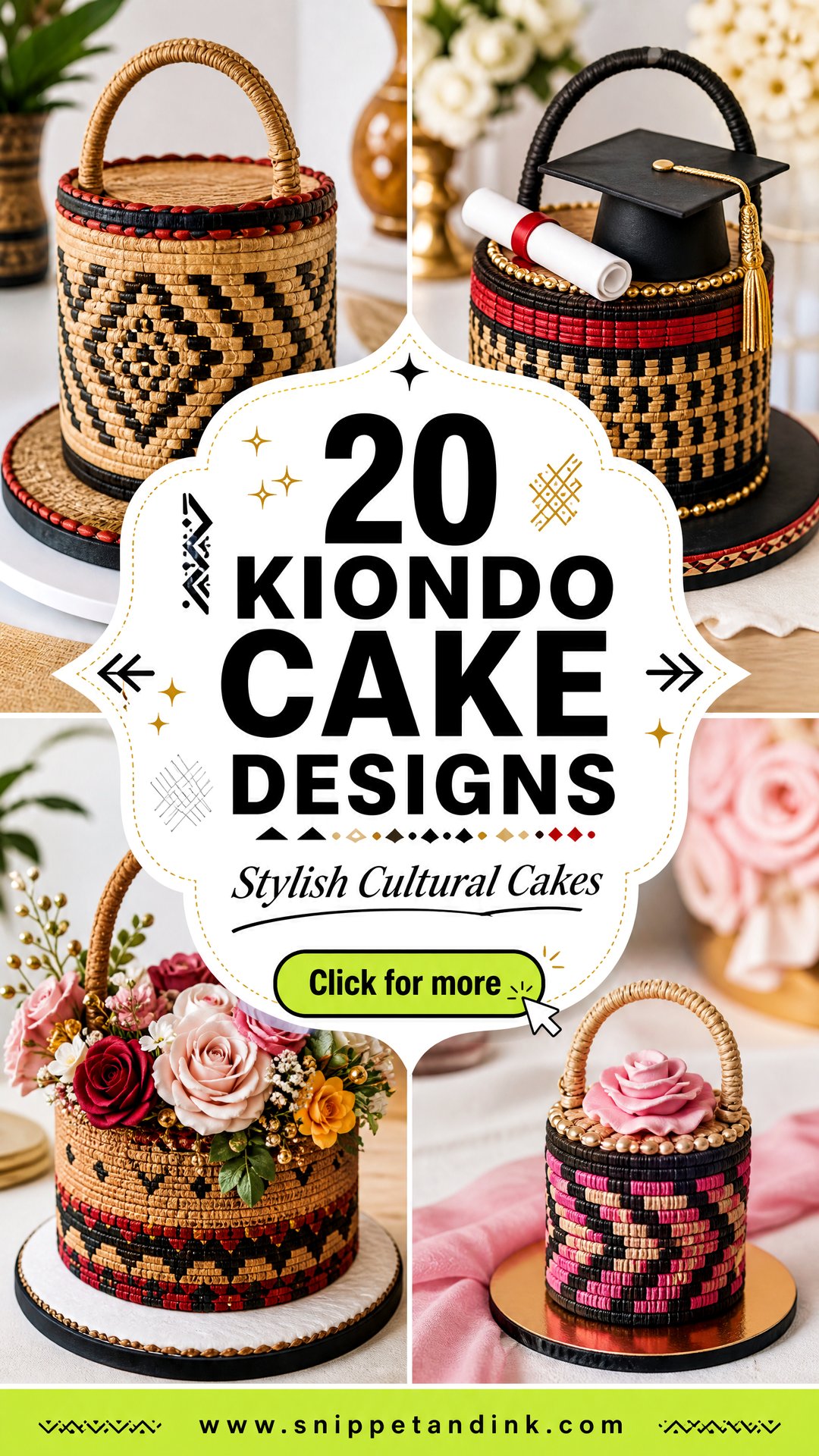
Three Ways Bakers Weave a Sisal Basket in Sugar
Photos of Kiondo cakes can look alike, but the weave is made in very different ways, and the method changes the price, the look and how the cake copes with heat. When I quote one, this is the first thing I ask about.
Woven fondant strips
Thin strips cut and laid over and under each other, exactly like real weaving. It’s the most realistic finish and the slowest by far, often several hours of work on the sides alone. It also adds weight, which matters on tiered cakes.
Piped buttercream basketweave
Piped with a basketweave tip in alternating vertical and horizontal lines. Softer and creamier to eat, and quicker to make, but it reads as a cake rather than a basket, and buttercream softens fast in a warm room.
Textured mats and impression rollers
Fondant pressed with a weave pattern. Fast and tidy, so it’s usually the budget option, but the texture is flat. I use it on lids or small accents and keep the hand weave for the sides people see first.
The shape matters as much as the weave. A basket body is carved from stacked layers, so it needs a sponge firm enough to carve: chocolate mud cake, a dense vanilla, carrot or fruit cake. Very light, airy sponge collapses under carving and heavy fondant.
1. Traditional Kiondo Cake
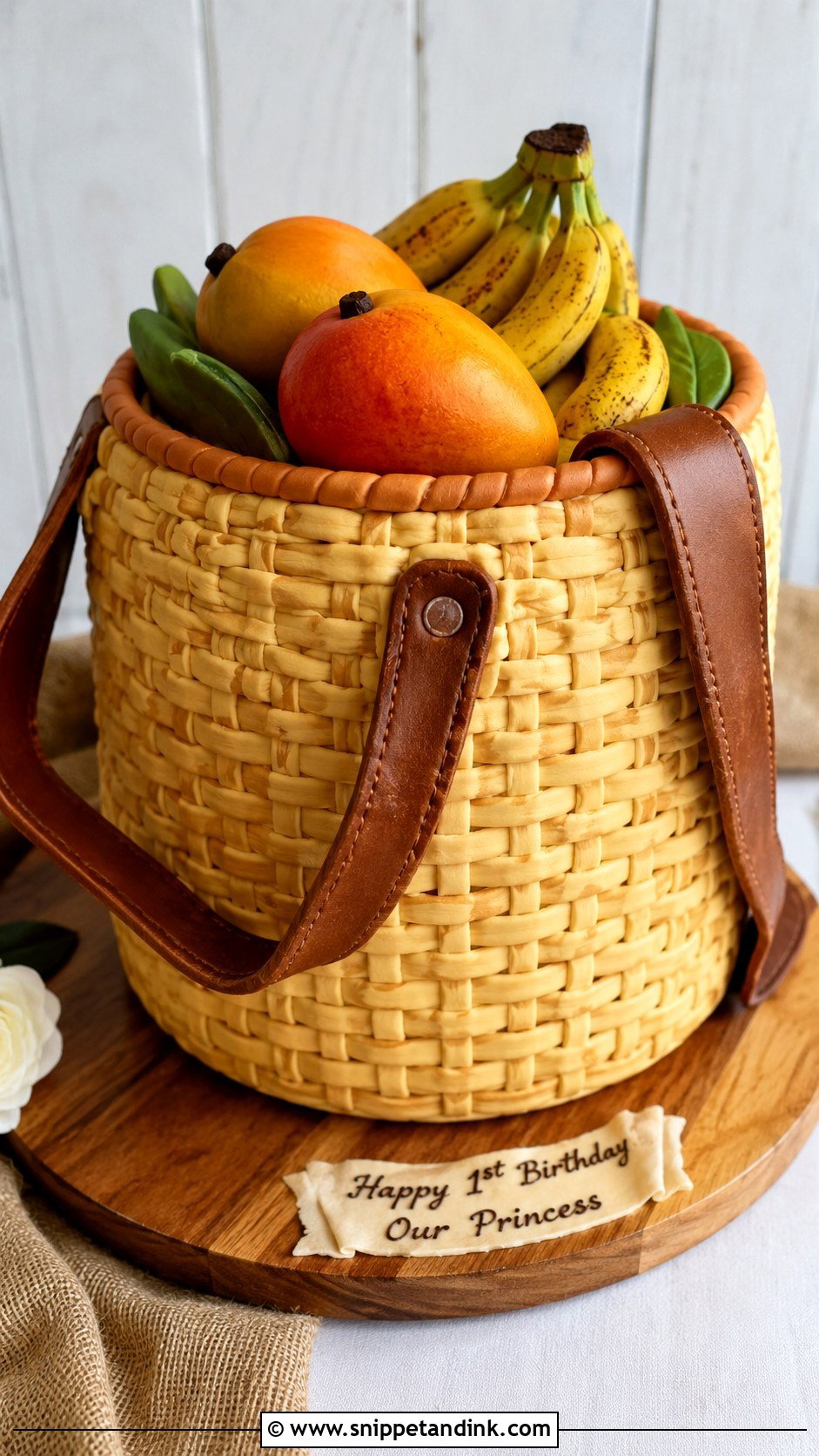
The traditional version should fool someone for a second. I carve the body so it curves in slightly at the base, the way a real basket sits on the ground, and weave tan, brown, cream and black fondant strips over and under each other. A sturdy strap finishes it. Decoration stays minimal: a few edible bananas, mangoes or oranges at the top. This is the design I’d suggest for honoring parents or grandparents, because its value is in the texture work, not in extras.
2. Kiondo Birthday Cake
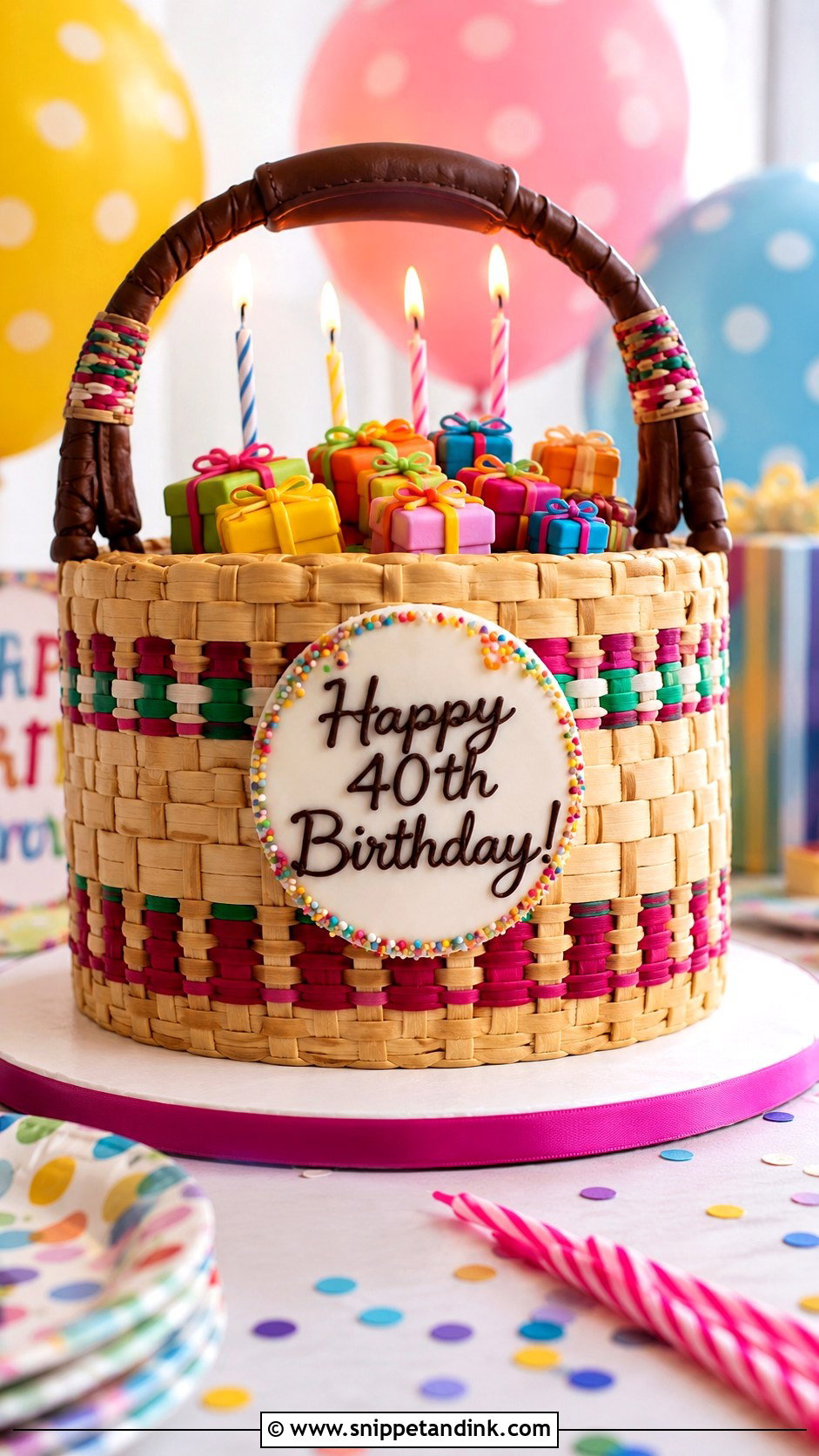
A Kiondo birthday cake keeps the earthy basket and lets the party show up in small places: a message plaque, fondant candles, a few flowers or tiny wrapped gift toppers. If you want brighter colors, I add them as slim stripes inside the weave so the basket still reads as sisal. Because the outside carries the visual impact, a straightforward chocolate, vanilla or fruit-filled sponge works inside. Keep the top tidy; a cluttered top hides the shape you paid for.
3. Kiondo Ruracio Cake
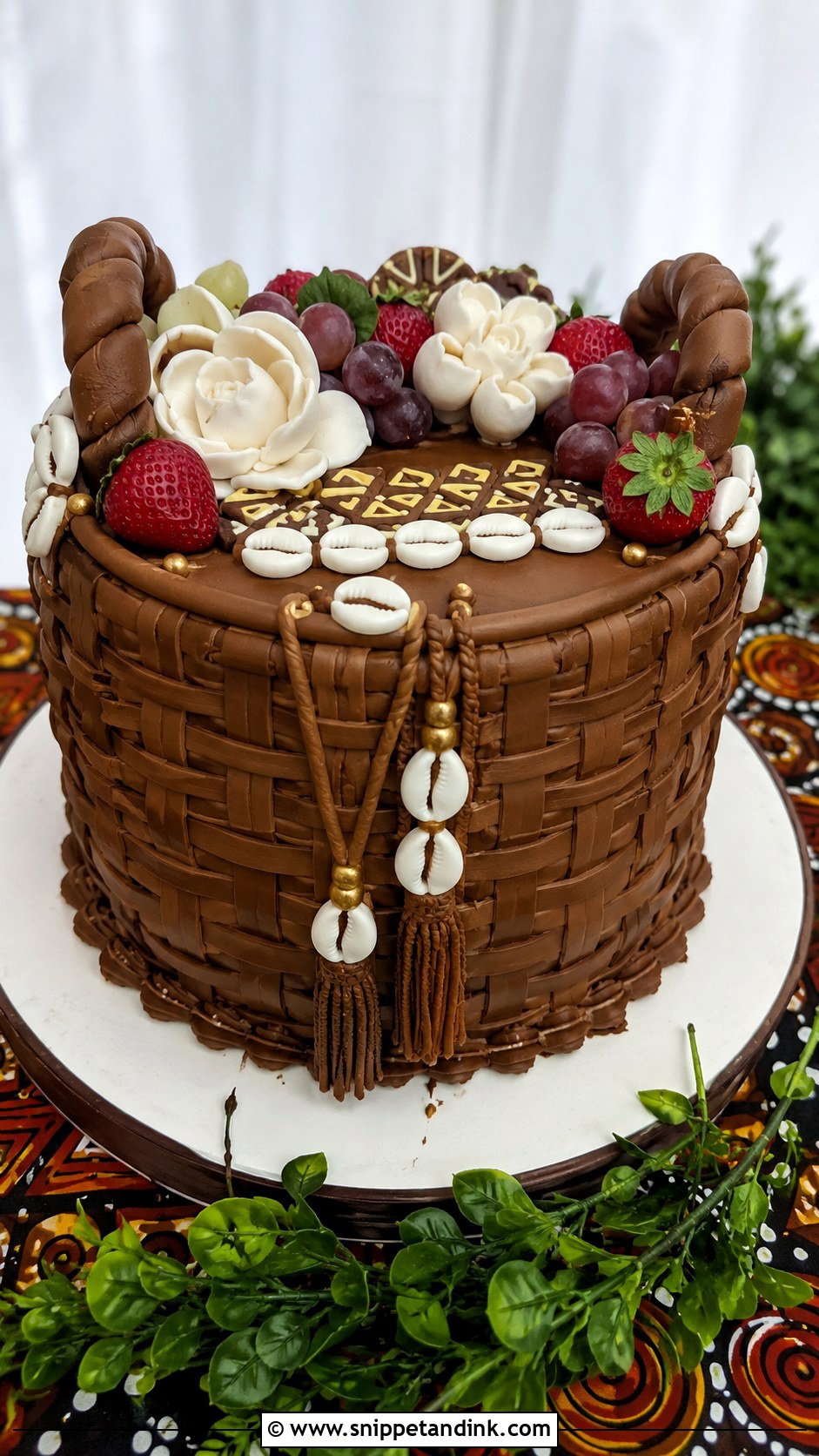
For a ruracio, I aim for respectful rather than playful. Beige, brown, ivory and a little gold give the basket a ceremonial finish, and edible fruits, sugar flowers, small cowrie-inspired details and a message for the families complete it. It sits well among traditional fabrics and wooden serving pieces. On flavor, I often suggest fruit cake or a dense chocolate or orange sponge, which hold the carved shape better than very light sponges and still feel generous for a Kikuyu engagement gathering.
4. Kiondo Wedding Cake
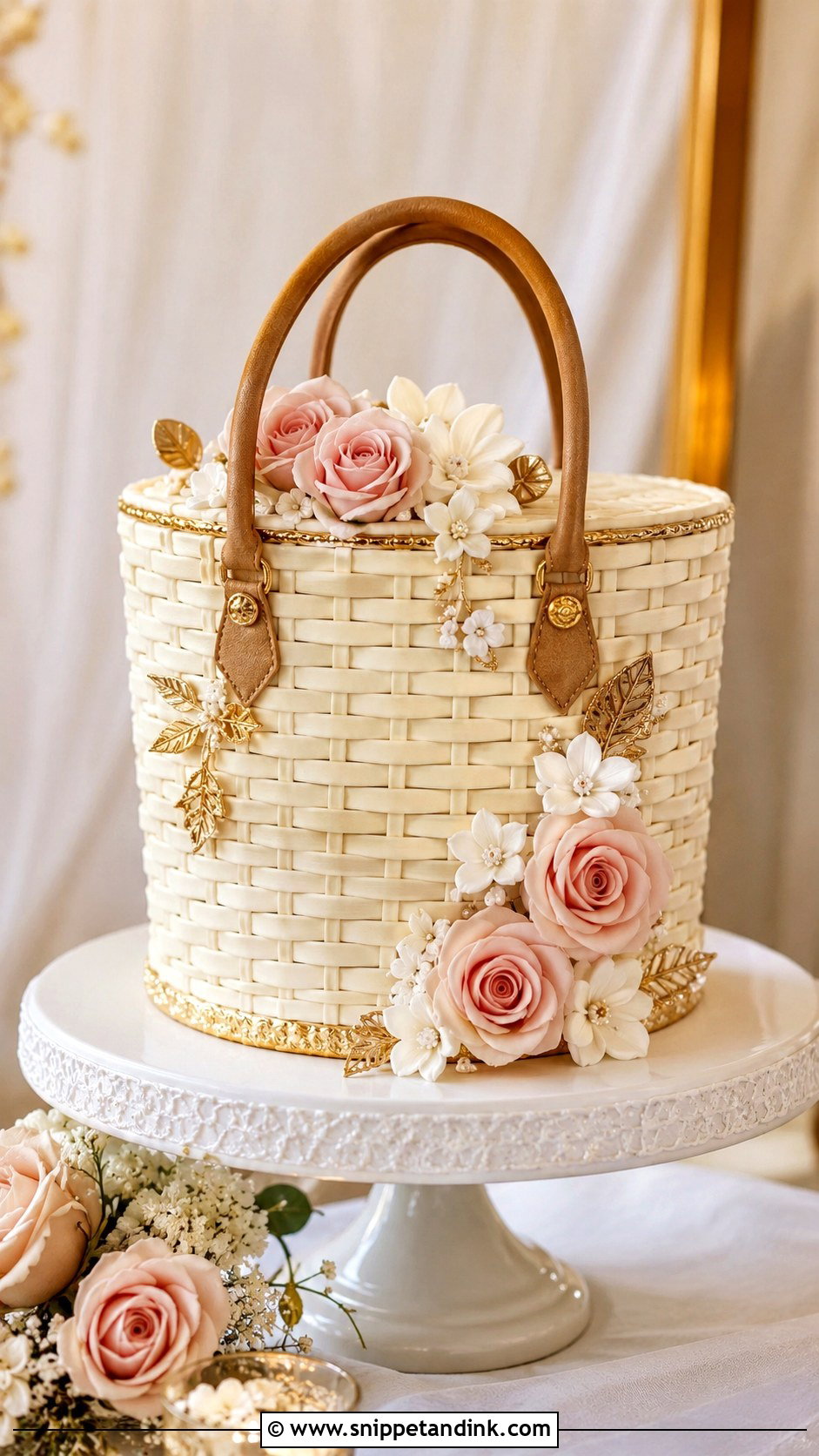
At a wedding, restraint is what makes a Kiondo cake look expensive. I keep the woven body in ivory with warm brown striping and soft gold, then place white flowers, blush roses or sugar orchids on top like a graceful basket arrangement. A single tier suits an intimate wedding. For a bigger guest list, I’d rather make a taller basket with matching cupcakes or a plain kitchen cake than stack heavy carved tiers, because carved shapes give fewer neat slices than a straight-sided cake.
5. Kiondo Graduation Cake
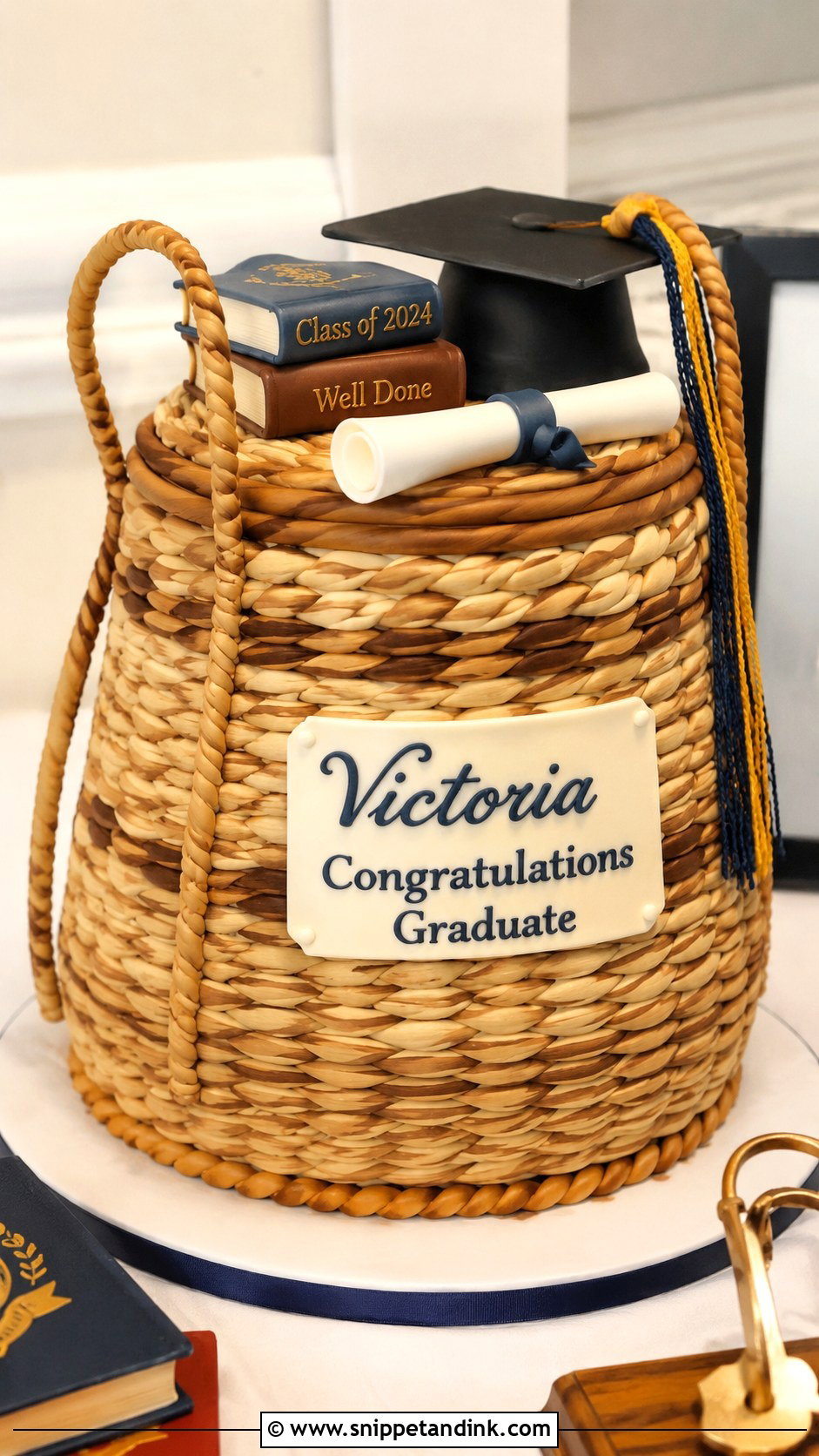
Graduation versions are a story told in toppers: a fondant cap, a diploma scroll, small books or a name plaque. My one rule is to keep the basket natural and let school colors appear only in the ribbon, tassel or message board. Put school colors into the weave and it stops looking like a kiondo. Chocolate sponge with caramel, or vanilla with berry filling, keeps a mixed crowd happy.
6. Kiondo Fruit Basket Cake
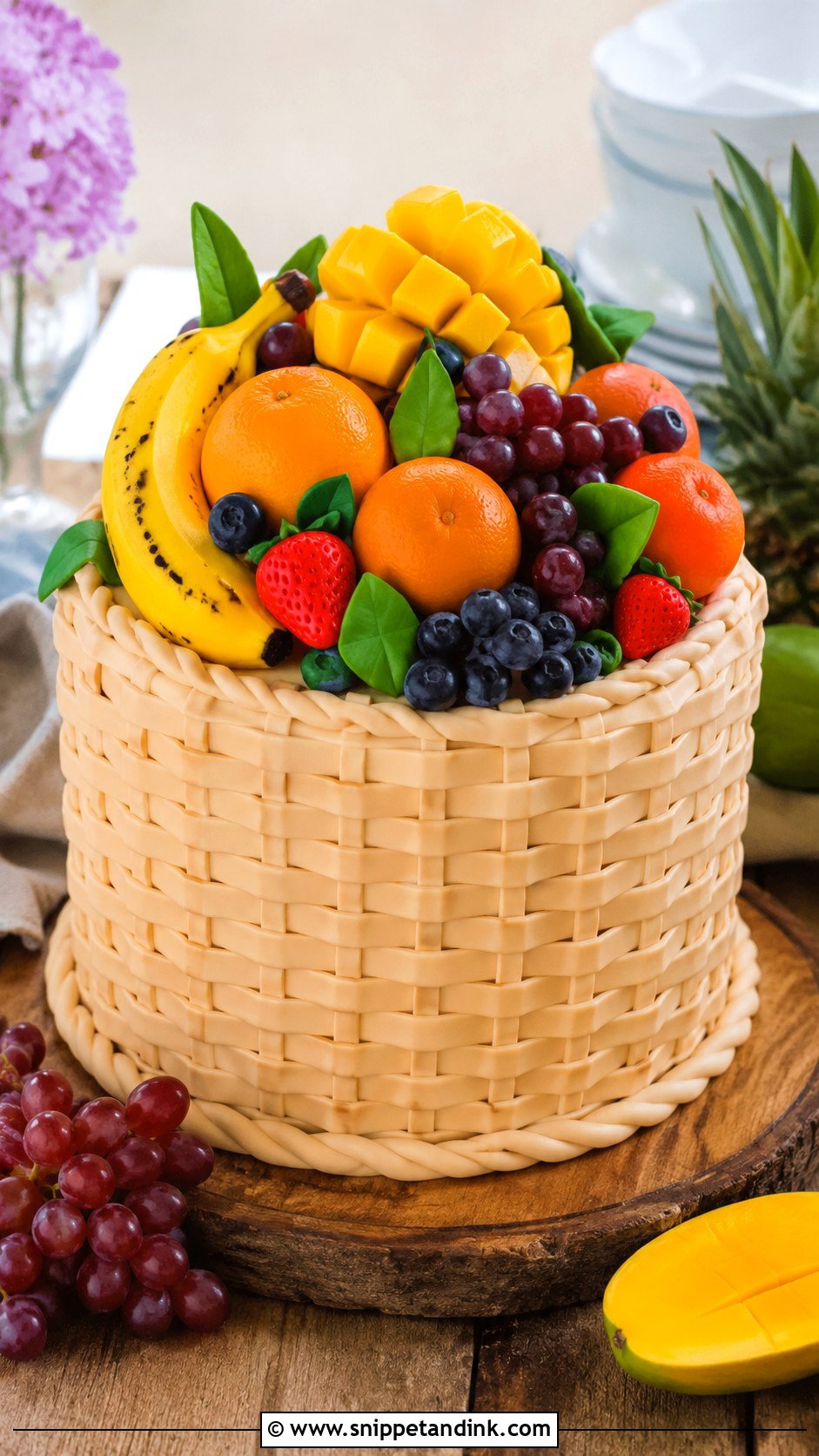
This is the most realistic style and the most work. The fruit on top can be fondant, modeling chocolate or real fruit, and I usually choose modeling chocolate for mangoes and bananas because it holds a crisp shape and takes color without cracking. Fresh fruit looks wonderful but weeps juice onto fondant within hours, so it only goes on just before serving. Pile the fruit full but tidy. A heap that’s too high looks messy rather than abundant once guests start photographing it.
7. Kiondo Cake With Flowers
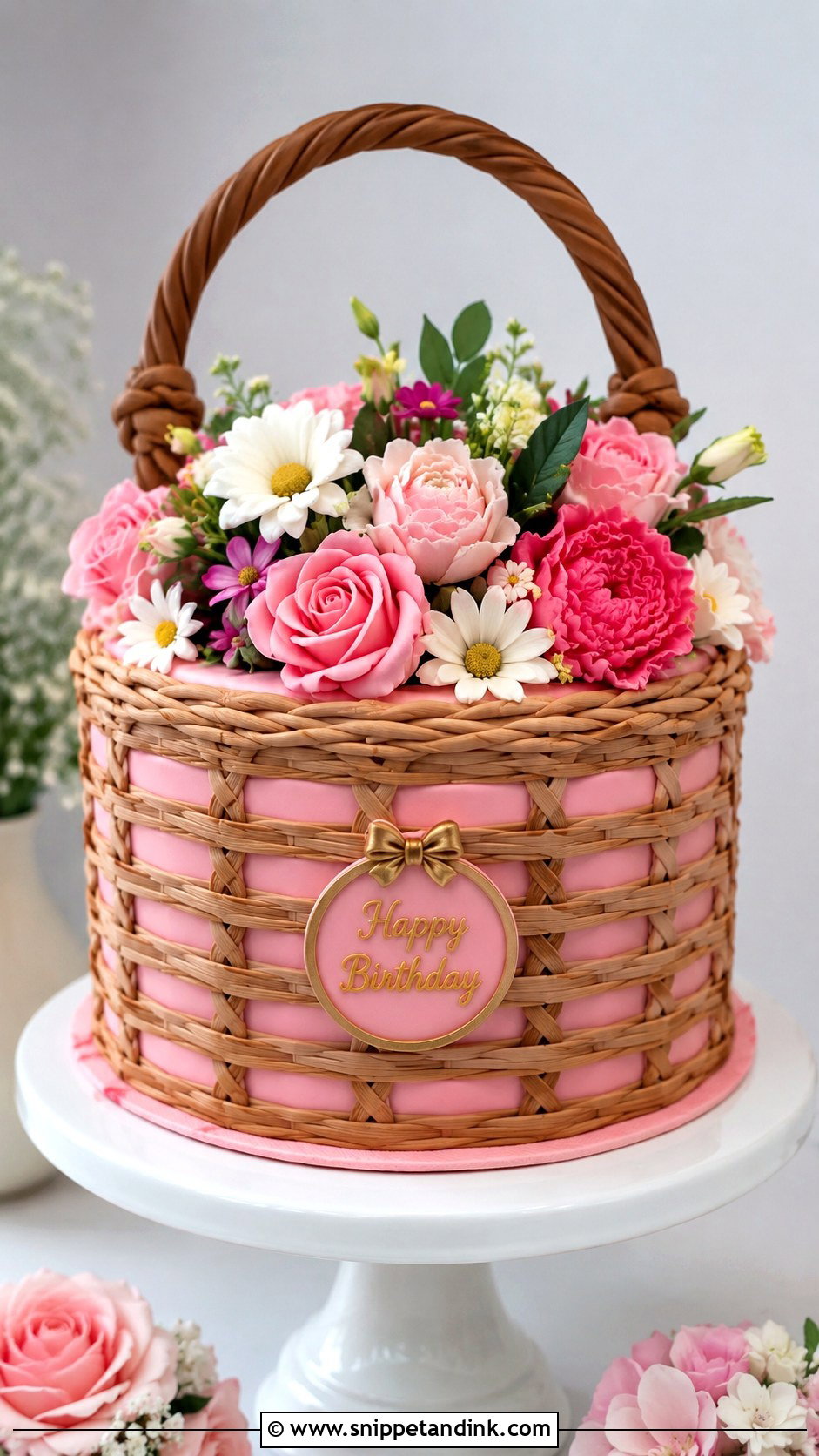
Flowers soften the basket for birthdays, Mother’s Day gatherings, bridal events and family appreciation parties. I fill the top with sugar roses, daisies, carnations or African violet-inspired blooms. Fresh flowers can be used only if they’re food-safe and the stems are wrapped or set in picks, so nothing touches the cake directly. Sugar flowers give more control, and they can be kept afterward. A light vanilla, lemon or strawberry sponge suits it, with a small fondant strap and name tag to finish.
8. Chocolate Kiondo Cake
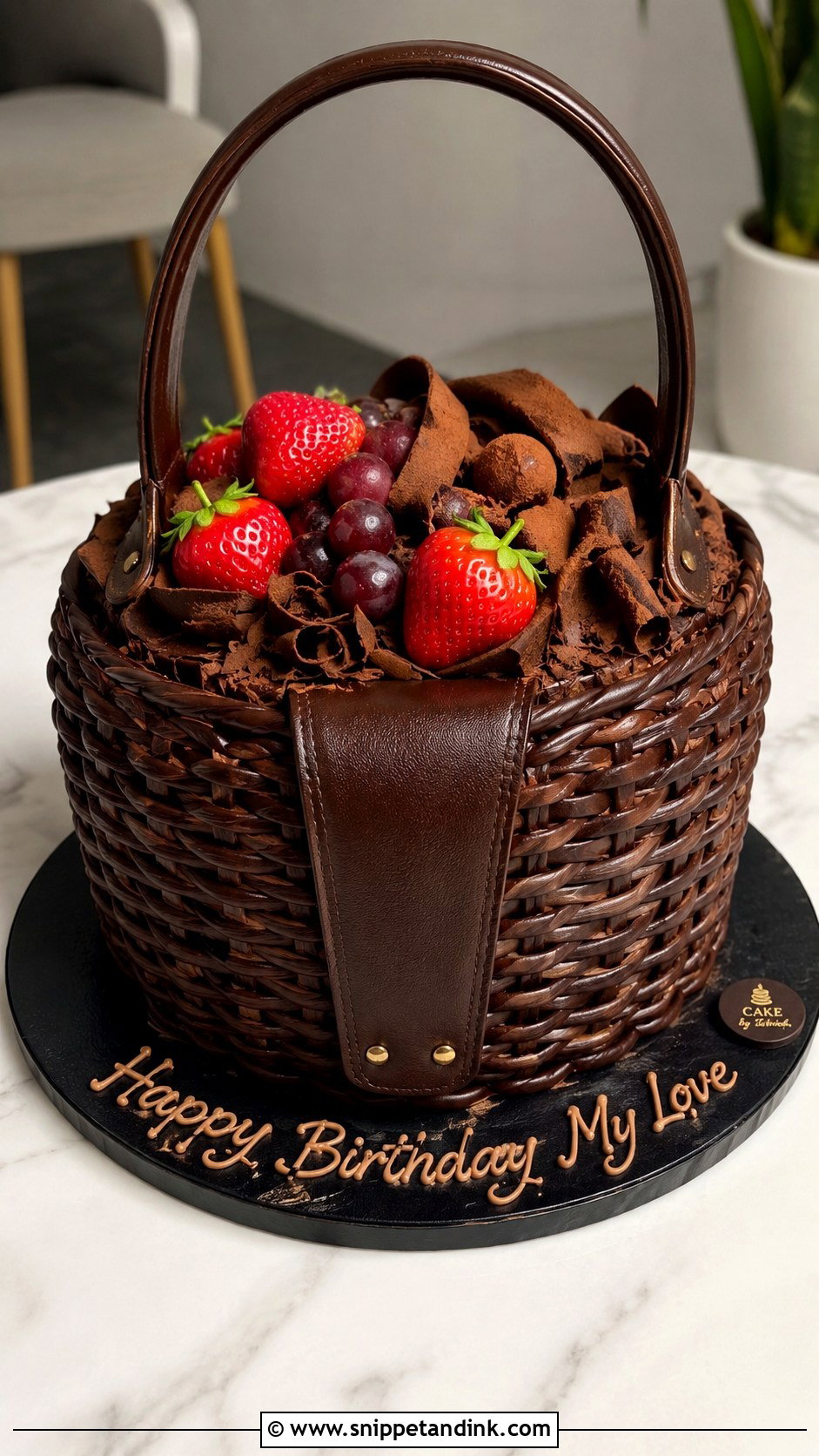
Rustic outside, rich inside. Dark chocolate sponge with ganache is my favorite base for carving because ganache sets firm and gives the fondant a smooth, hard shell to sit on. The weave goes on in brown, tan and cocoa shades that match both the flavor and the basket. Chocolate curls, a little fondant fruit or a leather-look strap are plenty. Adults who don’t like very sweet, sugary-looking cakes tend to love this one.
9. Vanilla Kiondo Cake
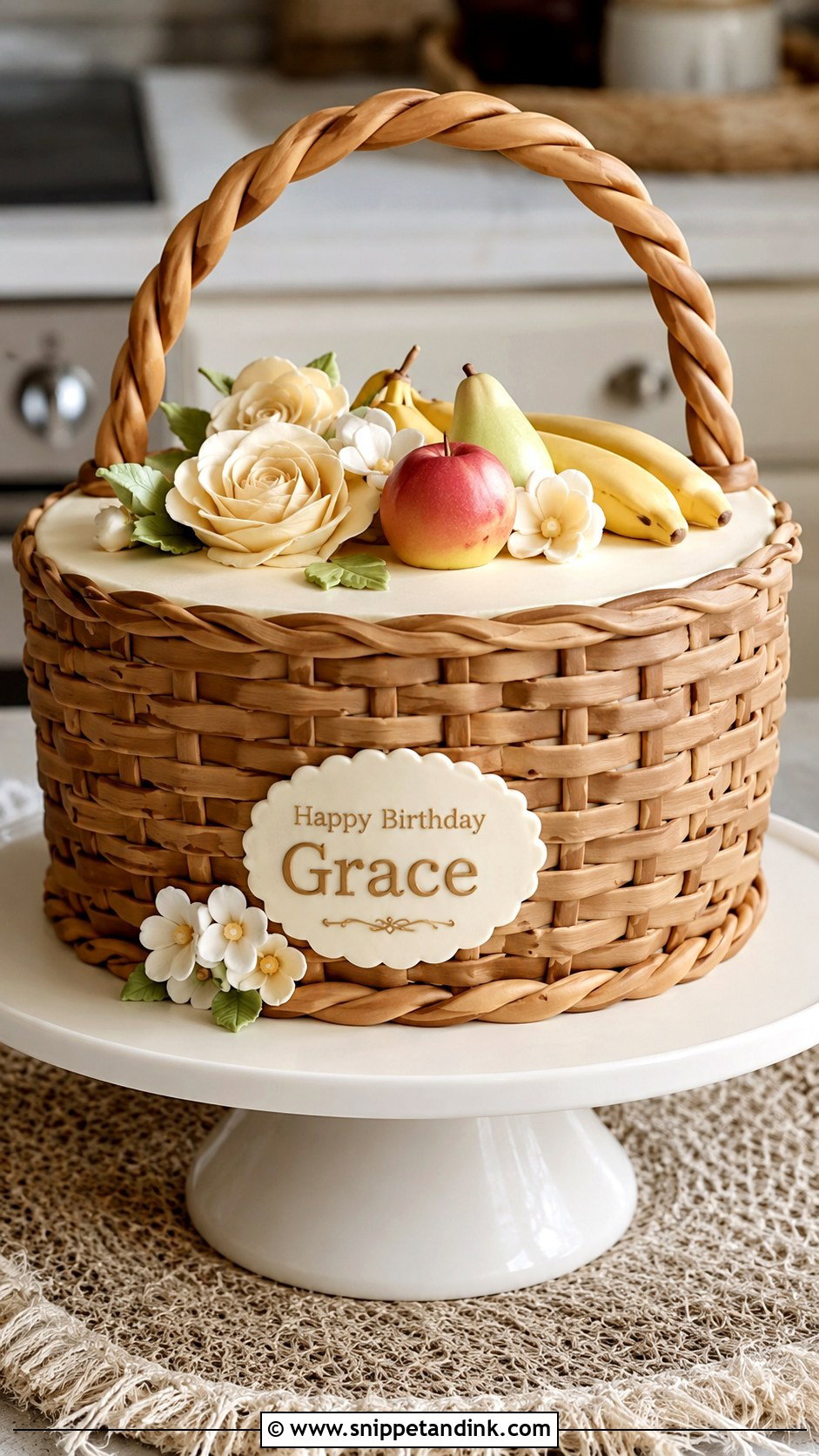
Vanilla is the safe pick when the guest list has mixed tastes. I pair the pale sponge with vanilla buttercream, caramel or a thin layer of fruit jam, though I keep the jam modest in a carved cake, since too much soft filling lets the layers slide while I’m shaping. Outside, beige, cream and honey-brown strips give a clean, light weave. A few fondant fruits or a name plaque is enough decoration.
10. Two Tier Kiondo Cake
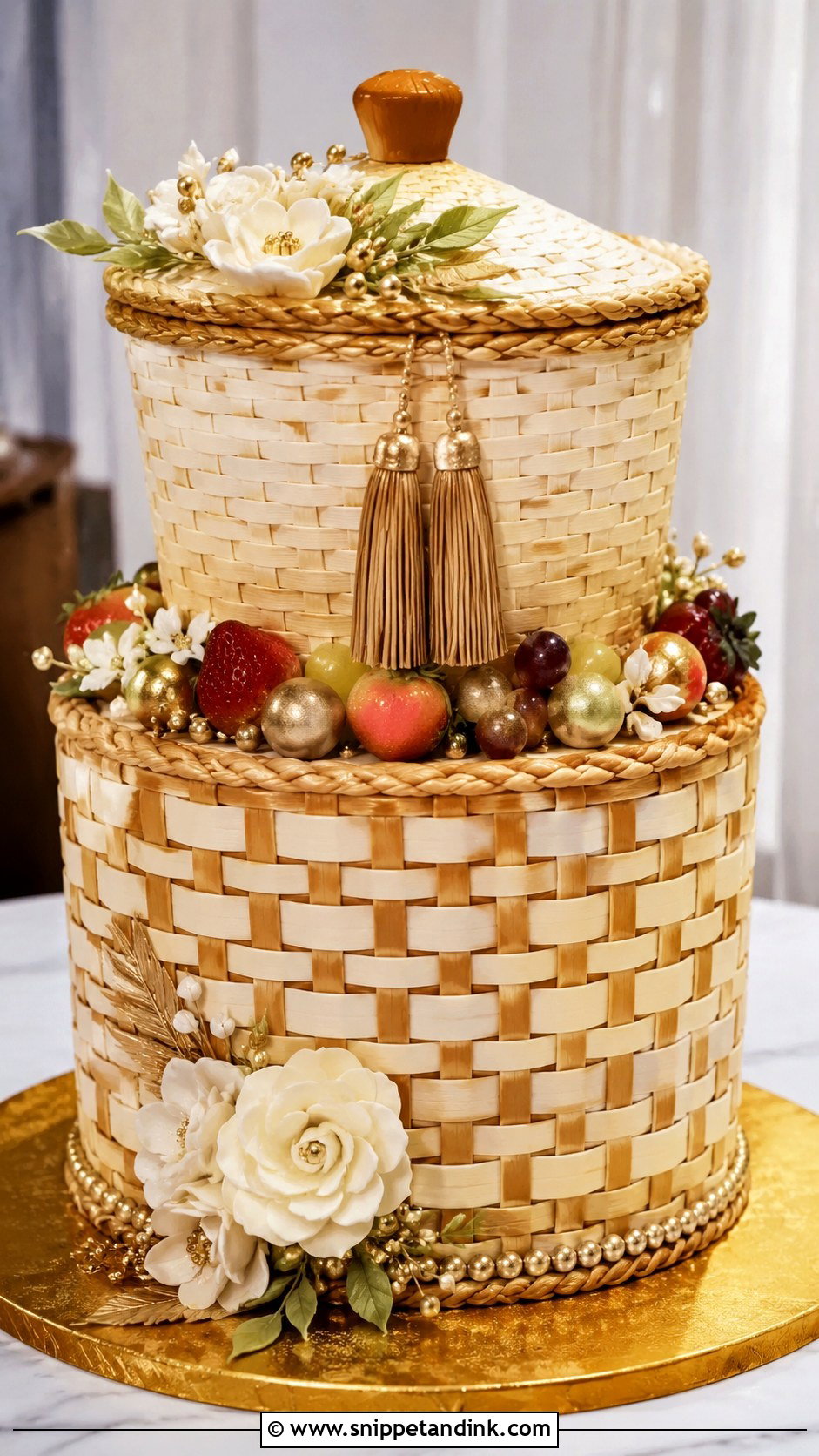
Two tiers turn the basket into a real centerpiece. The bottom tier is the realistic woven basket; the top can be a smaller lidded kiondo or a smooth buttercream tier with matching pattern. I keep one palette across both so they look made together, and I hide the join with edible flowers, fruits or gold beads. Structure is not optional here. Carved basket cakes are heavy, so the bottom tier gets dowels and the top sits on its own board, the same as any stacked wedding cake.
11. Mini Kiondo Cake
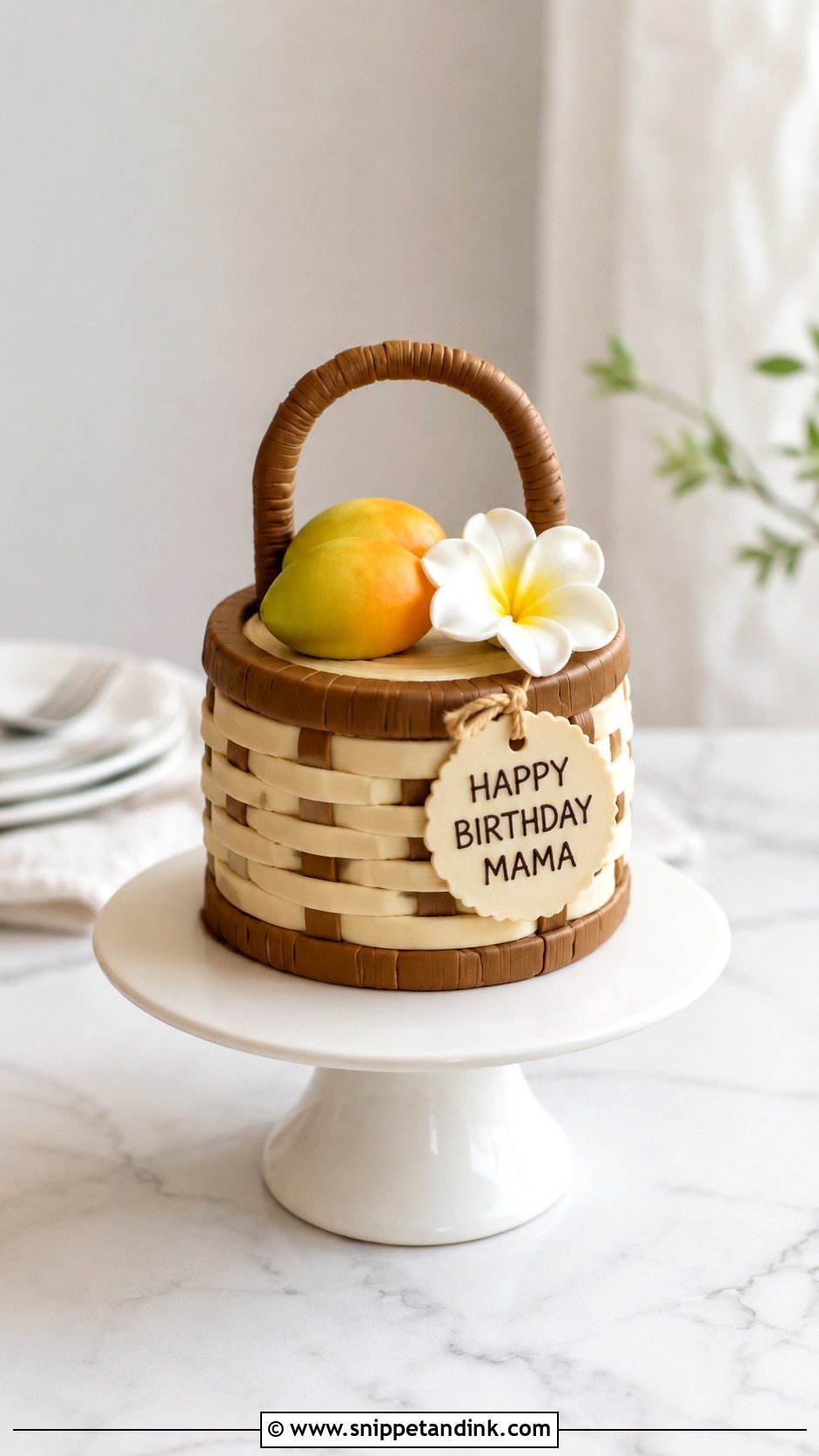
A mini Kiondo cake still needs rounded sides, a woven texture, a handle and a neat top. What changes is scale. Thin strips that look right on a big cake look clumsy on a six-inch one, so I cut narrower strips and pick one strong color pattern. A single fruit cluster or one flower is the limit. Minis make a thoughtful gift, and they’re easy to display on a simple stand.
12. Kiondo Cake With Handle
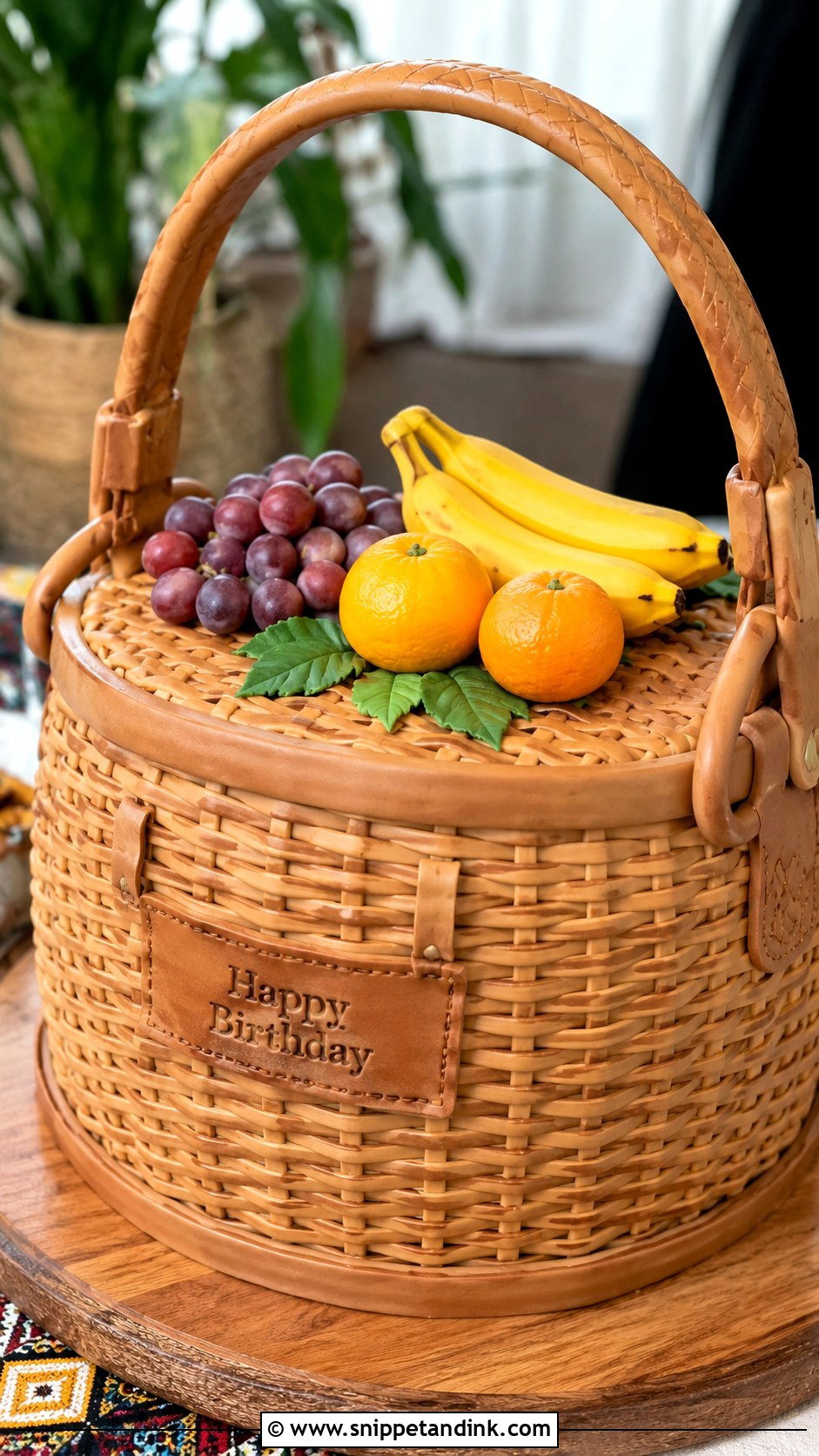
The handle completes the basket illusion, and it’s also the part most likely to break. I make it from gum paste or modeling chocolate several days ahead so it dries hard, often around a food-safe internal support, then attach it with small fondant loops on the sides. It should look curved and leather-like. Guests will ask if the cake is real. Just make sure everyone knows the handle has to be lifted off before cutting, especially if there’s any support inside it.
13. Kiondo Cake With Lid
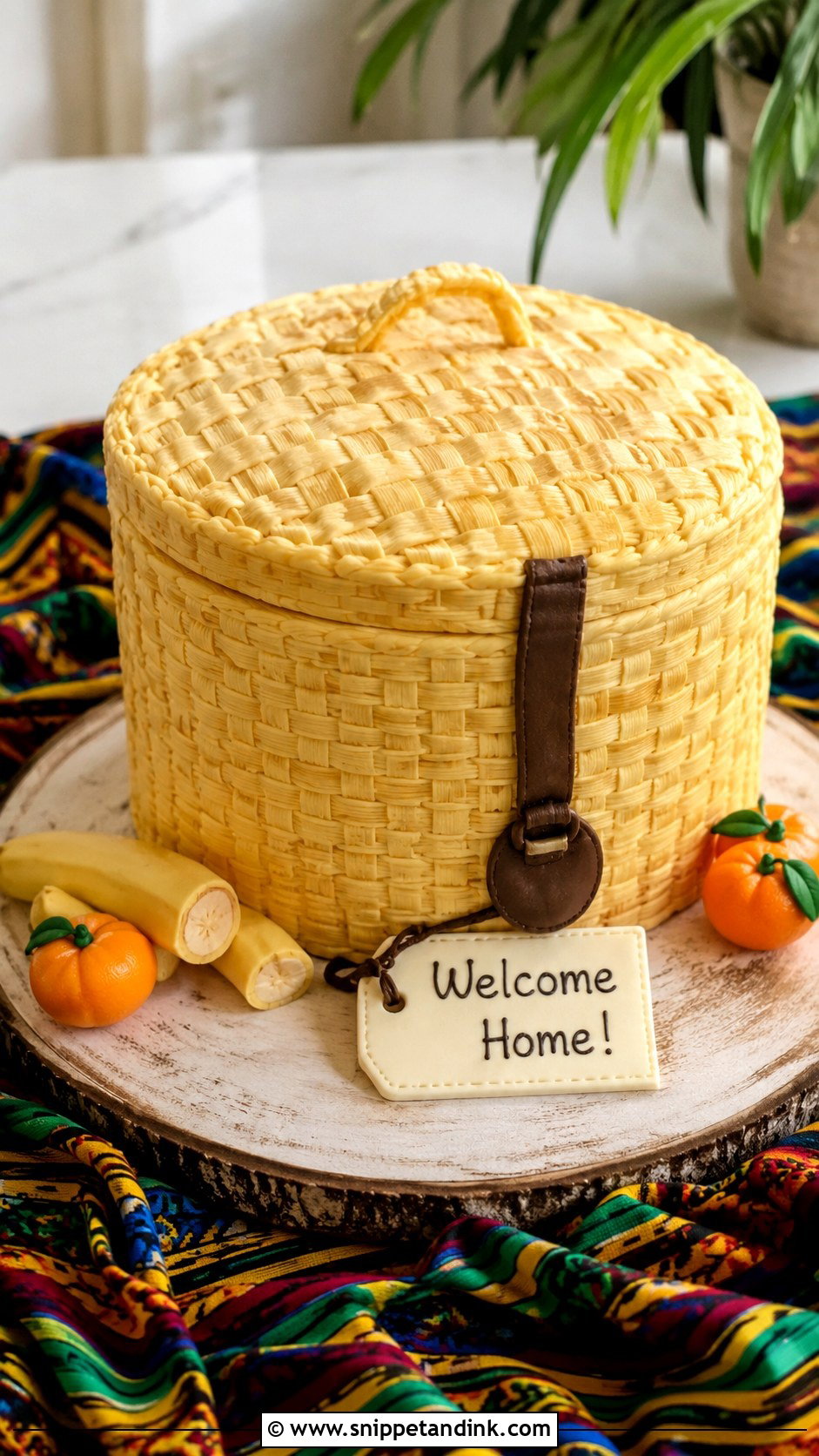
A lid makes the basket look finished, and it’s easier to stage than a very tall cake. I make it slightly domed, flat or tilted open to reveal edible fruit inside, with the same weave as the body so the two pieces match. A closed lid needs something to catch the eye: a fondant bow, a leather strap or a small message tag. A tilted lid must rest on a hidden support, never on the fruit alone, or it slides during the drive. Fruit cake, vanilla or chocolate all work inside.
14. Modern Kiondo Cake
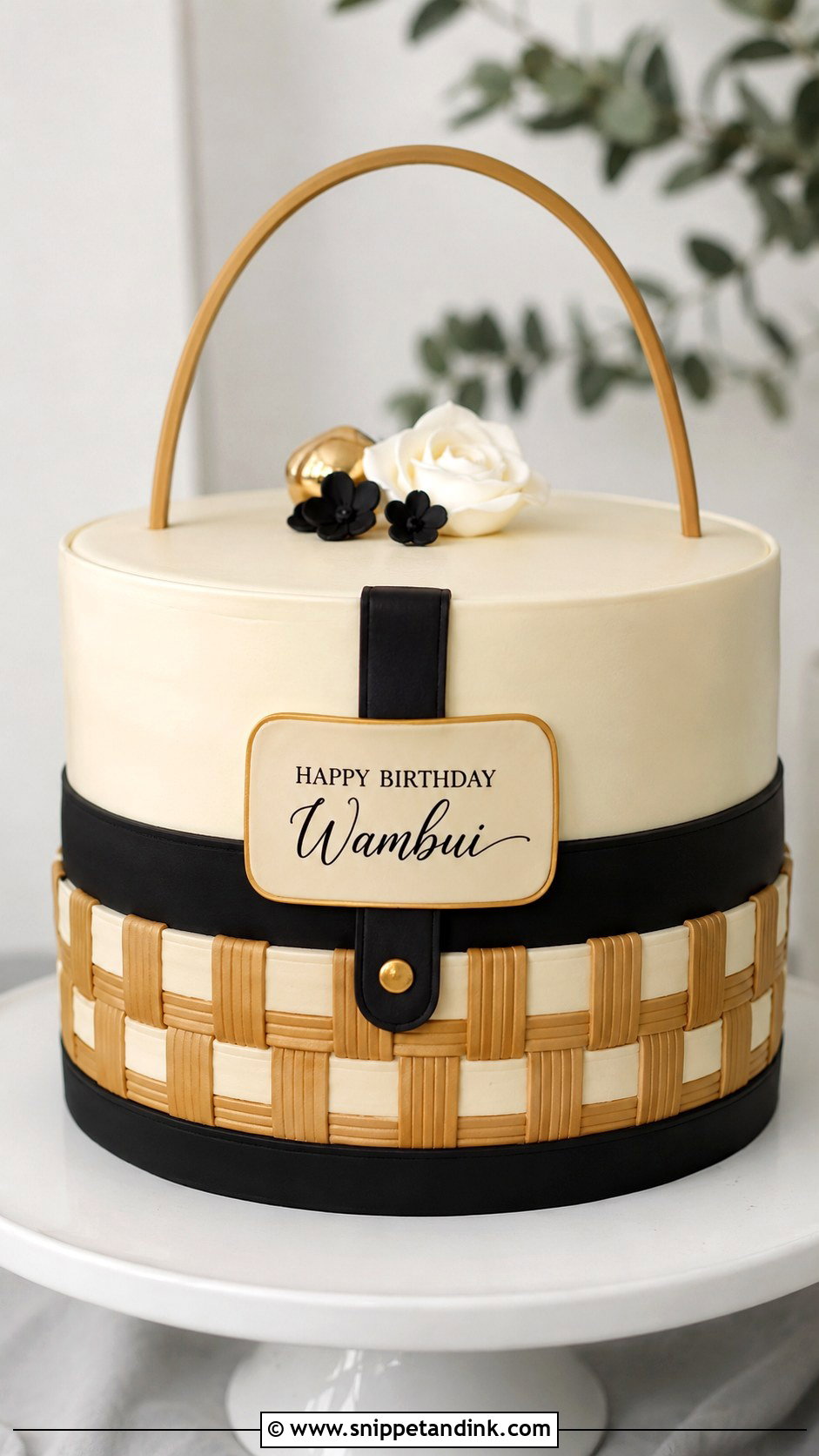
Modern doesn’t mean less kiondo; it means less texture. I use smooth fondant panels with woven sections between them, in cream, black, tan and muted gold, and leave plenty of plain space. A sleek name plaque, minimal flowers or a clean leather-look handle completes it. Younger adults and contemporary cultural events suit this one. Red velvet, chocolate, vanilla or coconut can go inside. The design only works if the decorator resists adding one more thing.

15. Rustic Kiondo Cake
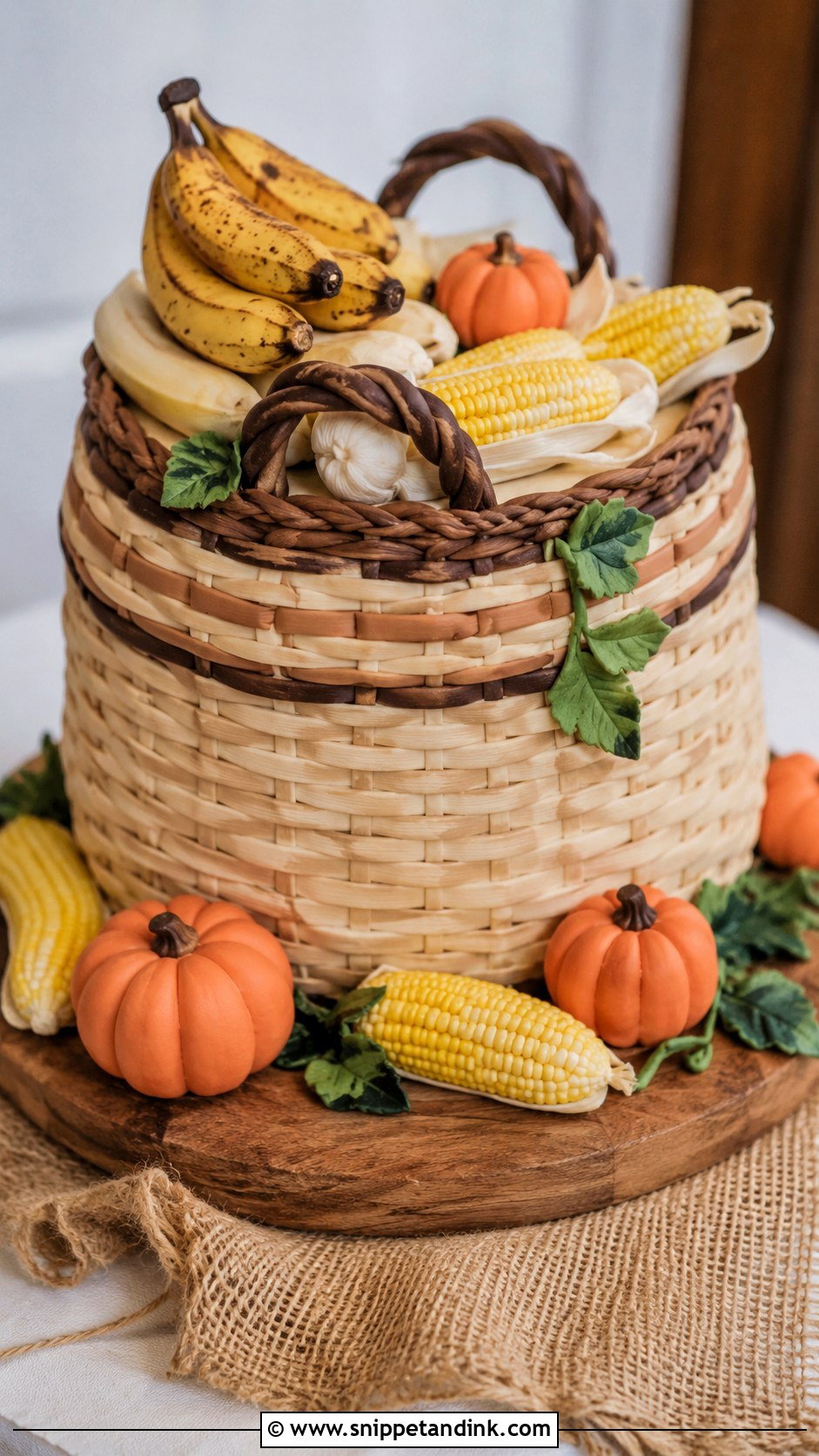
Rustic is the one place I let the weave be a little uneven, though still controlled, because real hand-woven sisal is never perfectly regular. I keep a matte finish instead of a sheen, and add edible bananas, maize, small pumpkins or simple fruit. A wooden board or woven cloth underneath does a lot for the presentation. It honors elders, farmers and community gatherings well. Carrot, spice, fruit cake or chocolate sponge all suit the cozy look.
16. Kiondo Cake With Edible Fruits
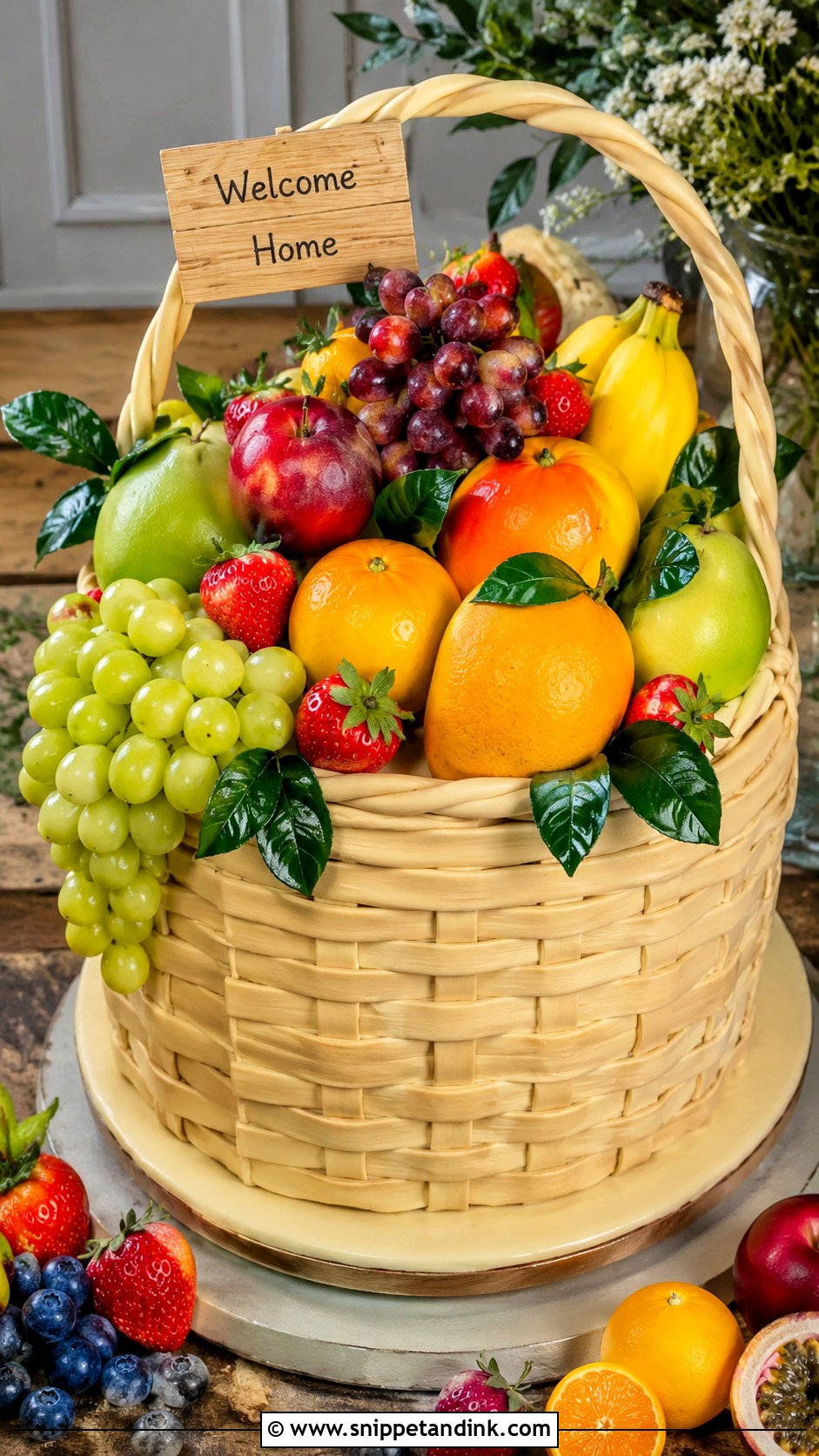
Fruit turns a neutral basket into the brightest cake on the table. I arrange fondant mangoes, oranges, bananas, apples, grapes or berries like a generous market load, tallest pieces at the back so they read from the front. Mixing fresh fruit with fondant pieces is fine when the cake will be served soon, though fresh berries should sit on a small barrier, like a thin chocolate disc, not directly on fondant. Lemon, vanilla, coconut or passion fruit cake keeps the flavor bright. Birthdays, welcome-home parties and family visits suit it.
17. Kiondo Cake With African Print
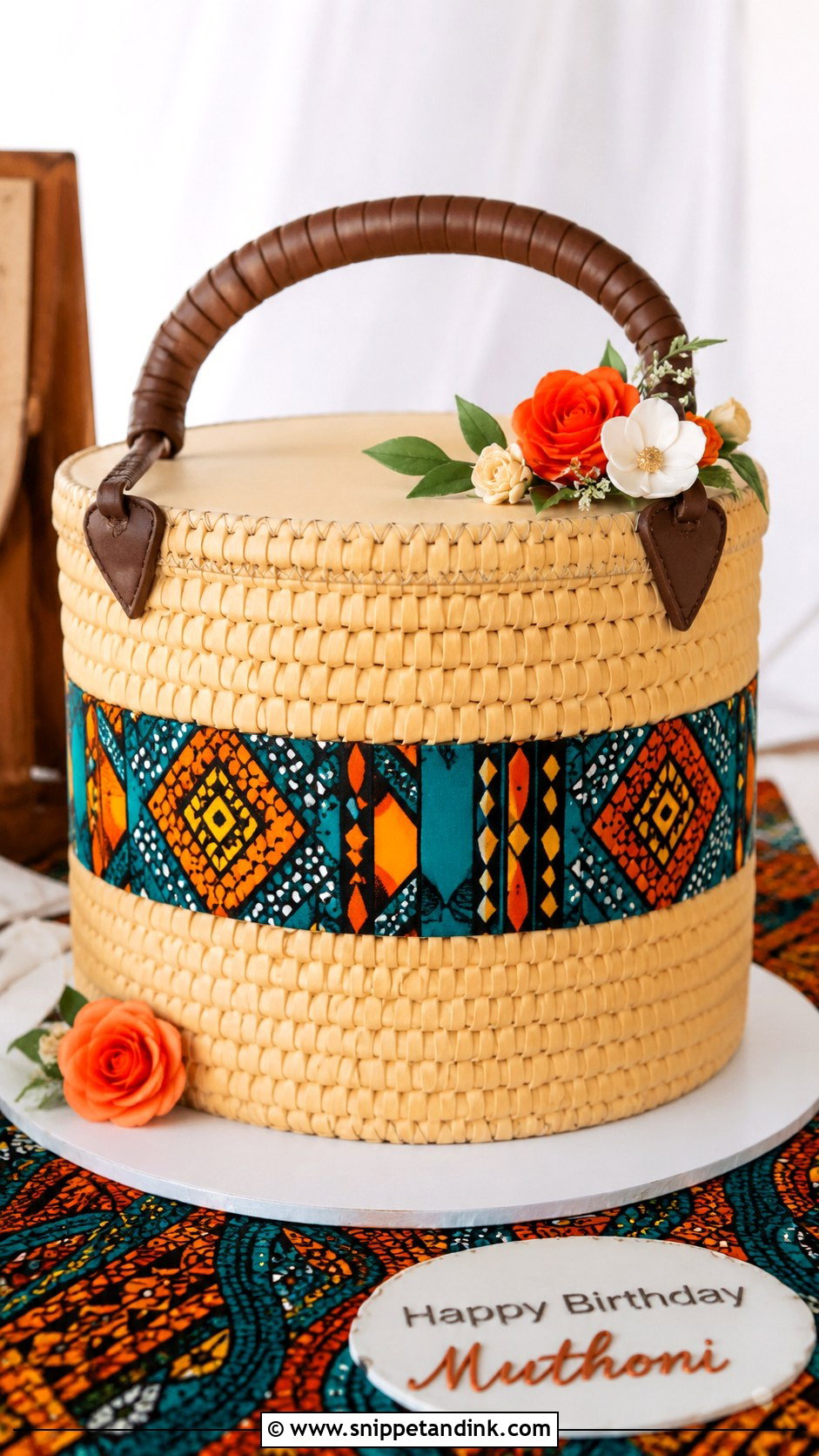
Print and weave compete for attention, so I give the print one area only. The body stays in woven tan and brown fondant, and a single band of edible African print runs around the middle, the base or the handle. Orange, teal, yellow, black, red or green all work, but I use two or three of them, not all. Printed wafer paper or edible image sheets make the pattern crisp. Underneath, vanilla, coconut, chocolate or red velvet sponge all suit birthdays, cultural events and bridal celebrations.
18. Kiondo Cake For Mum
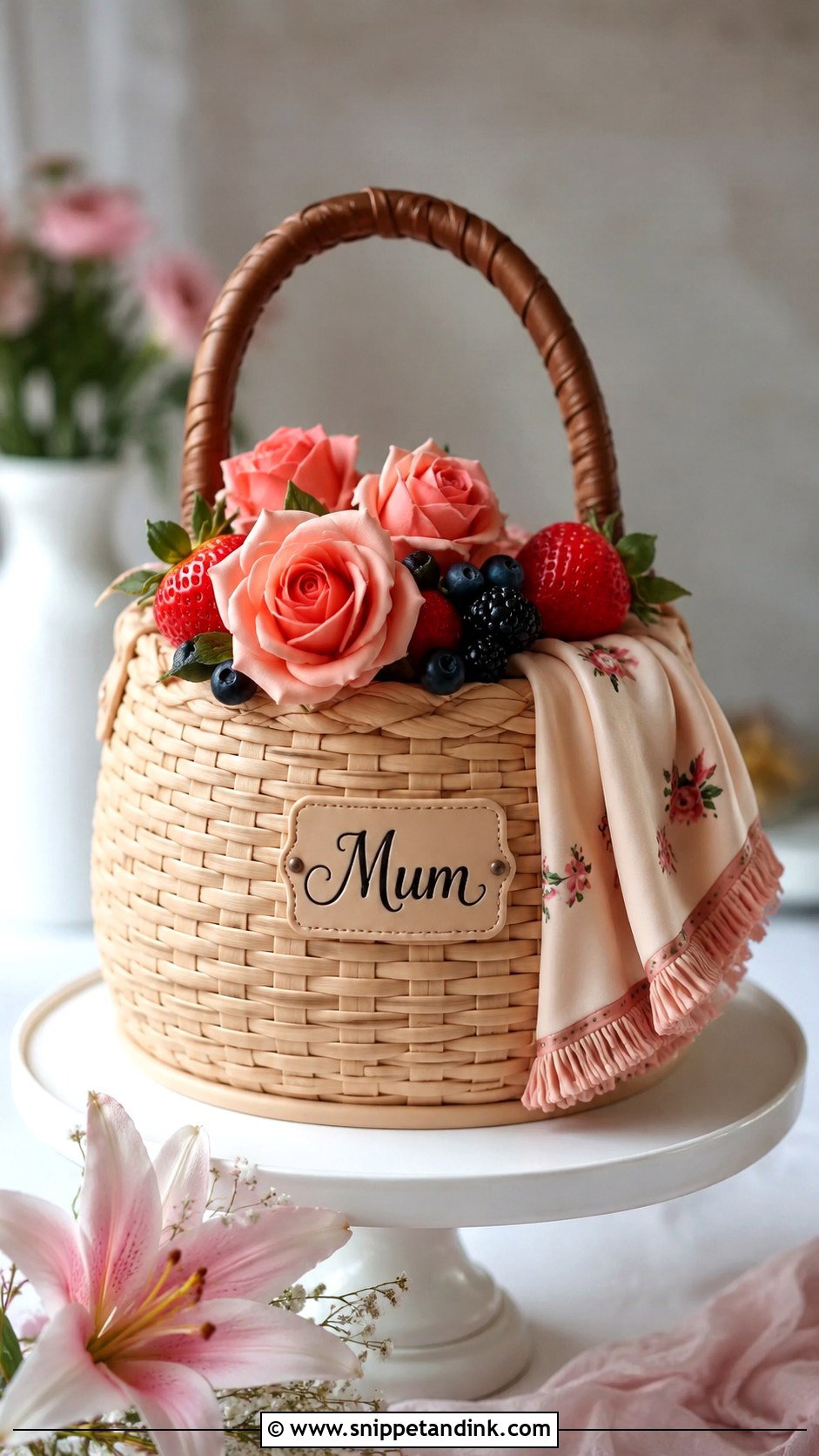
For mum, the brief is warmth without busyness. I start with a warm woven base, then add a few sugar flowers, some edible fruit and a fondant message like “Mum” or “With Love.” Soft pink, peach, cream and brown keep it gentle. A small fondant scarf or handbag can personalize it, but one keepsake detail is enough. Vanilla, strawberry, lemon or red velvet sponge is a good match for birthdays, appreciation gatherings or a family surprise.
19. Kiondo Cake For Grandma
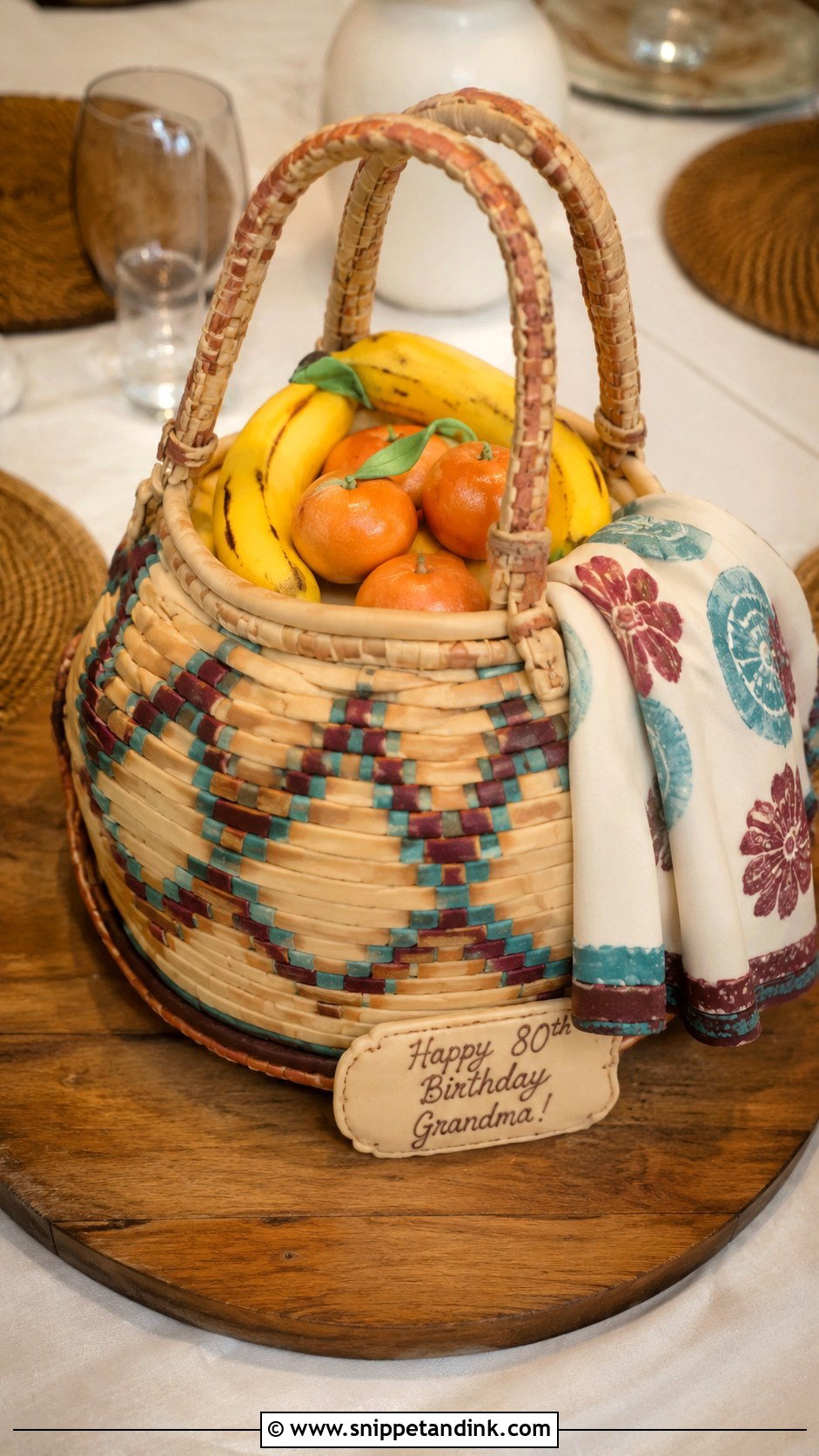
Grandmothers often recognize the basket before anyone explains it, which is what makes this version so touching. I keep it authentic: natural sisal colors, a rounded body and a sturdy handle. Edible fruits, a small shawl detail or a message plaque with her name is all it needs. Warm, not flashy. For sharing across generations, fruit cake, vanilla sponge or chocolate with a light buttercream filling is the safe choice.
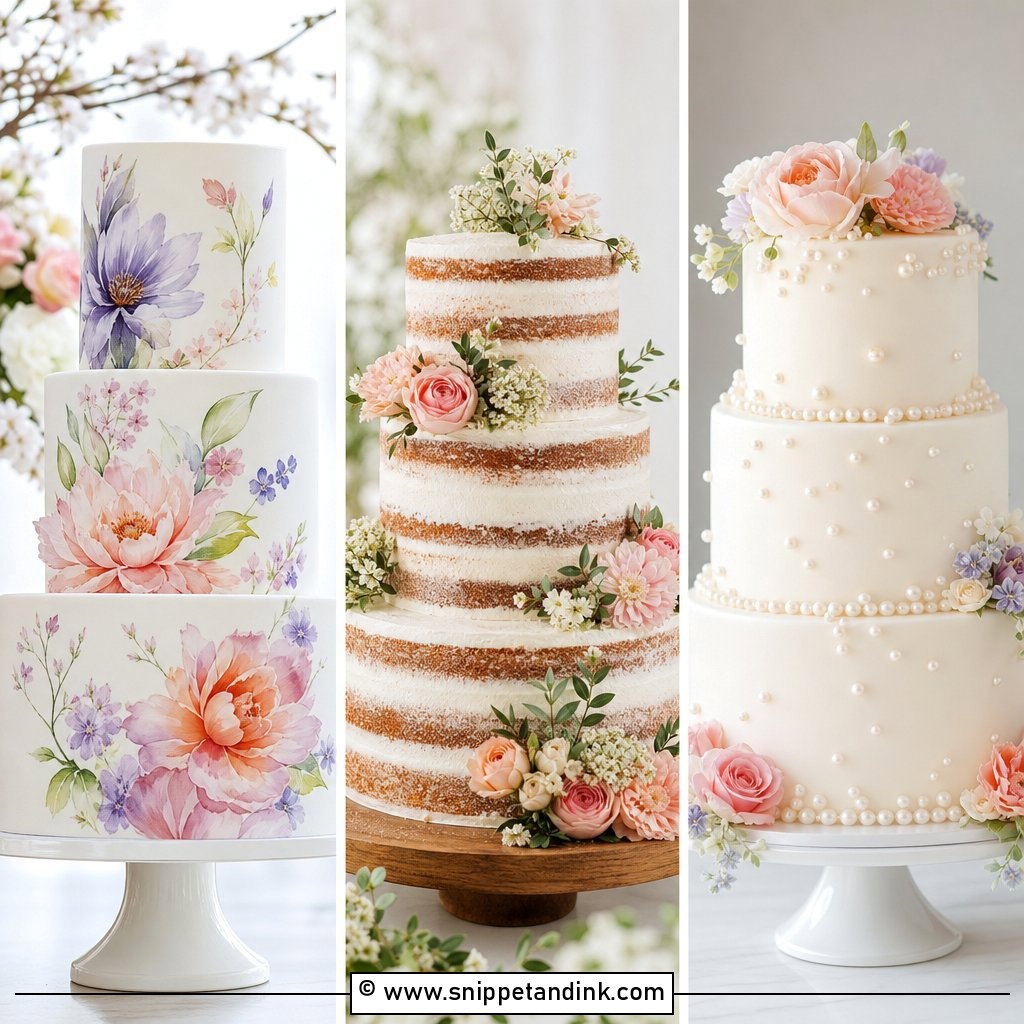


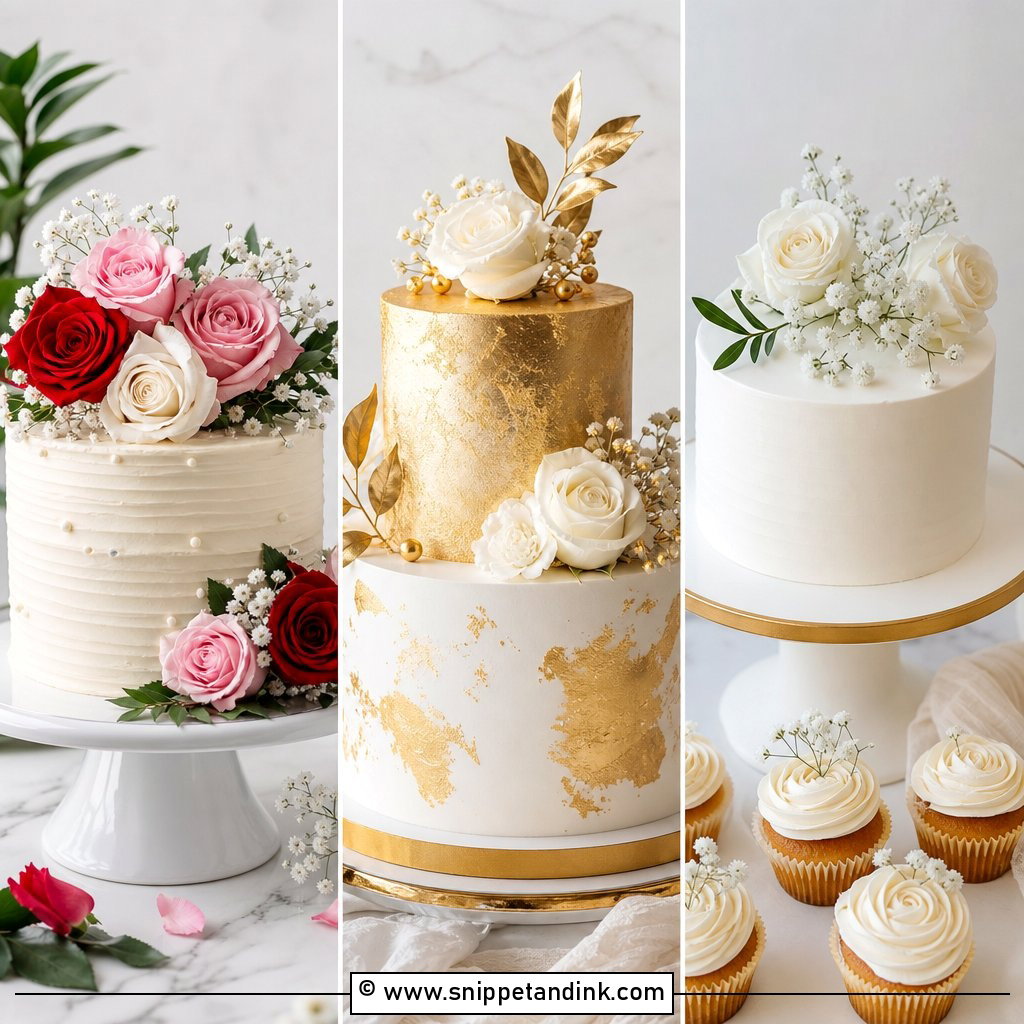
20. Luxury Kiondo Cake
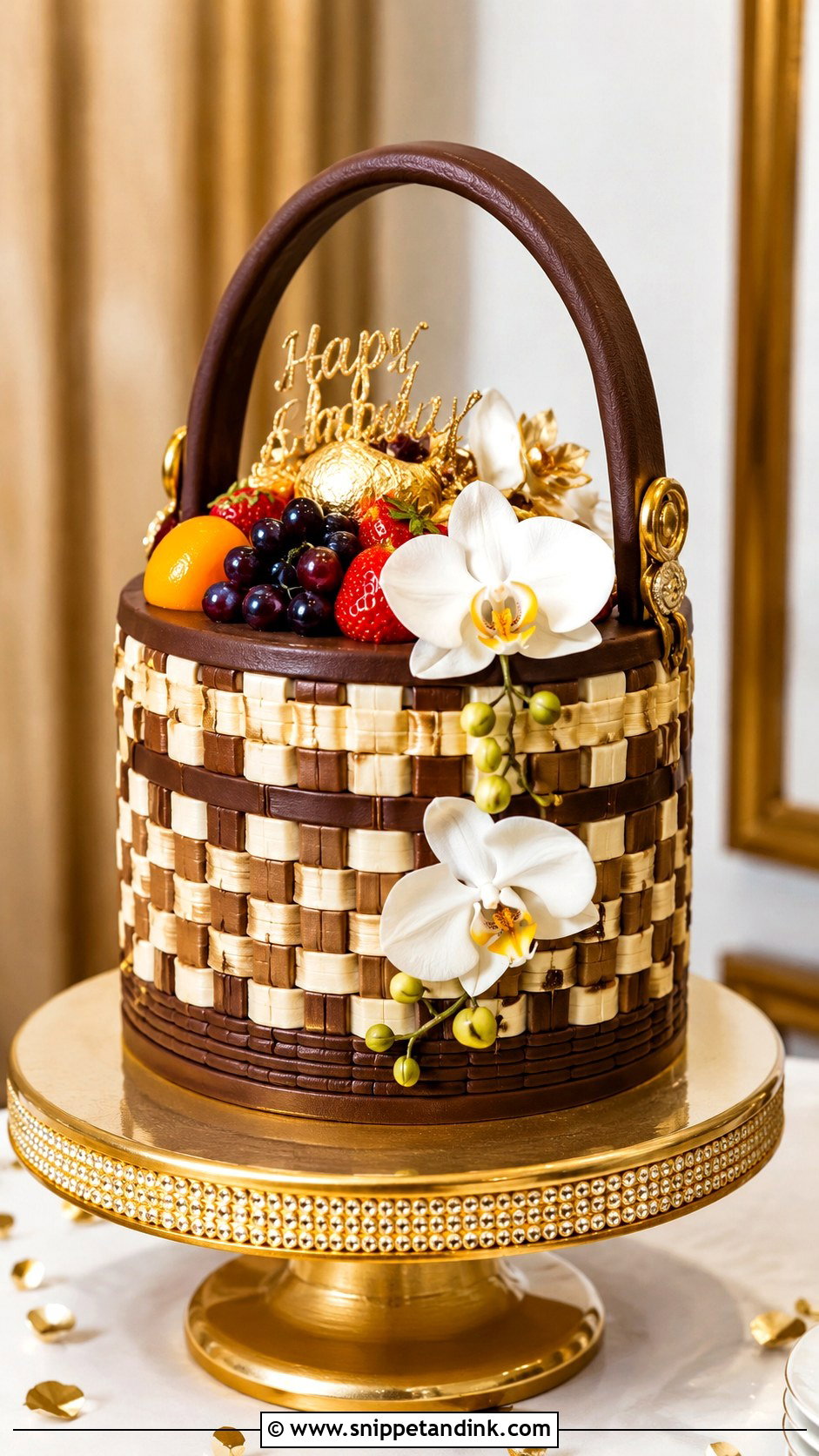
Luxury here means precision, not more decoration. Every strip is cut to the same width, every crossing sits square, and edible gold goes only on a few edges and the strap. The palette is ivory, caramel, chocolate brown and soft metallic gold, with flowers or fruit on top. I’d make this for high-end birthdays, weddings, ruracio events or anniversary parties. Chocolate ganache, red velvet, vanilla bean or a rich fruit cake suit the finish. It must still look like a kiondo first.
Ordering a Kiondo Cake Without Surprises
A carved, hand-woven cake usually takes a baker two or three days from baking to finishing, and handles and sugar flowers are made even earlier so they can dry. For weddings and ruracio dates, I’d contact your baker several weeks ahead, longer in busy months. Bring these to the first conversation:
- A photo of a real kiondo you like, ideally one from the family, so the colors and strap style match something meaningful
- Your true guest count, because a rounded carved cake serves fewer neat slices than a straight-sided one of the same size
- A fabric swatch or outfit photo if the colors should tie into the ceremony
- Whether the handle should be edible or a keepsake, which changes how it’s built
Heat, Handles and the Drive to the Venue
Fondant hates sudden temperature changes. A cake that comes straight from a cold fridge into a warm hall gathers condensation and turns shiny and sticky, so I let carved cakes sit in a cool room, never a fridge, before delivery. At the venue, keep the table out of direct sun and away from the kitchen door.
In the car, the cake travels flat on a non-slip mat, in an air-conditioned space, never on a seat. Delicate handles and tilted lids often ride separately and go on at the venue. Ask the baker who will set up and who removes any supports before cutting. That job should never be left to a guest with a knife.
What a Good Kiondo Cake Gets Right Every Time
A Kiondo cake carries culture, memory and family pride in a shape everyone at the party recognizes. Whatever direction you pick, traditional, fruit-filled, bridal or polished luxury, the details that matter are the same: a rounded carve, a woven texture done with care, natural colors and toppers chosen on purpose. Match the flavor to the mood of the event and keep the decoration clear. When the basket is right, the cake needs very little else.
You'll Like These Ideas:





Leave a Reply