
Couples still ask me for flowers on their cake more than any other decoration, but what they mean by it has shifted. Fewer heavy clusters smothering every tier, more pressed petals, single sculpted sugar blooms, painted flowers and clean buttercream with room to breathe. Flowers on a cake also come with practical questions most people don’t think about until the tasting: which blooms are safe near food, how they hold up in a warm room, and who actually places them on the day. Below are twenty floral designs I make for weddings, with the detail I’d want you to know before you choose one.
Fresh, Sugar or Piped Petals Behave Very Differently
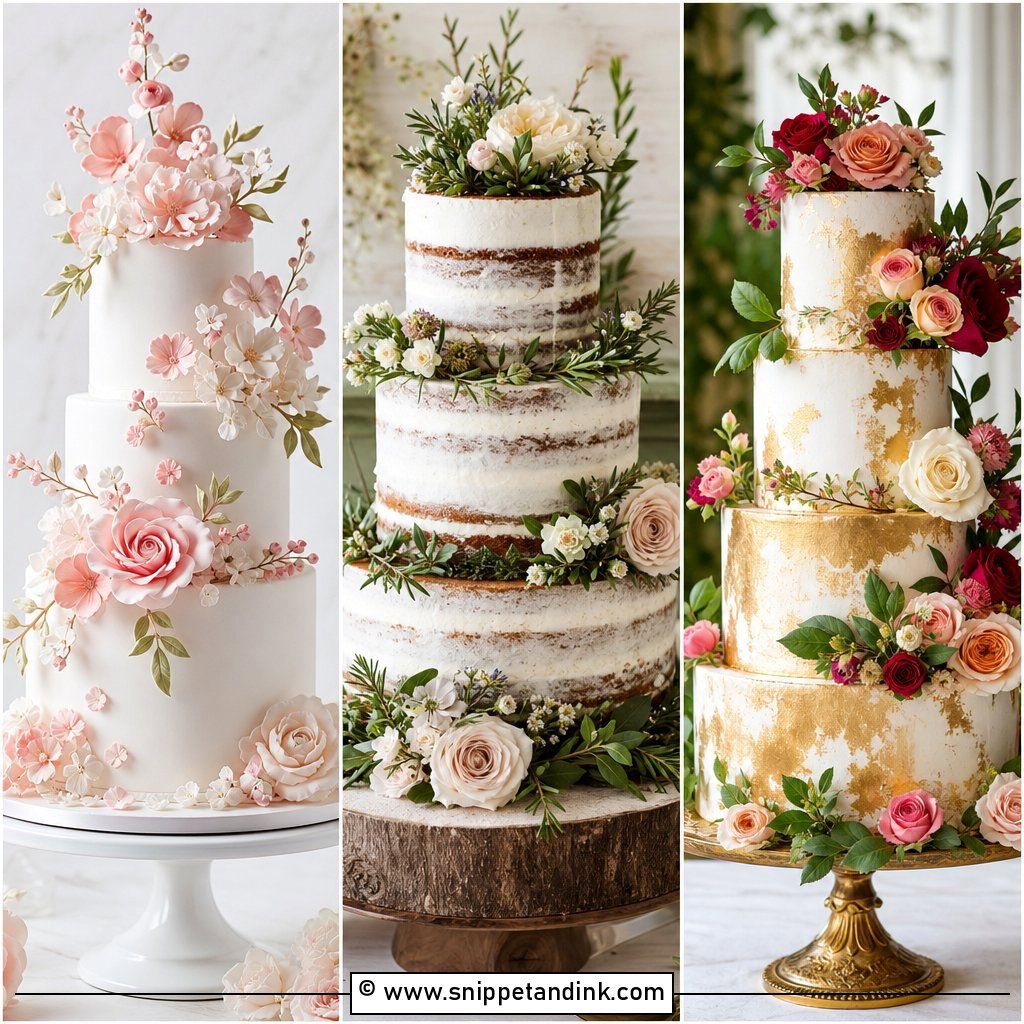
Before you fall for a picture, know what kind of flower is on that cake. The three main options change the price, the lead time and how the cake copes with a warm room.
Fresh flowers
Usually the quickest and often the cheapest, but they’re not edible unless grown for food, and they wilt. They go on the day, with stems wrapped and inserted into picks.
Sugar flowers
Handmade from gum paste, petal by petal, then dried. Large blooms can take hours each, so most bakers want them ordered weeks ahead. They last indefinitely and many couples keep one as a memento, but humidity softens them.
Piped and painted flowers
Fully edible and part of the cake itself. Their weakness is temperature, since buttercream softens quickly in heat.
1. Pressed Flower Wedding Cake
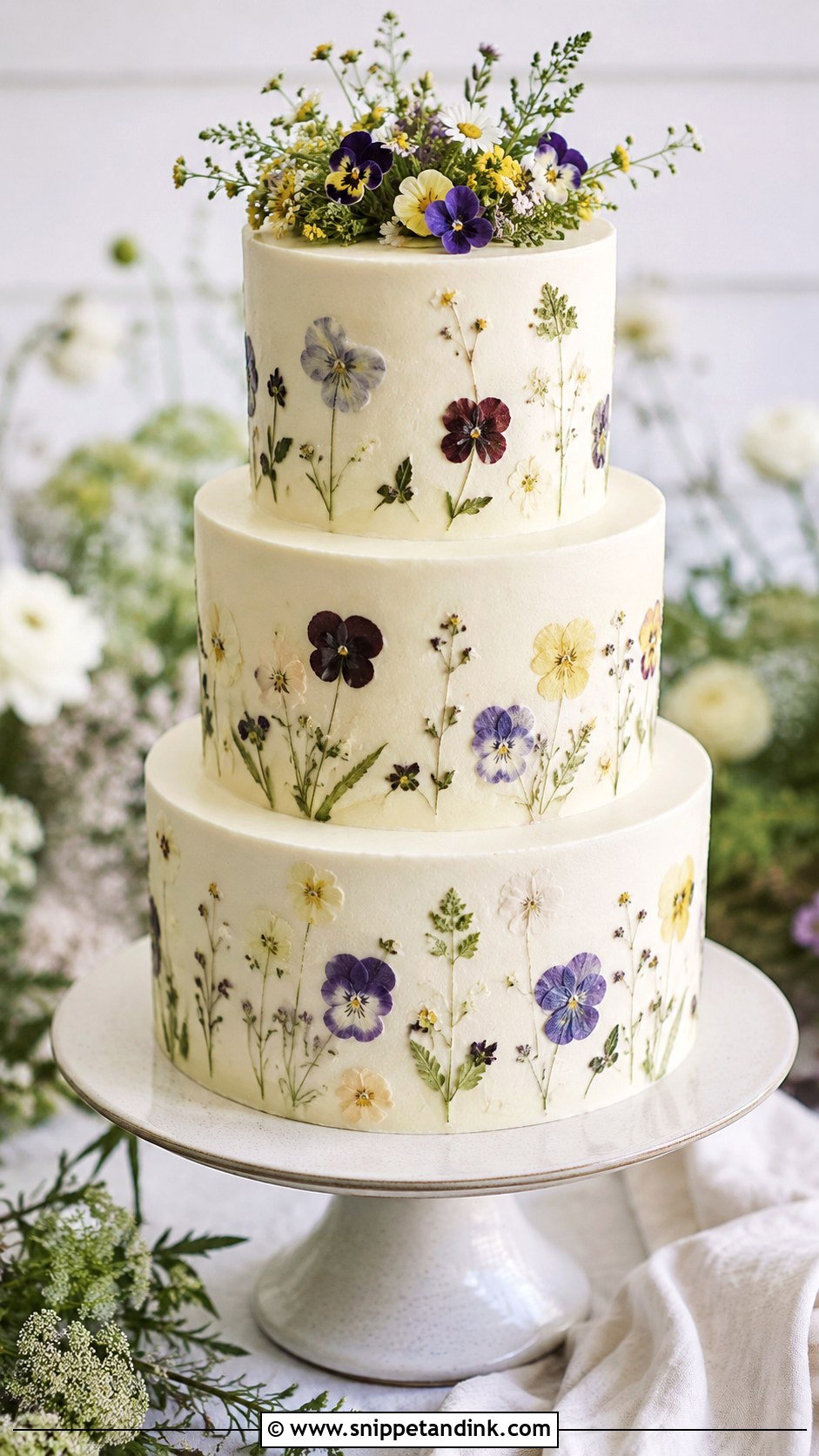
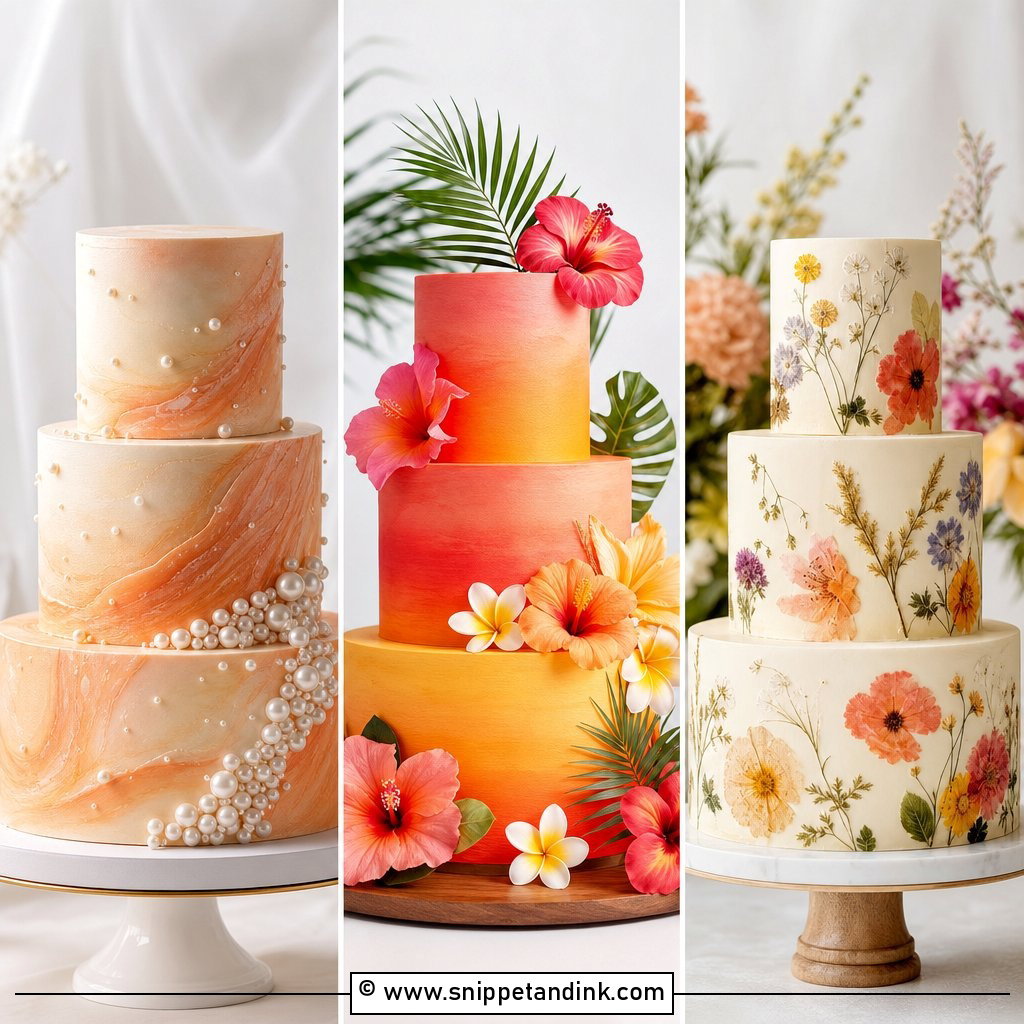
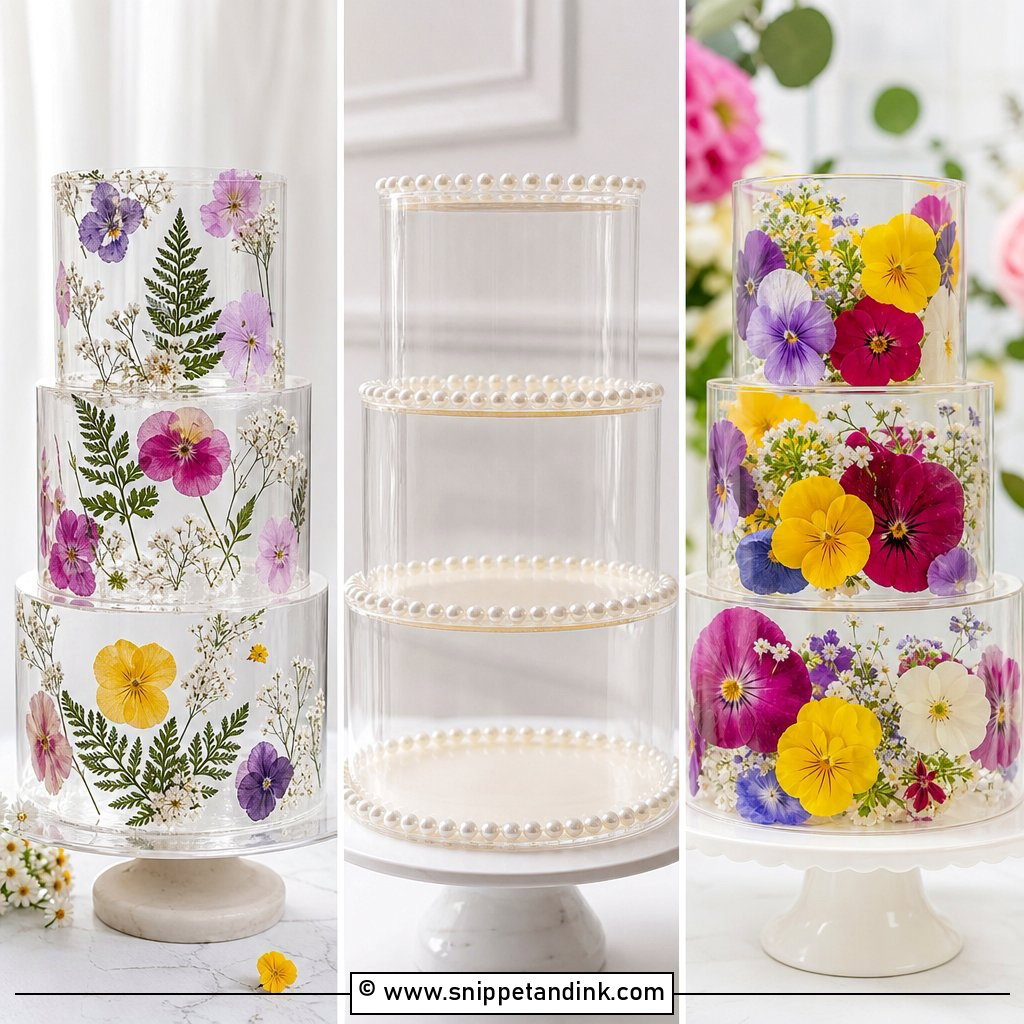
Pressed flowers give you color and a garden-page look without anything sticking out from the tiers. I press edible petals, small herbs and flat blooms like violas, then lay them against freshly smoothed buttercream or lightly brushed fondant so they bond to the surface. They have to be properly dried first; damp petals bleed color into the icing within hours. A pale base in ivory, soft blush or butter yellow lets them show clearly. Spring and outdoor weddings suit it, and it’s one of the easiest ways to get flowers on a cake with no food-safety worries, as long as every petal is truly edible.
2. Fresh Flower Wedding Cake
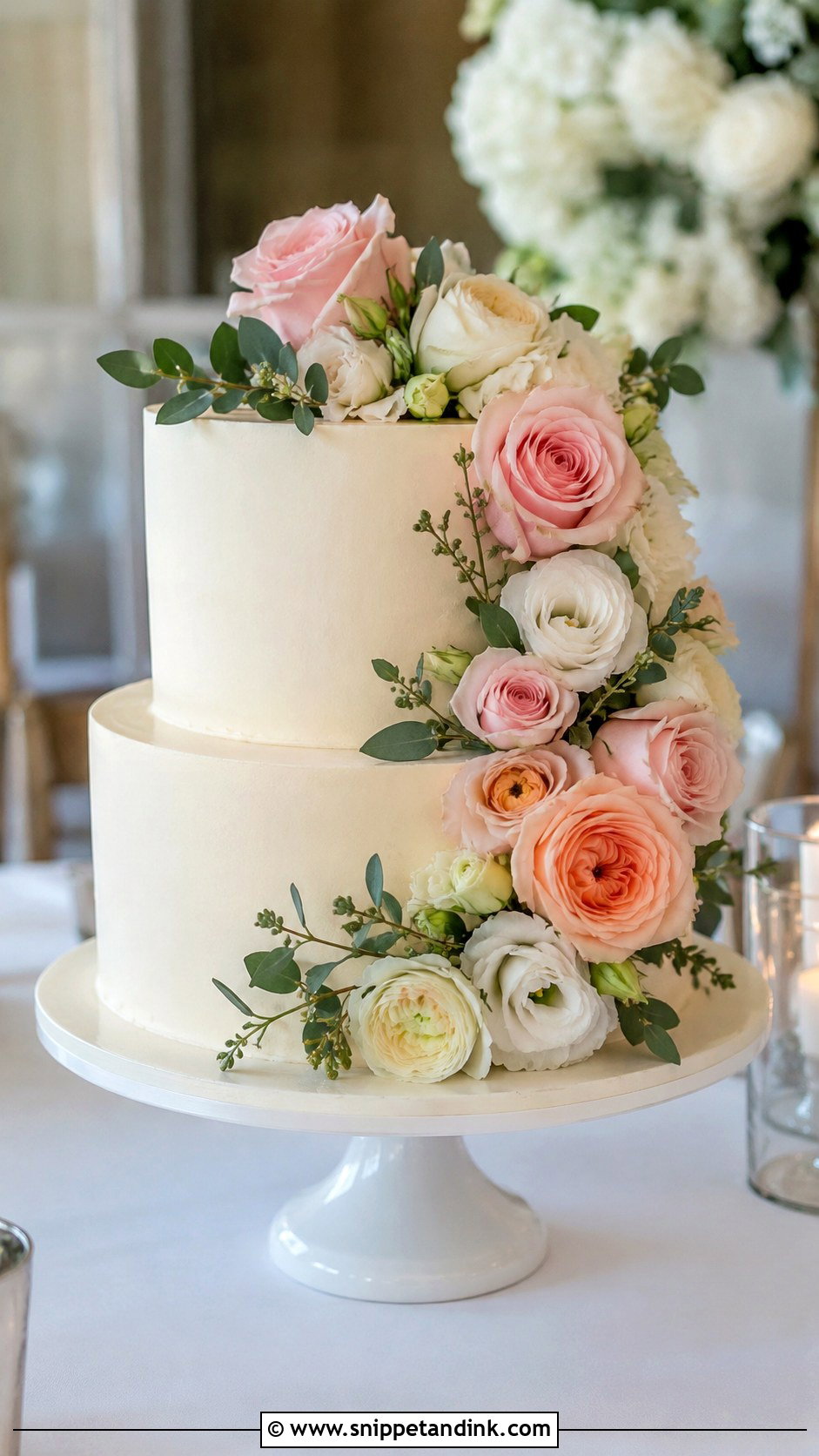
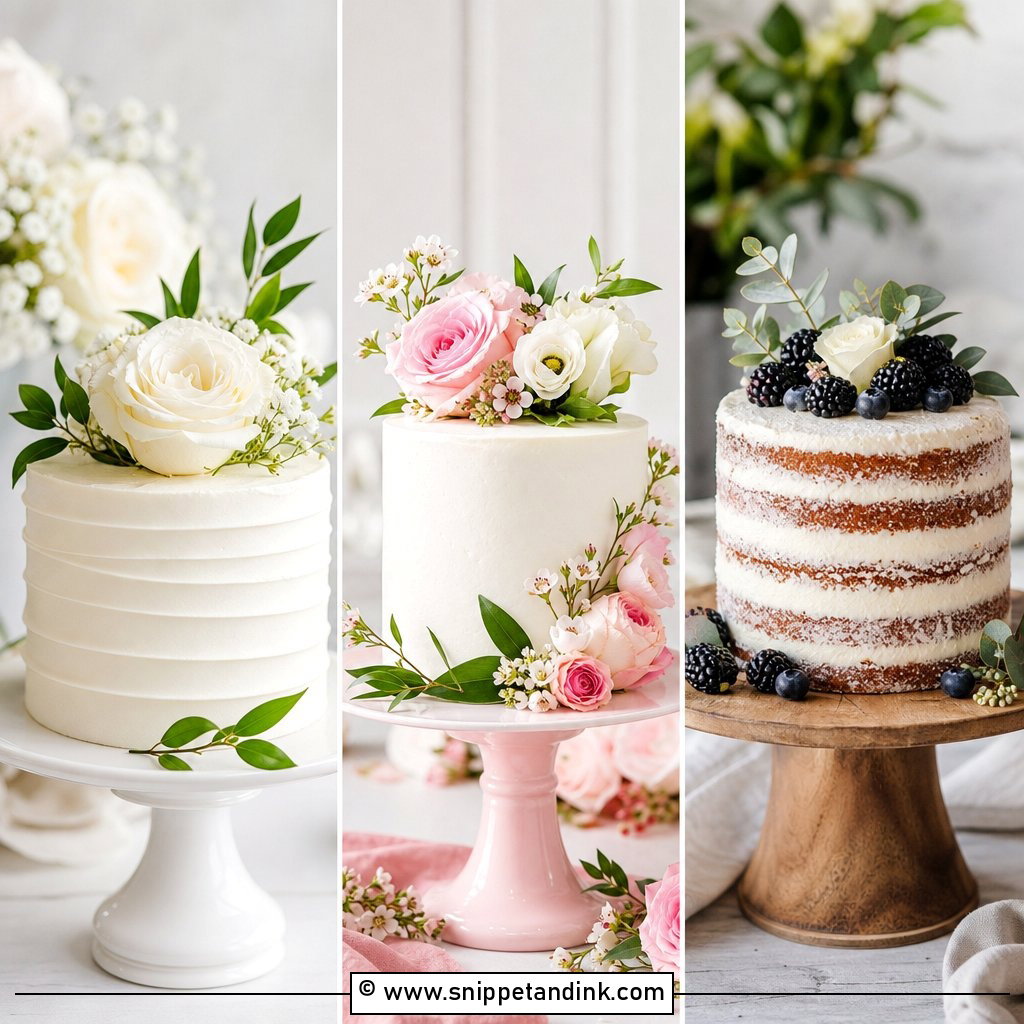
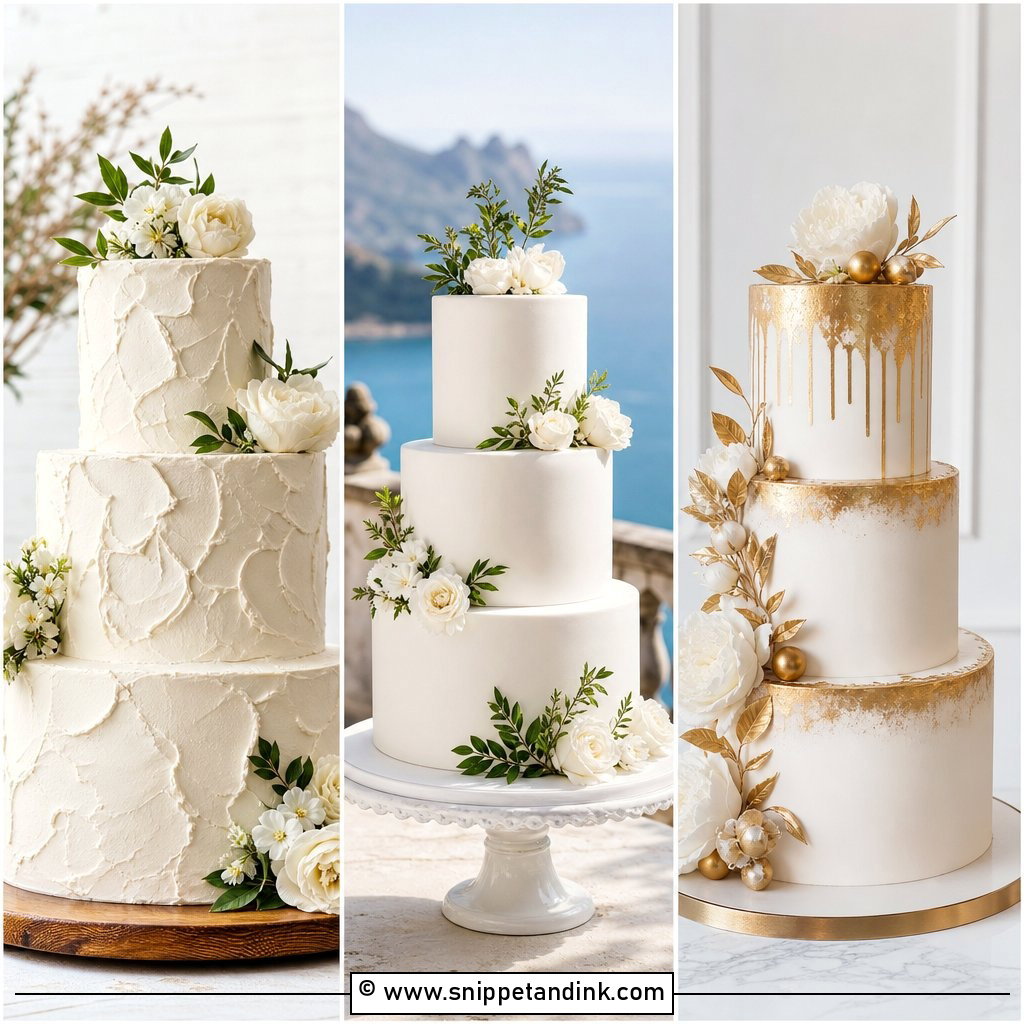
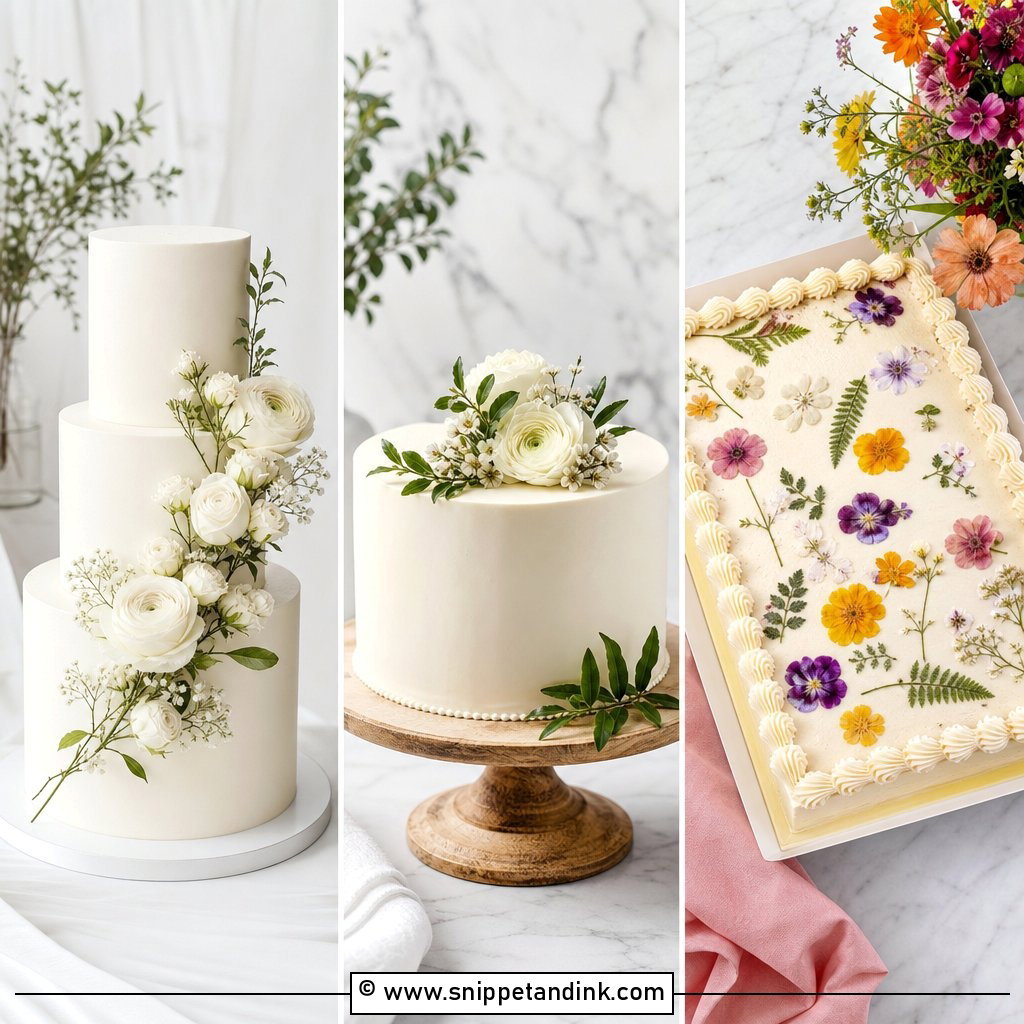
Fresh flowers look best when they’re concentrated in one place: a cluster on top, a spray down one side, or an arrangement at the base. Roses, ranunculus, orchids and lisianthus all work. The part couples don’t see is the prep. Every stem I put into a cake is wrapped in floral tape and pushed into a food-safe pick or a straw, so sap and any pesticide residue never touch the sponge. Matching the cake flowers to the bouquet ties the table to the rest of the wedding. Smooth buttercream keeps the base clean so the arrangement carries the design.
3. Floral Buttercream Wedding Cake
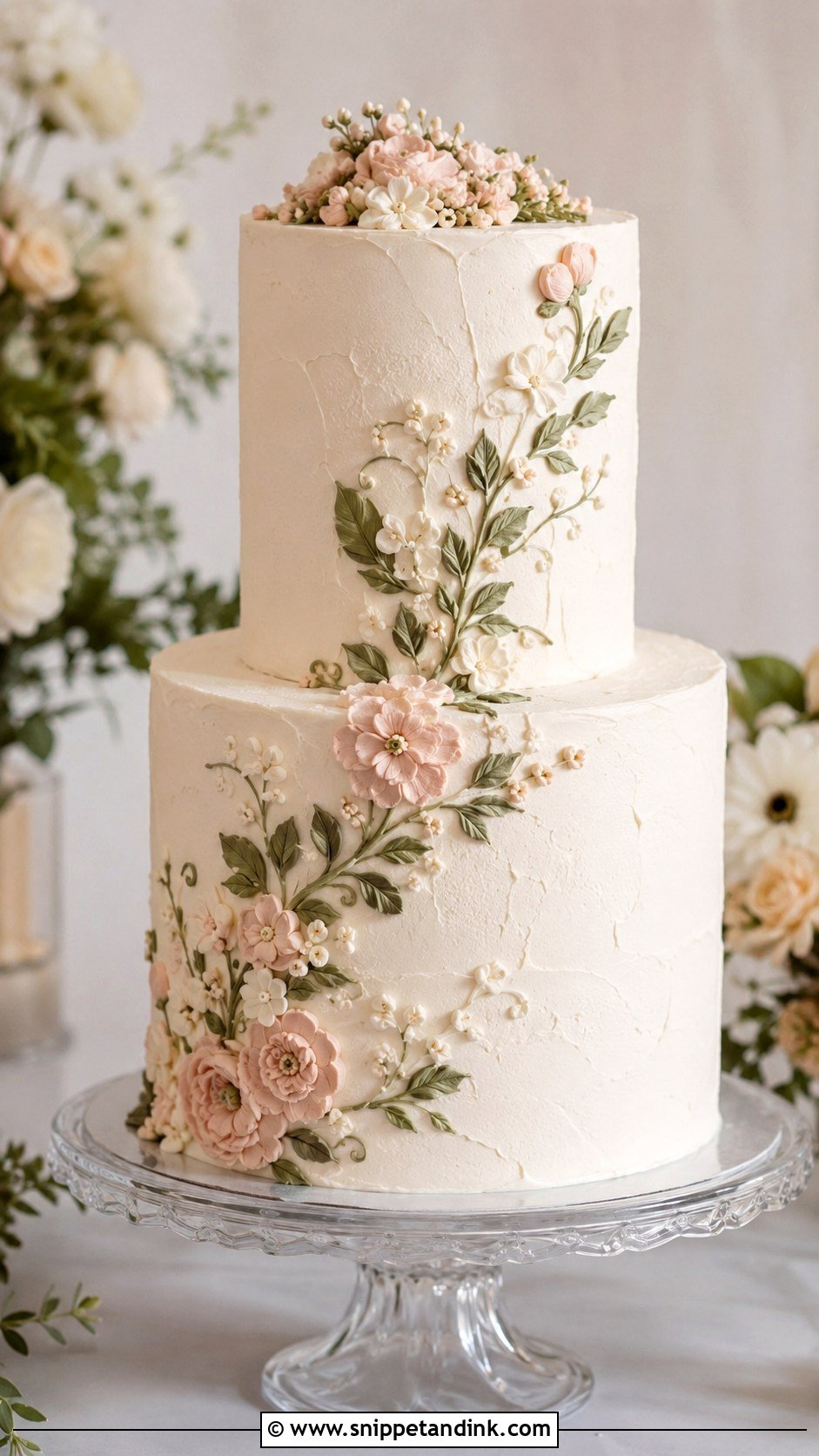
Piped buttercream flowers are entirely edible and fully customizable to your palette. I pipe small blossoms, raised petals and leafy vines straight onto the tiers, or paint petals on with tinted buttercream and a palette knife. White or ivory reads bridal, while pink, lavender, sage or peach add warmth. Keep the piping asymmetrical for a modern look. The catch is heat: buttercream flowers soften fast in a hot room or direct sun, so this one belongs indoors or in deep shade on a summer day.
4. White Floral Wedding Cake
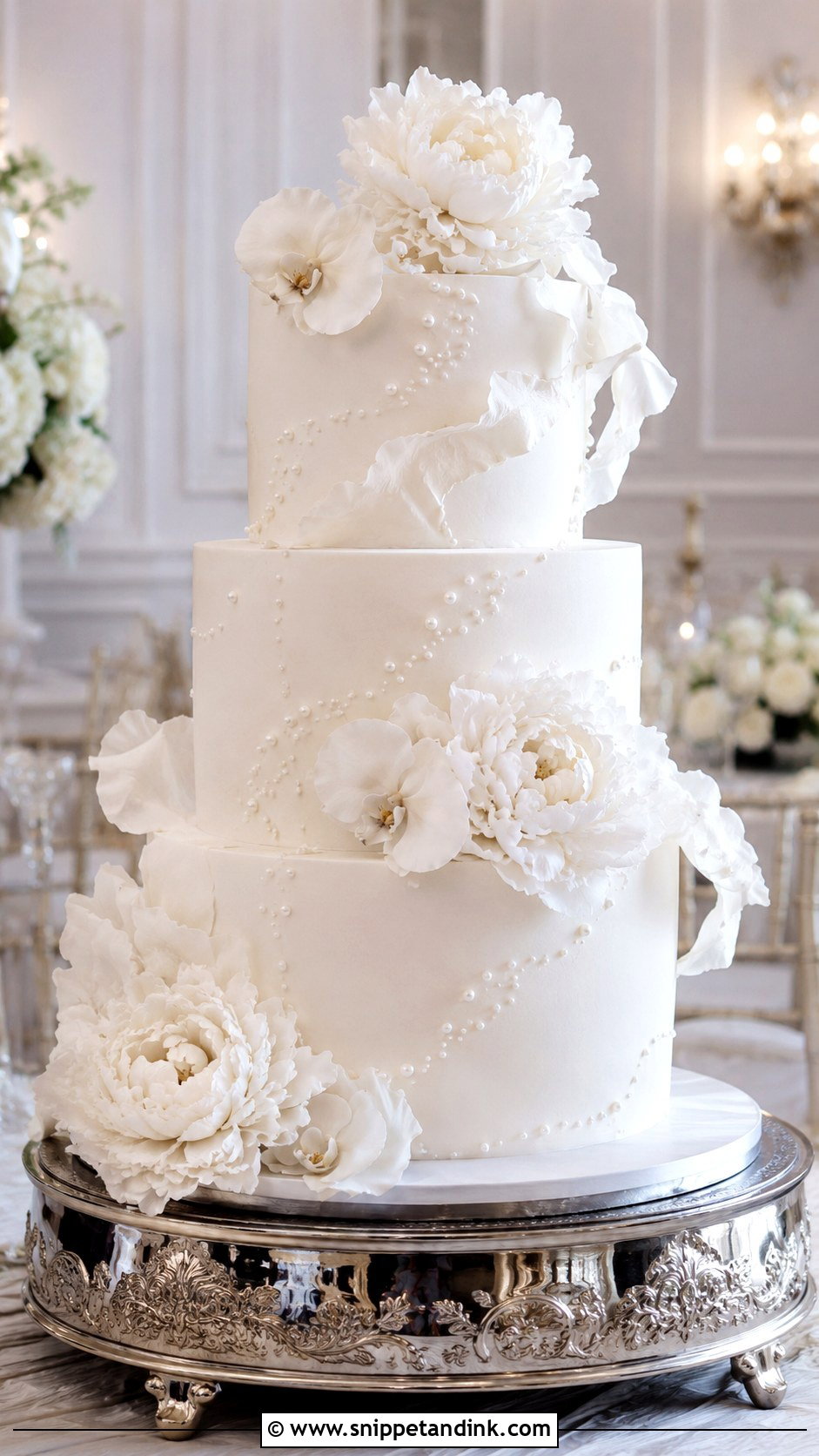
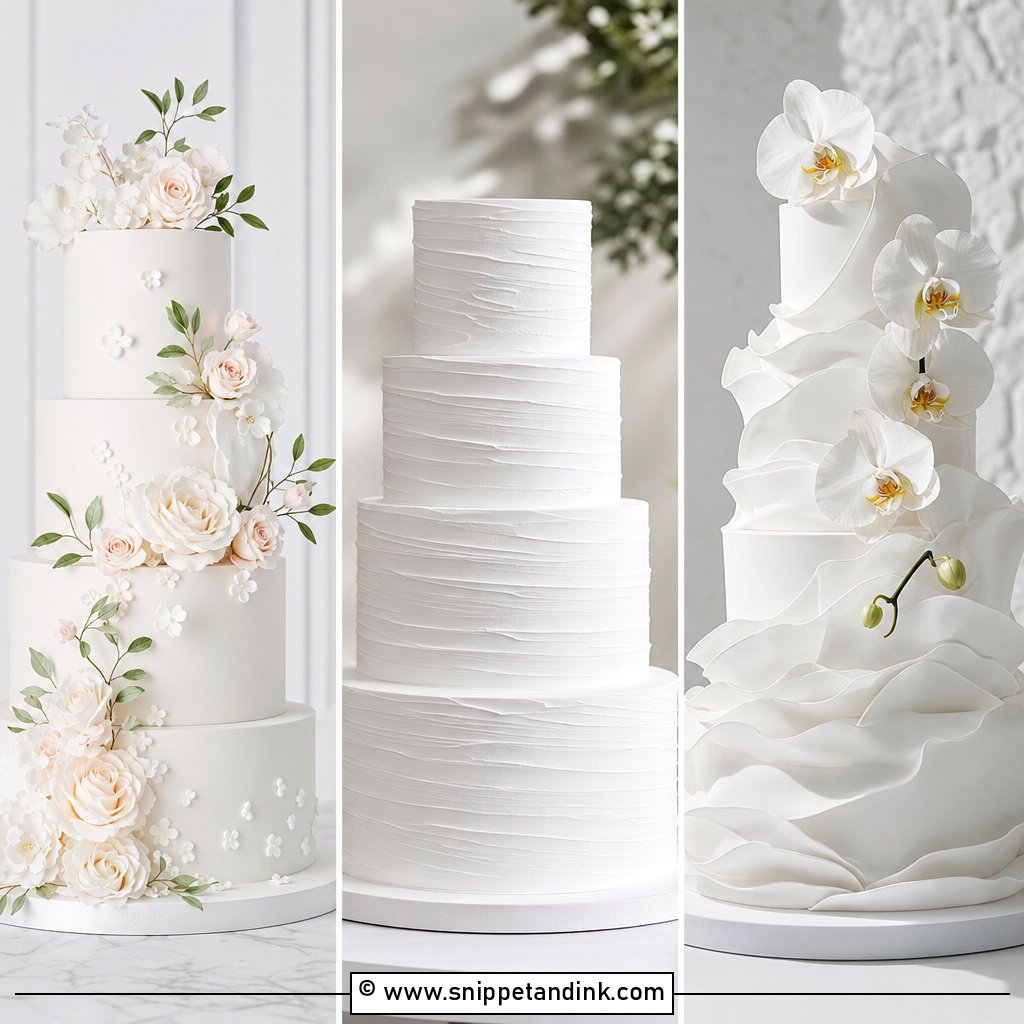
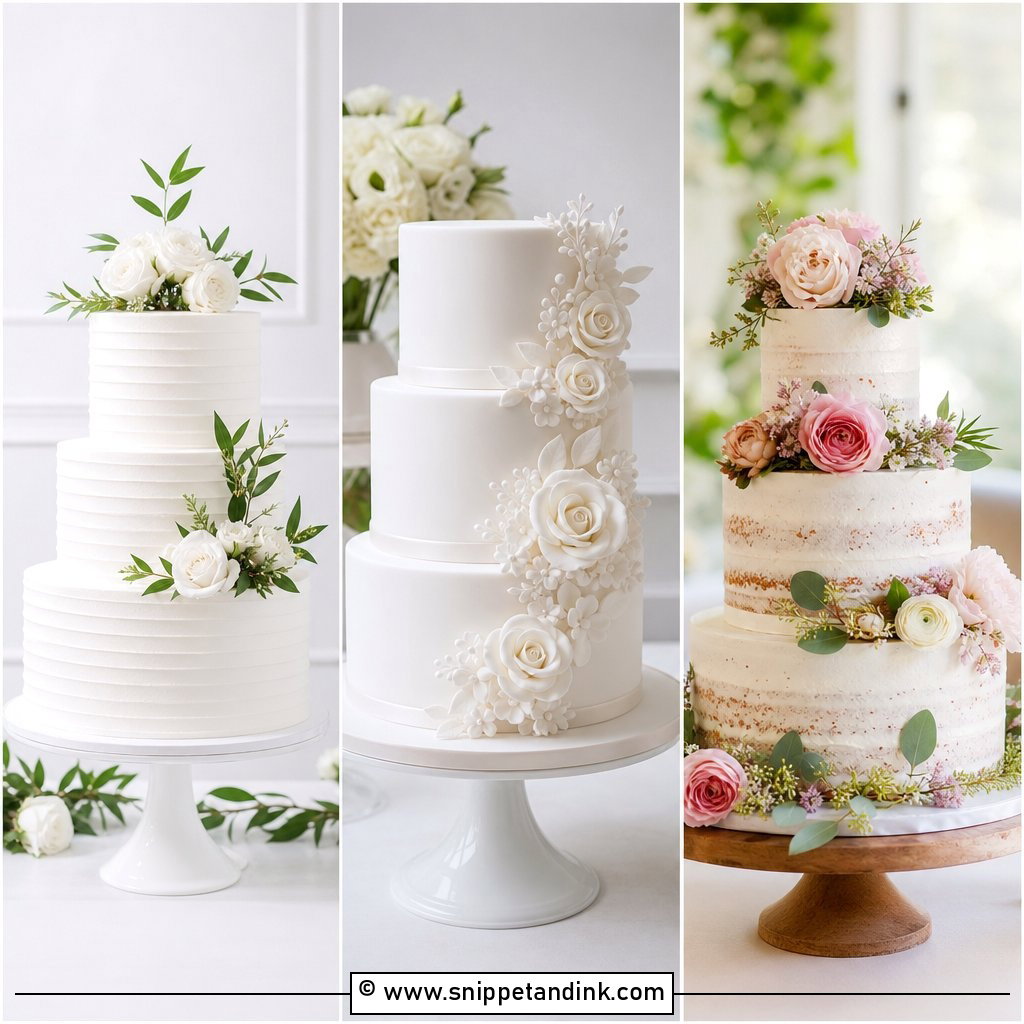
With no color to lean on, the design has to come from shape and texture. White roses, white orchids, sugar peonies and piped blossoms layered over white fondant or smooth buttercream can look flat unless the petal sizes change and something catches the light: a ruffle, a row of pearls, a satin ribbon. I’ll often mix one big sugar bloom with clusters of tiny ones. It’s equally at home in a ballroom, a chapel or a minimalist venue.
5. Blush Floral Wedding Cake
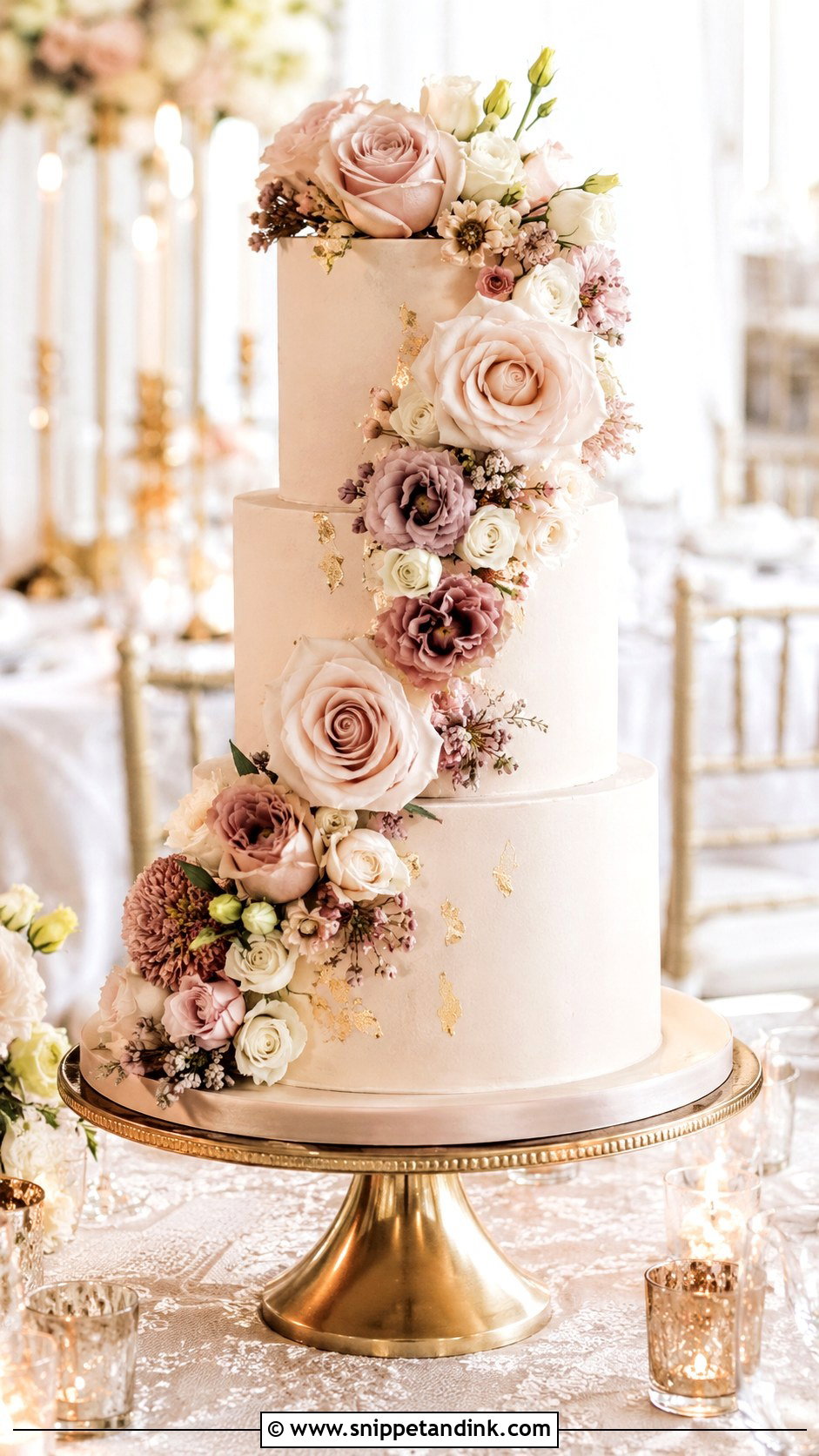
Blush roses, pale pink peonies, dusty mauve and ivory buttercream give the dessert table warm color that doesn’t shout. I’d go with one floral cascade or a loose garden arrangement rather than neat rows of flowers, which look dated now. A blush-tinted base can also work if the whole palette is soft. Gold accents, champagne linens and candlelight bring the pinks out nicely. If you’re tinting icing pink, be aware that some pink colorings fade under strong light, so I keep the cake out of the sun until it’s needed.
6. Minimal Floral Wedding Cake
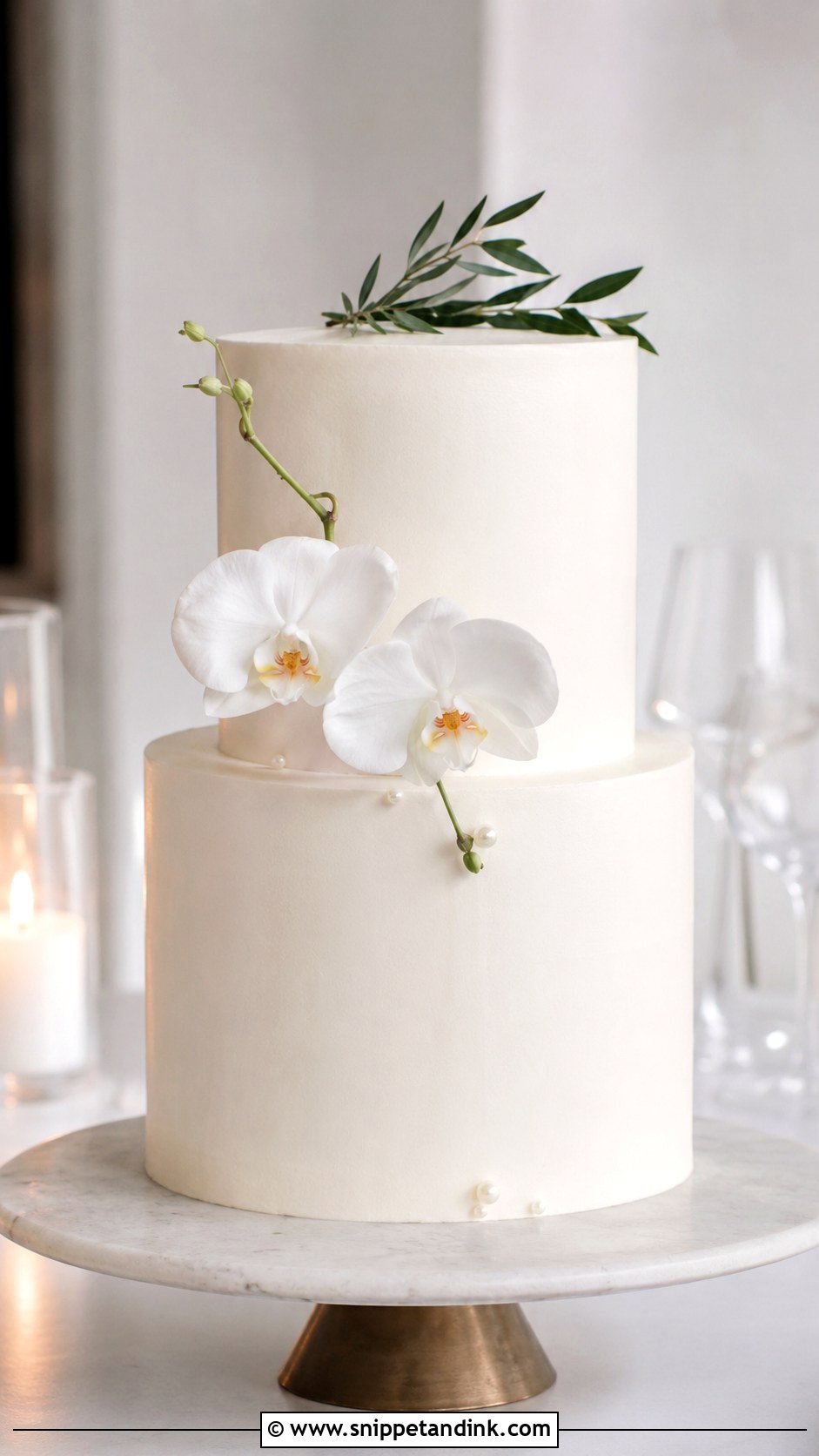
One flower can hold a whole cake if everything around it is precise. I start with smooth white buttercream, sharp edges and clean tiers, then add a single orchid stem, a small rose cluster or a few pressed petals. Sharp edges take time and chilled tiers, and that time is where the cost goes, not the flowers. Negative space makes it look calm and modern. Gallery venues, city weddings and small receptions suit it best, with a sleek stand and neutral colors.
7. Wildflower Wedding Cake
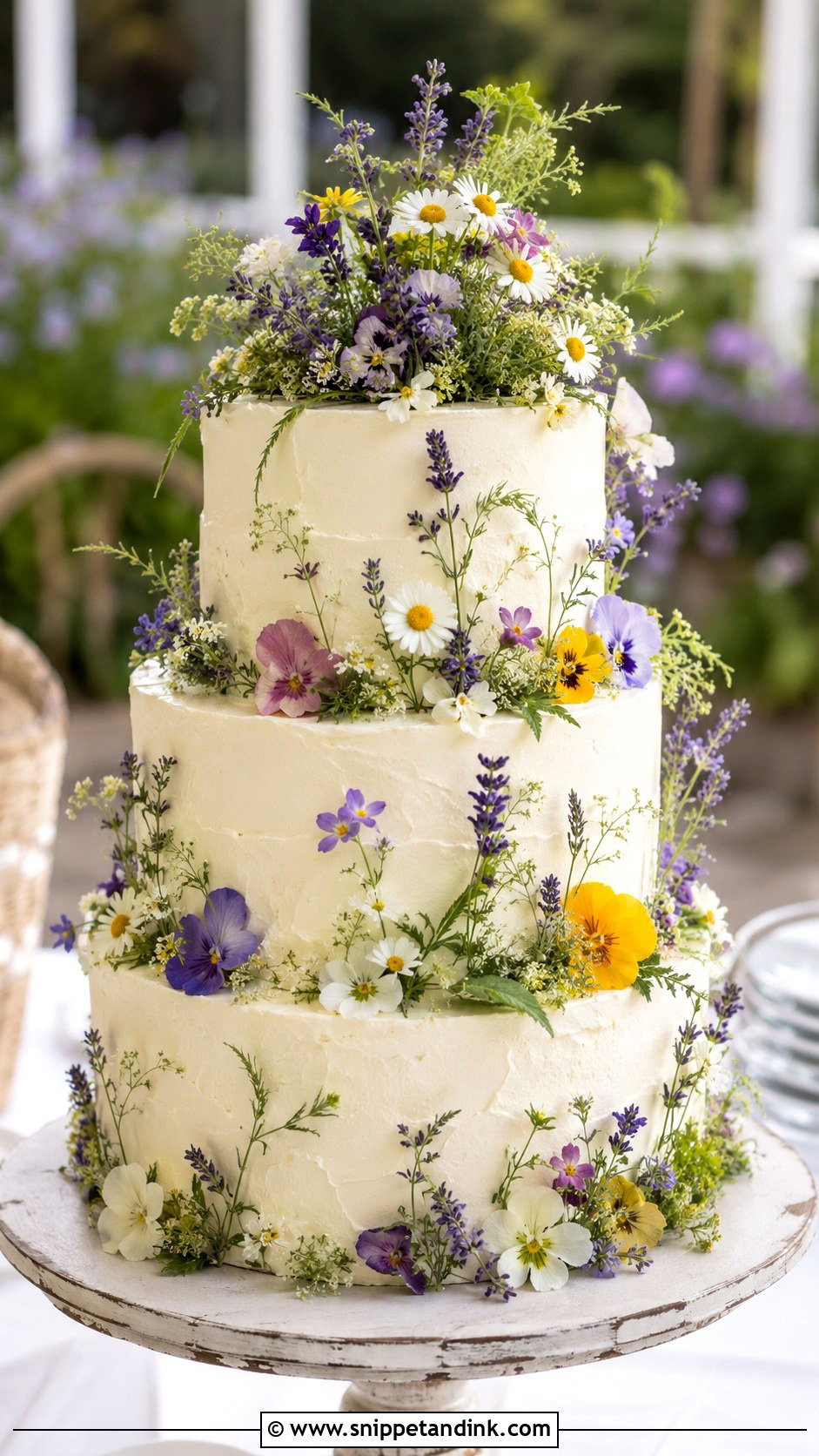
Wildflower cakes are colorful and relaxed: small edible blooms like daisies, pansies, lavender sprigs and herbs scattered loosely across semi-smooth buttercream. The trick is keeping it airy, with enough empty space that it doesn’t look crowded. Edible flowers wilt faster than florist stems, so I place them as close to delivery as possible. It’s a natural fit for meadow, barn and garden weddings in summer, especially when the flowers match what’s actually blooming that season.
8. Orchid Wedding Cake
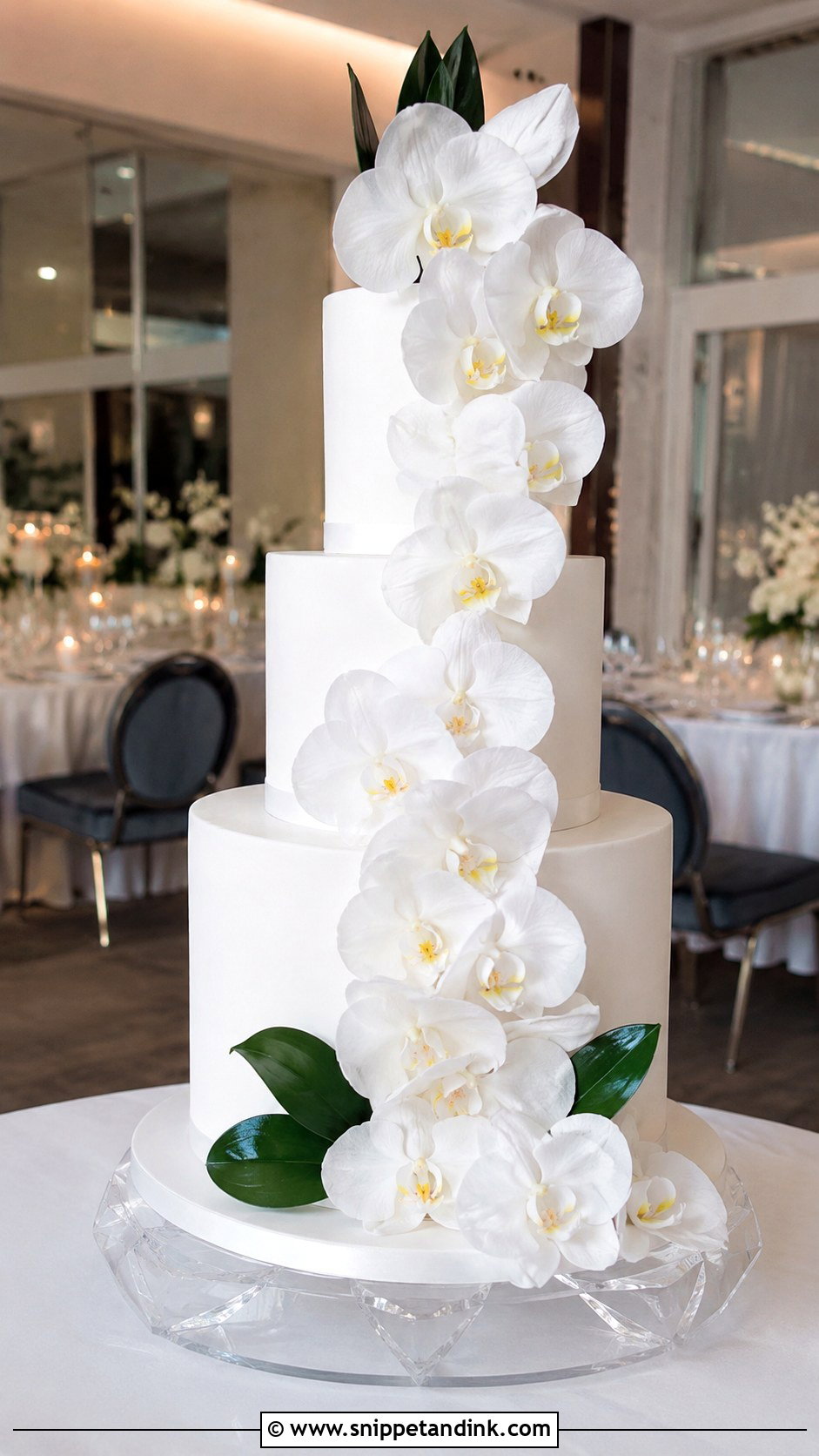
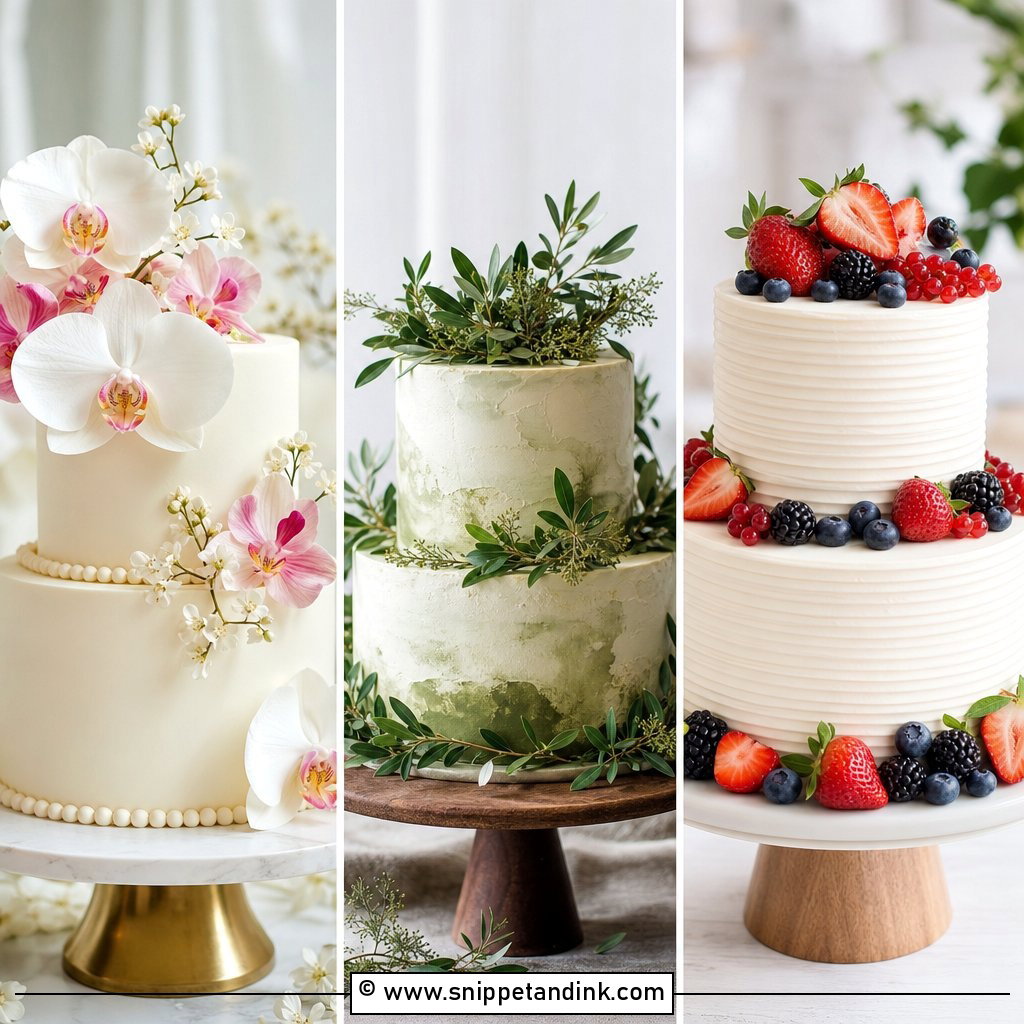
Orchids give a cake a sculptural, slightly dramatic shape without much bulk. White orchids look clean and luxurious, while pink, yellow or purple add personality. I place them in a vertical cascade, a top-heavy cluster or a single sweep down one side. Fresh orchids are fairly sturdy out of water, which is one reason bakers like them, but they still go on with wrapped stems and picks. Smooth fondant or polished buttercream lets the flower shape stand out. Tropical venues, hotels, beaches and black-tie receptions all suit it.
9. Rose Wedding Cake
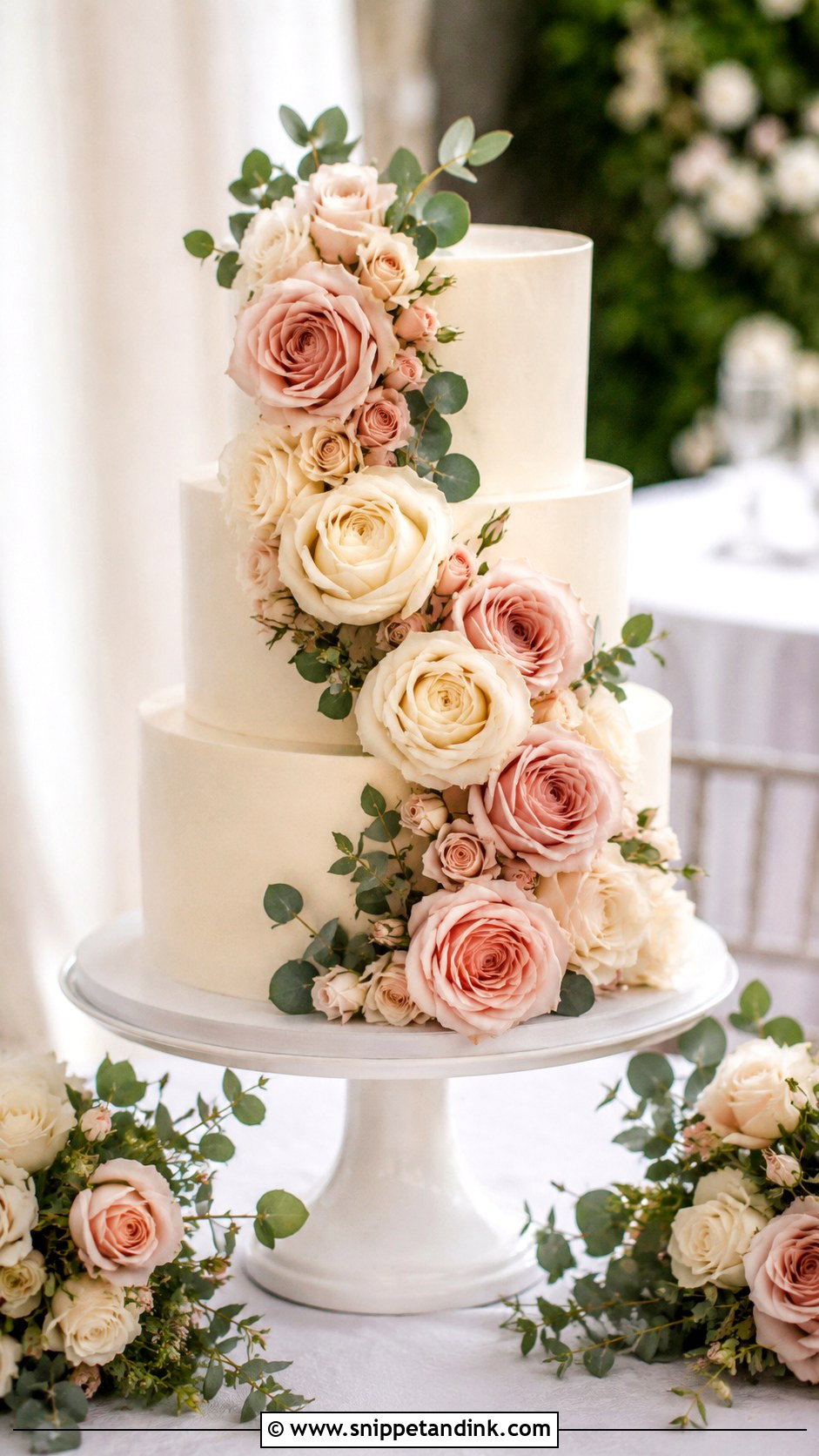
Roses can feel traditional, but the fix is simple: one refined color instead of a mix. Garden roses, spray roses or sugar roses arranged as a side cluster, a diagonal trail or a crown give the cake shape. Ivory buttercream works with blush, peach, red or mauve roses. Skip heavy piping and let the roses do the detail. Fresh roses from a florist are almost always sprayed, so unless they’re grown for food, the petals shouldn’t touch the icing directly. It’s easy to personalize through color, size and placement.
10. Peony Wedding Cake
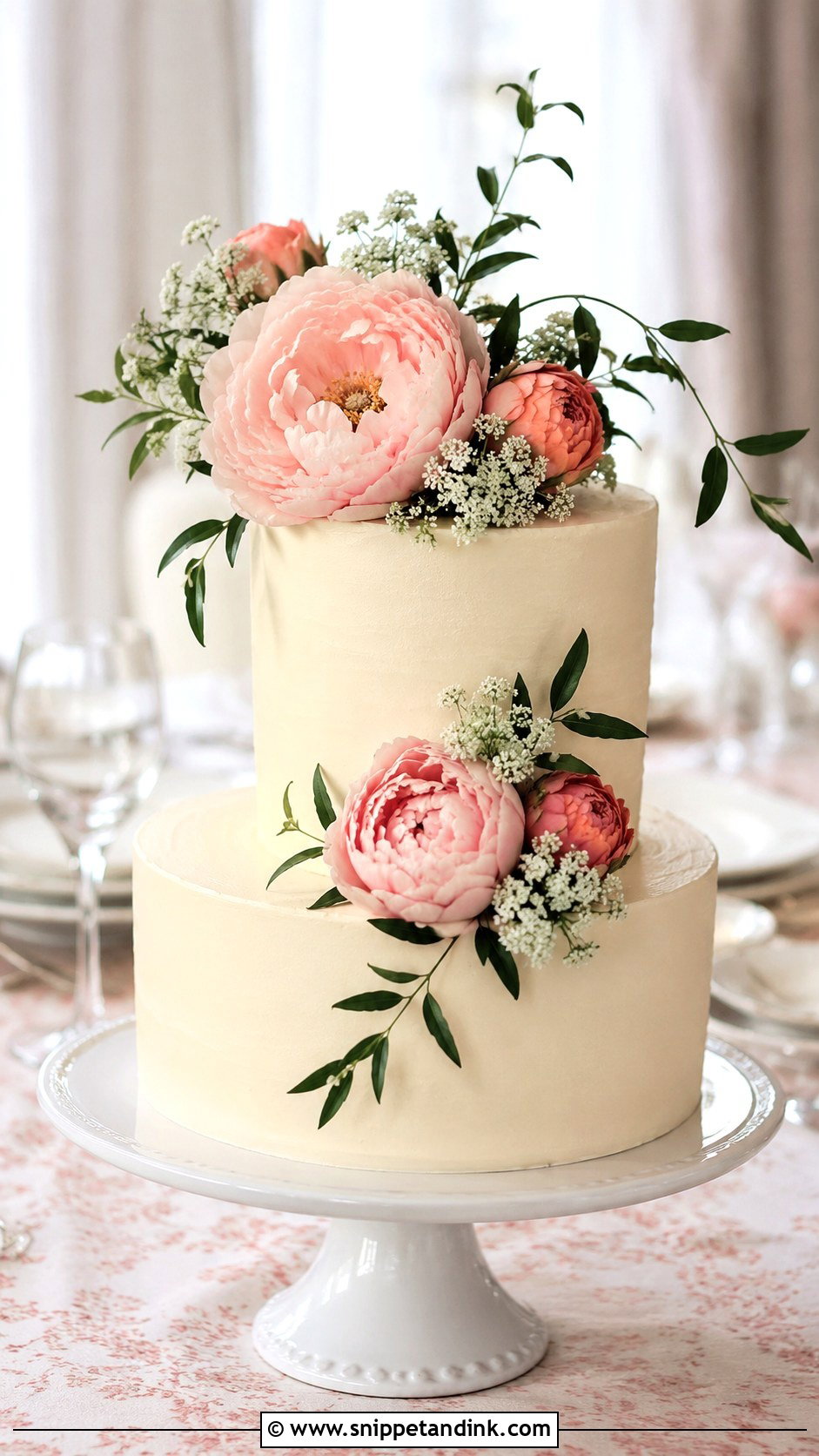
Peonies are big and layered, so you only need a few. A peony wedding cake can use sugar peonies when fresh ones are out of season, and I make those in blush, ivory, coral or deep pink. A full sugar peony takes hours of petal work and needs time to dry, so order them well in advance. Place them on the middle tier, at the base or in a gentle cascade over smooth buttercream. Spring and early summer weddings are when peonies feel most natural.
11. Floral Watercolor Wedding Cake
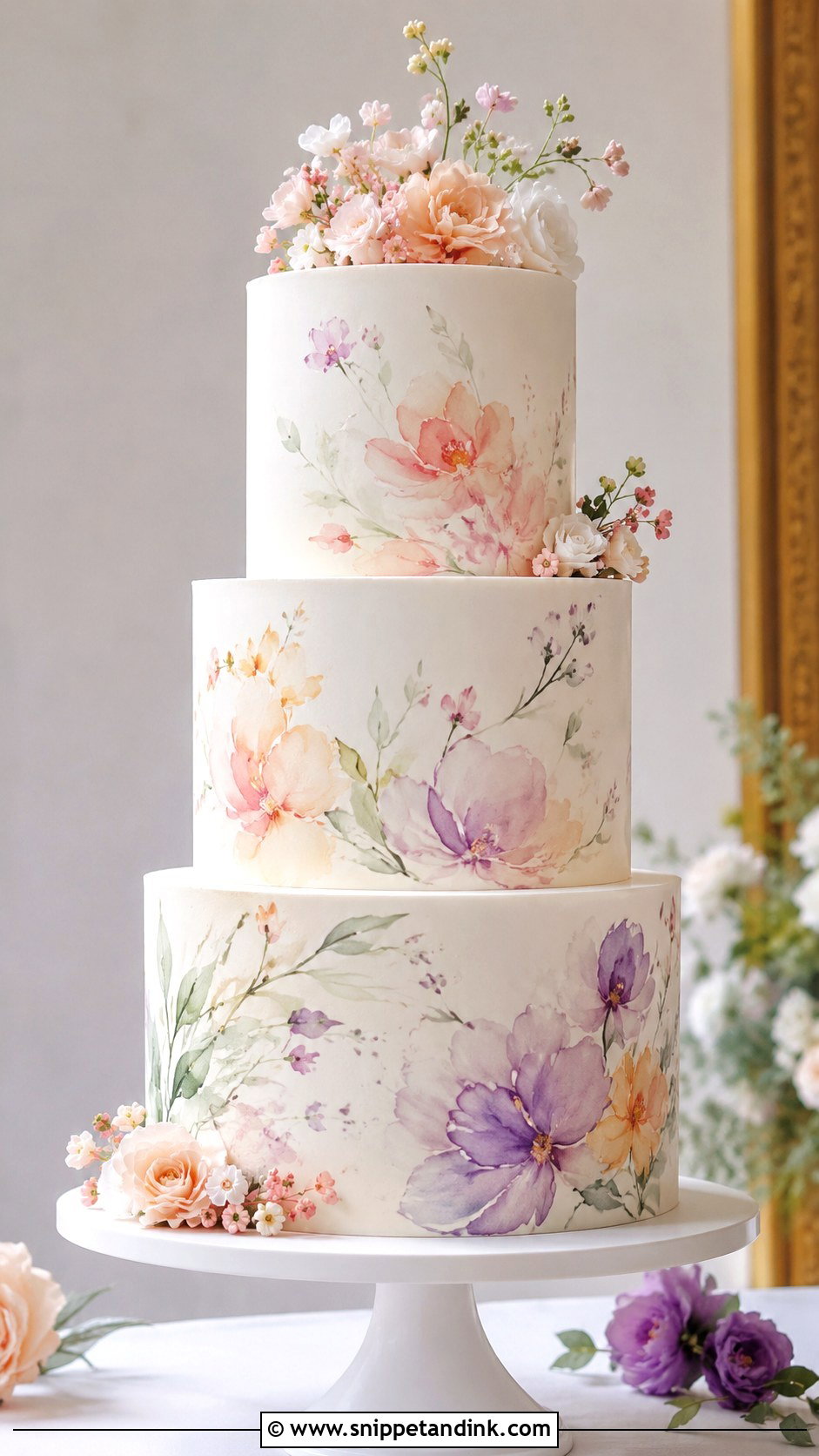
Here the flowers are painted on rather than placed. I brush diluted food color onto fondant or very firm, chilled buttercream in washes of petals and leaves. Fondant takes the paint more evenly; buttercream can smear if it warms under the brush. Blush, lavender, peach, sage or dusty blue give a soft, romantic finish. A few small sugar flowers add dimension, but keep them light so the painting stays visible. It suits creative couples who’d rather have edible art than an arrangement.
12. Floral Lambeth Wedding Cake
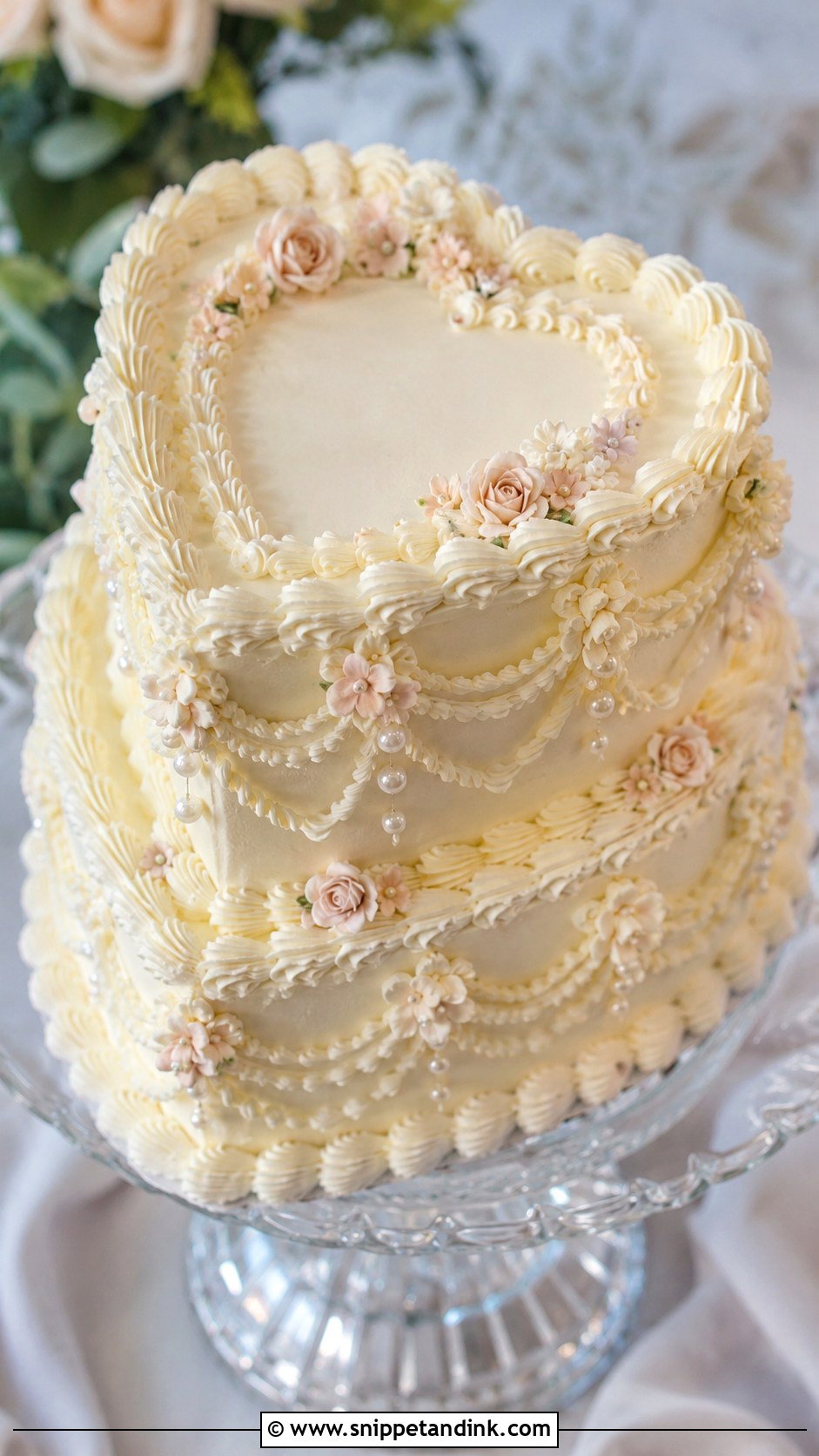
Lambeth piping is vintage and ornate: layered shell borders, swags, ruffles and overpiping stacked in rows. It feels current when the colors are soft and the flowers are restrained. Small sugar roses, edible blossoms or a simple fresh topper balance all that piping. I use a stiffer buttercream for Lambeth work so the borders hold their ridges, which also means it can’t sit in heat for long. It works as a heart-shaped cake, a tall single tier or a classic two-tier, in ivory, blush or pale blue.
13. Floral Sheet Wedding Cake
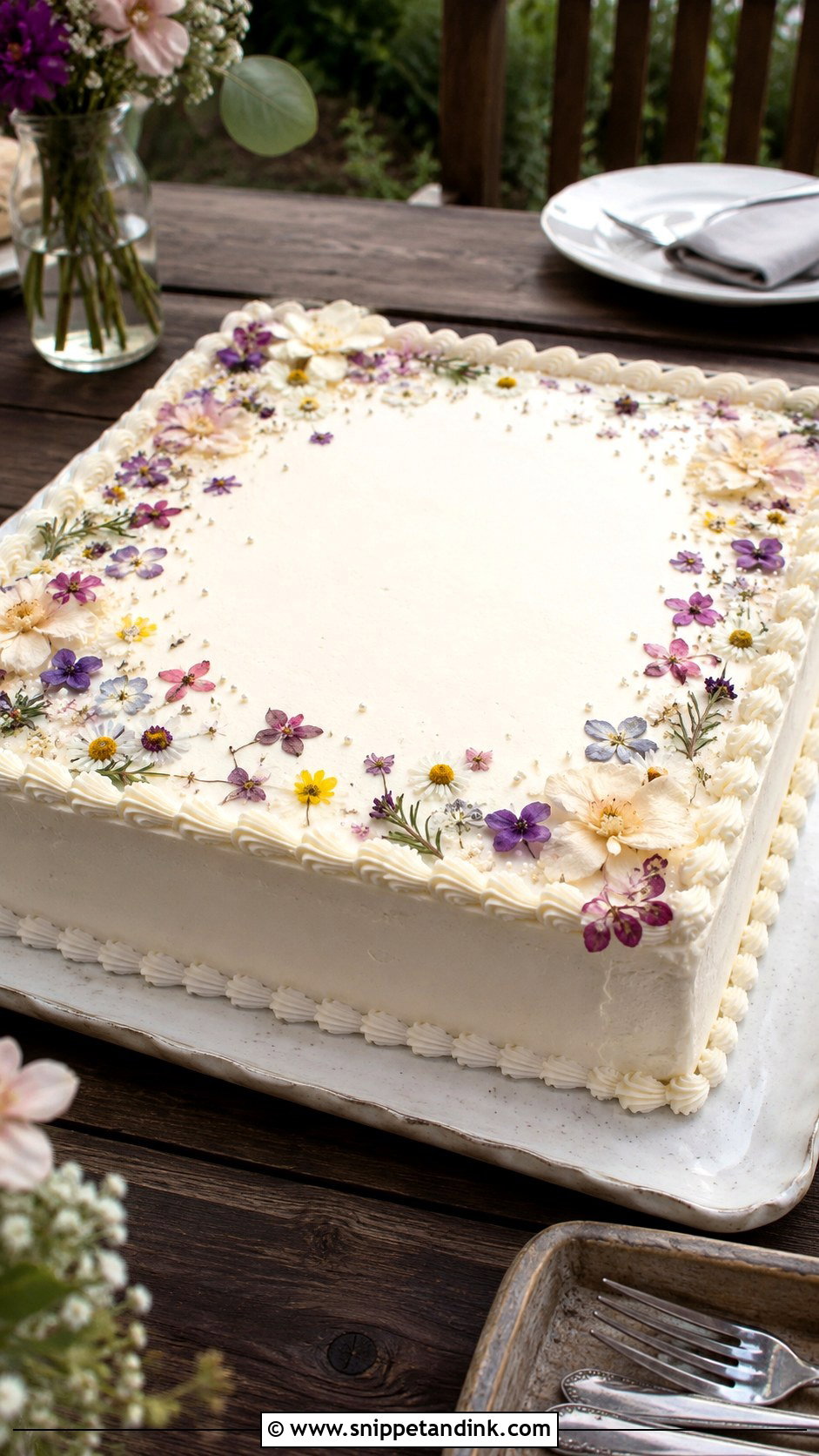
Easy to cut and easy to serve. A floral sheet wedding cake doesn’t have to look plain: smooth buttercream on top, piped borders, and edible flowers, pressed petals or small buttercream blossoms either around the edges like a garden border or in one corner for a cleaner photo. It suits backyard weddings, brunch receptions and dessert tables. Many couples pair a sheet cake for serving with a smaller display cake for cutting. It’s often the most budget-friendly route, and it can still look finished.
14. Two Tier Floral Wedding Cake
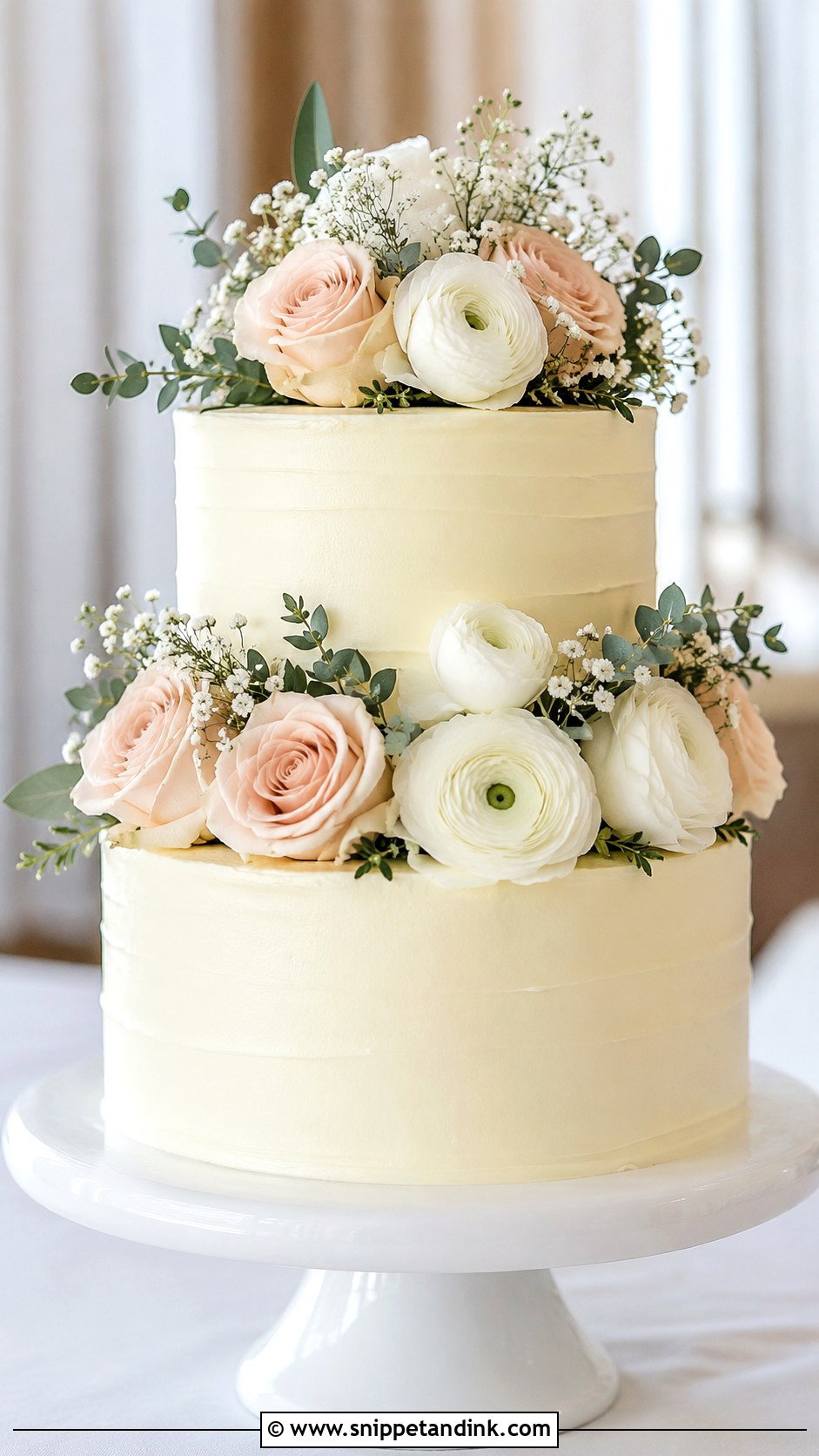
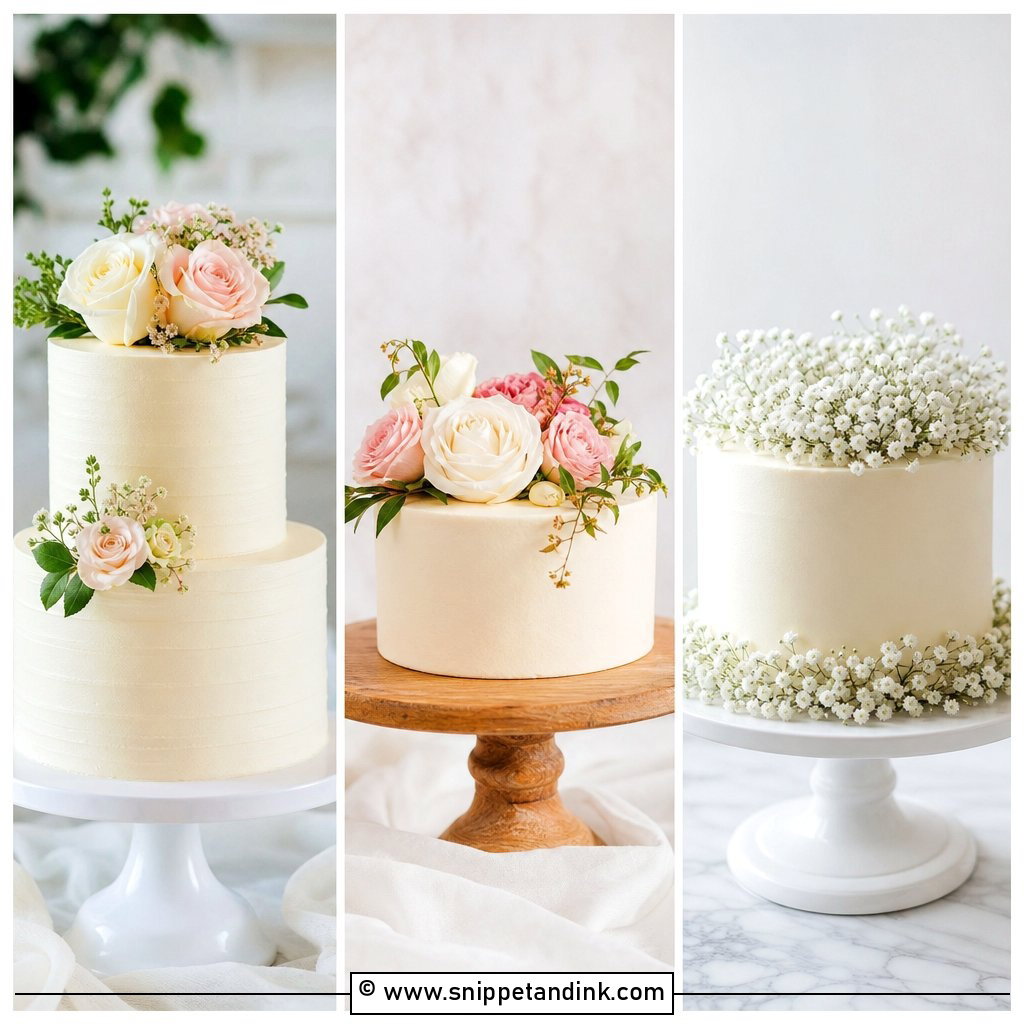
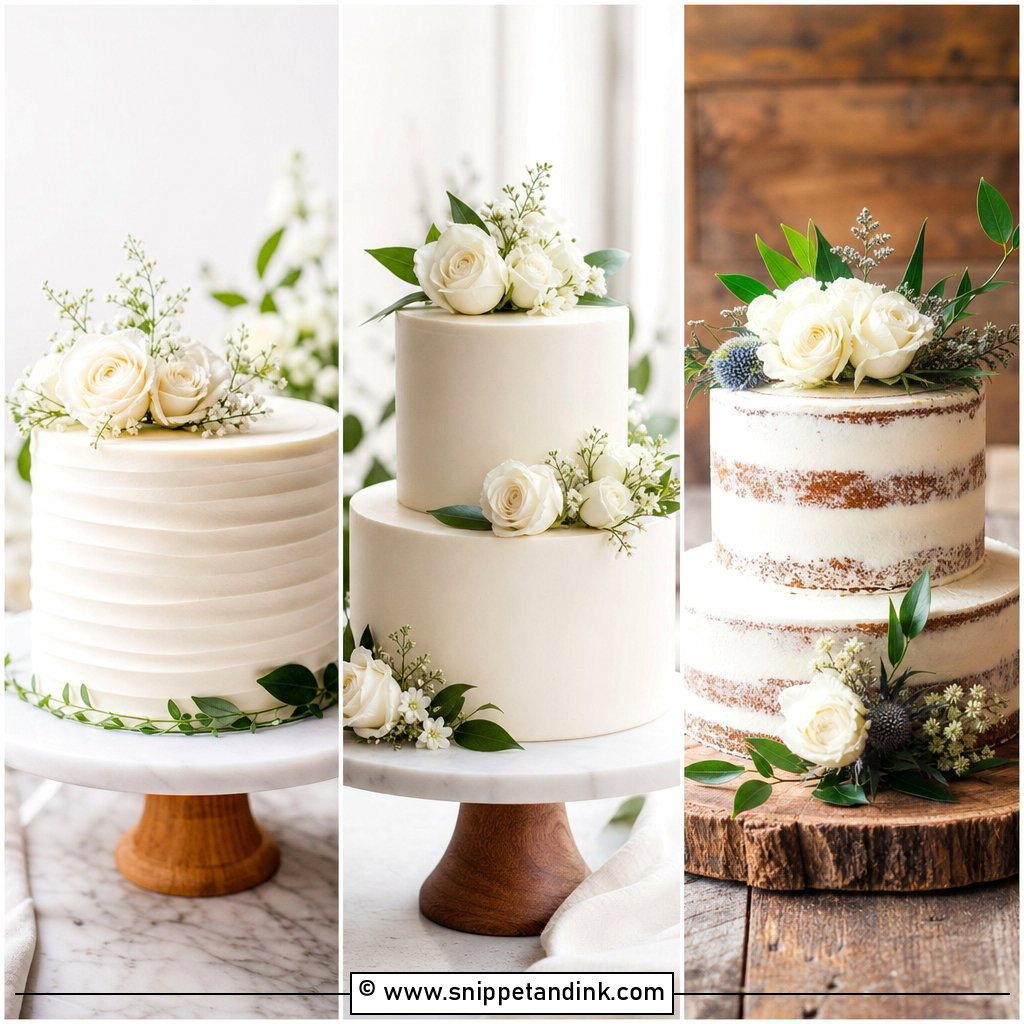
Two tiers suit smaller weddings or anyone who wants a centerpiece without much height. The proportions matter more here, since there’s less cake to work with; I usually make the top tier taller than standard to keep it from looking squat. One smooth finish, ivory buttercream or white fondant, with flowers between the tiers, on one side or at the base. Fresh, sugar or pressed blooms all work. Keep the top tier clean for a modern look, or add one small floral crown.
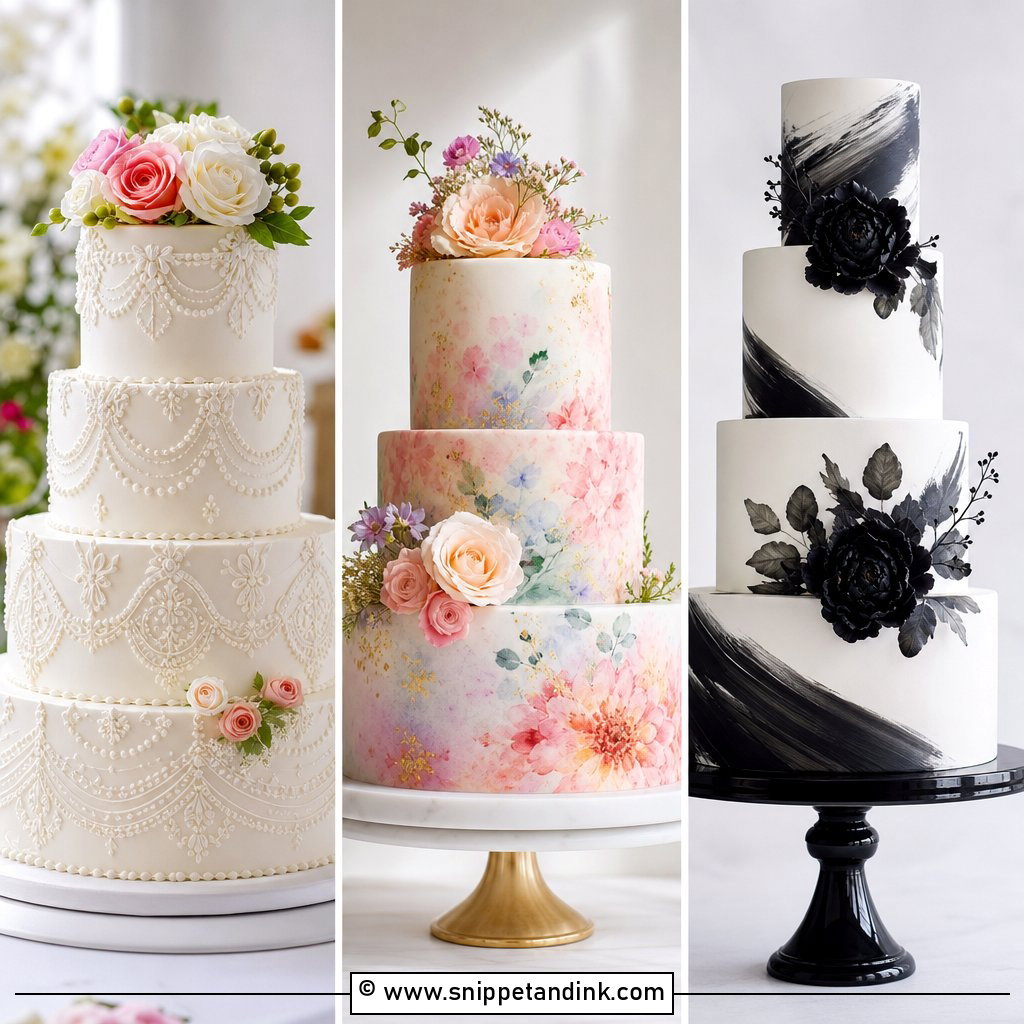

15. Three Tier Floral Wedding Cake
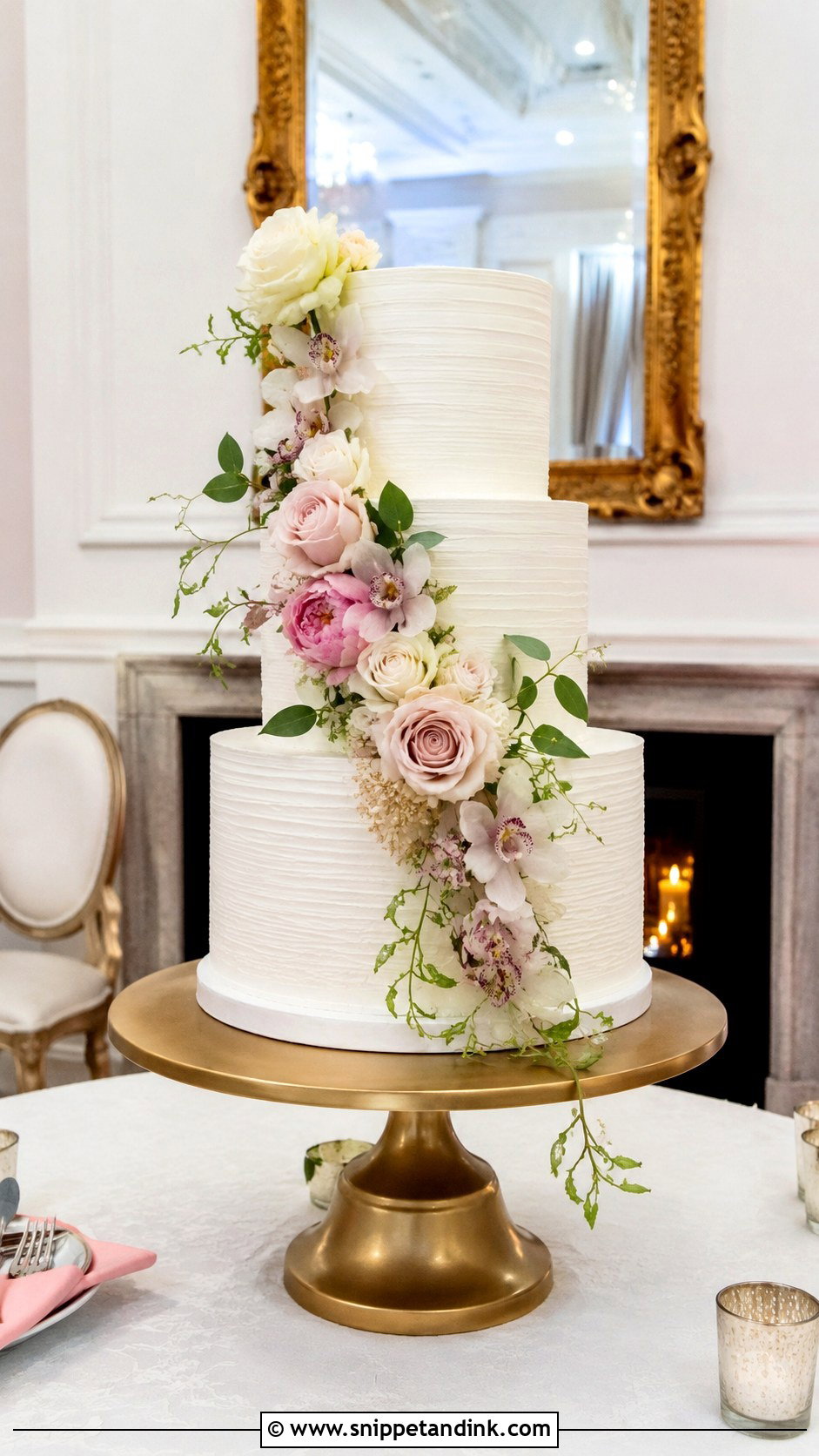
Three tiers give enough height for a real reception centerpiece. Rather than placing flowers evenly on every tier, I’d use a diagonal cascade, a single side arrangement or a meadow-style base. Smooth buttercream, fondant or subtle texture can all work. Match the flowers to the bouquet, but keep the cake palette slightly softer so it doesn’t overpower the room. A three-tier cake needs internal dowels and a cake board under each tier, and that structure is also what lets heavier sugar flowers sit safely. It suits medium to large weddings.
16. Floating Floral Wedding Cake
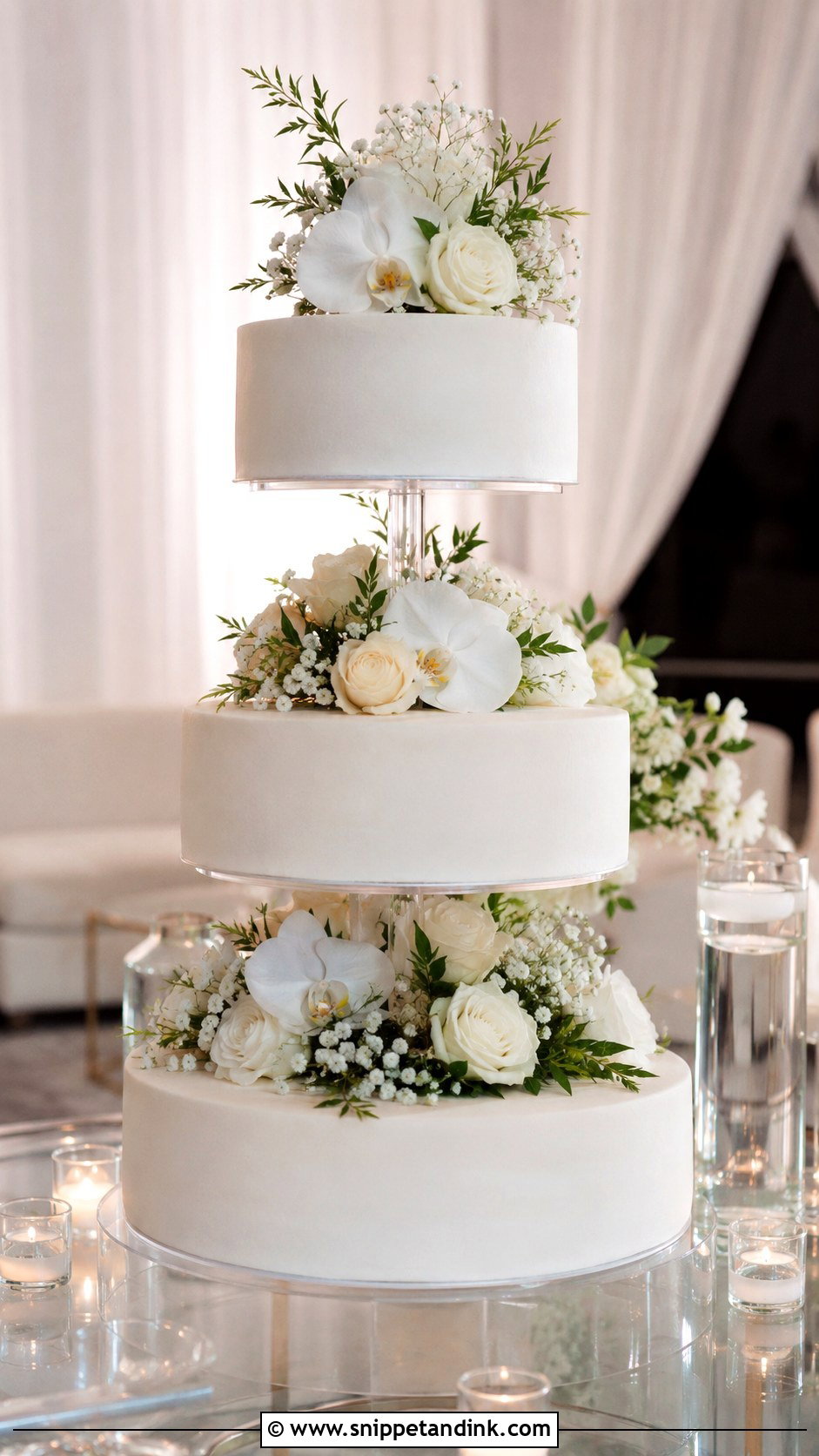
Separating the tiers with hidden supports or clear spacers opens up space for flowers between them. A floating floral wedding cake makes the florals part of the structure instead of an afterthought on top. Orchids, roses, greenery or seasonal blooms fill the gaps. Baby’s breath is popular for this, but it’s mildly toxic, so I only use it where it can’t touch the icing. Keep the cake itself simple in ivory or white. The stand has to be assembled at the venue, so build in setup time with your baker.
17. Floral Meadow Wedding Cake
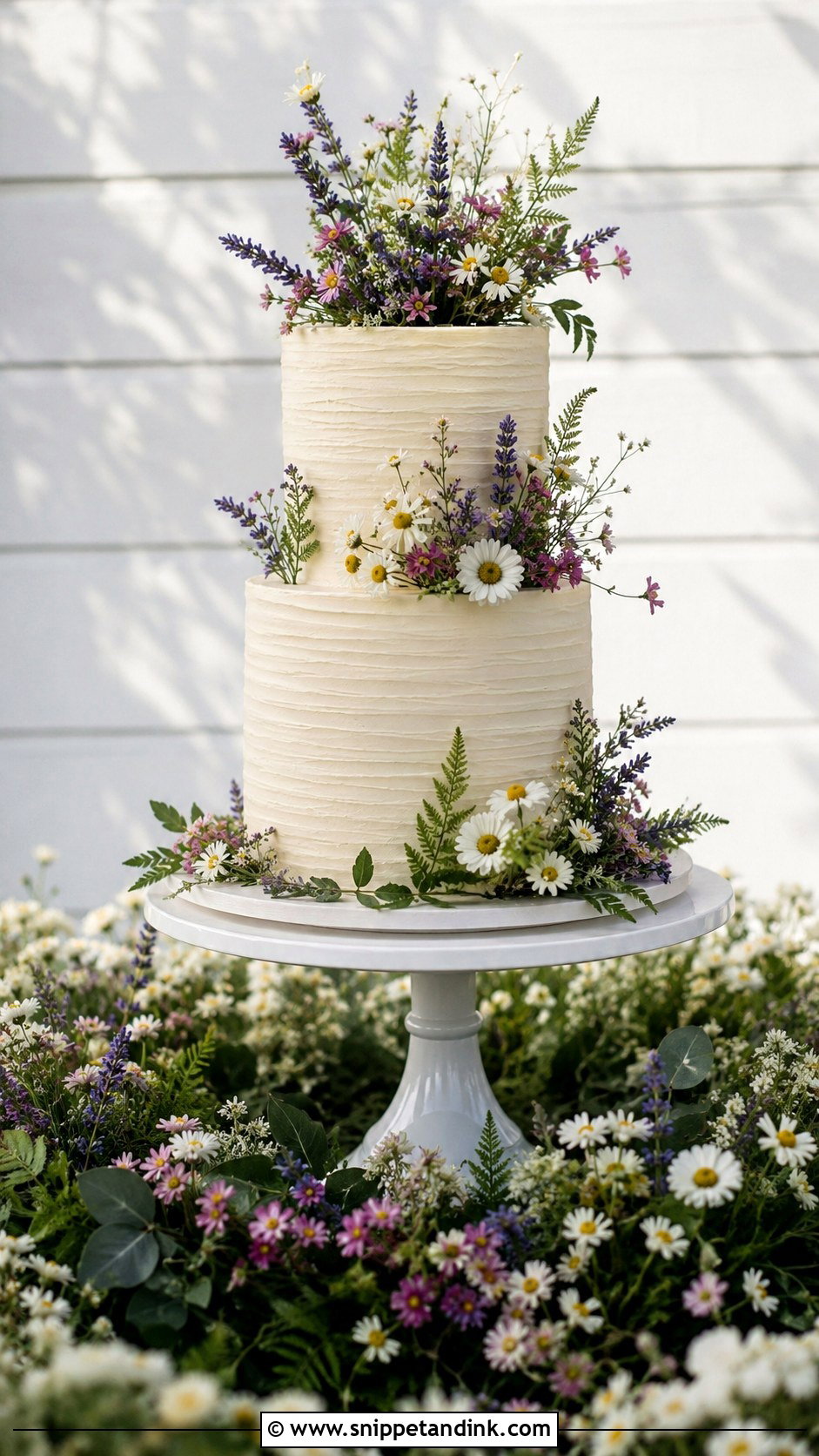
The cake looks like it’s growing out of a garden: blooms and greenery arranged around the base, sometimes rising gently onto the bottom tier. Because most of the flowers sit on the table rather than the cake, this is often handled by the florist, which means the baker and florist need to agree on the palette and timing. Keep the cake finish simple so the meadow carries the design. It suits outdoor and greenhouse weddings in spring and summer.
18. Floral Drip Wedding Cake
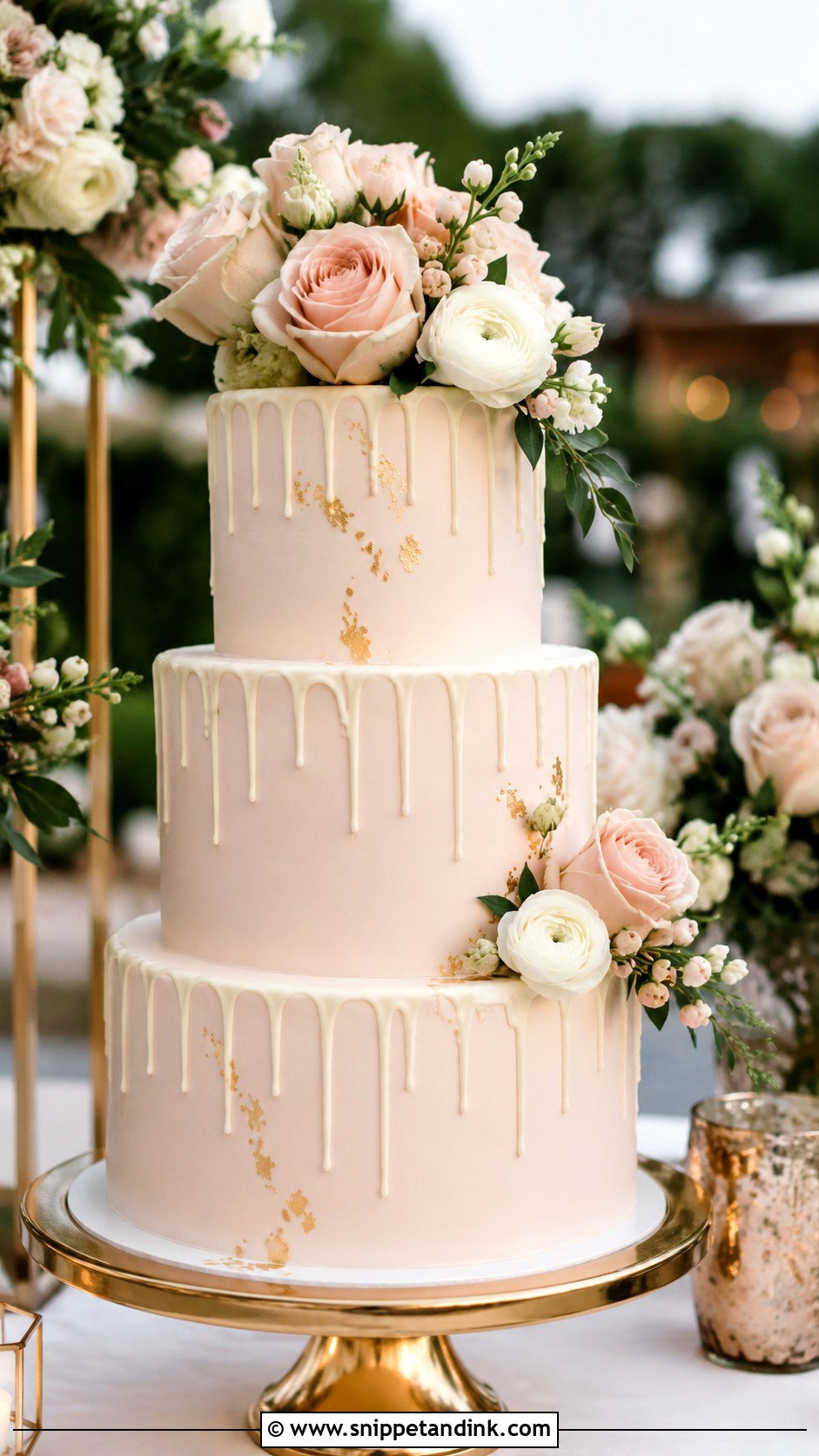
Drips are a fun detail, but control matters. I use white chocolate, blush ganache, caramel or gold-painted ganache, and test the drip on a chilled cake so it stops halfway down the tier instead of pooling at the base. Too warm and it runs; too cold and it sets in blobs. Fresh or sugar flowers go around the top and side once the drip has set. Smooth buttercream underneath keeps it clean. It suits garden parties, modern barns and relaxed receptions.
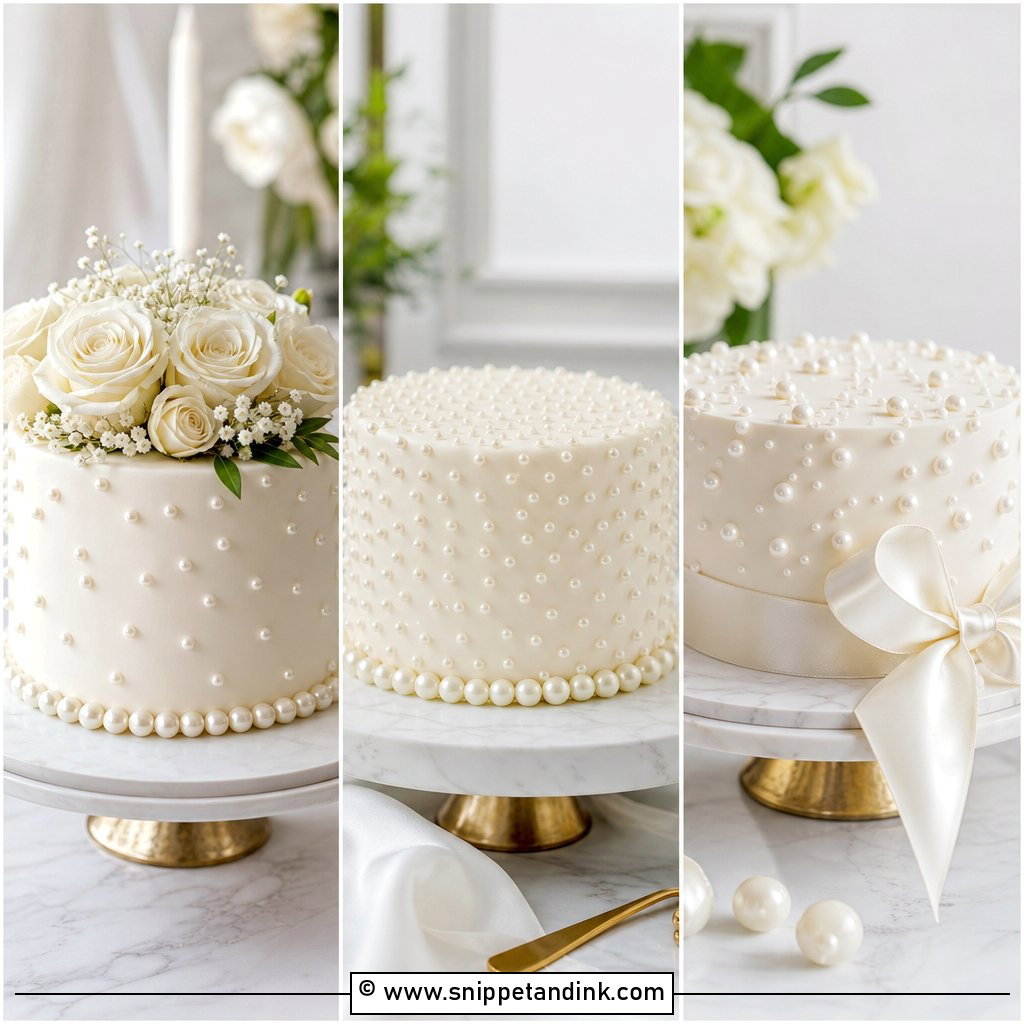
19. Floral Pearl Wedding Cake
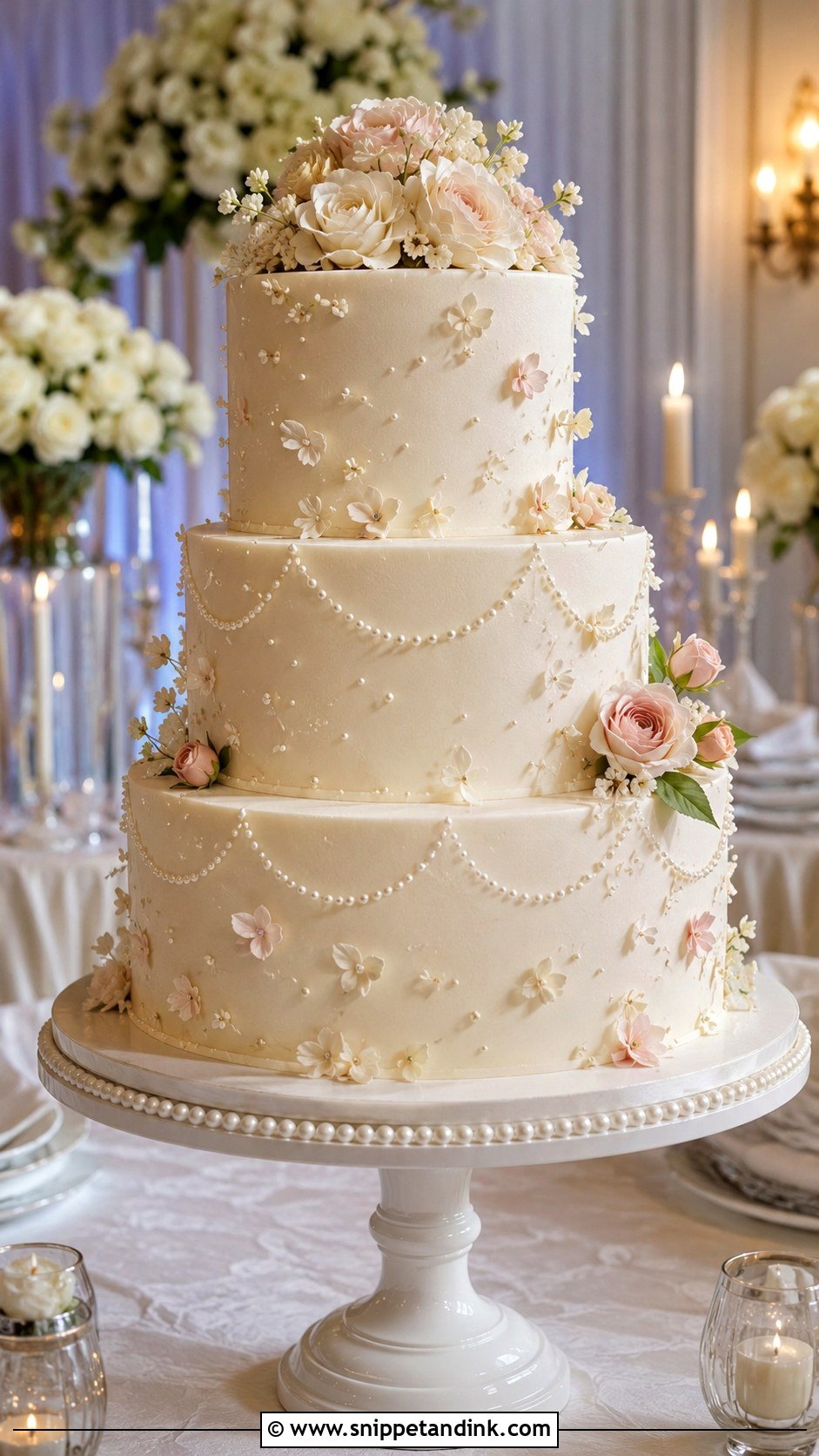
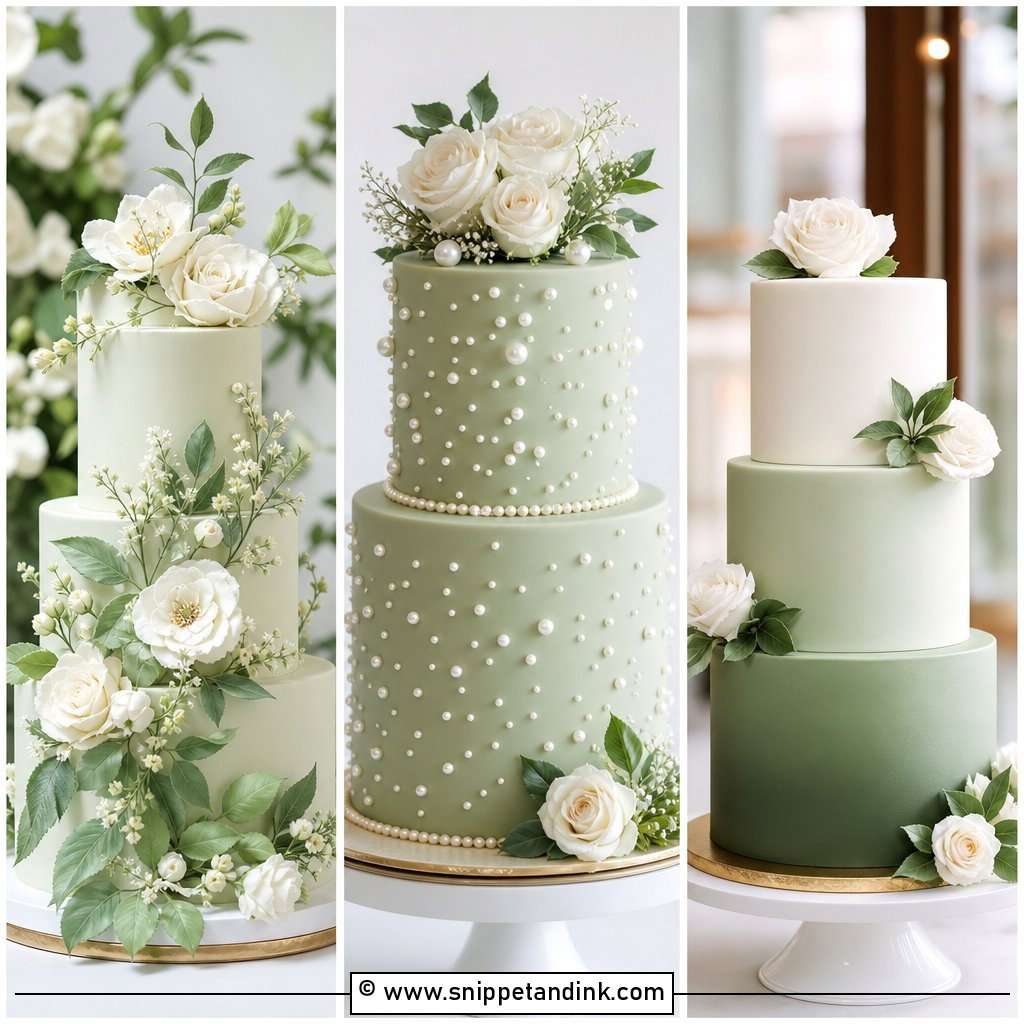
Pearls add a soft shine that the camera picks up. Tiny edible pearls can be scattered over smooth buttercream, set in neat rows or used to frame floral clusters. I apply them one by one with tweezers and a dot of piping gel, which is slow but keeps them in place. White sugar flowers, blush roses or pressed petals keep it romantic. Gentle floral colors stop the pearls competing with bold blooms. Classic venues and formal evening receptions suit it best.
20. Floral Black And White Wedding Cake
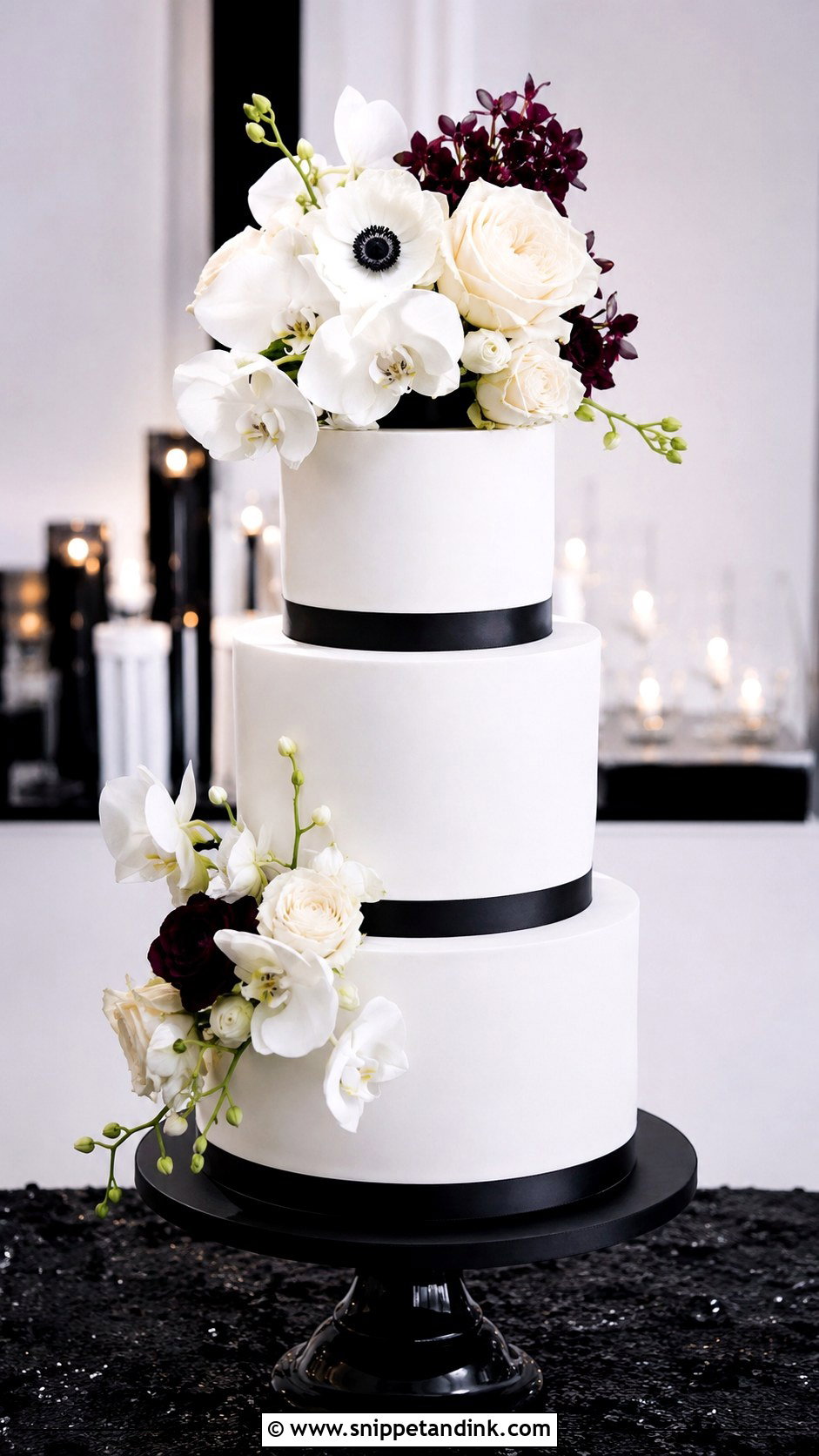
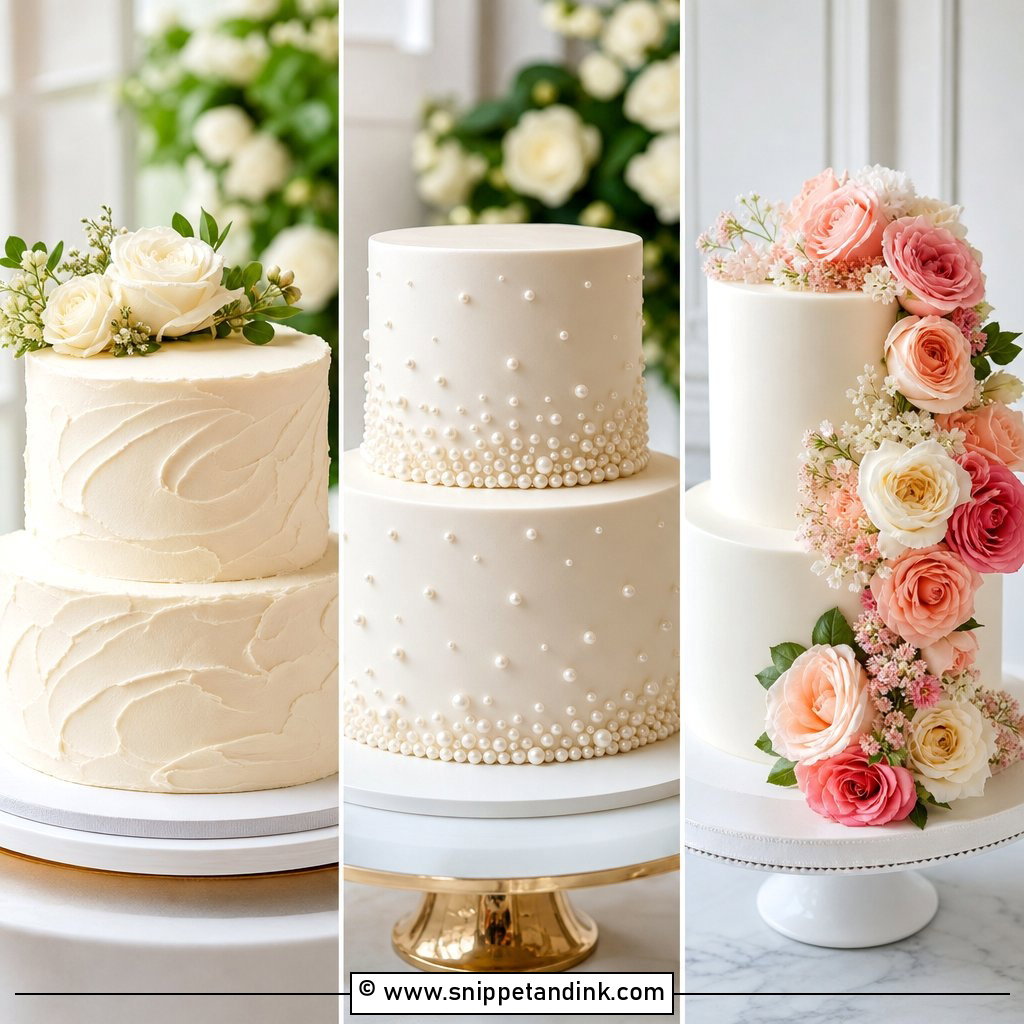
Contrast is the whole idea here. A white base with black ribbon, black piping, painted accents or a dark flower. White orchids, ivory roses and burgundy or black-centered blooms soften the effect. A little black goes a long way, and black icing needs a lot of coloring, which can taste bitter and stain mouths, so I keep it to accents rather than covering whole tiers. Smooth tiers and deliberate placement keep it clean. Modern venues and black-tie weddings are where it fits.
Blooms That Should Never Touch the Icing
Some popular wedding flowers are toxic, and most florist flowers are grown with pesticides. That doesn’t rule them out for a cake, but it changes how they go on. These should be kept off a cake or used only where they can’t contact anything edible:
- Hydrangea, lily of the valley, foxglove, oleander and daffodils
- Sweet peas, which look delicate but are toxic
- Any flower from a florist, unless it’s grown for food, should be wrapped and kept from touching the icing
For petals that actually touch the icing, stick with flowers grown for eating: violas and pansies, calendula, cornflowers, lavender and unsprayed roses. Ask your baker where the flowers come from. If the answer is vague, ask for sugar flowers instead.
Who Places the Flowers, and When
On many weddings the florist supplies the blooms and the baker or the venue team places them. If nobody is clearly responsible, the flowers end up stuffed into the cake by whoever is free. Agree on it in writing: who provides the stems, who wraps and inserts them, and what time they go on. Flowers should be added close to the reception, and the cake should stay out of direct sun until it’s cut.
I also ask where the cake table will stand. A spot next to a sunny window or a dance floor full of warm bodies will wilt fresh petals and soften piped ones long before the cutting. A cool corner with steady air buys the flowers several extra hours.
Flowers That Frame the Cake Instead of Hiding It
The best floral cakes let the flowers support the shape of the cake instead of burying it. Before you decide, think about your venue, the season, your guest count and your floral budget. A small pressed-flower cake suits an intimate garden wedding, while a floating cake belongs at a formal evening reception. Talk to your baker and florist together about flower safety, placement and timing, especially with fresh blooms. Settle who supplies the flowers and who places them, and the cake will look exactly as planned when it’s wheeled out.
You'll Like These Ideas:






Leave a Reply