
I bake a lot more sheet cakes for weddings than people expect, and most of the couples ordering them are not cutting corners. A flat cake slices fast, travels flat and gives me a wide top to pipe on, so you get the craftsmanship without the internal dowels and support boards a tall tiered cake needs. Some couples put one on the display table, some keep a few in the kitchen for serving, and some make the sheet the only cake in the room. Below are twenty designs I’d happily make, with notes on how each one actually behaves once it leaves my kitchen.
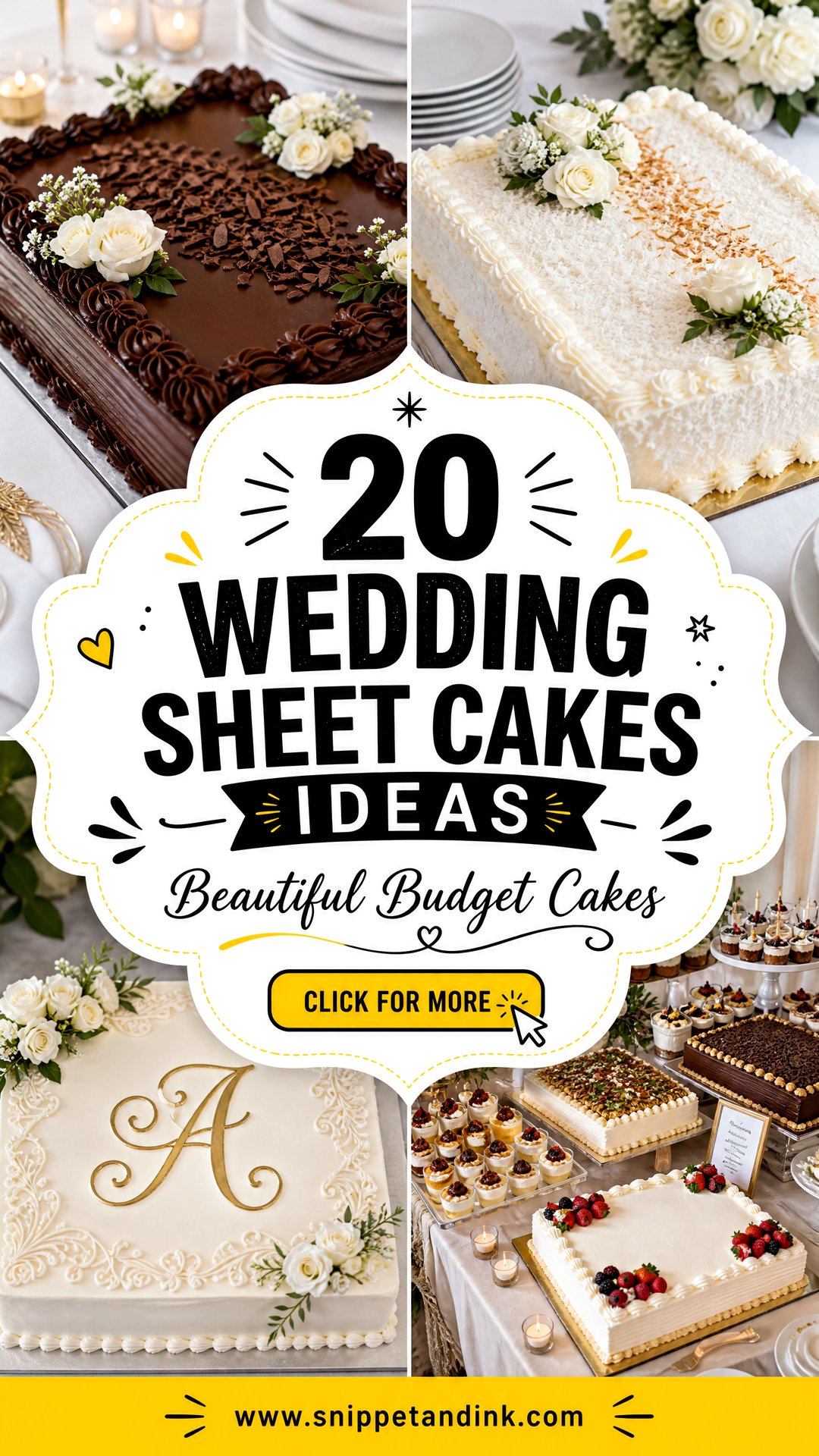
Quarter, Half or Full Sheet: Working Out Your Servings
The first number I ask a couple for is the guest count, because sheet sizes are not as standard as people assume. A full sheet pan is roughly 18 by 24 inches in many bakeries, a half sheet about 12 by 18, and a quarter sheet about 9 by 13, but some shops call an 11 by 15 a half sheet. Always confirm the actual dimensions and the height of the cake, not just the name.
Then it comes down to the slice. Party portions are often cut around 2 by 2 inches, while a wedding portion from a tall layered sheet can be smaller because each slice is taller. As a rough guide, a two-layer quarter sheet feeds about 20 to 30, a half sheet about 40 to 60 and a full sheet about 80 to 120, depending on how generously it’s cut. I plan for every guest to take a piece, even though some won’t.
- Ask whether the quoted servings assume one layer or two; a single thin layer looks underwhelming at a wedding.
- If dessert follows a full meal, smaller cuts are fine. If cake is the only dessert, plan larger.
- Two half sheets in different flavors are often easier to handle and transport than one full sheet.
1. Vintage Lambeth Wedding Sheet Cake
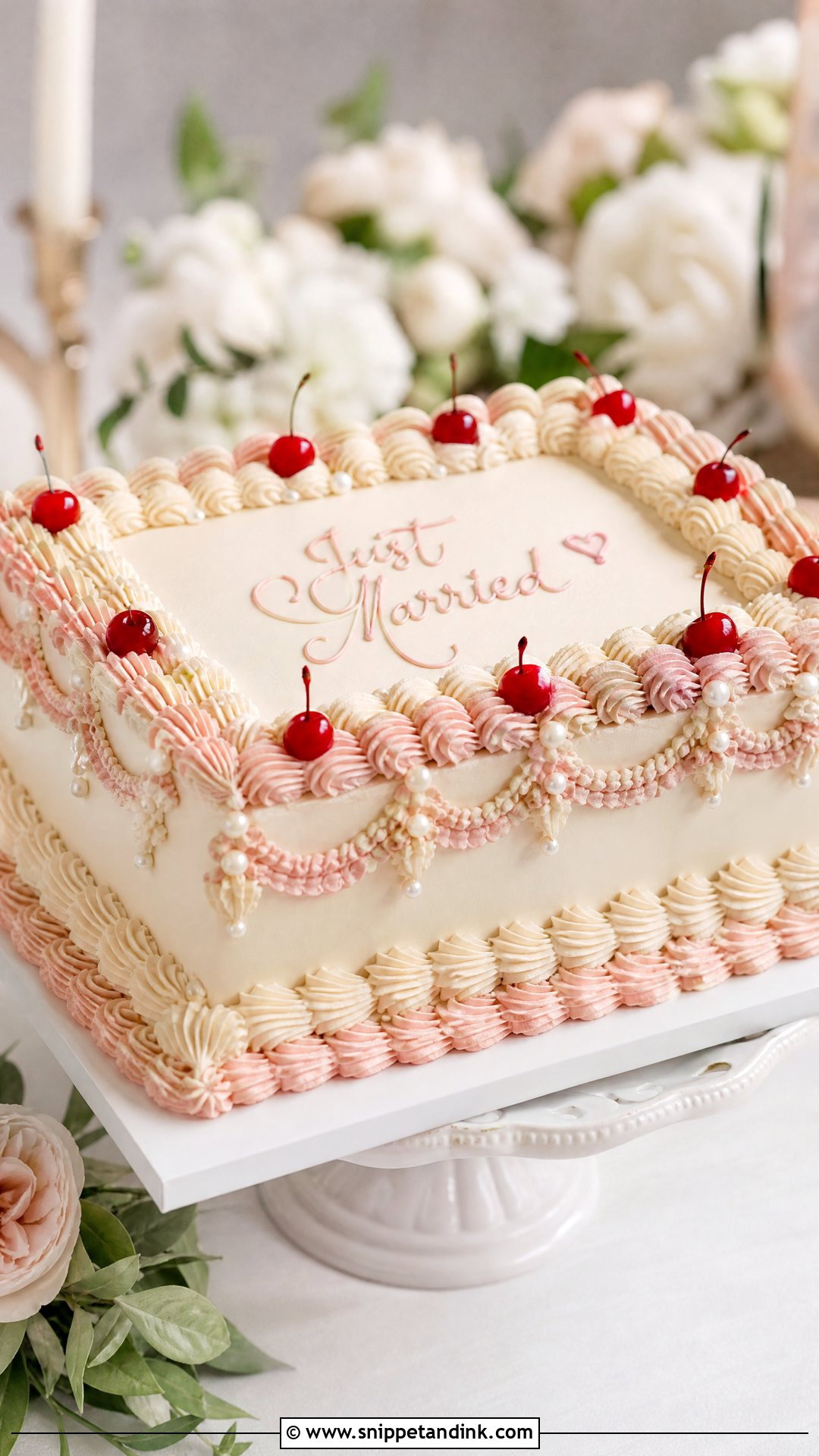
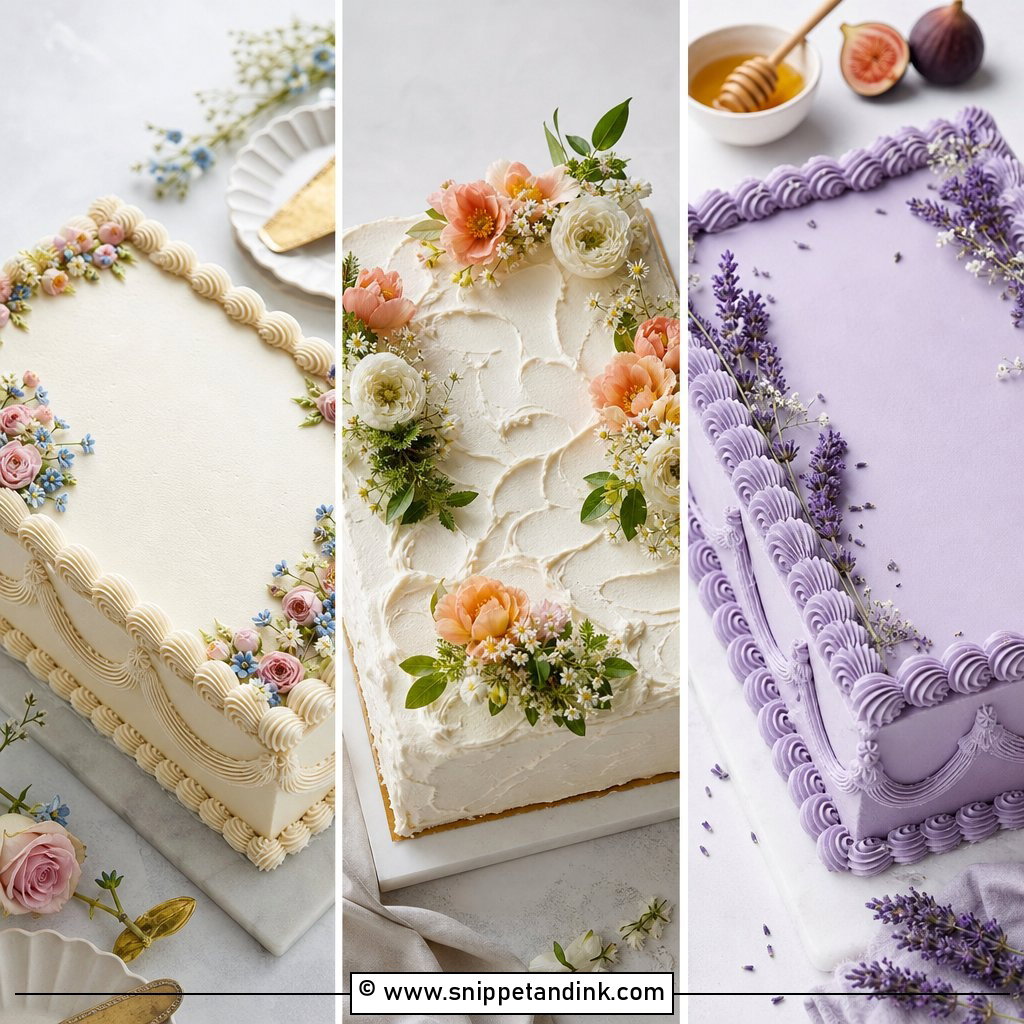
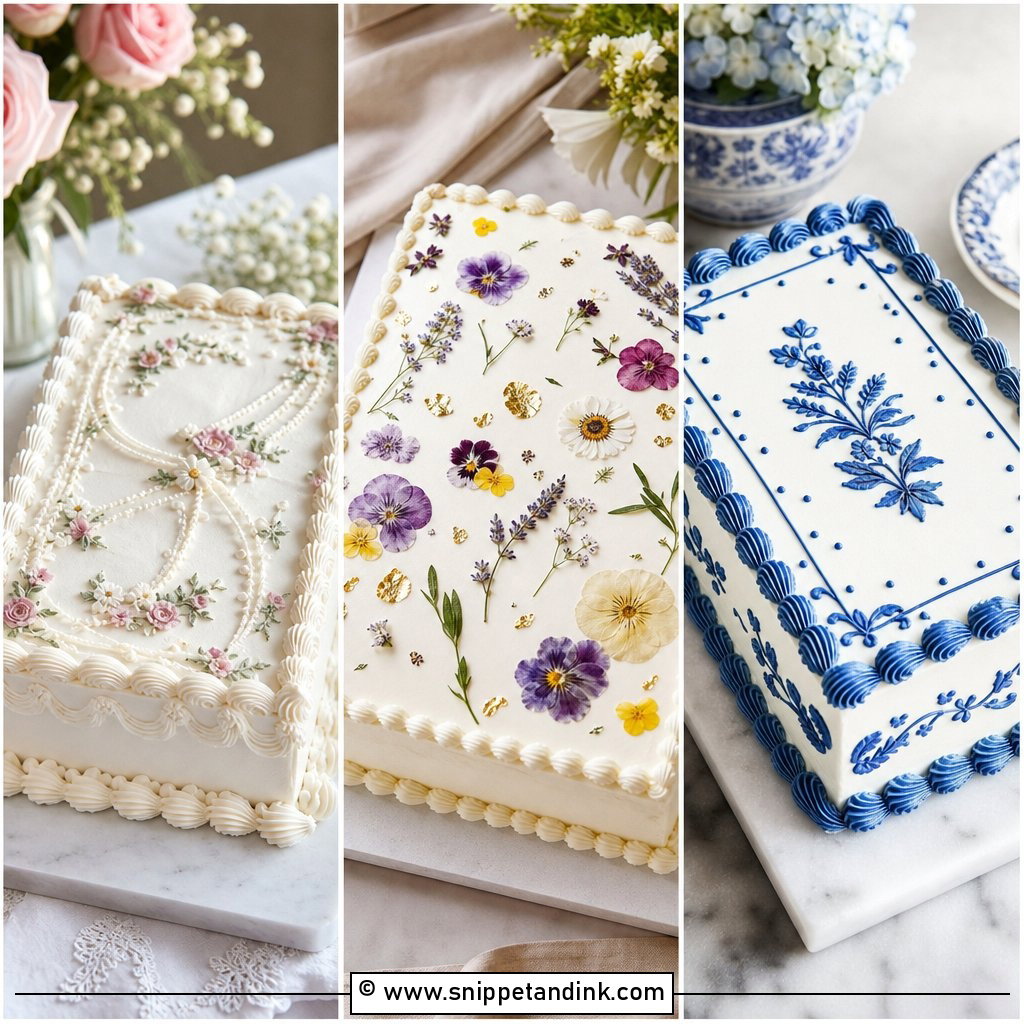
Lambeth piping is the over-piped Victorian style: borders stacked on borders, shells, swags and ruffles built up in layers. On a sheet cake it reads as nostalgic in a good way, especially in ivory, blush or butter yellow. The thing I watch is restraint, because a flat top tempts you to fill every inch. I limit it to two colors so the layering shows instead of turning into noise. American buttercream holds these crisp edges better than Swiss meringue, which softens in a warm room and blurs fine piping. Vanilla, almond or lemon sit well under it, and a few piped hearts or edible pearls finish it nicely when shot from directly above.
2. Long Table Wedding Sheet Cake
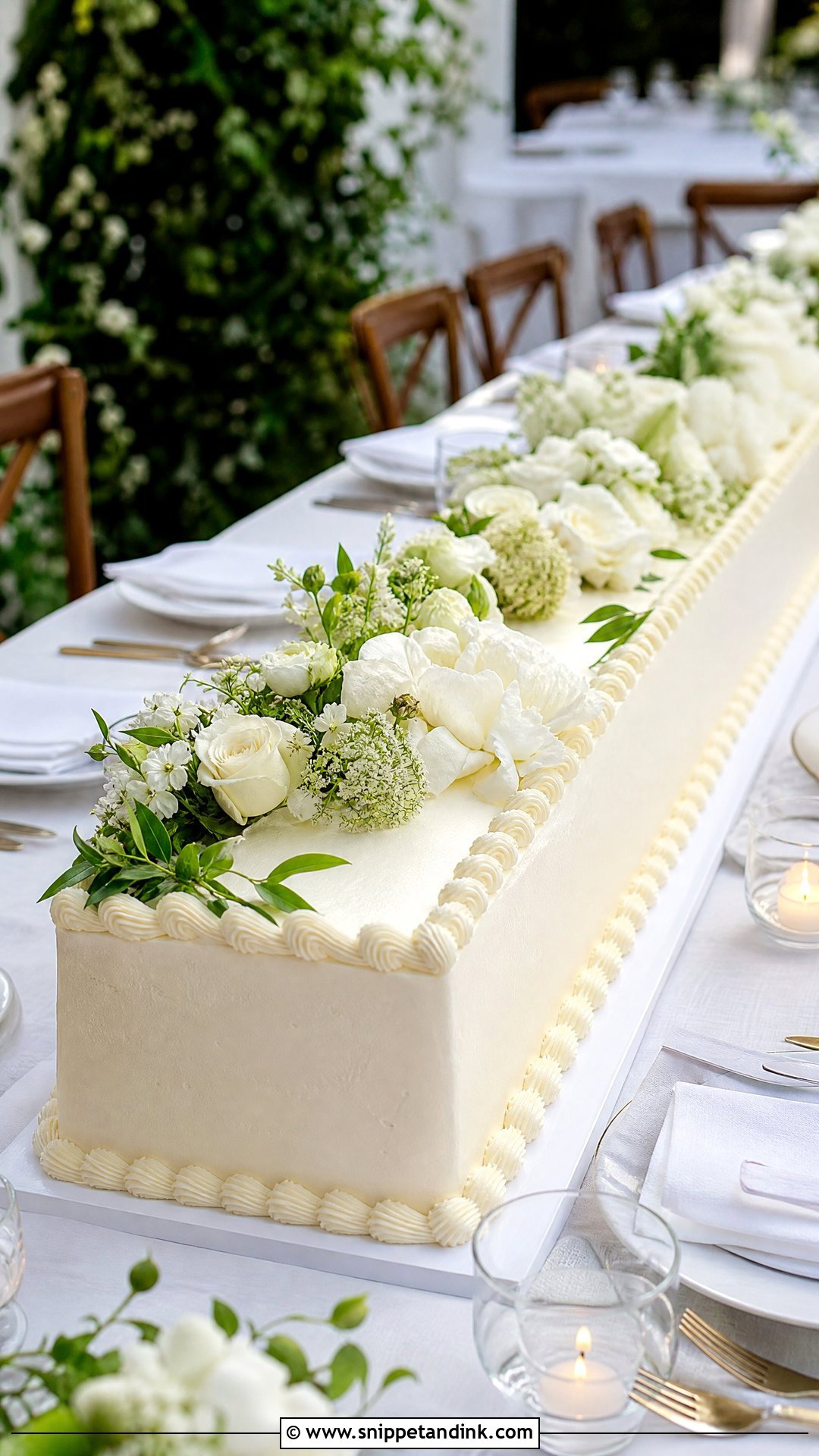
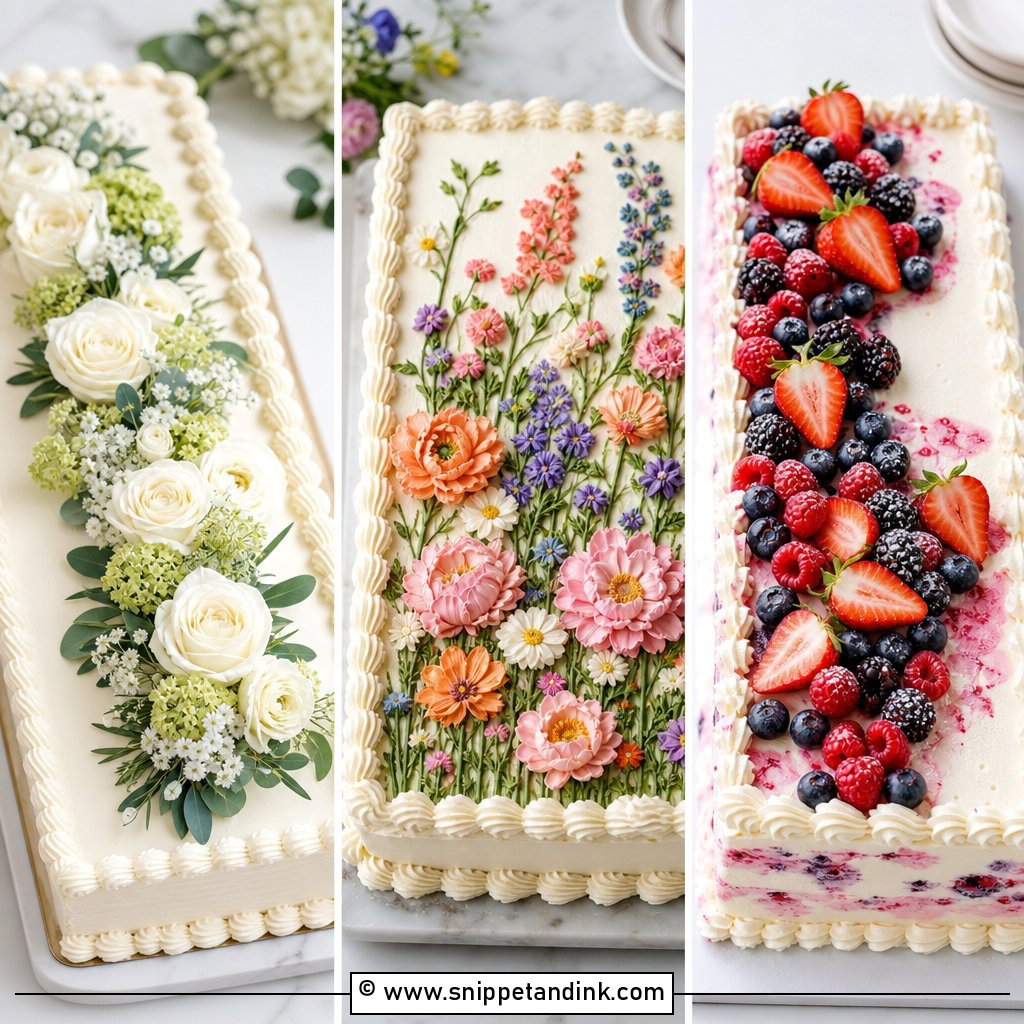
This is several sheets butted together into one long run down a banquet table, and it turns dessert into part of the reception decor. The seams are the hard part. I level every cake to the exact same height, join them on a single long board where I can, and pipe a border or a line of fruit right over each join so nobody sees where one ends. It needs a table that won’t flex and a venue that will let me set it up in place, since it cannot be carried assembled. Vanilla bean, chocolate and almond cut cleanly here, and florals that repeat the tablescape tie it in.
3. Floral Wedding Sheet Cake
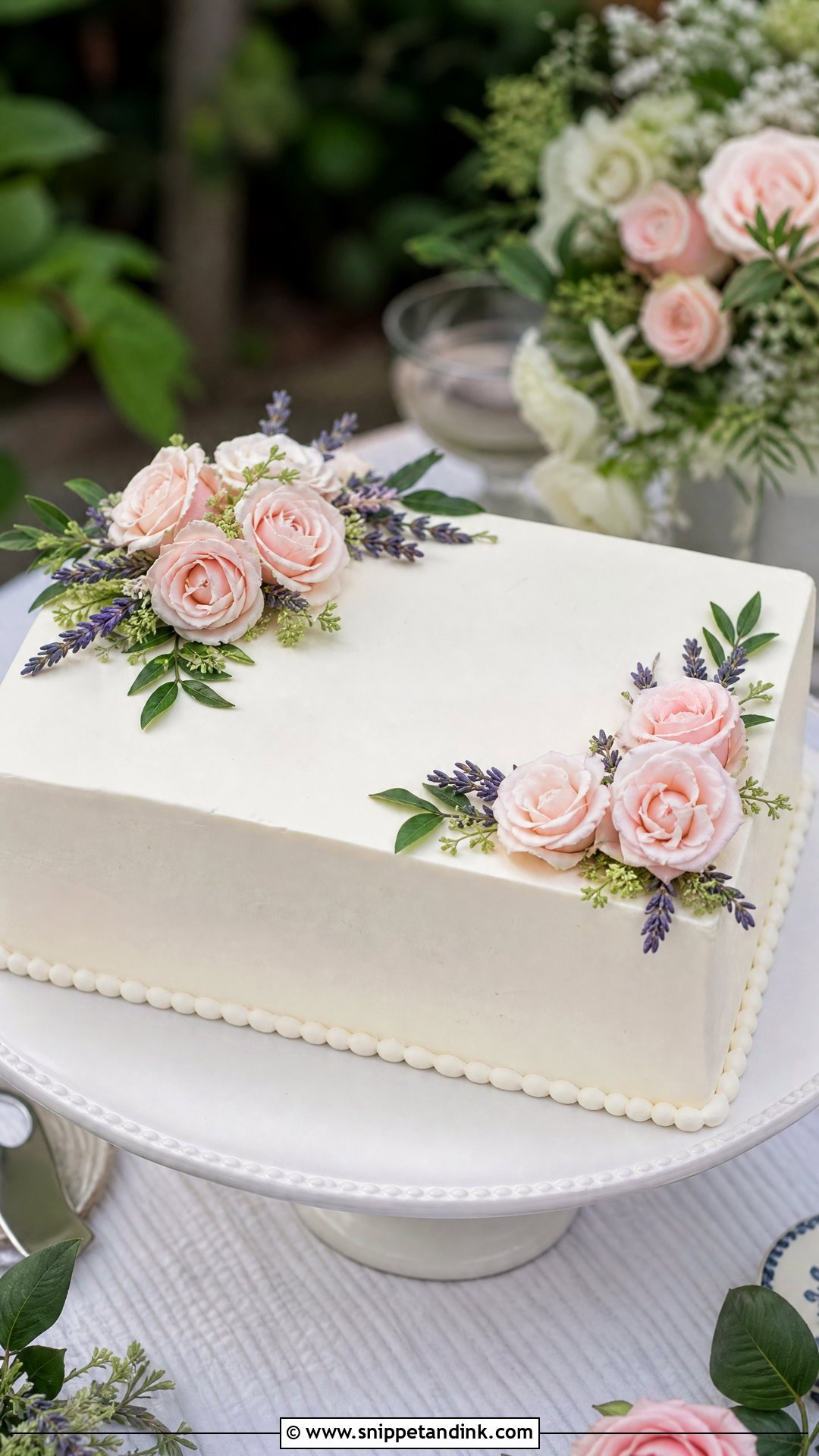
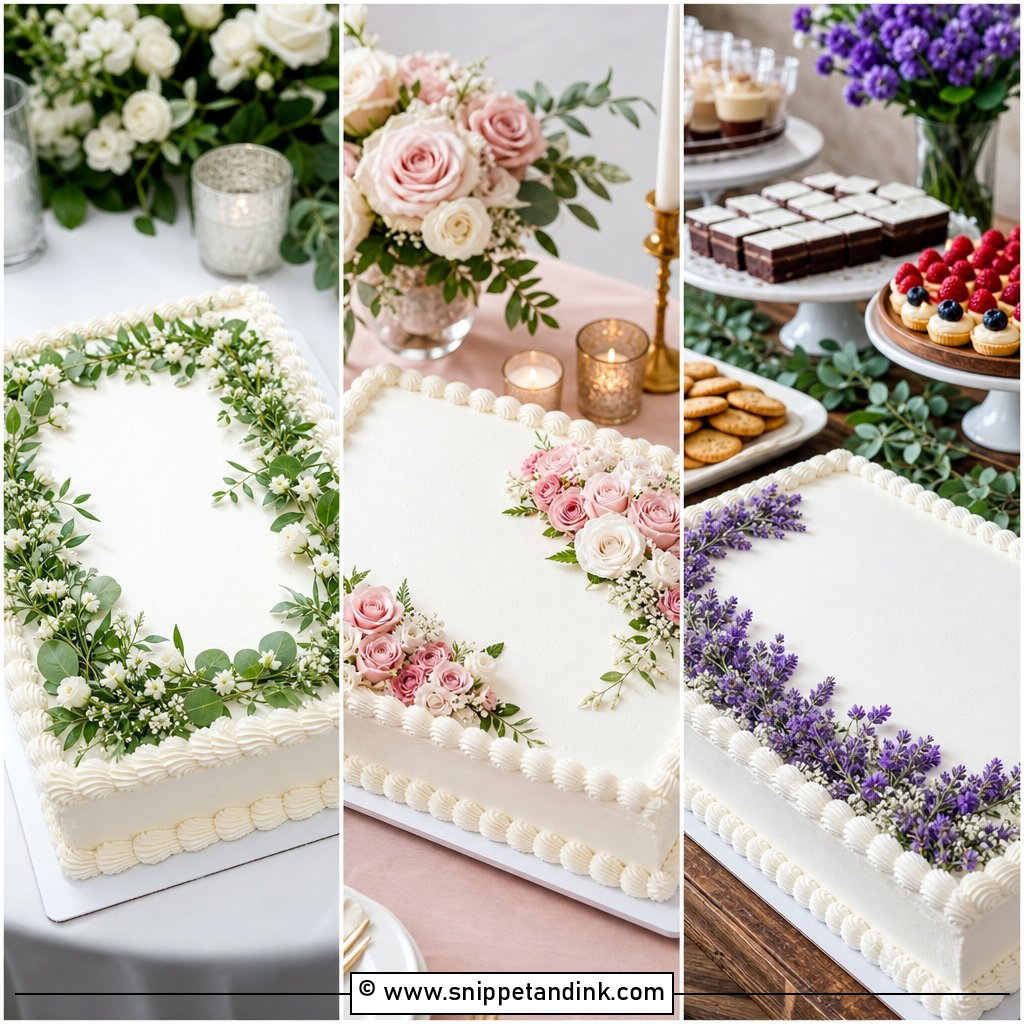
Flowers are the quickest way to make a flat cake look like a wedding cake, either as small corner clusters or as a full run across the top. Fresh, pressed edible and buttercream flowers all work, but fresh stems need checking: many common florist flowers are treated or toxic, so I only place blooms I know are food-safe, and I wrap or tape the stems so they never sit directly in the frosting. If your venue limits outside florals, piped buttercream flowers avoid that conversation entirely. Keep the base smooth so the flowers stay the focus, and lemon elderflower or strawberry are good flavor matches.
4. White Buttercream Wedding Sheet Cake
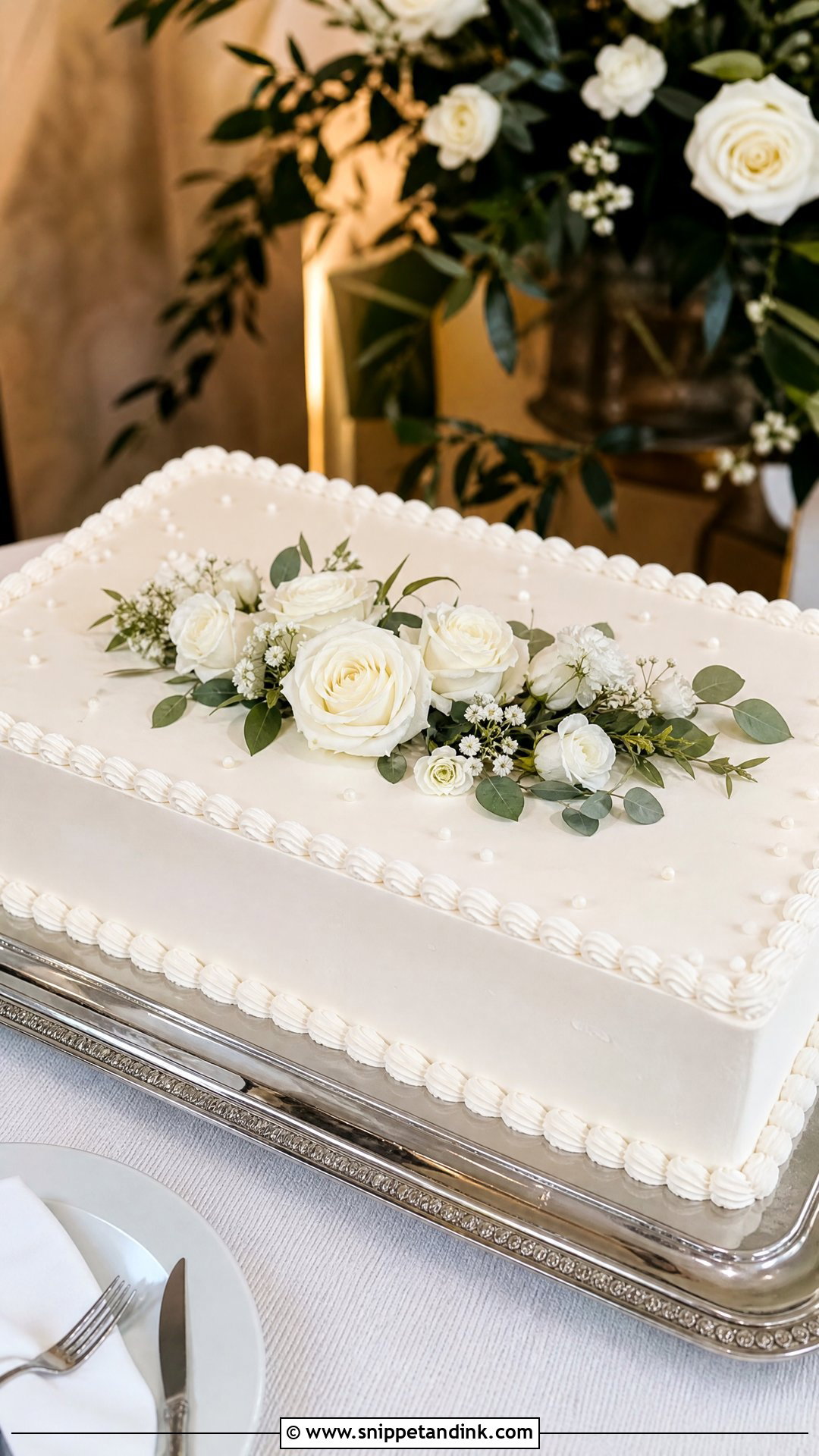
Plain white buttercream is the design I get asked for most, and it’s the one that shows every flaw. A smooth sheet top needs a crumb coat, a chill and a final coat pulled straight with a long bench scraper, and the corners are where rushed work gives itself away. Small details carry it after that: a neat piped border, a few pearls, soft swags or initials. Know that true white buttercream is hard to get with butter, which leans yellow; I add a touch of violet gel or use part shortening when a couple wants it bright. Vanilla bean, coconut or white chocolate keep the slice pale to match.
5. Pearl Wedding Sheet Cake
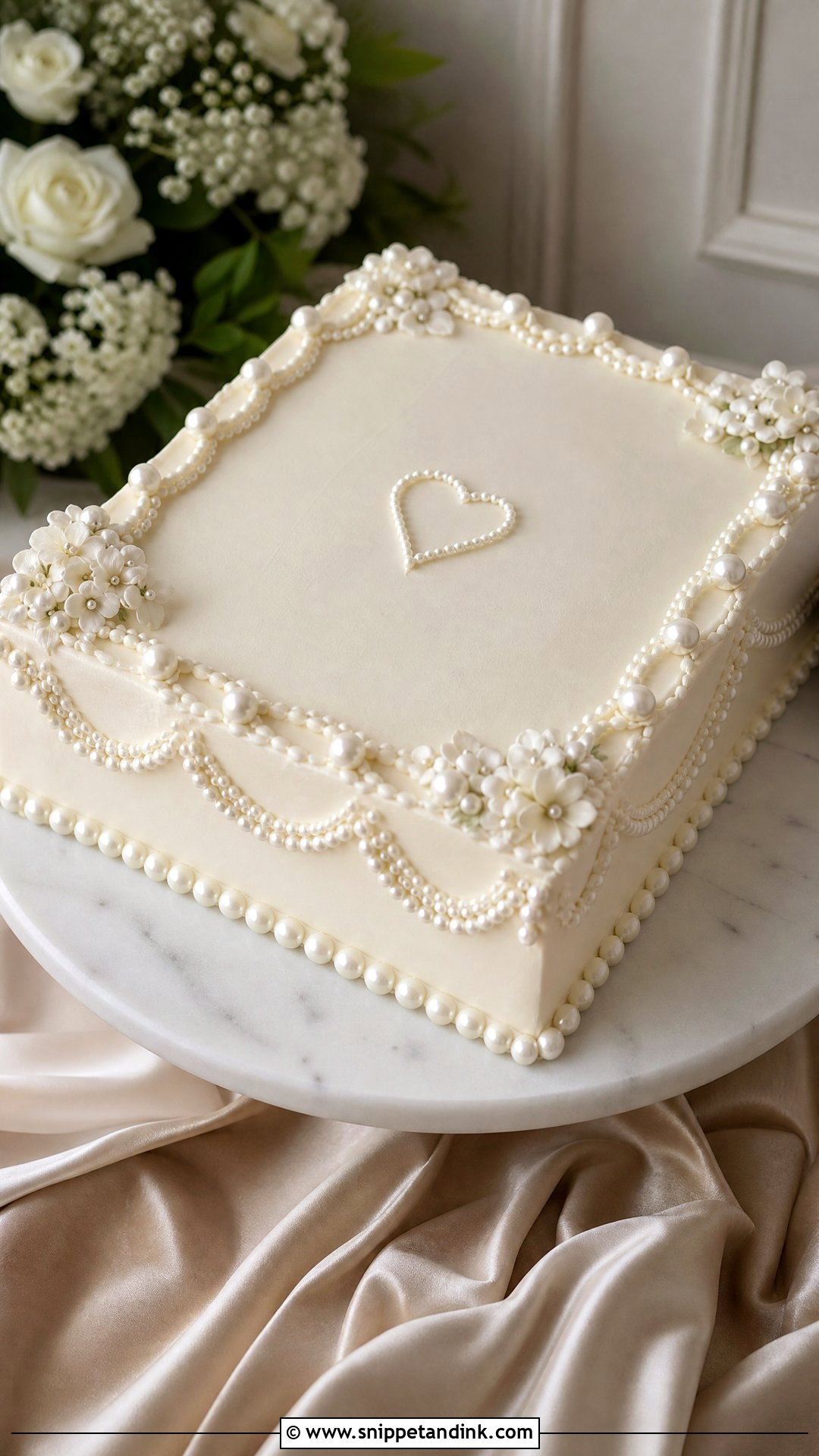
Edible pearls look refined on a sheet because the flat surface lets you place them with real precision, framing the edges or tracing a heart or initials. I set them with tweezers while the buttercream is still slightly tacky, otherwise they roll off once it crusts. Dragée-style pearls are hard on teeth, so I keep them as an accent rather than a carpet, or I switch to soft sugar pearls. A smooth buttercream or fondant background in ivory, cream or pale gold shows them best, and almond or white chocolate cake suits the quiet look.
6. Minimalist Wedding Sheet Cake
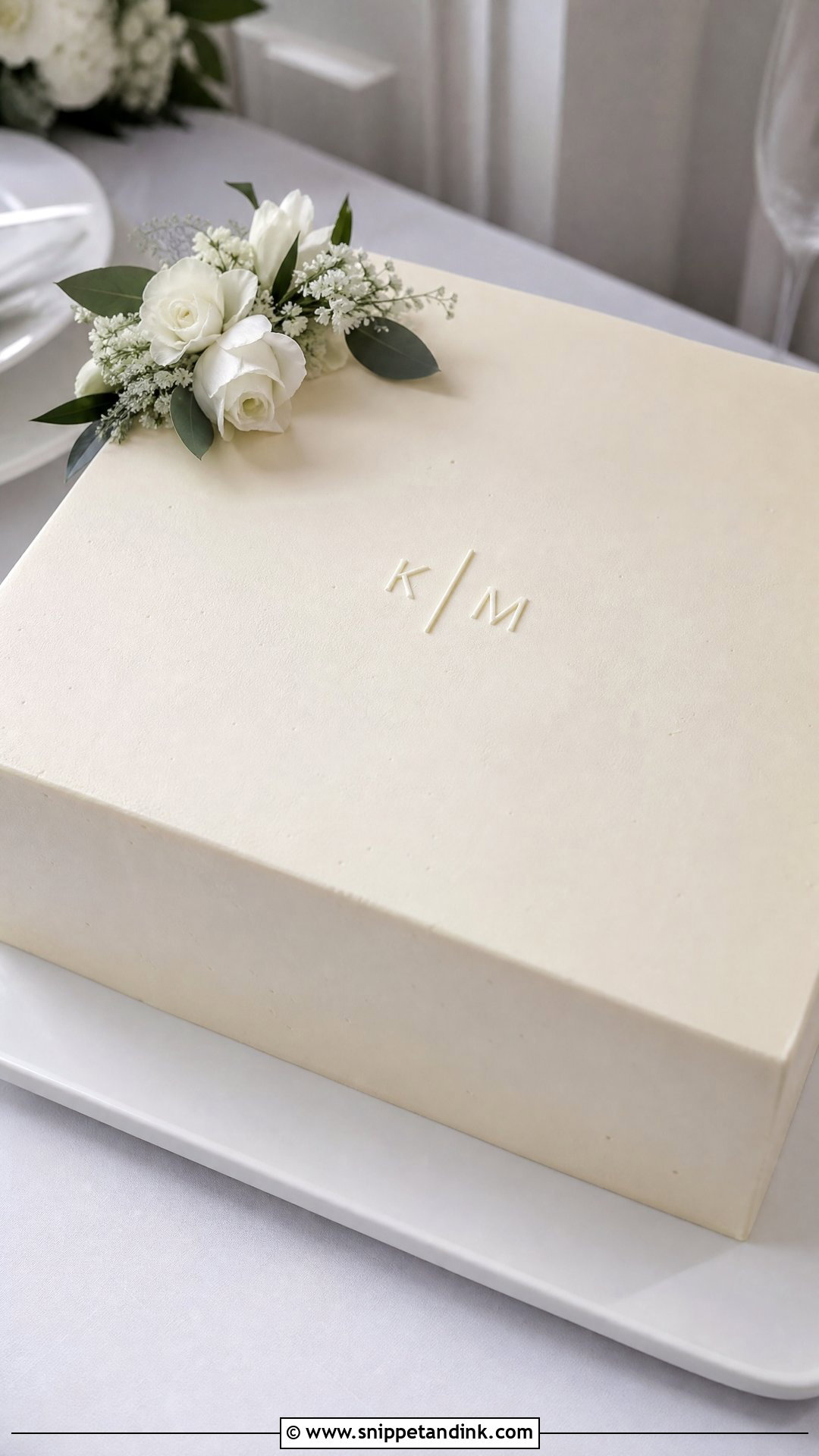
Minimal cakes are the least forgiving thing I make. With nothing to hide behind, the edges have to be sharp and the top dead level, so I build these in a chilled kitchen and box them cold. One focal point is enough, maybe a small floral cluster, a short piped message or a ribbon band around the base. Leaving empty space on purpose is the design. White, sage or pale pink all work, and olive oil or lemon cake fits the understated feel. I’d steer away from this one for an outdoor summer setup, where a soft edge is far more visible than on a busier cake.
7. Garden Wedding Sheet Cake
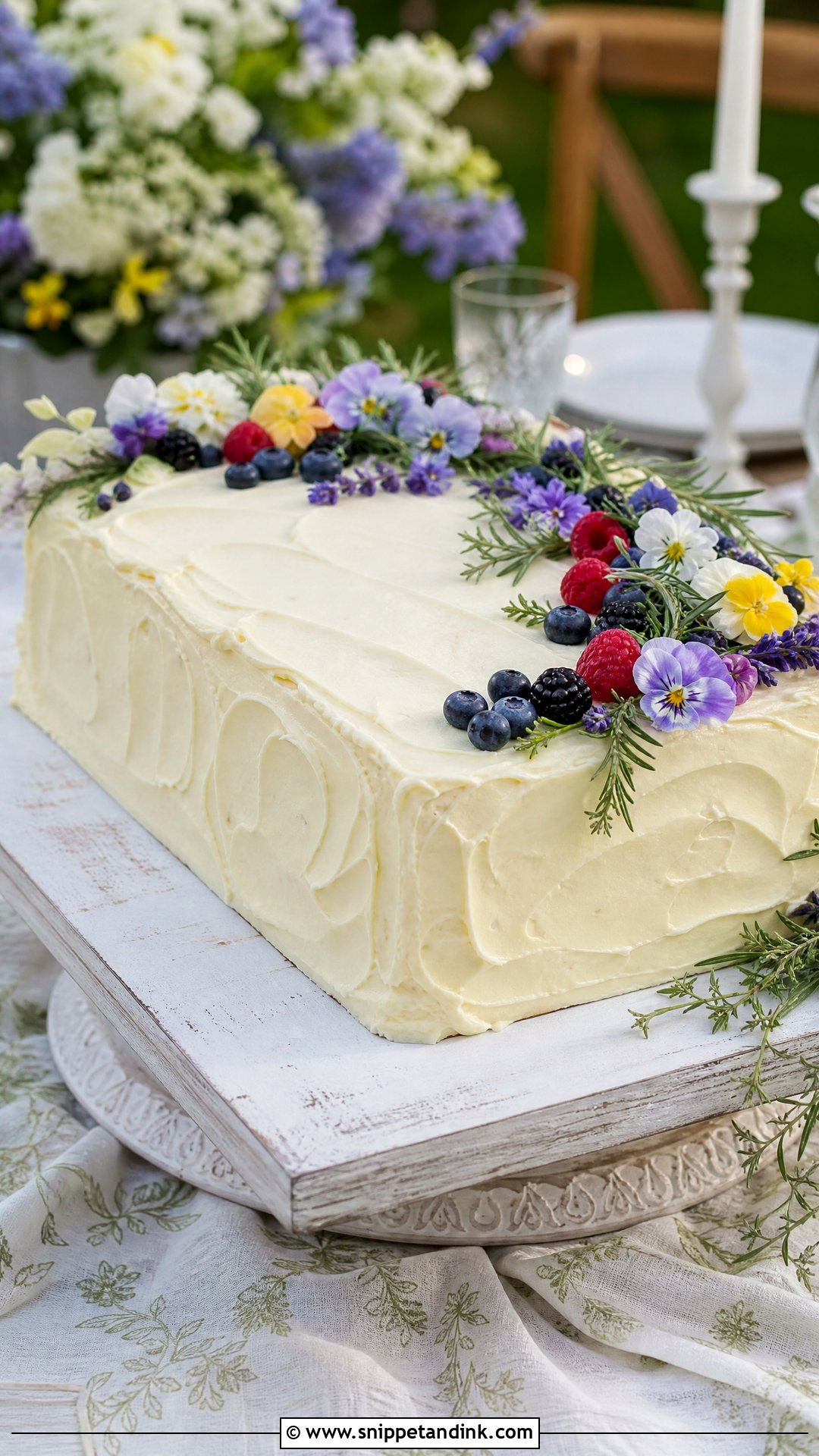
A garden sheet cake should look gathered rather than engineered: herbs, small edible flowers, berries and a gently swirled finish that looks hand done. Outdoors, though, I plan around insects and sun. I keep the fruit and flowers off until the last moment at the venue, and I’d ask for a shaded spot or a cover until the cake is served. Lemon, honey or berry cakes suit the mood. Trailing greenery around the corners helps it sit inside the landscape instead of on top of it, but only edible or food-safe greens should touch the frosting.
8. Berry Wedding Sheet Cake
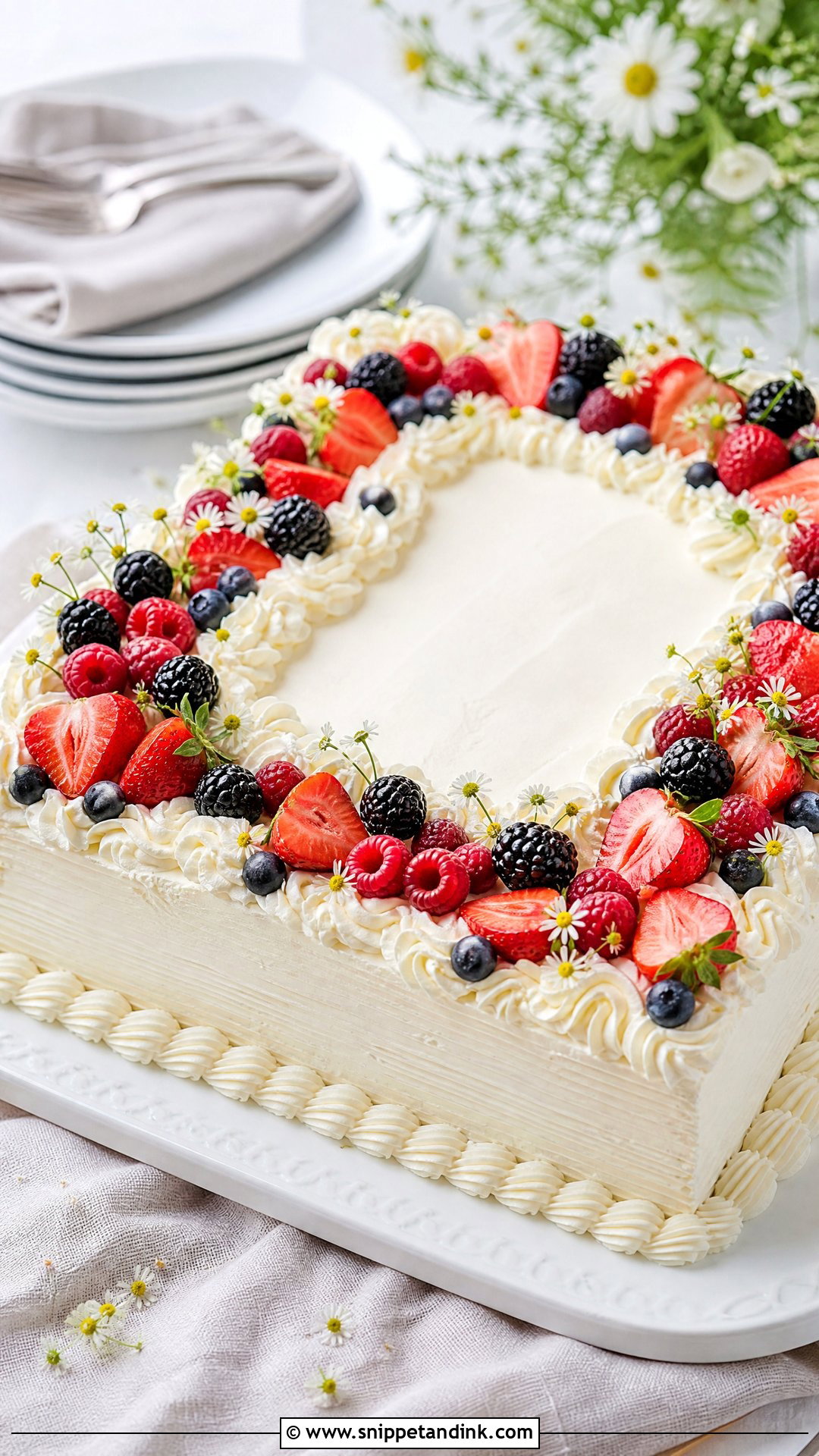
A berry wedding sheet cake tastes bright and looks cheerful with very little decorating. Rows, loose clusters or a fruit border all read well on a rectangle. Cut berries weep juice into frosting within a few hours, so I use whole raspberries and blueberries where I can and glaze any sliced strawberries to slow the bleeding. Whipped frosting is lighter but won’t sit out long; stabilized whipped cream or a light buttercream handles a reception far better. A dust of powdered sugar should go on at the venue, never before transport, or it melts into blotches.
9. Lemon Wedding Sheet Cake
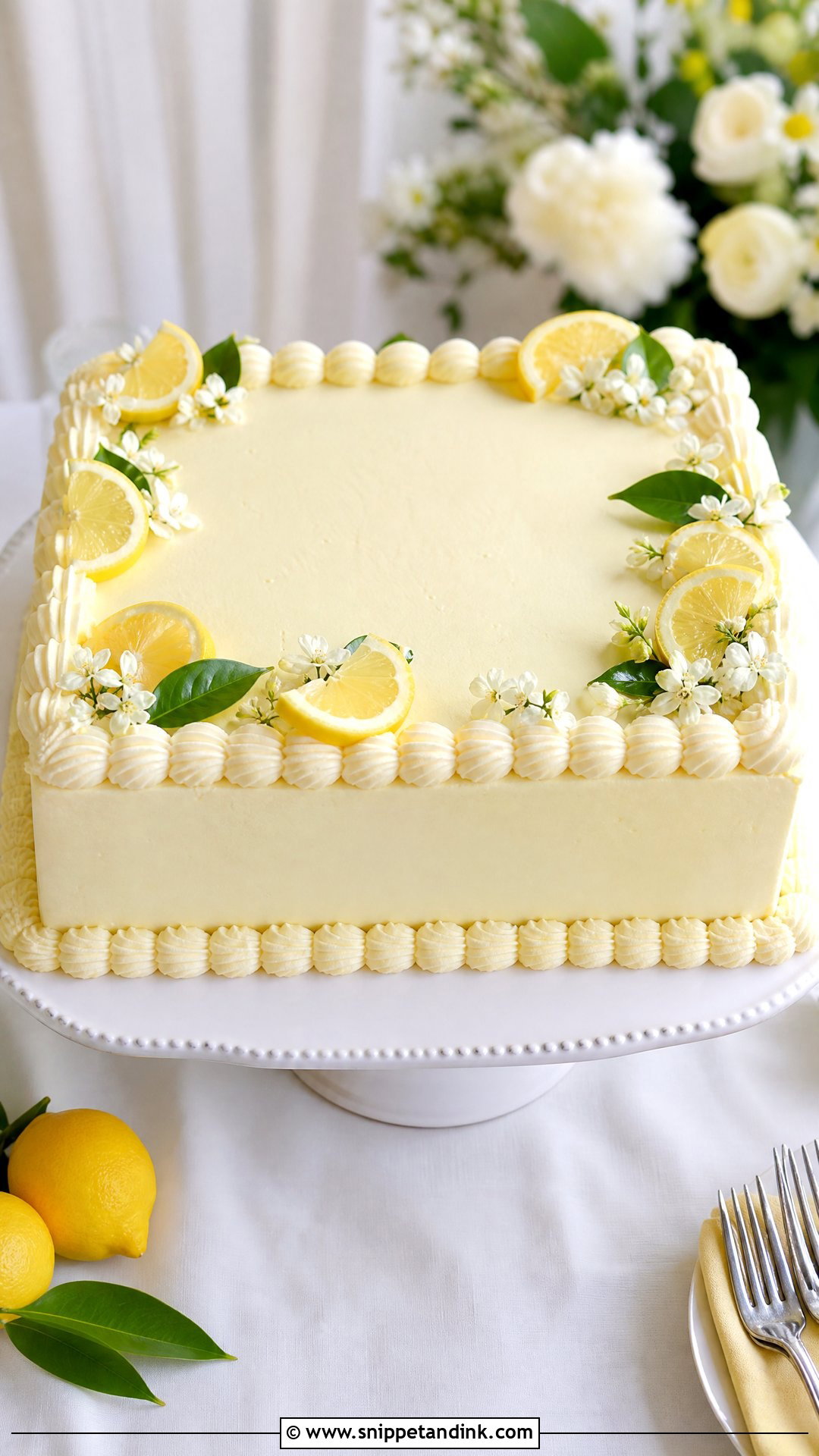
Lemon is my most requested warm-weather flavor because it stays fresh on the palate after a heavy dinner. Pale yellow sponge, a layer of lemon curd and a vanilla or lemon buttercream is the classic build. Curd is soft, so I pipe a stiff buttercream dam around each layer to keep it from squeezing out the sides under the cake’s own weight. On top, thin candied lemon slices hold their shape better than raw ones, which curl and dry out. Keep the yellow soft; strong yellow food coloring tends to look artificial in photos.
10. Chocolate Wedding Sheet Cake
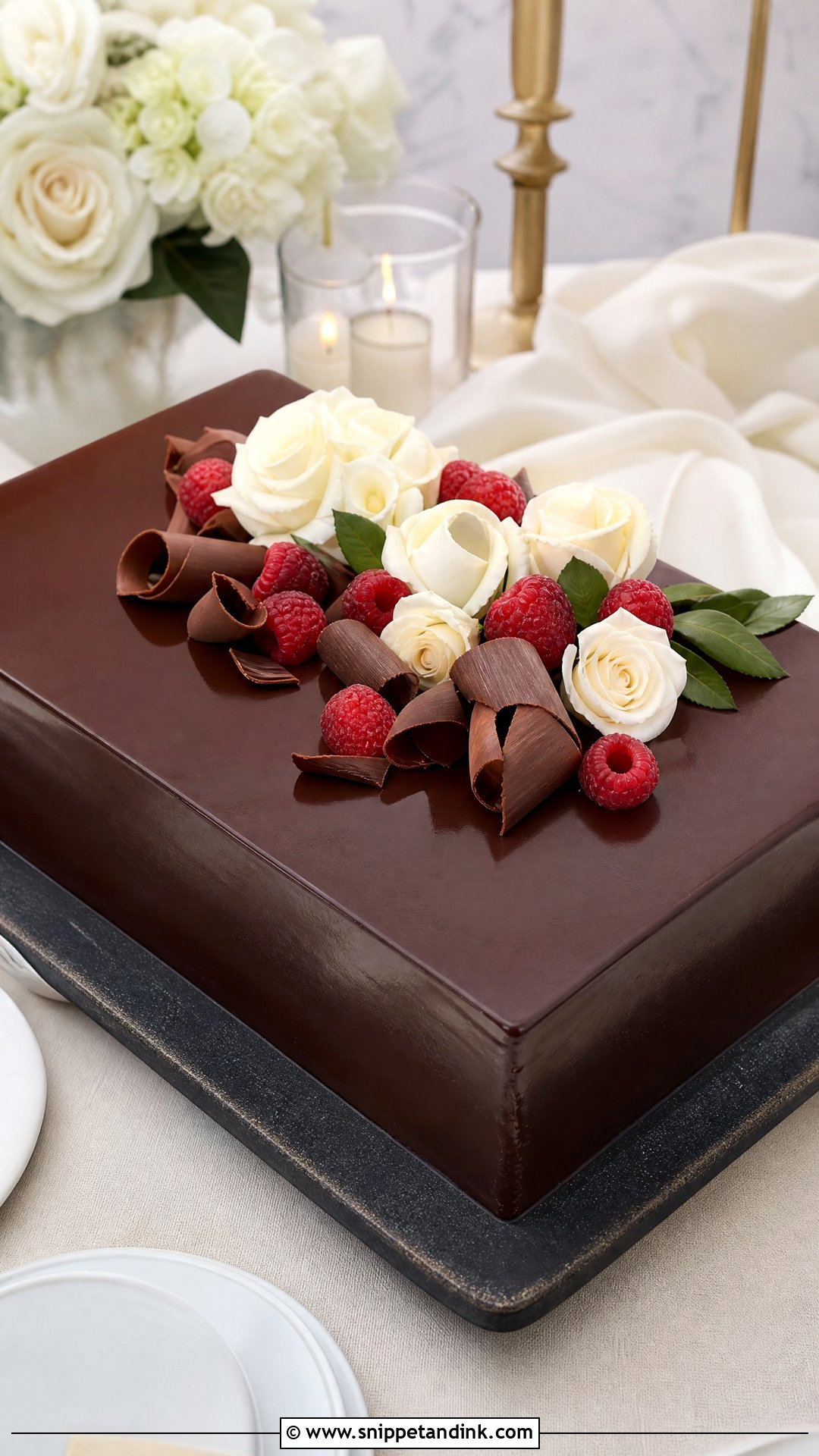
Chocolate can look like a birthday cake unless it is finished with care. Glossy ganache poured over a chilled sheet gives a mirror-flat top that reads formal immediately, and ivory flowers or a few berries against the dark surface do the rest. The catch is heat: ganache softens in a warm tent and shows every fingerprint, so I’d keep this one indoors in summer. Mocha, chocolate raspberry and chocolate hazelnut are popular variations. Cut it with a hot, wiped knife and you get those clean dark squares that look plated.
11. Marble Wedding Sheet Cake
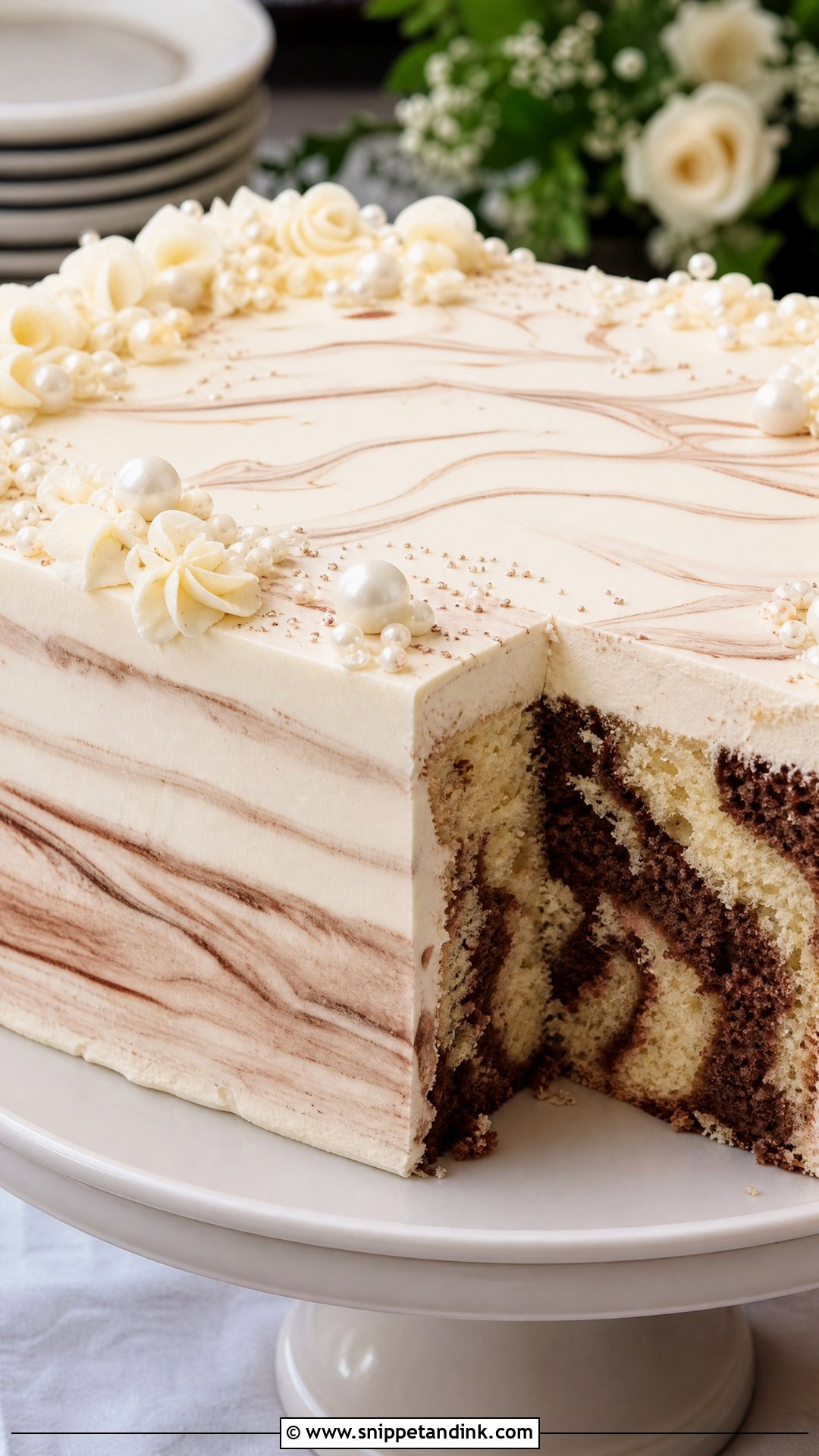
Marble keeps both the vanilla and chocolate camps happy in a single slice, which is why I often suggest it for the kitchen cakes behind a smaller cutting cake. The outside can stay simple in smooth buttercream while the swirl shows up only when served. If you want the pattern on top as well, I streak cocoa-tinted buttercream into the ivory and pull it with a scraper, and I stop after two passes because overworking turns it muddy. A few piped details or pearls keep it bridal.
12. Carrot Wedding Sheet Cake
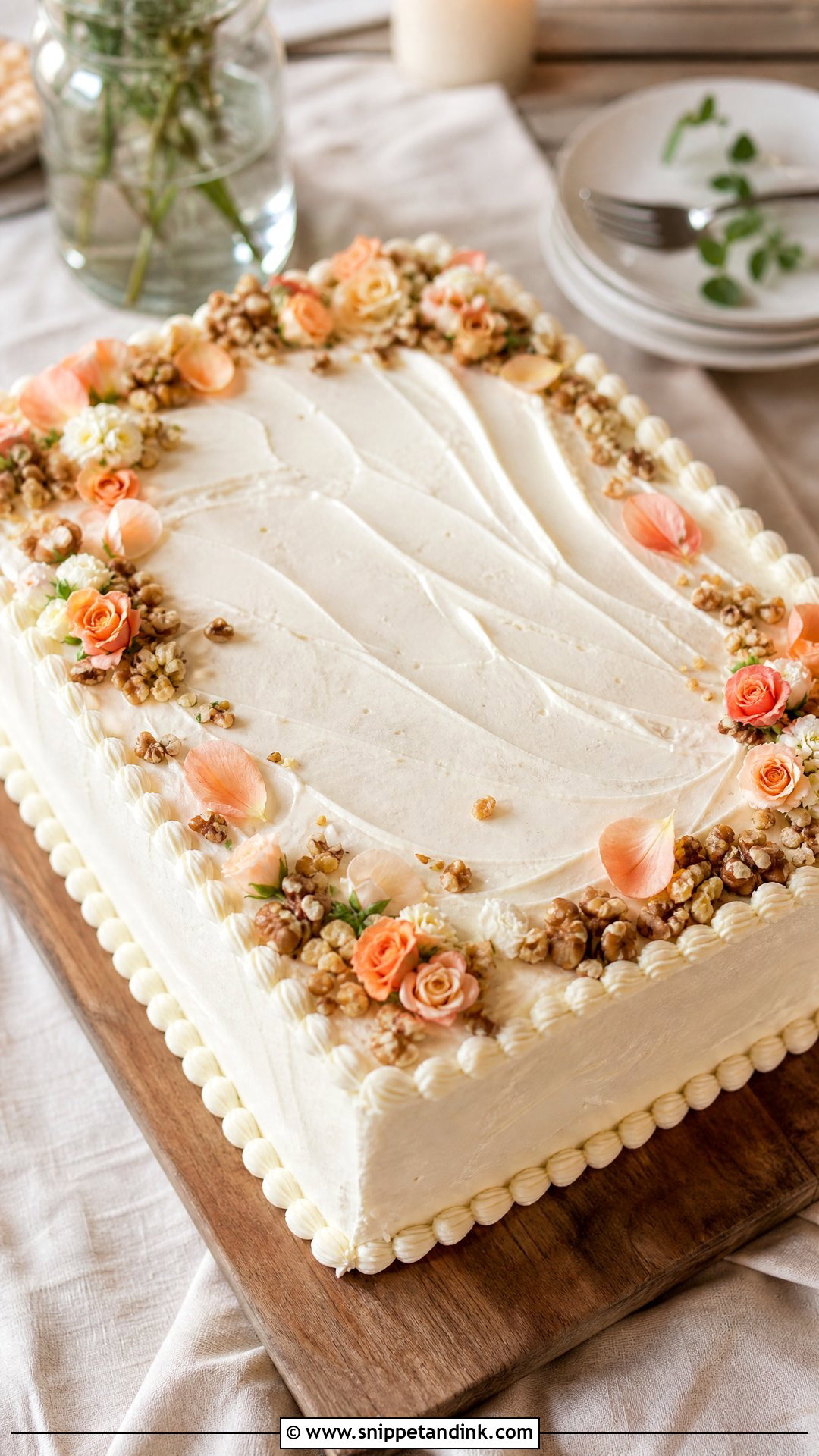
Carrot cake is a favorite for autumn and rustic venues, and the spiced crumb means it needs very little decoration. It has one rule, though: cream cheese frosting must stay cold. It softens and slides far sooner than buttercream, so I keep these refrigerated until shortly before serving and I’d never leave one on an outdoor table for hours. Smooth or softly swirled frosting with chopped toasted nuts, pressed petals or a clean border is plenty. Always flag the nuts to your caterer for guests with allergies.
13. Coconut Wedding Sheet Cake
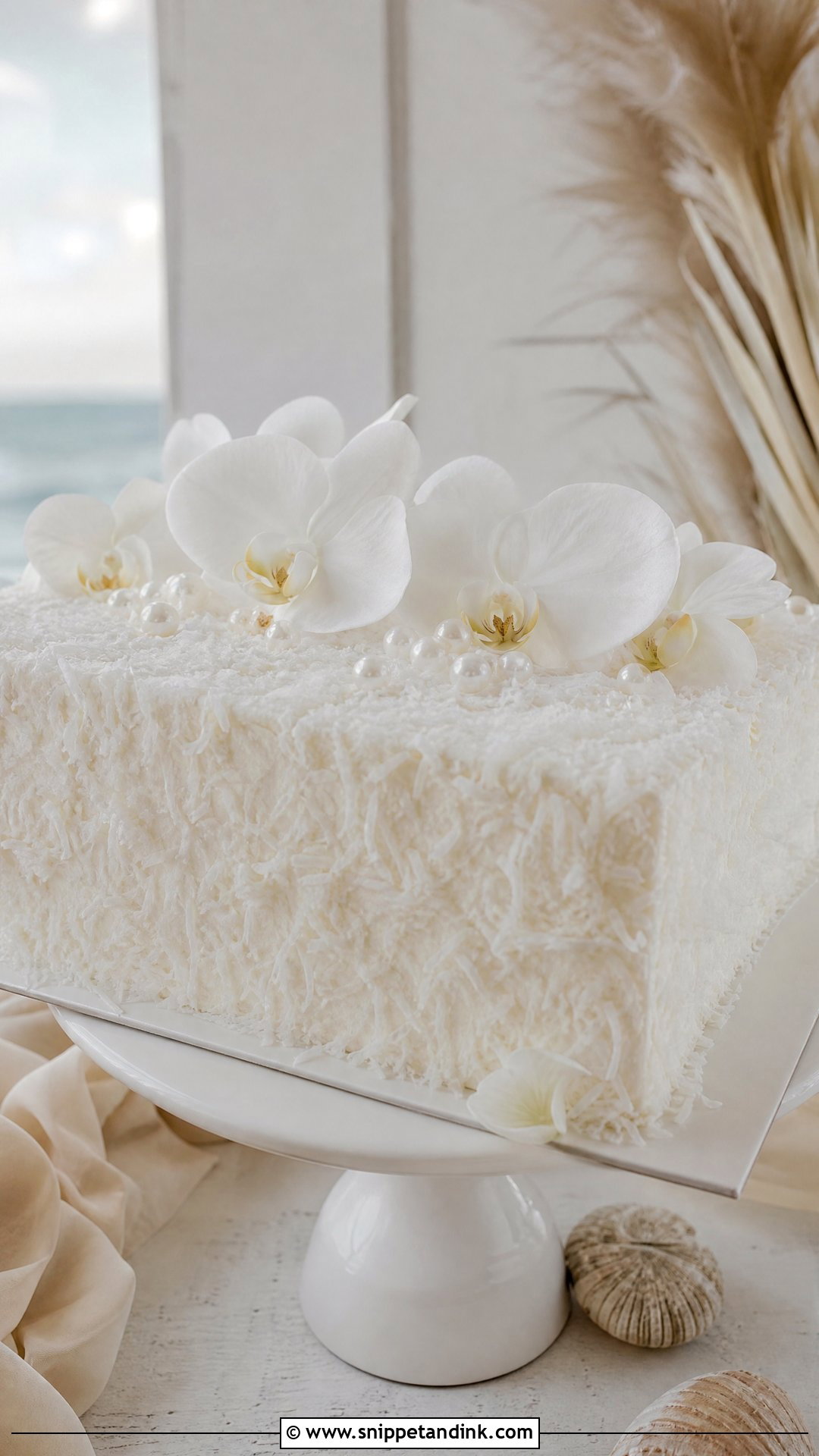
Coconut gives a light flavor and a soft, snowy texture that looks finished on its own. I use a pale cake with coconut cream filling and press fine shredded coconut onto the frosting while it’s still fresh so it sticks evenly. Toasting even a portion of the coconut adds a warm edge if pure white feels flat. It suits beach receptions and all-white dessert tables. Just ask your guest list about coconut before committing, since the texture is the thing some people really dislike.
14. Strawberry Wedding Sheet Cake
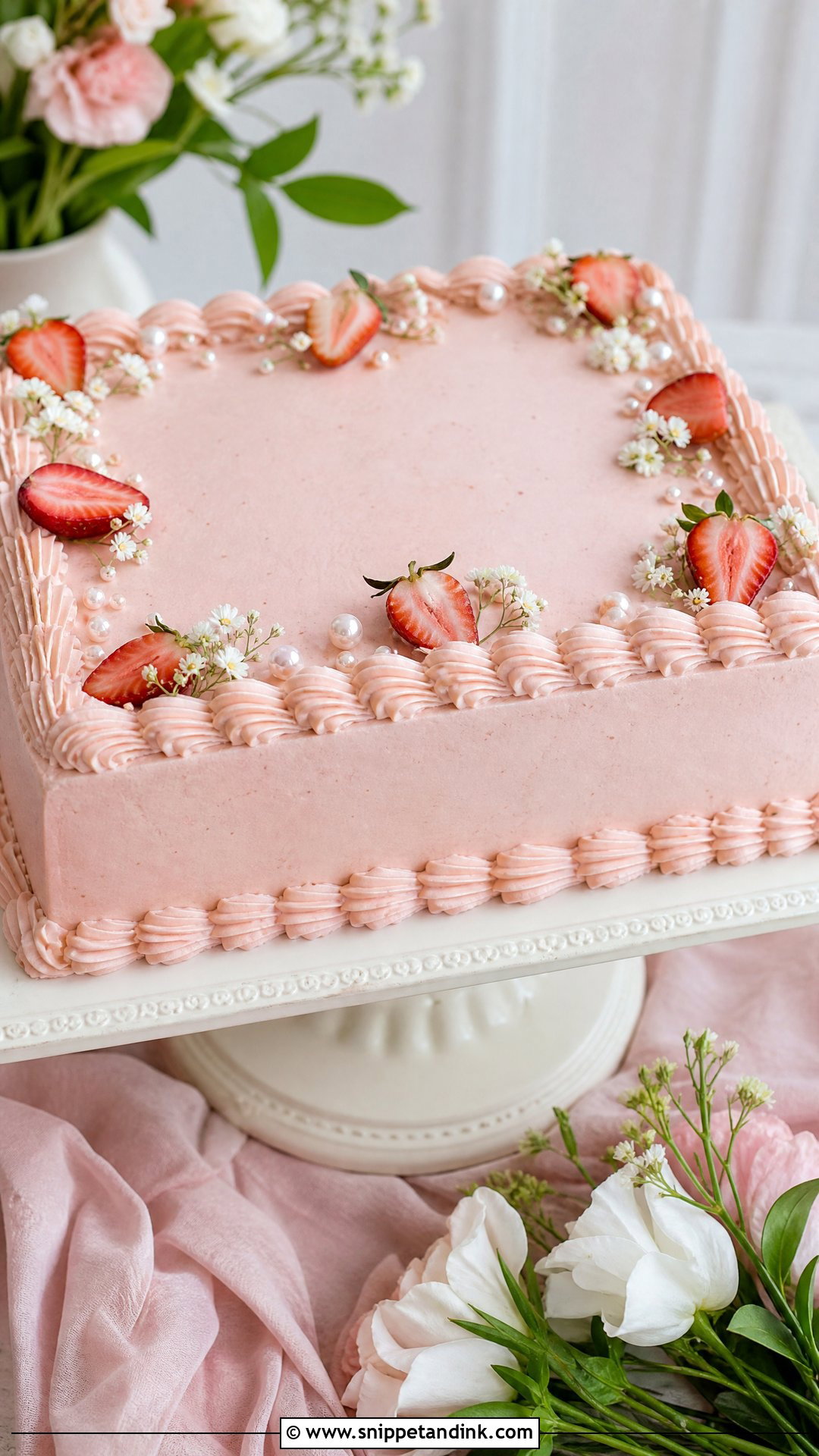
Strawberry is the romantic option, and it can be strawberry sponge, vanilla with strawberry filling or a fresh compote layer. Fresh fruit fillings release moisture, so I reduce the compote until it’s jammy before it goes near the cake; a watery layer is the usual reason a sheet cake goes soggy in the middle. A blush buttercream with a few sliced berries on top keeps the color gentle rather than neon. The fruit gives the flat shape something to catch the light, which helps a lot in overhead photos.

15. Pressed Flower Wedding Sheet Cake
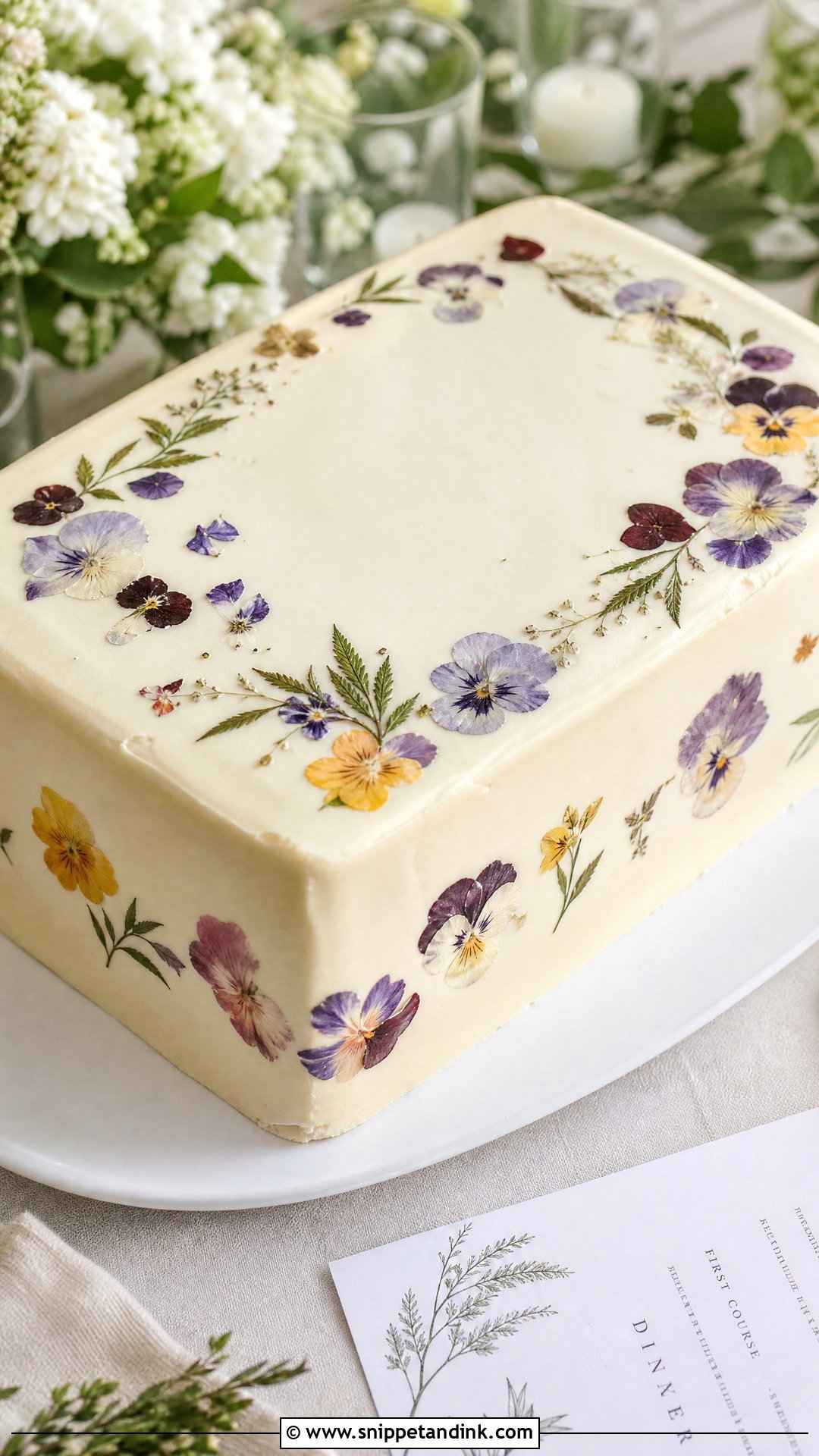
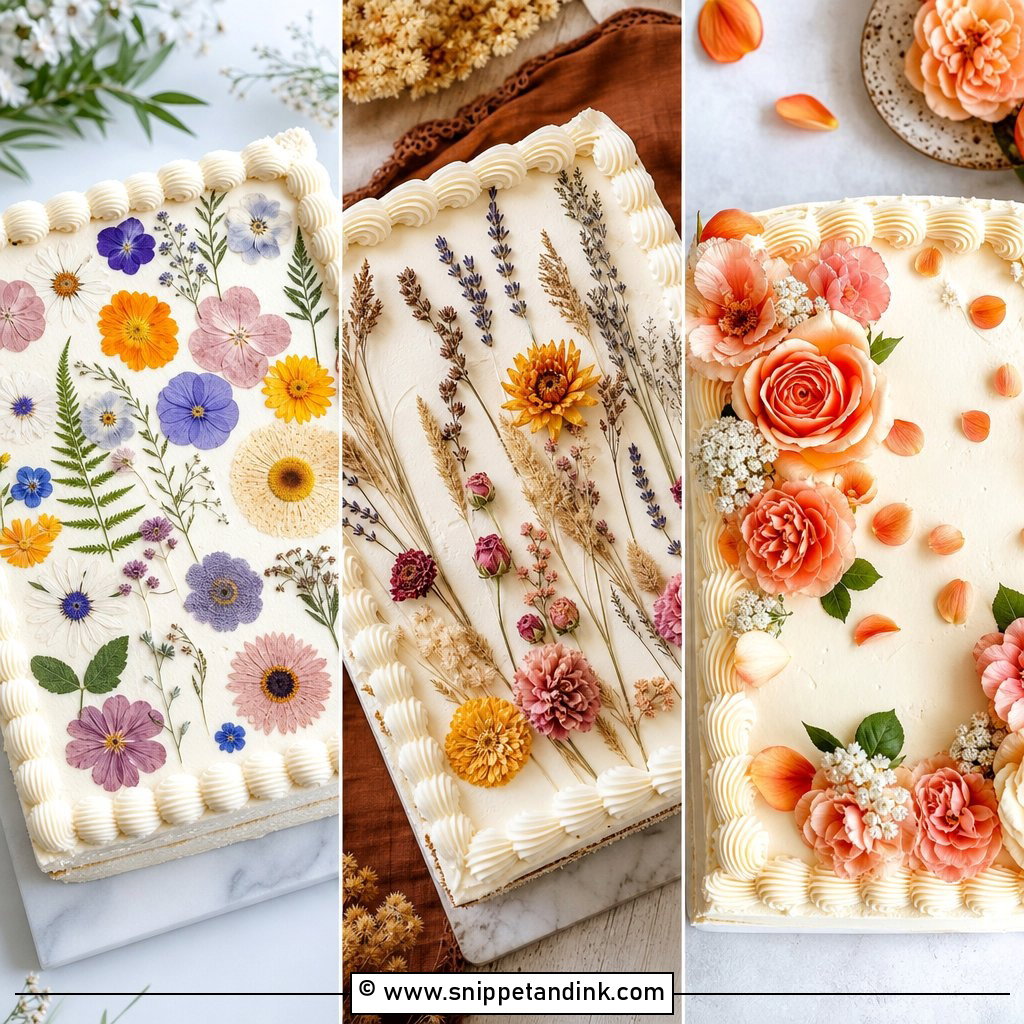
Pressed flowers are where a sheet cake really earns its place, because the flat top is the ideal canvas for edible petals arranged as borders, wreaths or initials. I only use flowers grown as edible and pressed for food, never craft-store pressed flowers. They should go on close to delivery: pressed petals draw moisture from buttercream and can darken or curl if they sit overnight. A smooth ivory or pale yellow base works best, and honey or lemon cake fits the botanical feel. Leave space between the flowers so each one reads clearly.
16. Monogram Wedding Sheet Cake
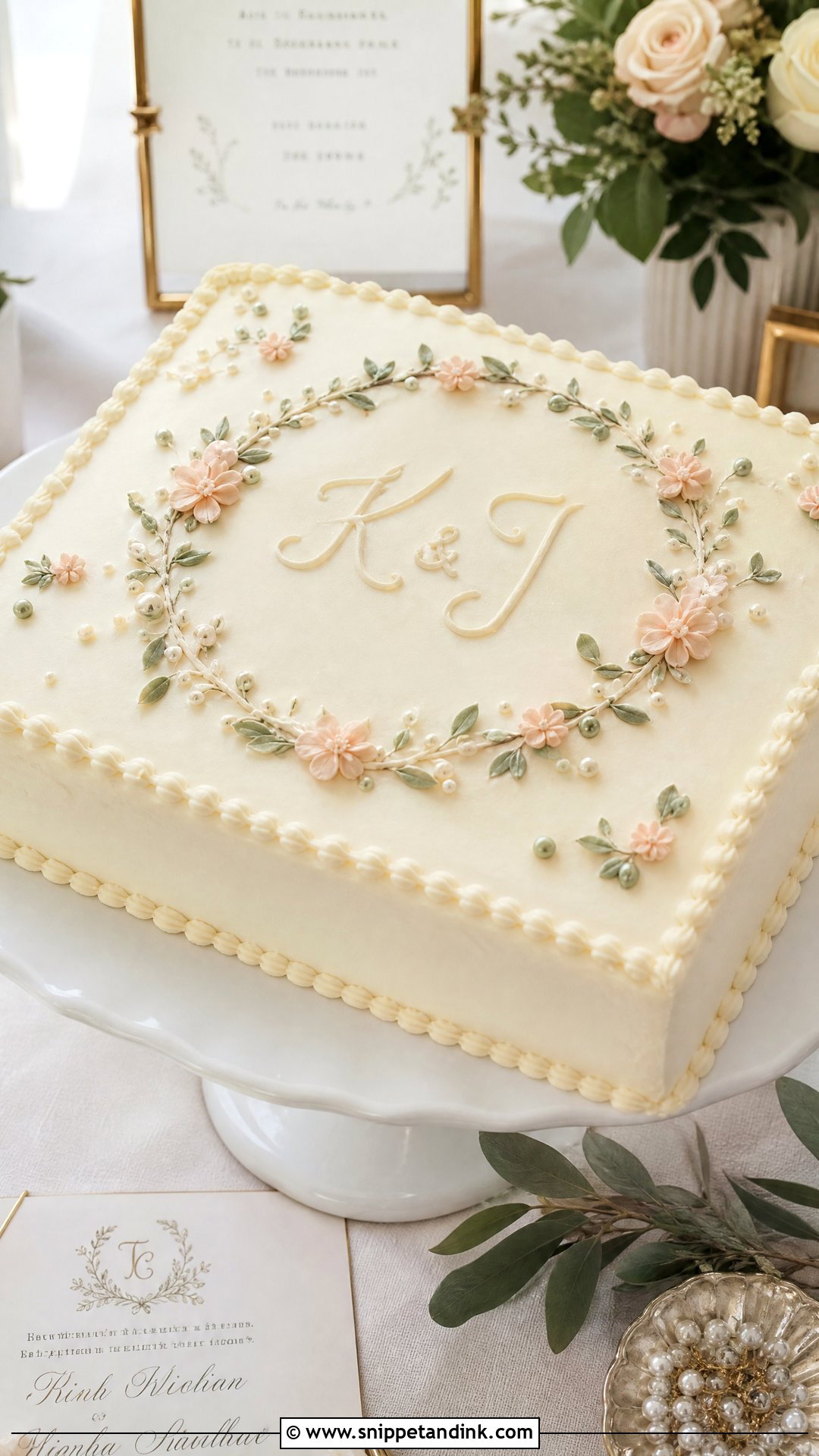
Initials in the center make the cake personal without a lot of fuss. I pipe them in royal icing or buttercream, set them in edible pearls, or frame them inside a buttercream wreath. Lettering is where shaky piping is most obvious, so I sketch the monogram on parchment first and pin-prick a guide into the crusted frosting before piping over it. The rest of the cake stays plain with a neat border. Vanilla, almond or marble suit it, and a little greenery around the letters stops the center from floating.
17. Ruffle Wedding Sheet Cake
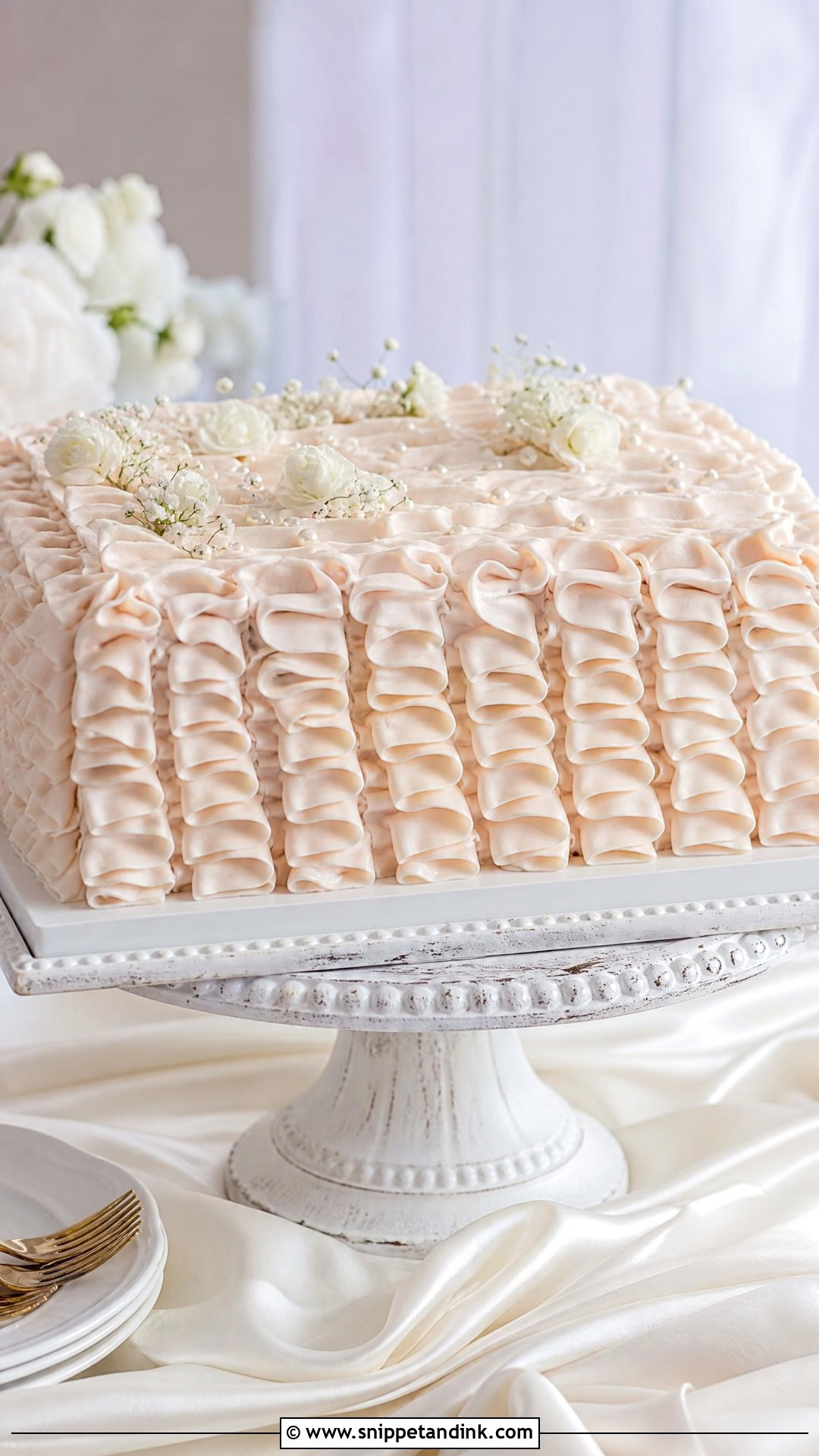
Ruffles add movement without needing flowers or toppers. I pipe them with a petal tip held at a steady angle, either in full rows across the top or as a frame around the edges, and consistency matters more than speed because uneven ruffles make a rectangle look crooked. The texture is also forgiving: small bumps from transport disappear inside it, which makes this one of my safer choices for a long drive. Champagne, blush or pale peach all look soft in ruffles. Add a few pearls or blooms only if you want it more formal.
18. Watercolor Wedding Sheet Cake
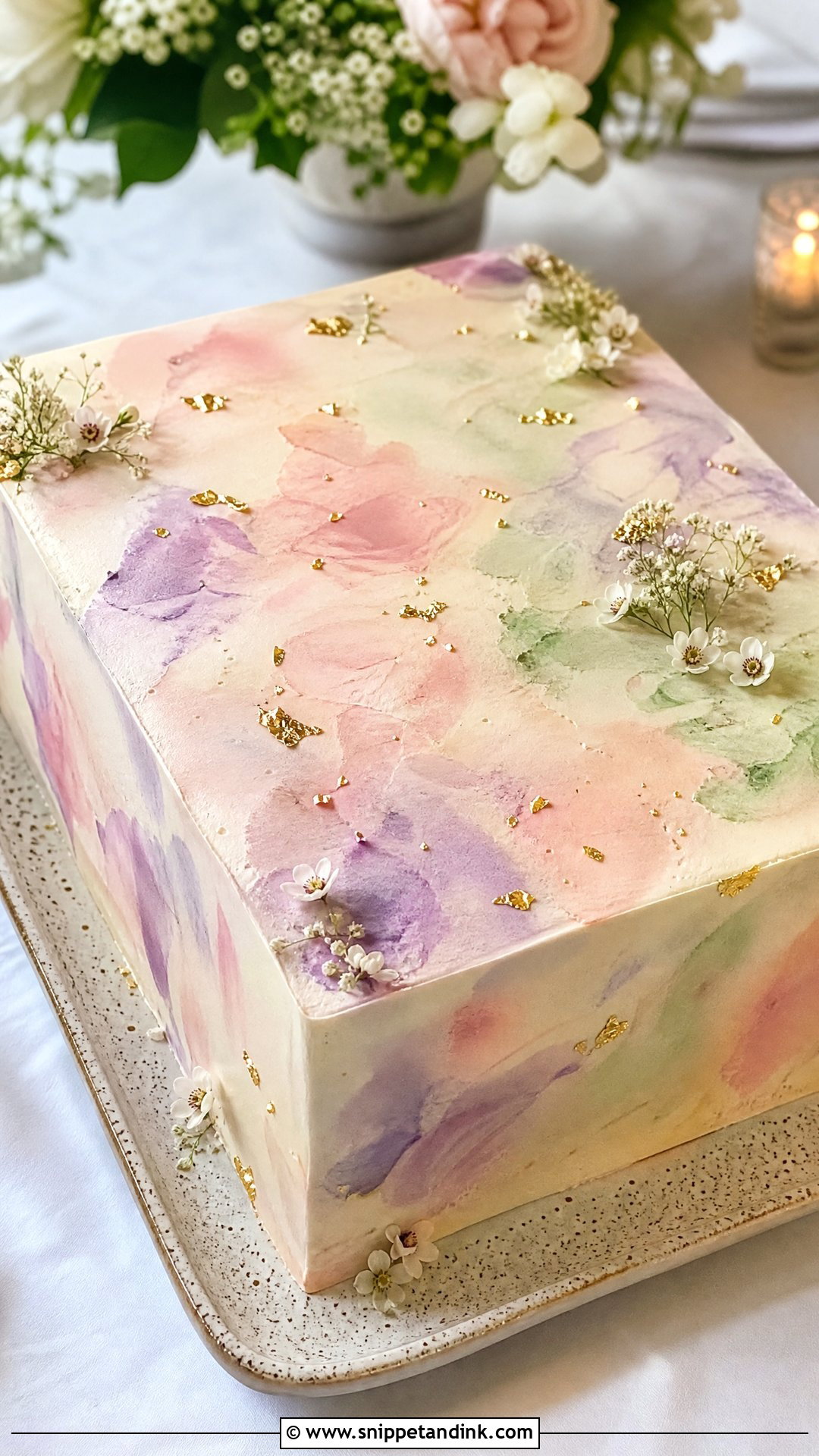
A watercolor finish blends two or three pale buttercream shades into a painted wash, and the wide sheet gives the colors room to drift naturally. I apply small patches of each shade and pull them together with a scraper in one or two passes, since every extra pass muddies the blend. Pick colors next to each other on the color wheel, such as blush and peach or lavender and blue, to avoid grey in the middle. Simple flowers, gold flecks or a clean piped edge finish it, and lemon or berry cake pairs well.
19. Dessert Table Wedding Sheet Cake
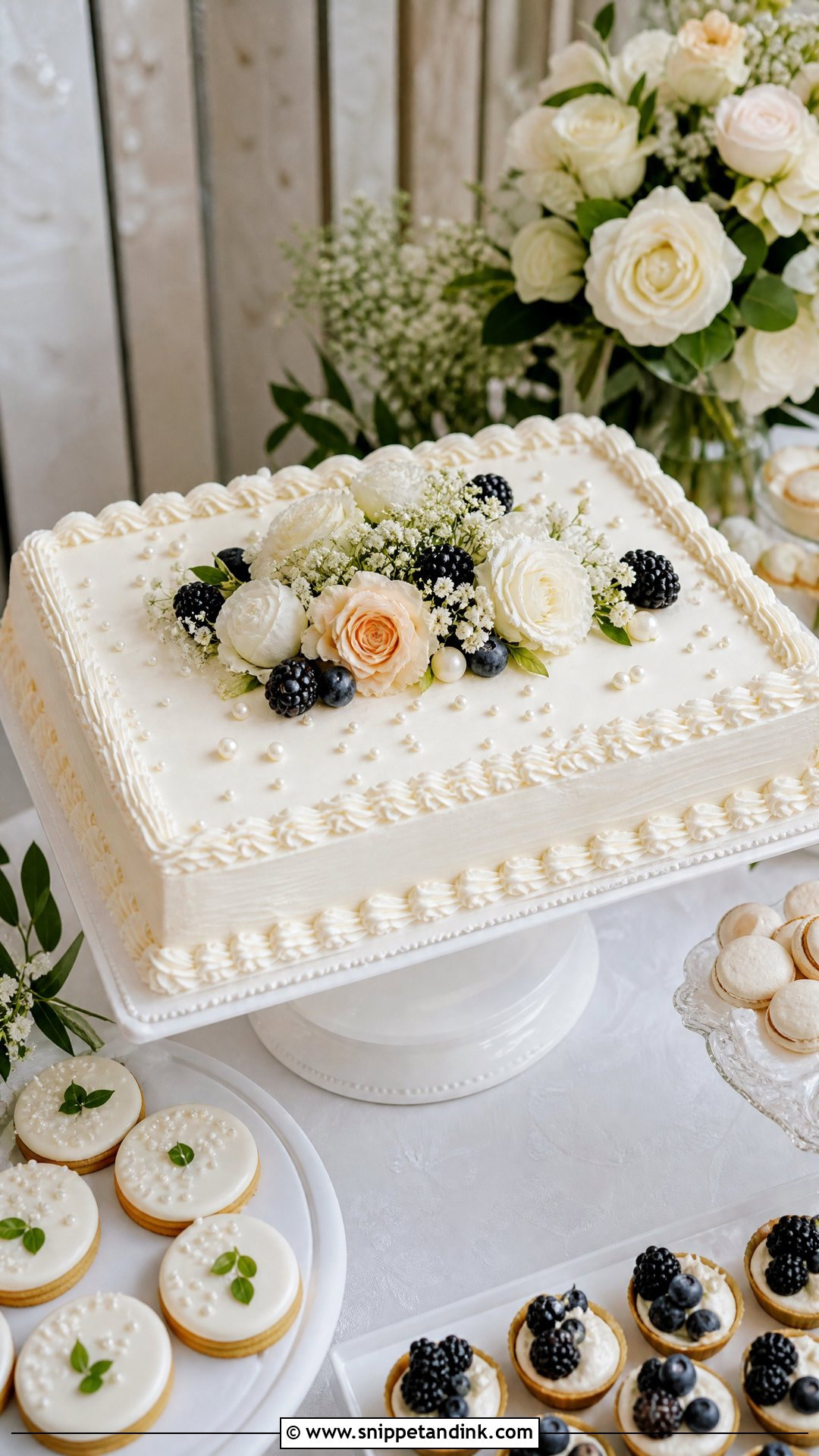
On a dessert table wedding sheet cake setup, the sheet acts as the anchor among cupcakes, cookies and mini tarts. Coordinate its finish with the rest of the table rather than designing it alone; matching a border or flower to the cupcakes ties everything together. The common problem is height, since a flat cake disappears next to tiered stands. I always raise it on a sturdy riser or footed tray, sized so the board doesn’t overhang. Vanilla, chocolate and strawberry are dependable crowd flavors here.

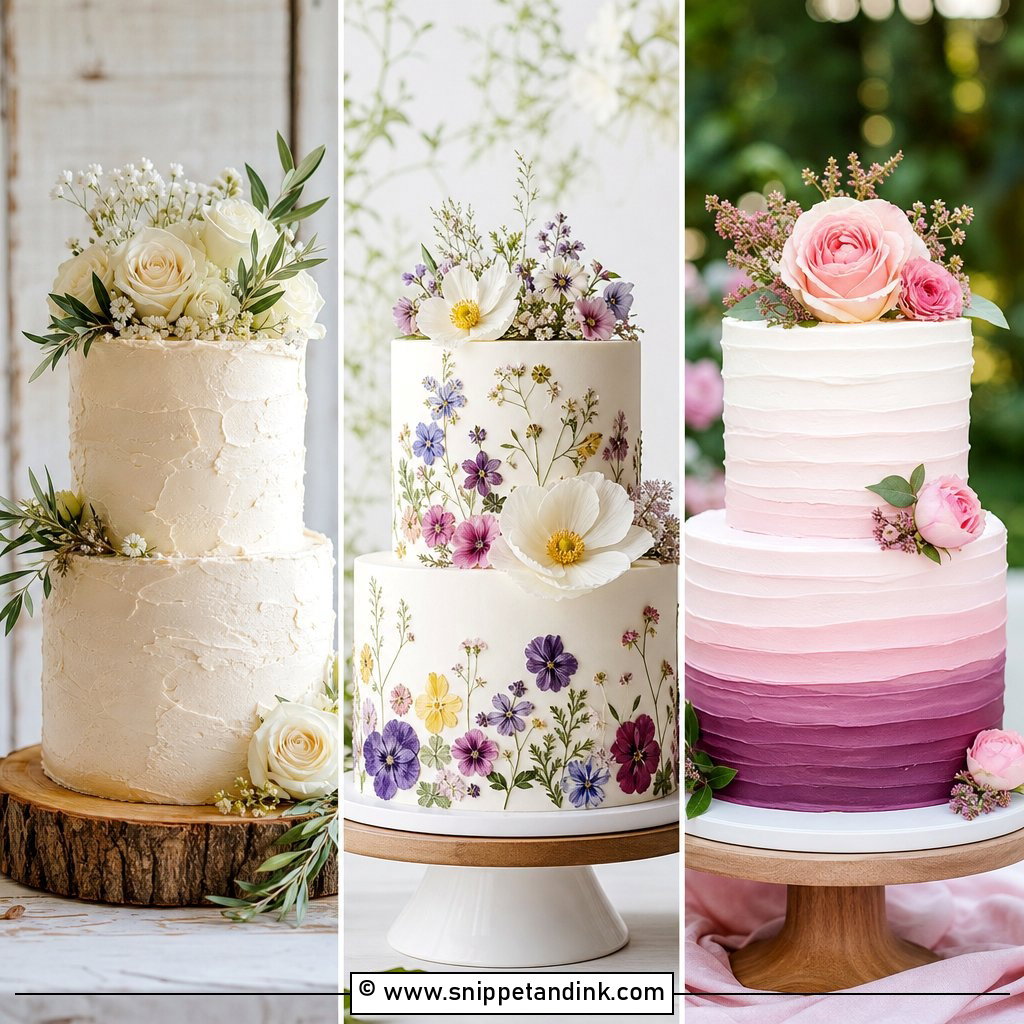
20. Cutting Cake With Wedding Sheet Cake
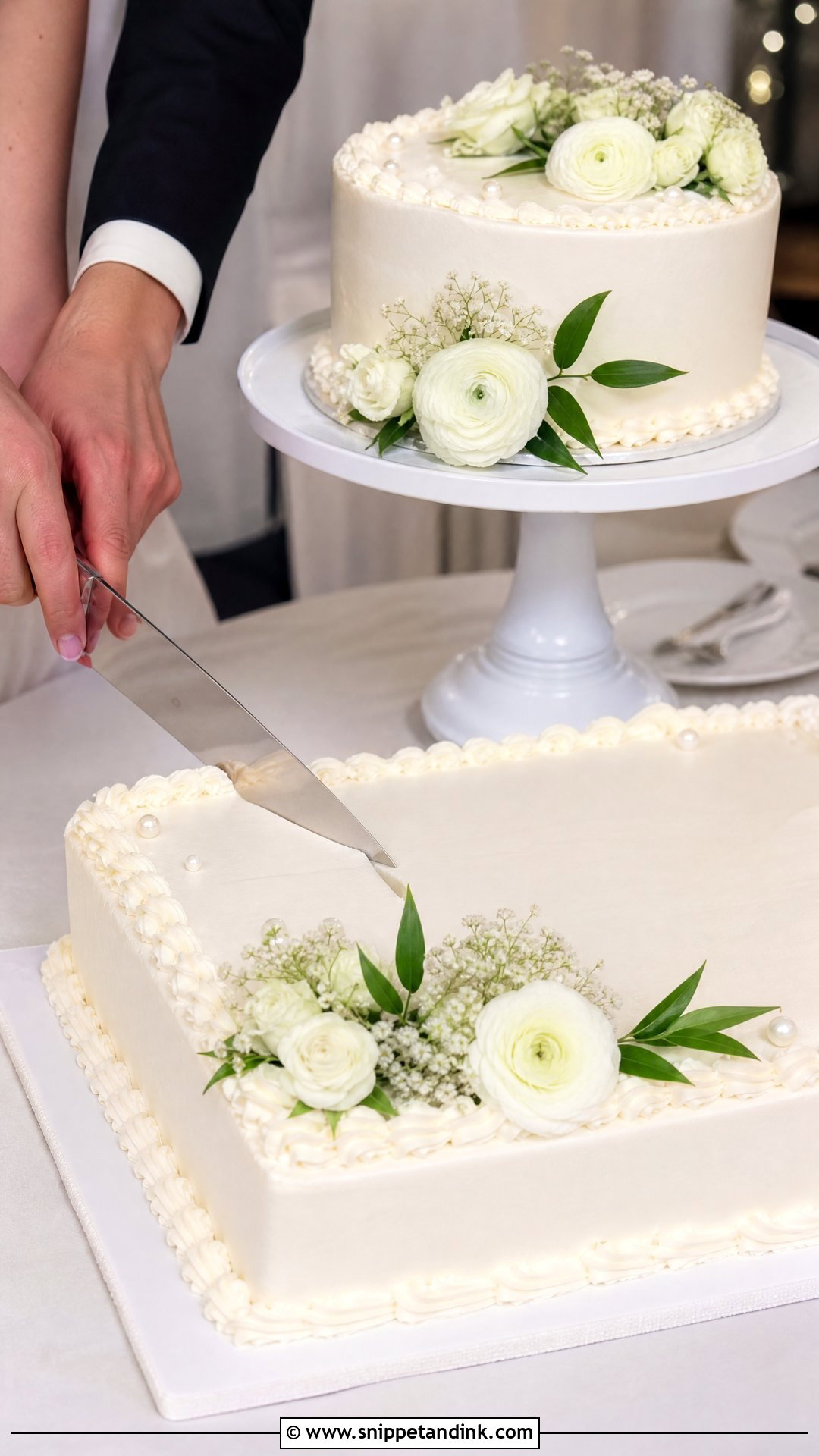
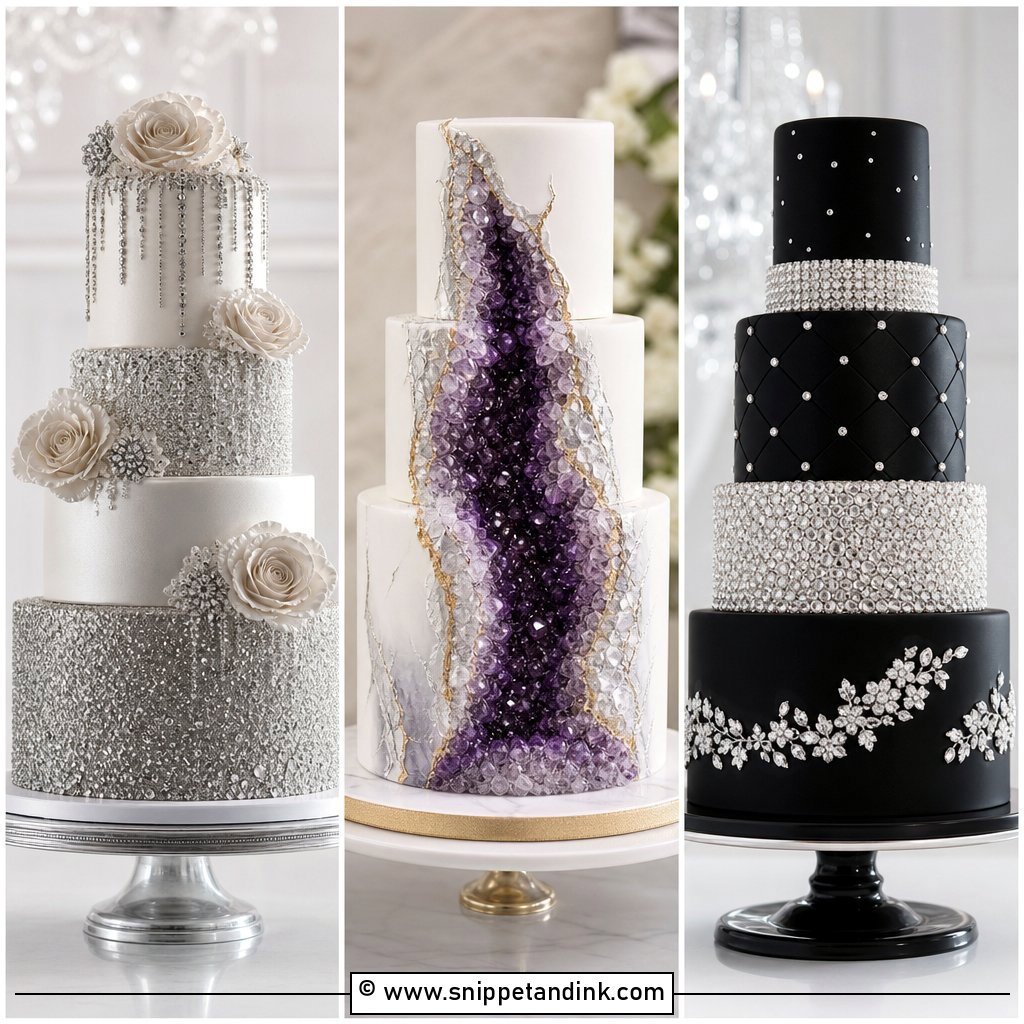
A small display cake for the ceremonial cut plus cutting cake with wedding sheet cake servings in the kitchen is the setup I recommend most often for larger guest lists. You get the photo moment, and the caterer can start plating immediately instead of waiting to dismantle a tall cake. To keep it cohesive, I match the frosting color and piping on both and use the same flavors, so no guest feels they got the lesser cake. It usually costs less than a fully tiered cake of the same servings, though pricing varies widely by baker and region.
Getting a Sheet Cake to the Venue Without a Dent
Flat cakes travel more easily than tiered ones, but they still fail in predictable ways. A full sheet on a thin board will flex when lifted from one end, and that flex cracks the frosting straight across the middle. I build anything larger than a half sheet on a rigid board cut to size and carry it with two people, flat, never tilted.
Temperature does the rest of the damage. I chill buttercream cakes until the frosting is firm, then drive with the air conditioning on and the cake on a flat floor area rather than a sloped seat. A cold cake carried into a humid room will sweat condensation for a while, so I let it come up to room temperature in its box before opening it, which stops beads of water from spotting a dark ganache or a pastel finish.
What to sort out with your venue and caterer
- Where the cake will sit until it is served, and whether there is fridge space for cream cheese or whipped toppings.
- Who cuts and plates it, and whether they charge a cake-cutting fee for an outside cake.
- Whether the display table is in direct sun at any point in the afternoon.
- A box or container for leftovers, including a wrapped piece you can freeze for your first anniversary.
Cutting Squares That Look Plated, Not Scooped
The slice is the part of a sheet cake guests actually see up close, and a messy cut undoes good decorating. I tell caterers to score a grid lightly on top first, then cut with a long, thin knife dipped in hot water and wiped dry between every cut. Chilled cakes cut far more cleanly than warm ones, so if the cake has been sitting out for hours, a short spell in a cool room before slicing makes a visible difference. Lift each piece with an offset spatula from underneath rather than levering it out from the side, and the corners stay square.
A Flat Cake Can Still Be the Showpiece
Height isn’t what makes a wedding cake feel special. Clean frosting, a flavor that suits the season and one detail done properly will carry a rectangle all the way through the reception, and it will be faster to slice and safer to transport than most tiered designs. When you meet your baker, bring the two or three designs from this list that you keep coming back to, your guest count and a photo of your dessert table setup. That is enough for us to tell you which finish will hold up in your venue.
You'll Like These Ideas:






Leave a Reply