
More couples are asking me for a long, flat cake instead of tiers, and flowers are the main reason. A rectangle gives you a whole surface to decorate rather than a narrow ledge on each tier, so a floral runner, a pressed-petal border or one generous corner cluster has room to sit properly. It also cuts into neat, even slices and doesn’t need dowels or a tall stand. The ideas below cover fresh, sugar, piped and pressed flowers, and I’ve added what each choice means for the baker, the florist and the person holding the knife.
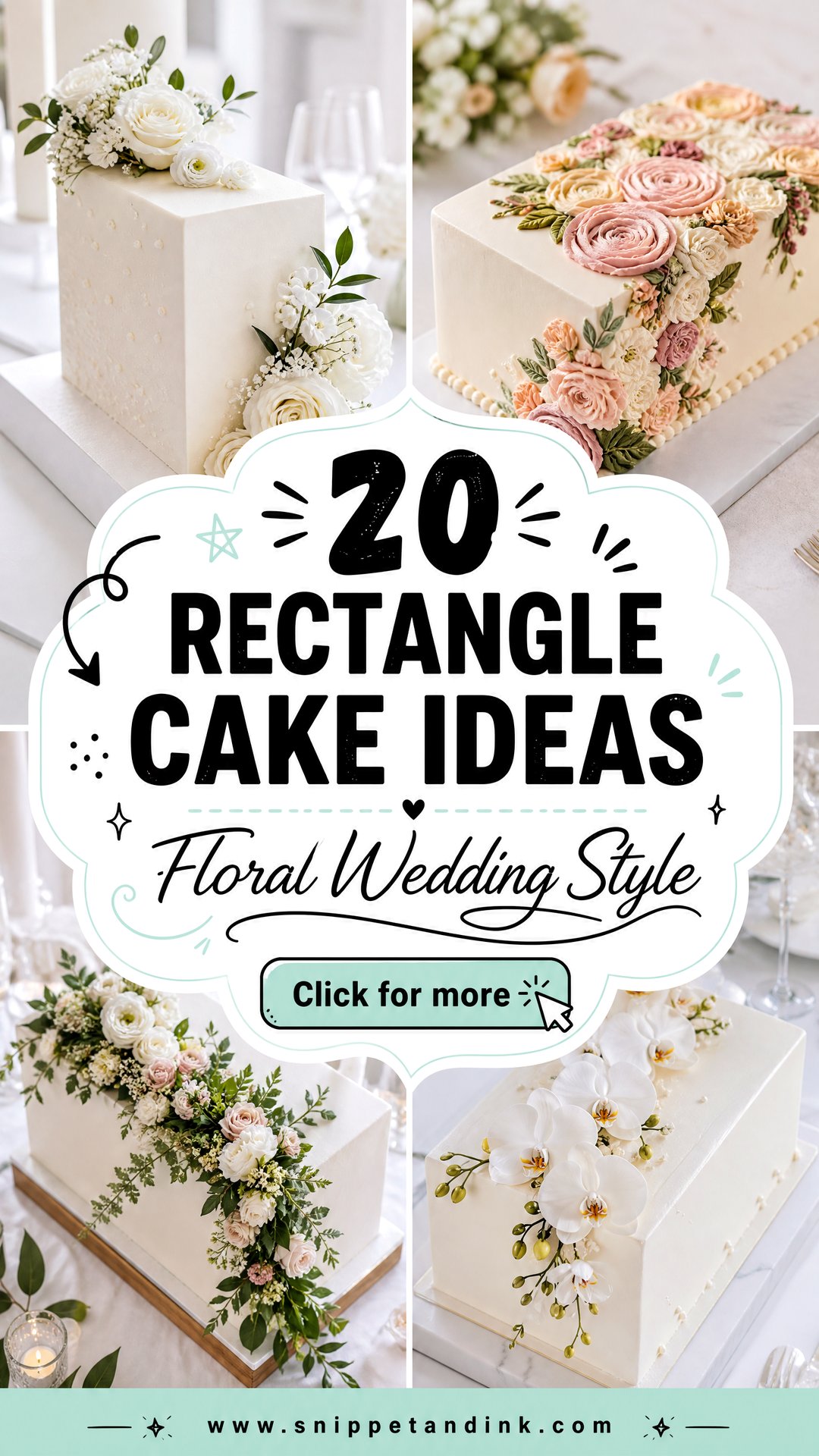
How a Long Cake Cuts, Travels and Sits on the Table
The practical case for a rectangle is serving. A sheet cake is cut in a straight grid, so every slice comes out the same size and there’s no awkward center or curved edge to waste. That makes portion counts much easier to plan than with a stack of rounds, and it’s why caterers rarely complain about a sheet cake.
A few things I sort out before quoting one:
- Board: a long cake needs a thick, rigid board. If it flexes when lifted, the frosting cracks across the middle.
- Layers: a single layer looks like an office cake. Two or three layers of sponge with filling give real height and proper wedding-style slices.
- Table depth: measure the cake table. A large sheet plus flowers can be deeper than the narrow tables some venues provide.
- Doors and vans: a wide cake has to fit flat through every doorway and into the vehicle, carried level by two people.
If you love the shape but want some height, a two-tier rectangle with a smaller top tier set off-center is an option, though it needs internal supports just like a round tiered cake.
1. White Rectangle Wedding Cake With Fresh Roses
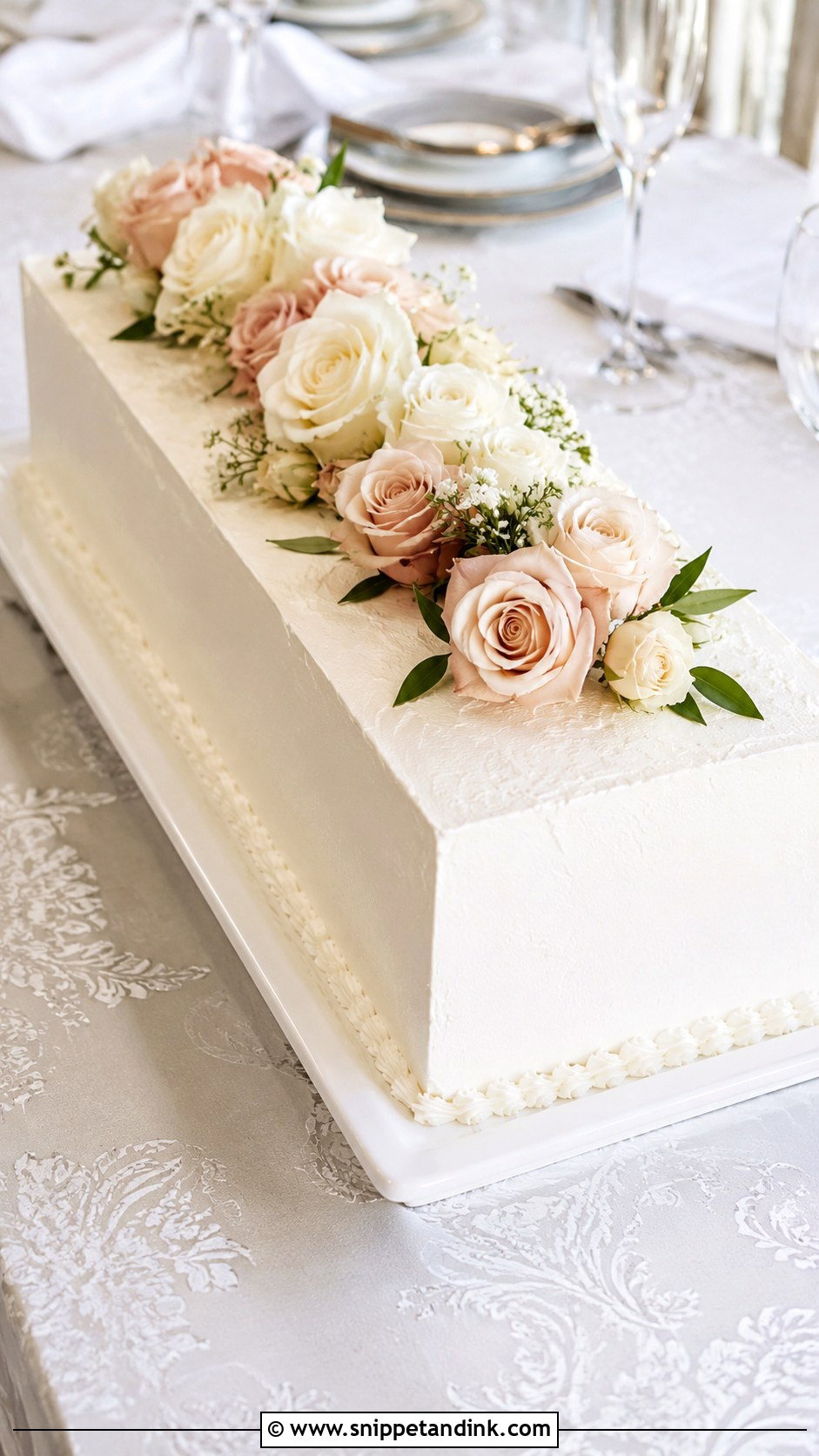
Fresh roses on smooth ivory buttercream or fondant is the most classic version, and the one where restraint matters most. I cluster them at the corners, along one edge or down the center line, keeping blooms low so the cake still reads as a rectangle and not a flower box. Blush, white, cream and dusty pink all sit well together. Roses for cake should be grown without pesticides, and every stem gets wrapped or set into a food-safe pick before it goes near the frosting. Vanilla, almond, lemon or champagne flavors suit it.
2. Long Rectangle Wedding Cake With Wildflowers
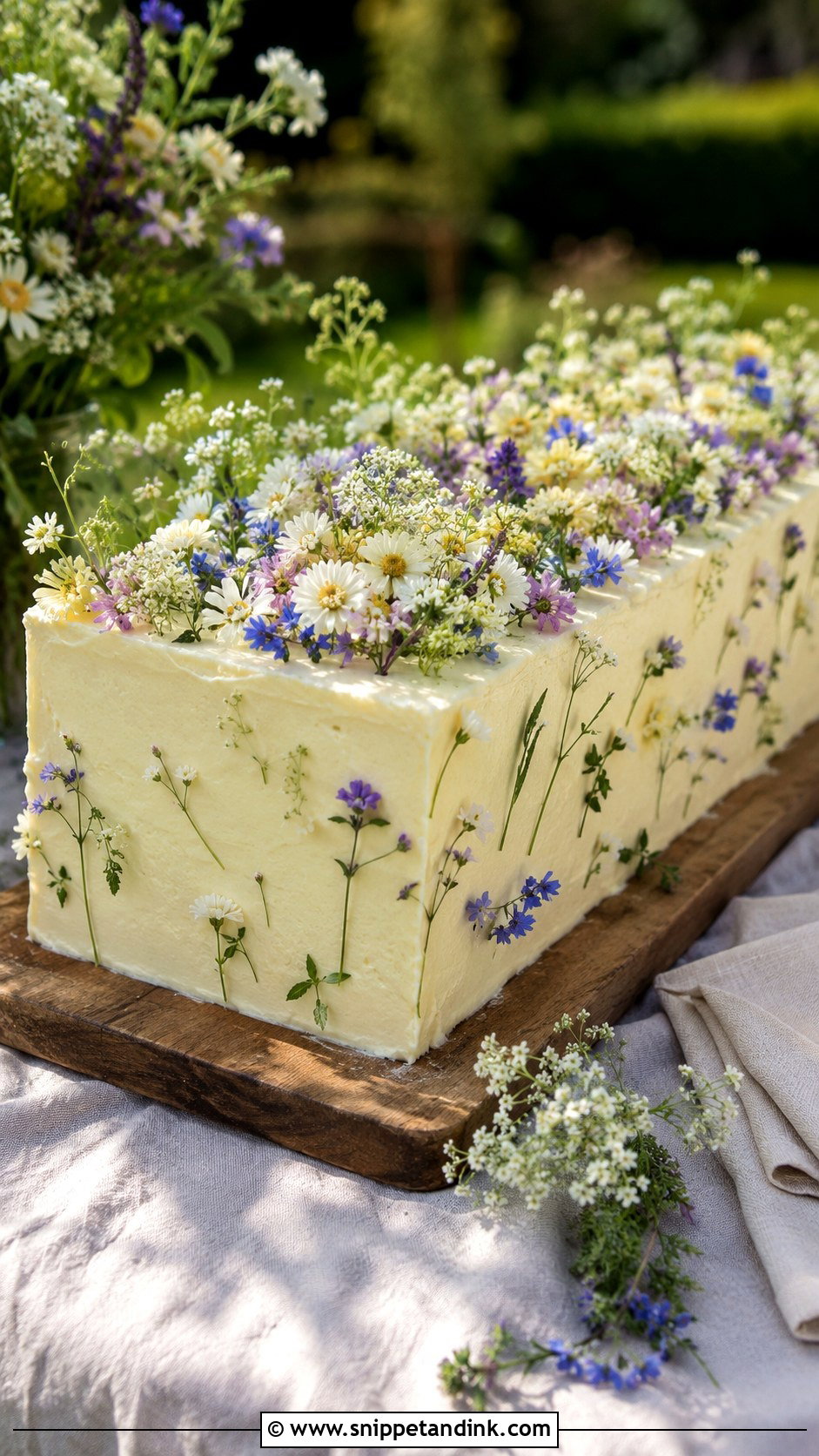
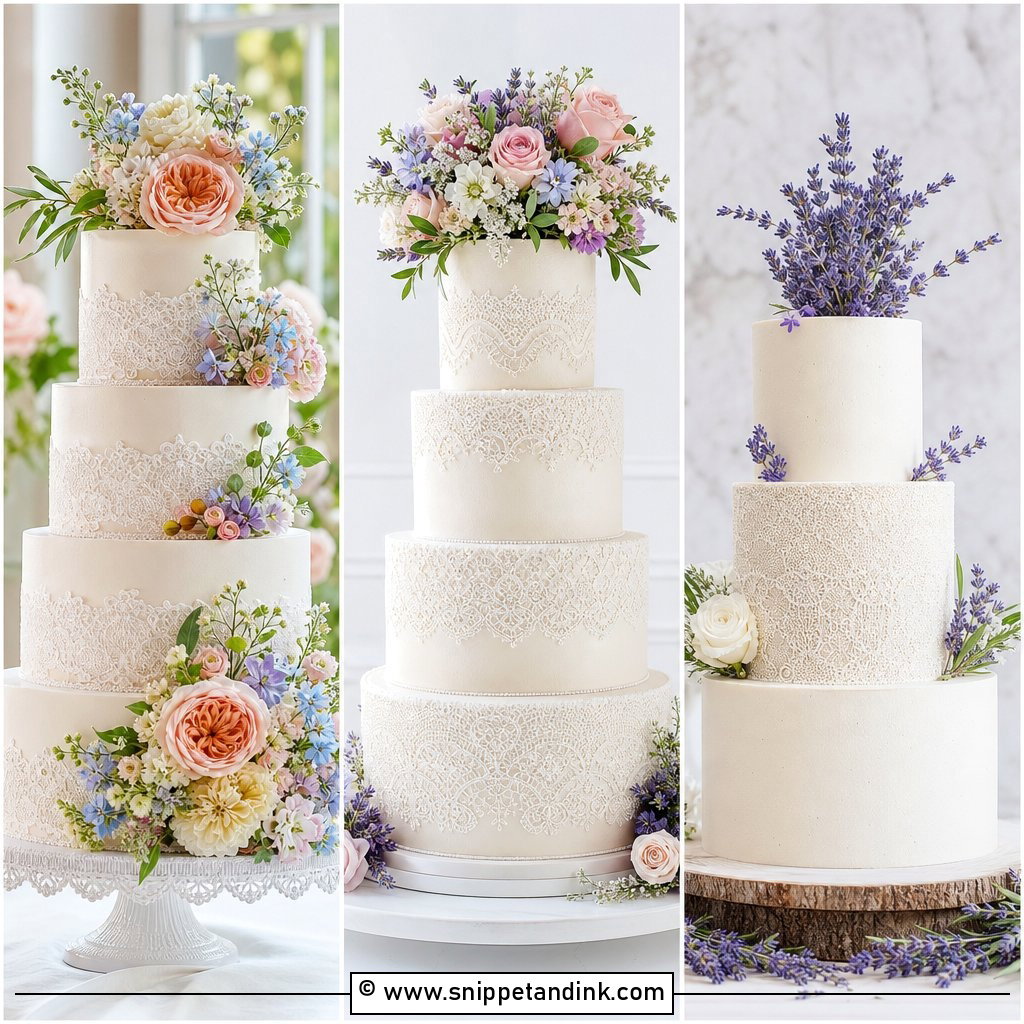
Wildflowers look best when they look unplanned, which takes more planning than it sounds. I lay the stems out on paper the size of the cake first, then scatter tiny daisies, chamomile-style blooms, lavender tones, soft greenery and edible petals so they drift down the length like a meadow rather than sitting in rows. A lightly textured buttercream keeps the feel casual. Lemon elderflower, vanilla bean, berry or honey cake all match. Hold the palette to two or three soft colors, or the meadow turns into clutter.
3. Rectangle Wedding Sheet Cake With Pressed Flowers
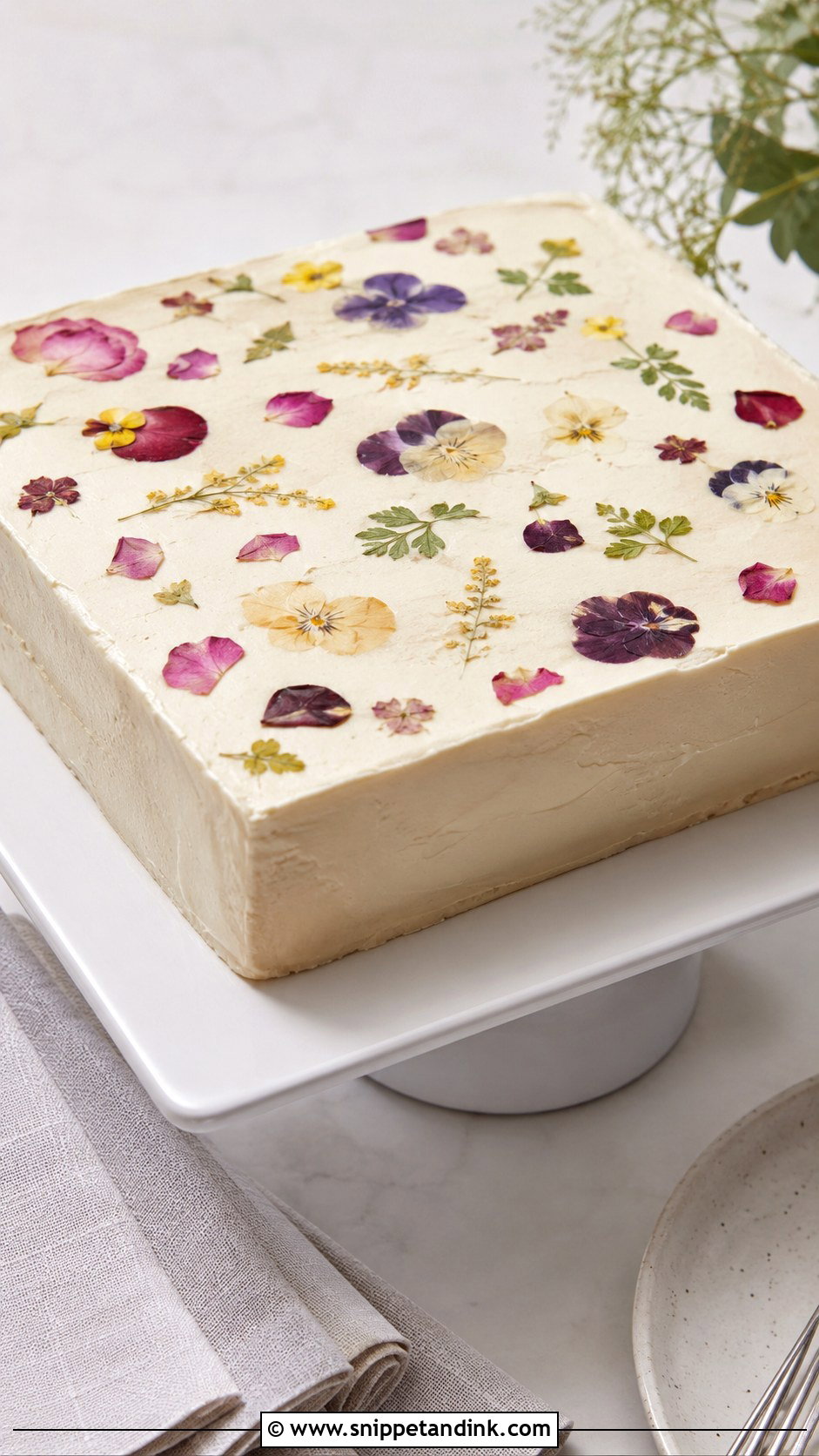
A flat sheet top is the best canvas there is for pressed flowers, because the petals lie completely flat and nothing slides. I set edible petals onto a smooth white or pale cream base like a framed botanical print: around the border, scattered loosely, or as a wreath around the couple’s initials. Pressed edible flowers soften if they sit on damp buttercream for too long, so I apply them on a chilled, crusted surface as close to the event as practical. Only use petals sold or grown as edible; a decorative pressed flower is not food.
4. Vintage Rectangle Wedding Cake With Piped Flowers
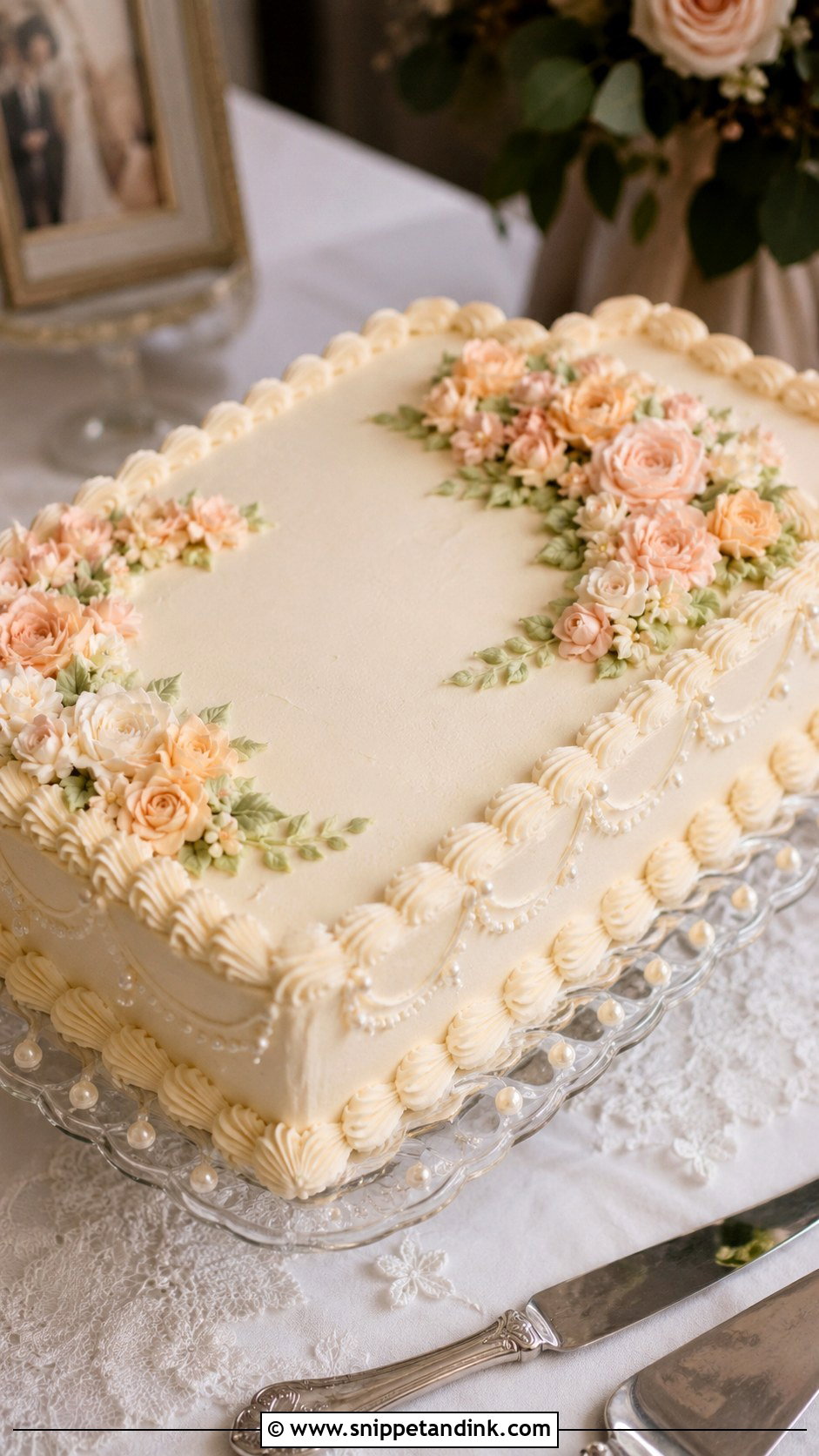
Piping on a rectangle takes the old-fashioned look and makes it feel current. Shell borders, scalloped edges, buttercream roses and small leaves in ivory, blush, pale blue or soft peach give the cake texture you notice from above and from the side. Everything is edible, which is the reason many couples choose it. The long straight edges are the hard part: a shell border that drifts uphill across two feet of cake is very visible, so I mark the spacing with a ruler before I start. Vanilla, raspberry, almond or classic white cake pairs naturally.
5. Minimal Rectangle Wedding Cake With White Flowers
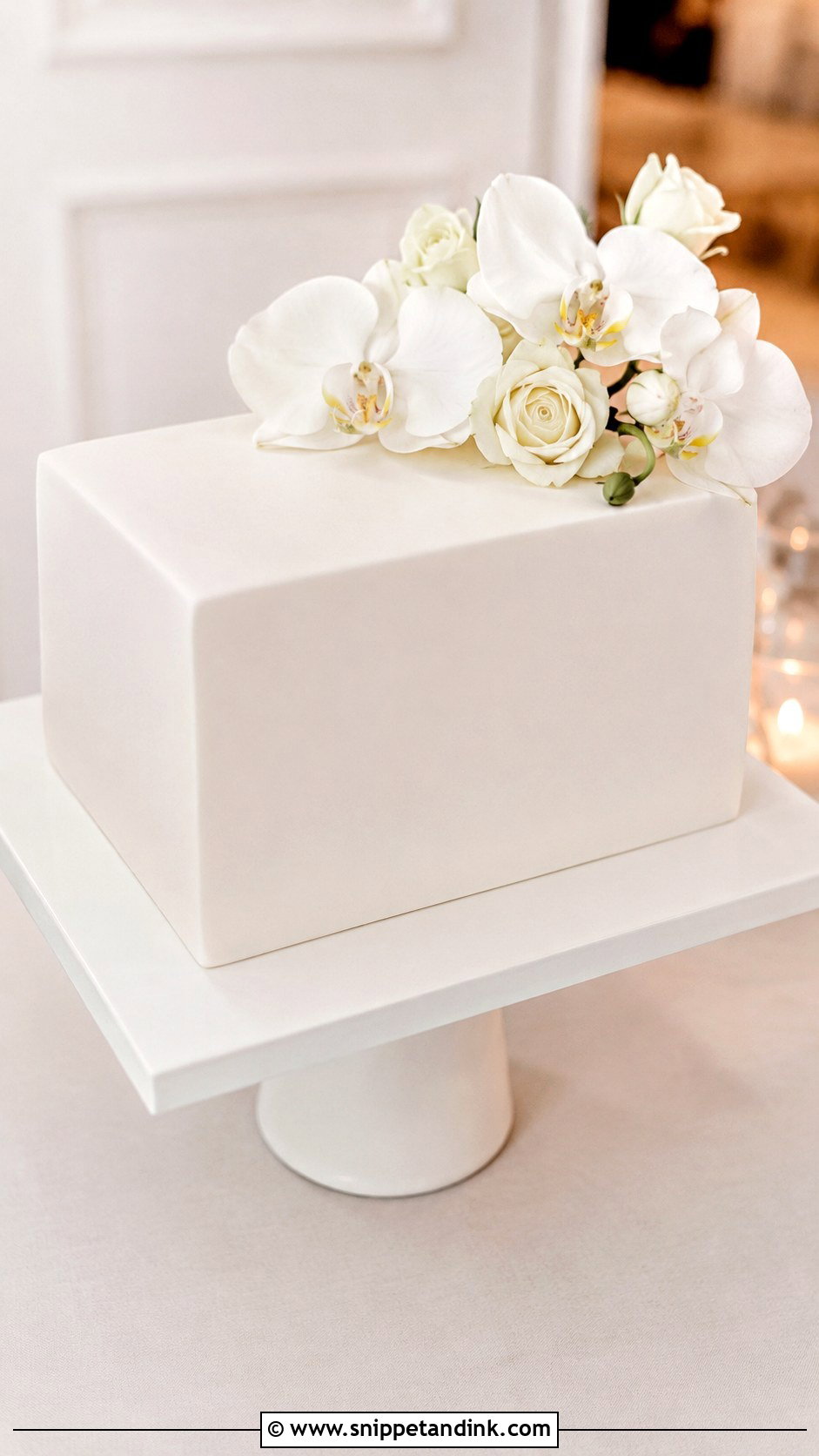
The minimal version is about restraint: smooth white frosting, sharp edges, and just a few white orchids, roses, ranunculus or sugar flowers placed deliberately. One corner arrangement or a thin floral line can be enough. With so little decoration, the finish has to be flawless, because every ripple or soft corner shows. It suits a city venue or a black-and-white reception, and a light flavor such as vanilla bean, almond, coconut or lemon under a silky buttercream keeps the whole thing feeling crisp.
6. Rustic Rectangle Wedding Cake With Flowers
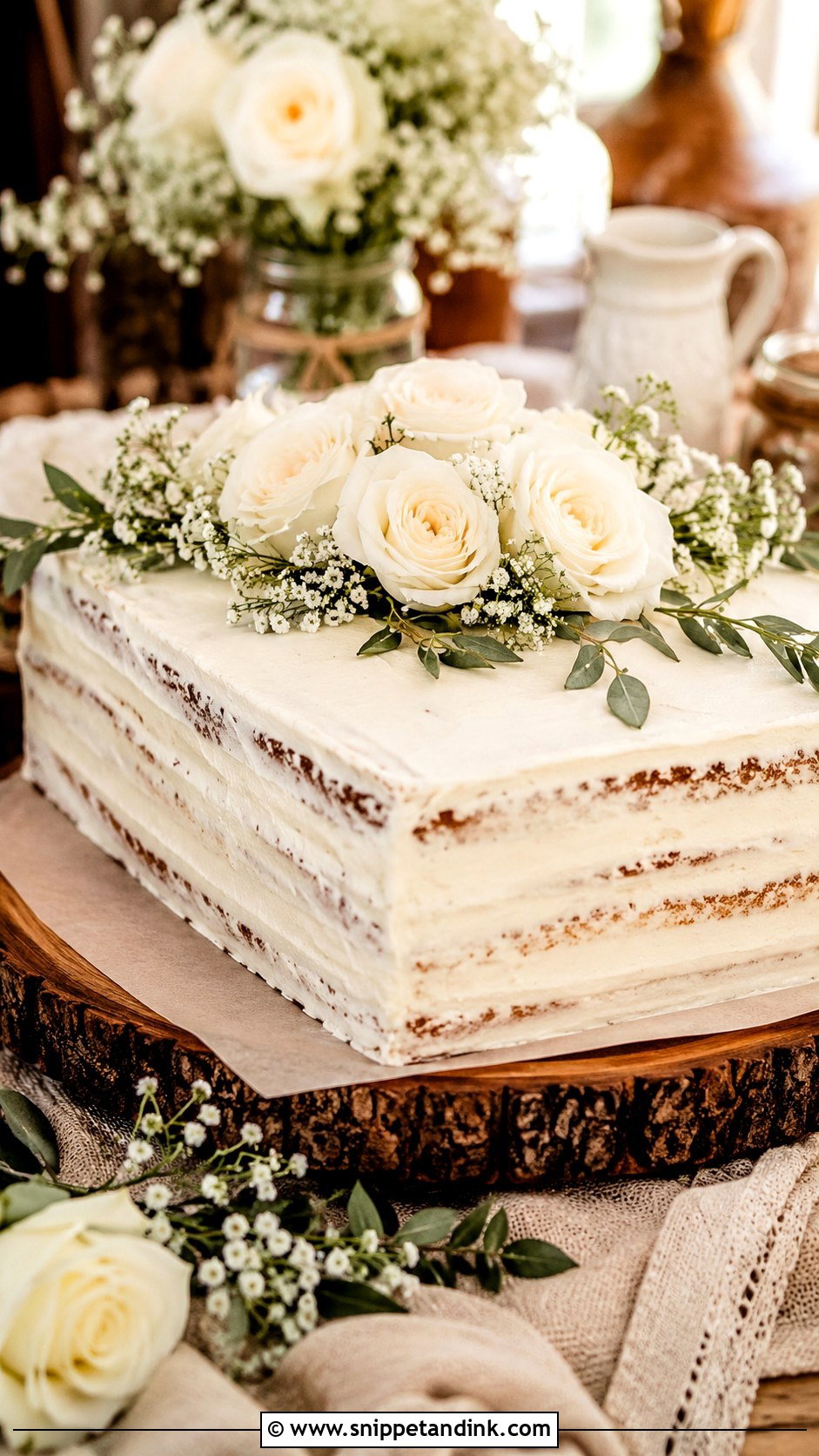
Rustic means textured buttercream, a semi-naked scrape or soft swoops that show the spatula, finished with garden roses, greenery and seasonal blooms in earthy colors. It sits well on a wooden board or a plain white stand at a barn or countryside wedding, with carrot, spice, vanilla honey or almond cake inside. One swap I’d make: baby’s breath is a common filler, but it isn’t a flower I let touch the frosting, so I use wax flower or tiny edible blooms instead, or keep the gypsophila on a barrier. Keep the placement loose but balanced so the rectangle still shows.
7. Garden Rectangle Wedding Cake With Greenery And Flowers
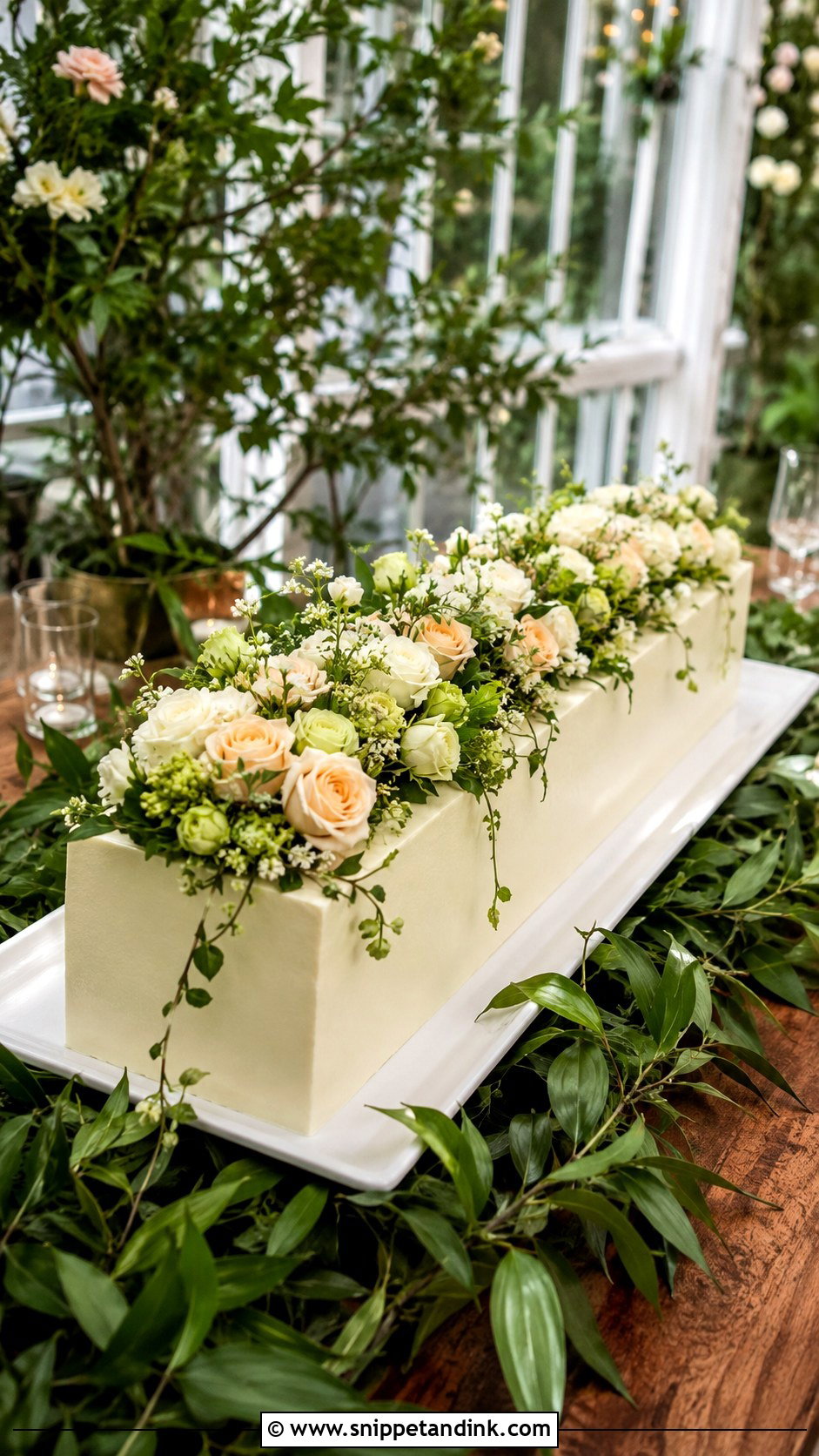
Greenery and flowers make a full floral runner along the length of the cake without any height. Soft leaves, small roses, delicate blossoms and trailing stems can look lush but still controlled as long as they stay close to the surface. I use a pale ivory or soft sage buttercream underneath so the greens look intentional. Watch the foliage choice, since some popular greenery isn’t food-safe, and eucalyptus in particular should sit on a barrier rather than directly on the frosting. Lemon, pistachio, vanilla or strawberry cake fits a spring or greenhouse wedding.
8. Rectangle Wedding Cake With Sugar Flowers
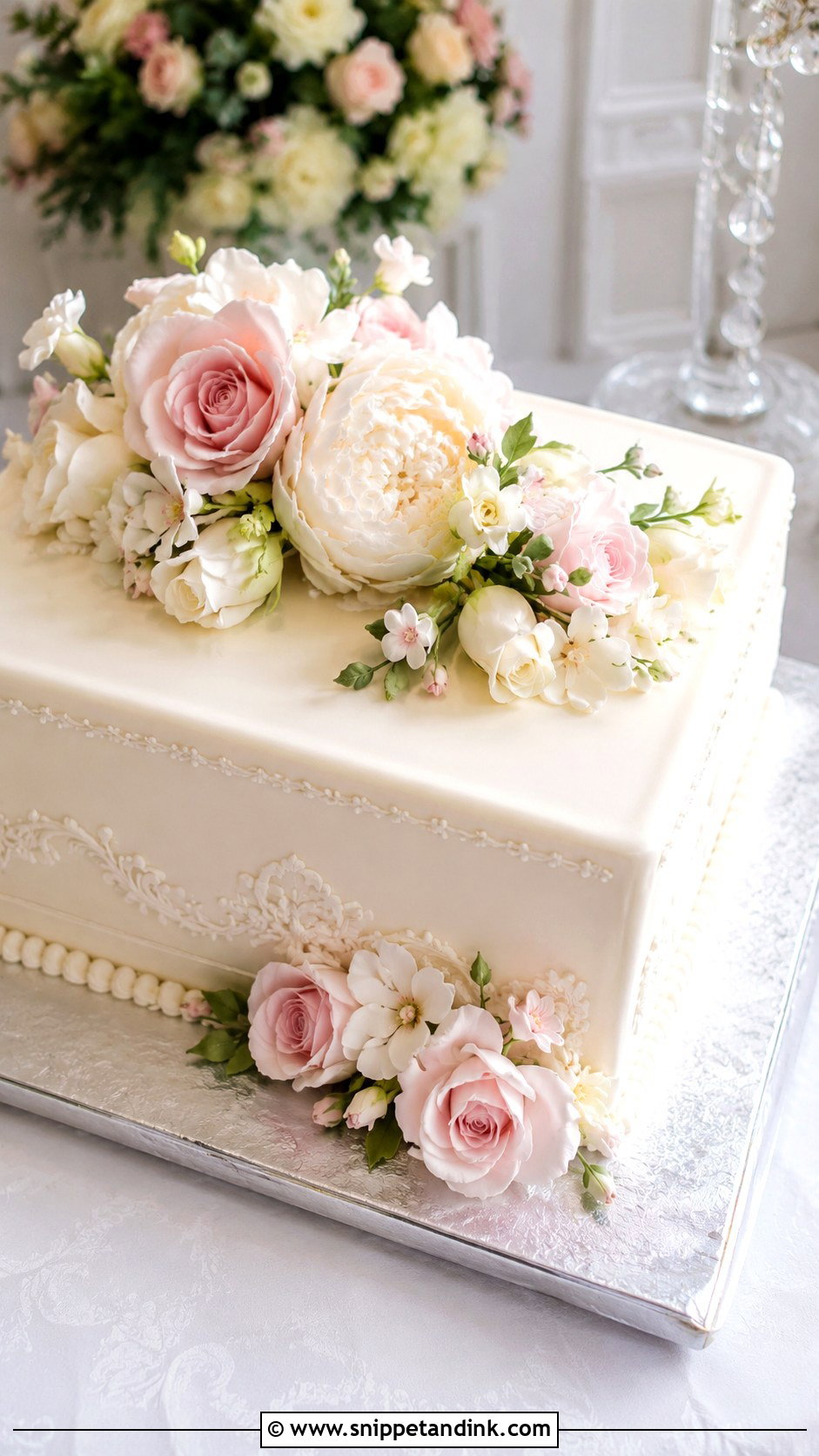
Sugar flowers are the answer when the bloom you want is out of season, hard to source, or not safe against cake. They can be shaped to match the peonies, roses, orchids or sweet peas in your bouquet, and they won’t wilt during a long reception. On a rectangle they can flow from one corner, frame the top border or sit in a diagonal. They do take time to make, often days for a large arrangement, so order them early. Pair with smooth fondant, satin buttercream and an almond, vanilla or lemon cake.
9. Rectangle Wedding Cake With Buttercream Flowers
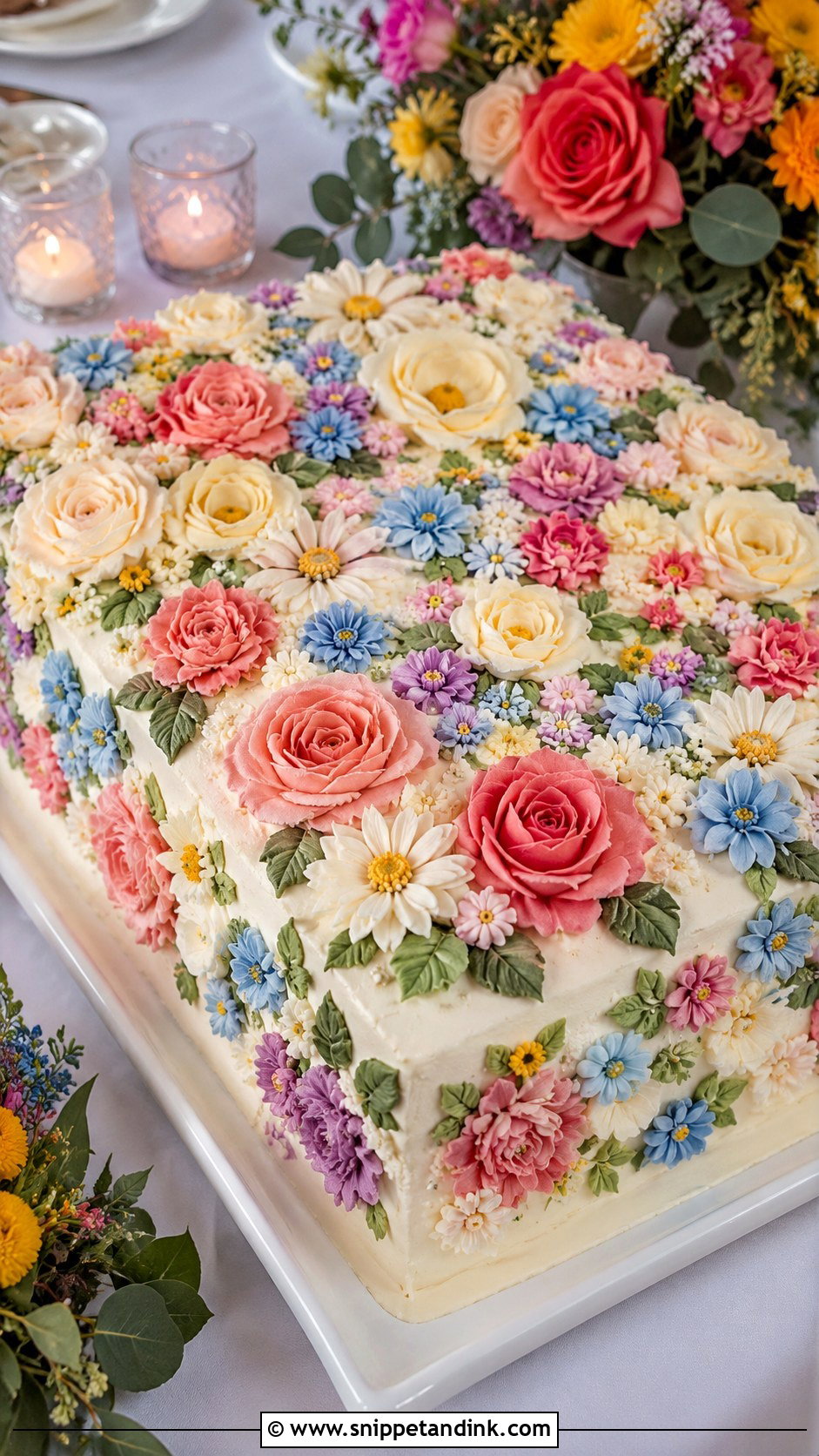
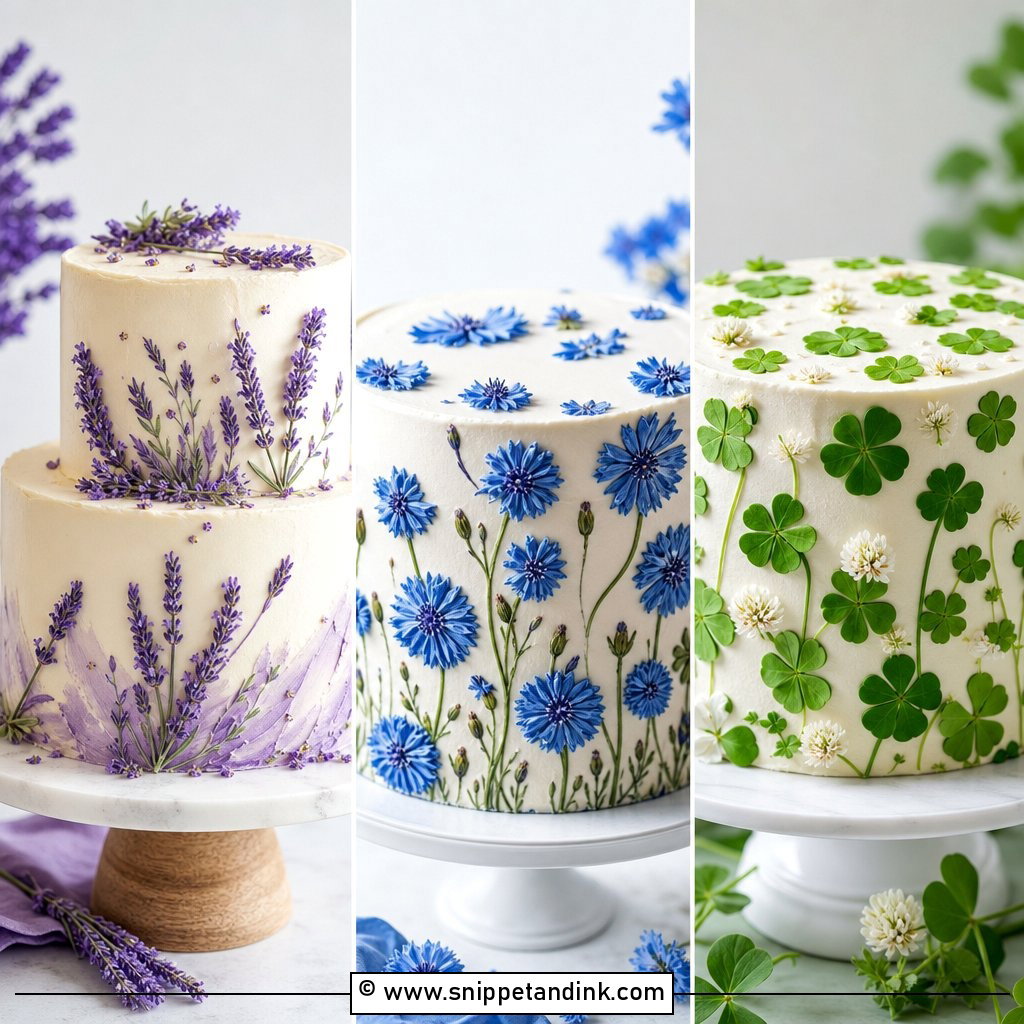
Buttercream flowers are piped straight onto the cake, so roses, daisies, small blossoms, leaves and vines can be any shade you like, with no stems involved. The rectangle gives room for a full garden scene, a border of blooms or a simple corner cluster. Heat is their weakness: piped petals start to droop and lose their edges in a warm room, so for a summer outdoor reception I’d make the flowers from a stiffer buttercream or keep the cake inside until cutting. Pastels are the classic choice, but bright colors work for a lively party with vanilla, funfetti, lemon, strawberry or almond cake.
10. Rectangle Wedding Cake With Flower Border
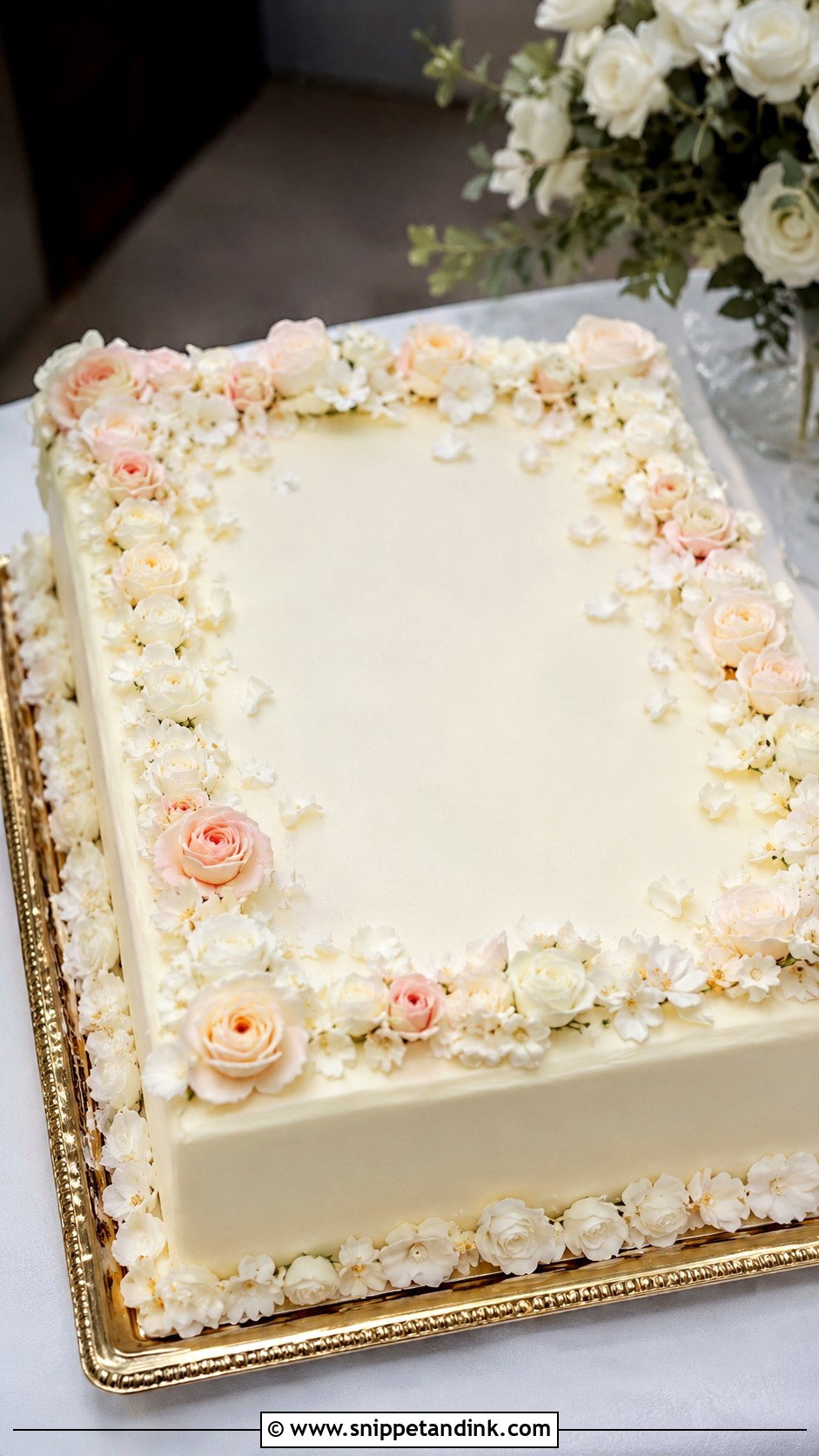
A border frames the top and leaves the middle open for initials, a short message or simply clean space. Fresh blooms, sugar flowers, piped flowers or pressed petals all work. I size the flowers to the edges: smaller along the long sides, slightly larger at the corners, so the frame looks even from across the room. It’s the easiest floral design to serve, too, since the center slices come away clean. A good fit for a classic reception or a bridal luncheon.
11. Rectangle Wedding Cake With Floral Corner
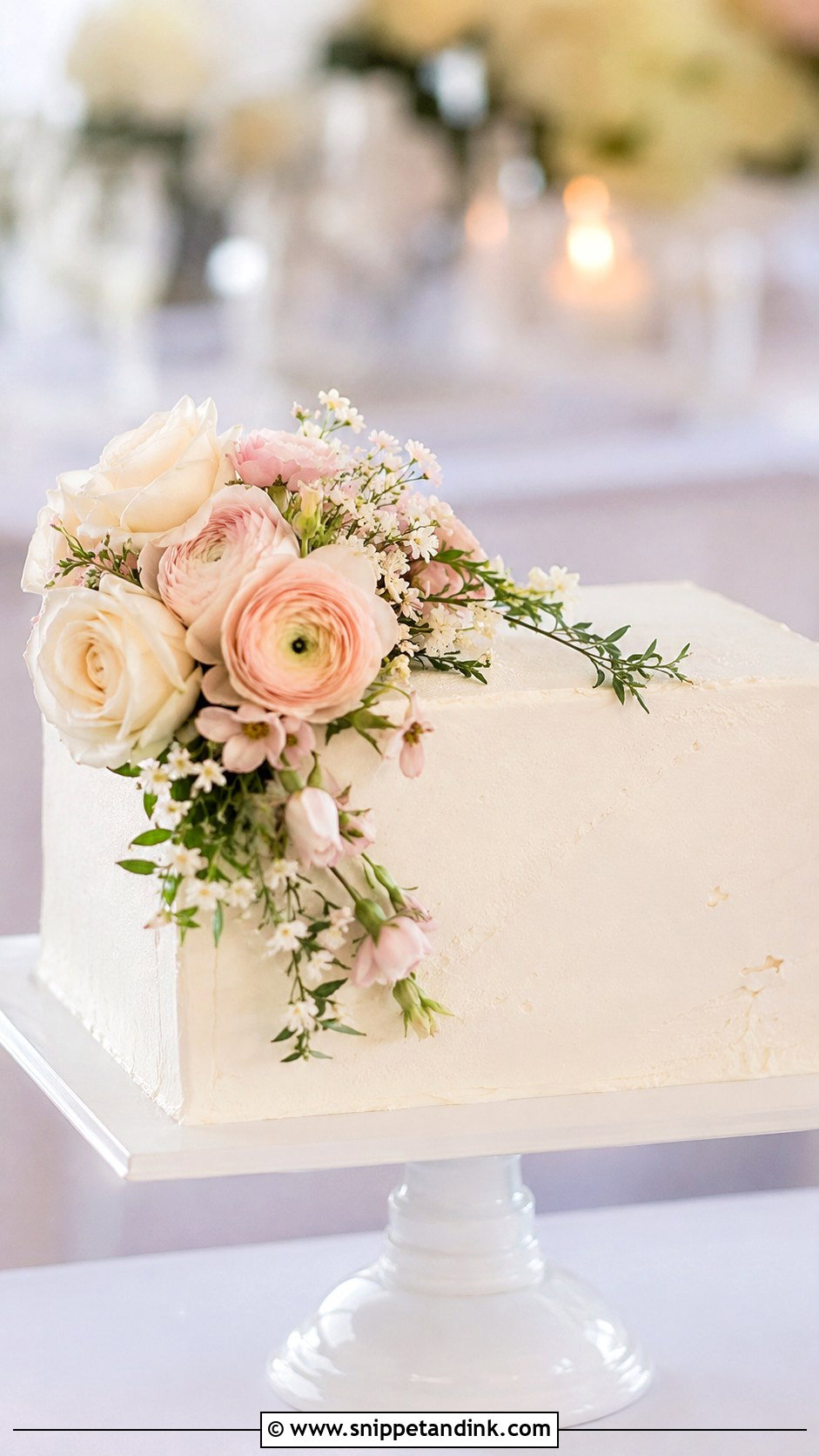
One statement arrangement on a corner, with the rest of the frosting left smooth and clean, is a modern look that uses space well. Roses, orchids, ranunculus, peonies or sugar flowers suit it, softened with a few leaves or tiny blossoms. It’s also one of the more economical floral options, because you’re paying for one cluster rather than coverage. Set the arrangement slightly in from the very corner so it doesn’t overhang the board. Crisp ivory buttercream with lemon raspberry, vanilla bean, almond or coconut works well.
12. Rectangle Wedding Cake With Floral Garland
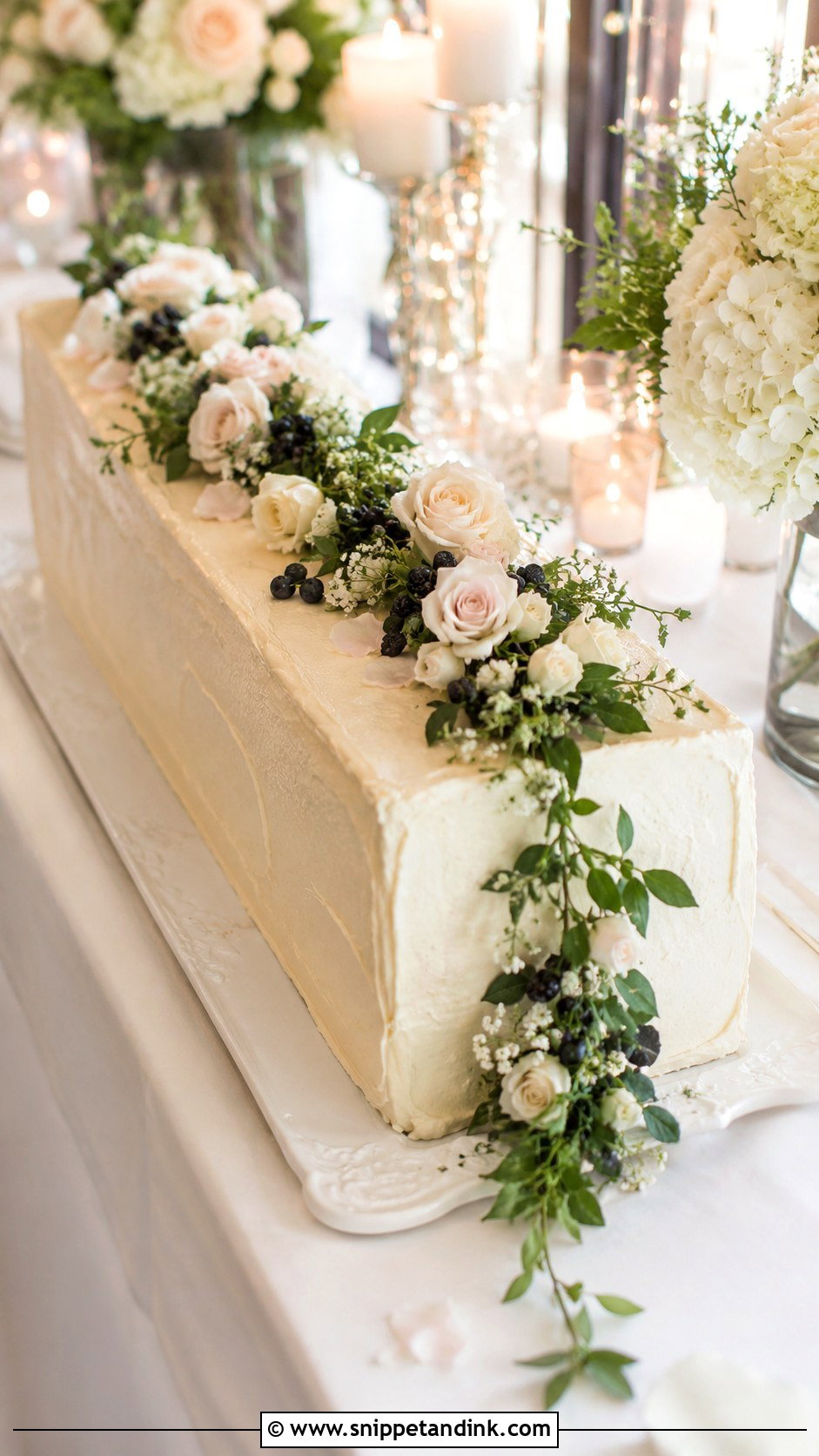
A garland follows the shape of the cake, which is why it suits a long reception table so naturally. It can run down the center, curve across the top or trail along one side, made from small flowers, greenery, berries and delicate petals. If you use real berries in the garland, make sure they’re edible ones; plenty of decorative berries sold for floristry are not. Keep the frosting smooth or gently textured so the garland stays the focus, and the cake will sit comfortably among candles and table arrangements at an estate or garden venue.
13. Rectangle Wedding Cake With Pastel Flowers
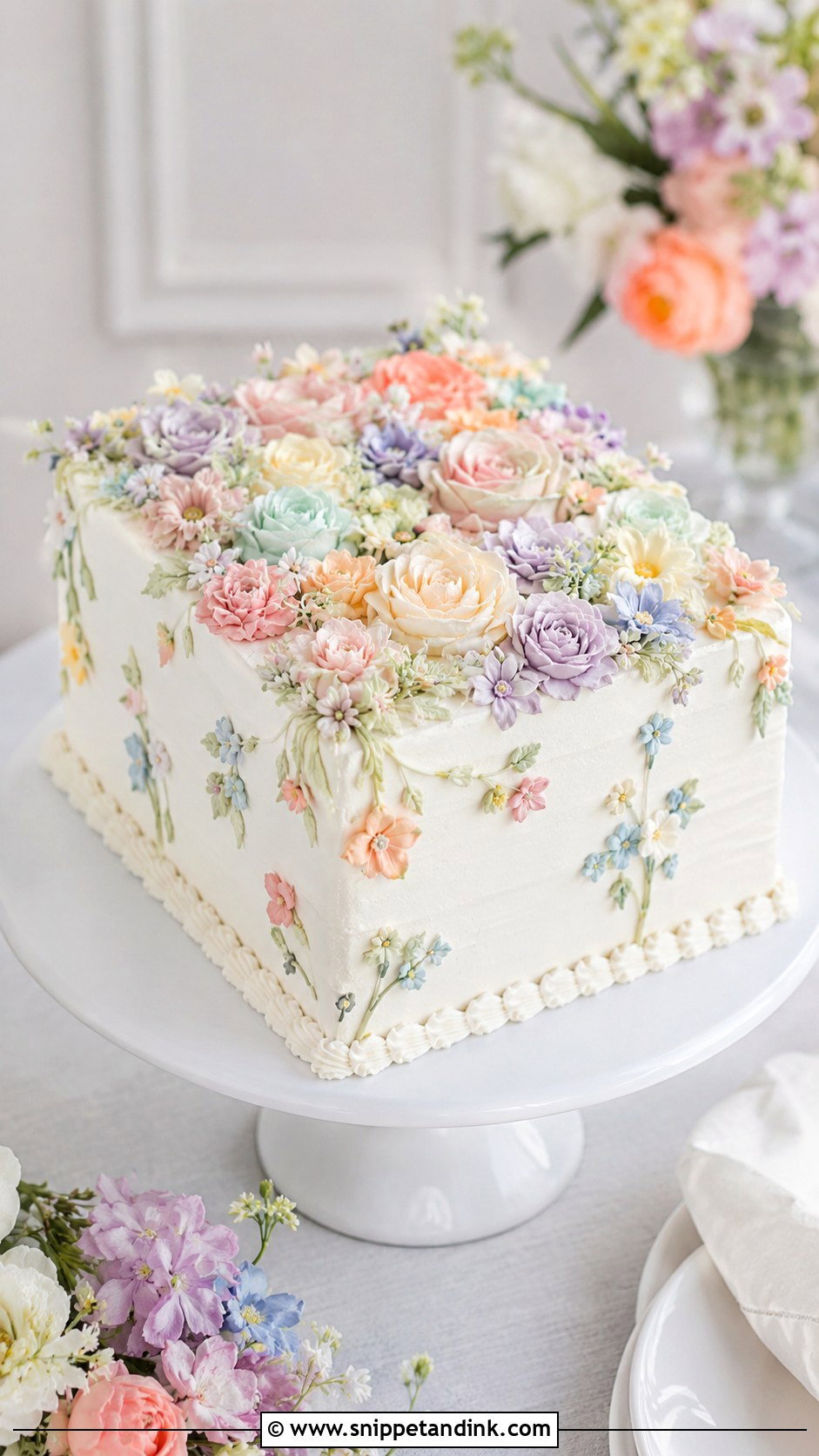
Pastel flowers bring color without weight: blush pink, lavender, pale yellow, peach, powder blue or mint green. The rectangular shape keeps even a colorful design looking tidy. I choose the medium by mood, with buttercream blooms for something playful, sugar flowers for a refined finish, and fresh flowers for a natural look. It’s a strong choice for spring and daytime receptions. Vanilla, strawberry, lemon, almond or white chocolate cake matches the soft palette.
14. Rectangle Wedding Cake With Bold Flowers
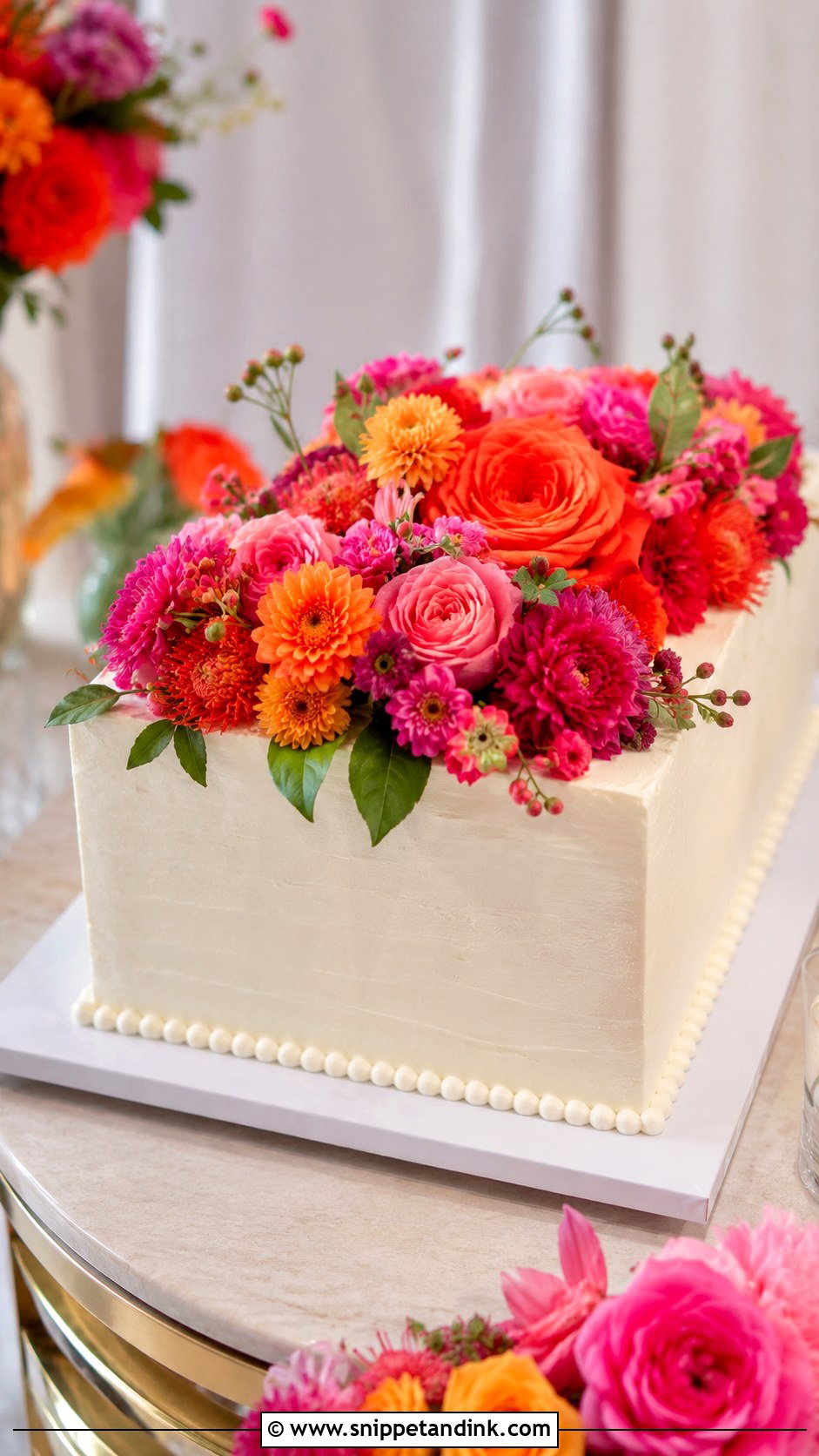
Bold flowers in magenta, coral, orange, deep red, plum or bright pink turn the cake into the loudest thing on the dessert table, in a good way. A clean white or ivory base stops it looking heavy. I place strong colors in a diagonal, a thick border or a dramatic corner cluster rather than spreading them evenly, since even spacing tends to look busy. Strongly colored fresh petals can also stain buttercream where they touch it, another reason I set them on barriers. Keep the piping minimal and pair with citrus, berry, vanilla or chocolate.
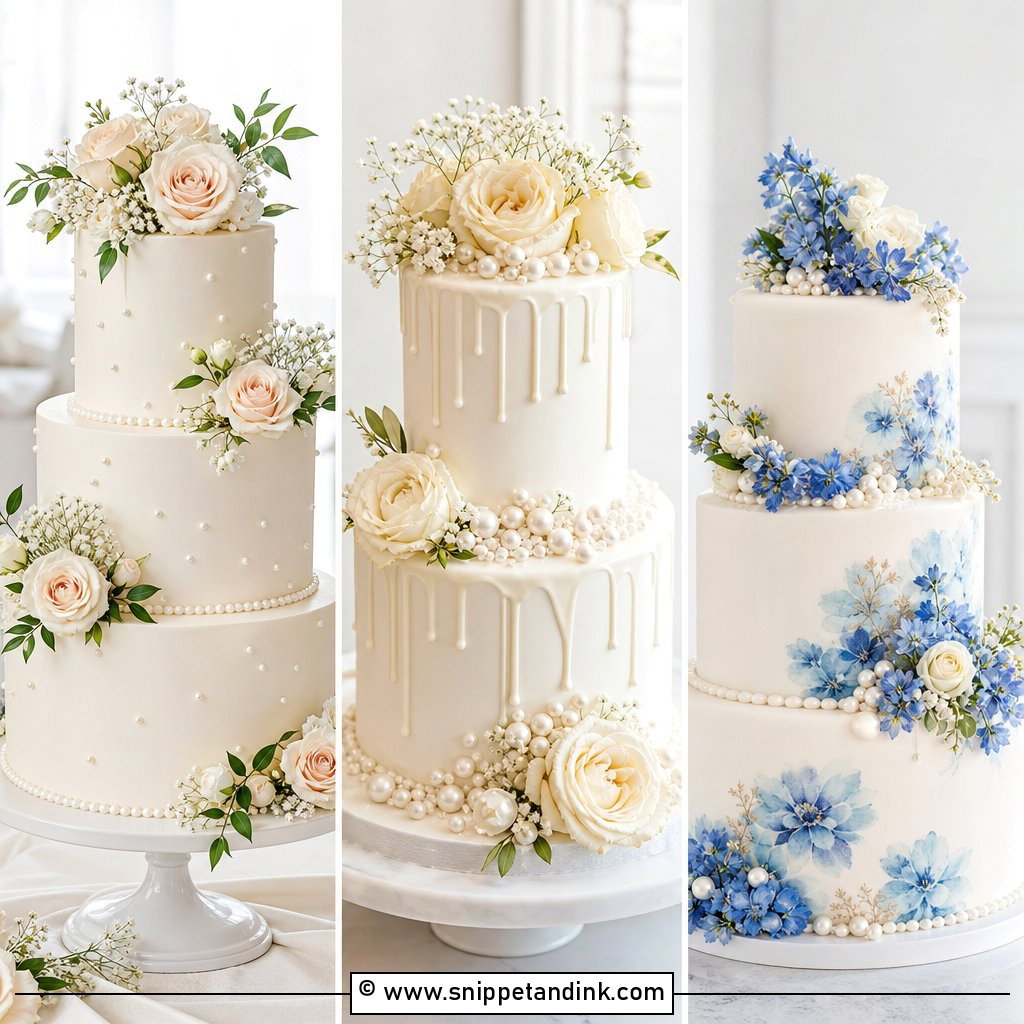
15. Rectangle Wedding Cake With Edible Flower Petals
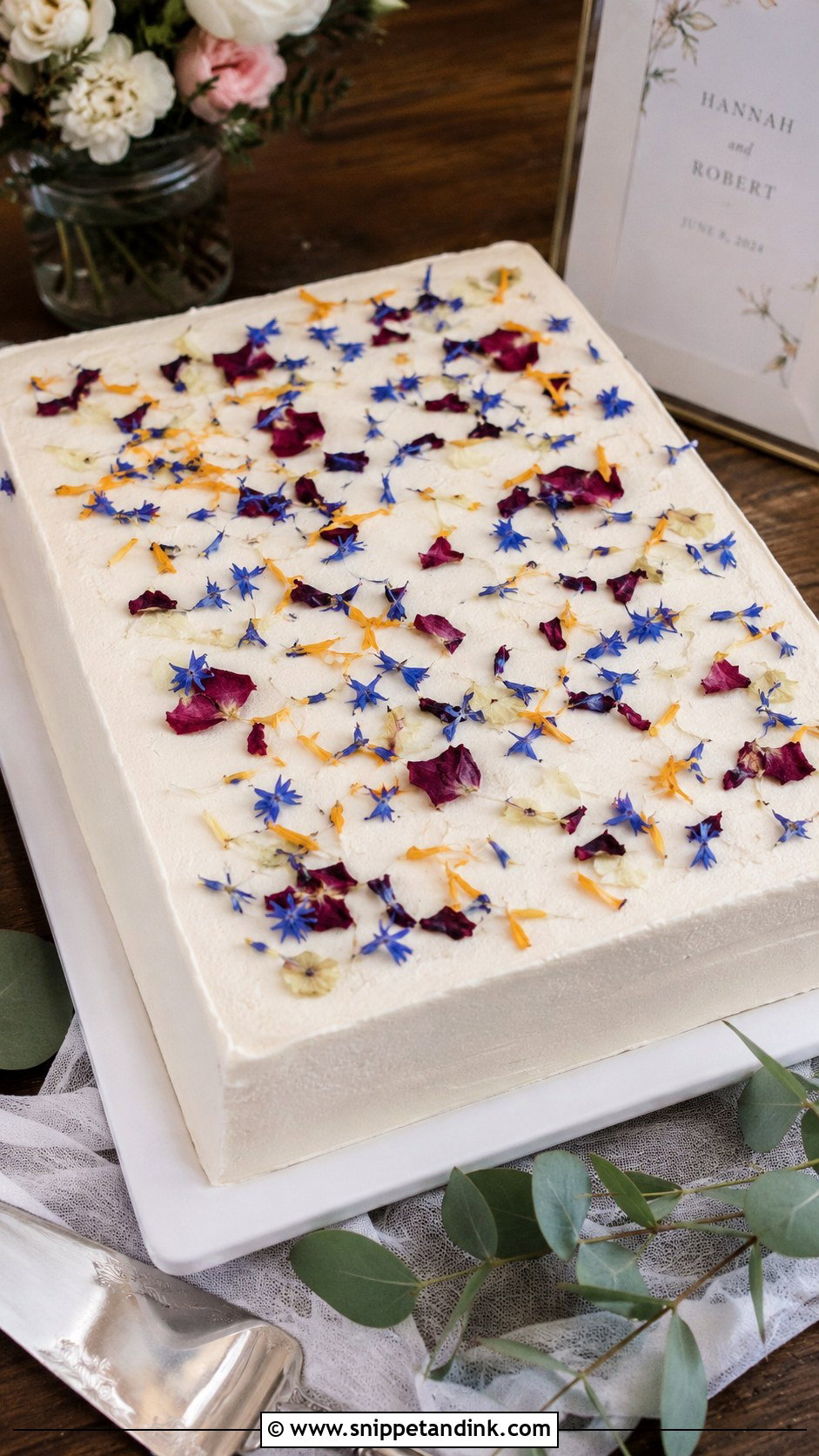
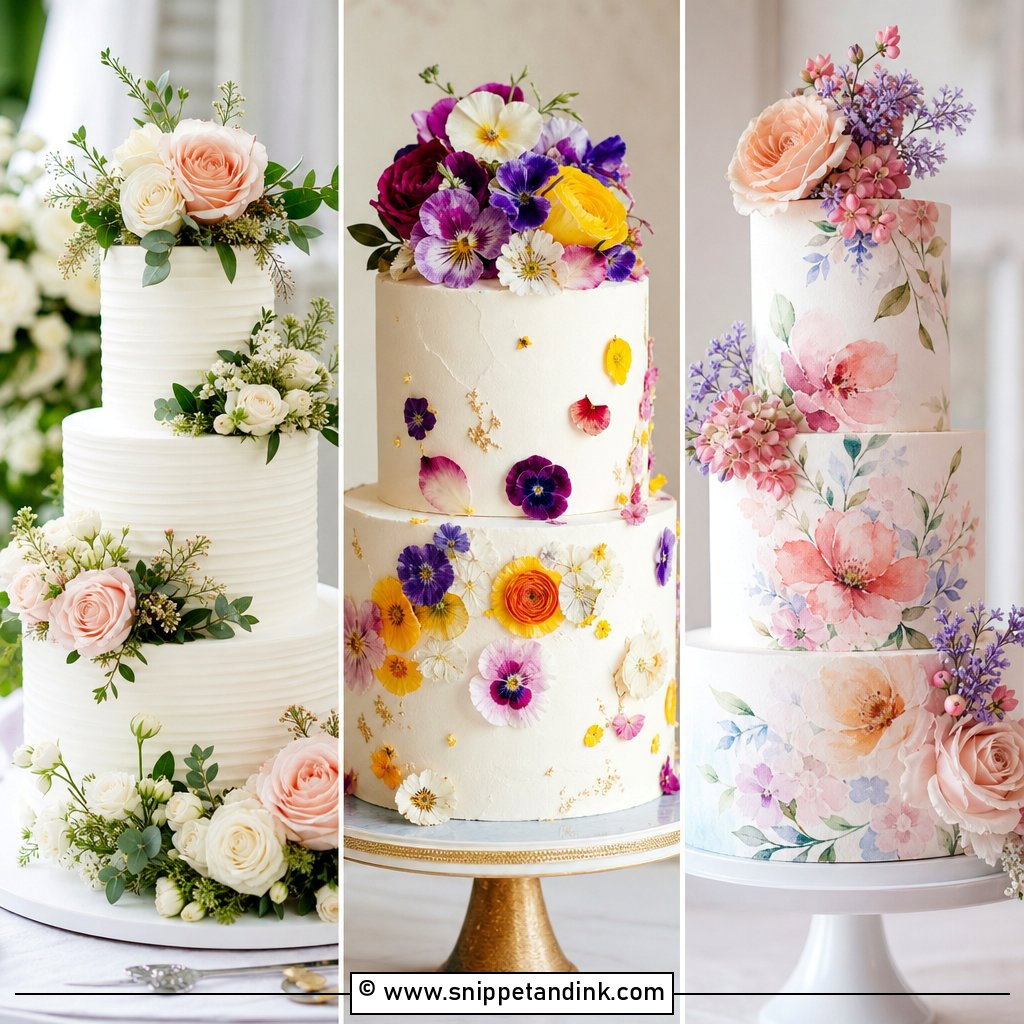
Scattered petals give a floral look without large blooms: across the top, pressed into the sides, or arranged in a soft color gradient. On a wide flat cake they read almost like confetti. Use only petals your baker confirms are edible and grown for eating, such as pansy, rose, calendula or cornflower. Petals wilt faster than whole flowers, so they go on last. A smooth white buttercream base with lemon, vanilla, honey or elderflower cake keeps it light.
16. Rectangle Wedding Cake With Orchids
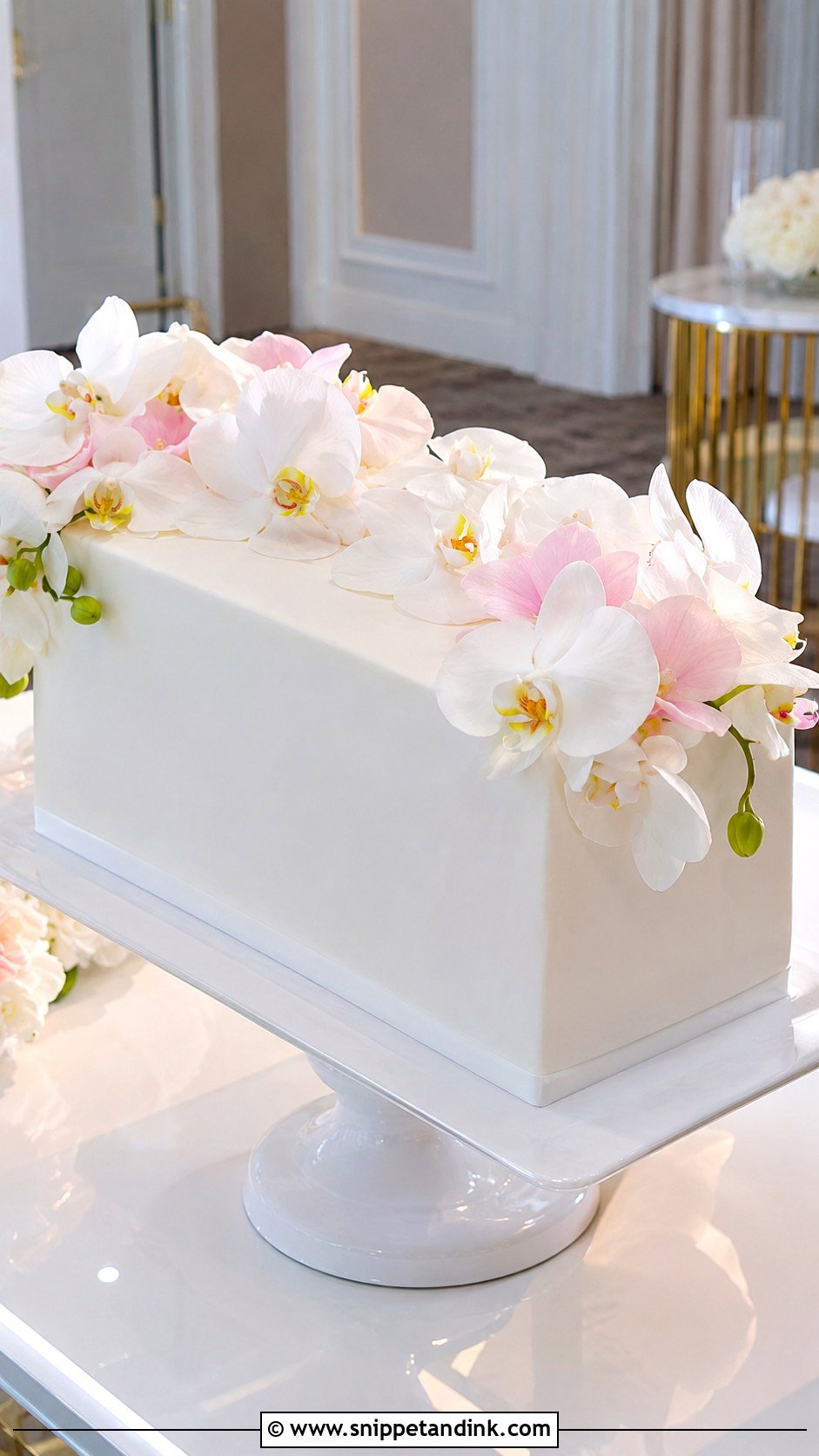
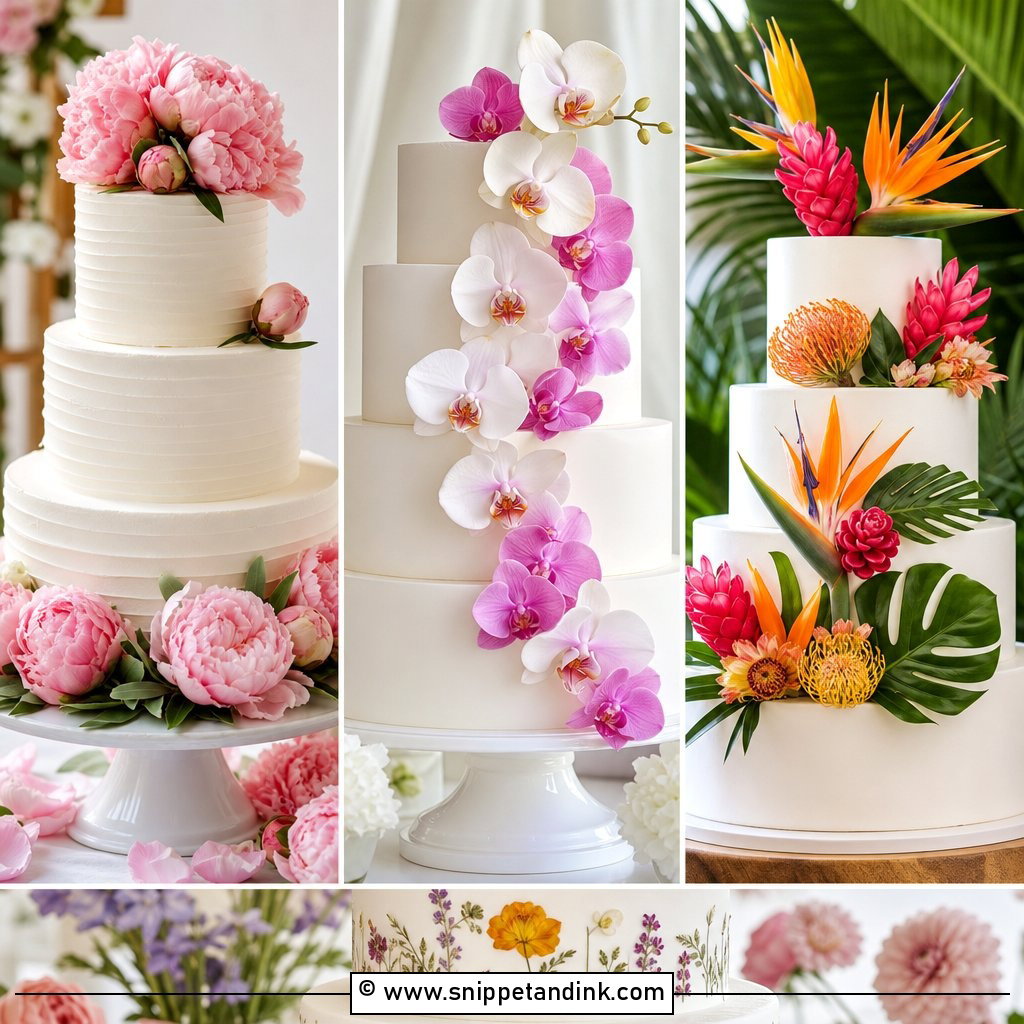
Orchids are clean and sculptural, which makes them one of my favorite flowers for a modern rectangle. White orchids sit well on ivory frosting, and pale pink or purple ones add color. A line down the center, a row along one side or a single corner spray all work. Florist orchids are usually not grown as food, so their stems are wrapped and the blooms sit on the cake, never pushed into it. Keep the frosting smooth so the shape stands out, with coconut, vanilla, passion fruit, lemon or almond cake for a ballroom, gallery or beach venue.
17. Rectangle Wedding Cake With Peonies
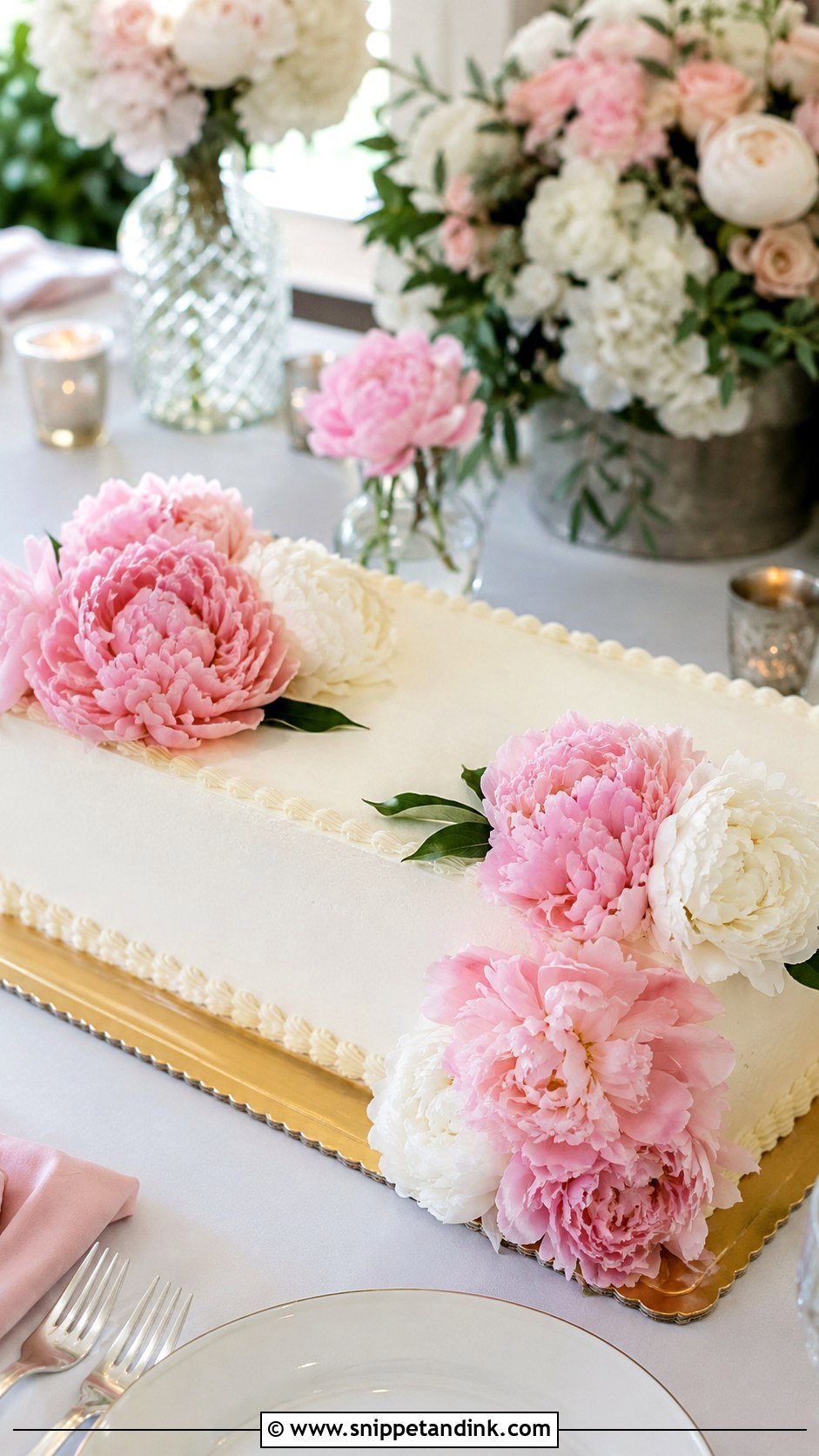
Peonies make a big impact even in small numbers, because a single open head can be the width of a hand. That size is also the risk on a flat cake: too many and the rectangle disappears. I use three to five at most, in a corner cluster, a short runner or a balanced arrangement at one end, in blush, white, coral or deep pink. They open fast in warm rooms, so a peony that’s tight in the morning can be fully blown by the evening. Vanilla bean, almond, raspberry, lemon or champagne cake goes well with them.
18. Rectangle Wedding Cake With Daisies
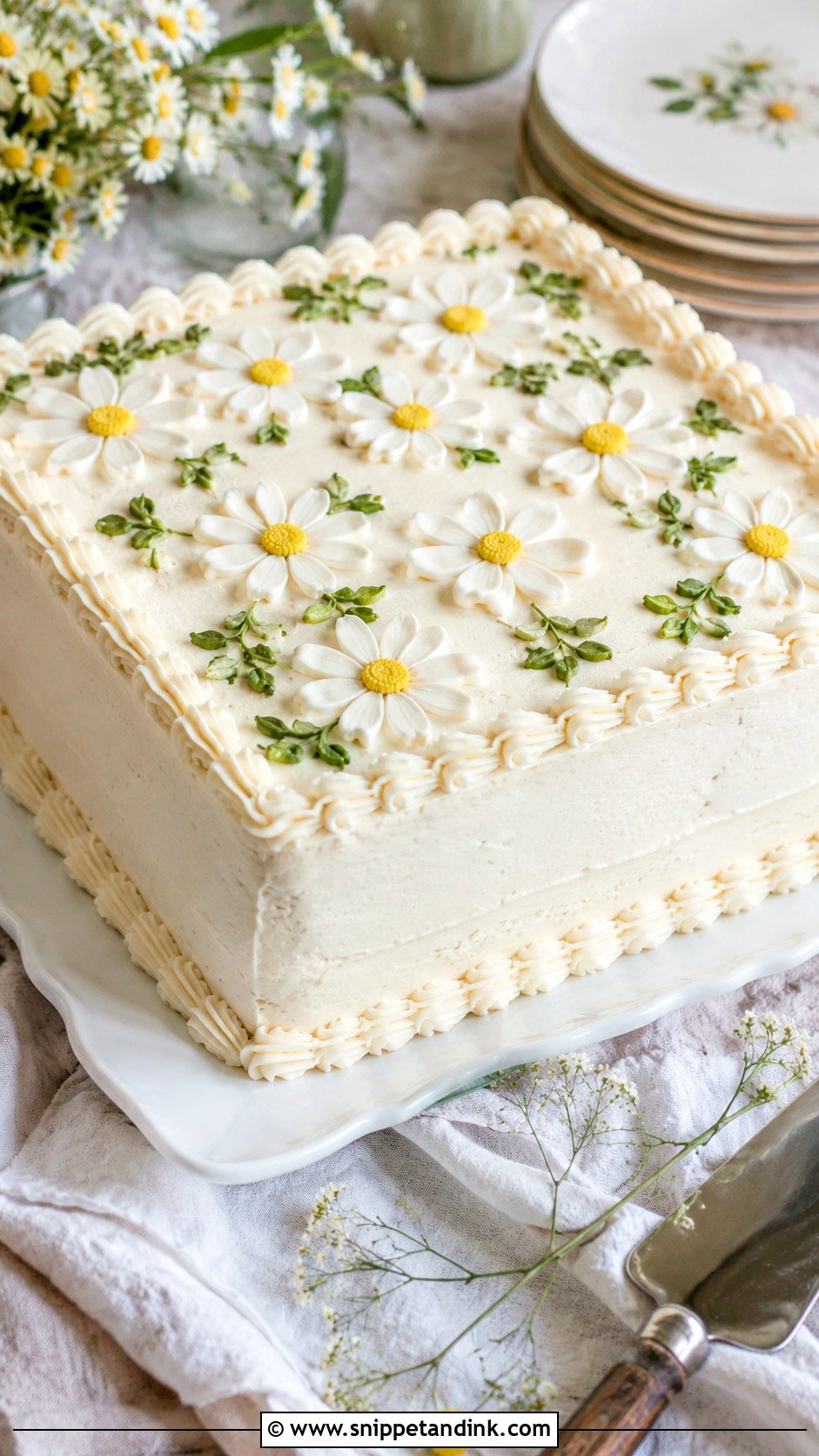
A rectangle wedding cake with daisies has a cheerful, unfussy look that suits a backyard wedding or a brunch reception. Daisies can be piped in buttercream, made from sugar, or used as fresh edible flowers. Piped daisies are among the quickest flowers to make, which helps if you want dozens of them. A white base with yellow centers keeps it bright. Scatter them over the top or set a neat border, and pair with lemon or vanilla cake, strawberry filling or a light honey buttercream.
19. Rectangle Wedding Cake With Pink Flowers
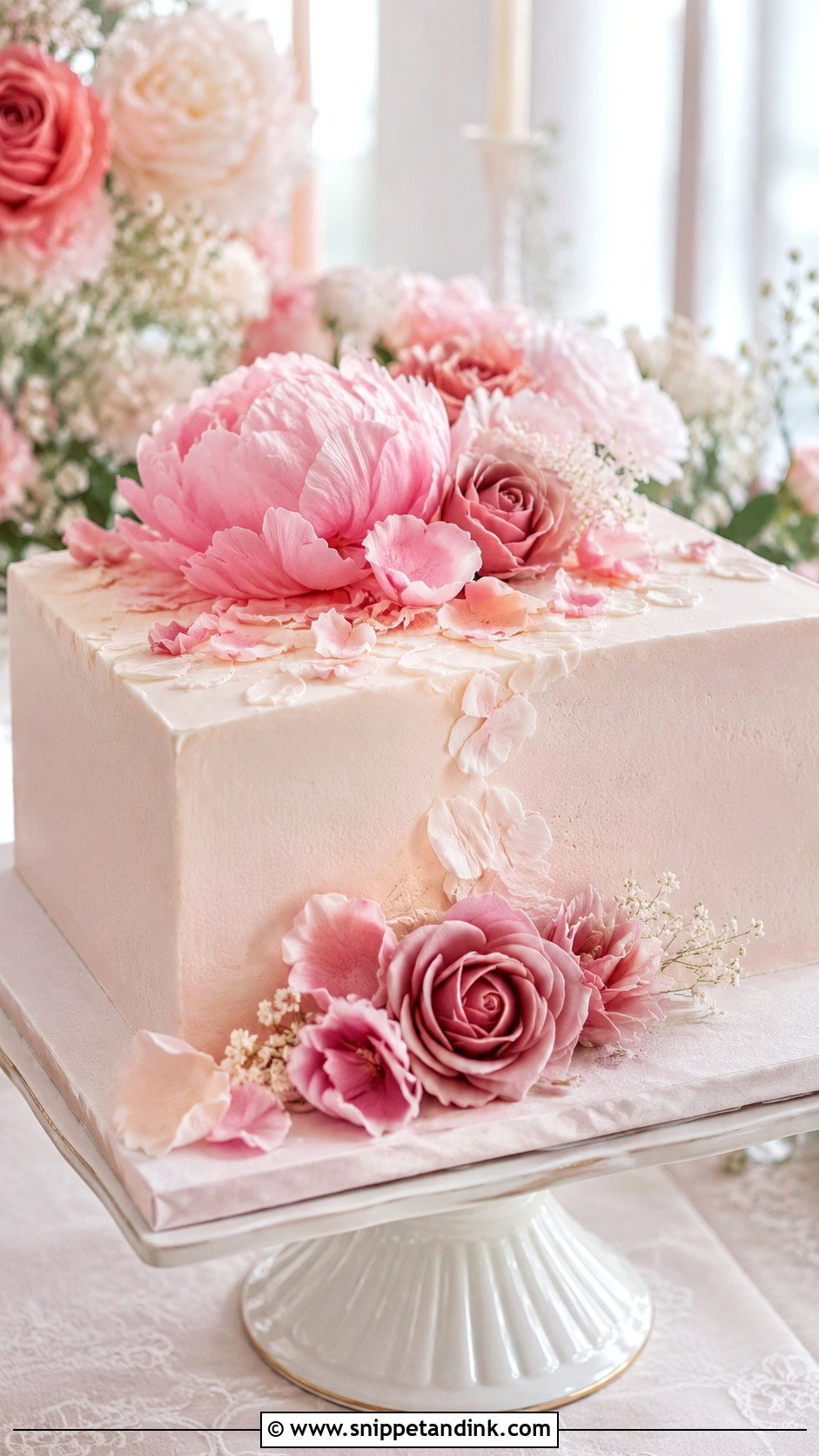
A rectangle wedding cake with pink flowers fits a huge range of palettes, from blush and dusty rose to hot pink, coral and raspberry. The flowers can be fresh roses, sugar peonies, buttercream blossoms or pressed petals. An ivory base keeps it bridal, while a pale pink base looks softer and more modern. When I match pink frosting to fresh flowers, I color the buttercream a shade lighter than the petals, because buttercream colors usually deepen as they sit. Strawberry, vanilla, almond, raspberry or lemon cake all work.


20. Rectangle Wedding Cake With Blue Flowers
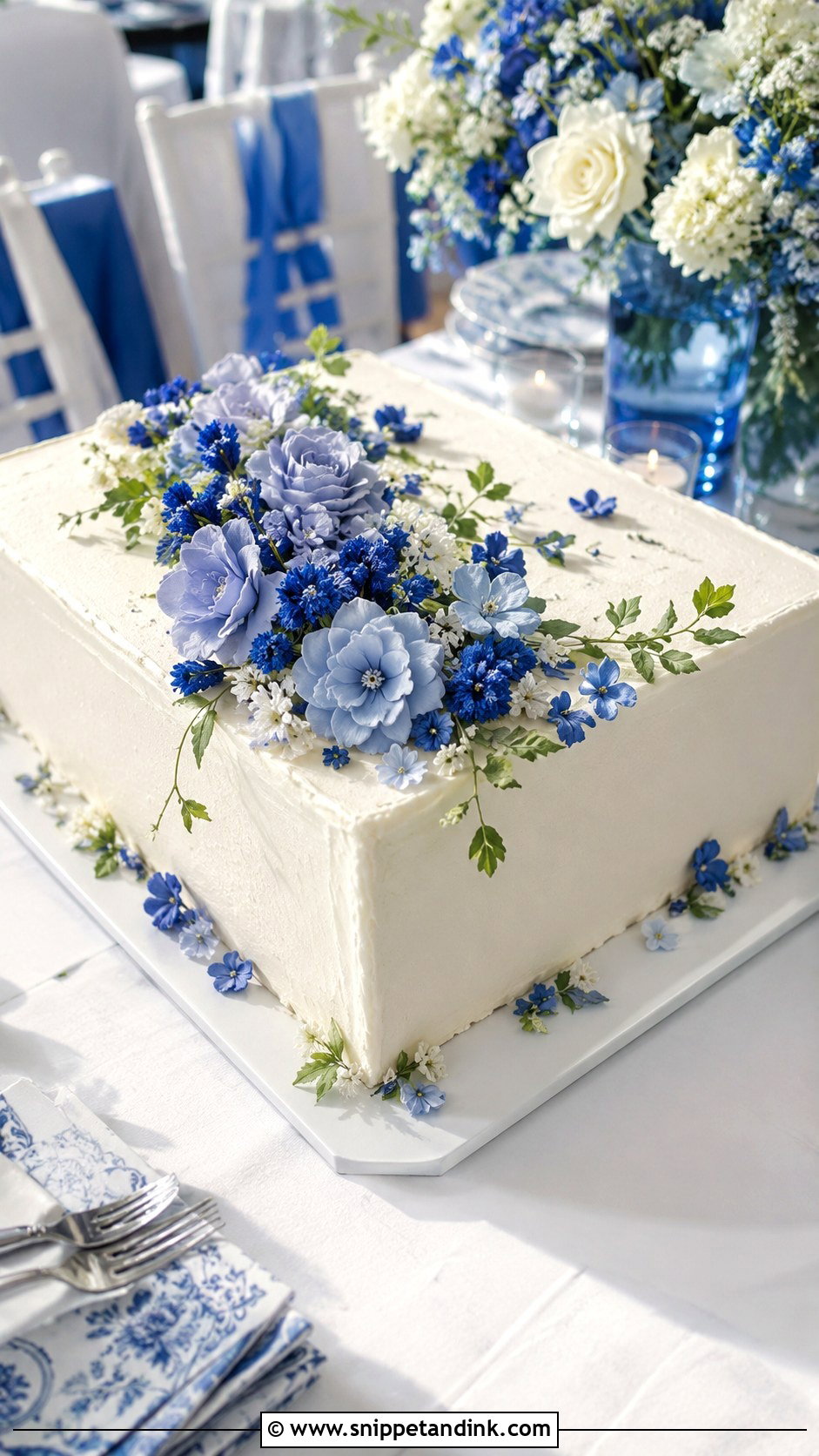
Blue is rare among real flowers, so a blue floral cake catches attention immediately. I’d build it from dusty blue sugar flowers, pale blue buttercream blossoms, cornflower petals or hydrangea-style piped details, set against white frosting with ivory accents and a little greenery. Note the word style: real hydrangea is toxic and should never go on a cake, so I recreate the look in sugar or buttercream. Keep the finish smooth so the blue looks crisp, and consider vanilla, lemon, almond, coconut or a blueberry filling for a coastal or blue-and-white wedding.
Which Flowers Can Touch the Frosting, and Which Can’t
Most flowers bought for bouquets were grown to look good, not to be eaten, and many are treated with pesticides or preservatives. Some are toxic outright. So I sort every floral cake design into three groups before it’s finalized.
Safe to sit on the cake
Edible flowers grown for food, such as pansies, violas, calendula, cornflowers and unsprayed roses, along with anything made from sugar or buttercream. These can go directly on the frosting.
Decorative only, with a barrier
Florist roses, orchids, ranunculus, peonies and most greenery. Stems are wrapped in floral tape or set into food-safe picks, and blooms rest on small discs of wax paper or chocolate so the frosting underneath can still be served.
Kept off the cake entirely
Hydrangea, lily of the valley, foxglove, oleander, sweet pea and daffodils, among others. If one of these is in your bouquet, it can be copied in sugar instead.
On the day, decide who places the flowers. Usually the baker sets the cake and the florist adds fresh blooms on site, but someone has to own it. And before cutting, the fresh flowers come off first so nothing inedible ends up on a guest’s plate.
A Flat Cake With Room for Your Bouquet’s Flowers
A rectangle cake gives flowers more space than any tiered design, and it cuts and serves more easily, which matters at any guest count. Start from the flowers you’re carrying in your bouquet, decide whether you want them fresh, sugar, piped or pressed, and then pick the layout: border, corner, runner or scatter. Factor in the season and how warm your room will be, since that decides how long fresh blooms and piped petals hold up. Get those choices right and the cake does double duty as one of the floral centerpieces of the room.
You'll Like These Ideas:





Leave a Reply