
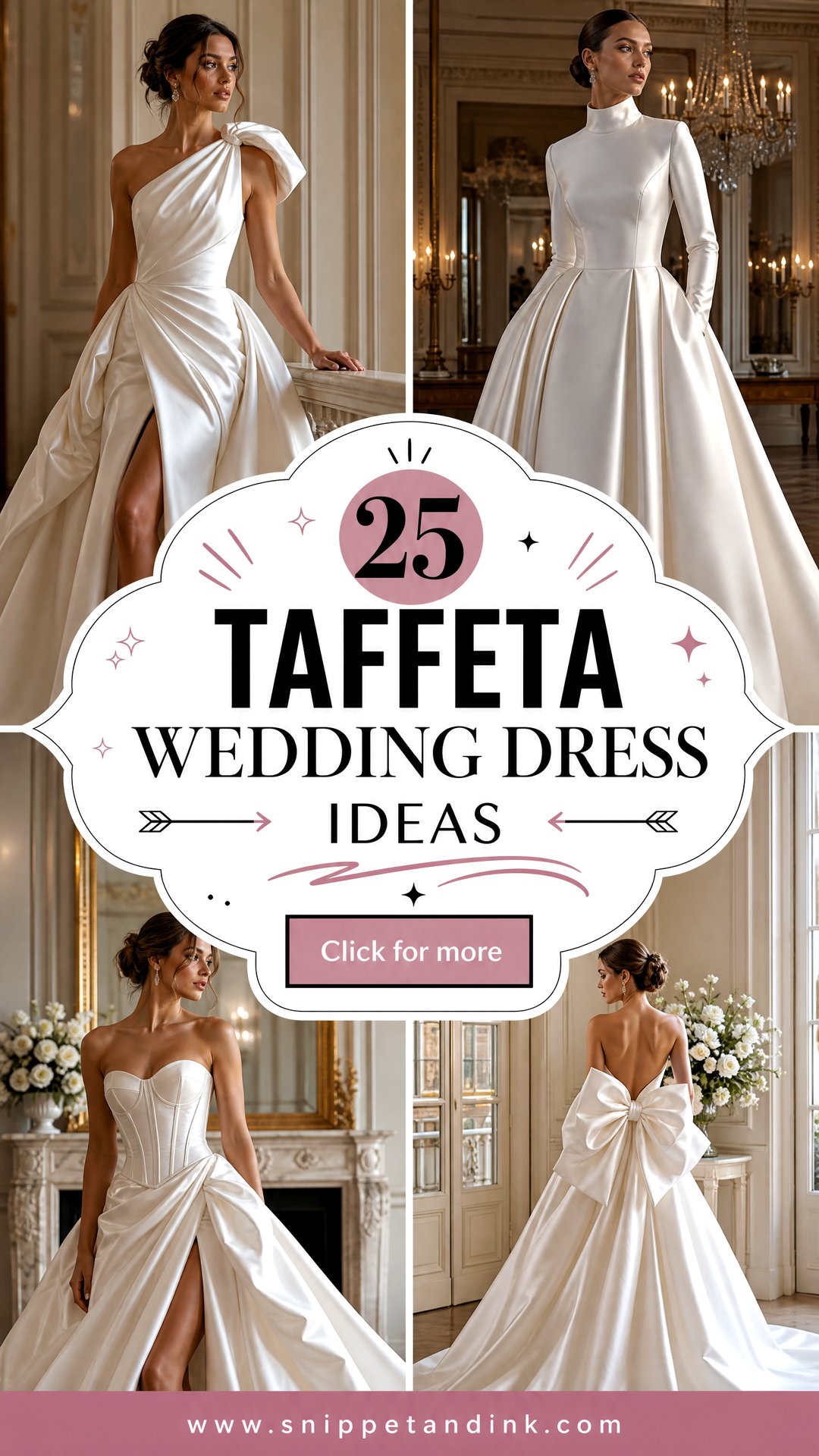
Taffeta is the fabric I reach for when a bride wants shape without decoration. It’s crisp, it has a polished surface with a quiet sheen, and it holds a pleat, a fold or a full skirt exactly where the seamstress put it. That body lets it carry a grand ball gown, a clean column or a reception mini with very little embellishment. The shapes brides ask me about most right now happen to be the ones taffeta does best: structured bodices, basque and drop waists, statement bows, sculptural volume and a second look for the party. Your venue, how much drama you want and how comfortable you need to be will narrow things quickly. The 25 dresses below are styled head to toe, each with the fitting check I’d make on it.
Silk Taffeta, Polyester Taffeta and the Rustle Test
Not all taffeta behaves alike, and the fabric label inside a gown tells you more than any photo. Silk taffeta has a deeper, softer sheen and that distinctive crisp rustle as you walk. It’s lighter and breathes better than synthetic versions, but it creases sharply and can mark with water. Polyester taffeta holds its shape well, shrugs off water spots and costs less, though it can look shinier under flash and feels warm on a hot afternoon.
With any taffeta sample in the salon, I run three quick checks:
- Squeeze a corner in your fist for a few seconds, then let go. Silk holds the crease; good polyester springs back more. Either is fine, but you’ll know what the car ride will do to your skirt.
- Walk the length of the room and listen. Some brides love the swish; others find it loud in a quiet ceremony.
- Look at it under a phone flash. Very glossy synthetics bounce light and can wash out in photographs.
Shot taffeta changes color as you move
Some taffeta is woven with one color running lengthwise and another crosswise, so it shimmers between two shades as the light shifts. Ivory shot with gold or blush shot with silver can look rich, but view it in daylight and under warm lamps, since the color you fall for may only show at certain angles.
1. Strapless Ball Gown Taffeta Wedding Dress
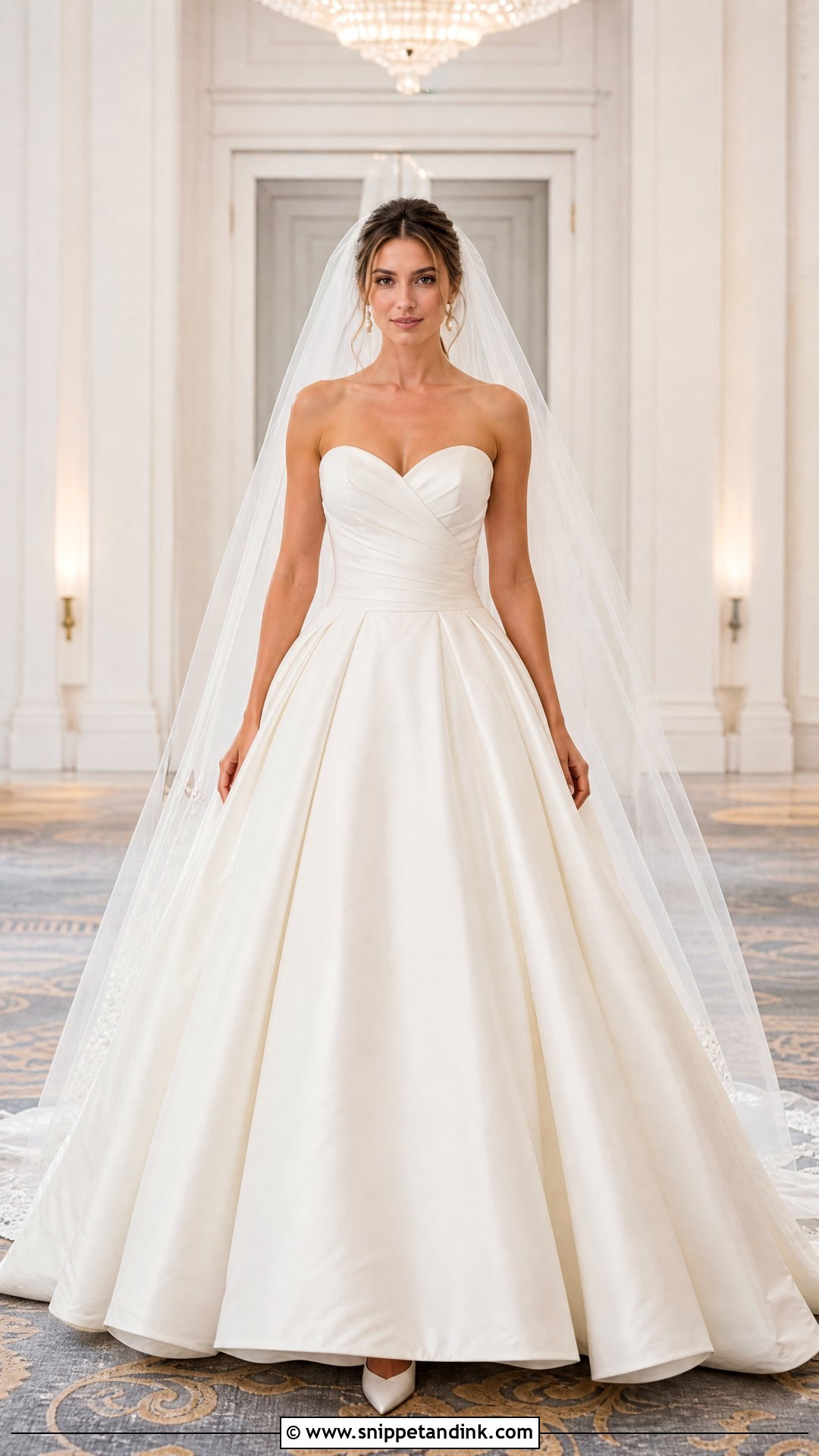
Strapless taffeta is the classic for good reason, since the fabric is stiff enough to support a full skirt without layers of petticoat. What actually keeps the bodice up isn’t the fabric, though. It’s internal boning and a waist stay, so ask about both. A softly curved sweetheart shape reads romantic, a straight neckline more modern. Keep jewelry to pearl drops, a slim bracelet and pointed satin pumps, then pick a fingertip veil for an indoor reception or cathedral length for the aisle. Wear your actual wedding shoes to the hem fitting. Taffeta doesn’t pool gracefully over a too-long hem the way chiffon does; it buckles and catches your toe.
2. Basque Waist Taffeta Wedding Dress
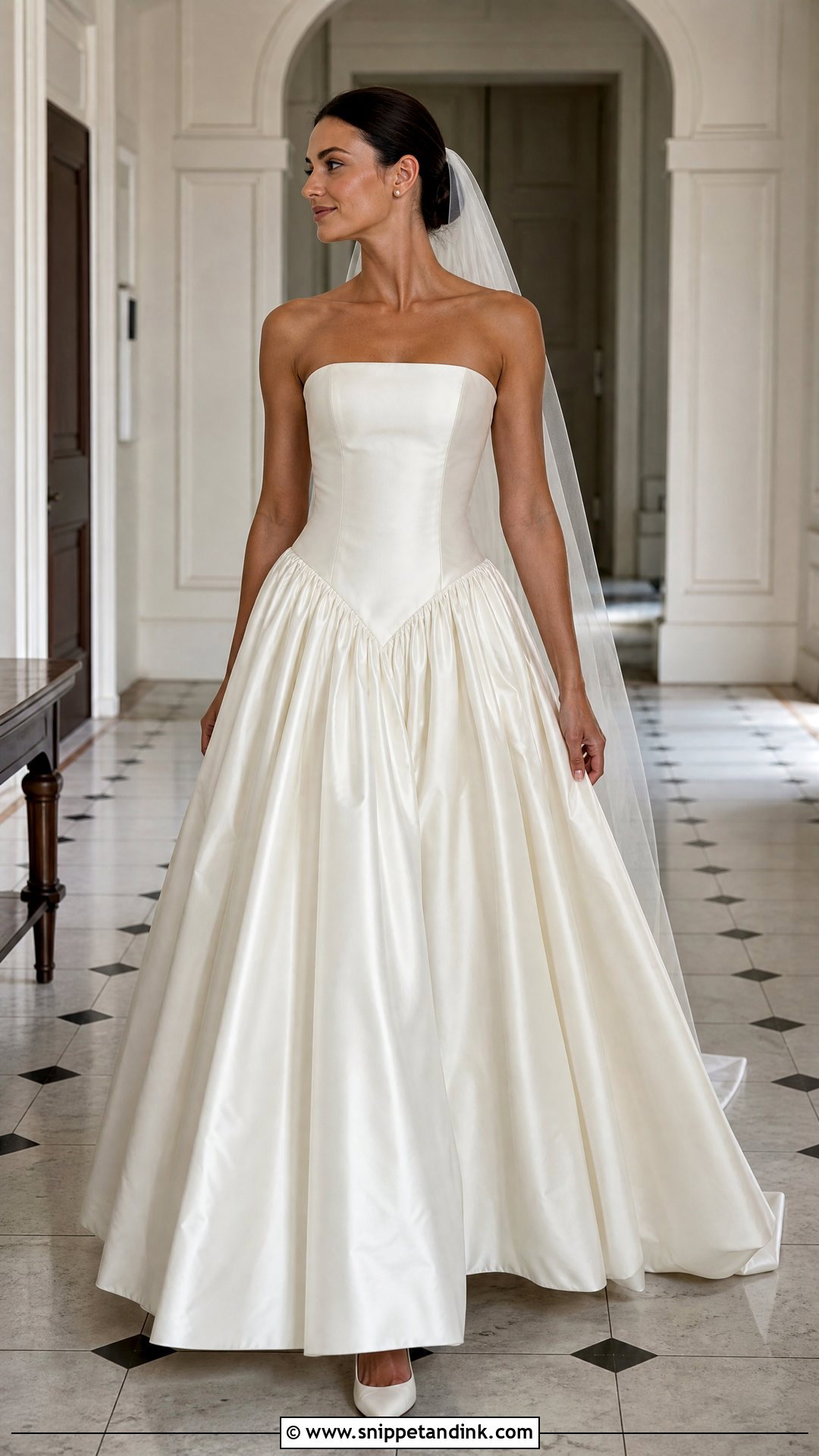
A basque waist dips into a V below the natural waistline, and in taffeta that point stays crisp all day. It lengthens the torso, which is why it suits a shorter waist so well. The bodice should be smooth and lightly structured so the V stays sharp in photographs, with a softly gathered skirt below. Pearl studs, ivory slingbacks, a neat low bun and a plain clean-edged veil let the line speak. Sit down and lean forward at every fitting. If the point digs into your lap or presses on your hip bones, it was placed for a mannequin, and the seamstress can raise it slightly.
3. Drop Waist Taffeta Wedding Dress
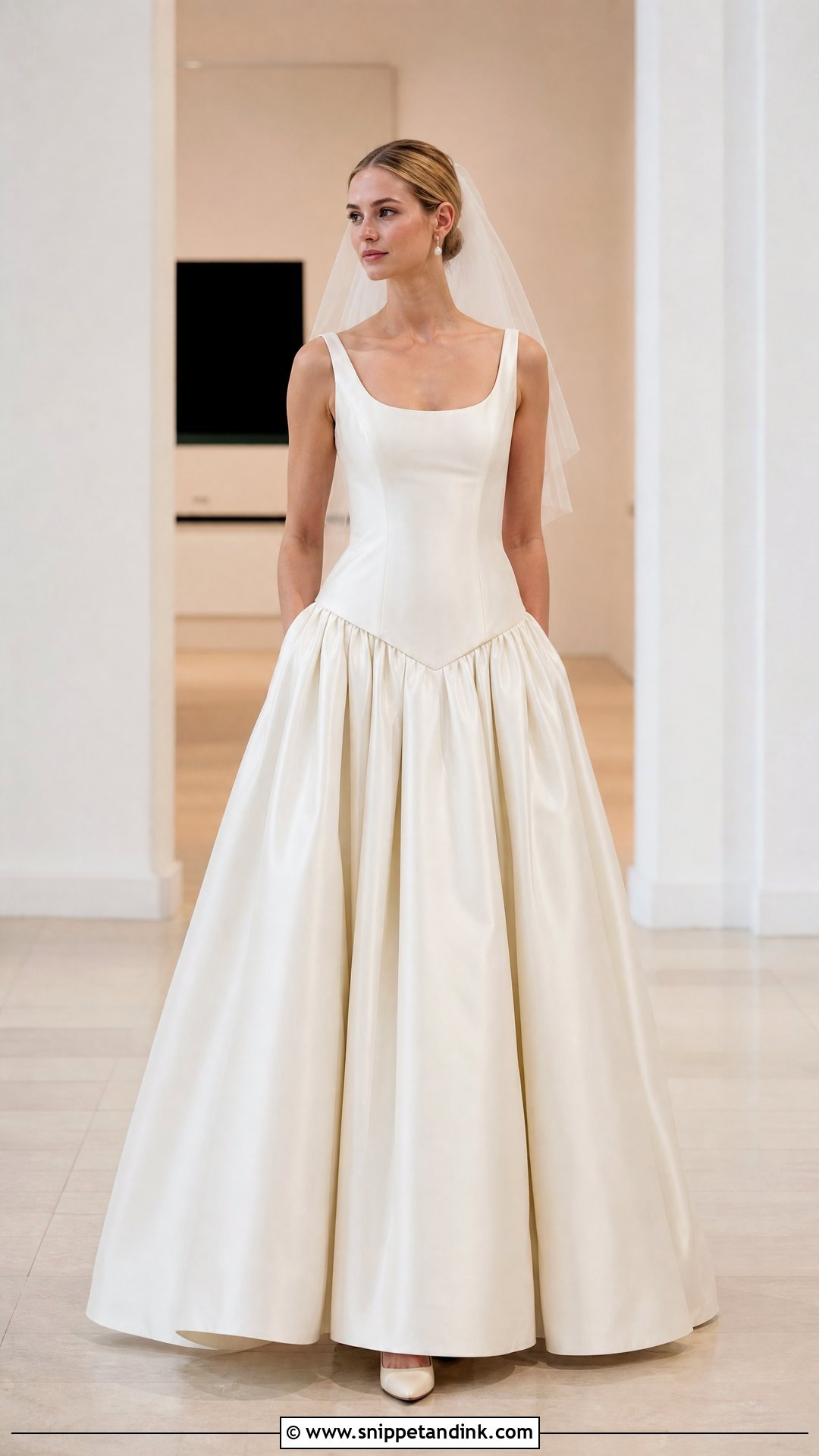
I’d only recommend a drop waist taffeta wedding dress to a bride who has tried one on, because it divides opinion fast. The long bodice runs to the upper hip before meeting a gathered or pleated skirt, so the top half looks sleek and the volume starts low. Open necklines balance it best: a scoop, strapless or wide square. Delicate earrings, a short veil and simple closed-toe pumps are plenty. Never belt it at the natural waist, which cuts the line in half. The hip seam needs careful tailoring, since taffeta won’t stretch to hide a ripple when you sit.
4. A-Line Taffeta Wedding Dress
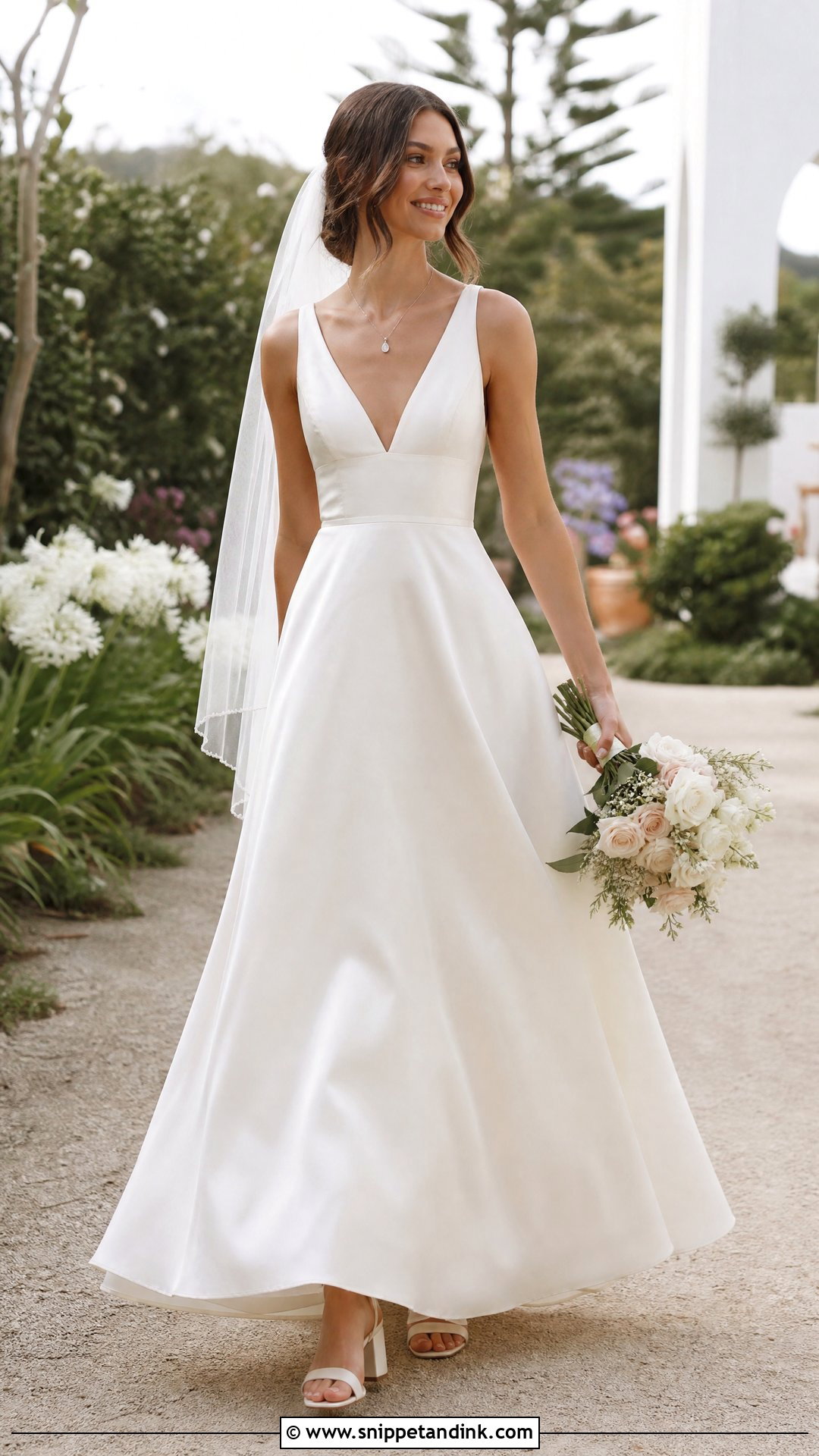
Here’s the taffeta silhouette for a bride who wants structure without a ball gown’s width. The fitted bodice flares gradually, and gentle waist pleats keep the profile cleaner than heavy gathering, which adds bulk at the hip in a stiff fabric. A V or scoop neck softens the crispness. Block-heel sandals, a delicate pendant and a medium veil suit it, and a small bouquet leaves the lines visible. It moves easily through gardens and between rooms. Ask for a discreet bustle with sturdy loops, because taffeta trains are heavier than tulle ones and a single ribbon tie won’t hold.
5. Square Neck Taffeta Wedding Dress
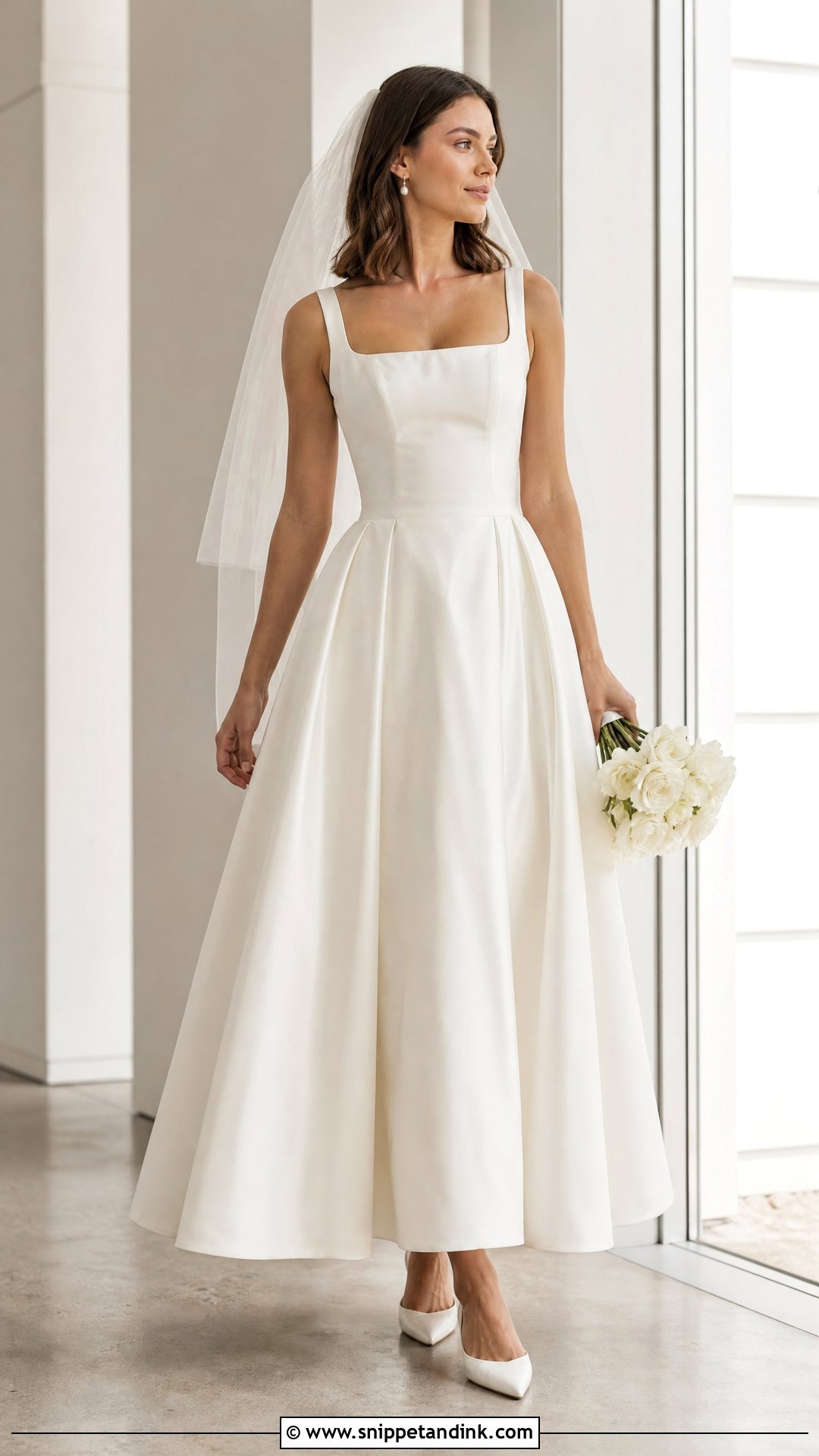
Square necklines and taffeta suit each other because both are about clean lines. Wide straps carry more support; narrow ones look lighter. A fitted bodice over a softly pleated A-line skirt keeps the balance. Short pearl earrings, a low chignon, pointed kitten heels and a sheer shoulder-length veil keep the neckline visible during the ceremony. If you want detail, put covered buttons down the back rather than embellishment on the front. The corners are the fit point I watch most. When you lean forward they shouldn’t gape, and stiff taffeta shows a gap far more than soft crepe would.
6. Off Shoulder Taffeta Wedding Dress
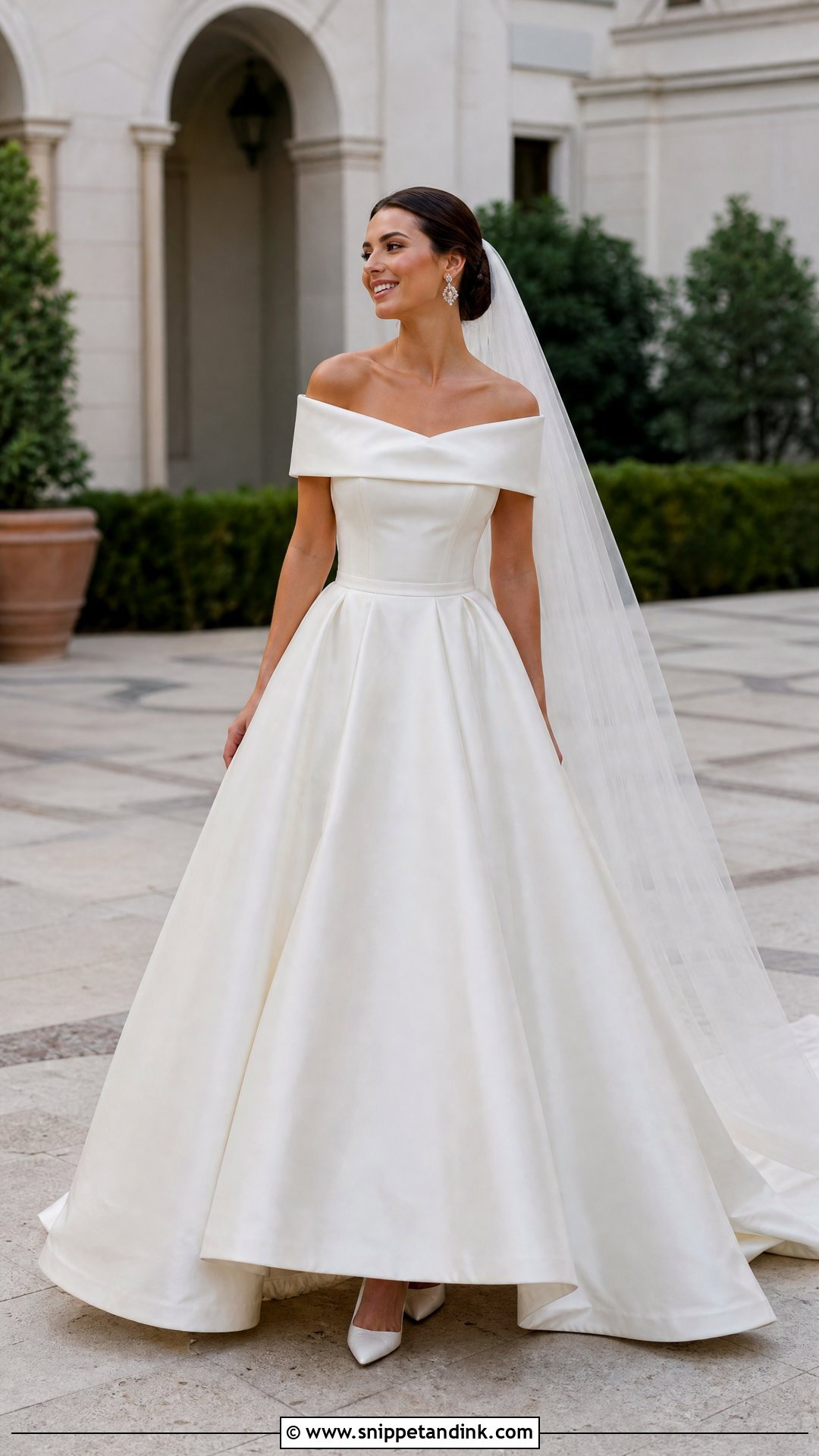
Folded off-shoulder cuffs hold their shape far better in taffeta than draped versions do in softer fabrics, which is the main argument for this dress. The cuff should grip the upper arm securely, because a loose band slides down and limits movement. It flows into a fitted bodice, a defined waist and a gathered skirt. Wear a collarbone-length necklace or skip it for statement earrings, then add ivory pumps, a smooth updo and a long plain veil. Lift both arms before your final fitting. If raising them drags the bodice down, it’s the cuff that needs adjusting.
7. Long Sleeve Taffeta Wedding Dress
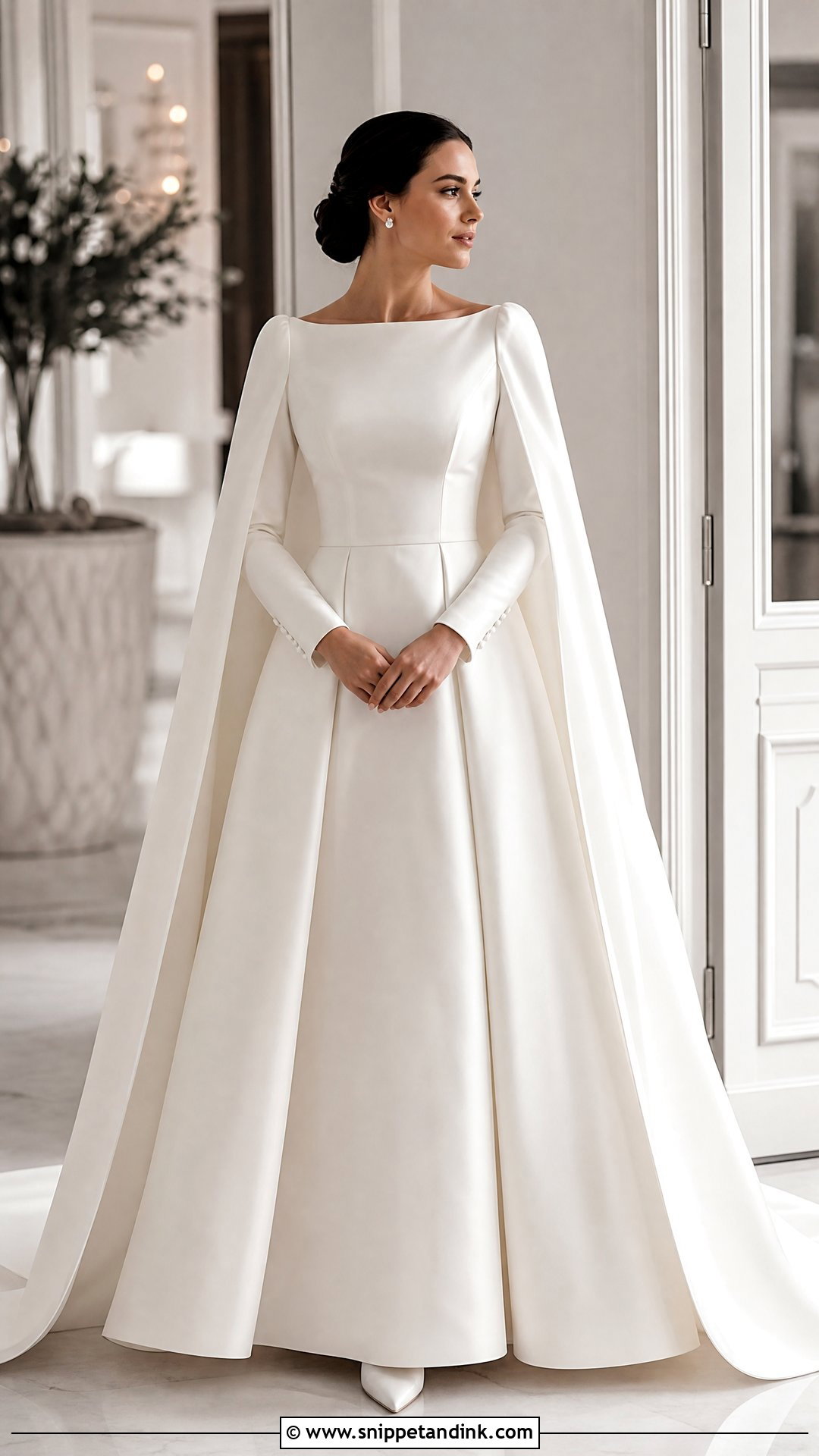
Long taffeta sleeves are warm, which is welcome in November and hard work in July. A streamlined bodice and fitted sleeves over a full skirt give the ceremony its volume, and curved seams with small wrist buttons help the sleeves sit without looking stiff. A bateau, square or modest V-neck stops it feeling buttoned up. Pearl studs, closed-toe heels and a veil set beneath a low bun suit it, and a removable ivory cape makes a better outer layer for fall and winter photos than a bulky jacket. At alterations, bend your elbows and reach forward. Taffeta has no stretch, so sleeves cut tight will pull at the shoulder every time you hug someone.
8. One Shoulder Taffeta Wedding Dress
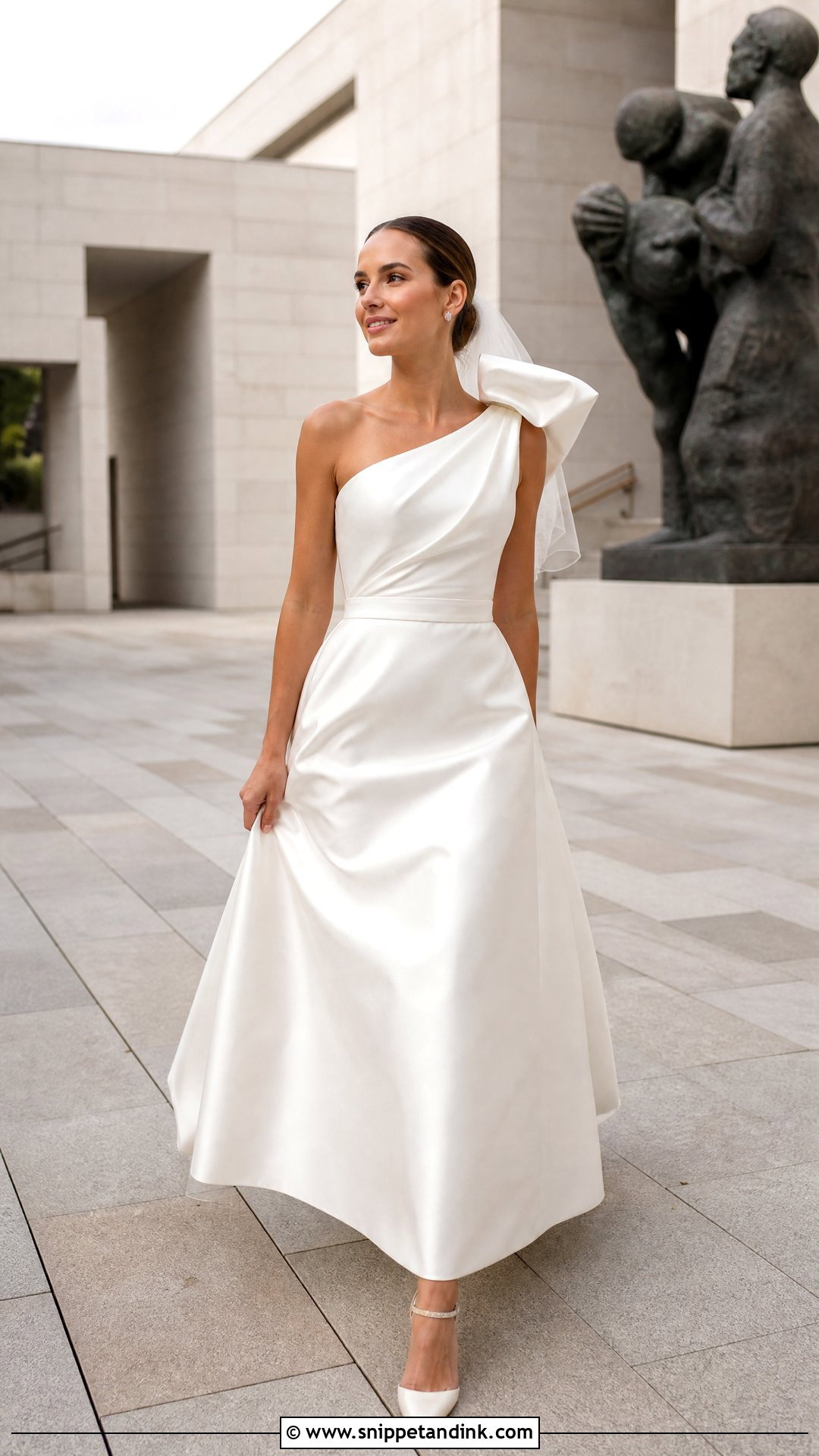
One-shoulder taffeta gives a modern, asymmetrical silhouette, and the strap can be smooth and narrow or folded into a sculptural shape. Balance it with a fitted waist and a controlled A-line instead of adding more detail. Pick earrings that look good on both sides, like crystal studs or small pearl drops, and wear a sleek ponytail or side-parted bun. A short minimalist veil at the back works better than a long one. The real check is weight. A full taffeta skirt hangs from that single shoulder unless the bodice is built to carry it, so walk, sit and raise your arms at the fitting and notice whether the strap digs in.
9. High Neck Taffeta Wedding Dress
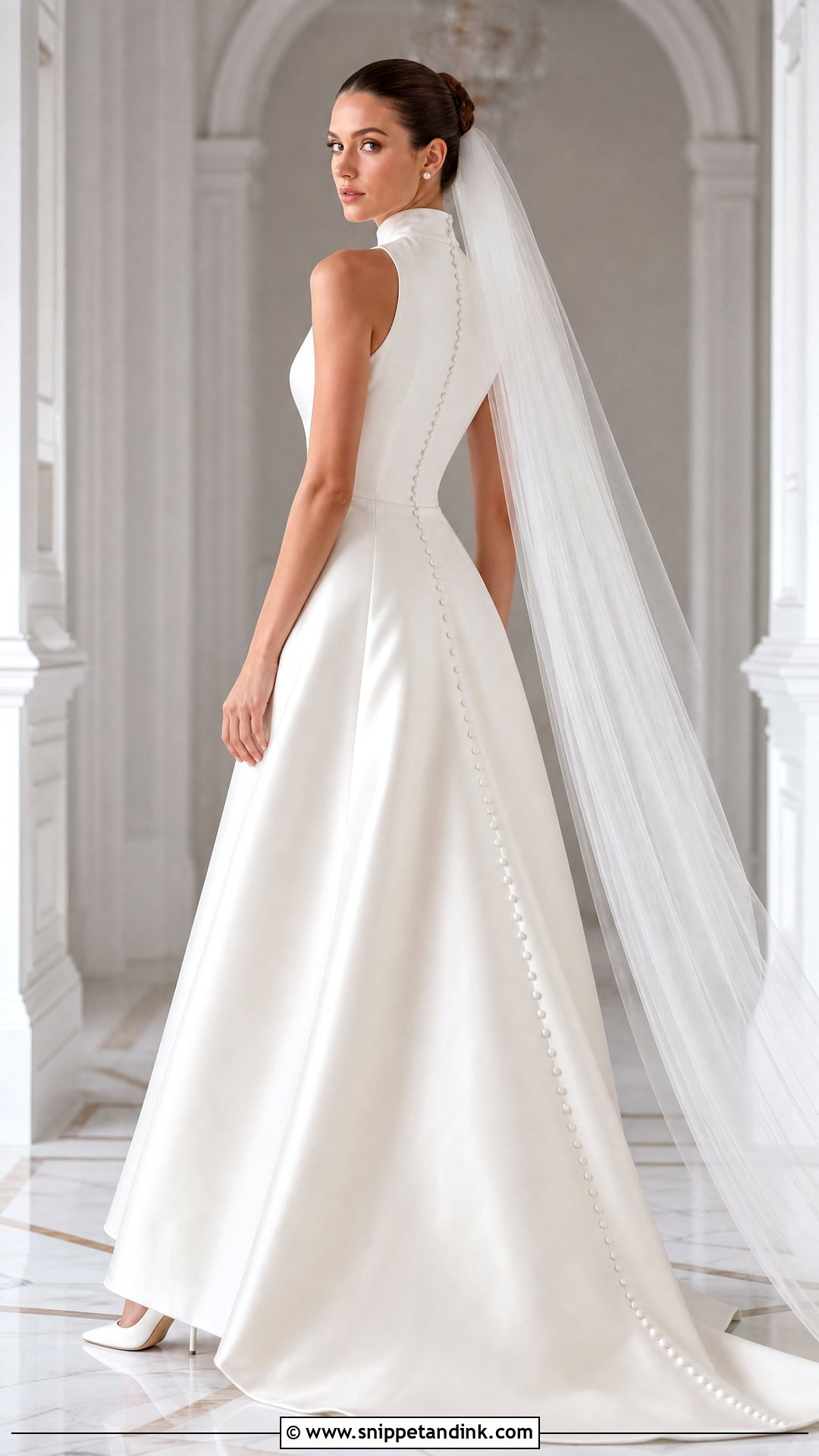
A high neck in taffeta looks editorial because the fabric stands up on its own, and that stiffness is also the risk. Cut even slightly tight, the collar presses on your throat when you look down. Keep it slim and carefully fitted, pair it with a sleeveless bodice and a gently flared skirt, and let covered back buttons add the traditional note. Skip the necklace. A polished bun, pearl studs, pointed pumps and a long veil set beneath the bun leave the collar on show. Before final alterations, turn your head both ways and sit for several minutes.
10. Corset Taffeta Wedding Dress
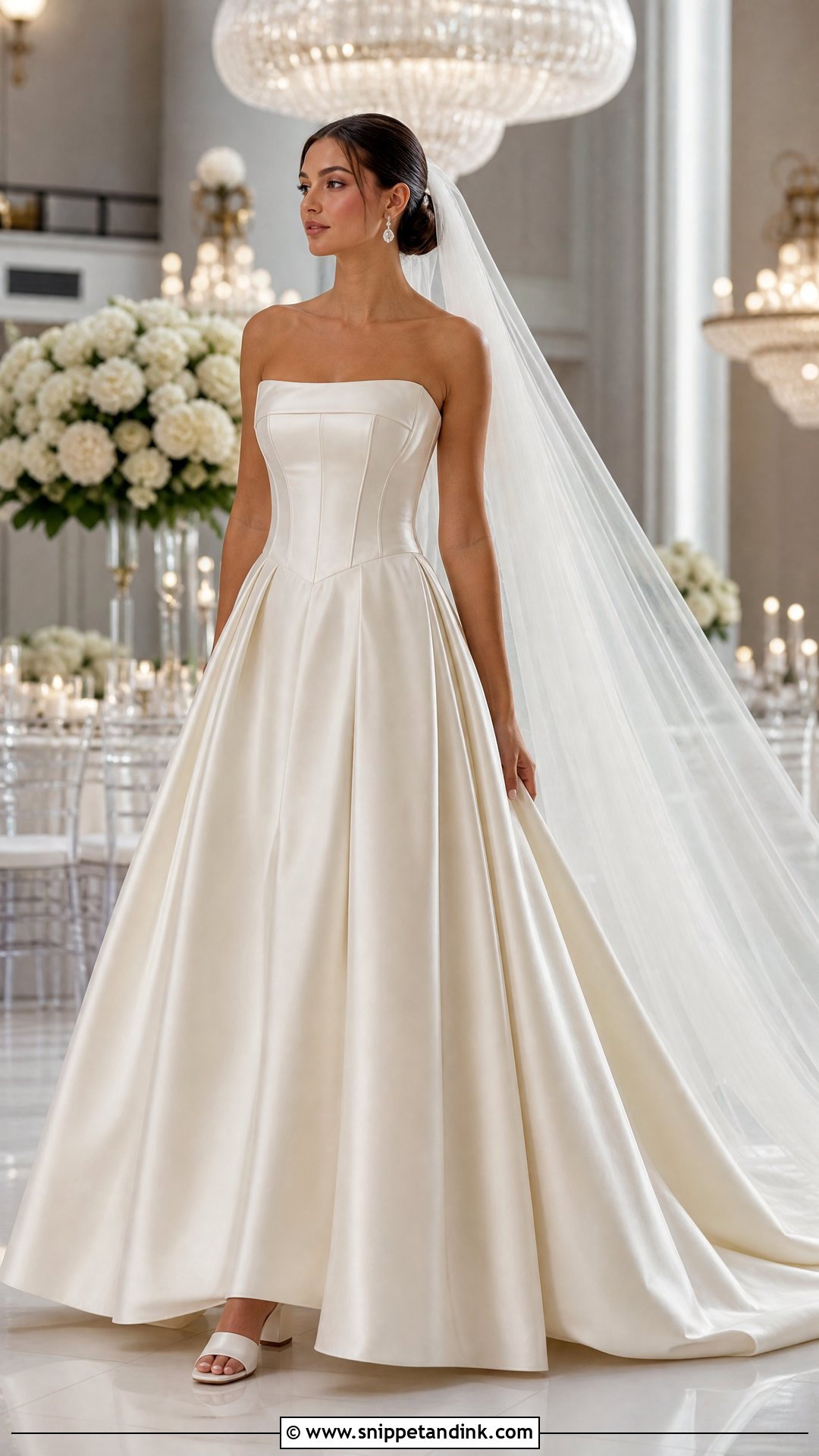
Taffeta and corsetry belong together. The fabric’s body makes curved panels and seam lines look sharp, and the waist stays defined before the skirt opens out. A straight neckline over a broad skirt gives contrast without any embellishment. Size for comfort; good internal construction does the supporting, not tight lacing. Drop earrings, a sheer cathedral veil and stable block heels hidden under the skirt finish it, along with a simple bouquet. Have the salon show your maid of honor how to lace or fasten it. A bodice laced unevenly twists on the body, and the seams give it away.
11. Pleated Taffeta Wedding Dress
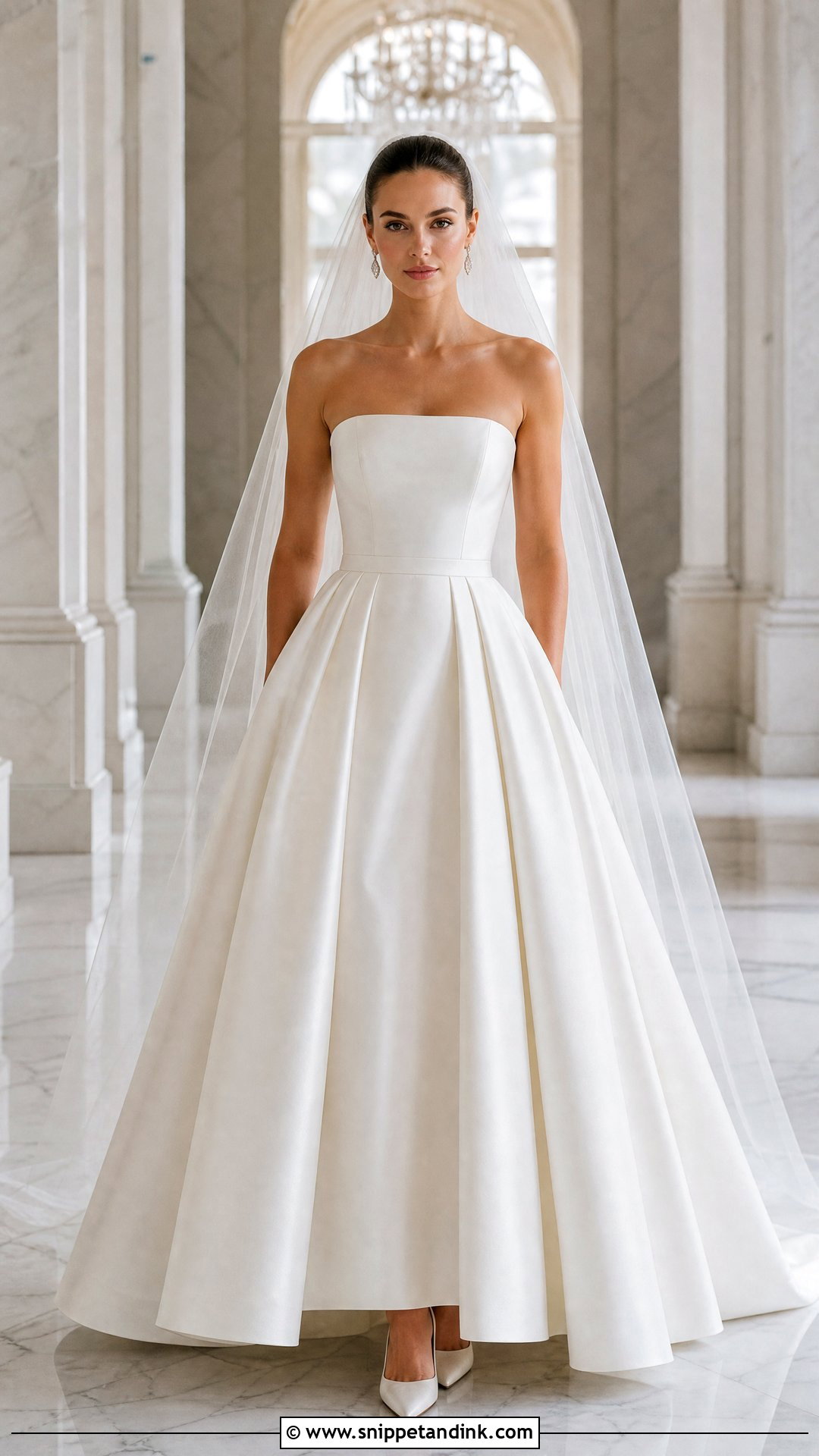
Pleats are where taffeta really earns its place, giving architectural volume that stays put. Box pleats read formal and symmetrical; wider directional pleats feel softer and more current. Keep the bodice smooth and fitted so the waist doesn’t thicken, with a strapless, square or wide scoop neckline. Small crystal earrings, satin pumps and a plain veil that falls past the train are enough. At the fitting, sit for a minute and stand up again. Each pleat should drop back into line, and on the day a quick steam brings back any that have flattened.
12. Draped Taffeta Wedding Dress
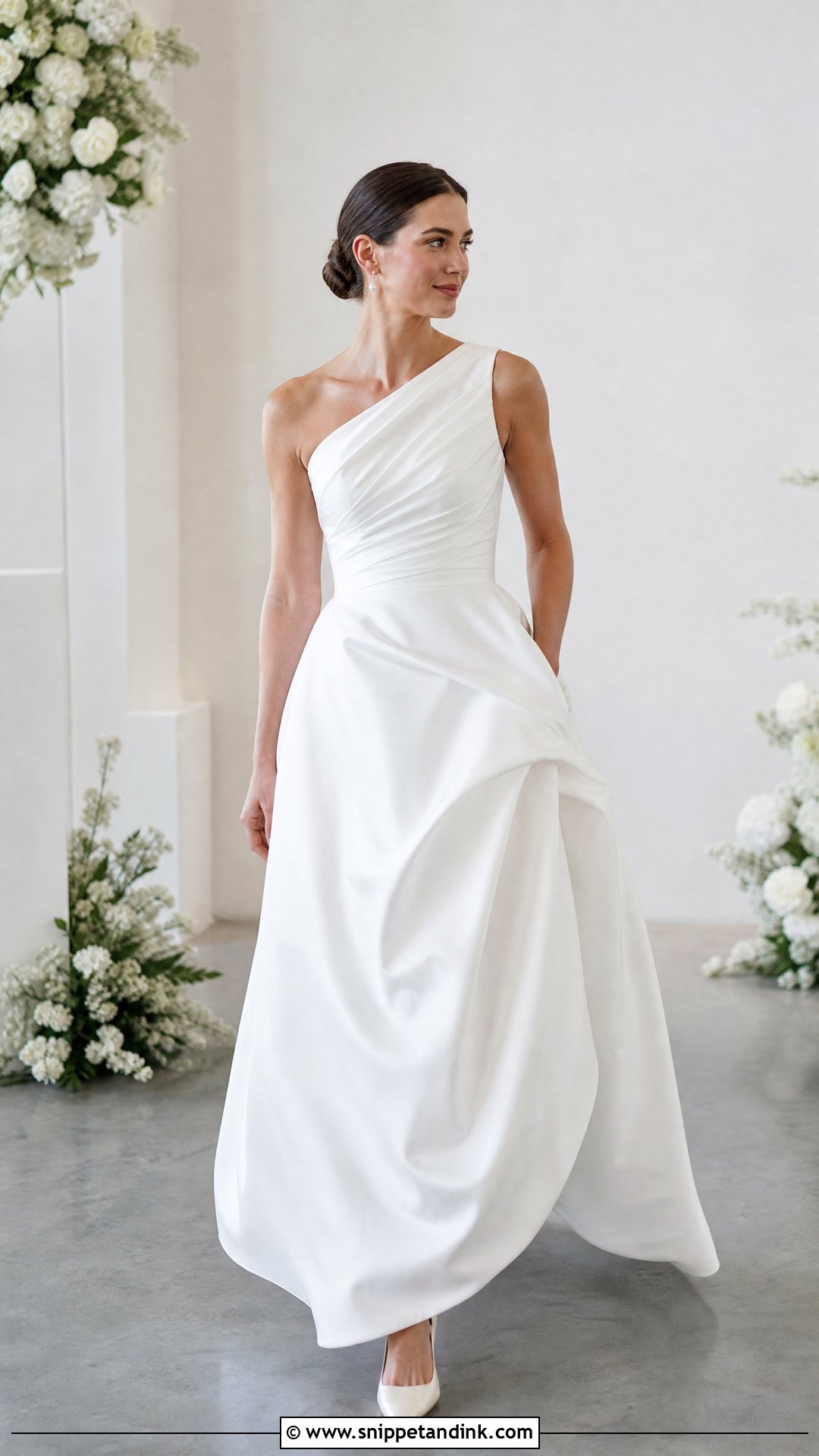
Draping is the softer side of taffeta, but it only works if the folds are anchored. Diagonal folds across the bodice define the waist and side drapes add dimension, all without beading or lace. Keep skirt volume controlled so it looks fluid rather than bulky, and choose a portrait, strapless or asymmetrical neckline. A smooth low bun, pearl drops and pointed ivory heels suit it, with a compact bouquet that doesn’t cover the folds. Ask the seamstress to tack the key folds internally at the waist and neckline, or they’ll shift each time you hug a guest.
13. Bow Back Taffeta Wedding Dress
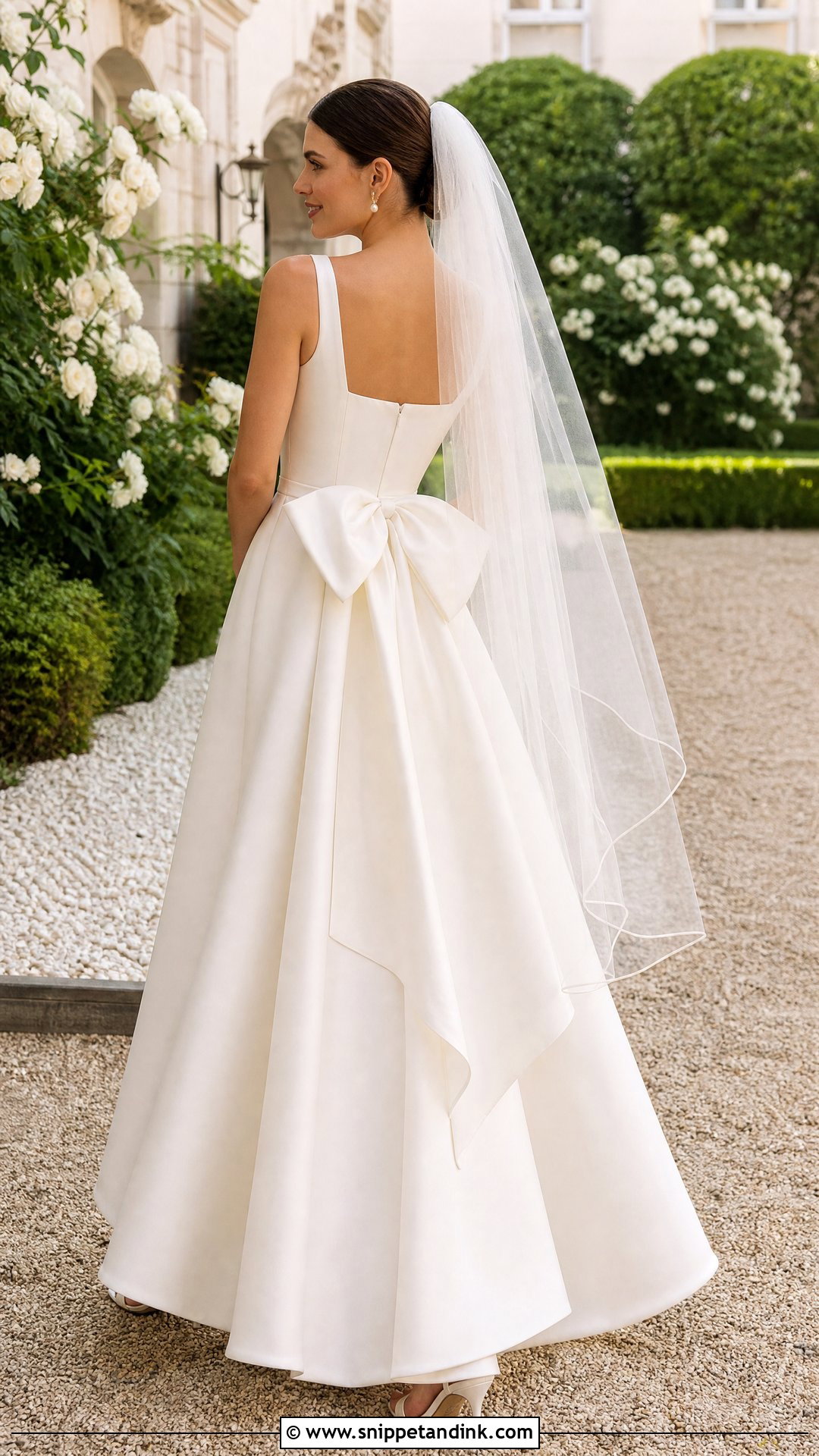
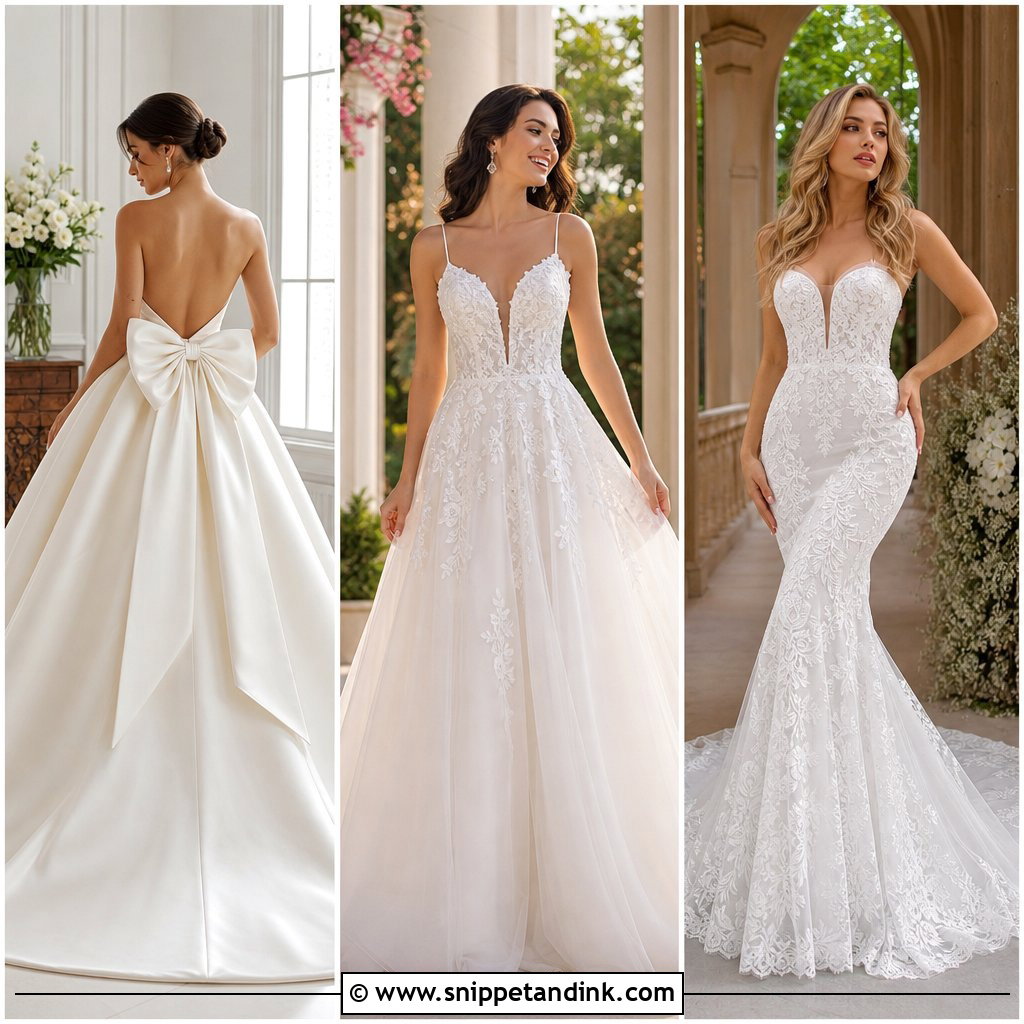
Taffeta holds bow loops and tails better than almost any other bridal fabric, which is why this back view works. A simple strapless or square-neck front, a fitted waist and an A-line skirt lead the eye backward. Pearl earrings, satin heels and a sheer veil that comes off after the ceremony reveal the bow, and a bun or polished ponytail keeps hair off it. Two practical points. A detachable bow makes sitting through dinner easier, and the bow has to sit above the bustle points so the train can be hooked up without crushing it.
14. Detachable Overskirt Taffeta Wedding Dress
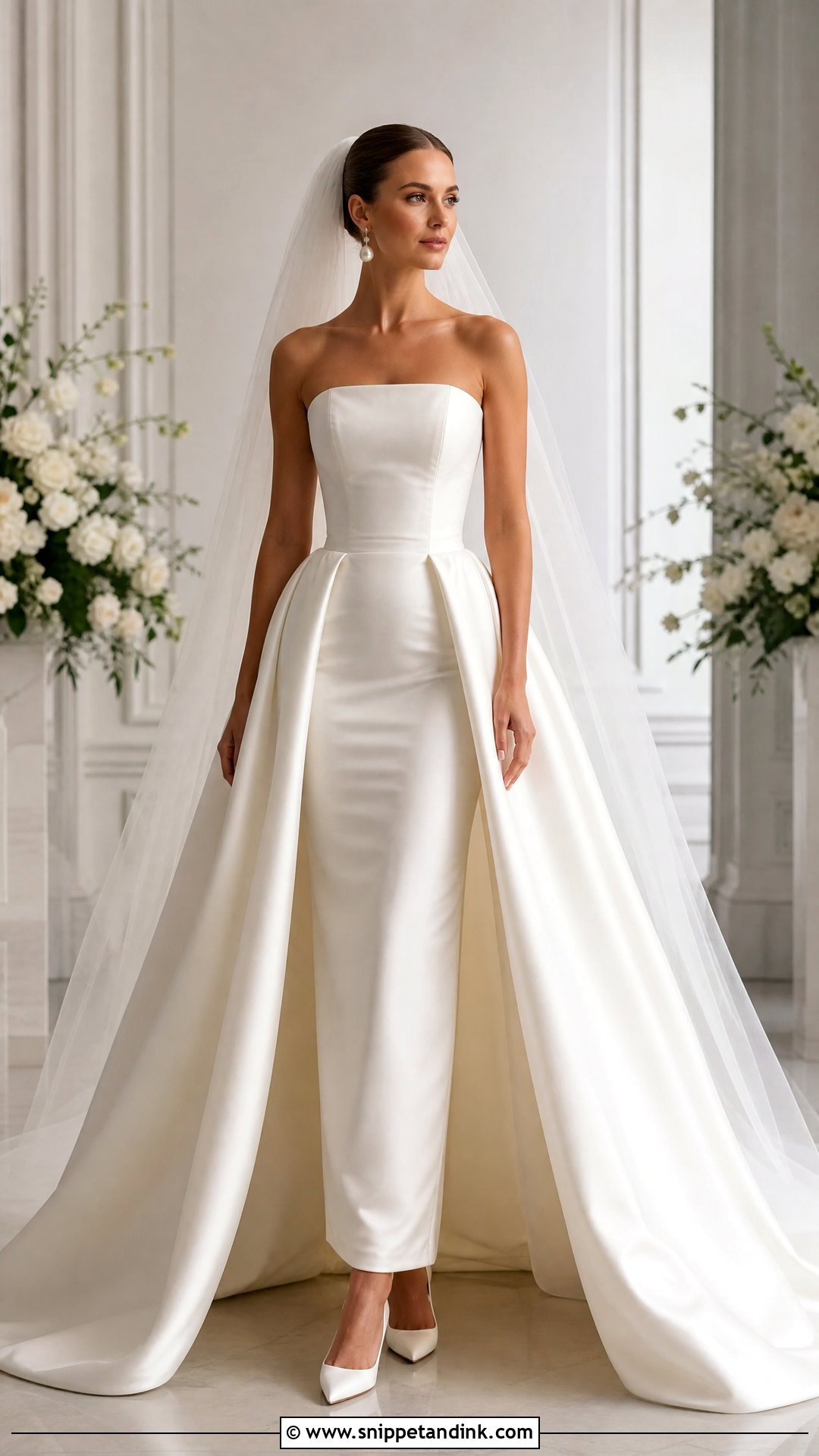
A detachable overskirt taffeta wedding dress gives you two looks on one fitting schedule. The structured overskirt goes over a fitted column, sheath or short dress for the ceremony and comes off for the reception. The join at the waist should disappear, with no visible hooks or puckering. A long veil, pearl earrings and pointed heels suit the entrance; afterward, swap the veil for a comb or bow. Have your attendant practice taking it off and, just as important, putting it away. Taffeta overskirts crease hard when stuffed into a bag, so bring a hanger and find a spot to hang it.

15. Taffeta Wedding Dress With Pockets
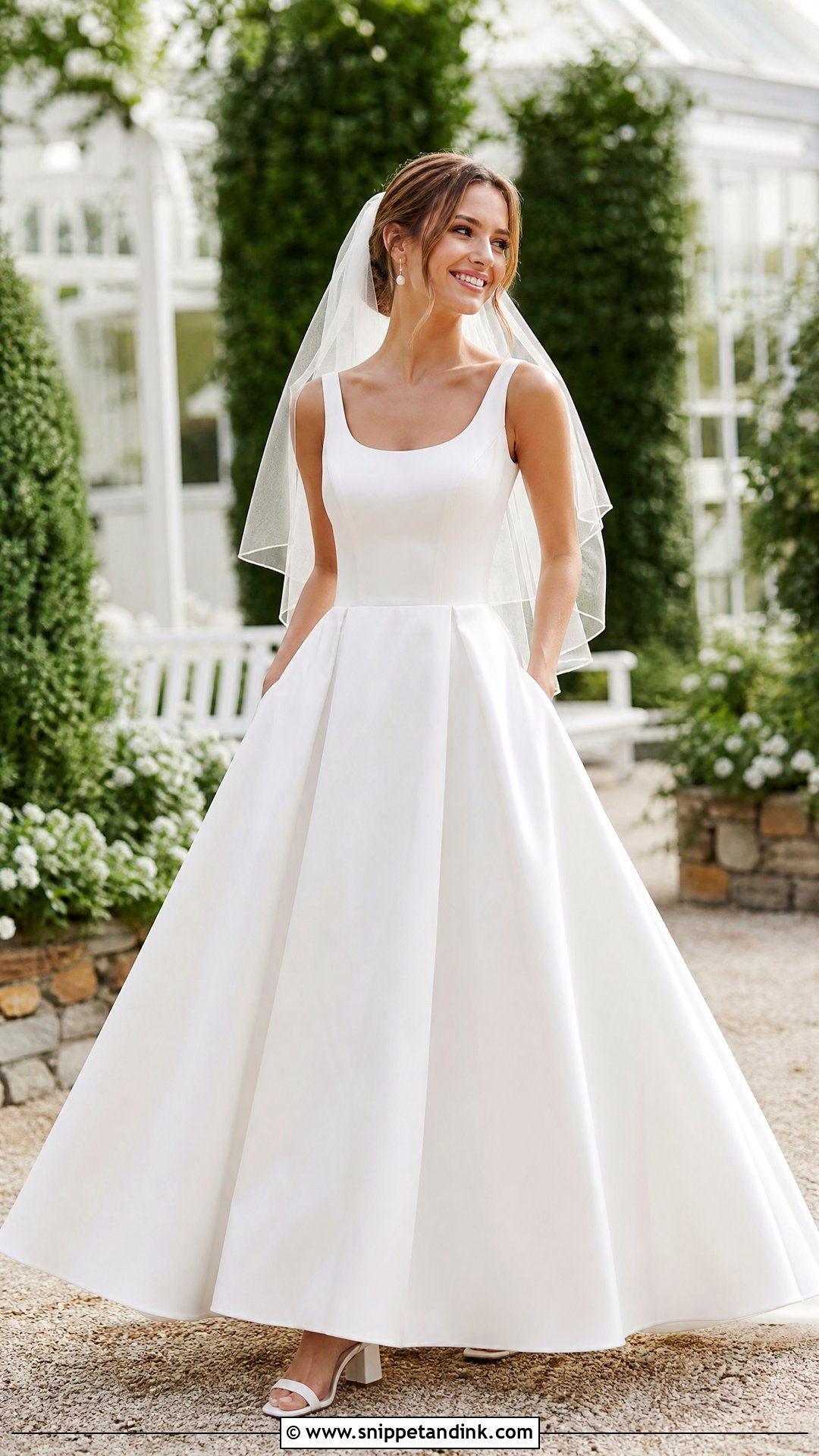
Pockets suit taffeta better than slinky fabrics because the volume hides them. An A-line or ball gown skirt keeps the openings smooth instead of pulling across the hips. Lip balm, a tissue or a folded note is plenty; a phone drags the pocket down and distorts the skirt line. A clean scoop neckline, pearl earrings, low block heels and a fingertip veil keep it simple. Pockets also give your hands somewhere natural to rest in candid portraits. Check their height at the fitting, standing and sitting, so you can reach them without hunching.
16. Tea Length Taffeta Wedding Dress
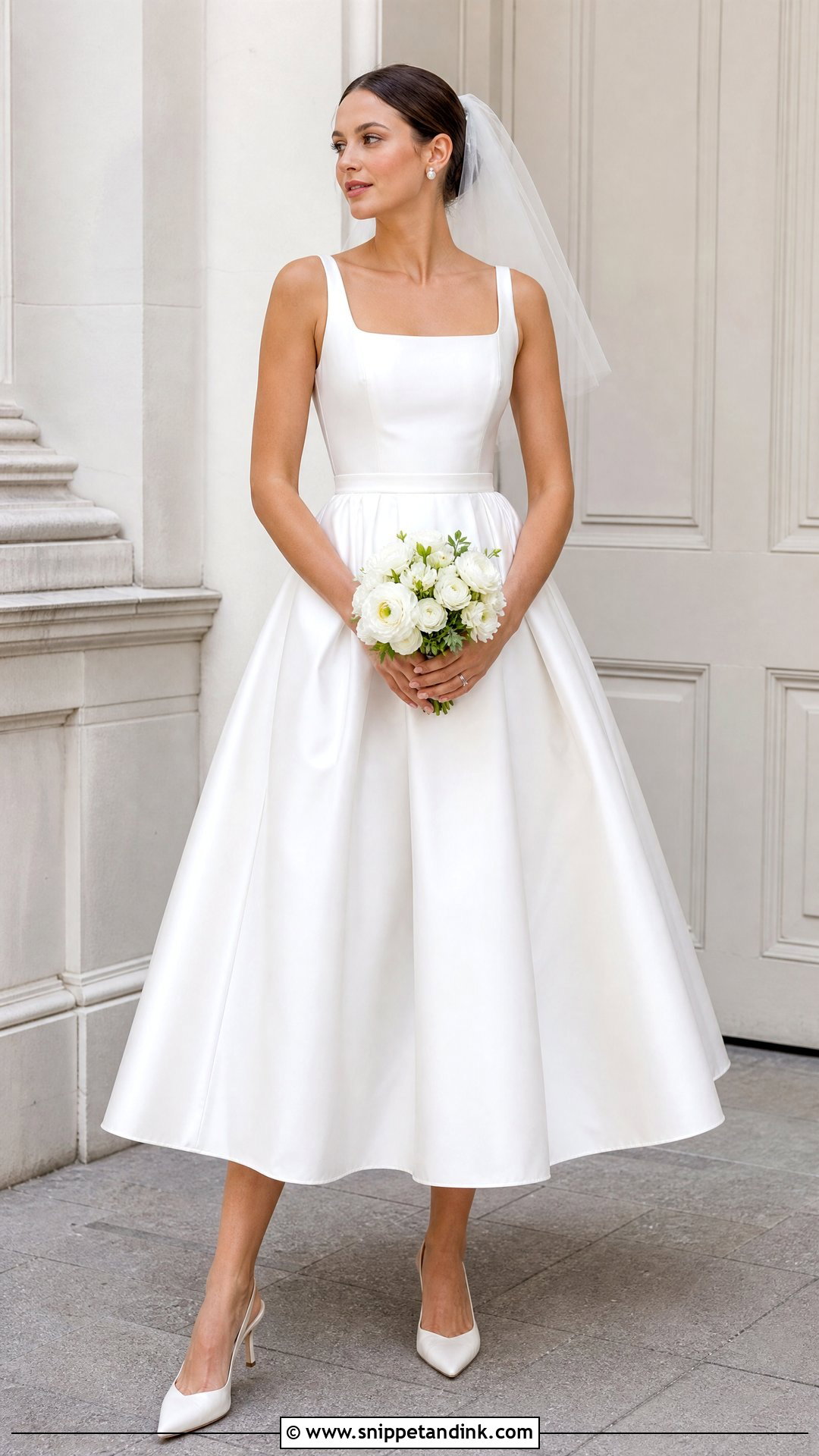
Tea length depends on proportion more than anything. The skirt falls between the knee and ankle, so the fitted bodice and defined waist have to balance a shorter, fuller shape. Your pointed pumps, slingbacks or embellished block heels will be on show, so choose ones you can wear for hours. Pearl studs, a short veil and a small structured bouquet finish it for a courthouse ceremony, brunch reception or small garden wedding. Wear the shoes to the hem fitting, since a small change in length alters the whole silhouette. A smooth petticoat adds fullness without pushing taffeta into costume territory.
17. Mini Taffeta Wedding Dress
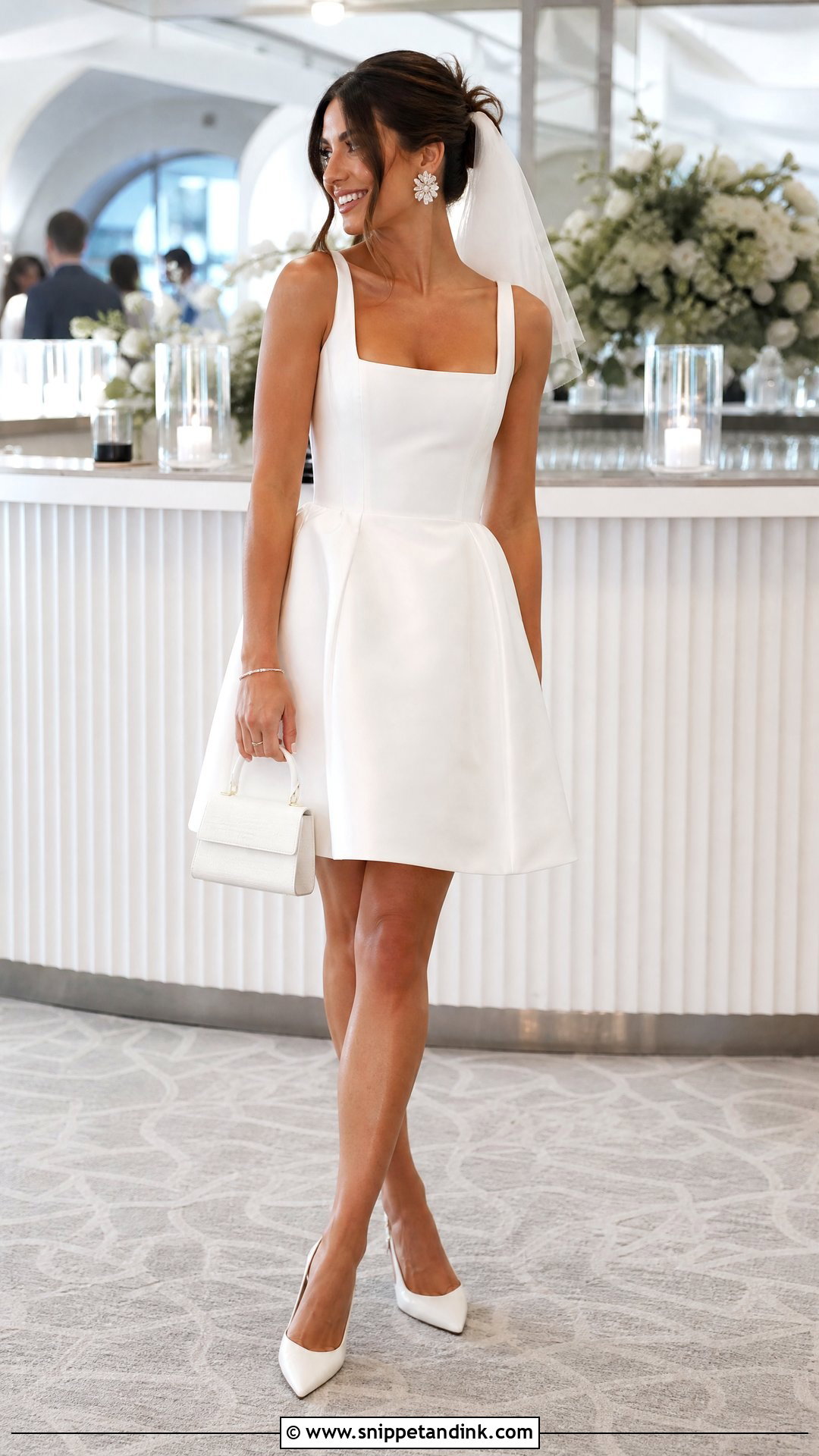
A short taffeta dress keeps its shape where a chiffon mini would simply hang, so you get a proper A-line, bubble or flared skirt. Balance the hemline with a secure neckline and a supportive bodice. Pointed slingbacks, statement earrings and a small top-handle bag suit it, with a short veil or sculptural bow in the hair. Built-in shorts or a smooth lining make dancing easier. Check that the hem stays level front to back and still covers you when you sit. If it’s your reception dress, build changing time into the schedule so you don’t miss the first dance.
18. High Low Taffeta Wedding Dress
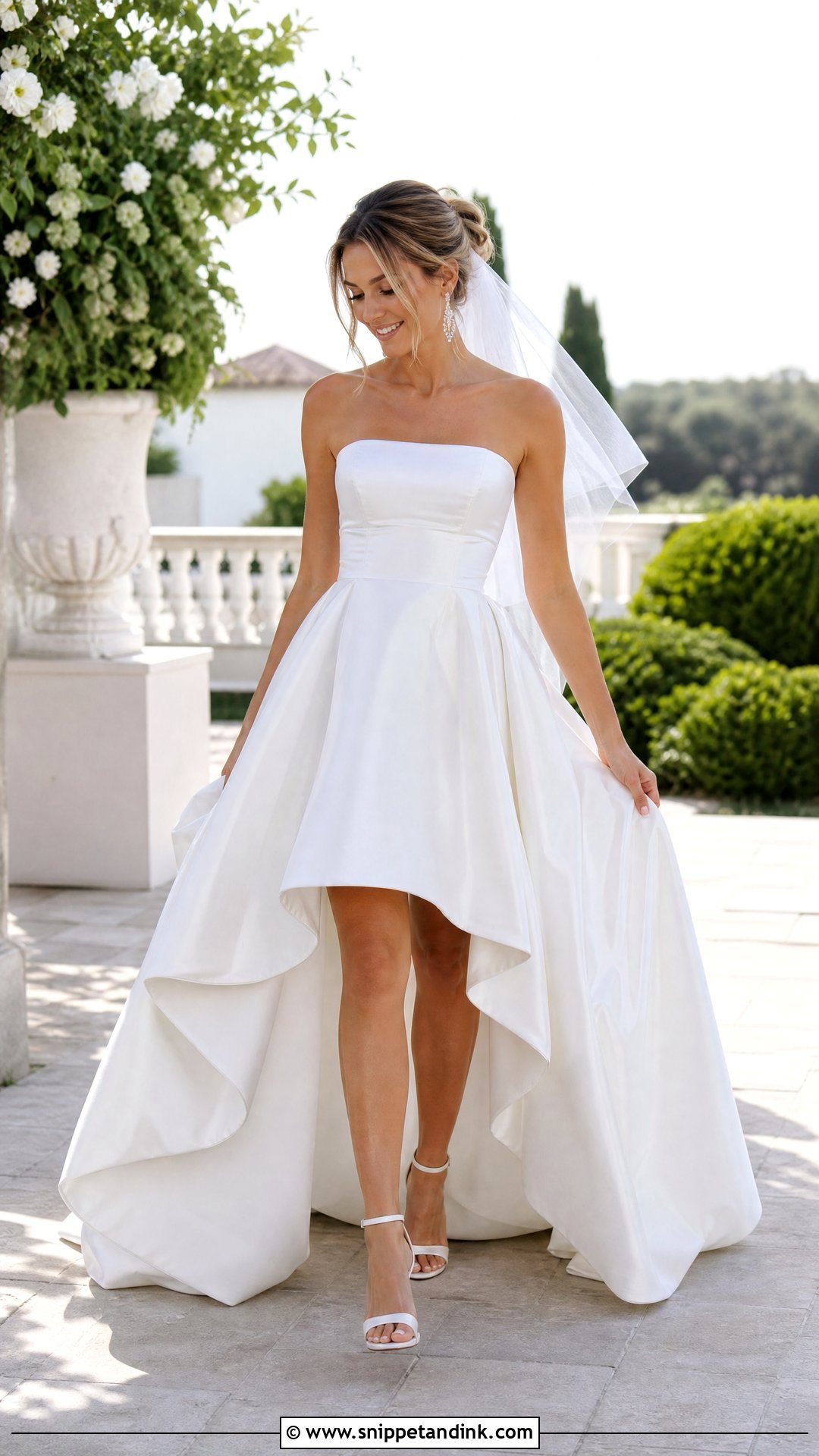
High-low taffeta shows the shoes in front and keeps a full train behind. Ask for a gradual curve between the two, because an abrupt step in stiff fabric looks like a cutting mistake. With your shoes on display, choose elegant heels with secure ankle or slingback straps. Simple earrings, a neat updo and a light veil keep attention on the hem. Outdoors, the shorter front won’t drag through grass. Climb a few steps and turn both ways at the fitting; the back shouldn’t catch under your heels.
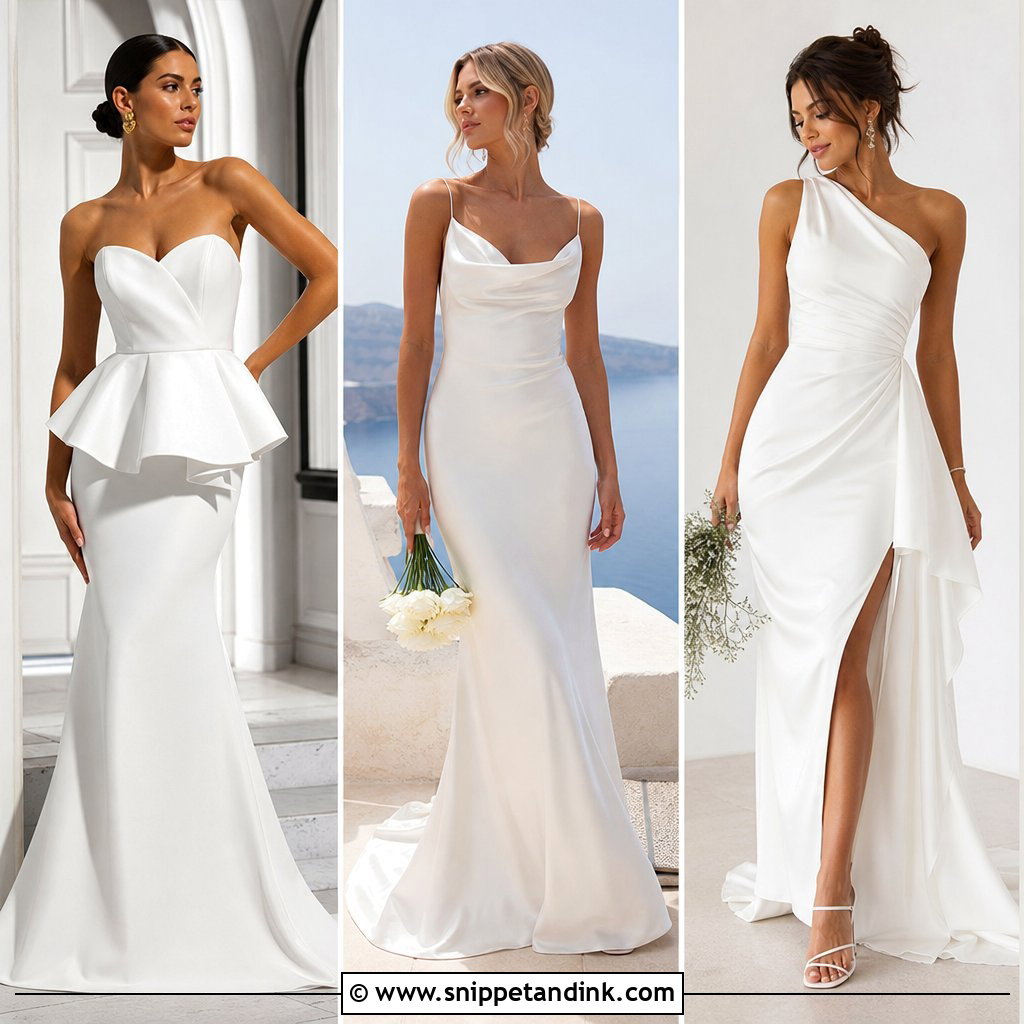
19. Mermaid Taffeta Wedding Dress
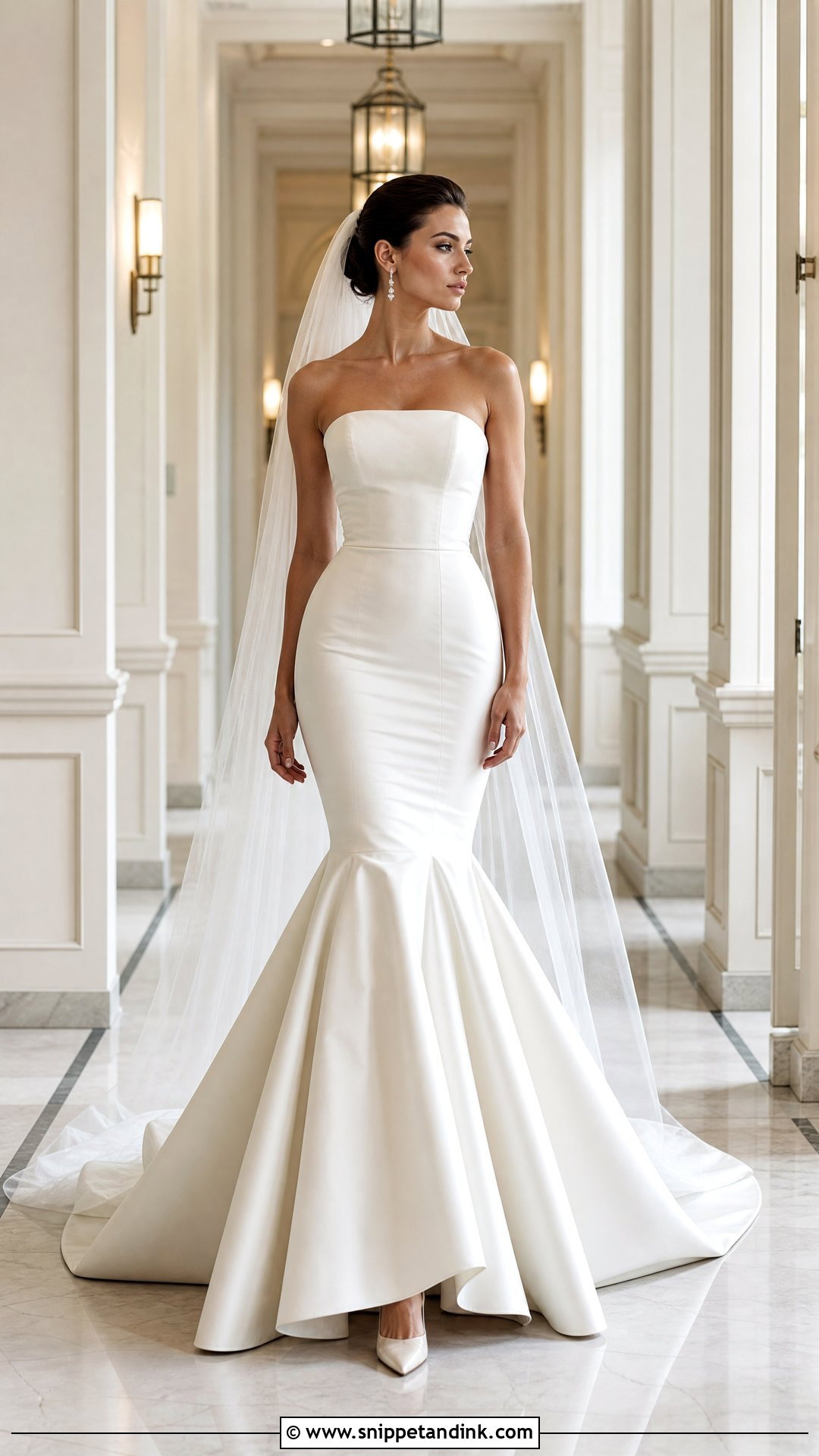
Mermaid shapes in taffeta flare with real drama because the fabric holds the bell without extra layers. The trade-off is that it won’t give an inch through the hips, so the seaming has to be precise and the flare has to start where you can still walk. A strapless or off-shoulder neckline, drop earrings and a long plain veil suit it, with slim heels you can stand in through the photos. Take full strides at every fitting. A removable train or secure bustle helps later, and smooth, no-show undergarments matter more here than with any looser cut.
20. Column Taffeta Wedding Dress
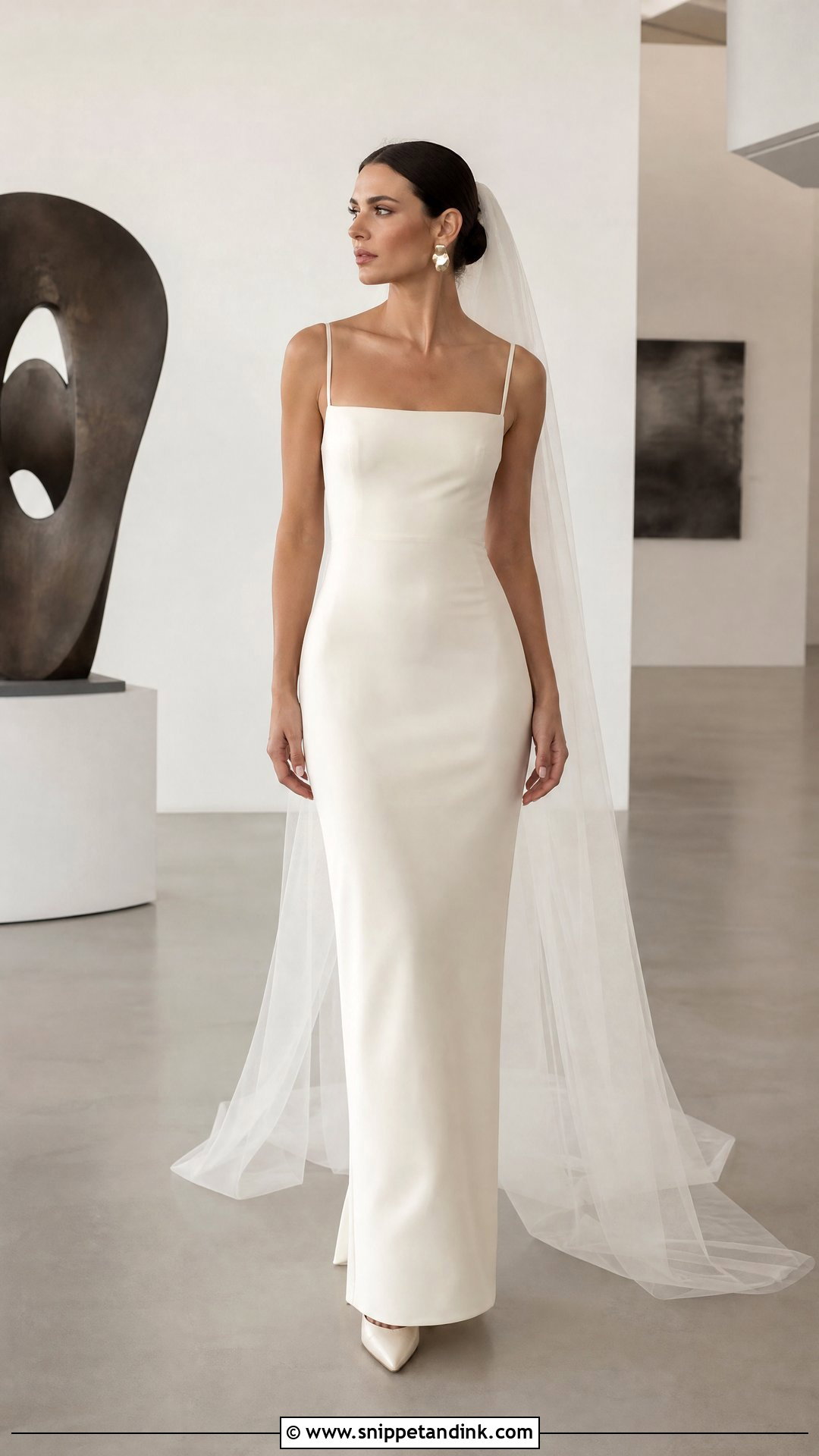
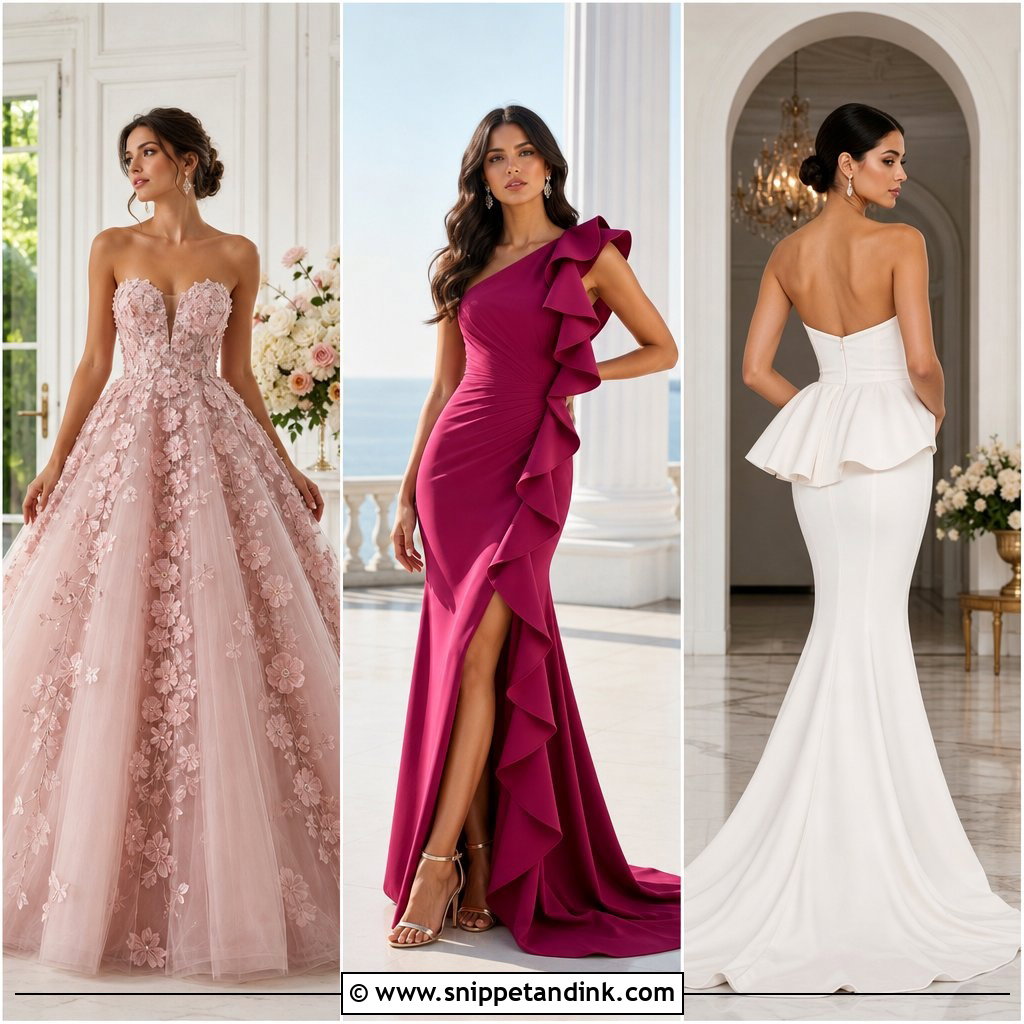
Column dresses hide nothing. With so few decorative elements, the fit through the waist and hips has to be precise, and taffeta’s crispness gives the plain shape an architectural edge. A straight neckline or narrow straps keep it clean. Sculptural earrings, pointed pumps, a sleek bun and a long unembellished veil complete it. A back slit makes walking possible in a narrow skirt; check it doesn’t climb too high when you sit. For a minimalist bride, this is the purest use of the fabric.
21. Cape Taffeta Wedding Dress
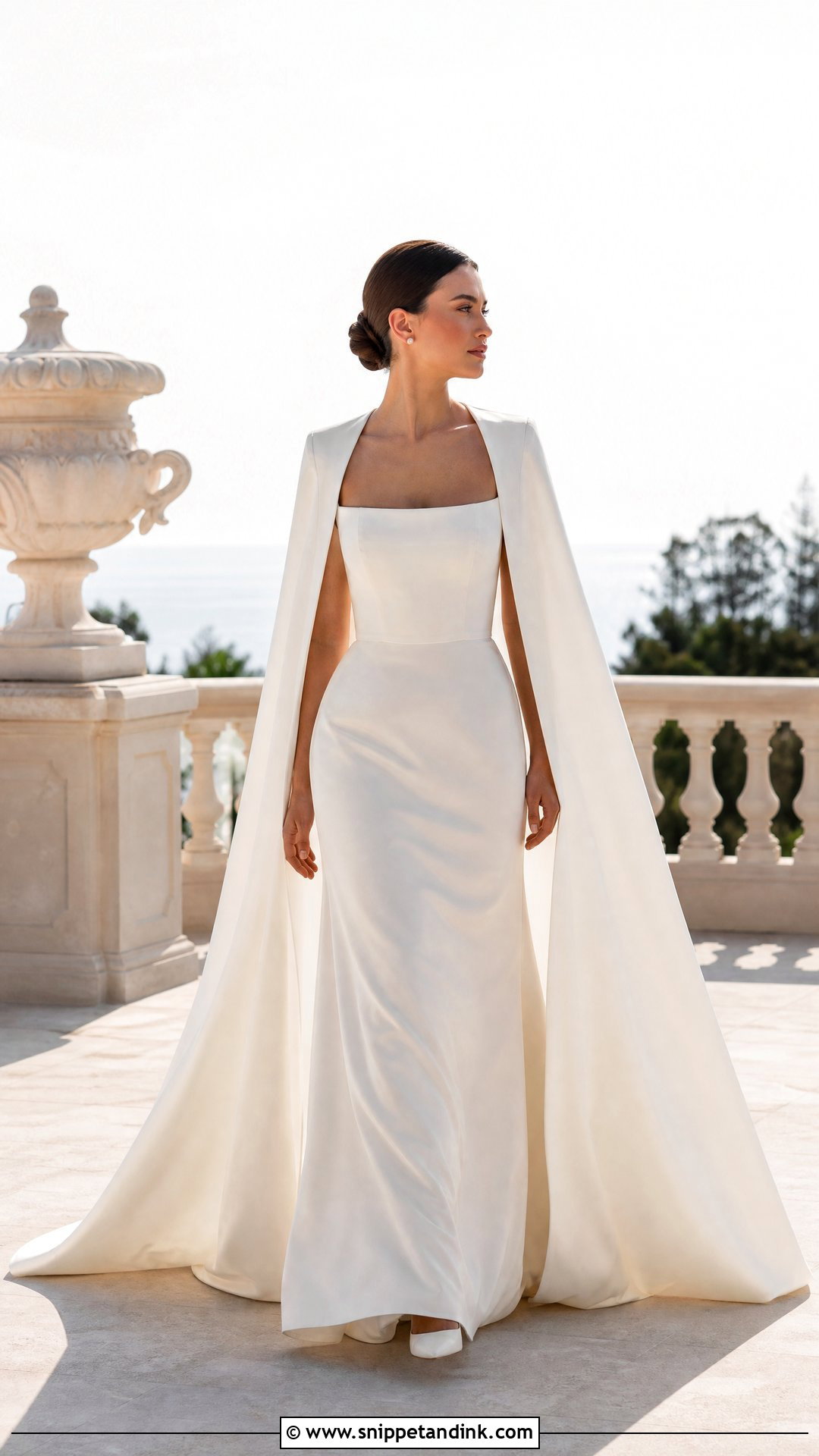
A cape adds ceremony drama and some shoulder coverage over a simple strapless, sleeveless or square-neck gown. Sheer capes float, while a structured taffeta cape makes more of a fashion statement. Match the ivories carefully. Two fabrics in two slightly different whites look like a mistake in photos, so hold the cape against the dress in daylight before you buy. Pearl studs, pointed heels and a smooth updo suit it, and you can skip the veil. Pick a fastening that releases easily before dinner, and test the cape outside, because taffeta catches wind like a sail.
22. Floral Applique Taffeta Wedding Dress
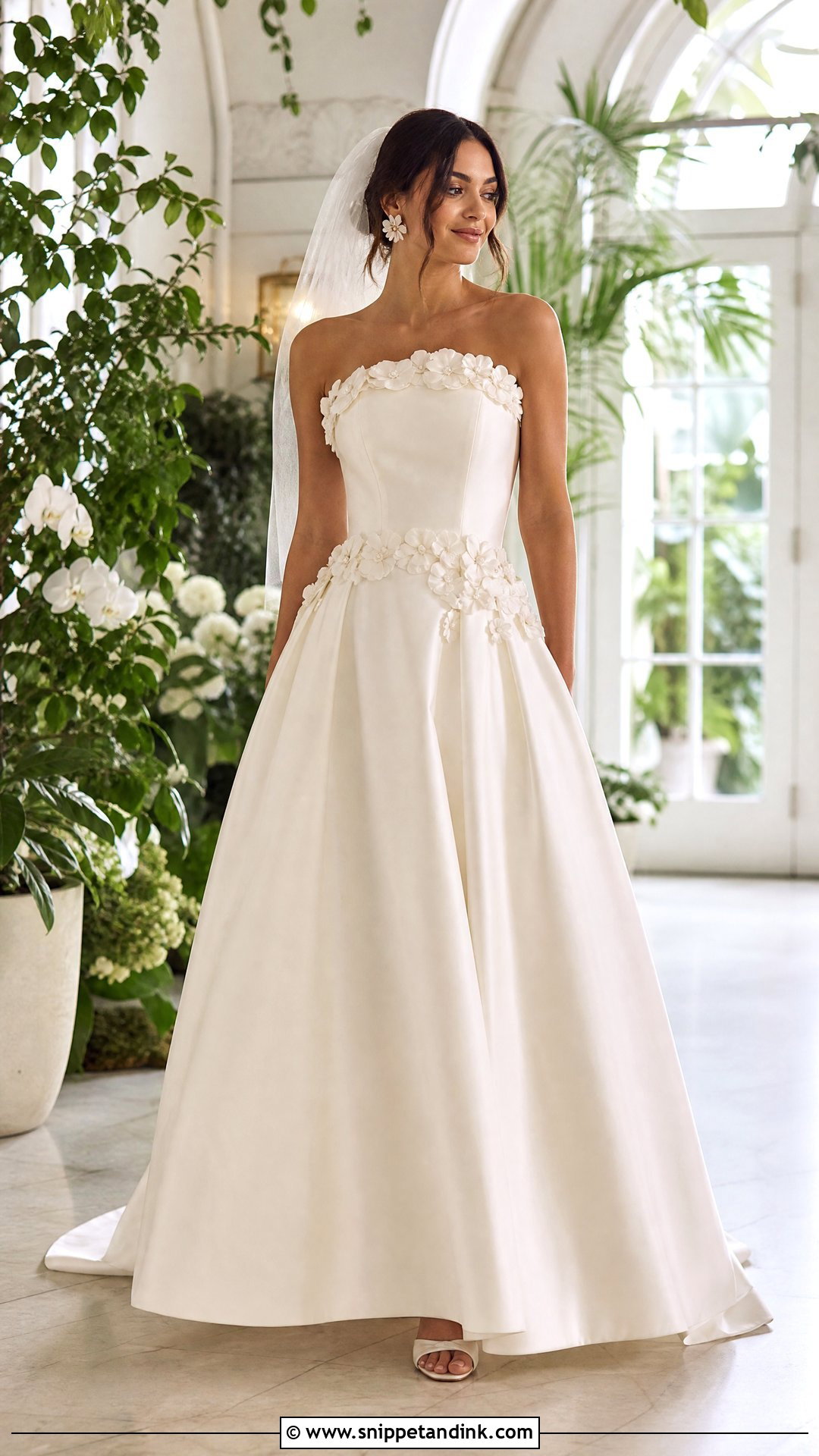
Appliqués soften taffeta’s polished surface, as long as they don’t bury the fabric you chose it for. Place three-dimensional flowers at the neckline, waist or skirt rather than everywhere; a strapless A-line with scattered ivory blossoms is plenty. Floral earrings, understated heels and a plain veil let them lead, and a compact bouquet that complements rather than copies them finishes the look. Check each appliqué’s edges before the wedding. When you store the gown, give the flowers room, because packed tight the petals flatten and rarely rise again.
23. Pearl Taffeta Wedding Dress
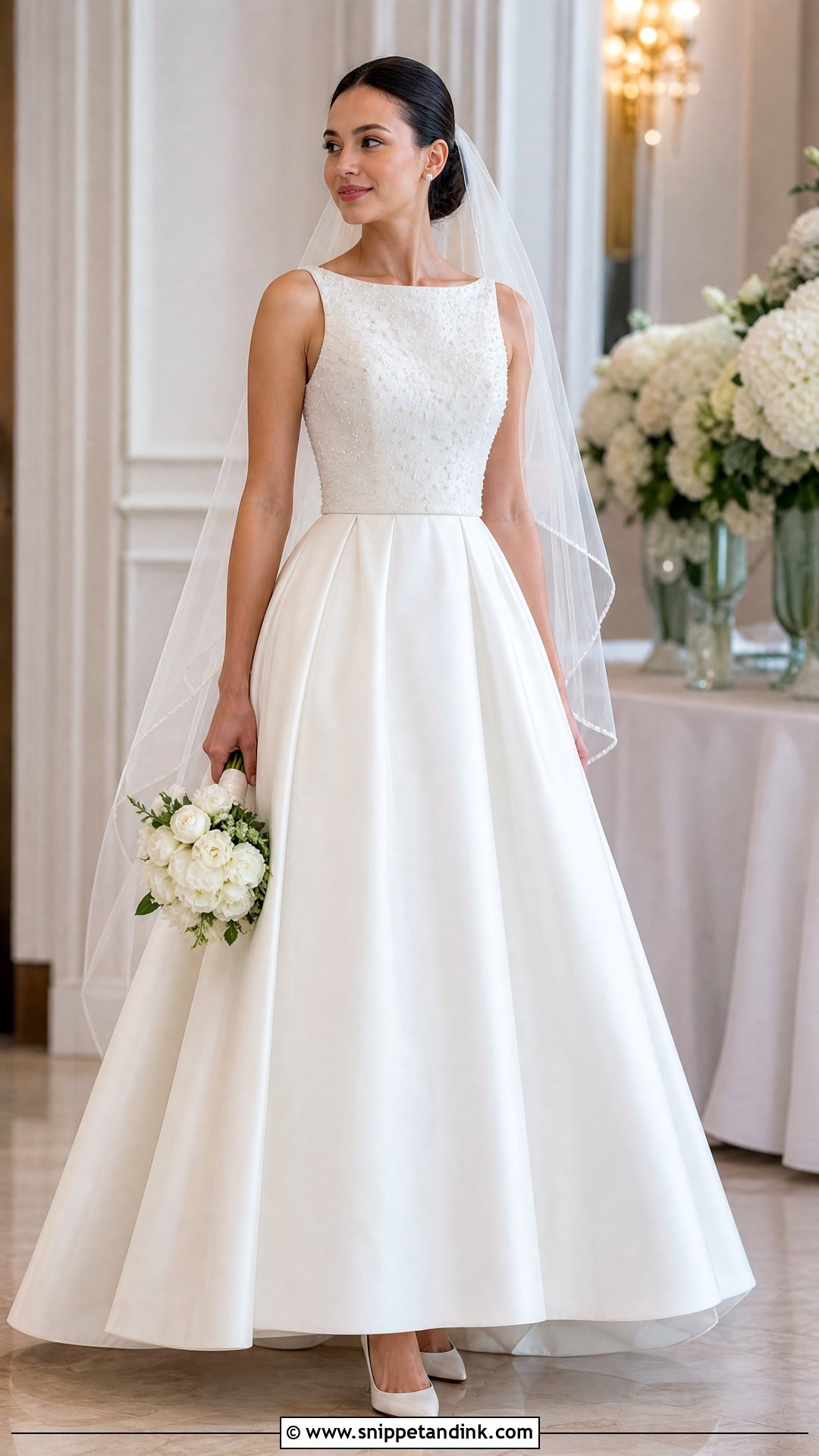
Pearls on taffeta look most deliberate in concentrated placements, outlining the neckline, marking the waist or covering the bodice, rather than spread evenly over everything. A fitted bodice and softly pleated skirt carry them without adding visual weight. Small pearl earrings, satin pumps and a clean-edged veil are enough, and skip a heavy necklace unless the neckline is very open. Check that the pearls are sewn on individually and securely. The bodice lining should be smooth too, so the stitching behind each pearl doesn’t scratch your skin by evening.
24. Blush Taffeta Wedding Dress
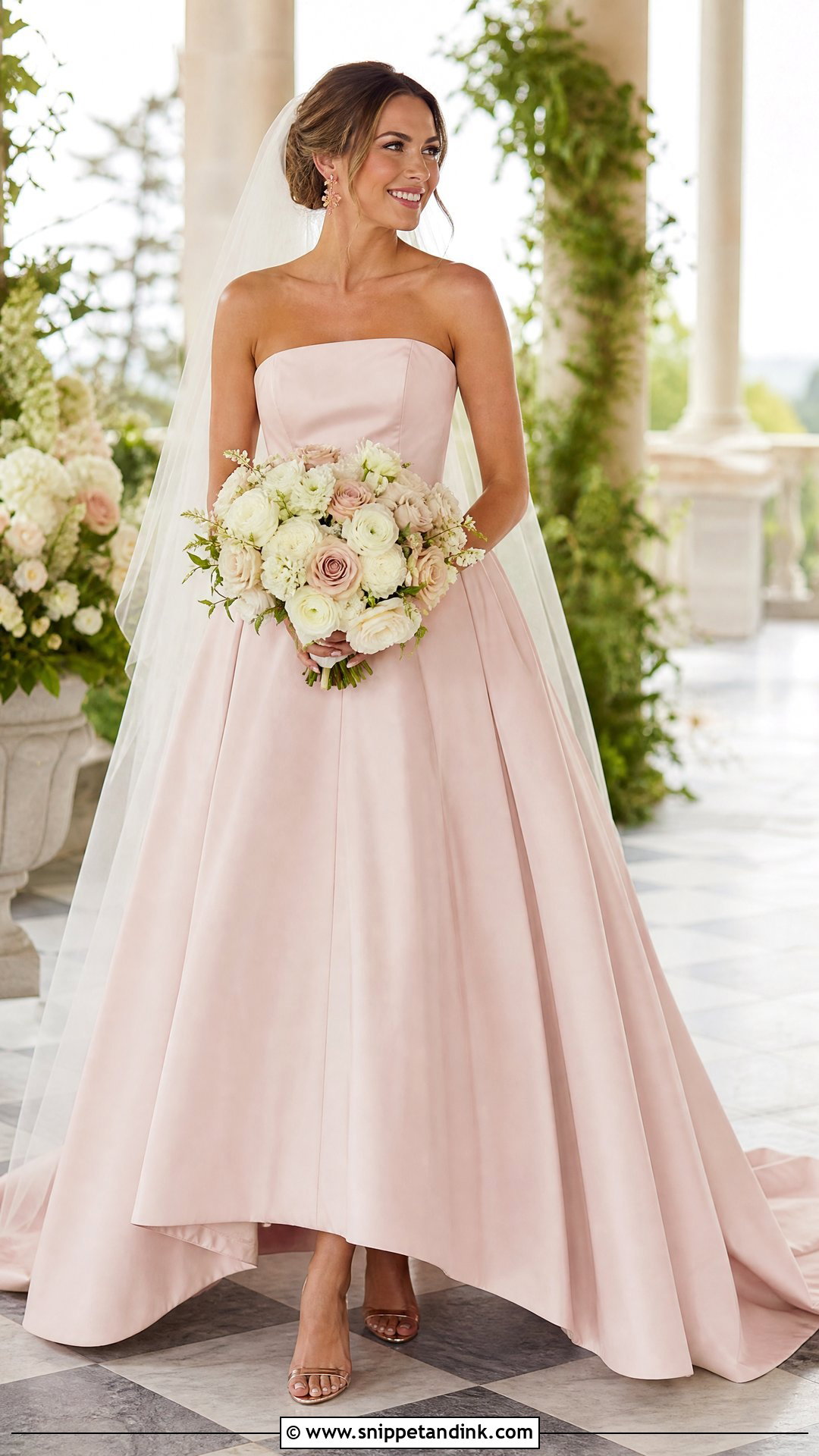
Blush taffeta shows off the fabric’s sheen and the shadows in its folds. Pale pink, rose ivory and champagne blush all work, but compare the swatch in daylight and indoors, because a glossy finish can photograph pinker or more orange than it looks in person. A full A-line skirt with a clean strapless bodice keeps it elegant. Ivory or pale metallic heels, rose-toned earrings and a sheer ivory veil suit it, and slight tonal differences look better than matching every piece exactly. Natural makeup with soft pink and a bouquet of white, cream and muted blush flowers finish it.

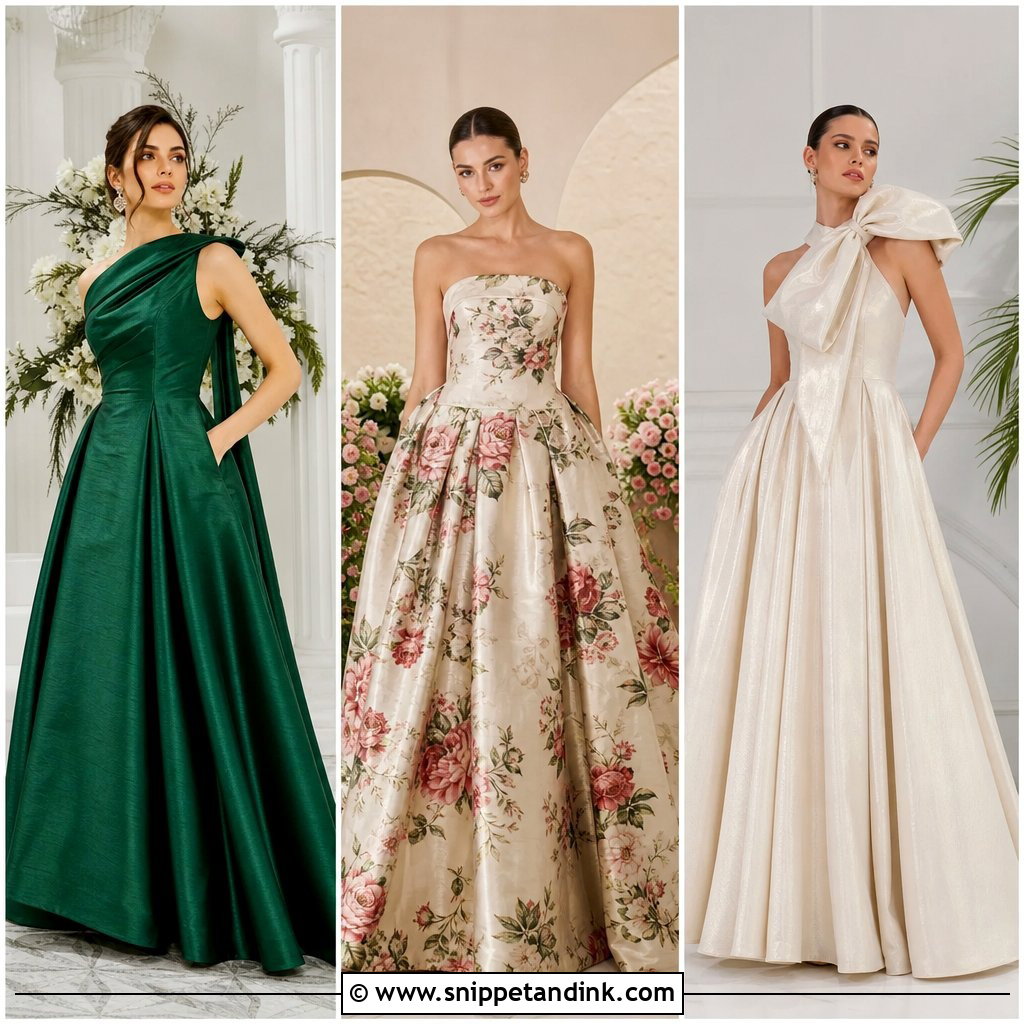
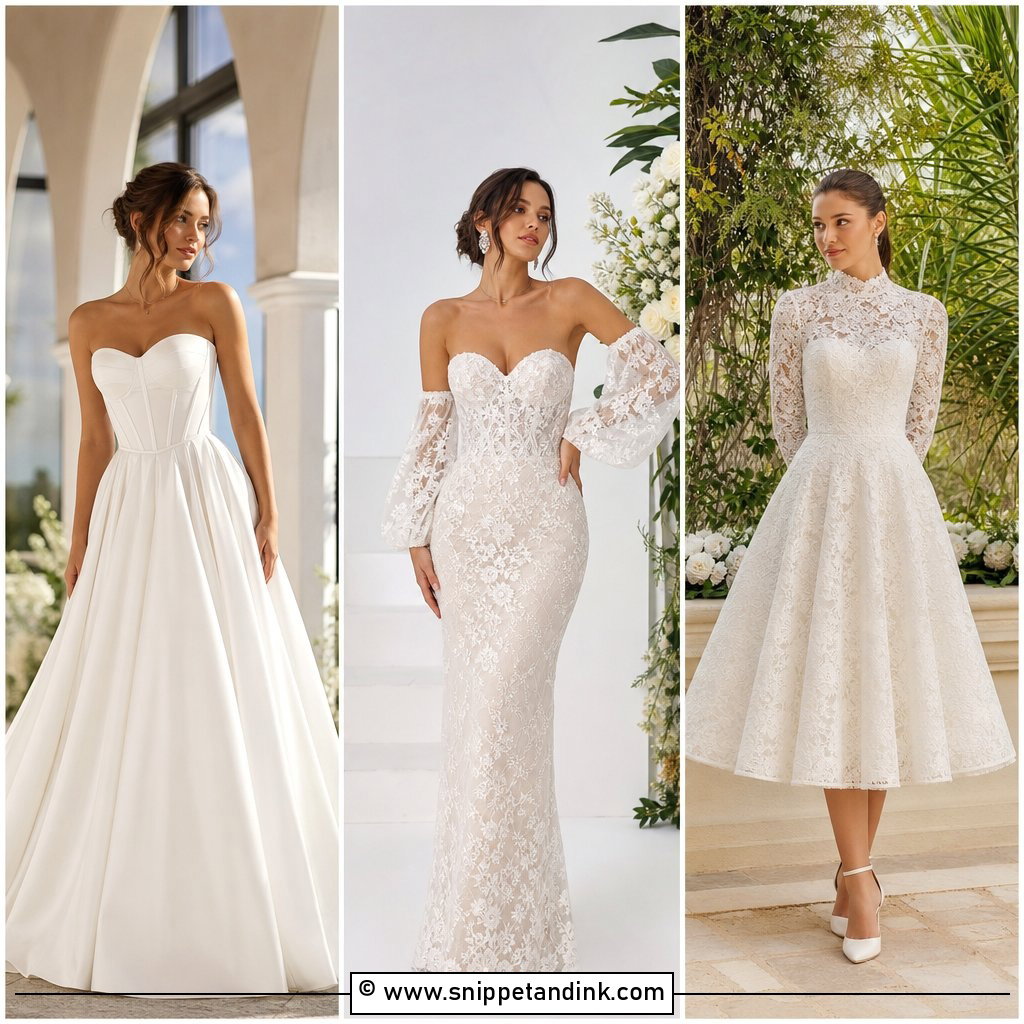
25. Black Taffeta Wedding Dress
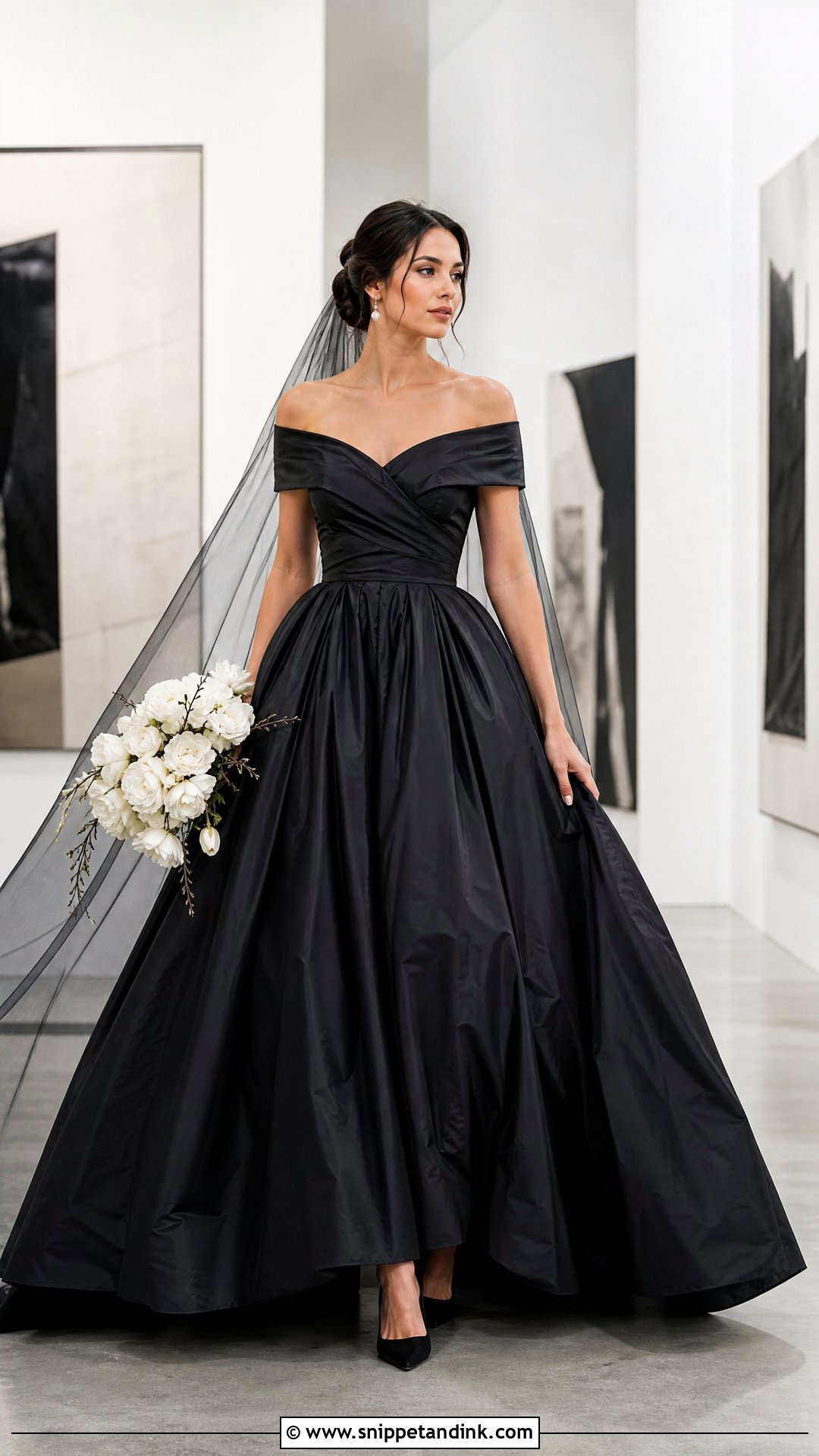
Black taffeta never looks flat. The crisp folds catch light and give the color dimension, especially in pleated ball gowns and structured A-lines. A square, strapless or off-shoulder neckline keeps the shape defined. Silver or pearl earrings, black pointed heels and a sheer black or contrasting ivory veil complete it, and a white bouquet gives the eye a clean break. Talk to your photographer early. Dark fabric loses detail in dim rooms, so bright portrait spots and careful exposure are what reveal the seams, folds and waist.
Taffeta Creases Easily, So Plan the Morning Around It
Every taffeta bride sees a crease at some point on the day. The fabric is stiff, so when it folds it folds sharply, and a skirt crushed in a car or garment bag shows it. Most creases relax with steam. A few deep ones are better prevented than fixed, which is why the gown should travel hanging and be unpacked as soon as it arrives.
Steaming without damage
- Hang the gown and steam from inside the skirt where you can, keeping the steamer head a hand’s width from the fabric.
- Never press an iron straight onto taffeta. It can leave a shiny mark that won’t come out.
- Test on an inside seam allowance first, especially with silk.
- Let the dress cool and dry on its hanger for a few minutes before you step in.
Rain, drinks and water marks
Silk taffeta can water-spot, so even a few raindrops or a splash left to dry may leave a ring. If something spills, blot gently with a dry white cloth and leave it alone. Don’t rub and don’t add water, which only spreads the mark. Point it out to a bridal cleaner afterward. On a wet day, a clear umbrella and one person assigned to keep your skirt off damp ground save a great deal of worry.
Taffeta Rewards a Simple Plan
Taffeta covers a remarkable range, from ball gowns and tailored columns to floral appliqués, color and short reception dresses. Its structure is the reason pleats, corsetry, bows, draping and detachable skirts hold up so well in it. Start with a silhouette you’re comfortable in and that fits your venue, then work through the neckline, waist, train, accessories and shoes. Judge the whole outfit at your fittings, never the dress alone on a hanger. The right gown lets you move, keeps its shape in photos and feels like you, traditional or not.
You'll Like These Ideas:





Leave a Reply