
Most brides with a pear-shaped figure arrive at their first appointment with a list of things they’ve been told to avoid. I’d rather start with what works: a defined waist, something happening at the shoulders, and a skirt that moves over the hips instead of gripping them. A-lines and ball gowns are the easy wins, and off-shoulder, sweetheart, square and V necklines all give the upper body presence. Treat that as a starting point, not a rulebook. Fitted crepe, modified mermaid dresses and asymmetric cuts can look wonderful when the tailoring is right. Each gown below comes with the shoes, veil and fitting notes I’d give you in the room.
Order for Your Hips, Then Let the Seamstress Take In the Top
Pear-shaped brides often measure a size or two apart between bust and hips. Bridal shops order from a size chart, so I always order for the larger number. A bodice that’s loose can be taken in neatly; a skirt that’s tight across the hips often can’t be let out, because many gowns have only a narrow seam allowance there.
Ask these at the appointment, before you sign anything:
- How much seam allowance is in the side seams at the hip?
- Can the bodice be taken in without moving the lace or beading?
- Is the skirt cut on separate panels, which are easier to adjust, or as one piece?
- How many fittings does the alteration price include?
Most seamstresses like a first fitting a couple of months before the wedding and a final one a few weeks out, though timings vary with how much work the dress needs. Bring your wedding shoes and underwear to every one, since both change where the hem and waist sit.
1. A-Line Sweetheart Wedding Dress
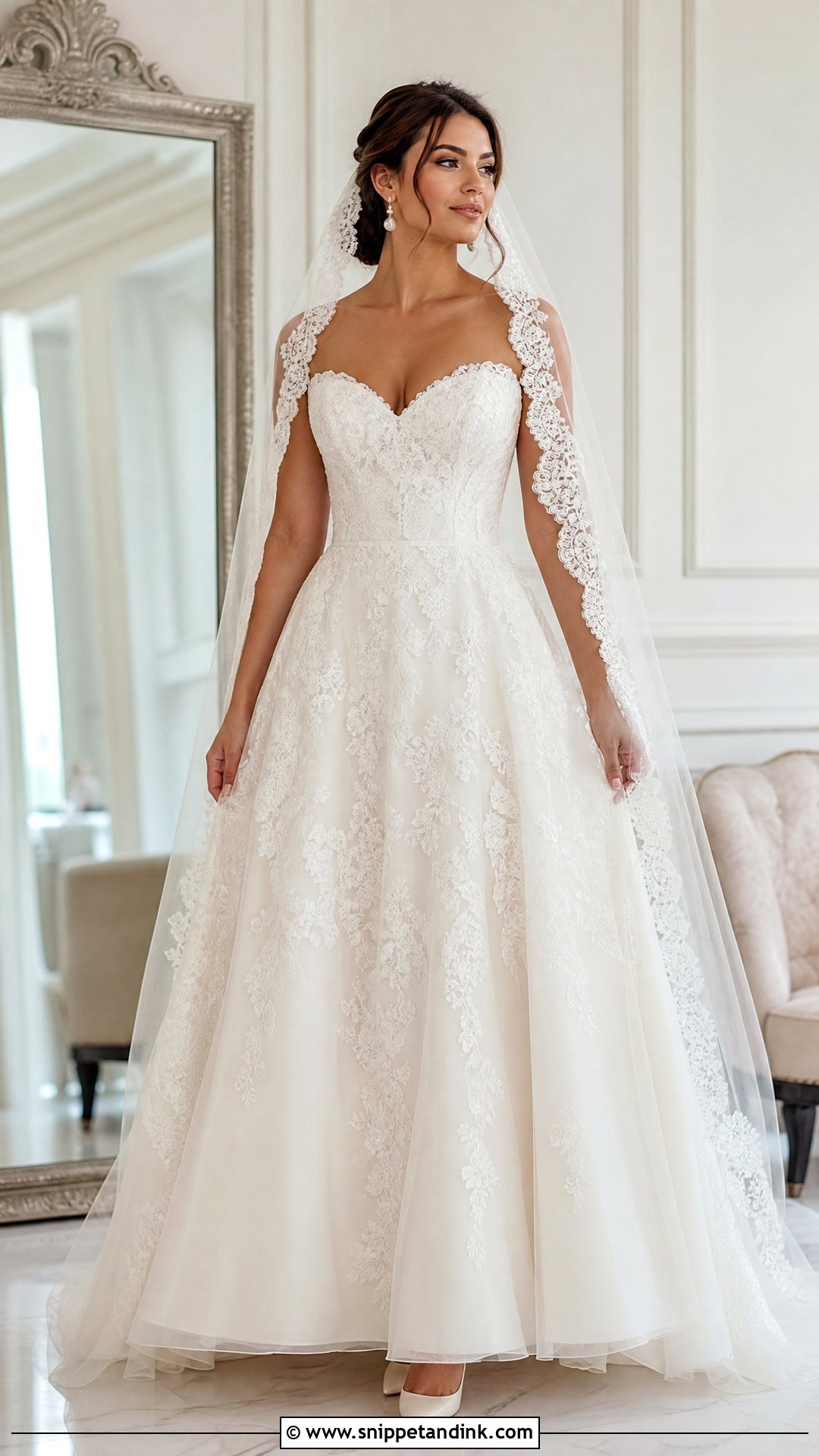
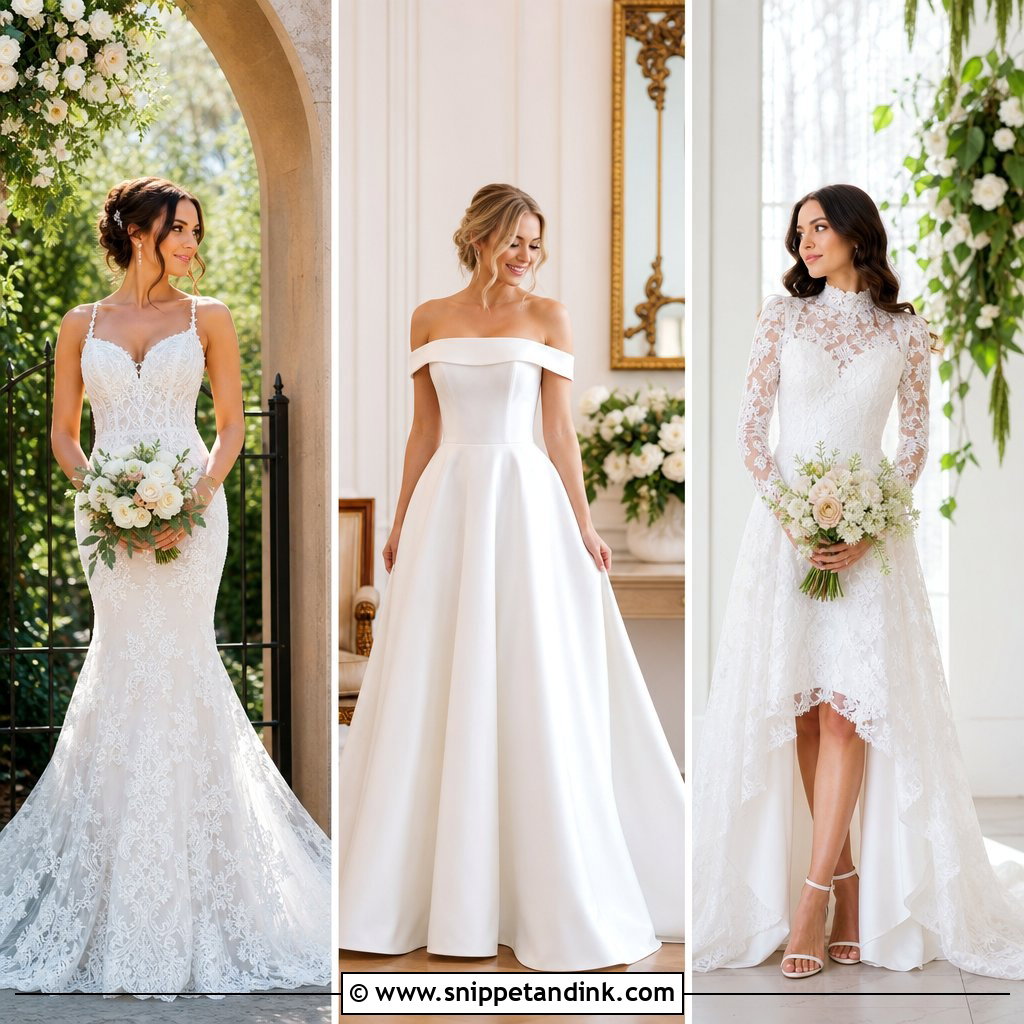
If I had to put a pear-shaped bride in one dress without seeing her first, it would be this. The sweetheart bodice marks the waist and the skirt opens gradually, so nothing pulls across the hips. Boning inside the bodice keeps the shape all day. I like lace or fine beading concentrated at the neckline, because detail up top draws the eye there. Pearl drops, pointed ivory pumps and a lace-edged fingertip veil keep it romantic. At alterations, make sure the waist seam sits on your natural waist. Even a centimetre low and the skirt starts bunching at the hip.
2. Off-Shoulder Ball Gown Wedding Dress
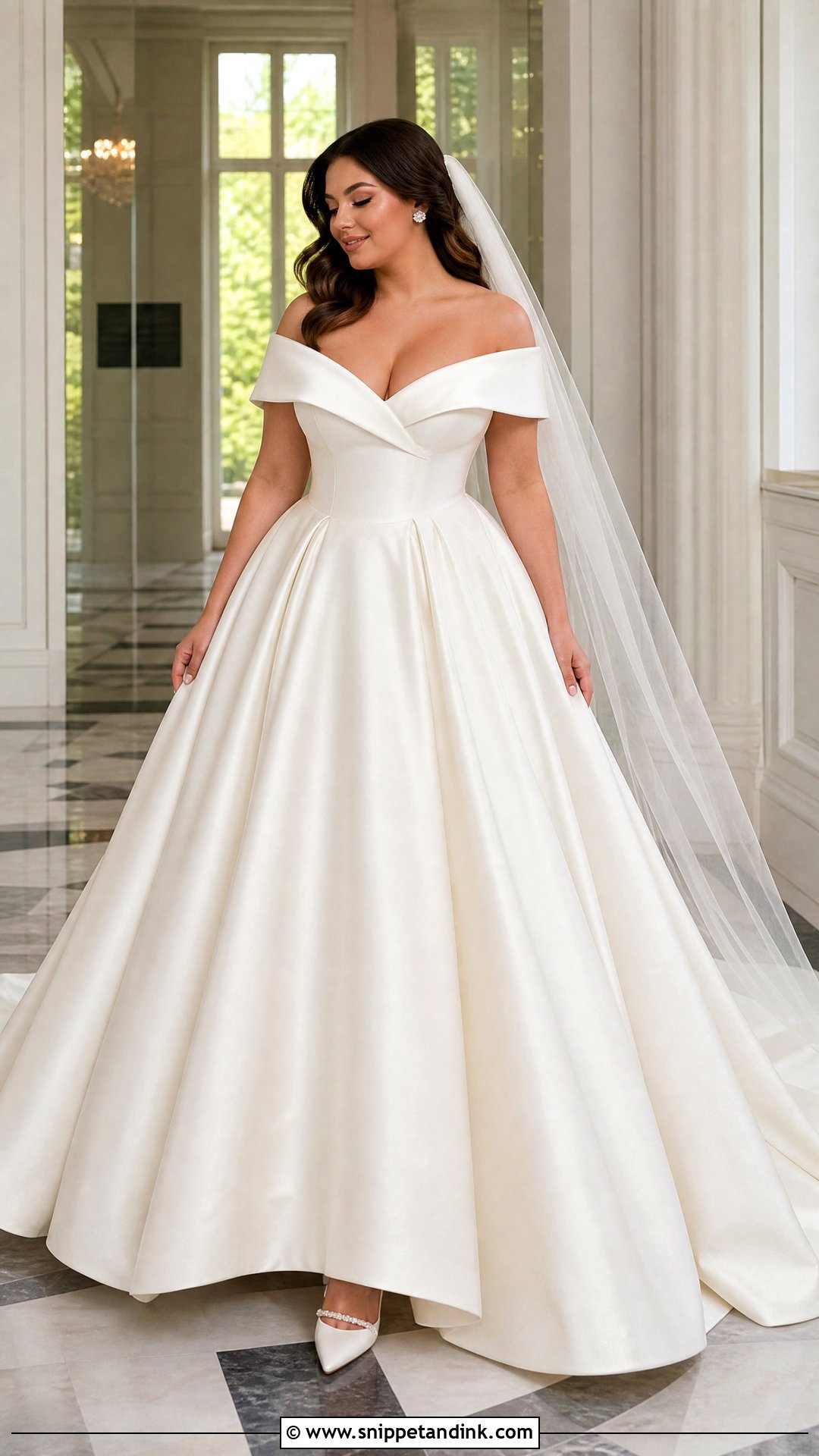
An off-shoulder ball gown is the classic entrance dress, and it suits this shape for a plain reason: the neckline widens the shoulders while the full skirt gives the lower body all the room it wants. Portrait necklines do the same job. Look for a structured satin or mikado bodice that stays put without pinning your arms; lift your hands above your head at the fitting to check. Crystal studs, a smooth cathedral veil, satin closed-toe heels and a low bun keep the neckline clear. Very full skirts are heavy, so ask about a lighter underskirt and a sturdy bustle.
3. Square Neck Satin A-Line Wedding Dress
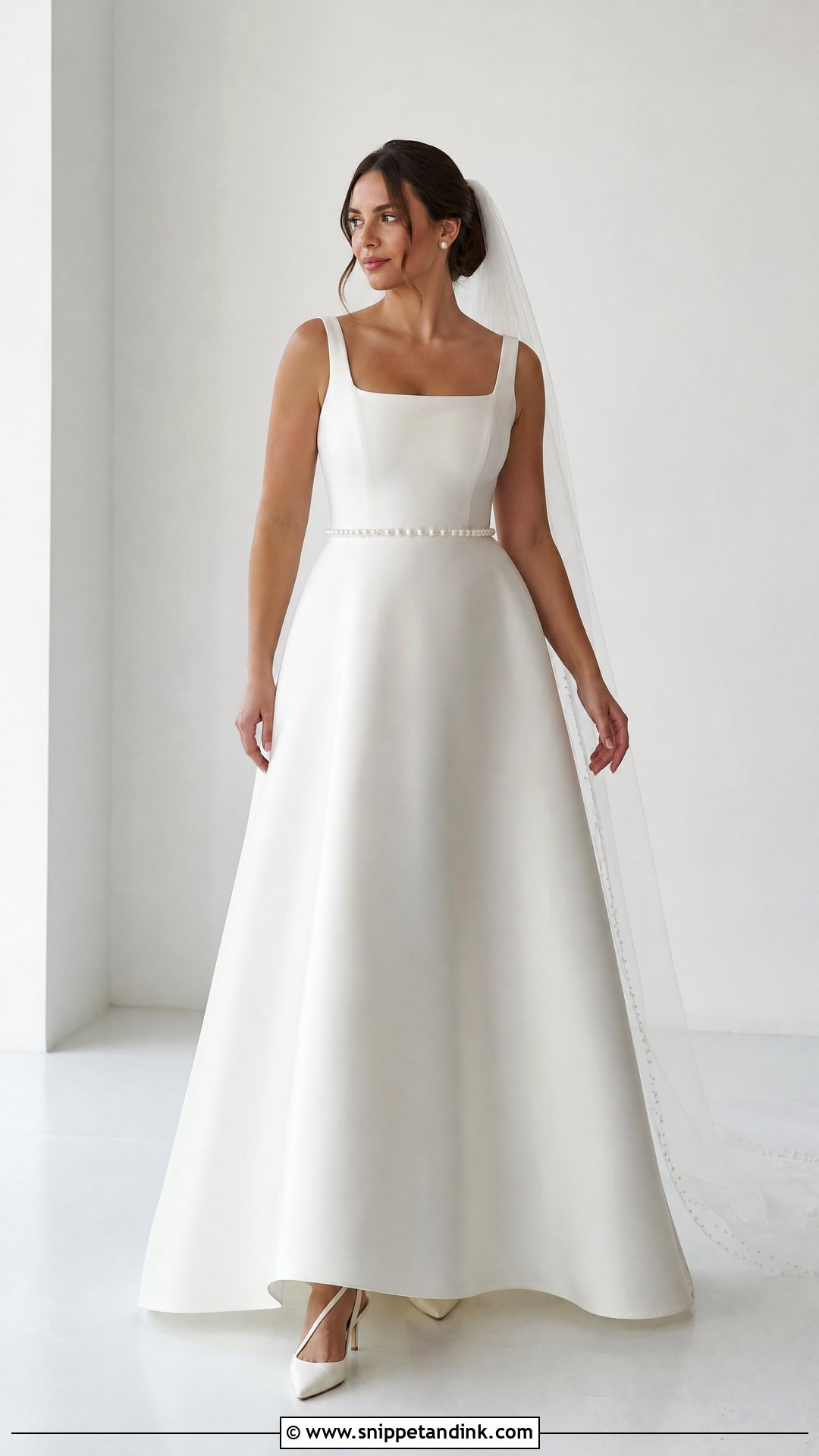
The straight line of a square neck adds width across the collarbone, which balances fuller hips without any extra decoration. Medium-weight satin or mikado keeps the A-line skirt standing away from the body instead of clinging. Satin is honest, though. It shows every pull and pucker, so the waist and hip alterations need a careful seamstress and more than one fitting. A narrow pearl belt adds waist definition if you want it. Pearl studs, a sleek chignon, pointed slingbacks and a chapel veil finish it cleanly.
4. V-Neck Chiffon A-Line Wedding Dress
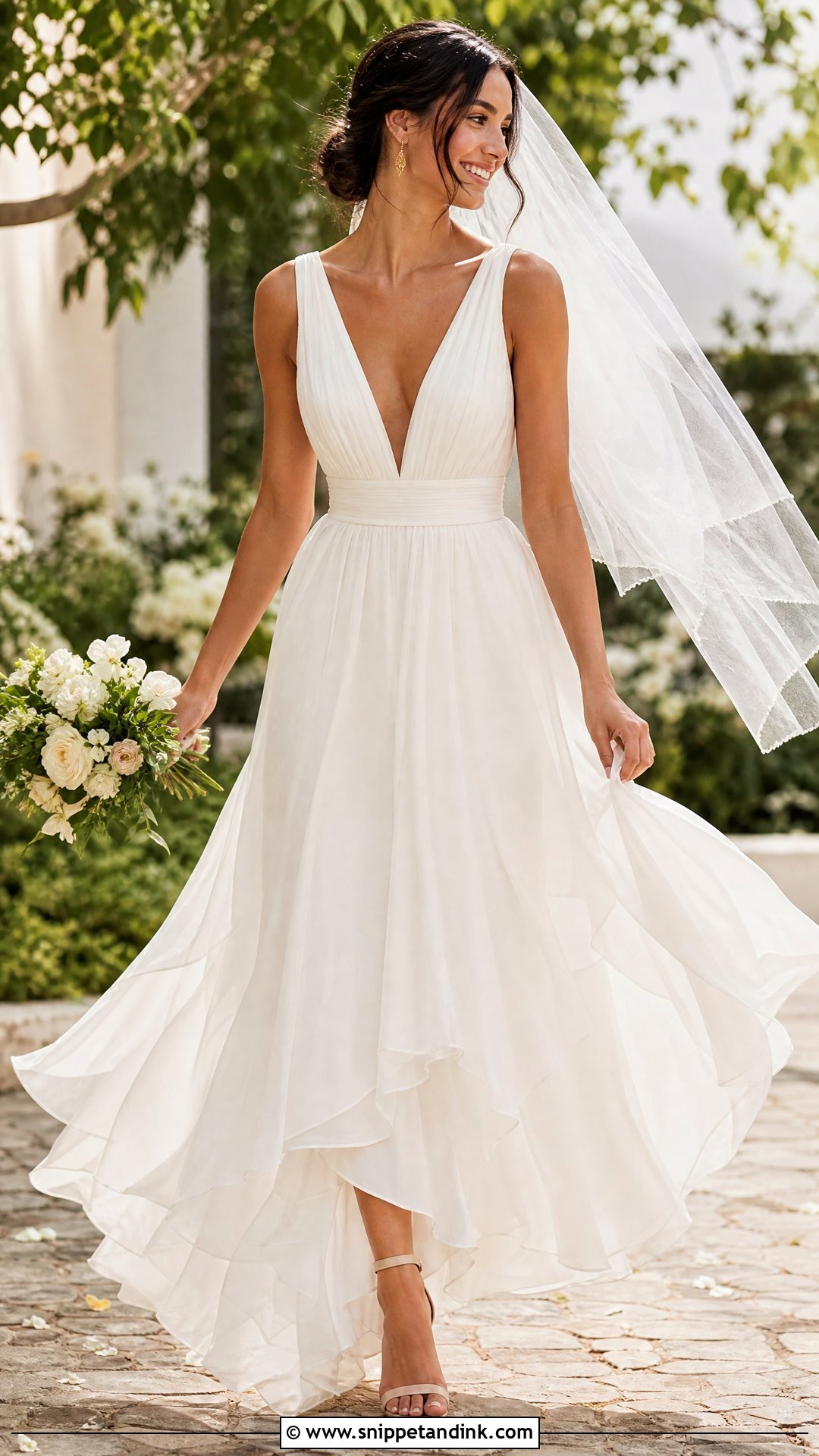
Chiffon belongs at garden, beach and warm-weather weddings, and a V-neck A-line in it is one of the lightest dresses you can wear. The V draws a long line down the bodice to a defined waistband, then the layered skirt floats over the hips. Check the lining before anything else: chiffon is sheer, and one thin layer turns see-through in outdoor sun. Gold earrings, block-heel sandals and a light fingertip veil suit it, with a loose bun or soft waves. Bend forward at the fitting. If the V gapes, ask for a modesty panel in illusion mesh.
5. Corset Tulle Ball Gown Wedding Dress
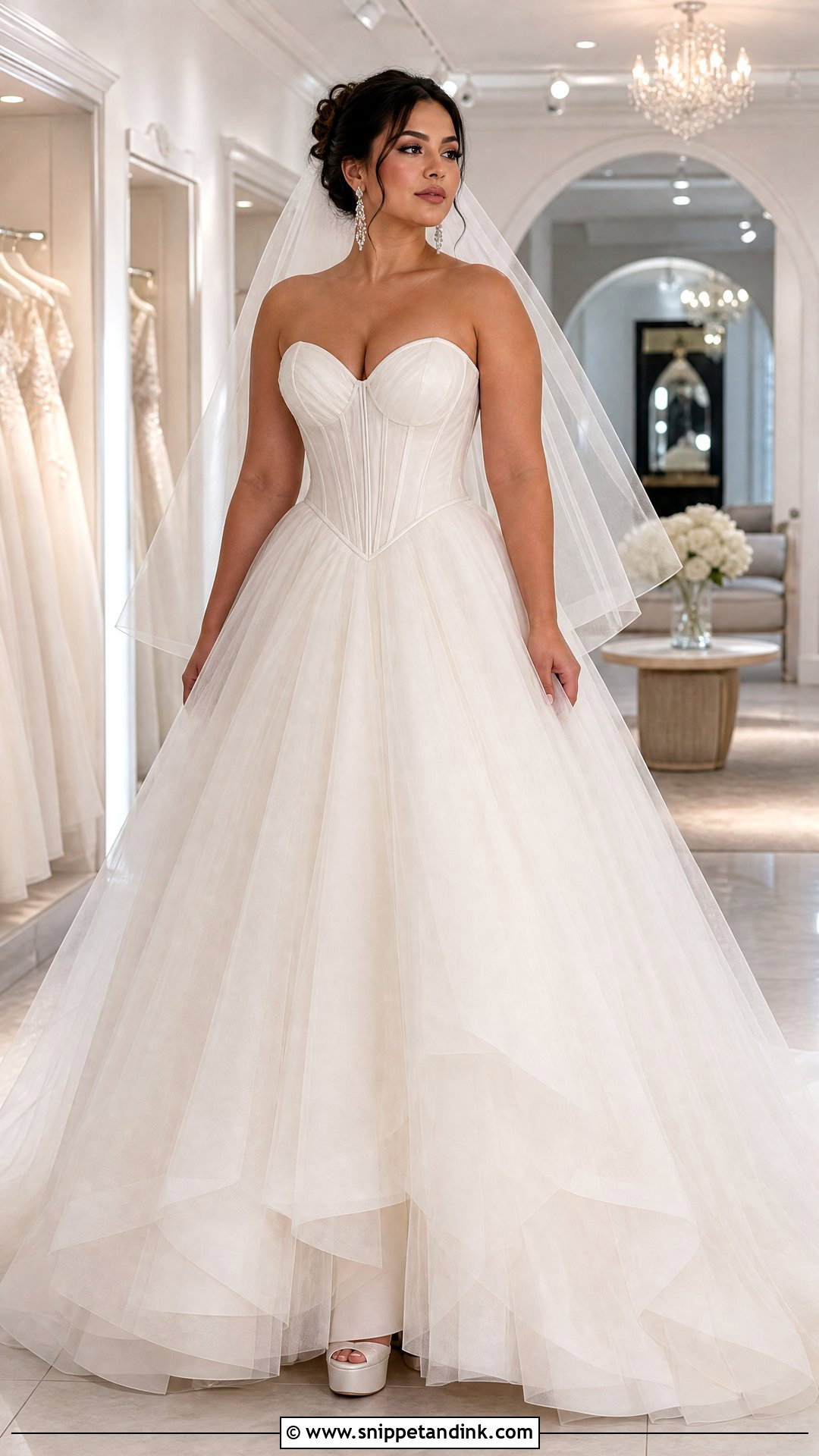
Corset seaming gives the upper body clear structure, which is exactly what balances a fuller lower half. Visible boning, a curved neckline and a little embellishment define bust and waist before the tulle expands. Several light layers are better than one heavy skirt if you’ll wear it for ten hours. Lace-up backs adjust nicely to your shape on the day; a zip looks cleaner under a long veil. Choose one. Crystal drops, a plain cathedral veil and platform heels under the hem complete it, and skip the necklace, because the bodice is already doing the talking.
6. Cap Sleeve Lace A-Line Wedding Dress
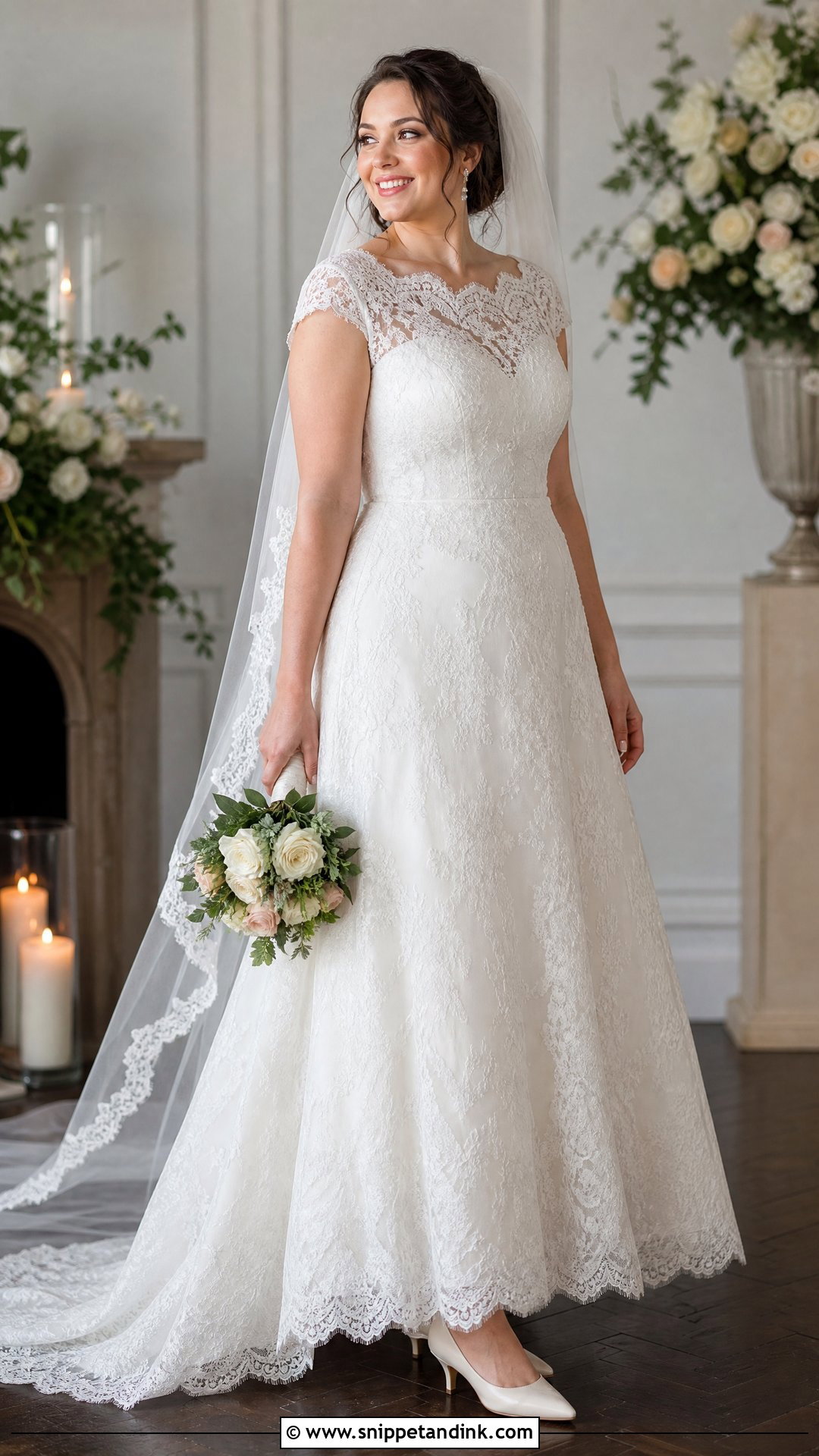
Cap sleeves add a touch of width at the shoulder, which is useful here, without the weight of a full sleeve. The detail I look for is lace placement: dense around the neckline, thinning out below the waist. That gradient pulls the eye upward. A scalloped lace veil, pearl earrings, ivory kitten heels and a soft updo keep the sleeves visible. Cap sleeves are notorious for cutting into the arm, so hug someone at the fitting. If the bodice lifts when you raise your arms, the armhole needs reworking.
7. Portrait Neck Mikado Ball Gown Wedding Dress
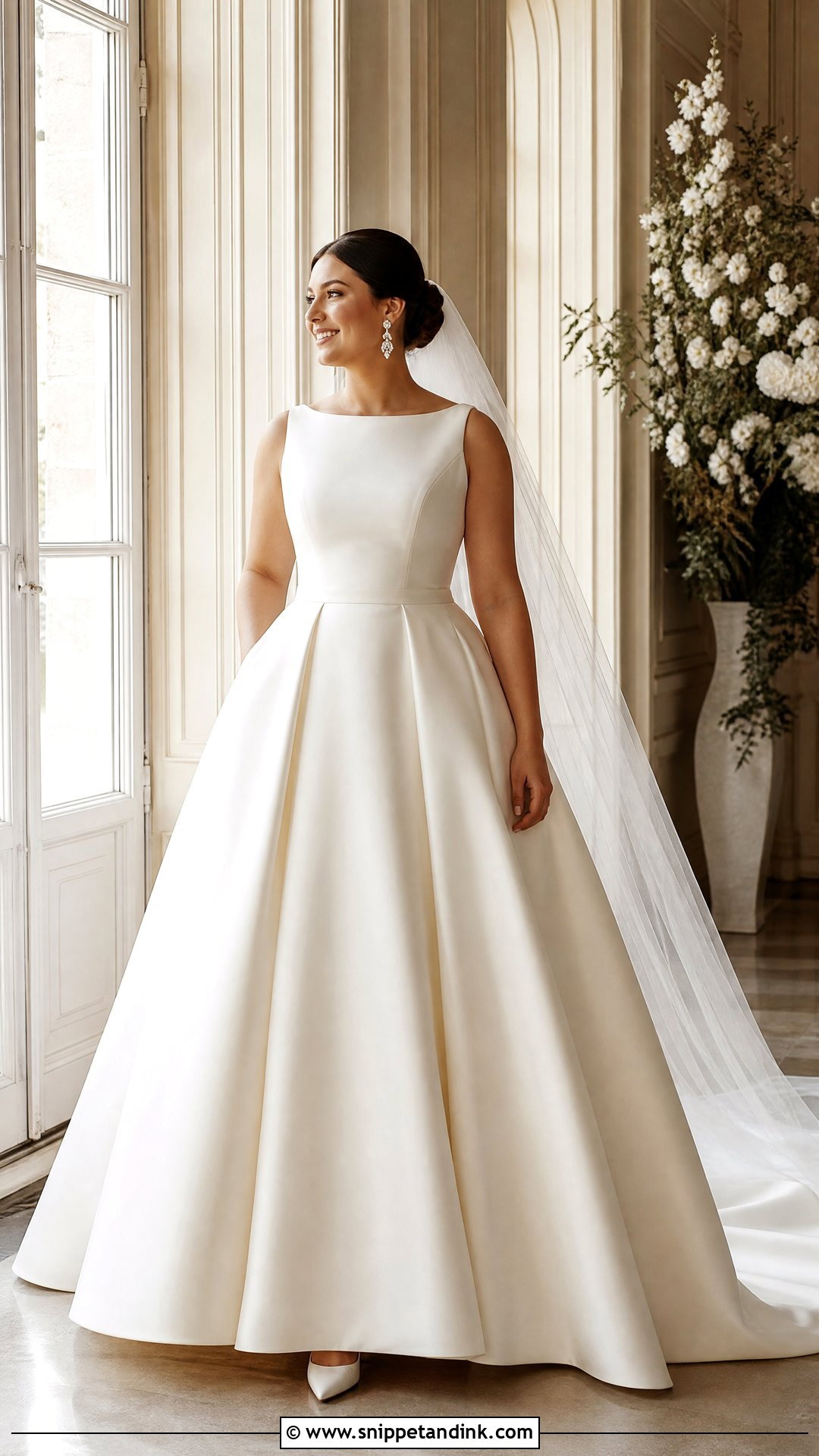
Mikado has body. It holds pleats, covered buttons and a sweeping train without collapsing, and a portrait neckline in it frames the shoulders strongly for a pear-shaped bridal look. Because the fabric is so substantial, accessories should be restrained: pearl and crystal earrings, pointed satin pumps and a plain chapel veil. A low bun or side-parted updo shows the neckline off. Ask the seamstress to check the bodice from the front, side and back, since a portrait neck that dips on one side is very visible in photos.
8. Strapless Pleated A-Line Wedding Dress
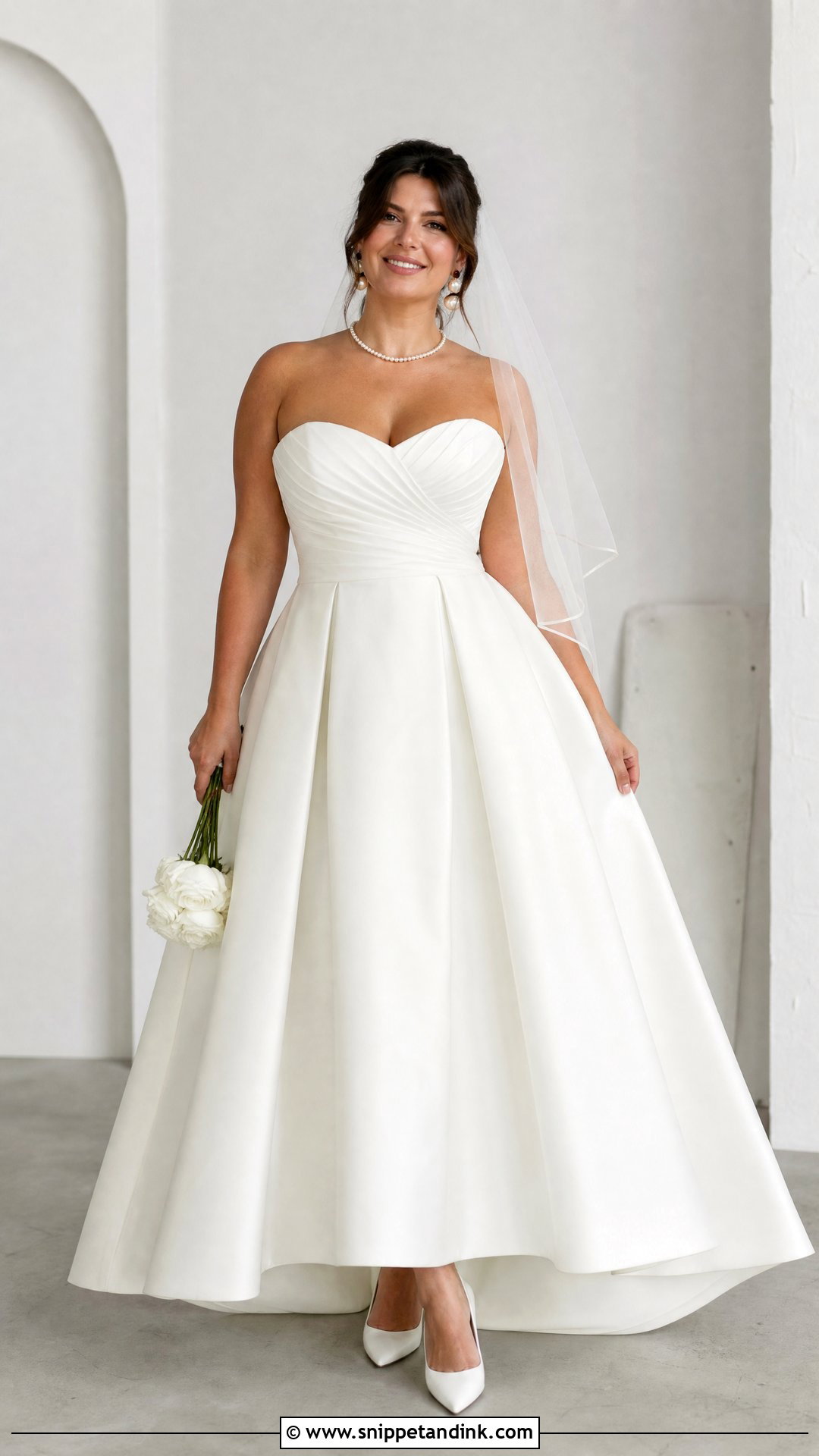
Strapless pleated A-lines look modern and still feel bridal. Pleats that start at the waist add movement without tracing the hips, and a curved or notched neckline gives the top definition. Everything depends on the build. I want strong boning, proper cups and an inner waist stay, which is the band that takes the weight of the skirt so the bodice doesn’t slide. A short pearl necklace, statement earrings, pointed pumps and a sheer fingertip veil balance it. Walk, sit and raise your arms in it. The neckline should stay flat and the pleats should fall evenly.
9. Halter Organza A-Line Wedding Dress
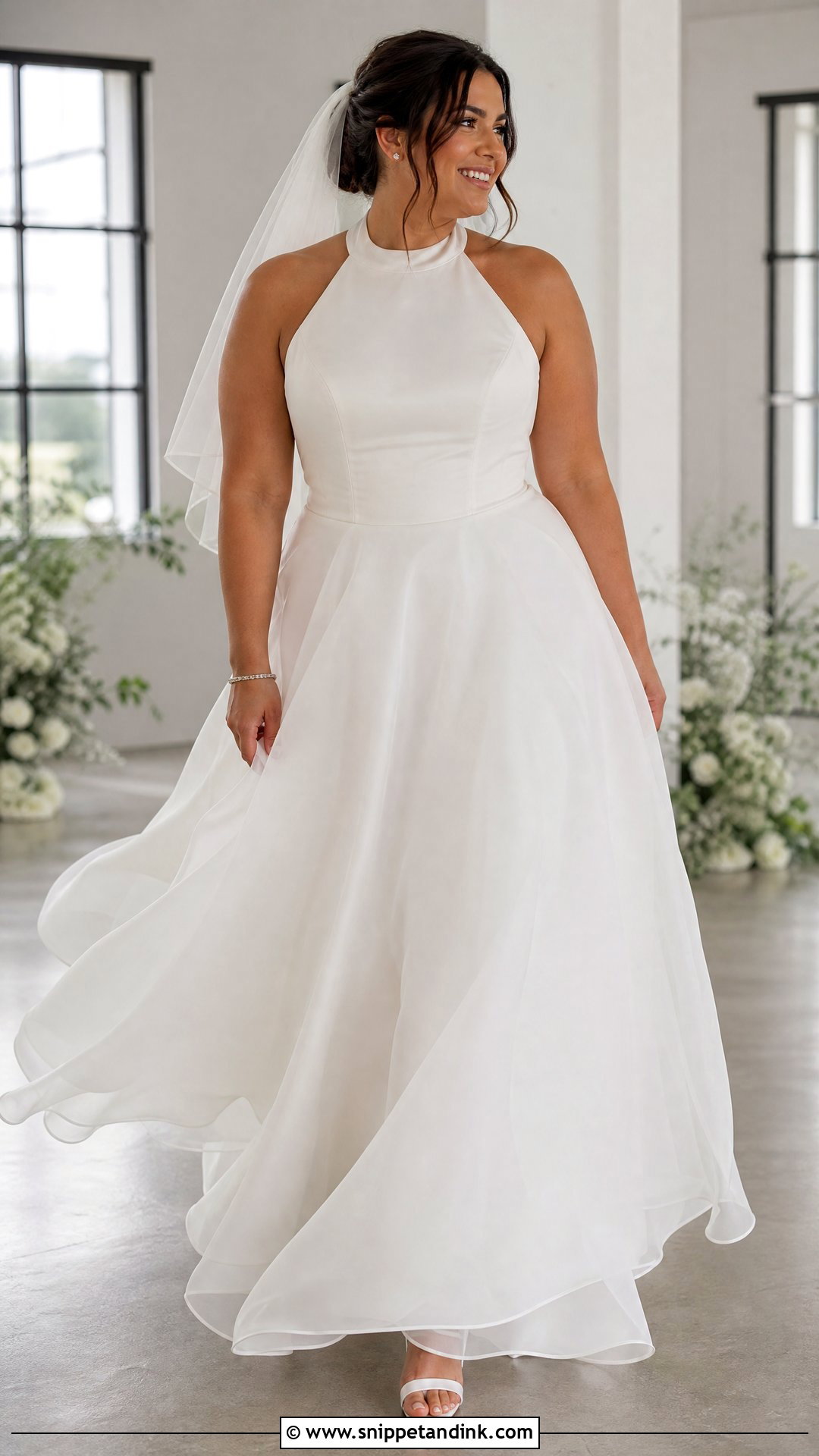
Halters are underused for this shape. The neckline sharpens the shoulders and pulls the gaze upward, while organza keeps the A-line skirt light and full. Comfort lives in the neck closure: a halter that’s slightly short drags on the back of your neck by evening, so ask for an adjustable hook. You’ll need decent bust support inside the bodice, too. Skip the necklace and wear small crystal studs, a slim bracelet, ivory sandals and a low bun. Check the armholes for rubbing during long wear.
10. Illusion Sleeve A-Line Wedding Dress
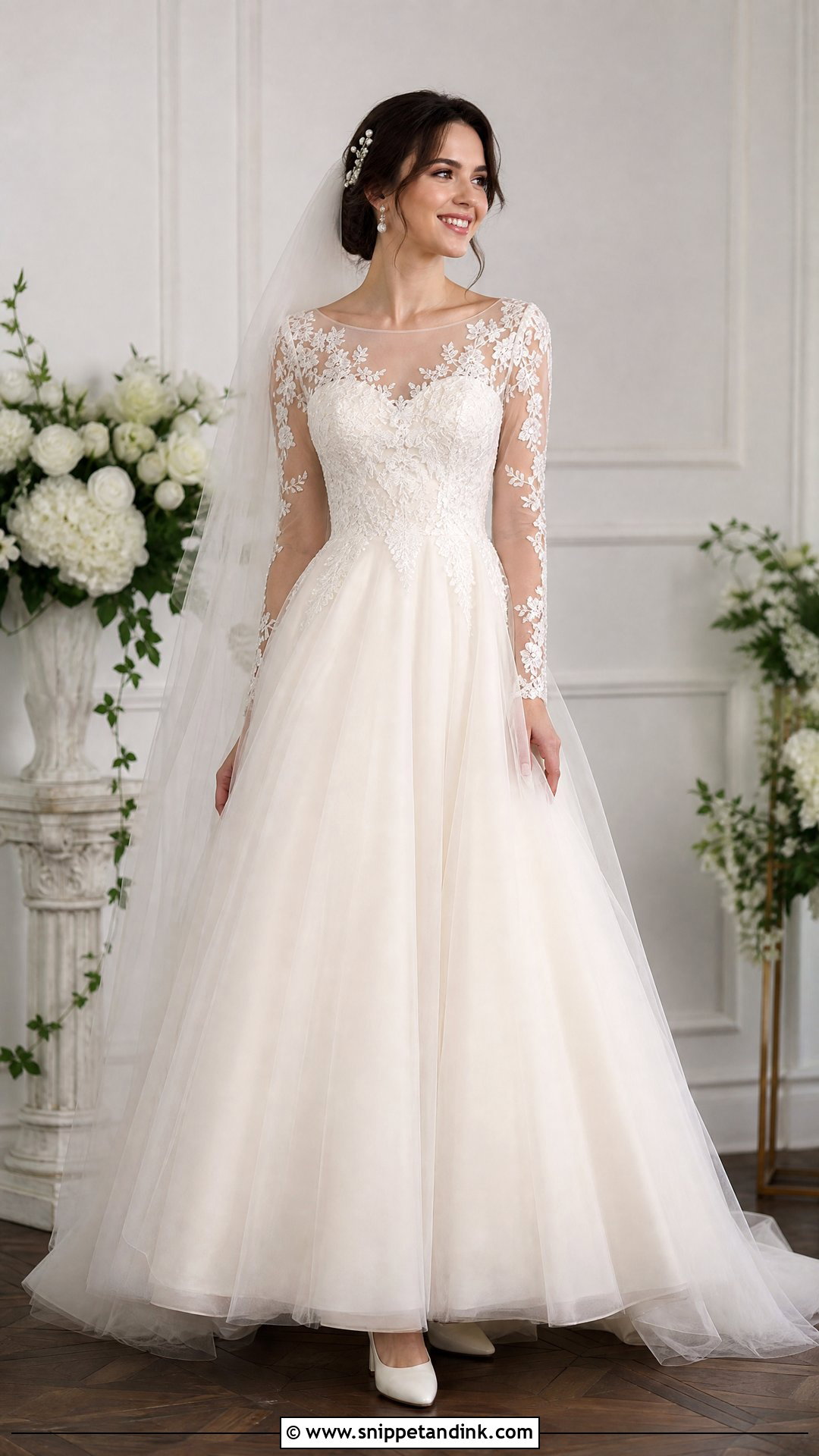
Illusion sleeves give coverage with detail where you want it. Lace placed on the shoulders and upper arm adds interest without bulk, then fades across the bodice into tulle or chiffon at the skirt. Mesh is the tricky part: it needs to match your skin tone closely or it reads as a grey film in photographs, so test it in daylight. The shoulders, armholes and cuffs need precise tailoring. Pearl hairpins, drop earrings, closed-toe block heels, a plain chapel veil and a twisted updo complete it.
11. Off-Shoulder Fit-and-Flare Wedding Dress
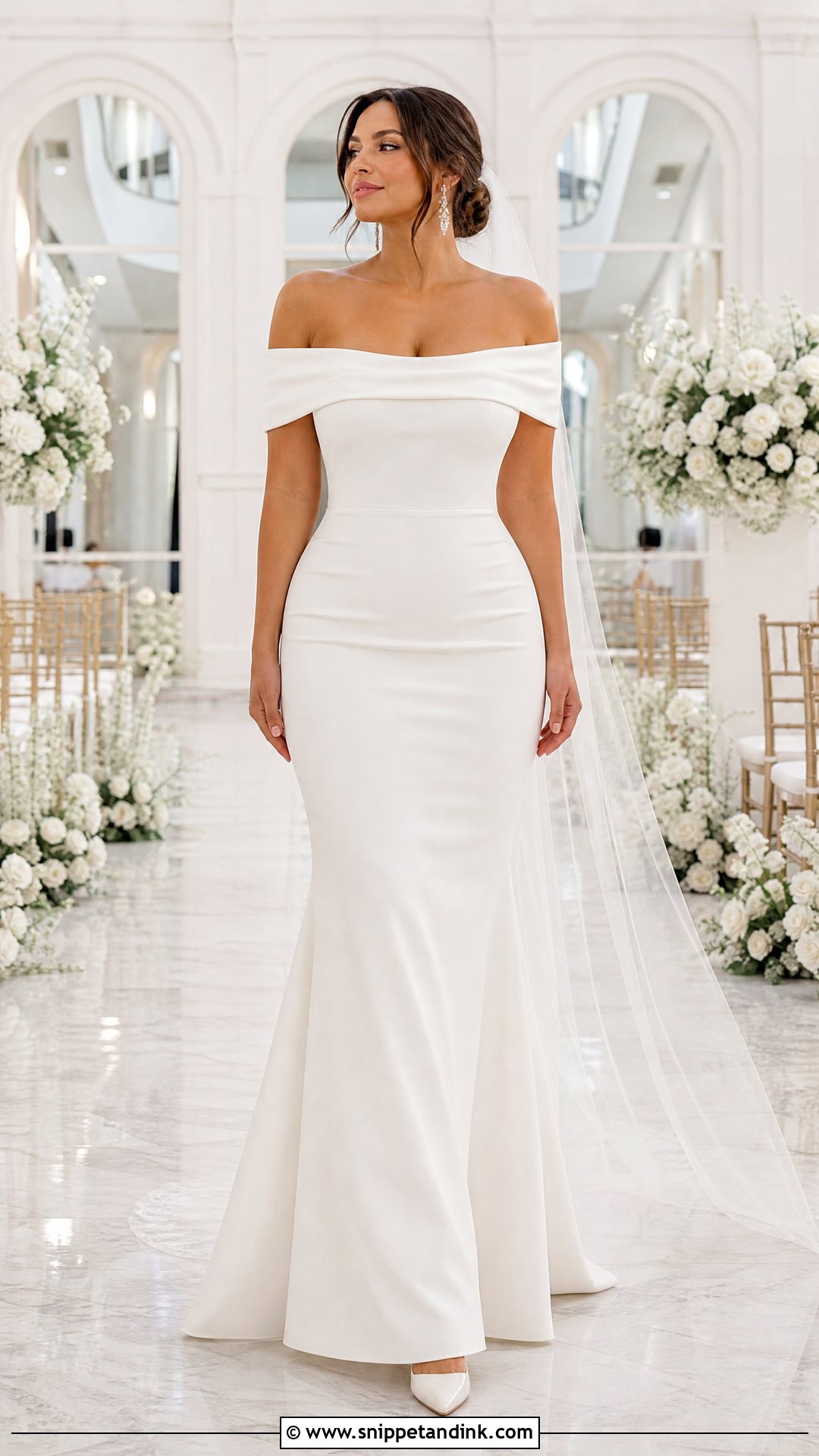
Fitted gowns are not off the table. An off-shoulder fit-and-flare can celebrate the waist, hips, and natural curves while the neckline brings balance. The flare point is what matters: it should start around the lower thigh, not right at the knee, or you’ll be taking tiny steps all night. Stretch crepe or a flexible lining helps. Shoulder-grazing earrings, a plain cathedral veil and pointed pumps suit it. Wear shapewear only if it’s comfortable. Sit for several minutes at the fitting, and if horizontal lines appear across the hips, the skirt needs more ease there.
12. Modified Mermaid Crepe Wedding Dress
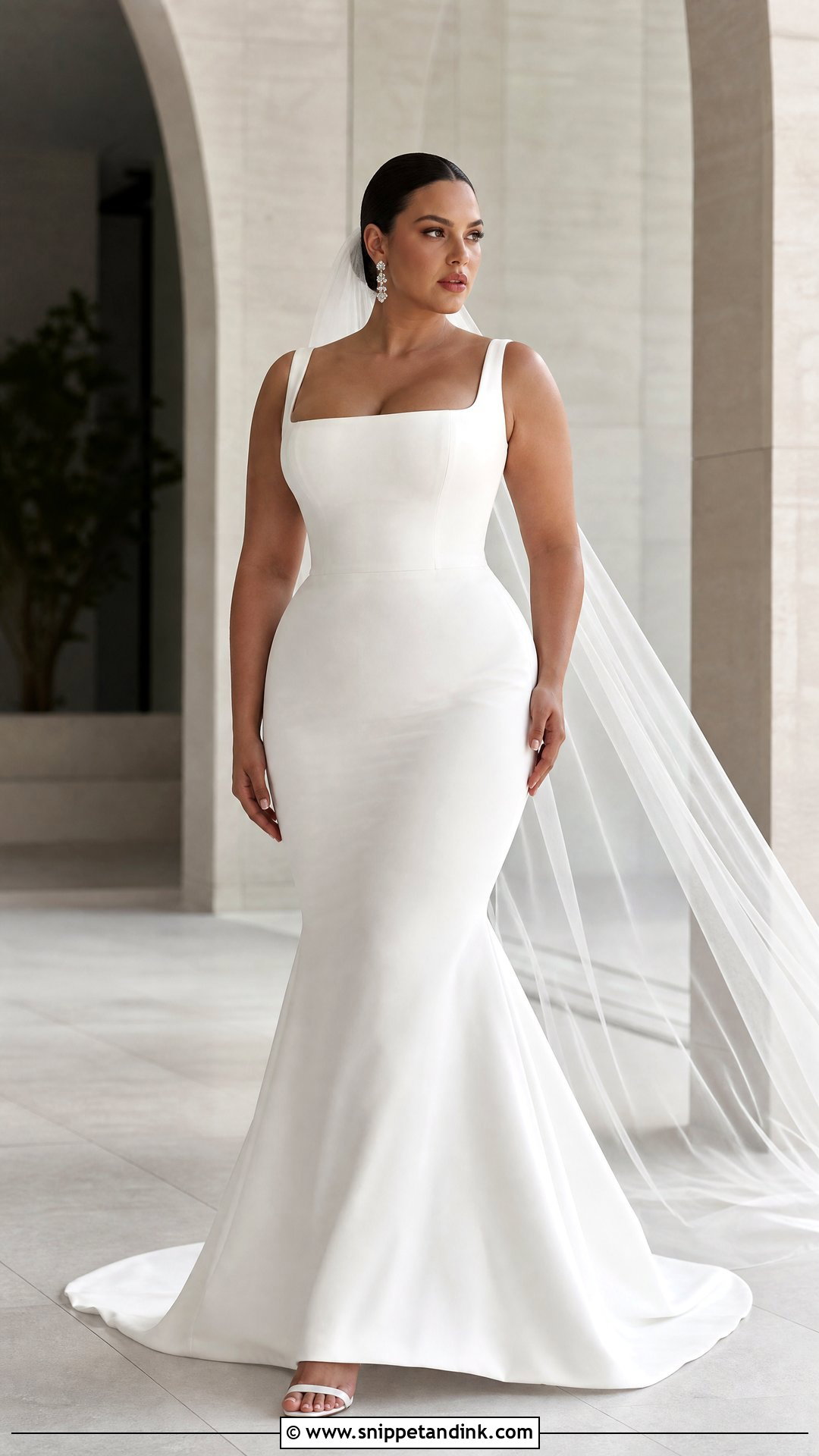
A modified mermaid gives you curve definition with more stride than a true mermaid, because the skirt widens from mid-thigh instead of the knee. The bodice can take a sweetheart, square or off-shoulder neckline. Stretch crepe moves with you rather than holding you rigid. For pear-shaped brides, everything rests on the hip and thigh fit, which is why I’d ask about side-seam allowance before ordering, especially if your hips fall a size above your bust. Crystal earrings, a long plain veil, sleek ivory heels and a low bun keep it clean.
13. Empire Waist Chiffon Wedding Dress
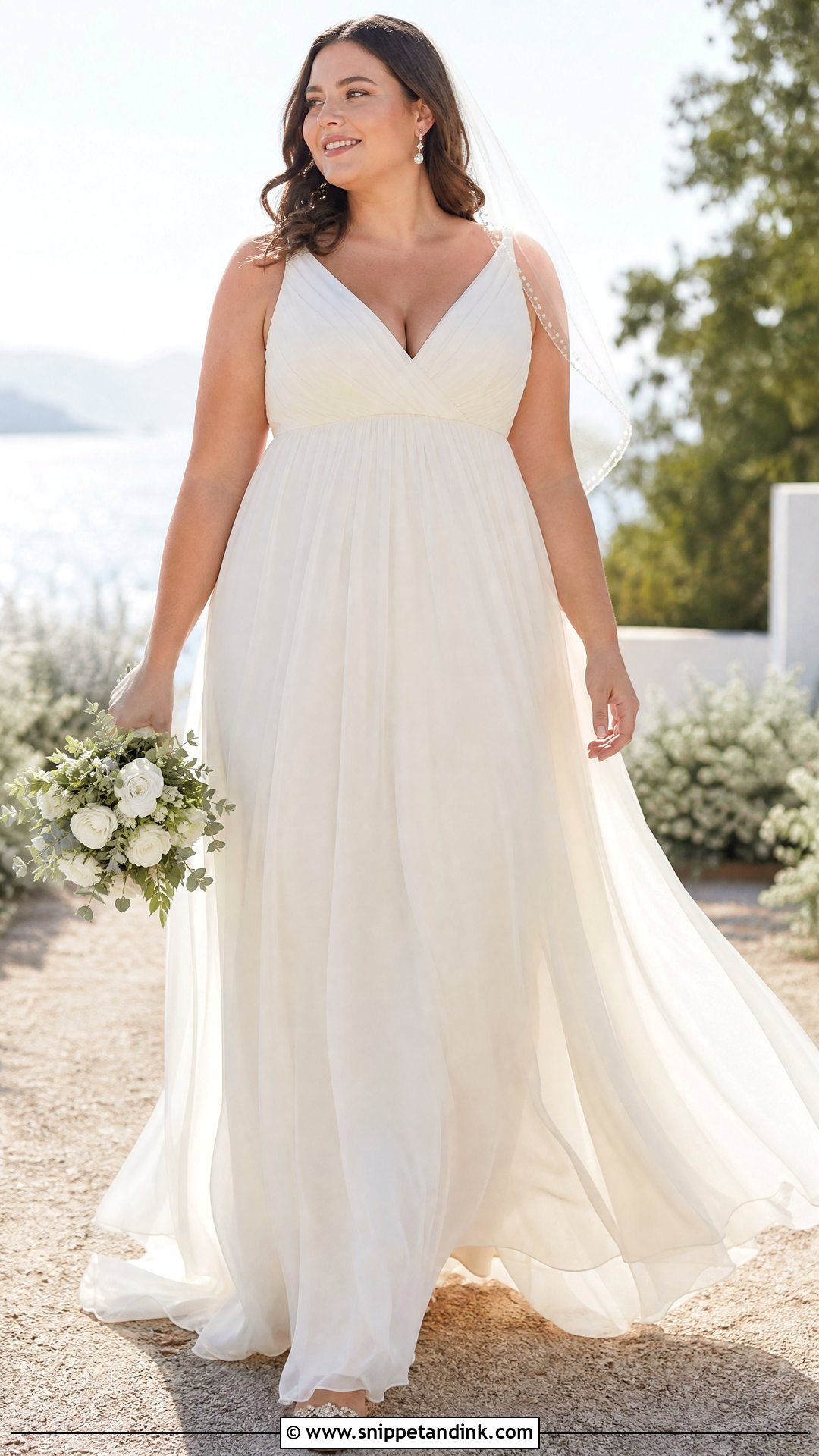
With an empire waist, the seam sits just under the bust and the skirt falls freely past waist, hips and thighs. It’s the least restrictive gown here. The risk is too much fabric: loose gathers under the bust can swamp a petite frame and look shapeless, so I prefer a structured V, square or gently gathered bodice with controlled draping. Drop earrings, embellished flat sandals and a shoulder-length veil suit it, with soft waves or a braided updo. Confirm the empire seam sits level and doesn’t drift upward when you move.
14. Bateau Neck Tea-Length Wedding Dress
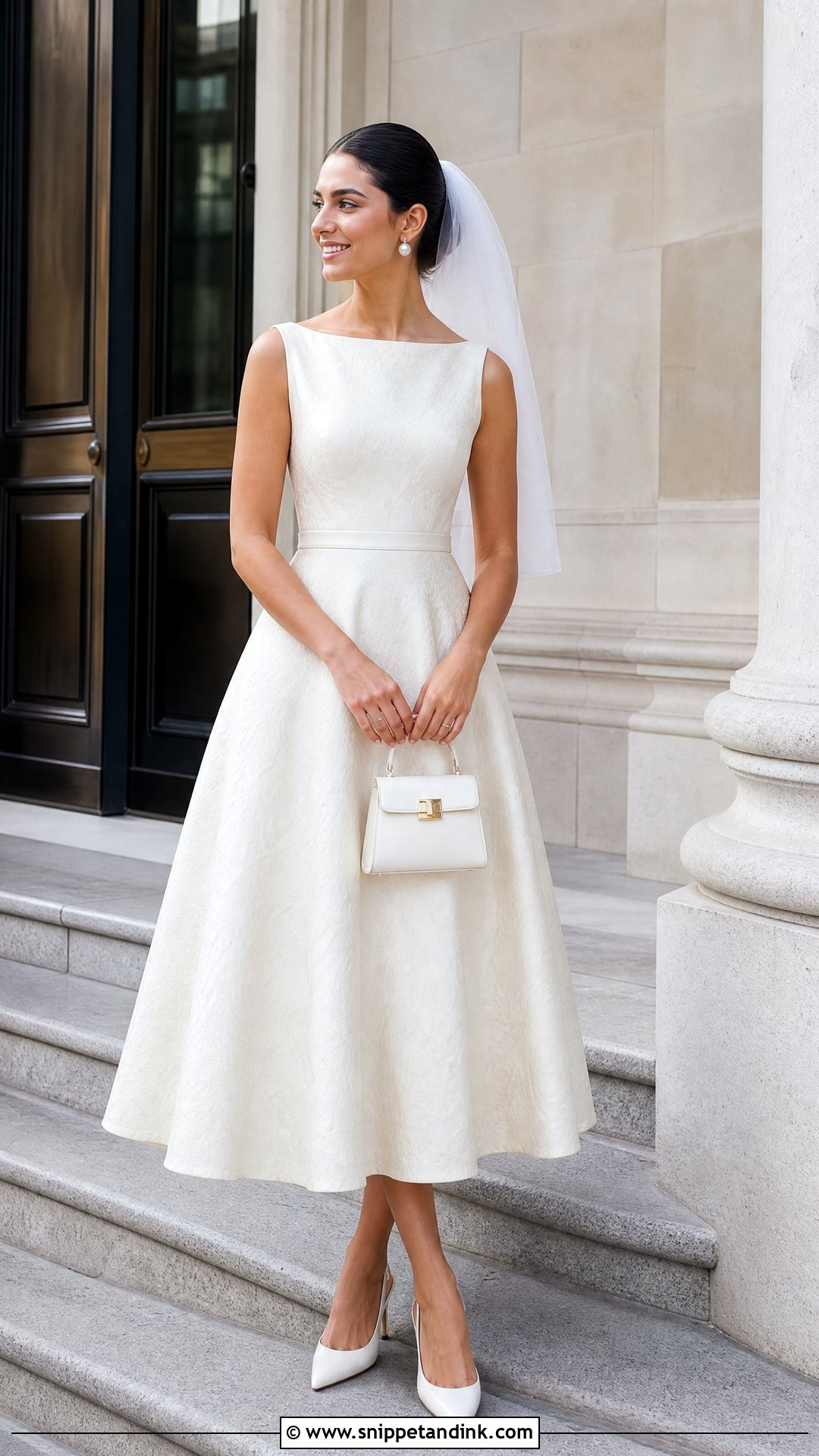
For a courthouse, brunch or city wedding, a bateau-neck tea-length dress is smart and practical. The wide boat neckline draws a horizontal line across the shoulders, and the A-line skirt floats off the hips. Hem placement is everything. Try several lengths with your actual shoes: the right one ends where the calf narrows, and a hem that stops at the widest point of the leg shortens the whole figure. Satin, lace or jacquard depending on formality, plus pointed slingbacks, pearl earrings, a short veil and a small structured bag.
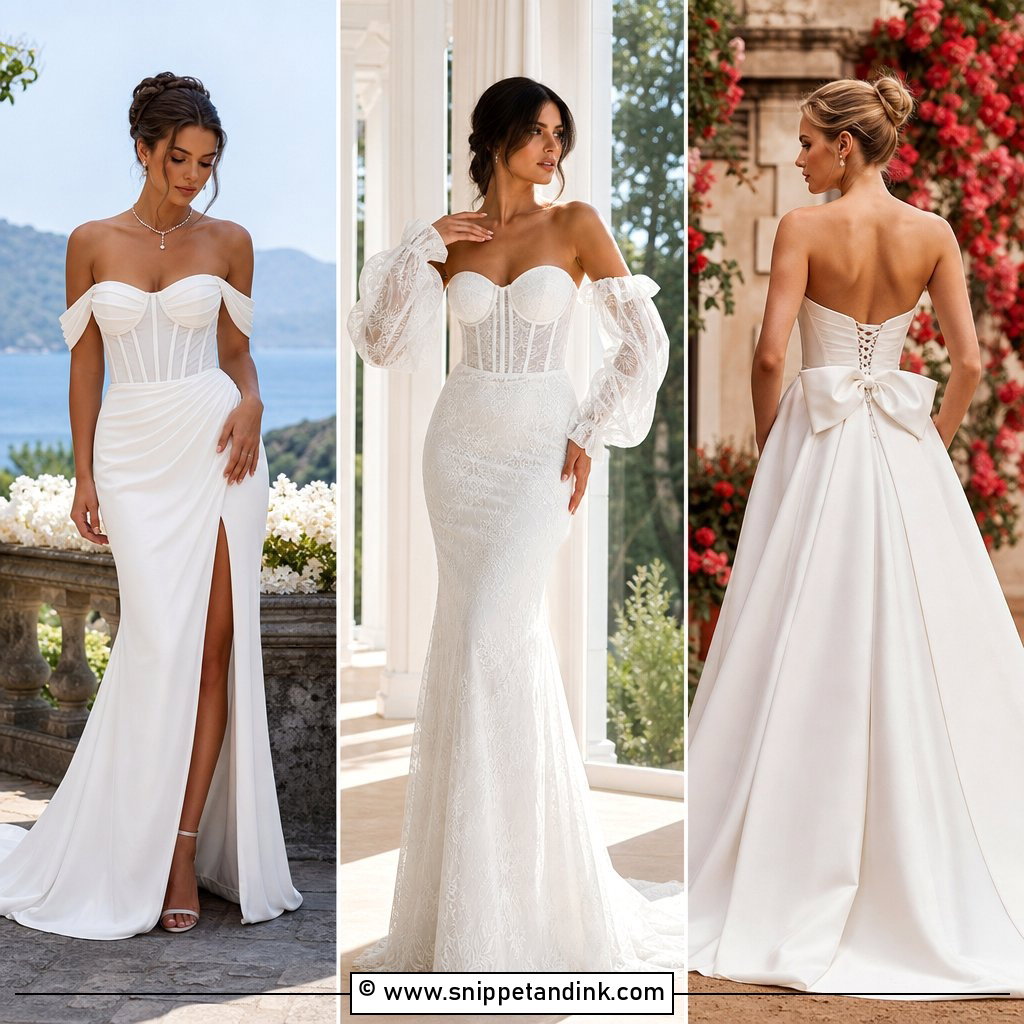
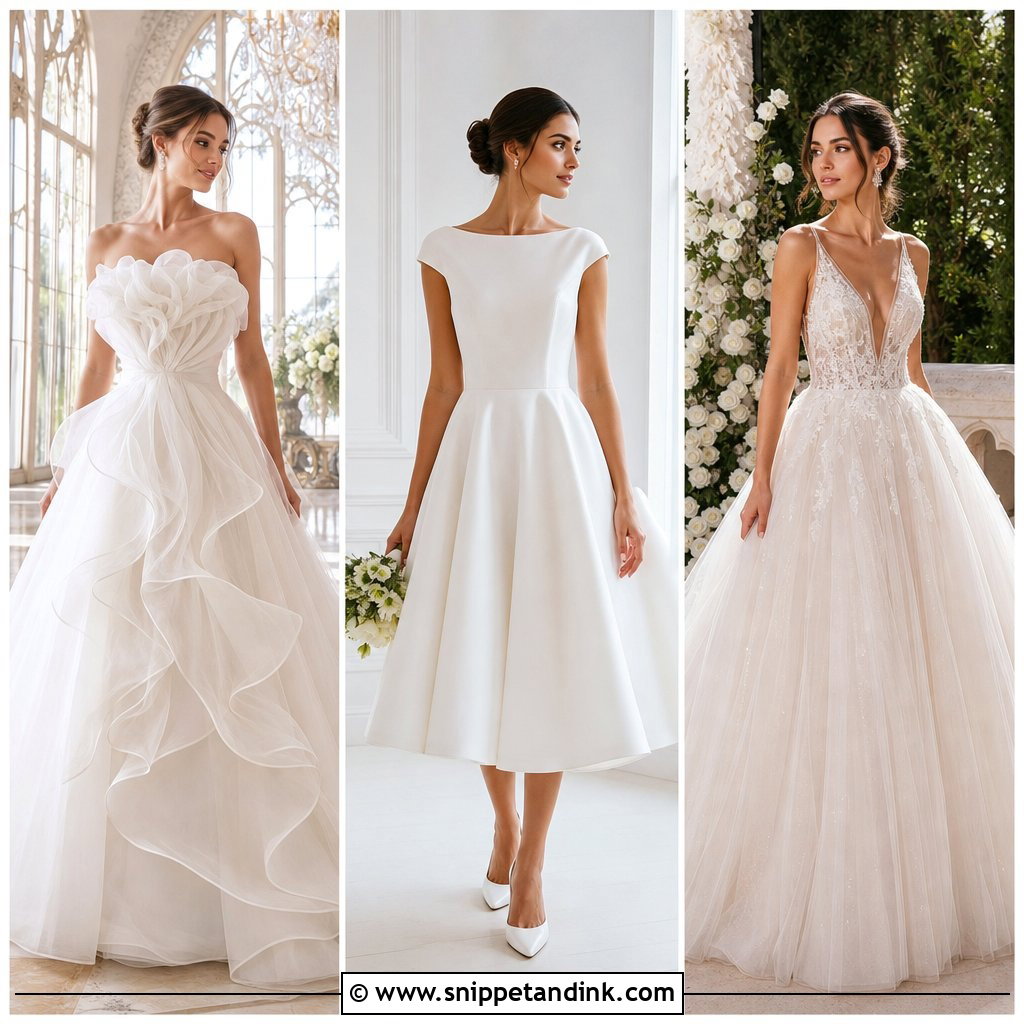
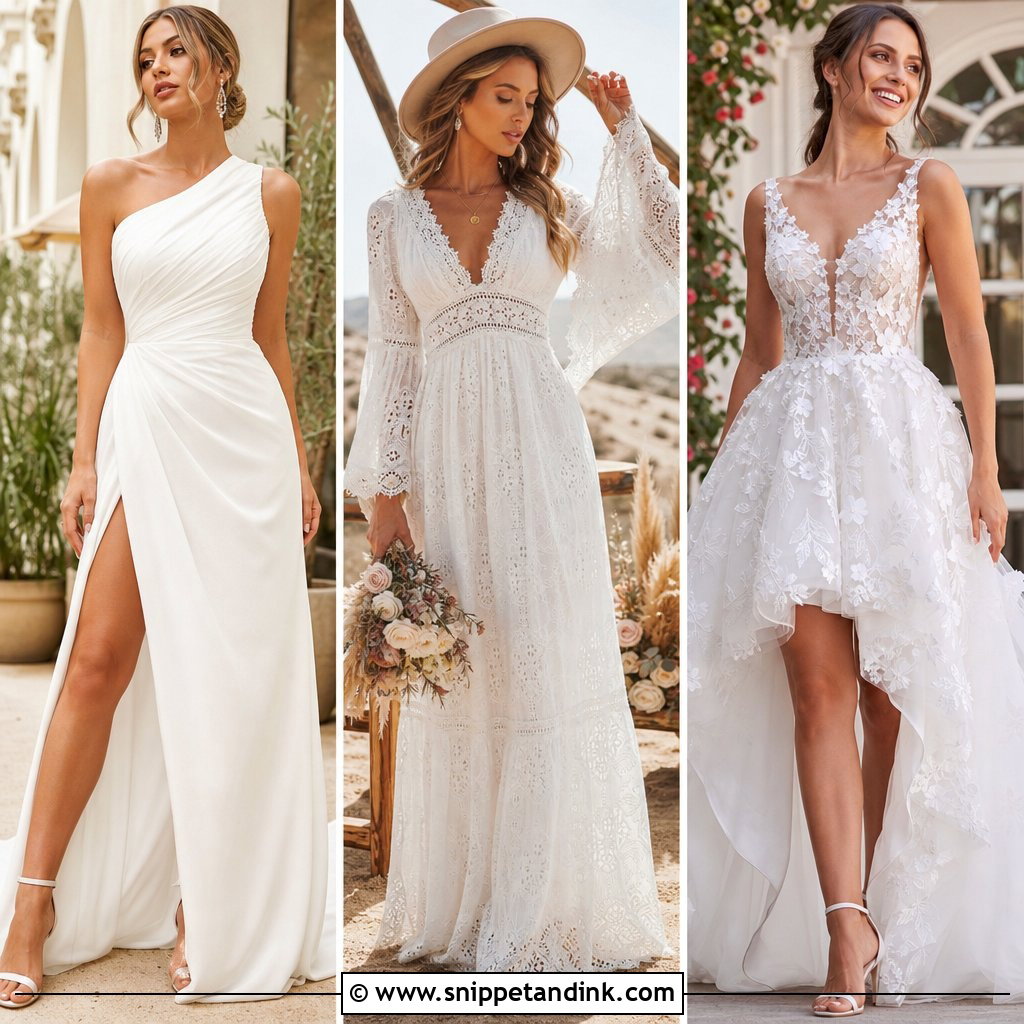
15. High-Low Organza Wedding Dress
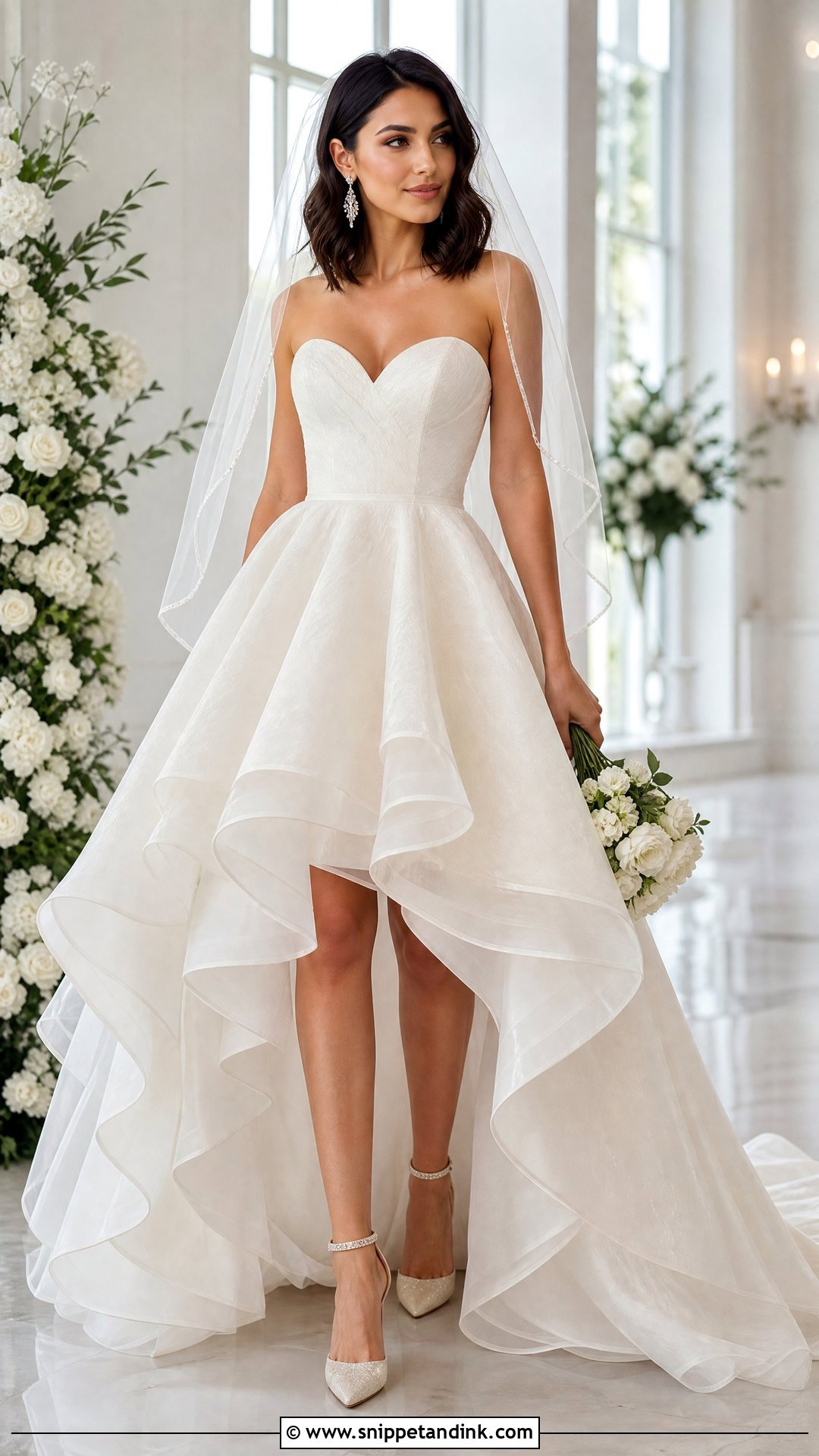
High-low organza shows your shoes in front and gives a proper sweep behind. Pair it with a fitted off-shoulder, sweetheart or square bodice and a skirt that flares from the natural waist, so the hips sit inside the volume. Organza holds the sculpted hem without the weight of layered satin. The hem is unusual enough, so keep accessories few: embellished ankle-strap pumps, small crystal earrings and a shoulder-length veil. The seamstress has to balance the curve on both sides, and the front should be long enough that you never feel exposed on stairs.
16. Basque Waist Ball Gown Wedding Dress
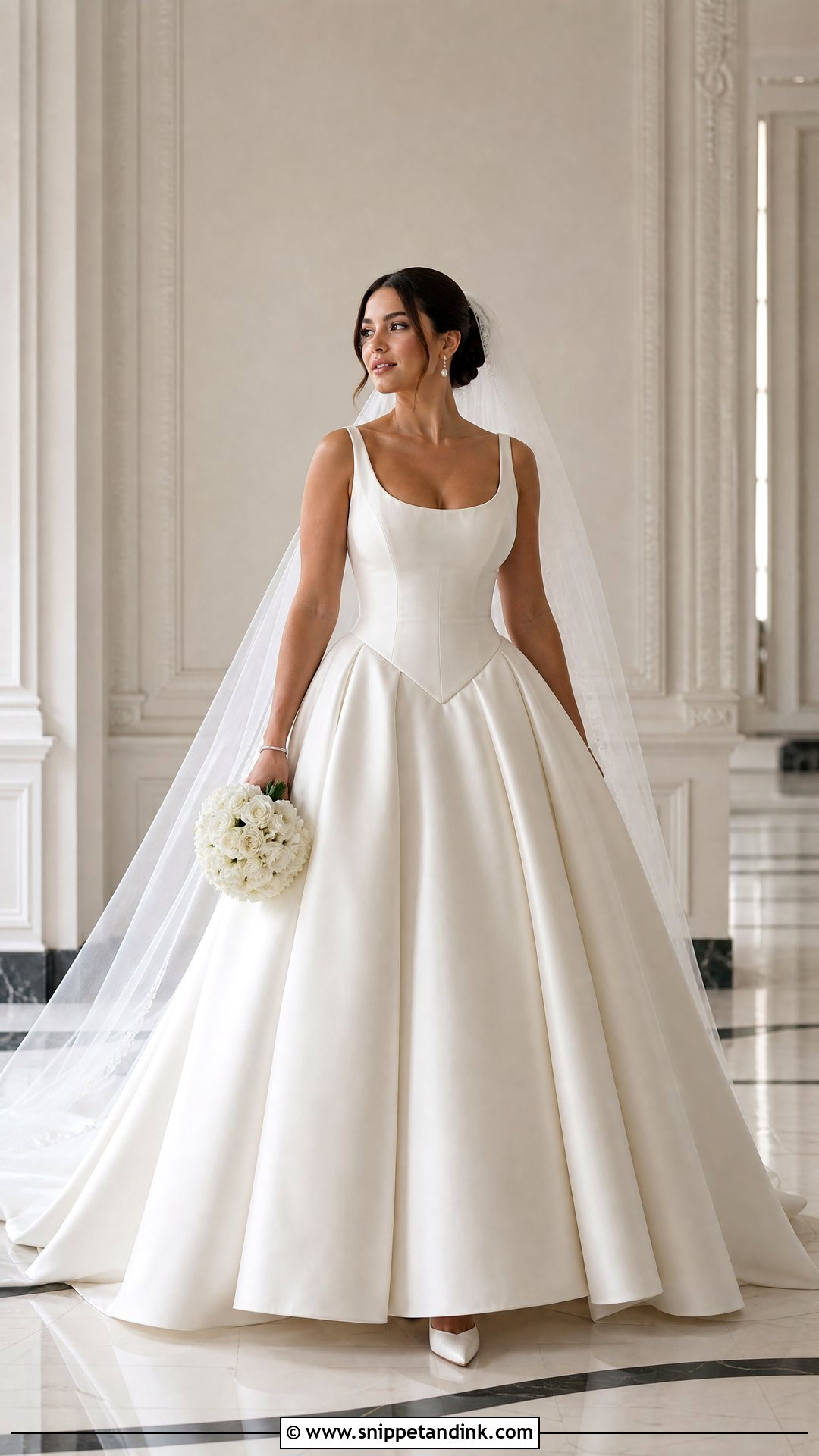
In a basque waist ball gown, the bodice dips into a V or U below the natural waist and lengthens the torso before the full skirt begins. On a pear shape, that point lands right where the hips start, which can look sculpted or can pull. It must lie flat. If the point lifts or creases across the hips, the bodice length needs adjusting. A scoop, strapless or off-shoulder fold keeps focus high. Pearl drops, a cathedral veil, satin pumps and a compact bouquet; keep embellishment on the bodice, not across the skirt.
17. One-Shoulder Draped A-Line Wedding Dress
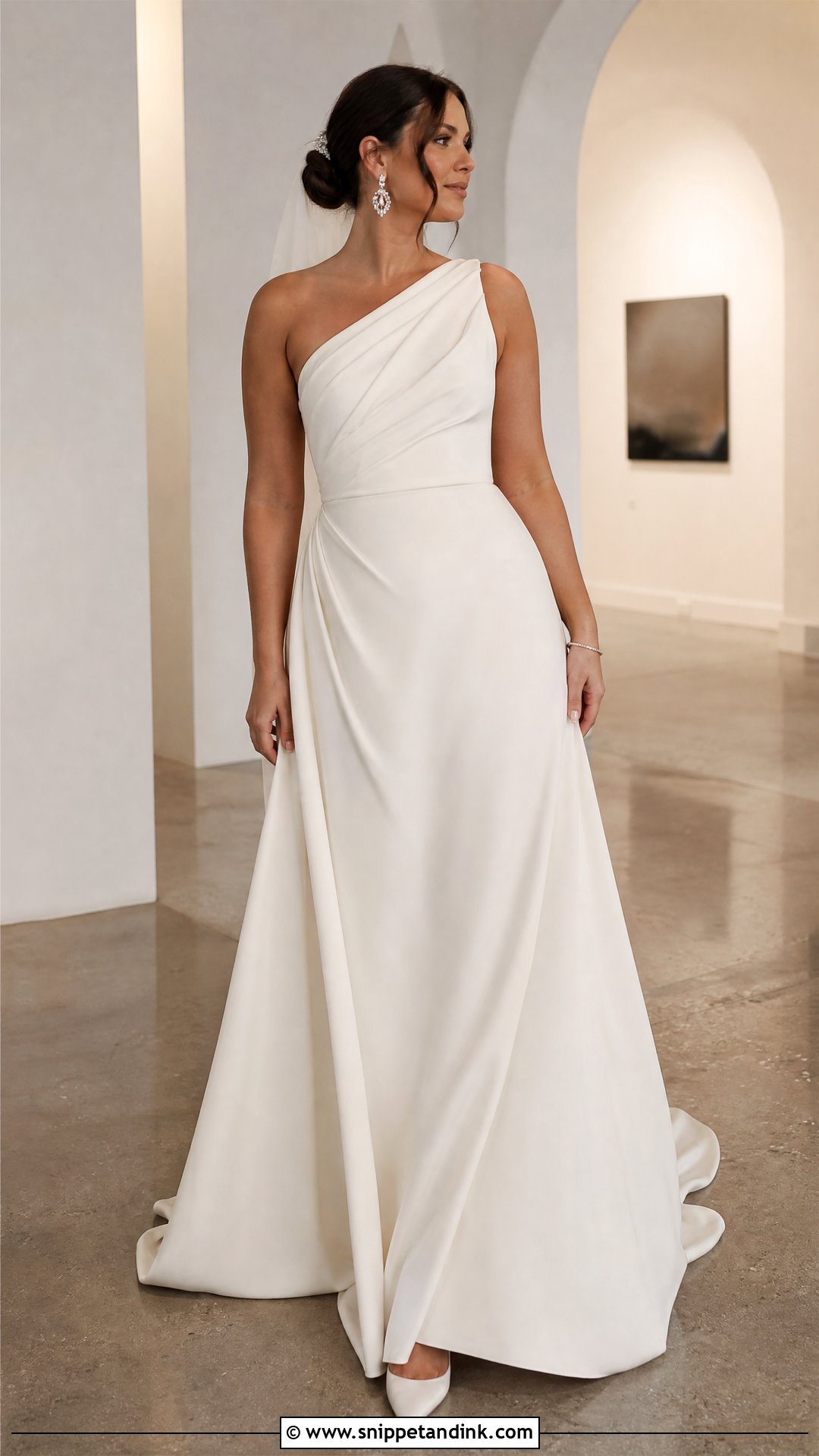
One bare shoulder draws a diagonal line straight to the face, which gives the top half a focal point without any beading. Soft crepe, chiffon or satin with controlled draping and a gently widening skirt suit it. Asymmetric bodices have a habit of twisting as you move, so the internal support has to be firm enough to keep the waist and neckline level. A small bow or narrow shoulder detail is fine; anything oversized overwhelms it. Wear an ear cuff or statement earring on the open side, a slim bracelet, pointed heels and a veil pinned below a low bun.
18. Flutter Sleeve Boho Wedding Dress
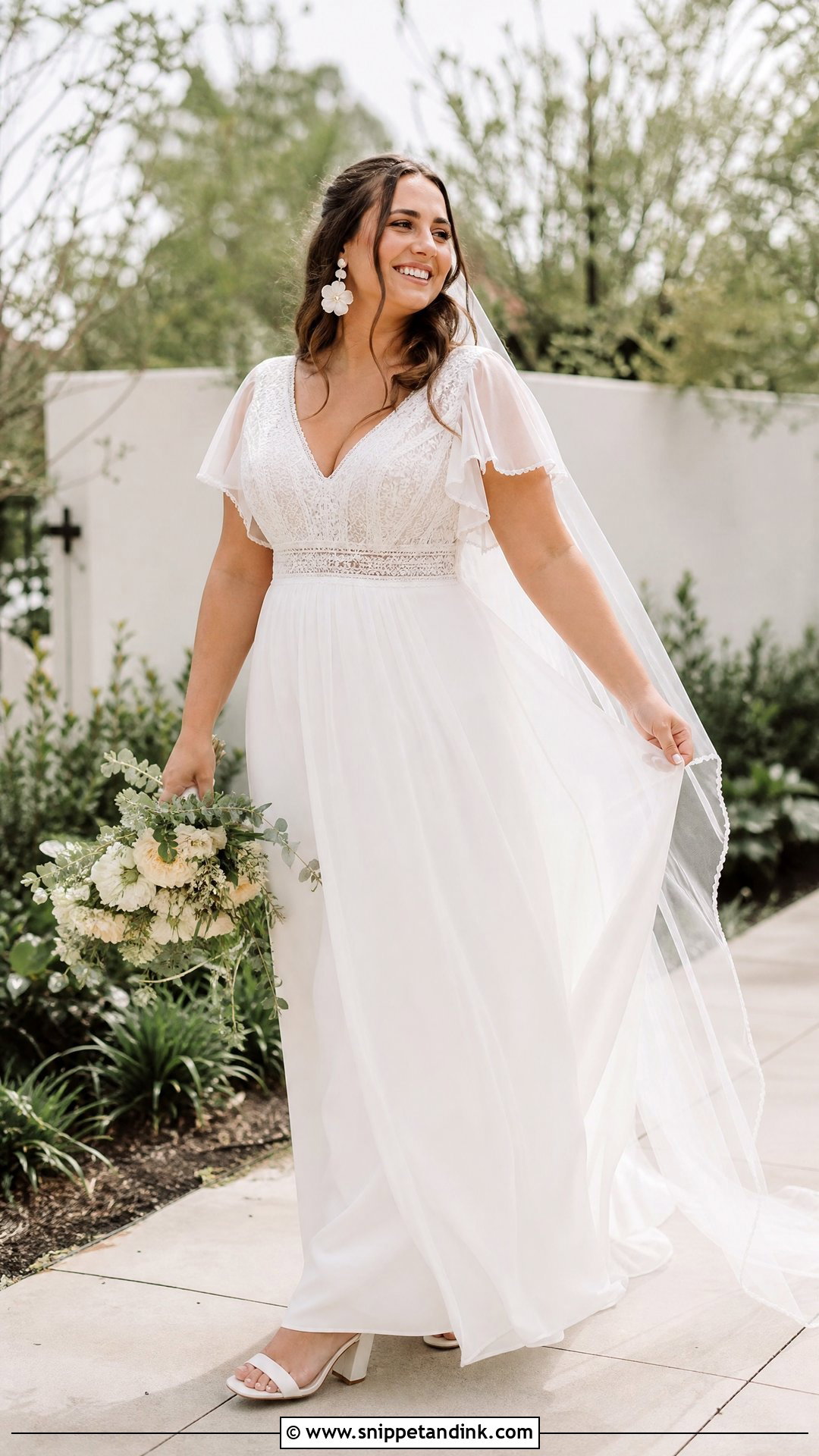
Flutter sleeves move with you, and for an outdoor or destination wedding that lightness is worth a lot. A V-neck bodice and defined waist give the silhouette structure, with a chiffon, soft tulle or light lace A-line skirt below. Avoid heavily gathered skirts, which add bulk exactly at the hip. Watch where the sleeve ends. A flutter that falls level with your waist widens it visually, so it should finish higher. Floral earrings, block-heel sandals, a fingertip veil, loosely pinned waves and a small comb complete it.
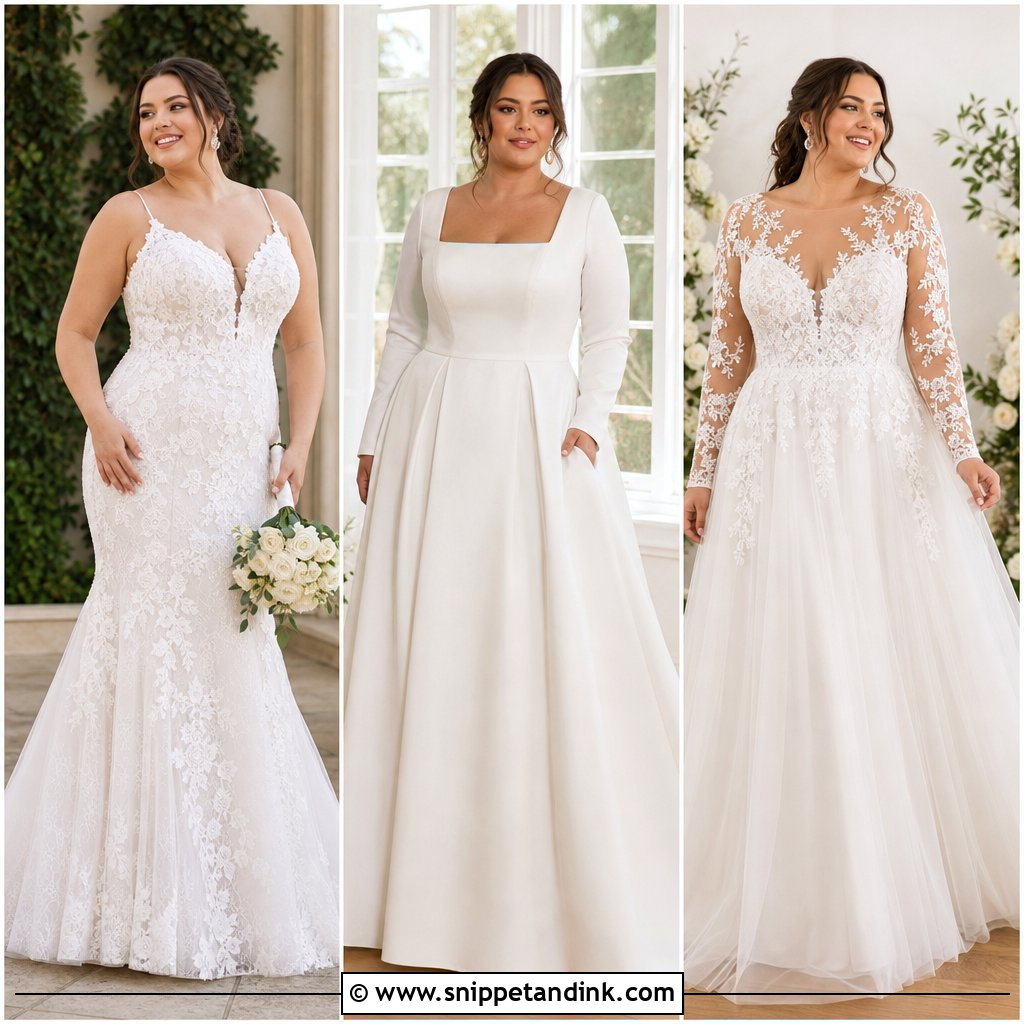
19. Plus-Size Corset A-Line Wedding Dress
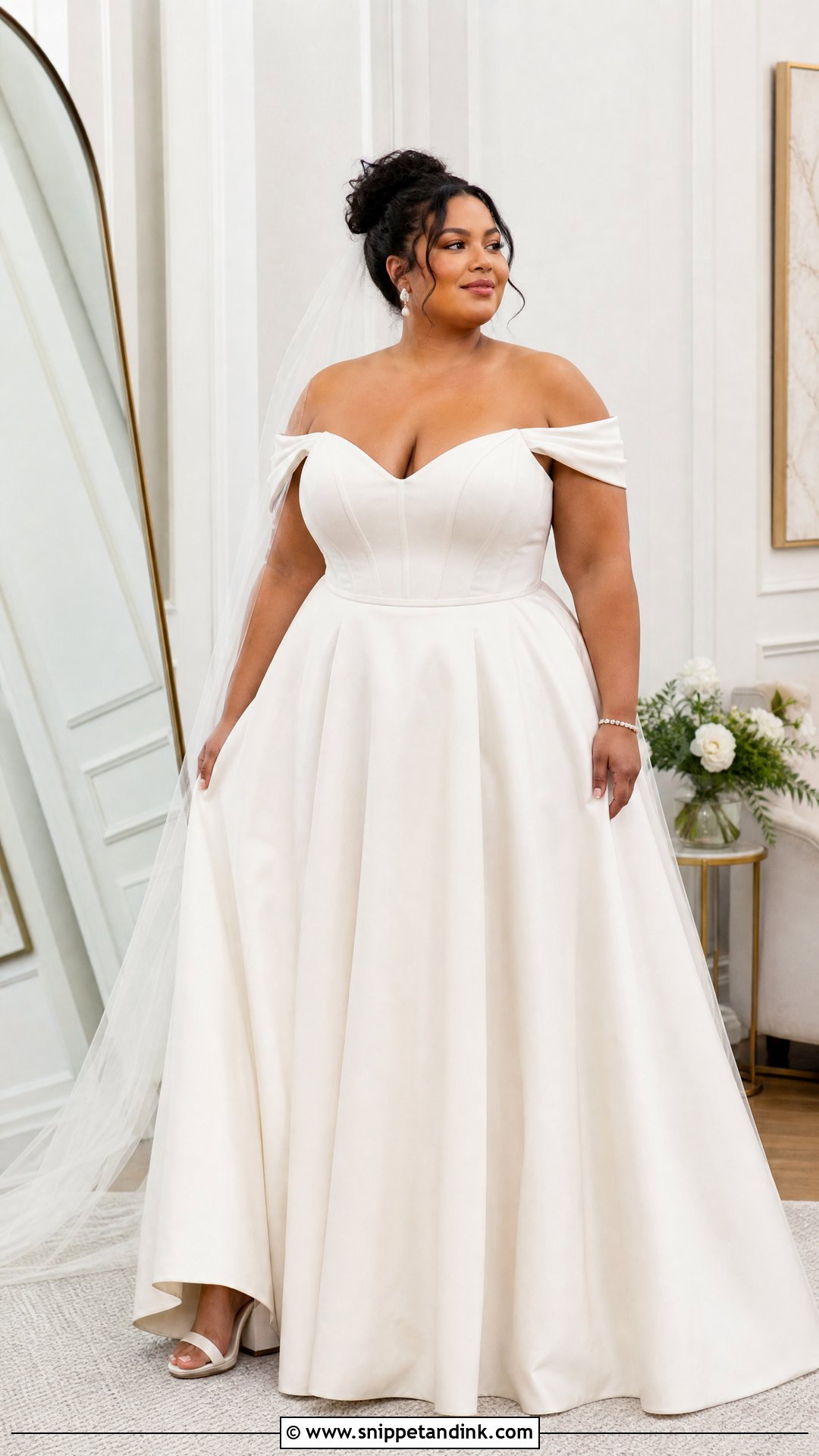
For plus-size brides, the corset A-line gives real support up top and a skirt that moves comfortably below. I look for substantial boning, cups that sit where your bust actually is, and straps or sleeves if you feel steadier with them. A sweetheart or off-shoulder neckline frames the collarbone, and a natural-waist seam defines the shape before the skirt glides over the hips. Bridal sizing runs smaller than everyday clothes, so order for your largest measurement and let a tailor take in the rest; taking in a bodice is far easier than finding room in a fitted skirt. Supportive block heels, pearl earrings and a light veil finish it.




20. Petite Pearl A-Line Wedding Dress
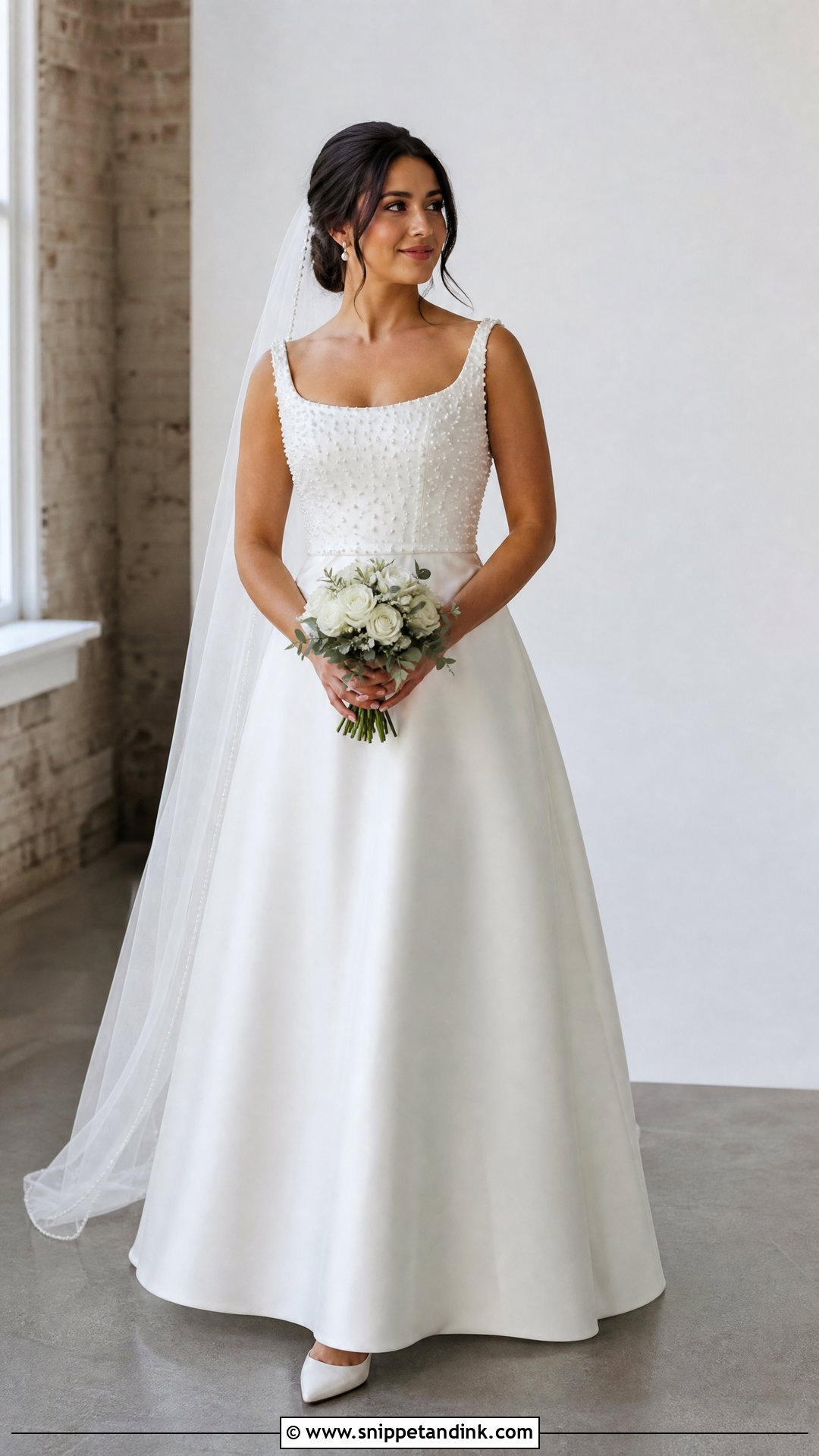
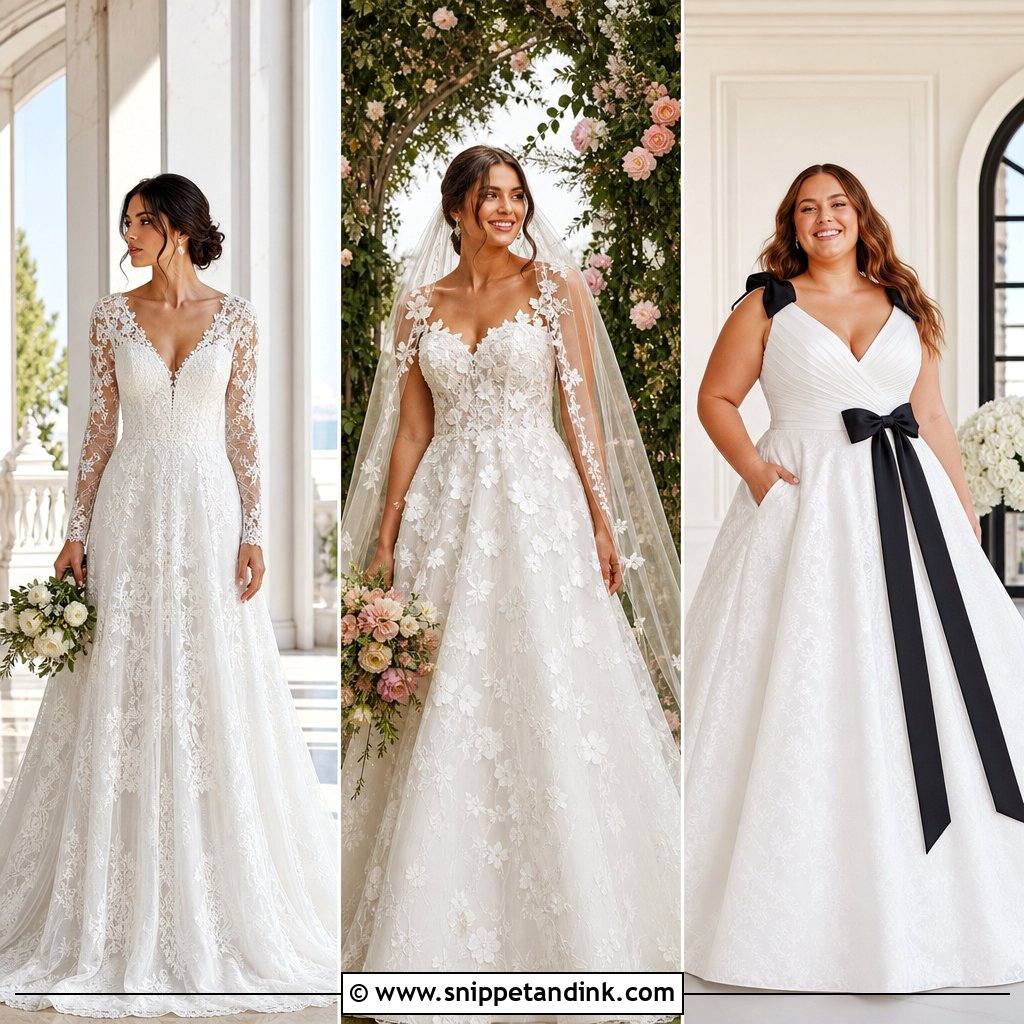
For a petite pear shape, everything should help the eye travel the full height. A fitted V-neck or softly curved bodice, a skirt that stays fairly narrow before opening near the hem, and pearls scattered only around the neckline and shoulders do that. Avoid long bodices and very full skirts, both of which cut you shorter. Pointed ivory pumps, small pearl earrings, a narrow chapel veil and a compact bouquet keep the proportions right. Petite alterations go further than the hem: straps, waist placement, bodice length, train and the position of the embellishment may all need moving.
Underwear Lines Show Through Crepe Faster Than Satin
The underwear question matters more for this shape than most. Fitted crepe and satin show every line across the hips and thighs, and they show it most in flash photos. Smooth, bonded-edge briefs or a high-waisted slip short in a shade close to your skin will disappear under nearly anything.
Slip shorts do a second job. They stop inner thighs from rubbing in a long, warm day, and they let a fitted skirt glide over the hips instead of catching. Under a full ball gown you can be more relaxed, but even there a smooth layer helps the skirt hang straight.
Check the seated view
Sit on a hard chair at your final fitting and look in the mirror from the side. A fitted skirt that’s right when standing can pull into folds across the lap when you sit. If it does, a little extra ease at the hip seam usually fixes it, and that’s far easier to ask for then than on the morning.
Your Hips Aren’t a Problem a Gown Has to Solve
A pear shape isn’t limited to one silhouette. A-lines, structured ball gowns, soft empire waists and well-tailored fit-and-flares all work, and the right one is the dress that supports you, suits your venue and feels like your own taste. Start with good construction, a waist that’s clearly marked and a neckline you love. Then keep the shoes comfortable, the jewellery balanced and the veil in step with the dress. Body-shape advice helps you shop faster, but a good tailor and how you feel when you move will always count for more.
You'll Like These Ideas:





Leave a Reply