
Traditional bridal clothing carries a family’s history in its colours and handwork, and that’s what makes styling it different from choosing a gown off a rail. The looks below range from embroidered lehengas and silk sarees to ceremonial kimonos, caftans, woven West African ensembles and the classic white ball gown. Customs differ by region, faith, community and household, so I treat every one of these as a draft to refine with relatives or the artisans who make the clothing. What I focus on is honest fabric, respectful accessories, shoes you can stand in for hours and tailoring that supports you through the whole ceremony, including when two families’ traditions meet.
When Two Families Bring Two Traditions
More and more of the brides I dress are marrying across cultures, and the outfit question gets more interesting. The usual answer is one traditional outfit per ceremony: a lehenga for the Hindu rituals, a white gown for the church, a qun kwa for the tea ceremony. That respects each tradition on its own terms and avoids awkward hybrids.
Colour is where misunderstandings happen. White is the bridal colour in many Western weddings but is linked to mourning in several East and South Asian traditions, while red is festive in many of those same cultures. Black, too, means different things to different families. Before you decide, ask both sides what they’d expect to see, and what they’d find uncomfortable.
If you’d like a single fusion outfit, borrow from one tradition’s textile and the other’s silhouette, and keep sacred elements in their original context. A tartan sash on a lace gown works; a ceremonial headdress worn as decoration often doesn’t.
1. Indian Red Lehenga Bridal Dress
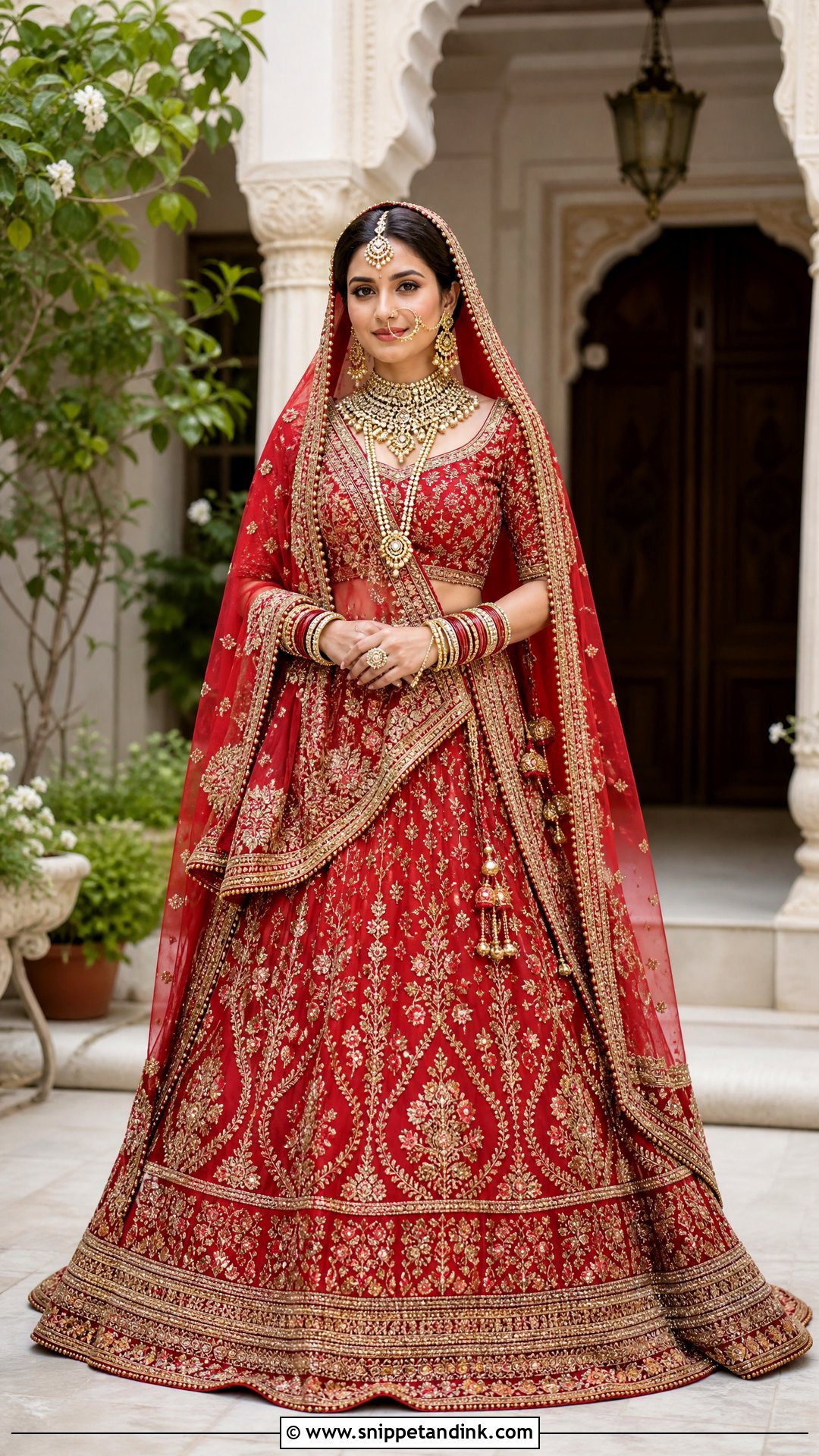
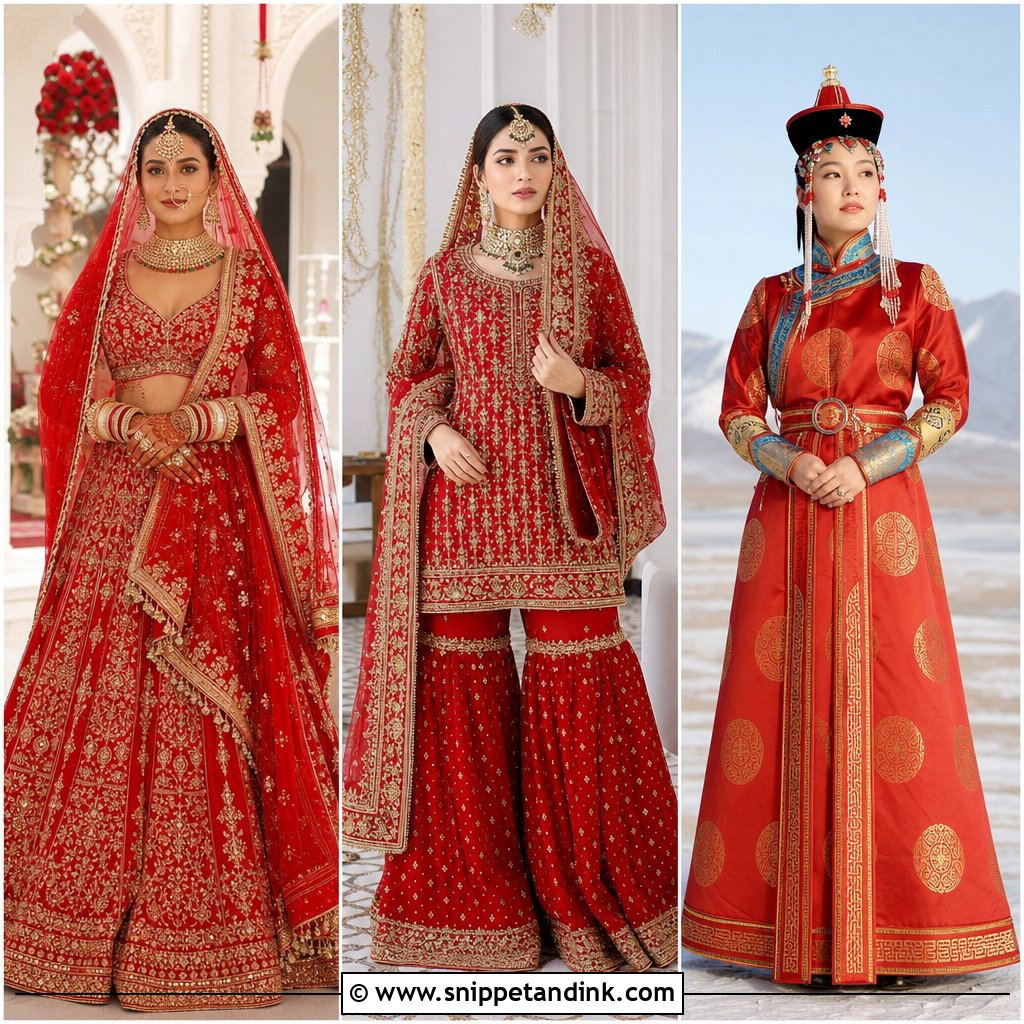
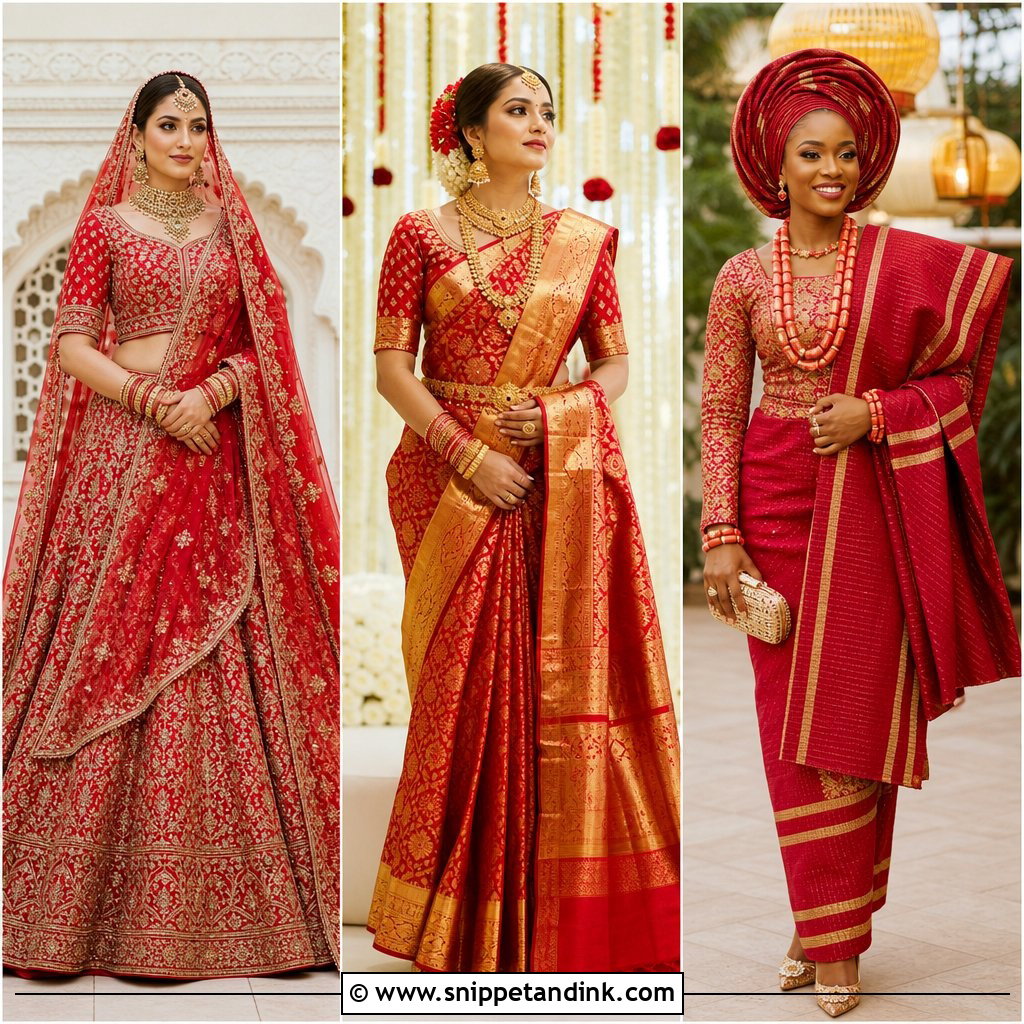
A red bridal lehenga moves with every step. I look for a supportive blouse, a full ankle-length skirt and a dupatta draped over the head or one shoulder. Gold zari, sequins or beads add depth; the weight of that work is what I check first, because a heavily embroidered skirt can pull at the waistband after a few hours. Petite brides usually look best in smaller motifs, while taller and plus-size brides carry broad borders well. A necklace, earrings, bangles, maang tikka and embellished juttis finish it. Have an experienced draper pin the dupatta so it stays put through rituals and greetings.
2. South Indian Silk Saree Bridal Dress
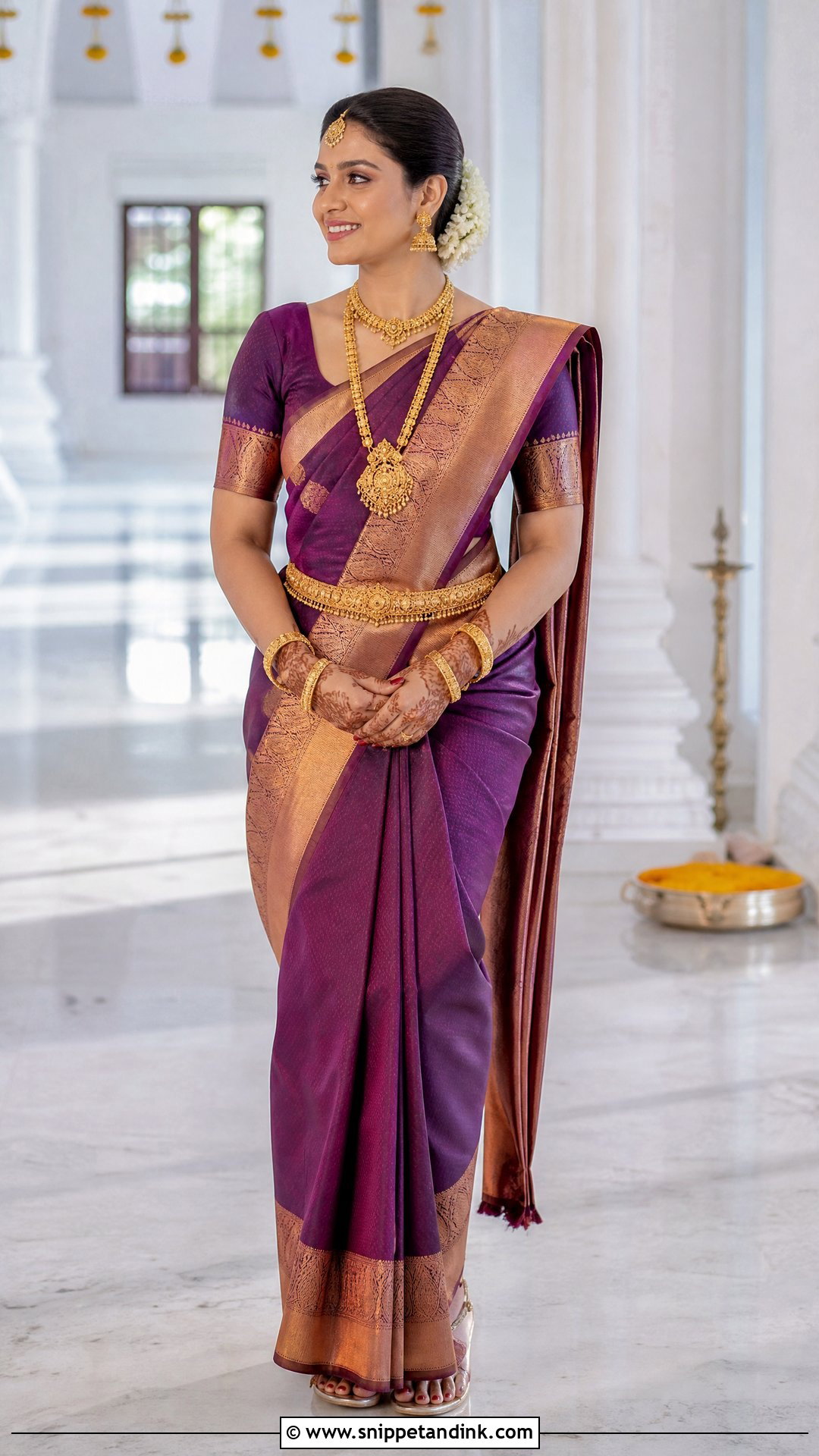
A silk saree glows under bright ceremony lighting, especially in red, green, gold or deep jewel tones with a contrasting woven border. The blouse needs to support you and let you lift your arms, so I ask for a sample arm raise at every fitting. Pleating is where a saree looks expensive or sloppy; book a professional draper and check the length with your actual shoes, since a heel changes where the hem falls. Temple-style jewelry, stacked bangles, a waist belt, fresh flowers and a braid or bun complete it. For a lighter outfit, choose softer silk and keep the heavy work to the border and pallu.
3. Pakistani Gharara Bridal Dress
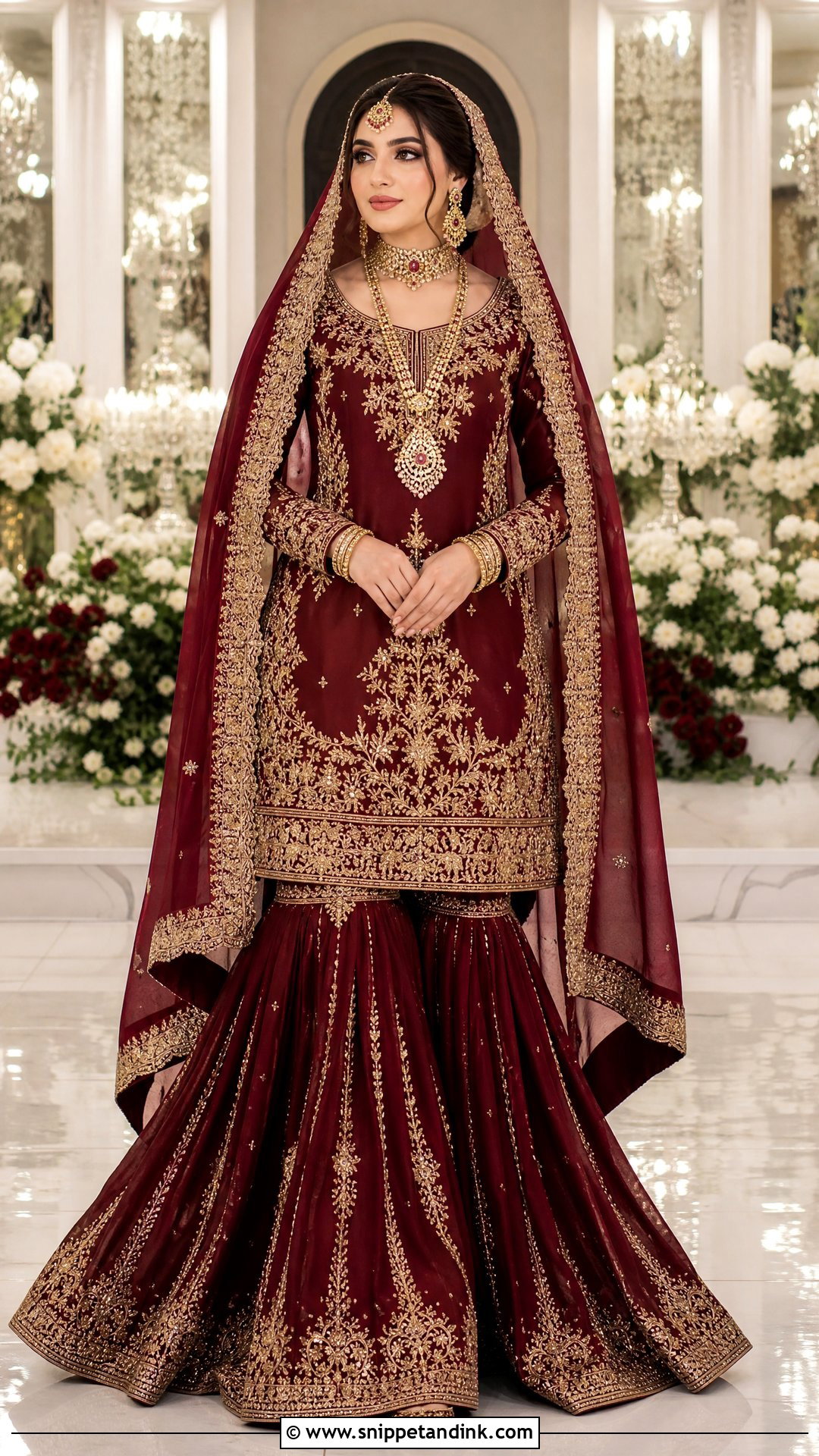
A gharara is all about the flare at the knee: a long or mid-length kameez over wide trousers that open out below a gathered knee seam, with an embroidered dupatta. Crimson, maroon, deep pink, ivory and gold are the usual bridal palette. I balance the two halves, so heavily worked trousers get a calmer top, or the other way round. The knee seam is the fitting point I fuss over most, because if it sits too high or low the whole outfit hangs wrong in photos. A choker, long necklace, earrings, bangles and embroidered flats complete it, with discreet pins to hold the dupatta over the head.
4. Bangladeshi Red Saree Bridal Dress
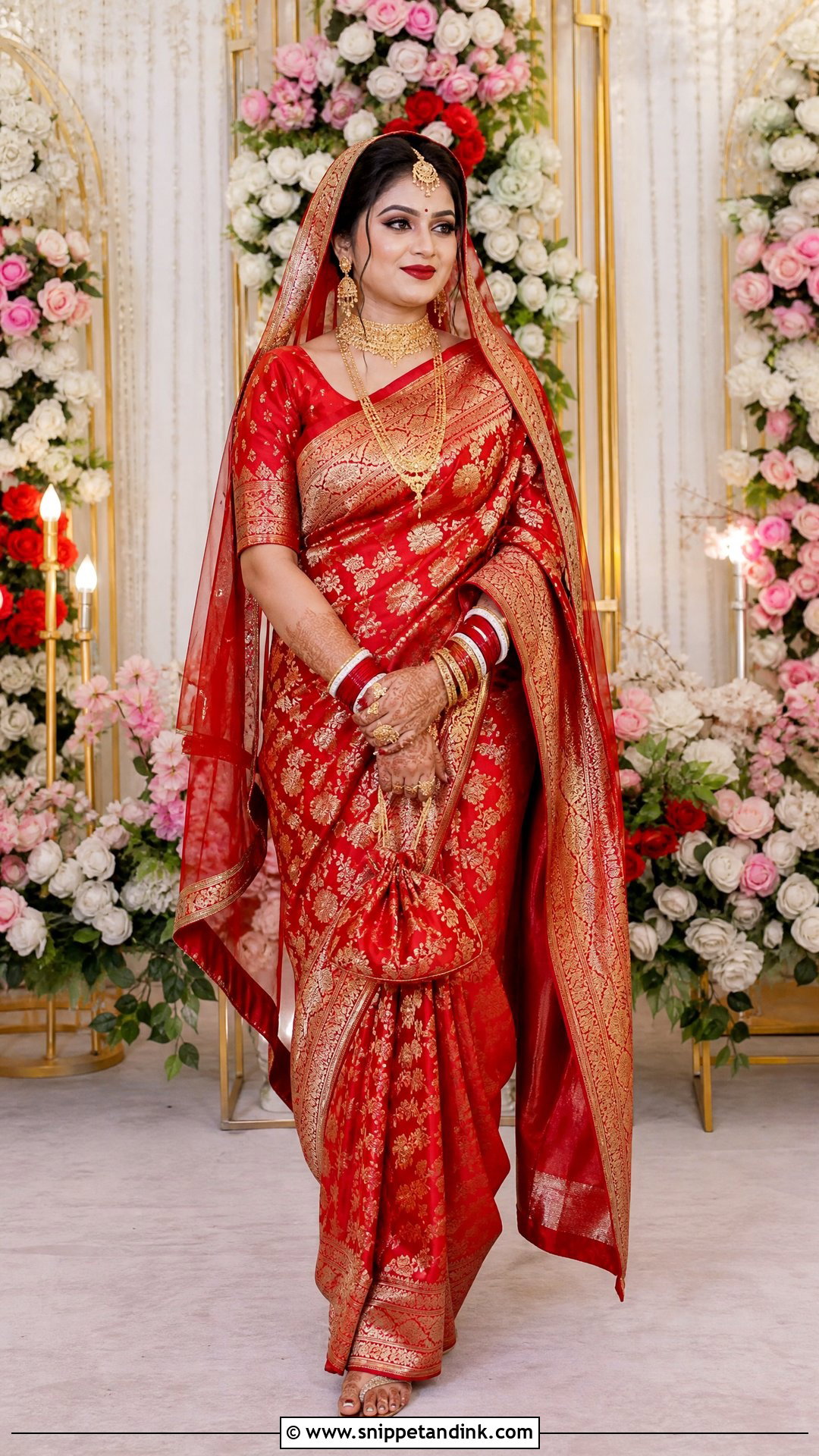
Red with gold remains the classic Bangladeshi bridal saree. Silk or jamdani-style weaving, or whatever fabric your family prefers, pairs with a fitted red or gold blouse with comfortable sleeves. I make sure the border stays visible through the pleats and pallu, since it frames the whole drape. Traditional gold jewelry, red and white bangles, a forehead ornament and a veil or head covering finish it. Gold sandals look lovely, but for long ceremonies I suggest cushioned flats under the hem. A soft bun, defined eyes and a matching red lip complete the face.
5. Chinese Qun Kwa Bridal Dress
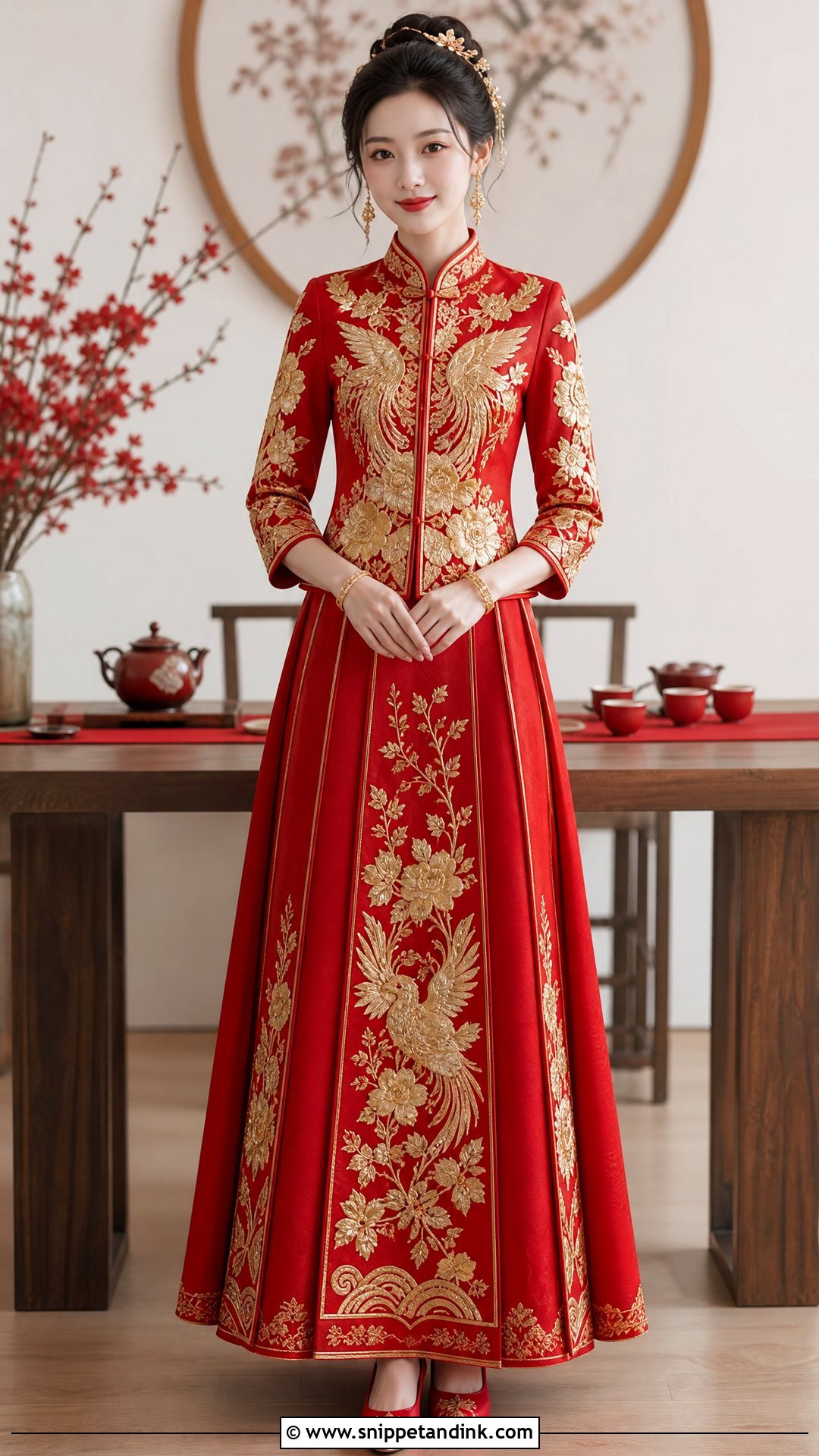
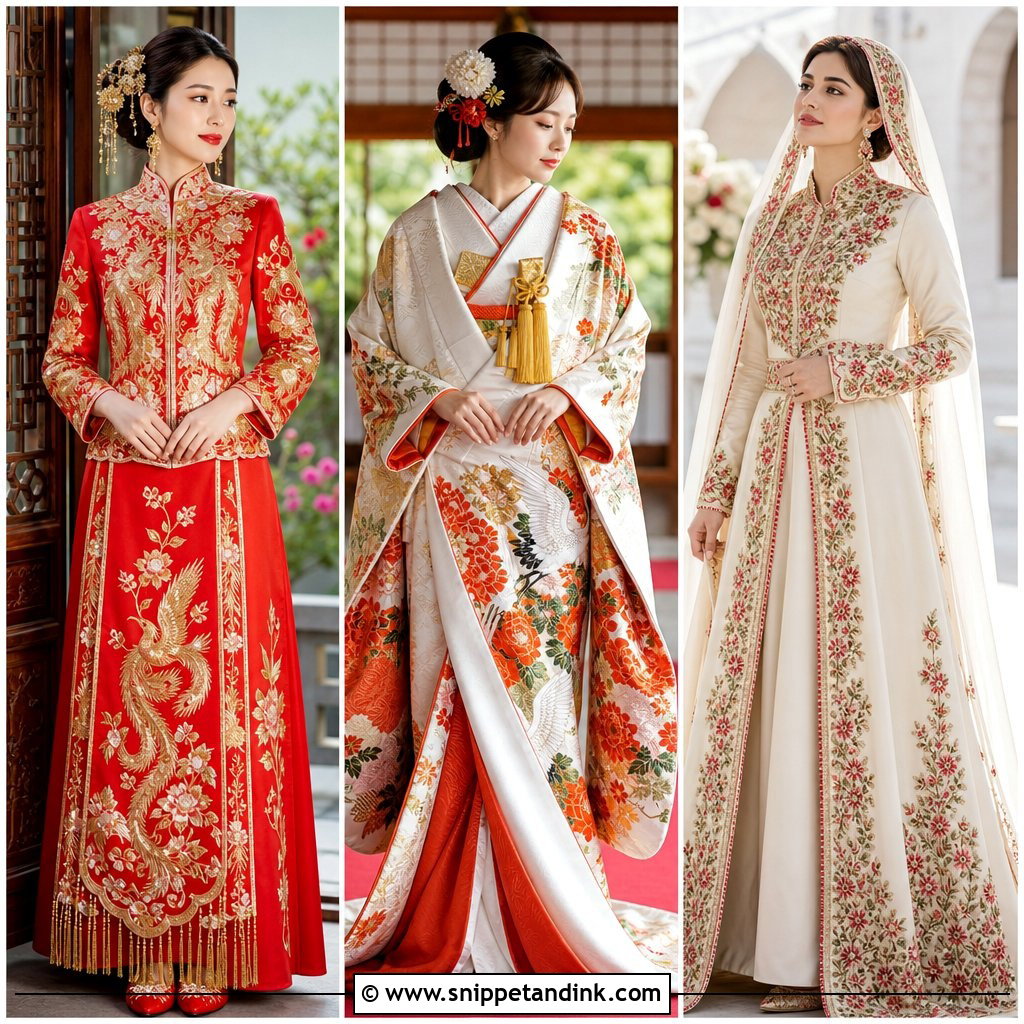
The qun kwa is a coordinated jacket and skirt in red, with dense gold embroidery that often carries symbolic birds, flowers or dragons and phoenixes chosen by family custom. The embroidery leads, so jewelry should sit beside the neckline rather than cover it: gold earrings, bracelets, red shoes and one refined hair accessory. I check two things at fittings. Can you bow without the jacket riding up, and can you kneel or sit for the tea ceremony without the skirt pulling? Embroidered panels have no stretch. Work with a specialist who understands the motifs and construction.
6. Vietnamese Red Ao Dai Bridal Dress
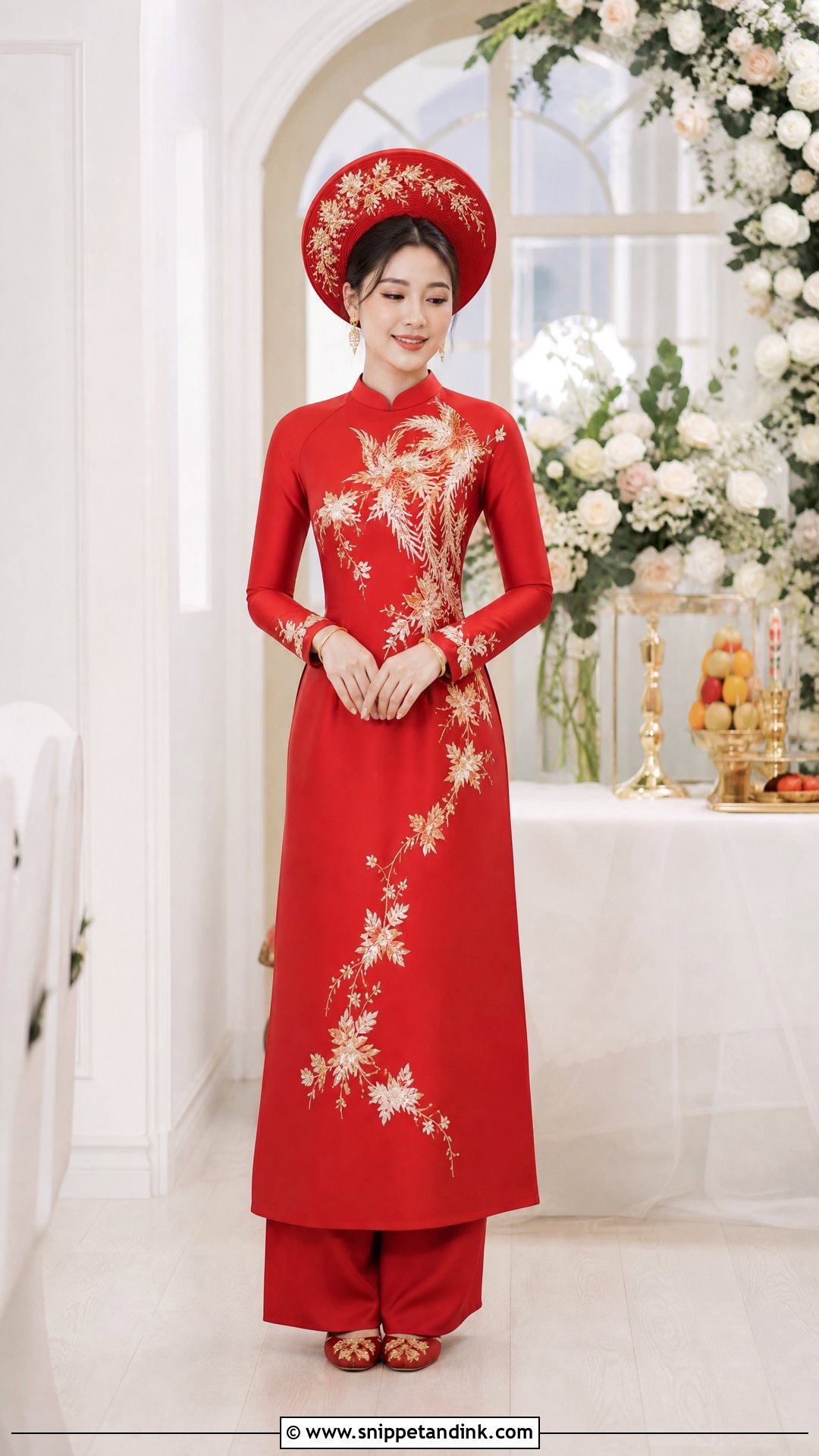
A red bridal ao dai looks clean from every angle thanks to its long front and back panels over trousers. Red silk or satin with gold embroidery or beading is traditional, finished with a round khan dong headdress, small earrings, a bracelet and embroidered shoes. The ao dai is cut close, so tailoring has to be precise; I check the side slits when the bride sits, since a tight waist makes them gape. Choose a breathable lining and trousers with room to move. Many brides wear a white, ivory or pastel ao dai for another event and keep red for the main traditional ceremony.
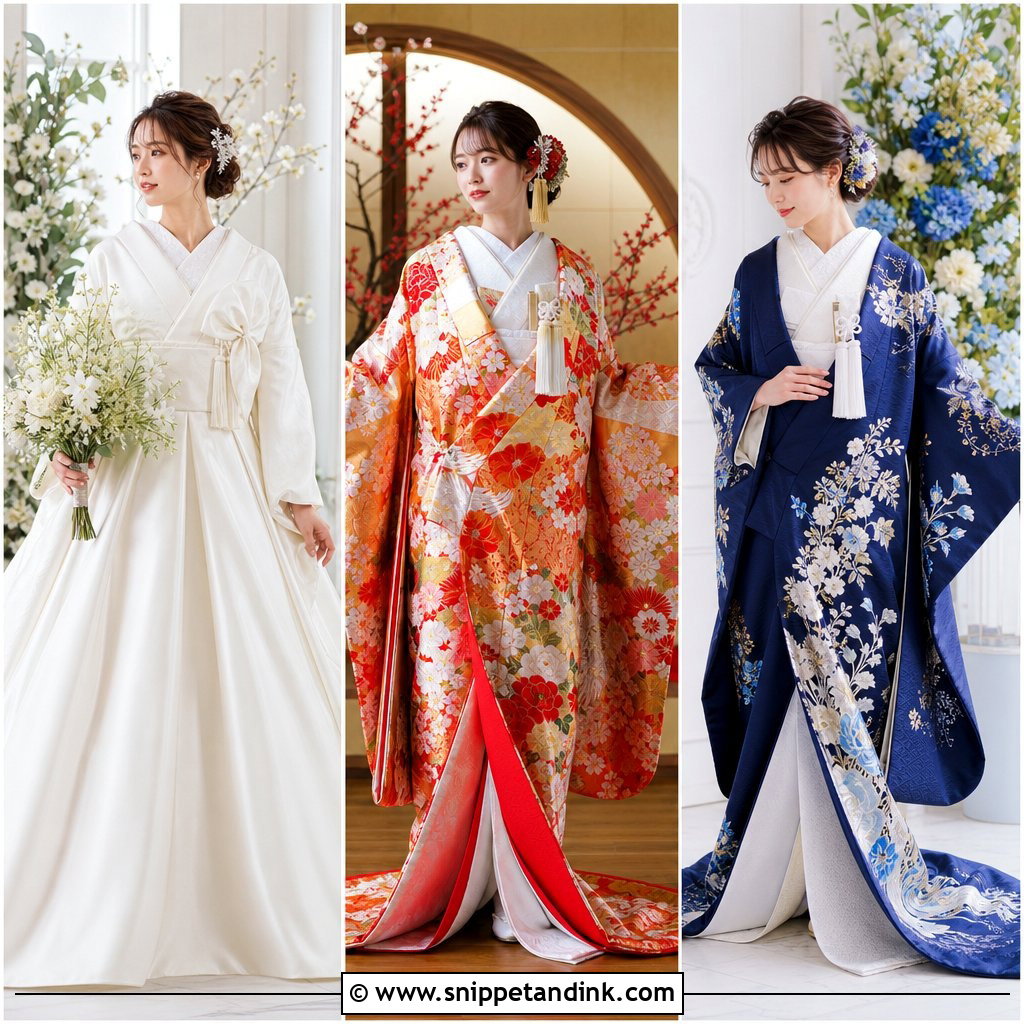
7. Japanese Shiromuku Bridal Dress
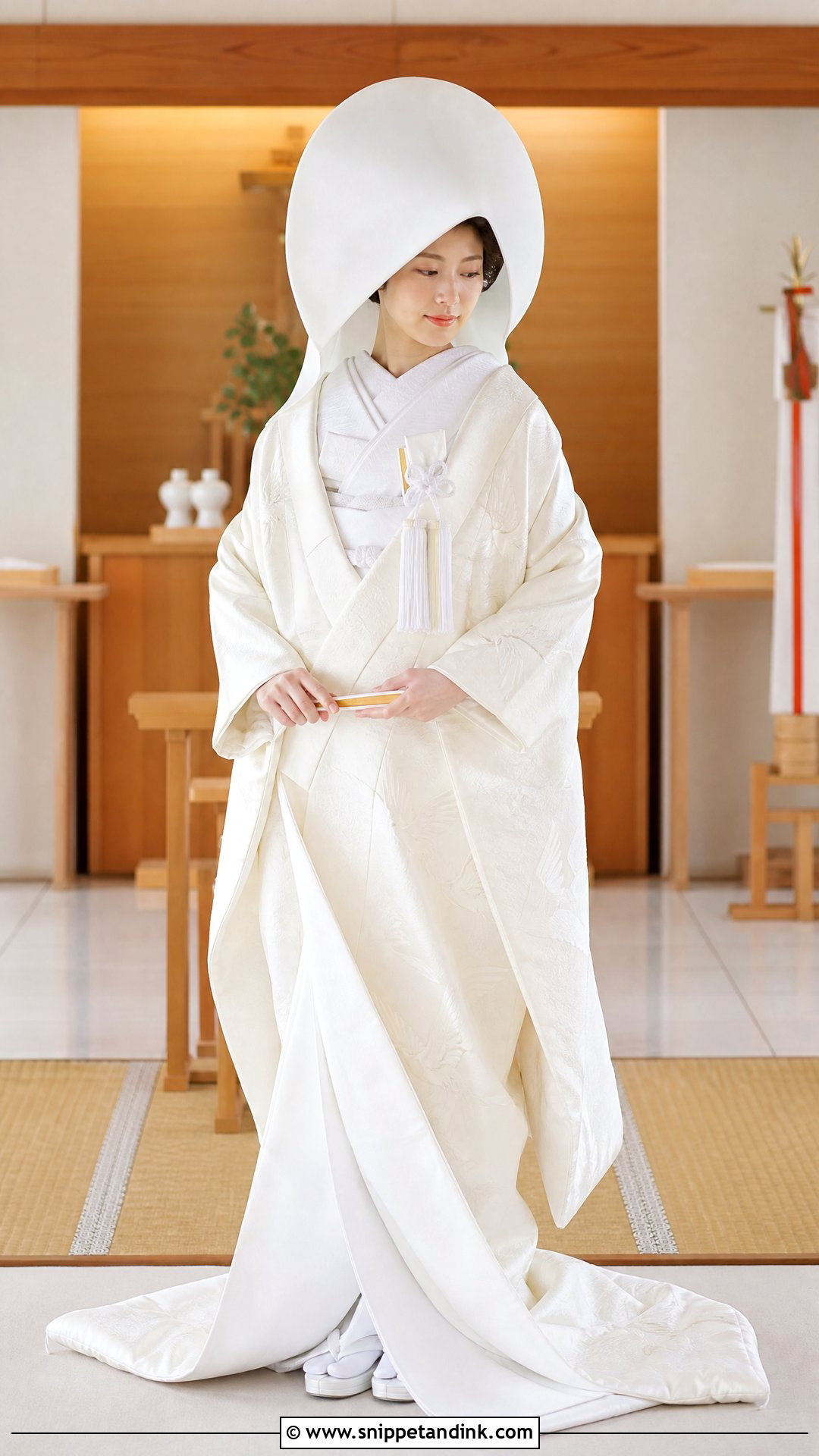
A white shiromuku is a layered ceremonial kimono, and it’s not something to put on yourself. An experienced kitsuke dresser knows the order of layers, how tight each tie should be and how the garment should move. White footwear, tabi socks and the formal head covering chosen for the ceremony complete it. The layers are warm and fairly restrictive, so discuss fabric weight for the season, the venue temperature and planned breaks before the day. Keep modern accessories quiet. Many brides change later into a colourful iro-uchikake or a Western gown for the reception.
8. Korean Hwarot Bridal Dress
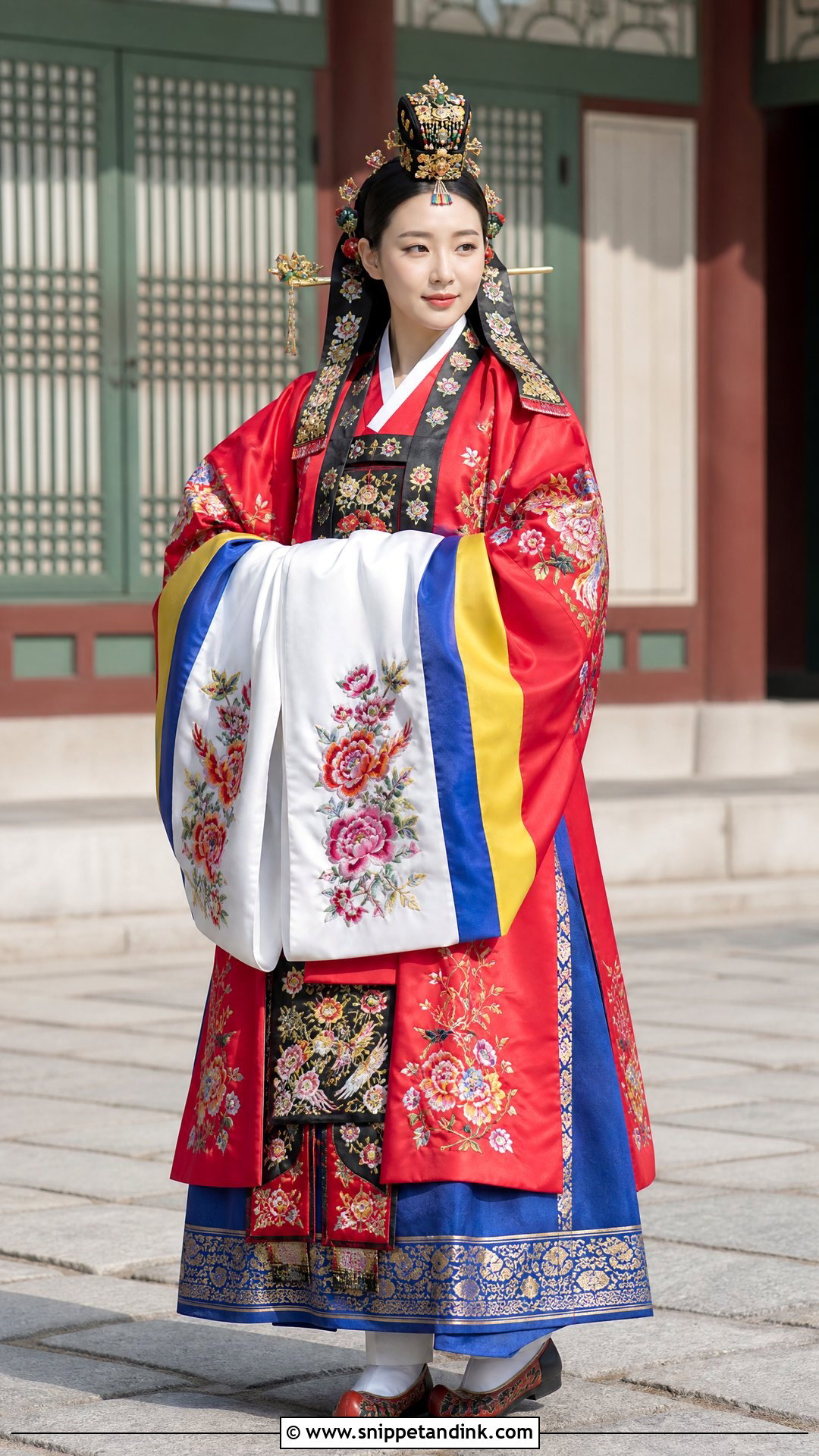
The Korean hwarot is a ceremonial robe with colourful embroidery and contrasting cuffs, worn over traditional garments. Traditional hair ornaments, a formal hairstyle, soft makeup, white socks and traditional shoes complete it; unrelated statement jewelry clashes with the strong colours. The fit should let the sleeves and front panels hang cleanly while giving room for the bows in the ceremony. A knowledgeable dresser places each layer, and I’d always have a practice bow at the fitting. A formal hanbok suits brides who want something simpler, chosen with family customs in mind.
9. Thai Silk Chut Thai Bridal Dress
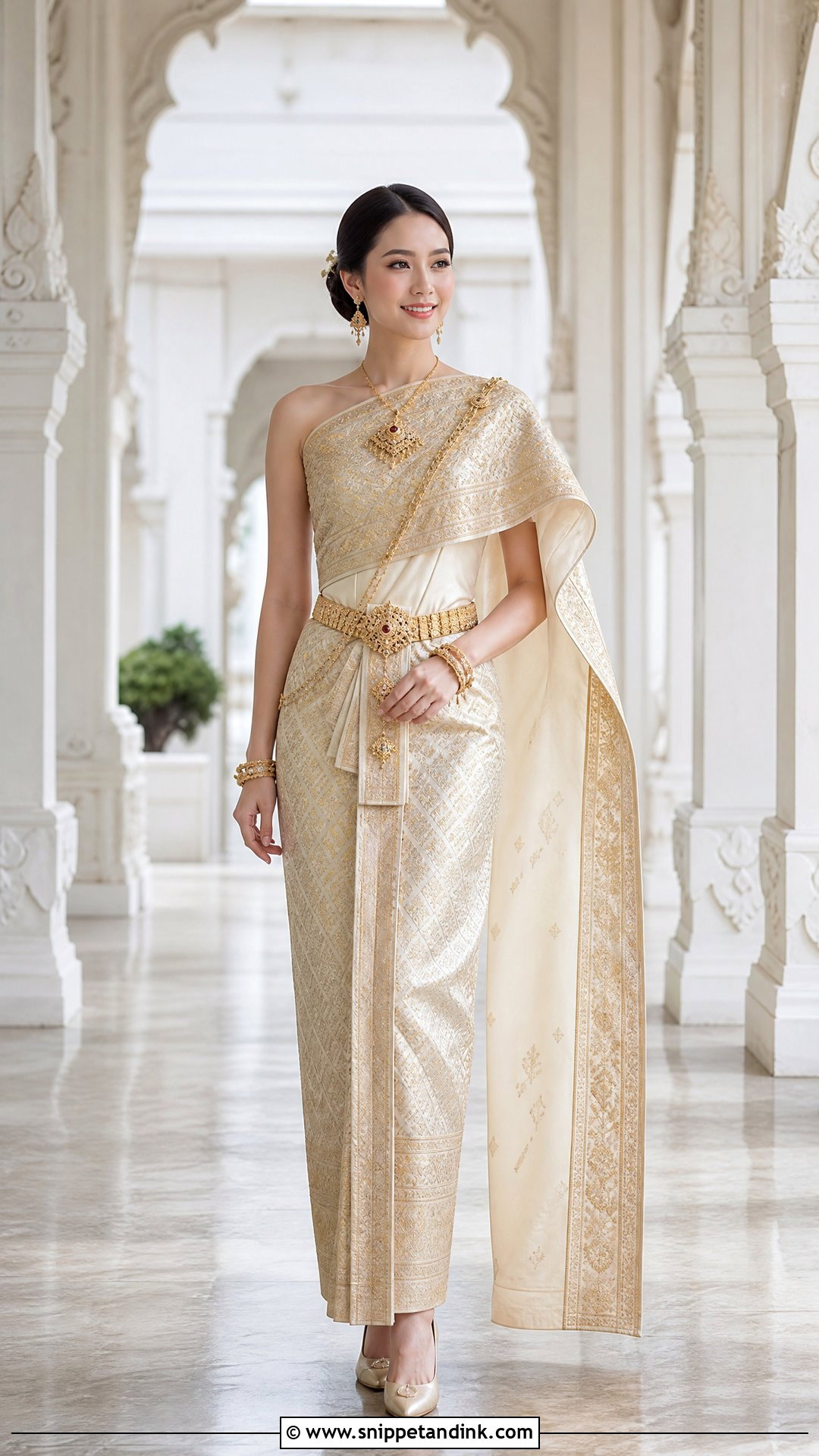
Thai silk has a sheen that does a lot of the work for you. Pick the formal chut Thai variation that suits your ceremony and family, often a fitted top or shoulder drape with a long wrapped skirt in gold, ivory, blush or another meaningful colour. Gold jewelry, a decorative belt, drop earrings and refined heels or flats complete it. Wrapped skirts can loosen as you walk, so I have them fitted with a secure hidden fastening. Edit the extras; the silk is already rich. An updo shows off the shoulder details, and polished makeup holds up in close-up photos.
10. Filipino Terno Bridal Dress
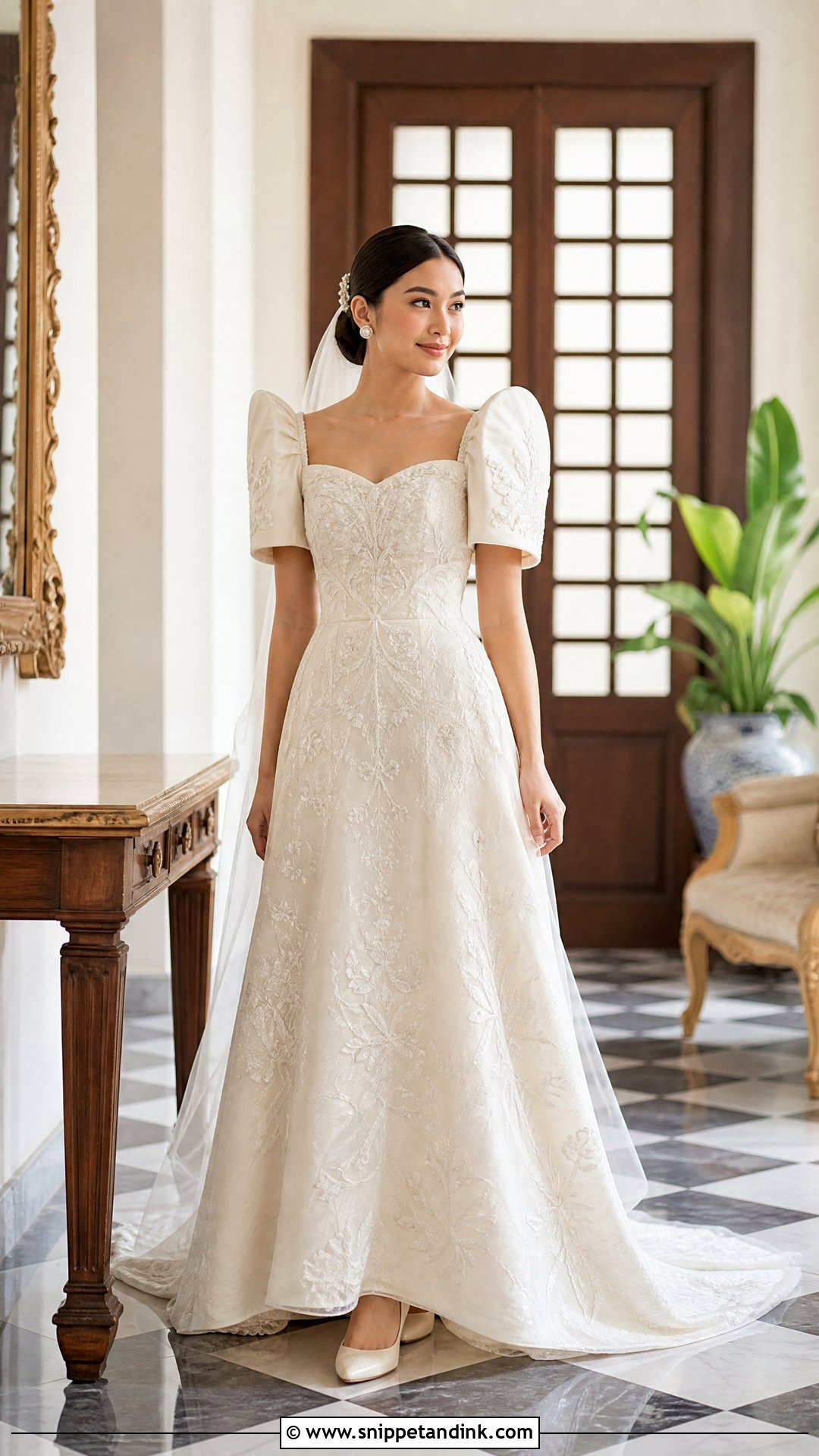
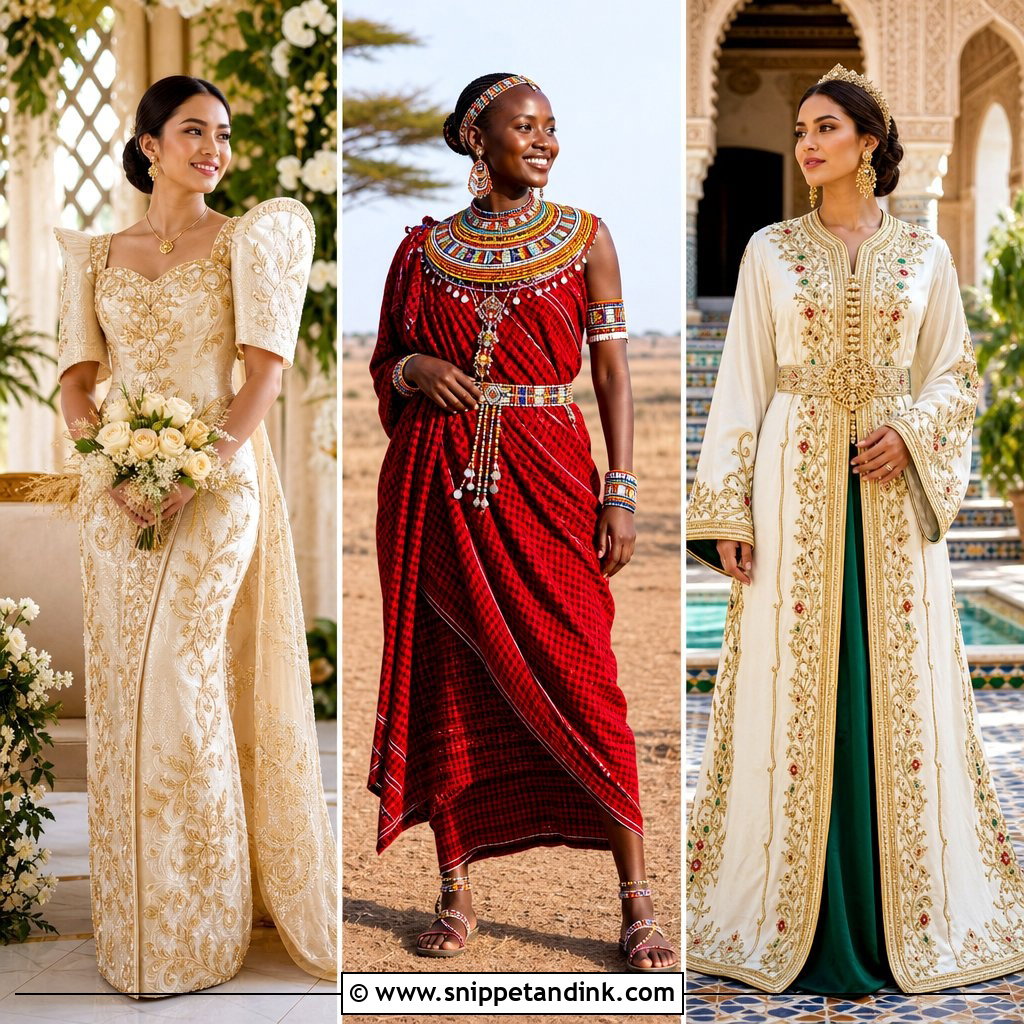
The butterfly sleeves of a bridal terno give a Filipino wedding look an instantly recognisable shape. Ivory, white or soft colours in embroidered fabric or piña-style textiles suit it, with a neat bodice and a straight, A-line or softly flared skirt. Pearl earrings, a delicate comb, closed heels and a simple veil leave the sleeves visible. Those sleeves are stiffened, and at fittings I have the bride hug someone and hold her bouquet. If the sleeves crush or poke her ear, the structure needs adjusting. A modern terno can stay respectful with contemporary tailoring when the cultural details are guided well.
11. Nigerian Aso Oke Bridal Dress
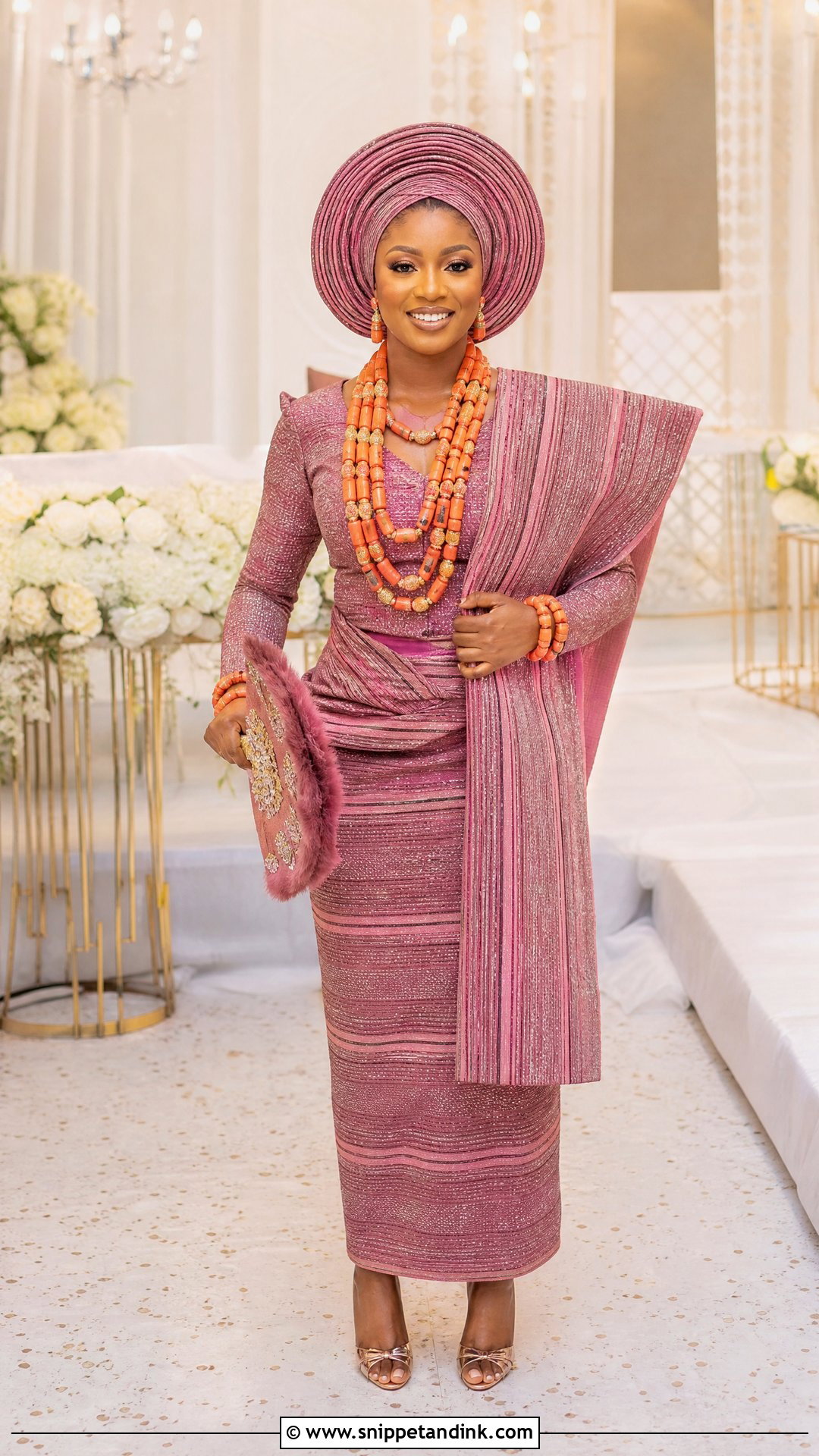
Aso oke is hand-woven and fairly stiff, which is why a bridal ensemble in it holds such a crisp shape. The outfit is usually a fitted blouse, a wrapped skirt, a structured gele and a matching shoulder cloth or sash, in jewel tones, metallics or family-chosen colours. Statement earrings, layered beads, bracelets, a small fan and heels or embellished flats finish it. The gele is an art in itself; book a skilled tier and allow time, because a gele tied in a rush either slips or presses on the temples. Get the blouse and wrapper made to measure, with a breathable lining for long standing and dancing.
12. Ghanaian Kente Bridal Dress
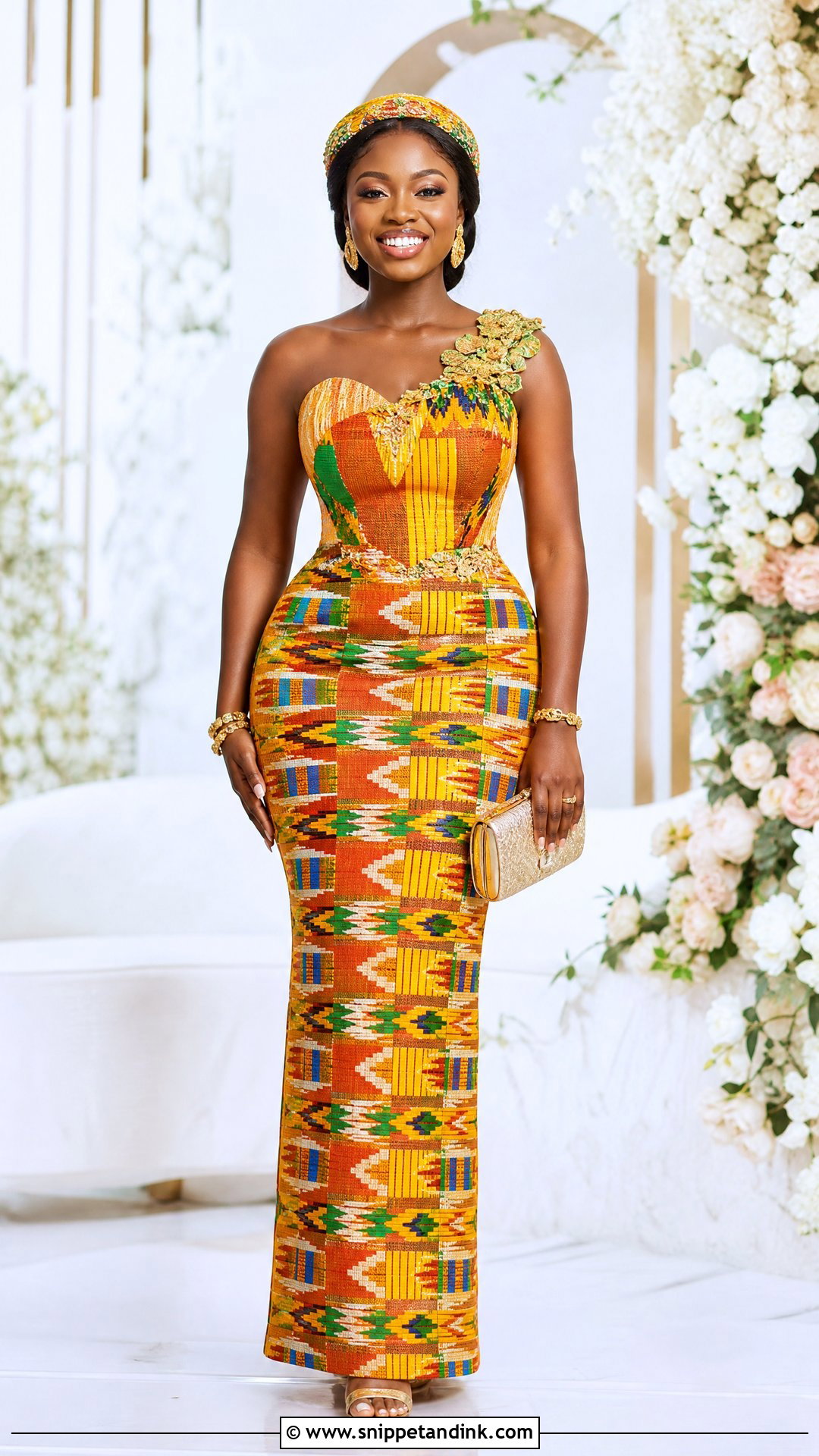
Bright kente can turn a fitted gown or wrapped ensemble into a joyful outfit. Choose colours and patterns tied to your heritage, family or ceremony, since kente designs have names and meanings, not just looks. The cloth can be shaped into a structured dress, paired with a coordinating wrap or used for a blouse and long skirt. Gold jewelry, a matching headpiece, comfortable heels and a small clutch bring it together. Kente strips are woven narrow and joined, so I ask the tailor to plan seams around the pattern and place borders deliberately at the neckline, sleeves, hem and train.
13. Zulu Beaded Bridal Dress
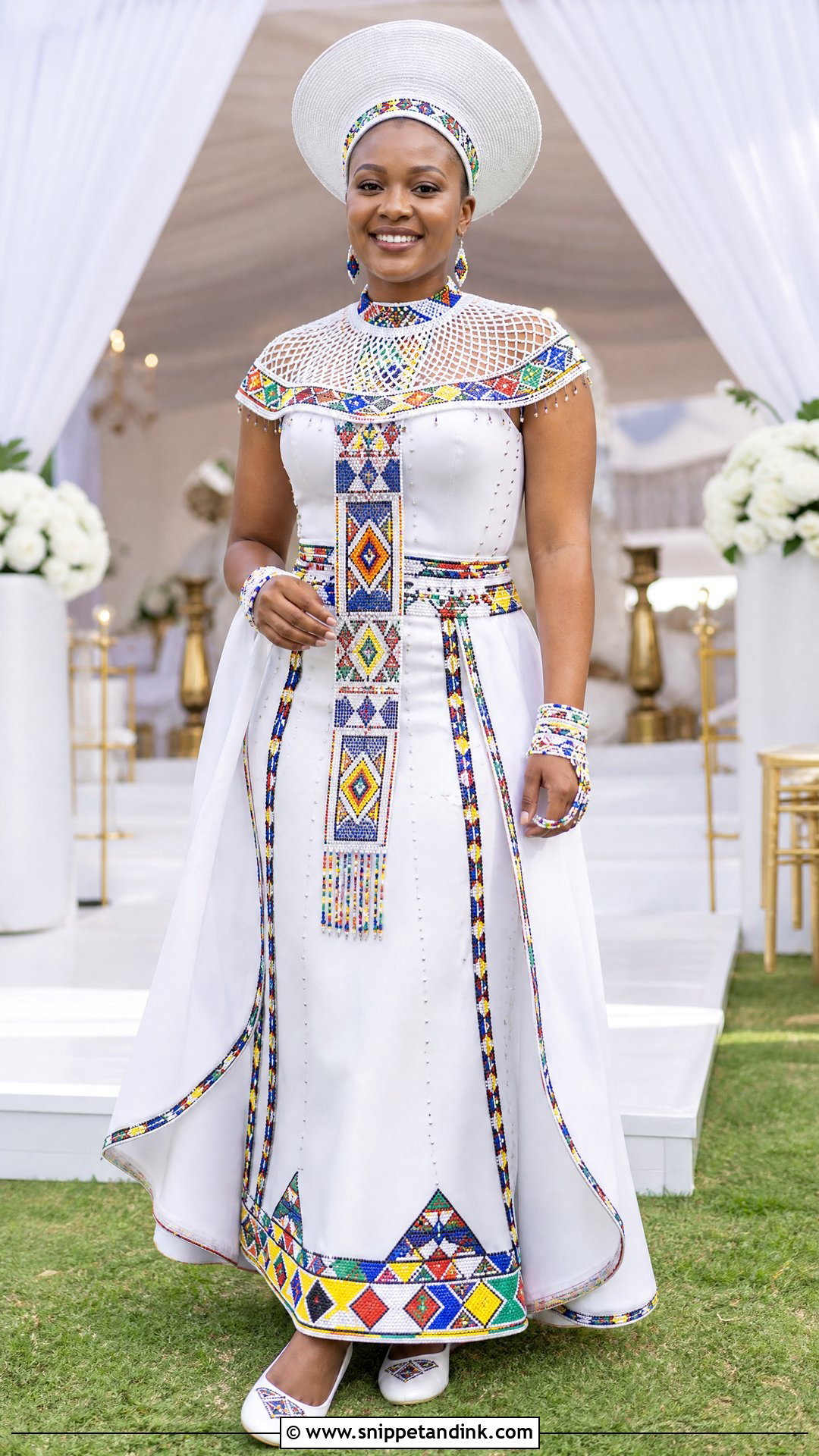
A Zulu bridal ensemble is built from crisp fabric, bold colour and beadwork, and its exact form should follow the bride’s family and community. It may include a skirt, a beaded bodice or accessories, a shoulder covering, headwear and coordinated jewelry, with comfortable sandals or low shoes for ceremonial movement. Let the beadwork carry the colour and keep other details cohesive. Beaded pieces are heavy and can shift, so secure every one during a full dress rehearsal, especially around the head, neck, shoulders and waist. The goal is an outfit true to the bride’s identity, not a generic version of African dress.
14. Moroccan Caftan Bridal Dress
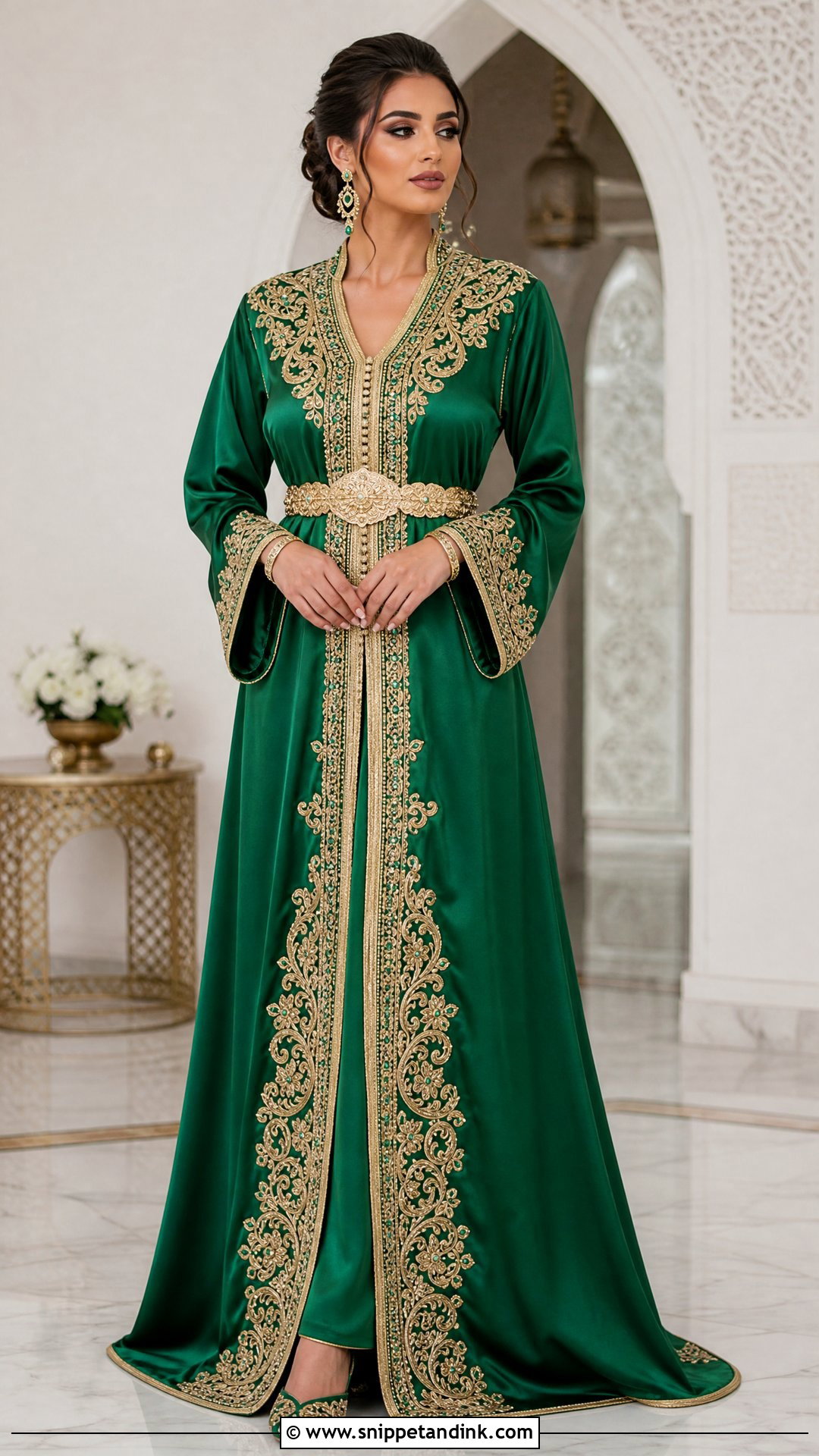
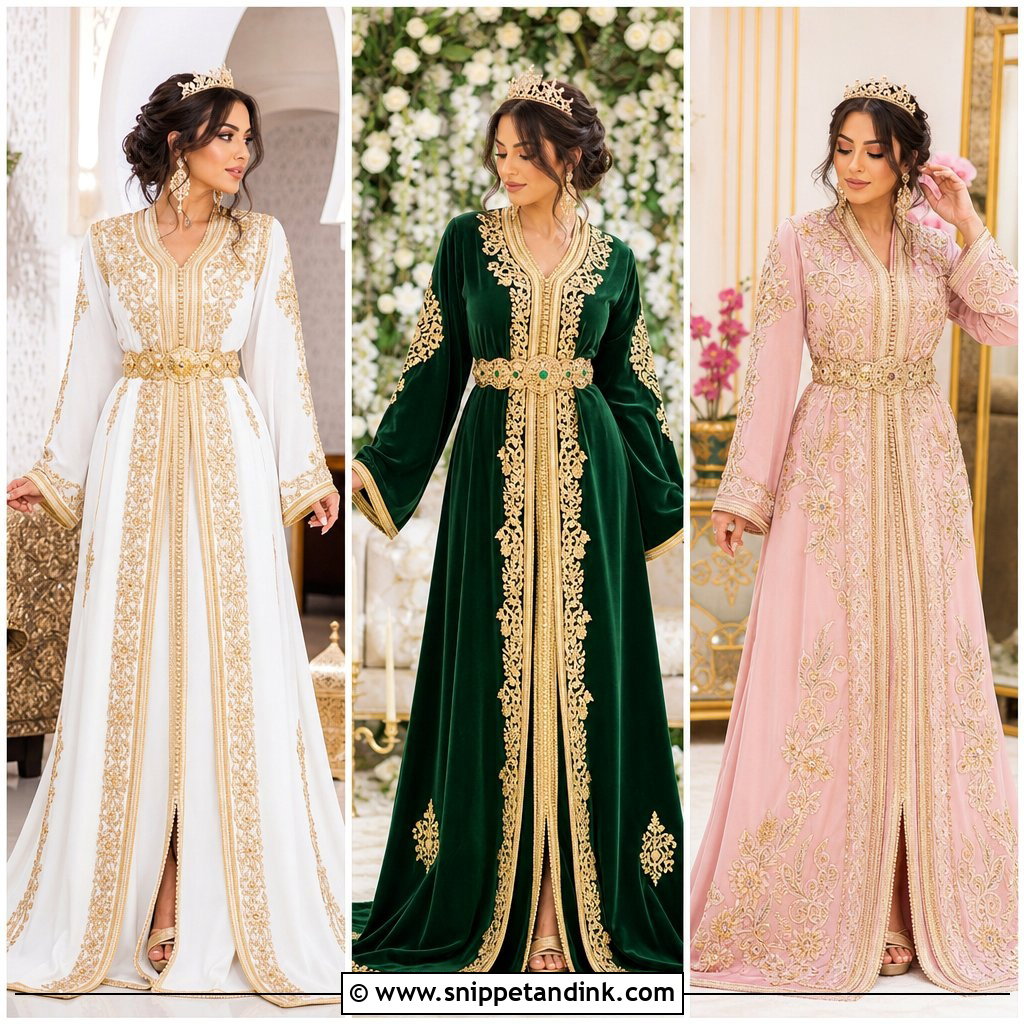
A richly embellished Moroccan caftan has long sleeves, layered fabric and a belted waist. Jewel-toned velvet, silk, satin or brocade looks luxurious; ivory and gold reads lighter. Embroidery, covered buttons and a statement belt give it formality. Earrings, bracelets, embroidered slippers or low heels and a headpiece, if appropriate, finish it. Heavy embroidery scratches where it touches skin, so I ask for a soft lining under any worked area and weigh the caftan in hand at the fitting. With several changes planned, save the most ornate caftan for the main entrance.
15. Algerian Karakou Bridal Dress
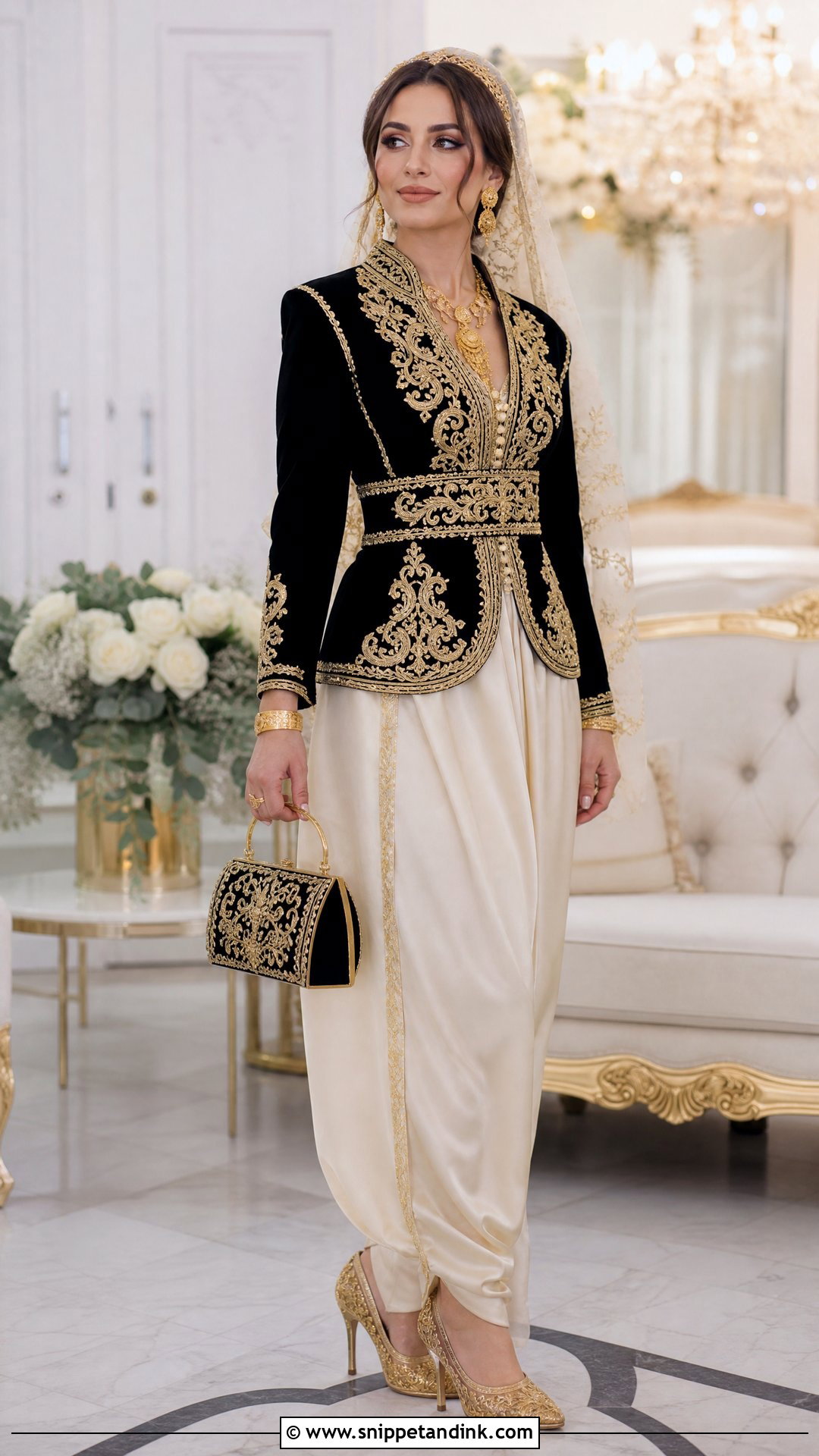
A karakou contrasts a fitted embroidered jacket with a flowing lower half, either trousers or a long skirt depending on region and family. Black velvet with gold is dramatic; ivory, burgundy, navy or emerald is softer. Gold jewelry, a decorated headpiece, refined heels and a small matching bag finish it. The jacket is where I spend fitting time: it must close without distorting the embroidery and still let you lift your arms. If the skirt or trousers are full, keep the bodice clean. Many brides include the karakou as one of several outfits representing different regional traditions.
16. Palestinian Embroidered Thobe Bridal Dress
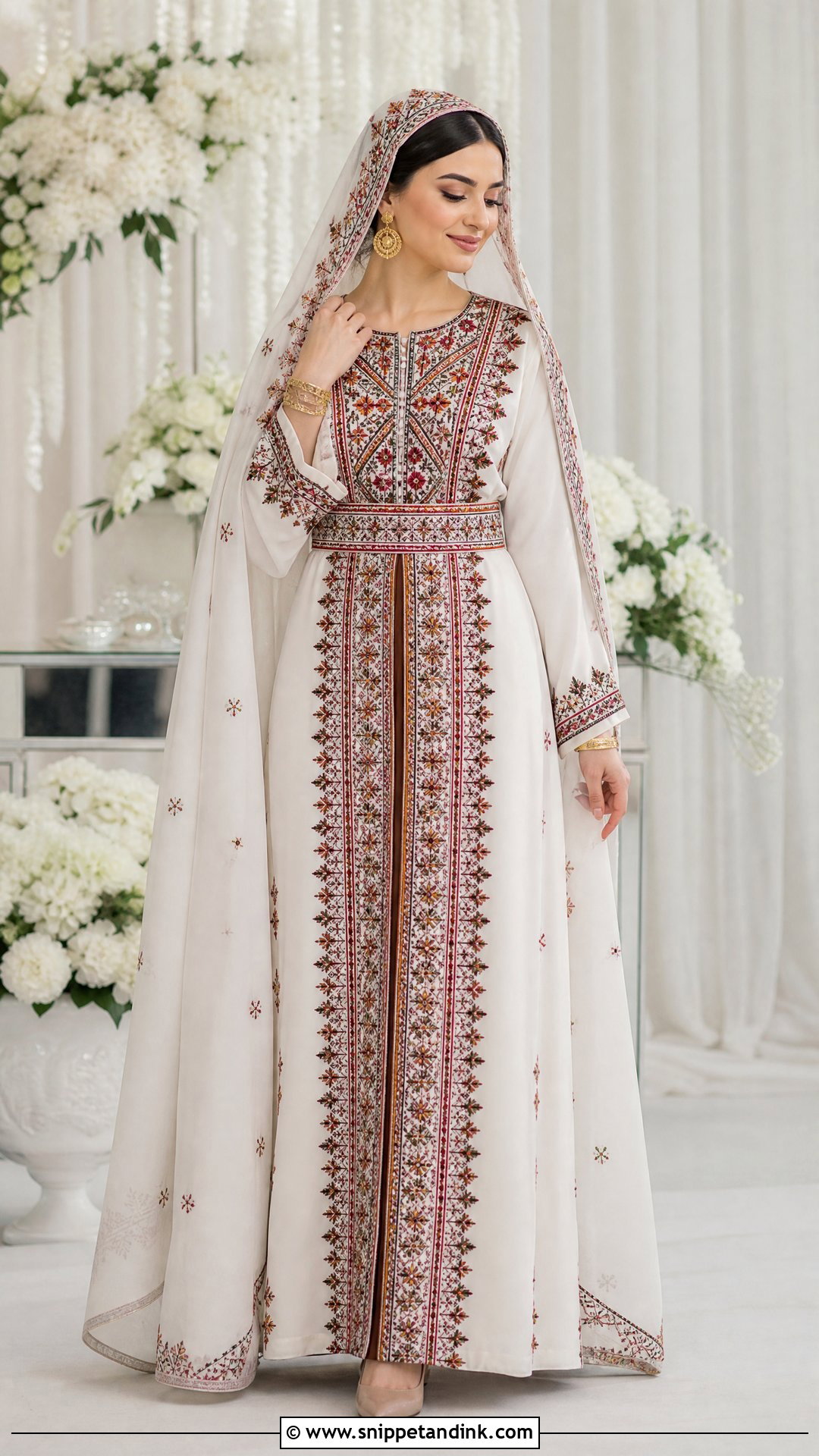
A Palestinian bridal thobe’s embroidery speaks of identity and family, and its motifs, colours and placement can carry particular meaning, so the choice should come from the bride’s community and relatives. A coordinated veil or head covering, gold jewelry, a belt if appropriate and comfortable closed shoes complete the long silhouette. I avoid unrelated necklaces or busy bags, and instead repeat one or two thread colours in the accessories. Check sleeve length and hem clearance at fittings. If you’re using inherited or vintage embroidery, consult an experienced tailor before altering any panel or moving its placement.
17. Turkish Bindalli Bridal Dress
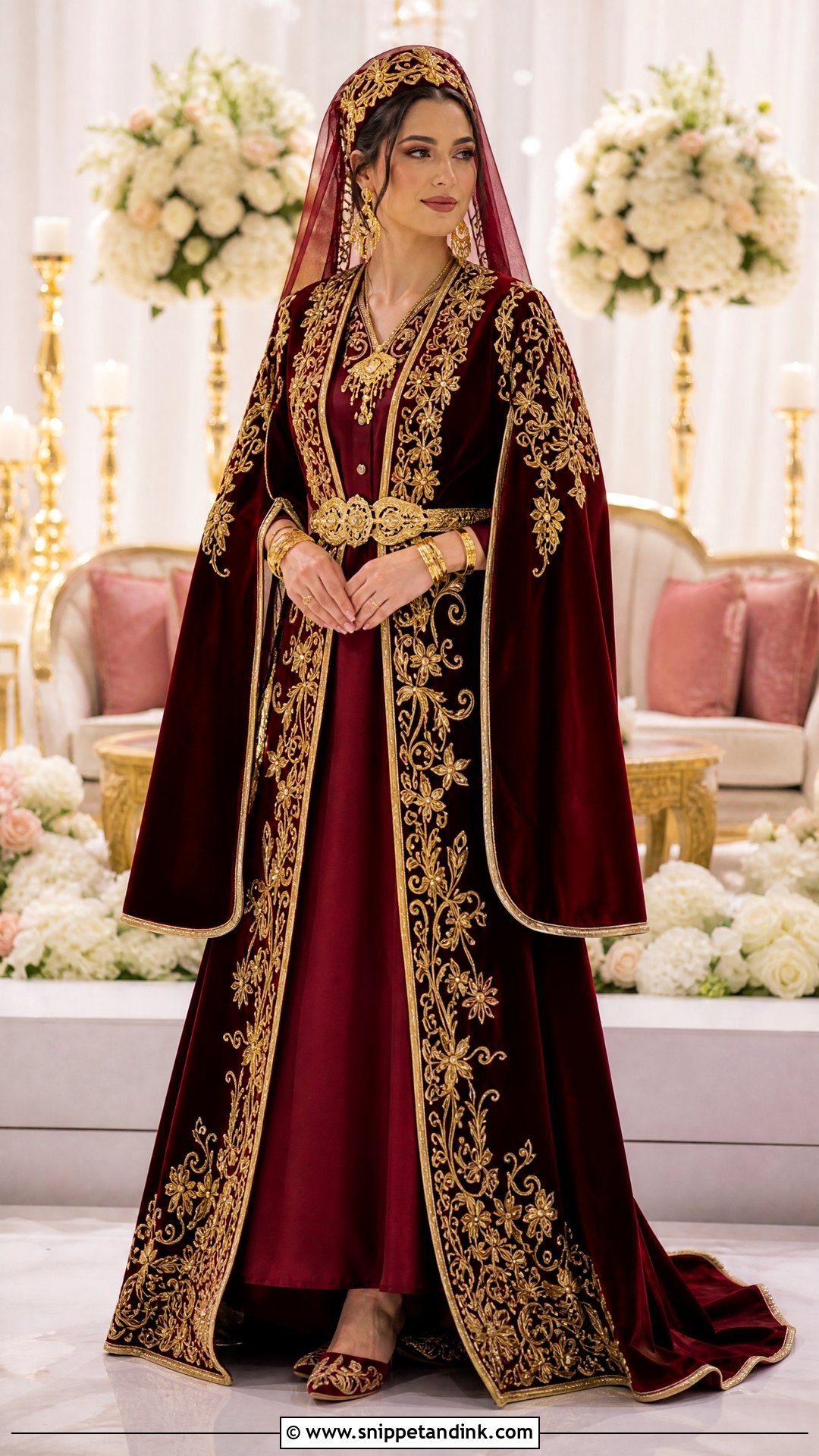
The bindalli is a velvet robe heavy with metallic embroidery, usually in deep red, burgundy, purple, navy or green with gold or silver work. It’s especially linked to the henna night in many Turkish families. Wear it over smooth, lightweight underlayers so the velvet hangs properly, then add a veil, headpiece, earrings, bracelets and embellished slippers. If a ceremonial belt is part of it, fasten it without pulling the front panels out of line. Velvet marks easily when crushed, so I’d hang it from the shoulders the night before rather than fold it. Let the family guide accessories so the look reflects their customs.
18. Mexican Embroidered Bridal Dress
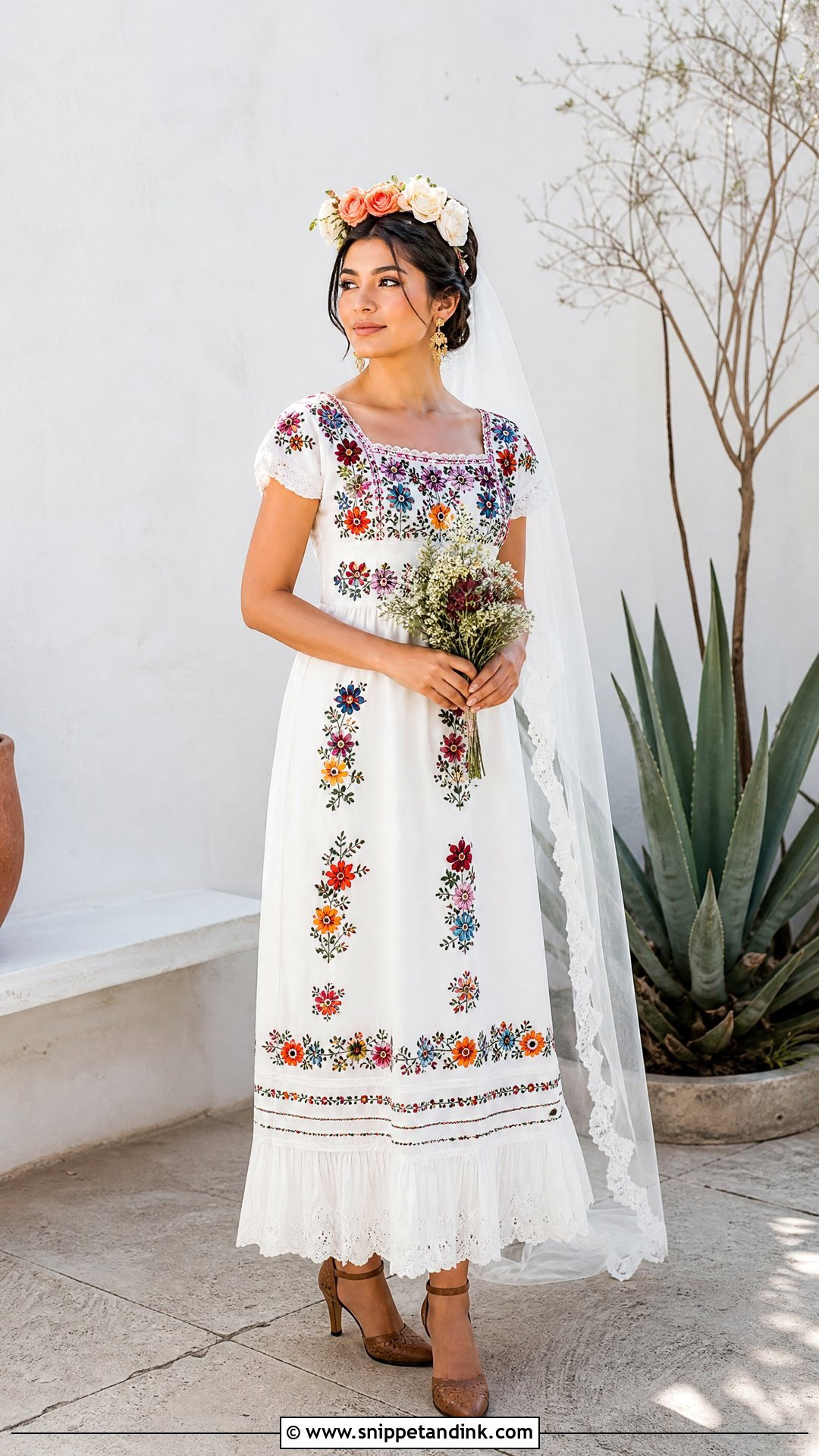
A Mexican embroidered bridal dress feels personal when it comes from a specific region, artisan or family connection. A white cotton or lace gown with colourful floral embroidery is one route; a regional silhouette suggested by relatives and makers is another. Add a floral headpiece, drop earrings, comfortable leather shoes and a light veil that leaves the neckline visible, and keep the bouquet simple if the embroidery is very colourful. Fit around the shoulders and sleeves matters, since embroidered panels have little give. Build one look around the dress’s origin, credit the makers and hand-wash or specialist-clean it afterward.
19. Scottish Tartan Bridal Dress
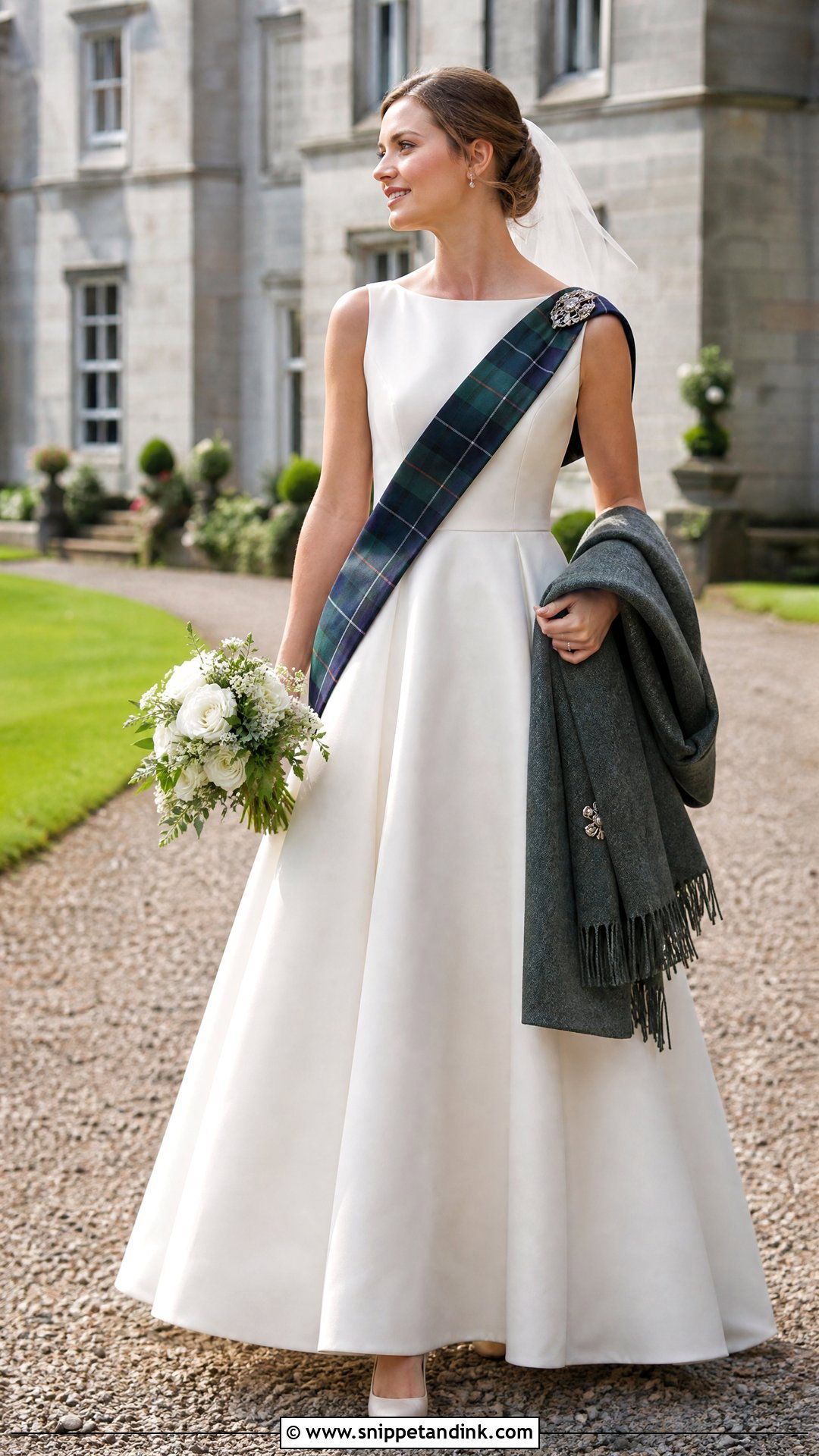
Tartan brings Scottish family heritage into a bridal outfit. Start with a white or ivory A-line, column or ball gown, then add your family or district tartan as a sash, wrap, bodice panel or skirt detail. A silver brooch, simple earrings, a restrained veil and classic pumps or flats complete it, with a wool cape for an outdoor ceremony. Confirm the tartan’s connection before ordering, especially if it’s meant to represent a particular clan. I ask the maker to align the checks at every seam; a sett that jumps at the shoulder is the first thing people notice.
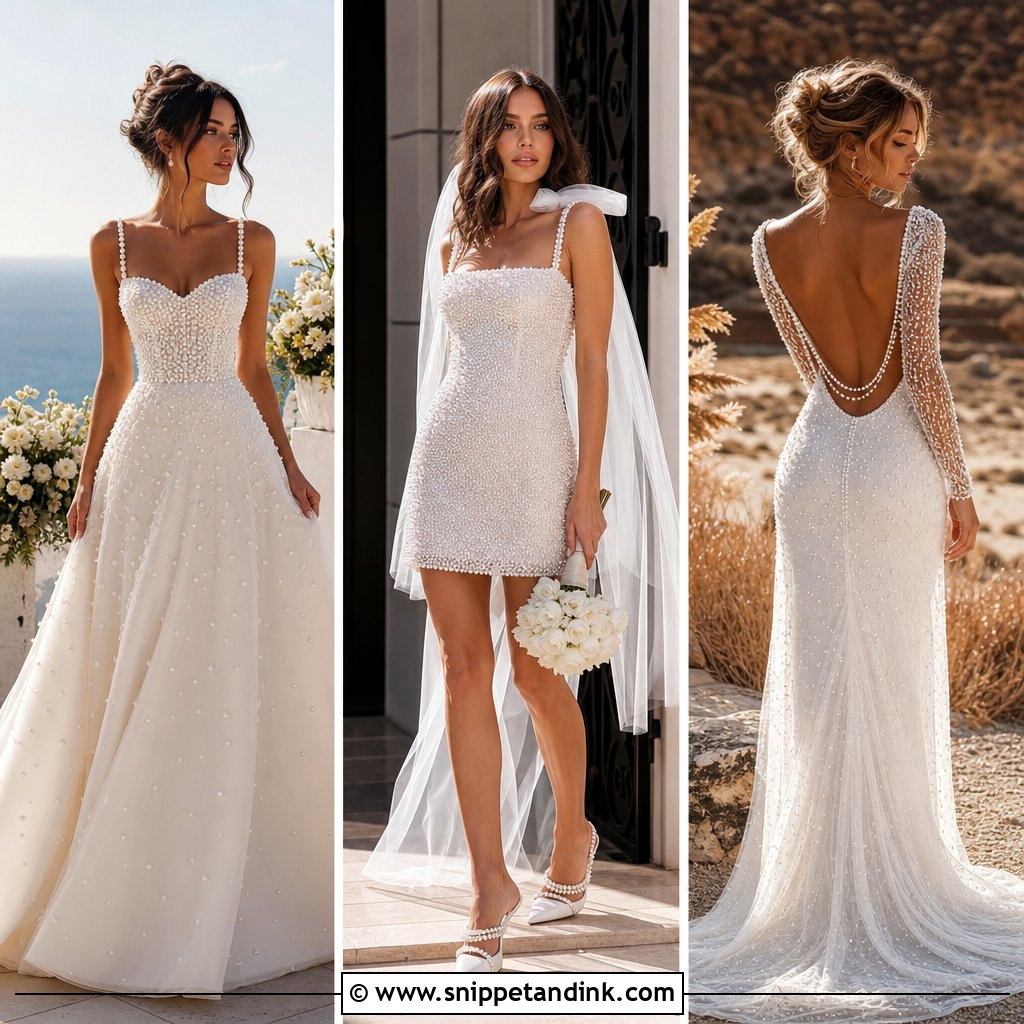
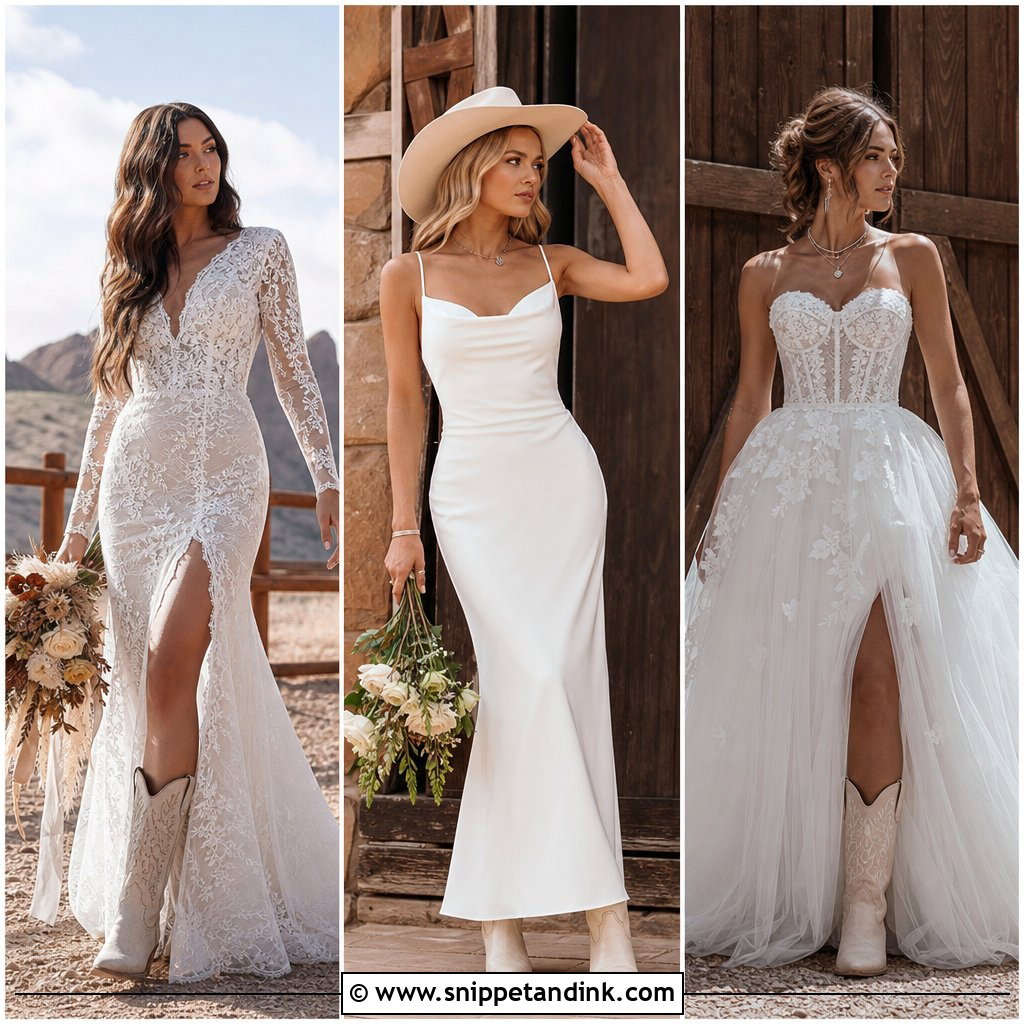
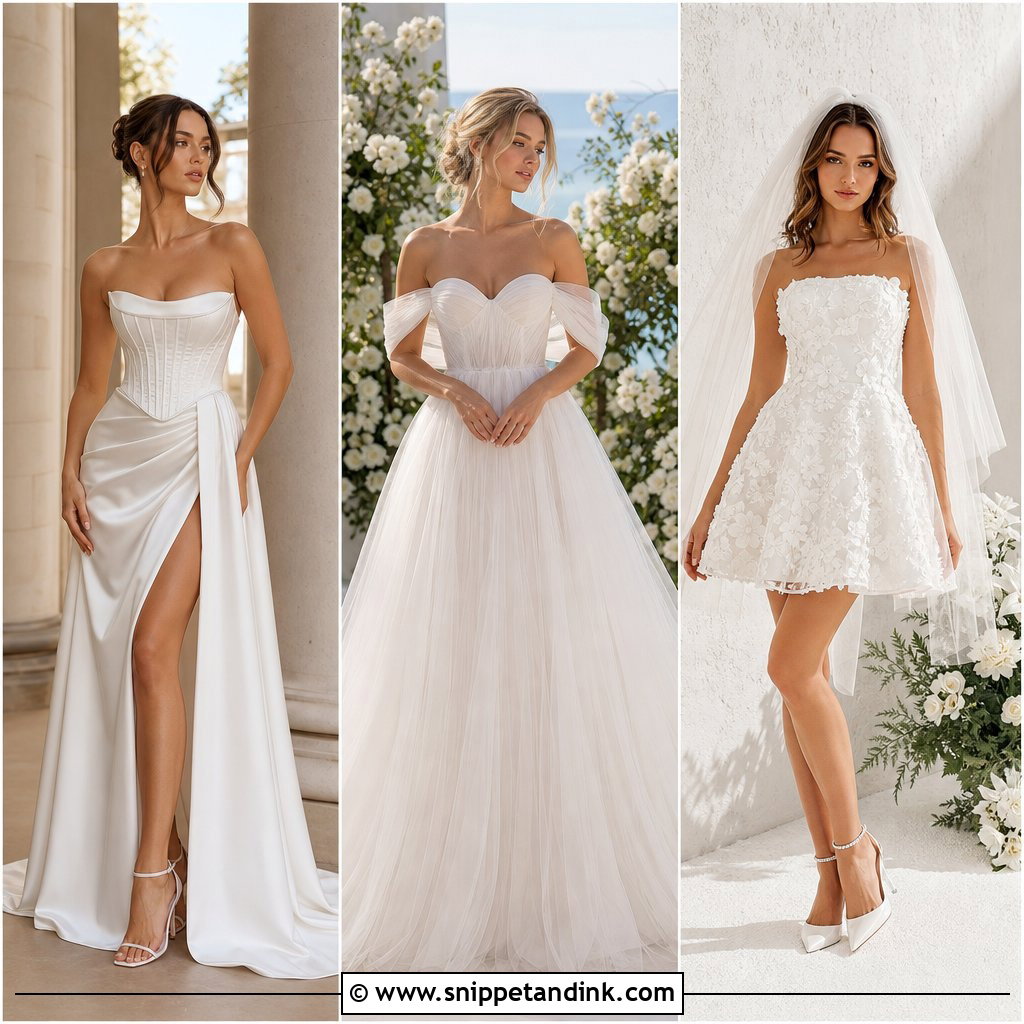
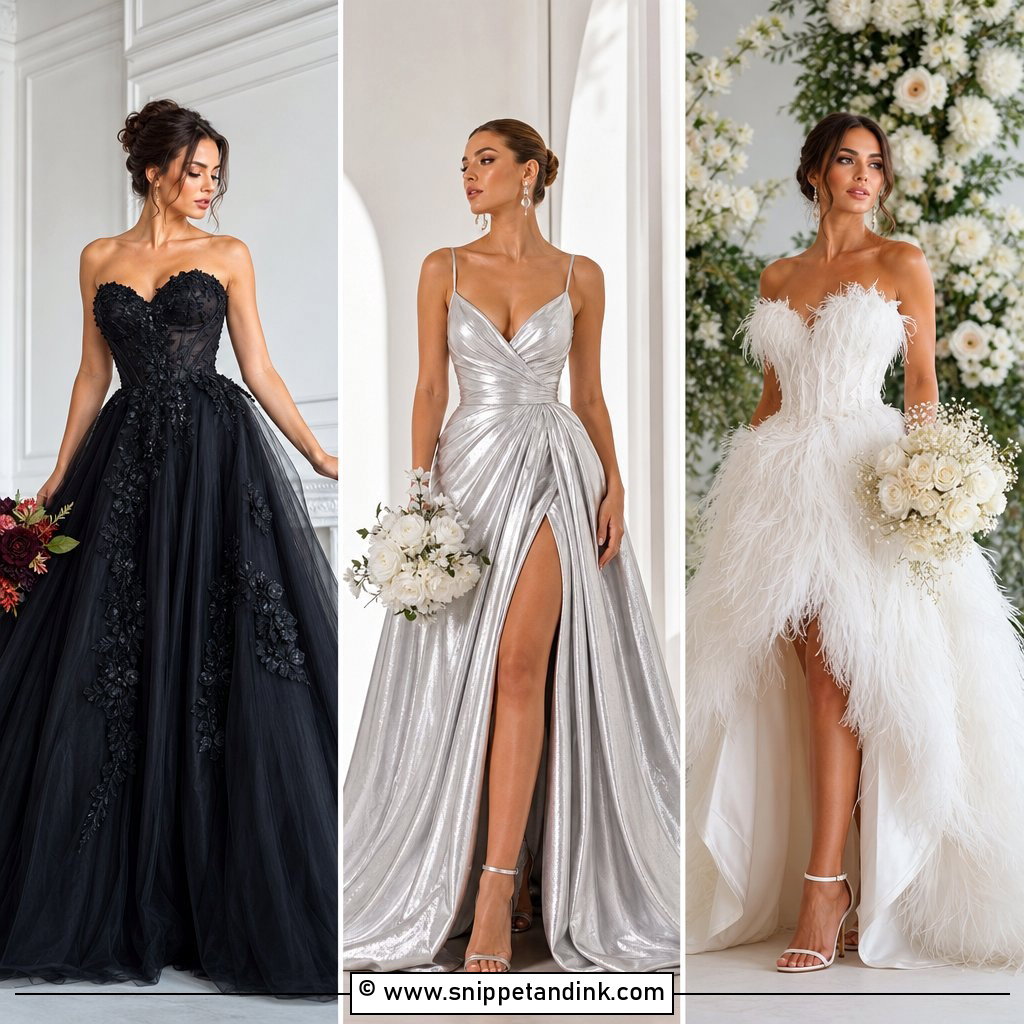
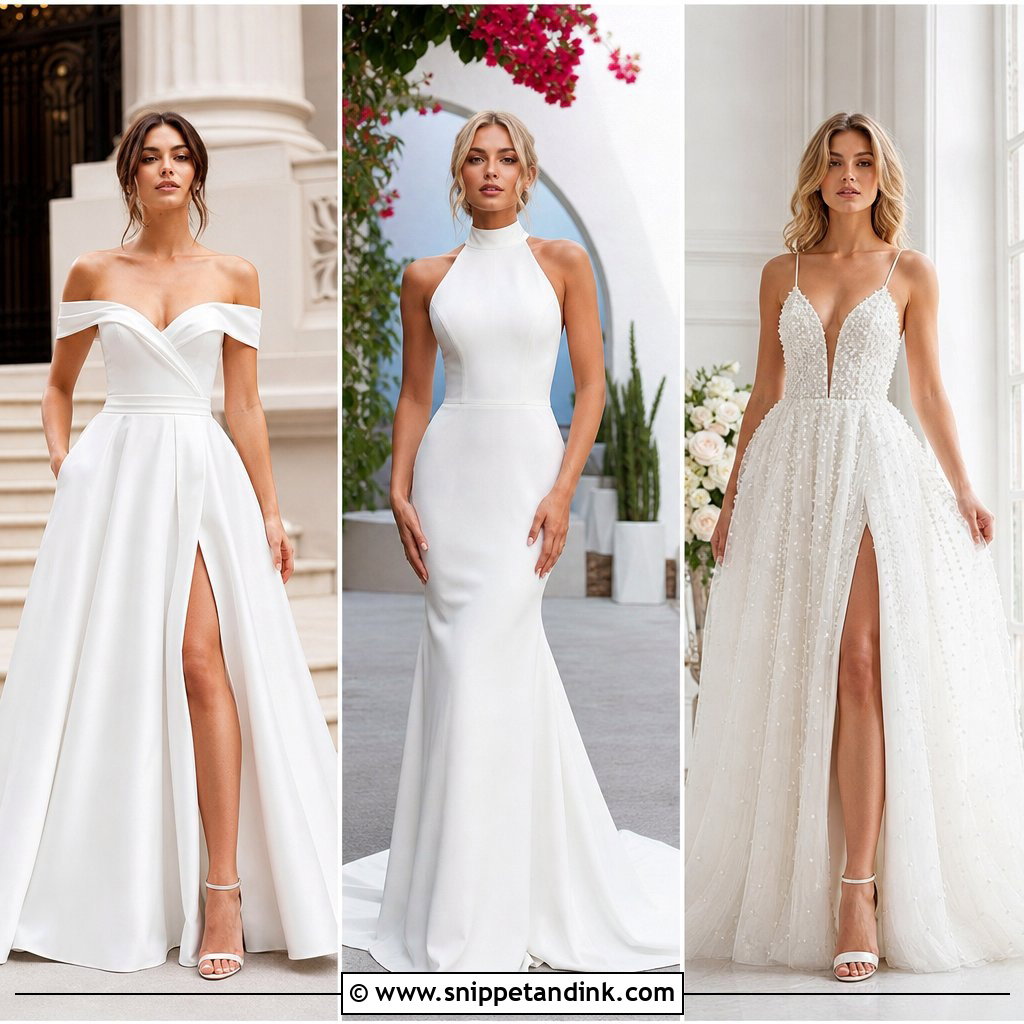
20. Western Lace Ball Gown Bridal Dress
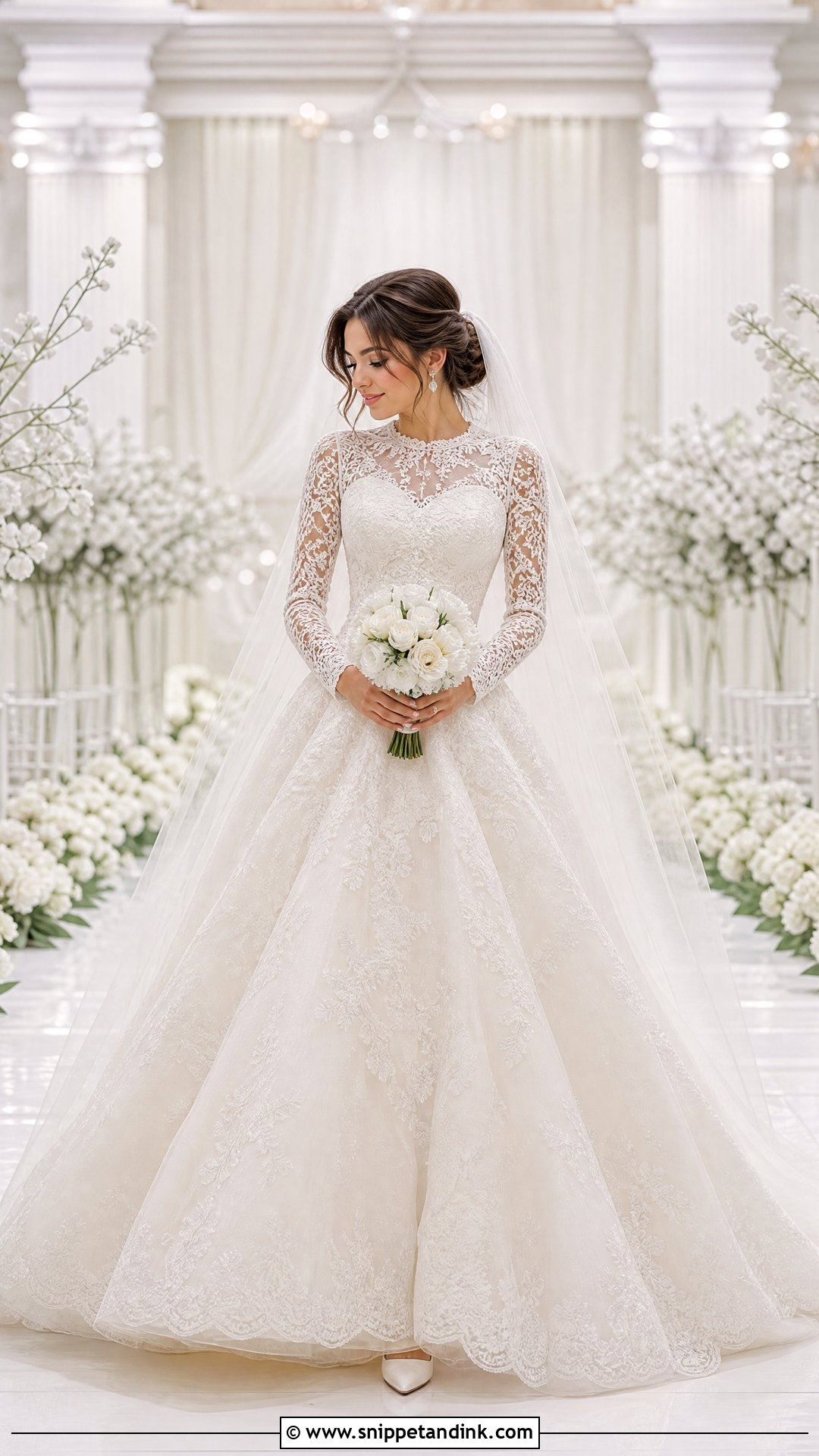
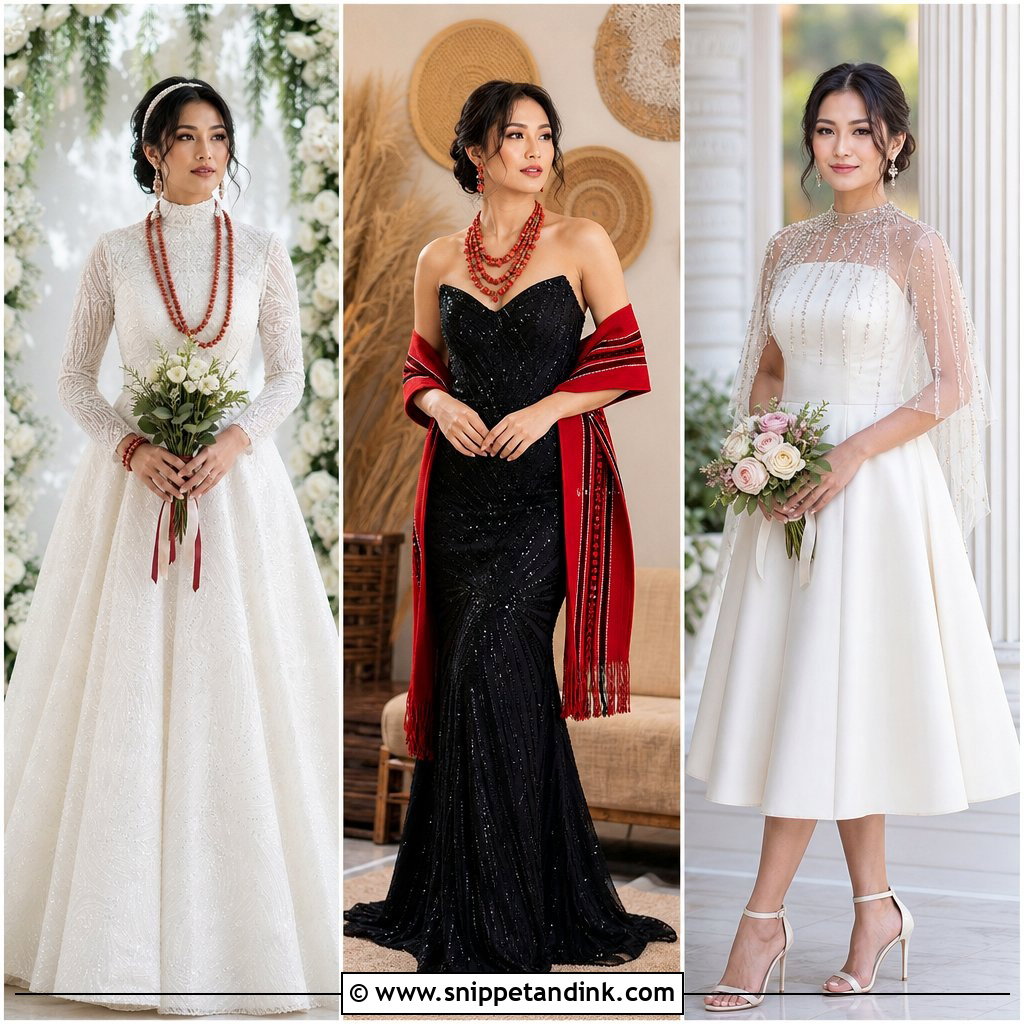
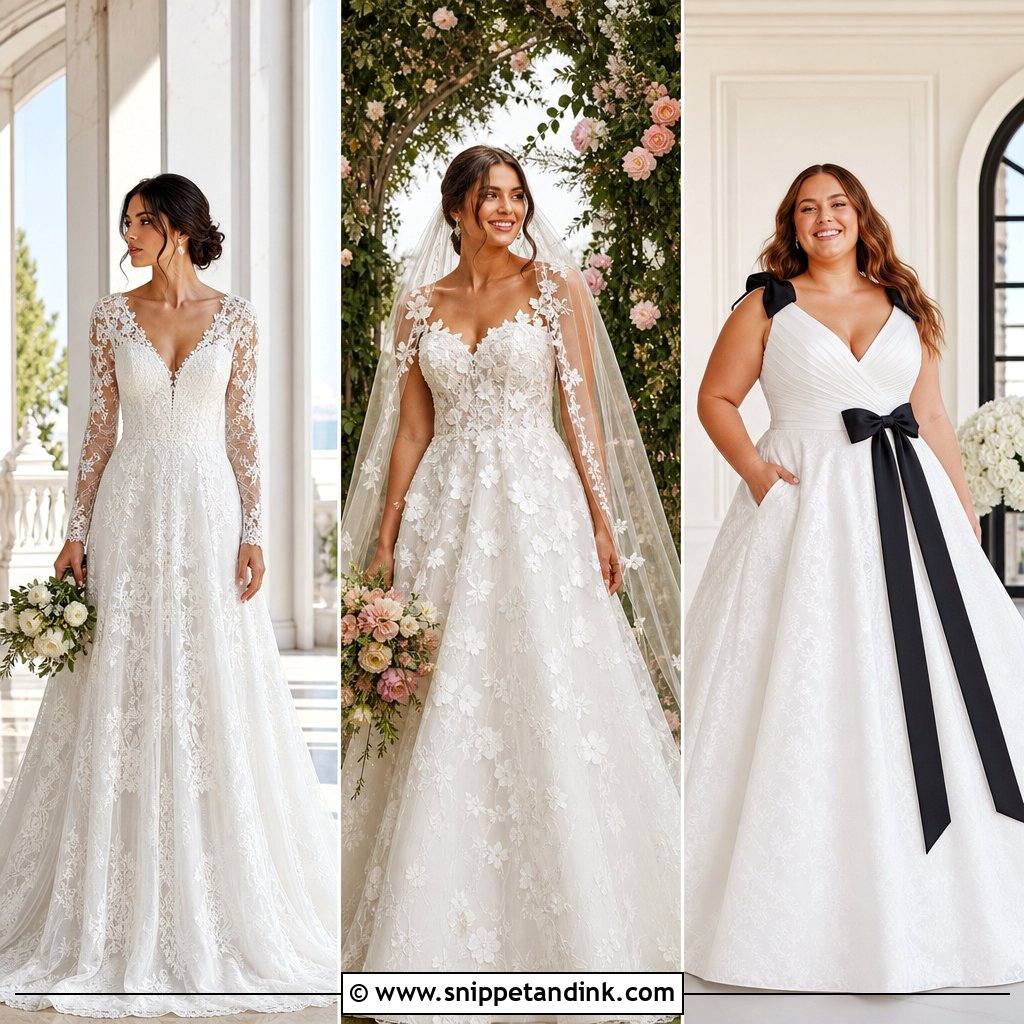
A lace ball gown is the Western classic. I’d choose a structured bodice with real internal support and a skirt scaled to the venue, since a huge skirt in a small room just feels crowded. Lace sleeves add coverage, and a square, bateau, scoop or modest V neckline personalises the shape. A fingertip or cathedral veil, pearl or diamond-style earrings, a small bouquet and cushioned heels finish it. Petite brides often prefer a little less volume; taller brides can go fuller. Bring the exact underwear and shoes to fittings. A bustle, smooth lining and hidden pockets make the reception easier.
Sarees, Geles and Kimonos Run on Their Own Clock
Traditional outfits take longer to dress than most brides expect, and the getting-ready schedule is where weddings start running late. I time a full rehearsal and add a cushion on top.
- Saree and lehenga: the draping and dupatta pinning need a skilled pair of hands. Book the draper for a fixed time slot, not ‘sometime that morning’.
- Gele: tying is quick for an expert but often needs a retie, so book the tier to stay for photos.
- Kimono: formal dressing is a multi-step process done by a trained dresser, and you’ll need to be fully made up first.
- Layered robes and caftans: each closure, belt and headpiece adds time. Practise the order once so helpers aren’t guessing.
- Outfit changes: allow time to undress too, and to reset hair and jewelry for the next look.
Name one person who knows every step and isn’t also in the photos, so the bridal party can enjoy the morning. Keep a small kit with pins, tape, thread in each outfit’s colours and a pair of flat shoes. If a garment comes with a dresser of its own, ask them for their timing in advance and build the photographer’s arrival around it.
Whose Hands Will Dress You That Morning?
A traditional bridal outfit should be comfortable, rooted in culture and clearly yours. Colour, embroidery, woven cloth, jewelry, shoes and ceremonial accessories all have to work as one look. Start by talking traditions through with relatives and your community. Then find the designers, tailors, drapers or artisans who understand how the clothing is made and what it means. Leave out sacred or region-specific details that you’re only adding for looks. With accurate tailoring and a full dress rehearsal, the outfit honours the past and still fits the woman wearing it today.
You'll Like These Ideas:


Leave a Reply