
A tube dress is simply a strapless gown with a straight or near-straight top edge, and it leaves the shoulders, collarbones and face completely open. That simplicity is why it adapts to almost any wedding, from a courthouse ceremony to a ballroom. Fabric, structure, skirt shape and accessories do the rest: satin reads crisp and modern, lace and pearls soften it, draping and appliqués add romance. Everything depends on the bodice. A well-built one lets you walk, sit and dance without ever reaching up to tug the neckline. The twenty looks below each come with the styling I’d give them and the fitting point I’d check first.
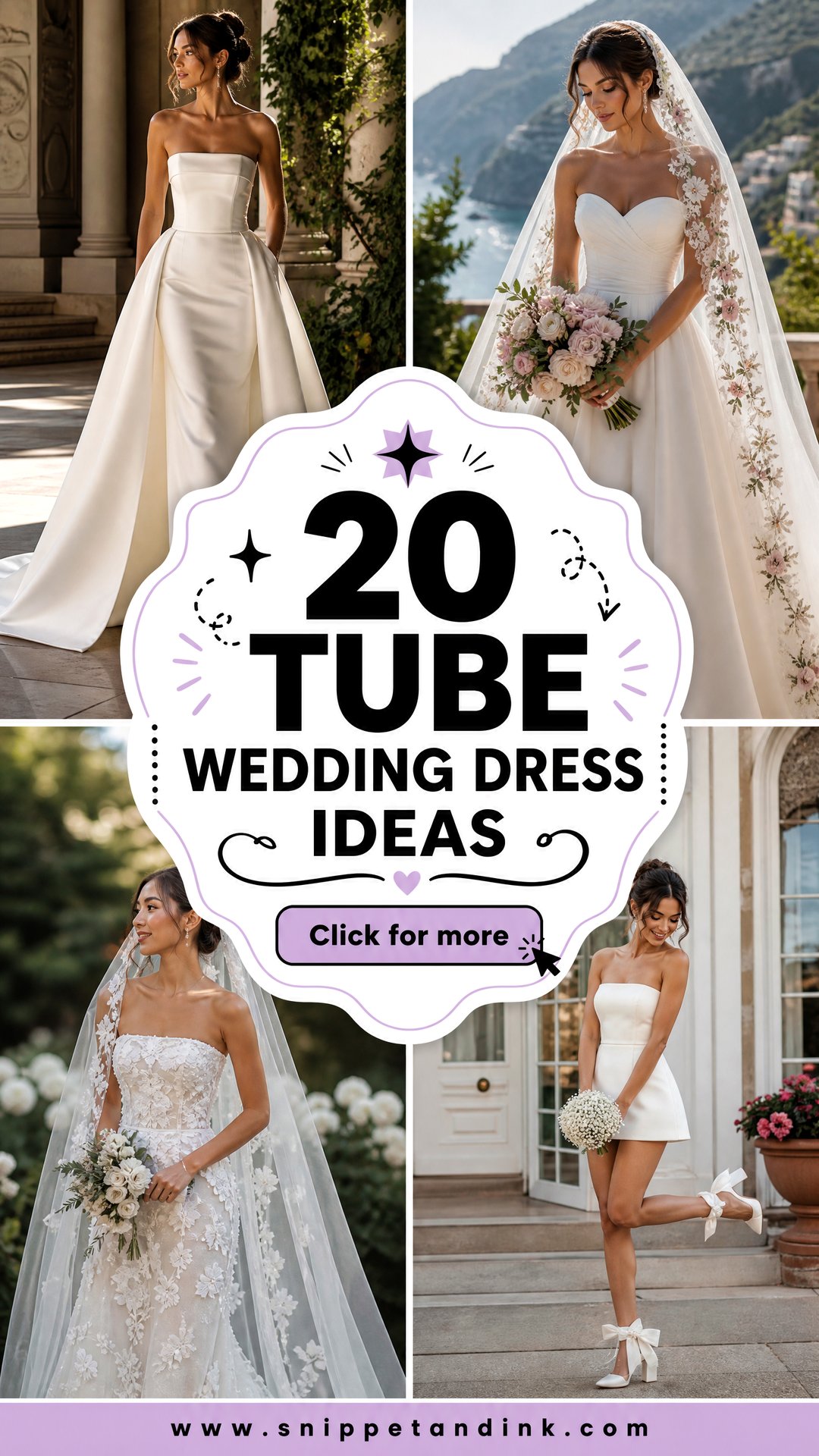
What Holds a Strapless Bodice Up
Brides often assume a strapless dress stays up by gripping the bust. It doesn’t. A well-made bodice is anchored at the waist, where the body narrows, and the boning stops the fabric collapsing above it. If the waist is loose, the whole bodice slides down, however tight the top edge feels.
Here’s what I look for when a bride tries on a tube dress:
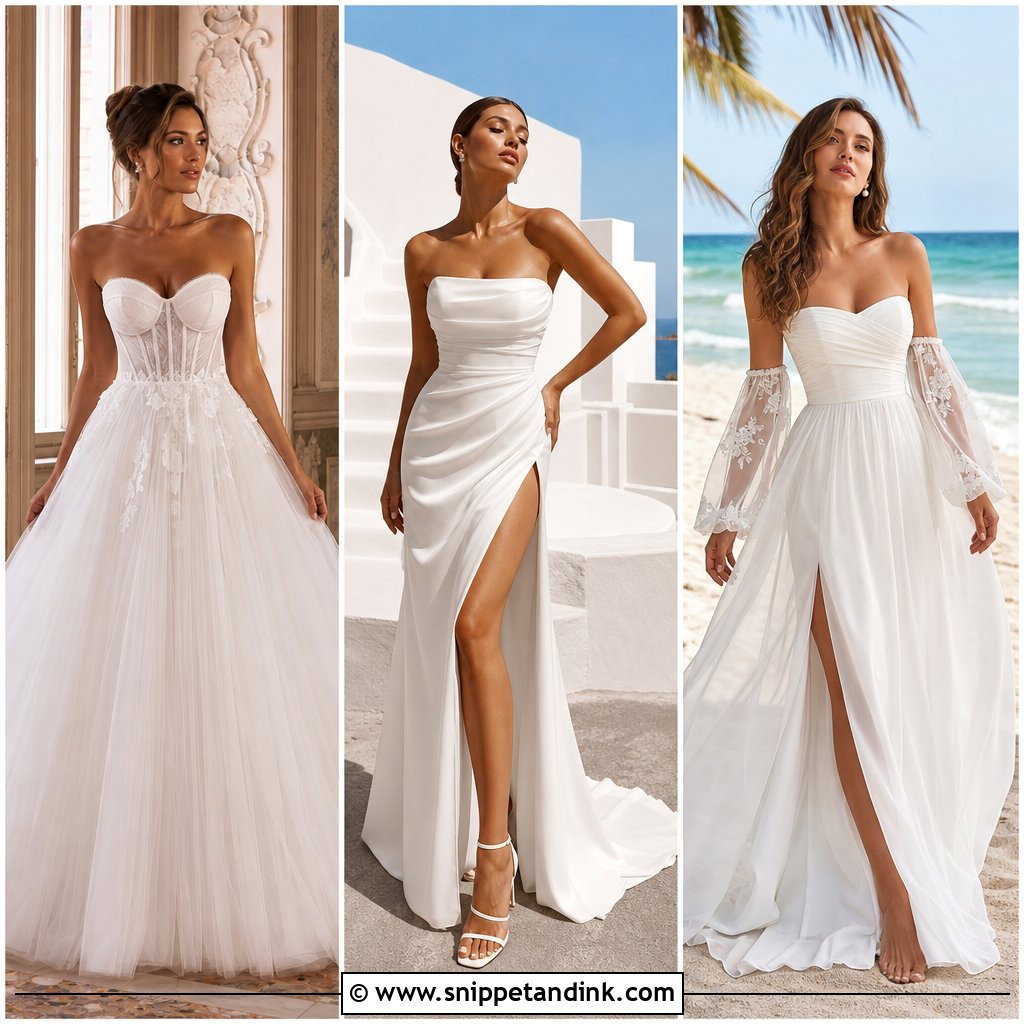
- Spiral steel or firm boning on the side and front seams, not just a light plastic strip.
- An inner waist stay, a grosgrain band that hooks closed at your natural waist before the zip goes up.
- A top edge that sits flat against your skin with no gap when you lean forward.
- Silicone grip tape or a stay inside the top edge for brides with a smaller bust, where there’s less shape to hold.
If a shop sample is too big, have the consultant clip it at the side seams so you feel the real fit. A loose sample makes every tube dress feel unstable.
1. Satin Tube Wedding Dress With Cathedral Veil
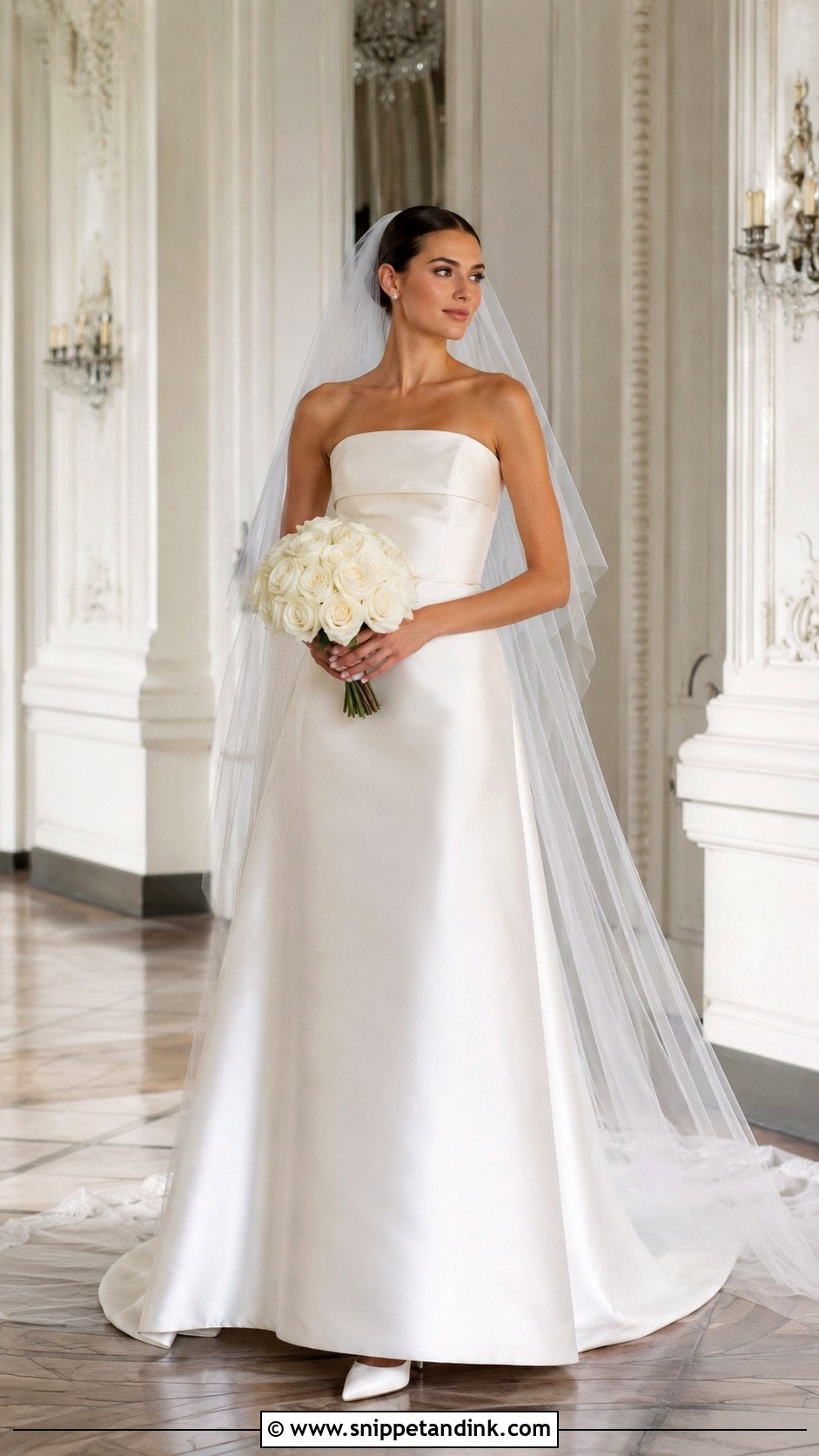
Satin shows every ripple, so on a tube bodice the boning has to be placed so the fabric lies flat over it, not shadowed by it. I’d pair a boned bodice with a softly structured A-line skirt that moves without bulk. A cathedral veil gives a simple neckline its ceremony. Pearl studs or small diamonds are all the jewelry it needs, plus pointed ivory pumps and a compact bouquet of white roses. Ballrooms, hotels and formal indoor rooms suit it. At your fitting, sit down and raise both arms: if the top edge gaps or drops, the bodice needs taking in at the side seams.
2. Lace Tube Wedding Dress With Pearl Accessories
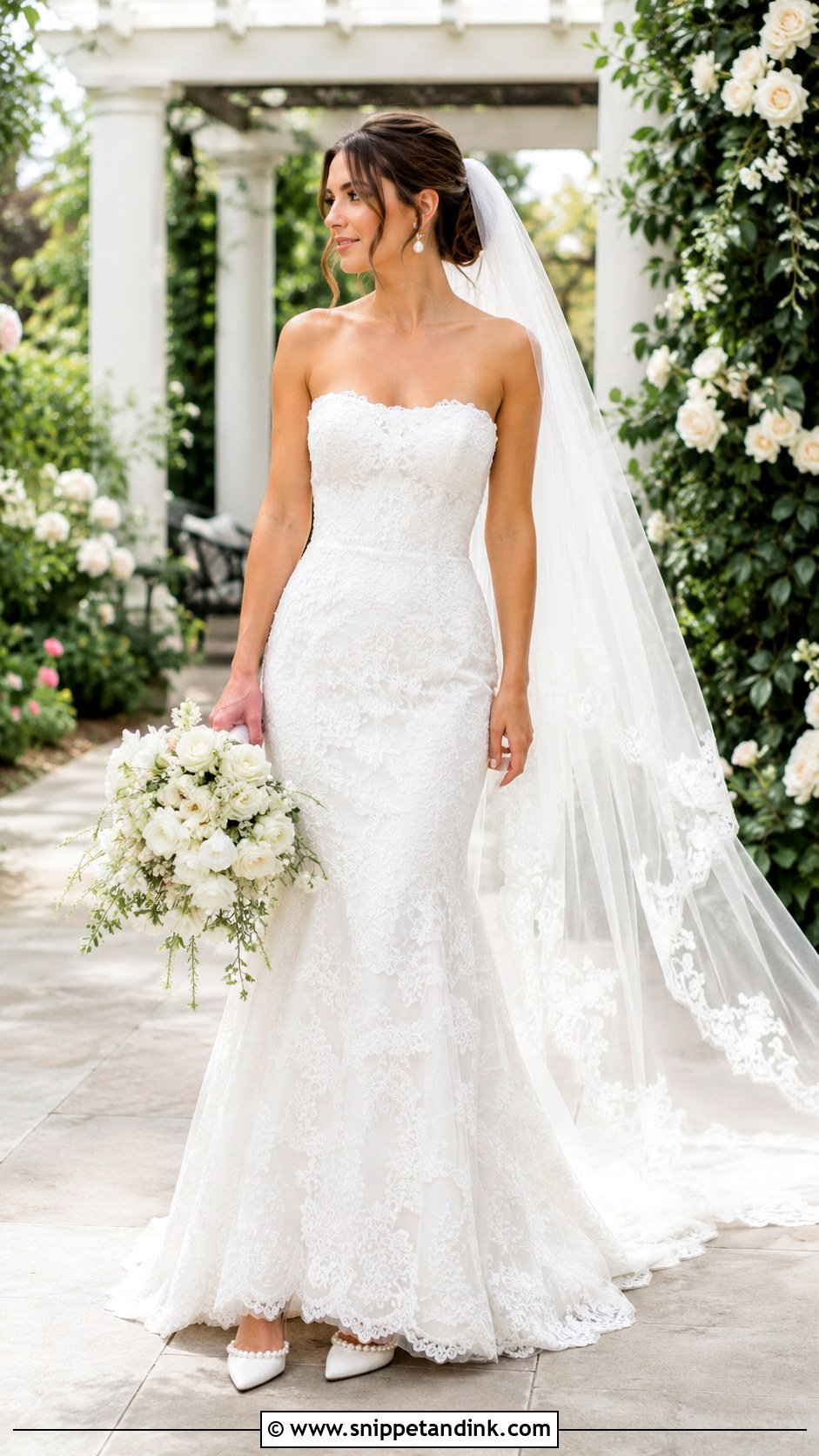
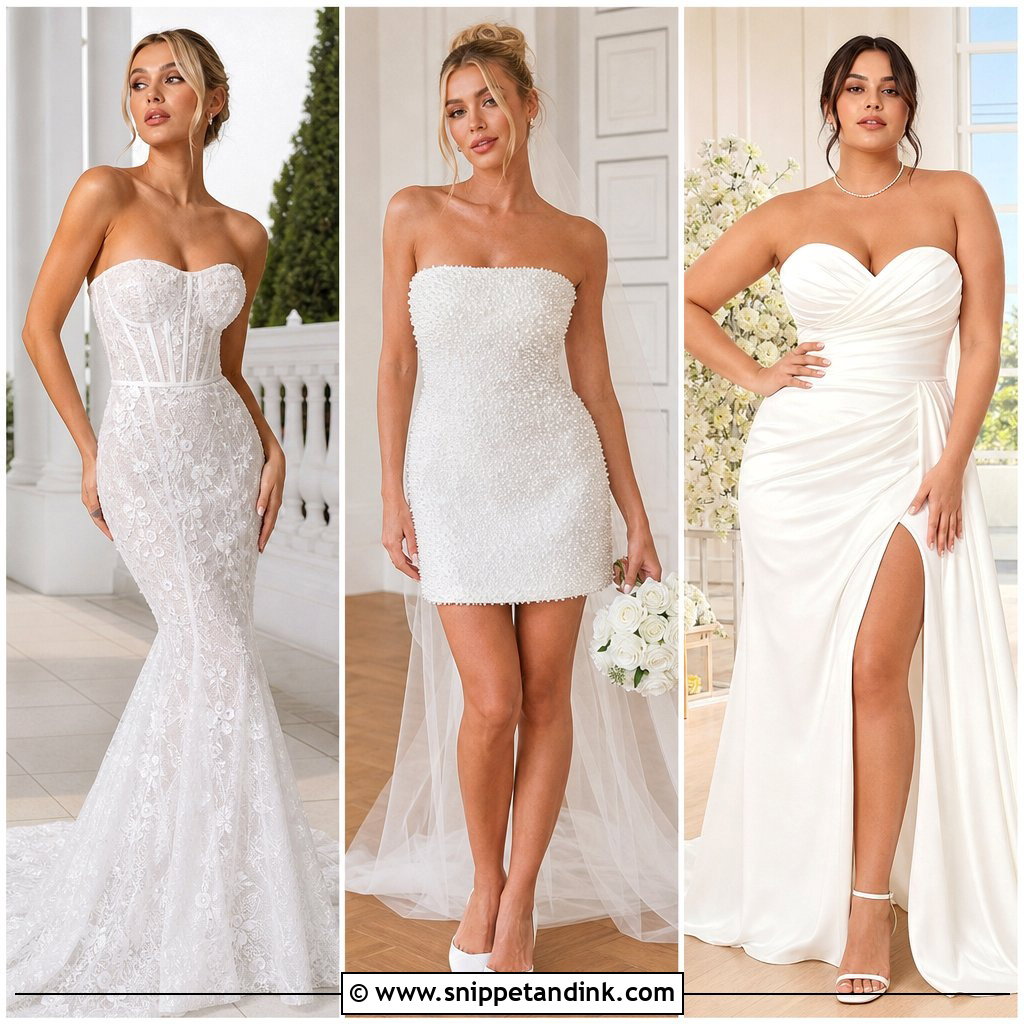
Lace breaks up the straight top line, which helps if a plain tube feels too severe on you. A fitted lace bodice over an A-line or gently flared skirt gives shape without gripping the hips. Repeat the texture with pearl drops, a slim pearl bracelet and pearl-trimmed shoes, then add a fingertip veil with a narrow lace edge and a loose bouquet of white garden flowers. Gardens and spring weddings suit it. Ask what’s under the lace. A scratchy lining at the top edge rubs all day, and a smooth, good-quality lining also makes the lace pattern sharper in photos.
3. Minimalist Tube Wedding Dress With Long Gloves
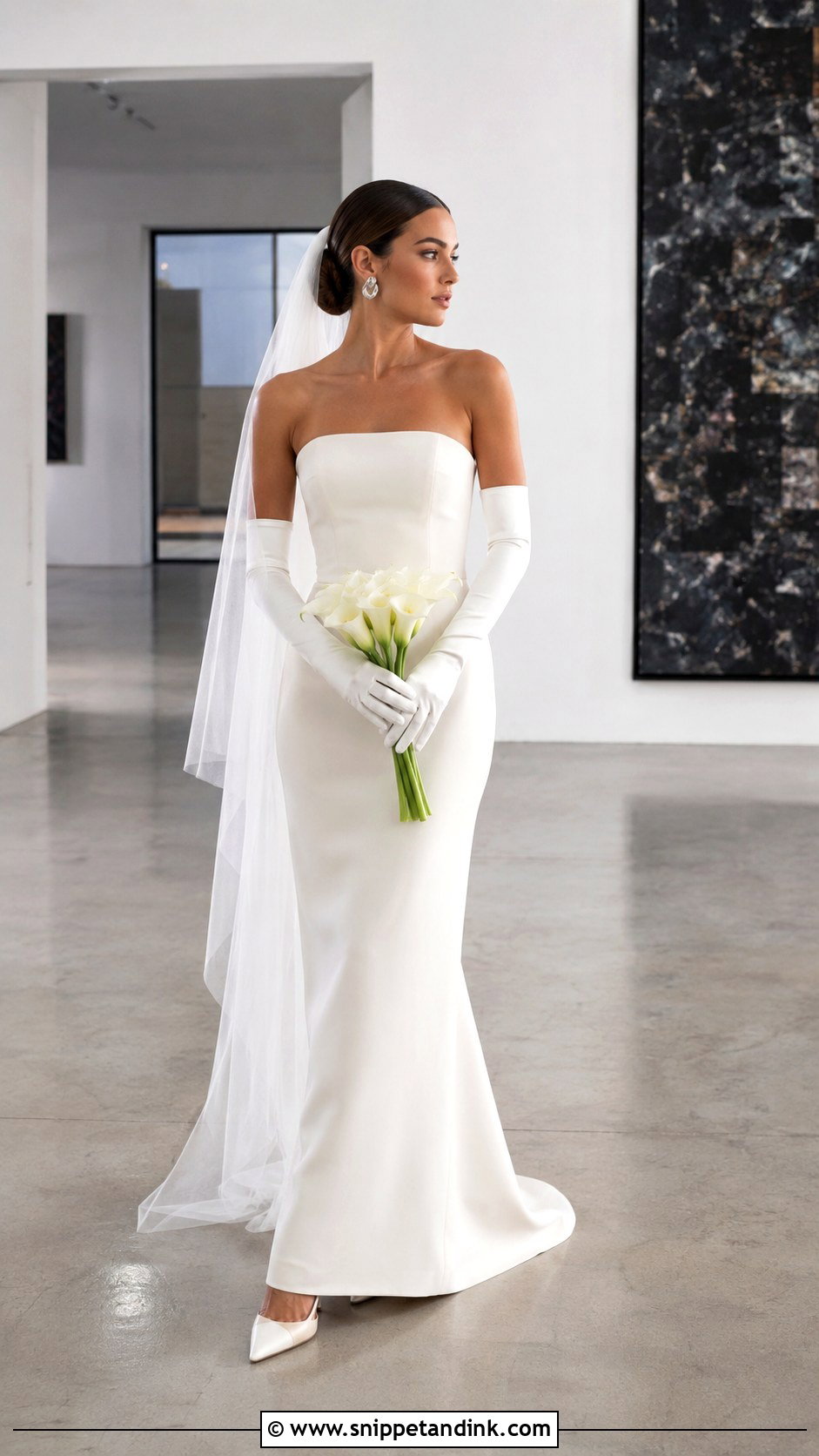
Long gloves change a plain gown completely. On a minimalist tube wedding dress, a sleek crepe column with a firm straight neckline and light waist shaping, elbow-length satin gloves add coverage and a formal, slightly vintage line. Add pointed slingbacks, sculptural earrings and a smooth low bun, and carry a few calla lilies. Skip an embellished veil; a plain chapel length or nothing at all is better. Gallery, city hotel or evening ceremony. Gloves have to fit snugly at the fingers and elbow, or they wrinkle and slide. And plan for the ring exchange: most brides slip off the left glove or choose a fingerless style.
4. Corset Tube Wedding Dress With Full Skirt
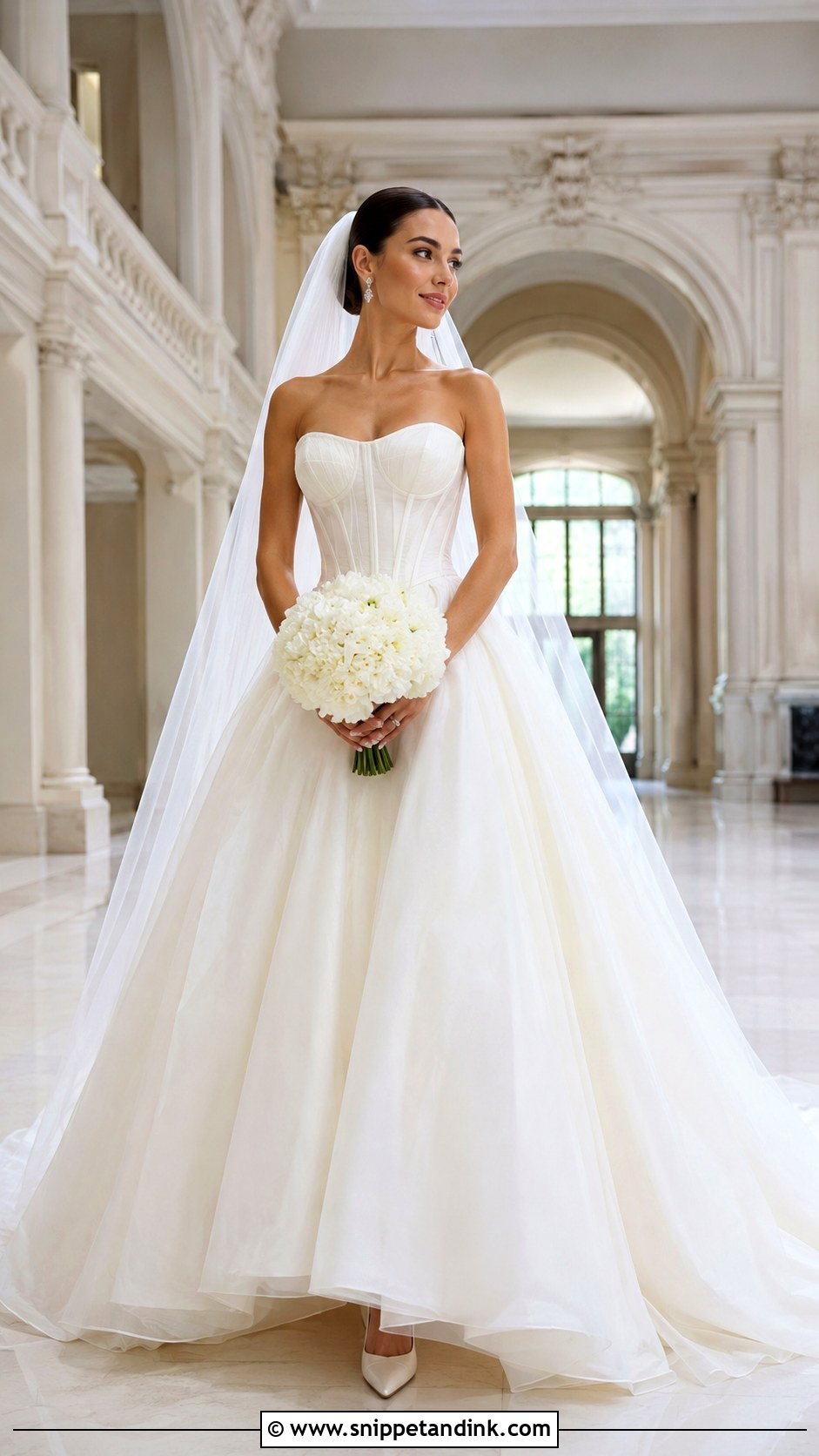
Corset construction is the most reliable way to keep a tube dress up, because the boning and a firm waist hold the bodice in place, not the bust. Look for supportive boning, built-in cups and a top edge that’s softly curved to follow your bust line. A layered organza or mikado skirt gives volume. Cathedral veil, crystal earrings and pointed pumps complete it, with the neck left bare to show the bodice. It needs room, so think of large venues. During alterations, walk and sit: if the waist digs in when you sit, it’s too tight to dance in.
5. Mermaid Tube Wedding Dress With Statement Earrings
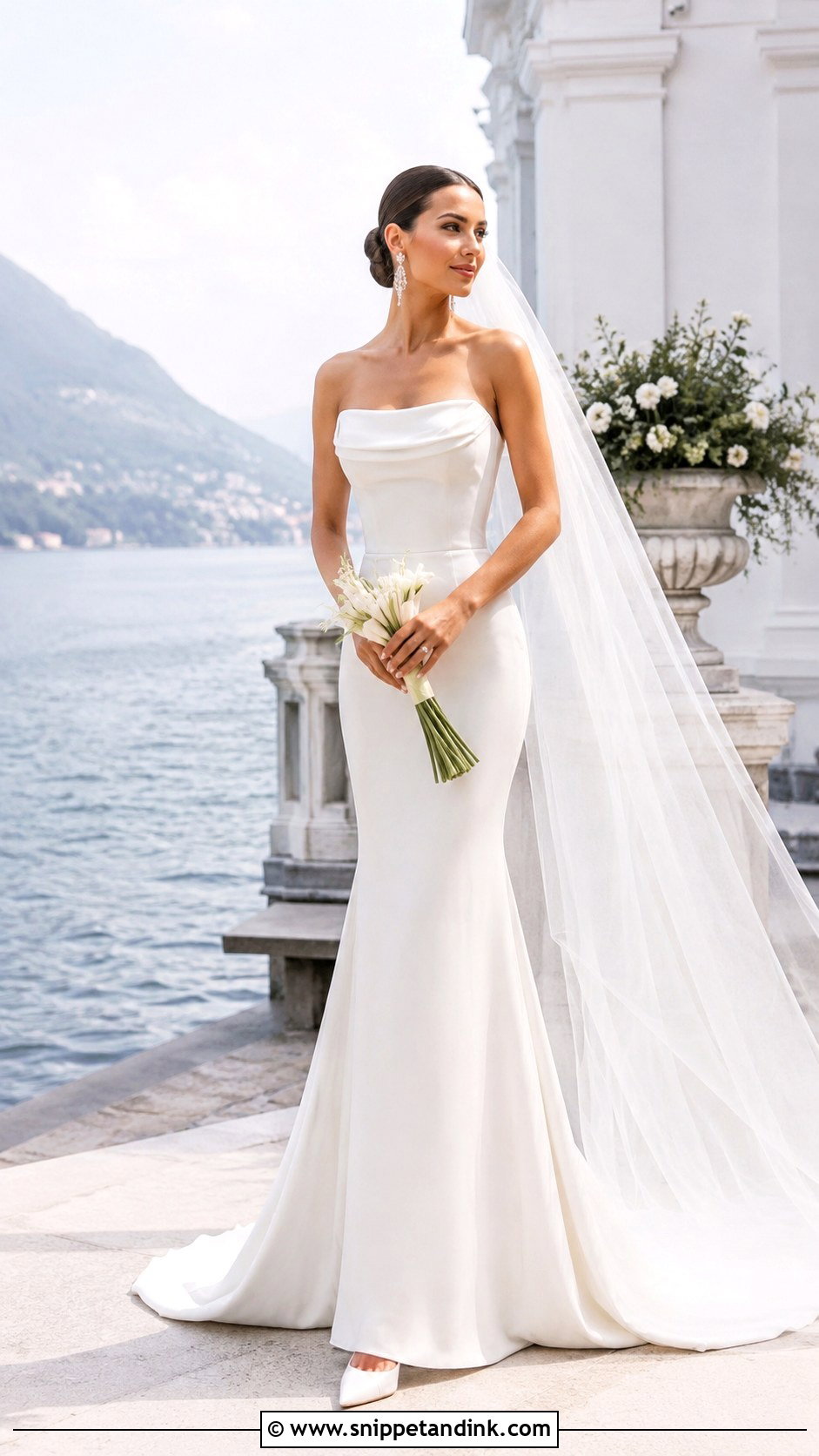
Where the flare starts decides whether you can walk in a mermaid. I’d look for a gown that fits smoothly through the bodice, waist and hips and widens near the knee; stretch crepe or lined satin moves better than rigid fabric. Statement drop earrings pull the eye up, so everything else stays minimal. A long plain veil gives the fitted shape some movement, and pointed heels keep the line long. Carry a narrow bouquet that doesn’t cover your waist. Formal waterfront or ballroom. Walk the length of the room at your fitting, then try a stair. If you’re shuffling, ask for the flare to be lowered or a godet added.
6. Draped Tube Wedding Dress With Low Bun
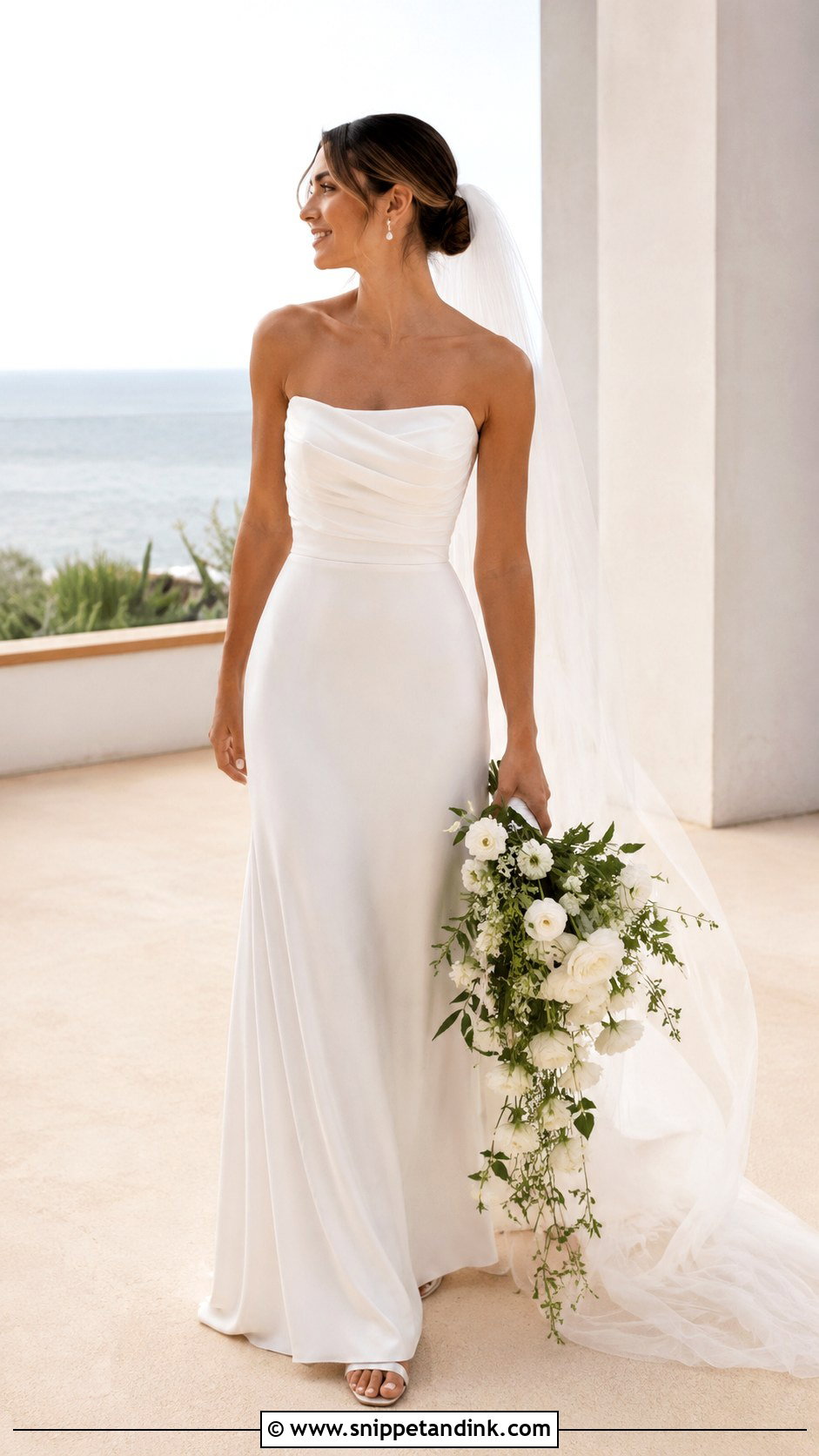
Draping is forgiving. The folds hide small changes in your body between fittings and the day itself, and they soften a straight neckline. Look for fabric gathered across the bodice and waist with folds that follow your shape. A fluid column or soft flare balances it. Wear a neat low bun, medium drop earrings and slim metallic or ivory sandals, with a light chapel veil if the drape is simple and a small satin clutch. Trailing greenery suits it. Coastal venues, modern restaurants and small destination weddings. The one thing to avoid is draping that pulls toward a single side seam; it drags the neckline sideways as you move.
7. Square Tube Wedding Dress With Structured Train
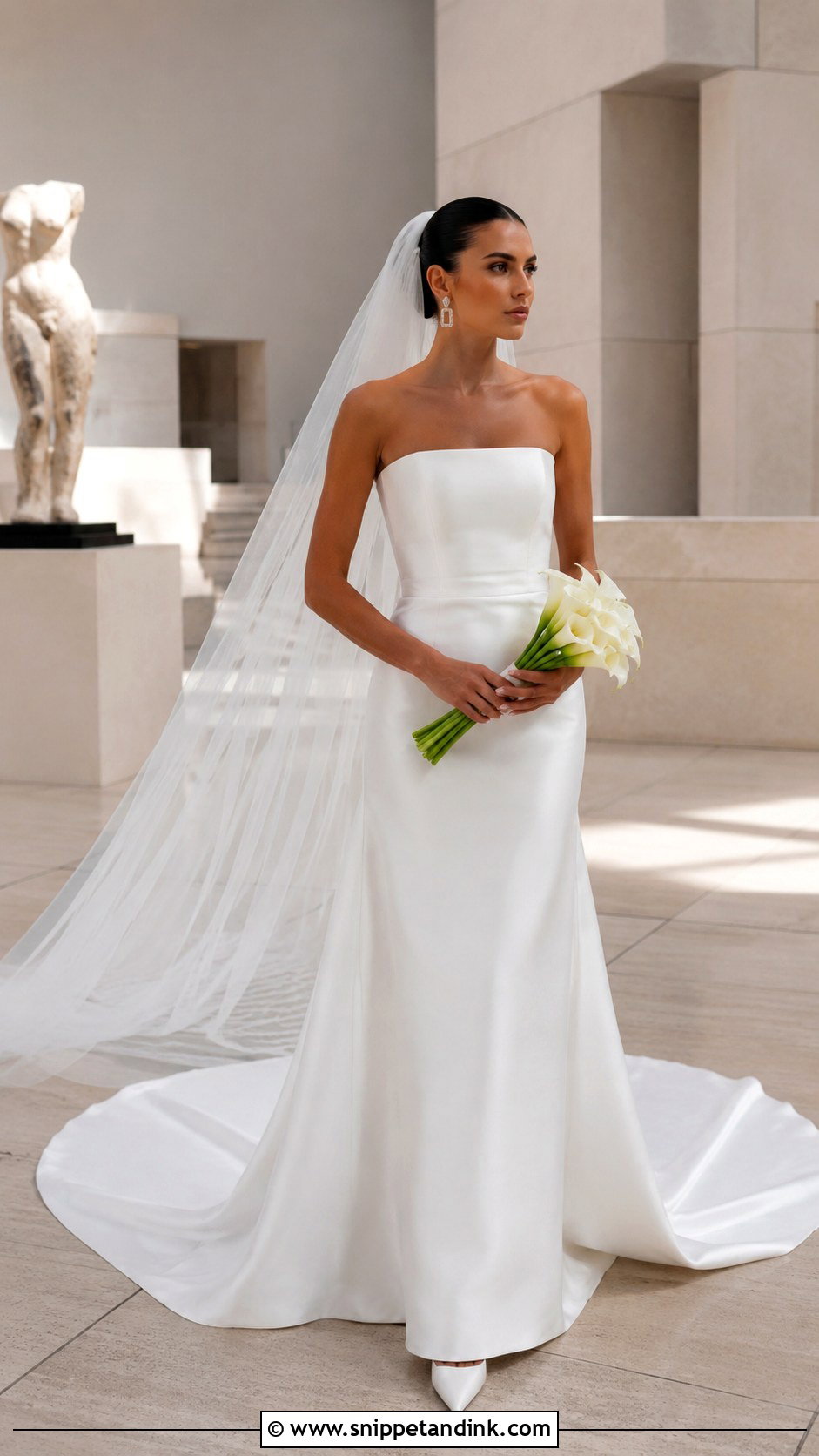
A square tube is sharper than a sweetheart. The straight corners frame the collarbones and need a stiff fabric, so mikado, satin or structured crepe are the right choices. A column skirt and a train that holds its shape keep the lines clean. Geometric earrings, a sleek bun and pointed pumps sharpen the mood; a plain cathedral veil adds drama. Tulips or calla lilies make a crisp bouquet. Museums, rooftops and modern city venues. The corners are the hard part. They should lie flat and level, and if one lifts when you breathe in, the bodice needs a stay or extra boning there.
8. Sweetheart Tube Wedding Dress With Floral Veil
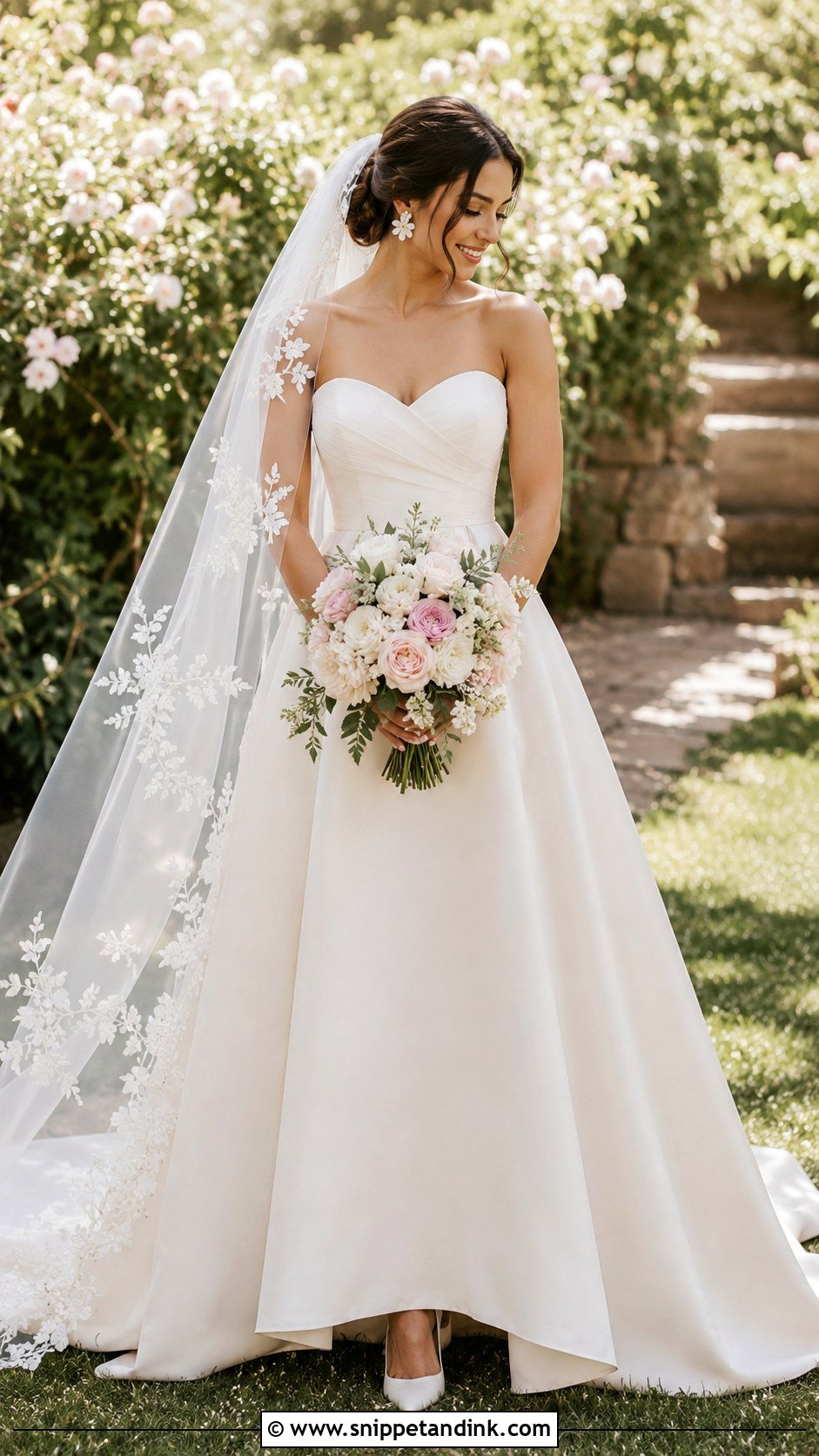
The sweetheart curve softens a strapless line and lifts the bust slightly, which is why it suits so many brides. Choose a supportive bodice with smooth seams and an A-line skirt. A floral-embroidered veil carries detail behind you without covering the front. Small flower earrings, ivory pumps and a bouquet echoing the veil’s blooms finish it, with hair pinned softly back. Gardens, estates and bright outdoor ceremonies. Brides with fuller busts should prioritise strong internal support and a slightly higher centre point over the deepest cut. I’d rather see you relaxed all night than adjusting a neckline in every photo.
9. Column Tube Wedding Dress With Chapel Veil
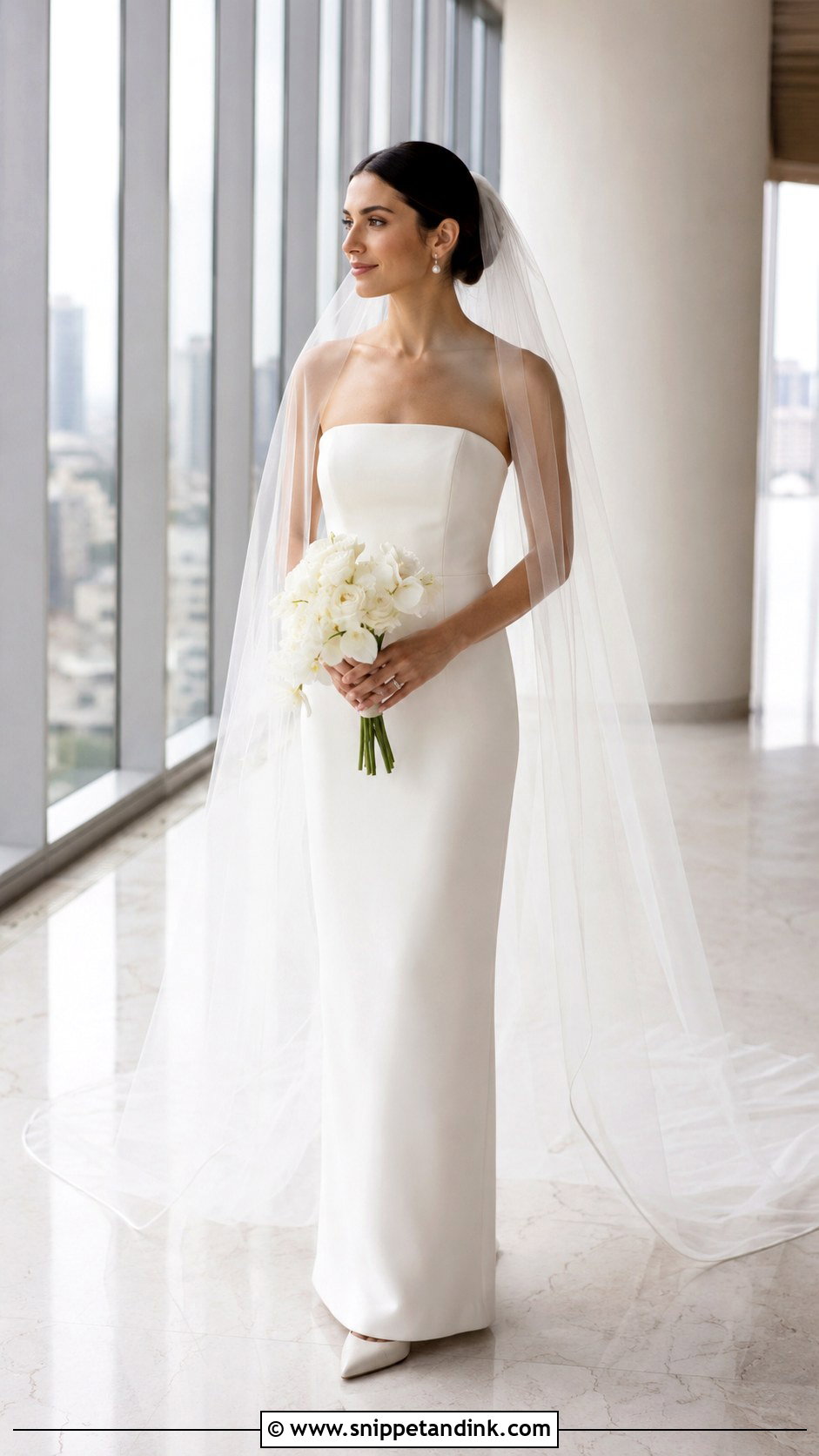
A column is the least forgiving silhouette and the most honest one. Choose substantial crepe or silk-backed satin that skims without clinging, with the bodice secure at the waist so the skirt falls in one line. Add a sheer chapel veil, pearl earrings, pointed closed-toe heels and a slim bouquet. Courthouses, city weddings and modern reception spaces suit it. If you’re petite, ask for a higher waist seam and a precise hem. A narrow column limits your stride, so many brides ask for a discreet back slit or a small godet during alterations.
10. Tube Wedding Dress With Detachable Overskirt
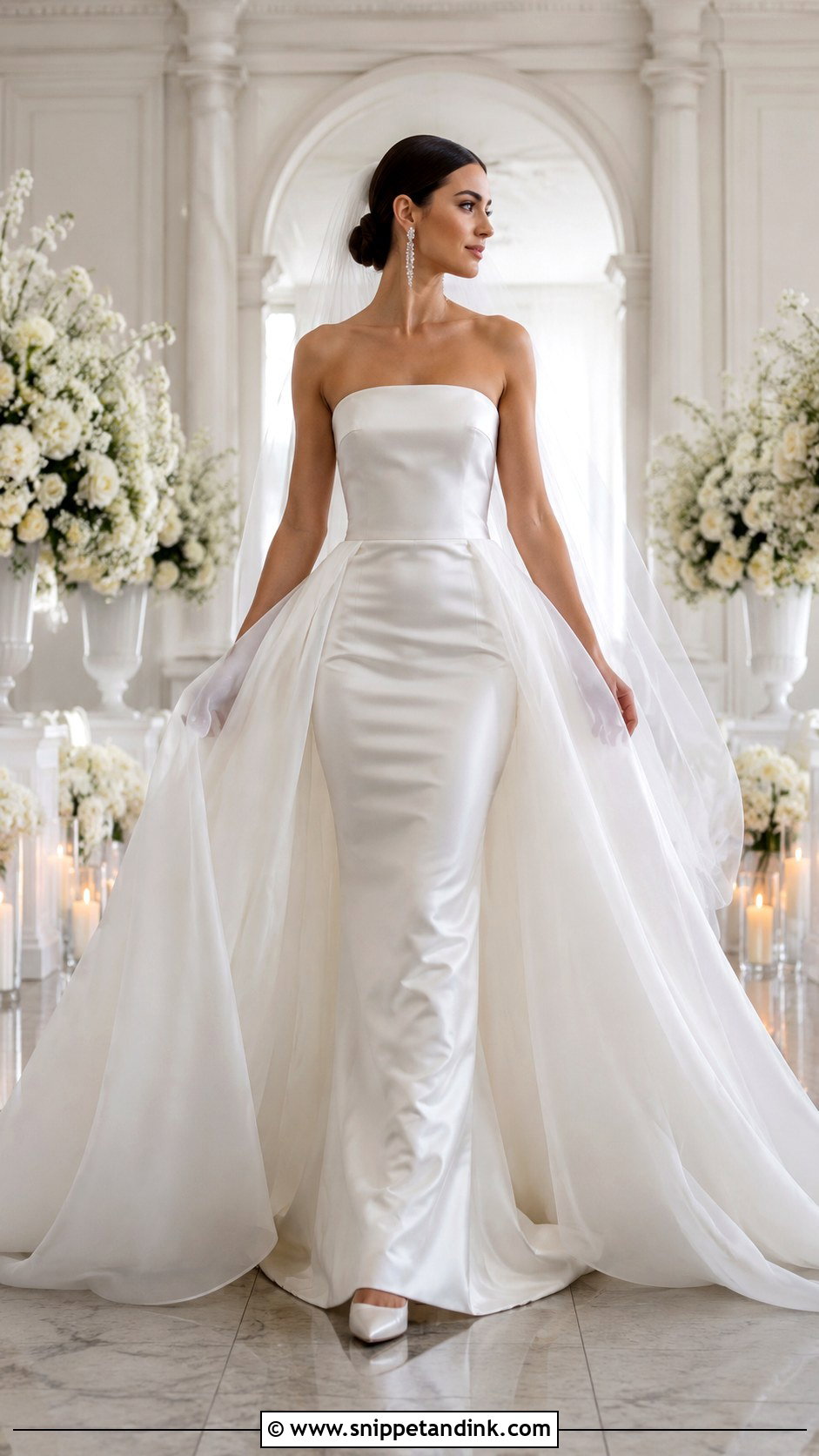
Two looks from one dress. Start with a fitted tube gown in crepe or satin, then fasten a full organza, tulle or mikado overskirt at the waist for the ceremony with a long veil, classic pumps and crystal earrings. After the ceremony it comes off, leaving the slimmer gown for dinner and dancing. A sleek ponytail or low bun suits both. I always check the fastening. Hooks or snaps that sit in a ridge show through a fitted gown, so the overskirt waistband should be flat and cut to sit on the gown’s own waist seam. Have both layers made in matching whites.
11. Floral Appliqué Tube Wedding Dress With Sheer Veil
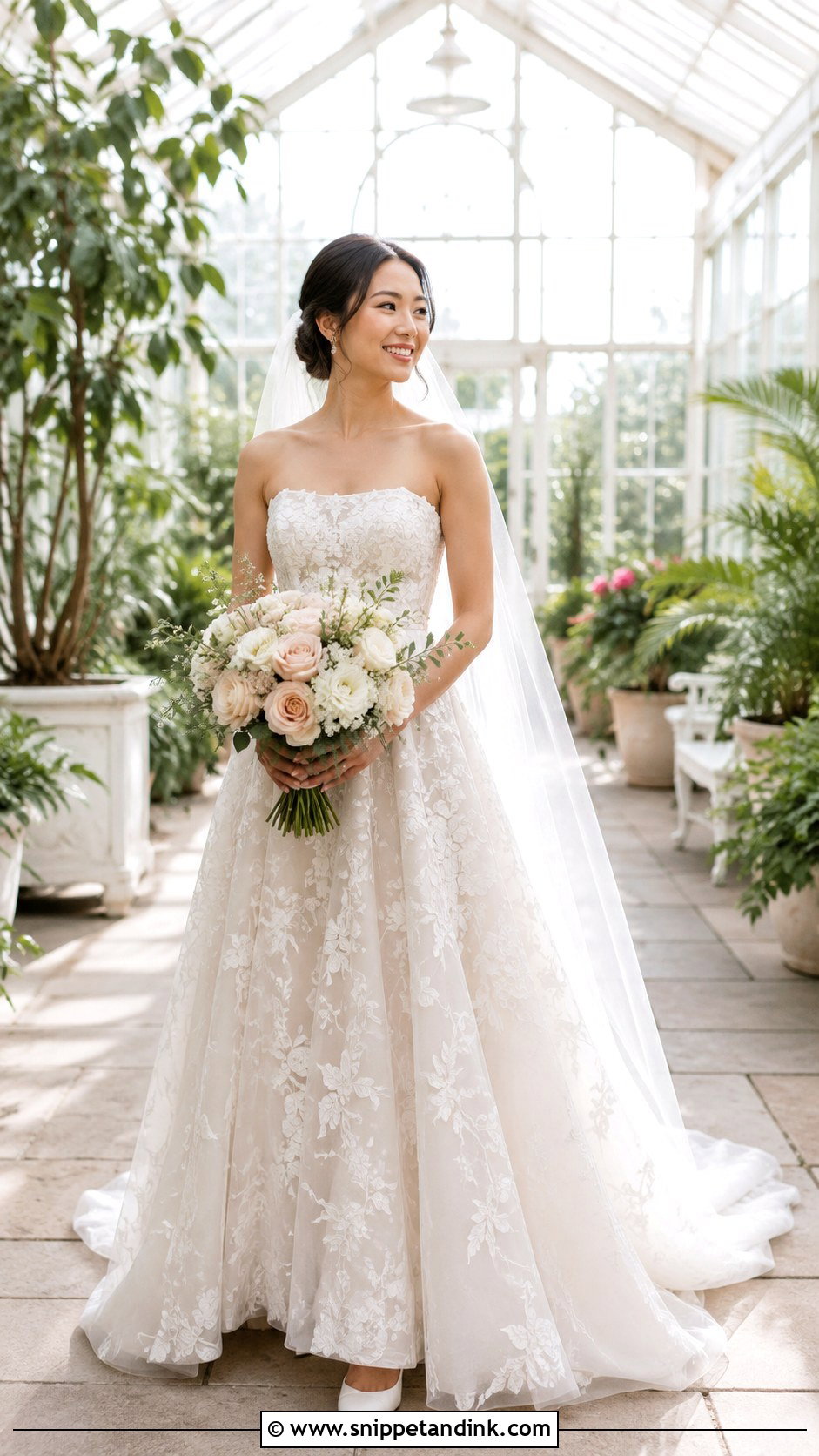
Three-dimensional appliqués add texture without needing straps or sleeves. I like them scattered densely at the bodice and thinning toward an A-line or fitted skirt, so the decoration doesn’t look heavy at the hem. A plain sheer veil, simple studs and satin heels keep the appliqués in charge, with a loose white and blush bouquet. Wear a soft updo or half-up hair so the shoulders stay visible. Gardens, glasshouses and estate venues. Run your hand along the bodice near your arms. Stiff appliqué edges there rub the inner arm raw by evening.
12. Pearl Tube Wedding Dress With Satin Pumps
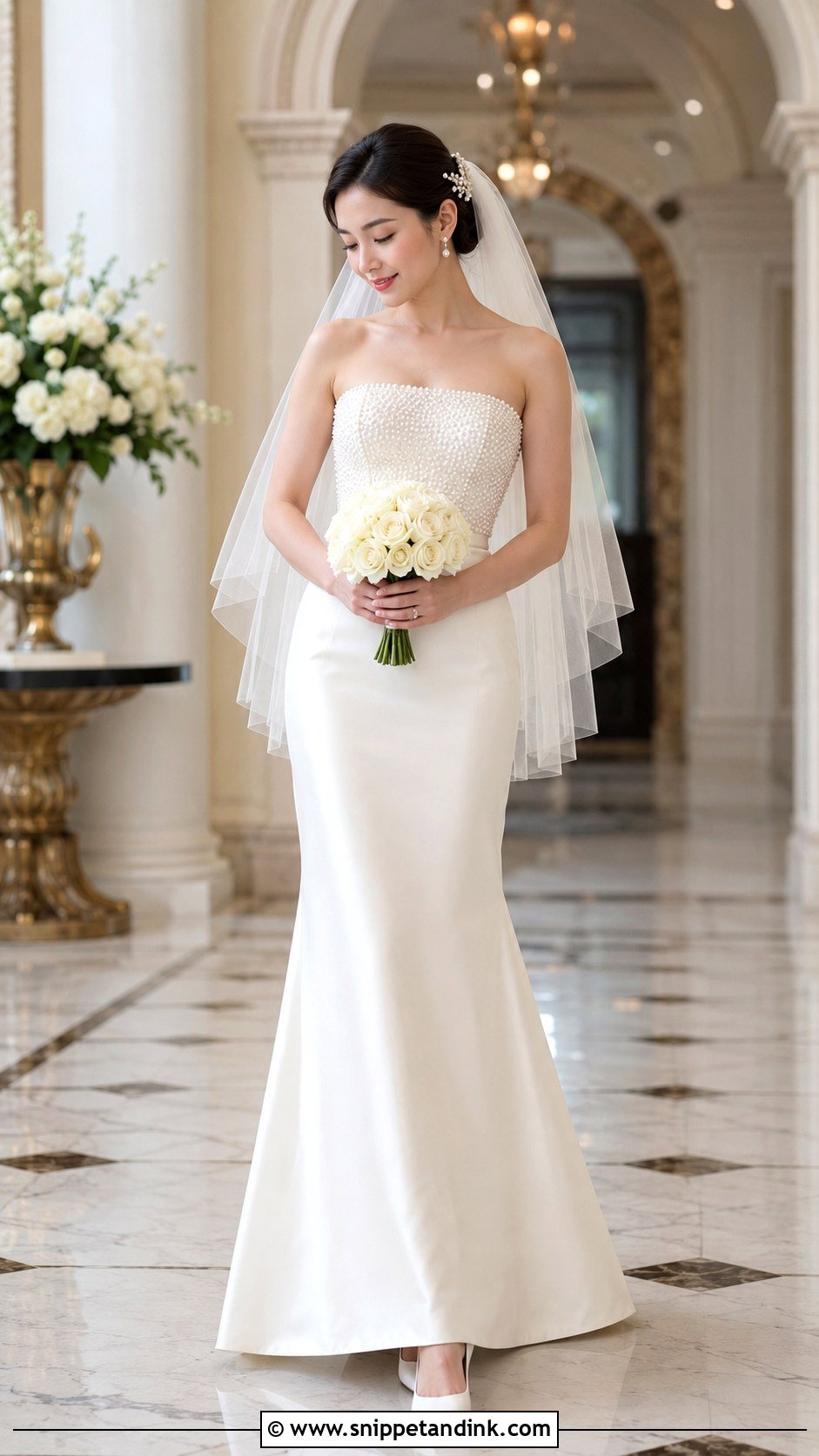
Pearls give a soft glow rather than the flash of crystals, so they’re kinder in harsh daylight. A pearl-covered bodice over a plain satin or crepe skirt keeps it balanced. Add pearl earrings but no big necklace, then closed satin pumps, a plain fingertip veil and a small pearl comb in a smooth bun. Ivory roses or peonies suit it. Ballrooms and evening receptions. Before you buy, tug gently at the pearls near the zip, waist and underarms. Those areas take the most friction, and loose beading starts dropping by the first dance.
13. Bow Tube Wedding Dress With Sleek Accessories
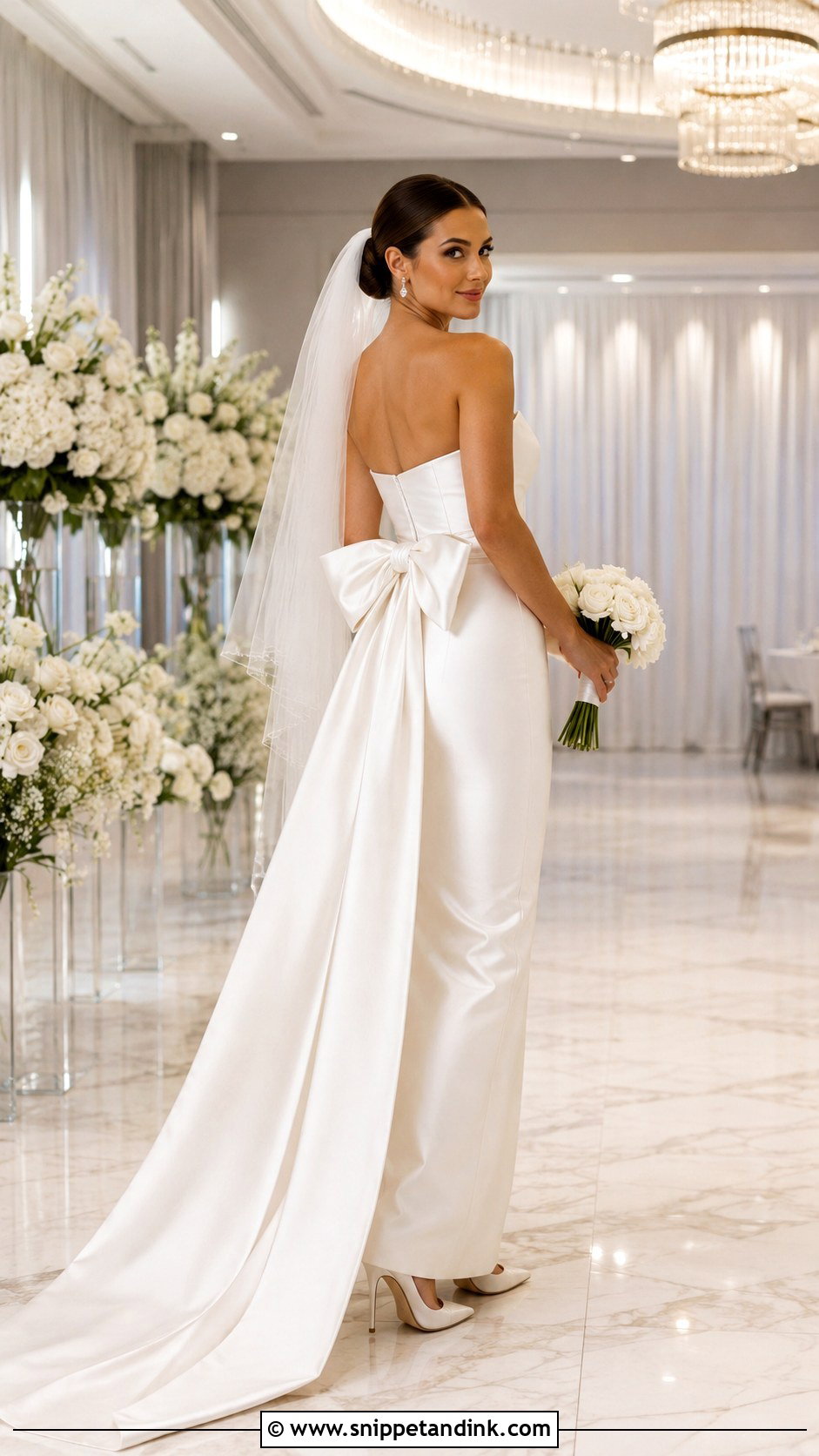
A big bow at the back waist turns a plain tube into the dress people remember from behind. Choose a structured satin bodice with a straight neckline and a large removable bow, letting the bow’s tails fall over a clean column or A-line skirt. Understated earrings, a sleek bun and pointed ivory heels. Either fix a plain veil above the bow or skip it. A small, tidy bouquet. Modern ballrooms and architectural venues. Large bows get crushed every time you sit, so ask for a light interfacing inside the loops, and take it off for dinner if it’s removable.
14. Slit Tube Wedding Dress With Bridal Sandals
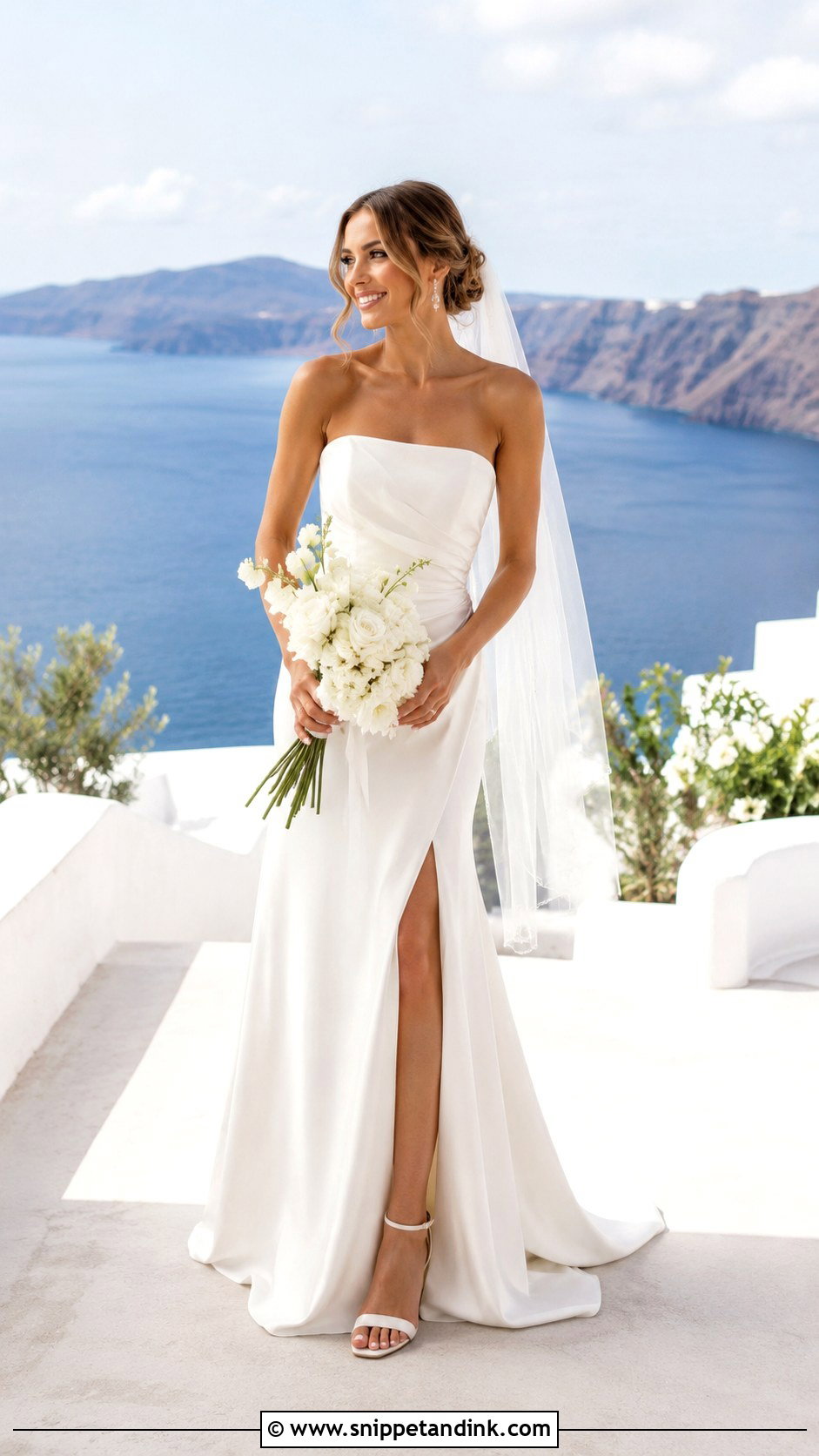
A slit brings your shoes into the outfit and makes walking much easier in a fitted skirt. Choose fluid satin or crepe with a firmly fitted bodice and a slit starting at a comfortable height above the knee. Slim ivory sandals with ankle straps, simple drop earrings, a light veil and a loose updo keep it airy, with a long-stemmed bouquet. Warm-weather, beach and destination weddings. Sit, walk and climb steps at your fitting to see exactly how high it opens. I’d always add a modesty panel or lining you can trust before relying on shorts underneath.


15. Ruched Tube Wedding Dress With Drop Earrings
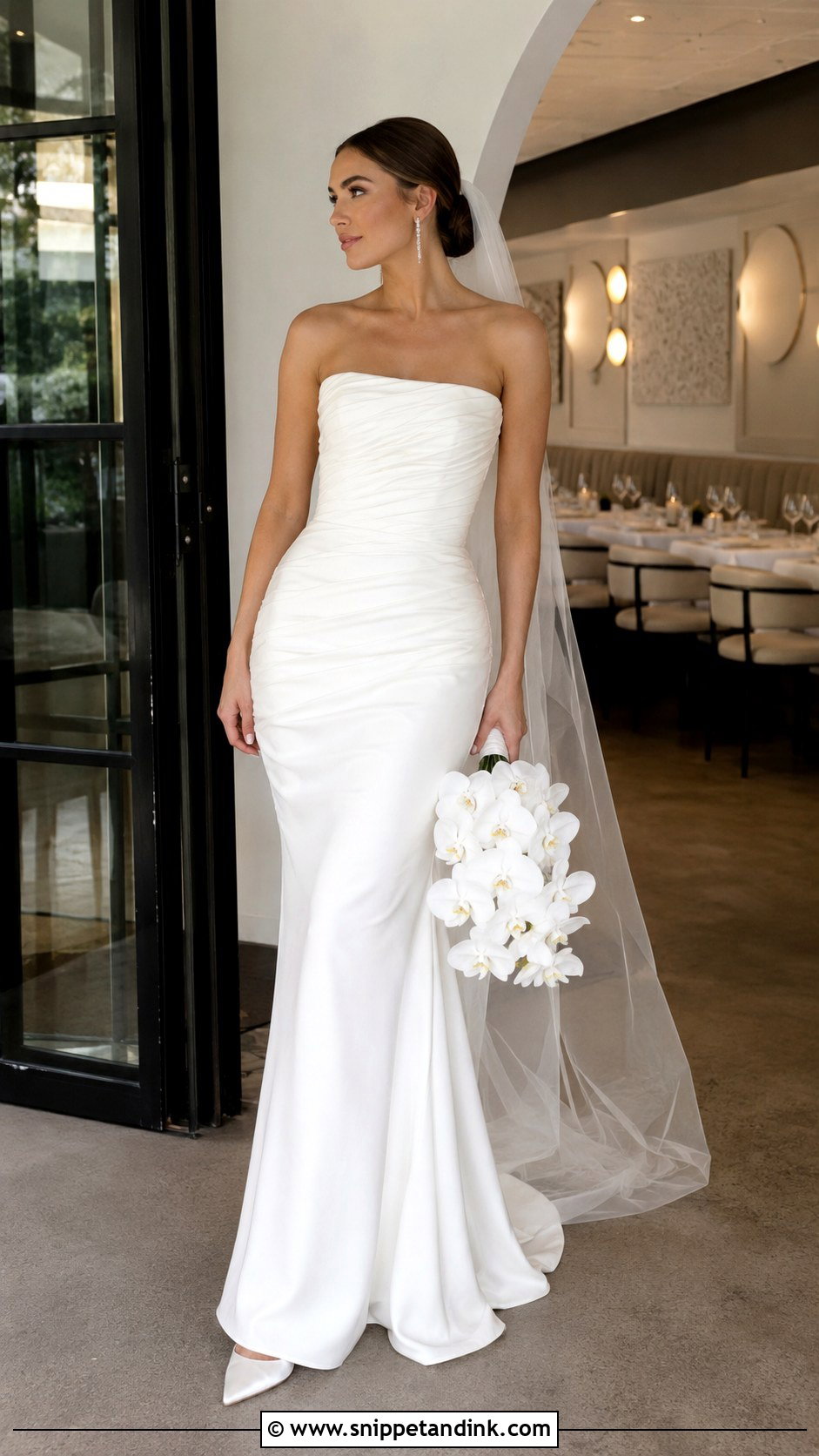
Ruching hides a lot. Diagonal gathers across a structured bodice define the waist and blur any change in fit over the months before the wedding. It can continue into a wrap-effect column or a fit-and-flare skirt. Long drop earrings balance the open neckline, a low bun keeps them visible, and pointed satin shoes and a simple chapel veil finish it. White orchids or roses suit the fabric. Formal restaurants, resorts and evening venues. Take photos from the front, sides and back at the fitting, because uneven gathers are easier to spot on camera than in a mirror.
16. Tea-Length Tube Wedding Dress With Slingback Heels
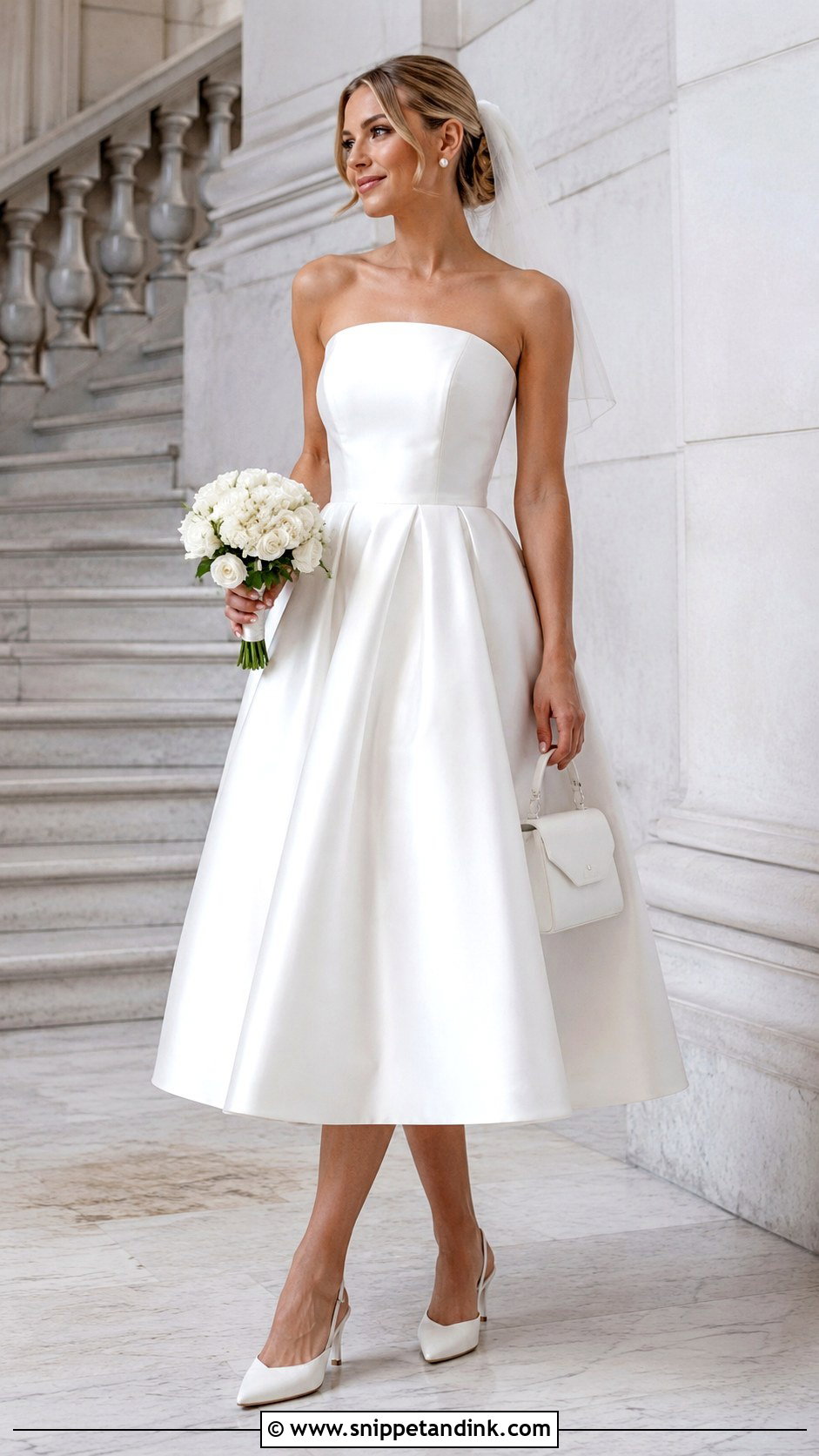
Tea length puts your shoes on show and gives a tube dress a 1950s feel. A boned bodice over a full skirt ending between knee and ankle needs a fabric with body, so structured satin, mikado or layered organza. Wear pointed slingbacks or bridal pumps, pearl studs, a short veil and a neat top-handle bag, with a small bouquet. Courthouse ceremonies, restaurant receptions and small daytime weddings suit it. Have the hem set in the shoes you’ll wear. At this length a centimetre either way changes the whole proportion.
17. Tube Wedding Dress With Bridal Cape
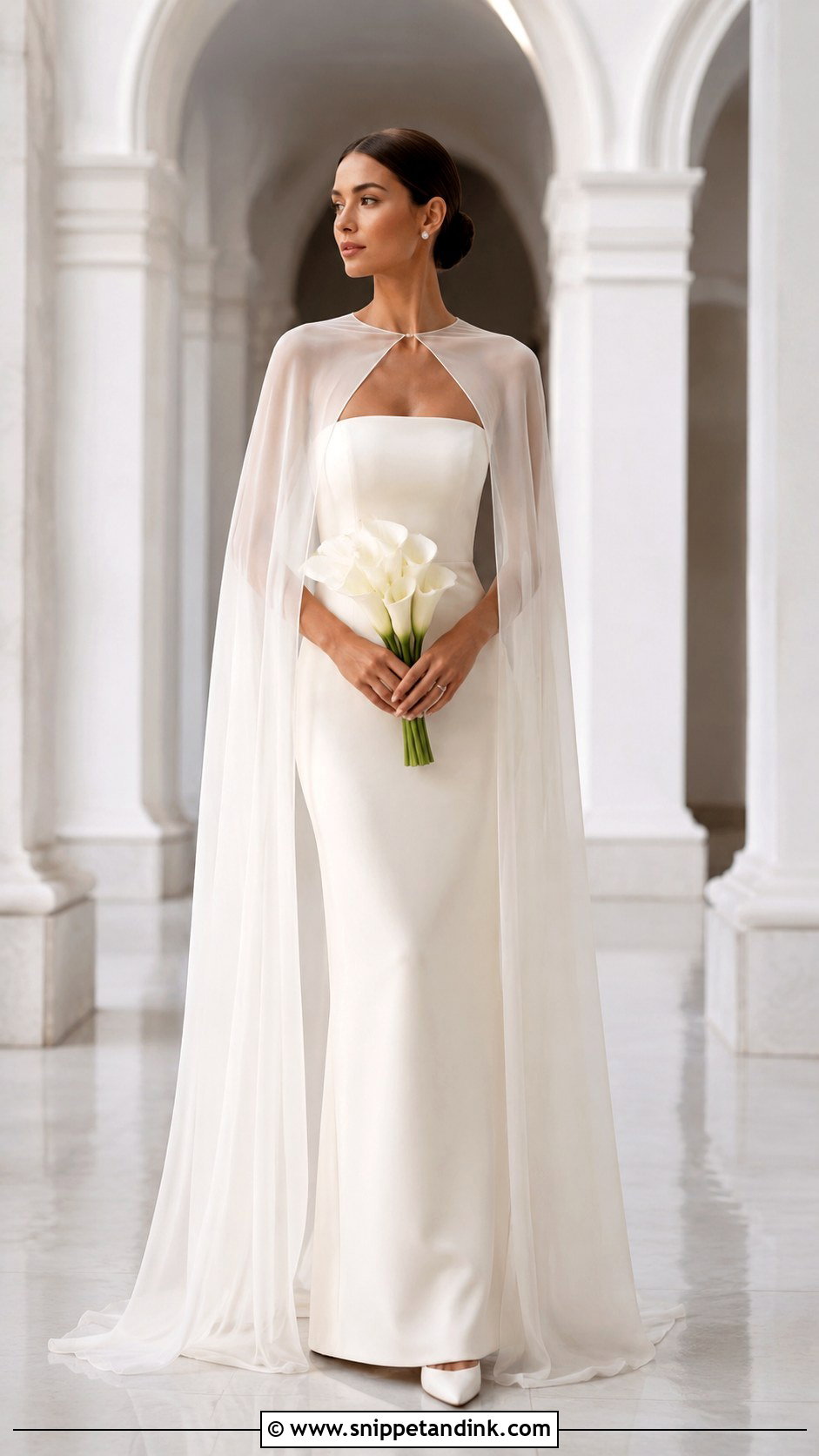
A cape gives you coverage for a church or a cold evening, then comes off to show the strapless gown. Under it, a simple crepe or satin column or soft A-line. Over it, a sheer floor-length cape with a small neck fastening and little embellishment. Crystal studs, pointed pumps and a polished low bun, with a narrow bouquet. Cooler seasons, formal interiors and outdoor ceremonies. Walk with it on: the cape should end clear of your heels and sit neatly with the train, not tangle underneath it.
18. Plus-Size Tube Wedding Dress With A-Line Skirt
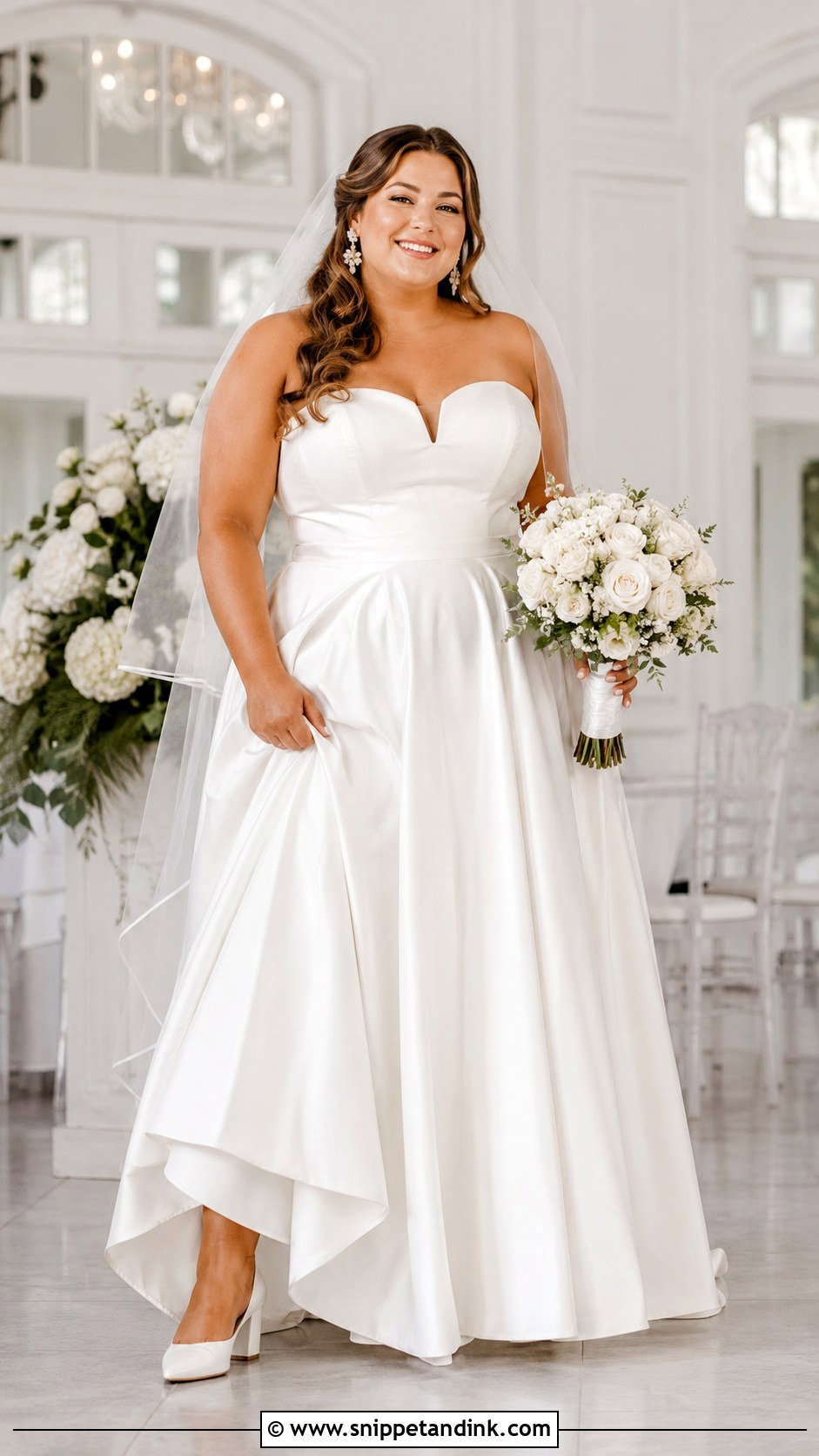
A plus-size tube dress needs the most engineering, and good construction makes it as secure as any other gown. Look for a boned bodice with built-in cups, a firm waist stay and enough coverage at the sides and back that nothing pinches under the arm. An A-line skirt in satin or crepe moves well and leaves room through the hips. Add a fingertip veil, statement earrings and stable block heels, with a bouquet sized to the outfit. I’d go to a specialist bridal seamstress rather than rely on sample sizing. The test is simple: sit, dance, hug someone and raise both arms. Nothing should move.
19. Short Tube Wedding Dress With Bow Heels
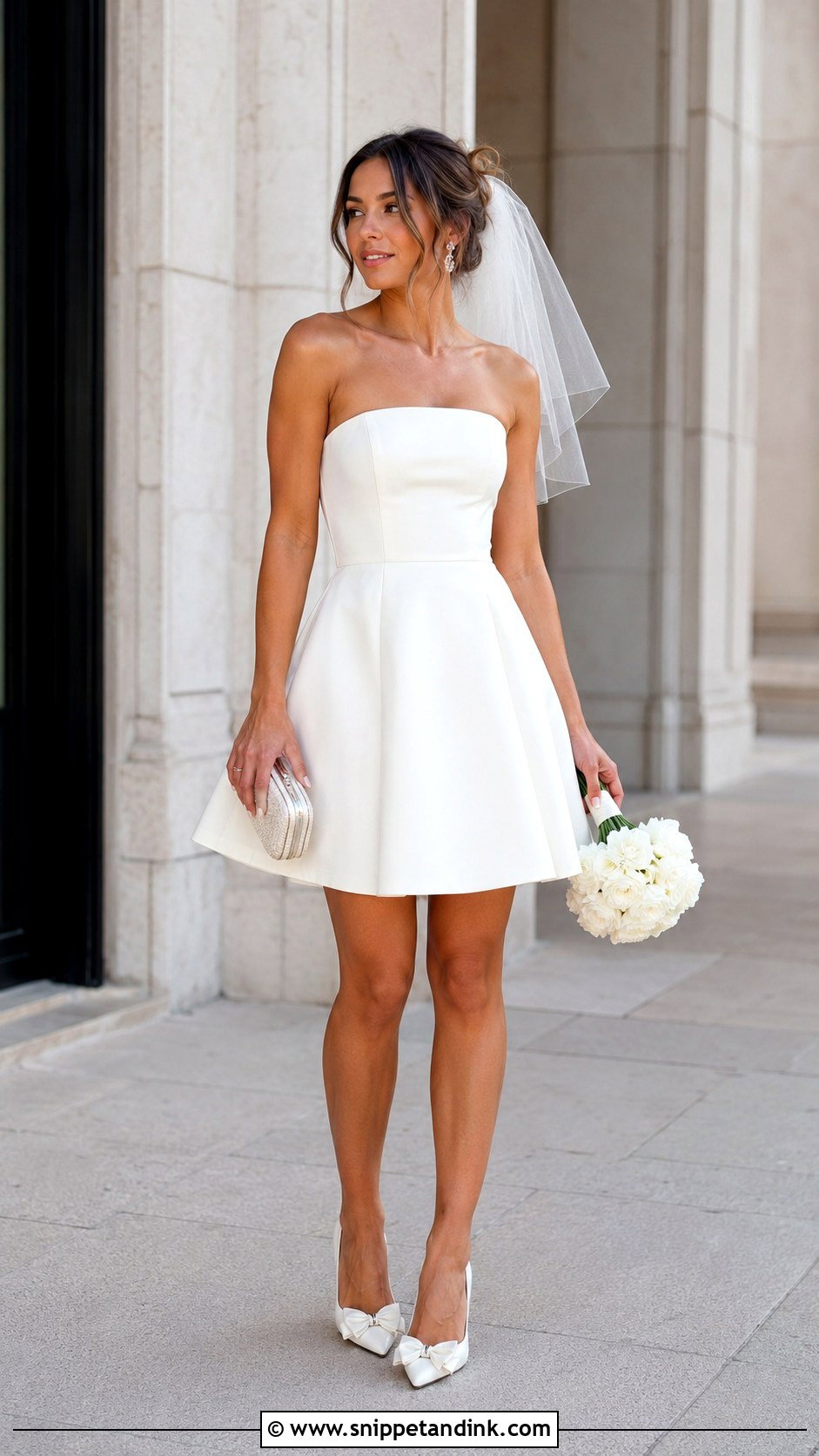
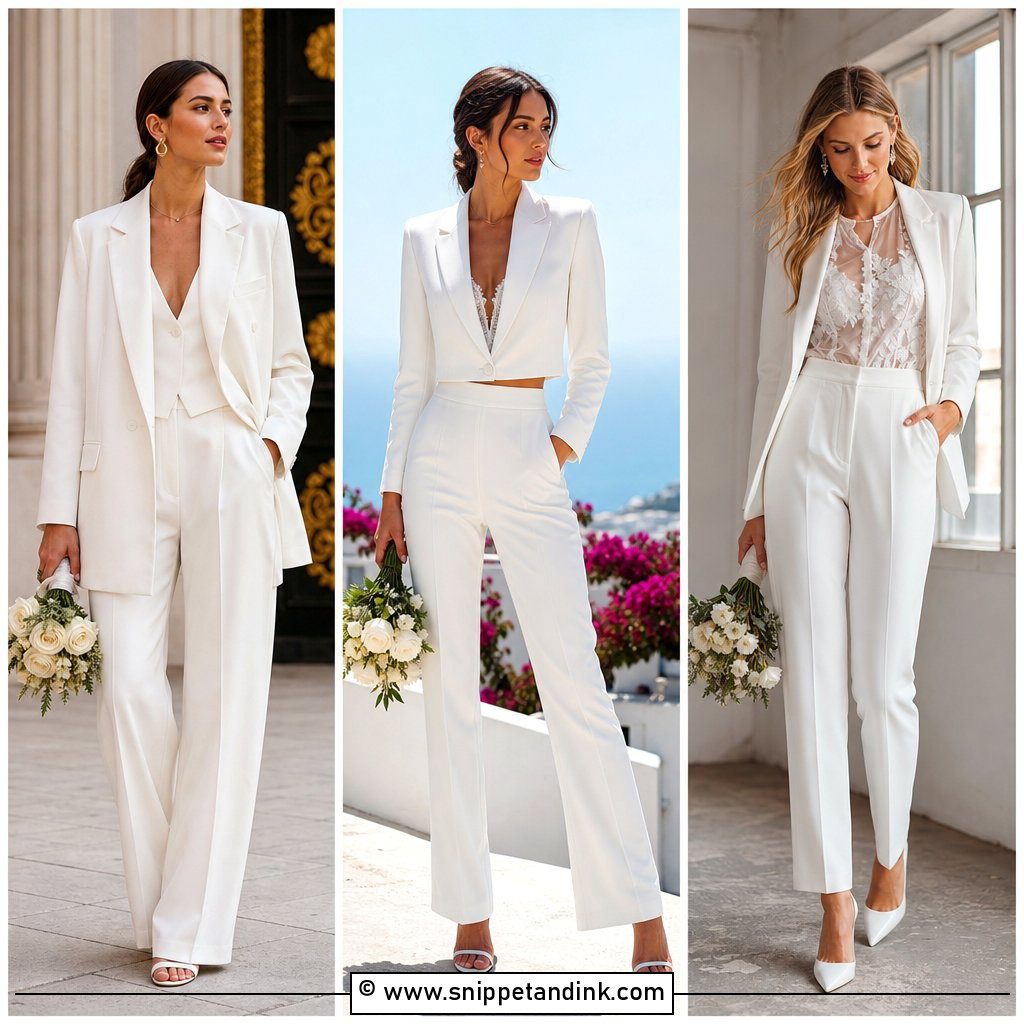
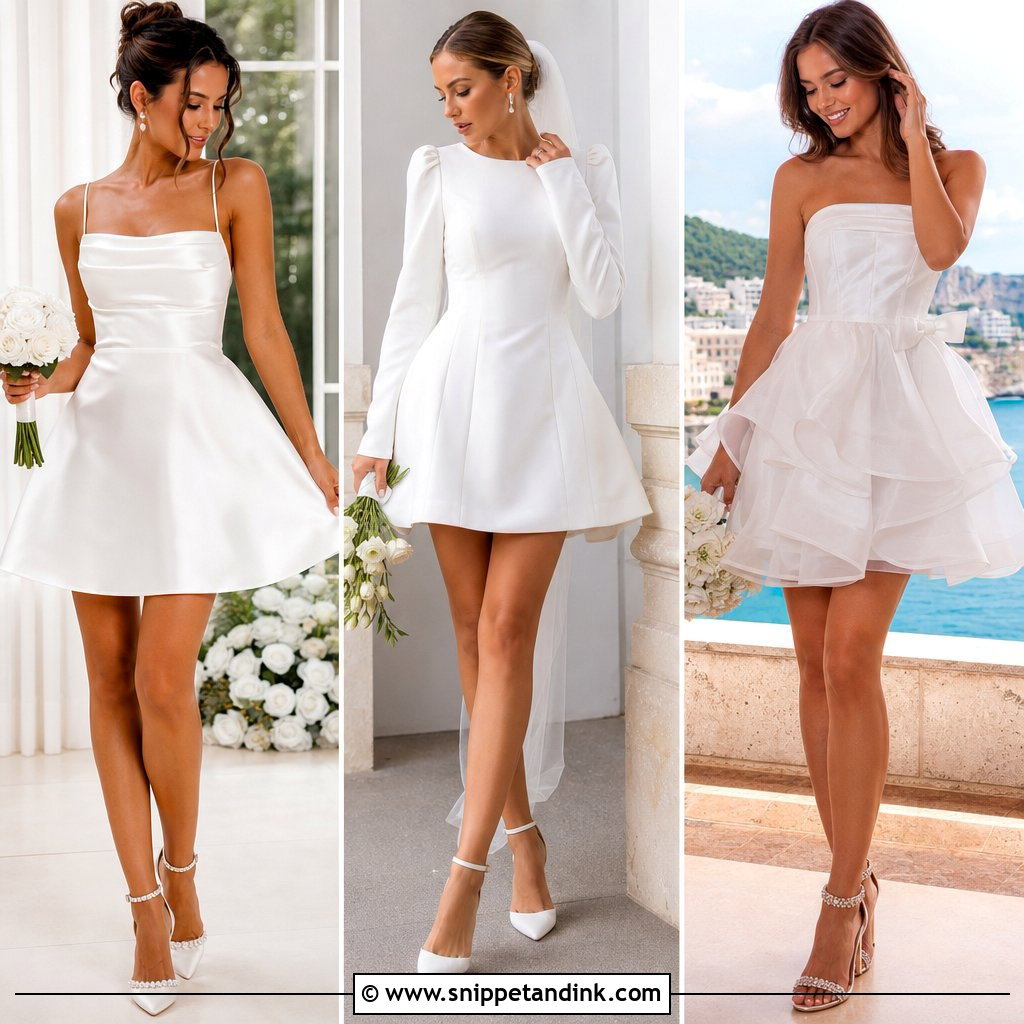
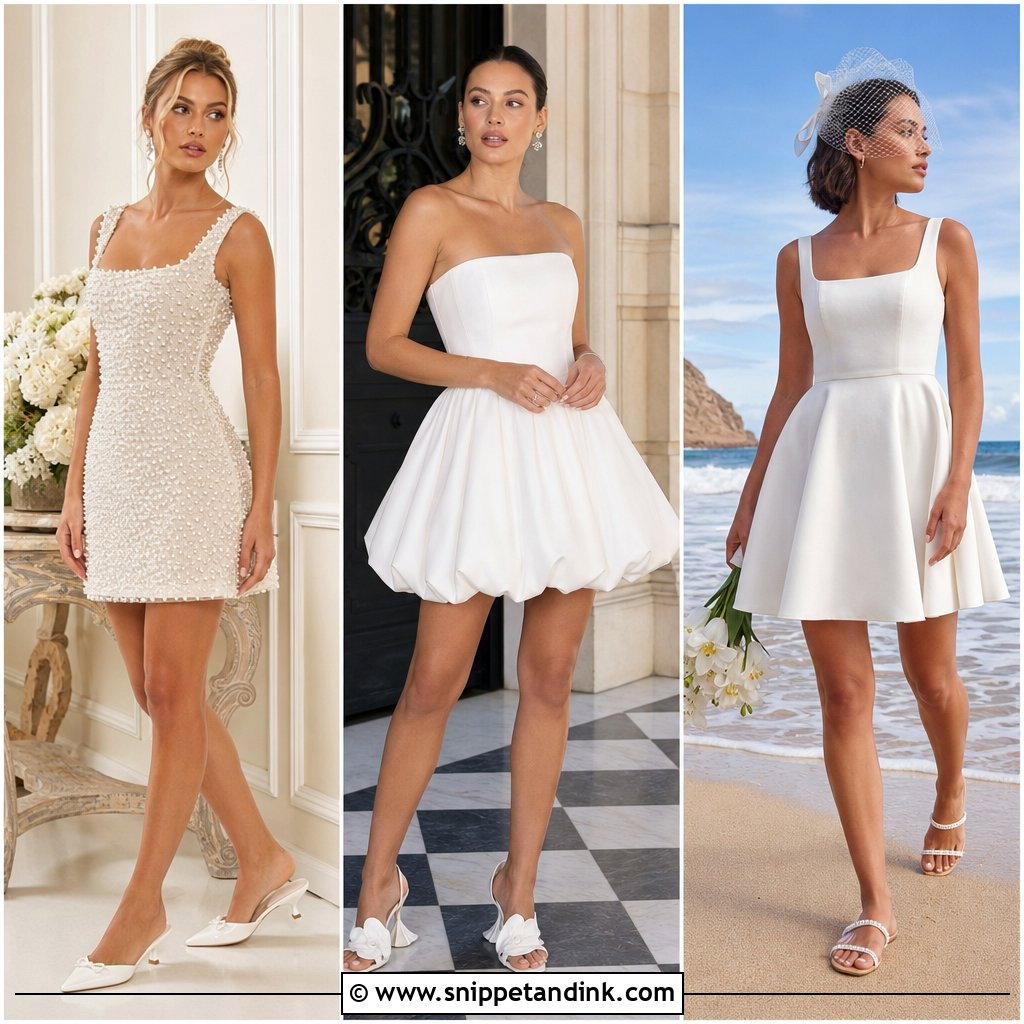
A short tube dress is a good choice for a civil ceremony, a welcome party or a second reception look. Choose a structured mini or knee-length dress with internal boning and a straight neckline, with a gentle A-line rather than a skin-tight skirt. Bow-detailed heels, small crystal earrings, a short veil or polished headband, a compact clutch and a petite bouquet finish it. A tailored ivory jacket adds coverage for the ceremony. Short dresses ride up when you sit, so check the hem seated and on stairs, and add a lining or concealed shorts if they make you more comfortable.
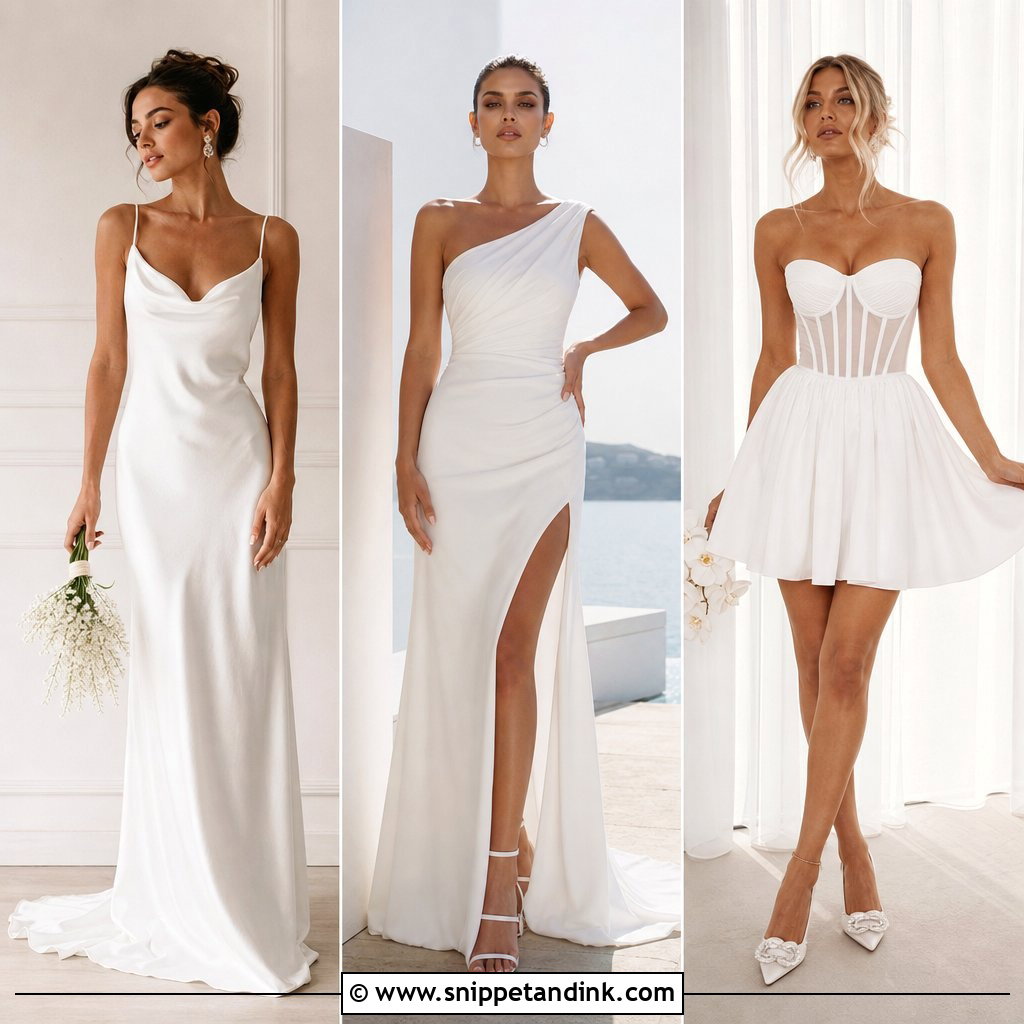




20. Vintage Tube Wedding Dress With Birdcage Veil
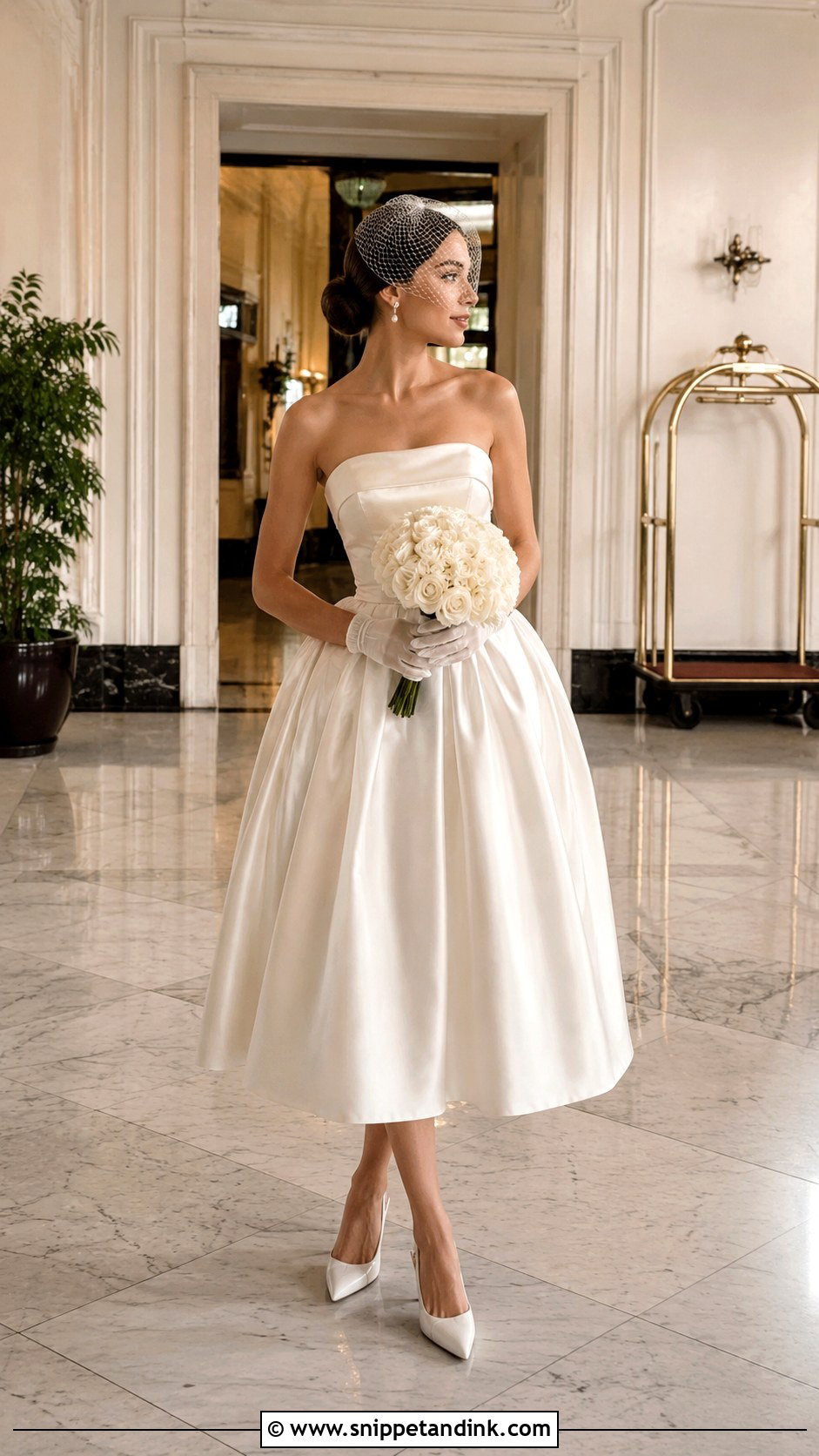
Vintage accessories give a plain tube dress a period personality without needing a period gown. Start with a tea-length or fitted satin gown with a softly curved strapless neckline, then add a birdcage veil, pearl button earrings and pointed slingbacks. Short gloves are another mid-century touch. Carry a structured ivory rose bouquet and wear a smooth low twist. Don’t stack too many decorative pieces. Courthouses, historic hotels and daytime receptions suit it. If you’re wearing a true vintage dress, have its bodice rebuilt with modern boning; old construction often relied on a corset underneath.
Bras, Corsets and Cups Under a Straight Neckline
Most well-made tube gowns have cups sewn in, and a good seamstress can add or reposition them to suit you. That’s usually better than wearing a separate strapless bra, which can show as a line through satin or crepe. If you do want a longline bra or a bustier, bring it to your first fitting so every alteration is made around it. Changing underwear later changes the fit.
If you need more lift, a corset built into the dress works better than a separate one, because the boning and the outer fabric move together. And whatever is underneath, try it in the light of a photographer’s flash, since some fabrics turn faintly sheer in strong light.
Tan Lines, Bare Shoulders and a Chilly Church
A tube dress shows more skin than most gowns, so think about the weeks before. Strap marks from summer tops will show across the shoulders, so I suggest strapless or bandeau tops in the sun beforehand, or skip tanning entirely. Ask your makeup artist to blend body makeup or a light shimmer over the collarbones and shoulders so they match your face in photos.
Many religious ceremonies expect covered shoulders, and stone churches stay cool even in summer. A bolero, cape, sheer jacket or wrap solves both, and it can come off for the reception. Choose it at the same time as the dress so the whites match.
Sit, Hug and Reach Before You Say Yes
A good strapless gown pairs a clean shape with structure you can trust and accessories that suit the venue. Satin and crepe give sleek, modern outfits; lace, pearls, bows, flowers and draping add softer detail. Gloves, capes, veils, overskirts and jackets let you shift coverage and formality through the day. Test any gown seated, walking and with your arms up, and budget for professional alterations. A dress that looks good in a photo online still has to work on your body for ten hours, so let that decide, and build the rest of the look around it.
You'll Like These Ideas:




Leave a Reply