
A detachable skirt lets you have two bridal looks without a second gown or a full change of clothes. The overskirt brings the volume, texture or train for the ceremony; underneath is a lighter dress you’ll be glad of by the time dinner is served. Designers have kept offering these for good reason, since they solve a real problem: brides want an entrance and a dance floor. The twenty dresses below range from lace mermaids under tulle to a mini hidden beneath structured satin. The one I’d always push you to judge first is the base dress, because that’s what you’ll wear for most of the day.
Alterations Happen in a Particular Order With These Dresses
A detachable skirt adds a second garment to fit, and the order matters. I always fit the base dress completely first: bodice, waist, straps and hem. Only once that’s settled does the overskirt go on, because its waistband is shaped around the finished base. Fit them together from day one and every change to the bodice throws the overskirt out again.
- First fitting: base dress only, in the underwear and shoes you’ll actually wear.
- Second fitting: base adjusted, overskirt attached and its waistband shaped to sit flat.
- Third fitting: hems on both pieces, checked with your ceremony shoes and your reception shoes if they differ.
- Final fitting: practise the removal with your helper, then sit, dance and walk stairs in both versions.
Allow more time than for a single gown. Two pieces mean two hems and more fastenings, so start alterations a couple of months before the wedding and ask your seamstress how long she needs for this style specifically. Costs vary widely by region and fabric, so get a quote that covers both pieces before you commit.
1. Lace Mermaid Detachable Skirt Wedding Dress
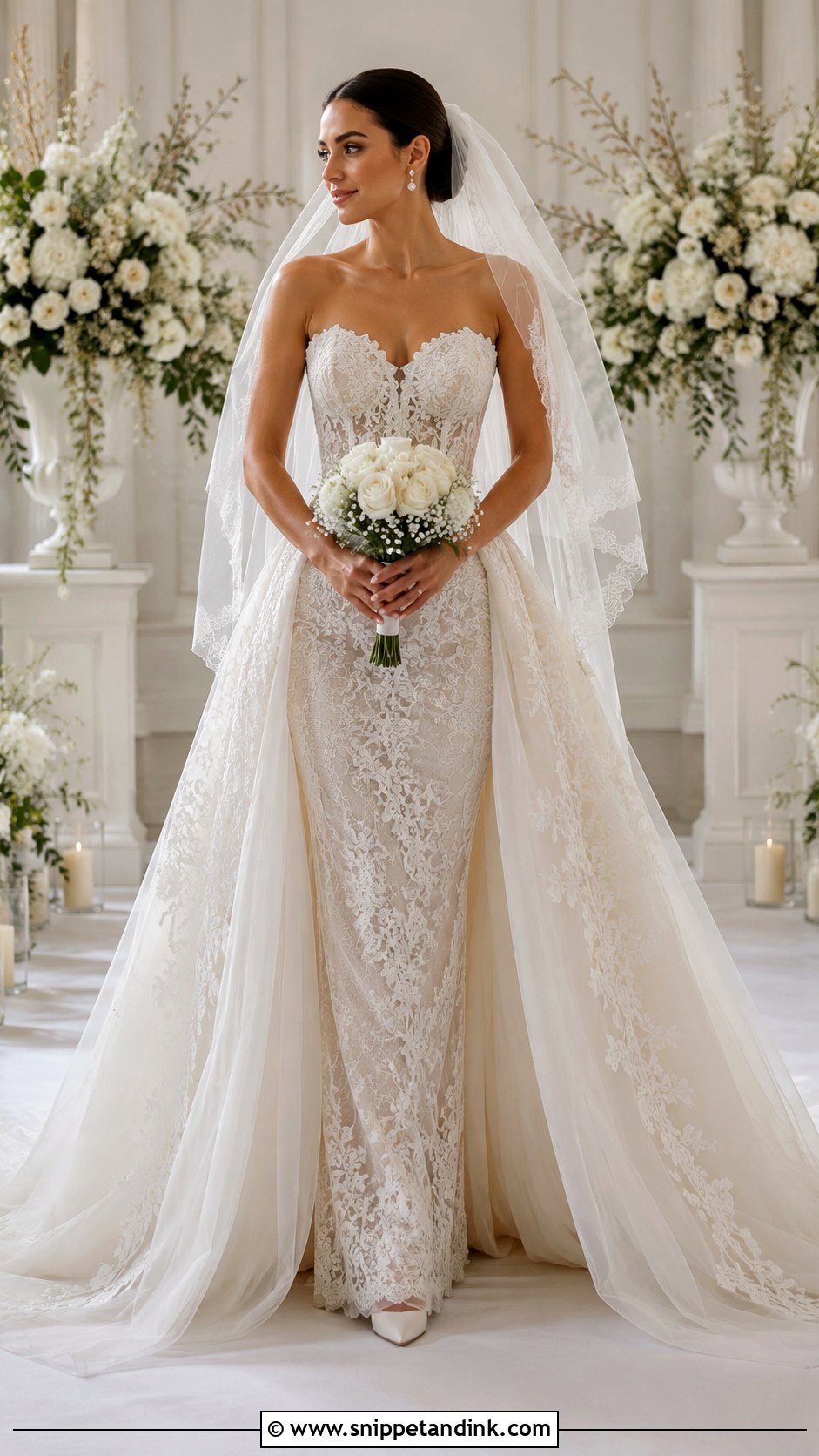
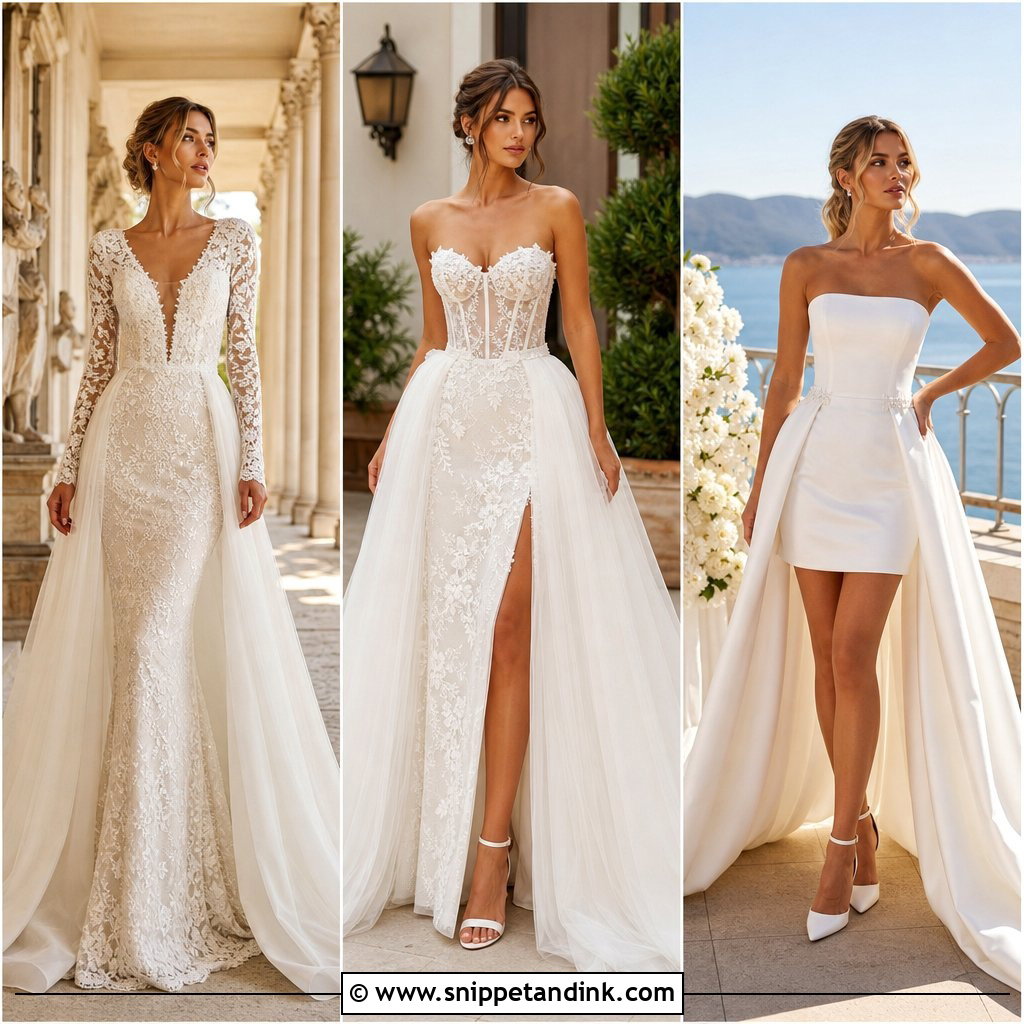
Lace that carries on below the hips is what makes a mermaid base look finished once the skirt comes off, so check that the appliqués don’t stop at the waist. The base needs proper boning and a defined waist. For the aisle, a full tulle overskirt with matching lace at the waist and hem softens the mermaid line and gives movement. I spend most of the fitting time on the waistband. If the fastenings sit on top of the lace, they show as a lump through the tulle; tucked underneath the edge of the appliqué, they vanish. Pearl drops and a fingertip veil keep the ceremony look light.
2. Satin Column Detachable Skirt Wedding Dress
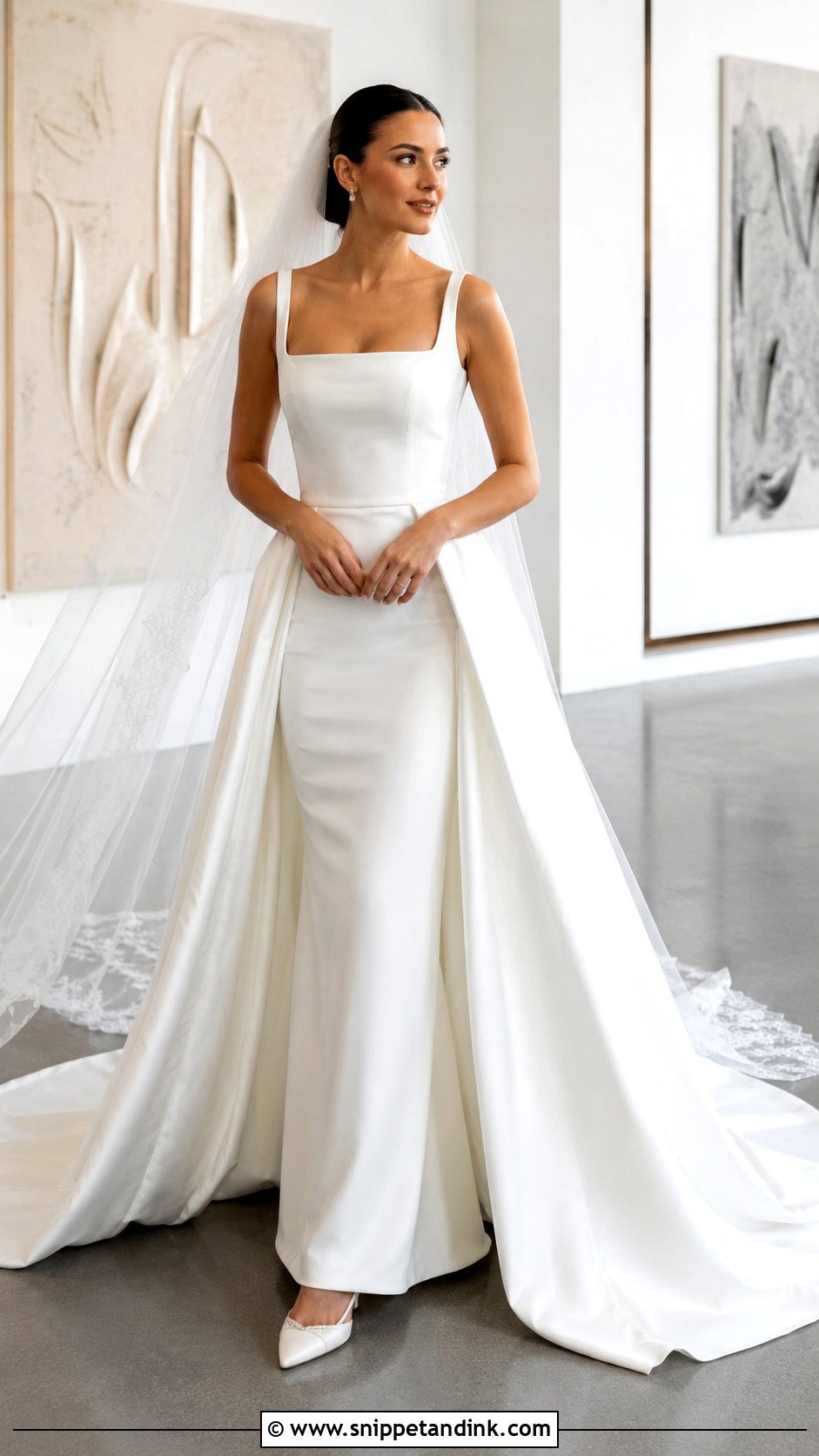
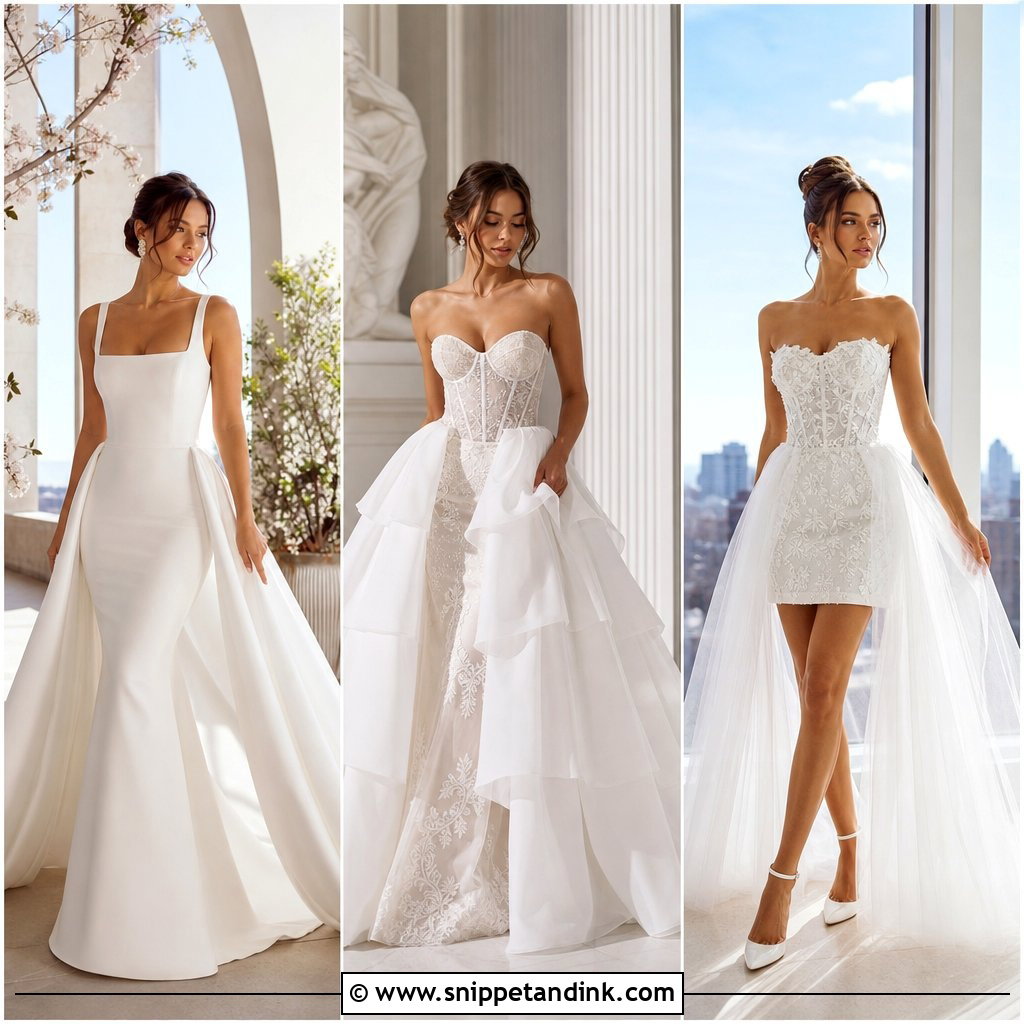
Satin columns are about line, and an open-front overskirt keeps that line visible even during the ceremony. Look for a square neckline, wide straps and light internal structure in the base. The matching overskirt adds a long train without hiding the dress. One thing to know: satin from two different batches can differ in sheen, so buy both pieces together from the same maker if you can. A sleek low bun, a plain cathedral veil and slingbacks are all it wants. It suits galleries and modern ballrooms, where the clean shape isn’t competing with heavy decor.
3. Strapless Corset Detachable Skirt Wedding Dress
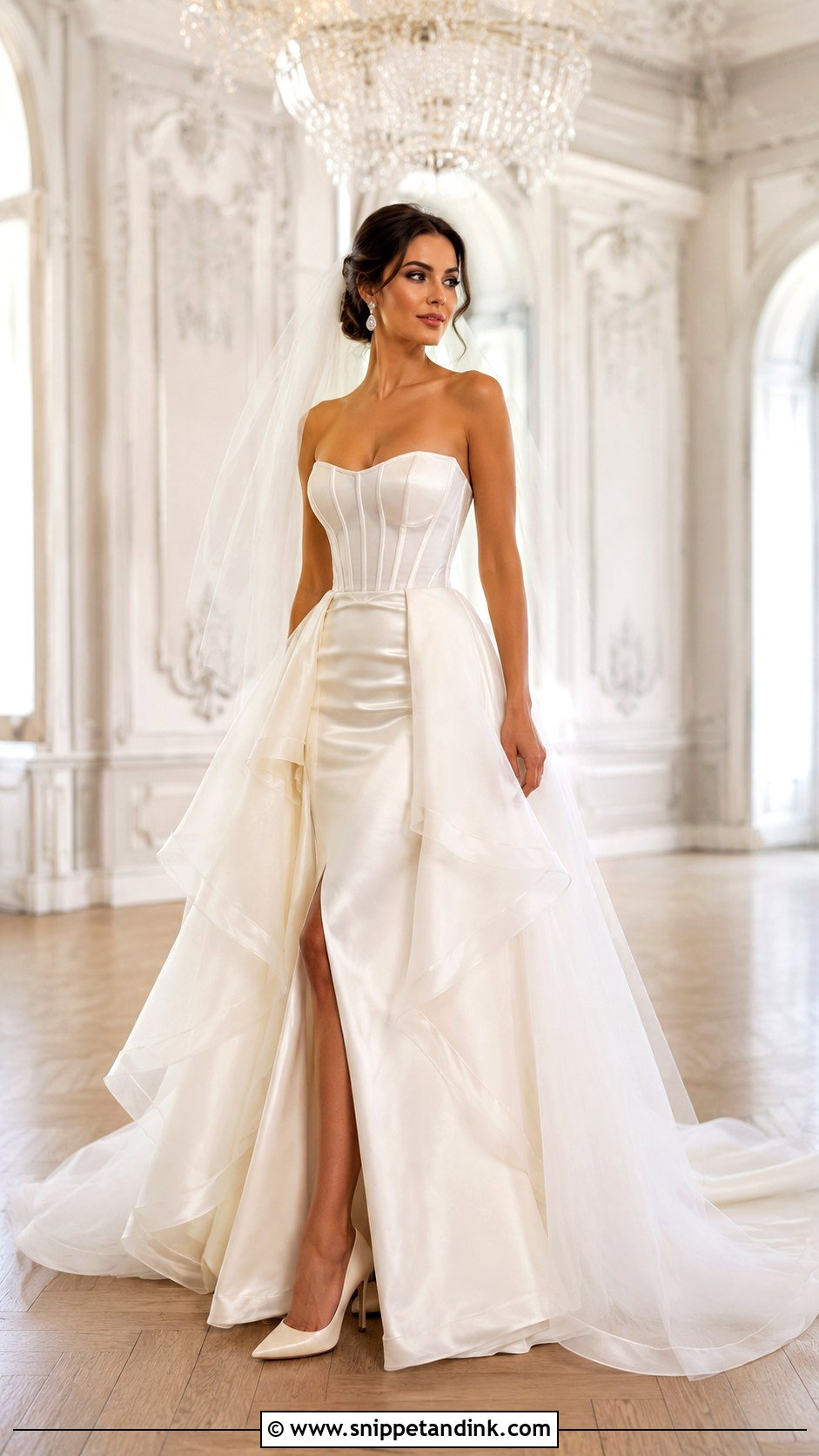
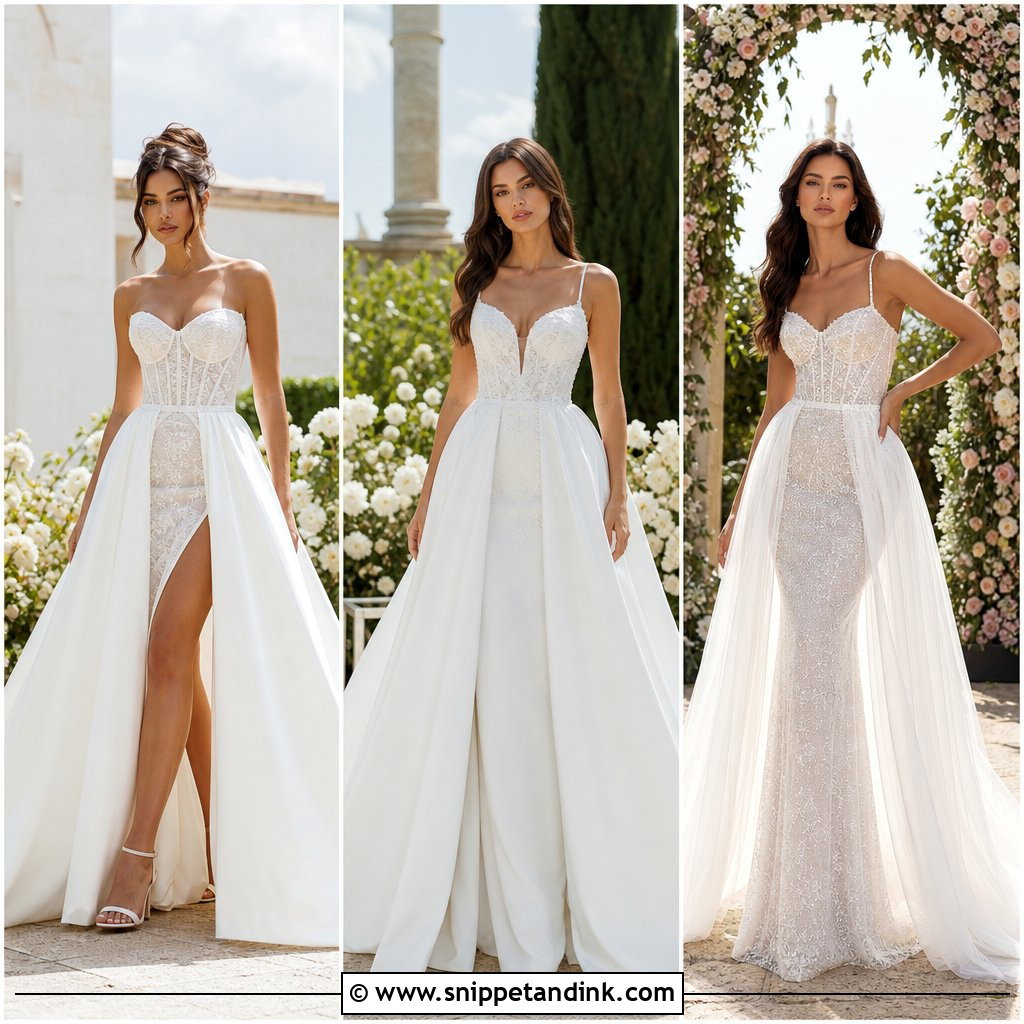
Structure is the whole point of a strapless corset base, so I check the bodice before I even look at the overskirt. Visible seams or subtle boning shape the waist and hold you up; below it, a fitted crepe or satin skirt makes a sleek reception outline. Add layered tulle or crisp organza for the ceremony. Where the overskirt attaches changes the body’s proportions. A slightly dropped waist lengthens the torso, while a natural waist gives a stronger hourglass. At fittings I have brides sit down and raise their arms, because a corset that pinches at the fastening line will feel worse after six hours, not better.
4. Long Sleeve Lace Detachable Skirt Wedding Dress
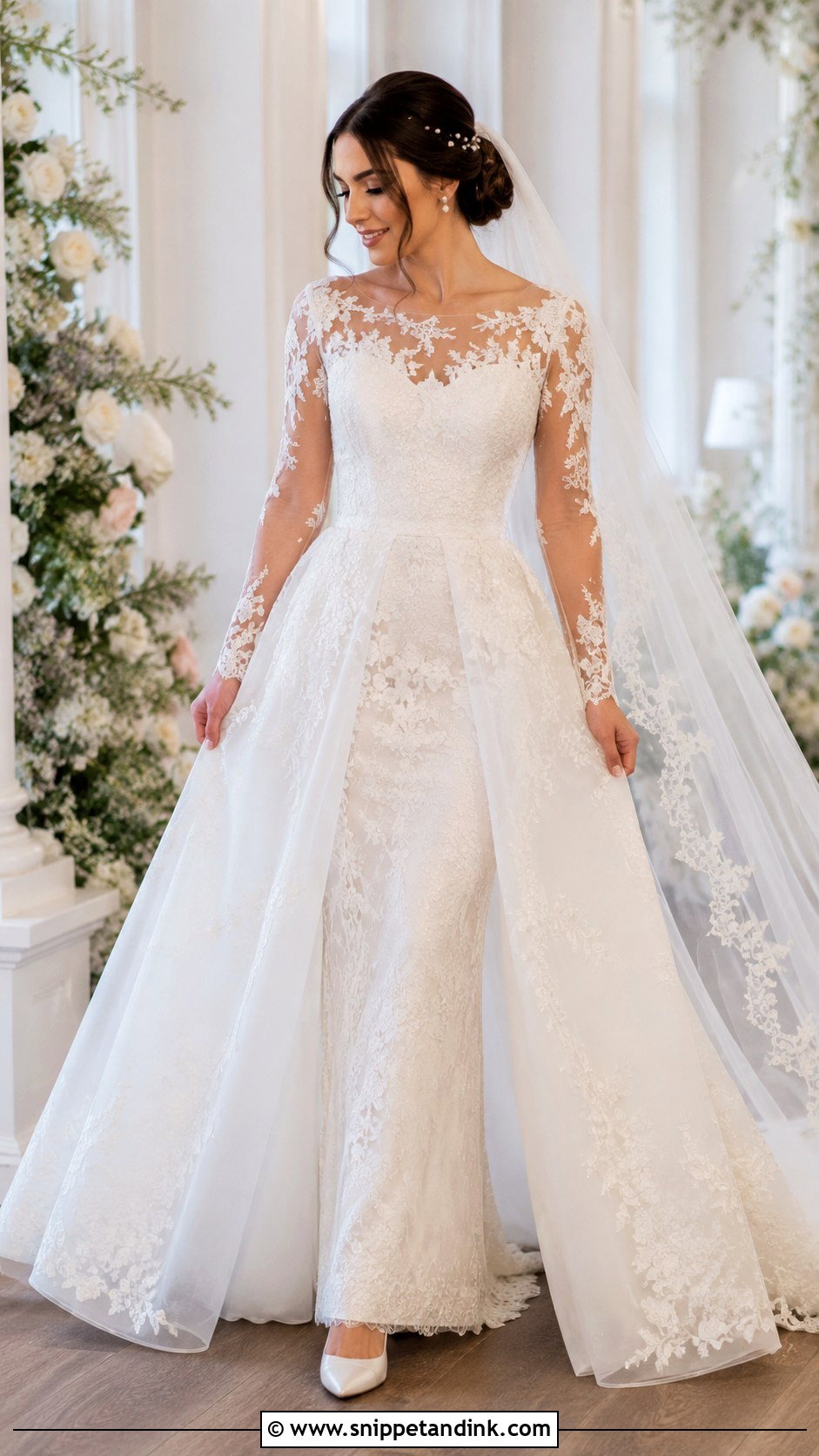
Long lace sleeves suit a convertible bridal gown worn in cooler months. Look for illusion sleeves and a little stretch across the shoulders; rigid lace sleeves restrict reaching more than people expect. A detachable A-line skirt with a few appliqués echoing the bodice gives the ceremony volume without hiding the lace. Underarm seams are what I check most closely on this style. They take the strain every time you hug someone, and a tight one rubs or splits. Ask for breathable lining even in winter, since heated venues get warm by evening.
5. Off Shoulder Detachable Skirt Wedding Dress
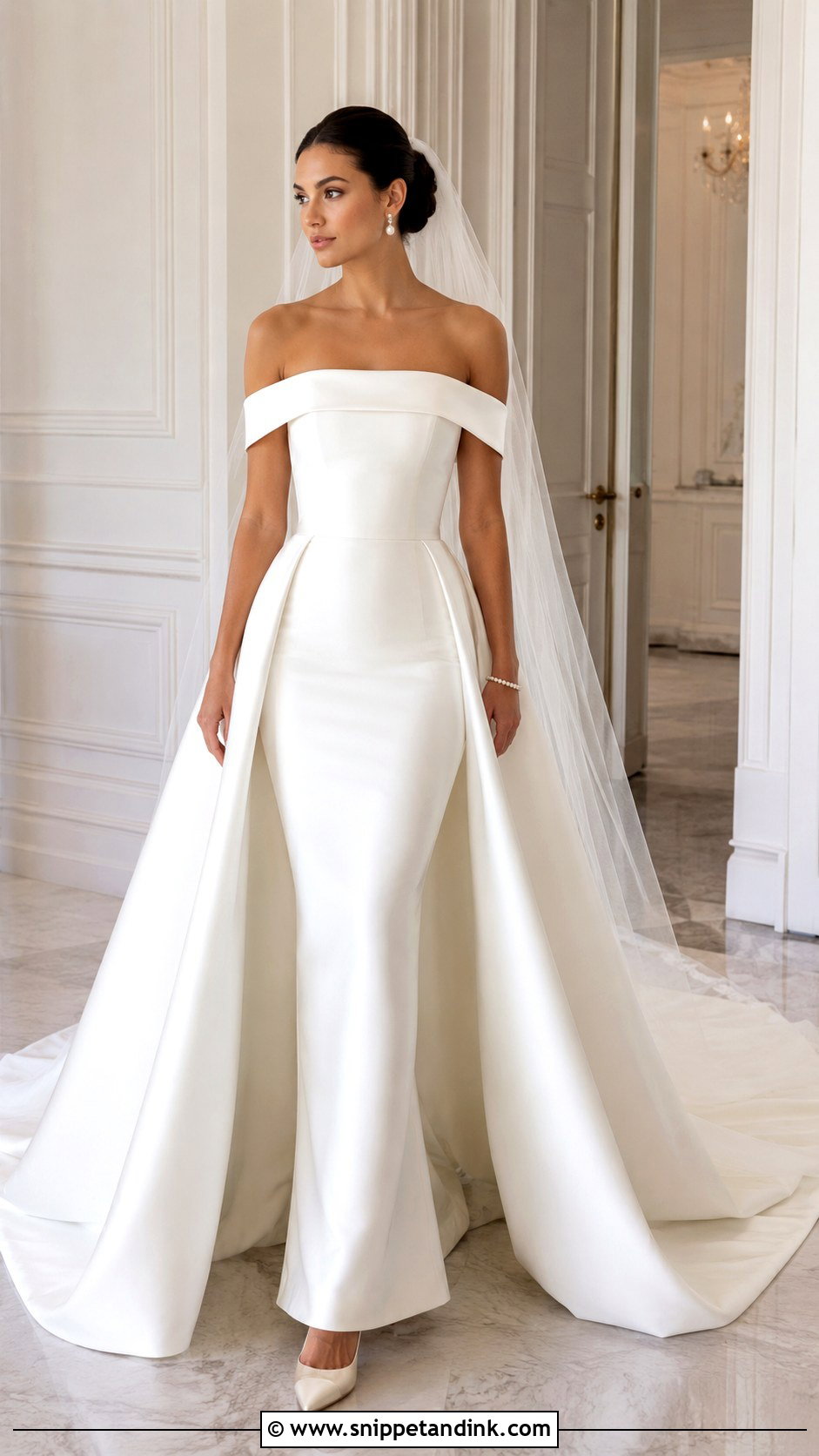
A full skirt and an off-shoulder neckline balance each other: the wide hem frames the bare shoulders, and the shoulders keep the volume from looking heavy. Choose folded satin bands or draped sleeves that sit securely on the upper arm, with an overskirt in matching satin, mikado or organza. Leave the collarbone bare; a heavy necklace crowds this neckline, so I’d wear a bracelet instead. Shoulder bands are the weak point. Lift your arms at every fitting, because bands that trap the arms will stop you hugging anyone properly.
6. Mini Dress With Detachable Skirt
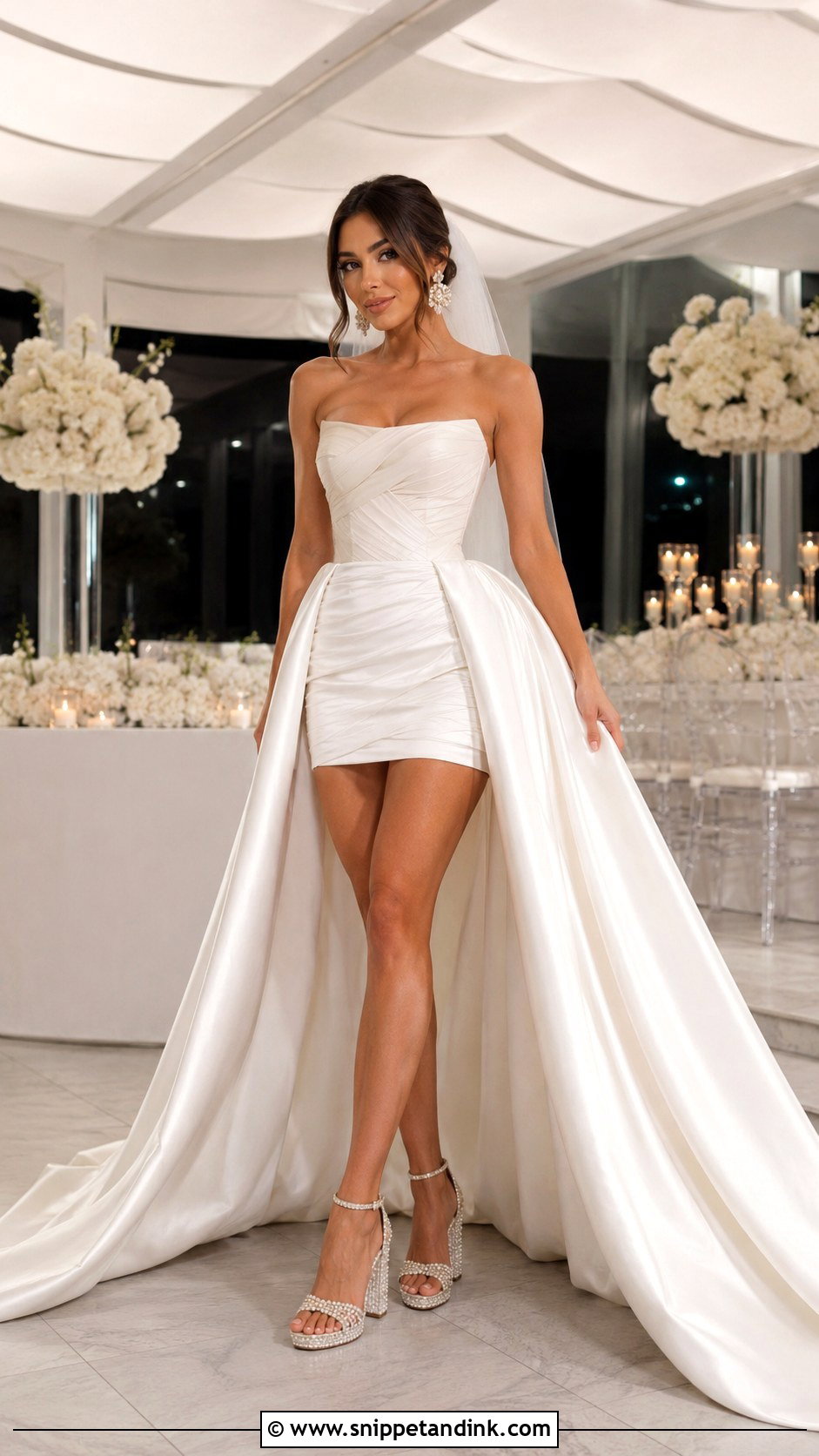
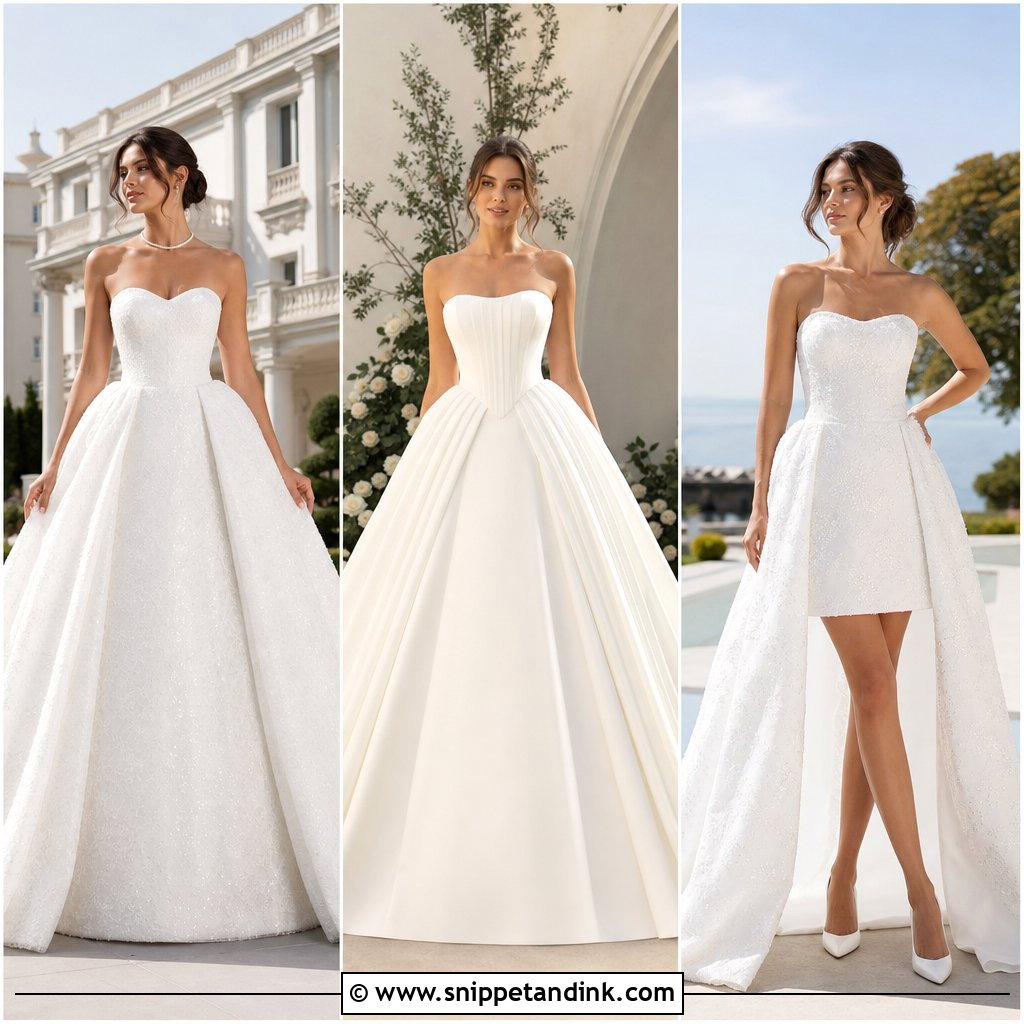
Hiding a mini under a floor-length skirt gives the most dramatic switch of any style here. The mini needs a structured bodice, secure straps and enough room to dance. Over it goes a full satin or tulle skirt with a smooth waistband and a sweeping train. Once the legs are on show, any snag or pulled thread on the mini is obvious, so I look hard at where the overskirt hooks sit against the mini’s fabric. A polished lining on both pieces stops them clinging to each other. Pointed pumps for the ceremony, embellished block heels or flats for later.
7. Crepe Fit And Flare Detachable Skirt Wedding Dress
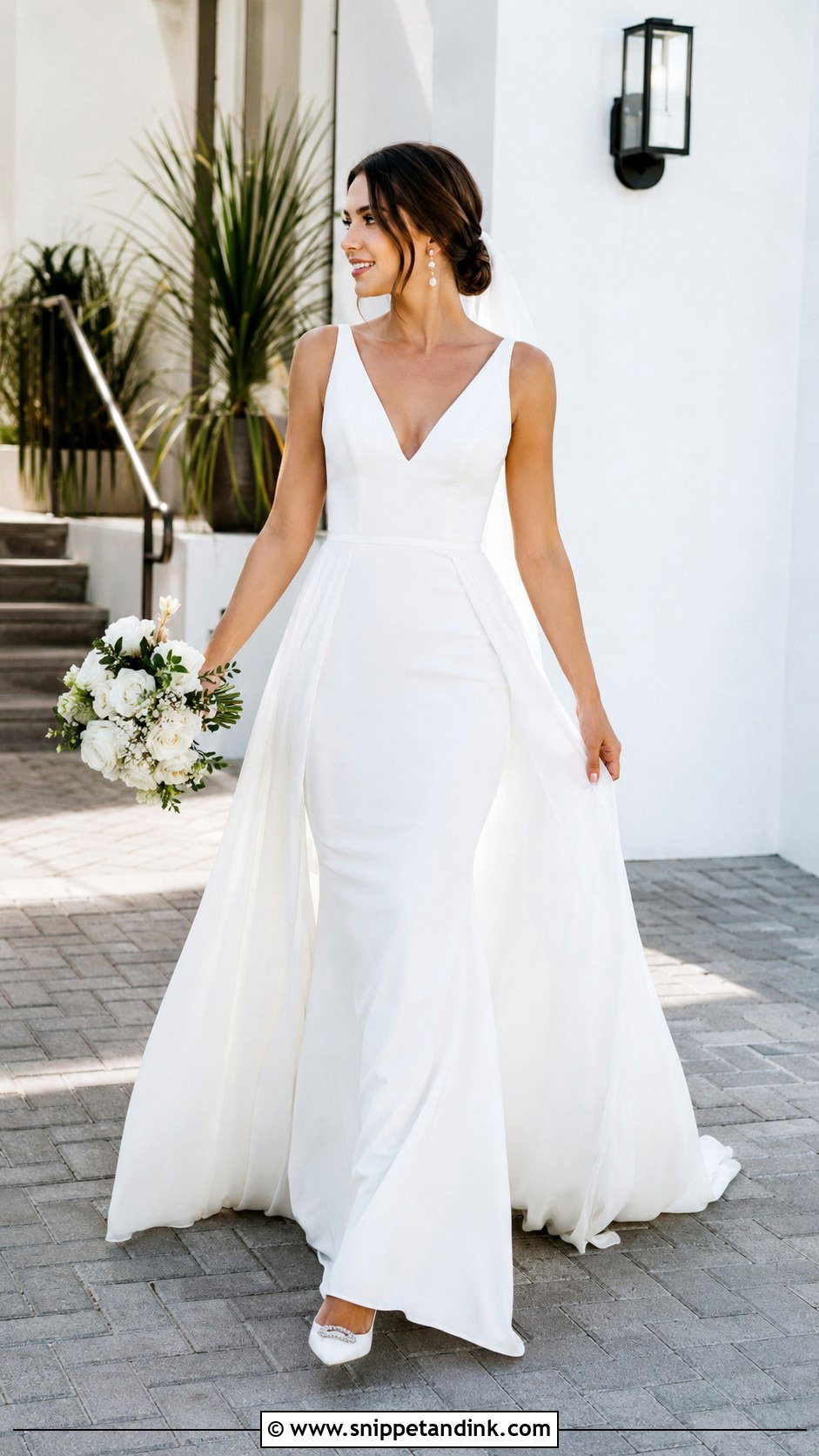
Crepe doesn’t add bulk, which makes it a good base for brides who don’t want the detachable layer to make them feel wider. A fit-and-flare with a V-neck, covered buttons and shaping seams follows the body. Over it, a light chiffon or tulle overskirt with an open front softens the outline. Colour is my sticking point: crepe and chiffon from different mills rarely match exactly, so ask for the waistband to be cut from the dress fabric itself. A sparkling hair comb is enough of an update for the reception.
8. Mikado Ball Gown Detachable Skirt Wedding Dress
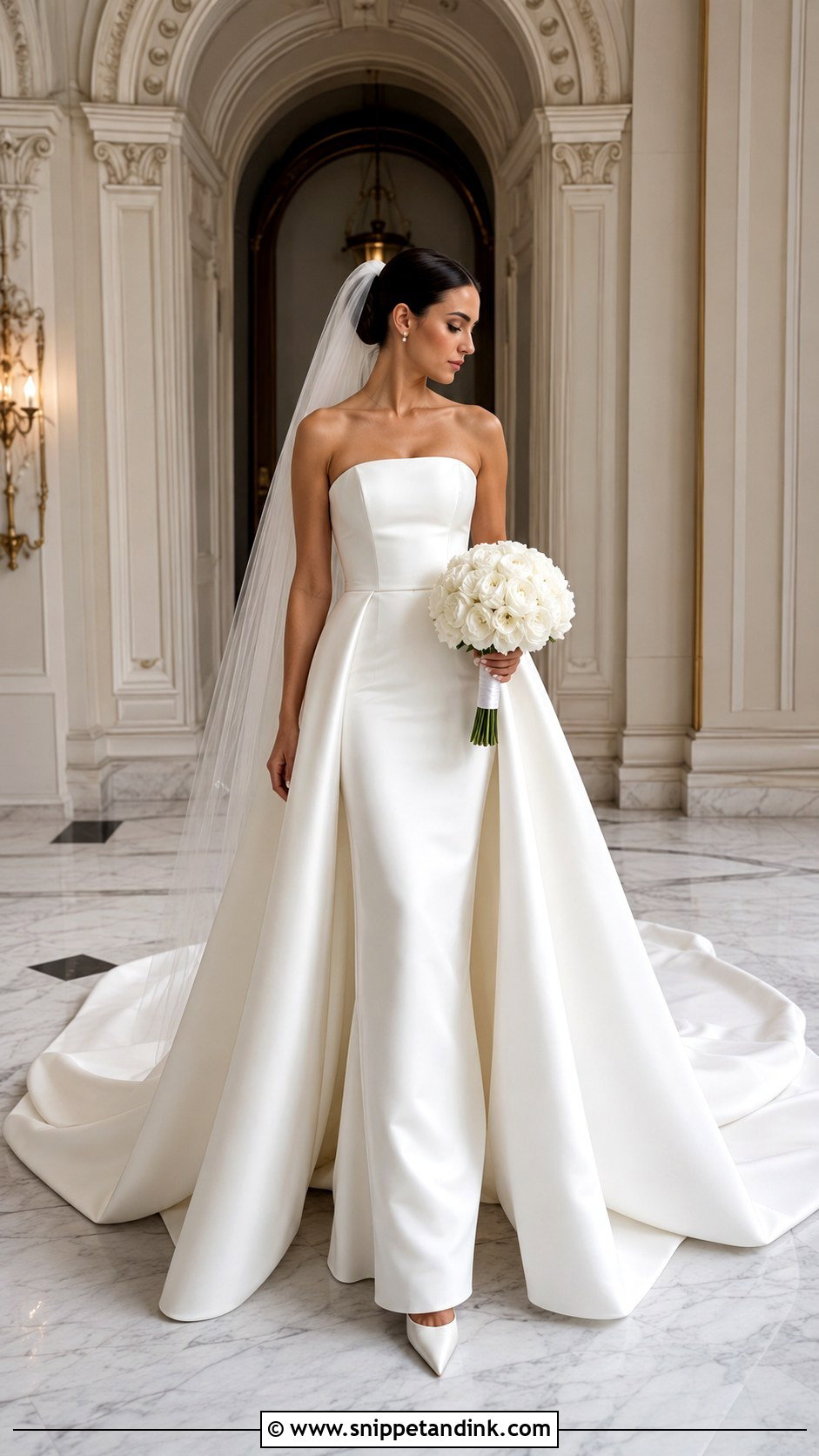
Mikado holds a shape on its own, which is why it makes such a strong ball gown overskirt over a fitted sheath or trumpet gown. Deep pleats and a cathedral train make the ceremony formal; the base then looks modern after the reveal. That stiffness comes with weight, though. A mikado overskirt can be noticeably heavy, and it pulls on the waist with every step. I ask brides to walk on carpet, stone and stairs if the venue has them, because the attachment behaves differently on each. Keep embellishment restrained: covered buttons or a narrow belt are plenty.
9. Floral Tulle Detachable Skirt Wedding Dress
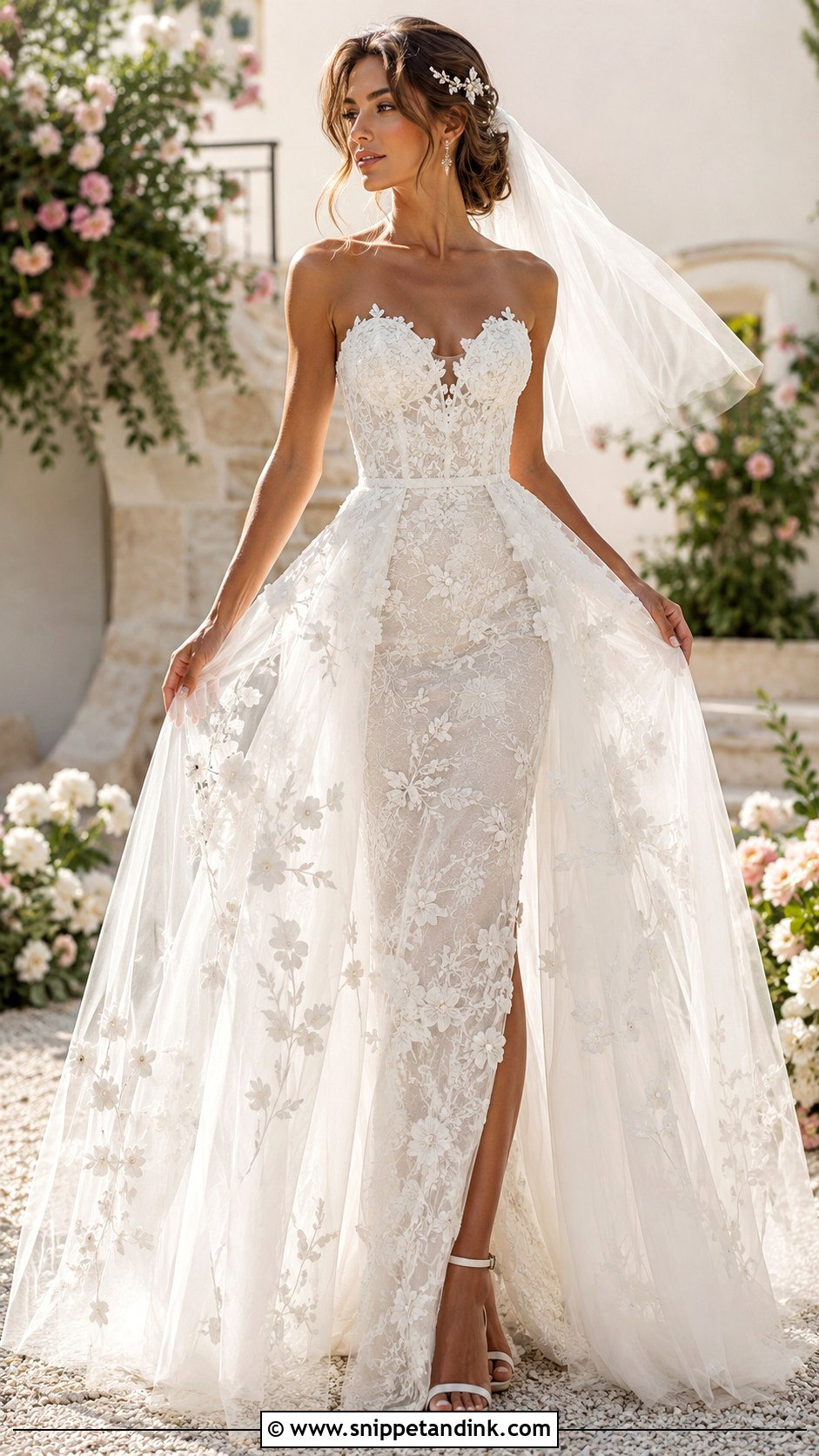
Embroidered vines and small appliqués across the bodice and hips, repeated more sparsely on a sheer tulle overskirt, give a garden feel without going over the top. Spacing the flowers out toward the hem keeps it airy. The appliqués around the waist need smooth edges. Rough ones catch the tulle as the overskirt is lifted away, and I’ve seen that happen often enough that I check it by removing the skirt several times at the final fitting. Floral hairpins and a loose updo suit the theme.
10. Pearl Detachable Skirt Wedding Dress
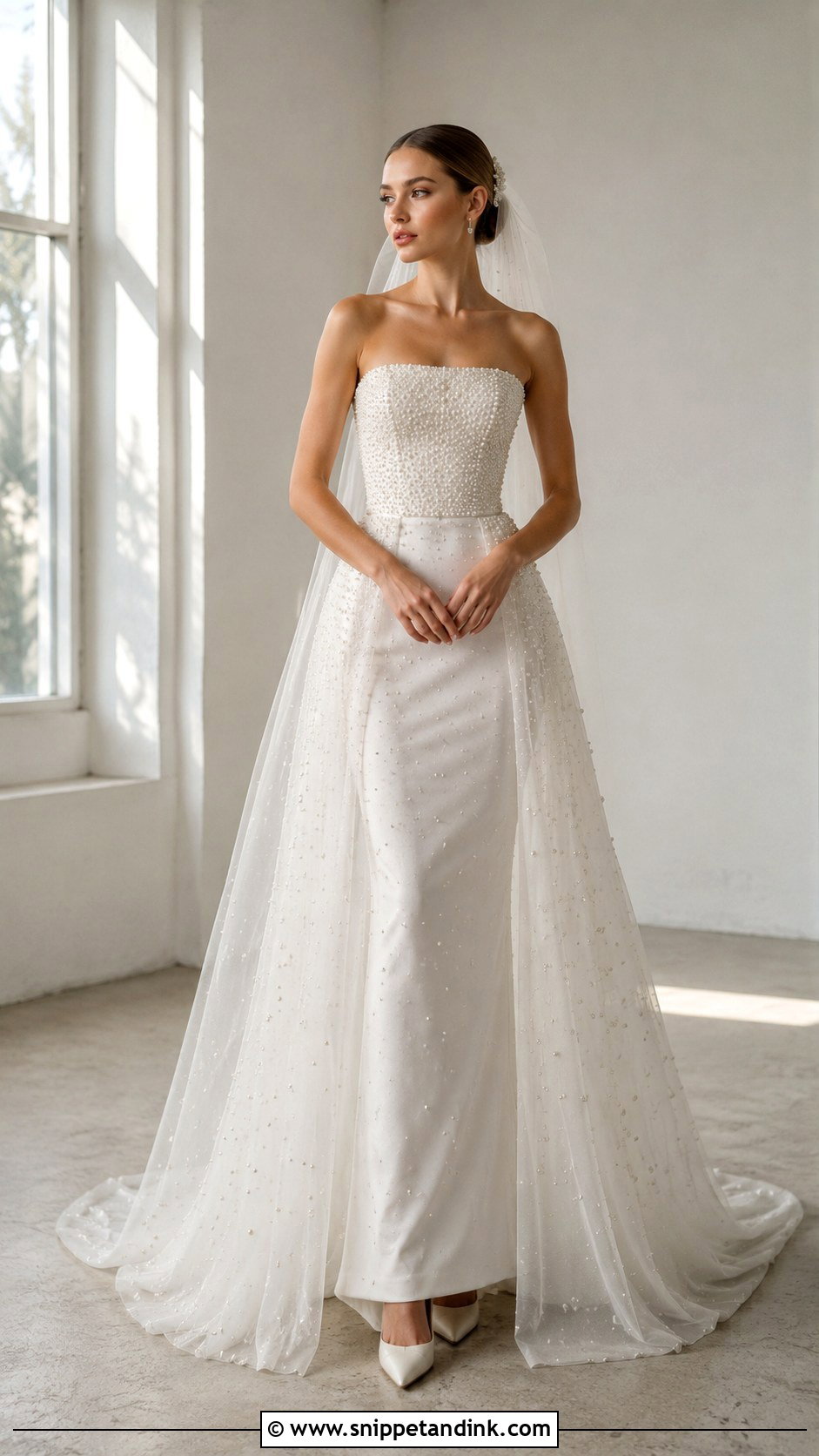
Pearls look best when they’re concentrated, not spread evenly everywhere. Put most of them on the bodice, neckline or waist of a fitted tulle or crepe base, and scatter fewer across a sheer overskirt so it stays light. A softly flowing skirt balances beadwork better than heavy gathers. Watch the attachment points: pearls sitting near hooks or snaps make the waistband bulky and fiddly to close, so I ask for a clear, unbeaded strip where the fastenings go. Keep the veil plain so the photos aren’t crowded with detail.
11. High Neck Detachable Skirt Wedding Dress
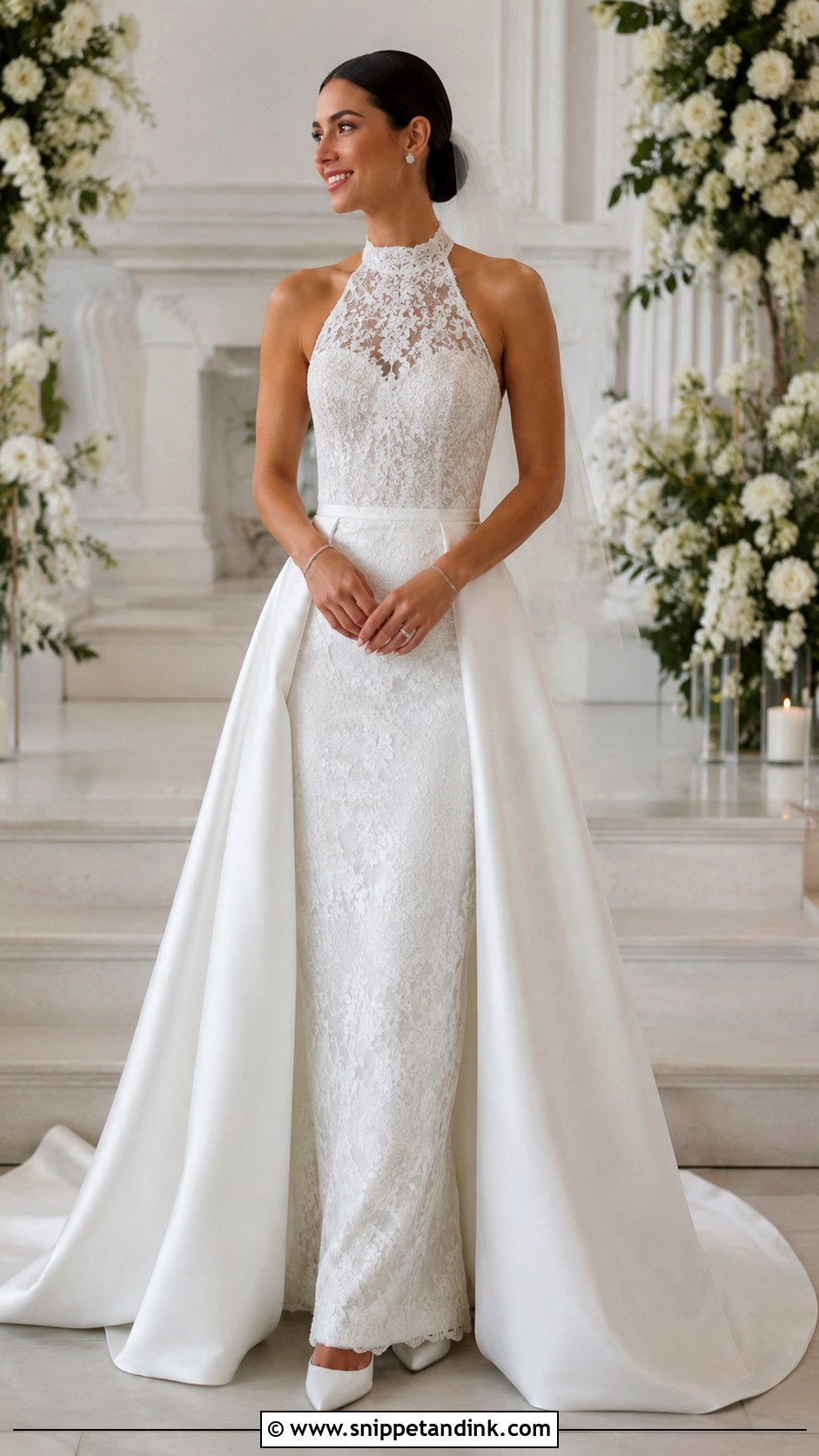
High necklines draw attention to the face and shoulders, and a sweeping skirt underneath balances that. Choose lace, a halter or a soft drape, and make sure you can turn your head fully without the collar rubbing. If the bodice is busy, keep the overskirt plain; if it’s simple, a little pleating or a row of covered buttons into the train adds interest. Skip the necklace altogether. I usually set the veil below the bun so it doesn’t cover the neckline from behind. Without the skirt, the slim dress takes a bolder earring well.
12. Square Neck Detachable Skirt Wedding Dress
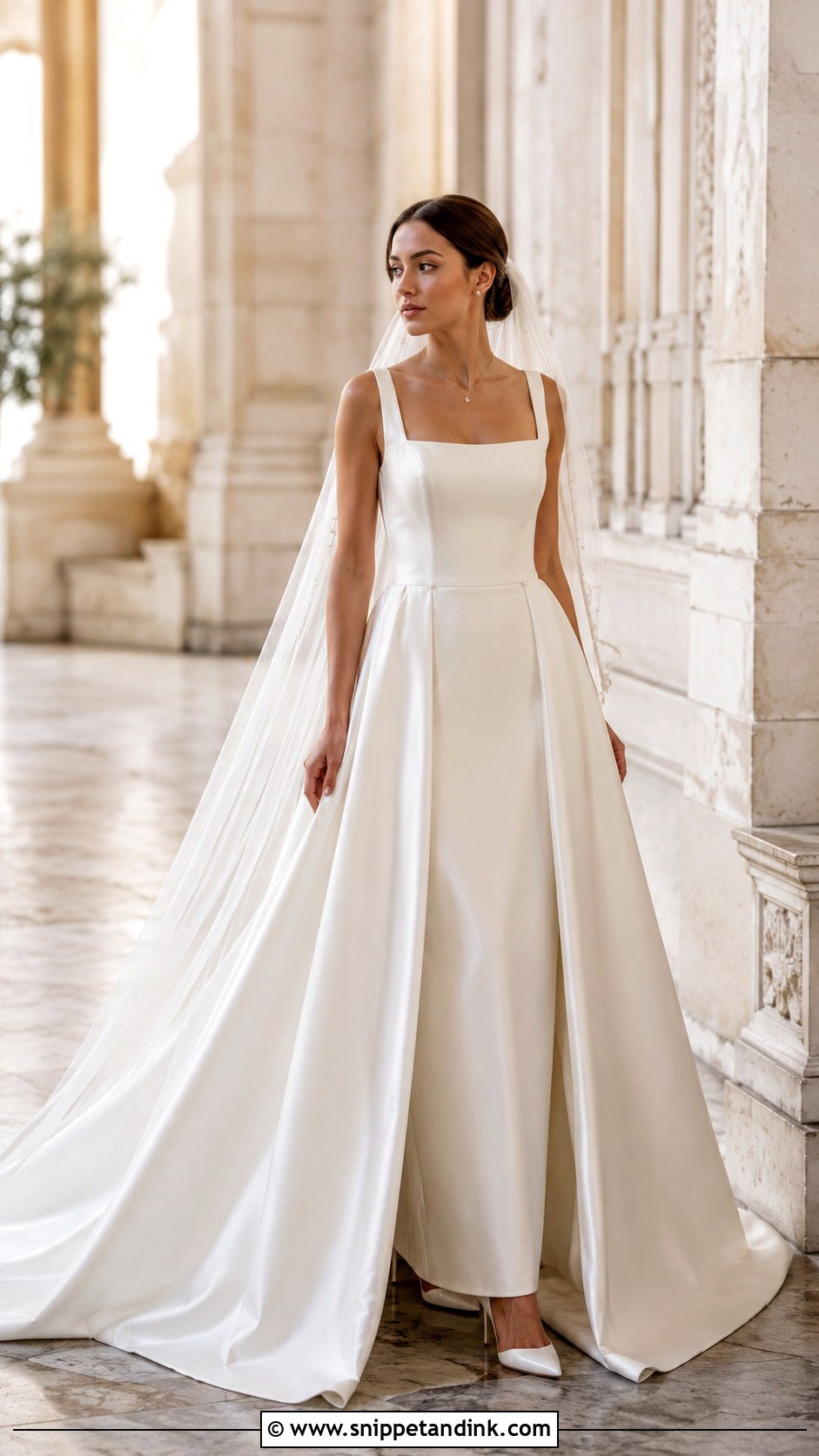
Wide straps and a square neckline frame the collarbones and suit both a slim base and a full skirt. Pair a structured satin or crepe gown with a soft-pleated A-line overskirt and long train. Support is easy to add to this style: hidden cups, side boning or an inner band can all go in during alterations, so mention it at the first fitting. When the skirt is removed, the waist should still look defined, without bulky hardware showing. Covered fastenings and matched fabric are what make the conversion look smooth in photographs.
13. Sweetheart Neck Detachable Skirt Wedding Dress
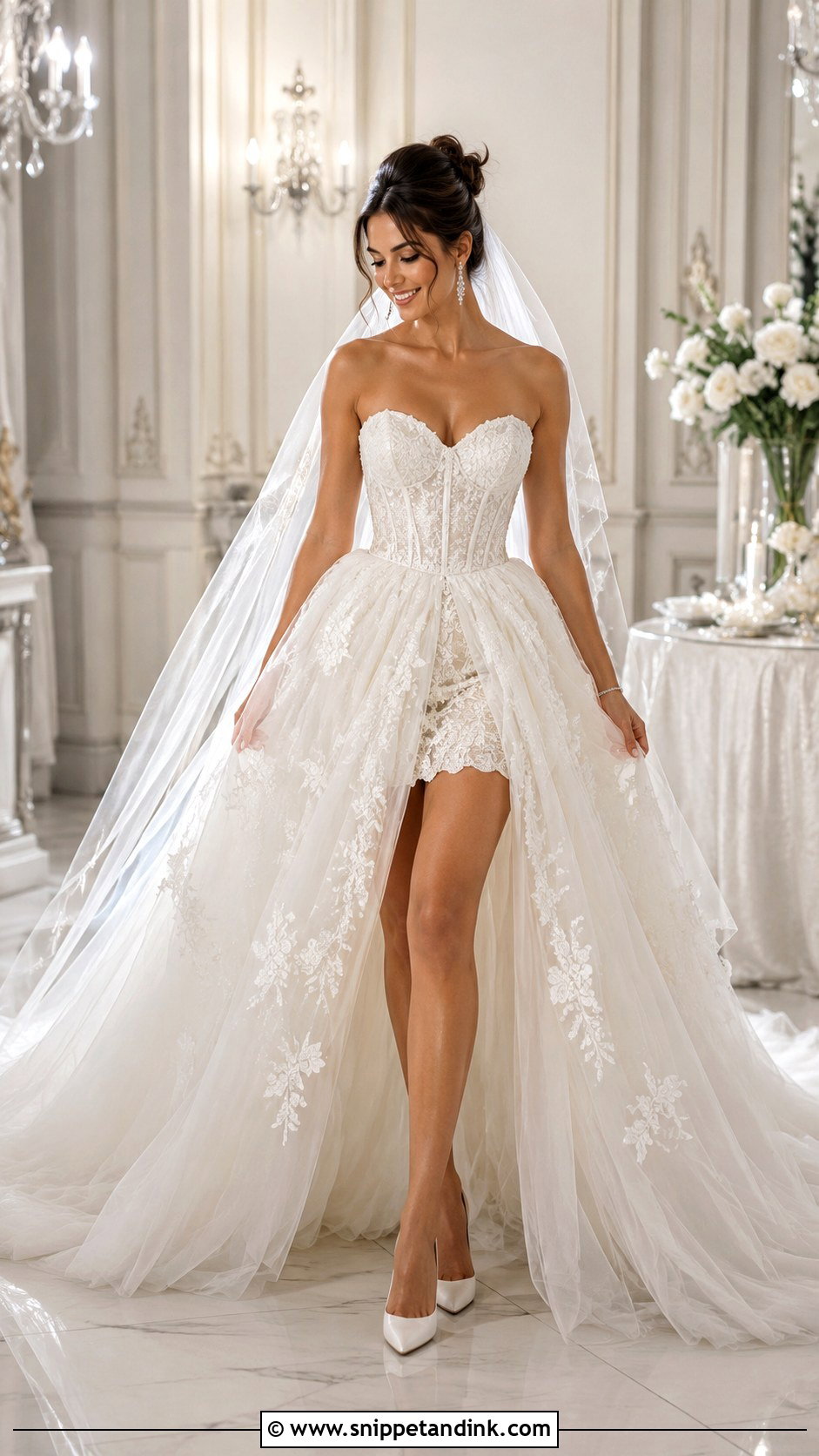
Sweetheart necklines pair naturally with a full skirt because both emphasise a classic waist. The base needs enough internal support to stay put through a long day. Over it, layered tulle from the natural waist extends into a chapel train, with lace edging tying it to the bodice. The detail I watch is the waistband following the bodice curve. A straight band across a sweetheart’s dipped waistline leaves a visible horizontal ridge, so it needs shaping to match. A half-up style keeps the neckline visible while softening the face.
14. One Shoulder Detachable Skirt Wedding Dress
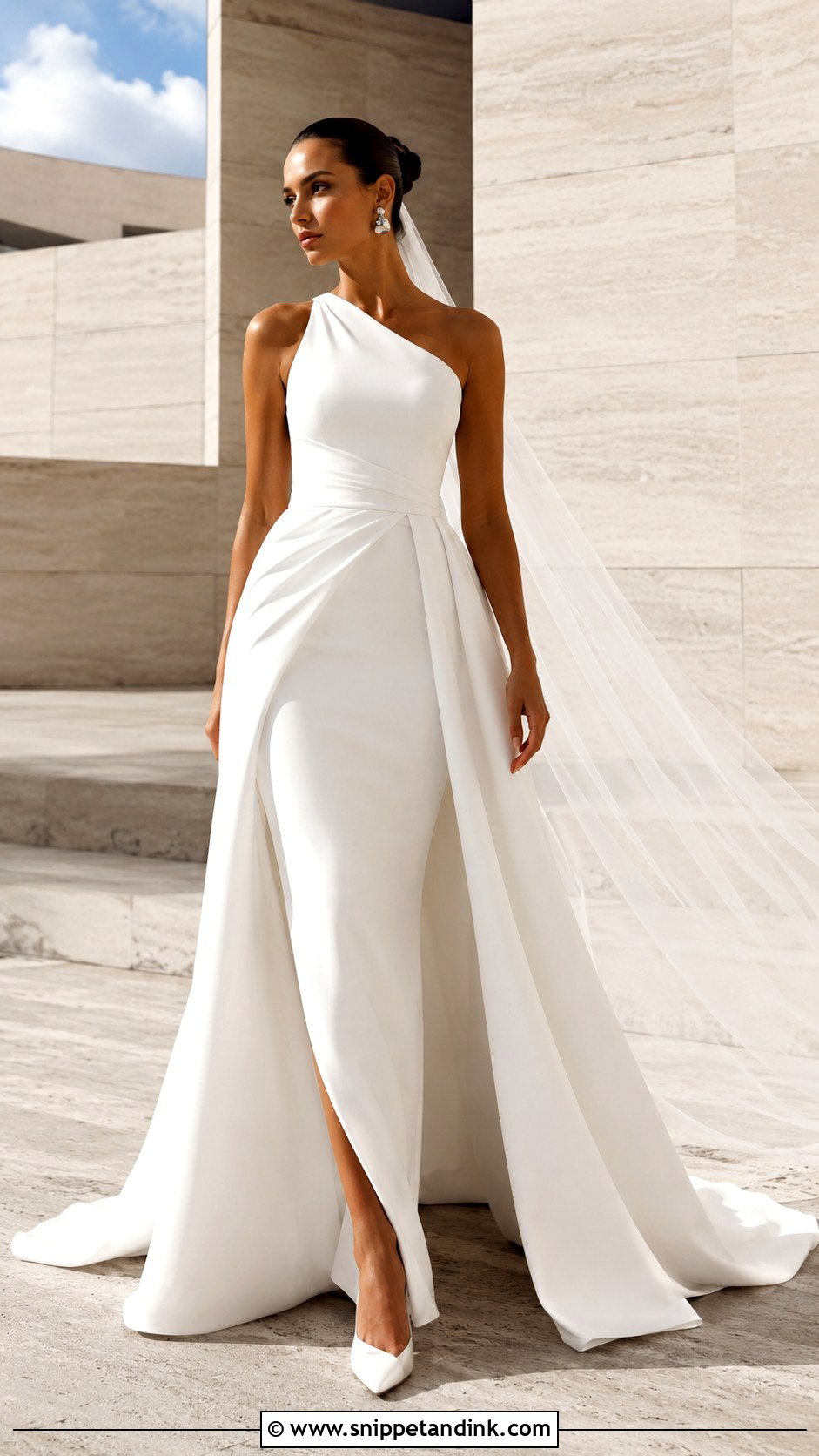
One-shoulder bases need an overskirt that agrees with the diagonal, either opening at one side or falling into an offset train. A symmetrical skirt under an asymmetric bodice usually looks lopsided. Choose smooth satin or crepe with draping across the bodice and secure inner structure, and skip the necklace. During fittings, walk, turn and sit in both versions; draping and waist attachment can drift out of line with movement, and that’s much easier to correct before the final press.
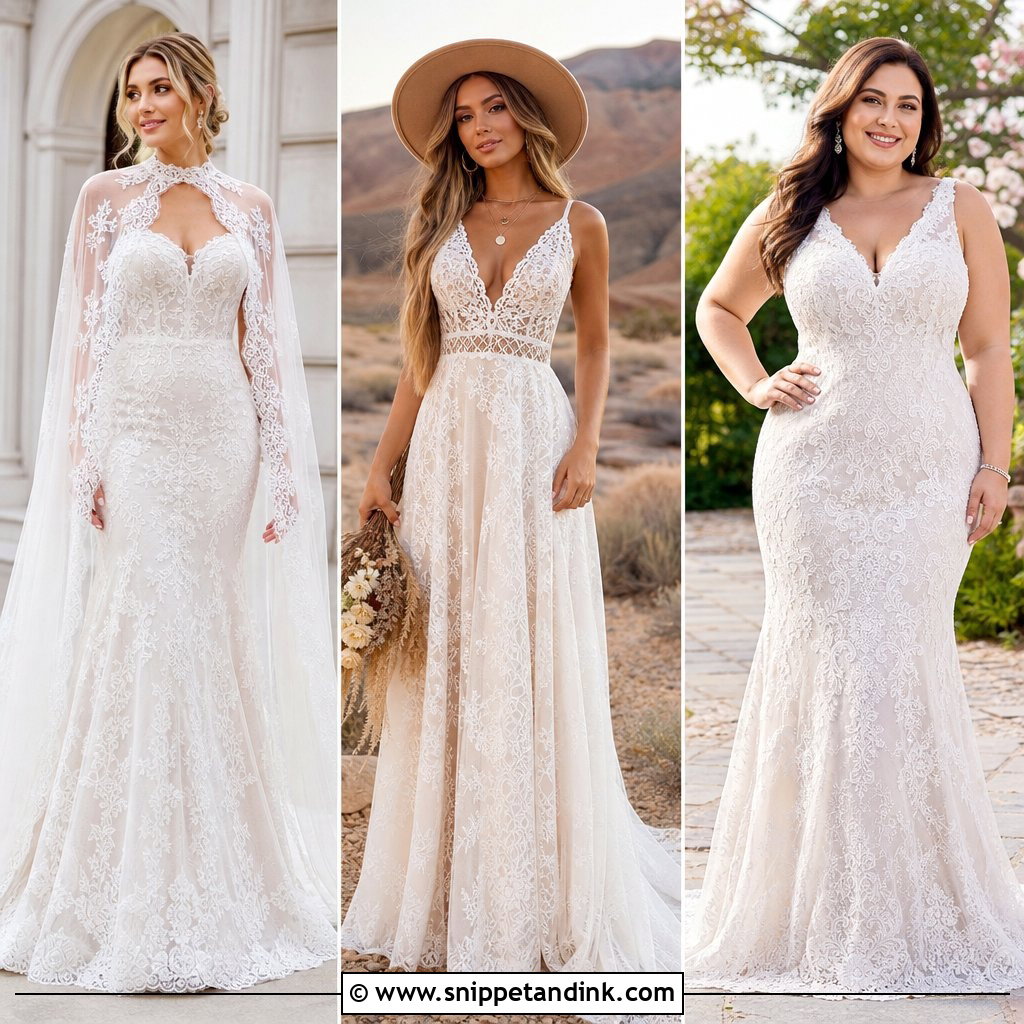
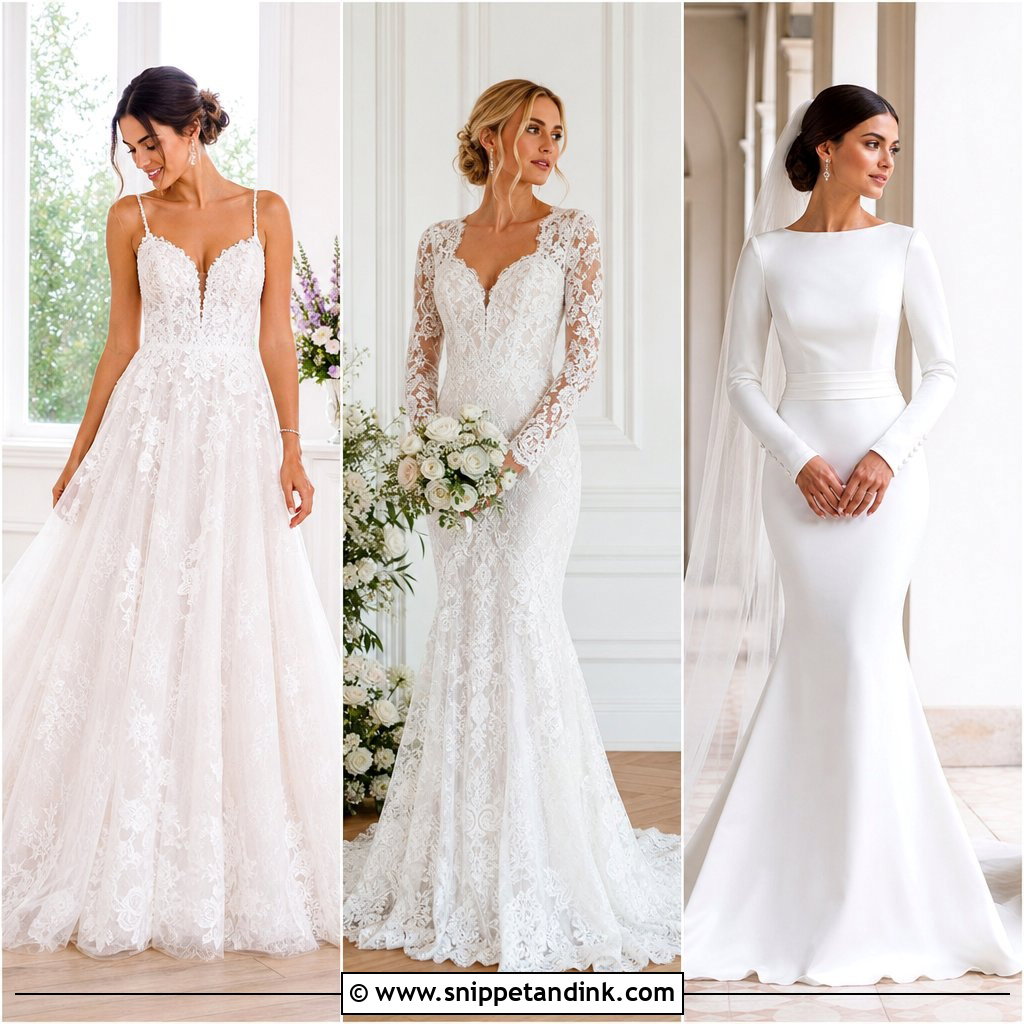
15. Blush Detachable Skirt Wedding Dress
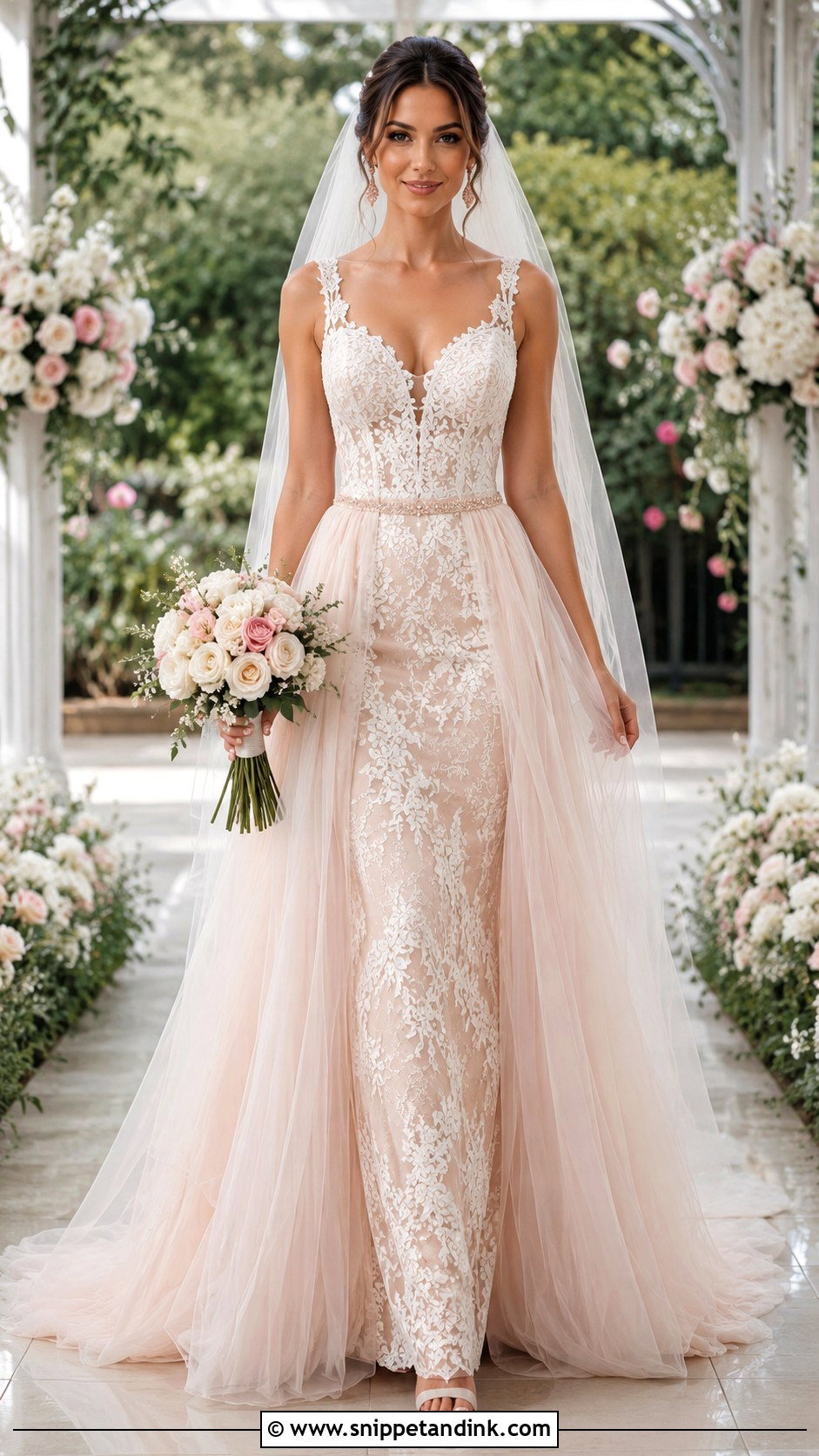
Blush works through layering rather than strong colour. An ivory lace base over a pale blush lining, with a translucent blush or ivory tulle overskirt, reveals the lace pattern and adds warmth while still reading as bridal. Silver or cool-toned accessories keep it fresh. Without the overskirt, the lining shows more and gives the base its own character. I always compare blush, champagne and nude linings in daylight before deciding, because indoor lighting and camera flash shift them, and a lining that looks blush in a shop can look flesh-toned in photos.
16. Simple Detachable Skirt Wedding Dress
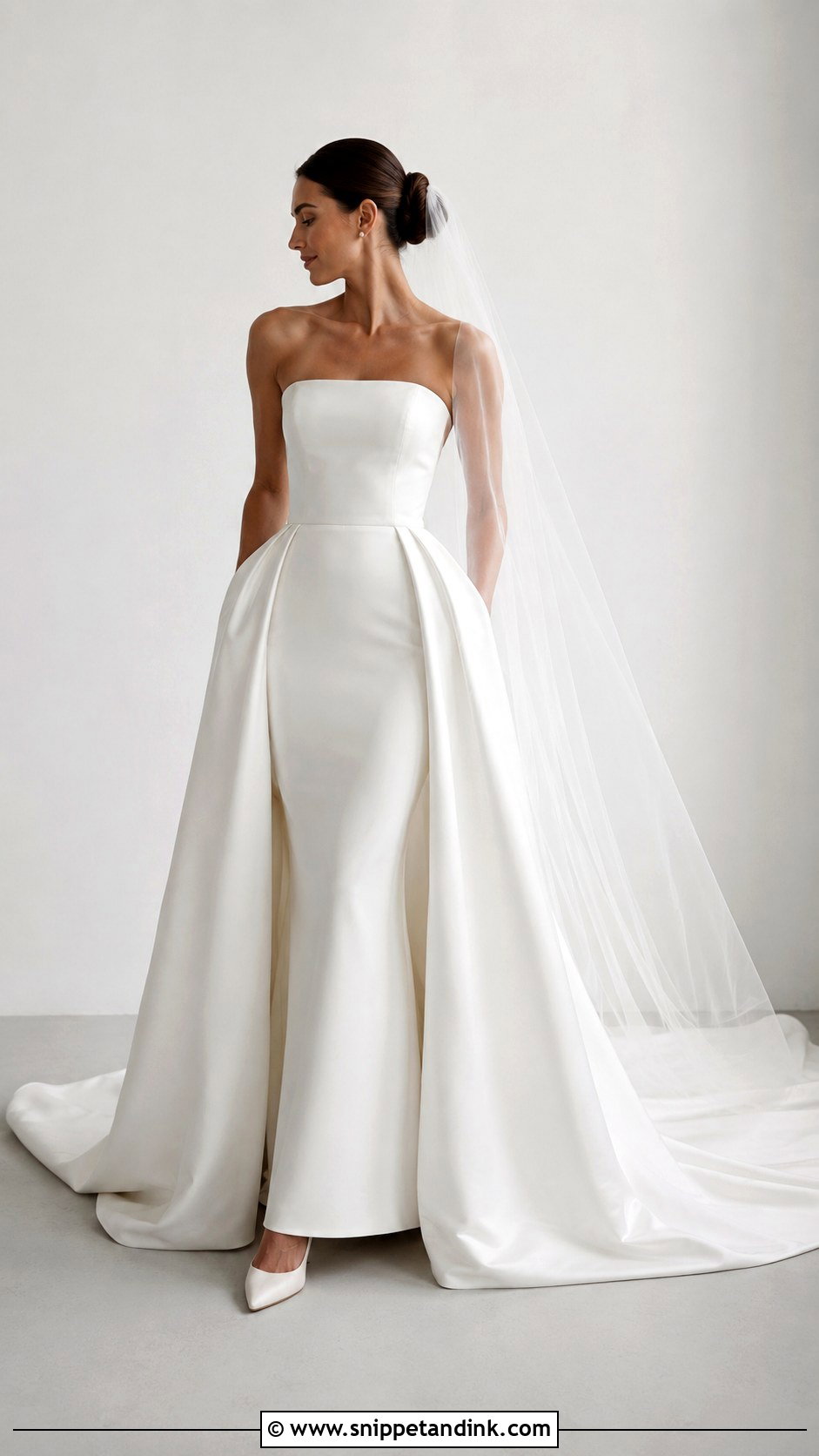
No lace, no beading, no decoration: the minimal version lives or dies on cut. A clean strapless, square-neck or bateau-neck base gown in crepe or satin, with a plain overskirt in precise pleats and a long train, gets its impact from proportion. Every seam is visible, so I’d only recommend this with a seamstress you trust completely. Check the hem, waist placement and back closure at each fitting. After the switch, sculptural earrings or a bold lip carry the reception look.
17. Boho Lace Detachable Skirt Wedding Dress
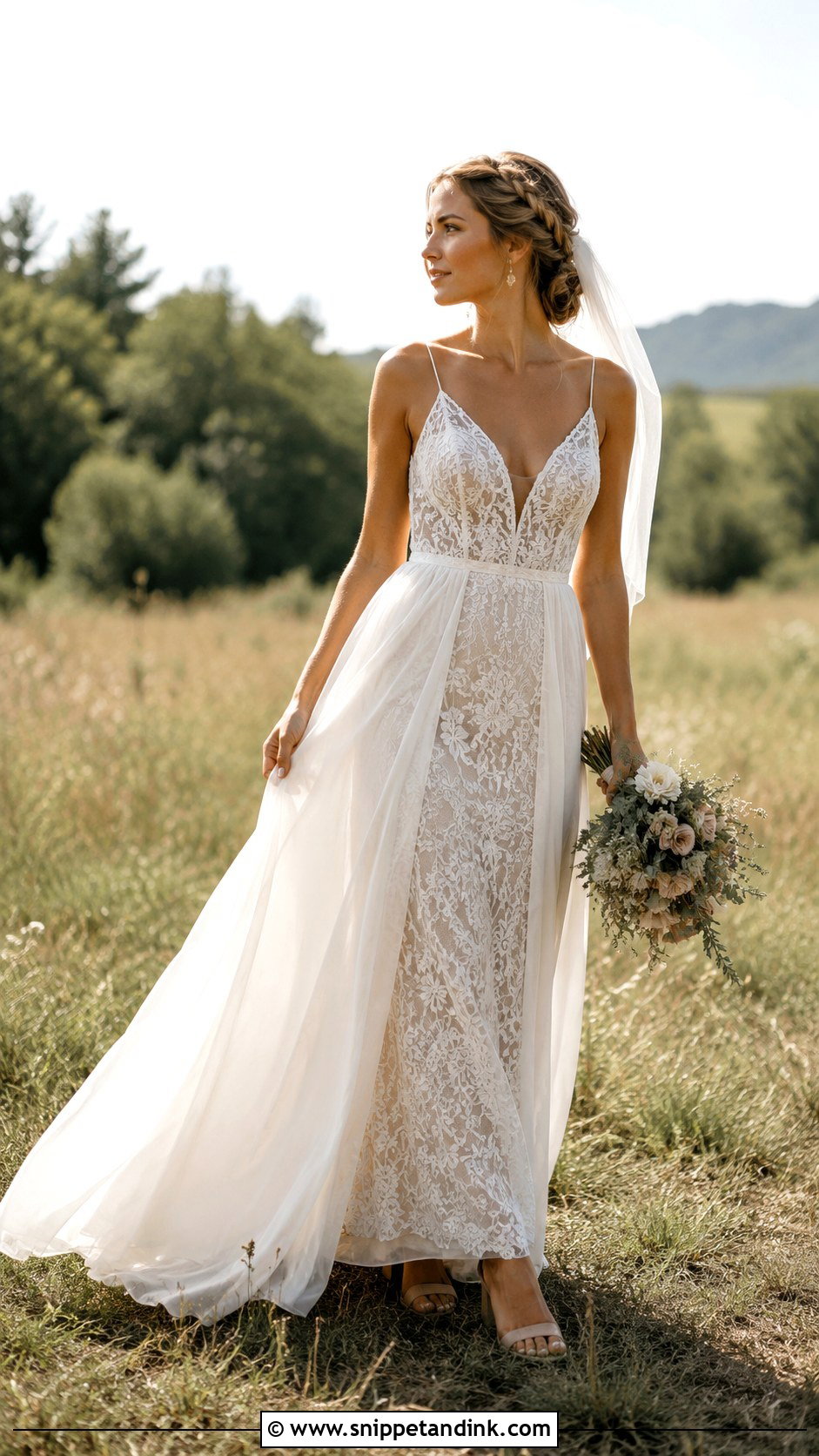
Botanical lace with narrow straps and a soft lining makes a relaxed base for an outdoor wedding. The overskirt should be chiffon or soft tulle falling from a narrow waistband, not stiff volume. A small sweep train is practical on grass; long, heavily embellished skirts collect leaves and grit. I’d add a discreet wrist loop to the base dress if it has any length, so you can lift it on uneven ground. Low block heels and a braided updo suit it, and the lace dress is easy to move in once the outer layer is gone.
18. Plus Size Detachable Skirt Wedding Dress
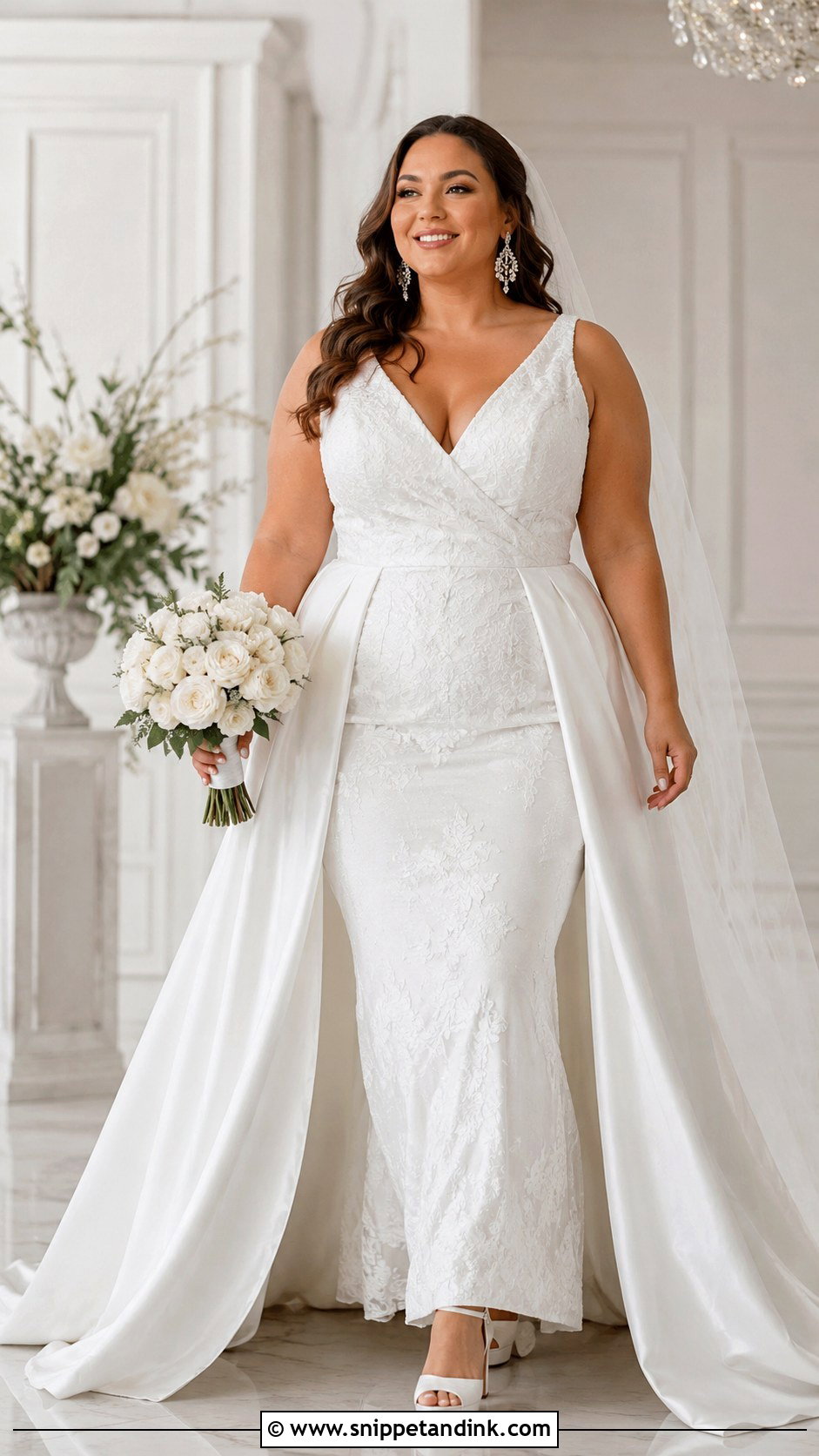
Curves and a detachable skirt go well together when the construction is right. Look for wide straps, secure boning and a waistline placed where it’s most comfortable on your torso, not where a size chart says it should sit. A flowing A-line overskirt skims the hips, and an open front shows the fitted gown beneath. I ignore so-called body-shape rules and fit to what feels secure. Every attachment should be reinforced, since a full overskirt pulls harder on the waist, and gaps at the waistband need closing. Sit, walk, turn and dance at every fitting.
19. Beach Detachable Skirt Wedding Dress
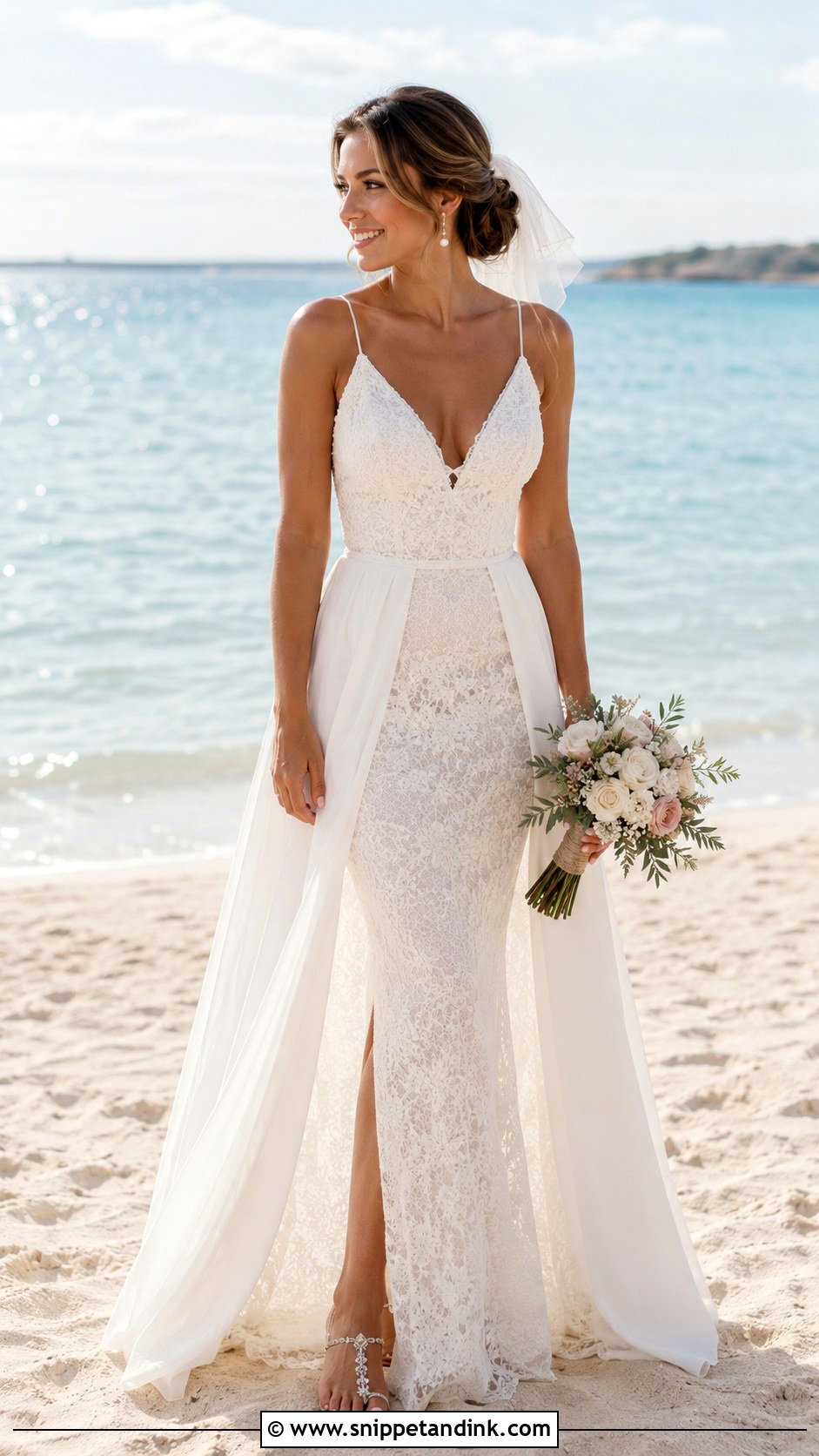
Near water, weight and heat decide everything. A crepe, chiffon or stretch-lace base with secure straps, under one or two layers of tulle or chiffon rather than heavy satin, stays comfortable. A front opening lets the fabric move. I’d avoid a long train unless there’s an aisle runner, and I’d test the overskirt outside before the wedding, because humidity can flatten tulle and wind lifts chiffon in a way a fitting room never shows. Flat sandals and a short veil cope with the breeze.

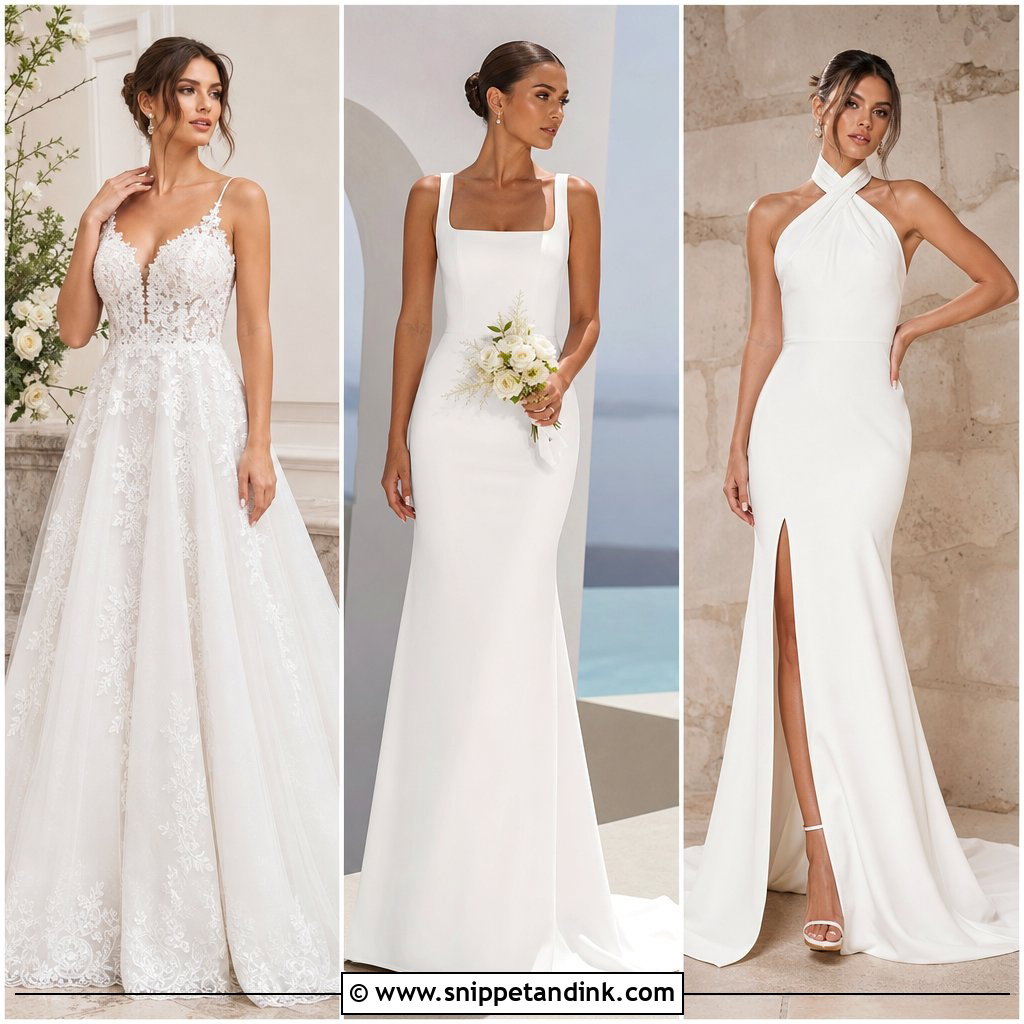
20. Detachable Skirt Wedding Dress With Bow
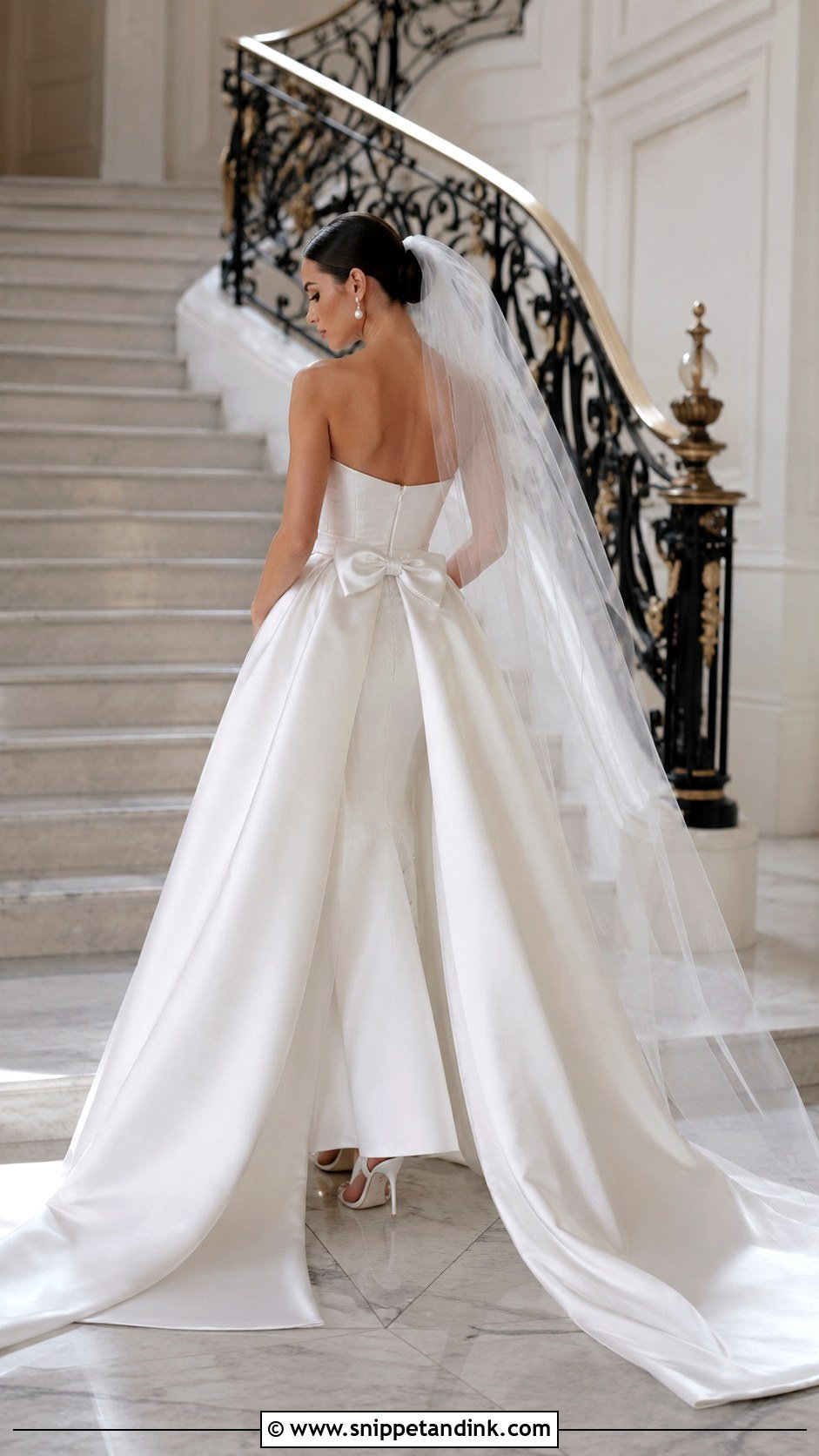
A bow at the back waist is a clever disguise for the overskirt closure, and it gives the back of the gown a finishing detail. Pair a fitted satin or crepe base with a full skirt carrying a structured bow, either sewn on or made as a separate piece. A detachable bow is my preference, since you can keep a smaller bow belt on the base for continuity after the skirt is gone. Keep the front simple. Check that the bow loops hold their shape after you’ve sat on them, and that the veil sits above or below the bow rather than flattening it.
Adding an Overskirt to a Dress You Already Own
Not every two-in-one starts as a set. Plenty of brides find a base dress they love and buy an overskirt separately, either from a bridal accessories maker or made to order. It works well, with a few cautions I’d give anyone trying it.
- Take a fabric sample of the dress when you shop. Ivory, cream and off-white vary a lot between makers, and the difference is clearest in outdoor daylight.
- Measure your waist in the dress, not over clothes. The overskirt band has to fit the dress as it sits on you, including the bodice seam allowance.
- Sheer tulle and organza forgive a slight colour mismatch; satin and mikado do not, because their sheen makes any difference obvious.
- Check the length with your shoes on. Ready-made overskirts usually need hemming, and a train that’s too long behind a shorter base looks unbalanced.
Travelling with two pieces
For a destination wedding, pack the base and the overskirt in separate breathable garment bags so the tulle isn’t crushed against beading. Carry them on board if the airline allows it. A handheld steamer at the venue will release travel creases in tulle and chiffon quickly; satin and mikado are better left to a professional press, since direct steam can mark them.
How Different Should the Two Looks Feel?
Start there, because the answer narrows the list quickly. A full mikado overskirt gives a big transformation; a sheer tulle layer gives a softer one. Either way, the base gown has to stand up alone. Ask for fastenings that are comfortable to wear, colours matched in daylight and professional alterations on both pieces. Bring your ceremony shoes to every fitting and practise taking the skirt off with whoever will help you on the day. If it feels secure and balanced in both versions, it’s the right dress.
You'll Like These Ideas:







Leave a Reply