
Red against white is the hardest contrast in bridal wear to get right, and the most rewarding when it works. In fittings I see it go two ways: a single red detail on an otherwise classic gown, or a dress where red carries half the weight. Both can be right. A scarlet sash, a band of appliqué, a crimson train or a full red skirt under a white bodice each changes where the eye travels. My job at a first appointment is working out how much red a bride can live with for a whole day, and in which shade. The ideas below run from barely there to fully committed, with notes on what I check before recommending each one.

Which Red, and Which White, Suits Your Skin
Before we talk silhouettes, I hold fabric swatches under a bride’s chin in daylight. Red is not one color. Blue-based reds such as crimson, cherry and wine sit well on cool and neutral skin, while orange-based reds like tomato and poppy warm up golden and olive undertones. Wear the wrong one and your skin looks either grey or flushed in photos.
The white matters just as much. Optic white next to bright red can look harsh, almost like a uniform. Ivory and soft white make the red look richer and are kinder to most complexions. If you love a pure white gown, pair it with a deep blue-red rather than an orange one.
A five-minute test at home
- Stand by a window around midday with no makeup on, and hold a blue-red item against your face, then an orange-red one.
- Look at your jaw and under your eyes, not at the fabric. The right red makes shadows recede.
- Take a phone photo of each in the same light. The camera exaggerates mismatches that the mirror hides.
- Bring the winning shade to appointments so the salon can pull gowns from that color family.
Lipstick follows the same rule. Match the lip’s undertone to the dress red, not to the bouquet, and photograph both together before your makeup trial.
1. Red And White Ball Gown Wedding Dress
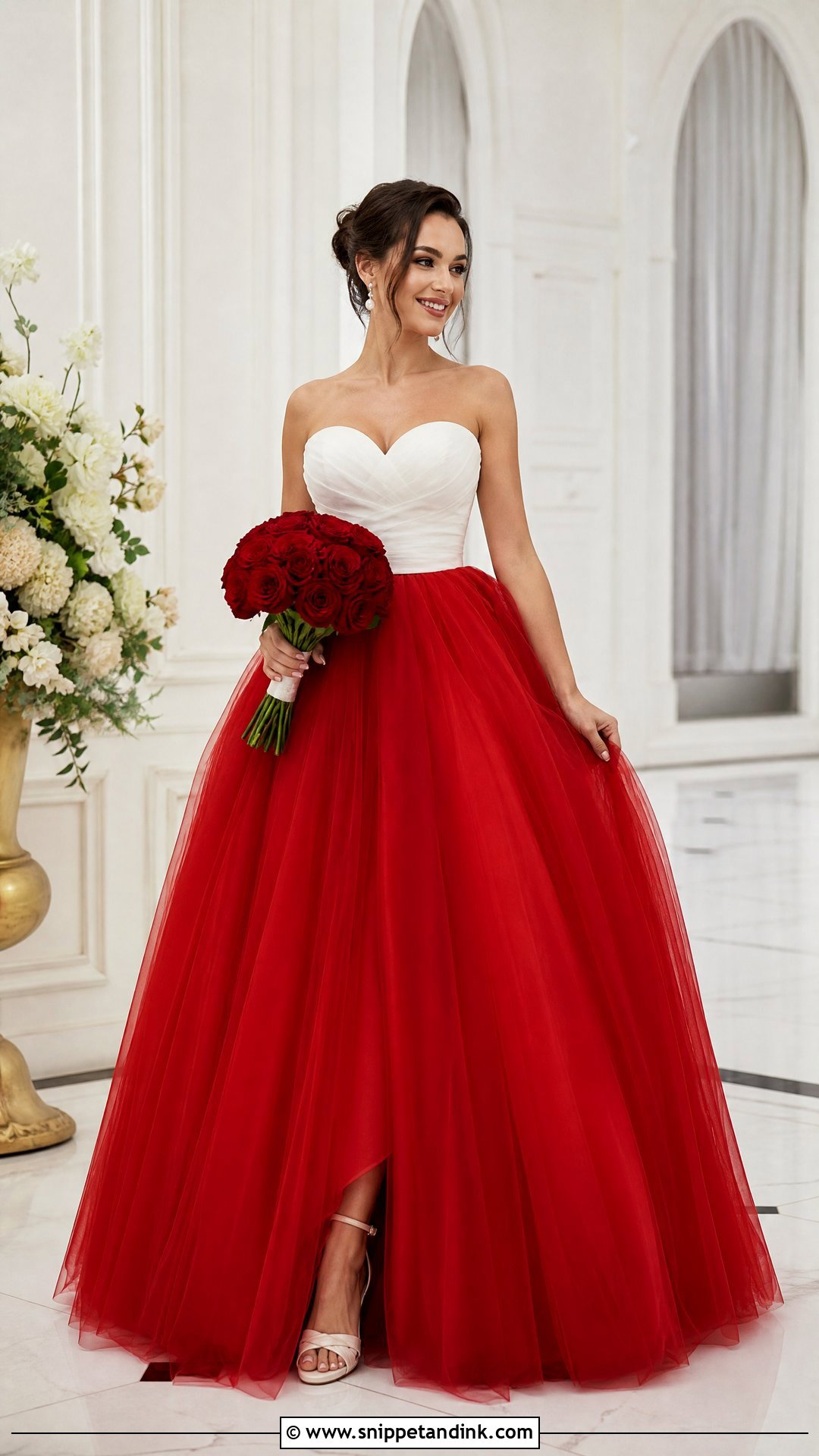
A full red skirt under a structured white bodice is the most theatrical version here, and it needs a room big enough to hold it. The thing I watch at fittings is the waist seam. Where white meets red, the line has to sit exactly at the natural waist, or the contrast makes the torso look shorter than it is. Red tulle reads lighter than red satin, which can look heavy in daylight. I’d keep accessories to pearl earrings, a white veil and ivory or nude heels, and let a red rose bouquet do the linking. Save it for a formal indoor venue with a big guest list.
2. White Wedding Dress With Red Lace
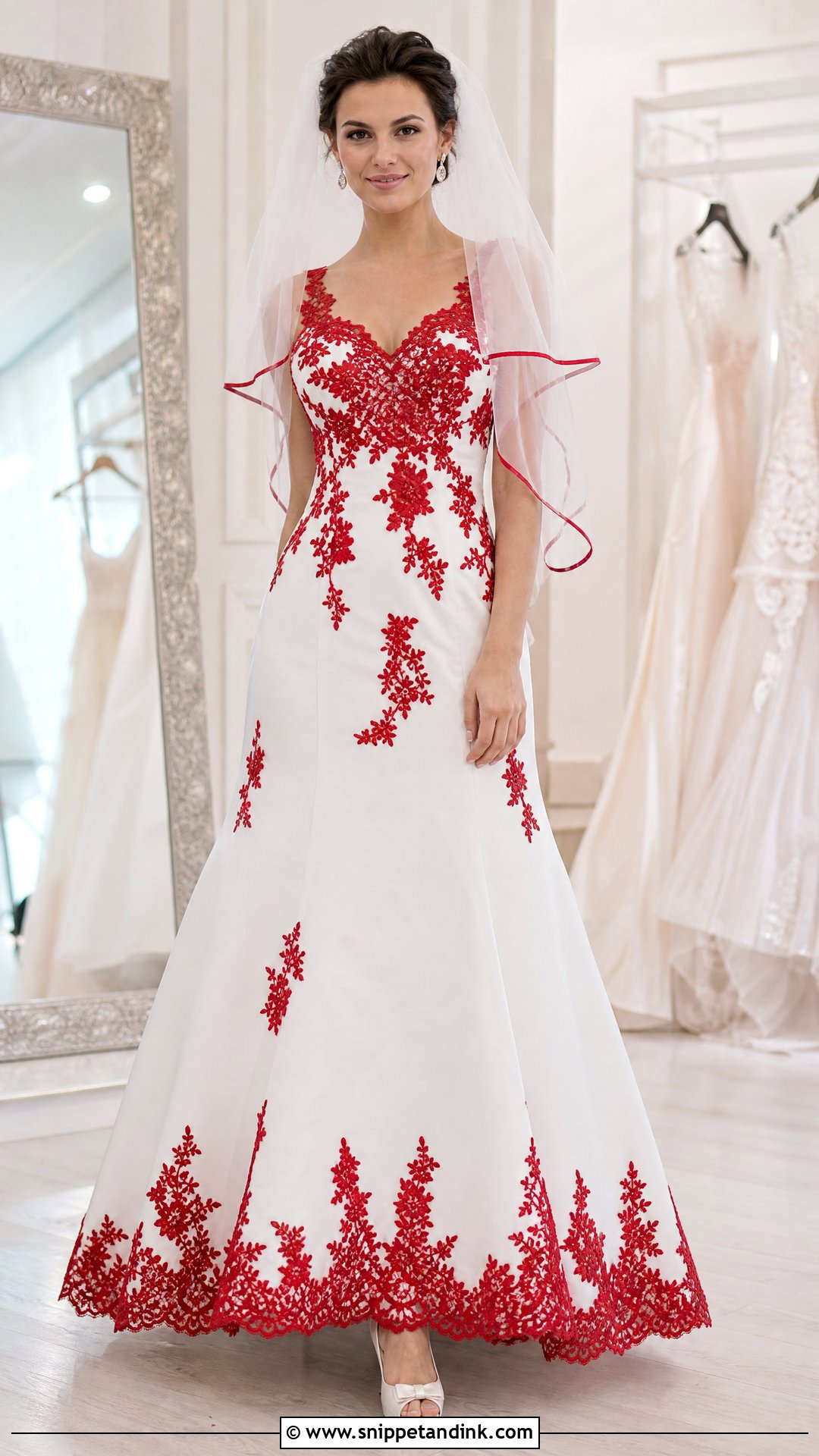
Red lace on white keeps the traditional feeling while letting color in at the edges, along the bodice, down the skirt or around the hem. I always ask to see how the lace is attached. Hand-sewn appliqué lies flat, while glued or loosely machine-stitched lace starts lifting after a few hours of movement, and on white that lifted edge casts a visible shadow. Keep the base gown plain so the lace has room. A white veil trimmed with the same red lace ties it together, and soft waves with drop earrings are all it needs.
3. Red Wedding Dress With White Veil
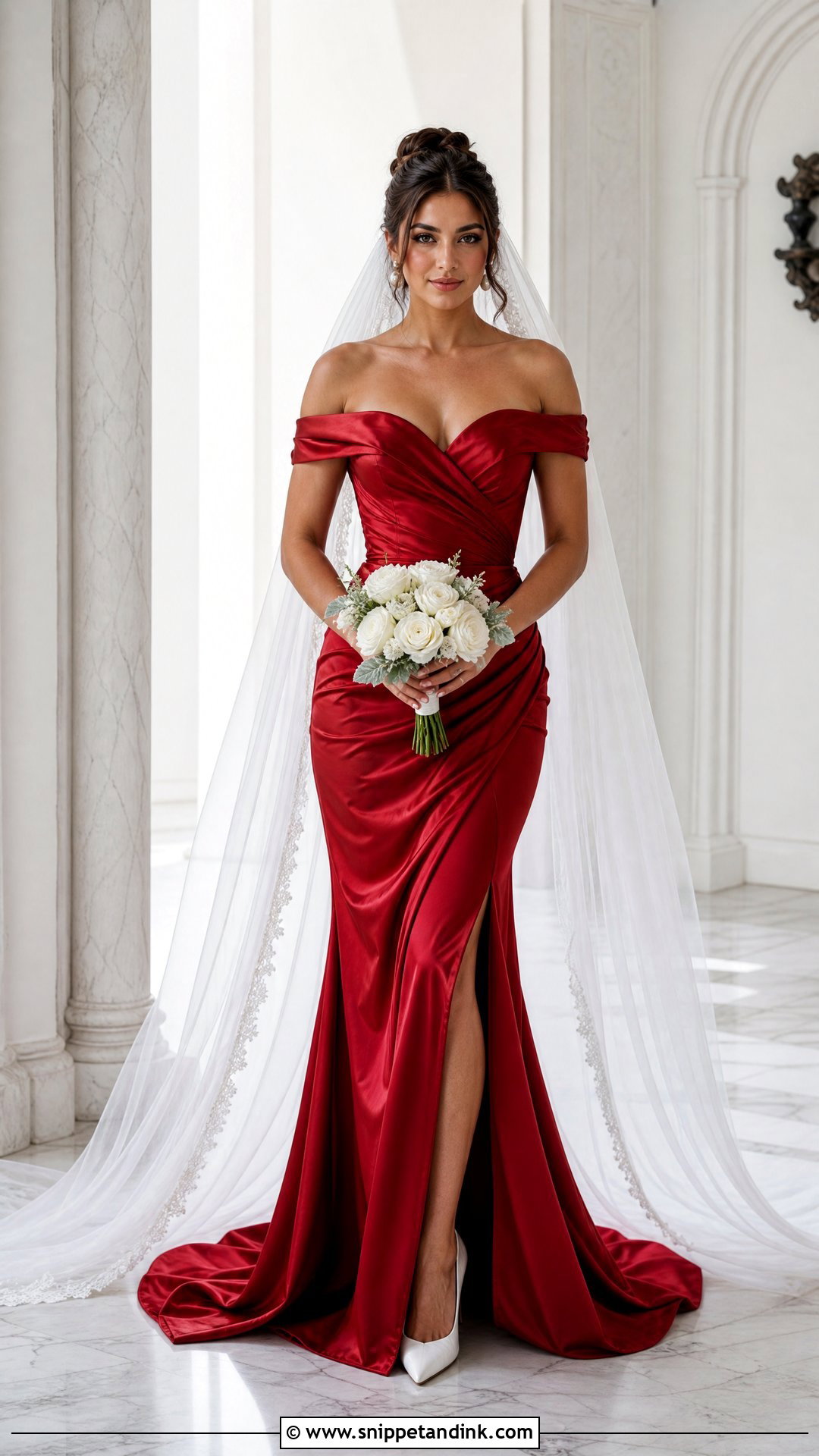
Here red becomes the gown and white shrinks to the veil, which is what keeps the outfit reading as bridal rather than evening wear. Satin, lace and tulle ball gowns all carry it. My rule for the veil is contrast in detail: a clean cut edge over an ornate dress, a lace trim over a minimal one. Test one thing before you buy. Hold the veil against the red in daylight, because thin white tulle over saturated red turns pink, so I usually keep the blusher short and the veil off the front of the skirt. Silver, pearl or crystal jewelry and a white bouquet repeat the white without fuss.
4. White Mermaid Wedding Dress With Red Appliqué
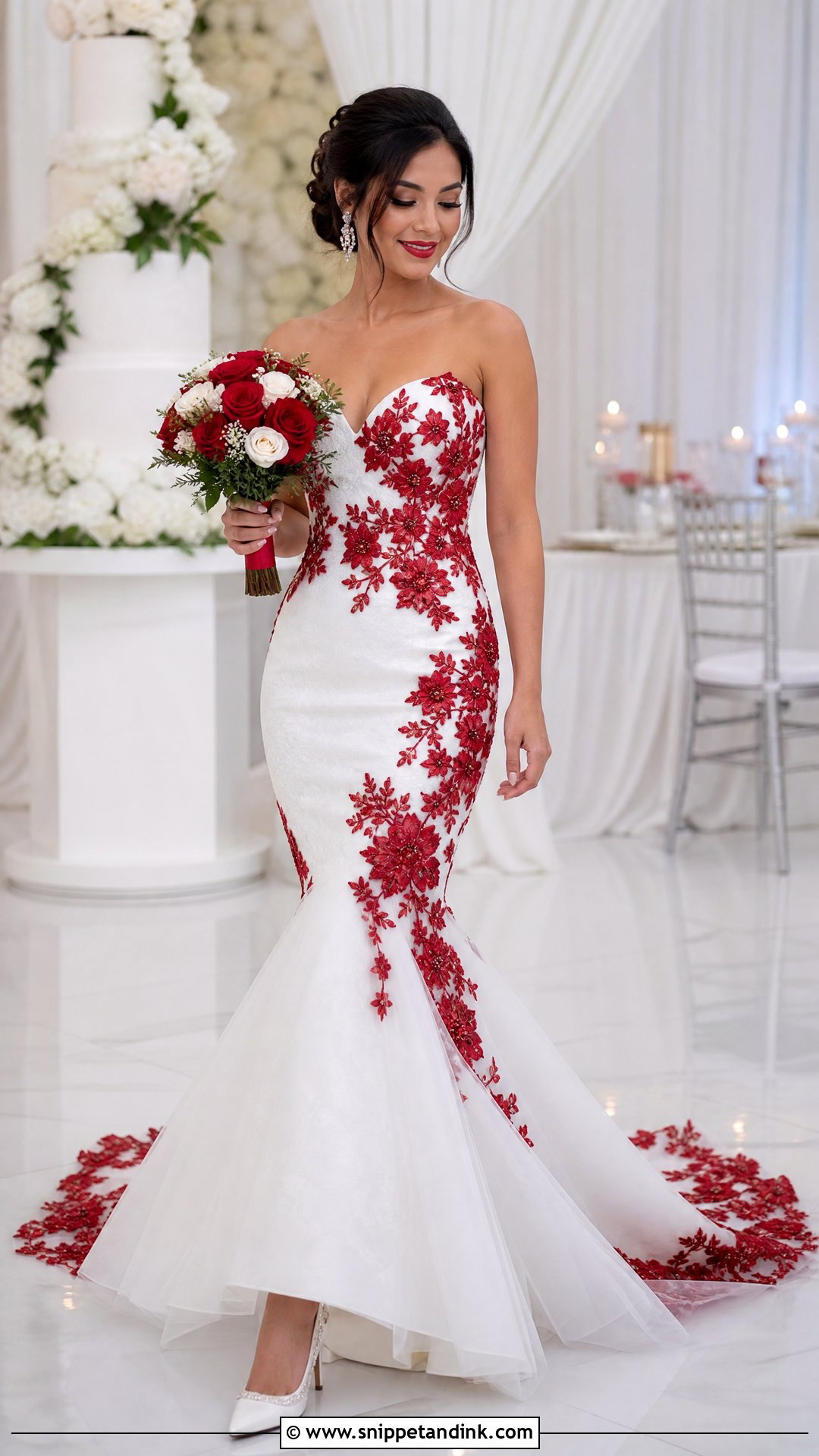
The fitted mermaid shape shows off the waist and hips, and red appliqué gives it direction. My favorite placement is a cluster across the bodice that travels down one side of the skirt, since a diagonal line lengthens the body. Be honest about how you’ll sit and dance, though. A mermaid with a low flare restricts your stride, and heavy appliqué near the knee makes that worse. Keep the neckline quiet, add crystal earrings, a smooth updo and sleek ivory heels, and carry a compact red and white bouquet to an evening ceremony.
5. Red And White A Line Wedding Dress
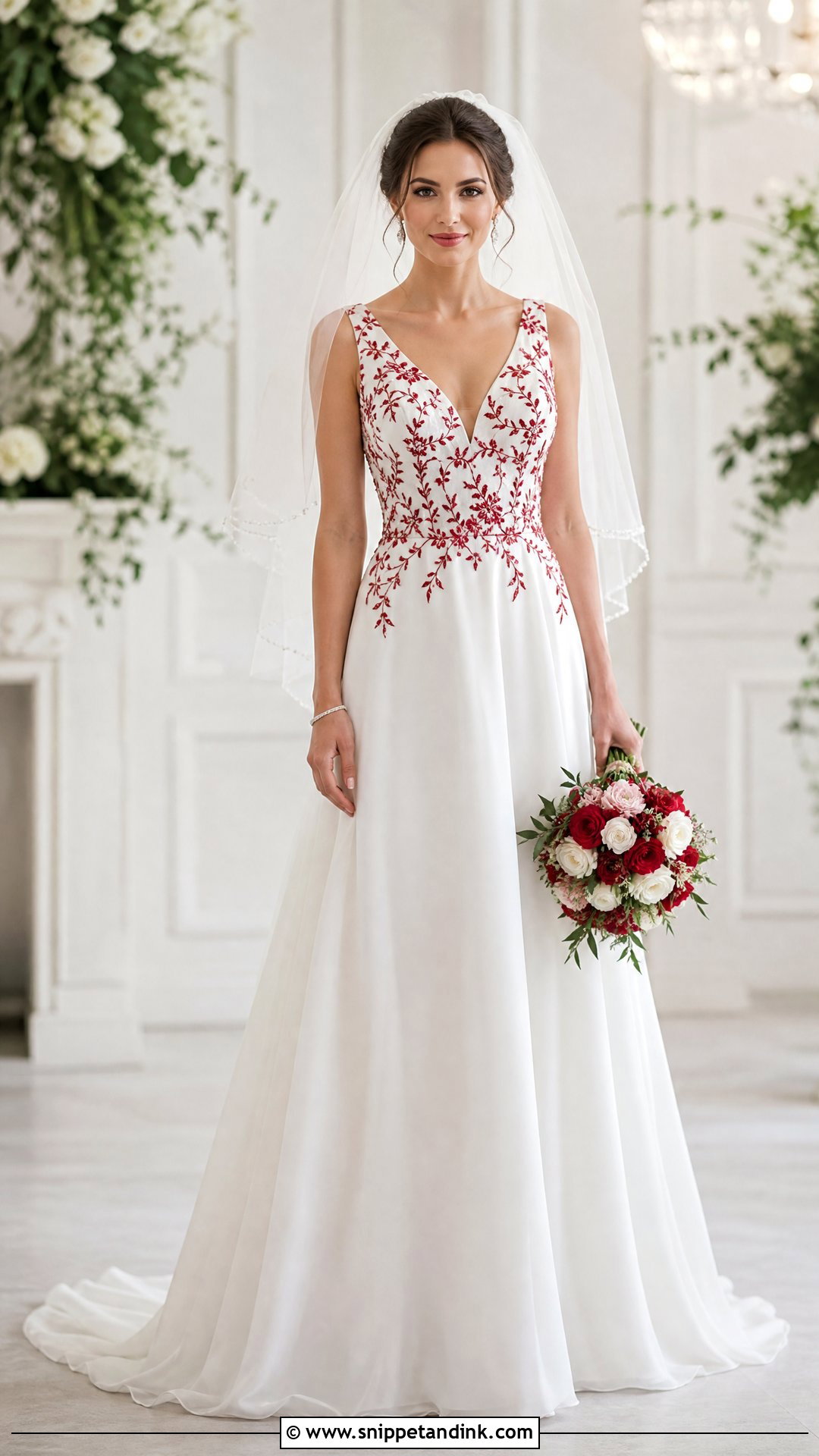
When a bride is unsure about silhouette, I usually pull an A-line first, since a fitted bodice with a gradual skirt suits most body shapes. For the color, it’s either a white bodice with red embroidery or a red skirt veiled in white lace. That second version softens the red a lot, which helps if you’re nervous about committing. A fingertip veil, a simple bracelet and closed-toe heels finish it, and a half-up hairstyle keeps it approachable. It moves easily from a ballroom to an outdoor lawn.
6. White Wedding Dress With Red Sash
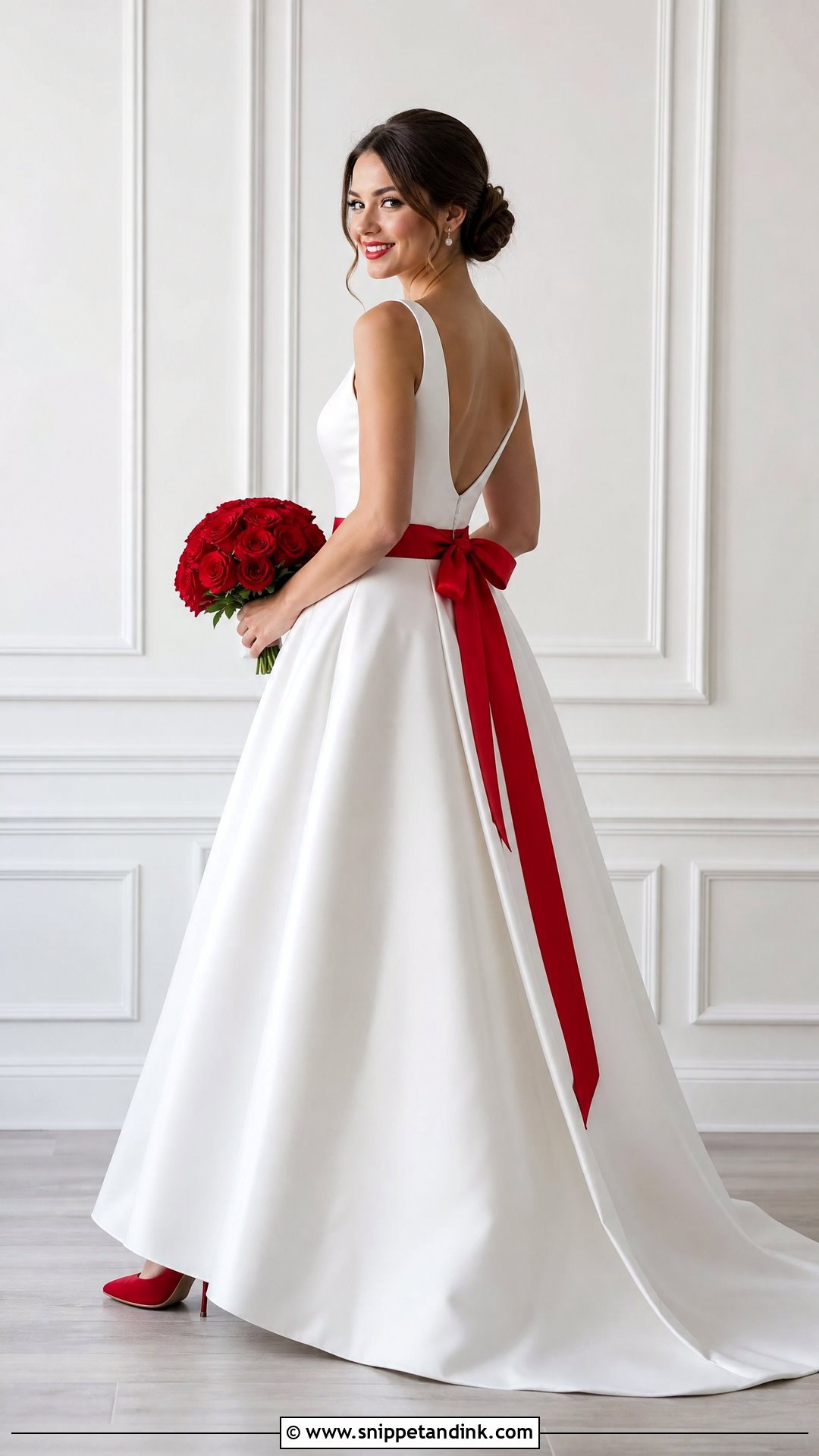
A sash is the lowest-commitment way to bring red into a classic white gown, and the easiest to change your mind about. A satin red sash defines the waist on an A-line, ball gown or fit-and-flare. Ask your seamstress to tack it at the side seams with a few hidden stitches. An untacked sash rides up every time you lift your arms, and you’ll spend the reception tugging it down. Tie a clean bow at the back or let the tails hang. One more red touch, heels or a red lip, is enough.
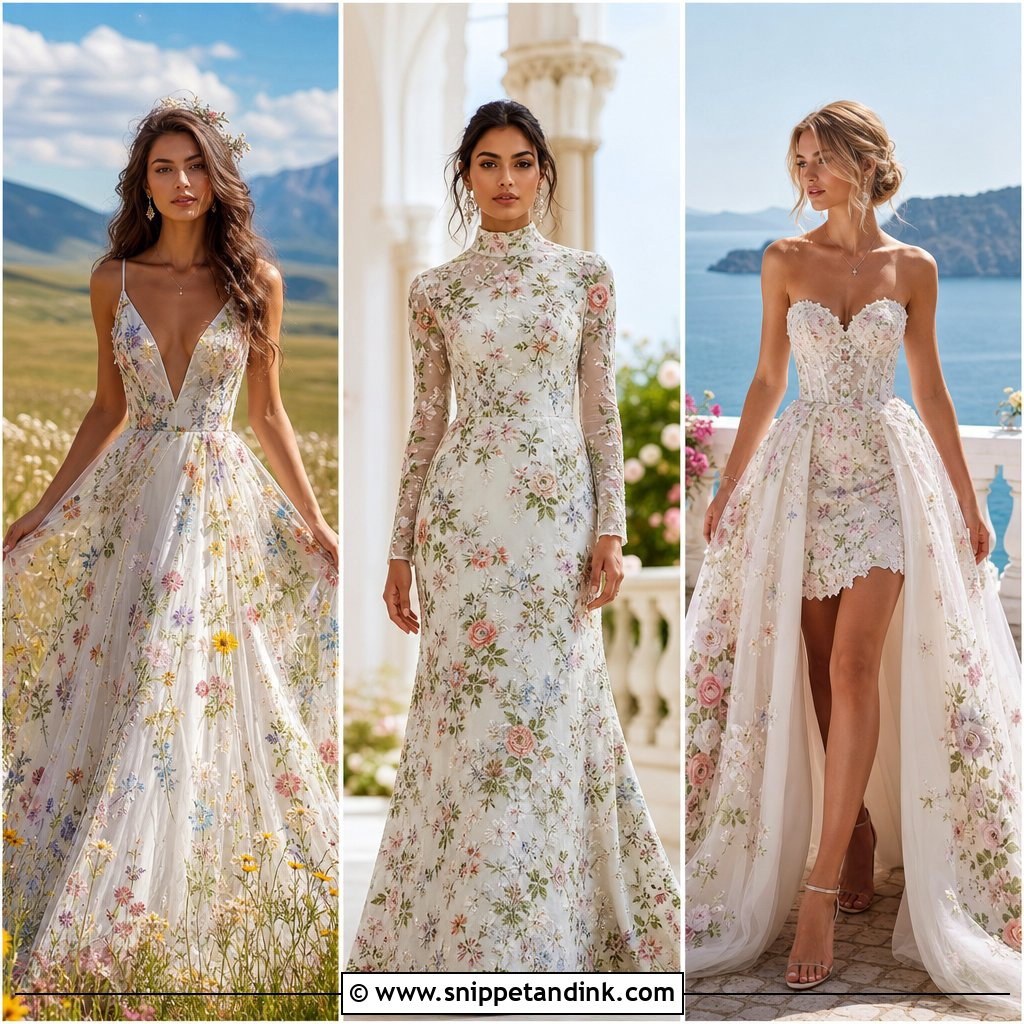
7. Red And White Floral Wedding Dress
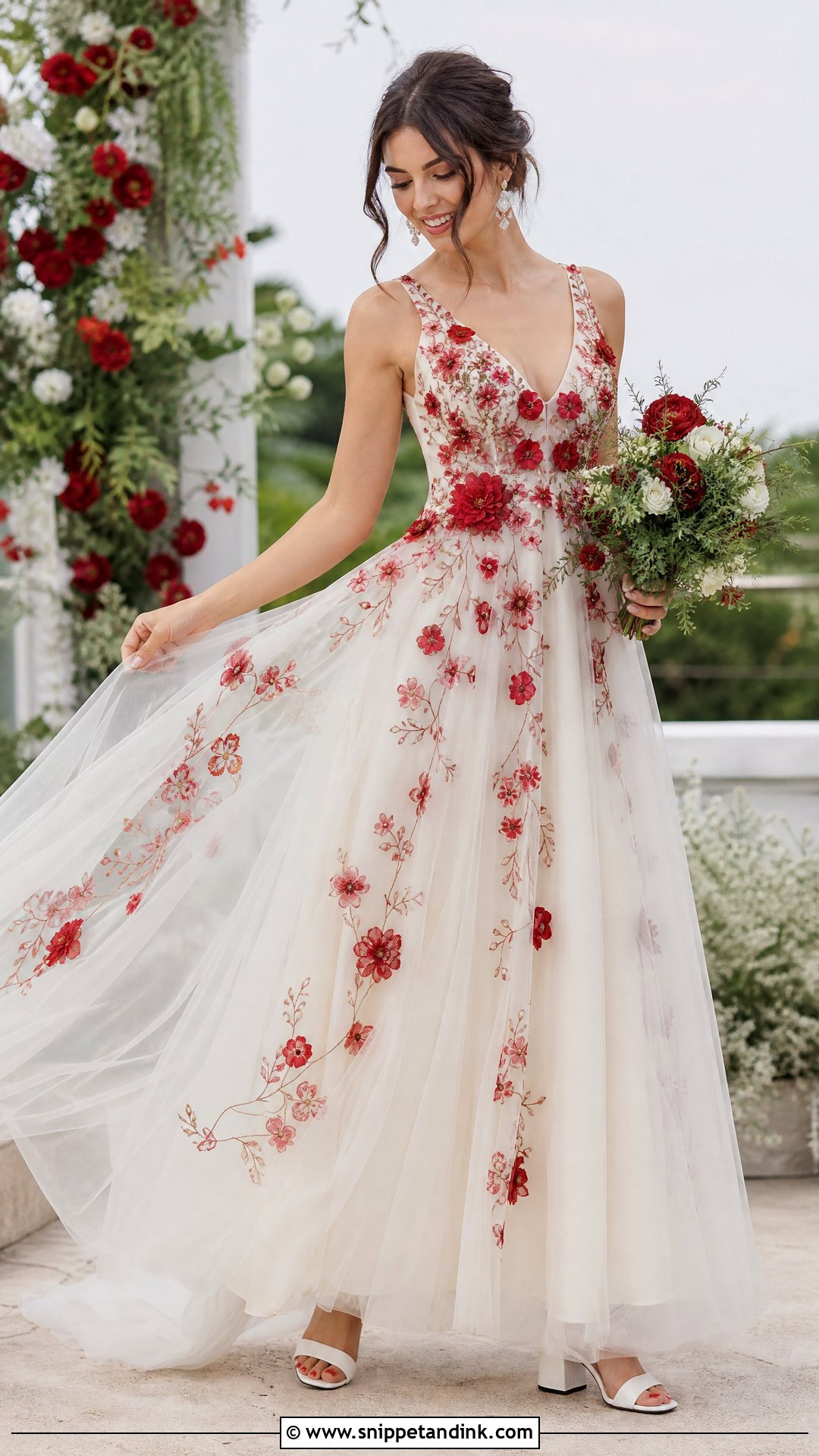
Floral work is where red and white feel least formal. Red embroidery, printed organza or 3D flowers on an ivory base come alive outdoors, especially in spring. Watch the weight: dense 3D flowers on tulle drag the skirt down and pull at the seams, so I check how the skirt hangs after the bride has walked the length of the room. A soft A-line keeps the details light. Loose curls, a soft red lip and white block heels (which won’t sink into a lawn) suit a garden ceremony, and a bouquet of red blooms with plenty of greenery connects it all.
8. Red Satin Wedding Dress With White Gloves
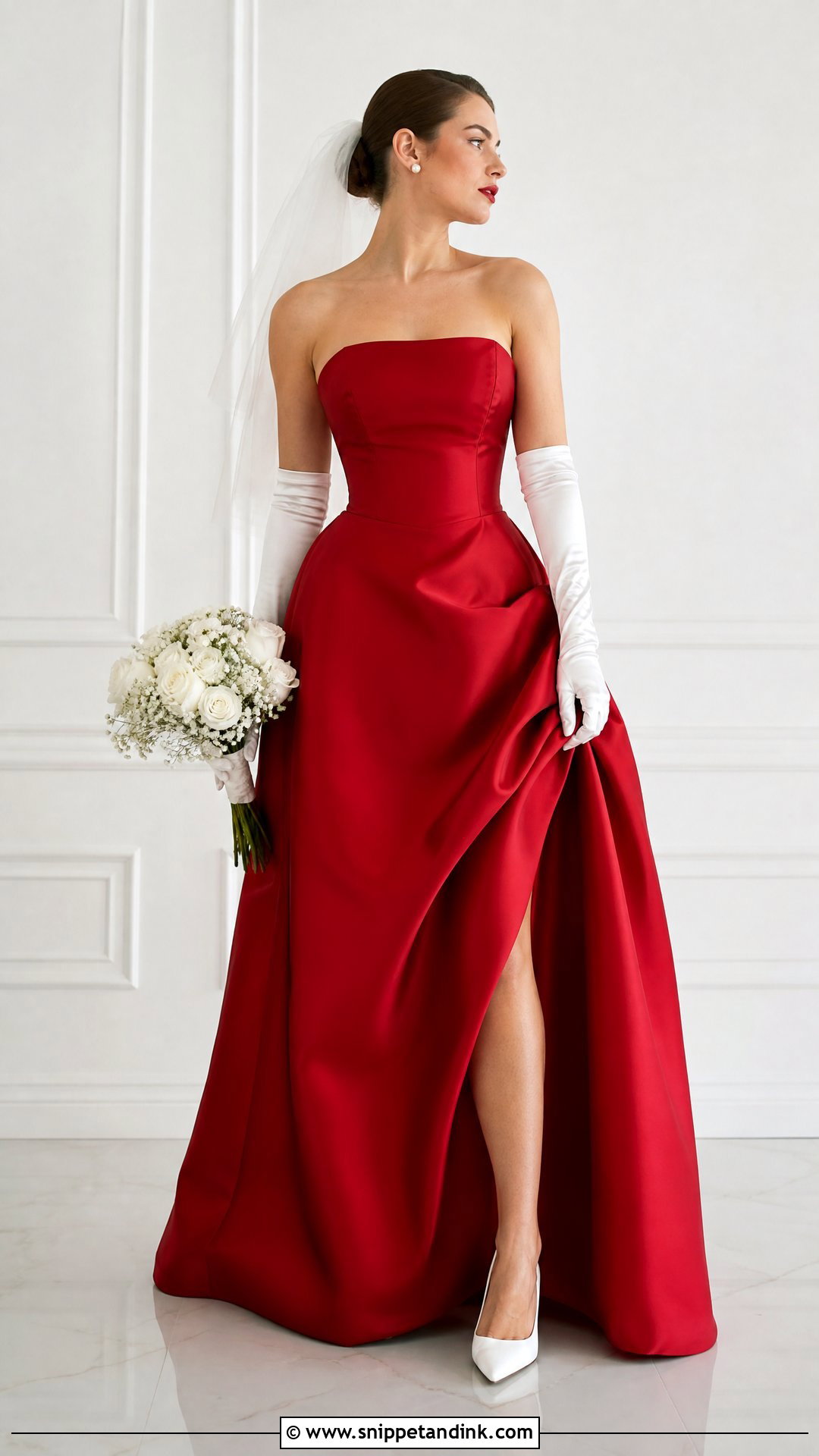
Red satin with white gloves is a vintage reference, and it only works if everything else is restrained. Satin deepens red and shows every crease, so I warn brides that the lap will wrinkle once they sit; a heavier duchess satin recovers far better than thin charmeuse. Strapless or off-the-shoulder necklines let the gloves frame the arms. Pearl studs, a smooth bun, pointed white heels and a short birdcage veil finish it. Plan when the gloves come off, because most brides slip the left one off for the ring and both off for dinner.
9. White Tulle Wedding Dress With Red Embroidery
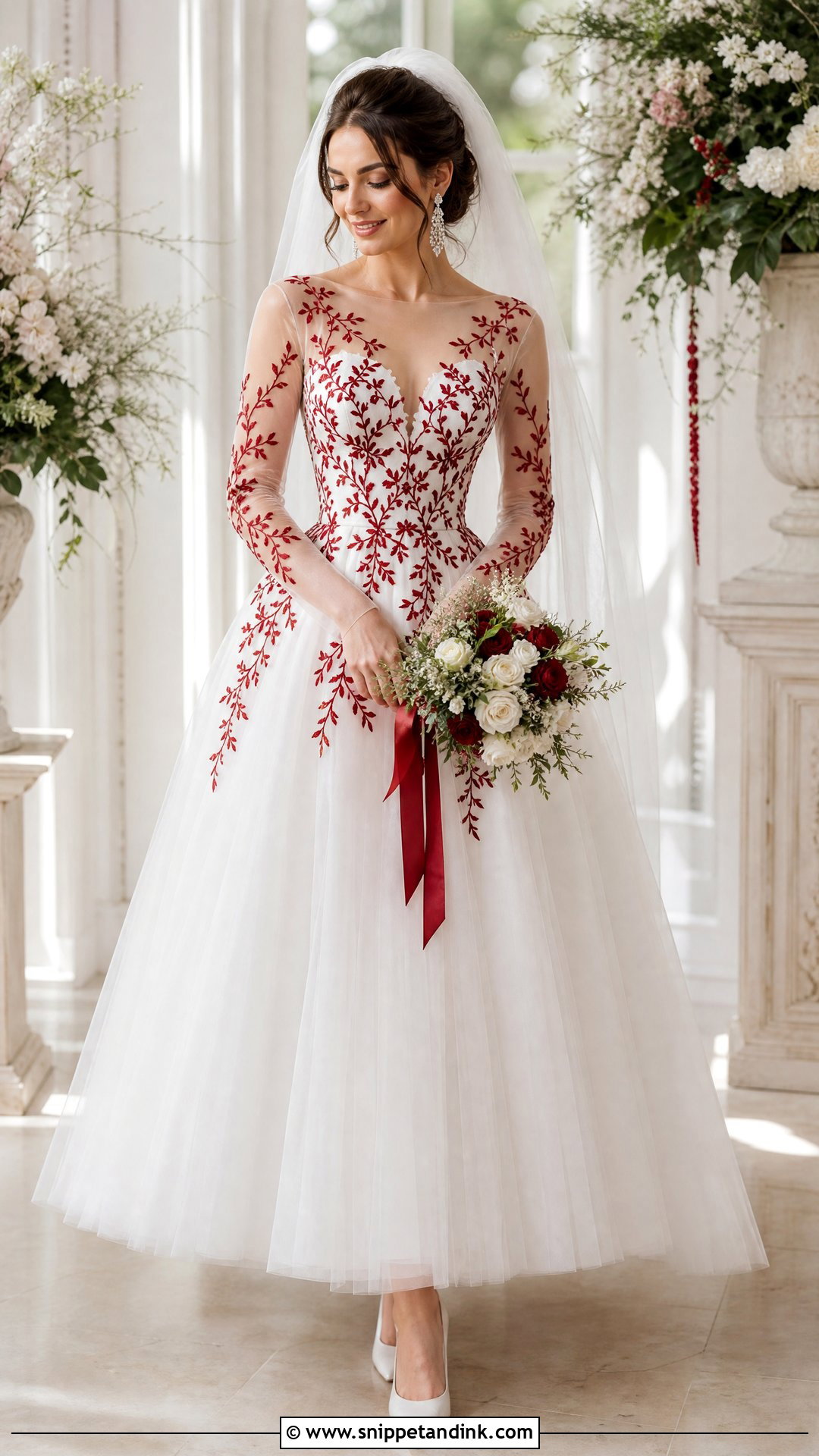
Red threadwork on white tulle gives you color that still floats, in floral or vine patterns over the bodice, sleeves or skirt. Embroidery on tulle needs a stable backing, so I turn the bodice inside out at the appointment. If the stitches pucker the tulle, that pucker will show in every close-up. Sheer long sleeves read romantic and a sleeveless bodice reads cleaner. Add a simple veil, white heels and small crystal earrings, and wrap the bouquet stems in red ribbon to echo the thread.
10. Red And White Off Shoulder Wedding Dress
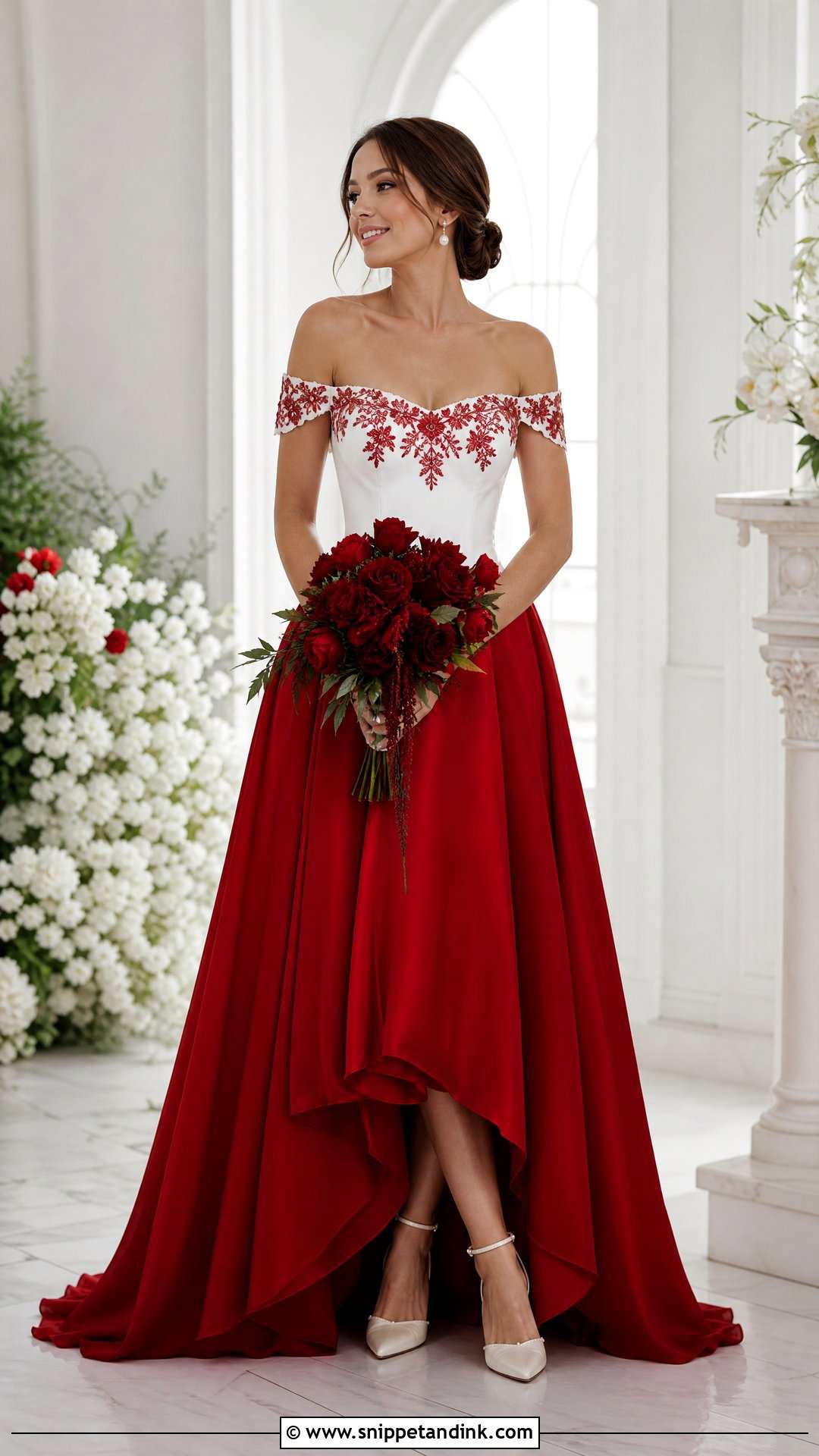
An off-shoulder neckline frames the collarbones, and in these colors it usually comes as a white bodice over a red skirt, or a white gown with red lace at the neckline. The fit point that matters is the band across the upper arms. Too tight and it cuts in, too loose and it slides down when you hug people, so I have brides raise their arms and hug me during the fitting. A structured bodice gives support. A low bun, pearl earrings, a medium veil, ivory heels and a red bouquet complete it.
11. White Wedding Dress With Red Train
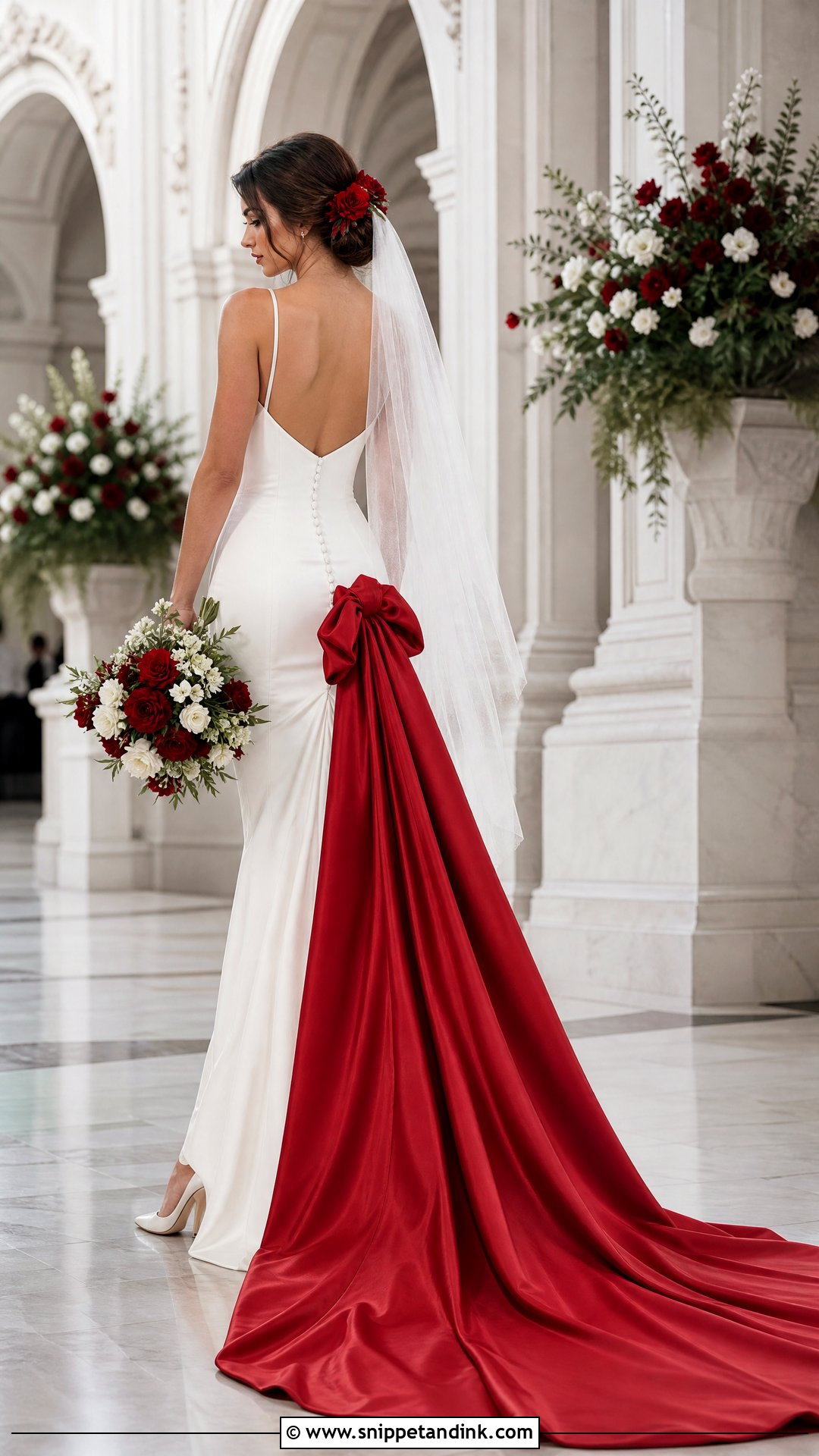
From the front this is a classic white gown; from behind, it’s the part everyone remembers. A red train makes the walk back up the aisle the strongest photo of the day. I’d strongly suggest a detachable train, hooked or buttoned under the waistline, so you can remove it for dancing, and I test the attachment with the full weight of the train hanging before the bride ever walks in it. Satin gives structure, while organza and tulle float. Keep the veil plain and repeat red once, in heels or floral hair pins.
12. Red And White Two Piece Wedding Dress
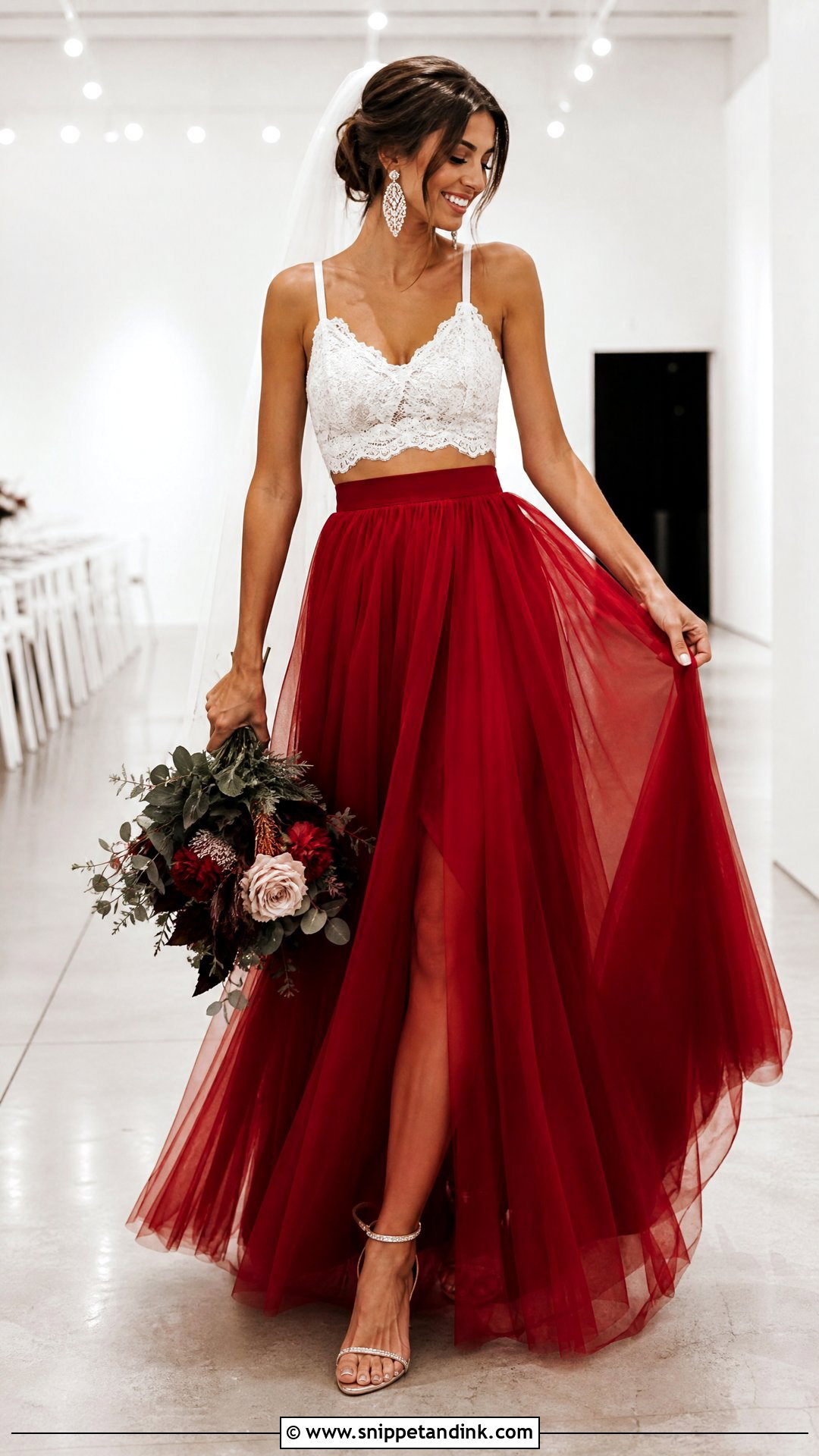
A two-piece lets you mix separates rather than commit to one gown. A white lace crop top or structured blouse over a full red skirt is the bolder version; a red bodice over a white flowing skirt is softer. Fabric quality matters more here than in a one-piece, because the gap between top and skirt draws the eye, and cheap satin next to good lace looks obvious. Ask whether the top’s hem is boned so it stays put when you dance. Delicate heels, statement earrings and a sleek veil keep it bridal.
13. White Lace Wedding Dress With Red Underskirt
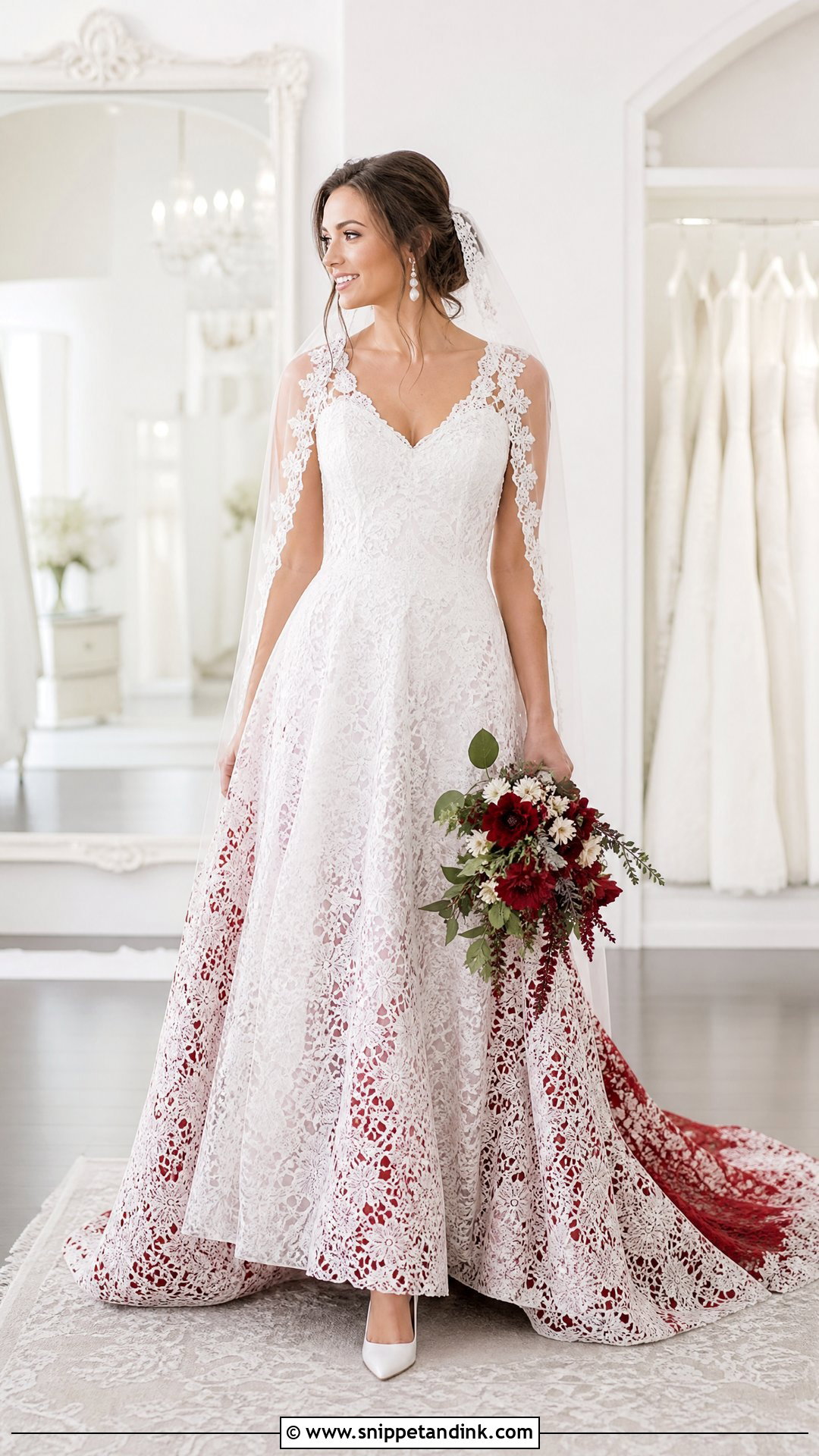
A red lining under white lace is my favorite trick for a bride who wants color but hasn’t decided how much. From across the room the gown reads mostly white; up close the red glows through. How much shows depends on the lace. Open Chantilly lets a lot through, dense corded lace very little, so I bring the lining fabric to the appointment and lay it under different lace swatches. It suits lace A-lines, tea-length dresses and full skirts. White heels, a lace veil and a few red flowers in the bouquet are enough.
14. Red Corset Wedding Dress With White Skirt
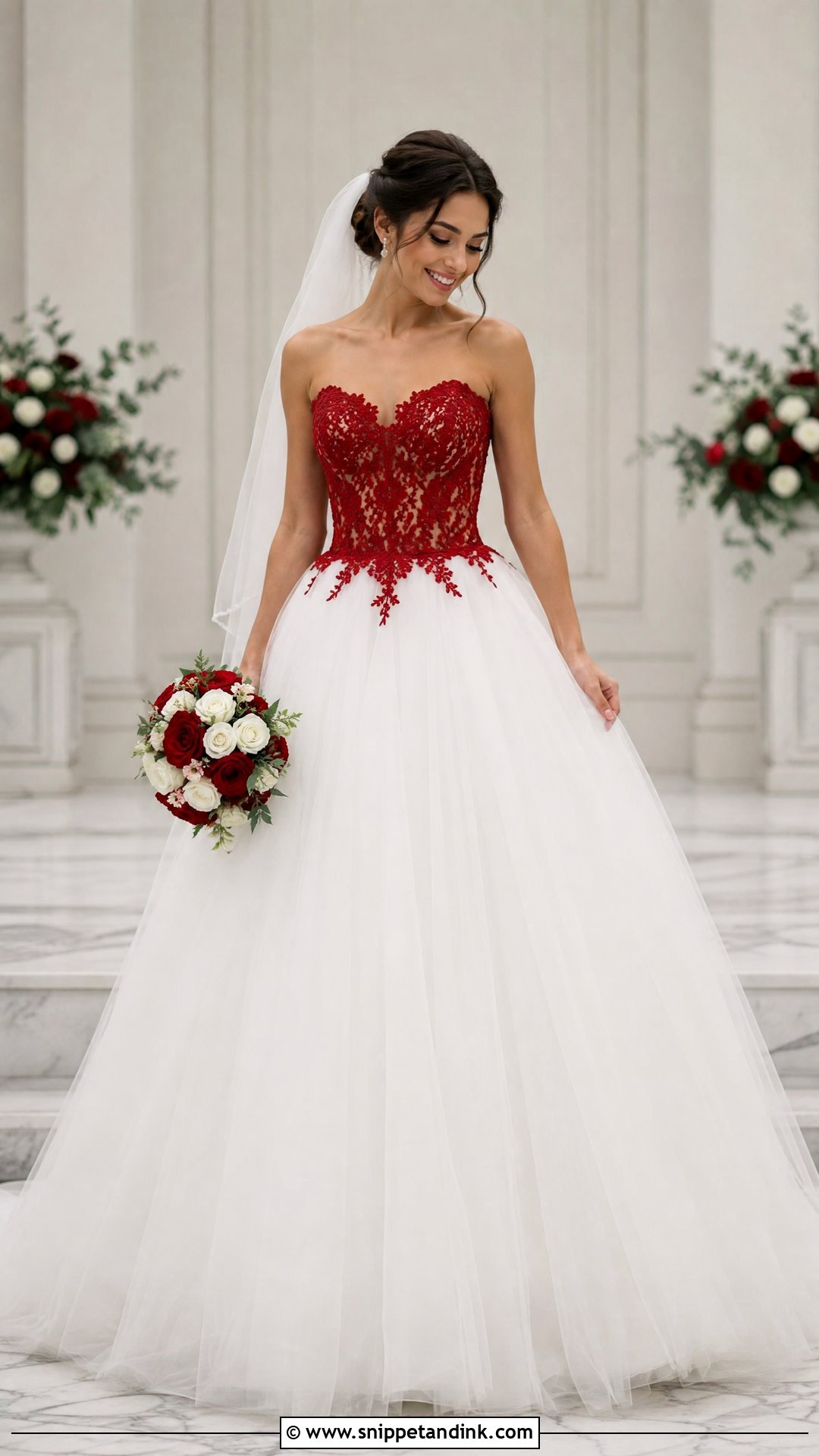
A red corset over a white skirt builds a defined hourglass with a hard color line at the waist. This one lives or dies on fit. The corset has to be fitted on your body, with boning that ends where your ribs do, and the skirt should start at the natural waist. I schedule the final fitting close to the date, because even a small change in weight shows instantly in a corset. Tulle softens the skirt and smooth satin makes it formal. Skip heavy necklaces if the bodice is detailed; a white veil and simple earrings are plenty.
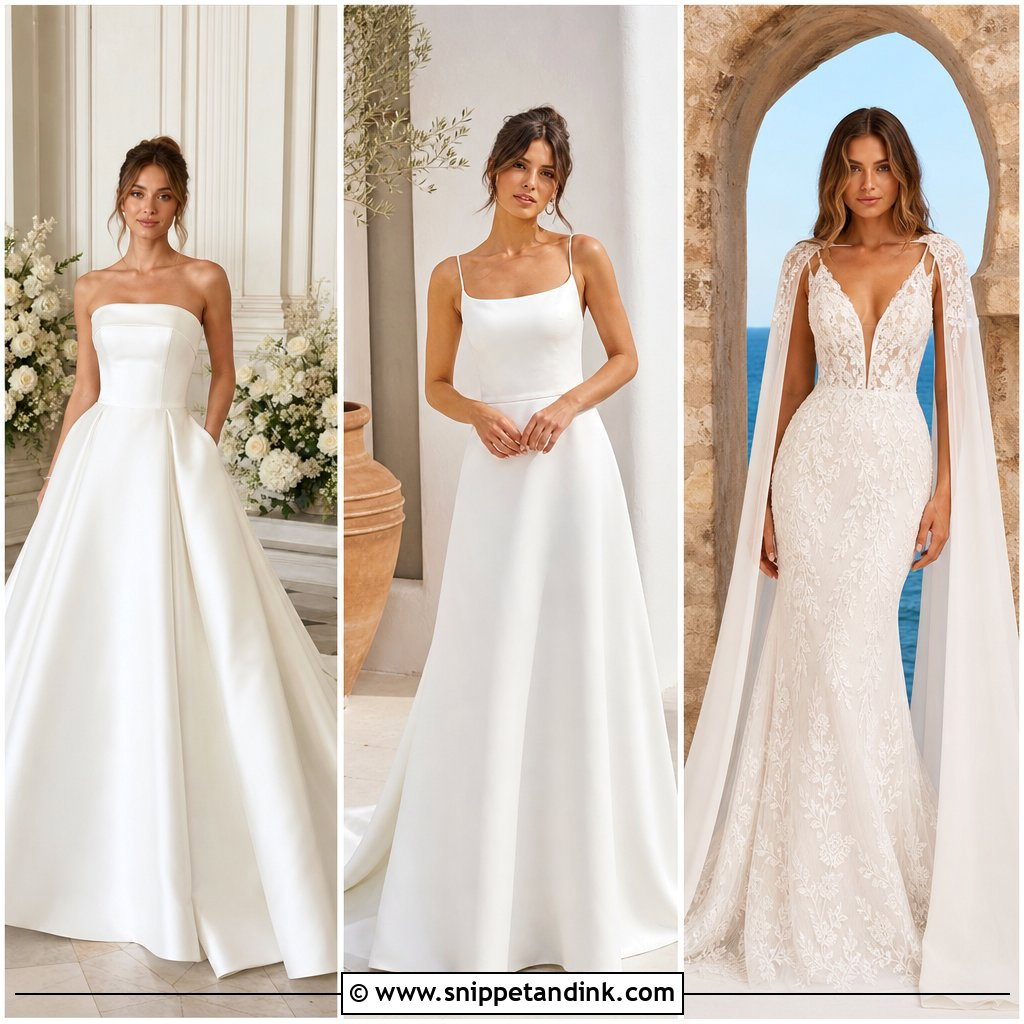
15. White Bridal Gown With Red Cape
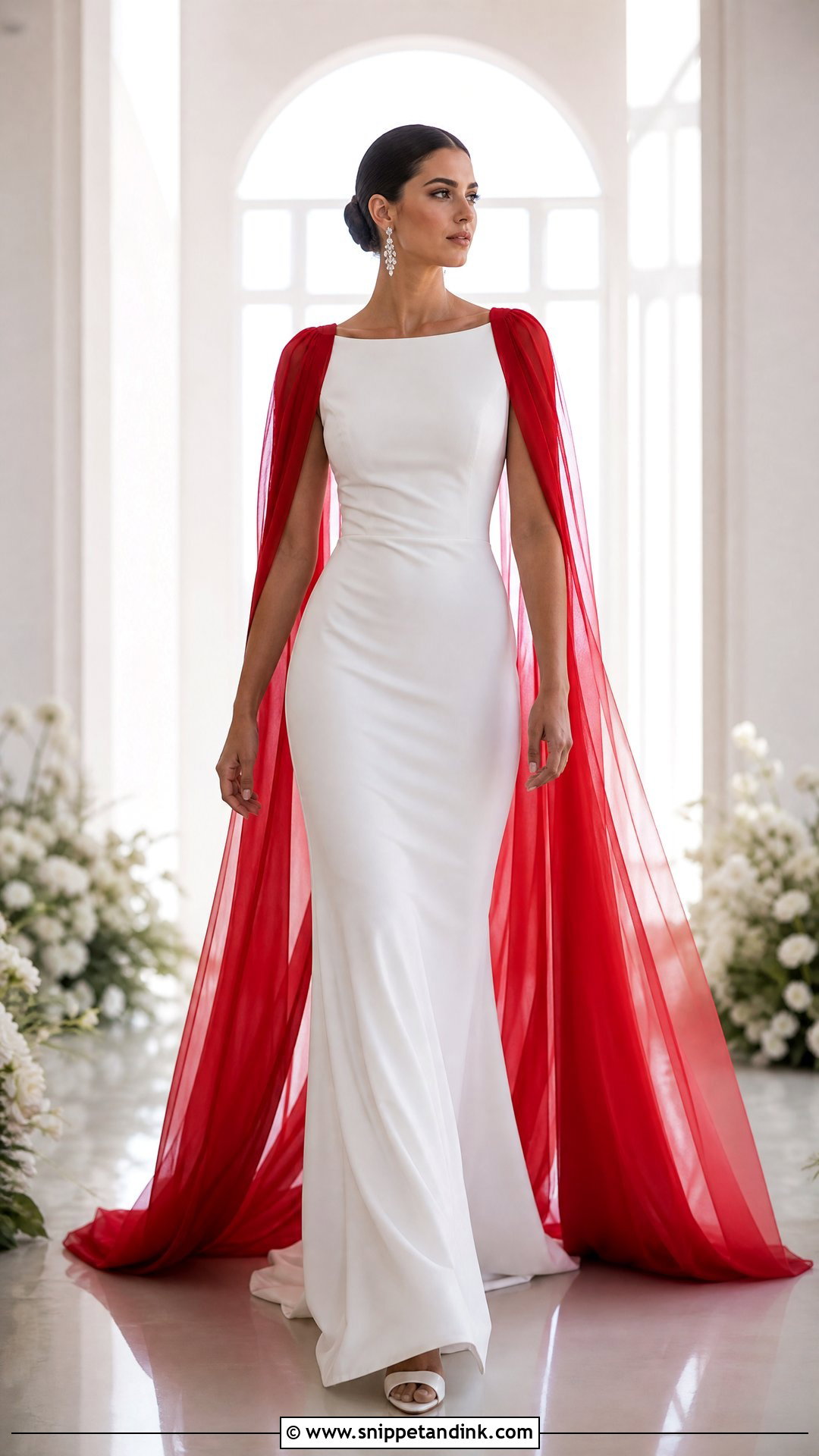
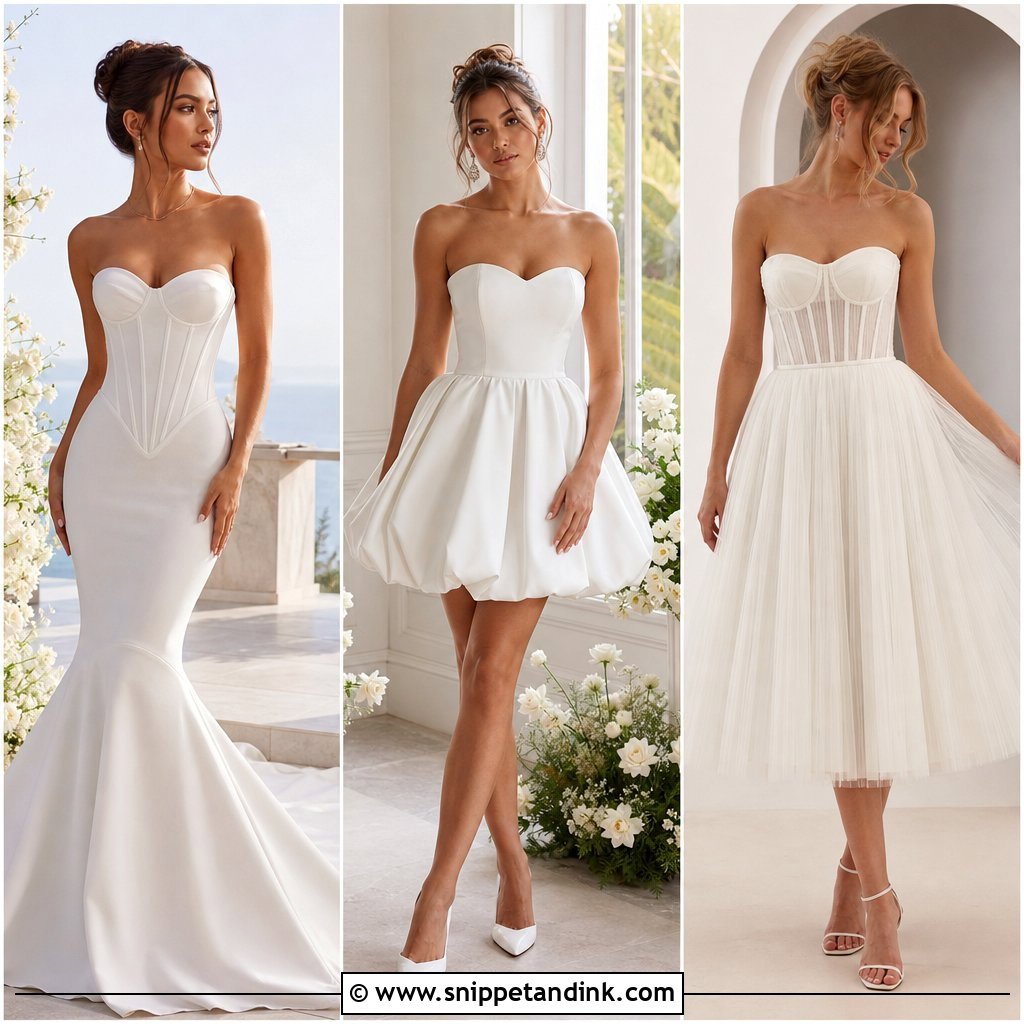
A red cape gives you the drama of a colored train while the gown underneath stays simple. Sheer red tulle feels soft; satin looks regal and holds its shape in wind. Capes attach at the shoulders or neckline, and I always check the pull on those seams, since a long satin cape drags the neckline backward unless it’s anchored to something structured. It sits best over a fitted dress or clean A-line. Wear it with sleek hair, crystal earrings and white heels, and let a red lip handle the rest.
16. Red And White Tea Length Wedding Dress
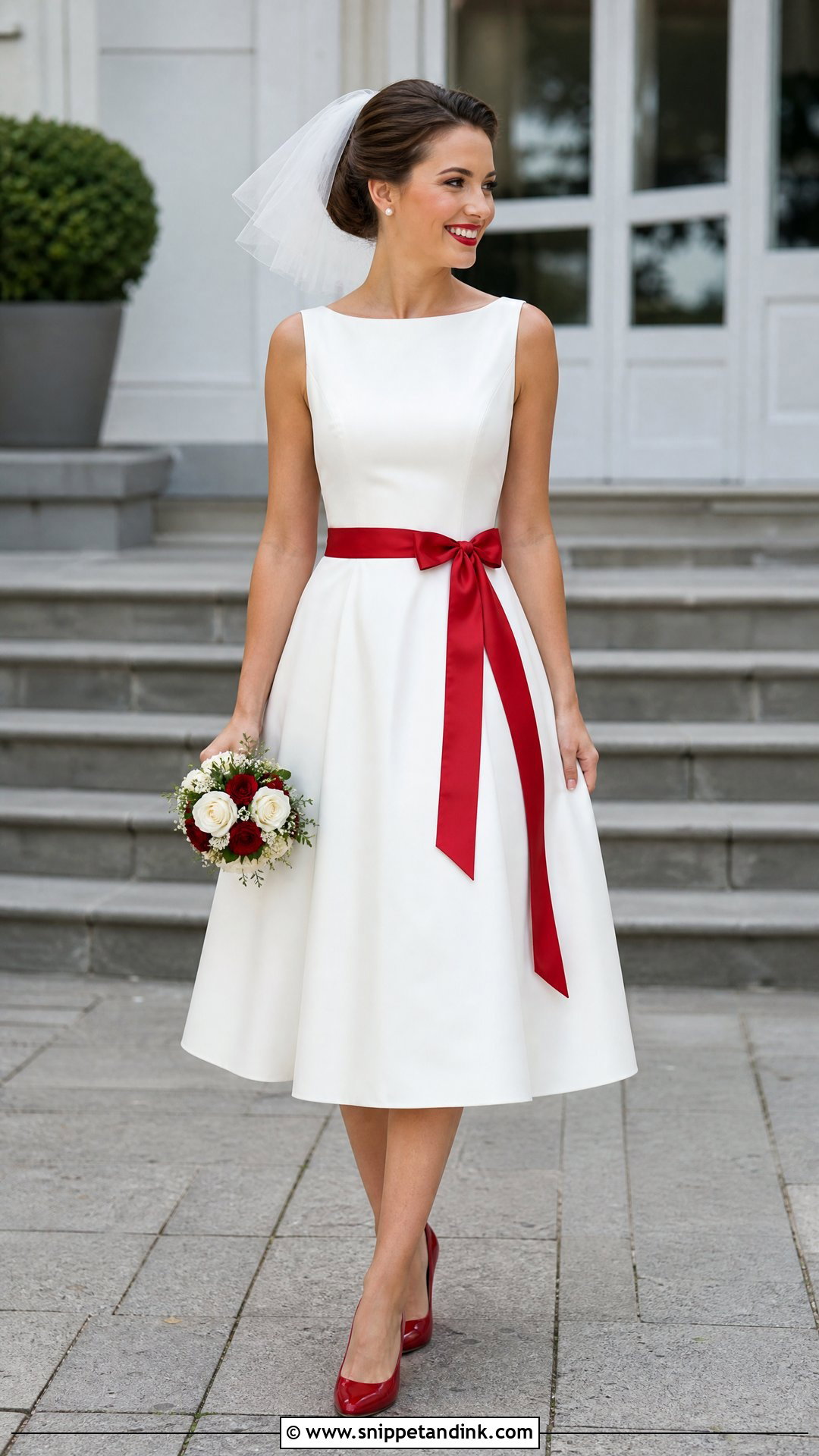
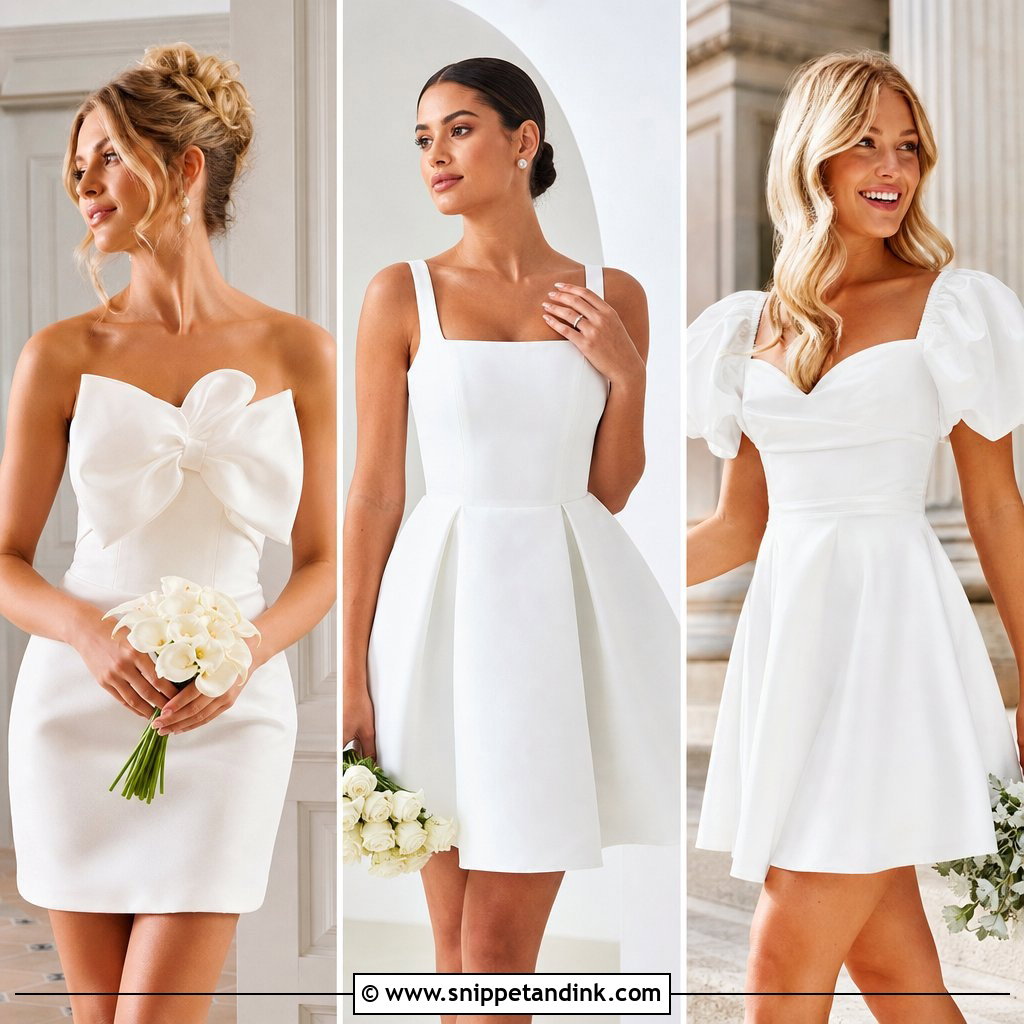
Tea length is the shape I suggest most for courthouse ceremonies and daytime parties, because you can walk, sit and dance without managing fabric. With the hem at mid-calf, your shoes become part of the outfit: red pumps, white heels or embellished flats. A white tea-length dress with red polka-dot tulle, red floral embroidery or a red waist bow reads playful but still bridal. Have the hem marked with your actual shoes on, since this length looks wrong just a couple of inches off. A short veil and pearl studs finish it.
17. White Sheath Wedding Dress With Red Roses
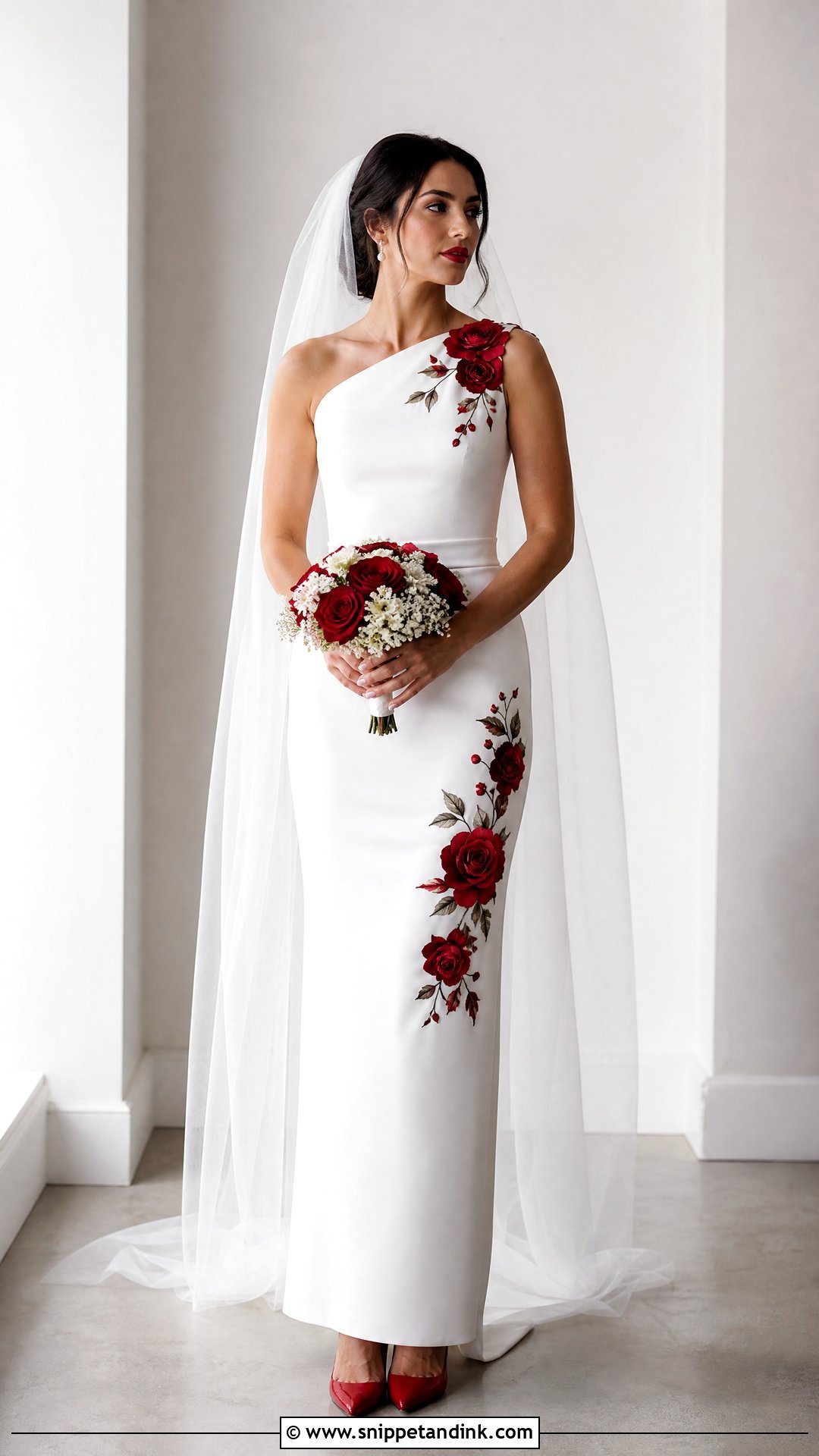
A sheath skims the body with no volume, so any decoration becomes the whole focus. Red rose appliqués on one shoulder, at the waist or low on the skirt work like a single piece of art, and placement is the real decision. Before anything is sewn, I pin paper cutouts onto the dress at a fitting and have the bride sit down, because a rose that looks right on the hip in the mirror can read as a stain in a seated photo. Red heels, a white veil and understated earrings keep it modern.
18. Red And White Long Sleeve Wedding Dress
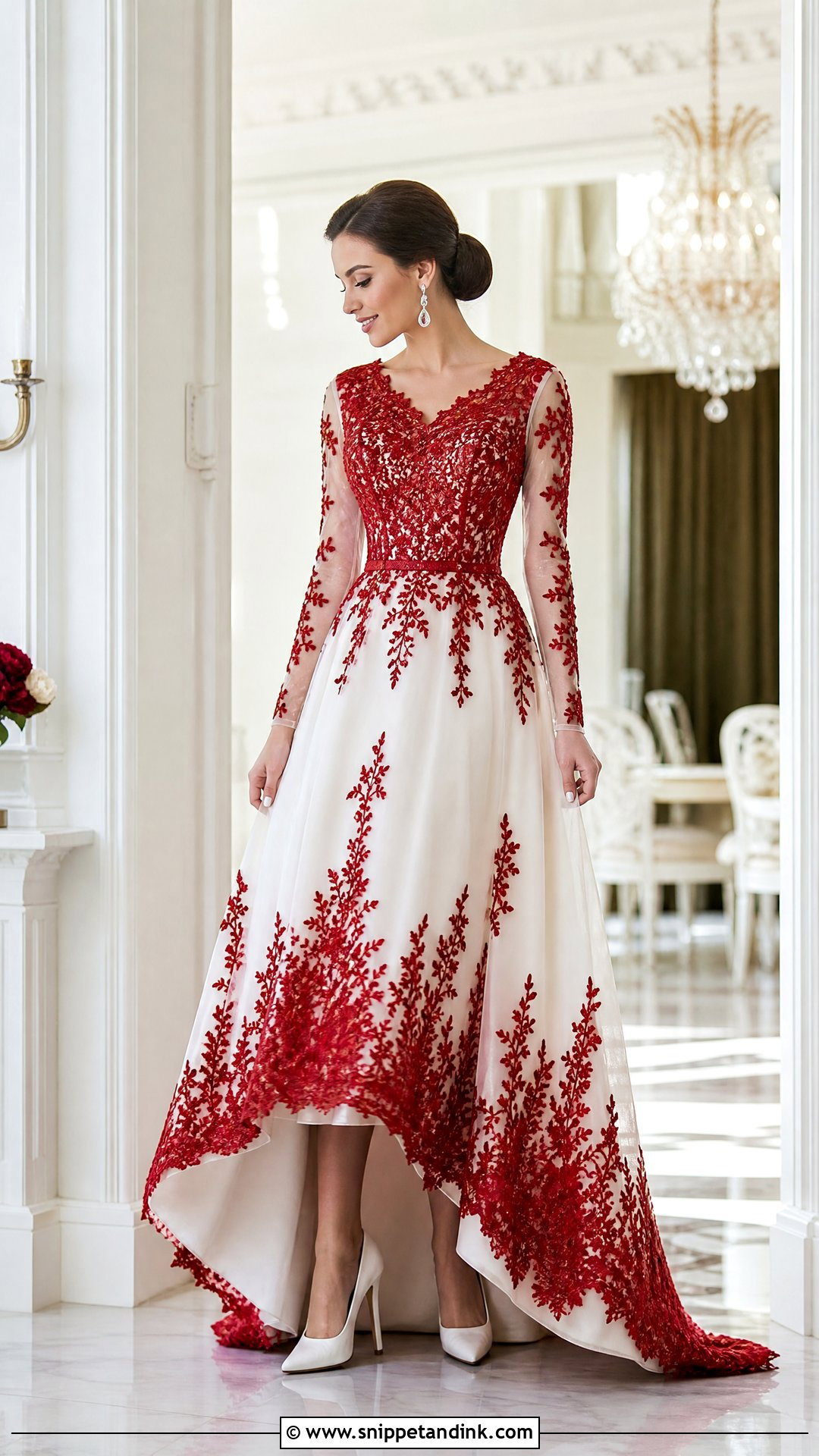
Long sleeves give coverage and a lot of surface for detail. Sheer white lace sleeves with red embroidery are the softer option, and a red bodice with white sleeves makes stronger contrast. Fitted sleeves are the thing brides complain about most once they try to raise a glass, so ask for a little stretch in the lace or a small underarm gusset. They suit cooler months and formal venues. Add a low bun, drop earrings, nude heels and a medium veil that stops short of covering the sleeves.
19. White Wedding Dress With Red Bow
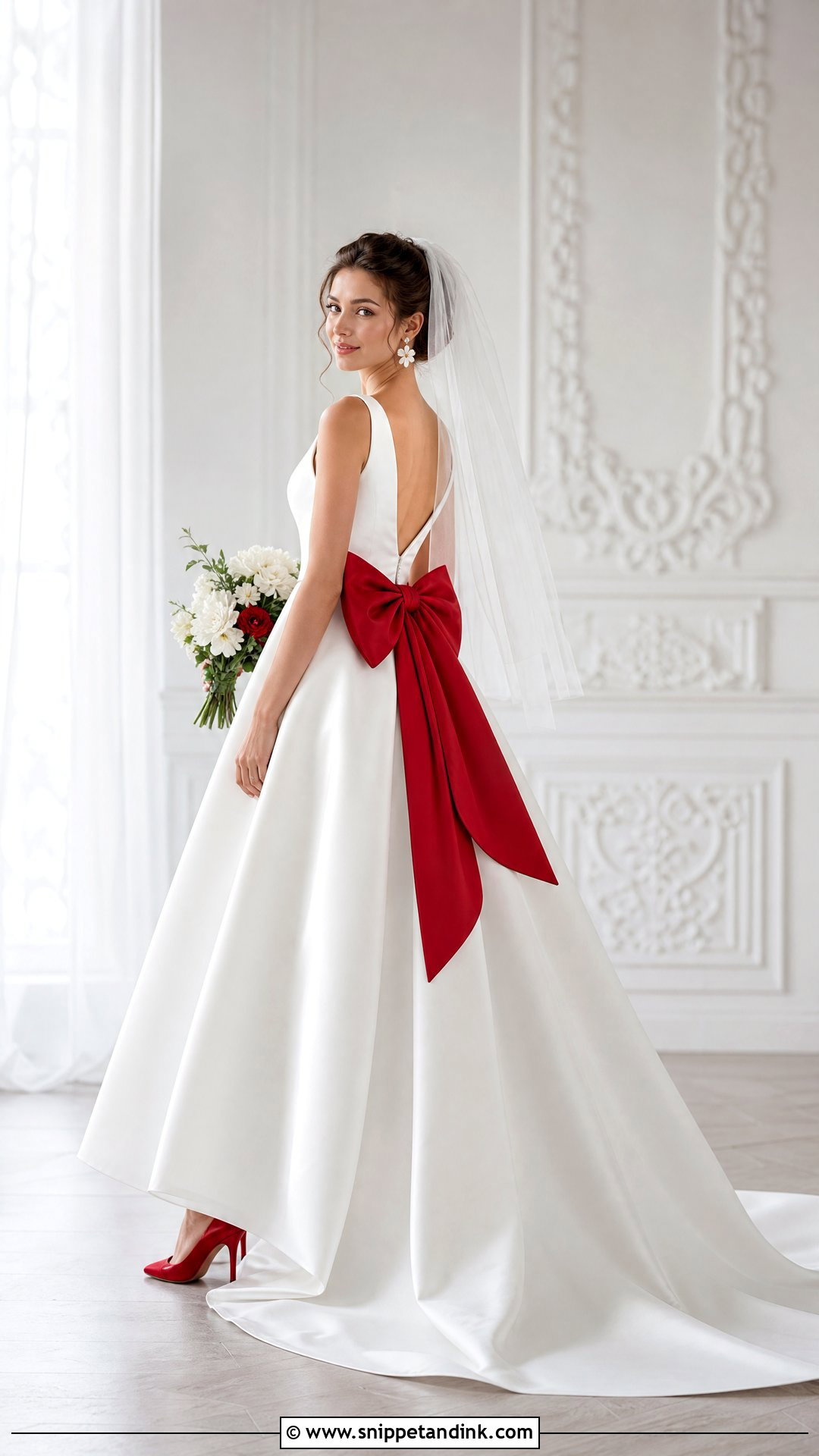
A red bow is a single focal point you can place almost anywhere: waist, back, shoulder or neckline. A big back bow dominates the processional view, while a slim waist bow is quieter. I’d only put one on a plain gown, since on lace it competes with the pattern. Ask for the bow to be backed with interfacing, otherwise a satin bow slowly collapses by the evening. Red heels or red floral earrings make a small repeat, and the veil should stay light.


20. Red And White Sequin Wedding Dress
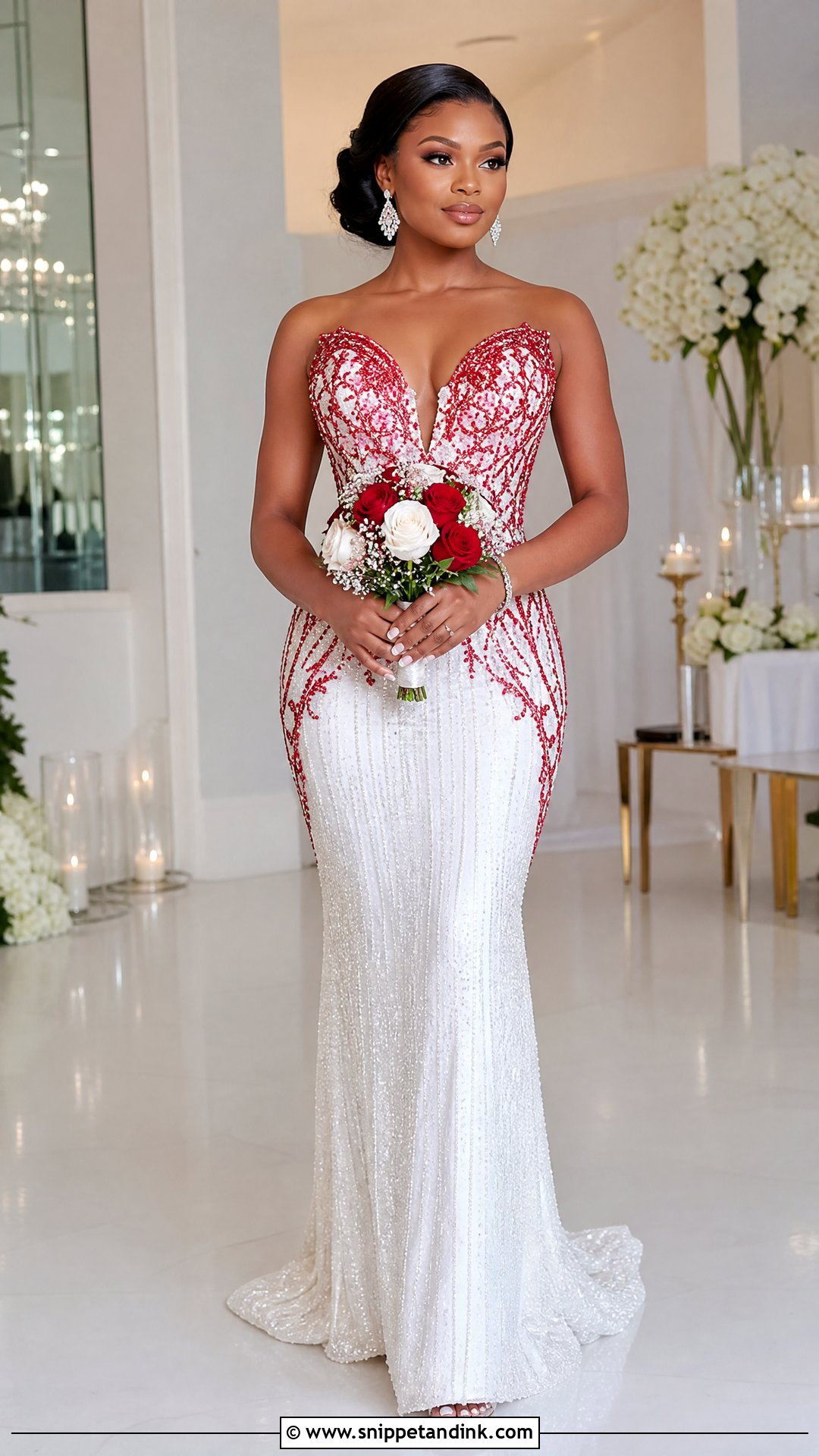
Sequins and red bring a lot of energy, so control is everything. A white gown with red sequin embroidery, or a red sequin bodice over a white skirt, keeps it bridal. Sequins scratch, so I check the inside of the armholes; an unlined sequin bodice can rub the inner arm raw by the end of a long reception. Fitted cuts feel glamorous and an A-line moves more. Simple heels, small crystal earrings and smooth hair are all it needs. Evening lighting is where it shines, literally.
21. White Wedding Dress With Red Ombre Skirt
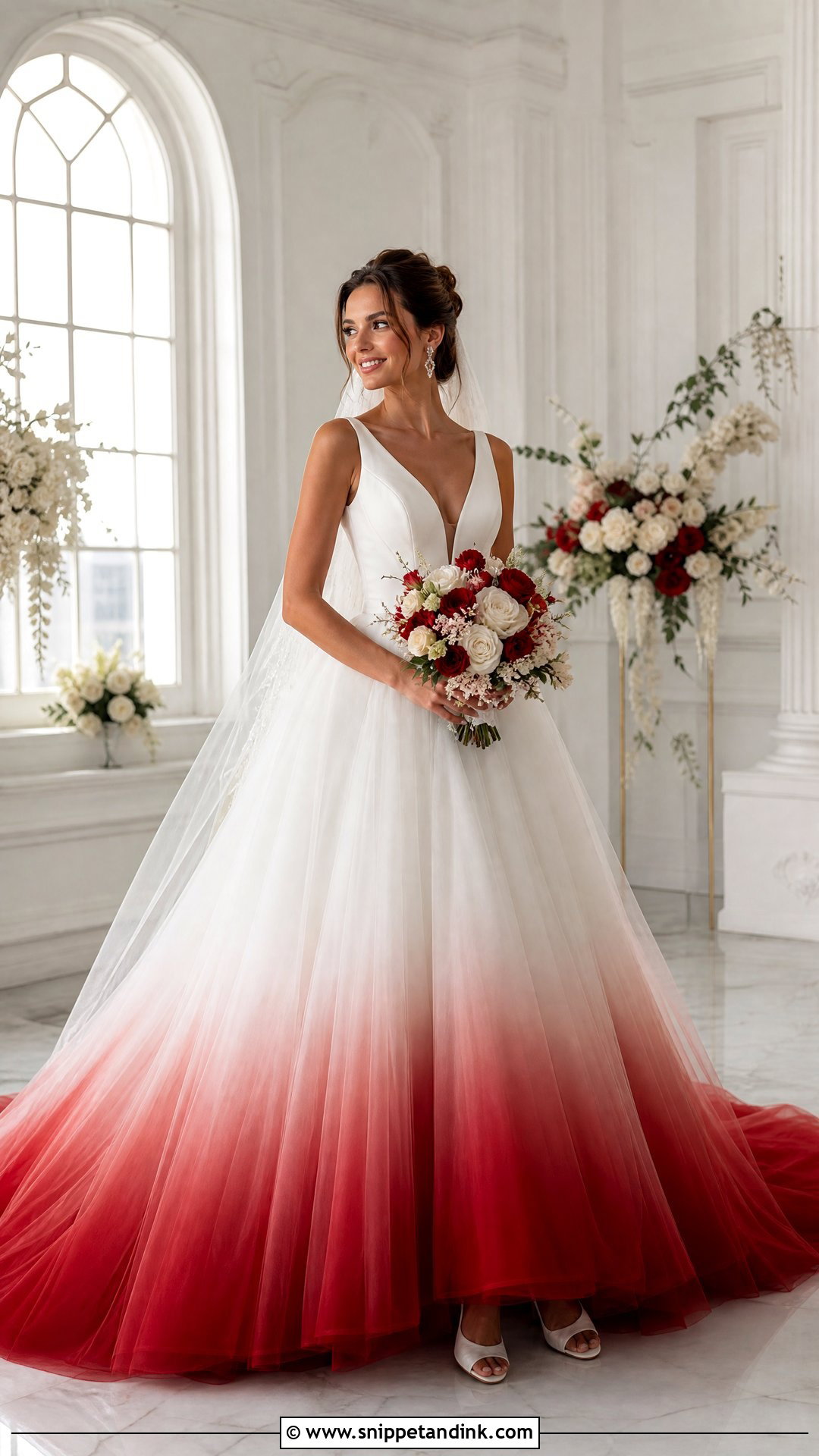
A red ombre skirt moves from bridal white into red, low near the hem for subtlety or rising higher for drama. Dyed gradients look right on light, layered fabrics such as tulle, chiffon or organza, where each layer blends the color into the next. On solid satin an ombre tends to show a band. Ask to see the actual dyed piece rather than a photo, since hand-dyed fades vary from one skirt to the next. Keep the bodice quiet, and carry a bouquet that mixes red and ivory flowers.
22. Red And White High Low Wedding Dress
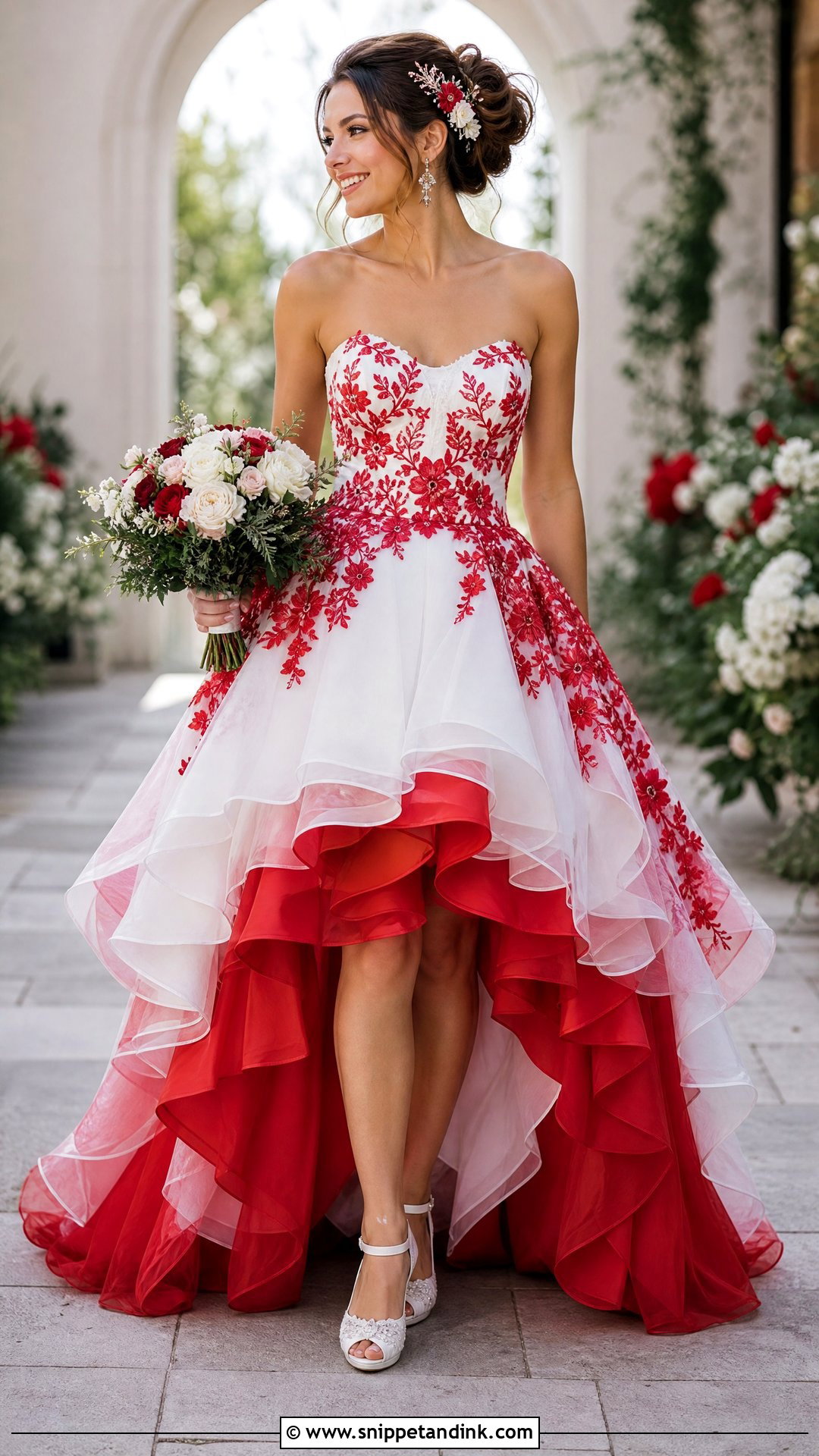
High-low hems shorten the front so you can walk easily while the back keeps a bridal length. White with red floral appliqué is romantic; a red skirt under a white bodice is dramatic. Your shoes show all day, and on lawns or sand I’d steer you toward block heels or flat sandals. The hem curve is where cheaper versions fail. A steep drop from front to back looks like a mistake on camera, so look for a gradual line. A simple veil or floral comb is enough, and it dances well.
23. White Wedding Dress With Red Beading
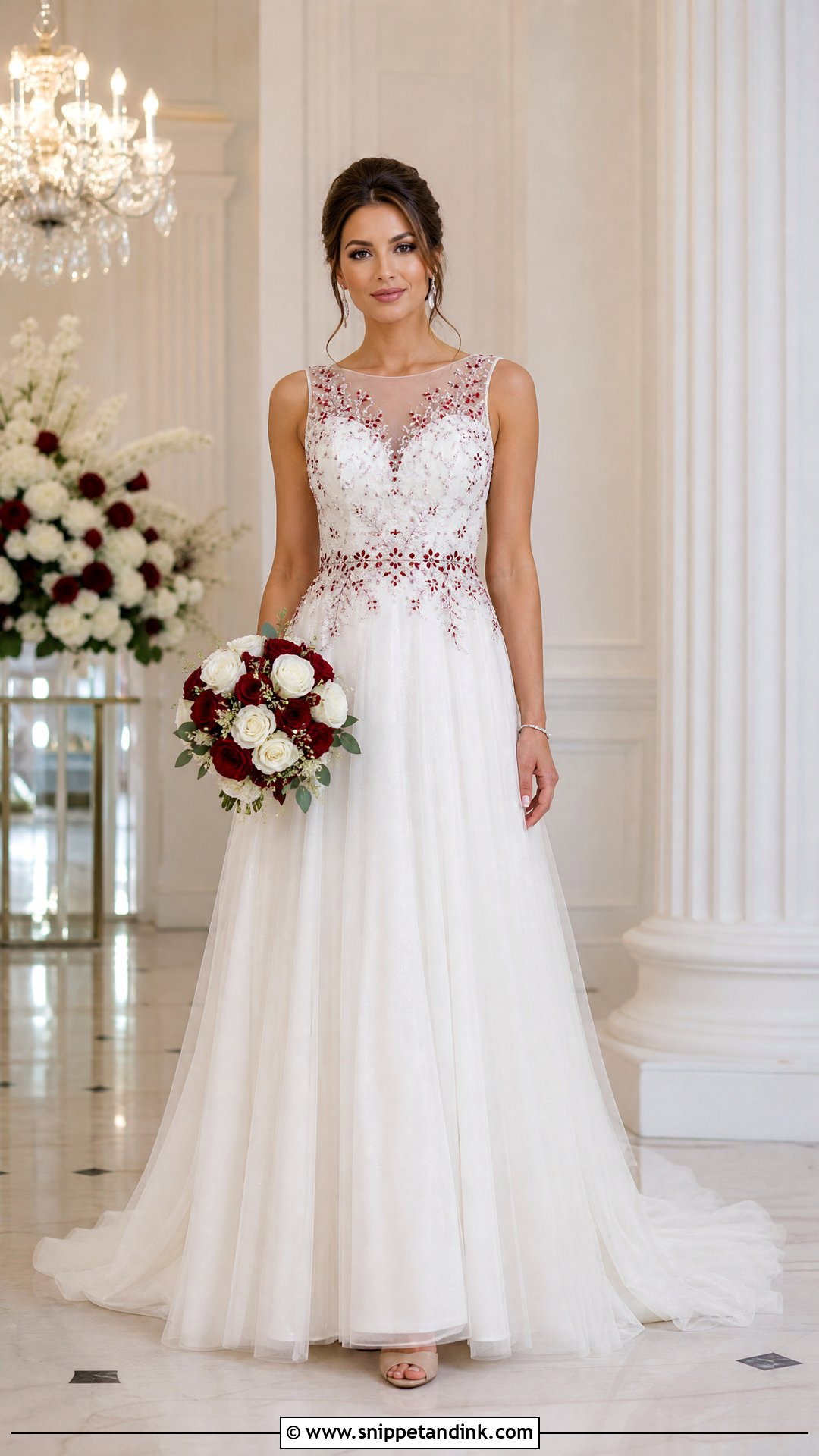
Red beading gives color through texture, outlining lace, marking the waist or scattered across the bodice like small flowers. Beadwork is heavy. I always lift a beaded gown before putting it on a bride, because on fine illusion tulle a lot of beading makes the neckline sag. Fitted gowns and soft A-lines show it best. Since the dress already sparkles, simple earrings, a delicate bracelet and white or nude heels are plenty, and a small red and white bouquet can echo the beads.
24. Red And White Cultural Wedding Dress
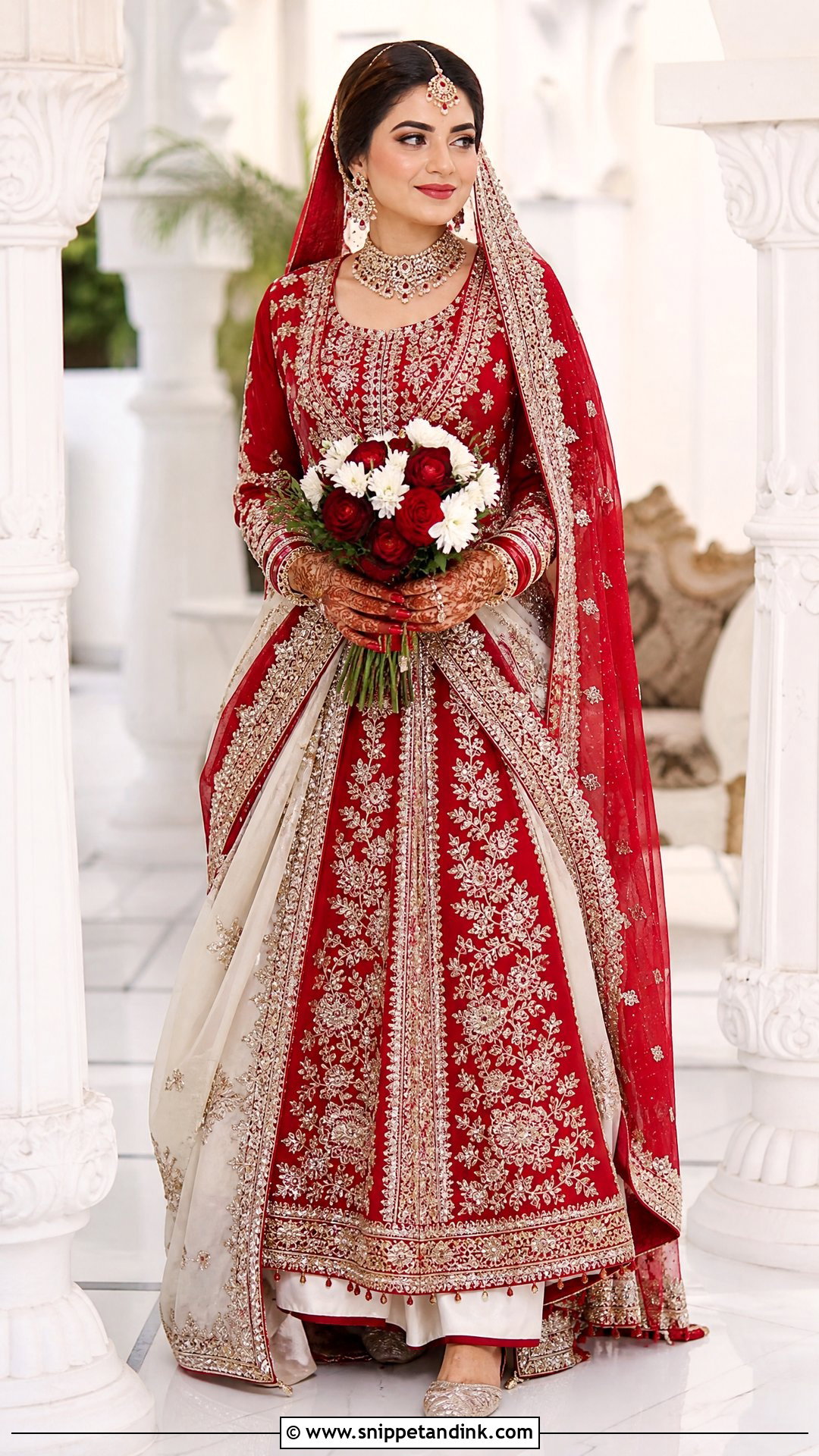
Red and white together can honor heritage from two directions at once. Red is a bridal color in many traditions, while white comes from Western bridal dress. Some brides choose a red embroidered dress with white accents, others a white gown with traditional red motifs, and some commission a design that blends both. When I work on a fusion outfit, I ask the bride to talk with family elders about motifs and colors before anything is finalized, because some symbols carry specific meanings. Jewelry and hair pieces from the tradition matter as much as the dress.

25. Simple Red And White Wedding Dress
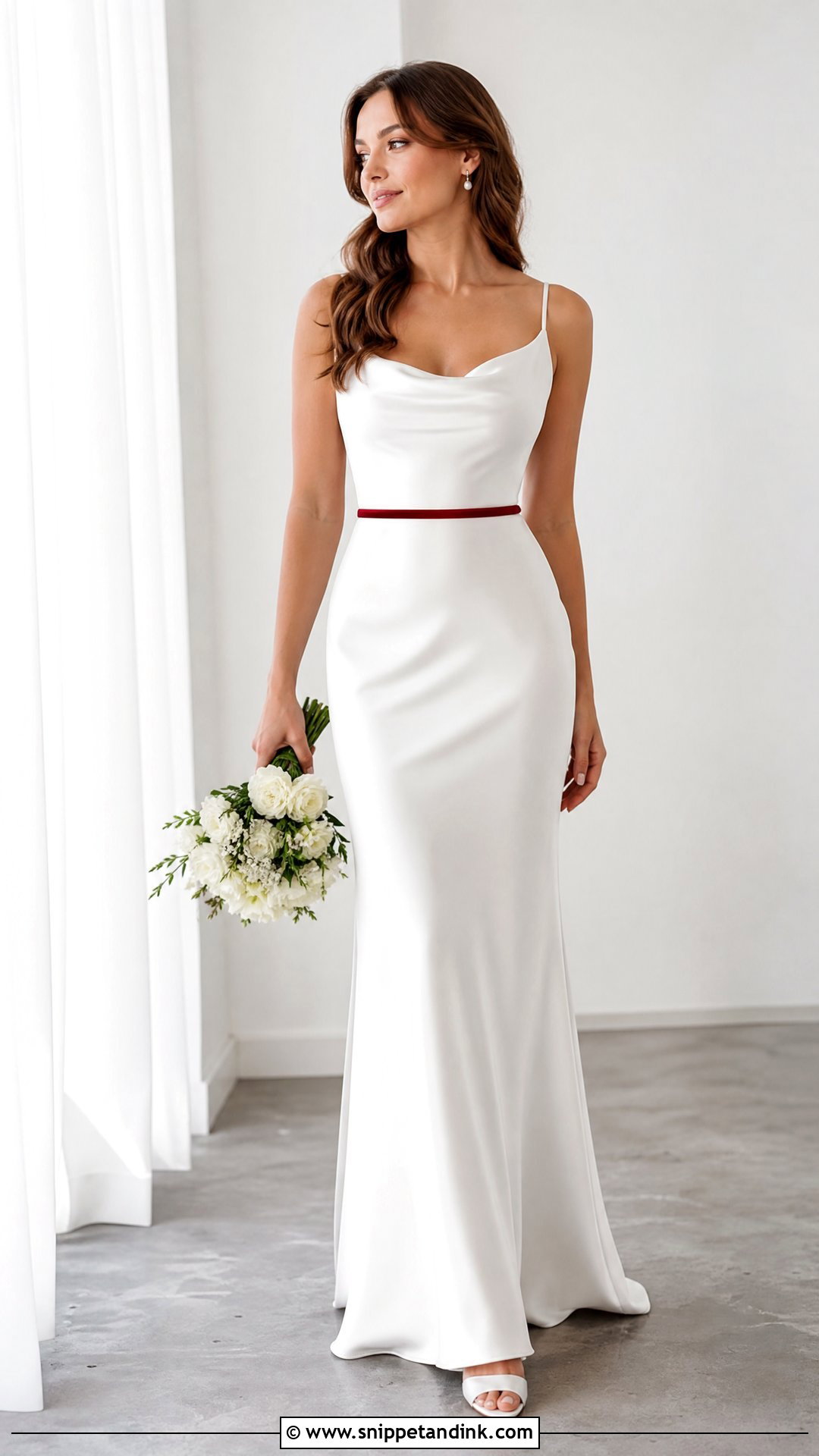
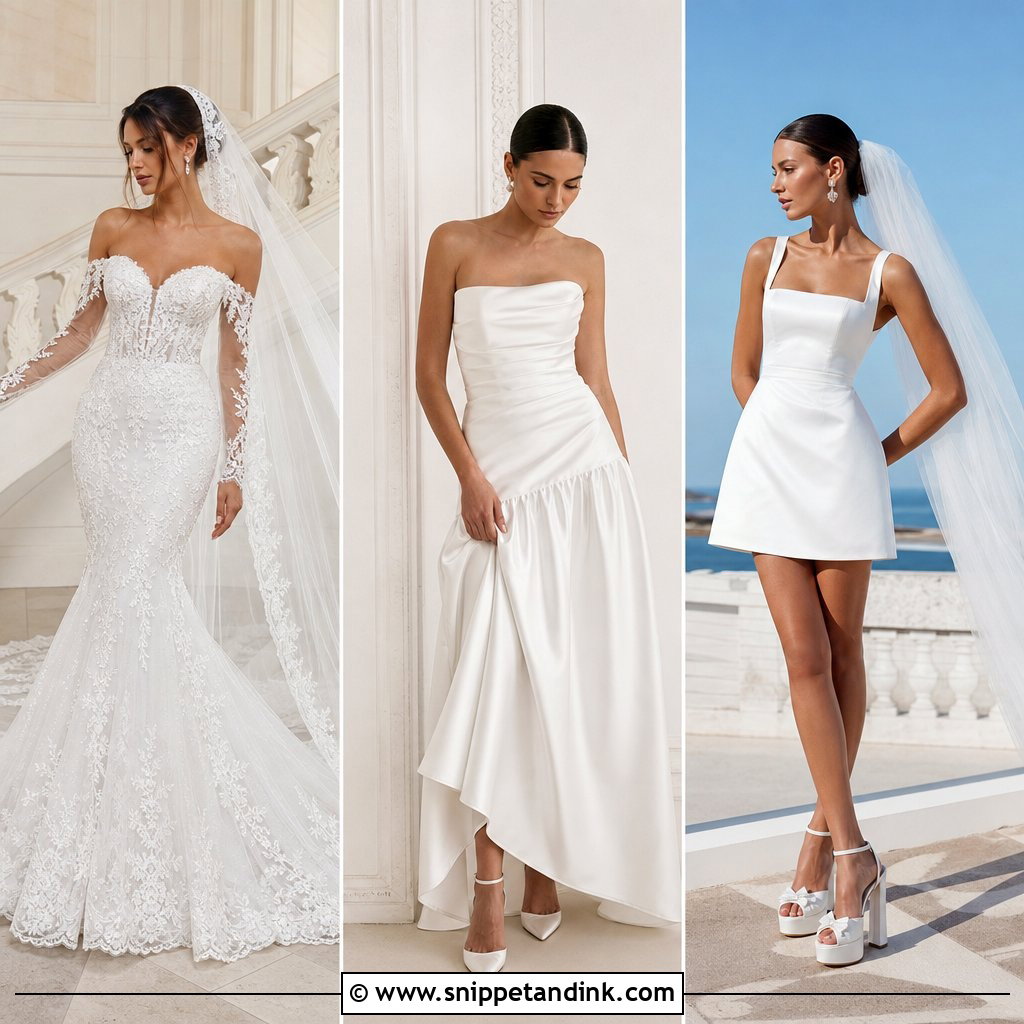
Simple doesn’t mean plain. It means one clear decision. A clean white satin dress with a red belt, a minimalist red gown with a white veil, or an ivory slip dress with a red capelet each work because there’s only one statement. Pick the red detail first and keep everything else quiet. Slip dresses are honest about the body underneath, so sort out smooth, no-line underwear before the first fitting, not after. Classic heels, small earrings and a bun or soft waves complete it.
Red Dye, Sweat and a White Bodice
The risk nobody mentions in the shop is dye transfer. Red is one of the dyes most likely to bleed when it gets damp, and on a gown that means sweat, a spilled drink, rain on the hem, or a bridesmaid dabbing a mark with a wet napkin. Once red migrates into white silk or tulle, it’s very hard to get out.
What I ask the salon before ordering
- Has this red fabric been checked for colorfastness, and is the gown dry-clean only?
- Is there a lining or barrier where the red and white panels touch?
- Can I take a fabric offcut home to test?
With an offcut, press a damp white cotton cloth onto the red for a minute. Any pink on the cloth means the gown should only ever get dry spot treatment on the day. Your emergency kit then carries a dry stain pen and white chalk, not baby wipes.
After the wedding
Have the gown professionally cleaned within a few weeks and point out which areas are red. Store it in a breathable cotton garment bag or an acid-free box, with acid-free tissue between the red and white layers, away from light. Plastic traps moisture, and moisture is exactly what lets red creep into white over the years. If the red is a detachable sash, cape or train, store it separately and the problem disappears.
One Red Detail or Half the Gown?
The question I ask every bride considering red isn’t which dress, but how much red she wants to see in her photos twenty years from now. Some go all the way with a red ball gown. Others keep a white dress with a red sash, or something softer like floral appliqué, embroidery or ombre tulle. Try the two extremes on the same day so you feel the difference, then think about your venue, the season and the light you’ll be photographed in. Get the shade and the amount right, and the red will feel like your decision rather than a trend.
You'll Like These Ideas:



Leave a Reply