
Most brides walk into their first appointment with a picture and walk out loving a completely different shape. That is normal. A gown behaves very differently on a body than on a hanger or a screen, and the fabric, the neckline and the way the skirt moves matter more than any single trend. What follows is 30 bridal looks, from lace with a veil to suits, jumpsuits and reception minis, with the styling I’d pair with each and the fitting details I check before a bride says yes. Read them with your venue, season and the way you like to move in mind.
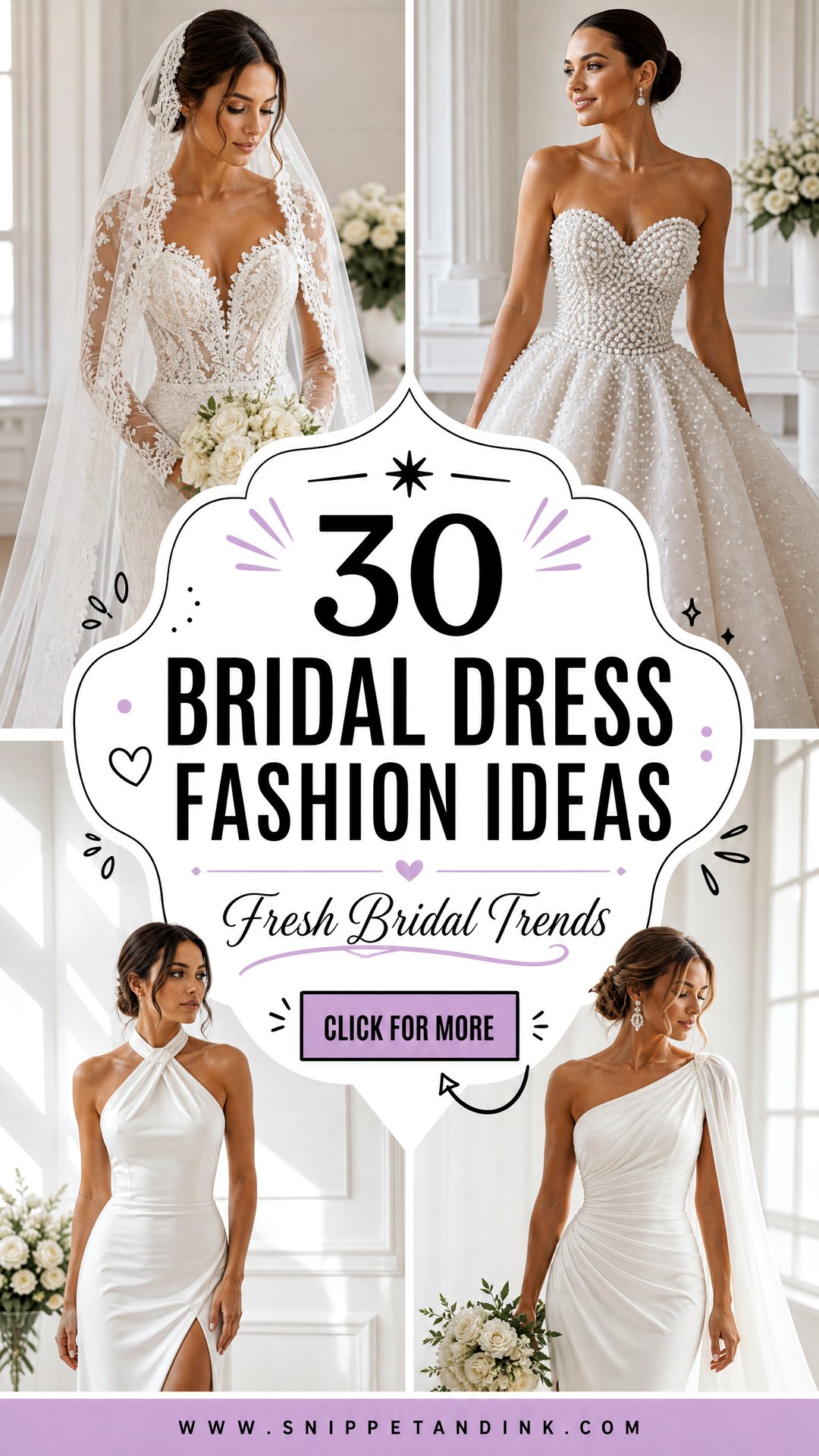
Satin Creases, Crepe Clings and Lace Forgives
Before you fall for a silhouette, think about the fabric it comes in, because fabric decides how the dress looks at hour ten, not hour one. This is what I tell brides when they ask why two dresses with the same shape feel so different.
- Satin shows creases where you sit. Heavier satins like duchess or mikado resist it better than thin charmeuse.
- Crepe drapes close to the body, so seams and underwear lines show. It needs precise tailoring and the right underwear at every fitting.
- Lace hides small creases and minor fit issues, which is why it stays popular with brides who will sit for long ceremonies.
- Tulle crushes when packed but recovers with steam. Several soft layers float; stiff net holds volume but can scratch bare legs.
- Chiffon is light for summer but snags on beaded bouquets and jewelry clasps.
If your venue is hot, avoid heavy satin and dense beading. If it is cold or air-conditioned, crepe and mikado give you a little more warmth without bulk.
A quick test I do with every bride: sit in the sample for two minutes, then stand and look at the lap and the back of the skirt in the mirror. Whatever you see then is roughly what the camera will see after the dinner. If it already looks crushed, choose a heavier weave or a textured fabric.
1. Lace Wedding Dress With Veil
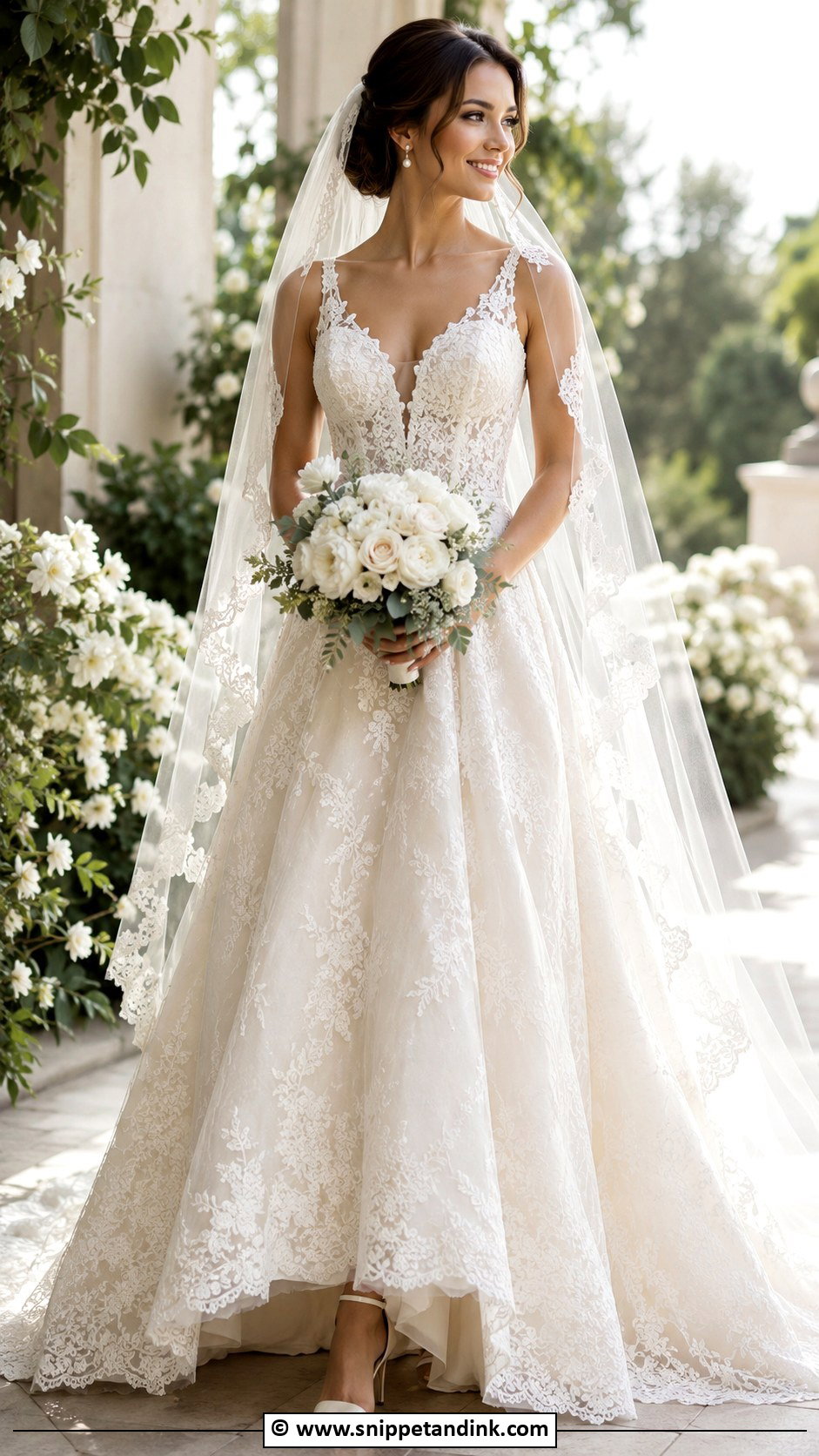
Lace with a veil is the look I’m asked for most, and it is forgiving in a way few fabrics are: the pattern hides small creases and minor fitting quirks. A fitted lace gown gives the classic line; an A-line is easier to walk and sit in. Ivory flatters more skin tones than bright white, which can look slightly blue in photos. I match the veil edge to the lace weight, a thin lace trim rather than a heavy border that competes. Pearl earrings and satin pumps are plenty.
2. Satin Slip Wedding Dress
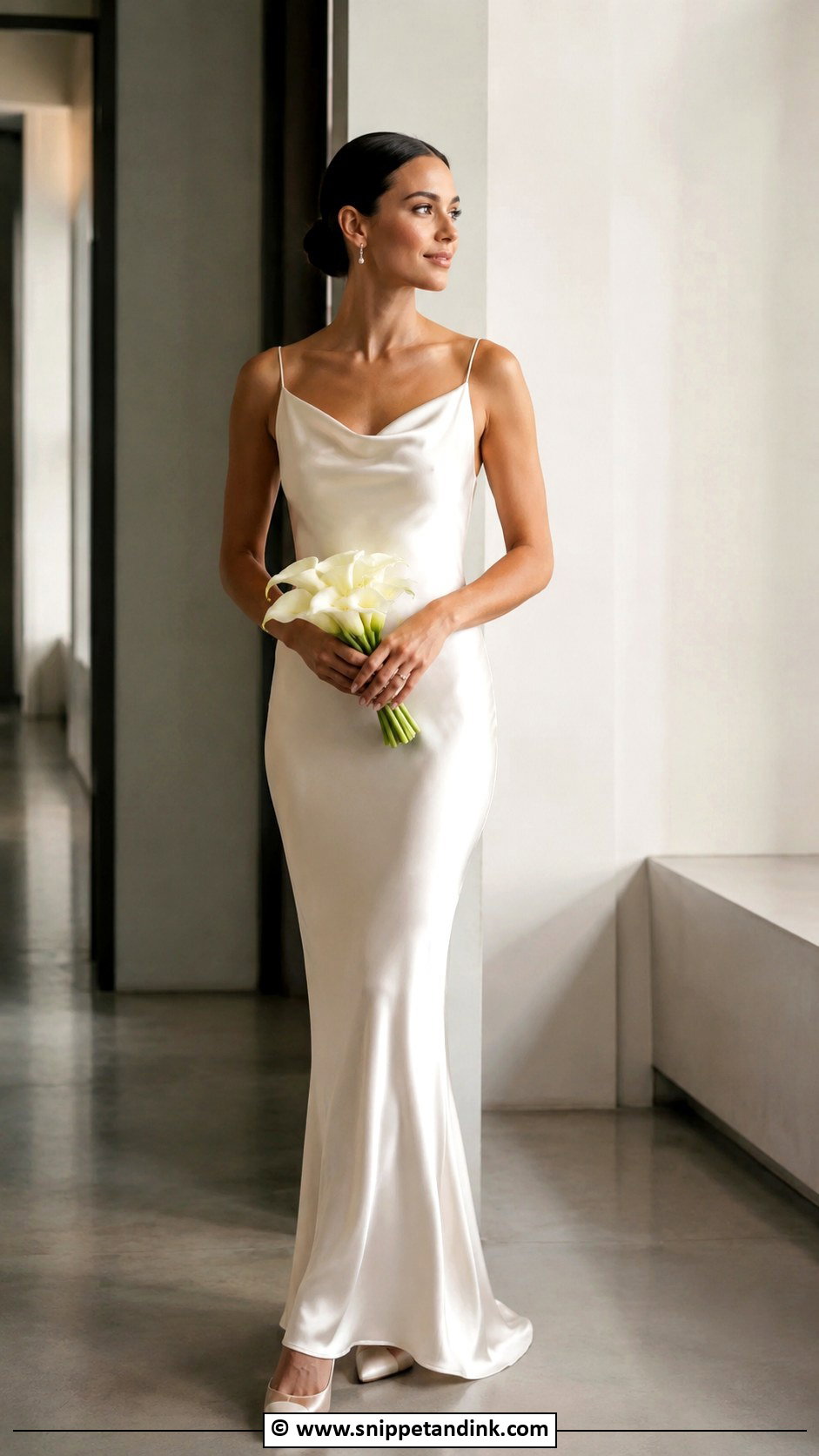
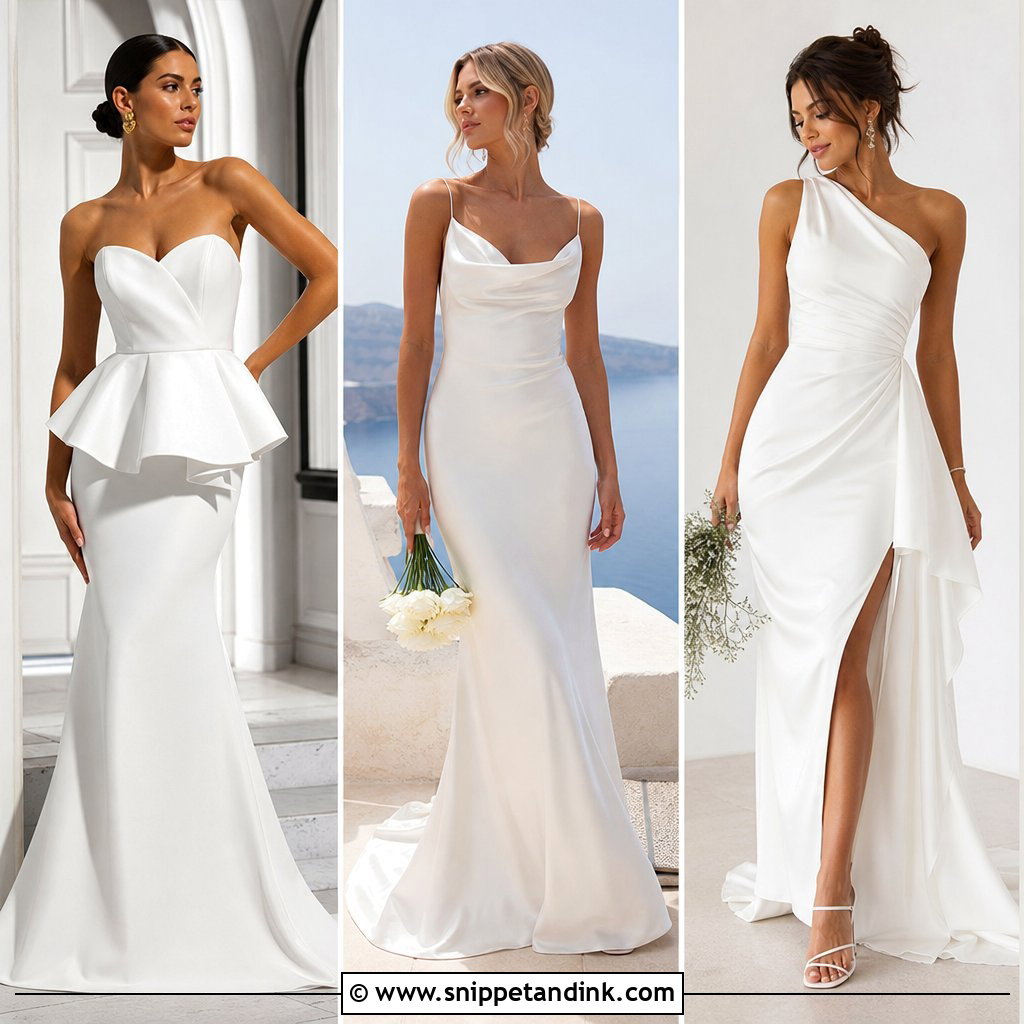
A satin slip is all about fit, because there is nothing to hide behind. Bias-cut satin skims the body, but it also shows every seam and line beneath it, so I fit it over the exact underwear the bride will wear. Cowl, thin-strap and soft square necklines all suit it. Pointed heels, a smooth bun and drop earrings keep the line clean. A fingertip or scarf-style veil adds softness. It is at home in city, beach and rooftop weddings.
3. Ball Gown Wedding Dress
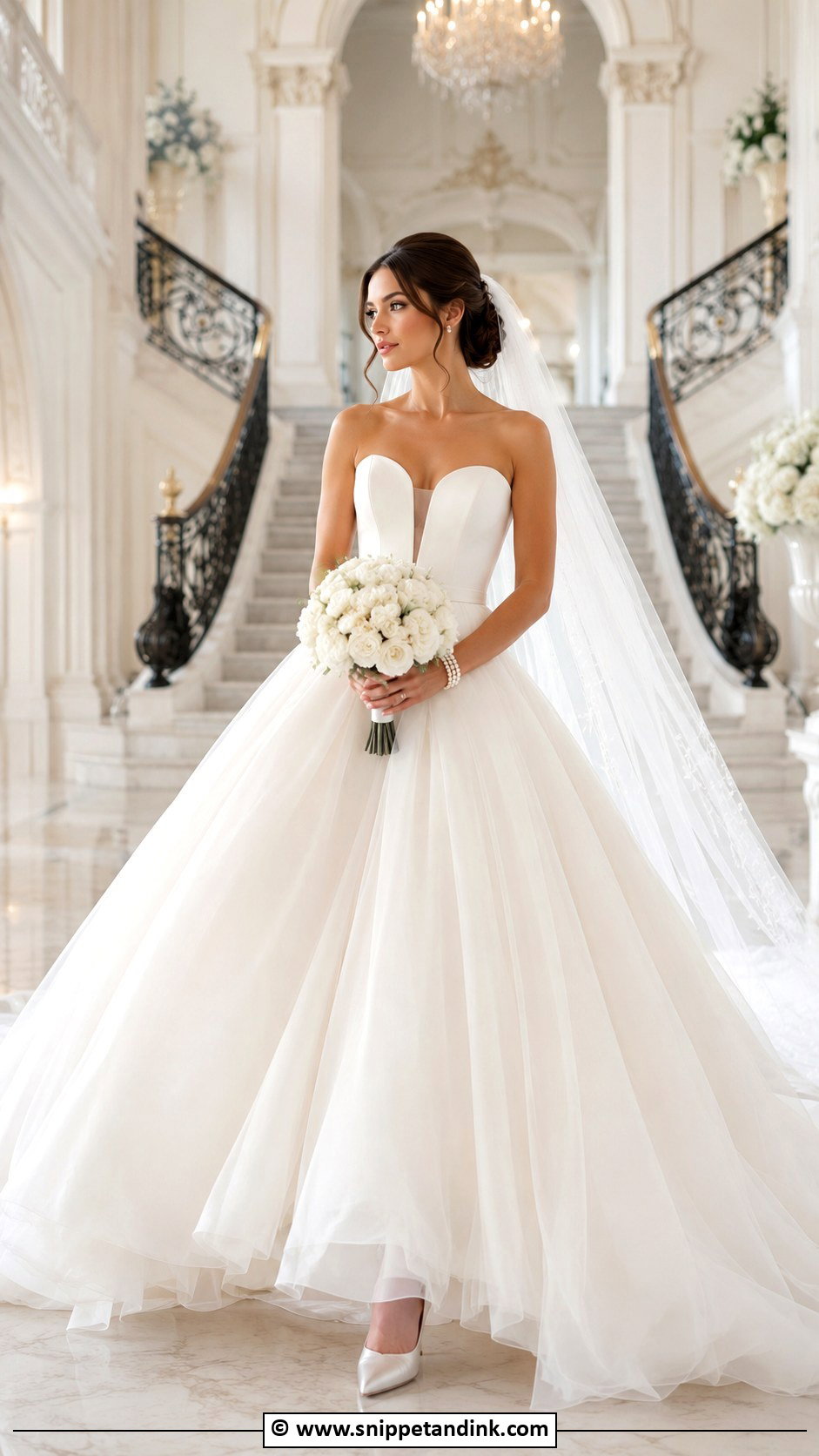
A ball gown makes the entrance, and that is its whole point. To keep it from feeling heavy, I suggest a clean bodice with soft tulle layers or light appliqué rather than embellishment everywhere. Check the weight on the hanger: a full skirt with heavy lining can weigh a lot by the reception. A cathedral veil suits a wide aisle or a staircase. Keep jewelry to studs or one hair piece. Black-tie, ballroom and estate weddings are where it belongs.
4. Off Shoulder Wedding Dress
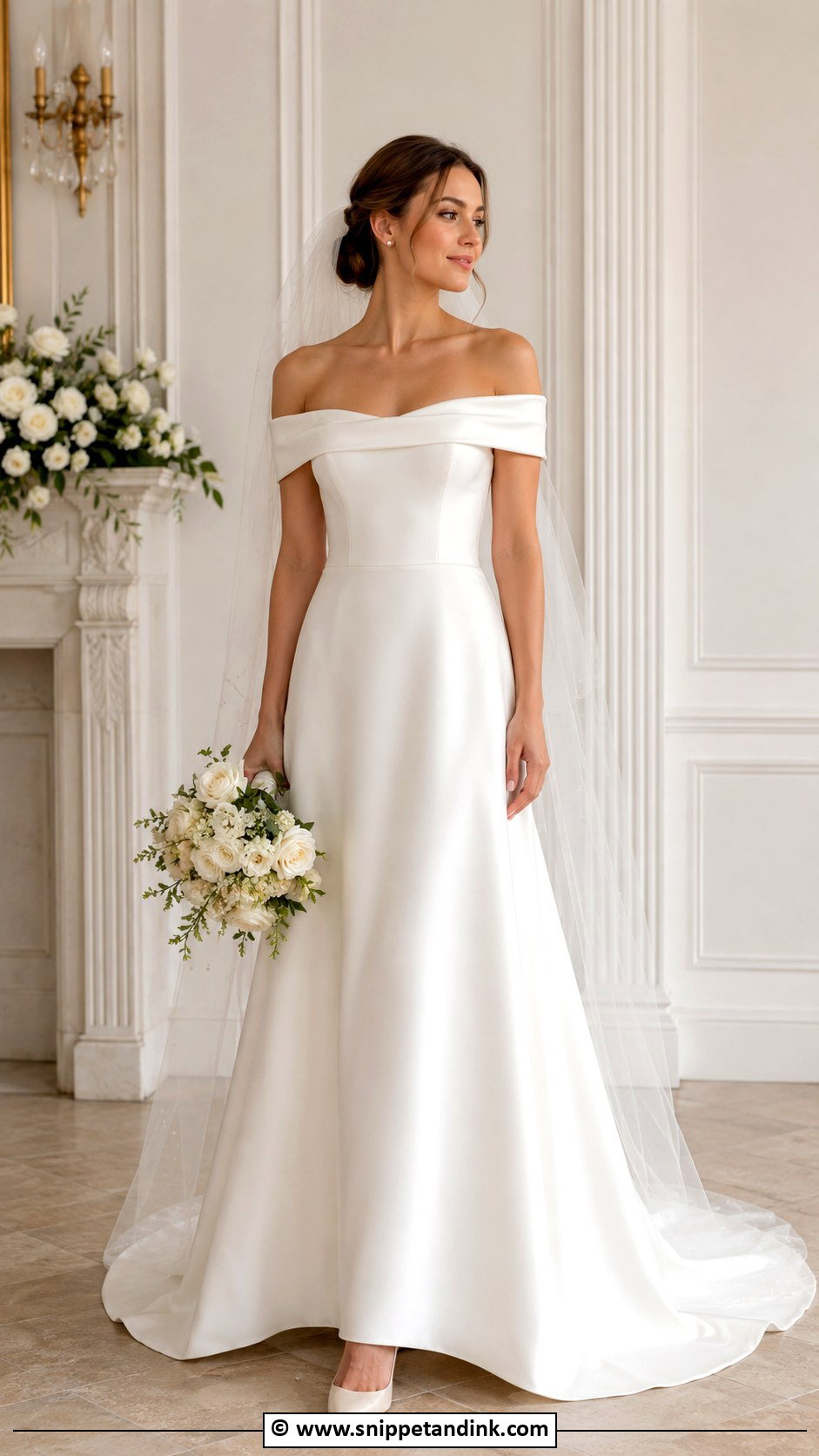
Off-shoulder necklines draw the eye to the collarbone, and they suit many figures for that reason. A structured bodice in satin or crepe looks polished; draped tulle or lace sleeves feel softer. The thing I test is arm movement. If you cannot hug or lift a bouquet without the sleeves tightening, the neckline needs adjusting. A low chignon and a veil set behind the shoulders keep the line clear.
5. Long Sleeve Wedding Dress
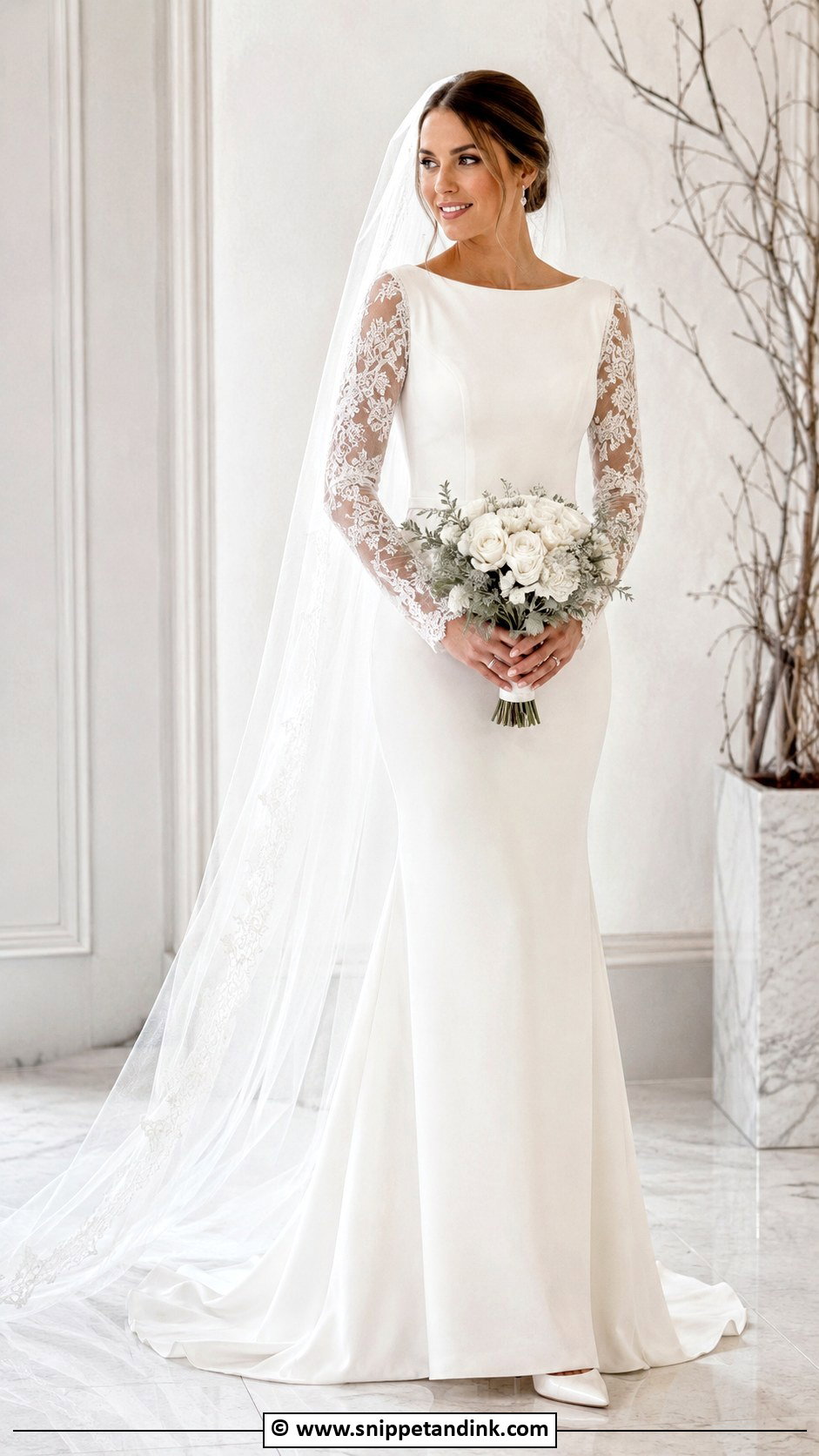
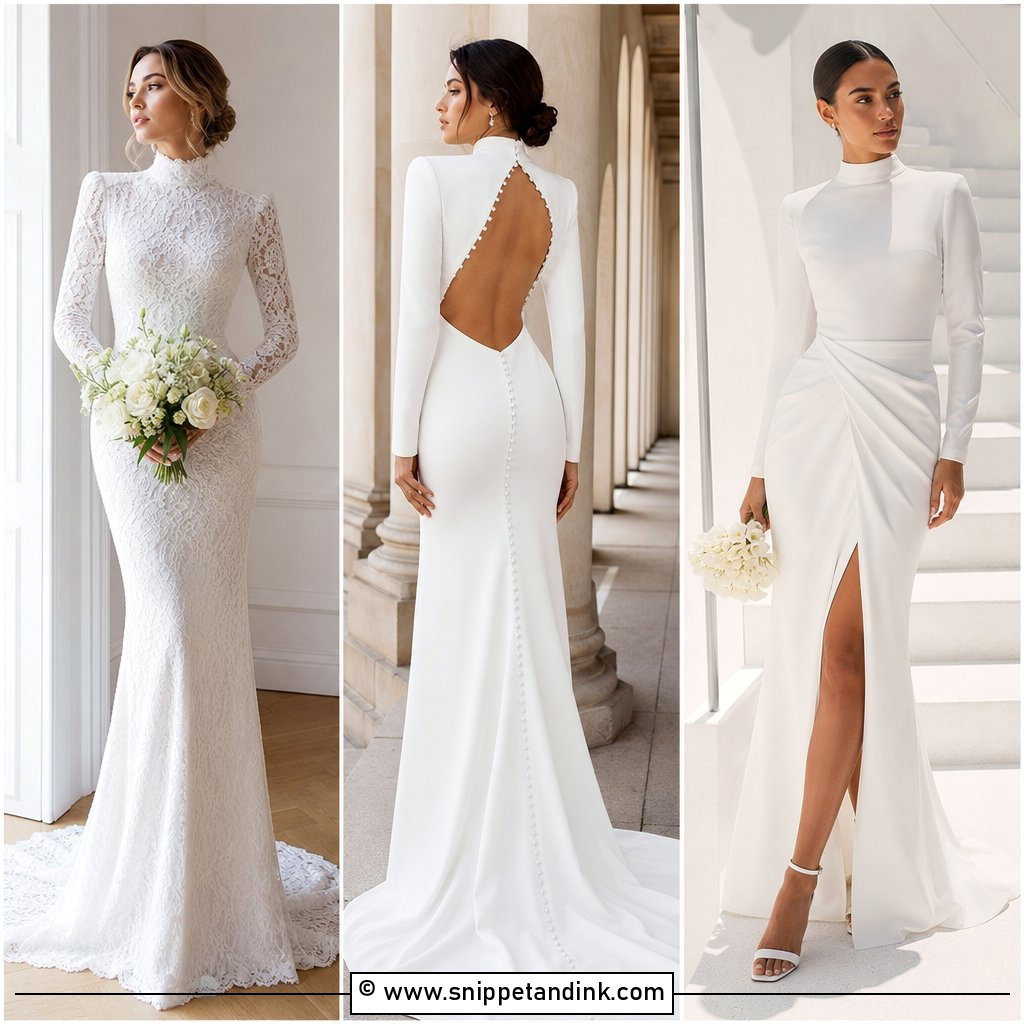
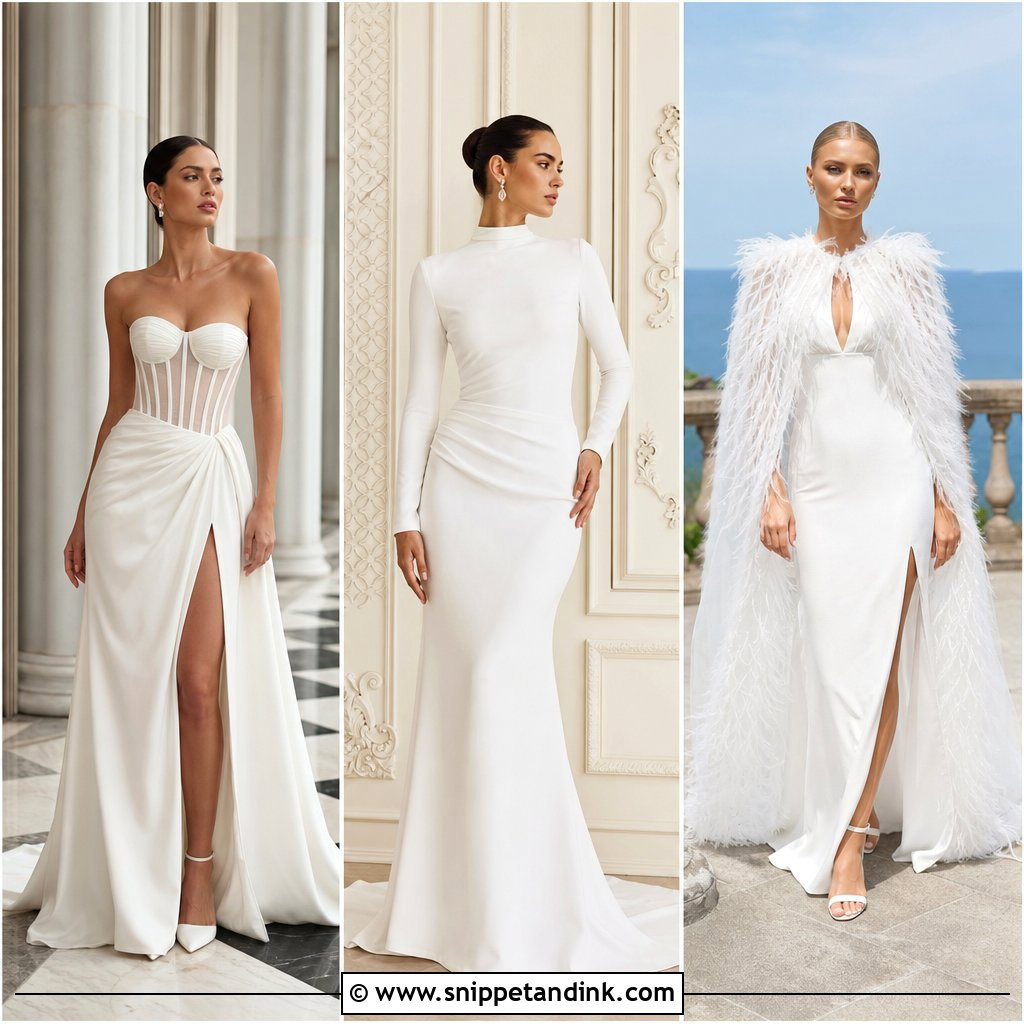
Long sleeves give coverage and a complete outline from every angle. Sheer lace sleeves feel romantic; crepe or satin ones look sleek. They make sense for autumn and winter, and sheer versions work in spring. Ask for the sleeve to be fitted with your arm bent, since a sleeve measured straight pulls at the elbow during the ring exchange. Bateau, V, square and illusion necklines all balance the coverage. Closed-toe heels and simple earrings complete it.
6. Mermaid Wedding Dress
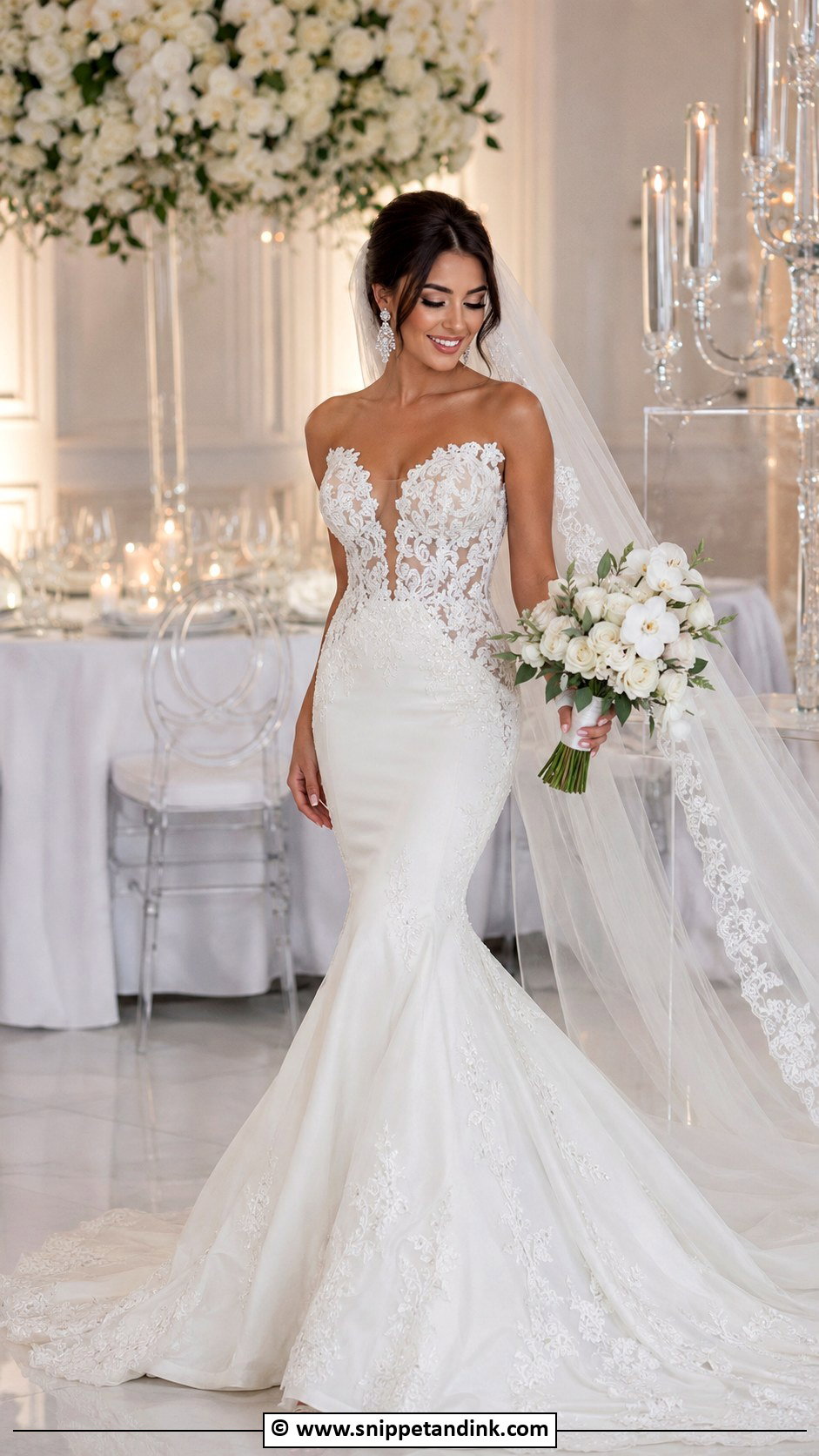
A mermaid fits through the bodice, waist and hips and flares near the knee. I’m honest with brides about the trade-off: the lower the flare, the harder it is to walk, climb steps and sit. Stretch lining or a slightly higher flare makes it far more wearable. Lace feels romantic, satin and crepe look more modern. High heels lengthen the shape, and earrings bring light to the face.
7. A Line Wedding Dress
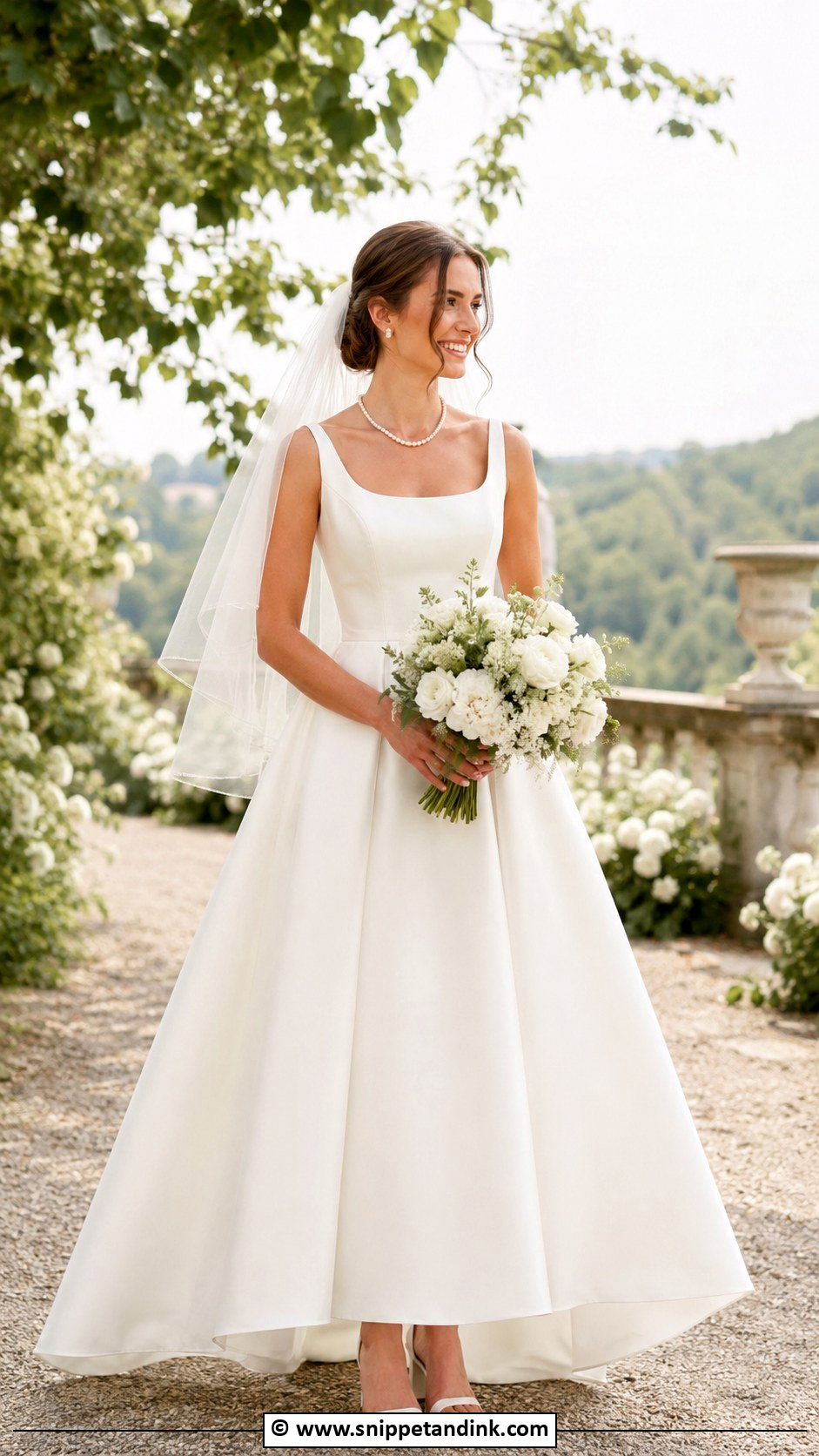
The A-line is the shape I suggest when a bride is unsure, because it defines the waist and skims the hips without restricting movement. It works in almost every venue and season. Satin reads polished; lace or tulle feels softer. Choose shoes for the venue floor, block heels on grass, pumps indoors. A mid-length veil and pearl jewelry finish it.
8. Square Neck Wedding Dress
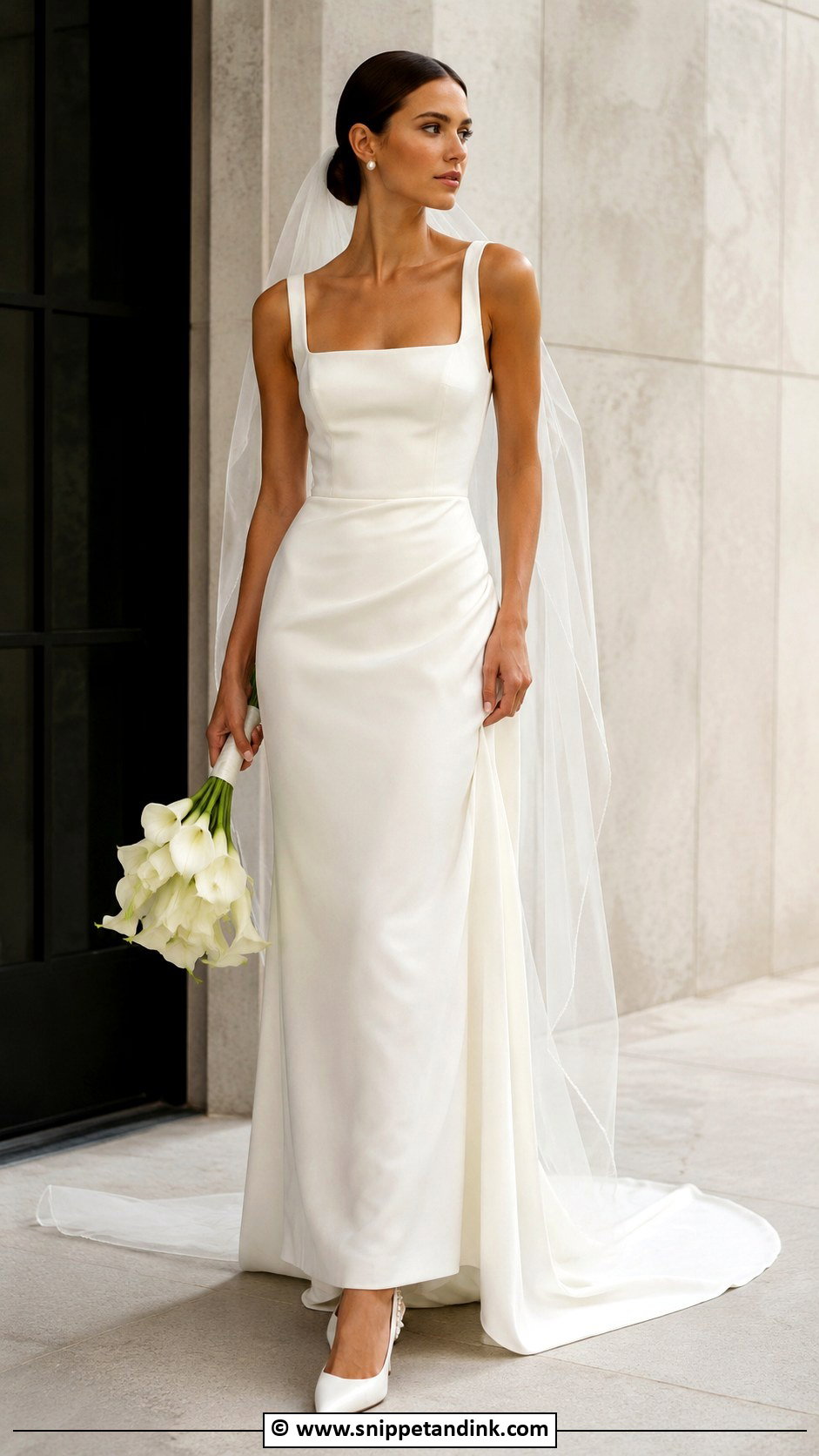
A square neckline frames the face and shoulders with clean lines. It works in crepe, satin, mikado and lace. Choose a fitted column gown for a sleek city look or an A-line skirt for a classic shape. The neckline has to sit flat; if it gapes when you lean forward, ask for it to be taken in at the corners. Pearl studs and pointed heels, plus a sheer veil that does not hide the neckline.
9. Strapless Wedding Dress
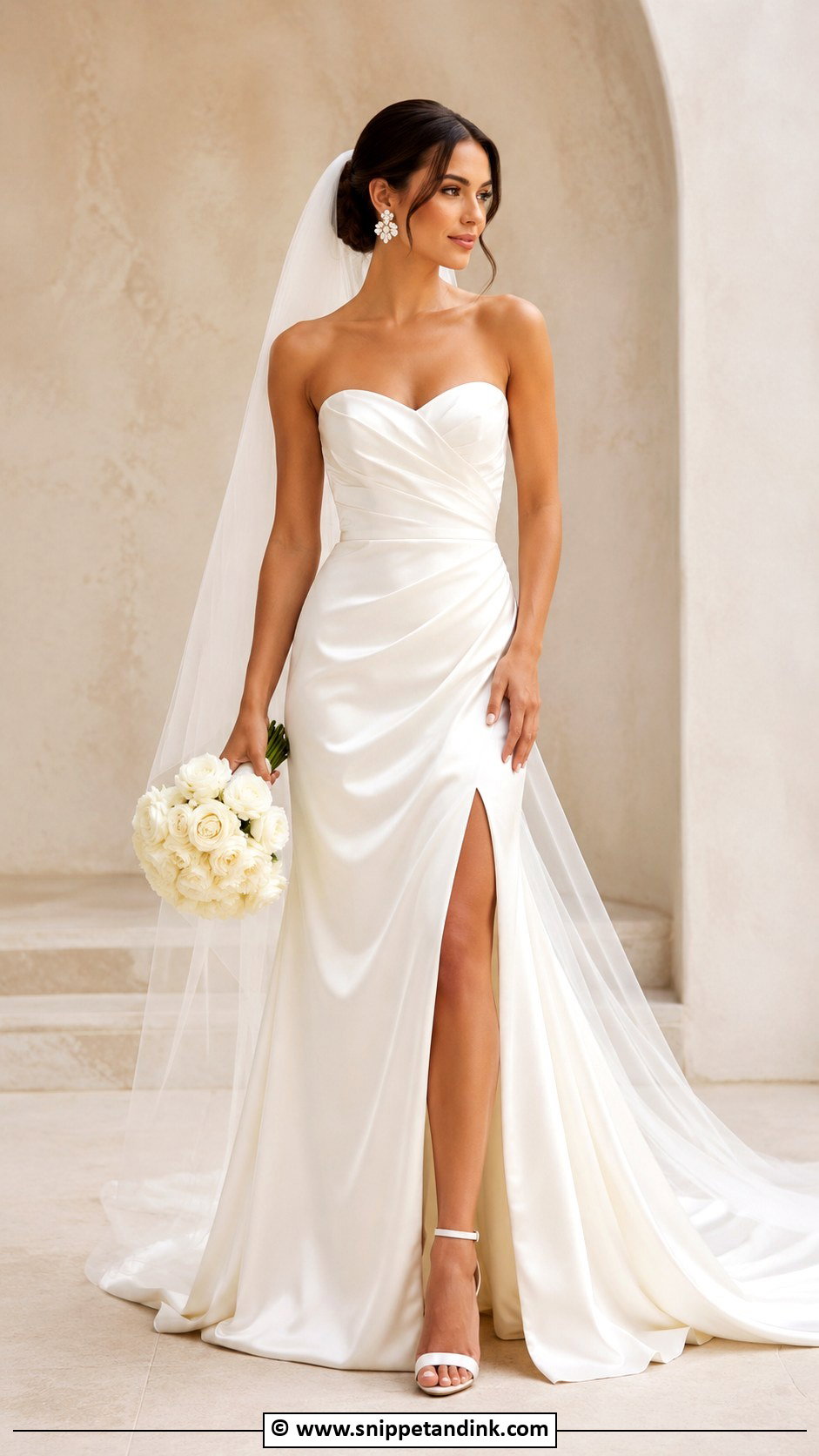
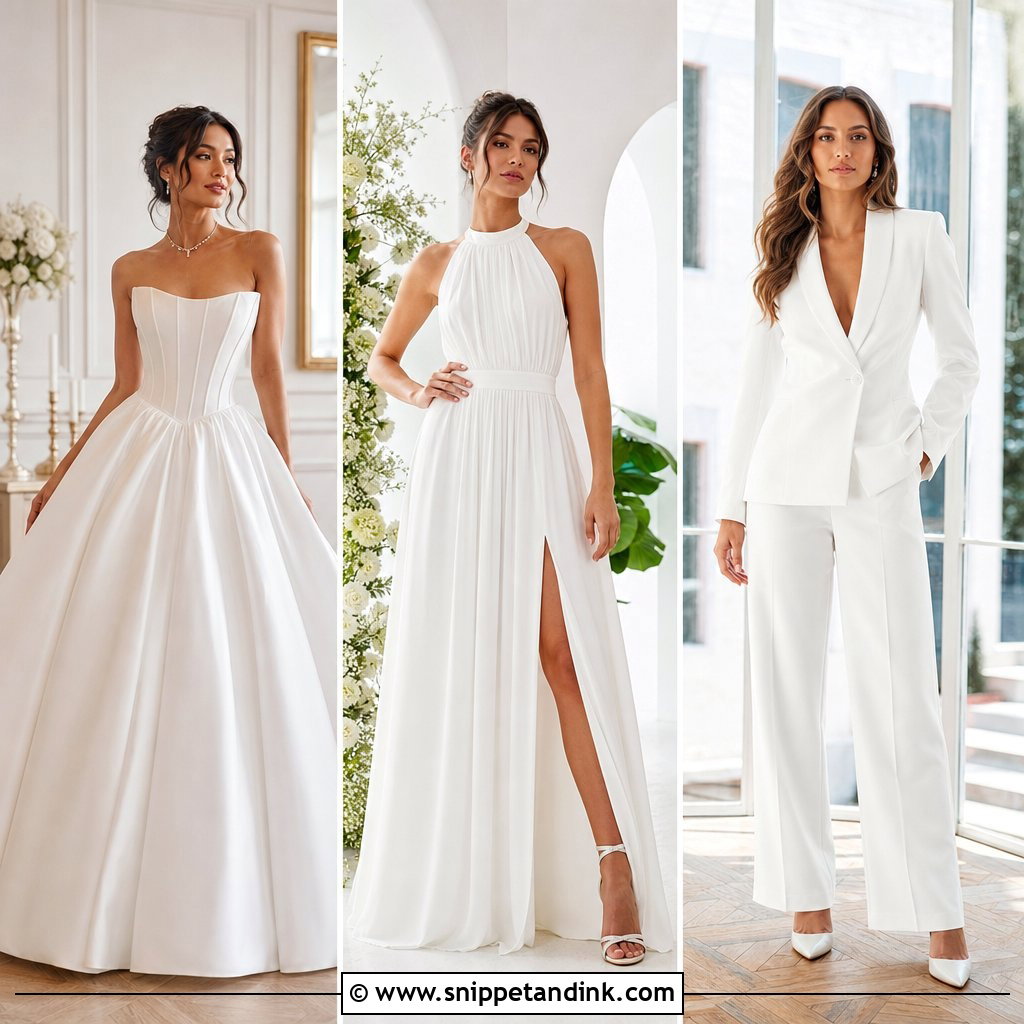
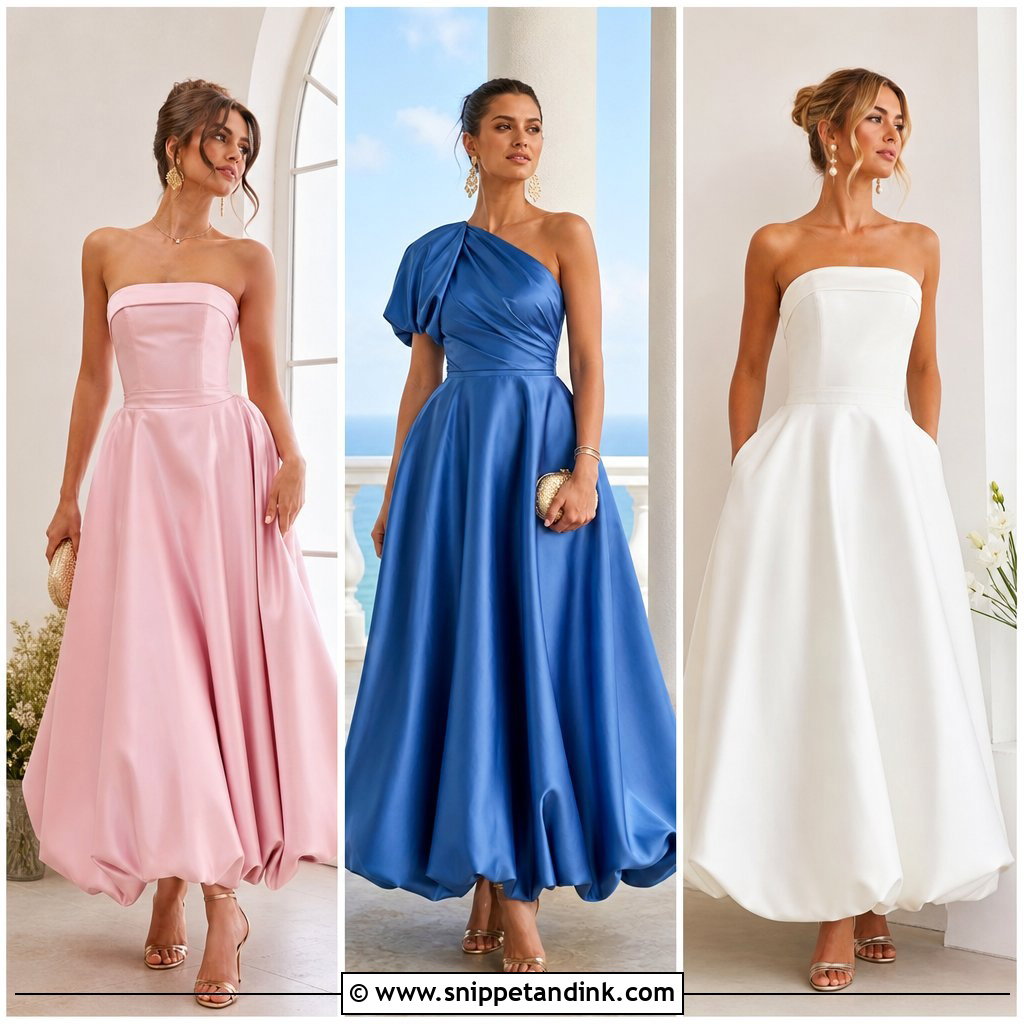
Strapless gowns depend entirely on the bodice. I check for internal boning and a waist stay, because those, not the top edge, are what hold the dress up through a full day. A straight neckline looks modern; a sweetheart softens it. Add a necklace only if the neckline feels bare. Satin ball gowns and lace columns both work, and warm-weather weddings suit it.
10. Pearl Wedding Dress
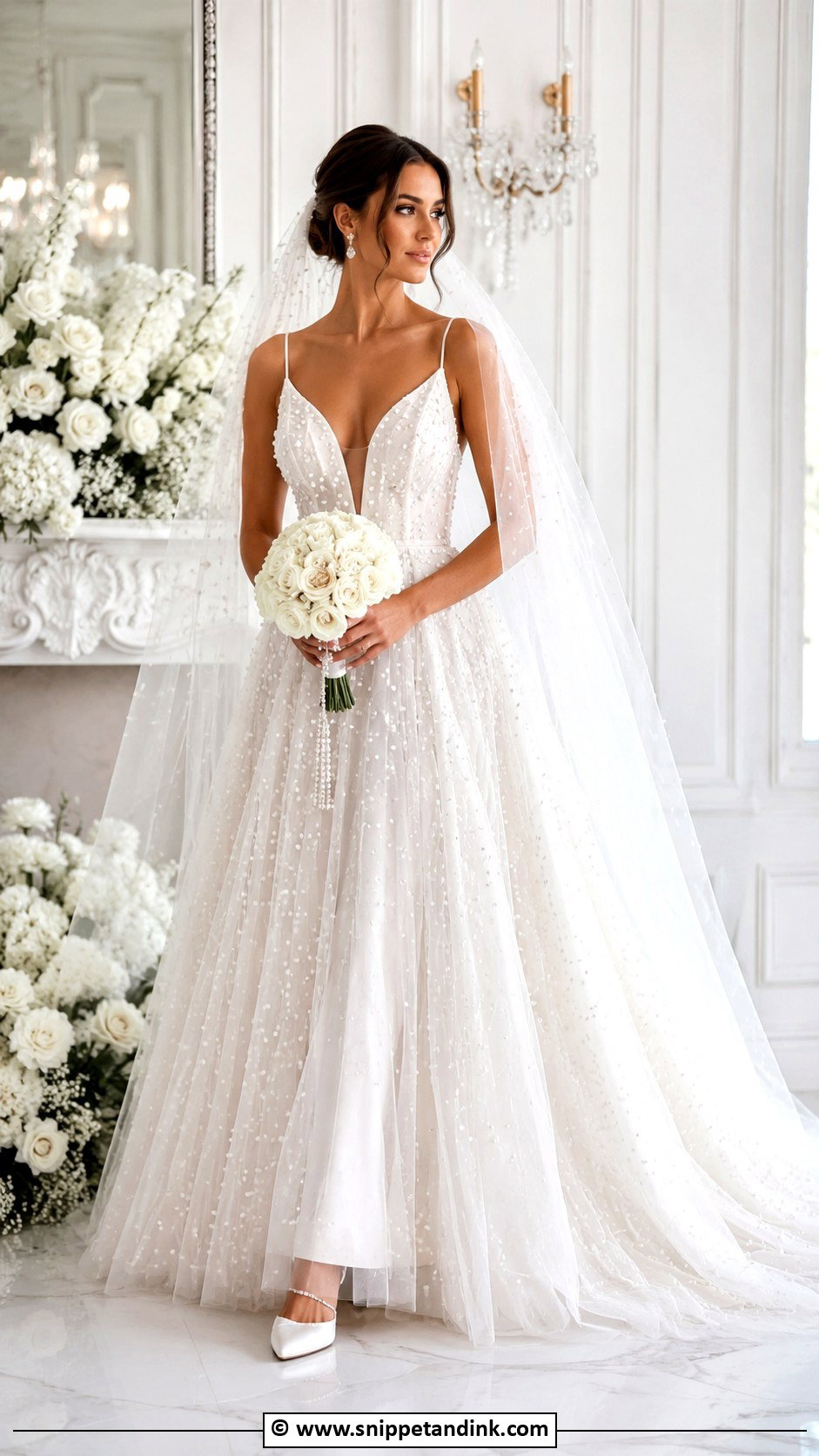
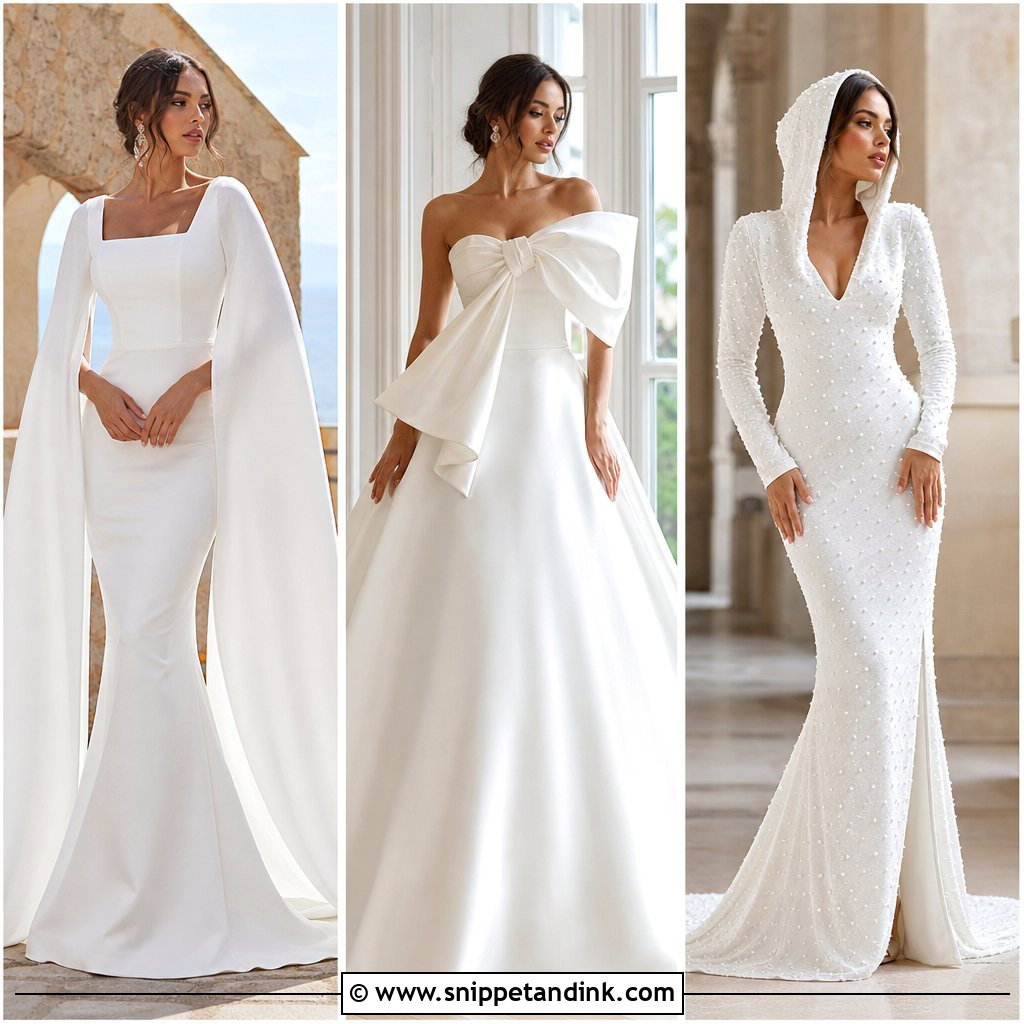
Pearls add texture and catch light without glittering. They can be scattered across tulle, sit lightly on the bodice or cover sleeves and straps. Since the dress is already detailed, I keep accessories to pearl earrings and satin heels. Check how the pearls are attached; loosely sewn pearls catch on lace veils and can pull threads. A sheath, A-line or soft ball gown all carry them.
11. Floral Applique Wedding Dress
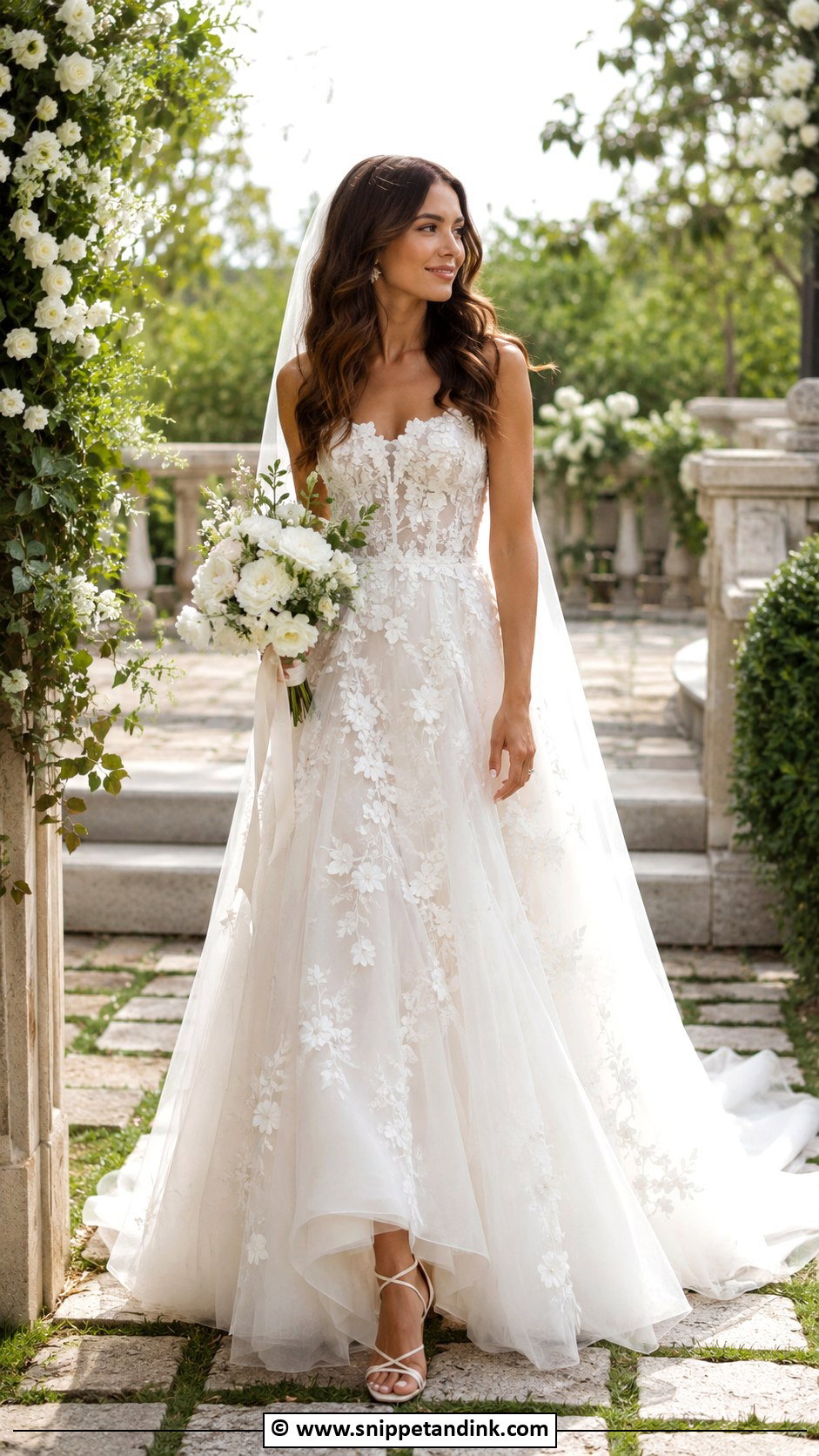
Floral appliqués give texture in a natural way, from bold three-dimensional blooms to small flowers scattered over tulle. Let the dress lead and keep jewelry fresh and small. Loose waves, a soft bun or a half-up style suit it. I always look at the appliqué edges; well-made ones are stitched flat, while glued pieces lift after a few hours of hugging. Garden and spring weddings are where it fits best.
12. Tea Length Wedding Dress
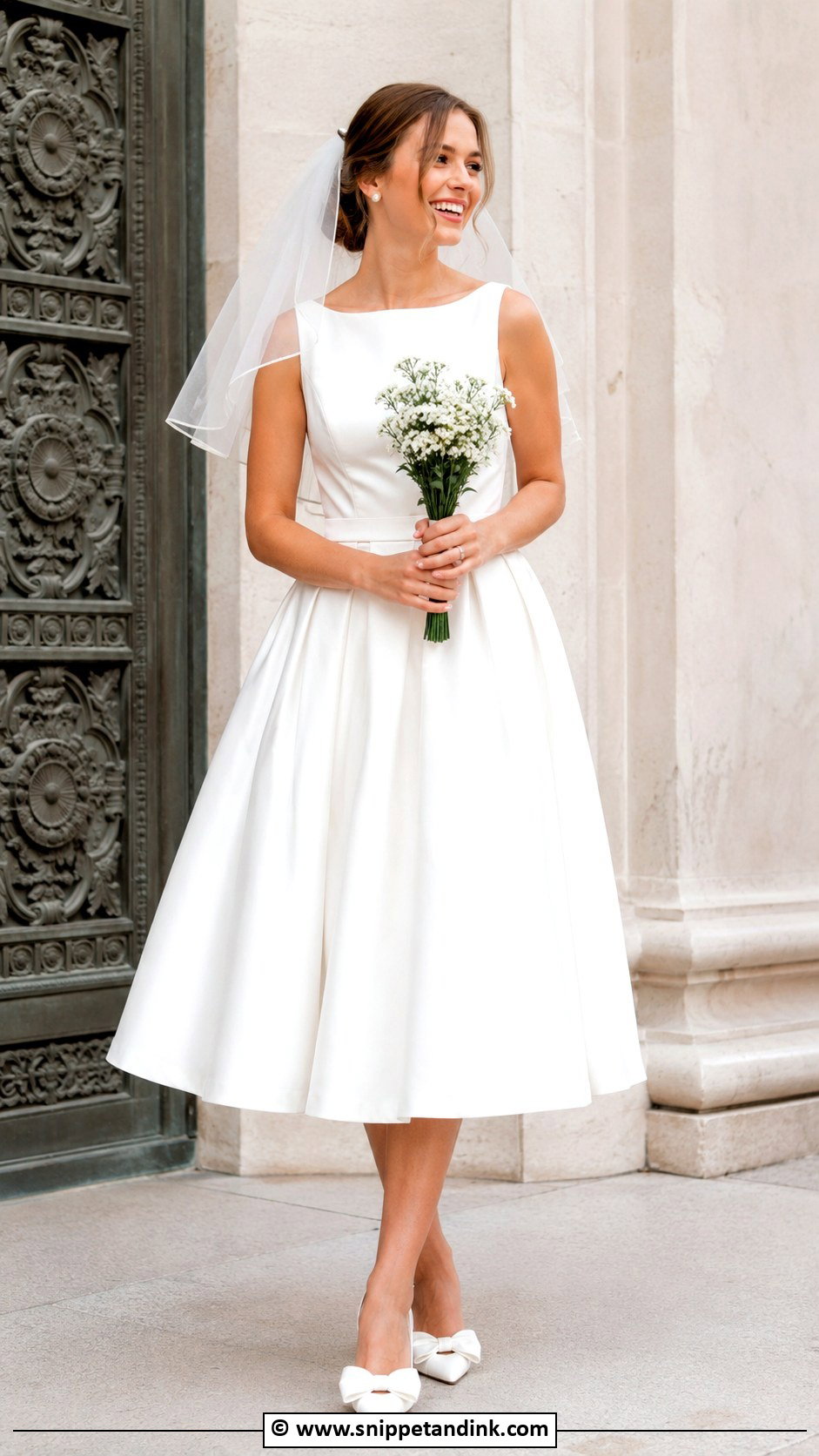
A tea-length dress falls between knee and ankle, so the shoes are seen and become part of the look. Satin pumps, bow heels or embellished flats all work. A fitted bodice with a full skirt feels vintage; a clean tea length reads modern. Add a short veil and a small bouquet to keep the proportions right. Courthouse weddings, garden parties and receptions suit it, and it is easy to dance in.
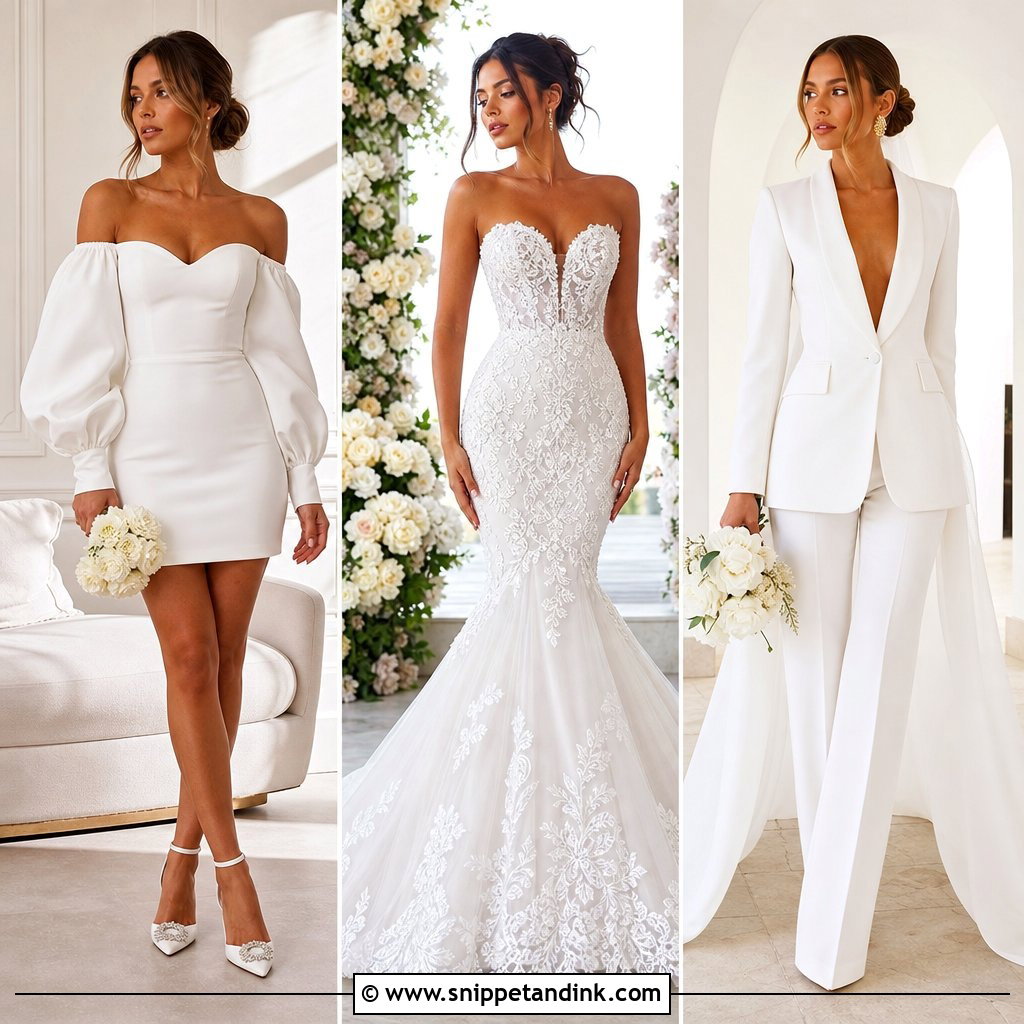
13. Bridal Mini Dress
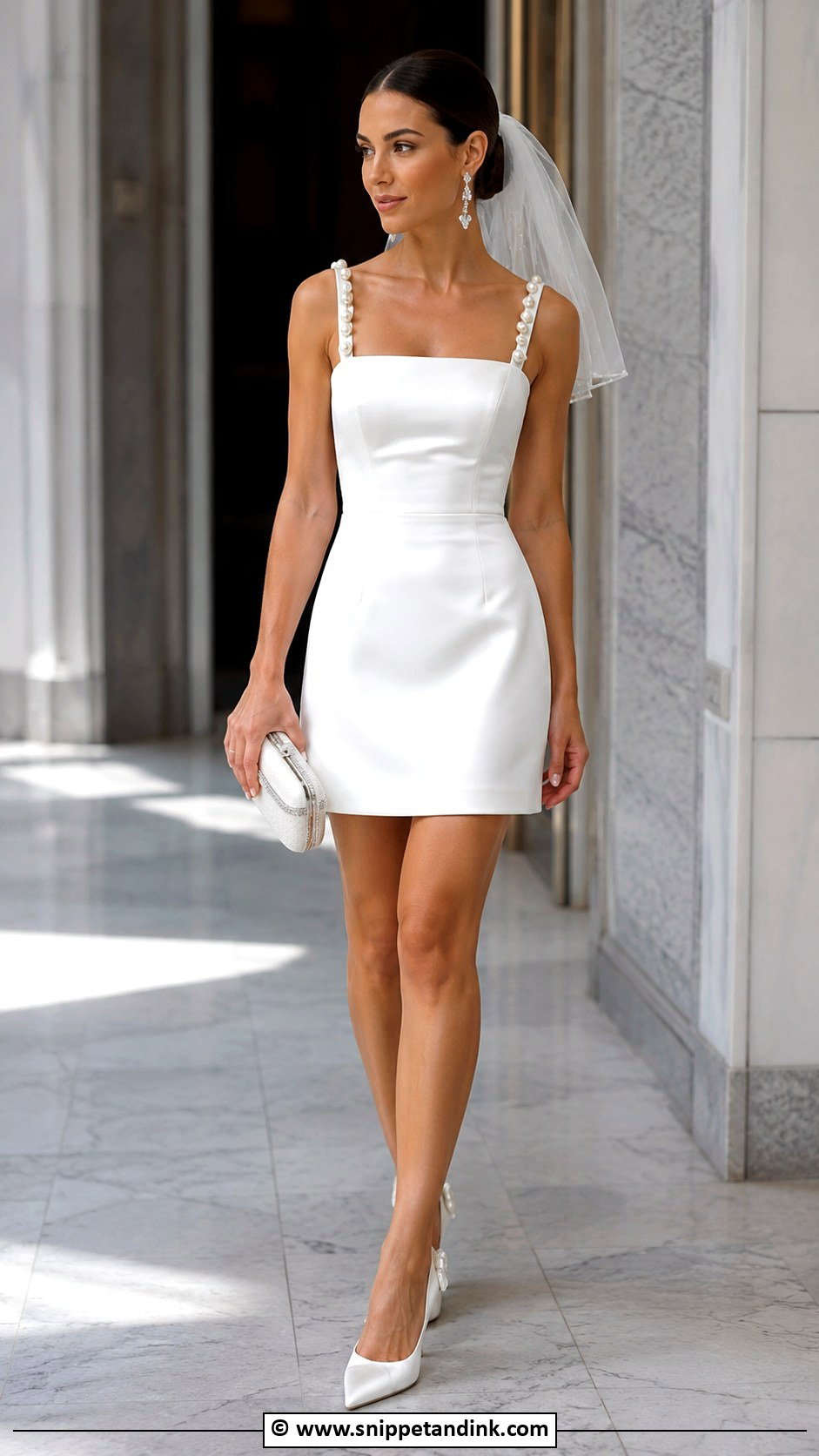
A mini reads bridal when the details do the work: satin, feathers, pearls, a bow or a sculpted neckline. Without them it can look like a party dress. Pointed pumps, platforms or embellished slingbacks suit it, with a short veil, pearl headband or structured clutch. Sheer tights or a tailored blazer add coverage. I like it for civil ceremonies, elopements and a second outfit that is easy to move in.
14. Bridal Jumpsuit With Cape
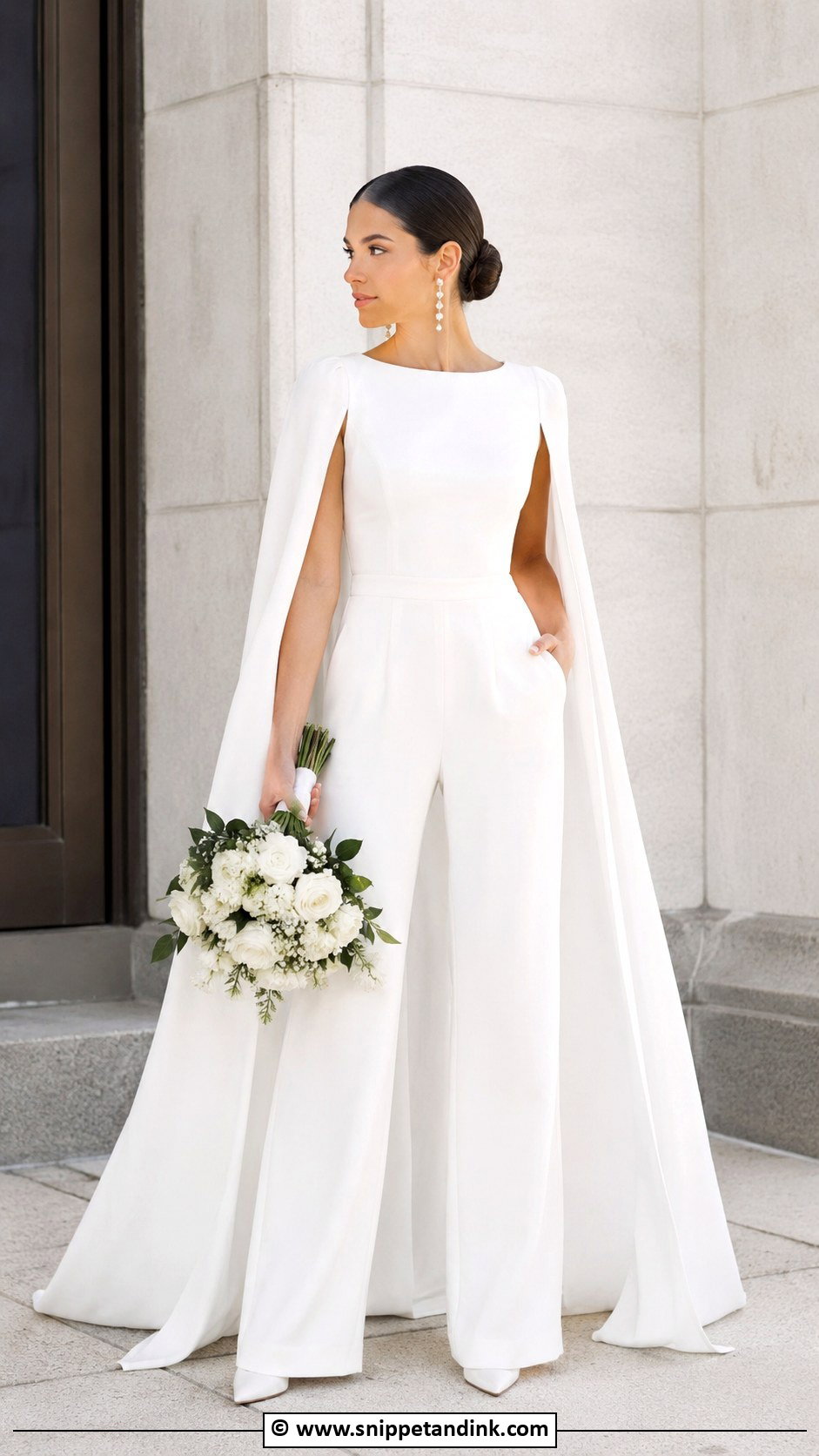
A jumpsuit with a detachable cape gives you ceremony drama and complete freedom later. Look for a fitted waist, wide legs and a smooth bodice in white or ivory. Hem the legs for your exact shoes, because a jumpsuit that is a little long trips you on the aisle. The cape comes off for the reception. Pointed heels and a structured bouquet keep it sharp, and it suits city and civil ceremonies.

15. Bridal Suit With Heels
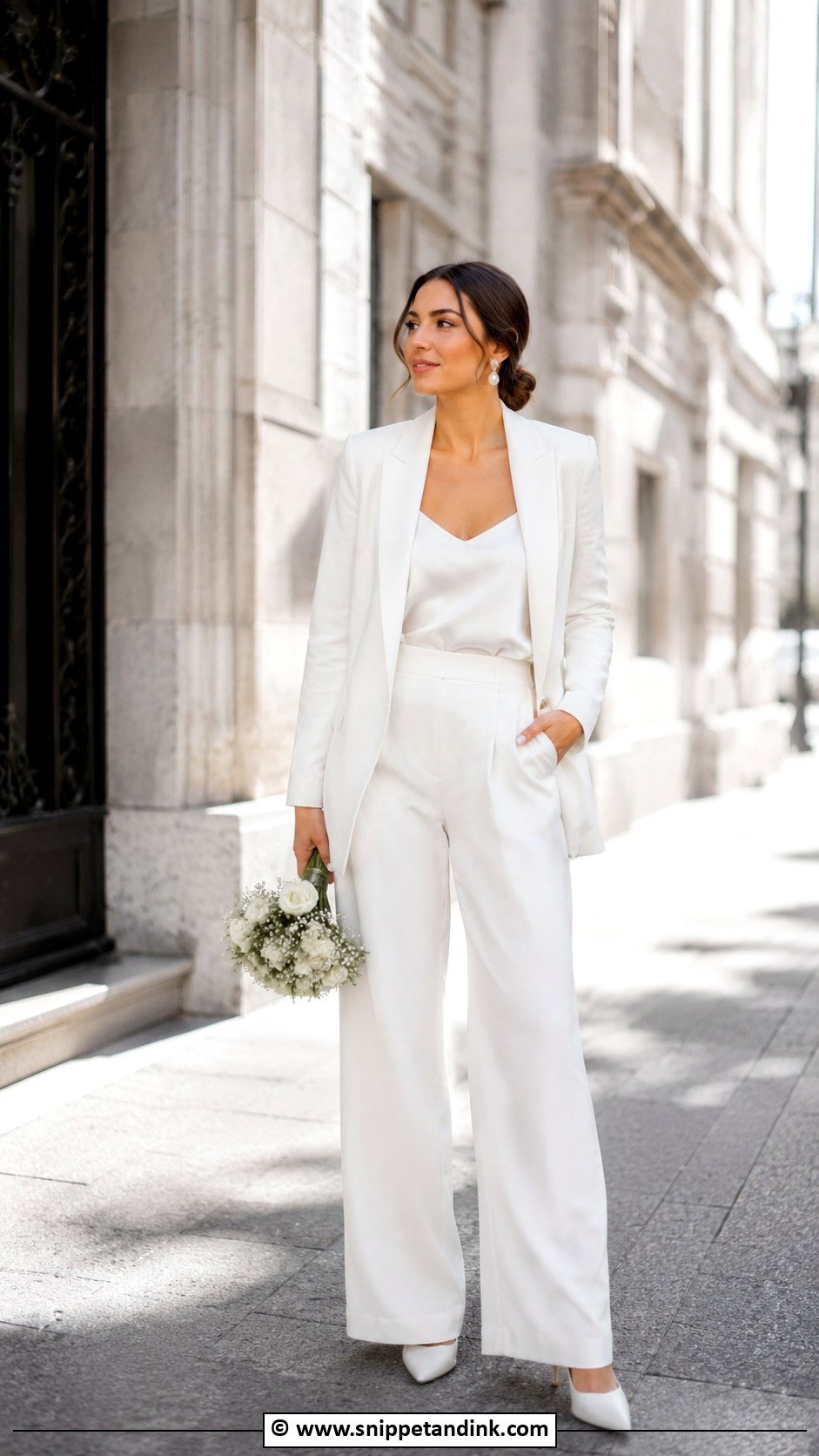
A bridal suit with heels is for the bride who feels most herself in tailoring. Ivory, white and soft cream all work. Wide-leg trousers with a blazer feel elegant; a fitted suit is sleeker. Under it, a silk camisole, a lace top or nothing visible if the blazer closes securely. I always have the bride sit and raise her arms in it, since tailored jackets pull at the button when seated. A birdcage or long veil makes it read bridal.
16. Corset Wedding Dress
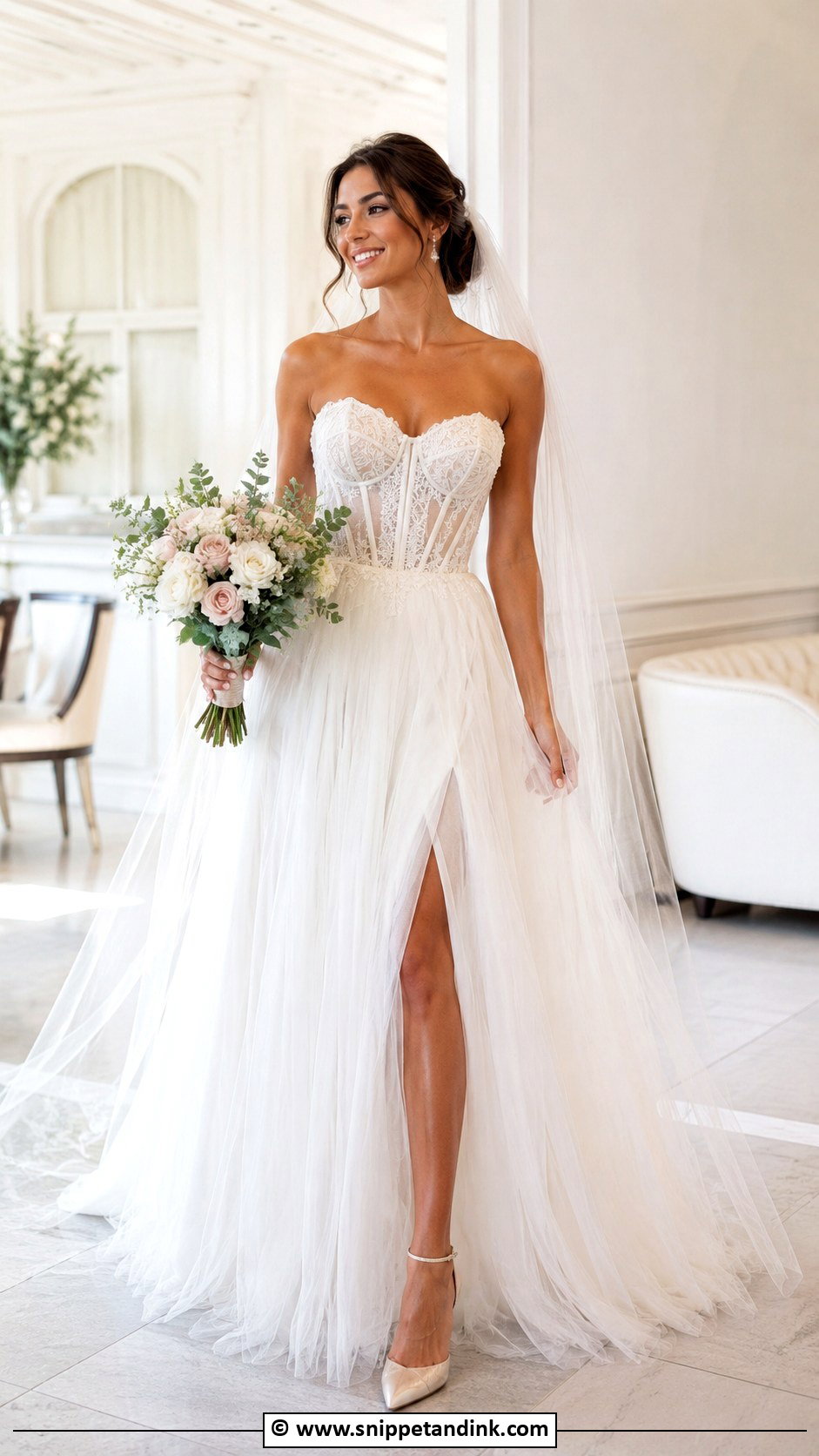
A corset bodice gives support and a defined waist, either as visible boning for a fashion look or hidden inside the bodice. Pair it with a full tulle skirt for a princess shape or a fitted gown for something current. The corset must be fitted with the bride seated as well as standing; a corset that is comfortable standing can dig in at the hips during dinner. A sheer veil softens a strongly structured bodice.
17. Drop Waist Wedding Dress
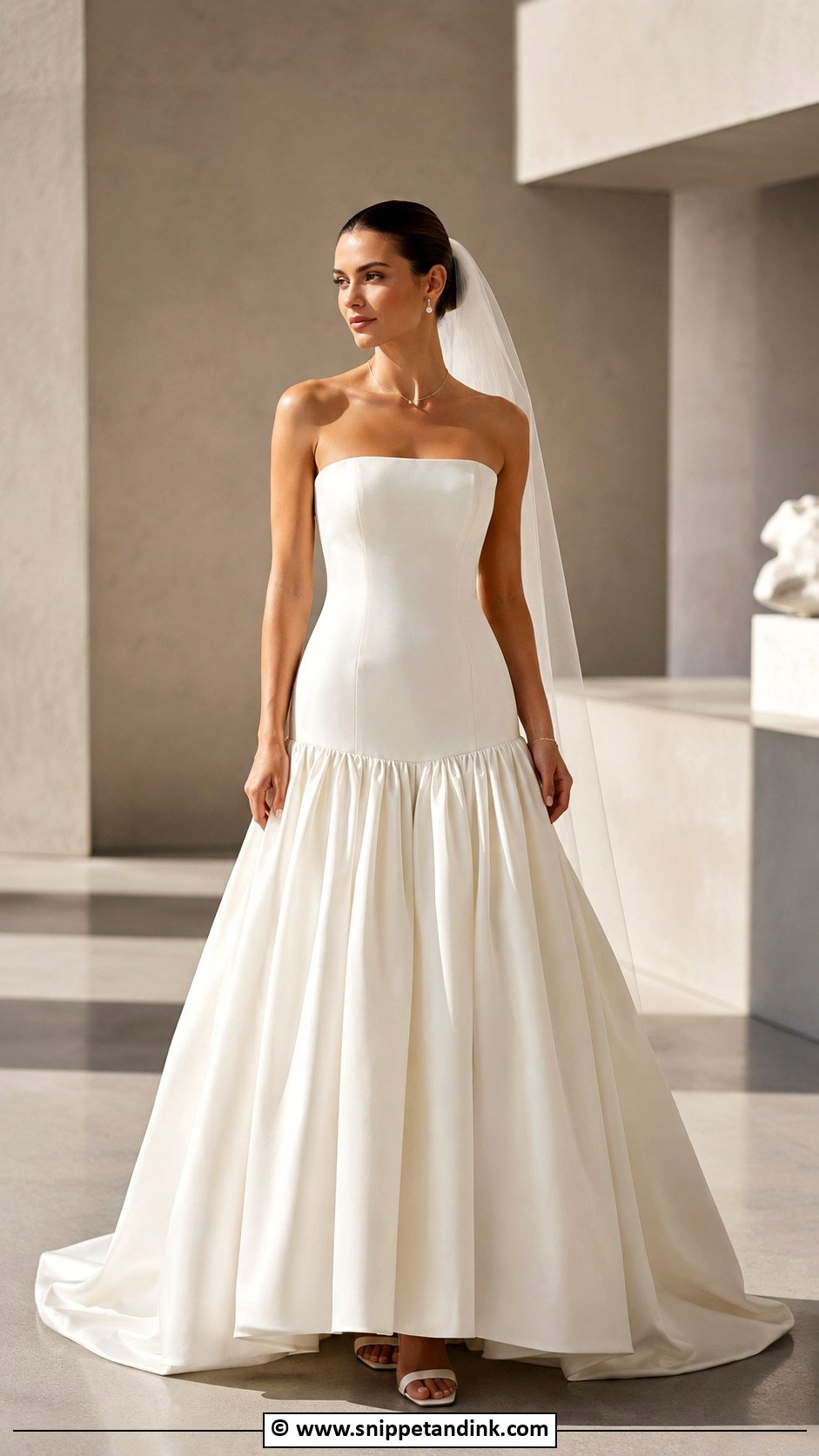
A drop waist moves the seam below the natural waist, lengthening the torso and letting the skirt fall from the hip. Satin, tulle, lace and mikado all suit it. Not every figure benefits; on a short torso it can make the legs look shorter, so try it with the heel you will wear. Choose a fitted bodice with a gathered skirt for a softer version, and a veil that starts low.
18. Bow Wedding Dress
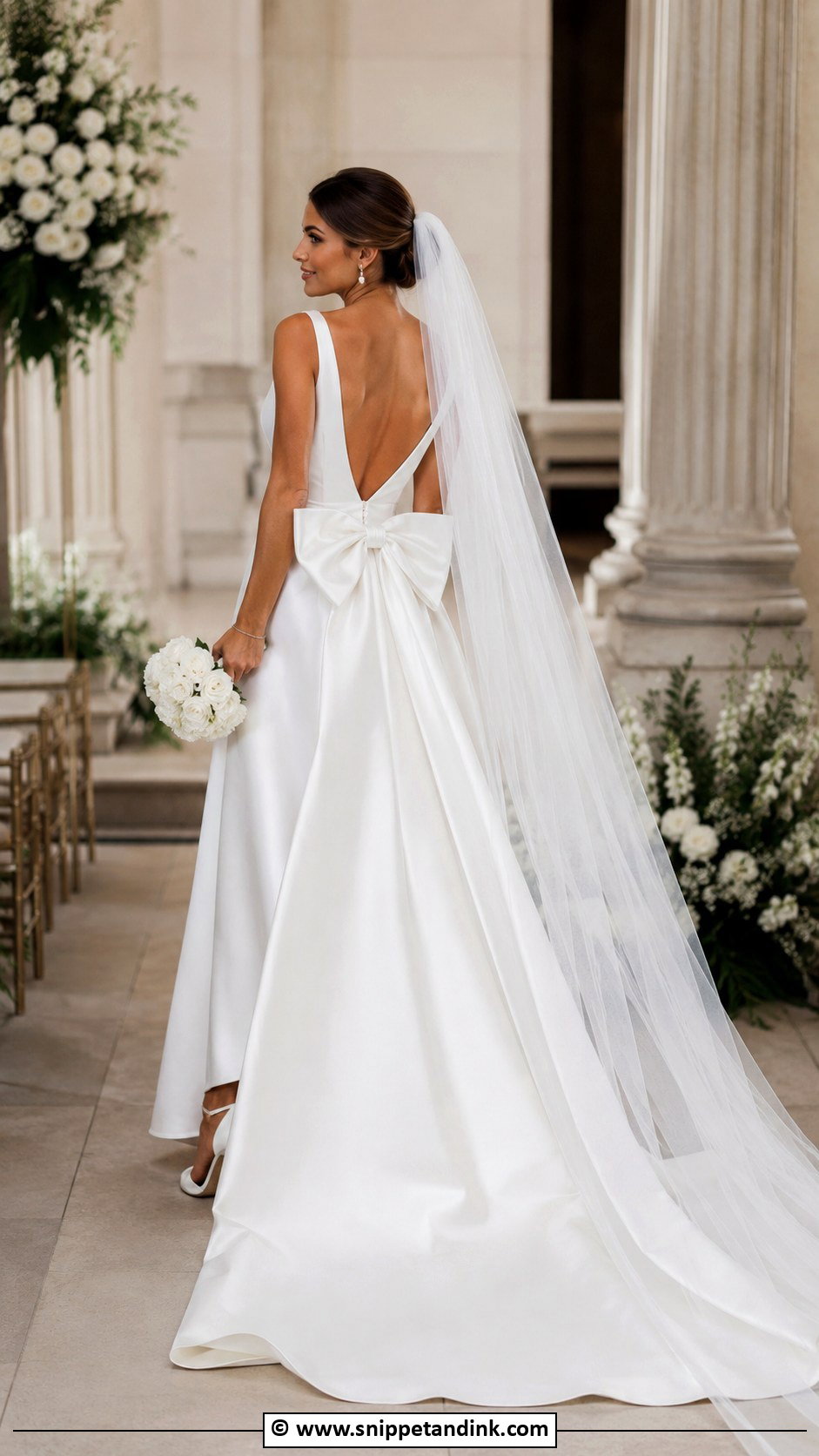
A bow wedding dress works best with one bow, placed with purpose. At the back waist it makes the aisle view; on the shoulder it frames the face; as a detachable train accent it comes off for dancing. Satin bows hold their shape better than soft chiffon ones, which wilt in heat. Keep the bouquet neat so the bow stays visible in photos.
19. High Neck Wedding Dress
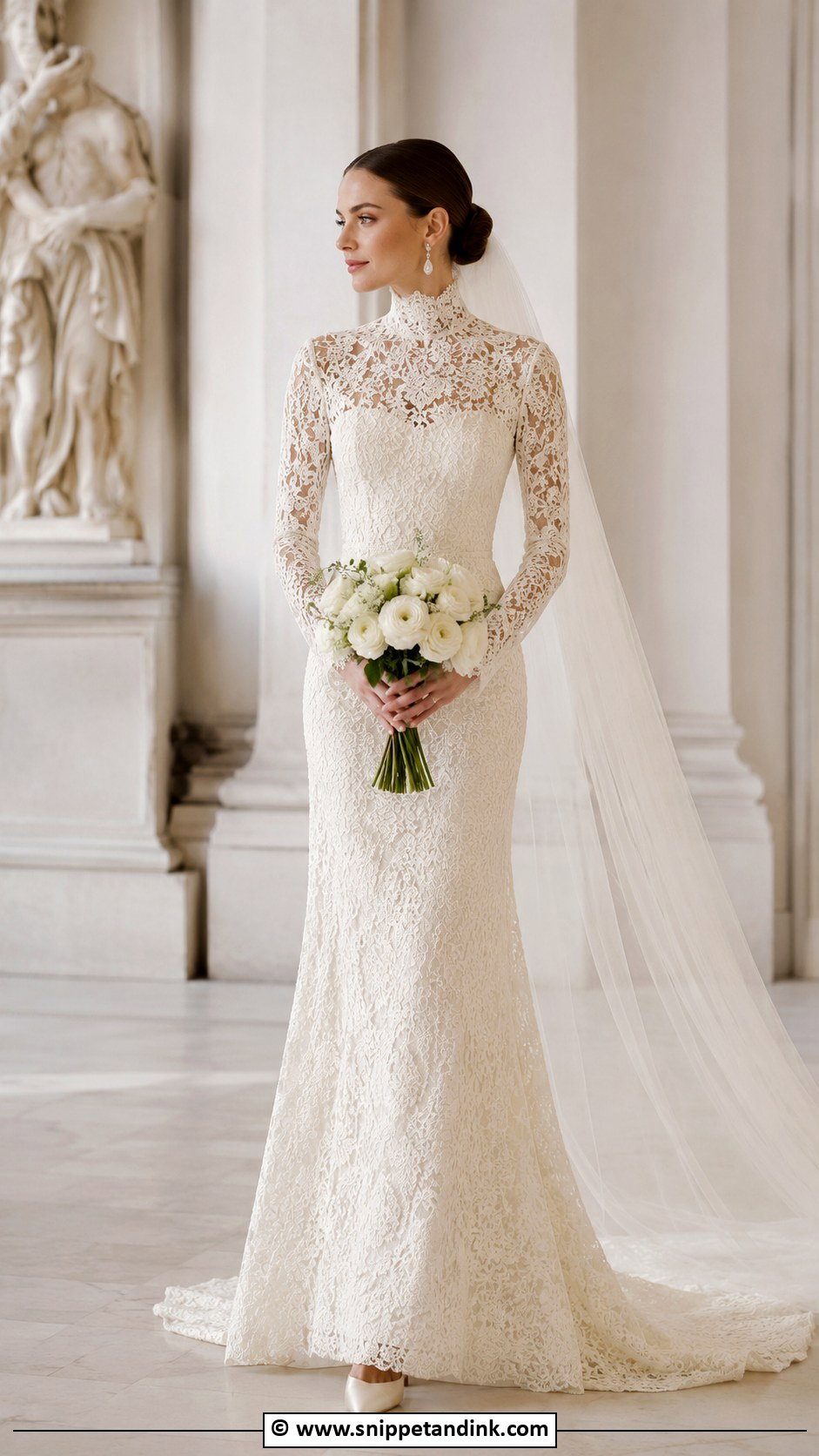
A high neck feels regal and suits lace, crepe, satin or illusion fabric. With the chest covered, skip the necklace and lean on earrings, a bracelet or a hair accessory. A sleek bun or low ponytail shows the neckline. Check the collar with your head turned; a high neck that is too snug rubs by the evening. It suits cooler seasons and formal or museum venues.
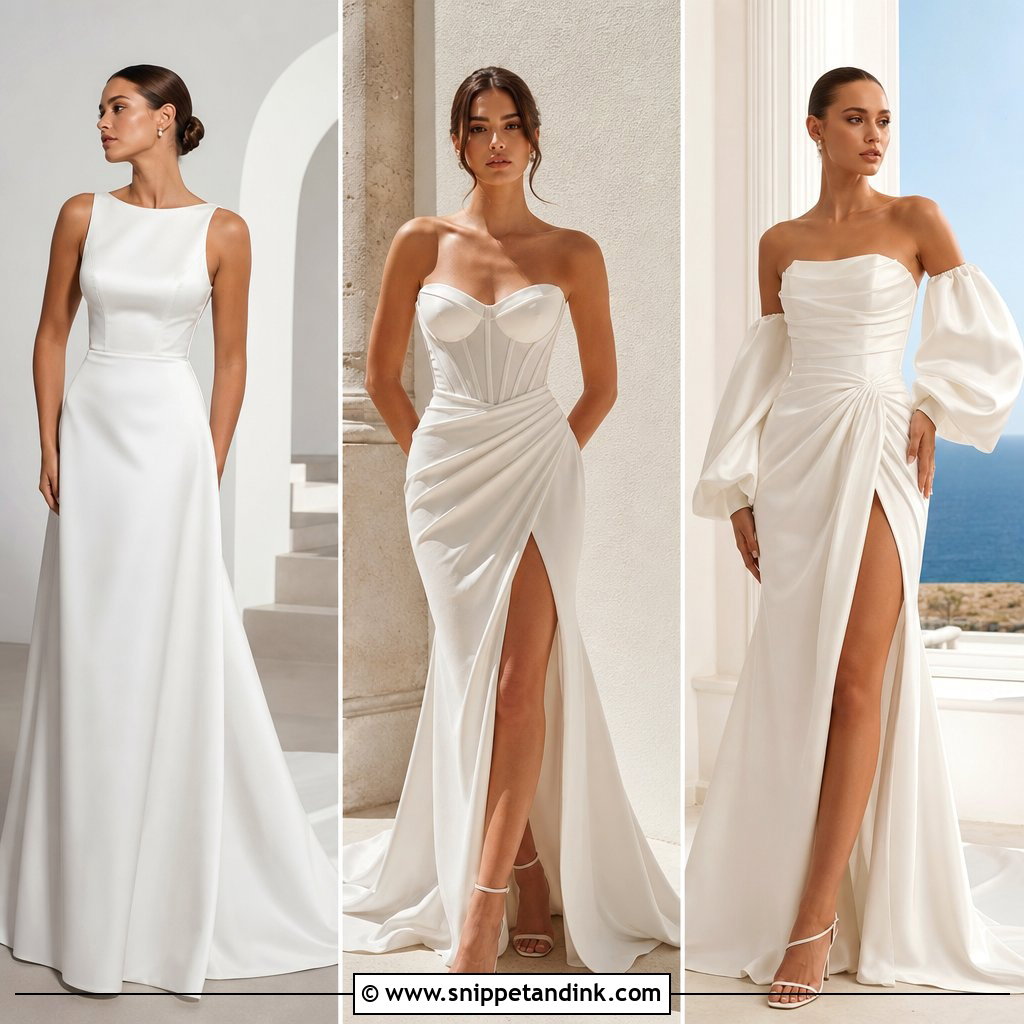


20. Backless Wedding Dress
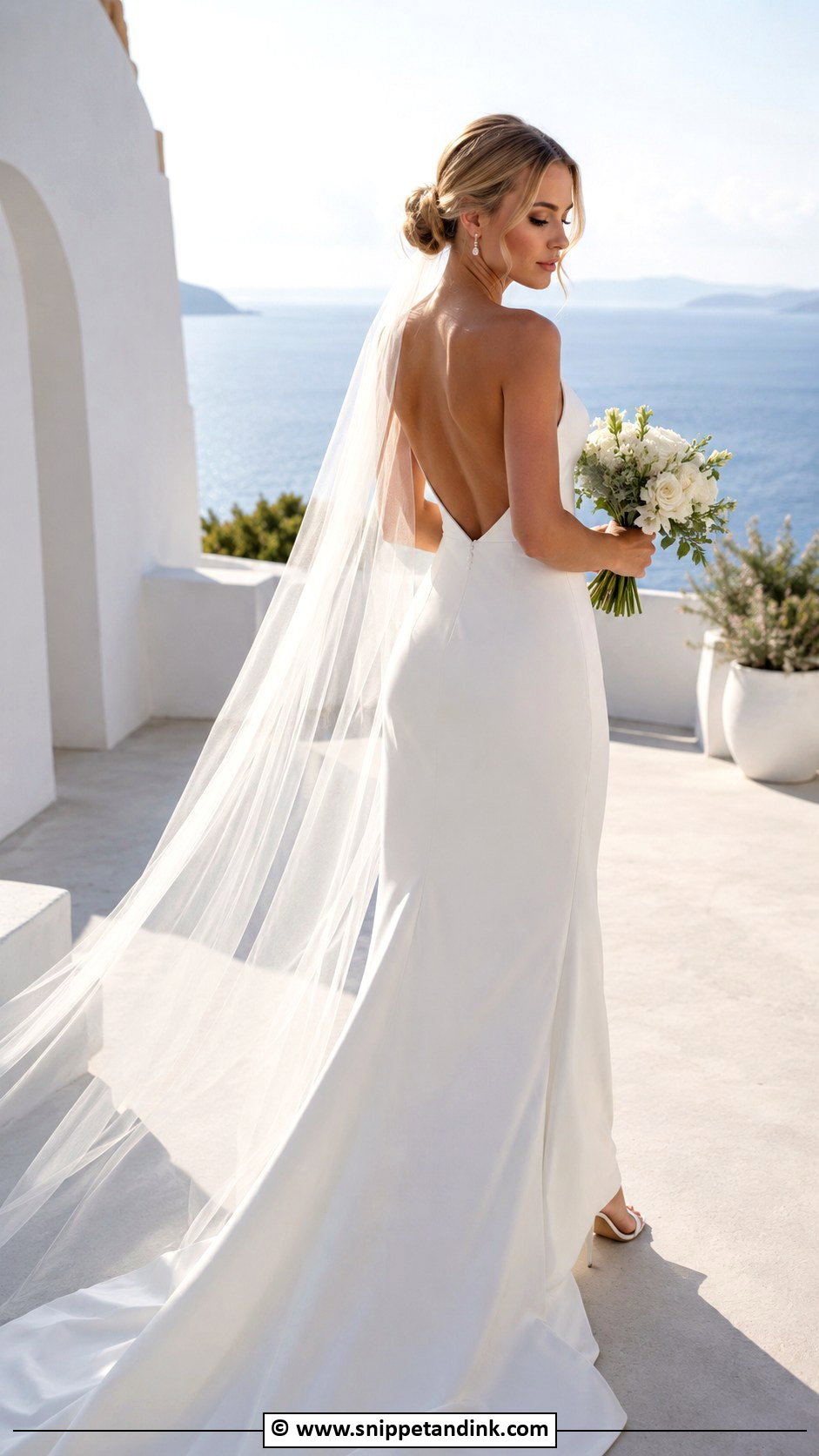
A low open back is all about tailoring through the bust, waist and hips. If the side of the bodice gapes when you lean forward, the back will not lie flat in photos. Adhesive support or built-in cups help, and I fit them at the first appointment. A low bun and a veil that can be lifted show the back. Warm-weather and destination weddings suit it.
21. Tulle Wedding Dress
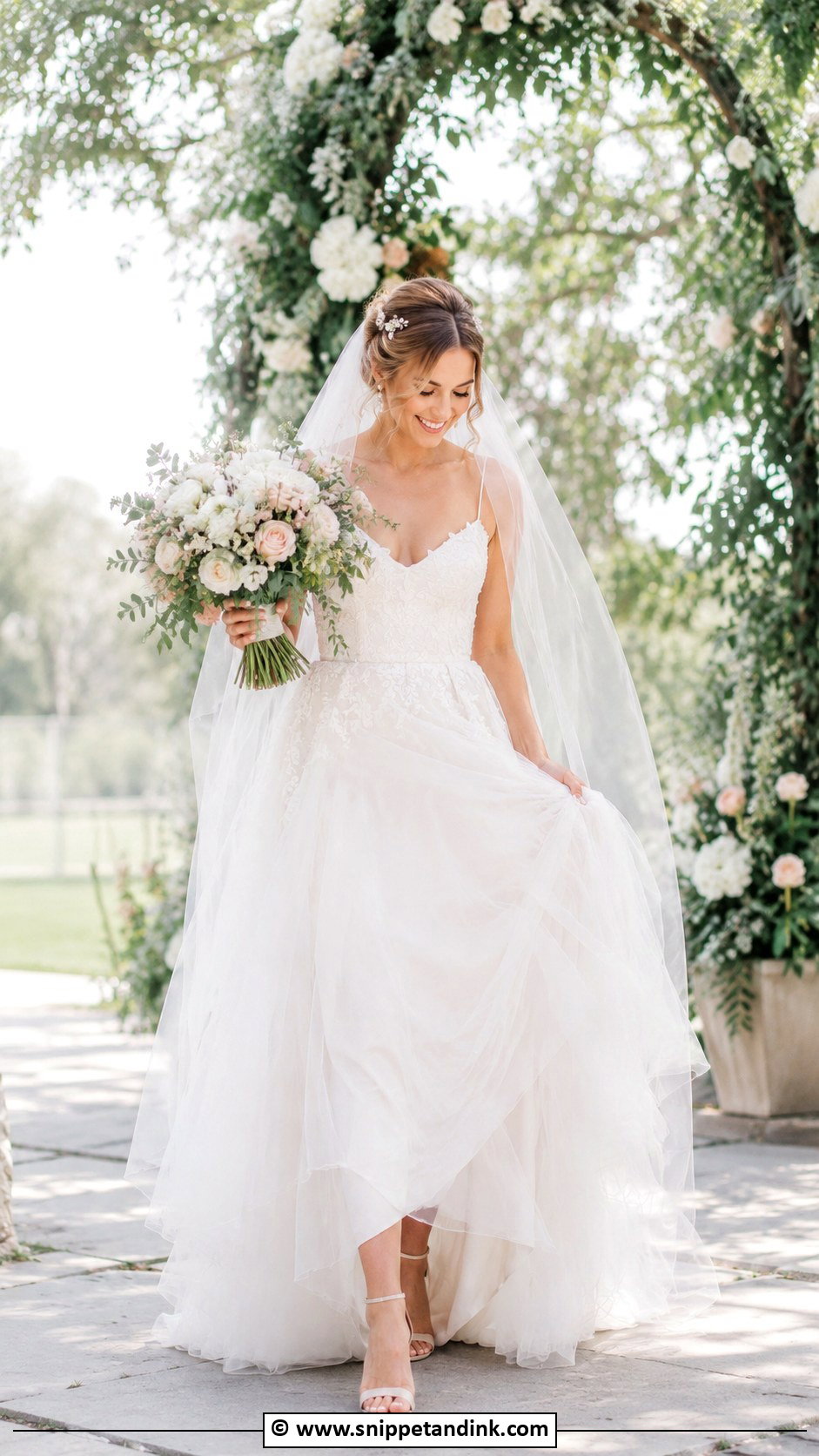
Tulle feels airy, and the number of layers decides whether it floats or looks stiff. A full tulle skirt gives a classic shape; a slim tulle gown with appliqué is softer. Soft bridal tulle drapes, while stiffer net holds volume but can scratch. Tulle crushes in garment bags, so I steam it on the morning. Dainty heels, pearl earrings and floral pins all suit it.
22. Crepe Wedding Dress
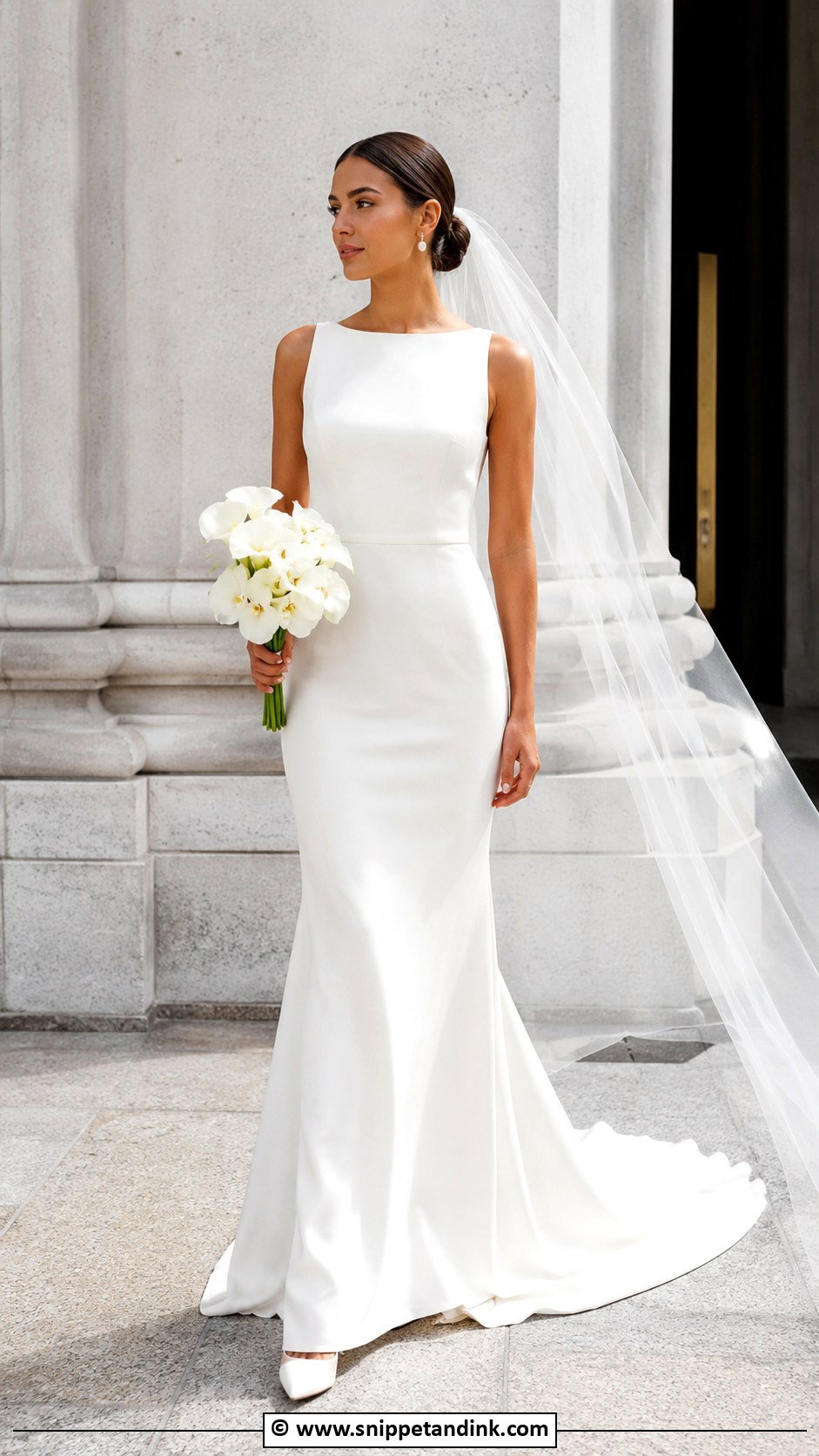
Crepe has enough weight to hang cleanly but stays soft, which makes it the fabric I suggest for a modern, minimal bride. It is also where tailoring shows most, because there is no texture to distract the eye. A fitted crepe gown is refined; an A-line is simple and classic. Pointed heels, a sleek veil and a low bun suit it. City and formal venues are its home.
23. Beaded Wedding Dress
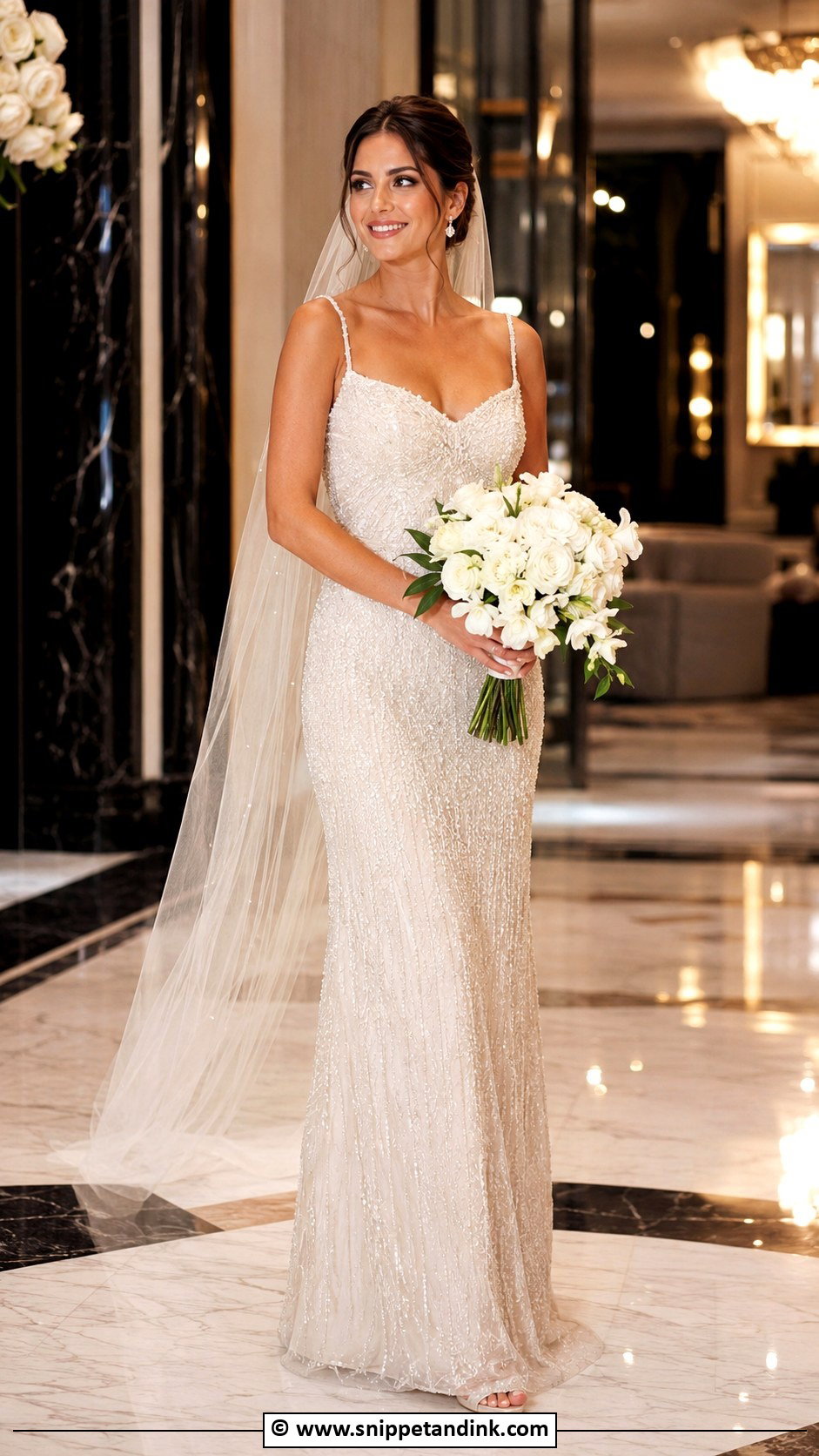
Beadwork brings sparkle for evening weddings, and it needs to look intentional. Allover beading suits a slim silhouette; scattered beads add light to a ball gown. Keep accessories small because the dress shines on its own. Heavily beaded gowns can be heavy, so I always ask the bride to wear one for ten minutes in the shop before deciding. Hotel and art deco settings suit it.
24. Sheer Sleeve Wedding Dress
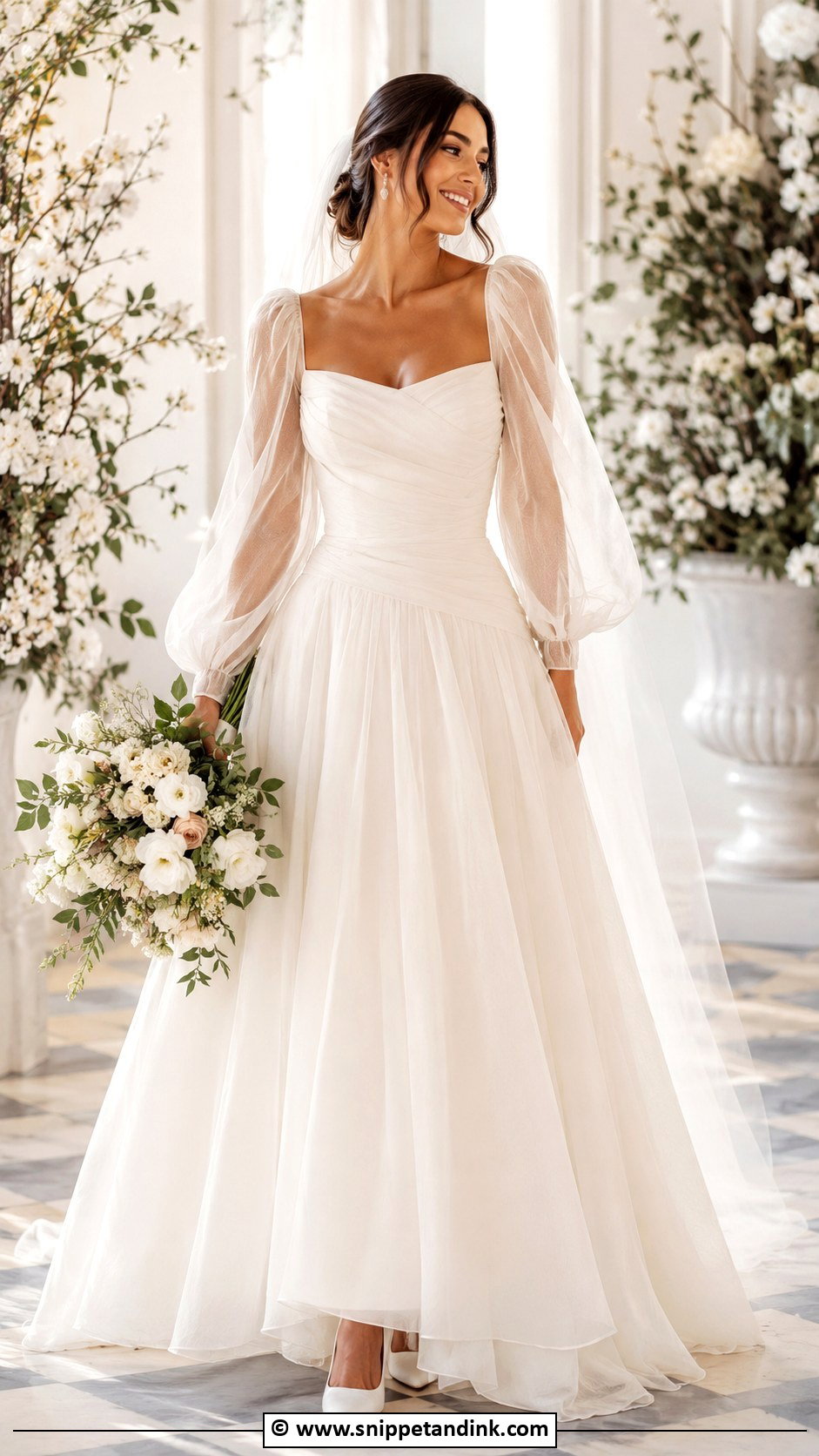
Sheer sleeves give arm coverage without heaviness. Lace, tulle, organza and illusion mesh all work; long sheer sleeves feel romantic, sheer puffs more current. Mesh drapes most softly against the skin. A fitted bodice with a flowing skirt balances the look. Choose a veil that leaves the sleeves visible. Spring, autumn and indoor weddings suit it.


25. Halter Wedding Dress
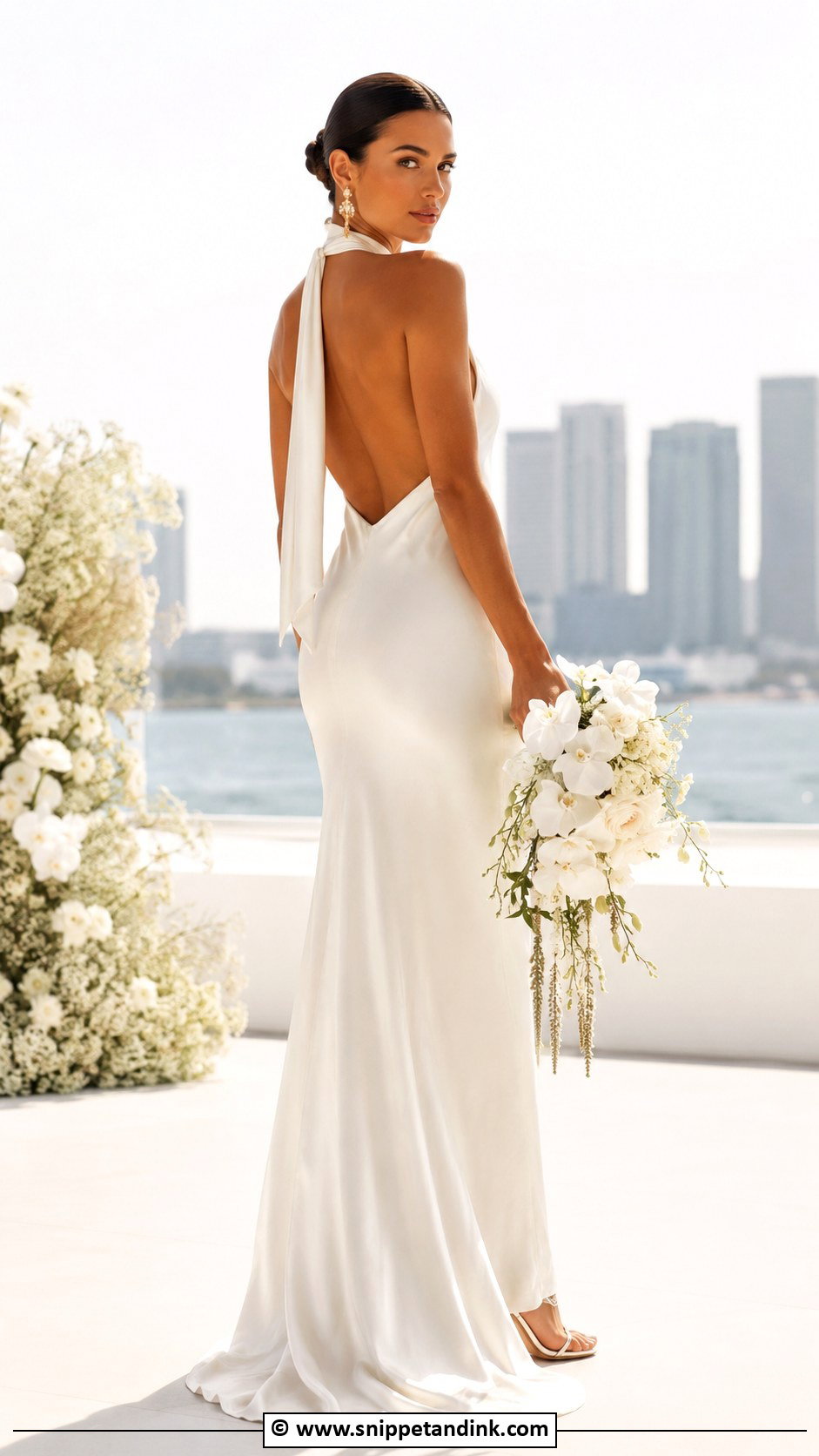
A halter shows the shoulders and suits satin, crepe, lace or chiffon. Skip the necklace and wear statement earrings, with a smooth updo to show the shape. A halter carries weight from the neck, so heavy fabrics can ache by evening. A low-back halter adds drama. Beach, city and architectural venues suit it.
26. One Shoulder Wedding Dress
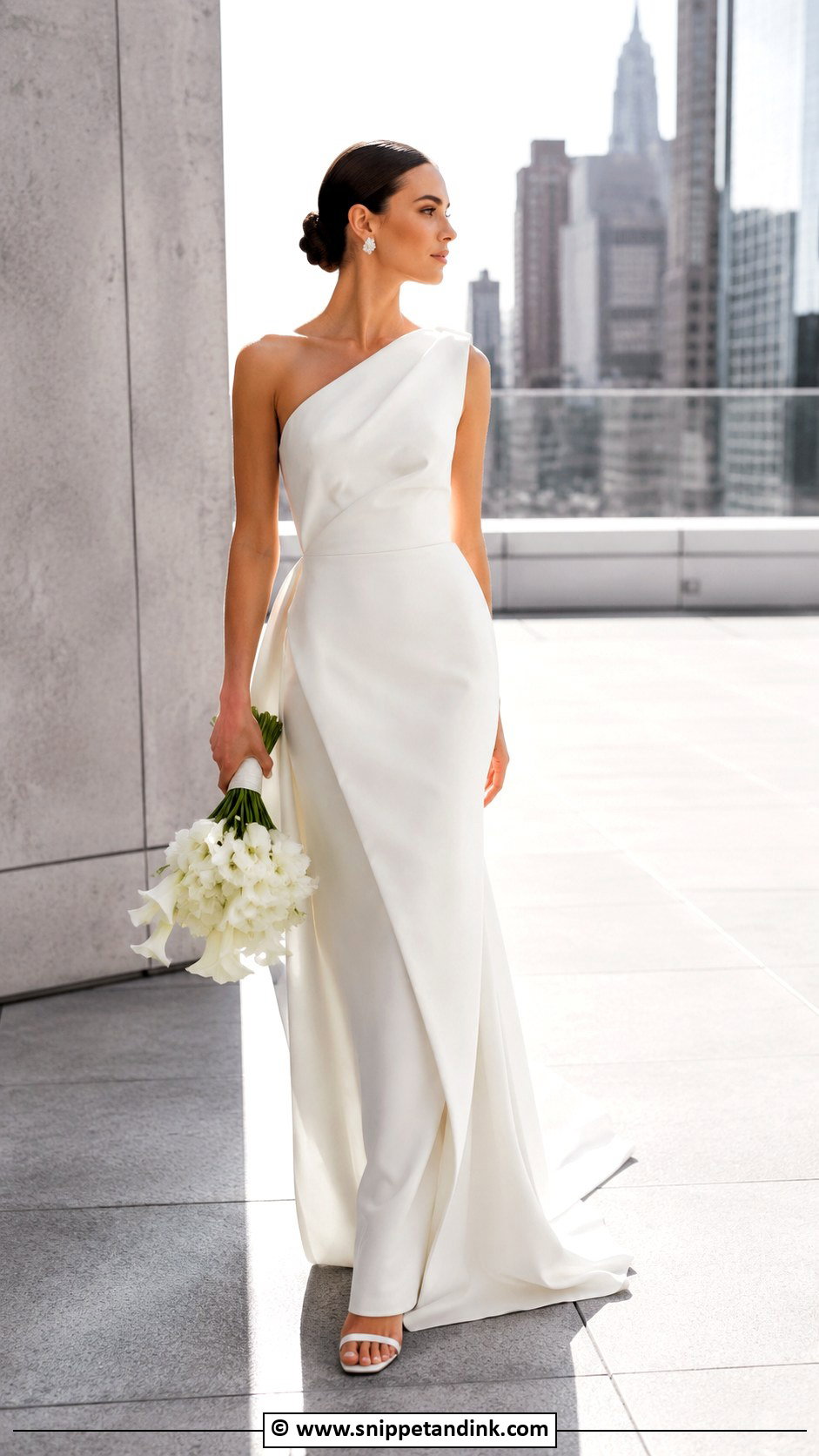
A one-shoulder neckline gives a sculptural, unexpected silhouette. It suits fitted gowns, columns and soft A-lines. Keep accessories minimal so the asymmetry reads clearly, one statement earring and a sleek bun. If you wear a veil, choose a sheer one that does not fight the shoulder detail. Check that the single strap stays in place when you lift your arm.
27. Short Sleeve Wedding Dress
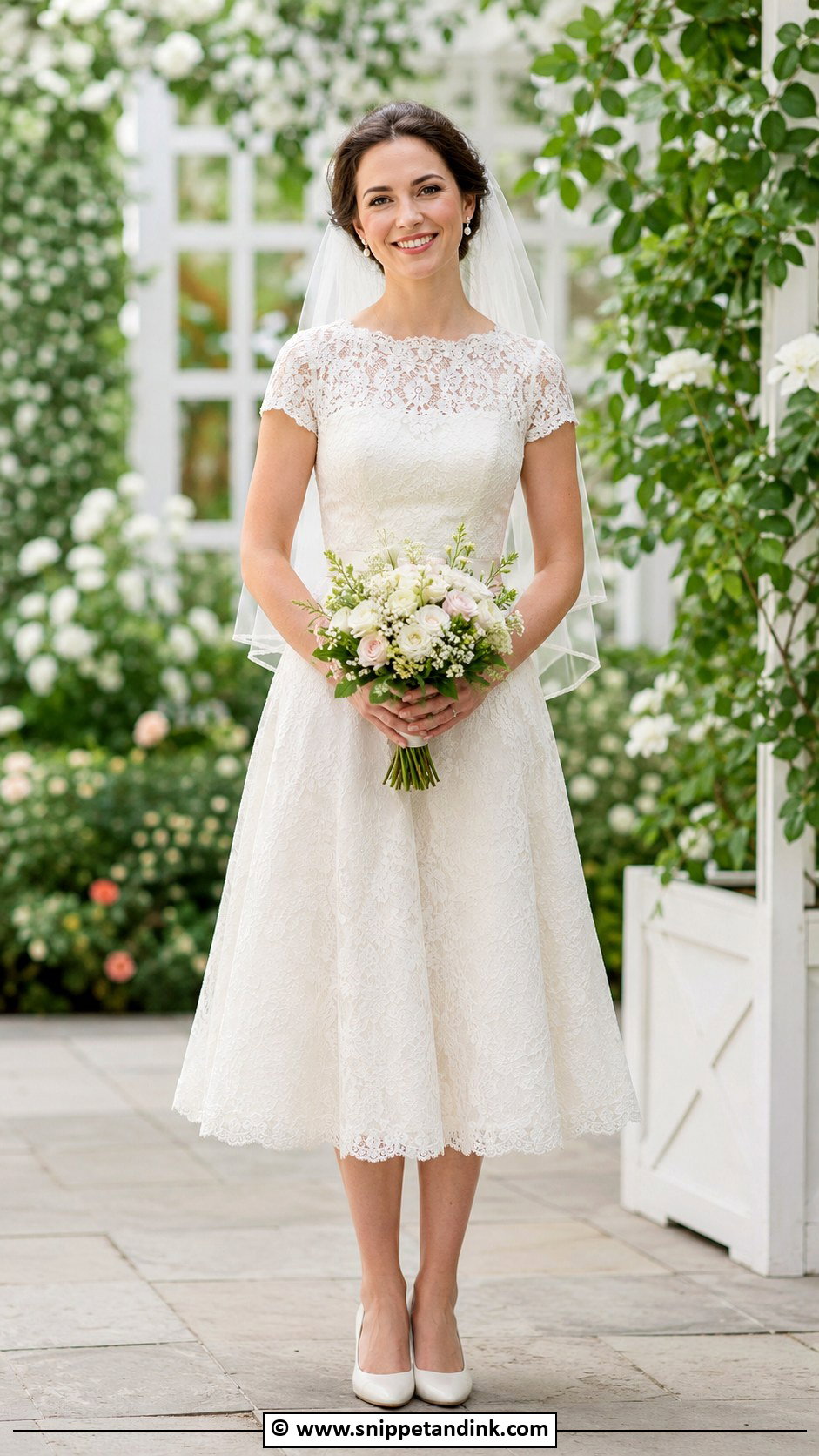
Short sleeves give a little coverage with no heat. Cap sleeves feel delicate, puffs romantic and tailored short sleeves modern. A lace version feels vintage; crepe or satin fresh. Pair with classic pumps and pearl earrings. Spring, daytime and garden weddings suit it. Make sure the sleeve opening is not tight, since it shows every pinch in photos.
28. Embroidered Wedding Dress
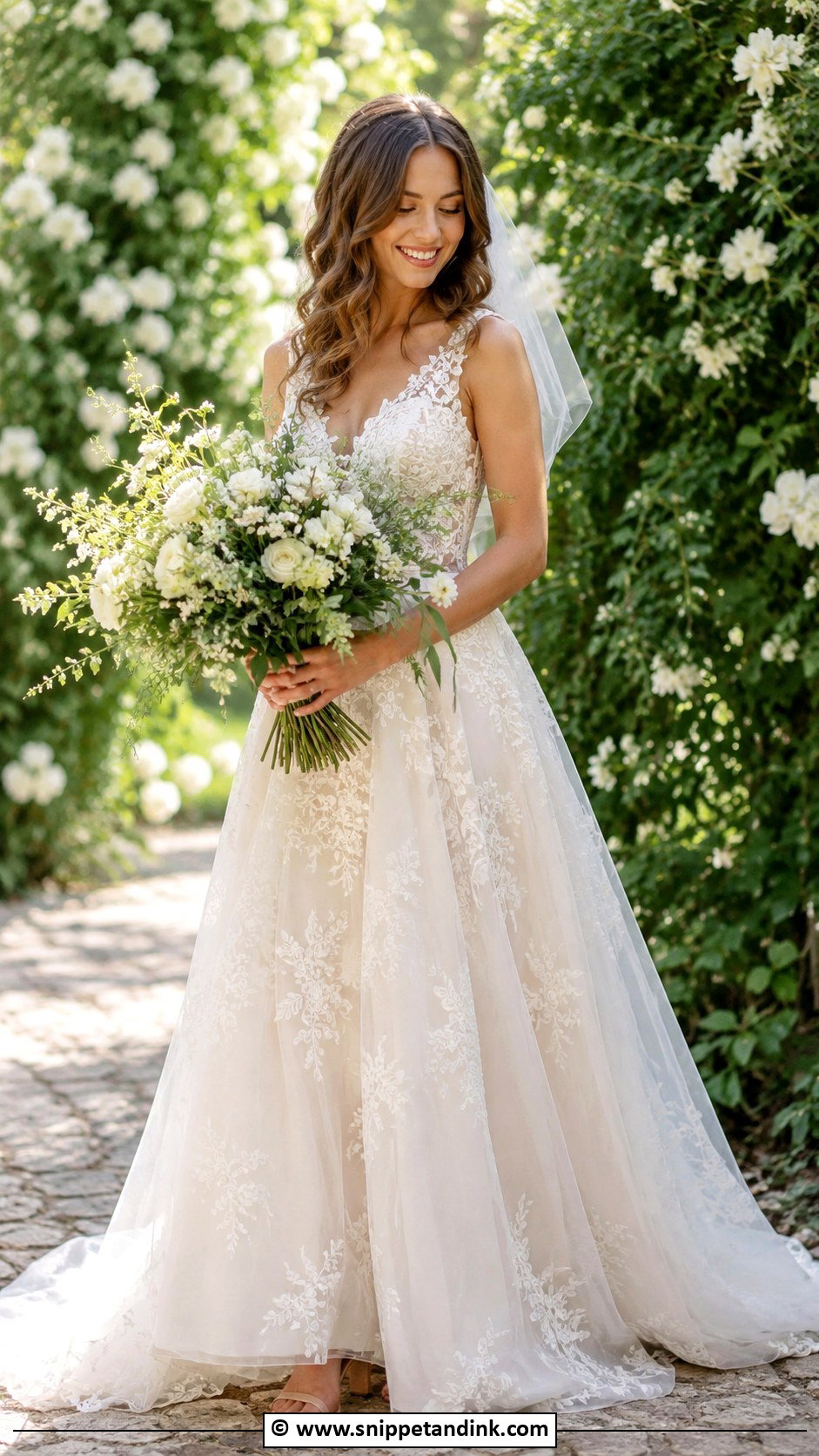
An embroidered wedding dress adds handwork and personal detail. Florals, vines, small pearls, metallic thread or tonal patterns all work. Embroidery that follows the shape of the dress looks better than coverage everywhere. A fitted bodice with an embroidered skirt feels romantic; a sheer embroidered overlay adds texture. Choose a veil that does not hide the pattern.
29. Detachable Train Wedding Dress
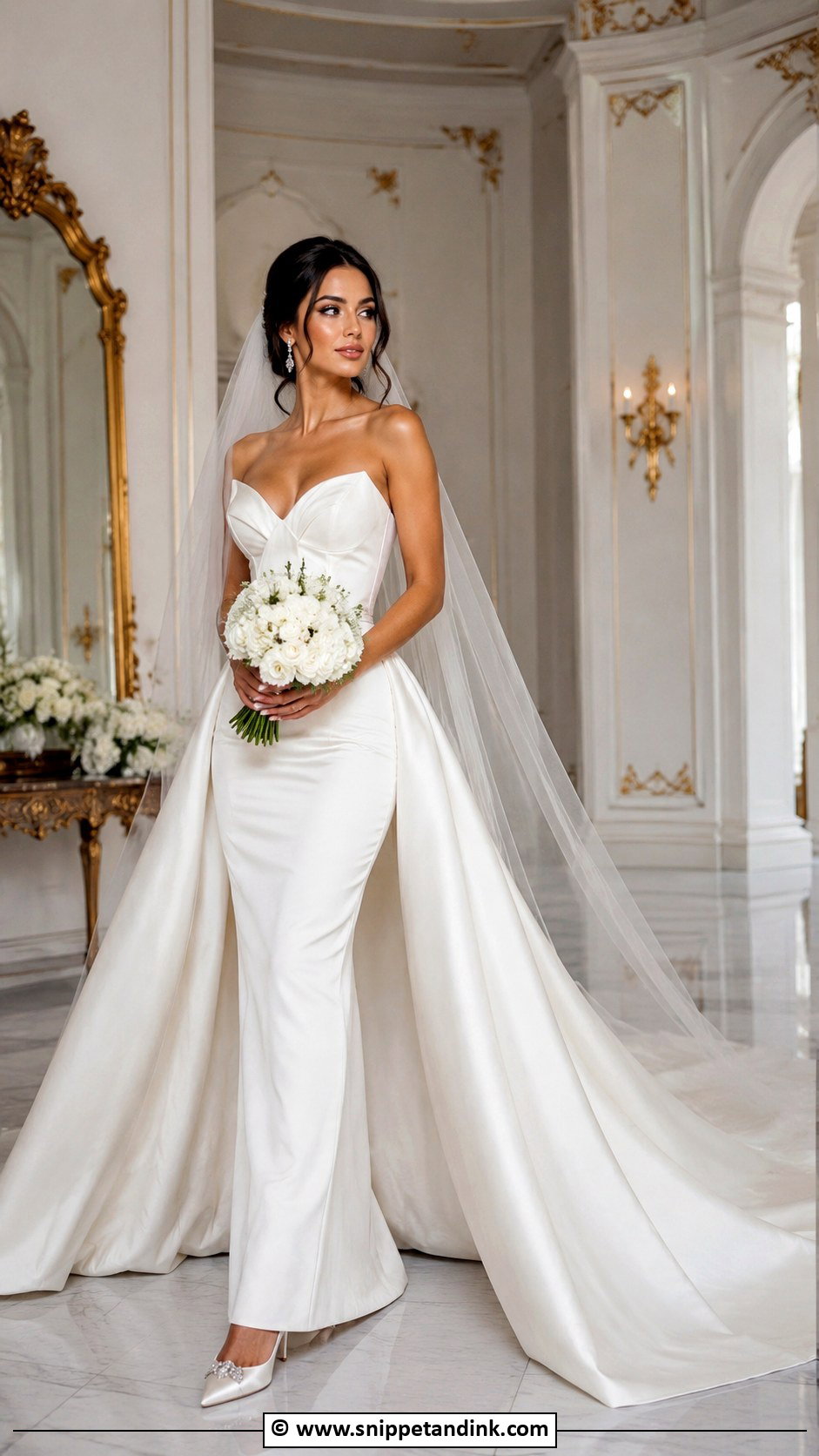
A detachable train gives you two looks in one: full drama for ceremony and portraits, freedom for dancing. The base dress can be fitted, A-line, satin, lace or crepe. The attachment points must be hidden and secure; I check that hooks or buttons sit flat and will not show in photos. Shoes you can walk in, and a veil that complements the train, finish it.
30. Reception Wedding Dress
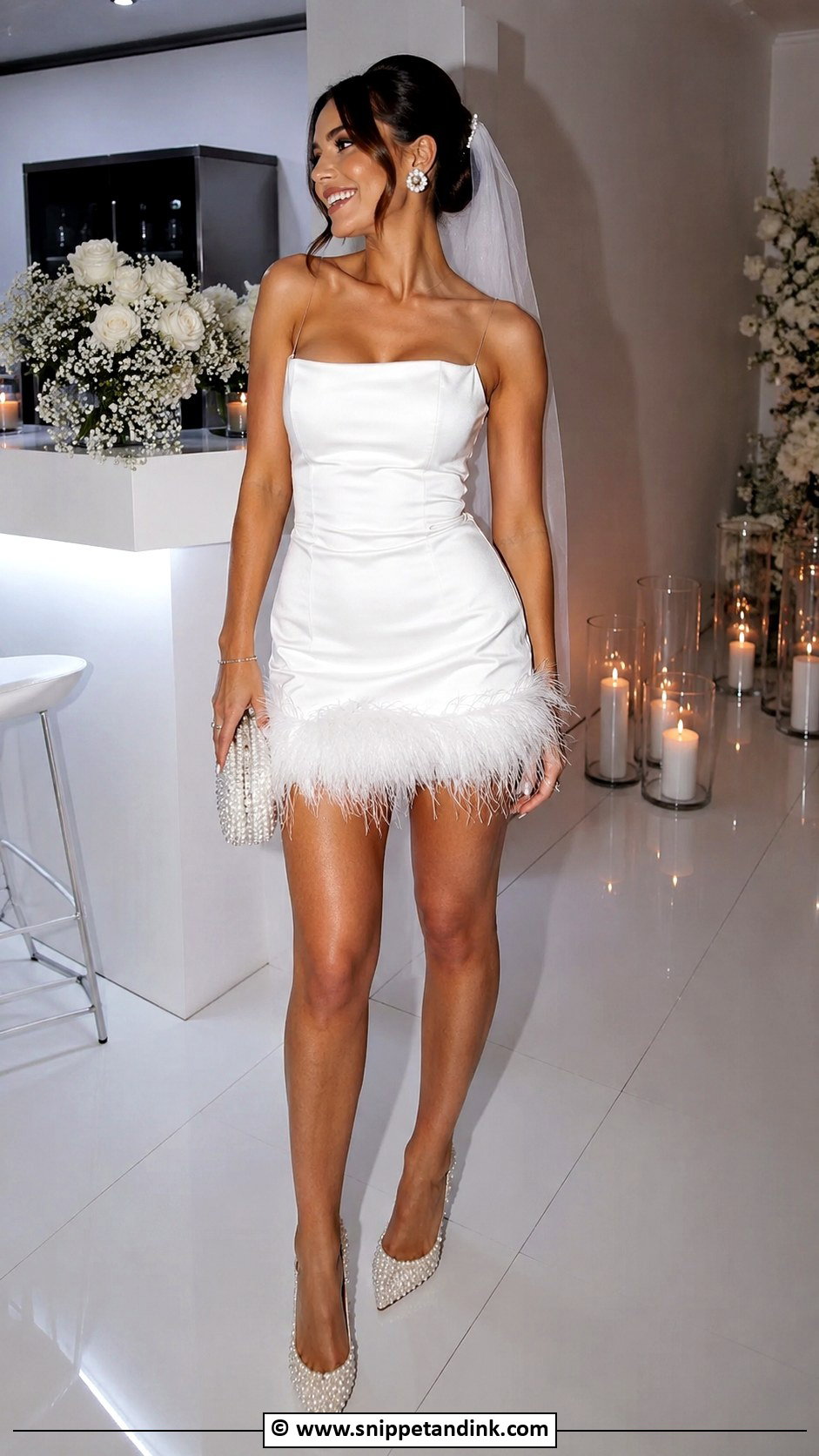
A reception wedding dress lets you change into something lighter after the ceremony. Satin minis, feather trims, beaded short dresses, sleek midis and white slips all work. Pearl shoes, a bow clutch, crystal earrings or a short veil keep it bridal. Pick something you can dance, sit and greet guests in. Plan when you will change, since getting out of a corset gown takes time.
How Far Ahead Does a Gown Need Ordering?
Further than most brides expect. Many made-to-order gowns take several months to arrive, and alterations come after that. I work backward from the wedding date: allow time for the dress to be made, then two to three fittings spread over the final couple of months. Starting to shop nine to twelve months ahead gives breathing room. Inside six months, look at sample sales, off-the-rack options or rush orders, which often cost extra and vary by shop.
What to bring to every fitting
- The exact shoes you will wear, so the hem is set to the right height.
- Your wedding-day underwear and any shapewear.
- The veil or headpiece, to check how it sits with the neckline and back.
- One person whose opinion you trust, rather than a crowd.
At the last fitting, sit, walk a few steps, raise your arms and practice the bustle if there is one. If anything pinches now, it will hurt by the reception.
Try On the Shape You Keep Scrolling Past
The gown that works for you is the one you stop thinking about once it is on. Lace, satin slips, suits, jumpsuits, minis and reception dresses can all be right. Think about your venue, season and how much you want to move, and look at the full outfit with shoes, veil, jewelry, bouquet and hair together. Try at least one shape you would not have picked; the body often surprises the eye.
You'll Like These Ideas:








Leave a Reply