
Train length is one of the few decisions that changes how a gown feels to wear, not only how it looks. It decides how you walk, how you turn for photos and how much help you need from the moment you step out of the car. A short sweep train lets you move freely, while chapel and cathedral trains give the entrance real ceremony. In fittings I weigh up the venue, the silhouette, how heavy the fabric is, the bride’s height and what happens after dinner. The veil, shoes and hair also have to sit with the train rather than fight it. The twenty looks below run from slim crepe with barely any train to embroidered ball gowns with metres of it, and I’ve noted where each one is happiest.
Why Two Shops Quote Different Lengths for the Same Train
Brides are often confused when one salon calls a train chapel and another calls it semi-cathedral. Part of the reason is that there is no fixed standard. Some designers measure from the waist, some from where the hem first touches the floor, and the names overlap. I treat these as rough guides:
- Sweep or brush: just grazes the floor, under a foot of trailing fabric.
- Court: roughly a foot behind you, a touch longer than a sweep.
- Chapel: about three to four feet from the waist, the most common length.
- Semi-cathedral: around four to five feet.
- Cathedral: around six to eight feet.
- Monarch or royal: ten feet and beyond.
Because of the overlap, I ask brides to stop thinking in names and look at the train in a mirror from the side, standing in their wedding shoes. A train that looks modest from the front can look much longer in profile. Height also changes the picture. The same chapel train reads as long on a petite bride and medium on a tall one, so a quoted number tells you less than standing in it.
1. Minimal Sheath Wedding Dress With Sweep Train
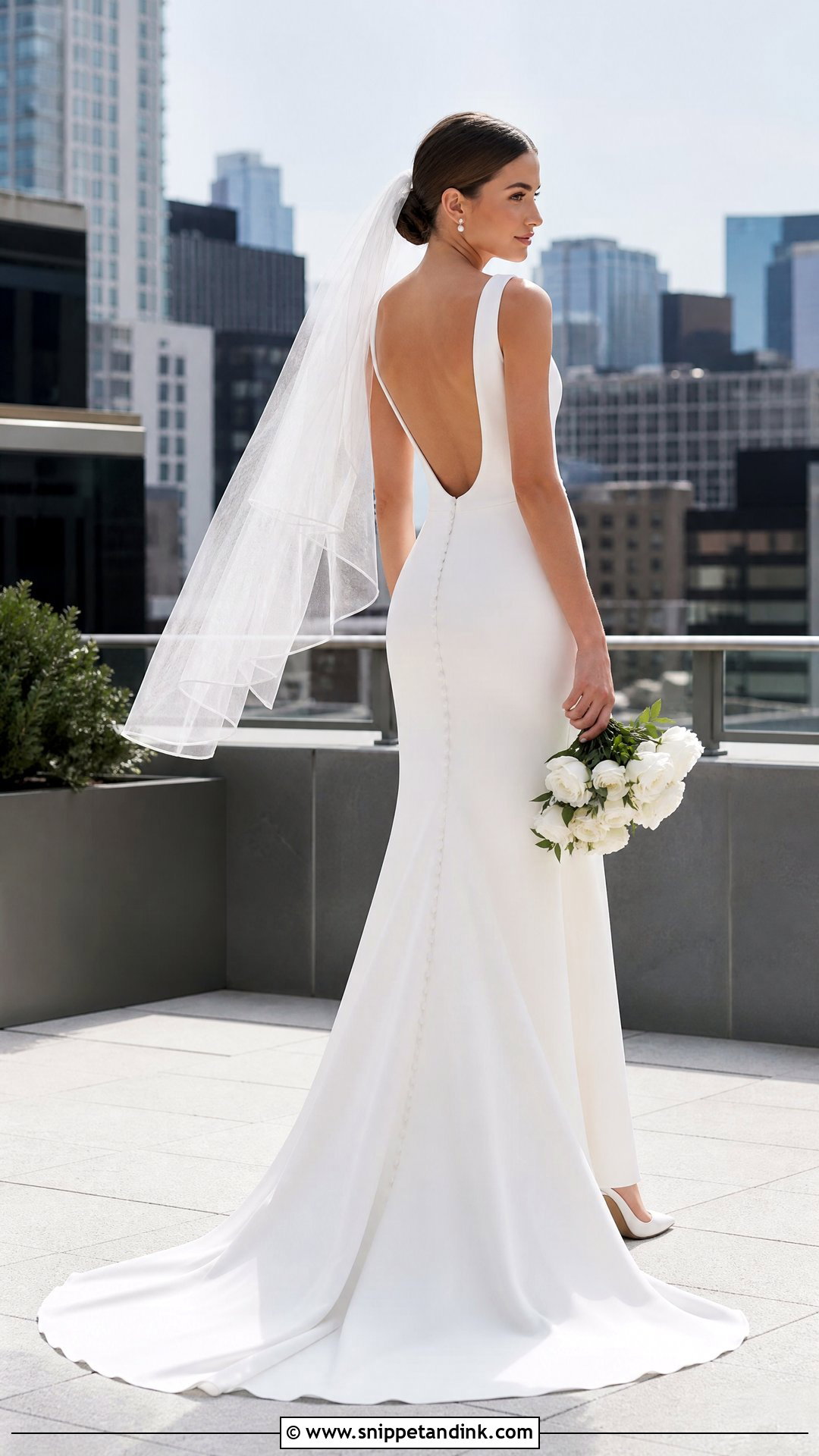
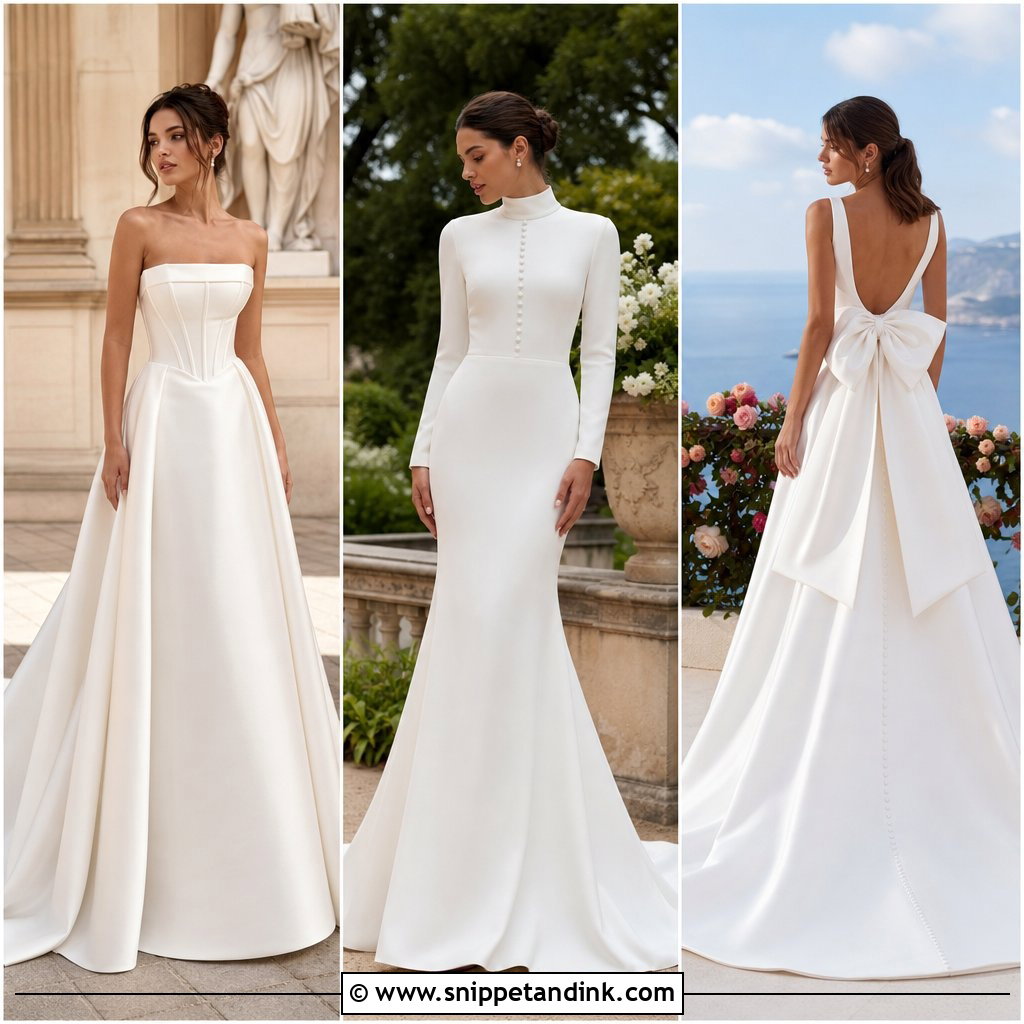
The sweep train, also called a brush train, is the shortest there is: it extends less than a foot past the hem and just grazes the floor behind you. On a minimal sheath it gives a hint of movement without any fabric to manage. Smooth crepe or satin with a square, bateau or softly draped neckline suits it, with pointed pumps, pearl studs and a small structured bag. I’d add a fingertip veil, which softens the back without hiding its clean line. For a rooftop, a gallery or a register office where space is tight, this is the length I recommend most often.
2. Lace A-Line Wedding Dress With Sweep Train
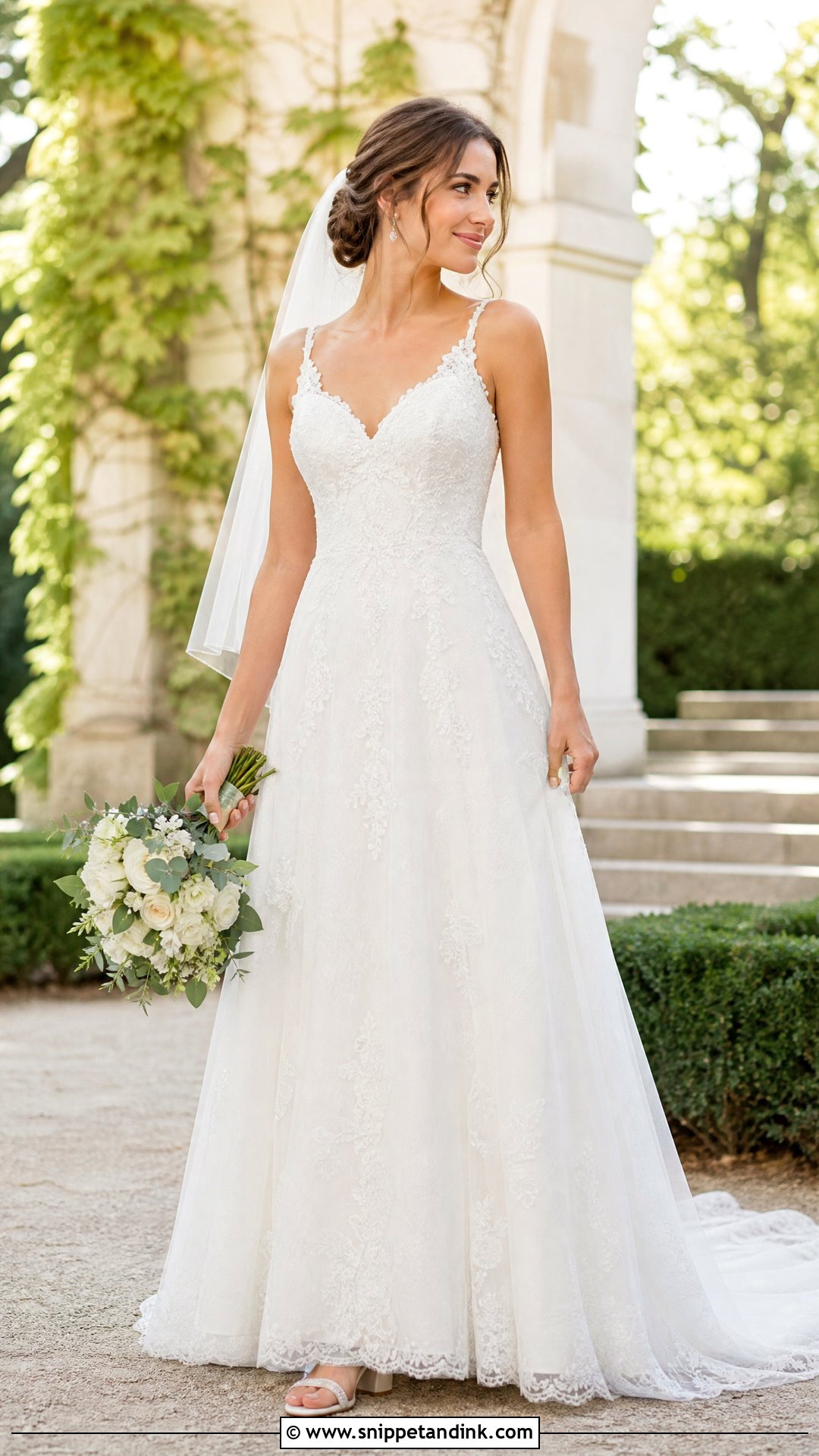
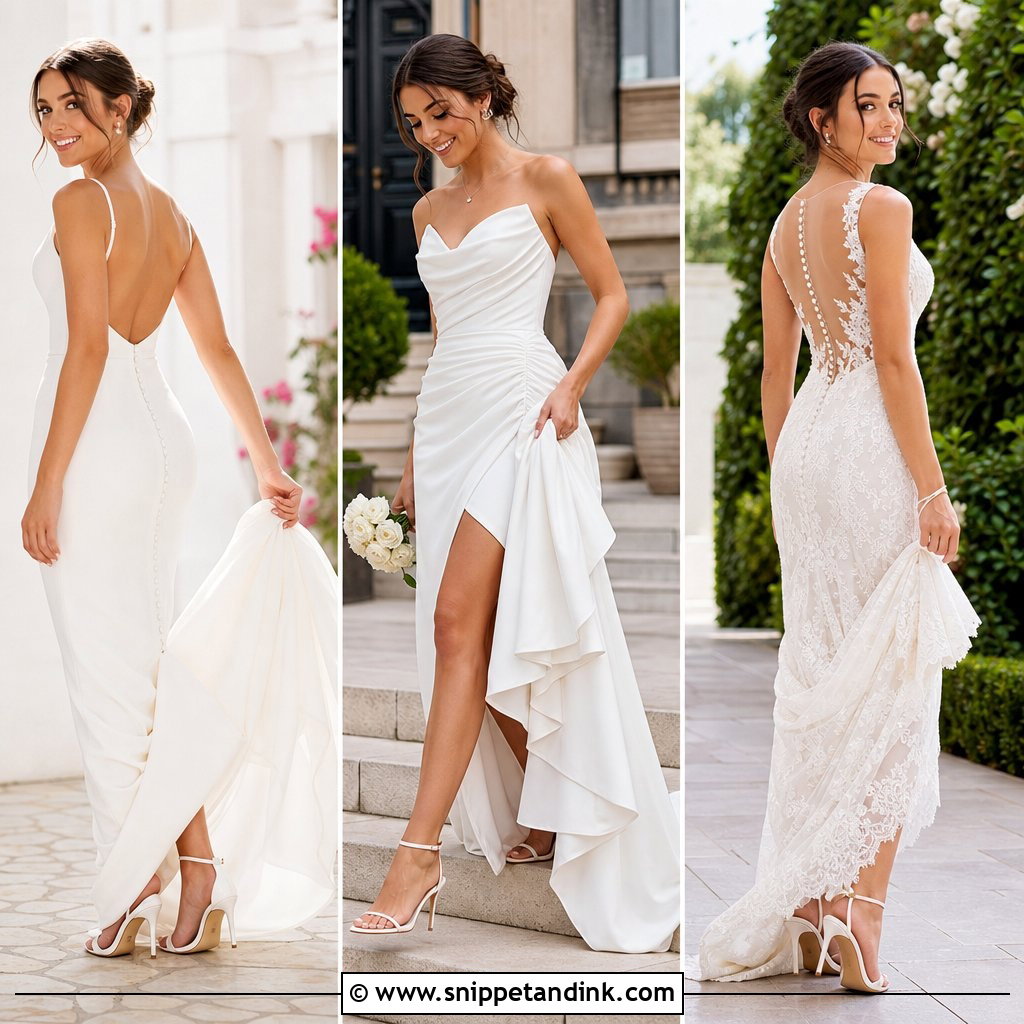
Lace on a short sweep train gives you romance without anything to wrangle. On an A-line, the skirt moves away from the body and ends in a small extension at the back, so the shape stays balanced. Light floral lace over a smooth lining keeps it from feeling bulky. Low block heels, delicate drops, a fingertip tulle veil and a loose chignon or soft waves suit it. This is my go-to for garden weddings on grass and gravel: a longer train picks up leaves and grit with every step, while a sweep barely touches the ground.
3. Satin Column Wedding Dress With Court Train
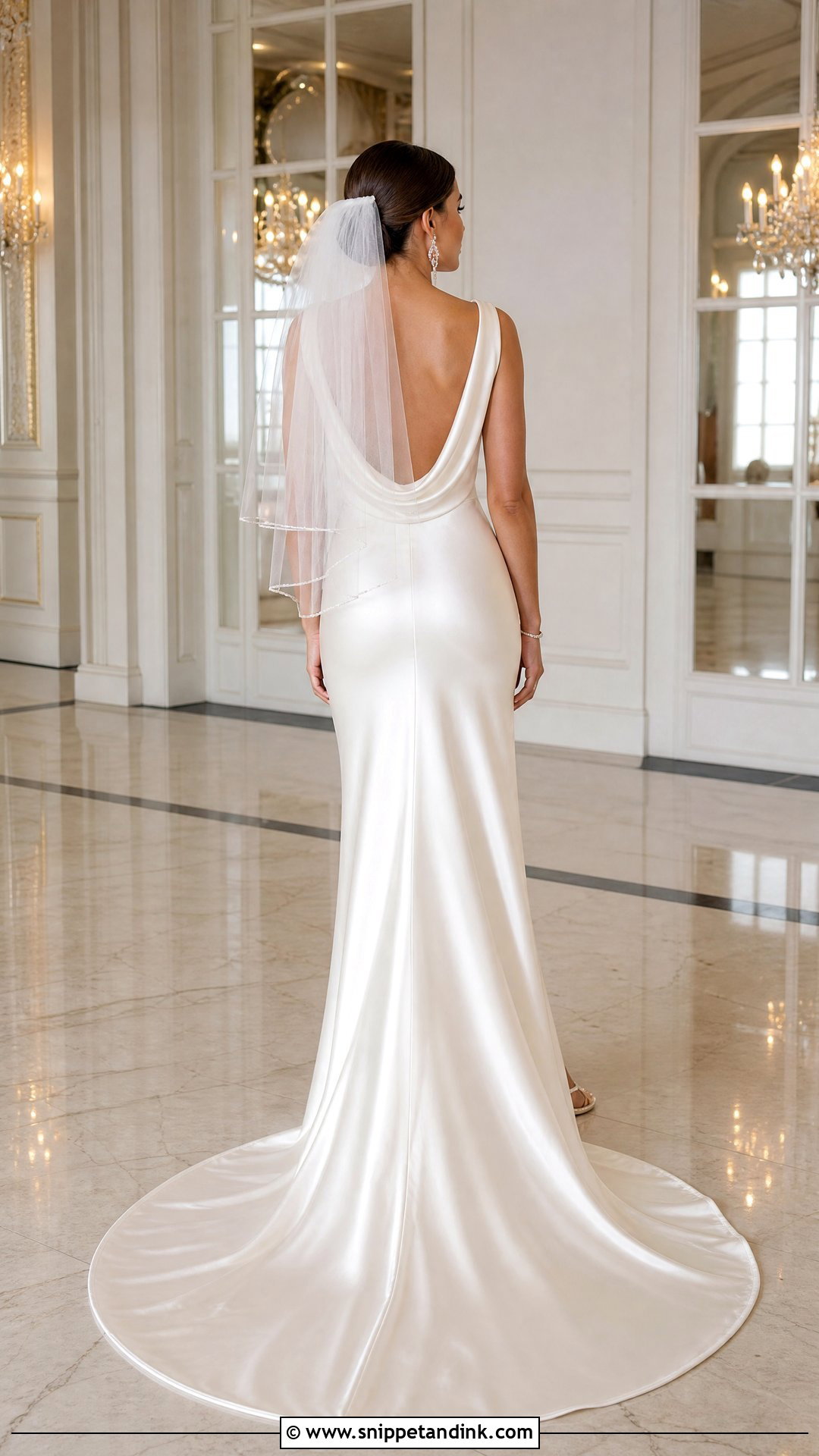
A satin column with a court train keeps the sleek line of the column but adds a little more presence than a sweep. Court trains usually run around a foot behind the gown, though every designer measures slightly differently, so ask the shop for the exact figure. Fluid satin with a cowl neck, a fitted waist and a draped back suits it. Metallic sandals or pointed satin pumps show at the narrow hem, with crystal earrings, a slim bracelet and a shoulder-length veil. Satin reflects so much light that I keep everything else plain. A smooth indoor floor matters here, because satin snags on rough stone.
4. Crepe Fit-And-Flare Wedding Dress With Court Train
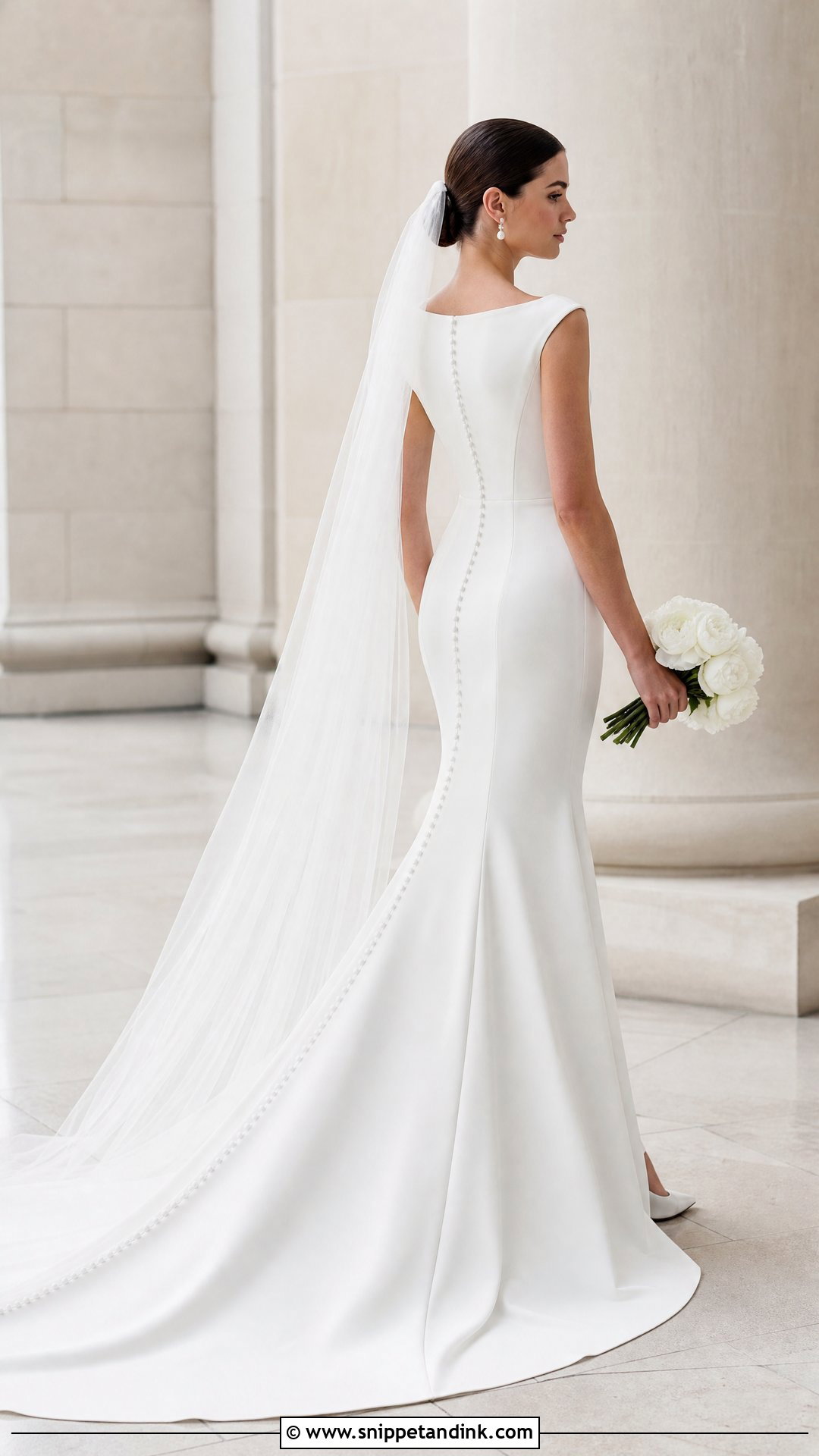
How can a fitted gown feel dramatic without becoming difficult to wear? A structured crepe fit-and-flare with a court train is my usual answer. The skirt hugs the hips, opens near the knee and finishes in a short train that swings as you walk. Look for supportive seaming, covered buttons and a clean back, then add pointed pumps, pearl drops and a sleek low bun. A narrow chapel veil brings extra drama for the ceremony and comes off for the party. The flare point decides how freely you can walk, so I always have brides take a few long strides in the fitting room before committing. City venues, museums and lofts suit it.
5. Chiffon A-Line Wedding Dress With Chapel Train
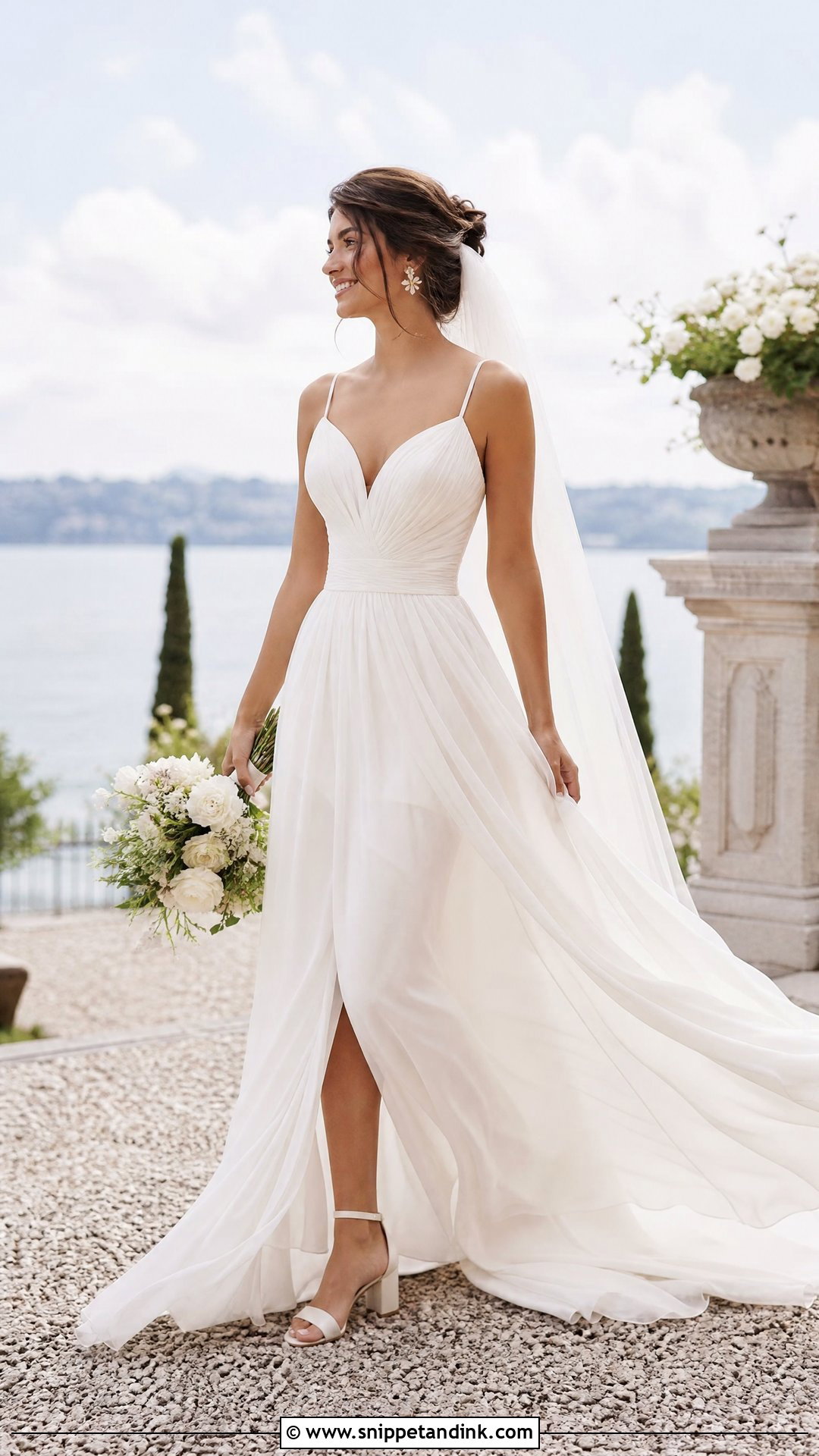
Chiffon with a chapel train is light enough to float rather than drag. Chapel trains generally reach three to four feet from the waist, which is long enough for a proper sweep down the aisle and still easy to manage. A softly gathered A-line with a fitted bodice, slim straps or flutter sleeves suits it. Block-heel sandals are kinder on lawns, finished with a light chapel veil, small floral earrings and a relaxed updo. Chiffon catches every breeze, so I keep the veil no longer than the train; two long, light layers tangle as soon as the wind picks up. Gardens, vineyards and waterside venues suit it.
6. Lace Mermaid Wedding Dress With Chapel Train
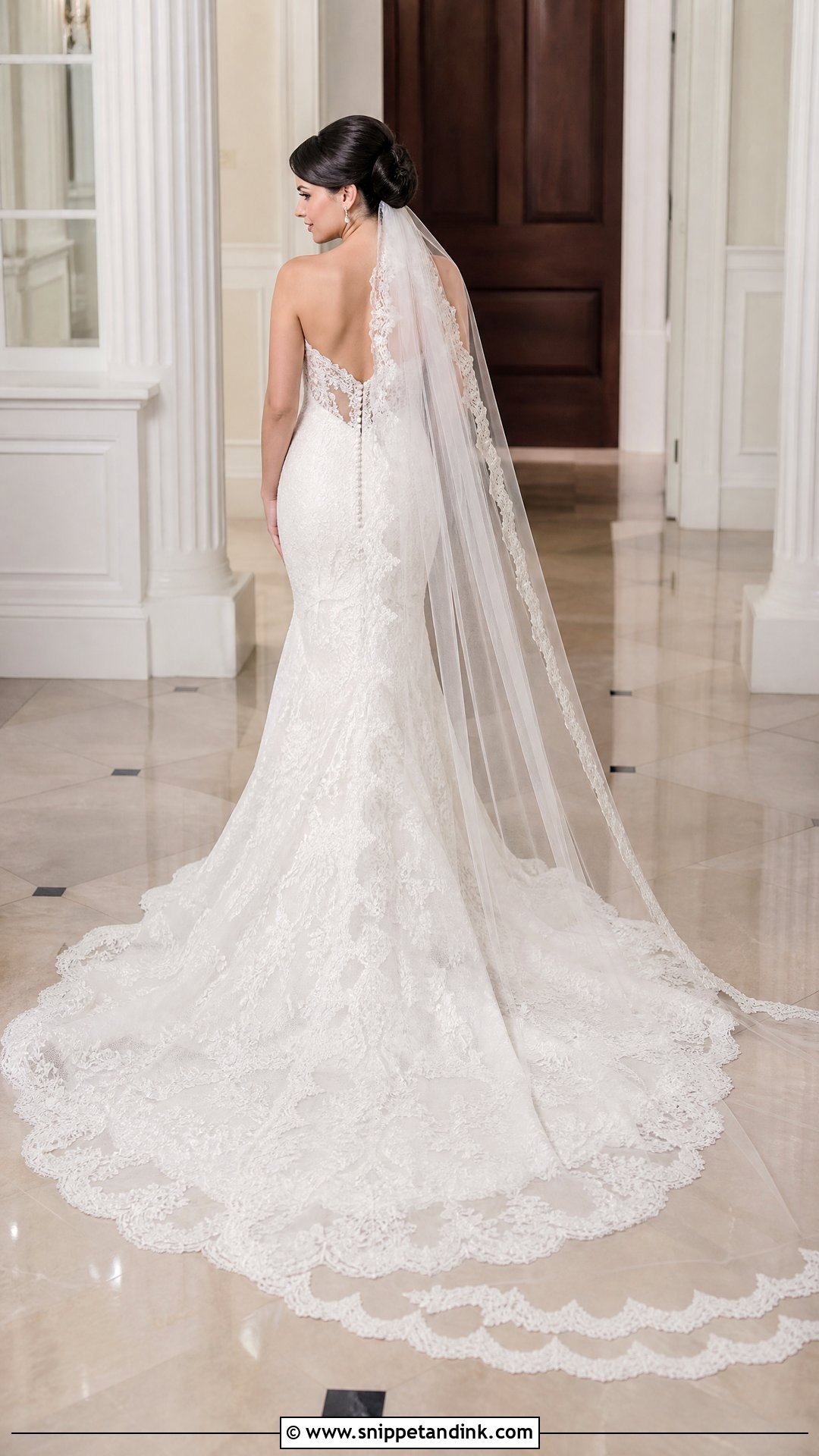
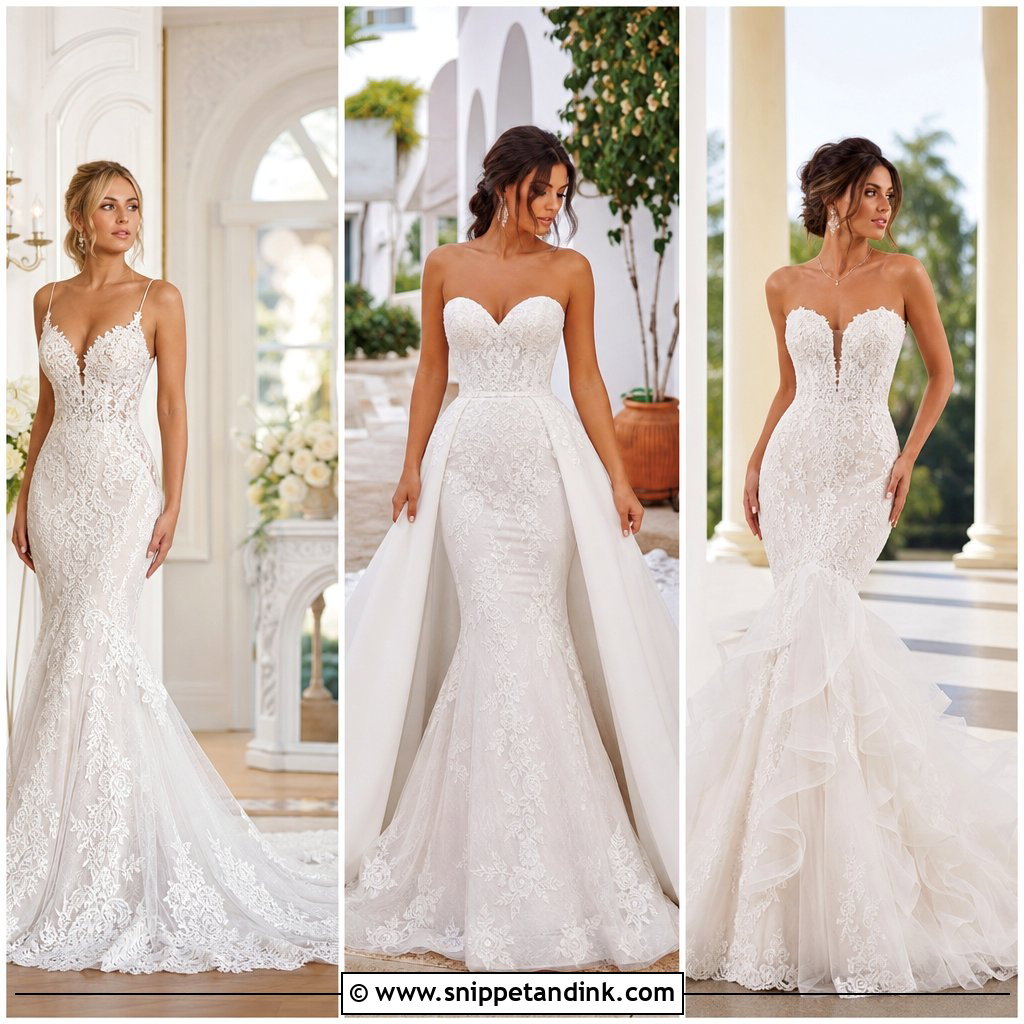
A lace mermaid with a chapel train pairs a close-fitting silhouette with traditional detail. The fit through the bodice, waist and hips has to be smooth before the skirt opens. I look for lace motifs that carry on into the train; when the pattern stops at a seam, the back looks pieced together. Satin pumps, a scalloped chapel veil, small crystal or pearl earrings and an updo that shows the back all suit it. Ask the seamstress for a secure bustle, since even a medium train pulls hard on a fitted skirt if it is lifted badly. Formal estates, historic hotels and ballrooms with smooth floors let the lace lie flat for photos.
7. Satin Ball Gown Wedding Dress With Chapel Train
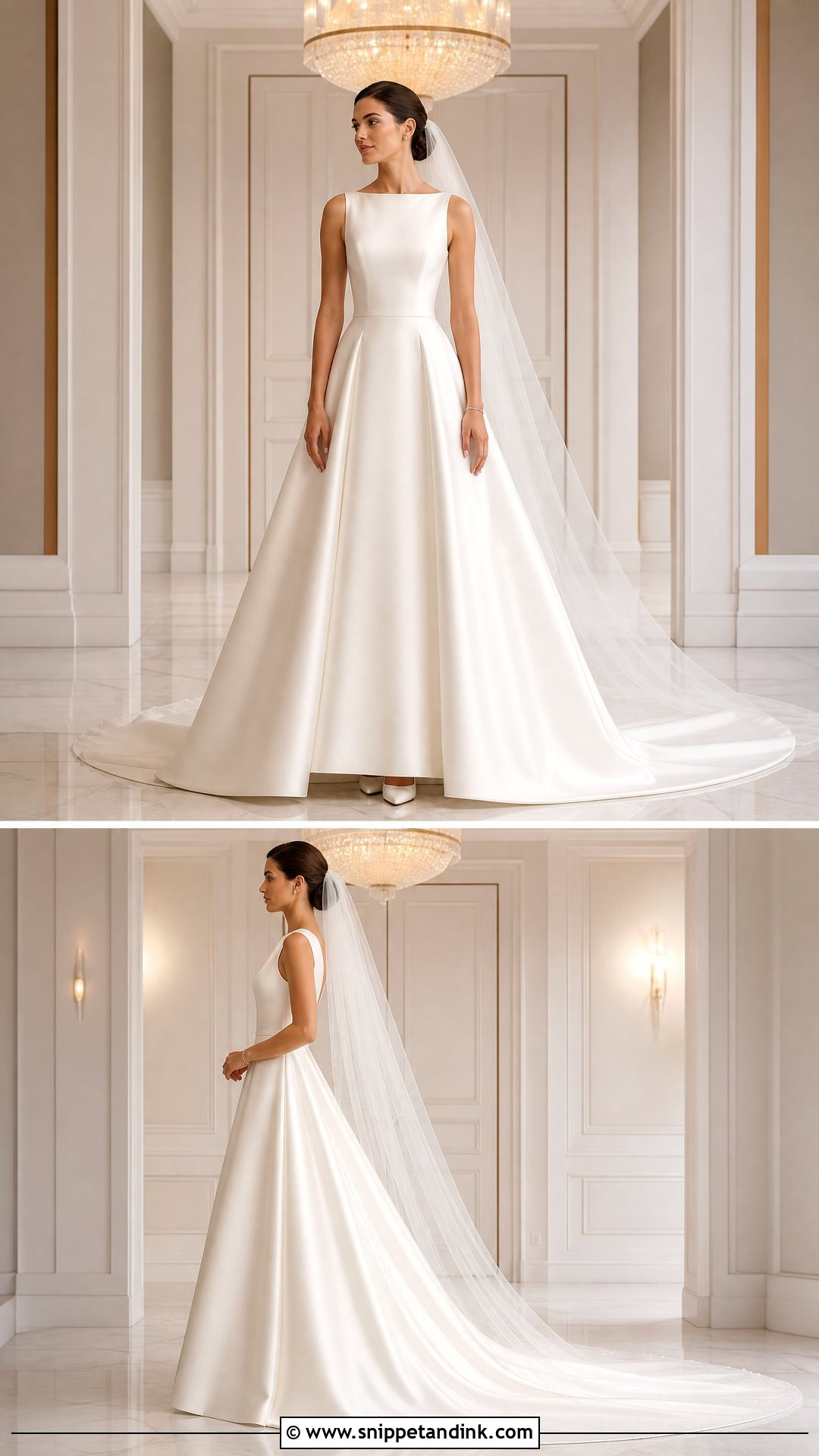
A satin ball gown already has huge presence, so it doesn’t need a very long train. Pairing the full skirt with a chapel train keeps the grandeur and makes the day easier. Structured satin or Mikado with a fitted bodice, natural waist and clean pleats is the cut I like. With so much volume below, accessories should polish rather than add weight: closed-toe pumps, pearl studs, a slim bracelet and a single-layer chapel veil, with a neat bun or soft curled ponytail. Petite brides do well with this length, since a royal train on a small frame can look like the dress is wearing her.
8. Off-Shoulder Wedding Dress With Semi-Cathedral Train
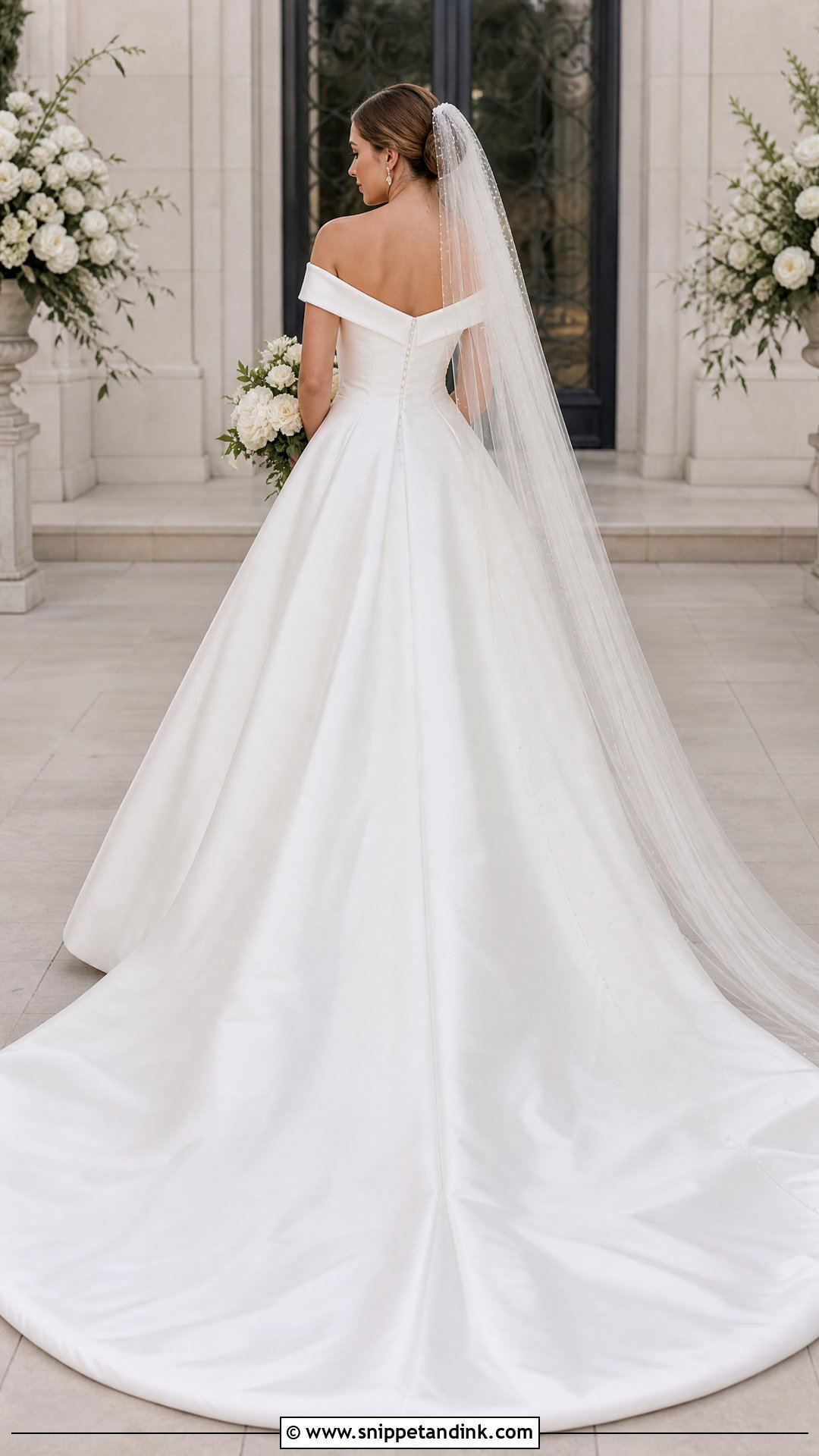
A semi-cathedral train sits between chapel and cathedral, usually around four to five feet from the waist, and it pairs well with an off-shoulder A-line. A structured bodice gives support, and a smooth satin or lightly embellished skirt lets the train fan out clearly. Pointed pumps, drop earrings and a cathedral veil with a minimal edge finish it; letting the veil run slightly past the train gives a layered look from behind. Keep the hair in a low bun so the shoulders stay clear. In a spacious ballroom or grand hall, this length opens fully without swallowing the room.
9. Beaded Fit-And-Flare Wedding Dress With Semi-Cathedral Train
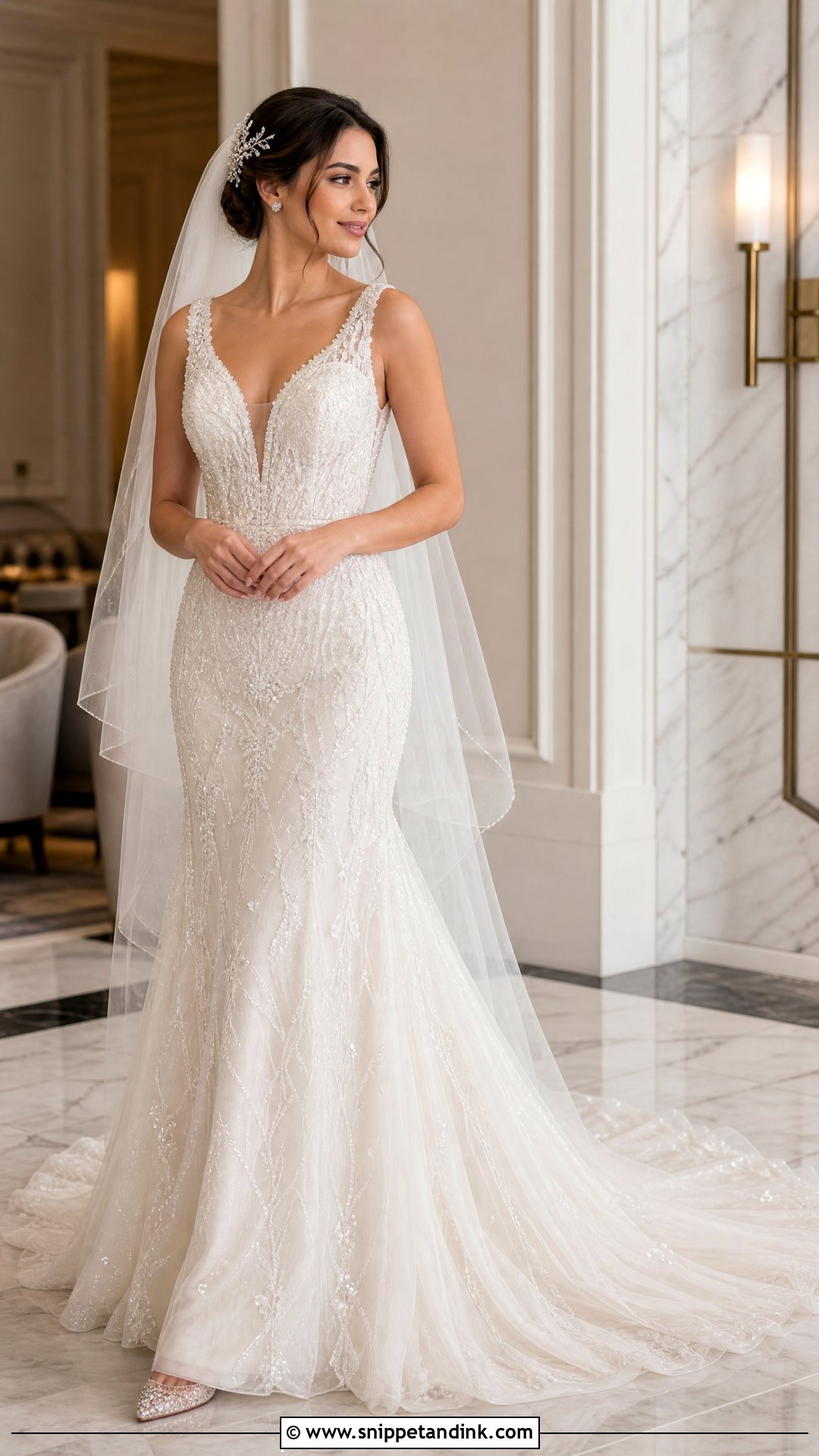
Beading on a semi-cathedral train looks dimensional in daylight and evening photos alike. The gowns I like best concentrate the embellishment on the bodice and let it thin out toward the hem, so the train stays light and the eye moves up. Pointed pumps with a stable heel matter more here than usual, because a beaded train is heavy to pull behind you. Crystal studs, a simple comb and a plain tulle veil keep it from getting crowded. Plan a bustle with reinforced points. Hotels and ballrooms with smooth floors are kinder to beadwork than stone or carpet.
10. Mikado Ball Gown Wedding Dress With Cathedral Train
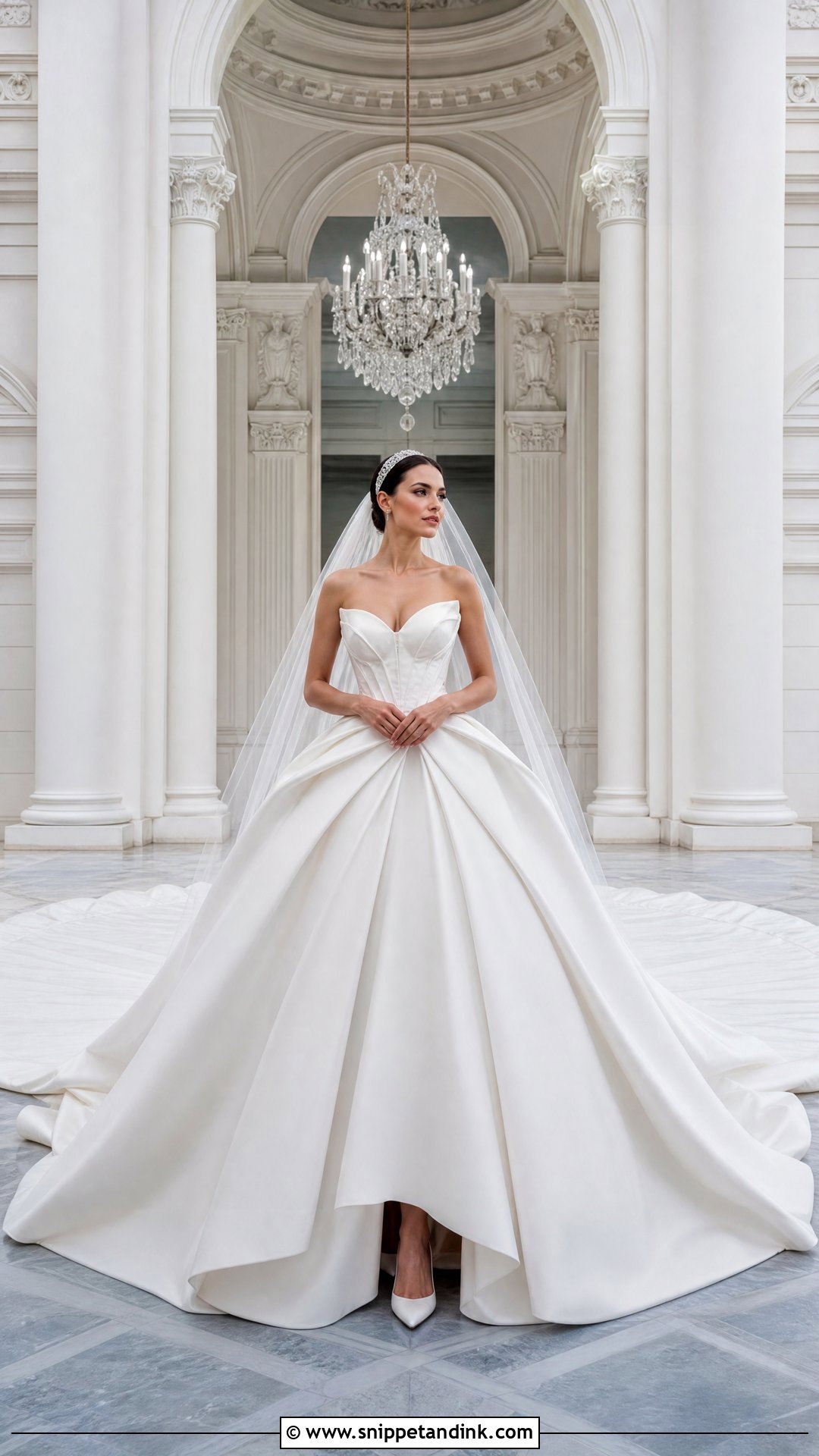
A Mikado ball gown with a cathedral train is the full grand entrance. Cathedral trains usually run about six to eight feet from the waist, so you need a generous aisle and someone to arrange the fabric. A corset-style bodice and sculpted pleats support the skirt’s volume. Satin pumps, a fine tiara or crystal comb and a veil reaching just past the train complete it, with minimal jewellery so the silhouette leads. Mikado is stiff enough to hold the train out in a clean fan, which softer satins don’t do. Book a bustle demonstration before the day and name your helper. A large estate or a ballroom with wide walkways suits this one.
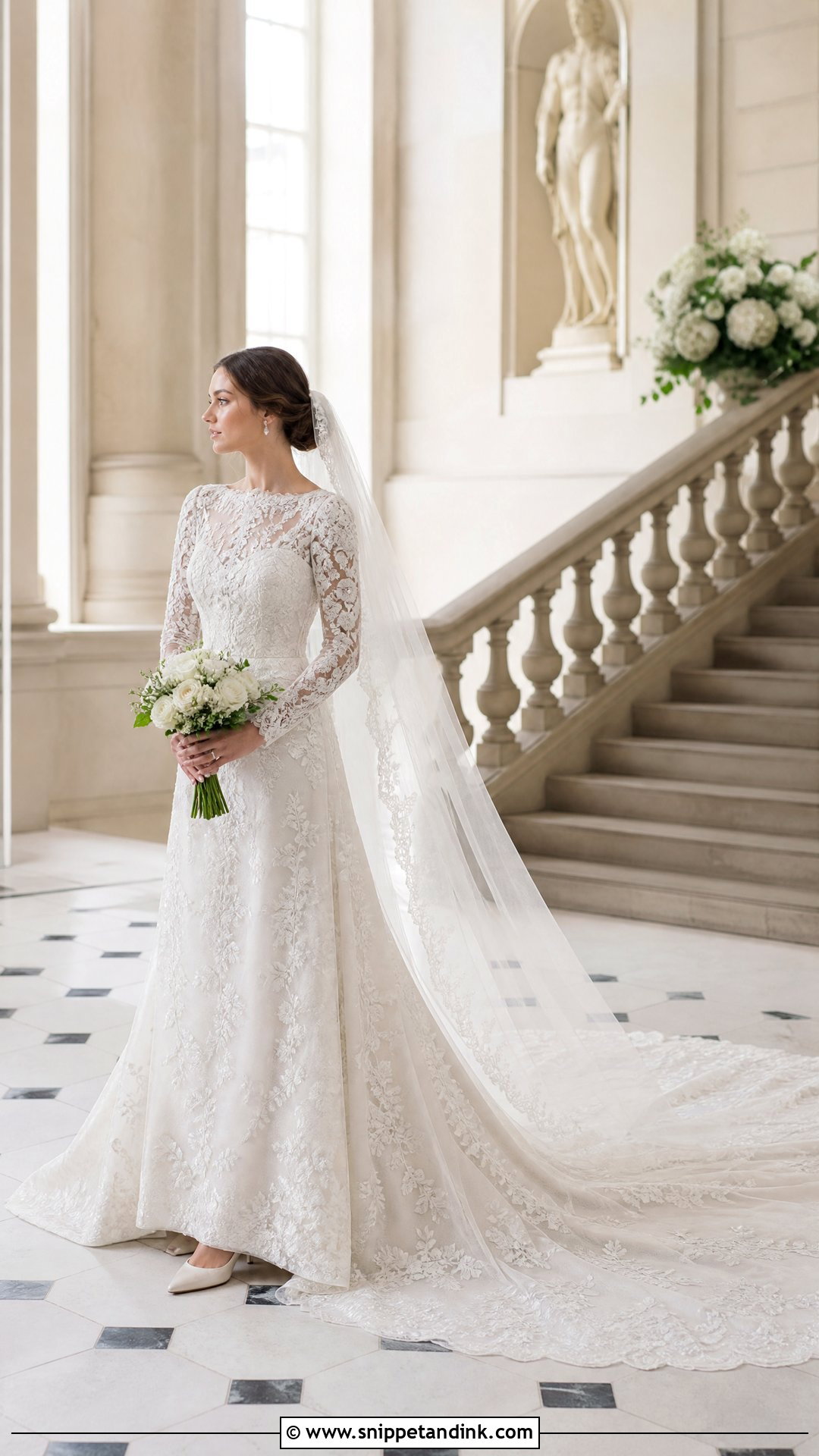
11. Long-Sleeve Lace Wedding Dress With Cathedral Train
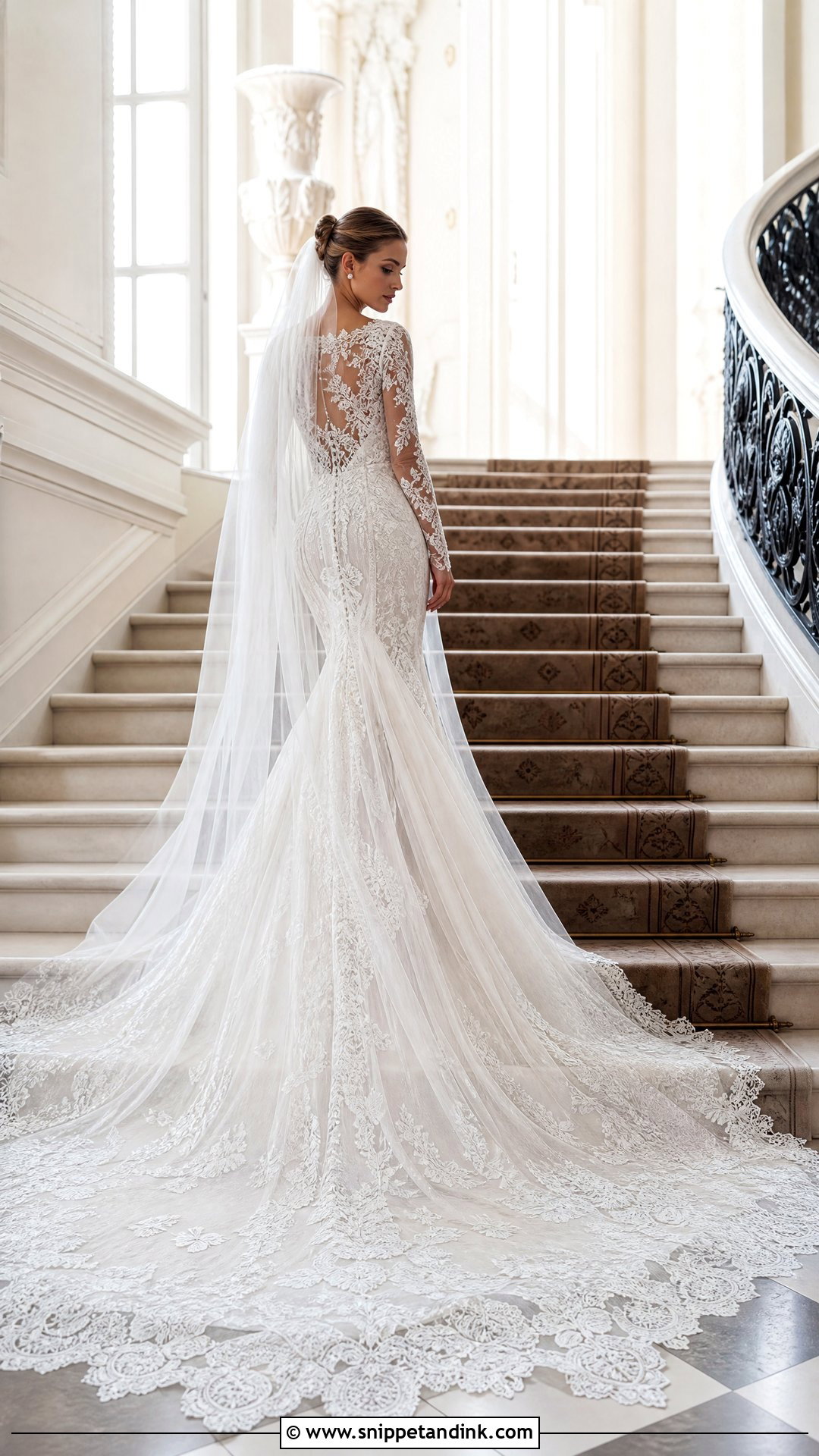
A long-sleeve lace gown with a cathedral train is traditional in the best sense, with all the interest at the back. Illusion sleeves, a defined waist and an A-line or softly fitted skirt let the lace flow on uninterrupted, and scalloped edging outlines the train’s shape in photos. Closed-toe pumps, pearl earrings and a light cathedral veil that doesn’t hide the lace go with a classic chignon. Lace catches on rough flooring, splintered boards and carpet grippers, so I walk the ceremony and portrait spots ahead of time. Grand halls, historic estates, winter venues and staircases show it off.
12. Strapless Mermaid Wedding Dress With Cathedral Train
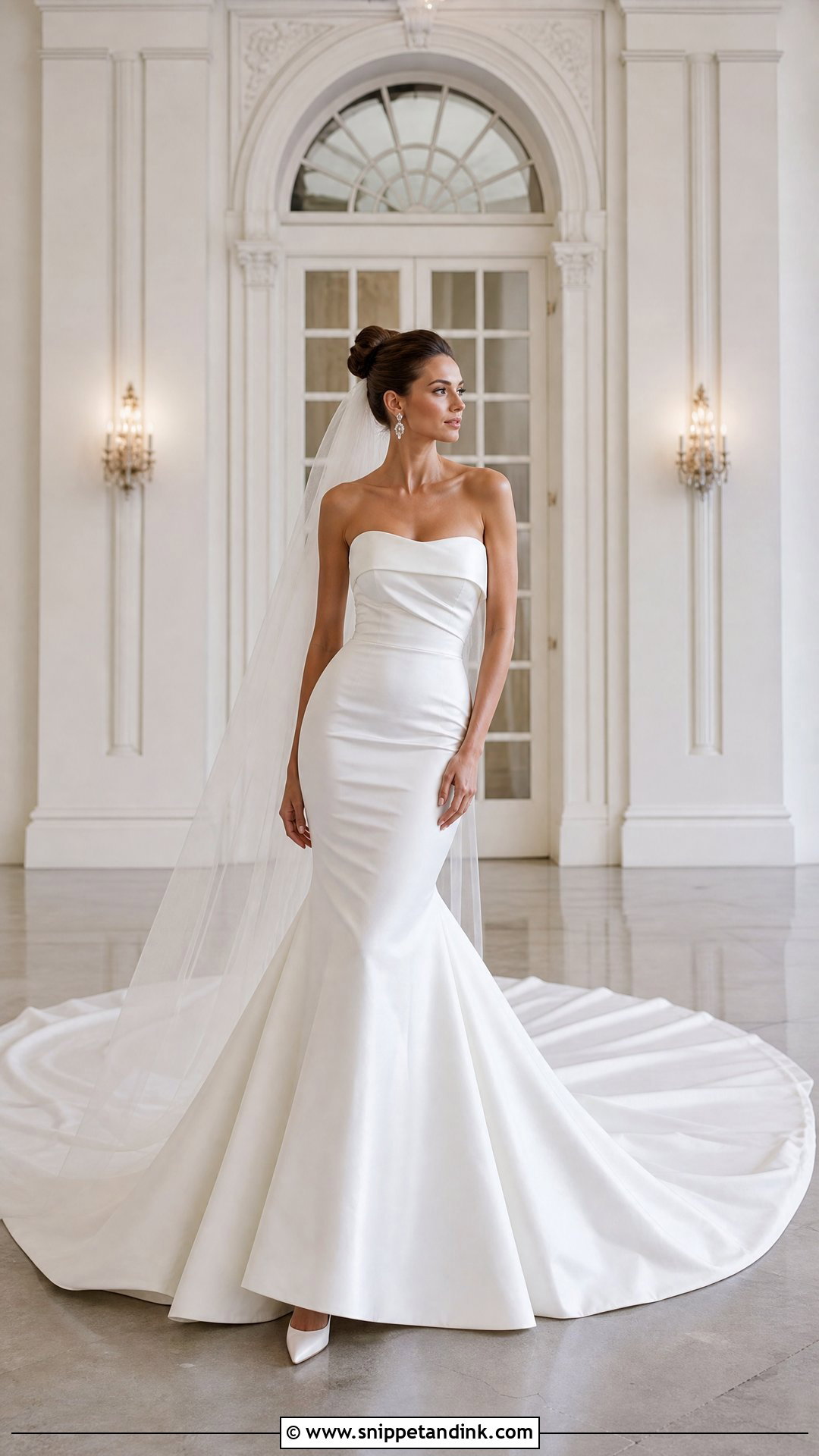
A strapless mermaid with a cathedral train is the most demanding combination on this list to wear. Internal boning and a secure neckline are non-negotiable, and the skirt should begin flaring at or just above the knee. Satin, lace or layered tulle all work as long as the train stays in proportion to the narrow top. Pointed pumps, statement earrings and a single-layer veil let the train’s construction show, with soft waves or a polished updo. The fitted skirt shortens your stride while the long train adds drag, so practise turning, sitting and walking several times before the day. Leave it to venues with plenty of space.
13. Princess Ball Gown Wedding Dress With Monarch Train
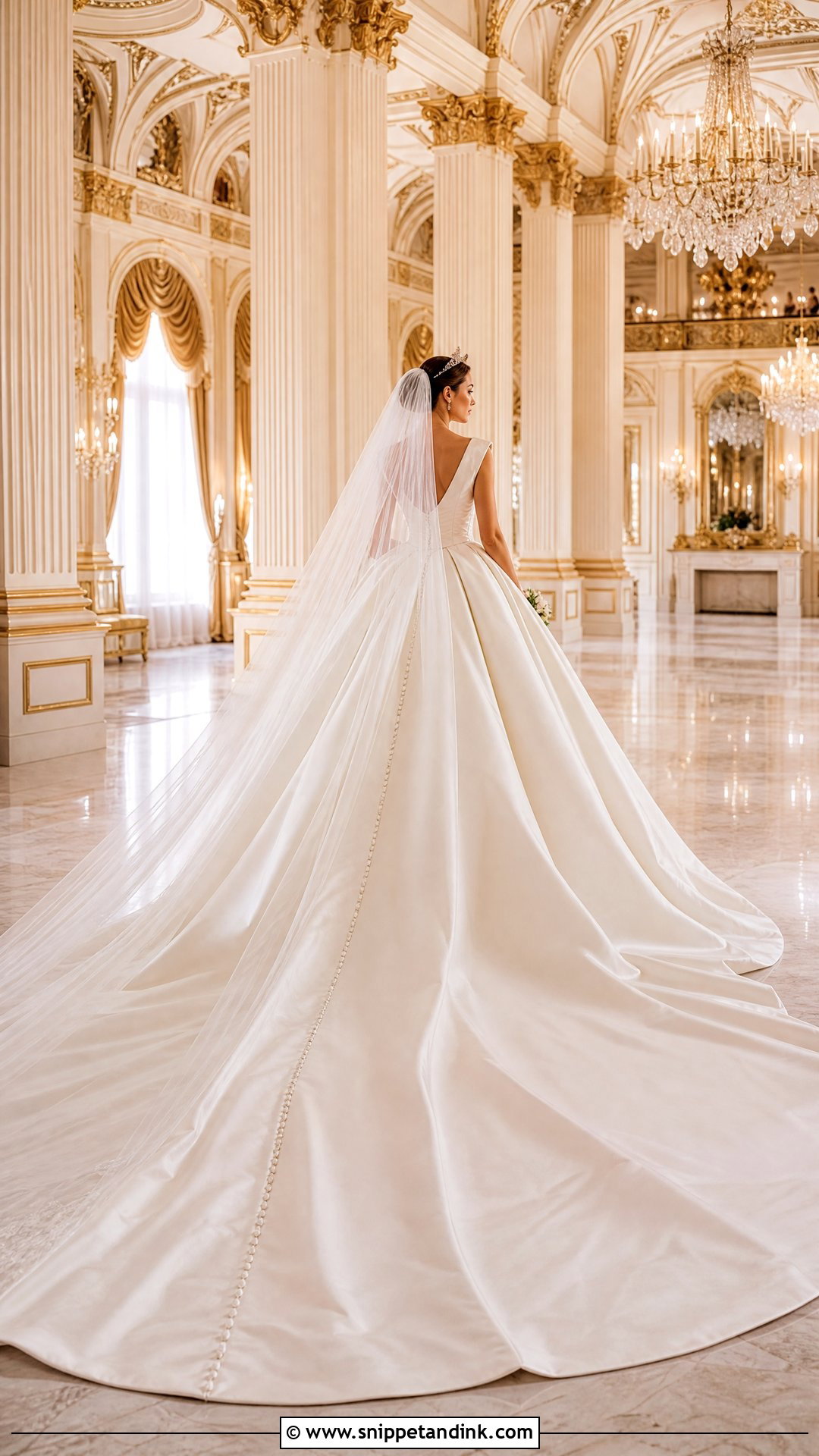
Few bridal looks feel more ceremonial than a princess ball gown with a monarch train. Also called a royal train, it can extend ten to twelve feet or more. The bodice needs real structure, and the skirt has to be made from fabric that can carry that scale, such as Mikado, satin or layered tulle. Satin pumps, a refined headpiece, small earrings and a long simple-edged veil complete it. You’ll need several helpers to arrange and carry it, wide walkways and a firm reception plan. I’d only suggest it for a vast ballroom or a large ceremonial space, because in a normal aisle the train ends up folded back on itself.
14. Embroidered A-Line Wedding Dress With Royal Train
Embroidery on a royal train gives you a whole panel of artwork to show off. An A-line gives the motifs room to spread from the fitted bodice out across the extension. Keep the base fabric close to the gown’s shade so the stitching reads as refined rather than busy. Closed-toe heels, delicate earrings and a sheer veil embroidered only around the edge suit it, with a smooth low bun. Measure the aisle and portrait spots before committing; the point of an embroidered train is to see it laid flat, and that needs floor space most venues don’t have.

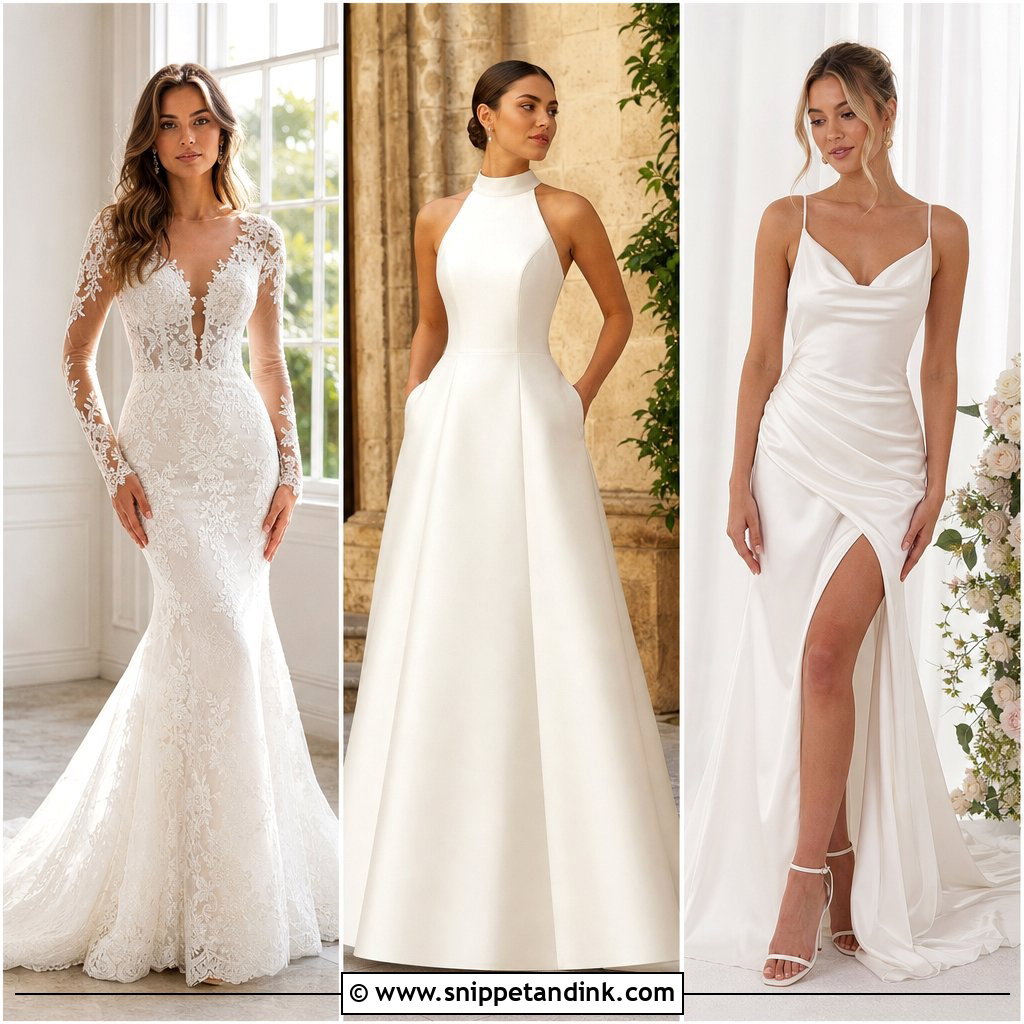
15. Minimal Column Wedding Dress With Detachable Chapel Train
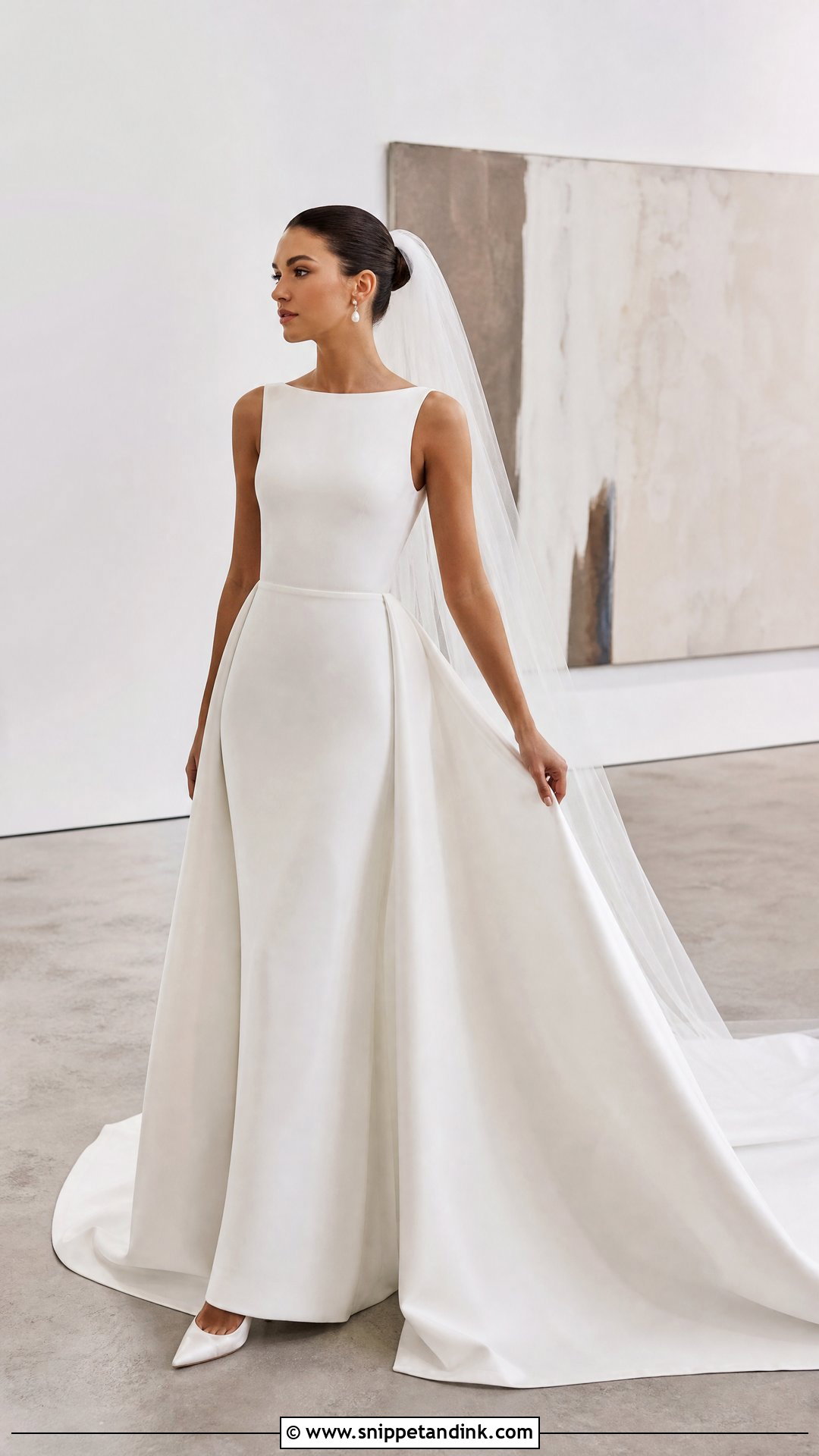
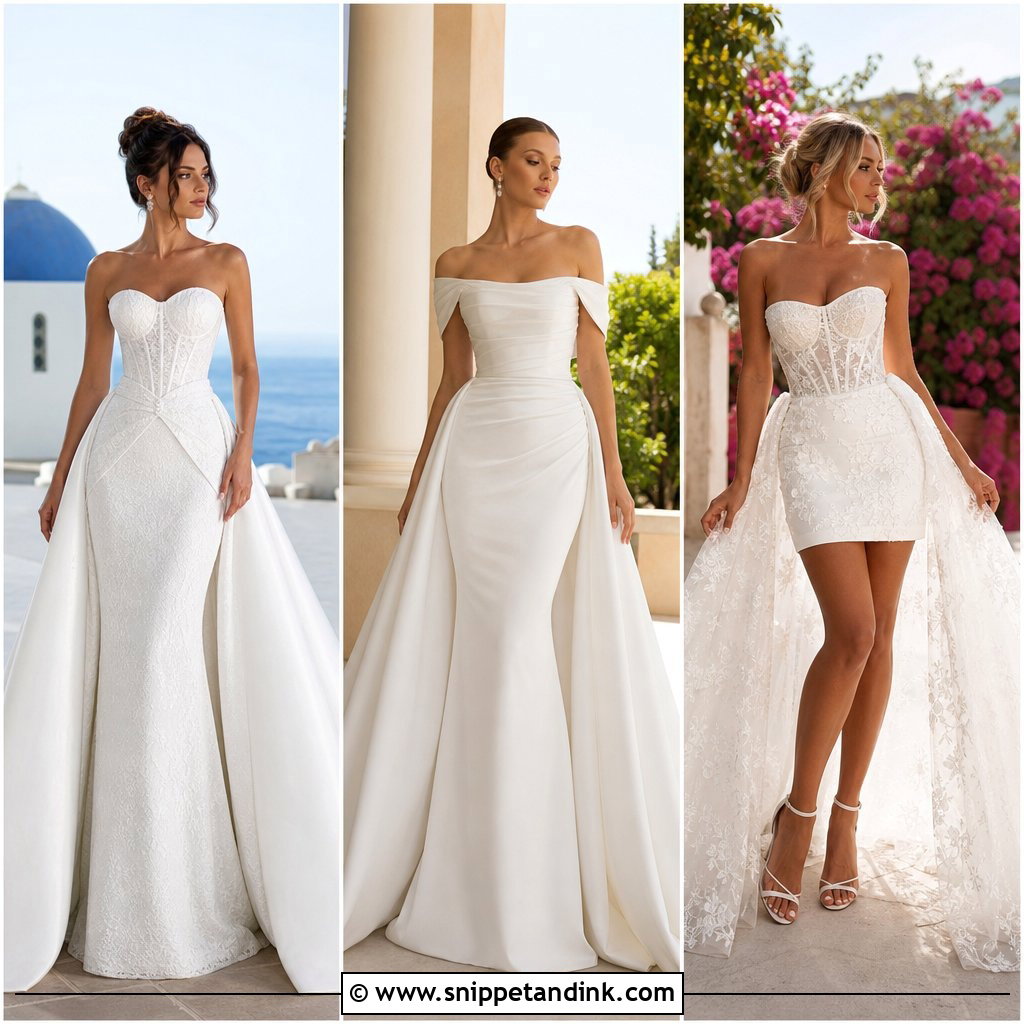
A minimal column with a detachable chapel train gives you two looks without a second dress. The base is clean crepe, a straight neckline and a narrow floor-length skirt; the train or overskirt fastens discreetly at the waist for the ceremony and is taken off instead of bustled afterwards. Detachable trains come in several lengths. For the aisle, wear pointed pumps, pearl drops and a sheer chapel veil. Once train and veil come off, a hair accessory or bolder earrings mark the change. Ask whether the fastening uses hooks or snaps; hooks hold better under a heavy train.
16. Corset Ball Gown With Detachable Cathedral Train
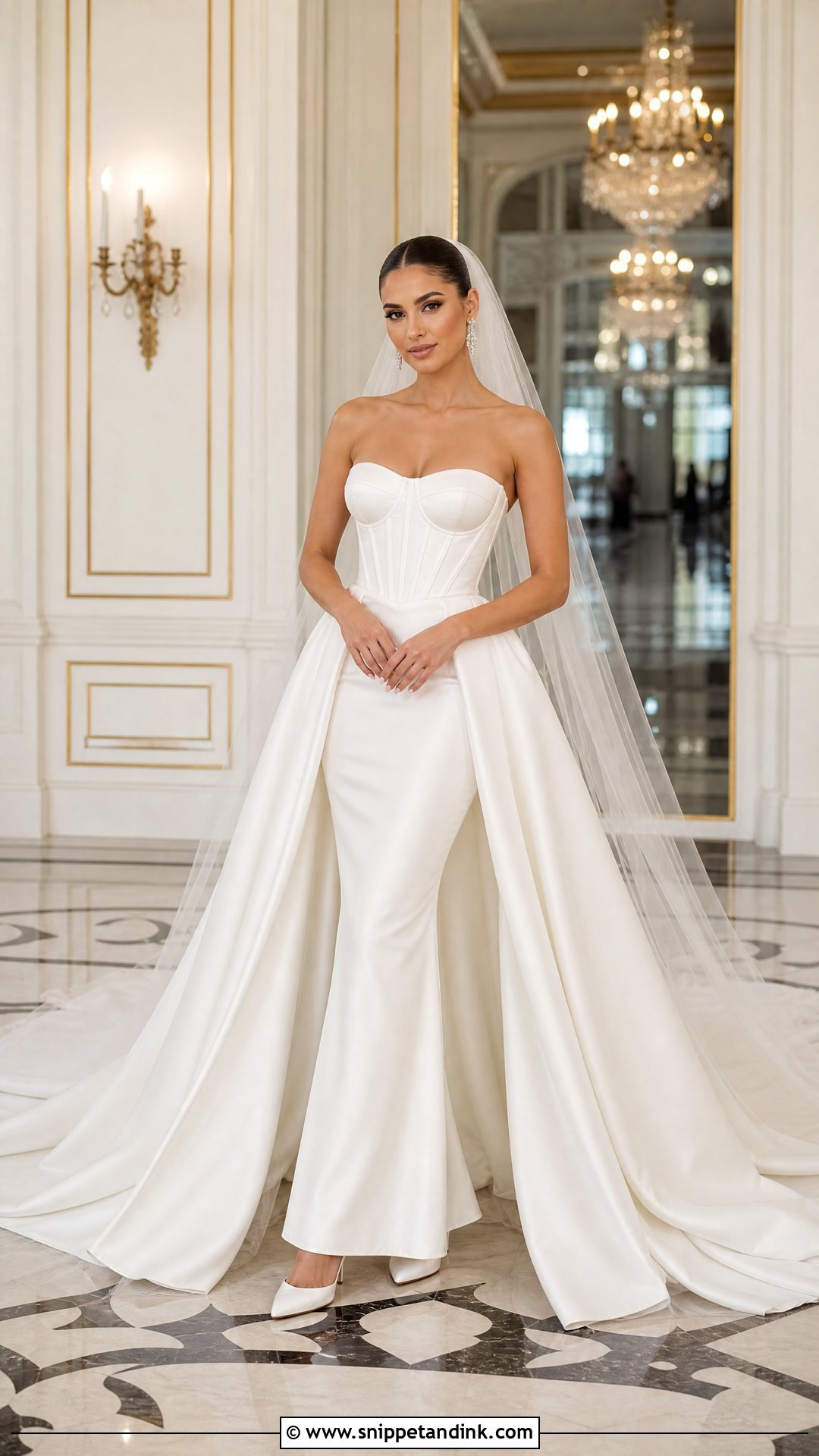
A corset gown with a detachable cathedral train gives you a sculpted ballgown shape for the ceremony and a slim dress for dancing. The base is usually a slim A-line or fit-and-flare in smooth satin or lightly embellished tulle, and the removable train attaches at the waist. Satin pumps, crystal earrings and a cathedral veil that falls past the removable layer complete the aisle look. Ask the salon to show you every attachment and to give you spare fasteners. Some brides prefer this to a heavy bustle because there is nothing left hanging at the back once the train is off.
17. Cape Wedding Dress With Floor-Length Watteau Train
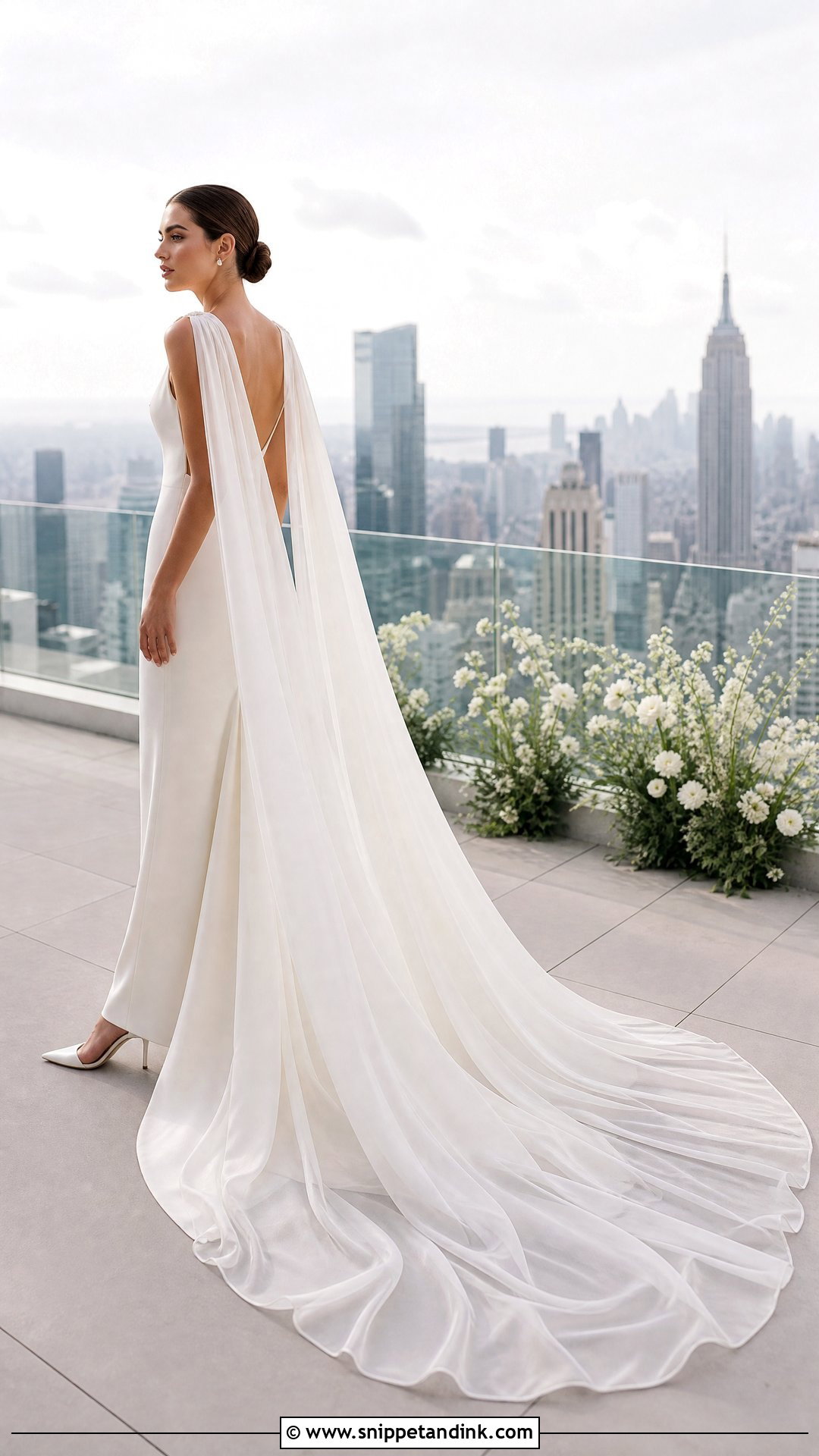
A Watteau train falls from the shoulders or upper back rather than from the skirt, so it behaves like a cape. It can be made in almost any length, which makes it a flexible alternative to a skirt train. A sheer Watteau layer over a clean sheath or A-line lets the floating fabric show. Pointed pumps, stud earrings and a sleek bun keep the neckline clear. I usually advise skipping the veil, as the shoulder train already frames the back. Do check where it attaches: a Watteau pulls backwards on the shoulders, and a straight neckline can creep up if the attachment isn’t anchored to something firm.
18. High-Neck Wedding Dress With Chapel Watteau Train
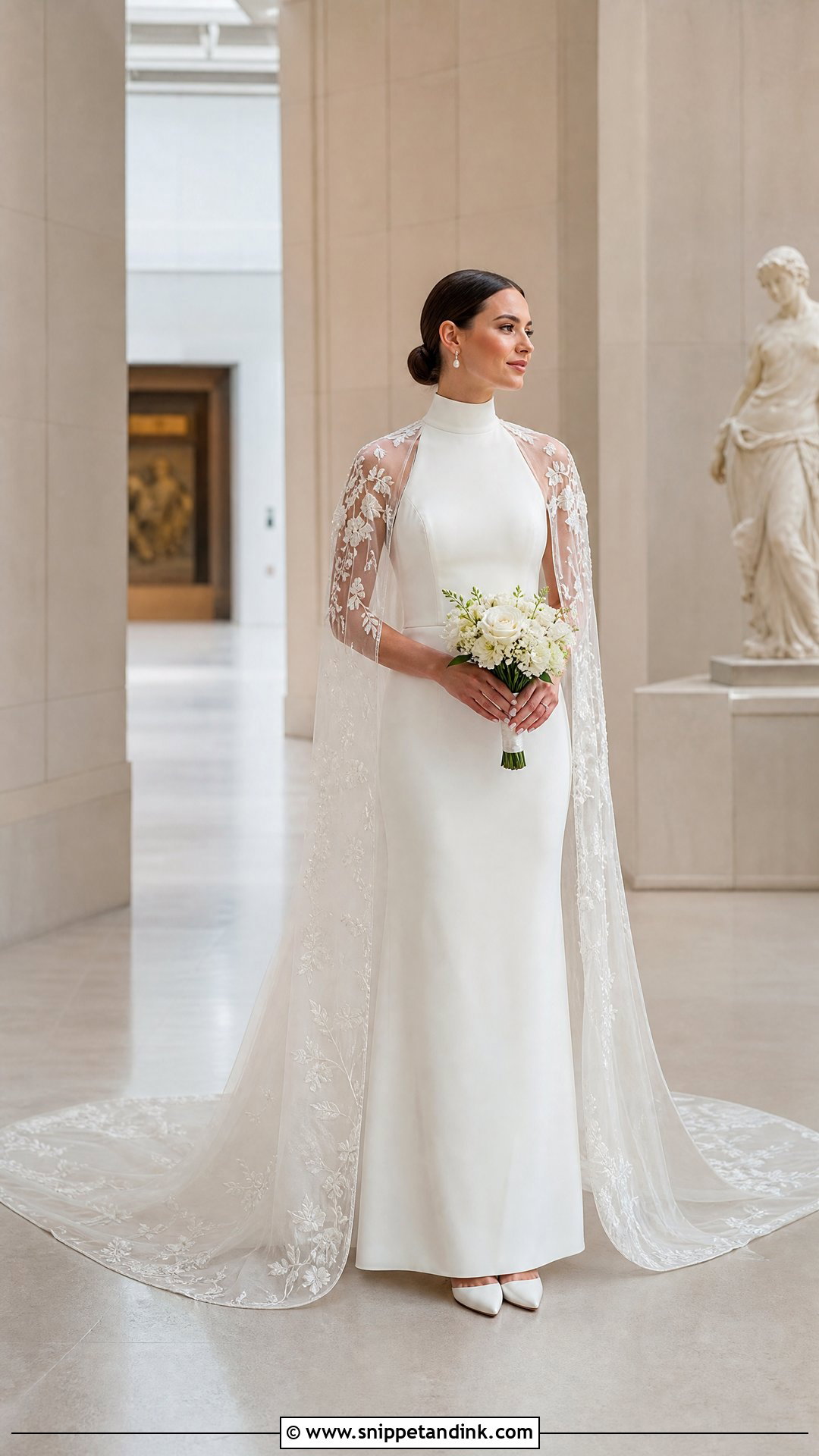
A high-neck sheath with a chapel-length Watteau train is modest at the front and fashion-forward at the back. The base can be crepe or satin, with the train in sheer tulle, chiffon or embroidered organza falling a few feet beyond the hem. Closed-toe pumps, small pearl earrings and a low bun finish it. I skip a traditional veil here, since a veil plus a shoulder train plus a high neck stacks too many layers at the throat. Hidden snaps can make the Watteau train removable after the ceremony. Museums, modern estates and city venues with clean lines suit it.
19. Floral A-Line Wedding Dress With Scalloped Chapel Train
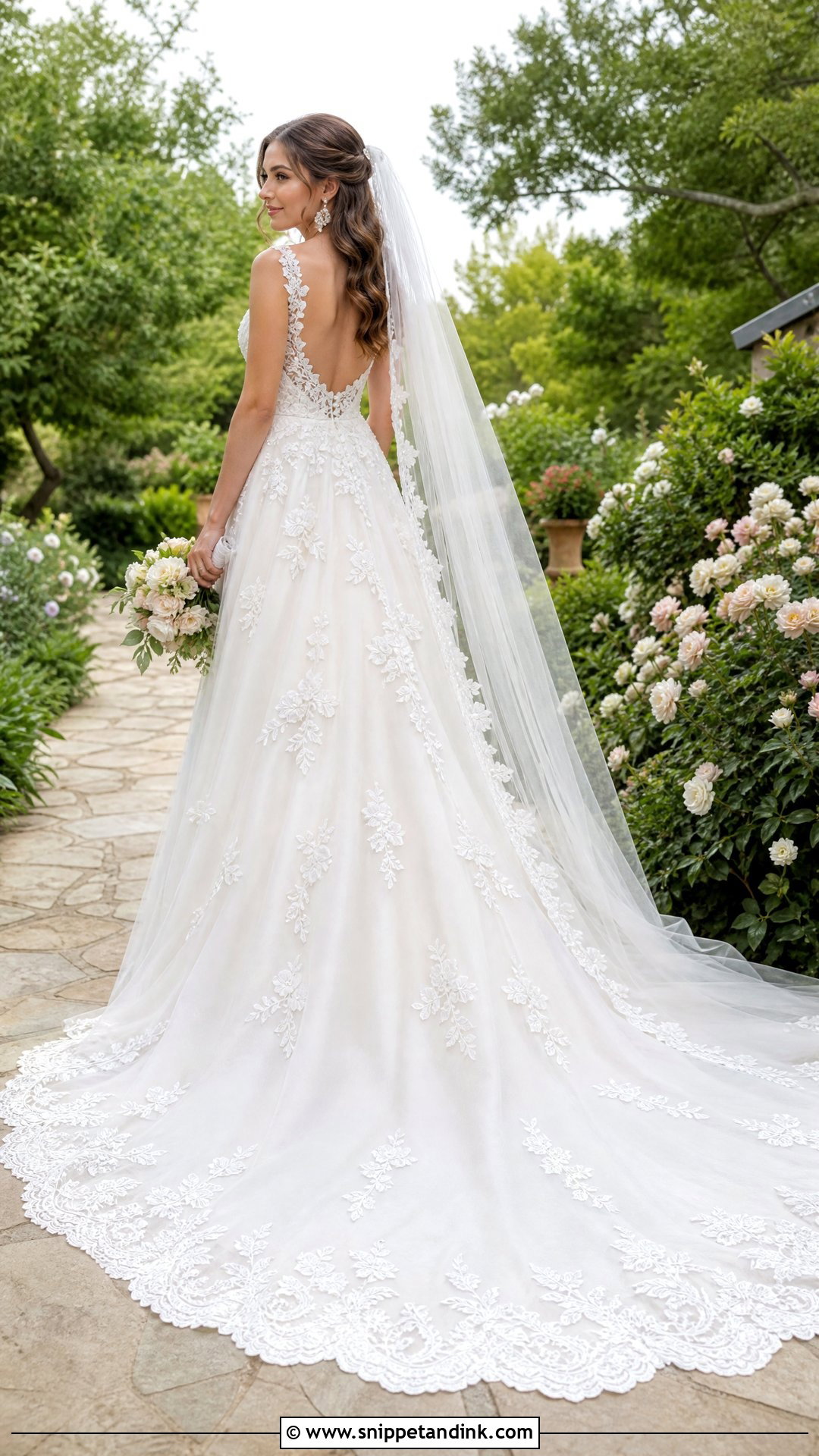
Floral appliqués on a scalloped chapel train add texture at a medium length. I like the flowers to space out toward the hem so the outline of the train stays easy to read. A softly fitted bodice and natural waist balance the skirt, with block-heel pumps or sandals, floral earrings, a sheer veil with a narrow lace border and softly pinned waves. Ask for a bustle that lifts the scallops without folding the lace unevenly. Gardens, glasshouses and spring weddings suit it, though raised flowers on the train do pick up petals and grass, so a quick check before photos is worth it.
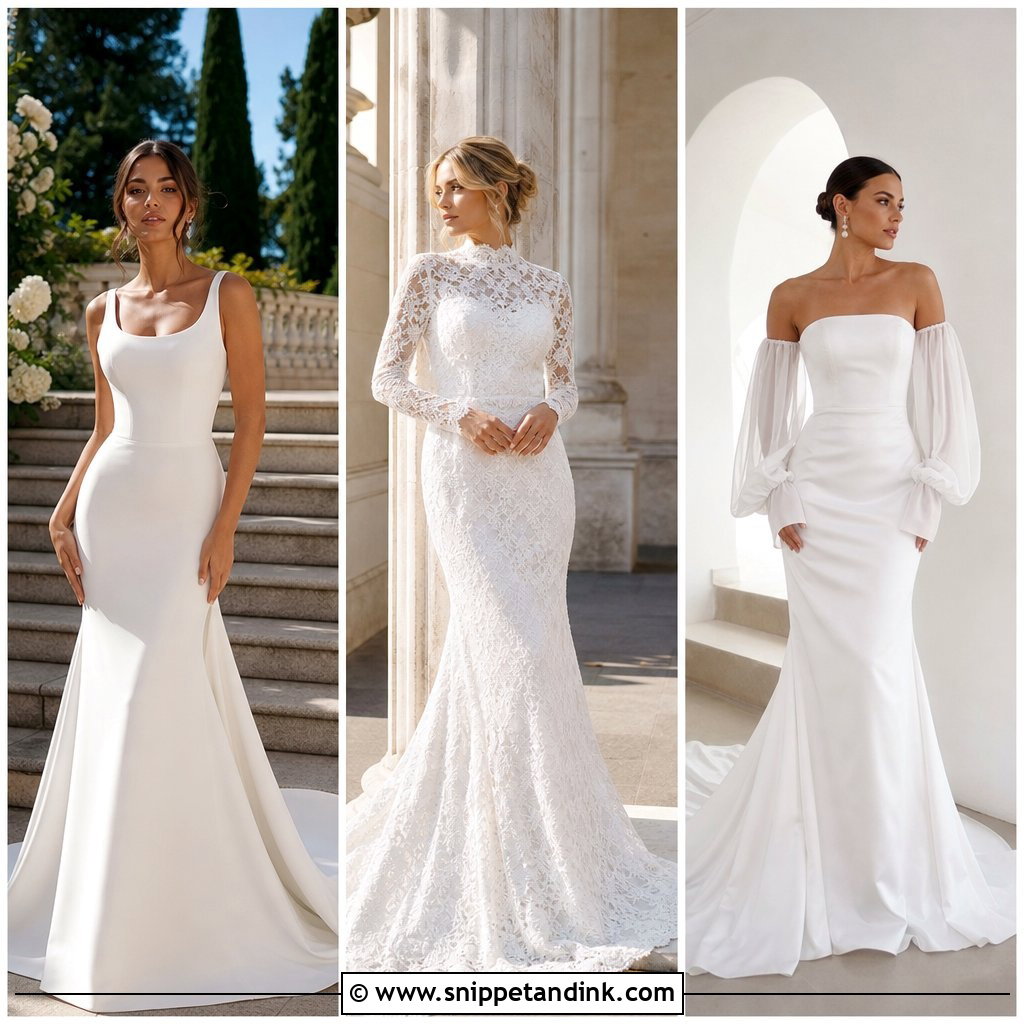
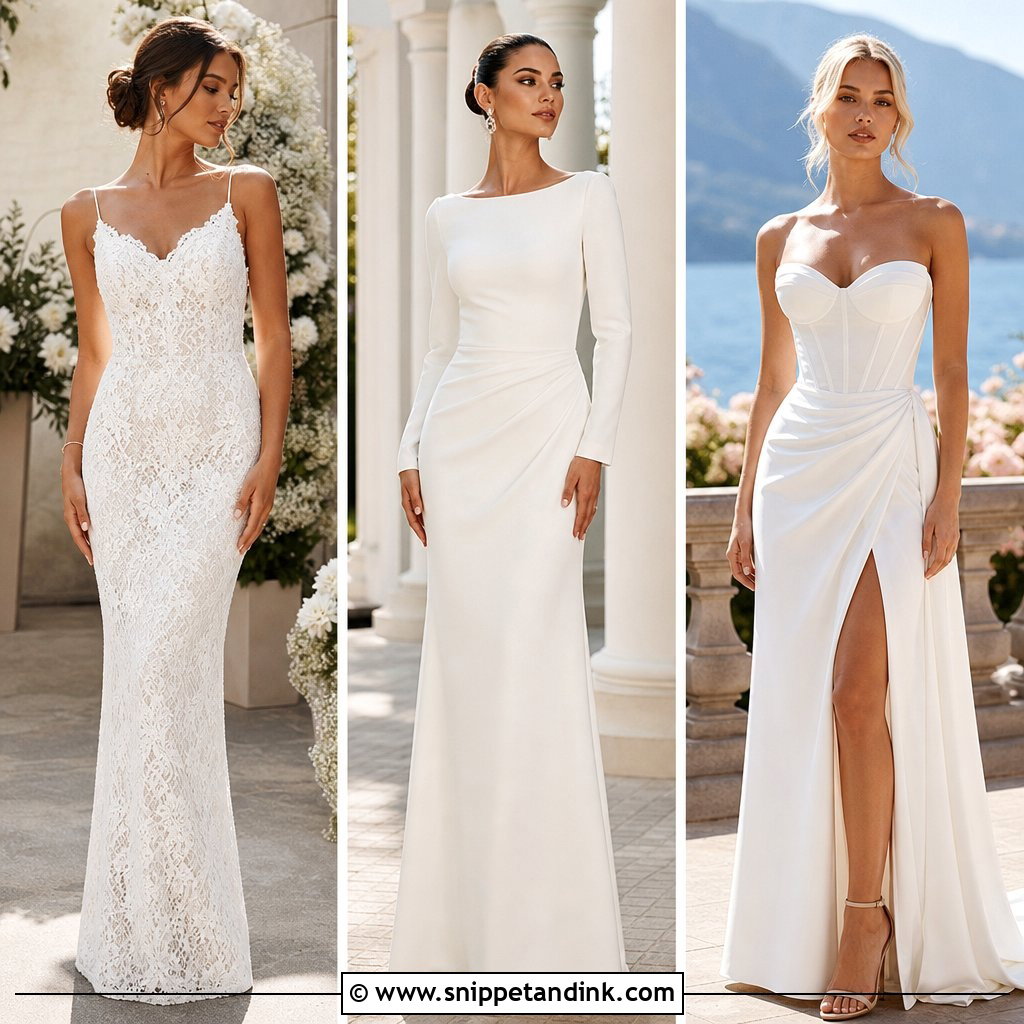
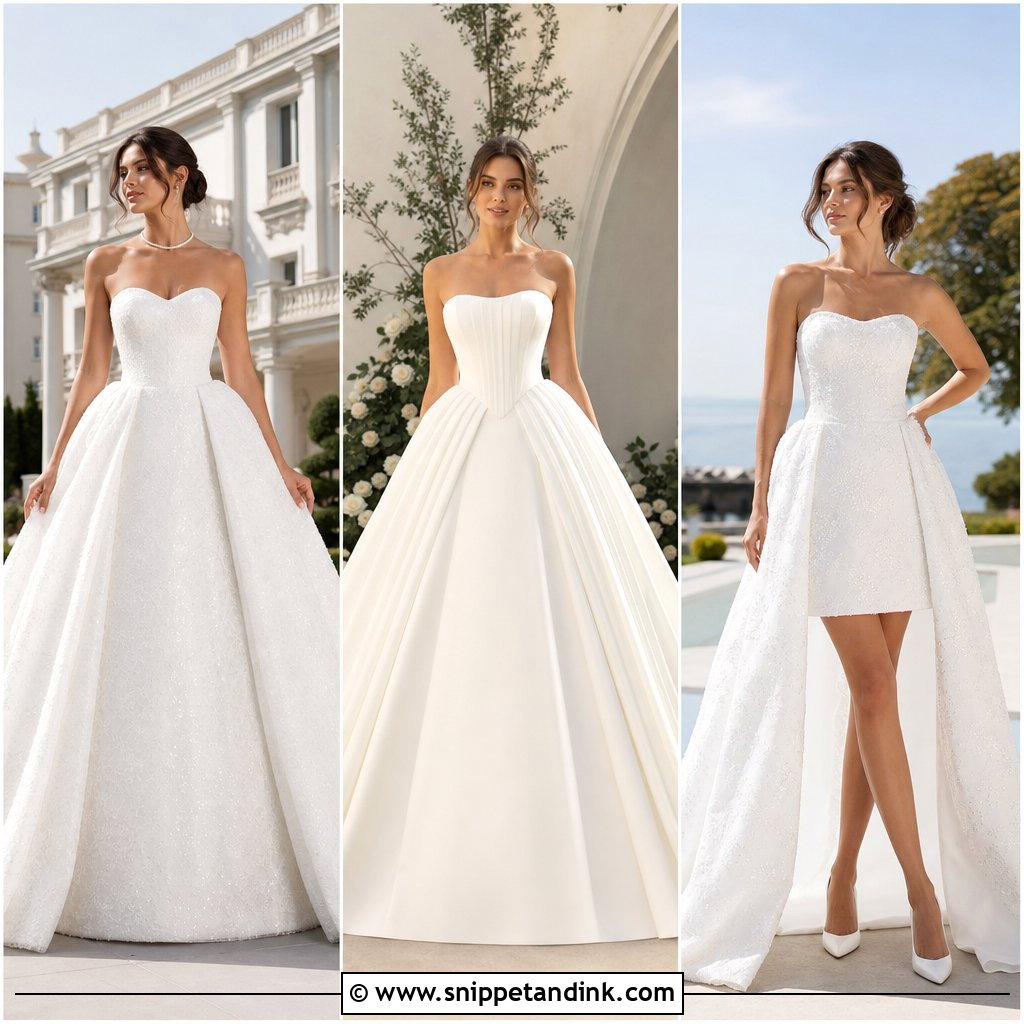
20. Satin Wedding Dress With Detachable Royal Overskirt Train
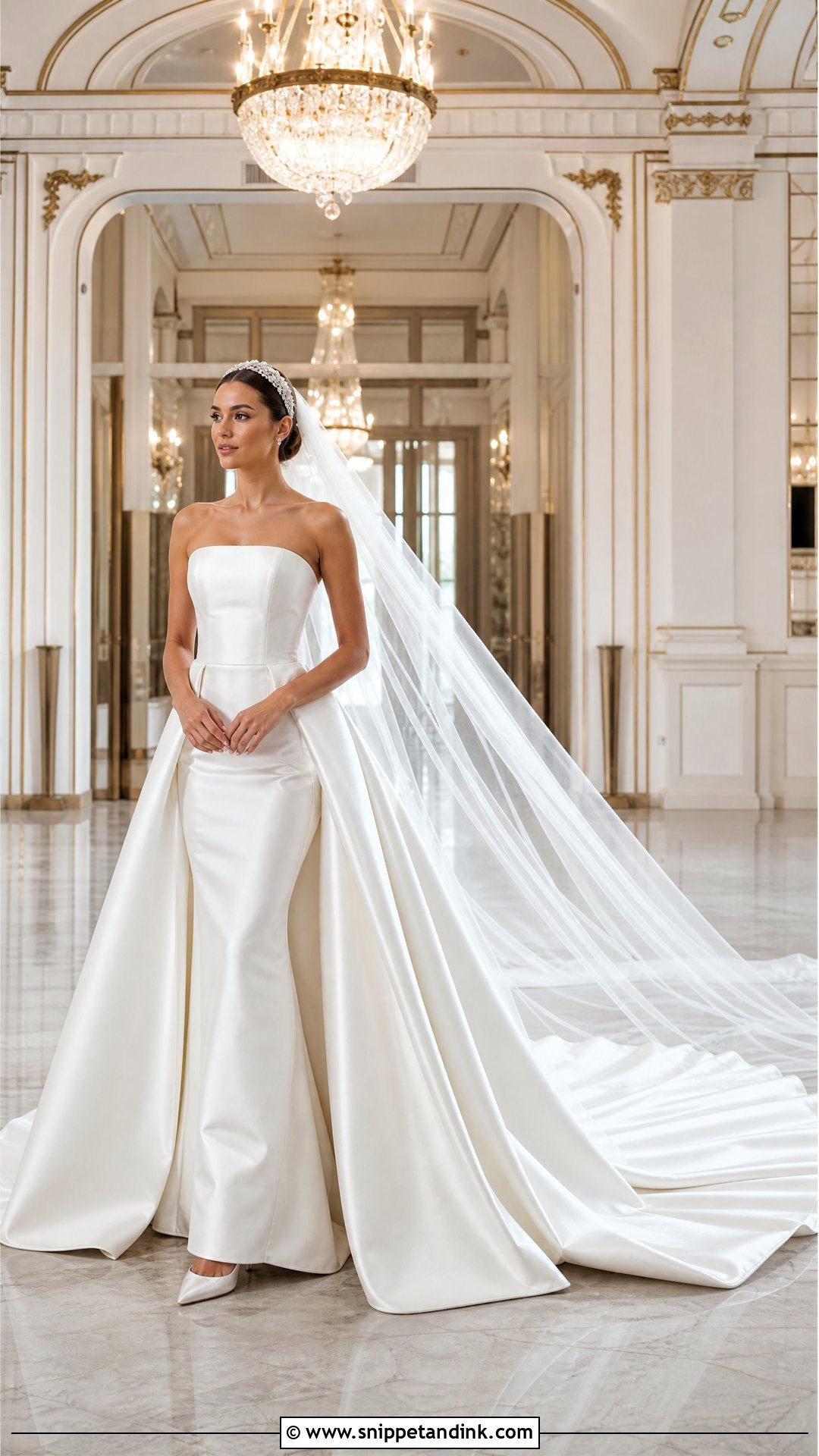
For the biggest change between ceremony and party, pair a fitted satin dress with a detachable royal-length overskirt. The aisle look has a structured bodice, a defined waist and a wide back panel trailing several feet behind. Keep the satin smooth and mostly unembellished so the scale looks deliberate. Pointed satin pumps, a crystal headband, small earrings and a sheer cathedral veil complete it, and after the portraits the veil and overskirt come off to reveal the slim dress underneath. That much fabric is heavy, so the attachment points must be strong. You need a large venue, wide aisles and room for portraits.
Walk the Venue Before Committing to a Long Train
A long train is decided as much by the building as by the dress. Before a bride commits to cathedral length or beyond, I want her to walk the route she’ll actually take on the day, ideally with a tape measure and photos.
- Measure the aisle. If it is shorter than the train plus a few steps, the train never fully opens behind you.
- Check every floor surface. Gravel, grass, rough stone and old wooden boards all snag lace and dirty satin.
- Look for stairs and tight turns. Going down steps, someone has to lift the train from behind or it pulls you backwards.
- Find out how you’ll get into the car. A long train needs folding onto your lap before you sit.
Who handles the train on the day
Pick one person to manage the train between the car, the aisle and the photos. Their job is simple but constant: spread the train flat once you stop, lift it at steps, and gather it before you turn. Have them practise at the final fitting, because fluffing a train without stepping on it takes a little coordination. A long train also needs a plan for the loo, where one helper holds the fabric up and out of the way.
From a Brush of Fabric to Twelve Feet of Satin
The right train fits the dress, the venue and how much you want to move. Sweep and court trains give a bridal finish with almost no upkeep. Chapel and semi-cathedral lengths sit in the flexible middle. Cathedral and royal trains bring real drama but need space, helpers and a reception plan. Watteau and detachable trains give impact with more freedom. Before deciding, try the whole outfit with your shoes, veil, underwear and bustle, then walk, turn, sit and practise the attachments at alterations. The length you can move in all day is the one to pick.
You'll Like These Ideas:




Leave a Reply