
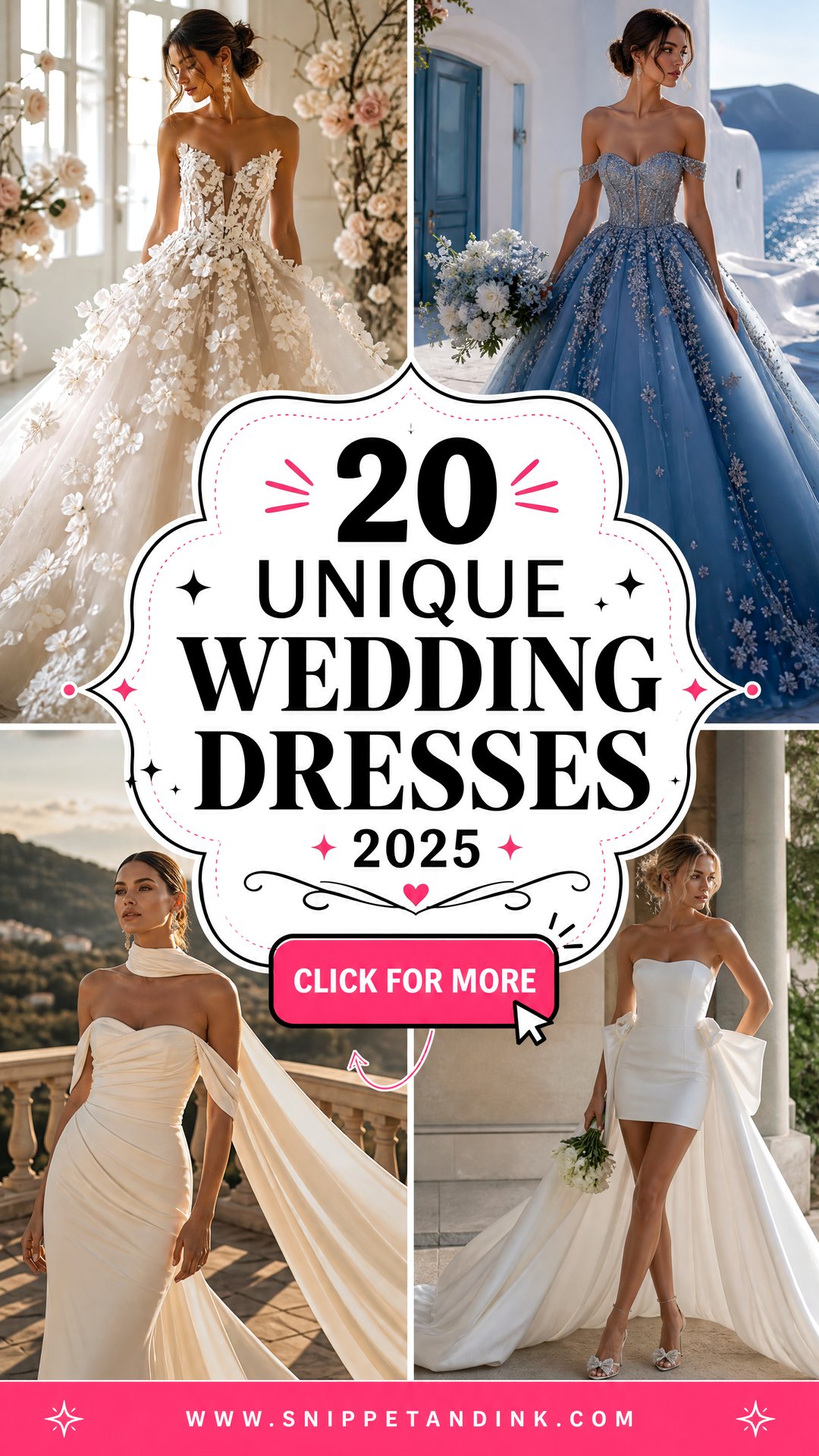
The dresses I pulled most often for brides through 2025 had one thing in common: the interest sat in the construction, not just the lace. Basque and drop waists, corsetry you can actually see, petals stitched on by hand, bows, and layers that come off for the reception. A distinctive gown still has to work with your venue, your season and how much you plan to move, so for each design below I’ve noted how I’d style it and where it tends to cause trouble at fittings. Shoes, veil and hair change these dresses more than most people expect, so they’re part of every look.
Giving a Statement Gown Enough Lead Time
Most of the designs below are made to order, not pulled off a rack. From the day you pay a deposit, production commonly takes four to six months, and hand-applied petals, colored embroidery or a custom shade can push that longer. Alterations need roughly two to three months on top. That’s why I tell brides drawn to unusual dresses to start shopping about nine to twelve months out. Rush orders exist, but they usually cost extra and leave less room to fix a fit problem.
What I ask brides to do in the fitting room
- Sit on a hard chair for a full minute. Drop waists and longline bodices show their flaws seated.
- Raise both arms and hug someone. Sleeves and straps that strain now will strain at the reception.
- Walk the length of the shop in heels close to your wedding height, since the hem will be set to those shoes.
- Get a phone photo from the side and the back. Cowls, bows and drapes are designed to be seen from behind.
- Ask whether the sample has already been altered, so you know how much of the fit you’re seeing is real.
Trends move quickly in bridal, and it’s fine to fall for one. Just let the overall shape of the dress, not a single detail, be the reason you buy it.
1. Basque Waist Wedding Dress
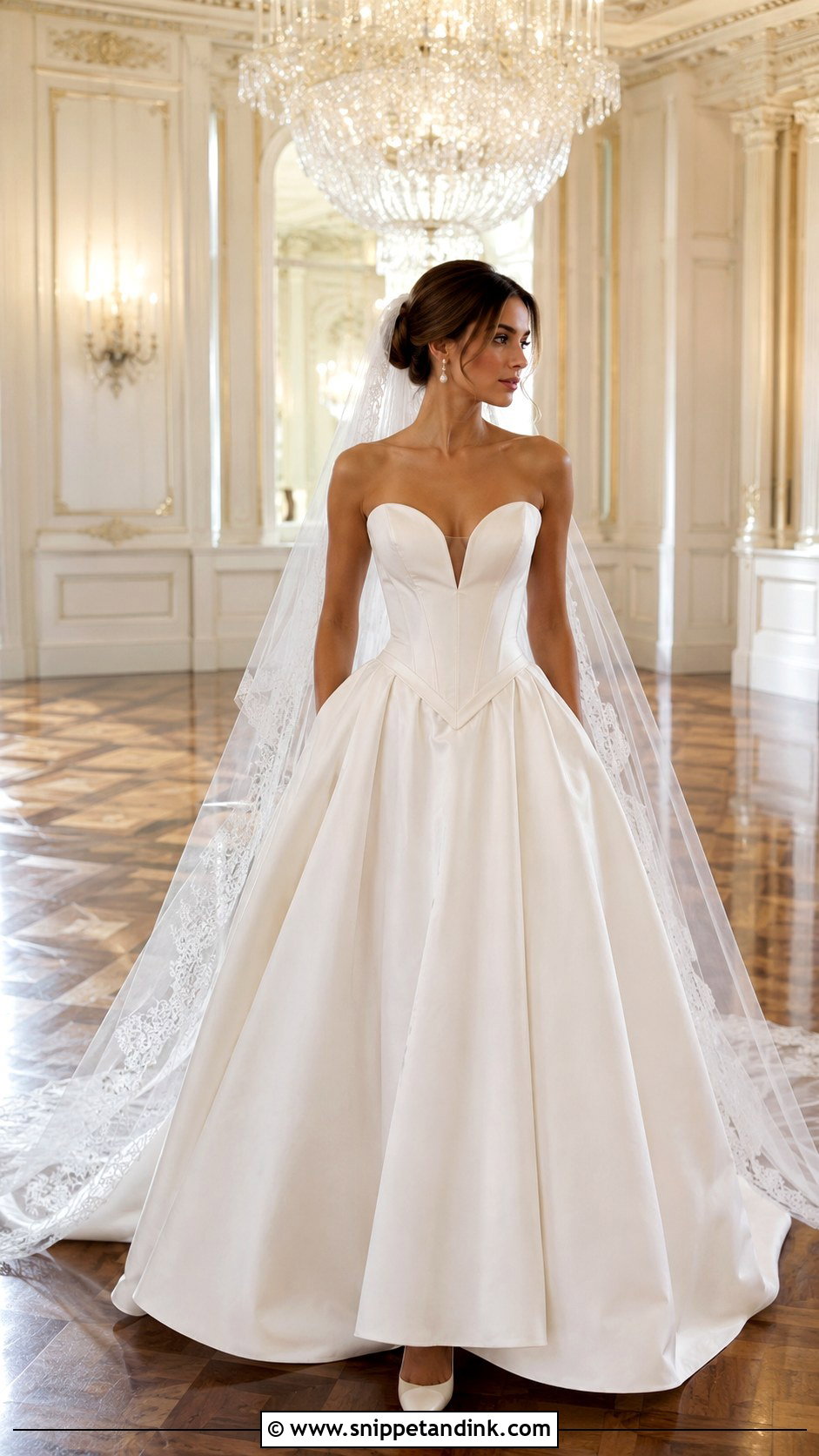
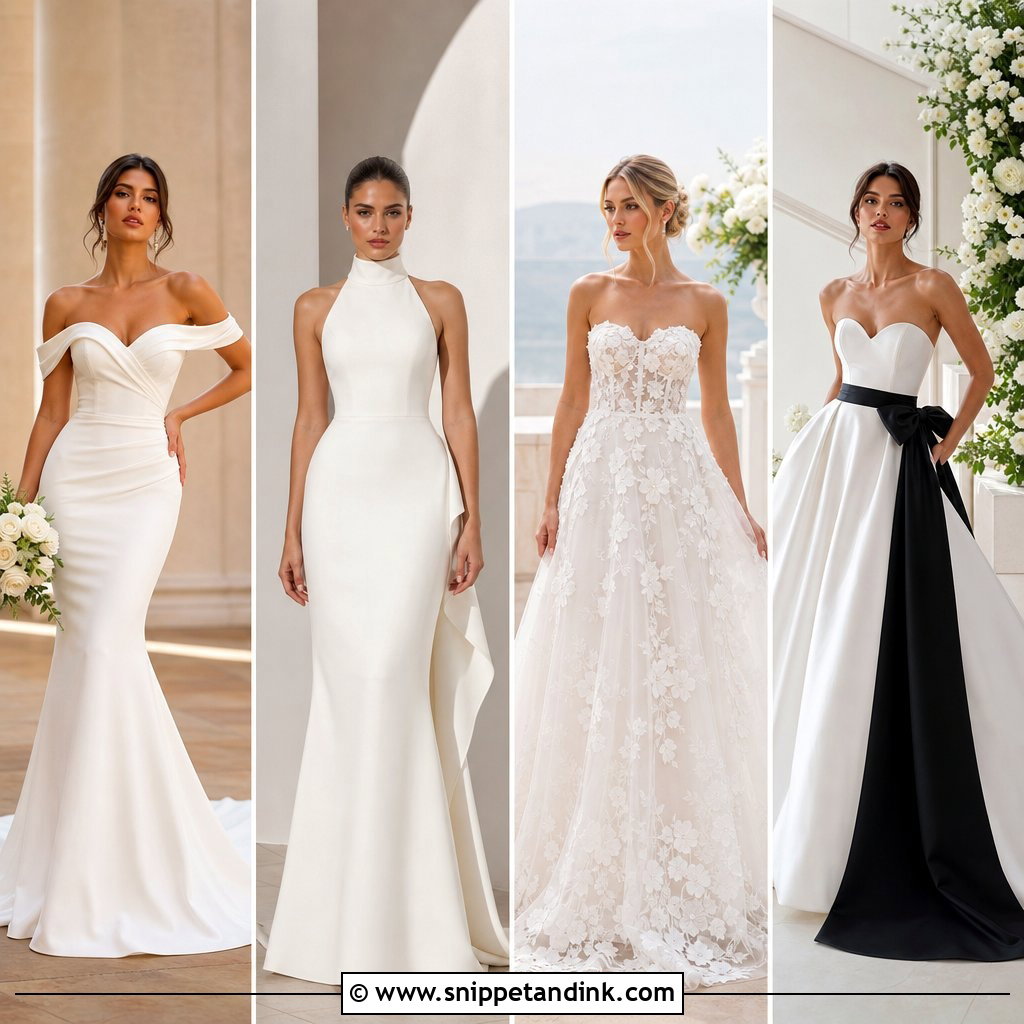
A Basque waist wedding dress has a fitted bodice that dips into a V below the natural waist, and that point is where I spend most of a fitting. Set it too high and the torso looks short; too low and the skirt seems to start at your hips when you sit. On a strapless corset gown with a full satin or Mikado skirt, a correctly placed point lengthens the body and balances the volume underneath, while a sweetheart neckline softens the visible seams. I’d add pointed ivory pumps, pearl drops, a cathedral veil and a low bun so the waistline stays readable from behind. Ballrooms and historic estates give that skirt room to move.
2. Drop Waist Satin Wedding Dress
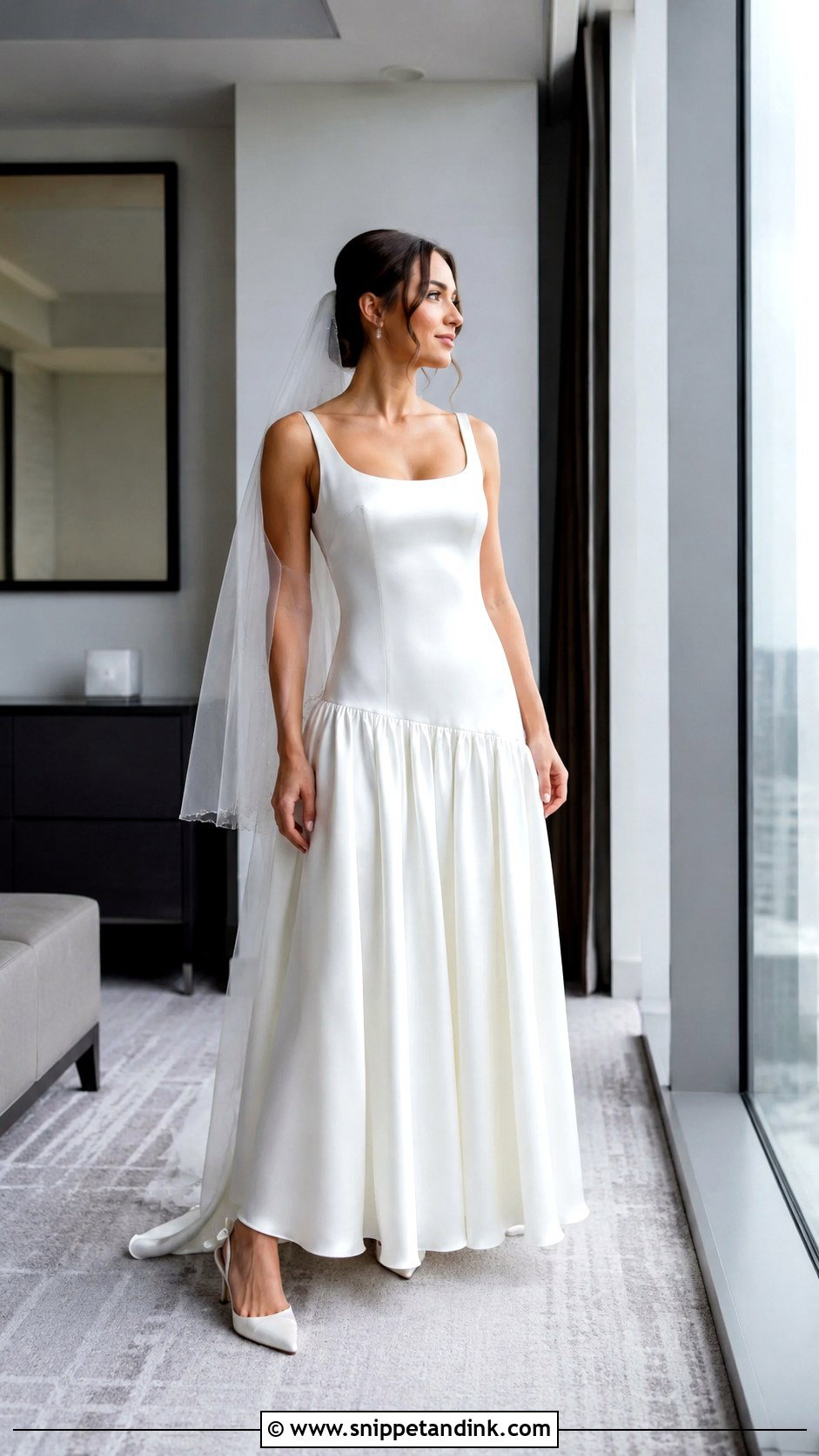
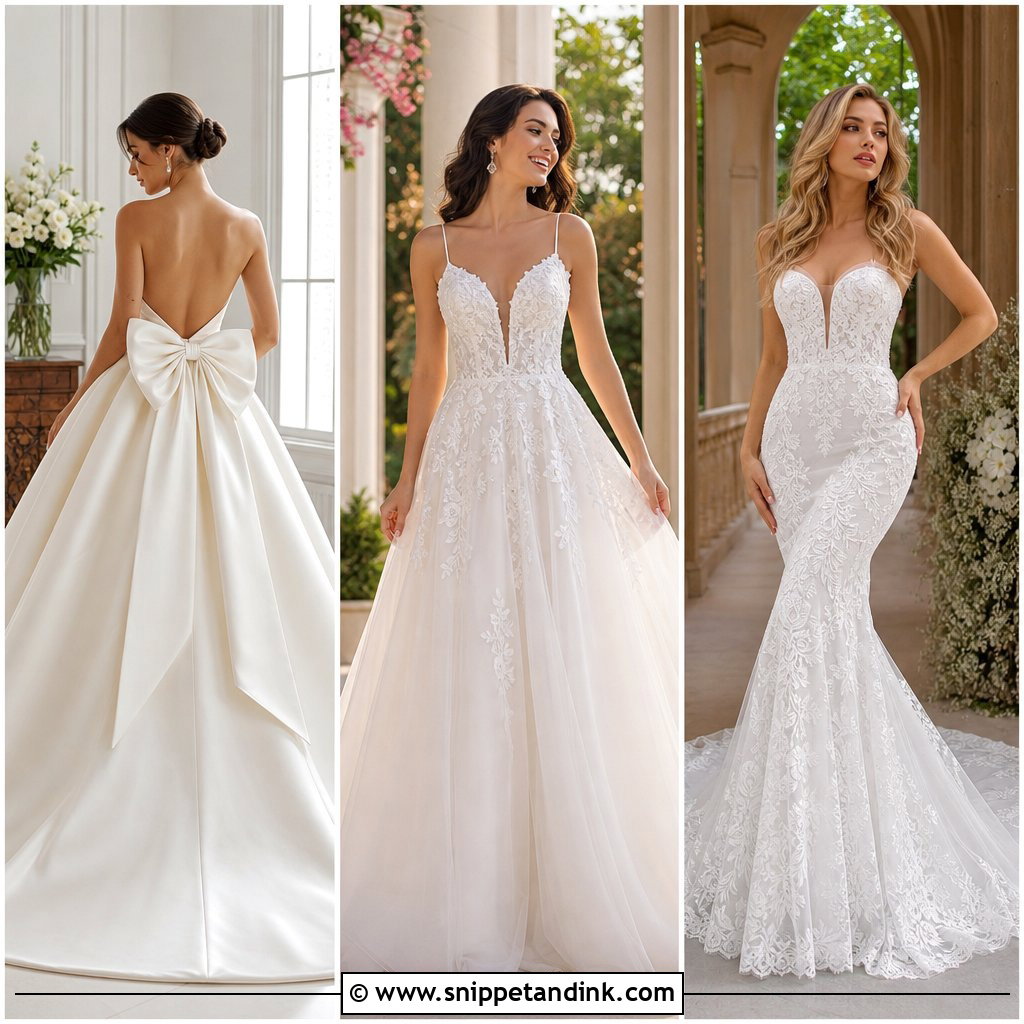
A drop waist needs fabric that lies flat, which is why I prefer it in smooth satin rather than anything heavily beaded. The longline bodice runs toward the hips before opening into a gathered or softly pleated skirt, and a straight or scoop neckline keeps it current, with covered buttons along the back for a traditional finish. Here’s the catch: a longline bodice that looks perfect standing can ripple across the stomach when you sit. I make brides sit on a hard chair at every fitting. Slingbacks, a sheer fingertip veil and small studs are all it needs, plus a structured top-handle bag for a hotel or gallery wedding.
3. 3D Floral Wedding Dress
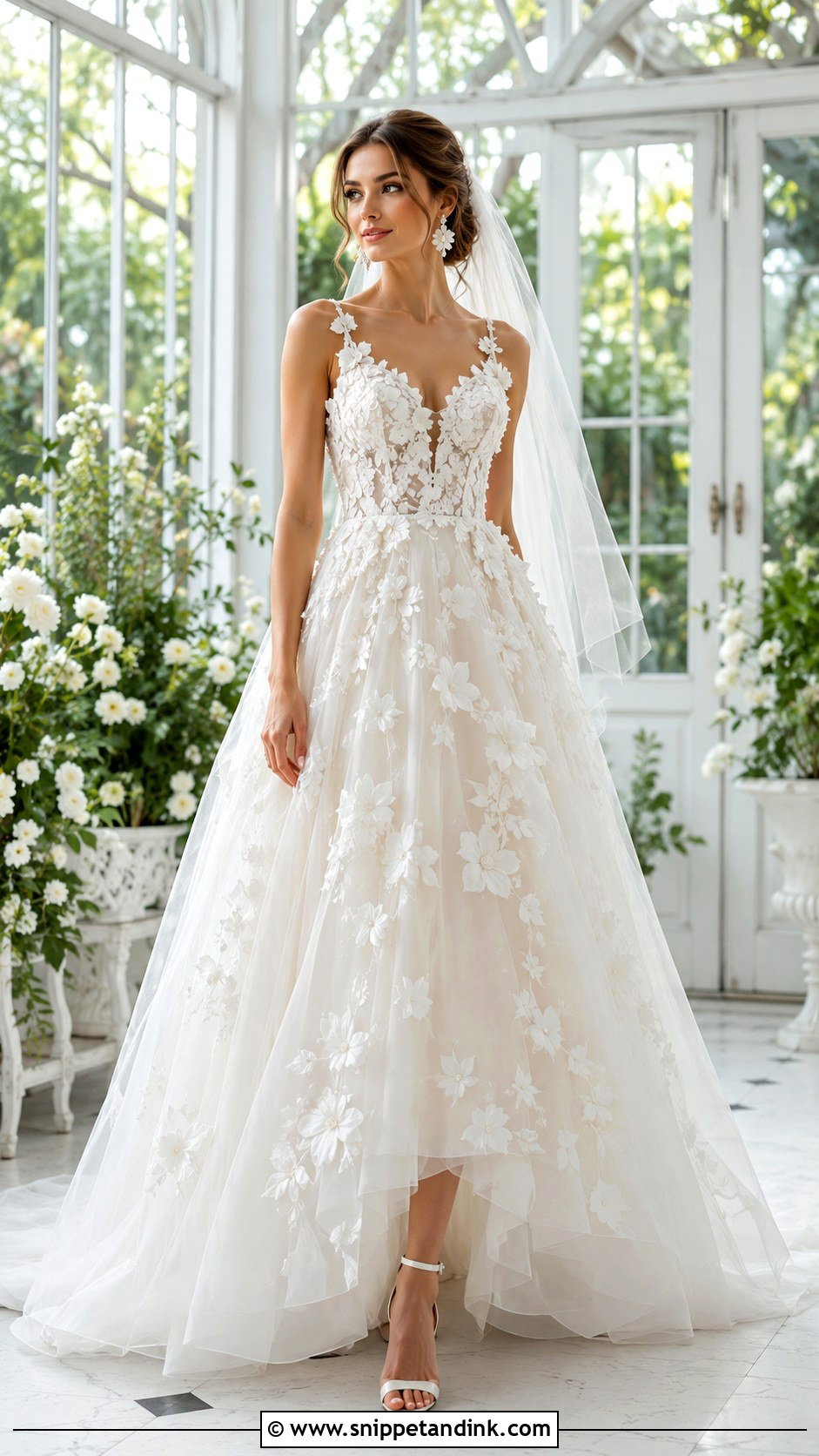
Hand-applied petals turn a tulle gown into something close to sculpture, but they need restraint. I like the flowers concentrated at the neckline and waist, thinning out as they travel down an A-line skirt, with ivory and pale blush mixed for depth. Expect them to crush a little wherever a bouquet or an arm rests, and ask the boutique how loose petals are reattached, because a few always work free on the dance floor. Skip any necklace. Ankle-strap heels, small floral studs, a barely there veil and a loose chignon keep the bodice as the focal point in a garden or conservatory.
4. Colorful Floral Wedding Dress
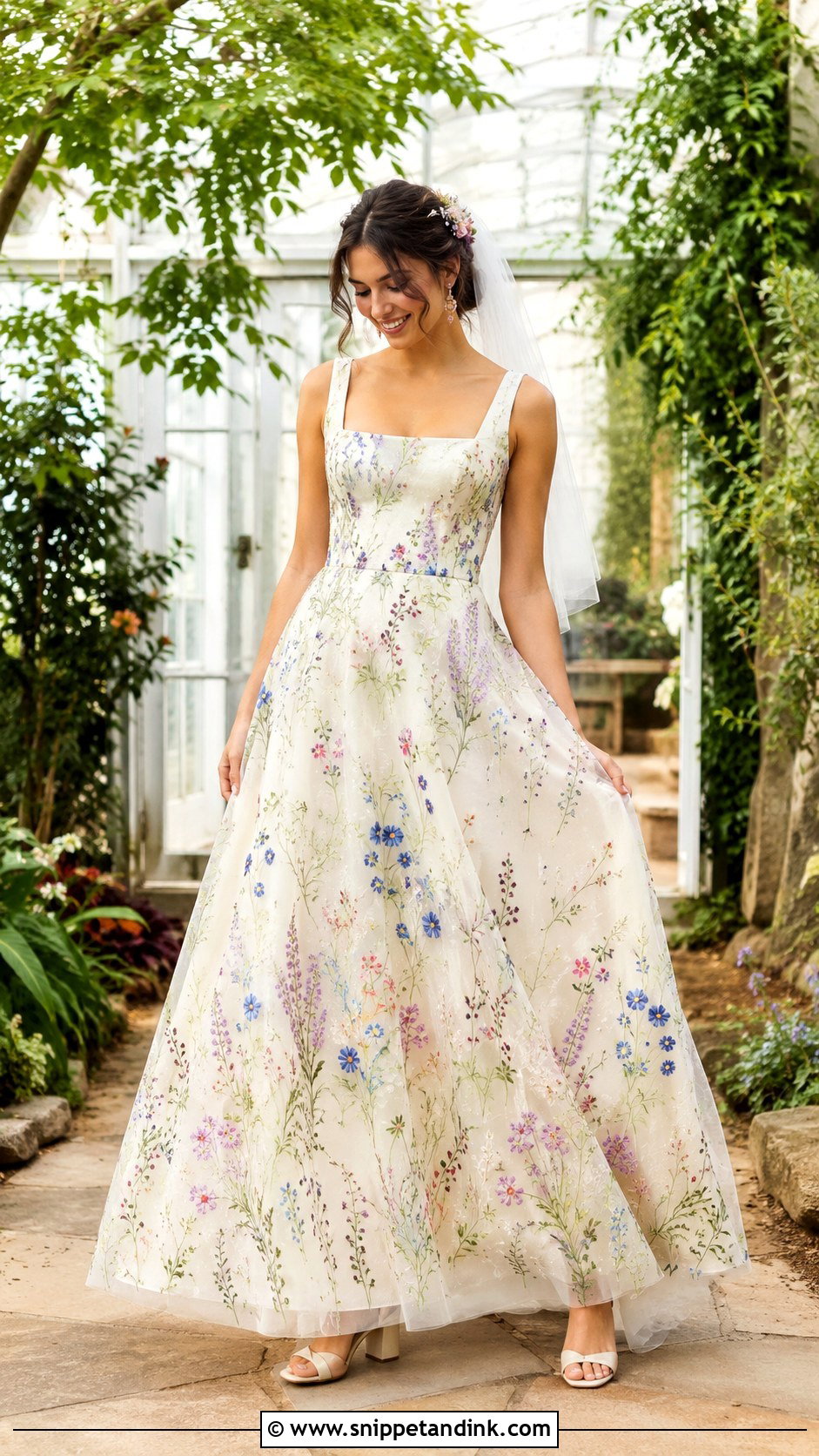
Embroidered wildflowers in soft blue, lavender and muted pink on an ivory A-line gown give you color while the dress still reads as bridal, and a fitted square-neck bodice keeps the pattern anchored. The mistake I see most often is matching everything to the embroidery. A bouquet that repeats all five thread colors turns the whole picture busy. Pull one or two shades into a hair comb and keep the flowers mostly green and white. Block heels help on a lawn, and a shoulder-length veil won’t hide the stitching down the back. Meadows and botanical gardens are its natural setting.
5. Sculptural Draped Wedding Dress
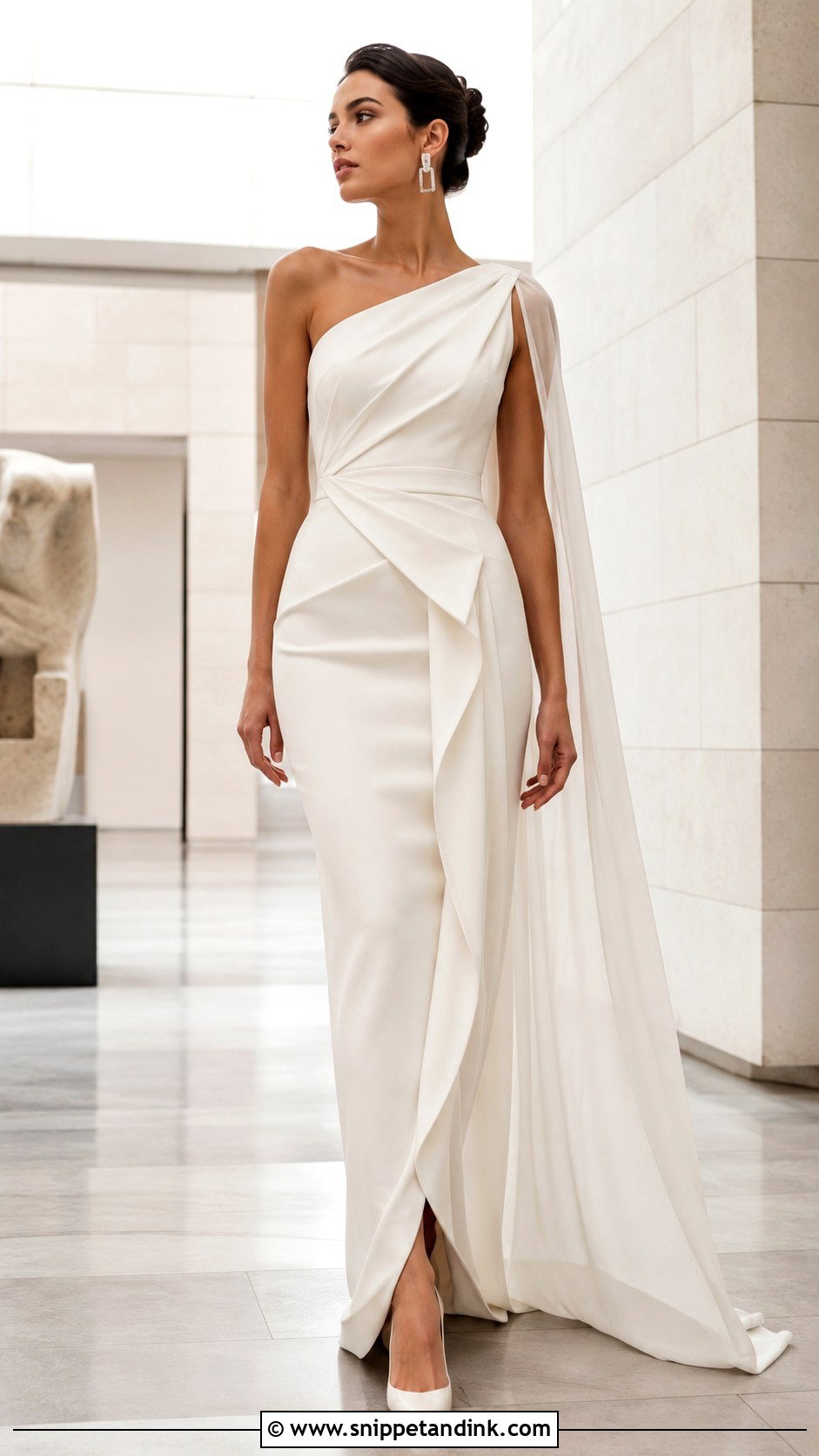
This one gets its drama from shape, not sparkle. A fitted crepe gown with asymmetrical folds across the bodice, a gathered detail at one hip and a one-shoulder neckline only works when the drape is pinned to your body rather than a sample size, so allow extra time with the seamstress. Crepe also shows every pulled seam and bra line. In place of a veil, I’d hang a sheer shoulder cape behind it so the folds stay visible, then add pointed pumps, geometric earrings and a neat bun. Rooftops and museum spaces echo its clean lines.
6. Long Sleeve Lace Wedding Dress
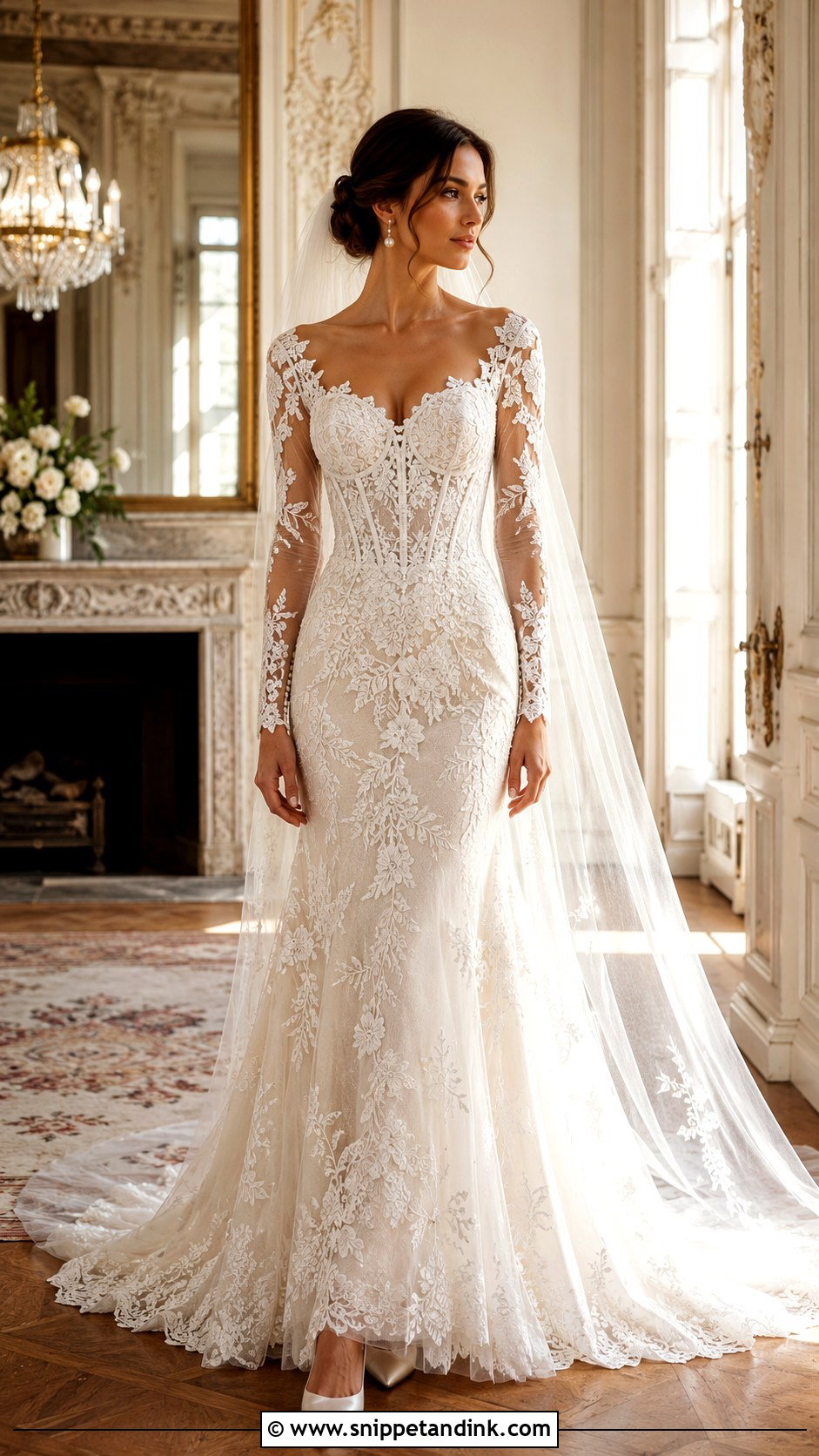
Lace sleeves are where fit problems hide. A corseted bodice with fitted illusion sleeves and covered buttons at the wrist looks crisp in the mirror, then pulls across the back the first time you hug someone. At fittings I ask brides to reach forward, raise both arms and wrap them around me; if the shoulder seam strains, the sleeve cap needs more ease. Botanical lace reads more current than a dense repeating pattern. With satin pumps, pearl earrings, a plain-edged chapel veil and a center-parted low bun, it suits autumn and older houses.
7. Minimalist Wedding Dress With Cape
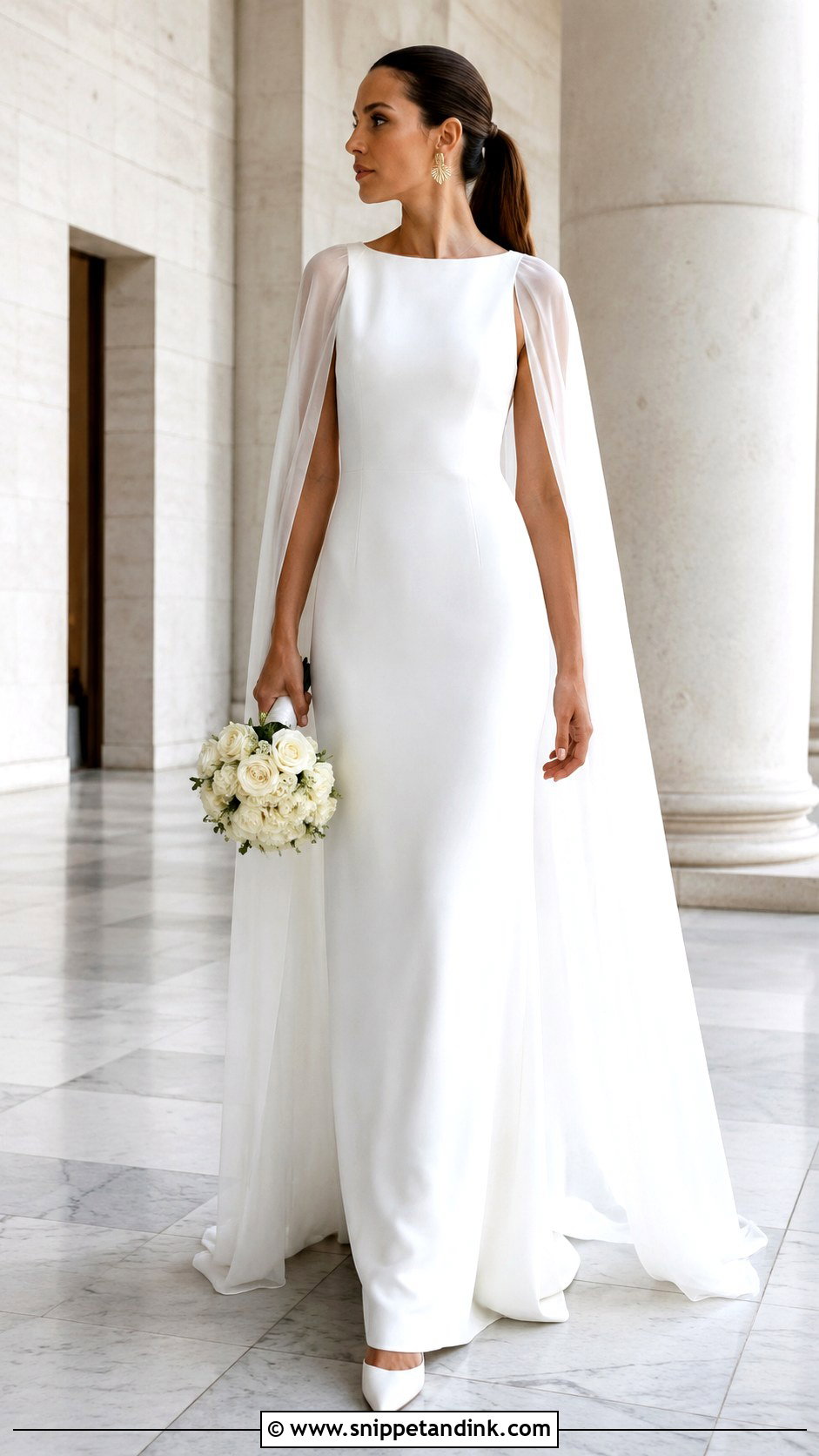
A sleeveless column in matte crepe or silk with a high bateau neckline is about as plain as bridal gets, and that’s the point: the floor-length sheer cape does the talking. Ask for it to attach with hidden snaps at the shoulders rather than being sewn in, so it comes off for dinner. With no embellishment to distract, every seam and the exact hem length are on show, which is why minimal dresses often need more precise alterations than beaded ones. Pointed satin heels, sculptural studs, a slim metallic bracelet and a slick low ponytail finish it for a courthouse or city hotel.
8. Pearl Beaded Wedding Dress
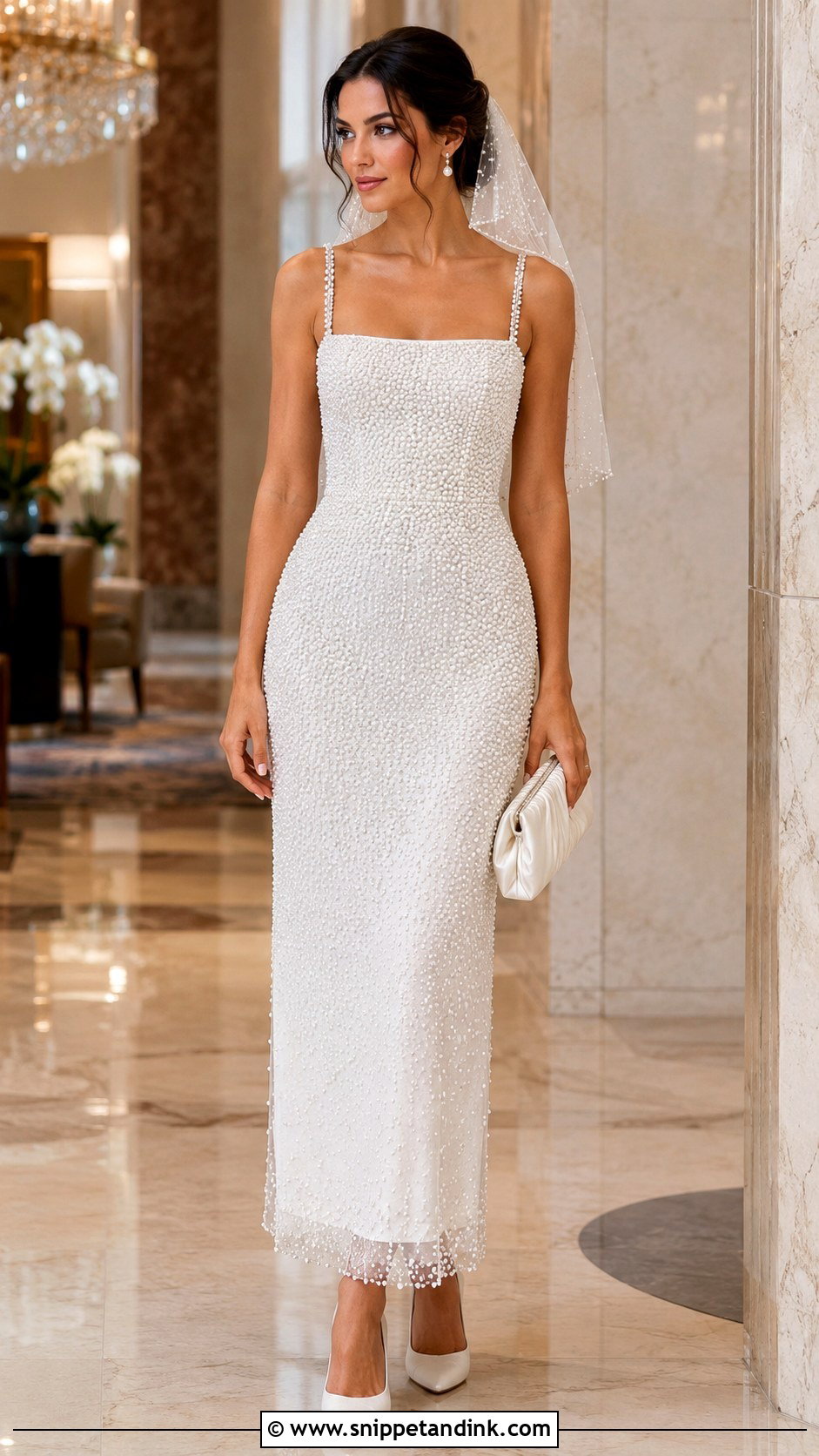
Pearls give a soft glow instead of the sharp flash of crystals, and they’re heavier than most brides expect. On a fitted sheath with a square neckline, fine straps and graduated pearls running from bodice to skirt, that weight drags on thin straps over a long day, so I check how the straps are anchored before agreeing to a long train or a complicated bustle. A plain lining keeps the beadwork legible. Closed-toe heels, pearl drops and a short tulle veil edged in tiny matching beads are enough. Carry a smooth satin clutch, not another embellished piece.
9. Convertible Overskirt Wedding Dress
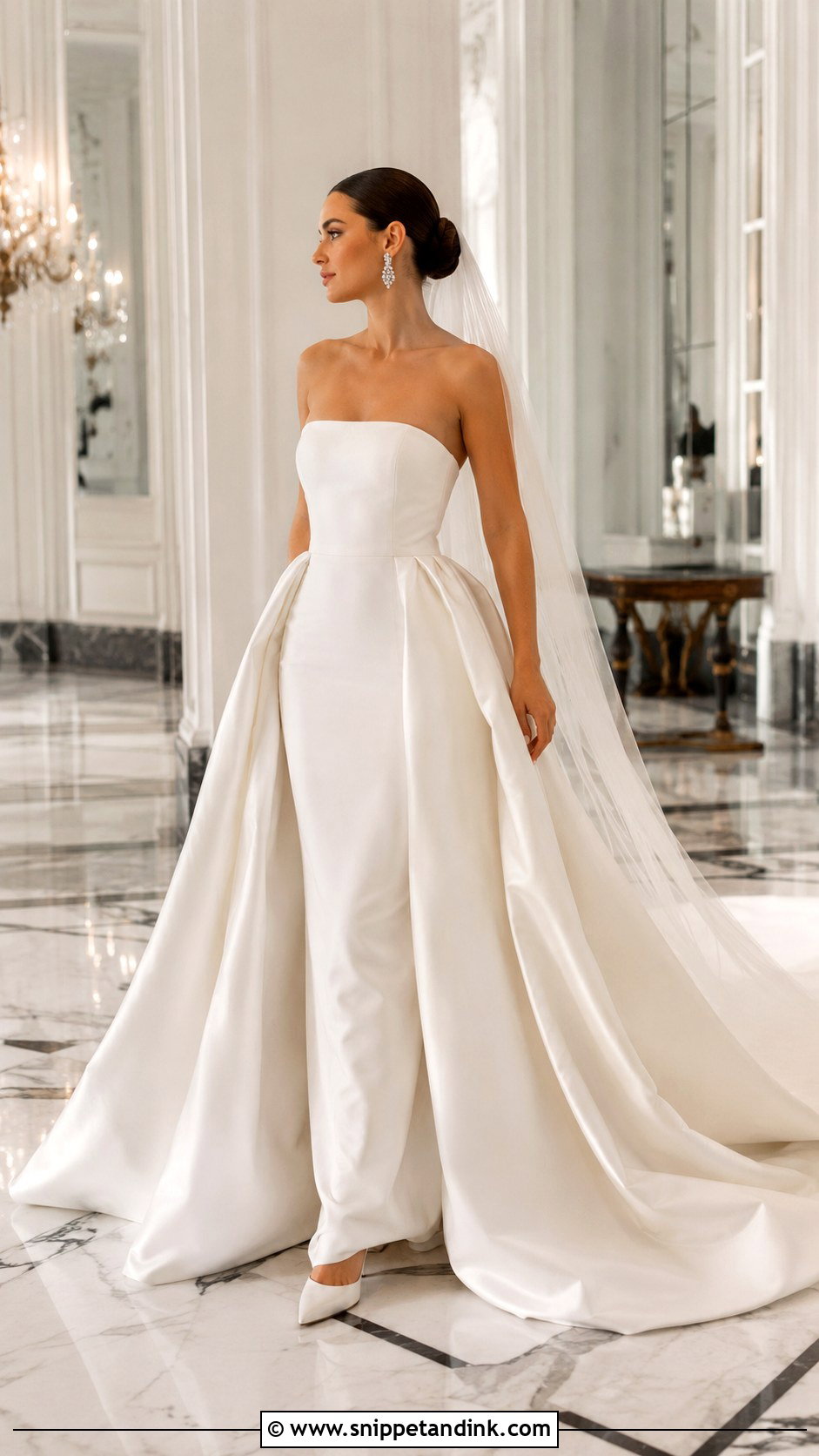
A convertible overskirt wedding dress gives you two silhouettes without a second outfit. Underneath sits a fitted strapless crepe gown with a clean neckline and a back slit you can actually walk in; on top goes a full satin overskirt for ceremony scale. The fastening is what I scrutinize. Hooks hidden under a waistband disappear, but a zip or bulky closure shows as a ridge in side-profile photos. Crystal earrings, pointed pumps and a removable chapel veil carry across both versions, and a sleek bun keeps attention on the change itself.
10. High Low Wedding Dress
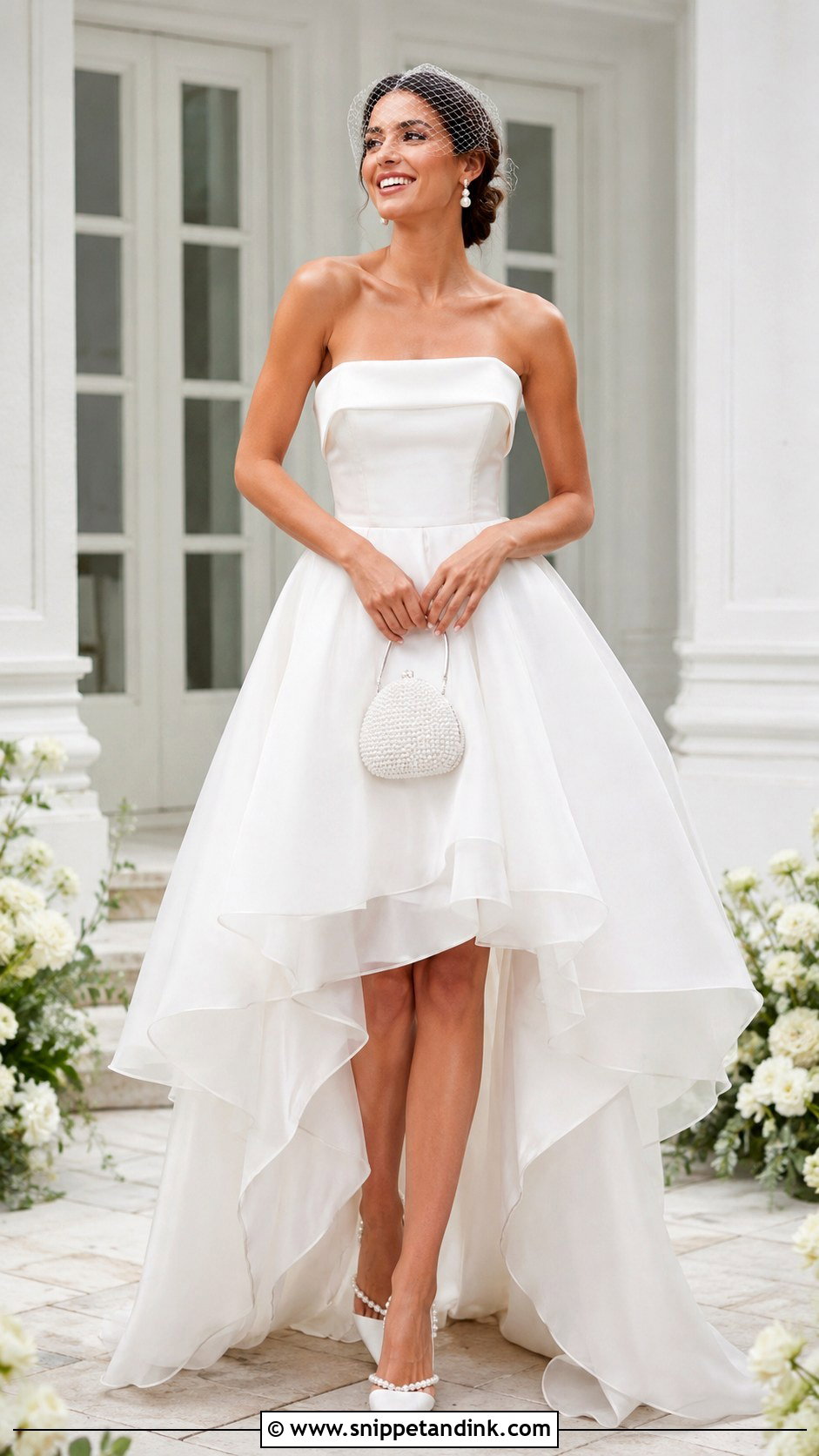
A tea-length front with a longer sweeping back makes walking easy and puts your shoes on display, so this is the gown where I’d spend real money on footwear, perhaps pearl-strapped slingbacks. A strapless folded neckline and layered organza add volume without weight. Organza creases wherever you sit, though, so after a long seated dinner, have someone steam the skirt before evening portraits. A birdcage veil, small drops and a soft updo balance the shorter line. Get the longer back fitted with a discreet bustle for dancing; civil ceremonies and destination weddings suit it well.
11. Blue Wedding Dress
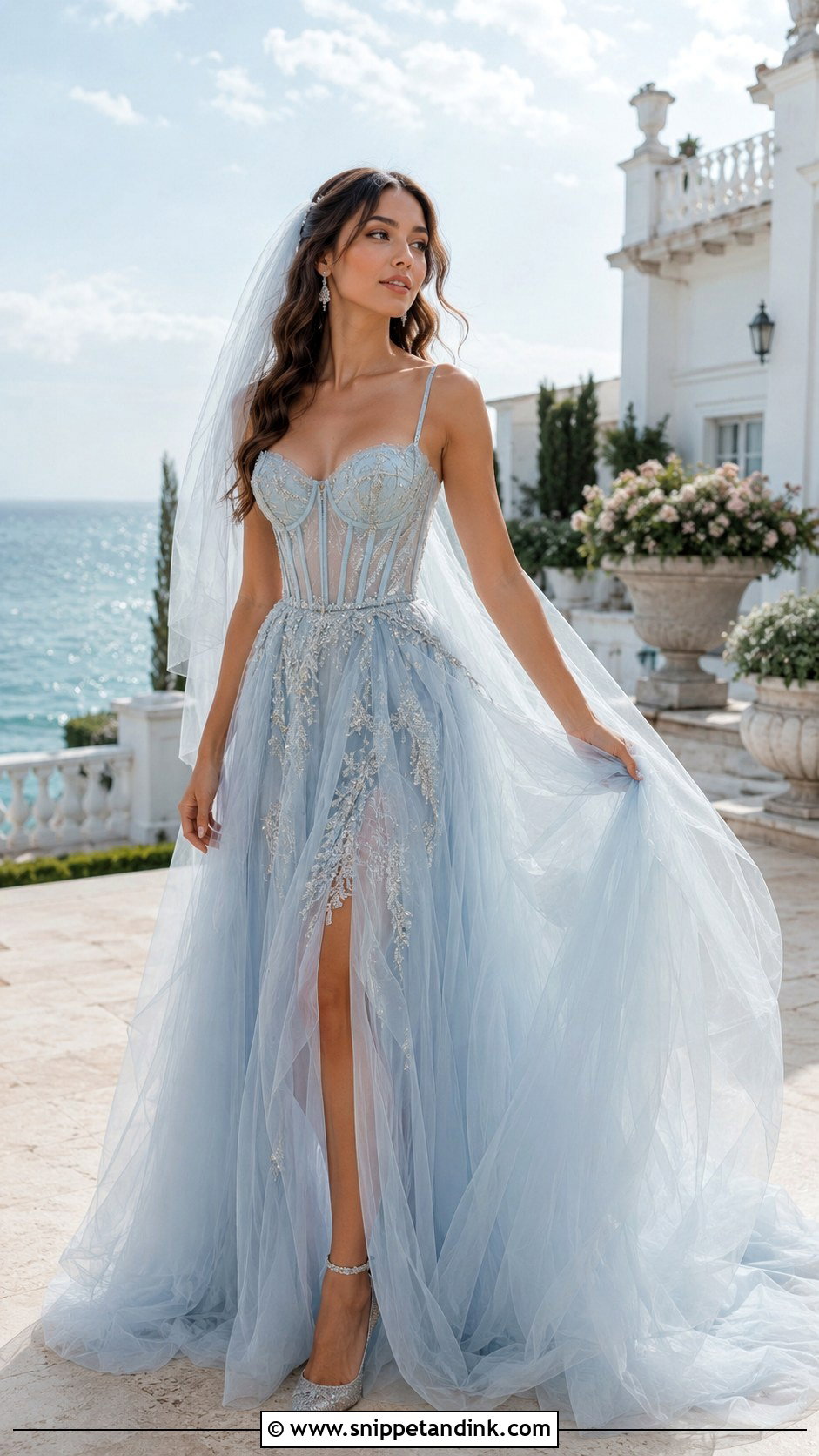
Pale blue is the color I’m most careful with, because it shifts with the light. Misty blue tulle that looks soft by a boutique window can turn gray in shade, lavender under warm bulbs or brighter on camera. Before ordering, look at a swatch outdoors and indoors and photograph it on your phone in both. The gown itself, a fitted corset bodice with delicate straps, airy tulle layers and fine silver embroidery, sits well at a coastal venue or a winter wedding. Silver pointed heels and crystal earrings work with it, and an ivory veil gives gentle contrast if blue-gray feels like too much.
12. Black Bow Wedding Dress
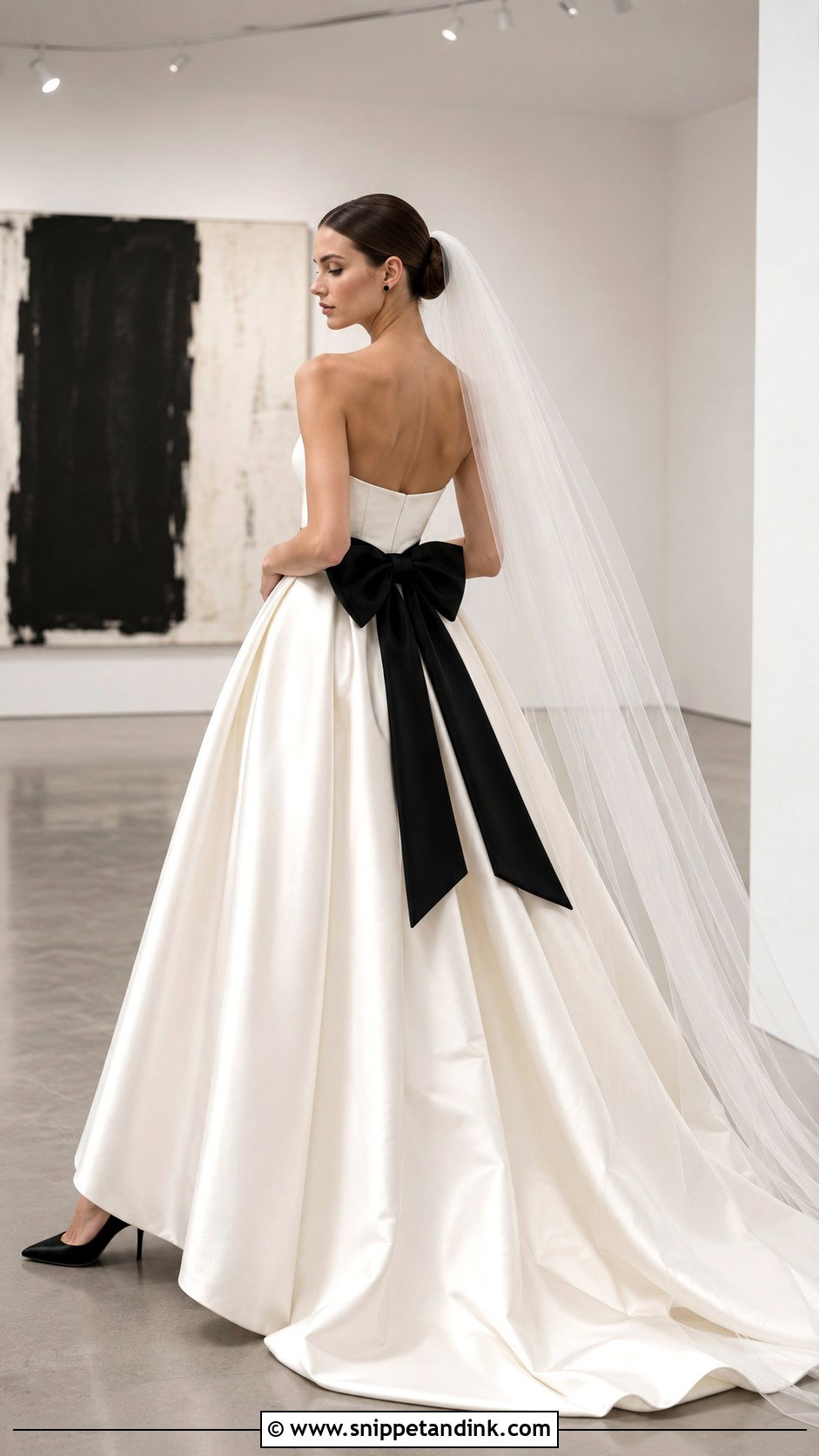
One controlled black accent on a classic ivory satin ball gown can look sharper than any amount of lace. Start with a strapless straight neckline and a defined natural waist, then add a wide black ribbon tied into a structured bow at the back, its tails falling down the skirt. I keep the black to the bow, the shoes and small onyx earrings, and leave the veil plain ivory; once black creeps into the veil or bouquet, it starts to look like costume. Check that the ribbon is colorfast, since a cheap black dye can bleed onto ivory satin if it gets damp. The accent can echo quietly in the invitations or the groom’s tie.
13. Square Neck Wedding Dress
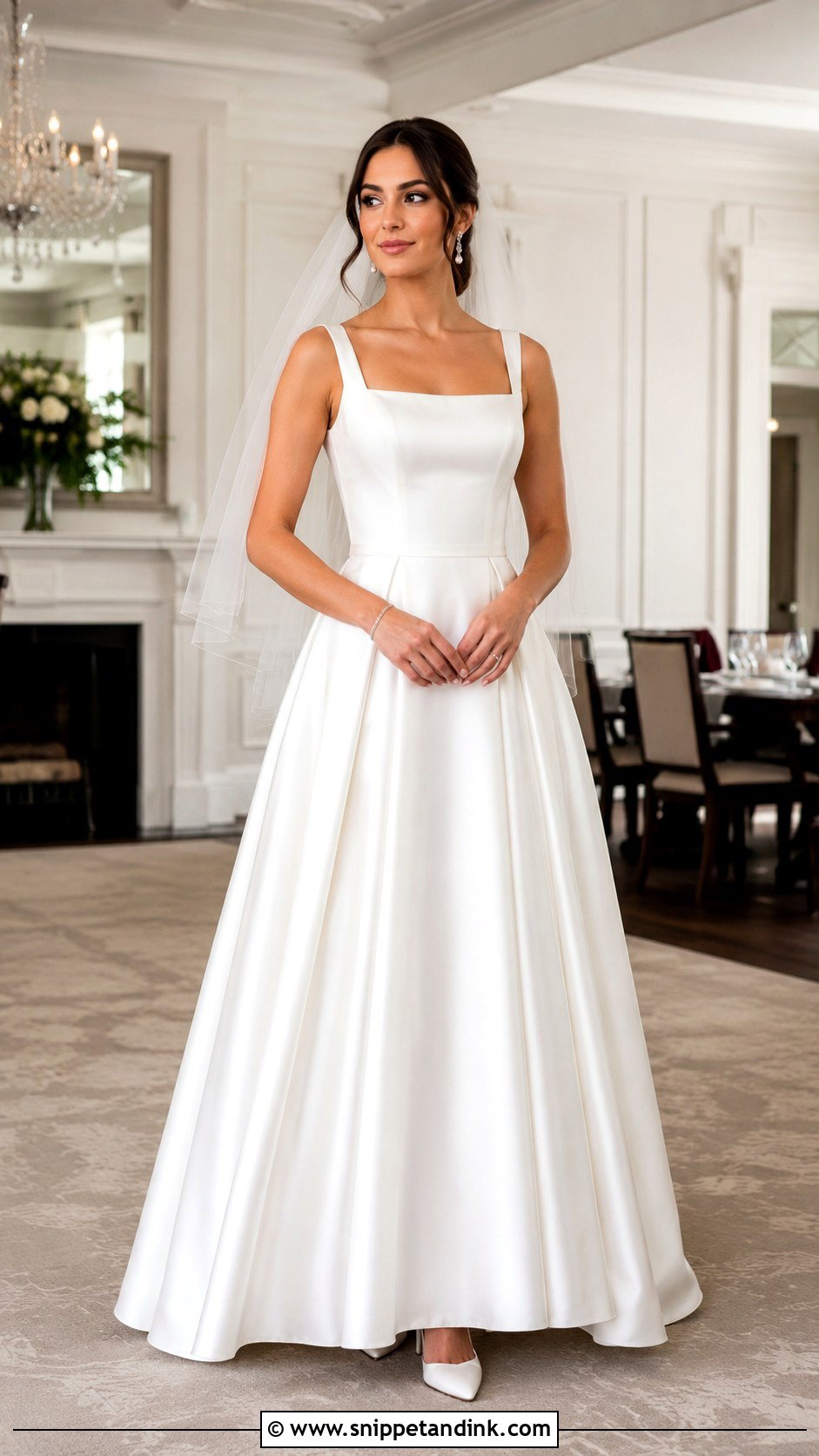
A square neckline frames the face and collarbone with straight lines, which makes it one of the easier shapes to wear. On an A-line gown with wide straps and a softly pleated satin skirt, princess seams give structure without visible corsetry. My fitting focus is the straps: they need to sit flat and stay put when you lift your arms, or the corners of the neckline start to gape. A higher square cut or removable sheer sleeves add coverage if you want it. Almond-toe pumps, pearl and crystal earrings, a tennis bracelet and a mid-length veil under a low bun suit a ballroom or country club.
14. Halter Neck Wedding Dress
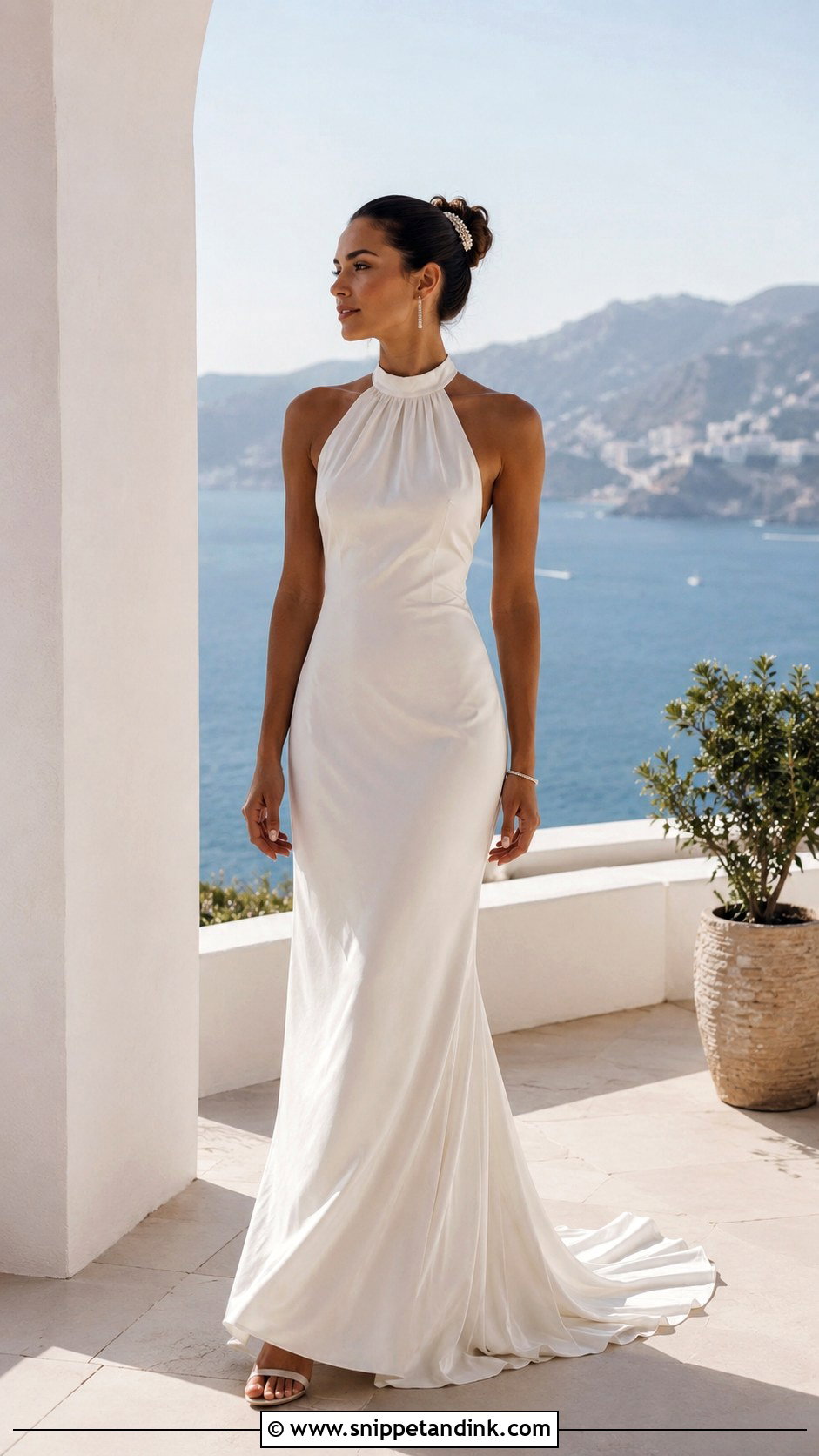
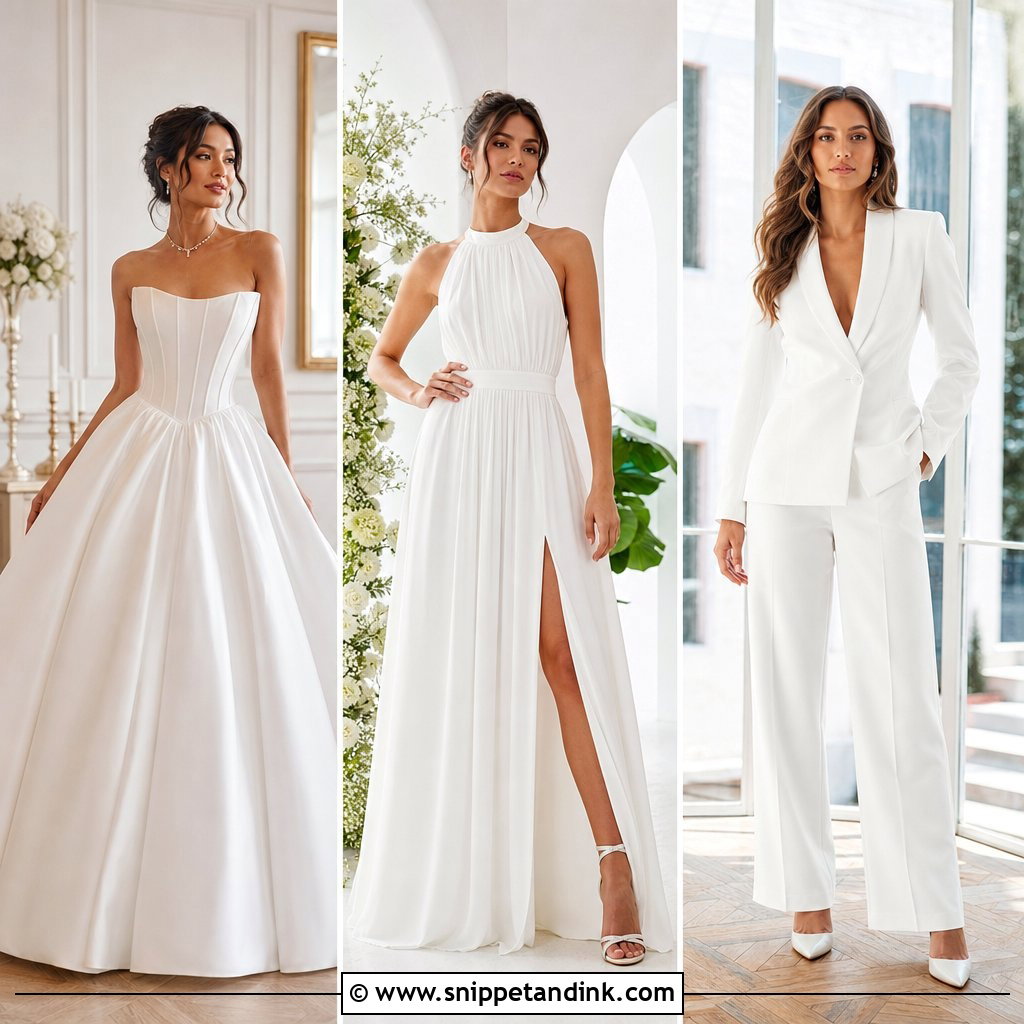
A halter shows off the shoulders and back, and it flatters a strong upper frame. Look for a fluid silk gown with a gathered high neckline, an open back and a bias-cut skirt. Bias-cut silk skims the body so closely that it shows every line of underwear, so I settle that question at the first fitting, usually with cups sewn into the bodice. Keep the front plain. A short veil ending above the waist, or just a small comb, leaves the back visible, and a high bun makes the neckline cleaner. Minimal sandals and long linear earrings suit a summer resort.

15. Off Shoulder Wedding Dress With Scarf
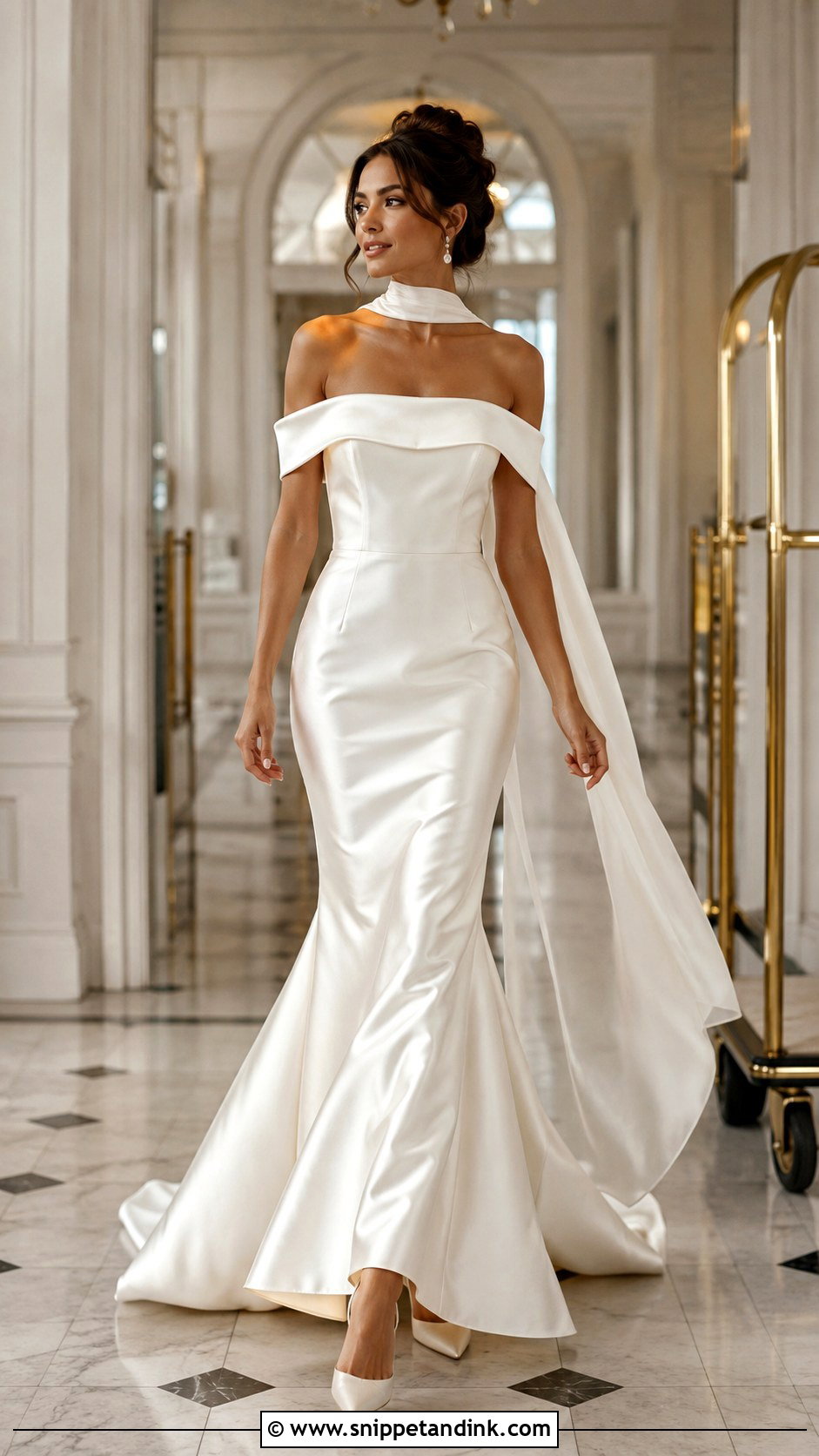
A long narrow scarf in matching satin, looped once around the neck with both ends trailing down the back, gives you the movement of a veil while leaving the updo on show. The gown under it is a fitted satin off-the-shoulder style with a folded neckline and internal corsetry, and that boning matters: an off-shoulder bodice should stay up on its own, not because you keep tugging it. I tack the scarf discreetly at the nape so it doesn’t slide when you turn your head. Skip the necklace. Drop earrings and pointed slingbacks finish it for an indoor city ceremony.
16. Victorian High Neck Wedding Dress
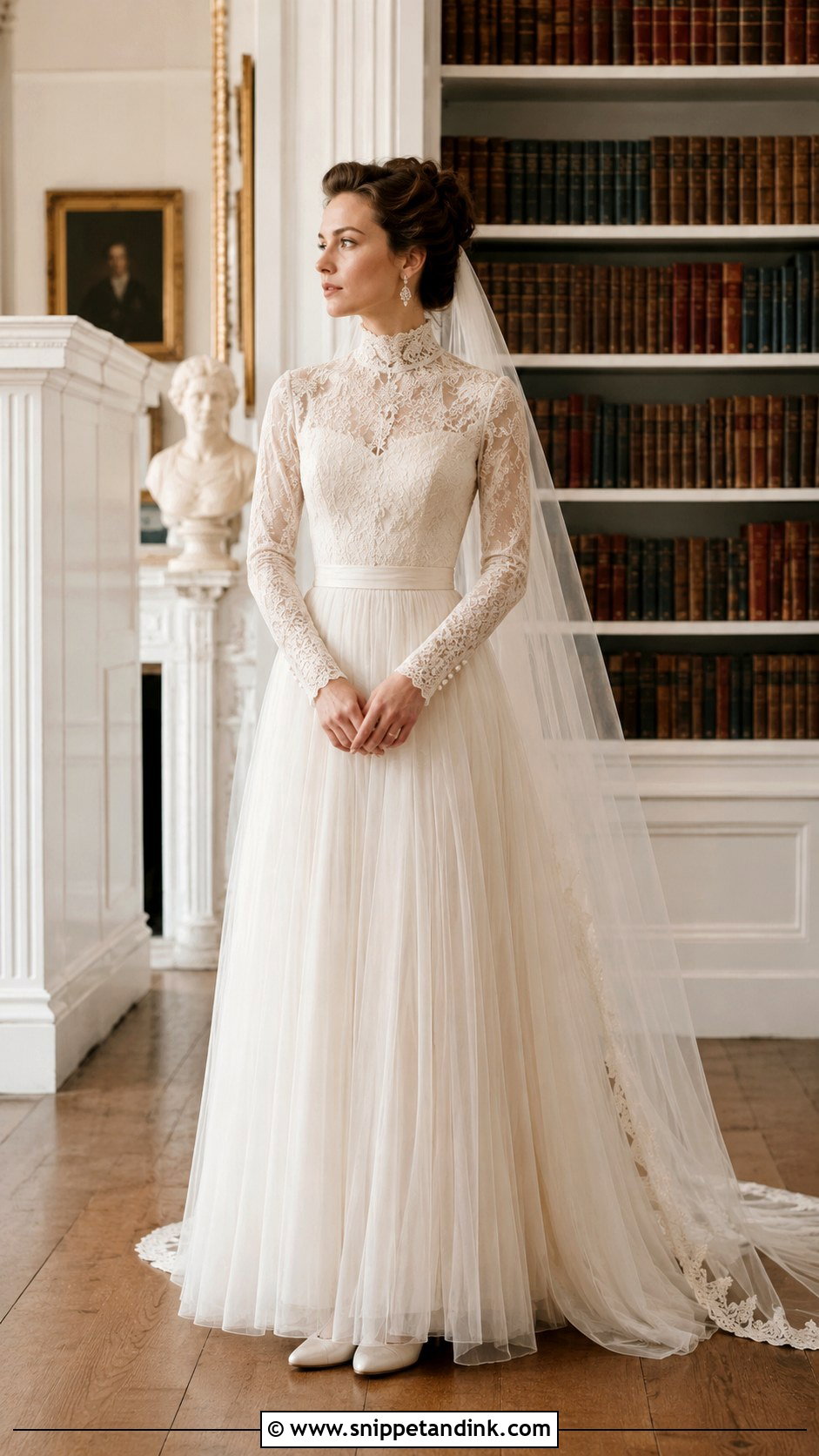
Victorian references tip into costume quickly, so I treat this one with restraint. Start with a high illusion neckline, fitted lace sleeves, a defined waist and a chiffon or tulle skirt, with small covered buttons down the back and at the cuffs. Fine botanical lace keeps it delicate. Allow time for dressing, because a long row of covered buttons takes several minutes, and a button hook makes it far easier for whoever helps. Low satin heels, antique-style drops, a chapel veil under a textured updo and perhaps a small velvet bow are plenty. Keep the makeup fresh for a library or an old house in autumn.
17. Crochet Lace Wedding Dress
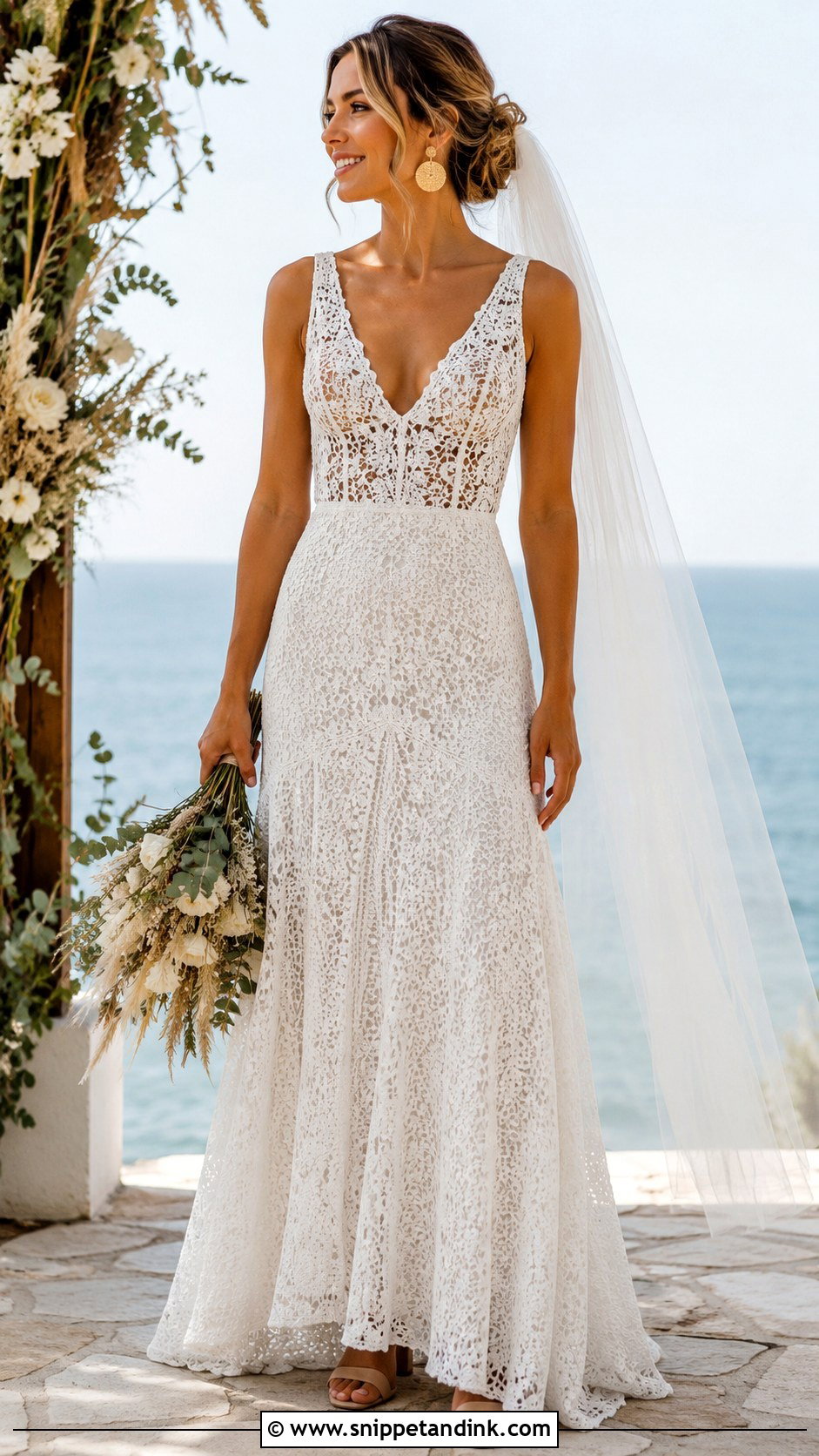
Crochet lace has a handmade, relaxed texture, and larger openwork patterns belong outdoors. A fitted bodice with wide straps, a V-neckline and a softly flared skirt lined in lightweight ivory works on a beach or in the desert. Crochet stretches and snags, so I’d keep a long hem off rough decking or rocks, and ask for the lining cut slightly shorter than the lace so it never peeks out. During alterations, check where the motifs fall at the neckline, waist and seams so the pattern stays balanced. Block-heel sandals, hammered gold earrings, a plain fingertip veil and loose waves match its mood.
18. Asymmetrical Ruffle Wedding Dress
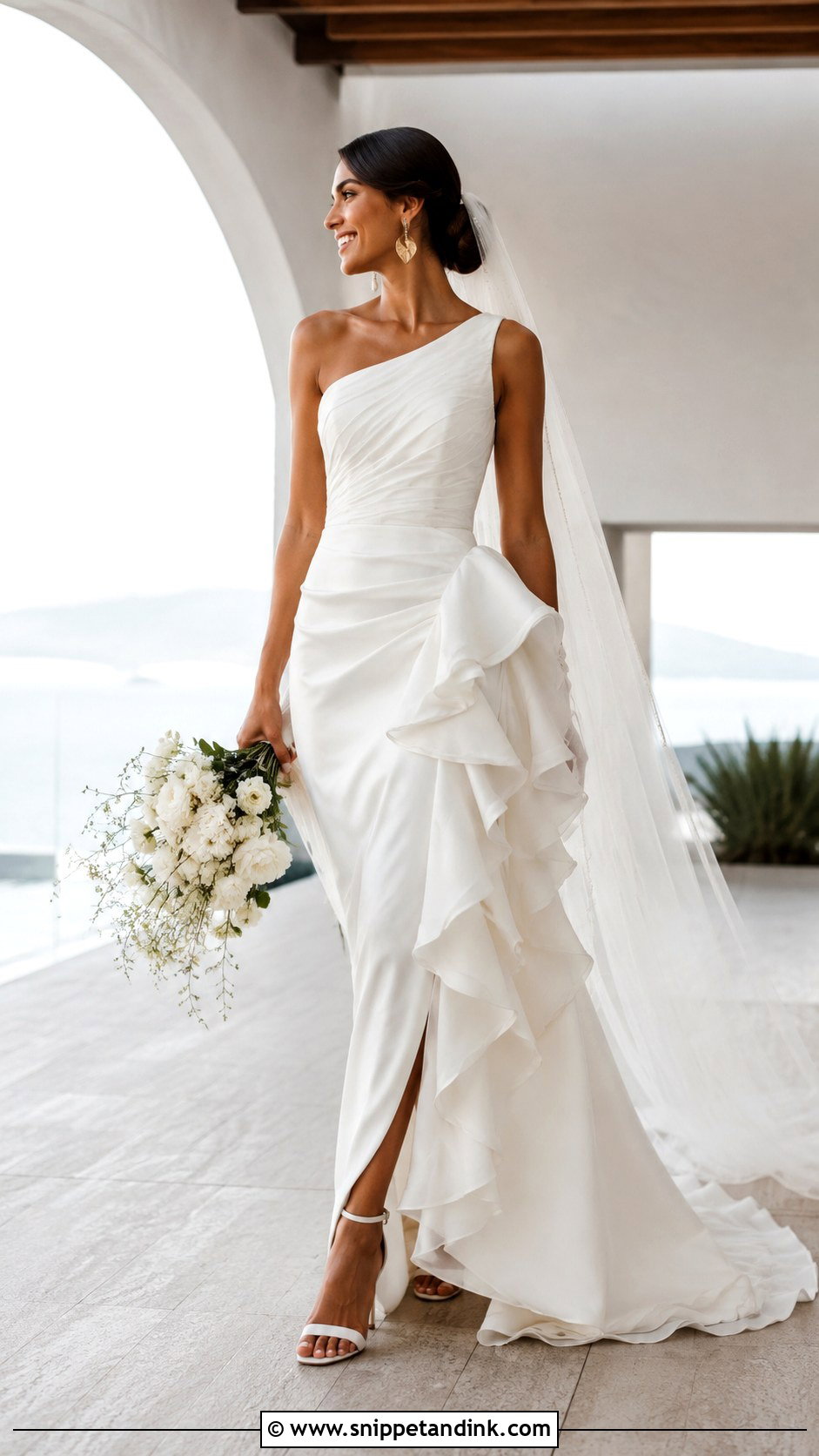
With an asymmetrical ruffle wedding dress, the diagonal organza ruffle across a one-shoulder gown is the whole story, so keep the rest of the skirt smooth. Organza holds its shape, which is exactly why a low tier catches on heels. At the final fitting, walk an aisle-length stretch in your actual shoes and watch where it lands. Place a side-parted bun opposite the shoulder detail so the two don’t crowd each other. One statement earring, sleek ivory sandals and a simple comb are enough, with a plain fingertip veil only if you want one for the ceremony.
19. Backless Cowl Wedding Dress
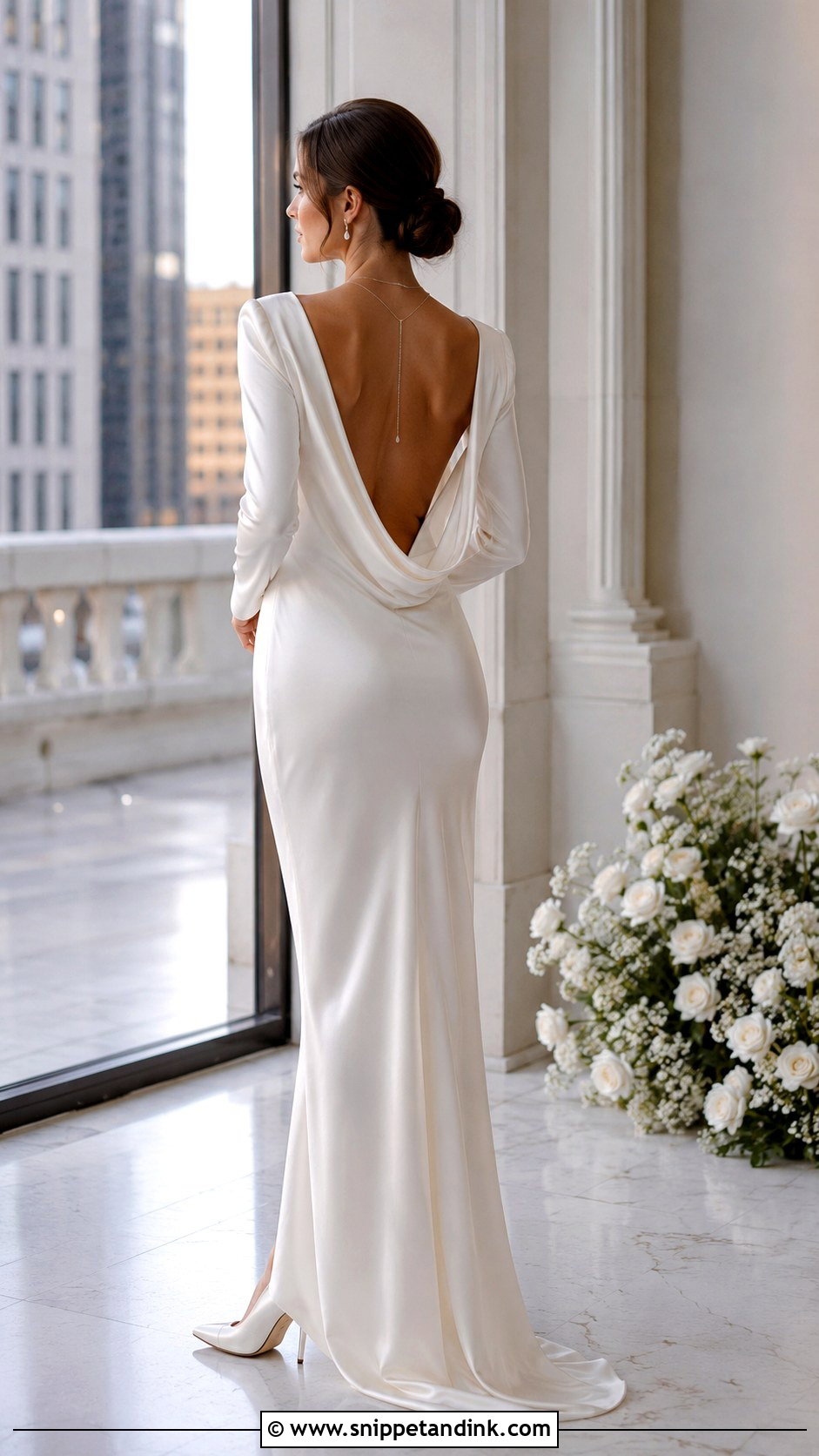
The surprise here is all at the back. A long-sleeve silk or satin gown with a modest boat neck in front and a deep cowl behind feels covered until you turn around. Cowls depend on fabric weight: too light and the drape collapses flat, cut too deep and it gapes when you lean forward to sign the register. I check both before anything else. A delicate back necklace following the drape, slim drops, pointed pumps and a low side bun keep the opening clear, with a short veil or a jeweled hairpin. Winter city weddings and candlelit receptions suit it, and well-fitted long sleeves stay comfortable all evening.


20. Mini Wedding Dress With Detachable Train
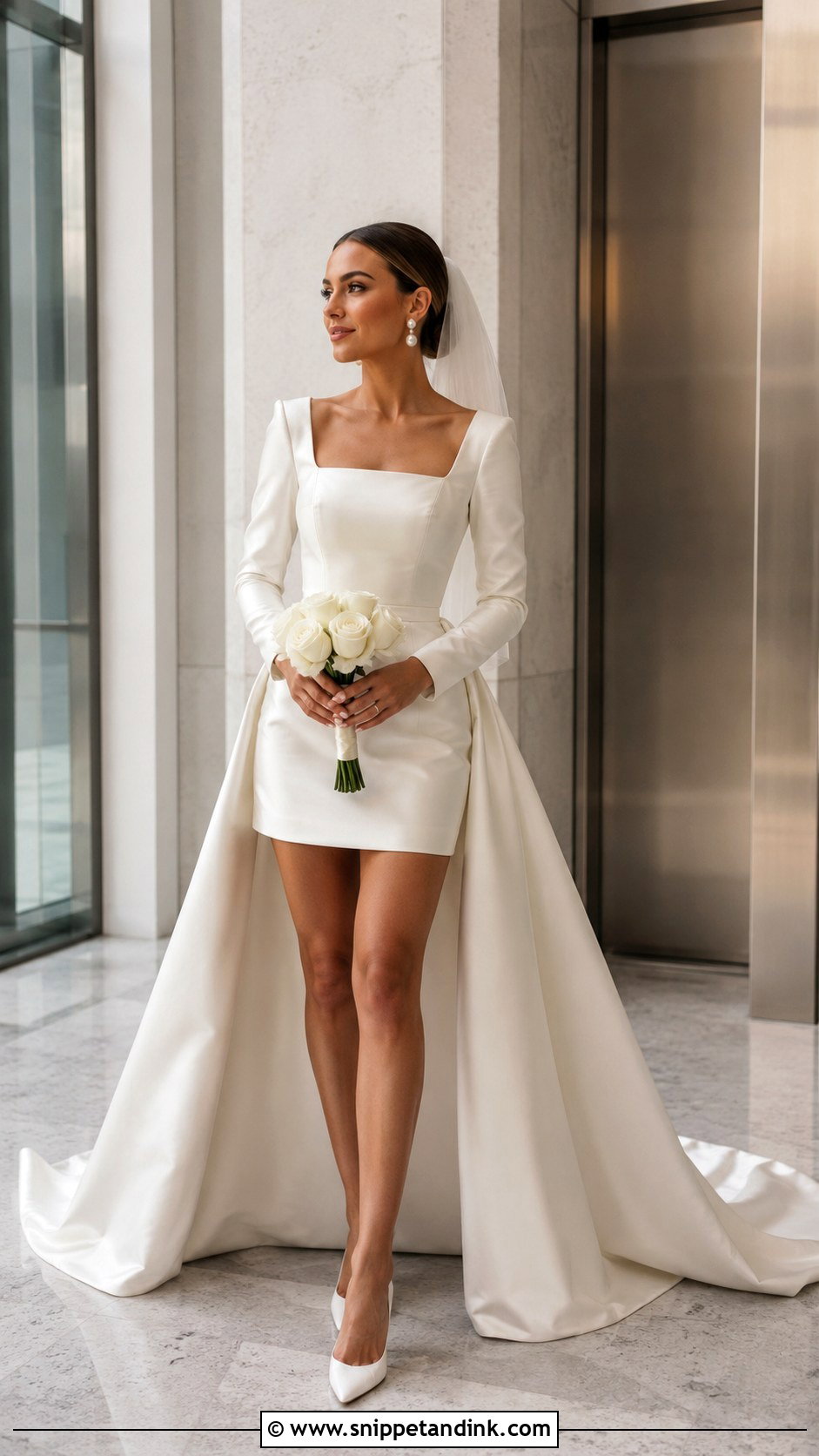
This is the most fun change of the twenty. A structured ivory mini with a square neckline and tailored long sleeves gets a full-length satin train attached at the waist for the ceremony, so from behind it reads as a traditional gown. Later the train comes off and you dance in a mini. Ask how it attaches: a covered belt with hooks hides the hardware, while snaps left visible on a short dress look unfinished once the train is gone. Pointed pumps, pearl statement earrings and a short veil or structured bow complete it, with sheer tights in cooler months. Courthouses and modern hotels suit it.
Where Pearls, Petals and Corsetry Complicate Alterations
A plain satin dress can be taken in along a seam. A gown covered in pearls, petals or crochet motifs can’t simply be stitched, because the seamstress has to lift the embellishment along that seam, alter the fabric and hand-sew everything back. It’s slower work, and fees vary widely because of it. Corsetry adds another layer: boning channels may need moving if your size changes, and a Basque point should only be set while you’re wearing your final shoes and underwear.
Bring those exact shoes and that underwear to every fitting. I also like the last fitting within about two weeks of the wedding, close enough that the fit holds, with time left for one small adjustment.
Detachable trains, capes and overskirts on the day
Removable pieces only feel clever if someone knows how they work. A few things I arrange in advance:
- Practice the change twice with the person who will help you, ideally a bridesmaid rather than a parent who will be busy greeting guests.
- Write the change into the timeline. Ten to fifteen minutes is realistic once you include a quick steam.
- Pack a padded hanger and a breathable garment bag for the removed piece so it isn’t left crumpled on a chair.
- Tell your photographer when the change happens, or the second look may never get its own portraits.
Wearing Something Unusual From the Aisle to the Last Dance
Every gown here moves past a standard bridal look in its own way, whether through a dropped Basque point, colored embroidery, draping, pearls or layers that come off. What decides which one is yours is less the trend and more how it behaves on your body across a full day. At appointments, walk, sit, raise your arms and ask someone to photograph you from the side and back. Think about the venue, the weather and how much dancing you plan, then judge the whole outfit with shoes and veil on. A distinctive dress should still let you hug people and eat dinner.
You'll Like These Ideas:




Leave a Reply