
Unusual is relative. To one bride a pearl-covered gown is daring; to another it is a jumpsuit or a pale lavender dress with a bubble hem. What I look for when a bride says she wants something different is a single idea she keeps coming back to, then I build the rest of the outfit quietly around it. The 25 dresses below range from lace long sleeves and sculpted corsets to detachable sleeves, color, capes and vintage cuts. Each comes with how I would style it and what tends to go wrong.
Where Unusual Dresses Actually Come From
Many bridal shops stock mostly classic white gowns in a few silhouettes, so if you want a cat eye neckline, a bubble hem or a colored dress, you may need to look further. There are four routes I send brides down, and each has its own catch.
Independent designers and made-to-measure
Smaller designers are where most of the unusual shapes live. You usually get more say in fabric and color, but production takes longer, so start early and ask for a fabric swatch before paying the balance.
Genuine vintage
Old gowns are often small through the waist and shoulders, and alterations can only take them in, rarely out. Check the underarms, the hem and any yellowing in good daylight. Old silk can be weaker than it looks.
Eveningwear and separates
Colored dresses, jumpsuits and short styles are sometimes easier to find in eveningwear. The fabric can be lighter than bridal quality, so feel the weight and look at the inside seams before deciding.
Sample sales
Shop samples of unusual styles turn up at sample sales because fewer brides chose them. They have been tried on many times, so check zips, hems and any beading for wear, and budget for cleaning on top of alterations.
1. Pearl Wedding Dress
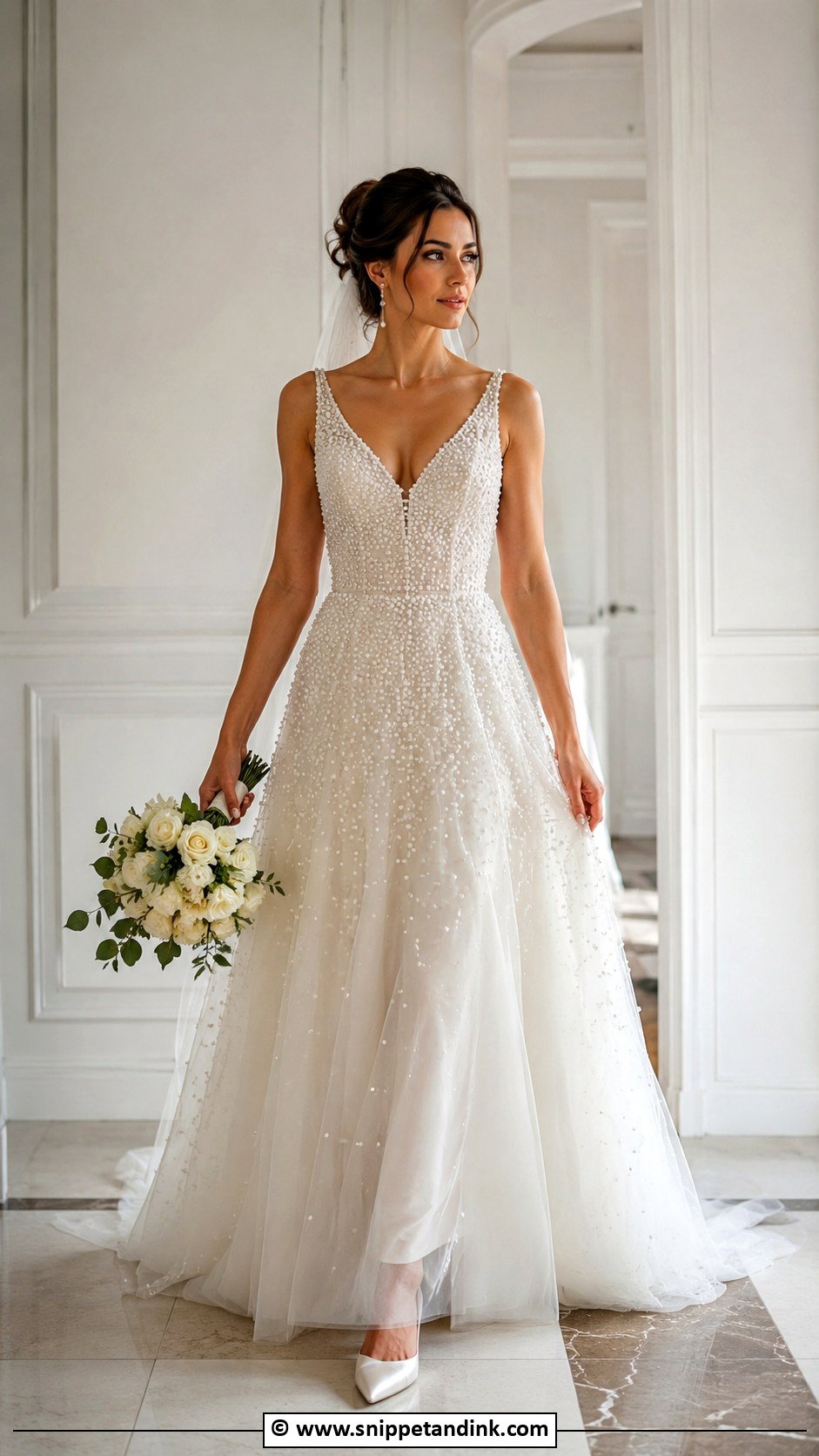
Pearl work brings texture without the glare of crystals. A fitted bodice, sheer sleeves or a lightly beaded tulle skirt all carry it well. Ask what the pearls are made of. Glass pearls hold their luster and feel cool against the skin, while cheaper plastic ones can scuff or lose their coating where your arms rub the bodice. Keep everything else clean: pointed satin heels, pearl drops and a simple veil, with a sleek bun or soft waves if the dress is heavily worked. Ballrooms and evening light suit it best.
2. Satin Slip Wedding Dress
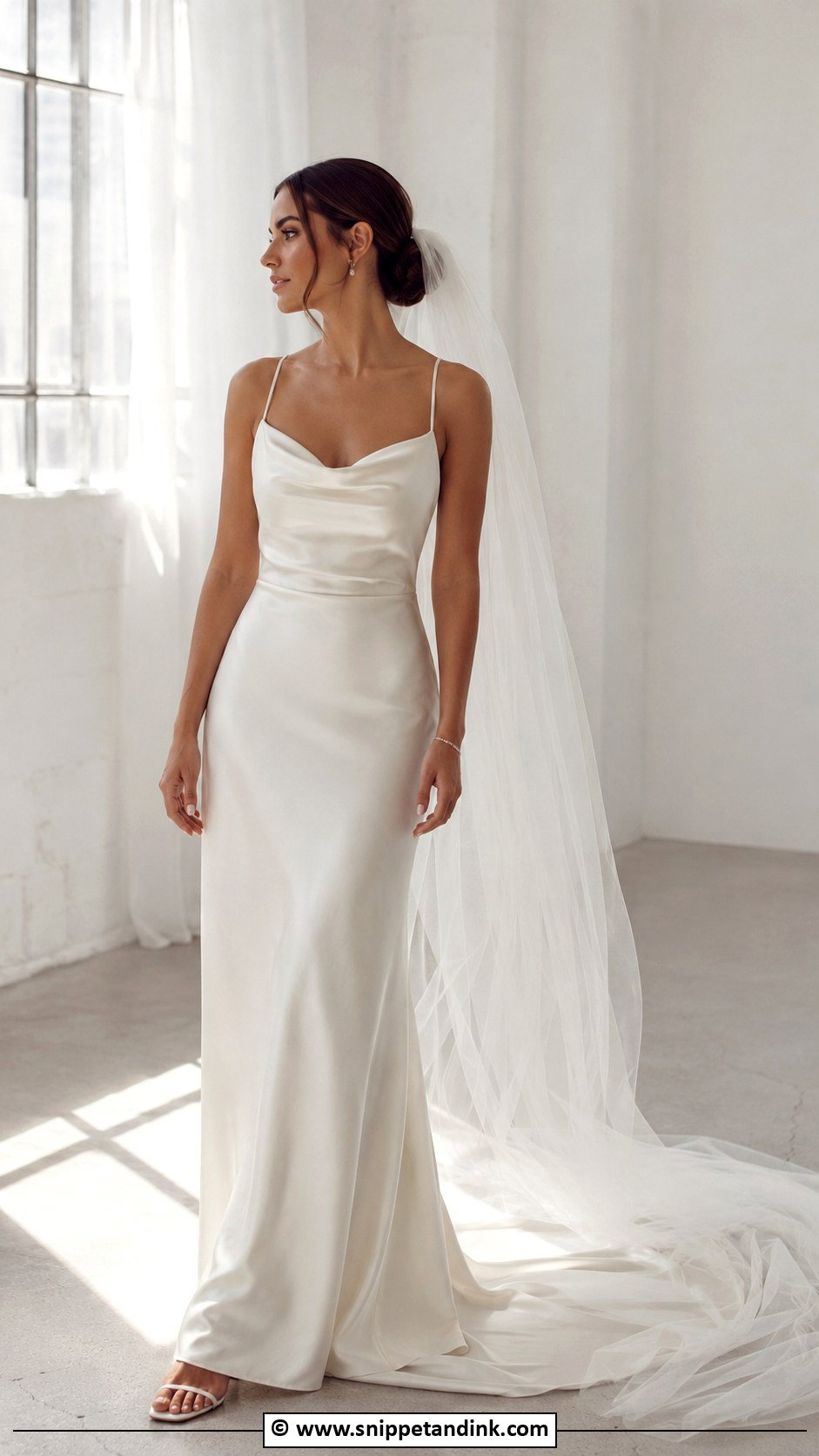
Nothing hides in a slip dress. Most are bias-cut, meaning the fabric runs diagonally across the body so it stretches and drapes, which is lovely in movement and unforgiving over underwear lines or a full stomach. I suggest a heavier satin rather than a whisper-thin one, because weight makes the drape smoother. Ivory, pearl white and champagne all suit the shape. Strappy heels, a delicate bracelet and a long sheer veil finish it. Bias hems can drop after the dress hangs for a while, so the final hem should be set at the last fitting, not the first.
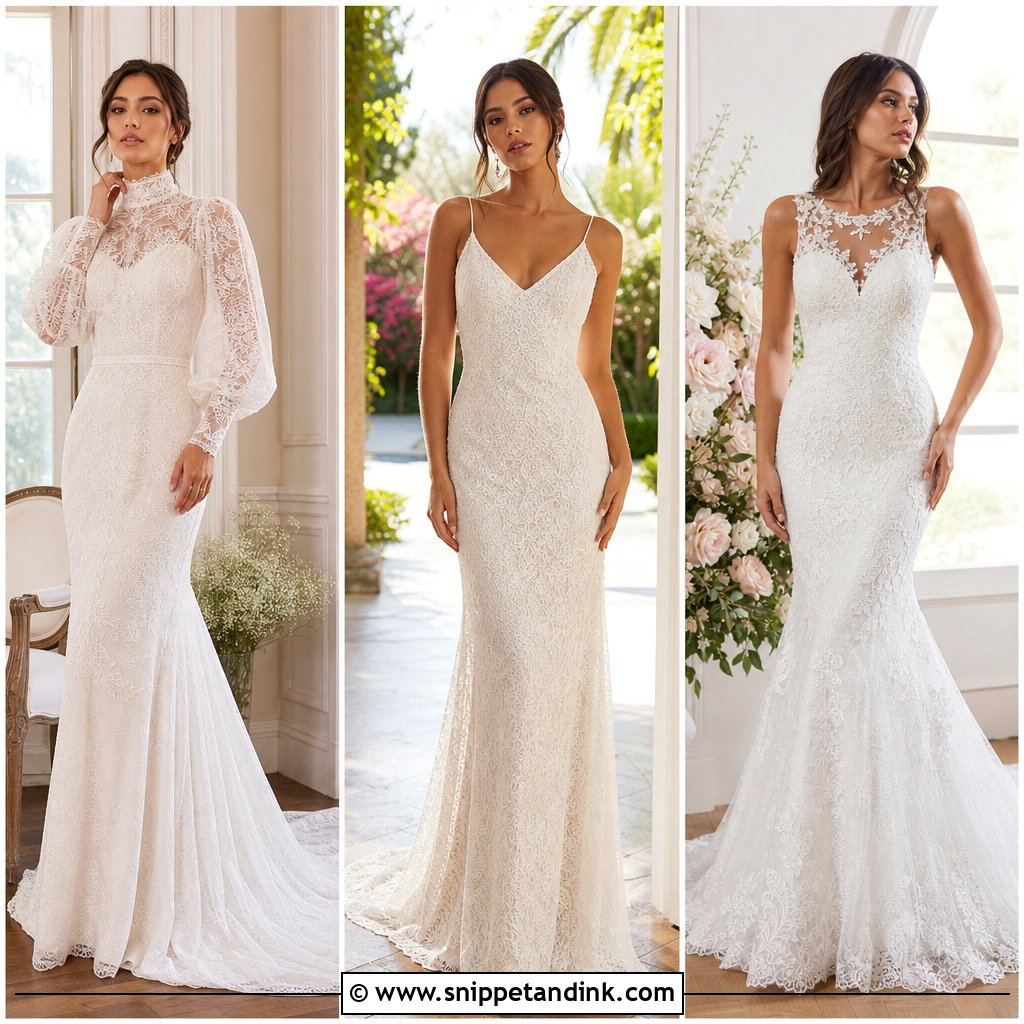
3. Lace Long Sleeve Wedding Dress
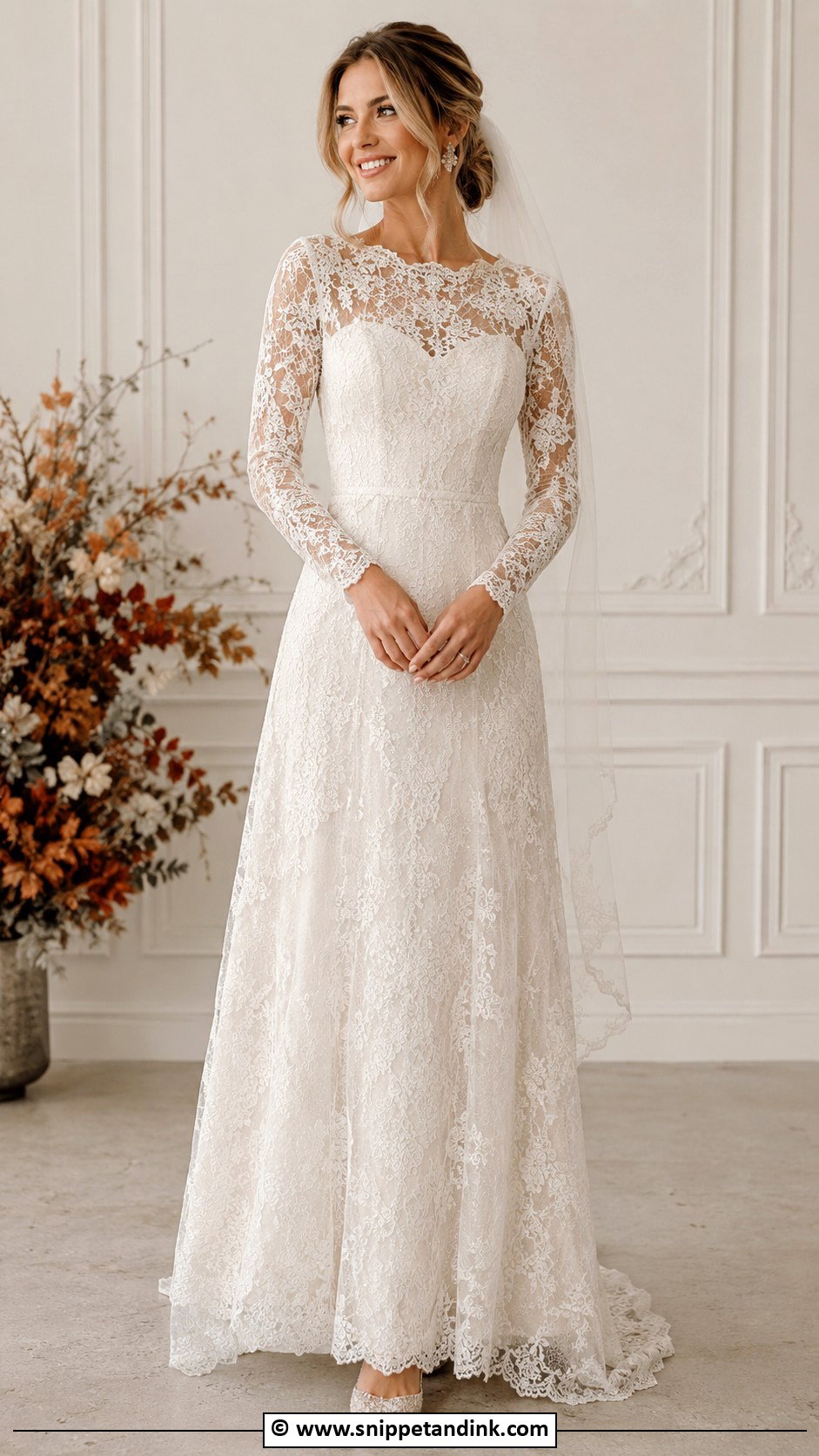
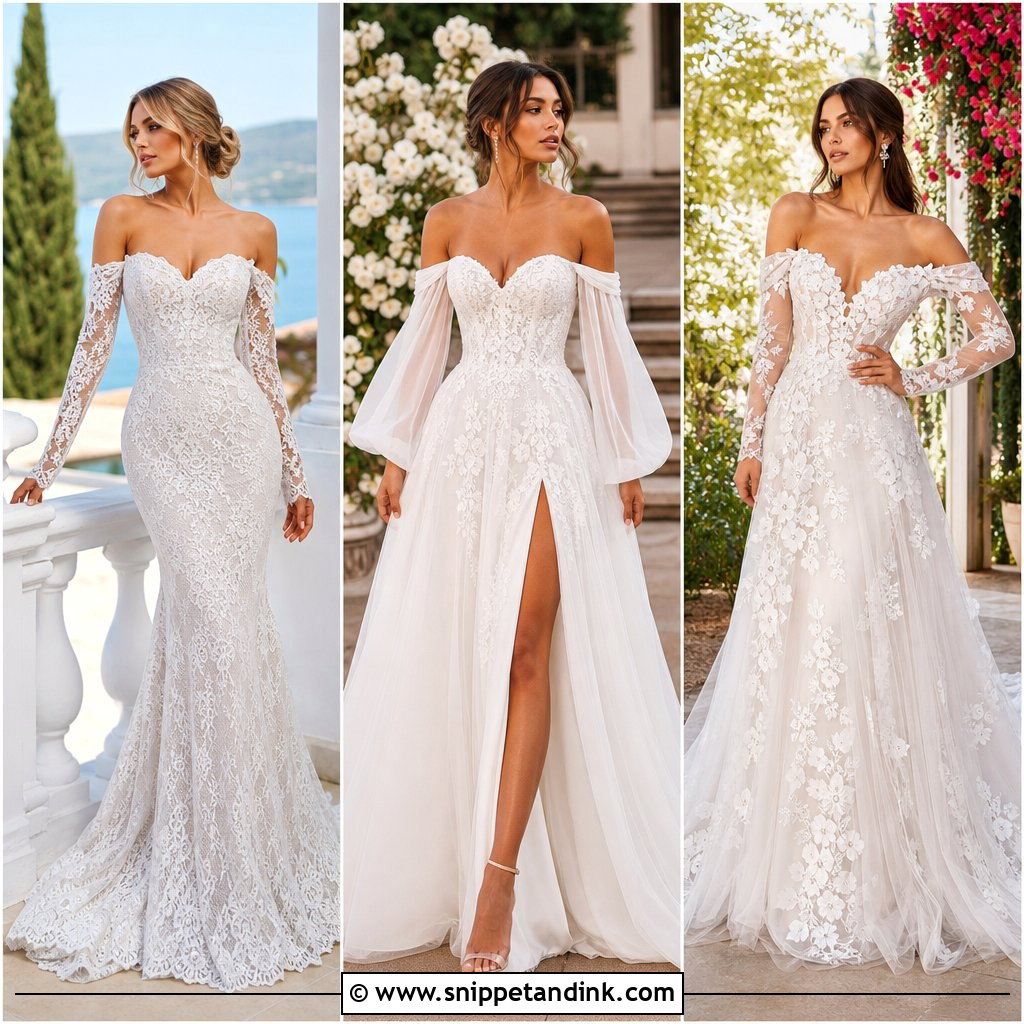
Long lace sleeves give coverage and a traditional feel with room to update it. Fitted sleeves with a clean skirt keep things balanced; all-over lace suits a bride who loves detail everywhere. The lining color matters more than people think. A “nude” lining needs to match your actual skin tone, or the lace will sit on a visible beige panel in photos, so hold swatches against your arm. Closed-toe heels, small crystal earrings and a simple veil are enough with this much texture.
4. Corset Wedding Dress
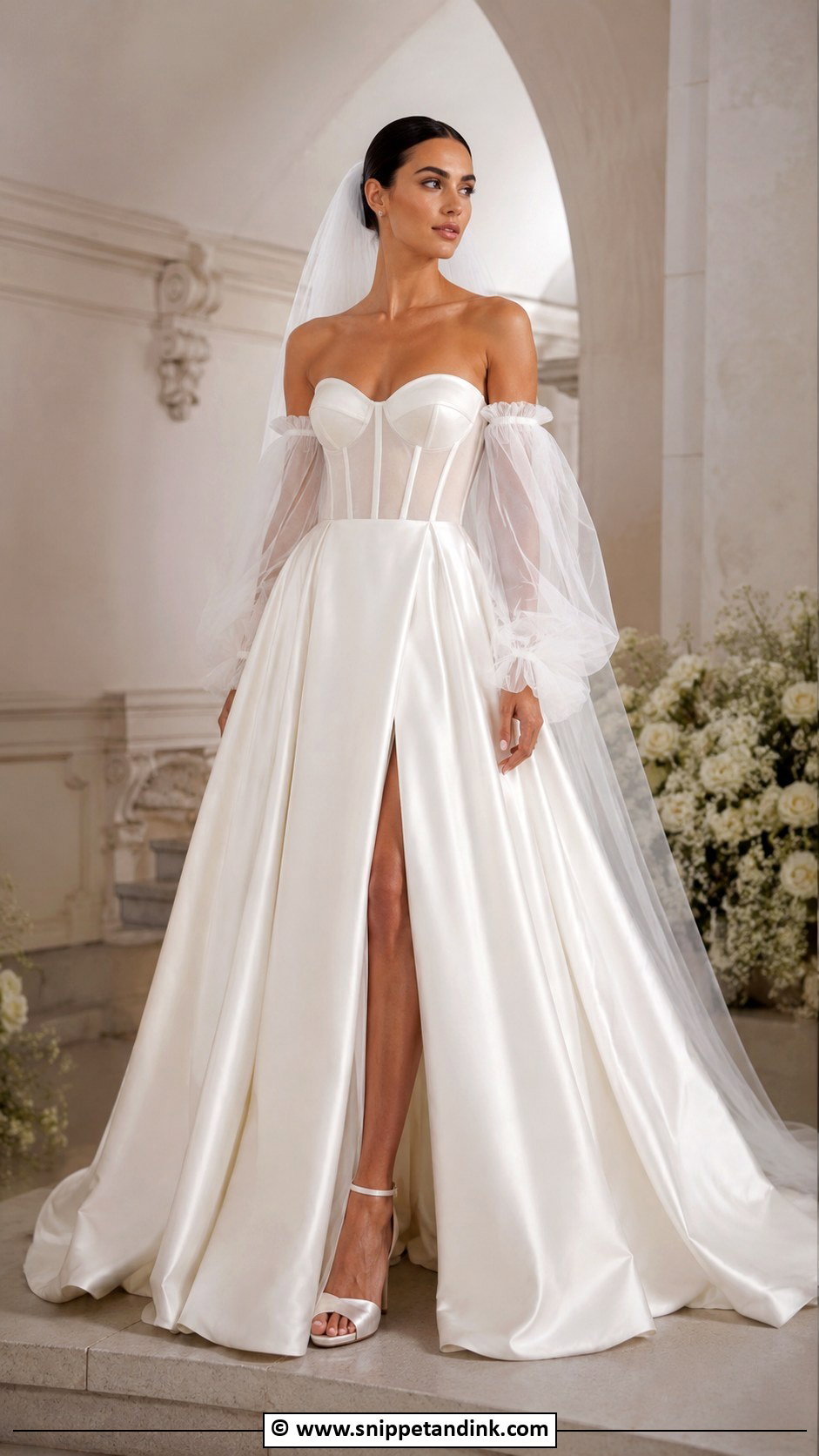
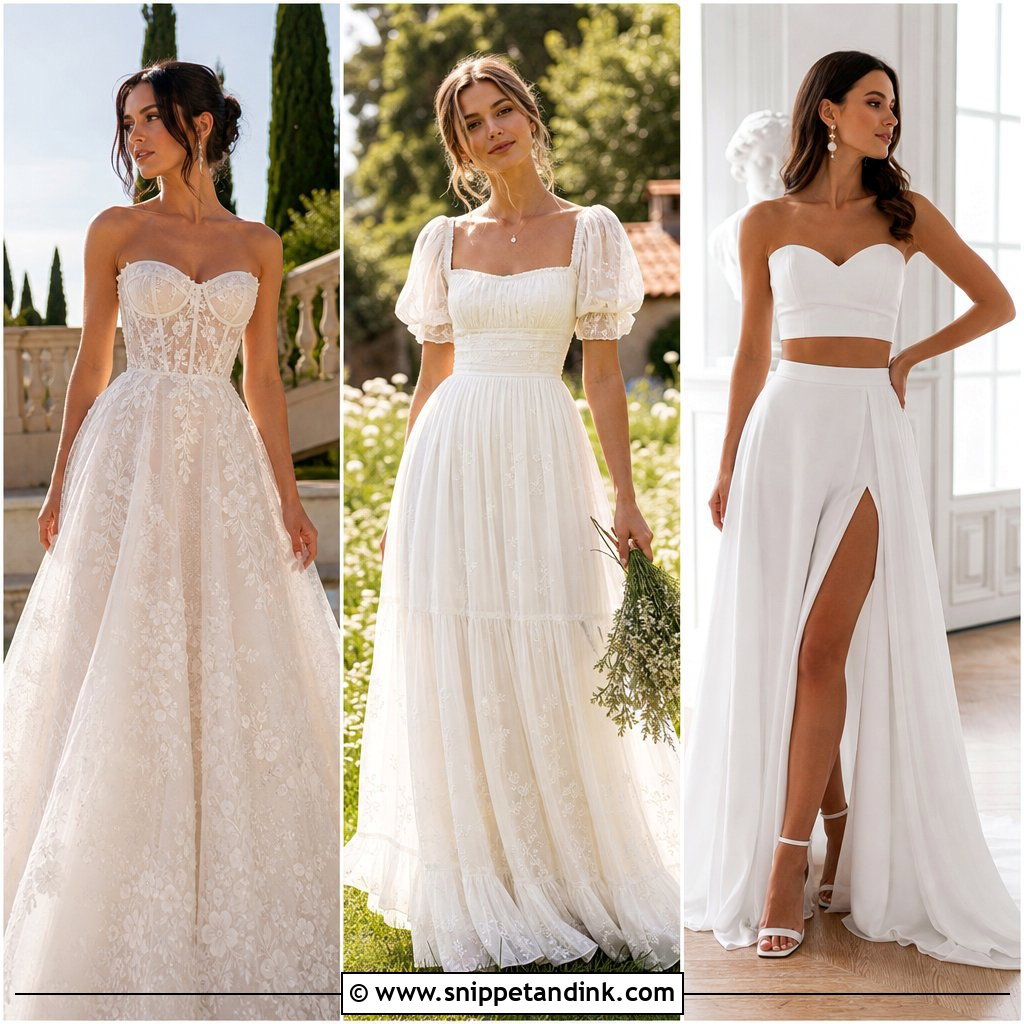
Structure and waist definition are the reason to choose a corset. With an A-line skirt it feels wearable; with a fitted skirt it reads bolder. Many corset gowns close with a lace-up back, and I like those for a practical reason: lacing allows some adjustment if your size shifts a little before the wedding. Someone needs to learn to lace it properly, though, starting from the middle and working outward. Elegant heels, a clean veil and minimal jewelry keep the bodice from crowding, and detachable sleeves give you a reception change.
5. Basque Waist Wedding Dress
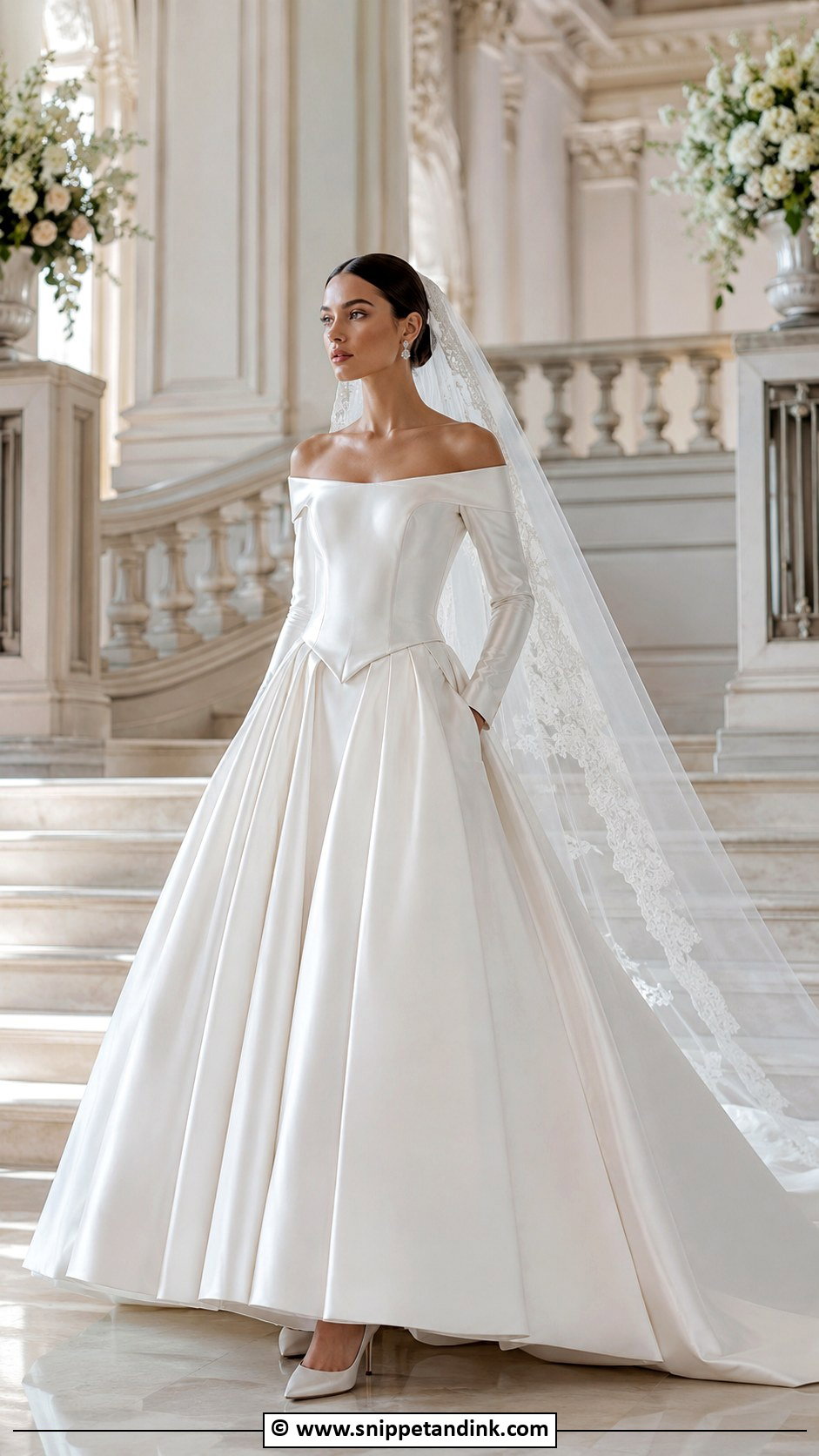
The bodice of a basque waist dips into a V below the natural waist, which lengthens the body. In a satin or mikado version the point stays crisp, and lace softens it. The skirt can be full, layered or lightly structured. Pointed heels, a cathedral veil and classic earrings complete it. Check the V is centred on your body, not just on the dress; a point even slightly off-centre looks crooked from the front pew.
6. Drop Waist Wedding Dress
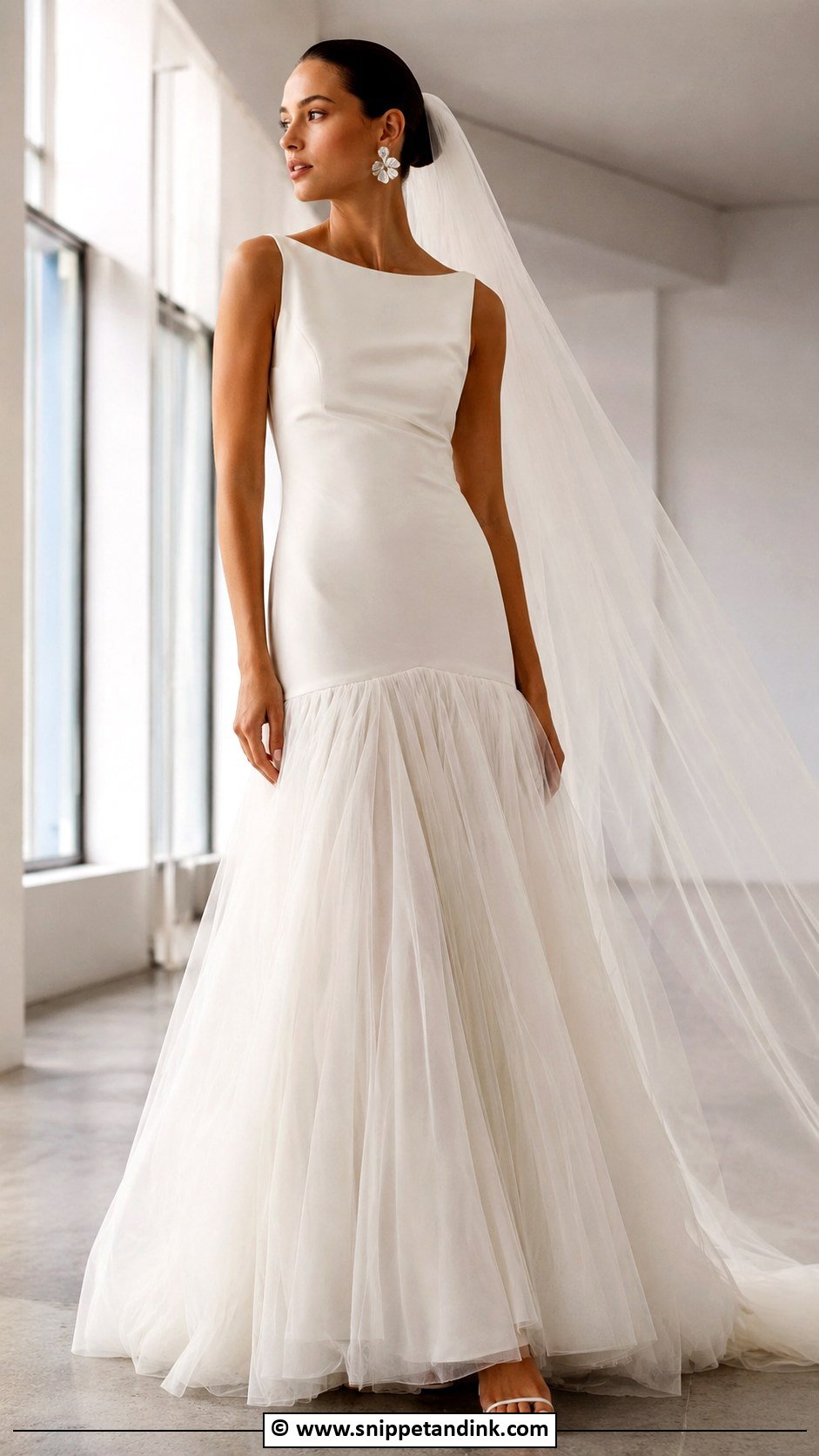
Lowering the waistline lengthens the torso and changes where volume starts. A fitted skirt keeps it sleek, while a full skirt that begins at the hips gives drama. That hip-level fullness suits straighter figures well but adds width where some brides would rather not have it, so try it on before ruling it in or out. Smooth satin reads modern; layered tulle is softer. Simple heels, sculptural earrings and a neat veil keep it refined. It is a good pick for brides who follow bridal trends and want a shape that will not look like everyone else at the fitting.
7. Bow Wedding Dress
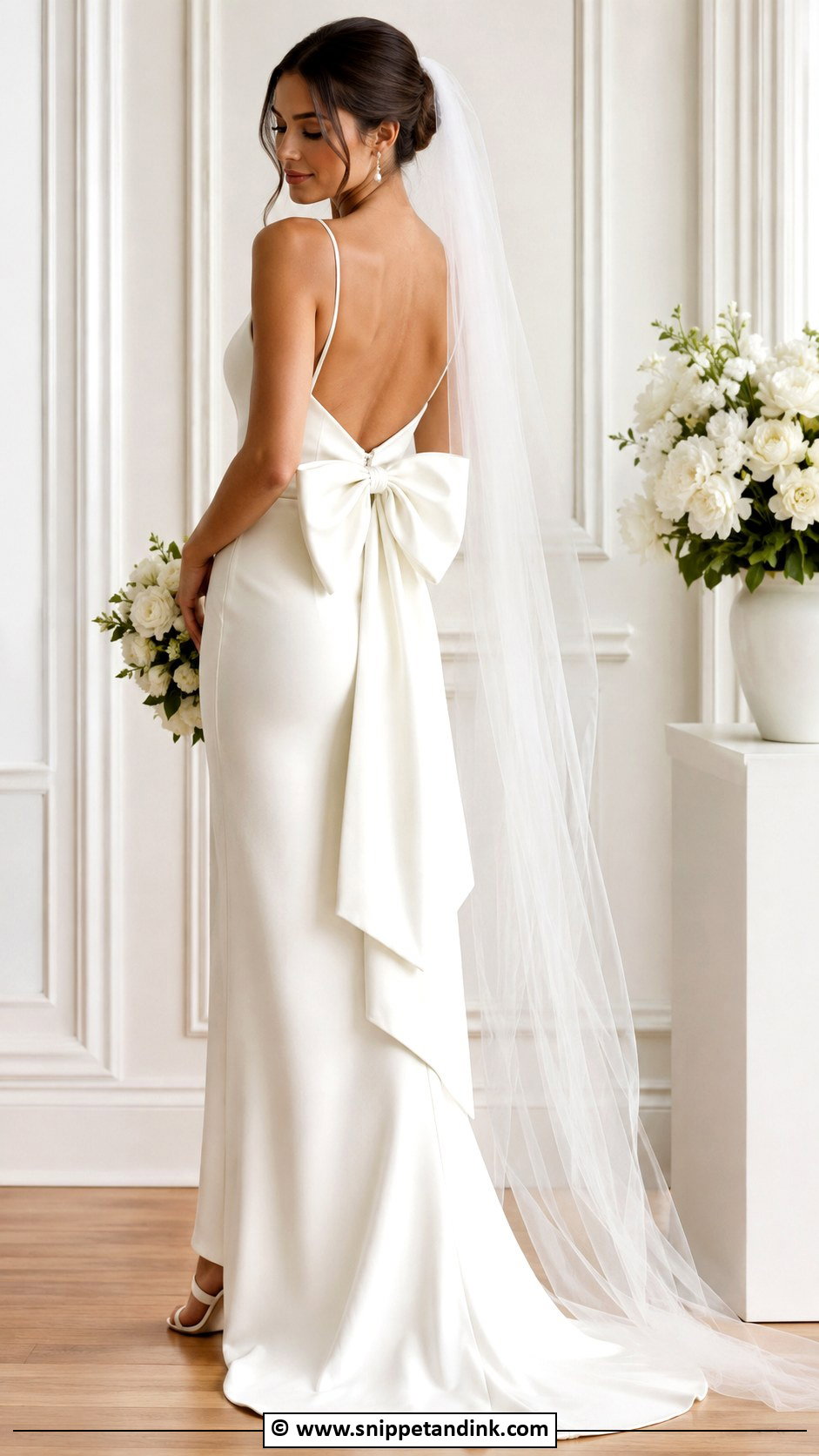
One large bow beats many small ones. A clean column with a back bow is chic; a ball gown with a waist bow is more romantic. The fabric decides whether the bow survives the day. Stiff fabrics like mikado or faille hold their loops, while soft satin bows flatten the moment you sit back in a car seat or a chair. Satin heels, pearl earrings and a soft veil, with a quiet hairstyle and no oversized jewelry.
8. Off Shoulder Wedding Dress
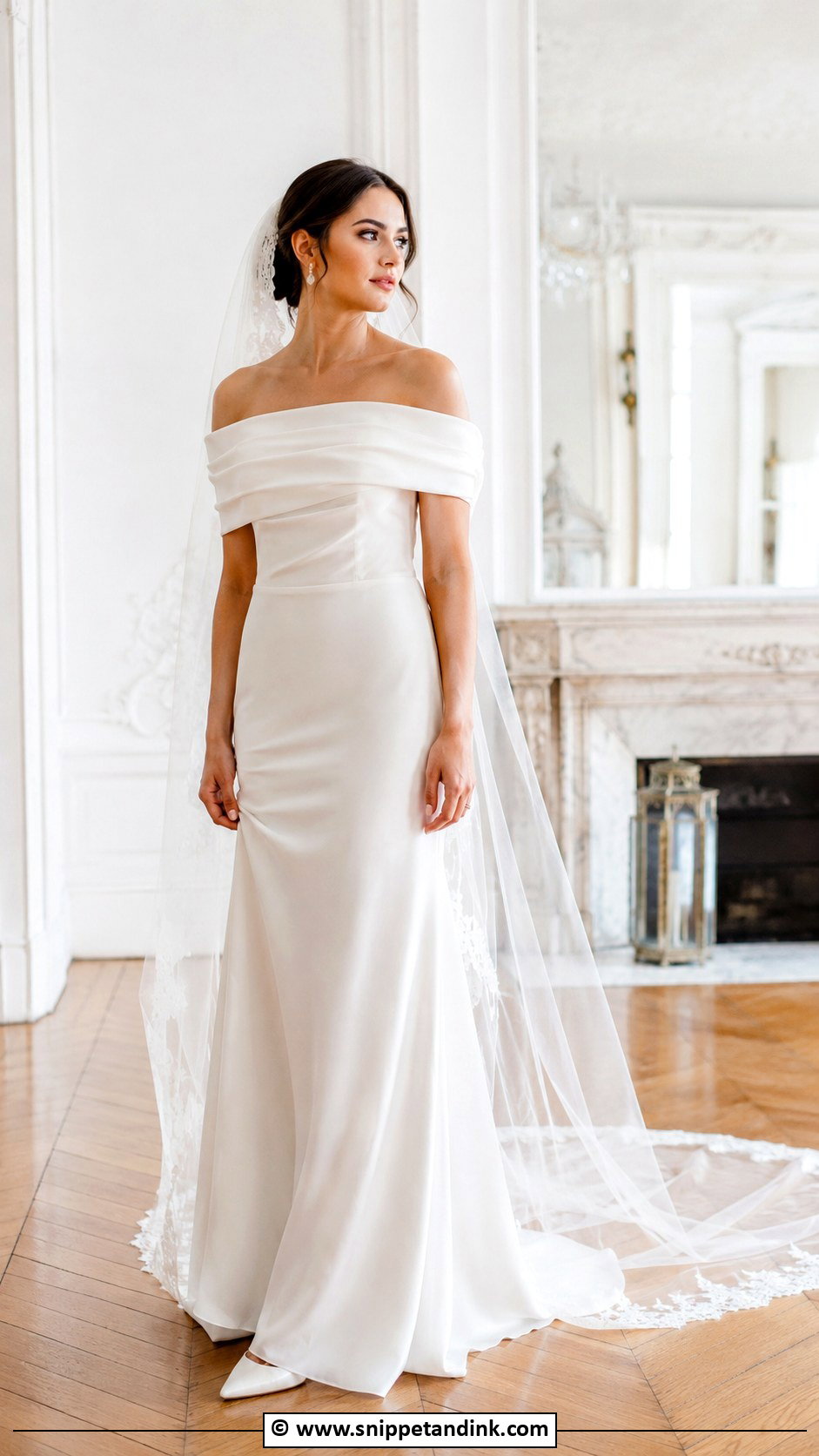
The off shoulder neckline frames the collarbone and suits fitted gowns, A-lines and full ball gowns alike. Lace is romantic, satin is clean and crepe is modern. Most of these dresses rely on a band of elastic or boning to stay up, so a strapless bra is often unnecessary, but ask whether cups are built in before you shop for underwear. A necklace only makes sense if the neckline is very open; otherwise statement earrings do the job. A low bun, soft waves or a half-up style all work.
9. Square Neck Wedding Dress
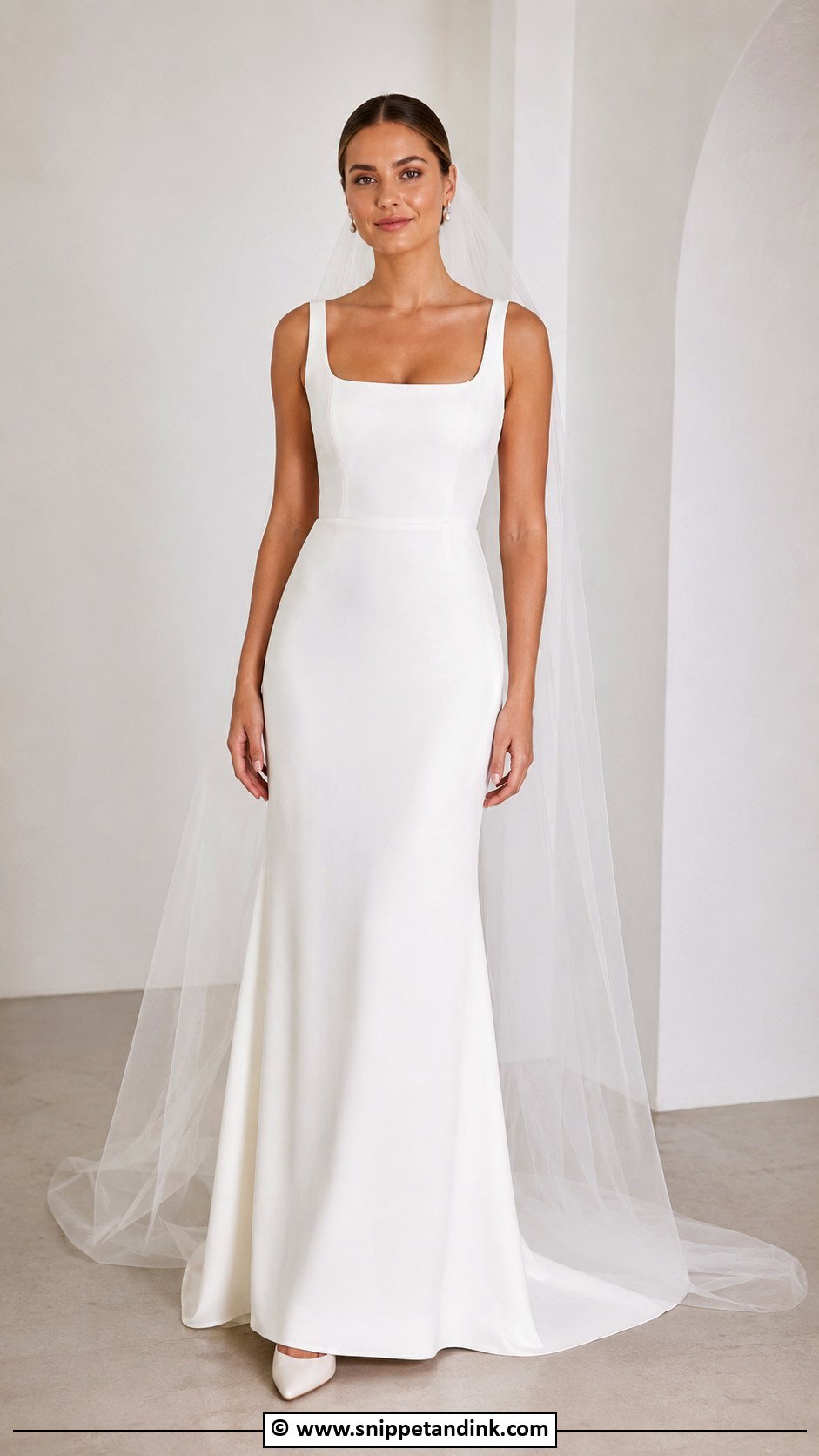
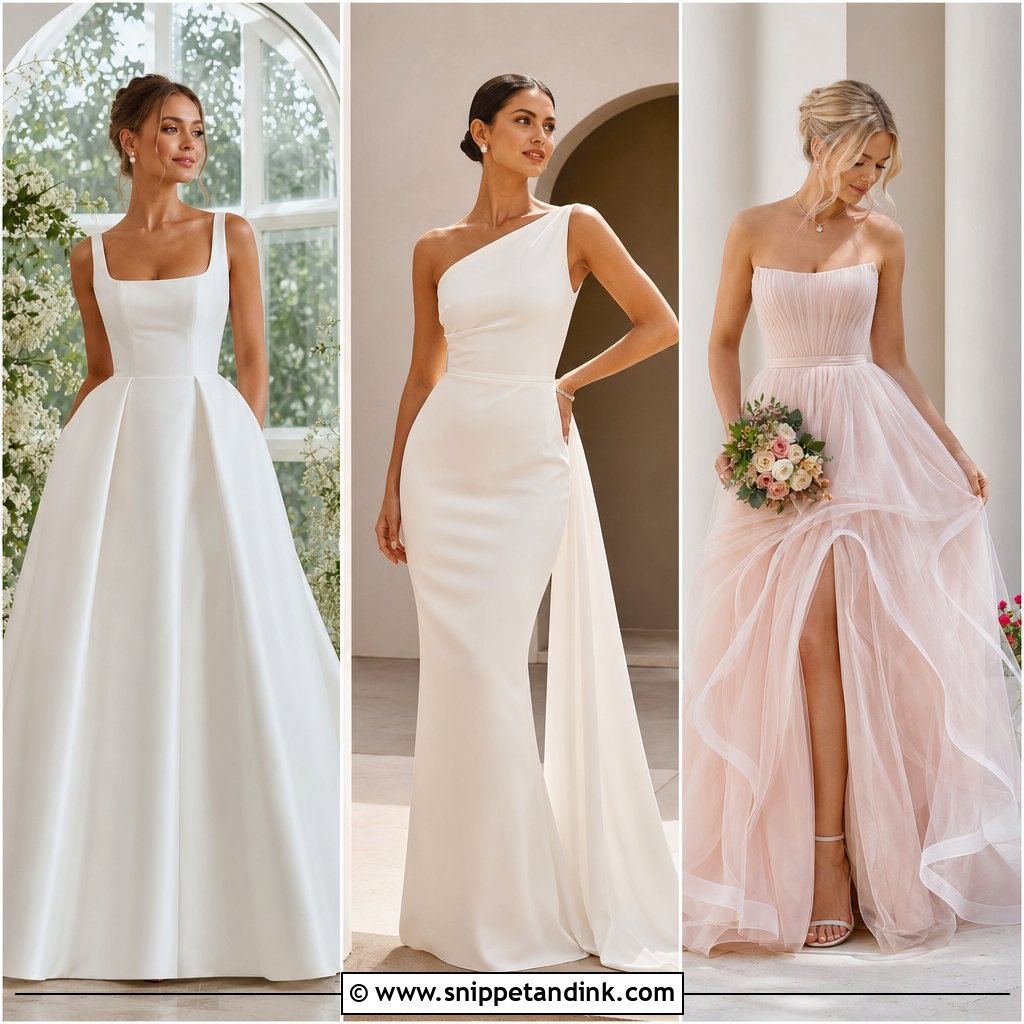
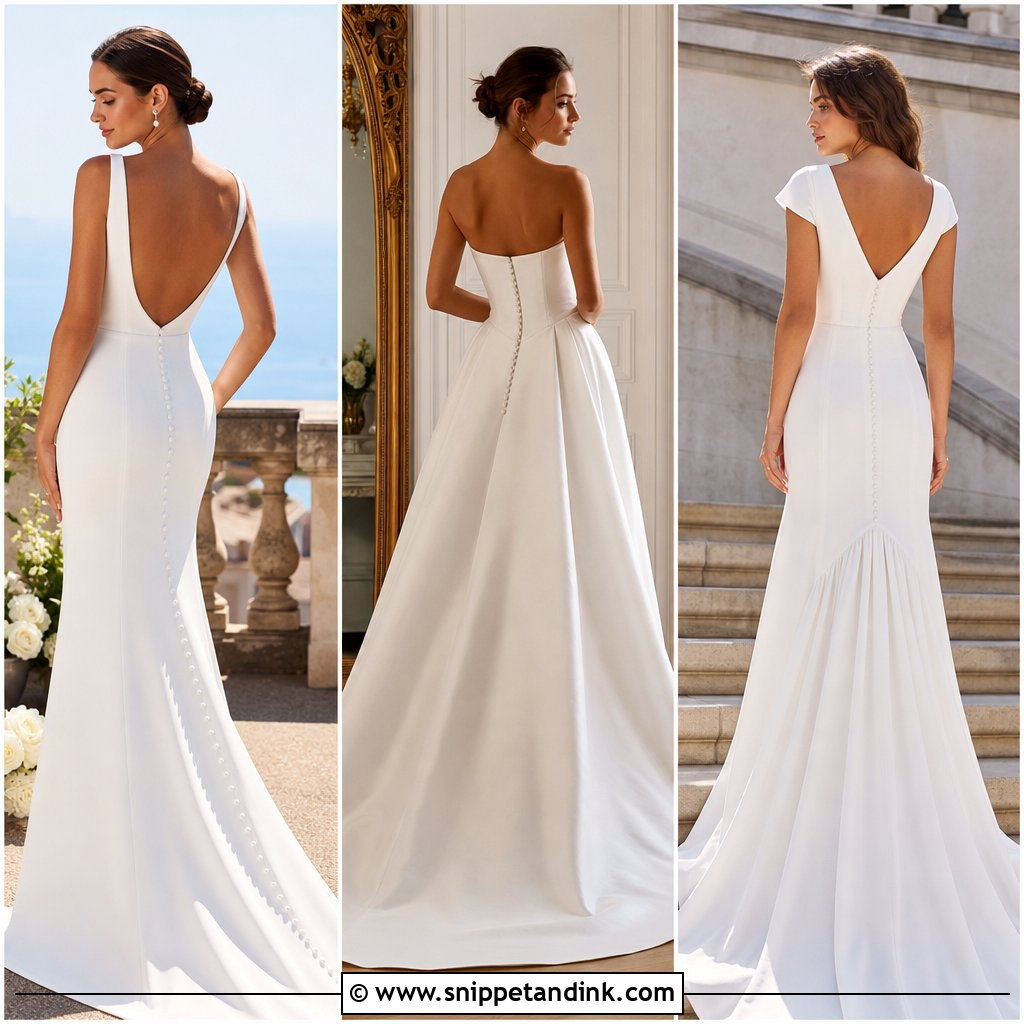
Clean and quietly modern, the square neck gives the upper body structure on many bust sizes. Fitted crepe feels minimal; a square-neck ball gown feels traditional. Keep the lines uncluttered with sleek heels, small earrings and a simple veil. Gloves look editorial here, but think about the ring exchange: either choose gloves you can slip off the left hand quickly or have a small opening at the ring finger.
10. Cat Eye Neckline Wedding Dress
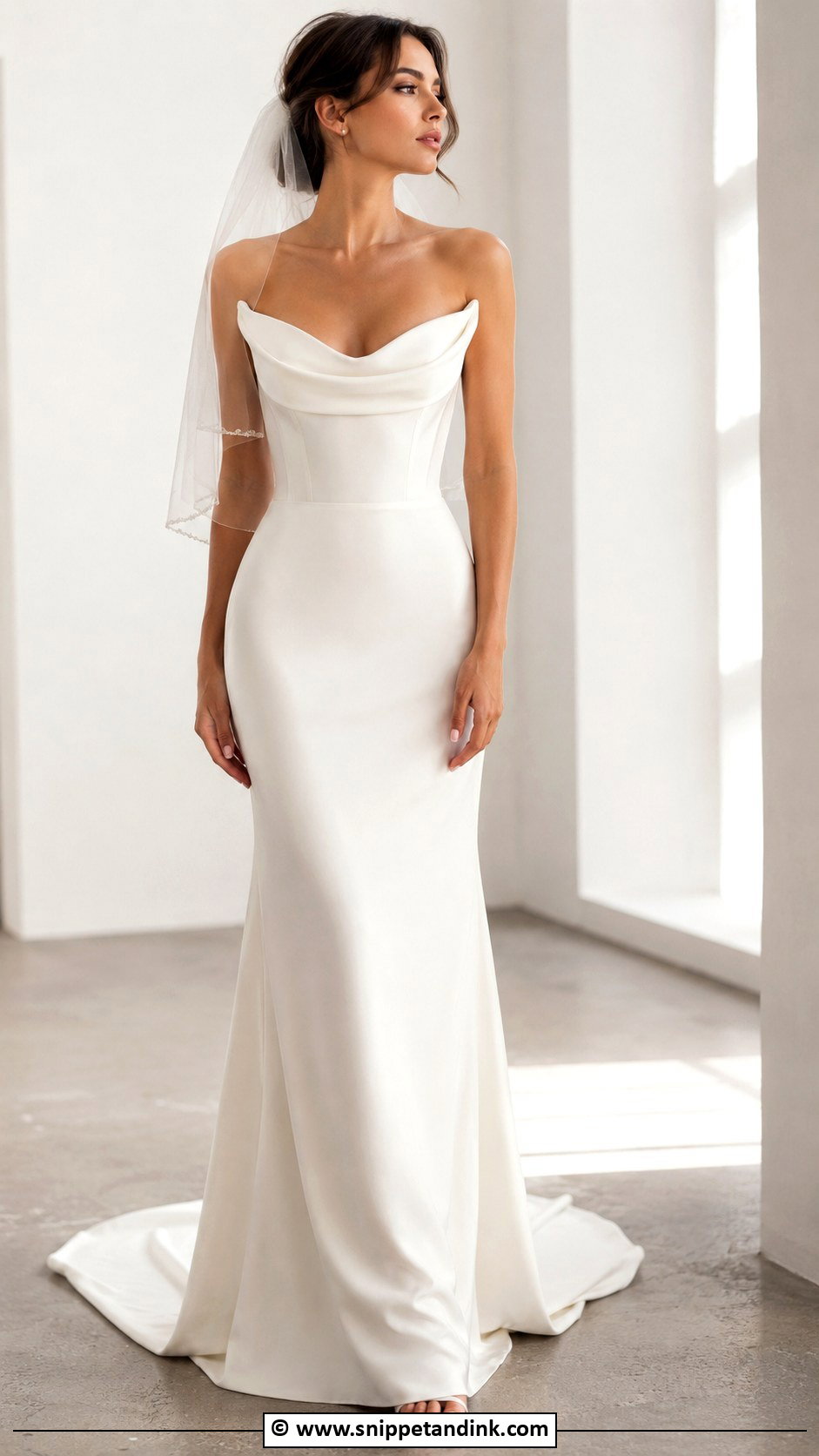
A cat eye neckline curves up over each side of the bust and dips at the centre, giving shape without embellishment. Structured satin, mikado or crepe hold the curve best. Fit through the cups is the whole game. If the curved edges stand away from the body when you breathe out, the shape collapses in photos, so the bodice usually needs adjusting at the side seams. A fitted silhouette is sleek, an A-line more balanced. Clean heels, smooth hair, simple jewelry and either a short or long plain veil suit it.
11. High Neck Wedding Dress
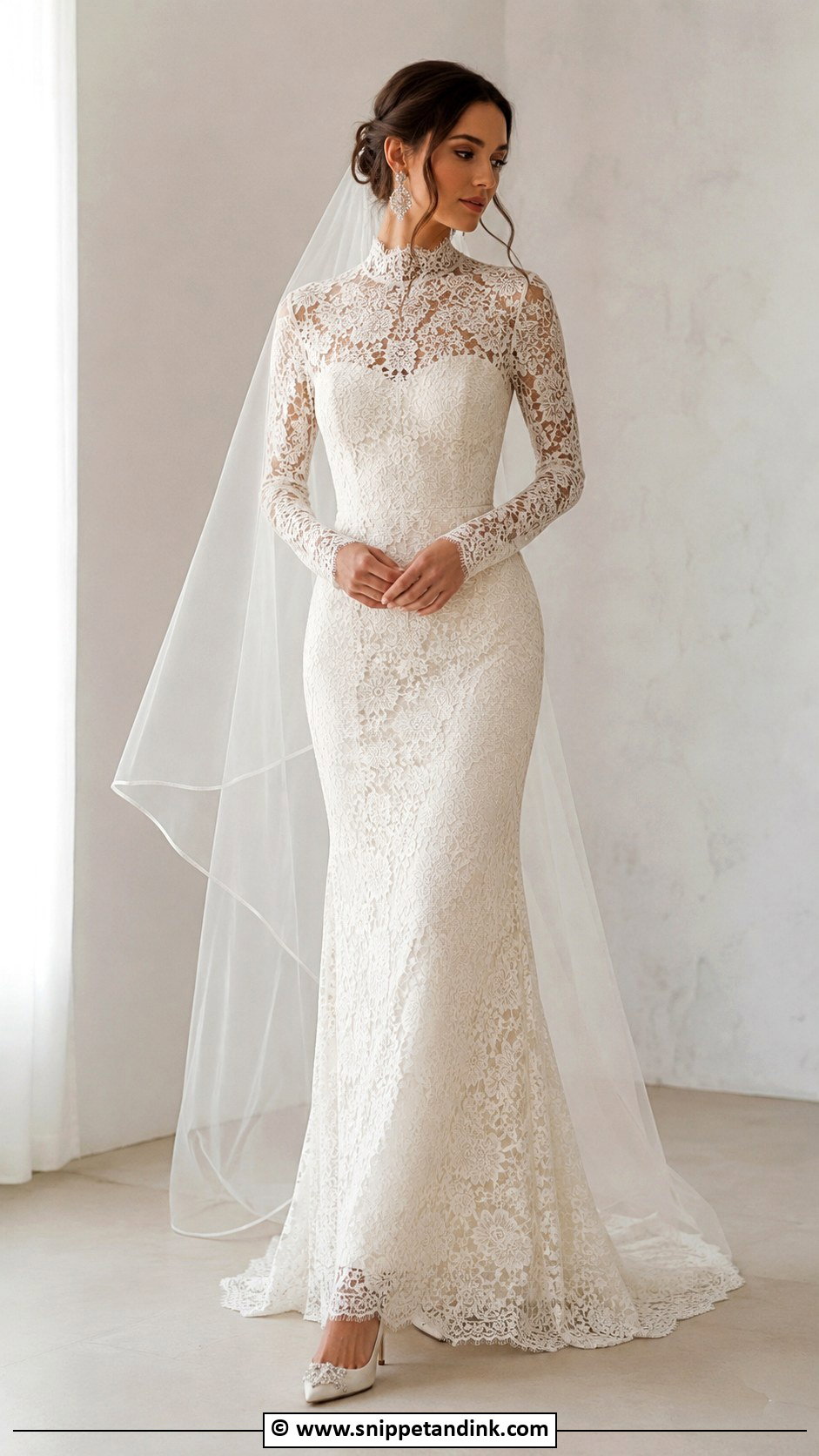
Coverage with a striking silhouette is the trade a high neck offers. Lace reads vintage, satin or crepe sleek and contemporary. With so much covered, the fit, fabric and skirt shape carry the dress. Wear earrings rather than a necklace, elegant heels and a simple veil or hair accessory. A low bun keeps the upper body clean. In warm rooms, ask for a lighter lining at the neck so you are not uncomfortable by dinner.
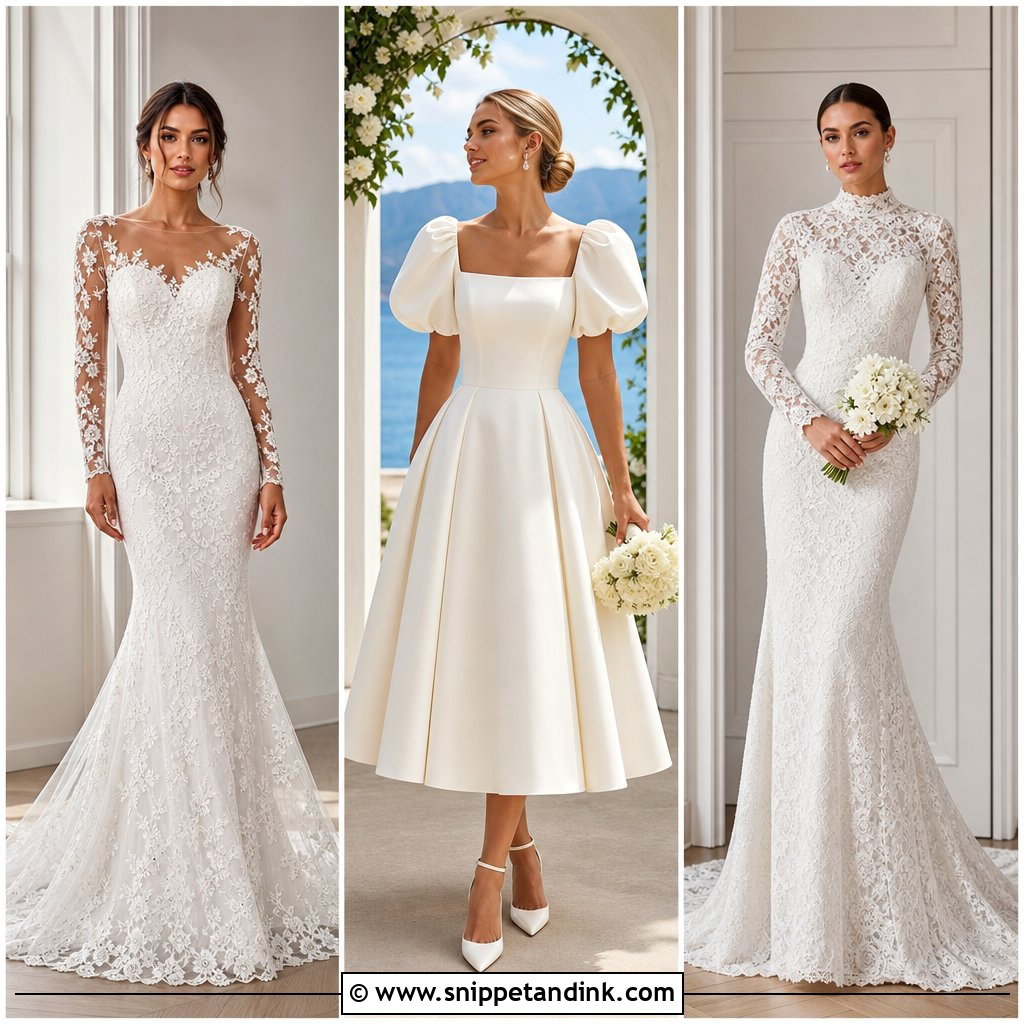
12. Sheer Sleeve Wedding Dress
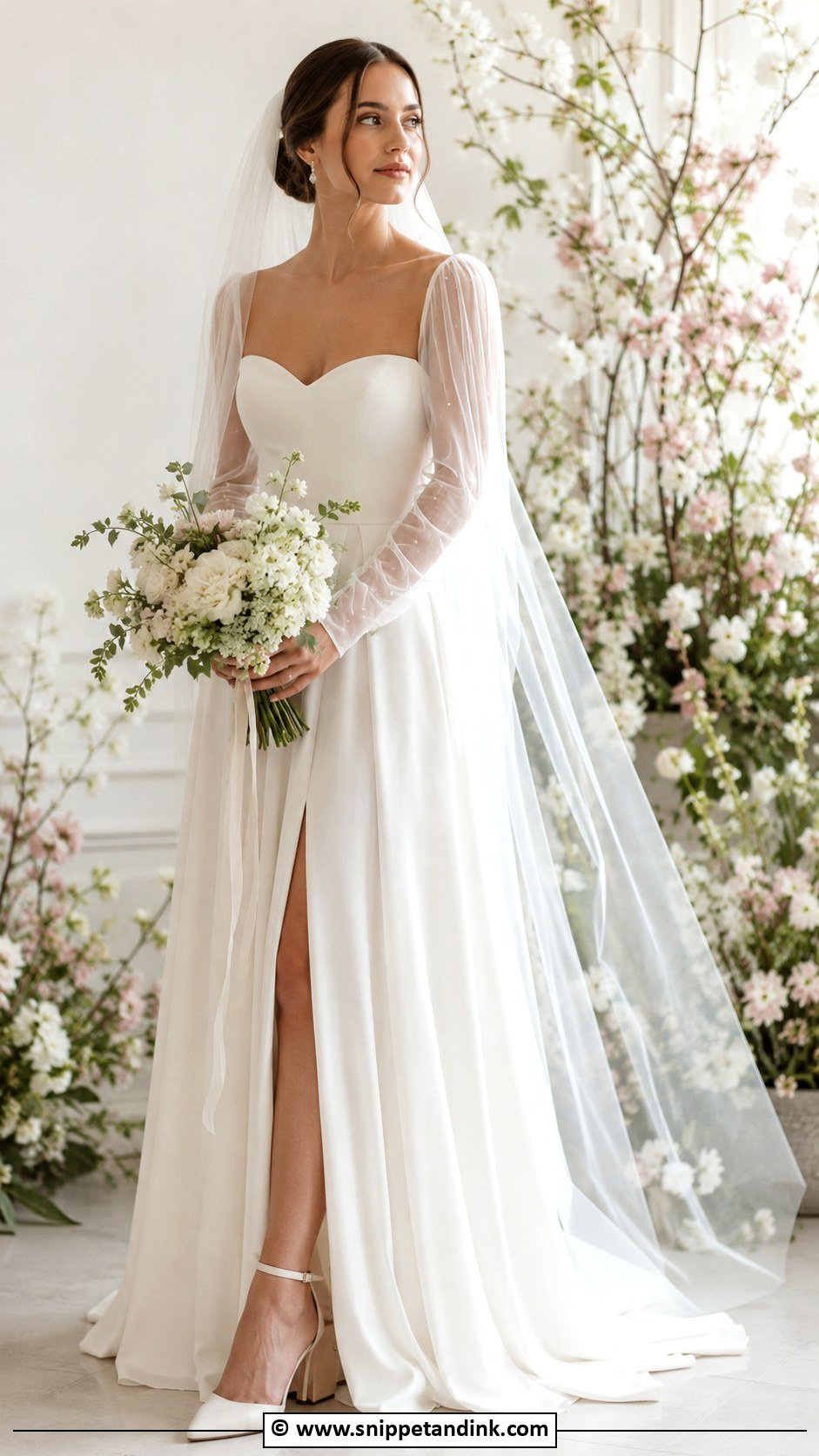
Sheer sleeves soften coverage: plain tulle, lace, pearl-detailed or lightly embroidered. Balance them with the bodice, plain under detailed sleeves or detailed under plain. At the wrist, long sheer sleeves get tugged by bouquets and hugging guests, and a small elastic finger loop keeps them from riding up your forearm. Soft makeup, satin heels and small earrings finish it, with a fingertip or floor-length veil depending on the gown.
13. Detachable Sleeve Wedding Dress
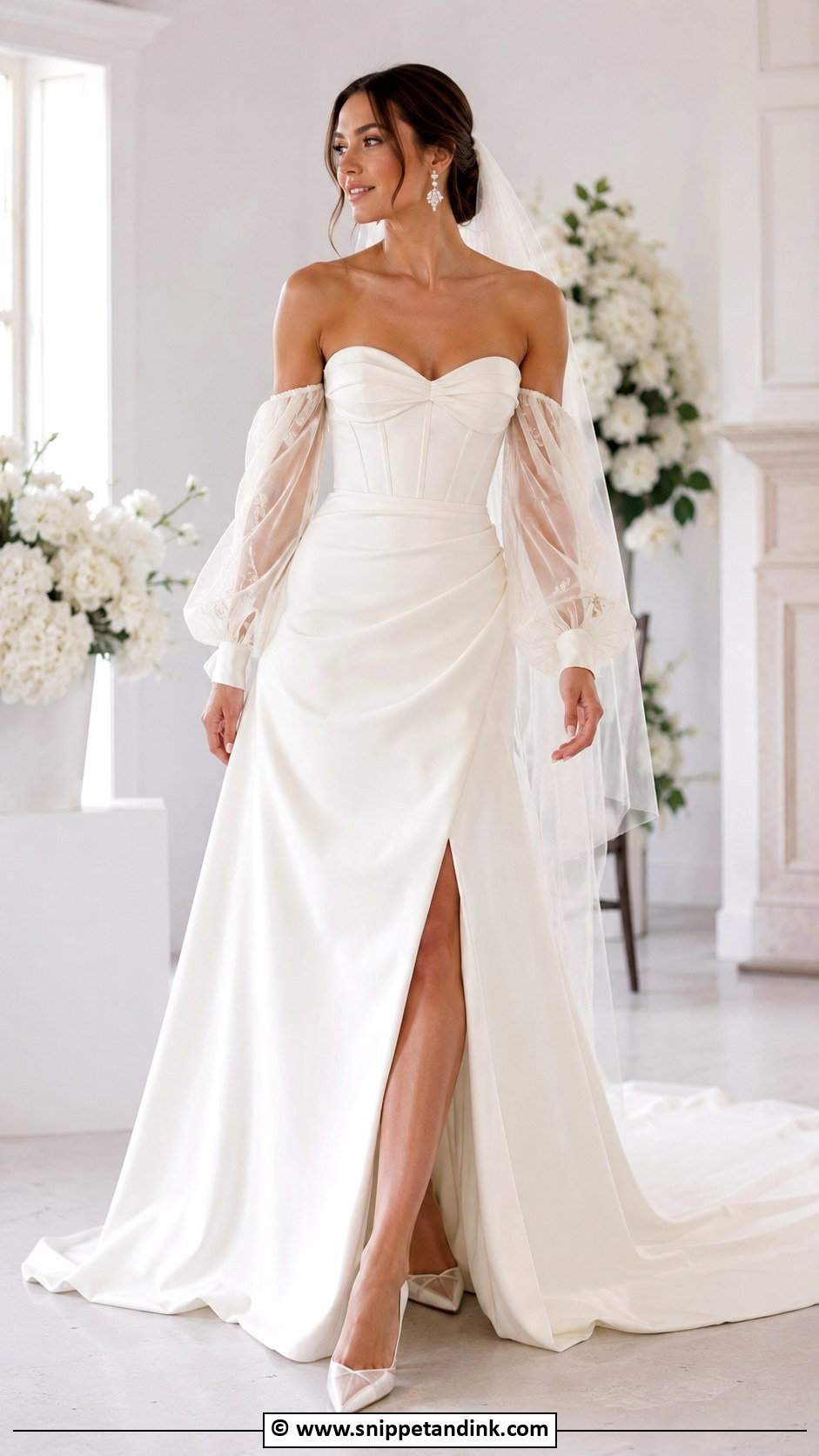
Two looks in one: wear the sleeves for the ceremony, take them off to dance. Puff sleeves add romance, fitted lace is classic and sheer drapes feel modern. How they attach is everything. Snaps under the arm sit flatter than ties, and elastic-band sleeves can leave red marks on the upper arm that show once removed, so I ask brides to wear them for an hour before deciding. Versatile heels, a ceremony veil and statement earrings for the second look complete it.
14. Floral Embroidered Wedding Dress
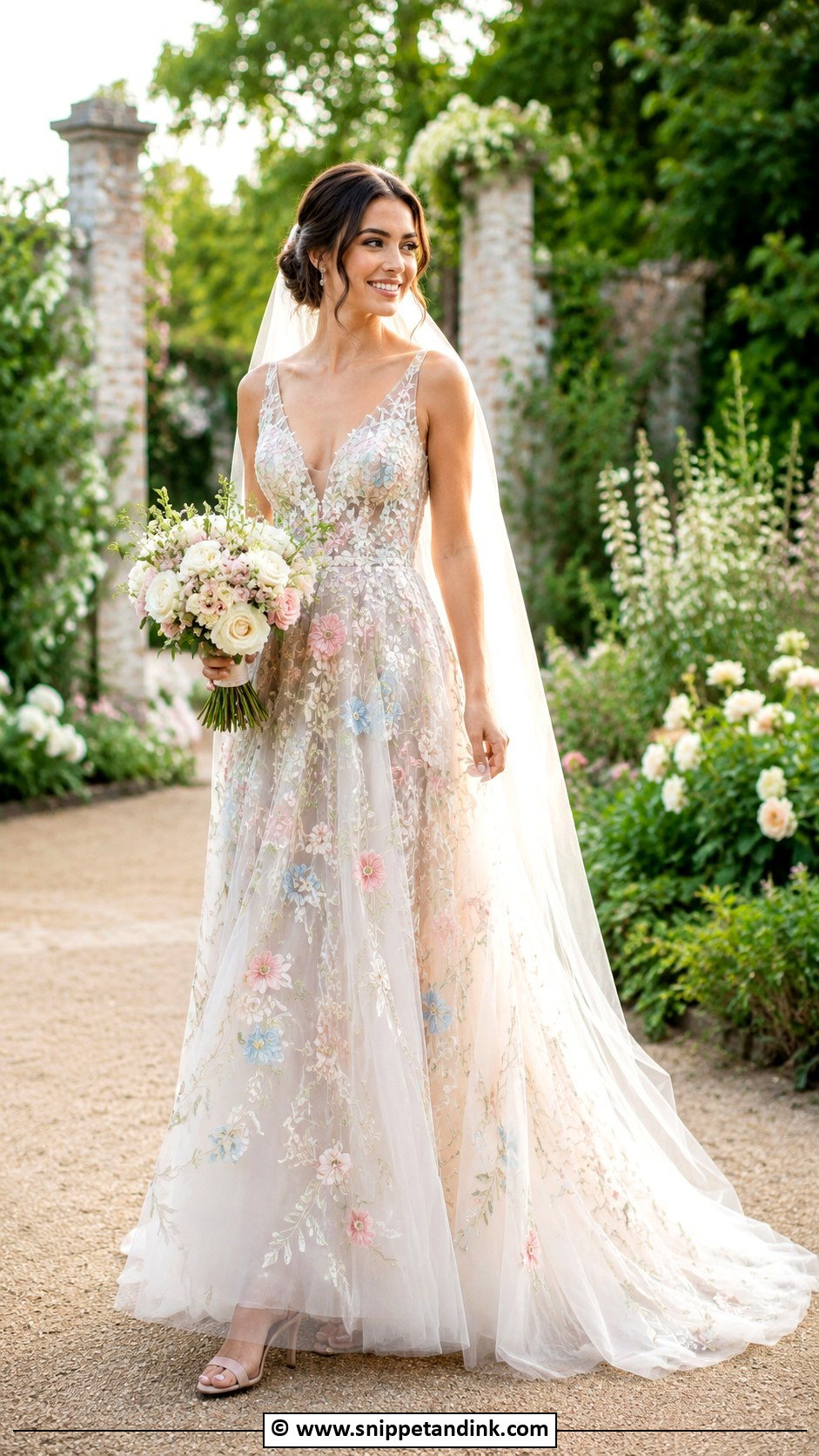
Embroidery brings color and personality softly: white-on-white, pastel, metallic or bright thread. Flowers across bodice and skirt feel romantic, while scattered stitching looks lighter. Show your florist a photo of the embroidery so the bouquet repeats a shade from the thread rather than competing with it. Keep the rest simple with nude or ivory heels, delicate earrings and a plain veil. Colored thread can occasionally bleed under a steamer, so test a hidden spot before pressing the whole dress.

15. Colored Wedding Dress
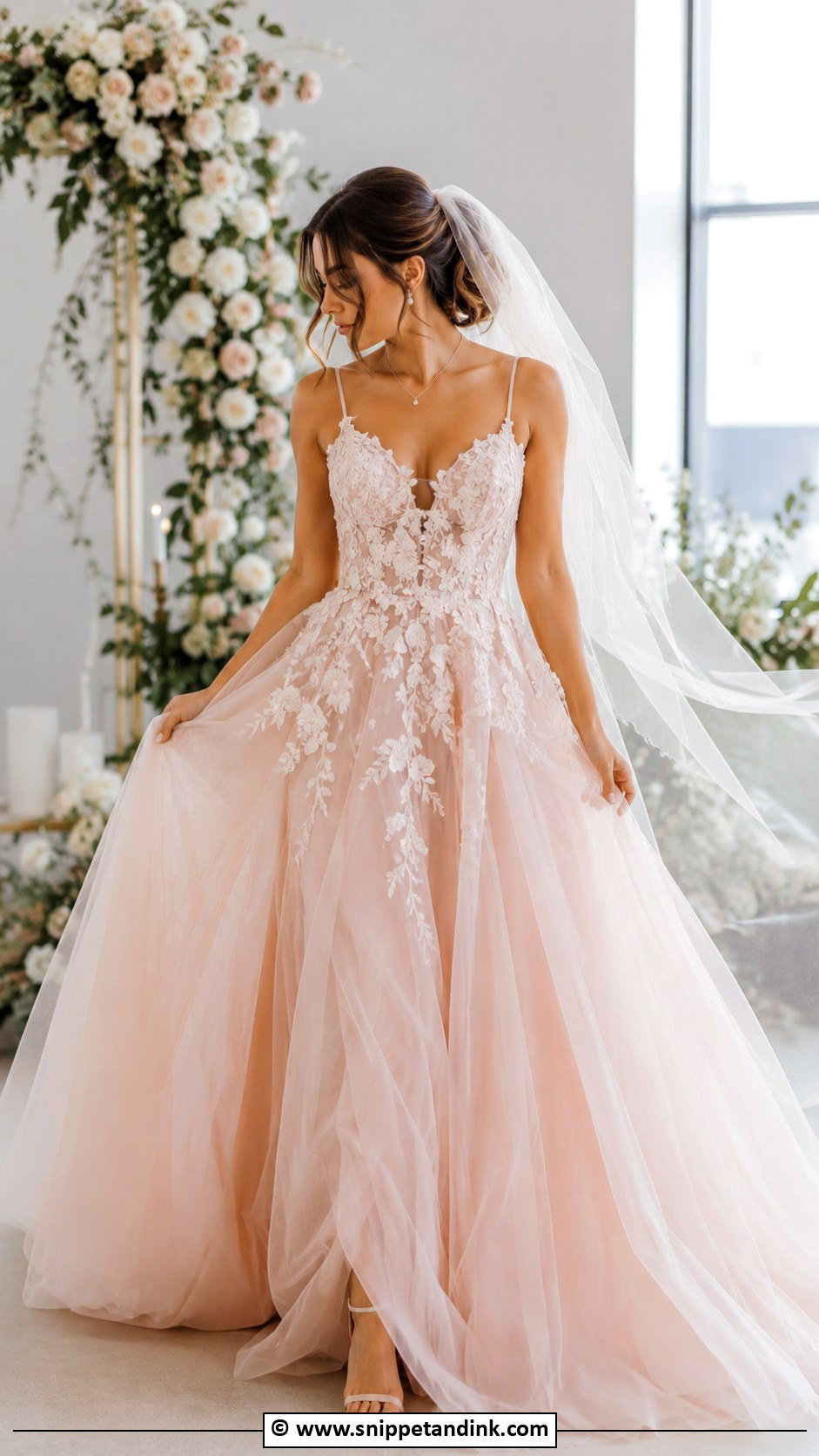
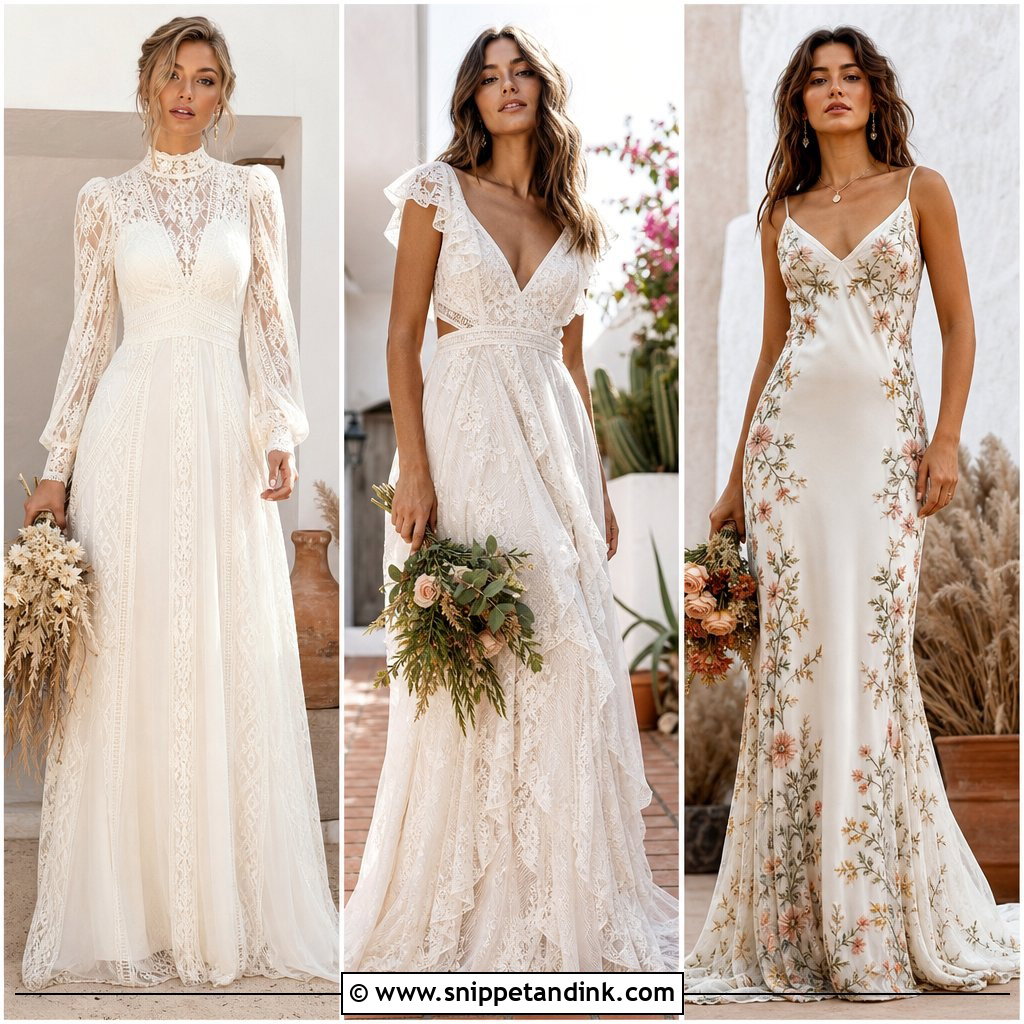
Blush, champagne, blue, lavender, silver and pale gold all read bridal while stepping away from white. Pick by your skin tone and the mood of the day: blush tulle is romantic, champagne satin elegant, pale blue fresh. One thing brides forget is underwear. White underwear shows through pale colored fabric far more than skin-tone pieces do, so match underwear to your skin, not the dress. Neutral heels, soft jewelry and a veil in a matching or sheer ivory tone finish it.
16. Short Wedding Dress
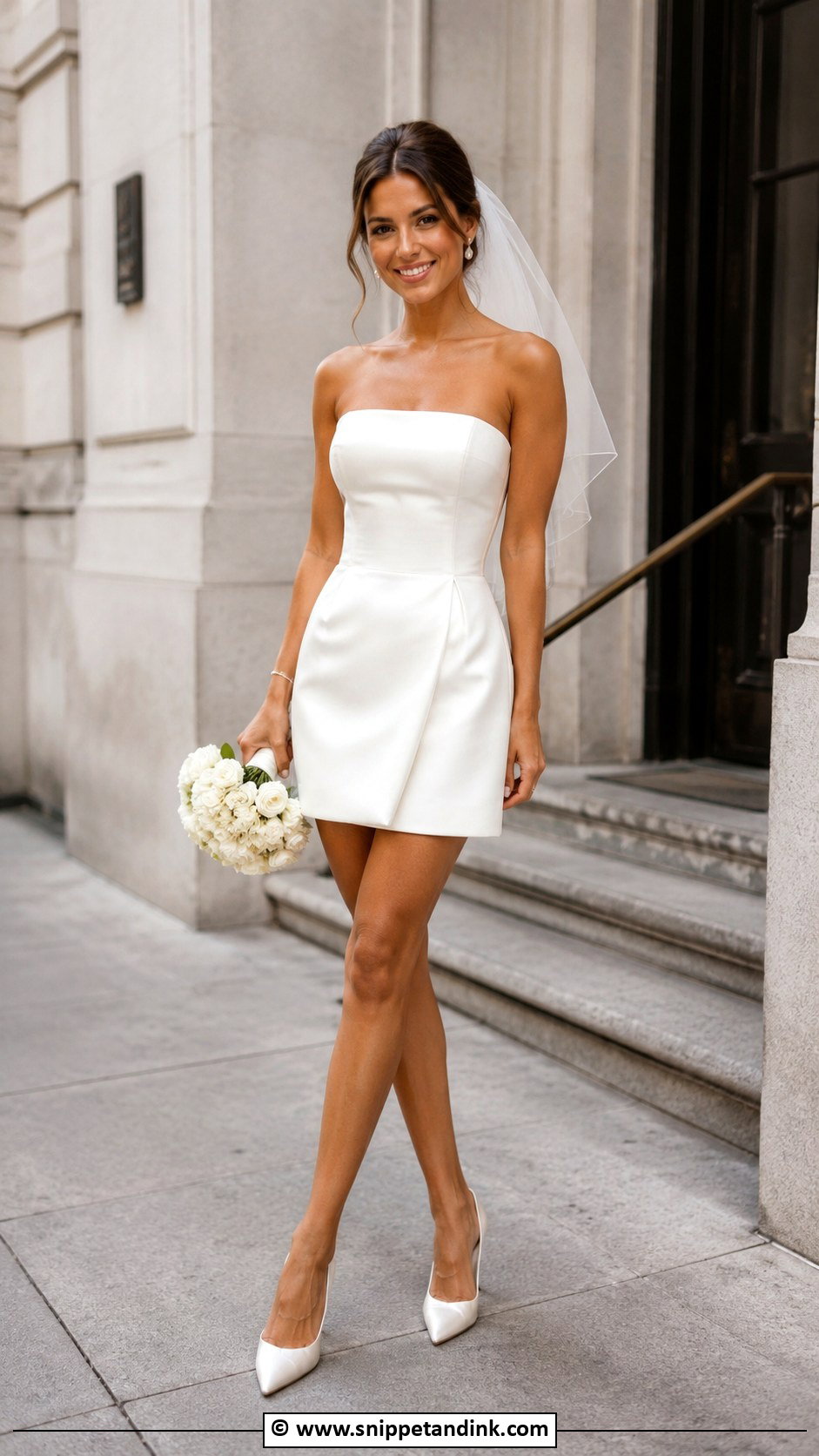
Short dresses suit courthouse weddings, small ceremonies, receptions and hot days. A structured mini looks chic, lace is romantic and a satin mini keeps it clean. Pointed heels, pearl earrings and a short veil or bow complete it, and sheer gloves or a cropped jacket add coverage. Because your shoes and legs are on show, the shoe choice matters as much as the dress, so break the shoes in properly.
17. Tea Length Wedding Dress
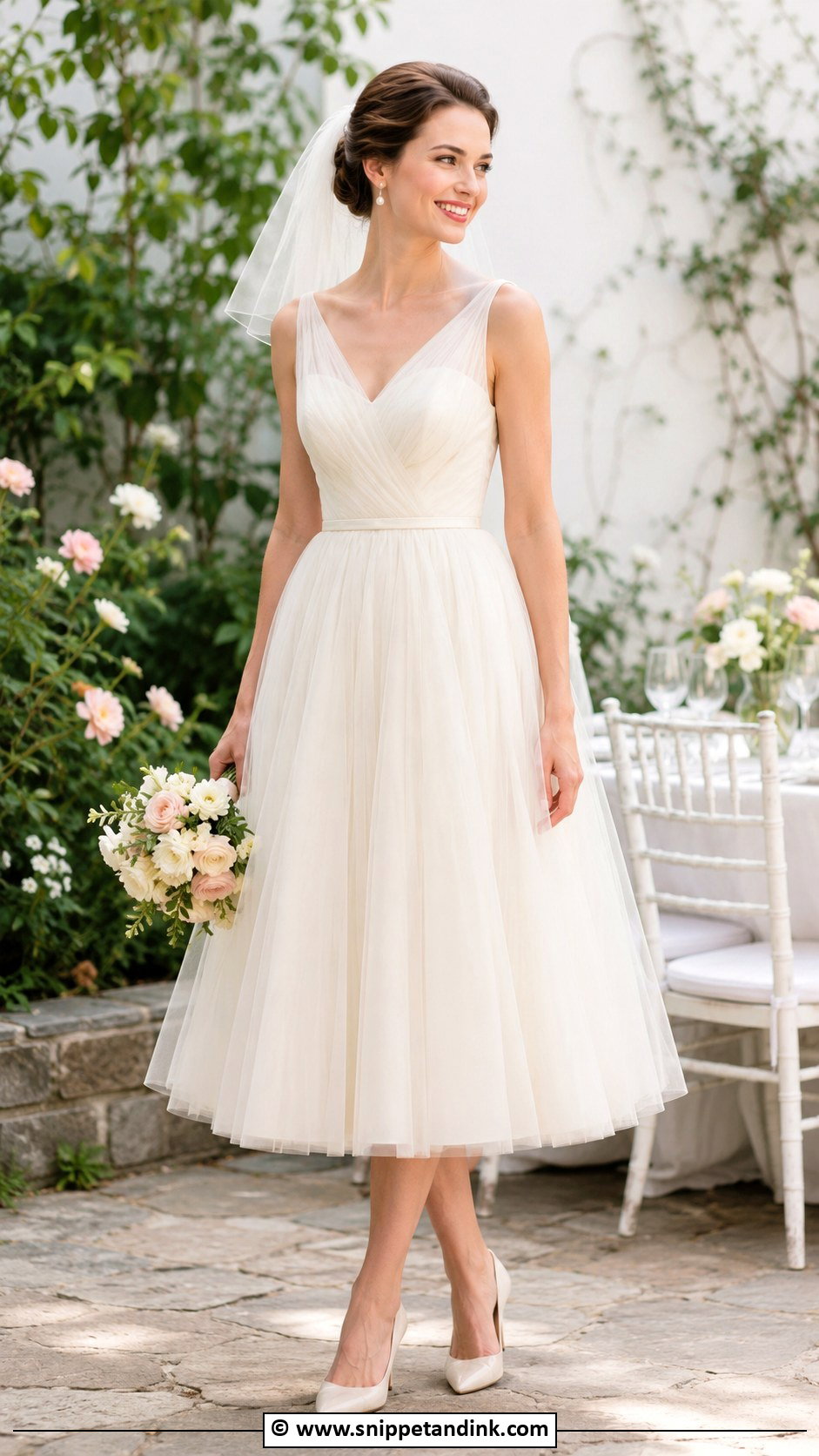
The hem of a tea length wedding dress usually sits between knee and ankle, formal enough for a ceremony while showing your shoes. Tulle gives a romantic shape, satin a retro mood and lace a classic softness. For the full fifties silhouette, the skirt needs a petticoat underneath; choose a soft one, since a stiff crinoline scratches bare legs by evening. Elegant pumps, pearl earrings and a short veil, plus a defined waist to keep proportions right.
18. Bridal Jumpsuit
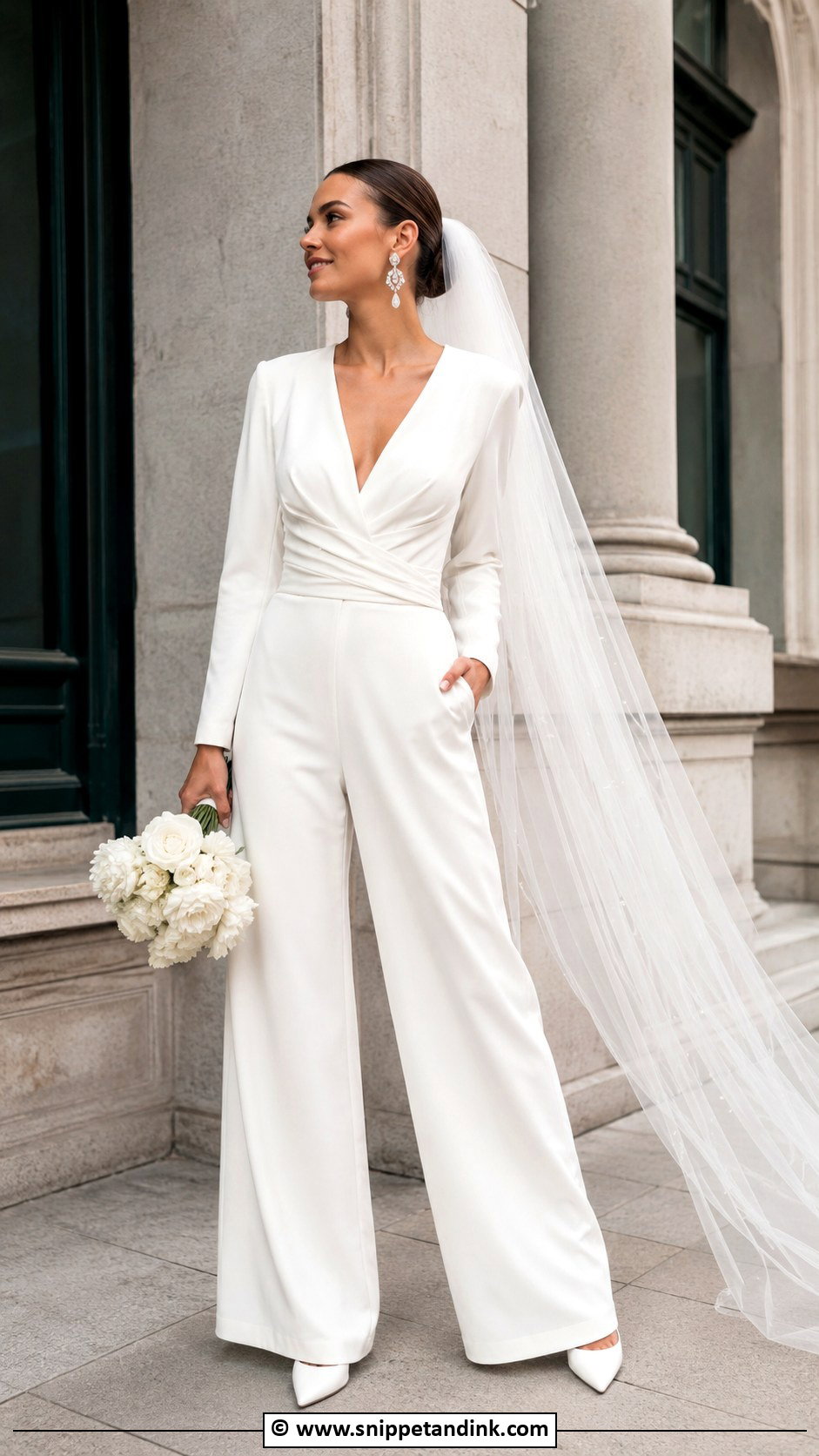
Comfort and movement are what a jumpsuit gives you. A wide-leg crepe jumpsuit feels elegant, and a lace bodice version reads softer and more bridal. Pointed heels lengthen the leg, finished with statement earrings or a simple veil, and a detachable overskirt adds ceremony drama. Plan the practical bit honestly: most jumpsuits mean undressing to use the restroom, so choose one with a zip you can reach or keep a bridesmaid close.
19. Two Piece Wedding Dress
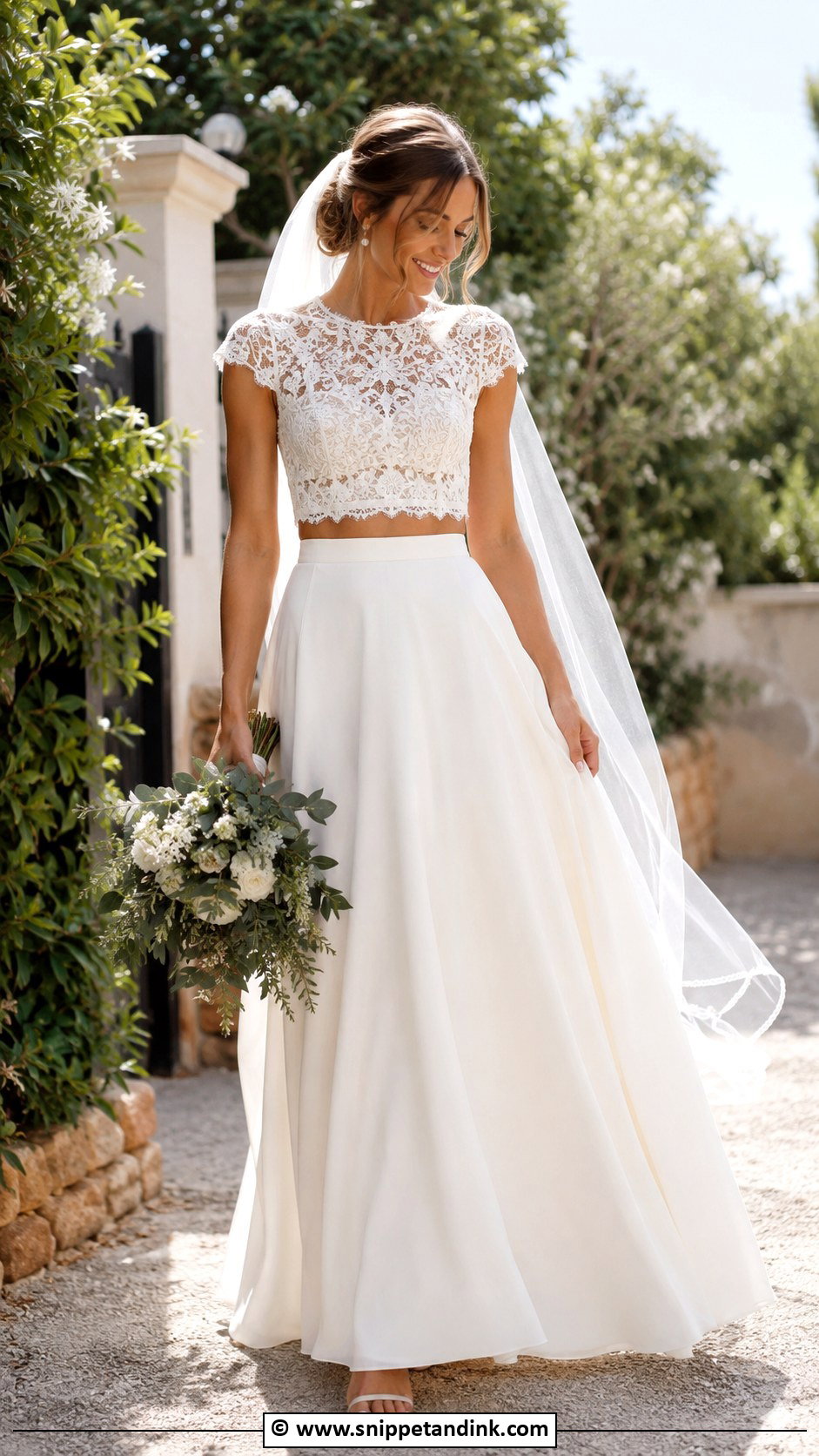
Separates let you fit top and bottom in different sizes and rewear a piece later. A lace crop top with a high-waist skirt is romantic; a satin top over a column skirt is sleek. Keep the gap subtle for a formal look. When you raise your arms for a first dance, a short top can lift more than expected, so test the gap with your arms up. Heels, simple jewelry and a veil matched to the skirt volume finish it.

20. Convertible Wedding Dress
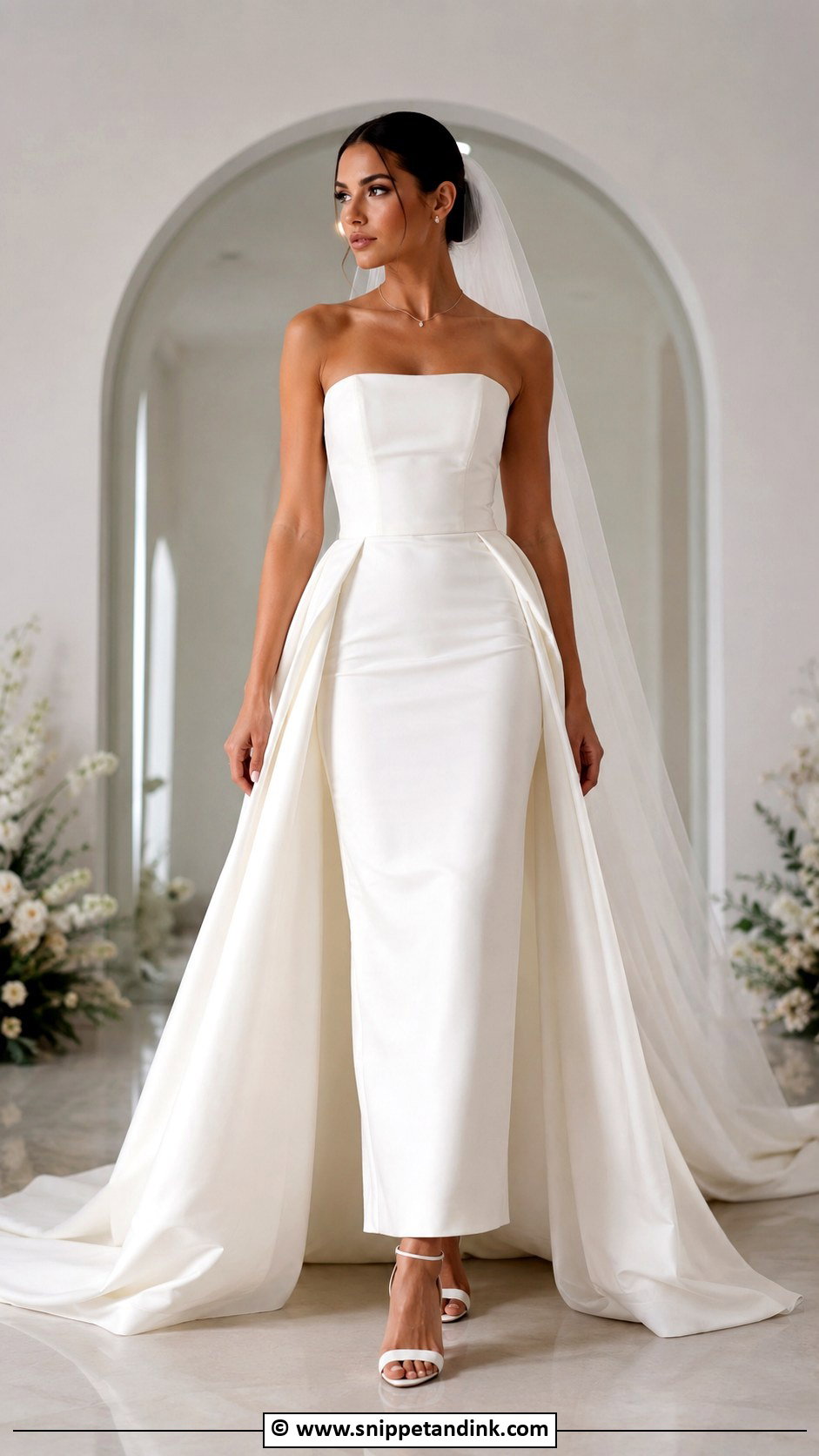
One gown, several looks: a convertible wedding dress may come with a removable overskirt, detachable train, sleeve options or a separate topper. A fitted column under a dramatic overskirt gives a ball gown at the ceremony and a sleek dress later. The overskirt hangs from your waist, so a heavy one can drag on the waistband for hours; a hidden waist stay on the base dress spreads that weight. Choose heels that suit both versions.
21. Minimalist Crepe Wedding Dress
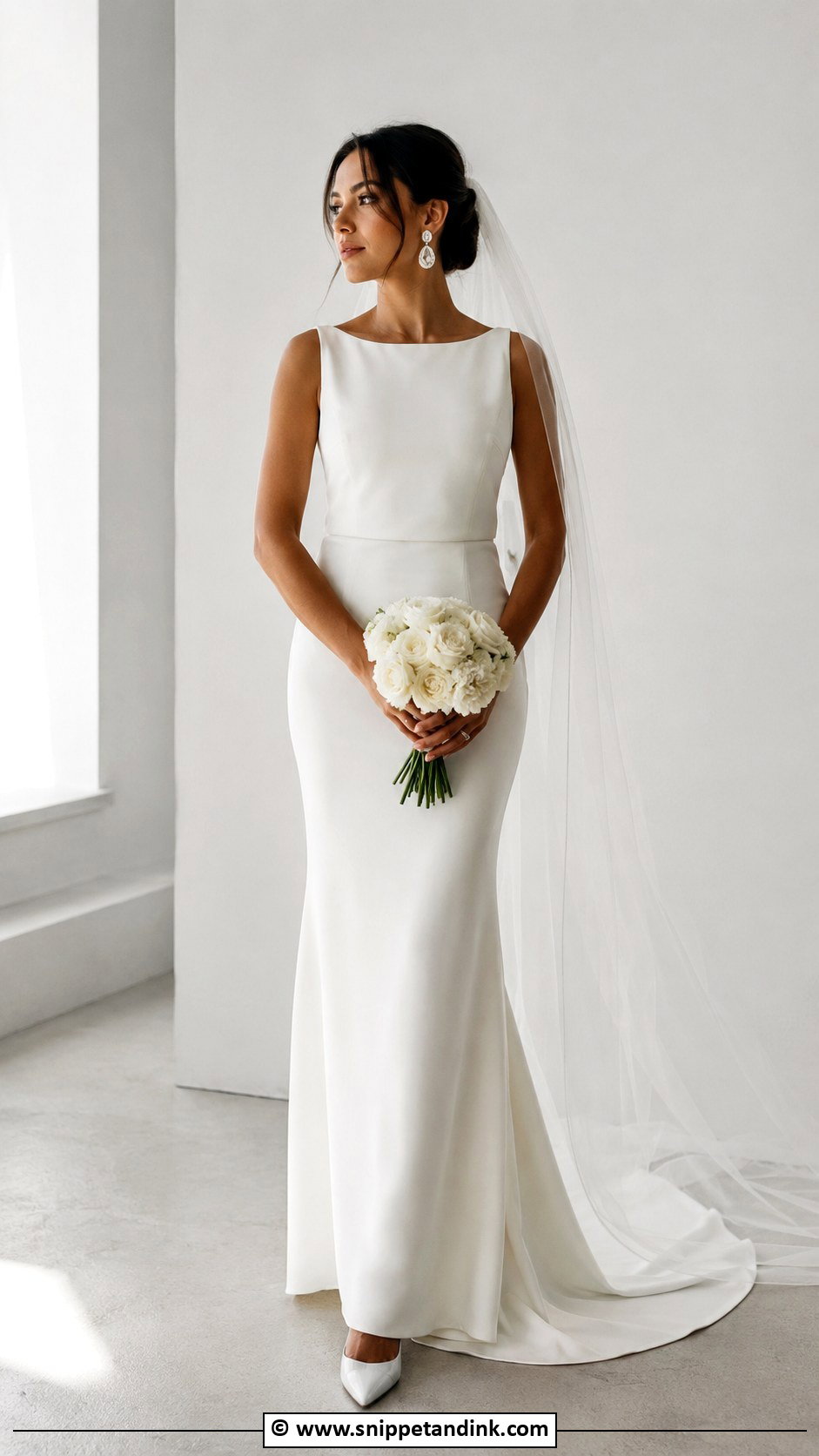
Clean lines, exact fit and quiet confidence are what minimalist crepe delivers. The fabric has enough weight to smooth the body, but it also shows the structure underneath, so ask for proper underlining to stop seam allowances and boning from shadowing through. A square neck, bateau neck or strapless crepe gown all work. Sleek heels, sculptural earrings and a long plain veil, with a smooth bun or soft waves.
22. Tulle Ball Gown Wedding Dress
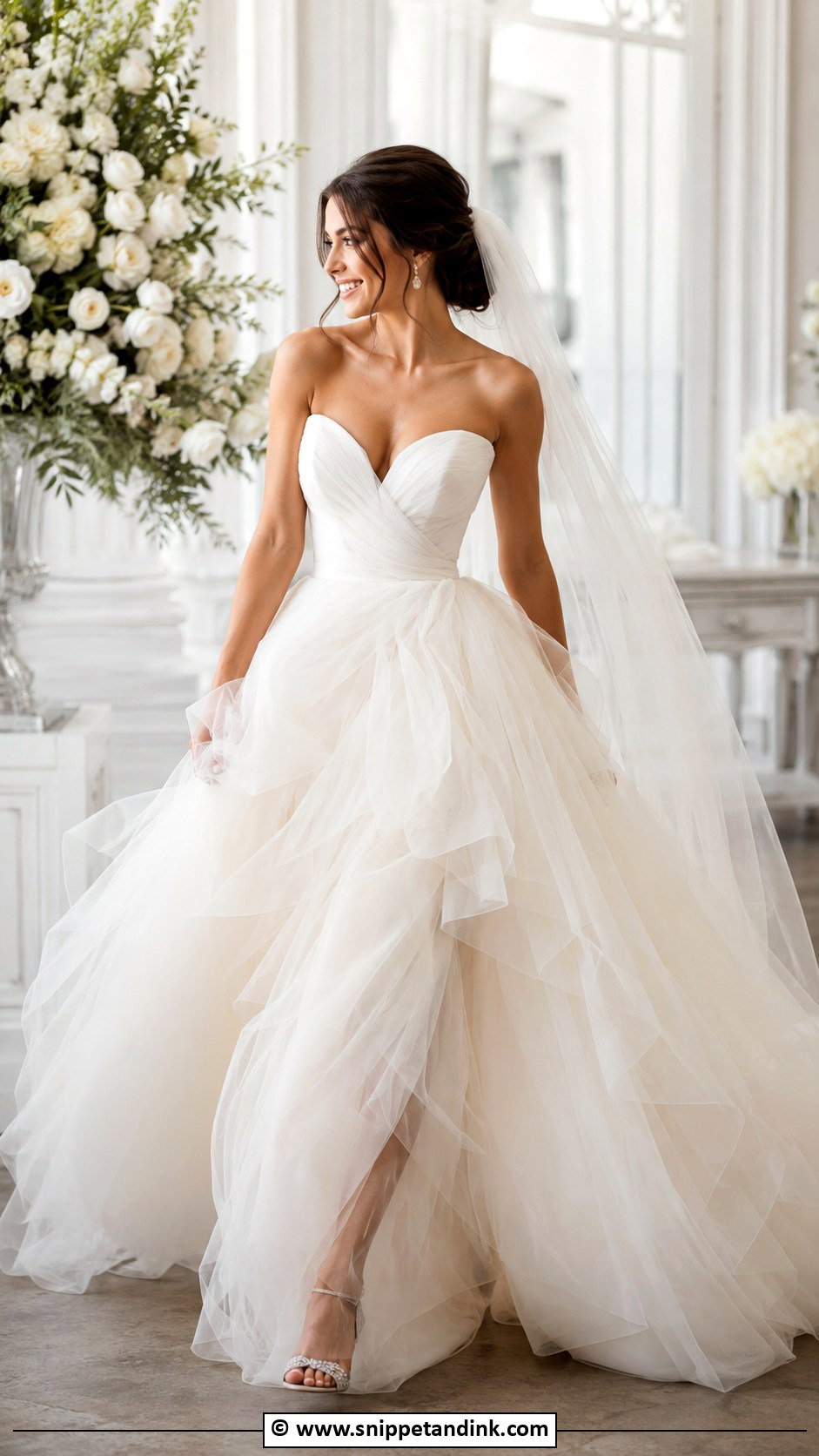
Tulle gives volume that floats rather than weighs. Layered tulle moves well; a fitted bodice balances it, and the waist should stay comfortable seated. Tulle snags easily on bracelet clasps, the wired stems of a bouquet and the hook side of any hook-and-loop fastening, so keep jewelry smooth and ask your florist to wrap the stems fully. Delicate heels, drop earrings and a soft veil finish it, with minimal accessories if the skirt has sparkle.
23. Bubble Hem Wedding Dress
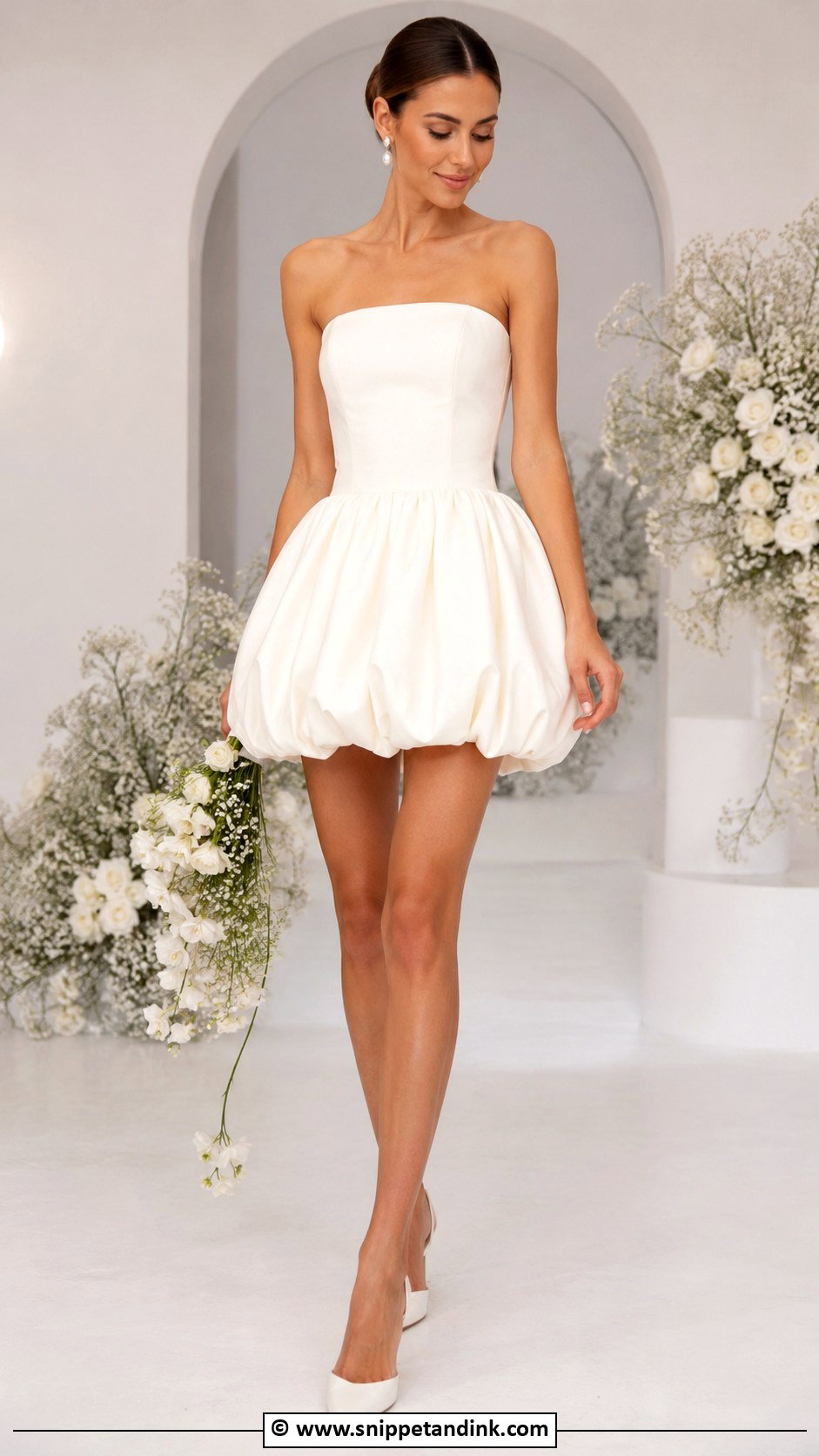
The hem of a bubble dress is gathered and tucked under to make a rounded, puffed edge. Short versions feel fun; longer ones feel editorial. Sit down in it before buying. Bubble hems push up and outward when you sit, which can look odd at a dinner table, and they add volume right at the hip or knee. Clean heels, simple earrings and sleek hair keep the shape in charge. It works best as a reception look or at a city wedding where a classic gown would feel expected.
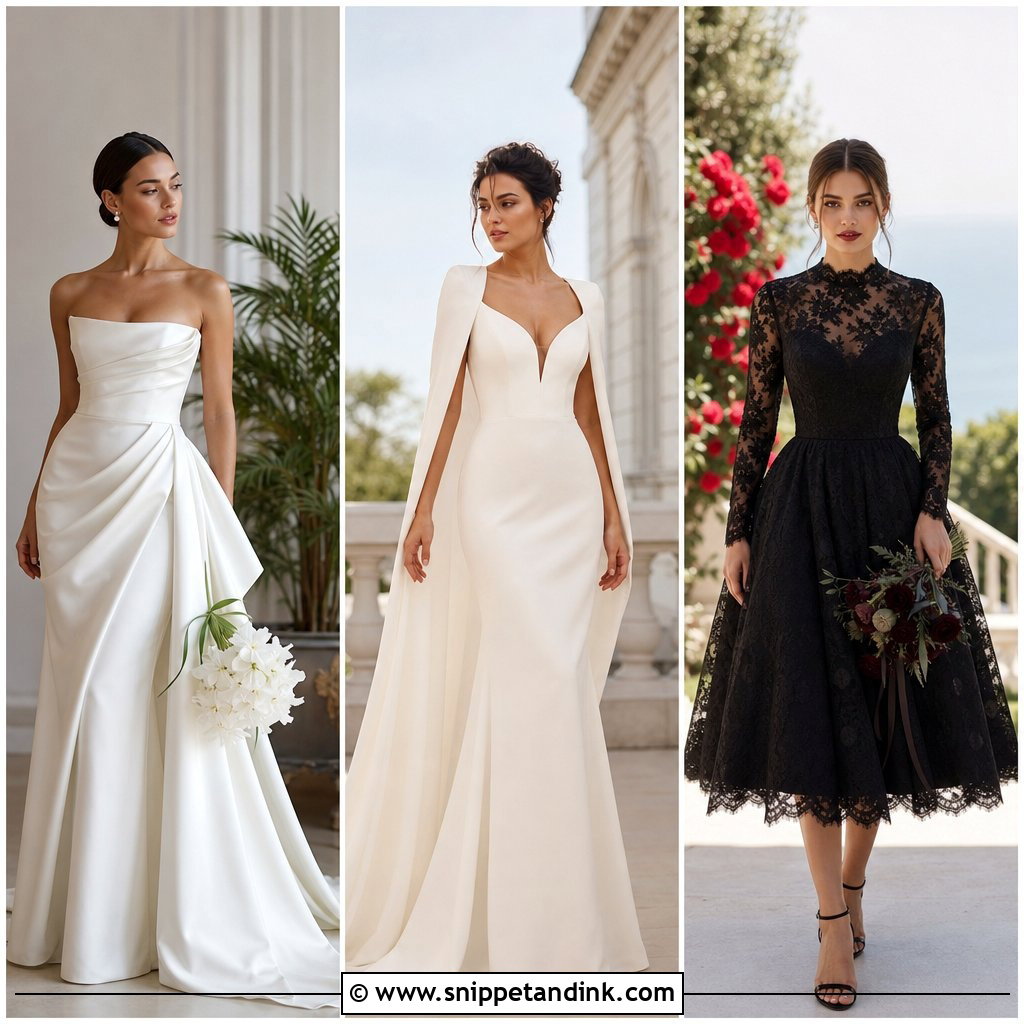
24. Cape Wedding Dress
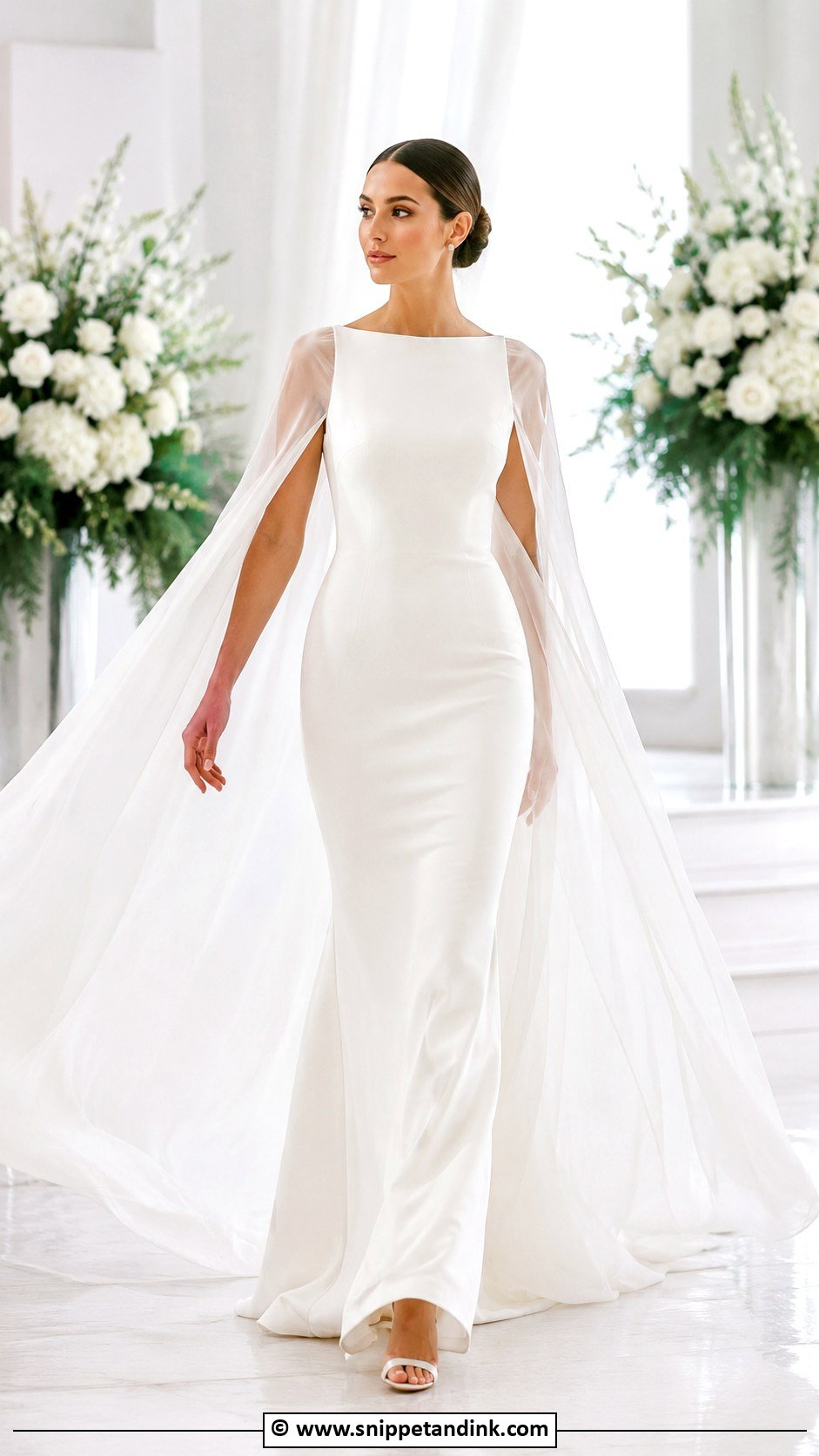
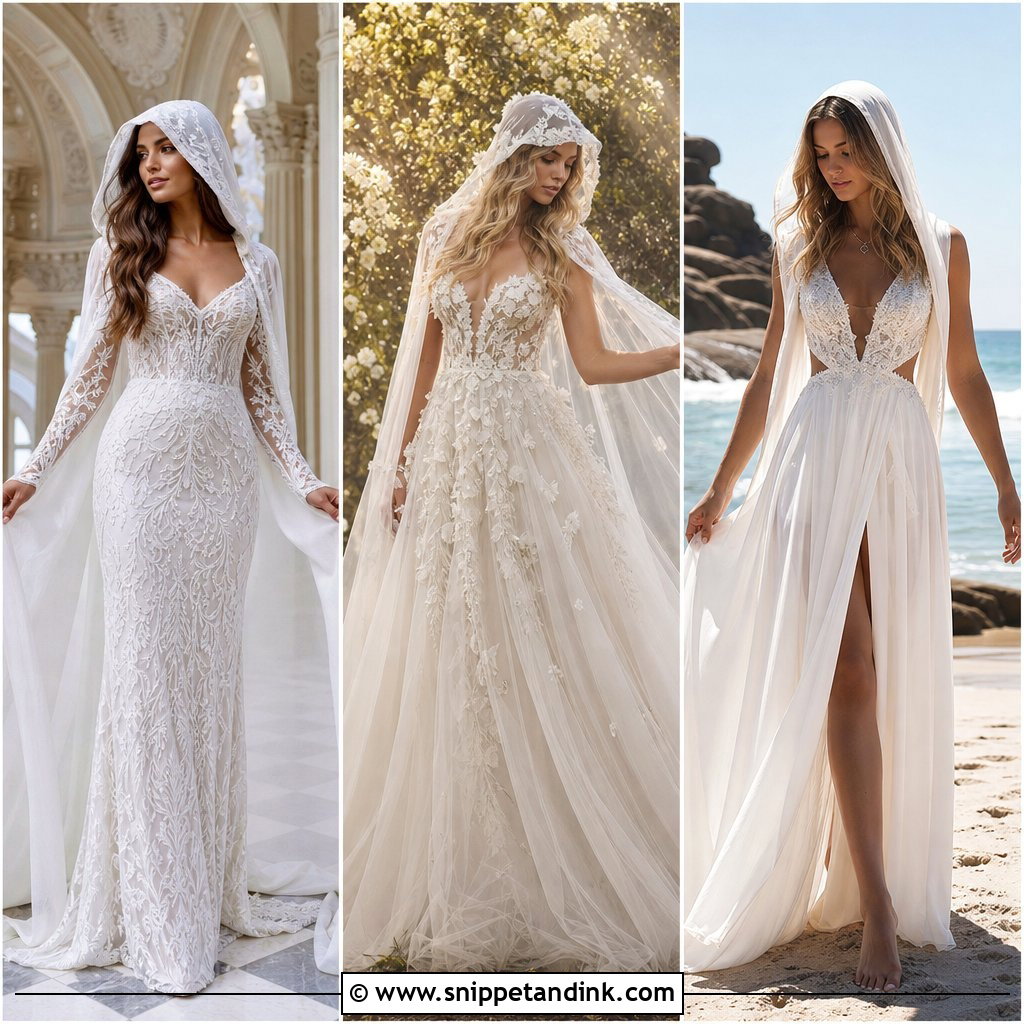
Drama without a veil is what a cape gives you. Sheer, lace, pearl-detailed or smooth satin capes all exist, and a simple column under a long cape feels commanding while a sheer cape over lace feels romantic. It also covers the shoulders for brides who dislike sleeves. The cape should attach securely and move freely, so turn and raise your arms in the fitting room to make sure it does not pull at the neckline. Heels, minimal jewelry and a clean hairstyle complete it.
25. Vintage Inspired Wedding Dress
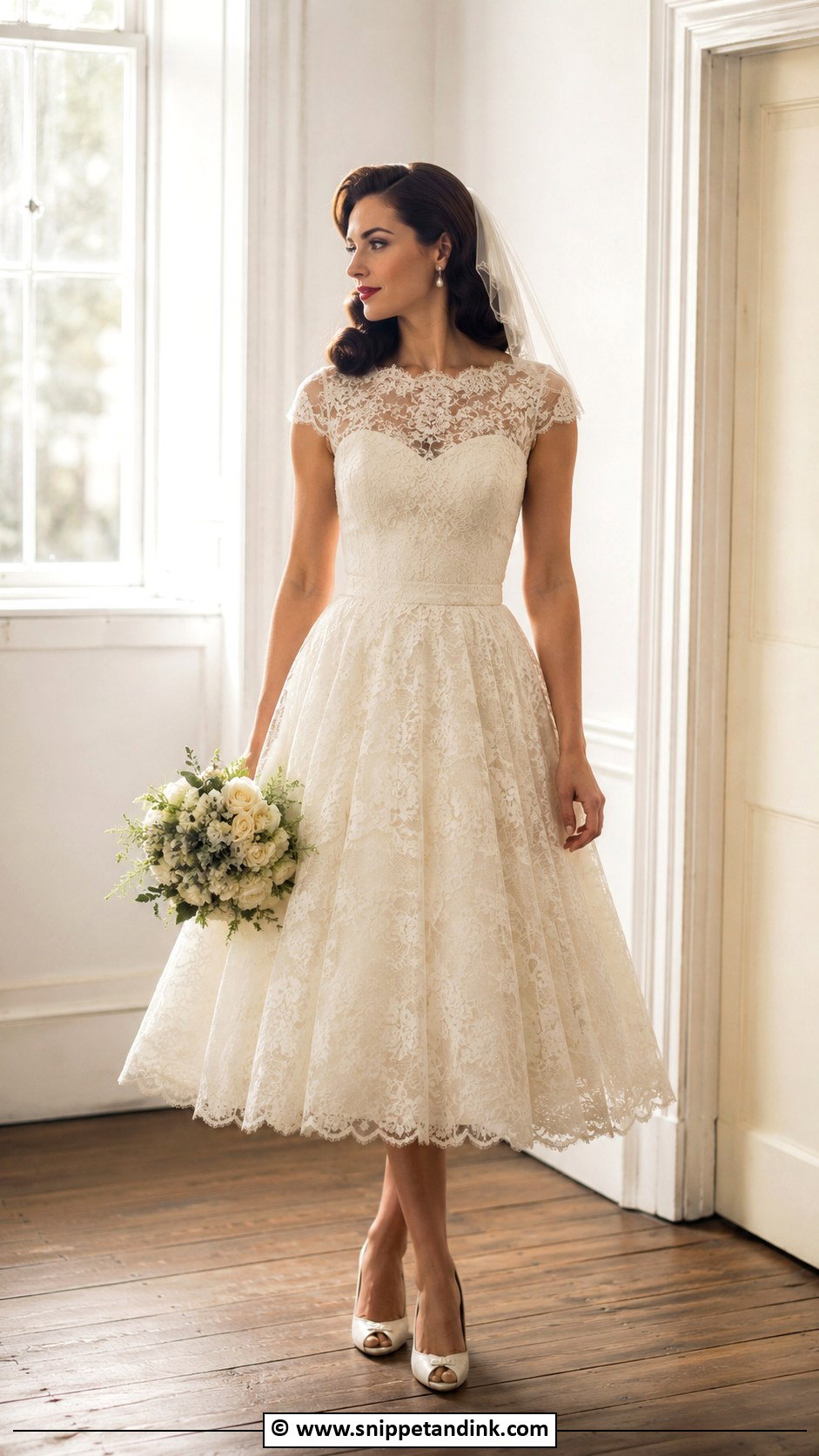
Pick one era. Lace, beading, a high neck, puff sleeves, a tea-length hem or soft satin can all signal vintage, but mixing decades turns it into fancy dress. A 1950s tea length feels sweet and polished; a 1930s bias satin gown feels fluid. Classic heels, pearl earrings and a veil that supports the period without overdoing it. If the dress is genuinely old rather than inspired, check the underarm seams and fabric strength closely, as decades-old silk can split under strain.
Will It Still Look Like You When the Photos Come Back?
An unusual dress can feel thrilling in a mirror and confusing in photographs, because the camera flattens texture and shifts color. Before committing, I ask brides to do a quick camera test in the shop.
- Have a friend photograph you from across the room, not close up. Guests and most ceremony photos see you from that distance.
- Take one shot with flash and one in daylight by a window. Pale blue, lavender and blush can all shift noticeably between the two.
- Photograph the back and the side. Bows, capes and bubble hems often look strongest from angles you never see in the mirror.
- Look at the photos the next day. If you still love them, the dress is doing its job.
Expect some relatives to need a moment with anything non-traditional. Showing them a styled photo, with the veil and shoes, usually lands better than describing the dress in words.
One Unusual Idea, Everything Else Quiet
The most traditional or most expensive gown is not automatically the right one. It is the one that fits your body, suits your venue and lets you feel the way you want all day, whether that is a pearl gown, a satin slip, a jumpsuit, a colored dress or a convertible design. Plan the shoes, veil, jewelry and hair around the one idea you love, and let everything else stay quiet.
You'll Like These Ideas:









Leave a Reply