
Most brides who come to me for something unusual have already tried on the strapless A-line everyone recommended and felt like they were wearing someone else’s dress. The gowns below are for nontraditional brides, and I’ve styled each one as a full look with shoes, jewelry and a veil or an alternative to one. Some lean on structure, some on texture or color, a few on a hemline you rarely see in a bridal salon. Unusual details also bring practical questions about fit, weight and how a fabric behaves after hours of wear, so I’ve noted what I watch for at fittings with each style.
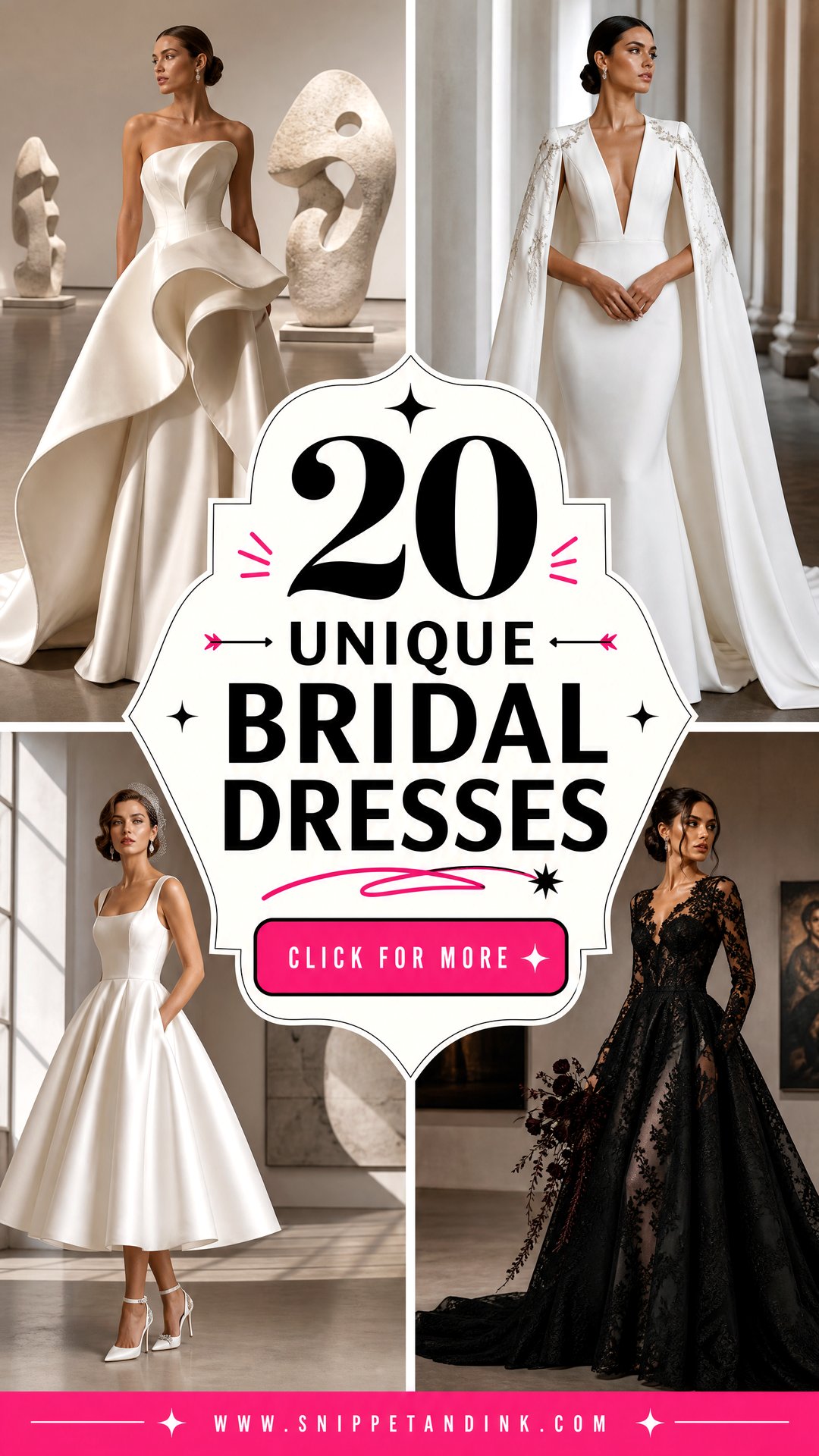
Ordering a Dress You May Never See in Your Own Size
Unusual gowns are rarely stocked in many sizes. Most salons carry one sample of each design, usually in a single sample size, and you’re expected to imagine it on you while it’s clipped at the back. That’s fine for a simple A-line. For a sculptural bodice, a bubble hem or a cape, the proportions shift a lot between sizes, so I ask a few extra questions before a bride commits.
- Ask how long the gown takes to arrive once ordered. Made-to-order bridal commonly runs several months, and handwork like embroidery or pearl setting can add more, so start shopping roughly nine to twelve months out if you can.
- Ask whether the designer offers custom length or a shallower neckline at the order stage. Changing it in the workroom is cheaper and cleaner than altering a finished dress.
- Find out what the alteration plan looks like. Most dresses need two or three fittings, with the first about two months before the wedding, but structured or heavily trimmed gowns can need more.
- Request a fabric swatch to take home. Seeing it under your own lighting answers more questions than the salon mirror will.
If the shop can’t tell you how a style changes in your size, look for photos of real brides wearing it rather than catalog images. The gap between the two is often larger for statement designs than for classic ones.
1. Basque Waist Bridal Dress
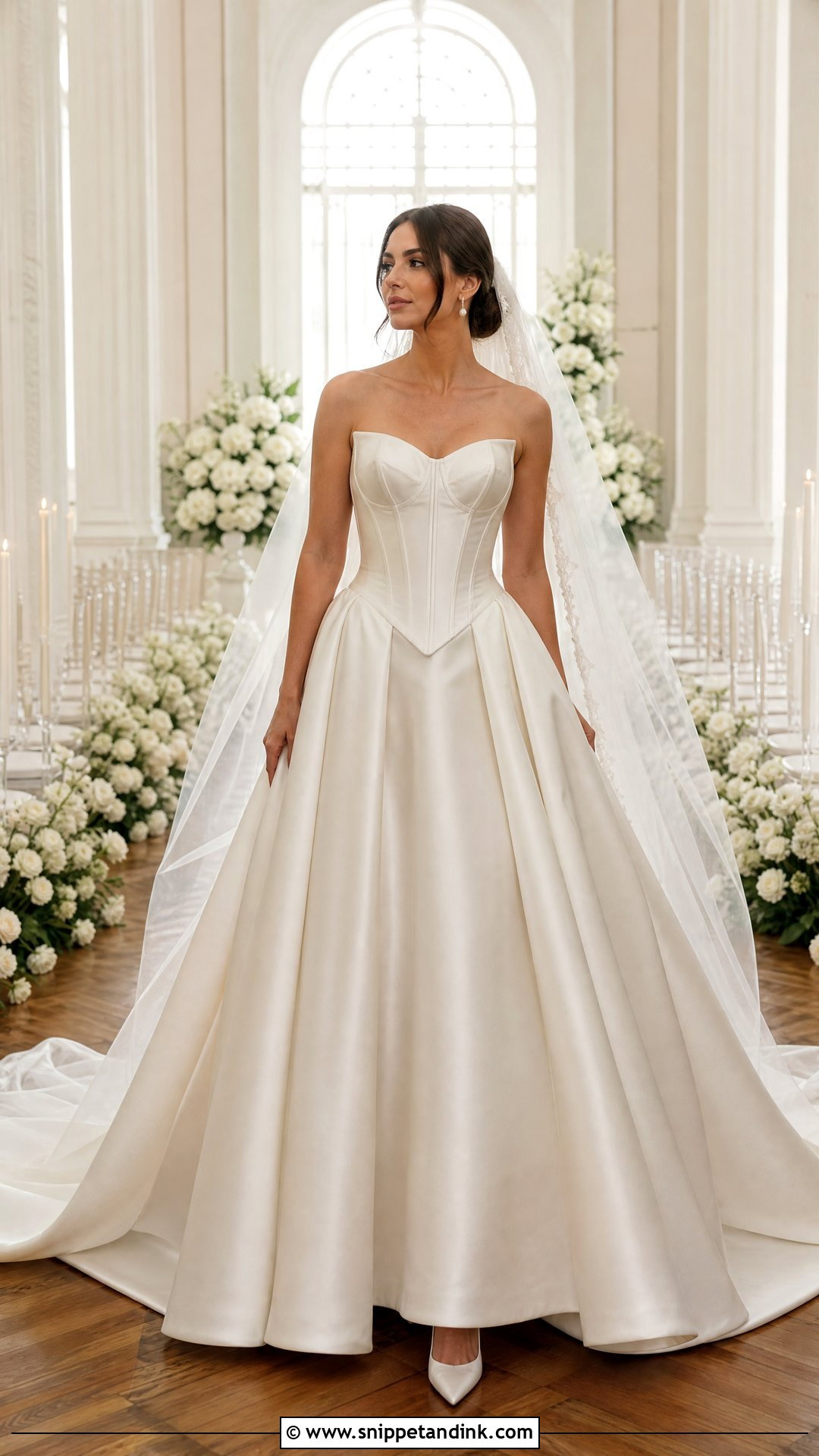
The point of a basque waist sits below the natural waist and drops toward the hips, which is what makes the torso read longer. Ivory satin shows that seam line cleanly; embroidery softens it. A full skirt balances the fitted top, and I like pearl drops, pointed pumps and a long veil set beneath a smooth bun to finish it. On a fuller bust I ask for internal corsetry so the bodice does the lifting rather than the straps. Petite brides should request a shallower point, because a deep V can swallow a short torso. Skip the necklace and let the neckline and sculpted bodice carry the outfit.
2. Floral Appliqué Bridal Dress
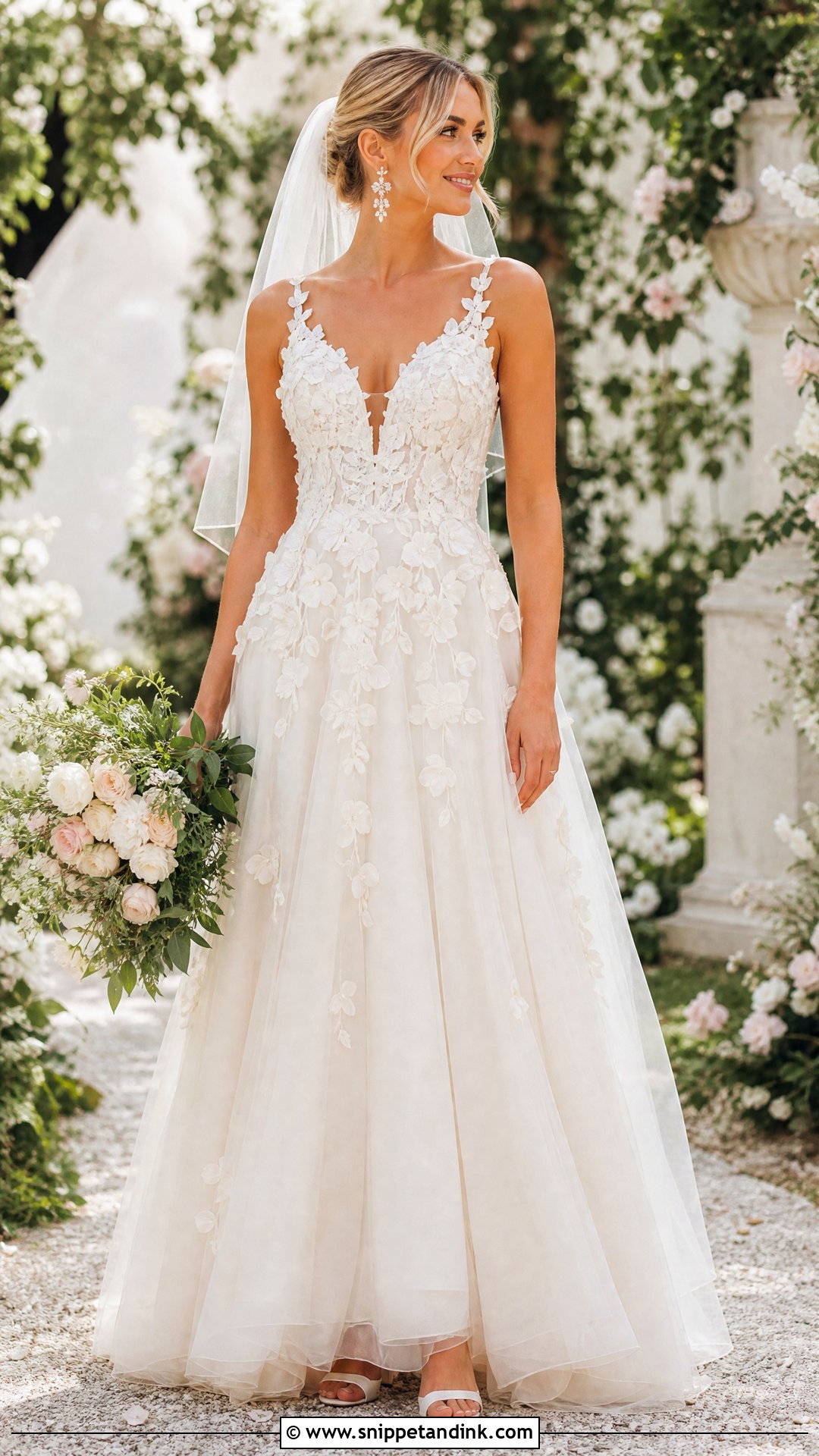
Three-dimensional flowers change an ordinary A-line more than almost any other trim. The versions I like best scatter organza petals or embroidered vines lightly at the bodice and let them gather densely near the hem. Garden and spring weddings suit this most naturally, though sparse appliqués work in any season. Block-heel satin sandals, small crystal studs and a fingertip veil with a plain edge keep the accessories out of the way. One warning from fittings: raised petals catch on beaded veils and lace gloves, so keep anything touching the dress smooth. If the flowers carry color, repeat a single shade in the bouquet rather than all of them.
3. Sculptural Satin Bridal Dress
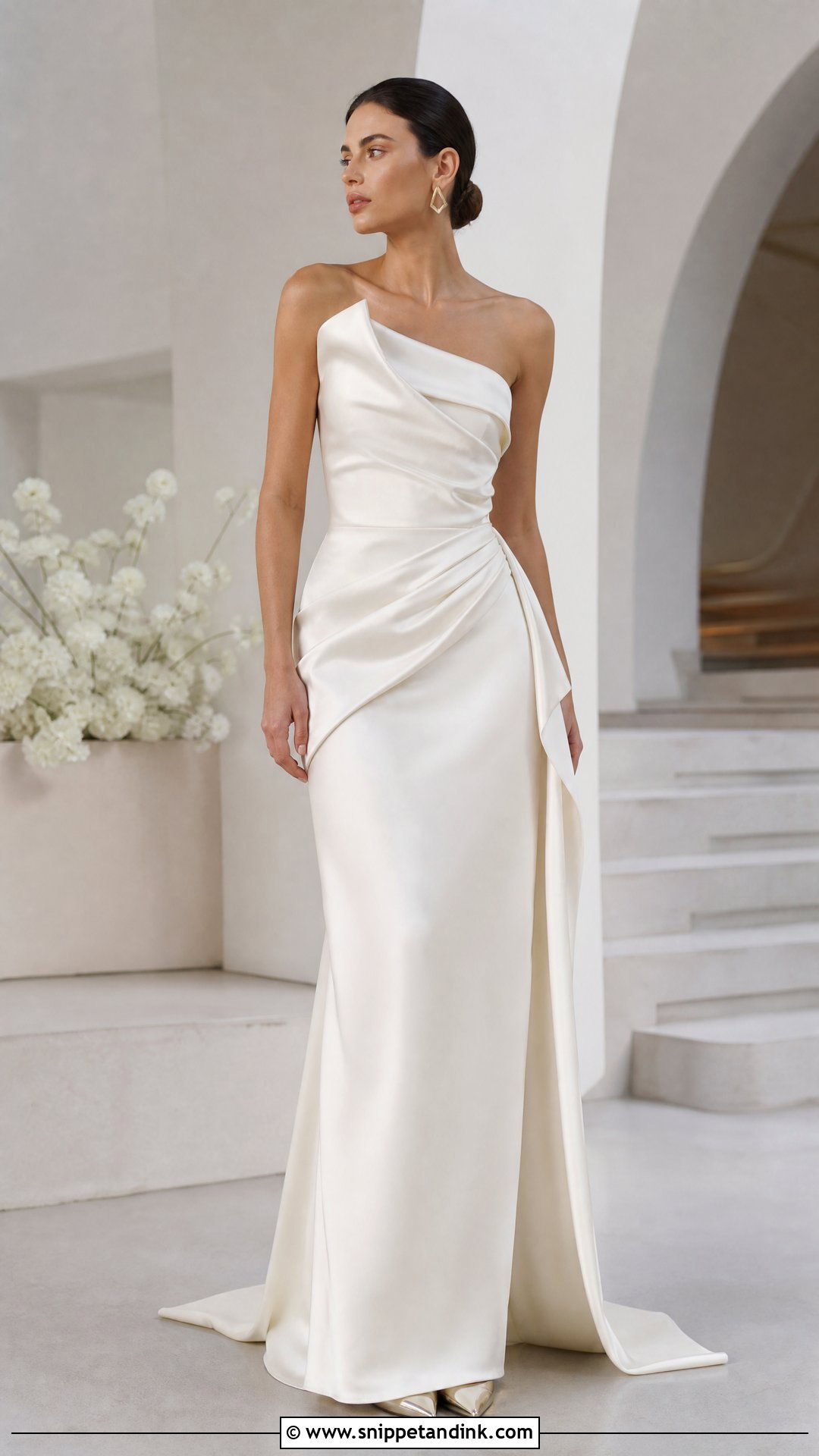
Unembellished satin hides nothing. Every seam, every pucker at a dart, every place the fabric pulls across the hip shows under ceremony light, so this is the style where tailoring matters most. When the fold or asymmetric neckline is cut well, though, a plain gown looks deliberate rather than understated. Check that the bodice has enough boning or interfacing to hold the fold after you’ve sat through dinner. Metallic pointed heels, geometric earrings and a compact bouquet suit the clean lines, along with a sleek low bun or polished short cut. A plain cathedral veil for the ceremony, removed before the reception, gives you two moods with one dress.
4. High Neck Lace Bridal Dress
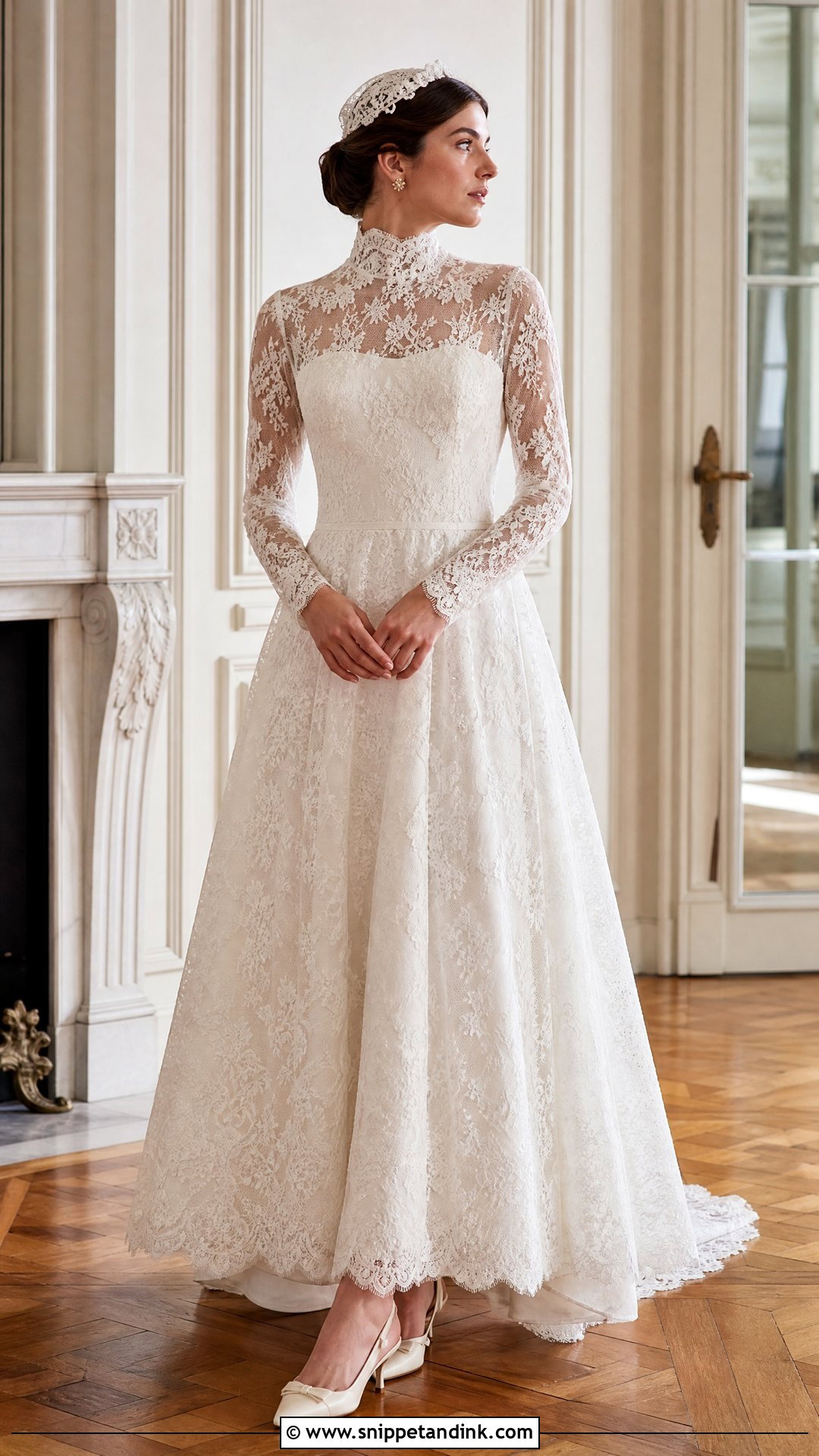
A high lace collar with long sleeves covers almost everything yet still feels dramatic because the lace does the talking. Botanical lace reads romantic, geometric lace modern. A lined bodice with sheer sleeves keeps the coverage from feeling heavy. I pair it with ivory slingbacks, antique-style studs and a low chignon held with simple pins, and I often swap the veil for a small lace-trimmed headpiece so the neck stays visible. The collar is what I test hardest: sit down, turn your head fully both ways and look down at your bouquet. A stiff or heavily beaded edge can rub the jaw raw by the speeches.
5. Bridal Dress With Cape Sleeves
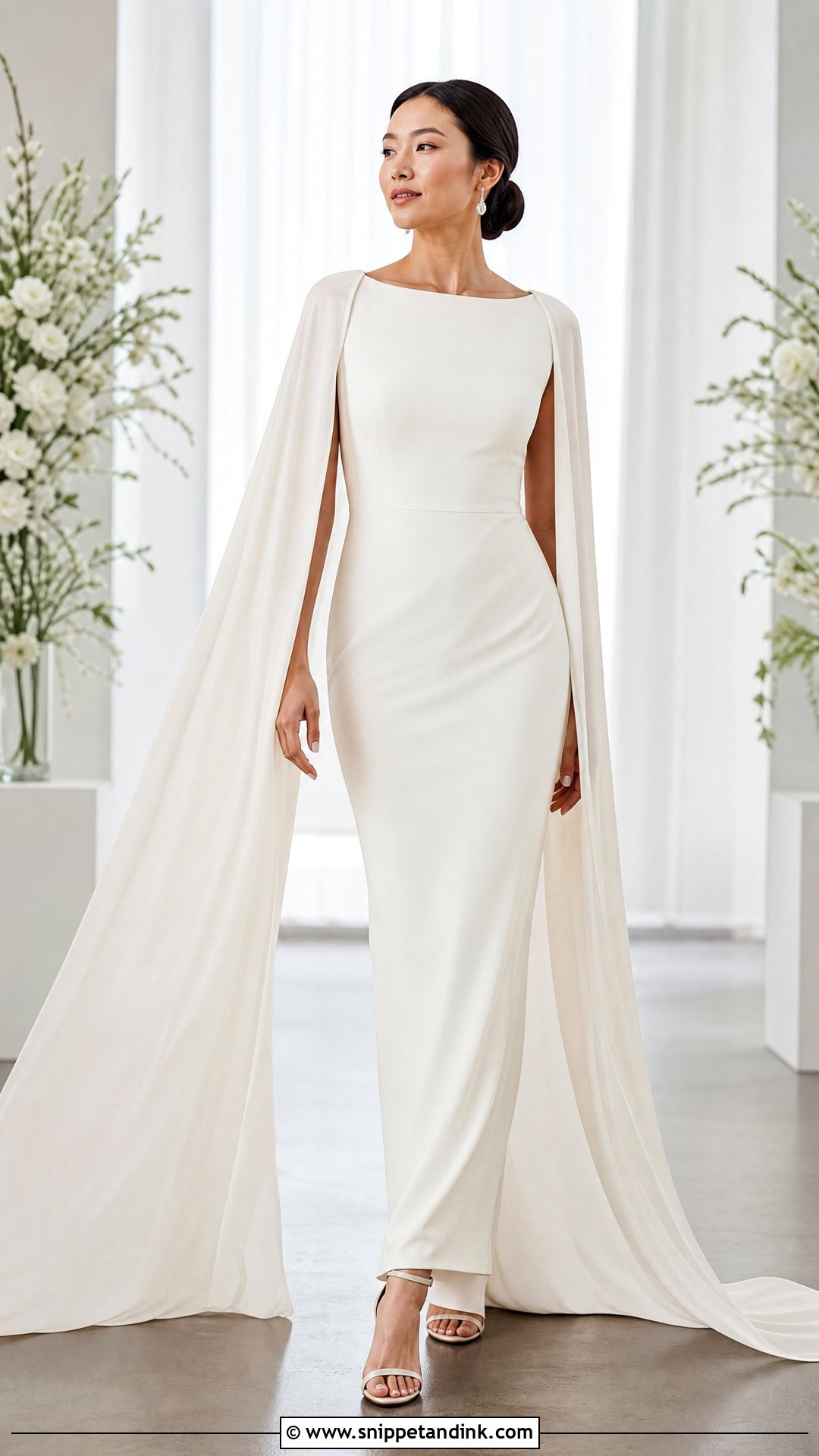
Cape sleeves give you the movement of a veil without anything pinned into your hair. Chiffon or soft crepe panels falling from the shoulders frame a column gown, and the bodice should stay simple so the sleeves read as the feature. I keep jewelry small and close to the body here, slim ankle-strap heels, a fine bracelet and studs, because hoops and chandeliers snag the chiffon. Loose hair also tangles with the panels, so a ponytail or low bun works better. At the fitting, raise your arms as if hugging someone and then hold your bouquet at waist height. Some capes pull the shoulder seam forward when you do, and that’s fixable only before the hem is finished.
6. Short Bubble Hem Bridal Dress
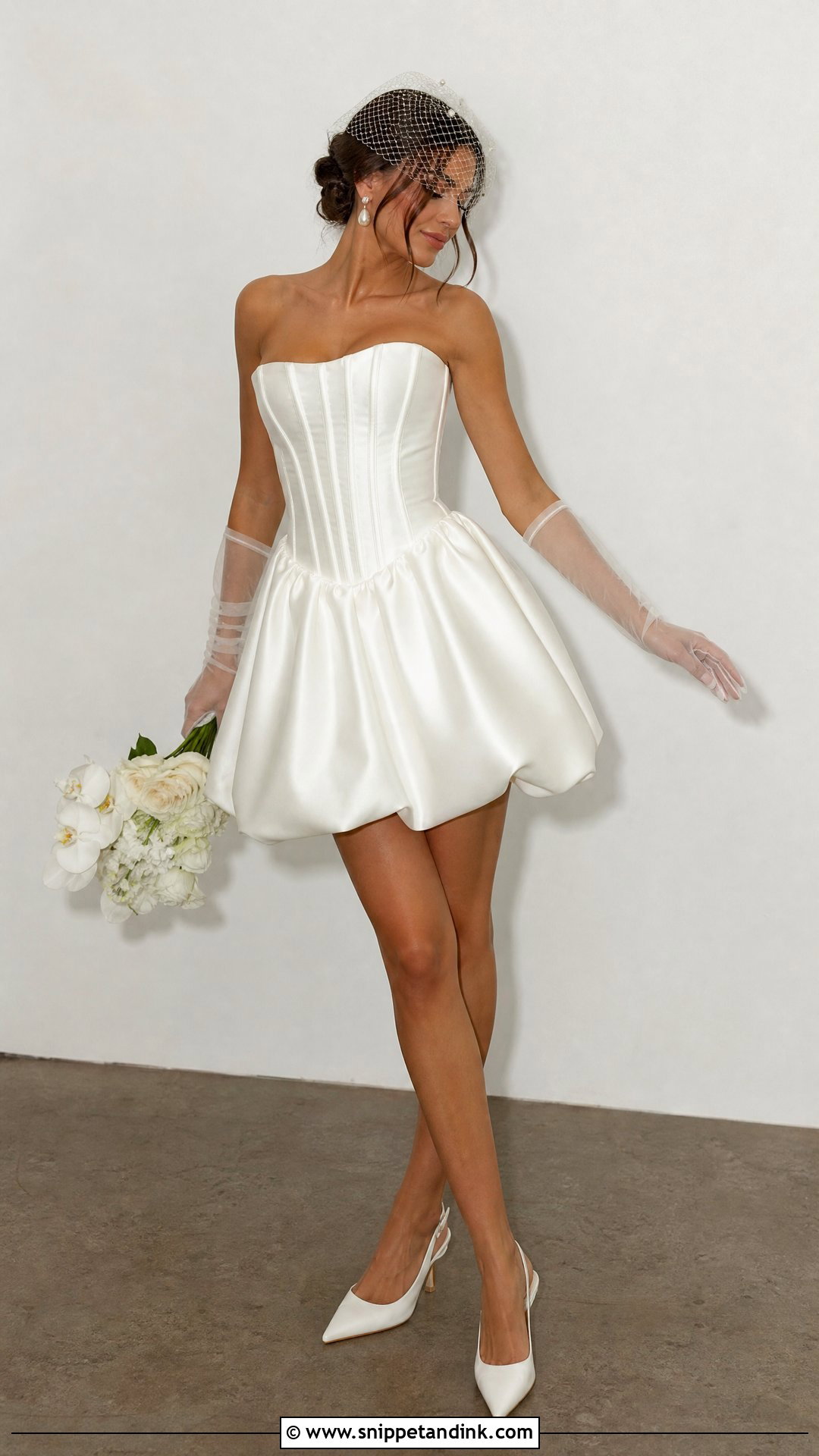
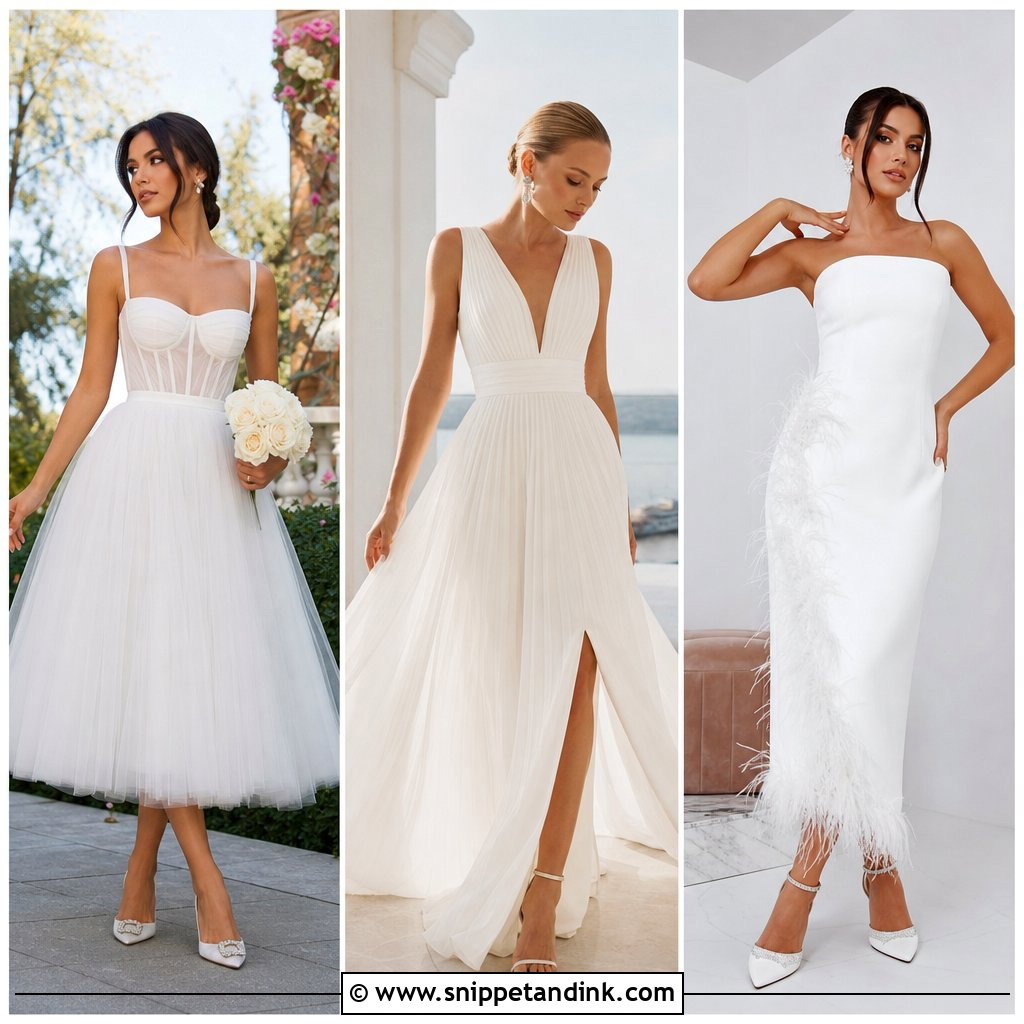
A short bubble hem bridal dress depends entirely on its fabric. Mikado and taffeta hold the rounded hem; anything softer collapses into a limp gather within an hour. A corseted or fitted bodice gives the waist definition against that volume. Because the shoes are fully on show, choose pointed slingbacks or a shoe you’d happily be photographed in close up, then add sheer gloves and pearl or crystal studs. A birdcage veil or a simple bow headband suits the short length. Sit in it before the hem is set: a bubble skirt rides up further than a straight one, and it needs a little extra length to stay decent on a chair.
7. Tea Length Bridal Dress
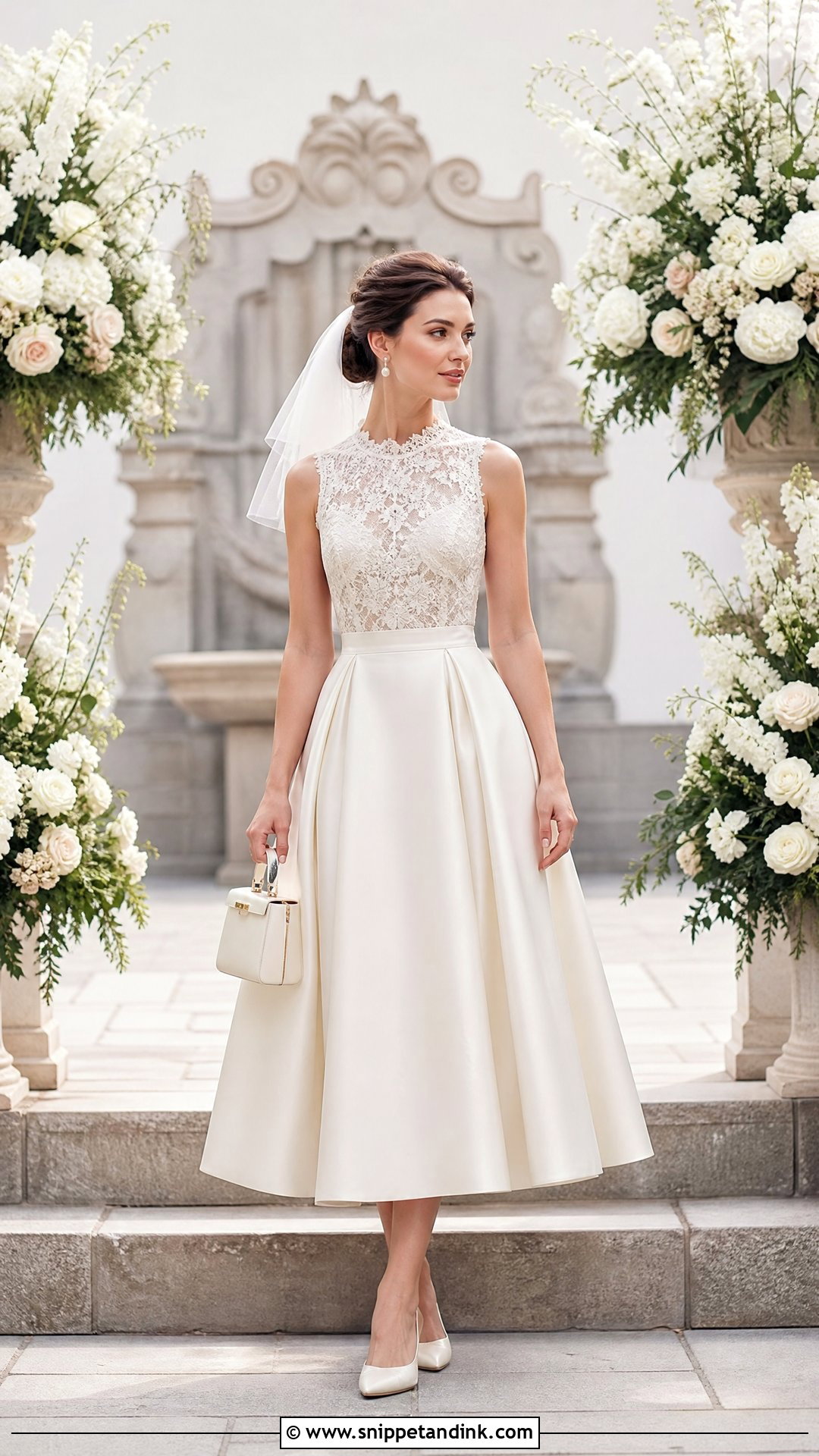
Tea length usually ends between lower calf and ankle, which makes it easy to walk and dance in and puts your shoes in every full-length frame. I like a fitted lace bodice over a flared satin skirt so the textures contrast. Elegant pumps, a structured mini bag and pearl earrings keep it refined; a short veil, pillbox-style piece or hair bow suits it far better than a cathedral veil, which looks oddly long against a midi hem. The detail that makes or breaks this dress is where the hem stops. Bring your actual wedding shoes to the alteration appointment, because an inch too low cuts the leg at its widest point.
8. Colorful Embroidered Bridal Dress
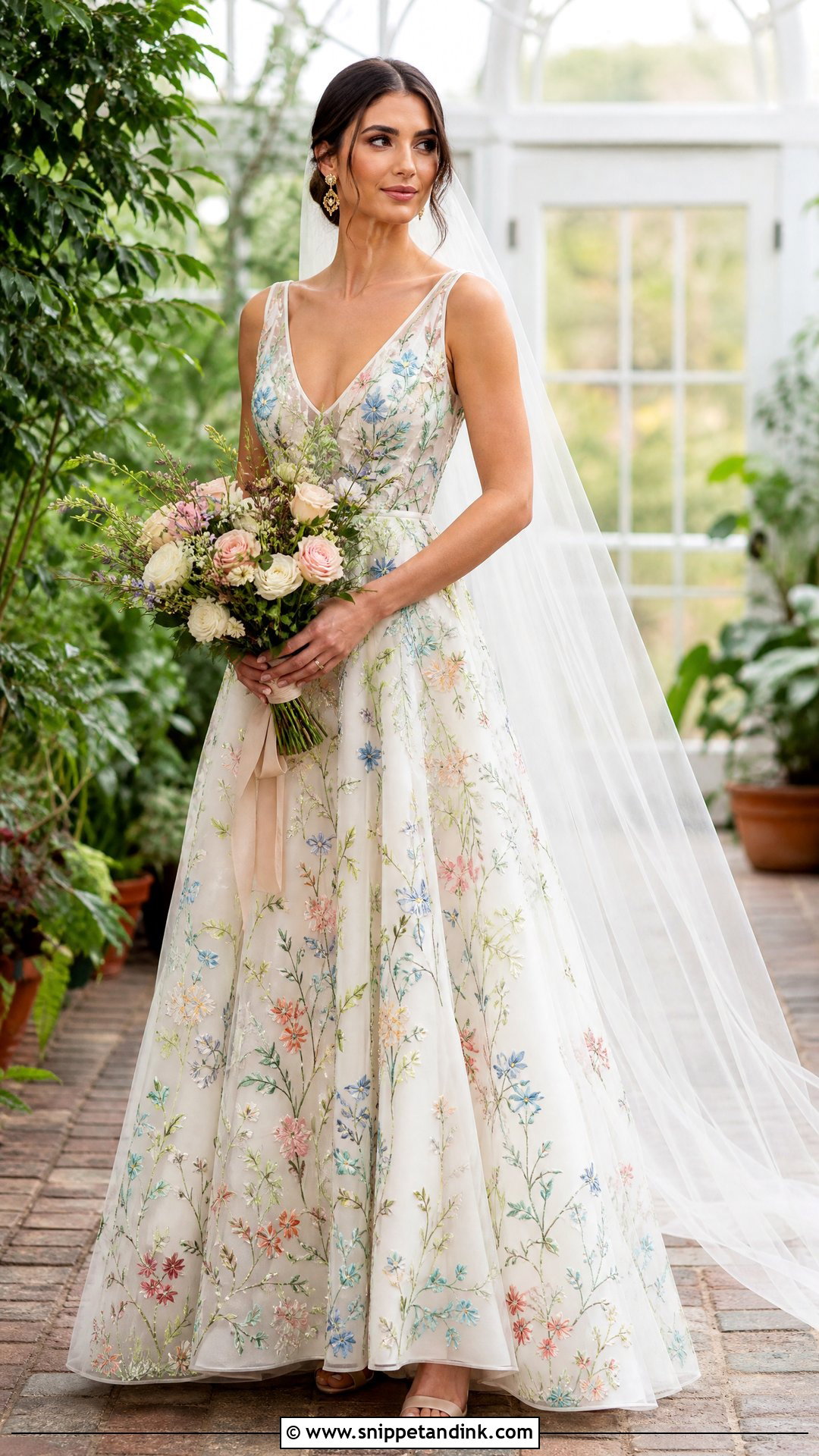
Embroidery in color is a good answer for a bride who doesn’t feel like herself in plain white. Start with an ivory, blush or pale blue base and look at what the motifs actually are; flowers, leaves or something meaningful to you. A fitted bodice and flowing A-line give the embroidery space without extra volume. Keep heels neutral, jewelry understated gold and the veil plain. Thread colors shift noticeably between window light and warm indoor bulbs, so I always ask brides to see a swatch in both before ordering. And warn your seamstress early: taking in a seam can cut through a motif, and good tailors will move the seam rather than the embroidery.
9. Black Lace Bridal Dress
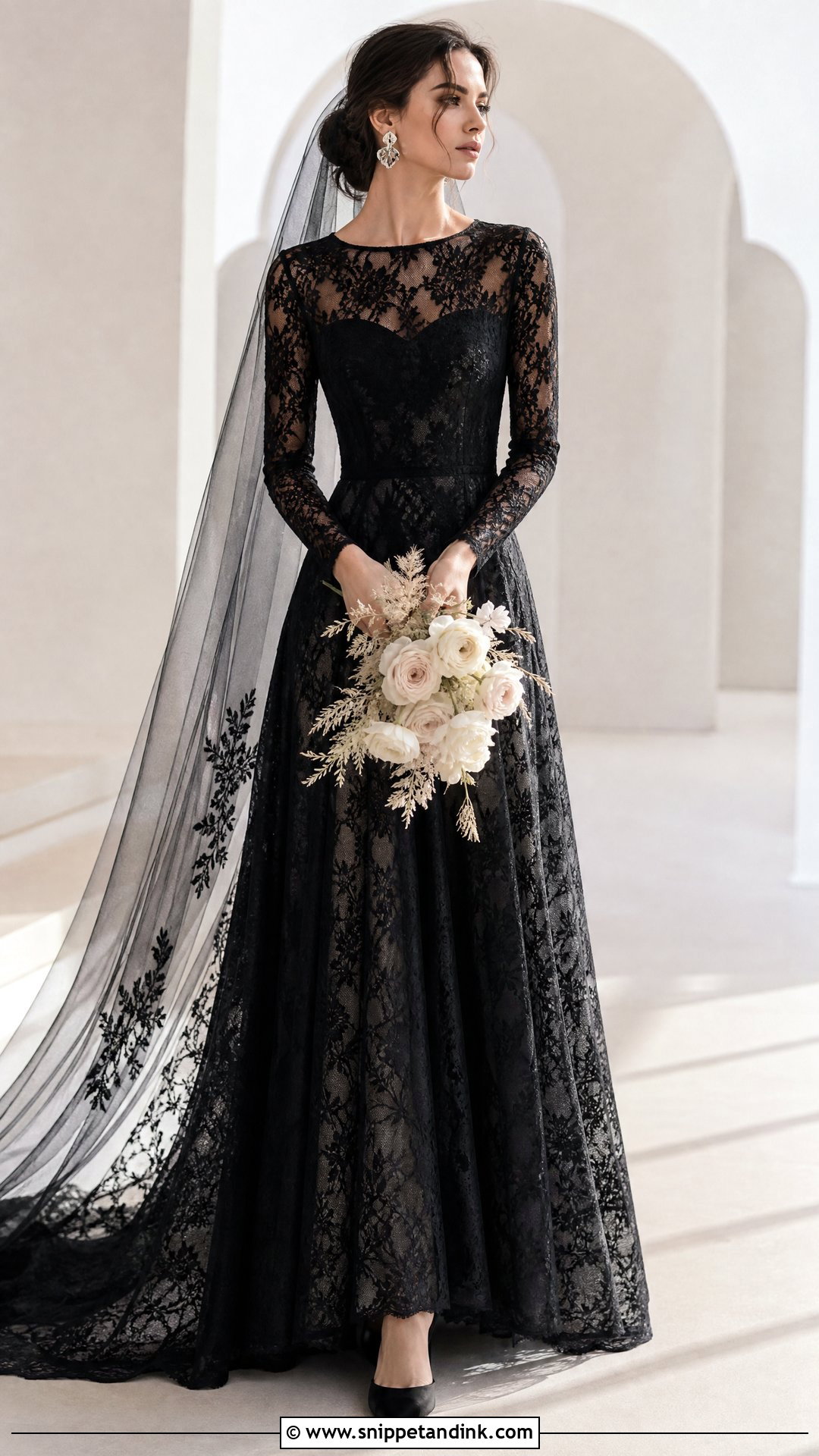
Black lace is romantic in a darker register, and it suits a bride who has never felt right in pale colors. A fully lined A-line is the more formal version; black lace over a lighter underlayer shows the pattern more clearly. Black satin heels, sculptural earrings and a sheer black veil or a minimal hair piece complete it. Choose a light or softly colored bouquet so there’s contrast at the waist. The practical issue is the camera: flat black lace can photograph as a solid shape, so pick lace with raised texture and tell your photographer you want the pattern held in the shadows. Keep the bun polished and the makeup clean, or the whole look tips toward costume.
10. Blush Tulle Bridal Dress
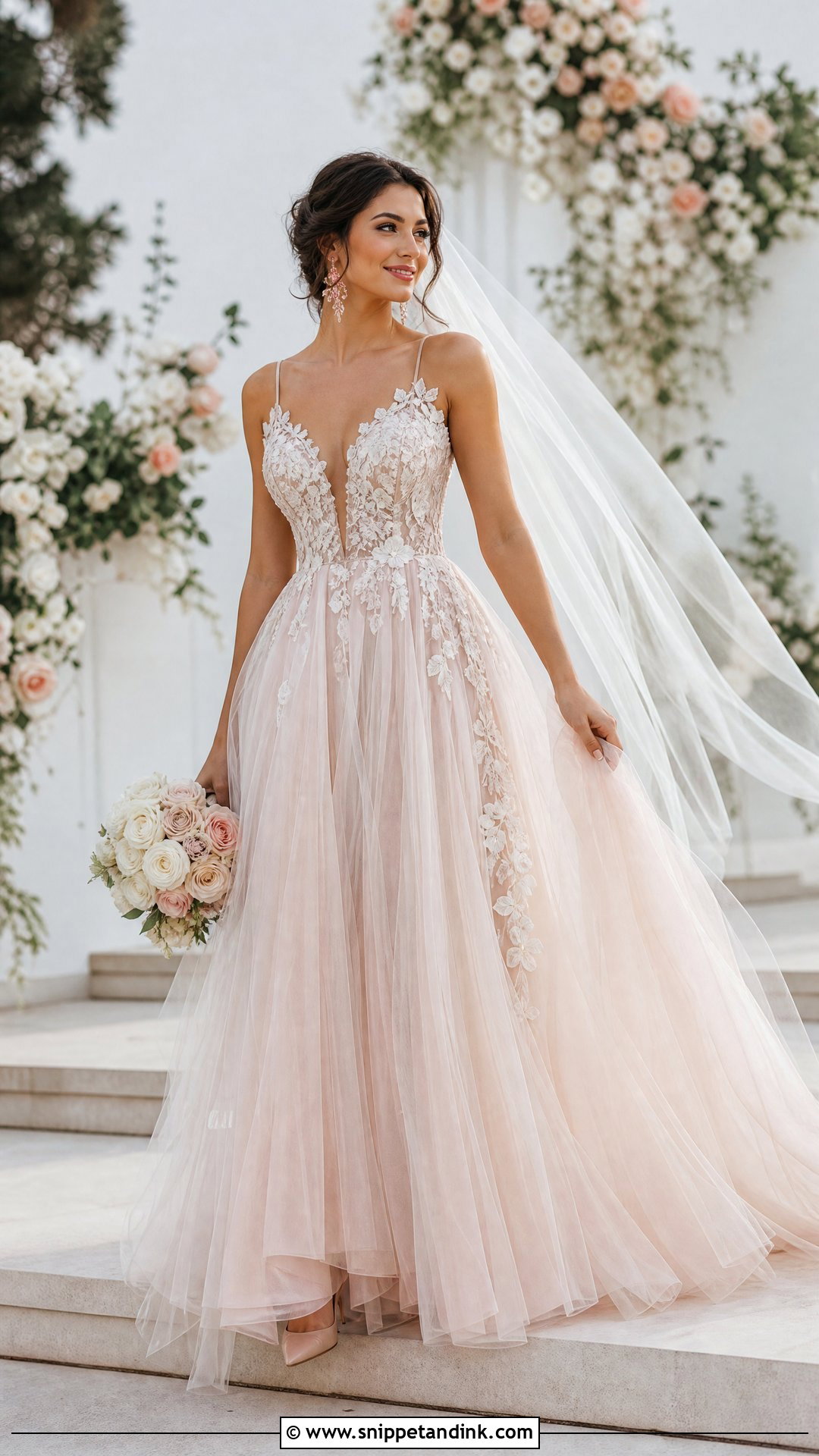
Blush tulle stays close to a traditional palette while still reading as color. A supportive bodice matters more than it seems, because a full tulle skirt pulls down on the waist all night. Look for a skirt that floats rather than stands stiff, with champagne embroidery or tonal appliqués for depth. Nude or blush heels, rose-gold earrings and a sheer ivory veil give a gentle contrast. The shade itself is where brides go wrong. Blush runs from peach to beige to mauve, and the wrong undertone makes skin look sallow, so hold several swatches against your face in daylight before you commit. A waved style or low textured bun suits the shape.
11. Pearl Embellished Bridal Dress
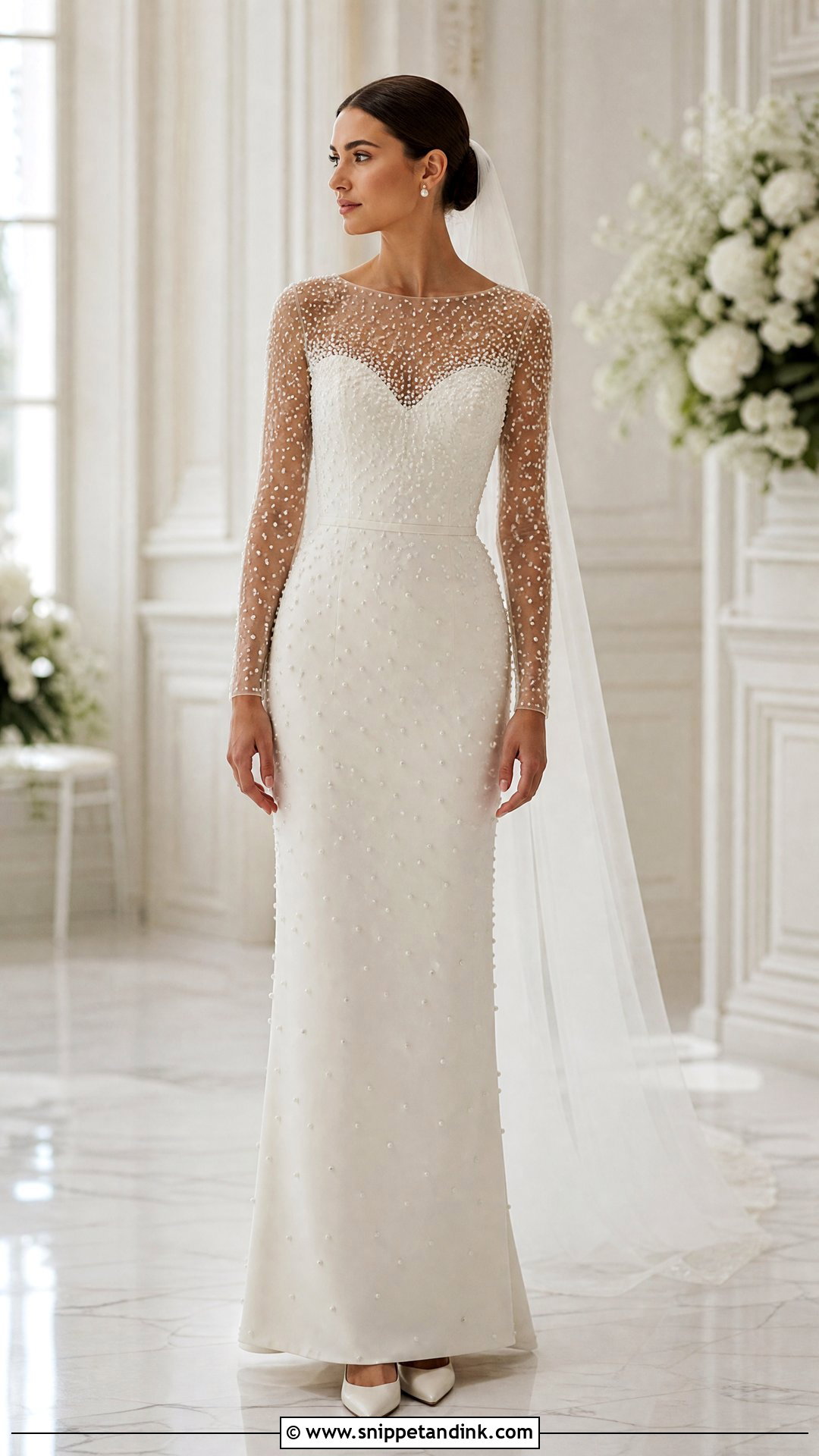
Pearls add texture and a softer shine than crystals, which suits a bride who finds sparkle too much. Scattered across the bodice, sleeves and skirt of a column or gentle A-line, they look best on a clean base; choose a lined design for coverage or pearl-dotted illusion fabric for a lighter effect. Satin pumps, tiny pearl earrings and a plain-edged veil are all the accessories it needs. Skip a busy necklace, especially if pearls already frame the neckline. Hand-sewn pearls do come loose, so check every seam area at fittings for gaps, and ask the shop for a few spares and a needle to keep in your emergency kit.
12. Bridal Dress With Detachable Overskirt
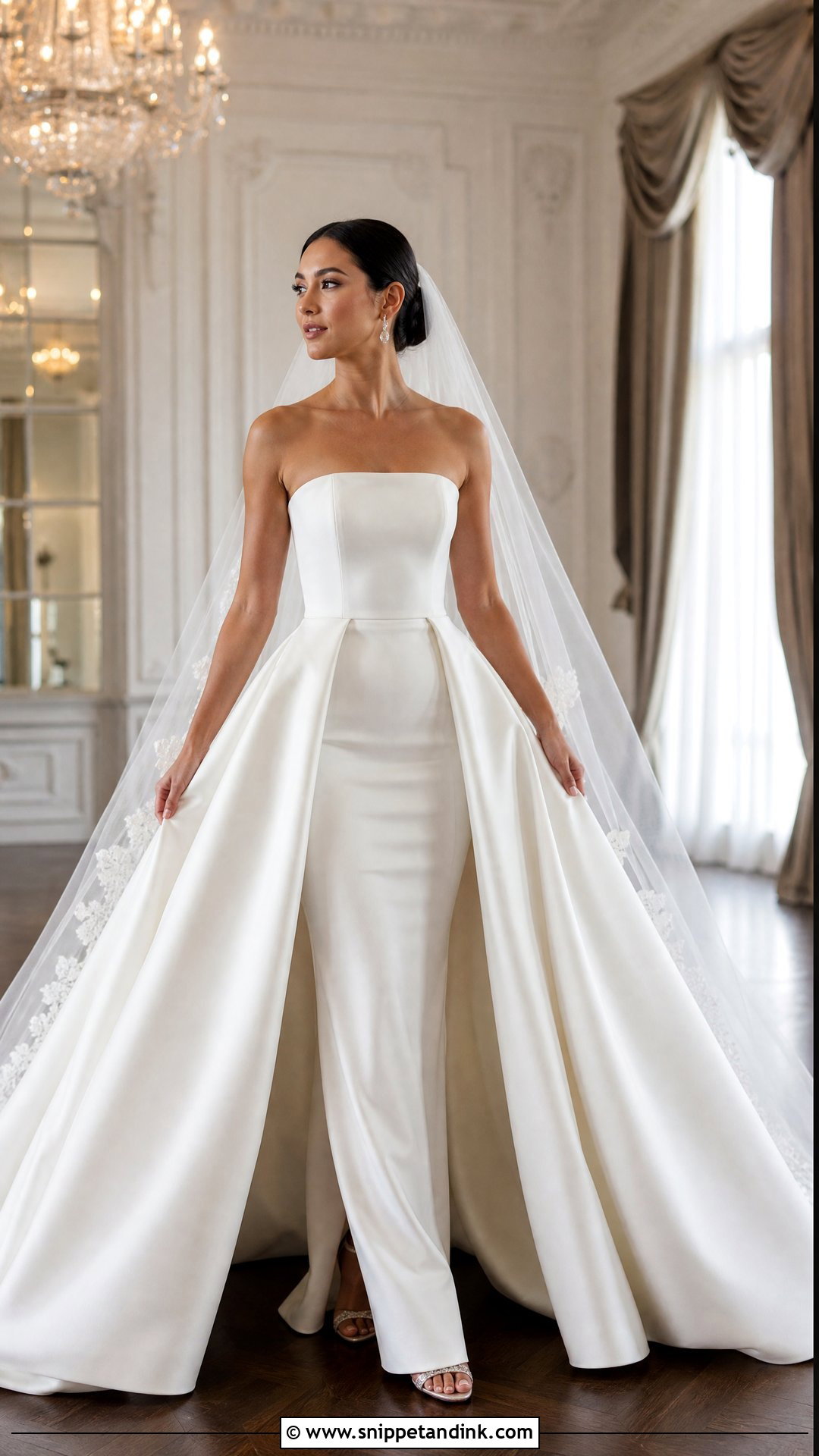
A bridal dress with a detachable overskirt gives you a full ceremony silhouette and a slimmer reception dress without a second dress budget. The base can be a column, sheath or mini, and the fabrics should match closely so the overskirt looks designed rather than added. Comfortable embellished heels, slim earrings and a veil that suits the full skirt finish the ceremony look. The base dress has to work alone, so check that the waist seam is neat and the attachment points disappear once the skirt comes off. Hooks and snaps are fiddly with nerves and nails; practise the change twice with whoever will help you on the day.
13. One Shoulder Bridal Dress
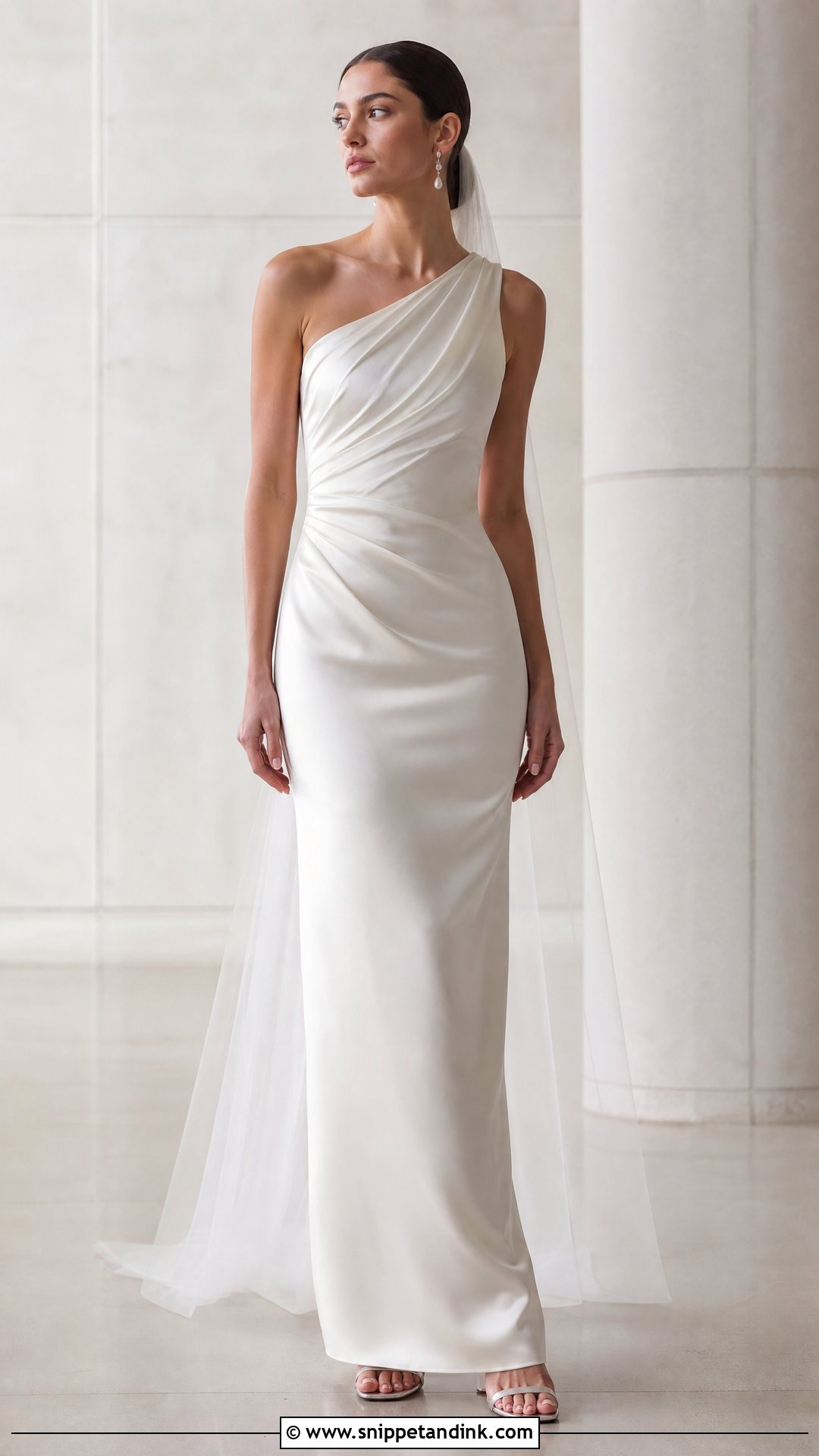
One shoulder creates a diagonal line, and everything you add should respect it. Crepe gives a smooth, modern finish while draped satin adds softness and some shine. A fitted column is sleek; a lightly flared skirt moves more. I put drop earrings on, leave the neck bare, and add a simple bracelet on the opposite wrist to balance the bare shoulder. A side-parted bun or swept-back hair keeps the shoulder visible, with a plain veil set low beneath it for the ceremony. One-shoulder bodices can creep upward on the strapless side when you lift your arms, so check the underarm carefully at fittings. Silicone grip tape or a small internal stay usually solves it.
14. Bridal Dress With Statement Bow
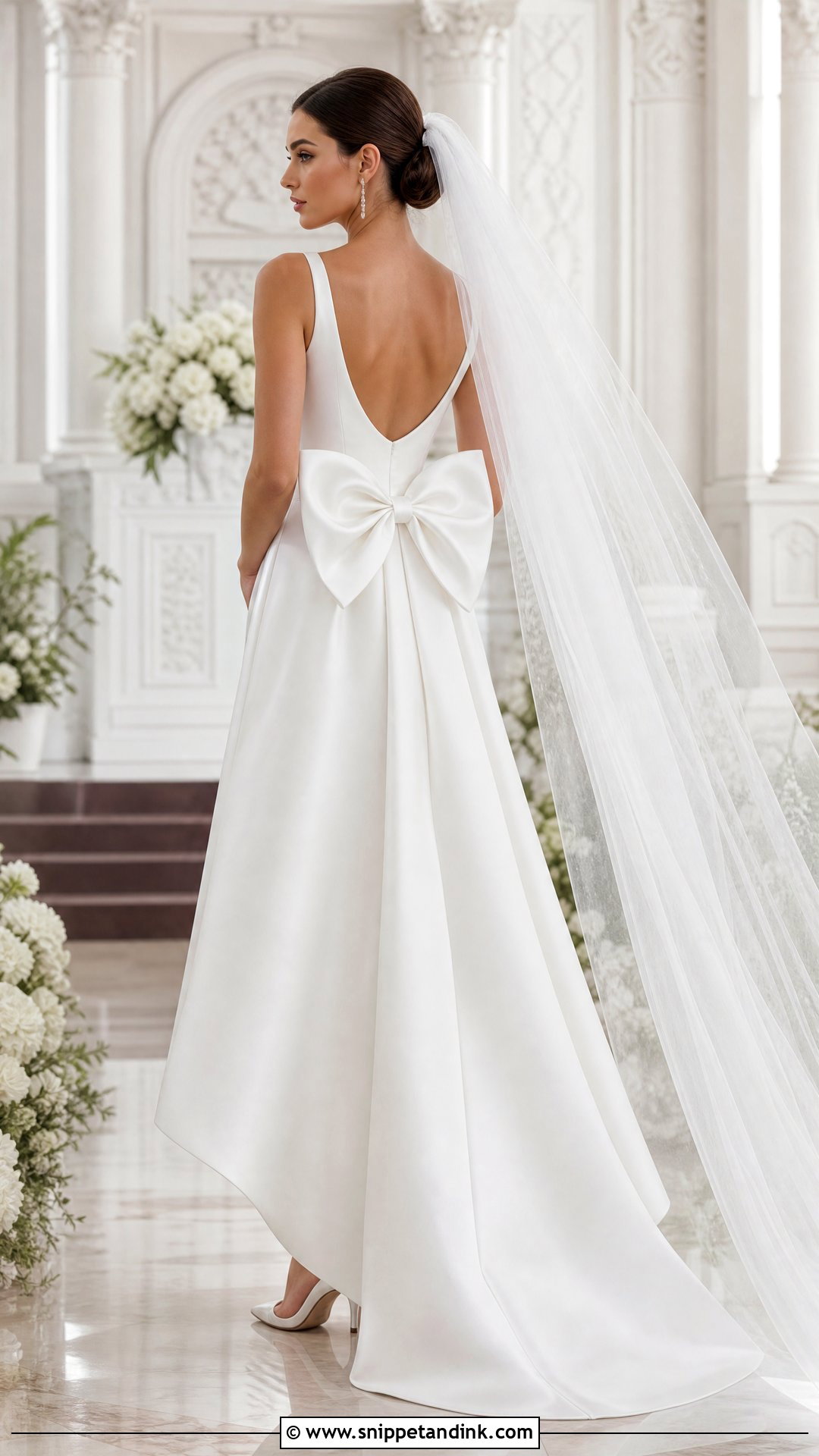
A big bow is the simplest way to make a plain satin dress unmistakable from the back of the aisle. At the back waist it’s classic, on one shoulder it’s asymmetric, near the hip it’s modern. A clean column or structured A-line gives it room. Pointed pumps, sleek earrings and a plain veil that falls past the bow without covering it keep the focus right. Bows sitting high on the back clash with full, loose hair, so a compact style is safer. Sit on it before you buy. Soft loops crush flat against a chair back, and you’ll want either stiffened interfacing inside them or a detachable bow you can remove for dinner.
15. Draped Cowl Neck Bridal Dress
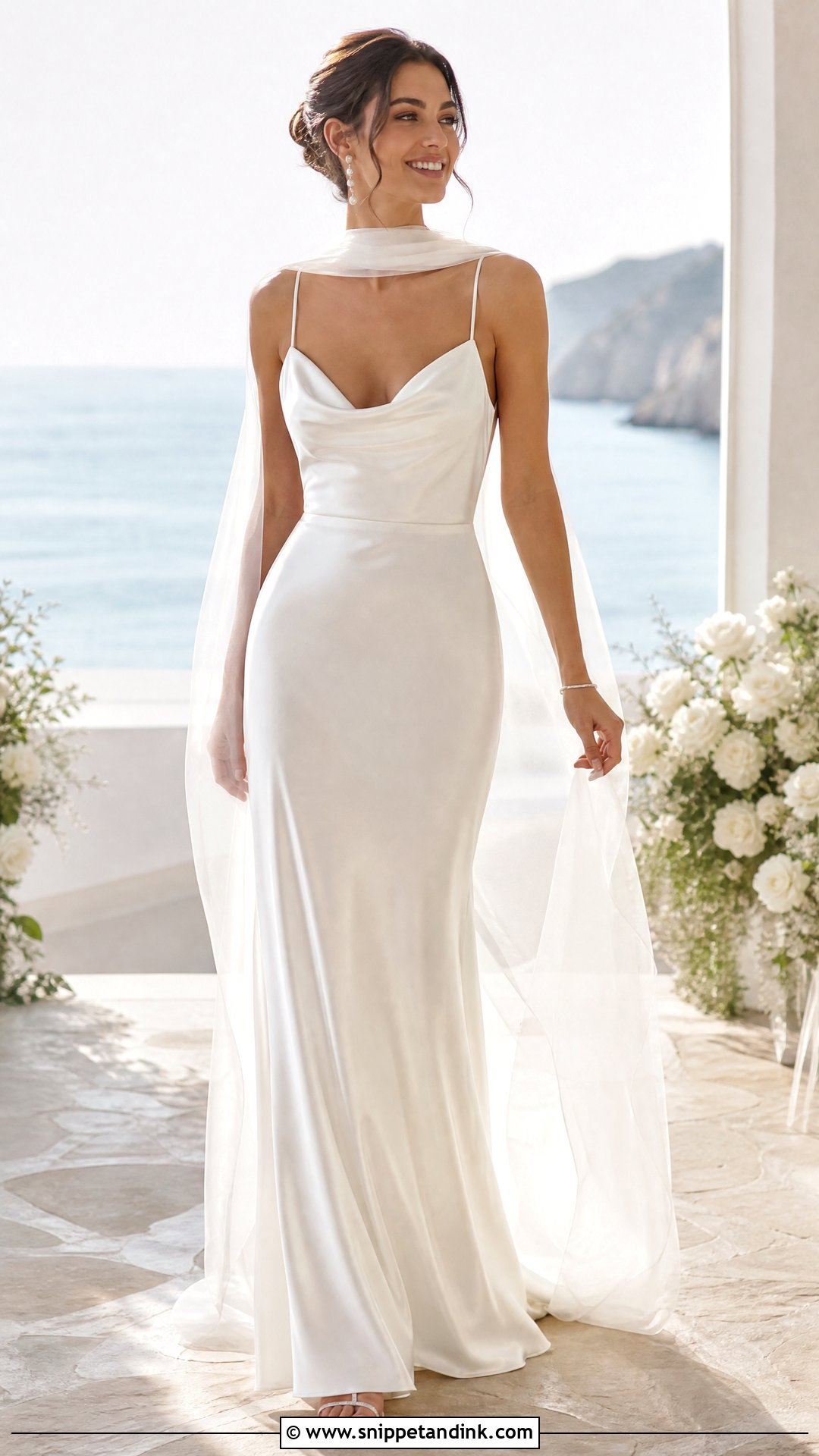
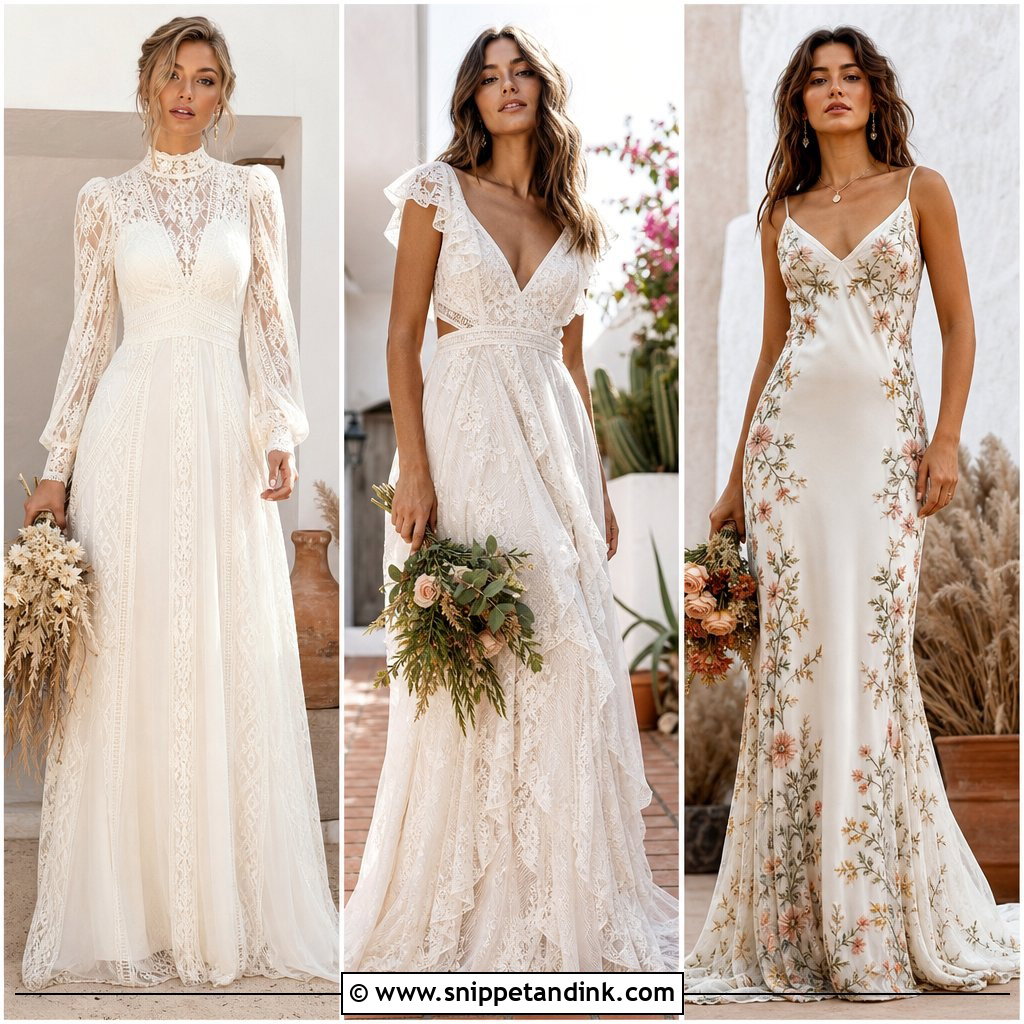
A draped cowl neck bridal dress has an ease that suits destination weddings, modern venues and smaller celebrations. Silk satin or fluid crepe lets the neckline fall naturally and skim the body; a low back, narrow straps and a slight flare at the hem keep it balanced. Slim strappy sandals, delicate drop earrings and a light veil or translucent shoulder scarf suit it. Bias-cut fabrics like this show every line beneath them, so sort smooth, line-free undergarments before the first fitting, not after. A cowl also gapes when you bend forward to sign the register. Ask the tailor to watch you walk, sit and lean, then add a weight or a small tack inside the drape if needed.
16. Bridal Dress With Ruffled Skirt
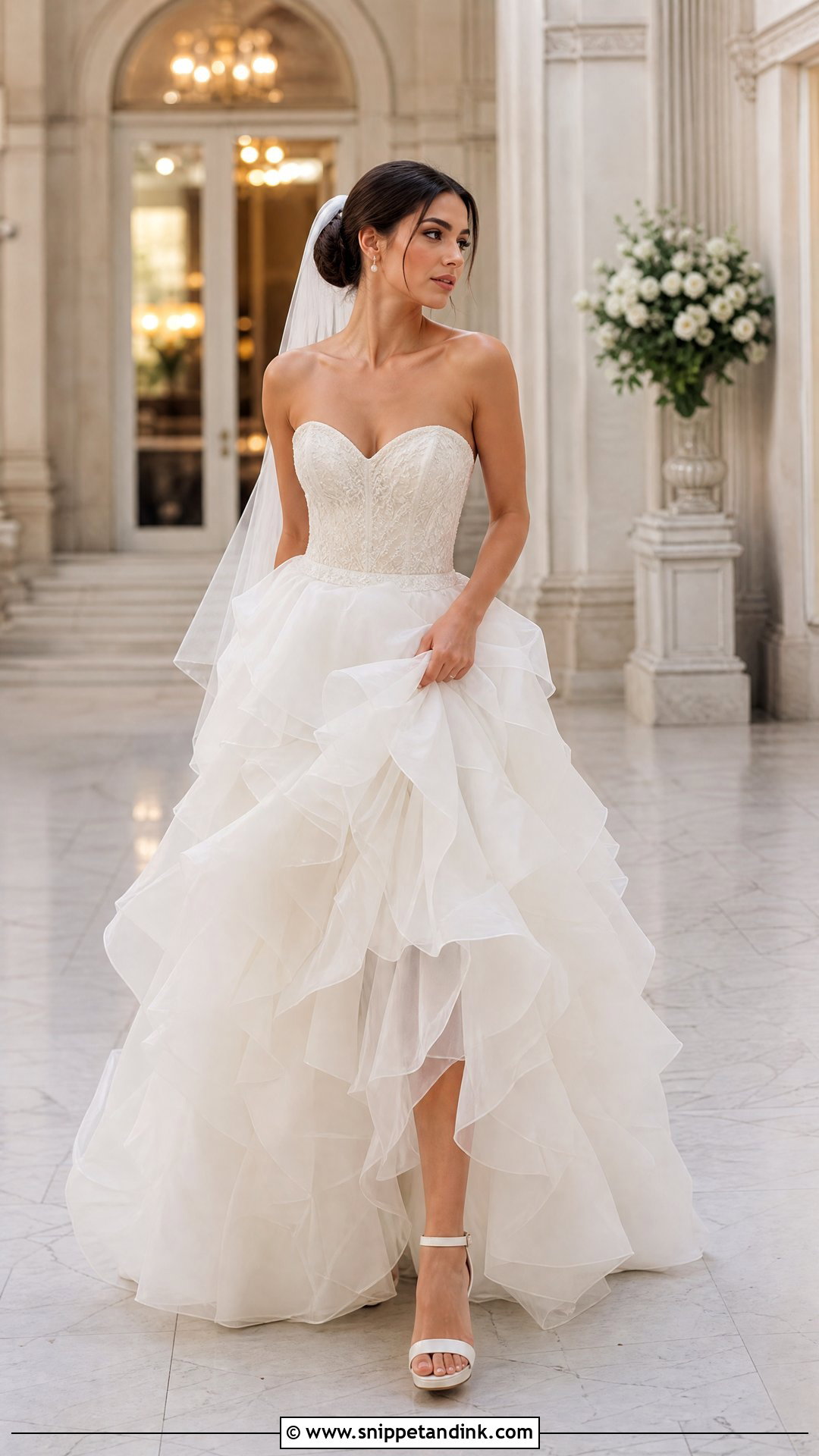
Ruffles bring volume and a sense of celebration, and organza or tulle in tiered, spiral or asymmetric layers gives the most movement. Balance them with a fitted, plain bodice and a defined waist, or the layers take over the figure. Stable platform sandals, small studs and a plain veil below a polished updo keep the top half quiet, and a compact bouquet leaves the skirt visible in full-length shots. Scale the ruffles to your height: narrower tiers suit petite brides, while taller brides can carry wider layers. The front hem must clear your shoes completely. Ruffled tiers are harder to lift than a plain skirt, so you won’t have a free hand to rescue a trip.
17. Square Neck Bridal Dress
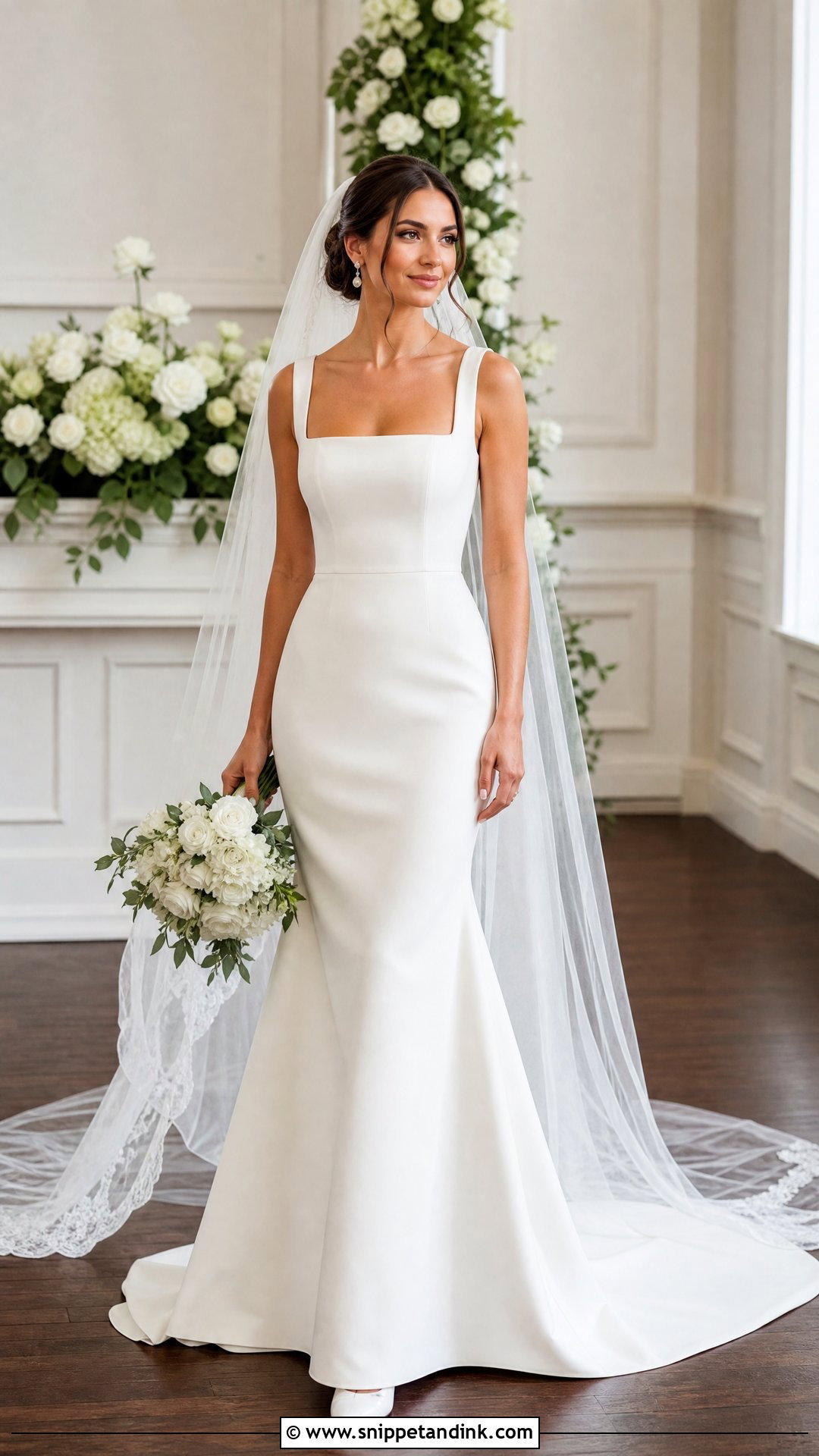
A square neckline frames the collarbones and sits neatly under almost any hairstyle. Wide straps or fitted sleeves give dependable support. Matte crepe keeps it minimal, satin adds a little shine, and floral jacquard brings texture. I finish it with pearl drops, closed-toe pumps and a long veil with a clean edge, and a center-parted low bun echoes the straight lines. Petite brides often look better in a slightly narrower opening; fuller busts benefit from wider straps and internal boning. A square neck shows instantly if it bows outward when you sit or breathe in, so test it seated and ask for a small adjustment at the corners if the edge lifts.
18. Metallic Jacquard Bridal Dress
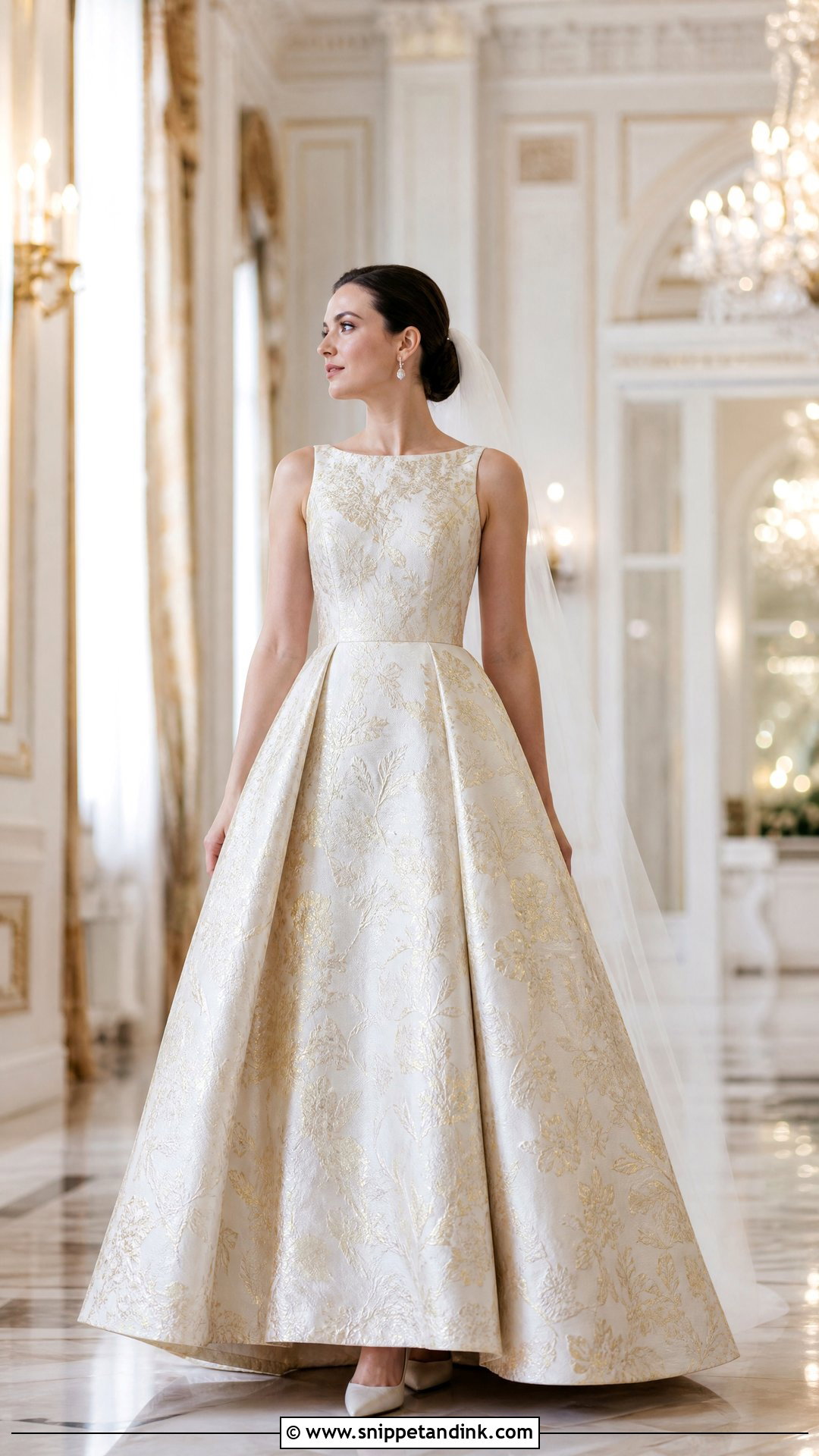
Metallic jacquard has the pattern woven into the cloth, which gives structure and a soft gleam that glitter never matches. Look for ivory grounds with silver, pale gold or champagne motifs, in a ball gown or structured A-line that gives the repeat room. Neutral satin pumps, understated earrings and a plain tulle veil keep it calm, and sleek hair stops the textures fighting. Metal threads look different in daylight, under flash and in warm indoor light, so photograph a swatch each way before you decide. Jacquard is also heavy and doesn’t breathe like chiffon. For a summer date, ask for a lighter lining and make sure the bodice is carrying the skirt’s weight, not your shoulders.
19. Asymmetrical Hem Bridal Dress
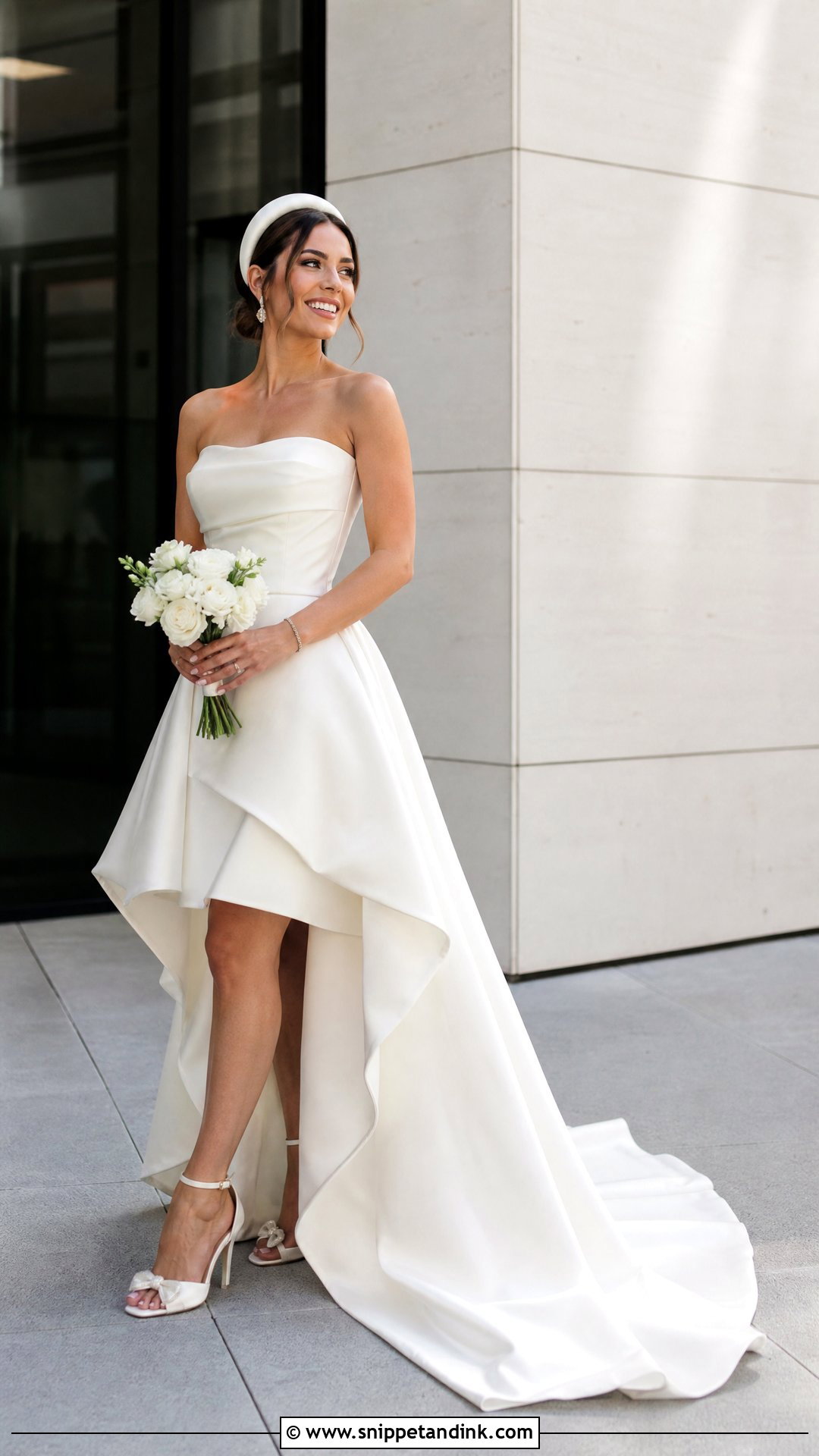
An asymmetrical hem bridal dress gives you the drama of a train behind with a shorter front you can actually walk in. A high-low skirt, diagonal drape or sculpted side opening all work as long as the cut looks finished rather than accidental. A fitted bodice anchors the unusual skirt. Because the front shows your legs and feet, choose standout pumps or ankle-strap sandals, modern earrings and a short veil or polished headband. Where the front hem lands matters a great deal; just below the knee is usually kinder than mid-calf. Structured fabrics hold bold angles, while chiffon softens them. City venues and contemporary indoor ceremonies suit it, and so does a crowded dance floor.
20. Bridal Dress With Feather Trim
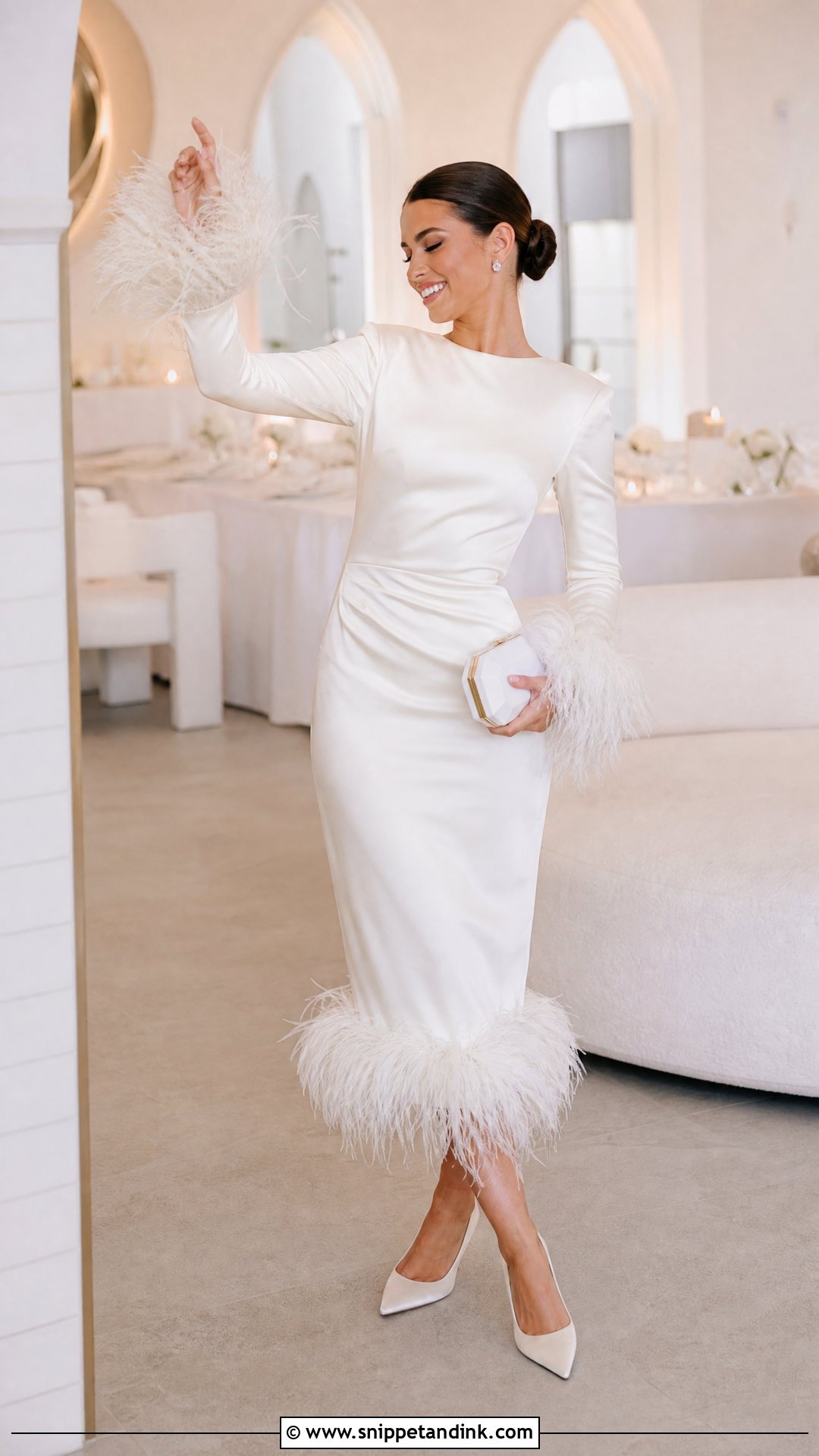
Feathers move with every step, which is their charm and their risk. I keep them to the cuffs, neckline or hem of a clean midi or floor-length gown in crepe, satin or mikado, never the whole silhouette. Simple pointed heels, crystal studs and a neat clutch suit it, along with a sleek ponytail or bun so there’s no extra volume near the face. Ostrich and marabou shed, especially in the first few wears, so give the trim a gentle shake outdoors before the day and check how it’s stitched. Sit in it too; feathers at the hem flatten under a chair. Kept controlled, the trim works for a full ceremony or a second bridal look.
The Small Repair Kit Statement Gowns Need
The more texture a dress has, the more there is to come loose. Pearls drop off, feathers shed, a bow loop gets crushed under someone’s arm during group photos. None of that is a disaster if whoever is helping you has the right things in a pouch and knows the dress.
What goes in it
- A needle threaded in the gown’s color, plus a few spare pearls, beads or sequins the shop can give you at the last fitting.
- Clear nail varnish for a lace edge that starts to fray, and fabric tape for a hem caught by a heel.
- A lint roller for black lace and a soft brush for feathers or velvet.
- Small safety pins in silver and gold, since a bustle hook can pull loose during dancing.
Teaching someone the bustle
Long trains, overskirts and asymmetric hems all need lifting or removing at some point. Bring your helper to the final fitting and have the seamstress show them the bustle points, then let them do it once while you stand still. Ribbon loops are often color-coded or numbered; a quick phone photo of the finished bustle saves a lot of guessing in a dim hallway at nine o’clock.
After the Wedding, Before It Goes in a Box
Have the dress professionally cleaned within a few weeks, even if it looks clean. Sugary drinks and perspiration dry invisible and turn yellow-brown months later, and satin and silk show it most. Tell the cleaner about every embellishment: some glues used on appliqués and some faux pearls don’t survive solvent cleaning. Store it flat or folded in acid-free tissue in a breathable box, away from attic heat. Hanging a heavy jacquard or beaded gown for years stretches the shoulders, and plastic garment bags trap moisture against the fabric.
Treat Every Fitting Like a Rehearsal
An unusual gown only works if you can live in it for a whole day, so treat the fittings as rehearsals. Sit, walk, lift your arms and look at the dress in daylight and indoor light before you sign off. Choose shoes for the floor you’ll be standing on, and let jewelry support the neckline instead of competing with it. Bring a few inspiration photos to appointments, but trust what you see in the mirror more than the picture. The dress that still feels like you after the first dance is the right one.
You'll Like These Ideas:









Leave a Reply