
The muhurtham is the auspicious hour of a South Indian wedding, and it often falls early in the morning, which often means braiding starts well before sunrise. The bride walks to the mandap, sits for long rituals, bends, rises, circles the fire, and her hair has to stay perfect through all of it while carrying flowers and gold. That’s what shapes every choice below. These are twenty styles I’d consider for that hour, from fragrant jasmine braids to ornamented buns and a few softer modern options, with notes on hair length, weight and which jewelry each one needs.
Ordering Jasmine for a Dawn Muhurtham
Fresh flowers are the heart of most of these styles, and they’re also the part most likely to go wrong. Jasmine buds open and brown over a matter of hours, and a muhurtham at dawn means the flowers have to be ready before most florists open.
- Order buds that are tightly closed, strung the evening before. They’ll open slowly through the morning instead of being past their best by the time you reach the mandap.
- Keep the strings wrapped in a damp cotton cloth in a cool spot overnight. Don’t seal them in plastic; trapped moisture browns the petals.
- Ask for the flower jadai or net base to be delivered with a little extra string, so I can patch gaps after pinning.
- If anyone in the bridal party is sensitive to strong scent, mention it. A braid full of mogra sits right next to your face for hours.
Many brides also mix fresh flowers with a few good artificial pieces near the crown, where fresh ones bruise first. Nobody can tell in photos, and it keeps the weight down.
1. Classic Jasmine Braid for Muhurtham
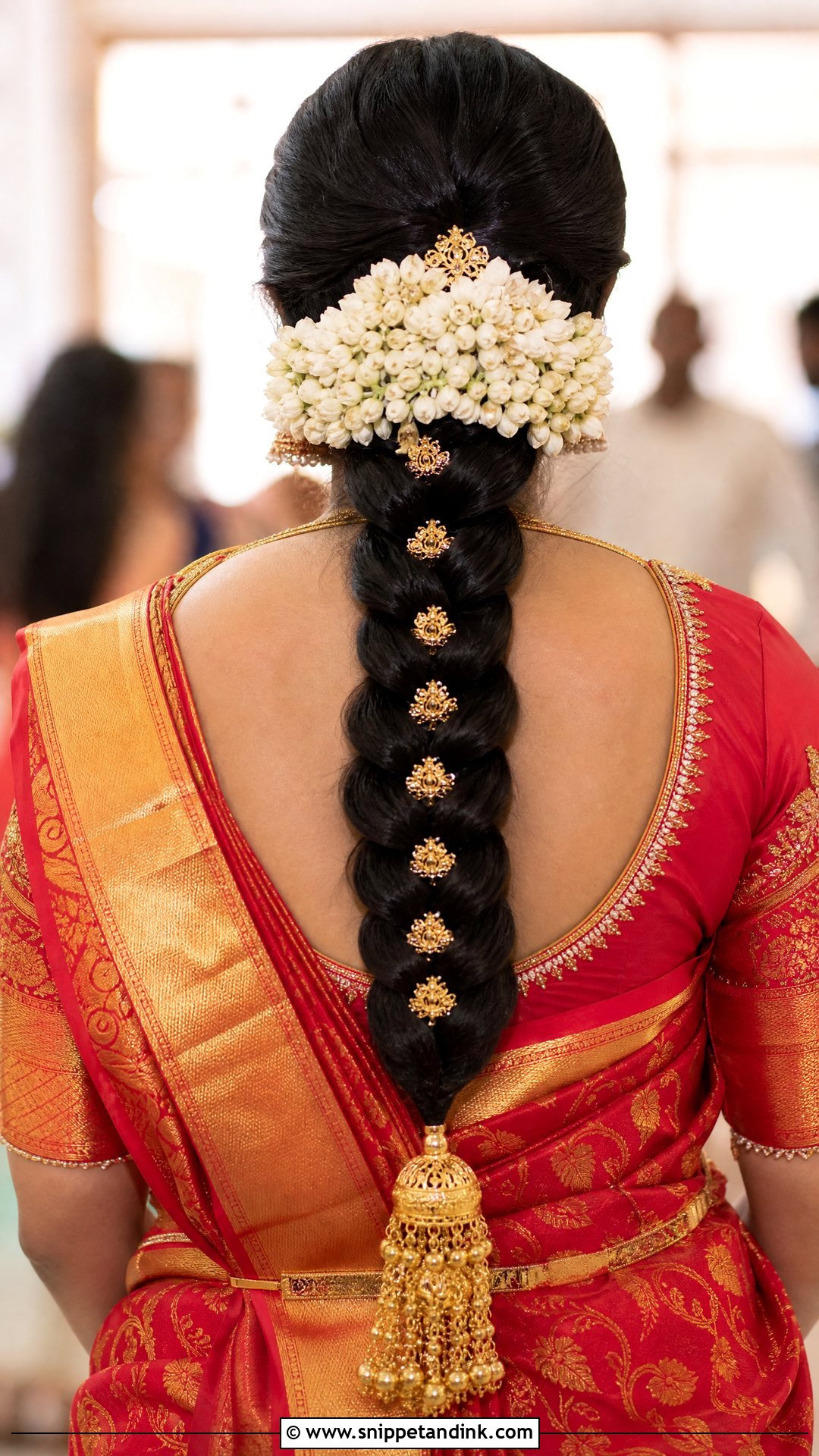
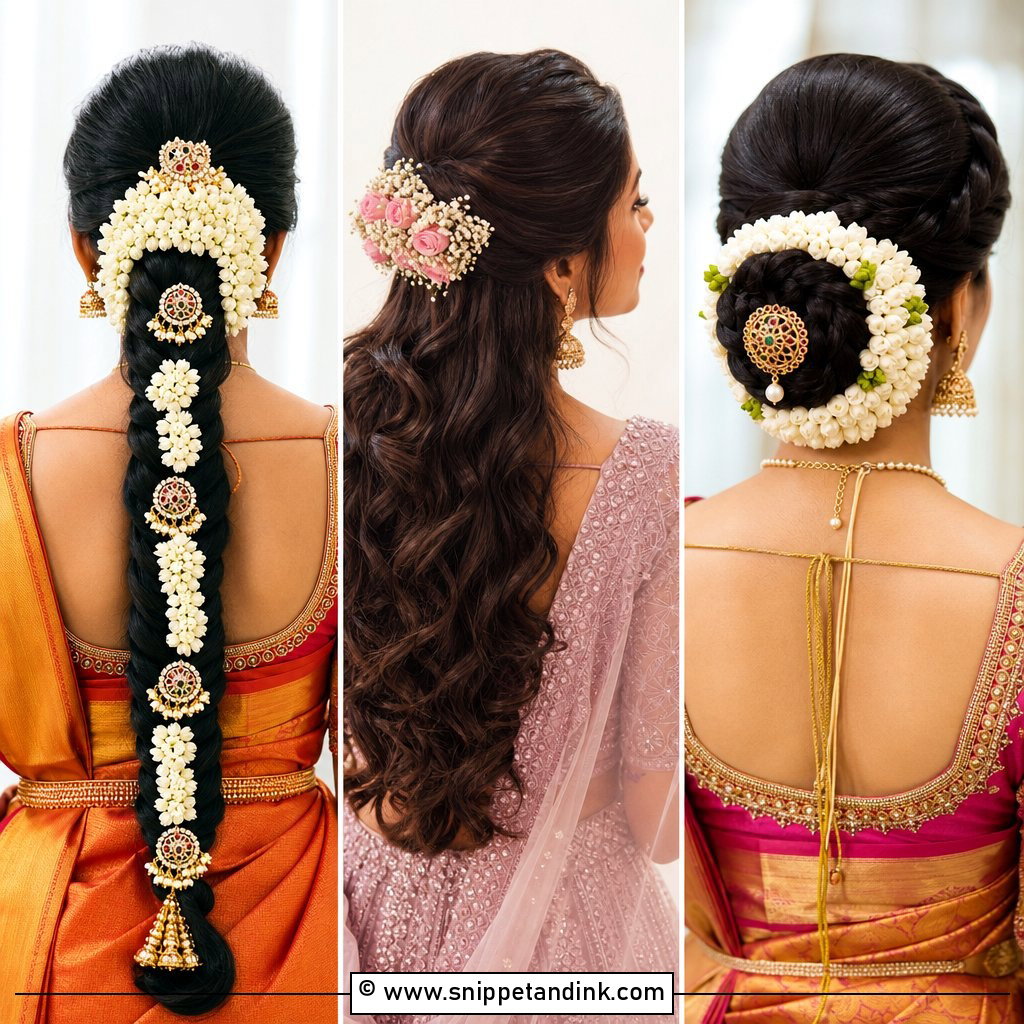
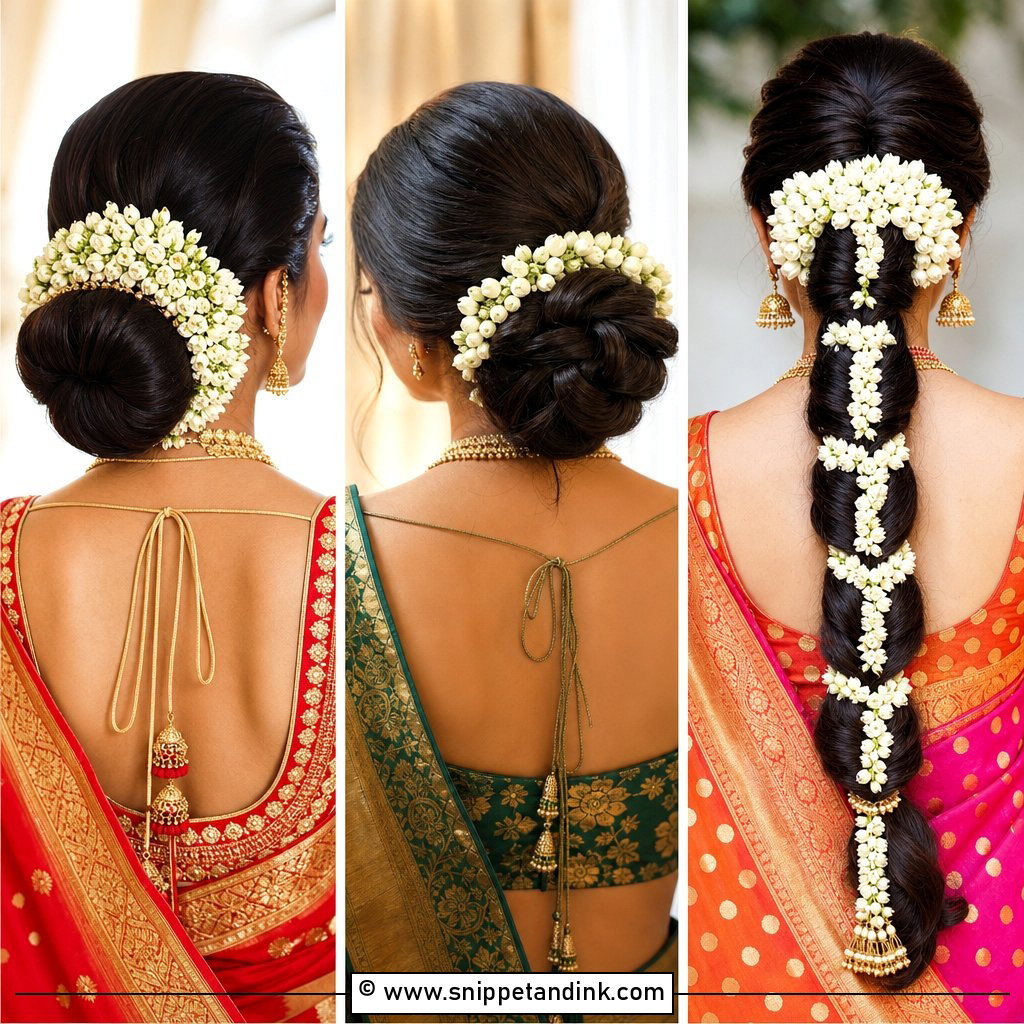
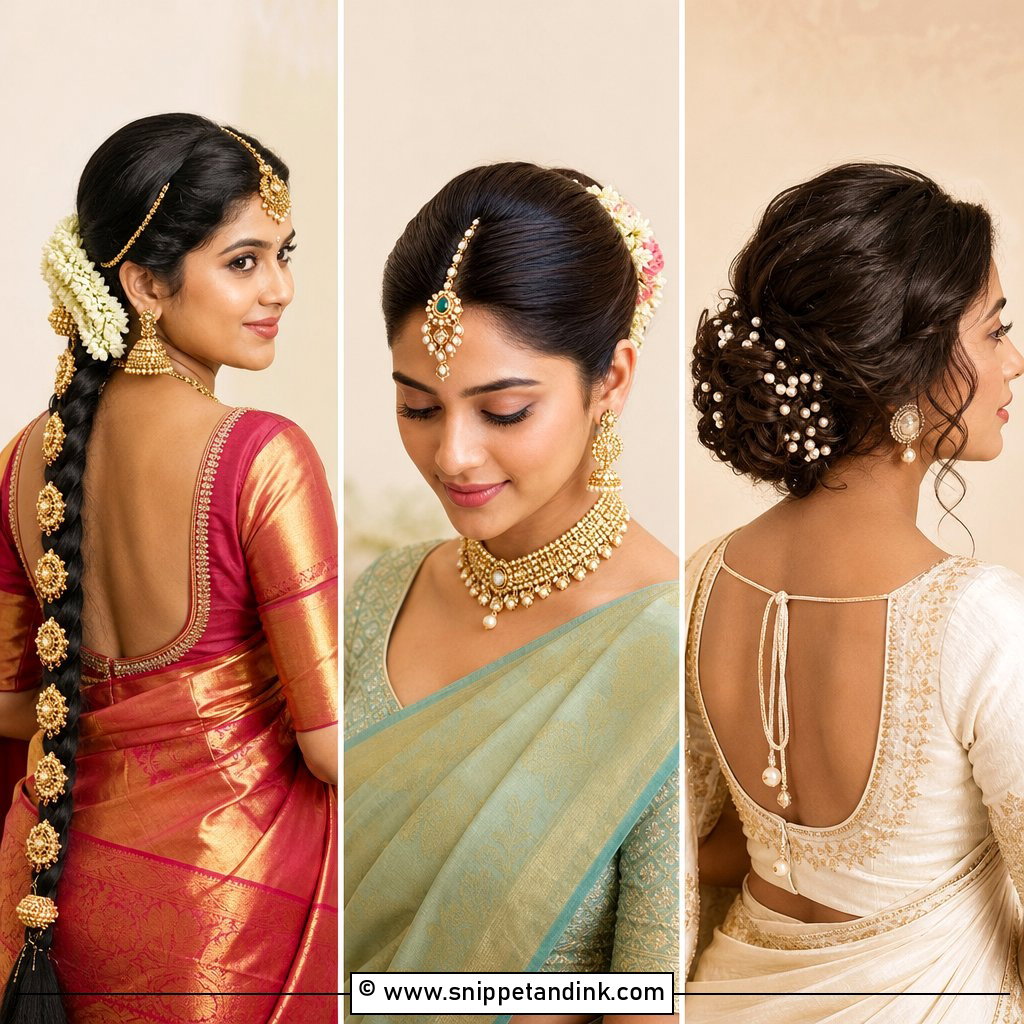
For many families, the jasmine braid is the South Indian bridal look: a thick, neat braid down the back, covered generously in strings of fresh mogra. The white against dark hair is what people remember, along with the scent. A kunjalam or jada billai at the tail adds weight and shine. I braid fairly tight at the nape and loosen as I go down, because the flowers are stitched or pinned onto the braid and a loose top section slides under their weight. It sits naturally with a silk Kanjeevaram and temple jewelry, and it carries real meaning for the muhurtham.
2. Traditional Bun With Gold Hair Ornaments
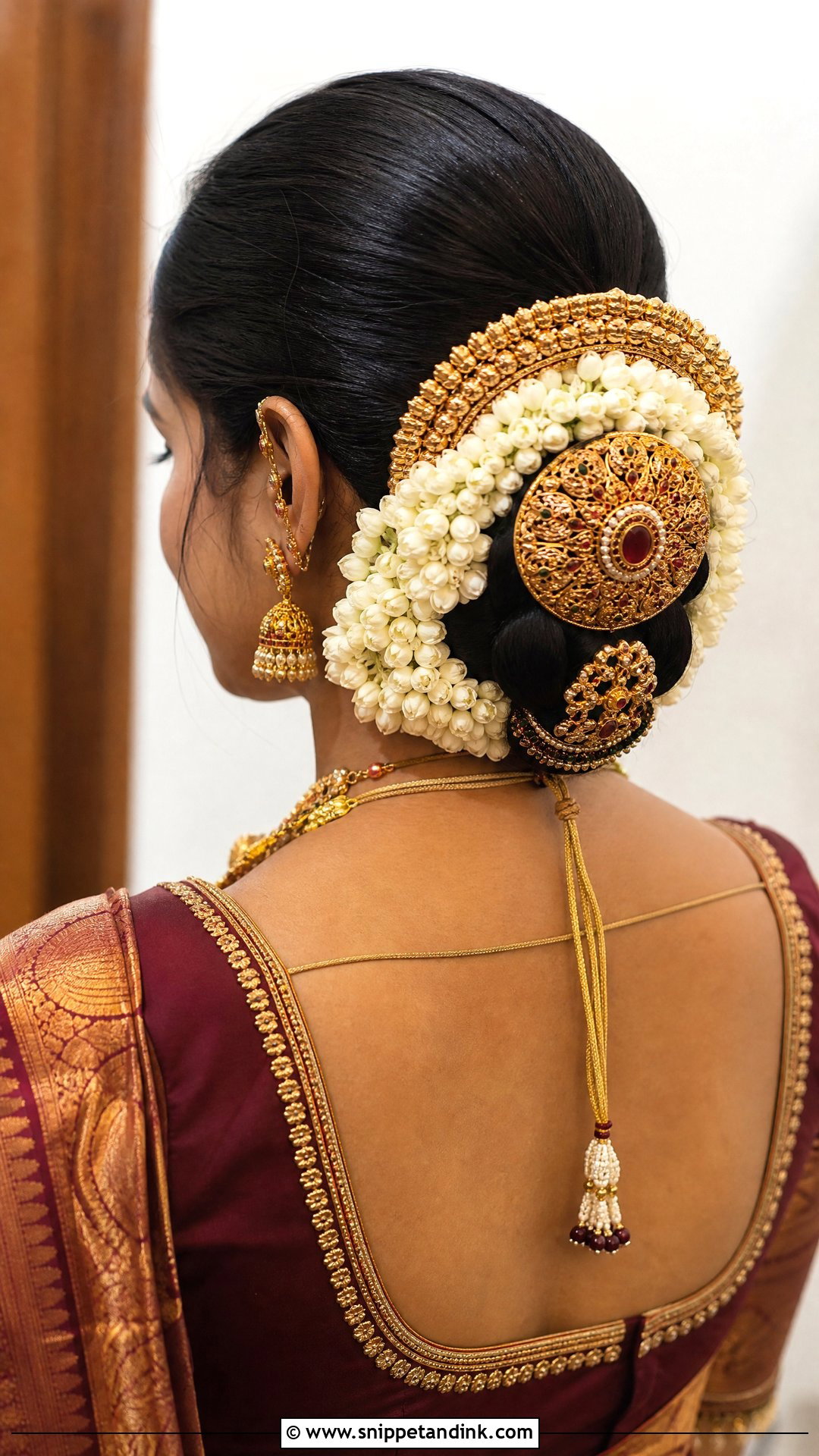
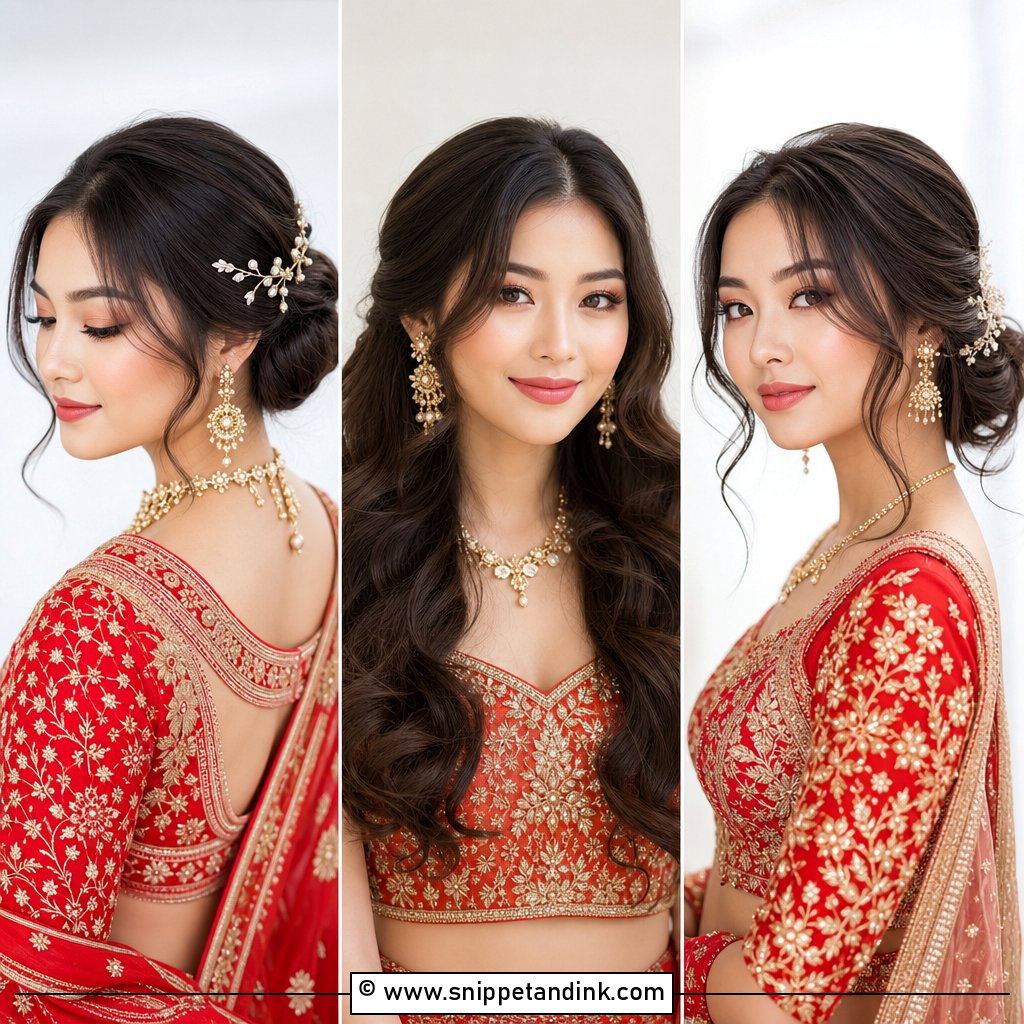
A low, structured bun at the nape makes the best base for gold ornaments like a rakodi, jada billai and surya-chandra pieces, because it gives them a firm, flat surface to pin into. Jasmine wrapped around the bun adds fragrance. Thick hair holds this best; with finer hair I build the bun over a padding so the ornaments don’t overwhelm it. Keeping the face open lets the maang tikka and jhumkas show. Built properly, it’s one of the most secure styles for hours of rituals.
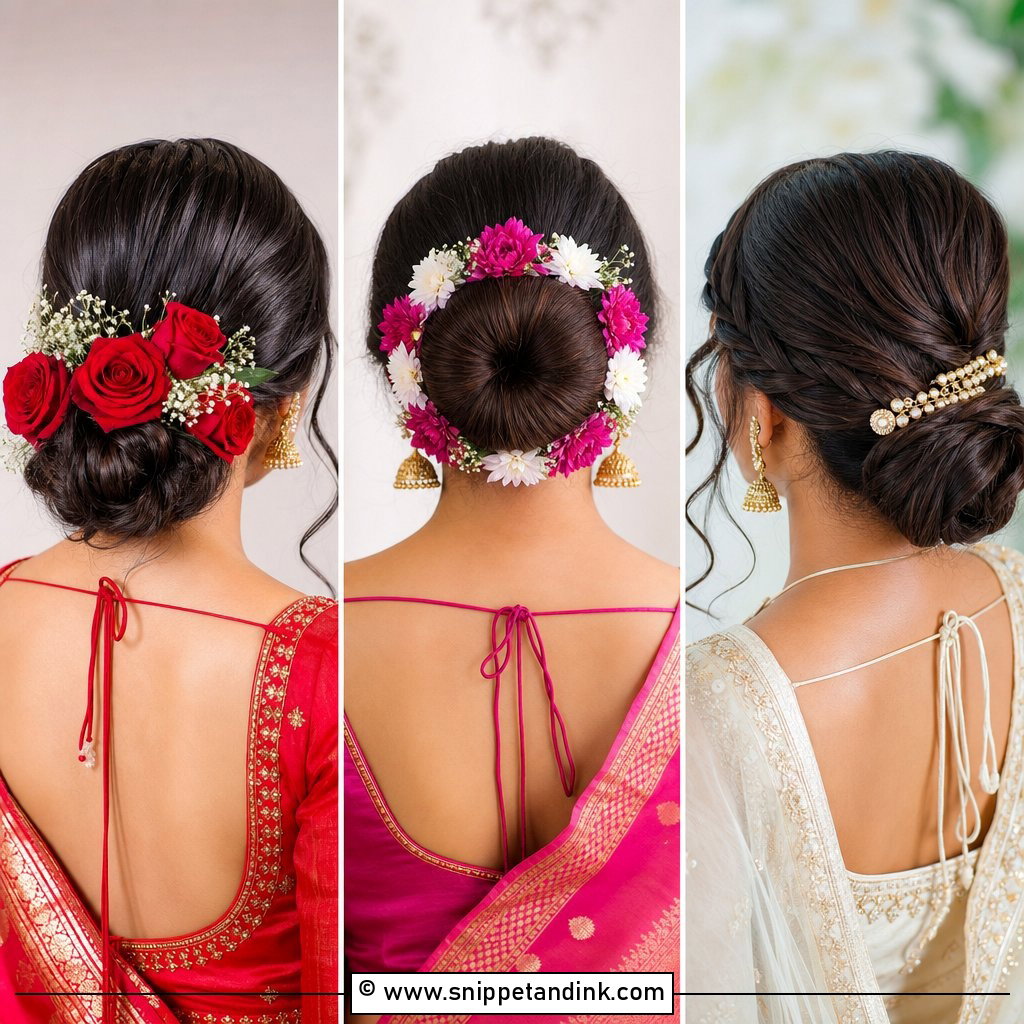
3. South Indian Floral Bun With Roses
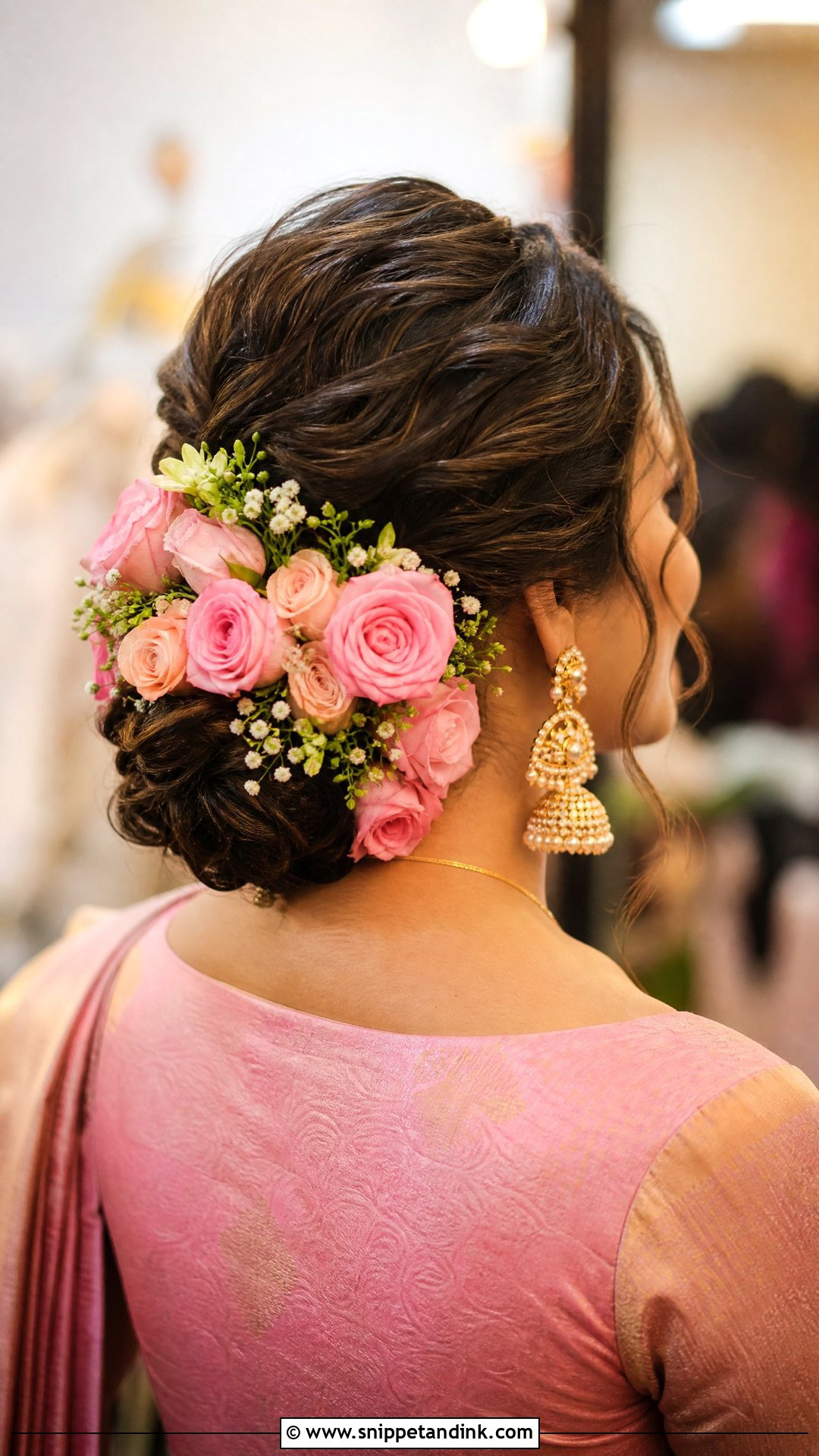
Mixing roses, orchids and greenery around a full bun gives a more colorful, garden-like feel than jasmine alone. Brides often match pink, red or peach roses to the saree border. I suggest smaller spray roses over large blooms: big heads are heavy, they bruise when you lean back against a chair, and they tend to droop by the end of a long morning. With statement jhumkas and a matha patti, it makes a balanced portrait, and it suits an evening muhurtham especially well.
4. Double Braid Bridal Hairstyle
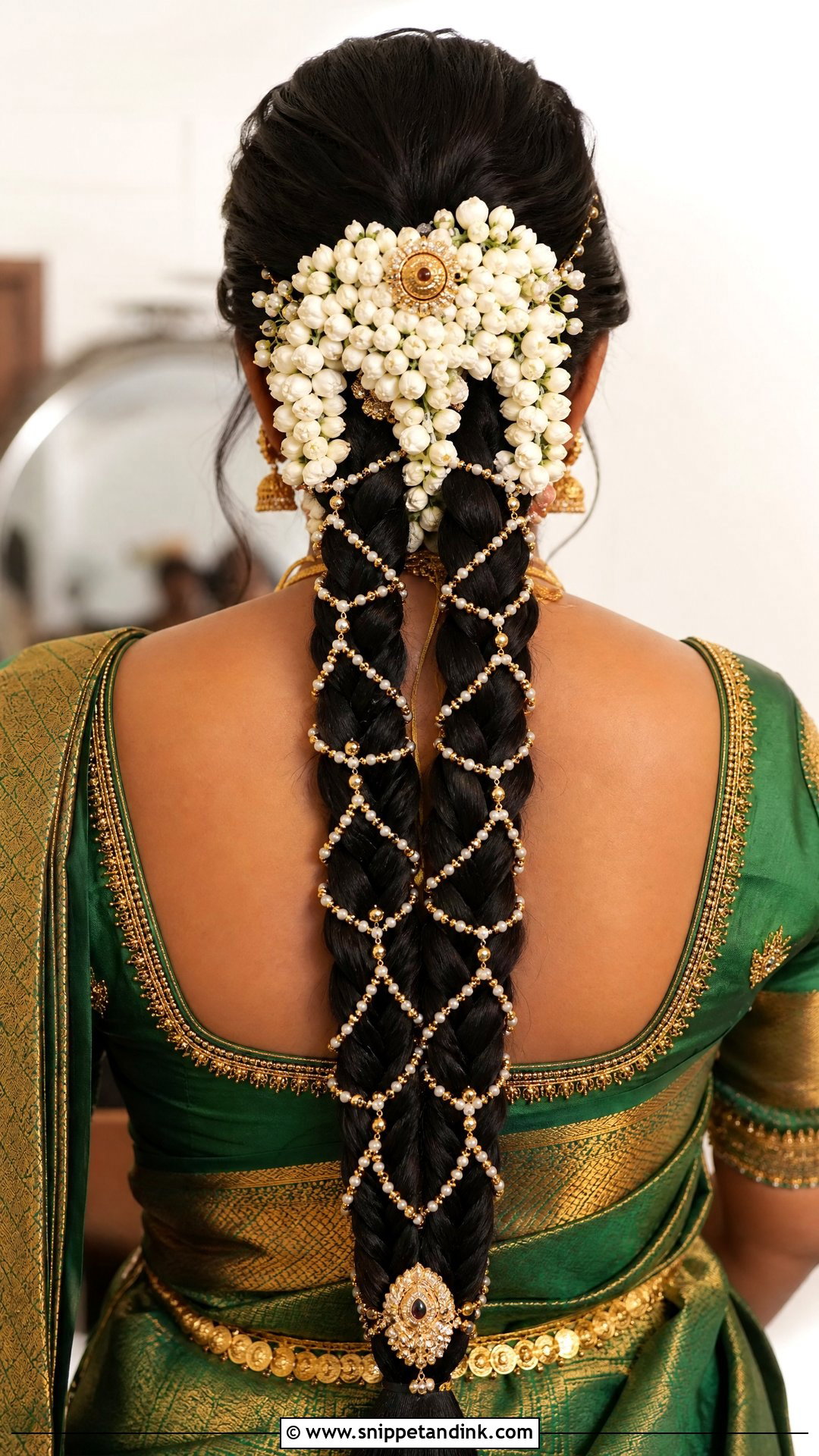
Two thick braids worked side by side or crossed over each other make a double braid design with real depth. Each braid can carry jasmine, pearls or small gold pieces, and they can join into one toward the bottom for a dramatic finish. This needs long, dense hair; if yours is shoulder length, the second braid usually comes from an extension, which is completely normal and invisible once flowers cover it. With a kasu mala and silk saree, the effect is rich and traditional.
5. Voluminous Updo With Fresh Blooms
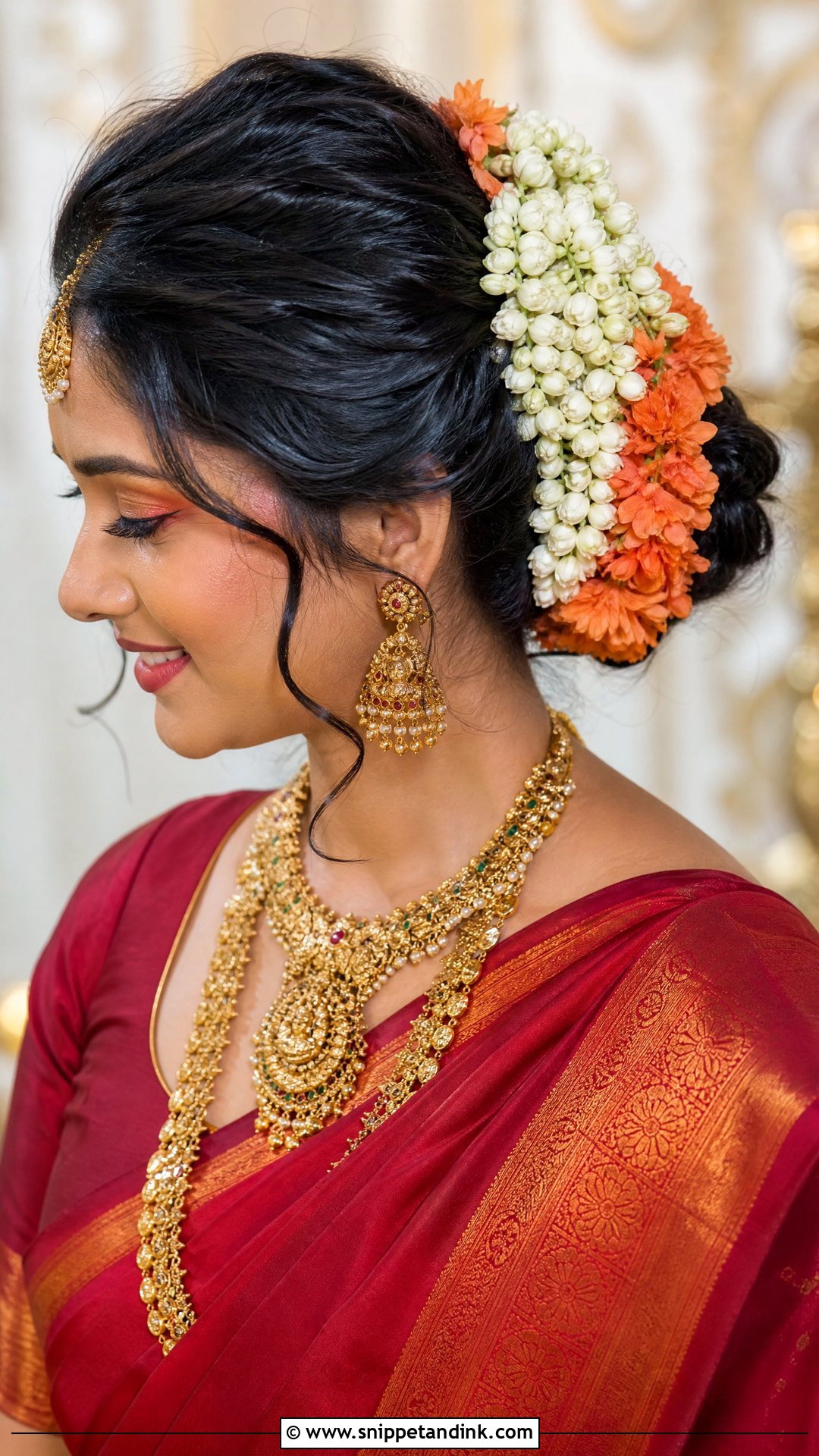
Height changes the whole silhouette. A high, textured updo lifts the eye, lengthens the neck and balances a grand silk saree with an elaborate blouse. Jasmine, kanakambaram and roses tuck into the folds. It’s bolder than most muhurtham styles, so I’d check it against your heaviest necklace at the trial; with a very tall bun and a wide choker, the neck can look crowded. Pinned into a firm base, it holds up through every ritual.
6. Maang Tikka Braid Hairstyle
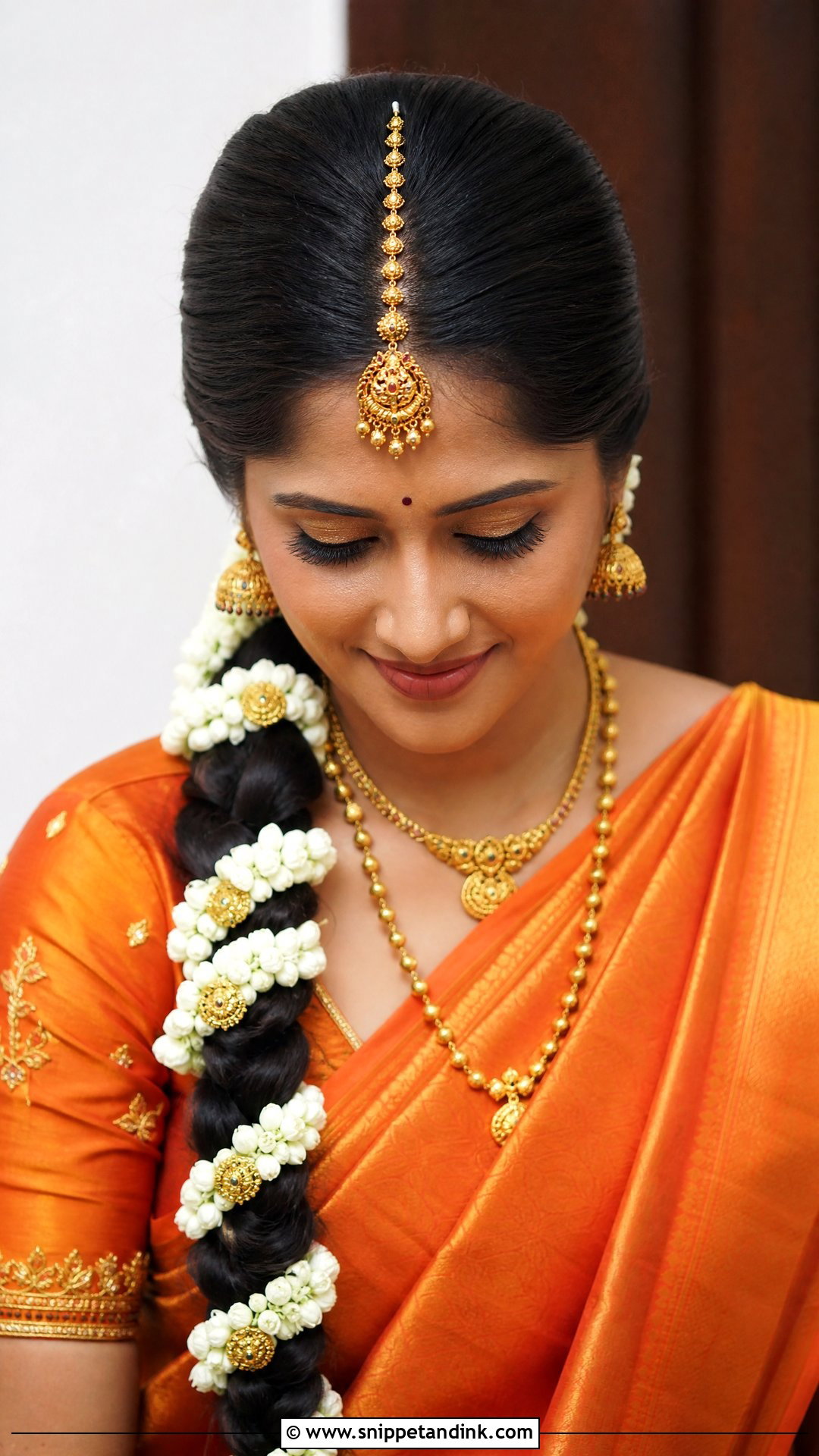
A center part leading into a sleek, decorated braid sets up a symmetrical frame for the maang tikka. Getting that part dead straight is the first thing I do, since the tikka chain sits along it and a crooked line shows in every front-facing photo. Jasmine or gajra wraps the braid for softness and scent. It suits round and oval faces especially well. Matching jhumkas and a nathu complete the look, and it puts your facial jewelry at the center.
7. Half Up Half Down Bridal Look
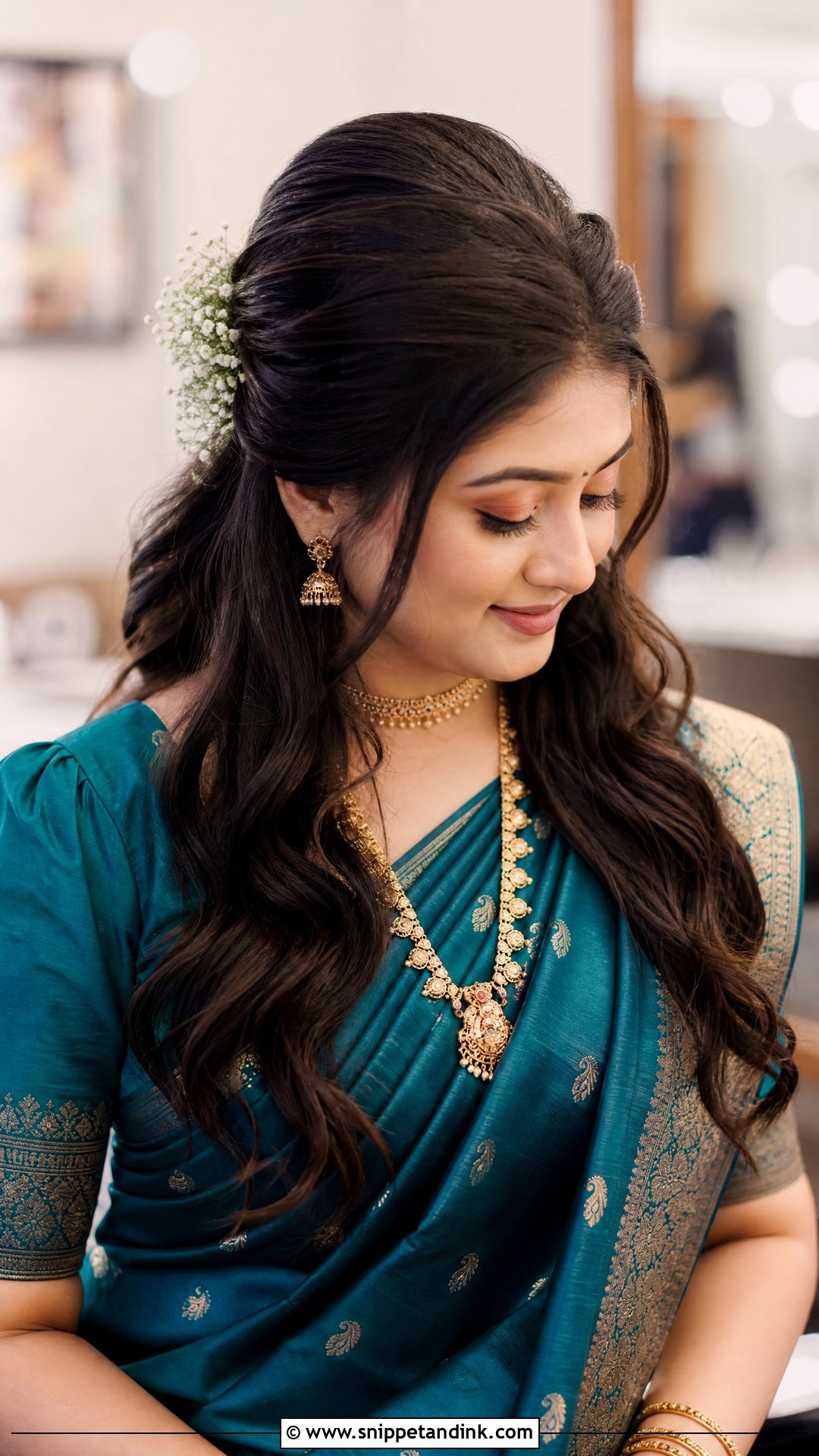
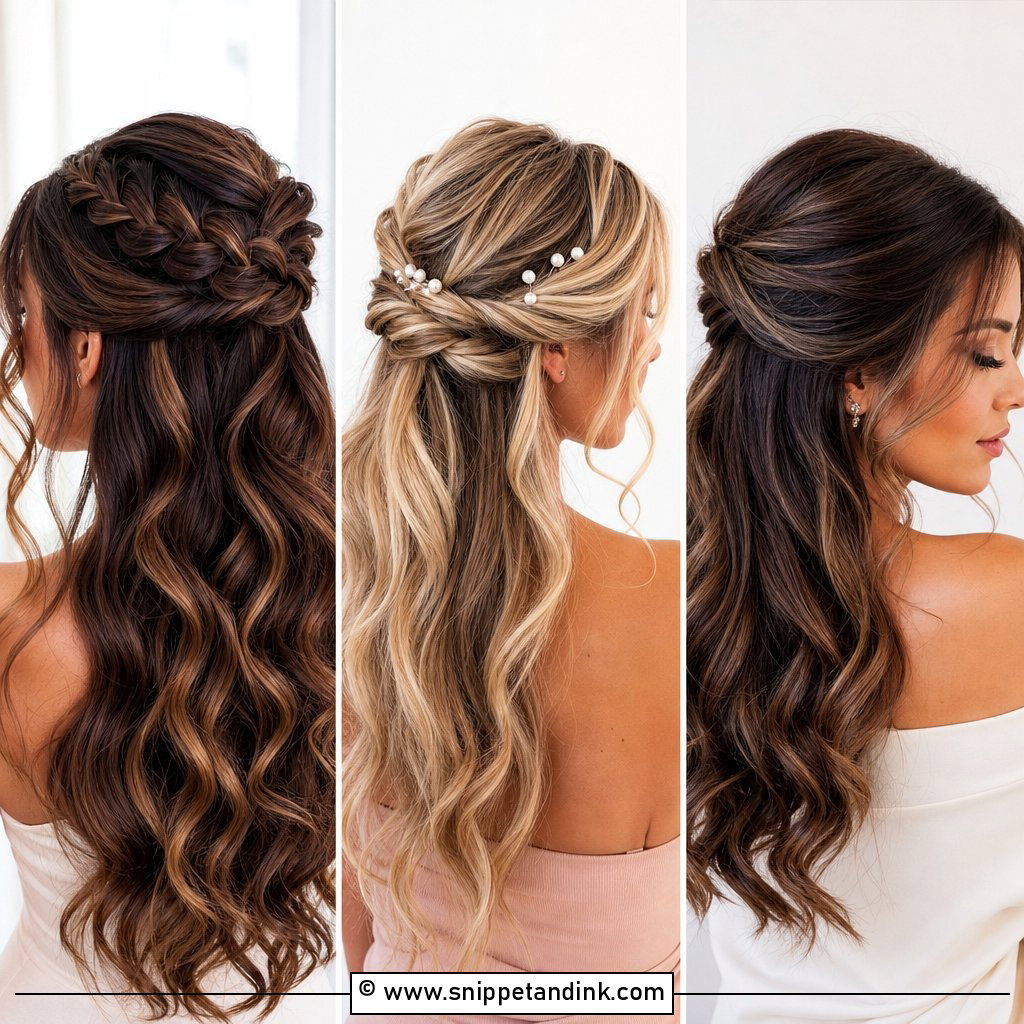
Pulling back the top section and leaving loose waves below gives structure at the crown and movement on the shoulders. A small floral accent or gold clip decorates the gathered section. It’s a softer, more youthful choice, closer to a reception style. My honest reservation for the muhurtham itself: loose waves sit right under a heavy necklace and can tangle in it, and they flatten when you lean back during long rituals. If you love this look, I’d set the waves firmly and keep the necklace layers short.
8. Side Swept Floral Braid
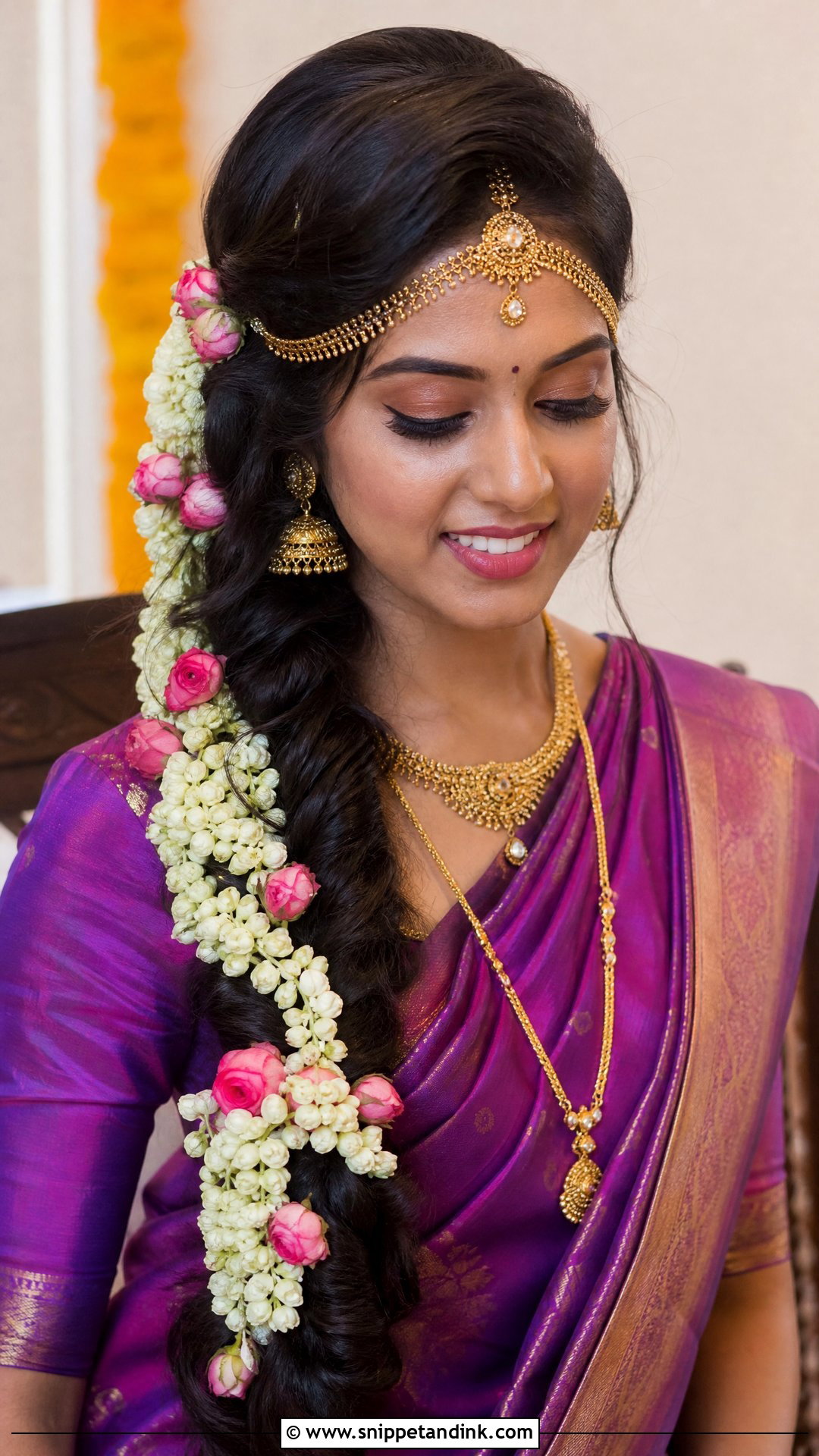
Draping the braid over one shoulder shows off the earrings and the neckline of the blouse on the open side. Cascading jasmine and tiny rosebuds decorate it. It needs long hair to sit well in front. I pin the braid lightly to the blouse strap underneath, out of sight, so it doesn’t swing behind you every time you turn toward the priest. Side profile photos are where it shines; a matha patti and statement jhumkas keep the front balanced.
9. Pearl Embellished Bridal Bun
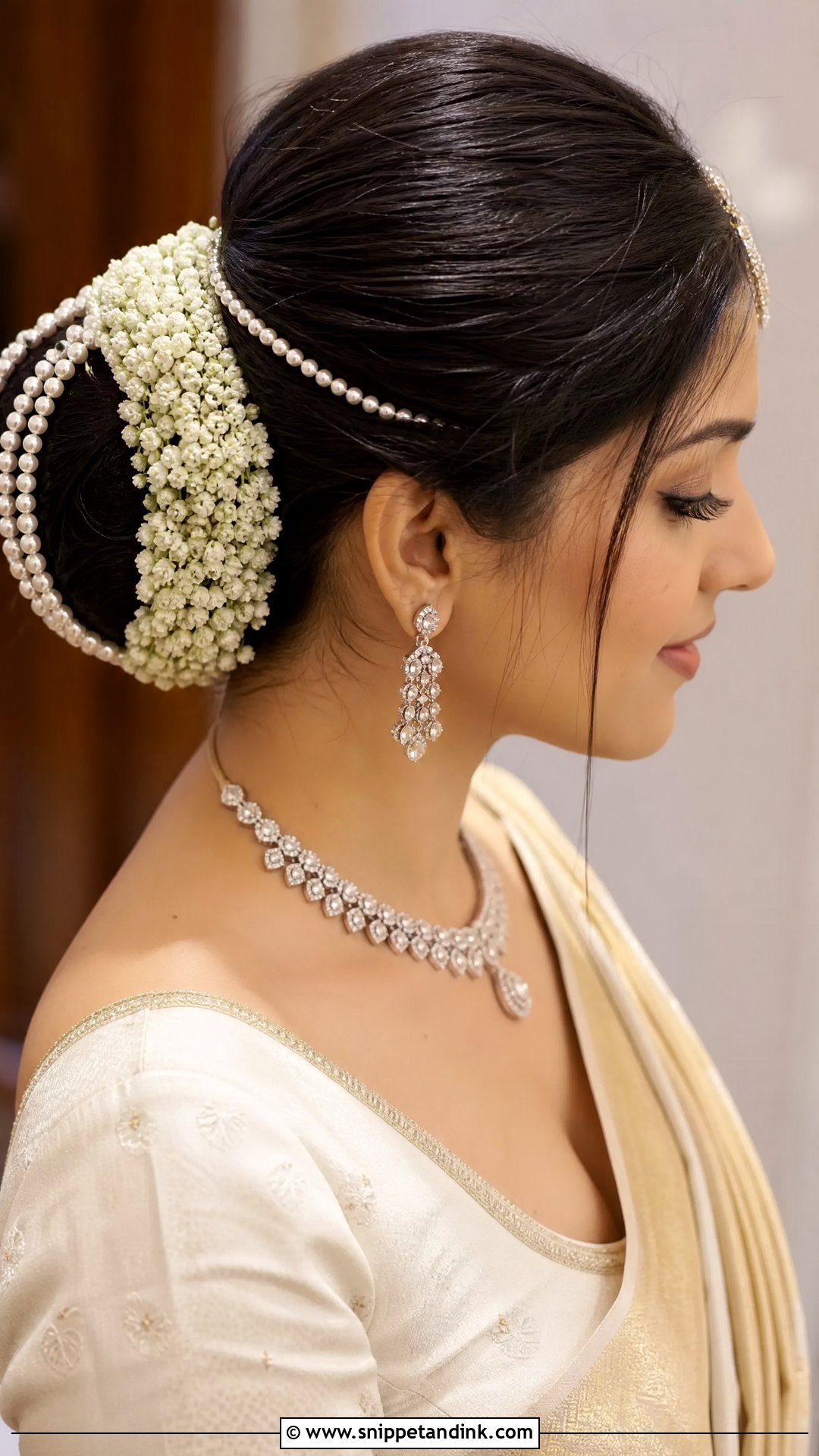
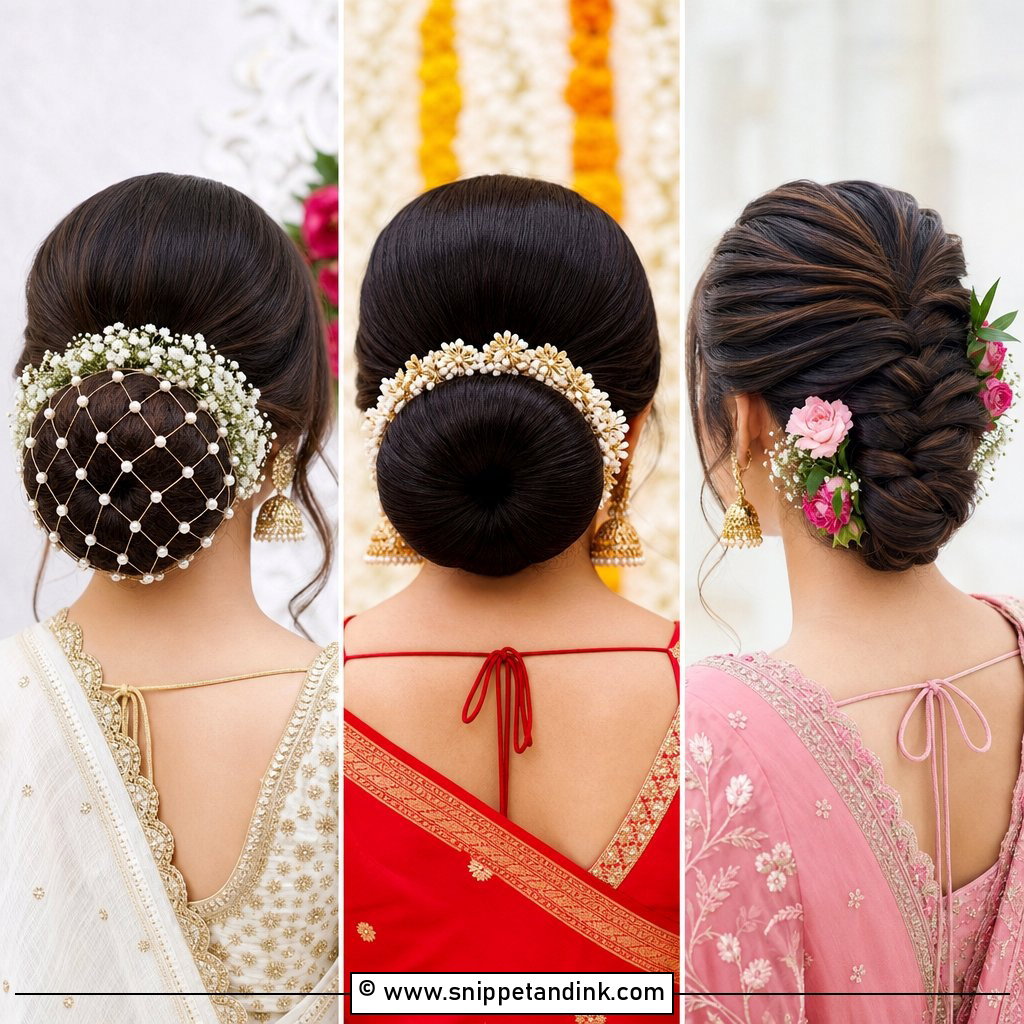
Strings of pearls woven through a smooth, structured bun give it a soft shimmer. Paired with jasmine, the white-on-white effect looks calm and refined, and it works with both gold and diamond jewelry. It suits pastel and jewel-toned pattu sarees. I secure each pearl string at both ends and once in the middle with small pins in the same color as your hair, otherwise they loop loose as you move. It’s a lighter alternative to a fully gold-ornamented bun.
10. Temple Jewelry Braid Hairstyle
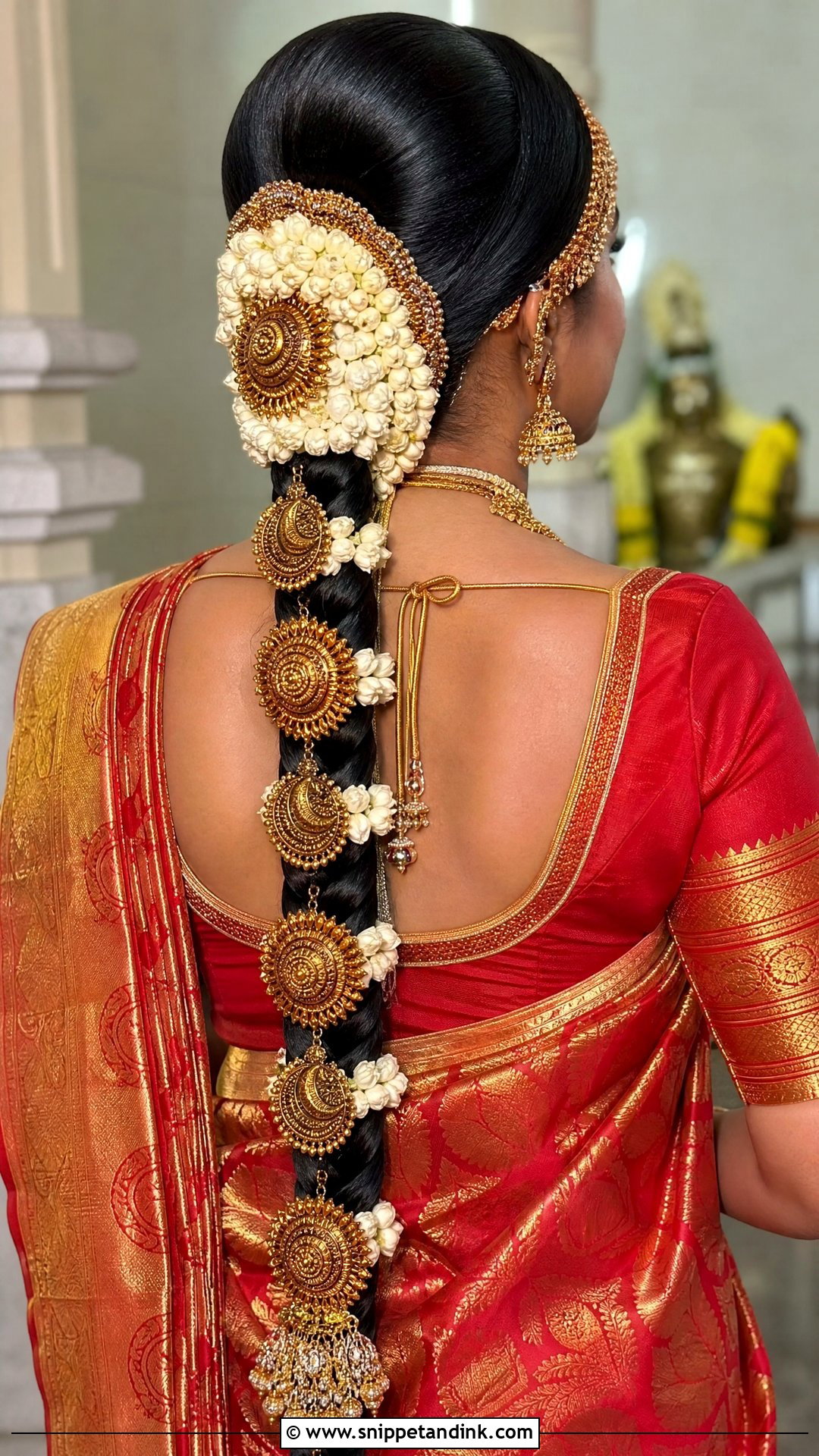
Borrowed from classical dance, this braid is dressed from crown to tail with temple-style gold: surya and chandra at the top and nagaram motifs running down the length, with jasmine filling the gaps. It belongs with a Kanjeevaram and a full temple set. Weight is the thing to plan for. A fully ornamented braid can pull at the scalp after a few hours, so I anchor the heaviest pieces into a firm base at the crown, and let the braid itself carry only what it can. The result is grand and unmistakably ceremonial.
11. Low Bun With Gajra
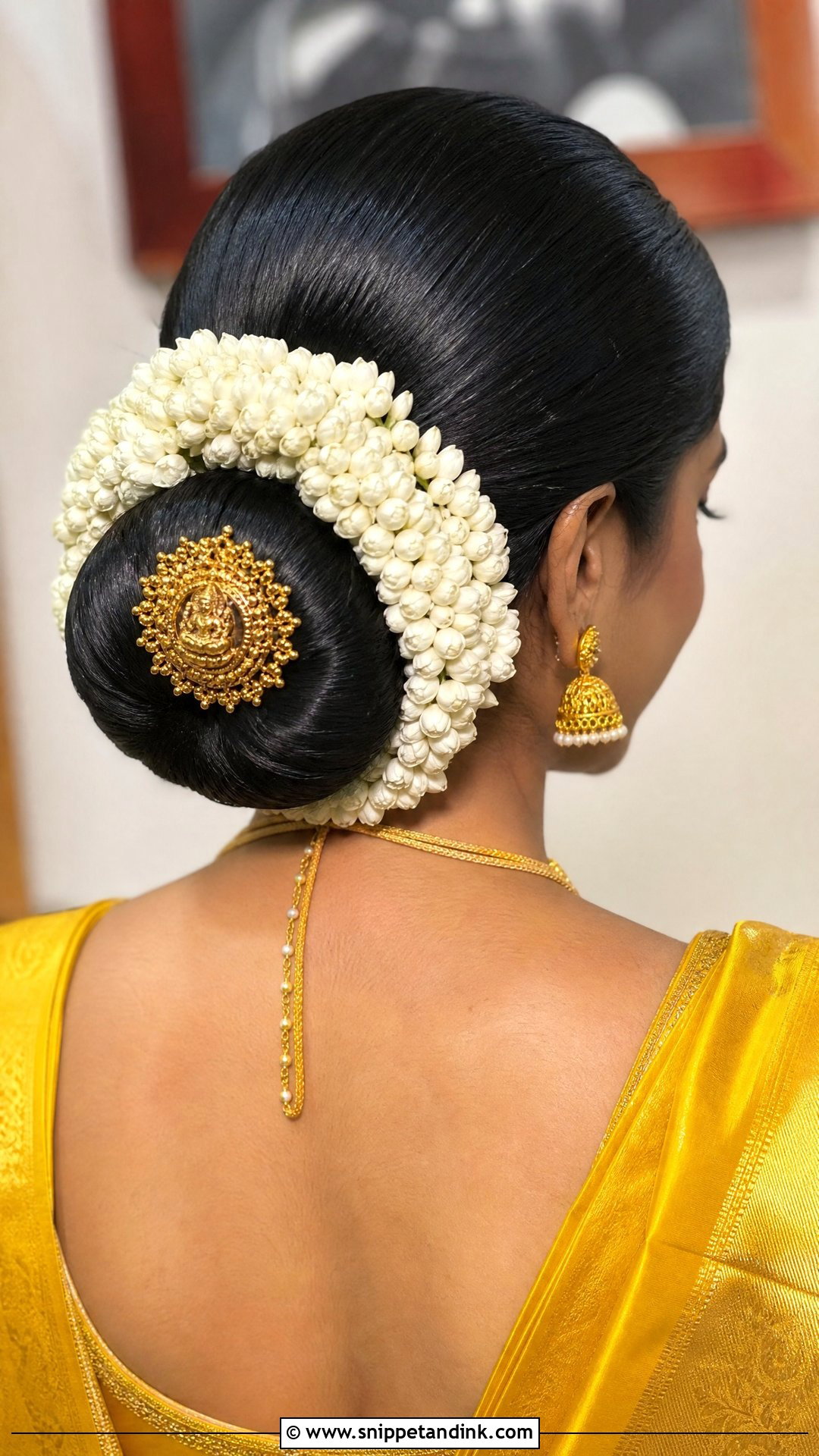
A smooth low bun circled with thick jasmine strings is a classic for good reason: it’s secure, comfortable for long ceremonies, and the ring of white glows against dark hair. Medium to long hair is enough. A small gold rakodi at the center adds shine. It’s also the style I suggest most often to brides who have a long day of events, because it doesn’t press anywhere when you sit back, and it works equally for morning and evening muhurthams.
12. Braided Crown Bridal Hairstyle
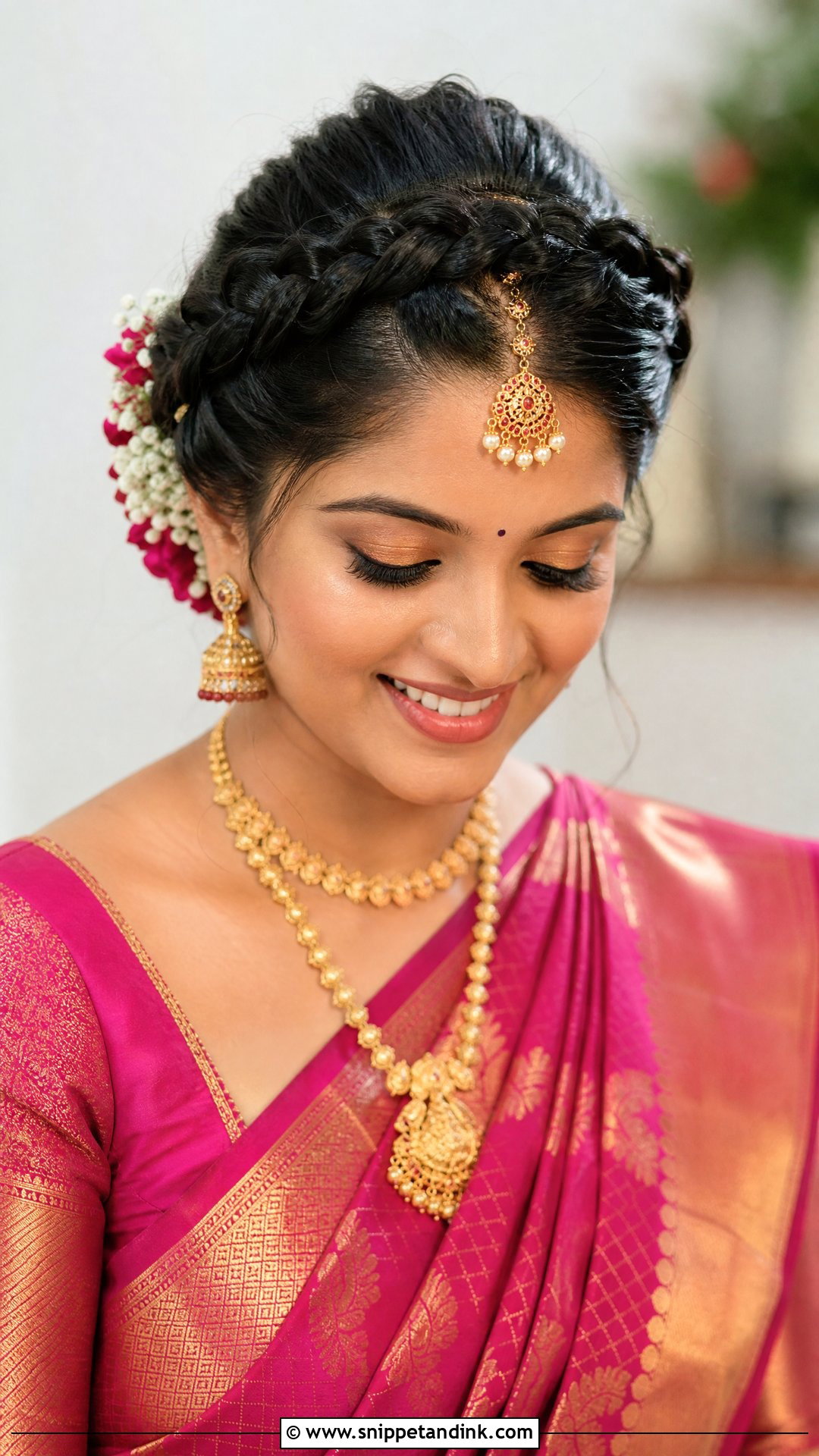
Braids woven around the head create a halo, then flow into a bun or longer braid behind. Fresh flowers tuck into the sections, and a maang tikka sits neatly at the front. It needs long, thick hair to hold the detail. Very fine hair can still wear it with a little extra crown padding or a pre-made braid pinned over the top. Keep the rest of the jewelry delicate so the woven crown is the focus.
13. Open Hair Bridal Look With Curls
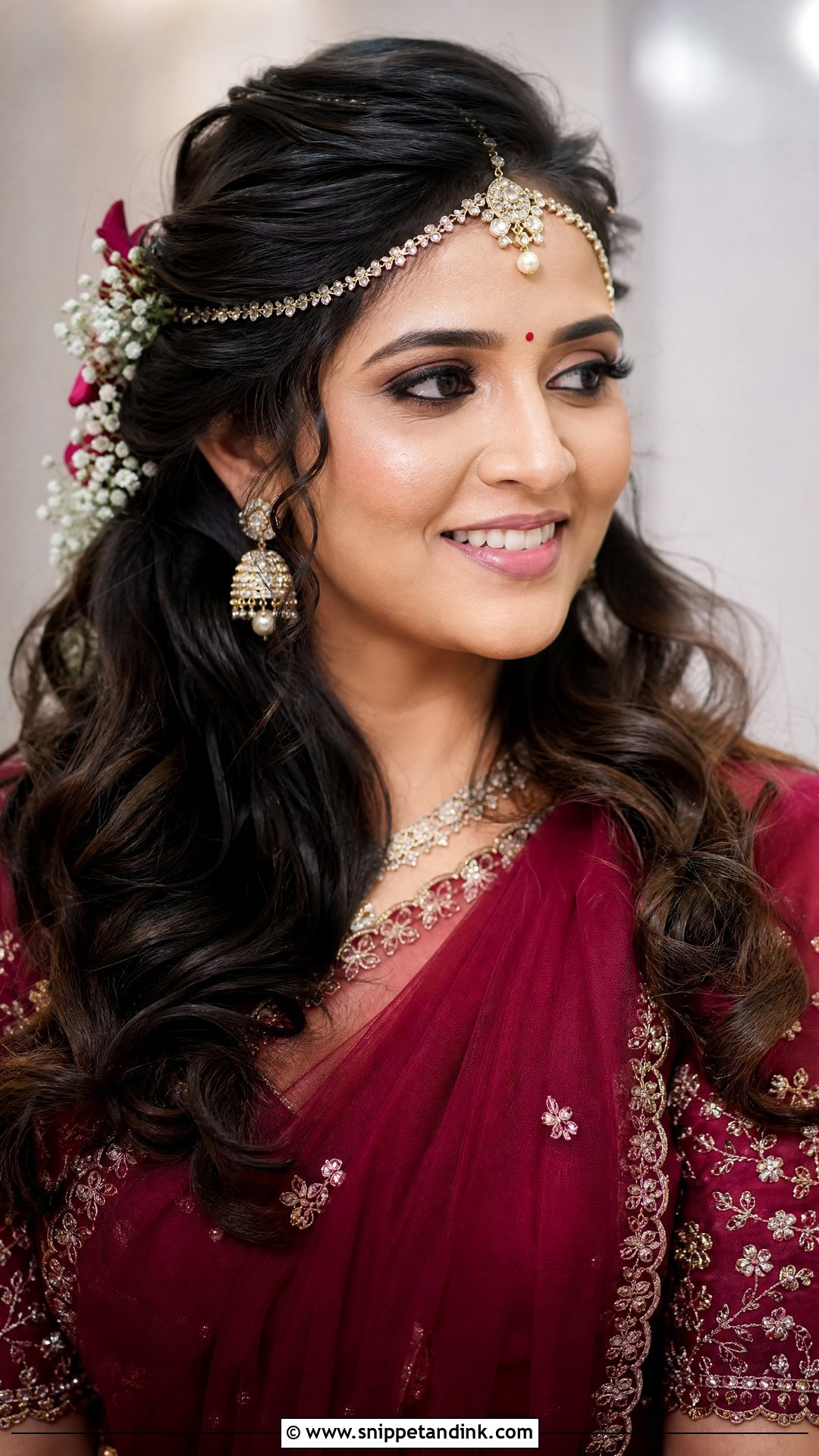
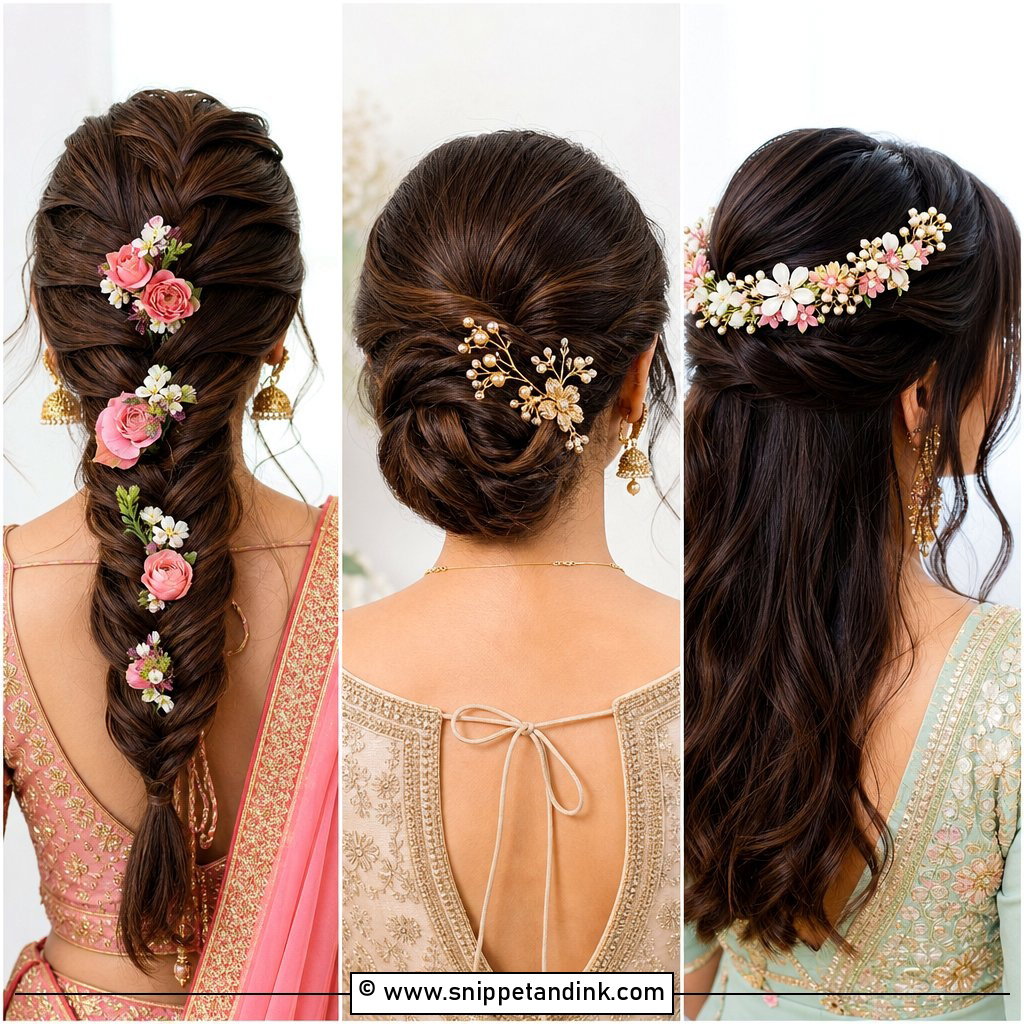
Not every bride wants braids or buns. Open curls flowing down the back, with a decorated side section or floral clip for tradition, feel glamorous and modern. They suit naturally wavy hair and brides who like movement. I’m frank about the trade-off: humid mornings and a sacred fire nearby mean curls relax faster than in most settings, so I set them with a smaller iron and let them cool fully before brushing out. A matha patti and jhumkas keep the face framed.
14. Floral Tiara Braid Hairstyle
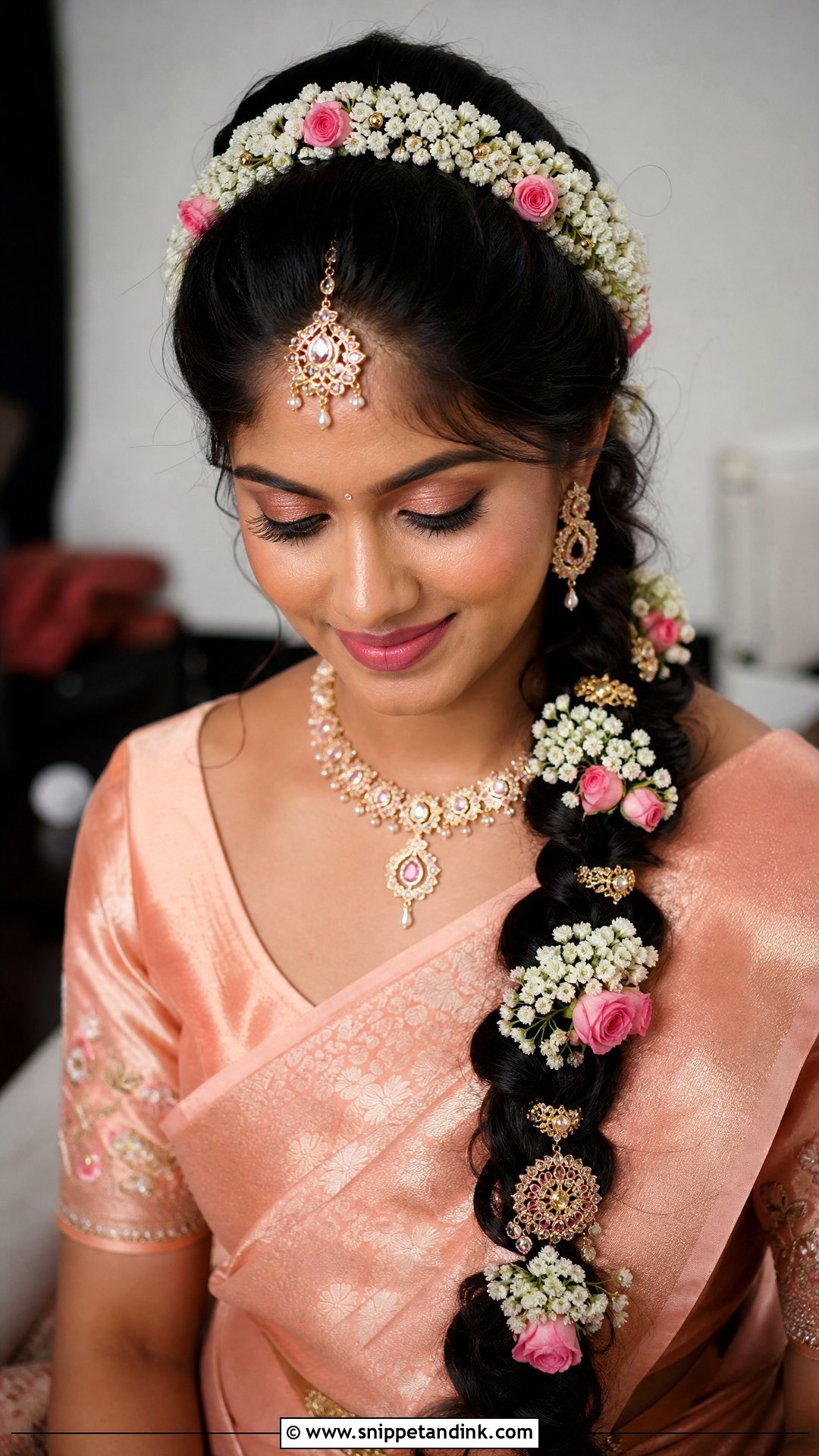
A band of fresh flowers across the head, leading into a decorated braid behind, feels youthful and natural. Jasmine, roses and small buds make a fragrant headpiece that replaces heavy gold. It pairs well with pastel sarees and light jewelry. I ask the florist to build the tiara on a flexible wire base, so I can shape it to your head and pin it at each temple; a tiara made of loose flowers alone doesn’t stay in place. The braid behind keeps it rooted in tradition.
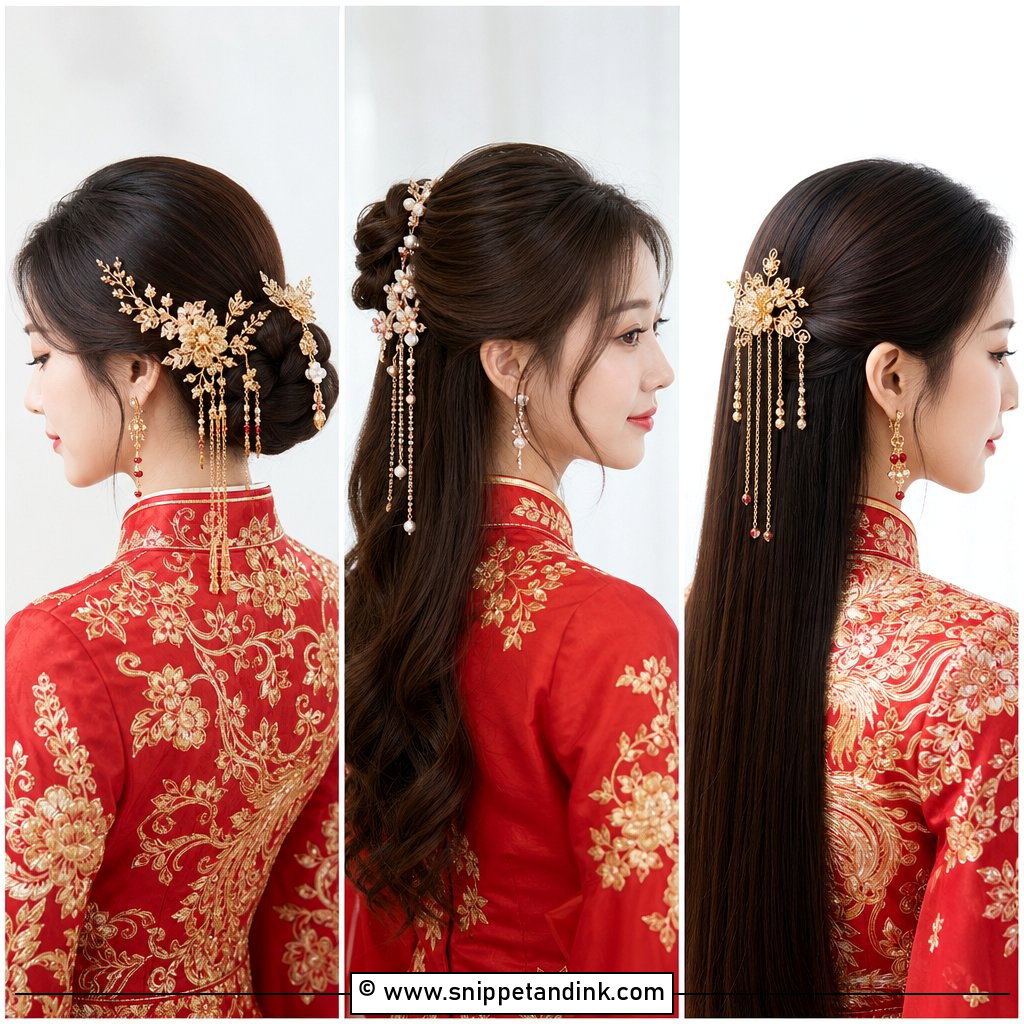
15. Bun With Kunjalam Tassels
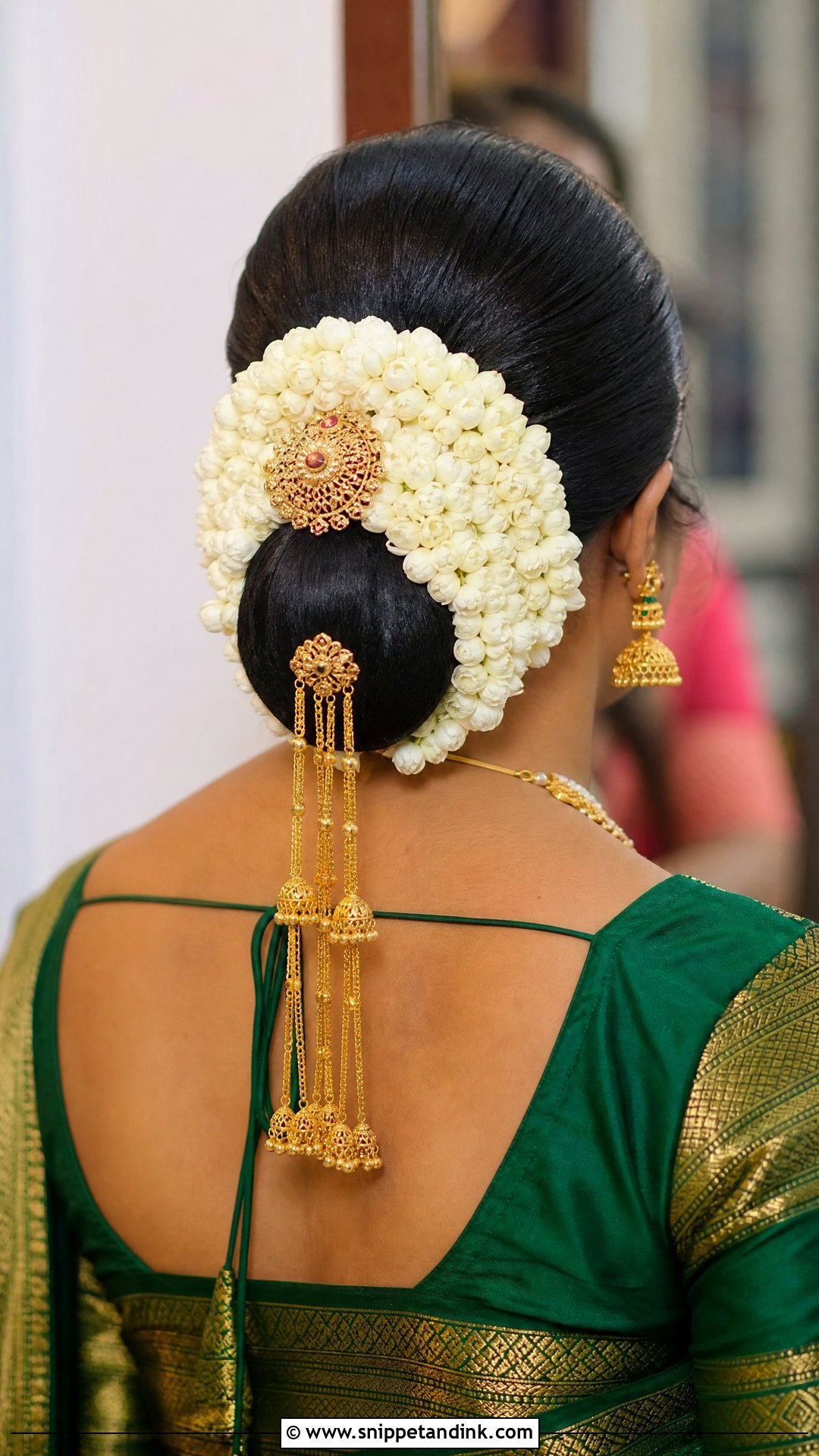
Kunjalam tassels hang from the bun or braid and sway with each step, adding movement to an otherwise smooth, jasmine-wrapped style. They catch the light during rituals. Since they swing, I place them where they won’t hit the back of a chair or tangle with your pallu when it’s draped over the shoulder. They pair naturally with temple jewelry and silk, and they add a rich, distinctly South Indian detail.
16. Rose and Jasmine Combination Braid
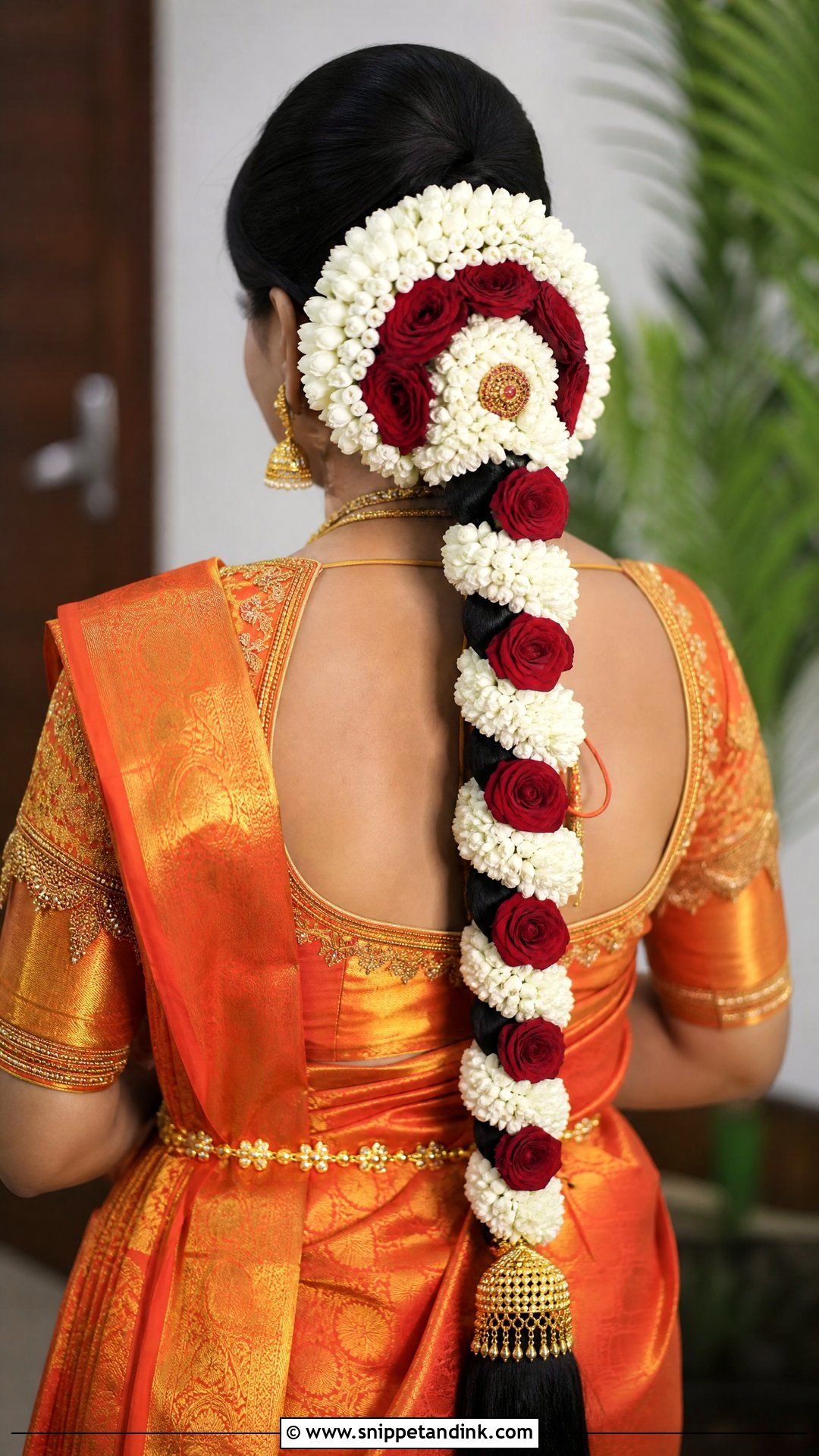
Alternating white mogra with red or pink roses along the full length of the braid gives contrast, volume and plenty of fragrance. It’s a good option if you want color in your hair without more gold. With bright Kanjeevaram sarees it looks festive. Ask your florist to keep the rose heads small and evenly spaced; uneven clusters make the braid look lumpy from behind. A kunjalam at the tip finishes it.
17. Sleek Bun With Maang Tikka
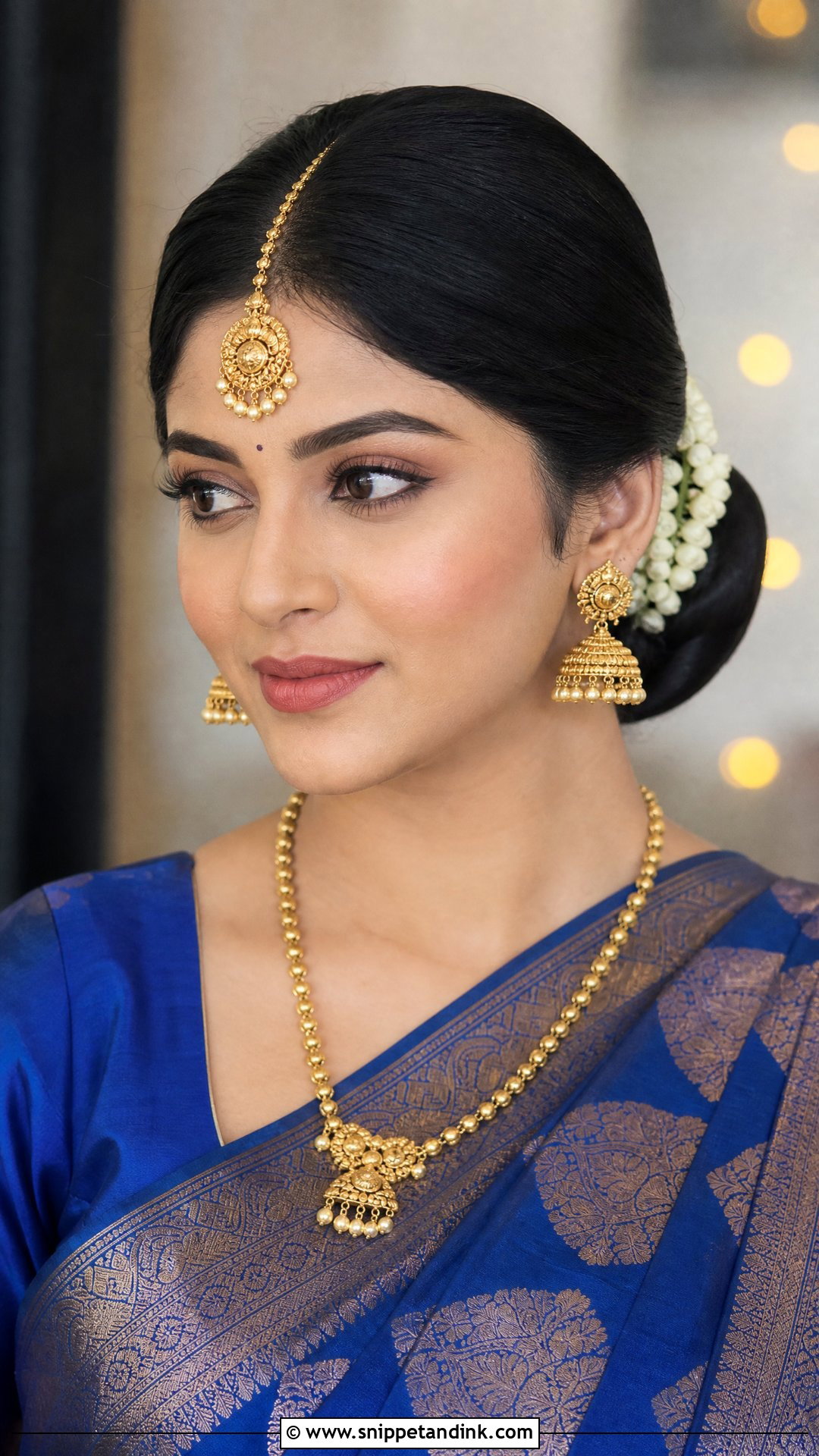
A sleek, polished bun with a bold maang tikka keeps everything focused on the face. It suits brides who prefer less floral decoration, and a few jasmine strands or a small gold piece keep the traditional feel. Fine and medium hair handle it well, since smoothness hides lack of volume. I use a light smoothing cream and a fine-tooth comb for the back, then a mist of spray, because flyaways show clearly in a sleek style under morning light. It pairs with diamonds or gold.
18. Layered Flower Braid Hairstyle
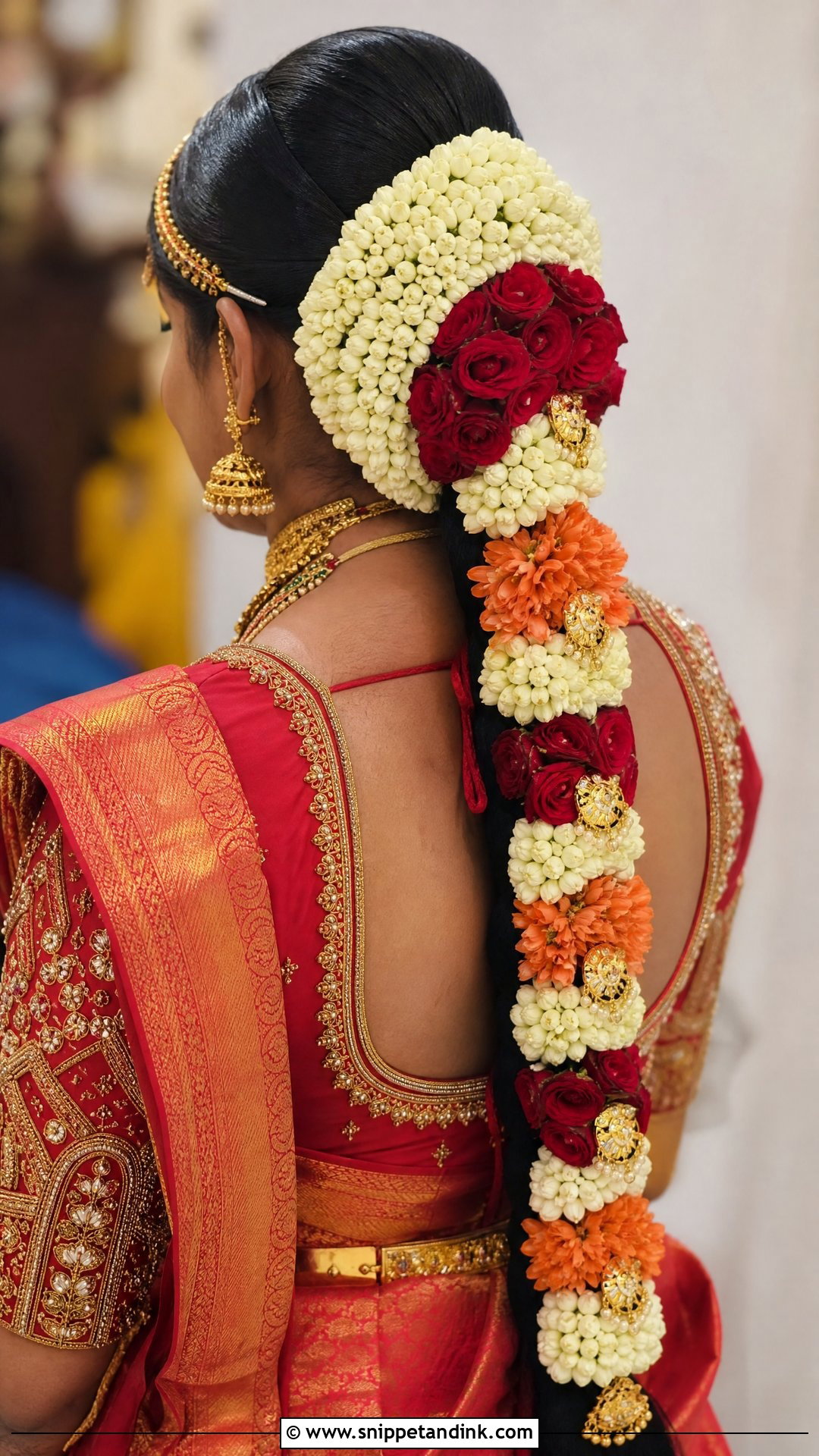
The layered flower braid stacks rows of jasmine, kanakambaram and roses in distinct sections down the braid, so it looks thicker and grander. It’s the style closest to a traditional flower jadai. Gold accessories between the rows add sparkle. Bright orange kanakambaram and red roses read especially well in daylight photos. Because it’s the heaviest flower style here, I build it on a cloth or net base that’s attached to the braid, rather than pinning dozens of strings individually.
19. Messy Bun With Floral Accents
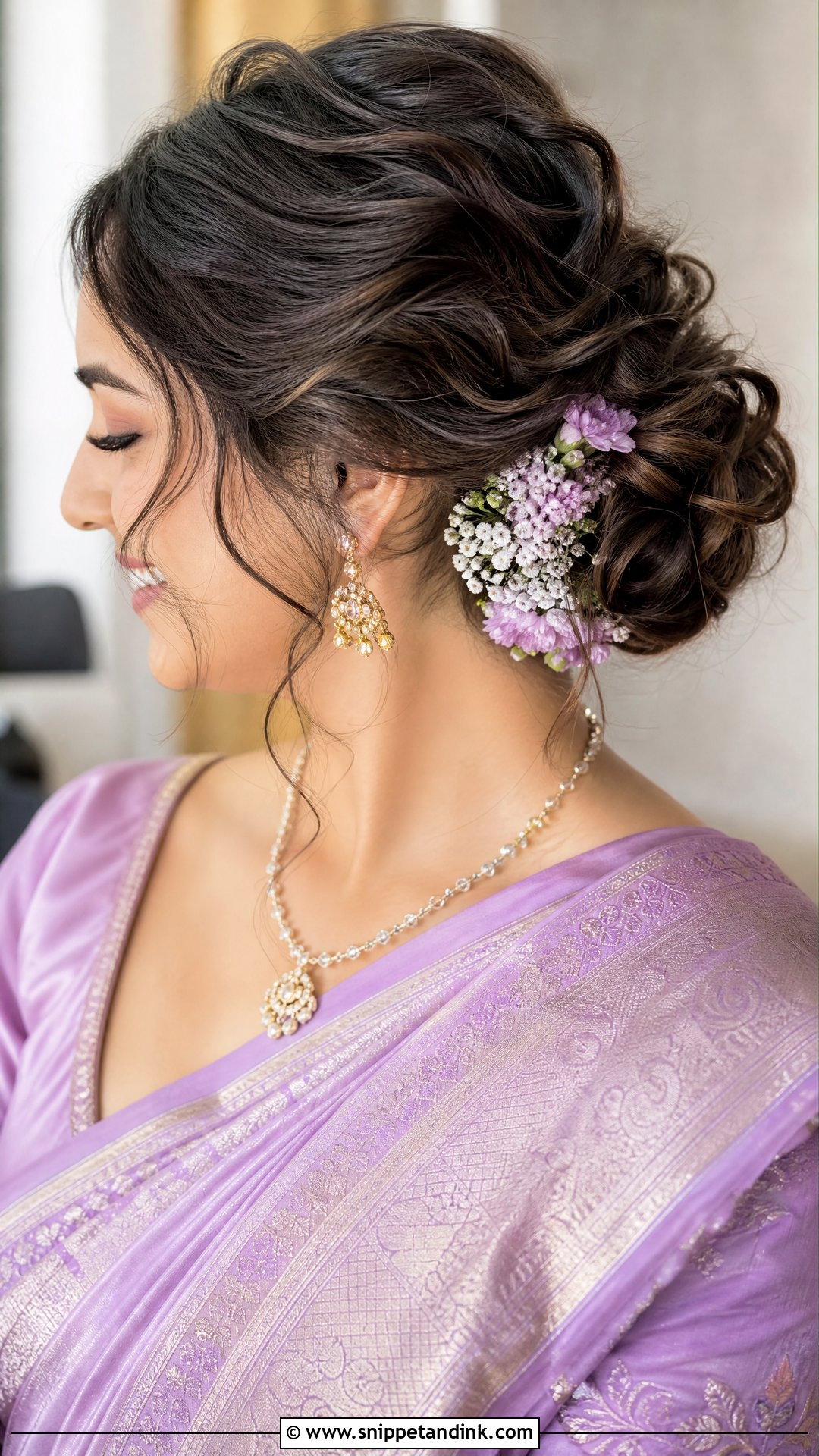
A slightly undone bun with loose tendrils is the most relaxed style on this list. Fresh flowers tuck into the folds, and it suits flowing sarees, outdoor venues and reception-style looks. For a muhurtham, I’d keep the messiness modest. A heavy gold necklace and a very loose bun can look unplanned together. The bun still needs a firm foundation underneath so flowers have something to hold onto.
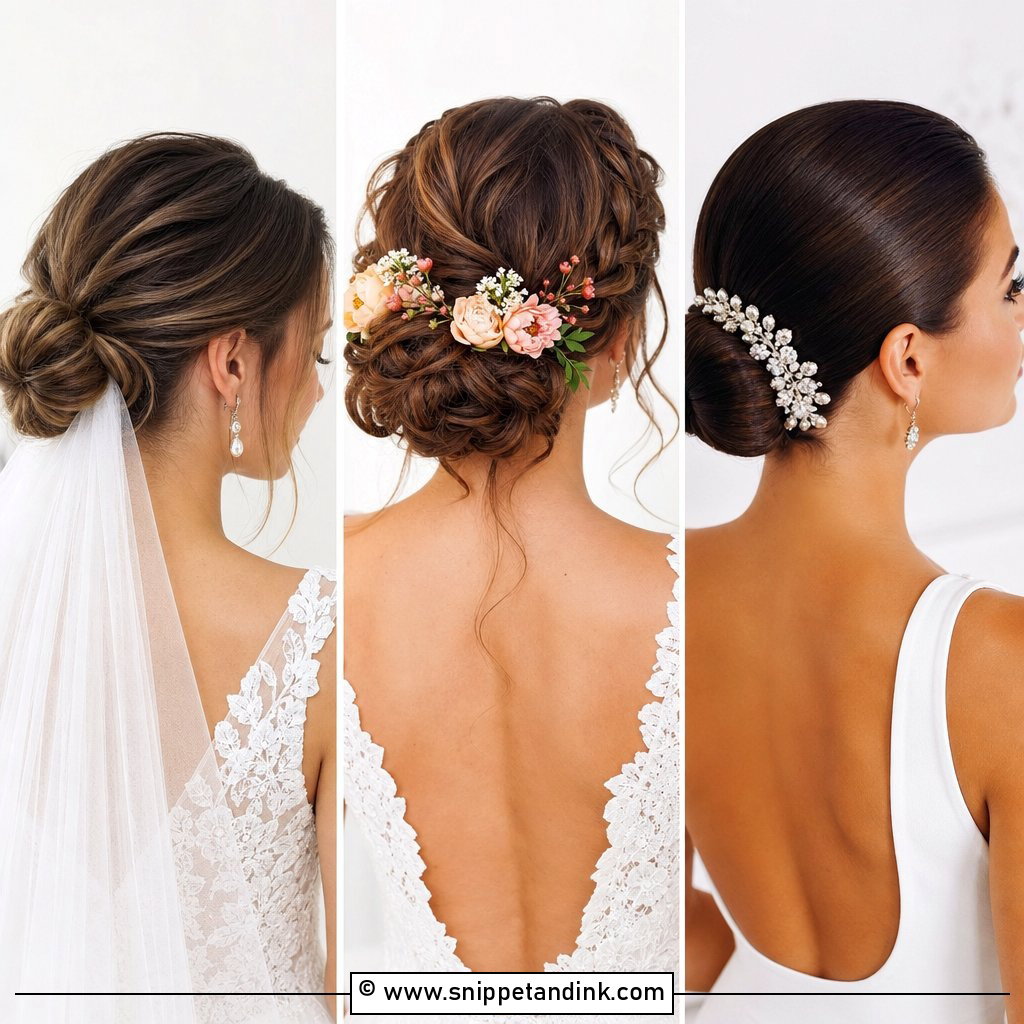
20. Fishtail Braid Bridal Hairstyle
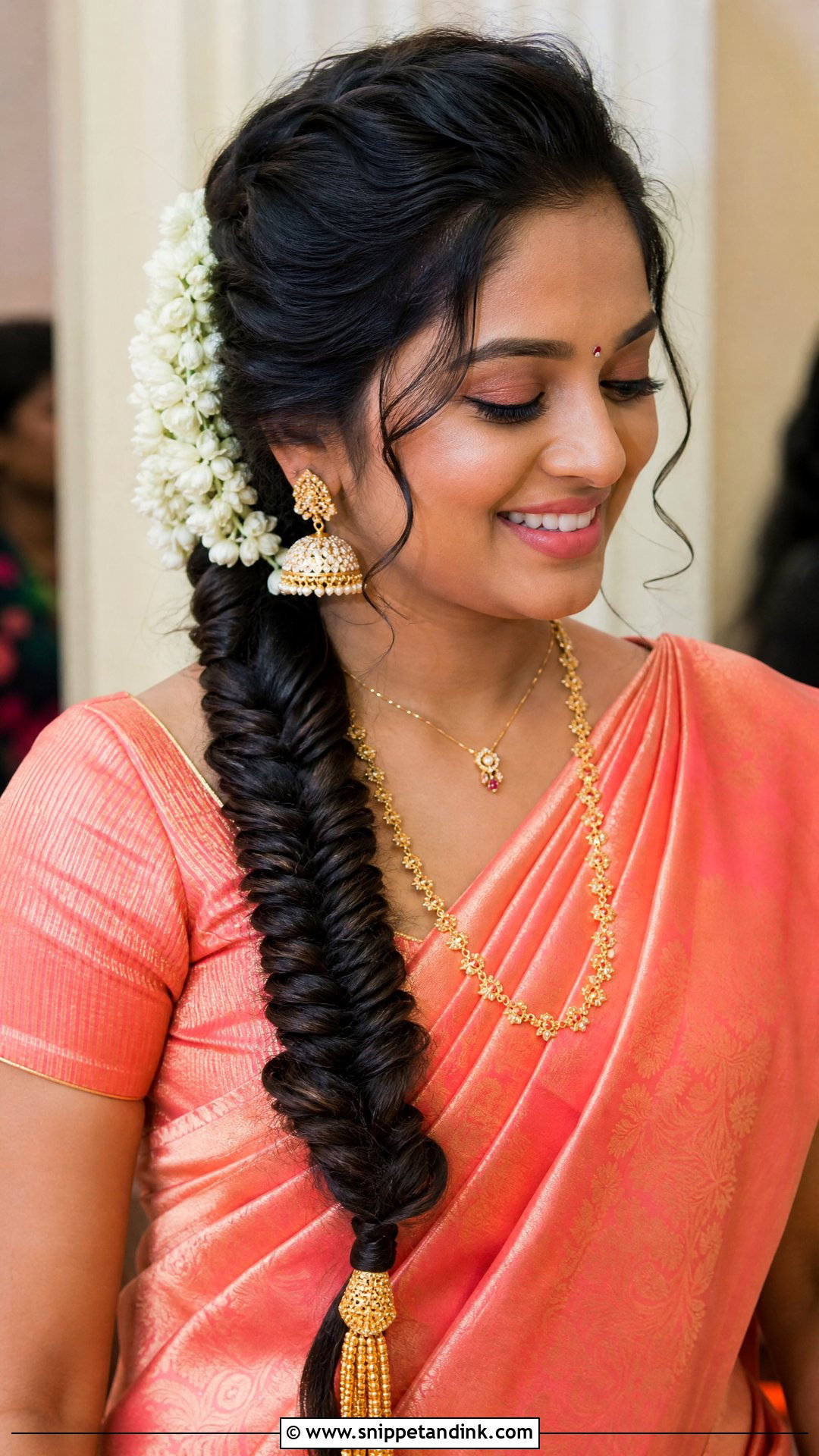
A fishtail braid has more, finer crossings than a standard braid, which gives it intricate texture. Jasmine or small flowers tuck between the weaves. It can drape over one shoulder or run straight down the back, and it suits both silk and lighter sarees. It photographs best up close, where the pattern shows. Fishtails loosen easily on very silky hair, so I add texture spray before braiding. A kunjalam or gold accent at the tip finishes it.
Carrying Gold and Flowers Through Hours of Rituals
A fully dressed bridal braid can be heavy, and you’ll be sitting, bending and standing repeatedly near a fire. The way it’s built matters more than the design.
Building the base
I braid tight at the top, where the ornaments hang from, and add an extension braid if your hair doesn’t reach the length the jadai needs. The heaviest ornaments get stitched or pinned into that firm upper section, not dangling from loose lengths. If your scalp starts to ache within an hour at the trial, tell me; it will be worse on the day.
Sitting near the homam
Heat from the sacred fire wilts flowers faster and loosens curls. I keep hairspray light near the face, since it’s flammable, and ask a relative to keep an eye on the pallu and loose strands when you lean forward. A small pouch with spare pins, a few jasmine strings and a mirror covers almost every fix between rituals.
Changing for the reception
If you’re switching to a second look later, plan it at the trial. Taking off a gold jadai and flowers takes time and leaves kinks in braided hair, so a reception bun or soft waves work better than a sleek open style.
Matching Your Braid or Bun to the Hour Itself
A muhurtham hairstyle has to honor tradition, suit your face, and survive a long ceremony. Between fragrant jasmine braids, ornamented buns and open curls, there’s an option for most brides. Think about your hair length, the weight of your jewelry and saree, how long the rituals run and what time they start. Then trust an experienced stylist to plan the foundation. The style you’ll be happiest with is the one you stop noticing once you sit at the mandap, because it feels secure and it feels like you.
You'll Like These Ideas:


Leave a Reply