
Silk satin is the fabric I’m most protective of in a fitting room. It has a heavy, liquid drape and a soft sheen, and it shows everything: a seam pulling by a few millimetres, a strap sitting slightly off, the outline of the wrong bra. The twenty gowns below run from bias-cut slips to boned ball gowns, and current collections lean on strapless necklines, corsetry, basque waists and bows alongside the cleaner classic cuts. With each one I’ve noted what I’d pair with it and what I’d check at the fittings, because with satin the fit and the foundation garments matter more than any accessory you add.
Silk Satin, Duchess or Charmeuse? Reading the Label and the Hand
Satin is a weave, not a fibre, so the word on a tag tells you about the shine rather than what the cloth is made of. Silk satin is heavier and cooler to the touch, with a softer glow than polyester satin, which tends to throw back a harder, more mirror-like shine under flash. Neither is wrong, but they behave differently and are priced very differently, and I want every bride to know which one she’s standing in.
- Charmeuse: lightweight, with a satin face and a dull back. It’s the fabric of bias-cut slips because it pours over the body, but it also shows every seam and line underneath.
- Duchess satin: heavy and firm enough to hold a structured bodice or full skirt on its own. It’s often a silk and synthetic blend, which makes it a little more crease-resistant.
- Crepe-back satin: reversible, with matte crepe on one side. Some designers use both faces in one gown for contrast.
- Mikado: a heavier silk with a slight texture instead of a wet shine, suited to sculpted, architectural shapes.
My quick test at a try-on: crush a corner of the skirt in your fist for a few seconds and let go. If it springs back mostly smooth, it will survive the car ride and the dinner. If it holds a hard crease, plan for a steamer on the morning and someone who knows how to use it.
1. Minimalist Silk Satin Slip Wedding Dress
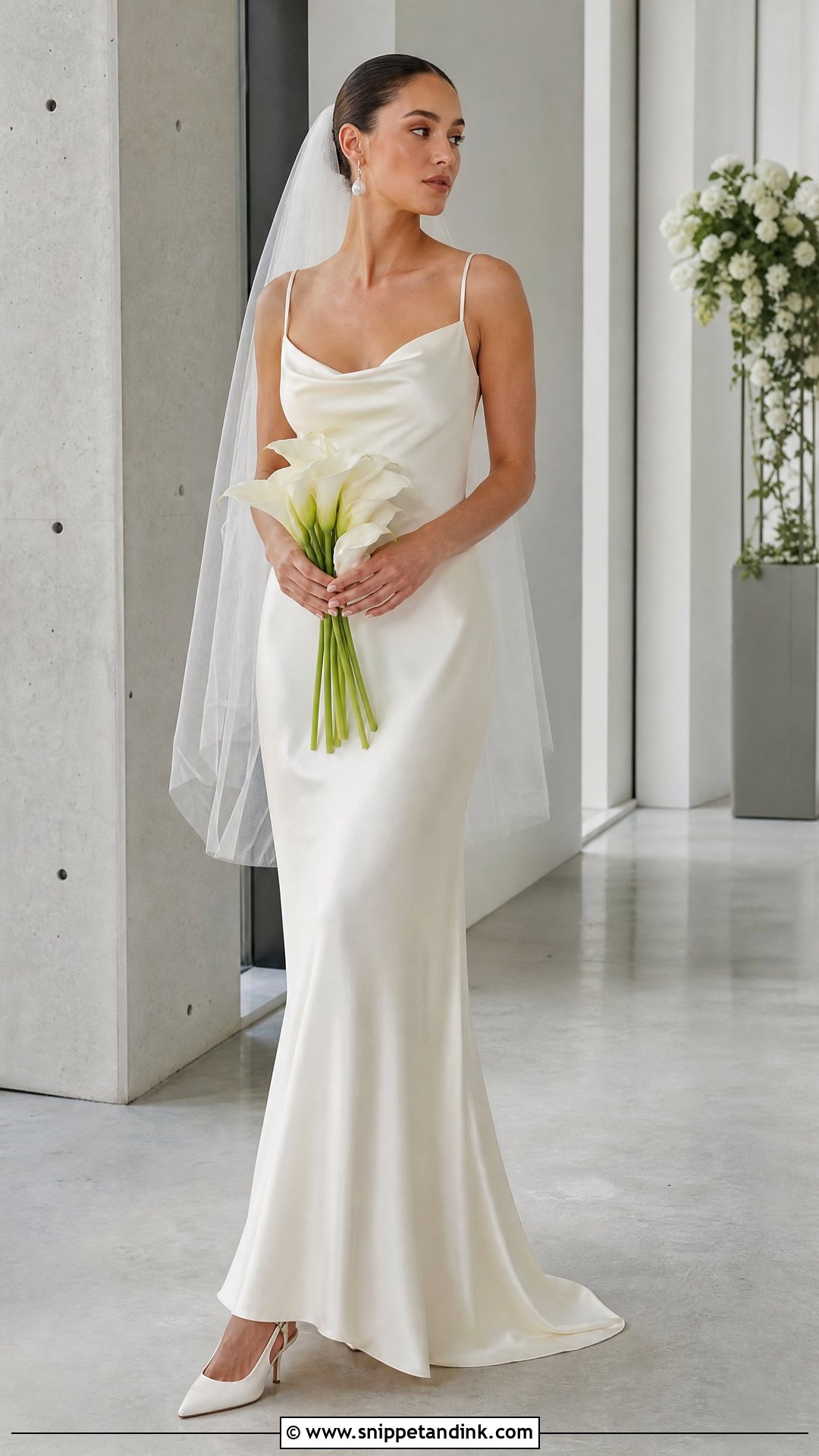
A bias-cut slip is the most honest dress on this list. Cut on the diagonal, the satin gives slightly and follows the body, which is why it skims rather than clings when it’s fitted well, and why it shows every ridge when it isn’t. I always put the bride in her actual underwear at the first fitting, ideally bonded or laser-cut pieces with no edges. Slim straps, a softly curved neckline and a short sweep train keep it quiet, while a raw-edge fingertip veil and a low bun leave the shoulders clear. Add pointed ivory slingbacks, pearl drops and a tight bunch of white roses or callas. Leave the final hem until late, because bias hems can drop and wave once the dress has hung for a while.
2. Cowl Neck Silk Satin Wedding Dress
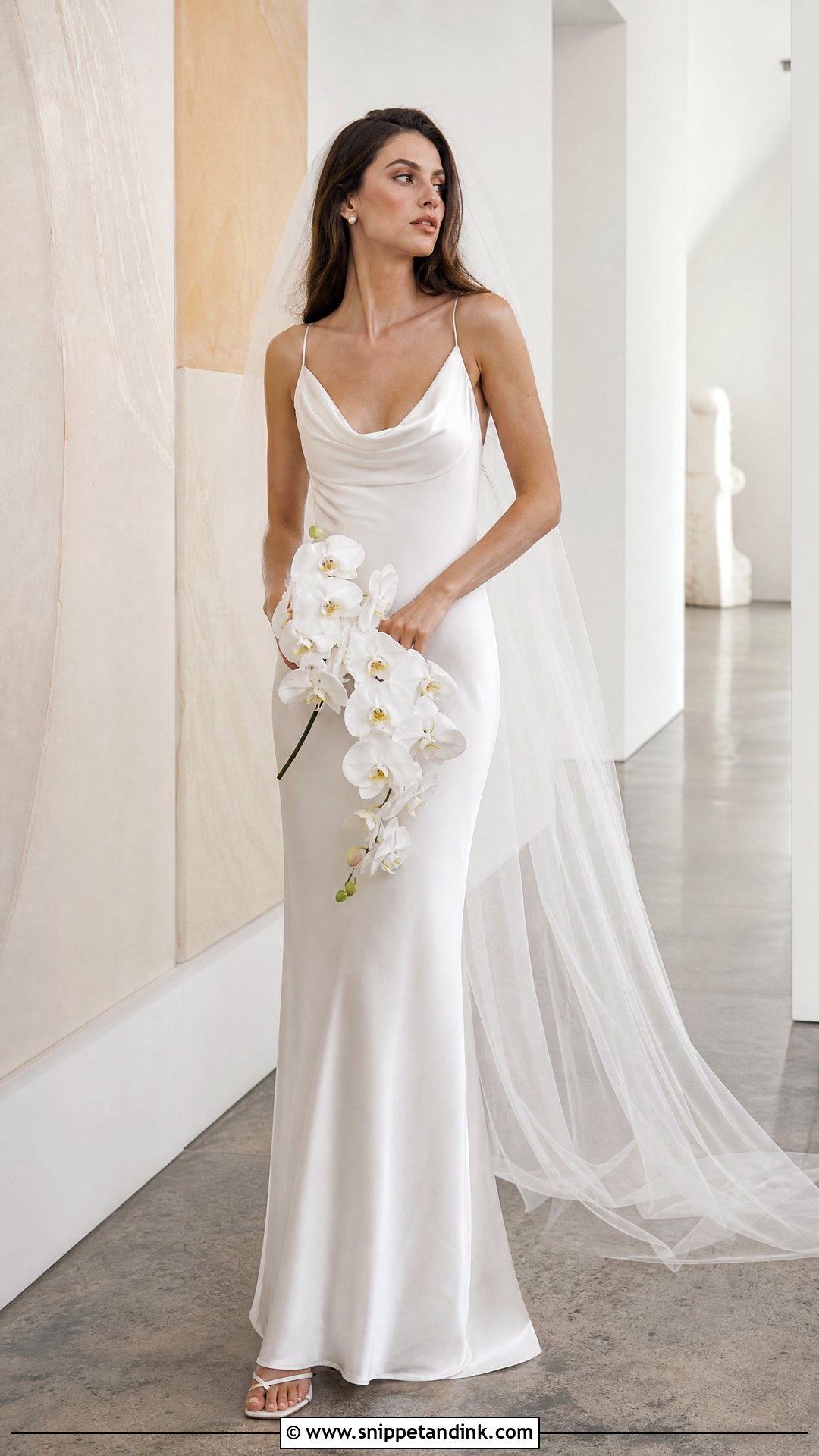
A cowl is draped from extra fabric at the neckline, so it only works in a satin heavy enough to fall into folds instead of collapsing flat. If the cowl looks limp on the hanger, it will look limp in photos. It sits best on a column or slip shape, where the folds are the only detail the gown needs. I like adjustable spaghetti straps and a lined bodice here, because a deep cowl can gape when you lean forward to sign the register or hug your grandmother. Keep jewelry to crystal or pearl studs and a slim bracelet, then let a sheer chapel veil add movement at the back. Of all the draped styles, the cowl neck silk satin wedding dress is the one I point to when a bride wants drama with almost no embellishment. A loose handful of white orchids and greenery suits it.
3. Strapless A-Line Silk Satin Wedding Dress
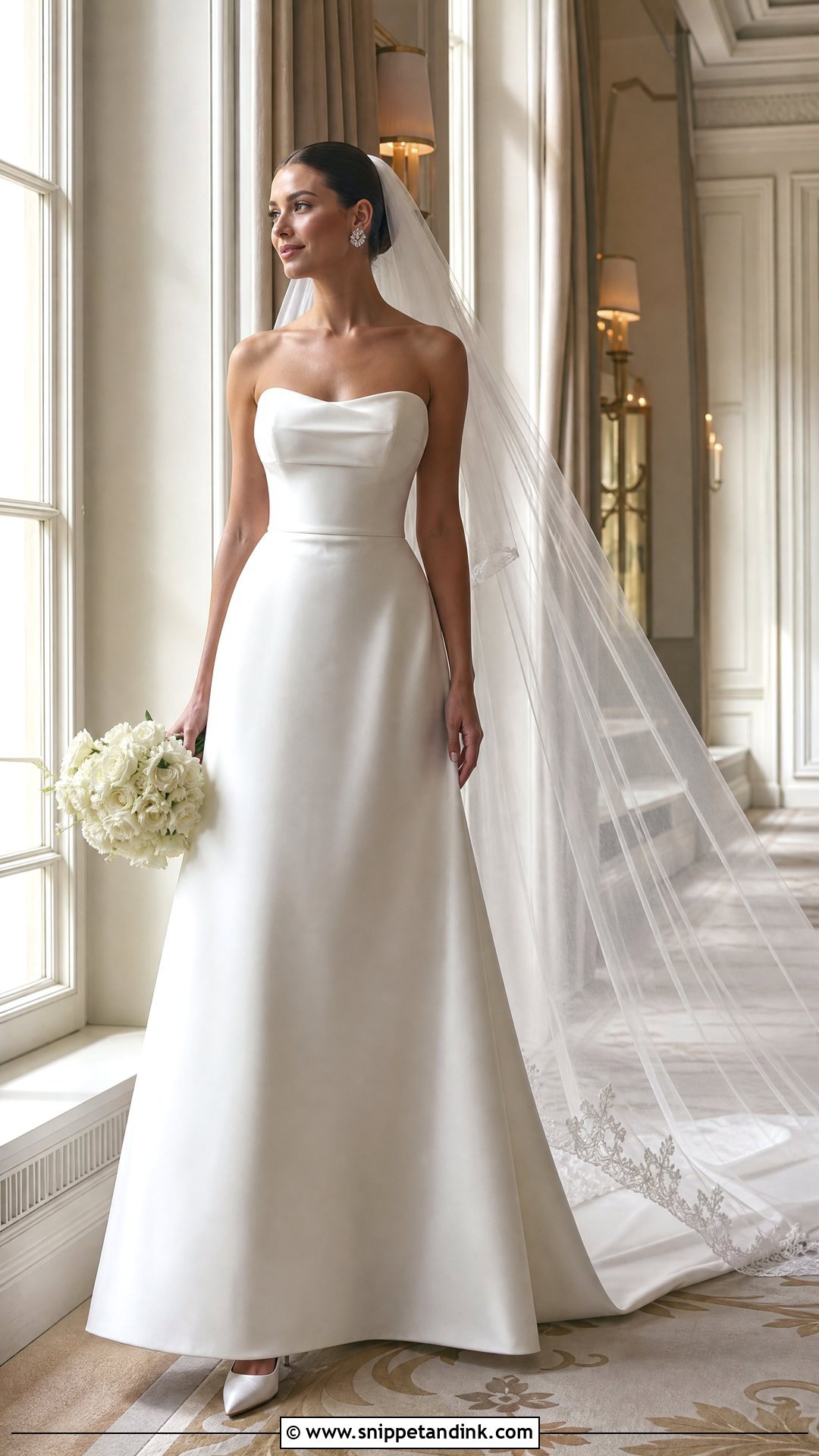
Strapless A-lines are where I see the most fidgeting, and it’s nearly always a support problem rather than a size problem. The bodice needs internal boning and ideally a waist stay, a grosgrain band sewn inside at the natural waist that anchors the dress to you so the top can’t slide down. Get that right and the skirt does the rest, widening gently from the waist without ball-gown volume. Pearl cluster earrings, pointed satin pumps and a cathedral veil tucked under a smooth chignon keep it classic. Ask about pockets set into the side seams; satin hides them well. Hotel ballrooms and formal gardens suit this shape best.
4. Sweetheart Corset Silk Satin Wedding Dress
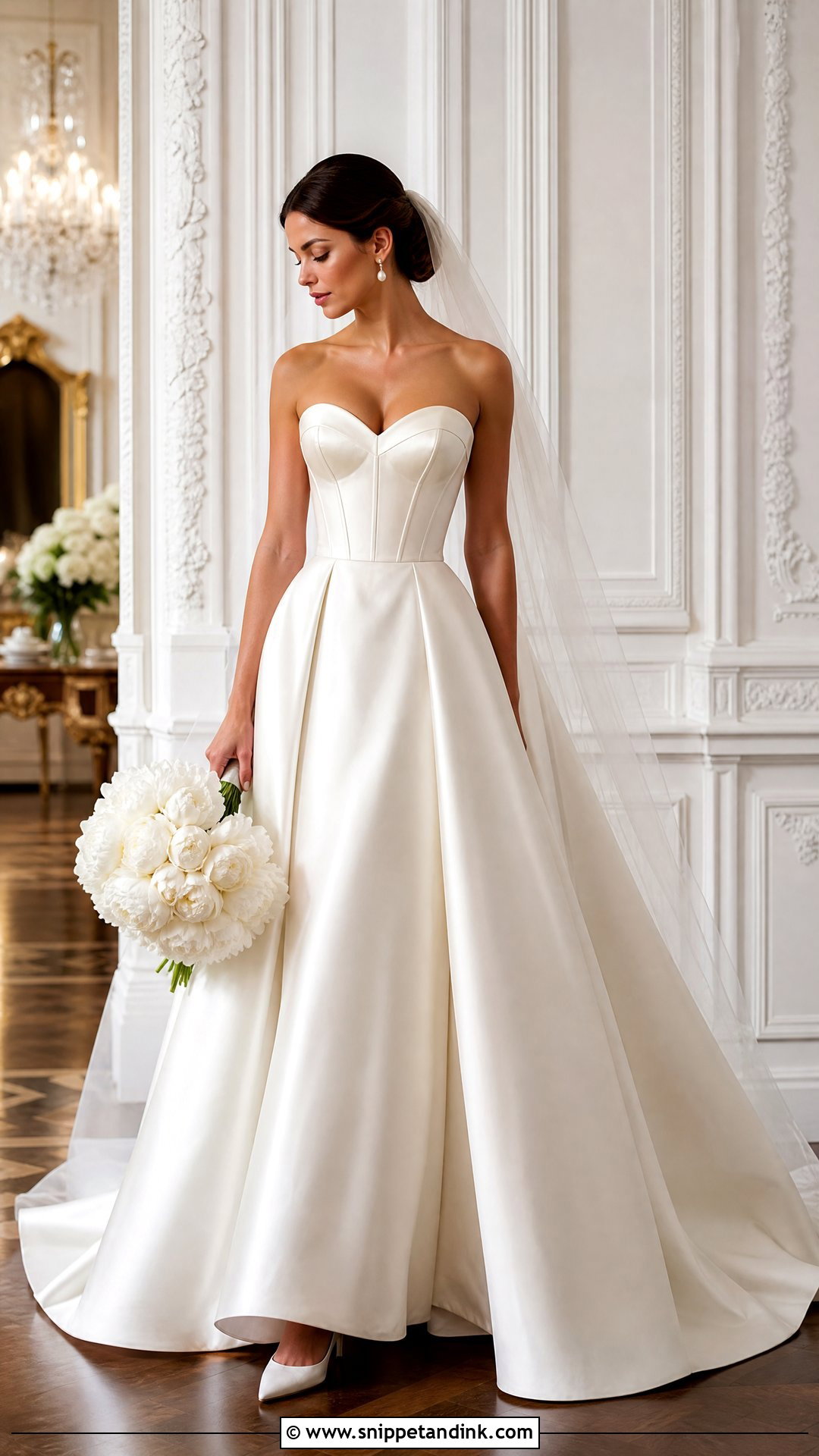
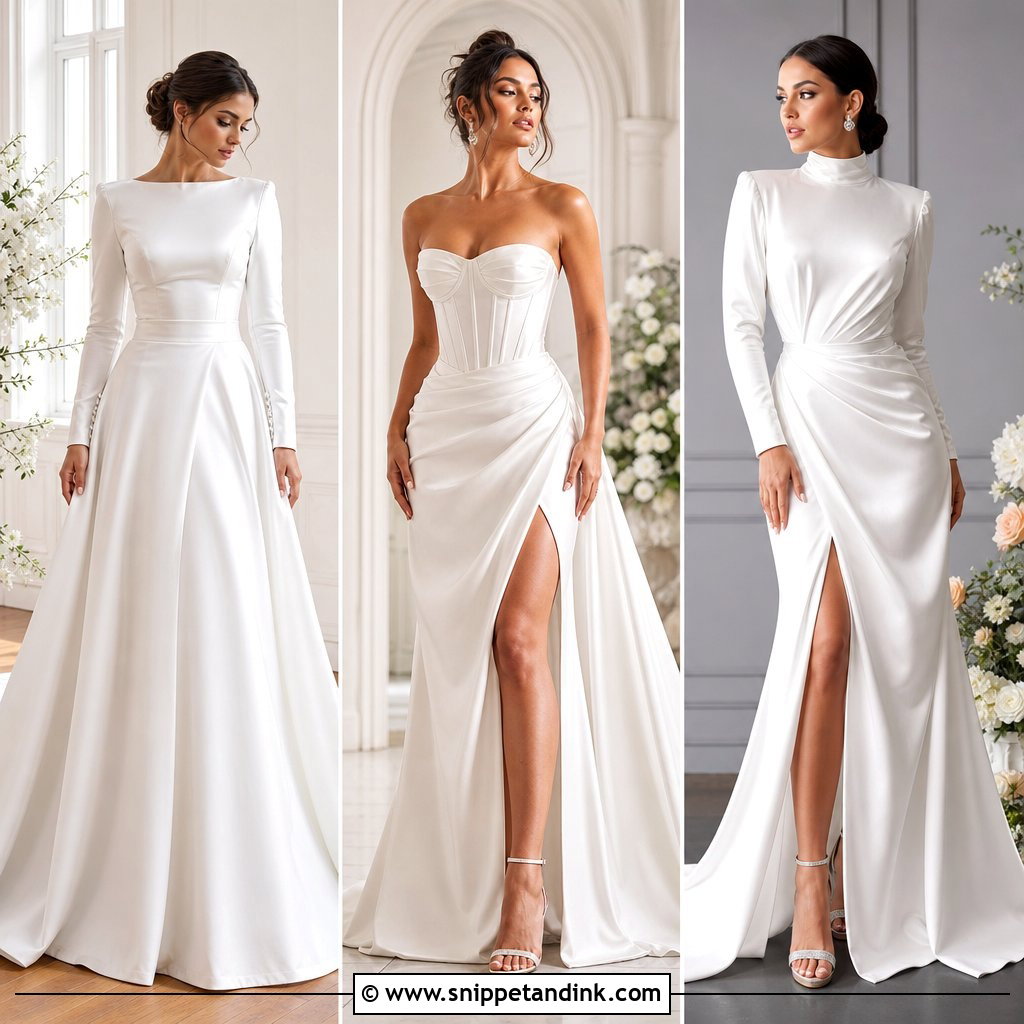
On a sweetheart corset, the cups are where I look first. If the cup shaping doesn’t match your bust, satin shows a dent or a gap at the top edge in every side-angle photo. Boning should run through the whole bodice, and a full skirt balances the curve of the neckline. Because the sweetheart already frames the collarbone, I keep jewelry to teardrop earrings or a short pearl strand. Closed-toe ivory heels, a long sheer veil and a low bun with a few face-framing pieces round it off, with peonies or garden roses in hand. At the last fitting, sit down, walk and lift both arms over your head; if the top edge bites or lifts, it needs another adjustment.
5. Basque Waist Silk Satin Wedding Dress
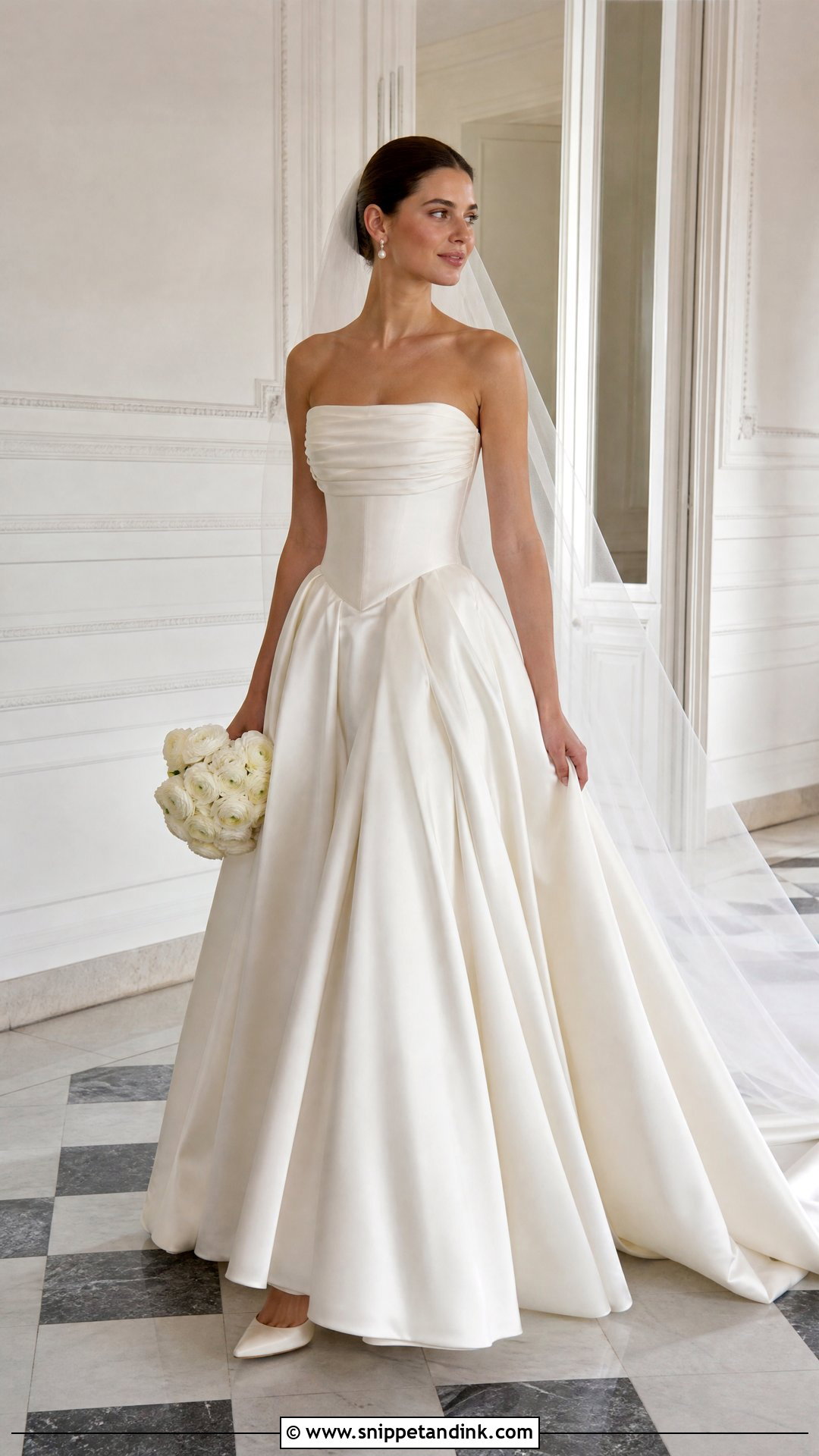
The pointed waist is the reason to choose this gown, and it’s also the detail that goes wrong most easily. That V at the front has to lie flat on the body. If the torso is even slightly too long for you, the point buckles forward when you sit and creases across the satin. Subtle ruching on a strapless or off-shoulder bodice softens the sculpted line without hiding it. I’d add pearl button earrings, a long plain veil, ivory block-heel pumps and a centre-parted bun, so nothing pulls focus from the waist. A round bouquet of ranunculus and roses gives a soft shape against all those angles.
6. Off-Shoulder Silk Satin Wedding Dress
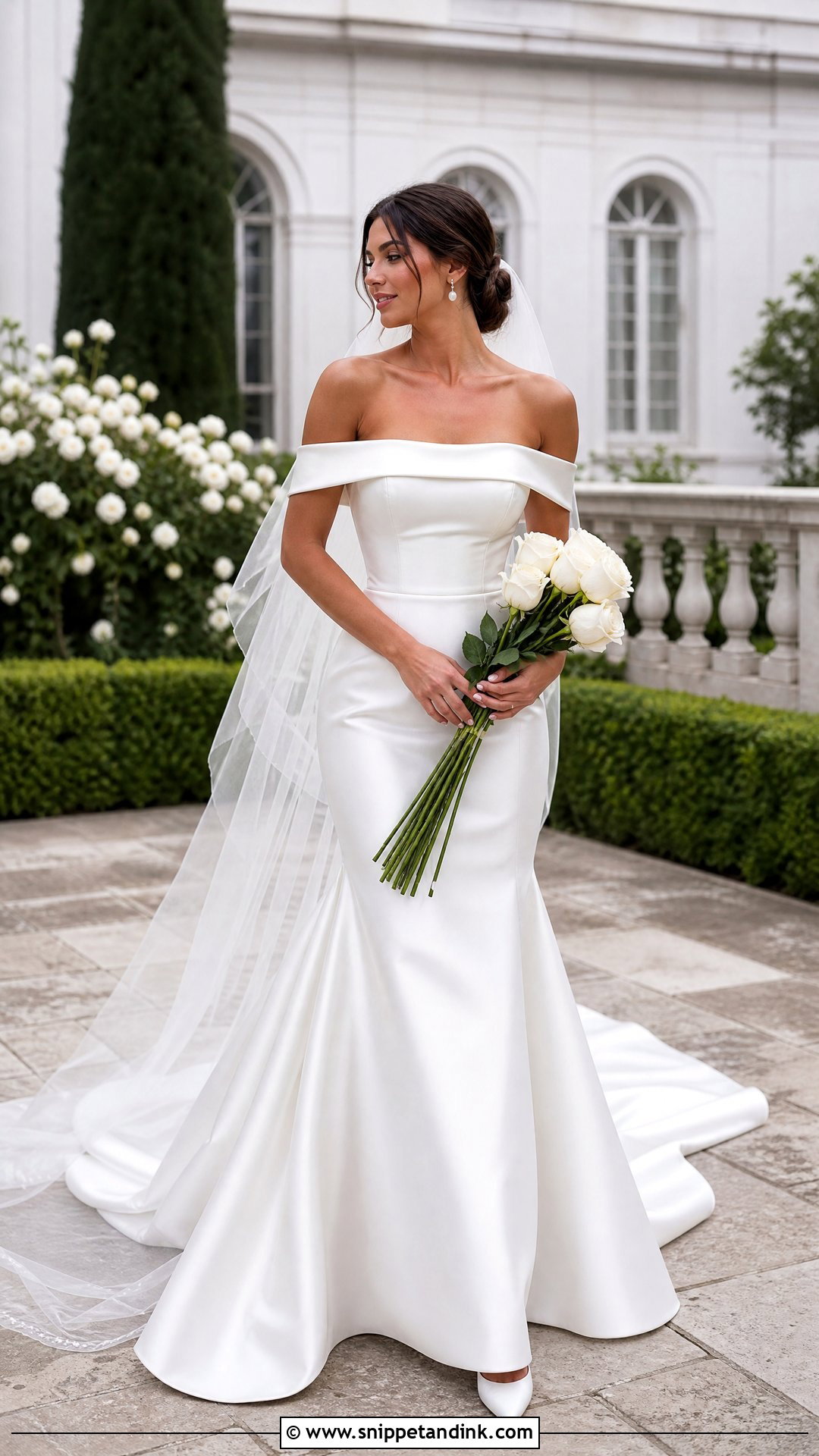
Off-shoulder bands are a balancing act. Too tight and they dig into the upper arm; too loose and you’ll spend the reception hitching them up. I have the bride hug someone and raise a glass at the fitting, because that’s the movement that shows whether the band holds. A fit-and-flare skirt defines the waist and hips before opening near the knee, so walking stays easy, and detachable sleeves let you change the neckline for the evening. A delicate pendant, pearl drops, pointed satin heels and a textured low bun keep the shoulders on show. Finish with a chapel veil and a slim bunch of tulips or long-stem roses.
7. Long Sleeve Silk Satin Wedding Dress
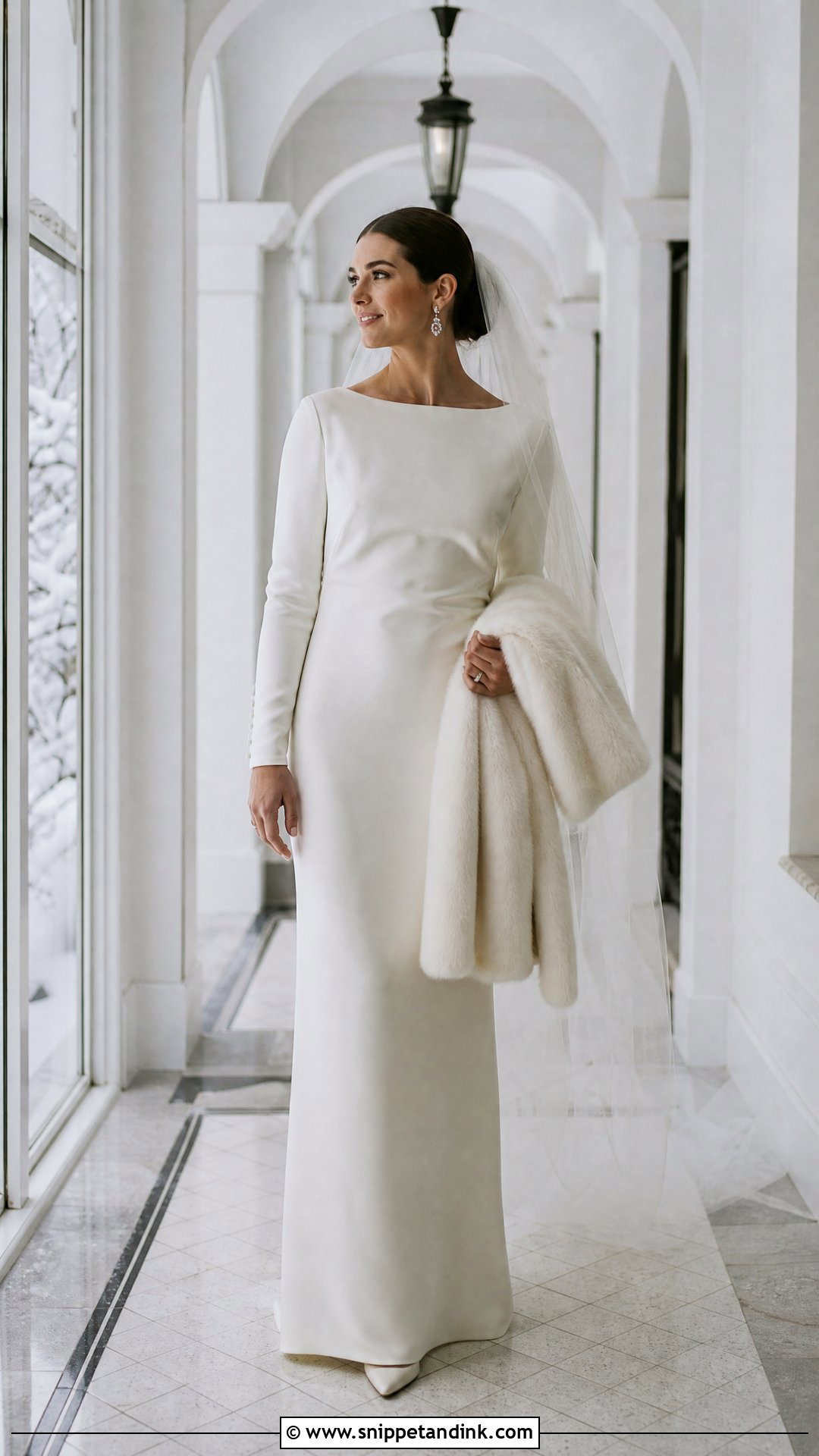
Satin sleeves need more room than most brides expect. The fabric has almost no give, so a sleeve that fits snugly while your arm hangs straight will strain at the elbow the first time you bend to hold your bouquet. I ask for a stretch lining or a slightly fuller cut through the forearm. On a column skirt for a cold-weather wedding, covered buttons at the wrist look tailored, and a bateau or shallow V keeps all that coverage from feeling heavy. Crystal studs, closed-toe pumps and a long veil under a polished bun are enough. A satin clutch and a removable faux-fur wrap help when you’re crossing between venues in winter, and white anemones with roses suit the season.
8. High Neck Silk Satin Wedding Dress
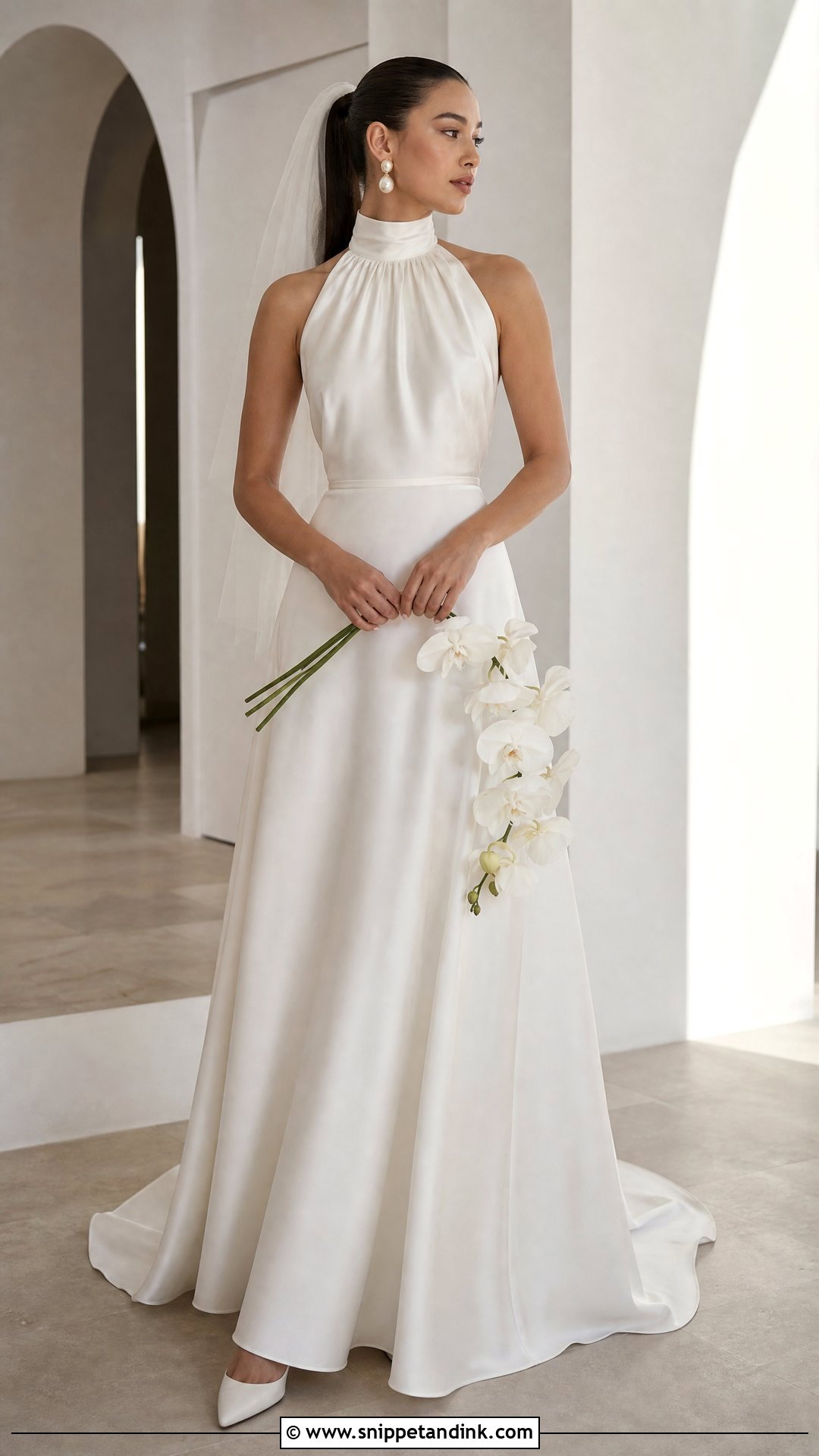
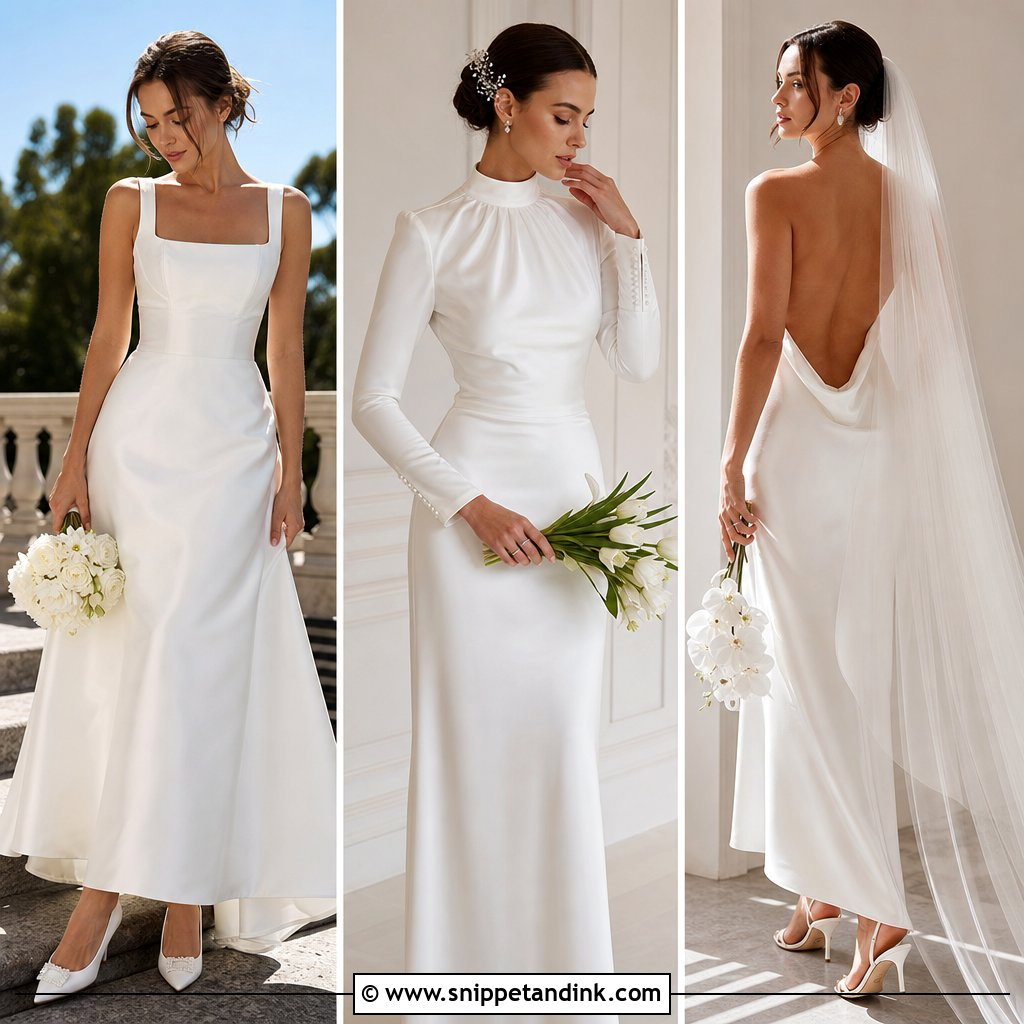
With a high neck, I go straight to the collar and ask the bride to turn her head both ways, then look down at her flowers. Satin doesn’t stretch, so a collar cut a touch too close will crease at the throat or ride up. A softly gathered neckline on a fitted column is the sleekest version; an A-line skirt gives more room through the hips. Sleeveless armholes keep the coverage from feeling buttoned up. Skip the necklace and wear sculptural pearl earrings instead. A sleek low ponytail with the veil anchored underneath, pointed ivory heels and a few long-stemmed orchids are all it needs.
9. One-Shoulder Silk Satin Wedding Dress
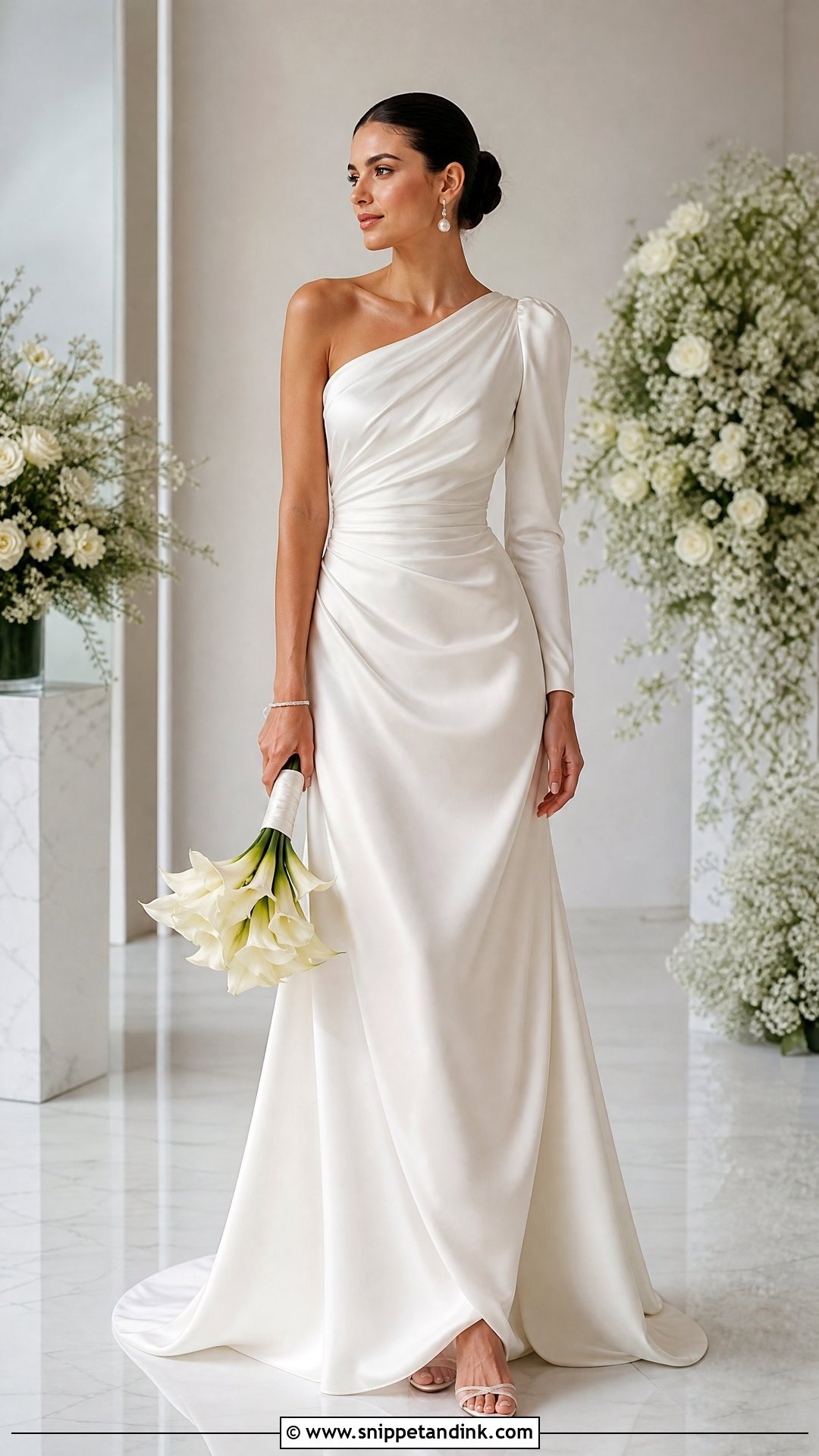
One-shoulder gowns put all the tension on a single strap, so that strap gets most of my attention. Without boning or an anchor on the opposite side, the diagonal neckline slowly migrates over the evening. A draped bodice with a straight or softly flared skirt is the cleanest pairing, and a single long sleeve adds drama for a cooler ceremony. Wear one statement earring on the bare side, pin the bun away from the strap, and consider a pearl comb instead of a veil so the asymmetry stays visible. Calla lilies echo the diagonal line.
10. Square Neck Silk Satin Wedding Dress
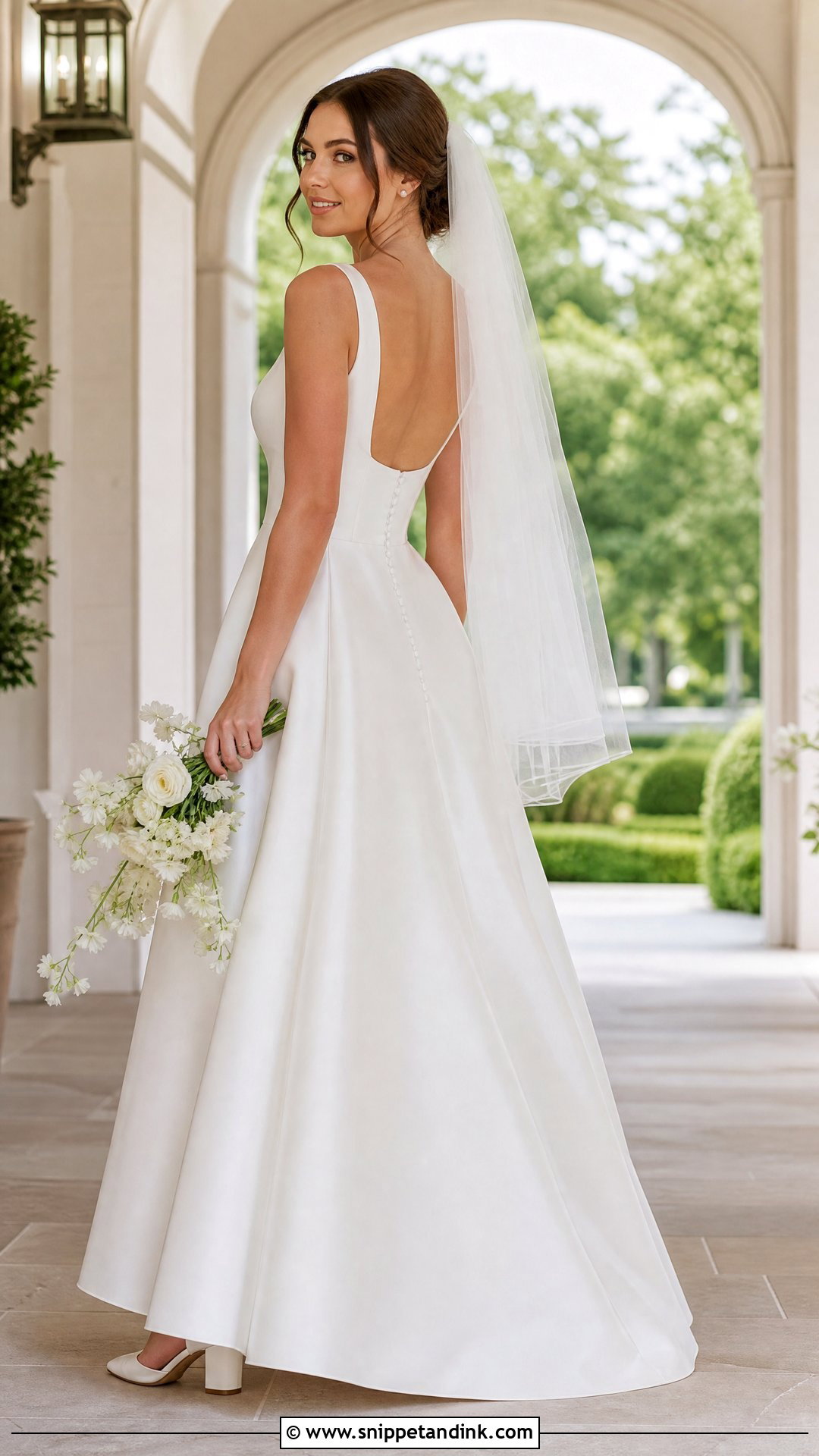
The square neck is less forgiving than it looks. Those straight corners only stay crisp if the neckline lies flat, and on a fuller bust it can gape at the top edge or press across the chest. I usually have it taken in at the strap seams rather than the side seams to correct that. Wide straps, a fitted bodice and an A-line skirt give support without much formality, and a low square back repeats the shape for the ceremony. A simple pendant, pearl studs, block-heel pumps and a fingertip veil are plenty. Soft waves and a low bun both suit the open neckline, and sweet peas with garden roses bring a little texture to the bouquet.
11. Halter Silk Satin Wedding Dress
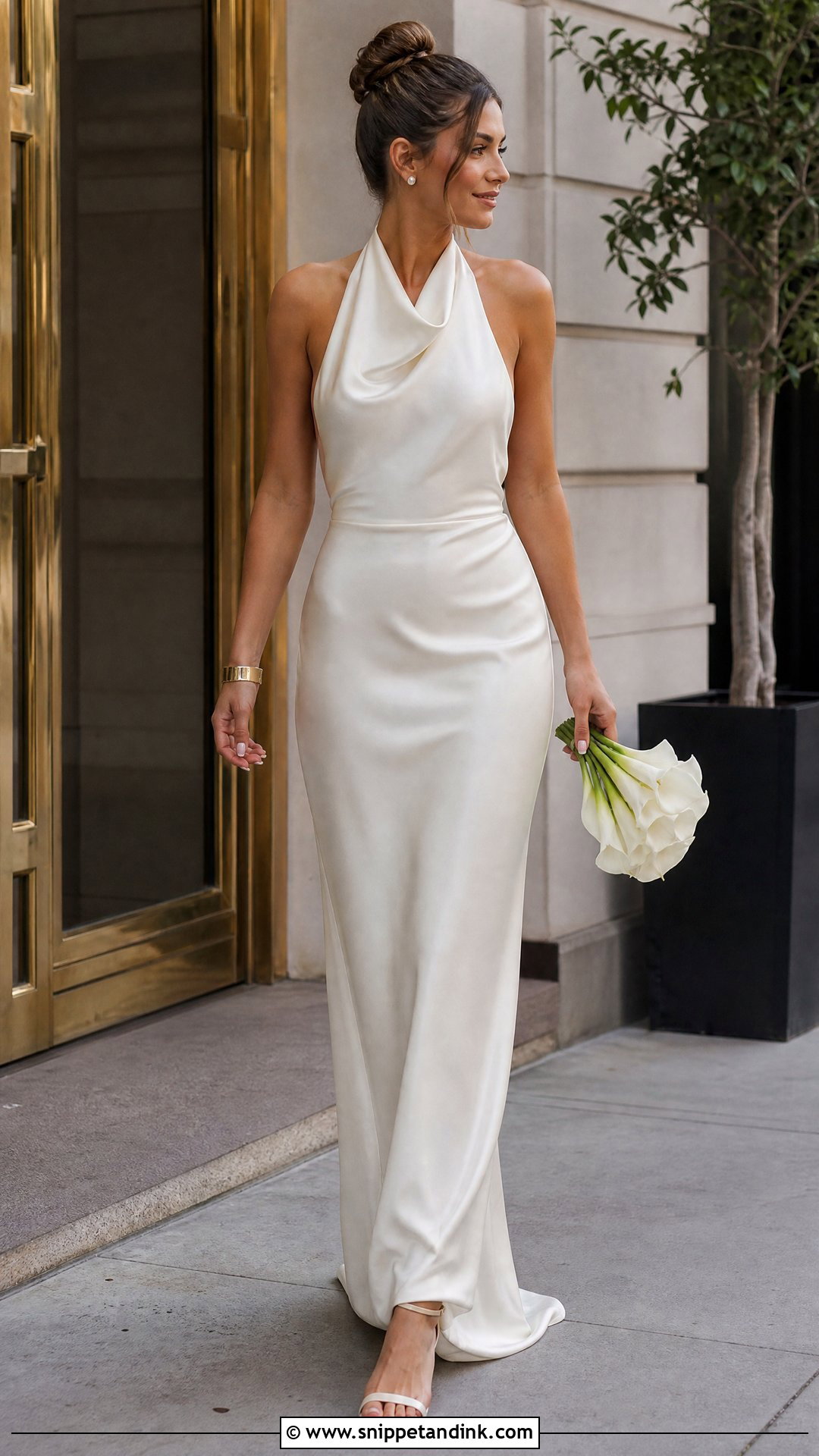
Halter necks hang much of the dress’s weight from one fastening at the nape, and satin is not a light fabric. That’s why I test the clasp through a full fitting rather than a minute in the mirror: if it rubs after an hour, it will ache by the speeches. A softly draped halter over a column skirt is the minimal version, and a fuller skirt makes it more formal. The open back balances the coverage at the front. Pearl studs, a metallic bracelet and ivory sandals with ankle straps work here, along with a high bun or smooth ponytail that keeps the neckline clear. A narrow cluster of callas follows the long line.
12. Open Back Silk Satin Wedding Dress
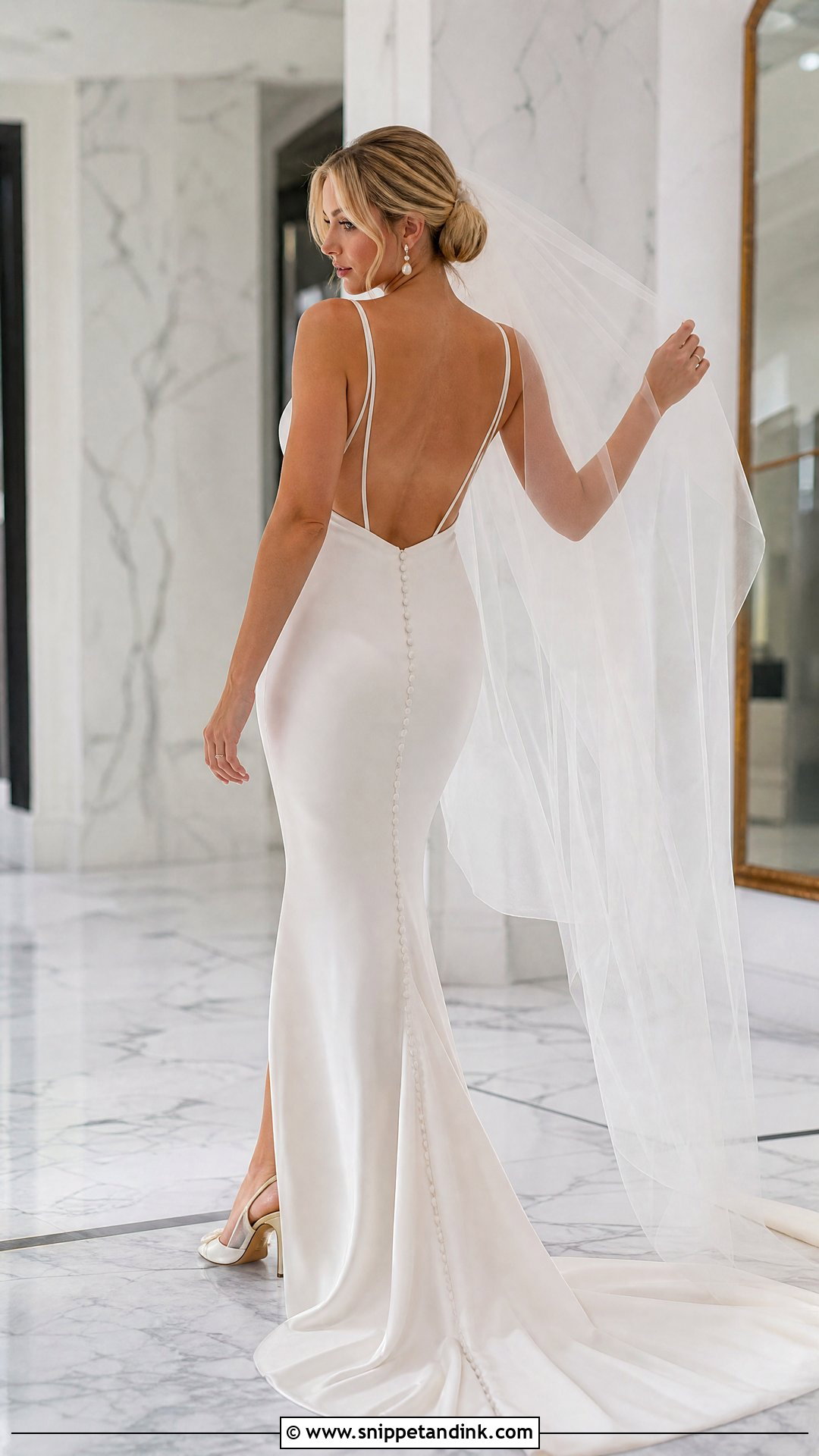
Open backs are mostly an underwear question, and I’d rather solve it before the first fitting than after. A low scoop needs sewn-in cups or a low-back foundation chosen with the bridal shop, because adhesive bras can show at the edges once you’re warm and moving. A fitted sheath or bias-cut silhouette with delicate straps and covered buttons above a soft train keeps the front quiet and the back dramatic. Secure a sheer veil beneath a low bun and position it so it can be swept aside for portraits of the back. Pearl drops, ivory slingbacks and a small bunch of orchids and roses are plenty.
13. Draped Mermaid Silk Satin Wedding Dress
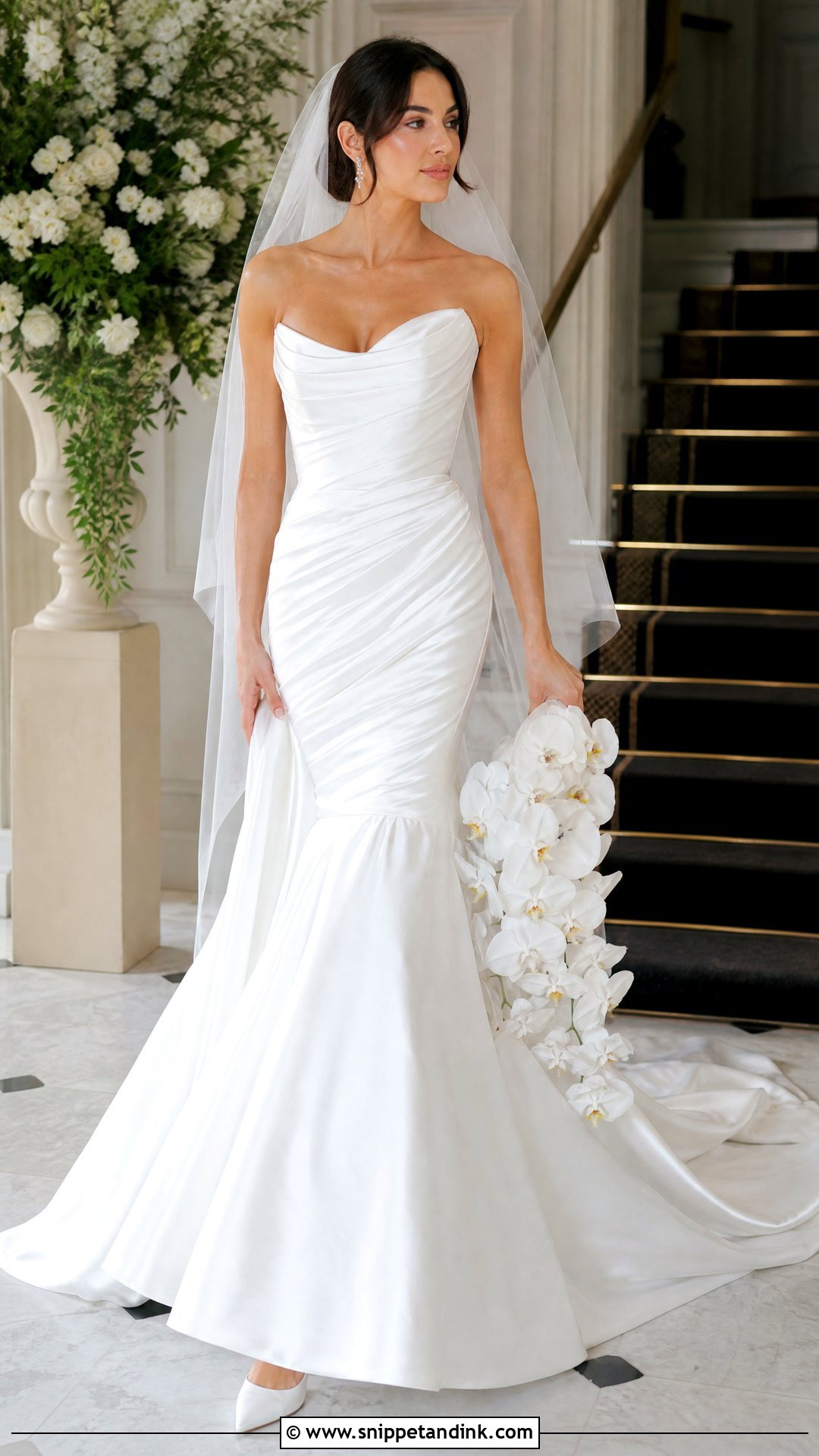
In a mermaid gown, where the flare starts decides whether you can walk. At or just above the knee, you can take normal steps and manage the aisle stairs; much lower and you’ll shuffle all night. Diagonal draping across the bodice and hips helps a great deal in satin, because a plain fitted satin hip shows every line underneath. Crystal drop earrings, pointed satin pumps, a chapel veil with a plain edge and a side-parted low bun keep it glamorous without fuss, and a cascading orchid bouquet follows the shape. Practise walking, sitting and dancing at the final fitting, and ask for a hidden bustle so the train lifts after the ceremony.
14. Ruched Empire Waist Silk Satin Wedding Dress
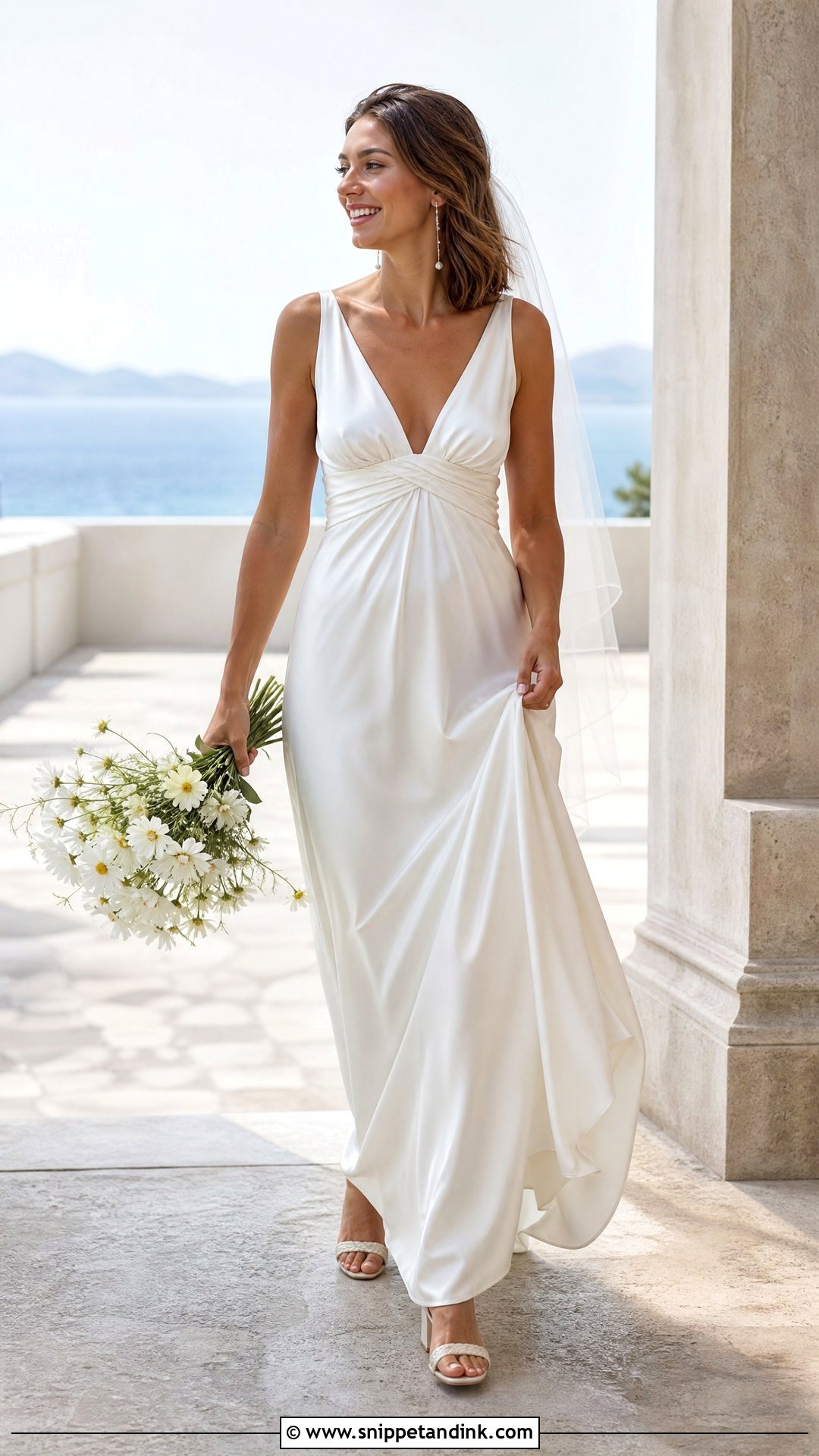
The empire seam has one job: sit exactly under the bust. If it lands even slightly low, the skirt pulls forward and the whole gown tilts in side photos. A ruched empire waist in silk satin flows away from the body, so it’s comfortable in heat and on sand, though I warn beach brides that silk satin water-spots if a wave catches the hem. A V-neck or draped bodice with supportive straps and a light train keeps it easy to move in. Pearl threaders, low block-heel sandals, a shoulder-length veil and loose waves keep the mood relaxed, with white cosmos and fine greenery in hand.



15. Bow Back Silk Satin Wedding Dress
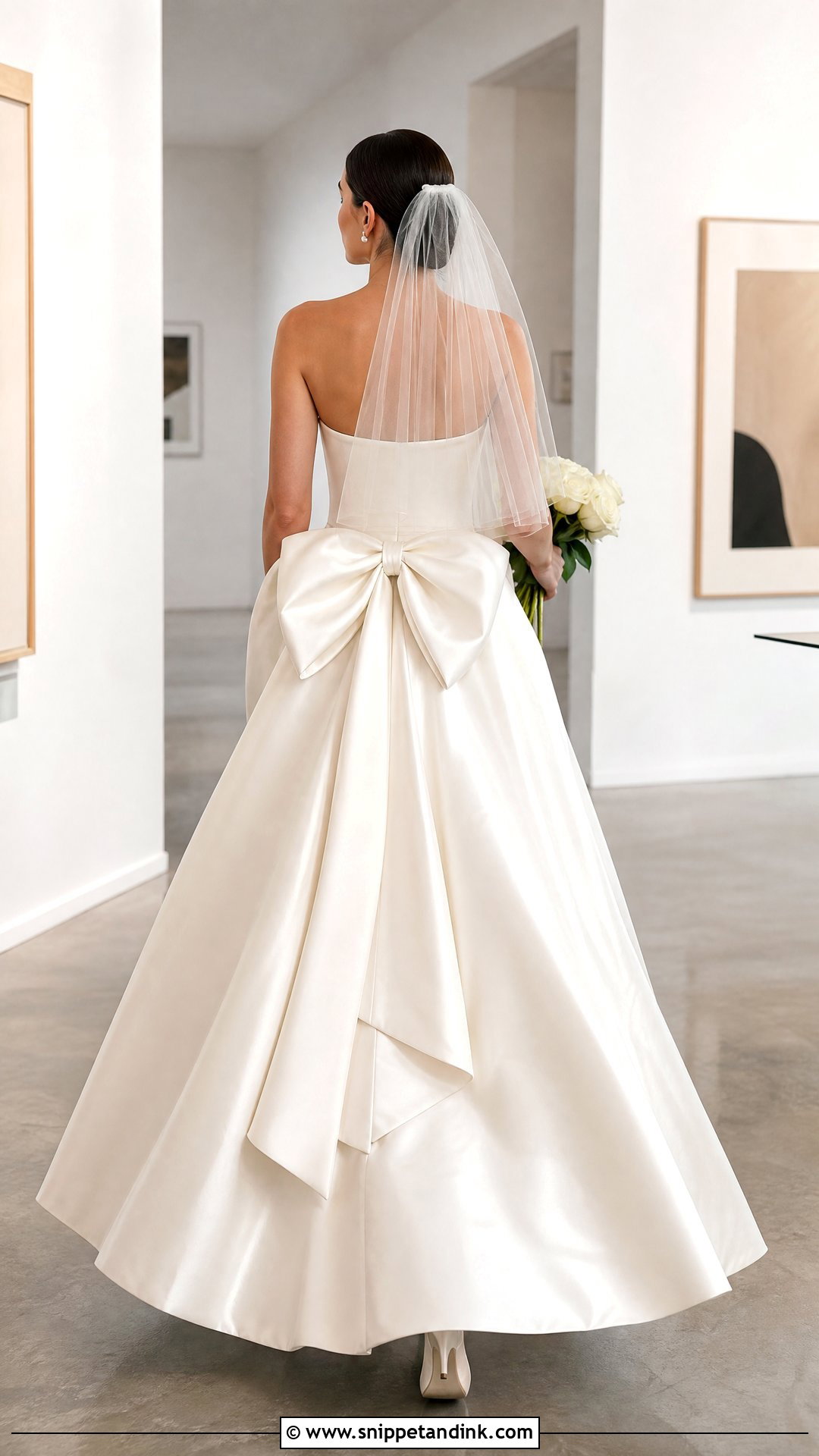
Bows have to be scaled to the room. A long-tailed oversized bow that runs into the train reads well down a cathedral aisle, but in a small registry office it can overwhelm the bride, so I’d go for a smaller sculpted bow there. Keep the front plain: a strapless A-line with a structured bodice. Plan the veil length around the bow so it ends clearly above or below it rather than lying across it in a crumpled layer. Pearl studs, pointed ivory pumps and a polished bun keep the back detail clear. If the bow detaches, take it off after portraits; you’ll sit and dance far more easily.
16. Pearl Embellished Silk Satin Wedding Dress
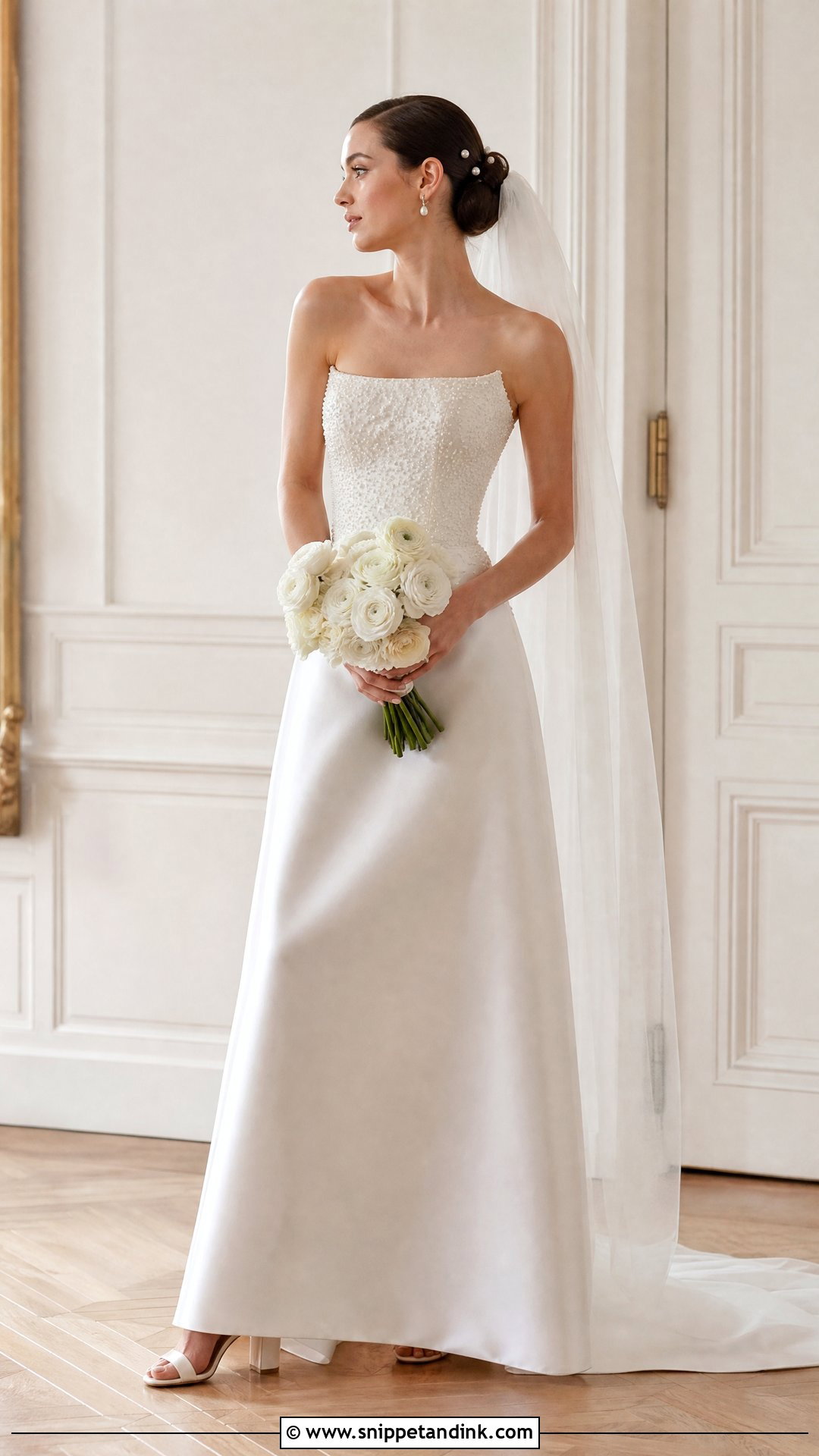
Pearls on satin are about restraint. A scattering around the neckline, straps or waist adds texture, but cover the whole bodice and you lose the sheen you chose the fabric for. Keep the skirt mostly bare over a straight neckline and an A-line shape. Before the wedding I check every pearl near the arms and waist, since those are the ones that catch on a sleeve or a bouquet stem and pop off. Small pearl earrings, satin block heels, a plain chapel veil and a few pearl pins along one side of a low bun keep the theme consistent, with white roses and ranunculus in the bouquet.
17. Lace Trim Silk Satin Wedding Dress
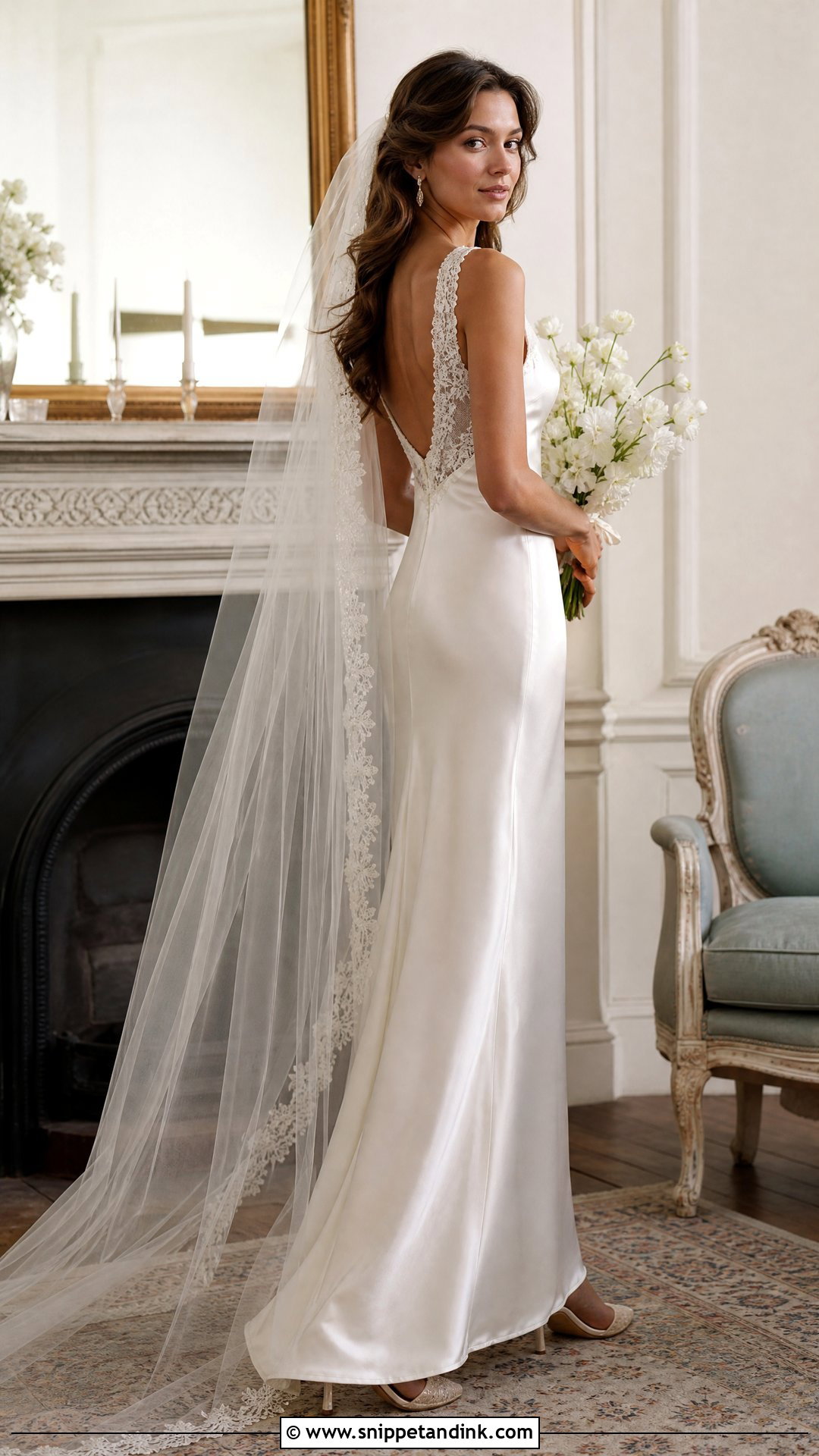
The real risk with lace trim on satin is colour. Ivory satin and ivory lace from different mills can be noticeably different shades, and a trim that looked matched under shop lighting can read bright white or yellowish in daylight photos. I hold the lace against the satin by a window before signing anything off. A slip silhouette with lace at the neckline, straps and low back has a vintage feel, and a fitted waist with a gentle flare keeps it bridal. Pearl drops, ivory kitten heels, a single-layer veil edged in the same lace and soft brushed waves finish it, with sweet peas and garden roses to carry.
18. Tea Length Silk Satin Wedding Dress
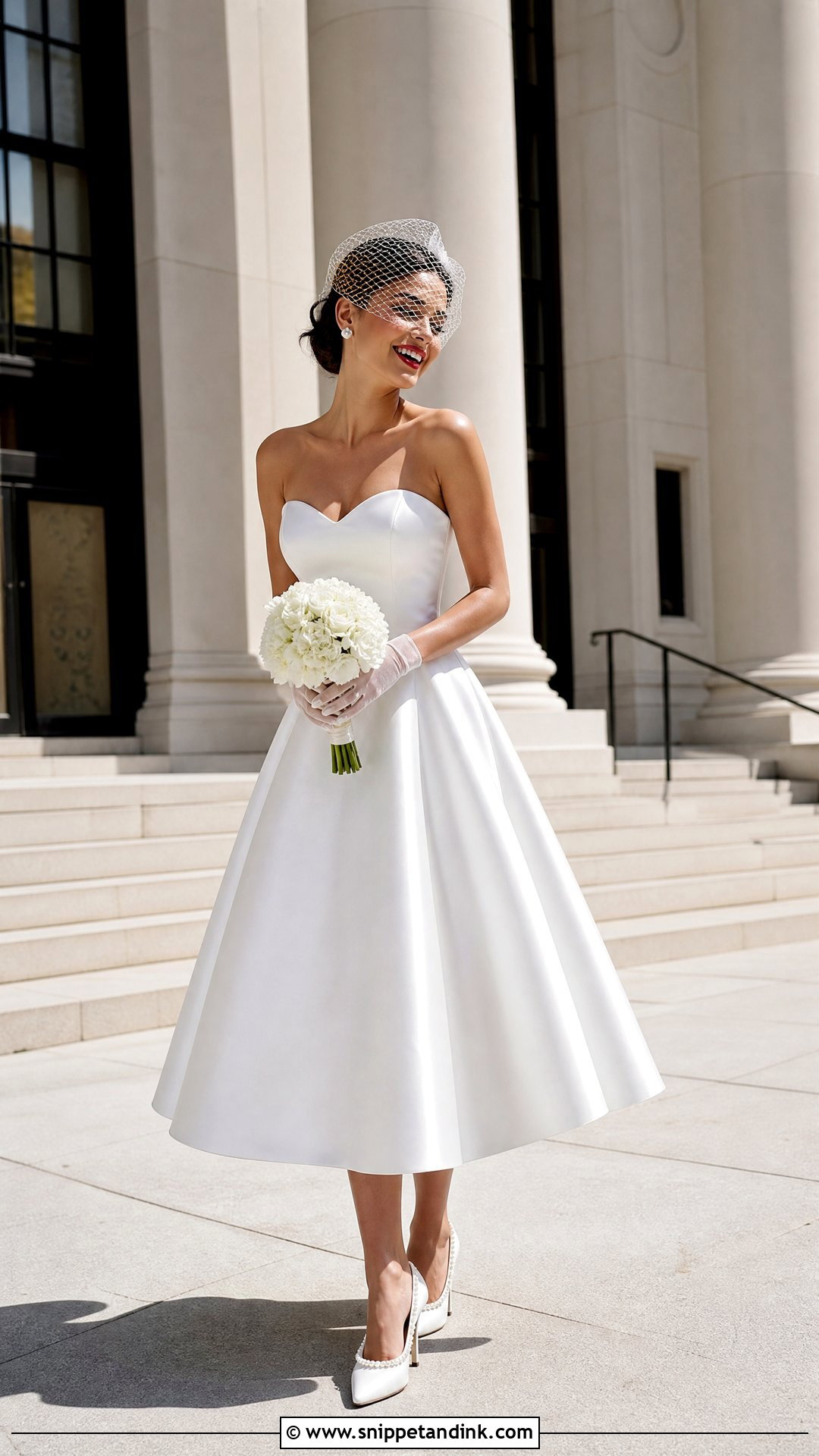
Tea length is the satin dress I suggest most for courthouse ceremonies and reception changes, mainly because it puts the shoes on show. A fitted bodice with a full skirt ending between the lower calf and the ankle suits pearl-trimmed pumps, short gloves and a birdcage veil or small hair bow, and a neat bun matches the vintage proportions. Bateau, square and sweetheart necklines all sit well on it. Bring the exact shoes to every hem fitting. Even a small change in heel height moves the hemline to a different point on the leg, and on a short skirt that shows. Pockets are worth asking for, and a compact bouquet keeps the proportions light.
19. Cape Sleeve Silk Satin Wedding Dress
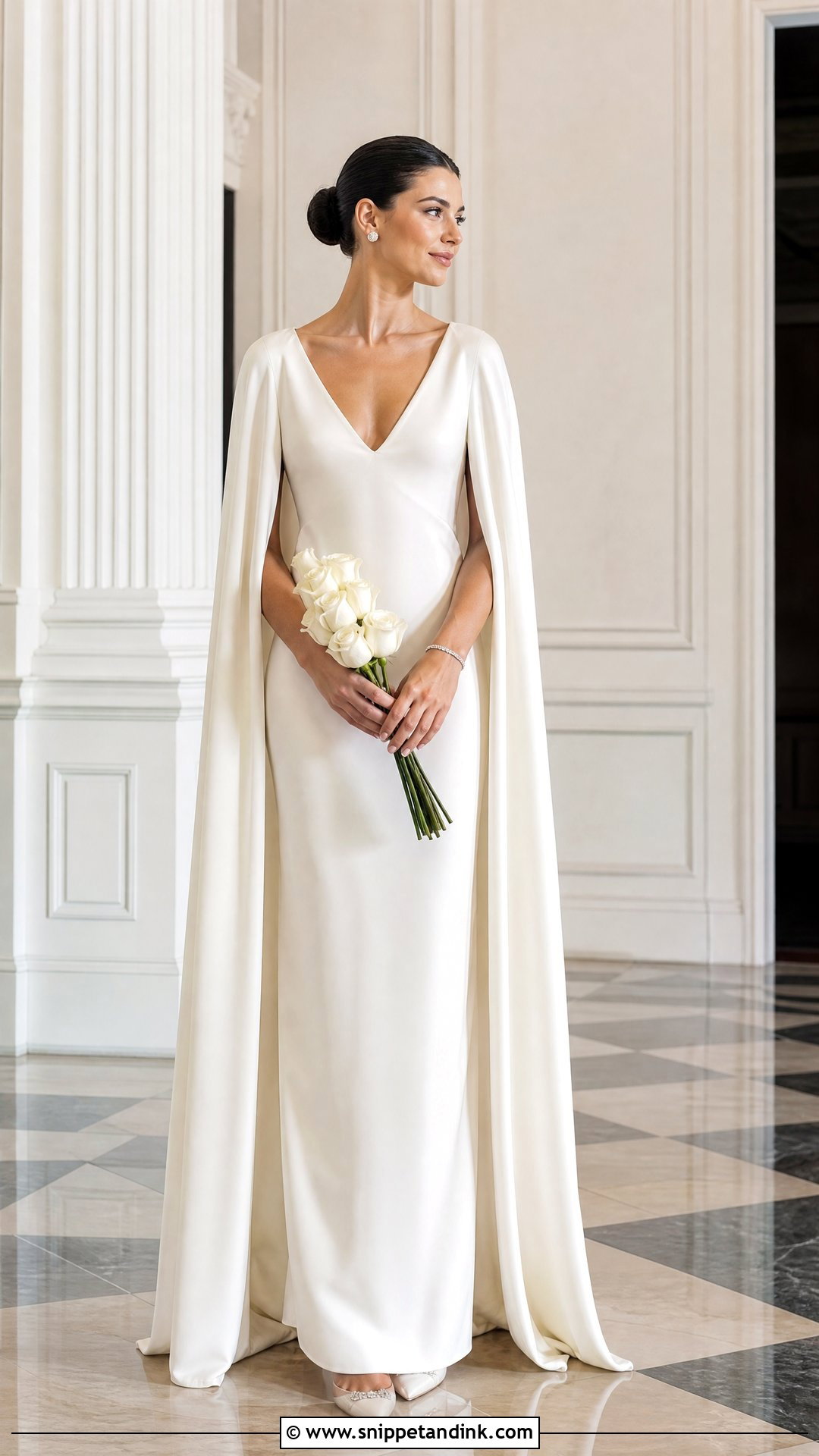
A cape gives coverage without sleeves pinning your arms, but in satin it carries real weight. I check that the panels are attached high enough at the shoulder to hang behind the arms rather than over the hands, otherwise you’ll be fighting fabric every time you lift your flowers. A column gown with a V-neck and attached cape is the cleanest version; a detachable cape over a strapless dress gives you a second look later. Crystal studs, a thin bracelet and pointed heels are enough, with a sleek bun so the fabric doesn’t snag in your hair. If the cape already trails, skip the long veil or wear a short face veil.

20. Convertible Overskirt Silk Satin Wedding Dress
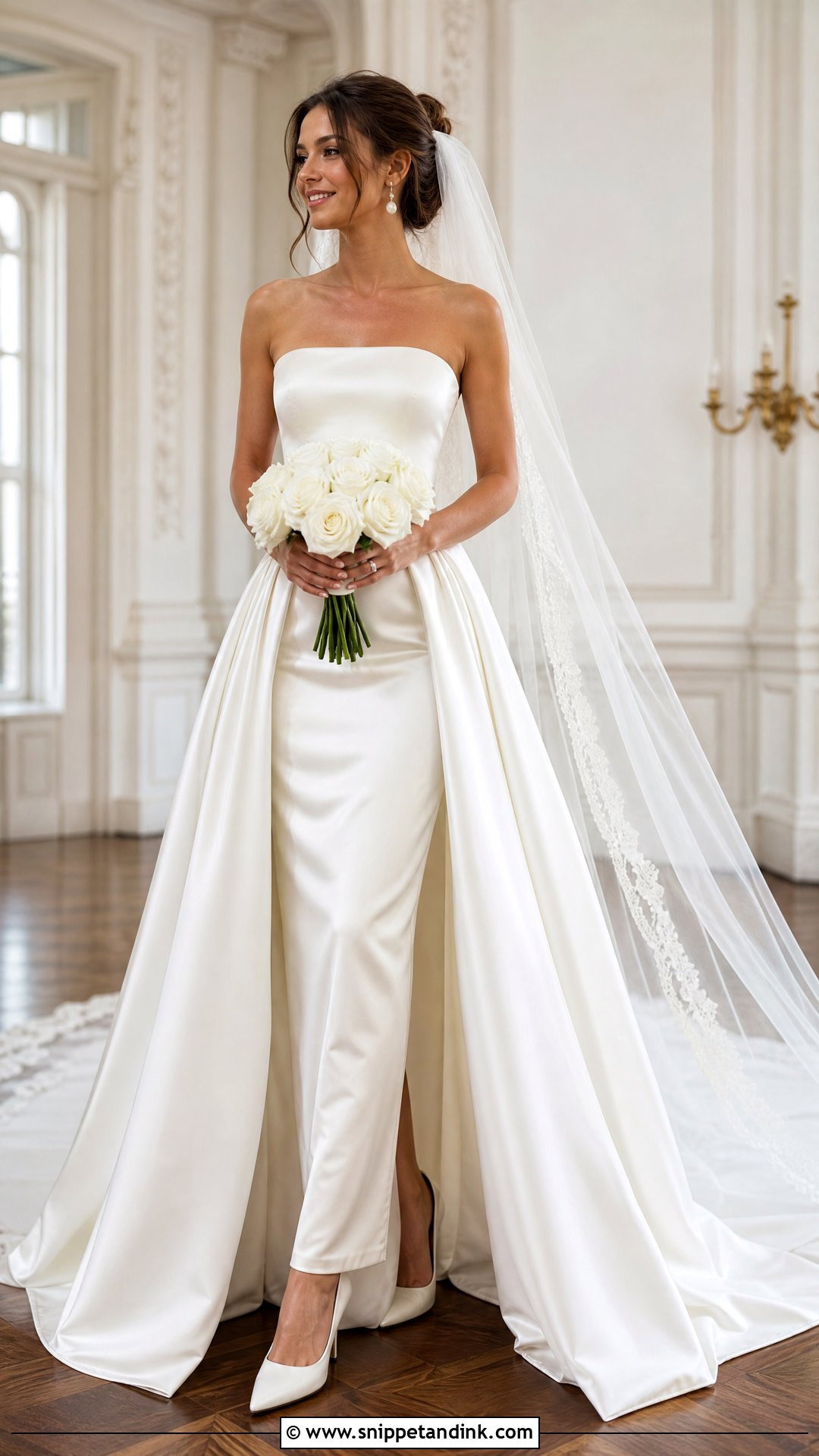
A convertible overskirt silk satin wedding dress gives you two looks without a full change. You begin in a fitted strapless column covered by a detachable A-line or ball-gown overskirt, then unhook the outer layer after portraits. The weak points are the fastenings and the bustles. I’d have the seamstress hide the overskirt closure under a seam and fit a separate bustle for each train, and I’d have whoever is helping you practise the switch before the day. Pearl drops, ivory pumps and a cathedral veil suit the ceremony; block heels and no veil suit the dance floor. A low bun works for both.
How Satin Behaves Over a Ten-Hour Day
Satin creases wherever you bend: across the lap when you sit, behind the knees and at the front of the hips. The worst lap creases usually happen in the car on the way to the ceremony, so I have brides lift the back of the skirt and sit on the lining, with the satin spread over their knees instead of bunched beneath them.
Steaming without spotting the silk
Steam silk satin from the inside or through a cotton press cloth, keep the head moving, and never let the steamer spit. A drop of water on silk can leave a ring that’s harder to shift than the crease you were fixing. The same applies to rain and spilled drinks: blot with a dry white cloth, don’t rub, and leave the mark for the cleaner.
What goes in my touch-up bag
- A handheld steamer filled with distilled water and tested on the inside of the hem first
- A white cotton handkerchief for blotting
- Fashion tape for a strap or neckline that starts to shift
- Ivory thread, a needle and a couple of spare hooks or buttons
- Blotting papers, so a powdered face isn’t pressed against the satin shoulder during every hug
After the Last Dance: Cleaning and Storing a Silk Gown
Get the dress to a specialist cleaner within a few weeks. Sweat, champagne and sugary drinks can dry invisibly on silk and then oxidise into yellow or brown marks over the following months, which is why a gown that looked clean going into the wardrobe can come out stained a year later. Ask the cleaner whether they regularly handle silk satin and how they treat pearls or beading.
For storage, I’d fold it with acid-free tissue padding every fold and keep it in a breathable cotton bag or an acid-free box somewhere cool and dark. Plastic garment bags trap moisture over the long term, and hanging a heavy satin gown by its straps for years slowly stretches the shoulders.
Satin Shows Everything, So Fit It Twice
From fluid slips to structured ball gowns, silk satin rewards a precise fit more than almost any other bridal fabric. Start with the silhouette, neckline and level of support that feel right on your body, then add shoes, jewelry, flowers and a veil that sit quietly beside the sheen instead of competing with it. Sit, walk, raise your arms and dance at the final fitting before you approve the hem and bodice. If the dress still moves with you after all that, you’ve found it.
You'll Like These Ideas:









Leave a Reply