
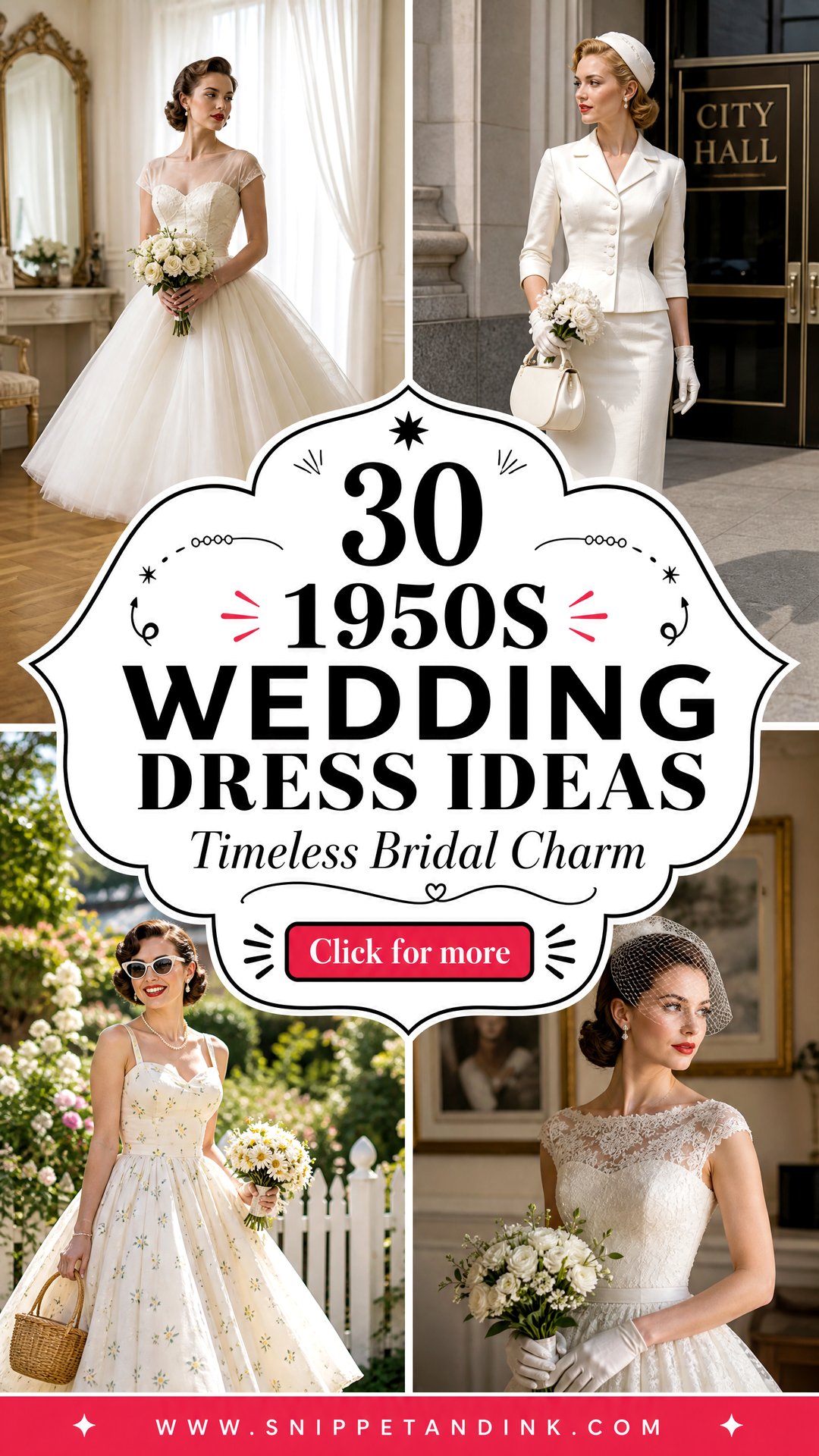
Mid-century bridal dressing rests on one idea: a defined waist, with the skirt doing the talking. Tea-length hems, lace bodices, satin ball gowns, portrait necklines, gloves and shoes that actually show all come from that blueprint. When I dress a bride in this era’s shapes, the fit through the bodice decides whether the result reads as vintage-inspired or as fancy dress, so I start there before anyone mentions veils. Below are thirty versions that hold up at a courthouse, a garden, a hotel ballroom or a vintage venue, with notes on fit, fabric and who each one suits.
What Goes Under a 1950s Skirt Decides the Whole Silhouette
Most of the shape you see in photos from this decade isn’t the dress at all. It’s the layers underneath, and they’re the part brides forget to budget for. When a vintage-style gown looks limp at a fitting, the usual problem is that nobody has put the right foundation under it yet.
The petticoat
A petticoat sets how far the skirt stands away from your legs. Stiffer tulle gives the classic bell; softer chiffon or organza layers give a gentler drape for A-line shapes. I have brides try two levels of fullness at the same appointment, because shop samples are often styled far fuller than you’d want to sit in for ten hours. The petticoat should finish an inch or two above the hem so it never peeks out on steps.
Support at the bust and waist
These bodices fit close, so the bra has to be settled before alterations begin and worn to every fitting. A longline strapless bra smooths the line from bust to waist and stops the bodice edge digging in. If the dress already has boning and built-in cups, ask your seamstress whether you need anything extra; doubling up often adds bulk exactly where the waist should look narrowest.
What I ask brides to bring to the first fitting
- The bra or shapewear you’ll actually wear on the day
- The wedding shoes, since a tea-length hem is set to one heel height and won’t suit a taller pair later
- The petticoat, if it was bought separately from the dress
- Any gloves or bolero, so sleeve and glove lengths can be judged together
- A photo of the planned hairstyle, because an updo and loose curls change how a neckline reads
1. 1950s Tea Length Wedding Dress
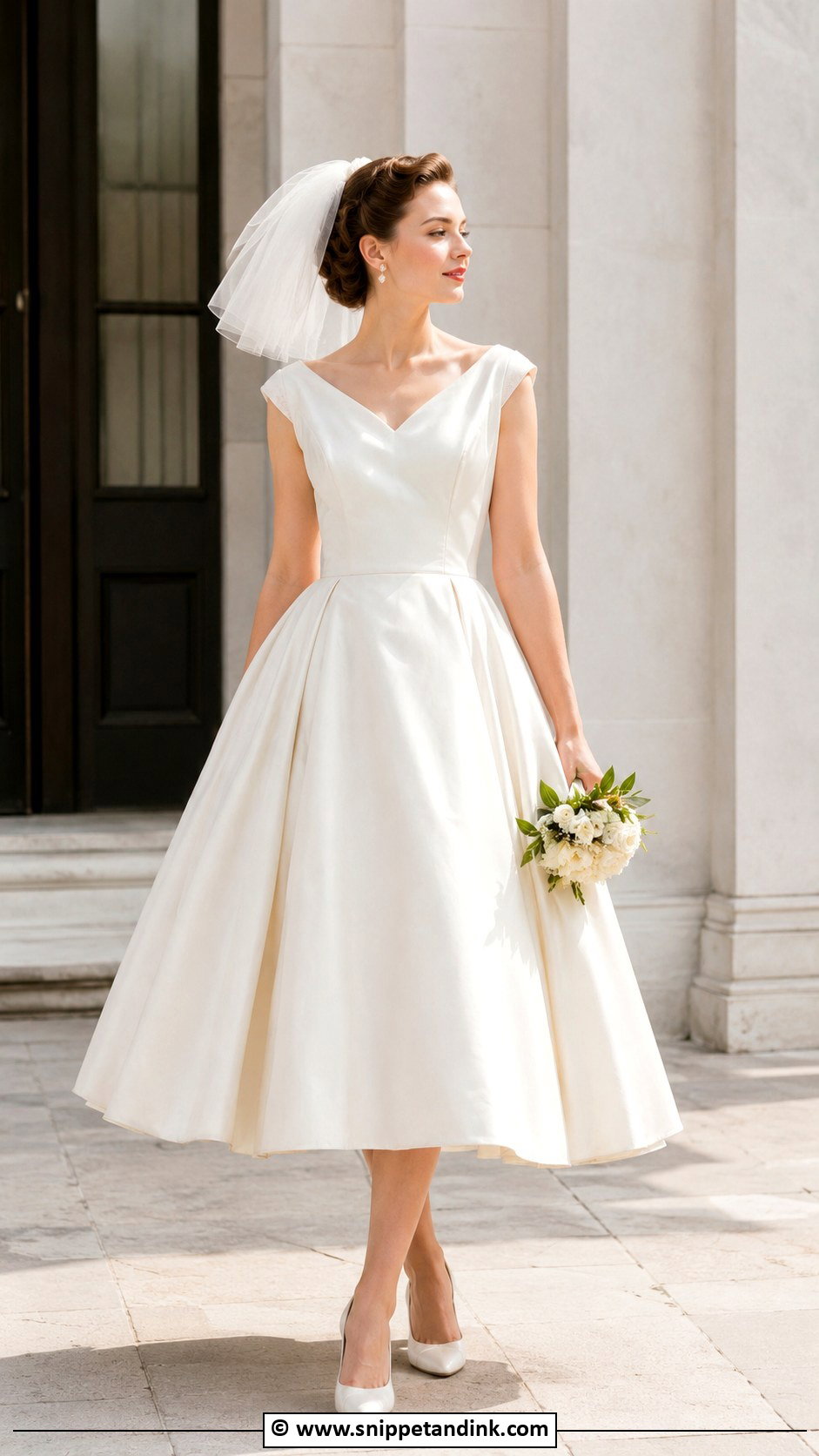
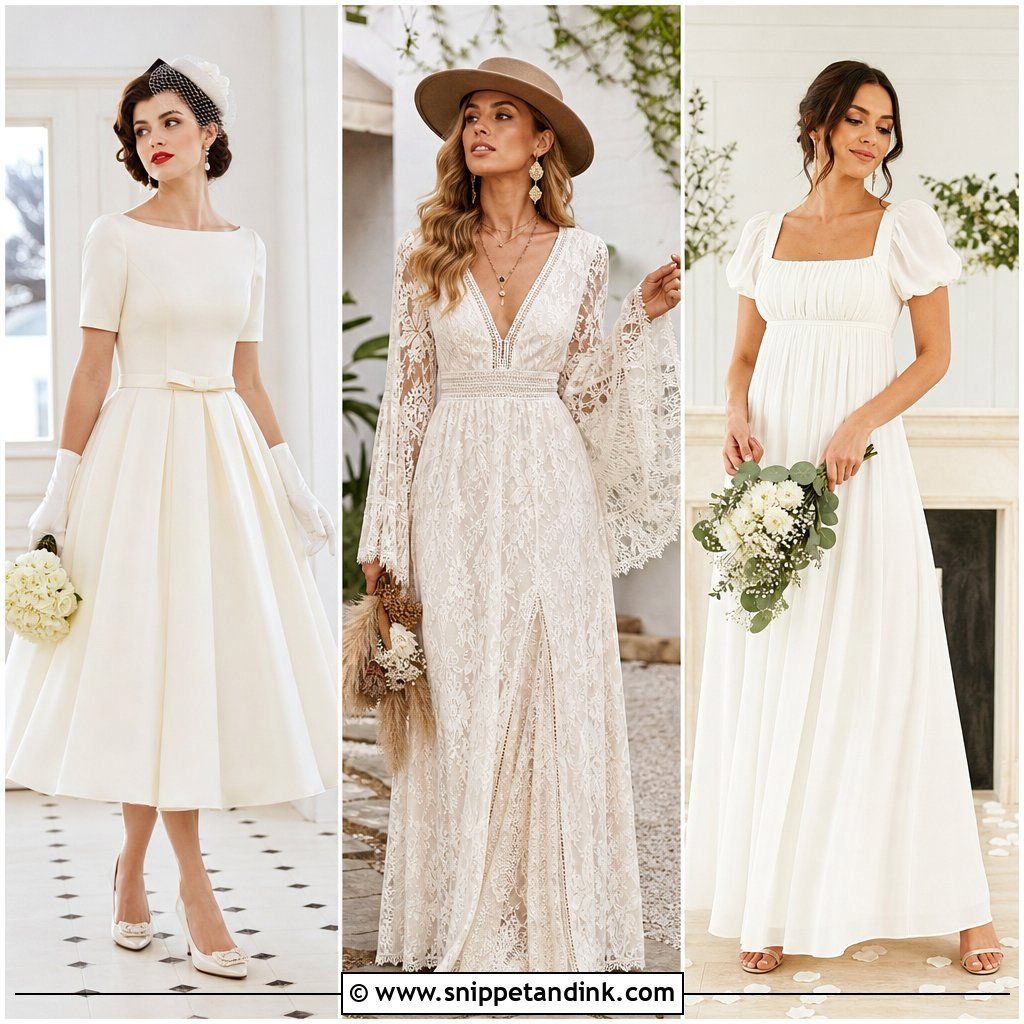
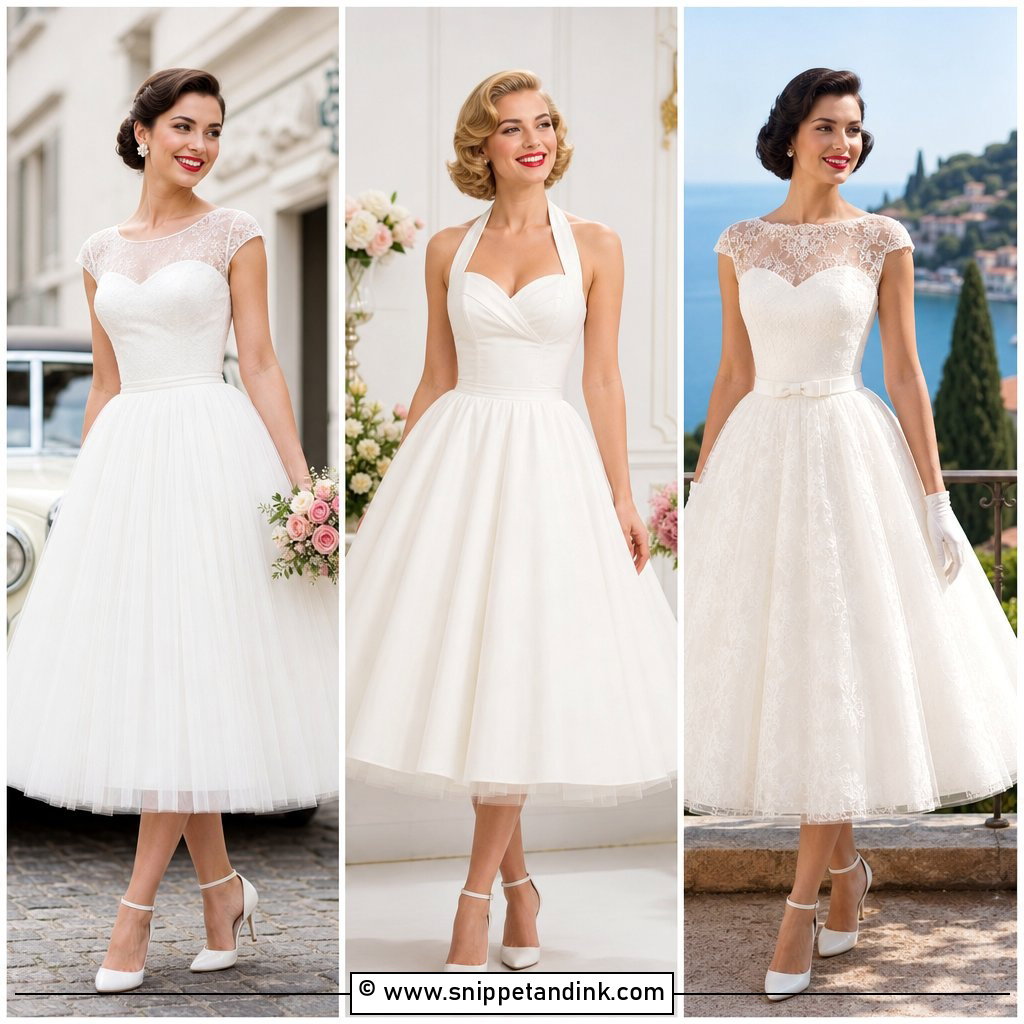
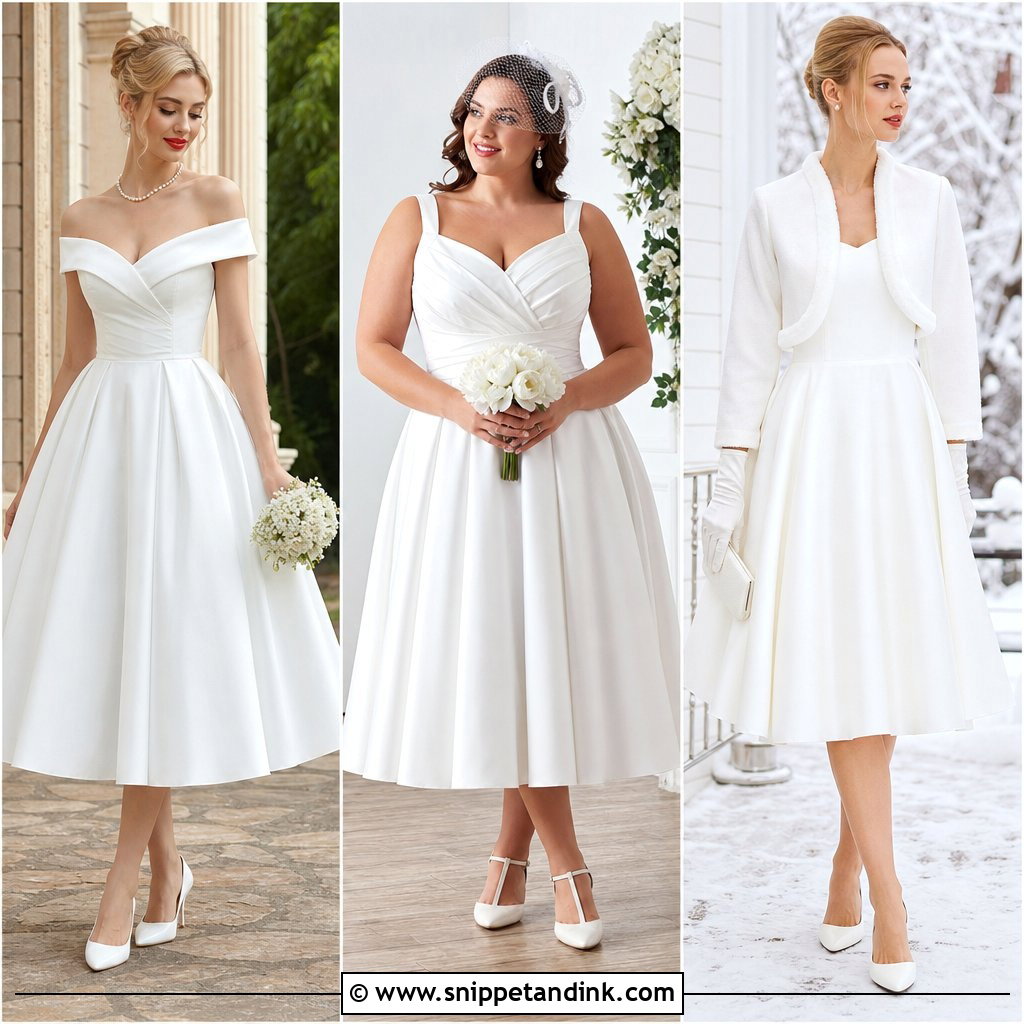
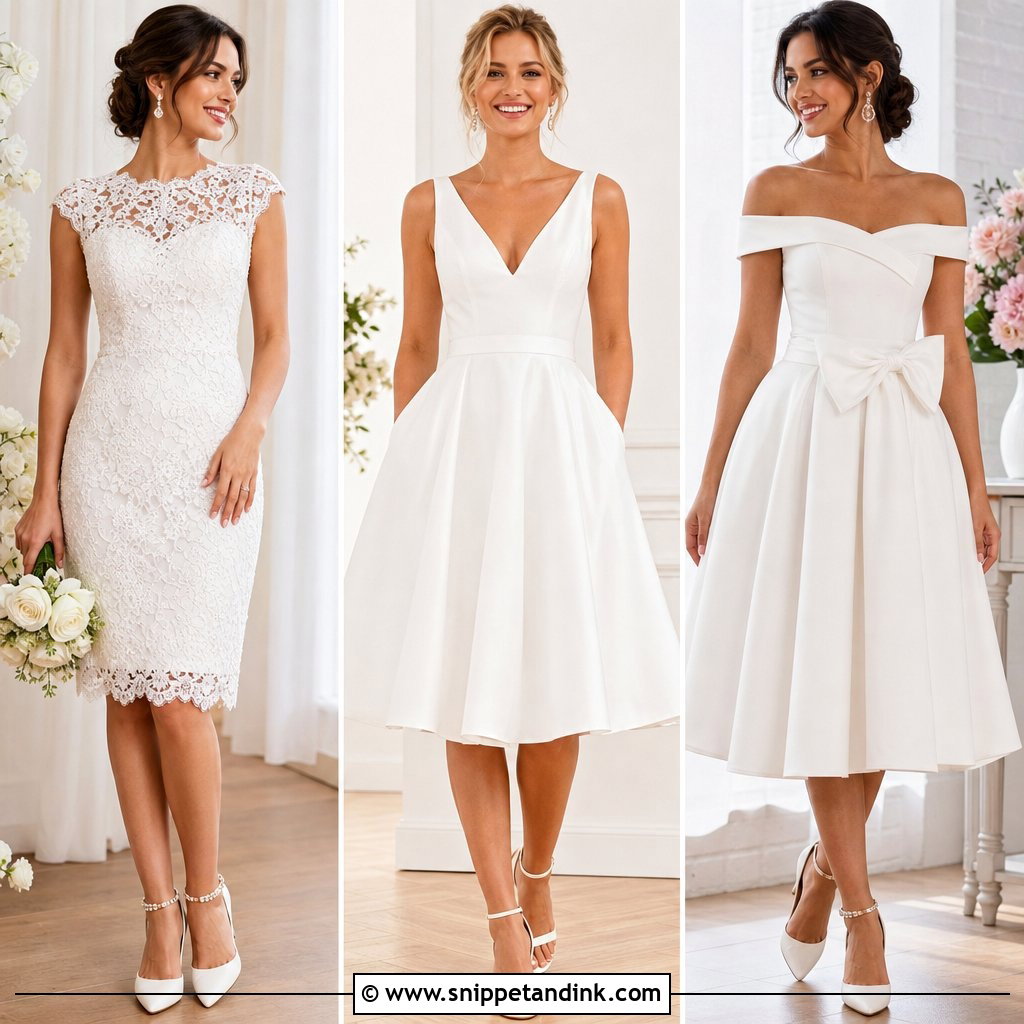
Tea length is where I’d start most brides who want this decade, because you can walk, sit and dance without gathering a train in your fist. The hem lands somewhere between knee and ankle, which means the shoes become part of the outfit and have to be chosen before the hem is set. I always pin it with the actual wedding shoes on; even a small change in heel height moves where the skirt breaks. A fitted bodice and full skirt in ivory satin, lace, tulle or organza keeps the classic line. Low block heels or peep-toe pumps, a short veil, pearl earrings and a small structured clutch finish it, and a soft petticoat adds volume without weight.
2. 1950s Lace Wedding Dress
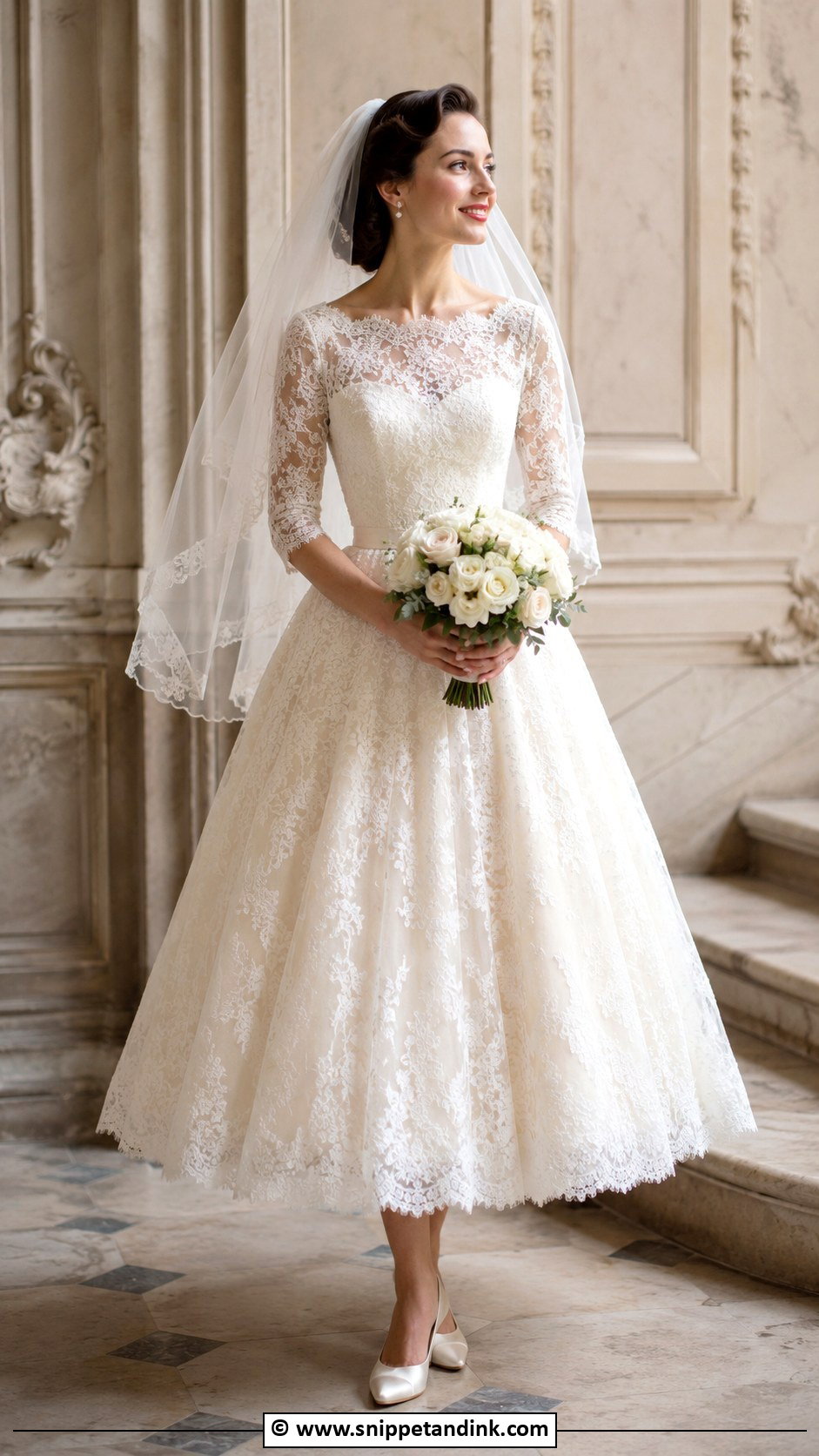
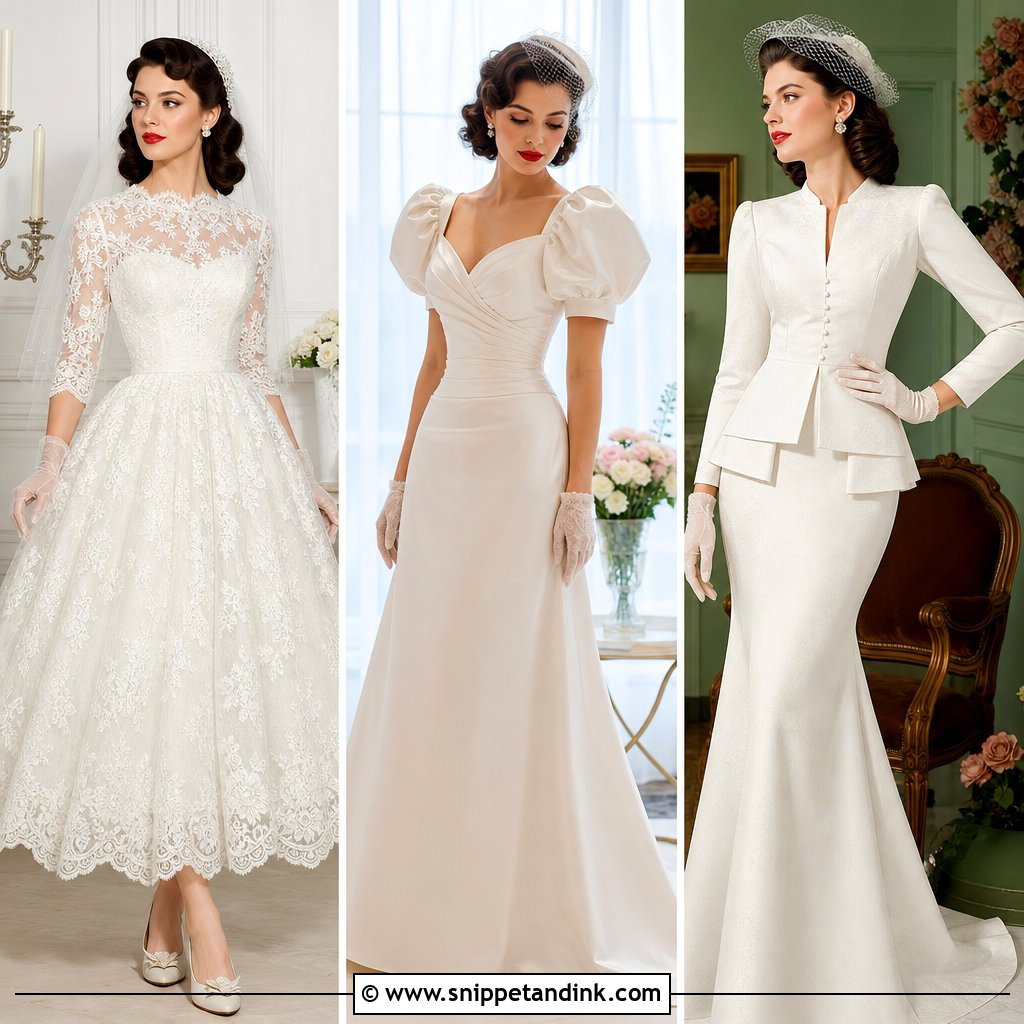
Lace softens the decade’s structure and makes it more formal at the same time. Over a fitted bodice, with three-quarter sleeves or a high neckline, it gives you that Grace Kelly line; keep the skirt full for romance or narrow it for something quieter. I’d pick ivory over bright white here, since stark white lace can look flat and slightly blue against skin in photos. At the seams, check that the lace motifs have been cut around and appliqued rather than sliced straight through. That one detail tells you more about the construction than the price tag does. Pearl studs, a fingertip veil, satin pumps and a simple bouquet are all it needs.
3. 1950s Satin Ball Gown Wedding Dress
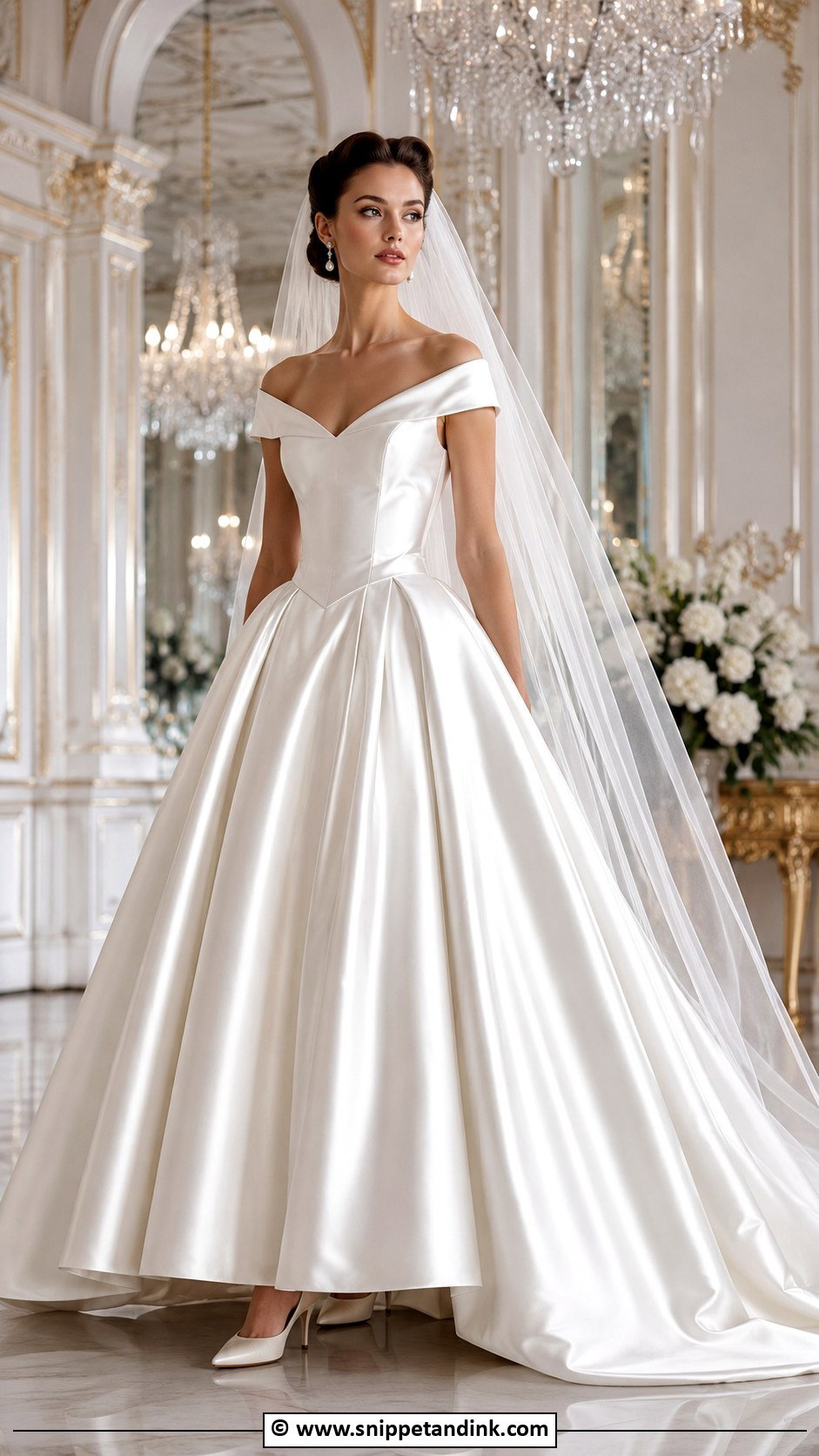
Satin ball gowns are made for an entrance, and they’re also the heaviest dresses on this list, so I ask how long a bride will be standing before I show her one. The sculpted bodice, cinched waist and floor-length skirt depend on what’s inside: good versions have boning and a waist stay so the skirt hangs from your waist, not your shoulders. Sweetheart, bateau and off-the-shoulder necklines all suit the shape. Satin heels, a clean updo, pearl drops and a longer veil keep it balanced. Keep the bouquet restrained, white roses or calla lilies, because satin already reflects a lot of light and a busy bouquet fights it.
4. 1950s Short Wedding Dress
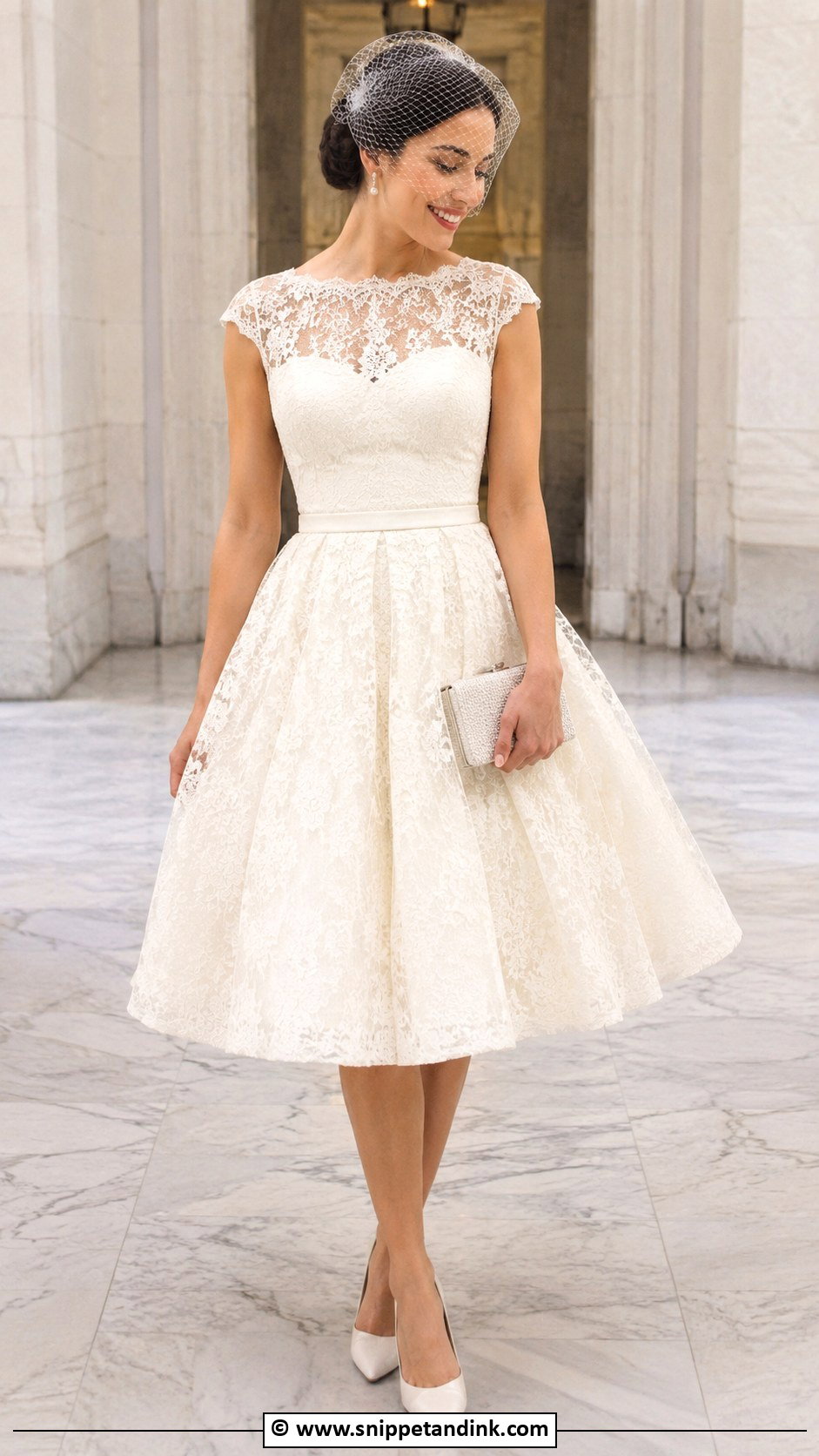
A knee-length or just-below-the-knee dress with a fitted waist and flared skirt is the most practical way into the decade. Lace, cotton organdy, taffeta and satin all suit it, and I let the venue decide: organdy for daytime and outdoors, satin for a city evening. With this much leg on show, the shoes carry half the look, so pointed pumps, kitten heels or retro slingbacks deserve more thought than jewelry. Keep the rest to pearl earrings, a birdcage veil and soft set curls. It’s also the dress I suggest as a reception change for brides married in a heavy gown.
5. 1950s Tulle Wedding Dress
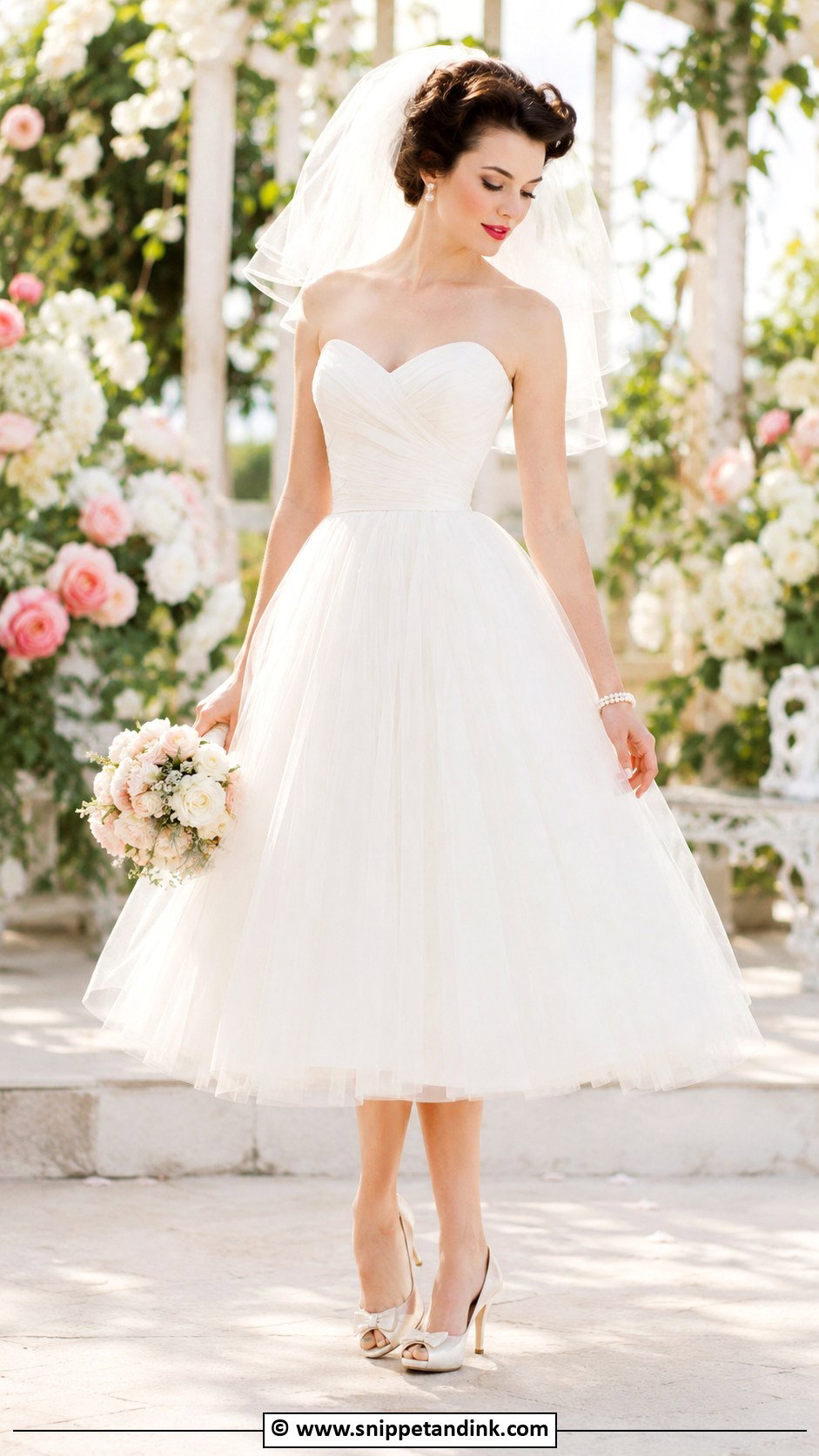
Tulle gives you volume that weighs almost nothing, which is why I reach for it with brides who find satin skirts tiring. Most of the shape comes from a light petticoat underneath; without one, tulle tends to collapse after a few hours of sitting. Balance the cloud of skirt with a fitted bodice, whether that’s cap sleeves, a sweetheart or a bateau neckline. It works in tea length or floor length depending on formality. One warning: soft tulle snags on rough bouquet stems, sequined bags and wooden benches, so keep anything you carry smooth. Satin heels, a small veil and pearl bracelets finish it, and minimal sparkle keeps it current.
6. 1950s Sweetheart Neckline Wedding Dress
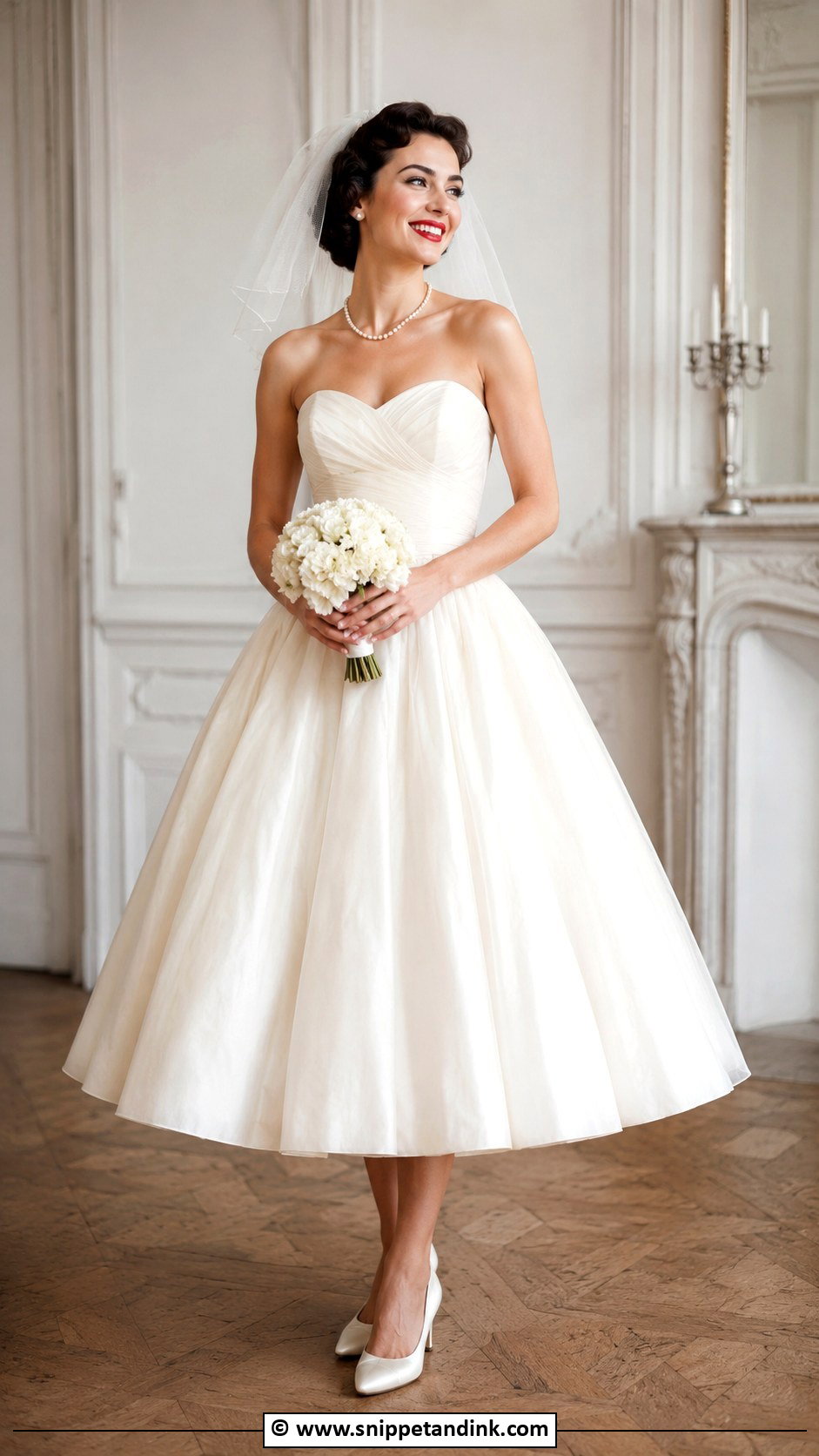
The sweetheart shape frames the collarbone and gives the bodice a soft curve that balances a big skirt. Its success depends on the cups. If they gape when you lean forward to sign the register, the look is gone, so I always have brides bend and reach at the fitting. Satin or lace with a tea-length hem is the classic version, while a floor-length gown with covered buttons and a simple train reads more formal. A short veil, a pearl necklace and closed-toe pumps complete it, and a lace bolero gives extra coverage for the ceremony if you want it.
7. 1950s Bateau Neck Wedding Dress
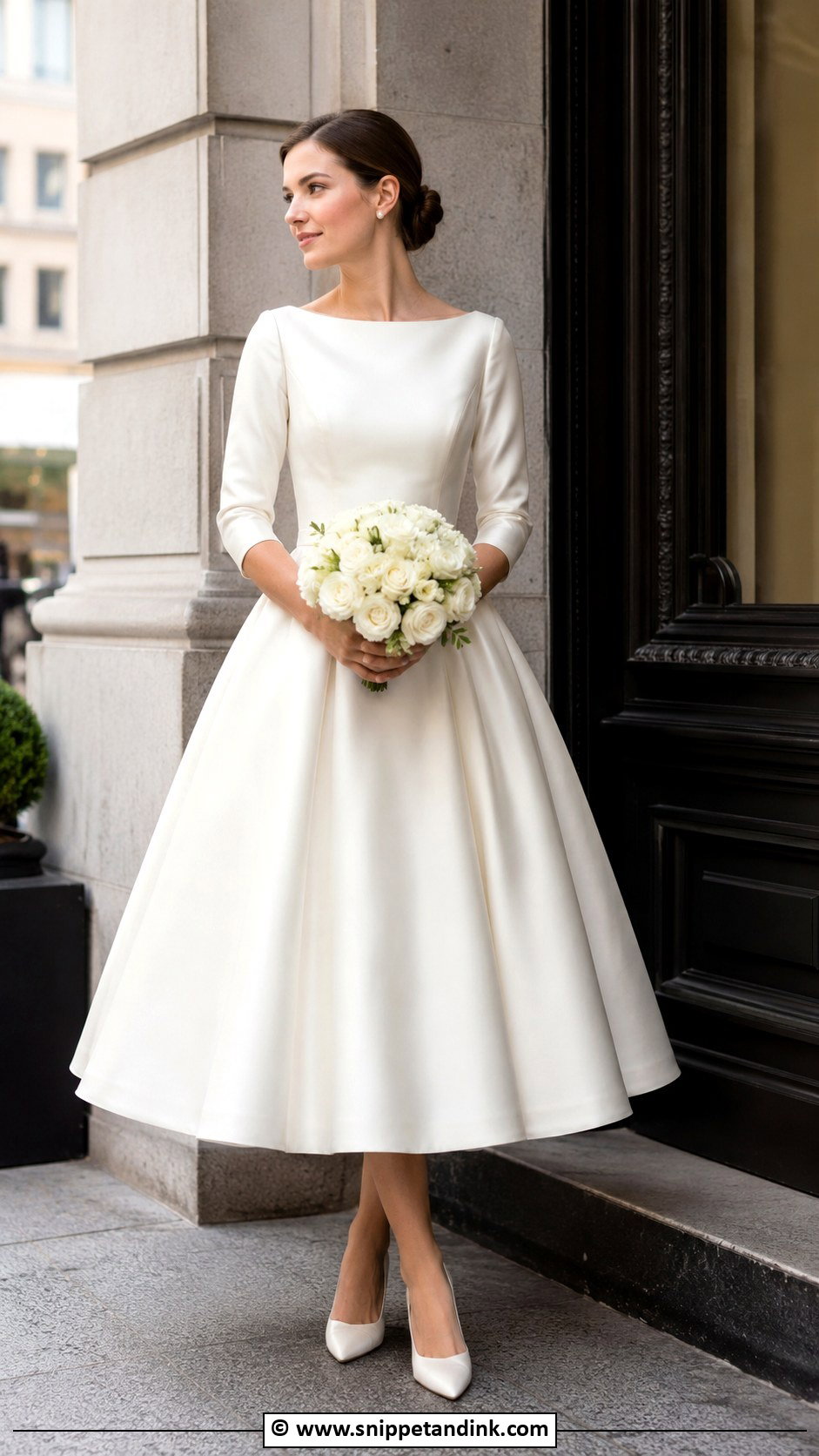
Bateau runs straight across from shoulder to shoulder, so you get coverage that reads clean rather than conservative. It pairs with three-quarter sleeves, cap sleeves or a sleeveless bodice. What I watch at fittings is the bra: a wide bateau sits right where straps show, so plan for a strapless bra or built-in cups from the first appointment. A full tea-length skirt keeps the 1950s mood, and floor length lifts the formality. Satin, lace and mikado all hold the line well. Pearl studs, satin gloves, a low bun and pointed pumps are enough for city weddings and historic venues.
8. 1950s High Neck Wedding Dress
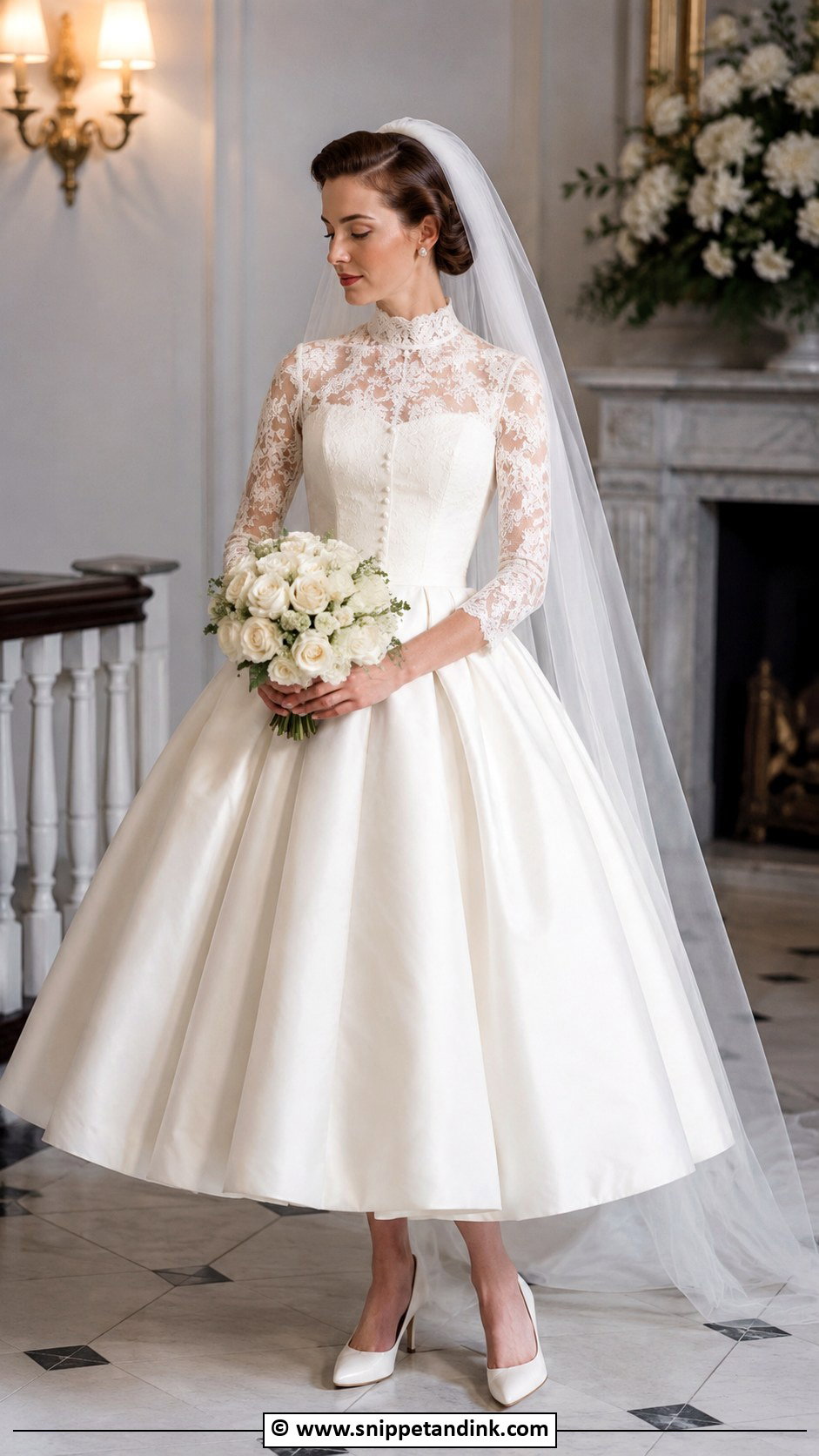
High necklines in lace or sheer illusion fabric carry the royal, couture feeling of the decade. Pair one with a fitted bodice, small covered buttons and either a full tea-length skirt or a floor-length one. Since the neckline already holds the detail, jewelry should nearly disappear: pearl studs, nothing at the throat. I’d steer a bride with a short neck or a full bust toward a sheer upper bodice rather than solid lace to the chin, which can make the torso look shorter and heavier. Fall and winter weddings suit it, as does anyone wanting modest coverage.
9. 1950s Cap Sleeve Wedding Dress
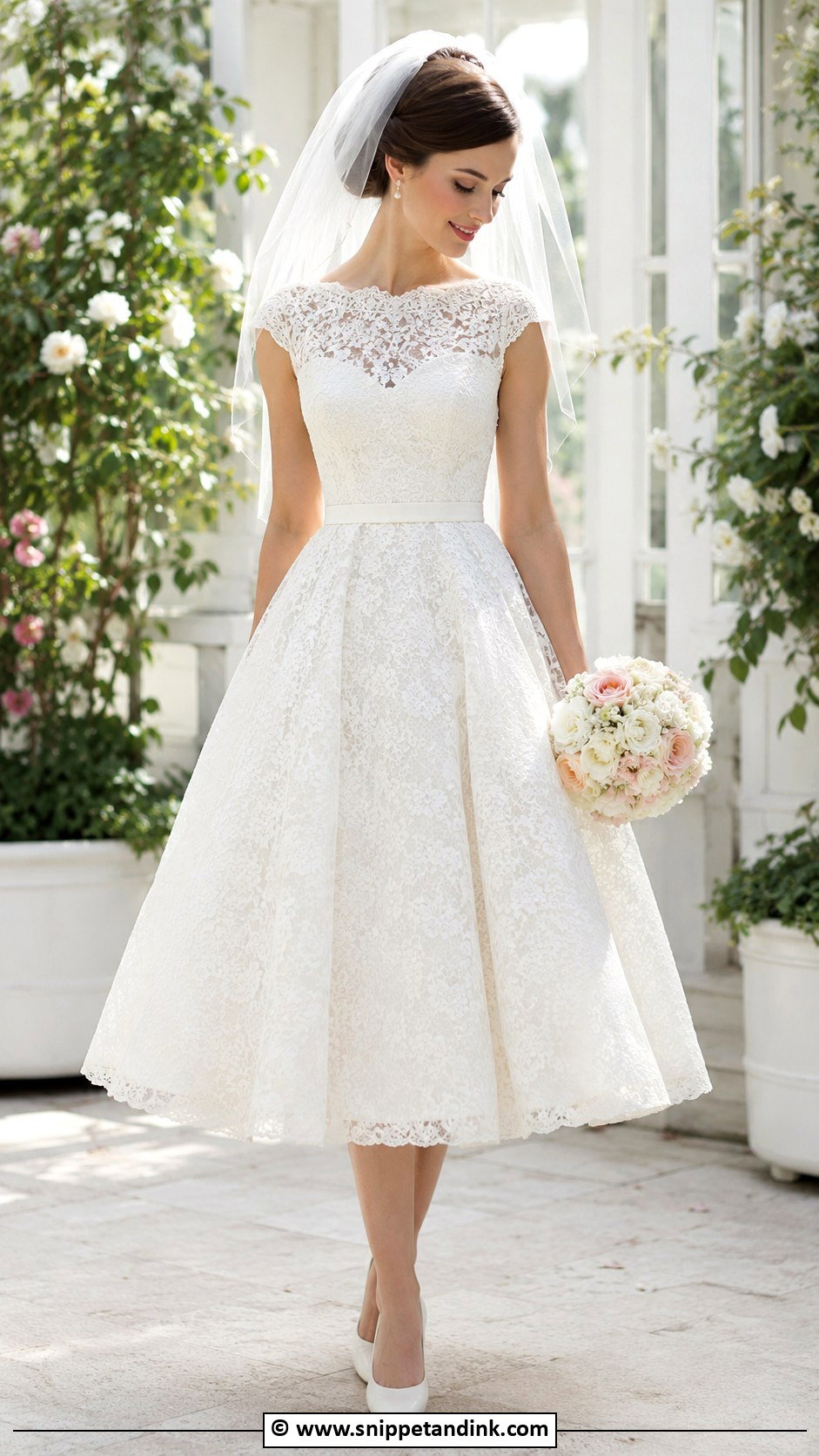
Cap sleeves give a little coverage and, more usefully, something to anchor the bodice so you aren’t hitching it up all evening. Lace caps look romantic and satin ones look cleaner. I check that the sleeve isn’t cutting into the arm when the bride lifts her hands, because a tight cap leaves a red line by dinner. Fitted bodice, natural waist and full skirt are the classic pairing, with mid-height pumps, a fingertip veil, pearl earrings and a pale pink or ivory bouquet.
10. 1950s Long Sleeve Wedding Dress
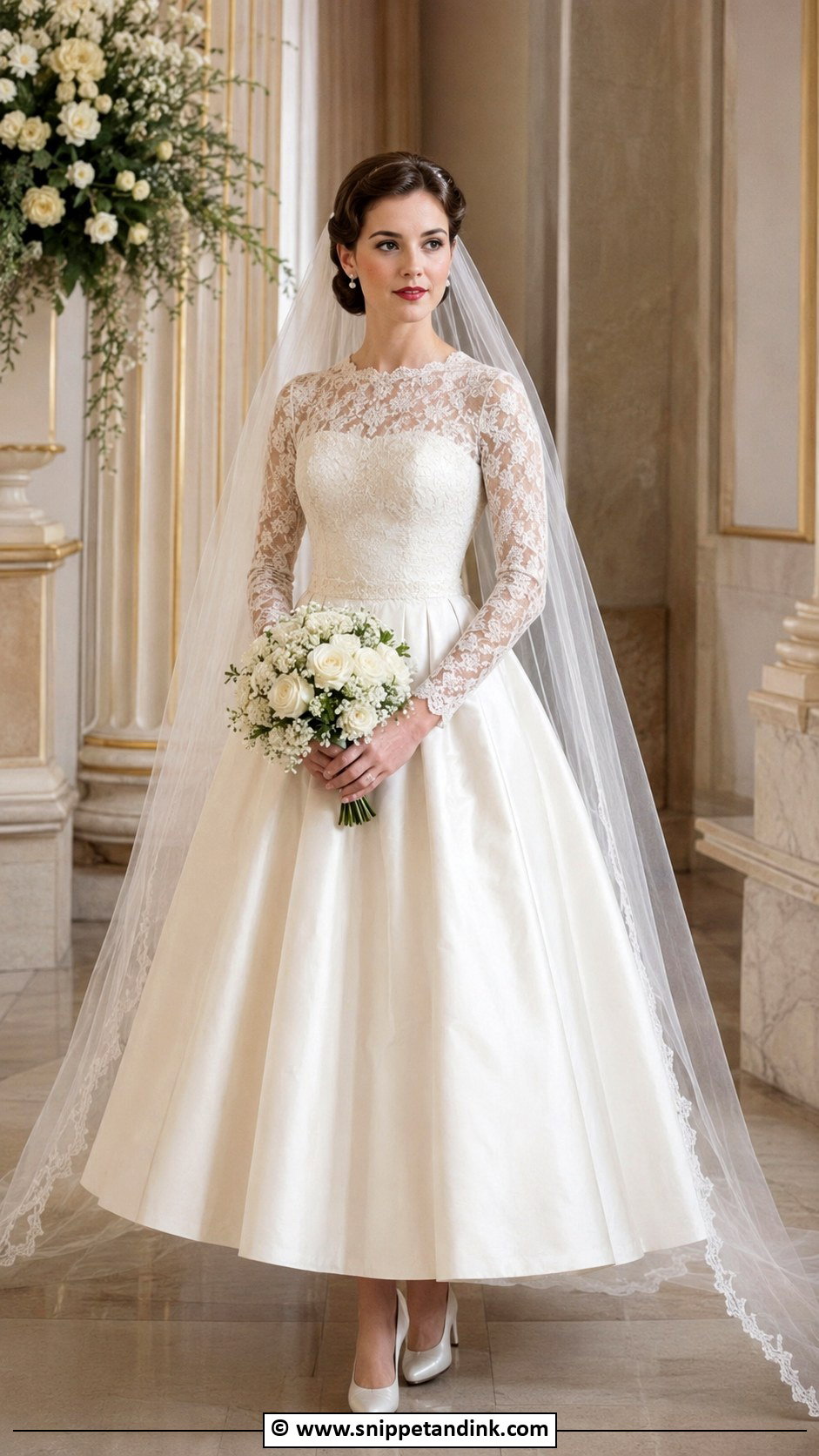
Lace long sleeves are the decade at its most recognizable, and they need the most careful fitting. Slim sleeves look polished; slightly sheer ones are softer. They sit well with a high, bateau or sweetheart neckline under lace overlay. Before you commit, raise both arms above your head and hug someone. If the back strains, the armhole is cut too high or the sleeve too narrow. Originals from the period often have exactly that problem, so it’s worth knowing before you fall for a true vintage piece. Classic pumps, pearl earrings, a neat updo and a longer veil suit cooler months and formal ceremonies.
11. 1950s Three Quarter Sleeve Wedding Dress
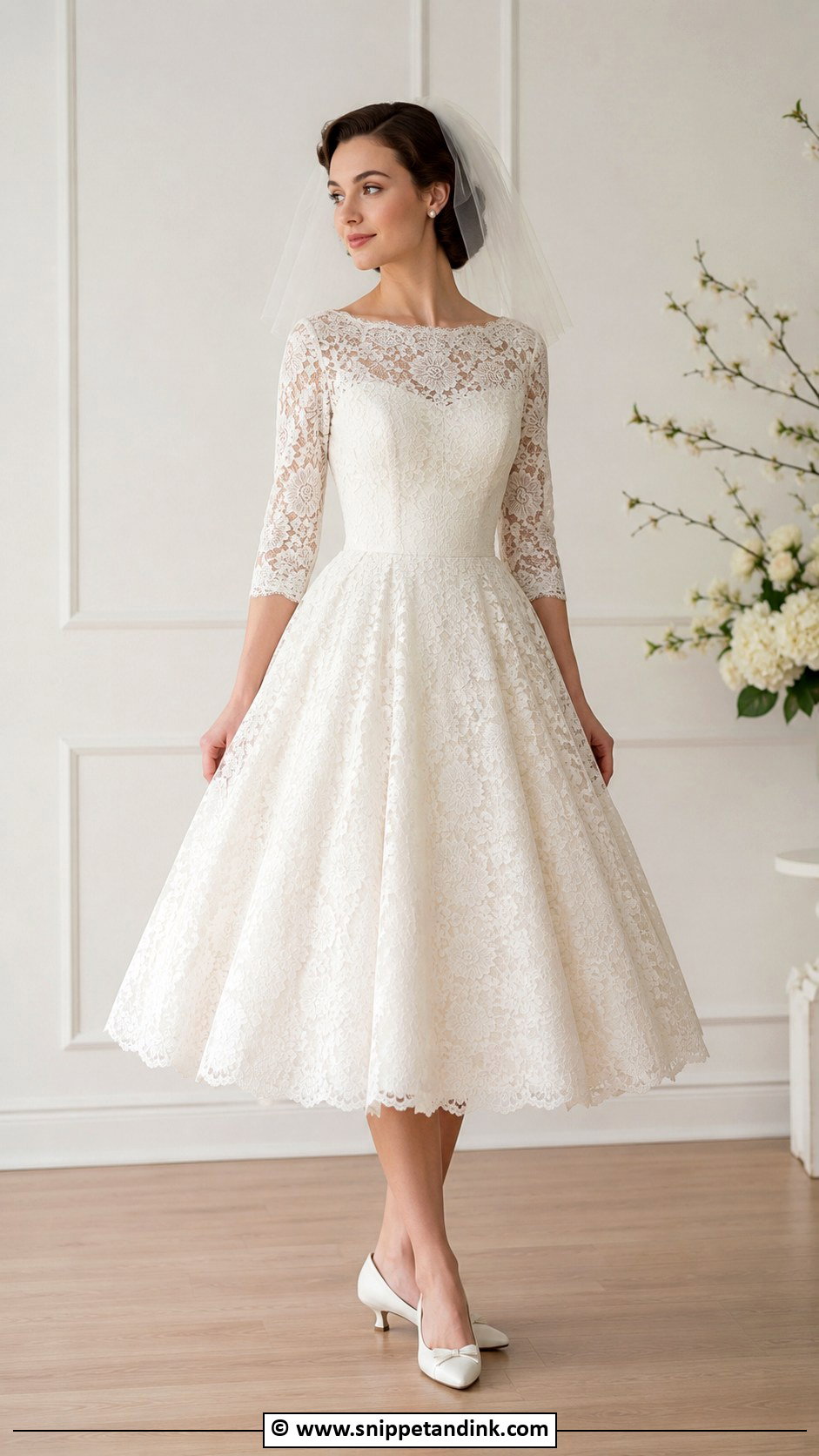
Three-quarter sleeves were everywhere in the era, and I like them because they leave the wrist free, so gloves, a bracelet or the bouquet stems actually get seen. Lace, satin or taffeta over a tea-length skirt keeps them in period. A fitted waist matters here; without it, the sleeve can make the upper body look wide. Finish with pearl studs, kitten heels and a short veil. They’re comfortable for spring, autumn and warm indoor ceremonies where full sleeves would be too much.
12. 1950s Strapless Wedding Dress With Bolero
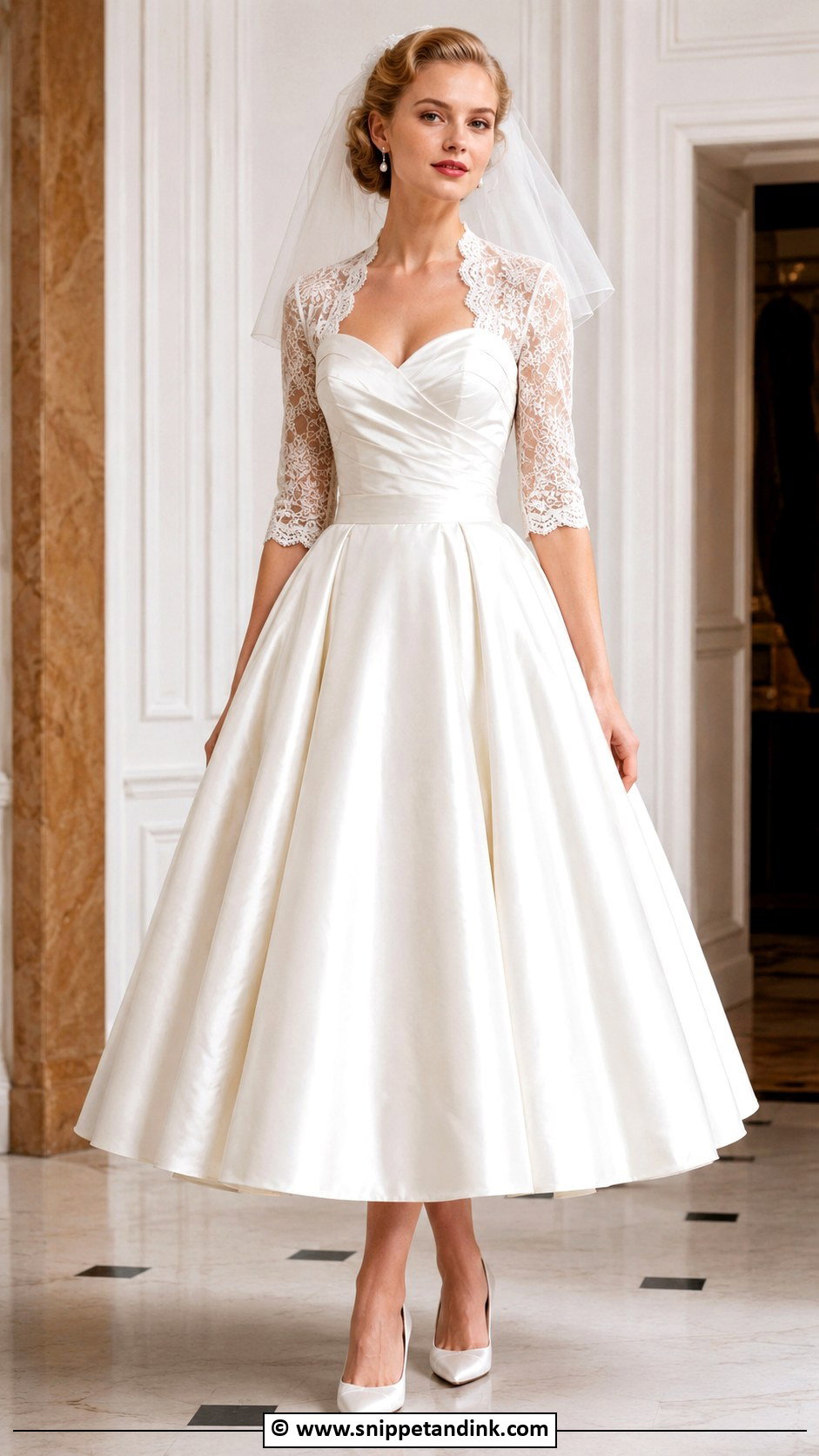
Two looks from one dress: the bolero covers the shoulders for the ceremony and comes off for the reception. Choose a lace, satin or tulle bolero with three-quarter sleeves over a full tea-length or floor-length skirt. The bolero should end at or just above the natural waist; any longer and it hides the very thing this silhouette is about. I also make sure the strapless bodice is fitted to stay up on its own, because brides who rely on the bolero for security never feel able to take it off. Satin pumps, pearl earrings and a short veil keep everything else quiet.
13. 1950s Off Shoulder Wedding Dress
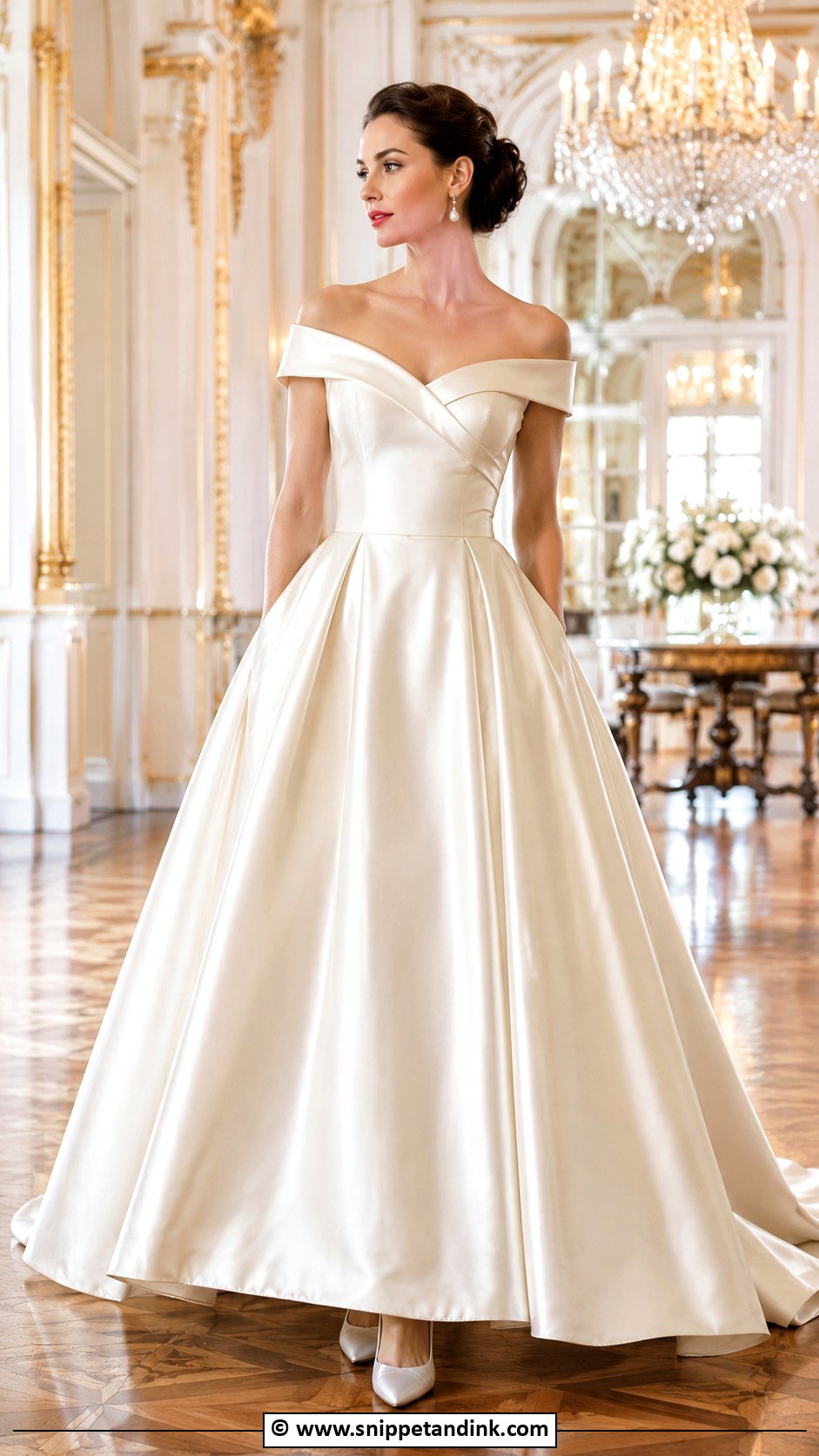
An off-the-shoulder neckline frames the collarbone and shoulders and sits naturally with a structured bodice and full skirt. Satin feels formal; lace or tulle softens it. The practical catch is arm movement. A band resting on the upper arm limits how high you can lift, which matters for hugging and dancing, so I ask for a hidden grip strip that stops it creeping down. Tea length reads playful and floor length reads grand. Pearl drops, satin heels, a smooth updo and a plain veil are enough, because the neckline already carries the look.
14. 1950s Portrait Neckline Wedding Dress
A portrait neckline is a wide, folded collar that curves around the shoulders and frames the face. It balances a full skirt and fitted waist well. Satin gives a crisp fold, while lace adds texture but can lose definition along the fold line. I usually skip the necklace here and move the jewelry to the ears, since anything at the throat crowds the collar. Pearl earrings, a low bun, satin gloves and closed-toe heels finish it. Close-up portraits are where it really earns its place, because it pulls every eye upward.

15. 1950s Full Skirt Wedding Dress
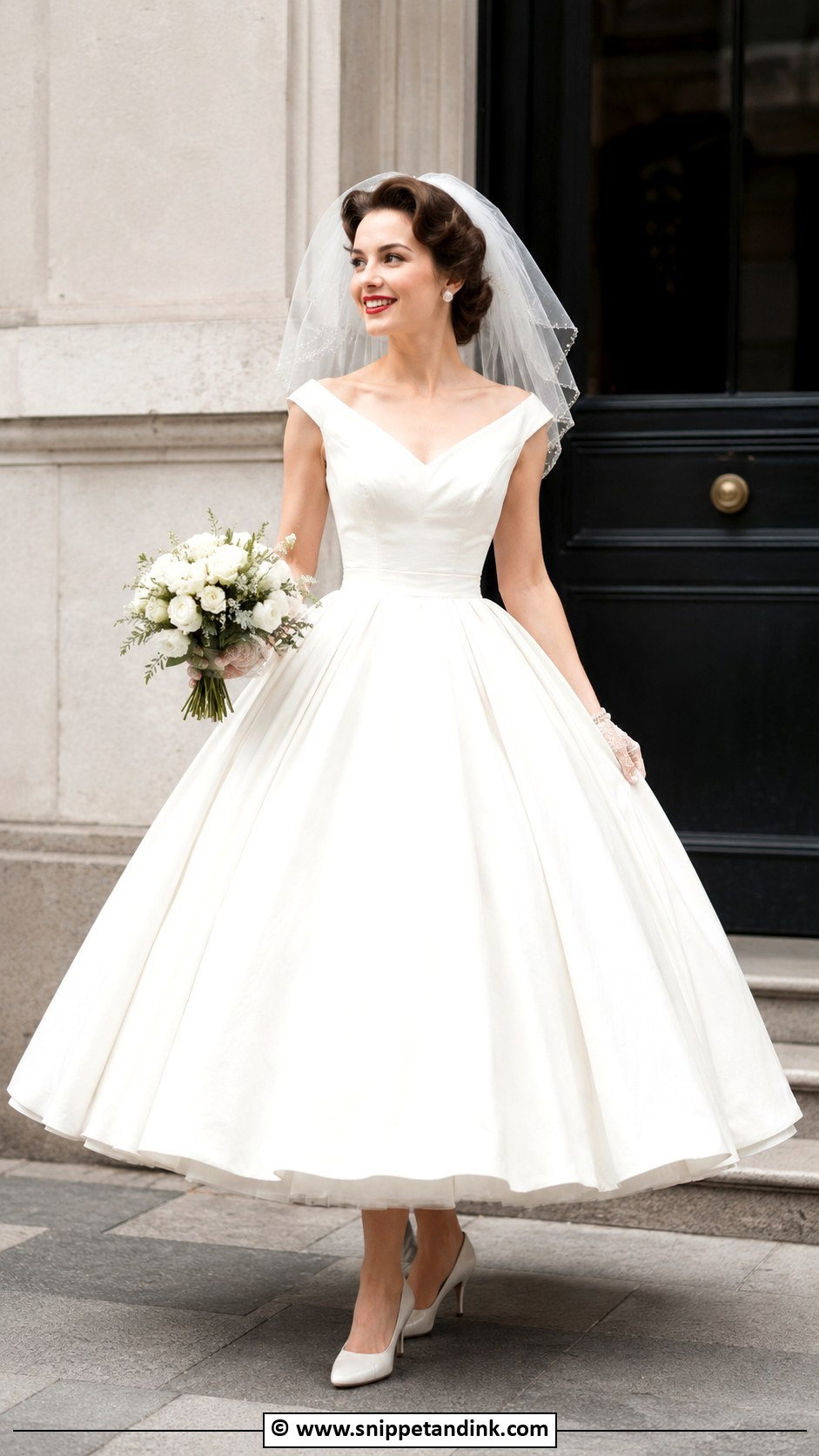
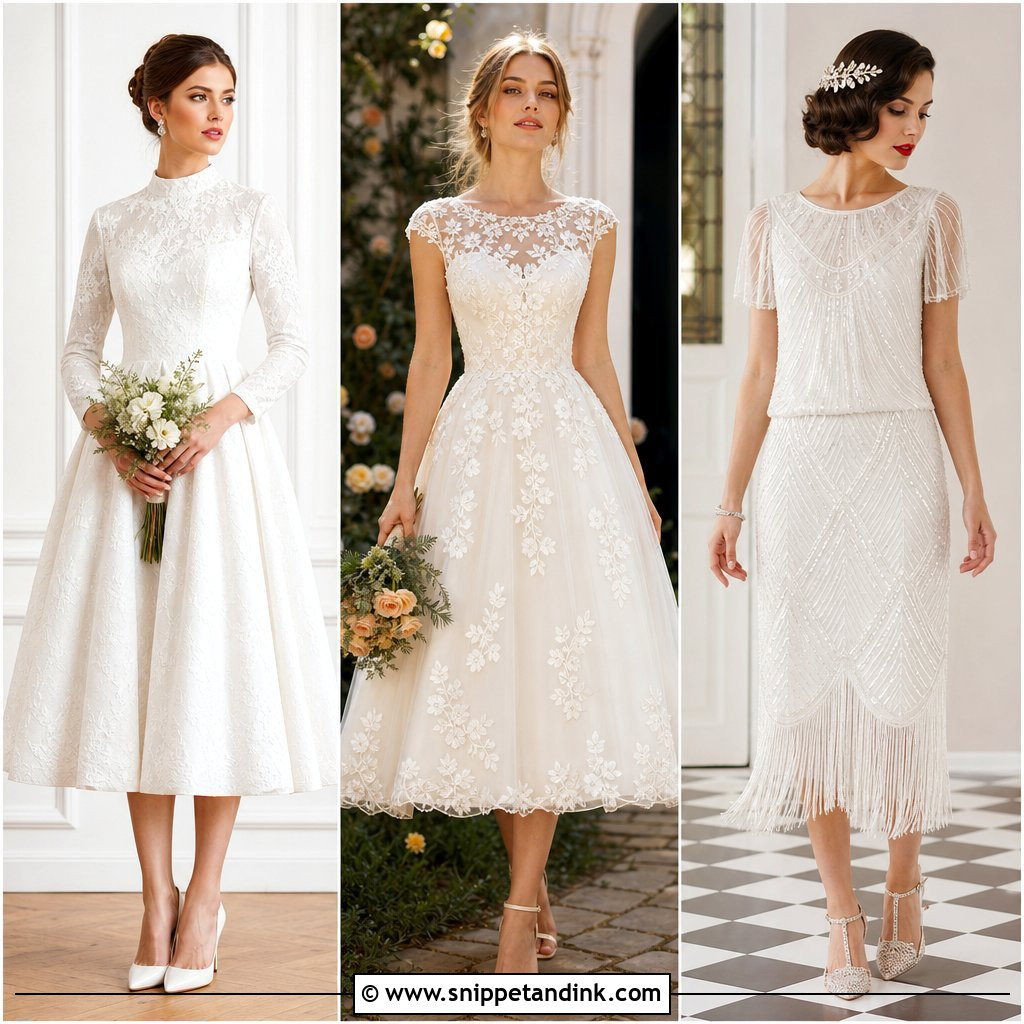
A full skirt is about movement and a marked waist. Tulle, organza, satin and lace all work, depending on how much structure you want. What I explain at the first appointment is that the petticoat creates the volume, not the skirt fabric, so how full it ends up is decided at the fitting, not in the shop. Keep the bodice fitted so the volume doesn’t swamp your frame. Classic pumps, pearl earrings and a veil sized to the skirt complete it. It’s made for dancing and kind to many figures because it defines the waist and skims the hips.
16. 1950s A Line Wedding Dress
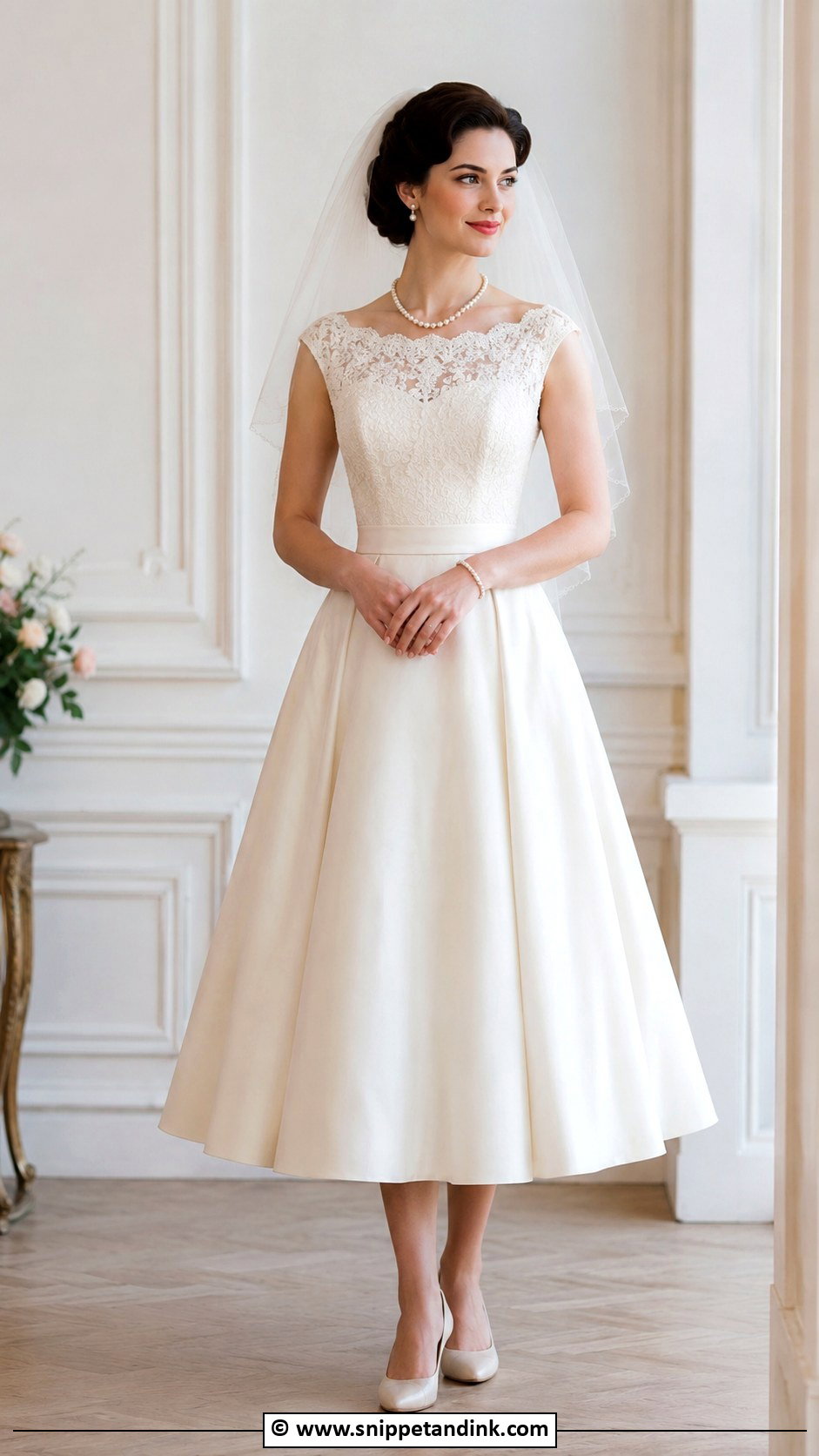
Think of A-line as the calmer sibling of the full skirt. The waist is still defined, but the skirt flares gradually instead of springing out, which makes it easier to sit in, walk in and fold into a car. Lace reads romantic, satin polished, organza light. Bateau, sweetheart and cap-sleeve bodices all pair well, with mid-height heels, a fingertip veil and pearl jewelry. I recommend it to brides who like the era but don’t want to manage a petticoat all day.
17. 1950s Pencil Wedding Dress
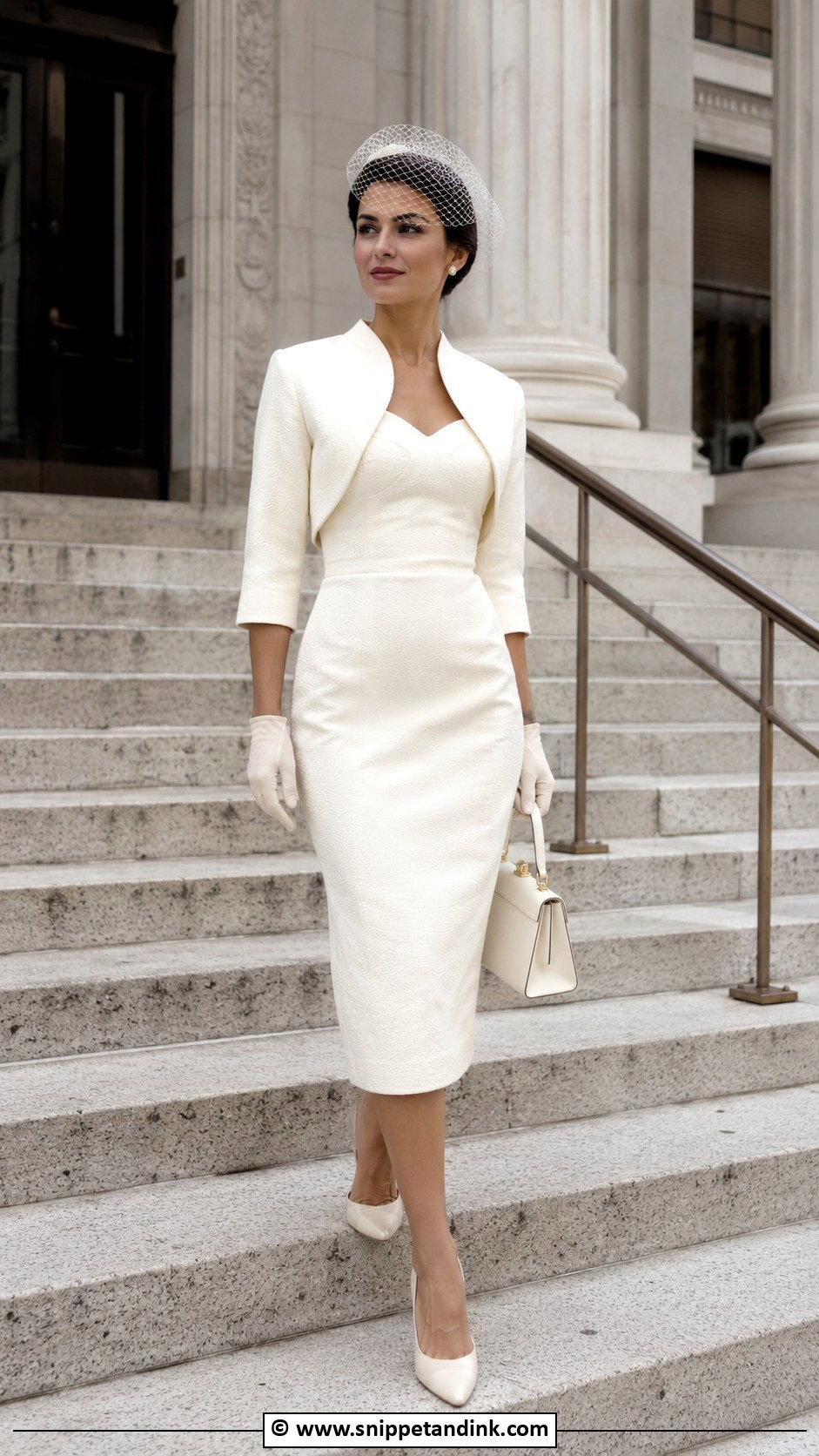
Pencil dresses are the tailored side of the decade, fitted through the hip and falling below the knee or to mid-calf. Ivory satin, crepe or lace with a fitted waist and modest neckline is the classic choice, with pointed pumps, a short veil, pearl studs and a structured handbag. A cropped jacket pushes it further into the period. The fitting question I always ask: can you climb stairs in it? A pencil skirt needs a back vent or kick pleat, or you’ll be taking the courthouse steps sideways.
18. 1950s Sheath Wedding Dress
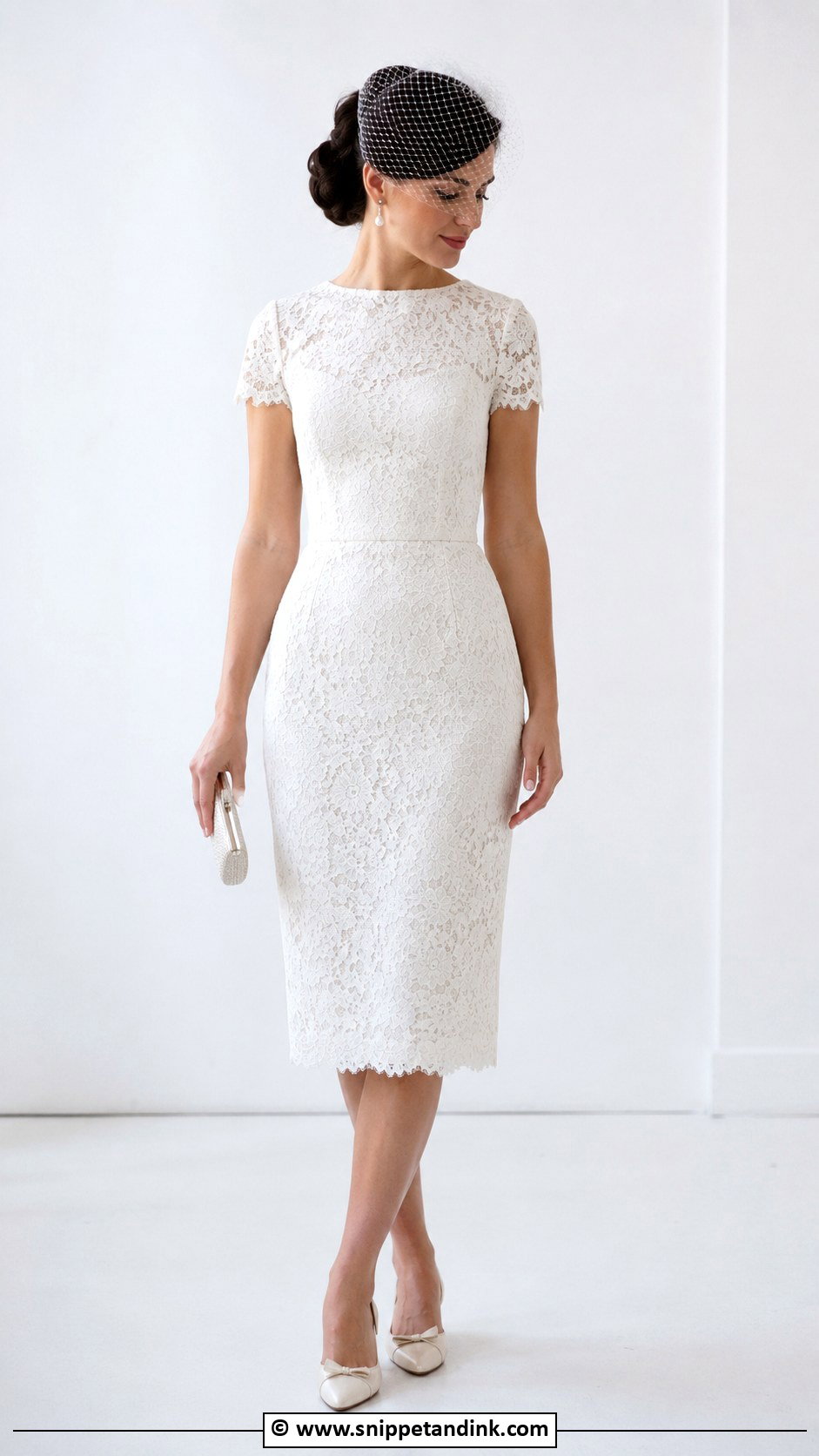
A sheath skims the body without volume, so it’s less expected than a full skirt and easier to move in than a pencil. Lace overlays, covered buttons, bateau necklines or short sleeves keep the 1950s reference clear. Kitten heels, pearl earrings, a birdcage veil and a neat clutch are all it needs. Because nothing hides the fit, small faults show: pulling across the hip or a ripple at the waist makes it look unfinished. Put the budget into tailoring and a fabric with some weight. It suits intimate weddings and brides who don’t want a princess shape.
19. 1950s Courthouse Wedding Dress
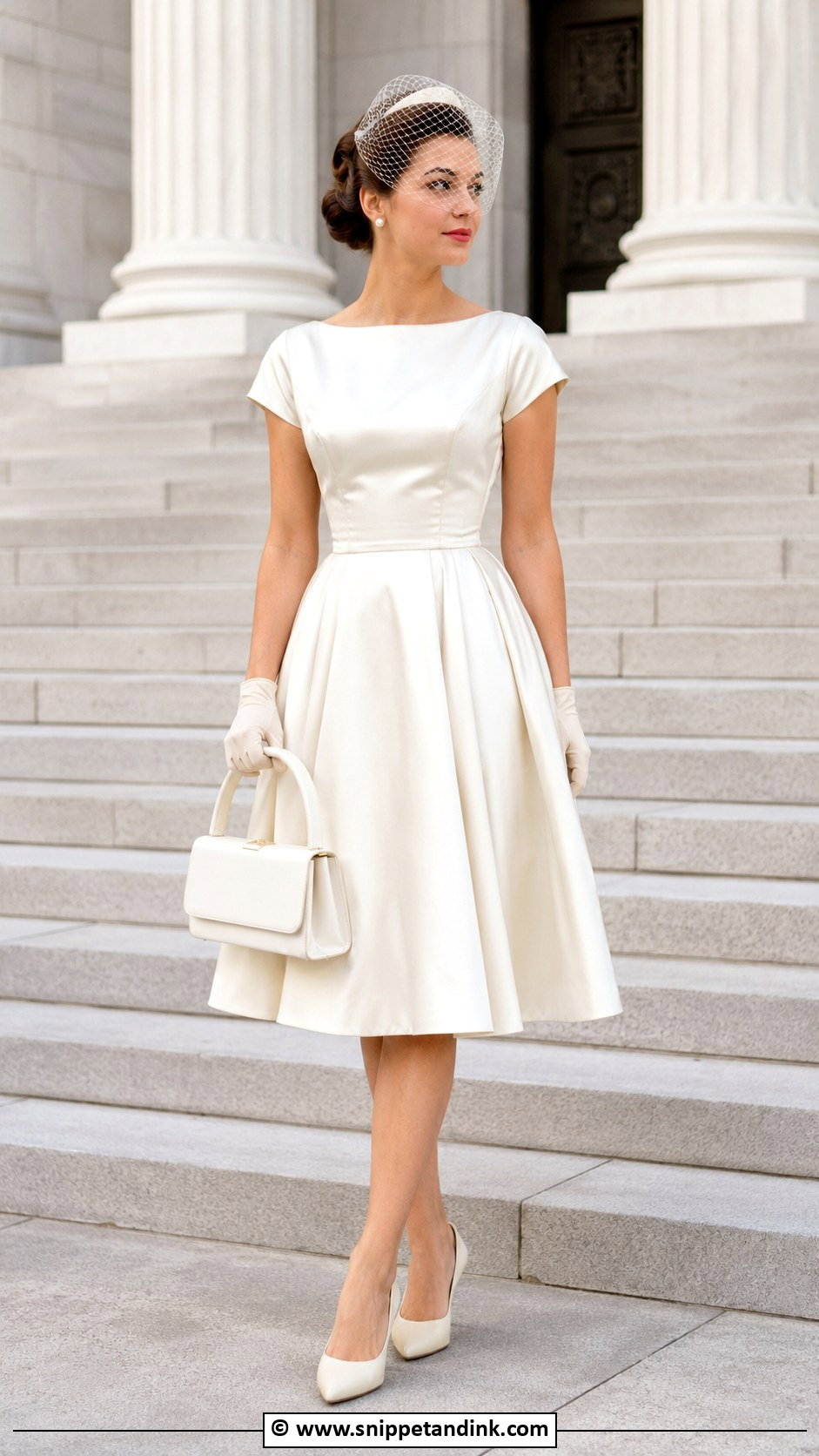
For a civil ceremony, I want a dress that looks finished on a phone camera on the steps and then survives half an hour in a waiting room. A short lace dress, tea-length satin or a fitted pencil dress all qualify. Pearl studs, a structured handbag and pointed pumps make it look deliberate, and a birdcage or small bow veil adds period character without overwhelming a small room. Crepe and lace forgive sitting; pale satin shows every crease, so if there’s a wait before you’re called, choose something else or bring a hand steamer. Keep it easy to walk in if you’re taking photos around town afterward.




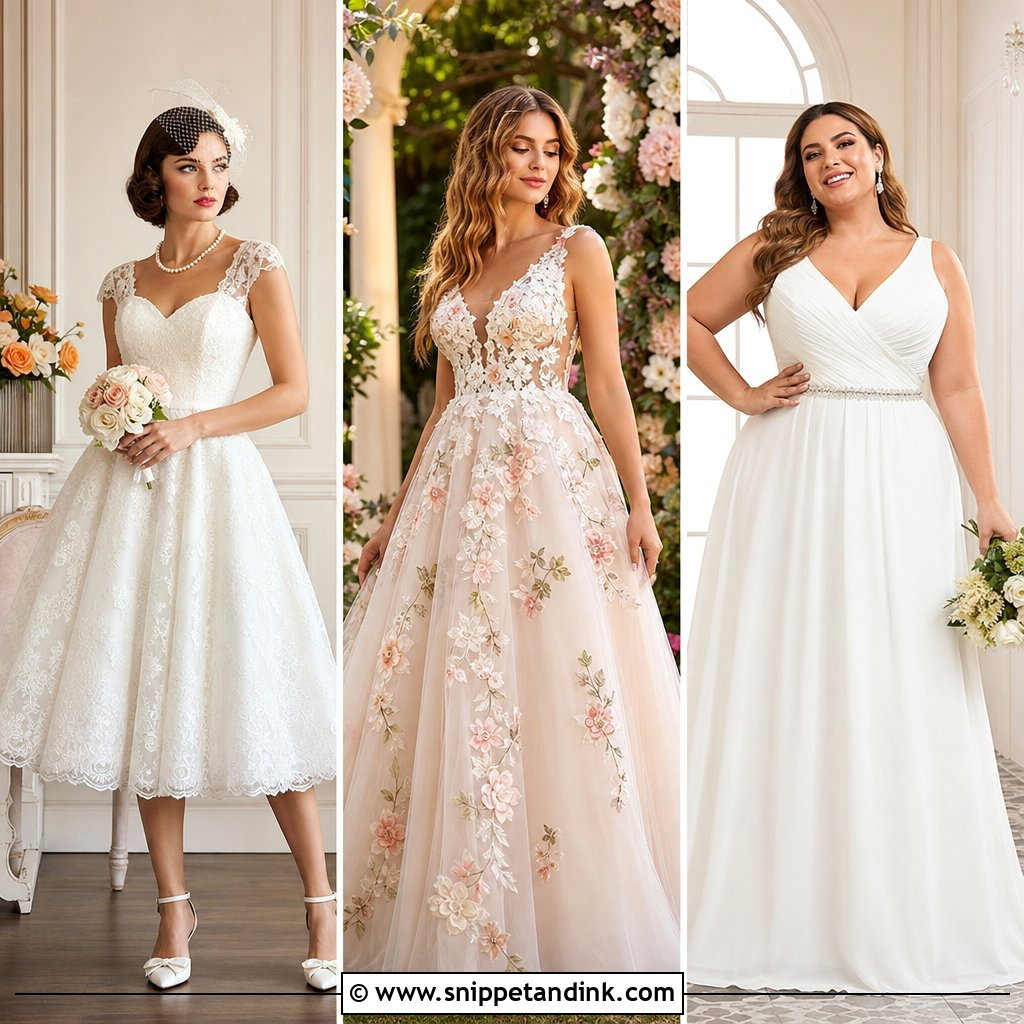
20. 1950s Garden Wedding Dress
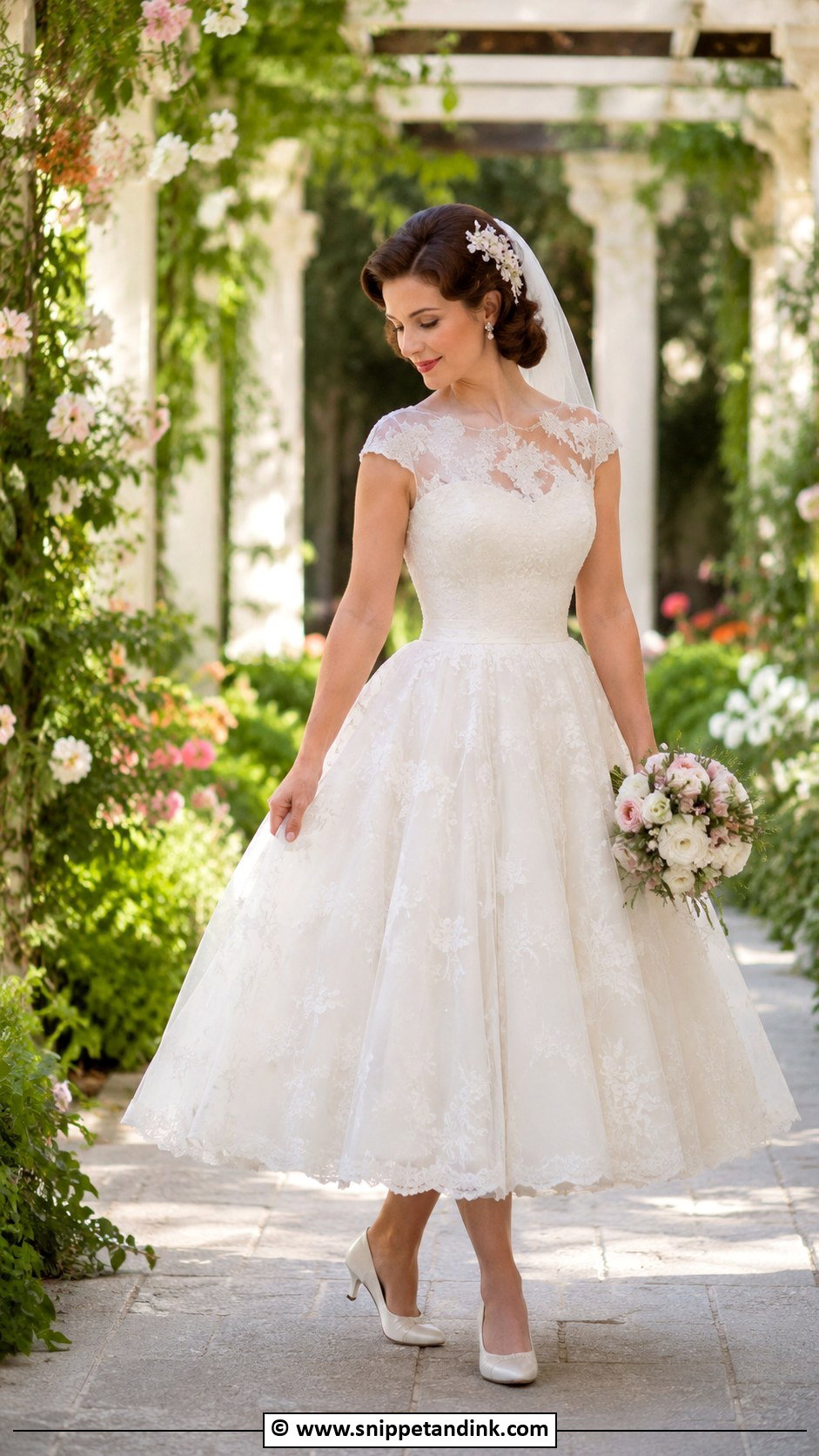
Outdoors, the dress has to handle grass, sun and breeze. Tea-length tulle, lace, cotton organdy and embroidered organza are all light enough. A cap-sleeve or sweetheart bodice softens the look while a full skirt keeps the shape. Shoes are the first thing I solve: stilettos sink into lawn, so block heels or low pumps are safer. Add pearl earrings, a floral comb and a short veil. Skip long trains here. They collect grass stains and twigs, and a shorter hem stays clean right through the photos.
21. 1950s Ballroom Wedding Dress
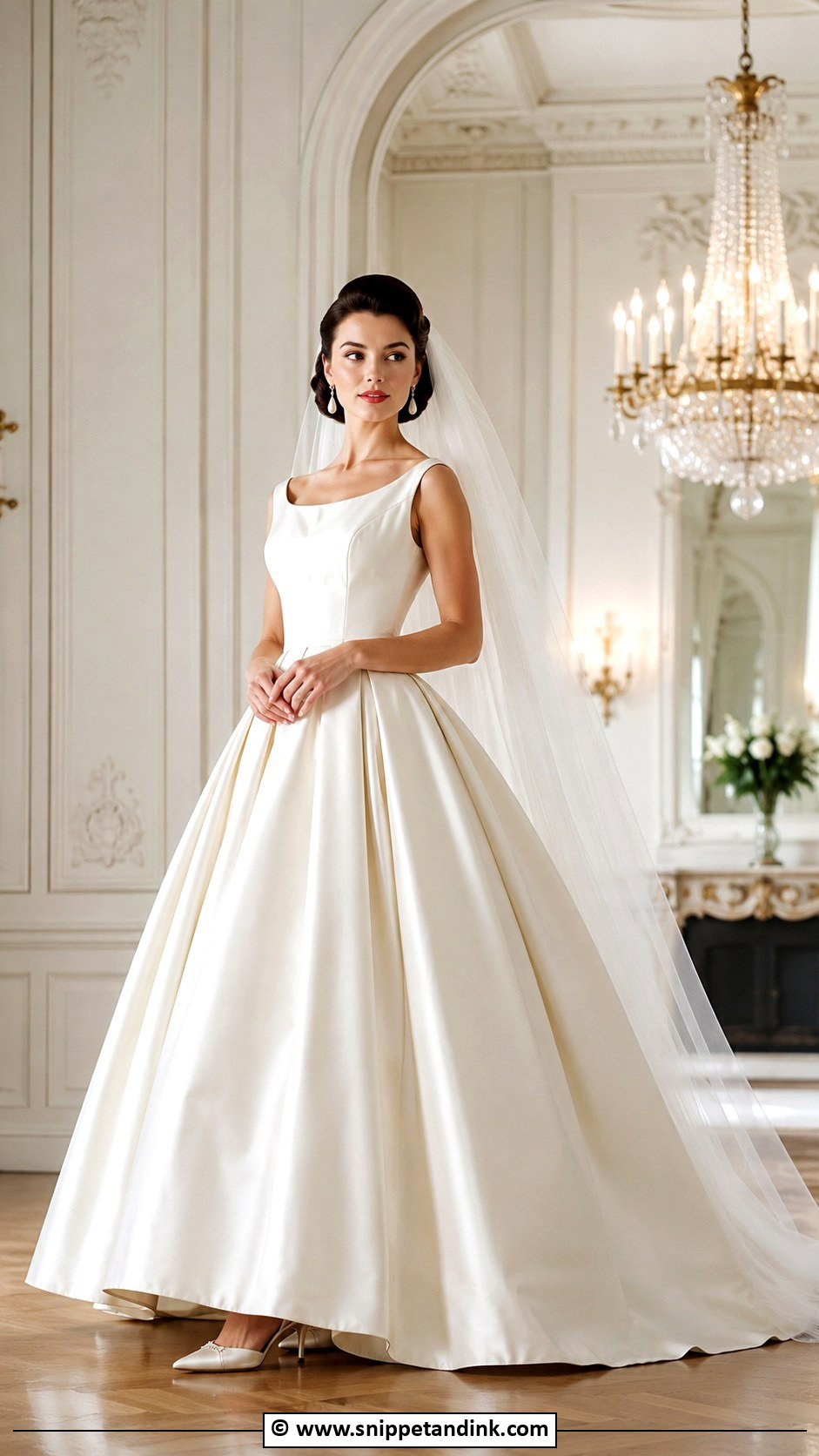
A ballroom can carry real volume, so this is the place for a satin ball gown with a fitted bodice, full skirt and long veil. Lace sleeves, a portrait neckline or a sweetheart add character. Satin heels, pearl drop earrings, a smooth updo and a formal bouquet complete it. Under bright reception lighting a clean satin finish glows, but it also shows every wrinkle from the car ride, so I plan a quick steam before the entrance. Classic accessories rather than trend pieces keep the photos from dating.
22. 1950s Winter Wedding Dress
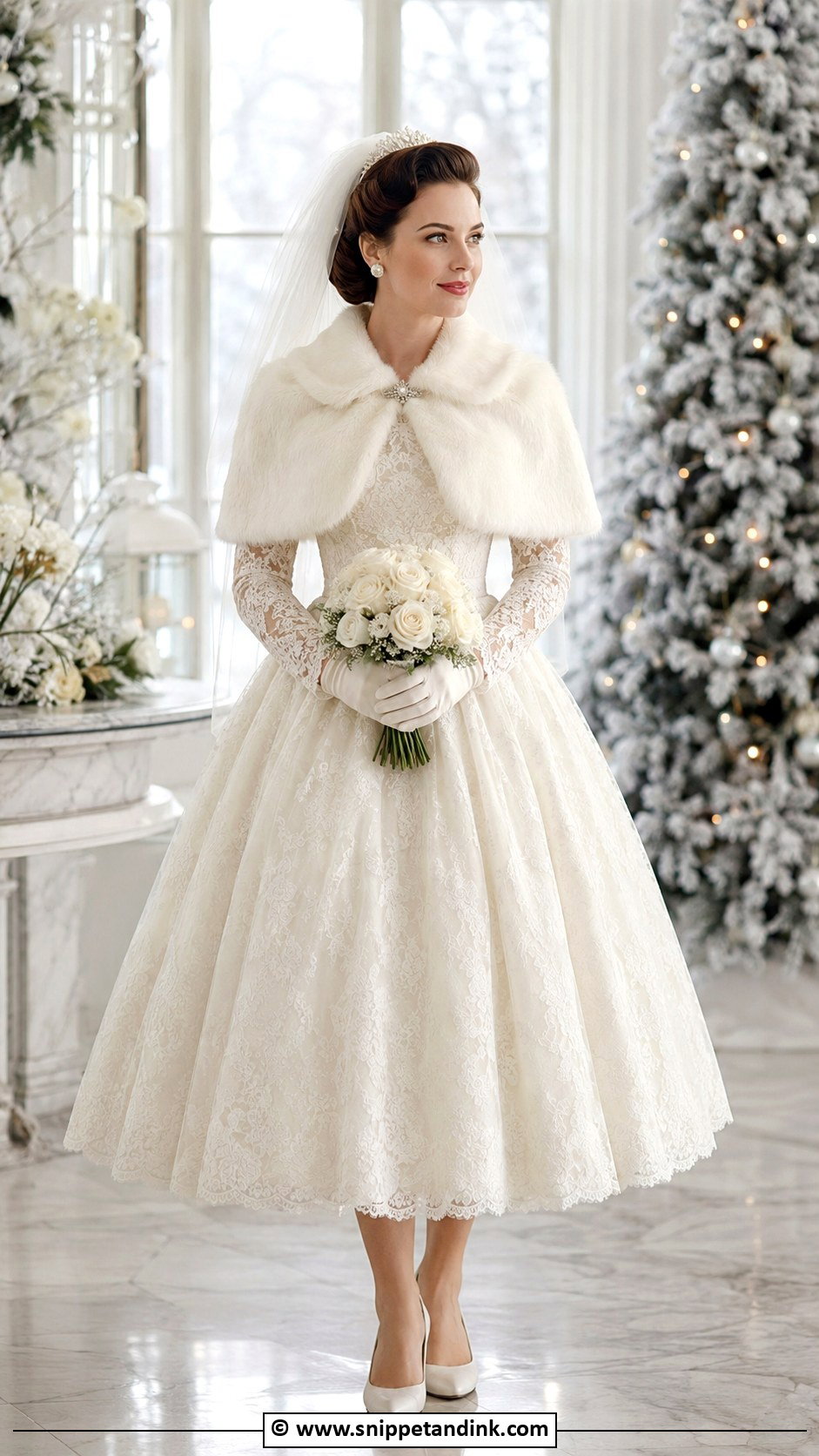
A 1950s winter wedding dress can be warm without losing its shape. Long-sleeve lace, a satin ball gown or a tea-length dress with a faux fur wrap all fit the season, and ivory satin, heavier lace and structured taffeta feel right in the cold. Closed-toe pumps, pearl earrings, gloves and a soft veil finish it. The mistake I see most is a long coat over a full skirt: it crushes the petticoat and hides the waist. Keep outerwear short and fitted, like a bolero or cropped coat, and step out of it for portraits.
23. 1950s Summer Wedding Dress
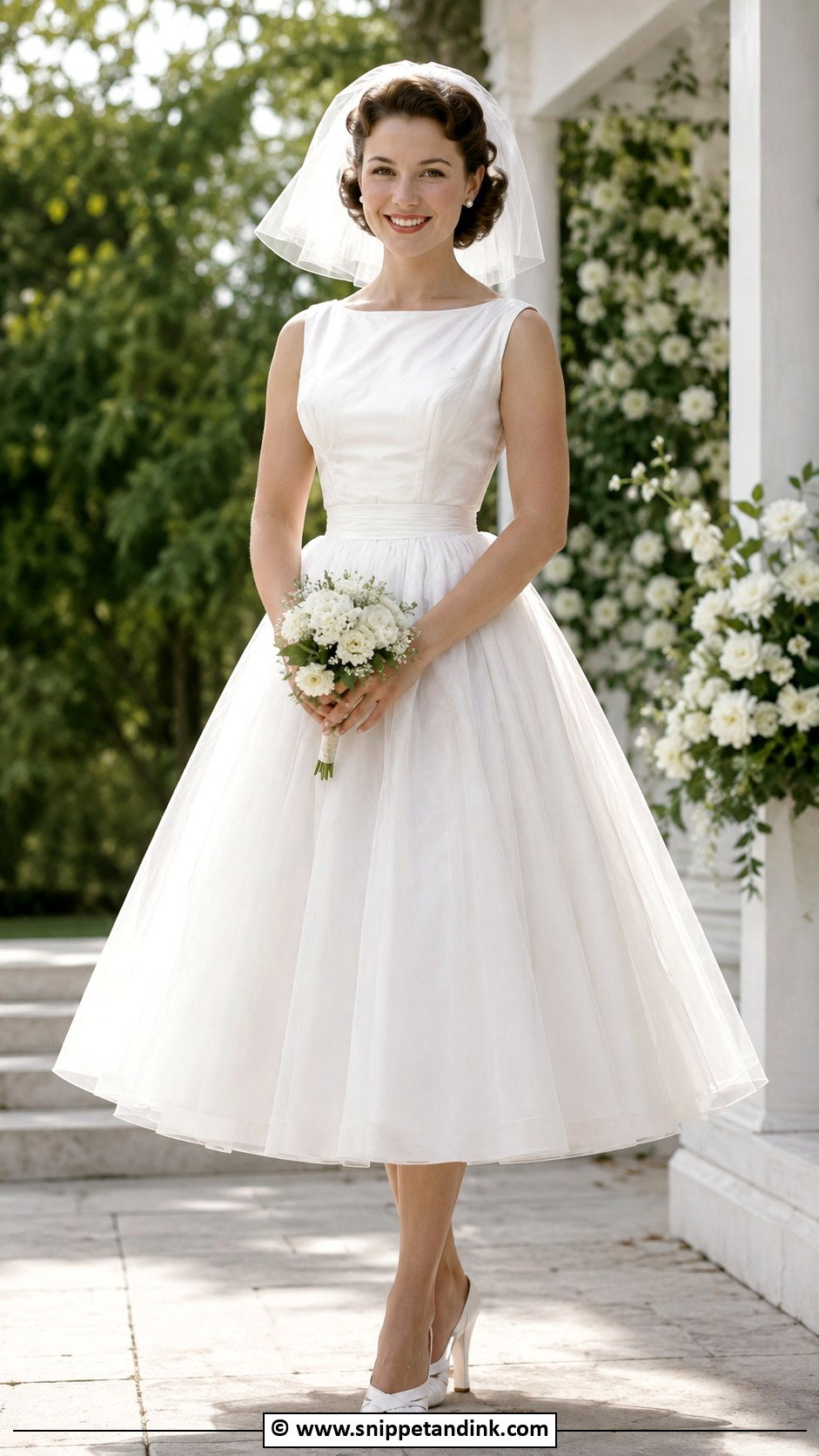
In heat, fabric decides whether you enjoy the day. Tea-length cotton lace, organza, chiffon and lightweight tulle breathe, while heavy satin traps warmth and shows damp marks at the waist and underarm. Cap sleeves, sleeveless bodices and open necklines suit warm weather, and a full skirt still gives the period shape. Where I can, I ask for a cotton lining instead of polyester. Low sandals or peep-toe heels, pearl studs, a short veil and an updo that keeps hair off the neck finish it.
24. 1950s Plus Size Wedding Dress
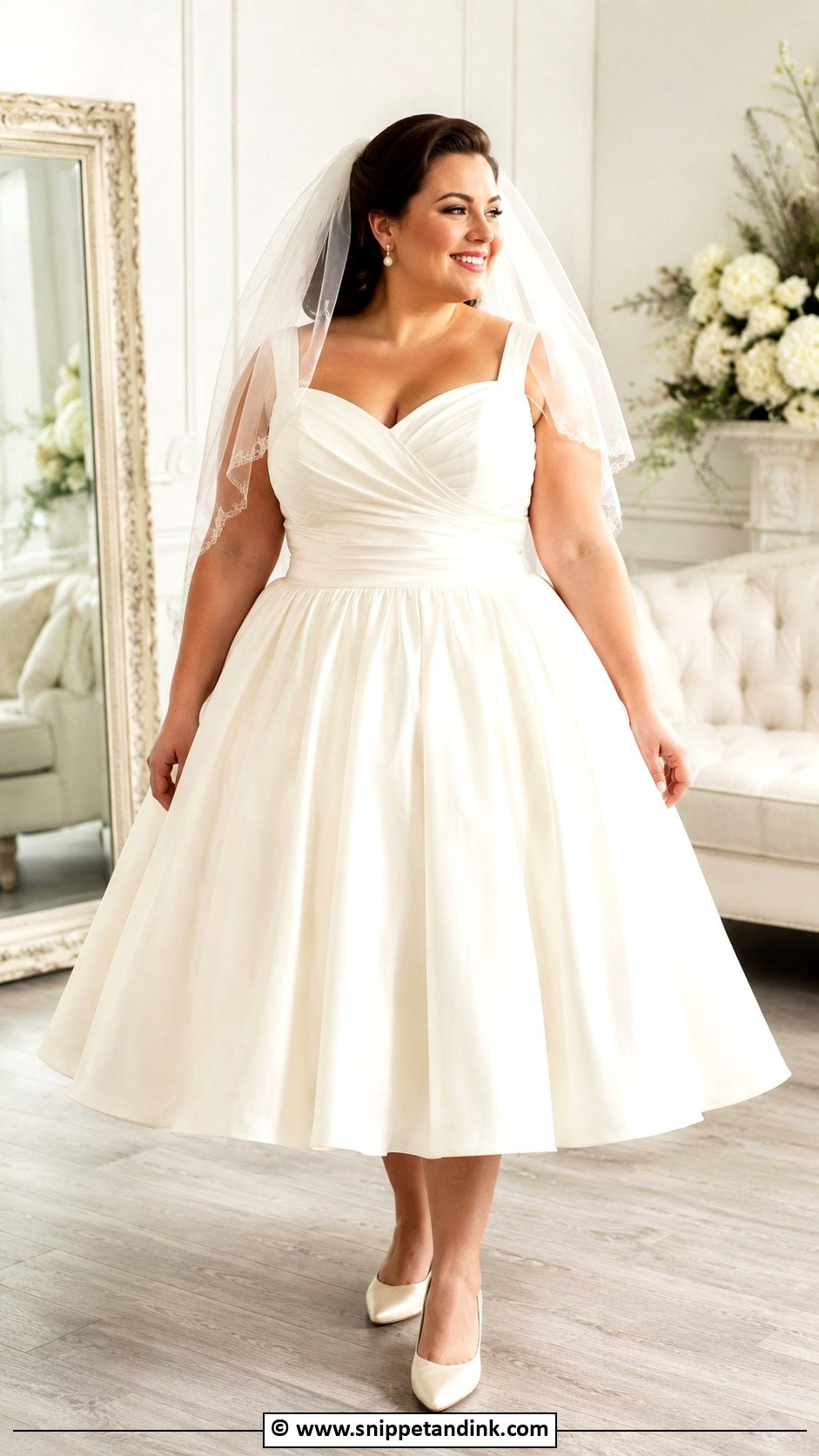
This decade’s silhouettes suit fuller figures because they’re built around the waist. A structured bodice with real support, an A-line or full skirt and a neckline you feel secure in create shape without clinging. Tea length shows the shoes and keeps proportions balanced. Wide straps, cap sleeves, three-quarter sleeves or a sweetheart neckline are comfort choices, not rules. I start these fittings with the bra or built-in support, because every other measurement depends on it. Add a petticoat only if you want more volume, and pick stable heels you can stand in for hours. Fit and structure matter here, not any idea of hiding the body.
25. 1950s Simple Wedding Dress
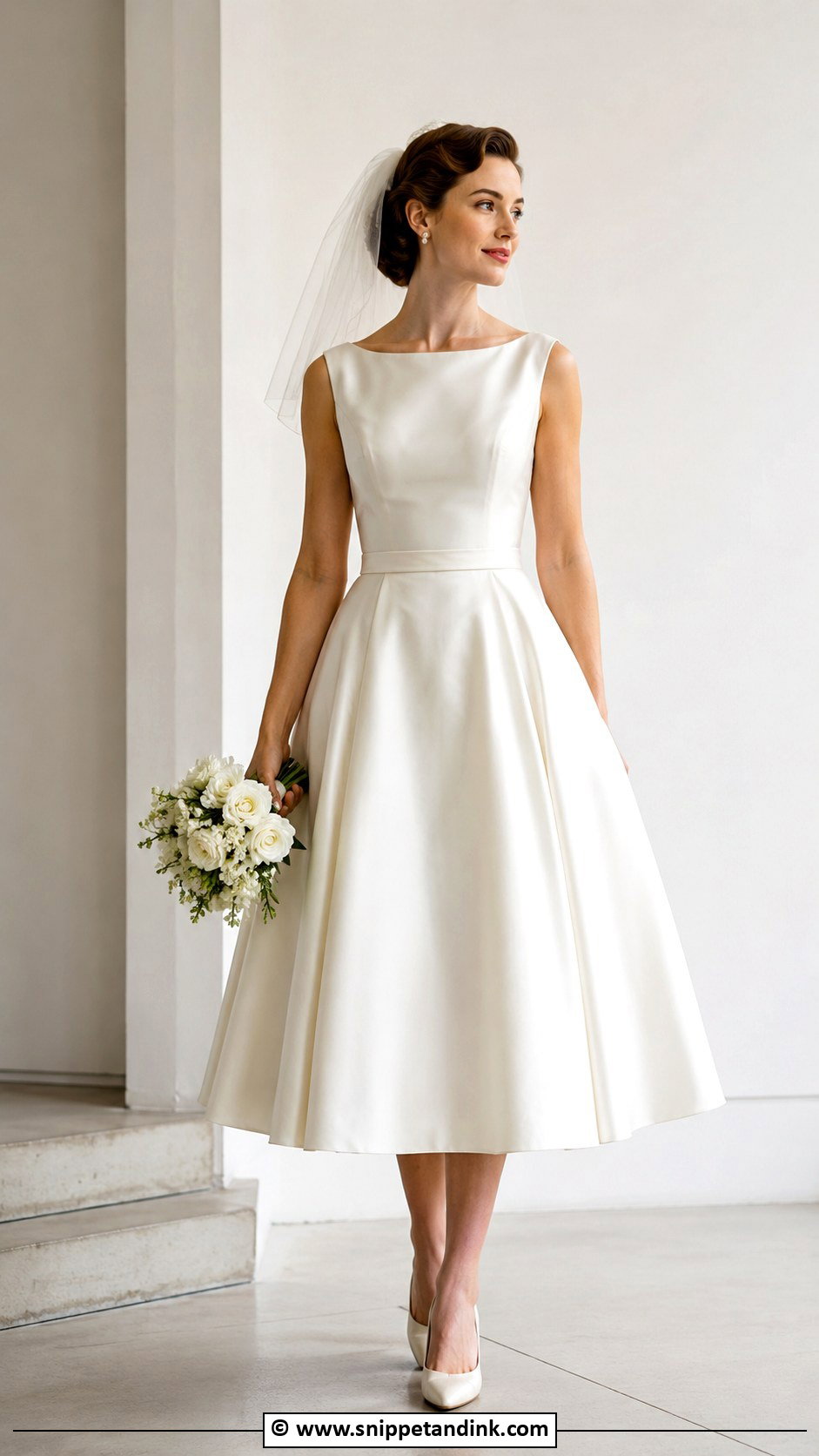
Simple works when the cut does everything. Choose clean satin, mikado, or crepe with a fitted bodice and tea-length or floor-length skirt, and let a bateau, cap sleeve or sweetheart neckline add character. With no lace or beading to distract, every seam and dart is visible, so I’d spend on fabric quality and tailoring rather than embellishment. A small bow belt or covered buttons supply just enough period detail. Pearl studs, plain pumps and a small veil finish it.
26. 1950s Embroidered Wedding Dress
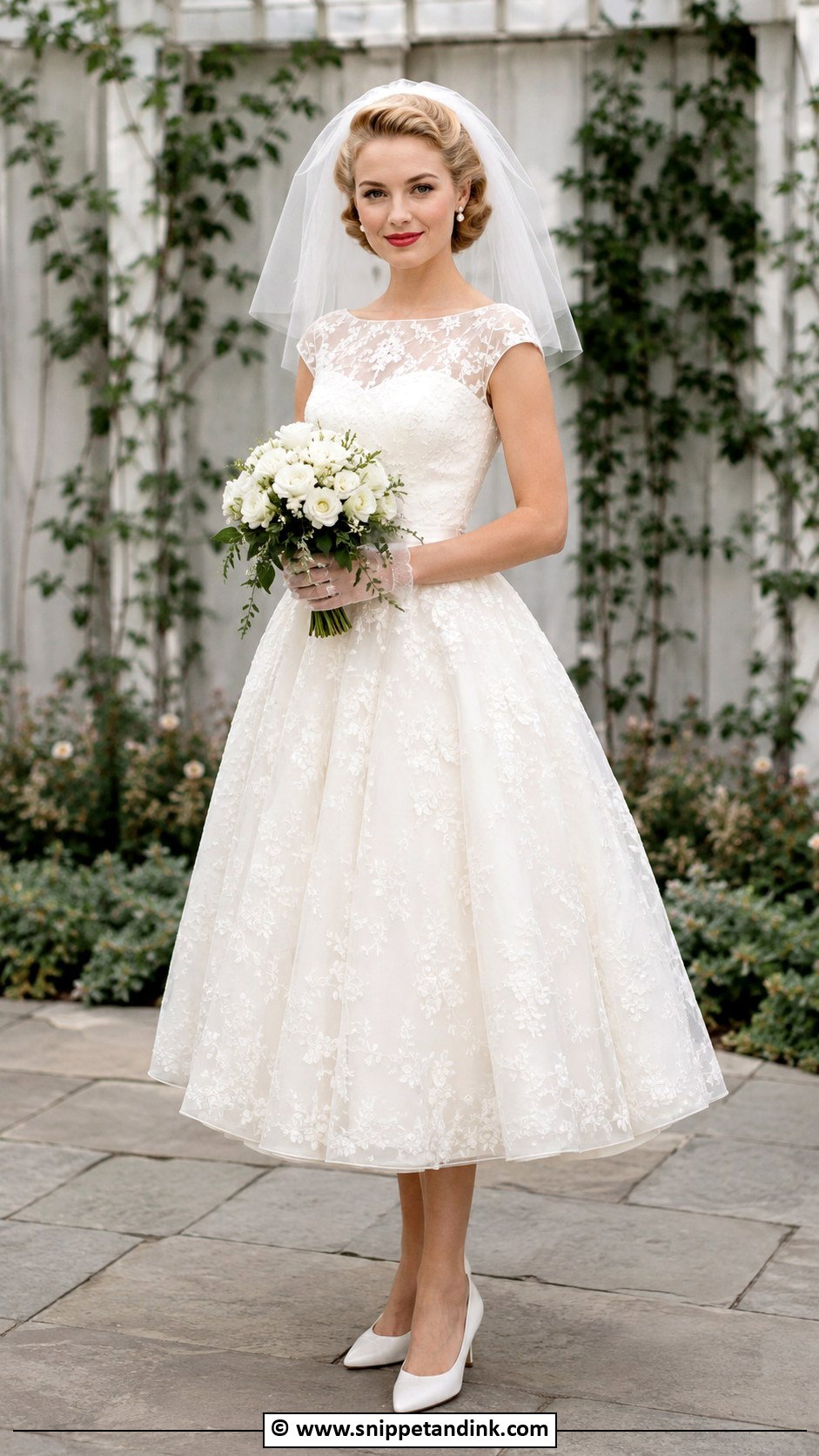
Embroidery adds texture to a plain shape, especially on cotton organdy, lace or tulle. A tea-length dress with a fitted waist feels light; floor length is more formal. Keep accessories minimal with pearl earrings, satin pumps and a short veil. When the motifs are floral, I photograph the embroidery for the florist so the bouquet echoes it instead of competing. Cream or soft ivory thread on a matching ground shows the stitching better than stark white, which tends to flatten raised work on camera.
27. 1950s Taffeta Wedding Dress
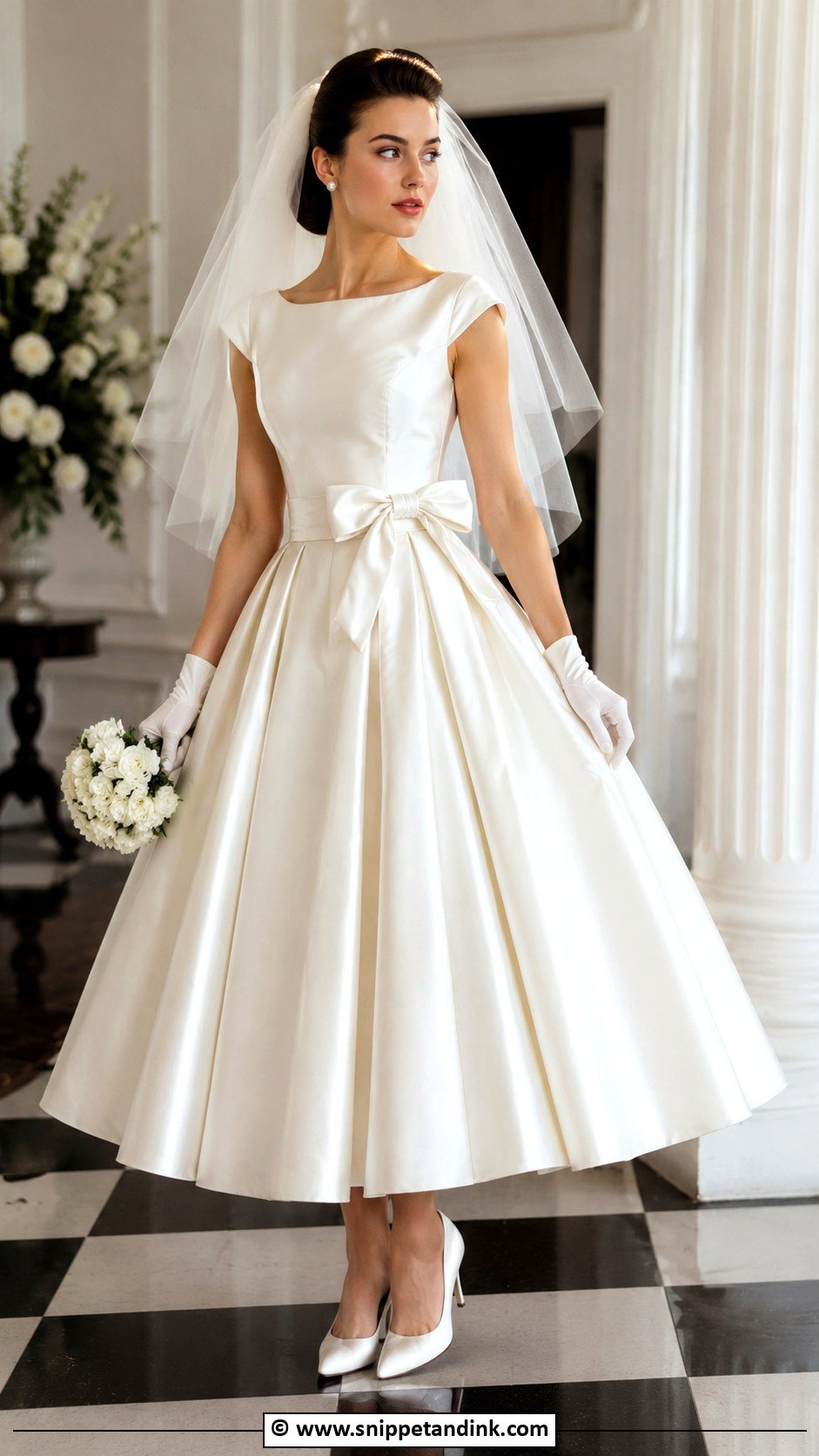
Taffeta is crisp and holds its own shape, so full skirts usually need only a light petticoat. It suits tea-length and ball gown cuts with a fitted bodice, pleated skirt and defined waist, and a bow belt is a nice period touch. Satin or taffeta pumps, pearl earrings and a simple veil keep it clean. Be aware that taffeta rustles audibly and creases sharply when you sit, so I always tell brides to sit down in it before buying and to sweep the skirt out behind them each time. Formal indoor venues and city receptions suit it best.
28. 1950s Wedding Dress With Gloves
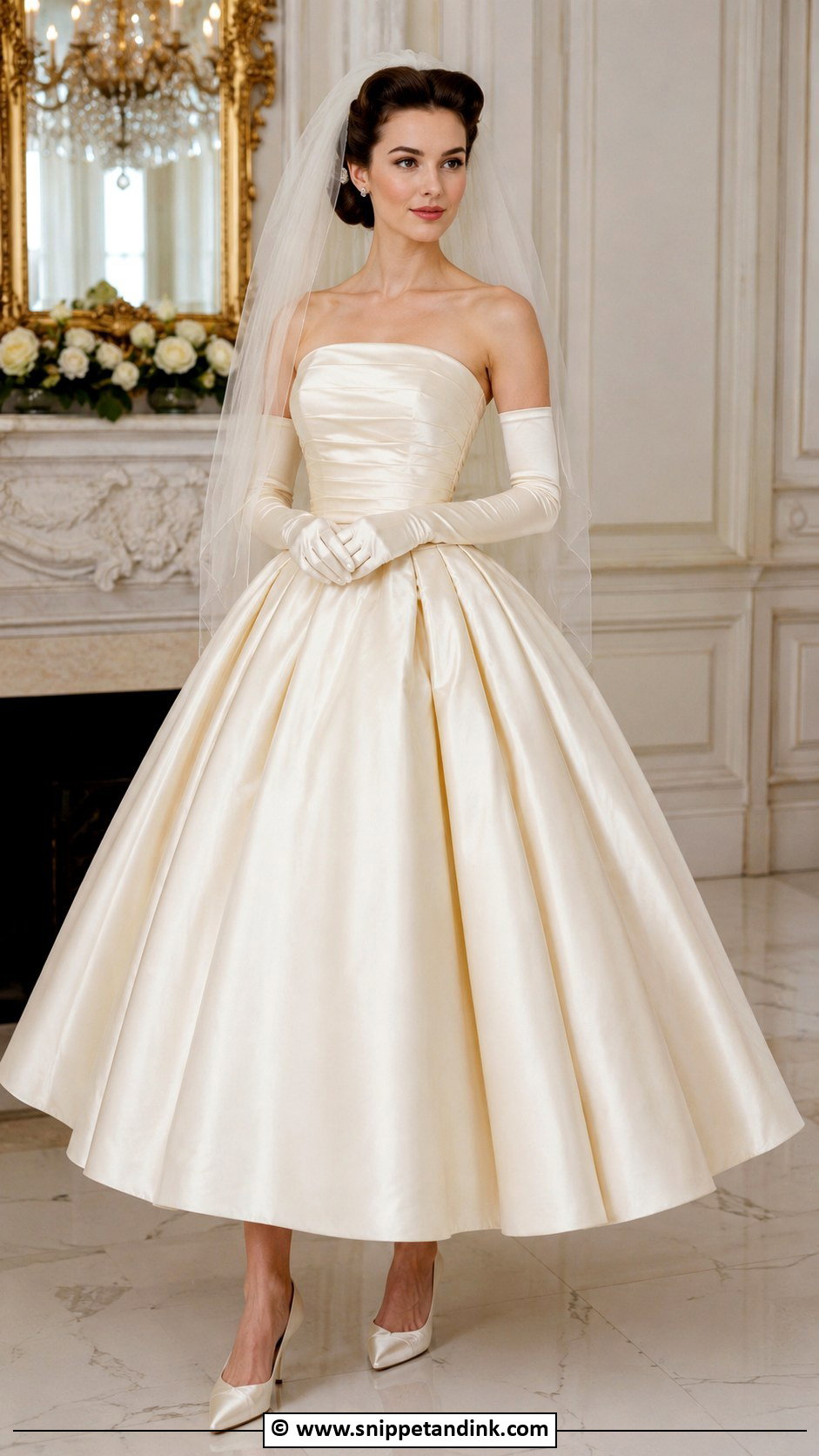
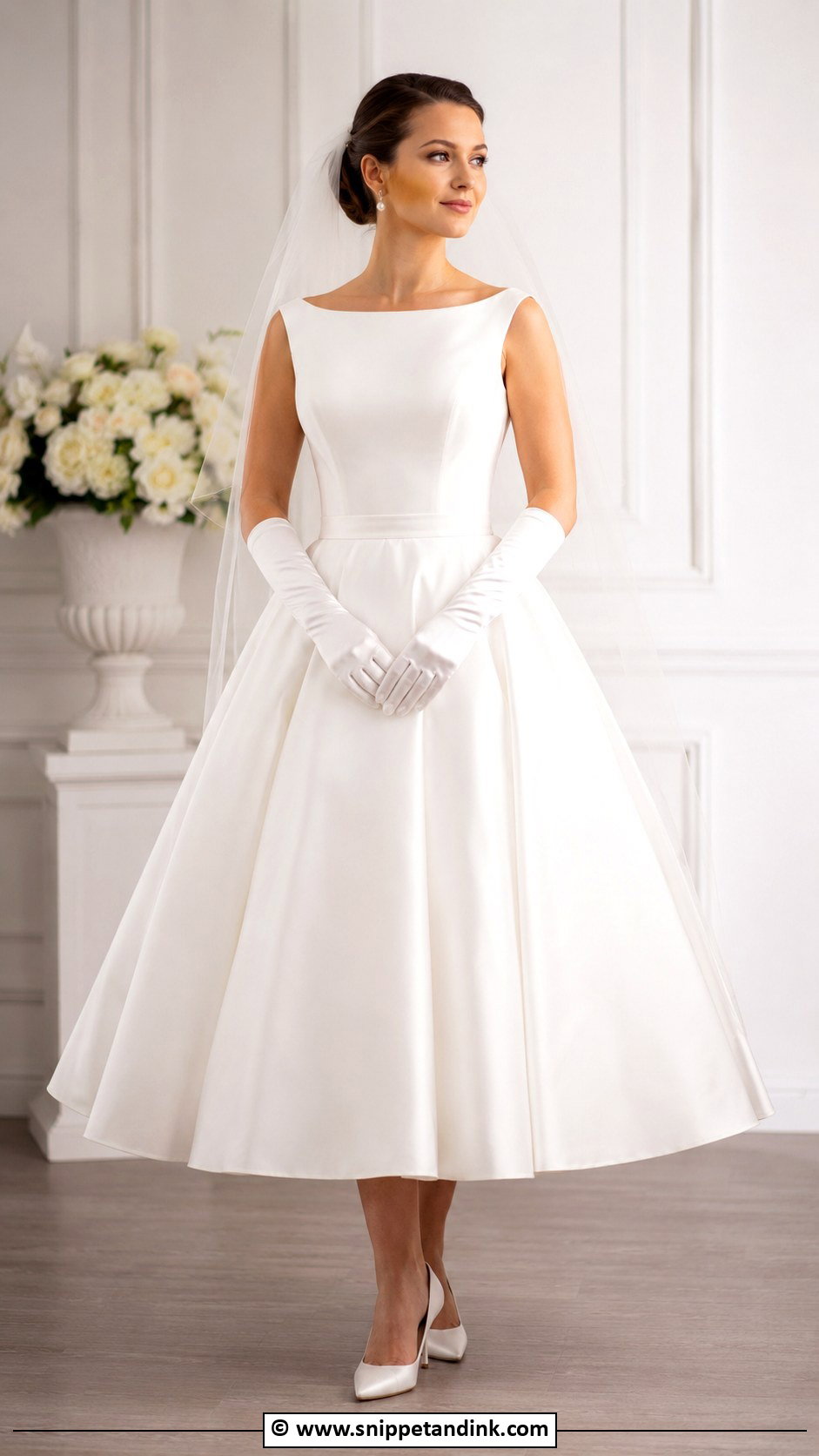
A wedding dress with gloves reads as mid-century the moment you see it. Short gloves go with tea-length dresses and courthouse looks; opera-length gloves suit strapless or off-shoulder gowns. Balance the textures: plain gloves with heavy lace, richer gloves with plain satin. Plan for the ring exchange, too. Opera gloves are awkward to peel off at the altar, so I suggest slipping the left glove off beforehand or choosing a pair with an opening at the ring finger. Pumps, pearl earrings and a veil that doesn’t collide with the glove line complete it.
29. 1950s Wedding Dress With Birdcage Veil
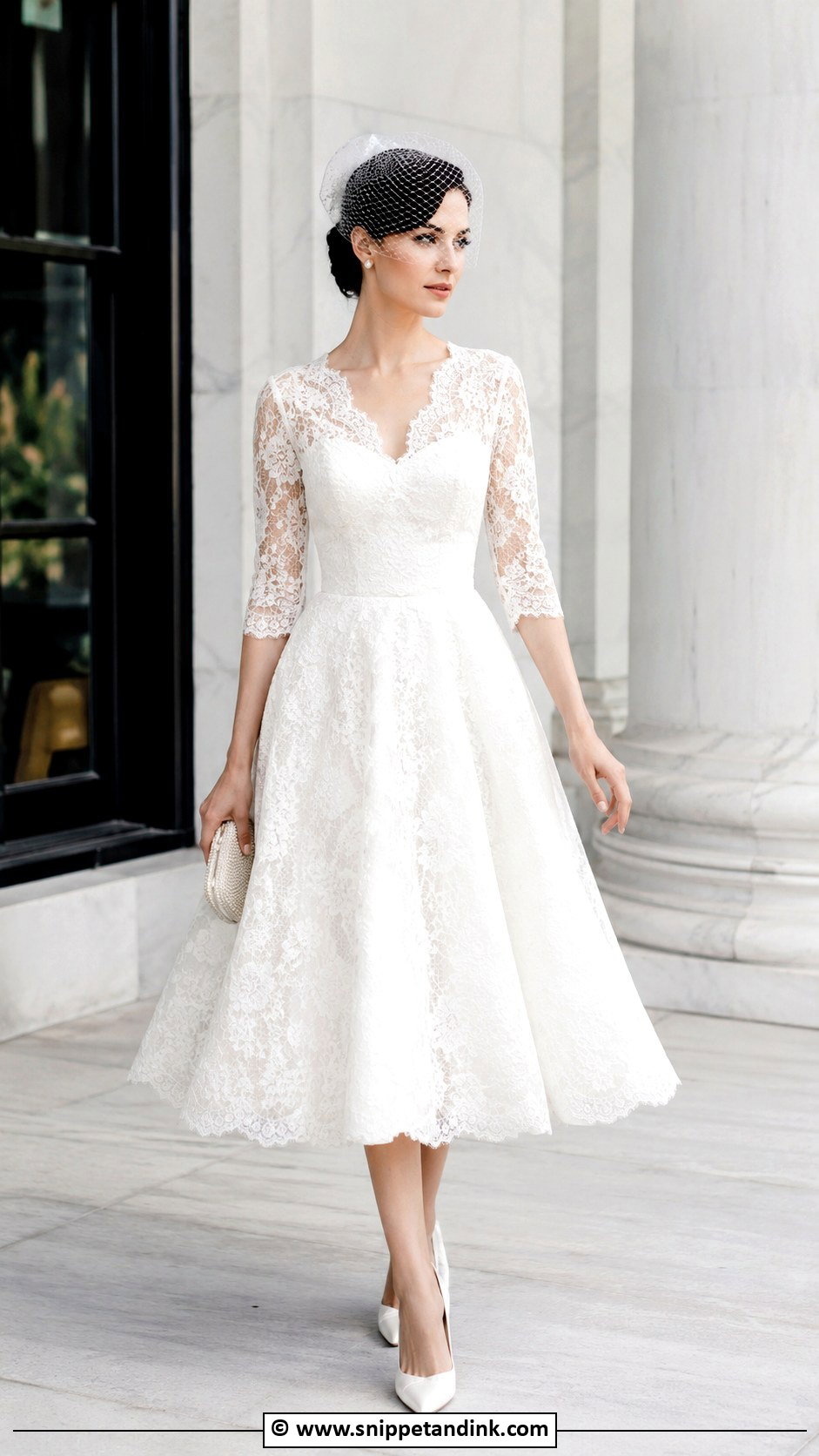
A birdcage veil frames the face without covering the dress, which makes sense with shorter hems. Pair it with lace or satin, pointed pumps, pearl studs and a small clutch for a courthouse ceremony or retro portraits. A red lip works if it’s already part of your style; softer makeup looks more current. The veil is pinned into the hair, so the style has to give it something to grip. I’d test the side part, set curls or low bun at the hair trial with the veil in place, never for the first time on the morning.
30. 1950s Wedding Dress With Pearl Accessories
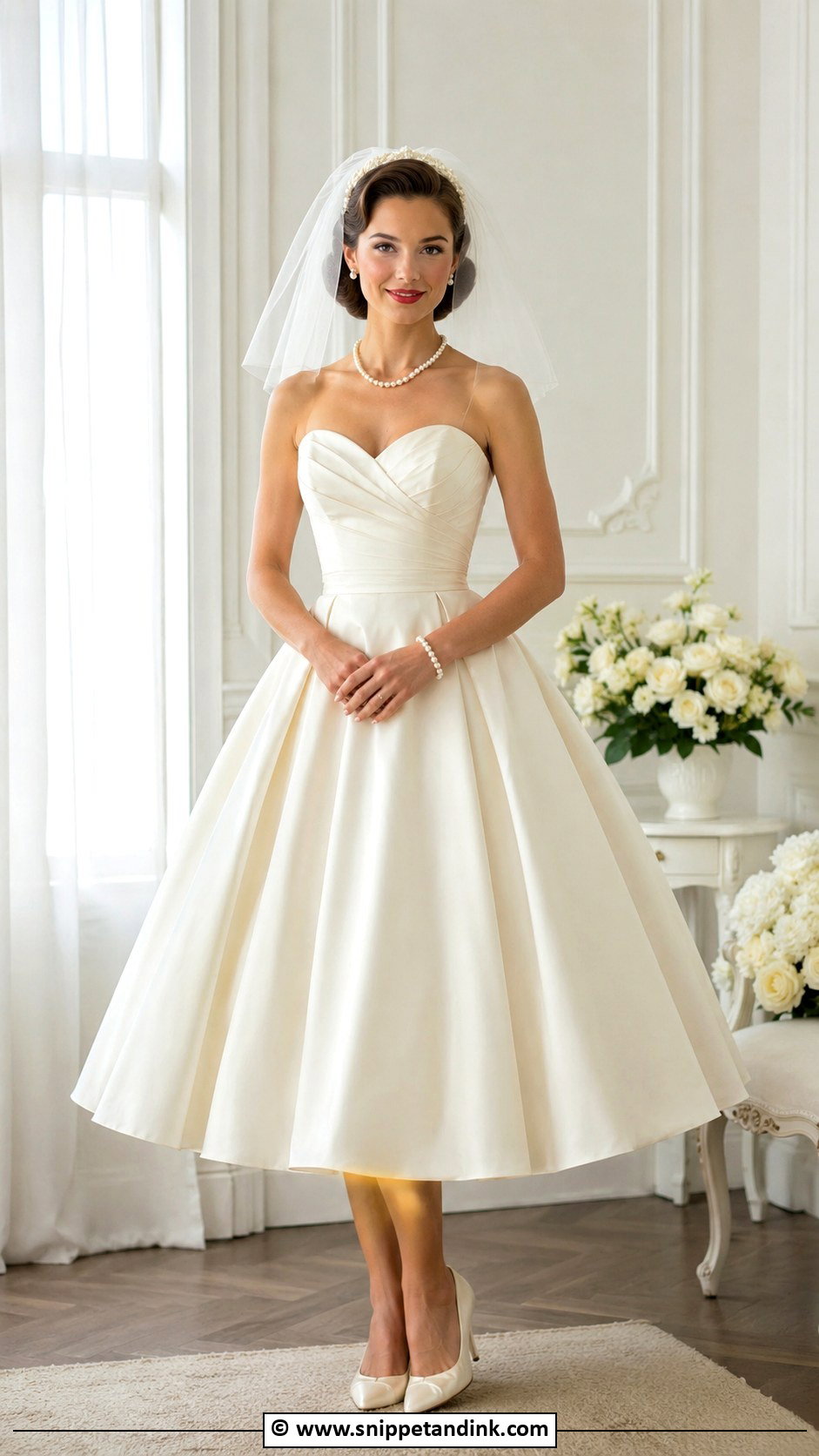
Pearls suit almost every shape from the decade, tea-length lace and satin ball gowns alike. My rule is one or two pearl accents, never the full set: studs, a single strand, a bracelet or pearl-trimmed shoes. With a high neckline, skip the necklace and keep to earrings. With strapless or sweetheart, a short strand fills the open space. Pearls flatter ivory fabric, photograph softly and won’t date the way trend jewelry does.
Buying an Original Gown From the Decade
Genuine 1950s wedding dresses still turn up through vintage dealers and family wardrobes, and some have survived in remarkable condition. They also bring problems a new gown never has. These are the checks I run before I’d let a bride commit to one.
- Measurements, not the label. Sizing has shifted a great deal since then, so an original marked in your usual size is often much smaller. Compare bust, waist and back length against a dress that fits you now.
- Waist and armholes first. Gowns of the era were cut for small waists over firm foundation garments, with high, narrow armholes. Ask the seller for those two measurements before anything else.
- Room in the seams. Some originals have generous seam allowances that can be let out; others have almost none. A seamstress can tell you in a few minutes how much give is really there.
- Fabric health. Hold the skirt up to the light and look for splits along old folds. Aged silk can shatter, and that can’t be repaired. Acetate and rayon satins water-spot easily, and yellowing tends to gather along seams and hems.
- Odor and stains. Musty storage smells and underarm marks may soften with specialist cleaning but don’t always vanish. Never try washing it at home first.
Give yourself time. I’d want an original bought at least six months out, so there’s room for professional cleaning, alterations and a backup plan if the fabric fails. If the gown proves too fragile for a full day, wear it for the ceremony and portraits, then change into a sturdier reproduction for the dancing.
Let the Waist Lead, Then Edit Everything Else
What makes this era work for a wedding is that it gives you structure and personality in one clear line. A full tea-length skirt moves, a long-sleeve lace gown feels classic, and a satin ball gown fills a formal room. Gloves, pearls, veils and shoes finish the outfit, but they should follow the dress rather than compete with it. My advice is to match the dress to your venue and to how you want to move all day, not to copy the decade literally. Start from the ideas above and build a vintage look that still feels like yours.
You'll Like These Ideas:


Leave a Reply