
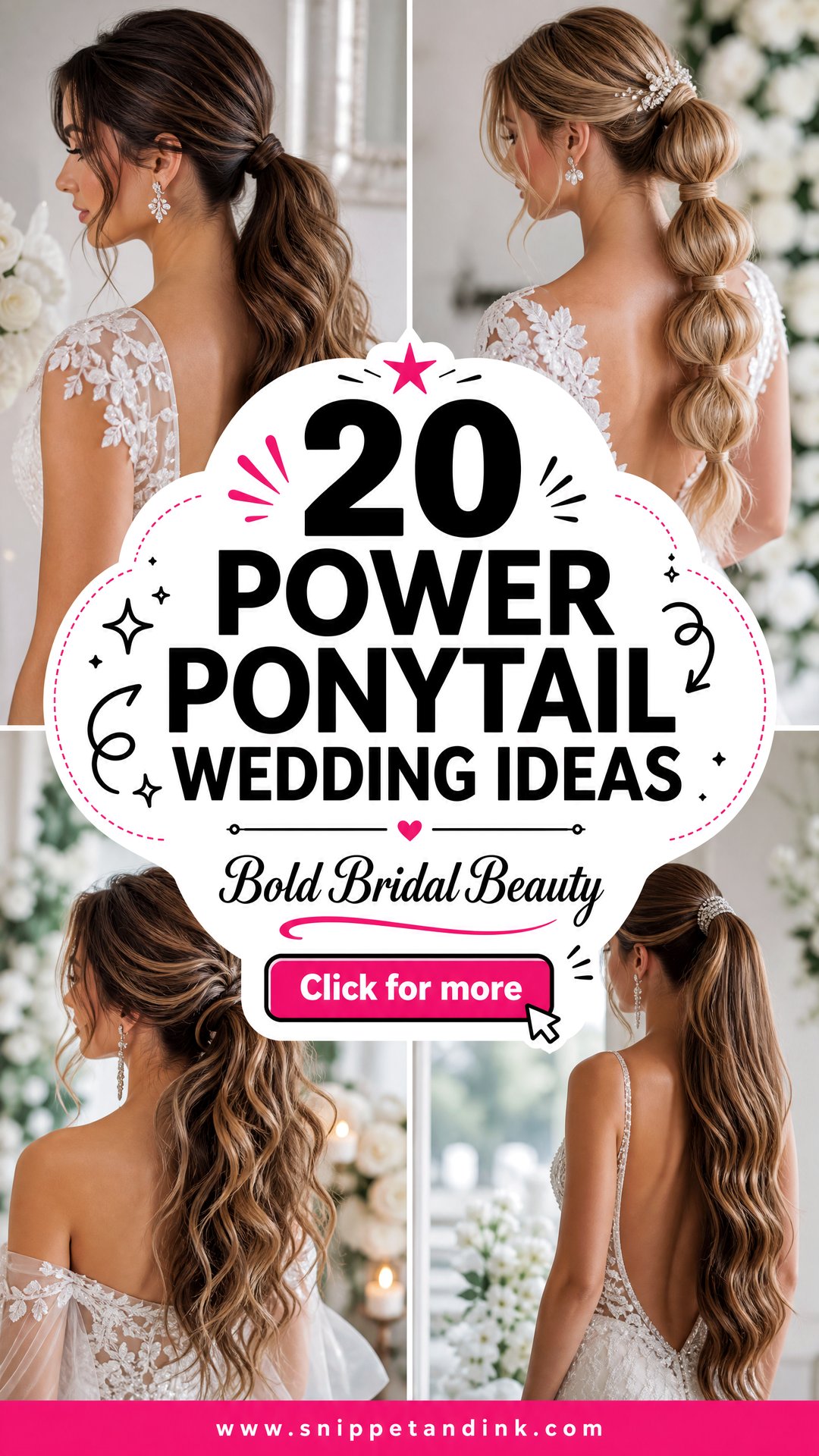
A ponytail can be one of the strongest bridal looks I put on a client, and one of the easiest to get wrong. Done well, it lifts the hair off the neck, shows the neckline and survives a full day of hugging and dancing. Done casually, it looks like you came straight from the gym. The difference is almost never the height. It is the base: how the crown is built, how the elastic is hidden, and how the length is set so it keeps its shape after dinner. Below are 20 versions I would happily build for a bride, from glossy and sharp to soft and textured, with notes on who each one suits and where it tends to fail.
Why a Bridal Ponytail Sags, and How I Stop It
Almost every ponytail that looks tired in the evening photos failed at the base, not the tail. The elastic slips a little with each hug, the tail swings, and gravity pulls the tie down an inch by dinner. When I set a wedding ponytail, the tie is the start of the work, not the end.
- Start with second-day or freshly washed hair that has been given grit. Silky, freshly conditioned hair is the hardest to hold, so I add a texture or volume spray at the roots before brushing anything up.
- Brush the hair up while it is warm from the dryer. Hair holds the shape it cools in, so a pony brushed into place while warm keeps that smoothness longer.
- Use two elastics or an elastic plus pins. I secure the main tie, then slide two bobby pins in opposite directions through the base so they lock against the scalp.
- Build a small anchor for heavy hair. A tiny braid or twisted section under the tail gives pins something to grab.
- Wrap and hide. A strand from the underside goes around the elastic and is pinned underneath, which covers the band and adds a final lock.
At the trial, I ask the bride to shake her head and lean forward as if she is hugging a short relative. If the base moves, we fix it then, not on the morning.
1. High Ponytail Wedding Hair
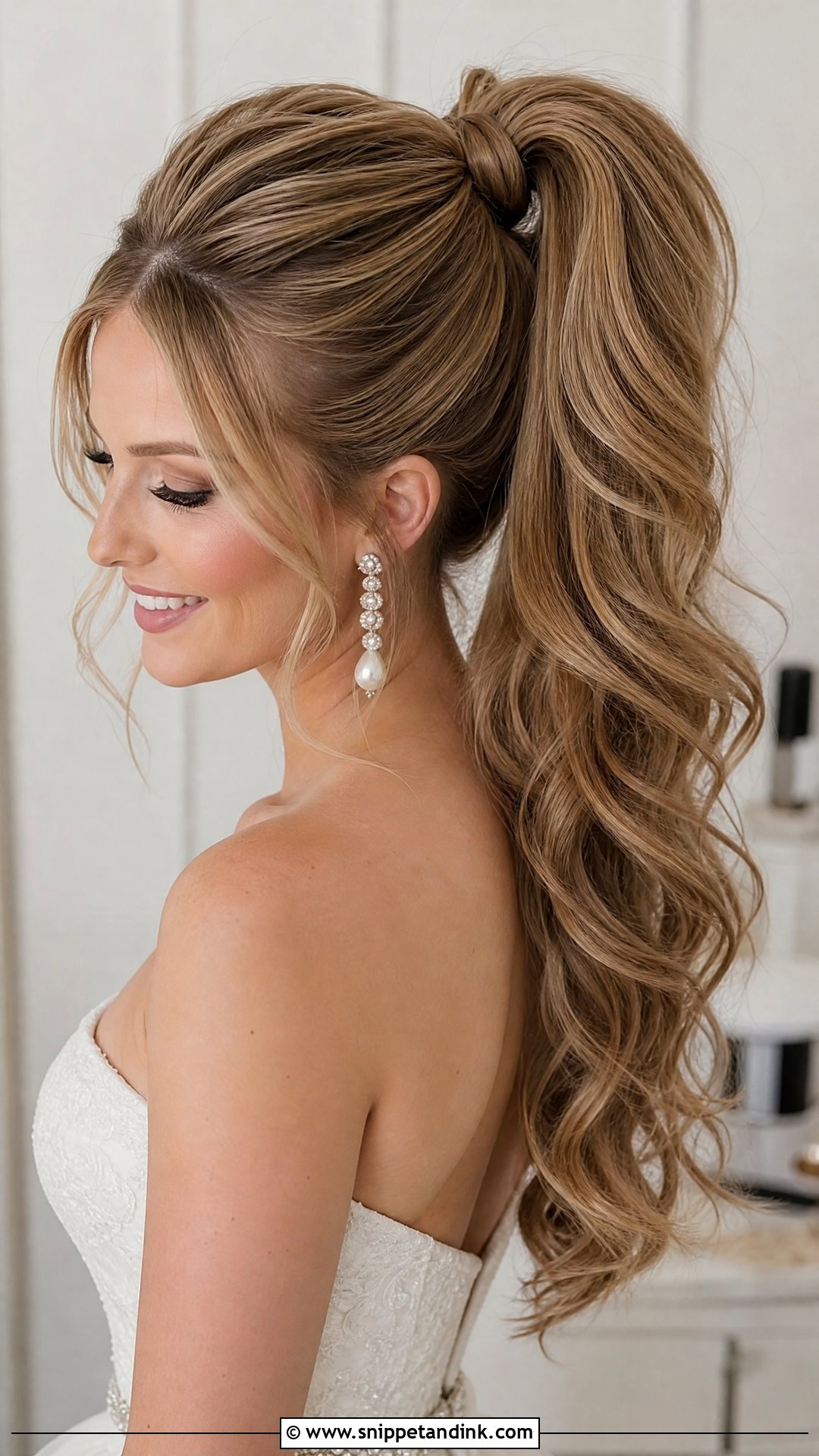
Height is what makes this one read as bold, and height is also the first thing to collapse. I place the tie at the line running from the cheekbone up past the outer corner of the eye, which lifts the face in photos without pulling the hairline. The crown gets a little backcombing at the root only, then gets smoothed over, so the top stays full instead of flattening against the scalp by noon. Through the length I set waves rather than tight curls, because a long high pony swings and tight curls tangle. It sits nicely with strapless gowns and square necklines, where there is nothing at the shoulder to compete. Ask for firm hold at the roots and a brushable spray through the ends.
2. Sleek Ponytail Wedding Hair
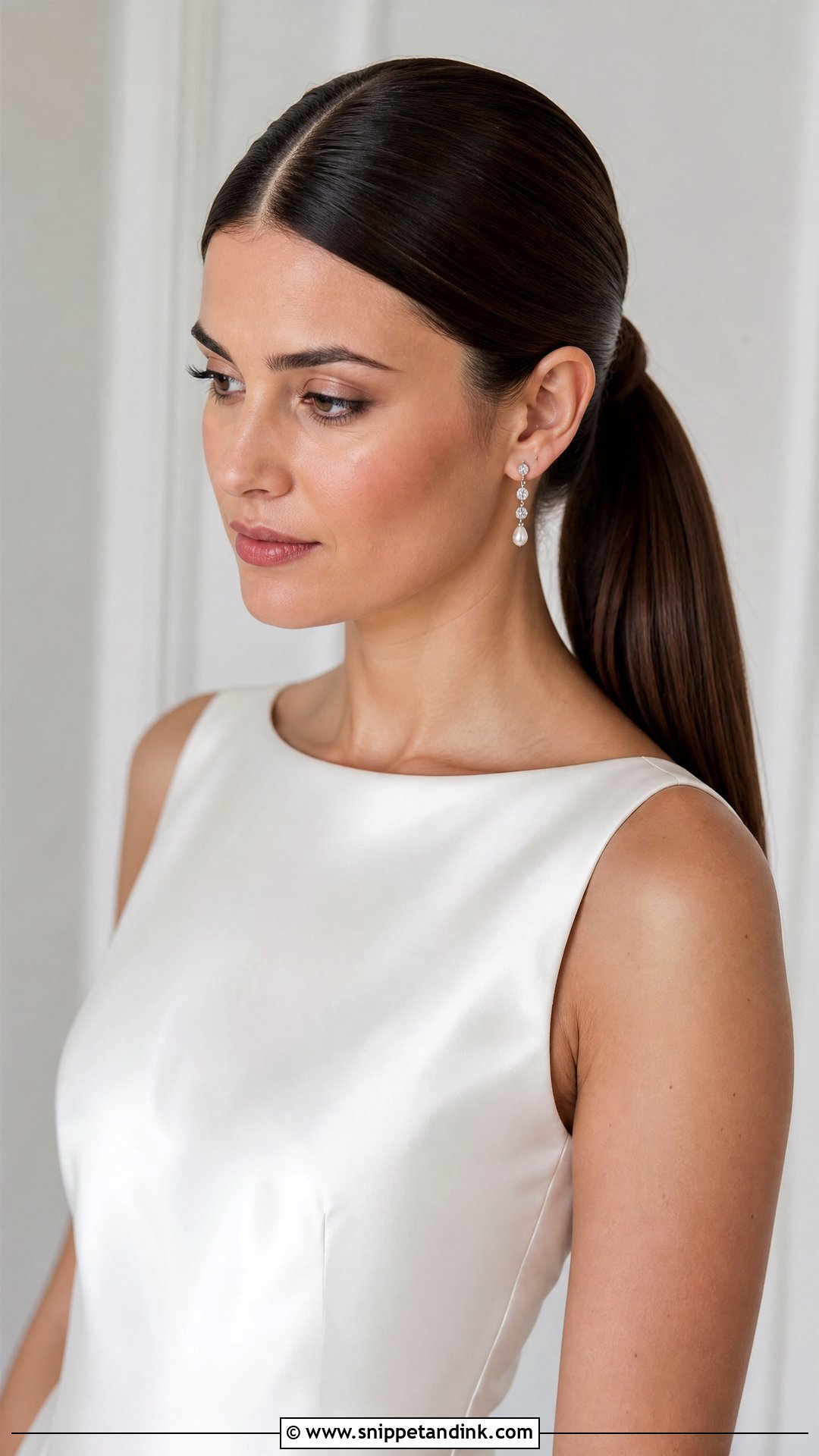
A sleek pony is less forgiving than it looks. Every lump at the nape shows, so I brush it up in sections with a boar bristle brush and a smoothing cream, then tie it with the hair still slightly warm from the dryer so it sets in place. It suits a dress with heavy beading or architectural details, because the hair stays quiet and lets the gown do the talking. The risk is shine turning into grease under flash. I use gloss sparingly and keep edge gel to the very front. A strand of hair wrapped around the elastic and pinned underneath finishes it from the back view.
3. Low Ponytail Wedding Hair
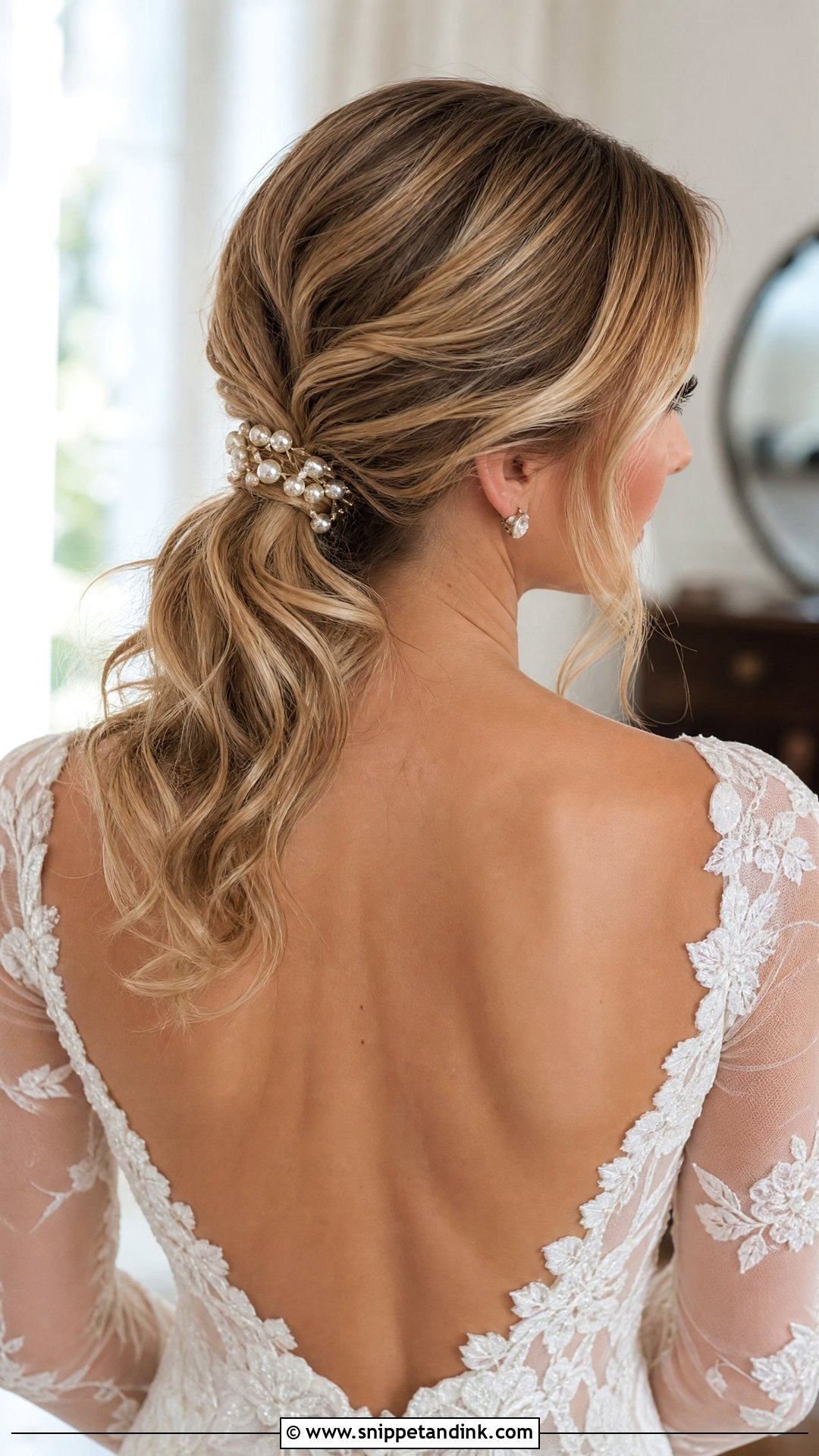
The low pony is the one I suggest most to brides who are nervous about wearing their hair up. Sitting at the nape, it puts no tension on the scalp, which matters by hour eight, and it leaves the crown free for a comb or a veil. It shows off an open back or a lace bodice well. If it starts to look severe on someone with a strong jawline, I pull two thin pieces at the temples and bend them away from the face. Hide the tie with a wrapped section or a slim barrette so the base reads as finished.
4. Curly Ponytail Wedding Hair
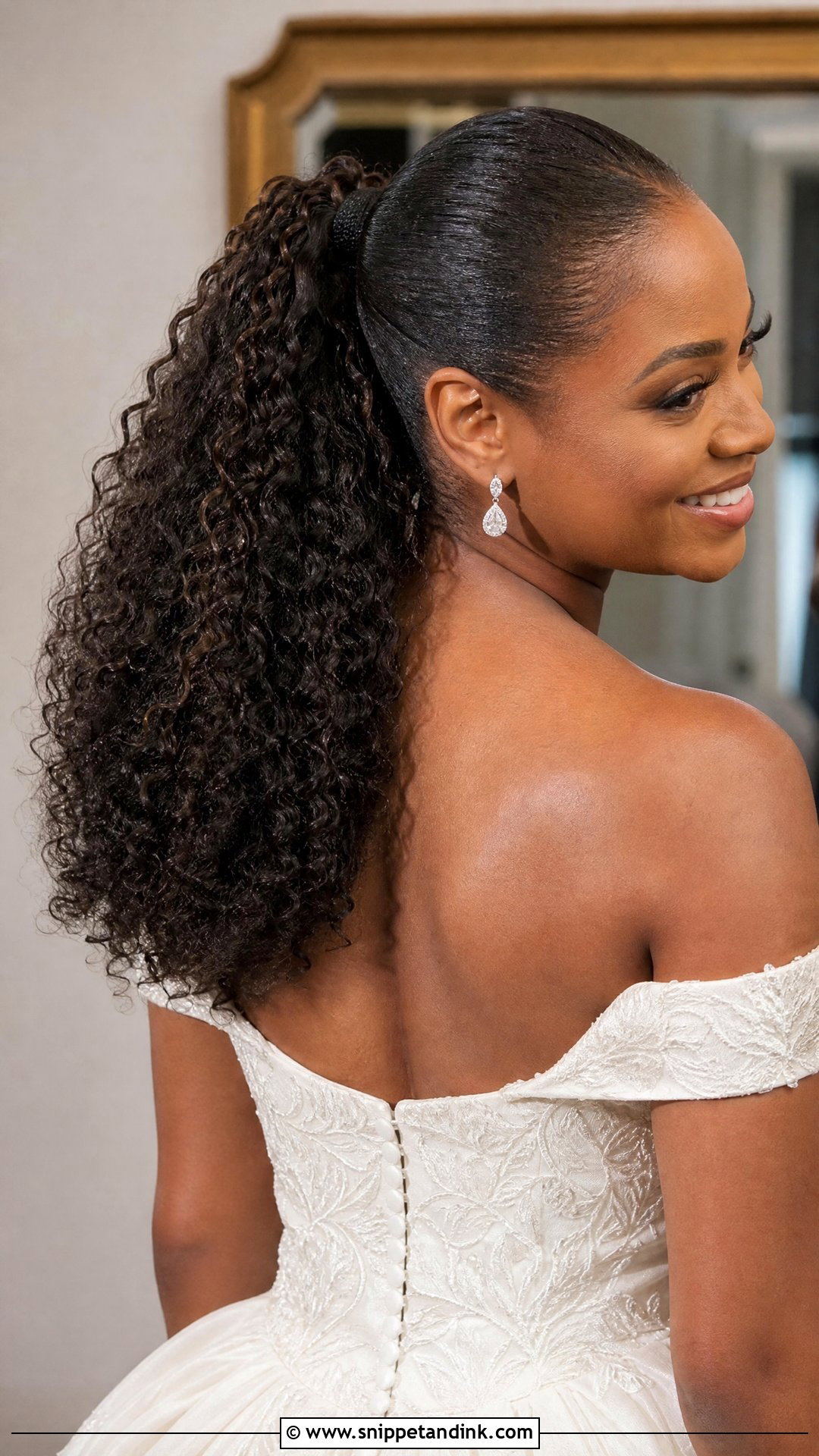
On natural curls I work with the pattern rather than ironing over it. I define the curls with a cream and a light gel while the hair is damp, gather them by hand so I don’t break the clumps, and secure the base with a large elastic plus two crossed pins. A smooth top against a full curly length gives the strongest contrast. If you are adding curled extensions, match the curl size to your own hair at the trial, because a looser clip-in curl is obvious next to a tight natural one. Humidity is the main threat here. A curl that is fully dry and sealed before you leave the chair holds far better than one set damp.
5. Wavy Ponytail Wedding Hair
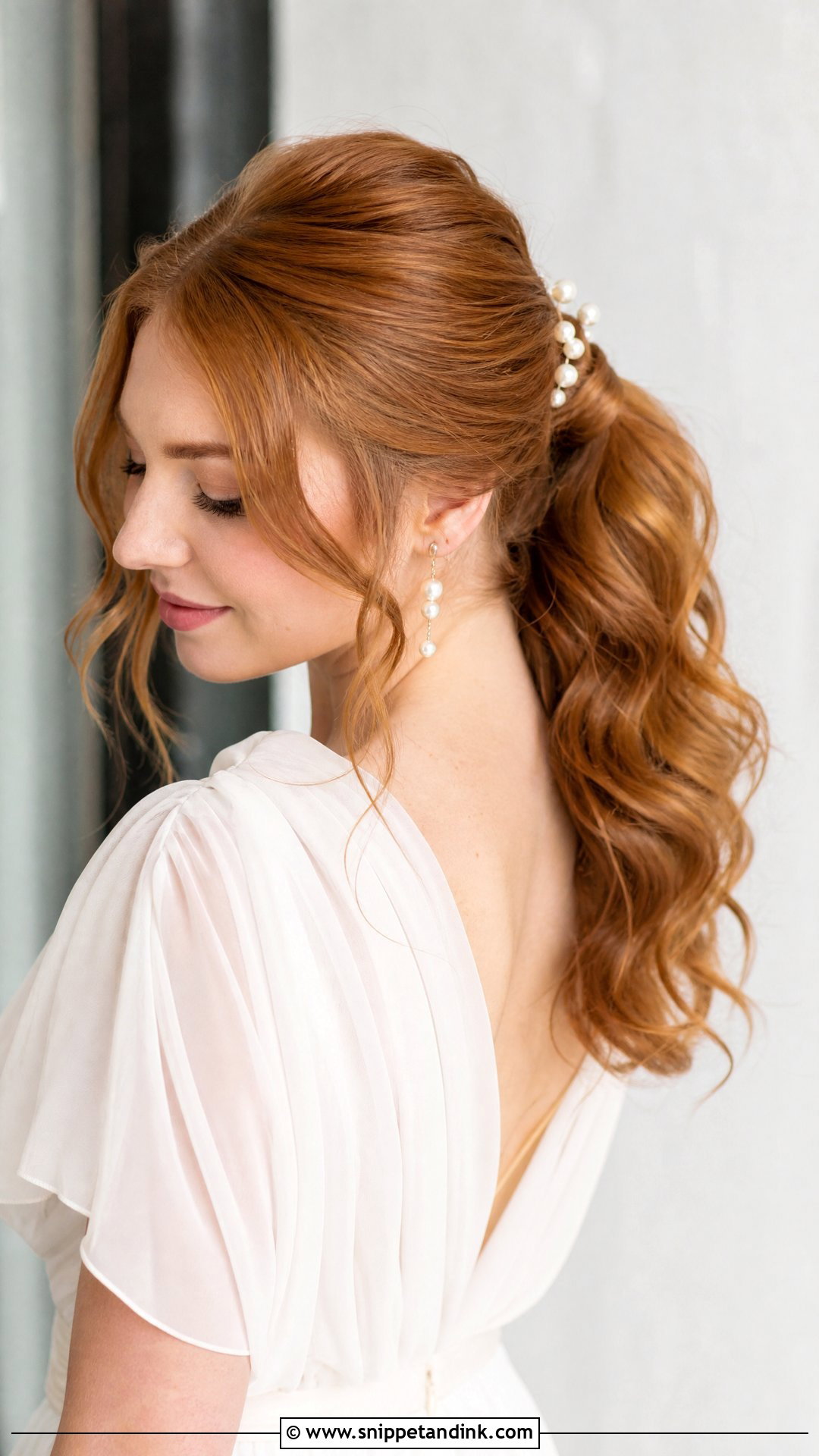
This is the most forgiving ponytail on the list and the one I reach for with garden or relaxed venues. I start the waves an inch or two below the tie so the base stays clean, and I brush them out with fingers rather than a brush so they keep some separation. Leaving a couple of soft pieces near the face helps on longer faces. The usual failure is a wave set with too small an iron on heavy hair, which drops completely by the reception. A wider barrel and a cool set in pin curls lasts noticeably longer. Pearl pins or a veil tucked just above the base both sit comfortably here.
6. Bubble Ponytail Wedding Hair
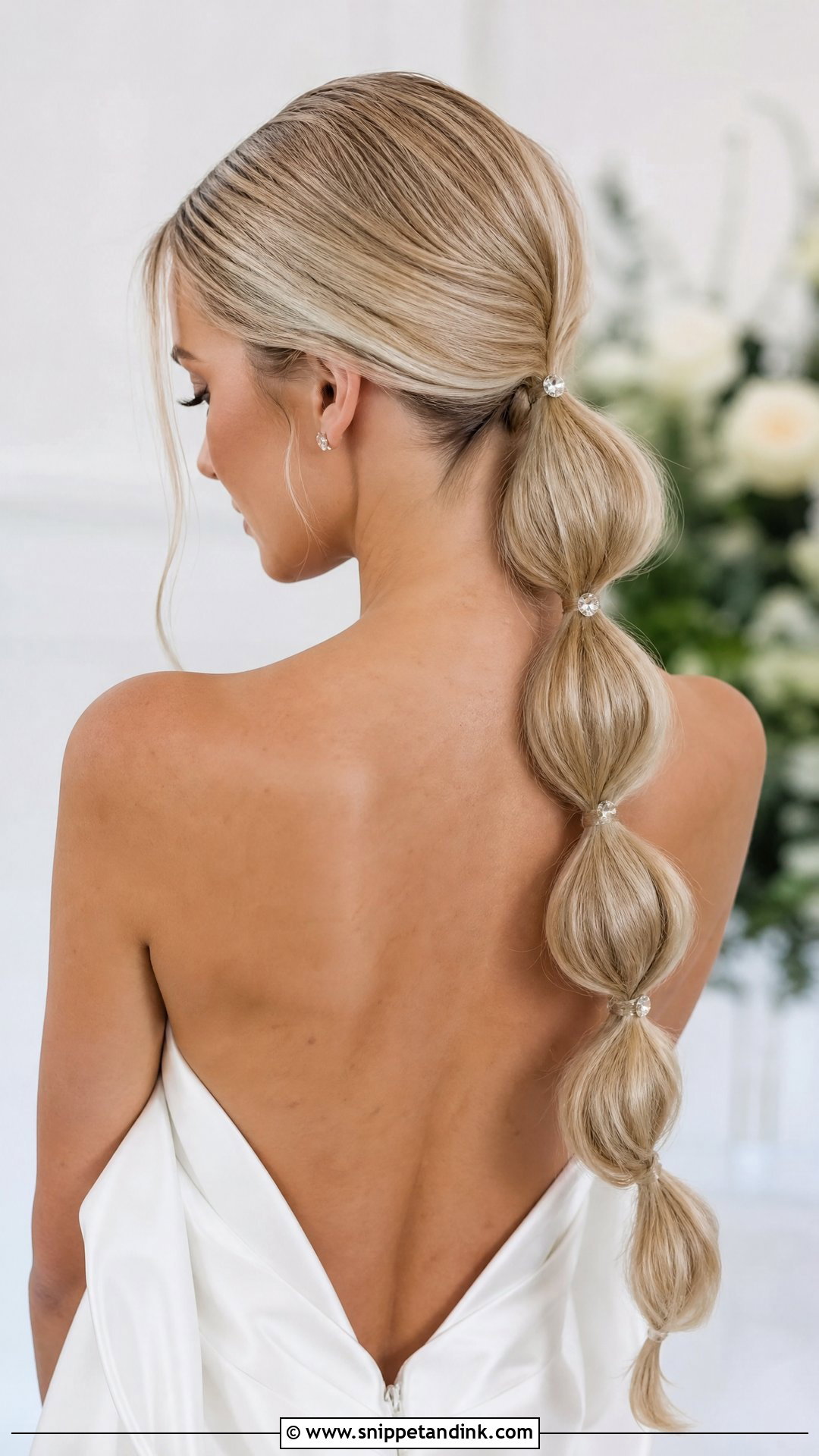
Bubble ponytail wedding hair is built from small elastics spaced down the length, with each section gently pulled out into a round shape. For a bride I use clear or hair-colored bands and space them carefully by eye, because uneven bubbles are the first thing people notice from behind. You need length to show the pattern, so with shoulder-length hair I usually add a wrap-around piece. The bubbles flatten when someone leans back in a chair, so I tell brides to pinch each one back out after the ceremony. A few tiny crystal pins between the sections soften it.
7. Braided Ponytail Wedding Hair
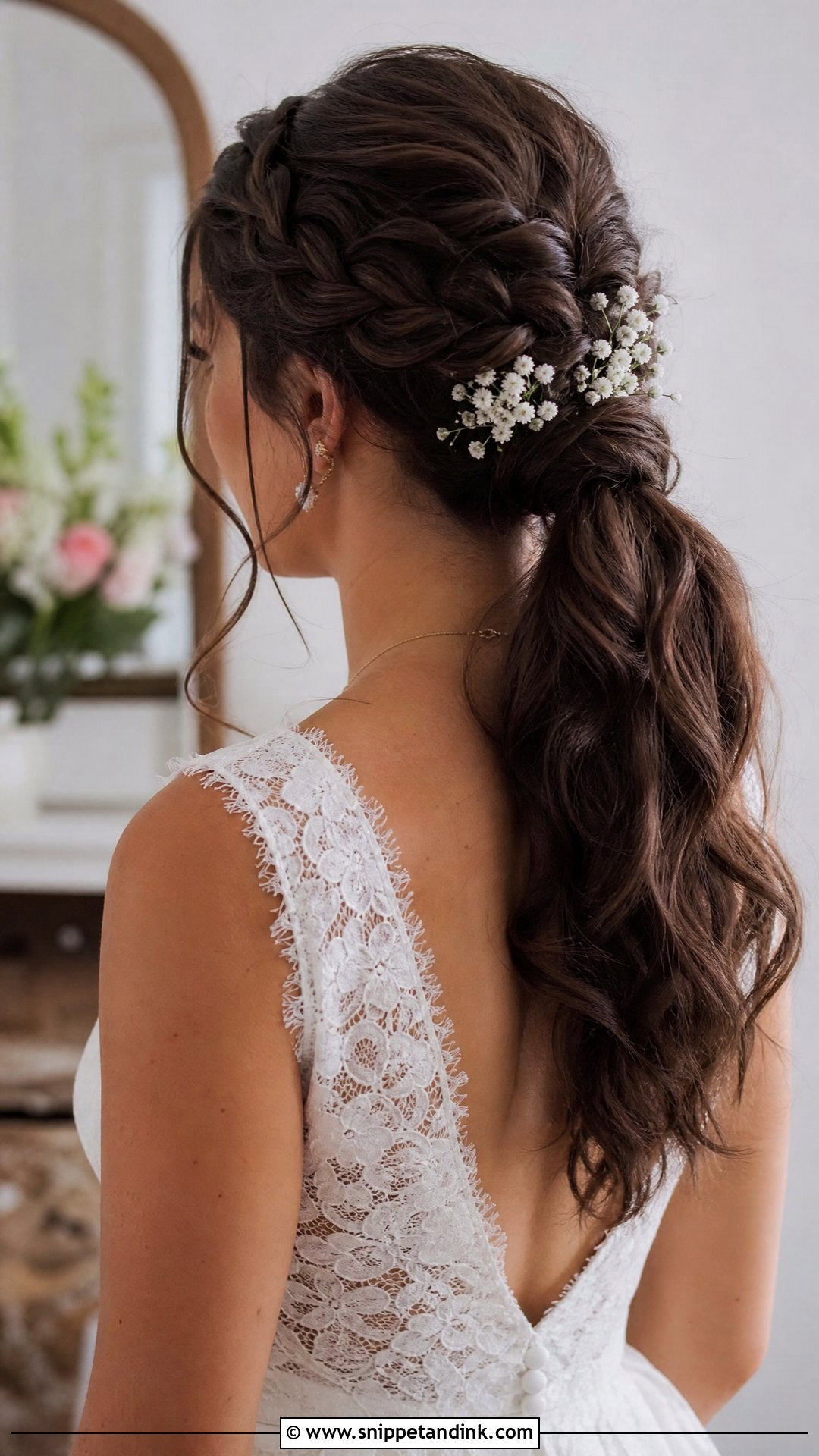
A braid gives a ponytail extra grip, which is why I like it for outdoor weddings. A Dutch braid running from the crown into the base locks the top section so wind cannot lift it, and a braid running down the length keeps the tail from tangling. Pull the braid apart gently for a softer finish, or keep it tight for a cleaner line. On very fine hair I braid first and then add a little texture spray before pancaking, otherwise the strands slip back together. Finish the base with a wrapped section and small pins.
8. Side Ponytail Wedding Hair
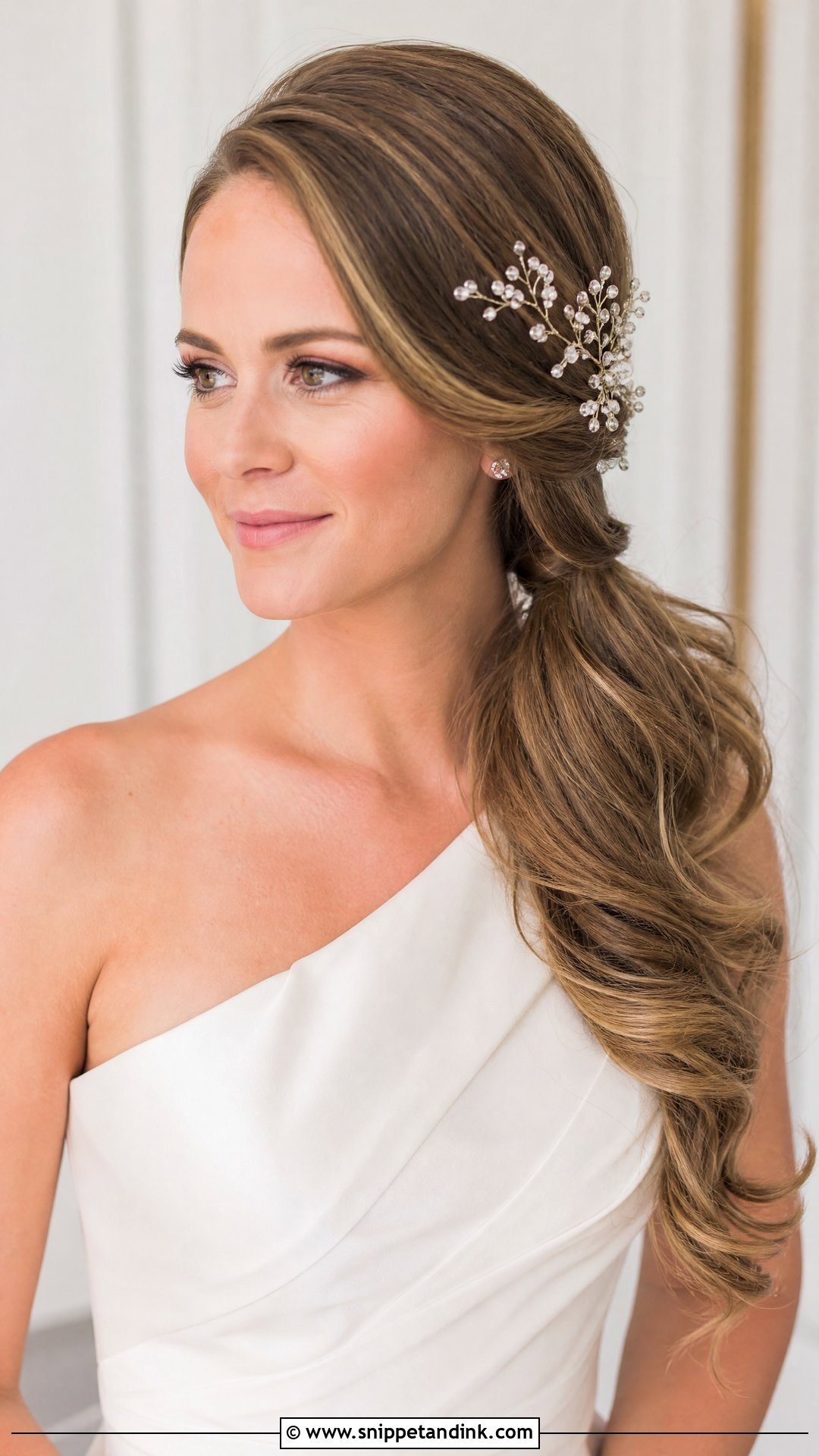
The side pony sits low over one shoulder and brings the length into front-facing portraits. I set the tie just behind the ear rather than on top of the shoulder, because placing it too far forward means the bride spends the day pushing it back. It pairs naturally with a one-shoulder gown, worn on the bare side. A deep side part adds a vintage note, and a hair vine can follow the curve of the hair along the tie. Check where your necklace or earring sits first; a heavy drop earring on the ponytail side gets caught all evening.
9. Textured Ponytail Wedding Hair
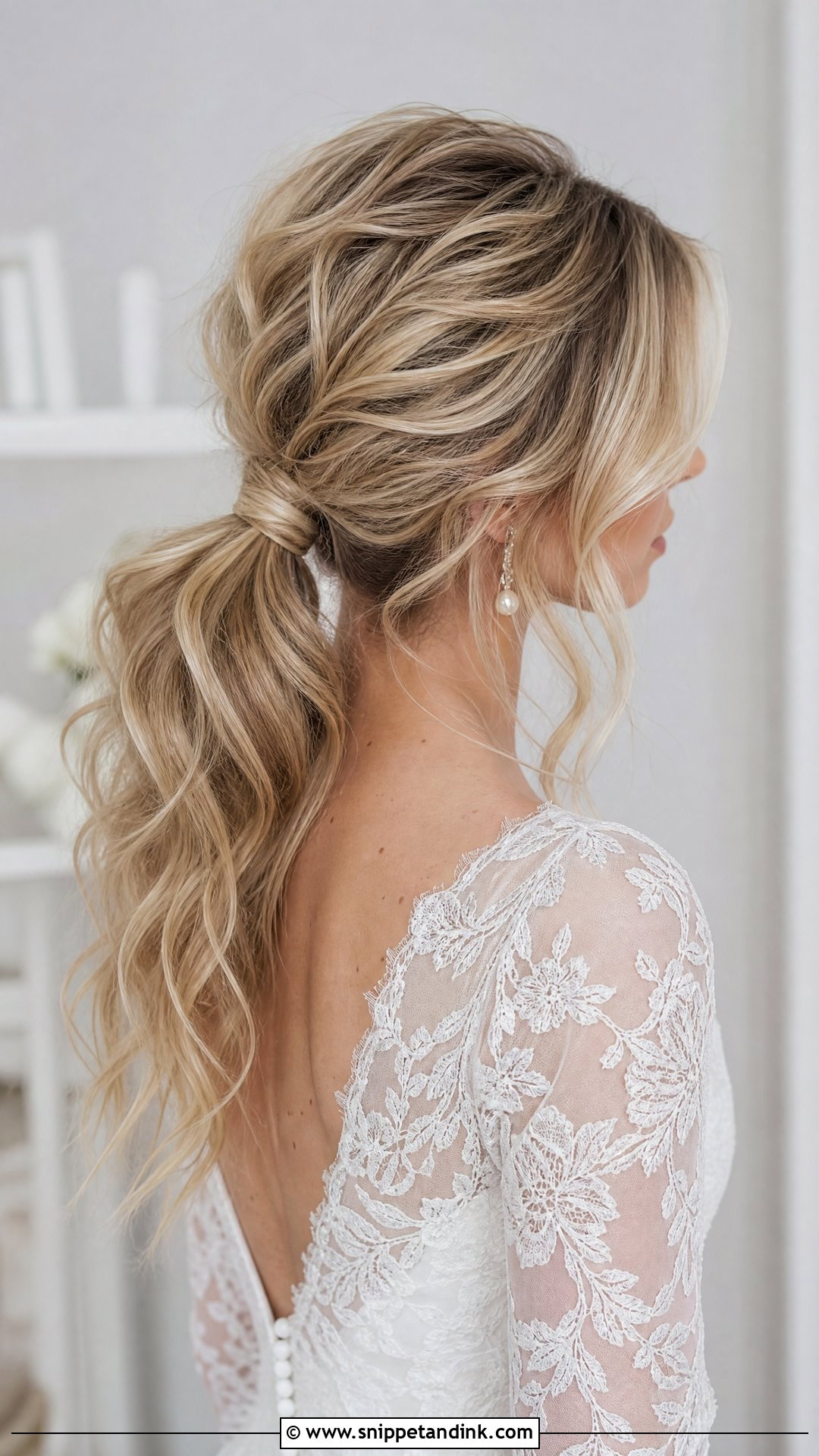
A textured pony keeps the bridal shape but loses the polish on purpose. The texture can come from waves, teasing or layers, and I add it with a dry texture spray before I tie the hair, not after, so the base still grips. It suits boho gowns and beach ceremonies, where something slick would look out of place. The line between undone and messy is thin. I check it from the back at arm’s length; if it looks like it slipped, it needs more pins underneath. Use a flexible hairspray so the texture moves instead of setting into crunchy pieces.
10. Voluminous Ponytail Wedding Hair
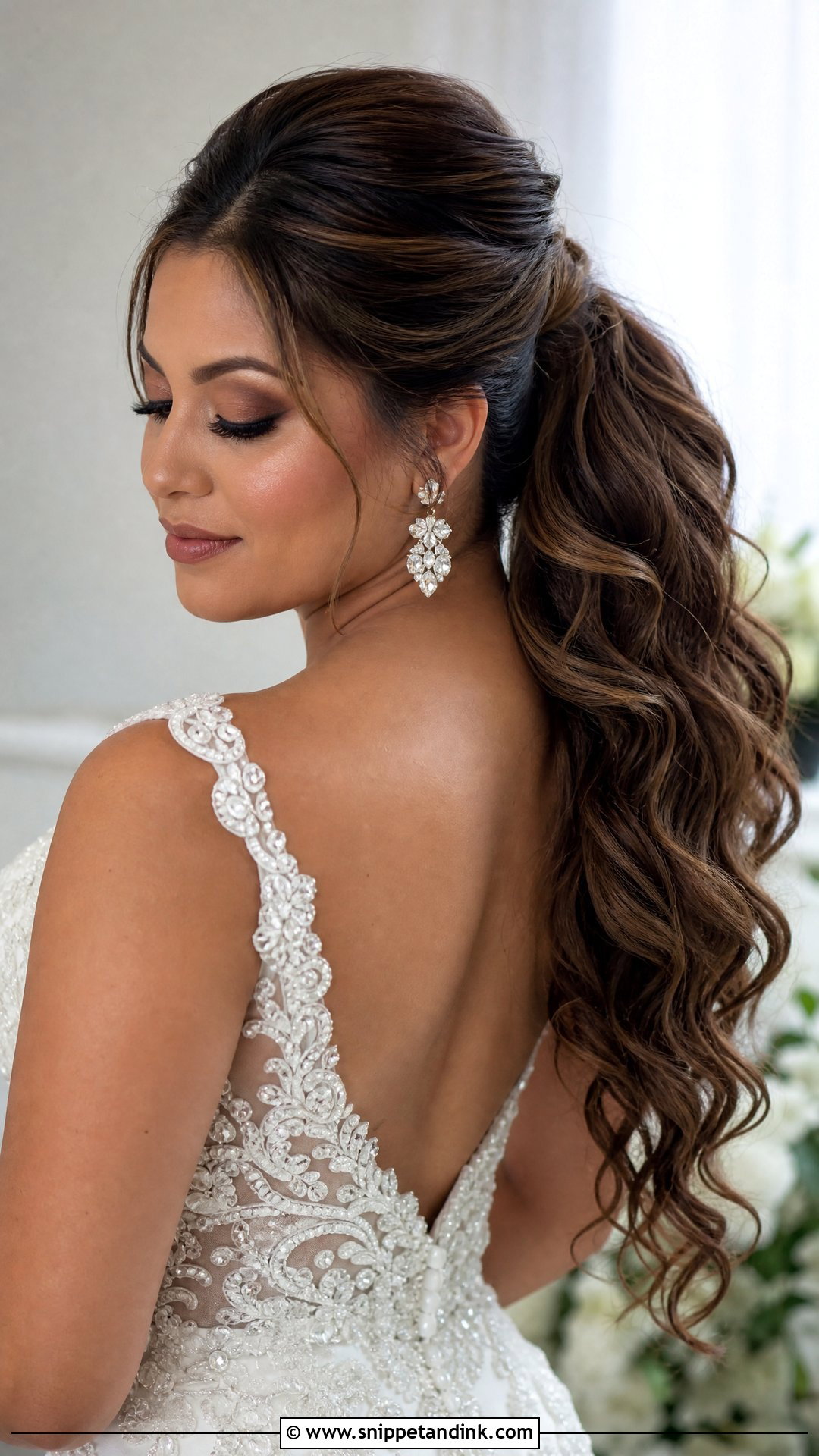
Fullness is the goal here, and fullness means weight. I build volume with root teasing at the crown and curled lengths, and if the client’s own hair is fine I add a clip-in or wrap ponytail rather than teasing until the hair breaks. Stacking two ponytails, one above the other, gives a fuller tail without extra product. The base has to be anchored with crossed pins on both sides or the whole shape tips downward. Keep the front smooth so the face reads clean against all that volume. This one holds its own against a cathedral veil and big earrings.
11. Half Up Ponytail Wedding Hair
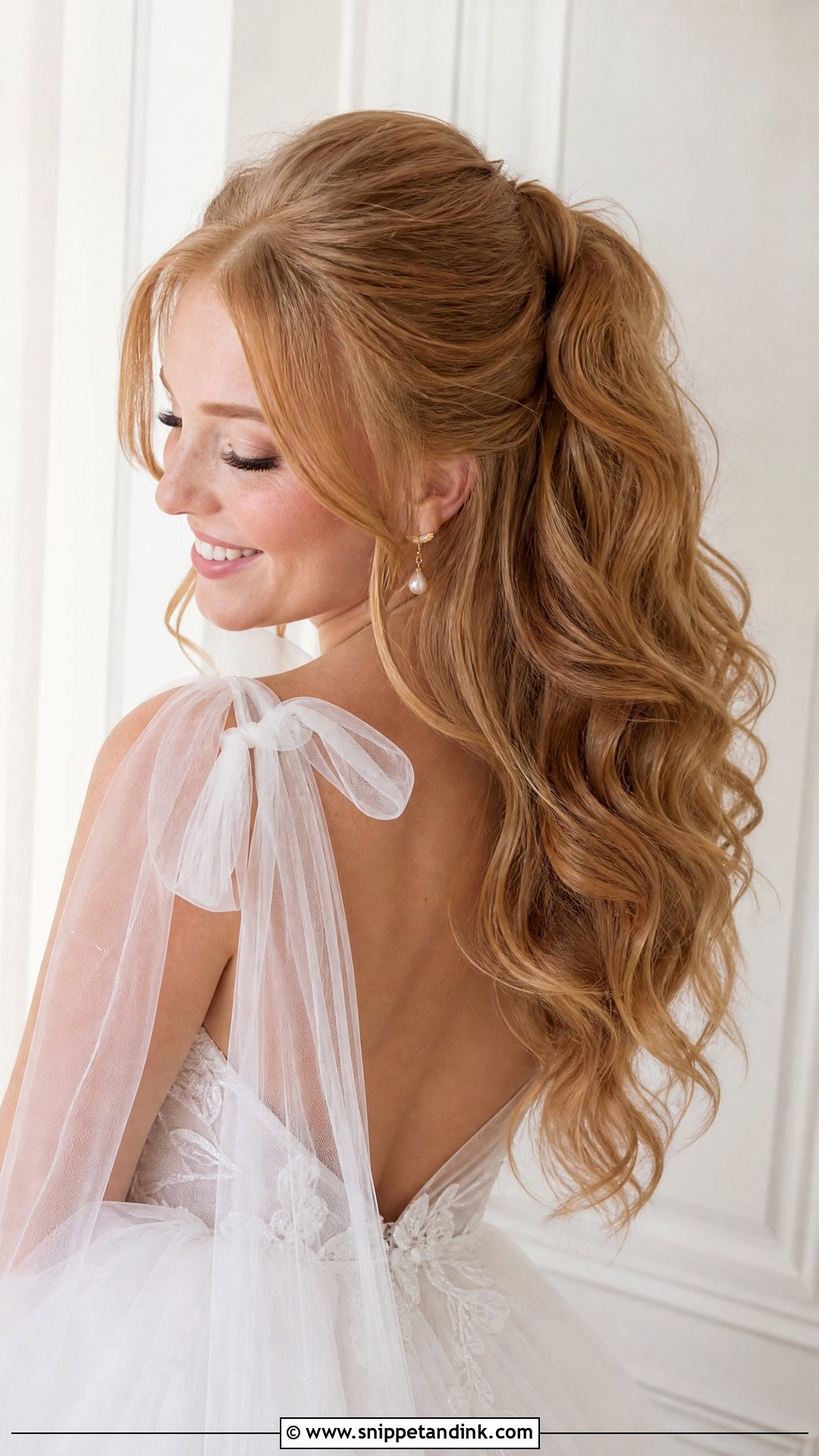
A half-up pony takes the top section away from the face and leaves the rest down. I like it on brides who feel exposed with all their hair back. The tied section also gives a veil comb something solid to grip, which loose hair alone does not. I curl the down section first, then section off the top, so the whole head has the same wave pattern. The drawback is that the loose length behaves like hair worn down: in heat it flattens and can tangle at the back of a dress with lace. Soft pieces at the front finish it.
12. Ponytail Wedding Hair With Veil
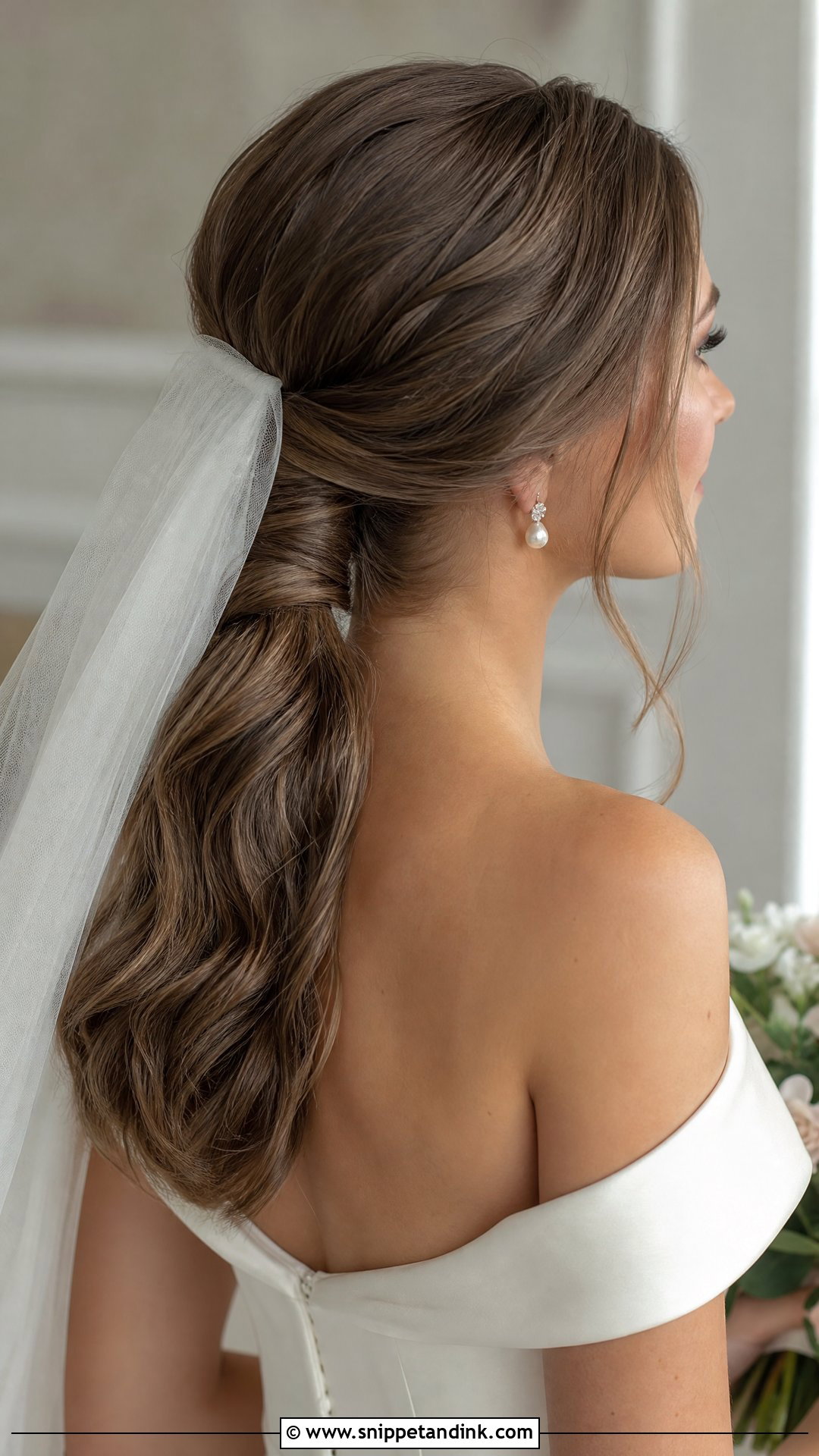
The veil and the ponytail have to share the same few inches of hair, so I plan the attachment before I set the tie. With a low pony, I slide the comb in just above the base, angled down so it locks into the elastic. With a high pony, the veil goes underneath and falls from beneath the tail, which looks dramatic but needs extra pins. The hair at the attachment point must be smooth or the veil lifts in a bump. The ponytail should look finished on its own, because the veil usually comes off after the ceremony and the hair has to carry the reception.
13. Ponytail Wedding Hair With Pearls
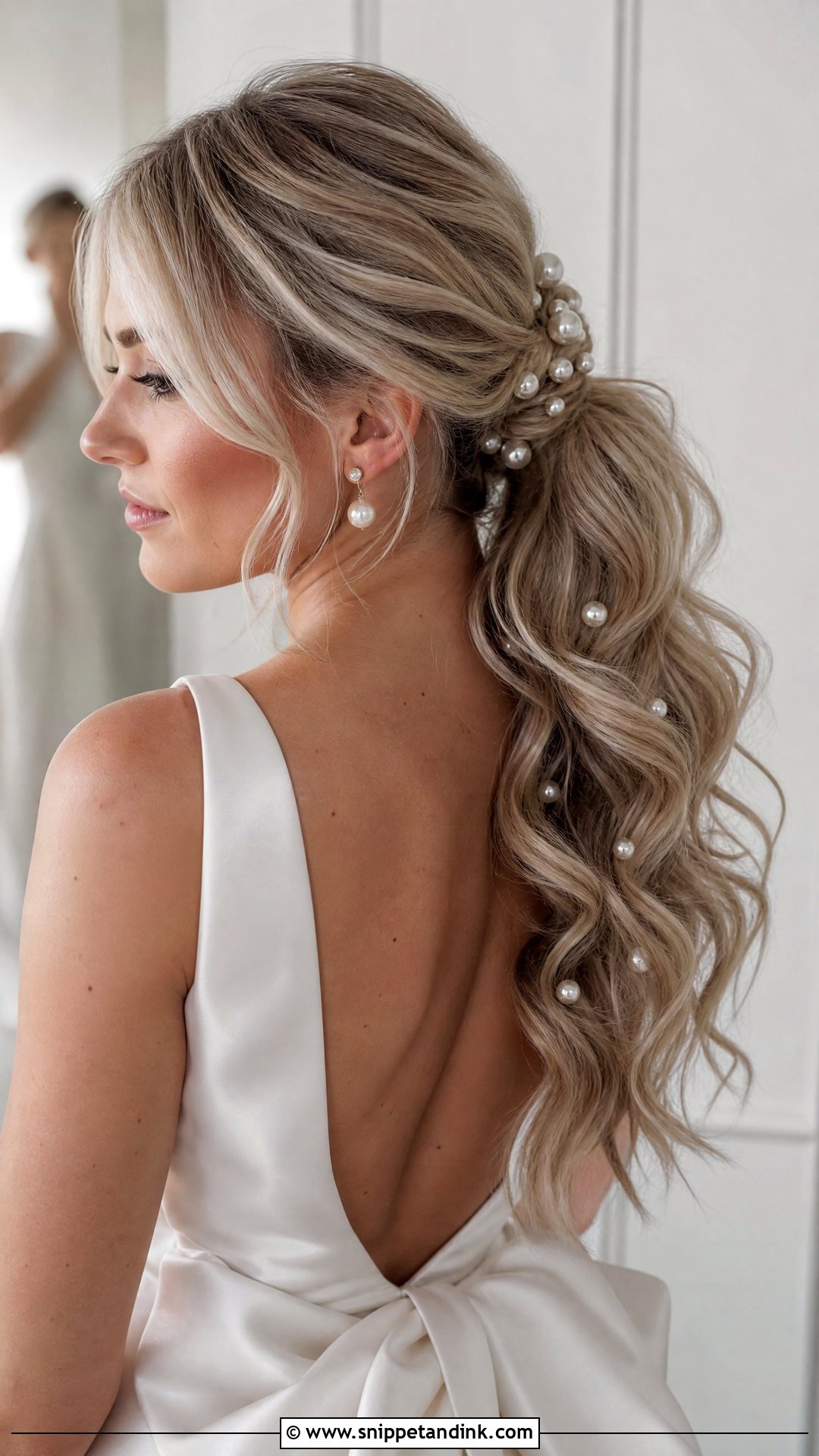
Pearls add a soft detail without much weight. I place them along a braid, scatter them through waves or ring them around the base, and they sit especially well on low, wavy, curly and textured ponytails. The mistake I see most is too many pins. Five or six well-spaced pearls read as a design; twenty read as clutter and start falling out. Set each pin against the direction it would slide out, and push it into a section with grip, not into a smooth surface. Satin gowns echo the pearl sheen well.
14. Ponytail Wedding Hair With Flowers
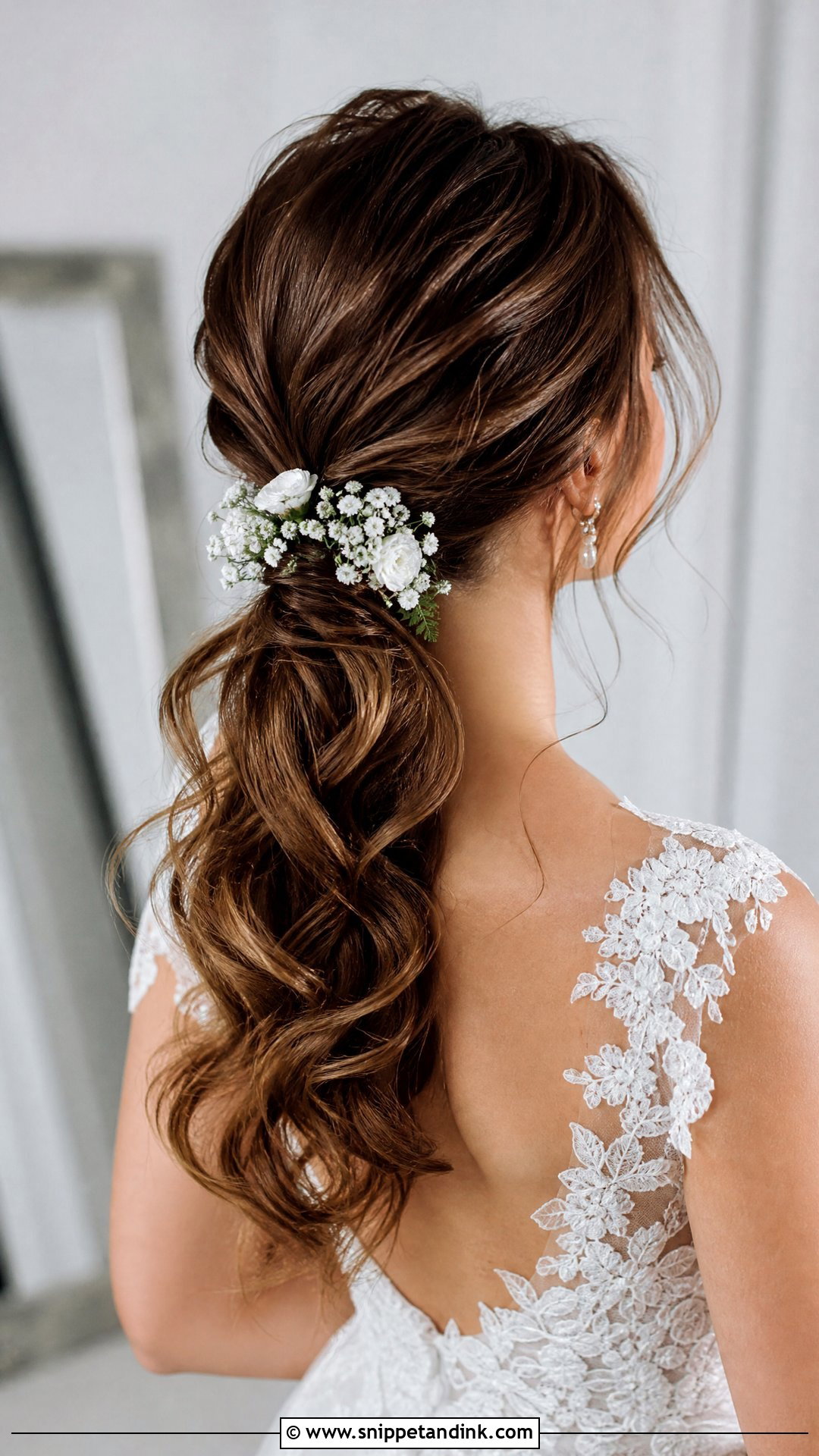
Fresh flowers in a ponytail need more planning than people expect. Small blooms around the base or tucked into a braid look delicate, but they wilt in heat faster than anything in the bouquet, so I ask the florist for hardier stems like spray roses or waxflower and to wire them. Wavy and textured ponytails hold the stems better than sleek hair, which gives them nothing to sit against. Match the flowers to your palette and keep them small; large heads pull the pony to one side. Each stem gets its own pin so the arrangement stays put through hugs.
15. Ponytail Wedding Hair With Curtain Bangs
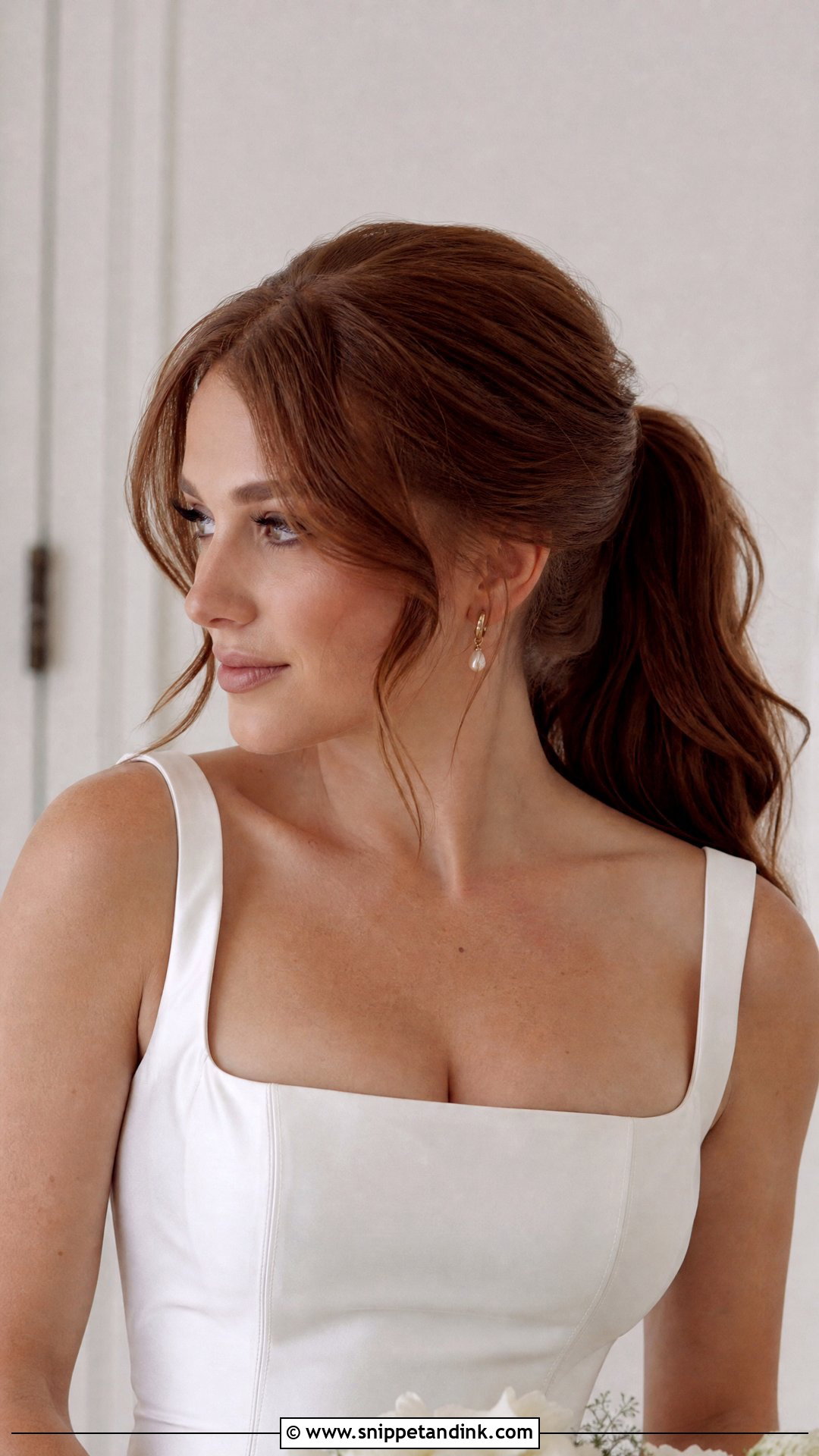
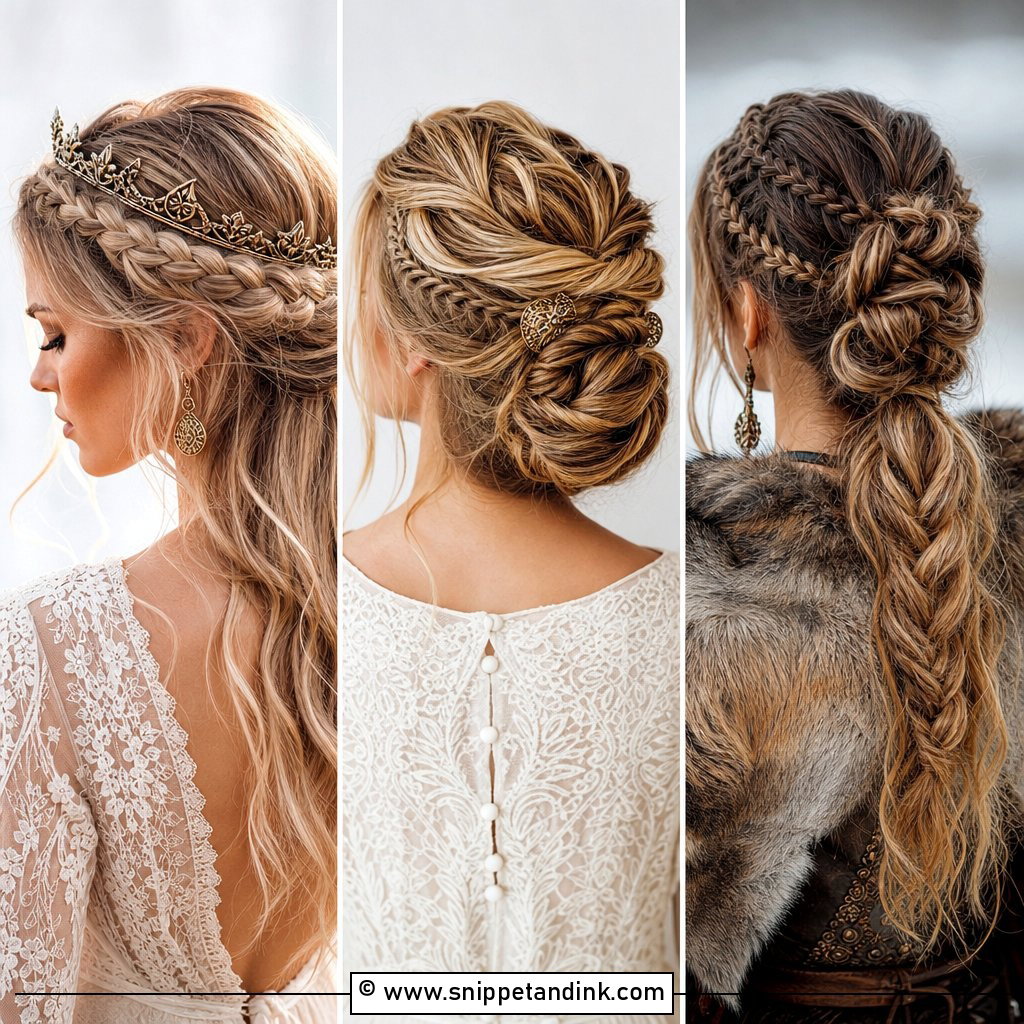
Bangs and a ponytail work well together because the bangs keep the face soft while everything else is pulled back. They pair with any height, but I like them most with a mid-height pony and loose bends through the length. Curtain bangs soften a strong jawline or a high forehead and frame the eyes. I set them with a round brush and a quick blow-dry rather than an iron, which leaves a curve that moves instead of a stiff flick. Do not trim them the week of the wedding; give any cut at least two weeks to settle.
16. Ponytail Wedding Hair With Middle Part
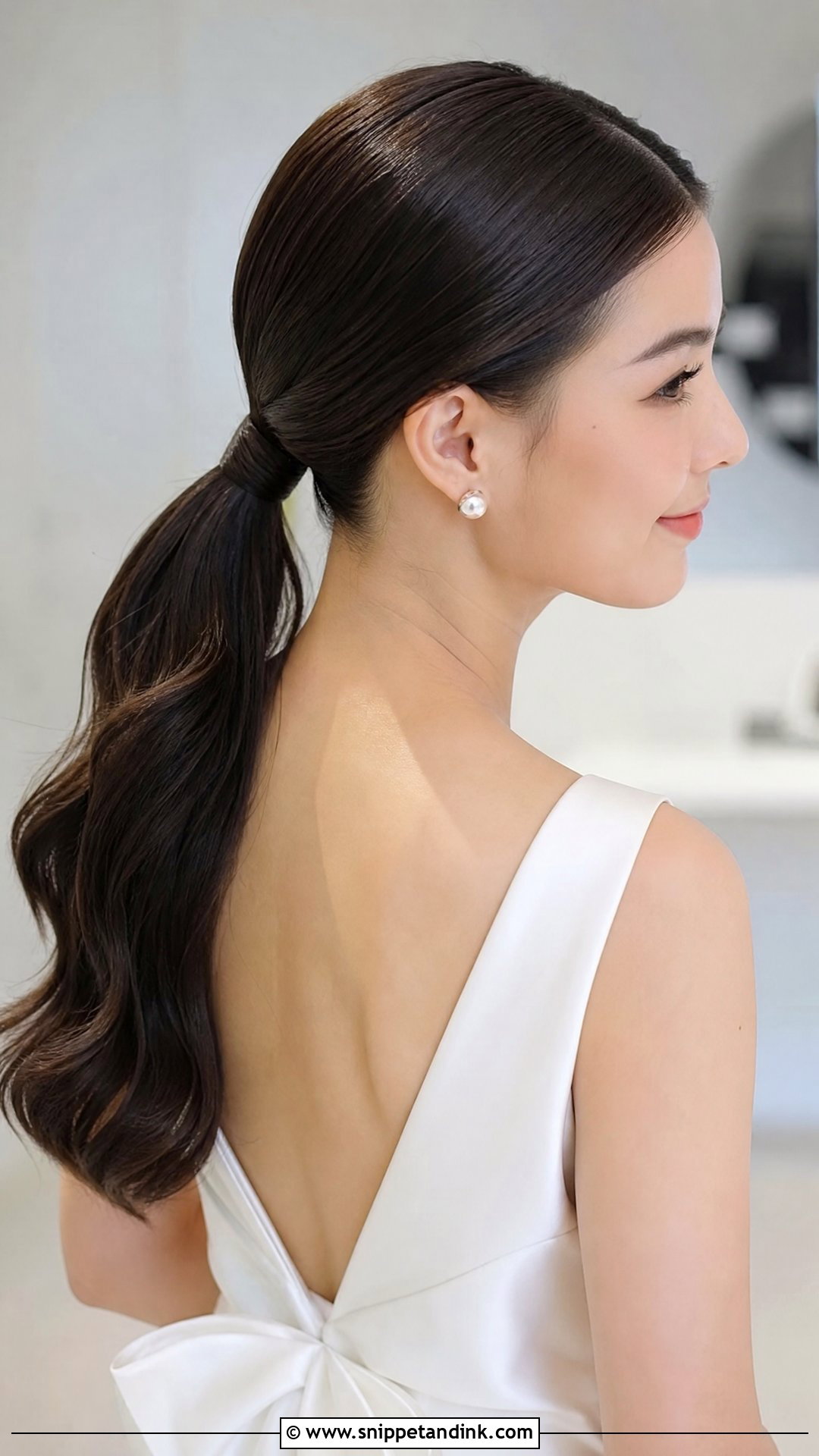
A center part is unforgiving of uneven hairlines, so I check the part line carefully before I commit. It puts the face on display, which suits a strong makeup look and structured gowns. Sleek works, and so does a softer tail with waves. The common problem is that the hair beside the part goes flat once it is pulled back. I lift those first sections at the root with a little powder, then smooth over the top. A wrapped base and a touch of crown height keep it from looking like an office ponytail.
17. Ponytail Wedding Hair With Side Part
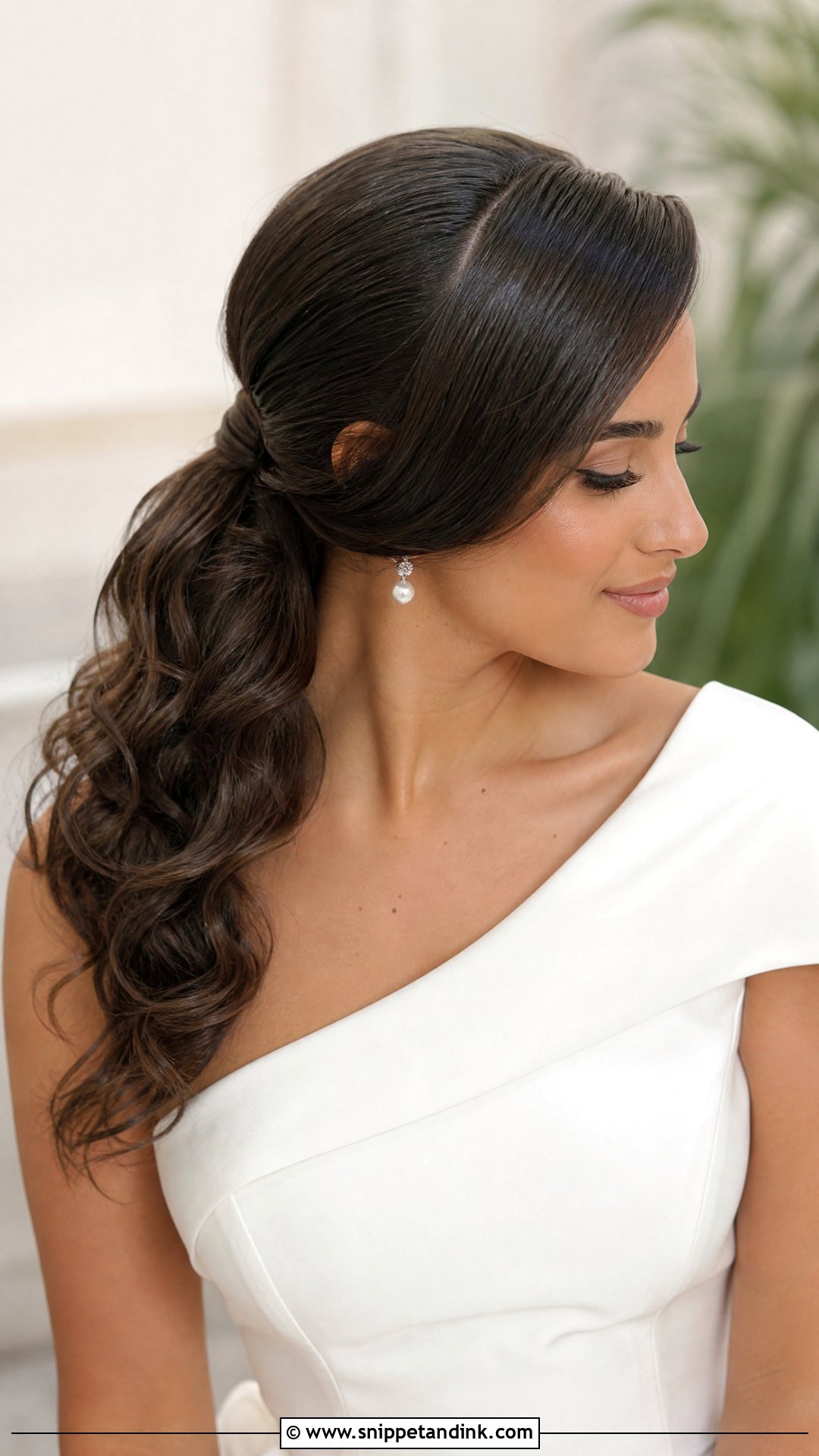
Moving the part to one side gives more face framing and a little more glamour. A deep part leans vintage, while a softer one stays relaxed. I like it with low and side ponytails and with dresses that have an asymmetric neckline, where the deeper side can mirror the strap. The heavy front section is what fails: if it is not set and pinned under the tie, it collapses over one eye by the speeches. I shape it with a large barrel curl and let it cool before brushing it into place.
18. Ponytail Wedding Hair For Long Hair
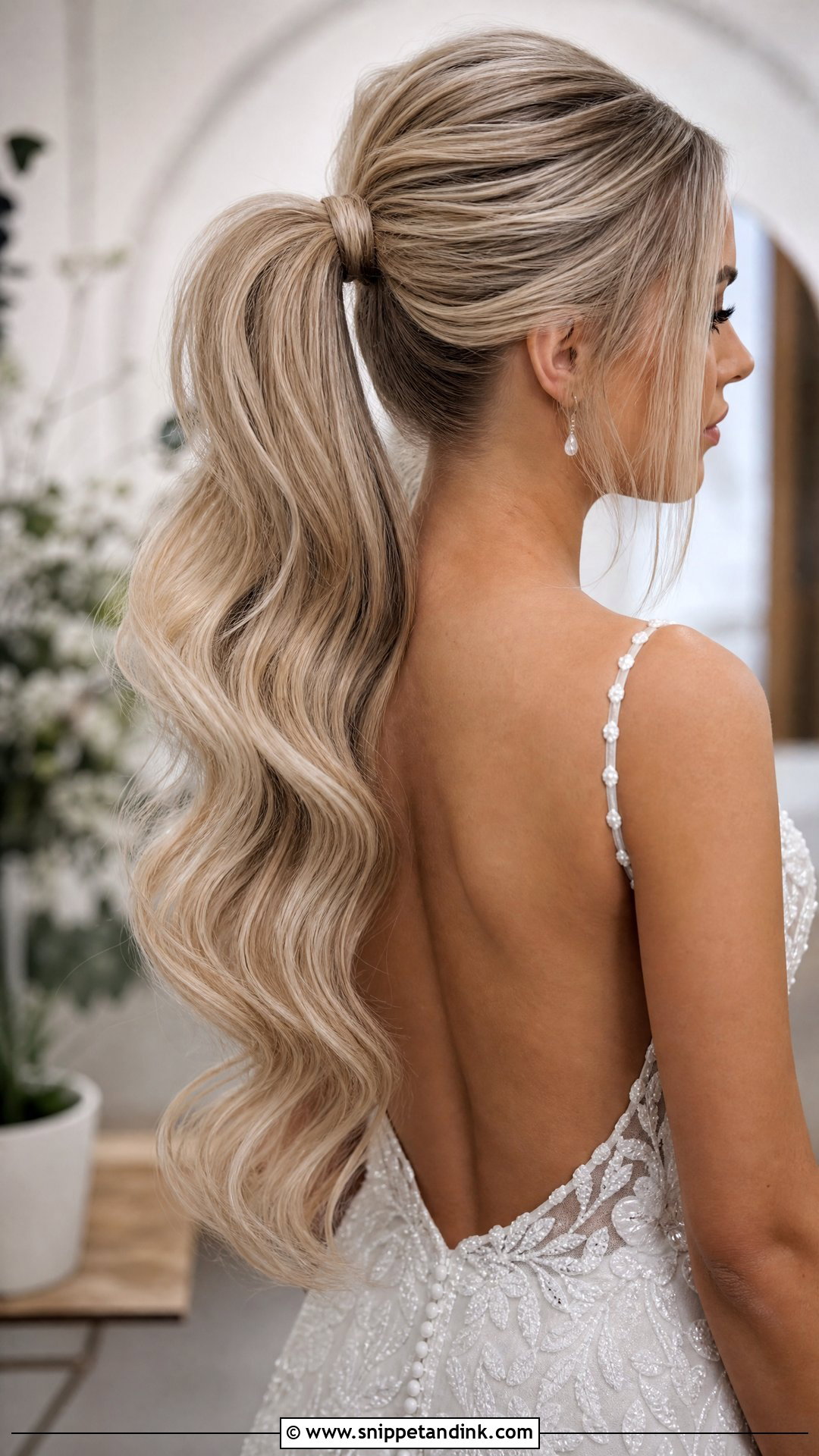
Long hair turns the ponytail into the main feature, but weight is the problem I spend the most time on. Hair past the bra strap pulls on the elastic all day, so I use two ties, one at the base and a second an inch below, with the tail anchored by crossed pins into a small braid underneath. Heavy hair can also be split into two stacked ponytails to spread the load. Full waves or a sleek runway finish both suit the length. It is worth a turn in front of a mirror at your trial, since your guests will see the back for most of the ceremony.
19. Ponytail Wedding Hair For Short Hair
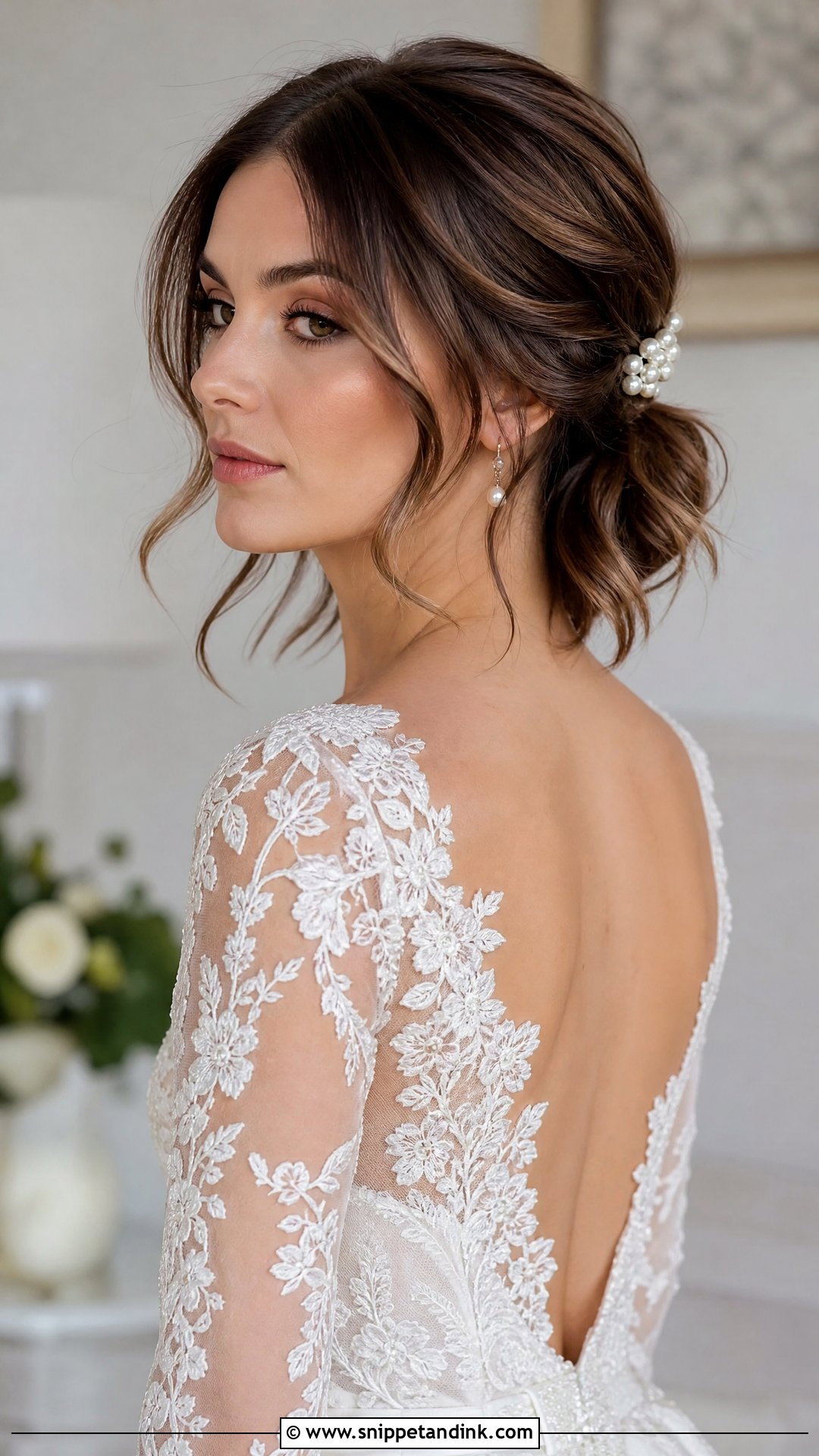
Shorter hair can still wear a ponytail; it just needs more support. A low mini pony or a half-up pony works on a lob, and I pin every shorter piece at the nape with crossed bobby pins so nothing escapes by the first dance. If you want more length, a wrap-around ponytail piece clips over your own tie and looks natural if the color is matched in daylight, not under salon lights. Soft waves at the front stop it looking casual. A pearl pin or a small bow over the base finishes it.
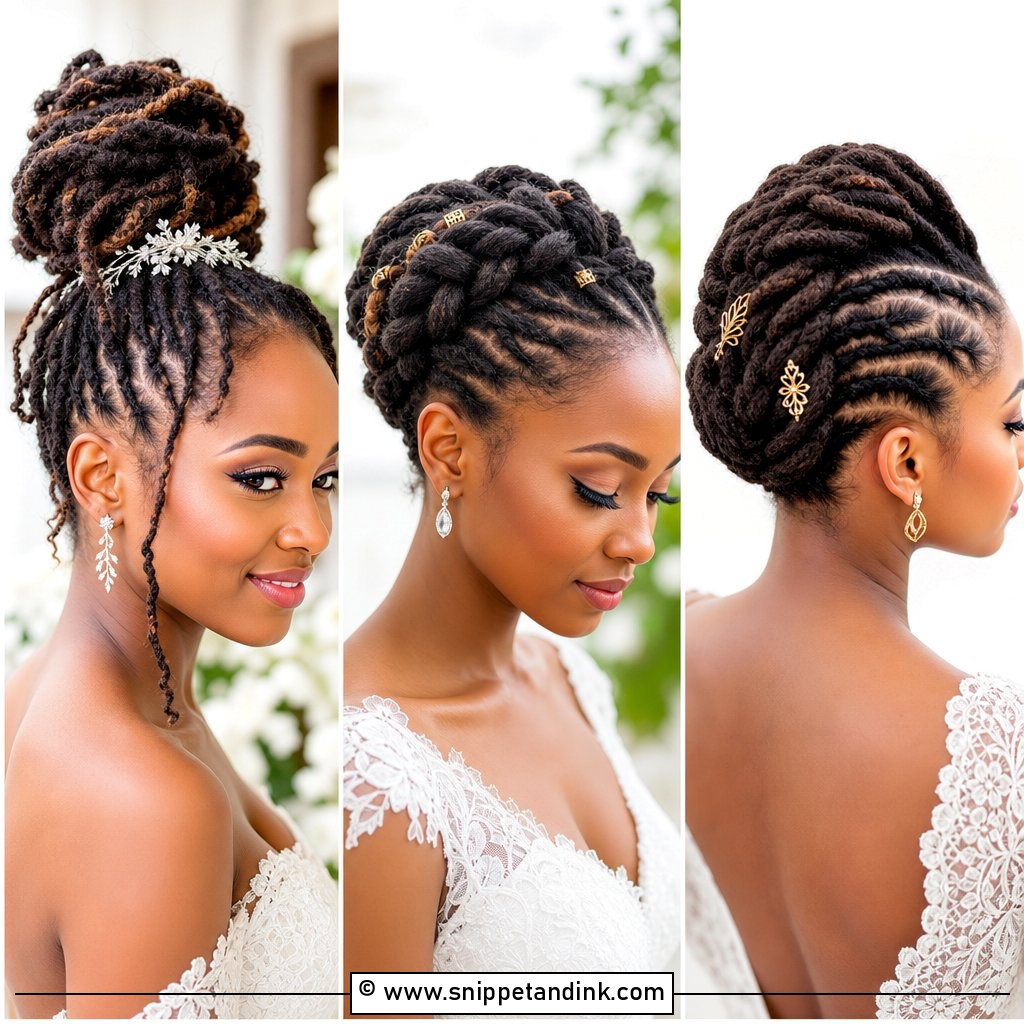
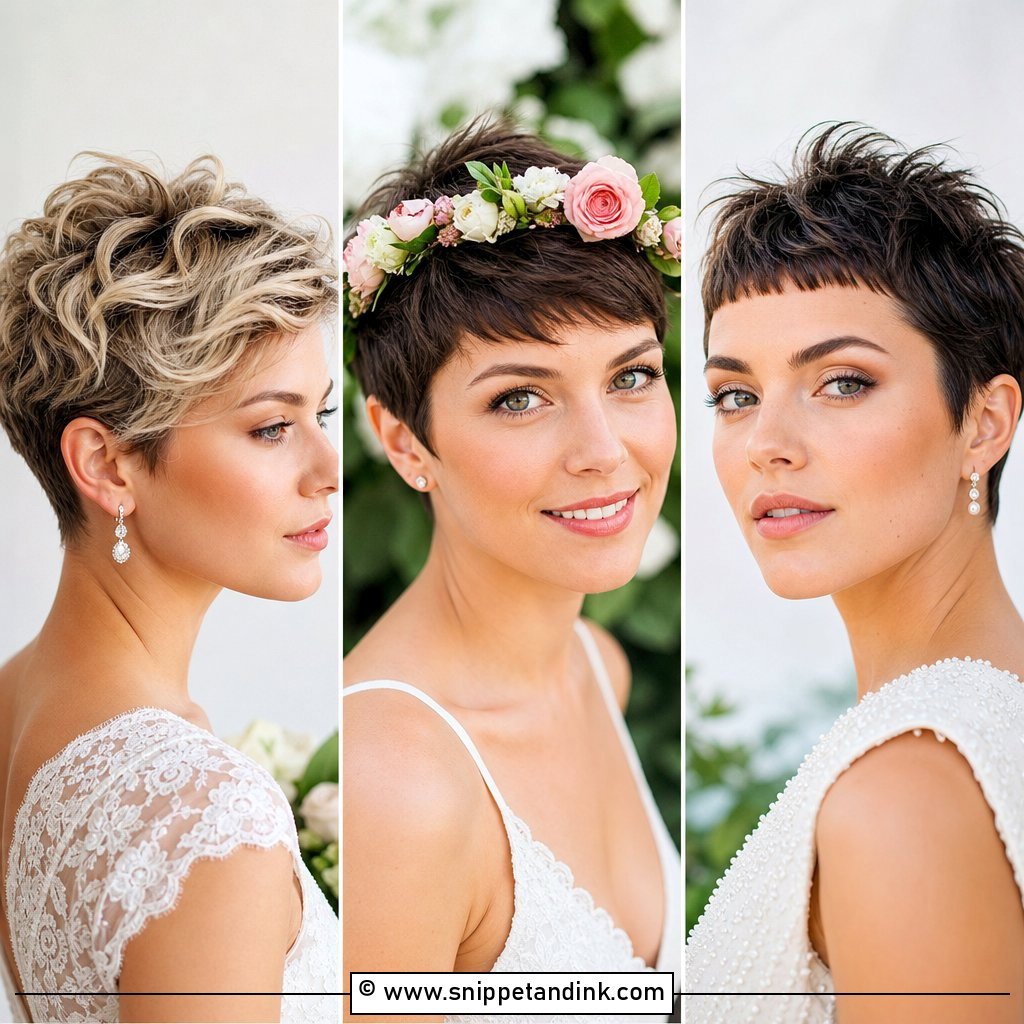
20. Ponytail Wedding Hair For Black Brides
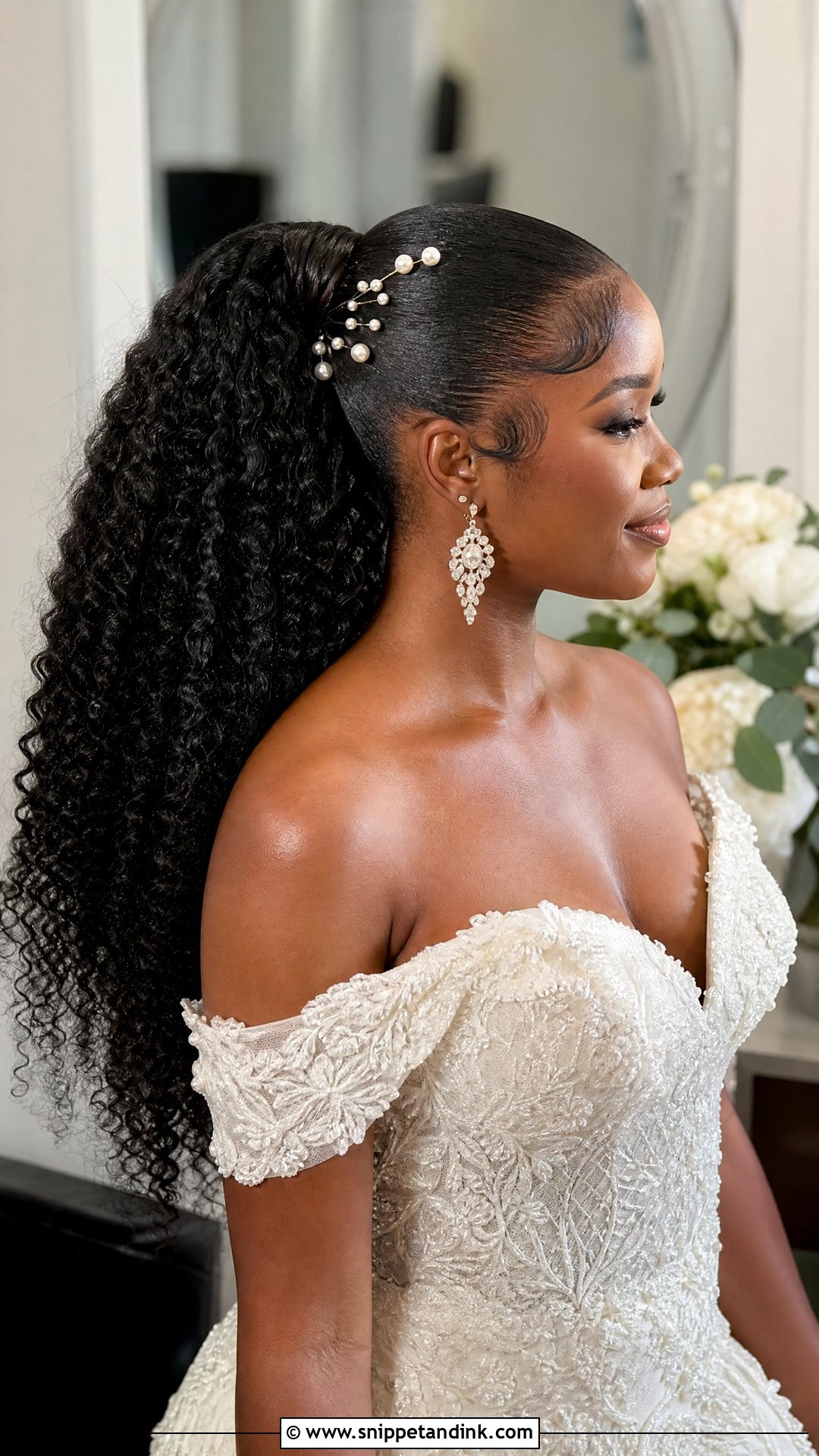
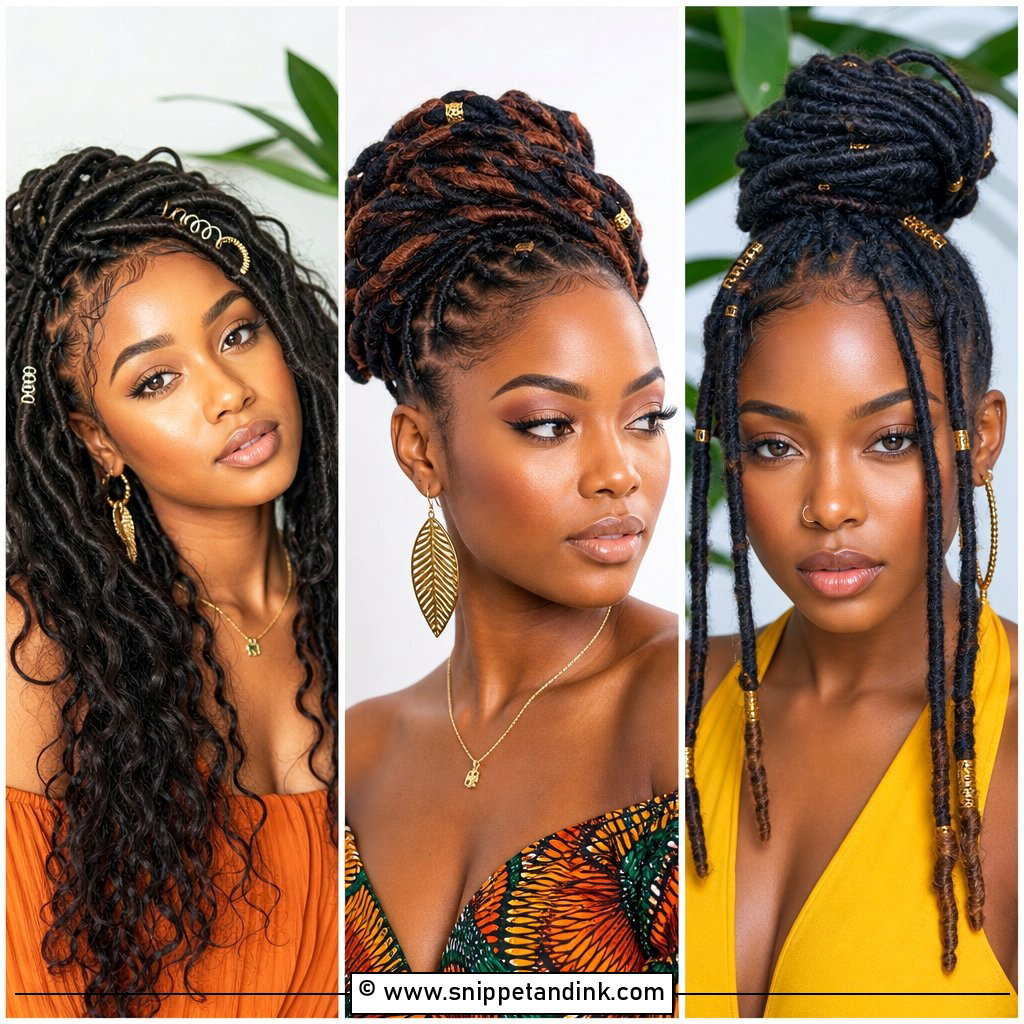
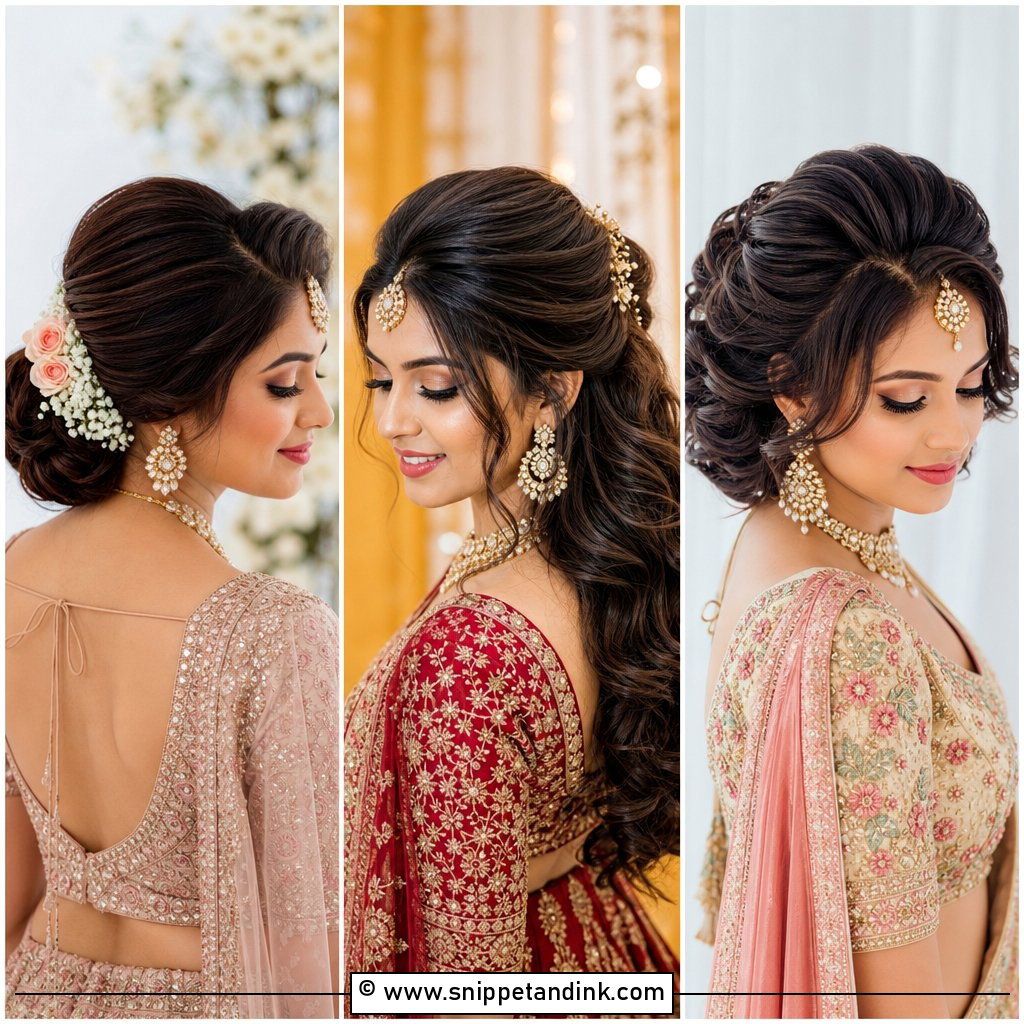
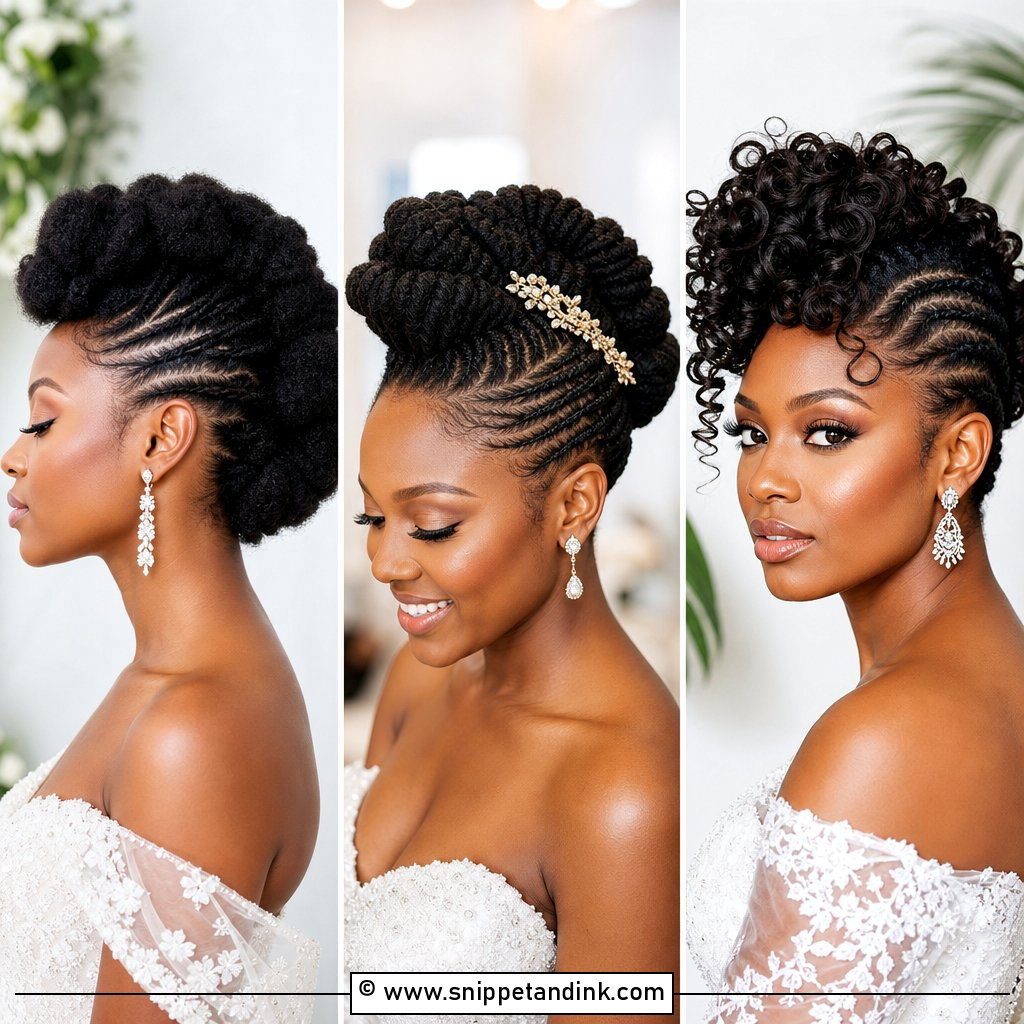
For Black brides, the ponytail can be sleek, curly, braided or sculpted, and the prep matters as much as the style. I moisturize and seal the hair well before the day, and I avoid pulling tight at the edges, because tension at the hairline is what causes breakage and soreness by the end of the night. A high curly ponytail gives a regal shape, while a low sleek one is clean and modern. Braided bases and wrapped extensions are both secure options. Edge styling, firm anchoring and humidity protection carry it through the full day. Pearls, a veil or a crystal comb make it personal.
Headaches by the Reception Are Not Normal
A high, tight ponytail pulls on the scalp all day, and some brides only notice the ache once the adrenaline wears off. I set the tie with firm hold but not maximum tension, and I check by sliding a finger under the elastic. If it does not slide, it is too tight.
If you already know you get headaches from tight ponytails, choose a mid or low height. Those place the weight closer to the neck. Extensions add weight too, so a long clip-in tail on a high pony is the combination most likely to hurt by evening.
If it does start aching mid-reception, do not pull the elastic out. Ask whoever is helping you to take out one or two of the crossed pins at the base, which relieves pressure without collapsing the shape.
Extensions, Heat and the Ponytail Kit for Your Bridesmaid
Many of the fuller ponytails on this list rely on added hair. I color-match extensions in daylight by a window, because salon lighting hides warm or cool tones that show up clearly in outdoor photos. If your hair has highlights, a blended or two-tone piece looks more natural than a single solid shade.
Humidity loosens curls and makes sleek hair frizz at the hairline. In a hot venue, I finish with an anti-humidity spray and keep the curls a little tighter than the final shape, since they relax over the day.
I give the maid of honor a small kit:
- A few bobby pins in your hair color and one spare clear elastic
- A travel hairspray and a small smoothing balm for the hairline
- A tail comb for fixing the part after the veil comes out
Your Ponytail Should Feel Secure Before You Leave the Chair
A bridal ponytail is not a simpler choice than an updo. It is a different one, and its success depends on details you can’t see from the front. Match it to your neckline and your hair texture, and be honest about how much tension you can wear for a whole day. Bring photos of the back of your dress to your trial, and take a short walk with the hair in before you agree on it. If it holds its shape after that walk, it will hold through the reception.
You'll Like These Ideas:


Leave a Reply