
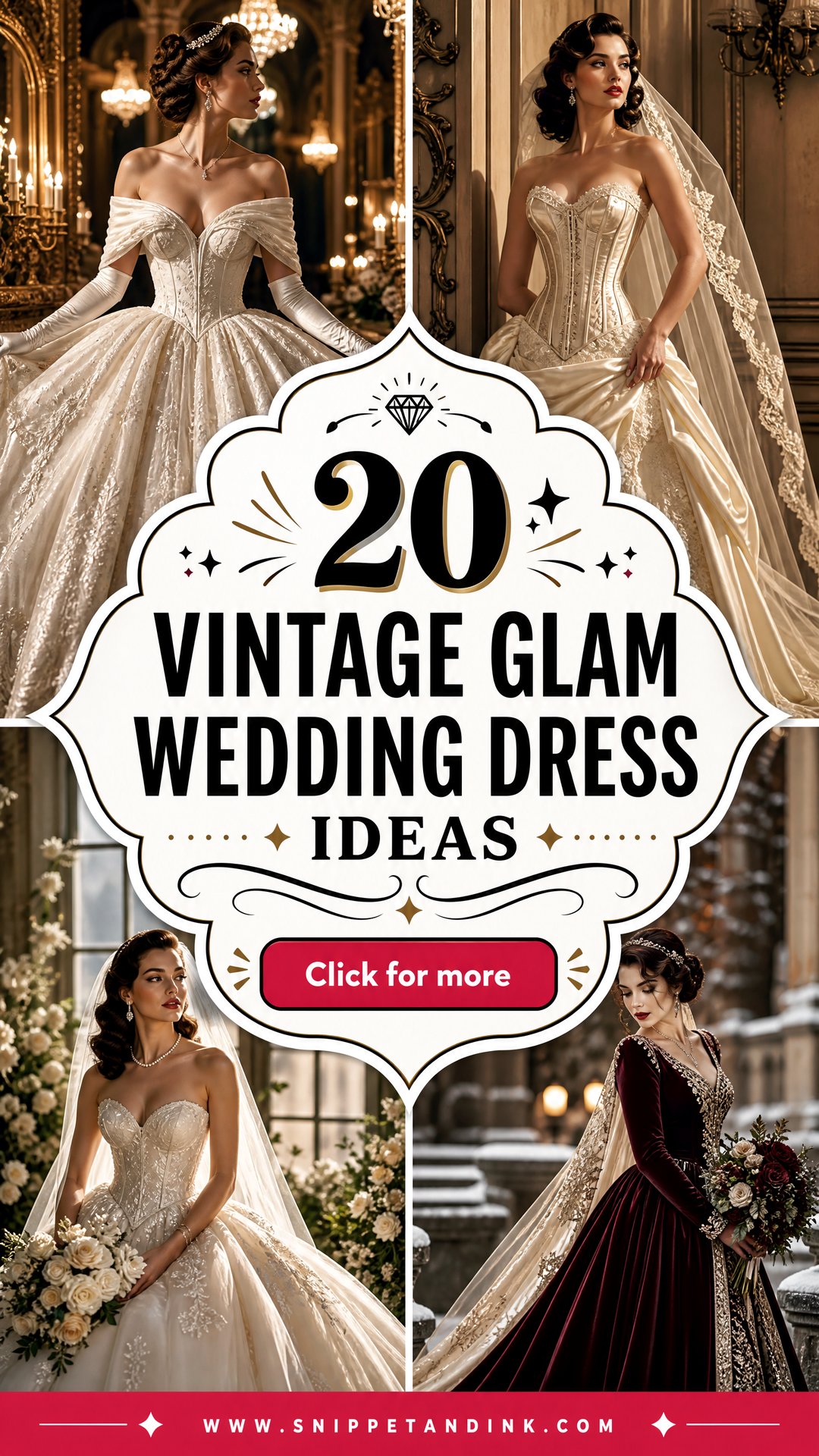
Old Hollywood glamour is mostly about fabric and line: satin that pours, beading that catches candlelight, a waist tailored to fit you exactly. The dresses here pull from several decades. There’s Art Deco beading and the dropped waists of the 1920s, liquid bias-cut satin from the 1930s, and the full skirts and cinched waists brides wore in the 1950s, with lace and tea-length skirts filling in between. My advice for every one of them is the same. Commit to one strong vintage reference, then let the shoes, jewelry and veil quietly agree with it instead of stacking a second era on top.
Matching the Shine to the Hour and the Room
Old Hollywood glamour was made for evening light and studio cameras, so the shinier your fabric, the more the setting matters. In bright midday sun, heavy satin and sequins bounce light straight back at the lens and can wash out in photos, while matte crepe, lace and pearls stay readable. Under candlelight or warm ballroom lamps, those same sequins finally come alive.
- Daytime or outdoors: lace, crepe, pearl detail and tea-length skirts hold up best.
- Late afternoon running into evening: satin, bias-cut silk and light beading.
- Evening and black tie: full Art Deco beading, sequins, velvet and feathers.
Ask your photographer whether the ceremony spot gets direct sun, and take a fabric swatch outside before you order. It takes five minutes and heads off most color and shine surprises.
1. Art Deco Beaded Wedding Dress
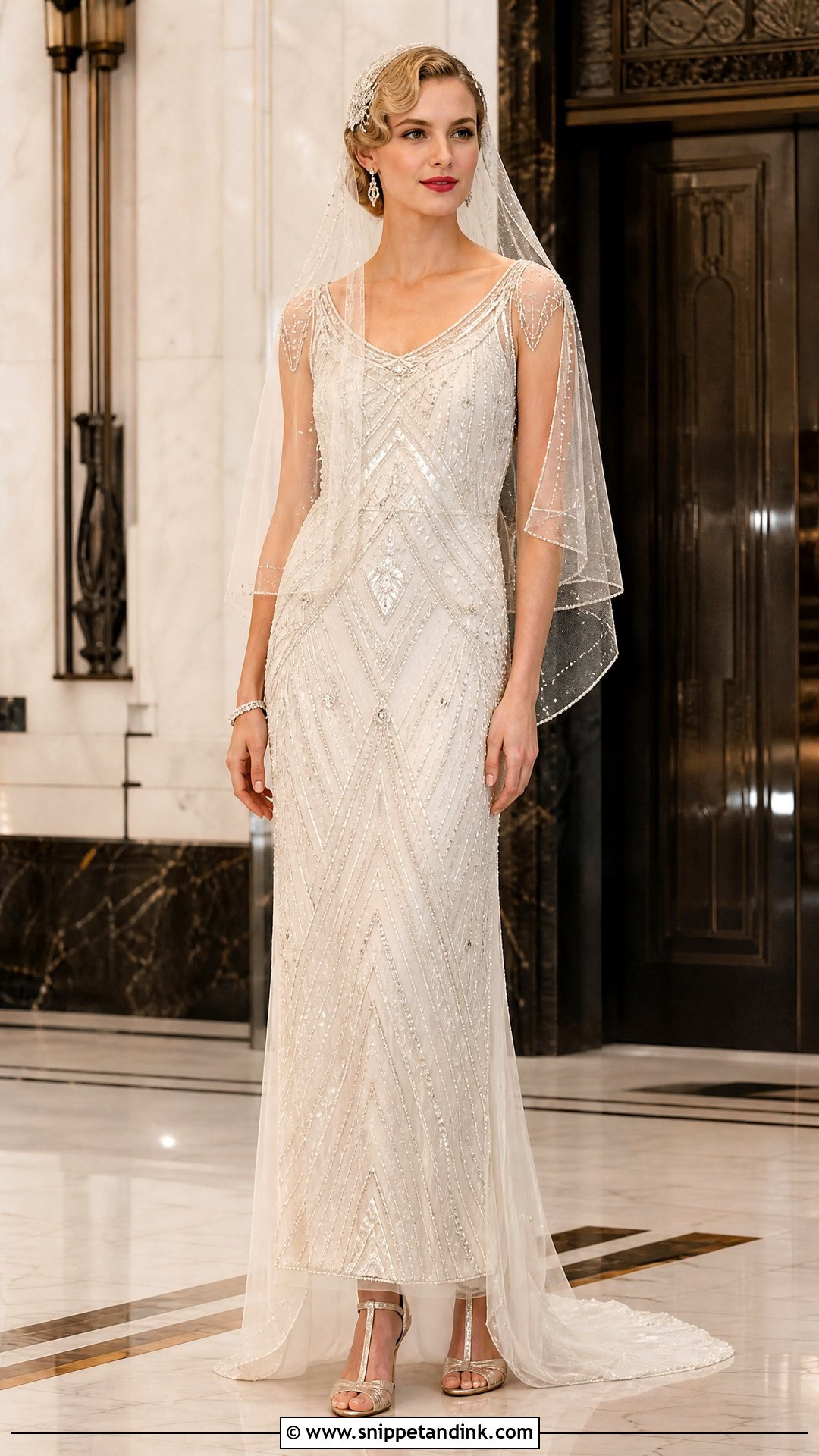
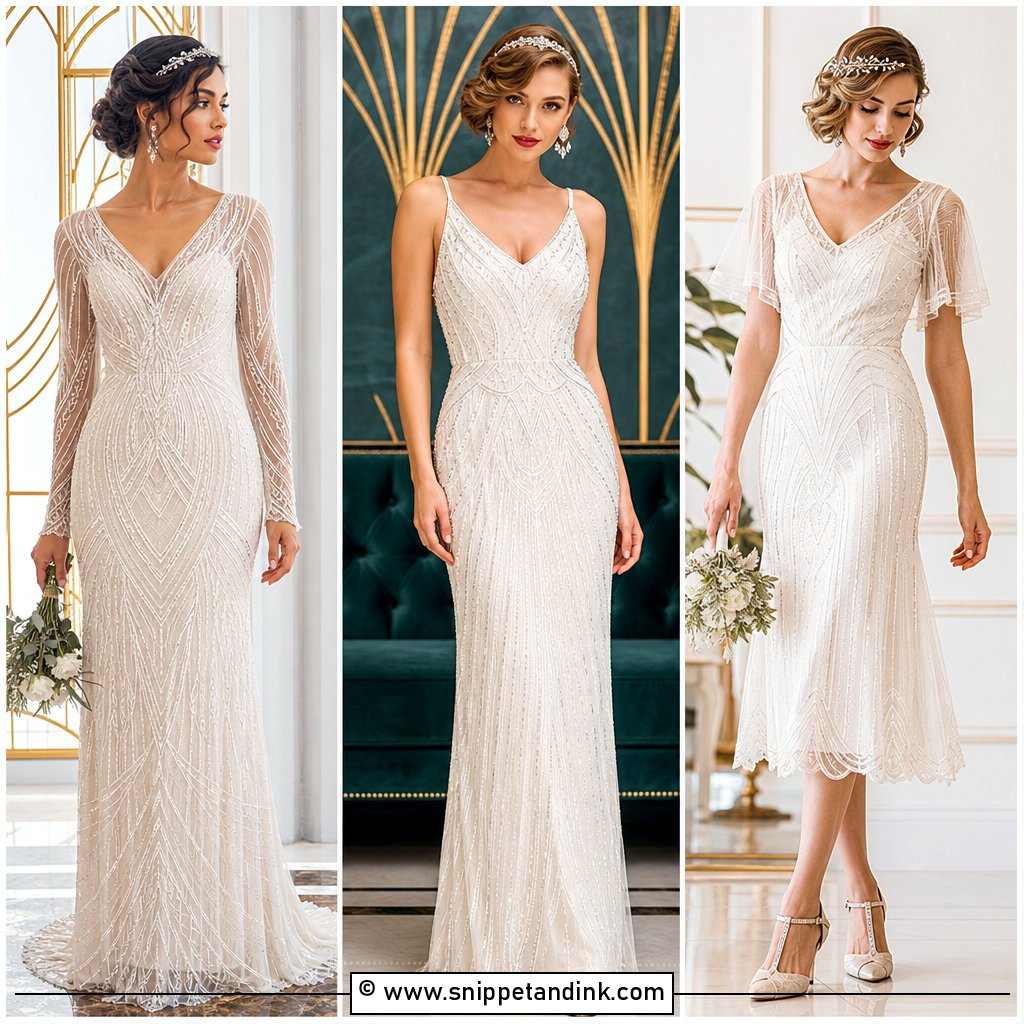
Heavy beading on a slim column is the purest 1920s look, and the first question is weight. A fully beaded gown is surprisingly heavy, so I check that the straps are reinforced and that an inner waist stay is carrying some of the load. Look for symmetrical beadwork, linear embroidery or fan motifs in silver, pearl or champagne on ivory, with a gently scooped neckline and a low back. Metallic T-straps, a crystal comb and small drops finish it, and a beaded cap veil reads more period than a fingertip one. Keep the bouquet streamlined with calla lilies or roses. The dress supplies the sparkle, so soft makeup and polished finger waves are enough.
2. Old Hollywood Satin Wedding Dress
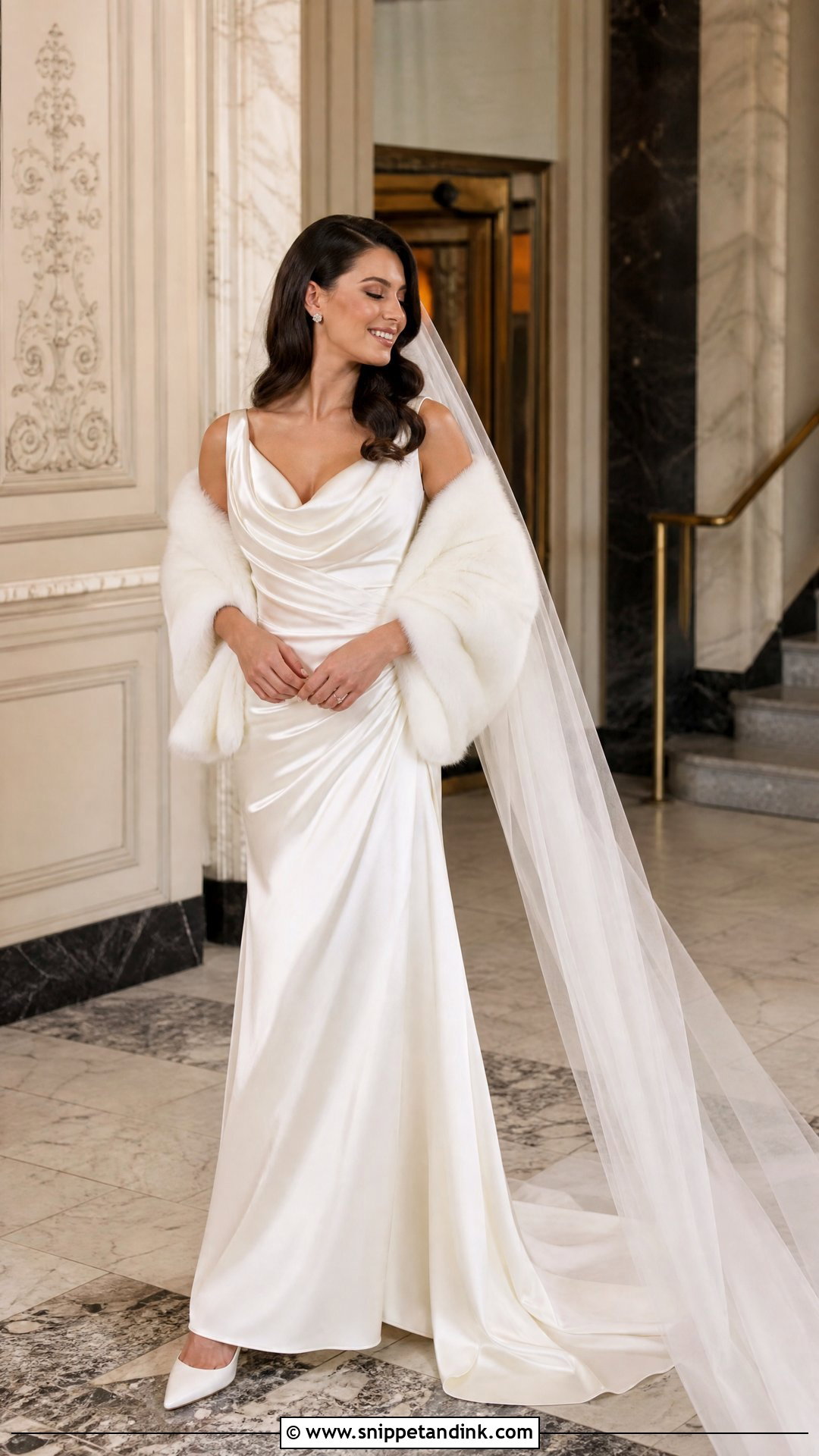
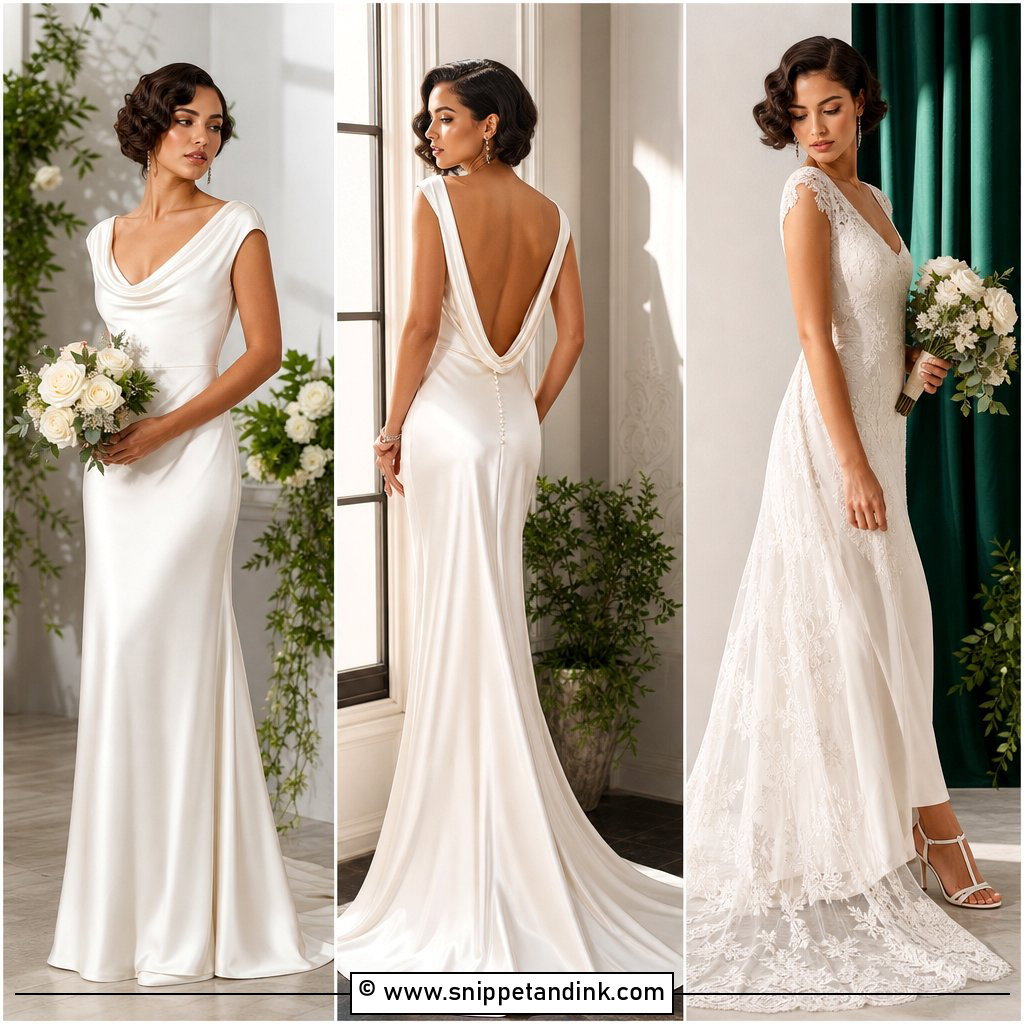
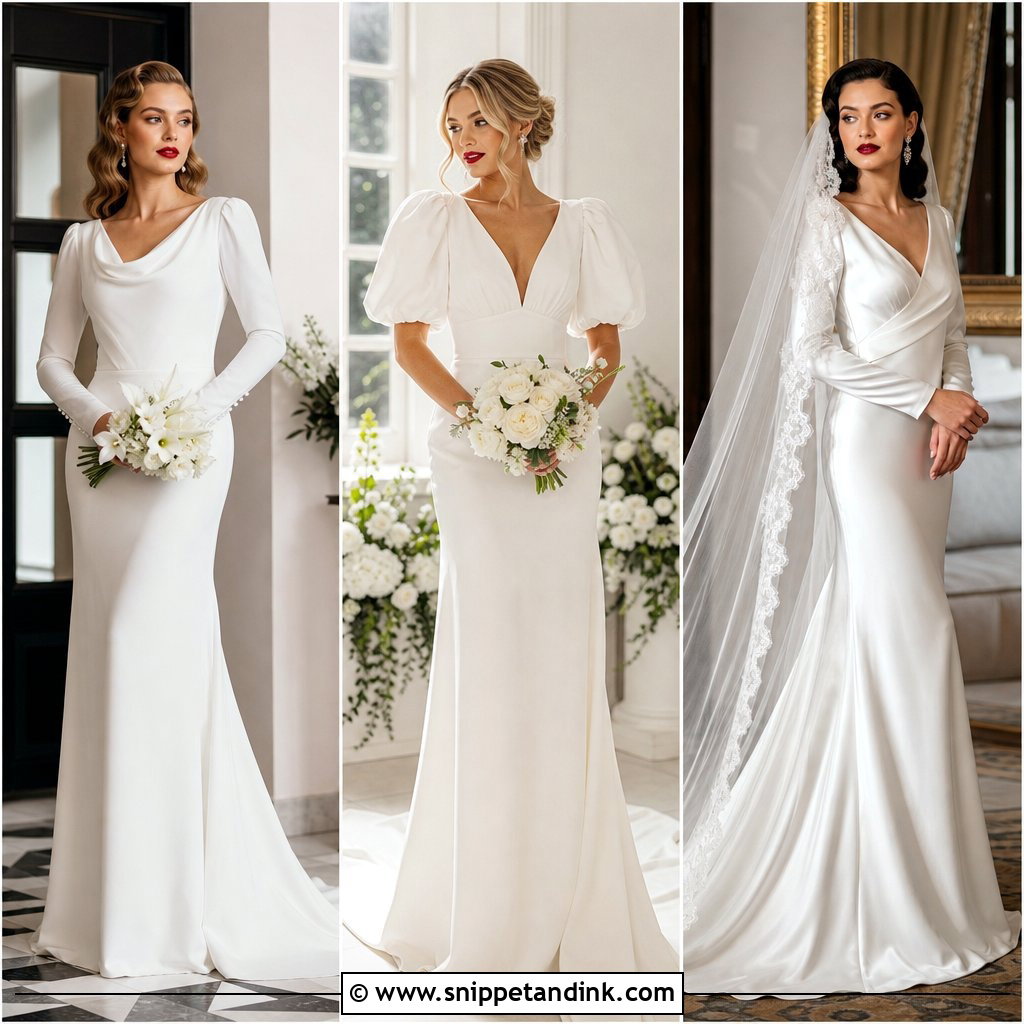
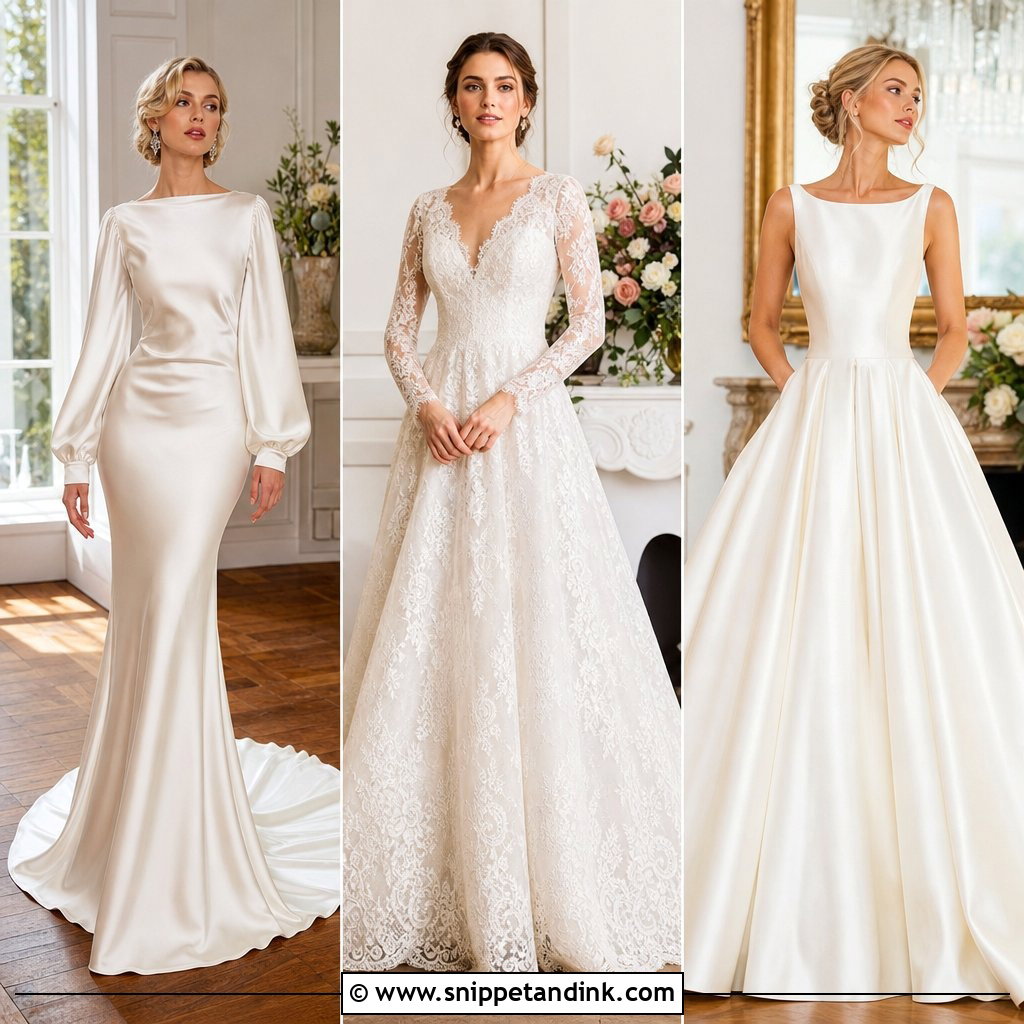
Satin cut to skim the body is unforgiving in one specific way: it shows every line underneath and every crease from sitting. When a bride wants this look, I ask about the weight of the satin first, because a heavier silk satin or duchess wrinkles far less across the lap than a thin one. Look for a cowl neckline, a softly gathered waist and a skirt cut to move with you, in ivory or cream rather than optical white. Pointed satin pumps, a faux-fur wrap and sparkling studs set the scene, along with a side-parted wave and a red or rose lip. Add a clean-edged cathedral veil and a structured satin clutch. Hotels, historic estates and candlelit ballrooms suit it.
3. Long Sleeve Lace Wedding Dress
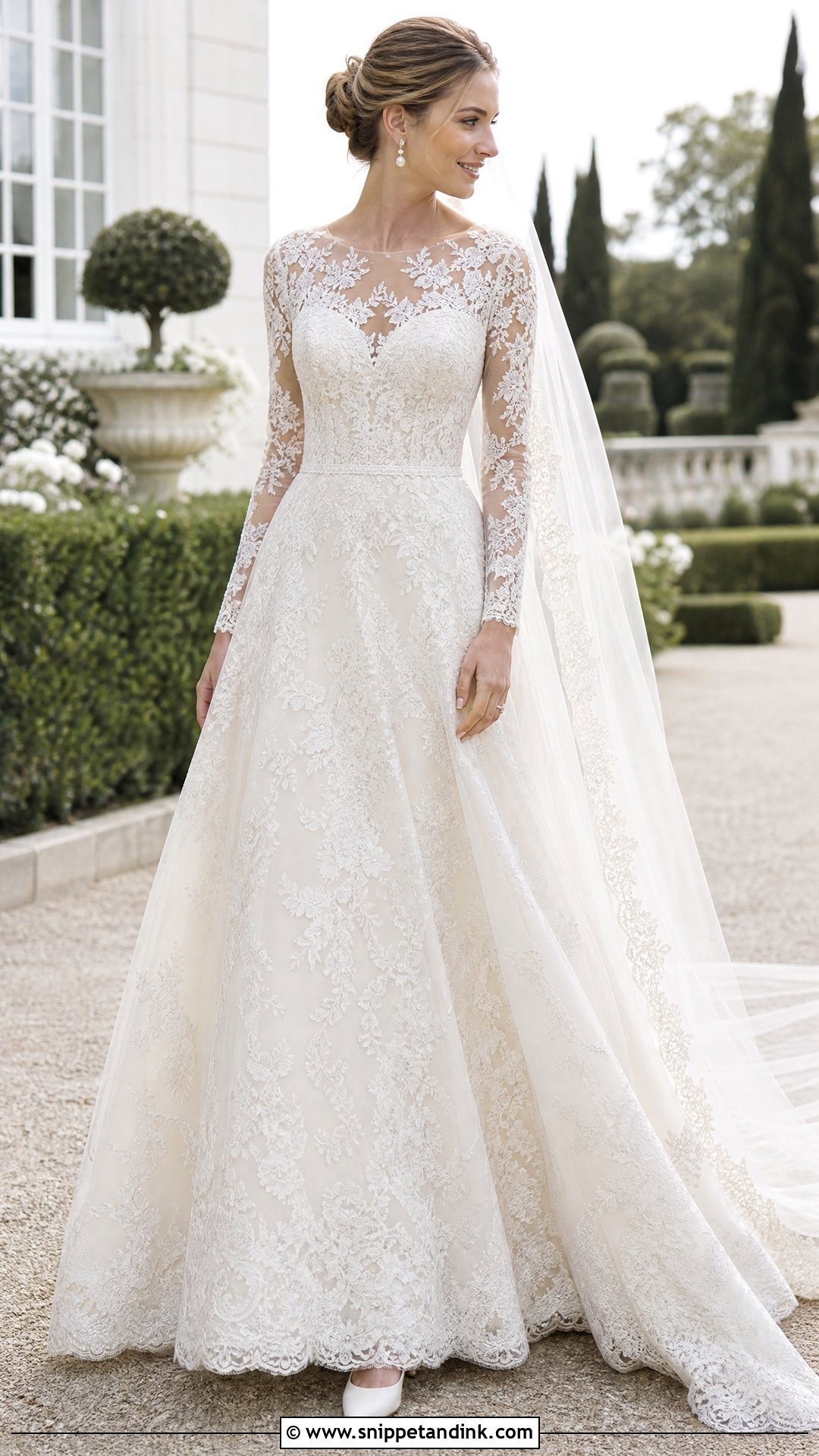
Sleeves are where lace dresses succeed or fail. Fitted illusion sleeves need just enough ease at the elbow to bend; too tight and they ride up and bunch every time you lift a glass. Pair them with a defined natural waist and an A-line or softly flared skirt. Floral lace leans romantic, while geometric lace reads sharper and more Deco. Ivory closed-toe pumps, pearl earrings and a lace-trimmed cathedral veil complete it, with a low chignon that keeps the sleeve and neckline detail on view. A compact bouquet of white roses with trailing ribbon works better here than a large arrangement. If the bodice is sheer, ask for a lining matched to your skin tone.
4. Tea Length 1950s Wedding Dress
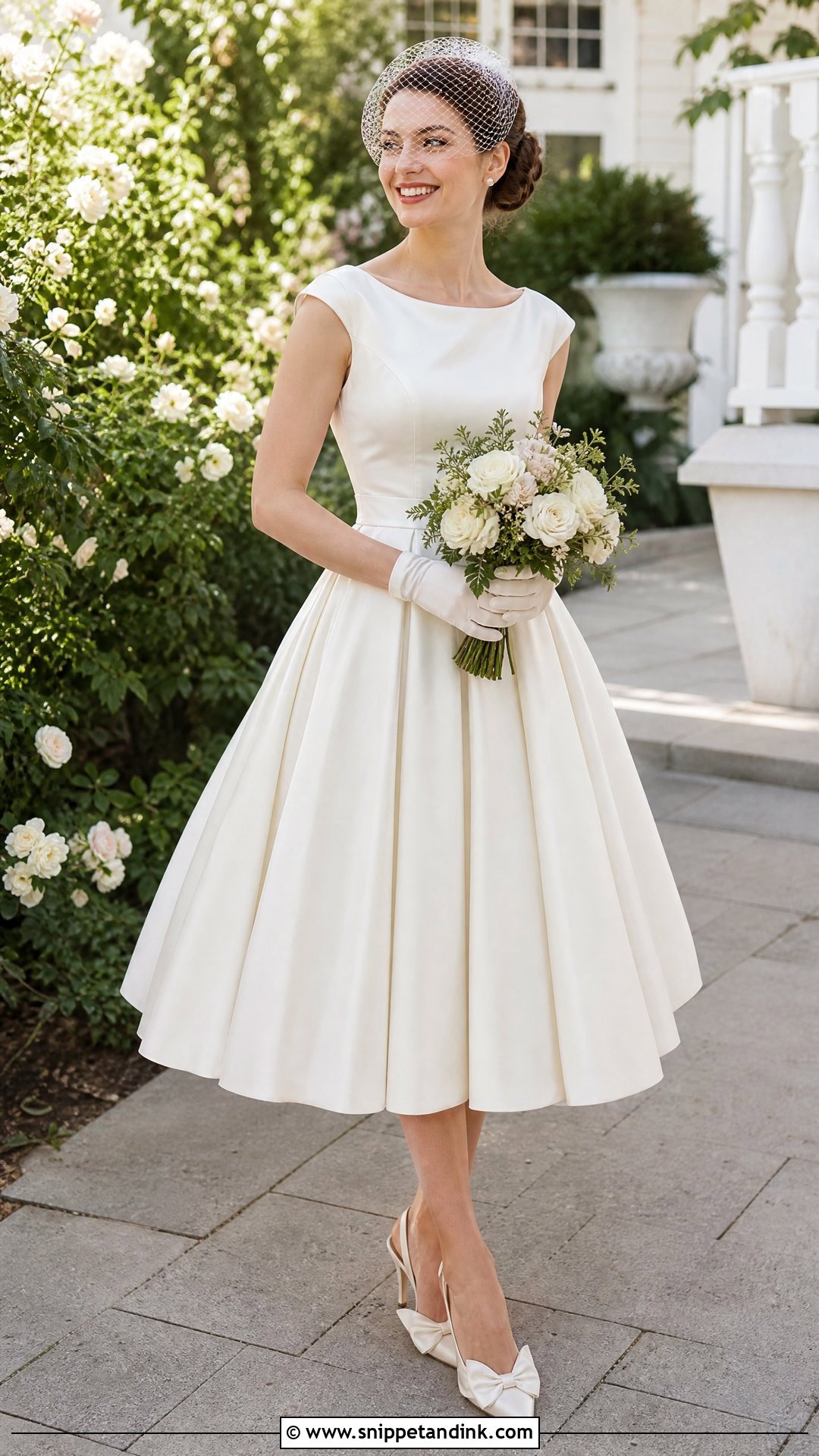
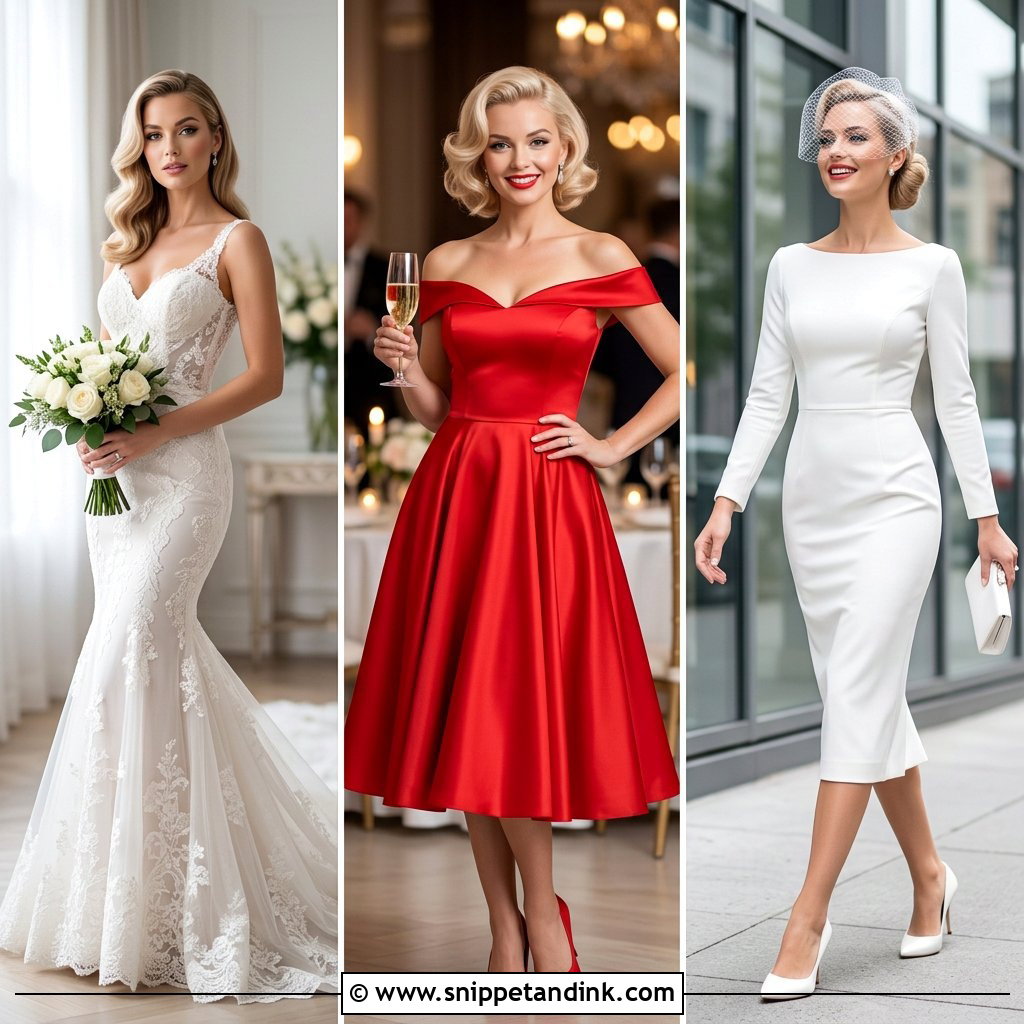
Quick verdict: this is the most practical dress on the list. A fitted bodice, defined waist and full skirt ending between knee and ankle give you room to move and nothing to trip on. Satin, mikado and floral jacquard hold the shape; soft chiffon won’t. Your shoes are fully on show, so pointed pumps, bow heels or polished Mary Janes matter as much as the dress, along with short gloves, pearl studs and a birdcage veil. A petticoat gives volume, though I’d skip extra layers if you’ll sit through a long dinner, because they bunch on the chair. Courthouse ceremonies, garden receptions and daytime weddings all fit it.
5. Victorian High Neck Wedding Dress
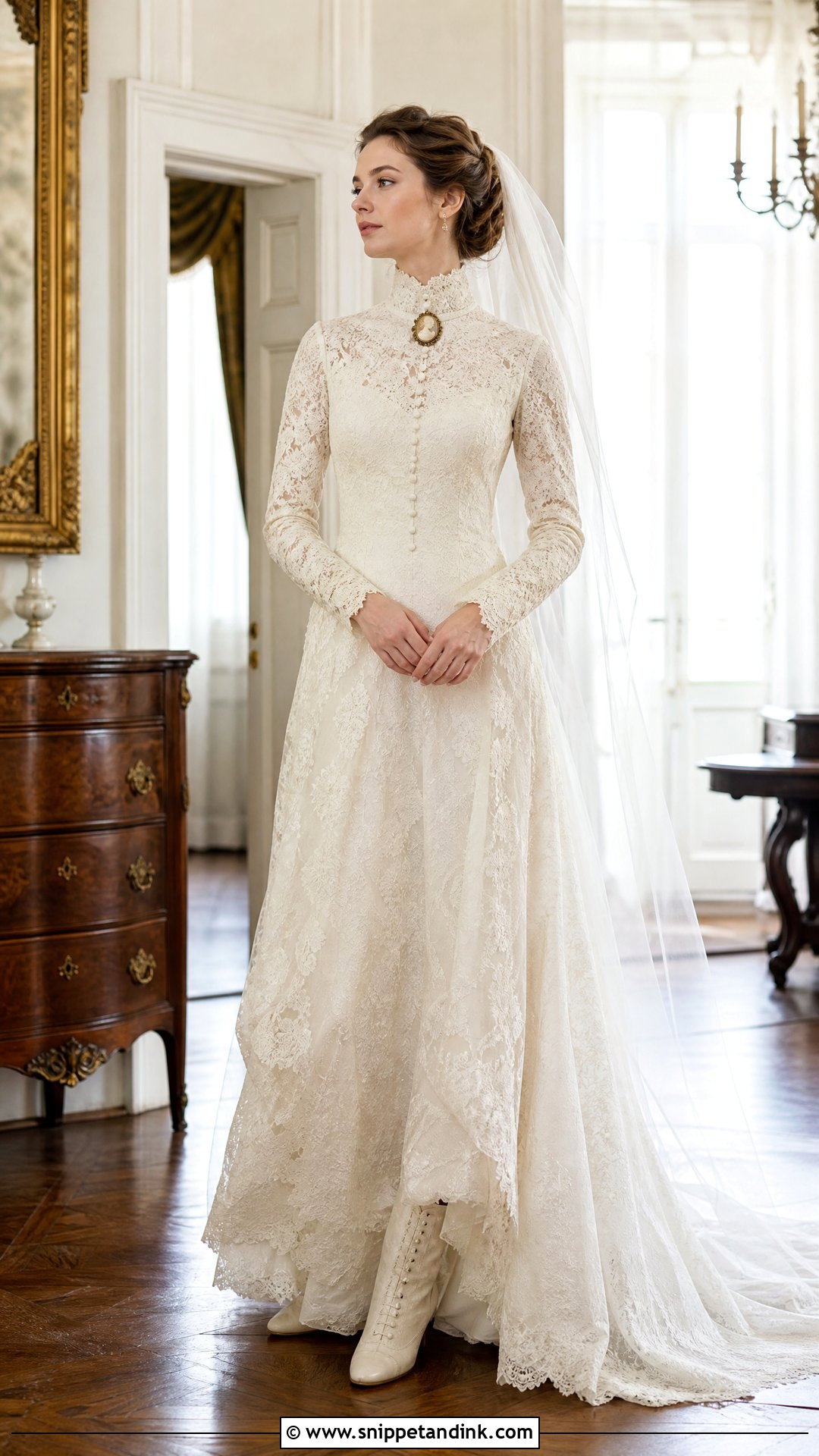
The standing collar is the commitment here. Before ordering, I have brides turn their head fully in each direction, because a stiff lace collar cut too high rubs at the jaw by mid-afternoon. A lace-covered bodice with fitted sleeves and covered buttons gives the antique influence, balanced by a shaped waist and a flowing A-line skirt. Ivory lace over a nude or champagne lining shows the pattern without going stark. Buttoned ankle boots or classic pumps, antique-style earrings and a long veil under a smooth bun finish it, and a cameo brooch at the collar or waist adds personality. Loose cream roses and fresh, luminous makeup keep the whole outfit from feeling heavy.
6. Pearl Embellished Column Wedding Dress
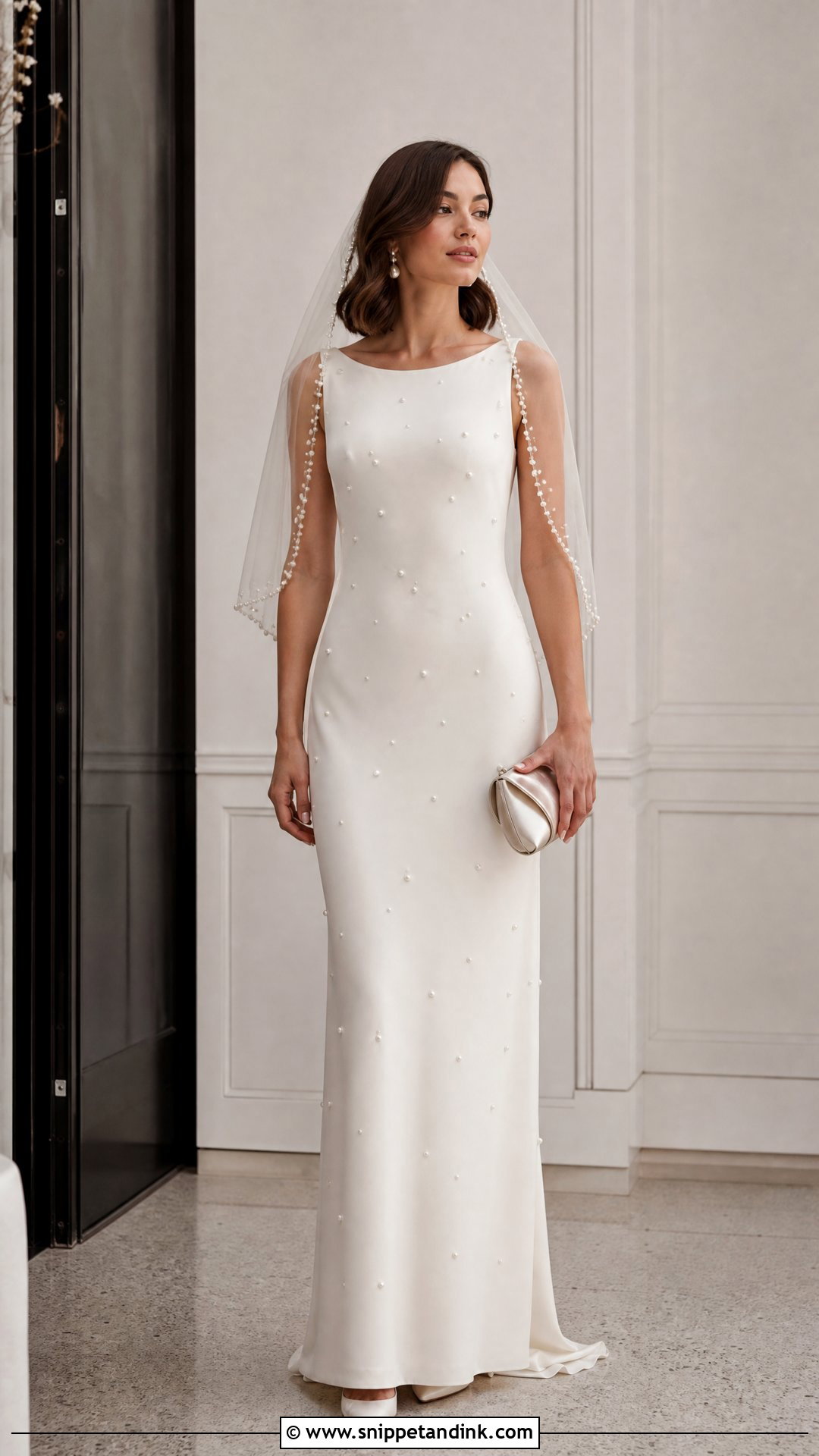
Pearls add depth without the flash of crystal, which makes them a good fit if you dislike obvious sparkle. Look for pearls scattered across the neckline, sleeves or bodice over a clean crepe or chiffon skirt; the narrow line suits a bride who wants glamour with little volume. One practical warning from fittings: sewn pearls catch on tulle, lace and bracelet clasps, so test your veil edge and jewelry against the bodice before the day. Pointed ivory heels, pearl drops and a small satin clutch go with it, plus a pearl-trimmed shoulder-length veil and a low bun or brushed waves. It moves easily between a formal ceremony and a city venue.
7. Drop Waist Gatsby Wedding Dress
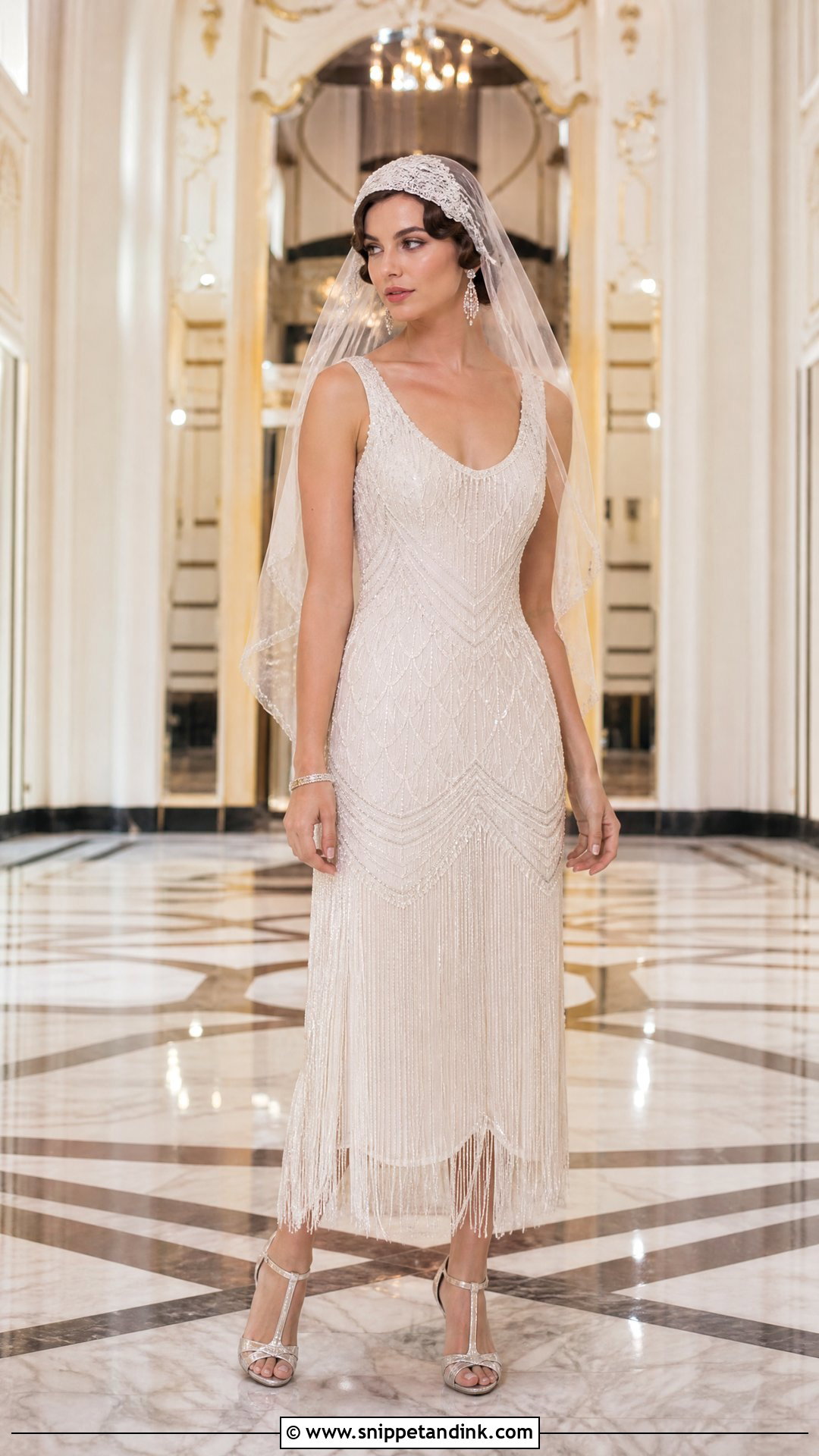
Dropped waists are lovely on long torsos and tricky on short ones, because a seam that lands too low makes the legs look shorter. On a drop waist Gatsby wedding dress, I move the seam so it sits at the upper hip on your body, not where the pattern put it. Look for a smooth fall through the torso and a flare from the hip, with beaded fringe, scalloped embroidery or geometric panels, and keep the skirt floor-length so it stays bridal. Silver T-straps, an embellished headband and slender chandelier earrings suit it. A tulle cape or beaded Juliet cap veil works better than a full veil. Skip feather bouquet substitutes; white orchids look cleaner.
8. Bias Cut Silk Wedding Dress
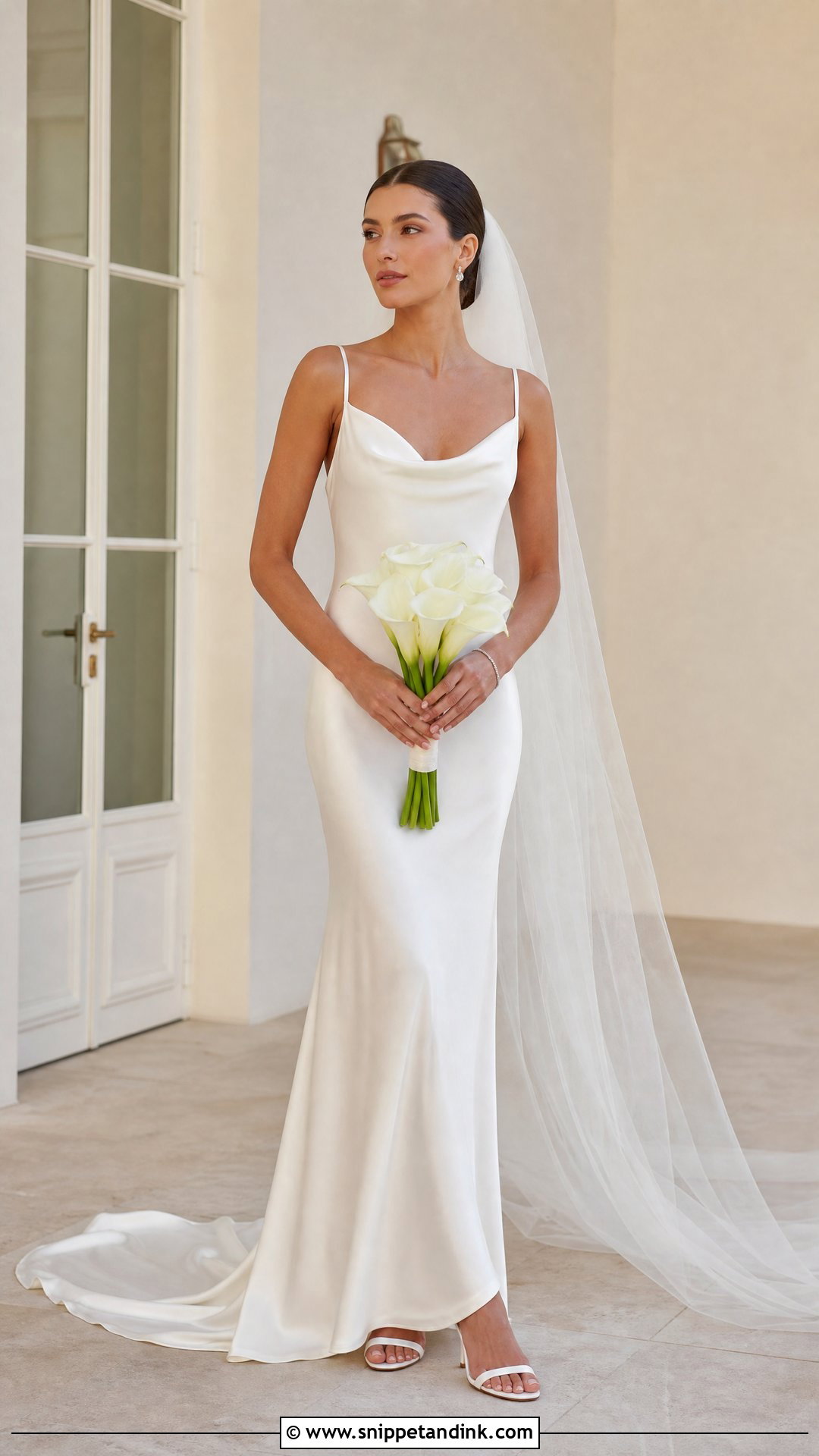
Silk cut on the diagonal falls into soft, fluid folds and stretches slightly over the hips. That stretch is why a bias-cut silk wedding dress should hang for a day before the hem is marked: it settles and drops. Choose silk satin or silk crepe with a simple neckline, delicate straps and a subtle train, over underlayers with no visible edges. Satin slingbacks, crystal studs and a long unembellished veil suit it, with a vintage comb above a low twist and a narrow calla lily bouquet. Leave heavy necklaces at home. It sits as comfortably at a minimalist modern wedding as at a 1930s-themed one.
9. Off Shoulder Ball Gown Wedding Dress
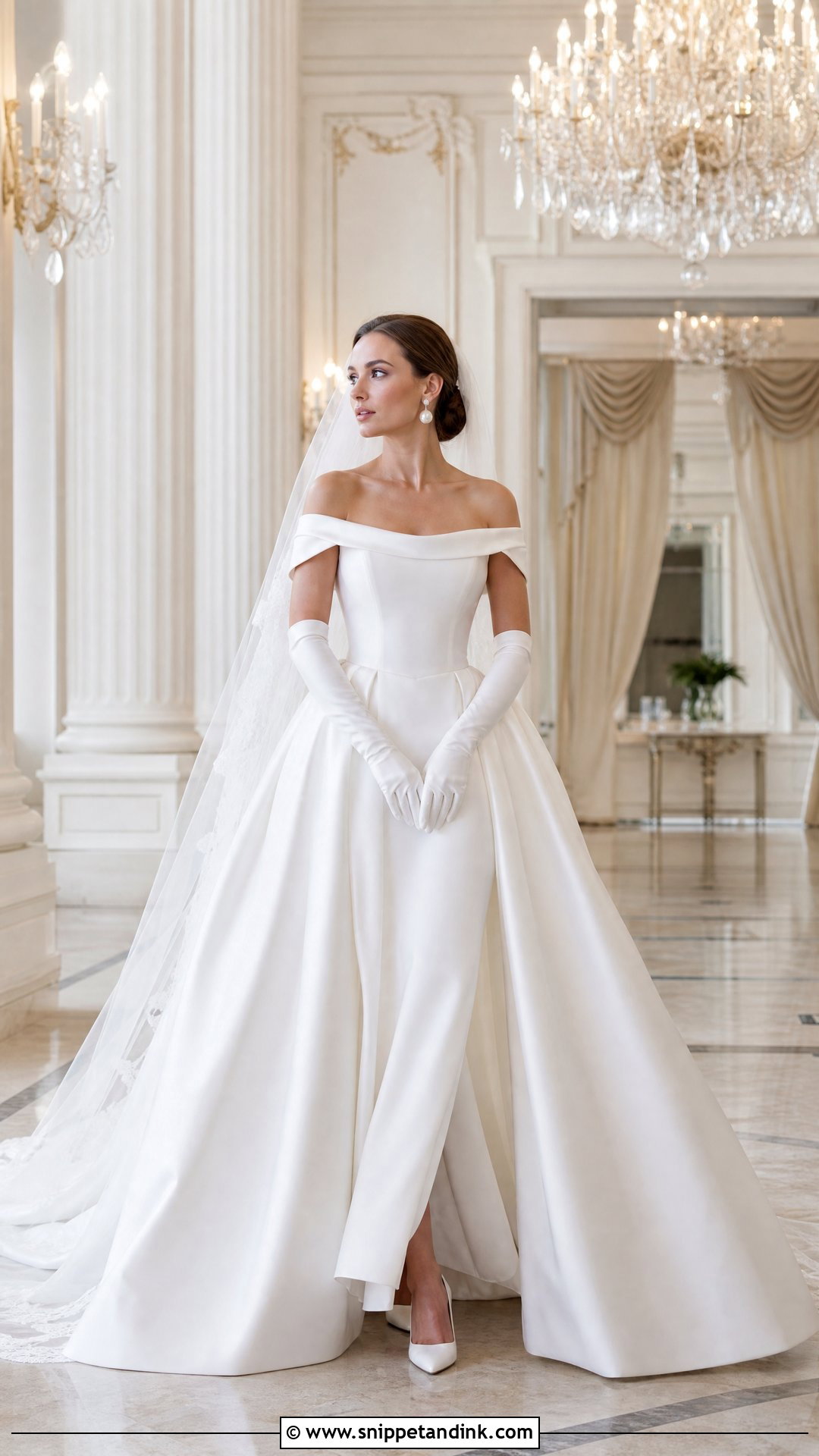
On an off-shoulder ball gown, the bodice holds the neckline up on its own, because nothing comes over the shoulders to help. I check the boning and waist stay, then watch the neckline while the bride hugs someone; if it slips at the fitting, it’ll slip all evening. Pair a structured bodice and portrait neckline with a full satin skirt, adding covered buttons, a pleated waist or a little brocade texture for period character. Pearl and crystal earrings, pointed pumps and a cathedral veil finish it, with long satin gloves if you want extra formality. A low updo shows the shoulders, and a compact bouquet stops the outfit getting crowded. Ballrooms, grand hotels and old mansions suit it.
10. Cape Sleeve Vintage Wedding Dress
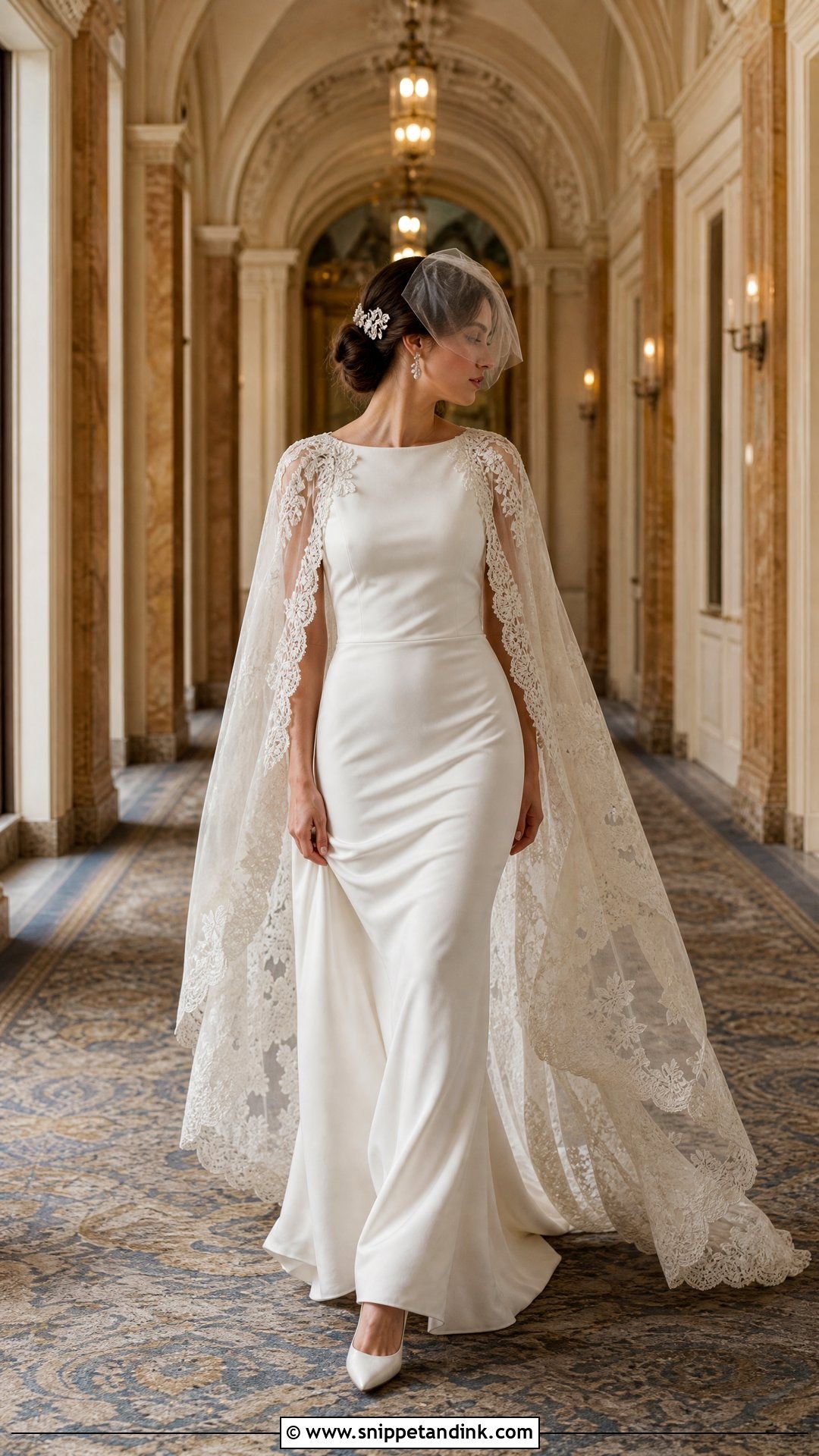
A cape sleeve gives you coverage and movement at once, and at fittings I watch one thing: where the cape ends. It should start securely at the neckline and fall without hiding the waist, or the photographs lose your shape. Choose a fitted crepe or satin gown under a sheer lace cape, chiffon panels or structured shoulder drapes. Simple pumps, antique-style drops and a small jeweled comb are plenty. If the cape is long or heavily decorated, skip the full veil; a short blusher keeps it bridal without competing. Walk and turn in it before the final fitting so you know how it moves, especially outdoors in a breeze.
11. Basque Waist Corset Wedding Dress
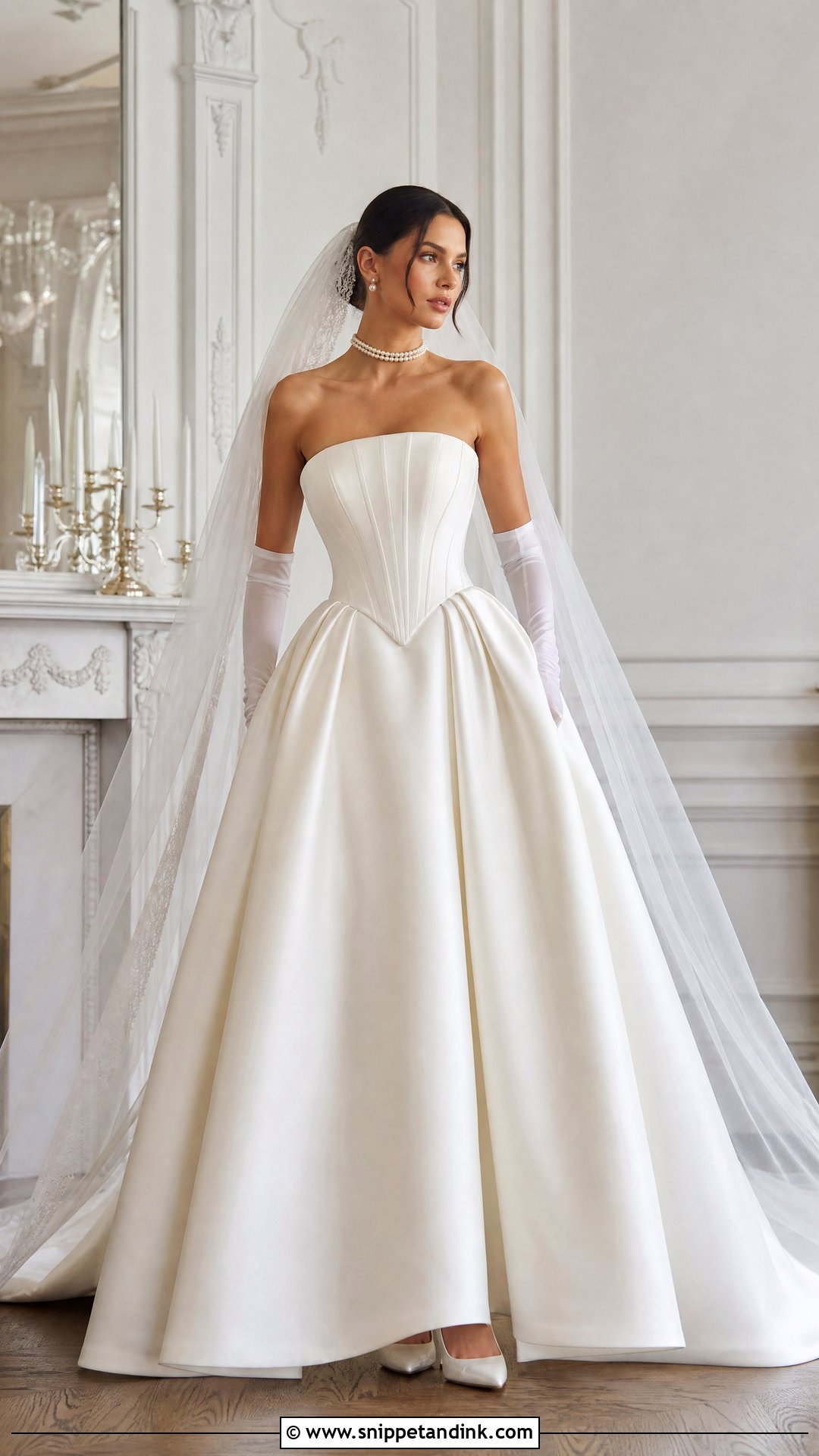
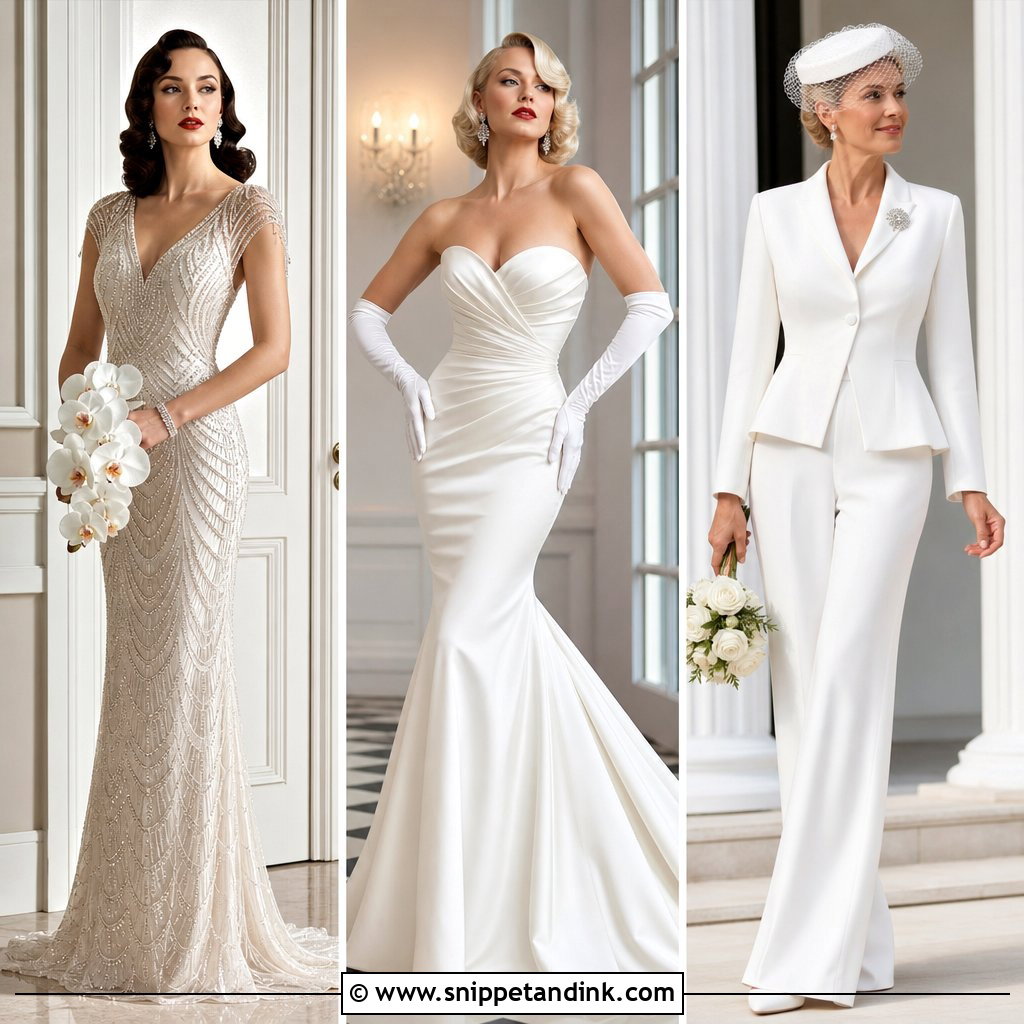
Can you breathe and eat in it? That’s my first test for any corseted bodice, and a basque waist is no exception. The pointed waistline lengthens the torso before flowing into an A-line or full skirt, and I’d choose visible seamwork, delicate lace or subtle boning over an exposed costume corset. Satin and mikado give the skirt architectural volume, while tulle softens it. Ivory pumps, a pearl choker and a long veil under a classic updo suit it, with elbow-length gloves if the neckline is strapless and the ceremony formal. A good corset supports through its boning and waist tape. If tight lacing alone is doing the work, it will hurt by dinner.
12. Edwardian Lace Wedding Dress
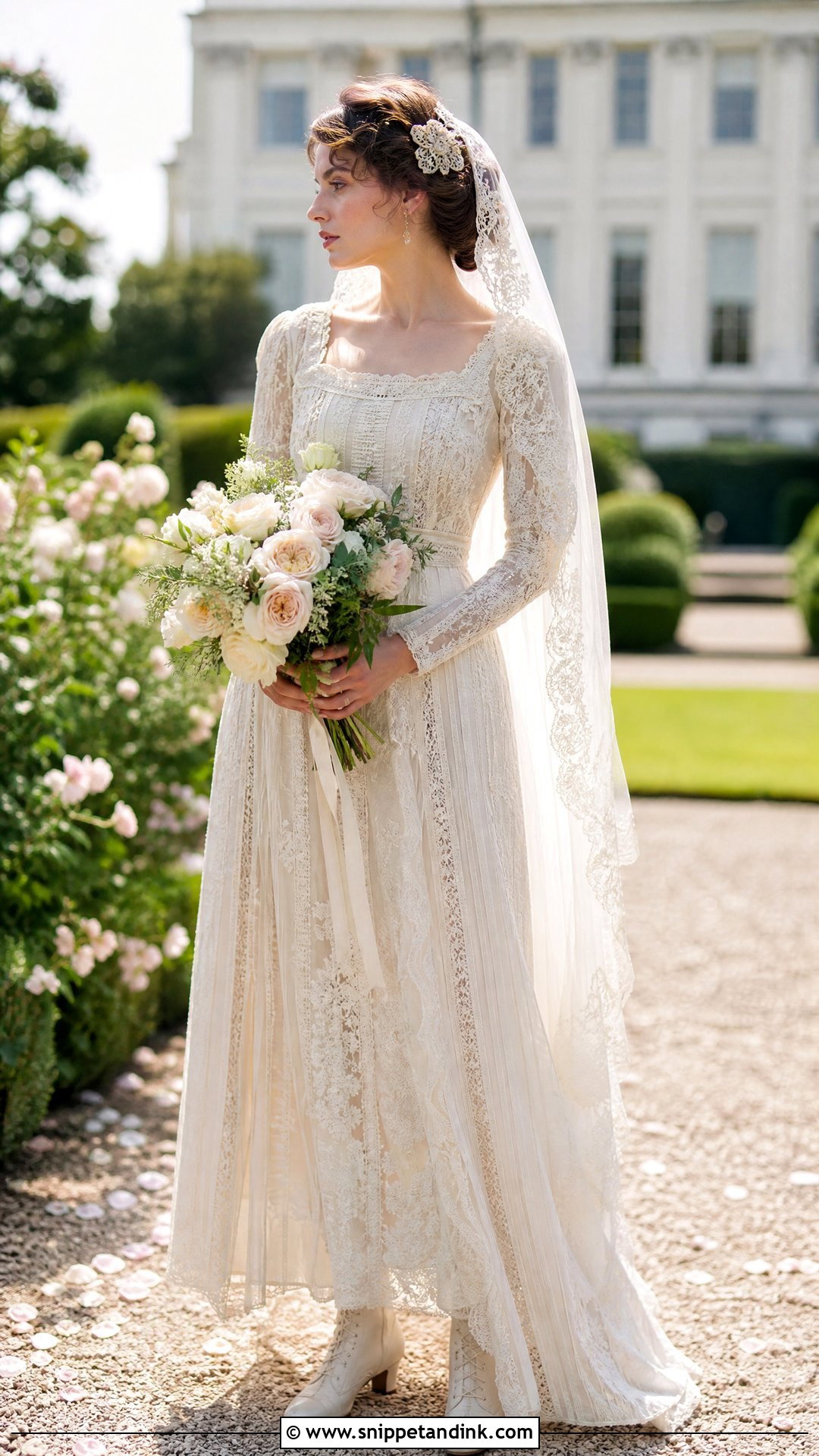
Edwardian dresses were made of light fabrics, so a good reproduction should feel almost airy. Look for a high or softly squared neckline, delicate long sleeves and a lightly defined waist, in cotton lace, embroidered tulle or fine pintucks, with a flowing skirt and a modest train. Lace-up ivory boots, a floral comb and a lace-edged chapel veil fit the period, with a loose low bun or braided updo and garden roses tied in silk ribbon. If you’re wearing a genuine antique, have a textile specialist look at it before any cleaning or alteration, since old cotton and silk can tear along the seams. A modern reproduction usually wins on sizing, durability and comfort.
13. 1940s Crepe Wedding Dress
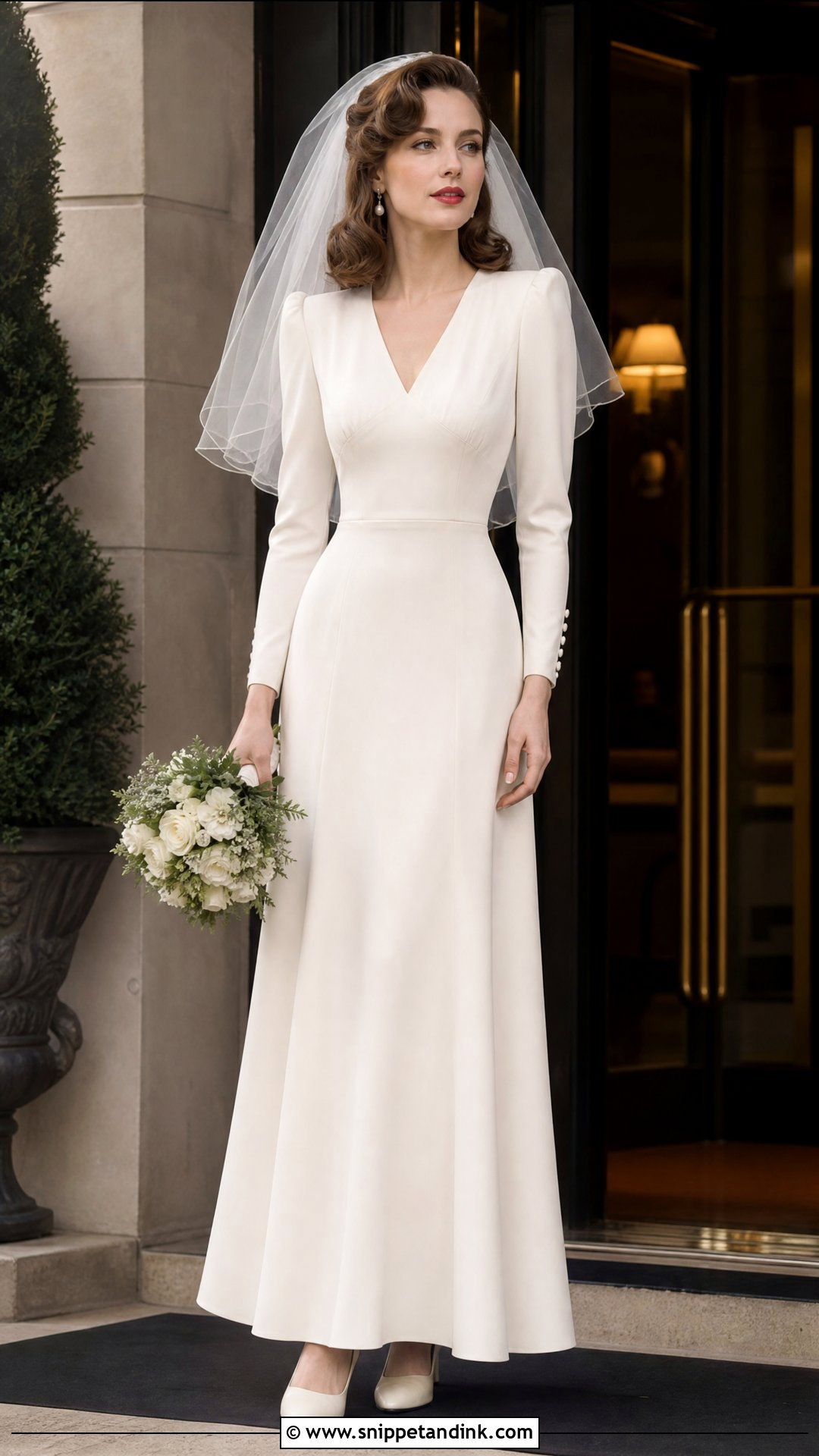
Matte crepe is the quiet fabric of the forties, and I reach for it with brides who hate shine. It drapes well, creases less readily than satin and doesn’t cling the way thin silk does. Look for softly structured shoulders, a V-neck, fitted long sleeves and a narrow waist flowing into an A-line skirt, with covered buttons or light ruching for detail. Round-toe pumps, pearl earrings and a shoulder-length veil suit it. Victory rolls or brushed side waves make the reference obvious; a chignon keeps it understated. Add a tailored ivory coat in cold weather and keep the bouquet small and neat.
14. 1960s Mod Mini Wedding Dress
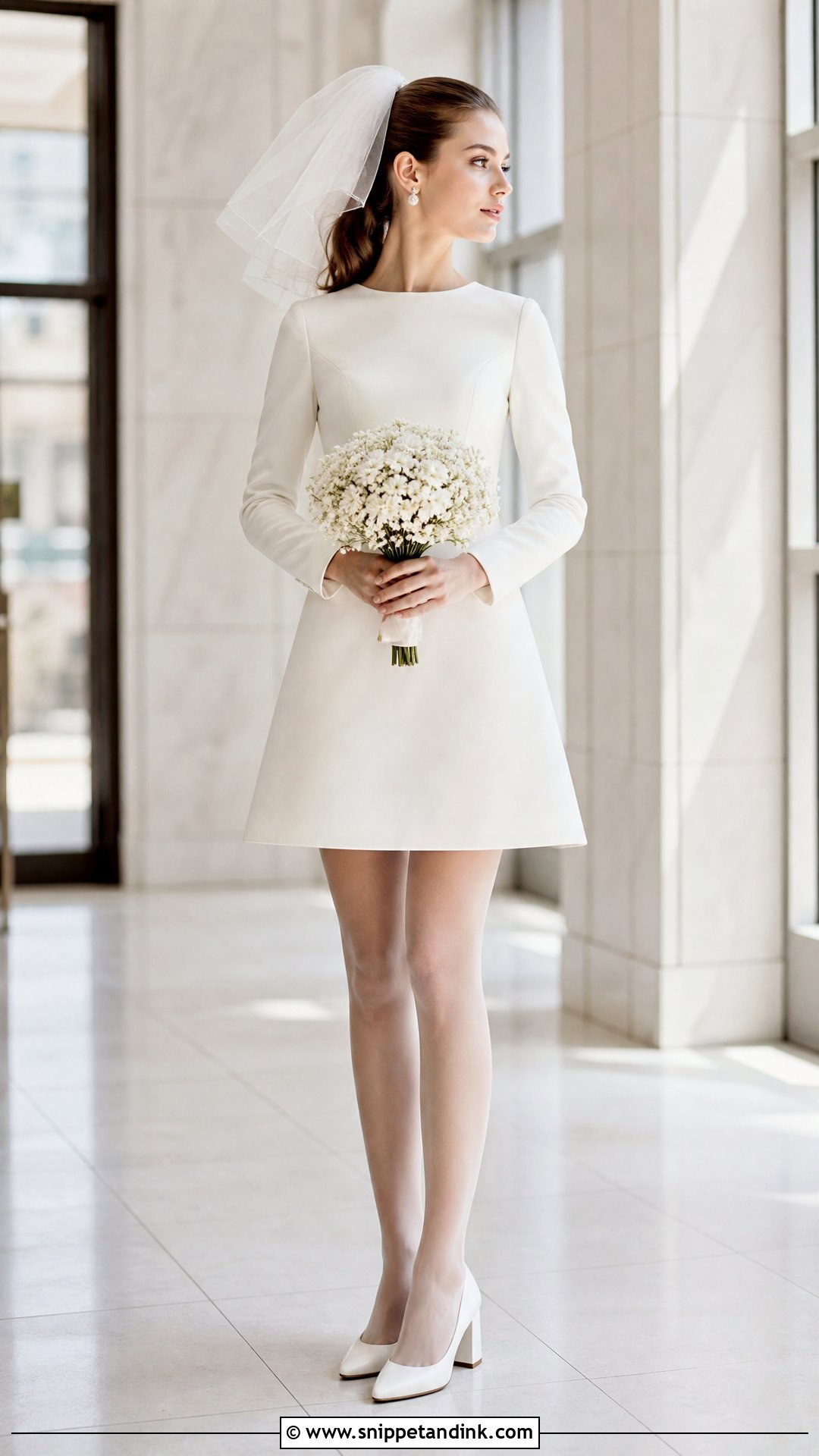
A short dress shows every fitting flaw at the hem, so I check it from the side and back as well as the front. A 1960s mod mini wedding dress works best as a structured shift or A-line with a high neckline, clean seams and long sleeves, while textured fabric, oversized floral appliqués or small pearls give it personality. Block-heel pumps, sheer tights and a short bubble veil complete it, along with a polished bob, sleek ponytail or flipped ends. Carry a small round bouquet to keep the proportions right. Sit, walk and dance in it before the last alteration, and think about matching shorts underneath. It also makes a fun second look for the reception.

15. Sweetheart Neckline Wedding Dress
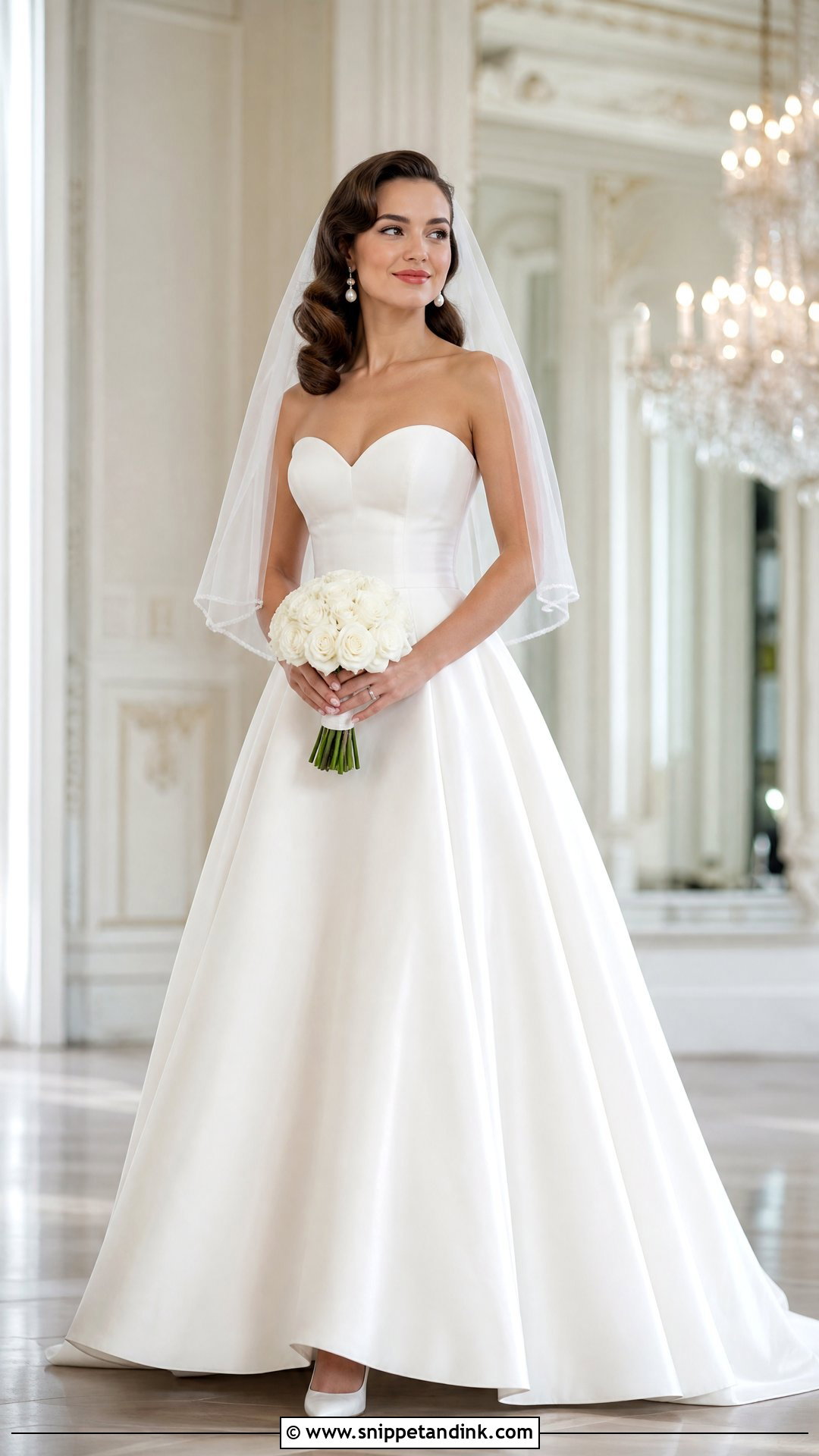
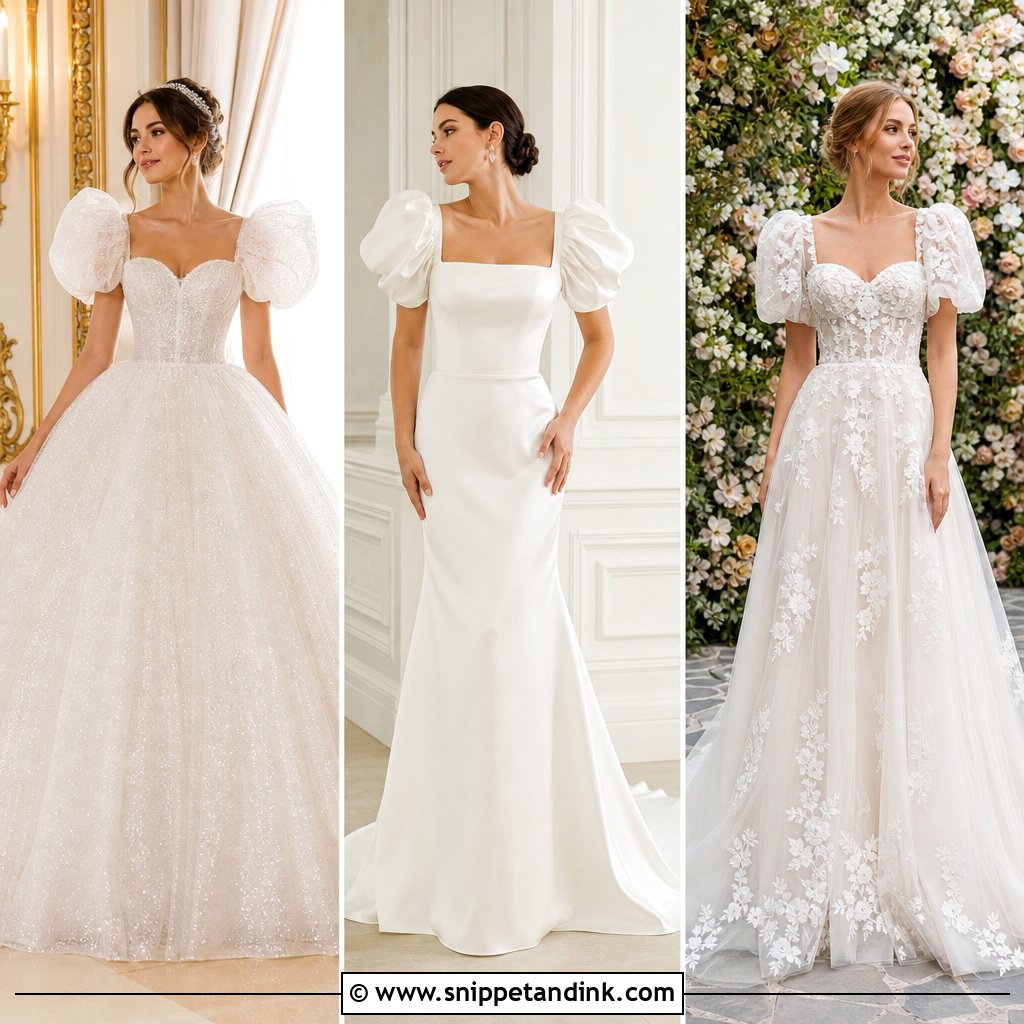
A sweetheart curve has to follow your actual bust line, and on a structured satin bodice that is tailoring work no stock size gets right. Gaping along the top edge is the most common problem I see, and a good seamstress fixes it through the side seams and the neckline facing. Pair the bodice with a full tea-length or floor-length skirt, perhaps with draping, tiny buttons and a defined waist for a 1950s touch. Pearl earrings, pointed pumps and a fingertip veil finish it. A fine necklace suits a plain bodice but not a lace or beaded one. Brushed waves or a French twist keep the neckline clear, and internal boning or discreet straps add support if you need it.
16. Champagne Sequin Wedding Dress
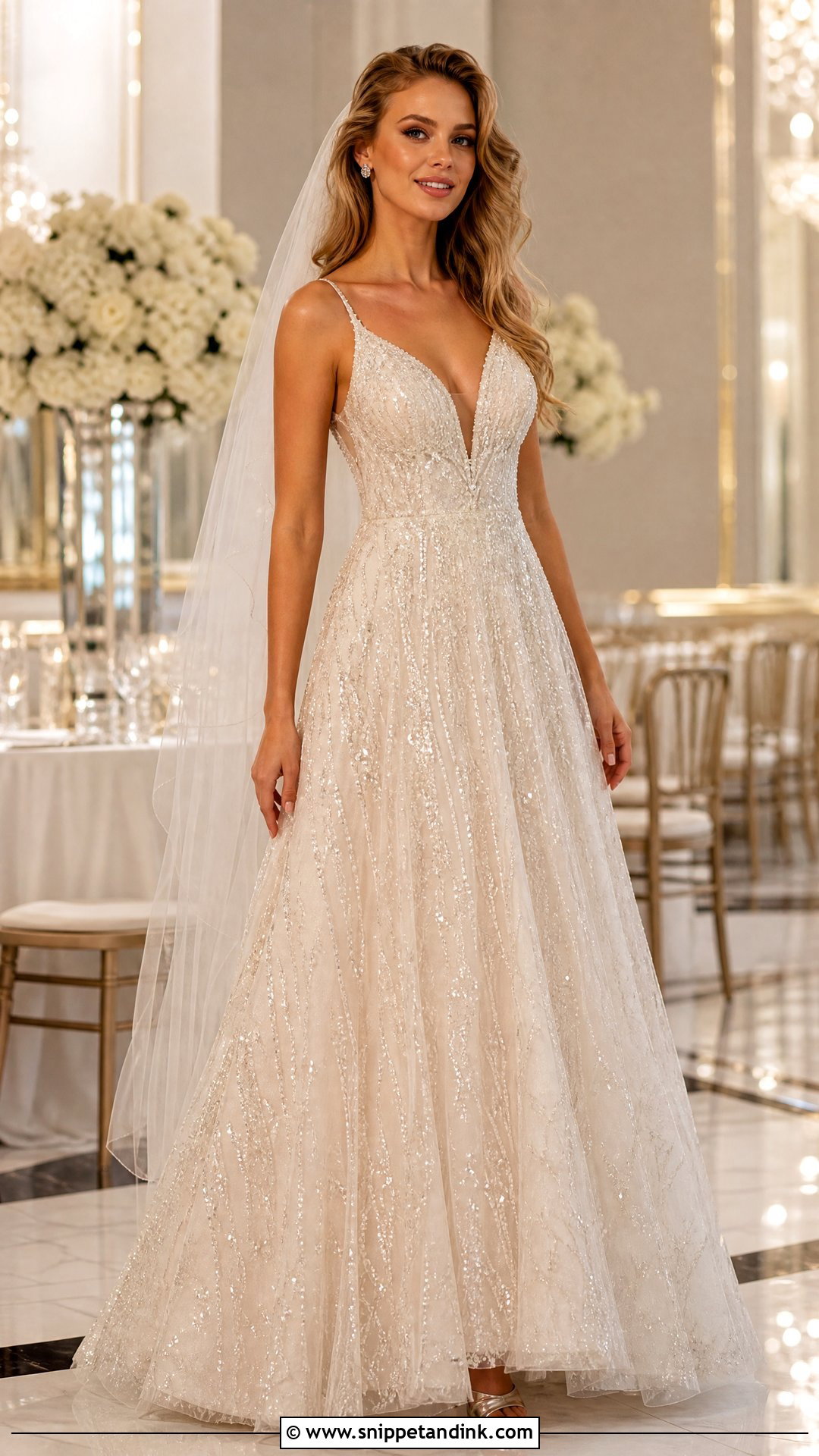
Sequins scratch. It’s the first thing I mention when a bride falls for a champagne sequin wedding dress, because embellishment at the underarm rubs the inner arm raw over a long evening. Run the inside of your arm along the side seam in the shop; if it catches, ask for smaller sequins there or a soft lining panel. Choose fine sequins, beads or metallic embroidery on a fitted column or gentle A-line, over a champagne lining that keeps pale embellishment visible. Metallic heels, crystal studs and a simple tulle veil suit it, with no jeweled extras. View the color in daylight and indoors, since champagne shifts. Evening receptions and hotel ballrooms are its home.
17. Square Neck Brocade Wedding Dress
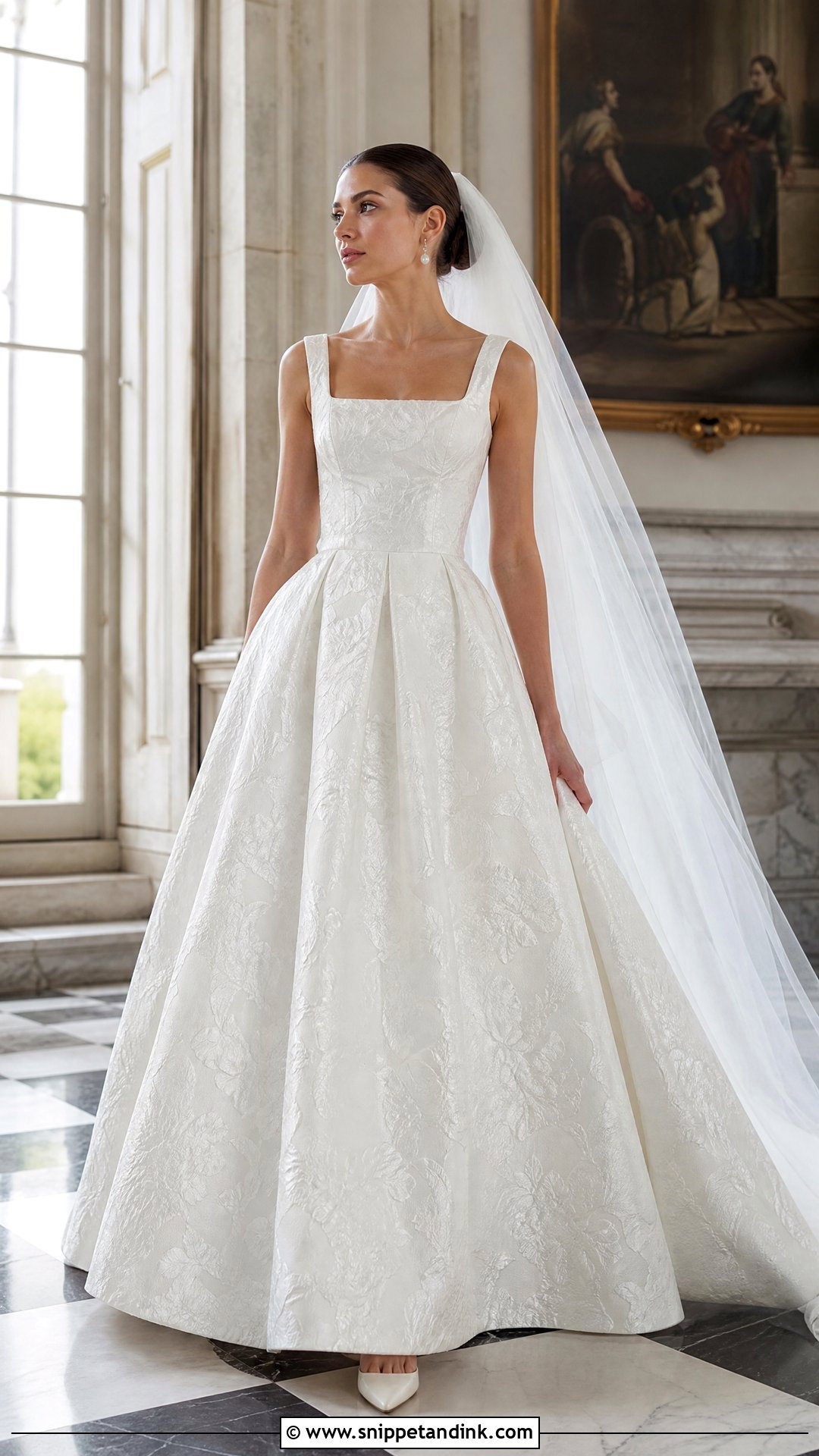
Brocade has weight, so it rewards brides who like structure and frustrates anyone hoping for a floaty dress. A fitted bodice, wide straps or long sleeves and a full skirt show off the woven pattern, and ivory, pearl or pale champagne florals give depth without beading. The square neckline frames the face and collarbone; I make sure its corners lie flat rather than flaring when you lean forward. Drop pearl earrings, low satin heels and a clean cathedral veil go with it, along with a smooth center-parted bun. Skip the necklace unless the bodice is very plain, and walk and sit in it at fittings to judge how the weight feels.
18. Feather Trim Wedding Dress
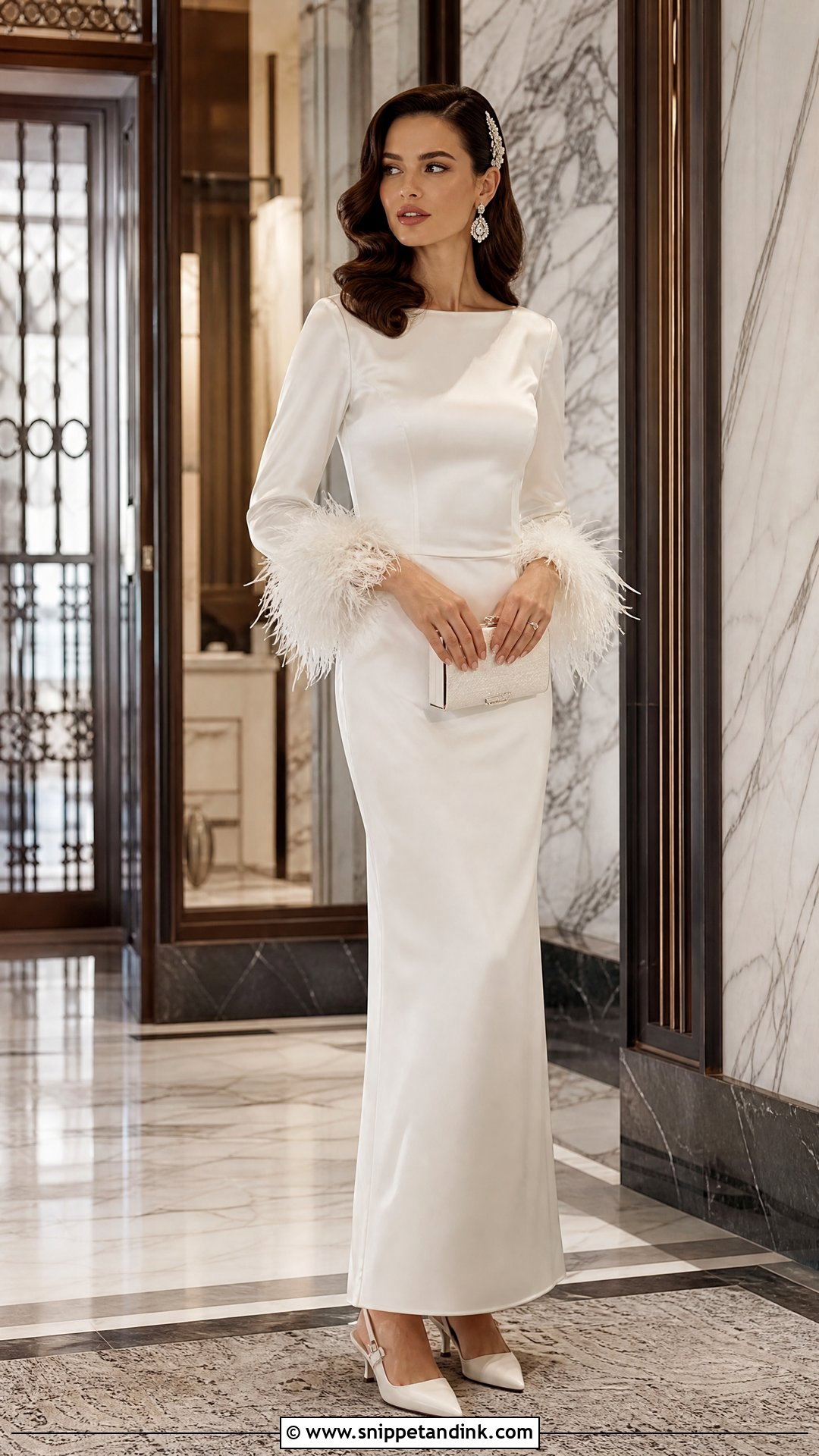
Feathers shed. Ostrich and marabou trims leave a light trail on dark suits and car seats, which is the main reason I suggest using them selectively at the cuffs, neckline, hem or on a removable cape rather than all over. Begin with a clean satin or crepe column so the texture looks deliberate. Pointed slingbacks, small crystal earrings and a structured clutch suit it, with a short veil or jeweled comb rather than another big layer. Smooth side waves or a sleek bun keep the hair calm next to all that movement. A detachable feather wrap gives you dramatic ceremony photos and then comes off for dinner and dancing.
19. Velvet Winter Wedding Dress
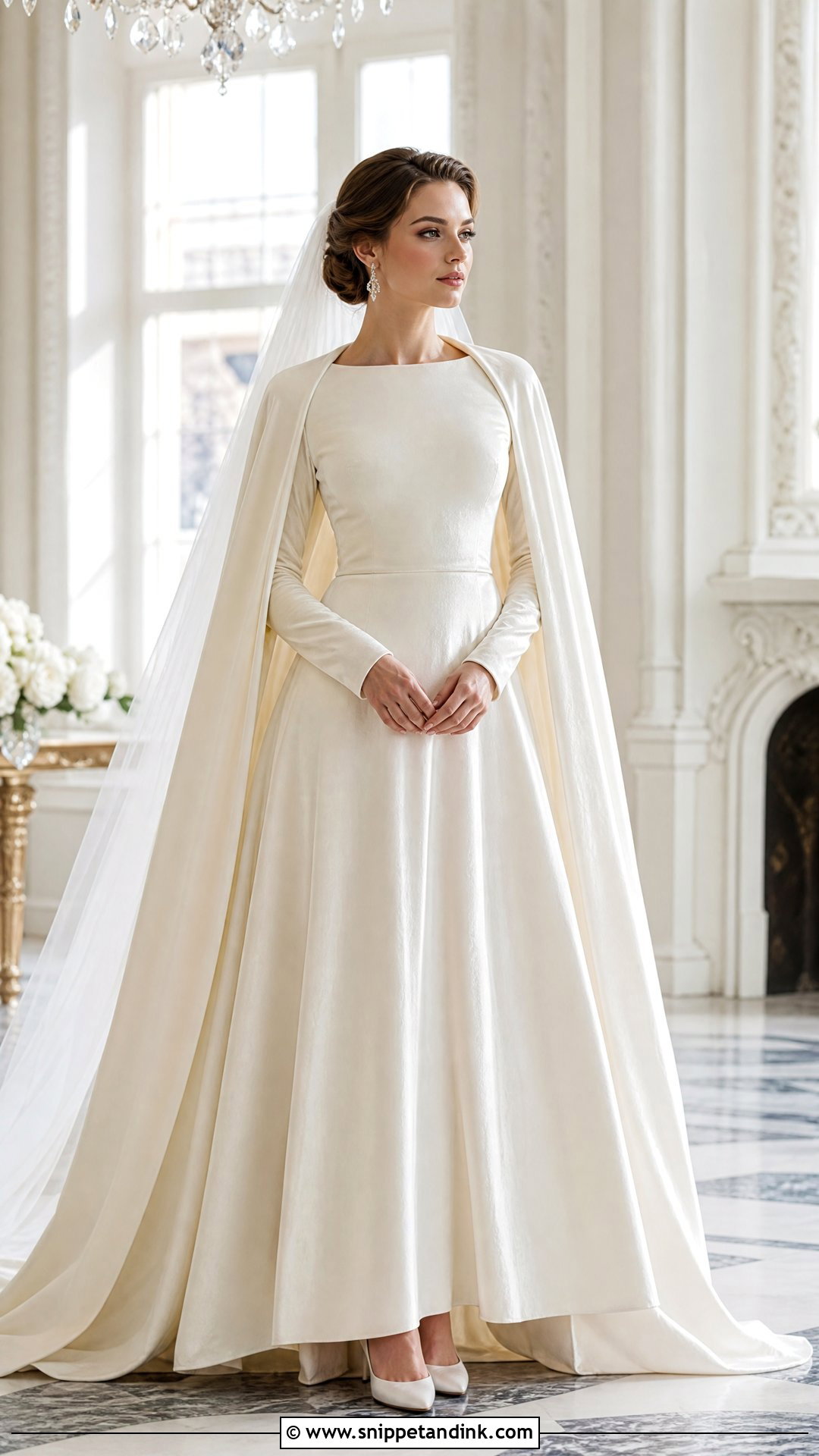
Velvet has a pile, so its color changes with the direction of the light. Look at any velvet dress from several angles and in a mirror before deciding. Choose a fitted bodice with long sleeves, a defined waist and an A-line or column skirt, keeping embellishment minimal because the fabric already reads heavy. Ivory is traditional; champagne or silver feels less expected. Closed-toe pumps, crystal earrings and a smooth tulle veil finish it, and a velvet ribbon around a low bun can quietly echo the dress. For outdoor photos, a tailored cape beats a bulky coat. Velvet also marks wherever it’s pressed, so transport it hanging, never folded.

20. Black And White Vintage Wedding Dress
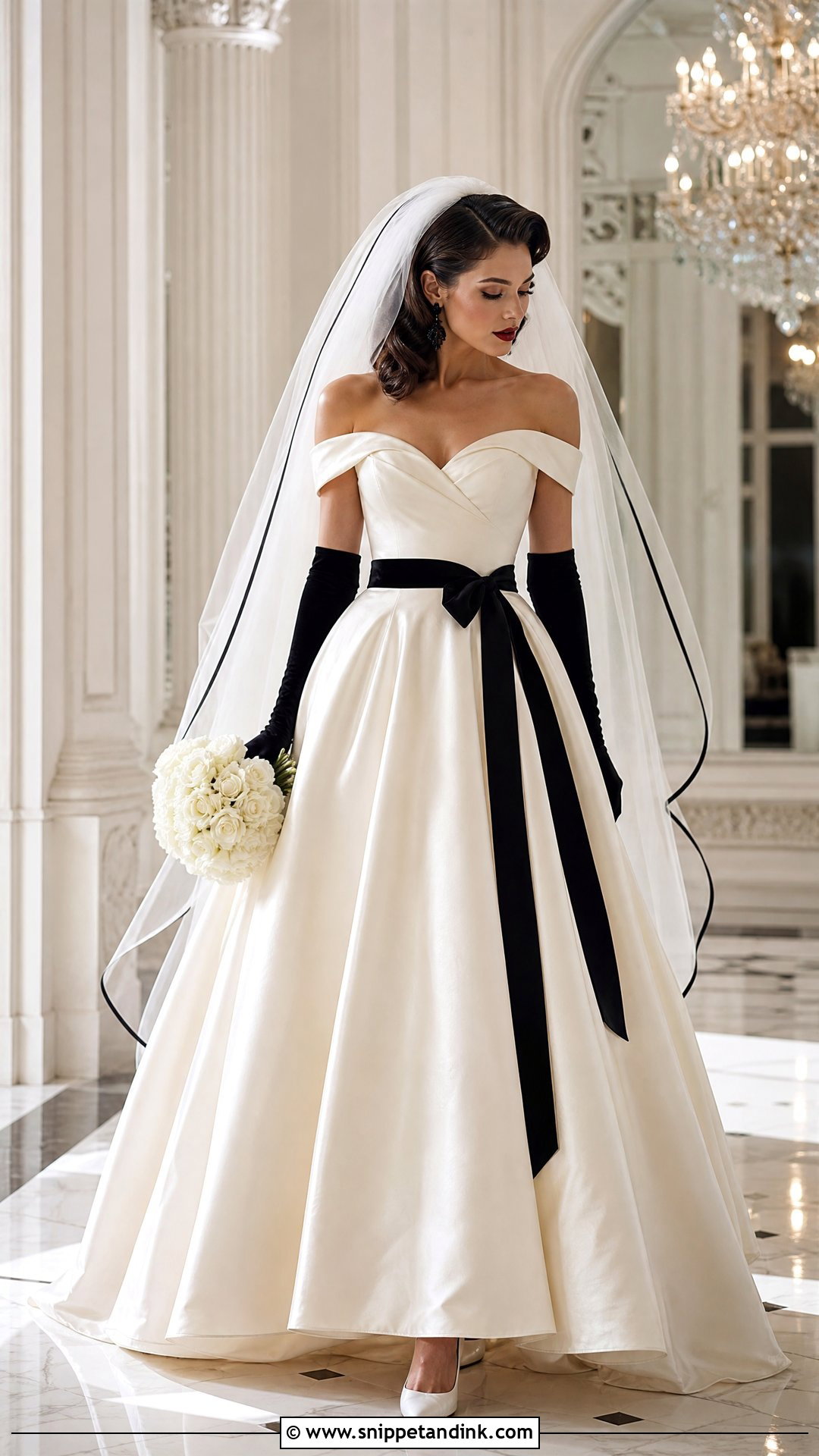
Keep the base light. That’s what lets a black-and-white dress still read as bridal. Start with an ivory satin or lace gown and bring in black through one or two details, such as a velvet waist ribbon, embroidered appliqués, opera gloves or a removable cape. The silhouette is up to you, from a column to a tea-length dress or a full ball gown. Ivory heels, black crystal earrings and a white veil edged in narrow black ribbon tie it together, with a red lip and polished waves. Carry white roses with dark foliage. Go past two or three contrast details and it starts to look like a costume instead of a wedding dress.
What Sequins, Velvet and Feathers Do by Midnight
Glam fabrics look their best in the first hour. How they wear after that depends on the material, and it’s worth knowing before you fall for one.
Beading and sequins
Beads snag tulle veils and lace sleeves, and loose threads tend to appear after a round of hugs. Have your seamstress go over the beadwork at the last fitting, knot any loose ends, and ask for a few spare beads and sequins in a small envelope for the emergency kit.
Satin and velvet
Satin creases across the lap during dinner, so schedule portraits before you sit down if you can. Velvet crushes wherever it’s pressed. A handheld steamer held a little away from the fabric revives it; an iron flattens the pile for good.
Feathers
Keep feathered pieces well away from candles and out of the rain, as damp feathers clump and droop. Removable feather wraps travel best in a box with tissue rather than squashed into a garment bag.
Briefing Hair and Makeup for a Screen-Era Dress
Bring a photo of the dress, not just the neckline, to your hair and makeup trial. Finger waves and pin curls need setting time, often an hour or more on the morning, so tell your stylist early. A red lip looks best tested in daylight and under a camera flash, because some reds turn orange or pink in photos. And if you’re wearing a beaded cap veil or Juliet cap, the hair has to be shaped to sit underneath it, so bring the headpiece to the trial.
Screen-Era Glamour Still Needs Modern Seams
Every dress here borrows from an earlier decade, but the ones that look best are built with modern construction underneath. You might lean toward Art Deco beadwork, fluid Old Hollywood satin, Edwardian lace or a cinched 1950s waist. Start with the era and silhouette that feel natural on your body, then weigh comfort, tailoring, fabric weight and how formal your venue is. Shoes, jewelry and veil should back up the dress, not argue with it. One or two historic details on a dress you can sit, eat and dance in will give you more glamour than a full costume ever could.
You'll Like These Ideas:





Leave a Reply