
A vintage wedding dress should feel like it belongs to a decade, not like it came from a costume rail. Below are twenty looks spanning beaded Art Deco gowns, 1930s satin columns, 1950s tea lengths and romantic Victorian lace, each styled with shoes, jewelry, veil and flowers. You don’t need an original antique to get there. A newly made gown can carry the period details with stronger seams, a full size range and a lining you can actually sweat in, and I often steer brides that way. A ballroom, a garden, a courthouse or a historic house can all take a vintage look; the trick is letting the venue decide how far into the era you go.
Original or Reproduction? What I Check on a Genuinely Old Dress
An original gown is a lovely idea and a real gamble. Before you fall for one, hold it up to daylight and handle it gently. Here’s the order I go through with a true vintage piece.
- Ignore the size label. Sizing has drifted over the decades, so measure bust, waist and hip flat and compare them with your own.
- Look at the underarms, neckline and hem for yellowing or tide marks. Some lift with specialist cleaning; old perspiration damage usually doesn’t.
- Gently stretch a hidden bit of silk. If it splits in straight lines, the silk is shattering, and it will keep splitting however carefully it’s worn.
- Check the metal hooks and zip for rust stains on the fabric around them.
- Turn the seams out. Generous seam allowances mean it can be let out; narrow, overlocked ones mean it can only be taken in.
If the dress fails two or more of those, I’d treat it as inspiration and have a new gown made from its shape. Plan more time for a reproduction than for an off-the-rack dress, since you’re starting from a pattern, not a sample.
1. 1920s Beaded Wedding Dress
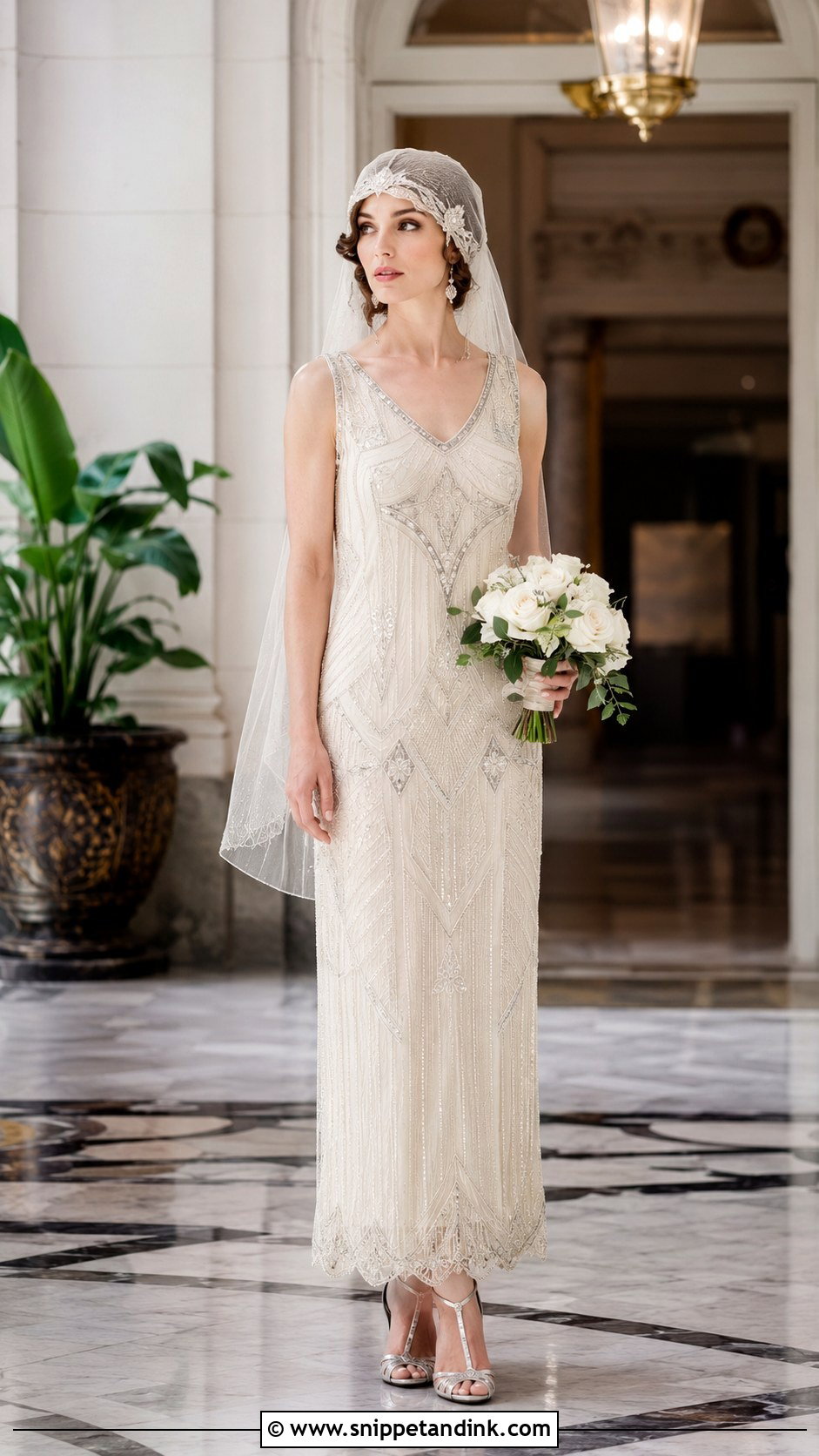
Geometric beading on a straight column is what says 1920s instantly, and a 1920s beaded wedding dress in ivory chiffon, silk or tulle does it better than any accessory. The shape drops from the shoulders without marking the waist, which makes it easy to walk and dance in. What you have to know is the weight. Heavy beading drags on fine chiffon, and on originals the thread often gives way, so I check the shoulder seams and the beads near the hem before anything else. Silver T-strap heels, crystal drops and a small satin clutch go with it, and a Juliet cap veil adds coverage without hiding the bodice. Soft waves in the hair, white roses with a little trailing greenery, and an evening ceremony suit it best.
2. 1930s Satin Wedding Dress
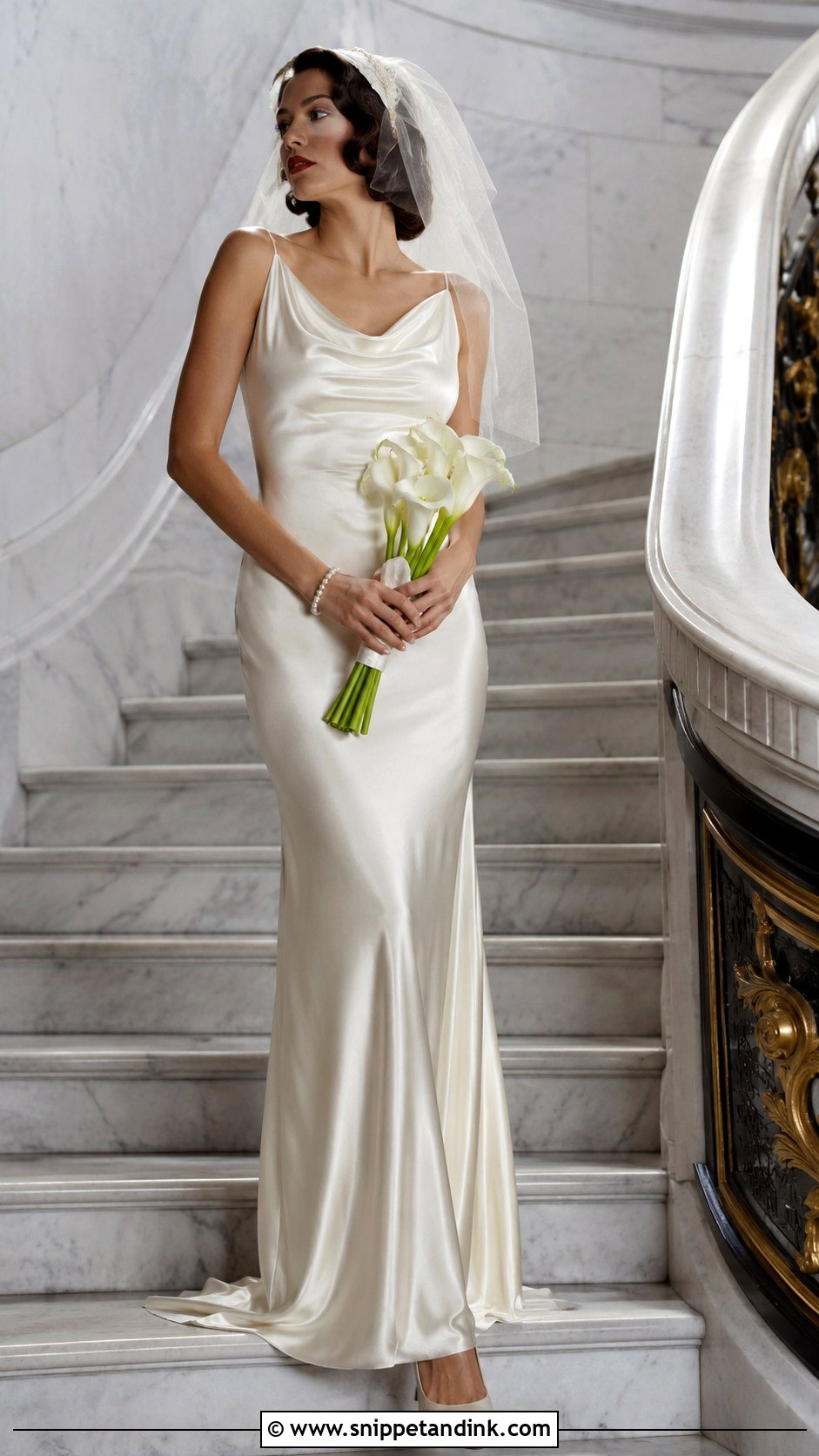
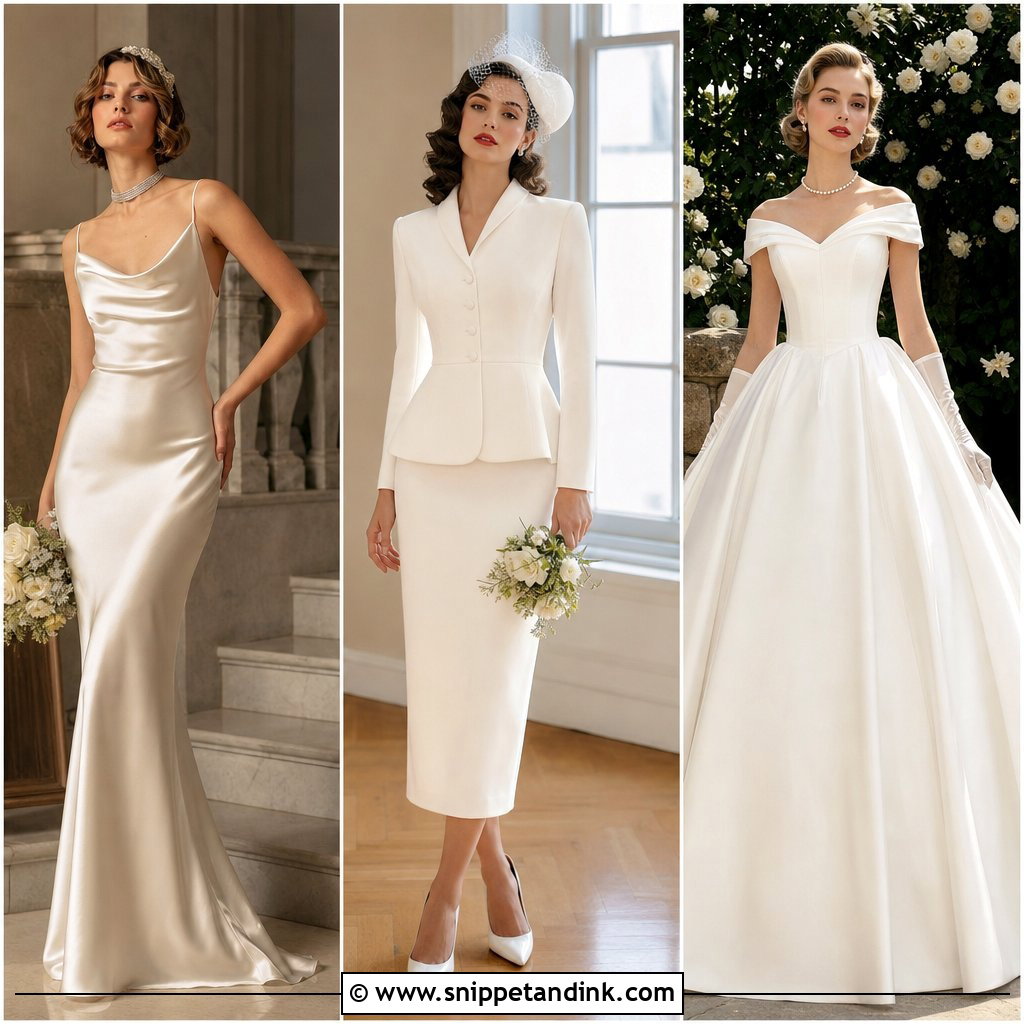
Bias-cut satin is the whole story of a 1930s gown. Cut diagonally across the grain, it follows the body and moves like liquid, and that’s also why it’s hard to fit: it stretches where you least want it to and shows anything underneath. A modest cowl, a fitted waist and a fluid floor-length skirt give the long Old Hollywood line. I’d add ivory peep-toe heels, a pearl bracelet, delicate drop earrings and a fingertip veil that leaves the back visible, then glossy side-parted waves and calla lilies. Budget for an alterations specialist who knows bias work, and wear smooth, skin-tone underwear to every fitting.
3. 1940s Long Sleeve Wedding Dress
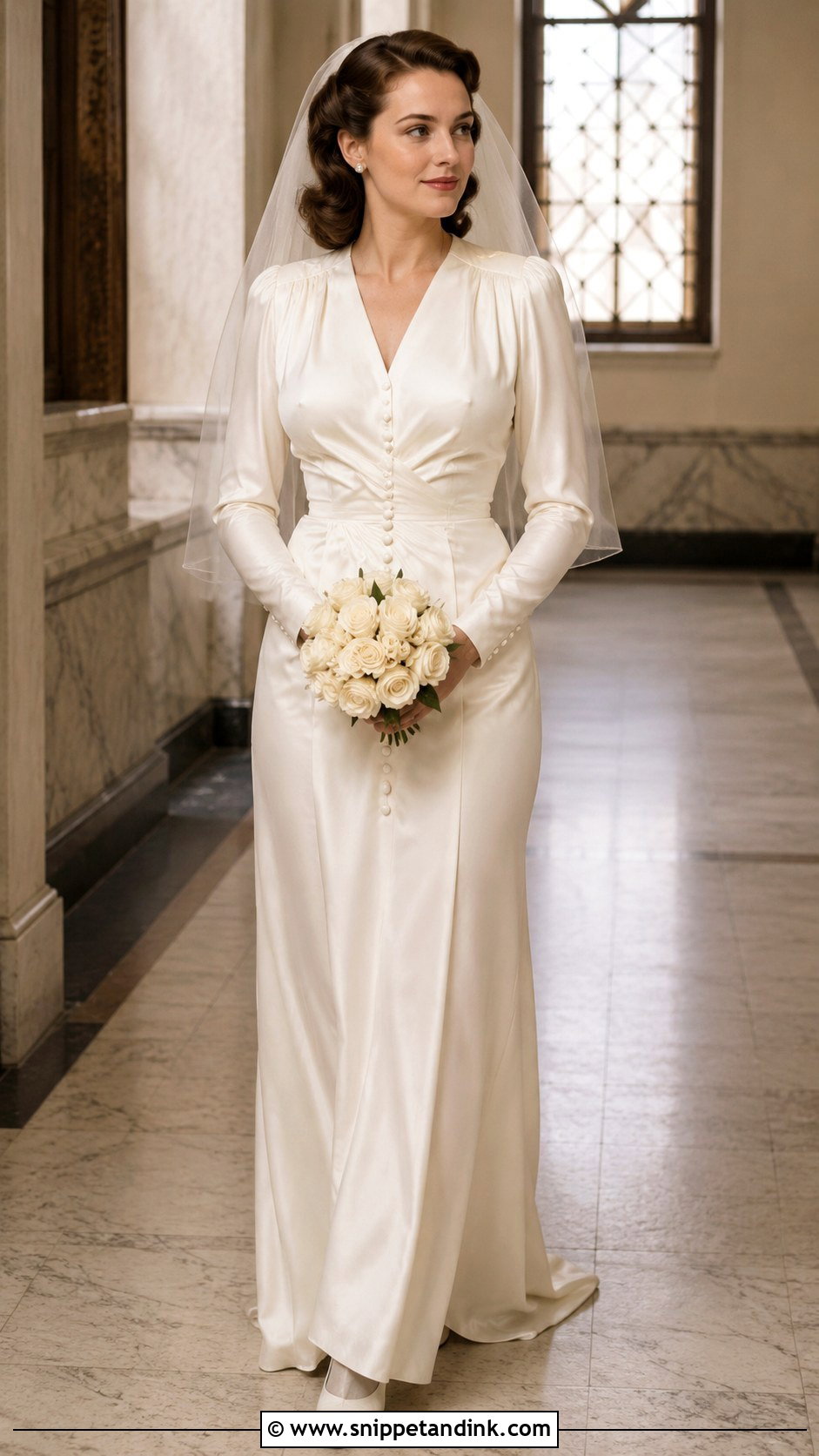
The 1940s gave us practical wedding dresses, and I mean that as praise. Silk crepe or lightweight satin with a softly structured bodice, a natural waist and a gently flared skirt is a dress you can wear all day without thinking about it. Gathered shoulders, covered buttons and a V-neck that lengthens the upper body carry the period. Closed-toe pumps, pearl studs, a shoulder-length veil and a small structured handbag suit a courthouse or a small reception especially well. For hair, a neat rolled updo or shoulder-length curls. Ivory roses with seasonal greenery add texture. Watch the sleeve head in fittings, because a fitted long sleeve set slightly too low stops you lifting your arms.
4. 1950s Tea Length Wedding Dress
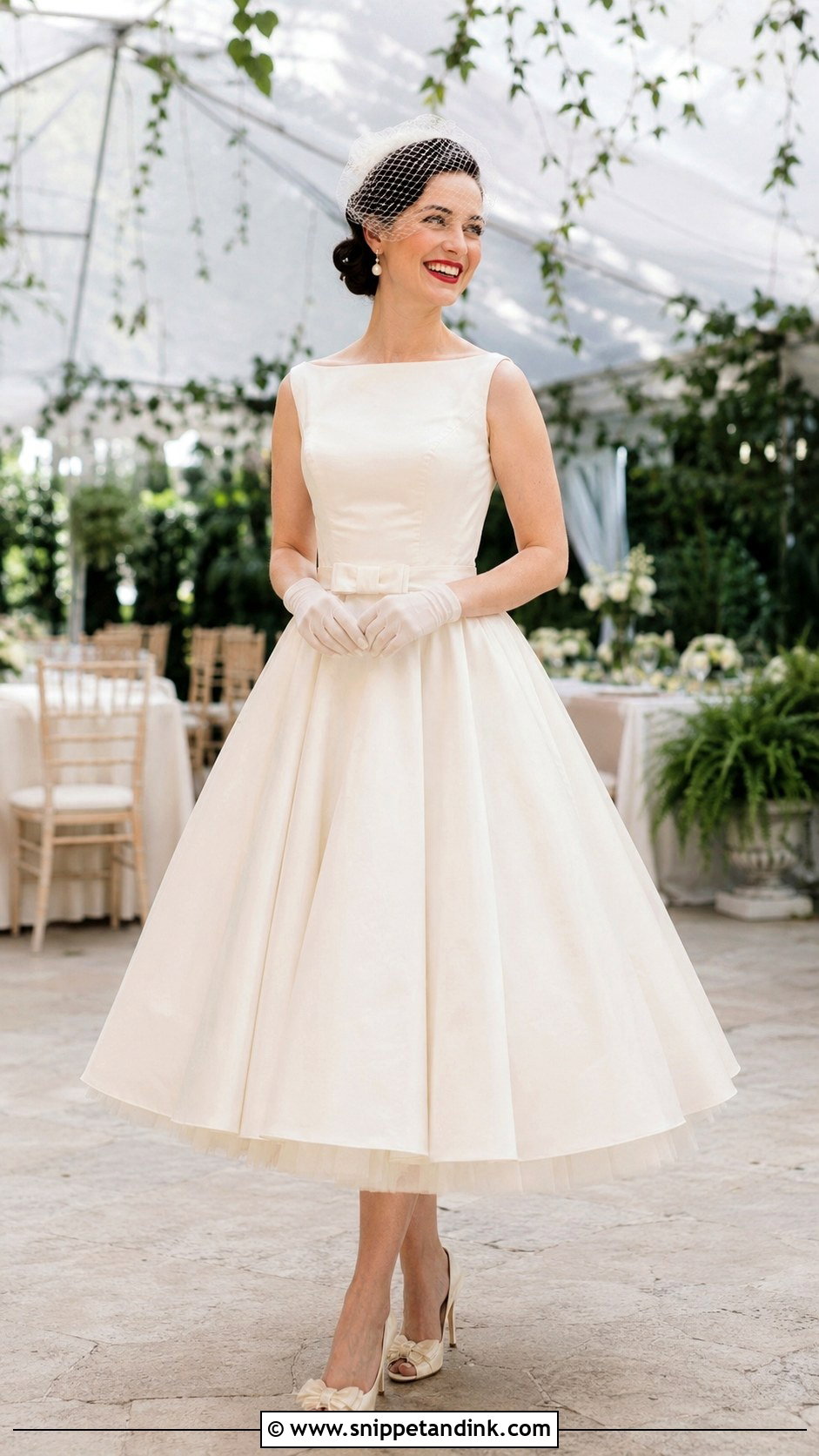
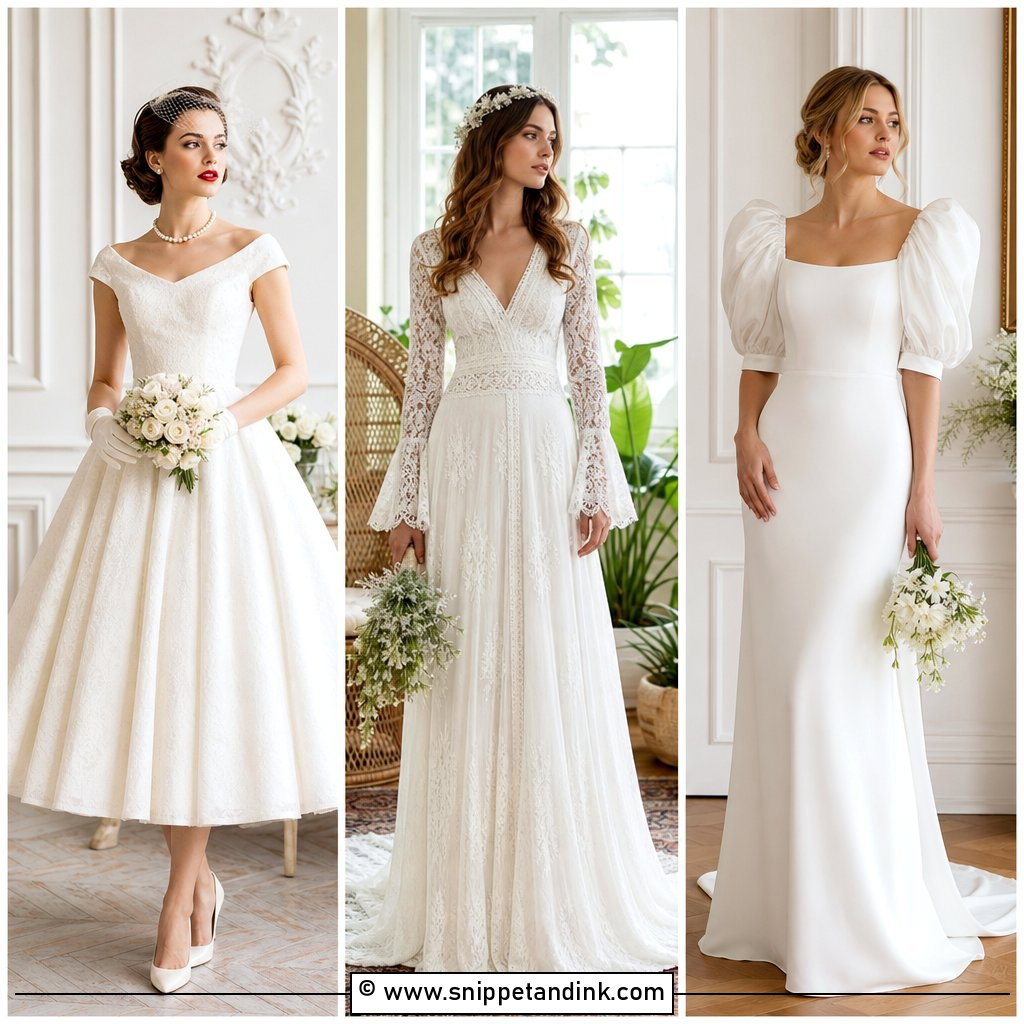
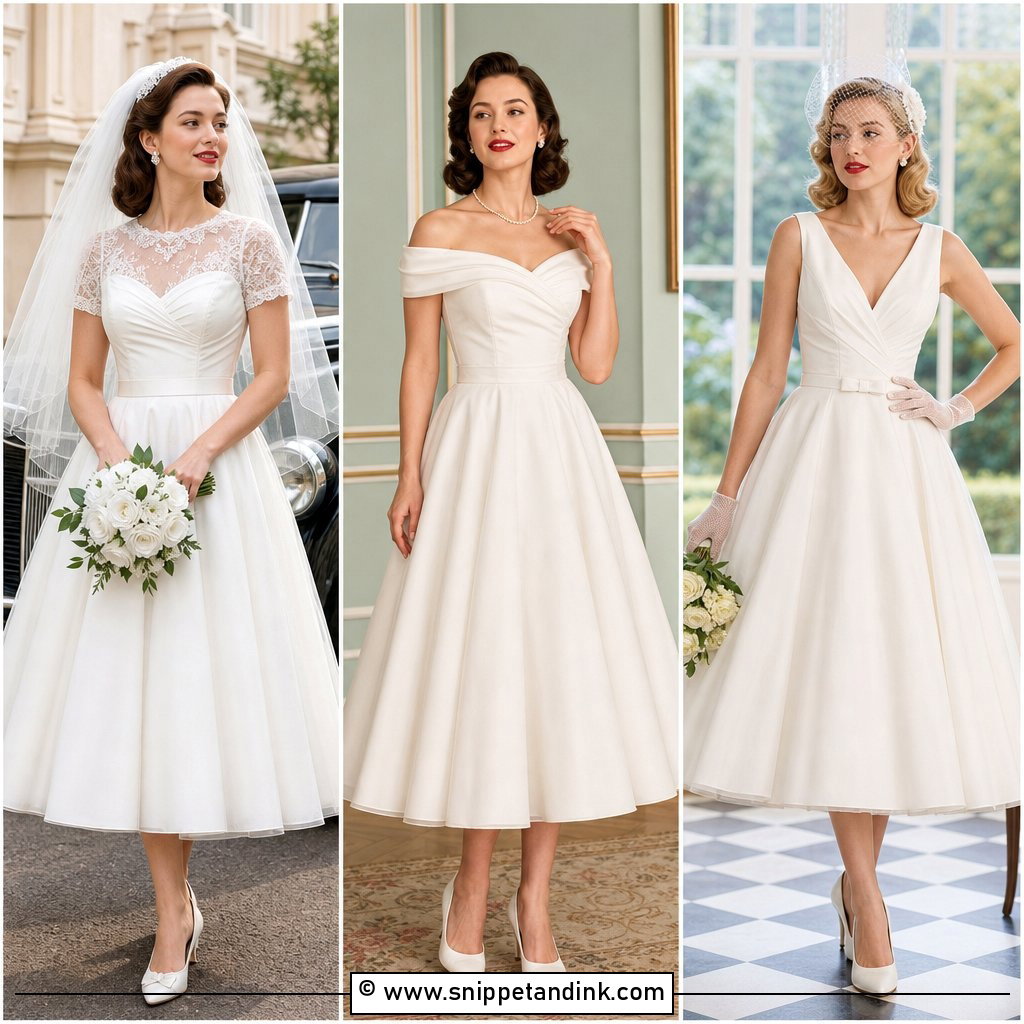
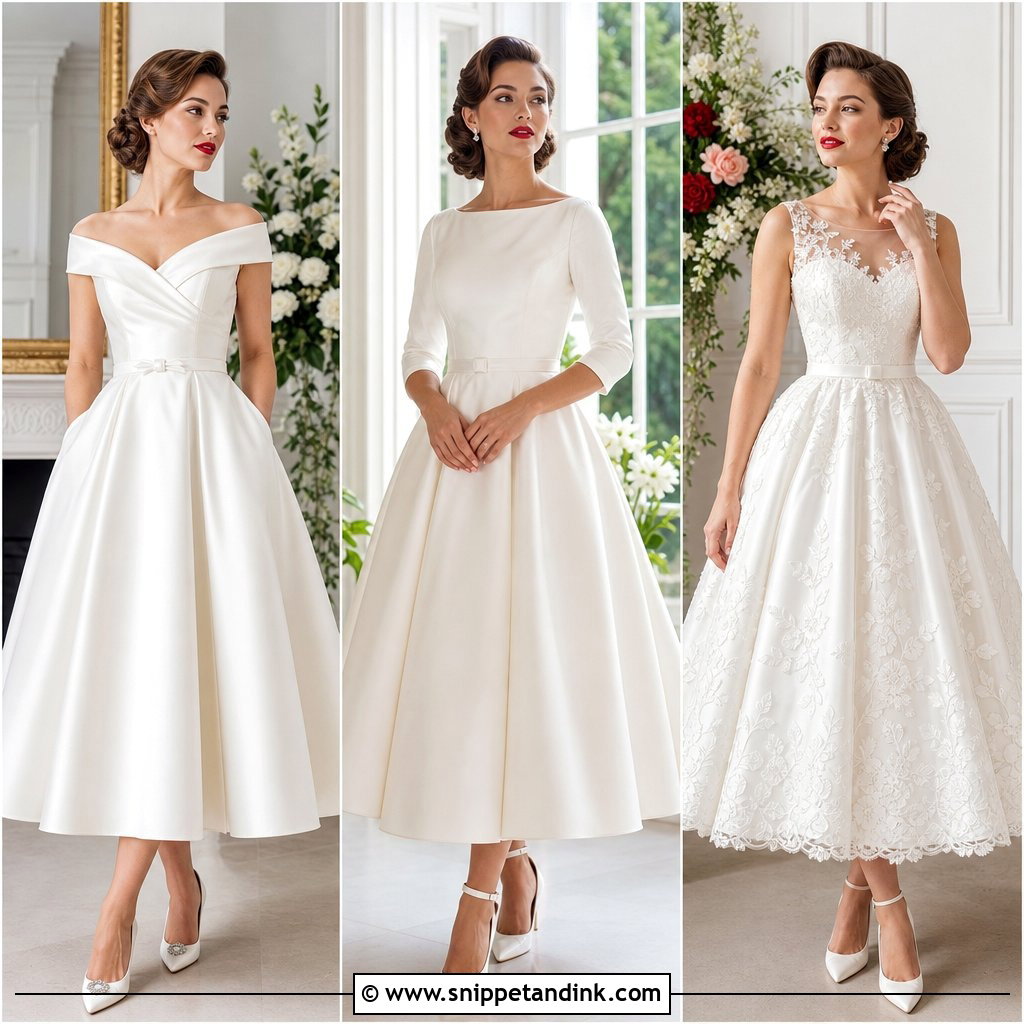
Want to dance all night without gathering up a train? A 1950s tea-length wedding dress is my answer. A fitted bodice with a bateau or sweetheart neckline, then a full skirt ending between knee and ankle, is still the most recognisable vintage bridal shape. Add a petticoat if you want lift, but choose soft tulle over stiff crinoline net, which scratches the legs and fights you when you sit. Your shoes are on show, so ivory pumps, bow-trimmed heels or embellished slingbacks are part of the design. Short gloves, pearl earrings and a birdcage veil finish it; a waist-length veil is the more traditional route. Soft curls and a rounded bouquet of roses or peonies balance the skirt.
5. 1950s Lace Ball Gown Wedding Dress
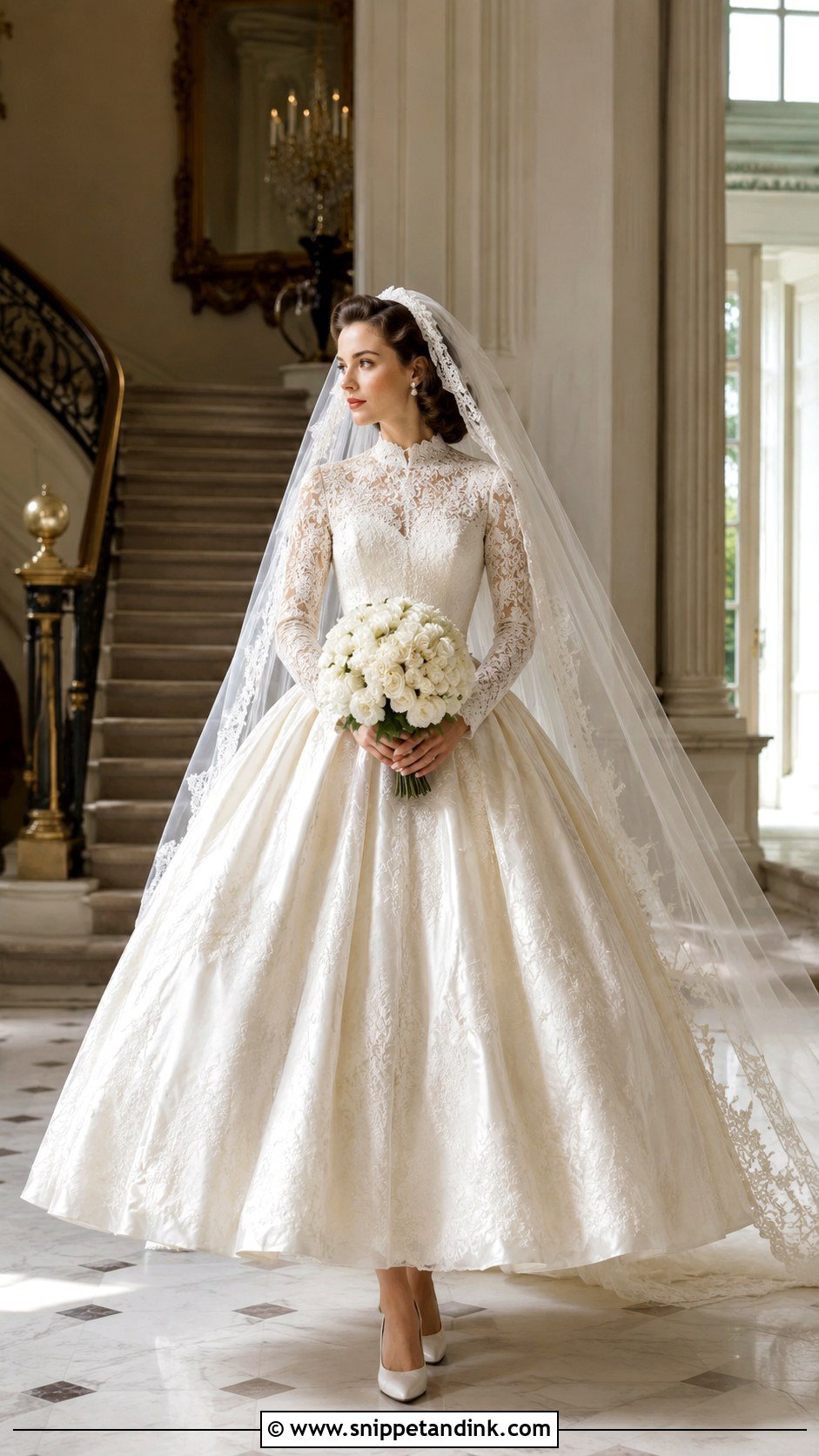
A lace bodice with long illusion sleeves over a full satin or taffeta skirt is about as regal as bridal dressing gets. A high or softly rounded neckline frames the face, and the lace gives the shoulders dimension. Low satin pumps, pearl drops and a cathedral veil edged in matching lace complete it, along with a neat bunch of white roses and lily of the valley. The underskirt builds the volume, and in summer I’d ask for lighter layers, because a full taffeta skirt over stiff net gets very warm in a marquee. Keep everything else quiet. This is a dress for a formal ballroom, a historic estate or a traditional ceremony with a long aisle.
6. 1960s Mini Wedding Dress
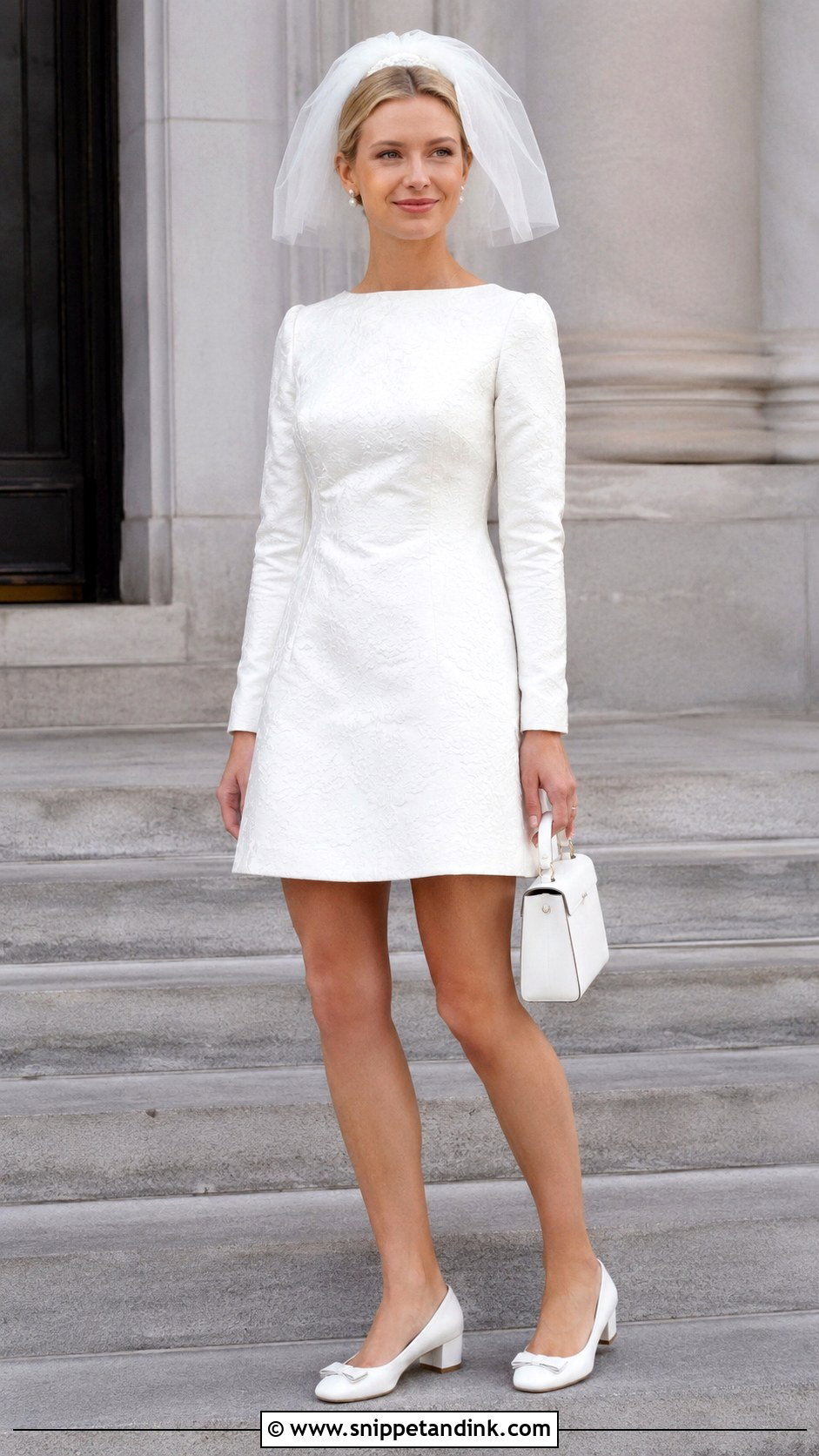
A 1960s mini is fun, and the only thing I’m strict about is the seated hem. Stand-up length and sit-down length are very different on an A-line or shift dress, so sit in it at the fitting before the hem is set. A bateau neckline and long sleeves keep it bridal; textured fabric, floral jacquard or guipure lace give period interest without decoration. Low block heels, slingbacks or neat flats suit the proportions better than very tall shoes. Pearl studs, a small structured bag and a short bubble or birdcage veil finish it, with a sleek bob, flipped ends or a smooth half-up style. Daisies, white tulips or roses in a compact bouquet. It suits a city wedding or a courthouse with a lively reception afterwards.
7. 1960s Empire Waist Wedding Dress
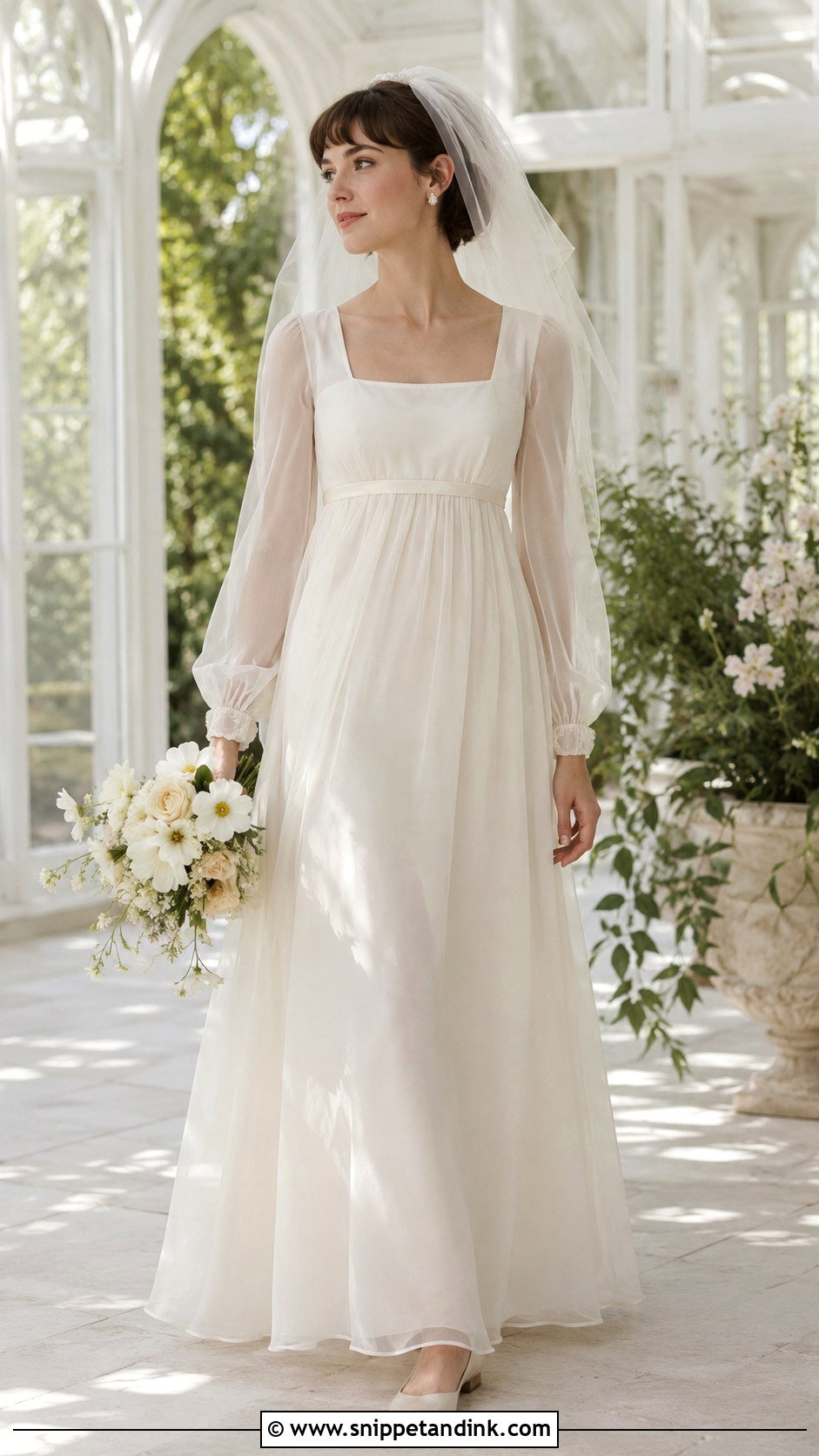
The empire waist sits just under the bust and lets the skirt fall loosely, which is why so many brides who don’t want anything fitted over the stomach or hips gravitate to it. Chiffon, silk or fine crepe with a square neckline and long delicate sleeves gives the 1960s version. A narrow velvet ribbon under the bust adds a little contrast, and pearl earrings keep it classic. Satin flats or low pumps, a light chapel veil and a loose bouquet of white cosmos, roses and greenery belong in a garden. Keep a little lift at the crown with smooth lengths; anything bigger starts to look theatrical. Chiffon empire skirts catch the wind, so a hidden weighted hem tape helps outdoors.
8. 1970s Bell Sleeve Wedding Dress
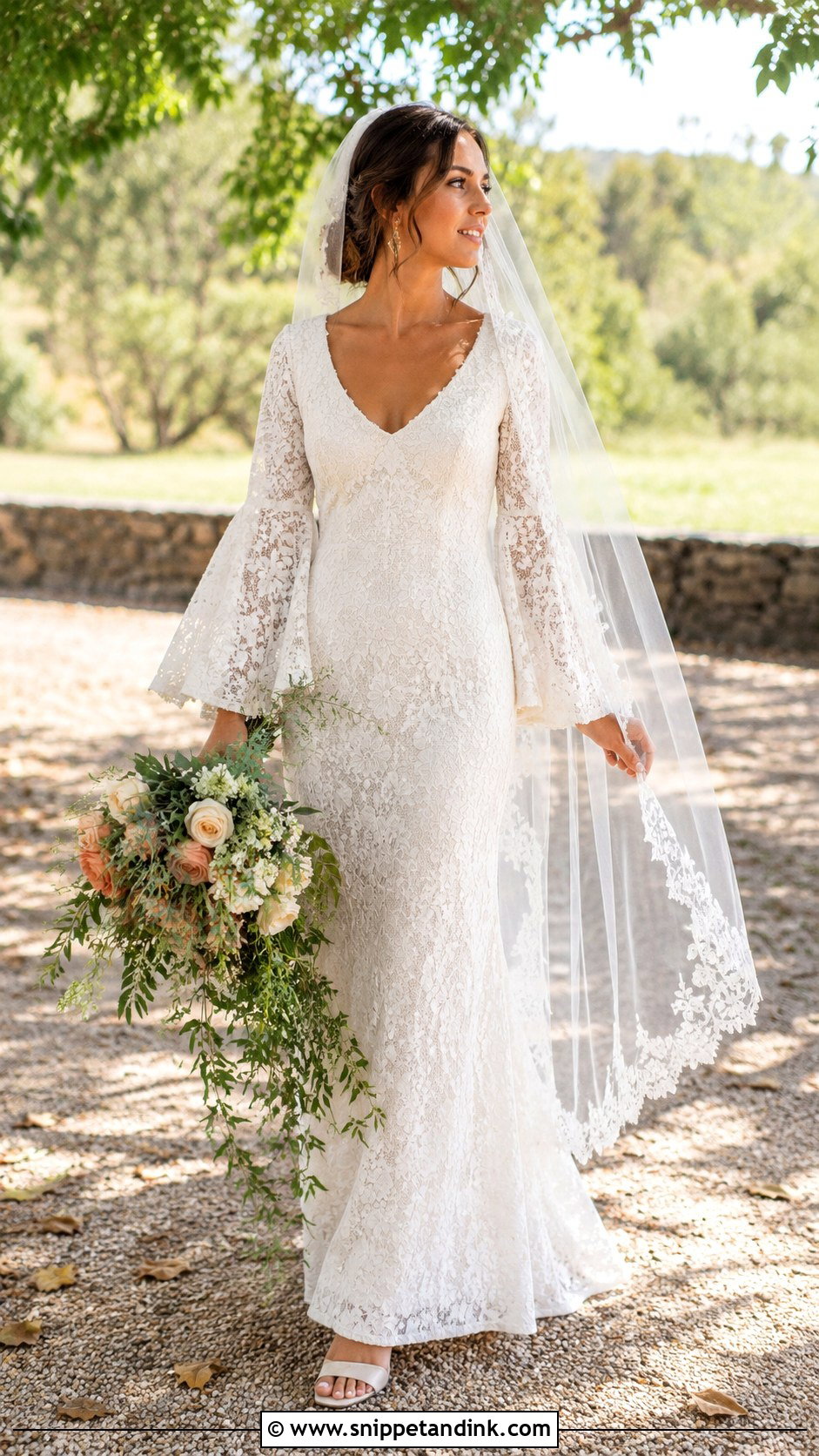
Relaxed and romantic, a 1970s bell sleeve wedding dress is the most comfortable vintage silhouette on this list. A softly fitted lace gown with a V-neckline, a defined waist and long sleeves that flare below the elbow is the core shape, and cotton lace, crochet-style panels or floral embroidery give it texture. One practical note: wide bell sleeves drag through cake, candle flames and the bouquet ribbons, so I’d have them finish just past the wrist. Ivory platform sandals or block heels under a slightly raised hem, small gold earrings, a simple pendant and a floral comb suit it. A sheer chapel veil or a narrow lace-edged one is lighter than a full veil. Garden roses with chamomile and trailing greenery, and hair in soft waves or a loose low bun, keep it from looking themed.
9. Victorian High Neck Wedding Dress
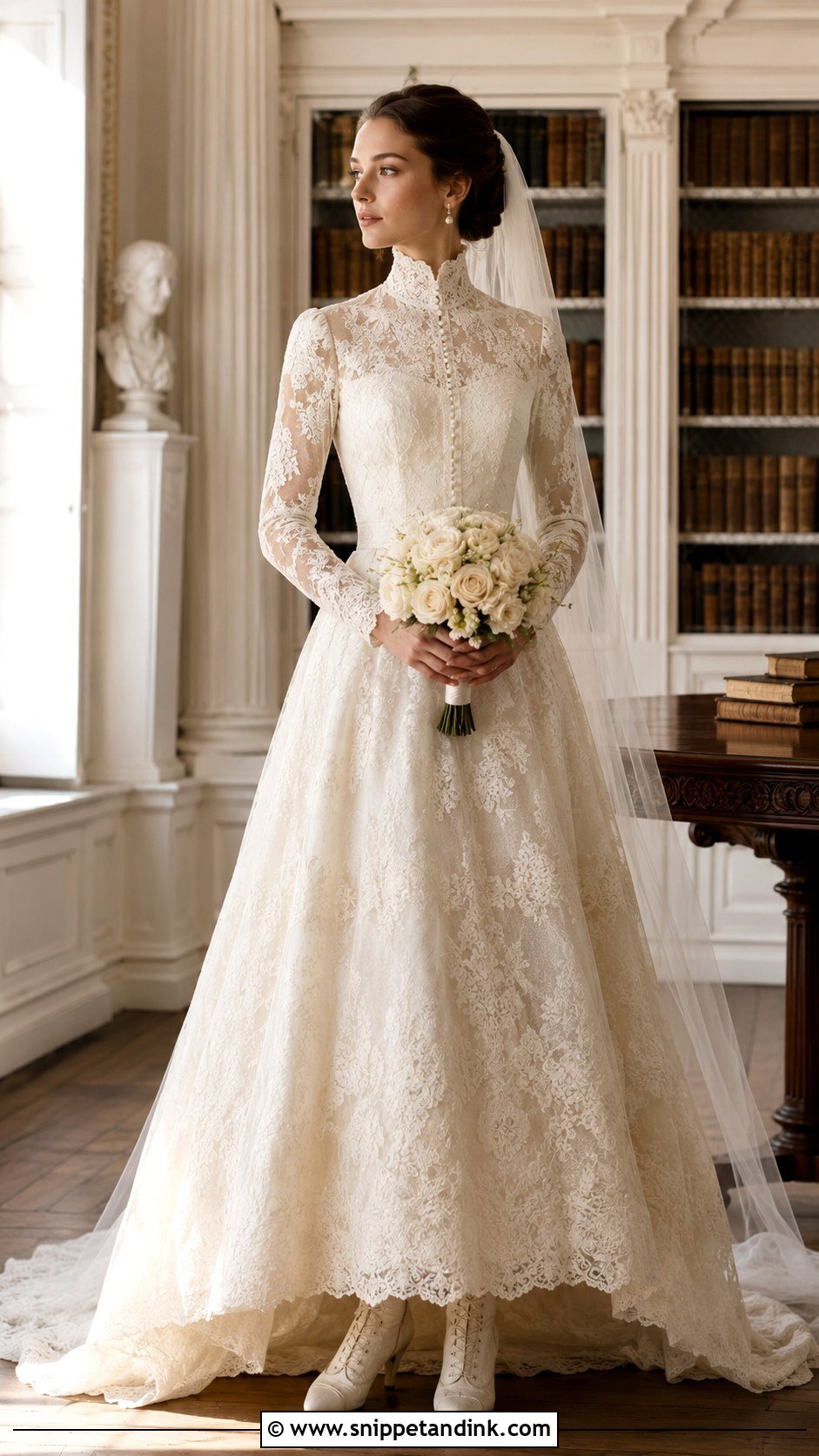
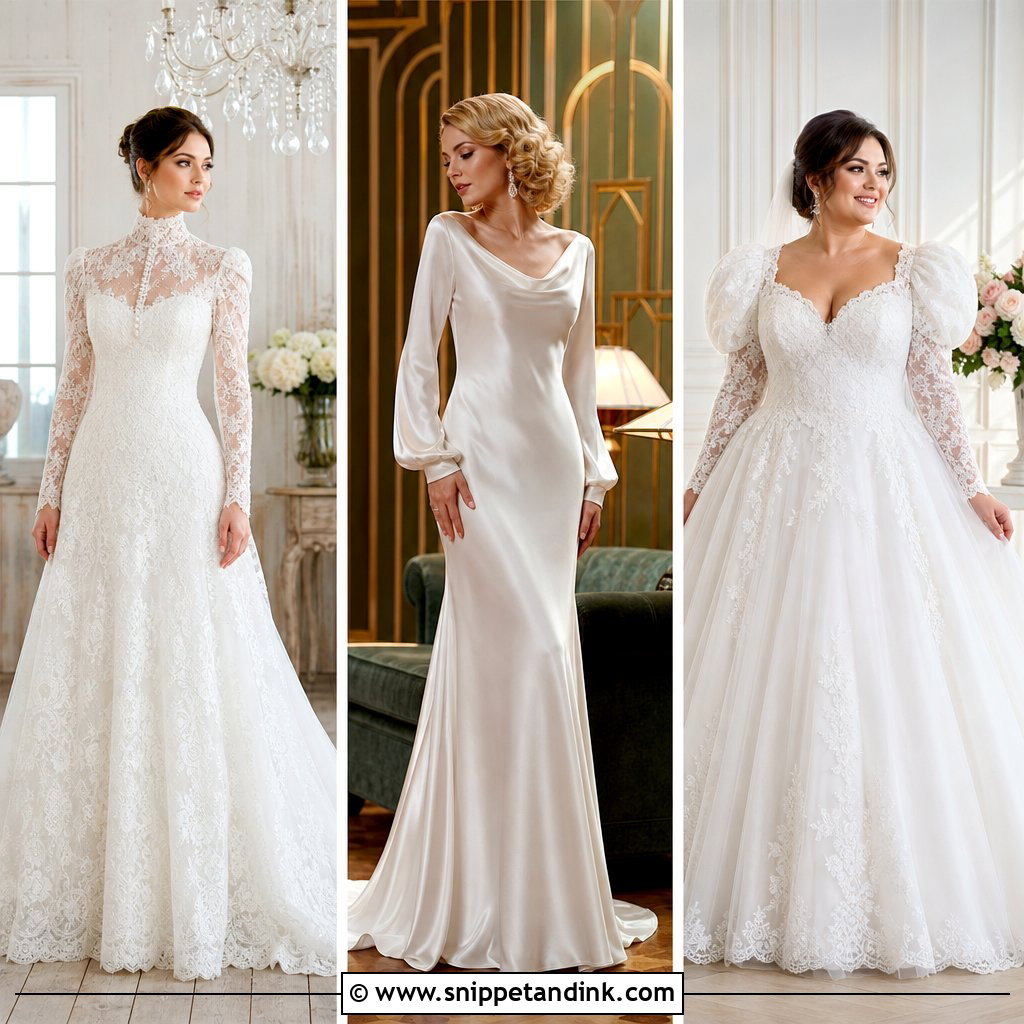
A raised collar, covered buttons and long sleeves on a fitted lace bodice give real coverage and a great deal of detail. Pair it with an A-line or softly full skirt. Comfort is the risk here, so I ask about two things: a breathable lining, and sleeves cut with enough room at the elbow to bend. Try turning your head fully at the fitting; a high collar that’s a touch too tight is miserable after a few hours. Lace-up ankle boots or pointed ivory pumps, an antique-style brooch and small pearl earrings complete it. Keep the veil long and plain so the bodice isn’t competing with a lace edge, and wear a low bun to show the neckline. Cream roses with sweet peas suit a historic house, a library or a conservatory.
10. Edwardian Lace Wedding Dress
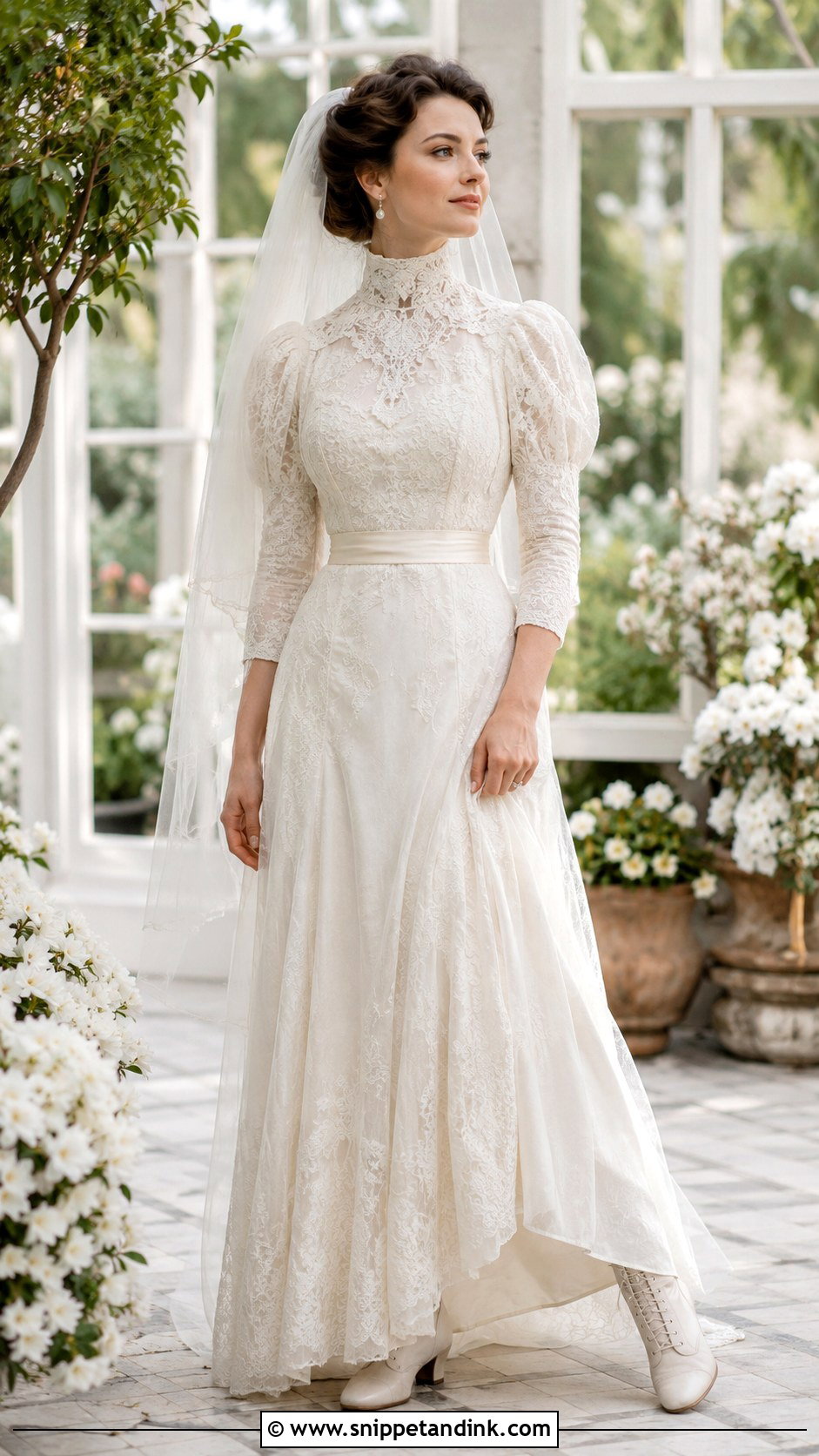
Fine lace and soft shaping give an Edwardian wedding dress its light, refined feel. A high neckline, slightly puffed sleeves, a fitted waist and a flowing skirt make the shape; pintucks, embroidered panels and small covered buttons supply the period detail without weight. A removable satin sash lets you bring in a hint of champagne or pale blue. I’d style it with low lace-up boots, pearl drops and a delicate chapel veil pinned beneath a loose updo, plus white garden roses and wispy seasonal stems. Hold back on antiques: one heirloom brooch or hairpin is plenty, and stacking several is what tips the outfit into fancy dress.
11. Regency Empire Waist Wedding Dress
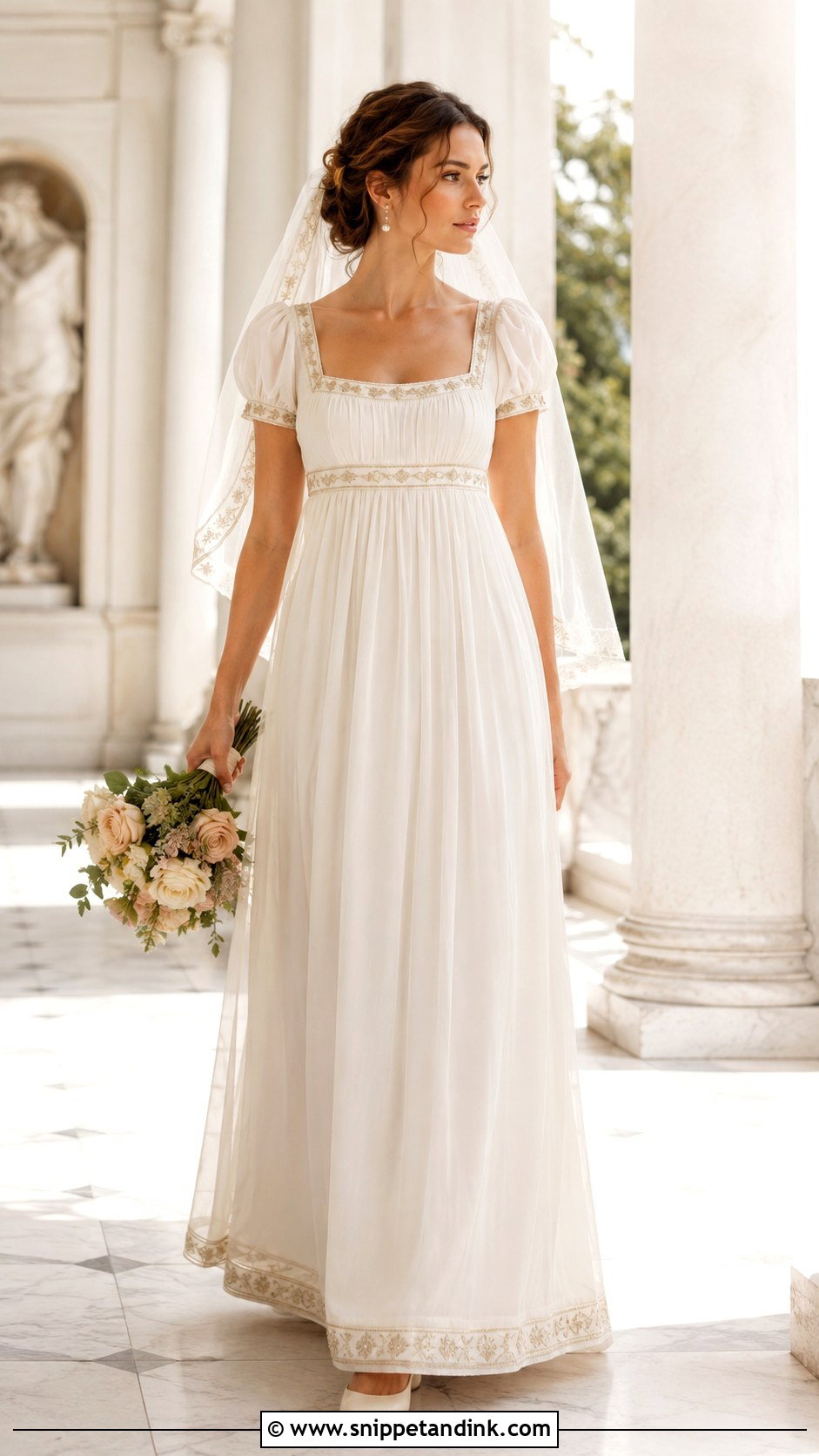
Long and narrow with almost no structure, a Regency empire-waist wedding dress gathers silk chiffon or crepe just under the bust and lets it fall straight to the floor. A square neckline, short puff sleeves and fine embroidered trim set the period, and sheer elbow sleeves or a light matching capelet add coverage. Pointed flats or low satin heels and fine pearl or crystal earrings keep the line long. If you want a ribbon at the waist, match it closely to the gown. A sheer fingertip veil, softly pinned curls and loose garden roses finish it. Because there’s so little structure, bra choice decides how this dress looks; I’d plan for a high-waisted, low-back option and bring it to every fitting. Spring, a conservatory or an outdoor ceremony suit it best.
12. Old Hollywood Cowl Neck Wedding Dress
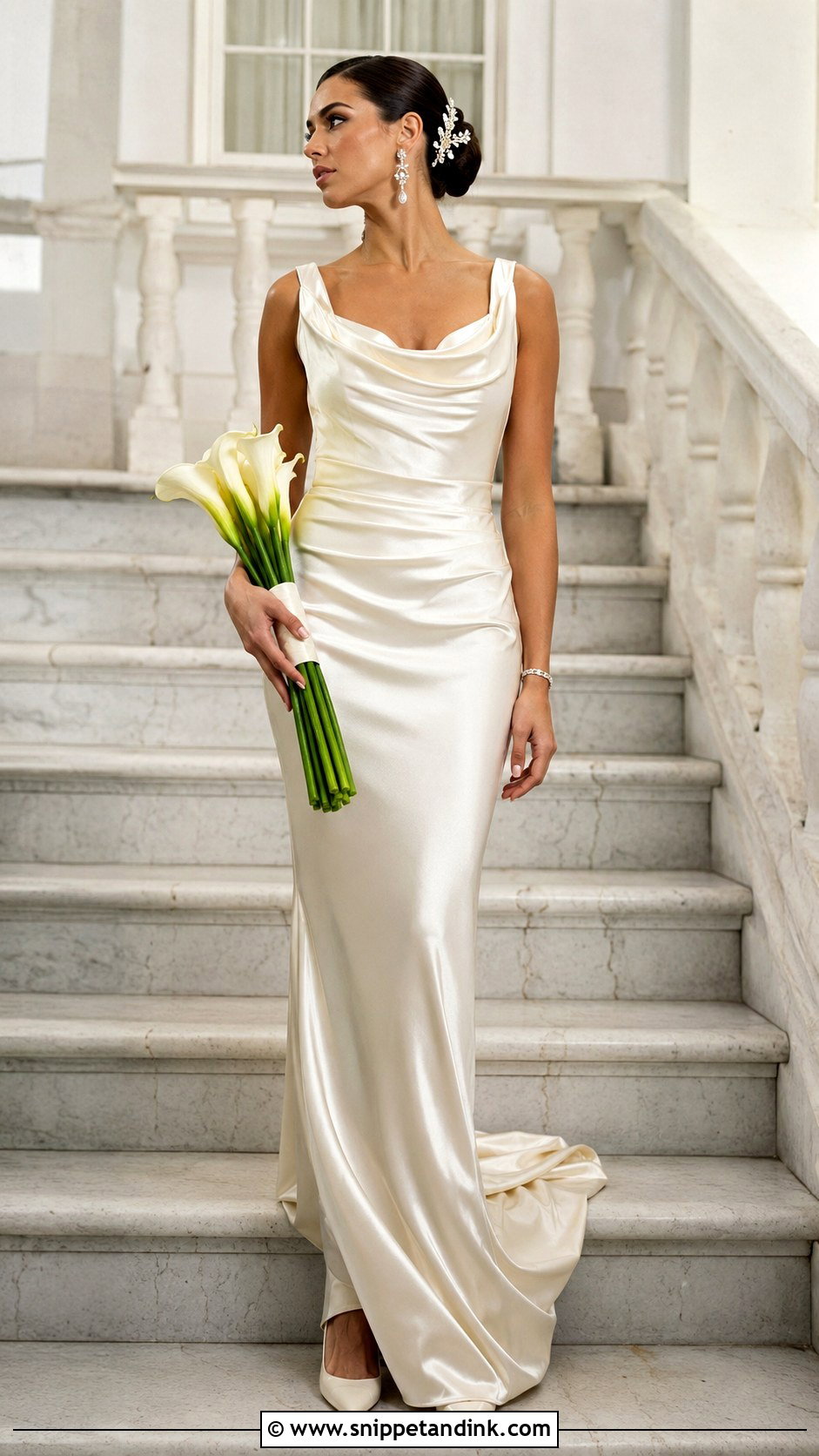
Satin and sculpted drape do all the work in an Old Hollywood cowl neck. A floor-length gown with slim straps or covered shoulders, a soft cowl and a fitted skirt widening near the hem is the classic shape, with a long-sleeve satin bolero or sheer cape for ceremony coverage. Crystal earrings, a slim bracelet and pointed ivory heels are enough. A small metallic clutch is handy at the reception, as long as it doesn’t compete with the shine of the dress. Choose a plain cathedral veil or skip it for a jeweled comb, then add side-swept waves and long-stemmed calla lilies. I’d book an experienced tailor for this one. Satin shows every pull line as clearly as it shows the drape, and a cowl needs tacking so it doesn’t fall open when you lean.
13. Art Deco Fringe Wedding Dress
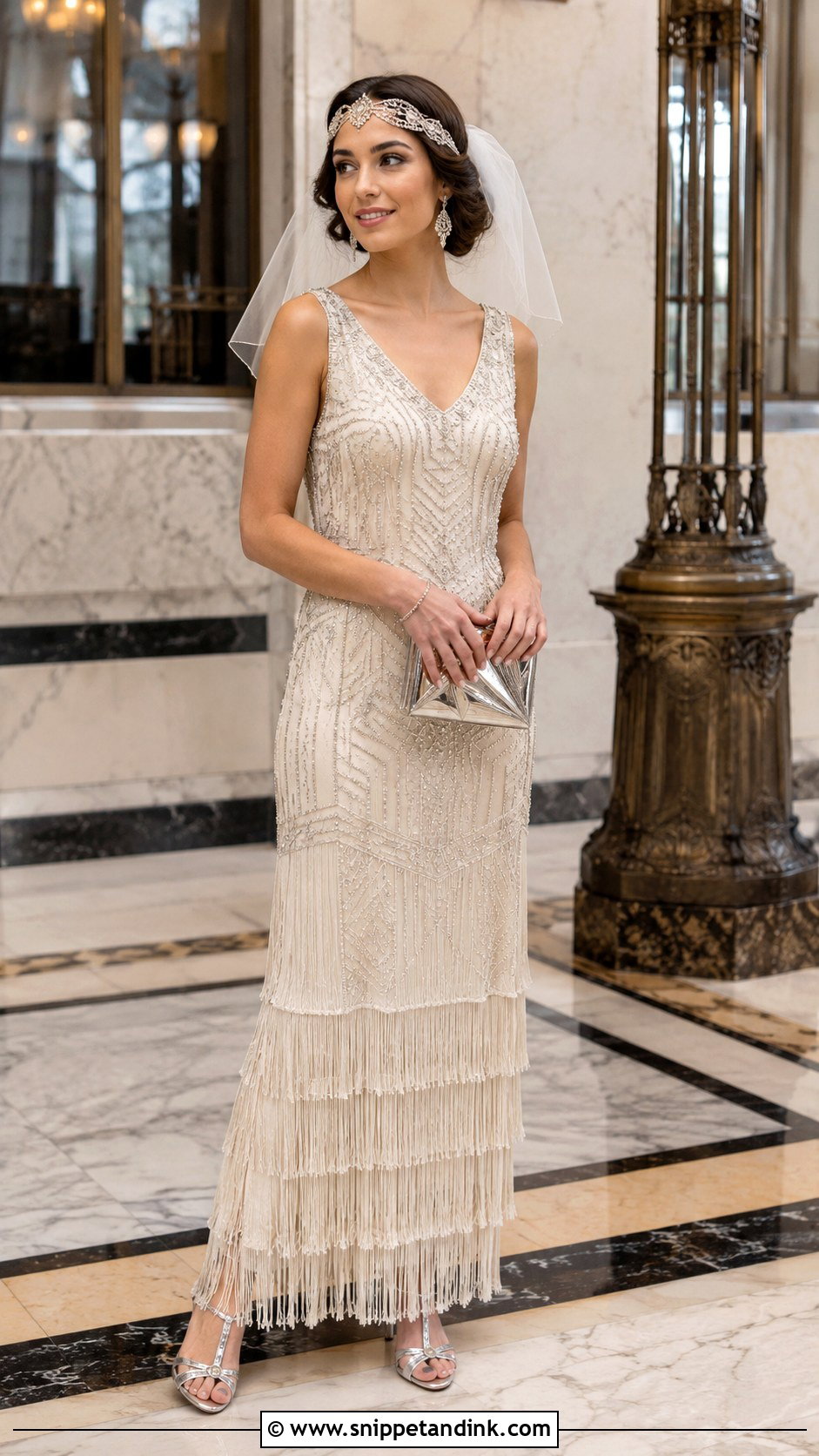
Fringe is the most fun fabric on a dance floor and the most fragile. A column or gently fitted gown with geometric beads, tiered fringe or linear sequins gives the Art Deco feel; keeping the heaviest embellishment at the shoulders and hem leaves the centre streamlined. Silver T-strap heels, crystal earrings and a slim metallic headband suit it, with a short tulle veil attached at the back so the beading stays the focus. A small bunch of white anemones or roses and a structured silver clutch finish it. Hair should be smooth with a finger-wave detail near the face. Fringe tangles and sheds a few beads over a night of dancing, so I ask the maker for spare beads and pack a few safety pins. Suggest the 1920s through shape and finish; you don’t need every accessory from the decade.
14. Basque Waist Wedding Dress
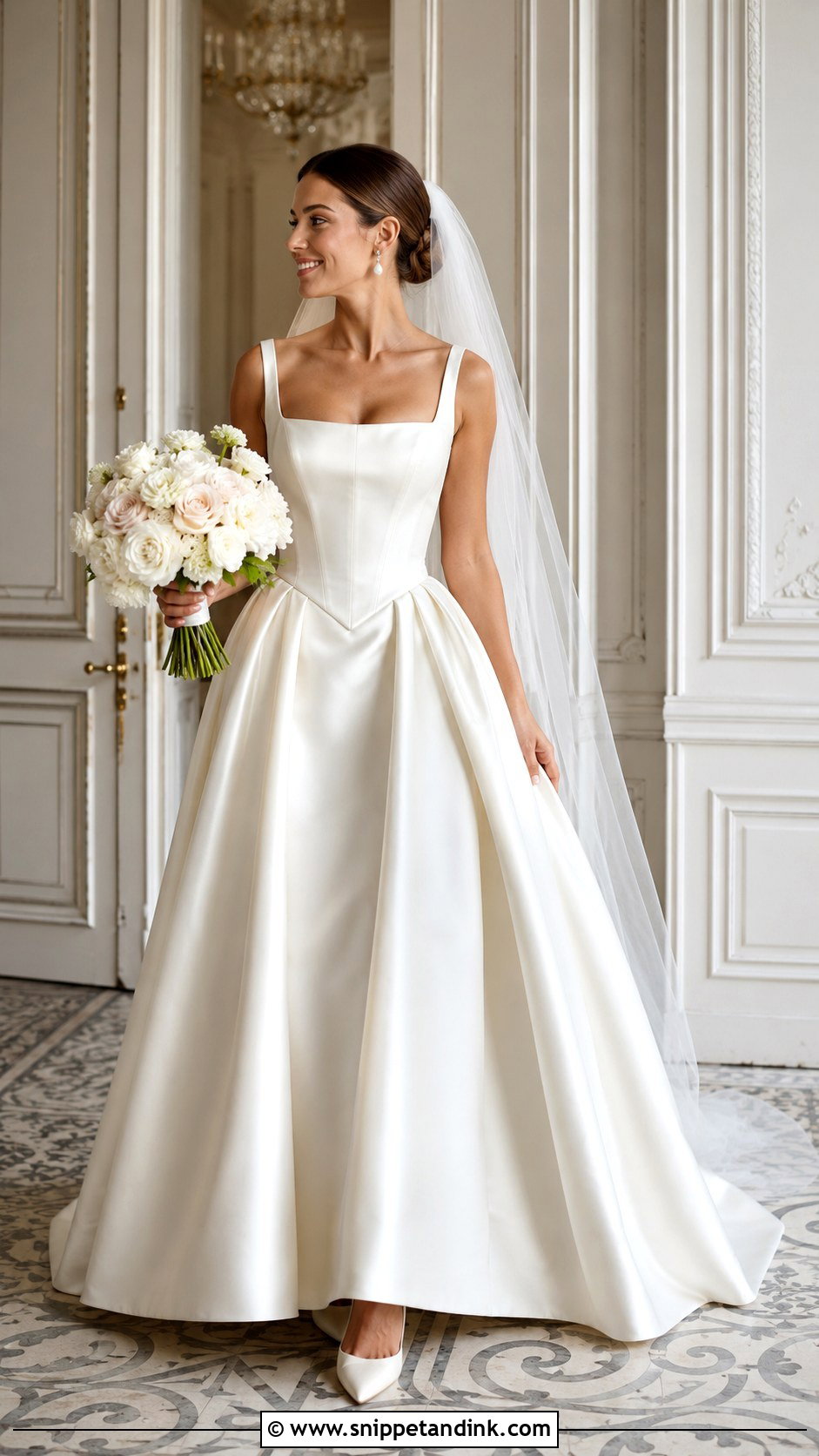
The basque waist dips into a soft V below the natural waist, and that point is what makes the waist look small and the skirt fall cleanly. Satin, brocade or lace sets how formal the gown feels. A square neckline with off-the-shoulder straps balances the point, and internal boning holds it in place. Pearl earrings, pointed satin pumps and a long plain veil are enough; a necklace clutters the neckline. A structured bouquet of roses, ranunculus and greenery echoes the shape. If you don’t want ball gown volume, an A-line skirt works with the same bodice. The V has to sit exactly on your centre line, so I always check it seated as well as standing, since a basque that pinches when you sit is a long dinner.
15. Drop Waist Wedding Dress
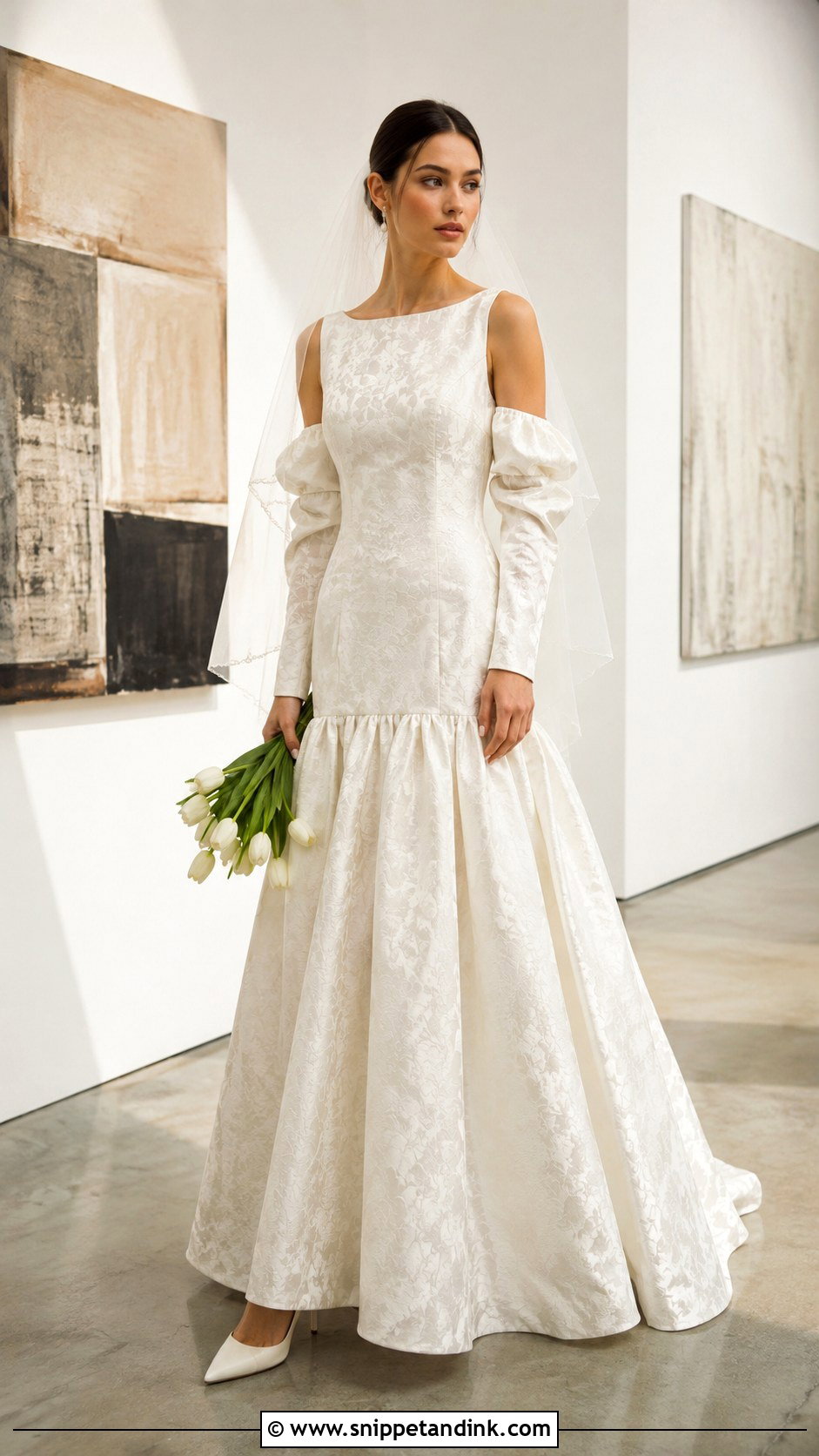
A drop waist lengthens the body and gives an unmistakably vintage finish. The fitted bodice runs past the natural waist before opening into an A-line, flared or softly gathered skirt. Jacquard, satin or crepe gives clean structure; floral lace is softer. A bateau neckline with removable off-the-shoulder sleeves gives you two versions, one for the ceremony and one for the reception. Sleek ivory pumps, pearl drops, a simple fingertip veil and a narrow bouquet of white tulips or calla lilies keep the vertical line going. Long torsos suit this shape naturally. If yours is shorter, ask the maker to raise the drop seam a few centimetres, which adapts it far better than squeezing into standard placement. And skip a thick belt; it cancels the whole point of the dress.
16. Bateau Neck Satin Wedding Dress
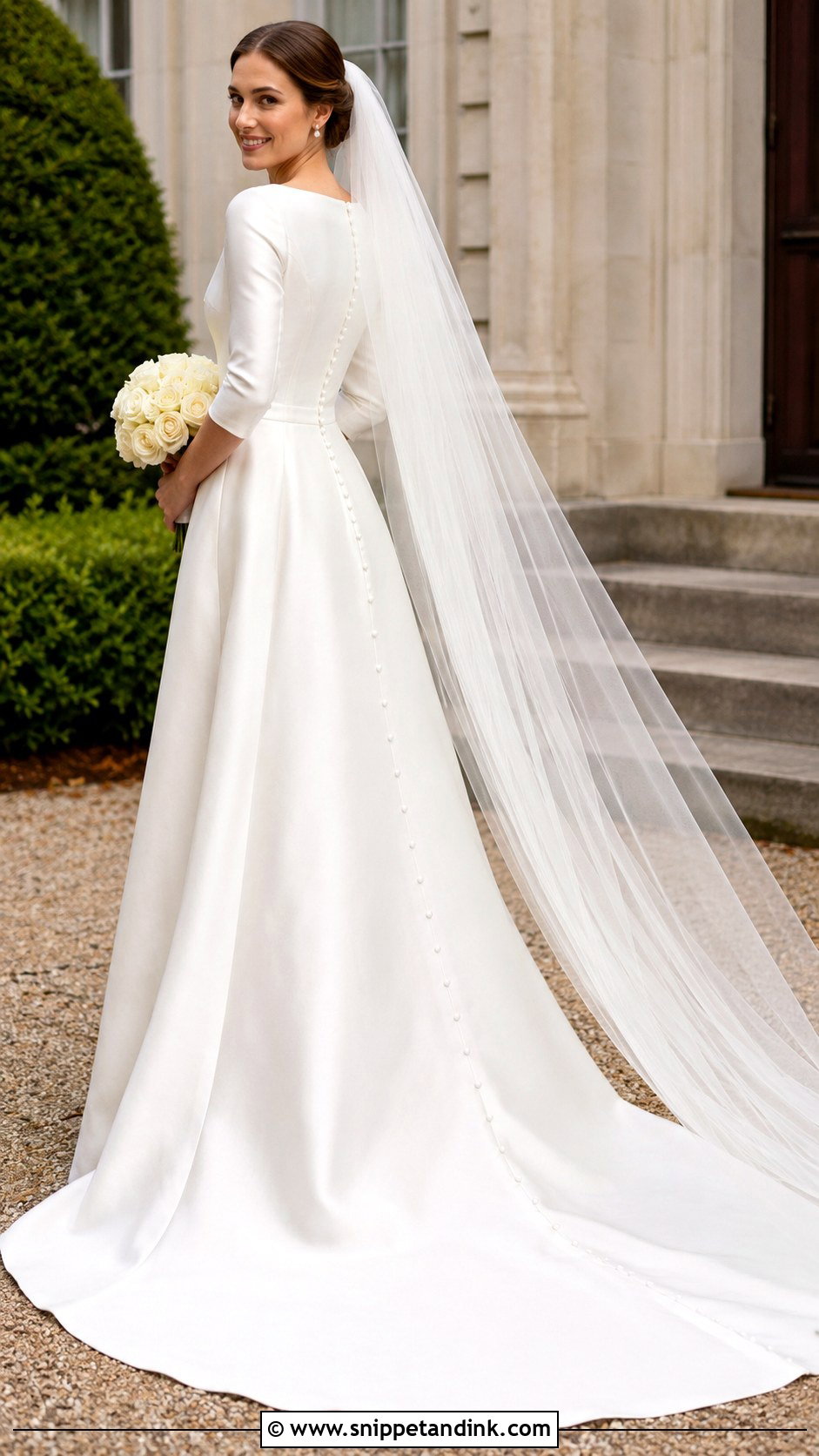
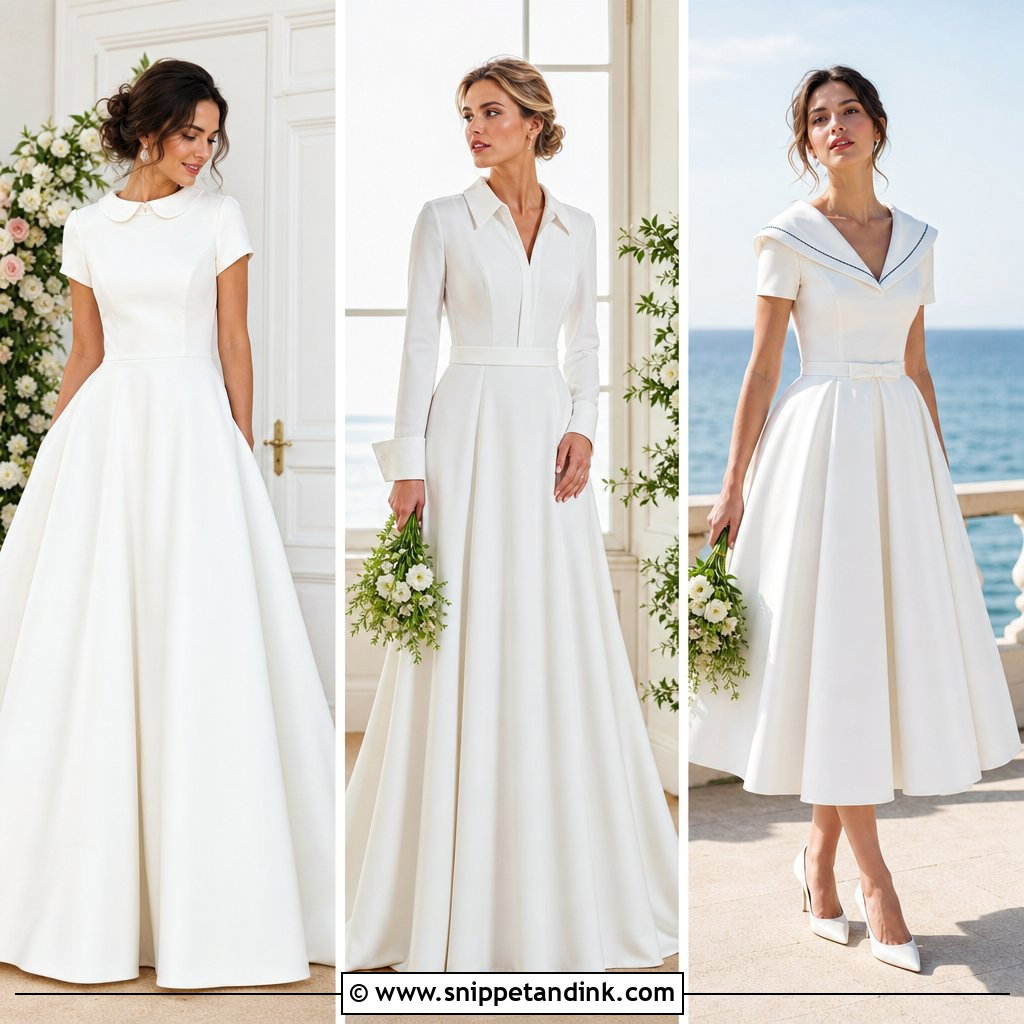
If I had to pick the most dependable vintage dress for almost any venue, it would be a bateau neck in satin. The wide neckline follows the collarbones, and a fitted bodice with a softly flared skirt keeps the proportions simple. Three-quarter sleeves give classic coverage; sleeveless is better in heat. A row of covered buttons down the back is all the detail it needs. Pearl studs, a fine bracelet, pointed kitten heels and a waist-length or cathedral veil, depending on the room, then a low chignon to keep the neckline clear. White roses with greenery in a rounded shape finish it neatly. Plain satin is easy to adapt, so a dramatic train, pockets or a removable overskirt can all be added without losing the period look.
17. Square Neck Puff Sleeve Wedding Dress
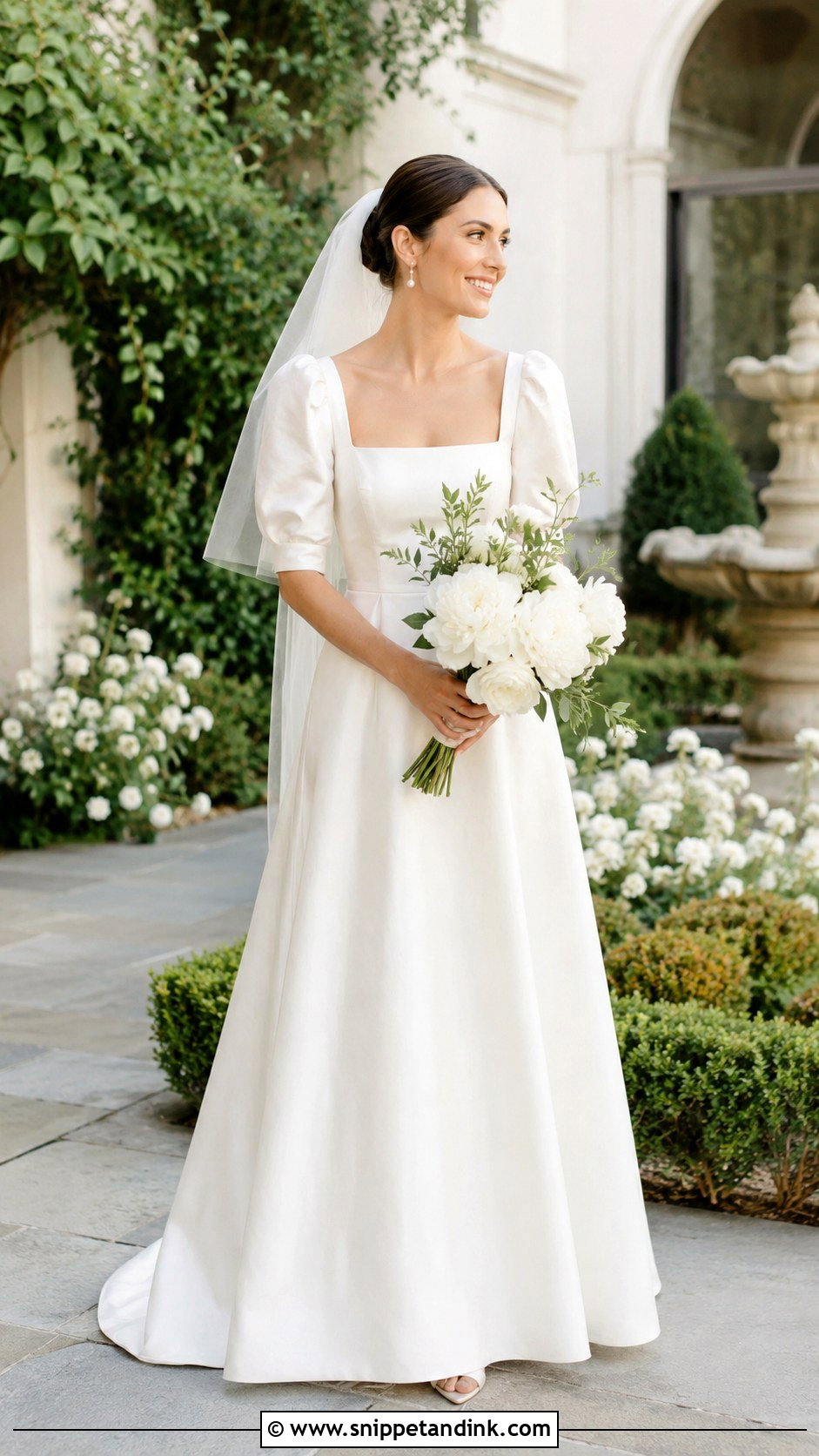
Puff sleeves need restraint. Gathered sleeves ending at the elbow or wrist should frame the shoulders, not swallow them, so I ask the maker to show me the sleeve with and without its interlining before deciding on volume. A square neckline over a fitted bodice and an A-line skirt in silk, crepe or floral jacquard makes a clear, flattering shape. Low block heels, pearl drops and a soft chapel veil tucked beneath the hair suit it. A small pendant can work in the open neckline, but not if the fabric is embroidered. White peonies, roses and greenery in a loose bouquet finish it. Elastic inside the sleeve hem lets you lift your arms without the gathers riding up.
18. Off Shoulder Brocade Wedding Dress
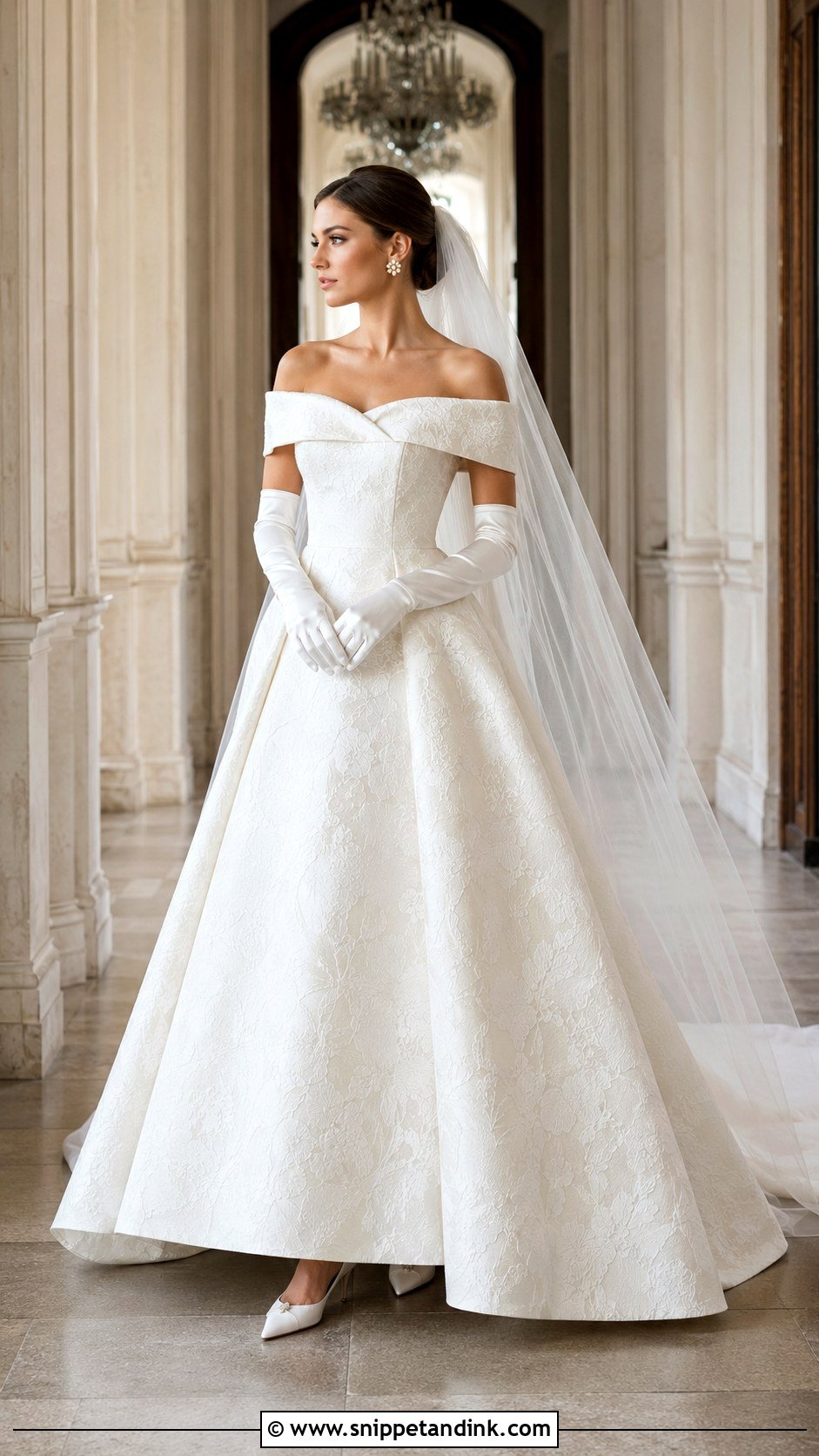
Brocade brings pattern through the weave itself, so there’s no need for beads or sequins. Ivory floral brocade with a structured bodice, a folded neckline and a full A-line skirt is a formal, controlled look. It has two practical quirks: it doesn’t stretch at all, and it’s warm. That means the arm movement has to be built into the cut, and I’d think twice about it for a midsummer outdoor wedding. Satin pumps, pearl cluster earrings and elbow-length gloves if the ceremony suits them go well with it. A plain cathedral veil softens the texture, and a simple bouquet of white roses or tulips keeps the fabric in focus. A polished low bun shows the shoulders. Hidden support inside the bodice keeps the folded neckline where it belongs while you dance.
19. Cape Sleeve Wedding Dress
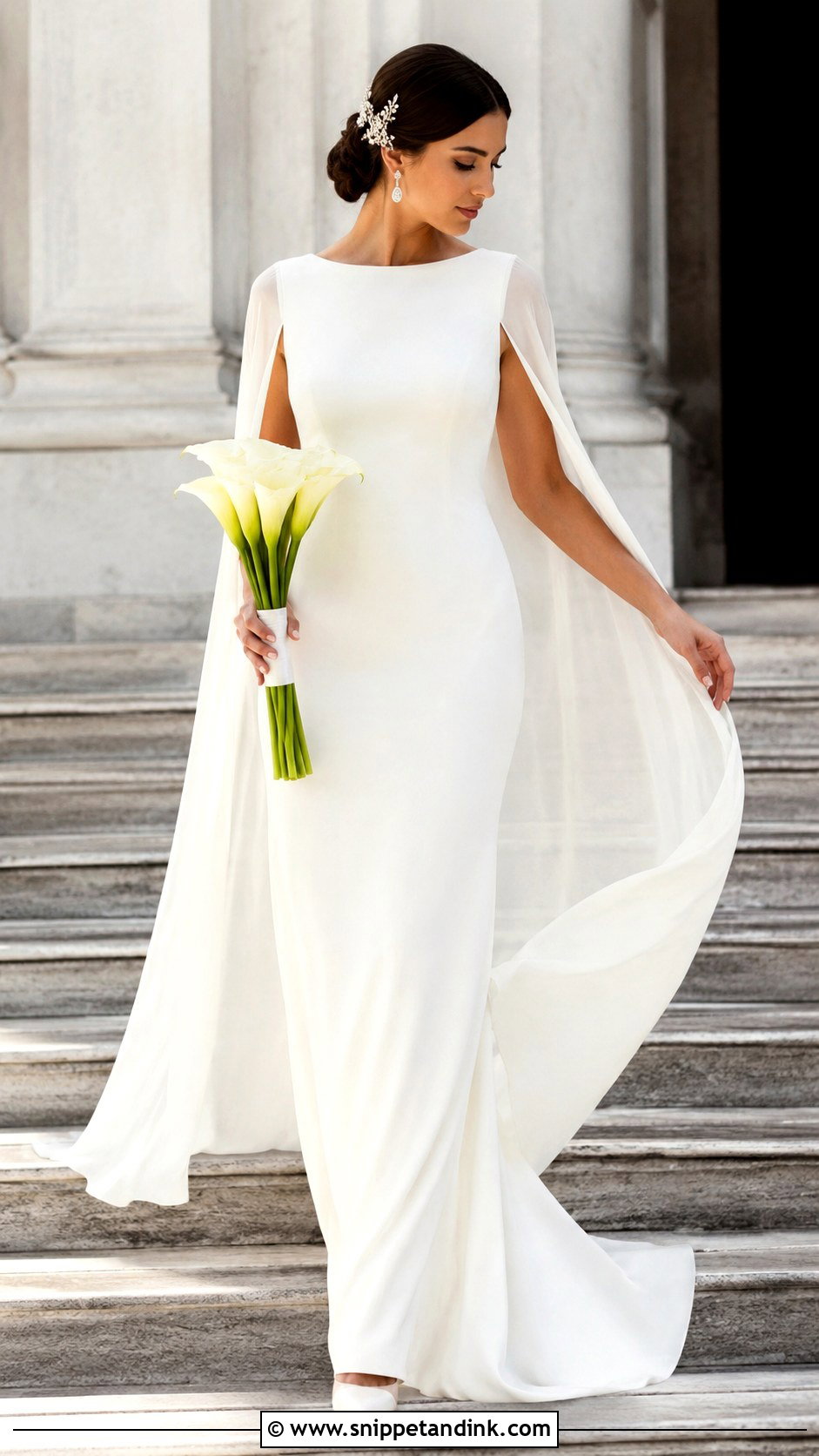
Sheer chiffon panels falling from the shoulders of a simple crepe or satin column turn every step into movement. Lace edging, scattered pearls or floral appliqués add vintage detail, but the chiffon must stay light enough to float; heavily trimmed capes just hang. Pointed ivory heels, drop earrings and a delicate hair comb are enough. If the cape runs into a train, I’d skip the veil, because the two layers hide each other. Carry a narrow bouquet of white orchids, roses or calla lilies so the cape isn’t crushed against your arm, and wear a smooth low bun. It gives graceful arm coverage and suits a cool evening, a grand staircase entrance or formal portraits.


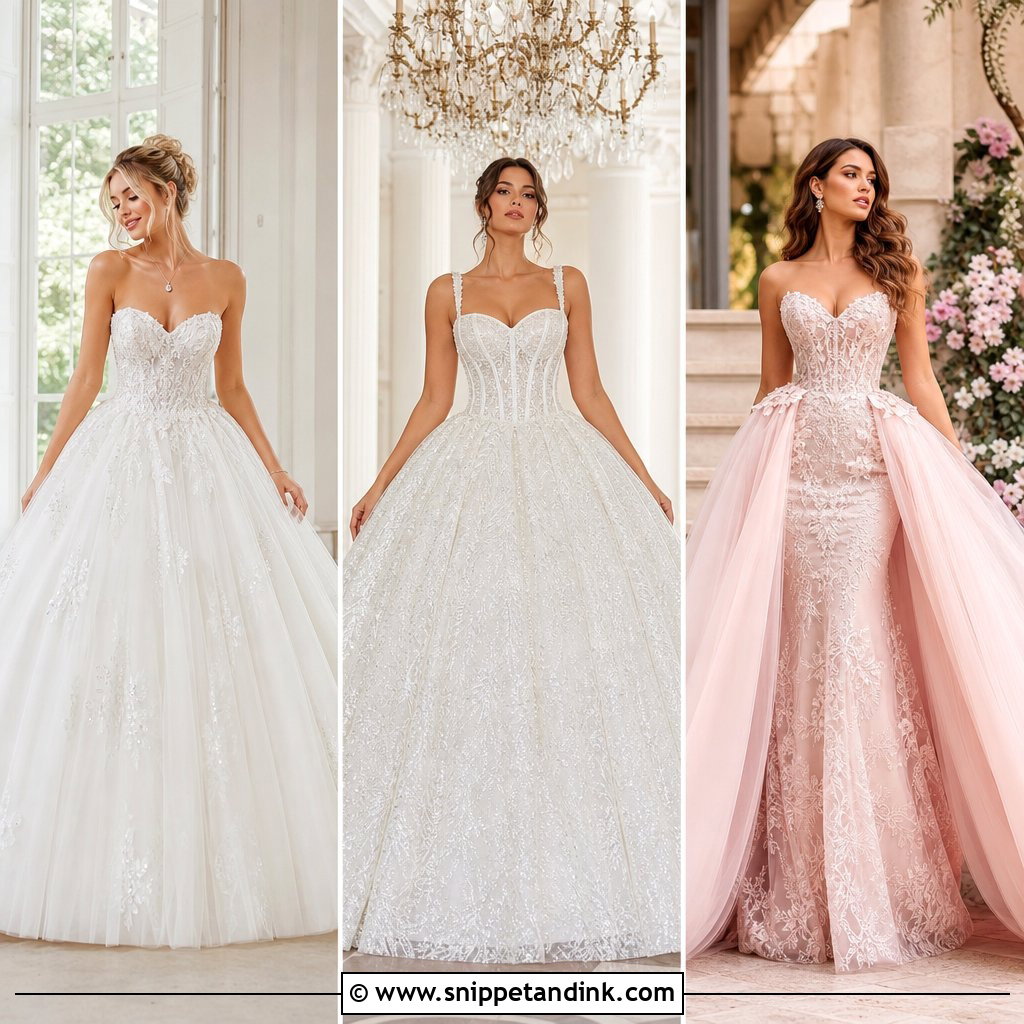

20. Floral Embroidered Wedding Dress
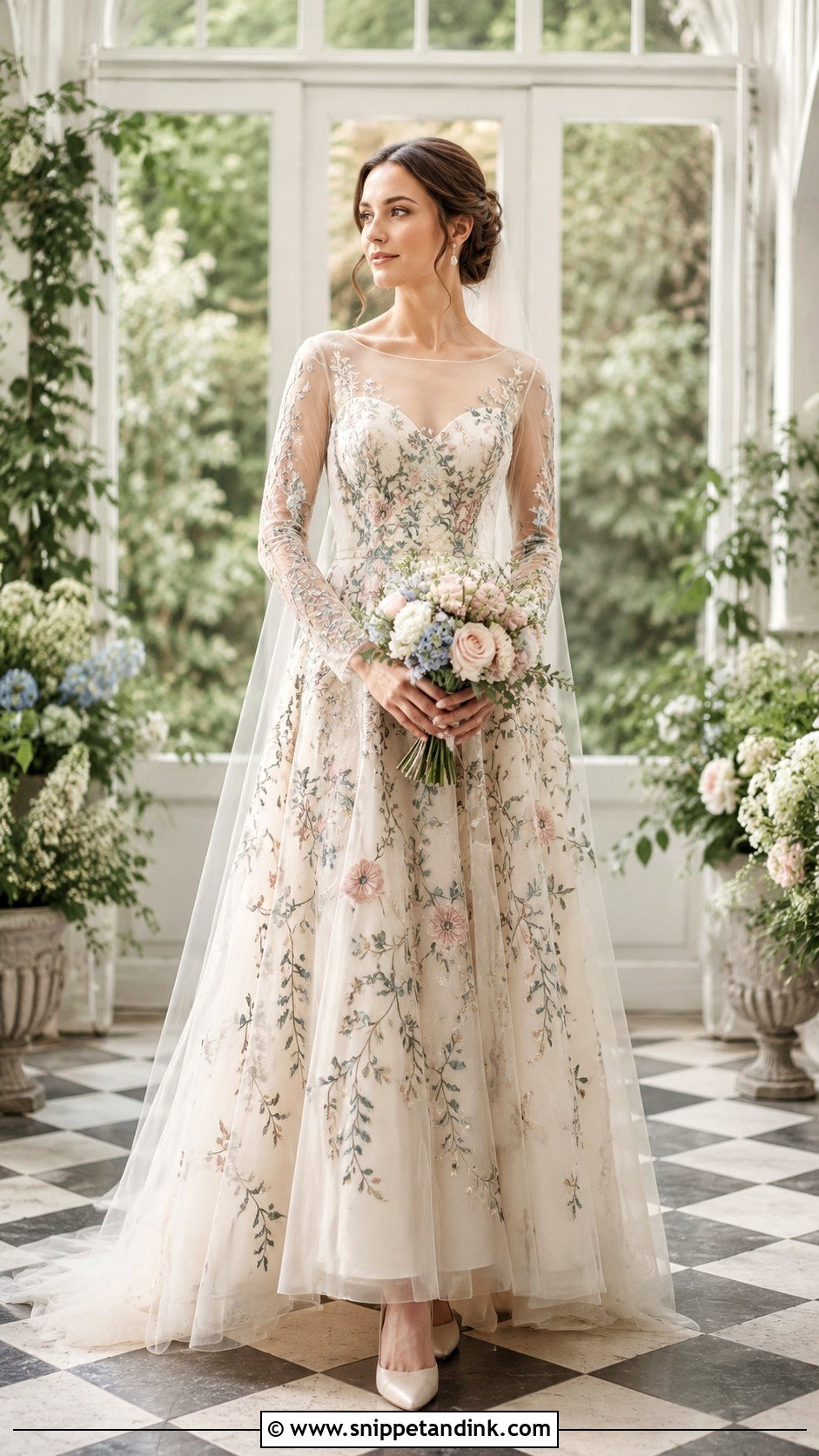
Coloured thread can make a floral embroidered gown feel antique and personal at the same time. Start with ivory tulle or organza embroidered across the bodice, sleeves and skirt in muted white, champagne, pale blue, blush or soft green. Botanical embroidery and floral appliqués have long been used to give a gown painterly depth, and the softer the palette, the older it reads. When I plan the flowers for a dress like this, I pull only one or two colours from the embroidery, otherwise the bouquet and the skirt start fighting. Simple ivory heels, small pearl earrings and a sheer unembellished veil keep the rest calm. Softly pinned waves suit it. Fitted or A-line, keep the silhouette clean so the needlework is what people notice.
A Decade Is Set by Two Details, Not Ten
The fastest way to look like you’re in costume is to match every accessory to the same year. I’d let the silhouette carry the era and pick one other strong signal. Everything else can be quietly modern.
- 1920s: the dropped column plus either finger waves or a Juliet cap, not both with a feathered headband too.
- 1930s: bias-cut satin plus side-parted glossy waves. Modern pearl studs are fine.
- 1950s: the full tea-length skirt plus a birdcage veil or short gloves. Pick one.
- 1960s: the short hem plus a bubble veil or a sleek flipped bob.
- 1970s: the bell sleeve plus loose waves and garden flowers; skip the floral crown if the dress is already lace.
- Victorian and Edwardian: the high neck plus one heirloom brooch or hairpin.
Hair and makeup trial
Wear something with the same neckline to your hair trial, or bring a photo of the dress. A period hairstyle that looks right in a T-shirt can look severe once a high collar or a wide bateau sits under it, and your stylist needs to see the two together.
Old Cloth Needs a Specialist’s Hands
A good vintage look borrows the beauty of a period and keeps the comfort and construction of today. Start with the silhouette you feel confident in, a beaded column, a tea length, a lace ball gown or an embroidered A-line, then add shoes, jewelry, flowers and a veil that support the dress. If you’re buying an authentic antique, take it to a specialist before anyone cuts into it, because old fabric doesn’t always survive alteration. I’d rather see one carefully chosen period detail than five that compete. Fit it well, keep the accessories few, and the dress will feel like yours rather than like a reenactment.
You'll Like These Ideas:









Leave a Reply