
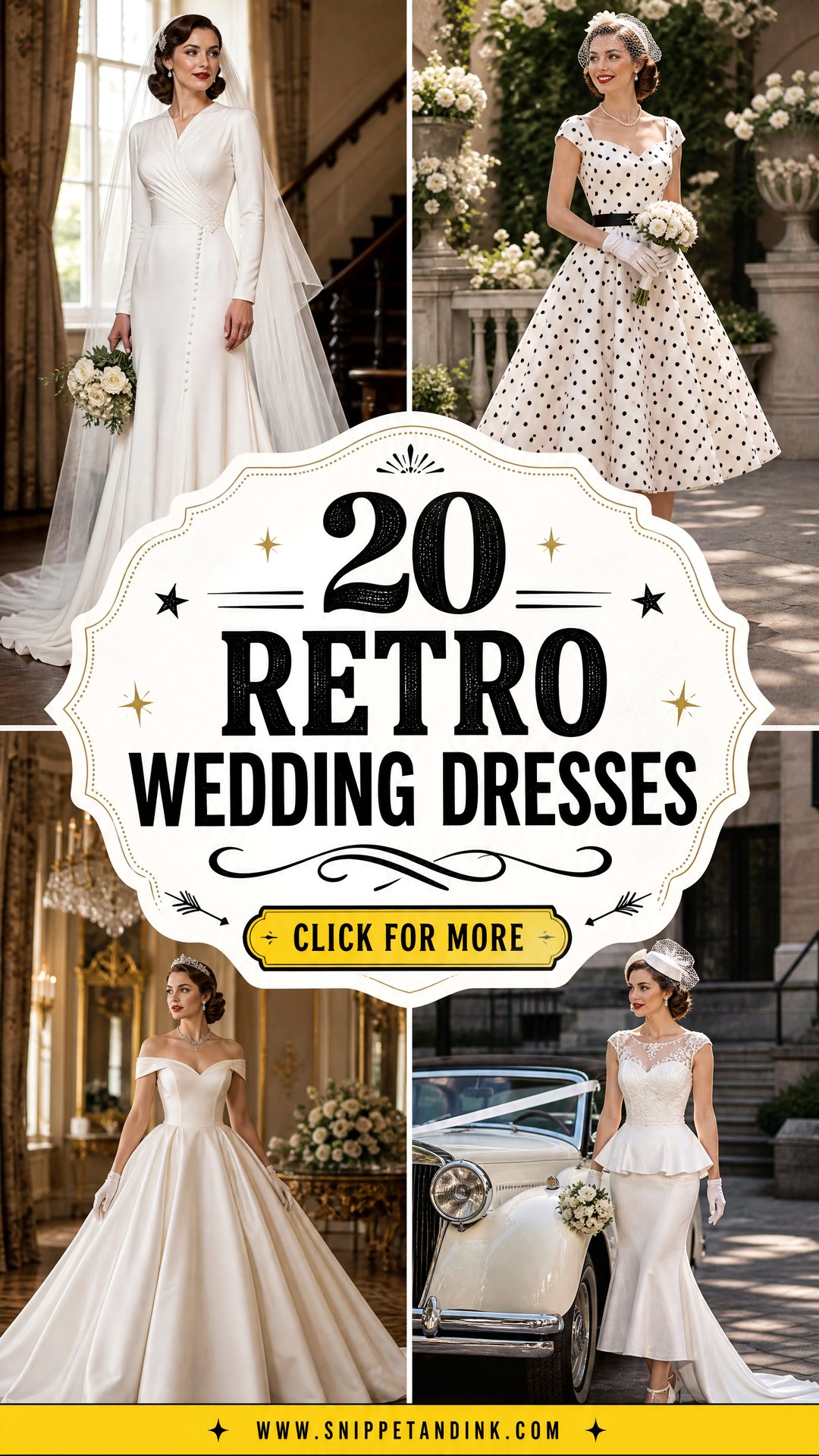
Let Your Frame Point You to a Decade
Every era of bridal fashion was cut around a particular body ideal, and some will suit you more naturally than others. That isn’t a rule about what you’re allowed to wear. It’s a shortcut that saves a lot of disappointing try-ons, because a silhouette working with your shape needs fewer alterations to look right.
- Straight or athletic figures often look most at ease in a 1920s drop waist or a 1960s shift, which never relied on curves.
- Defined waists suit the 1950s, whose fitted bodices and full skirts are built around a narrow middle.
- Taller brides carry 1930s bias-cut length and 1970s maxi skirts without drowning in fabric.
- Petite brides tend to do well in tea length and 1960s minis, where the hem shows more leg.
- If you want comfort at the waist, empire lines and 1970s gowns ask the least of it.
Try on one dress from three different decades in your first appointment, even ones you don’t think you’ll like. Brides are often surprised by which era looks like them.
1. 1920s Art Deco Beaded Wedding Dress
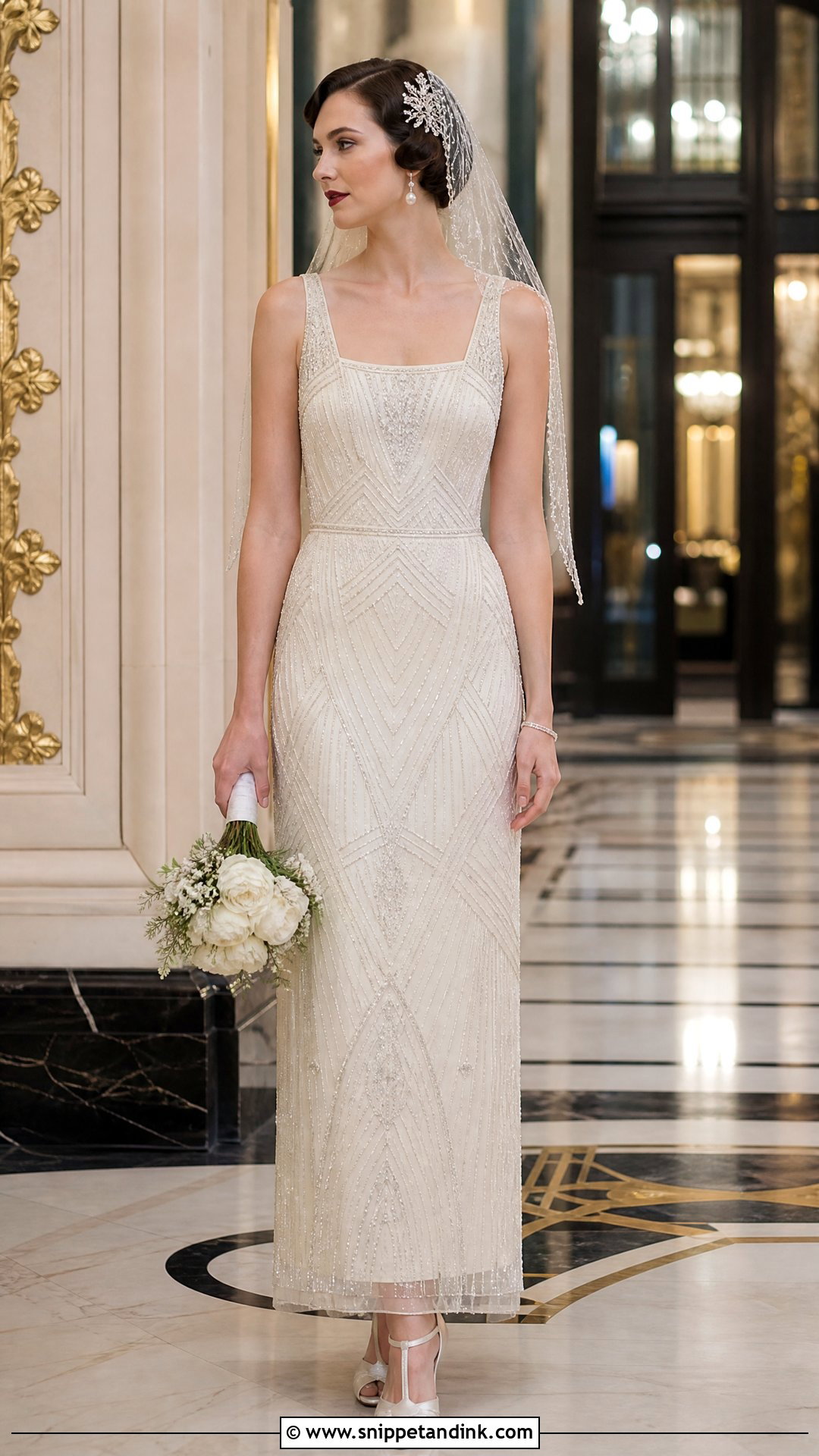
Beaded columns from the 1920s were made for dancing, not for standing still, and the good modern versions keep that easy movement. Look for geometric beadwork, a relaxed waist, a soft V-neck and a skirt with enough room to stride. Ivory, champagne and pale silver all suit the Art Deco mood. The beading adds real weight, so I check that the straps are secure and the lining is soft before anything else. Low T-strap heels, a crystal comb and a fingertip veil with a fine beaded edge, with a sleek bob or finger waves. Right at home in a hotel or historic venue after dark.
2. 1930s Bias-Cut Satin Wedding Dress
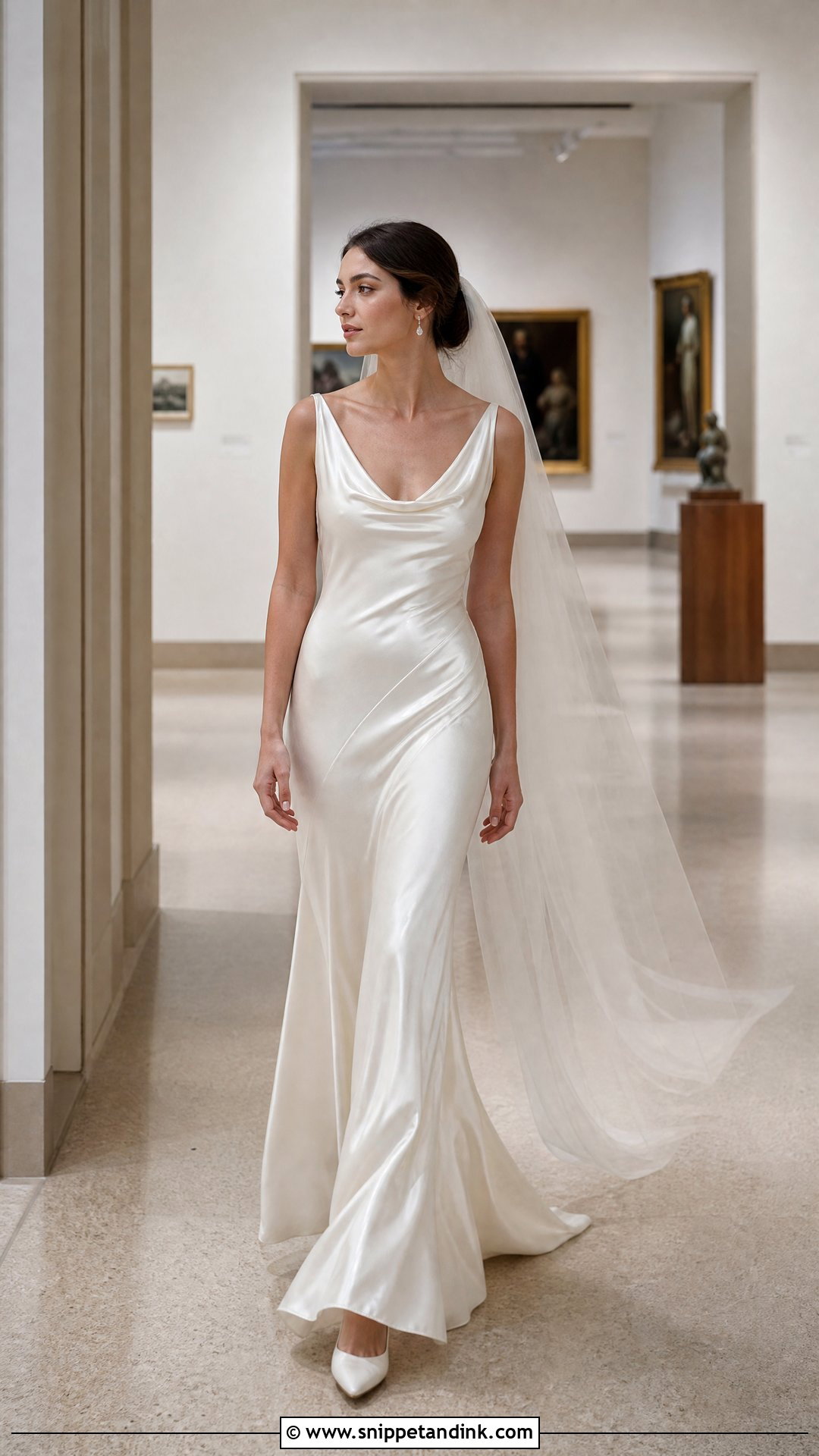
Fabric cut on the bias stretches and drapes over the body in a way straight-grain fabric can’t, and it’s what gave 1930s eveningwear its liquid look. It needs no boning, which makes it comfortable, but thin satin clings to every curve and line. Choose a heavier satin that skims. Bias hems also drop over time as the fabric hangs, so a good seamstress lets the dress hang for a day before marking the hem. Closed-toe satin pumps, pearl drops, a long veil beneath a low bun and a silk capelet for cool evenings.
3. 1940s Long-Sleeve Crepe Wedding Dress
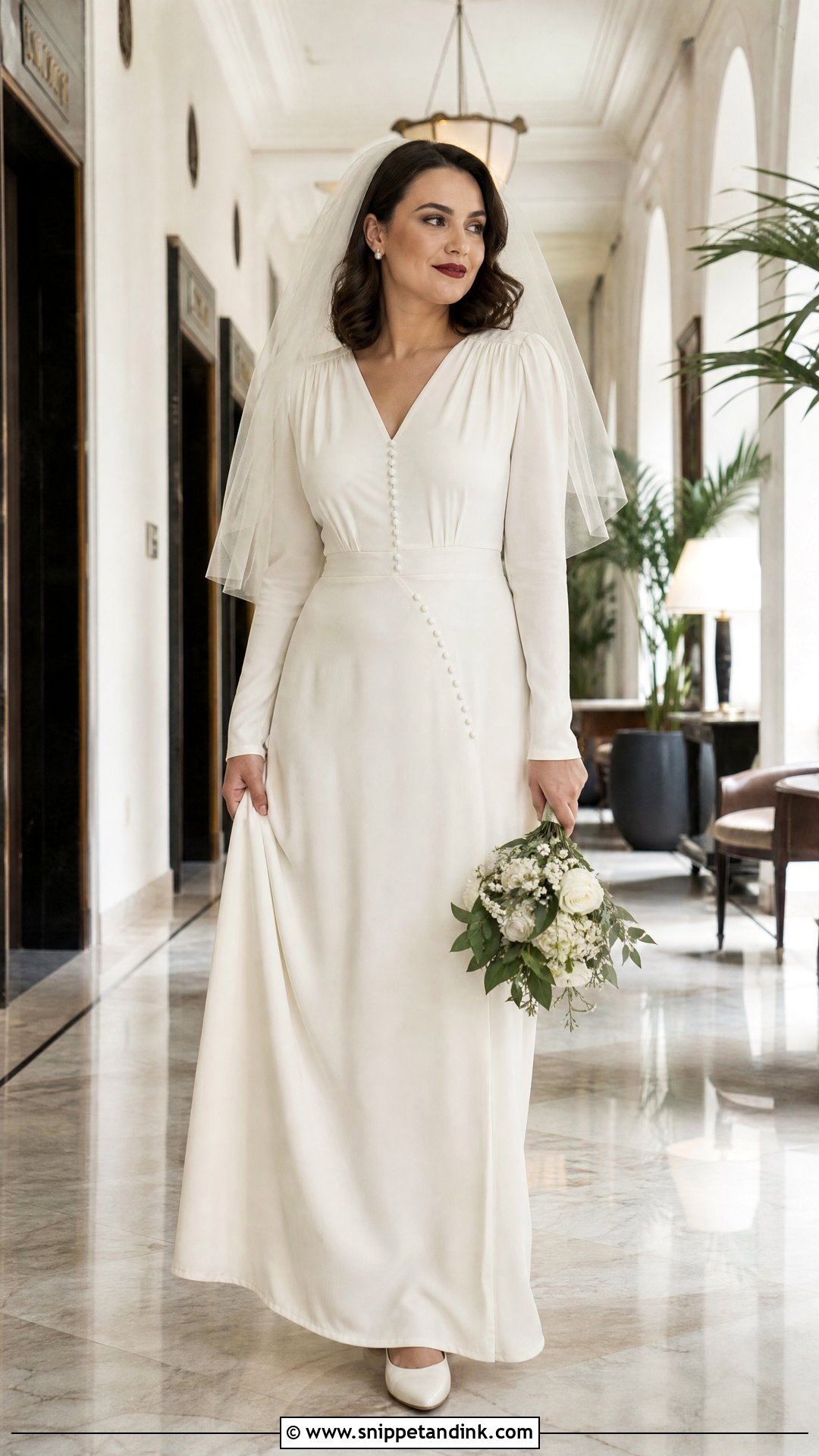
The 1940s crepe gown is the quietest look here and one of the most comfortable. Long sleeves, a natural waist, a gentle V-neck with gathered shoulders, covered buttons and a softly flared skirt. Crepe drapes well but shows uneven underwear lines, so smooth layers beneath are worth the effort. Gathered shoulders can make broad shoulders look broader; a seamstress can reduce the gathers. Ivory block-heel pumps, a small clutch, pearl studs, and a shoulder-length veil on a comb over a rolled updo. Good for autumn, winter or a cool indoor venue.
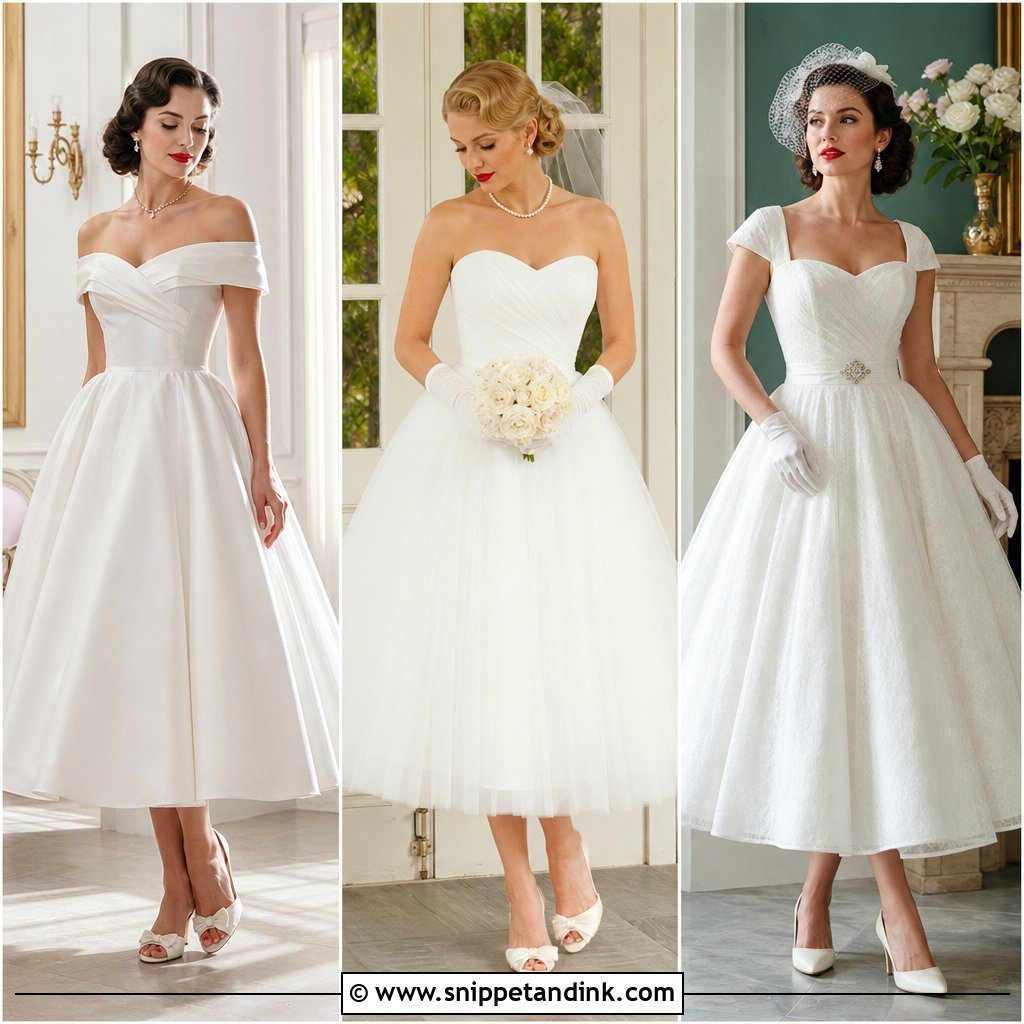
4. 1950s Tea-Length Wedding Dress
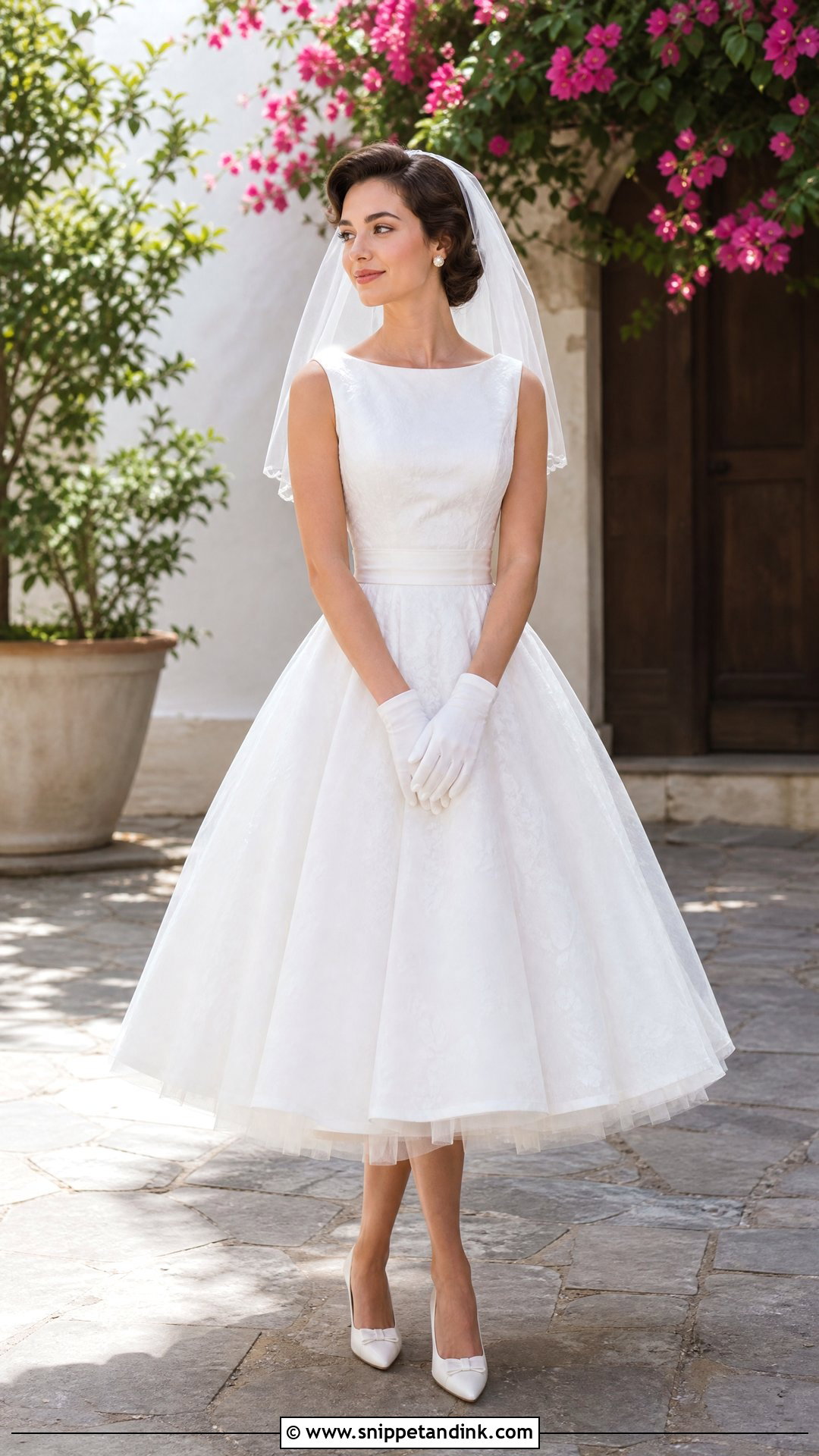
Shoes matter on a 1950s tea-length wedding dress, because everyone will see them. A fitted bodice with a bateau, scoop or sweetheart neck over a full skirt ending between knee and ankle. A layered petticoat gives the classic bell shape; a softer underskirt is more relaxed. On petite brides I place the hem just below the widest part of the calf, which keeps the leg looking longer. Pointed kitten heels, short gloves, pearl earrings and a birdcage or elbow-length veil, plus a cropped cardigan if needed.
5. 1950s Lace Ball Gown Wedding Dress
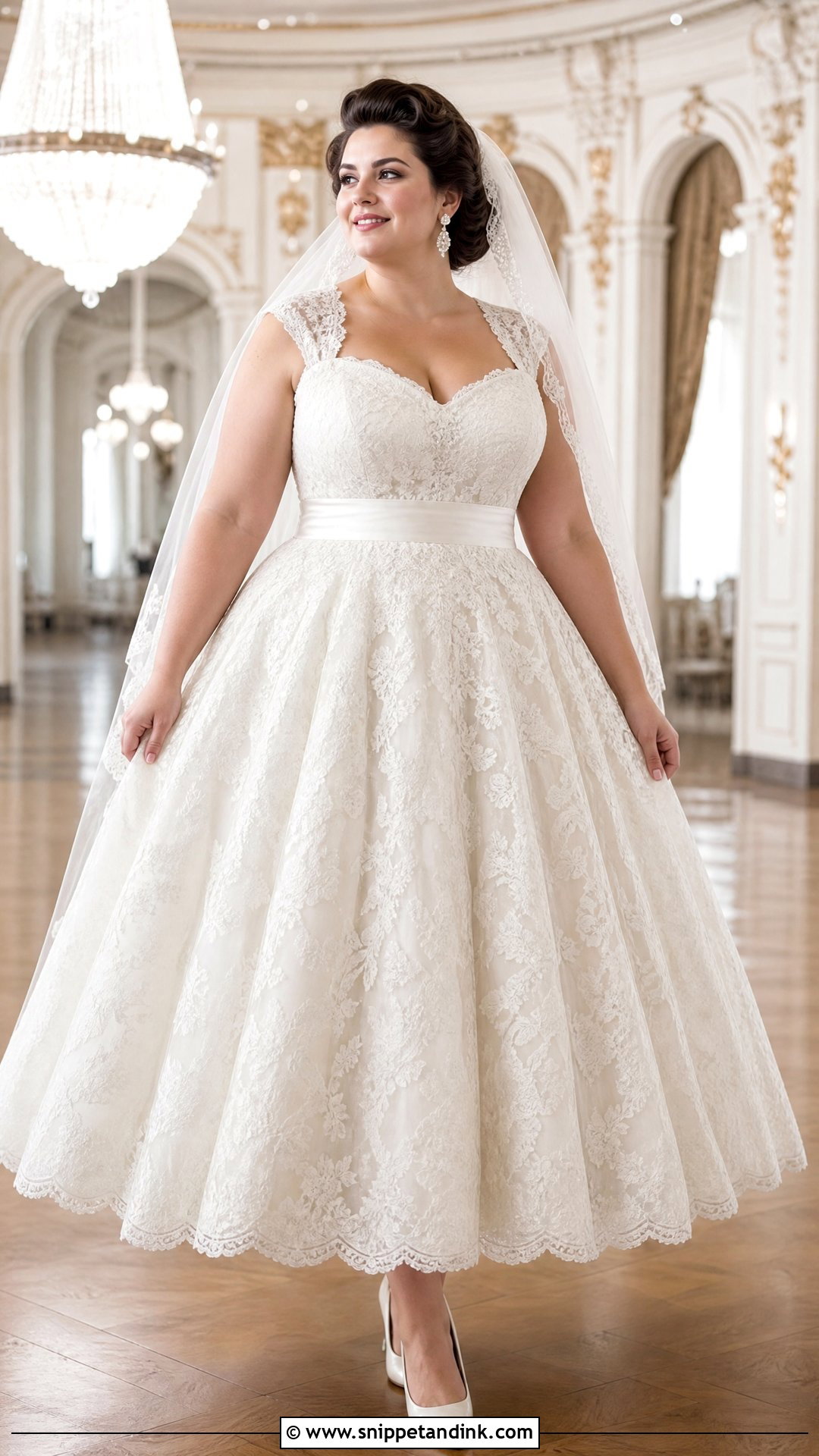
Full lace ball gowns are about drama, and the lace placement makes or breaks them. Pattern should run continuously across the bodice seams; mismatched motifs at the side seams look rushed, and it’s the first place my eye goes on a sample. A sweetheart or portrait neckline needs good inner structure, and if you have a fuller bust, wider straps or an illusion panel will save you from adjusting all night. A satin waistband breaks up the textures neatly. Low platform pumps, pearl-and-crystal earrings, a fingertip veil with a fine lace border and a neat chignon. Practice turning in the skirt; it carries a lot of volume.
6. 1960s Mod Mini Wedding Dress
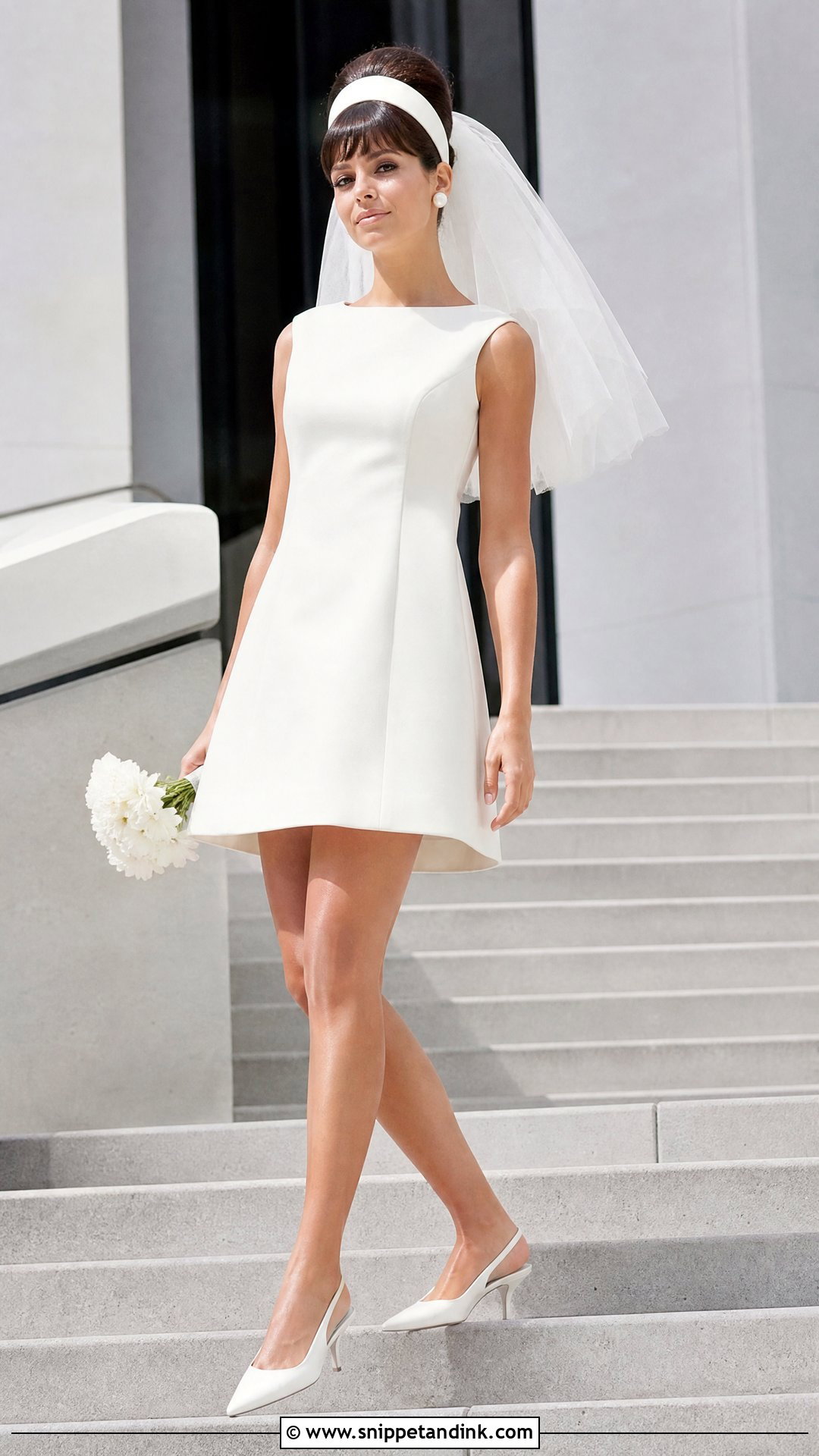
A 1960s mod mini wedding dress needs a structured shift or A-line, a high neck and clean seaming. Short, stiff fabrics ride up when you lift your arms, so raise them in the fitting room and see where the hem goes. Opaque ivory tights are a nice period touch if you want them. Low block heels or pointed slingbacks, pearl buttons, a compact bouquet and a short bubble veil or wide headband. Sleek ponytail, flipped bob or smooth bun. Ideal for a courthouse, a rooftop or a reception change.
7. 1960s A-Line Wedding Dress
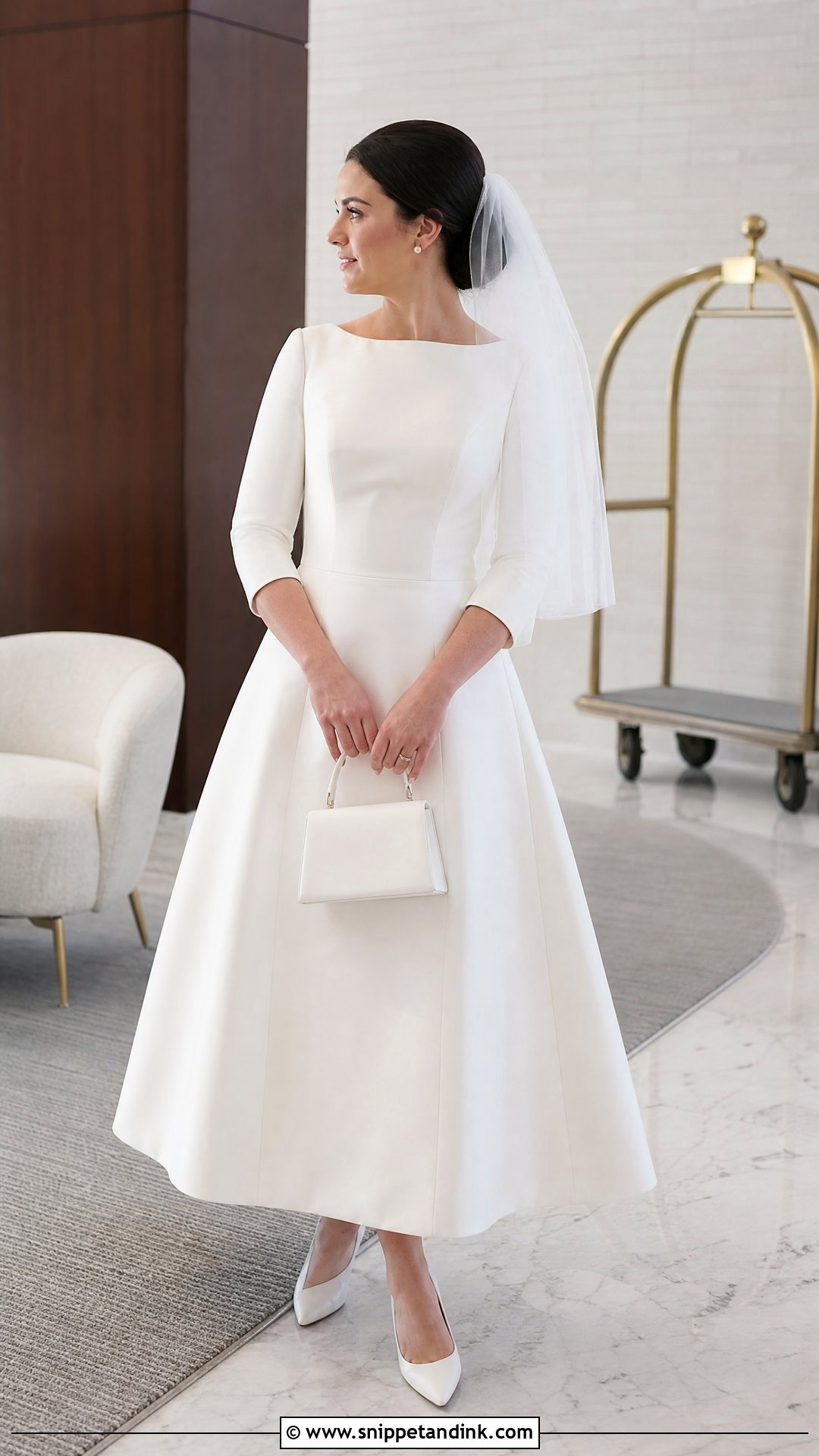
Ease is the point of a 1960s A-line. The bodice fits closely and then releases from the waist, so you get shape without ball-gown width, and it adapts to most figures because the waist, neckline and skirt fullness are easy to adjust. A bateau neckline and three-quarter sleeves in satin or structured crepe carry the decade. Low pointed pumps, pearl studs, a structured mini bag and an elbow-length veil. A small lift at the crown nods to the bouffant without going theatrical. It moves well between ceremony and reception spaces.
8. 1970s Boho Lace Wedding Dress
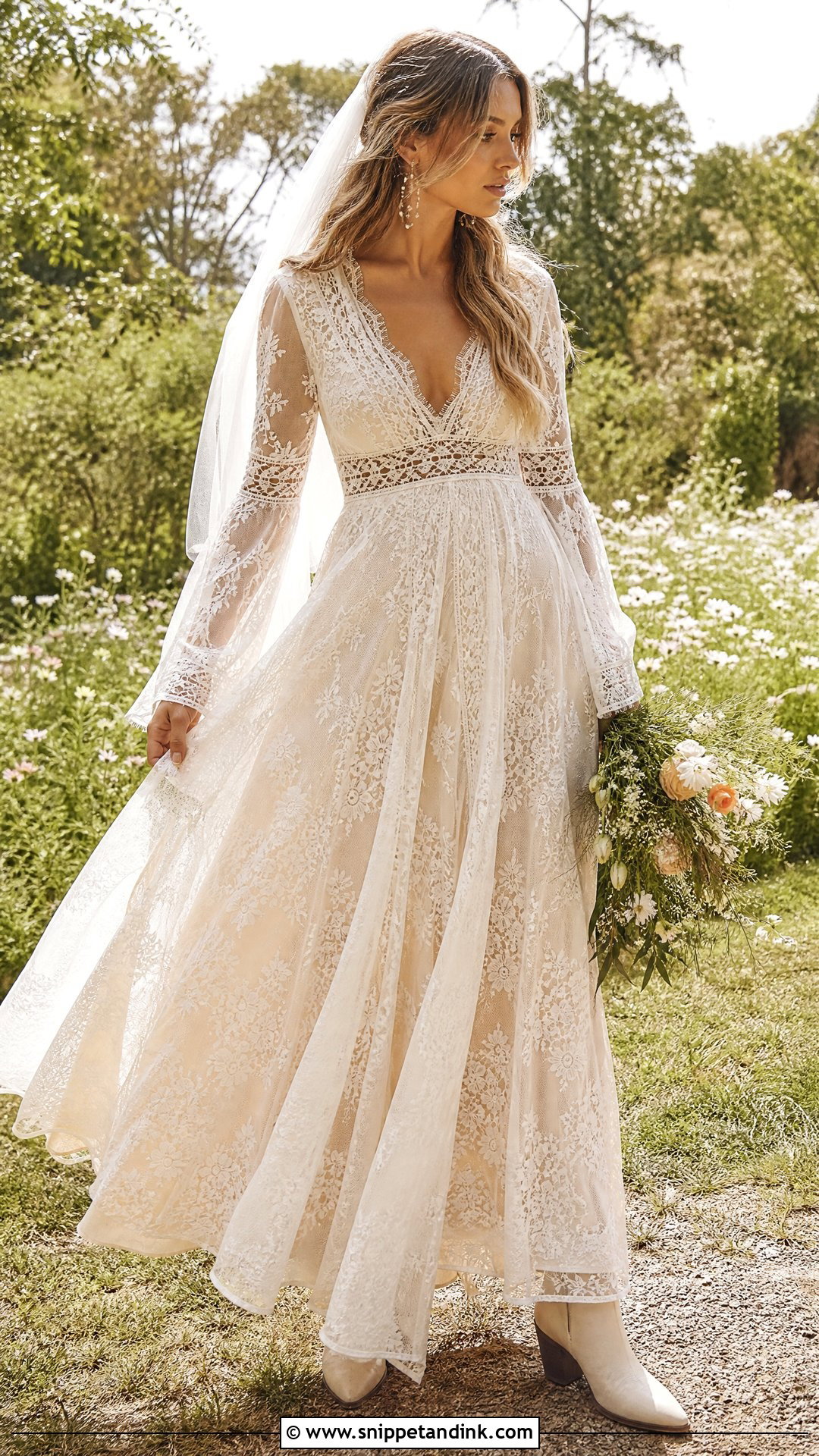
One expressive sleeve and good lace is enough boho; add fringe, flower crowns and suede and it becomes a costume. Floral lace with a lightly shaped waist and bell or bishop sleeves is the core of the 1970s look. A V-neck lengthens the upper body, and a lined bodice gives dependable coverage. Ivory ankle boots or low sandals, delicate drops and a light veil under loose waves, or a floral comb outdoors. I steer brides who hate corsetry toward this one, and they rarely look back. Suited to gardens, woodland, desert or rustic estates.
9. 1970s Empire Waist Wedding Dress
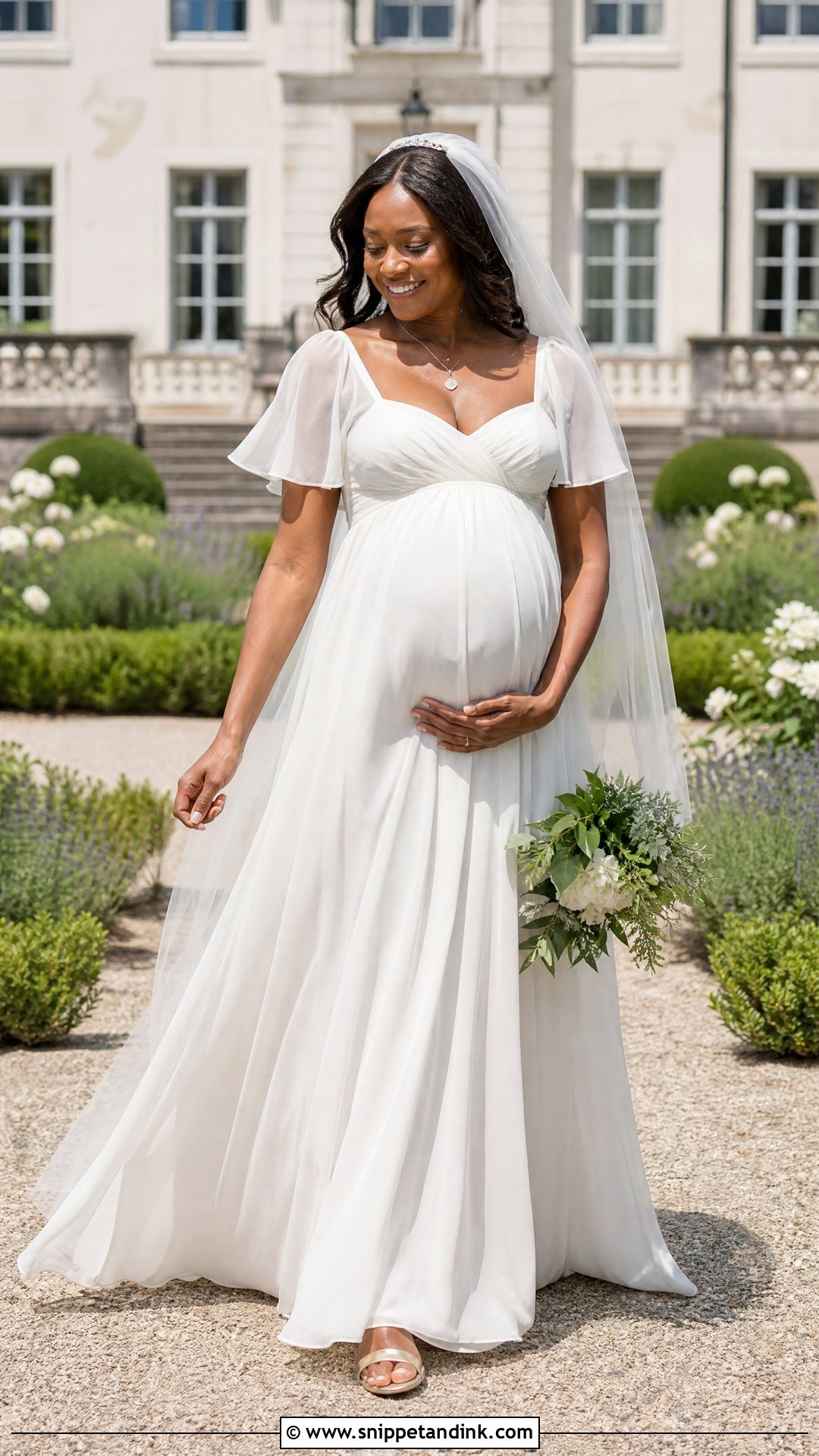
Empire waists sit just below the bust, so the skirt flows from there and nothing presses on your natural waist all day. That’s the comfort. The trade-off is that the bust seam becomes the focal point and has to fit precisely, so have the bodice adjusted before anyone touches the skirt length. Lightweight chiffon, soft crepe or delicate lace with flutter sleeves or a modest scoop. Low metallic sandals, a fine pendant and a chapel veil. Loose curls or a center-parted half-up style. Best for warm weather outdoors.
10. 1980s Puff Sleeve Wedding Dress
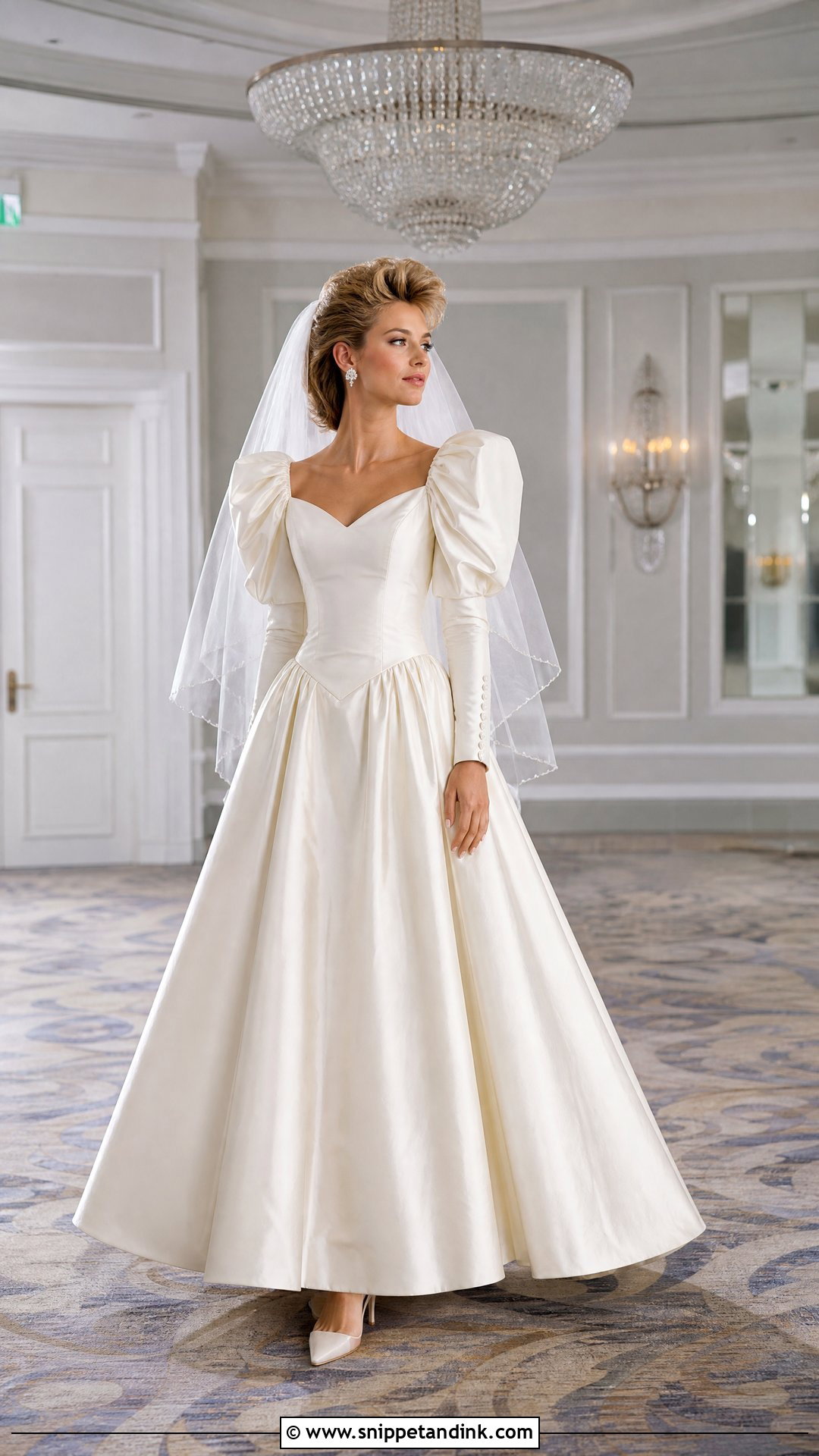
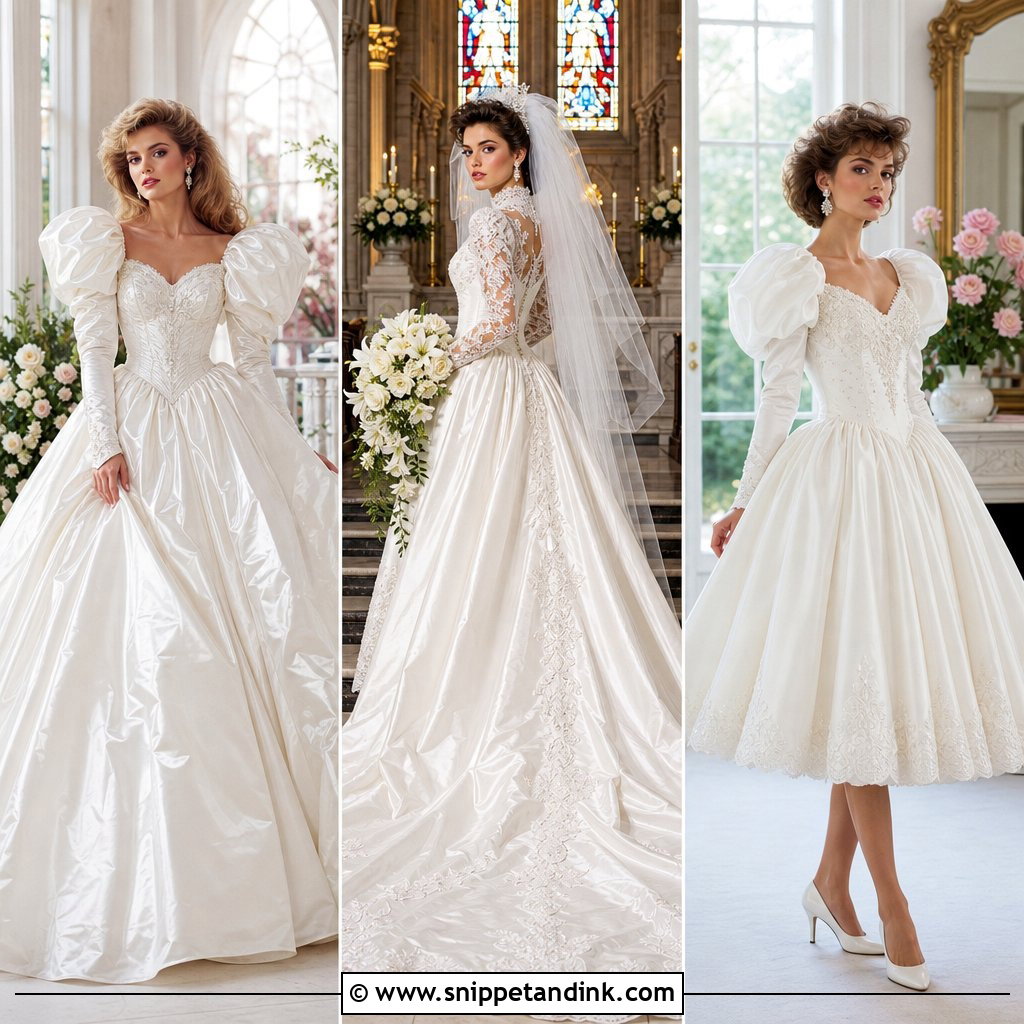
Puff sleeves bring strong 1980s character to a wedding dress, and proportion keeps it modern. Narrow shoulders can carry a moderate puff that adds balance; broader shoulders usually look better in softer gathered sleeves that fall downward rather than outward. Matte satin, taffeta or organza holds the shape. Check the armholes at every fitting, because a sleeve set too high restricts your arms when hugging. Pointed pumps, crystal studs and a plain cathedral or fingertip veil, with a sleek low bun so the shoulders aren’t crowded.
11. 1990s Satin Slip Wedding Dress
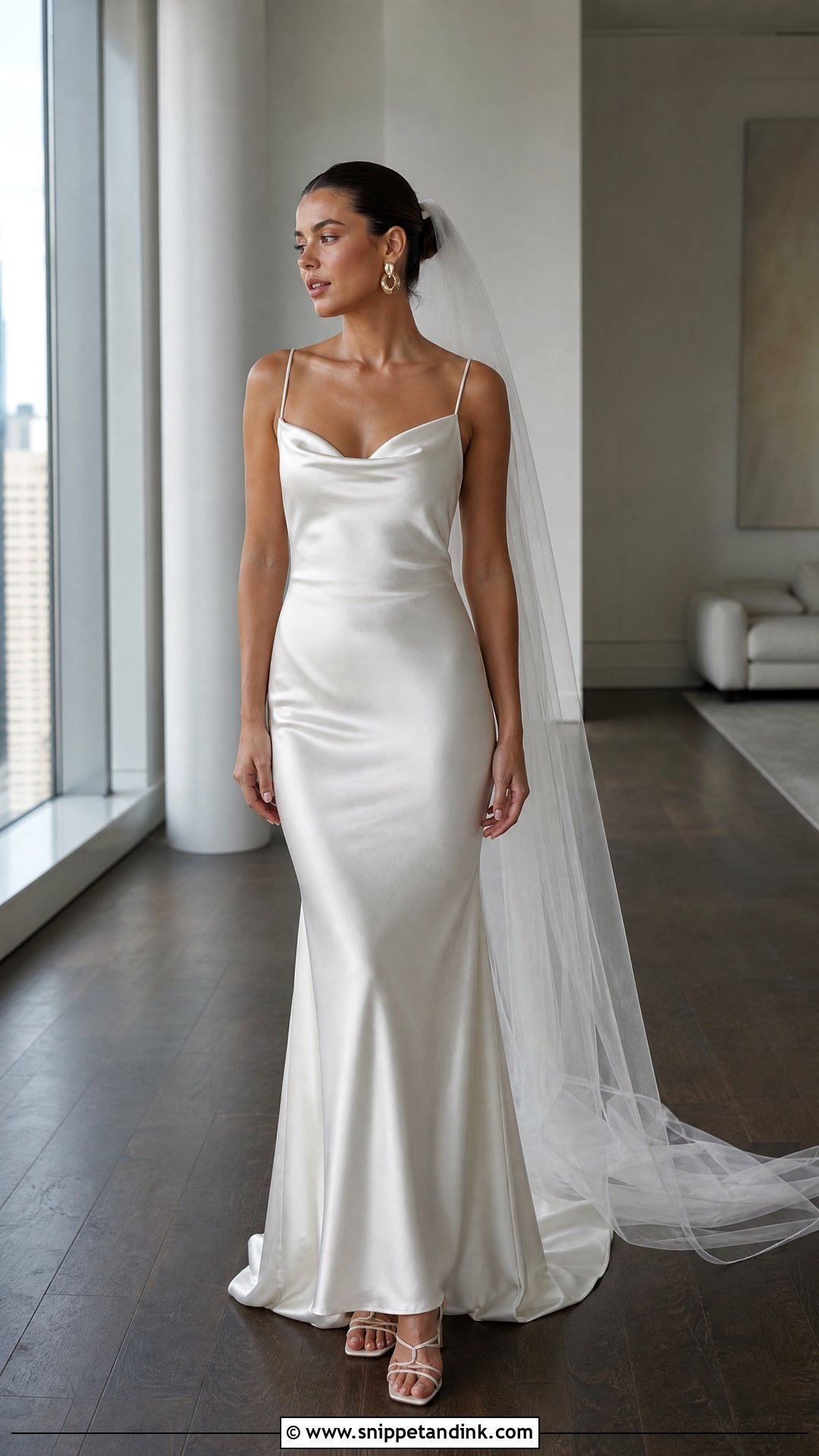
In a 1990s slip, everything is the fit and the fabric. Slim straps, a fluid skirt that skims the body, and a straight, cowl or soft scoop neckline; a low back adds quiet drama. Satin shows every line beneath it, so smooth, invisible underwear and careful alterations are the whole job here. I also check the back strap placement against your bra options before buying, since a low back limits them. Strappy ivory heels, sculptural earrings and a sheer floor-length veil, with a silk wrap for the ceremony. Suits lofts, coastal venues and city hotels.
12. Victorian High-Neck Wedding Dress
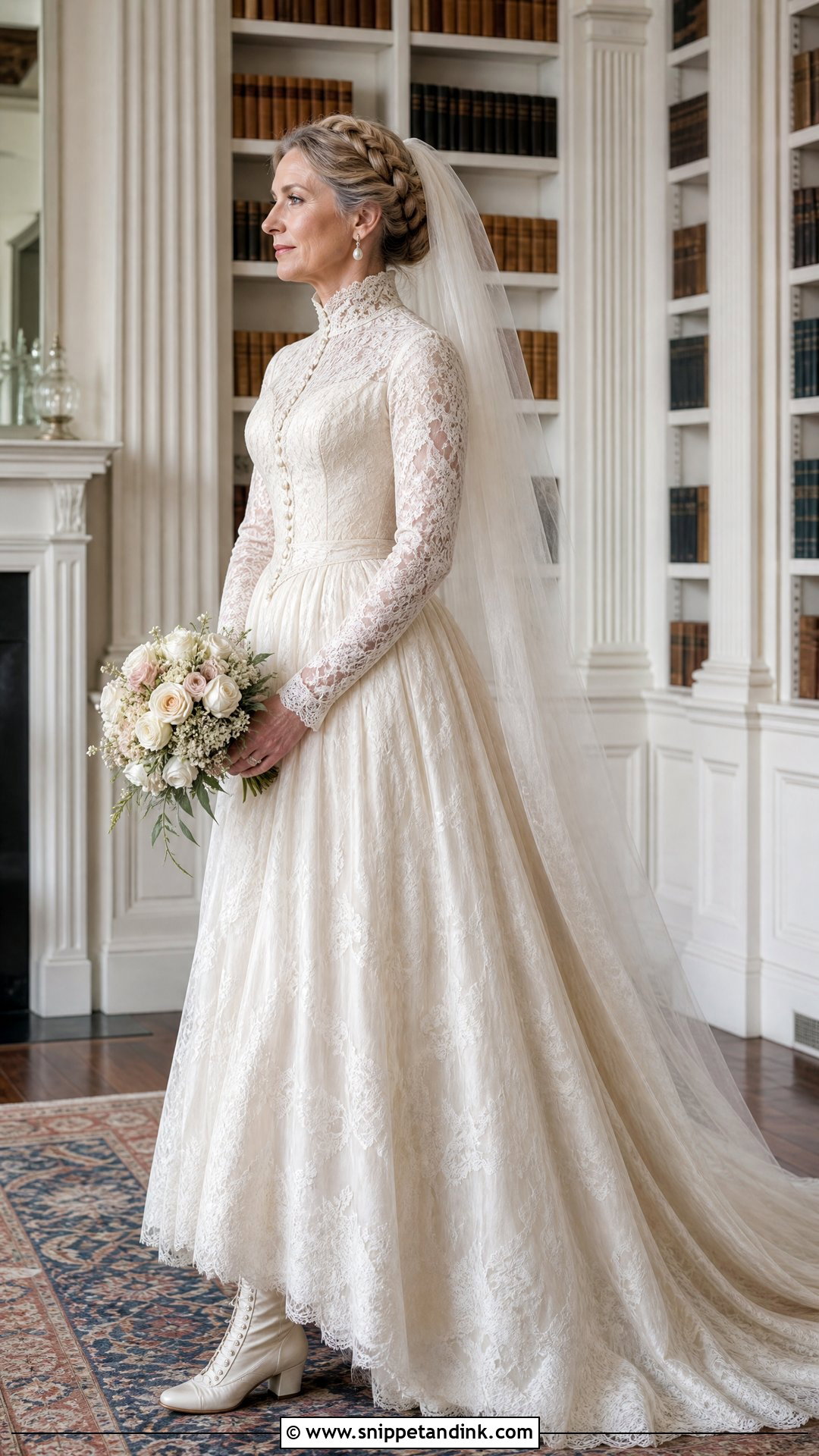
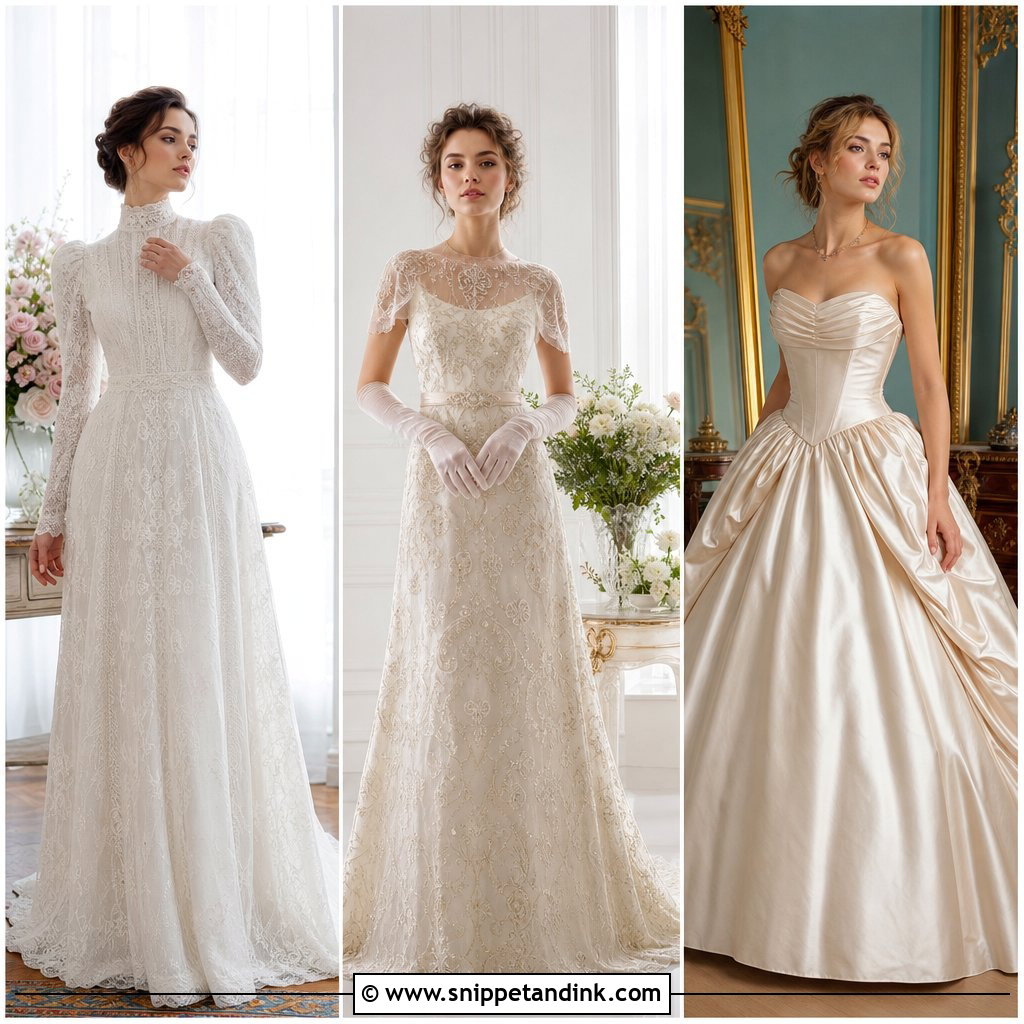
Victorian-inspired gowns get their romance from coverage and fine construction: a high lace neck, shaped bodice, long fitted sleeves and a sweeping skirt. Modern versions should have breathable lining and some flexibility in the sleeves, or you’ll struggle to lift your arms. If your neck is shorter, a lower stand collar or sheer lace neckline gives more room around the face. Soft ivory looks gently aged in a way stark white doesn’t. Buttoned ivory boots, small pearls, a cameo-style brooch if you like, and a long veil on a braided bun.
13. Edwardian Lace Wedding Dress
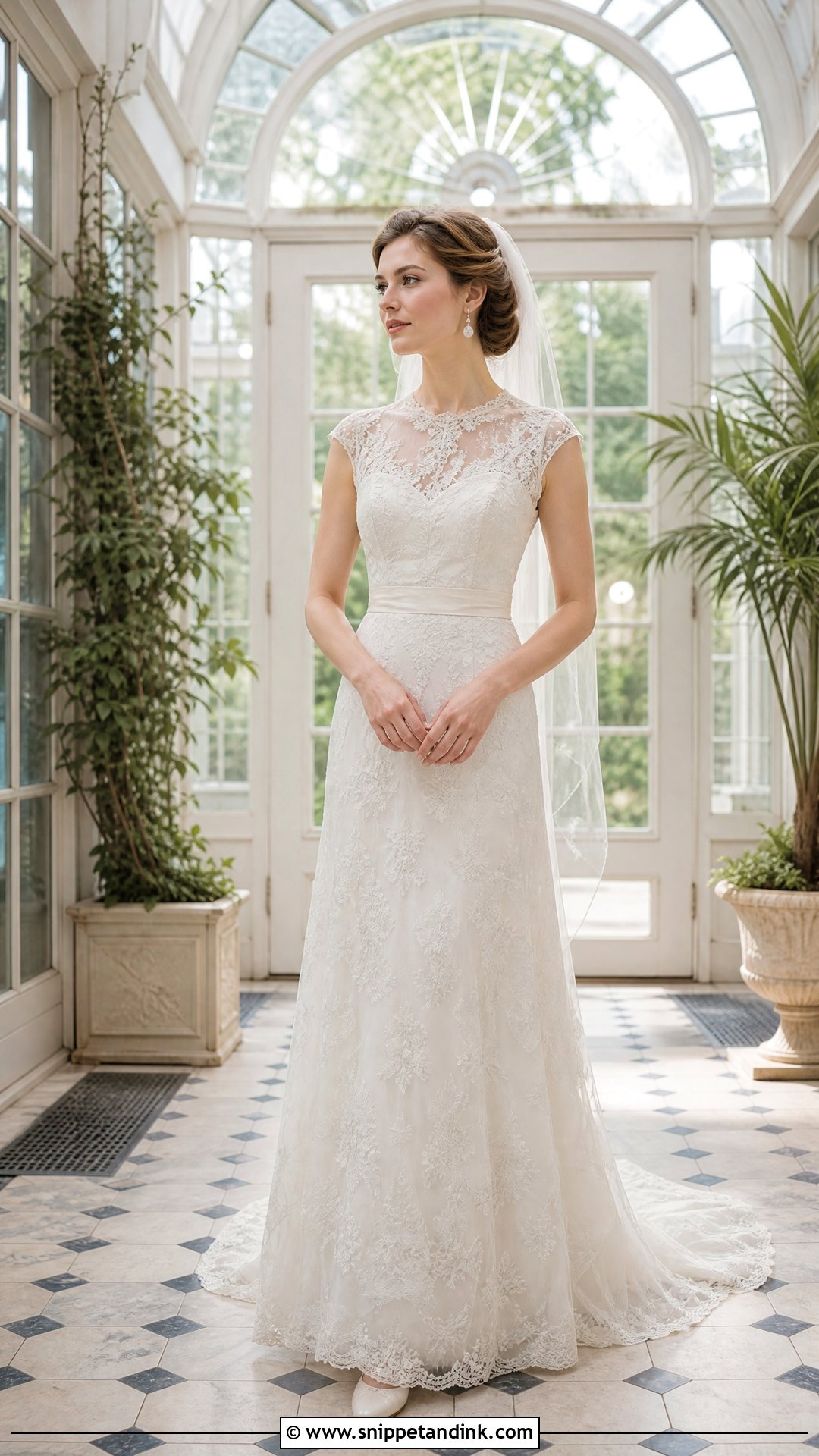
Edwardian-inspired bridal fashion is lighter than Victorian, with a high illusion neckline, lace yoke, defined waist and long fluid skirt. Elbow-length or full sleeves with delicate cuffs and covered buttons finish it. Lace can irritate sensitive skin at the neck and underarms; try it on for half an hour, not five minutes, and ask about a soft lining in those areas. Rounded-toe heels, pearl drops, a soft veil over a low updo and a small silk sash at the waist. Suited to conservatories and heritage hotels.
14. Old Hollywood Satin Wedding Dress
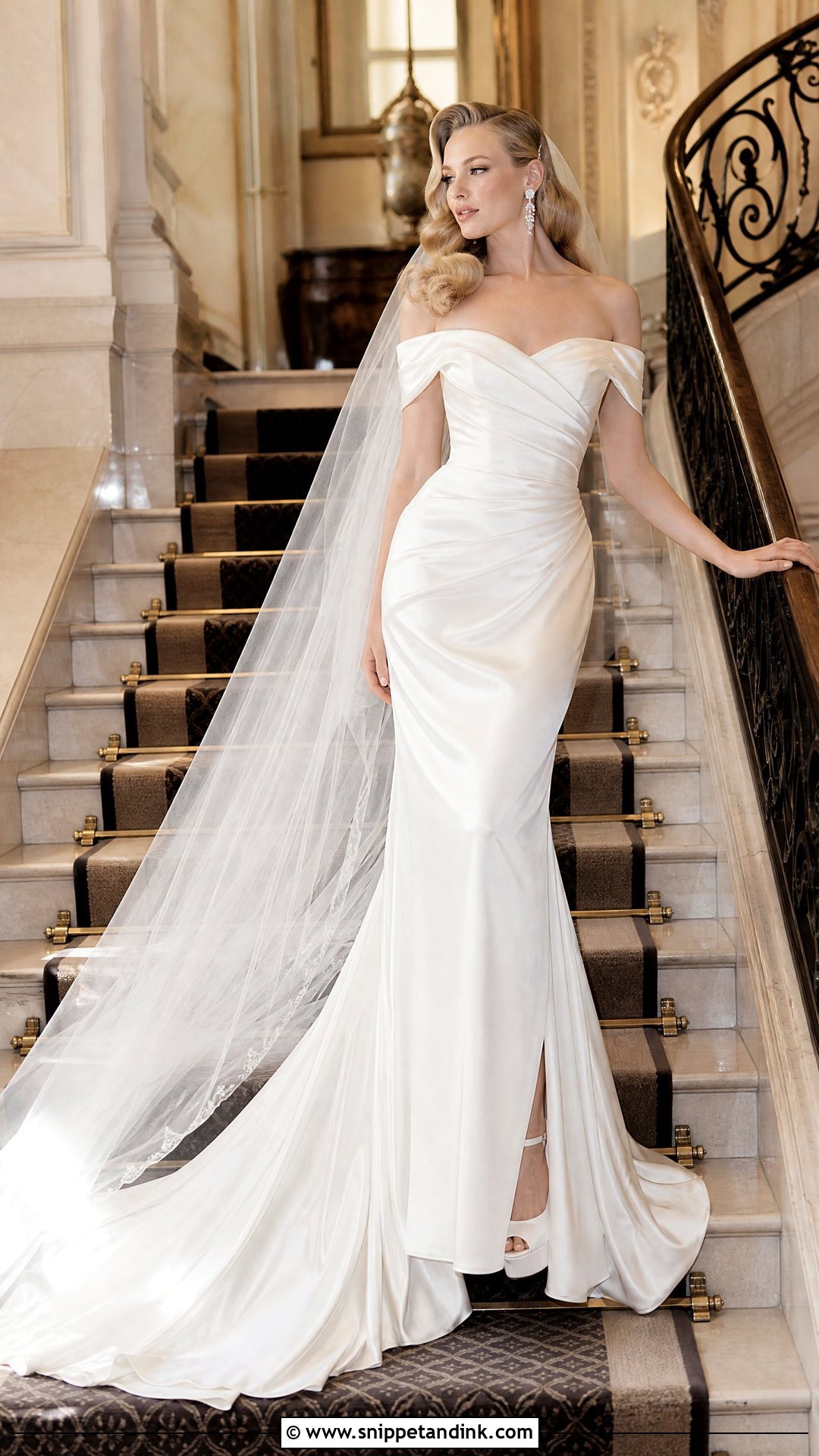
Old Hollywood looks are built on one focal point. My advice is to pick the draped neckline, the off-the-shoulder sleeves or the dramatic train, and keep the rest calm; a deep neckline, high slit and heavy jewelry together reads like a red-carpet costume. Smooth satin with a sculpted waist needs serious internal support, especially with low backs. Peep-toe heels, crystal drops and a long sheer veil. Side-parted waves and a berry or classic neutral lip. Grand hotels, theaters and ballrooms suit it best.
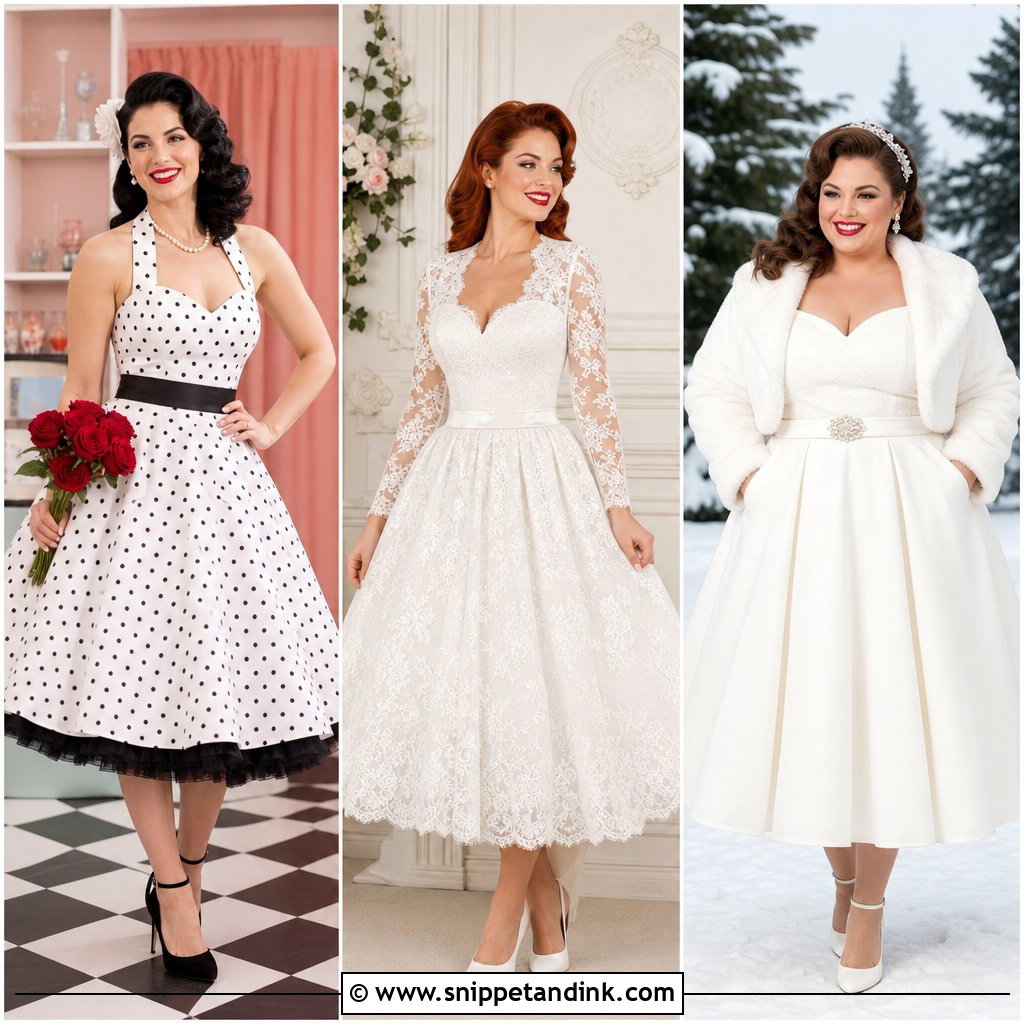

15. Retro Polka Dot Tea-Length Wedding Dress
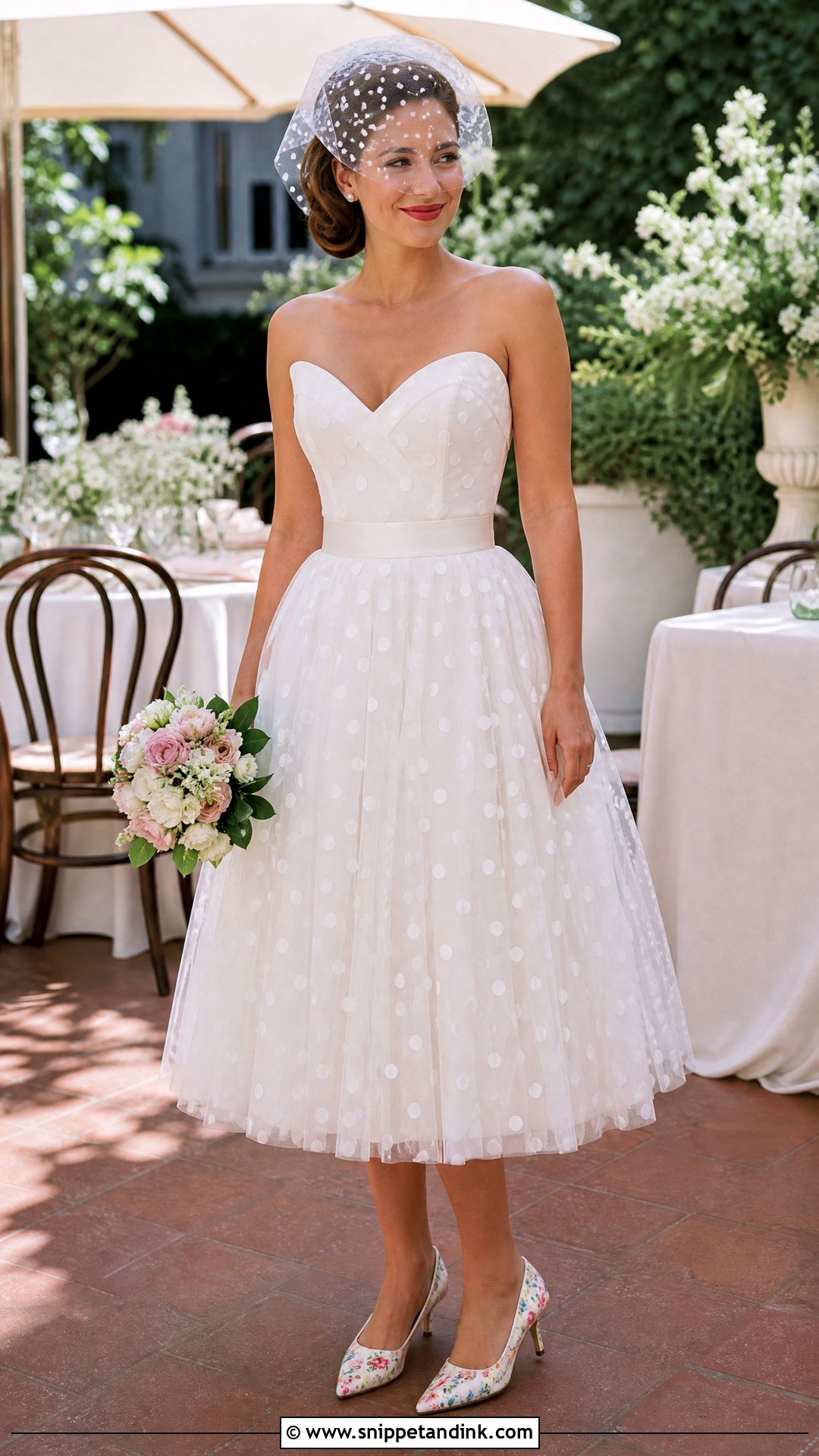
The size of the dots changes the whole mood. Tiny flocked dots on tulle read soft and romantic; large dots look bold and playful. Layered over a smooth fitted bodice with a full but manageable midi skirt, dotted tulle suits a sweetheart neck, short sleeves or wide straps. Flocked dots can wear off where your arms rub, so handle the sample at the sides. Colorful or ivory kitten heels, pearl studs, a short veil with matching dotted trim and a slim satin belt. Keep the bouquet simple for a garden or daytime party.
16. Retro Floral Embroidered Wedding Dress
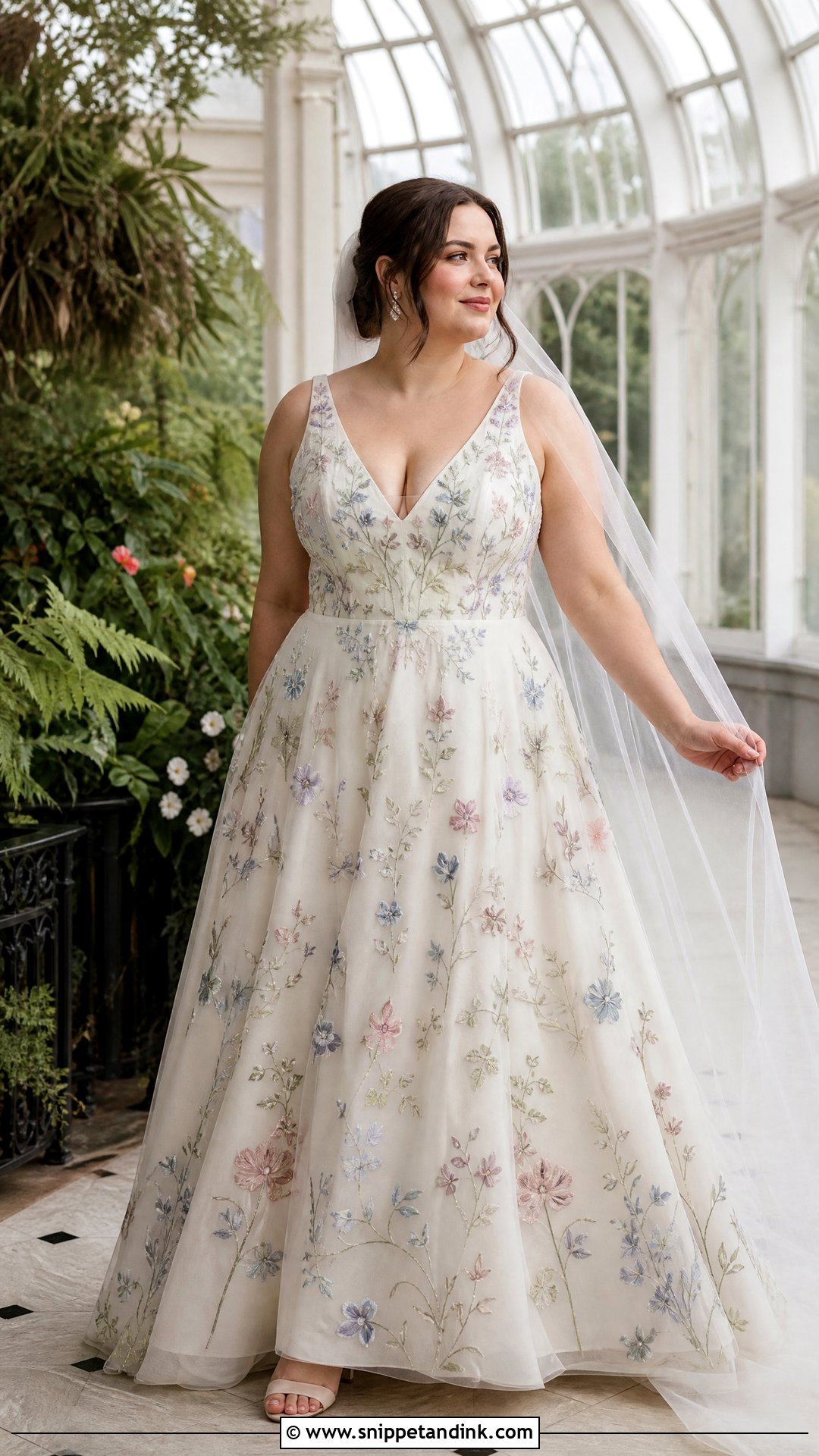
Embroidery gives a retro dress a handmade feel, especially in muted blue, blush, green or lavender around the neckline, waist or hem. Scale it to your frame: petite brides usually look best in smaller motifs, while taller or plus-size brides carry larger ones well. Alterations can distort embroidery that crosses a seam, so ask your seamstress how she’ll handle those areas before she cuts. A fitted bodice with an A-line or tea-length skirt, neutral block heels and a plain tulle veil. Loose waves or a soft updo for a spring garden.
17. Retro Square-Neck Wedding Dress
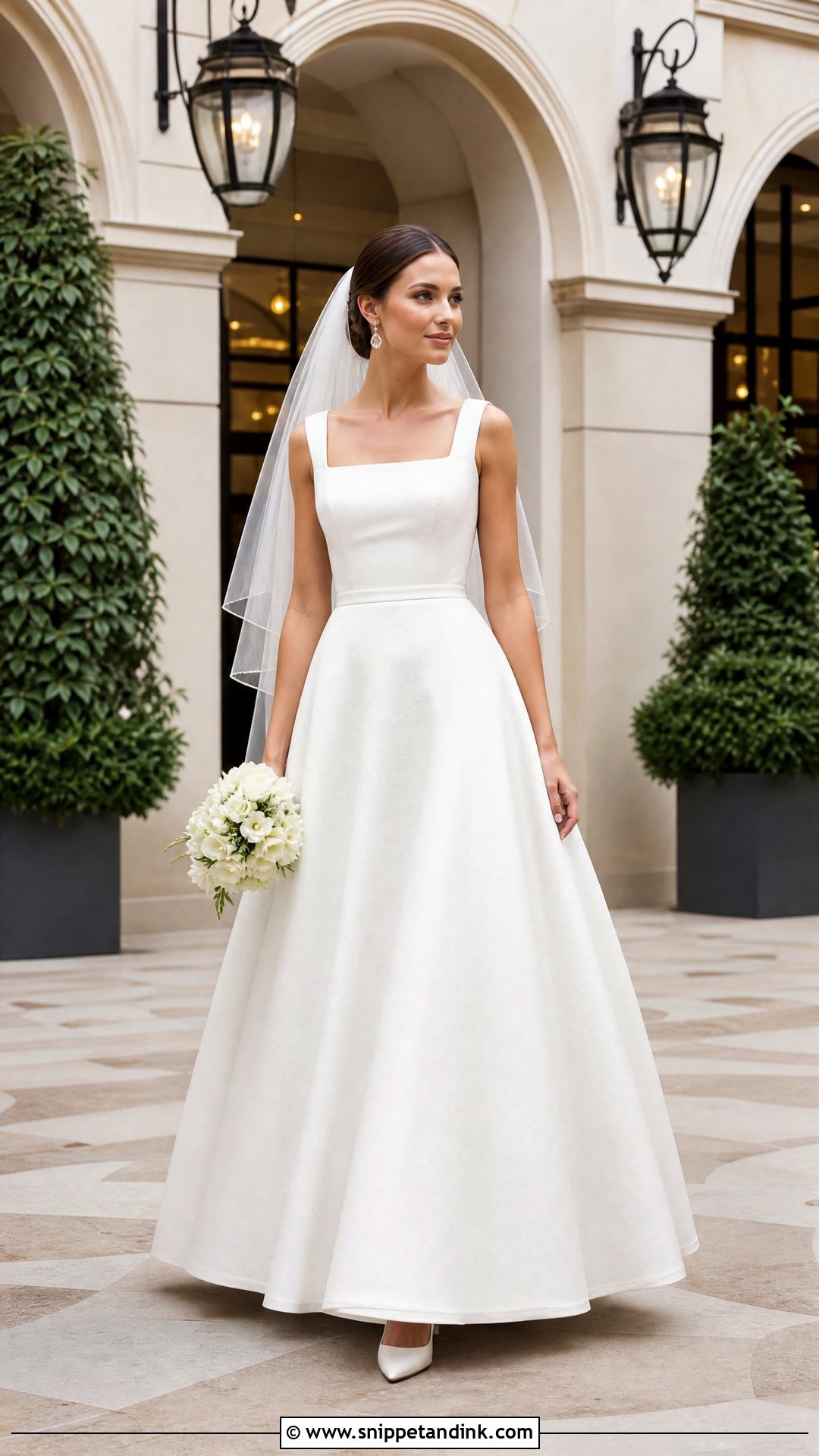
Square necklines show up in several vintage decades, which makes them an easy way in. The width and depth of the square should be adjusted to your bust and how much coverage you want; I usually take it in by small amounts and check in a mirror each time. Hidden cups, boning and reinforced straps are all reasonable to ask for. A fitted bodice with covered buttons over a slim A-line or full tea-length skirt; puff sleeves for romance, wide straps for simplicity. Closed-toe pumps, pearl drops, a fingertip veil and a low bun.
18. Retro Cape Sleeve Wedding Dress
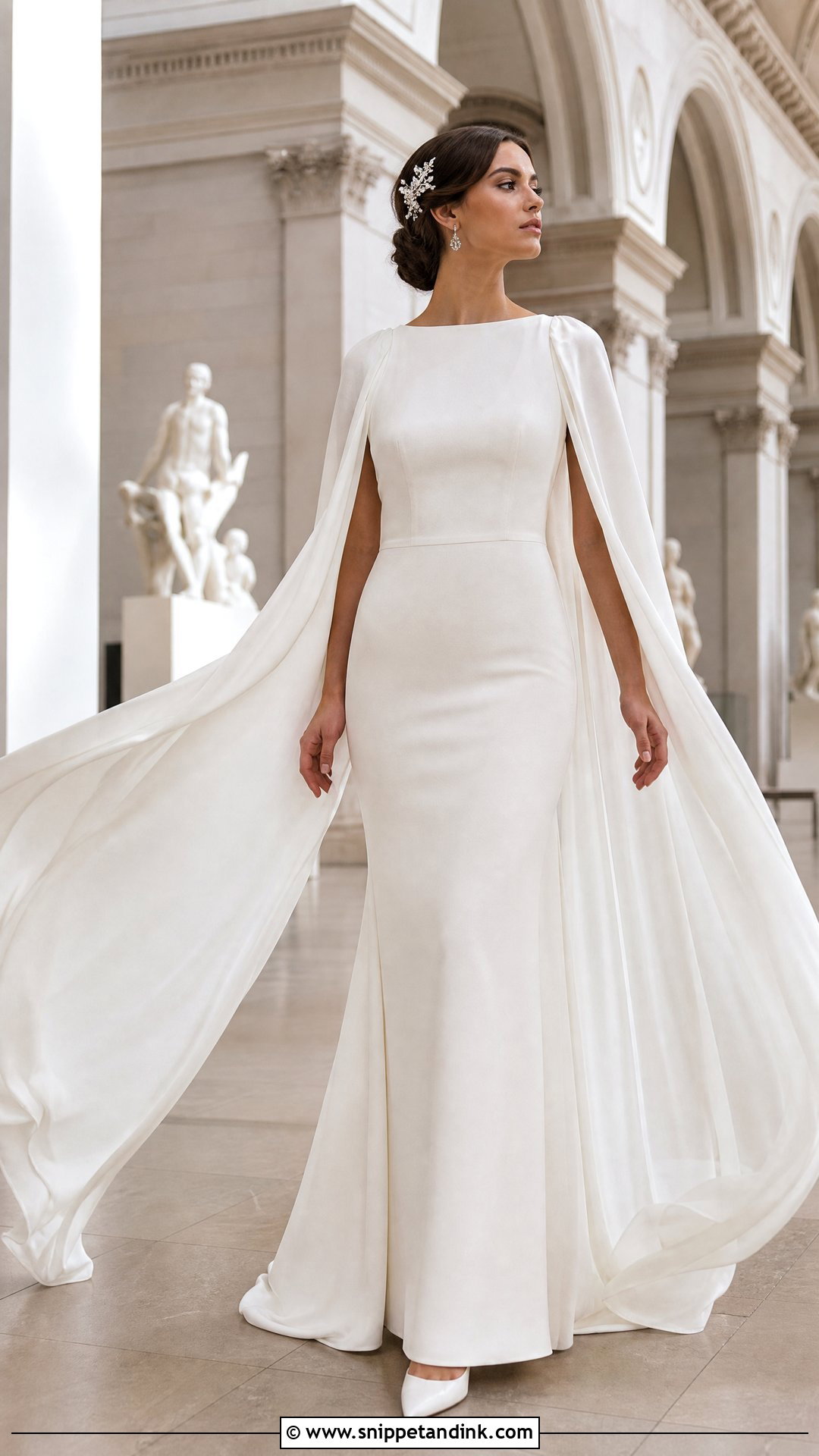
Cape sleeves give arm coverage without the tight fit of a set-in sleeve, which many brides find more comfortable. A fitted column or gentle A-line lets the sleeves lead. Chiffon floats; lace or crepe holds more shape. Walk with your bouquet in hand at the fitting, because a long cape sleeve catches on stems and wraps around wrists. A smooth bun keeps the shoulders clear so the cape falls properly. Pointed pumps, delicate earrings and a minimal comb instead of a bulky veil. Lovely against clean architecture in a museum or modern hotel.
19. Retro Off-the-Shoulder Ball Gown Wedding Dress
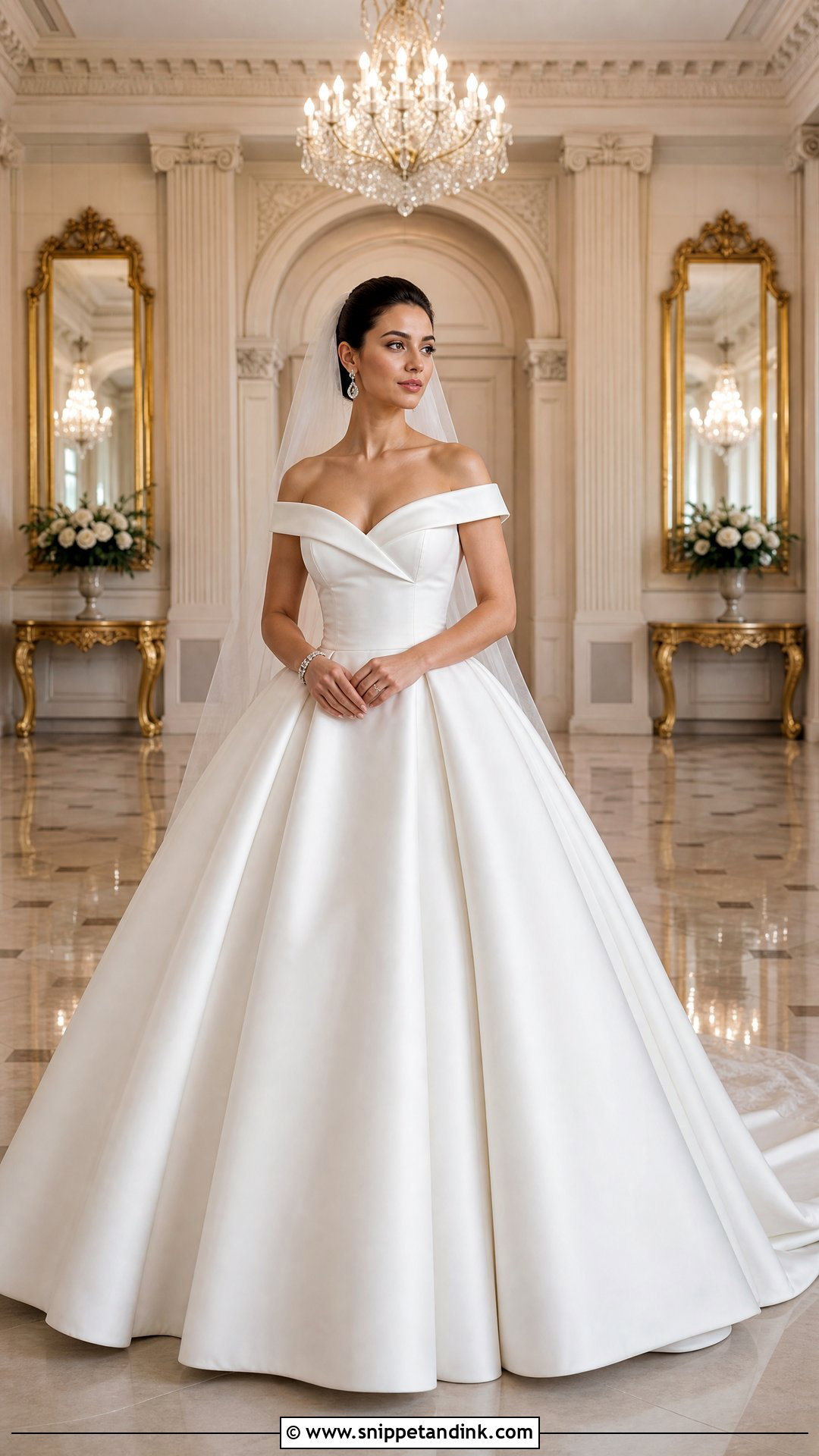
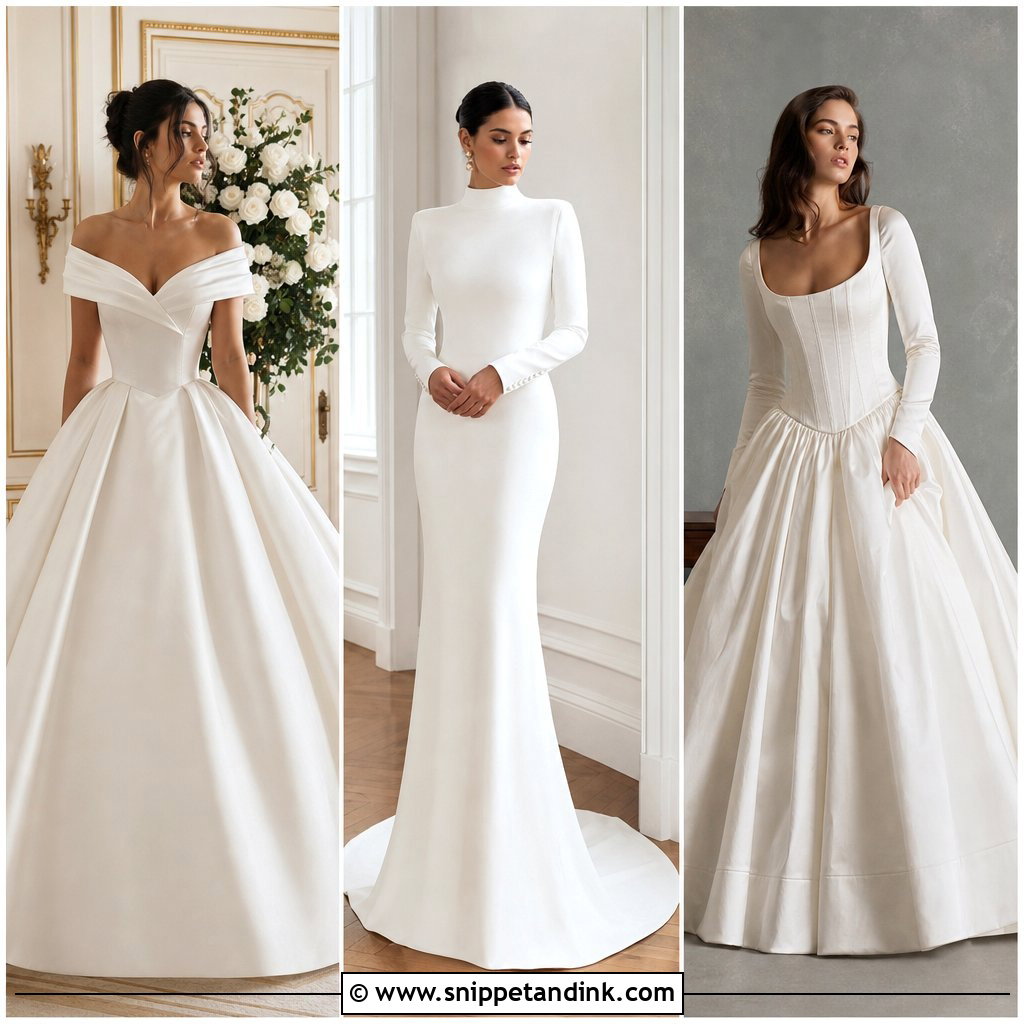
Mid-century off-the-shoulder ball gowns have a folded portrait neckline, structured bodice and full satin or mikado skirt. The neckline must stay put without pinning your arms to your sides. Hug someone, reach up and dance a few steps at the fitting. If it slides, I’d add hidden straps, more boning or a slightly raised back. Keep embellishment restrained because the neckline and skirt already say plenty. Low platform heels, a pearl bracelet, statement studs and a long veil beneath a smooth updo. Built for ballrooms and grand staircases.



20. Retro Peplum Wedding Dress
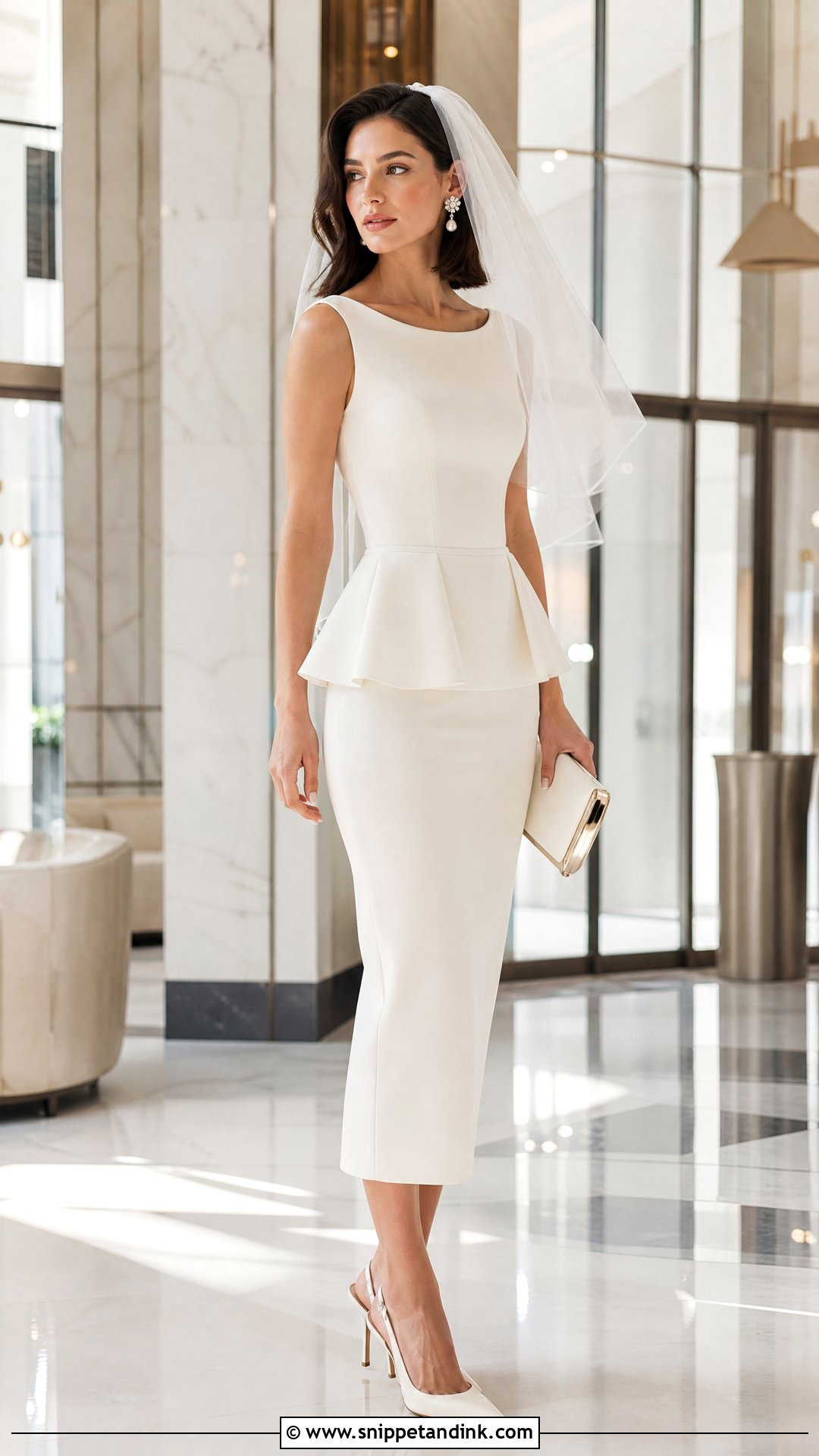
A peplum defines the waist sharply, and placement is everything. It must start at your natural waist; even an inch too low makes the hips look wider. Curved peplums feel soft, angular panels more architectural. Choose a fitted sheath or narrow A-line in satin, crepe or mikado, and make sure the peplum lies flat rather than flaring outward. Pointed slingbacks, pearl-and-crystal earrings, a structured clutch and a shoulder-length veil. A French twist or low bun keeps it sophisticated for a city hotel or courthouse.
Period Hair Deserves Its Own Trial
The hair is usually where a retro look succeeds or slips. Finger waves, pin curls and rolled styles depend on the hair being set and then left to cool, and they react badly to humidity, which can soften waves into frizz by the reception. A trial in similar weather to your wedding tells you how long the style will last.
Bring the veil or headpiece to the trial. A birdcage veil, a pillbox or a cap veil each needs a different base to anchor into, and the stylist builds the shape around it. If your hair is very fine or freshly layered, ask about a small hairpiece for volume; many vintage styles were done on longer, heavier hair than most of us have now.
Give Made-to-Order Gowns Enough Time
Reproduction vintage gowns are often made to order, which can take several months before alterations even begin. I’d start shopping around nine months out and plan two or three fittings. Ready-to-wear and genuine vintage move faster, but vintage often needs repairs first.
What Makes a Dress Read as Vintage
You don’t have to copy a decade to wear it well. Start with a silhouette that suits you, then bring in historical character through the lace, the sleeves, the beadwork, the fabric or a single accessory. Keep comfort in the brief: walk, sit, raise your arms and wear your actual shoes at every fitting. Modern construction gives you better support and wider sizing while keeping the look of an earlier era. A 1920s beaded column, a 1950s tea-length or a 1970s lace gown can all feel personal with careful styling.
You'll Like These Ideas:







Leave a Reply