
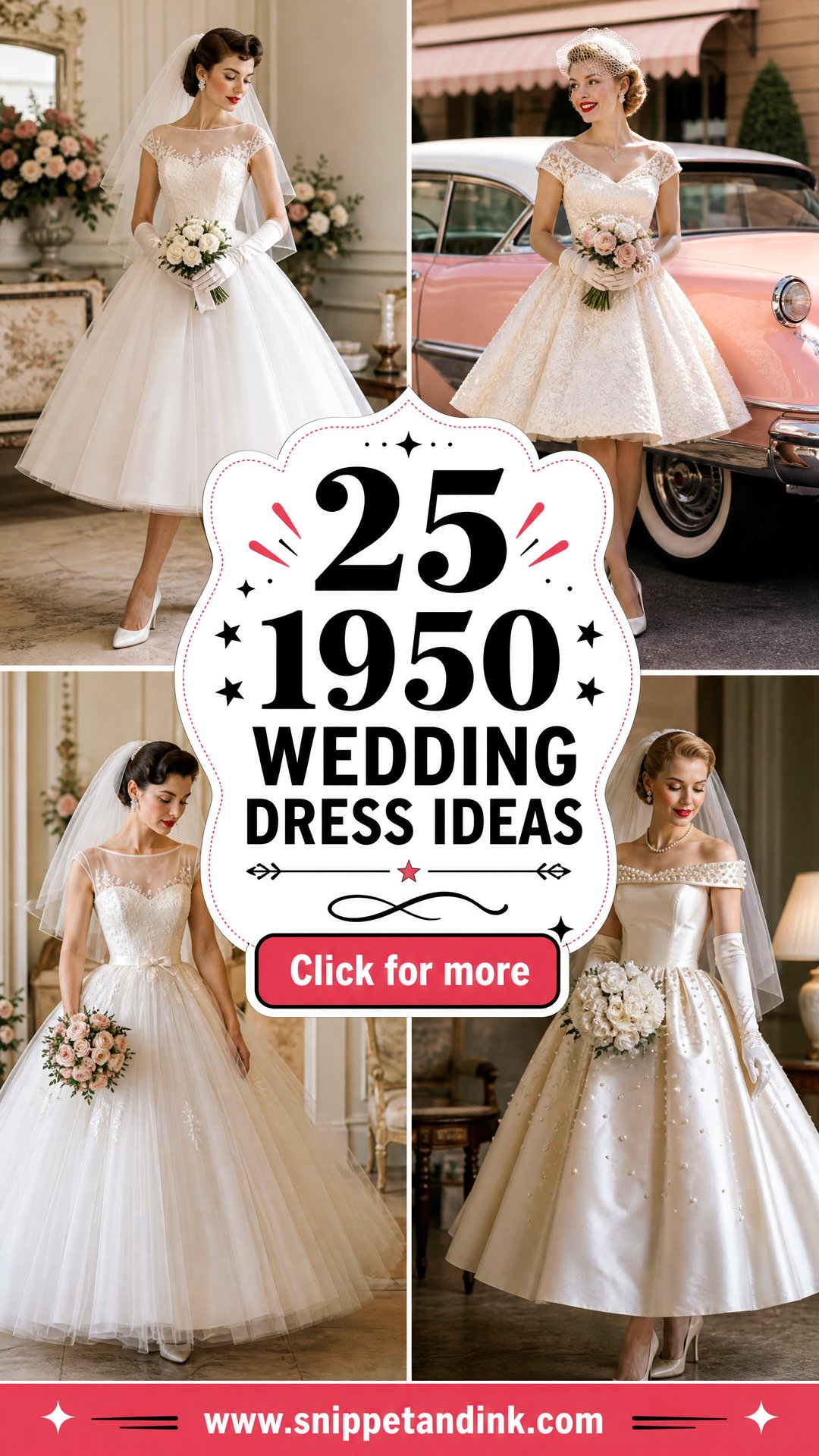
The fifties gave brides the shape most people still picture when they hear “vintage wedding dress”: a nipped waist, a skirt that swings, satin with a soft sheen, lace sleeves, pearls and a short veil. That silhouette has lasted because it is genuinely easy to wear, and because small changes in fabric and length move it from playful to formal. Think tea-length gowns with pumps, ballerina skirts with short veils, full satin ball gowns with gloves and lace dresses with pearl earrings. Below are 25 fifties looks for everything from a courthouse ceremony to a ballroom reception, each with what I’d watch for when you try it on.
Knee, Tea, Ballerina or Floor Length?
Fifties dresses come in four lengths, and the length decides almost everything else, from the shoes to how formal the day feels. This is how I explain them at a first appointment.
- Knee length: the most casual. It reads best at a courthouse, a brunch or as a reception change, and puts your shoes and legs on full display.
- Tea length: the hem sits between knee and ankle, ideally at the narrowest point of the calf. The decade’s signature, and the easiest to dance in.
- Ballerina length: just above the ankle. More formal than tea, still shows a strappy shoe, and suits soft tulle.
- Floor length: the formal option for a ballroom or evening wedding. Plan a bustle or wrist loop for dancing.
Height changes the picture. On a petite bride, a tea hem can drift toward the ankle and read like an awkward ballerina length, so I set the hem by eye in a full-length mirror rather than by a number on a size chart. Taller brides often find off-the-rack tea lengths land nearer the knee, and may need a let-down hem or a longer cut.
1. 1950s Tea Length Wedding Dress
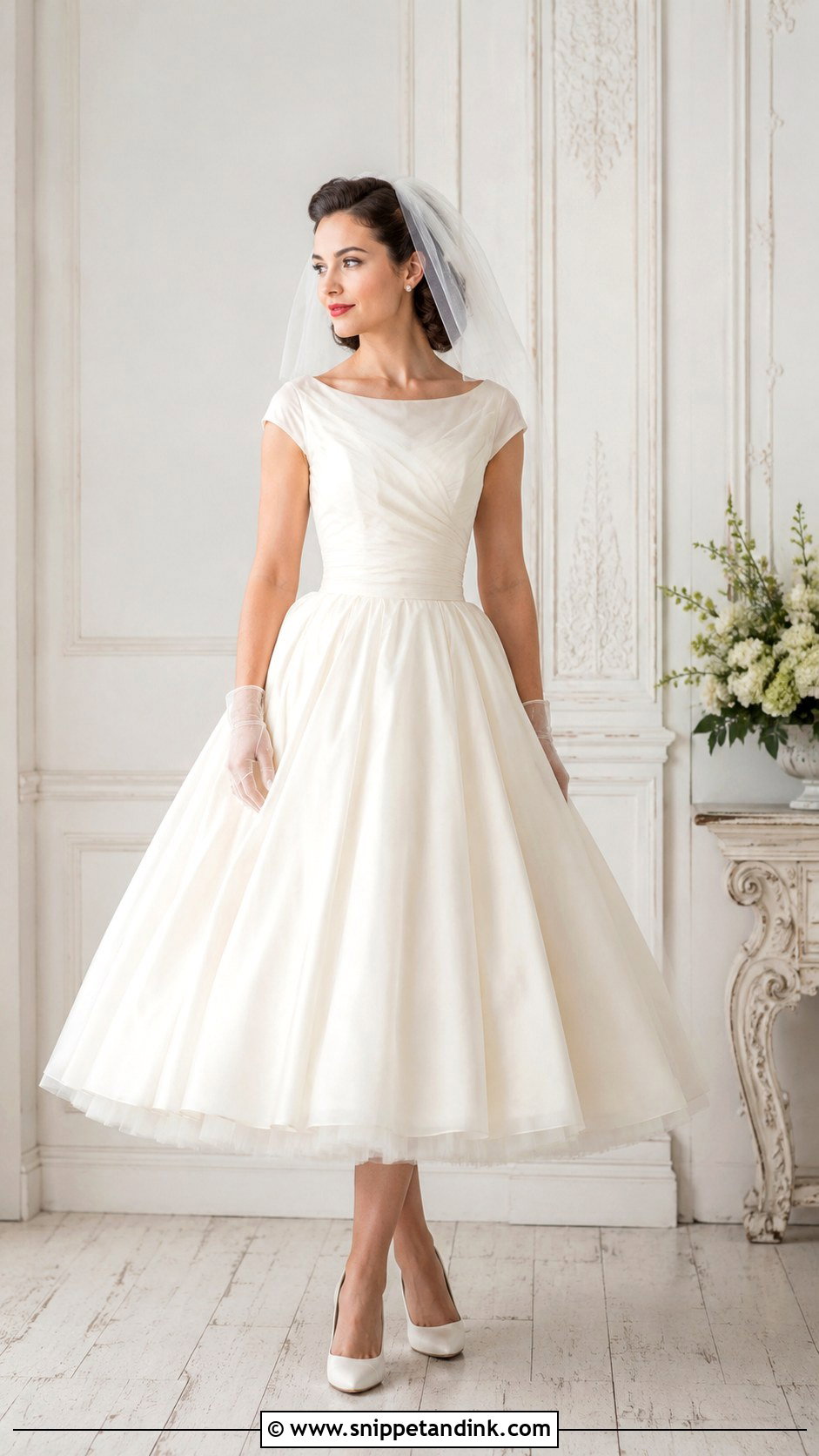
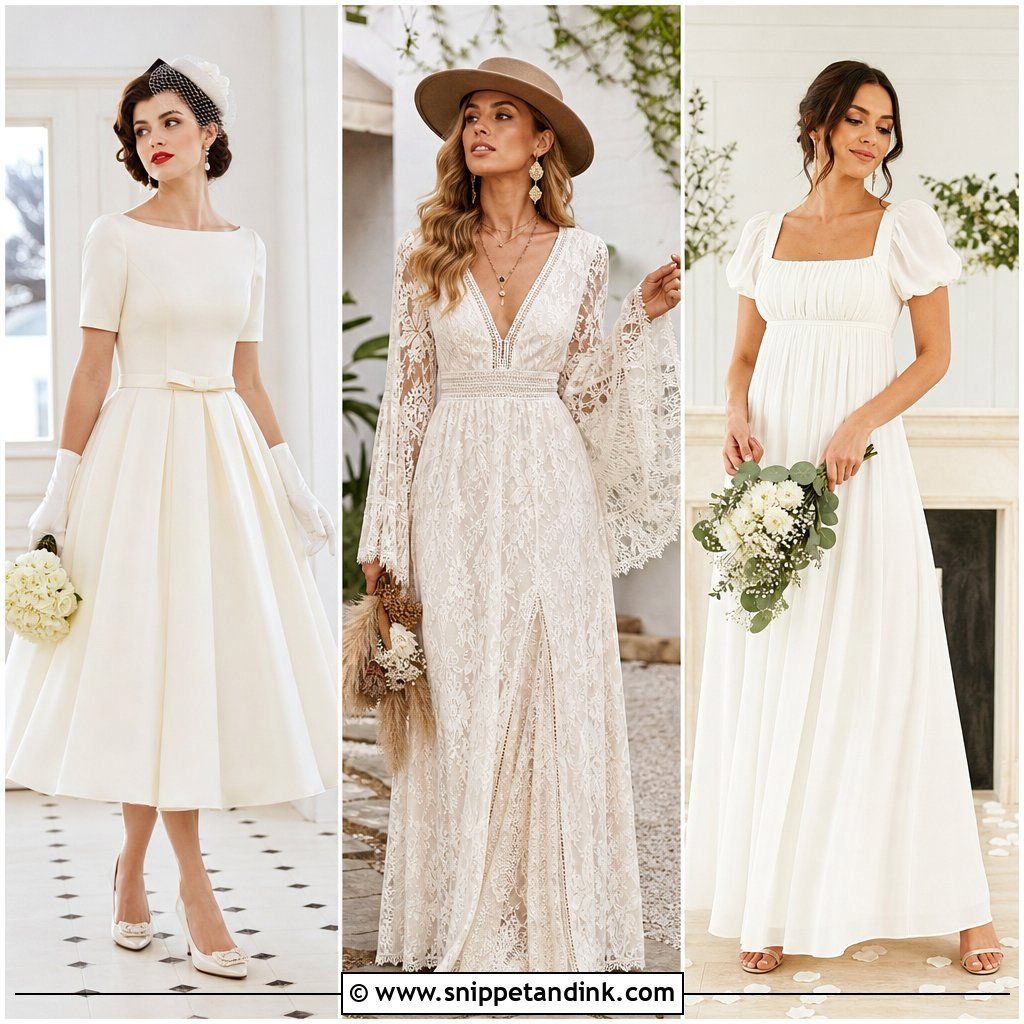
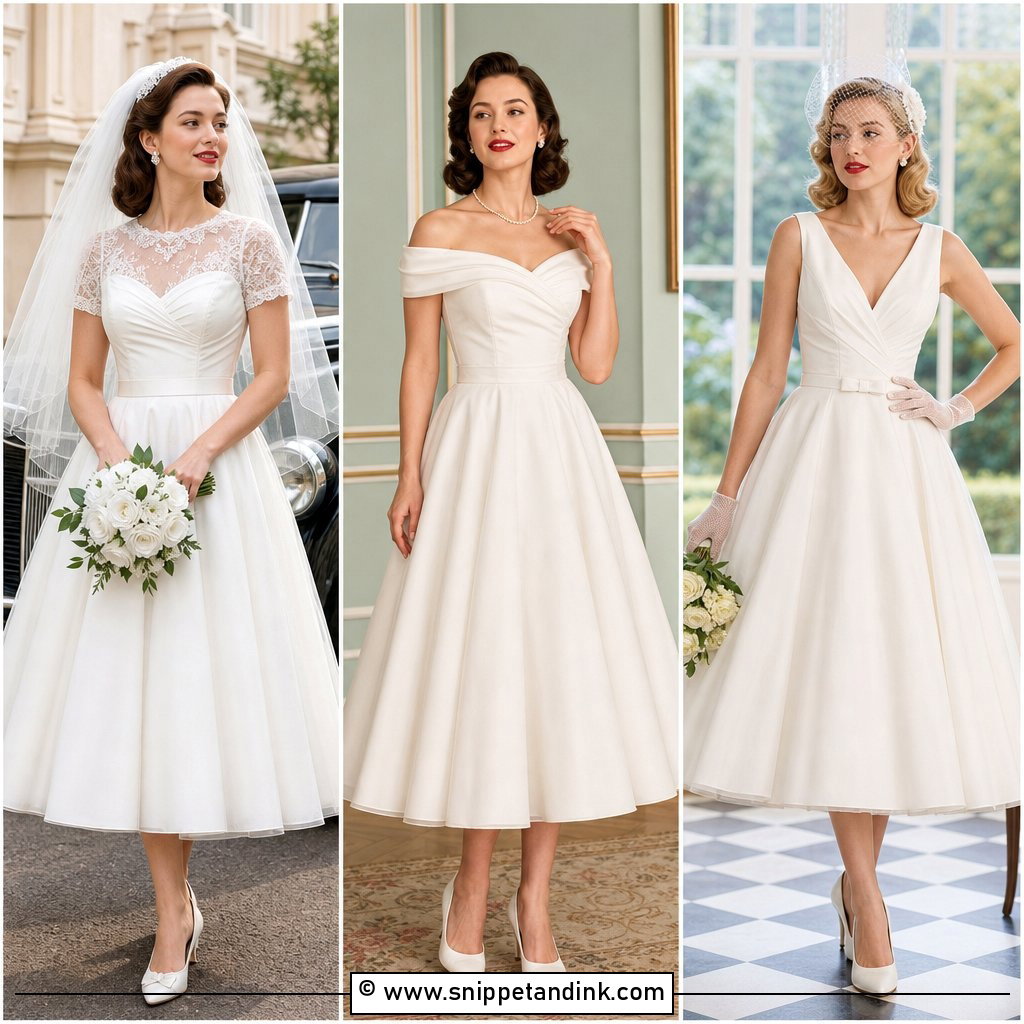
Tea length is the decade’s signature, with a hem that falls below the knee and above the ankle. A fitted bodice, full skirt and light petticoat build the hourglass, and satin, tulle, lace or organza all suit it. Add closed-toe pumps, pearl studs, a short veil and a small structured bouquet. Where the hem lands on your leg matters more than the label: I aim for the narrowest point of the calf, because a hem that stops at the widest point visually shortens the leg. With no train to manage, the skirt keeps moving in walking and dancing photos.
2. 1950s Lace Wedding Dress
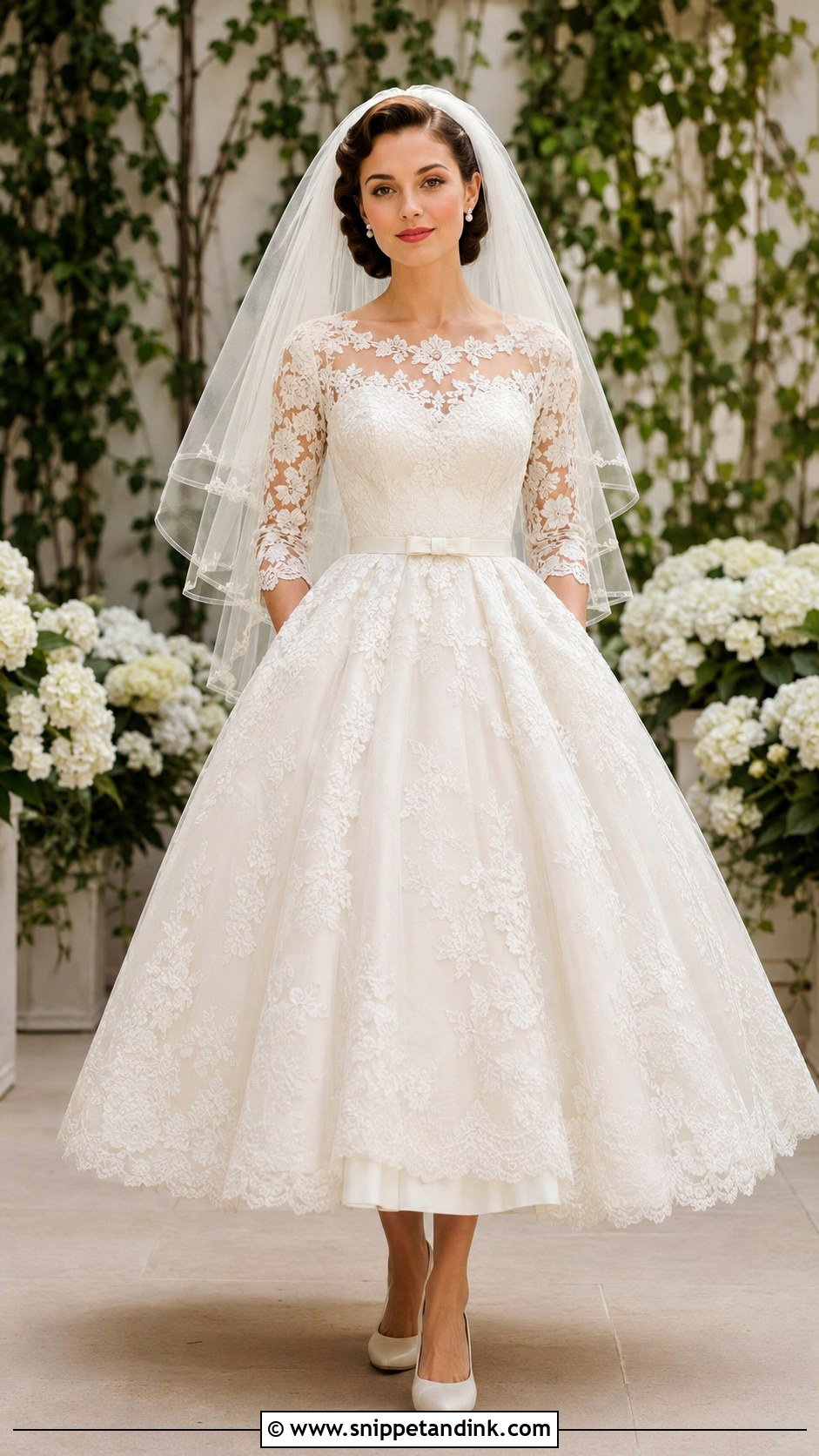
Lace dresses from this decade lean modest, with coverage that still feels feminine. Look for Chantilly-style lace, a floral overlay, illusion sleeves or a lace bodice over satin, with a fitted waist and full skirt underneath. Pearl drop earrings, ivory heels and a fingertip veil with a clean edge are enough. Chantilly is fine and soft, so I’m careful with veil combs and bracelets anywhere near it; one snag pulls a visible thread through the pattern. If the lace is busy, carry white blooms and greenery and nothing fussier.
3. 1950s Satin Wedding Dress
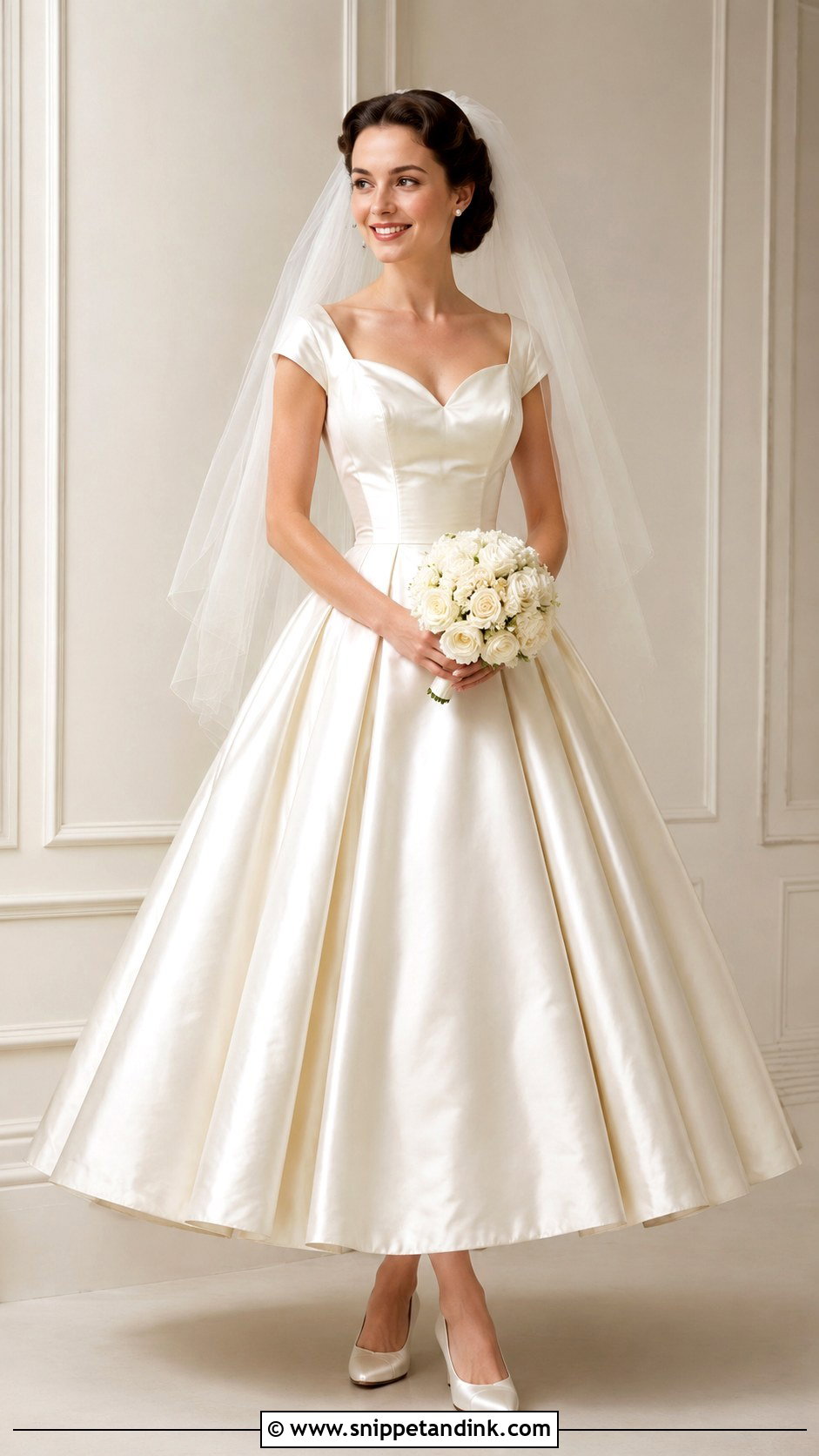
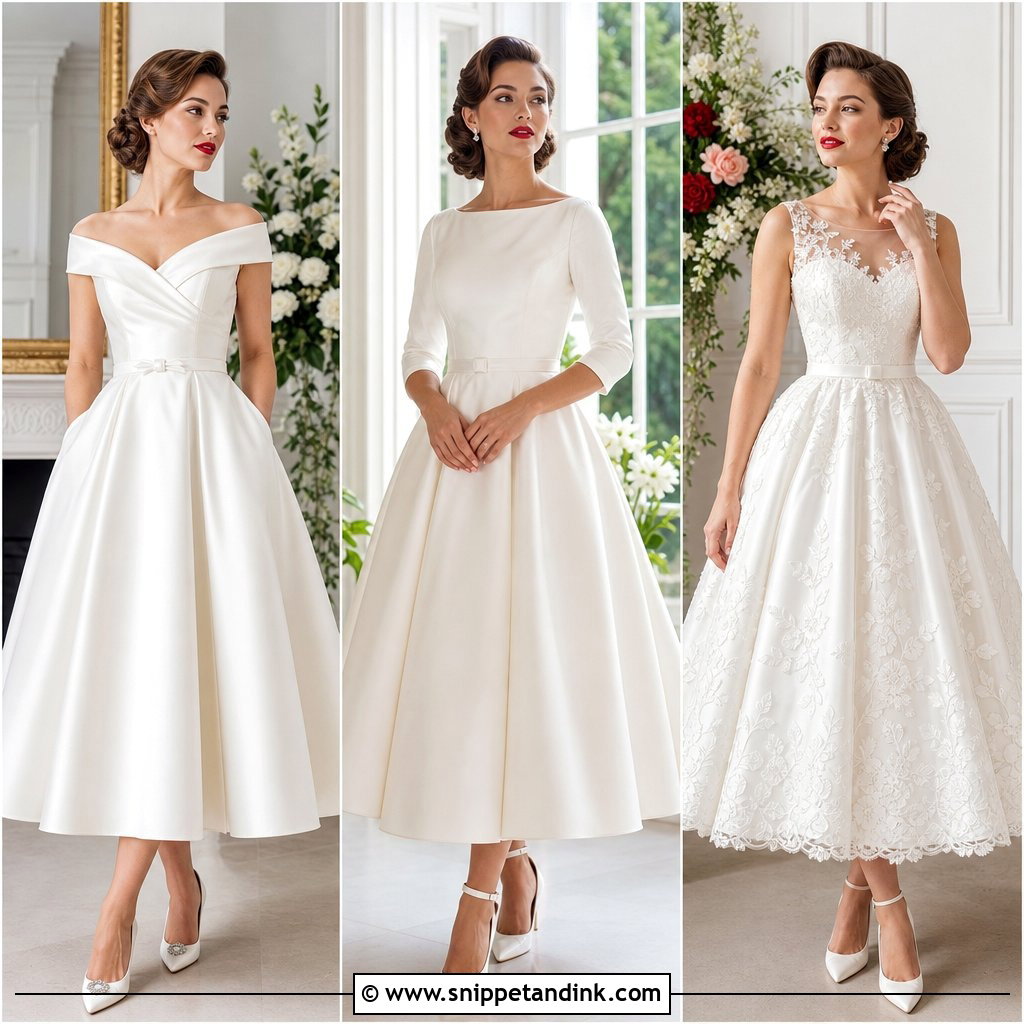
Verdict first: satin is the fabric for a Hollywood-inspired fifties bride. It holds structure, takes a soft shine under lights and shows off a defined waist. Choose a sweetheart, bateau or scoop neckline with a full skirt that keeps its shape, then add satin pumps, pearl earrings, a neat veil and, for a formal day, short gloves. The trade-off is creasing. Heavy duchess satin recovers far better than thin polyester satin after a seated ceremony, and I always have a bride sit down in a sample before committing. Sleek waves, a low bun or a rolled style let the fabric lead.
4. 1950s Ballerina Length Wedding Dress
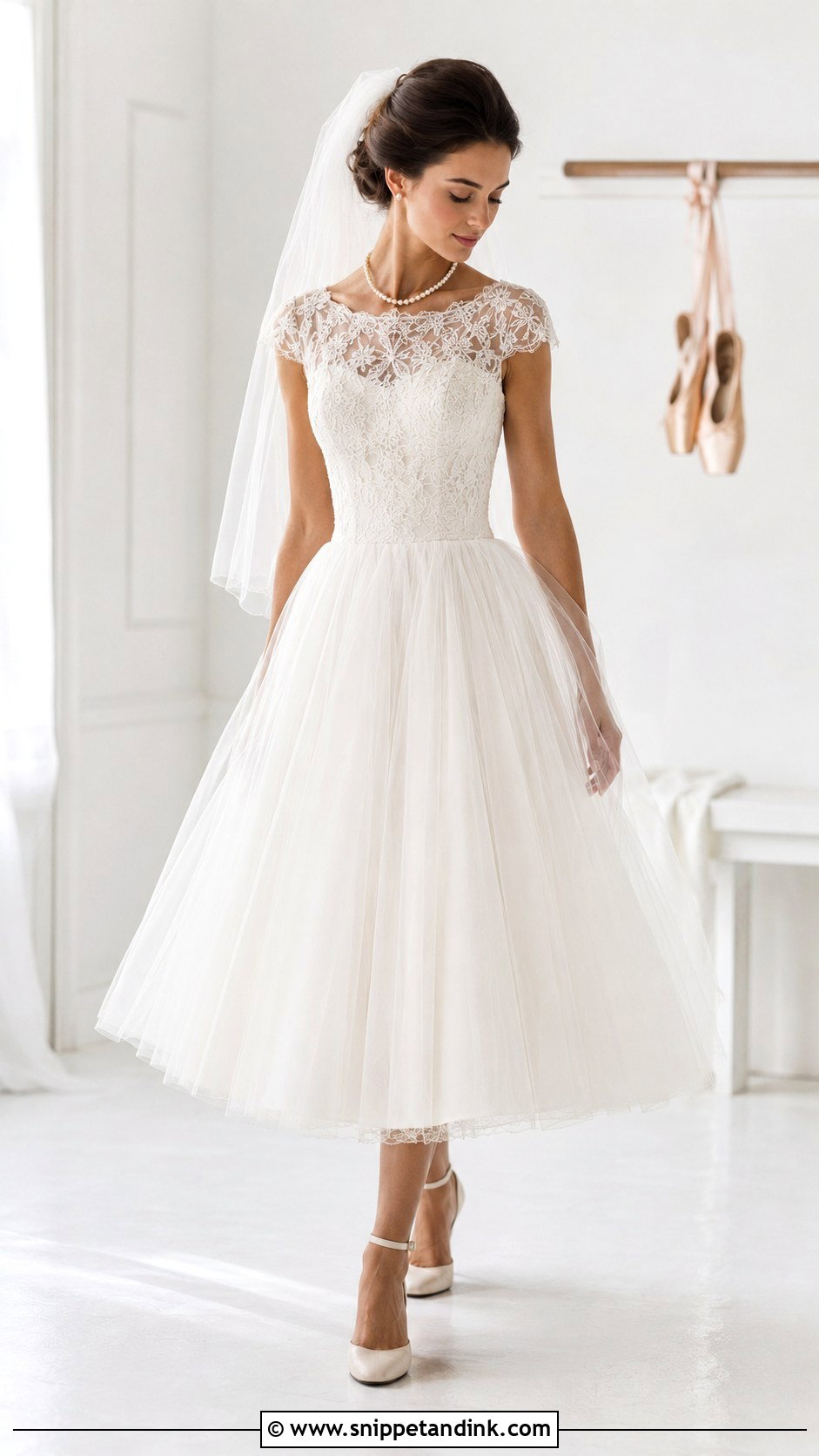
Ballerina length lands around the lower calf or ankle, between tea and floor. It keeps the shoes in view while adding more drama than tea length, and tulle or organza floats around the legs at this length in a way satin can’t. Ankle-strap heels, pearl jewelry and a small veil or bridal headband complete it. I push for the strap here: a pump with nothing holding it on slips off on a dance floor, and at this length everyone sees it happen. It sits well with a softer, ballet-inspired wedding.
5. 1950s Short Wedding Dress
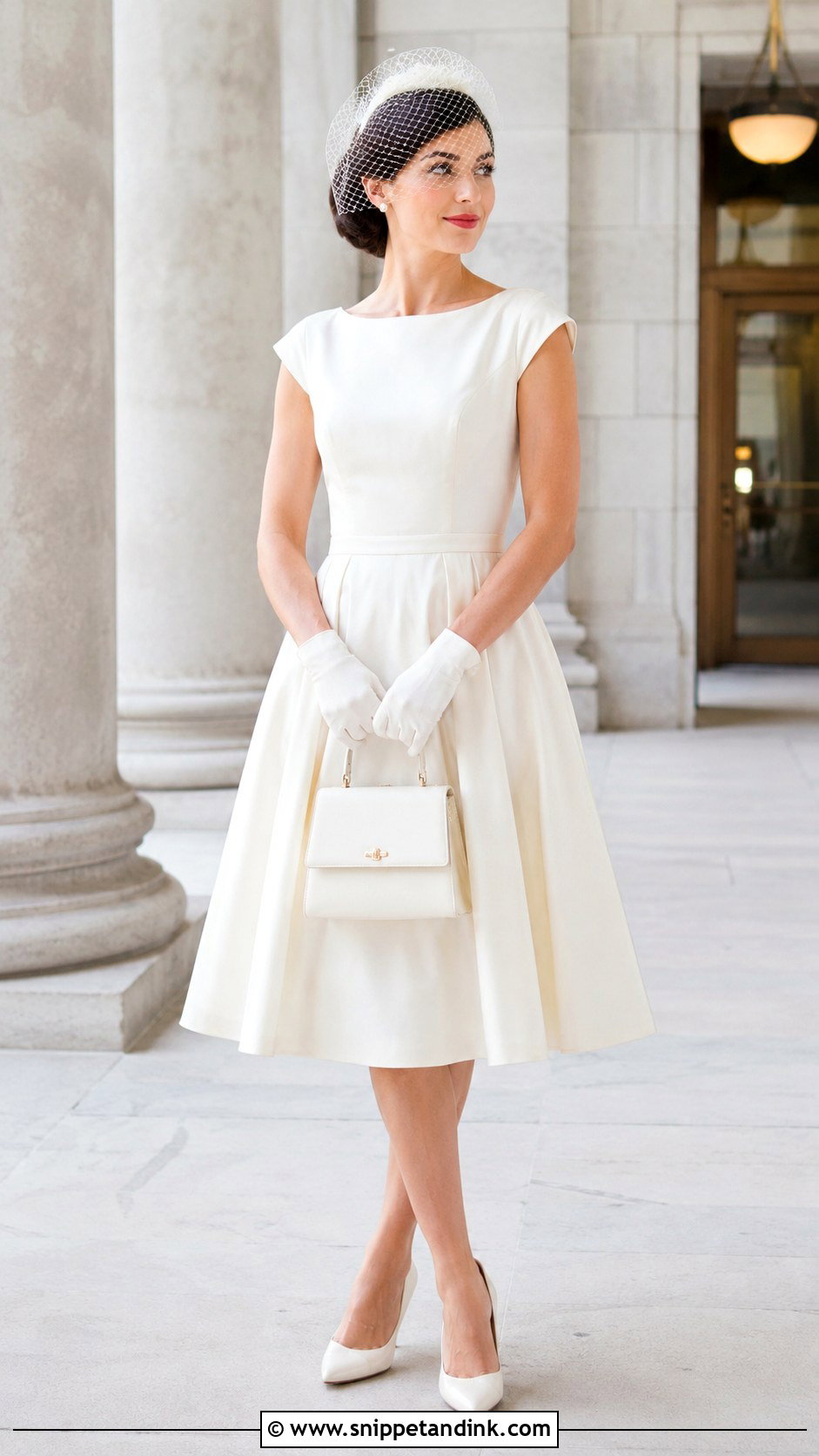
A 1950s short wedding dress takes the decade into lighter, less formal territory. The skirt lands at the knee or just below, and a gentle petticoat gives it lift, while a fitted bodice, cap sleeves and a rounded neckline keep the proportions sweet. White pumps, a birdcage veil, pearl studs and a small top-handle bag finish it. I like it for courthouse weddings, brunch receptions, elopements and second looks, and it is one of the easiest shapes to alter. One practical warning: a knee-length full skirt flies up in wind and when you sit on a low chair, so slip shorts underneath are worth packing.
6. 1950s Tulle Wedding Dress
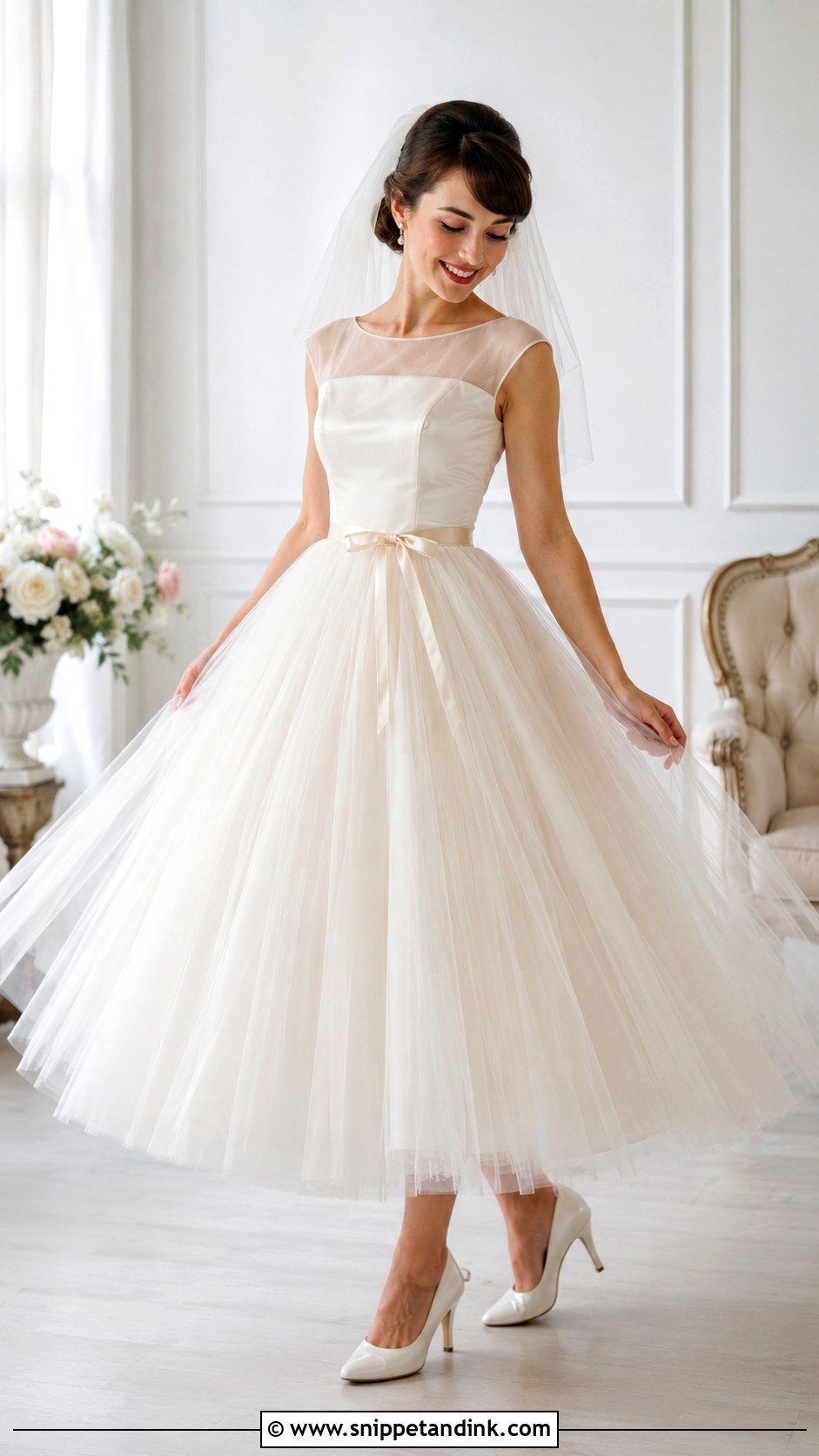
Tulle should float, not stand stiffly away from the body. A fitted bodice over a soft multi-layer skirt in tea, ballerina or floor length gives that effect, styled with satin pumps, pearl jewelry and a delicate veil, with a ribbon belt or small bow if the waist needs definition. Ask what kind of tulle it is. Soft bridal tulle drapes, while stiffer net holds a bell shape but can scratch your legs, so check the skirt has a smooth lining. Volume without weight keeps it comfortable through a long day, down the aisle and across the lawn afterward.
7. 1950s Strapless Wedding Dress
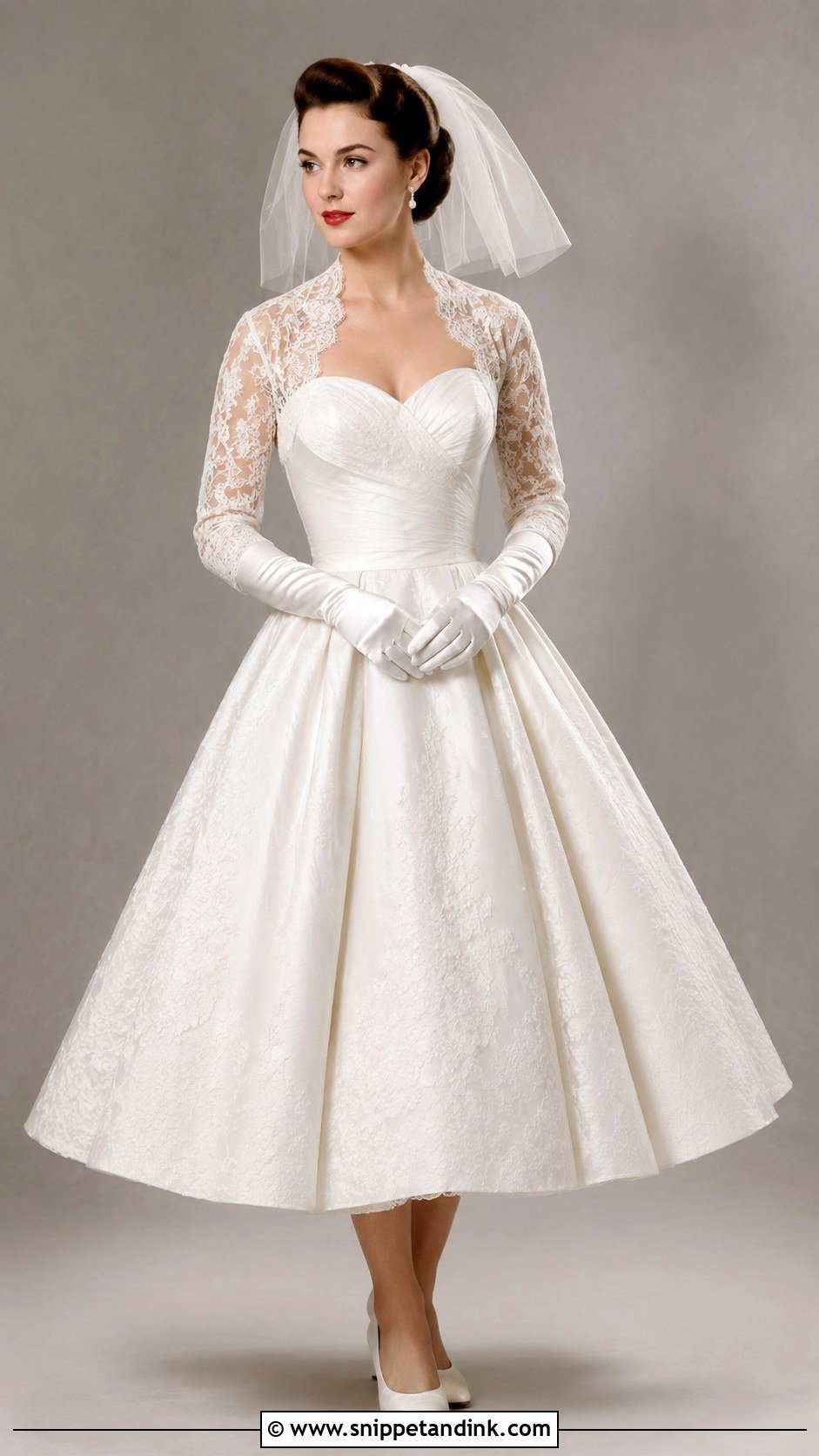
A 1950s strapless wedding dress leans glamorous, and it needs balance to stay in period. Choose a structured bodice, a sweetheart neckline and a full skirt, then add a lace bolero, satin gloves or a short veil; closed-toe heels and pearl earrings soften the open neckline. The bodice has to hold itself up. Internal boning and a waist stay anchored at your natural waist mean you aren’t tugging the top all night, and I test this at fittings by having you raise both arms and bend forward. A sheer wrap or cropped jacket covers the shoulders for the ceremony and comes off for the reception.
8. 1950s Long Sleeve Wedding Dress
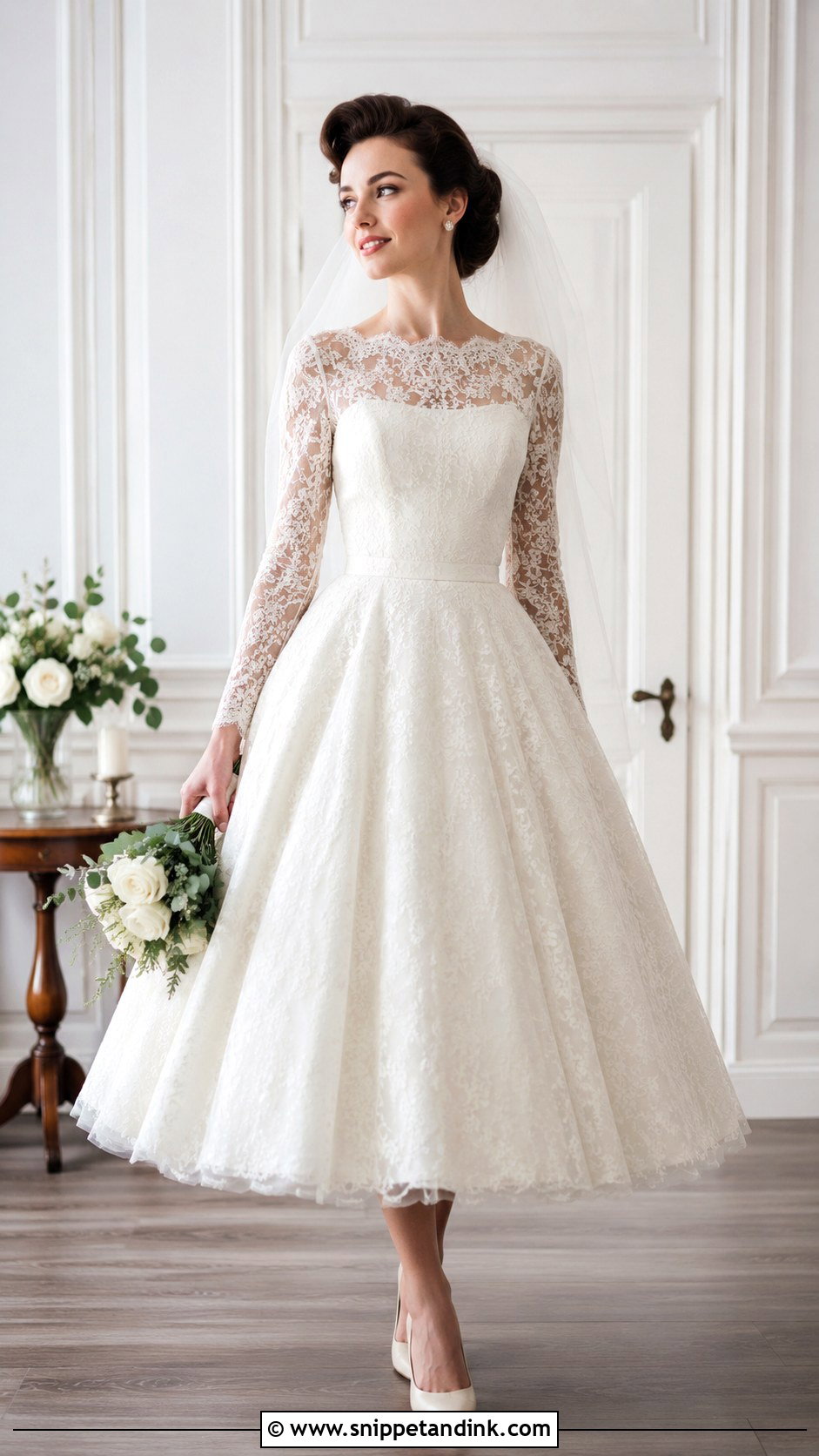
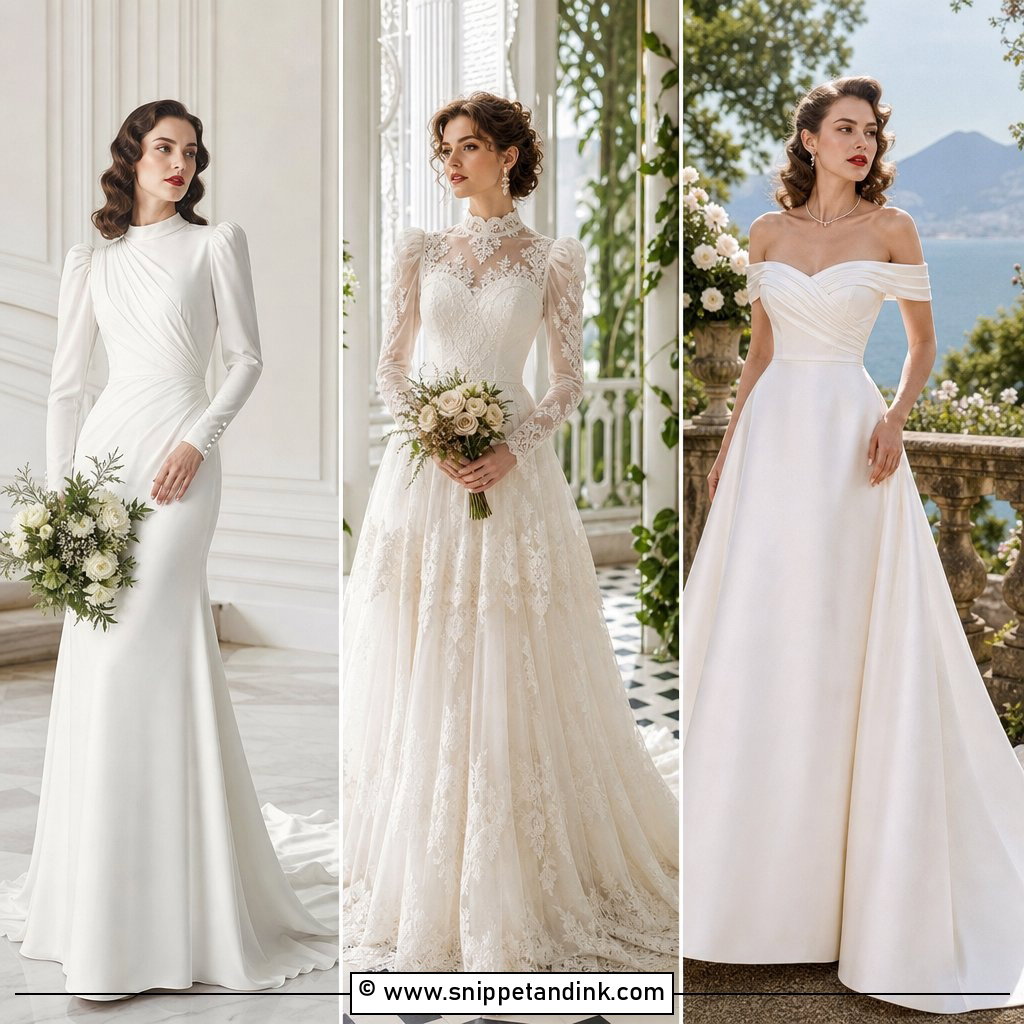
Long sleeves suit the decade’s shape well, in lace, illusion fabric or satin. Keep the waist defined, choose tea, ballerina or full length for the skirt, and add pearl earrings, soft heels and a veil that doesn’t compete with the sleeves. For a long day I’d pick lace or illusion sleeves over satin, since lace with a little stretch moves with you while satin sleeves bind at the elbow every time you bend your arm. A high neckline reads formal and a scoop neckline gentler. Cooler seasons are its natural home.
9. 1950s High Neck Wedding Dress
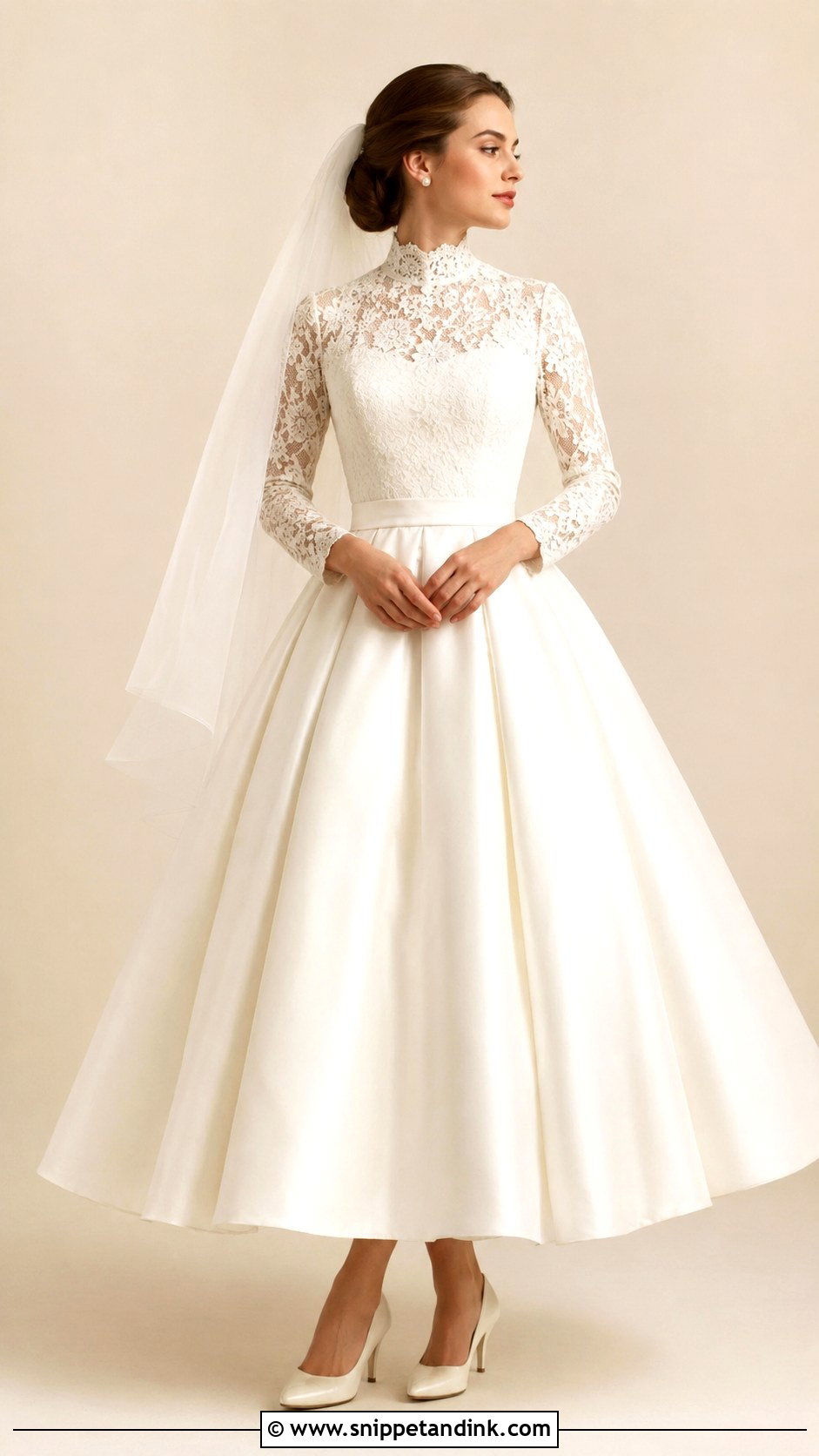
High necks can tip into strict, and the full skirt is what stops that. The neckline itself can be lace, satin or sheer illusion fabric, depending on how soft you want the effect. Pair it with pearl button earrings, a low bun, ivory pumps and a simple veil at the crown or the back of the head. With a covered throat I usually place the veil comb below the bun rather than at the crown, which leaves more open space around the face. Lace gloves or a small bouquet suit the portrait feel.
10. 1950s Sweetheart Wedding Dress
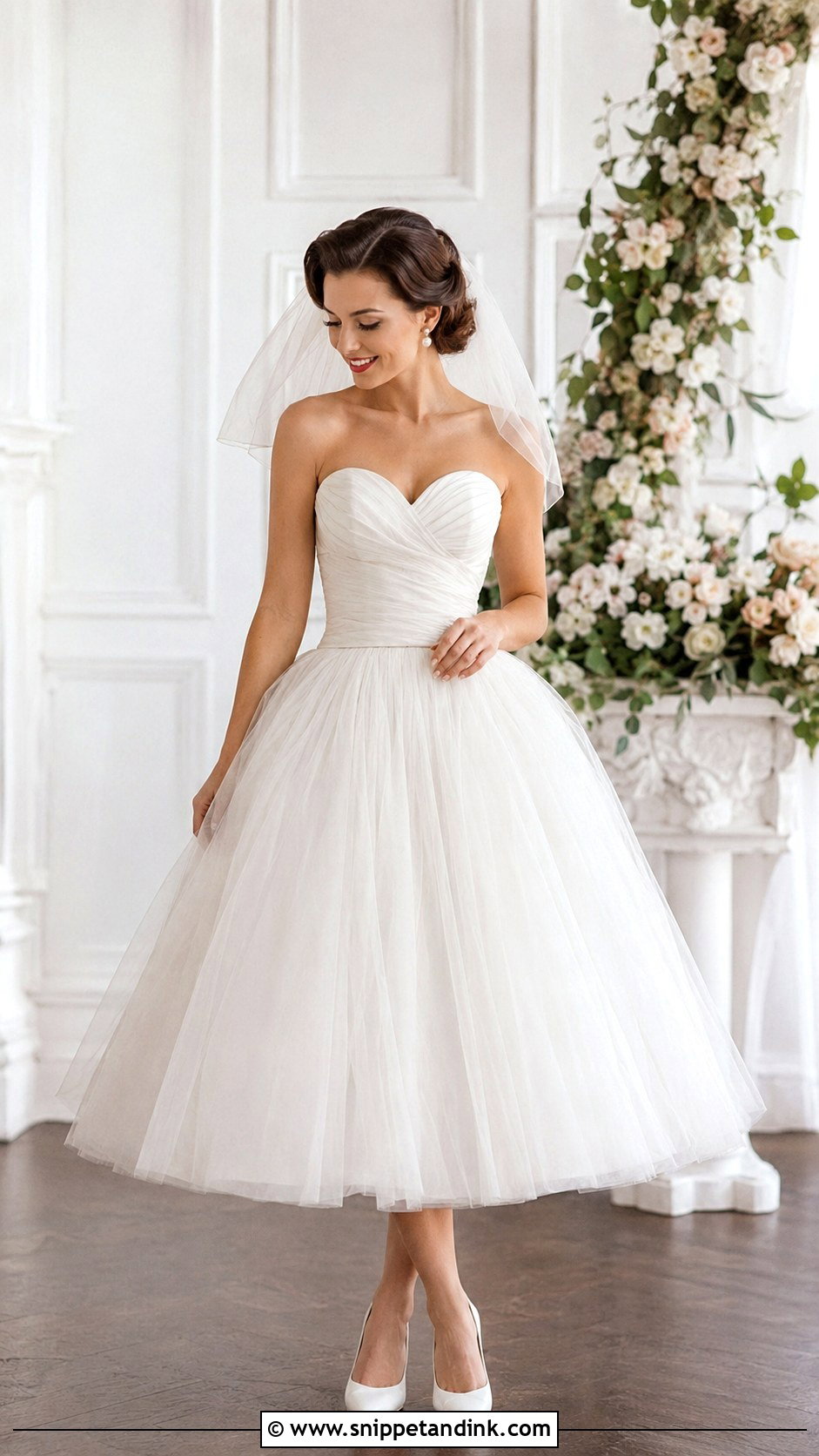
Few necklines suit as many figures as the sweetheart, because the curve frames the shoulders and collarbone gently. With a cinched waist and full skirt it reads purely fifties; satin makes it polished, and lace or tulle softer. Add pearl earrings, a short veil and closed-toe pumps, and for more detail, a bow belt, a button back or a little floral appliqué. On a larger bust, I look for a sweetheart with a slightly shallower dip and some internal structure, so you’re not adjusting it every time someone hugs you.
11. 1950s Bateau Neck Wedding Dress
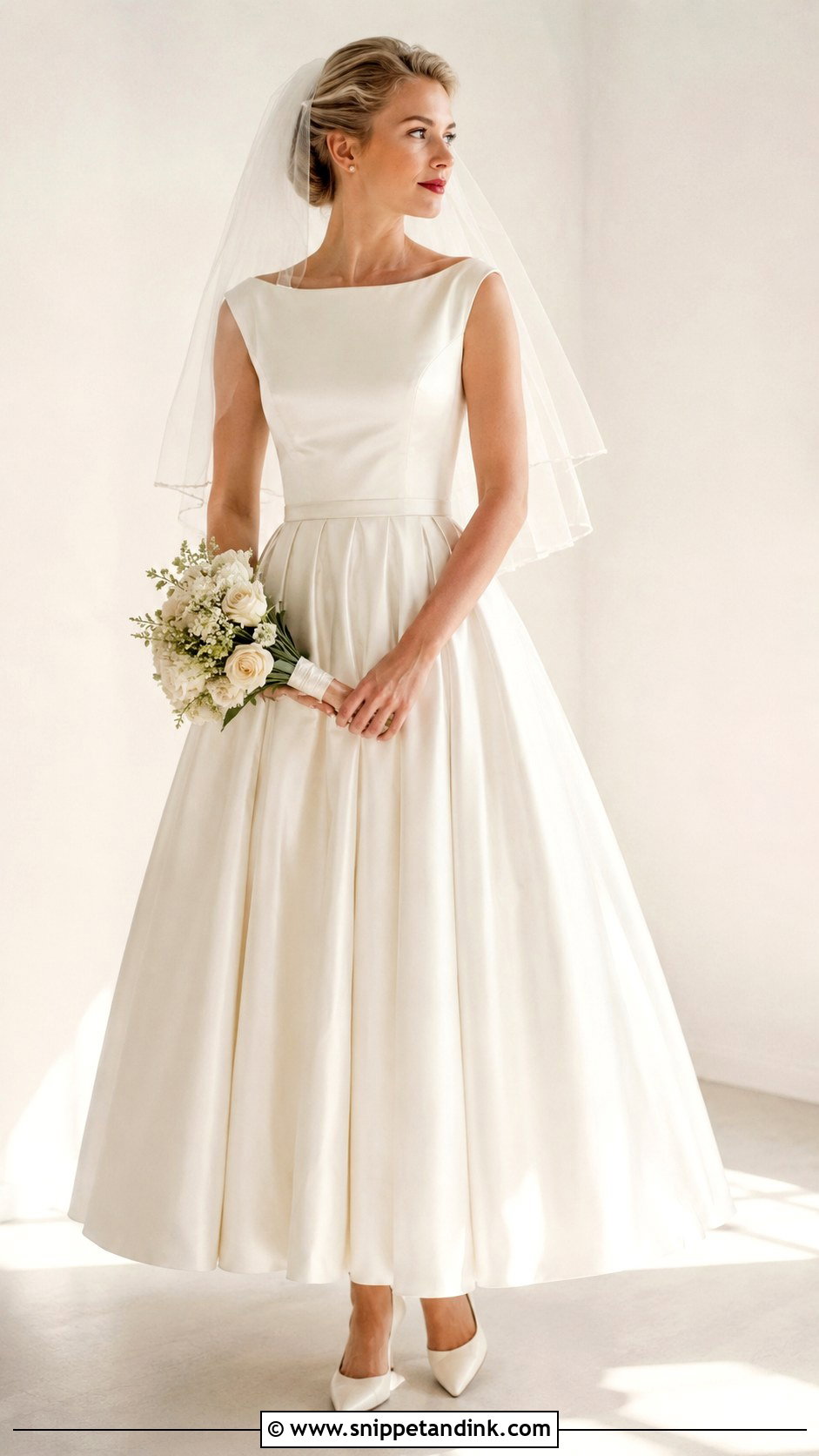
A bateau neckline runs wide and nearly straight across the collarbone, so you get shape without much skin. It sits well in satin, lace or a mikado-style fabric, over a tea or floor length skirt. Keep the extras simple: pearl studs, a neat veil and pointed pumps. Because the neckline depends on a clean line at the shoulder points, I check that it doesn’t slide off one shoulder when you lift an arm; a hidden lingerie strap keeper sewn inside fixes that. A low chignon or smooth waves keep the line uncluttered, at a small wedding or a formal one.
12. 1950s Off Shoulder Wedding Dress
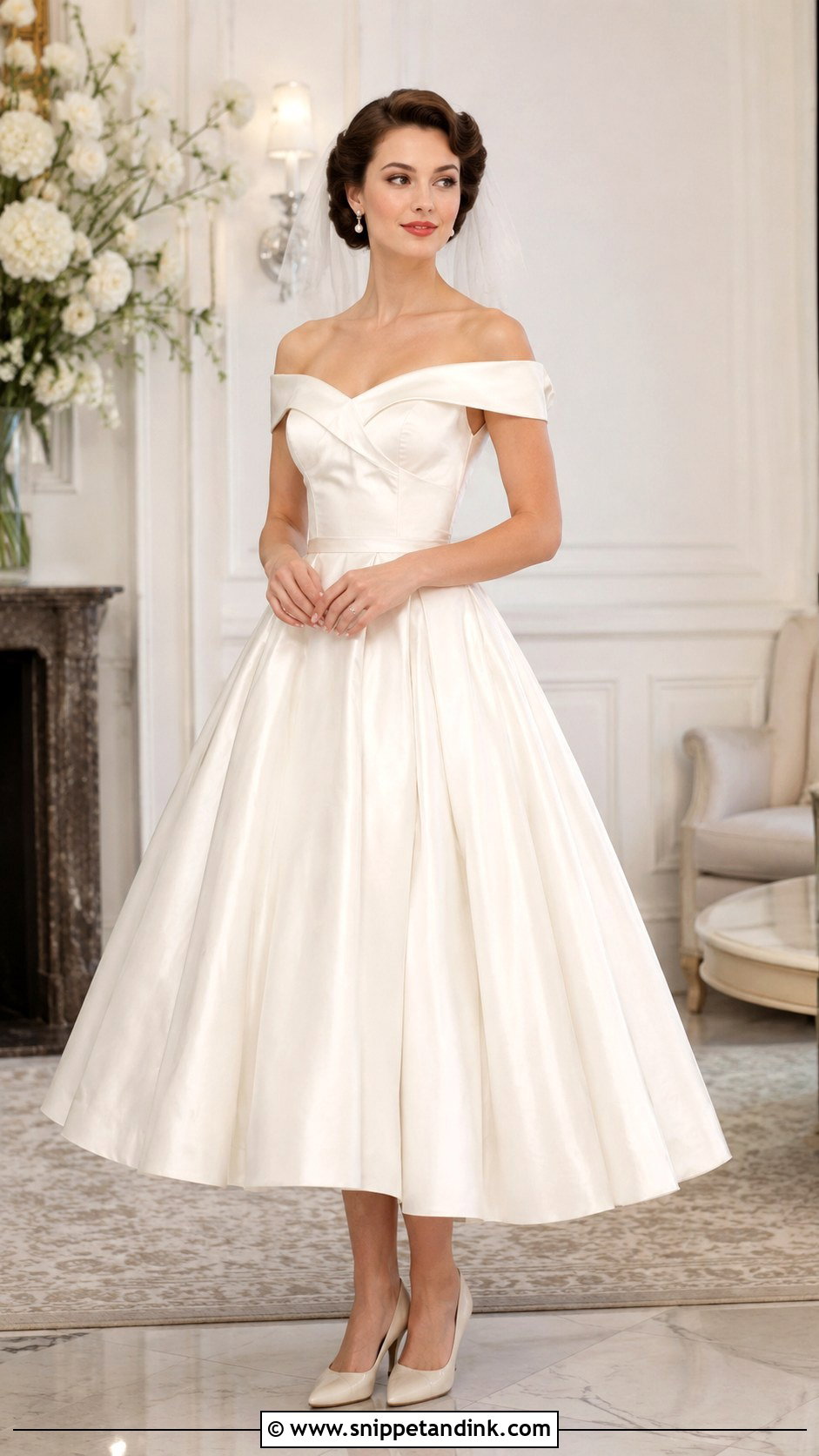
Off-shoulder necklines bring soft glamour while the fitted waist and full skirt keep the shape classic. Satin looks polished and lace more romantic. Pair it with pearl drop earrings, ivory pumps and a short veil or structured headpiece, and skip the heavy necklace. The thing to test is arm movement. A band sitting across the upper arms pins them close to your sides, so raise your arms, hug someone and pretend to hold the cake knife before you commit. Keep the bouquet clean so the shoulders lead.
13. 1950s Halter Wedding Dress
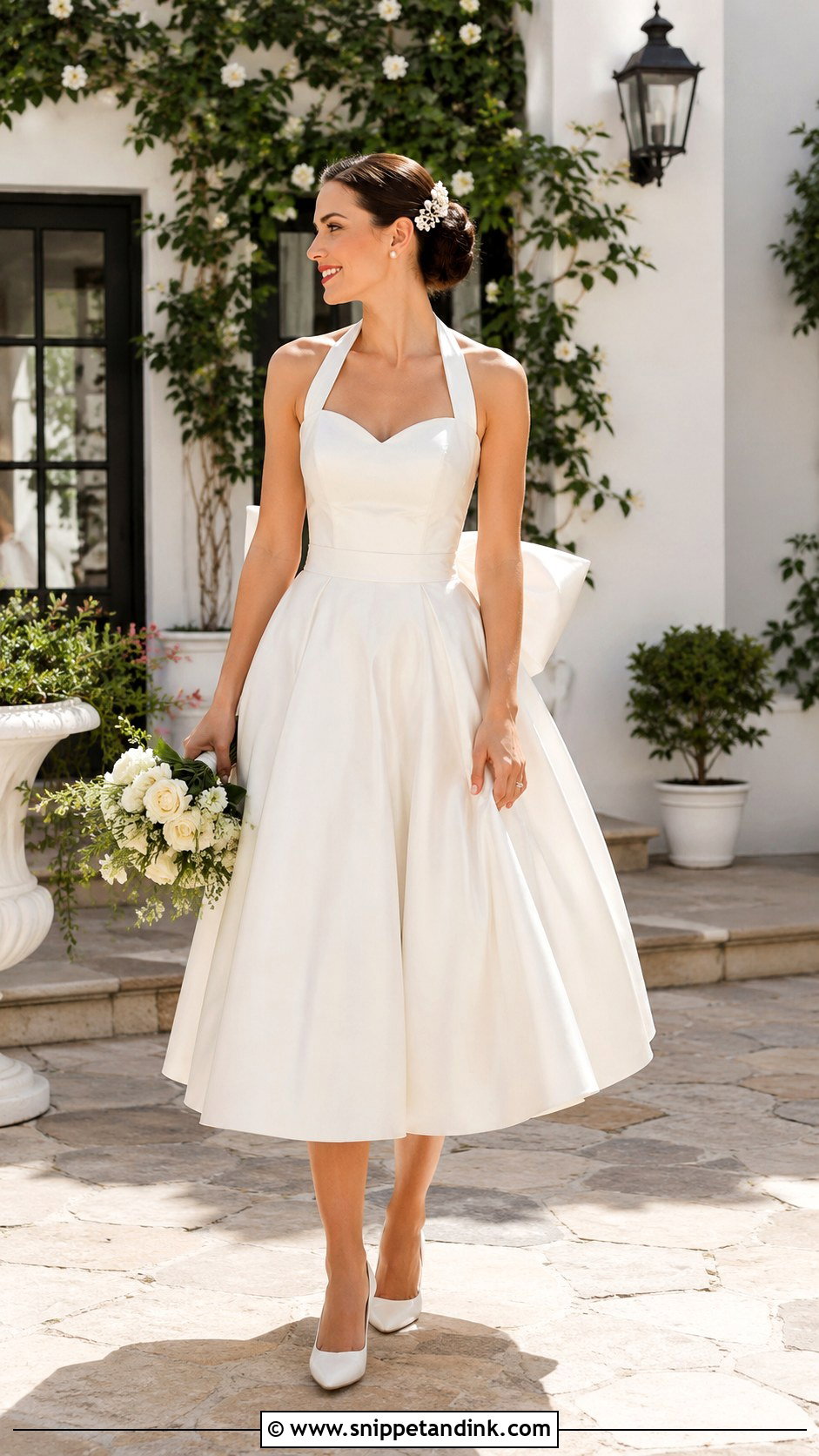
The halter is the fun one: retro, with a polished finish. It draws attention to the shoulders and works best with a fitted waist and tea-length skirt; satin keeps the shape crisp and a bow at the back adds play. Style it with white pumps, pearl studs and a short veil or floral comb. Halters put weight on the back of the neck, and a satin skirt hanging from a thin tie can ache by evening, so I look for one where the bodice is supported independently at the waist. Summer, a courthouse or a reception change all suit it. Keep makeup fresh with a soft lip and clean liner.
14. 1950s Full Skirt Wedding Dress
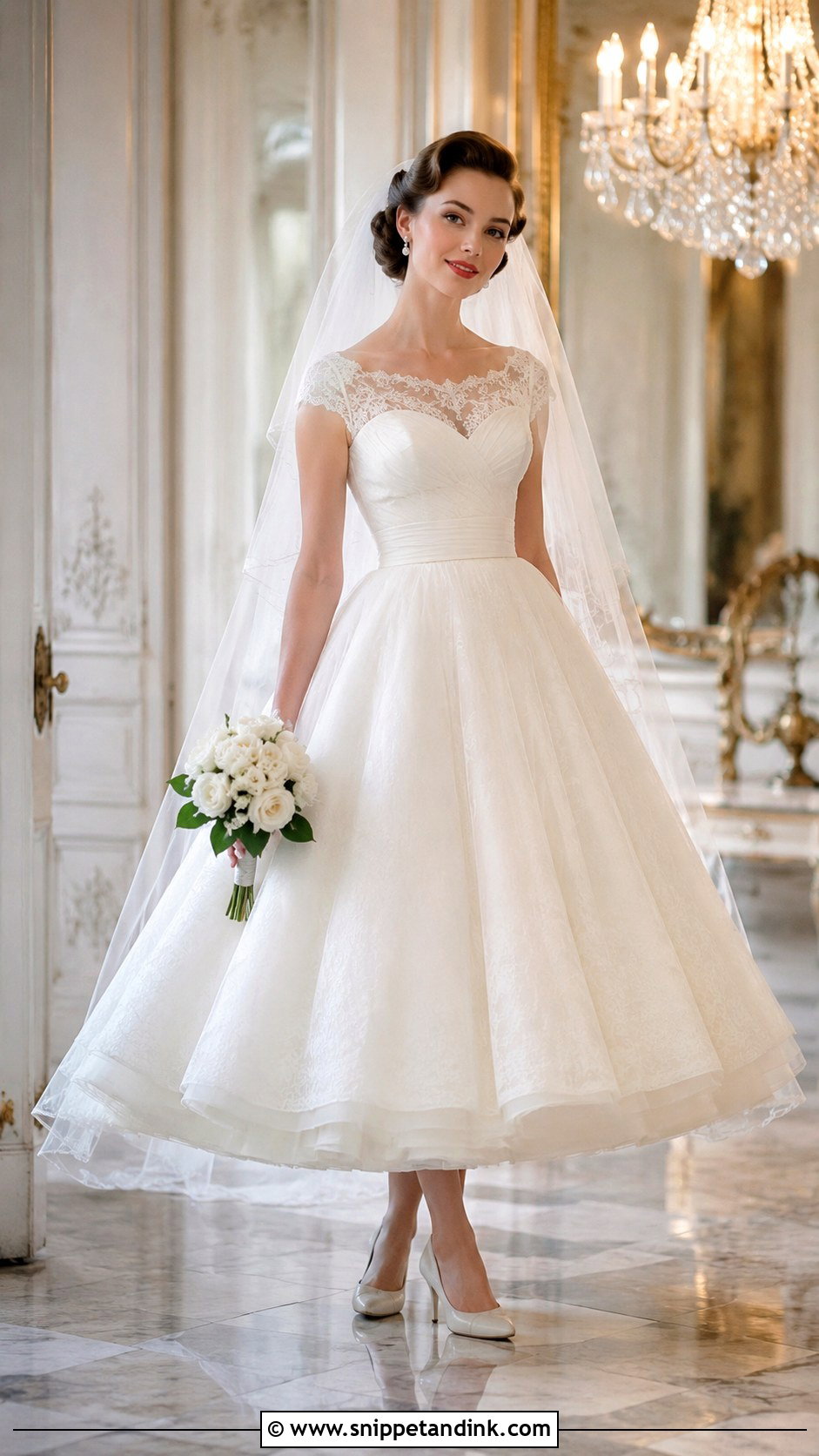
If the dramatic fifties silhouette is what you’re after, this is it. The skirt can be satin, taffeta, tulle or organza, but the waist must stay clearly defined, and a petticoat gives it the volume it keeps in photos. Heeled pumps, pearl earrings and a veil matched to the dress length finish it, with a fitted bodice for balance. Mind the doorways and the car. A very full skirt needs more back seat than you’d think, and I always have someone gather the back of the skirt as you get in. Neckline and fabric decide whether it reads sweet or formal.
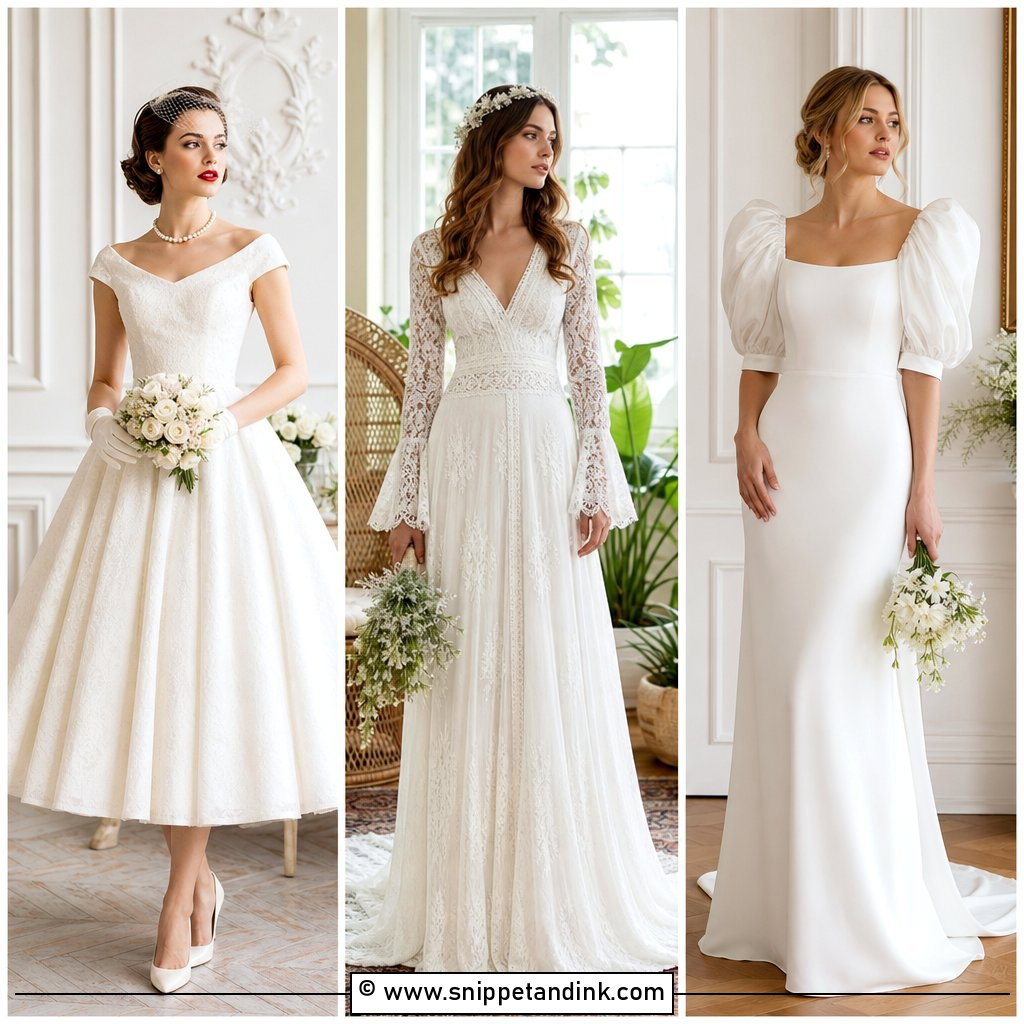
15. 1950s Petticoat Wedding Dress
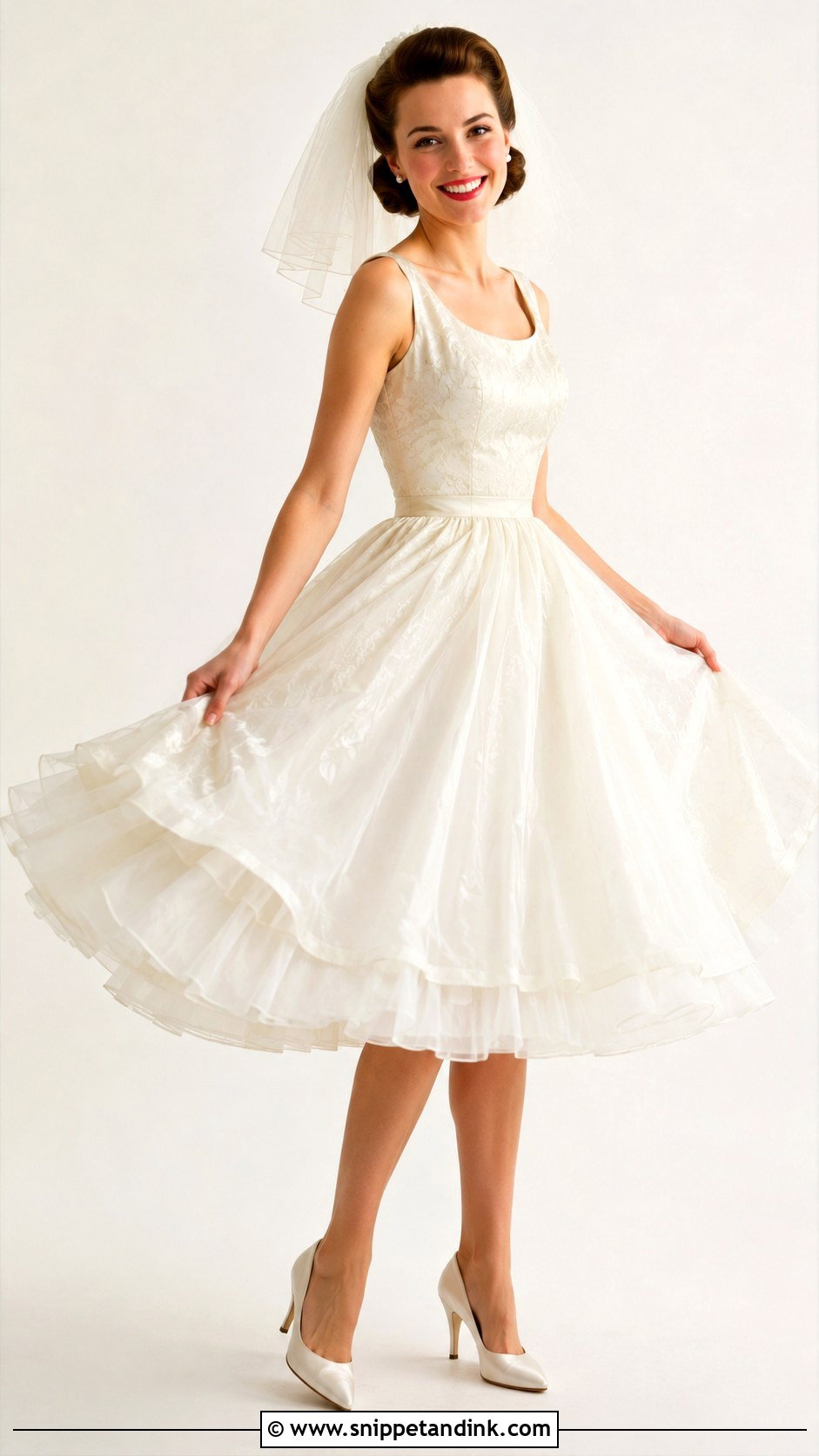
A 1950s petticoat wedding dress gets its lifted shape from underneath. The dress itself can be simple; the petticoat supplies the swing and structure. Tea or knee length shows that shape off best, styled with satin heels, pearl jewelry and a short veil. Keep the petticoat white for a classic look, or let a soft pastel edge peek out as a deliberate detail. I have petticoats hemmed about an inch shorter than the skirt so they only show when you mean them to. Expect plenty of swing at a retro reception.
16. 1950s Button Back Wedding Dress
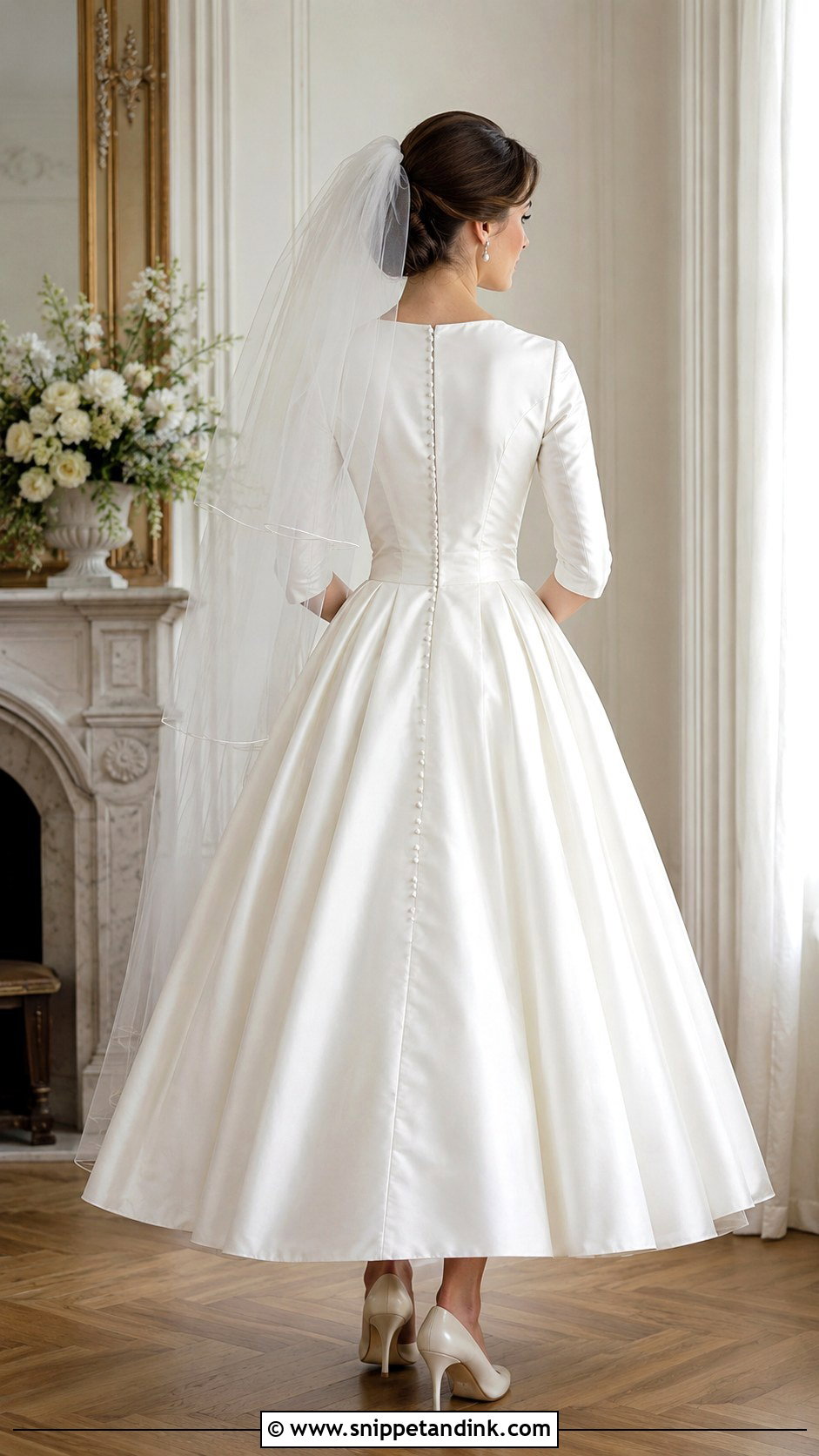
Covered buttons down the back are what guests stare at for the whole ceremony, which is why I care about them. They suit satin, lace or taffeta with a fitted bodice and full skirt. Wear a veil that sits above the buttons so the back stays visible, with pearl earrings, ivory pumps and a neat bouquet. Ask whether the buttons sit over a zip. Real loop closures take a long time to fasten, so whoever dresses you needs a button hook and patience, and that time belongs in your morning schedule.
17. 1950s Bow Waist Wedding Dress
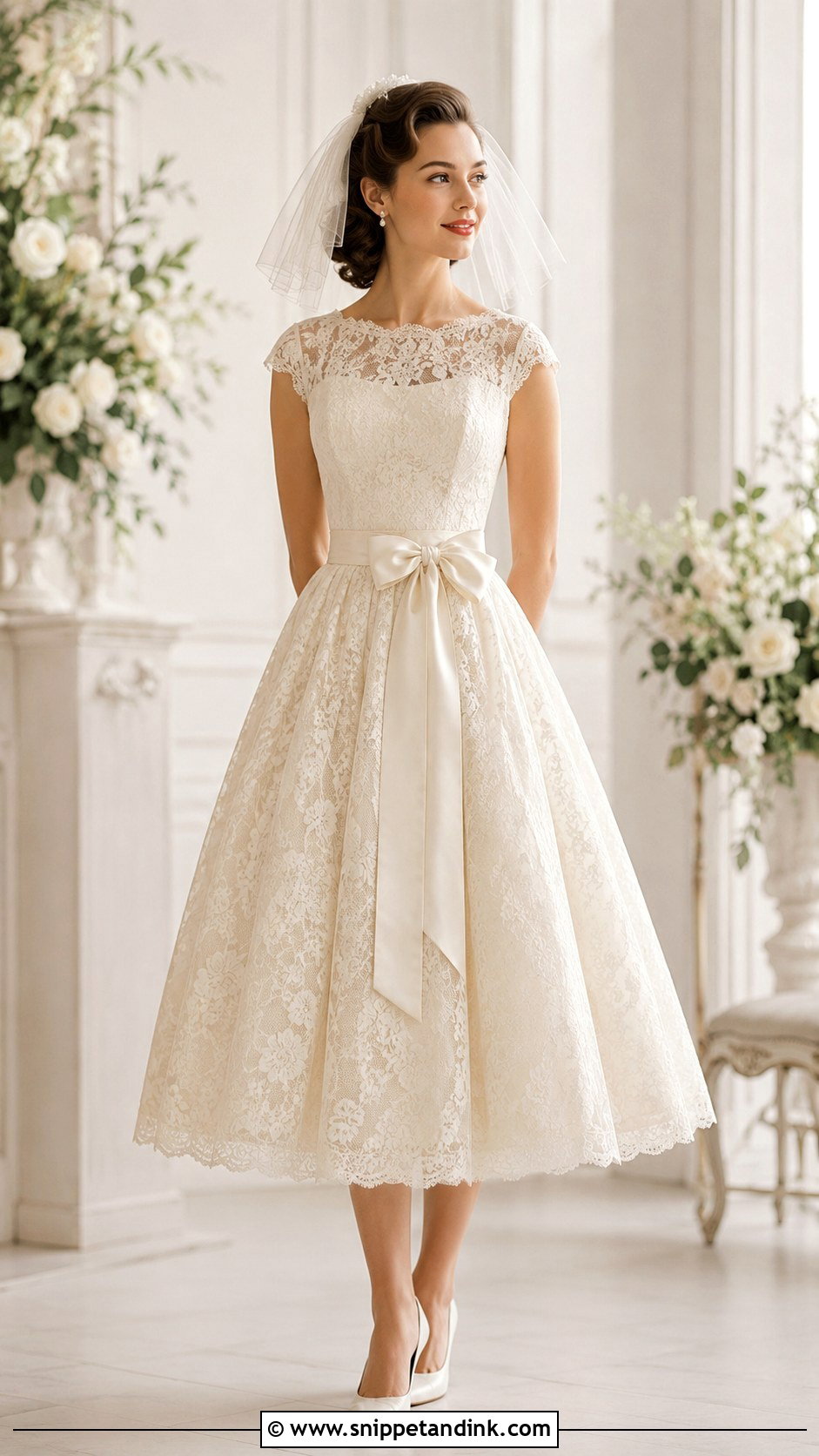
A bow does two jobs: it marks the waist and adds sweetness. It can sit at the front, side or back; a satin bow on a lace dress gives contrast, while a matching bow reads quieter. Closed-toe pumps, pearl studs and a short veil keep it in period. Tea or ballerina length works best because the bow highlights the waist just before the skirt opens. Big bows wilt, though. I check that the loops have interfacing or a stiff lining inside, or they’ll be flat by the speeches.
18. 1950s Pearl Wedding Dress
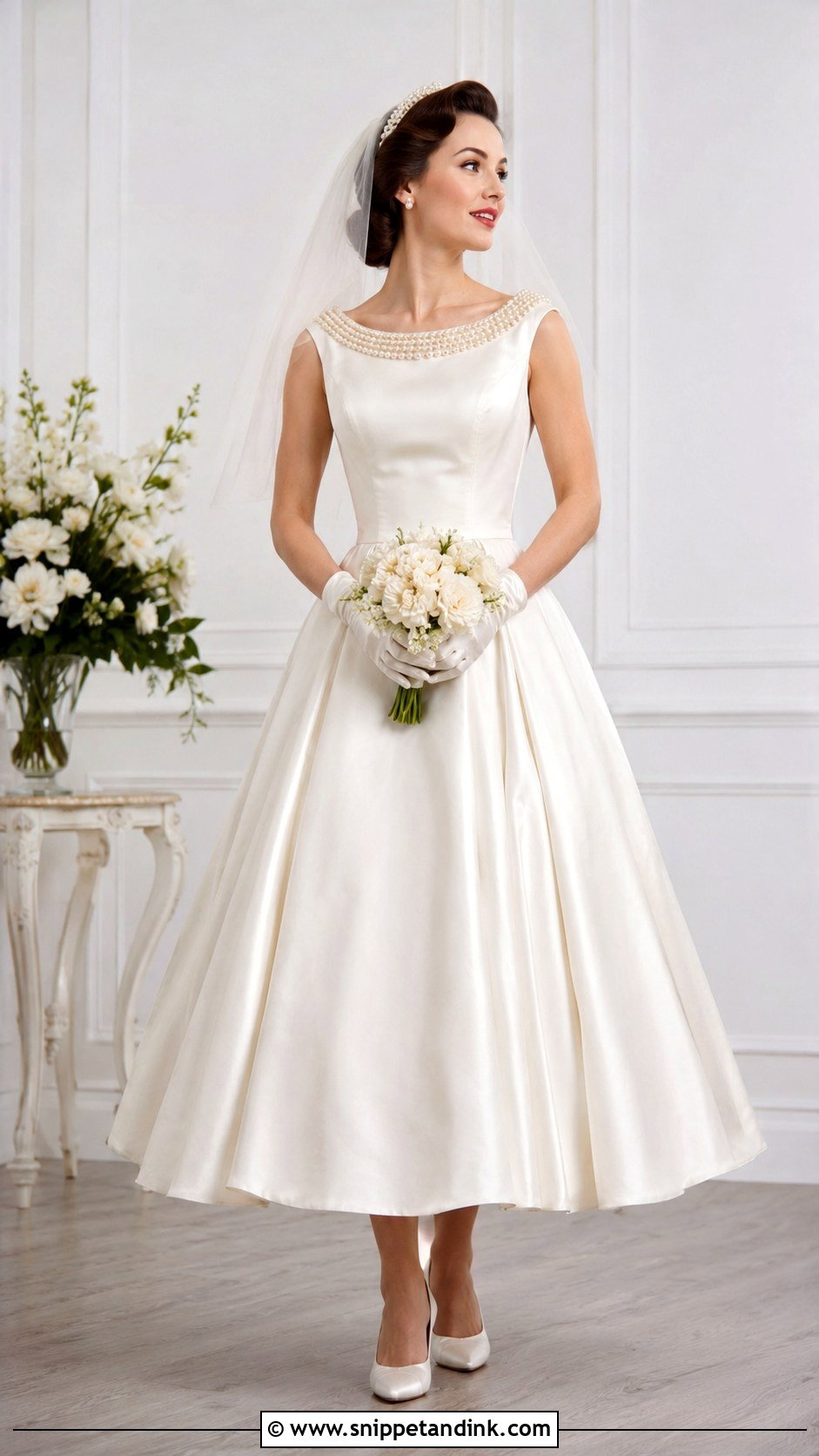
Pearl embellishment works when it’s used sparingly. Look for small pearl accents at the neckline, waist, sleeves or bodice rather than beading everywhere, on satin, lace or tulle. Add pearl earrings, satin pumps and a simple veil; a pearl-trimmed headband works if the dress is plain. Match the pearl tones. Bright white pearls on an ivory dress make the dress look dingy beside them, so I hold earrings against the actual fabric before anything is bought. Keep the bouquet simple so the detail stays visible.
19. 1950s Cap Sleeve Wedding Dress
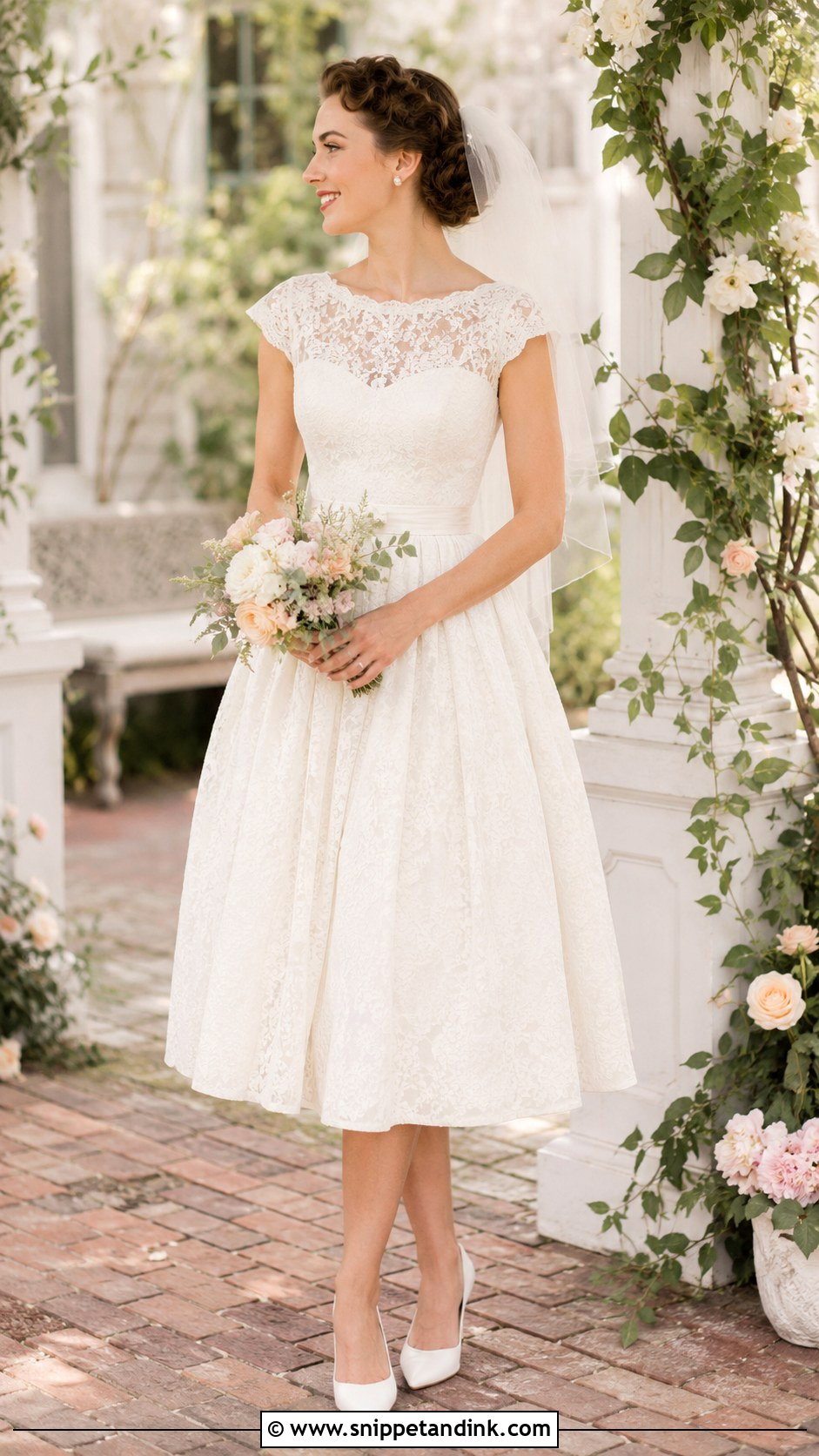
Cap sleeves are a comfortable middle ground. They soften the shoulder without restricting the arm the way a fitted long sleeve can, and they sit well with a fitted lace bodice, defined waist and tea-length skirt, plus ivory pumps, pearl studs and a delicate veil or bow clip. For a more formal version, choose satin with lace appliqué at the neckline. Make sure the sleeve edge doesn’t cut across the fullest part of the upper arm, where even a well-fitted sleeve can look tight in photos. Spring and summer weddings suit it best.
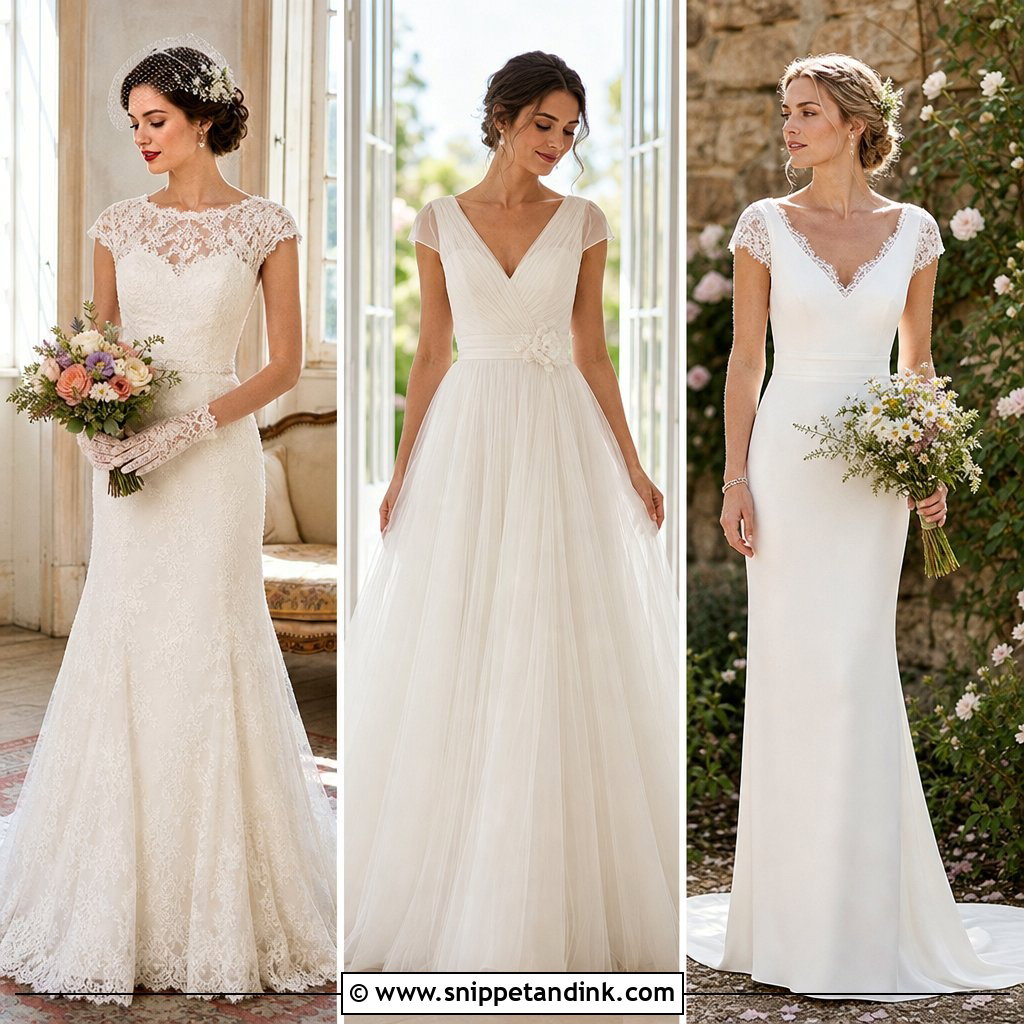


20. 1950s Taffeta Wedding Dress
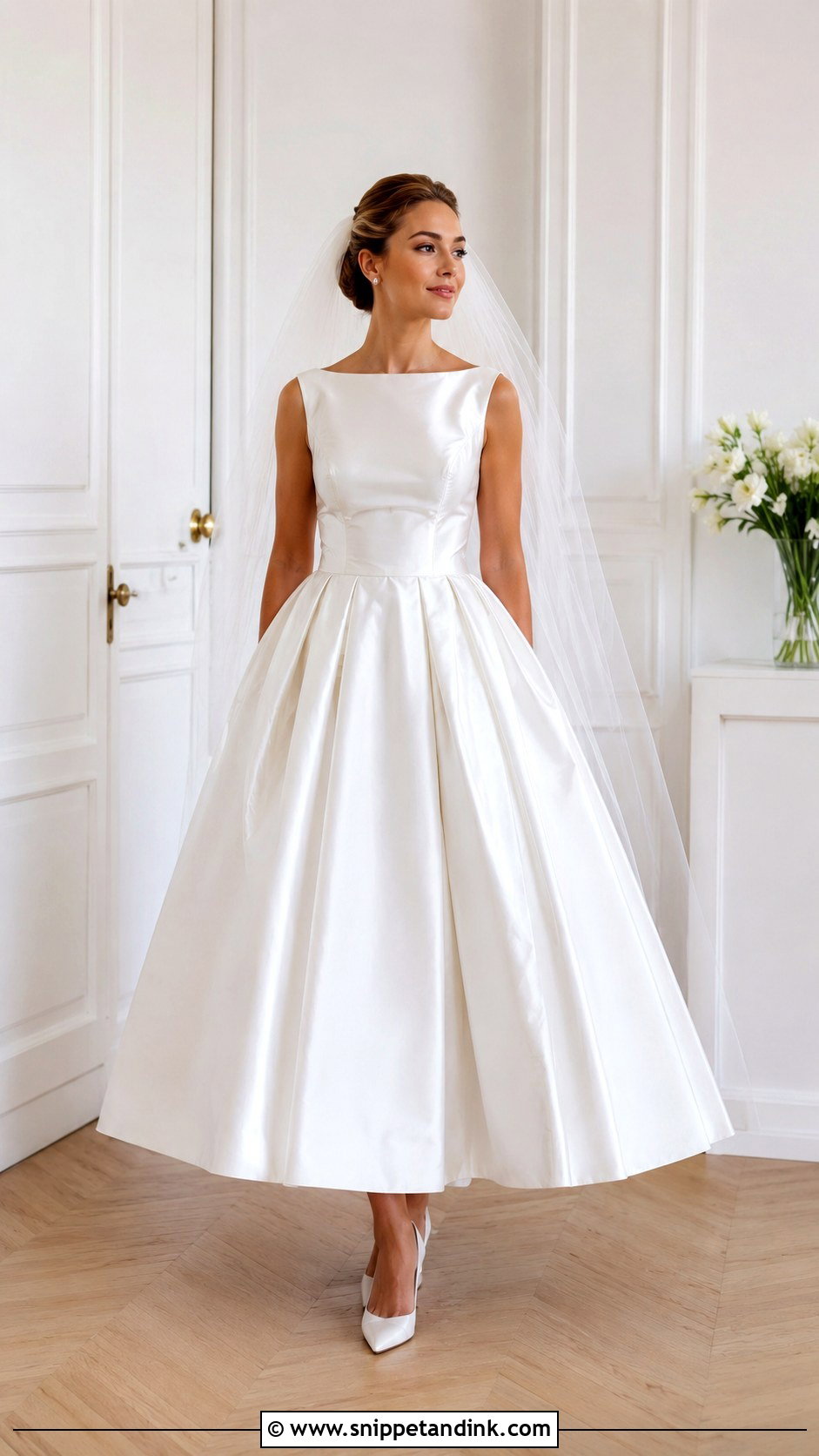
A 1950s taffeta wedding dress is all crisp structure. Taffeta holds volume, so it suits full skirts, gathered waists and sculpted bodices, and its sheen reads dressy rather than glossy. Pair it with pointed pumps, pearl earrings and a clean veil; a bateau or sweetheart neckline both work. Two things to know: taffeta rustles audibly as you walk, which some brides love and some don’t, and it creases sharply wherever it’s crushed. That’s why a taffeta dress travels on a hanger in a long garment bag, never folded. Keep accessories minimal.
21. 1950s Organza Wedding Dress
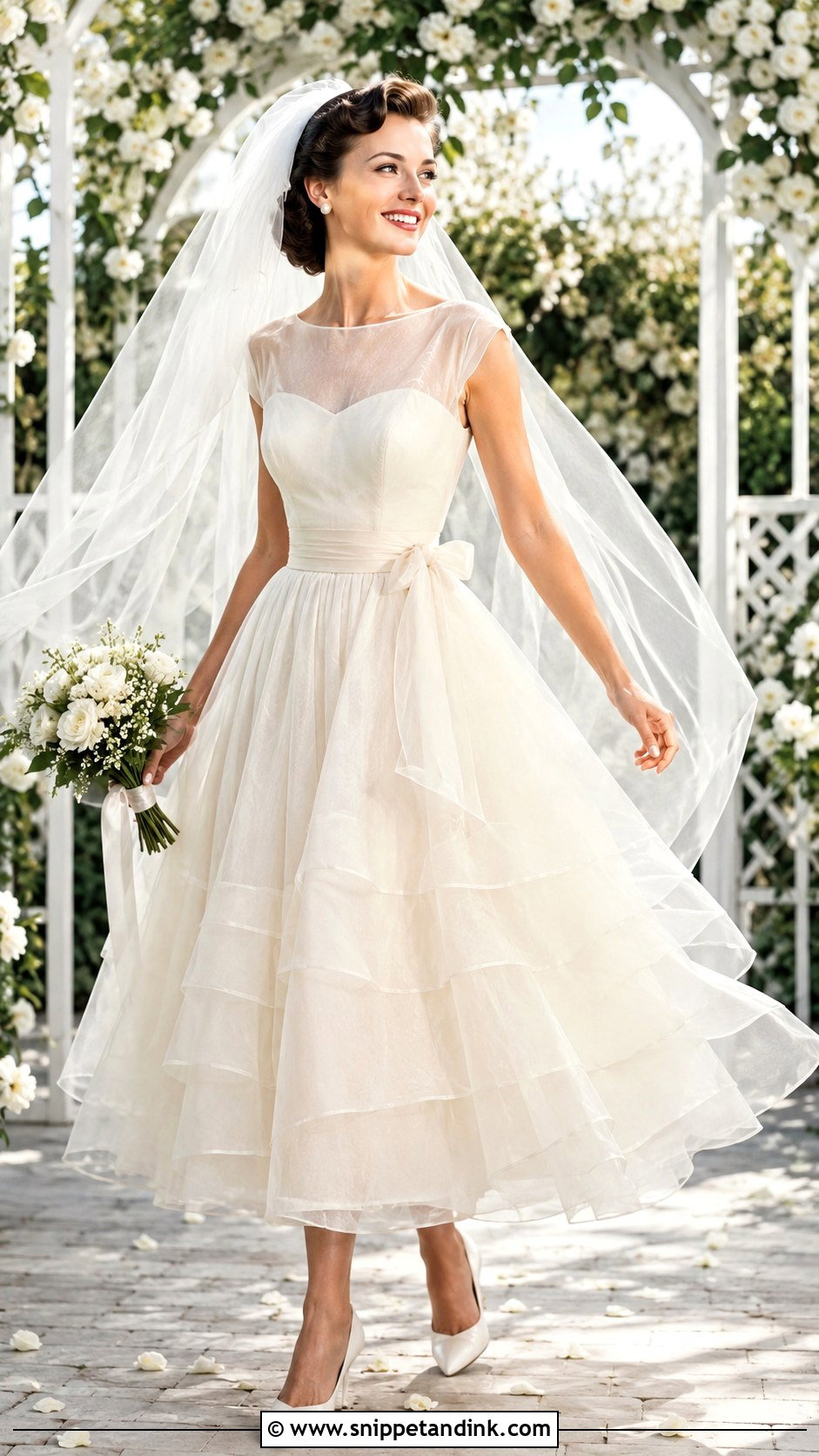
Organza gives volume without weight, so layered skirts and soft overlays stay airy. A fitted bodice keeps the structure while the skirt brings the movement; add satin pumps, pearl earrings and a sheer veil. It’s a warm-weather fabric and looks fresh at a garden ceremony. Silk organza is crisp and slightly sheer, and water leaves marks on it, so I keep drinks well away and would think twice if rain is forecast. Embroidered organza or a waist ribbon adds subtle detail.
22. 1950s Floor Length Wedding Dress
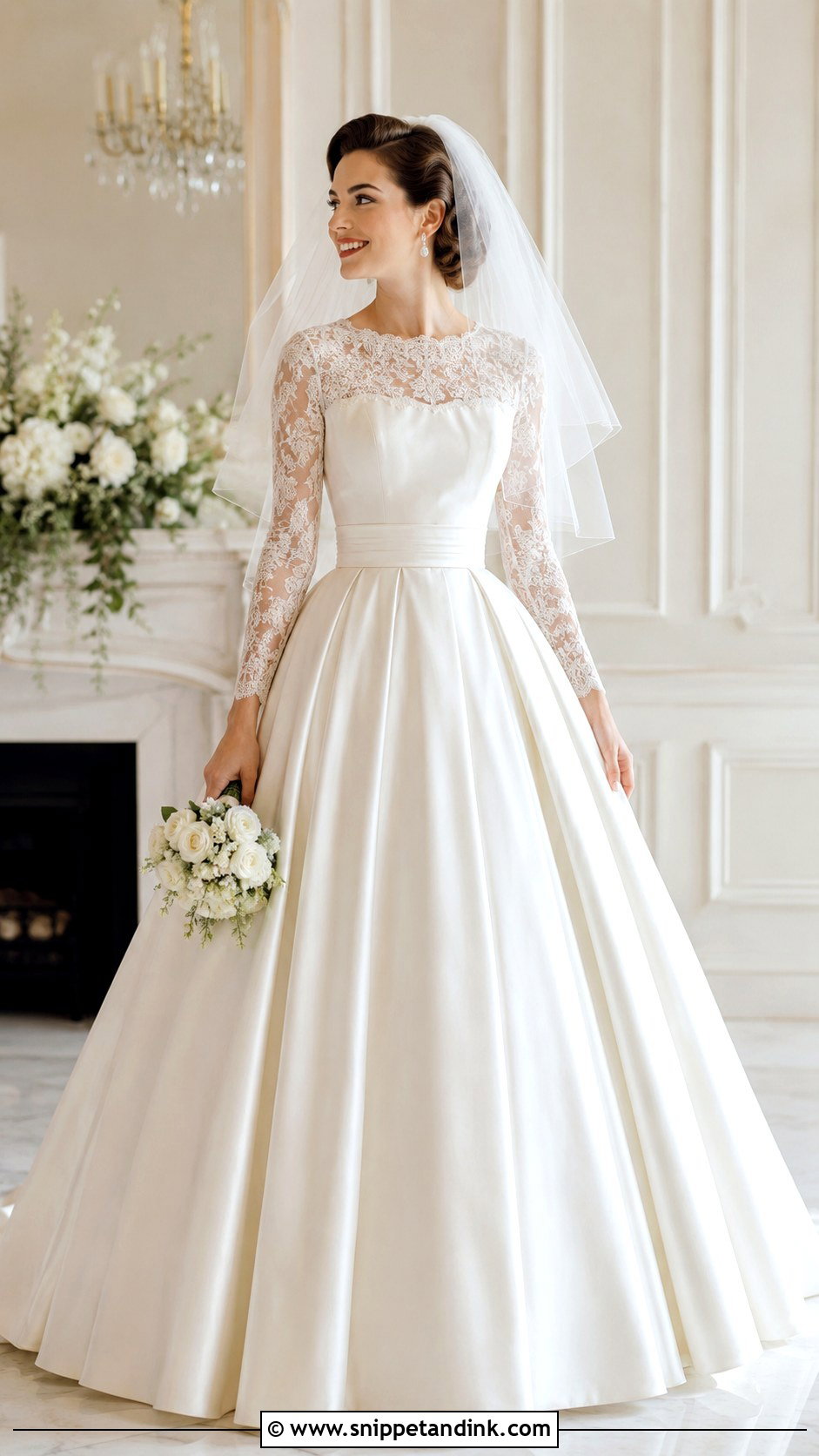
Floor length makes the fifties formal. Keep a defined waist, a structured bodice and a generous skirt in satin, lace, taffeta or organza, then add a fingertip or chapel-length veil, pearl earrings and classic pumps under the hem. Period details stop it reading modern: a bateau neckline, long lace sleeves, covered buttons or a truly full skirt. A floor-length skirt over a petticoat needs a bustle or a wrist loop for dancing, so raise it at the first fitting rather than the last. Ballrooms and estate venues suit it.
23. 1950s Courthouse Wedding Dress
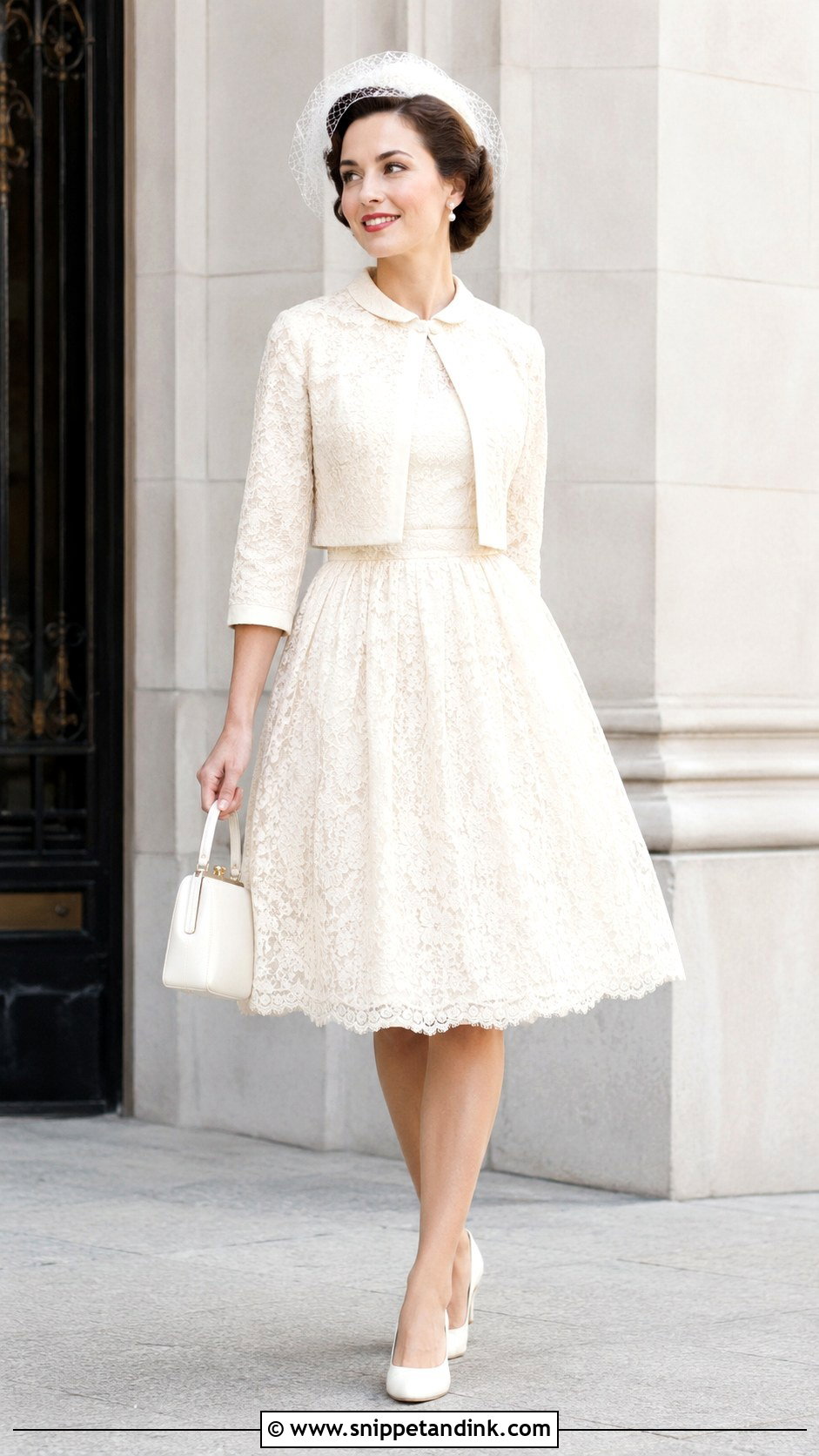
For a civil ceremony I’d go knee or tea length with a fitted waist, in lace, satin or crepe depending on how bridal you want to look. White pumps, pearl earrings, a small veil and a structured handbag complete it, and a short jacket or cropped cardigan pushes it further into the decade. Skip a big petticoat. Courthouse corridors, elevators and small registry rooms are tight, and you’ll be standing close to the officiant. The dress goes straight from ceremony to lunch with no change.
24. 1950s Garden Wedding Dress
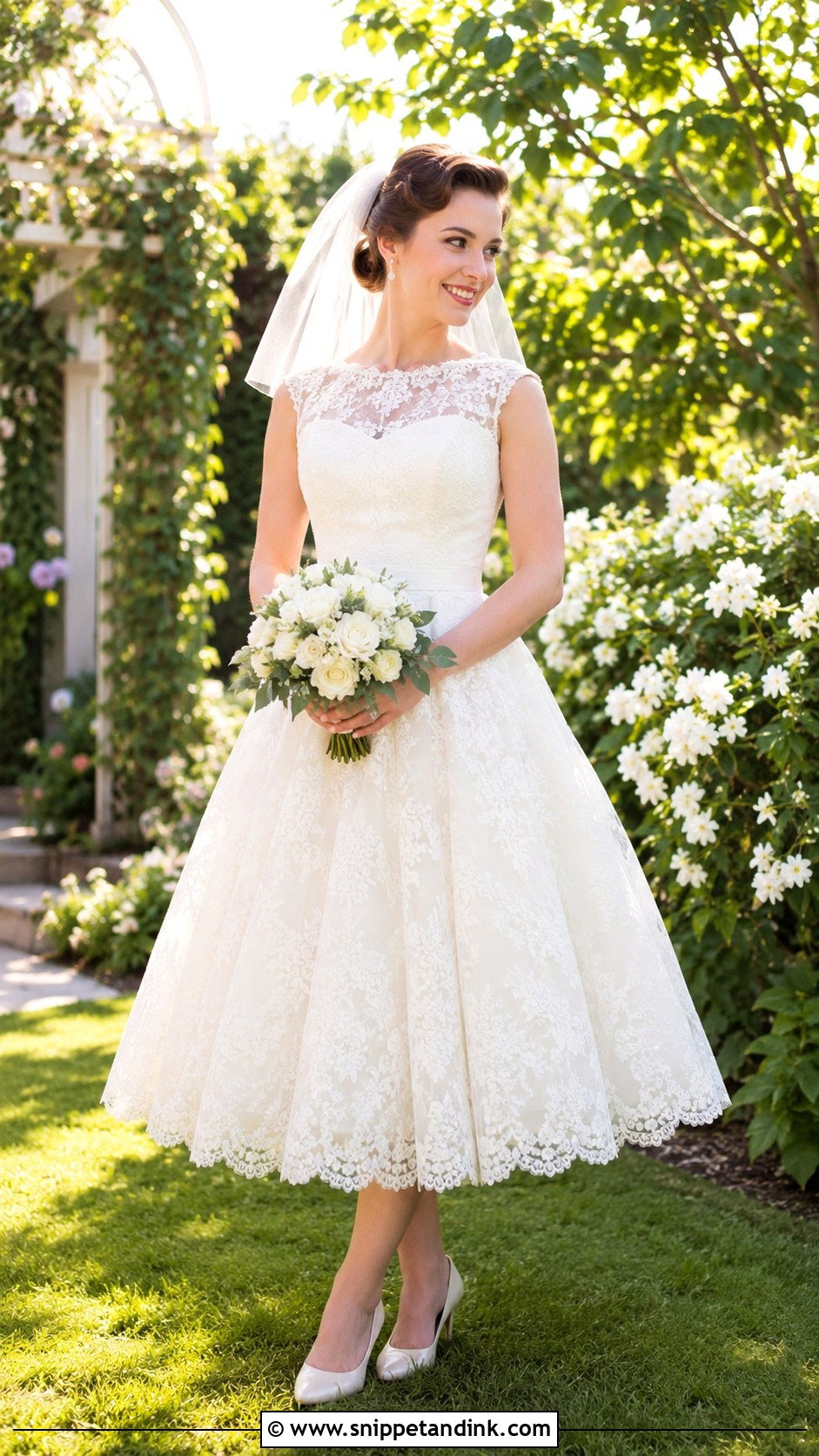
Grass is the first thing I think about for a garden wedding. Stilettos sink into a lawn, so choose block heels or low pumps. Tea-length lace, organza or tulle sits naturally among flowers, with a fitted bodice and gentle full skirt, plus pearl earrings, a short veil and white or pastel flowers. Heavy satin tends to look stiff outdoors in strong daylight. A tea-length hem also stays clear of damp grass, which a floor-length skirt never will.




25. 1950s Reception Wedding Dress
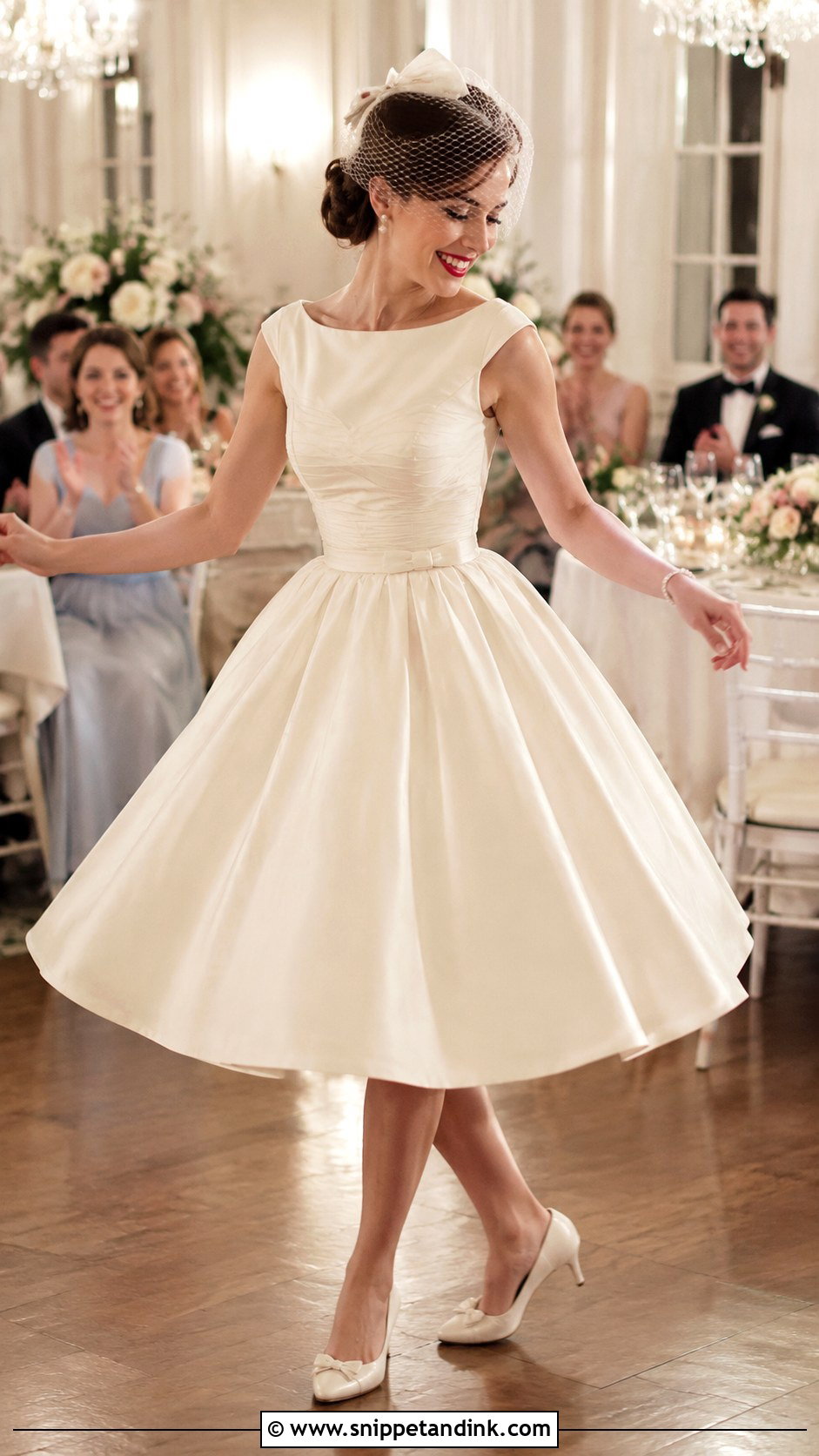
A reception dress is about movement. A short or tea-length full-skirted dress lets you dance while keeping the shape, and tulle, satin, lace or a clean cotton blend all work with a fitted bodice. Add comfortable heels, pearl studs and a small hair bow or birdcage veil. If your ceremony dress is long, this is a natural second look. Plan the change, though: a ceremony gown with buttons takes far longer to get out of than brides expect, so tell your planner when you’ll slip away and bring a helper.
What a Petticoat Feels Like by the Last Dance
A petticoat creates the shape, and it also changes how you sit, walk and use the bathroom. Know that before you decide how much volume you want.
Layers and heat
Petticoats are built from layered soft tulle or stiffer net. More layers mean more lift, and more heat around your legs. A lined petticoat stops coarse net scratching, and a smooth slip between you and the petticoat helps too. For an outdoor summer wedding, I’d go with fewer, softer layers.
Sitting down and bathroom trips
Gather the back of the skirt and petticoat in both hands before you sit, or you’ll crush the volume flat. For the bathroom, most brides find it easiest to step in facing the toilet while a bridesmaid holds the skirt up from behind. A petticoat with a drawstring or elastic waist is also far quicker to manage than one stitched into the dress.
Bringing it back to life
Petticoats flatten after being packed or sat on. Hang yours upside down for a few hours before you dress, then pass a steamer over it from a distance to lift the tulle. Never press net with an iron, because synthetic tulle melts on contact.
How Much Fifties Do You Want?
Fifties bridal style stretches further than one silhouette: tea-length gowns, lace sleeves, satin ball gowns, bow waists, pearl details and dresses made for dancing. You can go fully retro or borrow a single detail, such as a bateau neckline, a full skirt or a short veil. Start with your venue and how much you plan to move, then let fabric and length follow. Get the waist fitted precisely and the hem placed for your actual shoes, and the decade does most of the rest.
You'll Like These Ideas:








Leave a Reply