
A sheath is the quietest wedding dress silhouette, and in satin it’s also one of the most revealing. The skirt drops close to the body from the hip with no flare and no volume, so the fabric and the tailoring do all the talking. That’s why it suits city ceremonies, small venues and destination weddings so well, and why alterations matter so much. Below are twenty satin sheaths, from strapless and square-necked to draped, slit, pearl-trimmed and bow-backed, with the styling I’d use and the fitting checks I’d make on each.
Can You Walk Freely in a Straight Satin Skirt?
Brides often confuse a sheath with a column or a mermaid. A sheath follows the body to the hip, then drops more or less straight. That straight drop is lovely, but it limits your stride, and satin has very little give to help.
At a first appointment I ask brides to take a normal step, then walk up a step or two. If the hem pulls tight across the shins, there are three common fixes:
- A back vent or kick pleat at the hem, hidden in the seam, opens when you step and closes when you stand.
- A side slit gives the most freedom, and it can be placed lower for a formal ceremony.
- A slightly wider cut below the knee, still reading as a sheath, adds a few centimetres of room without changing the look.
Who the shape suits
Sheaths suit most heights, and they’re kind to petite brides because there’s no volume to swamp them. If you feel self-conscious about your hips or tummy, a sheath in plain satin will show more than you might like; draping, ruching or a heavier satin hide more. I’d always try one on before ruling it out, though. The fit after alterations is often very different from the sample.
1. Strapless Satin Sheath Wedding Dress
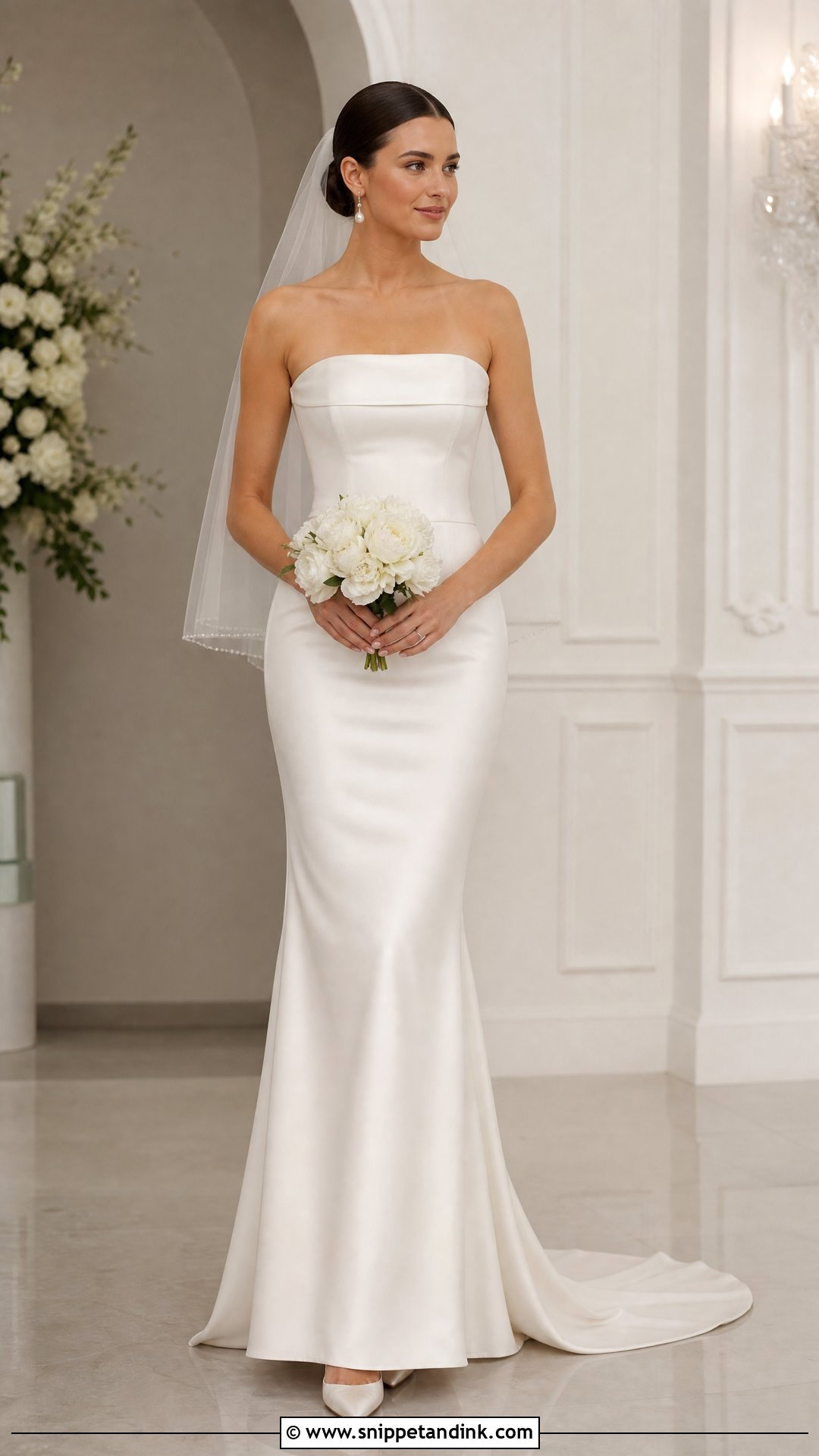
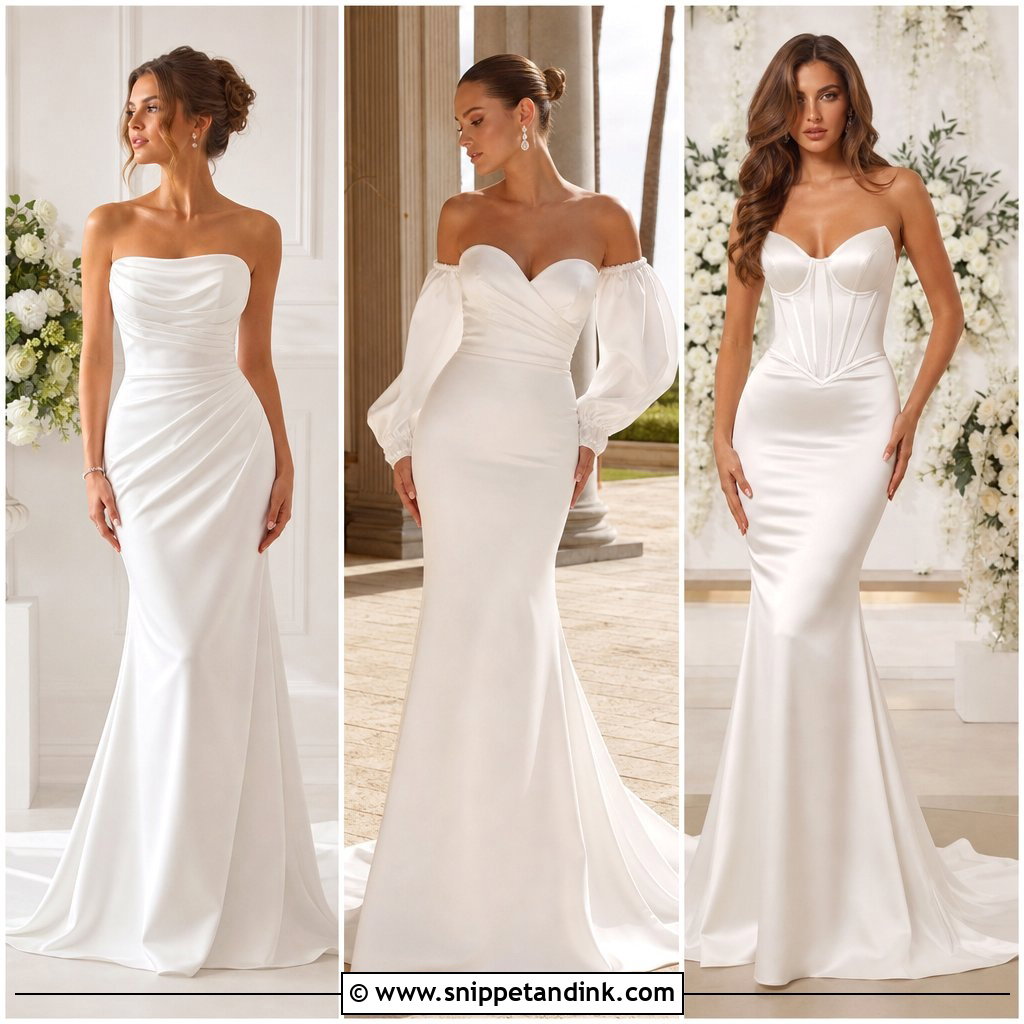
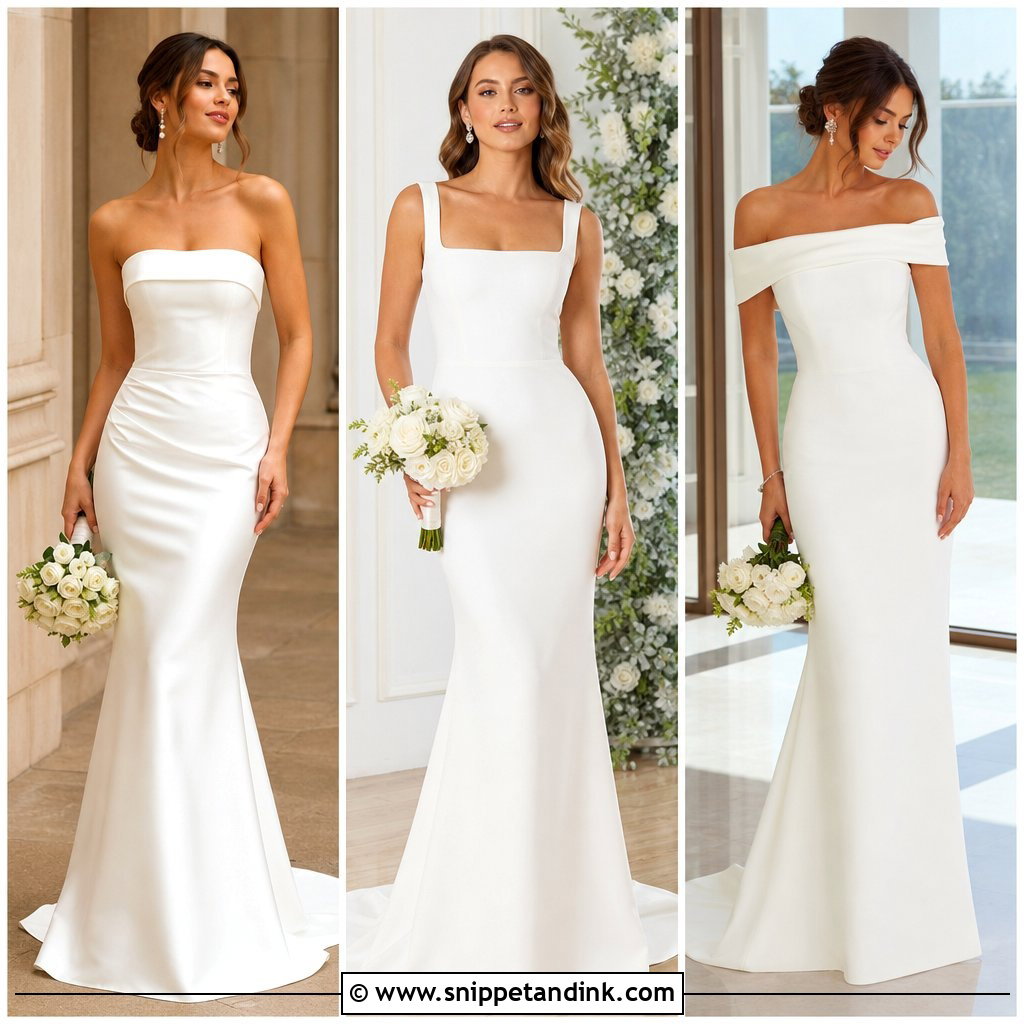
Strapless is the blank canvas. A straight neckline looks modern; a gentle curve looks softer. The structured bodice inside is what keeps you from hitching it up all evening, and on a sheath it has more work to do, because there’s no full skirt to anchor it. Sit, walk and raise your arms at fittings. Watch for horizontal pull lines across the waist, a sign it’s too tight. A fingertip veil, pearl drops, pointed ivory pumps and a small bouquet. Add a satin wrap or sheer cape if your ceremony venue wants covered shoulders.
2. Square Neck Satin Sheath Wedding Dress
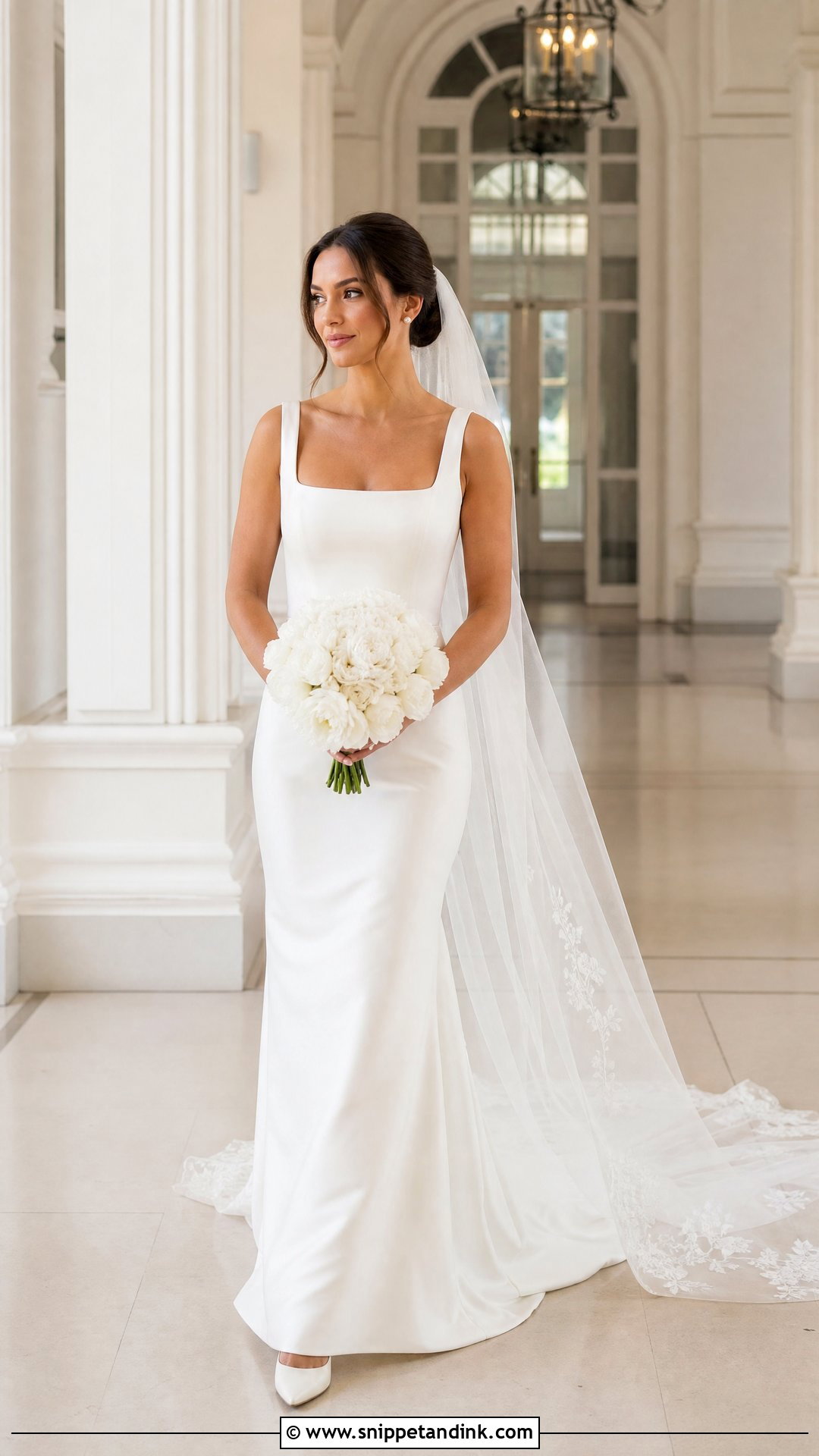
Wide straps and sharp corners give the square neck an architectural look, and more support than thin straps. The width and depth of the square can be adjusted, and I’d always ask the tailor to try it a little narrower or wider on you; the right proportion depends on your shoulders. A smooth low bun, pearl studs and a cathedral veil starting below the bun. Closed satin heels, and a round bouquet against all those straight lines. Covered back buttons and a small train are detail enough.
3. Cowl Neck Satin Sheath Wedding Dress
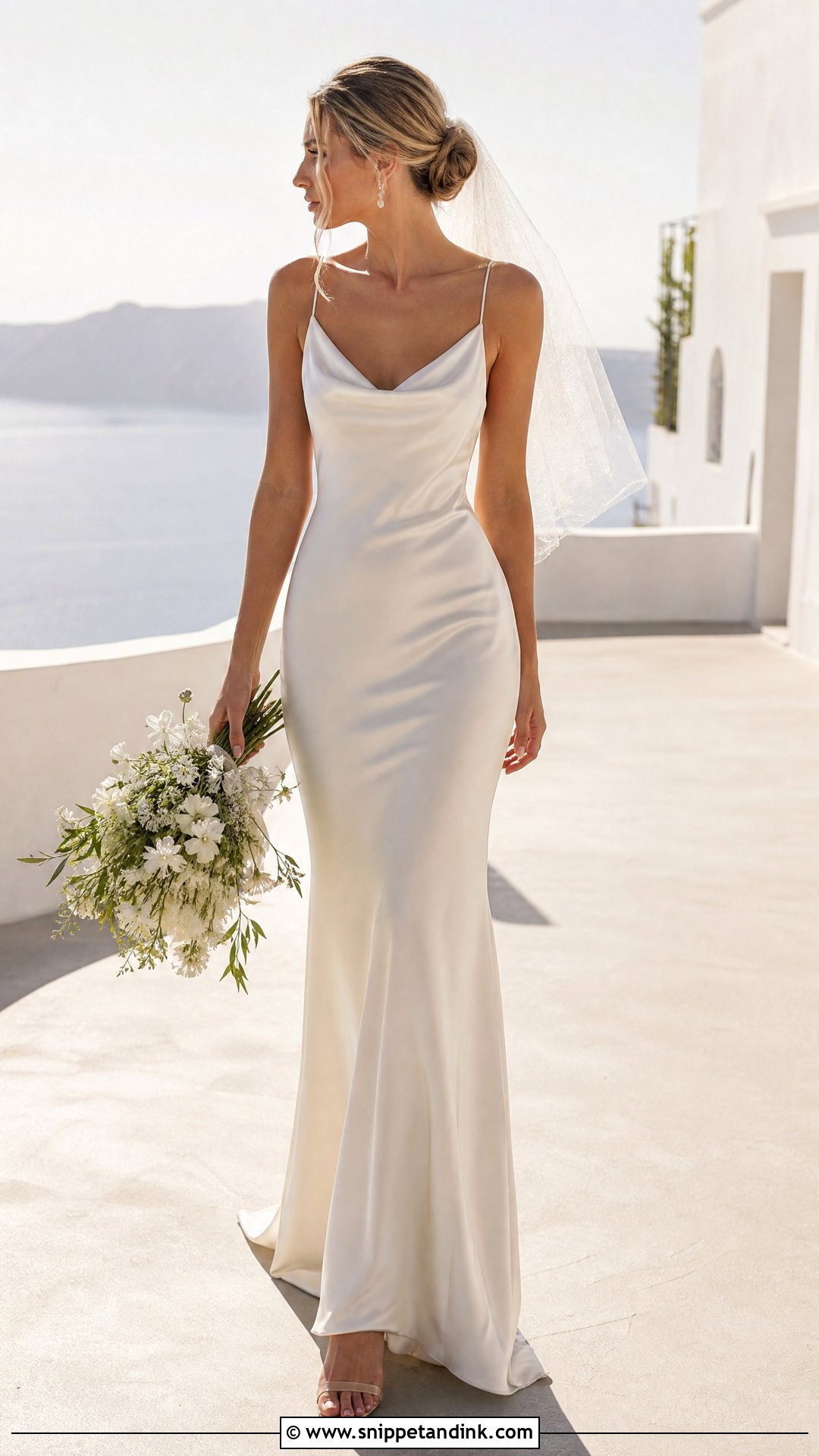
The cowl only drapes properly in soft satin, so a cowl neck satin sheath wedding dress made in stiff duchess will look boxy at the neck. Every cowl falls a little differently, so look at it side-on at fittings, not just from the front. It should fold naturally, not collapse flat or pull tight. Discreet bust support and a smooth lining help. Slim straps, a low twisted bun, small earrings and barely-there sandals, with a short veil or a chiffon scarf veil. A loose white bouquet.
4. Off-the-Shoulder Satin Sheath Wedding Dress
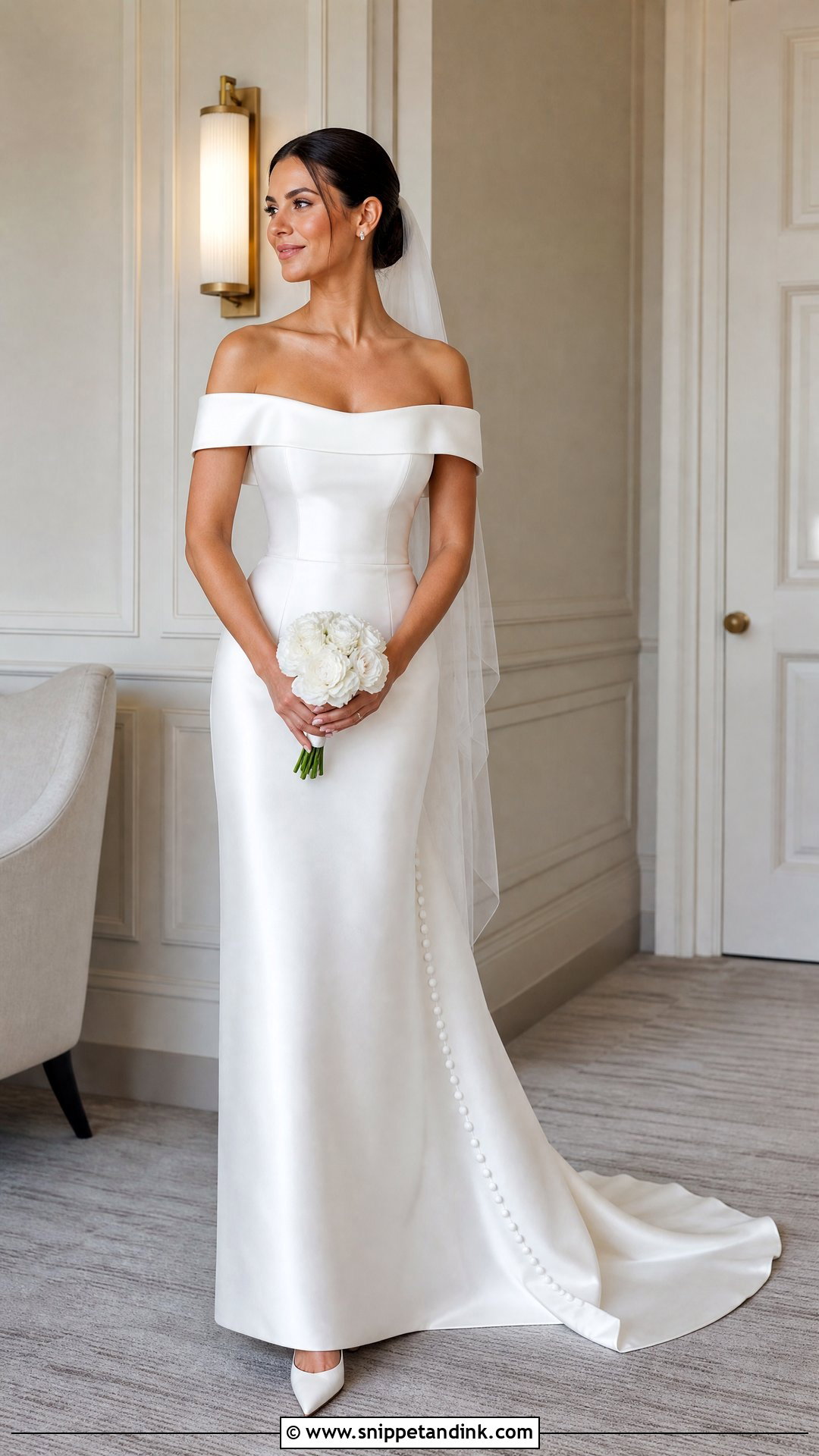
Off-the-shoulder bands bring softness to a straight dress. Folded satin bands look structured; lightly draped ones look relaxed. On a sheath, I make sure the bands don’t pull the bodice up when you move your arms, because there’s no skirt weight to settle it back down. Hug, sit and dance at the fitting, and consider detachable straps if it feels restrictive. A polished chignon, small sparkling studs, pointed pumps and a veil pinned below the hair. A clean waist and a narrow train following the body finish it.
5. Sweetheart Satin Sheath Wedding Dress
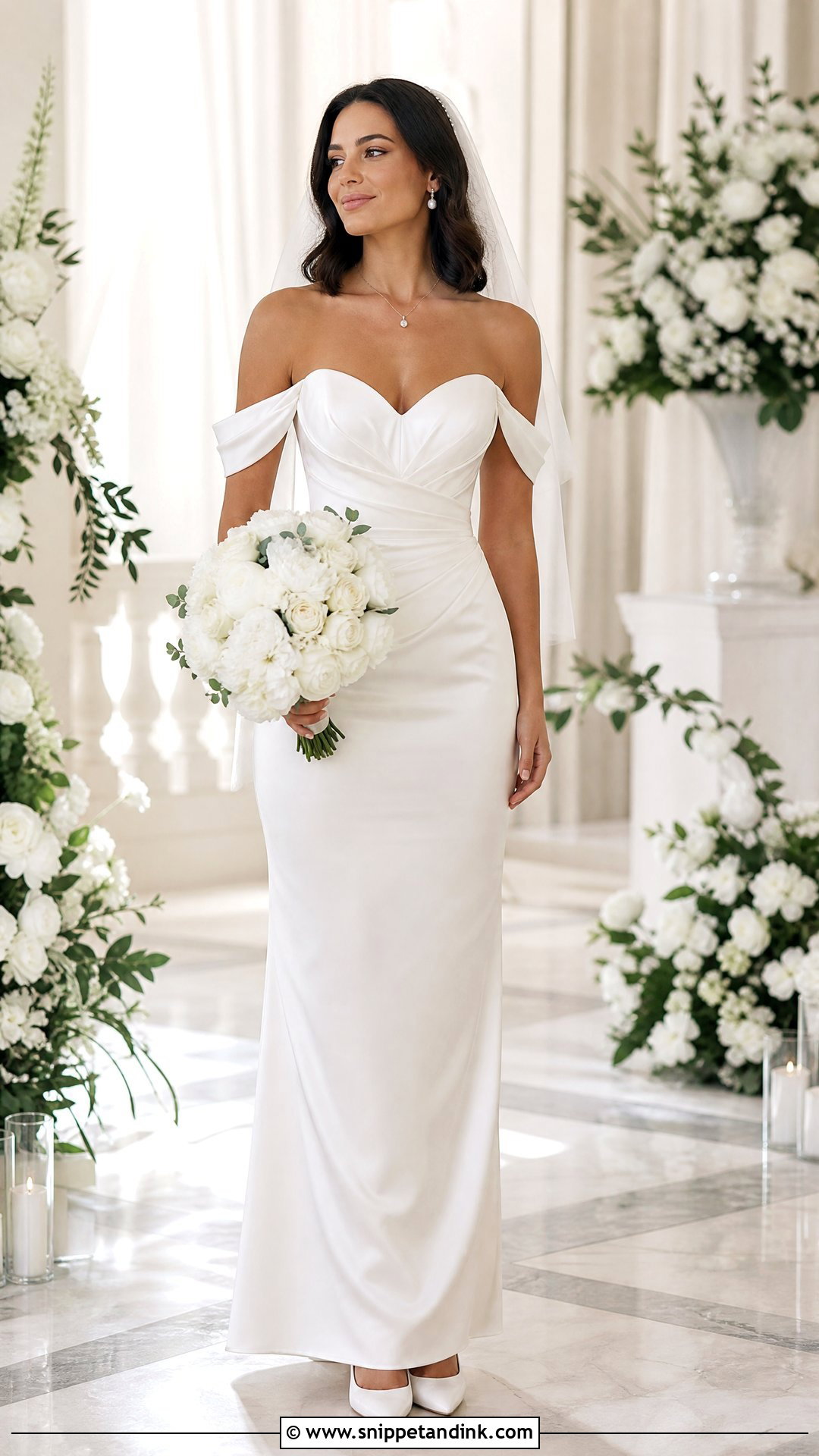
Sweetheart adds curve to the top of a straight dress. I’d go for a moderate dip rather than a deep one, which reads more classic and stays put better. Boning and moulded cups keep the outside smooth. The fitting check here is gaping: lean forward and look in the mirror. A fine pendant, pearl earrings, a shoulder-length veil and comfortable satin pumps. Detachable off-shoulder straps give you a second look for the party, and soft gathering at the waist adds shape without bulk at the hip.
6. V-Neck Satin Sheath Wedding Dress
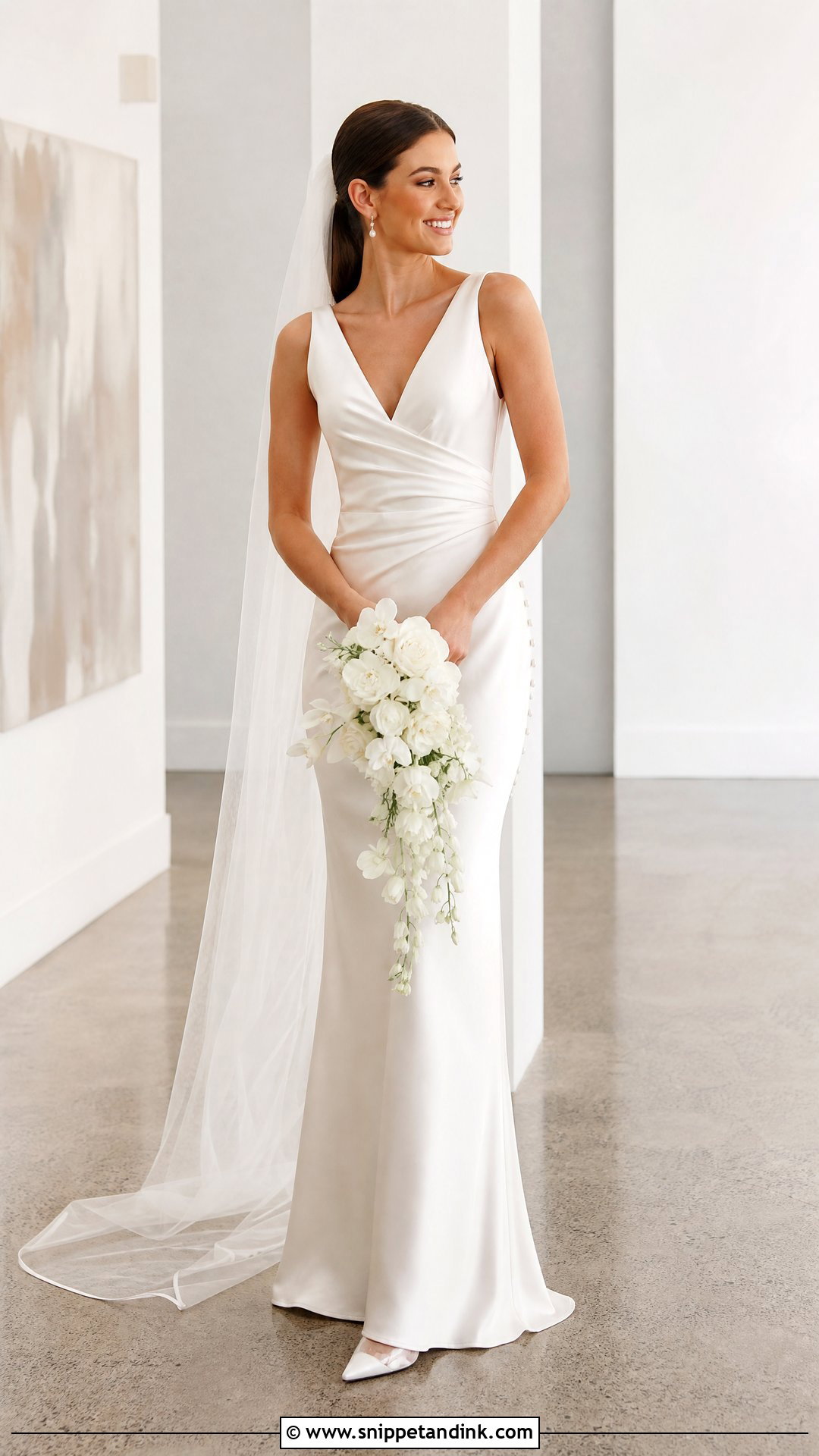
A V-neck draws a line down the centre of the body and makes the whole outfit look longer, which suits a sheath’s straight drop. Wide tank straps support; narrow ones look lighter. Choose a depth you’re comfortable with, and ask about an illusion insert if a deeper V feels exposed. Bend and sit before final alterations to make sure the V doesn’t shift or the satin pull across the bust. A low ponytail, fine drop earrings, pointed shoes and a slightly cascading bouquet that echoes the V.
7. Halter Satin Sheath Wedding Dress
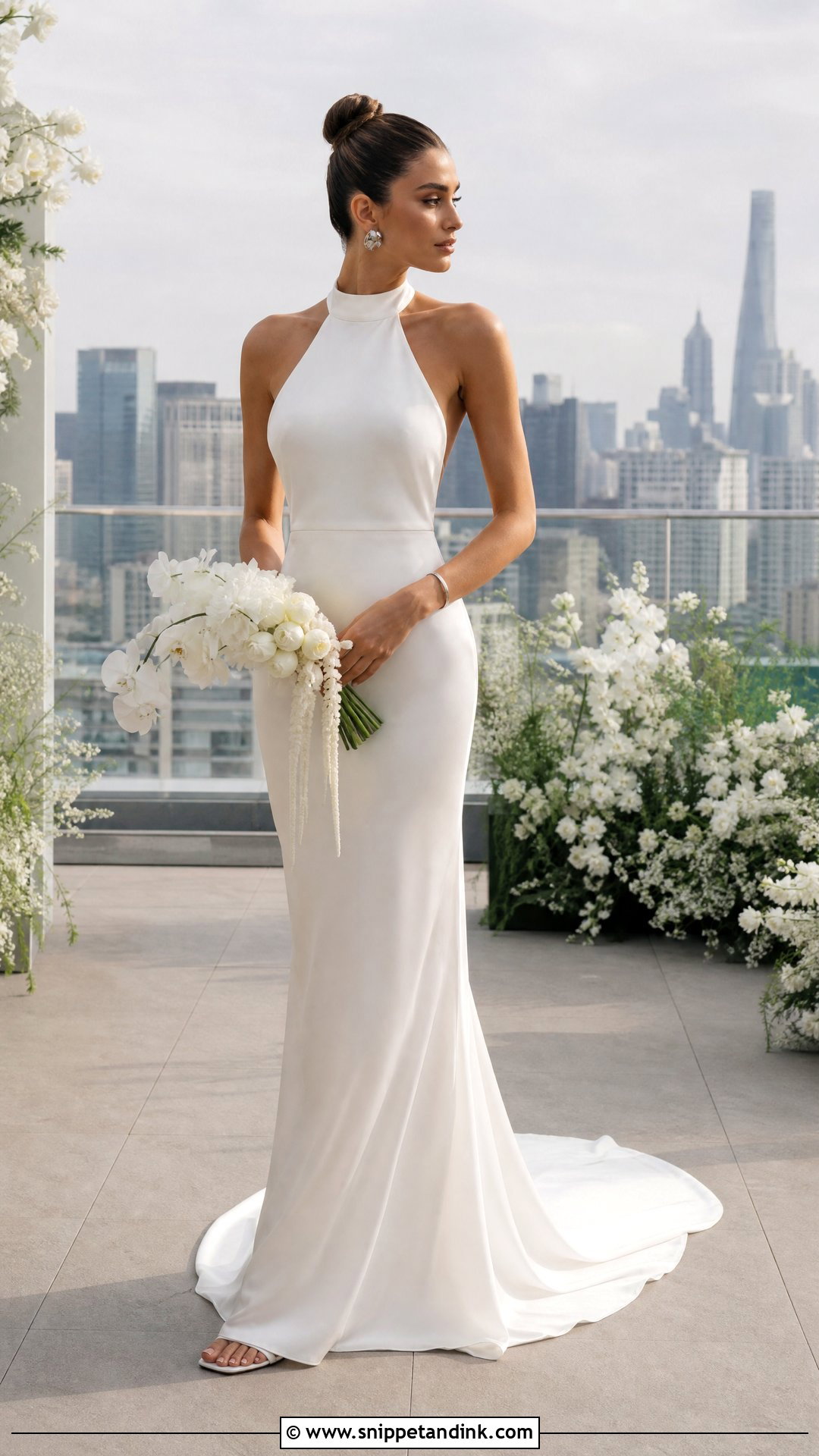
The halter shows the shoulders and looks confident and current. It can sit high for coverage or dip into a narrow V. An open back keeps it from looking heavy. In structured satin, the neck strap can start to dig in after a few hours if it’s carrying the dress, so the bodice and waist must do the real supporting. A sleek bun or high ponytail keeps the neckline clear, with sculptural earrings, a narrow bracelet and heeled sandals. Pin the veil beneath the hair.
8. High Neck Satin Sheath Wedding Dress
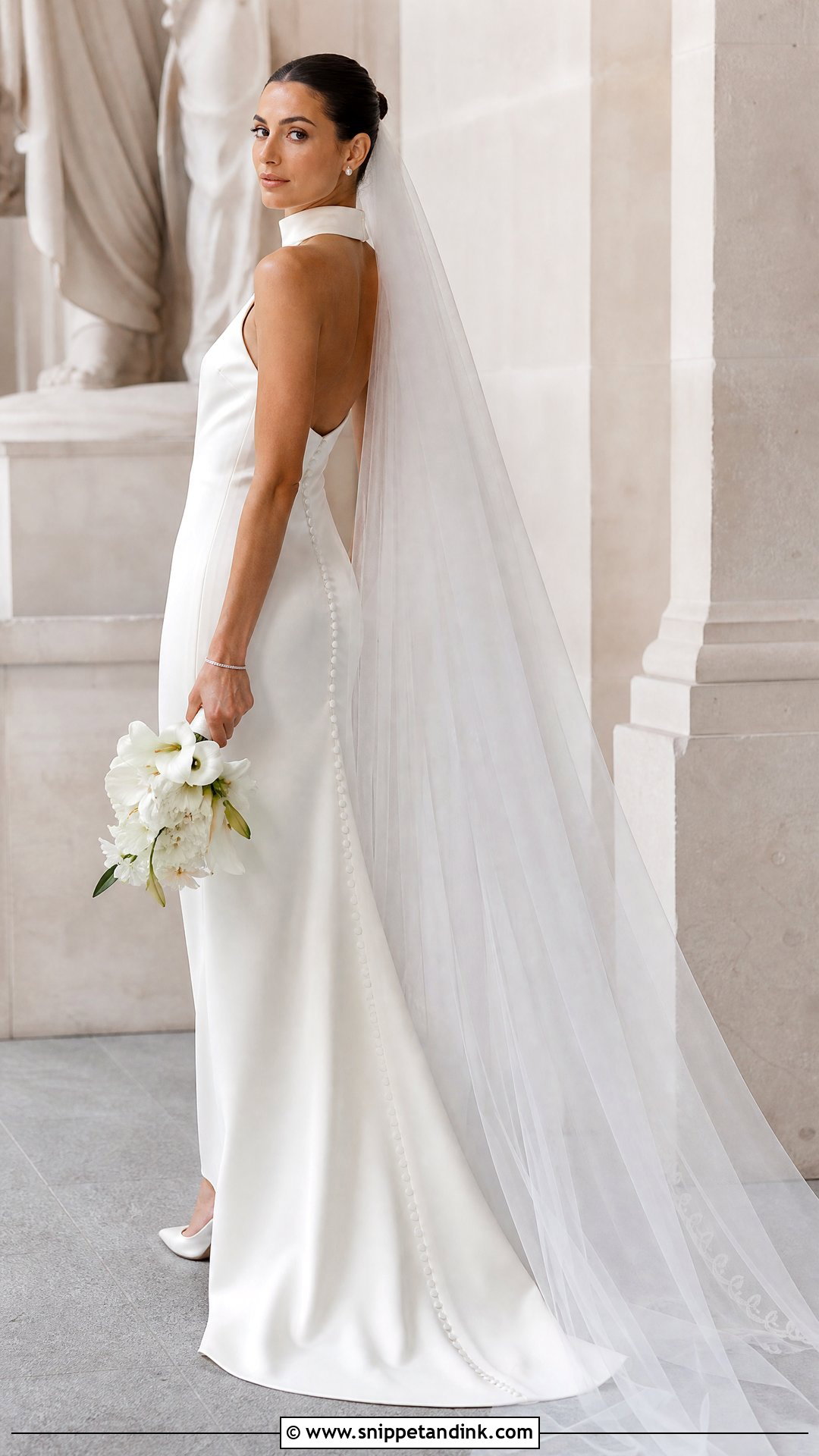
A high neck gives coverage with a clean, modern look; a mock neck feels sharp, a draped one slightly vintage. Balance it with sleeveless arms, cap sleeves or an open back. Satin around the collar must be tailored precisely, since any spare fabric bunches when you turn your head. Turn and raise your arms at fittings. Pearl studs, a low bun, a bracelet instead of a necklace, ivory pointed pumps and a long veil. Covered buttons down the back are enough detail.
9. Scoop Neck Satin Sheath Wedding Dress
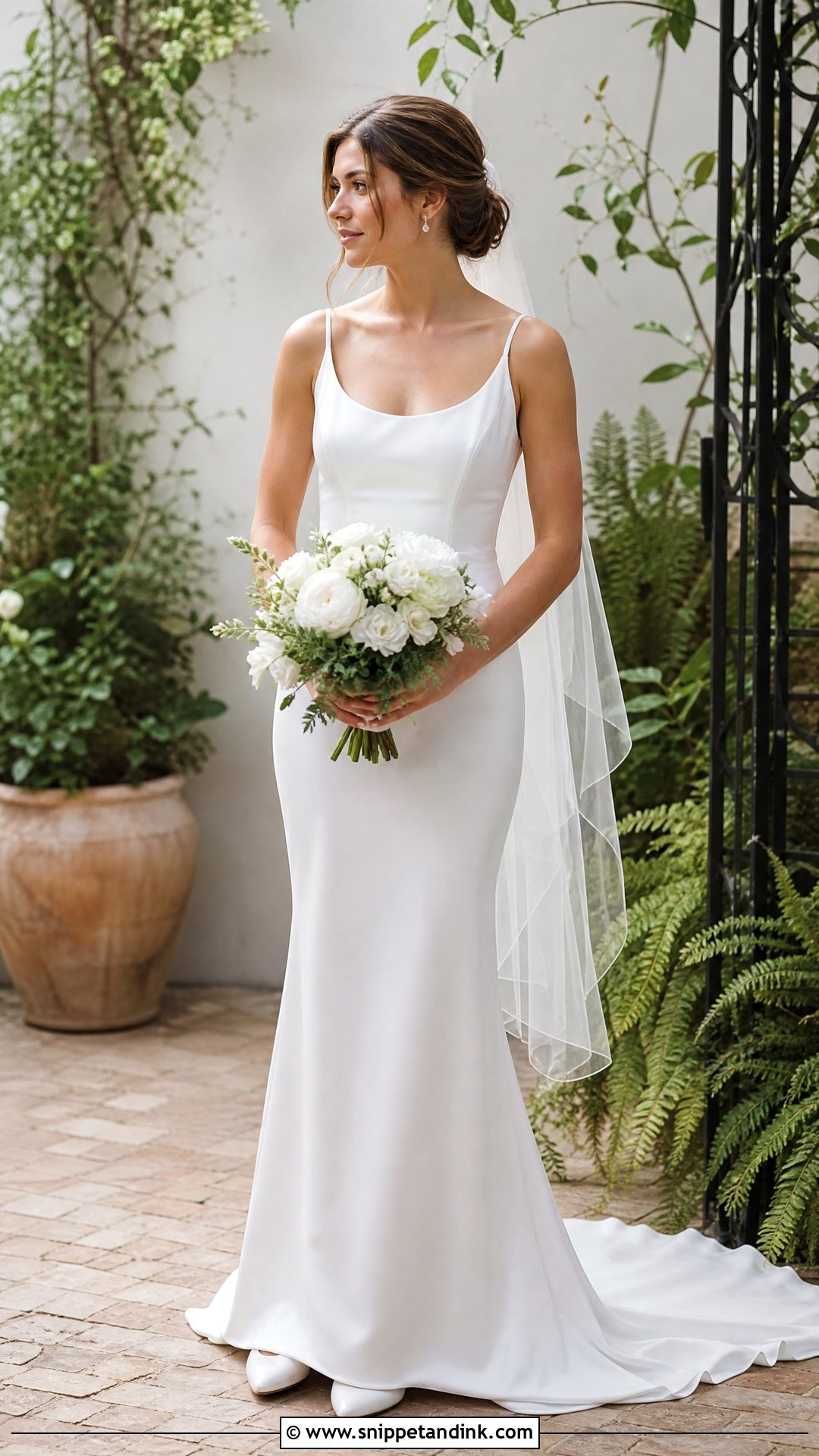
The scoop is the gentlest neckline here. It opens the chest without the sharp angles of a square or V. Wider straps for support, slim ones for a slip feel. The edge of a scoop should lie flat; in satin it sometimes ripples, which a good seamstress fixes with stay tape inside. A loose low bun, short drops, and a light veil moving behind the fitted skirt. Rounded-toe pumps and a hand-tied bouquet repeat the curve. Princess seams or light waist draping add shape without fuss.
10. One-Shoulder Satin Sheath Wedding Dress
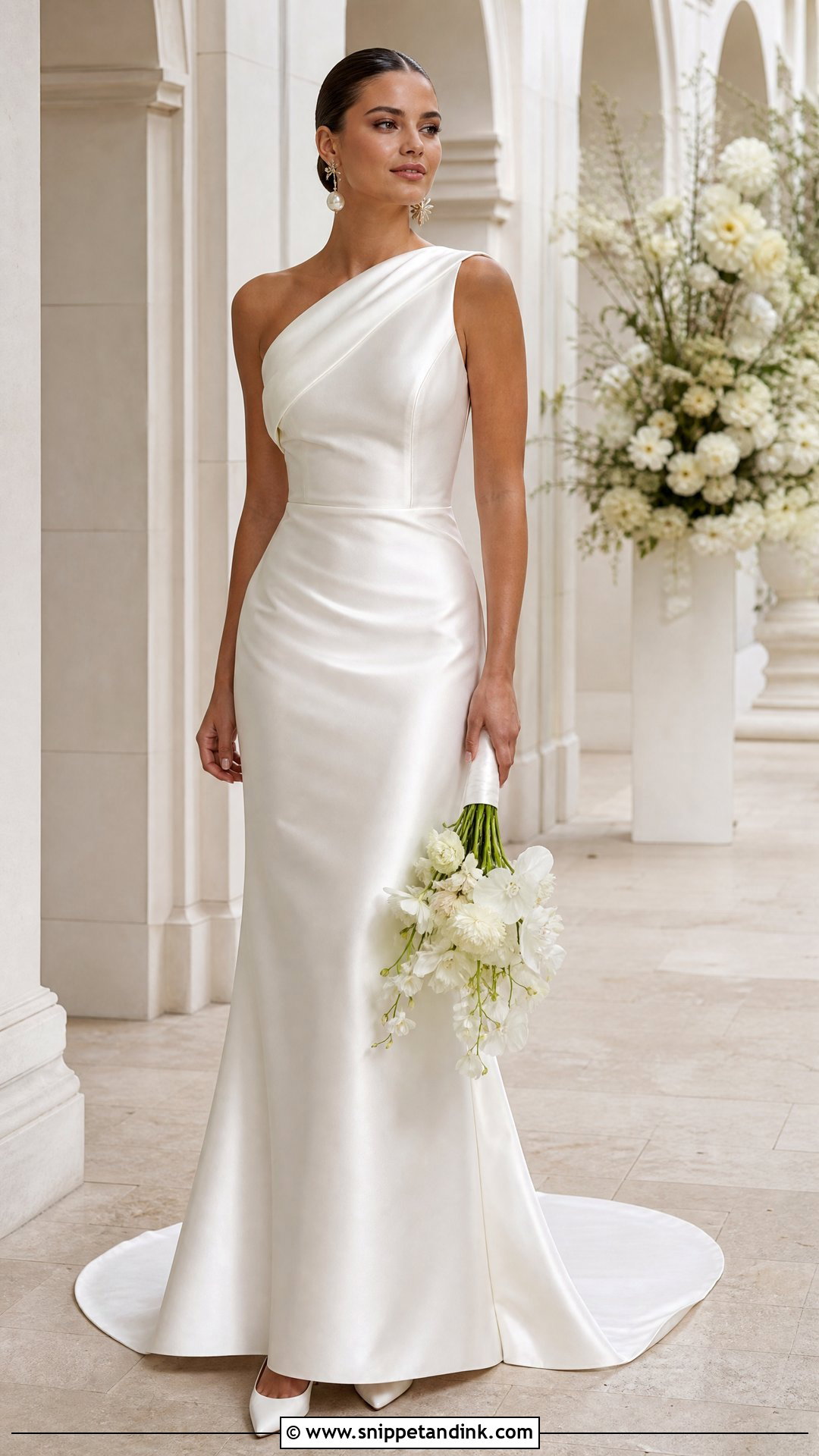
One shoulder adds controlled asymmetry. A broad band looks structured; a draped strap looks fluid. Keep everything else restrained. Asymmetric dresses must sit exactly level, so ask your tailor to look from every angle; if the bodice drifts toward the strapped side, it needs more internal support. Swept-back hair, a statement earring on the bare side and a small stud on the other, clean ivory heels and a narrow bouquet. A long veil works if pinned beneath the hair, falling behind the shoulder.
11. Spaghetti Strap Satin Sheath Wedding Dress
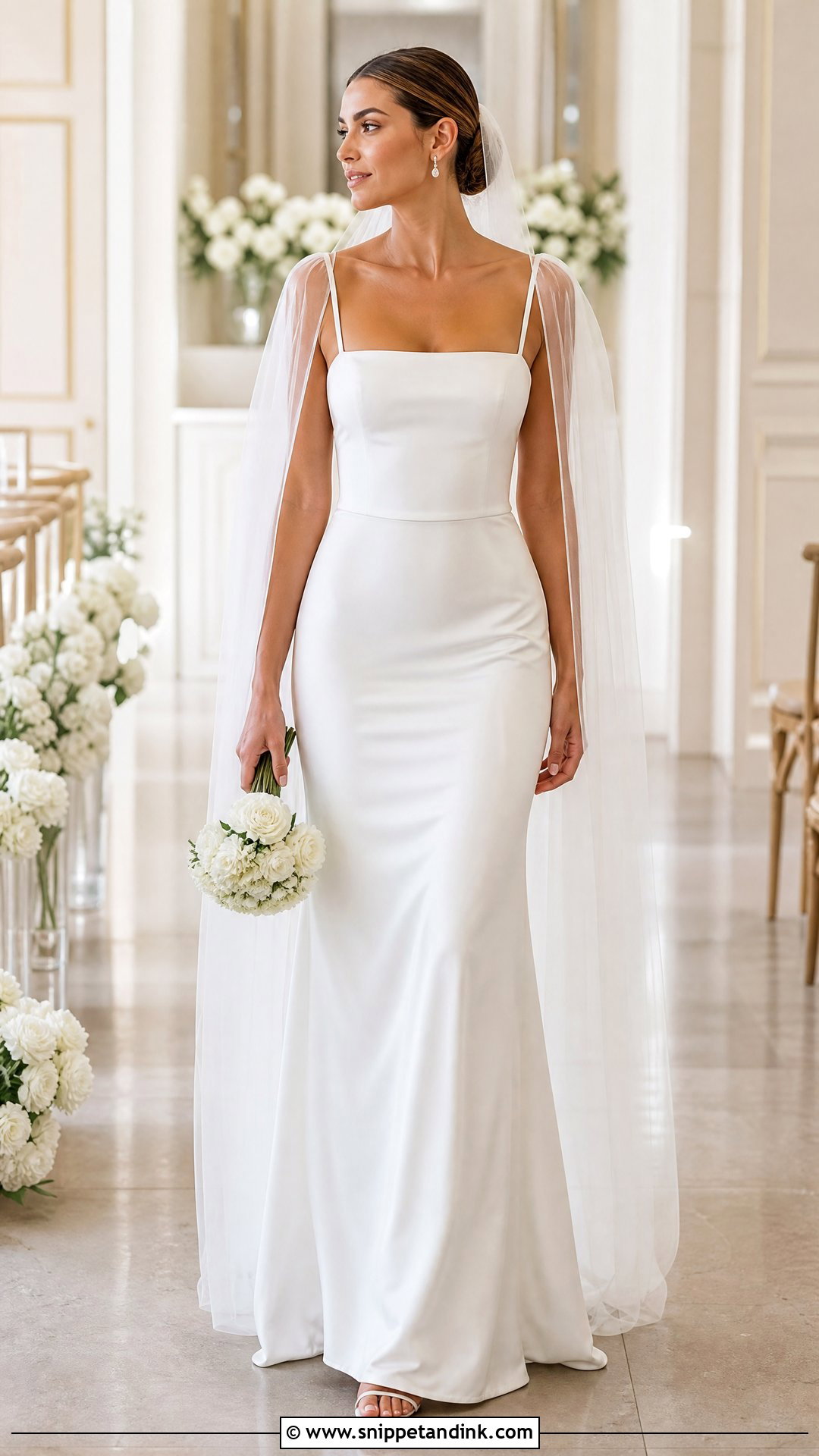
Thin straps make a spaghetti strap satin sheath wedding dress feel as light as a slip while still clearly bridal. Straight, scoop or soft cowl necklines all suit it. If you need real support, look for adjustable or reinforced straps; plain spaghetti straps carry very little. Check strap length at alterations so the neckline sits level. A fingertip veil, fine earrings, a smooth low bun and minimal heeled sandals. For a church needing coverage, add a sheer cape, a fitted topper or detachable sleeves.
12. Long Sleeve Satin Sheath Wedding Dress
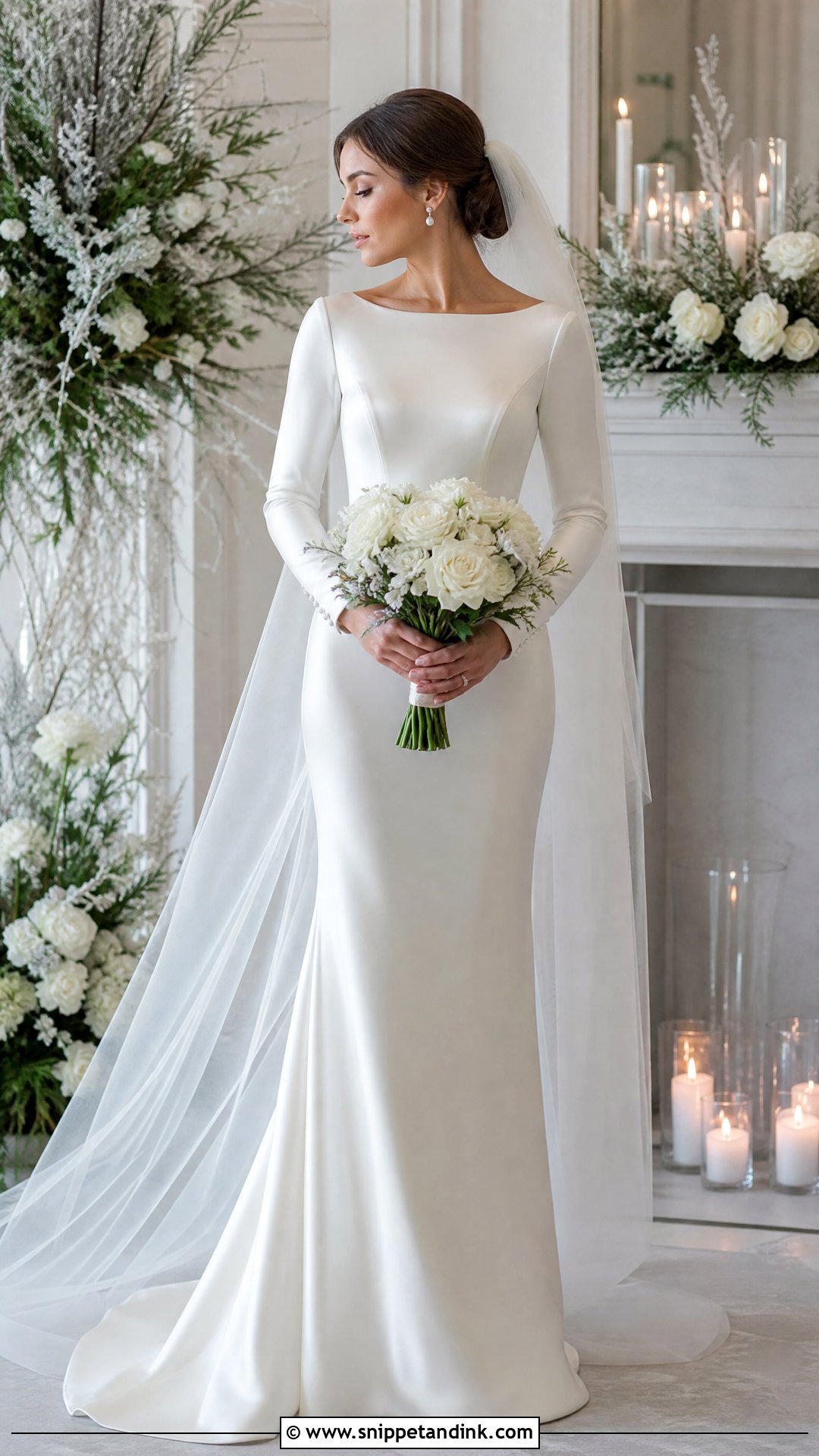
Long sleeves suit colder weather and formal settings. Fitted satin sleeves look sleek; sheer sleeves soften the look and move more easily. Balance them with a V, bateau neckline or open back. Satin sleeves are hard to get right: too loose and they wrinkle at the elbow, too tight and you can’t reach. Move your arms forward and up at every fitting. A low chignon, pearl earrings, closed pumps, a long veil with little edging and a structured bouquet. Small covered buttons at the cuffs and back are a good classic finish.
13. Cap Sleeve Satin Sheath Wedding Dress
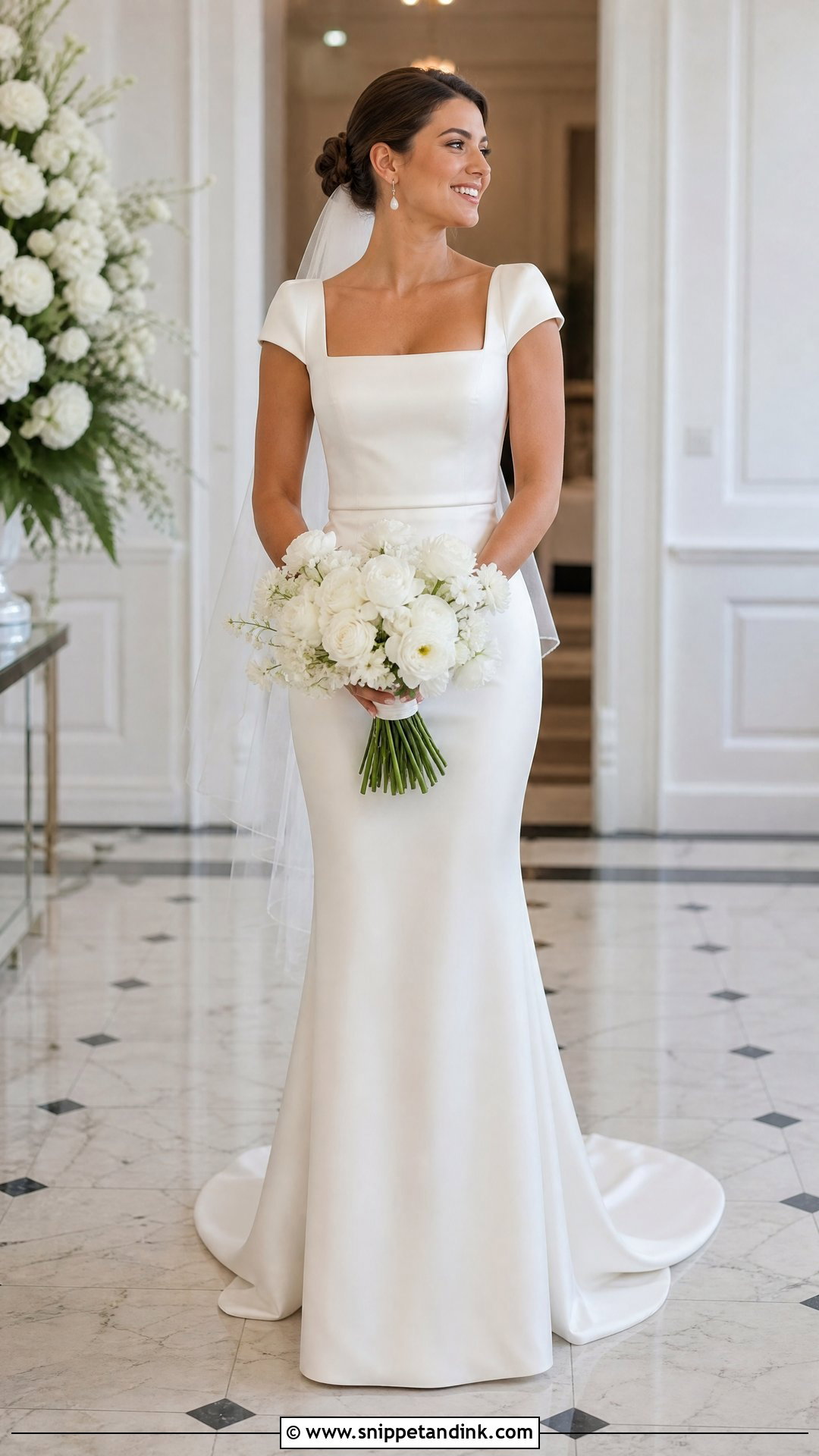
Cap sleeves cover the shoulder lightly. With a scoop neck they look classic, with a square neck more current. They should sit smoothly on the arm, not cut across it; a cap sleeve that’s too tight leaves a red line by evening. Pearl-trimmed edges or a small lace insert add texture if the rest stays plain. A neat bun, small drops, a simple veil and almond-toe satin shoes. A medium bouquet balances the shoulders without hiding the waist.
14. Backless Satin Sheath Wedding Dress
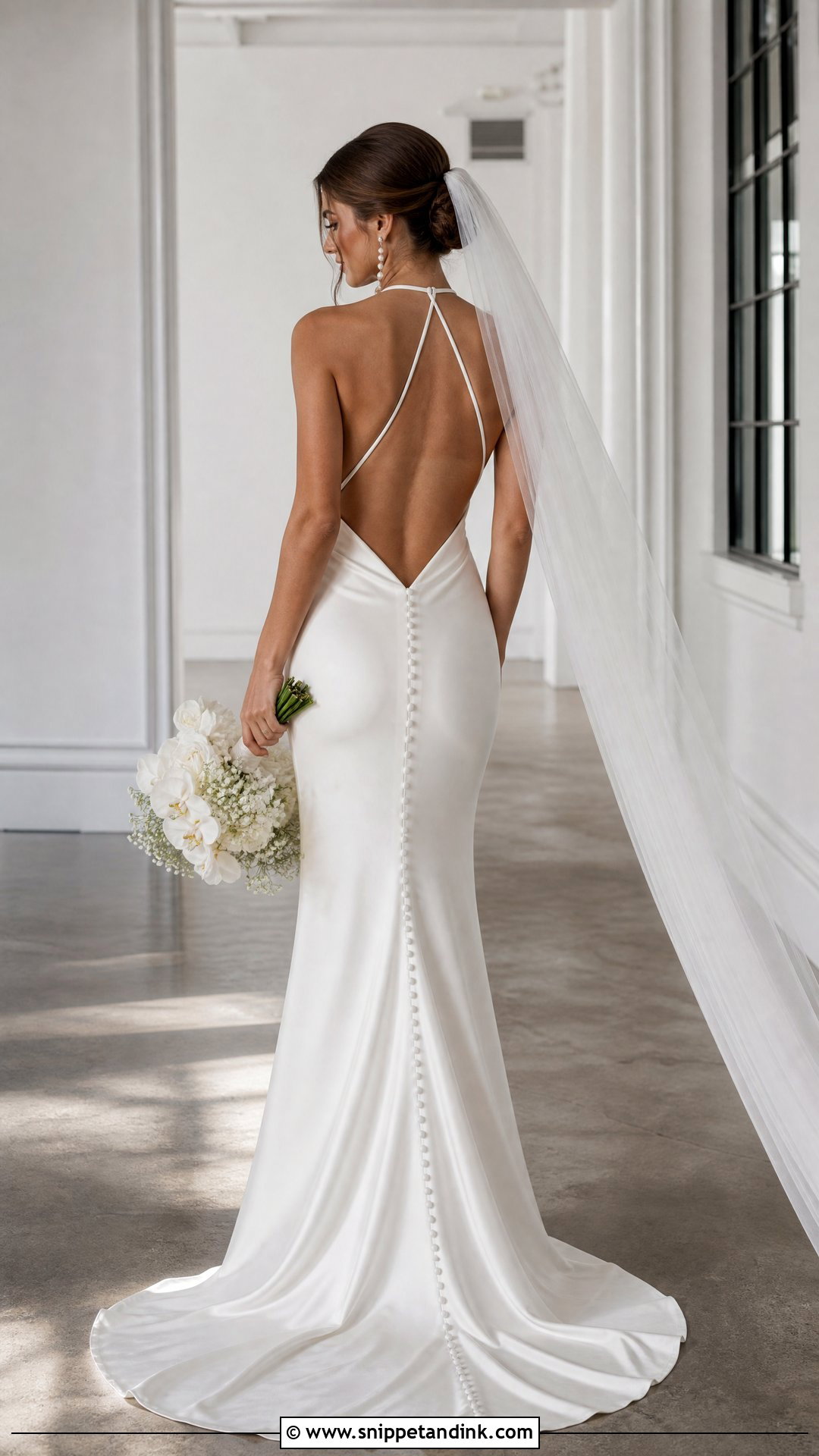
Backless gives you the moment as you turn away, while the front stays calm. A straight, cowl or halter neckline supports the open-back construction. Thin crossing straps add security; a deep scoop looks softer. Plan support early, since a normal bra won’t work: built-in cups, internal boning and fashion tape are the usual answers. Wear your hair up and choose a veil you can remove after the ceremony. Drop earrings, understated heels and covered buttons where the back opening meets the skirt.


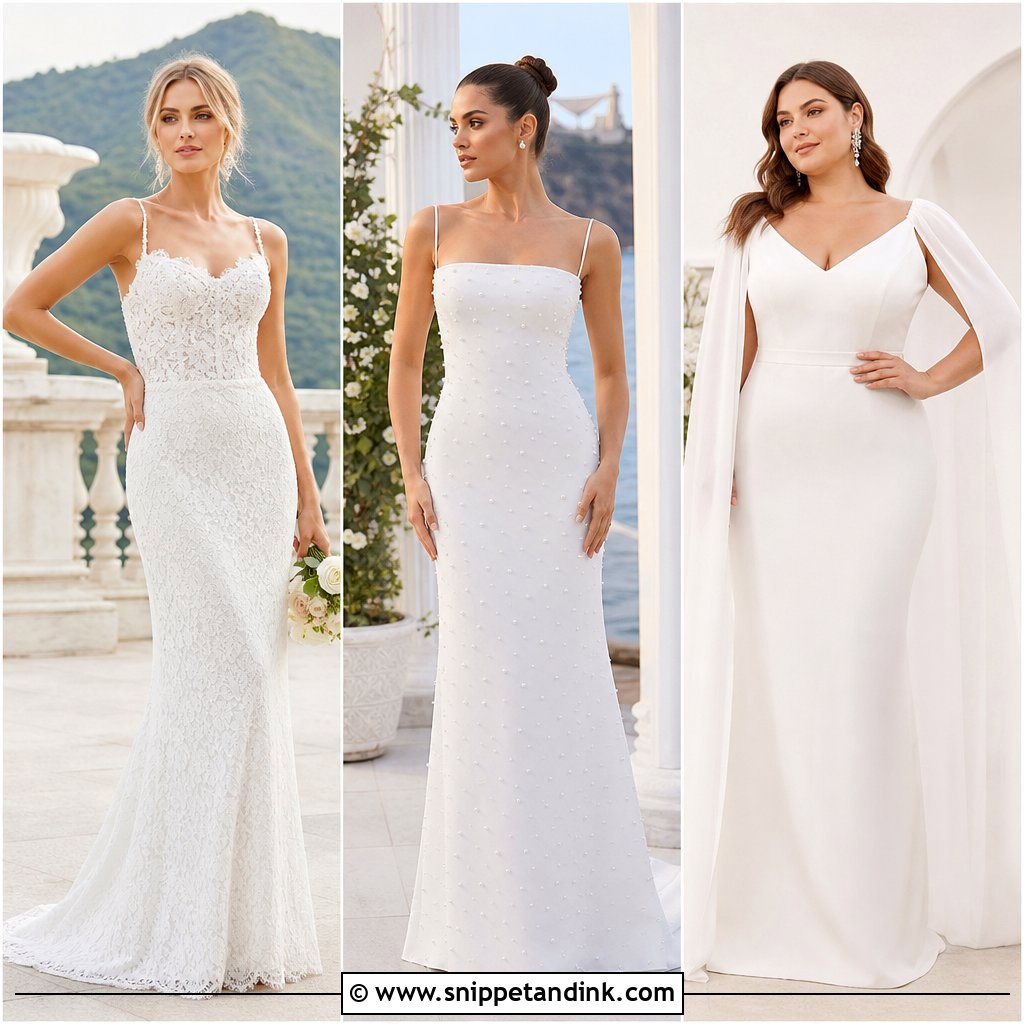
15. Side Slit Satin Sheath Wedding Dress
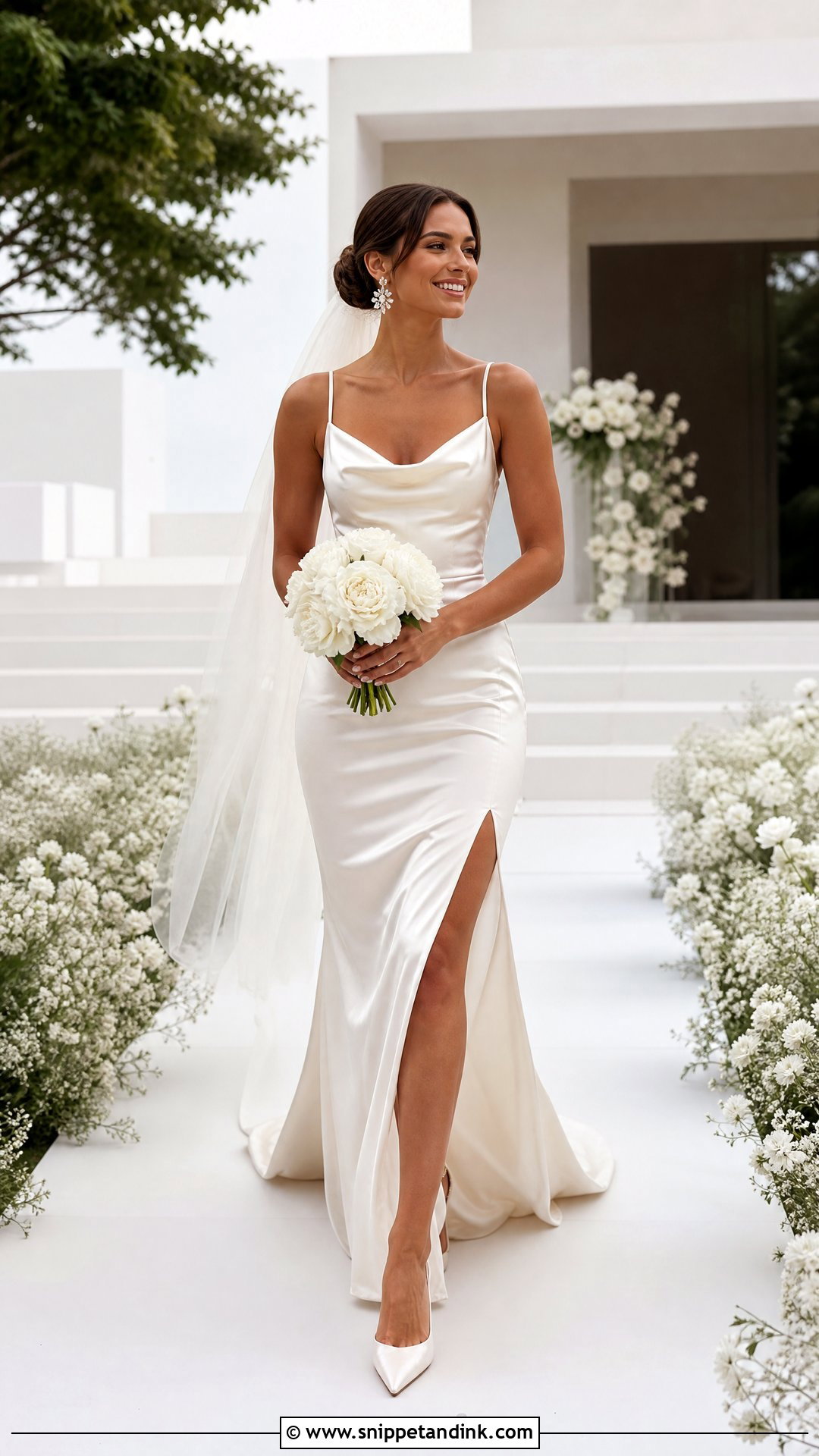
A slit is the practical answer to a sheath’s narrow hem. A side slit satin sheath wedding dress lets you walk at a normal pace and shows a little of your shoes. Keep it moderate if your ceremony is formal. Soft draping at the waist that runs into the opening makes it look planned. Practise sitting and climbing steps at fittings; a hidden panel or small snap adds security. Pointed pumps or slim-strap sandals, statement earrings, a neat bun and a simple veil.
16. Draped Satin Sheath Wedding Dress
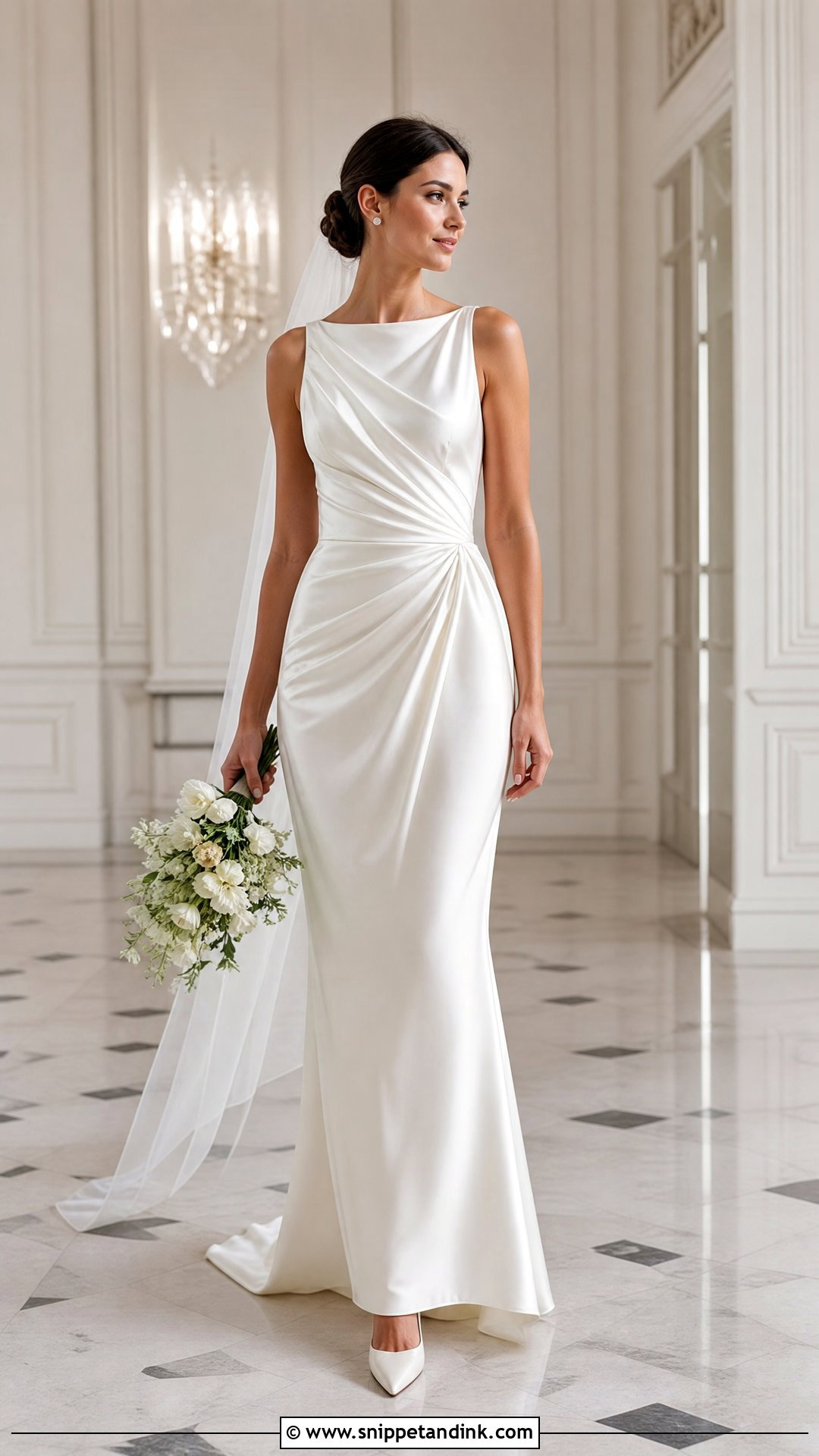
Draping gives a plain sheath depth and shapes the waist. Folds can cross the bodice, gather at one hip or wrap around the torso. Where they start and stop changes your proportions, so I spend time at fittings pinning them a little higher or lower until the line looks right. The fabric should lie smooth without pulling at the seams. Pearl studs, an understated veil, a low bun and pointed heels, with a loose bouquet. A concealed zip keeps the back simple and the focus on the front.
17. Corset Bodice Satin Sheath Wedding Dress
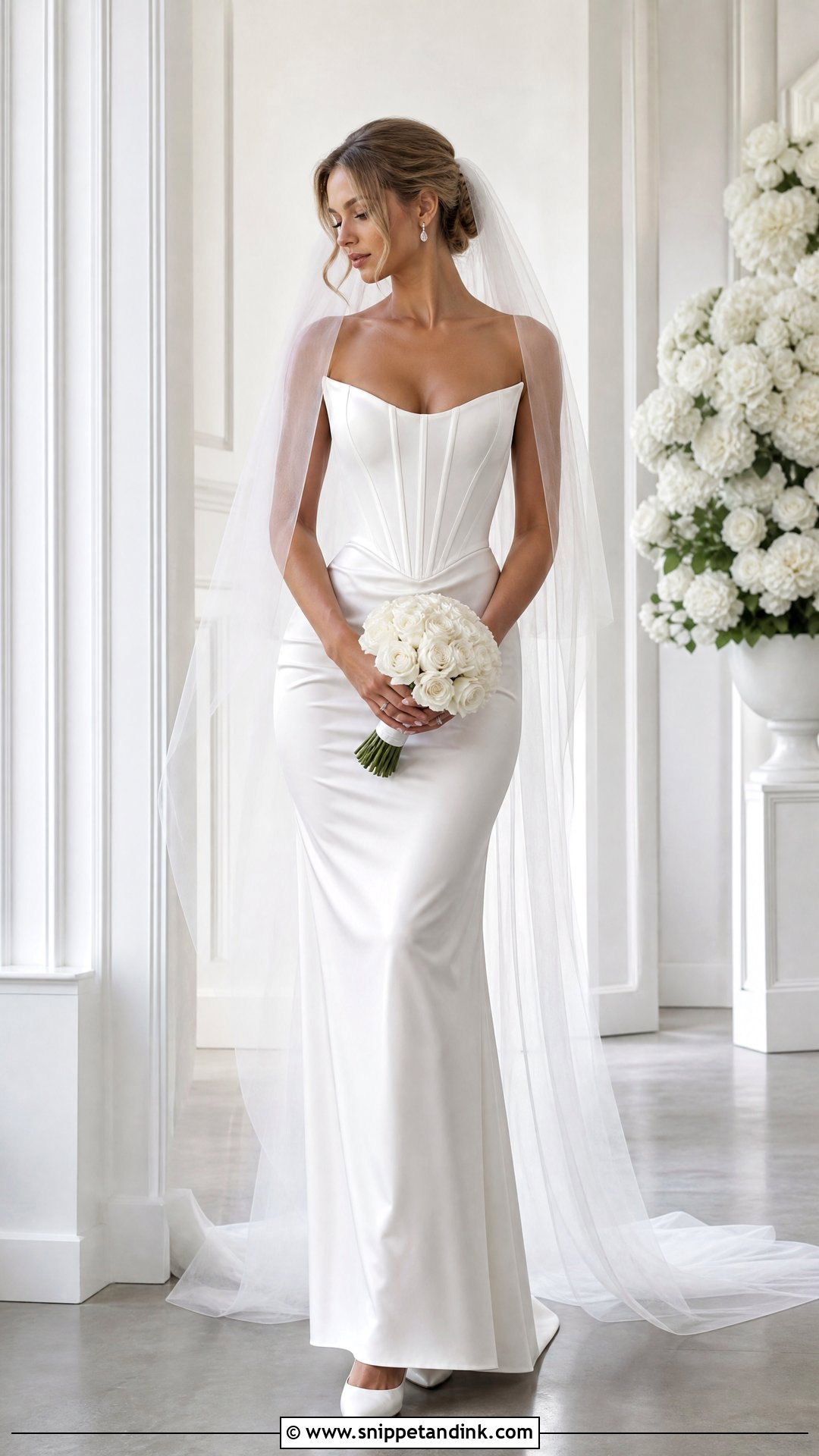
A corset gives a narrow dress visible structure. Satin-covered boning looks refined; subtle exposed seams more contemporary; internal boning under unbroken satin is the smoothest. It should define the waist and still let you breathe and eat. Sit for several minutes at a fitting, not just a few seconds. A lace-up back adjusts on the day, while a zip looks cleaner. A sheer veil, delicate earrings, closed pumps and a small bouquet. No heavy necklace.
18. Pearl Detail Satin Sheath Wedding Dress
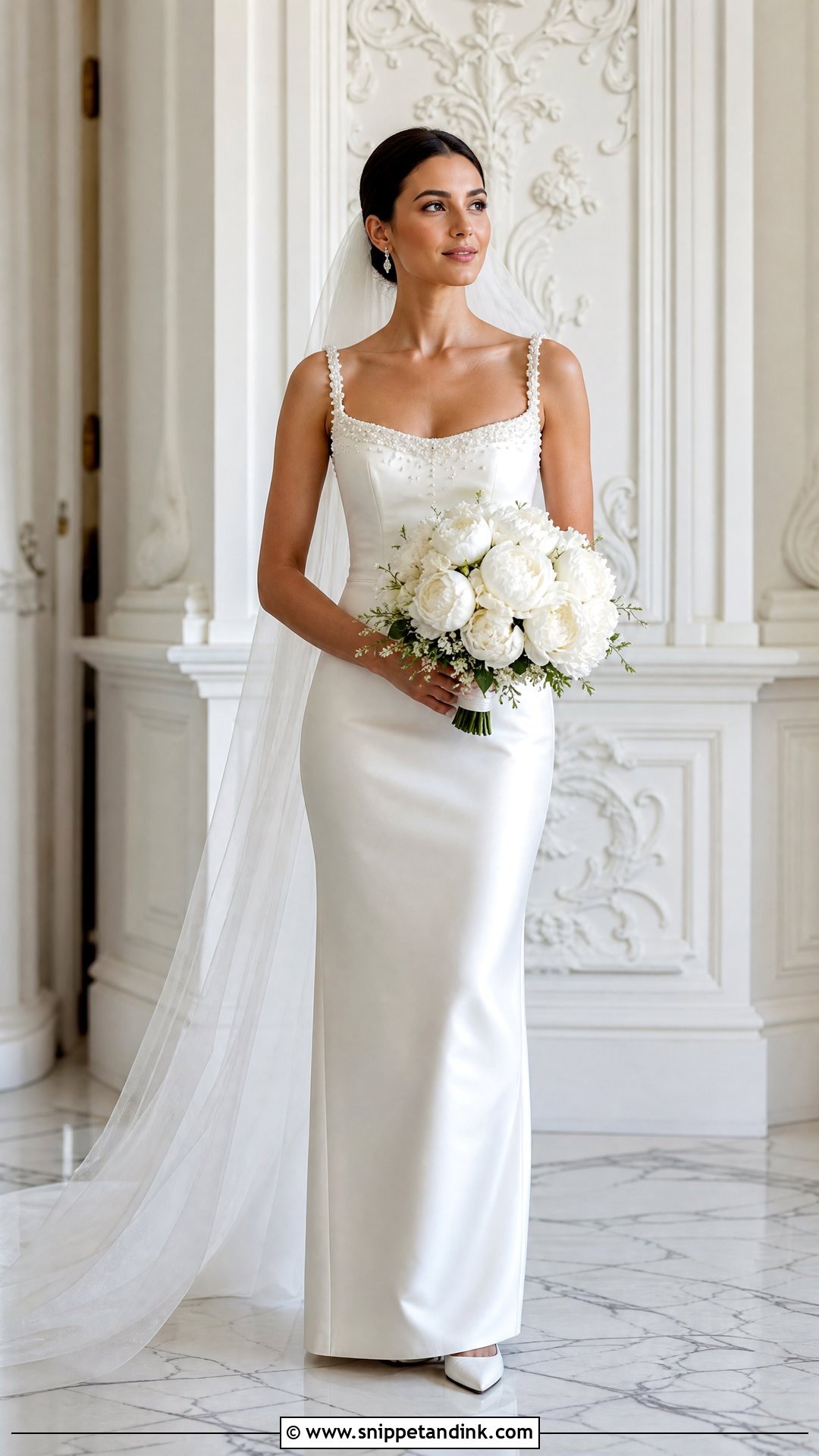
Pearls add texture without covering the satin. Put them in one place: the straps, the neckline, the buttons or a removable belt. Spread across the whole gown, they fight the sheath’s simplicity. Pearls near the waist and arms catch on veils and bouquet ribbons, and stitching on fitted areas takes a lot of strain, so check both before buying. A softer, less shiny satin lets the pearls stand out more. Pearl earrings, a plain veil, satin pumps and a white bouquet with little greenery.
19. Satin Sheath Wedding Dress With Detachable Overskirt
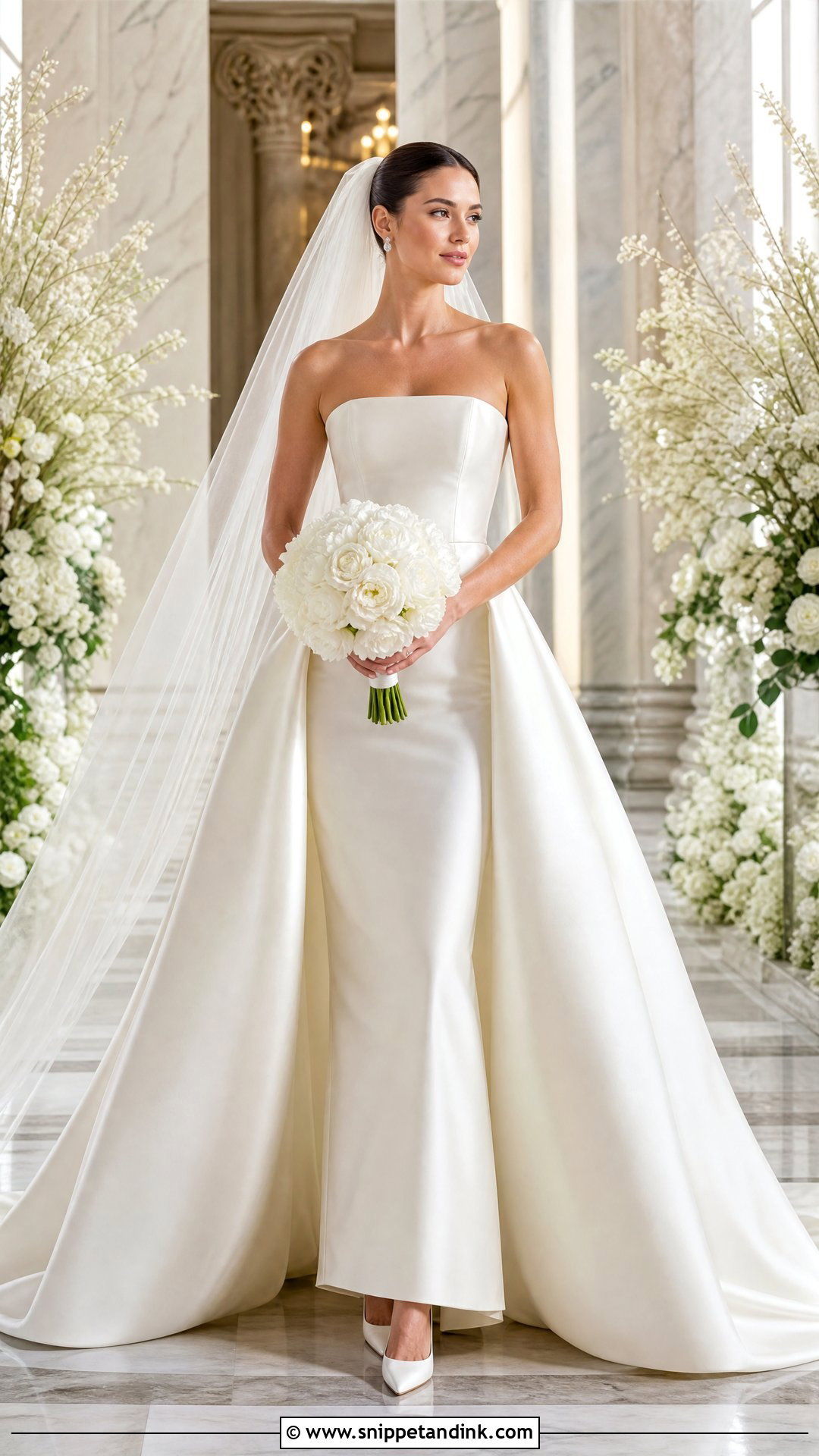
An overskirt adds ceremony volume, then comes off to reveal the sheath for the reception. Matching satin gives a smooth change; sheer organza is lighter and contrasts more. The attachment should sit flat under a narrow belt or hidden waistband. Practise removing it so it’s quick and safe for the fabric. Check the sheath alone too; it should look complete, not like an underlayer. A small train on the sheath keeps it bridal. A structured bodice, simple earrings, a long veil and pointed pumps.
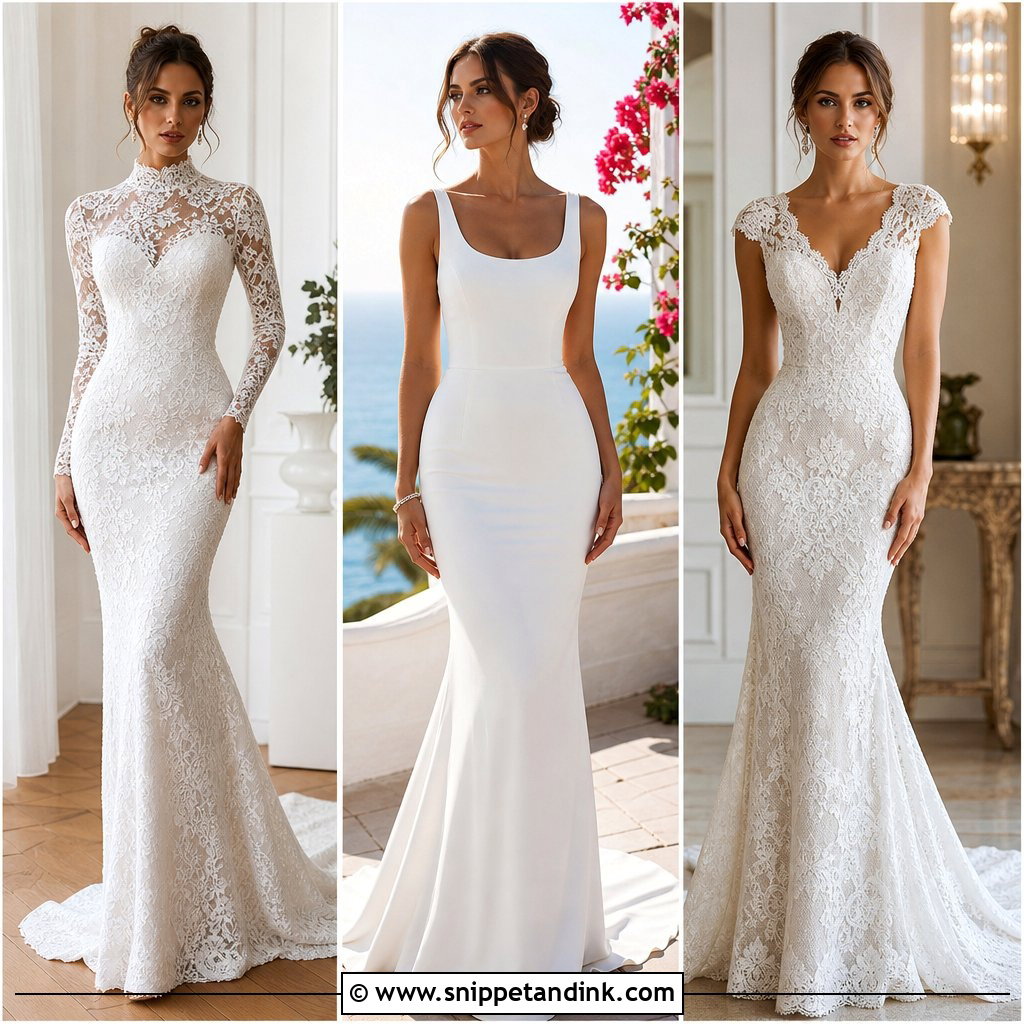
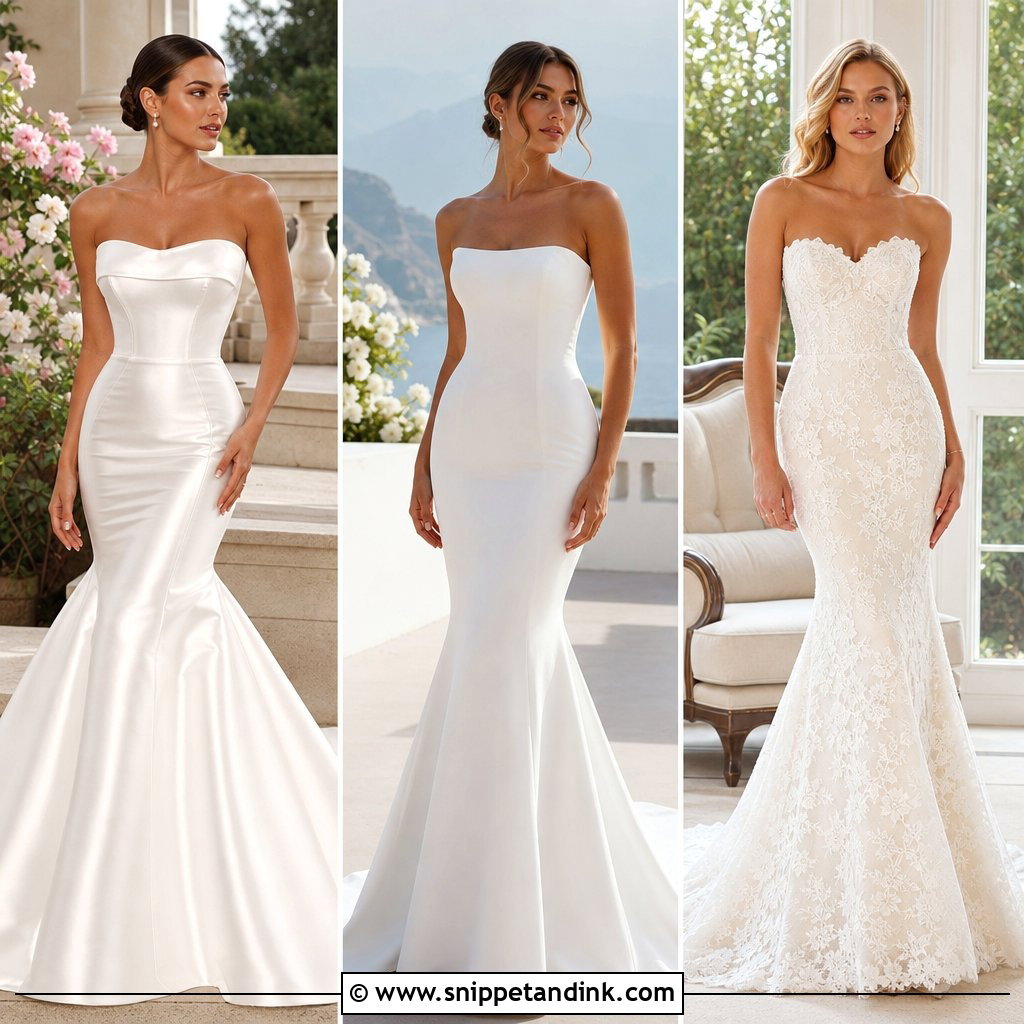
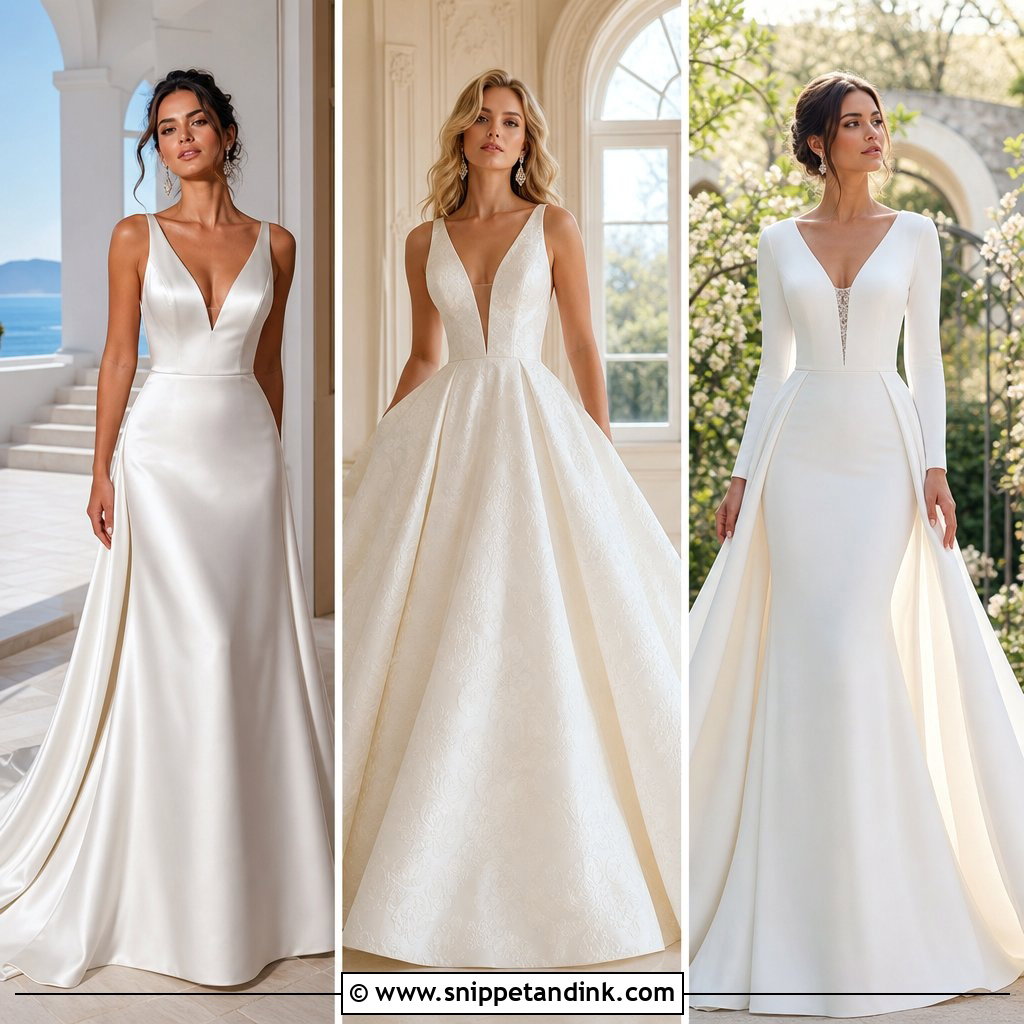
20. Bow Back Satin Sheath Wedding Dress
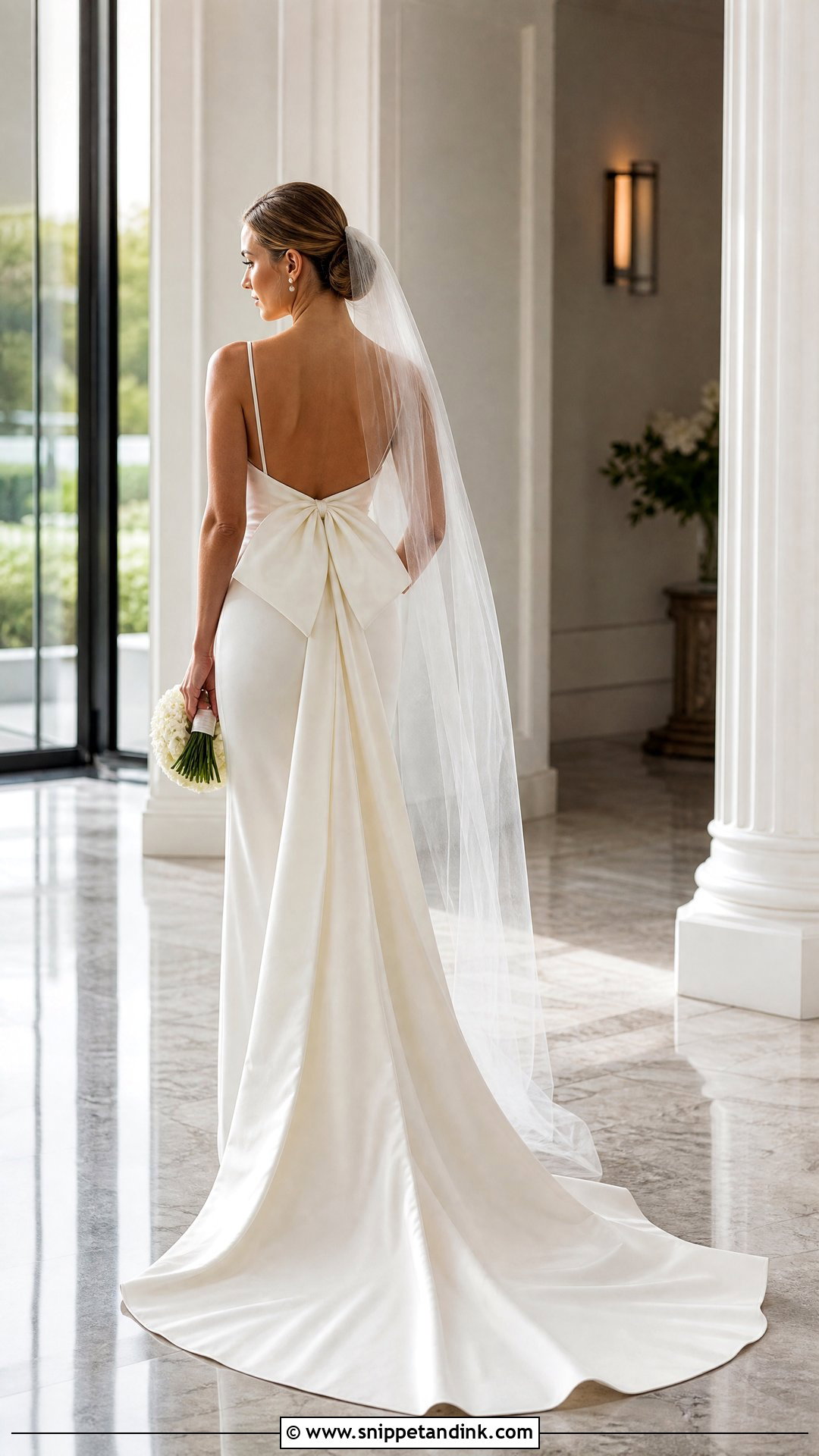
A bow at the back gives a plain sheath one strong focal point. A small structured bow at the waist looks polished; a big removable one makes more impact for the ceremony. Keep the neckline simple. If the bow has long tails, check they fall cleanly alongside the train and don’t twist. Look at it from the side at fittings, too; a bow sized for a ball gown will overwhelm a narrow sheath. A low bun, small earrings, pointed satin pumps and a plain veil that doesn’t hide it.
Flying a Satin Sheath to a Destination Wedding
Sheaths are popular for weddings abroad because they pack smaller than any other gown. Satin still creases, though, so pack it with care.
- Check your airline’s cabin rules before you fly. Never put the dress in checked luggage.
- Fold it inside out with acid-free tissue between each fold, or lay it flat in a breathable garment bag folded once. Tissue spreads the creases so they steam out more easily.
- Unpack it as soon as you arrive and hang it from the inner loops in a bathroom. Steam from a hot shower softens light creases, but keep water off the satin itself.
- For deeper creases, use a handheld steamer from inside the dress, or ask the hotel whether they can arrange professional pressing. Don’t let anyone iron it directly.
Humidity is the other thing to plan for. Satin can feel warm in a tropical climate, and polyester satin traps heat more than silk does. Keep a cool, dark room for the dress, and schedule getting dressed as late as possible.
A Plain Shape That Depends on Its Tailoring
One straight silhouette covers a lot of moods here. Necklines, sleeves, draping, back details and removable pieces all change the feel while the satin stays smooth and simple. When comparing gowns, look past the front: walk, sit, lift your arms and check the back and sides. Good inner support, a careful lining and precise alterations matter more on a sheath than almost anywhere else. Keep the accessories quieter than the dress, and pick the one that feels secure and comfortable from the first photo to the last dance.
You'll Like These Ideas:




Leave a Reply