
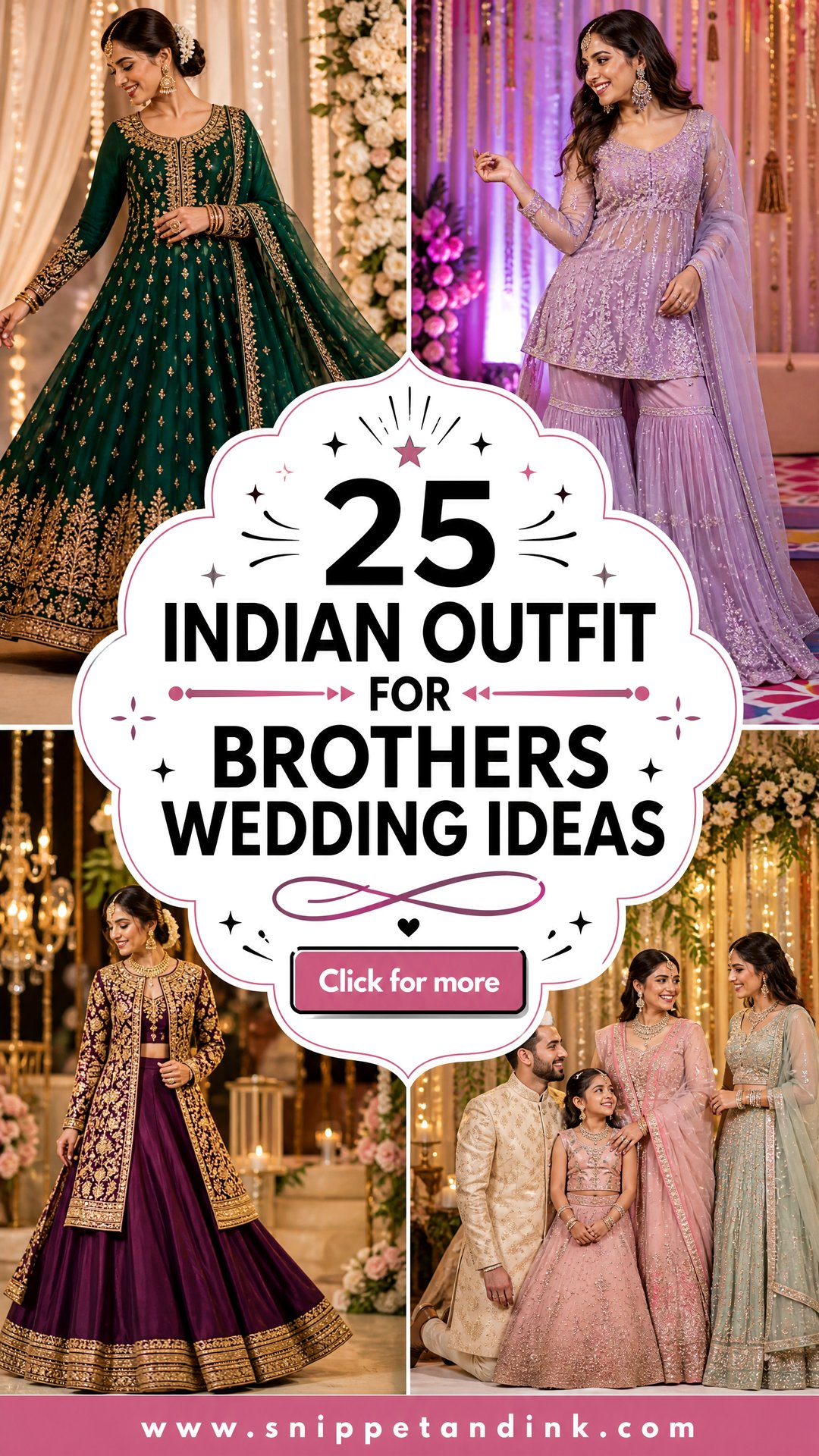
As the groom’s sister, you are in almost every frame of the wedding: the haldi, the baraat, the family portraits, the welcome at the door. That changes how I style you. Your outfits need to hold up through rituals where you are actively doing things, look right standing beside your mother and the bride, and still feel like you. The best Indian wedding outfits for this role balance comfort with presence. Below are 25 looks across lehengas, sarees, shararas, Anarkalis, Indo-western gowns and draped styles, function by function, with what I would pair with each.
The Groom’s Sister Has Rituals to Perform, Not Just Photos
Customs vary a lot by region and family, so ask your parents which parts of the wedding involve you directly. In many North Indian families, the sisters are busy: helping at the sehra bandi, feeding or decorating the mare before the baraat, dancing in front of the procession, and blocking the doorway when the couple arrives home so the groom has to pay a playful fee to enter.
Each of those moments asks something different of an outfit. I plan around them like this:
- Baraat: you will walk and dance outdoors, often on uneven road. A lehenga or sharara hemmed above the shoe and low, steady heels.
- Rituals at home: you may sit on the floor or bend over a thali. Choose a saree or Anarkali that folds neatly, and pin the dupatta away from diyas.
- Welcoming the bride: this is a photographed moment at the door. Something with structure, such as a jacket lehenga or silk saree, looks composed in close-up.
- Hosting duties: if you are greeting guests, keep heavy jewelry light at the neck so you can hug relatives without scratches or snags.
1. Heavy Lehenga For Brother Wedding
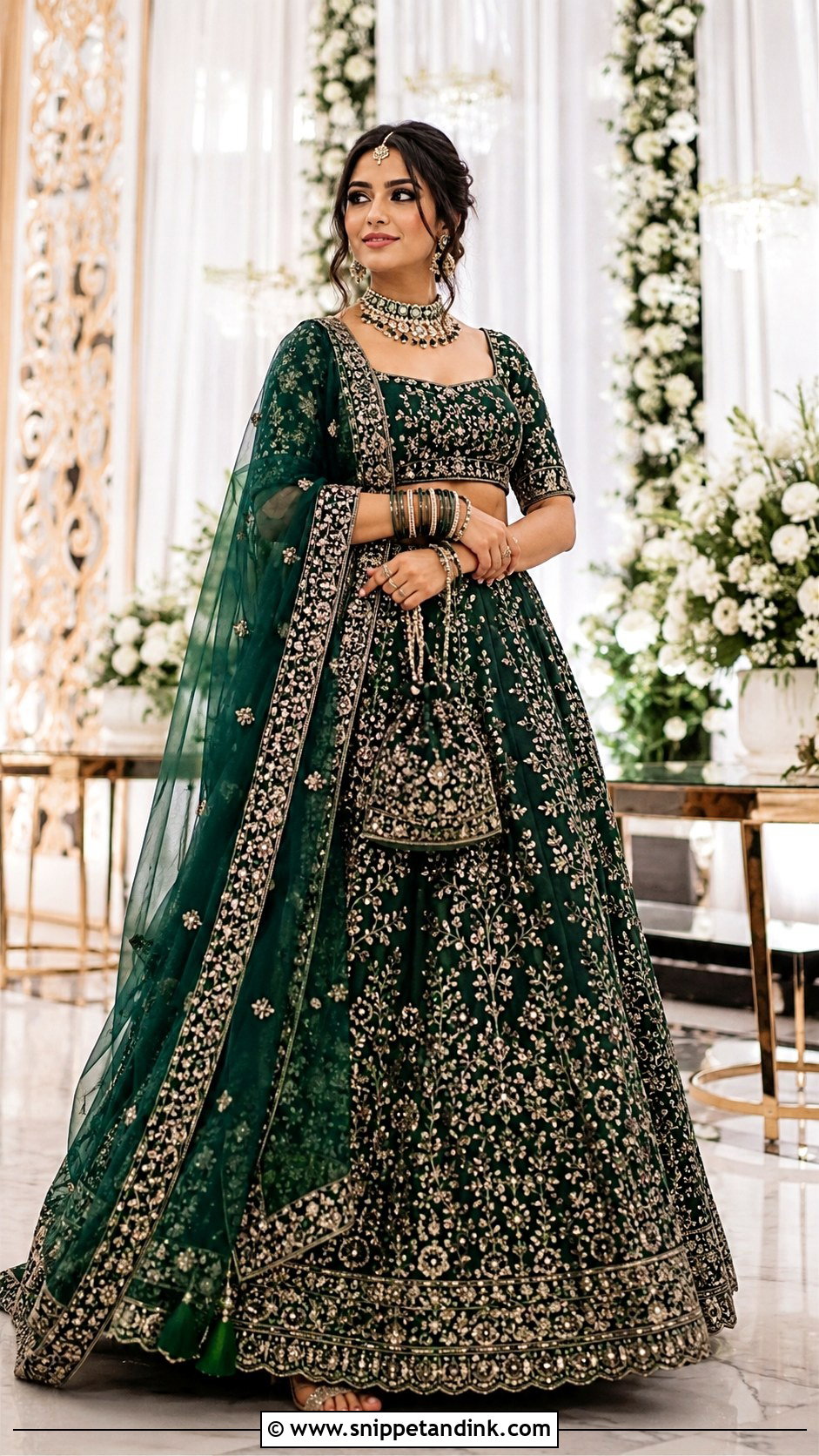
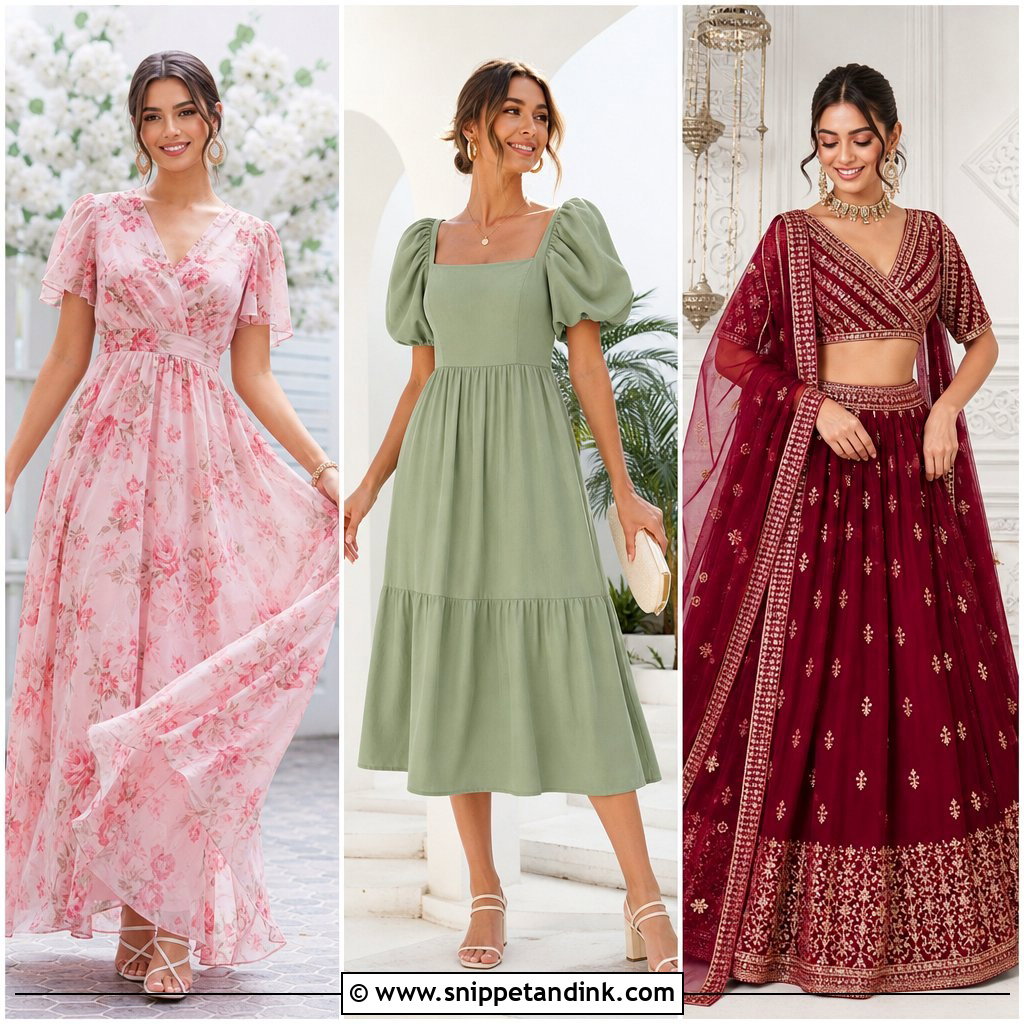
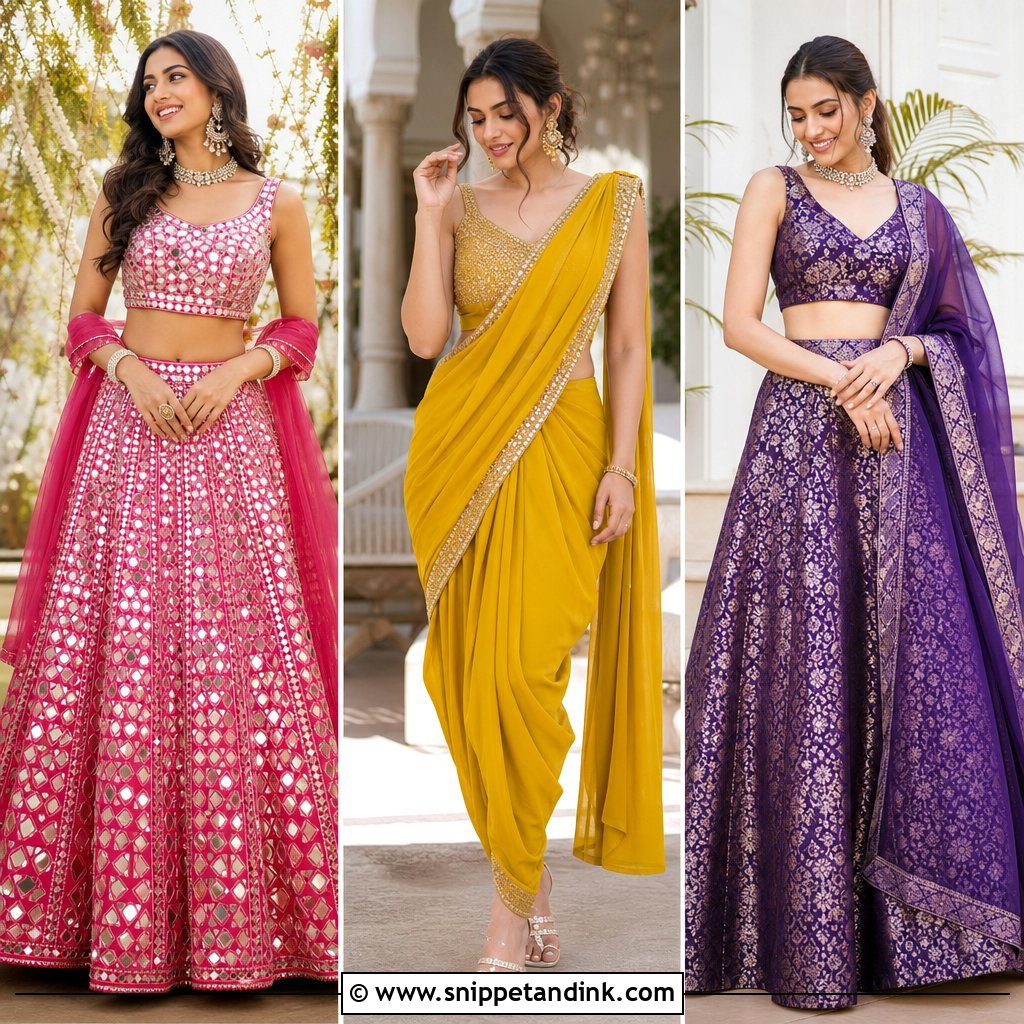
For the main ceremony and the baraat, a heavy lehenga marks you as close family. Silk, velvet or raw silk with zari, mirror work or zardozi has the weight for it. Emerald, royal blue, berry, magenta and deep purple read rich without straying into bridal red. Heavy lehengas can weigh several kilos, so I ask for a wide, padded waistband with cotton lining and broad hooks; it spreads the load and stops the skirt sliding down your hips by midnight. A structured blouse, a dupatta pinned at the shoulder, a choker and comfortable heels complete it.
2. Pastel Lehenga For Day Wedding
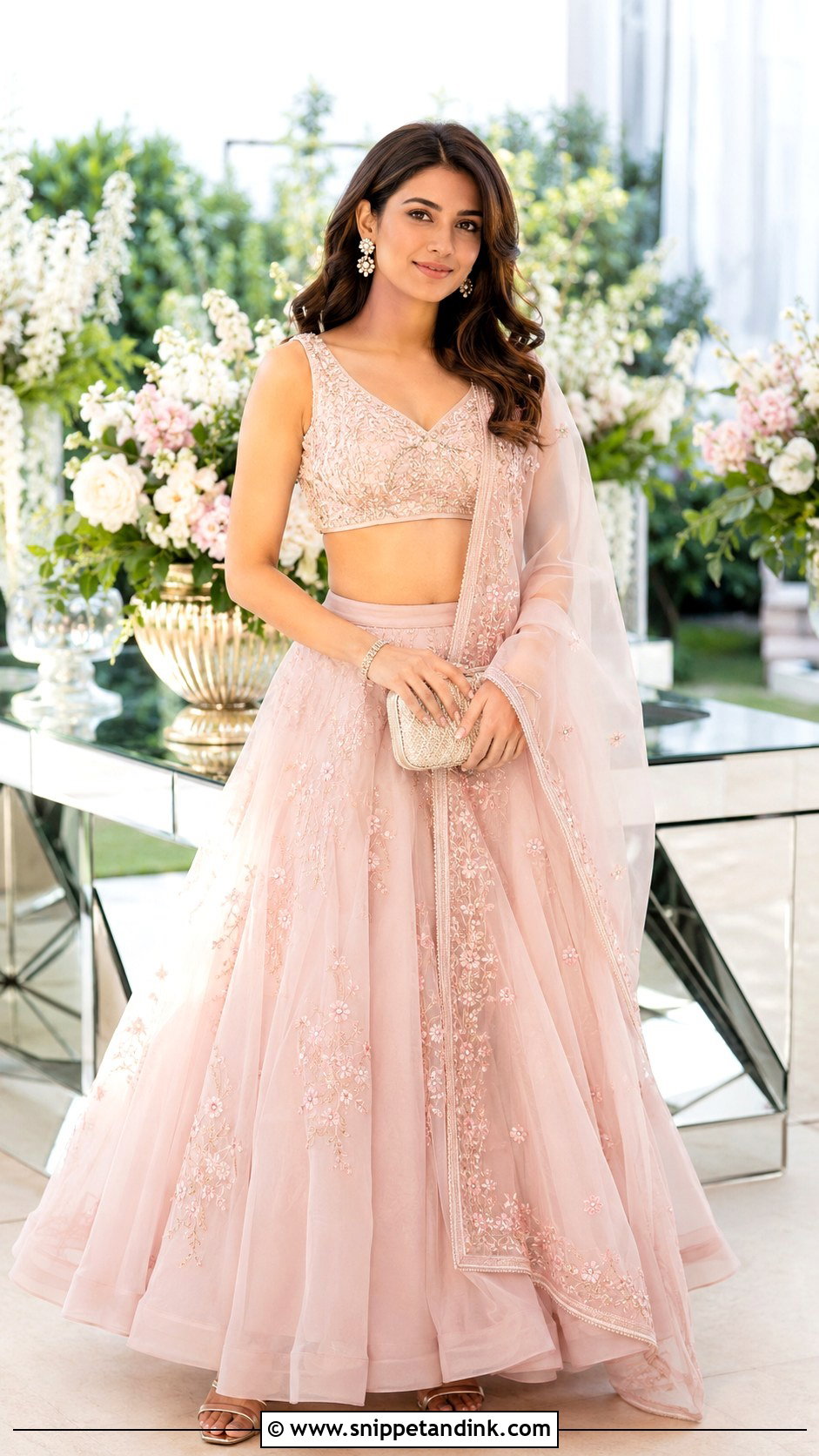
Daytime ceremonies in gardens or temples call for something lighter, and a pastel lehenga in organza, georgette or net moves well in the open air. Blush, powder blue, mint, peach or lilac with colourful embroidery works if the family dress code allows light tones. I always confirm the bride’s colour first; a sister in blush next to a bride in blush is a photo nobody enjoys. A sleeveless or short-sleeve blouse, pearl jewelry, kundan studs, soft curls and metallic sandals keep it fresh.
3. Banarasi Saree For Brother Wedding
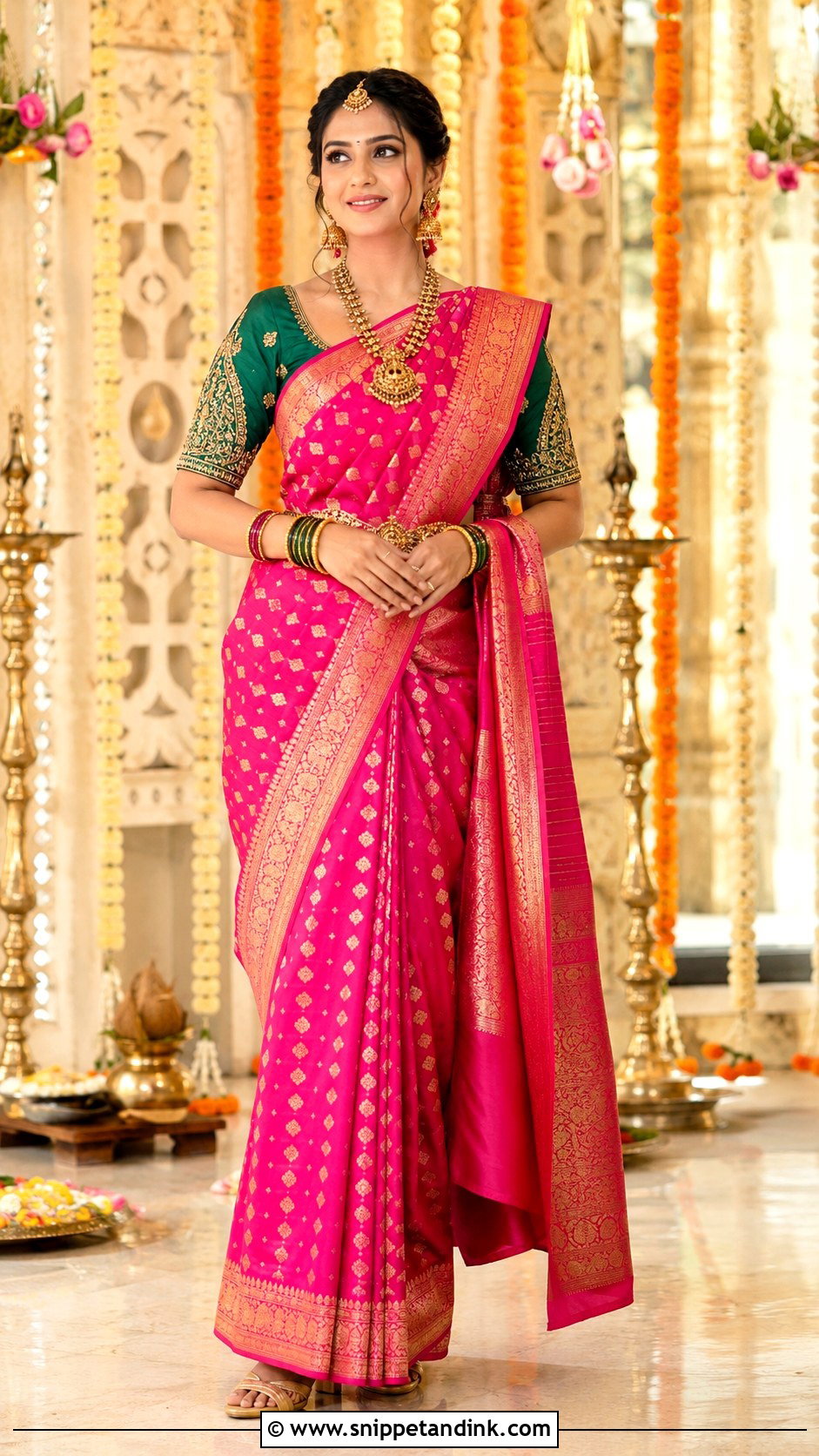
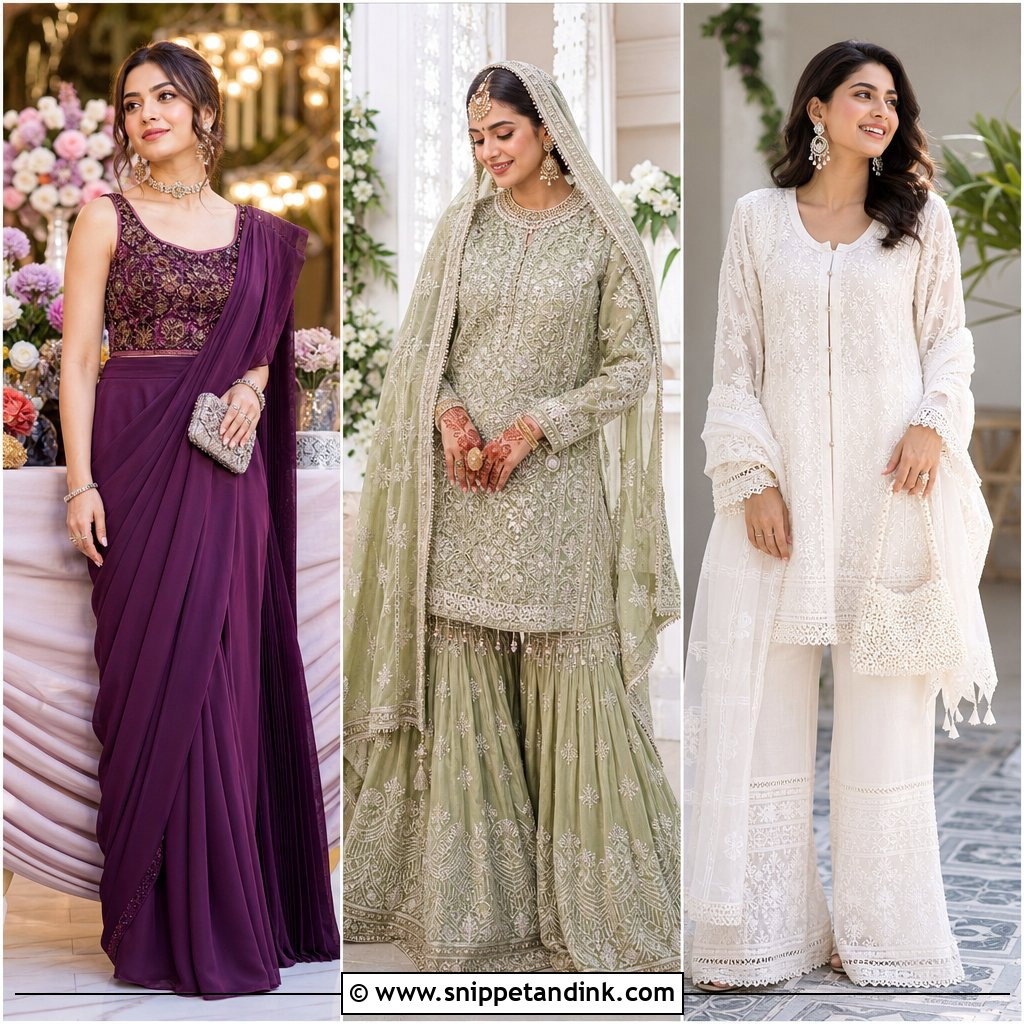
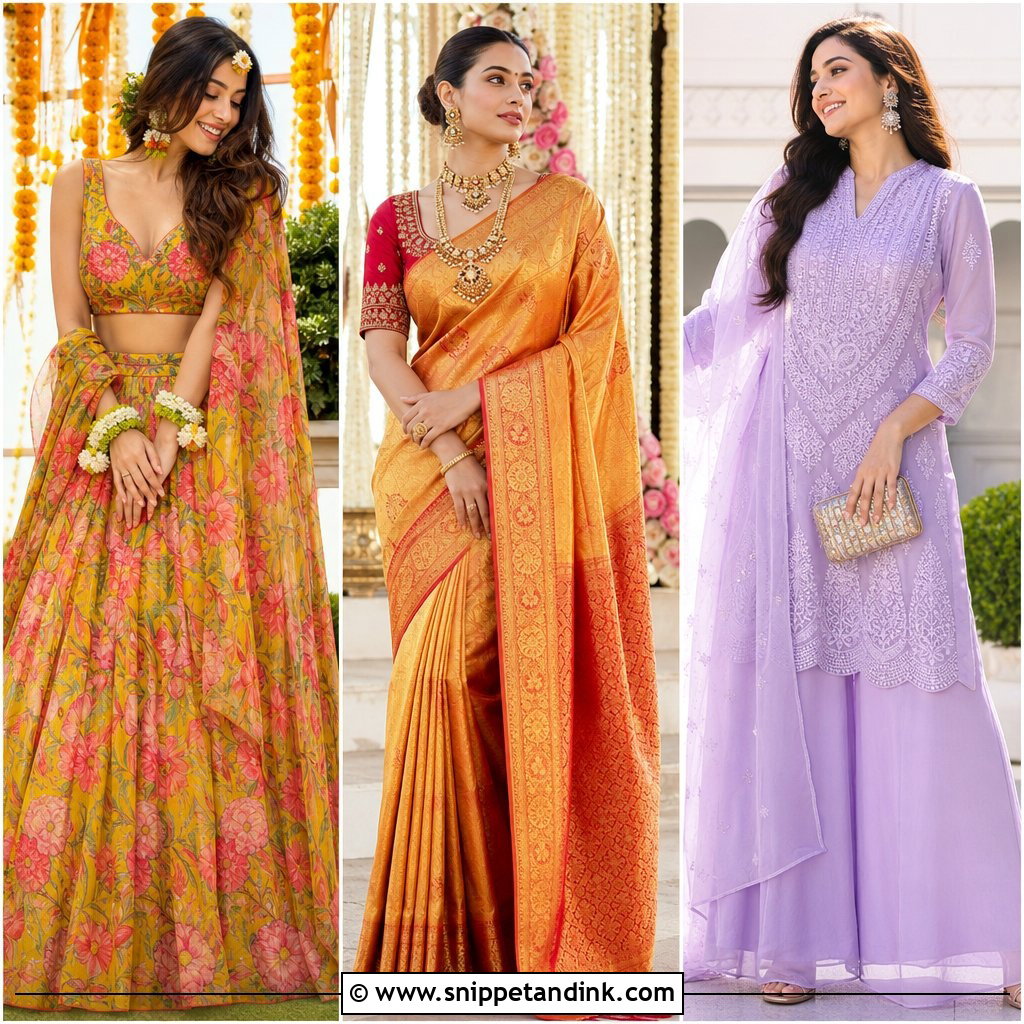
Formal and cultural ceremonies suit a Banarasi saree, which brings richness through the weave rather than embellishment. Rani pink, emerald, mustard gold, royal blue or deep maroon all work if they sit well with the bride’s palette. A contrast blouse modernises it. Temple jewelry, kundan earrings, glass bangles and a small bindi finish it. You will be up and down constantly greeting relatives, so I put an extra pin at the pleats and pallu; Banarasi silk is slippery and pleats loosen faster than in cotton silk.
4. Sequin Saree For Reception
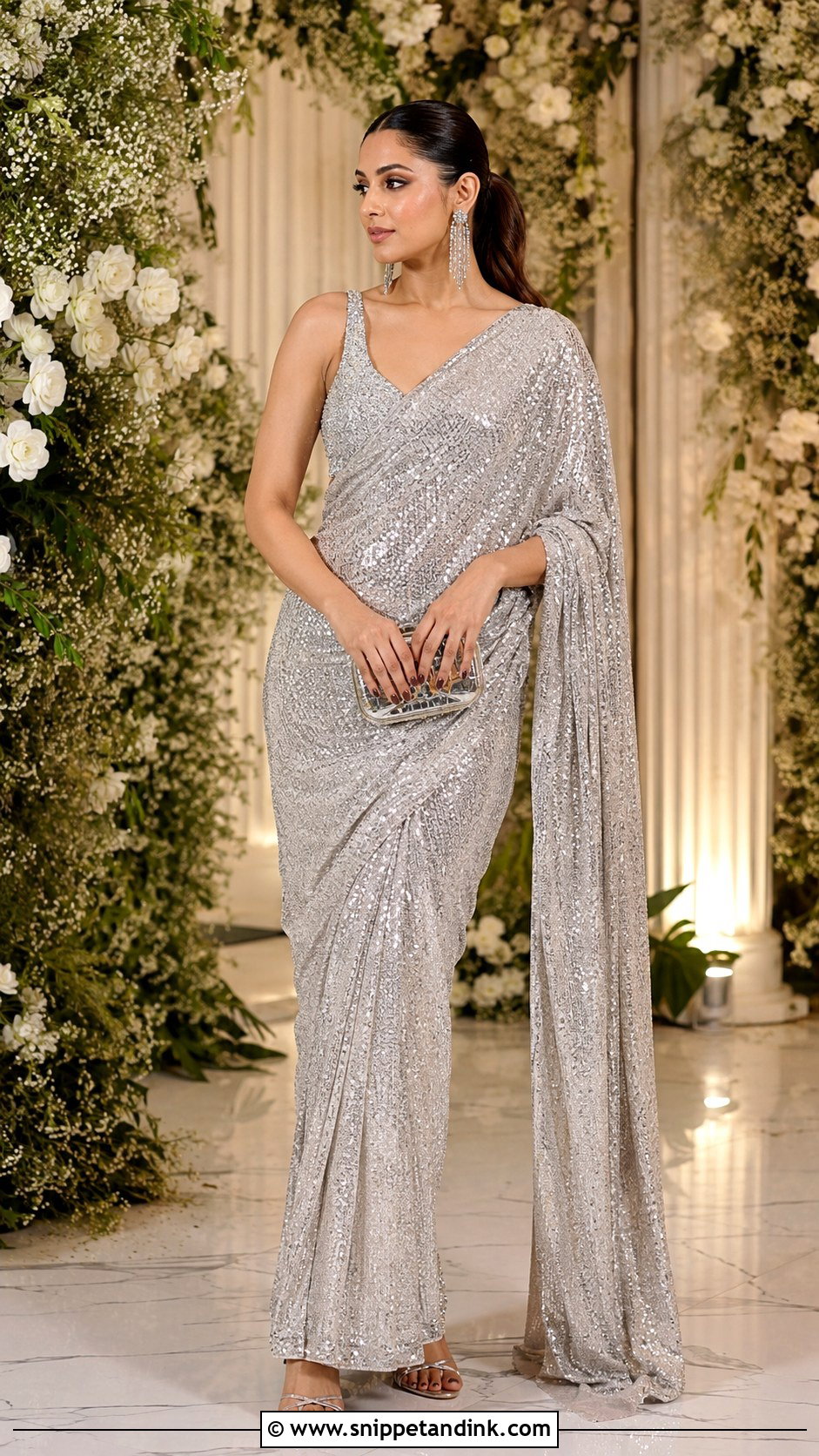
Sparkle belongs at the reception, and a sequin saree gives it without a heavy silhouette. Champagne, silver, rose gold, teal or navy look modern under event lighting. A fitted blouse, sleek hair, statement earrings and a clutch are all you need; skip the necklace, since sequins rub against metal. You will greet guests for hours, so choose heels you have already worn for an evening. I’d pick fine sequins on georgette over heavy ones on net, which feel scratchy at the waist and arms by the end of the night.
5. Anarkali Suit For Brother Wedding
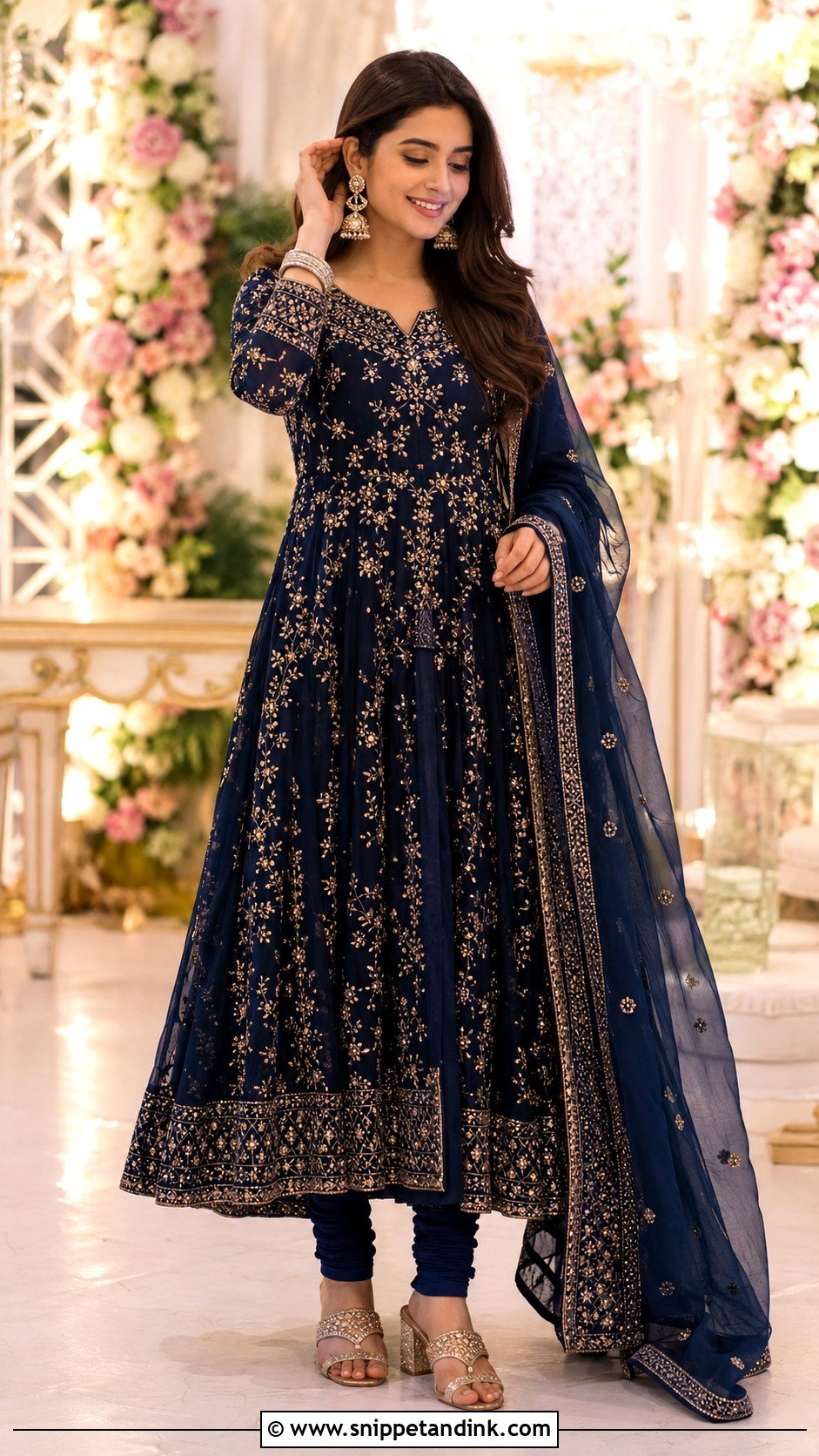
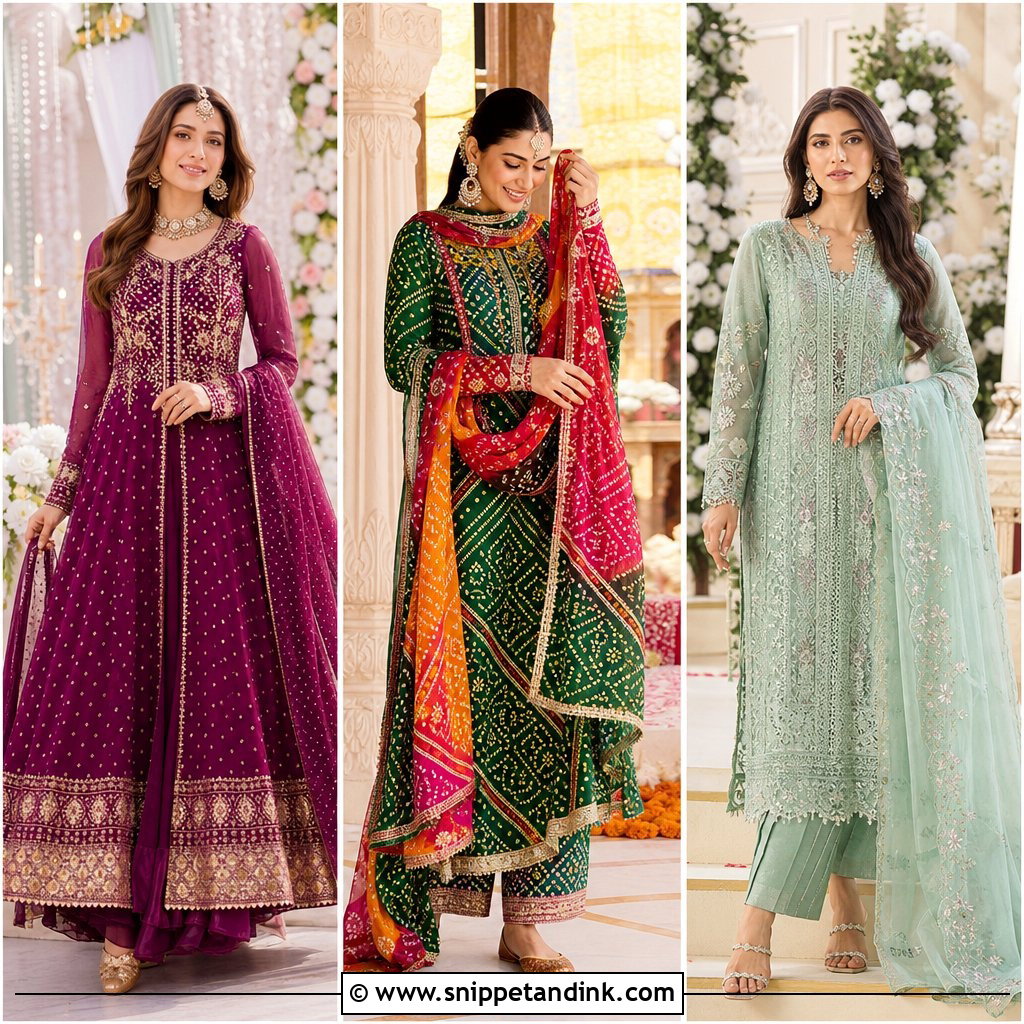
Some sisters simply prefer a dress-like silhouette, and an Anarkali gives grace and easy movement. A floor-length Anarkali with embroidery at the neckline, sleeves and hem in silk, georgette, chiffon or brocade suits mehendi, the engagement and smaller rituals. Churidar, a matching dupatta, jhumkas and juttis or block heels complete it. A very full Anarkali can swamp a petite frame; I add a slim embroidered belt at the empire line to bring back the shape.
6. Sharara Set For Sangeet
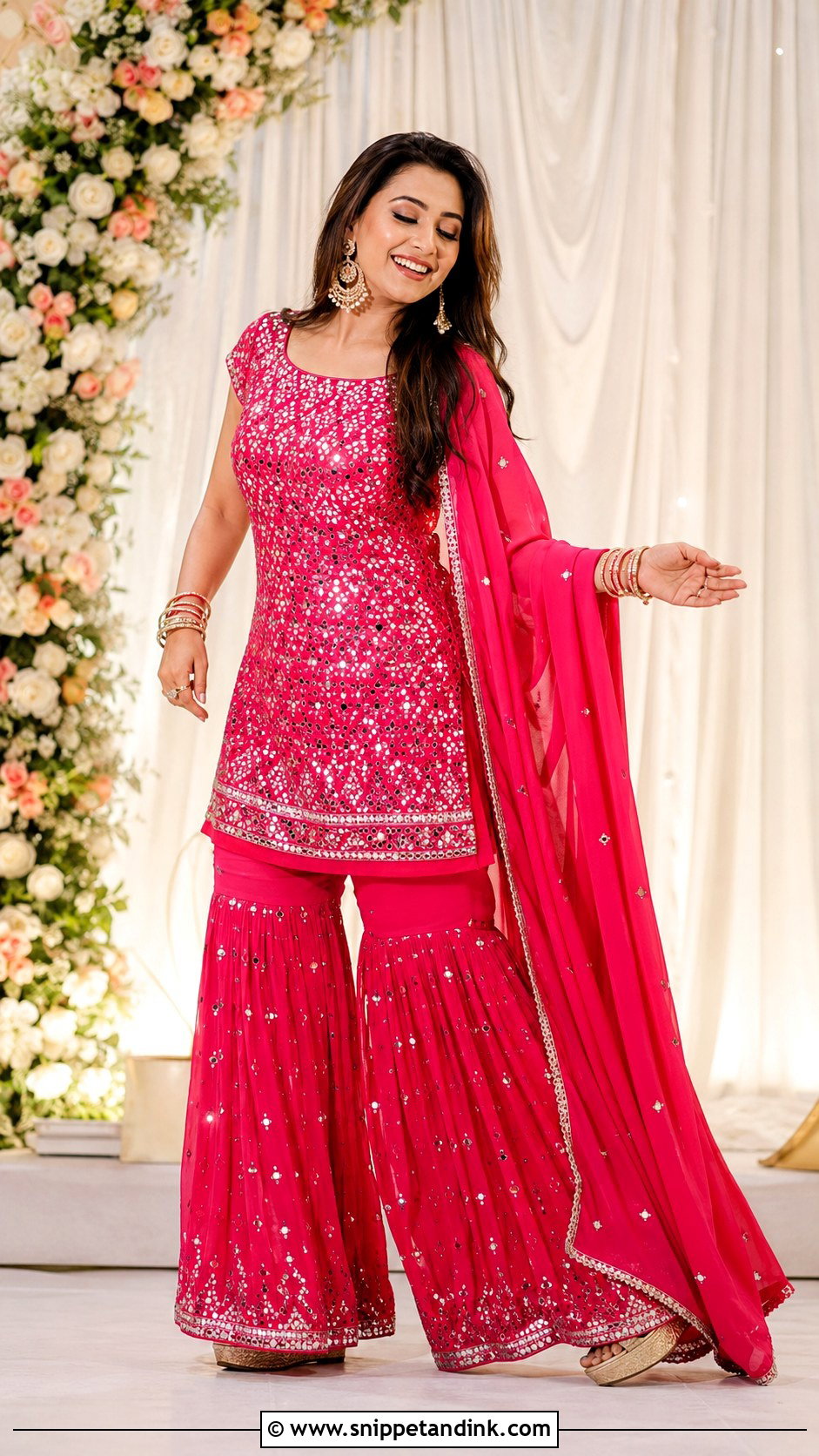
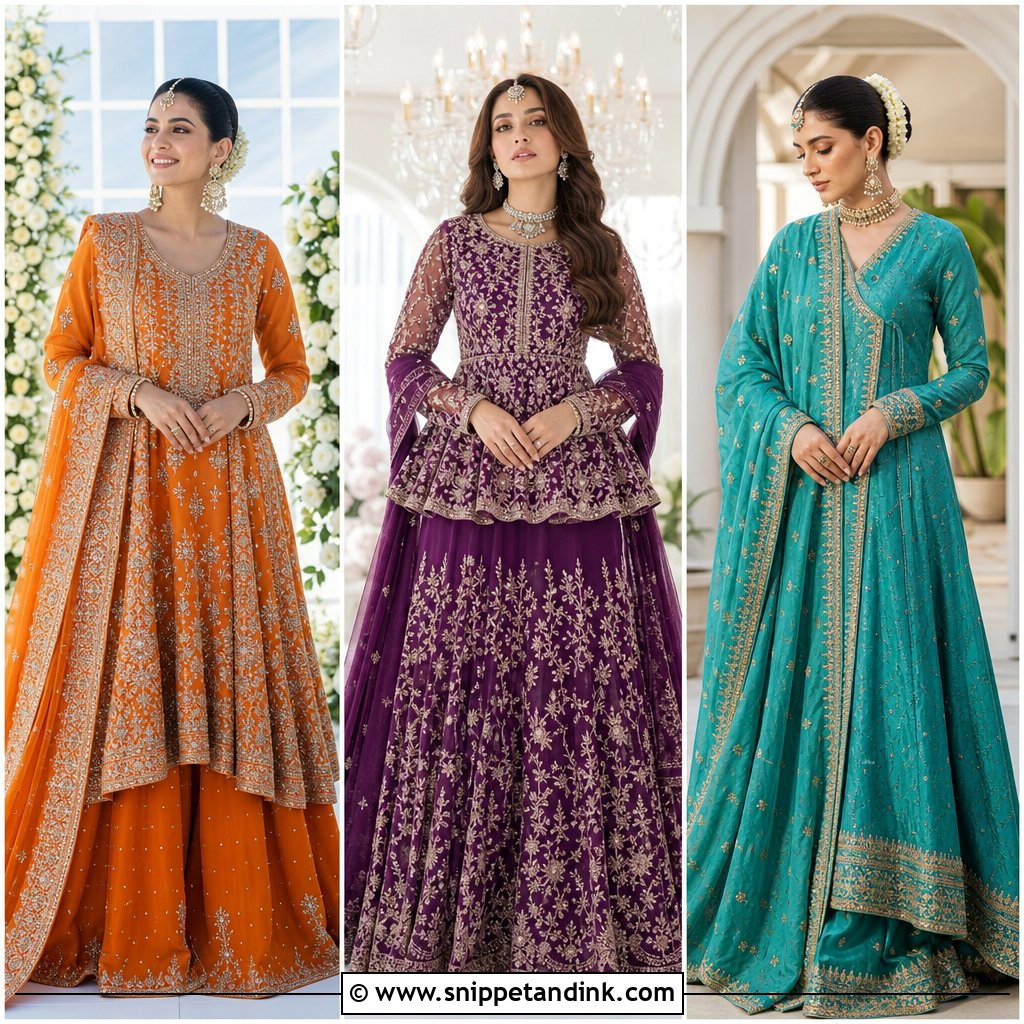
Sangeet night is where you dance the family number, and a sharara set handles that best. The wide bottoms swing with you. Mirror work, gota patti or light sequins in yellow, fuchsia, turquoise or parrot green suit the mood. A short kurti or peplum top and a dupatta pinned at both shoulder and waist stay put through choreography. I always rehearse in the actual outfit at least once, because a sharara that is a little long trips you on the first spin. Chandbalis, bangles and wedges or juttis finish it, with hair half-up or in waves.
7. Gharara Suit For Brother Wedding
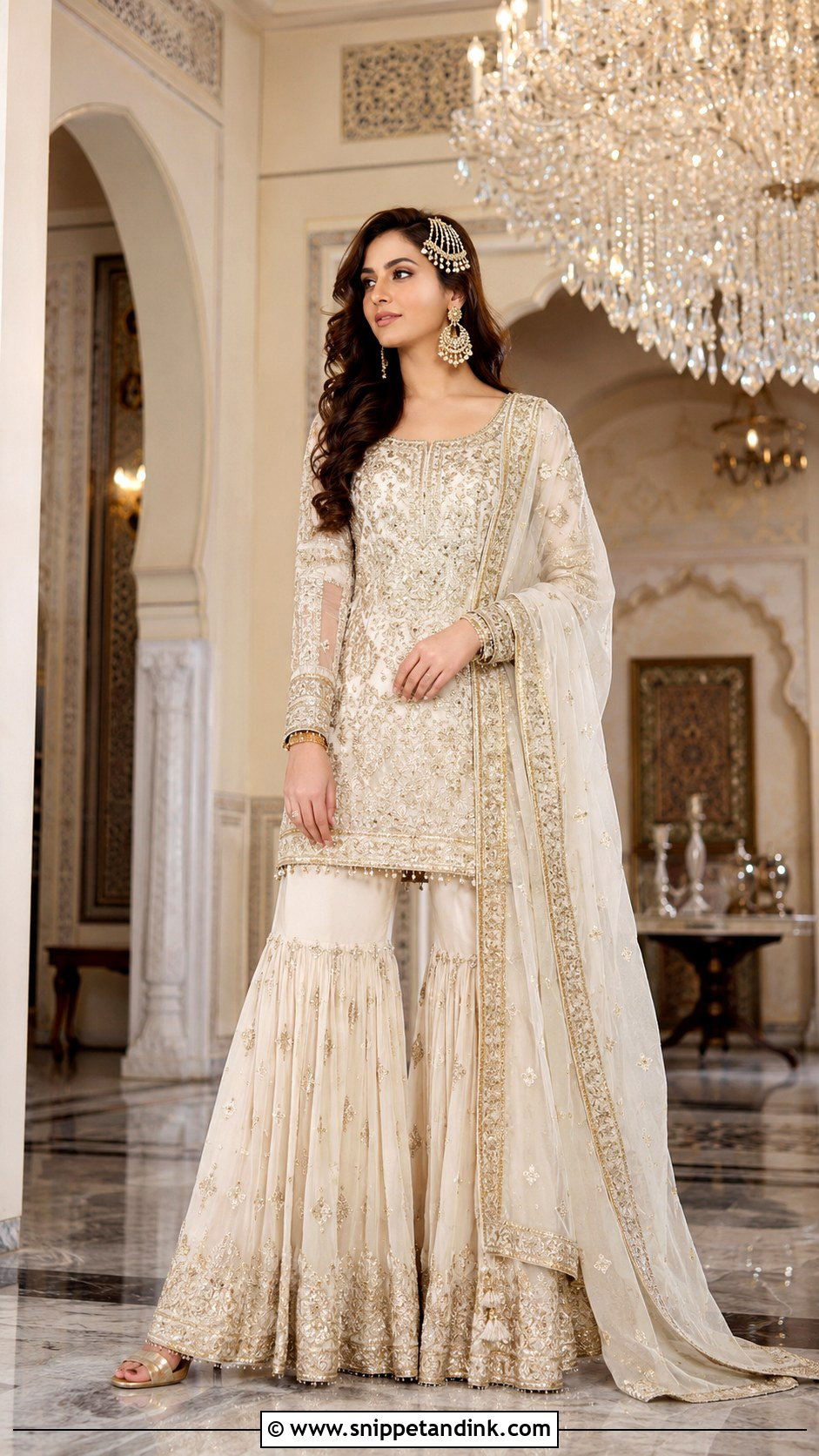
Ghararas carry an old-world, royal feel. The fitted section ends at the knee, where a gathered band releases the flare, and that structure looks elegant in portraits. A short embroidered kurti, a rich dupatta and traditional jewelry complete it. Pastels with silver work suit daytime; deep colours with gold suit evening. Wear juttis or heels depending on the length, and have it hemmed for whichever you choose. A passa or maang tikka adds occasion. It suits nikah-style events, family dinners and pre-wedding ceremonies.
8. Indo Western Lehenga For Sangeet
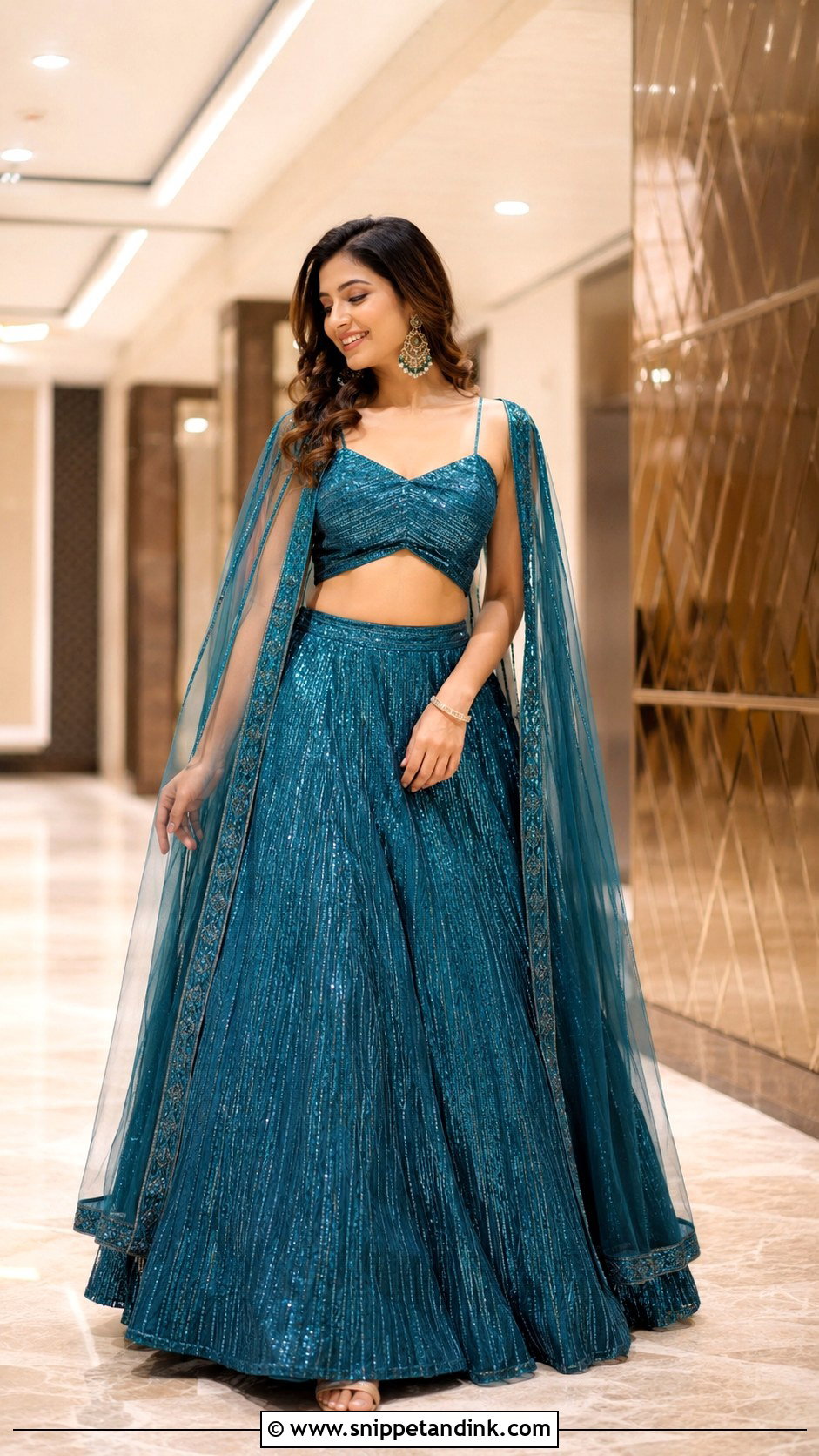
An Indo-western lehenga stays modern but rooted. A lehenga skirt with a crop top, cape blouse, jacket or corset-style top all work for sangeet, engagement or a trendy reception. For dance-heavy events, I go for lighter embroidery or metallic accents over dense work. If the top has a cape or jacket, drop the dupatta entirely. Crop tops show a band of skin at the waist; check your comfort sitting down before committing. Statement earrings, a sleek bracelet and comfortable heels complete it.
9. Silk Saree For Wedding Ceremony
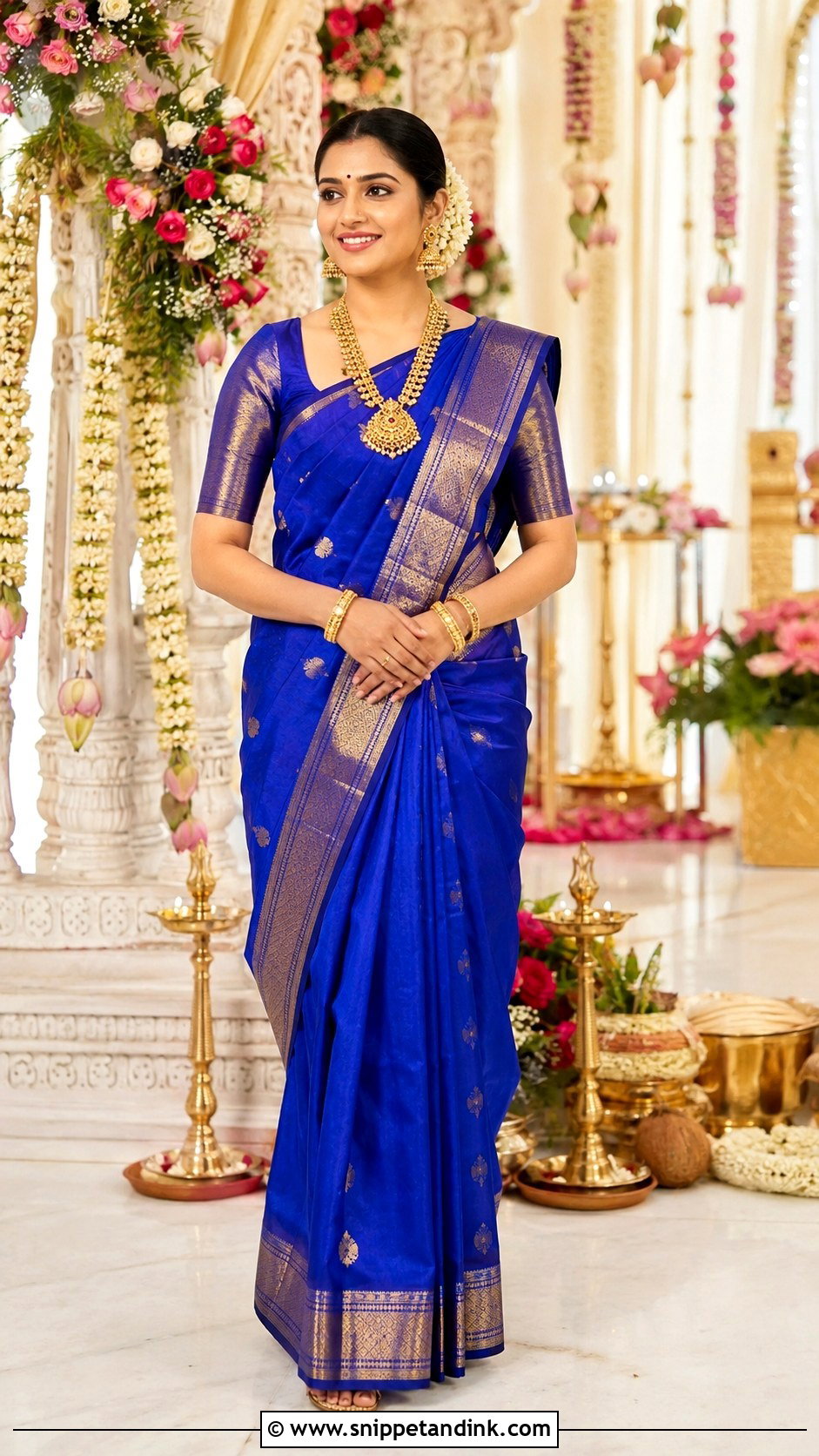
For a traditional or religious ceremony, a silk saree is the most respectful choice in the room. Kanjivaram, Banarasi, Paithani, Chanderi silk or a Patola-inspired weave can reflect your family’s region. Pick a rich colour that is festive without looking bridal. A neatly tailored blouse, gold jewelry, bangles and a bun with flowers suit it. You may be sitting through long rituals, so I ask for the pleats to be pinned at the waistband and the pallu fixed at the shoulder before you leave home.
10. Jacket Lehenga For Brother Wedding
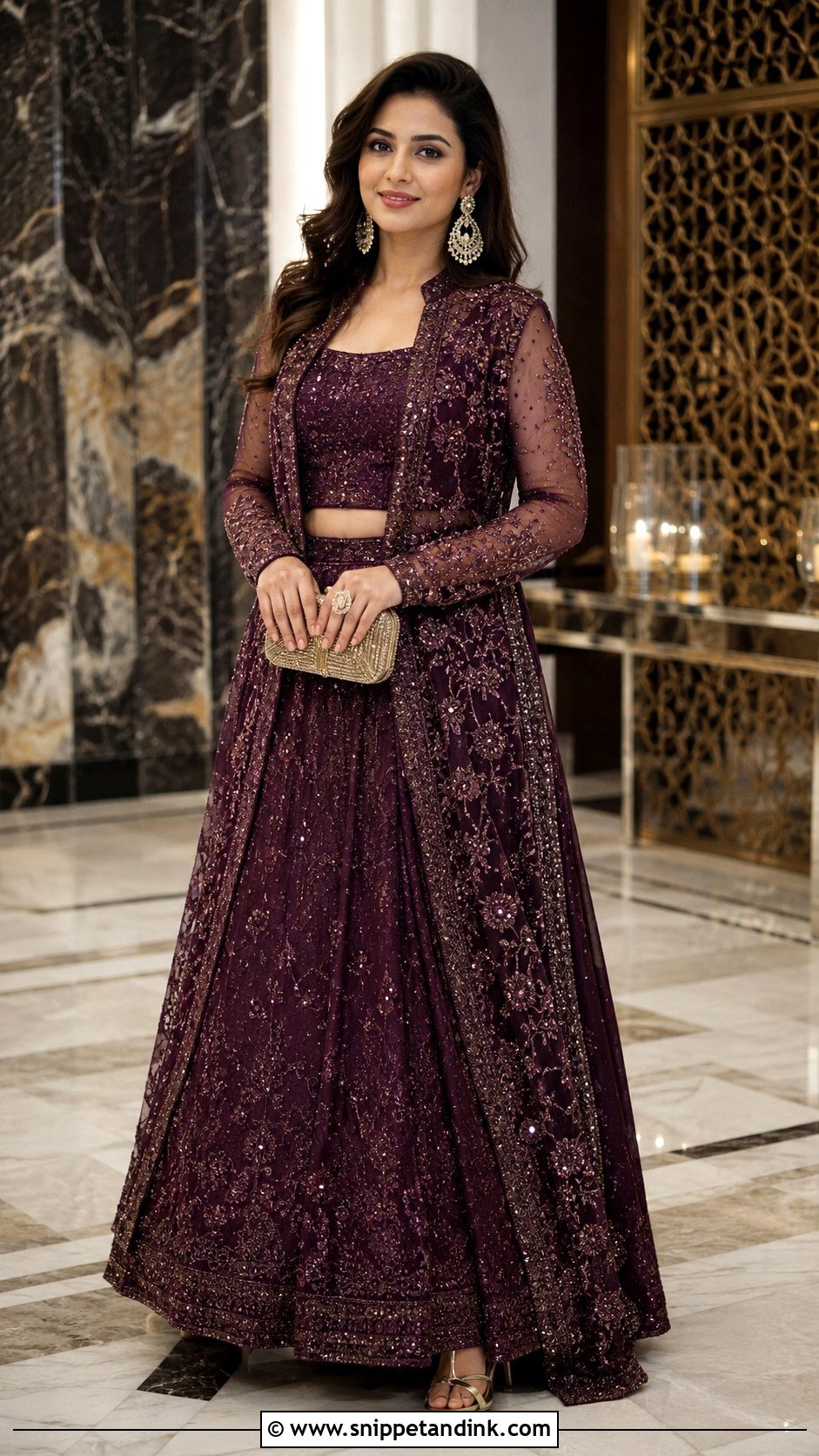
Long wedding days and modest dress codes are well served by a jacket lehenga. A lehenga skirt, blouse and long or short embroidered jacket give coverage and structure, and you skip the dupatta altogether. A sheer embroidered jacket feels light; brocade looks royal. Keep the necklace minimal if the jacket neckline is detailed. I check the jacket shoulder line closely: a long jacket that is even slightly wide there looks borrowed in photos. It suits winter weddings, evening events and receptions.
11. Cape Saree For Reception
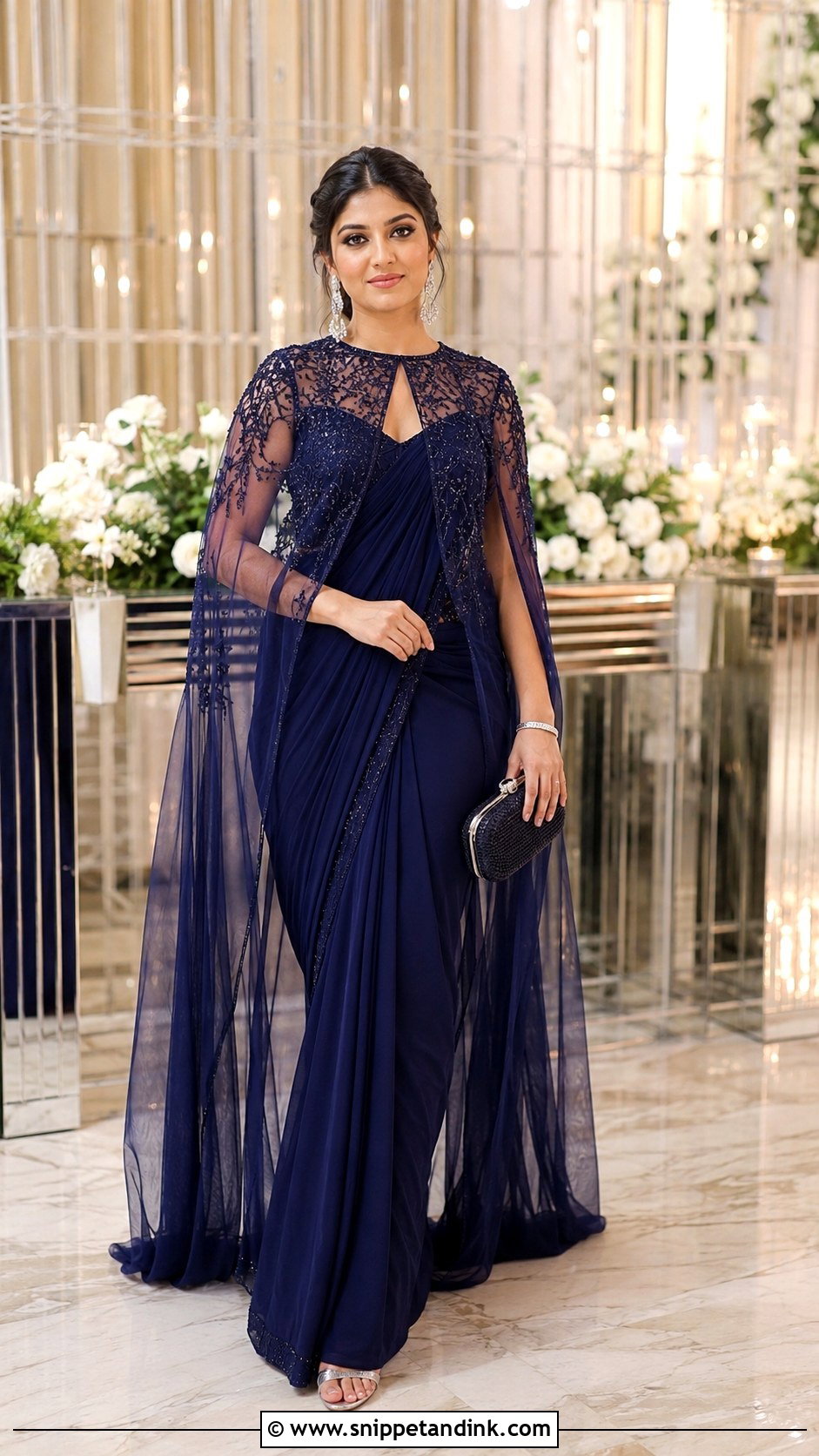
A cape saree pairs the elegance of a drape with a sheer embellished cape, so it needs few accessories. Wear it pre-draped or as a classic saree with a cape blouse. Soft metallics, dusty rose, midnight blue, lavender and emerald hold up under bright reception lights. Drop earrings, a bracelet and sleek heels are enough, with hair in a smooth bun or soft waves. I fasten the cape at the shoulder with a small hook so it does not slide off during the many hugs at a reception.
12. Mirror Work Lehenga For Mehendi
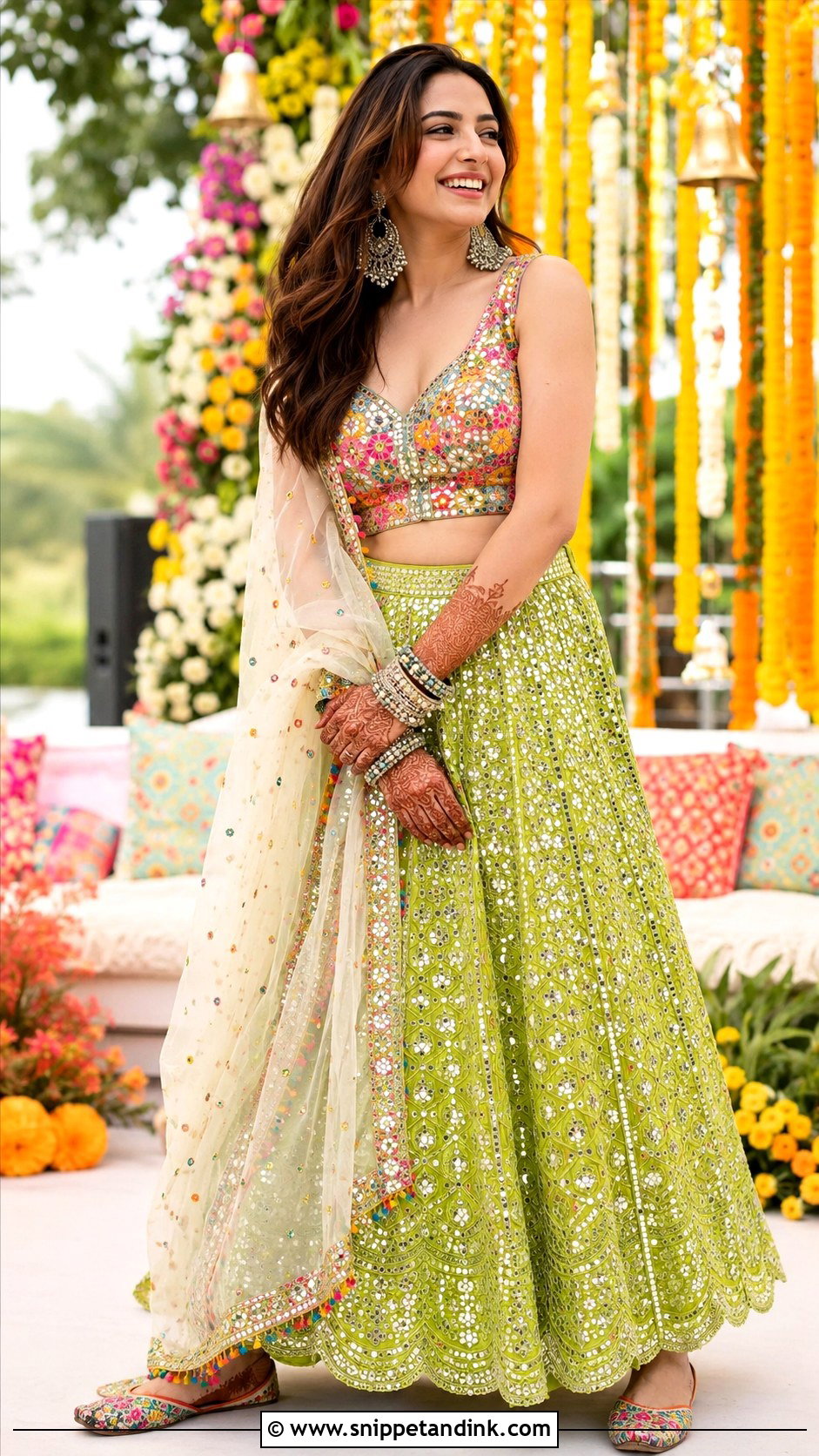
Mehendi is a daytime party, and a mirror work lehenga in lime, yellow, aqua, coral or hot pink catches the sun. The mirrors do the festive work, so heavy embroidery is unnecessary. If you plan to get henna yourself, choose a comfortable blouse with short sleeves and a light dupatta you can pin away, so your hands stay free while the paste dries. Oxidized jewelry, colourful bangles and juttis suit it. Fresh makeup with a bright lip keeps the look young for dance moments and outdoor photos.
13. Yellow Sharara For Haldi
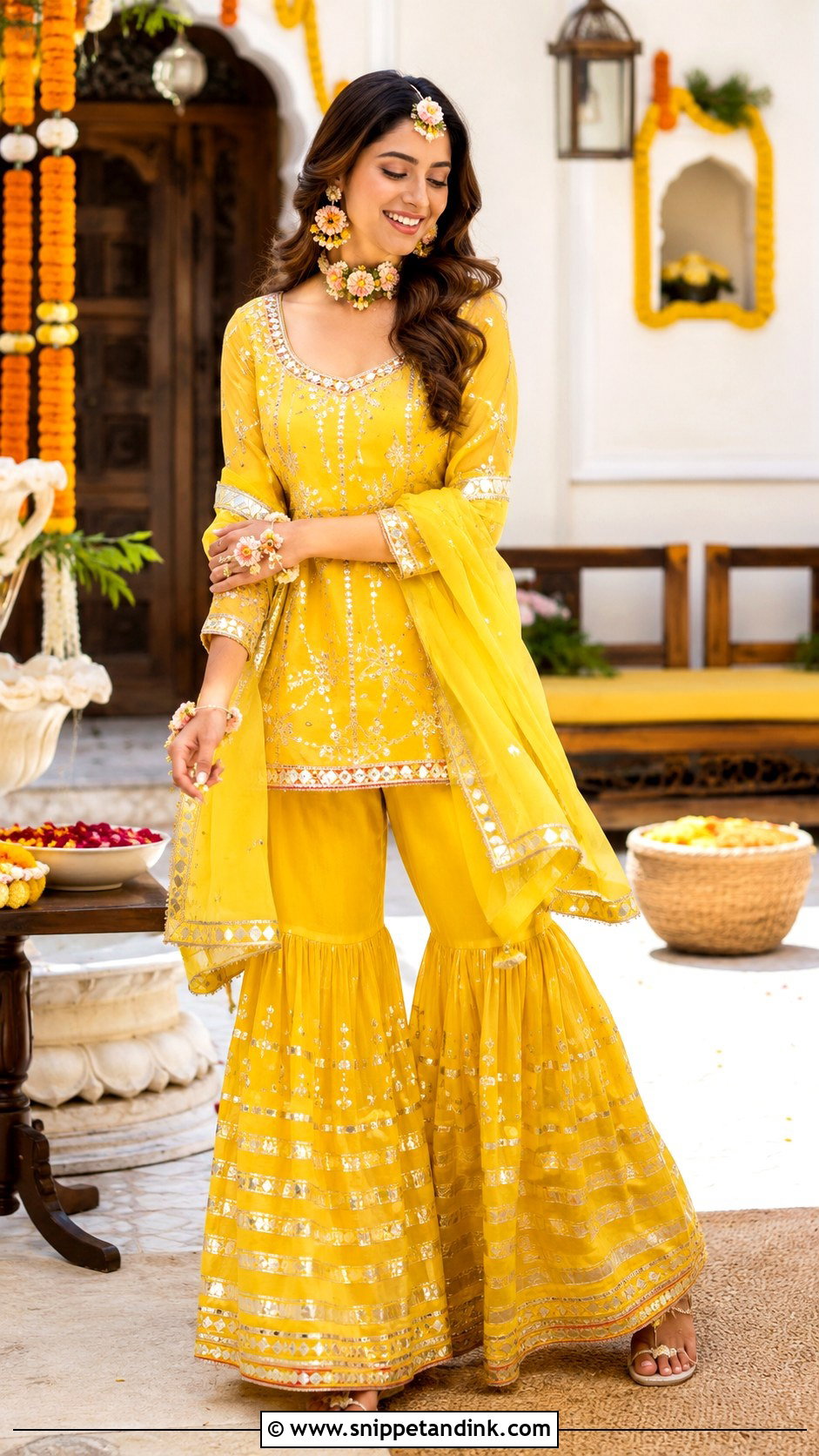
A yellow sharara fits the haldi colour story and is comfortable for sitting, laughing and putting paste on your brother. Cotton silk, georgette or muslin with gota, mirror work or thread embroidery is practical. A short kurti or peplum and a soft dupatta suit it. Turmeric stains, so avoid anything precious or dry-clean-only. Floral jewelry and flat sandals or juttis keep it simple. As his sister, you will probably be one of the first to apply haldi, so expect to get some on yourself.
14. Floral Lehenga For Day Function
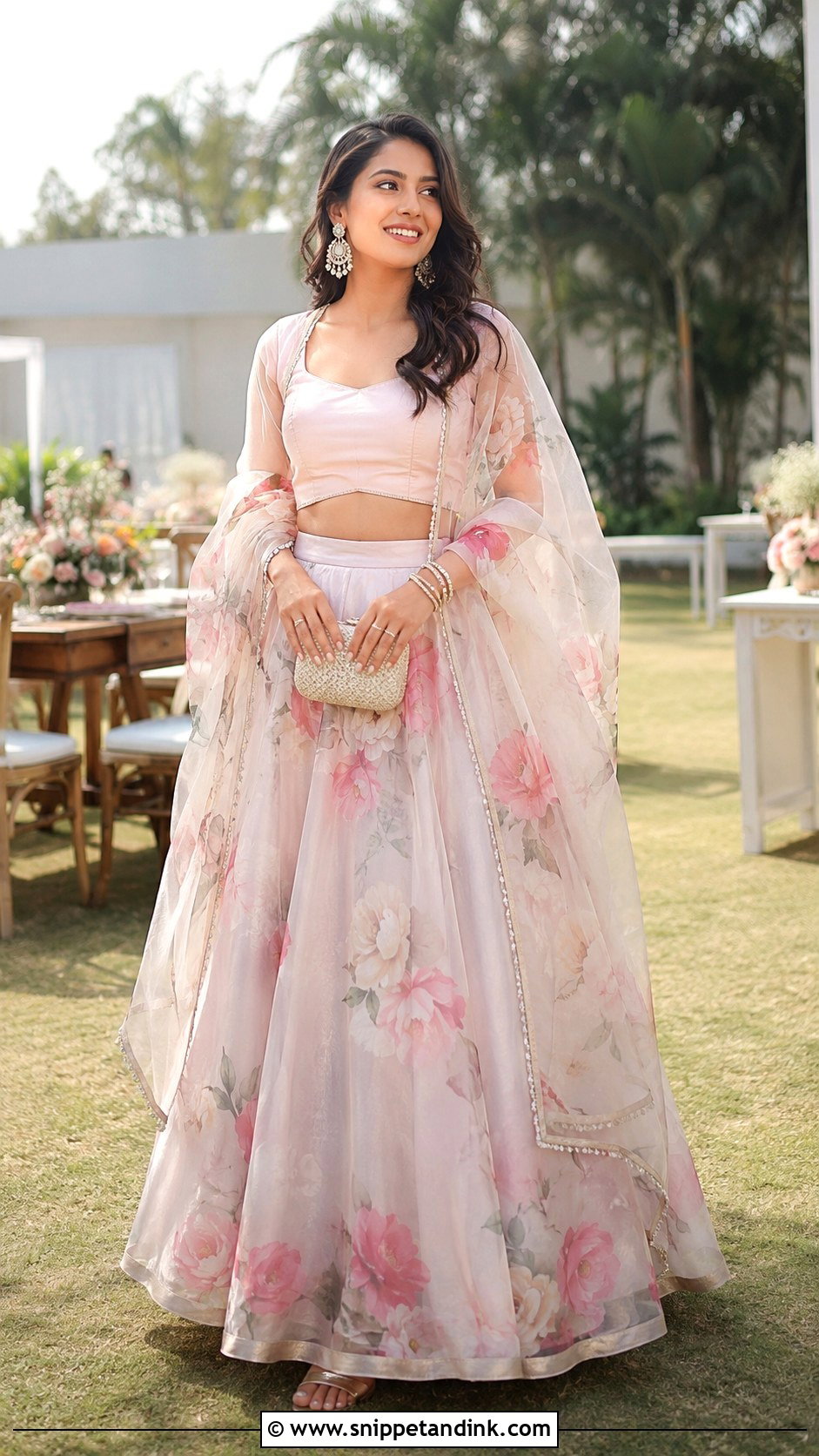
Daytime events like a welcome lunch, brunch or garden ceremony suit a floral lehenga. Printed organza, georgette, silk or chiffon with light border embroidery feels special without weight. Pastel florals read soft and bright florals playful. A simple blouse, delicate jewelry and a light dupatta are enough. You will be walking outdoors between events, so I pair it with flat or low-heeled shoes rather than spikes that sink into grass. Waves, a braid or a low bun with hair accessories suit it.
15. Velvet Lehenga For Winter Wedding
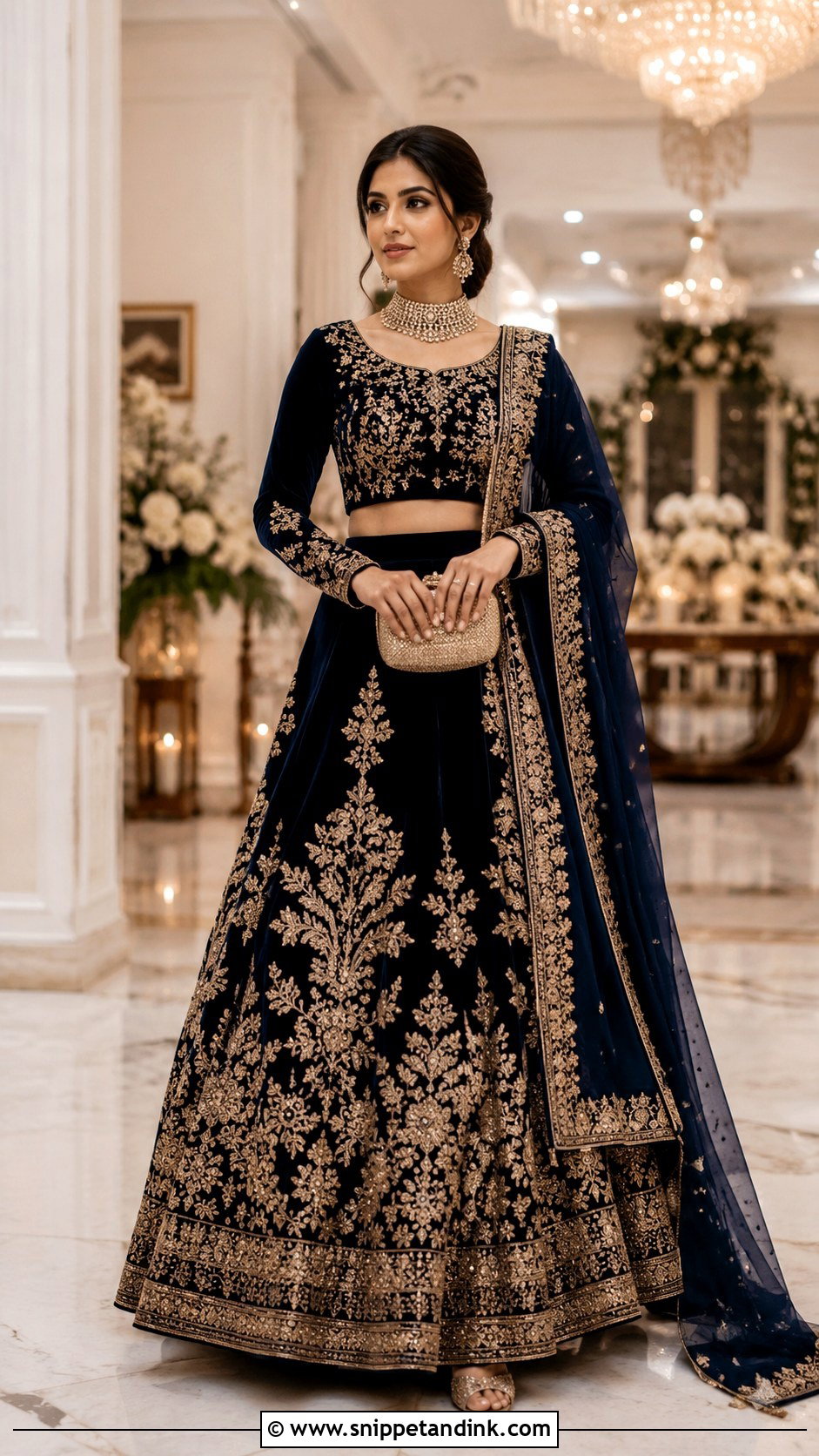
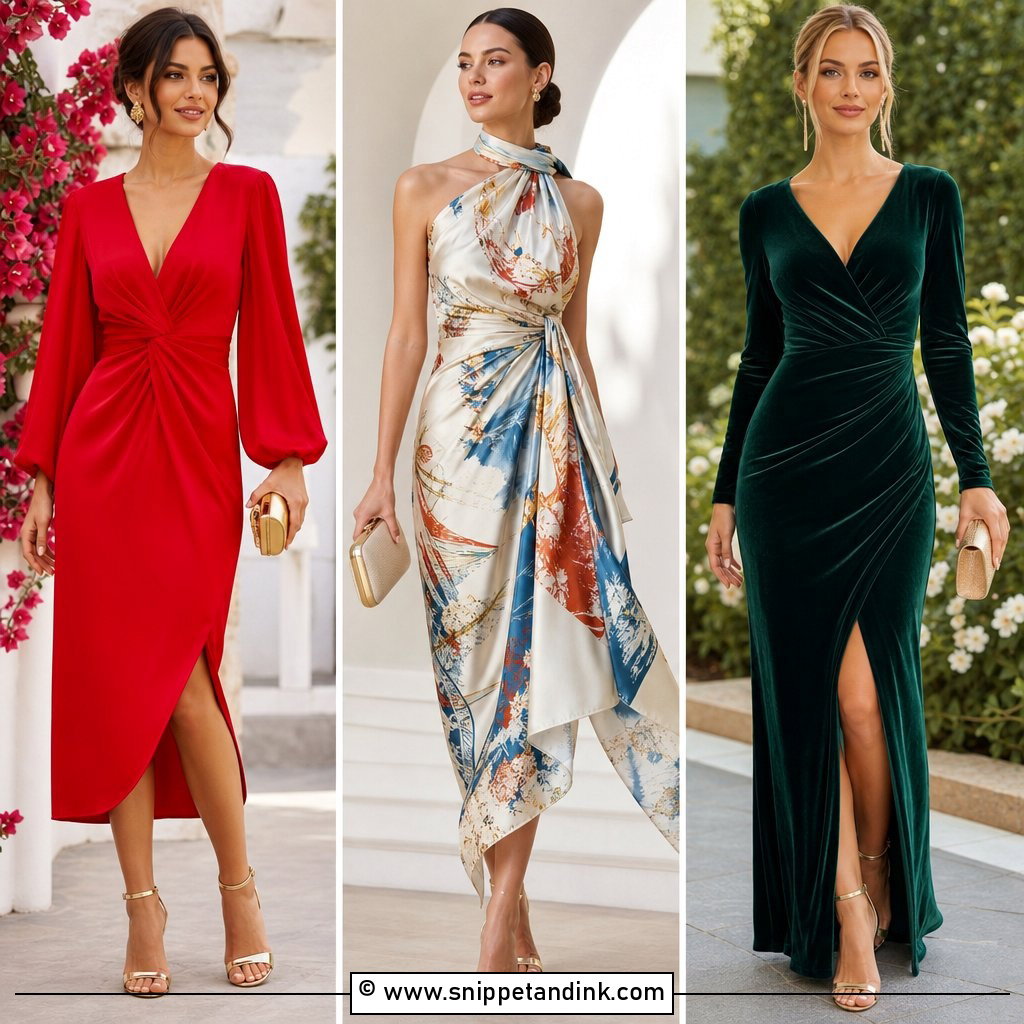
Velvet is my pick for a winter evening wedding. Emerald, navy, plum, ruby or charcoal with gold or antique embroidery look rich on the plush pile, so excessive jewelry is unnecessary. A statement choker, earrings and a structured clutch are enough. A full-sleeve blouse or shawl-style dupatta adds warmth for outdoor pheras. Velvet is heavy, so I keep it for one function rather than wearing it from afternoon through to the reception. Deeper makeup with defined eyes or a bold lip suits grand venues and formal portraits.
16. Palazzo Suit For Brother Wedding
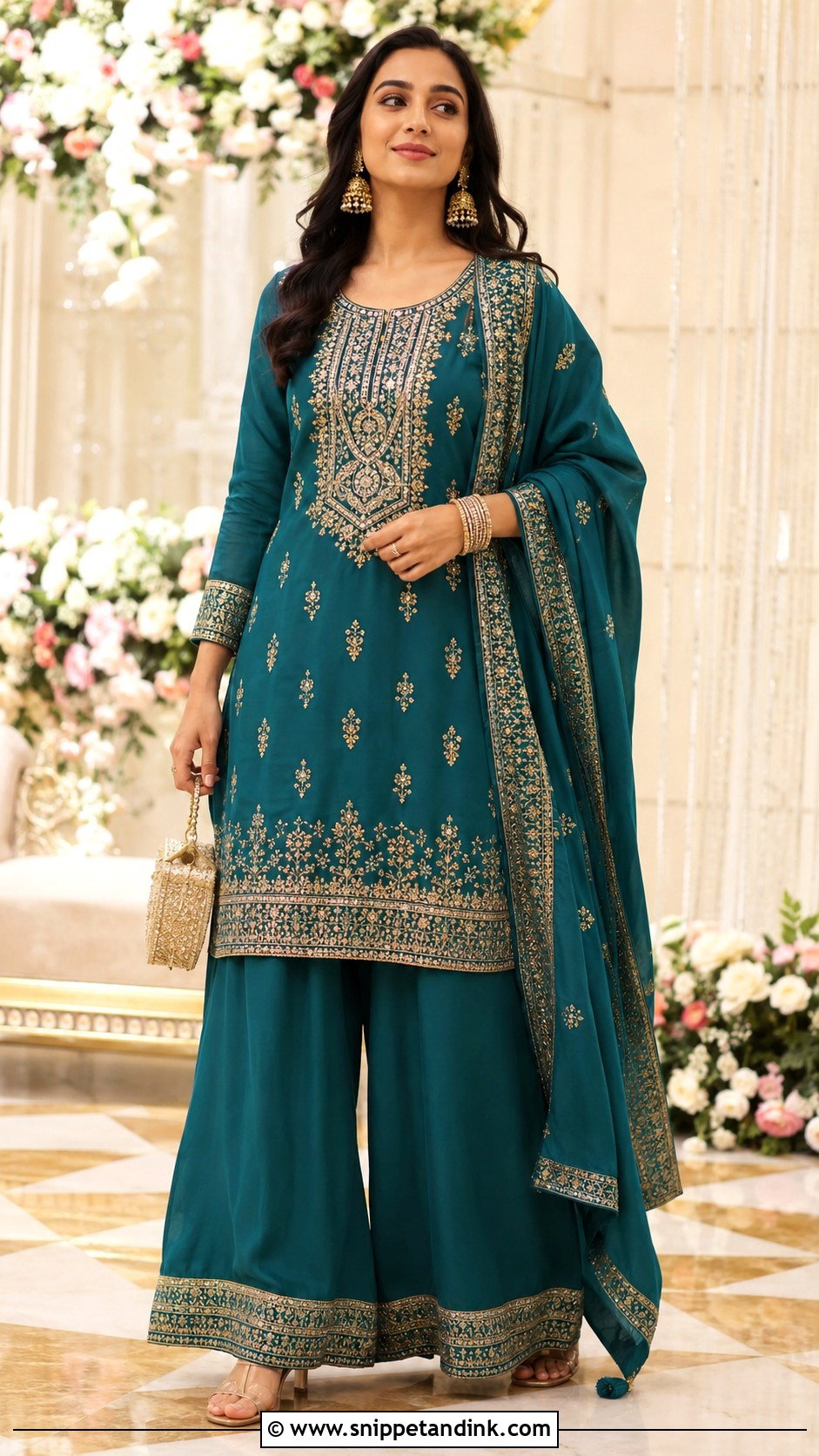
You will likely be helping your mother and running errands for half the wedding, and a palazzo suit lets you do that in style. A long embroidered kurta with wide-leg palazzos and a matching dupatta in silk, georgette, crepe or brocade looks dressy. Jhumkas, bangles and block heels finish it. Crepe resists creasing better than silk, which helps if you travel between venues. It is less heavy than a lehenga but clearly more festive than an everyday suit, and you can move, sit and dance in it with ease.
17. Peplum Sharara For Sangeet
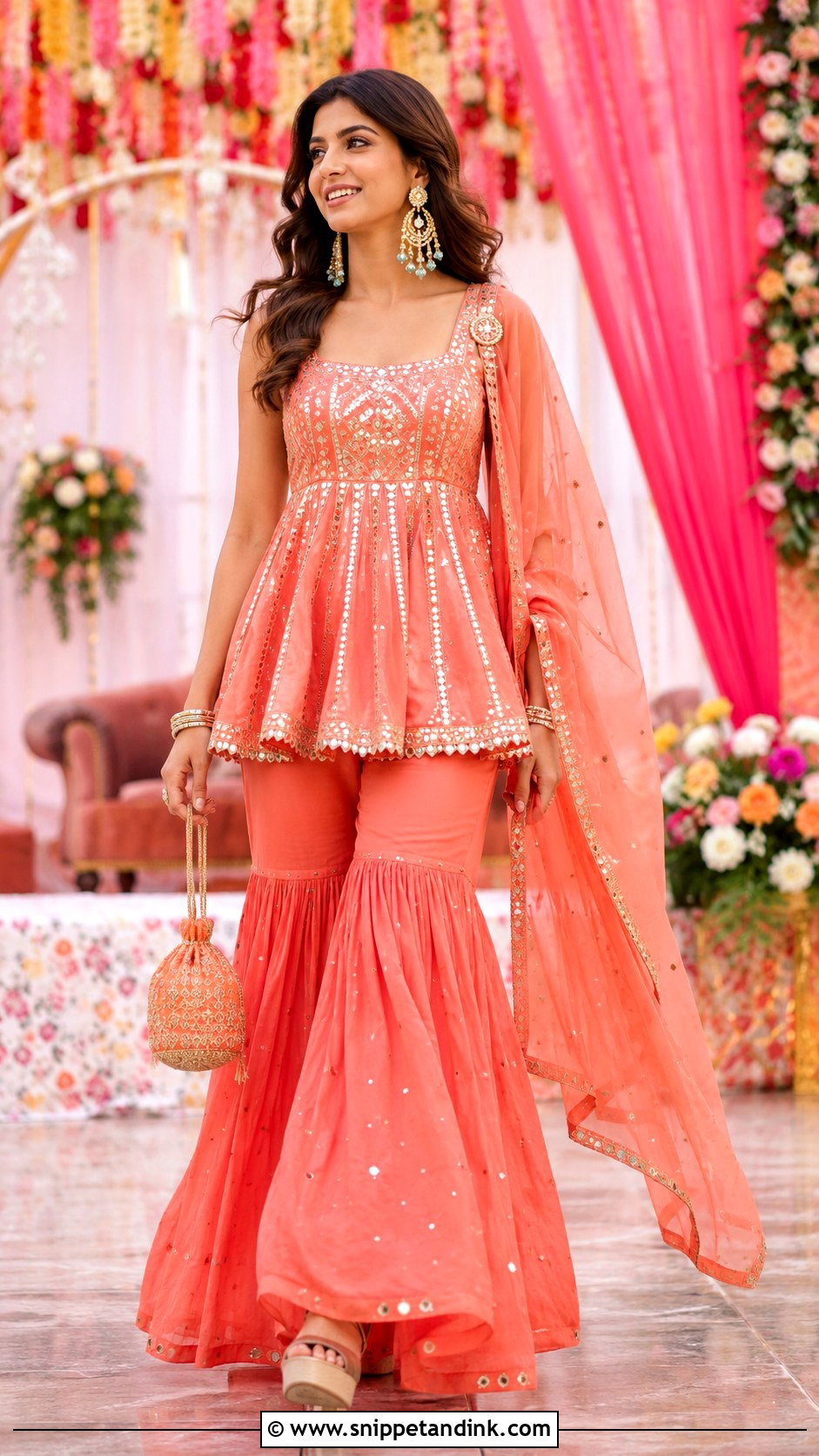
The peplum sharara has a fitted waist and flared top that move nicely over wide sharara pants. Mirror work, sequins, gota patti or thread embroidery can be chosen to match how formal the sangeet is. Bright colours feel energetic; jewel tones more dramatic. Large earrings, a small potli and comfortable heels or wedges complete it. Check that the peplum seam hits your true waist, or it sits on the hip and widens you in photos. Pinned to one shoulder, the dupatta stays put for a sister of the groom look.
18. Pre Draped Saree For Brother Wedding
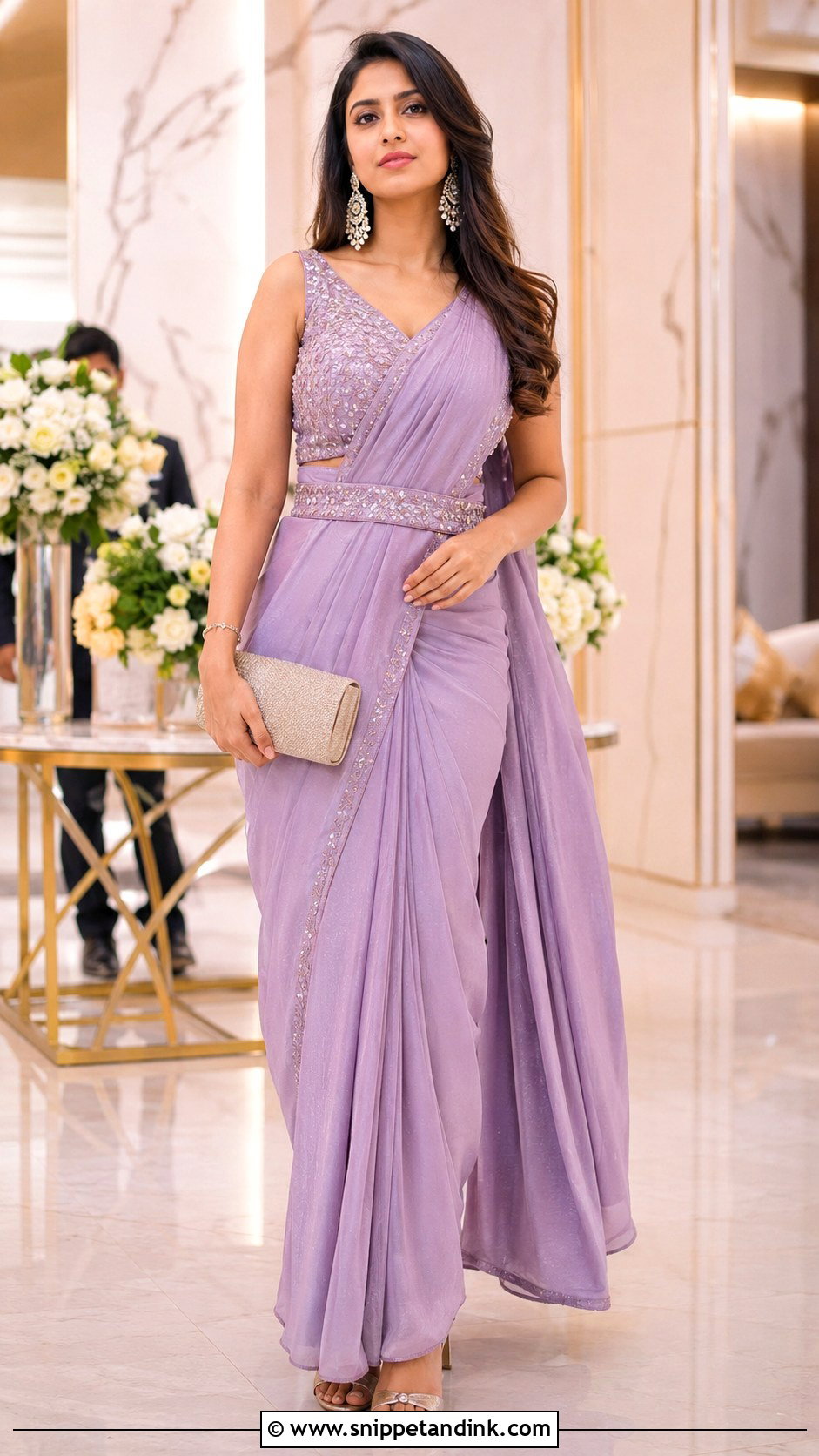
If you love sarees but hate fixing pleats, a pre-draped saree stays secure through photos, rituals and dancing. Belted styles, ruffled pallus, embellished blouses or attached drapes all suit engagement, reception or sangeet. Satin, georgette, crepe and chiffon give a sleek fall. Pre-draped styles vary widely in sizing, so I order early and try it sitting, standing and climbing stairs. It packs flat, which is handy for destination weddings. Statement earrings, heels and a clutch complete it.
19. Chikankari Lehenga For Brother Wedding
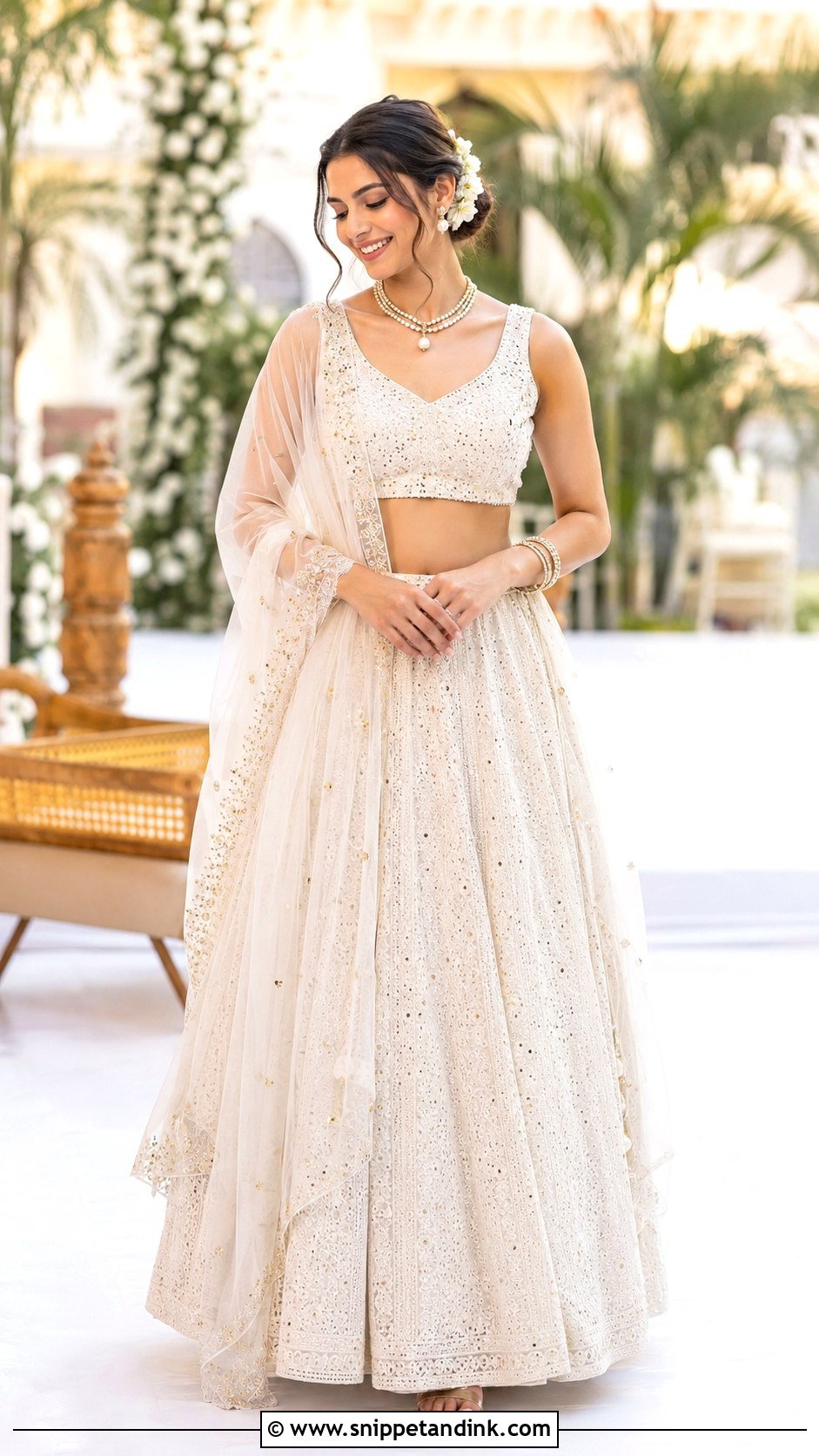
Daytime events, summer weddings and pastel dress codes are where a chikankari lehenga shines. Ivory, blush, mint, powder blue, lemon or lavender with mukaish, pearls, sequins or tonal embroidery feels refined. A delicate blouse and a sheer dupatta complete it. Pearl, kundan or polki earrings suit the fine threadwork. Chikan is delicate, so I keep bangles off embroidered sleeves to avoid snags. Fresh, glowy makeup is all it needs. It reads understated rather than sparkly, yet still close-family special.
20. Ruffle Saree For Cocktail Function
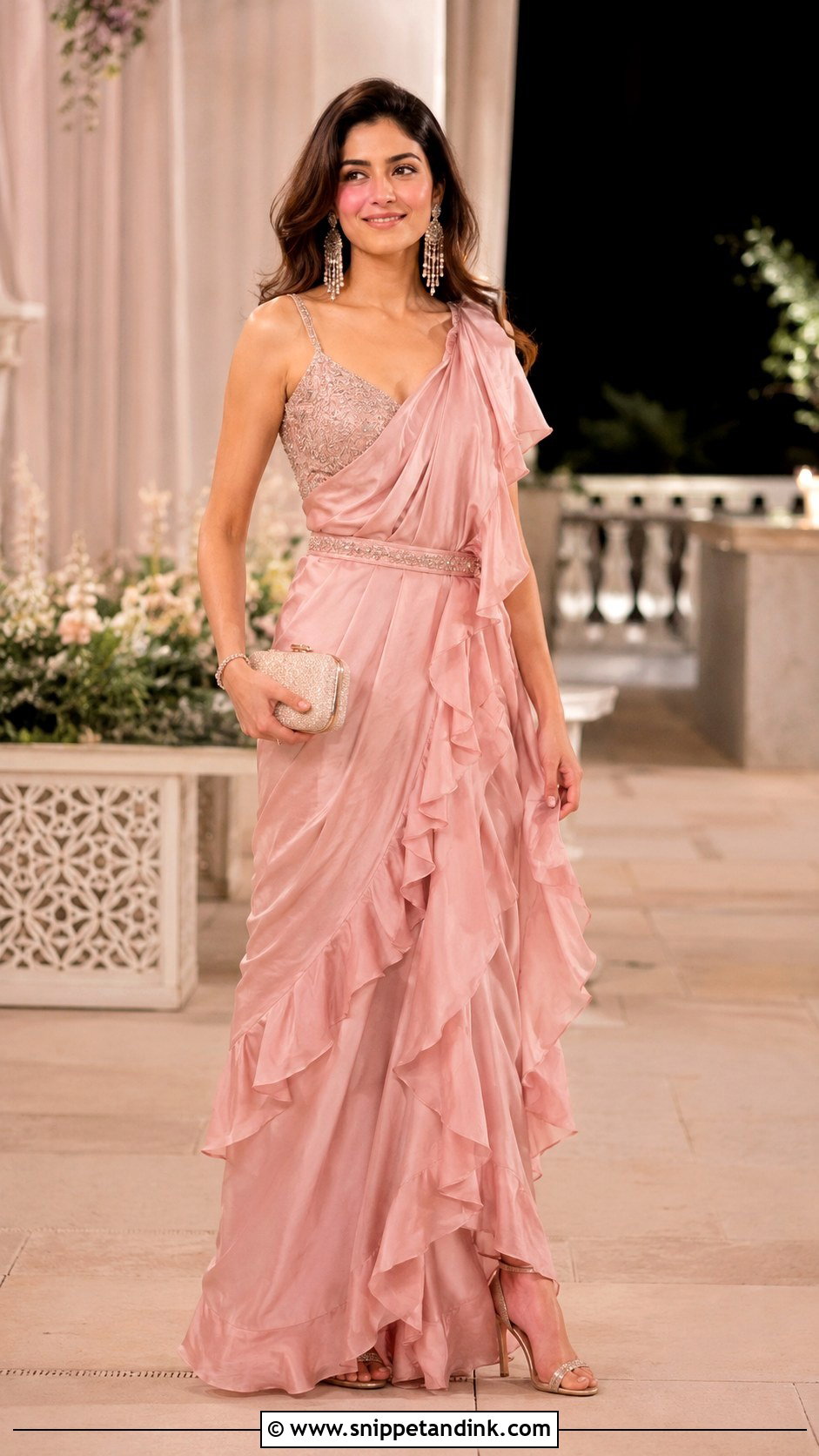
Cocktail-style pre-wedding events can take a ruffle saree in georgette, chiffon or organza. Blush, teal, silver, lavender and coral read fresh in the evening. A statement blouse, sleek earrings and heels are enough; the ruffles already add volume, so skip heavy accessories. A belt defines the waist and keeps the drape in place. I keep the pleats few and flat under a ruffle hem so the front does not look bulky. It looks fun and fashionable while still reading as Indian festive wear.
21. Anarkali Gown For Reception
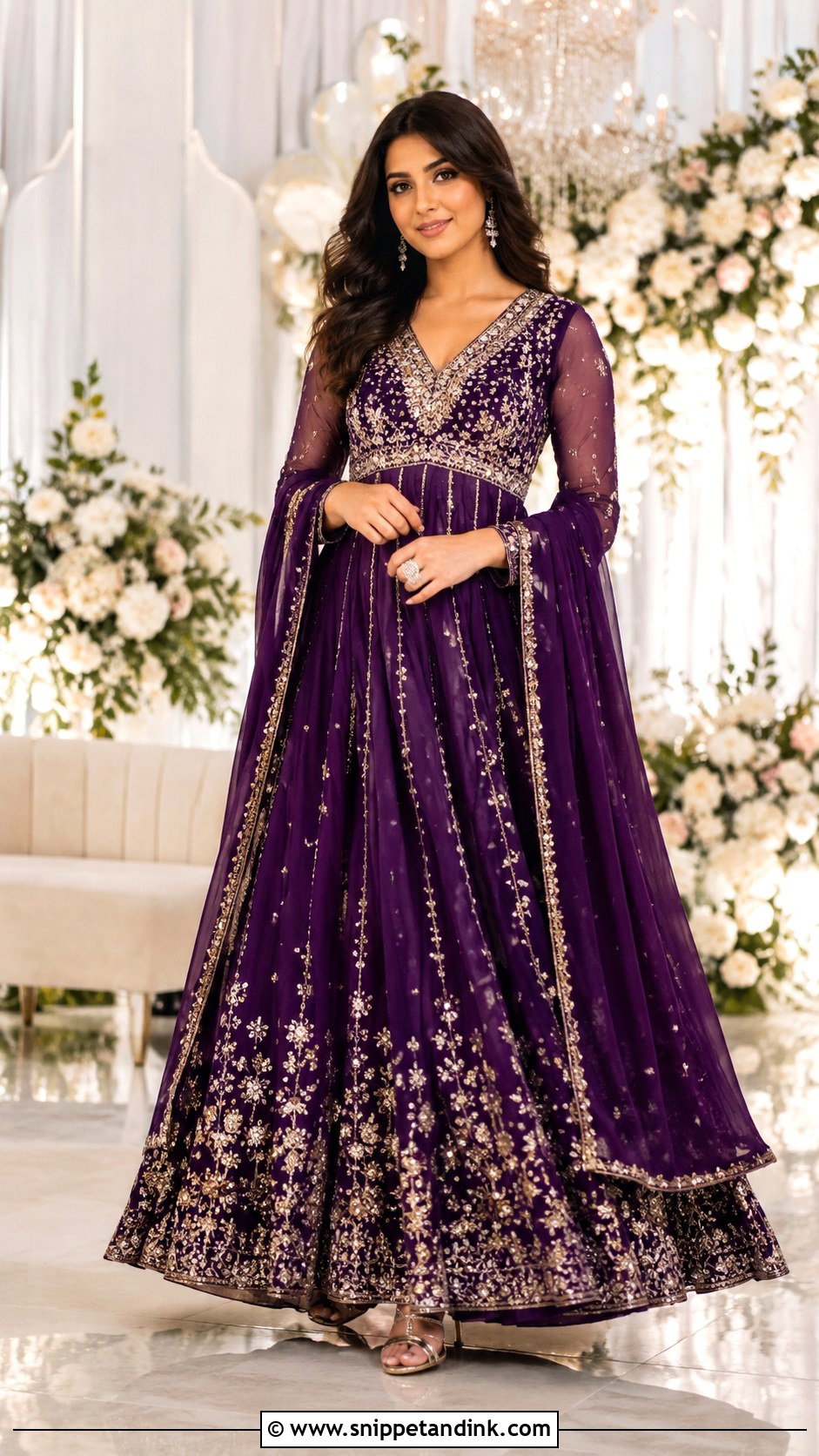
Anarkali gowns combine the easy fit of an Anarkali with evening drama. A floor-length silhouette with embroidery on the bodice, sleeves or hem in deep tones, metallic work or soft shimmer suits receptions, engagement parties and formal dinners. Drop earrings, a cocktail ring and heels complete it. Skip the dupatta if the gown is detailed, or add a sheer one for tradition. The cut flatters many body types because the flare starts high. I check that the hem clears your heel so you do not step on it greeting guests.
22. Dhoti Saree For Sangeet
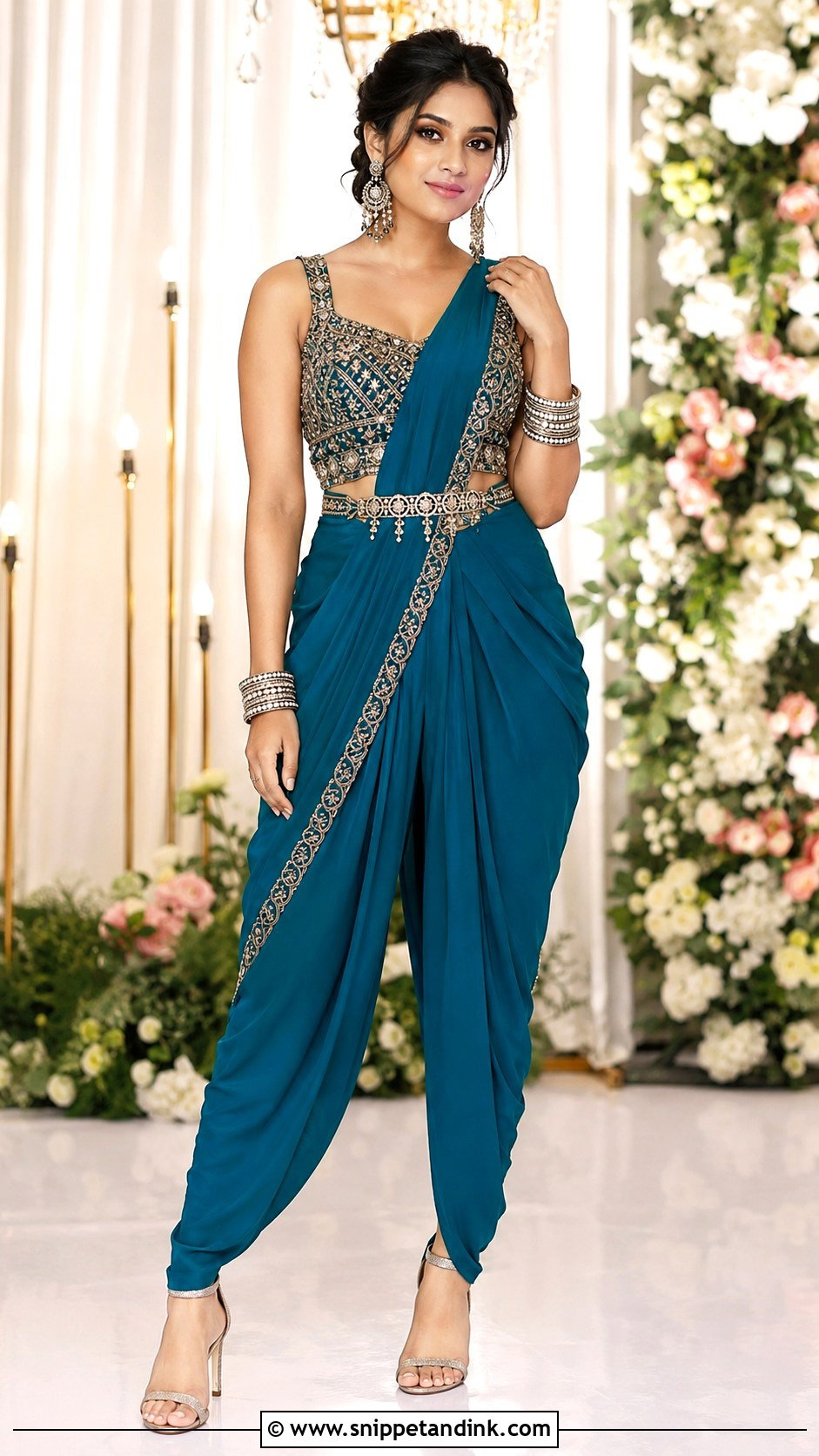
A dhoti saree combines the saree drape with the ease of pants, which makes it great for sangeet dancing or a modern mehendi. Choose a pre-stitched version in silk, crepe or georgette with an embellished blouse. A belt defines the waist and holds the drape. I only suggest it when the family is comfortable with a modern dress code, since older relatives may expect something more traditional from the groom’s sister. Statement earrings, stacked cuffs and heels finish it.
23. Kurta Skirt Set For Mehendi
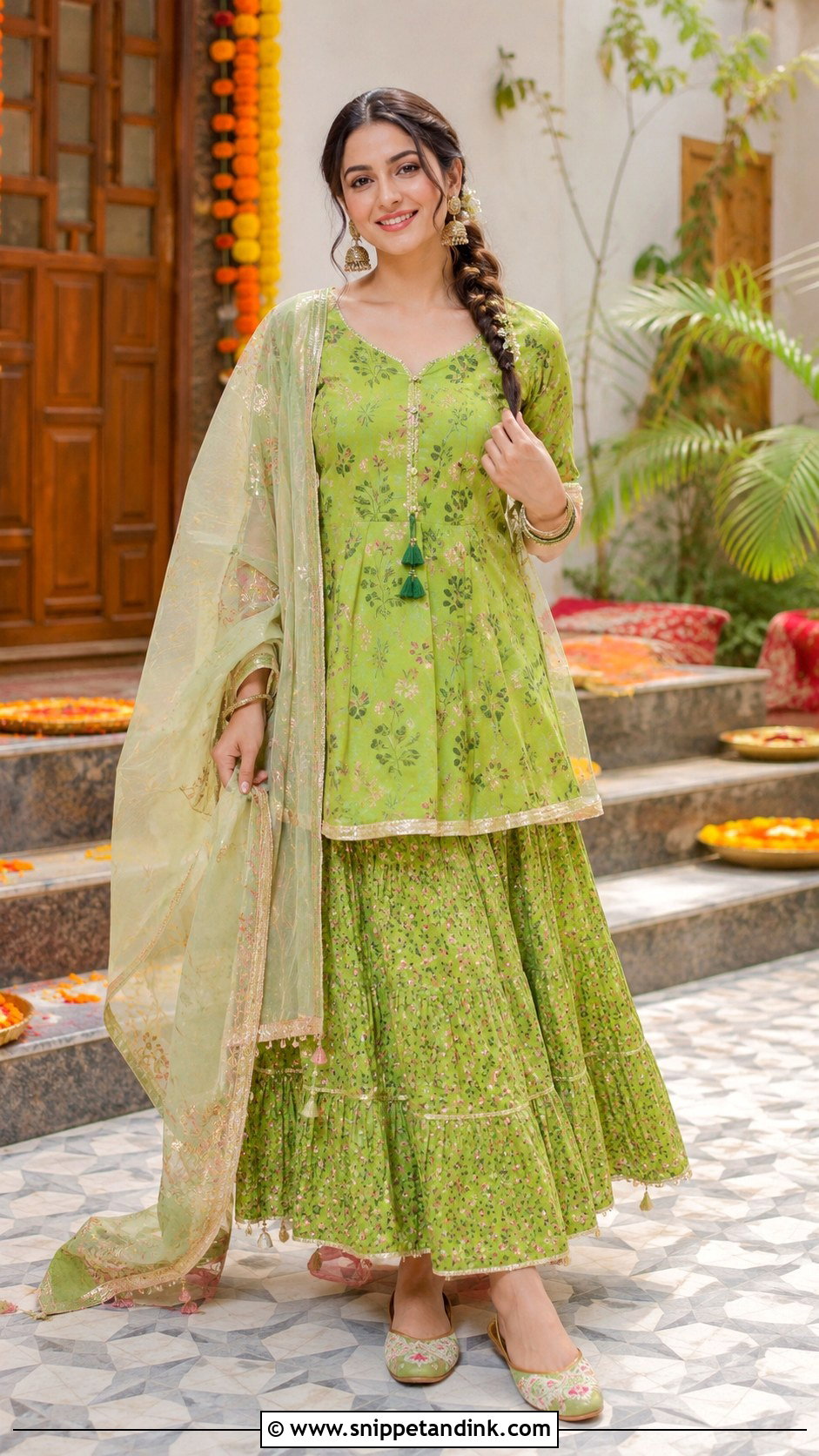
A kurta skirt set is comfortable for mehendi and smaller functions. A short or mid-length kurta over a flared skirt with a light dupatta, in printed cotton silk, georgette or chanderi, suits daytime. Green, pink, yellow and orange feel festive; pastel prints softer. Jhumkas, bangles and juttis keep it easy, with hair in a braid, ponytail or half-up. Make sure the kurta length leaves at least a hand’s width of skirt showing, otherwise the layers blur into one in photos.
24. Brocade Lehenga For Wedding
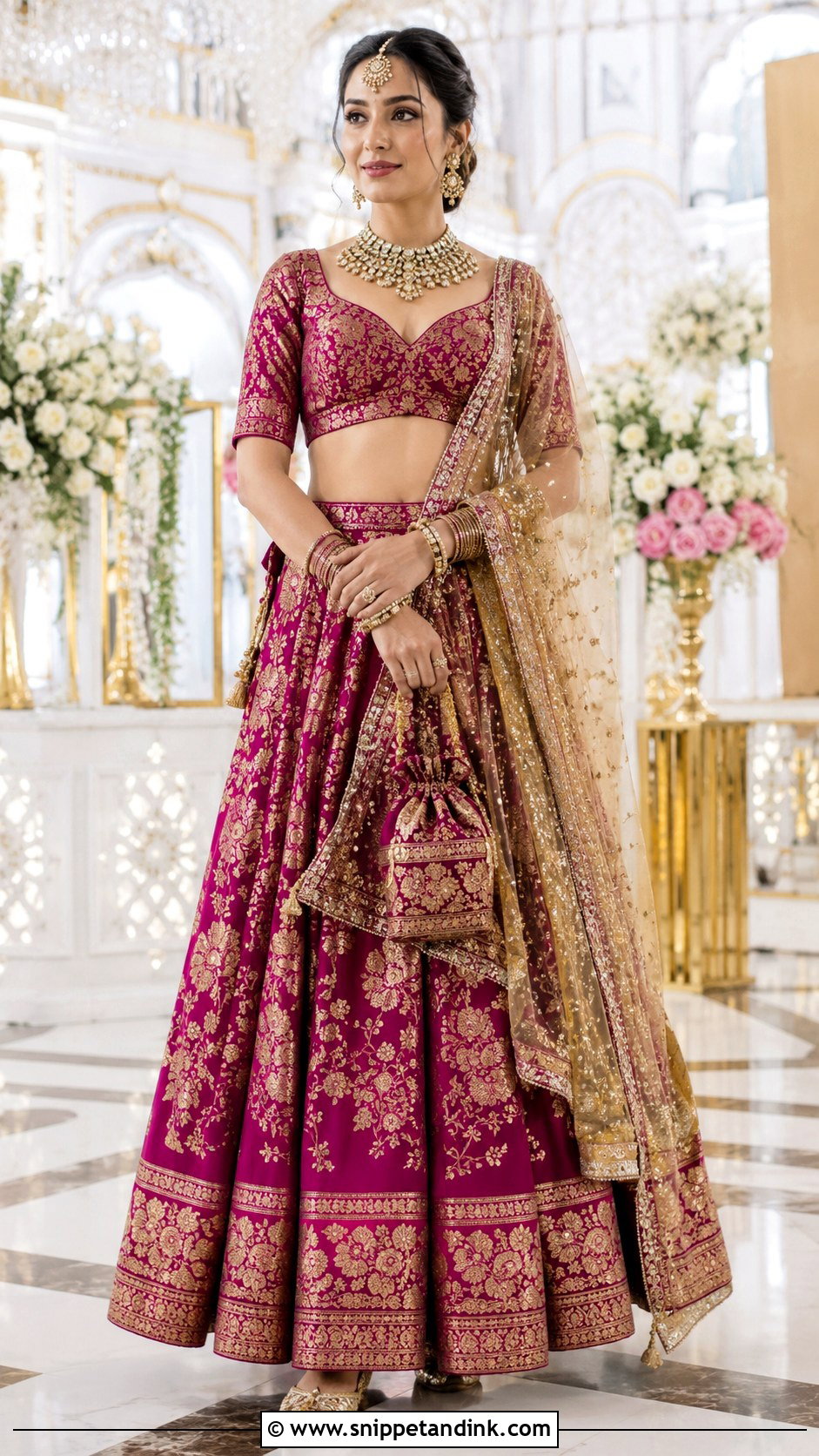
Brocade gives a rich, traditional look through its woven pattern rather than heavy embroidery. Magenta, emerald, gold, purple or royal blue brocade lehengas suit the wedding ceremony. A plain or embroidered blouse and an organza, silk or net dupatta balance the weight. Kundan, polki and temple jewelry sit naturally with brocade. Brocade is stiff and adds bulk at the waist, so the skirt must be well tailored with fewer gathers. Ask for a soft lining; unlined brocade can scratch.
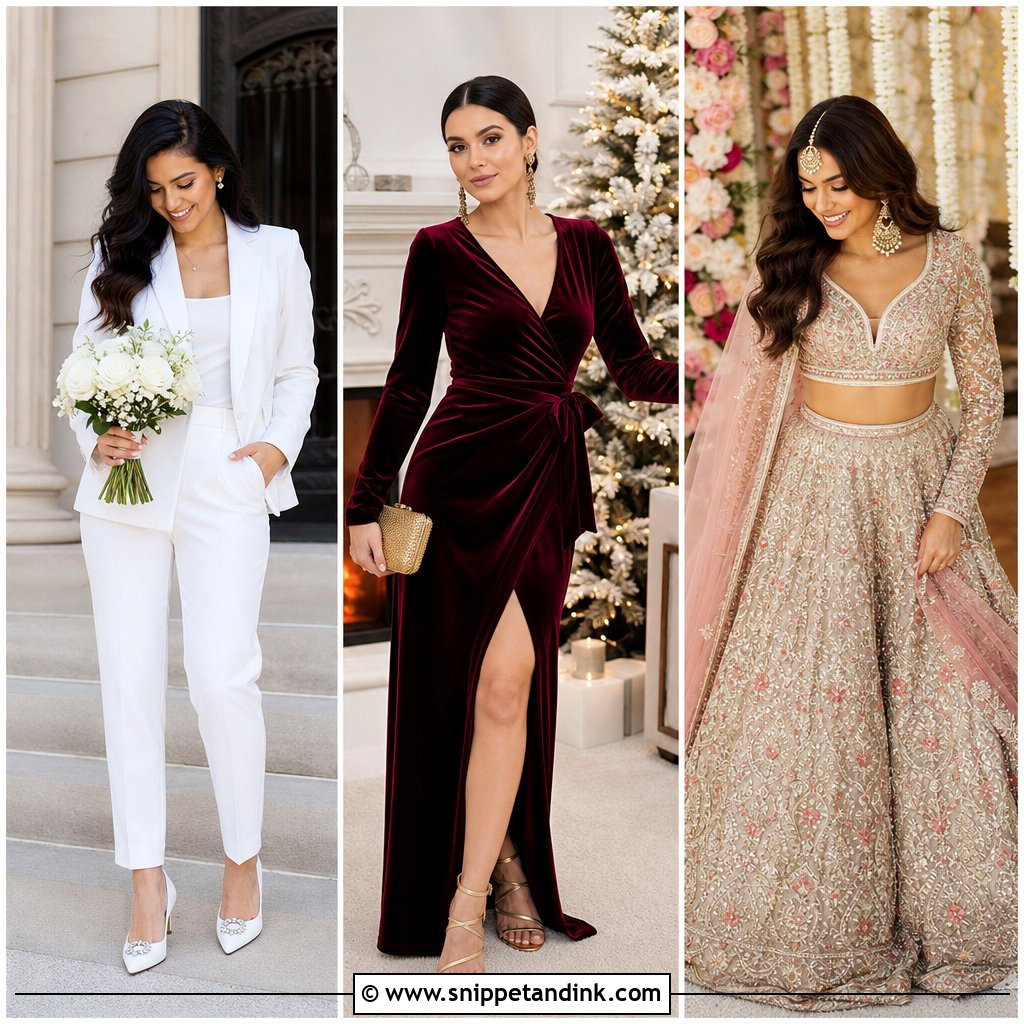
25. Coordinated Family Lehenga Look
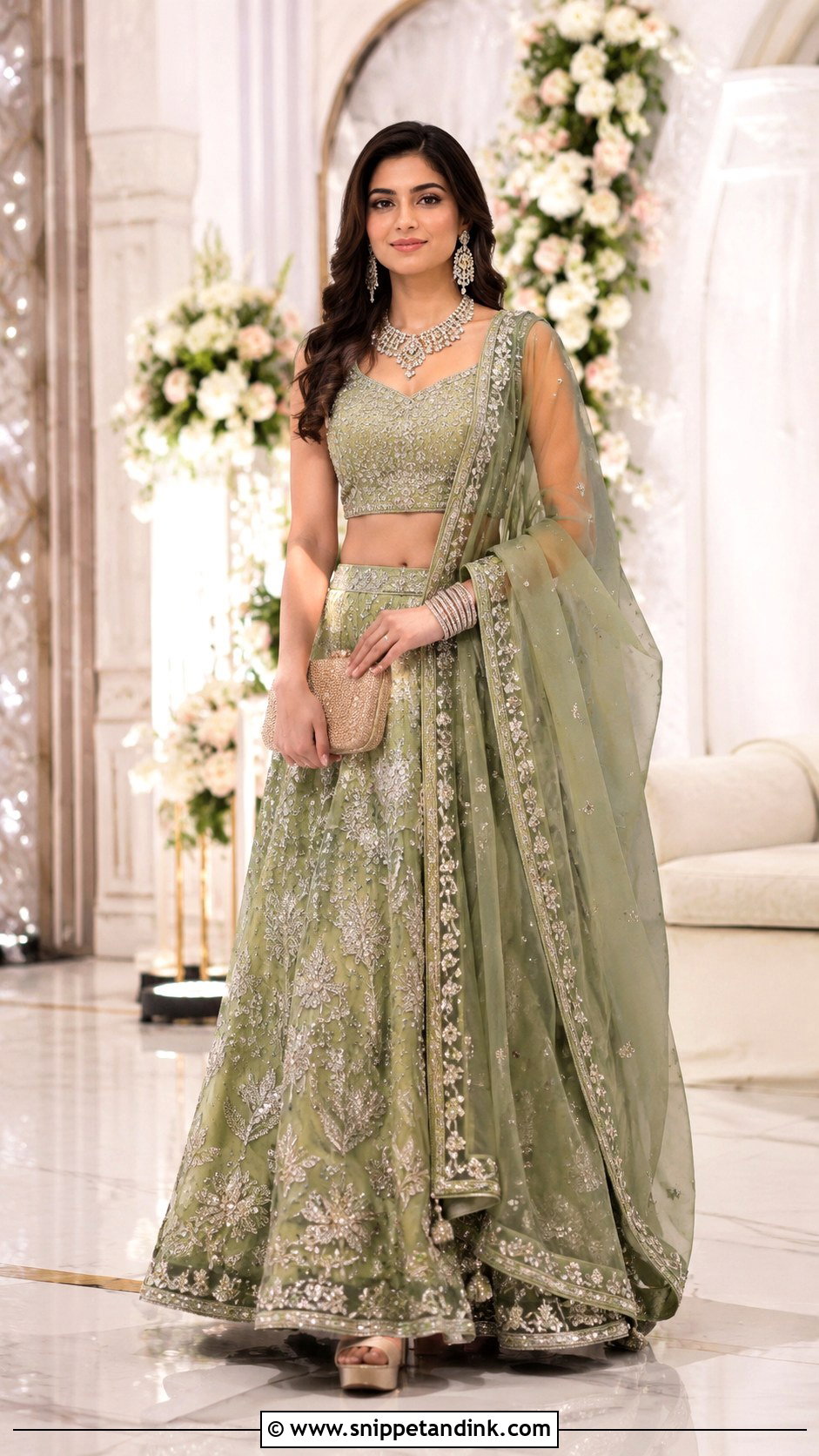
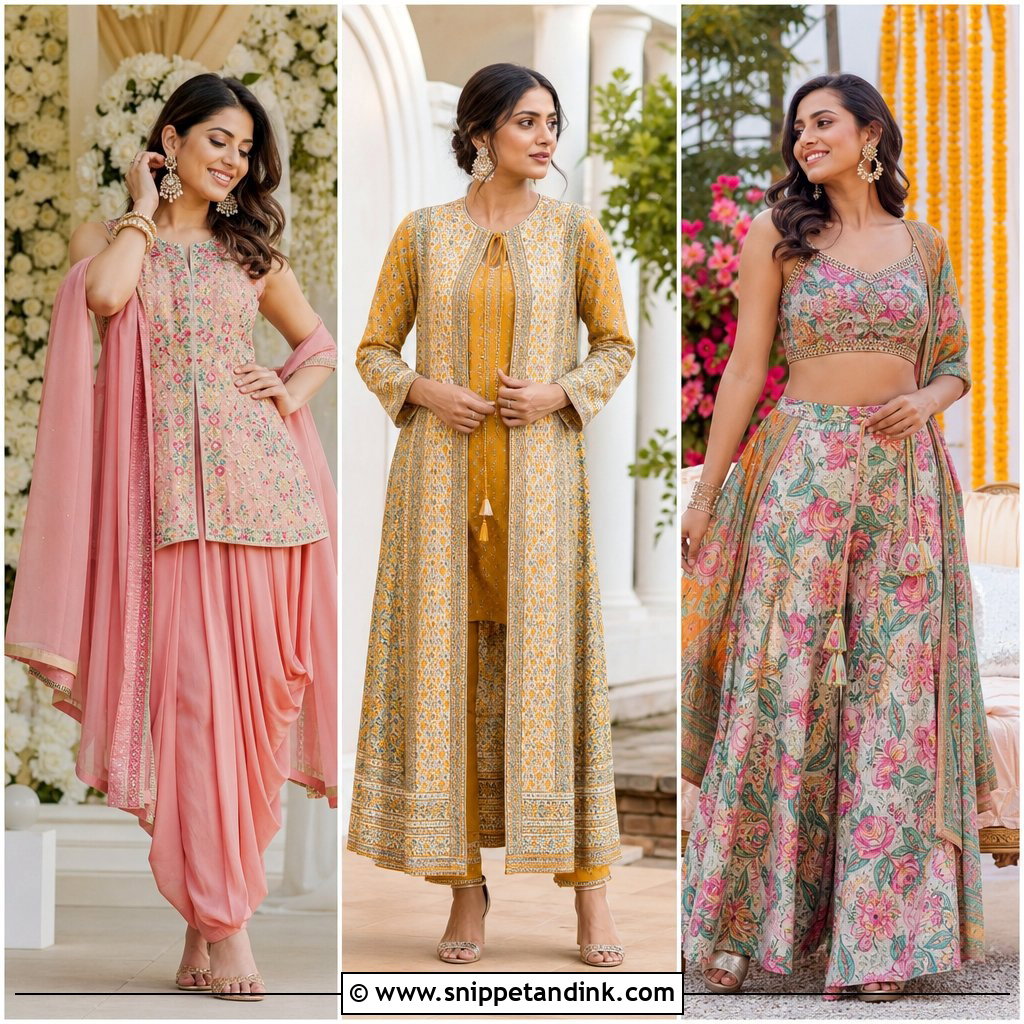
Coordinating with the groom’s side gives a connected look in portraits without identical outfits. Agree on a shared palette, such as pastels, jewel tones, pink and gold, or green and ivory, and let each person’s lehenga have its own embroidery. Pick jewelry that suits your role; a sister can usually wear a statement necklace while the bride takes the heaviest set. I coordinate with the photographer on the baraat and family portrait outfits so the palette is consistent where it matters most.
Sharing a Frame With the Bride, Her Family and Your Mother
You will stand next to the bride in many family photos, so the most useful thing you can do is ask her, or her mother, for the colours of her outfits early. Avoid her exact shade for each function, and avoid bridal red for the ceremony unless she says she does not mind.
Then look at your own family. If your mother is in a deep jewel tone for the pheras, a lighter or complementary shade on you keeps both of you visible in the frame instead of merging into one block of colour. I often lay the outfits for the bride, the mothers and the sisters side by side on a chat thread before anyone orders.
Fittings across several functions
With four or five outfits, the tailoring timeline matters. I aim for orders to be placed around two to three months ahead, with blouses stitched first, and a final try-on of every outfit, with its shoes and jewelry, about a week before the first function. Leave time for one more round of alterations.
Dress for the Moments You Will Stand Beside Him
Dressing for your brother’s wedding means balancing celebration, comfort and your place in the family. You will be part of almost every important moment, so each outfit should photograph well and be easy to wear for hours. Lehengas, sarees, Anarkalis, shararas, ghararas and Indo-western looks each have a function where they make sense. Pick colours, fabrics and accessories by event, venue and season, and be honest about what you can wear comfortably. Feeling at ease will show in every photo of you beside him.
You'll Like These Ideas:



Leave a Reply