
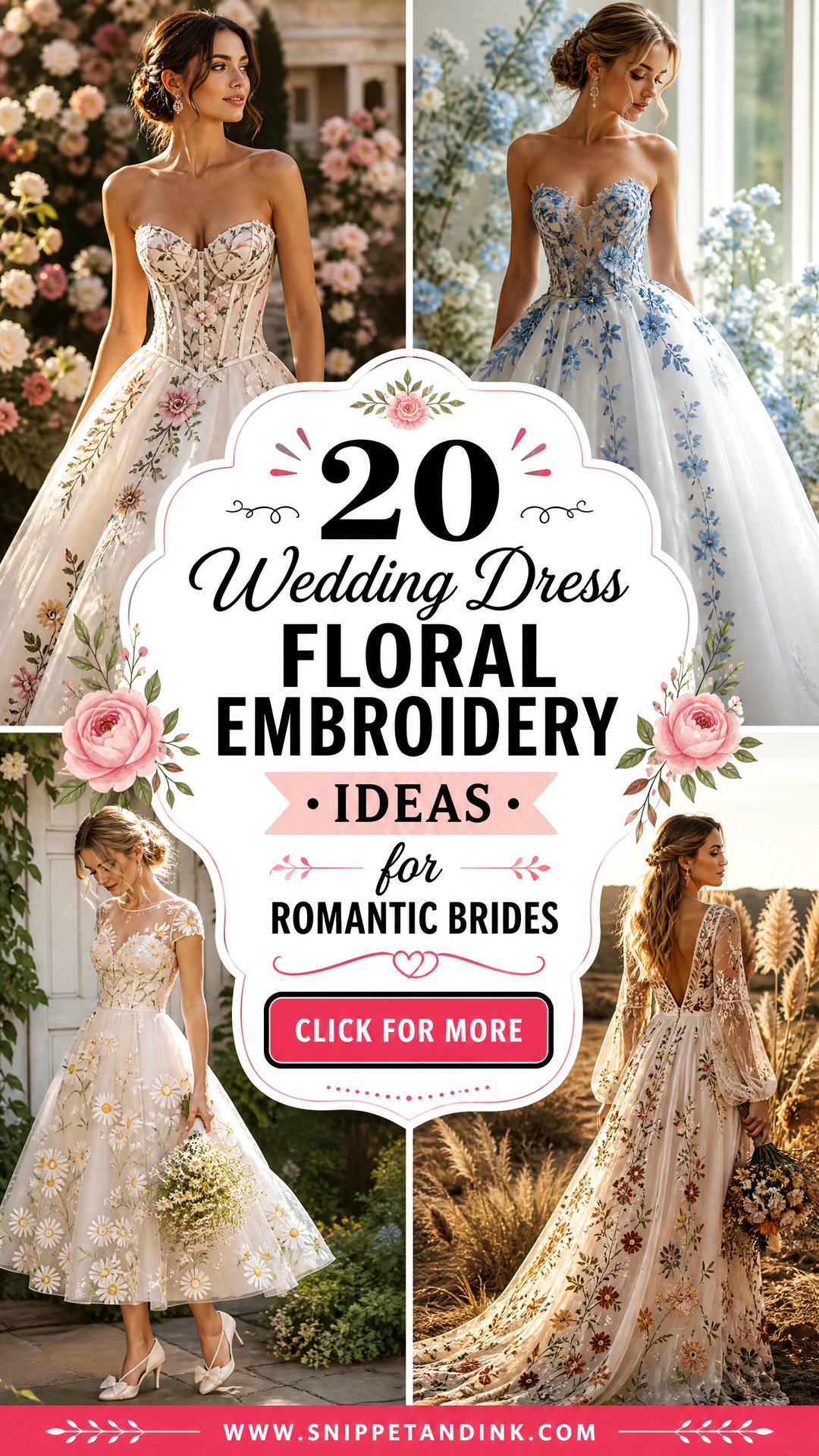
Embroidery is where a gown stops looking like stock and starts looking like it was made for someone. Placement does most of the work: flowers at the neckline lift the eye, flowers climbing from the hem make you look taller, and flowers fading out of the waist soften a structured bodice. The twenty gowns below run from delicate ivory vines to colorful wildflowers, raised petals and embroidered trains, across ball gowns, mermaids, boho shapes and clean columns. For each one I’ve noted the shoes, jewelry and veil I’d put with it, and what I’d check in the stitching before buying. Season, venue and fabric weight matter as much as the pattern itself.
Hand Embroidery, Machine Stitching and Appliqué Look Different Up Close
Shops describe all three as embroidered, and from a few feet away they can look alike. Up close, and especially during alterations, they behave very differently.
Machine embroidery is even and dense, with every flower identical. It’s durable and usually the most affordable. Hand embroidery has tiny irregularities, a slightly raised surface and often a mix of thread weights, which gives it depth in photographs. Appliqué means the flowers were embroidered separately, cut out and sewn onto the gown. That matters for fit, because appliqué can be lifted and moved by a skilled seamstress when a bodice is taken in, while embroidery stitched straight into the fabric can’t be shifted without unpicking it.
Turn a section of the skirt over if the shop lets you. Puckering around the motifs on fine tulle means the stitching is too dense for the base fabric, and it tends to get worse once the gown is steamed and worn. Loose threads or long jumps between flowers on the reverse can snag on shoes and jewelry.
1. Colorful Wildflower Embroidered Wedding Dress
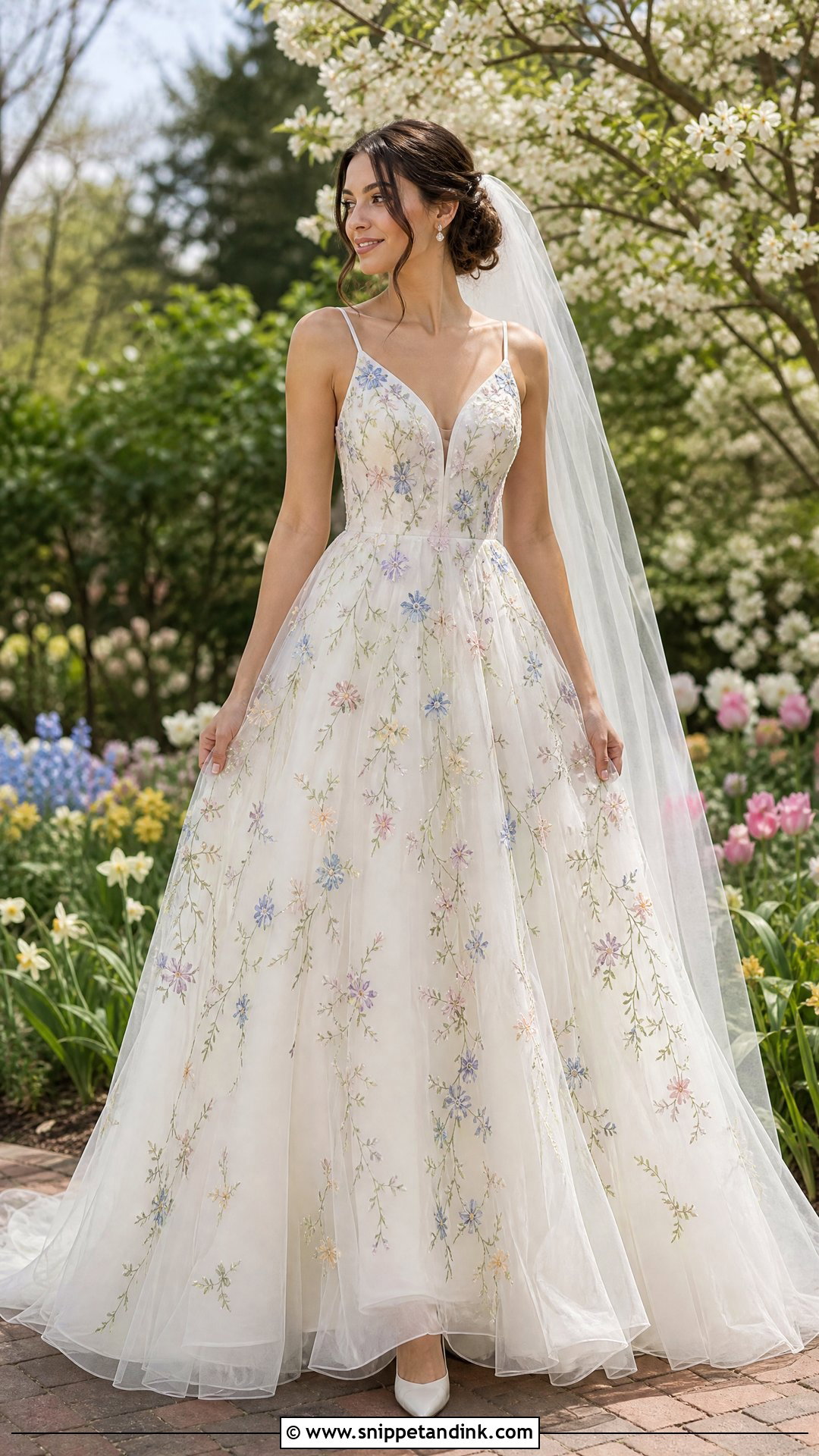
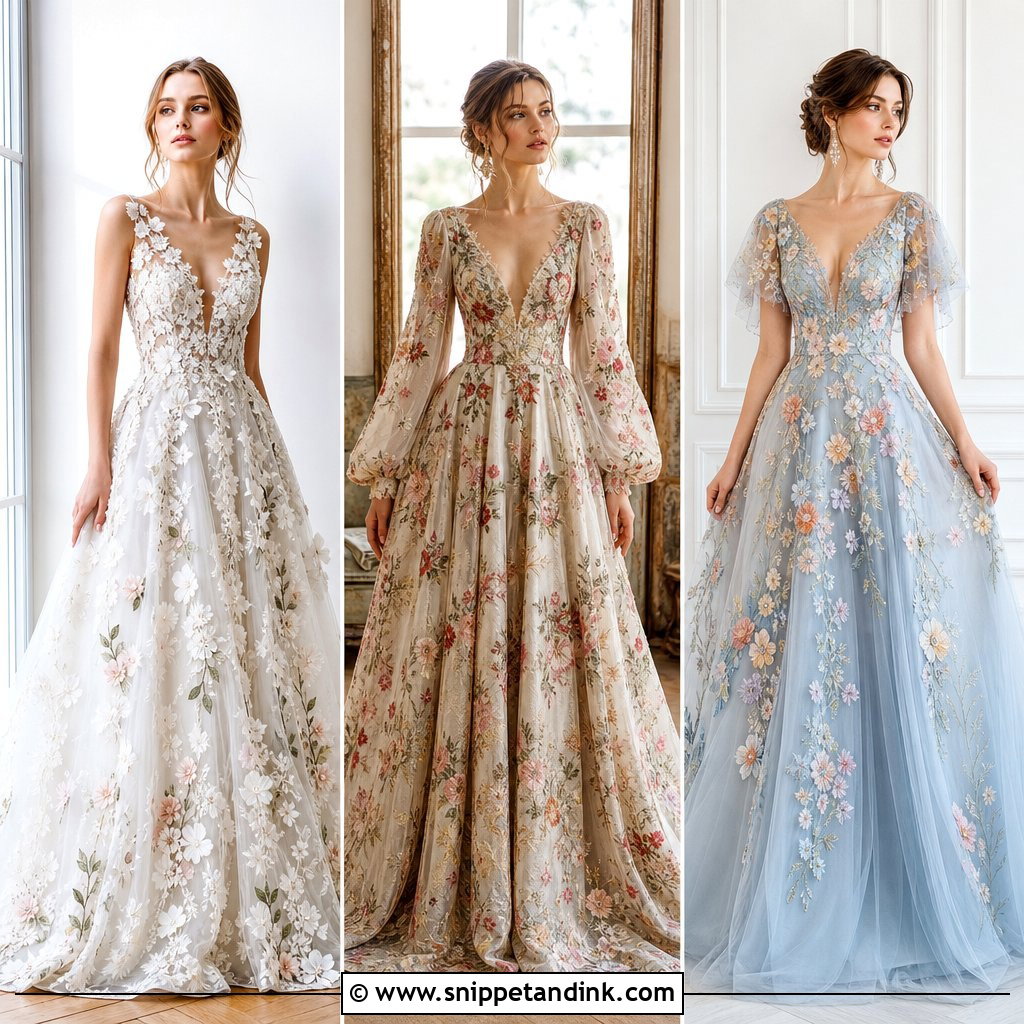
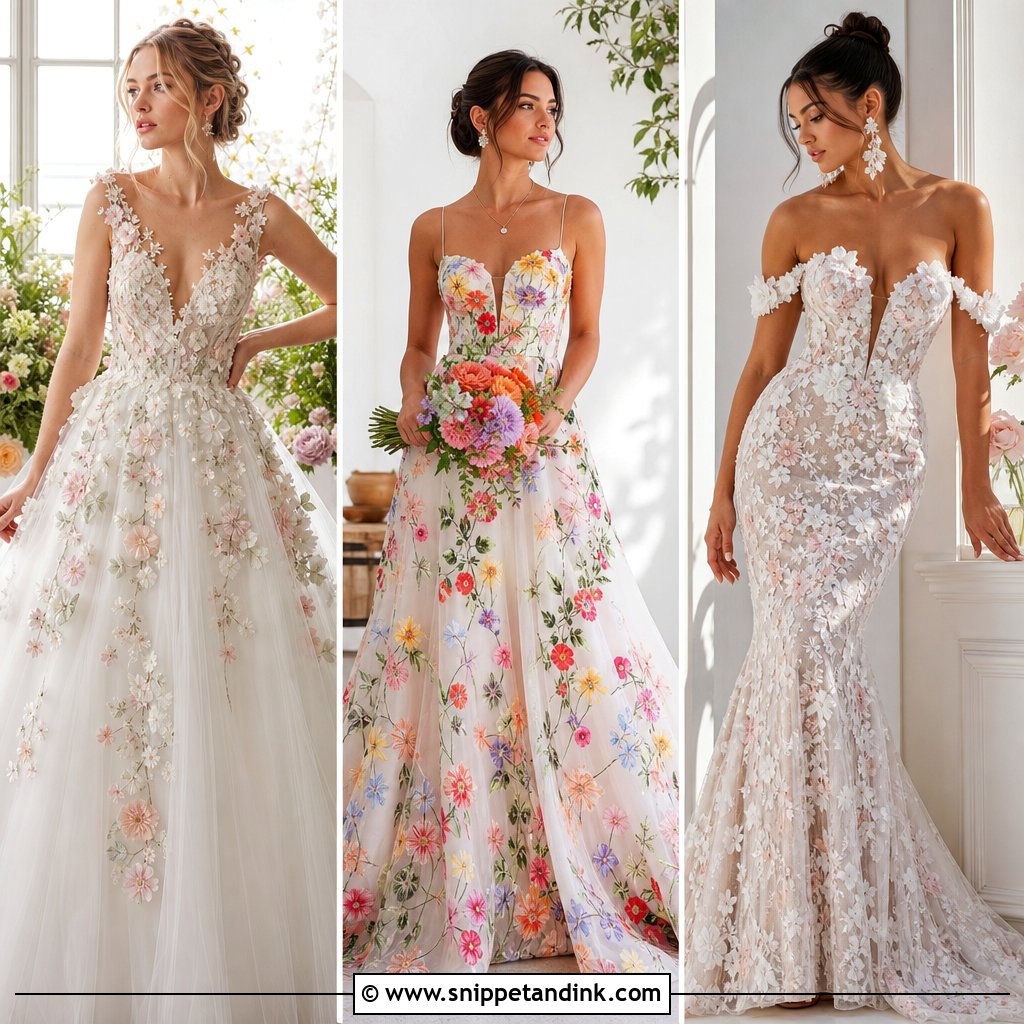
Color is the risk with a colorful wildflower embroidered wedding dress, and scale is how you manage it. Tiny blossoms scattered from the bodice toward the hem of an ivory A-line read as a meadow from across a room; large colored flowers start to look like a print. Soft blue, lavender, blush and yellow threads under a sheer tulle overlay keep it light. I’d pair it with ivory pointed shoes, pearl earrings and a loose low bun with a few small fresh flowers. Keep the veil plain at fingertip length, since lace edging fights the color. It belongs outdoors in spring or early summer.
2. Ivory Vine Embroidered Ball Gown
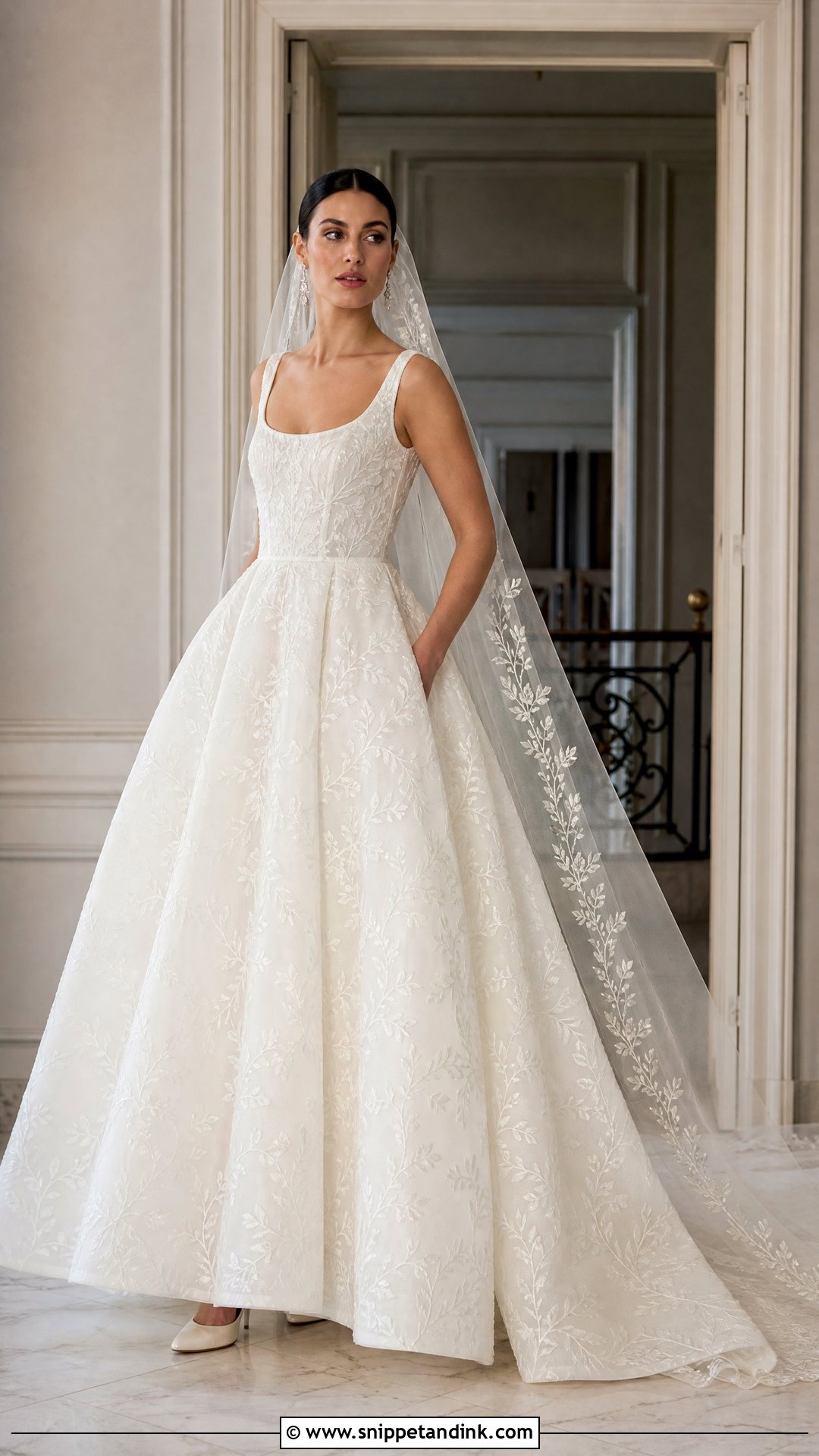
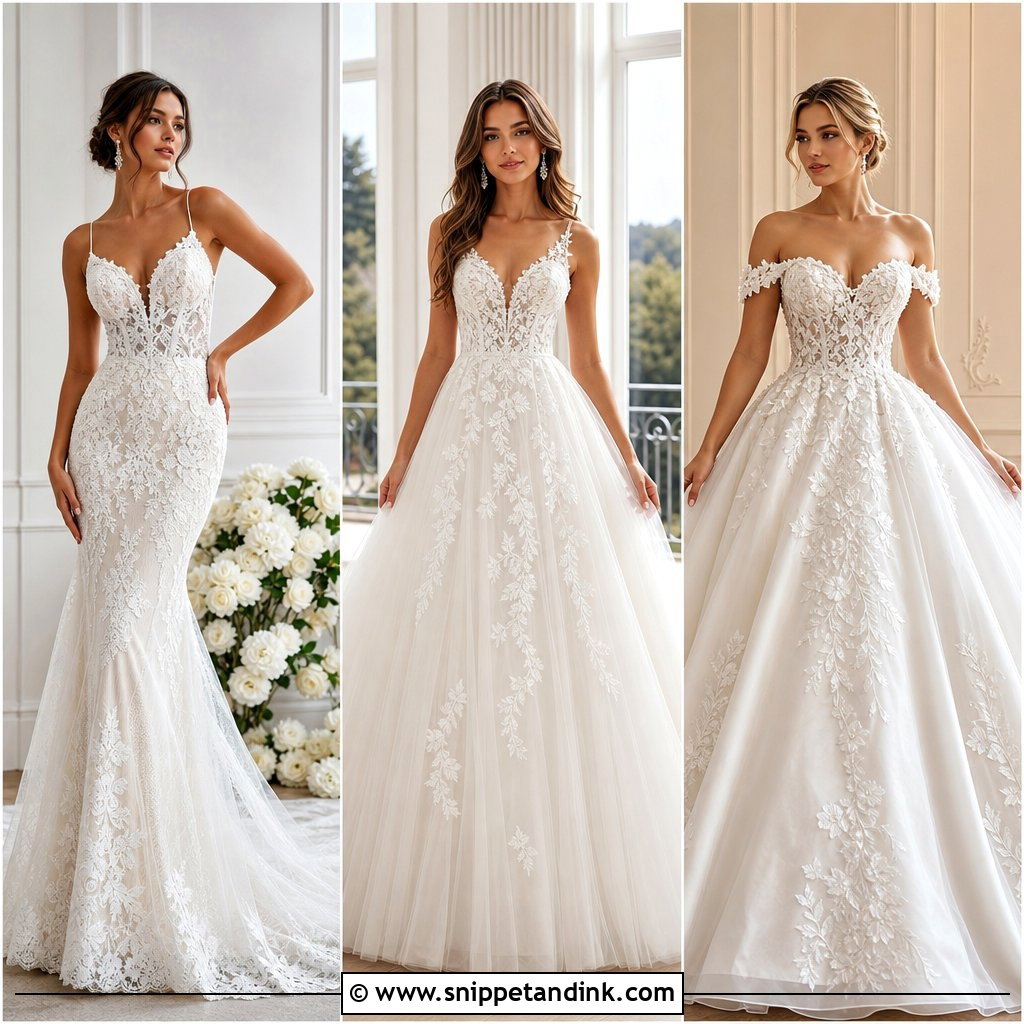
Tonal ivory vines climbing from the hem toward the waist draw a long vertical line, which is the most flattering thing embroidery can do on a ball gown. A structured bodice and full skirt give the pattern room. Scoop and softly curved necklines suit it. Up close, check that the vines continue across the side seams instead of stopping at them, which happens when embroidered fabric is cut without matching the pattern. Satin pumps, crystal drops, a clean chignon and a cathedral veil with a narrow embroidered vine at the edge complete it. Mostly white flowers with greenery. Hotel ballrooms and grand estates suit its formality.
3. 3D Floral Embroidered Corset Wedding Dress
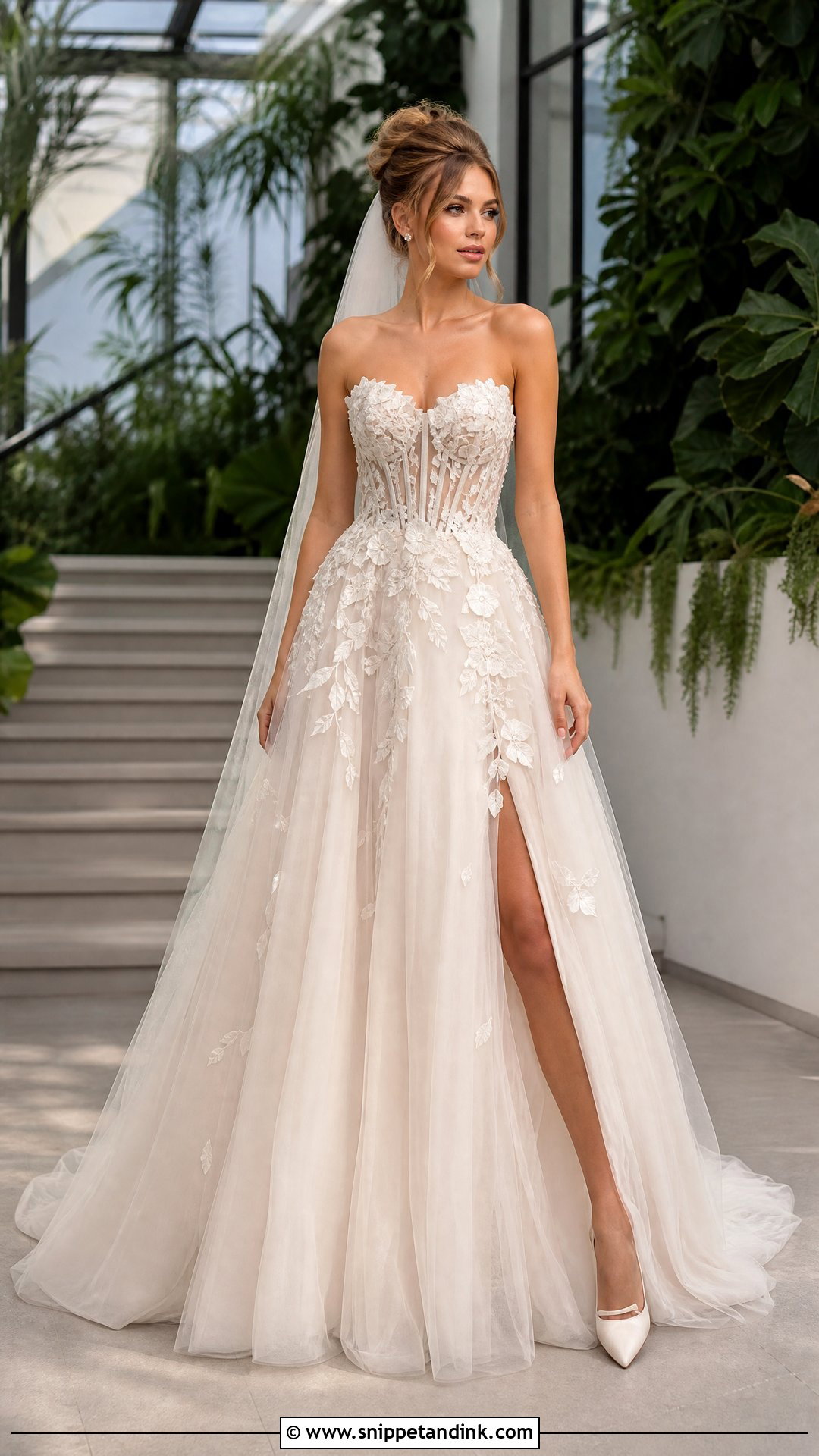
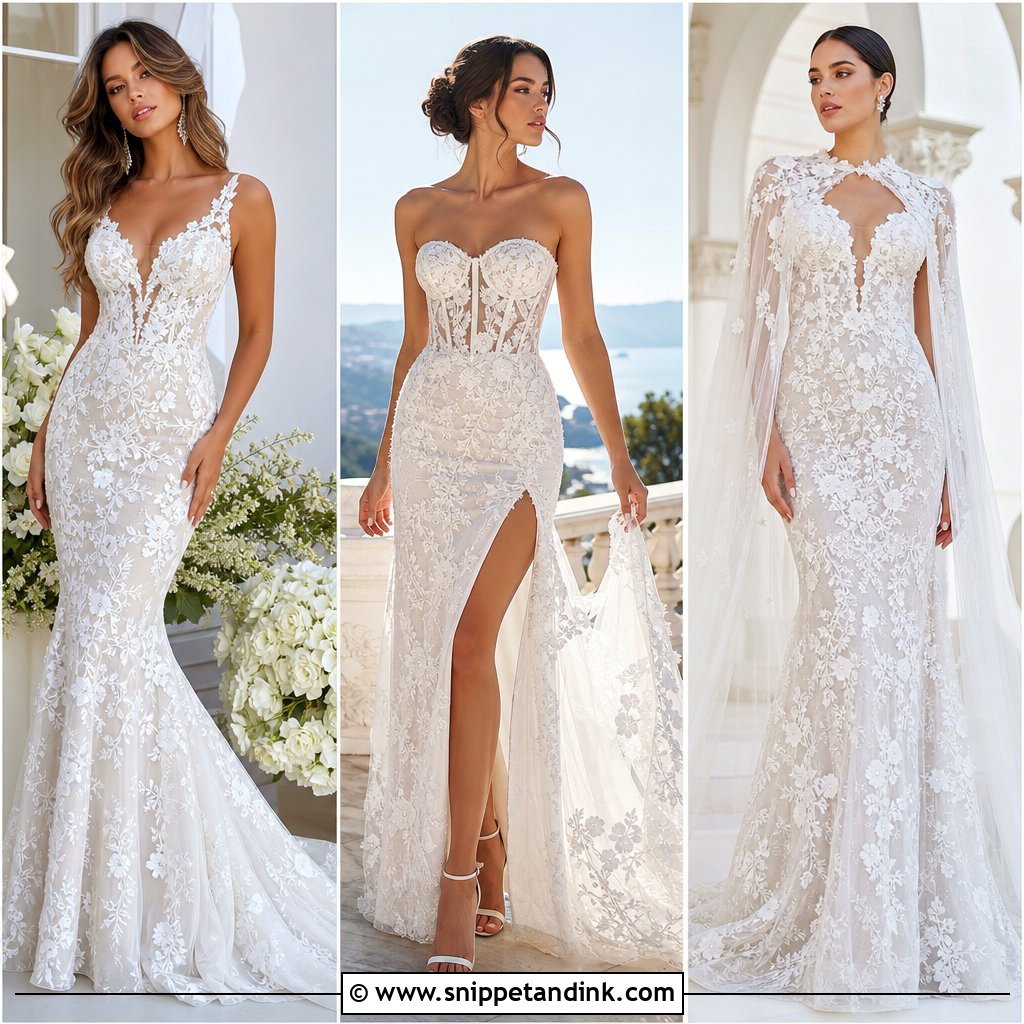
Petals that appear to grow out of the dress are made by layering embroidered shapes and stitching them only at the center, so they lift away from the fabric. On a corset, the boning should show through a sheer floral layer, keeping the bodice structured. Those raised petals catch on bracelets and veils, so test both against the gown at the fitting. A soft tulle A-line balances the fitted top and lets loose petals drift down the skirt. Sleek ivory heels, small studs and a narrow bracelet are enough, with a low ponytail or polished updo and a plain veil attached under the hair. Contemporary venues and botanical spaces suit it.
4. Long Sleeve Floral Embroidered Wedding Dress
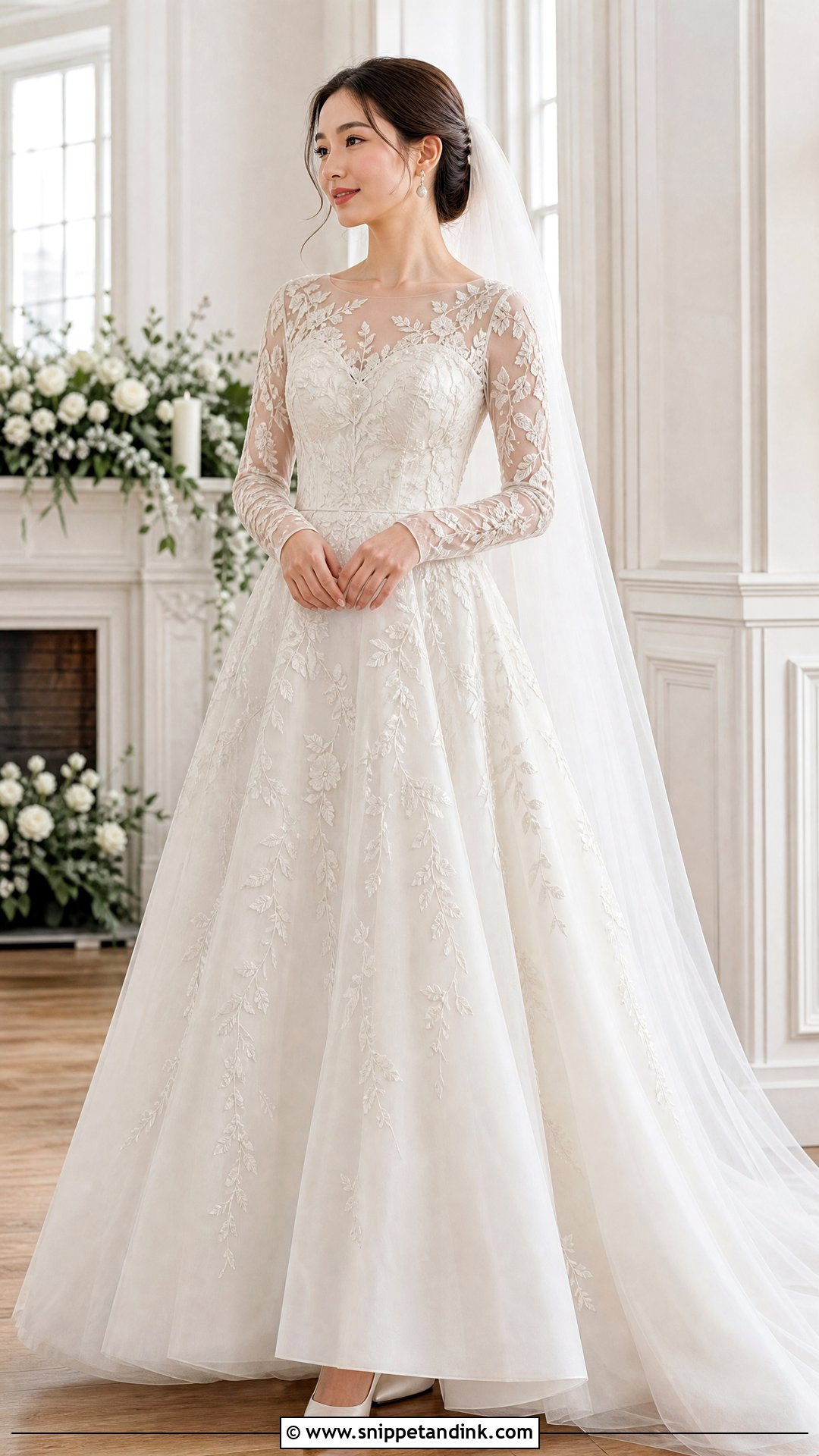
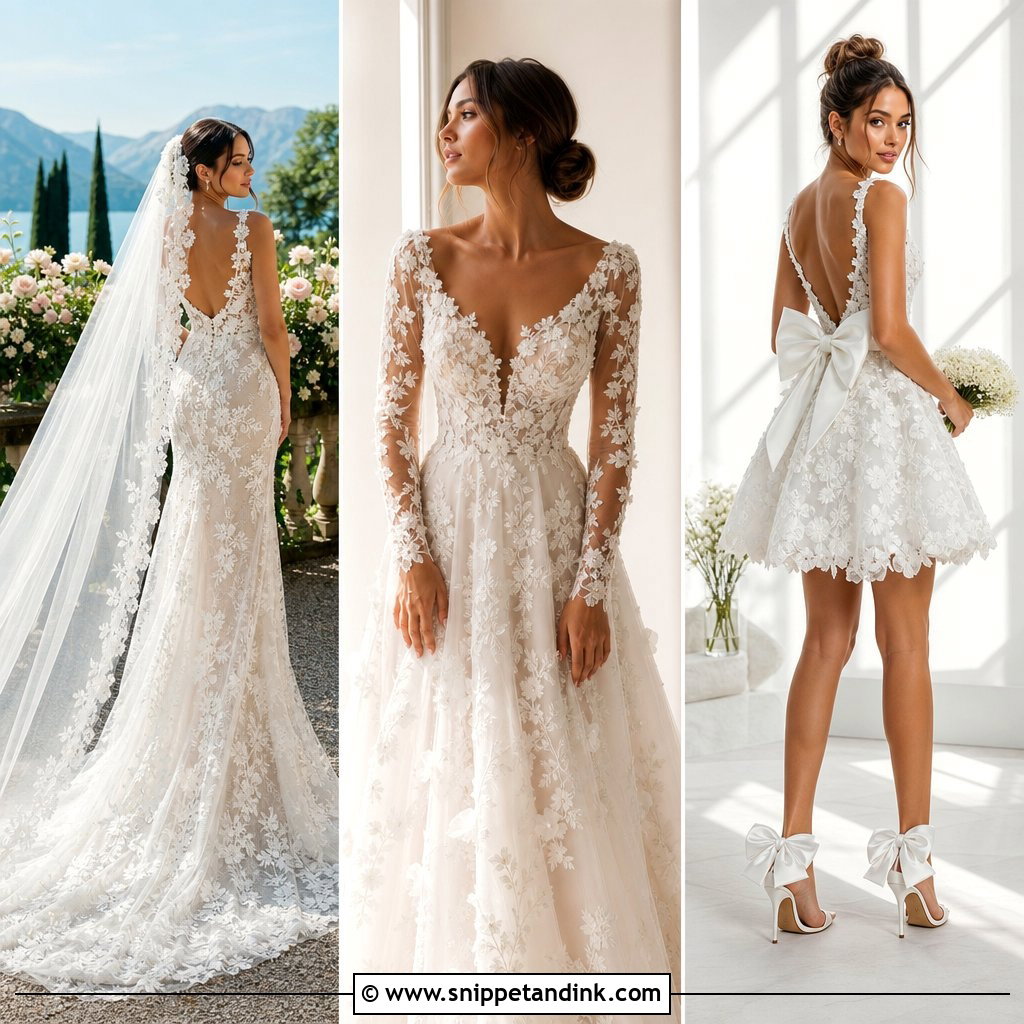
Embroidered illusion sleeves give coverage that still feels light, which makes them my usual suggestion for cool-weather weddings. Leaves and blossoms on the sleeves, continuing over the bodice and thinning into a chiffon or tulle skirt, keep the eye moving upward. The thing to test is movement. Embroidery stiffens tulle, so heavily stitched sleeves can restrict your elbows; bend your arms and hug someone at the fitting. A lined bodice contrasts nicely with the sheer sleeves. Closed satin pumps, pearl drops, a structured clutch and a soft bun keep the shoulders visible, with a plain chapel veil over it all.
5. Off Shoulder Floral Embroidered Mermaid Wedding Dress
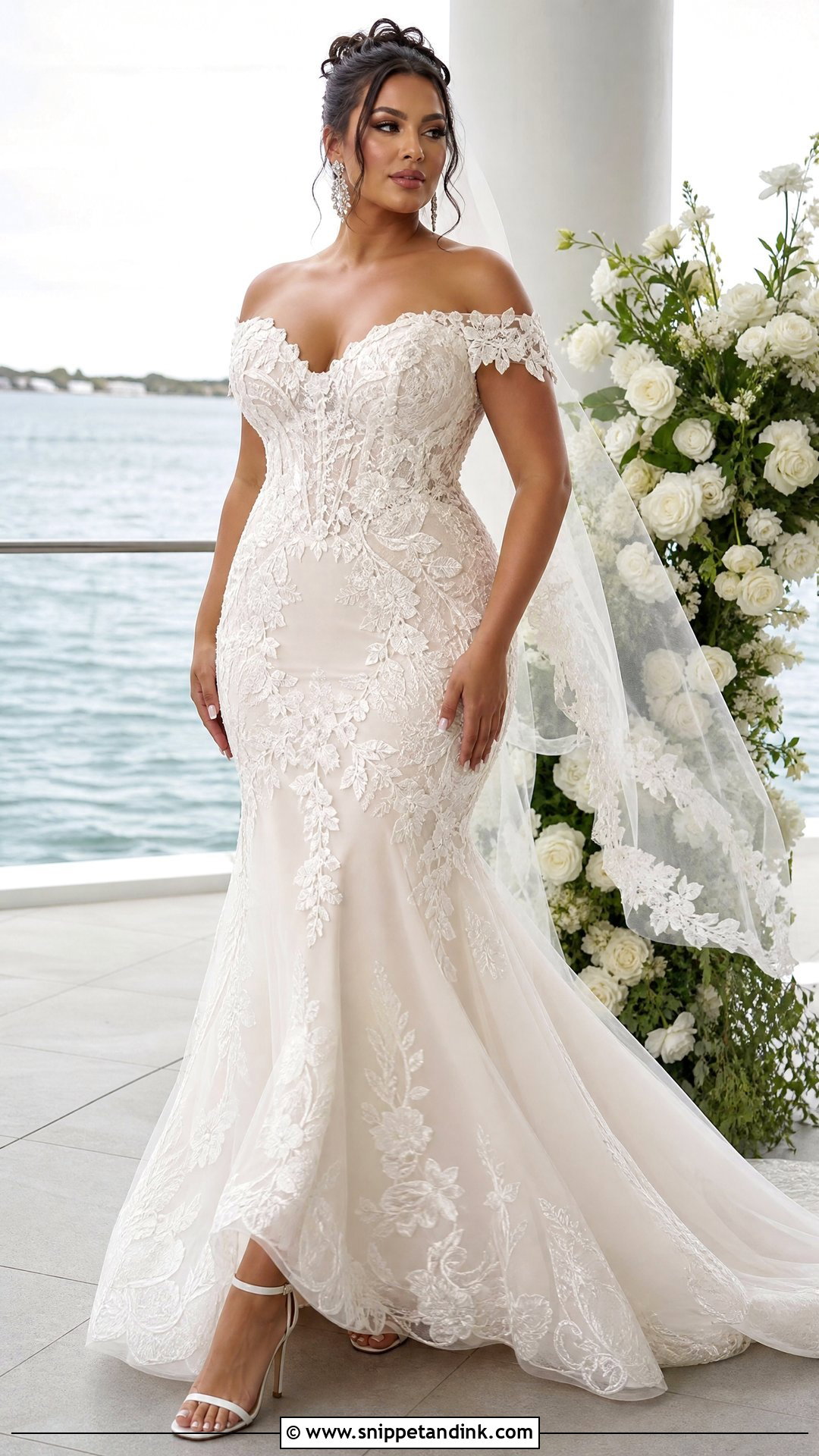
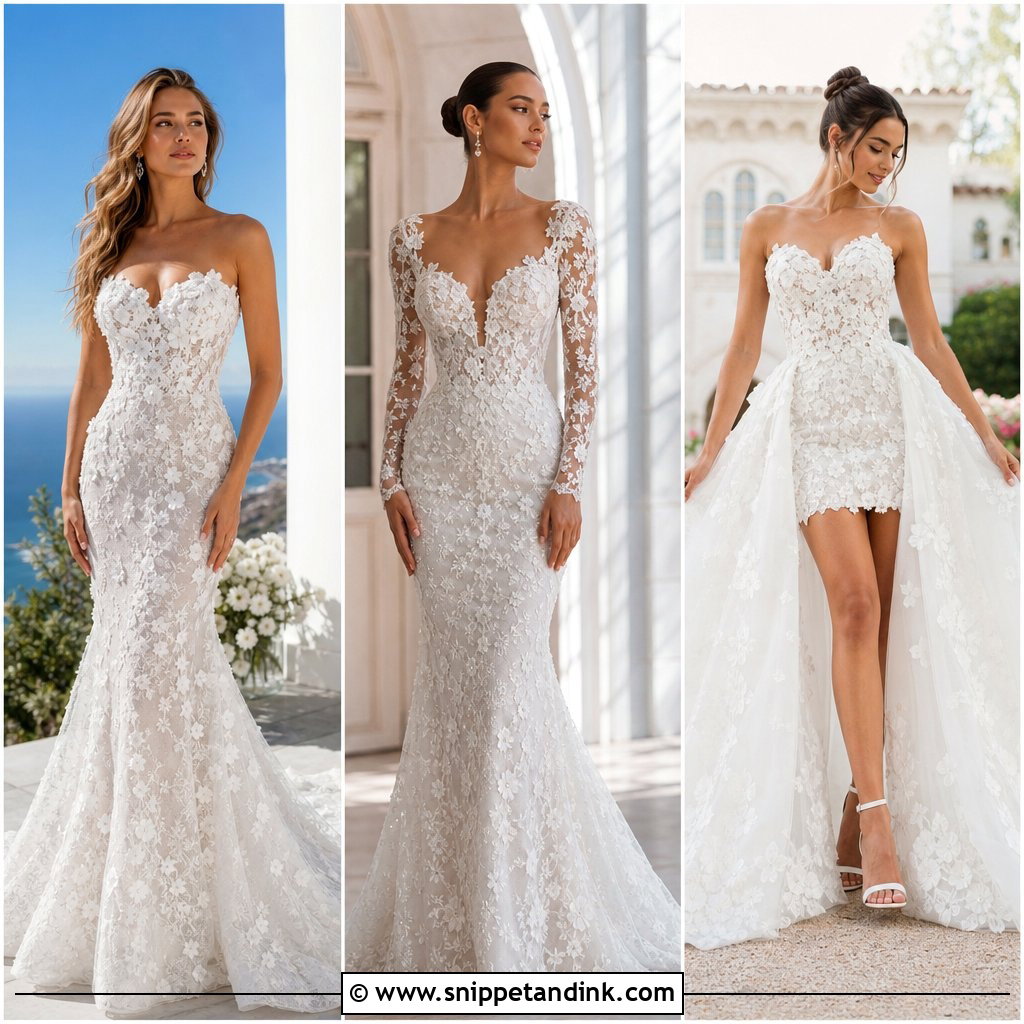
On an off-shoulder mermaid, embroidery can trace the folded neckline, cross the bodice and travel over the hips before thinning out where the skirt flares. That route follows your curves, so the decoration does the shaping instead of covering the gown. Embroidered fabric has less stretch than plain, so look for a flexible lining and firm internal structure, then walk and sit at every fitting. Crystal earrings, a smooth side-parted bun and ivory heels with secure ankle straps finish it. A fingertip veil leaves the back visible. Evening weddings and modern ballrooms suit the drama.
6. Strapless Basque Waist Floral Embroidered Wedding Dress
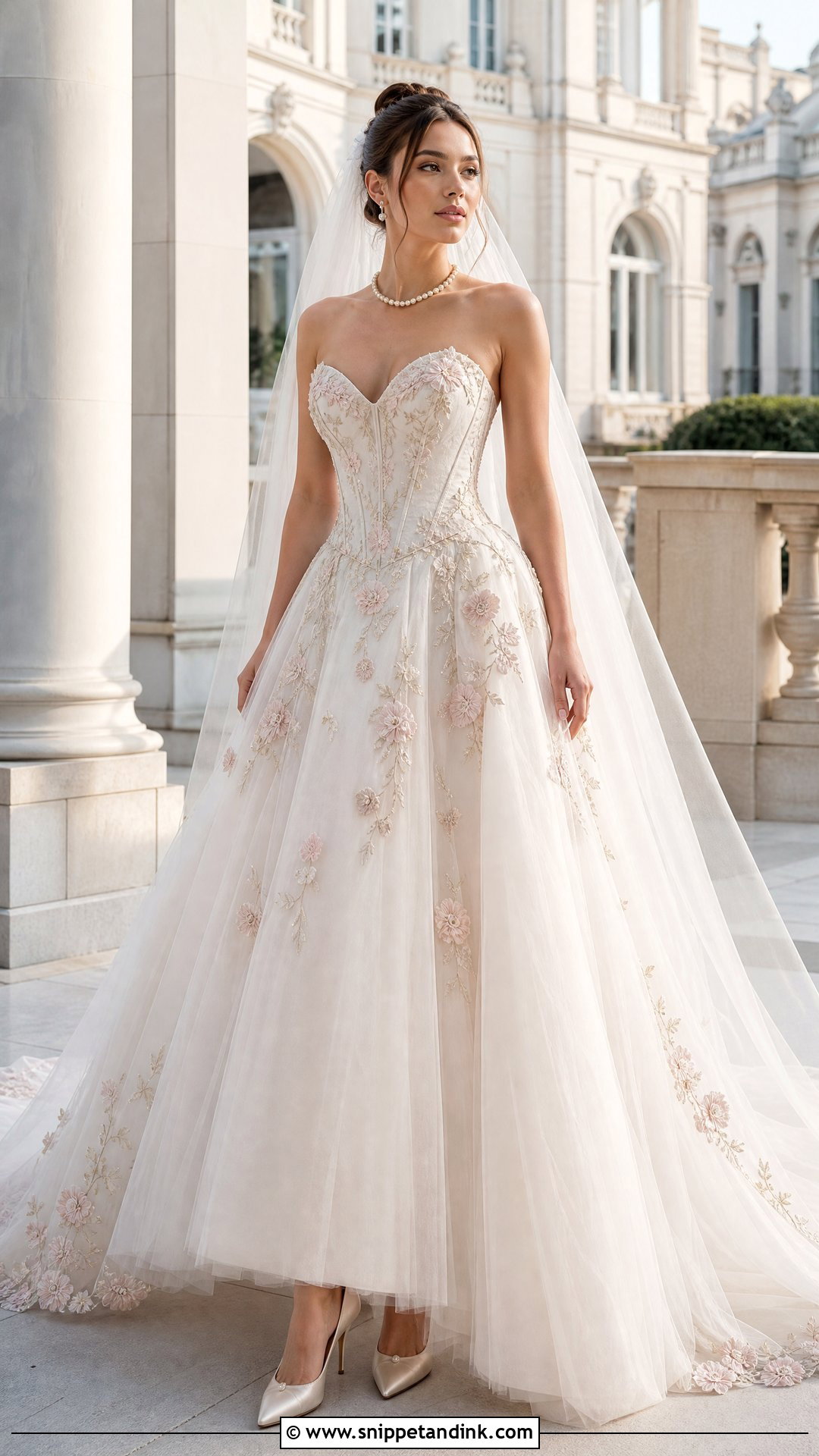
A basque waist dips to a point, and embroidery placed around that point and along the neckline outlines the shape better than any belt. Tonal ivory flowers keep it classic; a subtle blush thread adds gentle contrast. Strapless and full-skirted, it depends on internal boning or a lace-up back for security, so make sure the support sits at the waist. Layered tulle gives movement below. A short pearl necklace, matching earrings, pointed satin pumps and a sleek bun keep the shoulders open. Choose a sheer cathedral veil with just a few embroidered flowers near the bottom. Formal estate weddings suit it.
7. Blush Floral Embroidered Wedding Dress
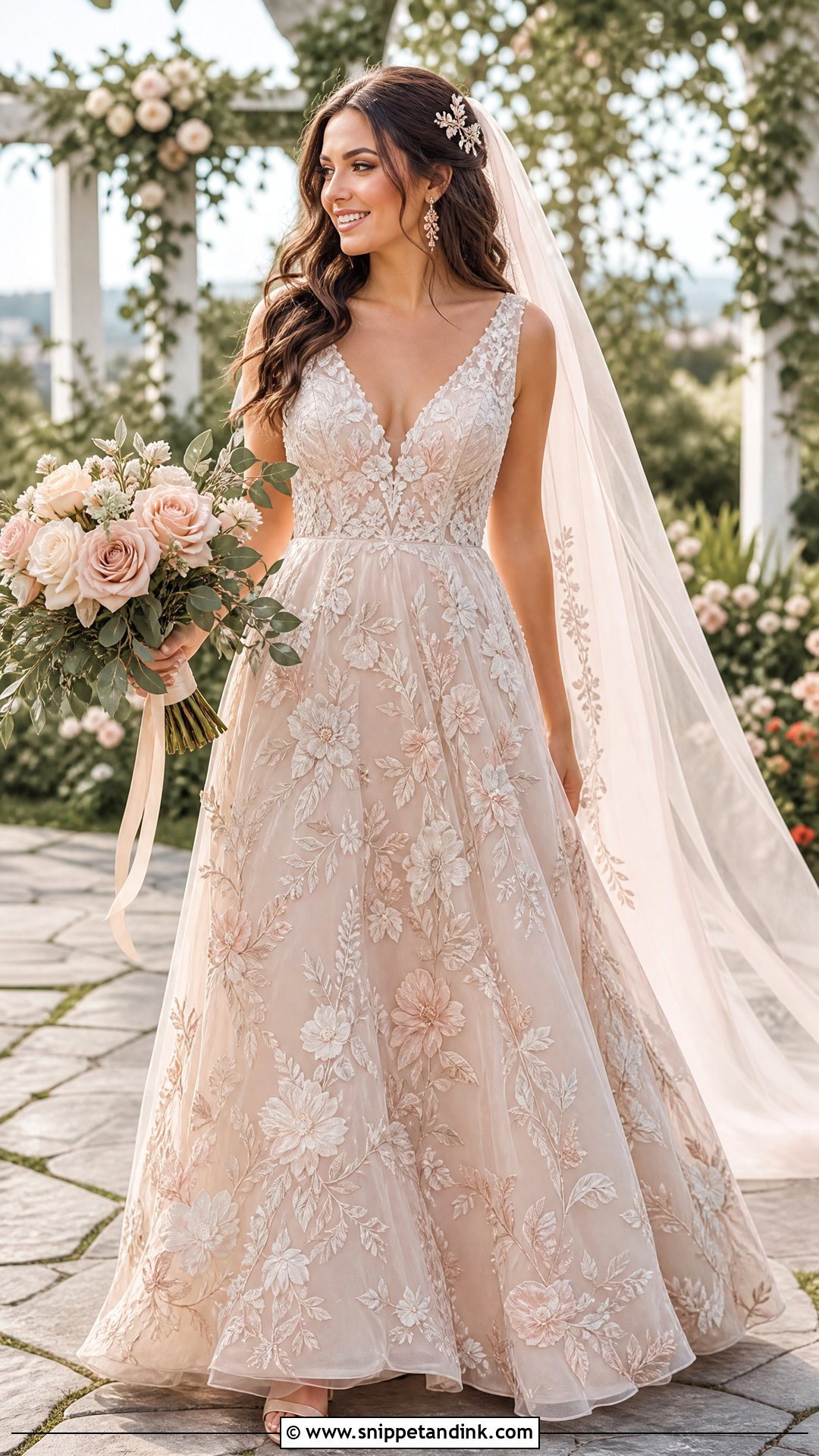
Blush fabric changes what embroidery looks like. Ivory or champagne flowers that would disappear on white suddenly show up clearly against a warm base. An A-line lets the pattern move and suits most figures. Concentrate the flowers at the bodice, waist and upper skirt, and let them thin toward the hem. Blush also shifts between daylight and indoor light more than ivory does, so see the actual gown in both before ordering. Champagne heels, rose gold earrings and a small pearl comb suit the warmth. A blush-tinted veil blends in; sheer ivory adds a layered effect. Late afternoon light flatters it most.
8. Blue Floral Embroidered Wedding Dress
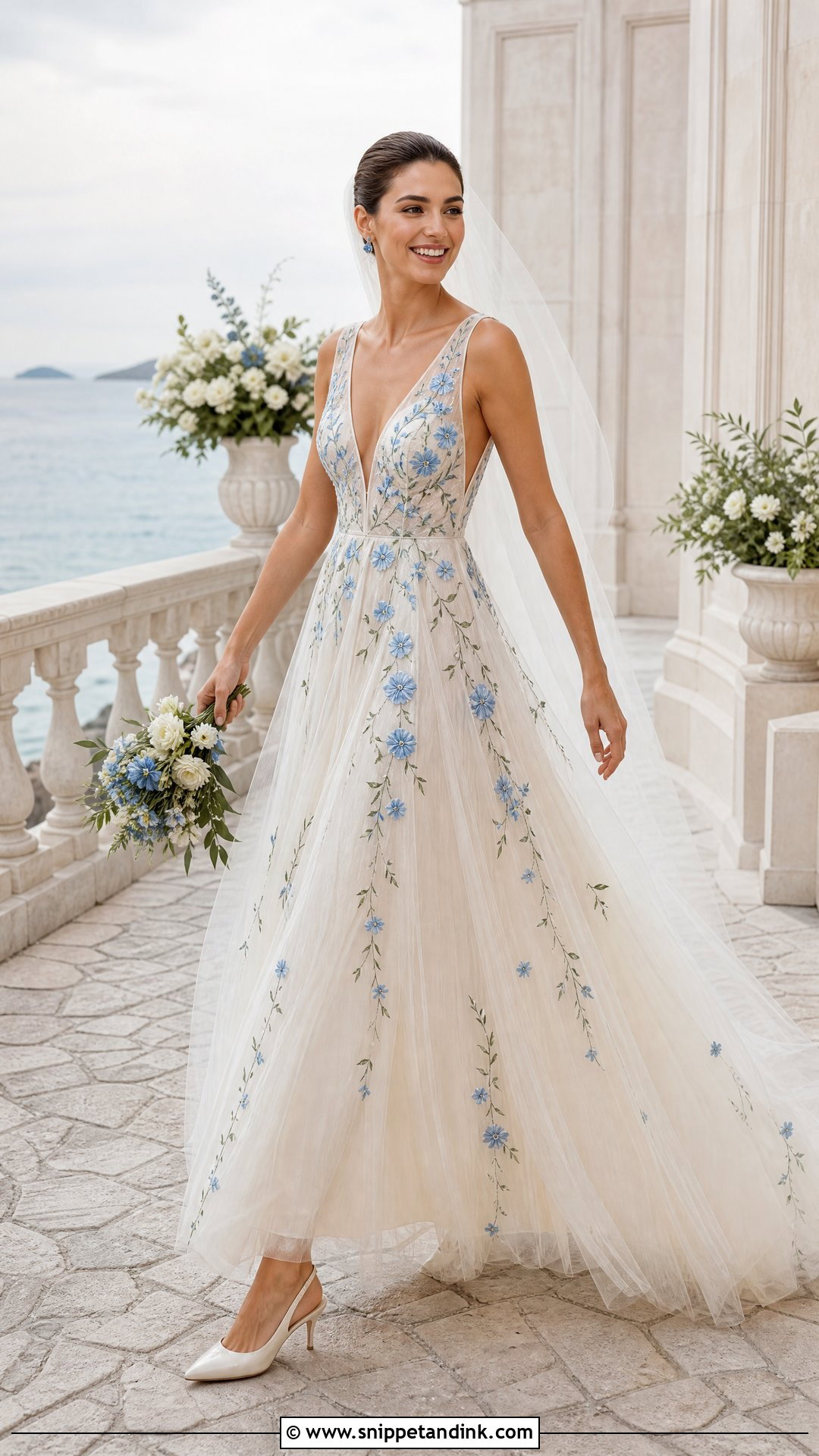
Blue thread is one of the easiest ways to add color without losing the bridal effect, and it doubles as something blue. Fine cornflower, dusty blue or pale navy flowers framing the neckline of an ivory tulle A-line and spreading down the skirt look considered rather than loud. Green leaves make the pattern botanical; all-blue thread looks cleaner. Ask whether the thread is colorfast. A dark thread that bleeds onto ivory tulle in rain or from a spill is very hard to fix. Ivory slingbacks, sapphire studs, a smooth low bun and a plain sheer veil. Coastal venues and summer gardens suit it.
9. Black Floral Embroidered Wedding Dress
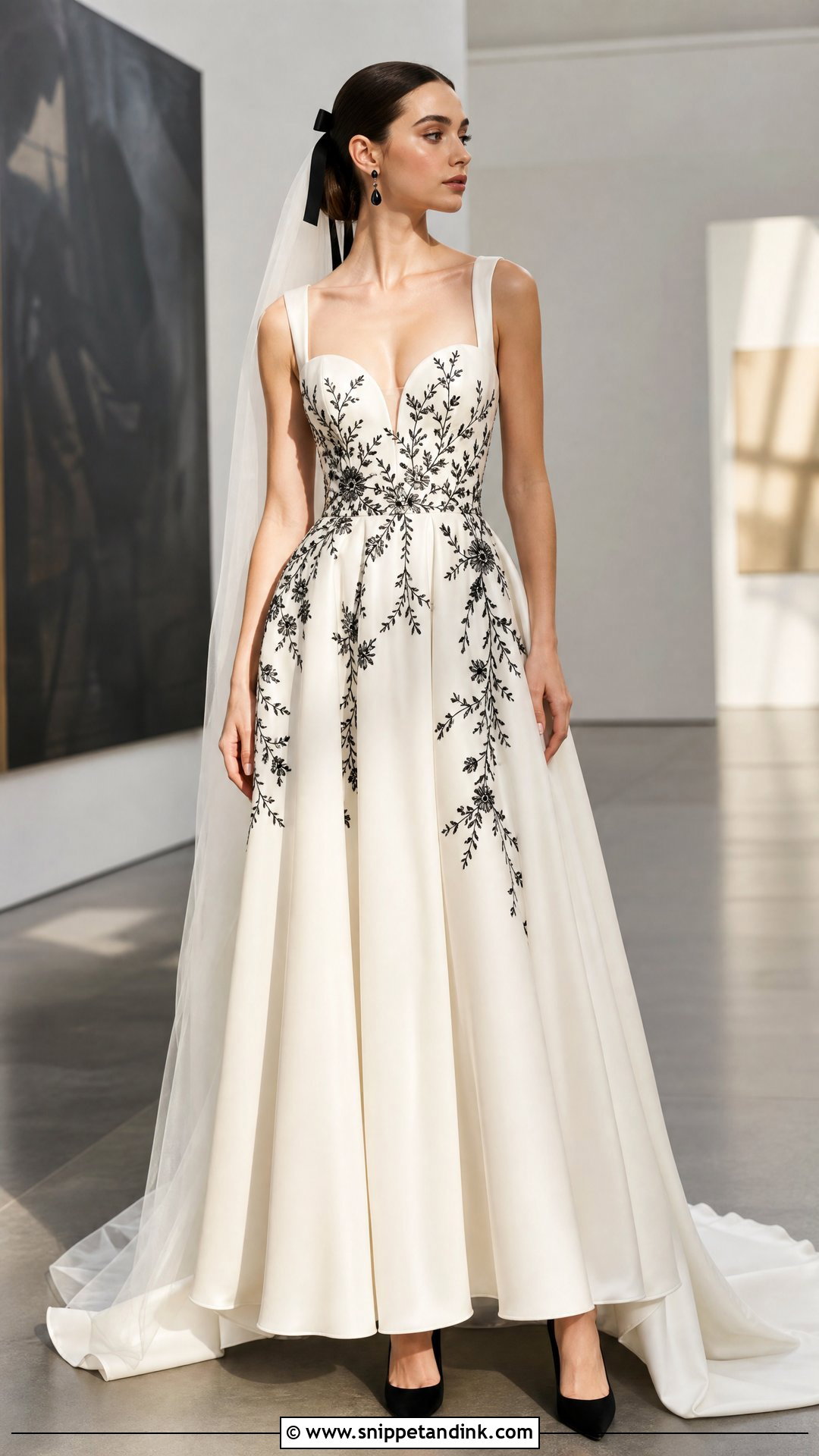
Black embroidery on ivory is striking, and it’s unforgiving about scale. Fine black vines and blossoms on a fitted bodice look graphic and elegant; oversized black motifs look heavy and can read like a costume in photos. Let the pattern fade down an A-line or column skirt. Black velvet pumps, onyx earrings and a narrow black ribbon in a low ponytail tie the outfit together. Keep the veil plain ivory so the overall look still feels light. White flowers with deep green foliage add contrast without more color. It belongs in galleries, industrial spaces and evening receptions.

10. Pastel Garden Floral Embroidered Wedding Dress
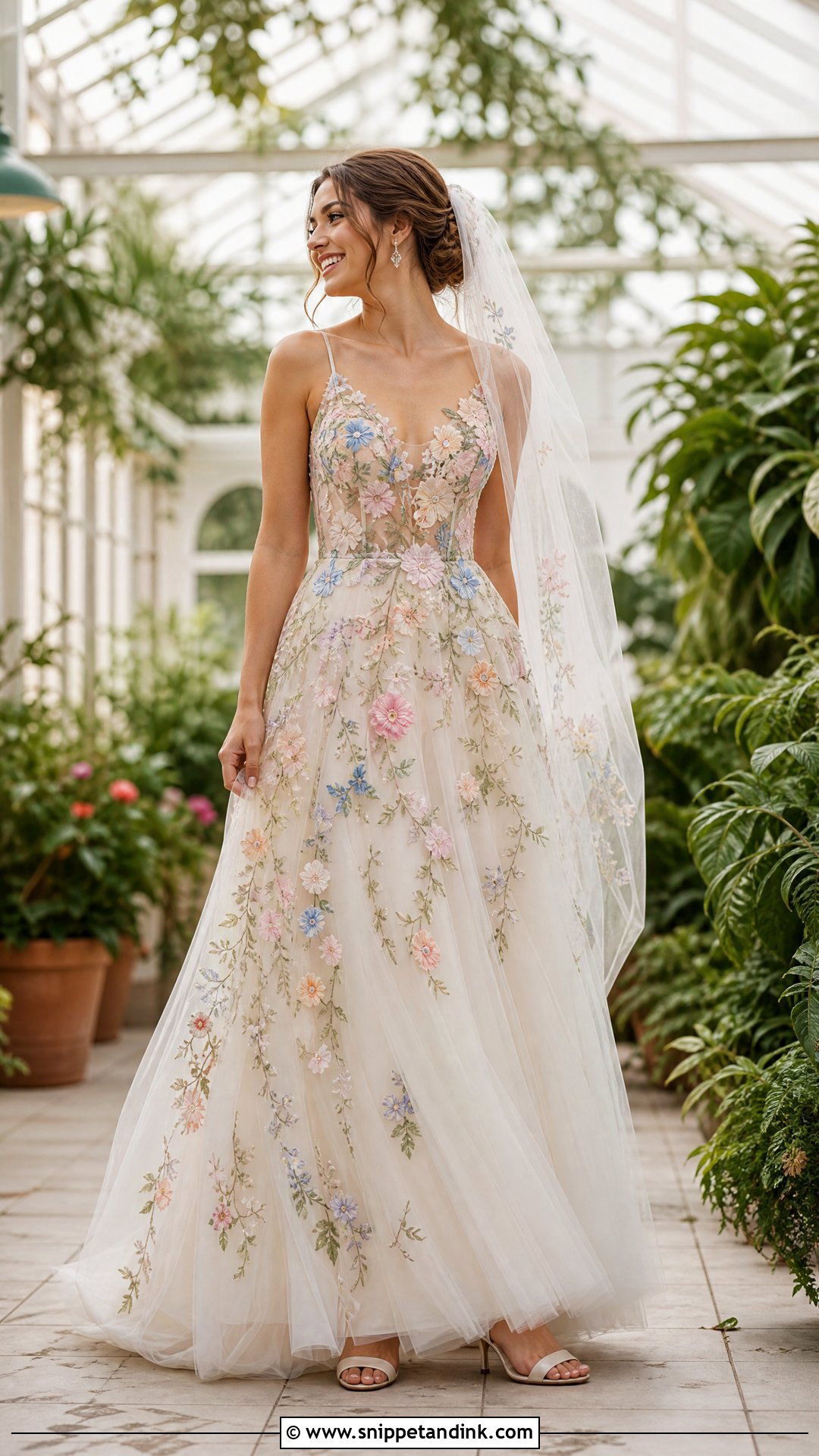
Pastel embroidery in pale pink, peach, lilac and green is the closest a gown gets to an actual garden. The detail that separates a good version from a fussy one is variety: flowers in several sizes look organic, while identical repeated motifs look machine-printed. A lightweight tulle A-line with a fitted bodice keeps it airy. Neutral ivory heels, small crystal earrings and a loose braided updo suit it, with a sheer veil carrying a hint of pastel at the edge. Carry a bouquet in similar tones, but don’t match every flower exactly. Spring gardens and glasshouses.
11. Daisy Embroidered Tea Length Wedding Dress
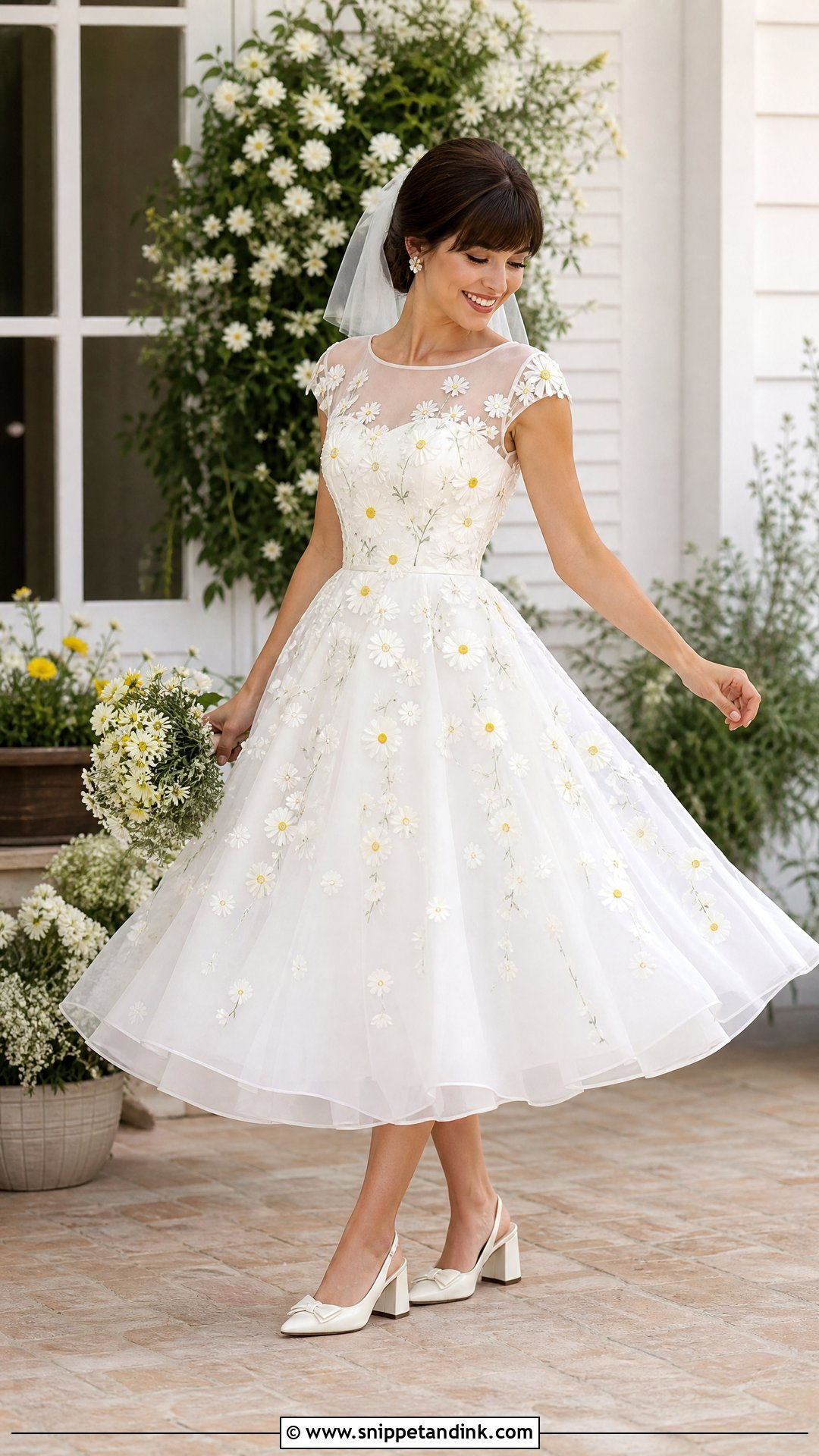
With a daisy embroidered tea-length wedding dress, the shorter hem puts your shoes on show, so choose them as carefully as the dress: ivory block heels, pointed slingbacks or polished flats. Small white and yellow daisies suit organza, tulle or eyelet. A fitted waist and full skirt give a vintage shape, and keeping the daisies small stops it from tipping into costume. Pearl studs, a simple bracelet and a short veil or structured bow, with soft waves or a low bun. The dress already has a lively pattern, so keep the bouquet white and green. Courthouses, restaurants and small daytime weddings.
12. Minimalist Column Floral Embroidered Wedding Dress
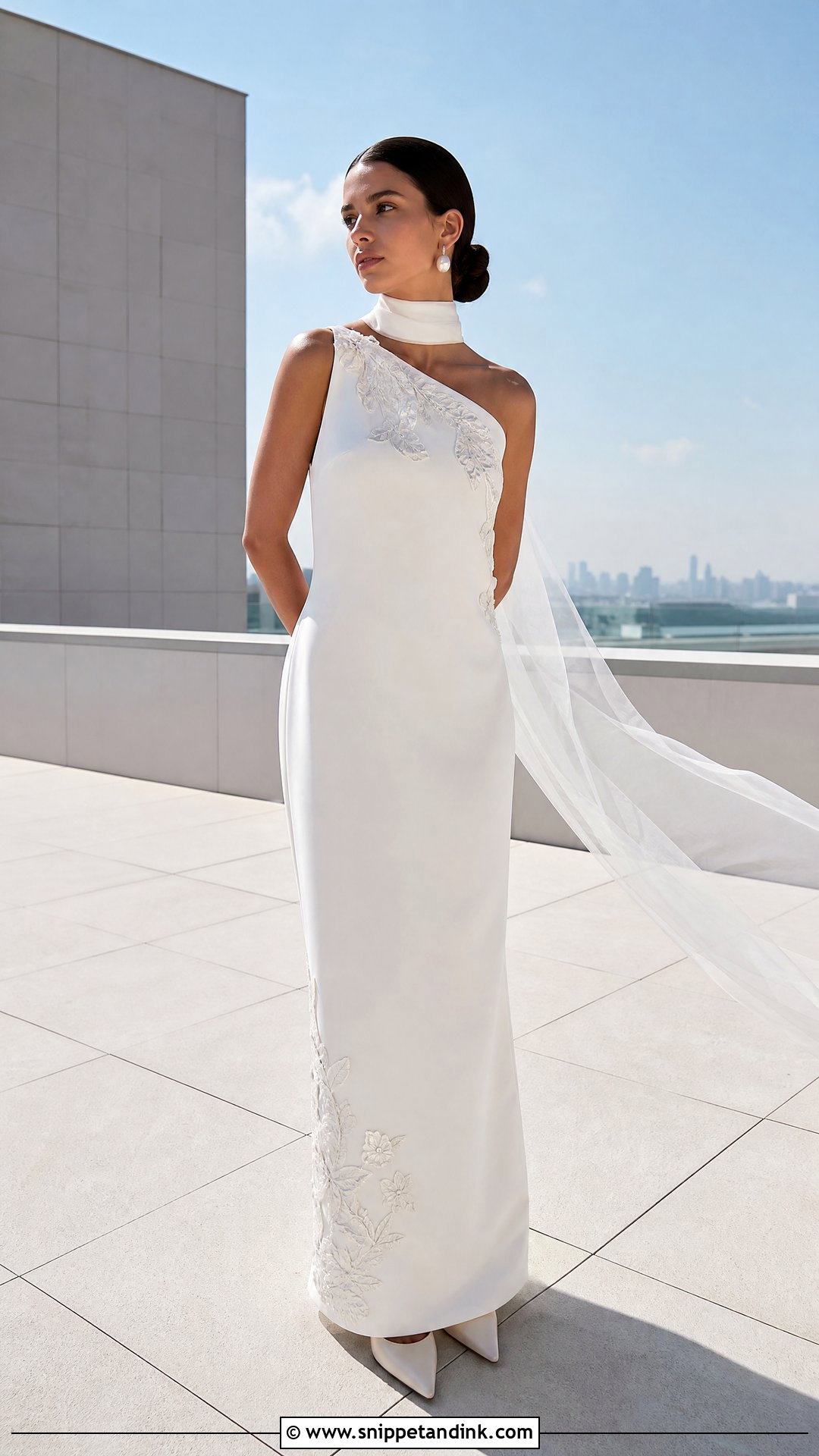
Minimalists can wear embroidery as long as it’s placed with intent. On a clean crepe or satin column, a single cluster at one shoulder, a line along a side seam or a band at the hem adds interest without breaking the silhouette. Asymmetry is what makes it modern. I’d keep the stitching tonal, since colored thread on a minimal gown reads as decoration rather than design. Pointed ivory pumps, sculptural pearl earrings, a compact clutch and a polished low knot suit it. Replace a decorated veil with a plain chapel length or a sheer scarf. An architectural bouquet in one or two flower types finishes the look.
13. Boho Floral Embroidered Wedding Dress
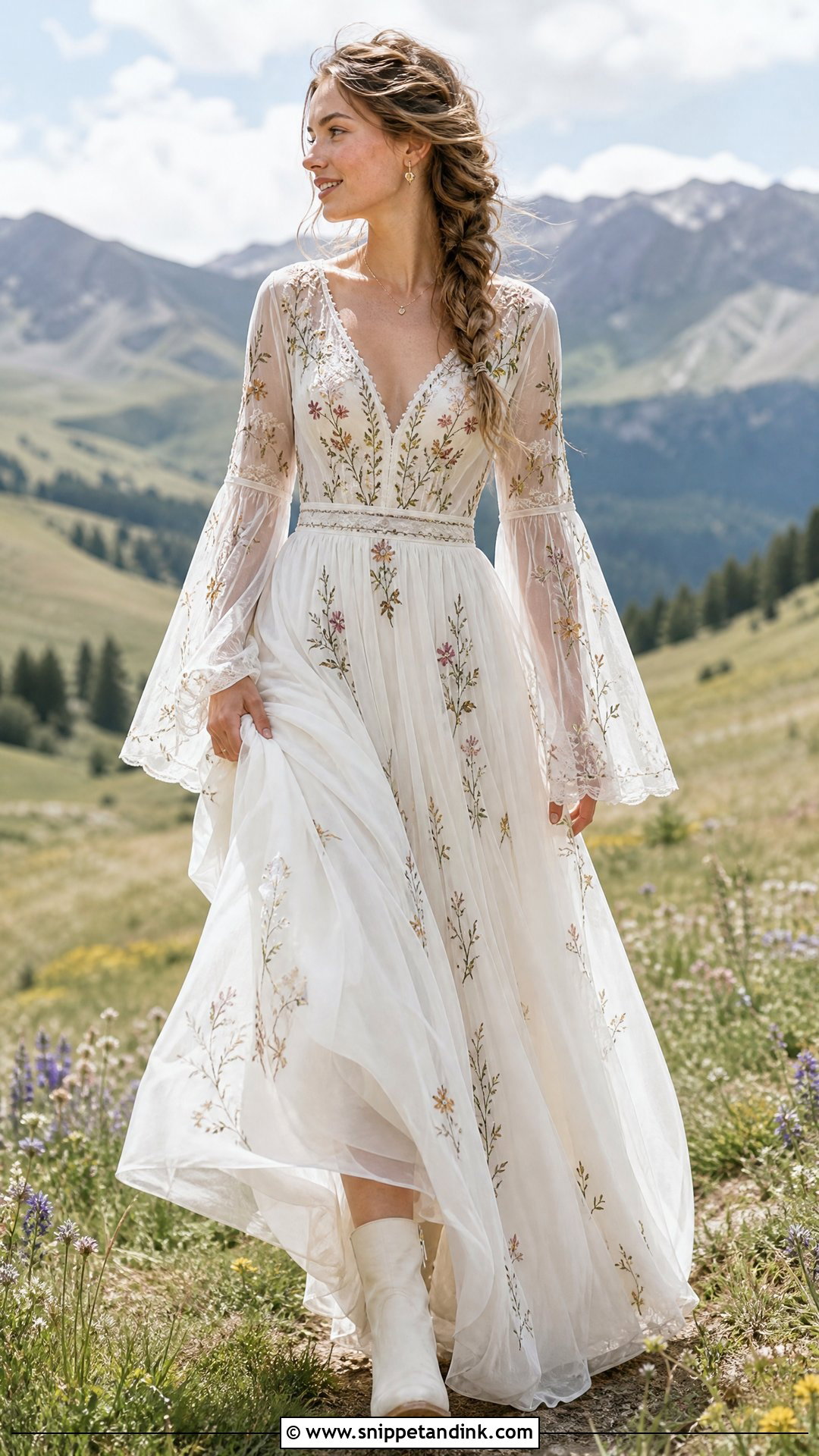
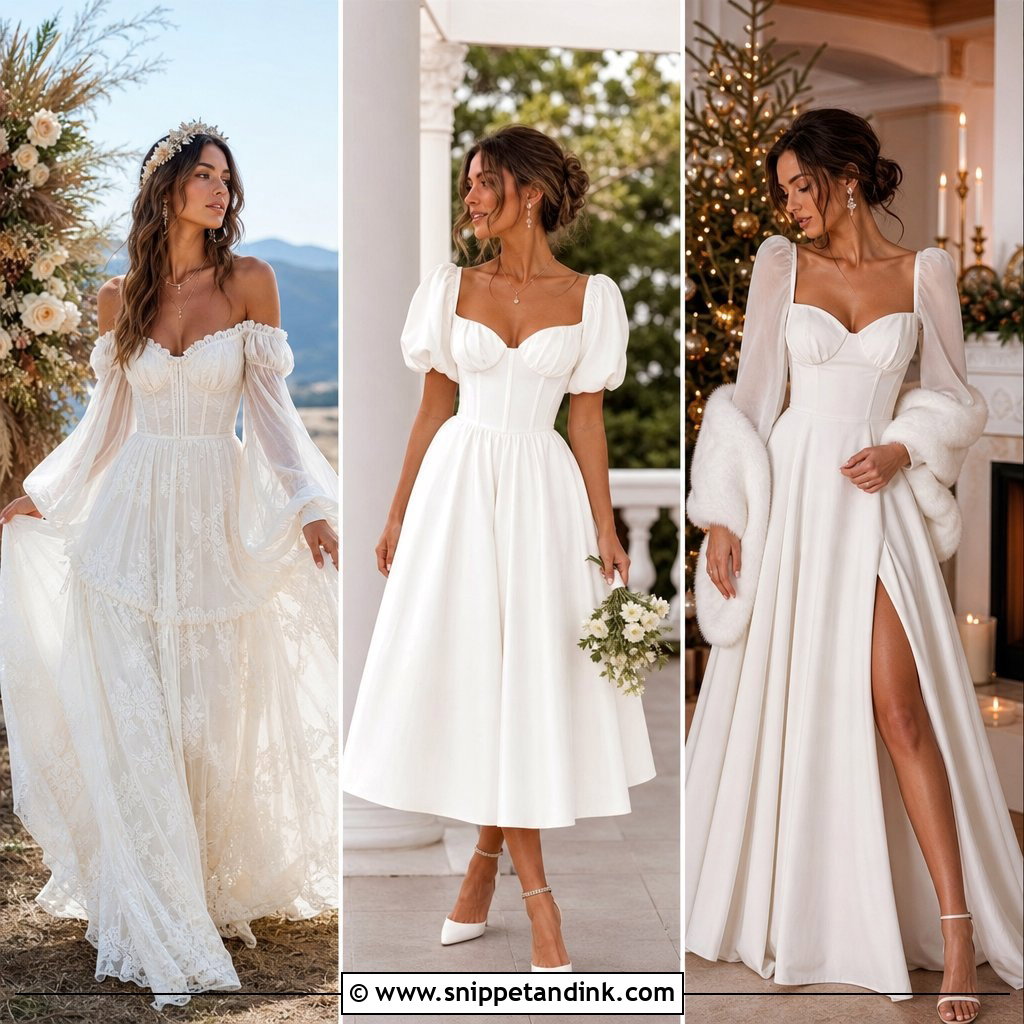
Relaxed and floaty, a boho embroidered gown works best in soft chiffon or light tulle with a defined waist, a flowing skirt and sheer bell sleeves. Vines, wildflowers and leaves should follow the drape of the fabric, not fight it. Embroidery adds weight, so if the skirt is heavily stitched it won’t move as freely; hold a handful of it and let go to see how it falls. Choose shoes for the ground: ankle boots, low block sandals or flats. Small gold earrings, a fine pendant and a loose braid suit it, with a floral comb or a plain fingertip veil. Woodland clearings, desert landscapes and mountain venues all fit.
14. Square Neck Floral Embroidered Wedding Dress
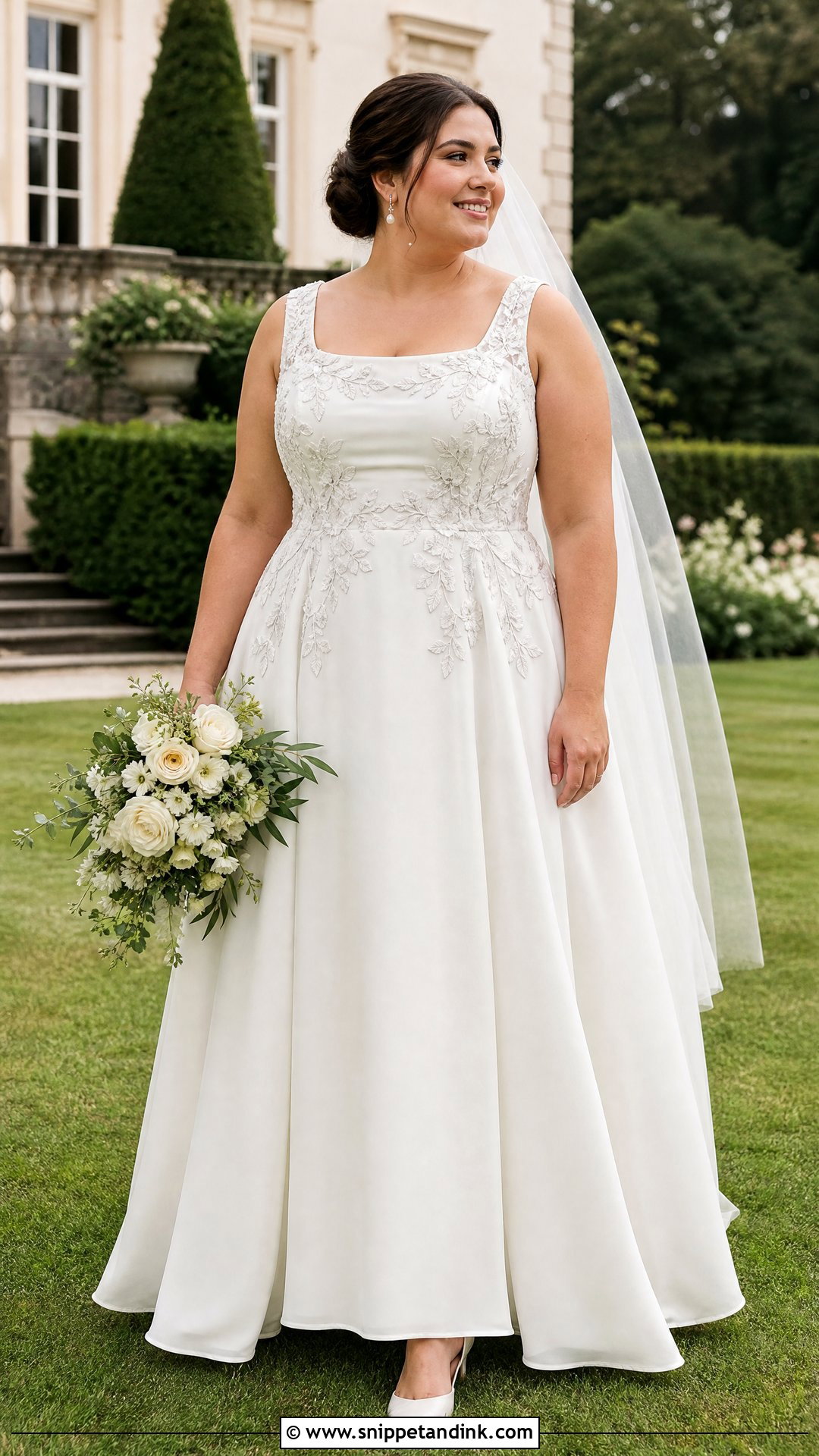
A square neckline frames embroidery the way a picture frame does, which is why flowers placed along the neckline, straps and waist look so neat on it. Wider straps give support and more room for detail. Embroidery stops the neckline from stretching, so if it gapes in the mirror, it needs taking in at the side seams rather than pulling tighter at the straps. Pearl drops, a low chignon and pointed ivory shoes; the neckline replaces a necklace. A plain veil under the bun keeps the back visible, and a medium rounded bouquet balances the shape. It moves easily from a daytime ceremony to an evening reception.
15. Halter Floral Embroidered Organza Wedding Dress
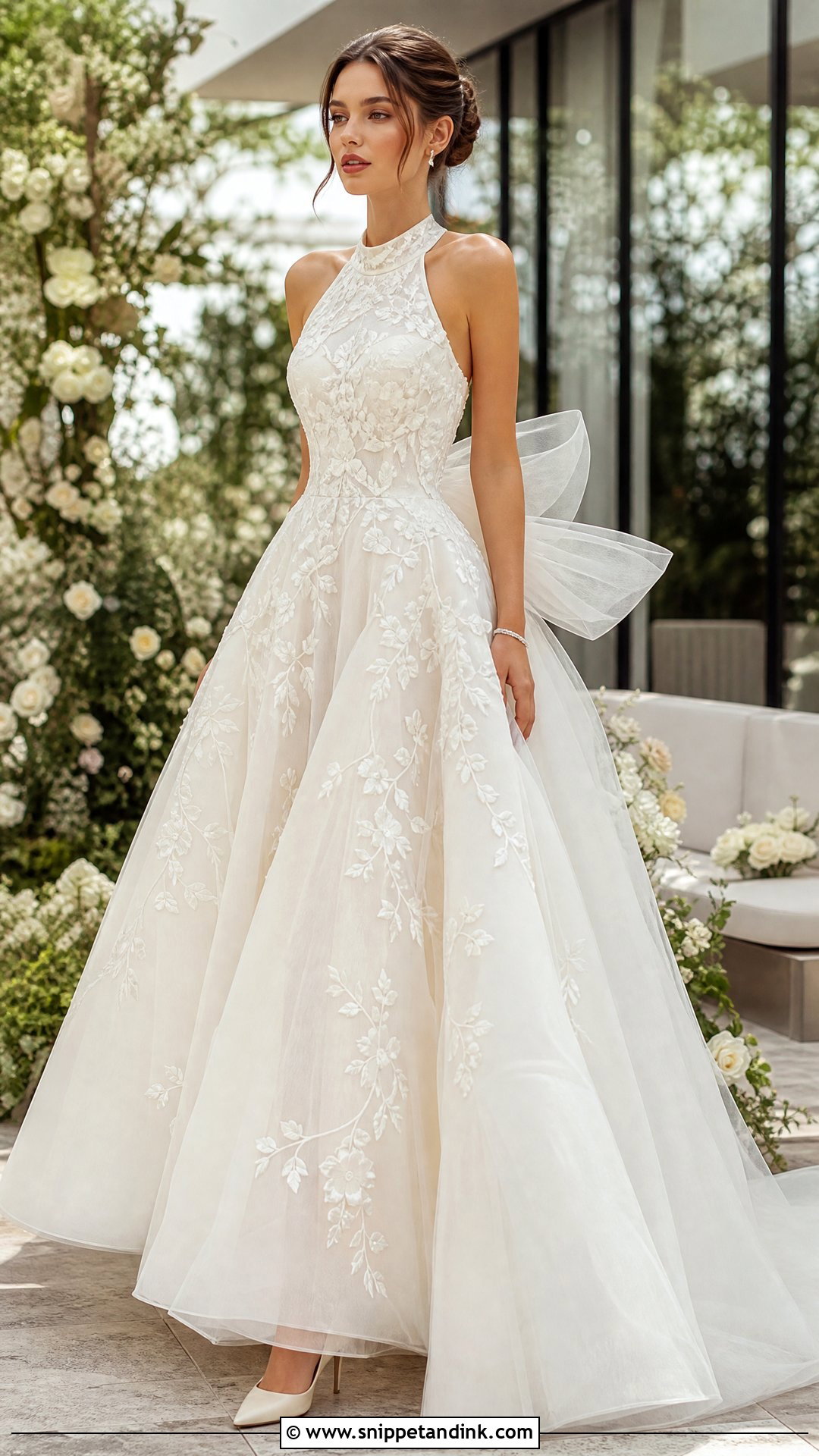
Organza holds a shape while staying light, and a halter neckline gives embroidery a sculptural line to follow. Vines curving around the neck and spreading over the waist and lower layers draw the eye upward. The halter closure should be a hook or button at the nape, because heavy embroidered fabric can slowly pull a tie loose. Skip the necklace and wear delicate studs, ivory pumps, a slim bracelet and a sleek bun or high ponytail. A short veil or detachable tulle bow keeps the shoulders and upper back clear. Warm-weather ceremonies and waterfront venues suit it.
16. High Neck Floral Embroidered Tulle Wedding Dress
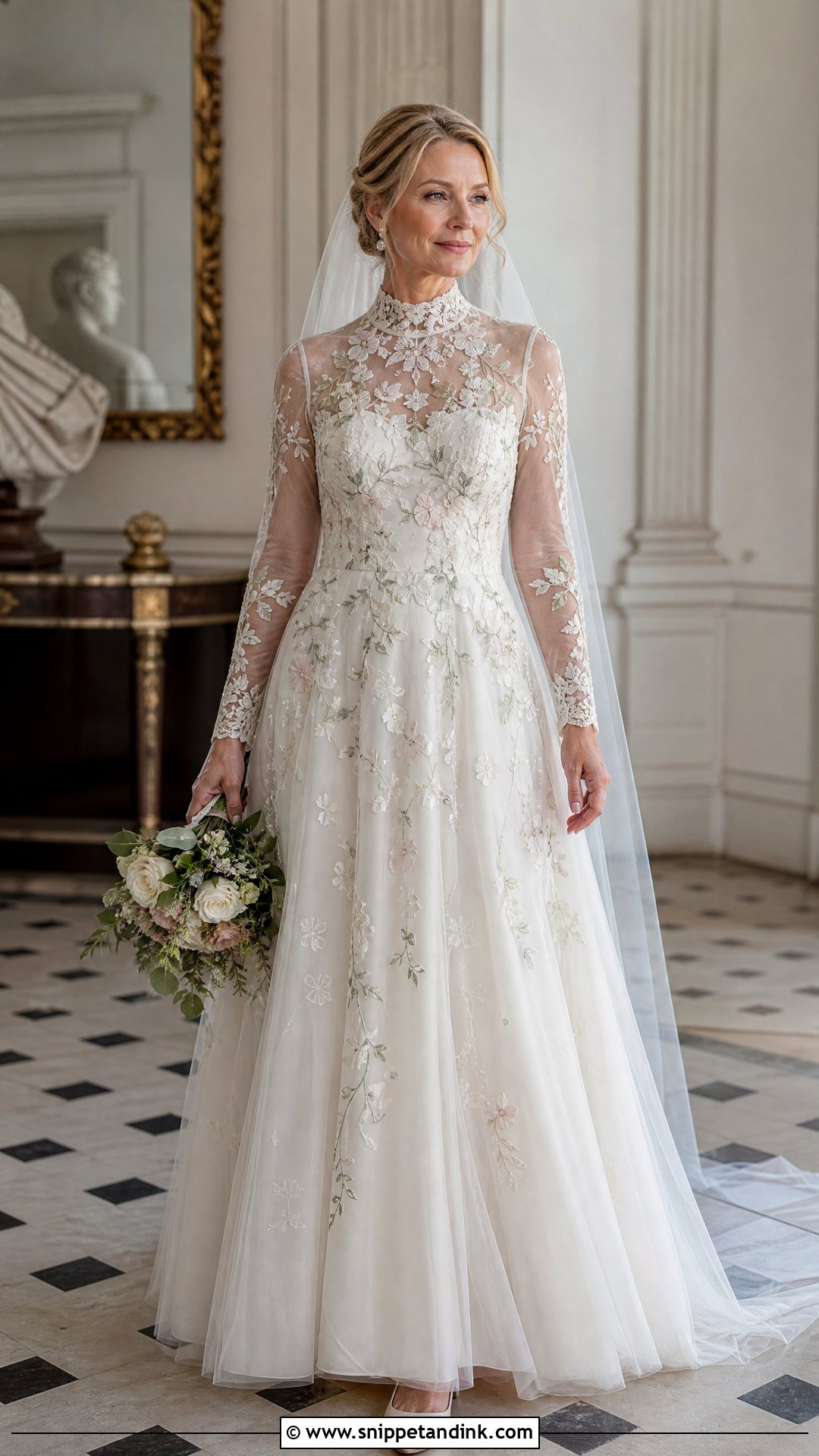
A high-neck tulle gown has a vintage feel, and the embroidery is what supplies the coverage. Motifs should frame the collar, shoulders, bodice and cuffs, then thin out down an A-line skirt. A lined sweetheart or scoop underbodice beneath the sheer layer gives depth. Turn your head at fittings, because an embroidered collar has little give and can rub. Pearl studs, a tidy low bun and closed ivory heels, no necklace, and a simple veil without lace edging. A small bouquet keeps the proportions balanced. Cooler seasons and historic venues suit it.
17. Floral Embroidered Wedding Dress With Cape Sleeves
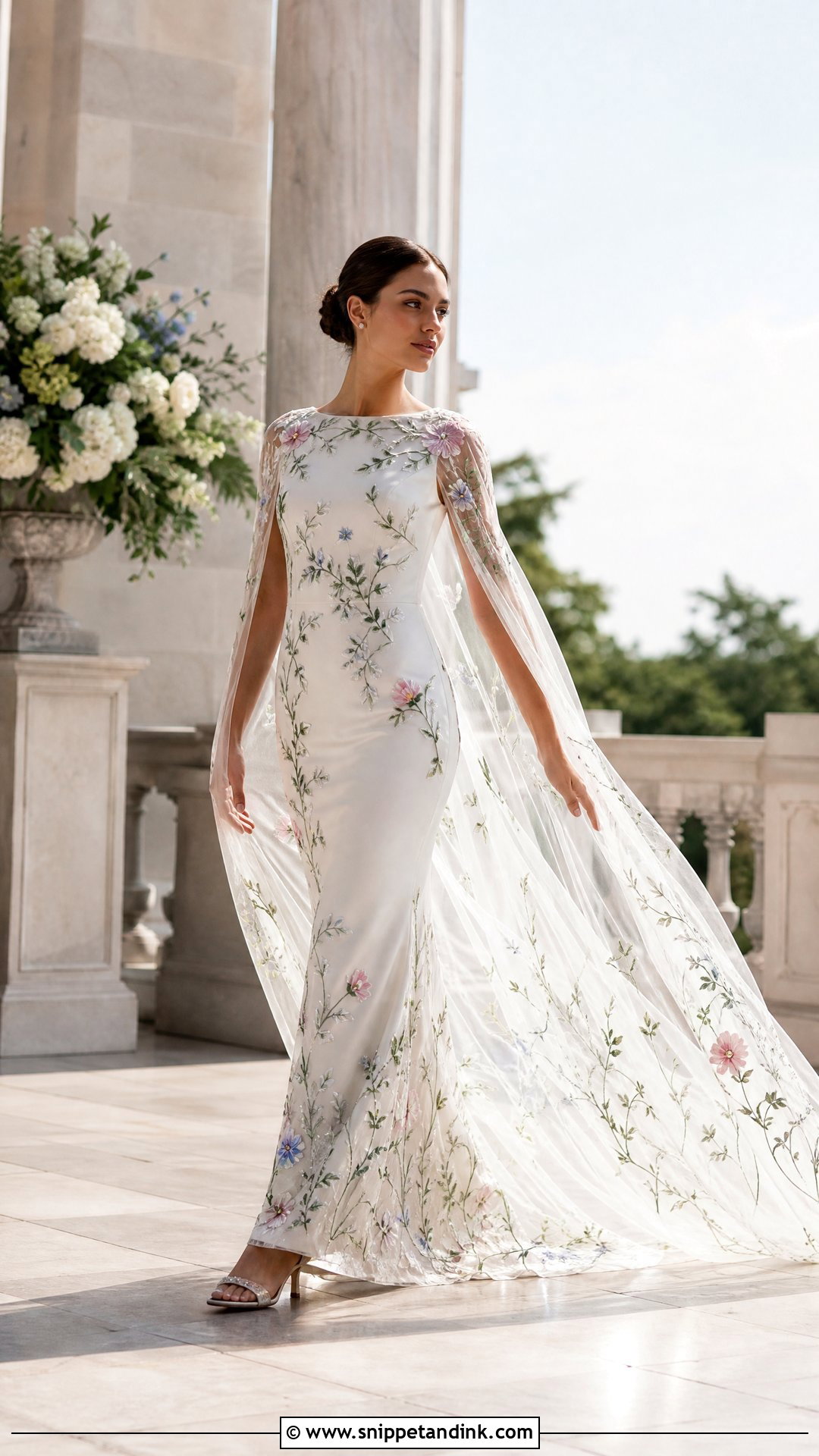
Cape sleeves move every time you walk, and embroidered flowers along their edges make that movement visible. A fitted column or soft A-line with sheer tulle panels falling from the shoulders works best when the main dress stays simple. Make sure the cape is anchored at the shoulder seam firmly enough that its weight doesn’t drag the neckline backward. Low ivory heels, crystal studs and a polished updo finish it, and you may not need a veil at all. For extra length, a removable cape that extends into a train gives drama for the aisle. Grand staircases and large ballrooms suit it.
18. Floral Embroidered Wedding Dress With Detachable Overskirt
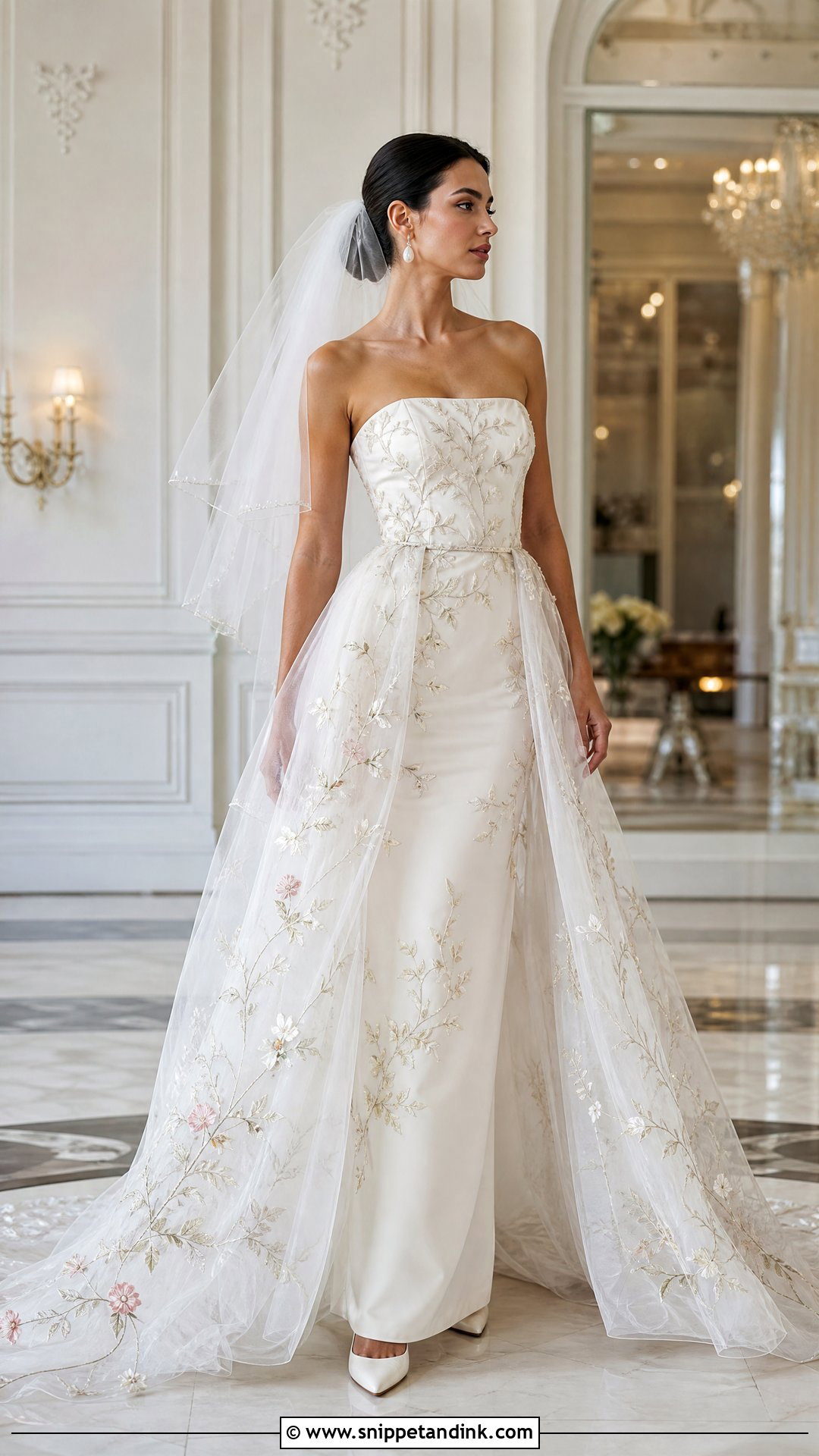
Putting all the embroidery on a detachable overskirt gives you two dresses. Underneath, a smooth ivory column, sheath or mermaid; on top, sheer tulle covered in embroidered flowers for an A-line shape at the ceremony. Remove it for the reception and the sleeker dress takes over. The waist join is what I examine most closely, because a heavily embroidered overskirt is heavy and needs to sit flat without pulling the base dress down. Hide the fastening beneath embroidery. Ivory pumps, pearl earrings, a structured low bun and a plain fingertip veil that comes off with the overskirt.
19. Floral Embroidered Wedding Dress With Statement Train
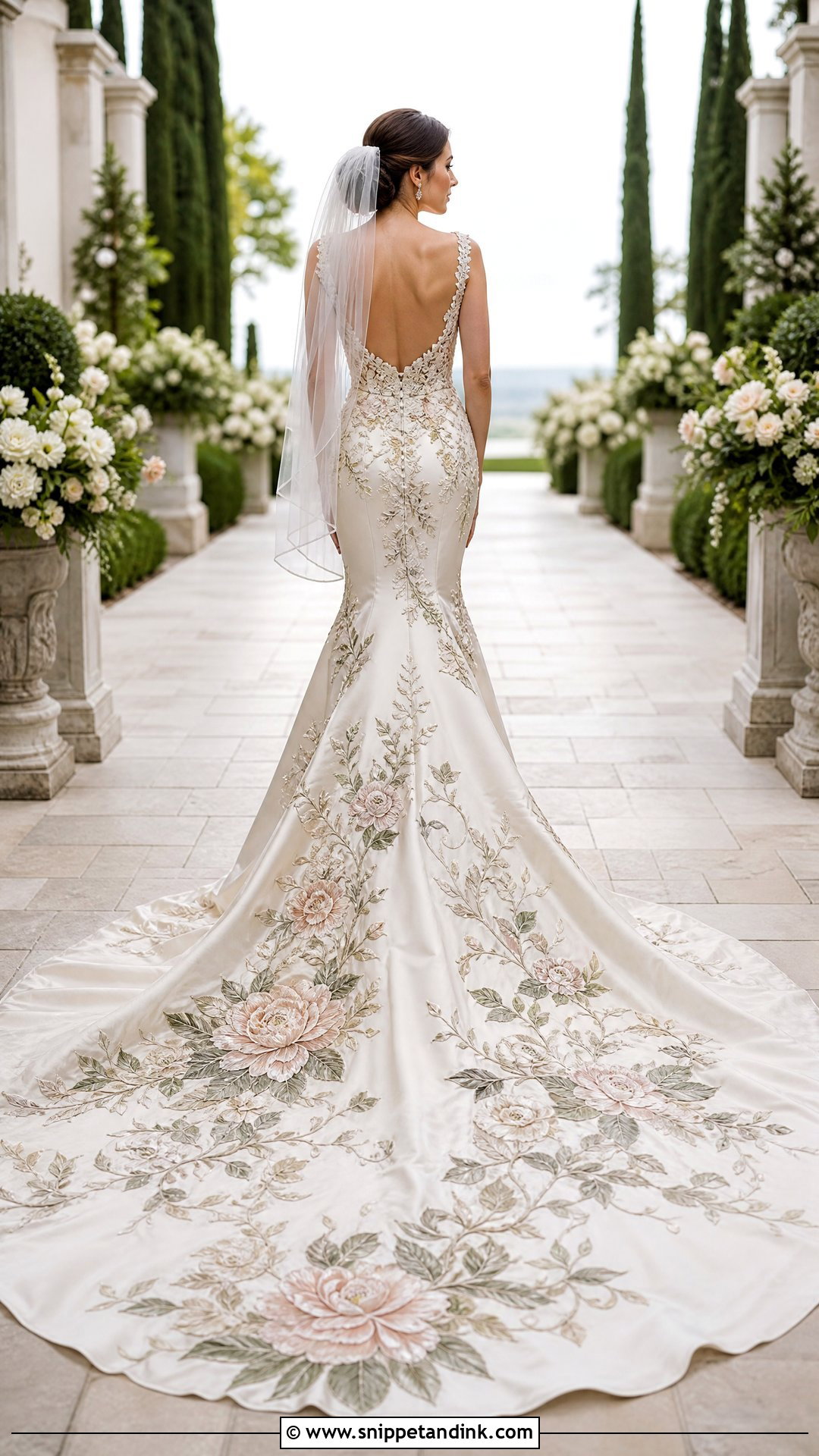
On a statement train, the embroidery should start lightly near the waist and grow denser toward the end, so the back becomes the focal point without covering the front. Large vines, peonies, roses or wildflower clusters give a sweeping garden effect. A heavily embroidered train is heavy, and a weak bustle will rip, so ask your seamstress for reinforced bustle points stitched through to a backing, not just the outer fabric. Ivory heels with secure straps, drop earrings and an updo that shows the back. A short plain veil keeps the train visible in photos. Long aisles and ballrooms show it off.
20. Floral Embroidered Wedding Dress With Matching Veil
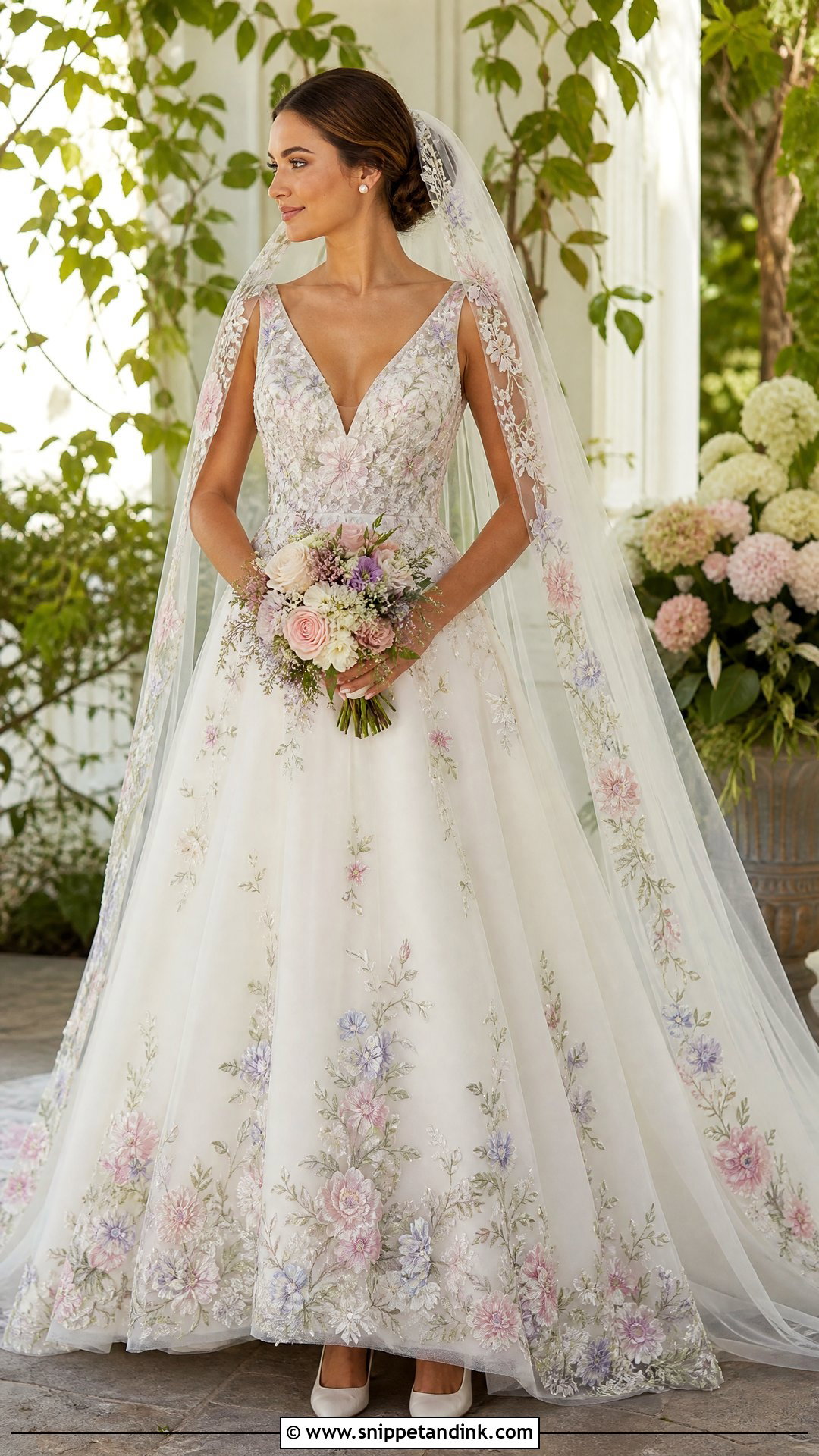
Matching embroidery on the gown and veil ties the outfit together, but it shouldn’t repeat everything. Pick one or two blossoms from the dress and repeat them along the veil’s edge or train; full duplication overwhelms the silhouette. Many embroiderers can match thread colors closely if you send them a swatch or a clear photo of the gown. An A-line or fitted gown gives a clean base. Simple ivory pumps, pearl studs and a low bun beneath the veil comb keep the rest quiet, and the bouquet should echo the embroidery colors. It works with tonal ivory, pastel, blue or multicolor flowers.
Adding Flowers That Mean Something to You
Many brides want a detail no one else has: the flowers from a grandmother’s garden, a birth flower, the date stitched inside the hem. Custom embroidery can be added to a new gown or a plain one, but it takes planning.
- Decide where it goes before choosing flowers. A hidden motif inside the hem or bodice lining is quick; a cascade across a train is a major project.
- Bring clear references. Photos of the real flowers, plus a swatch of the gown fabric, help an embroiderer match scale and thread color.
- Ask for a stitched sample. Seeing a test flower on matching fabric is the only reliable way to judge color and density.
- Allow plenty of time. Hand embroidery can add several weeks, sometimes months, on top of normal alterations, and it should be finished before your final fitting.
- Expect cost to vary widely with the amount of handwork, so get a quote based on the actual design rather than a per-flower guess.
Keep any embroidery added to a finished gown light on tulle and fine chiffon. Those fabrics pucker under dense stitching, so a few well-placed flowers will look better than a heavy pattern the base cloth can’t carry.
Where Your Embroidery Sits Changes Everything
Embroidery works hardest when it sits in the right place on a silhouette you’re comfortable in. Floral detail suits classic, modern, colorful, modest and boho tastes alike, so the real decision is where it leads the eye and how it moves. Think about the season and venue, then let shoes, jewelry and veil support the gown rather than compete with it. Above all, look at the dress from the front, back and side before deciding, and in more than one kind of light. When the placement suits your shape, the flowers feel like part of you rather than part of the dress.
You'll Like These Ideas:



Leave a Reply