
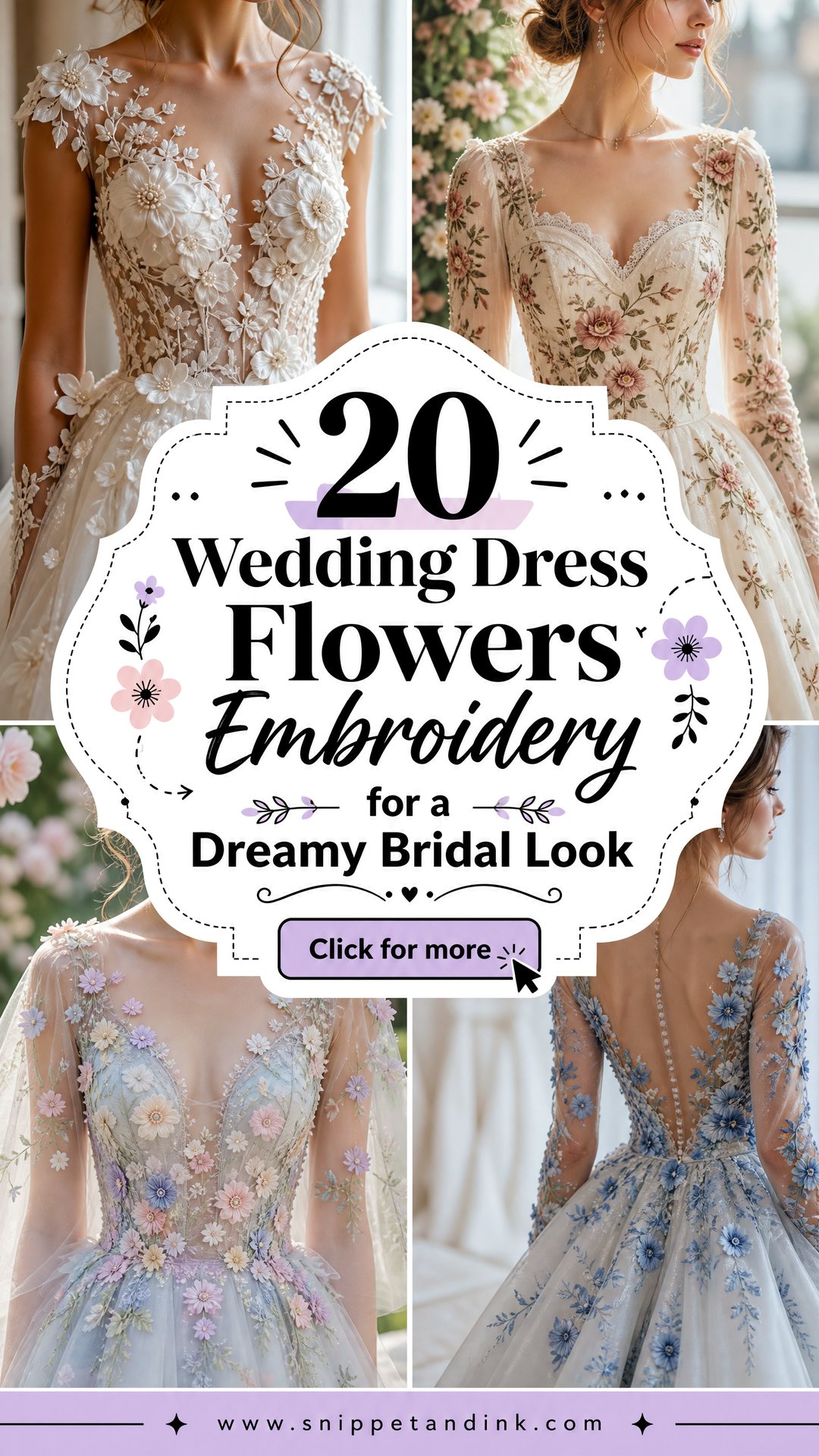
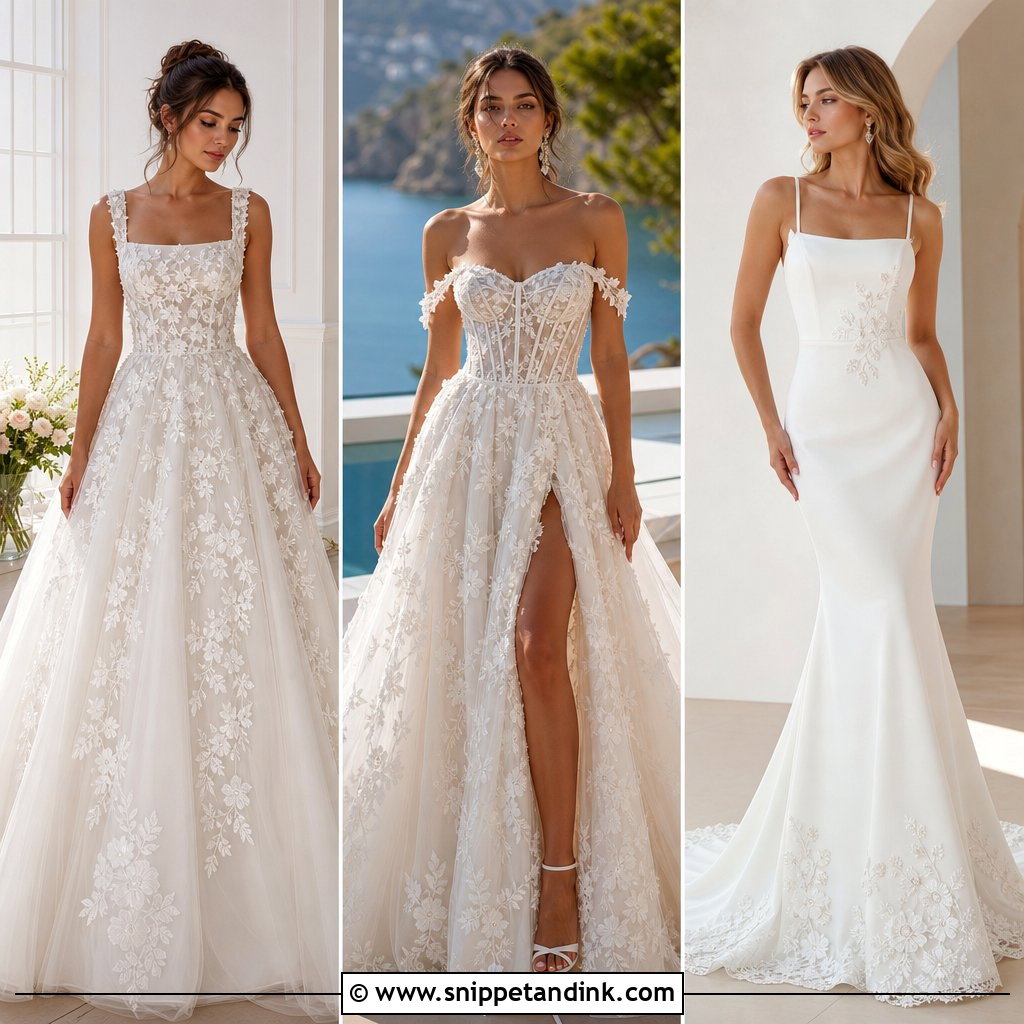
Embroidered flowers are the detail brides ask me about most at fittings, and they behave differently from lace or beading. Thread adds color and texture, and when it is raised it adds real shadow. The twenty gowns below run from delicate botanical stitching to wildflower meadows, sculpted 3D petals, roses and trailing vines, and I’ve paired each one with a veil, jewelry, shoes, a bouquet and hair. What decides whether a stitched gown works is rarely the flower itself. It’s the scale of the motifs, where they sit on your body and how the thread reads in your venue’s light, so keep those three questions in mind as you scroll.
Reading the Stitch Before You Fall for the Flowers
Embroidery photographs well almost every time, so the only honest way to judge it is in your hands. At an appointment, I ask the consultant if I can turn part of the bodice or the skirt hem inside out. The reverse tells you more than the front does.
- Look for a backing or stabilizer behind dense motifs. Without one, heavy thread on tulle or chiffon pulls the fabric into ripples that grow worse with every wear.
- Check for loose floats, the long lengths of thread jumping between flowers on the back. Long floats catch on rings, bouquet pins and shoe heels.
- Note the sheen. Glossy thread catches light and reads brighter in photos; matte cotton thread looks softer and more handmade.
- Lift the skirt. Embroidery adds real weight, and a gown covered from hip to hem can feel noticeably heavier than its plain twin.
Then think about scale against your frame. Large flowers on a petite bride can look like a wallpaper sample, and tiny scattered blossoms can disappear on a tall bride in a big room. Stand back two or three meters from the mirror, roughly where your guests will be, and see whether the flowers still read as flowers.
1. Colorful Floral Embroidered Wedding Dress
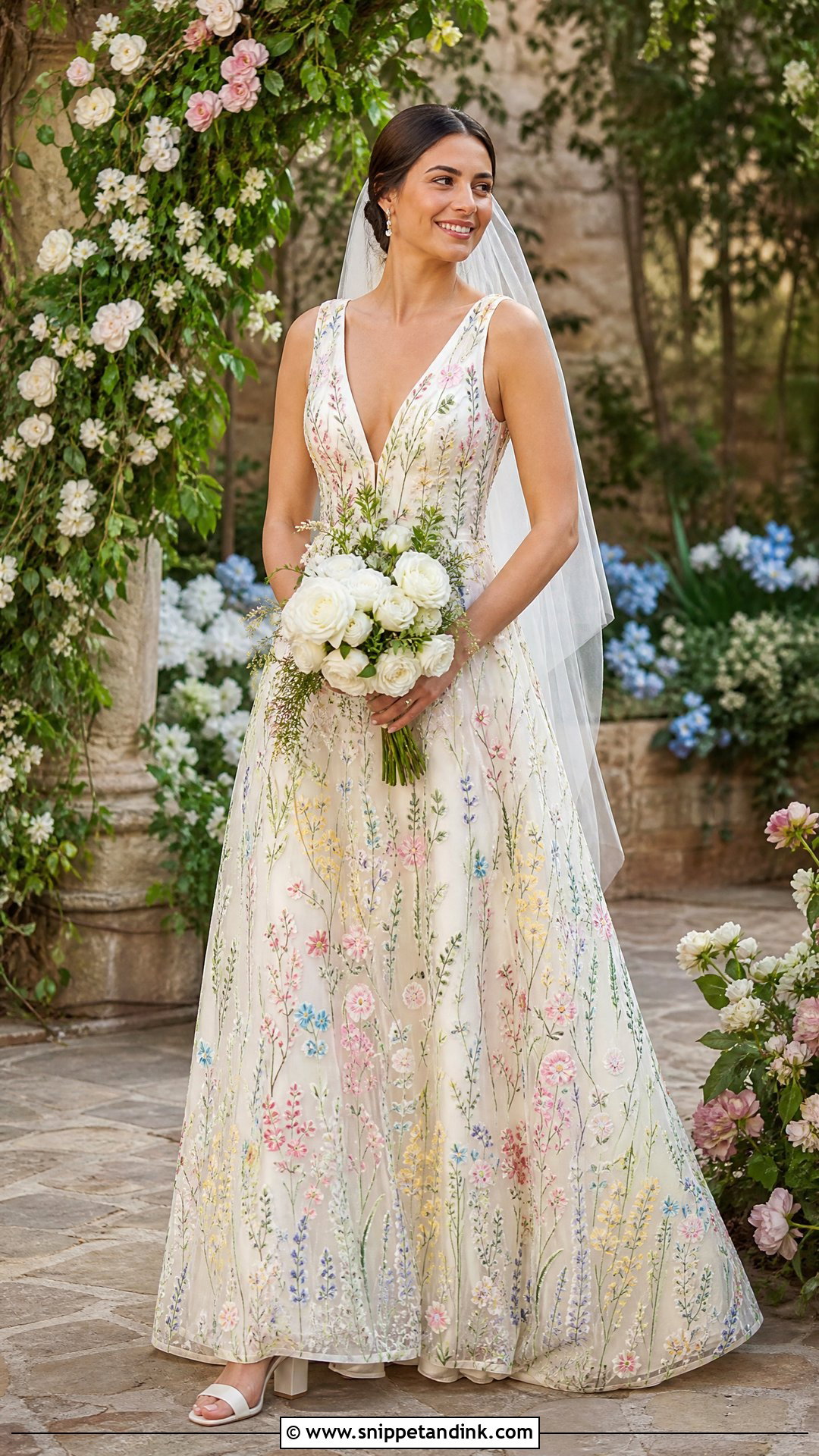
Multicolor threadwork looks joyful from across a garden, but up close it can turn busy fast. On an ivory A-line with pink, blue, yellow and green flowers over the bodice and skirt, a sheer tulle overlay helps: it mutes every color by a shade while keeping each flower visible. The first thing I do with a gown like this is pick two thread colors and ignore the rest. Those two go into the bouquet among white roses and greenery, and nothing else carries color. Ivory block-heel sandals, small pearl earrings and a fingertip veil with a narrow raw edge stay out of the way, and a softly twisted updo clears the neckline. Gardens and spring estates suit it; a dim ballroom flattens the colors.
2. White Floral Embroidered Wedding Dress
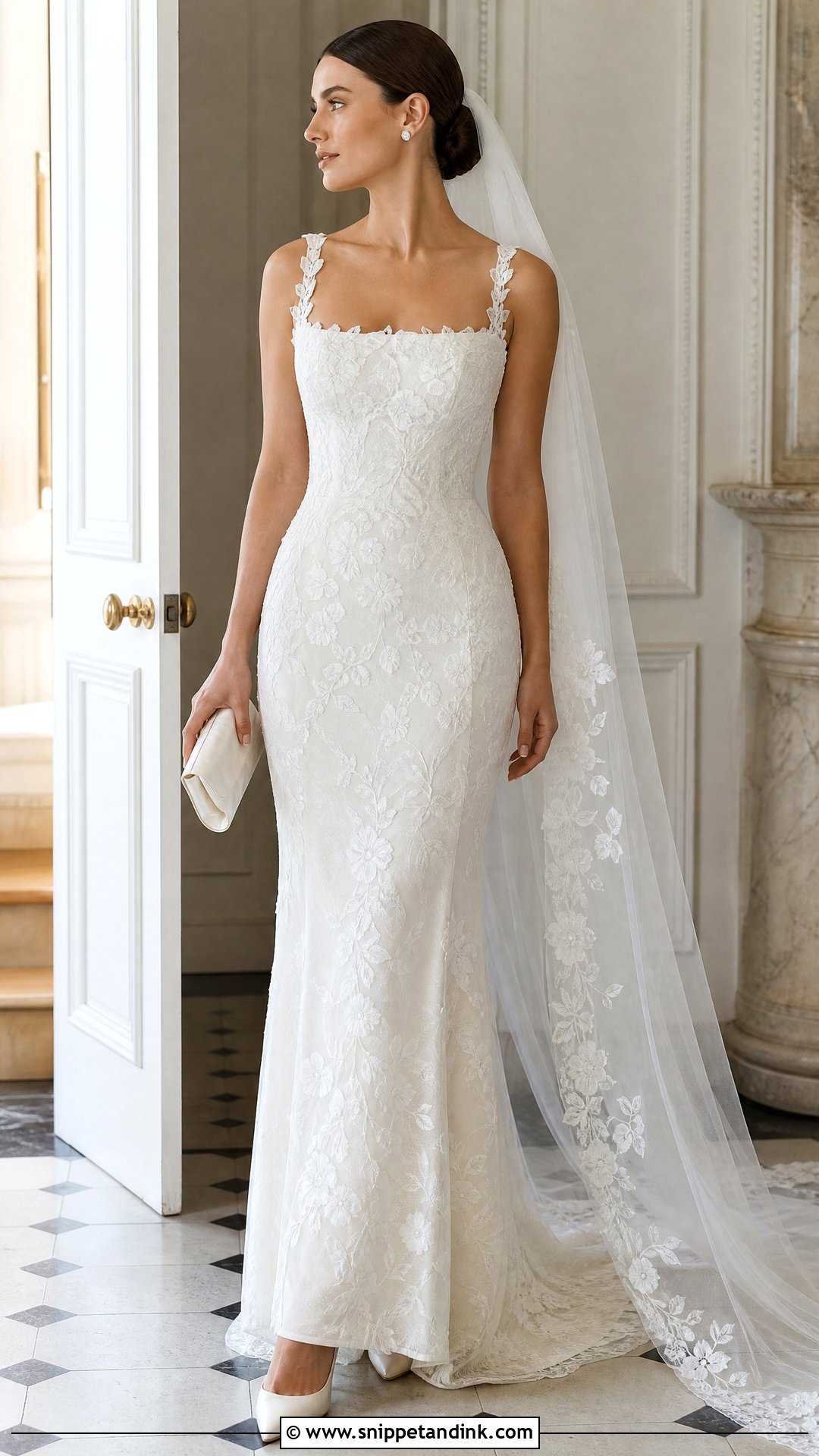
Tonal embroidery only shows when light rakes across it. On a fitted ivory gown with white flowers over the bodice, waist and upper skirt, window light picks out each petal, while flat overhead lighting can make the same stitching vanish. I always ask a bride to step near a window during the fitting before she decides. Pointed ivory pumps, crystal studs and a structured satin clutch keep things crisp. A chapel-length veil with matching white embroidery carries the pattern on, though hold it against the gown first, because two whites side by side rarely agree. A polished low bun, luminous skin and white ranunculus, roses and sweet peas finish it. Classic hotels and estates with detailed architecture give the stitching something to echo.
3. 3D Floral Embroidered Wedding Dress
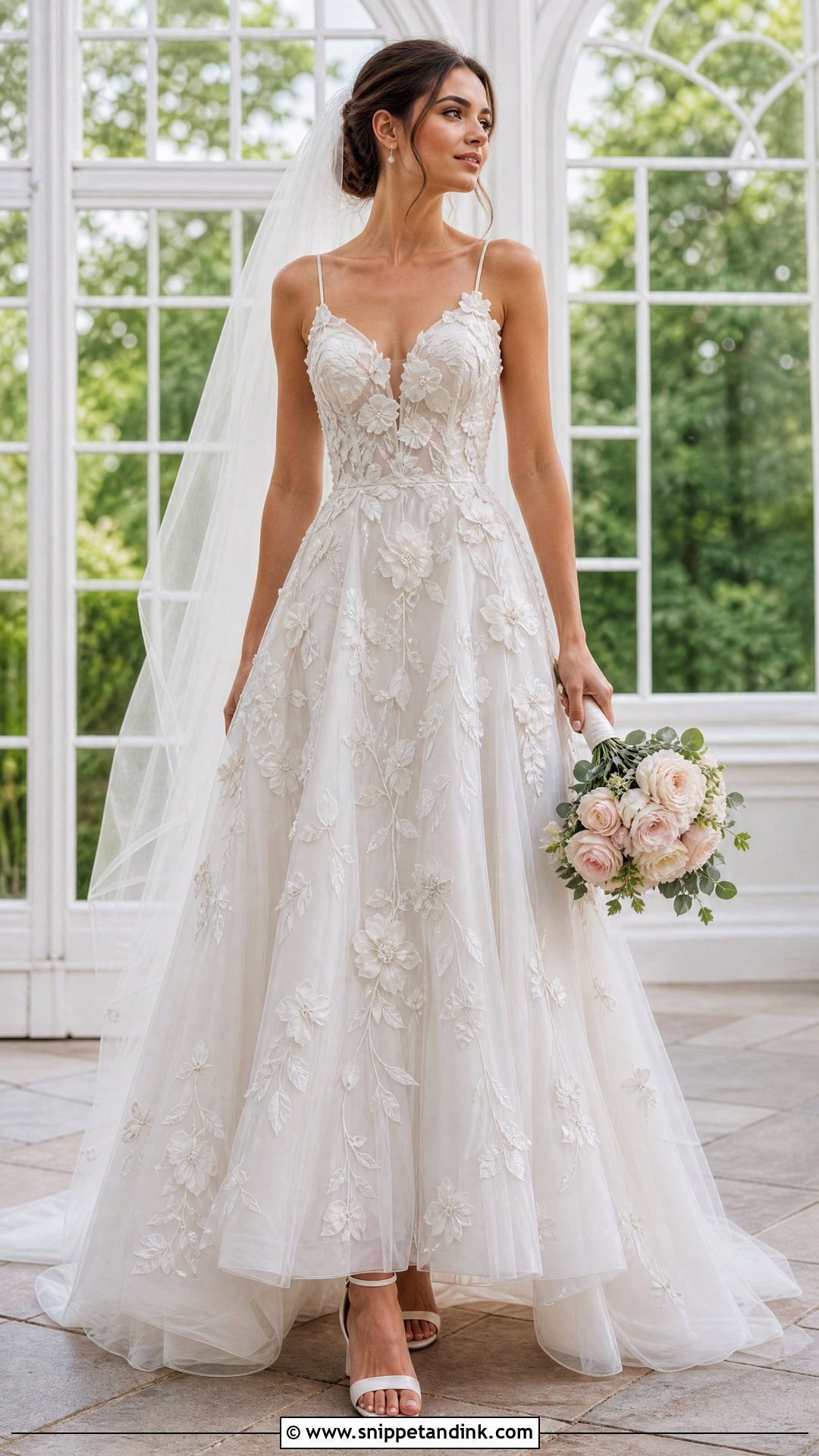
Raised petals are the most fragile detail on this list. Organza flowers, stitched leaves and small beaded centers over a fitted bodice and tulle skirt look dimensional from every side, but they flatten when you sit, hug or climb into a car, so I fluff them by hand after the ceremony and again before portraits. With that much surface, the accessories go quiet: plain satin heels, delicate drops and a single-layer veil with no lace trim, which won’t snag on the petals the way a lace edge can. A sleek bun or a waved half-up style keeps hair off the bodice. Carry a loose bouquet of roses and seasonal greenery close to the dress color, and skip floral hair pieces, since a third layer of flowers crowds the picture. Conservatories and bright gardens catch the shadow under each petal.
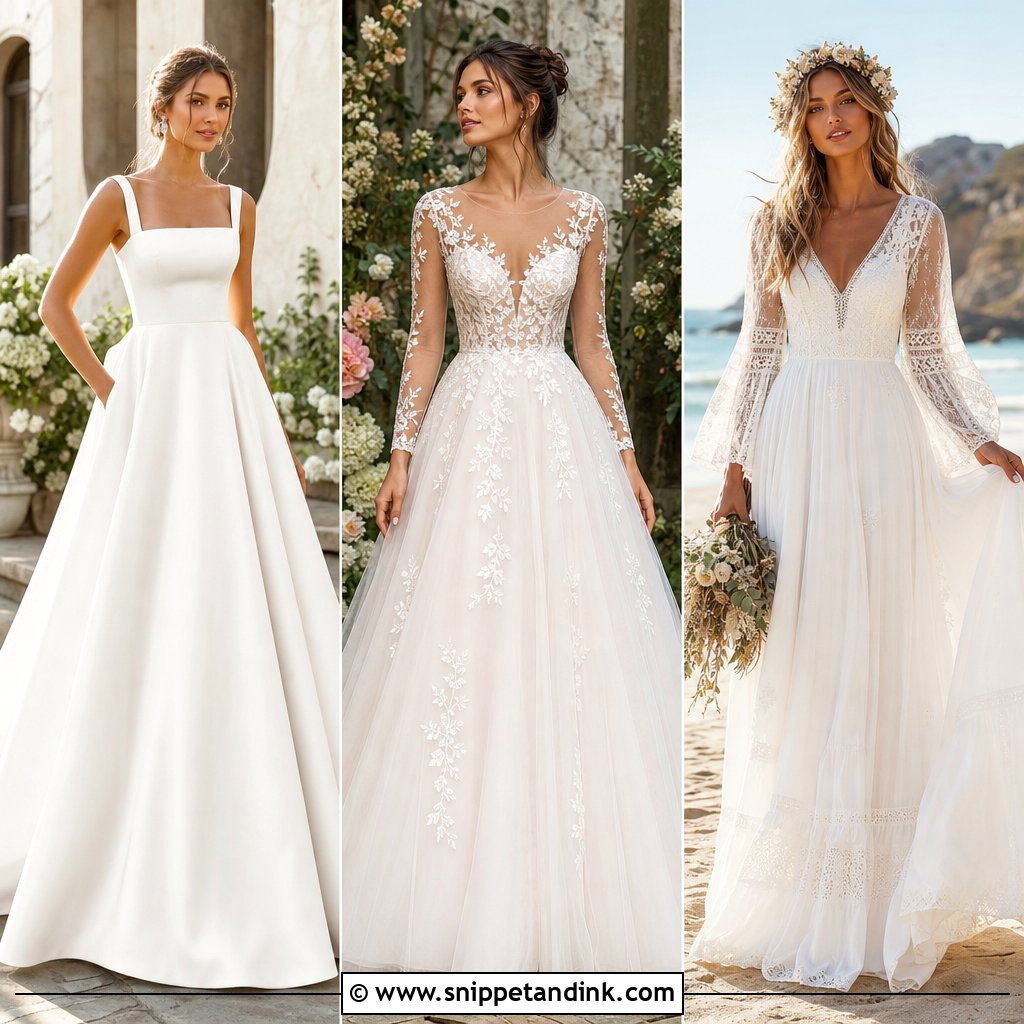
4. Long Sleeve Floral Embroidered Wedding Dress
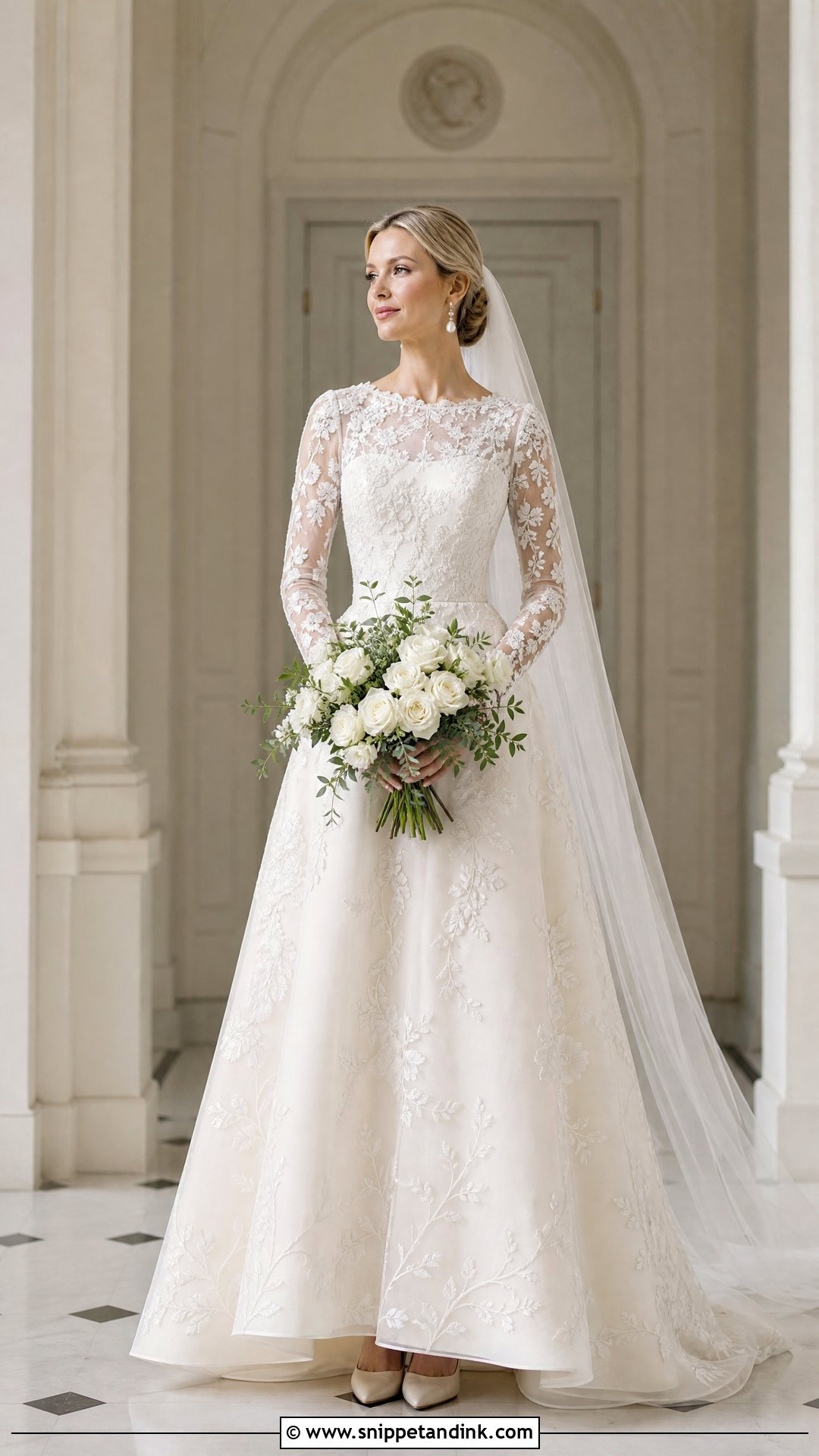
Here the sleeves carry most of the visual weight, so I treat them as the jewelry. On an A-line or fit-and-flare gown with sheer sleeves covered in vines and small flowers, the motifs can be placed to give coverage while the tulle stays airy. Have your seamstress check each sleeve with your arm bent. Embroidery stiffens fine tulle, and a sleeve that’s snug at the elbow will tug at the shoulder seam all evening. Closed-toe ivory heels, understated pearl drops and a long plain veil anchored beneath a low chignon are plenty, with a white bouquet and soft greenery repeating the botanical theme. For cold outdoor portraits, add a clean wool wrap. Fall weddings, evening ceremonies and historic venues suit this gown well.
5. Off Shoulder Floral Embroidered Wedding Dress
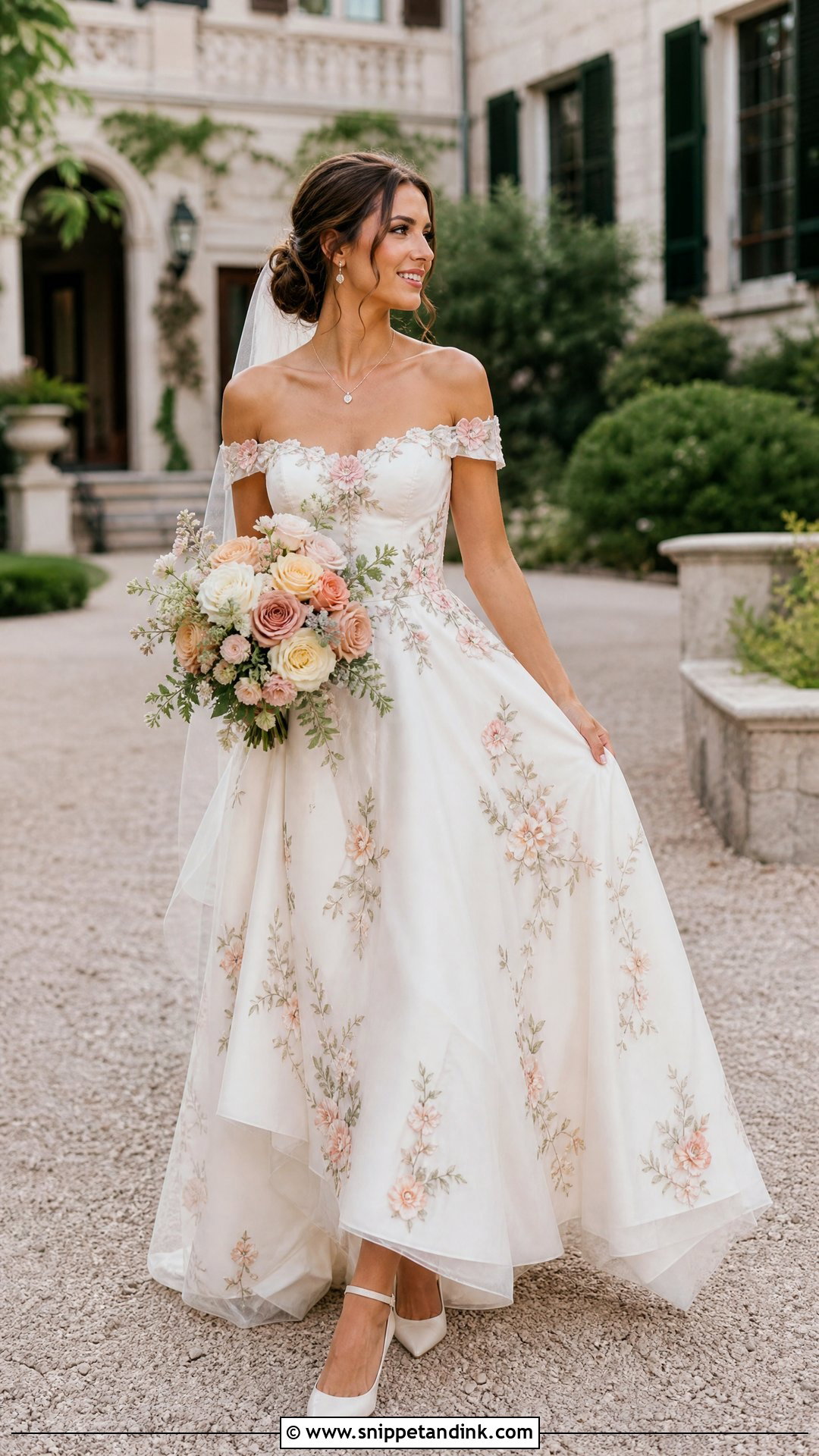
Flowers that curve around an off-the-shoulder neckline frame the collarbones and pull the eye straight to the face, which is why I keep jewelry at the throat to one small pendant or none at all. Look for a fitted gown where the stitching traces the neckline and then trails down the waist and skirt. The part to test is the band. Embroidered off-shoulder straps are heavier than plain ones, and if they’re cut even slightly loose they creep up toward the shoulder every time you raise your arms, so lift your arms at every fitting. Small studs, ivory slingbacks and a lightweight veil set behind the hair complete it, with loose waves or a low bun. A medium bouquet of rounded flowers can borrow one or two embroidery colors. Leave the wrists bare.
6. Strapless Floral Embroidered Ball Gown
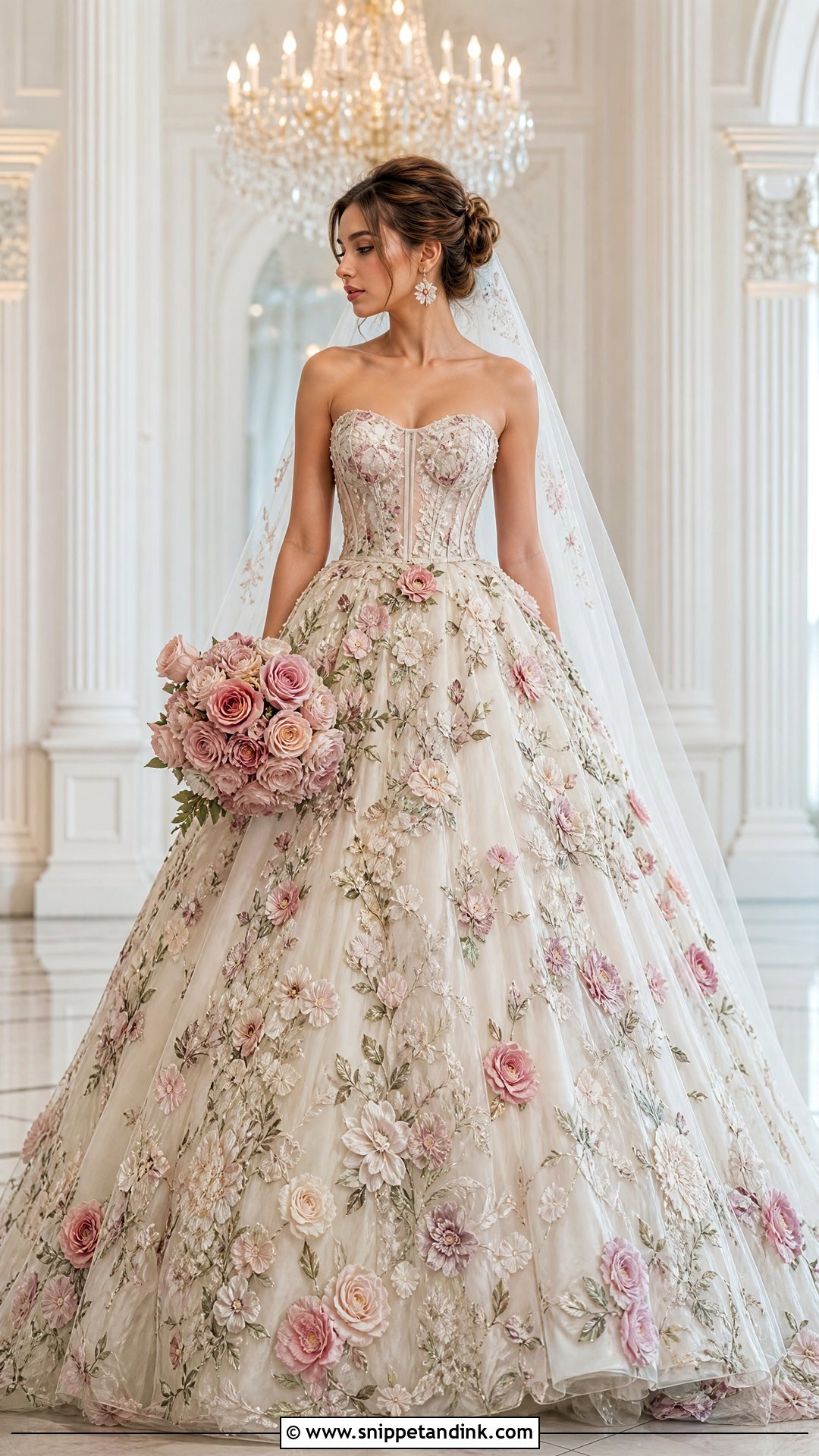
A strapless ball gown covered in flowers makes an entrance, and the corset bodice is doing the real work underneath, holding up the weight of all that thread. The best versions grade the embroidery: dense at the neckline, thinning as it spreads across the full skirt, so the eye travels down instead of stalling. Platform heels hidden under the hem give enough lift that the skirt stops dragging, while floral-inspired earrings and a cathedral veil with minimal edging keep the head quiet. A polished updo matters here, because loose curls catch on raised stitching. Skip the necklace if the embroidery is elaborate, and carry a structured bouquet of roses or peonies in a controlled palette. Book a ballroom or estate with a wide aisle; this gown needs room for its volume and train.
7. A-Line Floral Embroidered Wedding Dress
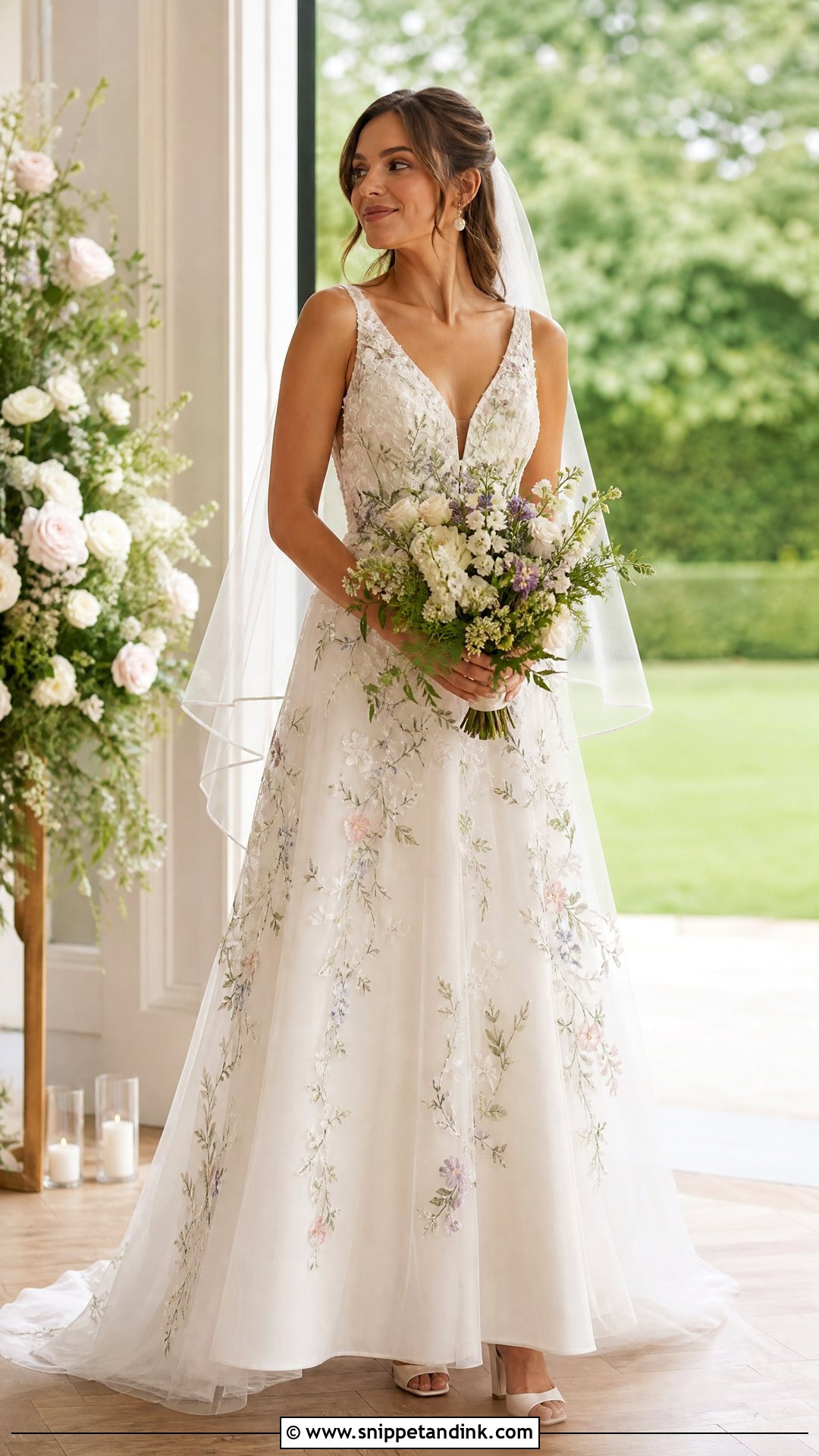
Of all twenty, this is the silhouette I’d suggest to a bride who isn’t sure yet. A fitted bodice, defined natural waist and gently widening skirt suit most body shapes, and placement sets the mood: flowers running vertically draw the eye down the length of the gown, while scattered motifs feel more relaxed. Ivory block heels give stability, alongside pearl or crystal earrings and a medium veil with a clean edge. A half-up style softens the face without hiding the neckline. Let the bouquet repeat one or two flowers stitched on the dress. You can walk, sit through dinner and dance in it without hitching anything up, and by hour eight that matters more than how it looked at the top of the aisle.
8. Mermaid Floral Embroidered Wedding Dress
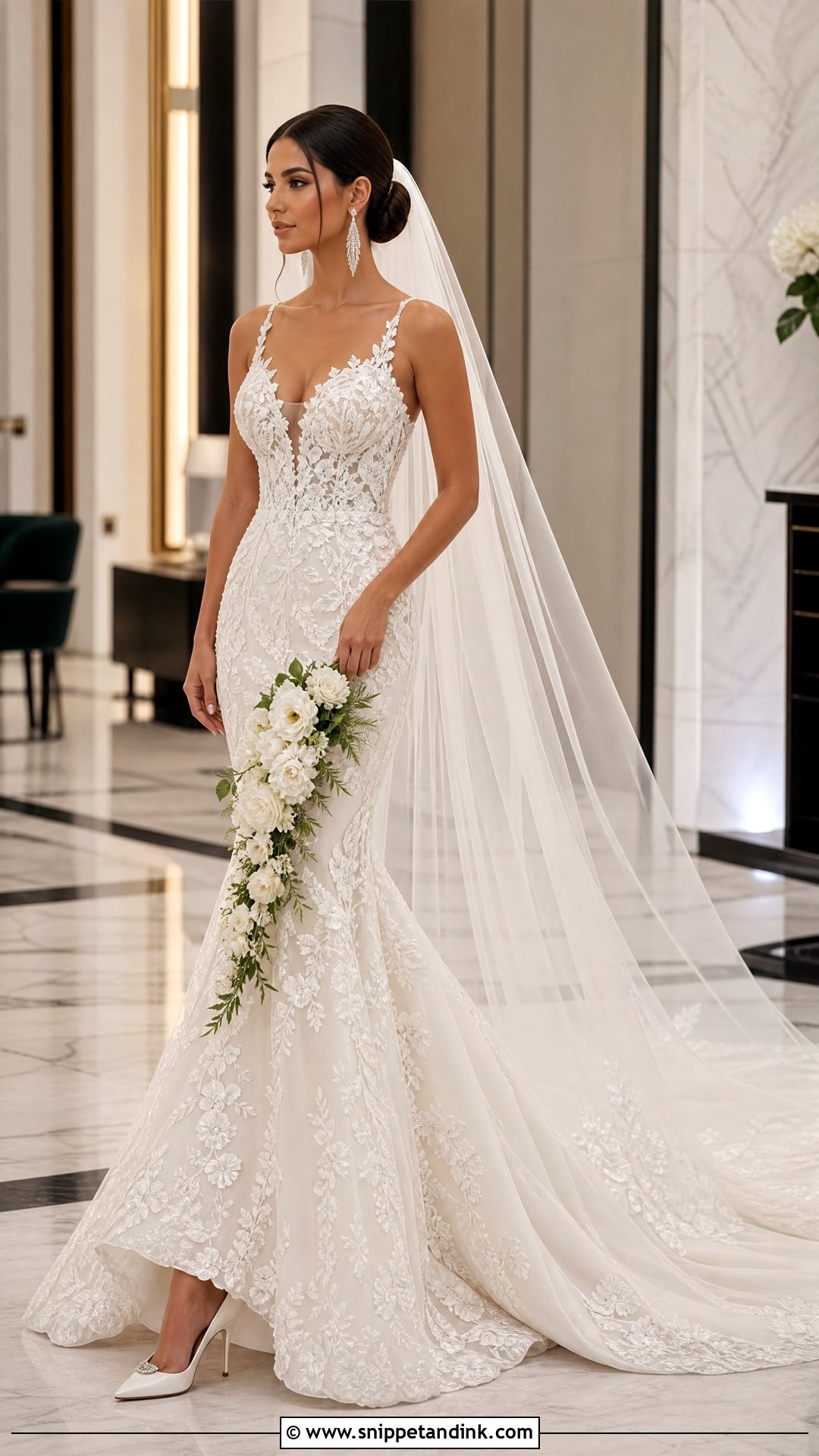
Mermaid cuts put the embroidery exactly where the gown is tightest, so the stitching has to flex. Flowers that follow the bodice, hips and upper thighs and then lighten toward the flared hem show off the shape without making every inch busy. Sit down in it at your fitting. Dense embroidery over the hips can stop a fitted skirt from giving at all, and you want to find that out before the reception chair does. Supportive pointed heels, long drop earrings and a smooth veil that falls beyond the train balance the strong outline, with a sleek ponytail or a low bun. A narrow cascading bouquet keeps the front embroidery visible in photos. If the flowers include beading, match your jewelry to its finish. Evening weddings and polished hotels with spacious aisles suit it.
9. Boho Floral Embroidered Wedding Dress
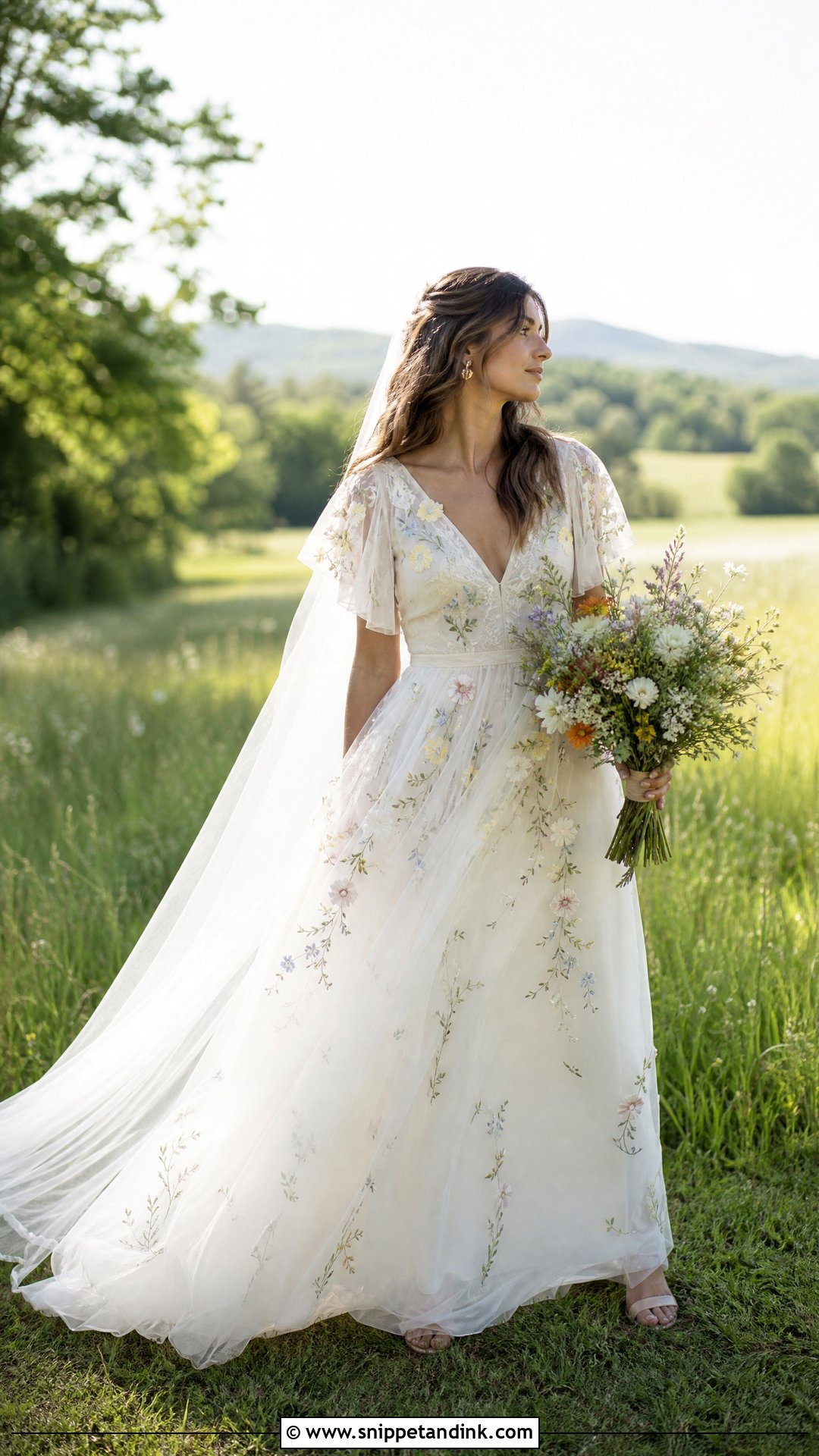
Boho embroidery should weigh almost nothing. Look for chiffon or soft tulle with wildflower stitching, flutter sleeves and a gently defined waist. Heavy satin stitch on chiffon tends to pucker, so I turn the bodice inside out and check for a light stabilizer behind the flowers. Thread in muted pink, lavender, cream and green gives color without shouting. Low block-heel sandals sink into grass far less than stilettos, and tiny gold earrings with a sheer veil or a simple hair ribbon keep the feeling easy. Loose waves or a braided updo suit the mood. Gather seasonal flowers and leafy stems into a bouquet with a deliberate shape rather than an armful. Meadows, woodland and ranch venues are where this dress belongs.
10. Vintage Floral Embroidered Wedding Dress
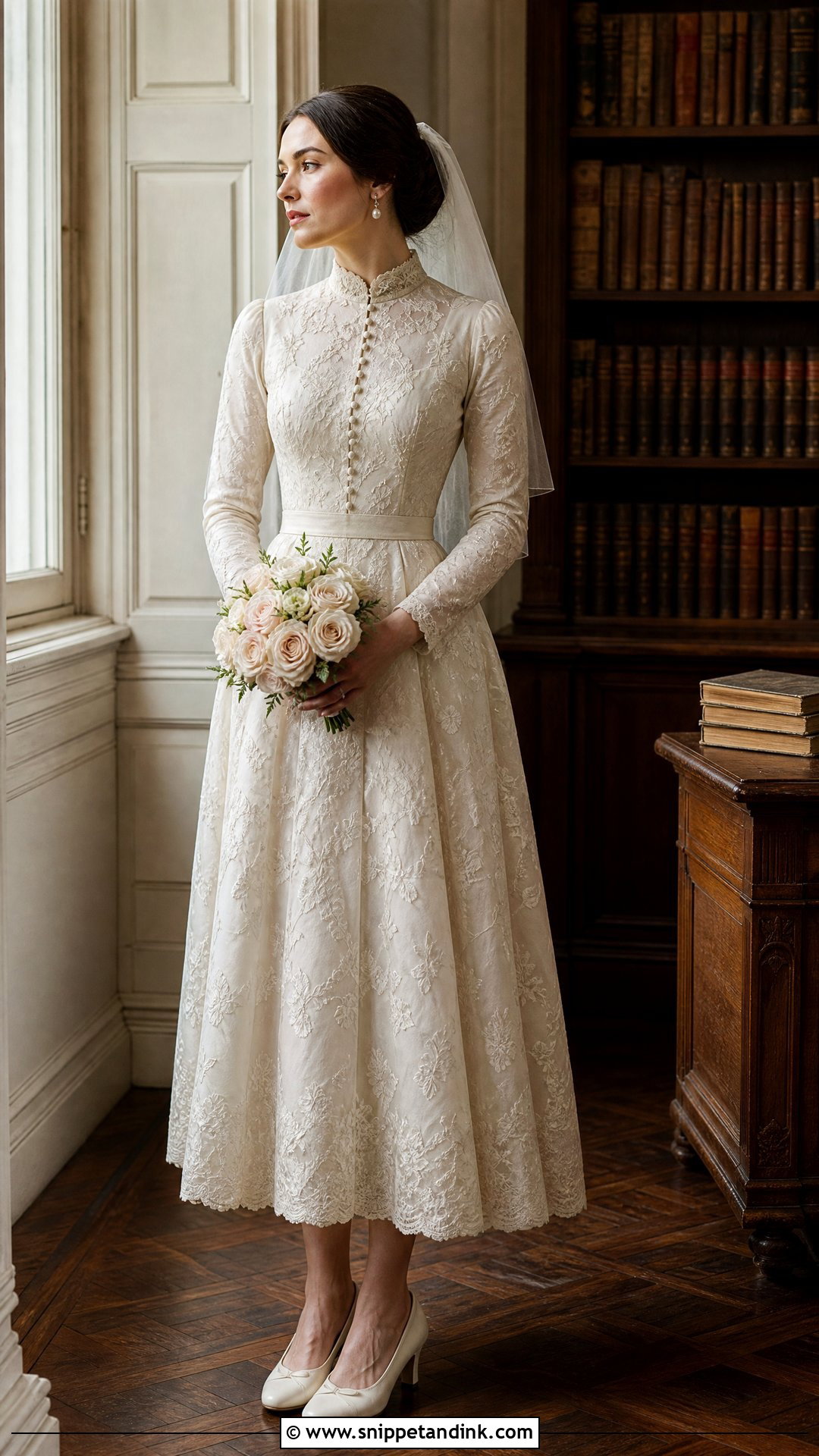
You don’t need a real antique for this look, and for embroidery I’d honestly rather you didn’t wear one, because old silk thread weakens with age and can pull away from the base fabric once you start moving. A tea-stained ivory gown with a high neckline, fitted waist, covered buttons and small flowers stitched over lace or tulle gives the period feel while staying wearable, and long or cap sleeves push it further. Add low ivory pumps, pearl earrings and a short veil or blusher, with a smooth low bun or finger waves. A compact bouquet of roses, sweet peas and greenery keeps it refined. Stop at two vintage accessories. Past that, it tips into costume. Historic homes, libraries and old-fashioned restaurants suit it.
11. Pastel Floral Embroidered Wedding Dress
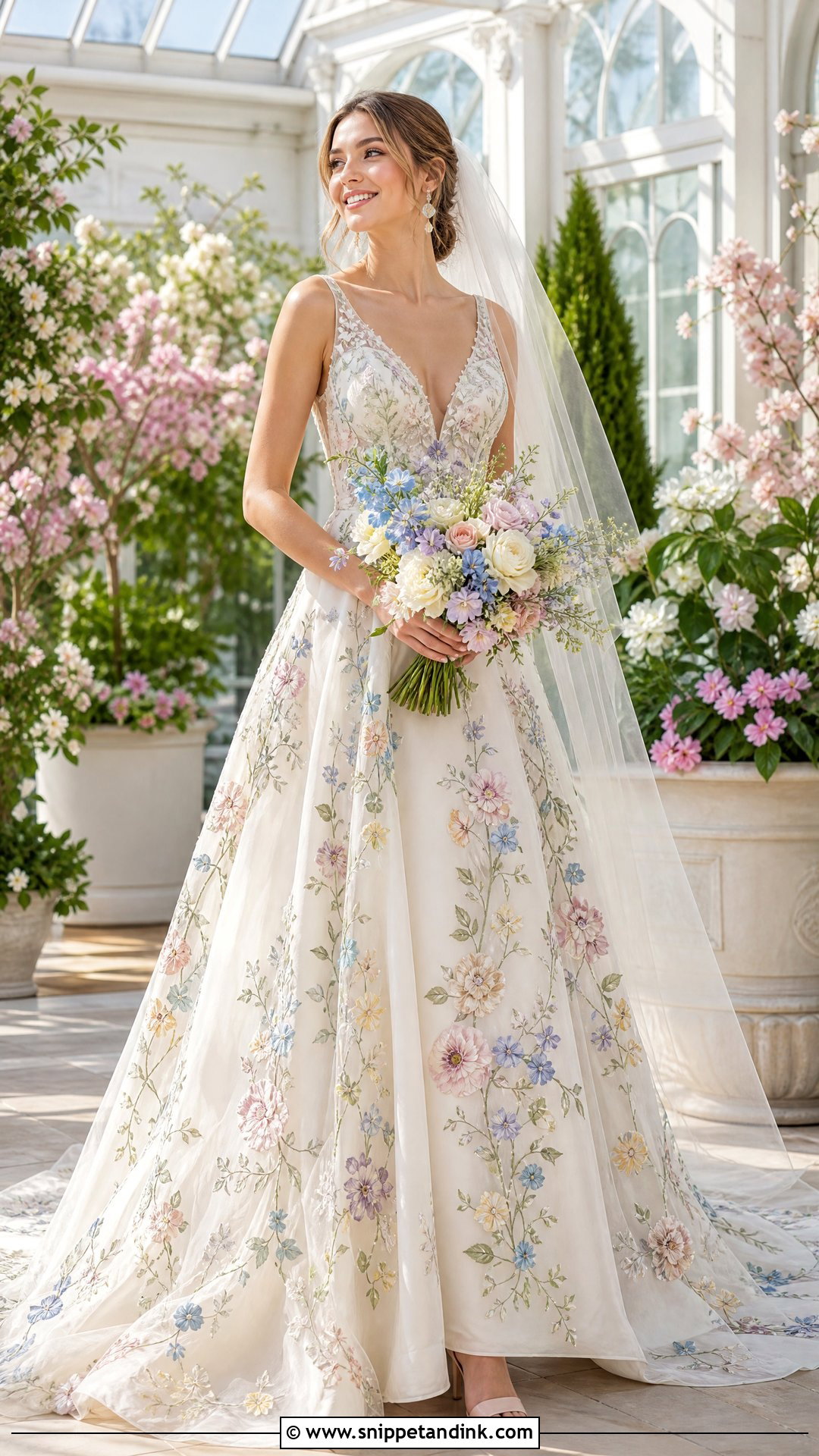
Pastel thread on a pale base is easy to wear, but it’s also the first embroidery to wash out in photographs. Start with ivory or very pale blush and flowers stitched in powder blue, soft pink, lavender, butter yellow and sage; an A-line lets the colors spread across the skirt. Pastels read clearer against ivory than stark white, which can swallow butter yellow entirely. Pale ivory heels, opal or pearl earrings and a sheer veil with little trim keep the outfit light, with fresh pink makeup and soft waves. The bouquet repeats two embroidery colors among plenty of white, and I never try to match a thread shade exactly. Near-matches look natural; exact matches look like a kit. Spring gardens and airy ballrooms suit it.
12. Blue Floral Embroidered Wedding Dress
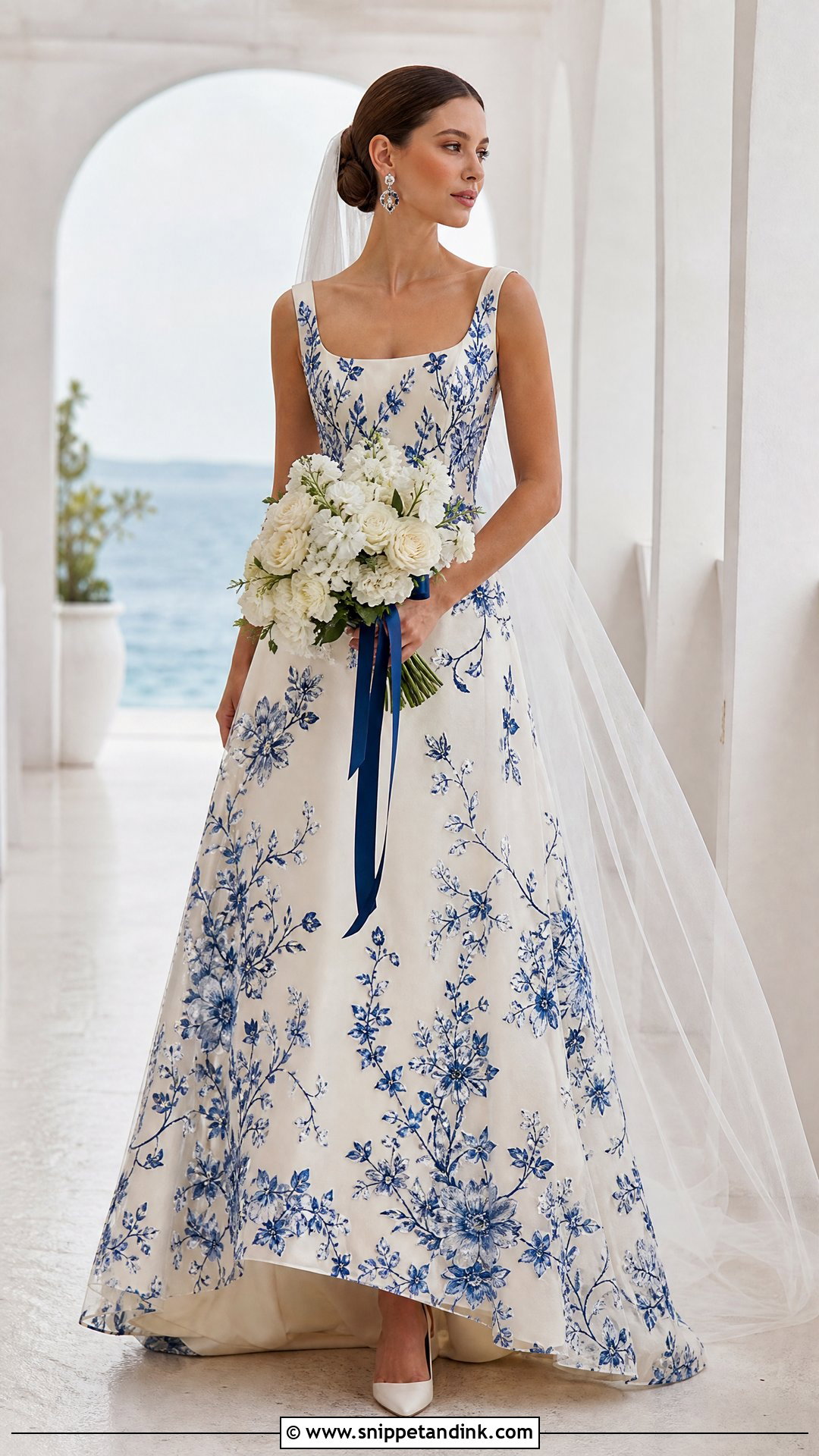
Blue is the easiest accent color to sell to a traditional family, partly because something blue is already built into the custom. Pale blue flowers with deeper blue details and restrained green leaves across bodice and train look modern on a square neckline or strapless cut. Cool blue thread sits better beside silver or white gold than yellow gold, and a plain cathedral veil lets it show through. Ivory heels and a smooth bun or glossy waves add polish. Truly blue flowers are limited and seasonal, so I’d plan a mostly white bouquet with a few blue accents, or wrap the stems in blue ribbon and leave it there. Coastal venues, bright indoor rooms and formal summer gardens carry this gown well.
13. Wildflower Embroidered Wedding Dress
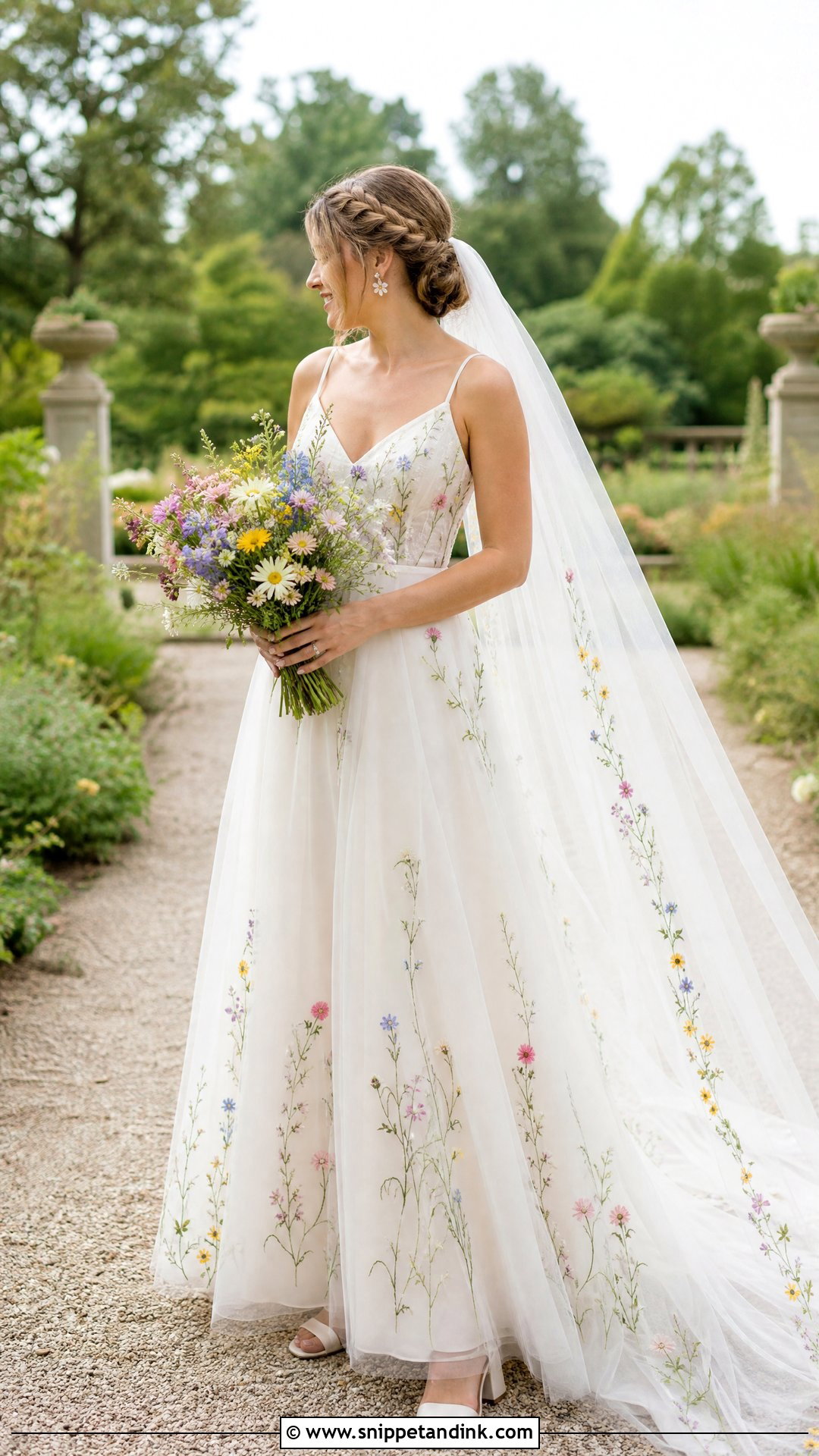
This is the design where direction matters most: stems rising from the hem, with smaller blossoms climbing across the waist and bodice, so each step down the aisle reads like walking through a meadow. Upward-growing embroidery also lengthens a petite frame, which I find brides rarely expect. Comfortable block heels, small floral studs and a light veil with just a few matching motifs complete it, with a loose low bun or a soft braid. Choose bouquet flowers close to the embroidery in scale and color, and hold the bouquet at your hips so it doesn’t hide the bodice. A wildflower embroidered wedding dress belongs outdoors, in botanical gardens, country estates and venues surrounded by open fields.
14. Rose Embroidered Wedding Dress
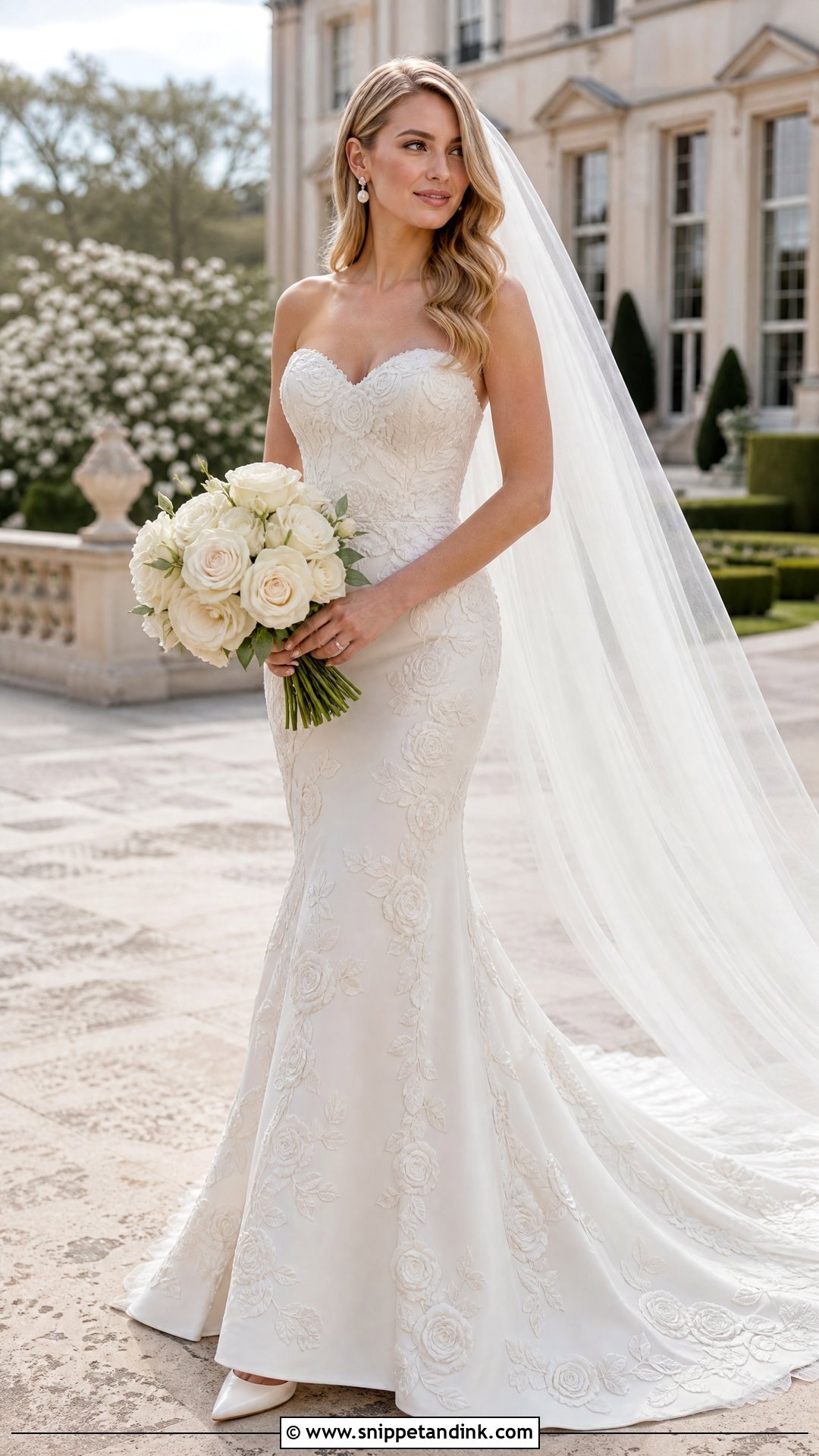
Roses are the most recognizable motif in embroidery, and that is exactly why scale matters. On an ivory fit-and-flare, tonal roses around the bodice with larger blooms near the hem or train look intentional, while small roses repeated everywhere start to resemble a print. If you want color, keep muted blush or red thread to small, controlled areas, and check it near your face in daylight, since strong red right under the chin can make skin look flushed in close-ups. Satin pumps, pearl drops and a plain veil keep the pattern clear, with a neat low bun or side-parted waves. Carry roses if you like, in a shade that complements the stitching rather than copying it. Formal gardens, hotels and traditional ceremony spaces suit it.
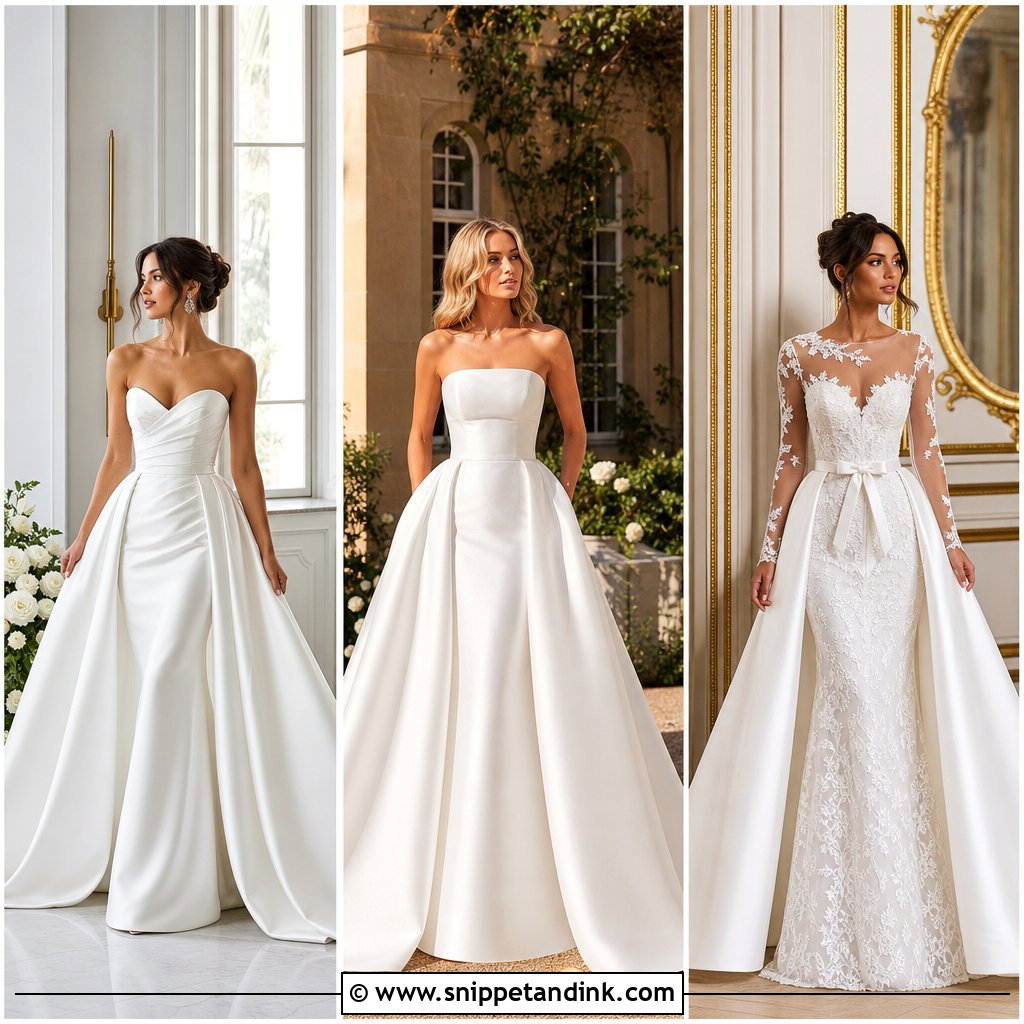
15. Daisy Embroidered Wedding Dress
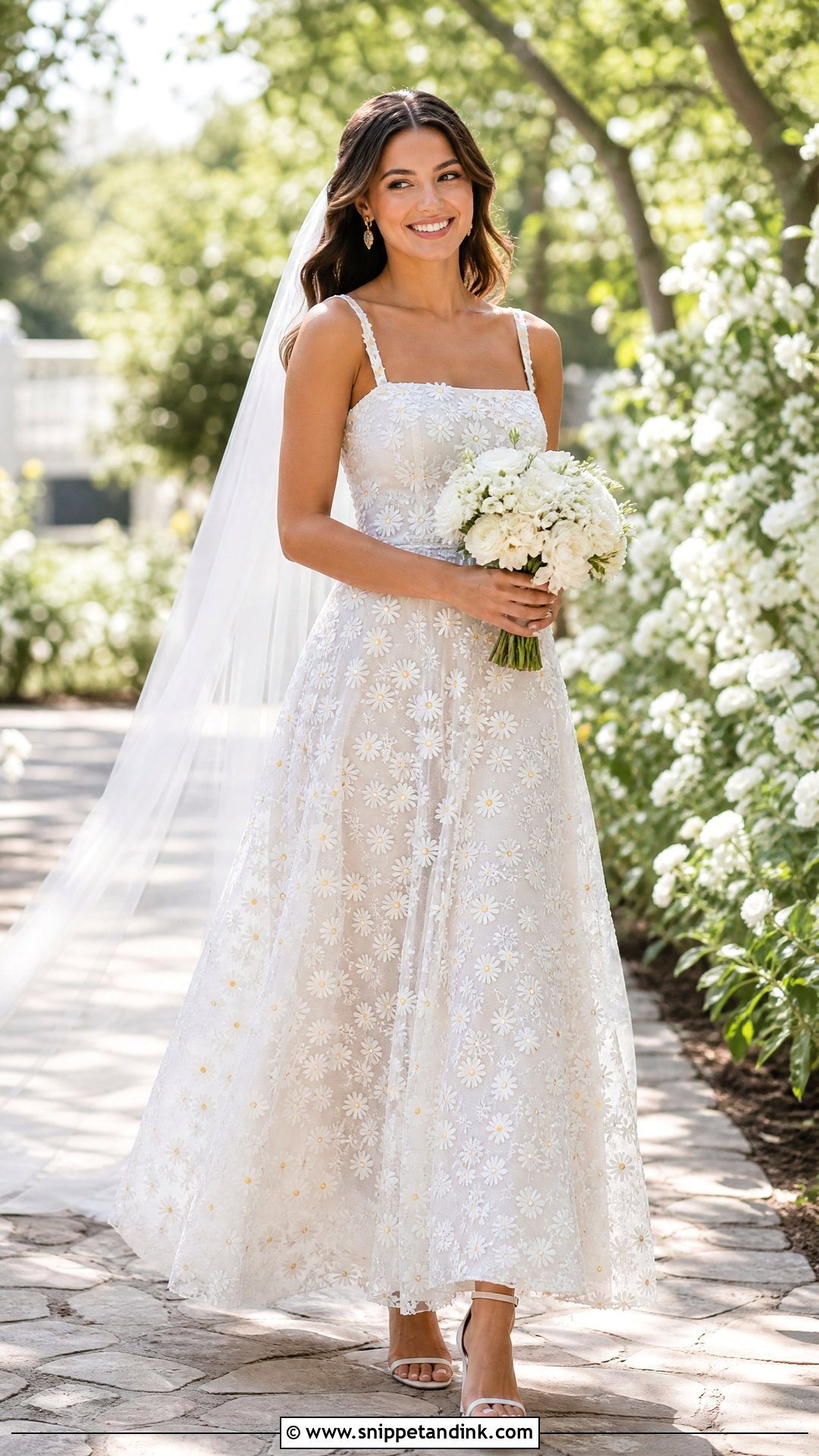
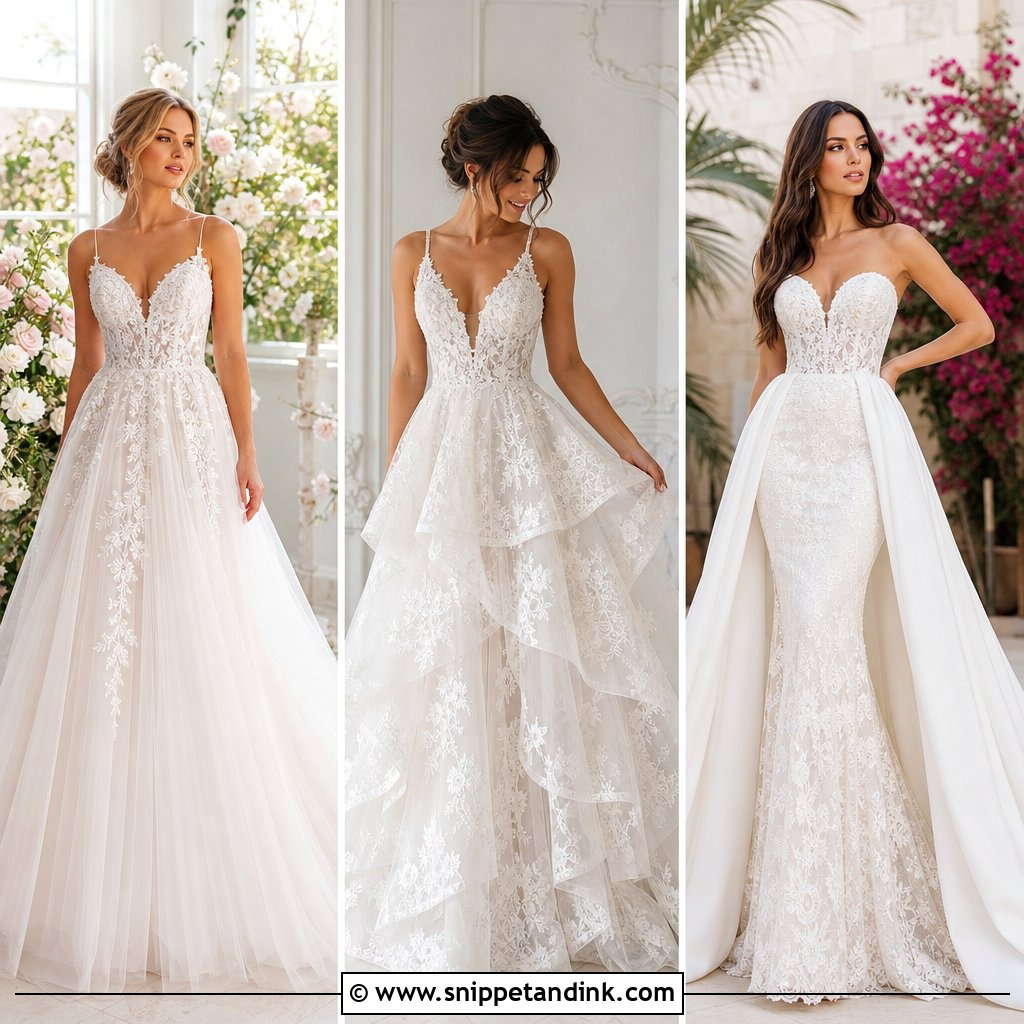
Daisies are cheerful, and the risk is that they tip into sweet. Small white daisies with pale yellow centers and green stems over sheer tulle on a light A-line stay grown-up when the neckline is clean, such as a square cut or slim straps. I’d keep the daisies on the dress only. A daisy bouquet plus daisy hair pins turns into a theme, while a compact bouquet of white seasonal flowers with a few yellow accents keeps the whole thing sophisticated. Ivory ankle-strap heels stay put on lawns, and small gold earrings with a fingertip veil are enough. Loose waves or a low textured bun finish it. Spring ceremonies and garden receptions with informal arrangements are its natural setting.
16. Vine Embroidered Wedding Dress
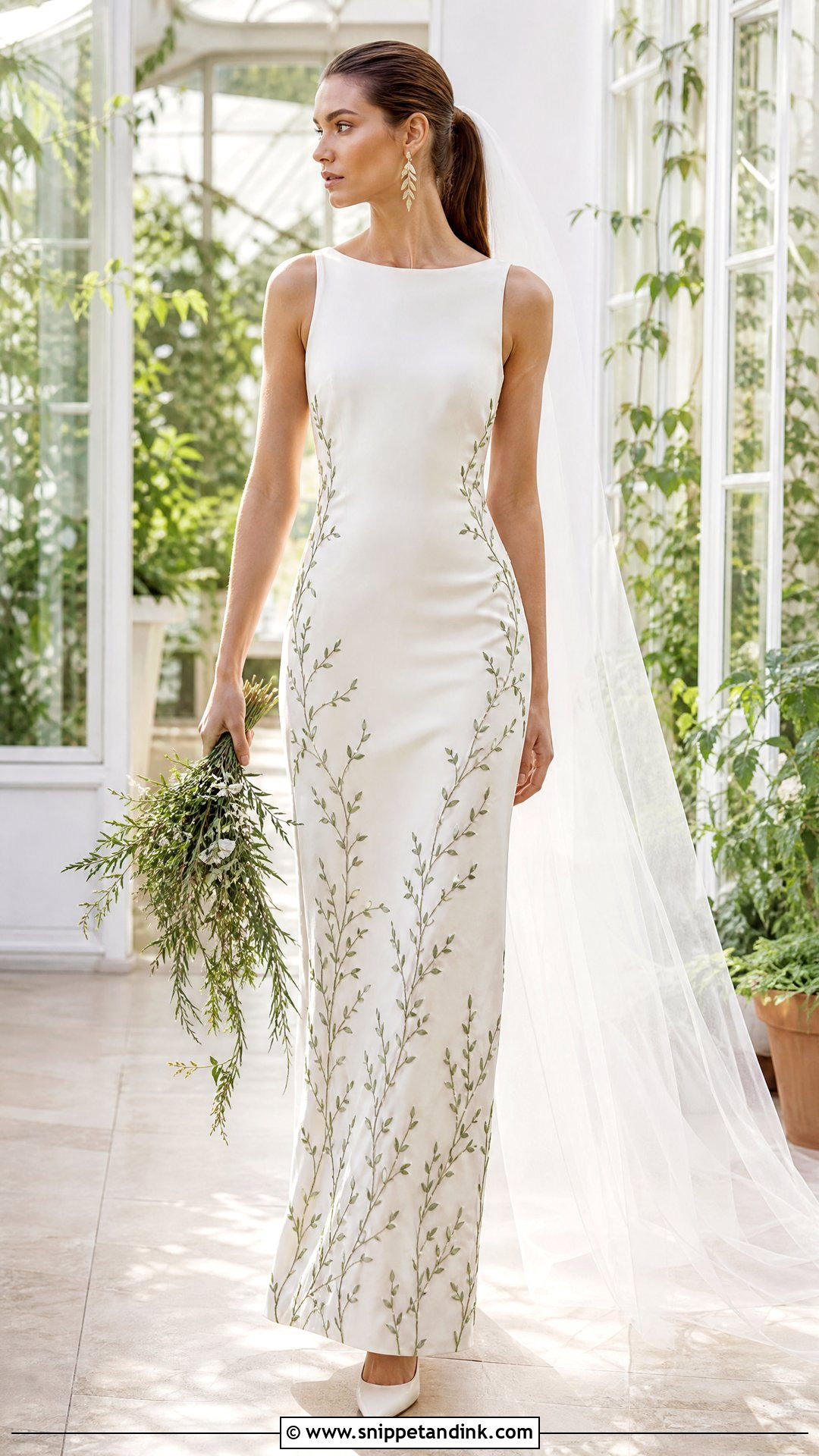
Of all the motifs here, this one does the most for proportion. Flowing vine embroidery winding from the hem toward the waist, neckline or sleeves of a sheath or A-line visually lengthens the body and steers attention where you want it. Tonal ivory vines are subtle; green thread makes the pattern readable from the back row. When I fit a vine gown, I look hard at where each stem ends, because a tendril that stops right at the widest point of the hip draws every eye there. Streamlined heels, leaf-shaped earrings and a plain veil falling cleanly behind the stitching keep it tidy, with a low bun or polished ponytail. Trailing greenery in the bouquet suits it, as long as the bouquet stays narrow enough to show the front. Greenhouses, garden estates and plant-filled modern rooms fit it naturally.
17. Sheer Floral Embroidered Wedding Dress
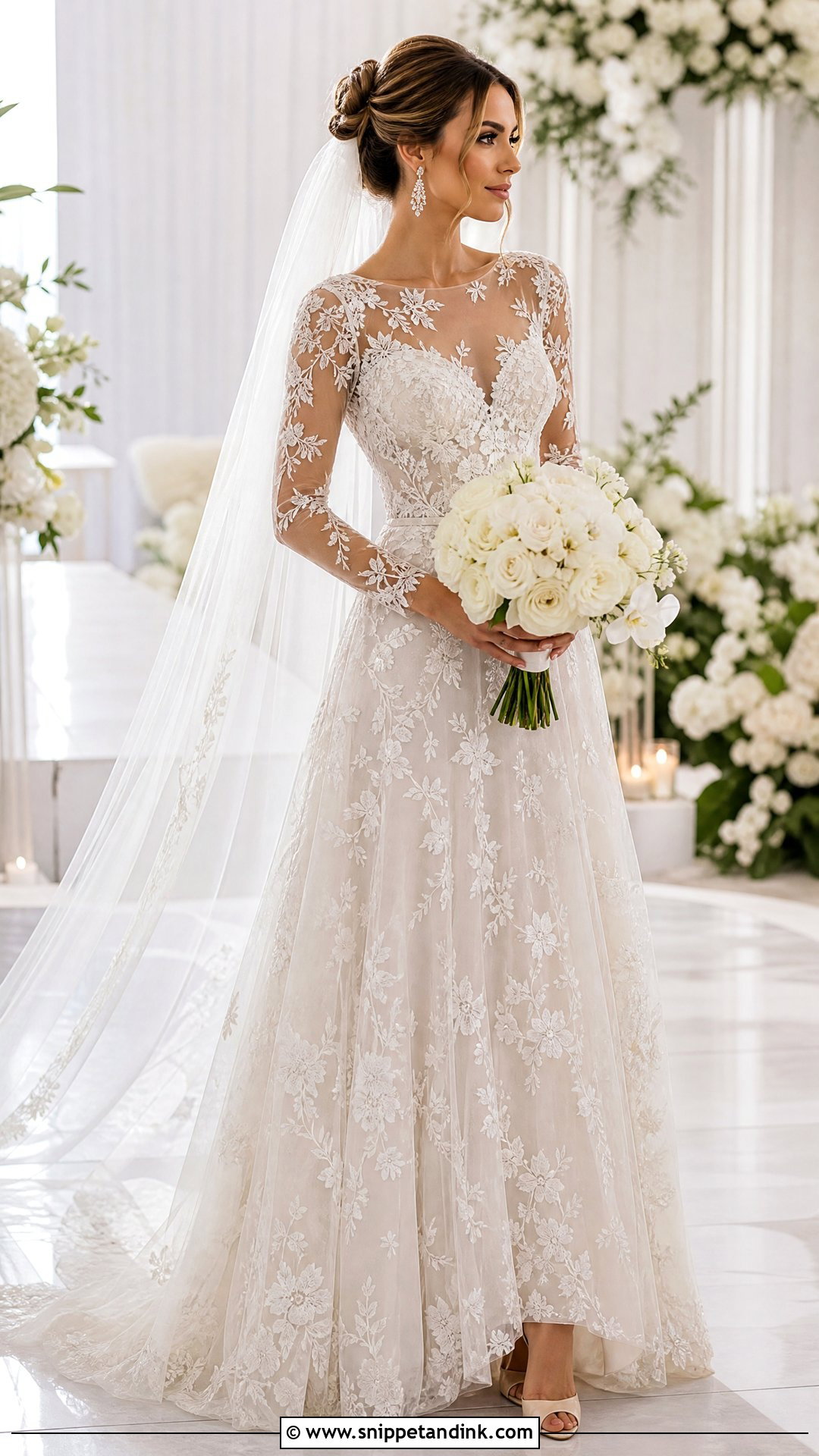
Illusion panels make embroidery look as though it floats on skin, and the lining decides whether that works. Choose an illusion gown with carefully placed flowers over a lined bodice, in a full or fitted skirt depending on formality. Camera flash is the real test. Some nude meshes that disappear in a mirror turn visible, or a shade off from your skin, the moment a flash fires, so I ask brides to have a friend take flash photos at the fitting as well as daylight and indoor shots from front, back and side. Neutral ivory heels, crystal studs and a veil attached below a smooth updo finish it. Leave off the necklace, since an embroidered illusion neckline already frames the face, and keep the bouquet structured in white and soft green.
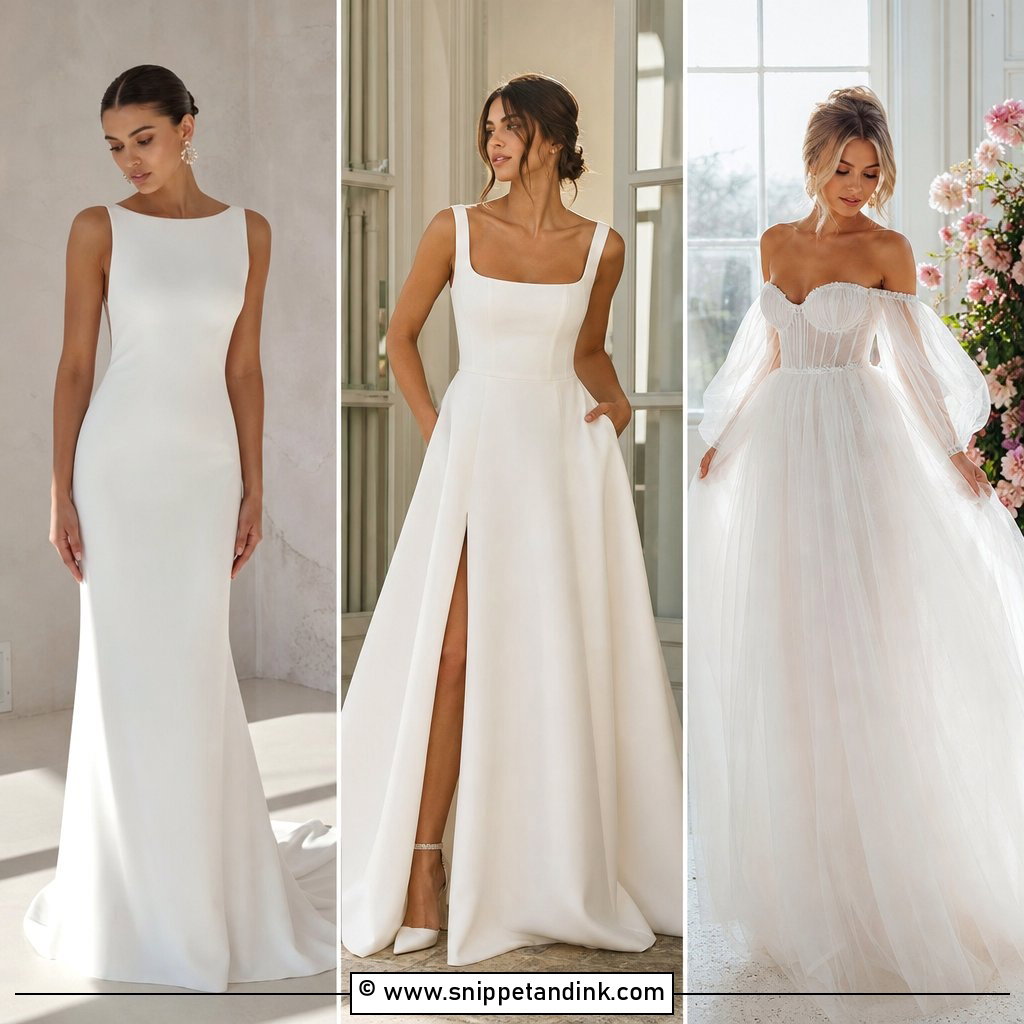
18. Minimal Floral Embroidered Wedding Dress
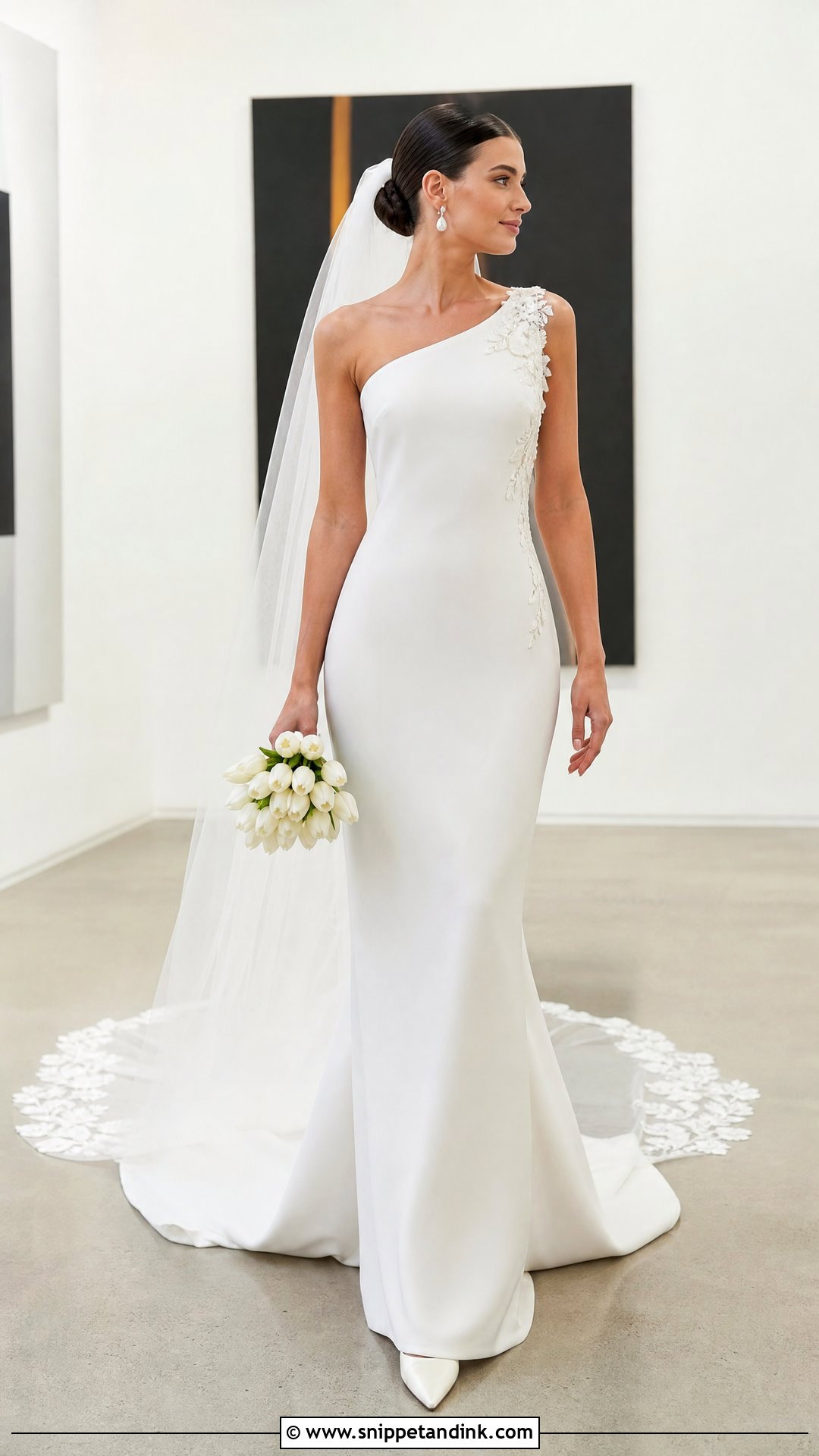
A clean crepe column needs very little embroidery to feel finished: a spray along one shoulder, at the waist or near the end of the train. With so little decoration, the quality of the stitching is all anyone sees. I look closely at the edges of each motif for puckering, which is common when dense thread sits on smooth crepe, and a good seamstress can sometimes ease it with steam and pressing from the reverse. Pointed satin pumps, sculptural pearl earrings and an unembellished veil, plus a sleek low bun and natural makeup. A compact bouquet of one variety, white roses or tulips, with almost no greenery. No beaded belt and no ornate necklace. City venues, galleries and courthouse ceremonies are where this gown makes sense.
19. Tea Length Floral Embroidered Wedding Dress
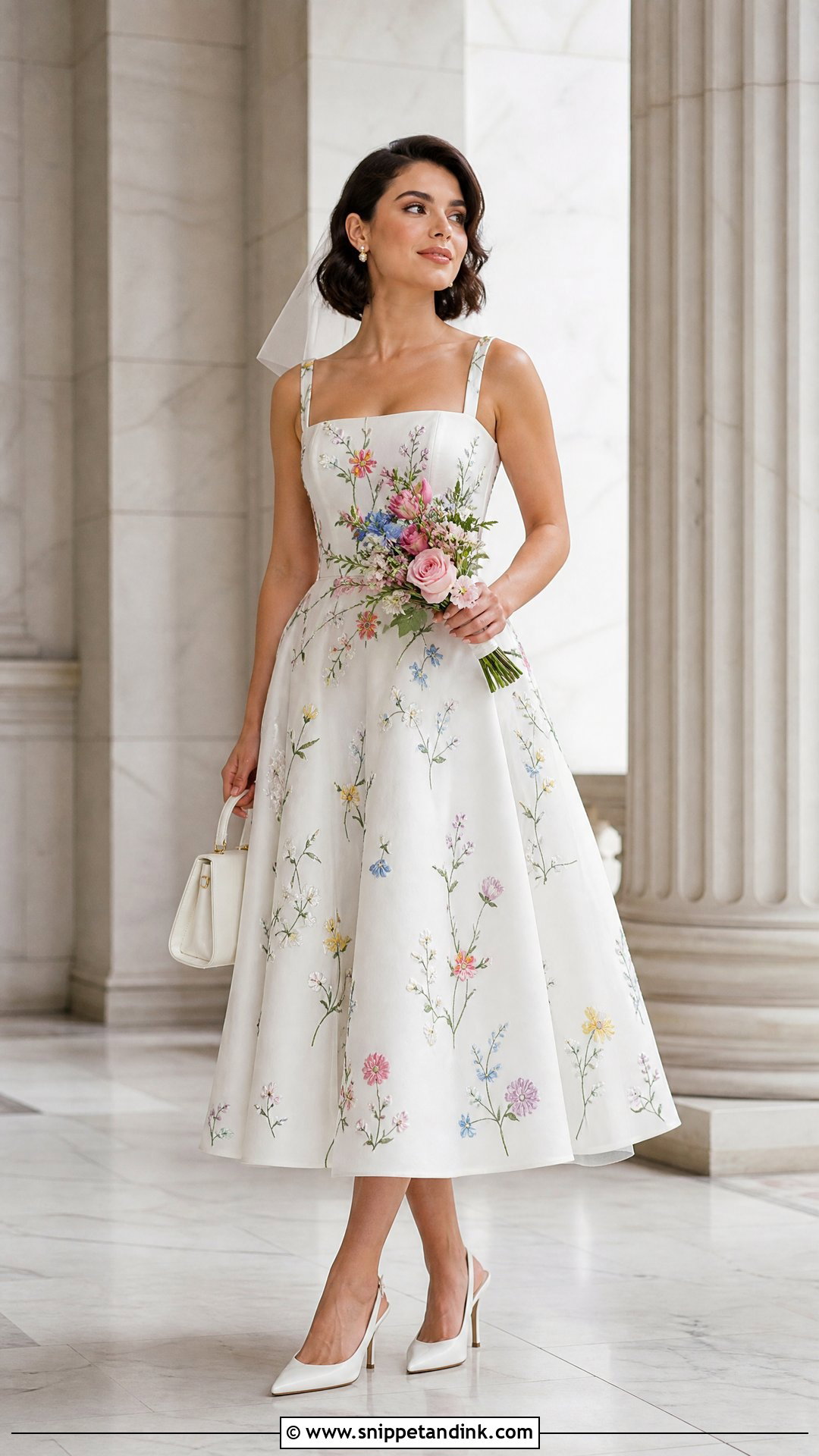
Tea length puts your shoes on show, so the embroidery and footwear share the attention. A fitted bodice and full skirt ending between knee and ankle work with colorful flowers for a relaxed feel or tonal ivory for something more traditional. I’d buy the shoes after the dress arrives and hold them right against the stitching, because at this hem height a shoe that’s almost the thread color looks like a mistake. Pointed pumps, slingbacks or dressy flats can all work. Add small earrings, a short veil and a structured mini bag, with a smooth bun or a curled bob. A compact bouquet keeps the proportions right. Courthouse weddings, daytime ceremonies and restaurant receptions suit it, and it makes a good second outfit for dancing.
20. Black Floral Embroidered Wedding Dress
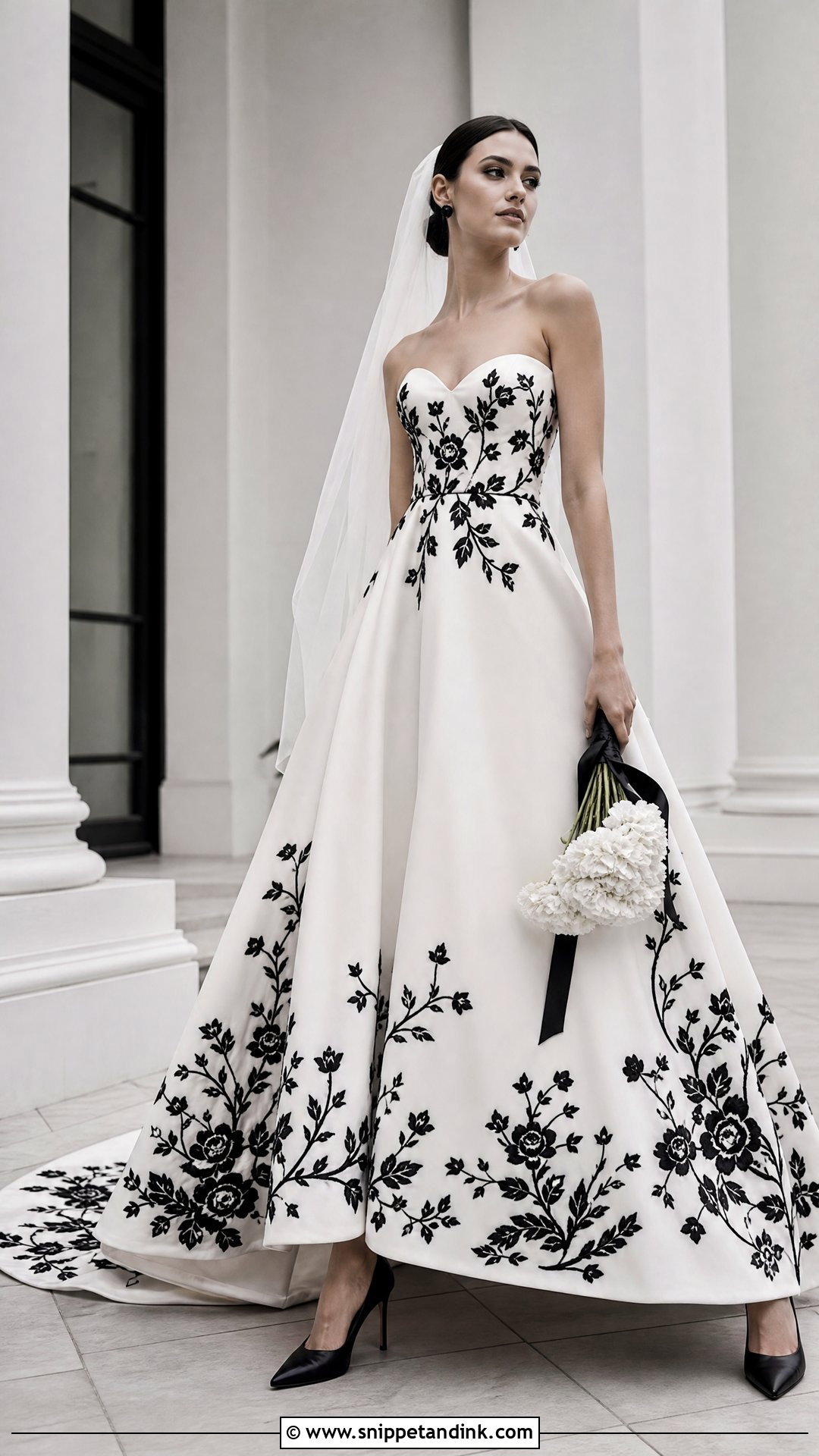
Black flowers on ivory are the boldest choice here, and the contrast is unforgiving: an uneven stitch shows from across the room. Concentrate the black embroidery around the bodice, waist or hem of a structured A-line, column or ball gown rather than spreading it everywhere, so it reads designed instead of printed. One warning I give every bride wearing dark thread on light fabric: no damp-cloth spot cleaning near the motifs on the day, because thread that isn’t fully colorfast can bleed into the base. Black or ivory pointed heels, simple onyx-style earrings and a plain white veil keep it bridal. Wear a polished bun or smooth waves, with balanced makeup. White flowers tied with dark ribbon tie the bouquet to the dress. Galleries, formal hotels and black-and-white receptions suit it.
Why an Embroidered Hem Needs Extra Alteration Time
This is the part of floral gowns that surprises brides most. If embroidery runs to the edge of the skirt, a seamstress usually can’t just cut the hem shorter, because she’d be slicing through the flowers. Instead she lifts the motifs off by hand, takes up the length, then sews each flower back on along the new edge. The same applies when a bodice needs taking in under appliqued petals.
That handwork takes longer and generally costs more than a plain hem, and quotes vary widely between seamstresses. I’d book the first fitting with your wedding shoes in hand, leave room for at least three fittings, and ask the shop at purchase whether hem embroidery can be moved before you commit to a length you’ll need altered.
Steam, Bustle, Box: Caring for Raised Thread
An iron should never touch embroidery from the front. It crushes raised stitching and can leave a shine on the thread that won’t come out. Steam the gown from the inside, holding the steamer a few centimeters away, and let gravity do the rest.
- Ask for bustle points placed between motifs, not through them, so the hooks don’t snag thread every time the train goes up.
- Keep a white chalk stick or a dry cloth for small marks on the day; leave anything wet to a cleaner who handles bridal embroidery.
- After the wedding, get the gown professionally cleaned soon, before any hidden sugar or makeup marks darken.
- Store it folded in acid-free tissue in a breathable box, with extra tissue padding raised petals so they don’t flatten under the folds. Heavy embroidered gowns shouldn’t hang by their straps for months.
Which Flowers Belong on Your Gown?
Flower size, thread color, placement, fabric and silhouette all act on each other, so settle the gown first and accessorize after. A heavily stitched dress looks strongest with a plain veil and quiet jewelry, while a gown with one small spray of flowers can take a bolder accent or two. See it in at least two kinds of light, from the front, back and side, then walk and sit in it before you say yes. From tonal roses to colorful wildflowers and raised organza petals, the embroidered gown worth choosing is the one that still feels like yours after a full day of hugging, sitting and dancing.
You'll Like These Ideas:





Leave a Reply