
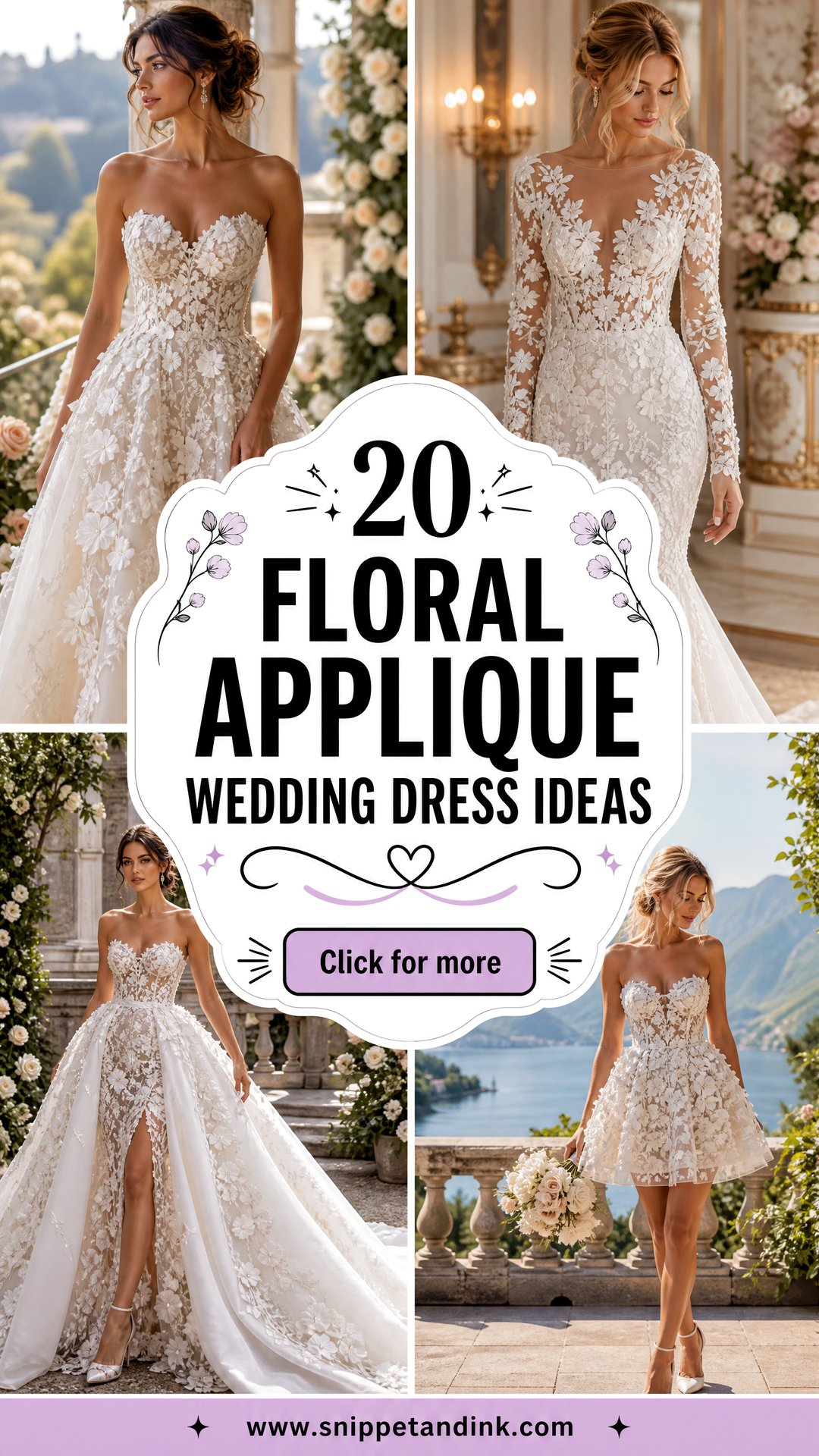
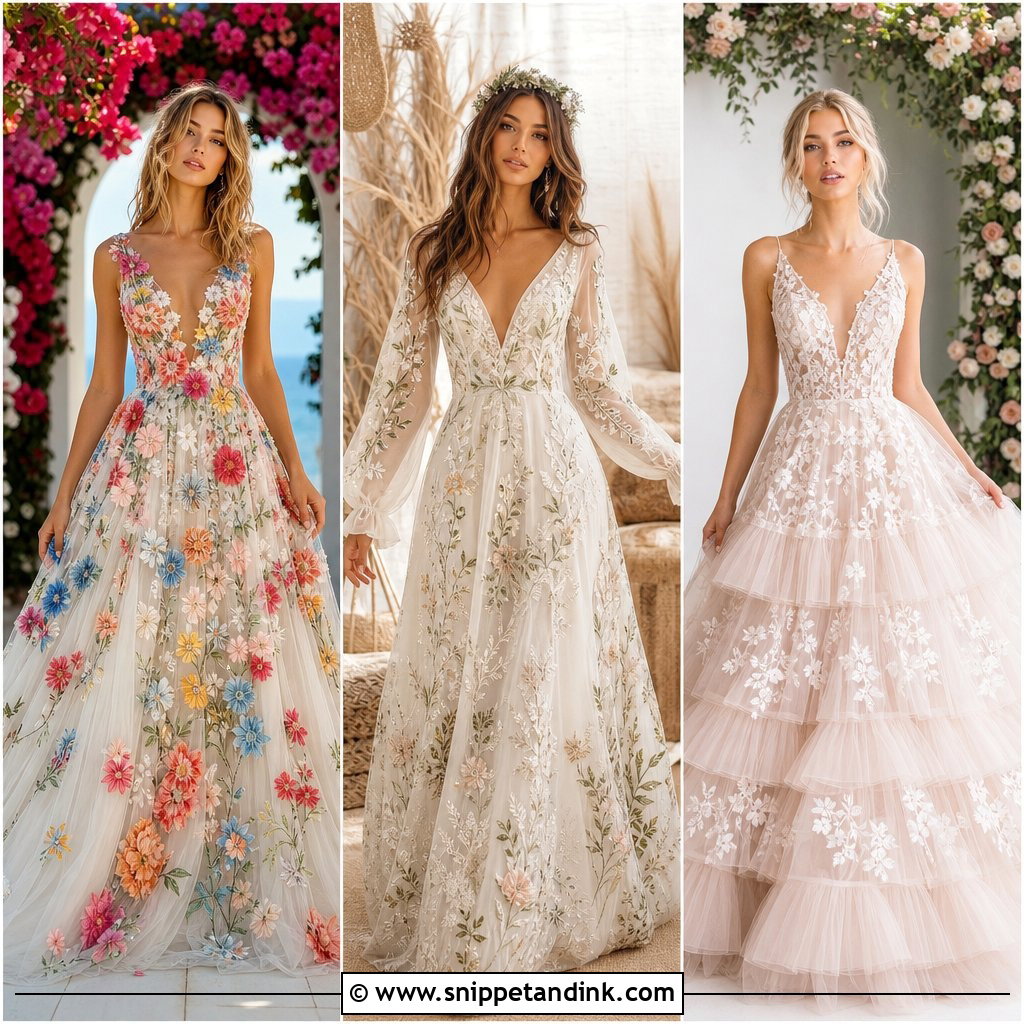
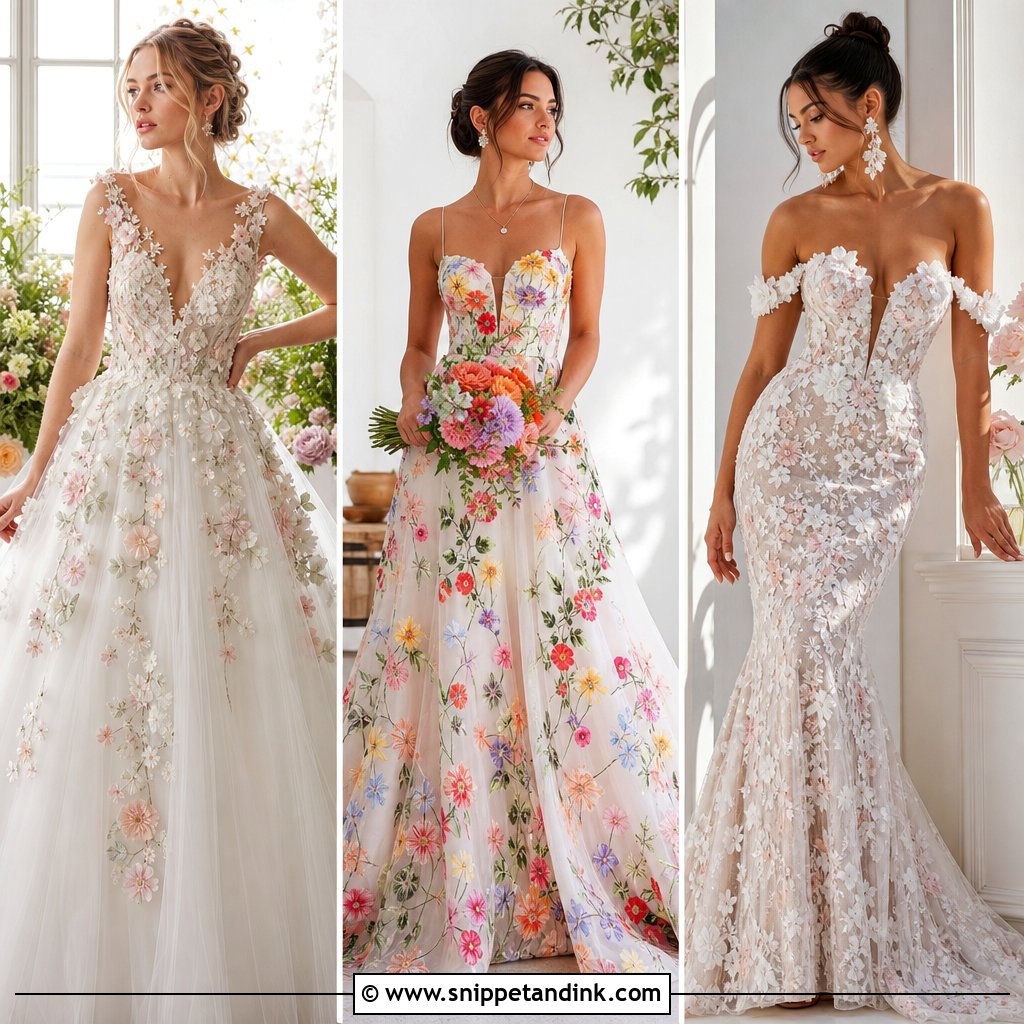
Appliqué is fabric or lace cut into individual flowers and stitched onto the gown, and it changes a dress more than almost any other detail. A few lace blossoms soften a structured bodice; oversized 3D petals turn the same dress into something you’d see on a runway. In fittings, the questions I ask are always about placement and scale: where the flowers start, where they thin out, and whether they’ll still read from the back of the ceremony. Scattered petals feel light, dense clusters feel formal, and colored embroidery or detachable pieces push the look somewhere more personal. From a classic A-line to a modern bridal mini, each look below has the veil, shoes and hair worked out.
Turn the Bodice Inside Out Before You Fall for the Flowers
Two dresses can look identical on the rail and wear completely differently, and the difference is how the appliqué is attached. When I check a gown, I look at the inside of the bodice first. Hand-stitched flowers show fine, even stitches around each motif and lie flat when the fabric bends. Flowers that are glued or machine-tacked only at the center tend to curl at the edges and catch on veils, bracelets and the beading of a bouquet wrap.
- Gently lift the edge of a flower. It should stay attached all the way round, not just in the middle.
- Look at how the flowers cross seams. Good work matches the motif over the seam; quick work stops the pattern on one side and restarts on the other.
- Ask whether alterations will mean removing appliqués. Taking in a side seam on a heavily decorated bodice often does, and that extra handwork adds time and cost to the alteration.
That last point surprises a lot of brides. If you expect to need significant changes at the bust or waist, a gown with flowers kept away from the side seams will be easier and cheaper to fit.
1. A-Line Floral Applique Wedding Dress
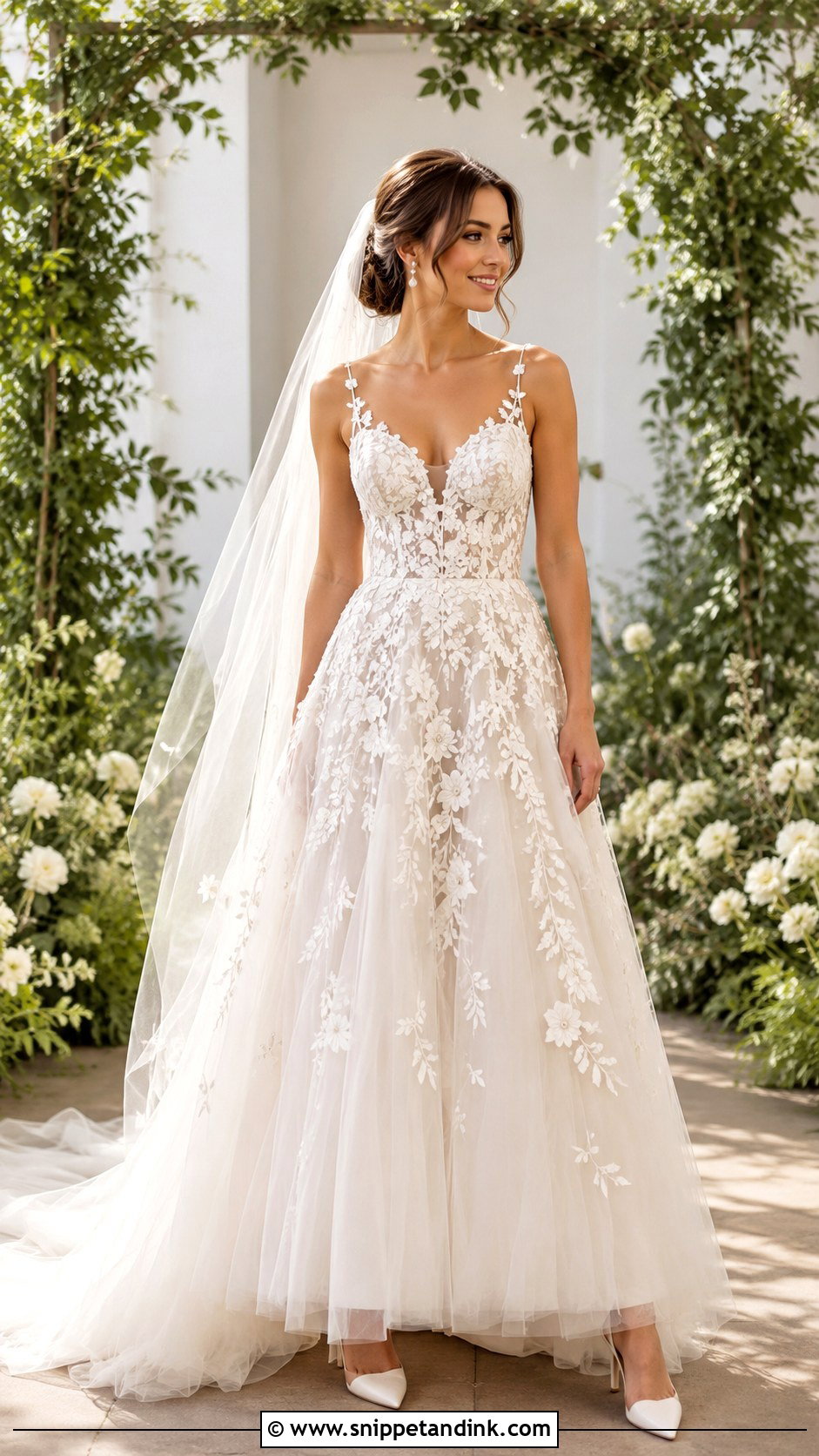
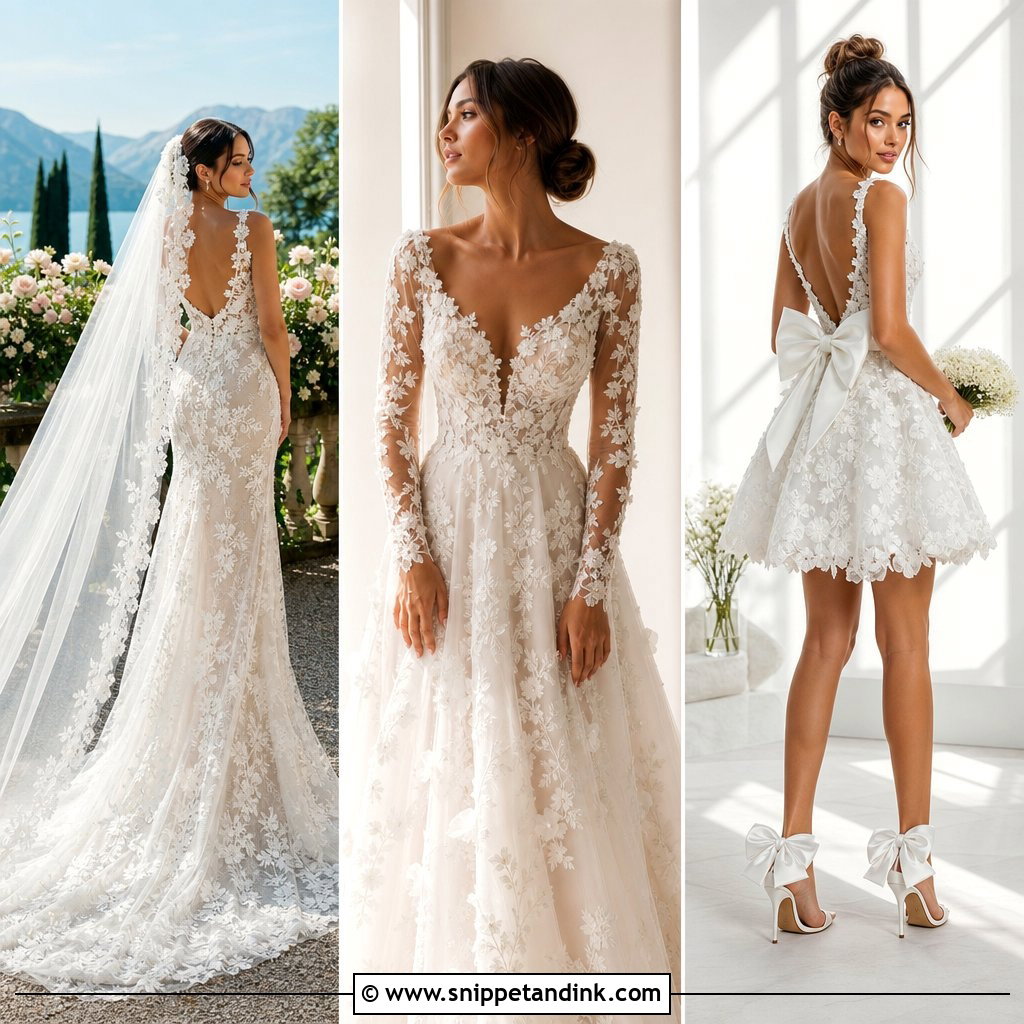
The A-line is where I start most brides who aren’t sure about appliqué. Flowers beginning at the neckline and spreading gradually onto the tulle skirt define the waist without making the dress feel heavy, and the skirt shape hides any unevenness in how the flowers are spaced. Pair it with a chapel-length veil with a clean, unbound edge so the lace isn’t competing with another trim. Pearl earrings, pointed ivory pumps or block-heel sandals, and loose waves or a low bun finish it. Garden ceremonies and estate venues suit it, though honestly it works almost anywhere.
2. Ball Gown Floral Applique Wedding Dress
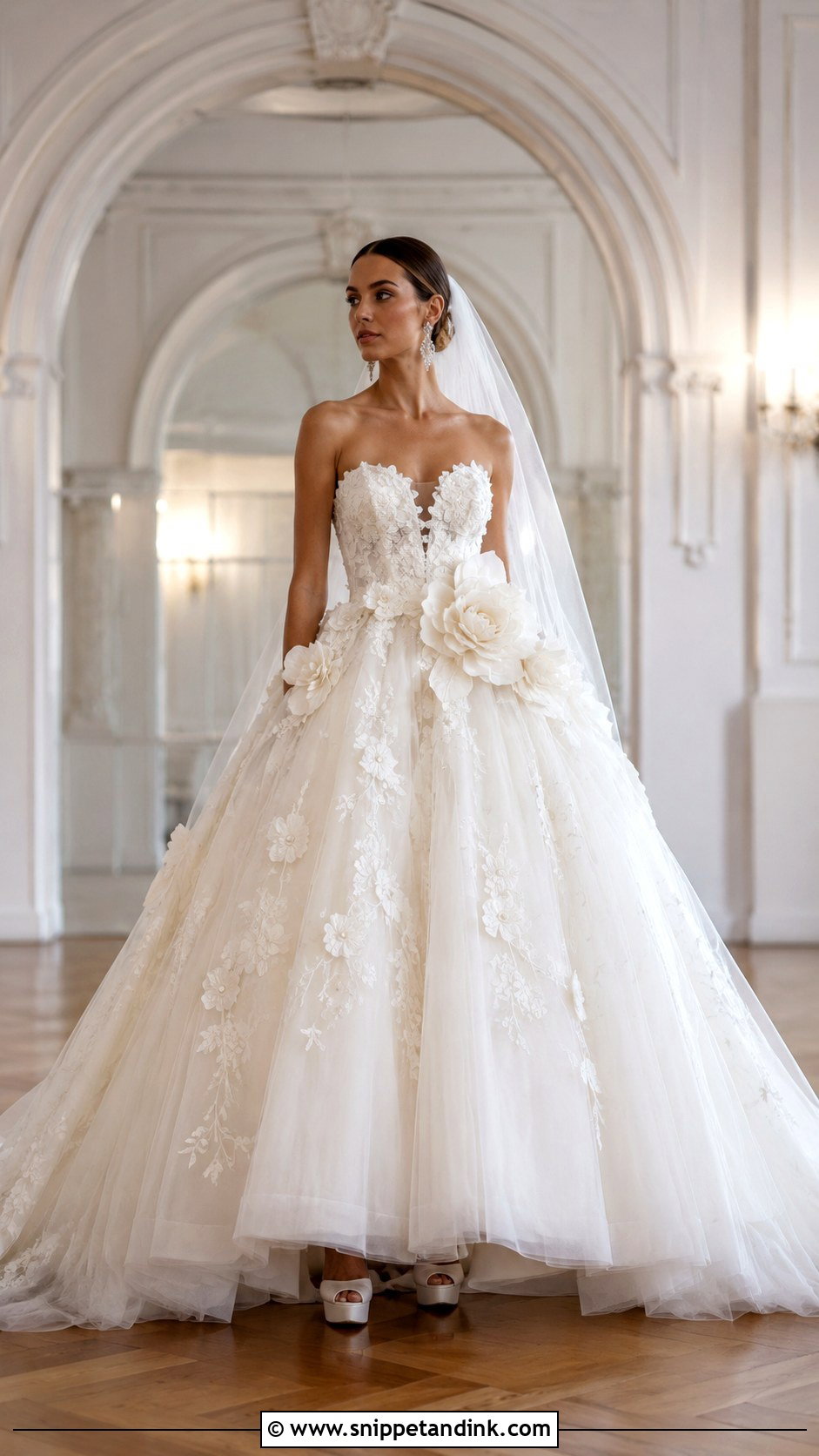
A ball gown gives large flowers the room they need. When the appliqués are concentrated at the waist and then cascade down layers of tulle or organza, the full skirt keeps every petal visible in photos instead of crushed into folds. Keep everything else restrained: a sleek bun, small crystal earrings, a single-layer veil. Satin platform heels add height and stay hidden, which matters if you’re standing through a long ceremony. I’d steer you toward a compact one-color bouquet; a big mixed arrangement held against a skirt full of flowers turns into visual noise. Ballrooms, historic houses and evening weddings are its natural setting.
3. Mermaid Floral Applique Wedding Dress
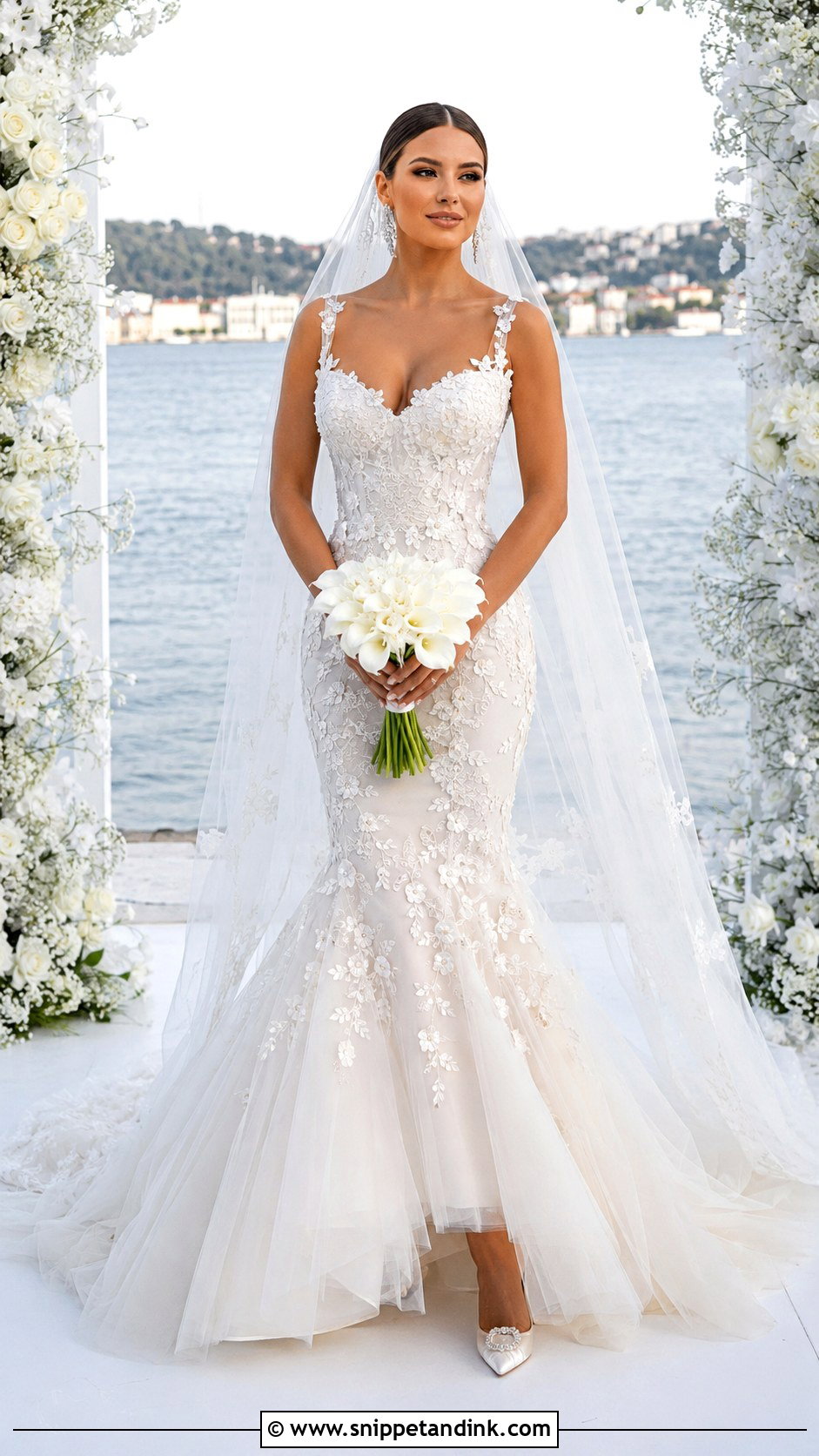
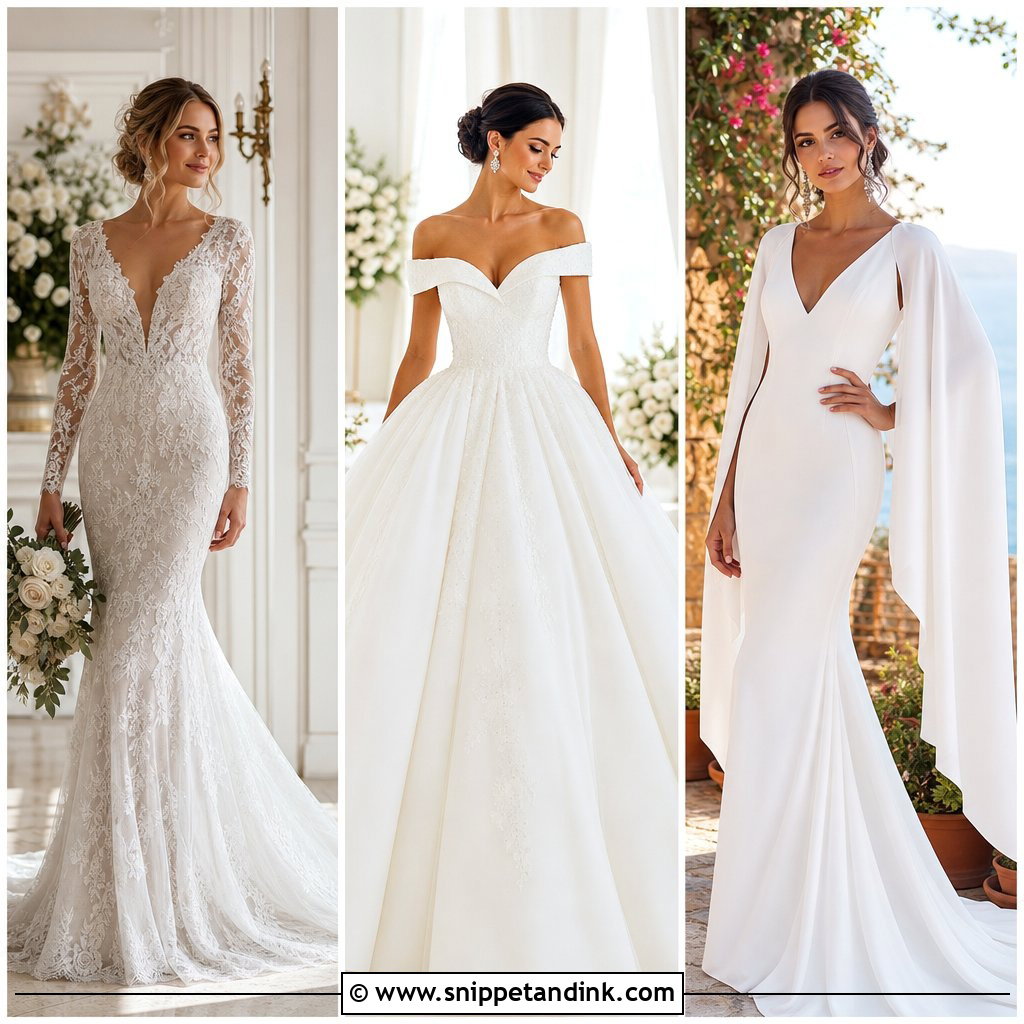
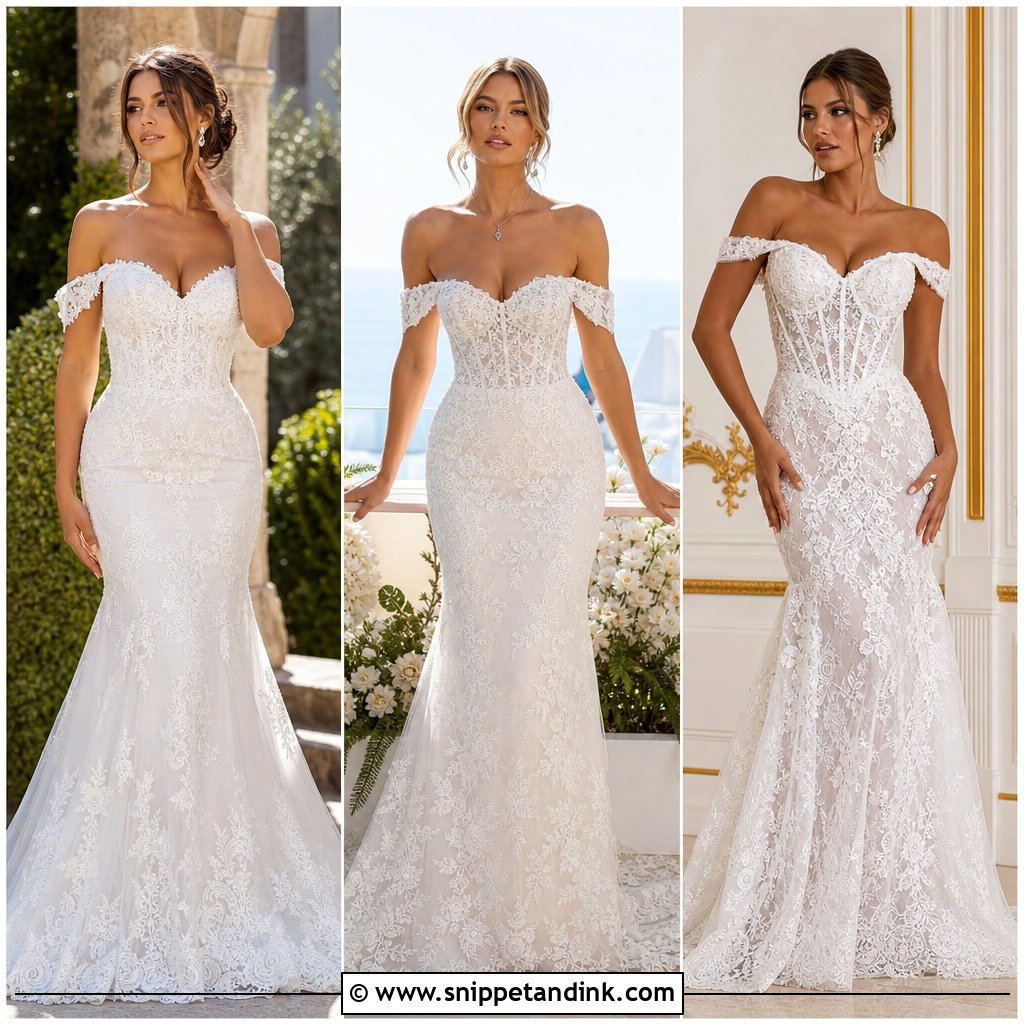
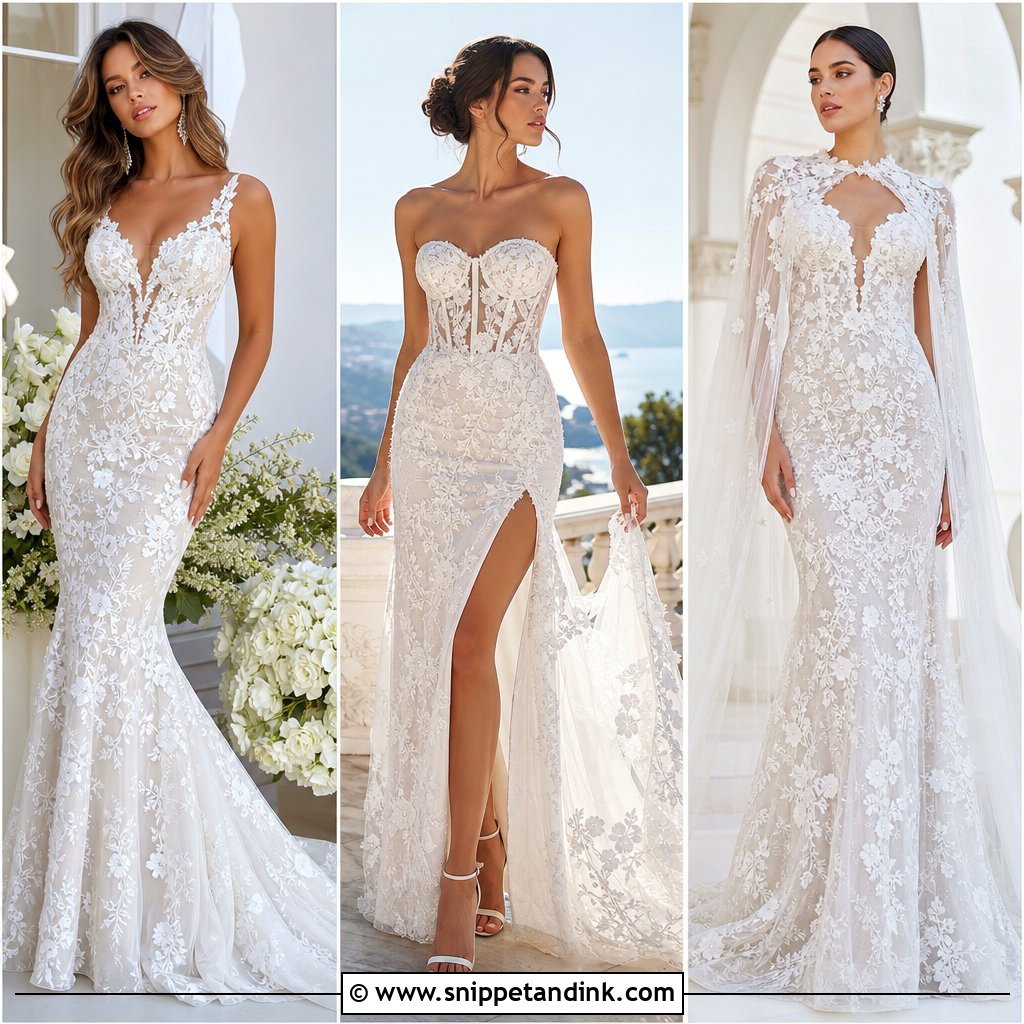
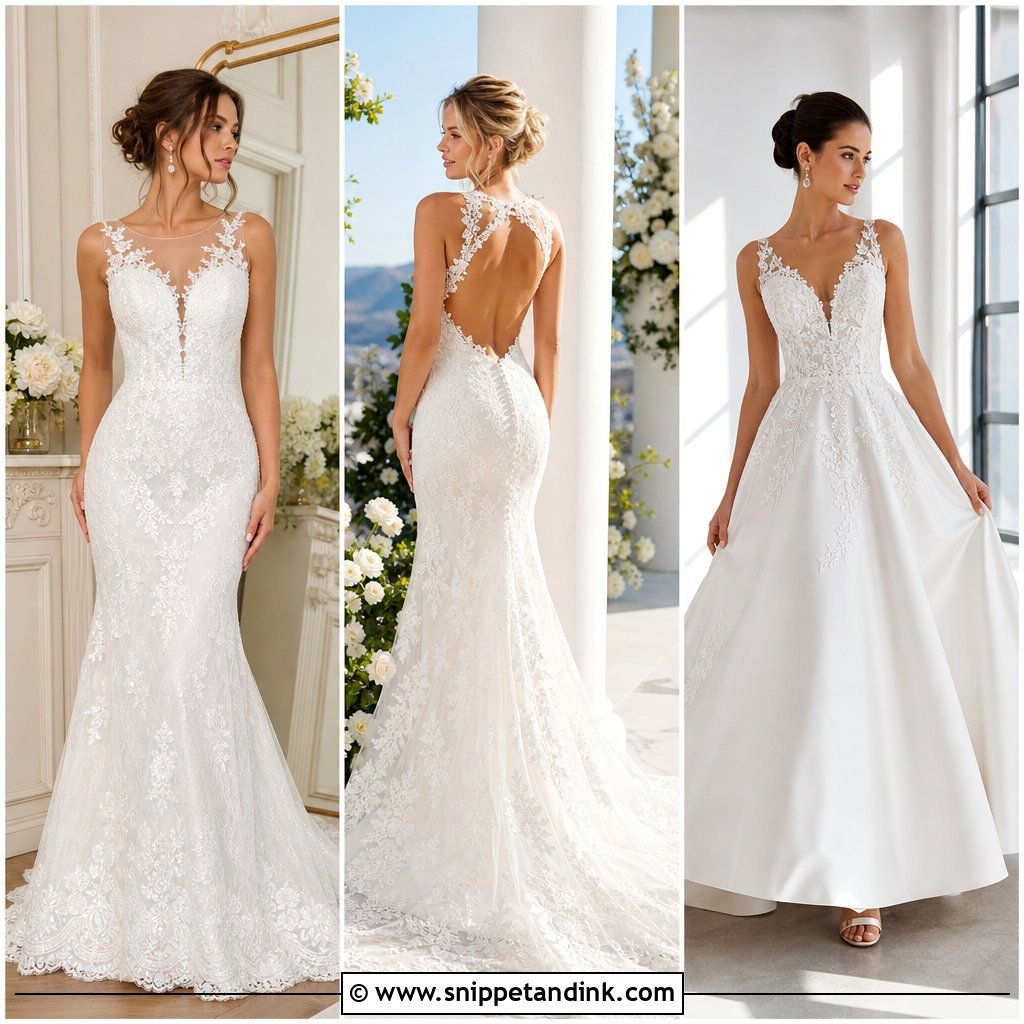
With a mermaid, the appliqués have to bend with the body, and that’s where cheap lace shows itself. Diagonal flowers across the bodice lead the eye to the waist, while smaller blossoms around the flare create movement, but every flower crossing the hip must be stitched down at its edges or it lifts when you sit. Balance the fitted shape with a cathedral veil, drop earrings and a smooth low bun. Pointed pumps suit indoors; block heels are safer on a terrace. A long-stemmed, narrow bouquet keeps the line slim. Waterfront venues and modern hotels in the evening are where it shines.
4. Sheath Floral Applique Wedding Dress
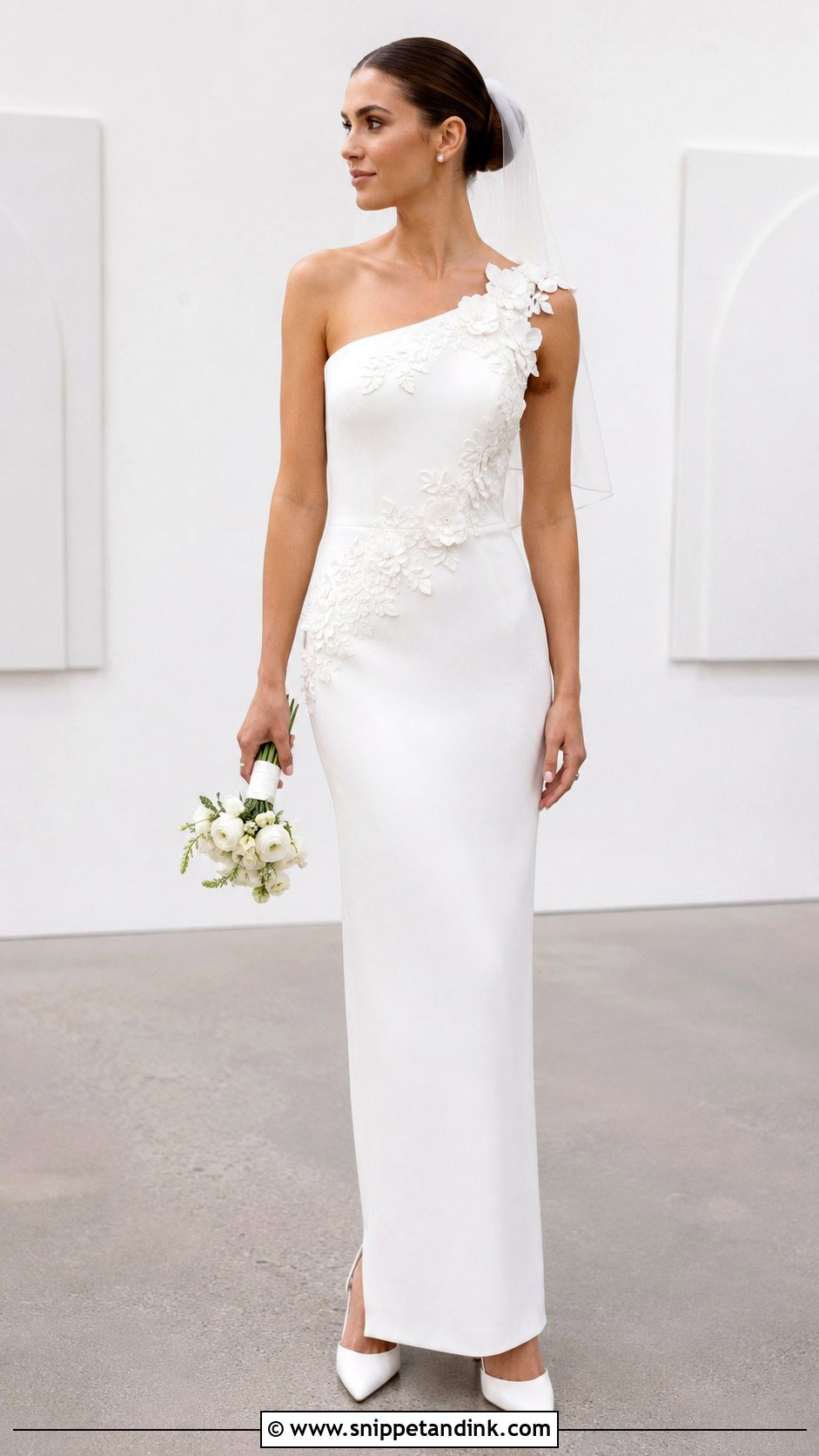
Carefully spaced flowers keep a sheath floral appliqué wedding dress modern. On a column this narrow, dense embellishment adds bulk you can see, so I prefer appliqués around one shoulder, at the waist or along the lower skirt, leaving the rest of the fabric plain. A short veil or simple hair comb keeps the proportions right. Pearl studs, a slim bracelet and pointed slingbacks are enough, with a small gathered bouquet rather than a trailing one. It moves easily from ceremony to dancing, which is why I suggest it for intimate weddings, galleries, destination ceremonies and city venues.
5. Strapless Floral Applique Wedding Dress
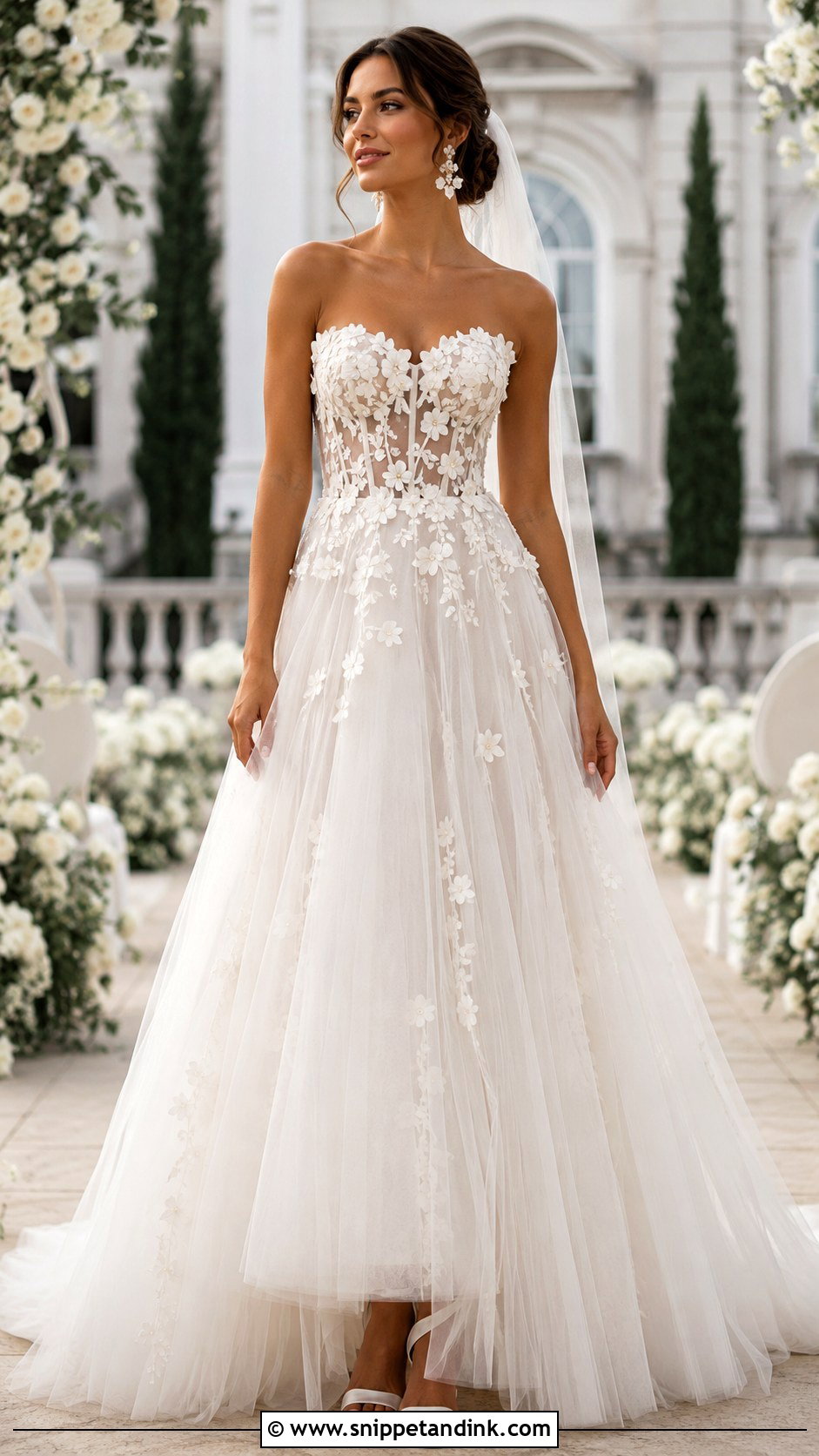
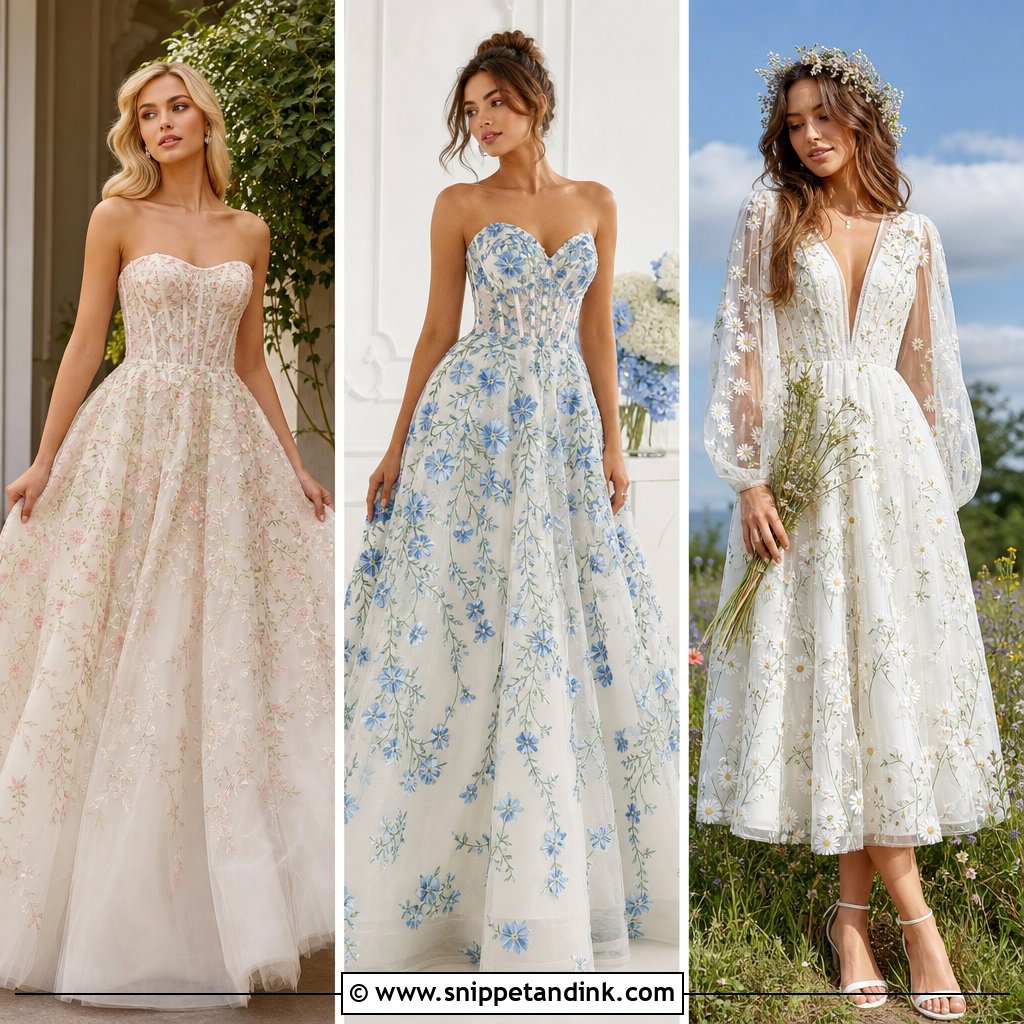
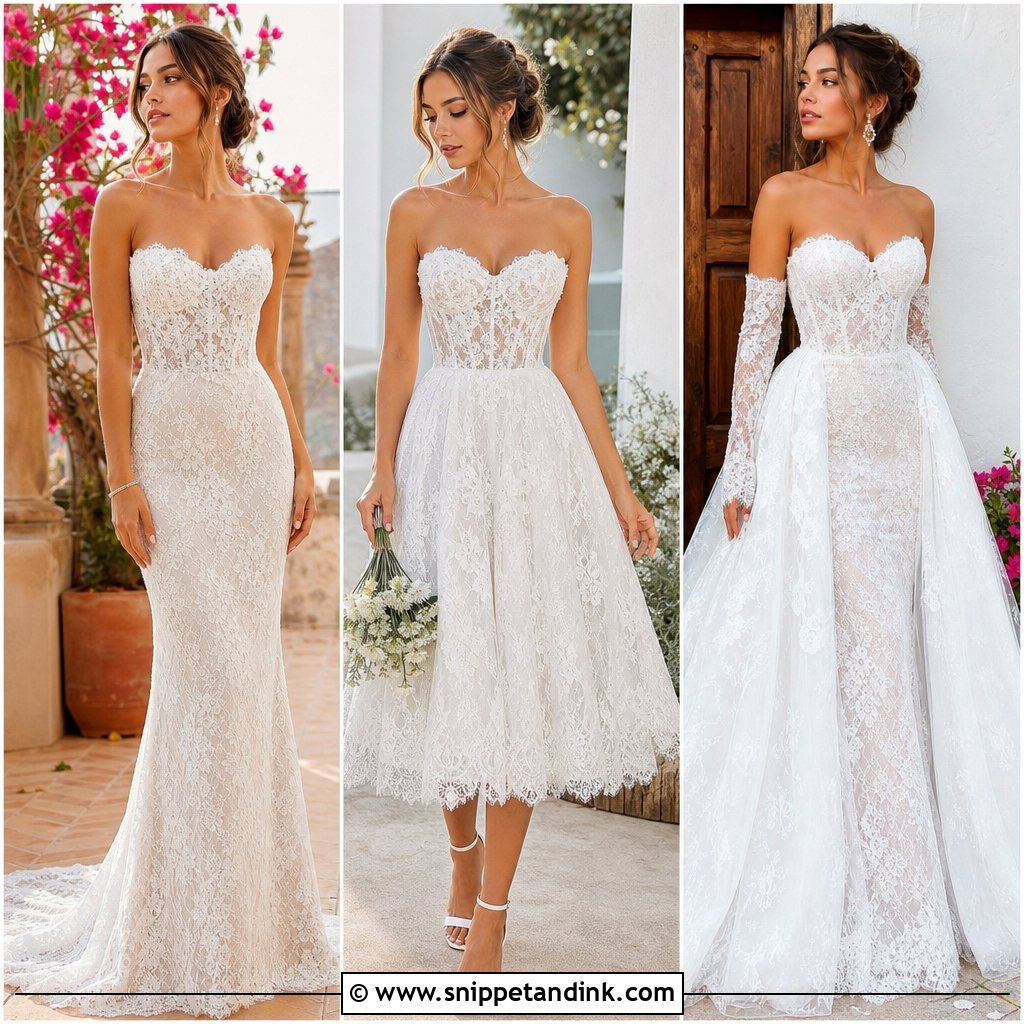
A strapless bodice covered in small blossoms gives the appliqués a clear stage at the neckline. Support should come from the corset construction underneath, not from the flowers, and that inner structure is what keeps the top edge from folding when you bend. Pair it with a gathered A-line or ball gown skirt and let the floral placement flow from bodice onto skirt rather than stopping in a hard line at the waist. A necklace is optional; statement earrings usually frame the face better. Ivory heels, a fingertip veil and a low chignon finish it. For a church ceremony or a chilly evening, I’d add detachable tulle sleeves or a sheer wrap.
6. Long Sleeve Floral Applique Wedding Dress
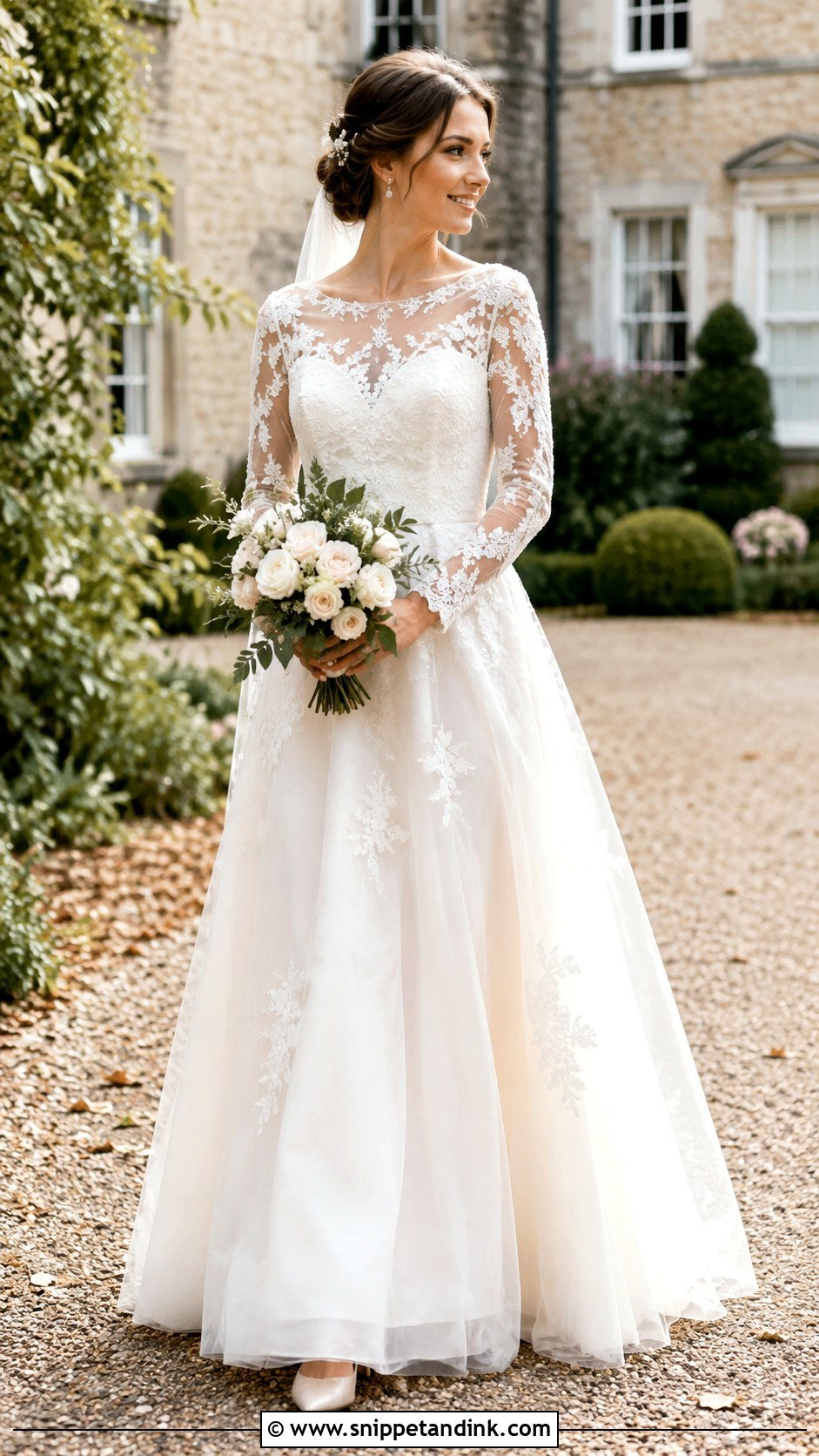
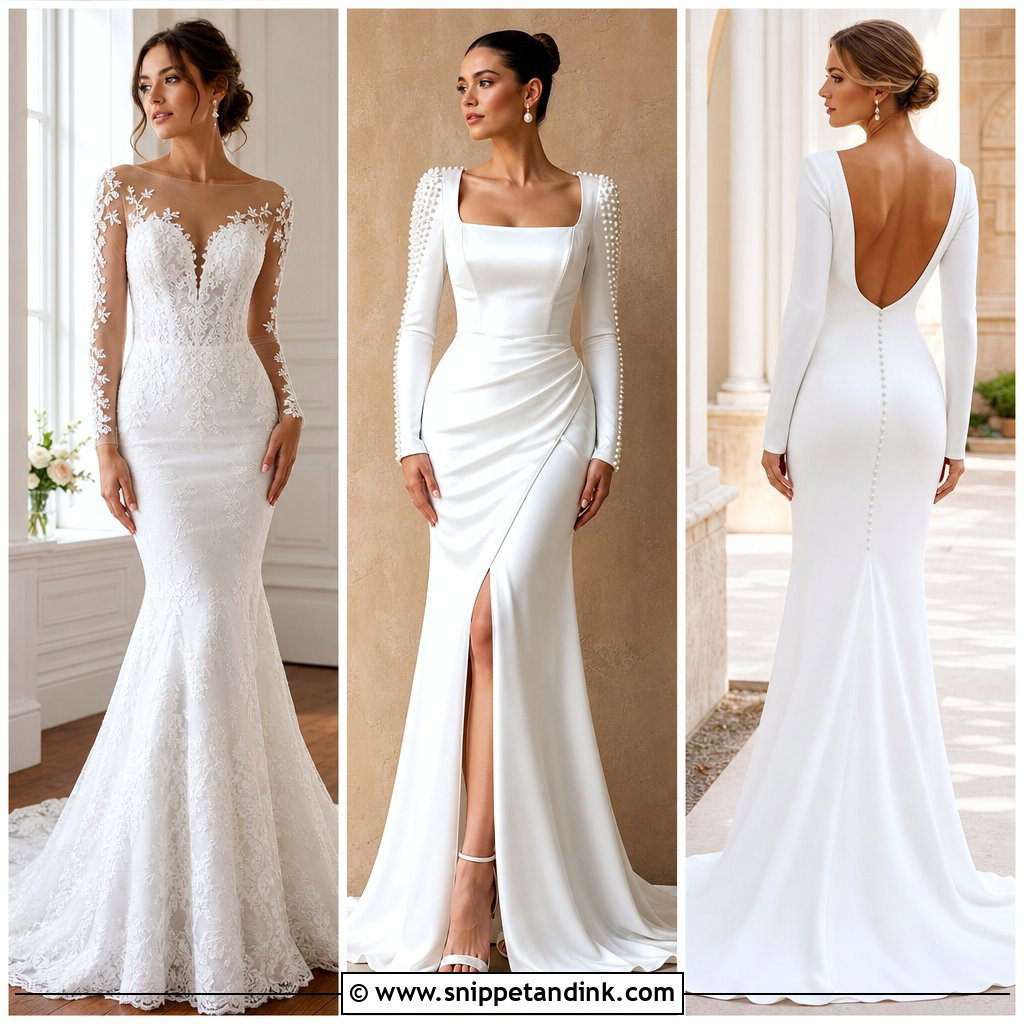
Sleeves are where appliqué can get heavy quickly. I look for sheer tulle with light flowers at the shoulder, cuff and upper arm, with open tulle left between them, because a fully covered sleeve feels stiff and warm by the reception. A fitted bodice and flowing skirt balance them. Wear a low bun with pearl pins and a simple veil anchored underneath it. Closed-toe pumps or embellished flats work, and since the sleeves carry so much detail, skip the necklace. Fall weddings, early spring and heavily air-conditioned venues are where long sleeves earn their place.
7. Off Shoulder Floral Applique Wedding Dress
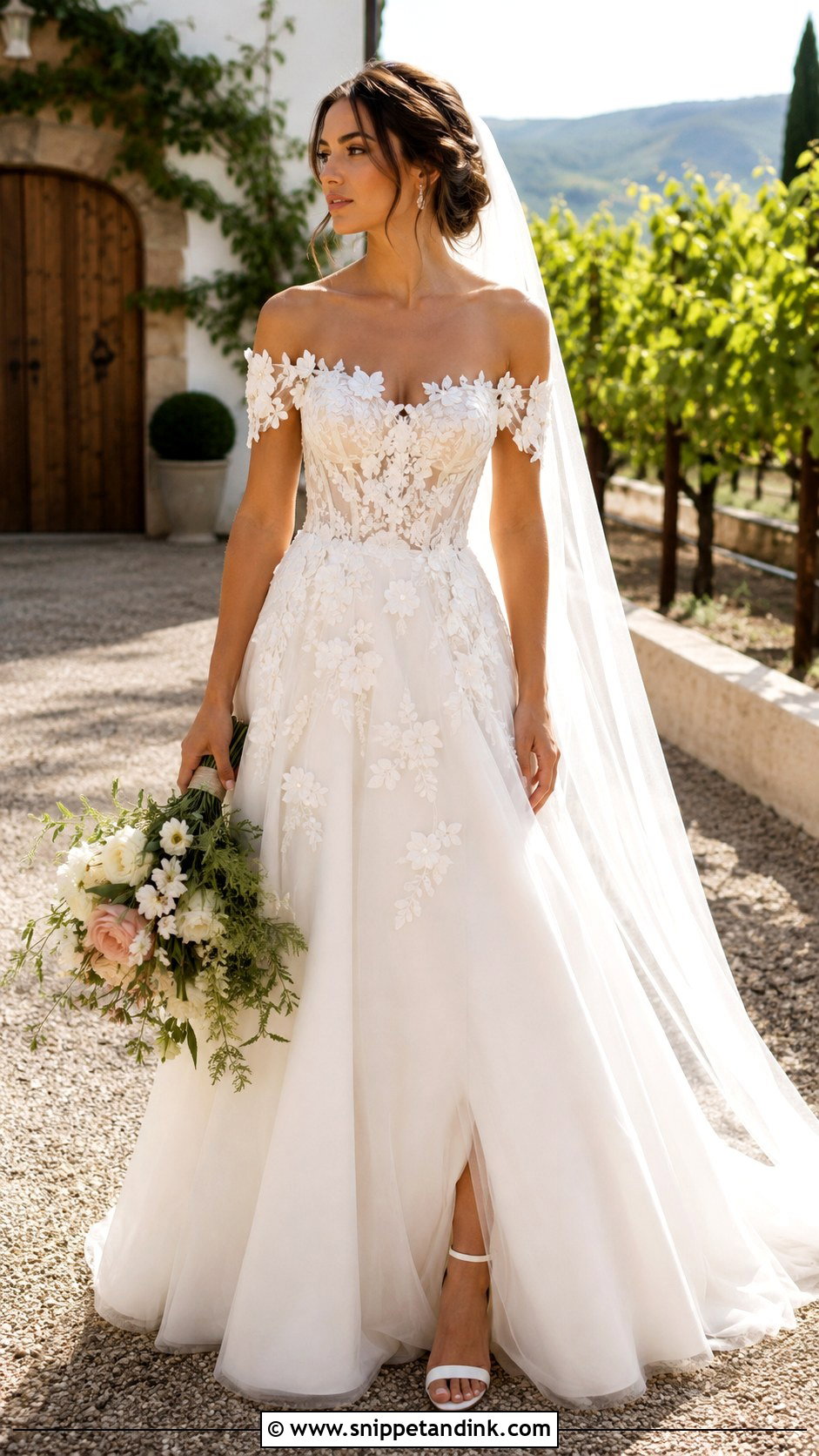
Off-the-shoulder appliqué frames the collarbone with blossoms running along the sleeve edge and onto the bodice. My first test with this neckline is always movement: raise both arms as if hugging someone, because if the sleeves pin your arms down at fitting, they’ll do it all night. A soft A-line keeps it romantic; a structured ball gown skirt makes it formal. A neat updo, drop earrings and a fine bracelet suit it, with a plain veil, since an embellished one competes with the neckline. Satin pumps and a loosely arranged bouquet for vineyards, estates and gardens.
8. Square Neck Floral Applique Wedding Dress
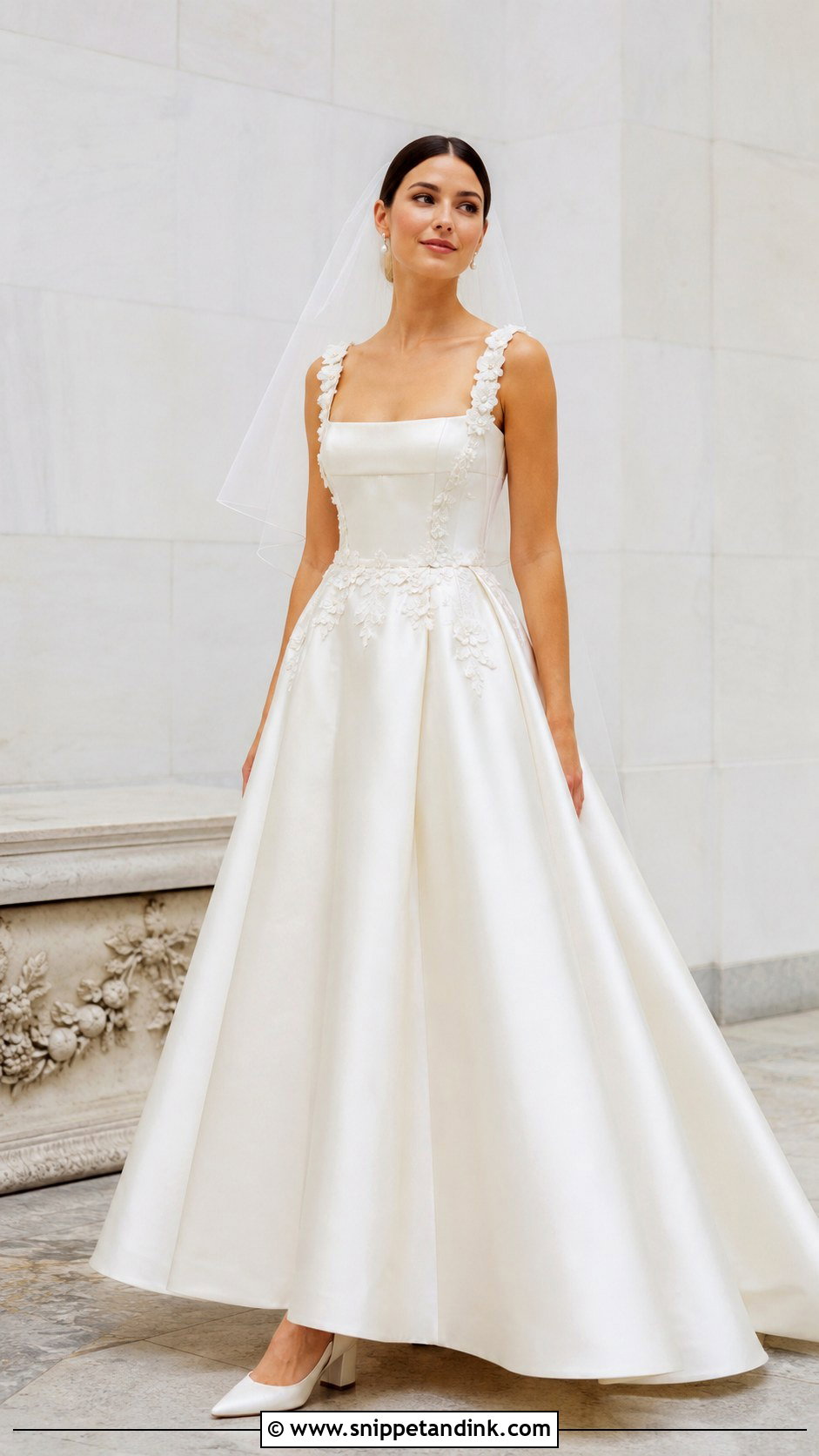
The straight lines of a square neck against organic flowers is what makes this one feel current. I like appliqués along the straps, waist or side seams, leaving the neckline edge itself clean so the shape stays sharp. A full A-line reads traditional; a narrow skirt reads simpler. Pearl drops, a smooth bun and a medium-length veil, with pointed block heels for support. Echo the clean neckline with a structured bouquet and restrained greenery. Museums, courtyards and formal indoor ceremonies give the detail room to be noticed.
9. High Neck Floral Applique Wedding Dress
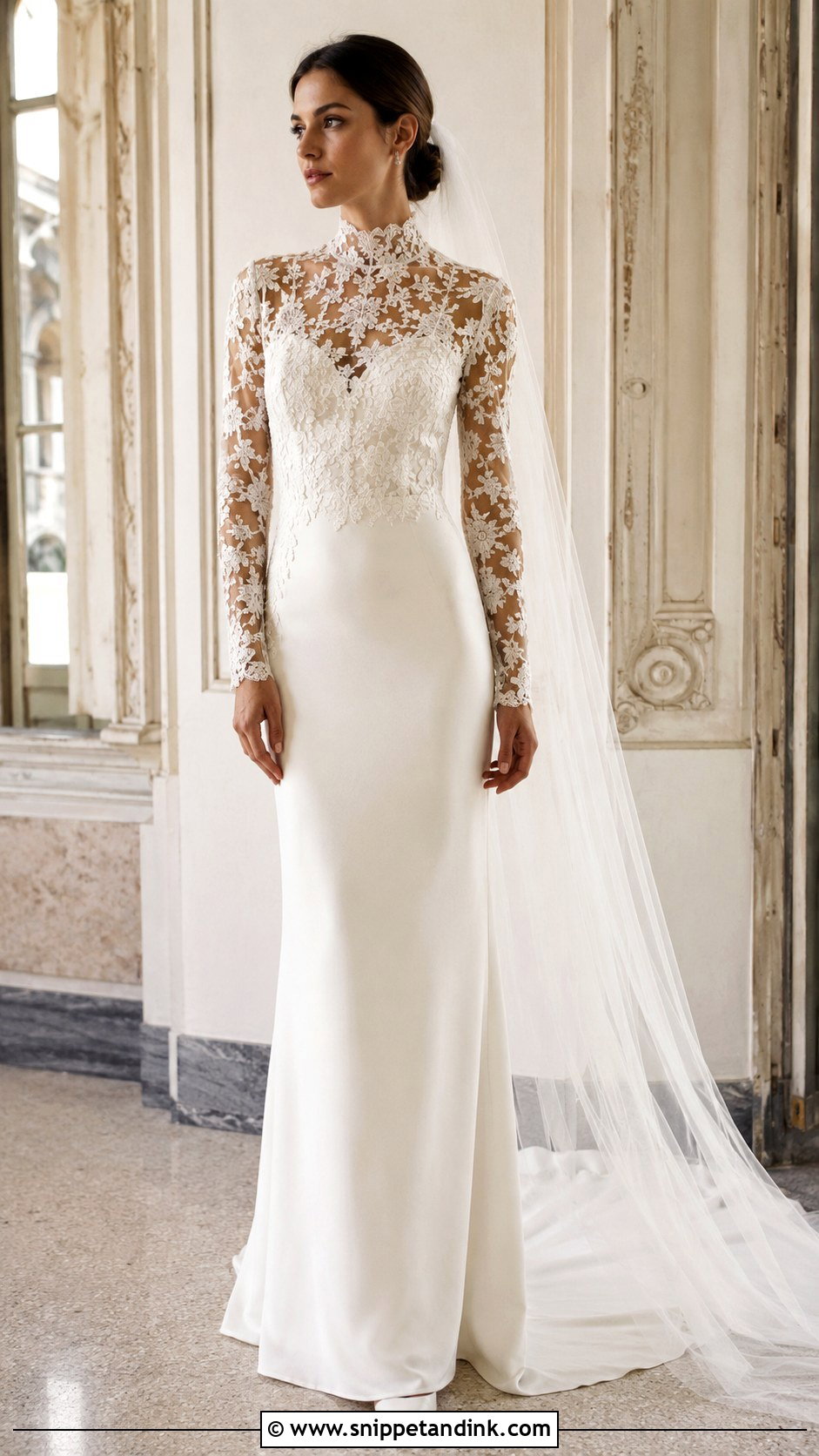
Tiny flowers on sheer tulle at the collar make high-neck coverage feel light rather than buttoned up. Pair it with fitted long sleeves for cooler months or a sleeveless bodice for summer. A sleek skirt keeps it from looking too traditional; a full one feels regal. Hair has to go up. A low knot keeps the floral collar visible, and the veil should be secured below the bun so the comb doesn’t sit on top of the lace. Small earrings and closed-toe heels finish it. I’d check the neck closure at the fitting: a collar that is even slightly tight becomes the only thing you think about by the speeches.
10. Backless Floral Applique Wedding Dress
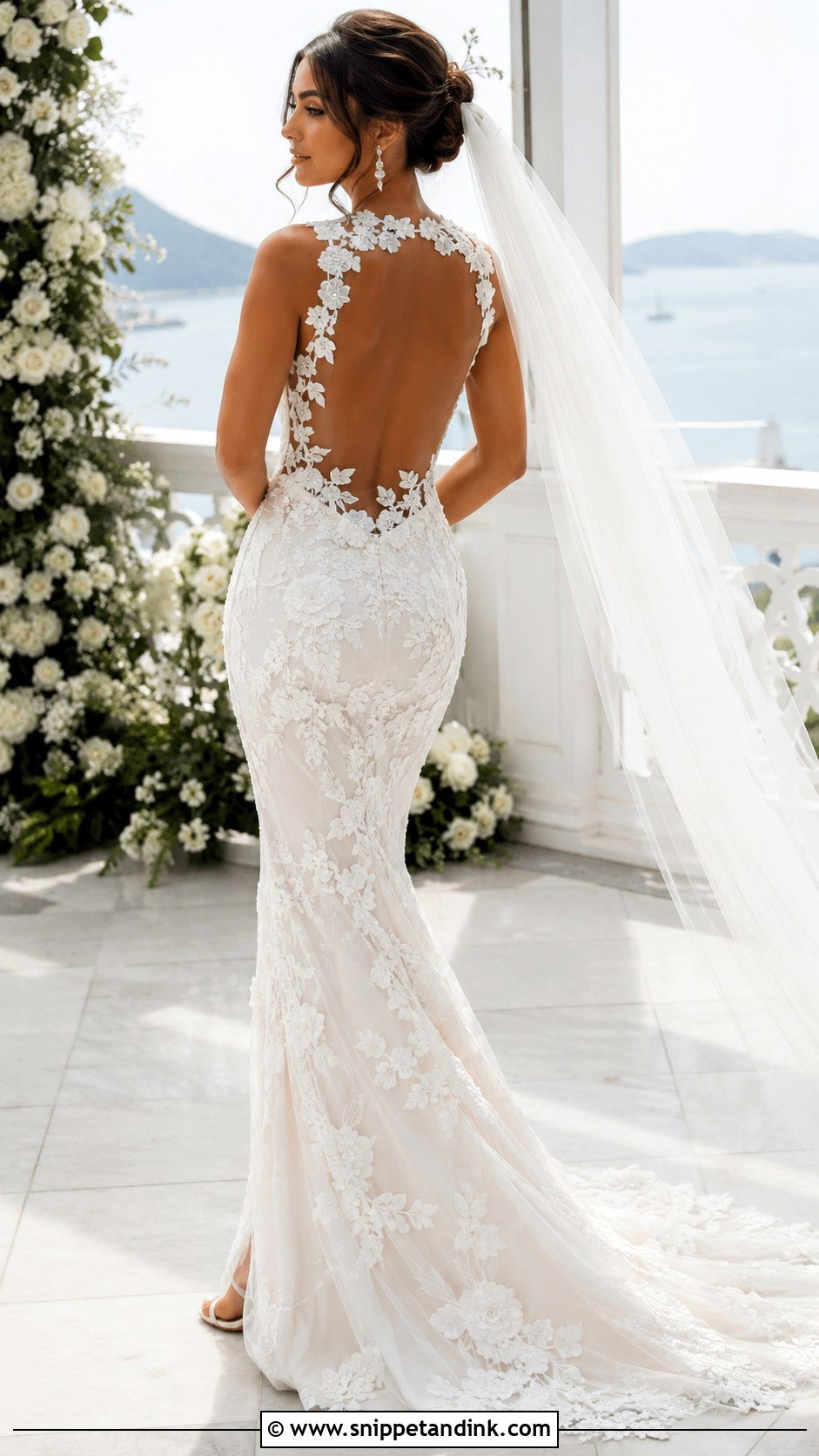
On a backless floral appliqué wedding dress, the flowers often do structural work, framing the open back or trailing down sheer illusion tulle to give visual coverage. A fitted sheath, trumpet or soft A-line keeps the back as the feature. Wear hair up or swept to one side, with a veil you can remove after the ceremony. Drop earrings, a fine bracelet and simple ivory heels. Tailoring decides whether this works: the back edges must sit flat against your skin when you lean forward, so I have brides bend and reach during the fitting. Warm destinations, coasts and rooftops suit it.
11. Colorful Floral Applique Wedding Dress
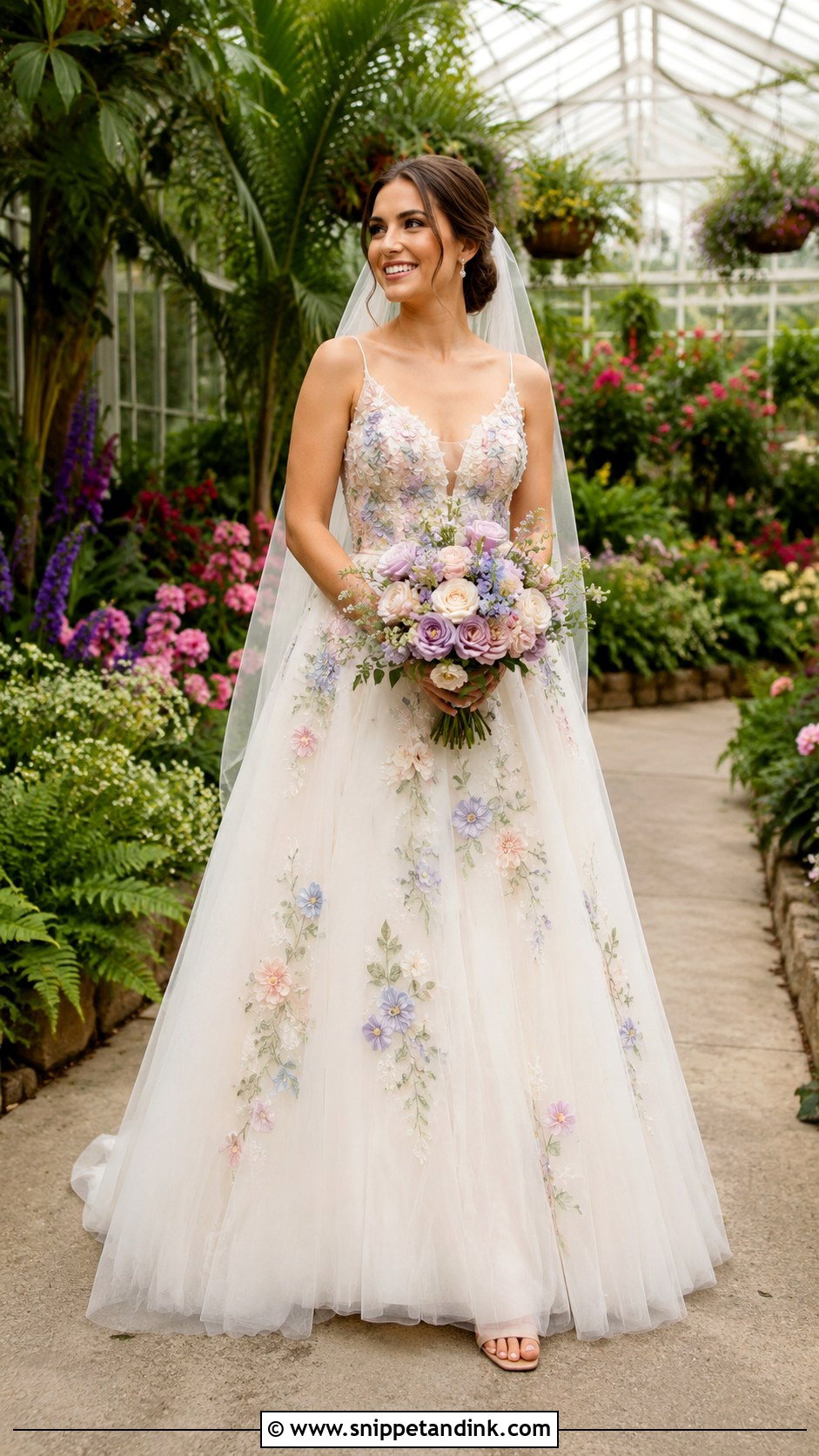
Colored appliqué turns a white dress into something personal, but restraint matters. Blush, blue, lavender or green flowers over ivory tulle look graceful when the whole gown sticks to one palette. Mixing four or five colors starts to look like a costume. A simple A-line gives the color room, and a fitted bodice keeps the shape defined. Neutral heels, understated earrings and a plain veil. For the bouquet, I repeat one or two appliqué colors rather than matching every shade. Natural makeup and soft hair keep the focus on the dress, especially at garden and botanical venues.
12. 3D Floral Applique Wedding Dress
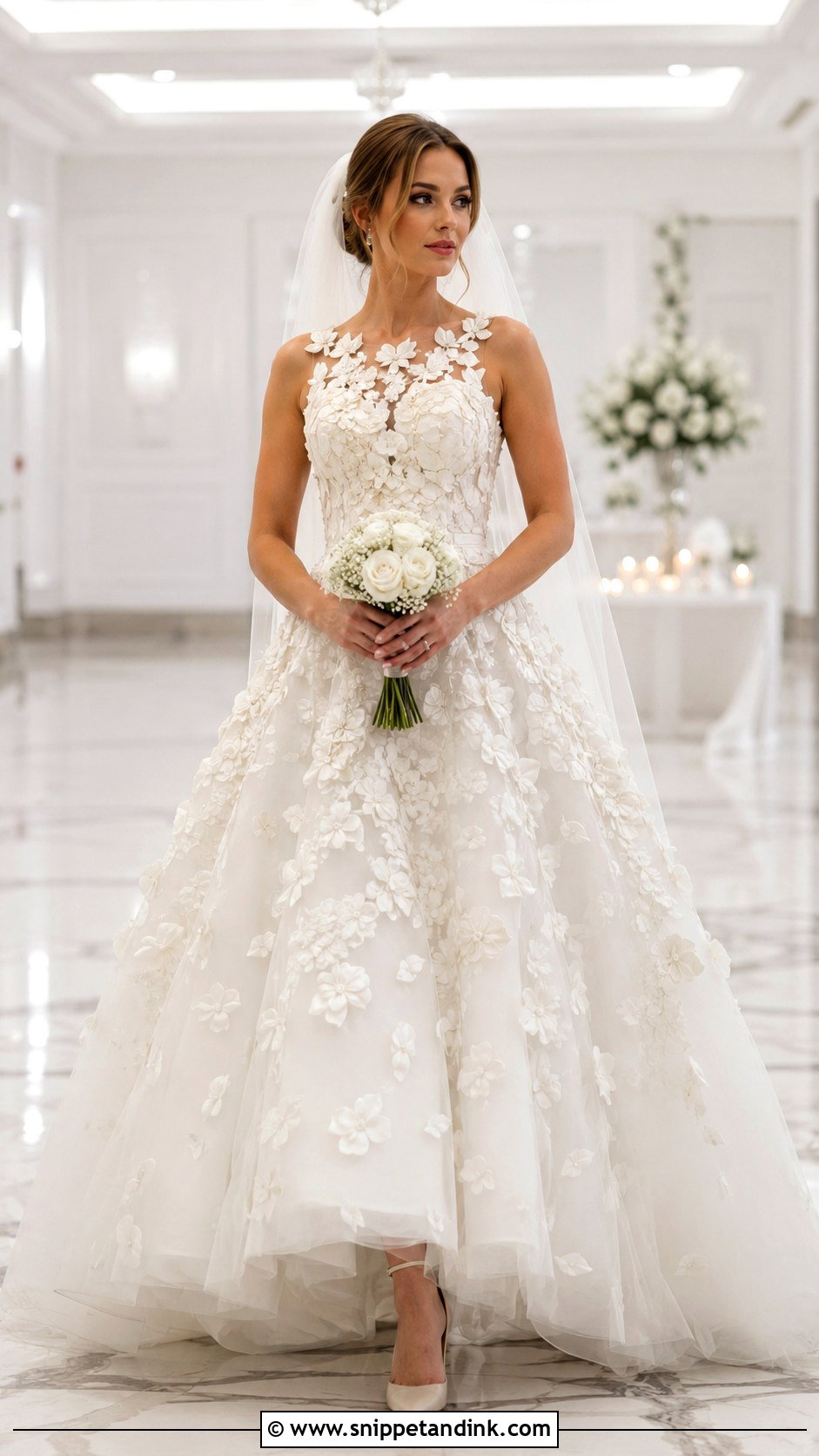
Three-dimensional petals photograph well both close up and full length, but only if they have space. I’d choose a gown with sculpted flowers at the neckline, waist or skirt instead of everywhere, so each one holds its shape and the silhouette stays clear. A strapless or sleeveless bodice and layers of tulle let them float. Style it simply with a bun, crystal studs and an unembellished veil, plus minimal ivory sandals and a compact, softly colored bouquet. One honest drawback: raised petals crush. Hugs, car seats and a bouquet held against the waist all flatten them, so expect some fluffing between the ceremony and the portraits.
13. Scattered Floral Applique Wedding Dress
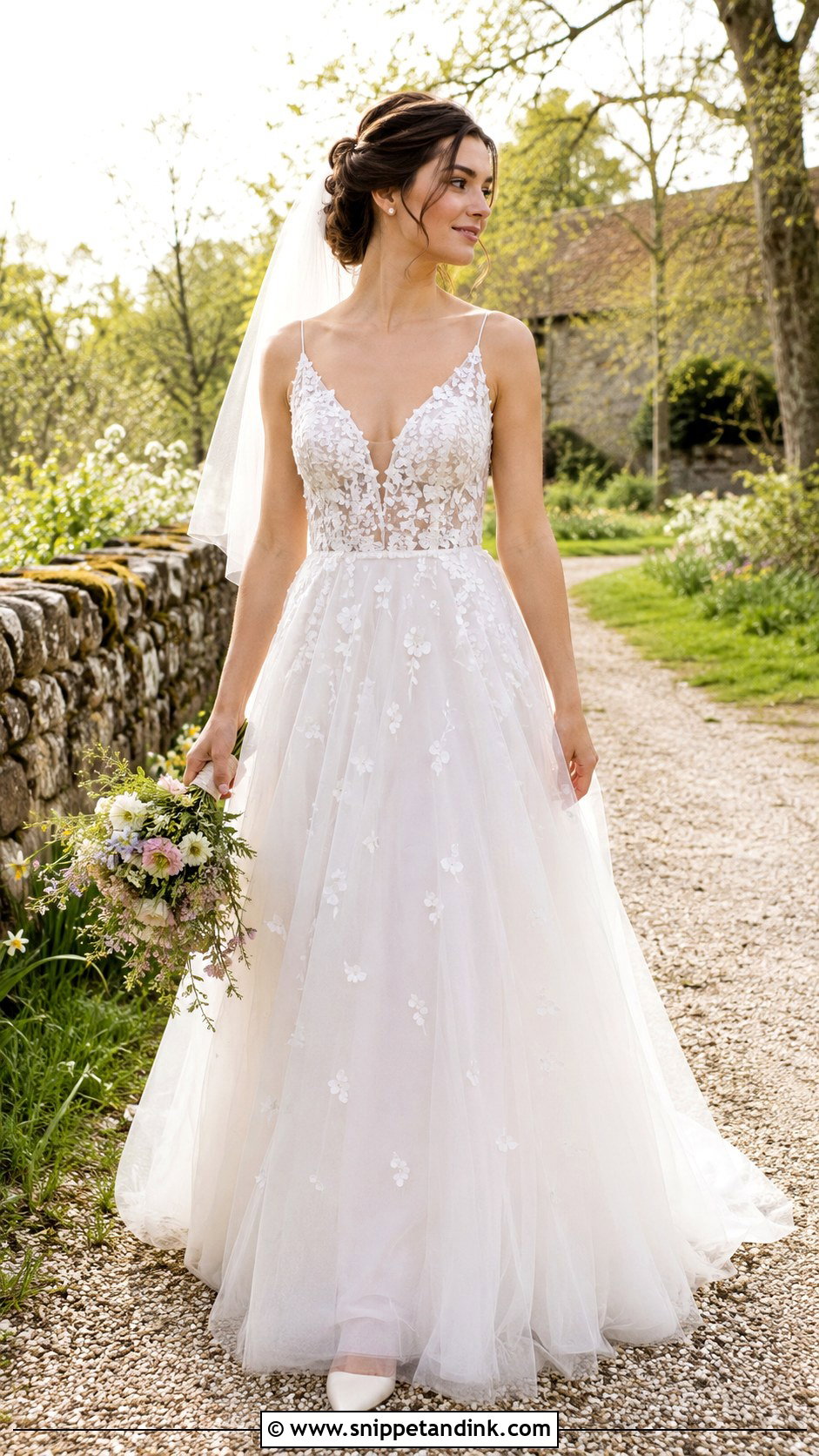
Scattered appliqués give you flowers without an all-over pattern. The blossoms are densest at the bodice and appear less often as they move down the skirt, which keeps the dress airy. A soft tulle A-line or relaxed ball gown gives them space. Pair it with a narrow veil, pearl studs and a fine chain bracelet, and pointed flats or low heels for comfort. A loose bouquet of a few delicate stems echoes the scatter without copying it. Spring ceremonies, country settings and small venues suit this restraint well.
14. All Over Floral Applique Wedding Dress
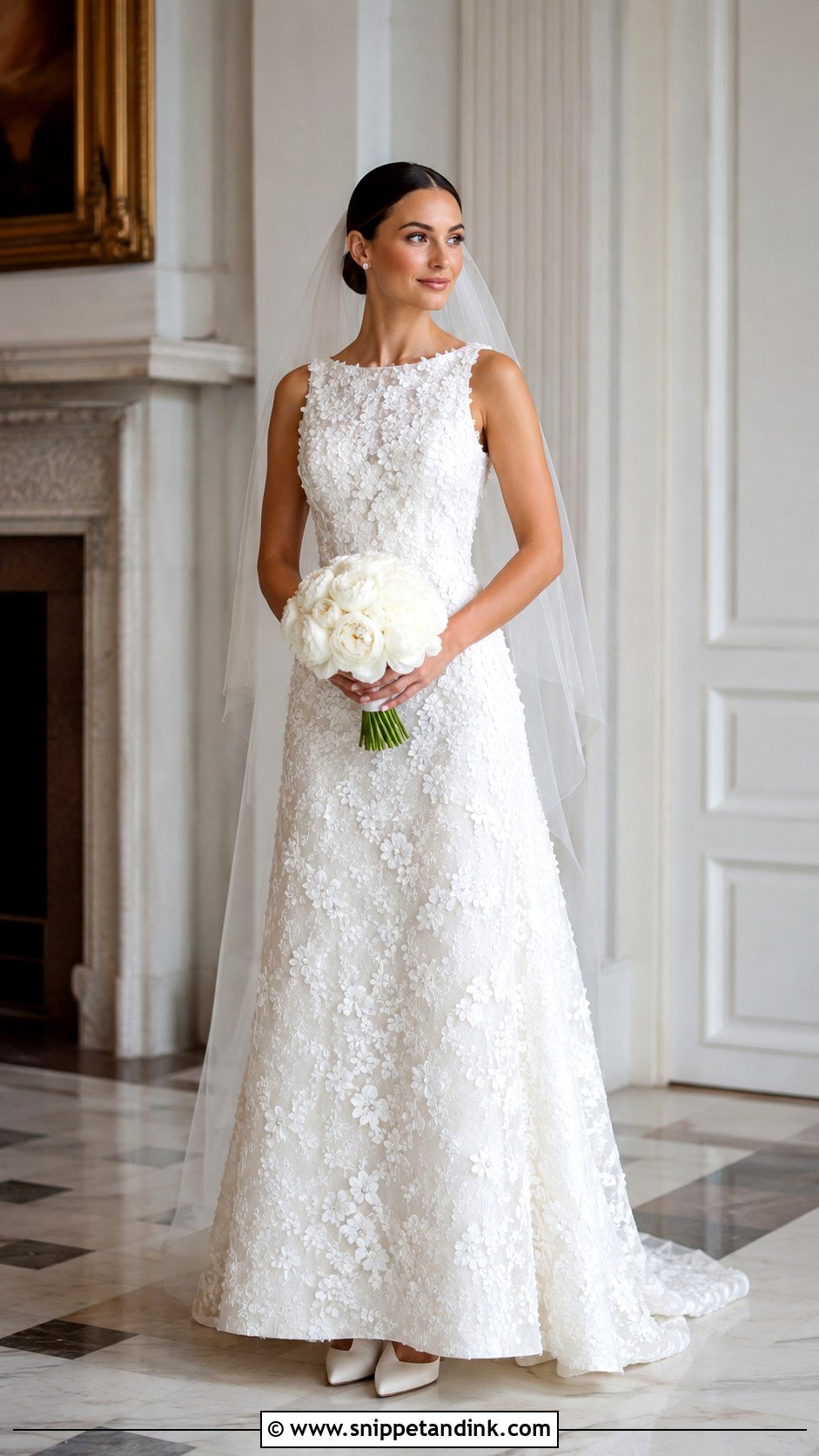
With all-over appliqué, the scale of the flowers matters more than the quantity. If the motifs stay the same size from bodice to hem, the pattern reads as intentional; mixed sizes on a fully covered gown look busy. A streamlined A-line or column keeps the decoration from overwhelming you. Accessories should almost disappear: studs, a clean-edged veil, smooth ivory pumps and a polished bun that contrasts with the texture. A single-color or greenery bouquet won’t compete. At fittings, I run a finger along every appliqué edge near the underarm and waist; a stiff, unfinished edge there rubs raw by evening.

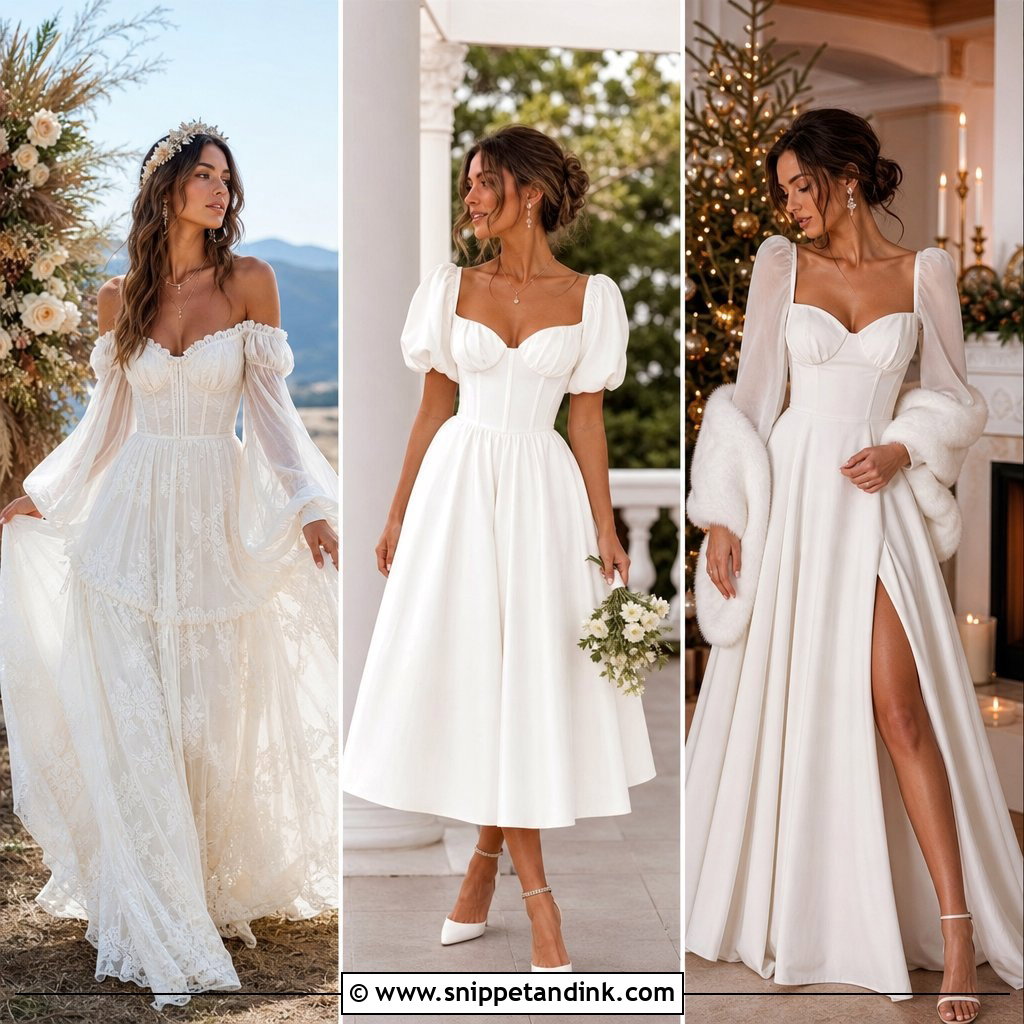
15. Pearl Floral Applique Wedding Dress
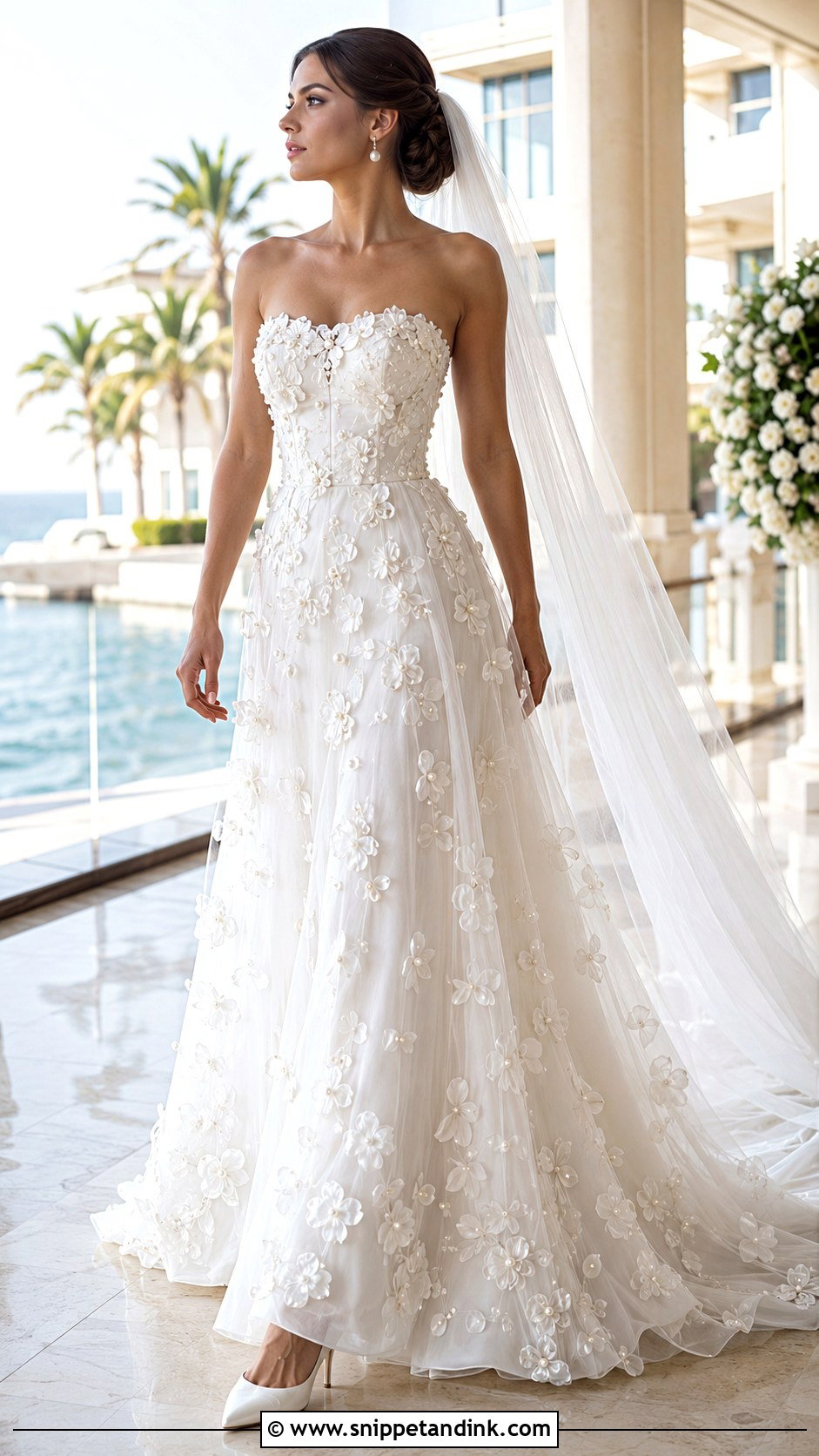
Pearl-centered flowers give soft light rather than sparkle, which I find suits daytime and candlelight equally well. Look for appliqués finished with tiny pearls at the centers or beads scattered across the surrounding tulle, on a fitted bodice and flowing skirt that lets them catch the light. Pearl earrings continue the theme; a heavily beaded necklace overloads it. A plain cathedral veil adds drama without crowding. Satin pumps, an ivory clutch for the reception and a low twisted bun finish it. Beaded gowns are heavy, so hang this one by its inner loops and never let it sit folded for weeks before the wedding.
16. Lace Floral Applique Wedding Dress
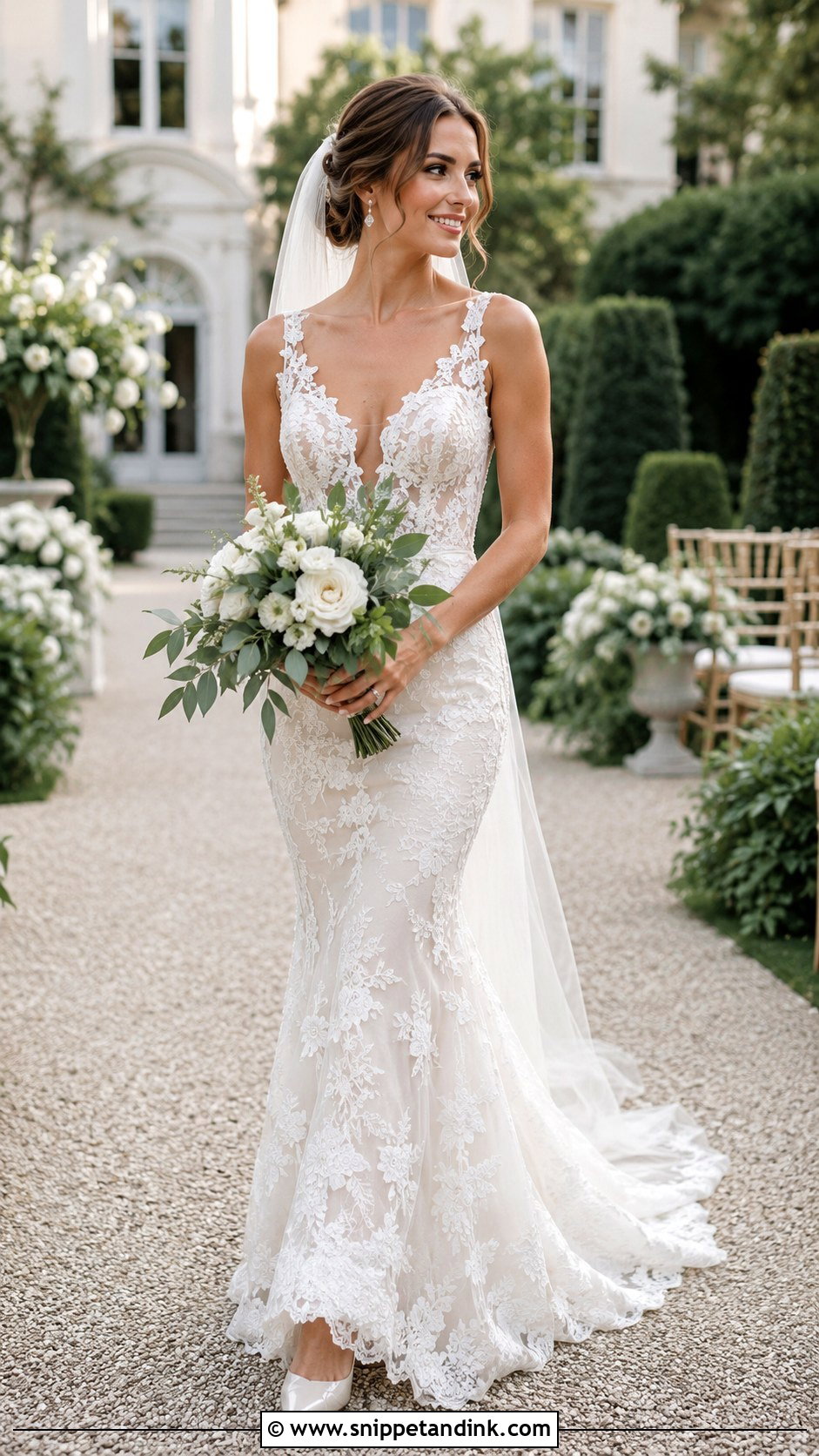
Layering appliqué onto lace gives raised texture over a flat pattern, and the best versions follow the lace’s own floral lines rather than landing at random. When the appliqué traces the motif underneath, the dress looks designed as one piece. A fit-and-flare defines the lace; an A-line softens it. Choose a lace-edged or plain veil depending on how busy the gown already is. Simple earrings, pointed heels, a bouquet with clean greenery, and soft waves or a low textured bun suit it. Compare lace patterns closely when shopping. Larger motifs read much bolder from a distance than they do in your hand.
17. Floral Applique Wedding Dress With Overskirt
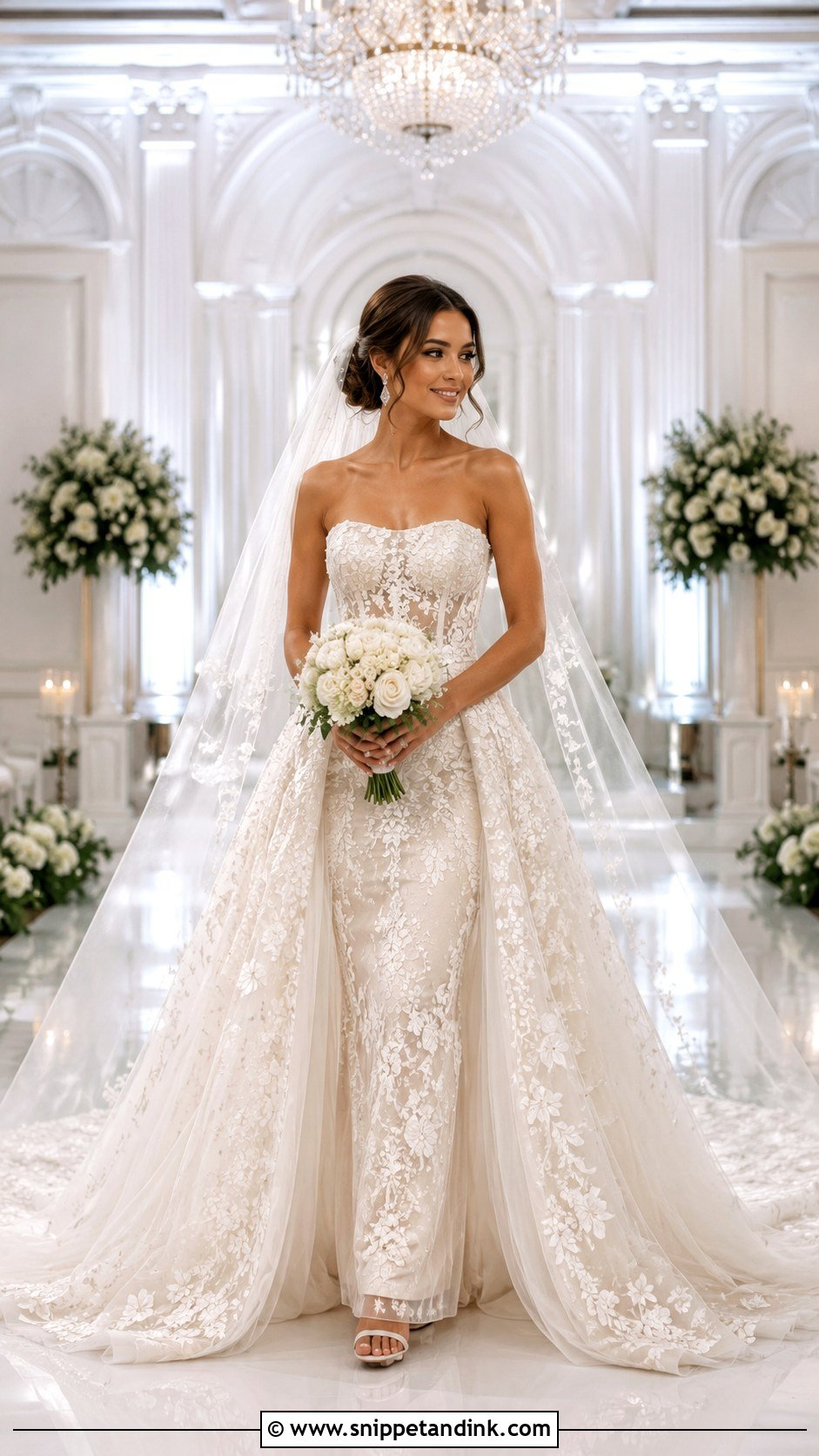
A detachable overskirt gives you two looks from one dress. Start with a fitted column, sheath, or mermaid gown, add a full tulle overskirt with cascading flowers for the ceremony, then remove it to dance. Keep the earrings, shoes and hair the same so the change feels planned. A cathedral veil suits the overskirt’s volume; a shorter one keeps things lighter. Practise taking the overskirt off before the wedding. Hooks and snaps at the back are hard to reach yourself, so assign one person to do it and show them how at the final fitting.
18. Floral Applique Wedding Dress With Cape
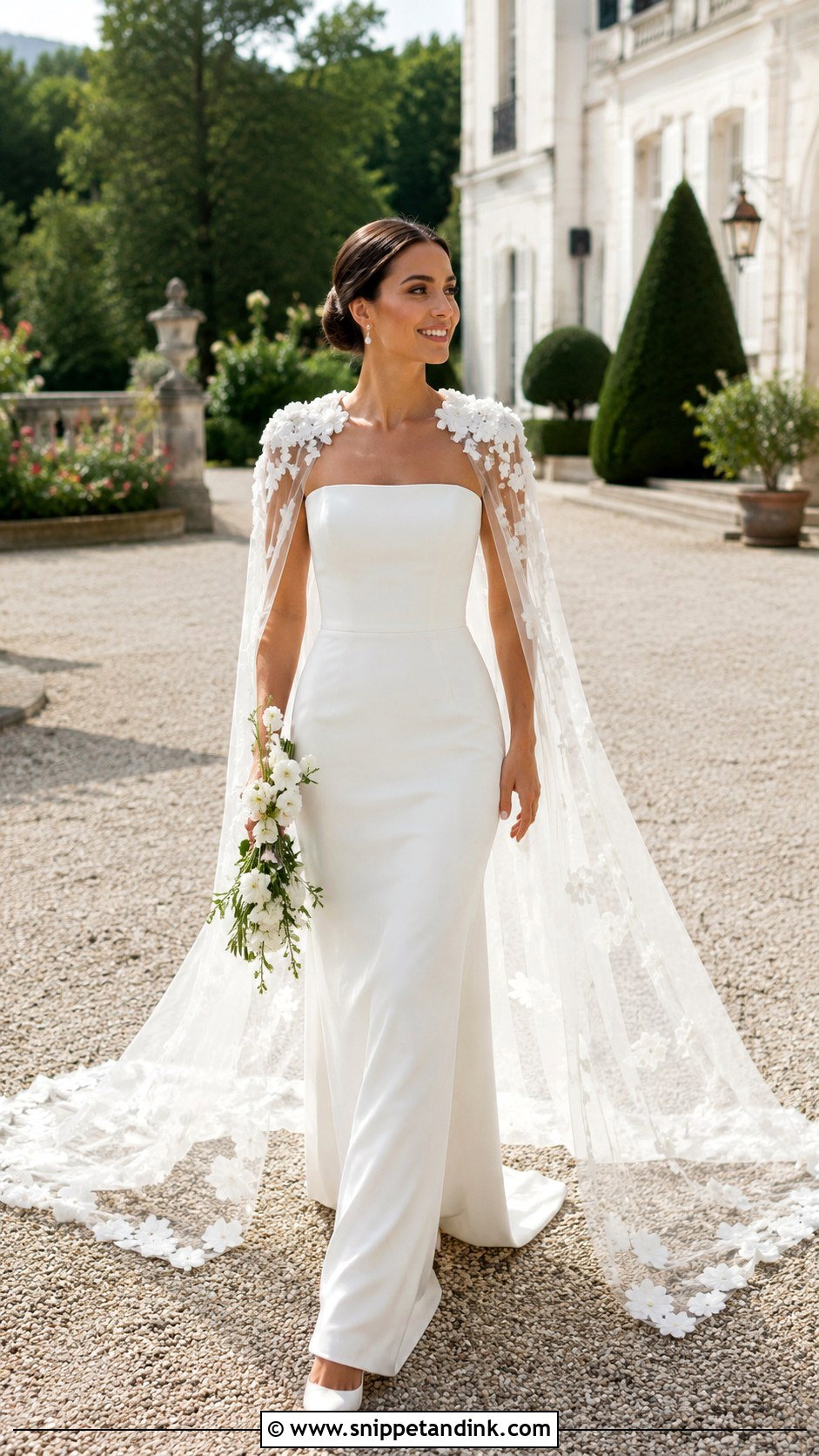
A floral cape adds movement and coverage to a simple gown, and it can stand in for a veil entirely. Start with a clean strapless, square-neck or sleeveless dress, then layer sheer tulle with flowers along the shoulders and hem. Remove it after the ceremony for a streamlined reception. A low bun, small pearl earrings and satin pumps suit it; skip the necklace if the cape closes near the neck. Carry a narrow bouquet so the front of the dress stays visible. I always check the cape against the train while walking. If the two lengths are close but not matched, the layers tangle behind you.
19. Tea Length Floral Applique Wedding Dress
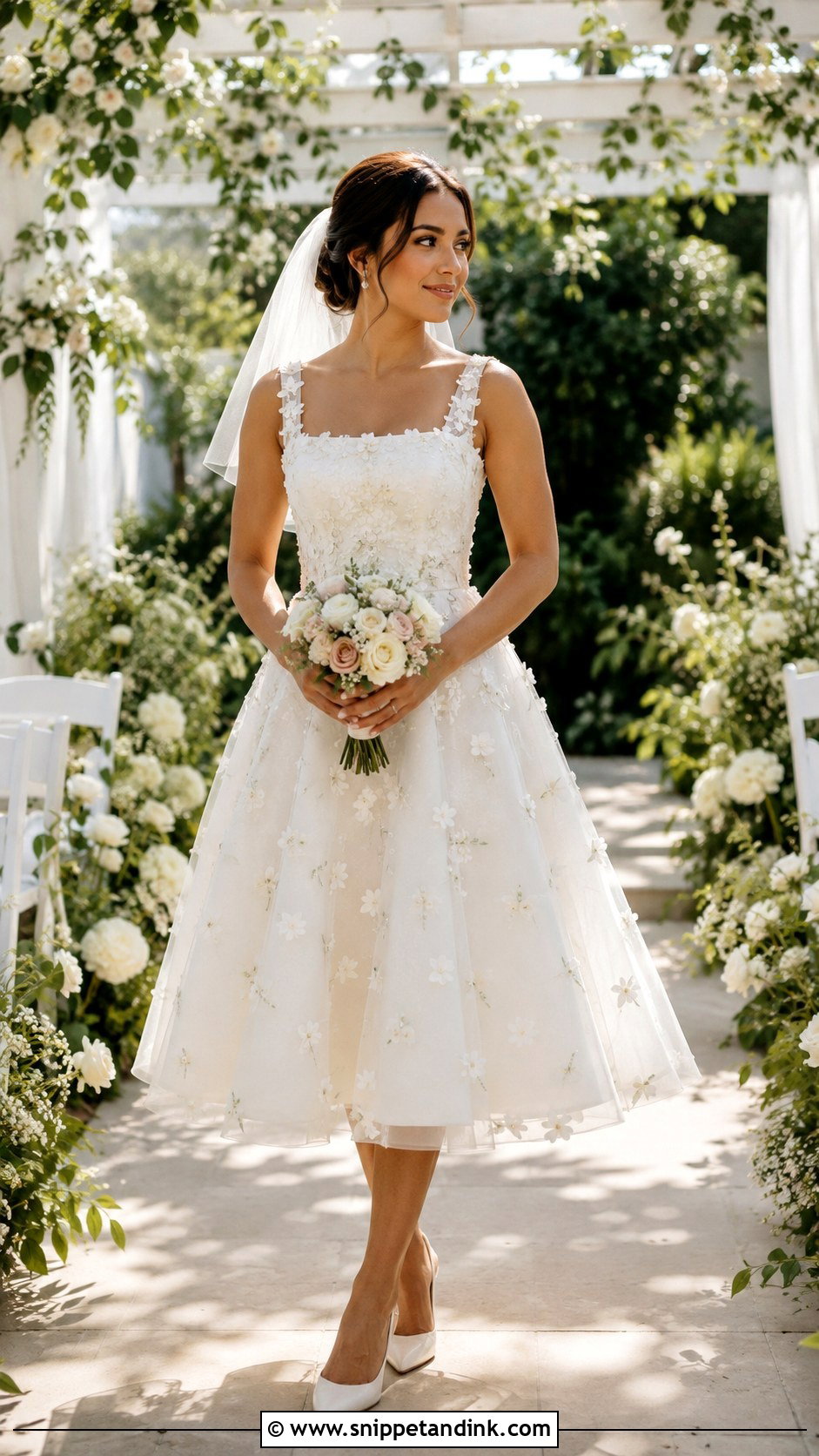
A tea-length dress shows the shoes, so the appliqués and footwear share attention. Look for a fitted bodice and full skirt ending between knee and ankle, with small flowers scattered over organza or tulle to keep it light. Pointed slingbacks, embellished flats or ankle straps all work. A birdcage veil, short tulle veil or floral comb fits the proportions far better than a cathedral length. Pearl earrings and a compact bouquet. It’s the easiest length to move in, which is why I suggest it for courthouse ceremonies, daytime weddings and restaurant receptions.
20. Mini Floral Applique Wedding Dress
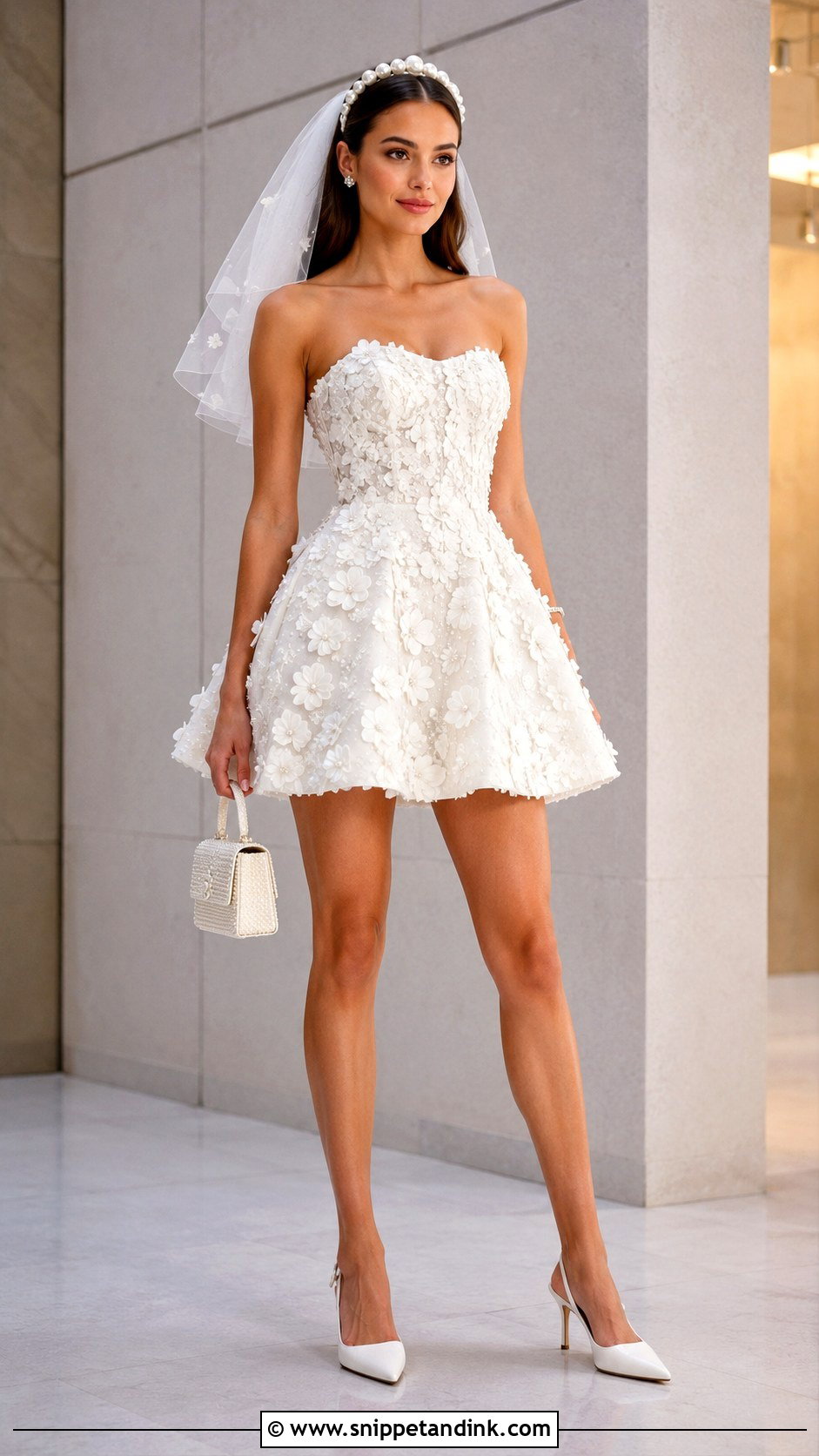
Short hemlines need polished fit everywhere else. A floral mini, whether a structured shift, fitted column or flared skirt, works best when dimensional flowers sit across the bodice and skirt and the neckline is clean and tailored. Choose shoes by how long you’ll stand: pumps or slingbacks for a short ceremony, low block heels for a long party. Swap the long veil for a short one, a pearl headband or a simple bow, and add a small top-handle bag. City weddings, welcome dinners and after-parties are where I suggest it, often as a second outfit.
After the Wedding, the 3D Petals Need Room
Raised flowers are the first part of a gown to suffer in storage. Folded tightly in a box, they flatten, and a crease set across a petal for months may never fully relax. I tell brides to have the dress professionally cleaned soon after the wedding, before food and makeup marks set, and to ask the cleaner directly whether they’ve handled dimensional appliqué and beading.
Storing it at home
- Use acid-free tissue between folds, and roll small pads of it to sit under the largest petals so they keep their lift.
- Choose a breathable cotton bag or acid-free box. Plastic traps moisture and can yellow ivory tulle over time.
- Keep it somewhere cool, dark and dry, never an attic or a damp basement.
- Open it about once a year to refold along different lines and fluff any petals that have pressed down.
If a flower comes loose during the day itself, don’t glue it. Pin it from the inside with a small safety pin and have it stitched back by hand afterwards.
Where Should the Flowers Sit on You?
The right appliqué gown is the one where the flowers suit your shape and your venue, and where you can forget about them while you move. Decide first between scattered blossoms, colored embroidery, pearl centers and large 3D petals, then pick a silhouette that supports that decoration. Keep accessories quiet around textured fabric, although a matching cape, overskirt, or veil can add drama. At every fitting, check where each flower lands on your body, and sit, walk and raise your arms before any alteration is signed off.
You'll Like These Ideas:






Leave a Reply