
Embroidery gives a gown texture you only notice properly when you’re standing next to the bride, and that closeness is exactly why I love styling it. Thread can read romantic, modern, vintage or playful depending on the motif, where it’s placed and what you wear with it. Right now I’m seeing a lot of raised 3D flowers, pearl work, sheer embroidered sleeves, soft colored thread and garden motifs, all of which suit brides who want something personal rather than strictly traditional. Embroidered gowns travel well between venues, from a garden ceremony to a courthouse or a reception change. Start from your venue, how much you want to feel the dress on your body, and your own taste. The ideas below cover the gown and everything you’d wear with it.
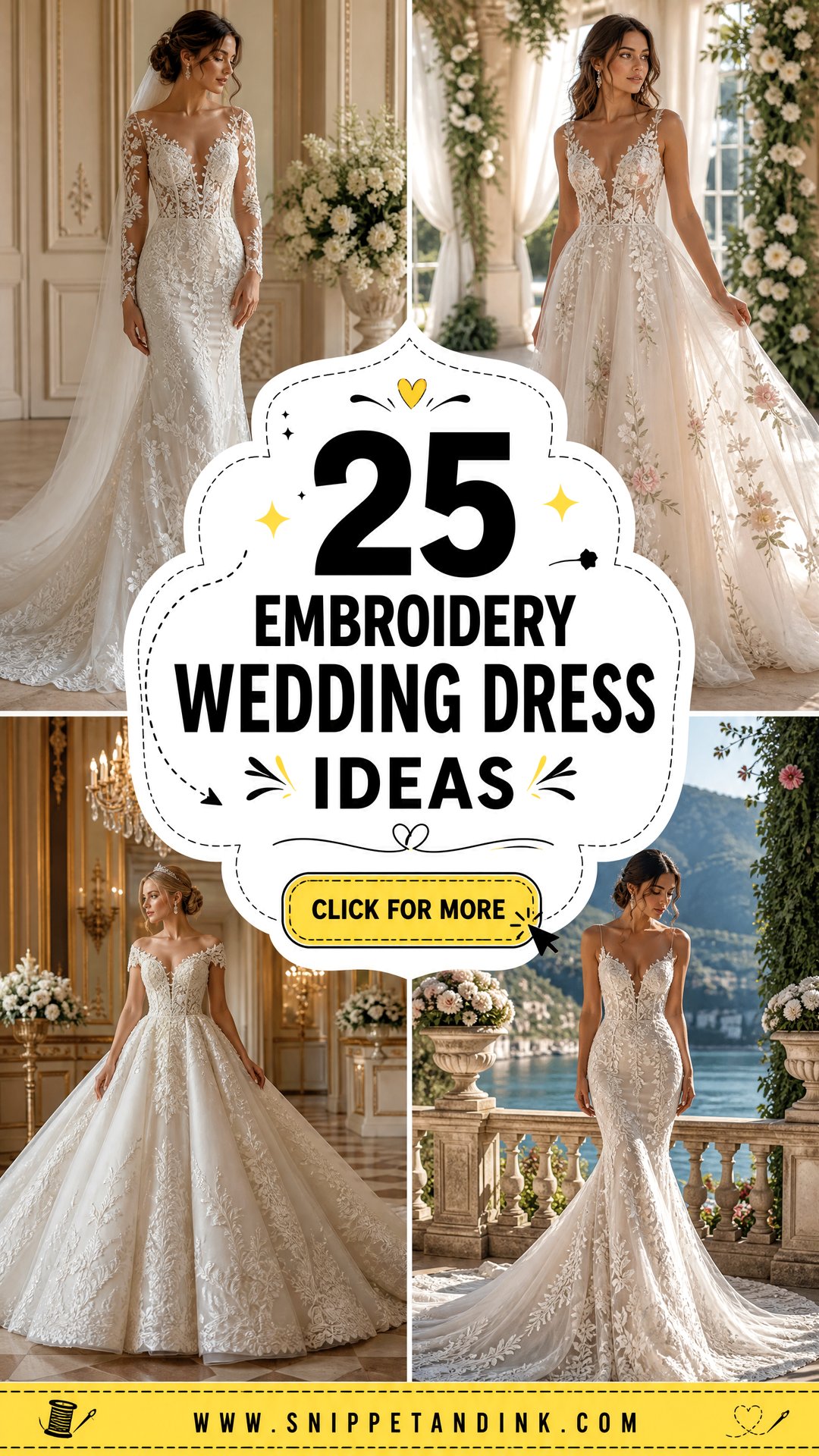
Where the Thread Sits Changes Your Shape
Embroidery draws the eye, so wherever it sits on the gown is where people look first. I use that deliberately at fittings. Before you fall for a motif, decide which part of you the dress should highlight.
- Dense work at the neckline and shoulders lifts attention to your face, which suits close portraits and petite frames.
- Embroidery tapering down from the waist, thick at the bodice and sparse at the hem, makes you look taller.
- Motifs running in a vertical line down the skirt lengthen the body; a heavy horizontal band at the hip widens it.
- Detail concentrated at the back and train works if your ceremony puts guests behind you for most of the vows.
Scale matters as much as placement. Large blooms on a small frame can swallow you, while tiny scattered flowers on a big full skirt read as texture from a distance. I stand across the room from the bride before deciding, because that is how most guests will see the dress.
1. Floral Embroidery Wedding Dress
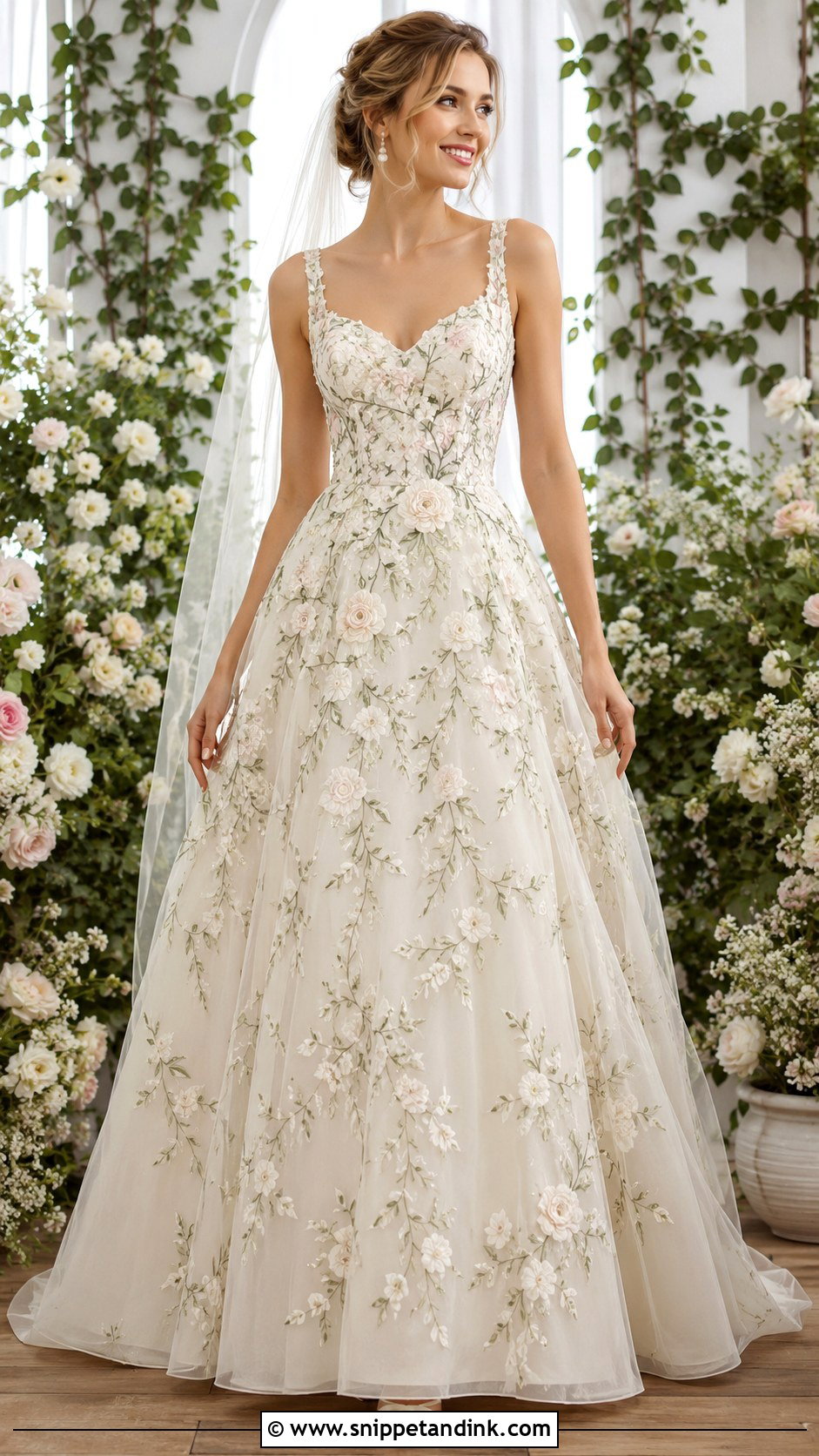
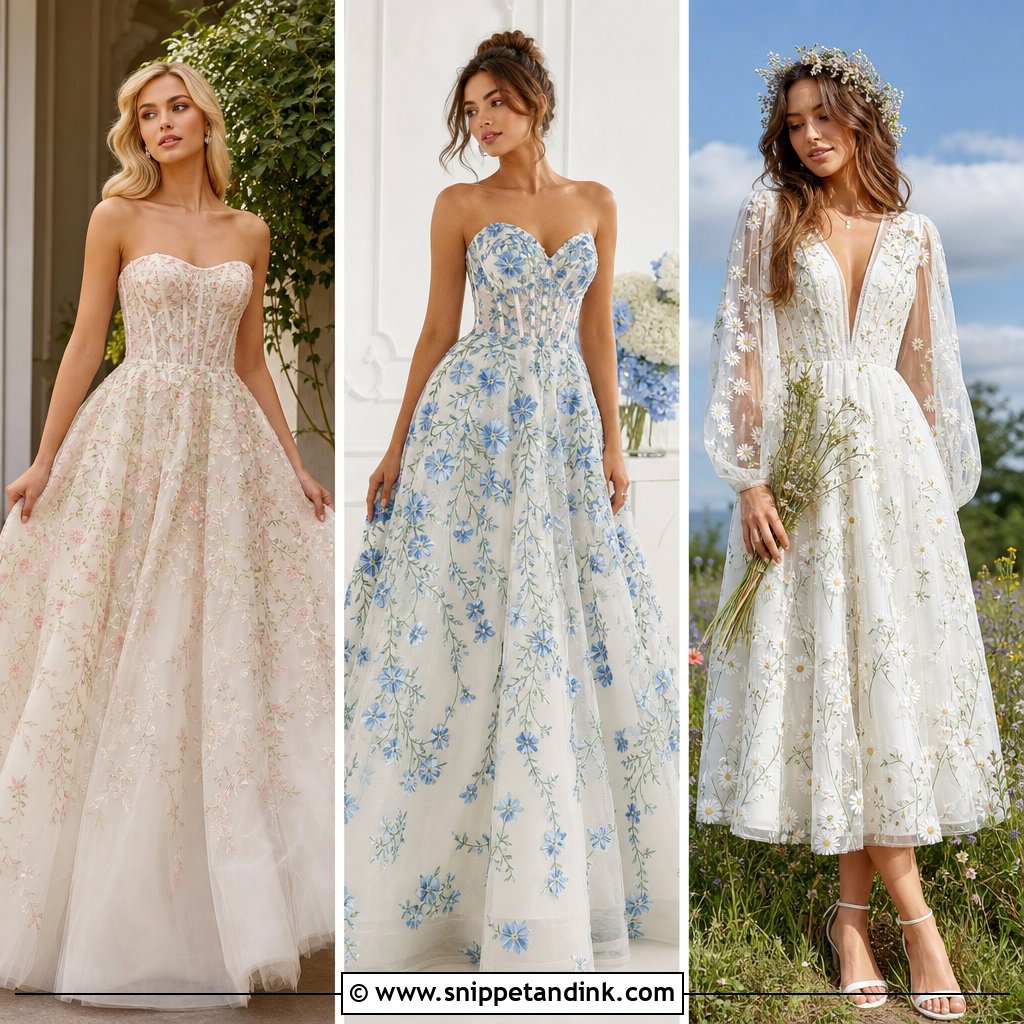
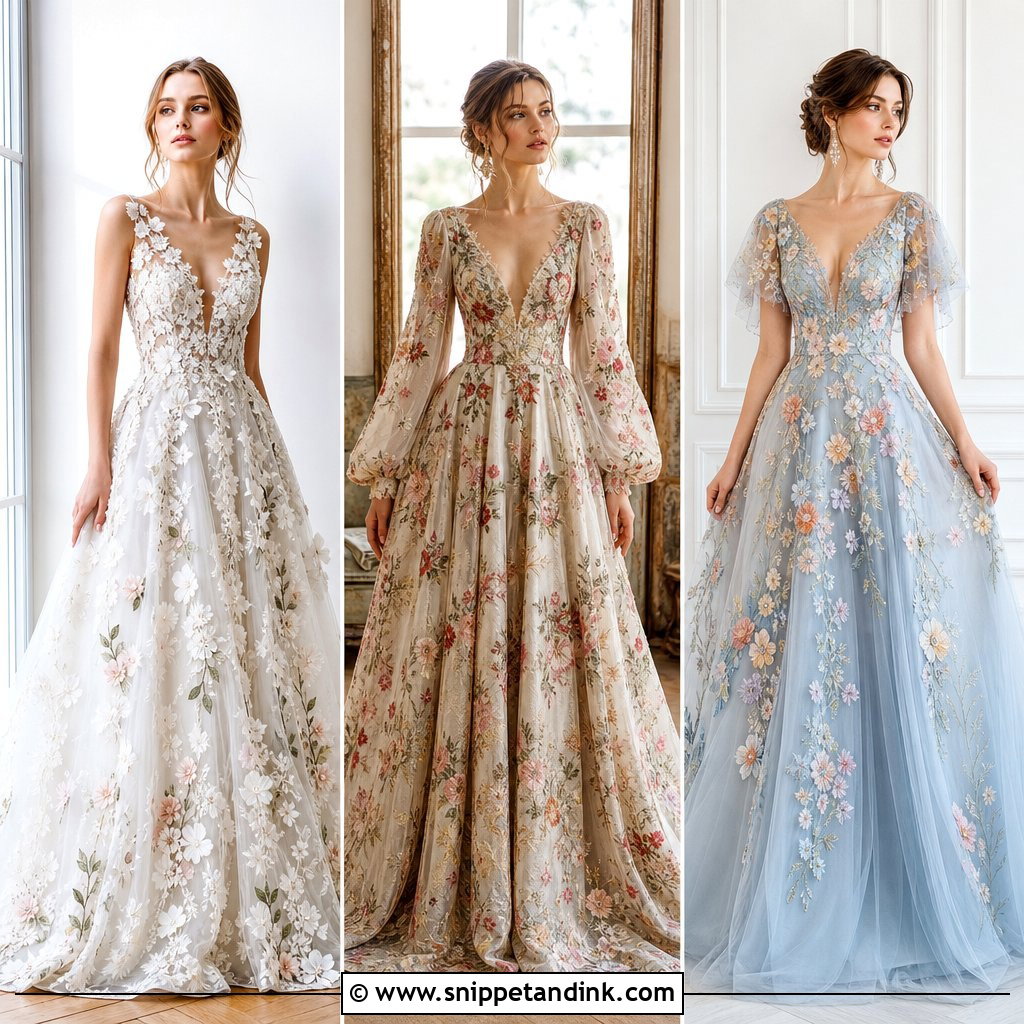
Scattered stitched roses, vines or wildflowers over an ivory A-line, thickest at the bodice and drifting down the skirt. I’d pair it with a sheer veil, pearl drops and plain ivory heels. In a garden, pastel thread in blush, sage or pale blue looks right; indoors at a classic venue, tonal thread is calmer. Leave space between the flowers. When motifs crowd together on a fitted bodice, they blur into texture at any distance beyond a few feet. Keep the bouquet simple.
2. 3D Floral Embroidery Wedding Dress
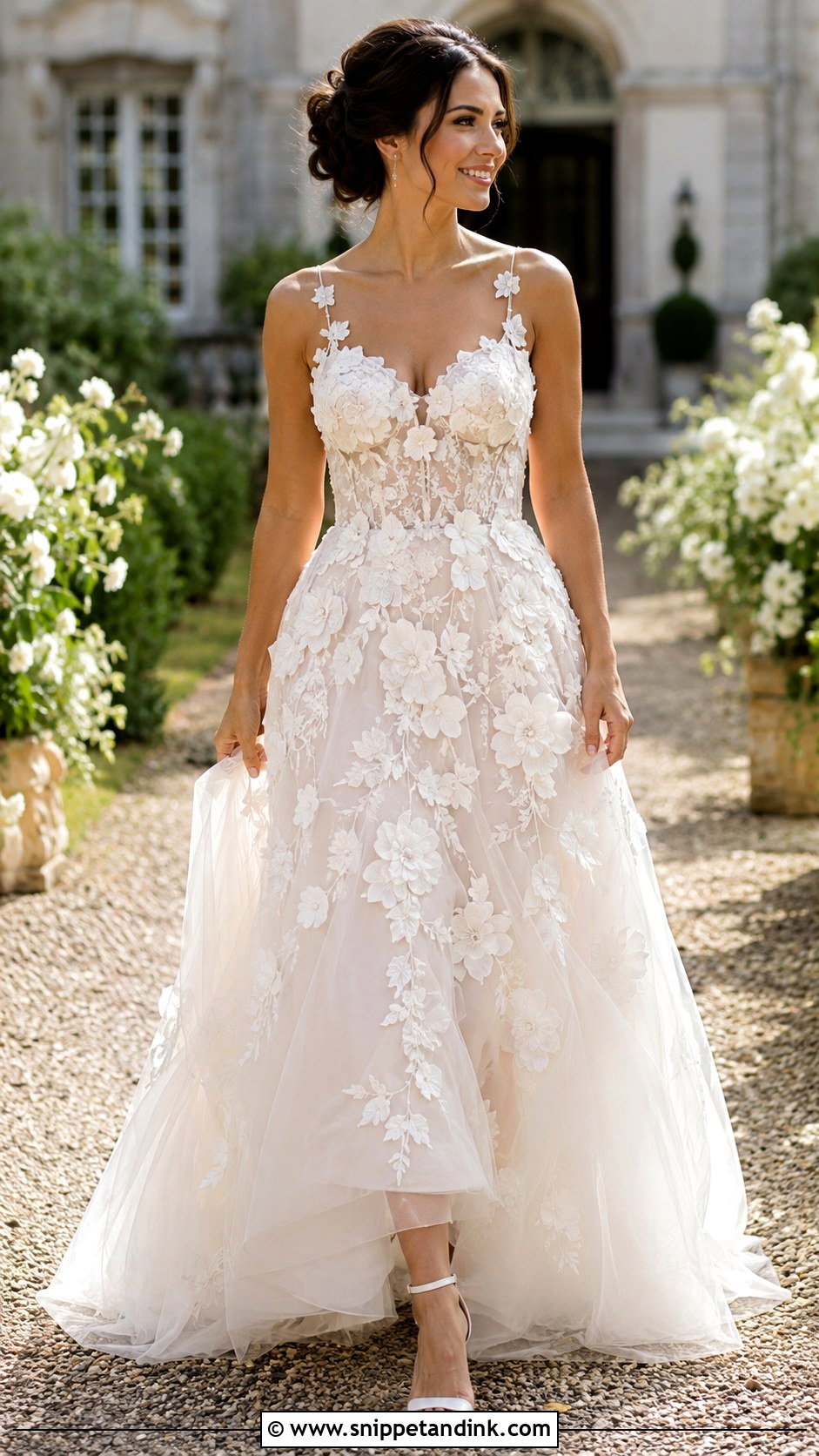
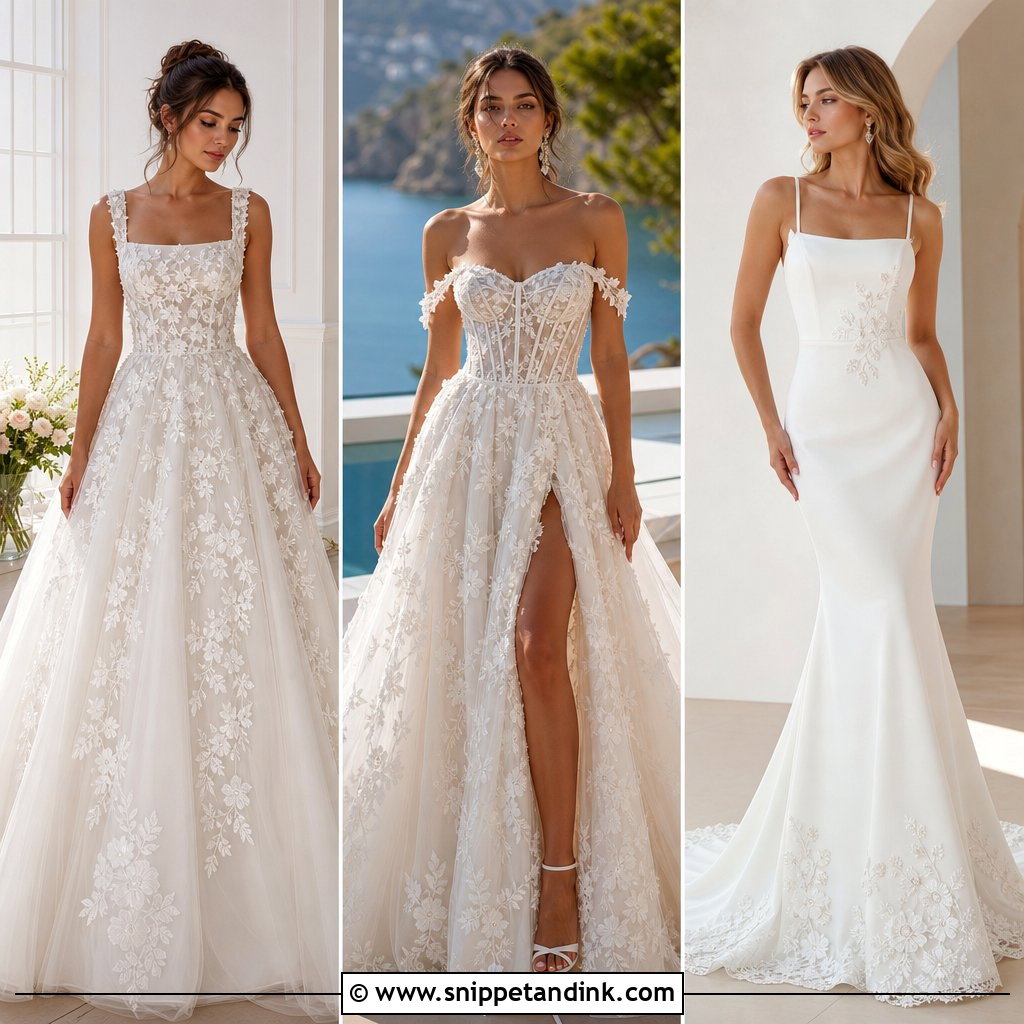
Raised petals and layered appliqués move when you walk, and that movement is what makes them read in photos. Put them at the neckline, waist and train on a ball gown, A-line or fitted shape. Sleek hair, small jewelry and satin heels keep it balanced. With this much texture, a plain tulle veil is the only sensible choice; anything edged in lace will catch on the petals. My honest warning: 3D flowers crush when you sit for a long dinner or a car ride, so I fluff them with a cool hairdryer before the reception entrance.
3. Pearl Embroidery Wedding Dress
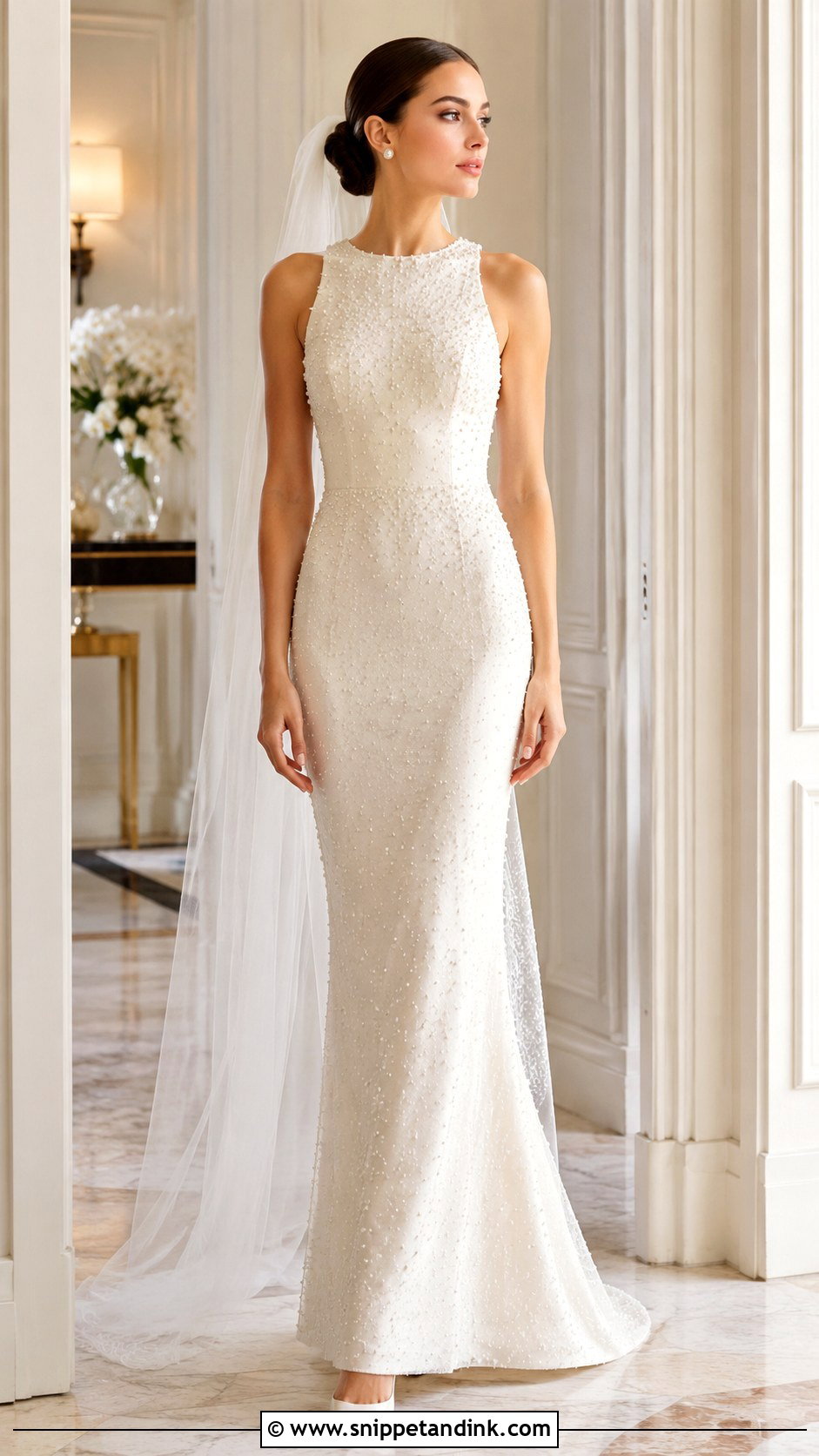
Pearls give a soft glow rather than sparkle. Stitched into lace, tulle or satin at the neckline, sleeves, waist or train, they suit a fitted sheath, a soft mermaid or a classic A-line. Pearl studs, a smooth low bun and pointed ivory pumps. If the gown’s pearl work is light, a pearl-trimmed veil can echo it; if it’s heavy, leave the veil plain. Hand-sewn pearls loosen with wear, and I always check the threads on the ones at the underarm and waist, where the fabric rubs most. Hotel ballrooms and formal receptions suit this one.
4. Lace Embroidery Wedding Dress
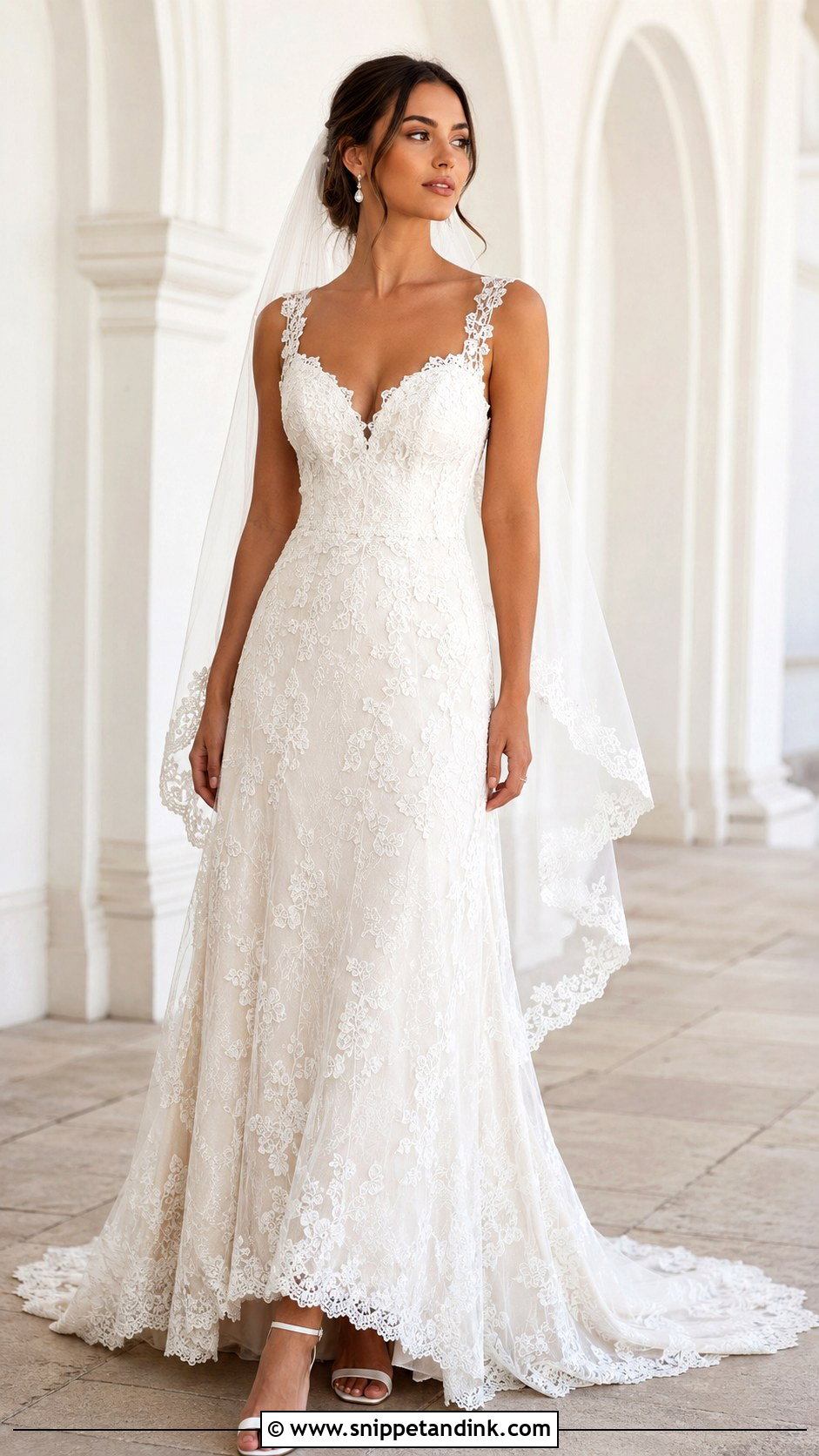
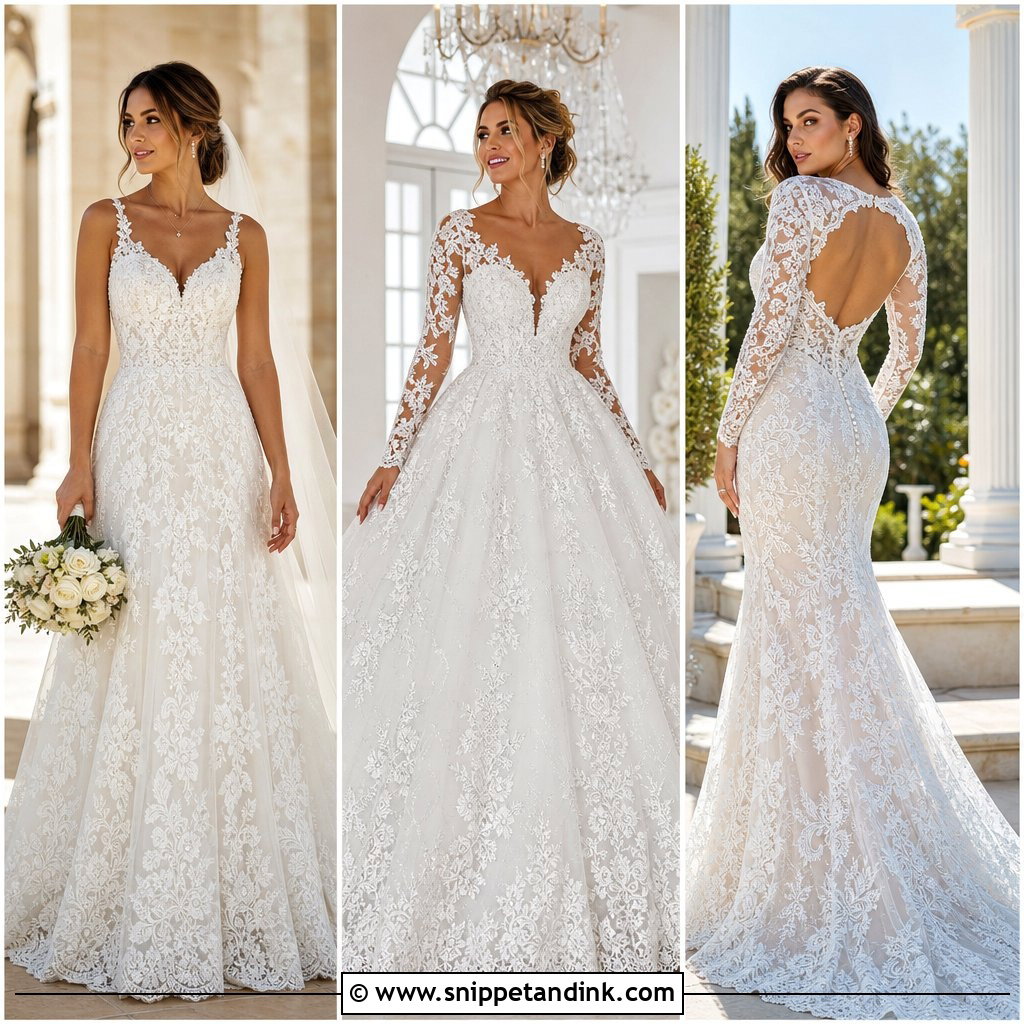
Flat lace from neck to hem can look dated. What updates it is raised threadwork, beading or embroidered edges sitting on top of the lace. A fitted lace bodice with an airy skirt is the most wearable version; allover embroidered lace is more dramatic and heavier. Soft waves, a fingertip veil and ankle-strap heels. If there’s a scalloped hem, hem the dress to your shoe height so the scallops clear the floor instead of folding under. Country clubs and historic houses both suit it.
5. Tulle Embroidery Wedding Dress
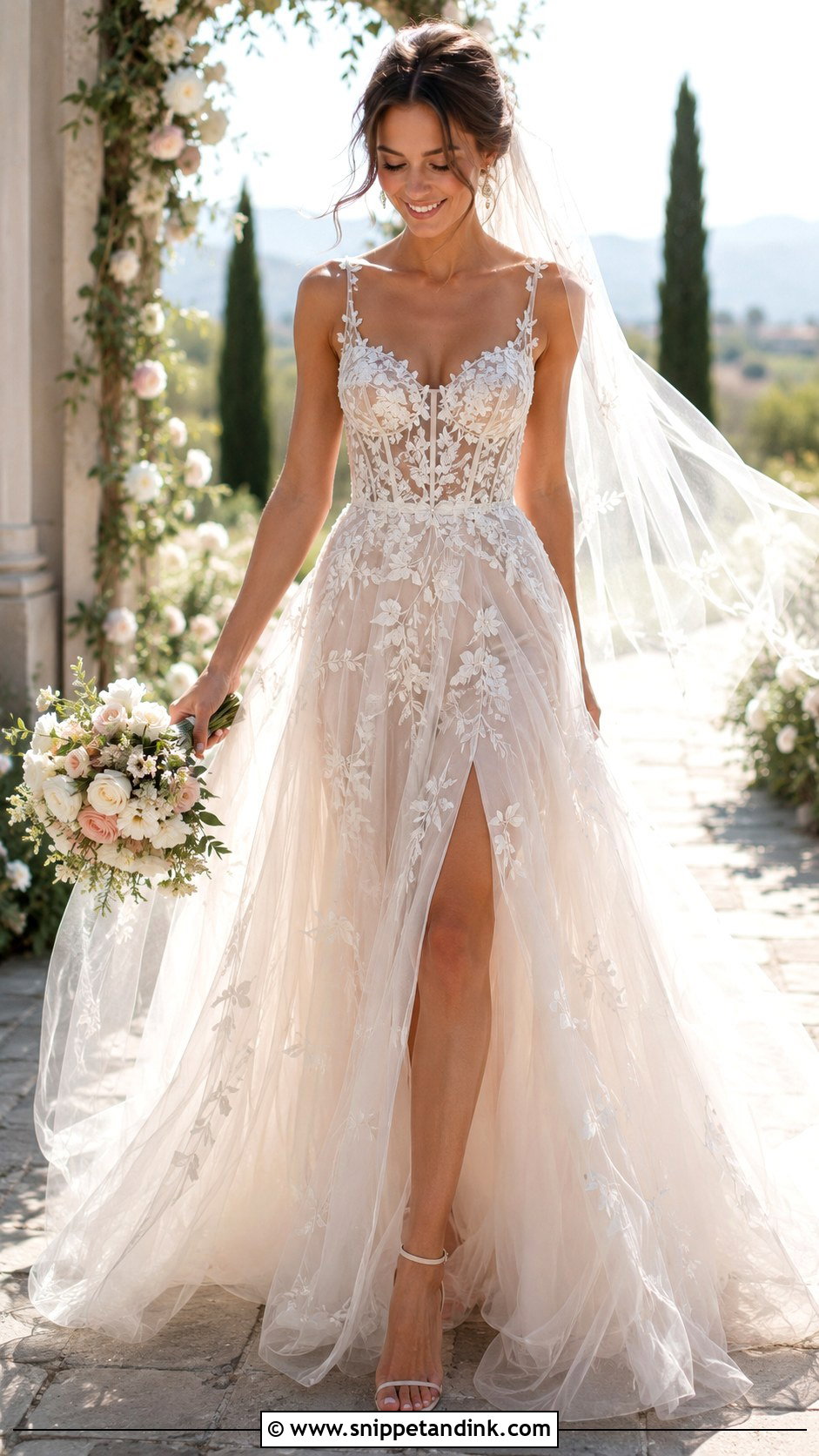
Embroidery on sheer tulle looks as if it’s floating, which is the whole charm. Vines, stars, leaves or pearl work stay light because there’s no solid fabric behind them. Choose a fitted bodice with a full tulle skirt for volume, or a slim tulle column if you want less. Barely-there heels, a soft veil and small earrings. Outdoors, the skirt moves in any breeze. Tulle snags on rough wood and stone, though, so think about where you’ll sit and stand for portraits.
6. Colorful Embroidery Wedding Dress
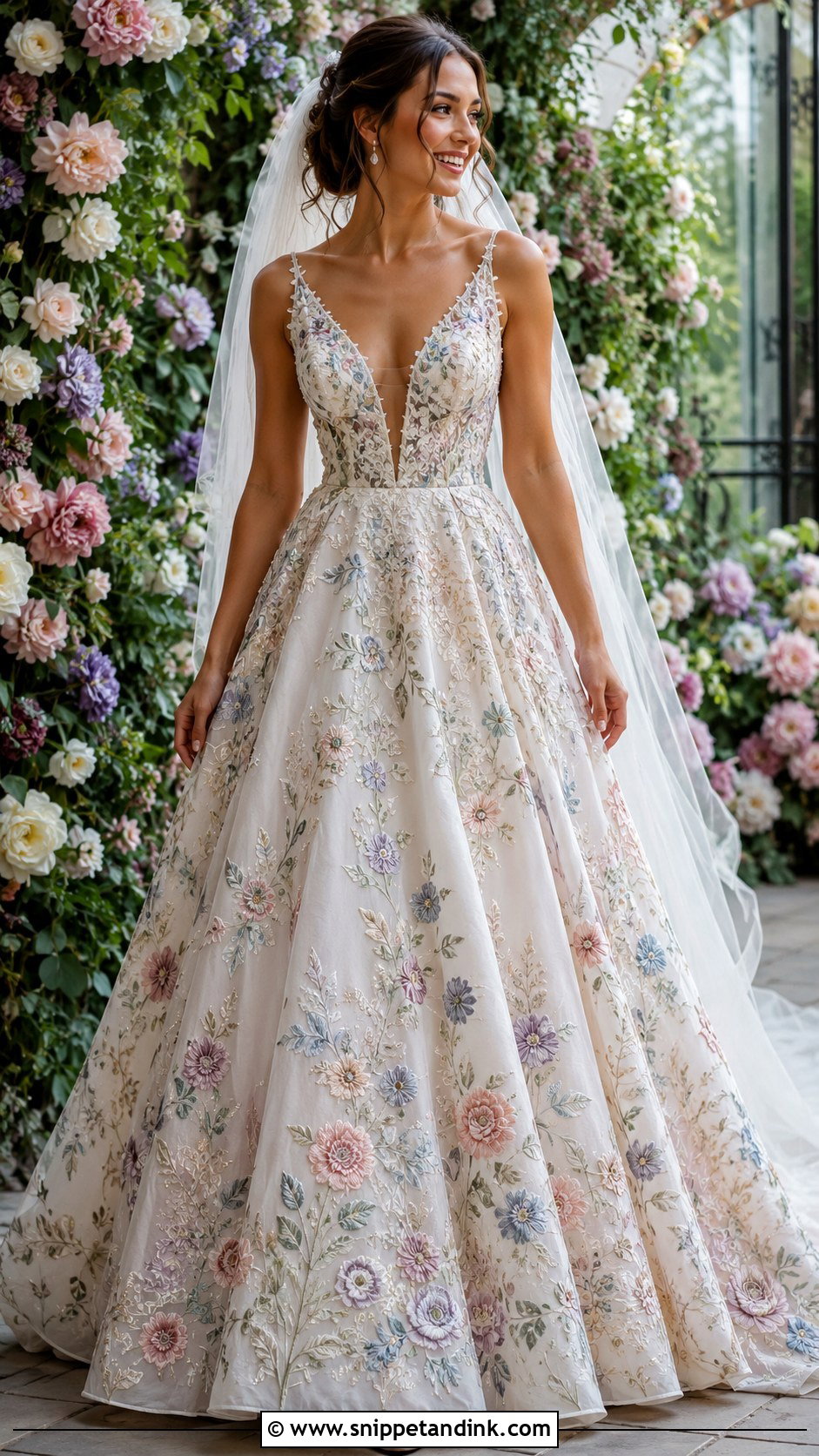
Color on white keeps you looking bridal while showing your taste. Ivory fabric with flowers in blush, lavender, blue, green or gold reads artistic. I tie the thread to something real, like the bouquet or the venue’s own flowers, rather than inventing a palette from scratch. A soft A-line with color across the bodice and hem is the gentlest version. Neutral heels, simple earrings and a veil with little or no detail. Garden weddings and creative venues are where it feels most natural.
7. Blue Embroidery Wedding Dress
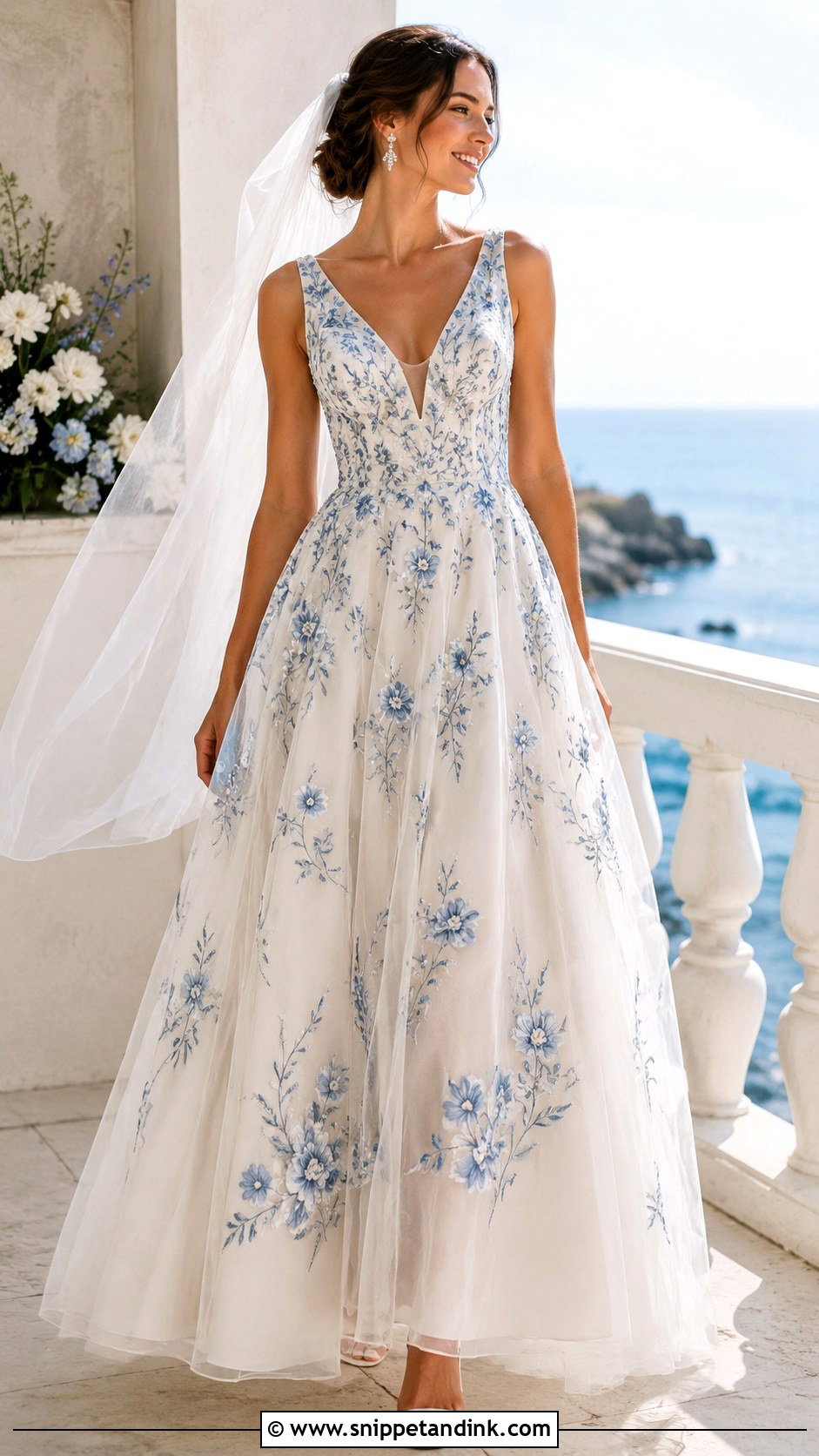
A “something blue” built into the dress itself. Pale blue on ivory looks delicate; deeper blue reads more artistic and noticeable. Branches, small bows, vines and botanical motifs all suit blue thread. Silver jewelry, ivory shoes and a white bouquet with a few blue accents, plus a clean veil. Pale blue thread can fade toward grey in bright sun, so I check it outdoors before the final fitting. It sits well at a coastal or spring wedding.
8. Gold Embroidery Wedding Dress
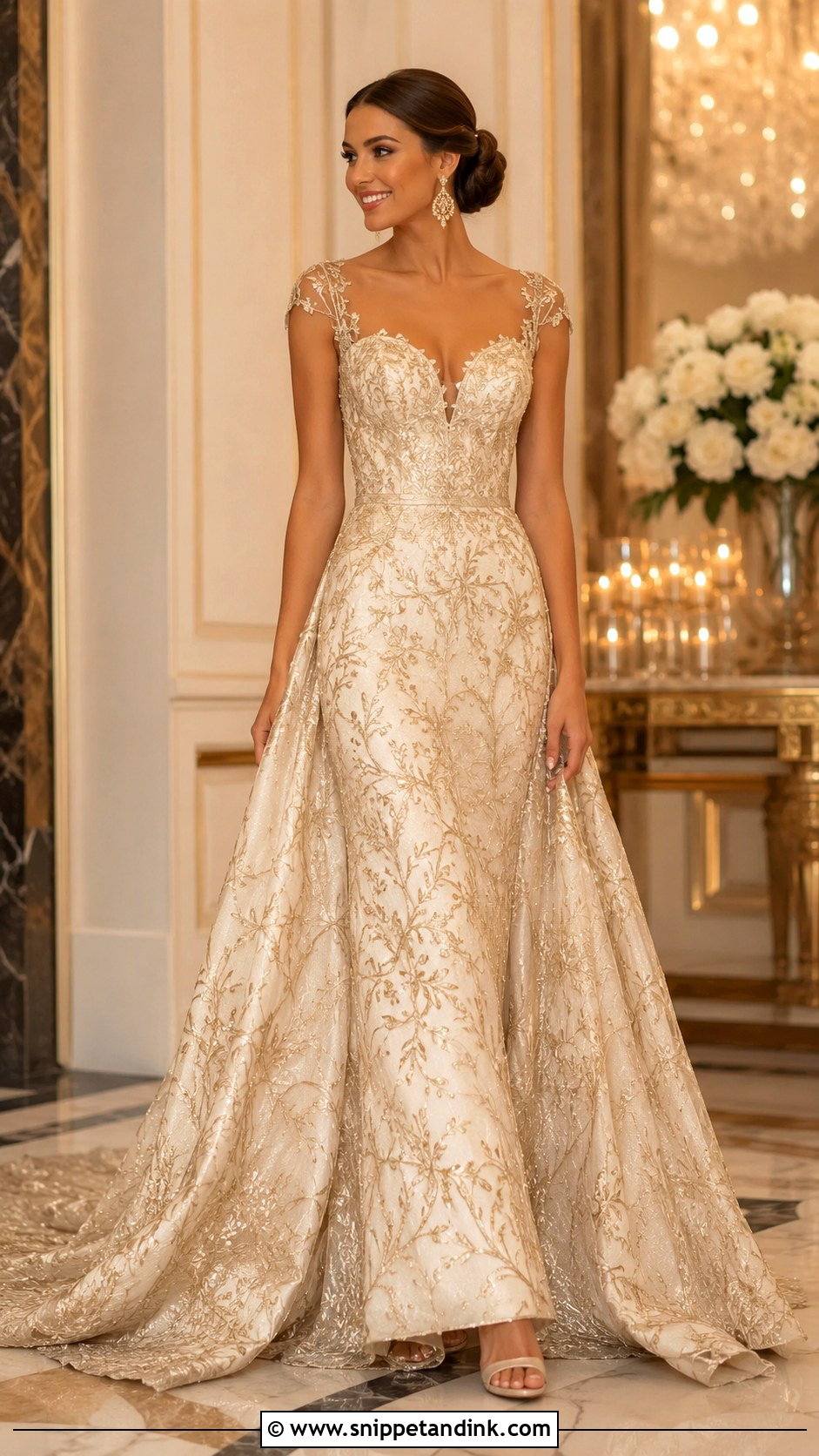
Gold thread on ivory, champagne or warm white looks rich without any sparkle. It suits vine, baroque, floral, or sunburst patterns. Run it along the bodice and train of a slim gown for a regal line, or across a softer A-line. Gold earrings, champagne heels and a smooth updo. Keep the bouquet cream so the gold reads. Metallic thread is scratchy against bare skin, so I ask whether the inside of the bodice is lined over the embroidery; if not, a soft lining underneath is an easy fix. Evening light is where gold thread shines.
9. Sheer Sleeve Embroidery Wedding Dress
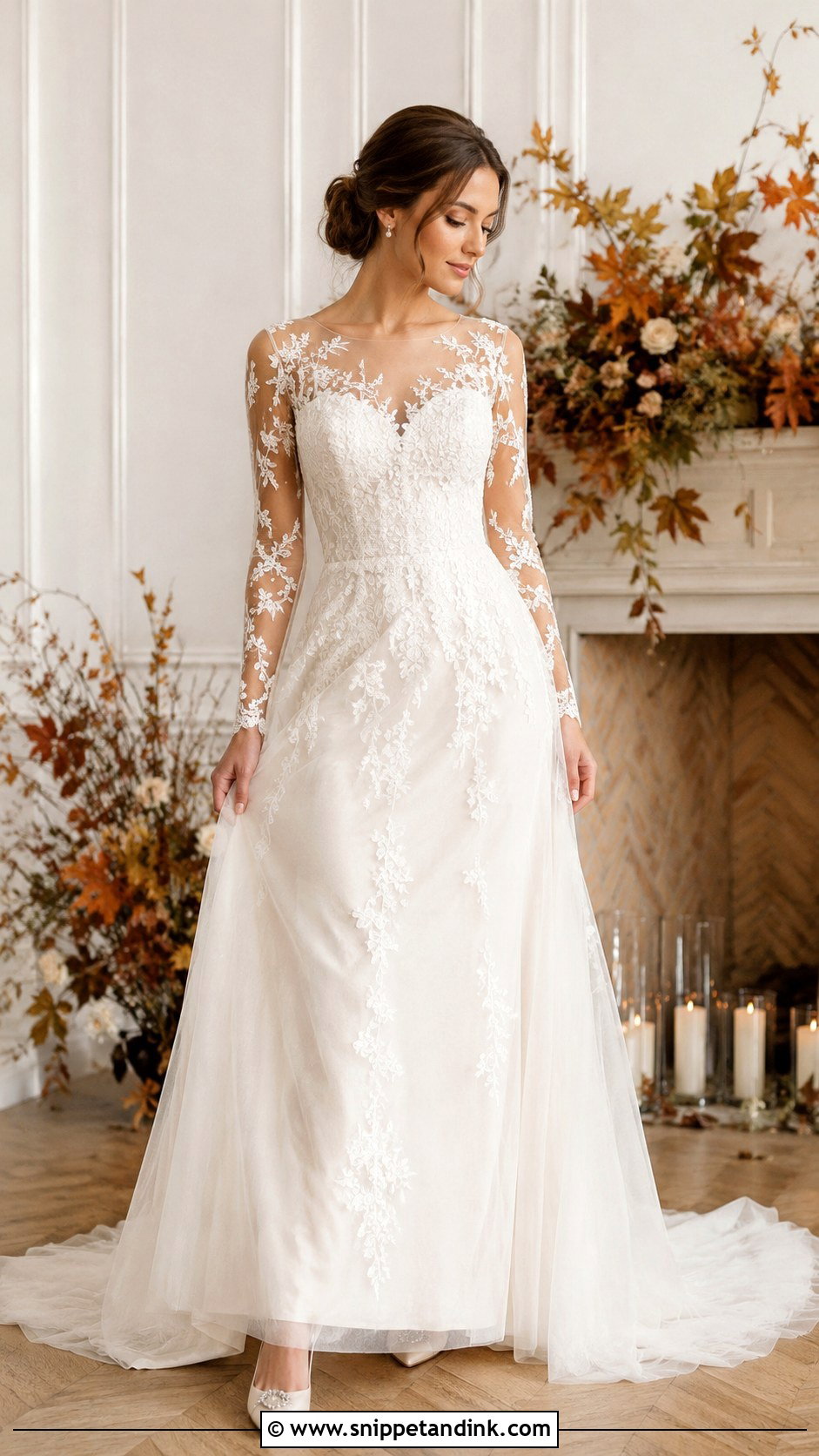
Illusion sleeves give you coverage without bulk, and embroidery on them frames the arms. Flowers, vines or pearls on sheer mesh, with a fitted bodice and soft skirt. Low bun, small earrings, classic ivory heels. If the sleeves are the feature, skip bracelets; they catch on the mesh at the wrist. I always have a bride cross her arms and reach forward at fittings, because sheer sleeves without enough ease tear at the underarm seam. Fall weddings and formal venues suit them.
10. Long Sleeve Embroidery Wedding Dress
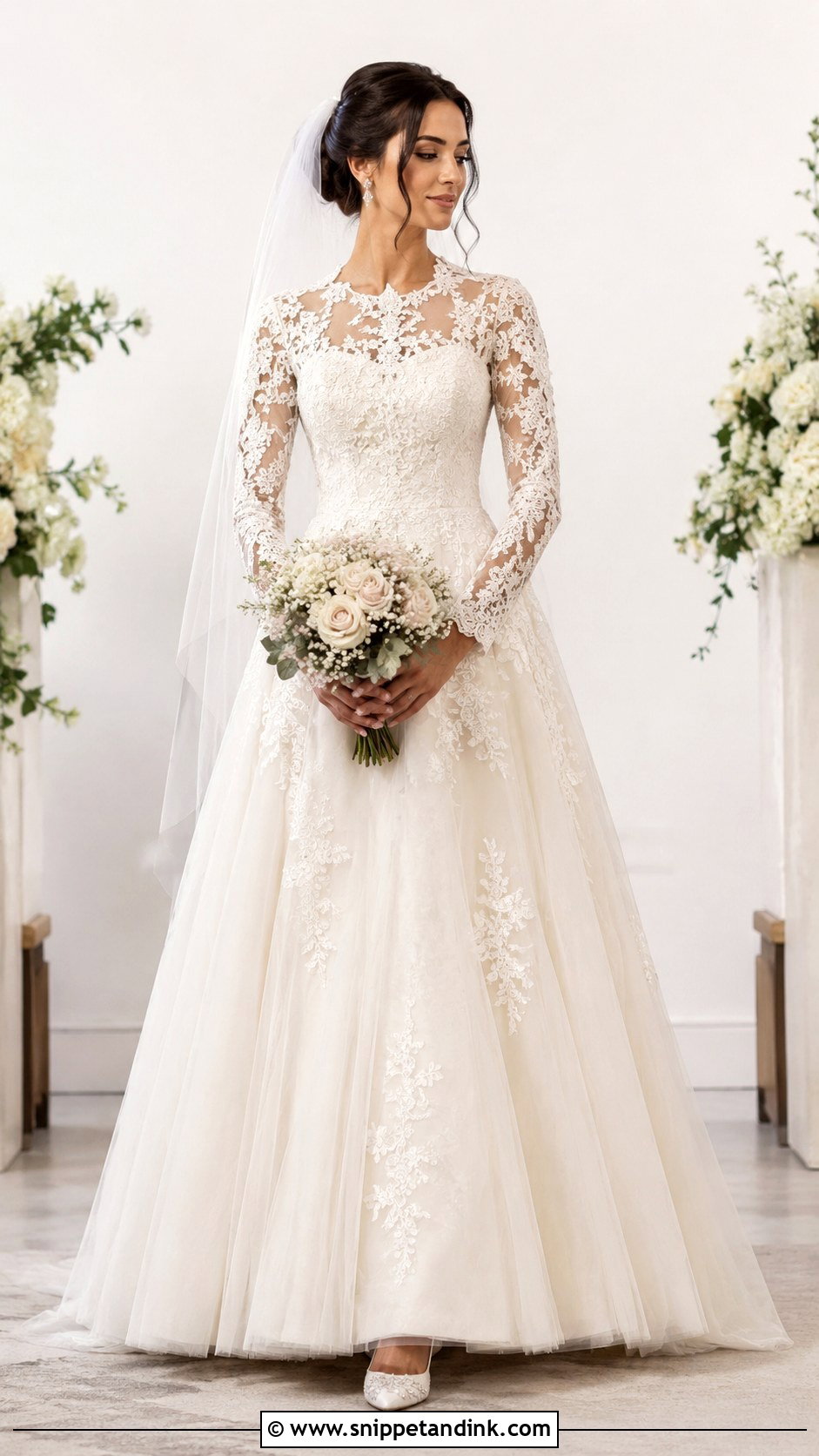
Embroidery that runs from the bodice down onto the arms makes the gown interesting from every angle, including the back. Floral lace, scattered pearls or fine vines work. With a fitted crepe skirt it looks modern; with a full skirt, more classic. Closed-toe heels, a soft veil, refined earrings. Embroidered sleeves are warmer than plain mesh, so I’d keep this one for cooler weather or indoor ceremonies with good air conditioning.
11. Off Shoulder Embroidery Wedding Dress
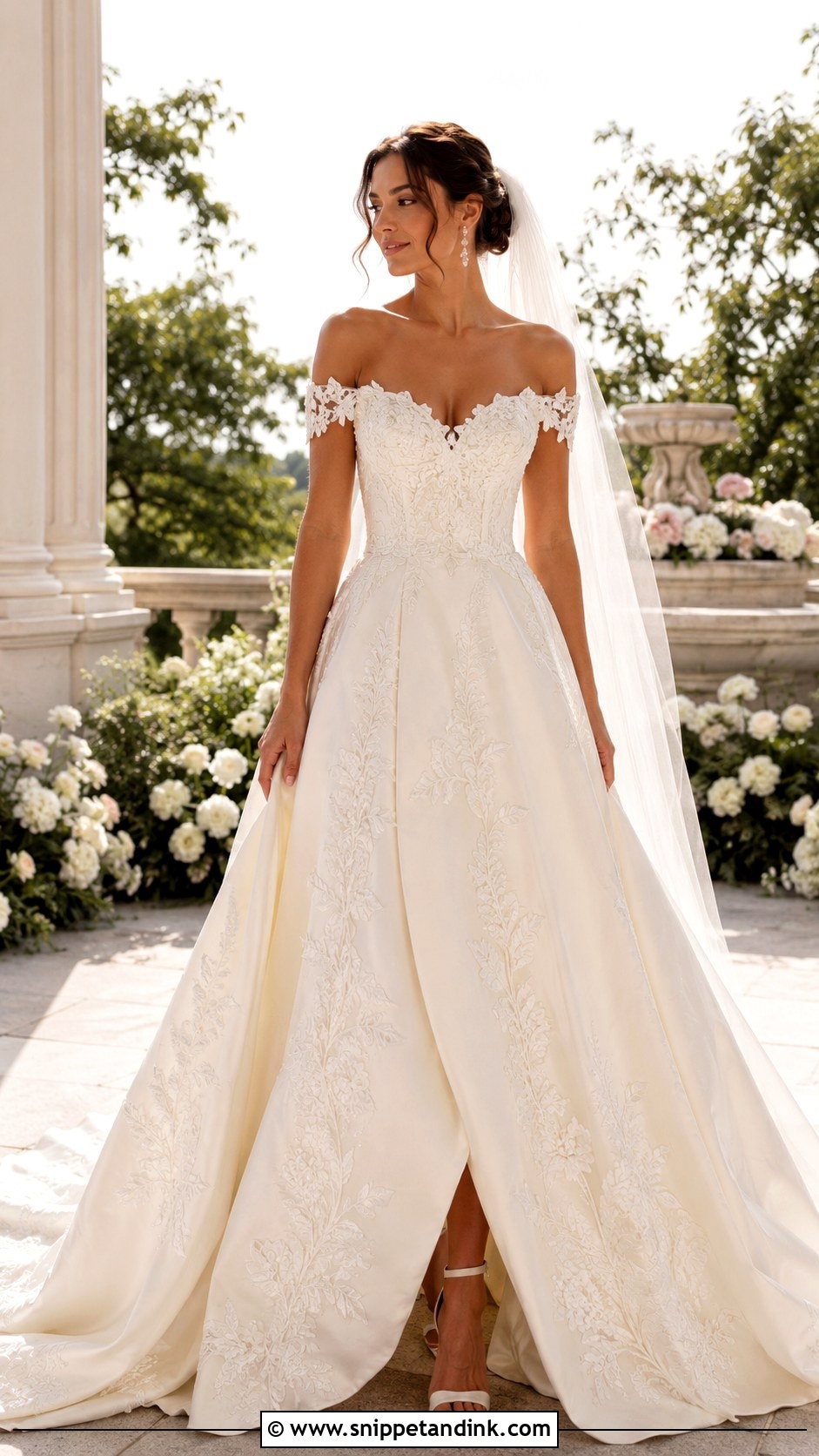
Off-shoulder embroidery frames your collarbones and shoulders so well that a necklace becomes unnecessary. Floral appliqué, lace embroidery or pearl threadwork along the neckline, bodice and skirt. Pair a fitted bodice with a full skirt for drama or a slim one for a modern line. Drop earrings, a polished updo, simple heels and a plain veil set behind the updo so the neckline stays visible. Off-shoulder bands restrict how high you can lift your arms, so check that before the dress is finished. Summer ballrooms and outdoor ceremonies suit it.
12. Corset Embroidery Wedding Dress
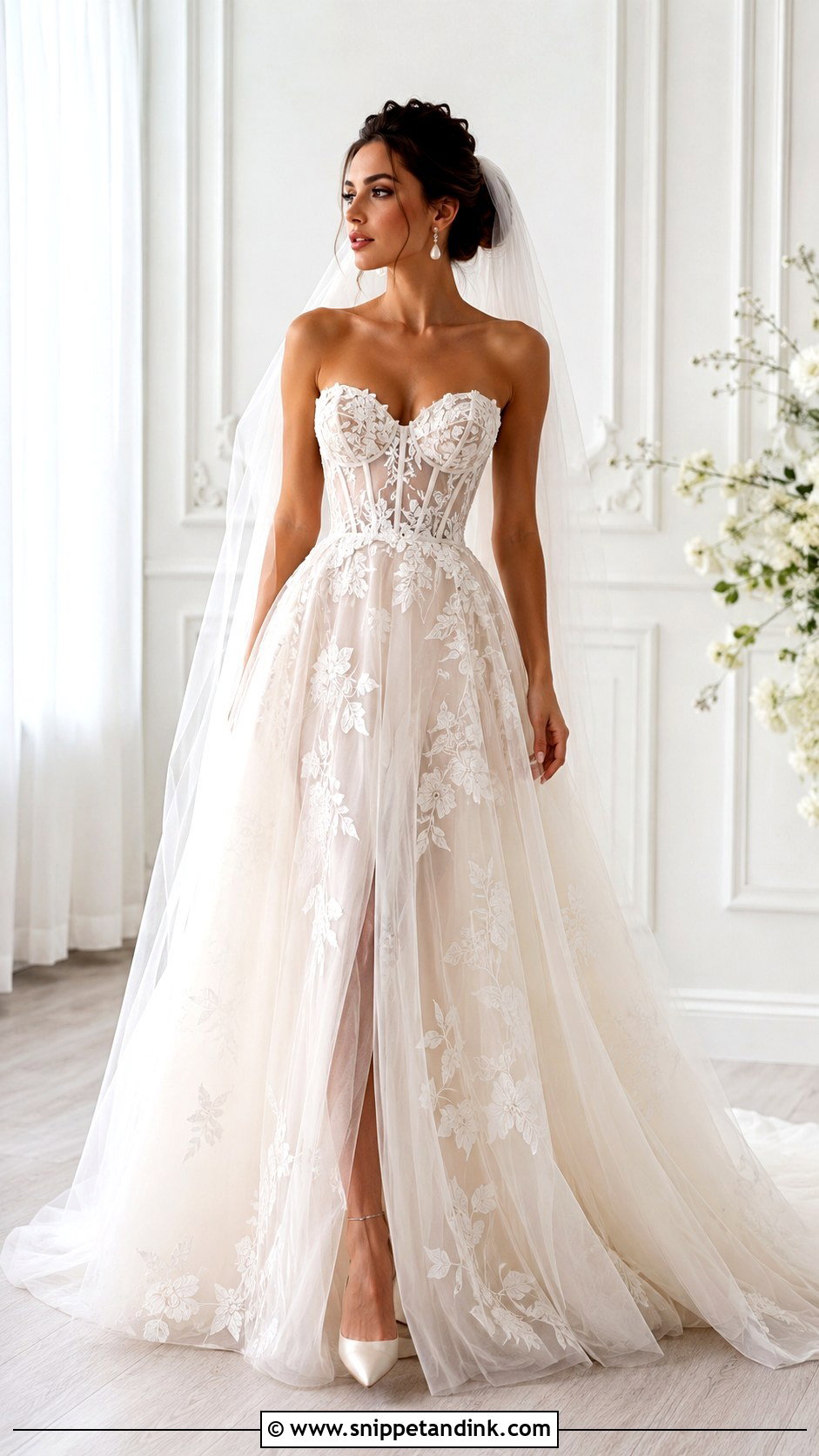
Structure and softness at once. The corset defines the waist, and embroidered tulle, lace or appliqué softens it, ideally following the bodice seams and fading into the skirt. A basque or dropped waist makes it look current. Smooth veil, pearl earrings, refined heels, and nothing else competing. Boned bodices need an honest fit; you should be able to breathe deeply, eat dinner and sit without the boning digging into your ribs. If you can’t, it needs letting out.
13. Ball Gown Embroidery Wedding Dress
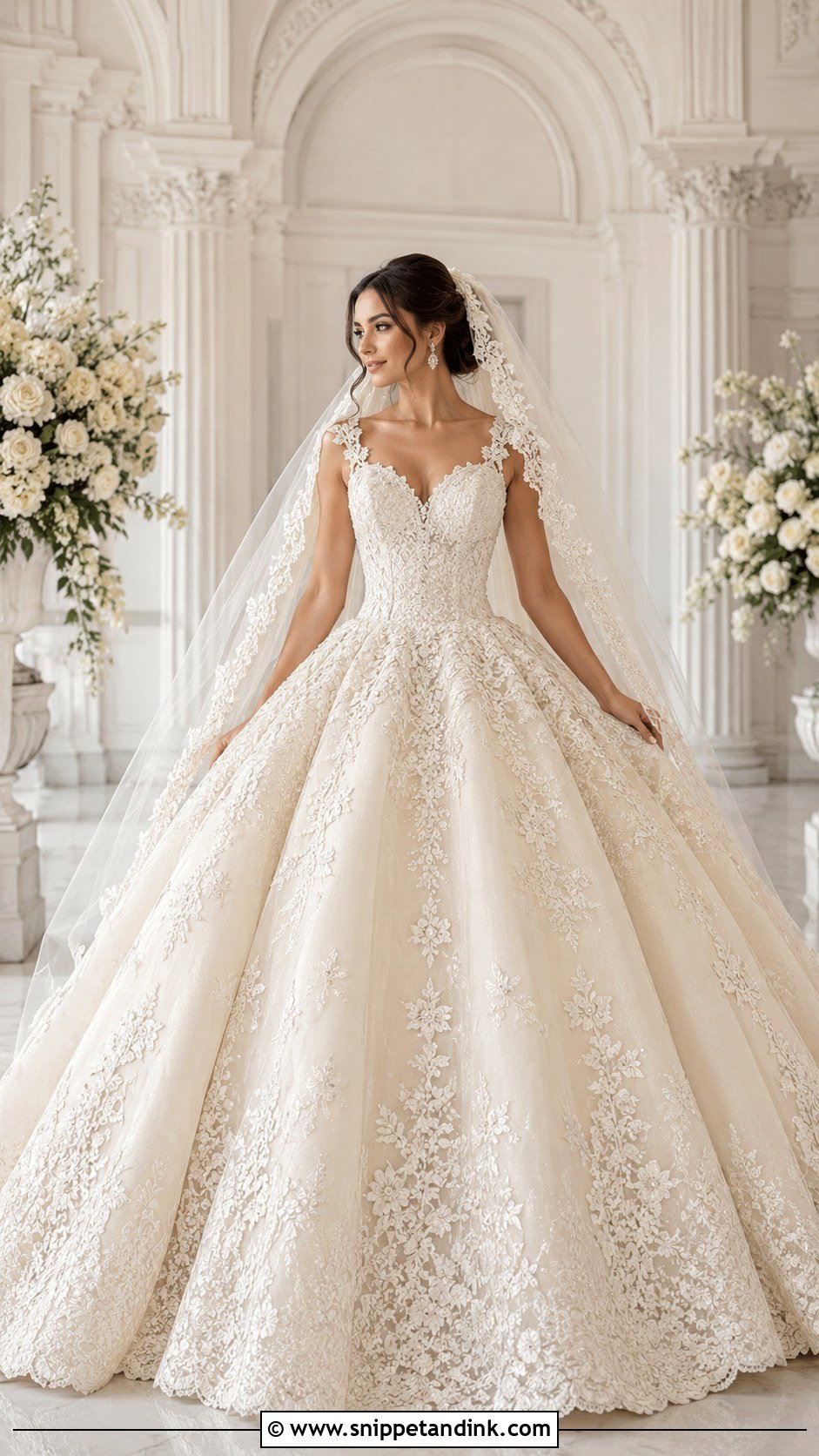
A full skirt gives embroidery room to breathe. It can cover the bodice, scatter over the skirt or frame the hem and train. Floral, vine, pearl and lace motifs all work at this scale. Cathedral veil, classic earrings and comfortable heels hidden under the skirt. A fitted bodice balances the volume. Heavily embroidered ball gowns are heavy, so ask at the first fitting how the skirt weight is supported; a good one hangs from a waist stay so your shoulders don’t carry it. Formal venues and long aisles give it space.
14. Mermaid Embroidery Wedding Dress
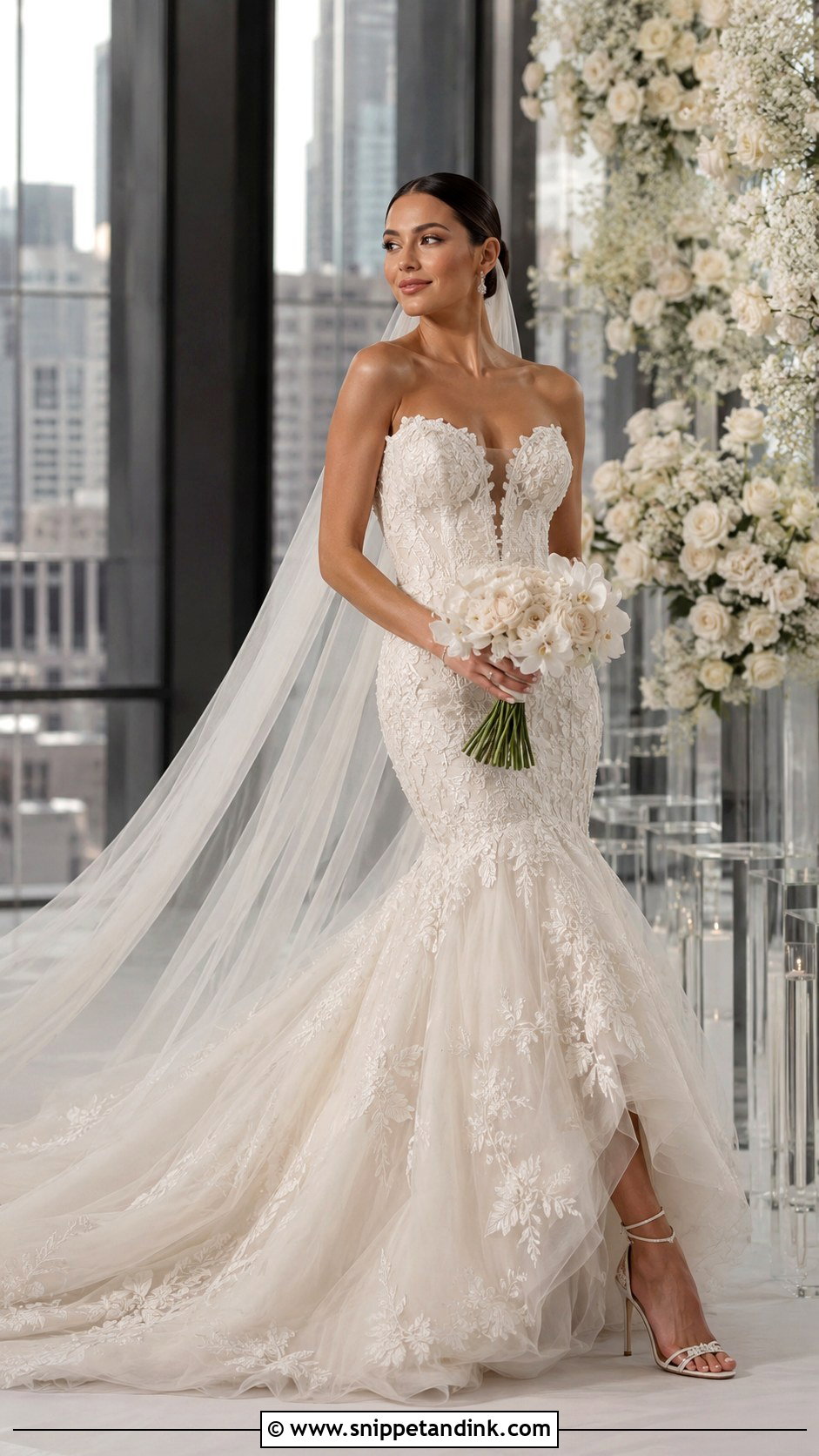
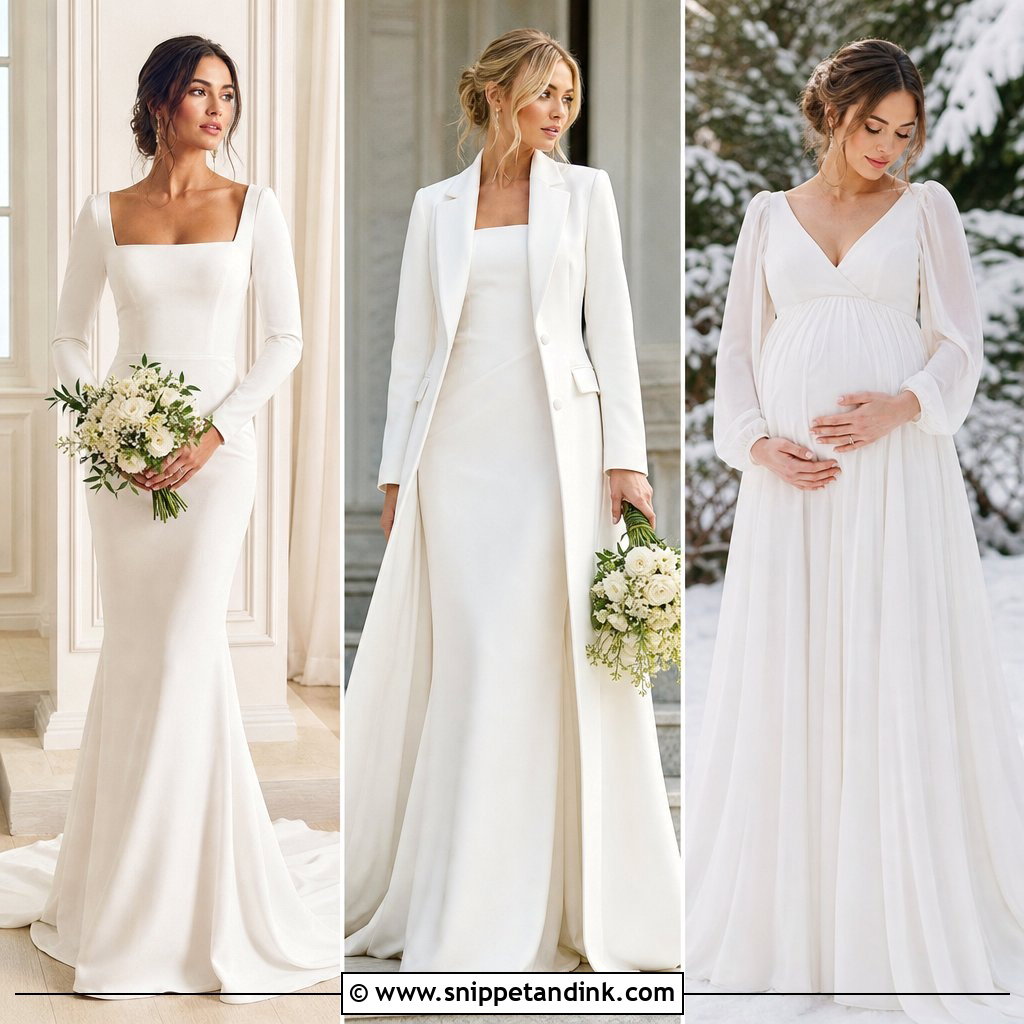
Fitted to the knee, then flaring, with embroidery tracing the bodice, hips and flare. Floral lace looks romantic; geometric or vine embroidery looks more modern. Ask for a stretch lining, because embroidery on the hips reduces give and you still need to walk and sit. Sleek hair, small earrings and heels tall enough to carry the hemline. A simple veil or a detachable overskirt adds ceremony drama. I’d steer you away from this shape if your venue involves lots of steps.

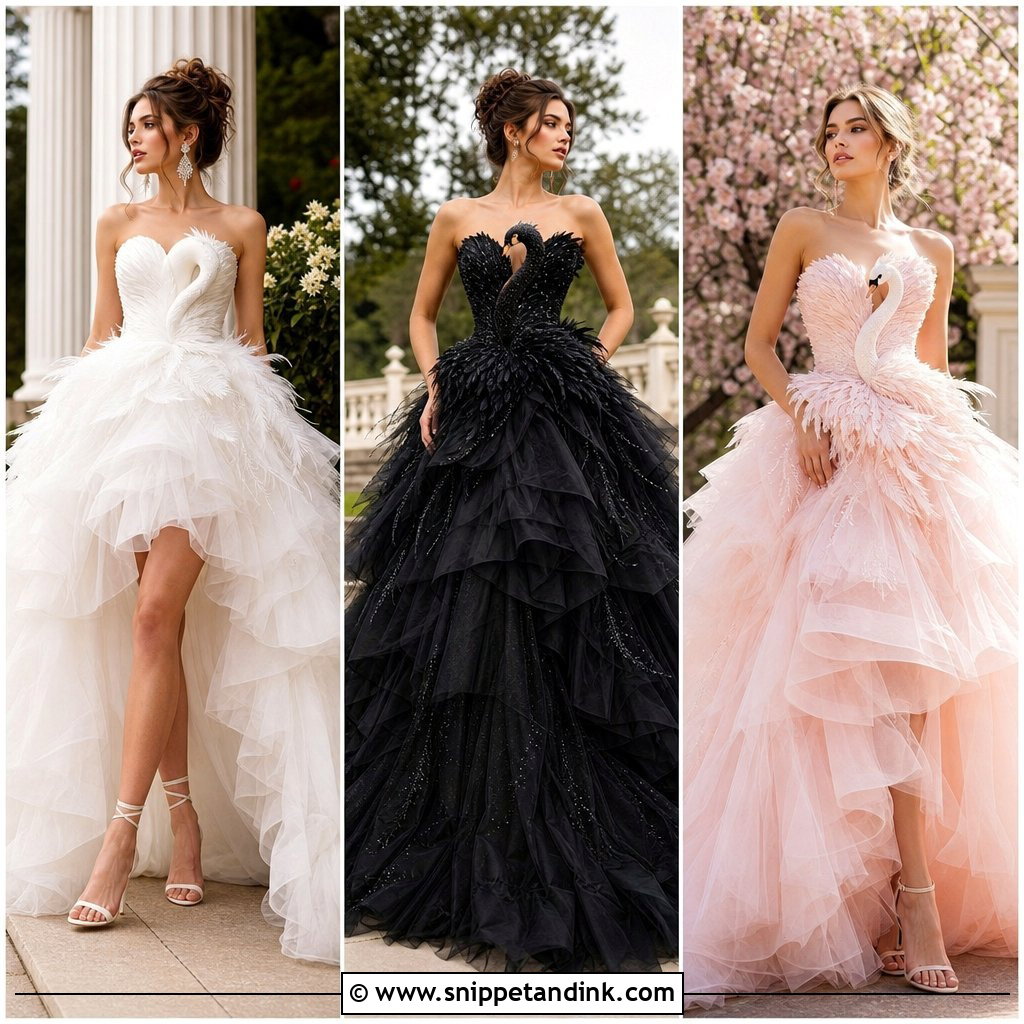
15. A Line Embroidery Wedding Dress
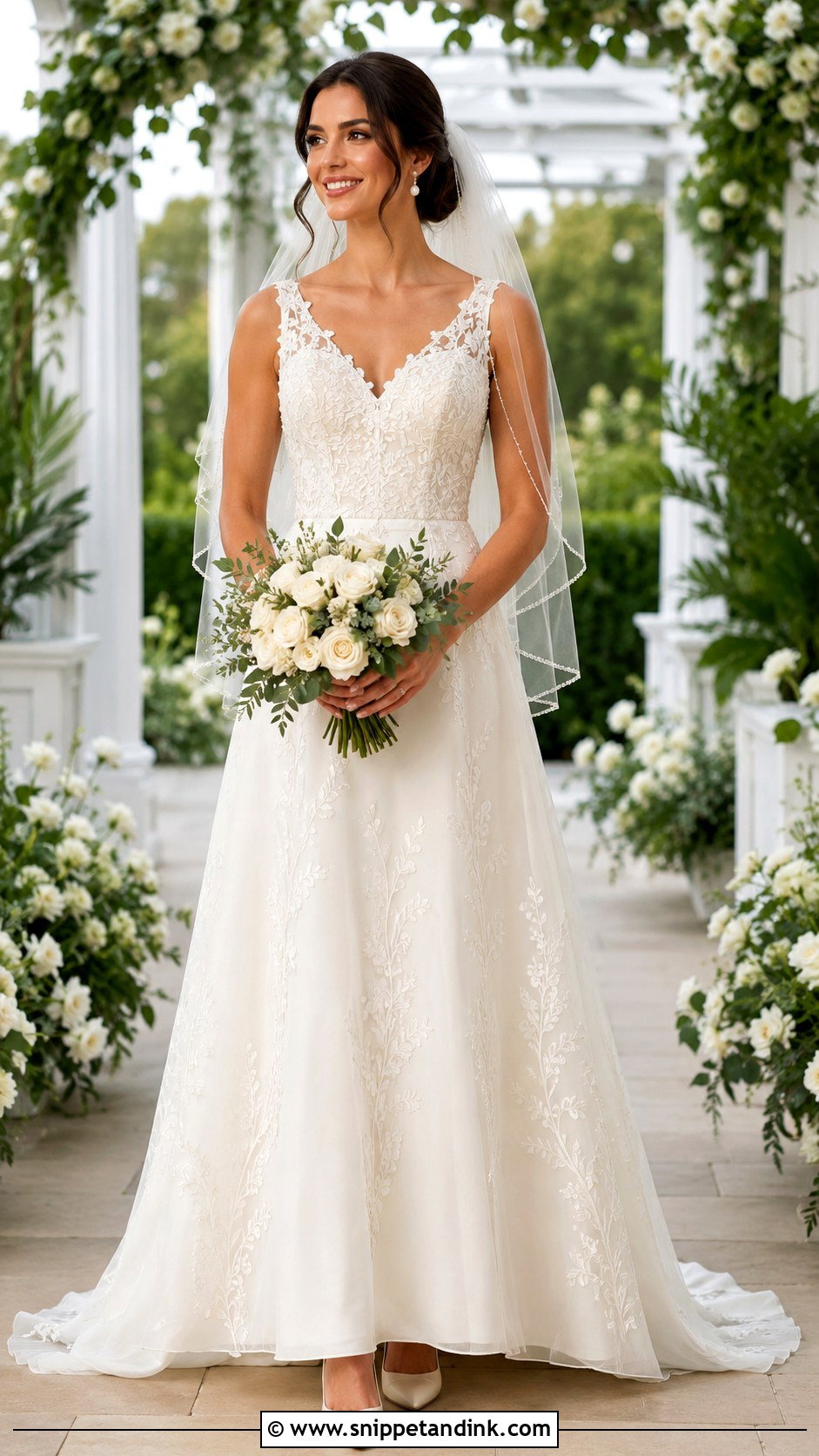
Fitted bodice, gently widening skirt, and embroidery that shows without overwhelming you. It suits more body types than anything else here. Floral stitching across the bodice, vines at the waist or details trailing down the skirt all work. A fingertip veil, pearl earrings and ivory pumps. You can move freely for photos and dancing. When I’m unsure what a bride will love, I put her in an embroidered A-line first and compare everything else against it. Gardens, traditional venues and destinations all suit it.
16. Boho Embroidery Wedding Dress
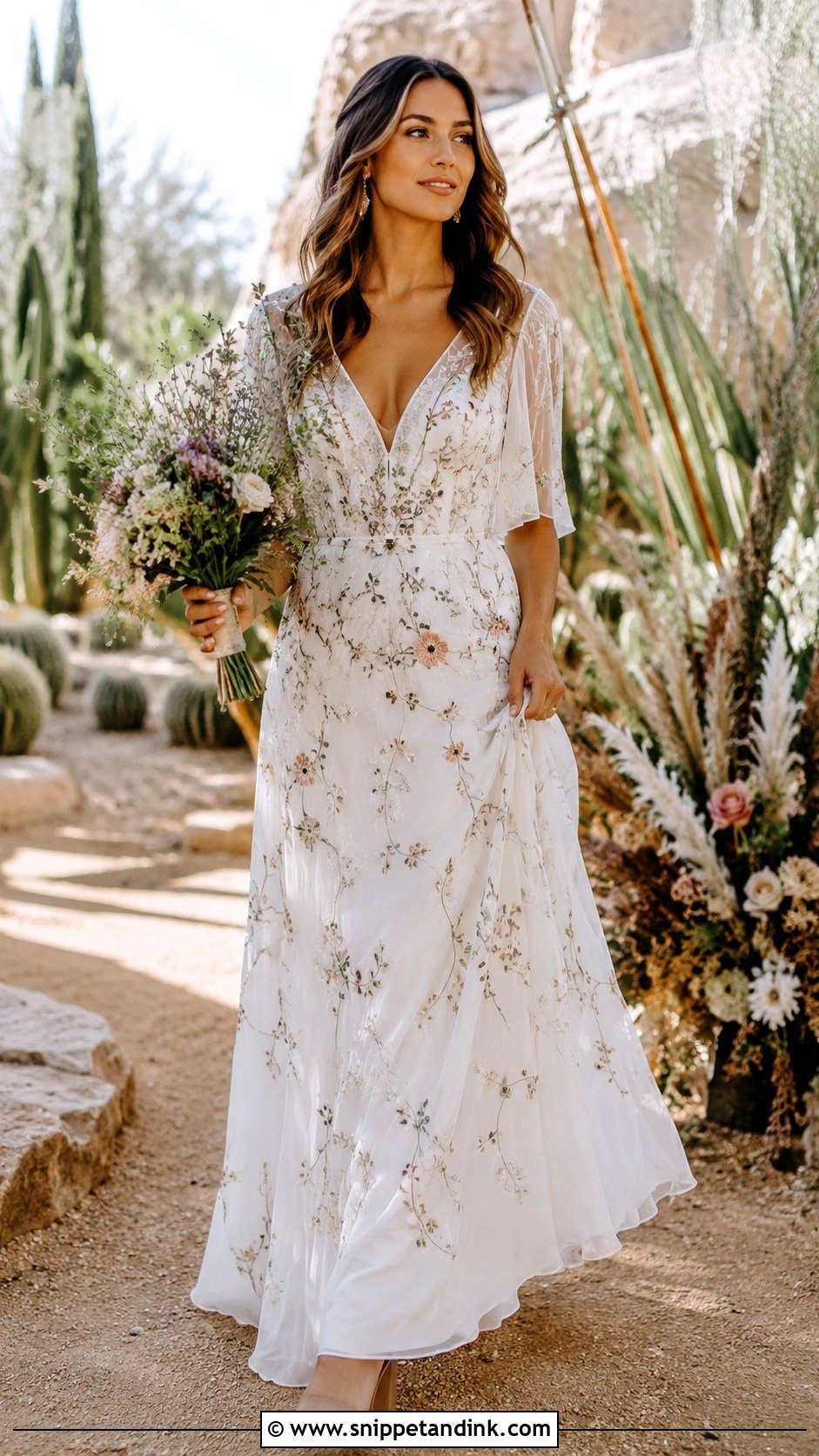
Relaxed and artistic. Look for soft cotton lace, vine embroidery, bell sleeves, a flowing skirt or botanical threadwork on light fabric. Loose waves, delicate earrings, block heels or bridal sandals and a natural bouquet. An embroidered cape or soft veil adds interest without going formal. Ivory, cream and warm white suit the mood best. Boho gowns tend to be cut loose, so check the back in a mirror; an unfitted back can bag in photos. Deserts, beaches and outdoor venues are its home.
17. Vintage Embroidery Wedding Dress
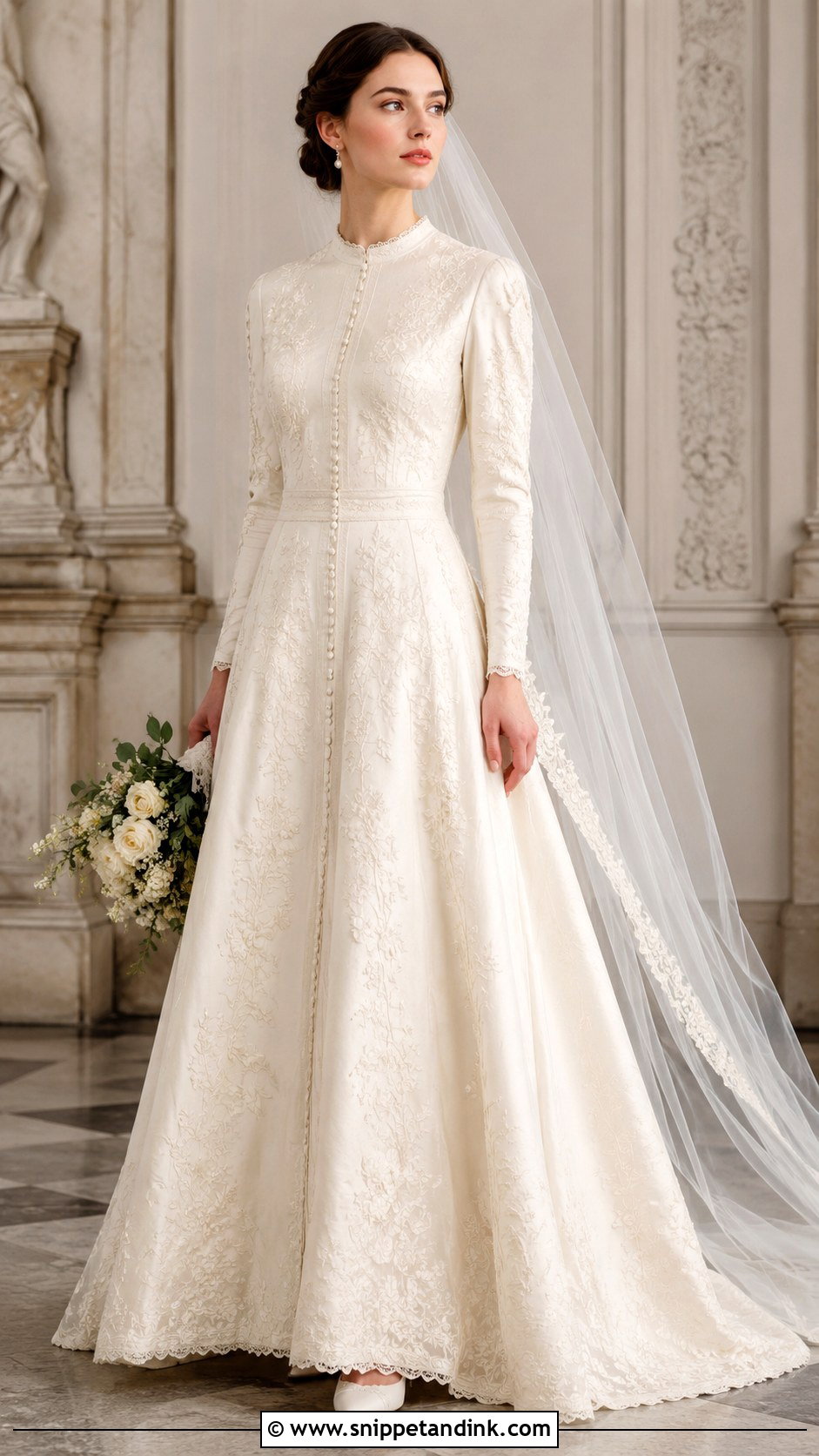
Old-world charm without dressing up as a period character. Fine floral stitching, heirloom lace, high necklines, covered buttons, tea-length skirts or detailed sleeves. The trick is a modern, clean fit; vintage detail on a loose, dated cut is what tips into costume. Pearl earrings, a soft veil and satin or lace heels. You don’t need a red lip; a fresh face keeps it soft. Historic venues, courthouses and intimate weddings suit it. Choose embroidery that looks handmade and meaningful, not heavy.
18. Minimal Embroidery Wedding Dress
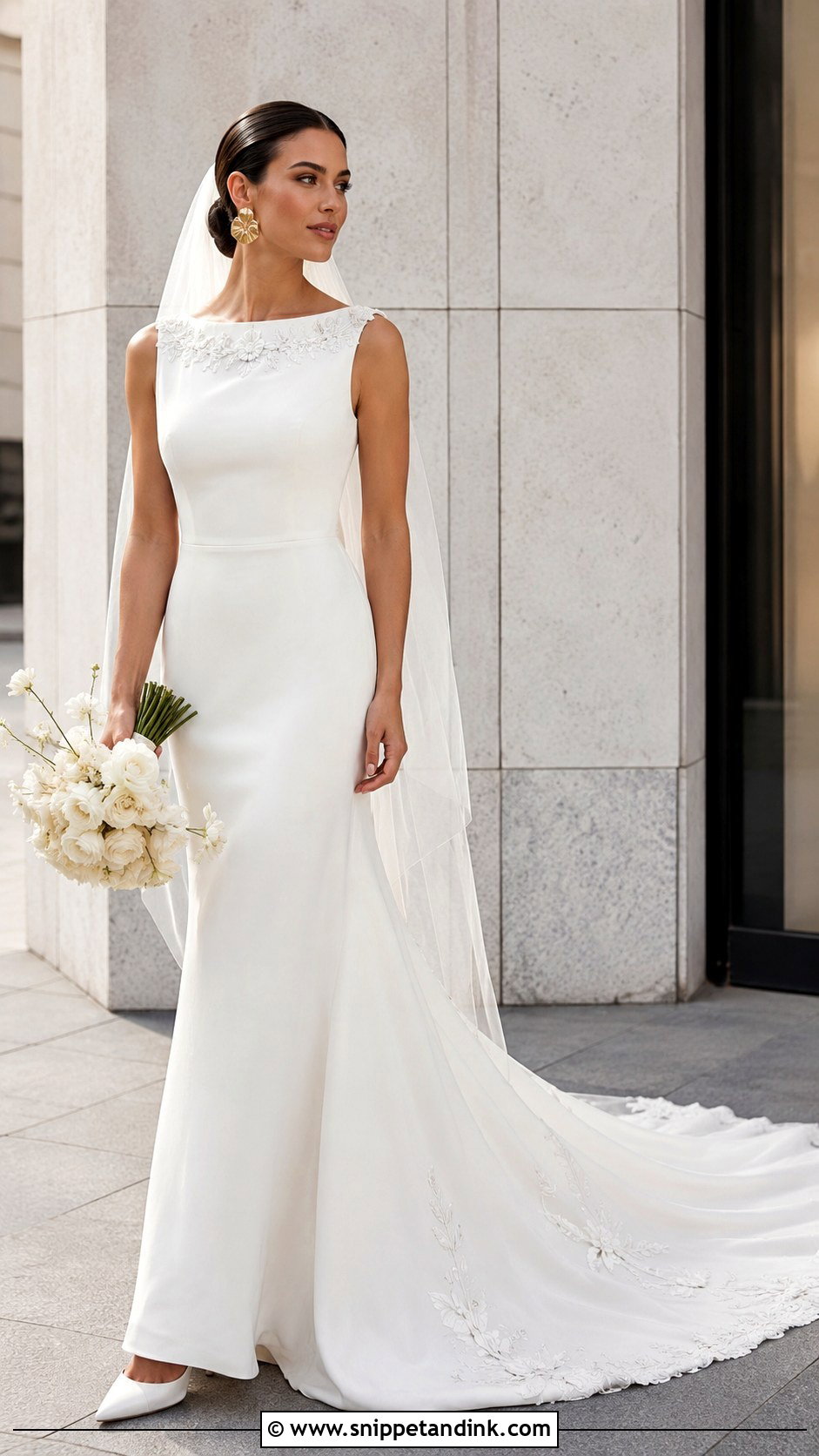
Clean lines, one special detail. A smooth crepe, satin or mikado gown with embroidery only at the neckline, waist, back, sleeves or train. A slim sheath with a single floral panel is quietly elegant. Sculptural earrings, sleek heels, a clean veil and an architectural bouquet. With minimal designs, placement is everything, so I pin a paper cut-out of the motif on the dress before anything is stitched or bought. City weddings and modern venues suit it.
19. Embroidered Train Wedding Dress
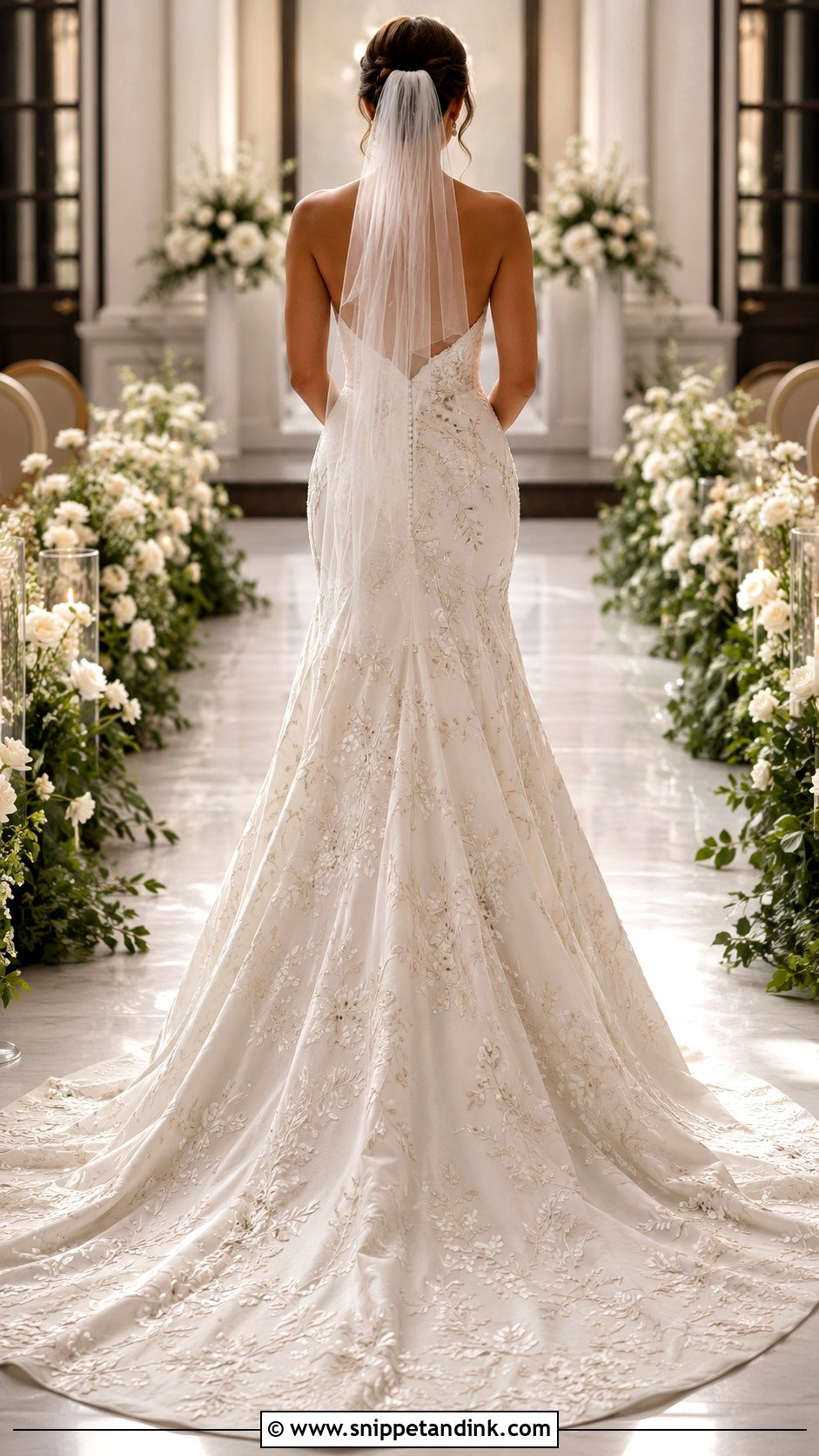
Simple from the front, all the detail behind. The train can carry vines, lace motifs, pearls, initials or meaningful symbols. You get drama for the ceremony and cleaner close-up portraits. A detachable train helps later when you want to dance. Plain veil, classic heels and simple jewelry so nothing competes with the train. Embroidered trains collect dirt and snag on rough floors, so I’d only choose one if the aisle is smooth. Long aisles and formal venues show it off.


20. Embroidered Veil Wedding Dress
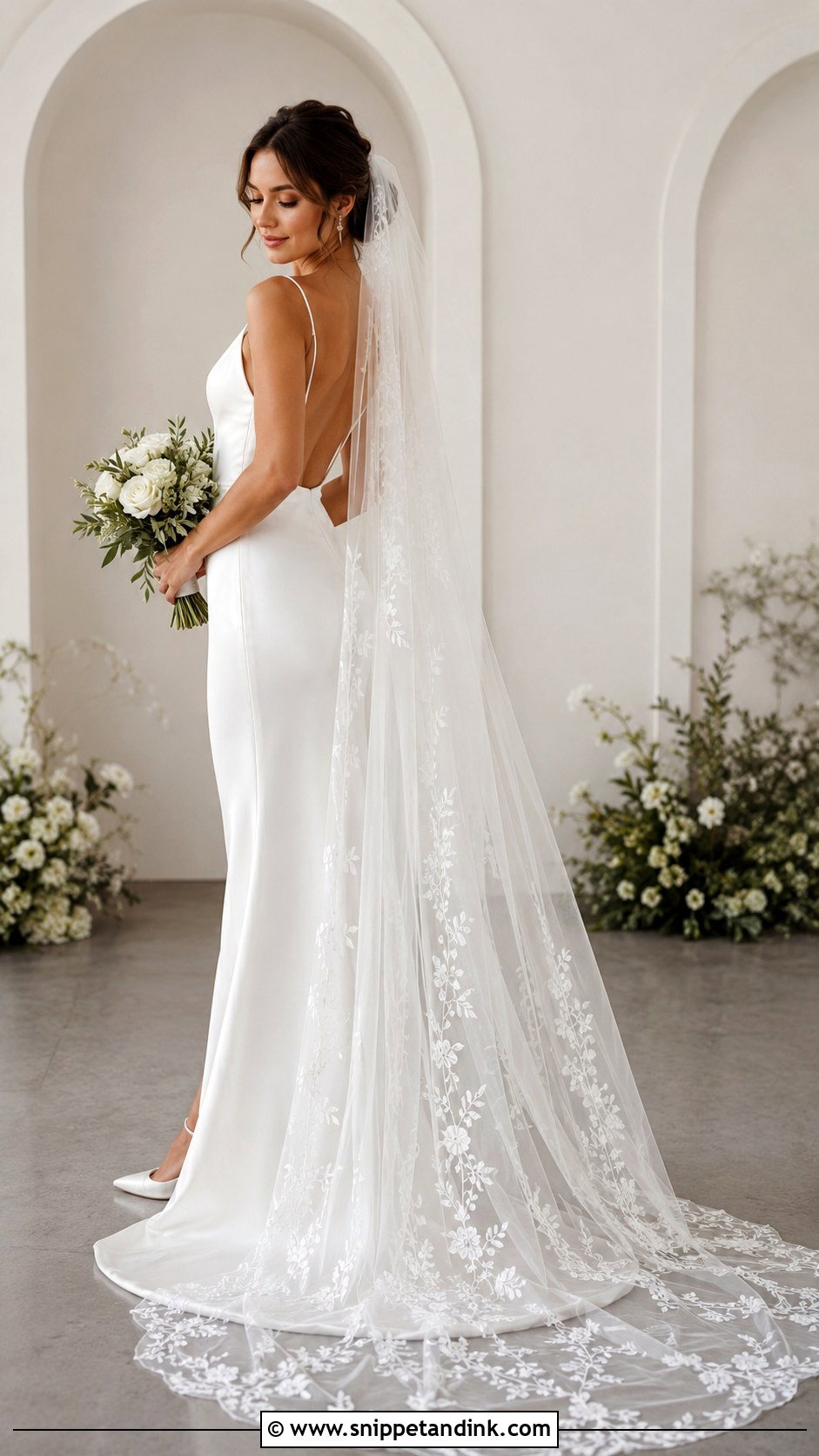
Put the embroidery on the veil and keep the gown plain, and you get detail that comes off when you want it to. Simple satin, crepe or tulle, with the veil carrying flowers, vines, pearls, initials or delicate edging. That’s effectively two looks: detailed for the ceremony, clean for the reception. A strapless or square-neck gown under a long embroidered veil gives the strongest effect. Minimal jewelry and sleek heels. Embroidered veils are heavier than plain tulle, so ask your hairstylist to anchor the comb firmly into a braid or pin base.
21. Embroidered Cape Wedding Dress
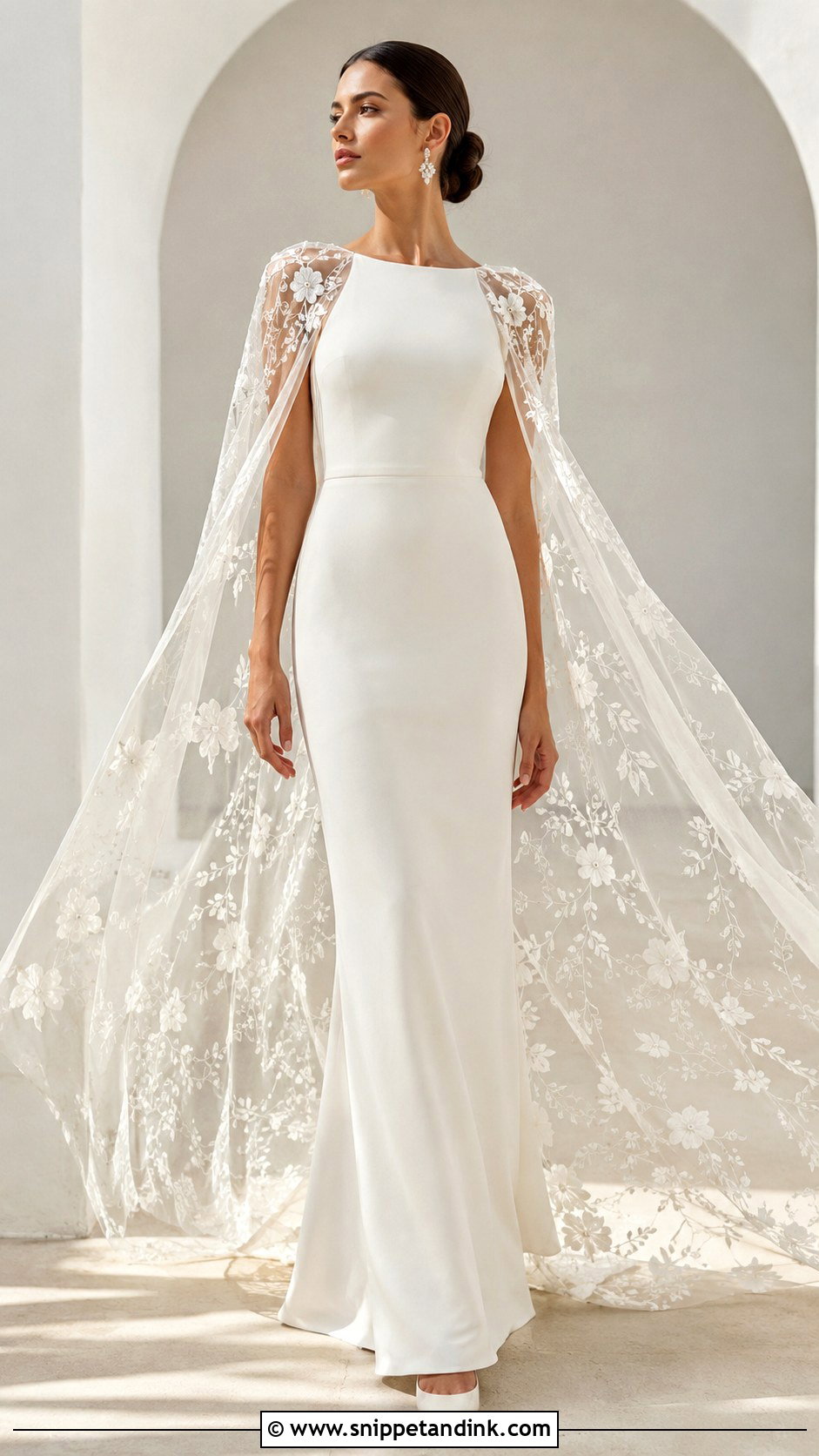
A sheer embroidered cape can replace a veil and still give you movement. Floral, pearl or vine work on the cape sits well over a strapless, sleeveless or simple fitted gown. For the ceremony it frames the body and can trail like a train; at the reception, take it off and dance. Sleek hair, statement earrings and simple shoes. Capes attach at the shoulders or neck, so check the fastening against your dress neckline at a fitting. A loose cape slides back and pulls at the throat.
22. Embroidered Mini Wedding Dress
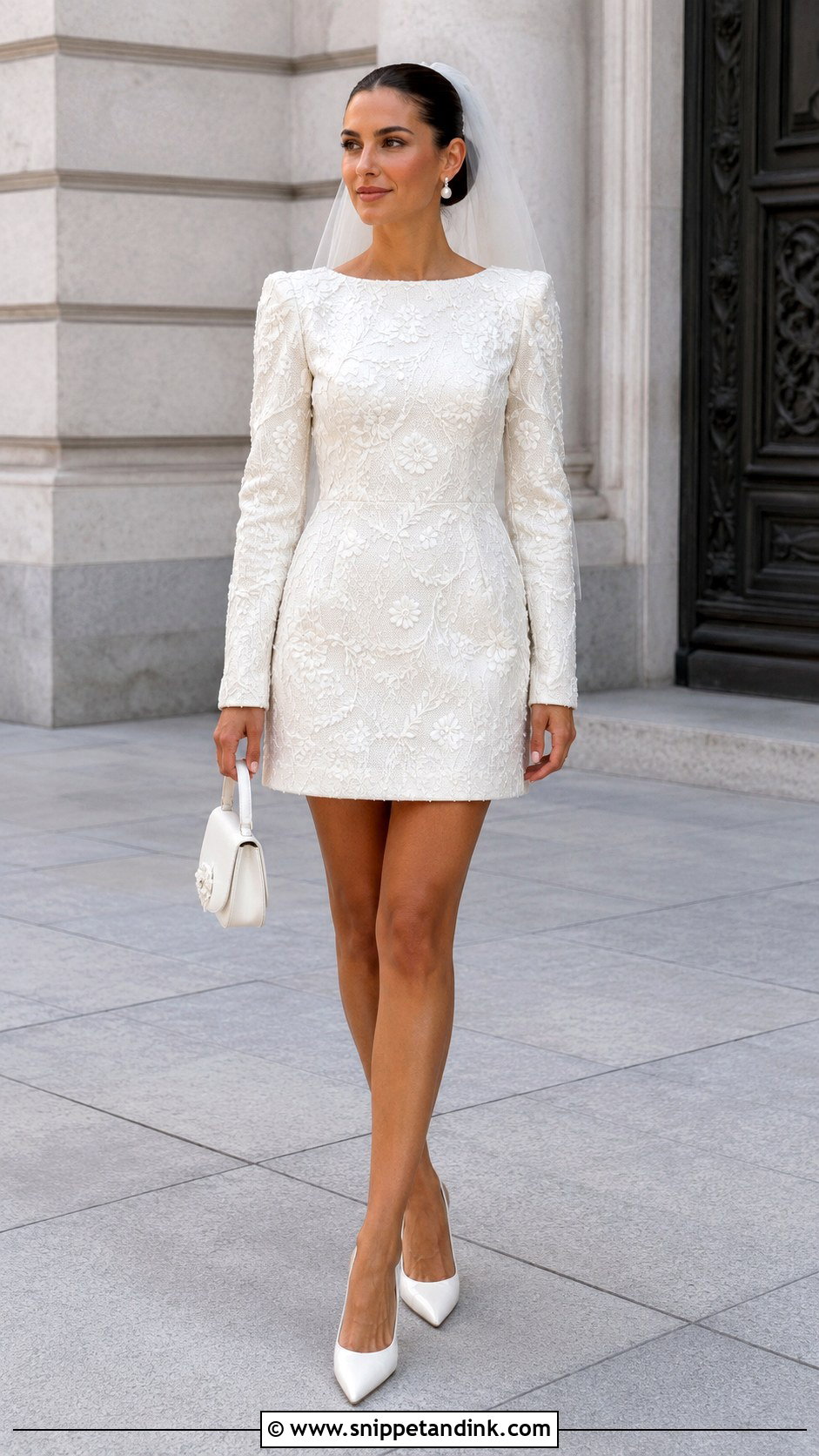
Courthouse ceremonies, reception changes and after-parties are where a mini shines. Structured satin, lace or tulle with floral embroidery, pearls or dimensional appliqué. It reads bridal when the accessories are polished: pointed pumps, pearl earrings, a short veil or a small top-handle bag. Balance the length with a refined neckline or long sleeves. Sit in it before buying; stiff embroidered skirts ride up more than soft ones. A good second look that still feels intentional.
23. Tea Length Embroidery Wedding Dress
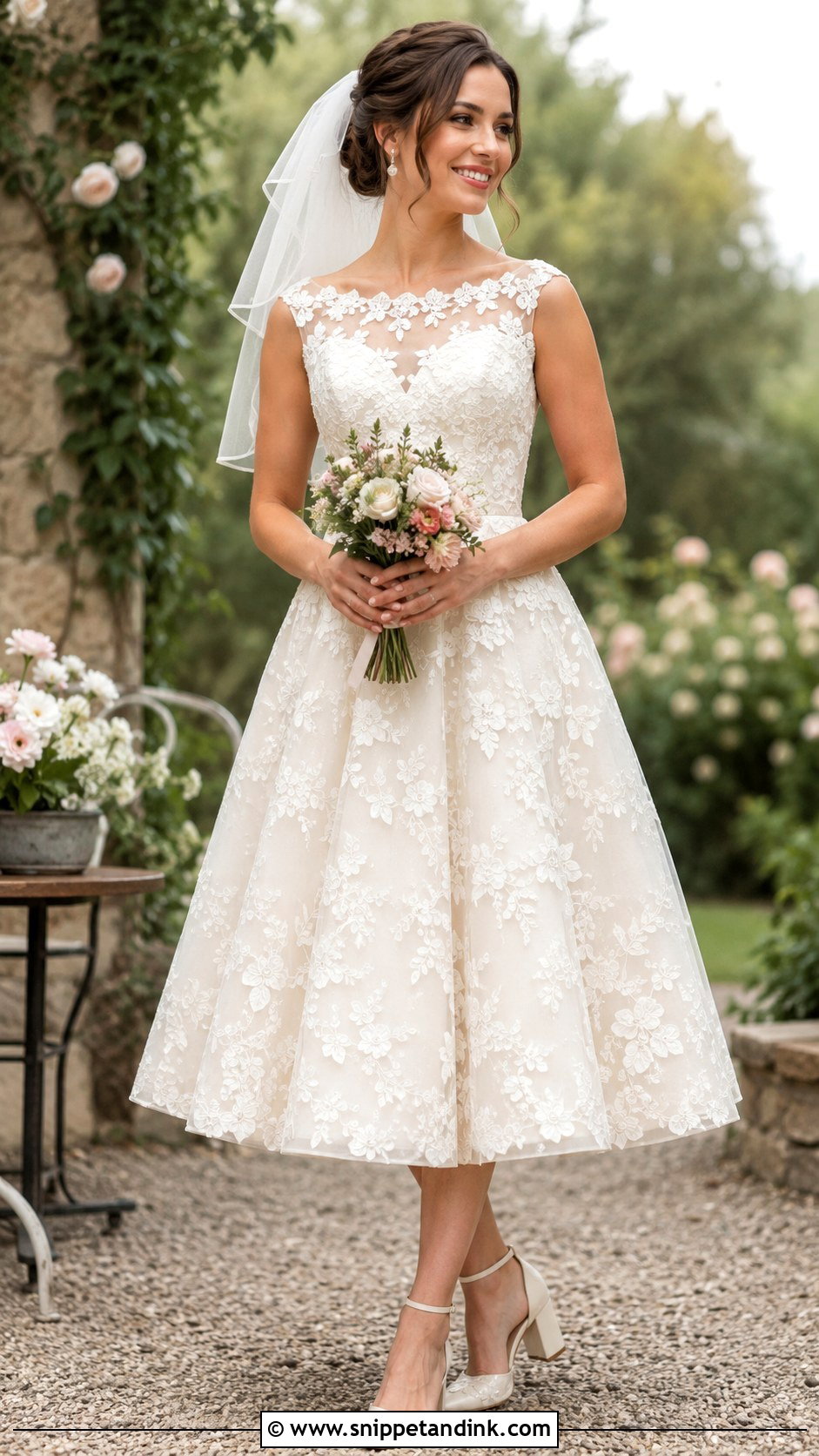
Practical comfort with vintage charm. The hem falls between knee and ankle, which puts your shoes on show. Floral embroidery, lace edging or pearl details keep the shorter line bridal. Block heels, pointed pumps or Mary Janes, depending on your taste, with a birdcage or short tulle veil. Courthouses, garden parties and casual receptions suit it. Get the hem length right with your actual shoes on; an inch too long and it looks like a dress that didn’t fit.
24. Embroidered Slip Wedding Dress
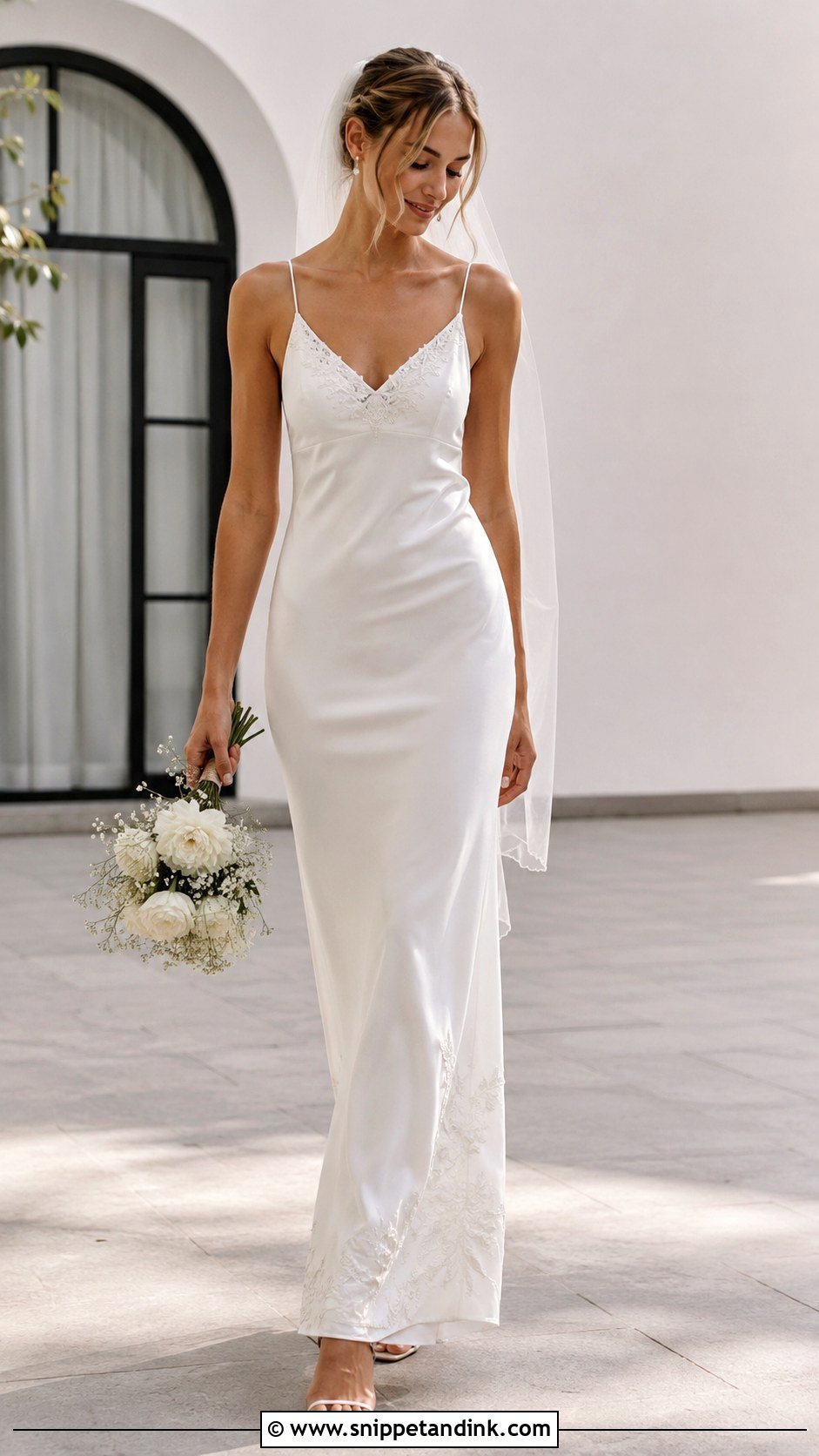
Sleek and quietly romantic. A bias-cut silk or satin slip with embroidery at the neckline, back or hem keeps its clean shape. Strappy heels, small earrings and a lightweight veil or chiffon scarf. Add an embroidered cape or sheer topper for ceremony coverage. Bias-cut satin shows every line underneath, so I plan underwear at the same fitting where we pin the hem. City weddings, beach ceremonies and small celebrations suit it.
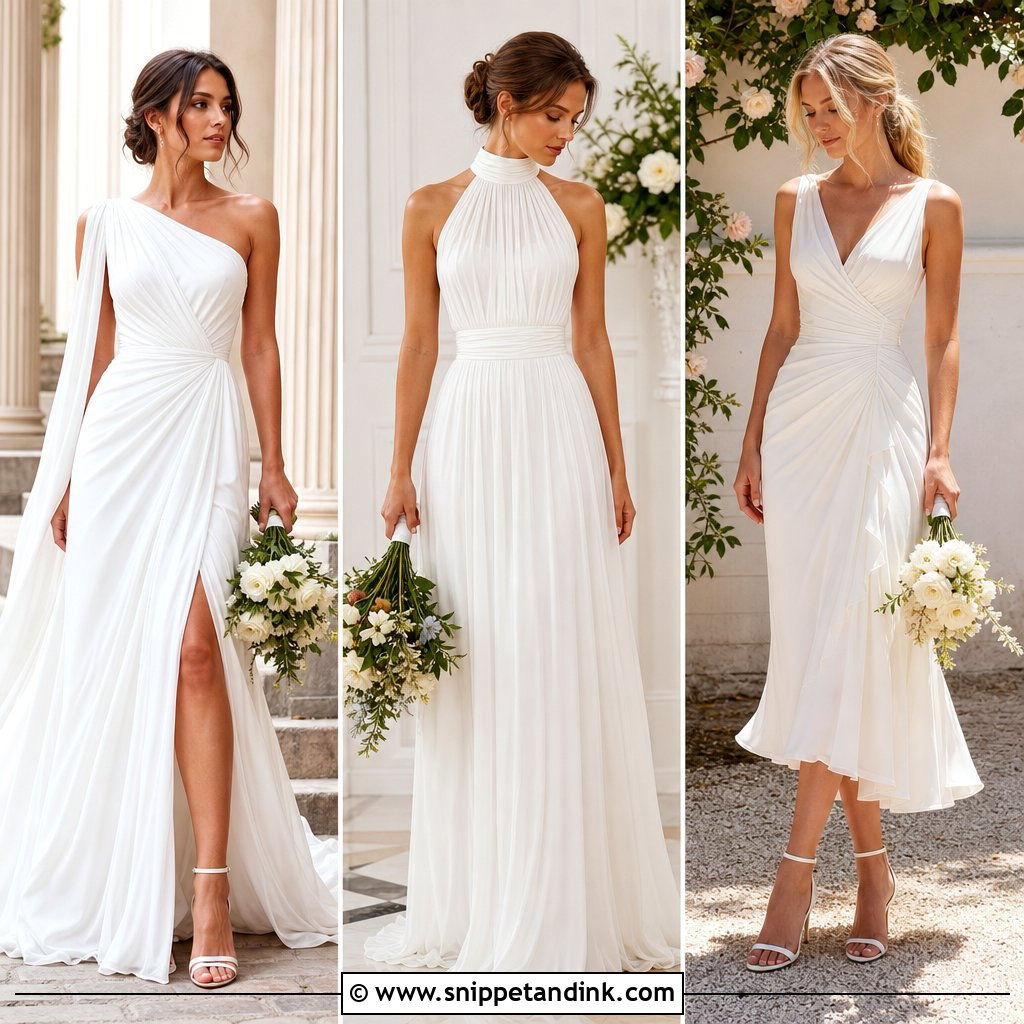
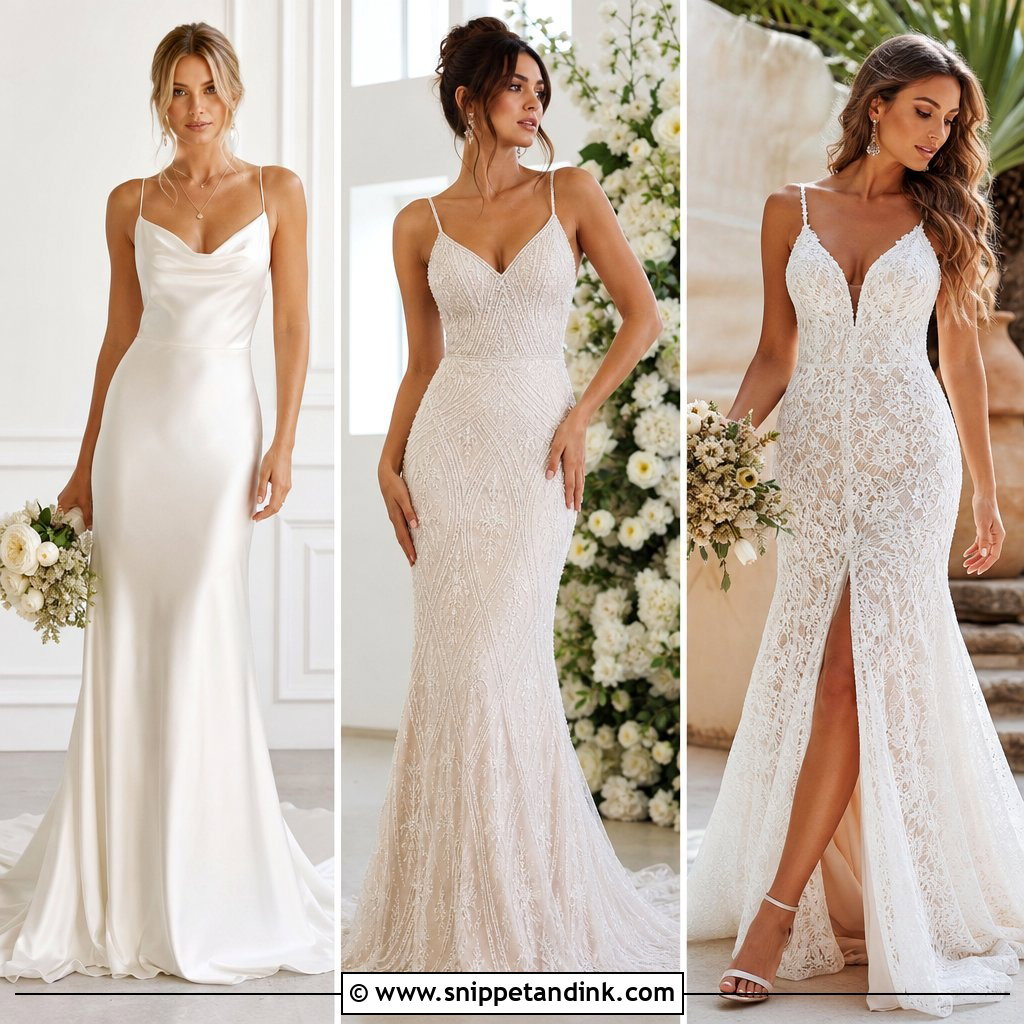
25. Custom Embroidery Wedding Dress
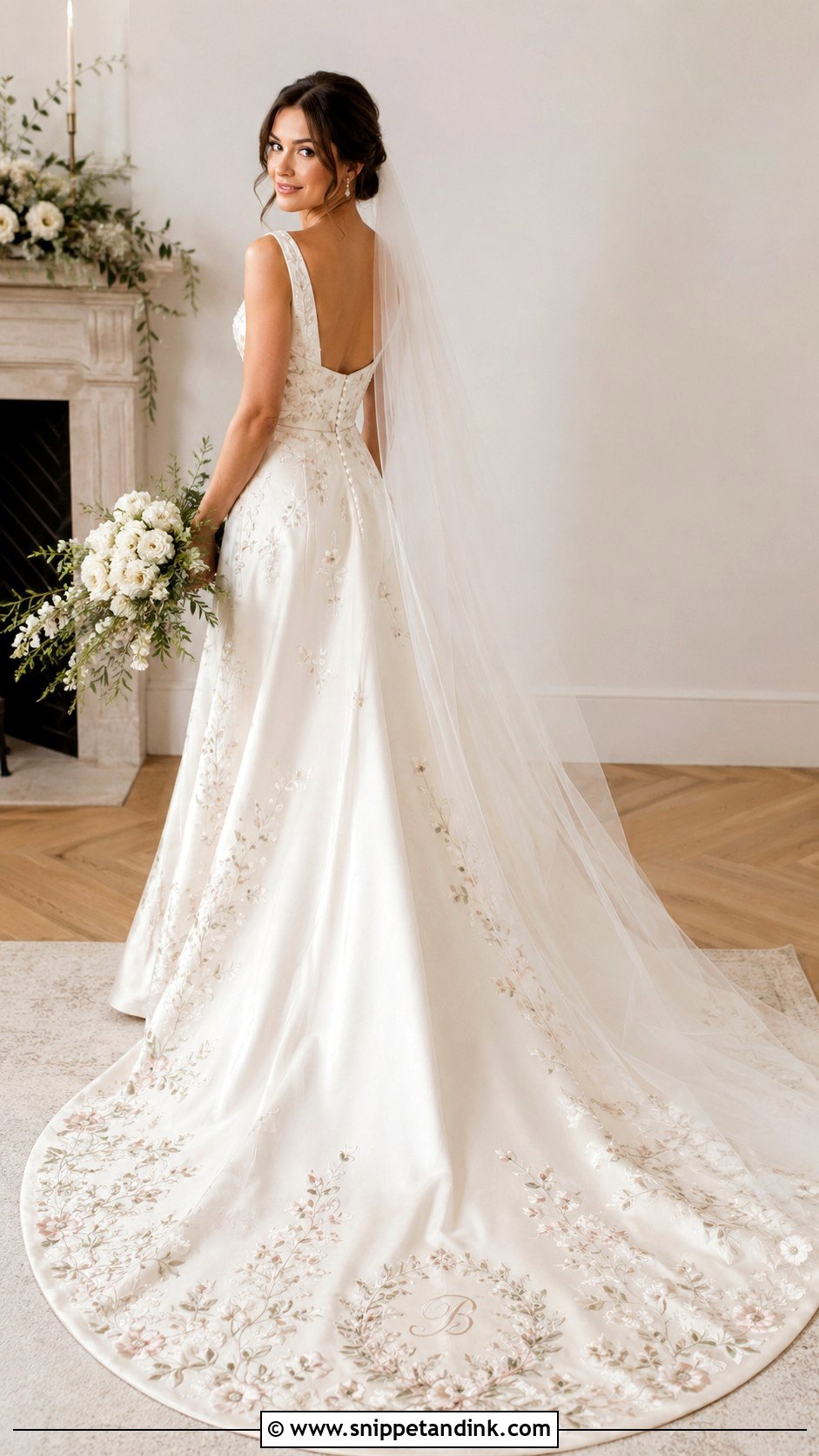
This is where the details tell your own story: your wedding flowers, initials, a date, family symbols, butterflies, stars or motifs from the venue. The embroidery can be hidden inside the dress, placed on the train or spread across the bodice and skirt. Find a skilled designer or seamstress early, because custom threadwork is slow. I’d keep the accessories simple so the personal details stay legible. A hidden motif inside the hem or lining is a quiet way to include a name or date without it showing in every photo.
Do Pearls, Petals and Veils Get Along?
Not always. Raised embroidery is the most common reason a veil snags on the day. Lace-edged and beaded veils hook onto 3D petals and pearl clusters, and one tug as you turn can pull a thread loose. If your gown has raised work on the shoulders or back, I’d choose a veil with a plain cut edge, or ask the hairstylist to set the comb lower so the veil falls clear of the bodice.
Sitting, travelling and the long dinner
Embroidery takes a beating from ordinary things. Car seatbelts flatten raised flowers at the bodice; a long seated dinner creases appliqué on the skirt. Spread the skirt out behind you when you sit, and fluff crushed petals with a hairdryer on its coolest setting before the next set of photos.
A Small Repair Pouch for an Embroidered Gown
Hand-sewn beads and pearls can come loose during a long day, usually at the underarms, waist and hem where the fabric rubs. I pack a few things for exactly this, and someone in the bridal party should know where they are.
- A needle already threaded in ivory and one in the gown’s main thread color.
- Small scissors and a few clear plastic-headed pins.
- Any spare beads or pearls the shop gives you, kept in a labelled envelope.
- A lint roller and white chalk for marks on light fabric.
Which Kind of Embroidery Feels Like You?
Your venue, season, silhouette and comfort decide this more than any trend. Some brides want a ball gown covered in 3D flowers; others want a clean slip with a few stitched details. Embroidery can be bold or barely there, colorful or tonal, which is why it adapts to so many brides. As you compare these ideas, picture the whole outfit: veil, shoes, jewelry, bouquet, hair and how the dress moves. Photos matter, but the real test is whether the gown feels like you the moment you put it on.
You'll Like These Ideas:










Leave a Reply