
Shopping for a gown in a size 18 or a size 28 should be exciting, and in a good salon it is. The twenty looks below are built as complete outfits, gown through shoes, for different venues, seasons and comfort needs. Bridal design right now gives you plenty to work with: structured corsetry, dropped basque waists, clean crepe, sleeves with real presence and soft drapes. I don’t fit brides by body-shape rules. I look at what the bodice is doing on the inside, how the fabric weighs on the shoulders and whether you can sit through a three-course dinner, and I’d ask you to judge every idea here the same way.
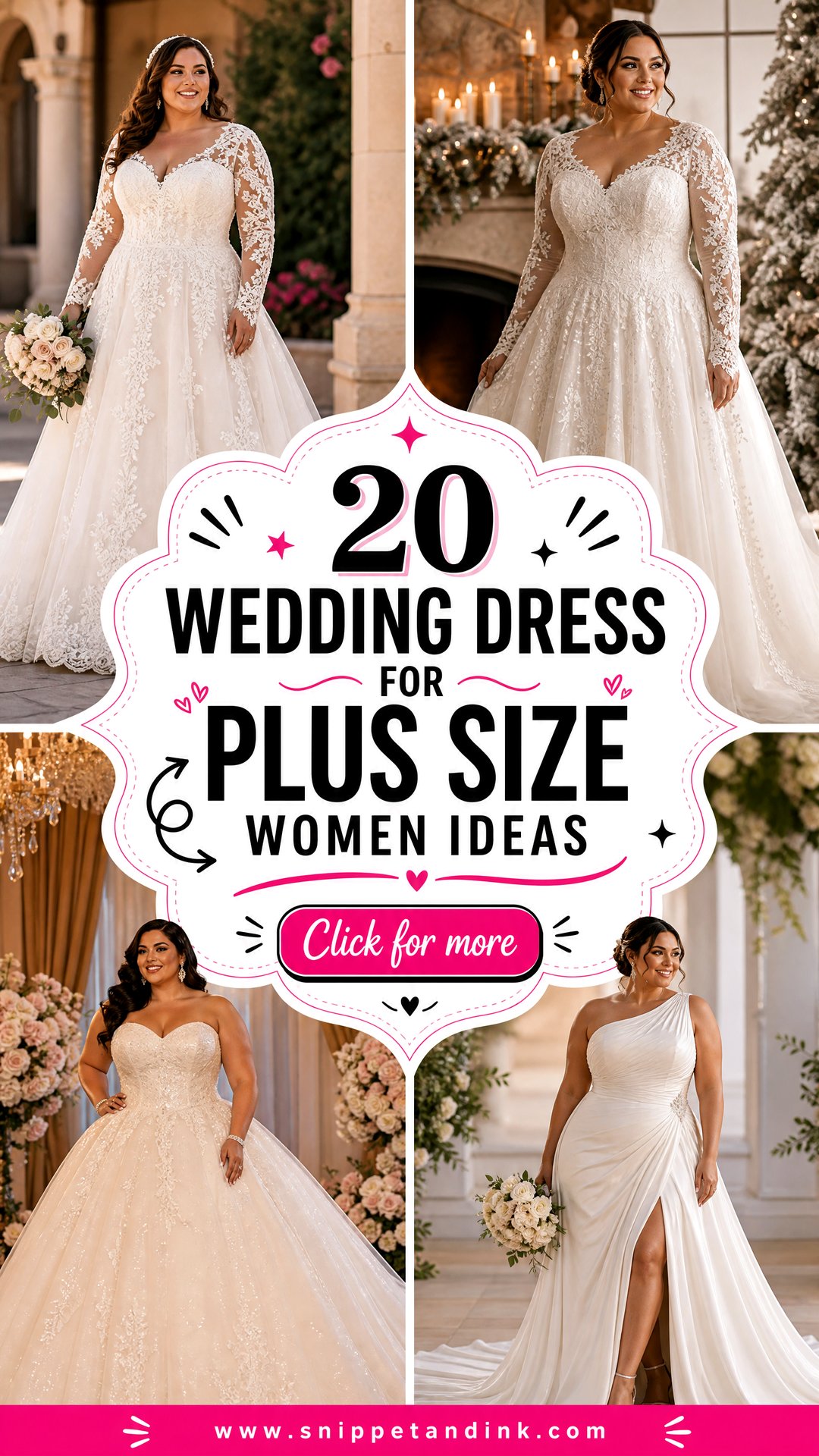
Bridal Sizes Run Small, and Sample Racks Run Smaller
Bridal sizing follows its own chart, and most designers cut one to two sizes smaller than high-street clothing. A bride who buys a 20 in jeans is often ordered a 22 or 24 in a gown, and that number says nothing about your body. I order from the largest of your bust, waist and hip measurements, because taking a gown in is easy while letting it out depends on seam allowance that may not be there.
The harder part is the try-on itself. Many salons keep samples in only one or two sizes, so you may end up clipped into a gown that doesn’t close at the back. That tells you very little about how it will fit. Ask these questions when you book the appointment:
- Which designers on the floor do you hold samples of in my size?
- Can this gown be ordered to my measurements or with extra seam allowance, and how does that change the timeline?
- How many fittings does your alterations team usually need for a corseted bodice?
Made-to-order gowns commonly take several months to arrive, often four to six, though it varies by designer, and alterations need another two or three on top. Work out your order date before you fall for a sample.
1. Plus Size A-Line Wedding Dress With Lace Sleeves
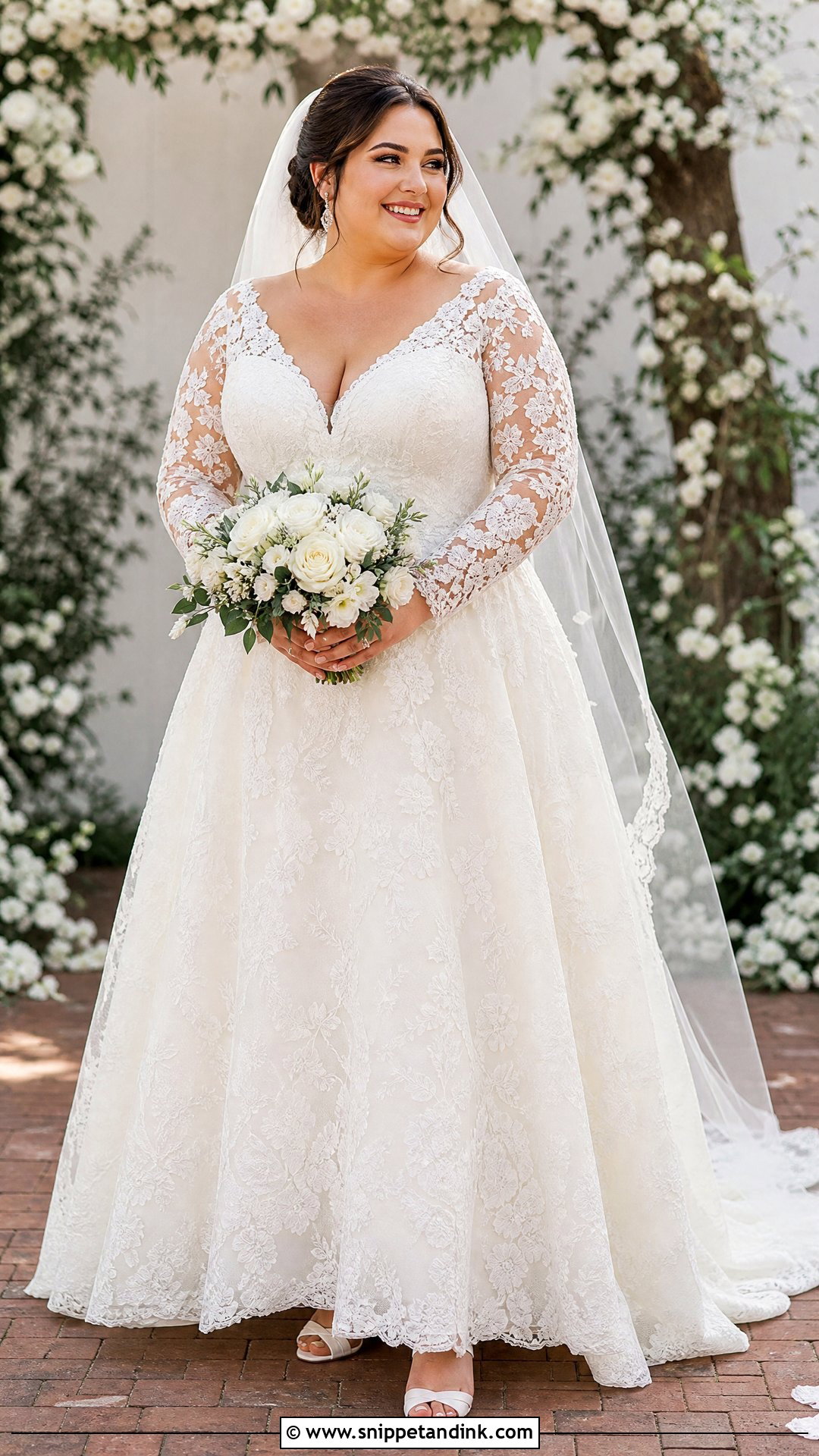
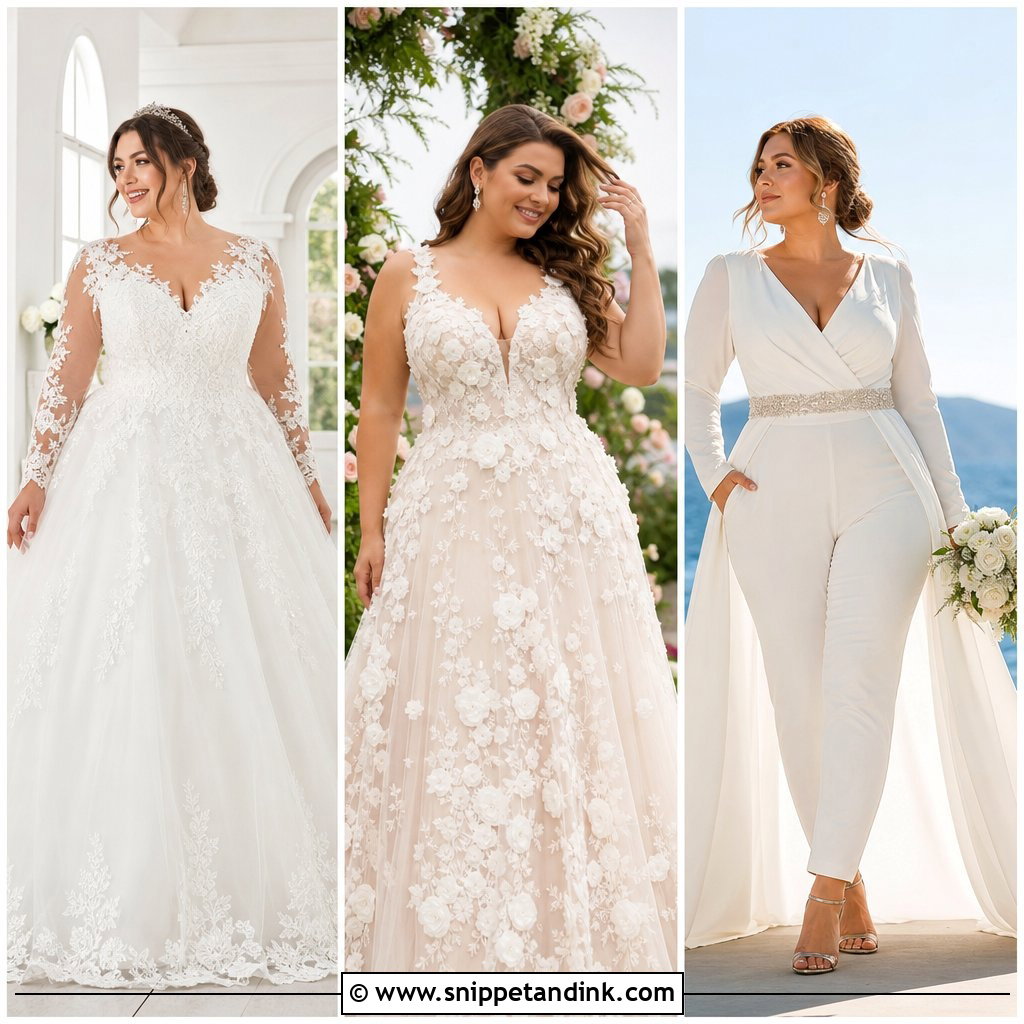
Lace sleeves on an A-line give you detail without a heavy gown. I’d pair a V-neck or sweetheart lining with a structured bodice and let the skirt fall straight from the natural waist. Pearl drops, a fingertip veil and ivory block-heel pumps keep you steady on the aisle, and a small bouquet of white roses with soft greenery finishes it. The sleeve is where this one goes wrong. Lace has very little give, so at the fitting I have the bride reach forward as if for a hug; if the lace strains across the upper arm, the sleeve seam needs letting out before anything else is touched.
2. Plus Size Satin Ball Gown Wedding Dress
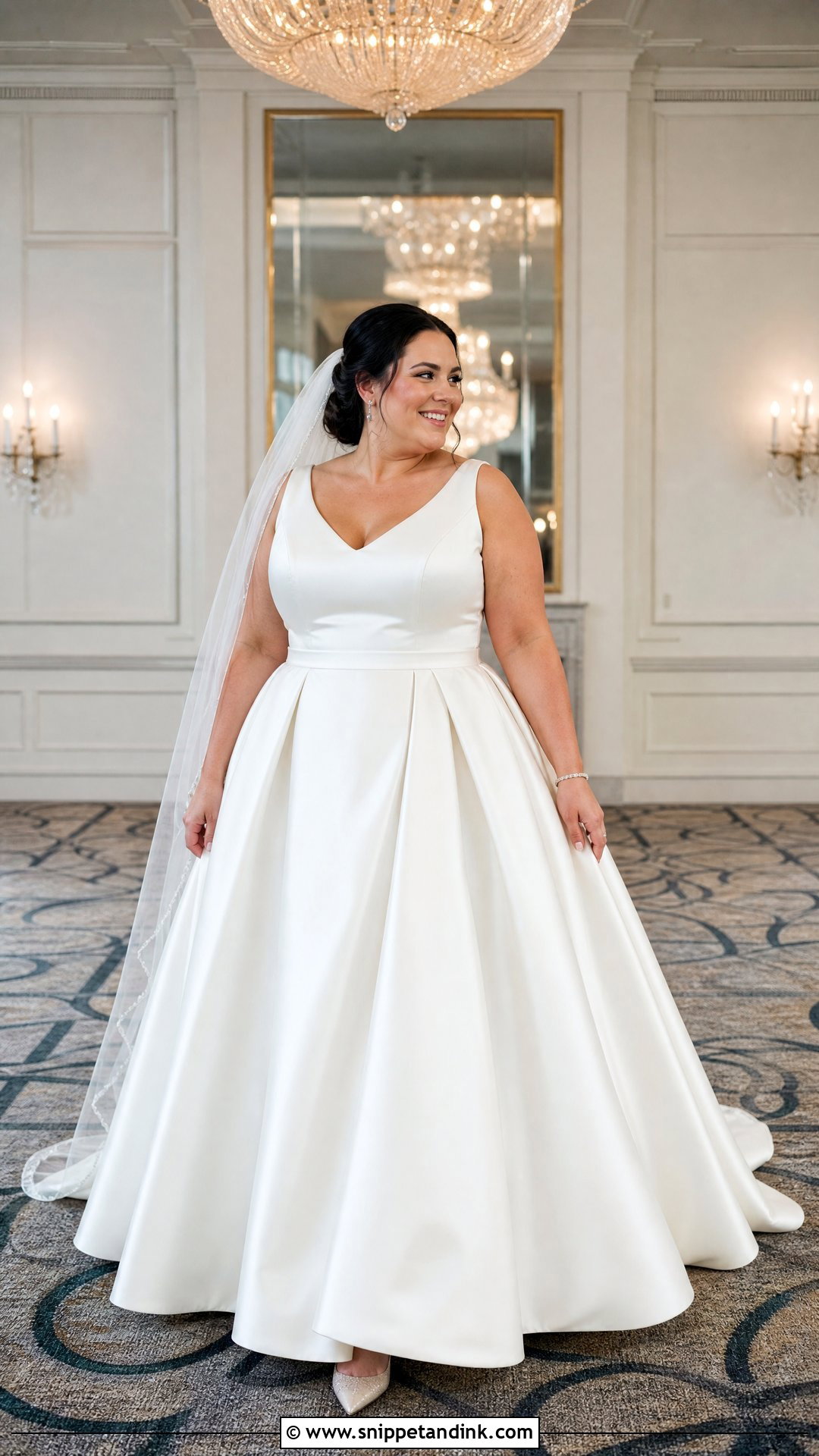
Satin catches light from every side, which is why a ball gown in it looks finished even from the back row. Ask for wide straps, clean seams and a full skirt that starts at a clearly defined waist. A chapel-length veil extends the shape without hiding the fabric, and crystal studs, a fine bracelet and pointed shoes with a heel you can actually stand in are all it needs. The skirt has plenty of presence, so keep the bouquet compact. Satin creases the moment you sit in a car, so I book steaming as close to the ceremony as the schedule allows, along with a bustle that has enough pick-up points to carry the weight of the train. Hotel ballrooms and evening weddings with a formal entrance are where it belongs.
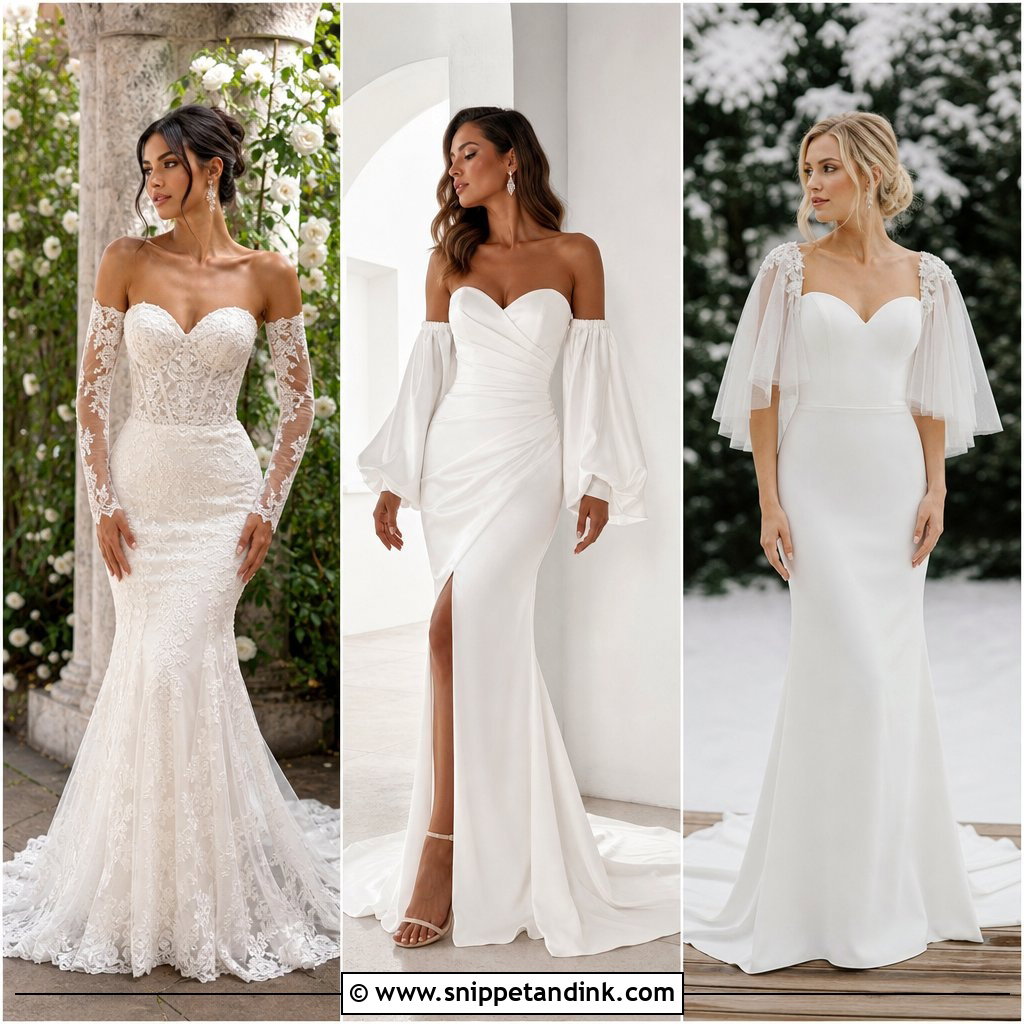
3. Plus Size Mermaid Wedding Dress With Off-Shoulder Sleeves
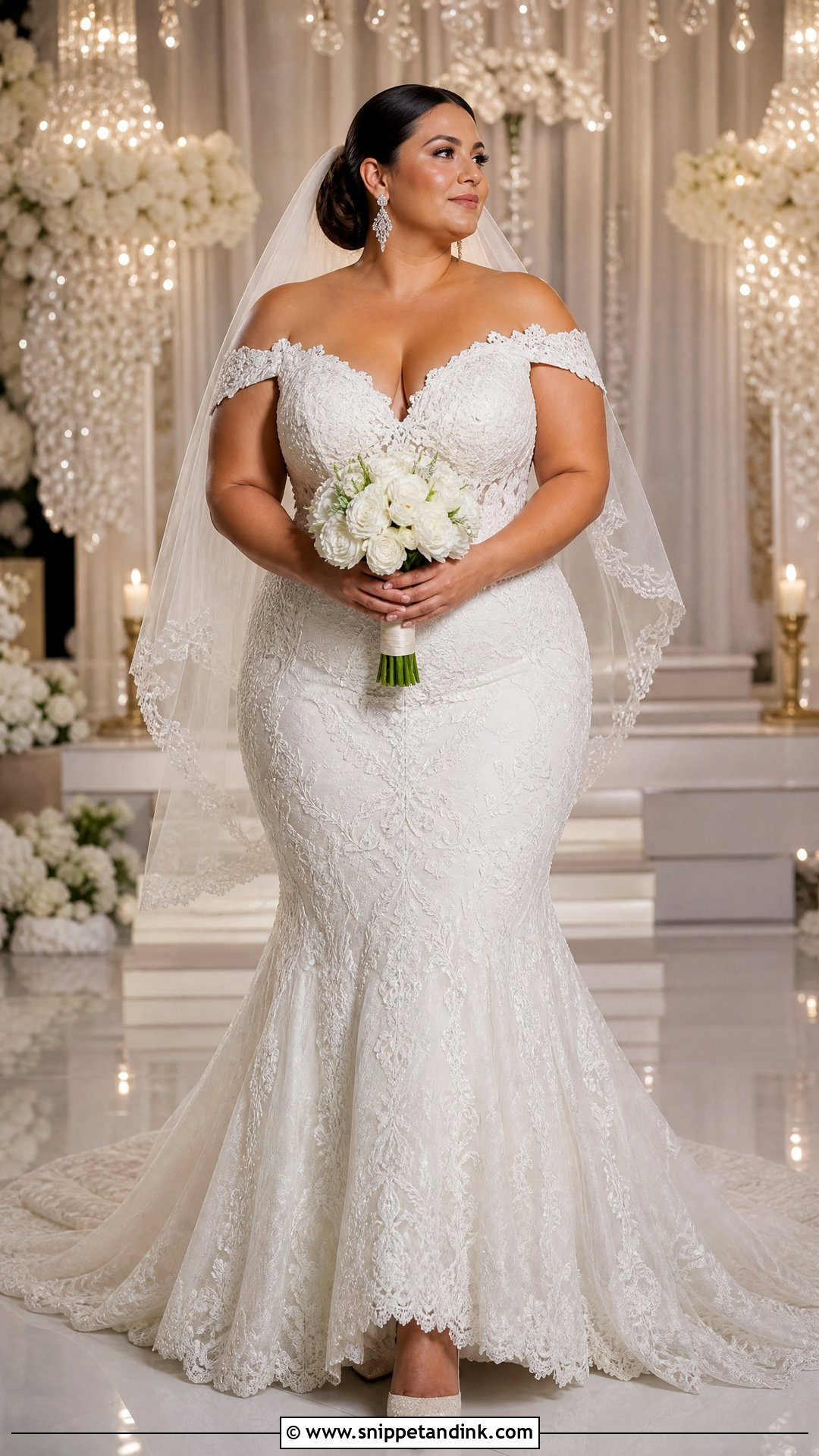
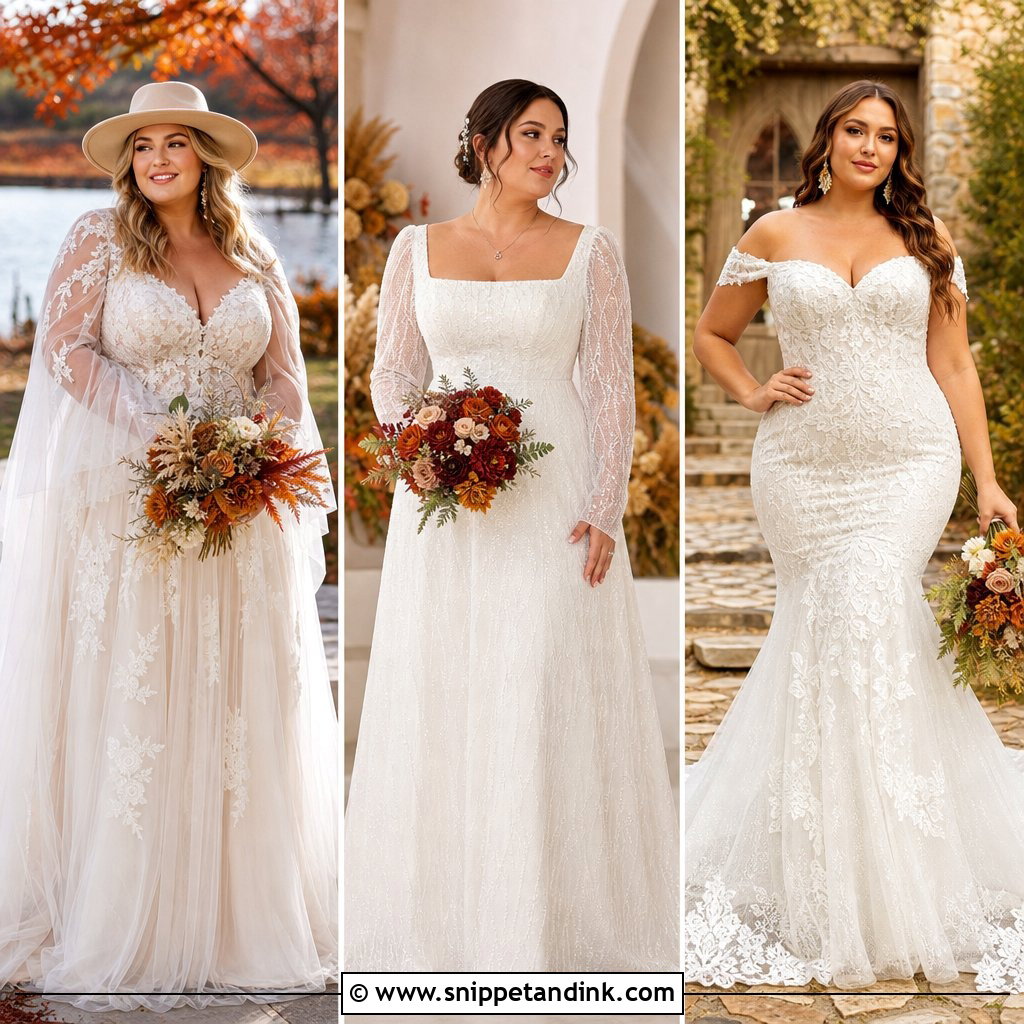
A mermaid follows the body to the knee and then opens, so it shows your curves instead of hiding them. An off-shoulder neckline frames the collarbone, while the structured bodice underneath does the real supporting. Keep the styling sleek: a low bun, a medium veil, sparkling earrings, closed-toe heels and a simple bouquet. The flare point is the whole fit. Set too high, it turns every step into a shuffle, so I’d rather it start where your knees can still move, which often means a touch lower than the sample. At fittings, sit, climb a few stairs and take long strides. Stretch crepe or lined lace forgives far more here than stiff mikado does.
4. Plus Size Empire Waist Chiffon Wedding Dress
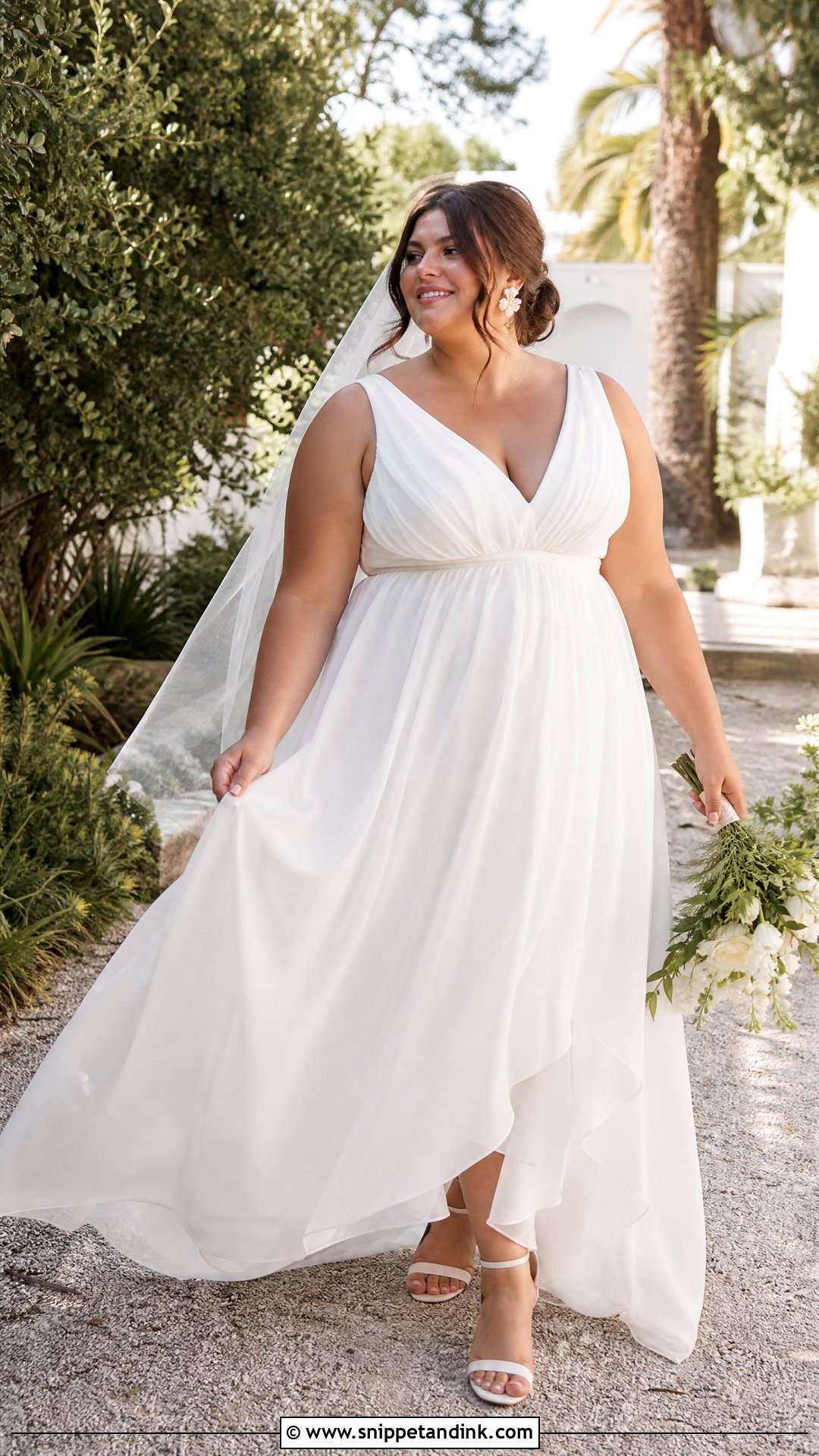
Chiffon floats when it isn’t fighting a fitted waist, and the empire line lets it do that from just below the bust. Look for a reinforced bodice with wide straps so the support isn’t left to a thin gathered panel. Low block-heel sandals, floral earrings and a light veil suit the airy fabric; heavy cathedral tulle would drag it down. Hold the skirt up to a window before you buy, because single-layer chiffon goes see-through in strong sun, and a full lining is a simple alteration if you ask early. Have the hem measured in the exact shoes you’ll wear. It’s made for summer gardens and destination weddings with lots of walking.
5. Plus Size Tea-Length Wedding Dress
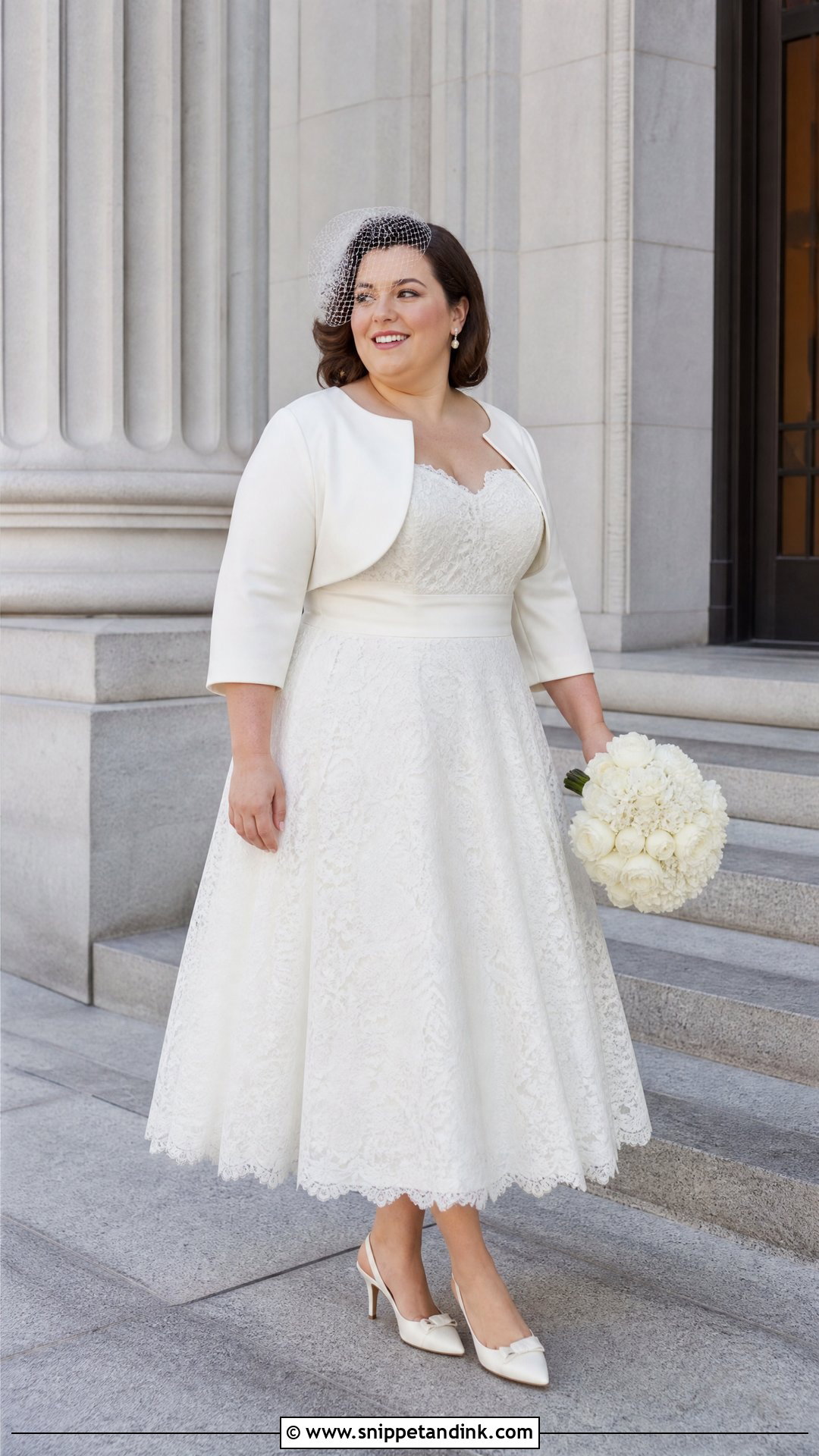
Tea length ends between the knee and the ankle, so you get vintage character and an easy walk with no train to manage. Pick a fitted bodice with straps that support rather than decorate. Your shoes are on show, which makes ivory slingbacks, embellished flats or neat block heels part of the outfit; add a birdcage veil, pearl earrings and a small round bouquet. For a cool morning ceremony I’d add one layer. A cropped bridal jacket covers the arms without hiding the waist. Petticoats can make a tea-length skirt stand away from the leg, so try the hem at a couple of lengths before anything is cut.
6. Plus Size Crepe Sheath Wedding Dress
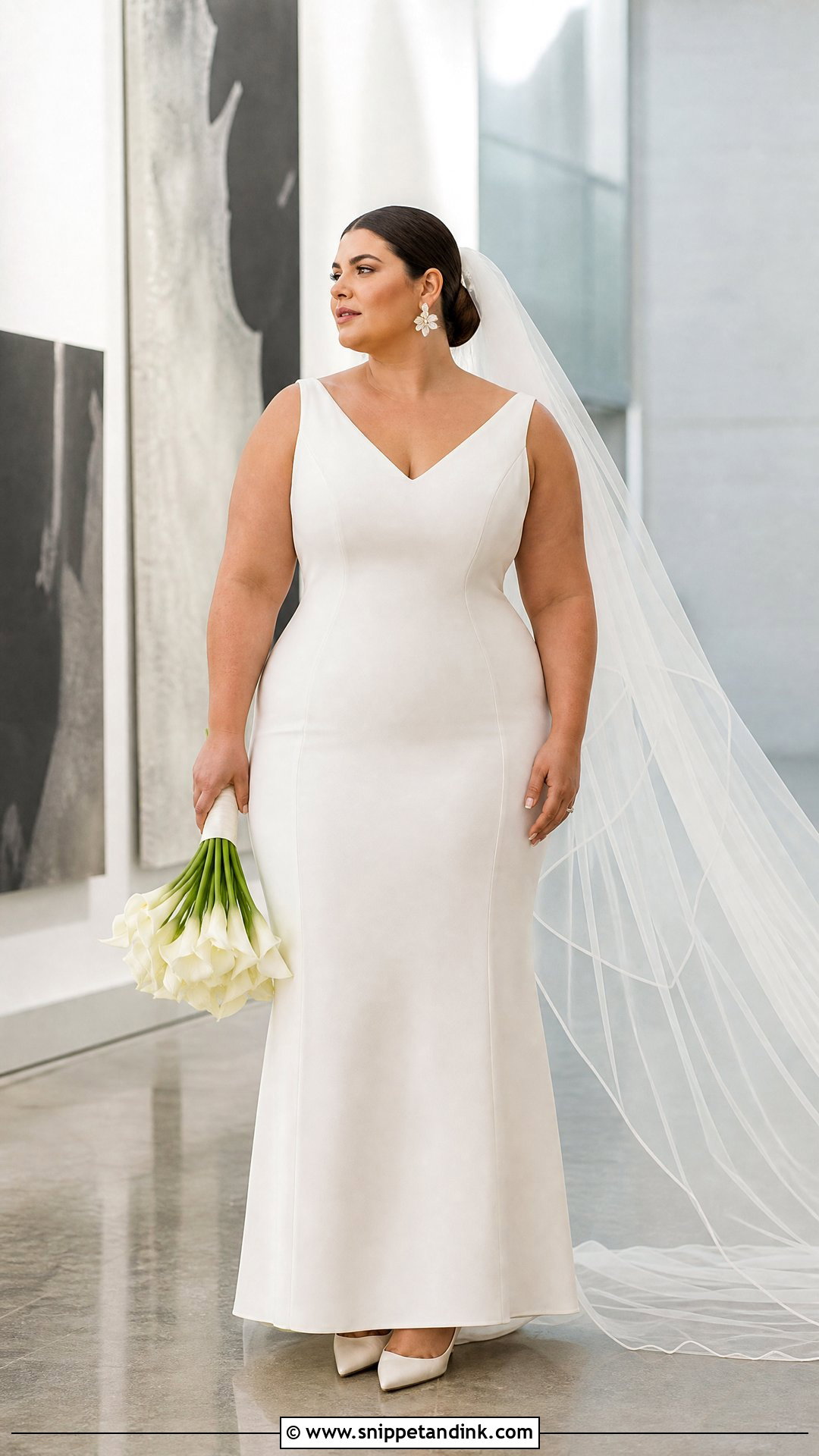
Crepe has no lace to hide behind, so a sheath in it lives or dies on tailoring. Princess seams, a V-neck and a smooth lining let it follow the body while still giving you room to move. Style it spare: sculptural earrings, a sleek bun, pointed pumps and a cathedral veil for contrast, with calla lilies or another streamlined bouquet. Before you fall for one, turn the bodice inside out. I check for cups, boning and a waist stay, because crepe shows every ridge of a bra strap or shapewear edge underneath it. Smooth, laser-cut undergarments in your skin tone solve most of that. City ceremonies, galleries and small weddings suit it.
7. Plus Size Basque Waist Wedding Dress
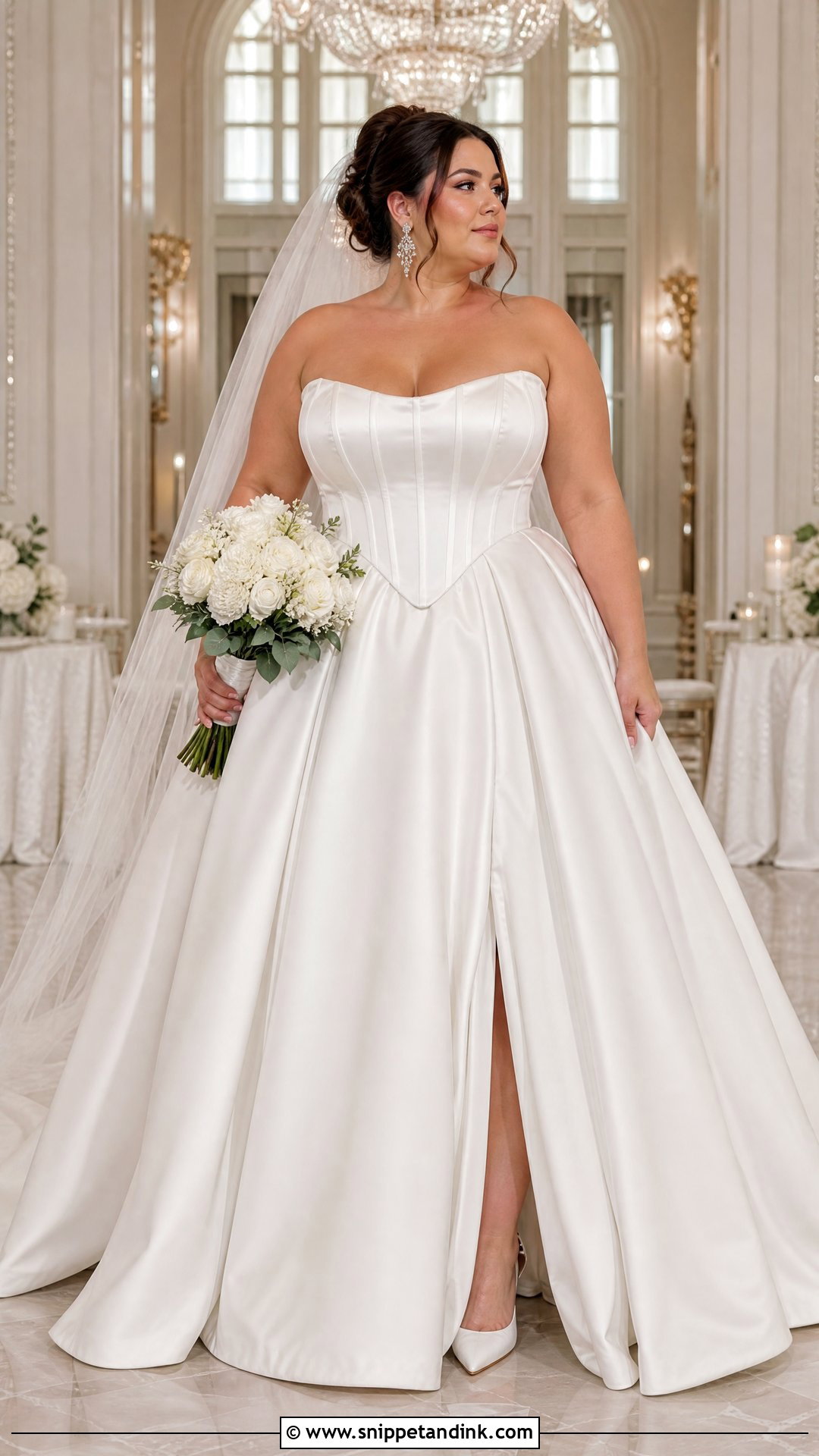
A basque waist dips to a point at the front, which makes a classic ball gown look current. The corset should feel firm, never painful, with a gathered satin or tulle skirt below it. Strapless looks striking, but I always ask whether detachable straps are available, because plenty of brides reach for them once the dancing starts. Add a long veil, pearl-and-crystal earrings, ivory heels and a structured bouquet. The shape here comes from construction, not from bulk in the skirt. Sit down at the fitting and watch the point of the V; if it buckles or digs into your stomach, the front boning needs shortening. Castle venues and formal evenings suit it best.
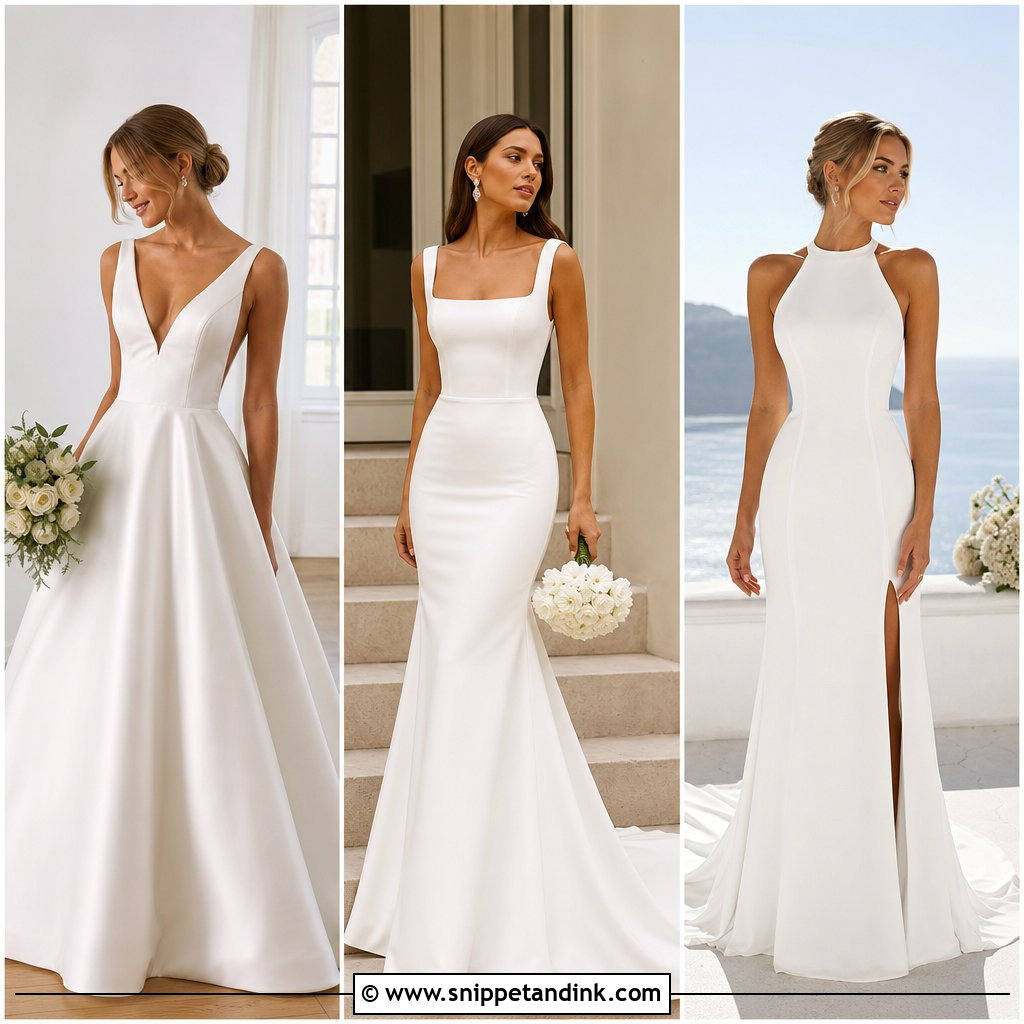
8. Plus Size Square-Neck A-Line Wedding Dress
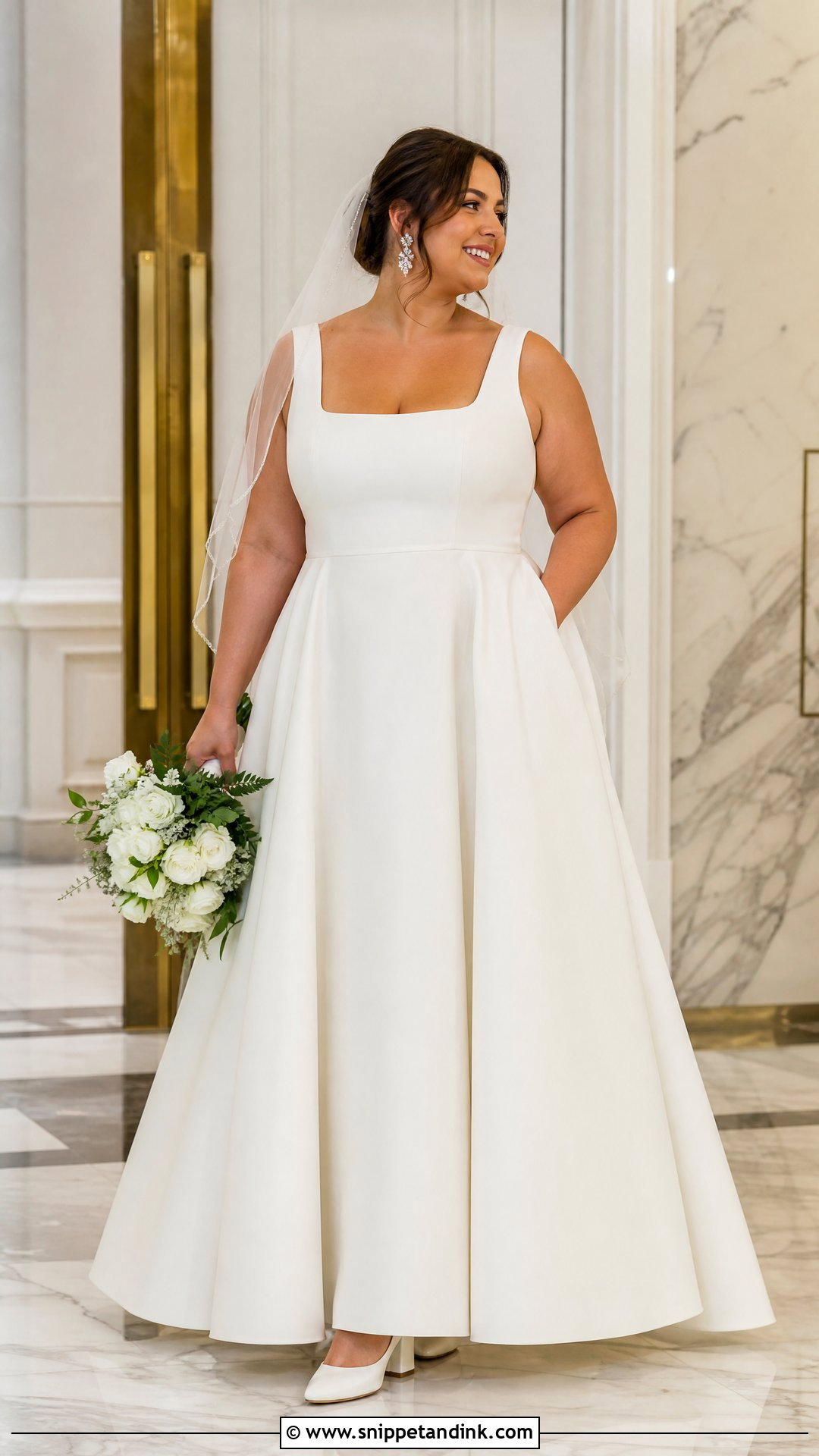
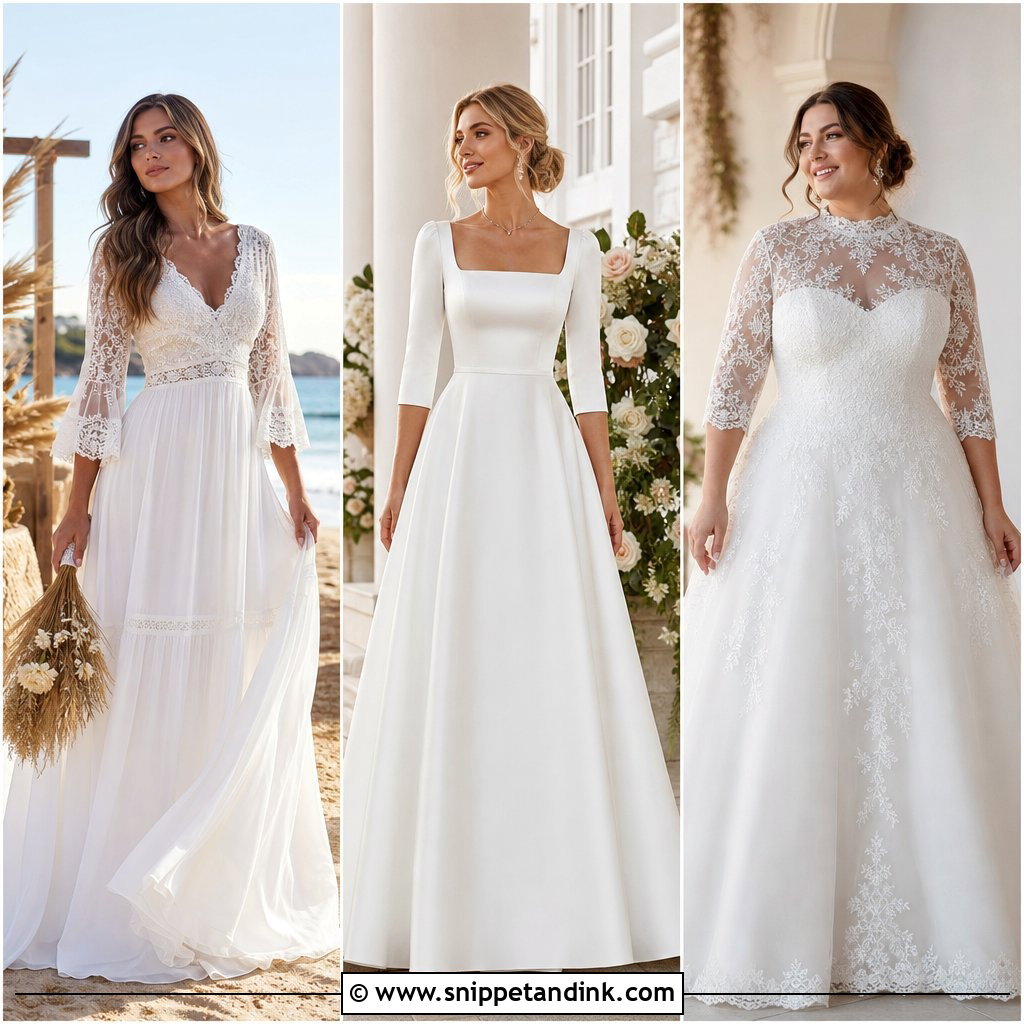
A square neckline frames an A-line cleanly and leaves room for straps wide enough to do real work. Choose a fitted bodice and a defined waist over satin, mikado or lined crepe. A short pearl necklace only works if it sits entirely inside the neckline; if it crosses the edge, wear statement earrings instead. A low bun, fingertip veil and block-heel pumps complete it. Pockets are great until they gape, so stand side-on to the mirror with your hands in them. On sloping shoulders, square-neck straps tend to slide outward, and I’d have them moved slightly inward rather than simply tightened.
9. Plus Size Boho Lace Wedding Dress
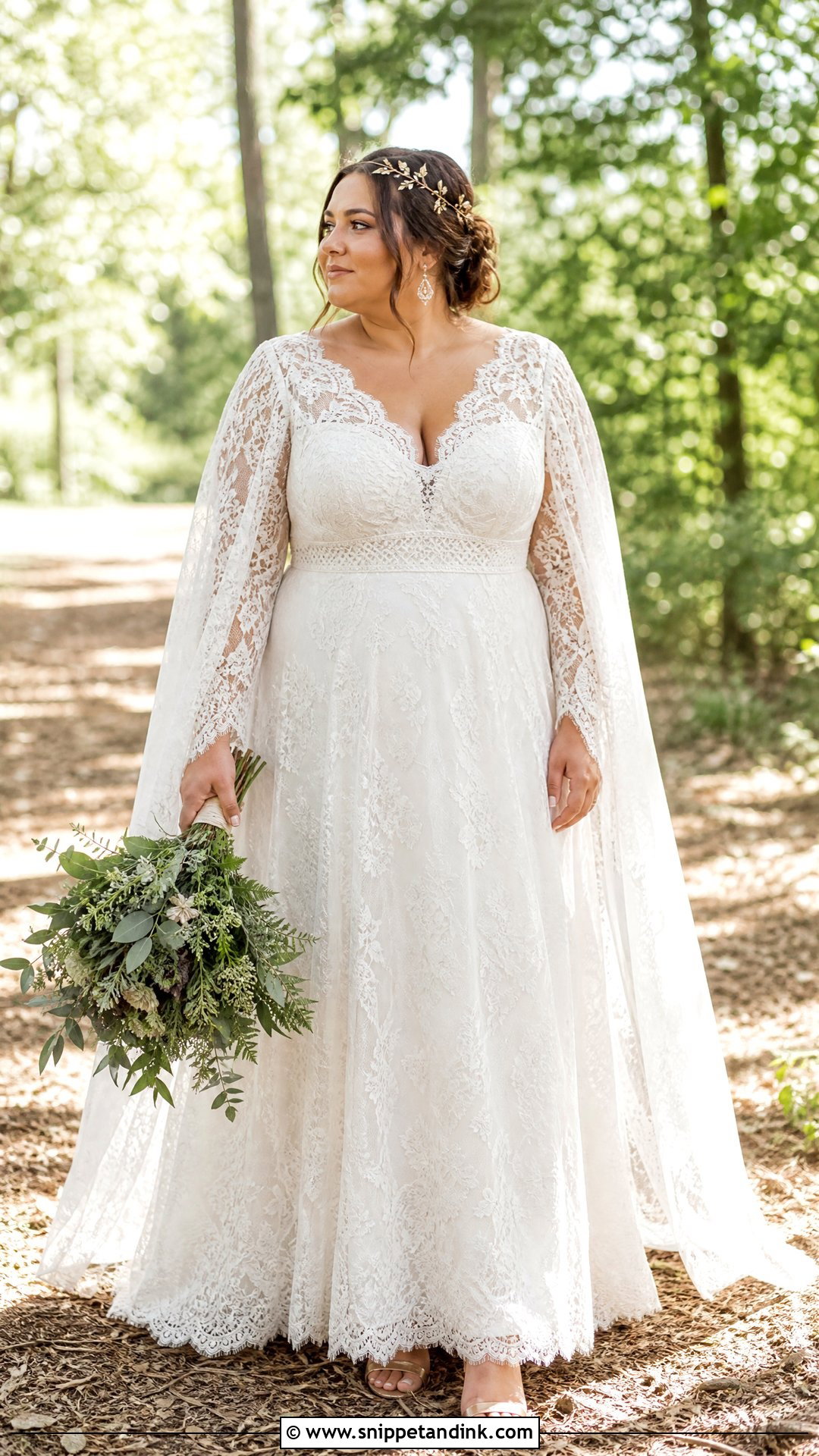
Boho works best when the gown is still doing the supporting and only the details look relaxed. Look for an A-line or column with a proper lining and a defined waist under the lace overlay; flutter or bell sleeves bring movement without needing structure. Wear low sandals, a fine hair vine, small drops and a fingertip veil or light cape, and carry a bouquet with textured greenery. Pick one lace pattern and let it lead. Loose sleeves and open lace love to catch on bracelets, florist wire and chair backs, so ask for ribbon-wrapped bouquet stems and test the sleeve against your jewelry before the day. Woodland venues, barns and desert ceremonies are its natural home.
10. Plus Size Beach Wedding Dress
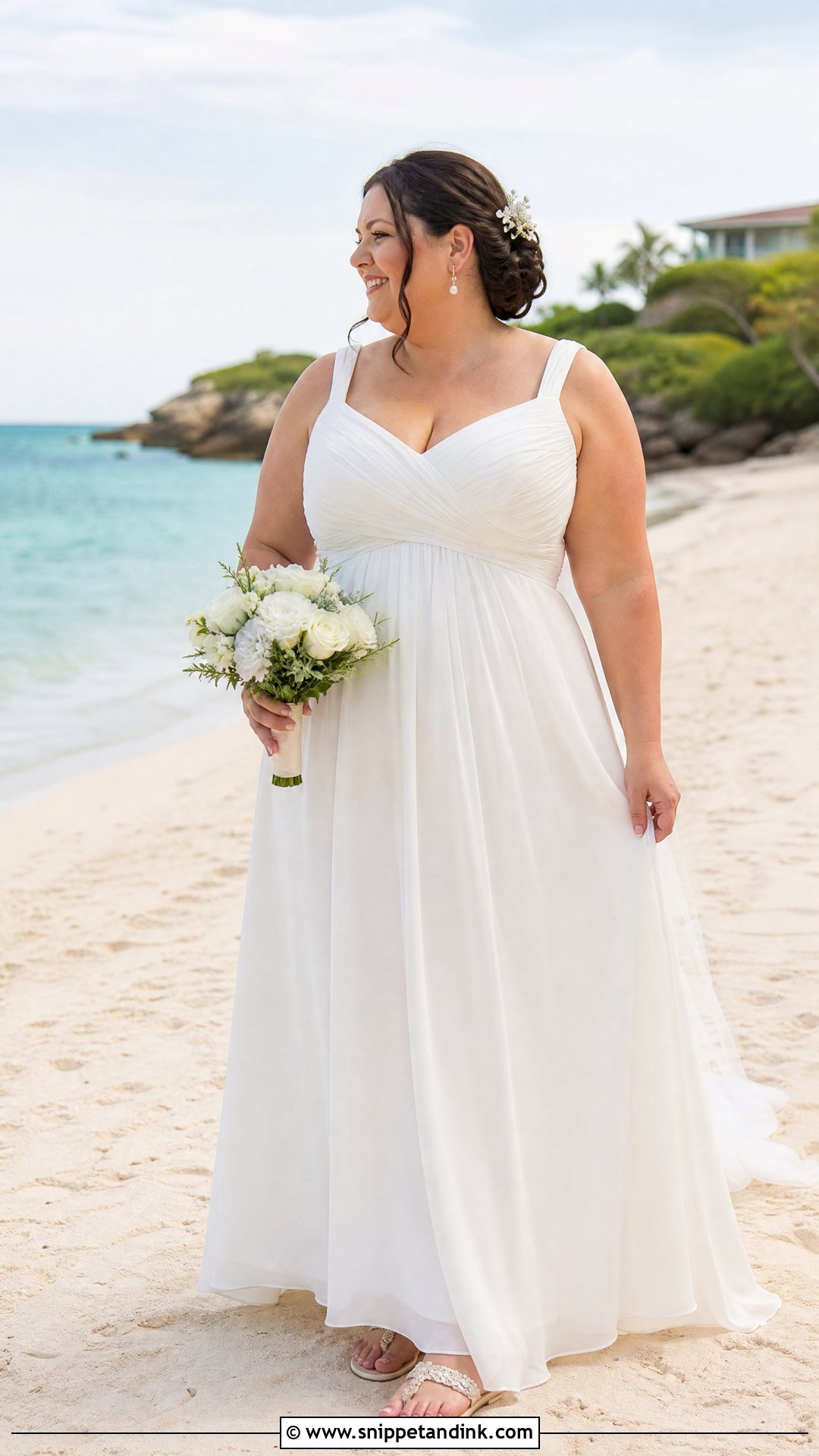
A beach wedding dress has to breathe and cope with sand and wind. I’d choose lightweight chiffon or soft crepe in an A-line with supportive straps, a secure neckline and little or no train. Flat embellished sandals, pearl earrings and a floral comb do better than a long veil, which turns into a sail in a sea breeze. Keep the bouquet compact. Heavy beading feels worse every hour in humidity, so look for a simple lining and restraint on embellishment. Have the hem cut to clear the ground when you’re barefoot or in flats, and you’ll stop lifting your skirt every few steps.
11. Plus Size Long-Sleeve Winter Wedding Dress
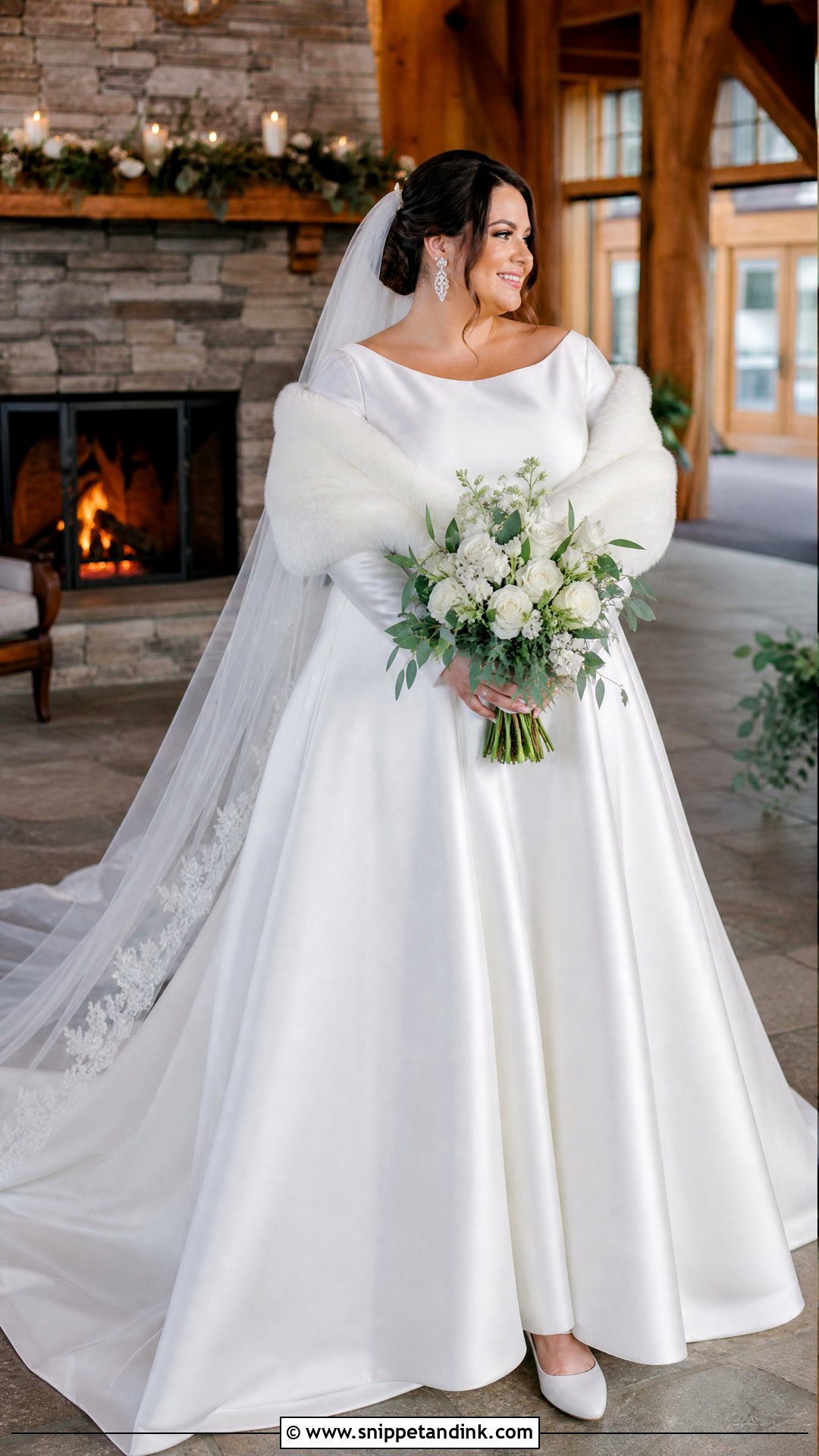
Crisp satin and fitted sleeves make a strong base for winter. Go for an A-line or ball gown with a structured bodice, full-length sleeves and room through the elbow and upper arm, which is where long sleeves usually bind. Closed-toe block heels, crystal earrings and a cathedral veil carry the ceremony, and a faux-fur wrap, satin cape or tailored coat keeps you warm between locations. White flowers with deep green foliage feel seasonal without a holiday theme. I have every long-sleeve bride hold her bouquet at waist height and then raise both arms; if the sleeve drags the shoulder seam upward, it needs more ease. This complete cold-weather look suits historic hotels, mountain lodges and city venues.
12. Plus Size Floral Lace Wedding Dress
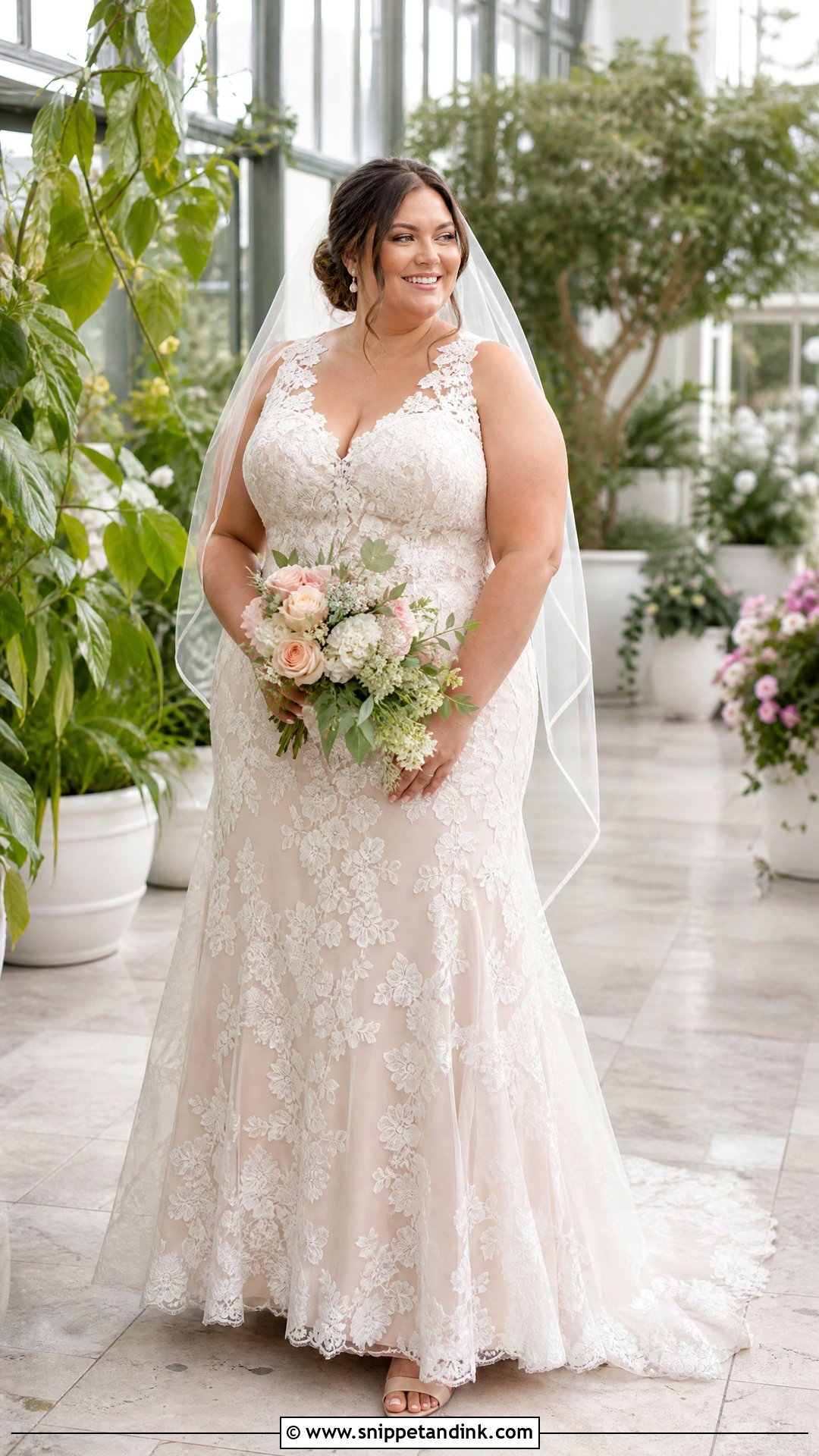
Floral lace adds depth only if the motif is large enough to read in photographs. Tiny lace flattens into plain texture from a few feet away. A fit-and-flare or A-line with appliqués across the bodice, trailing lightly onto the skirt, is the shape I’d pick. Keep the earrings and veil plain, wear ivory heels, and let the bouquet repeat one or two flowers from the lace. Side seams are where appliqué gets cut during alterations, so ask your seamstress to lift and re-stitch motifs across the seam to keep the pattern continuous. The lining changes everything too. Nude, ivory and blush give very different contrast, so compare them in daylight.
13. Plus Size High-Neck Wedding Dress
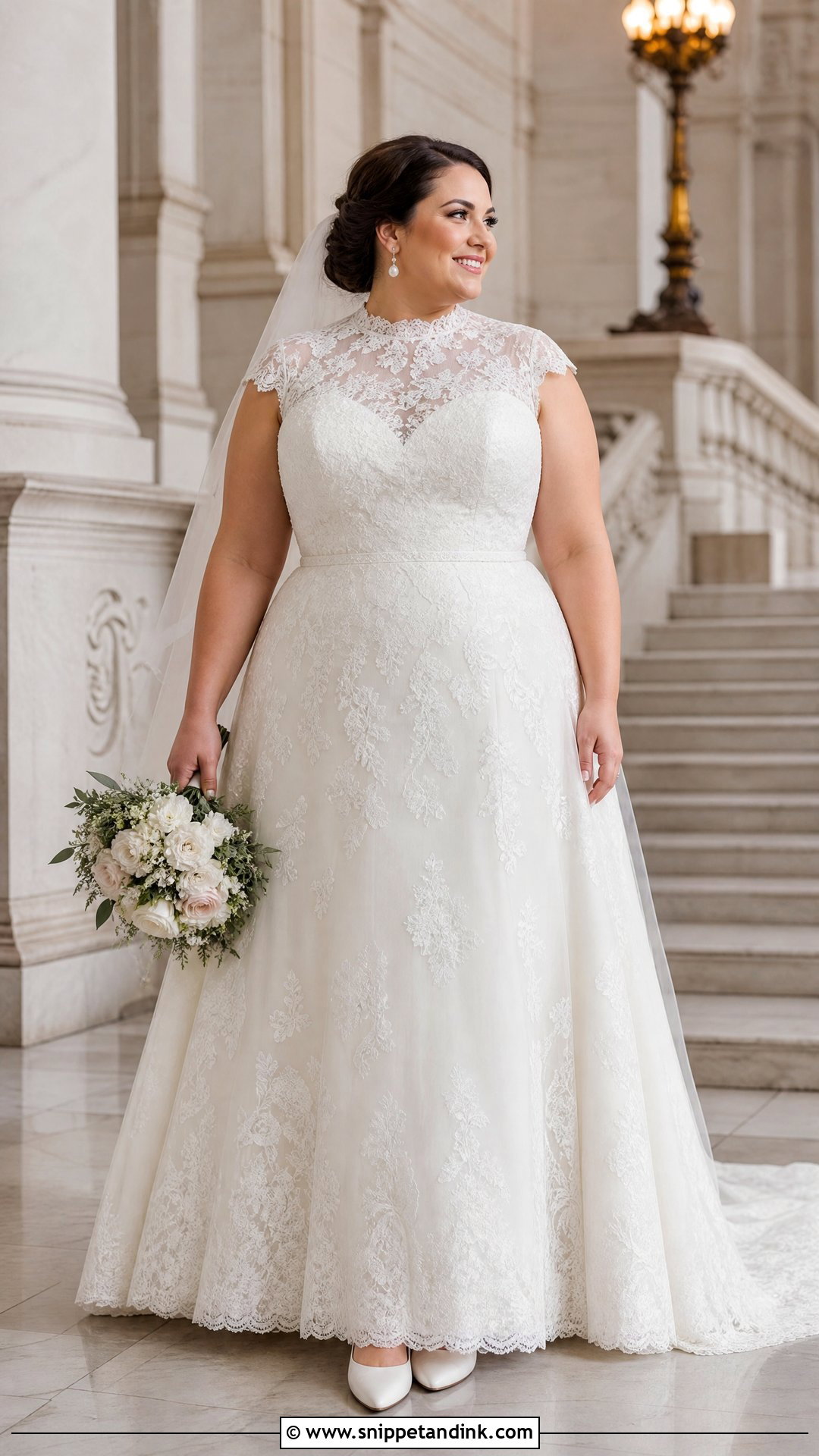
A high neck gives coverage without looking heavy when the fabric is sheer over a supportive sweetheart lining. The other route is a clean bateau bodice with capped sleeves. Balance the covered front with a keyhole back and a softly fitted waist over an A-line skirt. Skip the necklace; pearl drops or crystal earrings are enough, with a low chignon and the veil set beneath it. Turn your head side to side at the fitting. Lace collars can scratch along the jaw by evening, and a soft silk binding on the inside edge fixes that.
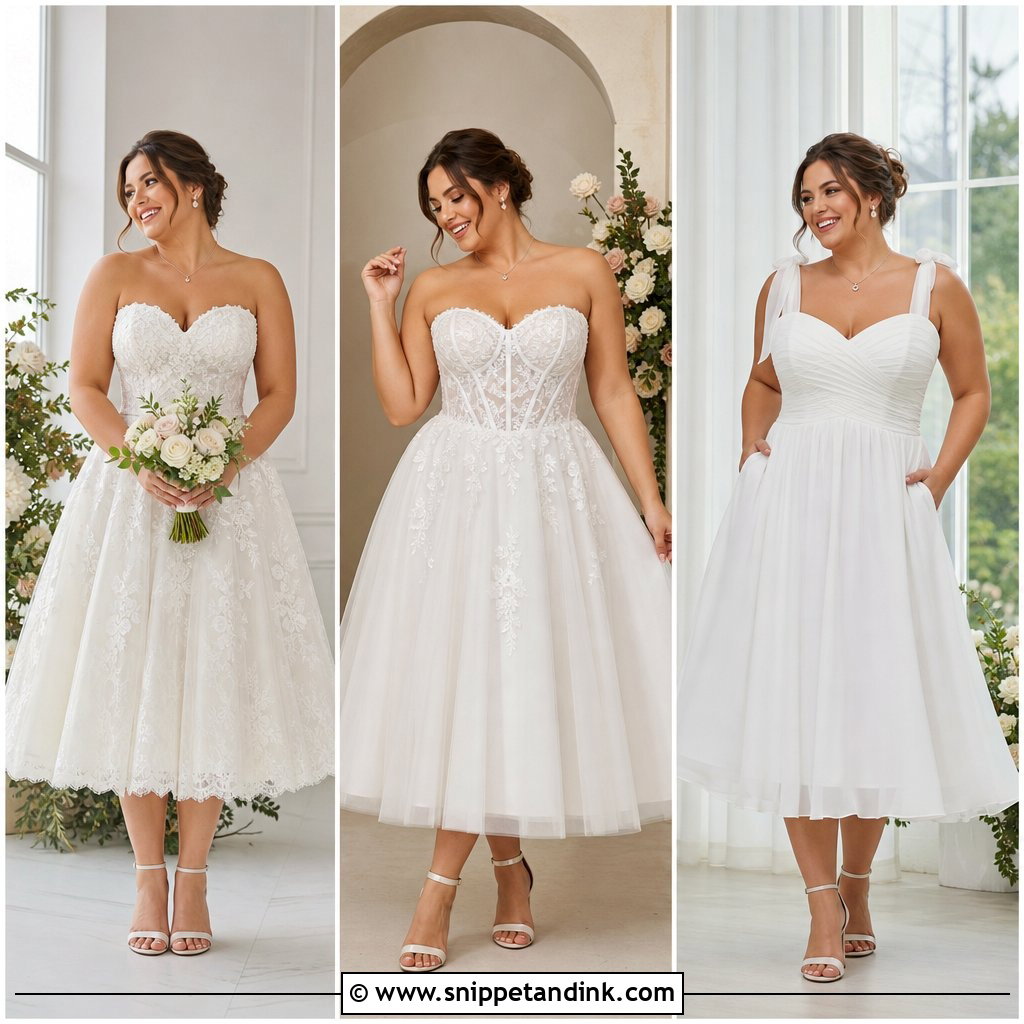
14. Plus Size Strapless Ball Gown Wedding Dress
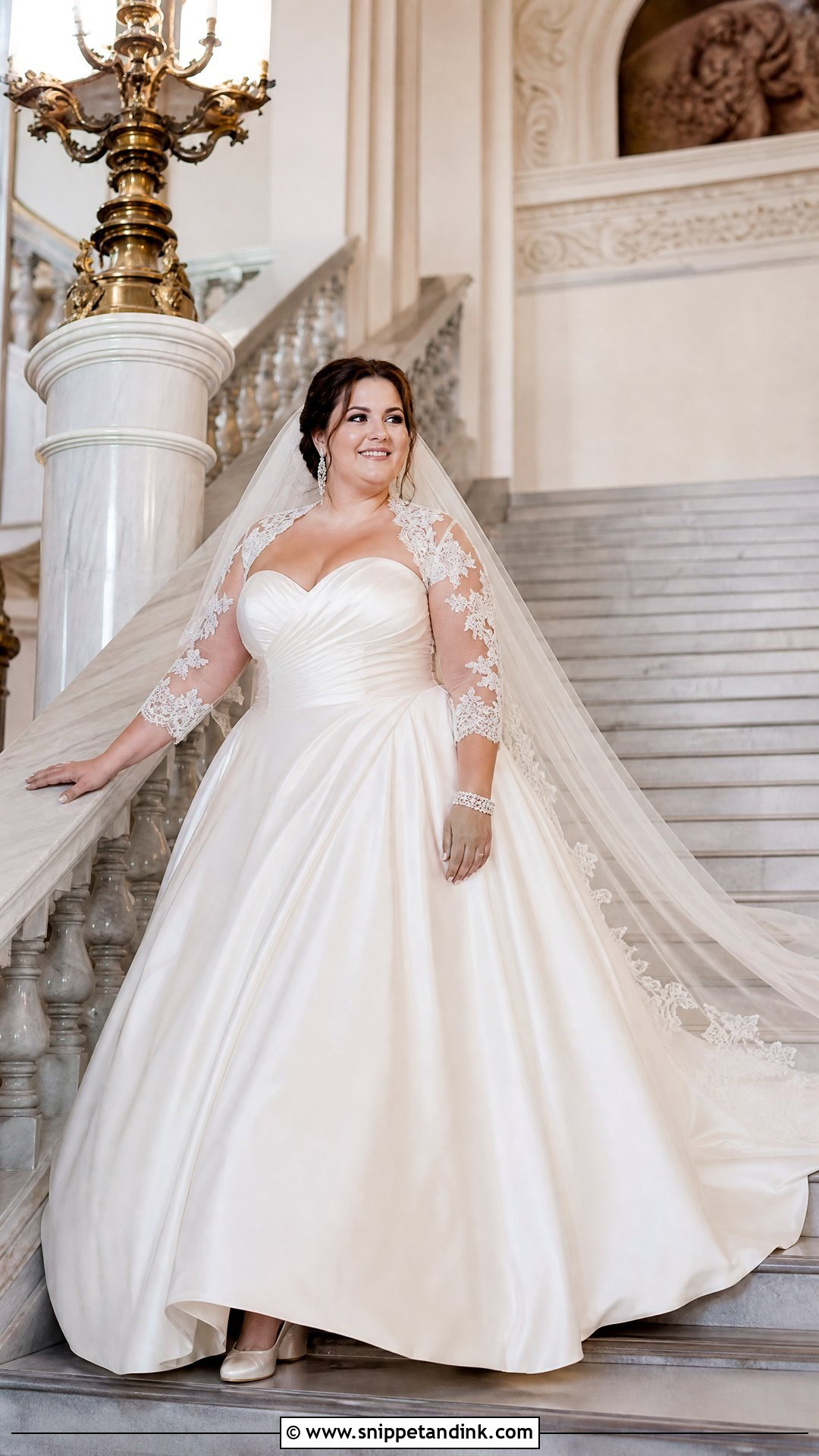
Strapless can be one of the most supportive options for a fuller bust, provided the inside is built properly. I look for spiral or steel boning, secure cups and a firm waist stay that anchors the bodice at your waist rather than relying on your chest to hold it up. Pair it with a cathedral veil, drop earrings, a bracelet and sturdy heels under the skirt. A detachable lace bolero or sheer wrap gives you a covered ceremony look without altering the gown. Walk, sit, hug and lift your arms at every fitting. If the neckline creeps down, the fix is tightening at the waist, not the top edge, and you should still be able to breathe deeply.
15. Plus Size One-Shoulder Wedding Dress
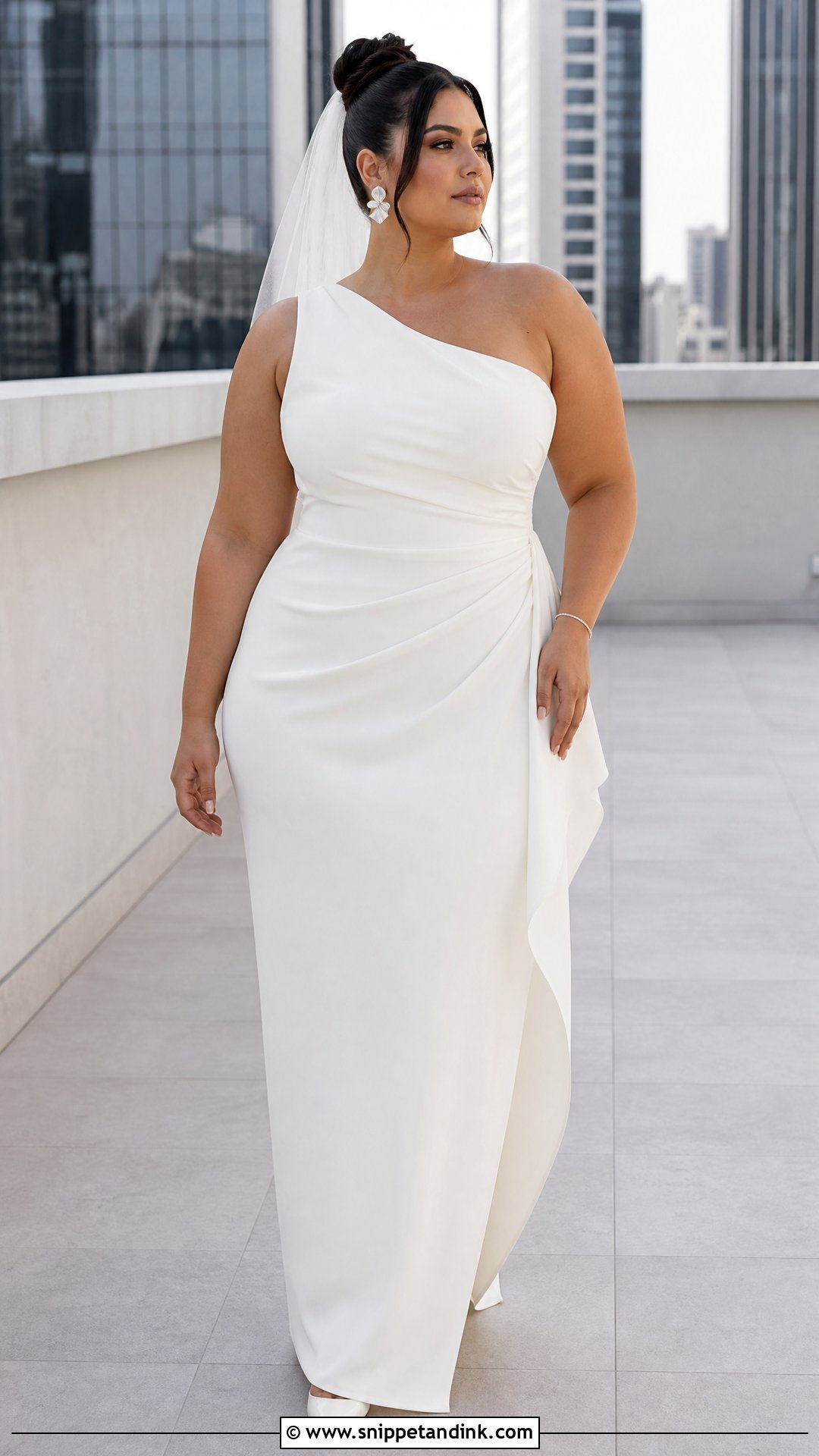
An asymmetrical neckline gives a simple gown an instant point of view. Draped crepe, satin or chiffon with a fitted waist over an A-line or column skirt all suit it. Skip the necklace; sleek earrings, a smooth updo and a slim bracelet on the bare arm balance it, and a short veil or hair comb keeps the neckline in focus. The single strap carries more weight than two would. It should be wide enough and anchored into the bodice boning, otherwise the whole front slowly twists toward the strapped side over the day. Rooftops and gallery spaces flatter the clean line.
16. Plus Size Cape-Sleeve Wedding Dress
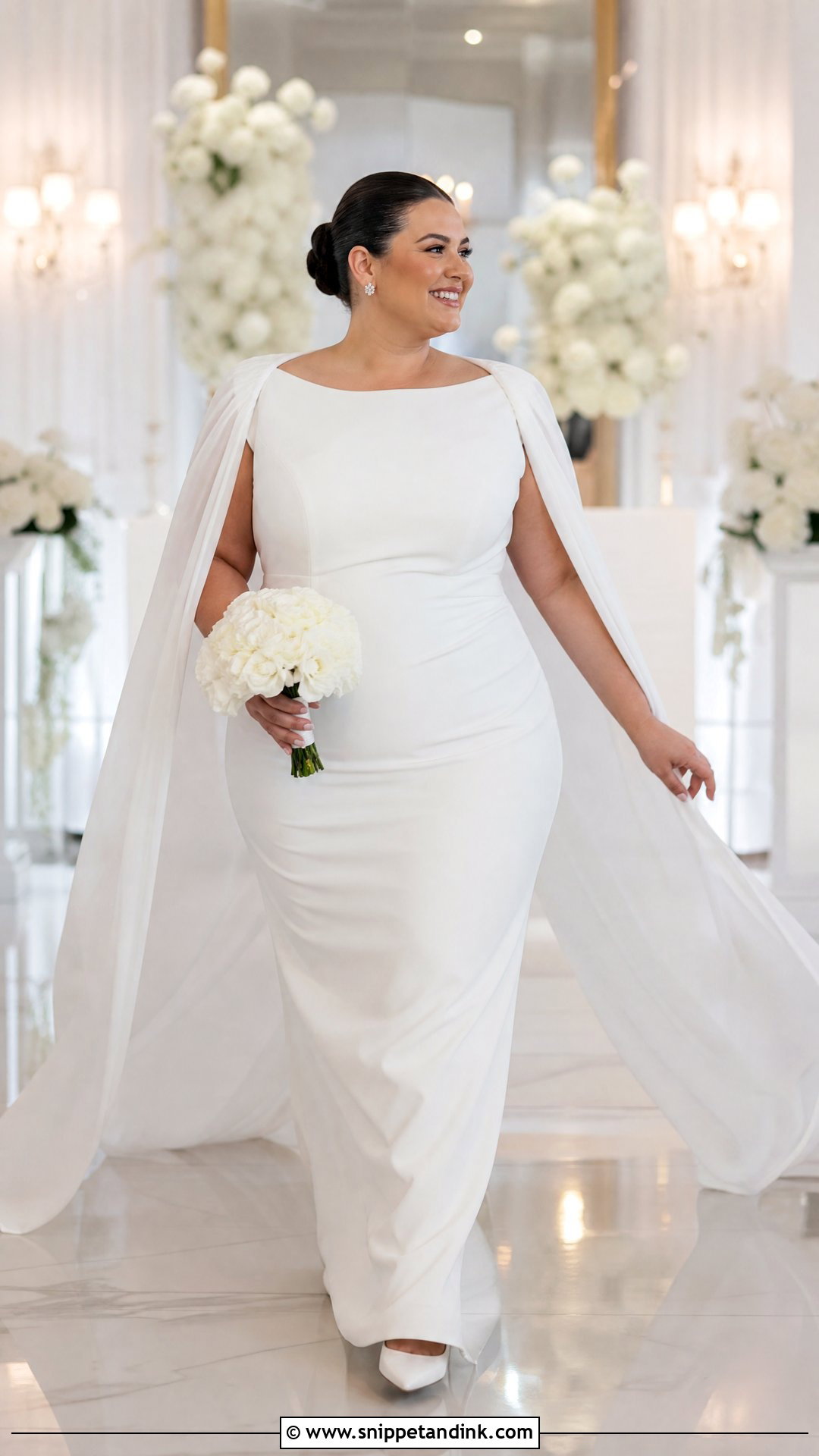
A cape sleeve gives coverage and movement while the gown underneath stays light. Start with a clean crepe or satin column and add an attached chiffon cape or a removable floor-length one. Crystal studs, a sleek bun, pointed pumps and a compact bouquet are plenty. If the cape reaches the floor, I’d skip the veil, since two long layers tangle in every photo. The removable version earns its keep: on for the aisle and portraits, off for dinner. Check where it attaches. Snaps at the shoulder tug the neckline back when you lift your arms, while hooks hidden in a seam sit flatter.
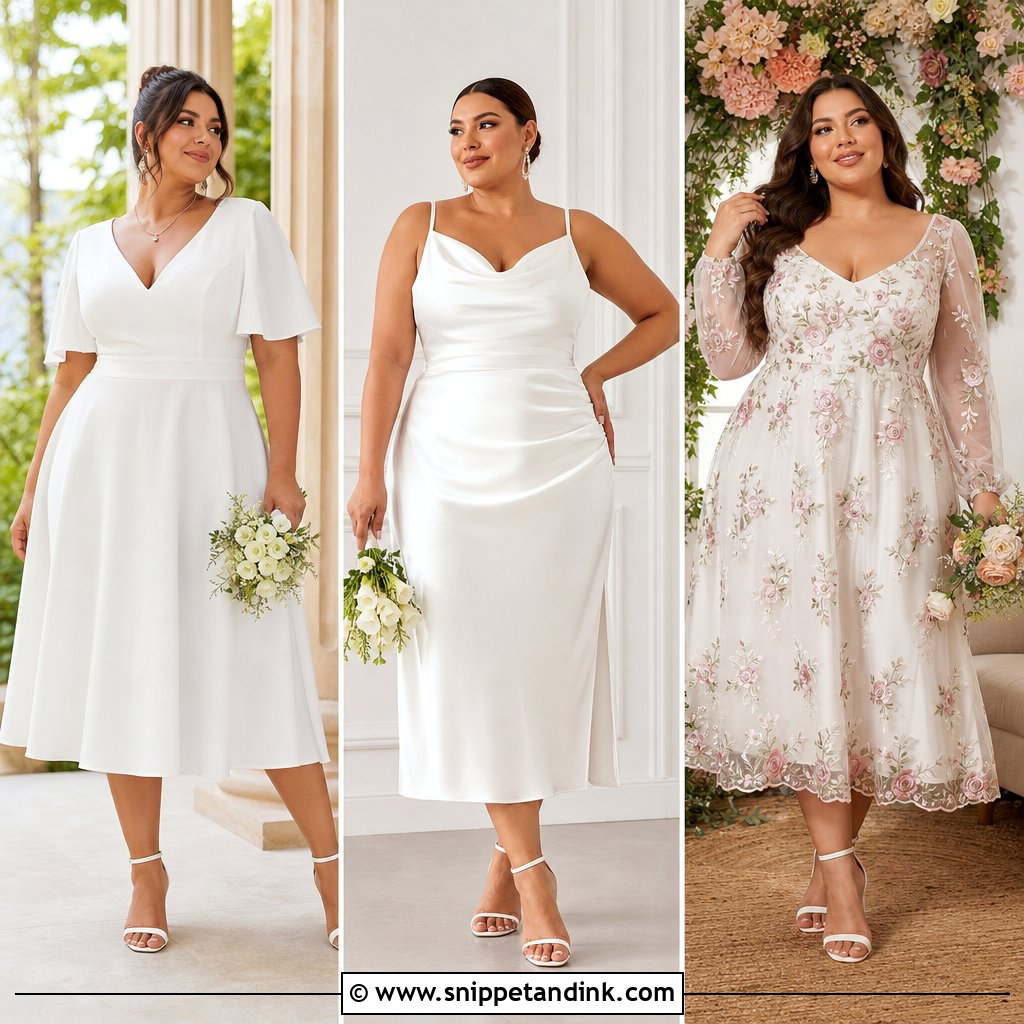
17. Plus Size Short Wedding Dress
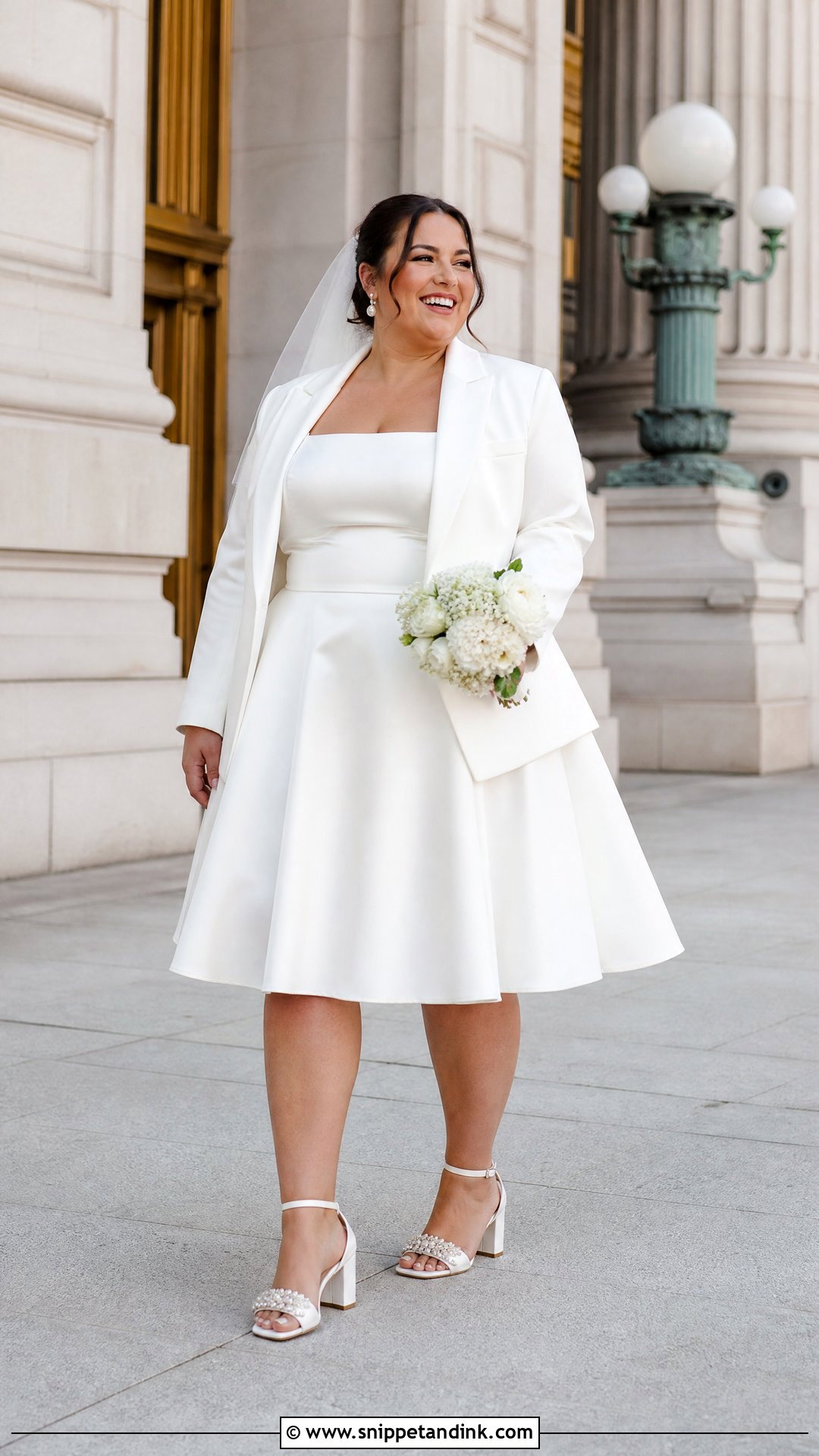
Short can still read as unmistakably bridal when fabric and fit are taken seriously. Choose a knee-length or mini A-line with a structured bodice, comfortable straps and a tulle, satin or crepe skirt. Embellished block heels, pearl earrings, a short veil and a small bouquet complete it, and a tailored white blazer adds coverage for outdoor photos or a courthouse entrance. Your legs and shoes are on show for hours, so wear shoes you’ve already broken in. I always suggest light anti-chafe shorts under a short skirt, because rubbing thighs become the only thing you notice by the reception. It also makes a good change for the party after a longer ceremony gown.
18. Plus Size High-Low Wedding Dress
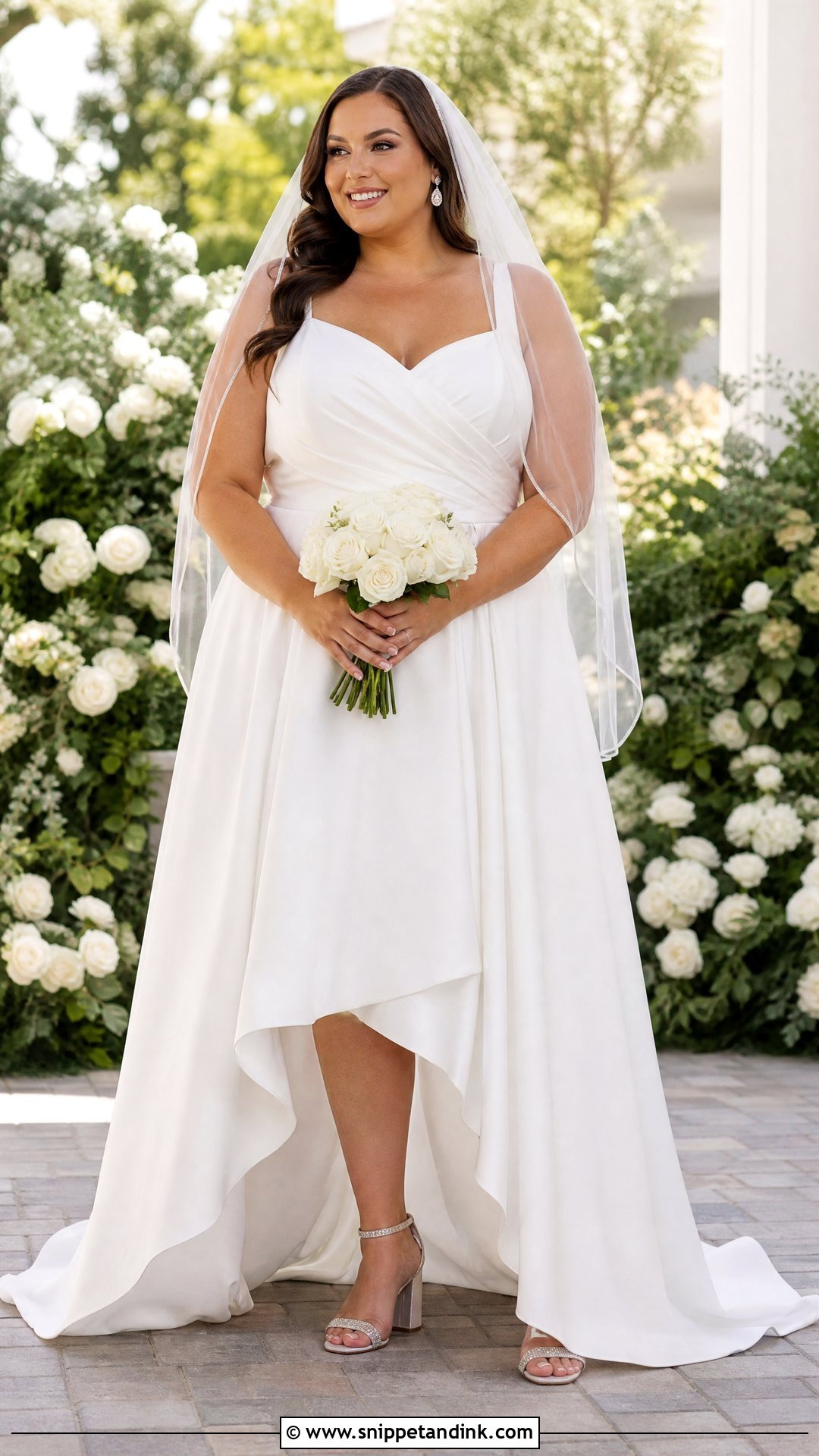
A high-low hem gives you a gown’s back view and a shorter front you can walk in. Look for an A-line that falls about mid-calf in front and sweeps into a soft train behind. Shoes become part of the outfit, so crystal block heels, satin pumps or embellished flats deserve careful thought; add a fingertip veil, simple earrings and a neat bouquet held low enough not to cover the hem. The curve from front to back should be gradual, since a steep drop looks like an alteration mistake in side-on photos. Practise stairs, because the longer back catches under your heel on the way down.
19. Plus Size Blush Wedding Dress
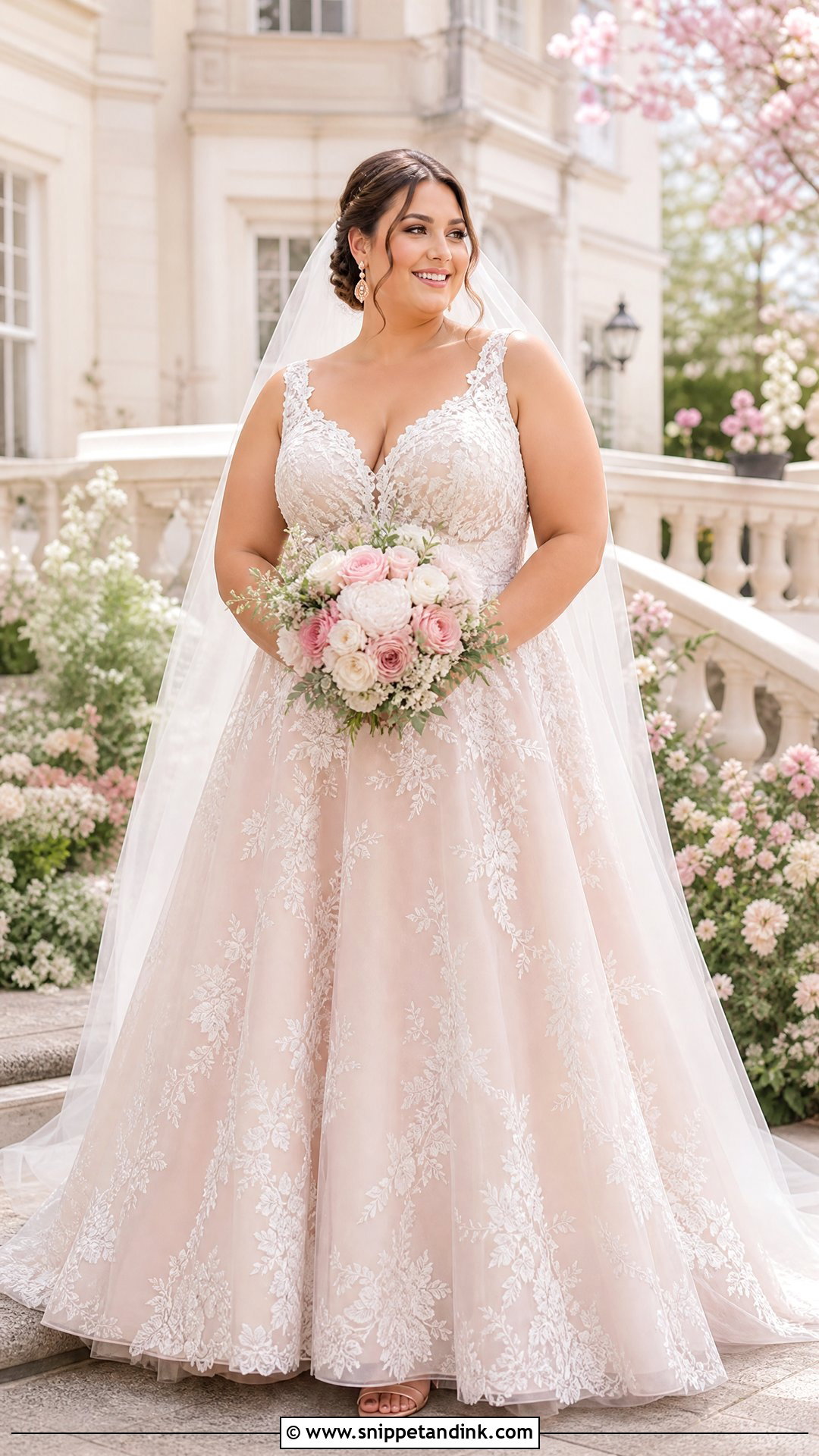
Blush is a soft step away from bright white that still looks bridal. I like it as a blush lining under ivory tulle or lace, which lets the pattern show. Rose-gold earrings, ivory shoes and a veil matched to the outer lace rather than the lining keep it cohesive, while cream, pale pink and muted green flowers pull the palette together. Blush shifts with light. Under warm indoor bulbs it can go peachy, and in shade it turns almost beige, so look at it both ways before you commit. Match your undergarments to the lining so they disappear under it. Garden venues and spring weddings suit it.
20. Plus Size Wedding Dress With Detachable Overskirt
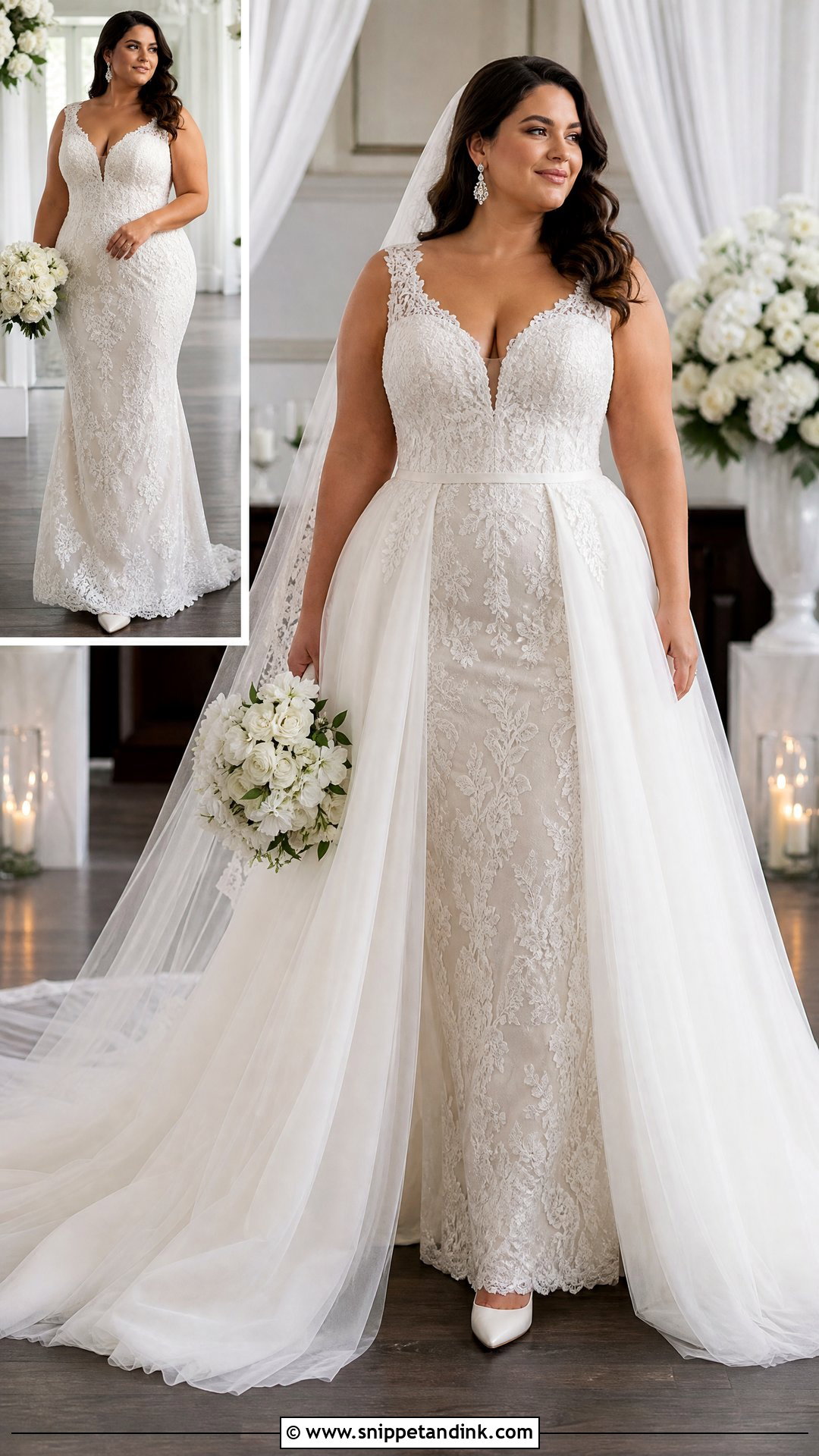
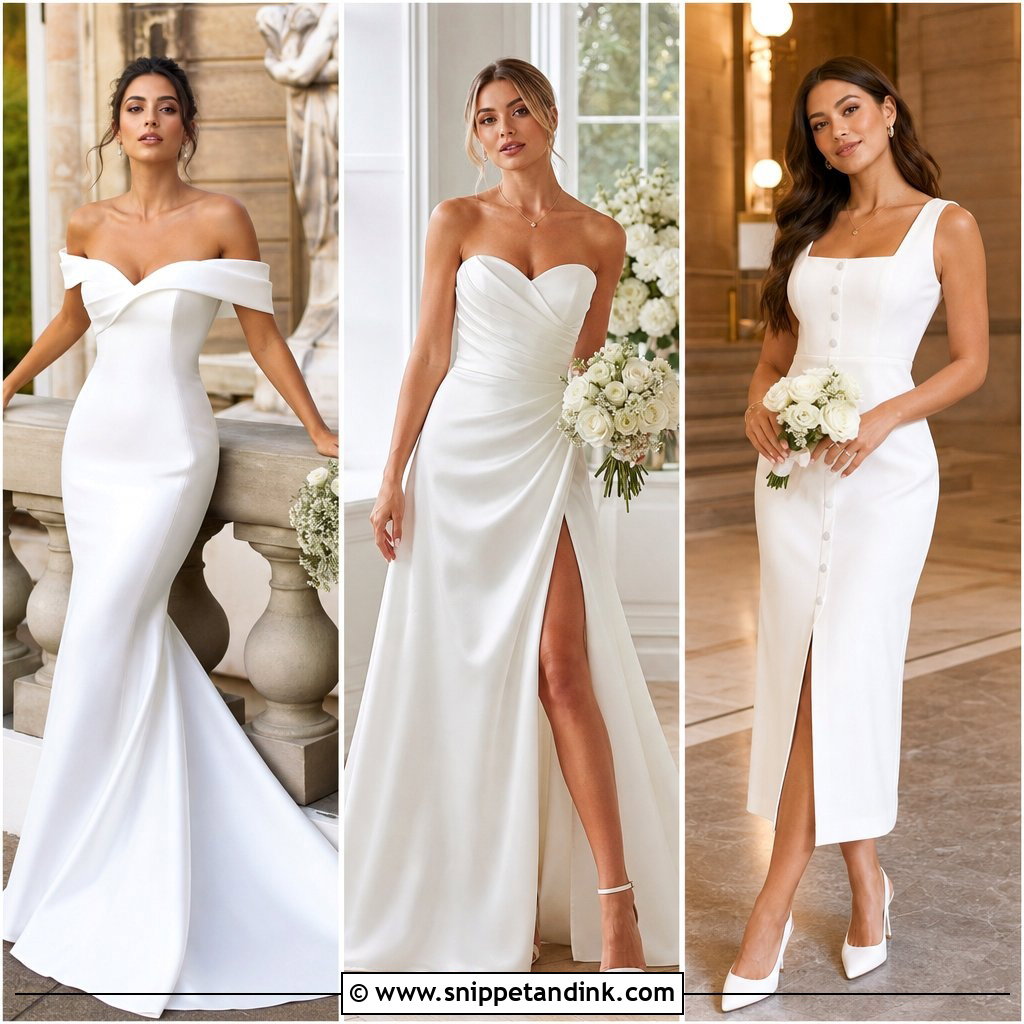
A detachable overskirt gives you two looks without a second dress. Start with a fitted crepe, satin or lace gown you’d happily wear on its own, then add a full tulle or mikado overskirt for the ceremony to get a ball-gown shape and a train. Wear a long veil, crystal earrings and classic pumps, then swap to statement earrings or a shorter veil once it comes off after photos. The join should be invisible from every side. I check it from behind with the bride seated, because that’s where the waistband tends to ride up. Teach one person in your wedding party how to unhook it and fold it into a garment bag, so it doesn’t end up crumpled on a chair.
Support Should Be Sewn In, Not Strapped On
Most of the comfort in these gowns comes from what you can’t see. A bodice with built-in cups, boning and a waist stay carries your bust from the waist up, which is why a well-made strapless can feel steadier than a strappy dress with nothing inside. When a gown lacks that structure, a seamstress can usually sew cups or a light corset lining in, and that’s often far more comfortable than a separate longline bra worn for twelve hours.
What I ask brides to bring to every fitting
- The exact bra or shapewear you’ll wear, since a different band height moves the whole bodice
- Your wedding shoes, or a pair with the same heel height
- Anti-chafe shorts if the skirt is fitted through the thigh
- A phone, so someone can film you sitting, walking and lifting your arms
Letting Out Is Harder Than Taking In
Brides sometimes ask whether they should order small and slim into the gown. I’d steer you away from that every time. Taking a gown in is routine work, while letting one out relies on spare fabric in the seams, and many bodices have only a centimetre or two to give. Lace is even less forgiving, because appliqué crosses the seams and has to be lifted and reset by hand.
Plan the final fitting about two to three weeks before the wedding: close enough that your shape is settled, far enough out that one more tweak is possible. Stress and travel shift things a little in that last month, and a lace-up corset back absorbs small changes much better than a zip.
Your Next Fitting Appointment
The right gown supports you, lets you move and still looks like you. Across these twenty you’ve seen lace, crepe, satin, chiffon, short hems and two-in-one designs, and none of them come with a body-shape rule attached. Try at least one silhouette you’d have ruled out. Bring the bra and shoes you plan to wear to every fitting, and talk through sleeves, neckline, bustle and support with a seamstress who has altered plus-size bridal before. If nothing here felt right yet, there’s another set of Wedding Dress for Plus Size Women ideas worth a look. Fit the dress to the body you have now and you’ll spend the day celebrating instead of adjusting.
You'll Like These Ideas:






Leave a Reply