
Detachable sleeves give one gown two jobs. You get coverage and shape for the ceremony, then a cleaner, cooler dress once the dancing starts, without paying for a second outfit. In fittings, though, I see the same thing again and again: the sleeves get chosen for how they look on a hanger, and nobody checks how they attach, how they sit when you raise your arms, or what the bodice looks like after they come off. The ideas below run from structured satin to beach chiffon, and for each one I’ve noted what I’d actually check before saying yes.
How Removable Sleeves Attach, and Why I Ask First
Before I look at a sleeve’s style, I ask how it fastens, because the method decides how it sits all day and how quickly it comes off. There are four common systems, and each behaves differently once you start moving.
- Arm bands with elastic: the sleeve hangs from a band that grips the upper arm. Nothing touches the bodice, so the gown stays put. The band needs to be snug enough not to slide, but loose enough not to leave a red mark.
- Snaps or hooks sewn to the bodice: very secure and they look neat, but every hook is a point of strain on the gown. On strapless dresses I only accept this if the bodice is boned and fitted well enough to hold itself up.
- Hidden buttons and loops: tidy and traditional, slower to undo. Plan on a helper for the reception change.
- Ties or ribbon closures: forgiving on fit and easy to adjust, but a loose bow can work free during dancing. Ask for the tails to be tacked down.
Bring the shoes you’ll wear to every fitting, and stand the way you’ll stand at the altar. A sleeve that looks right with your arms hanging can twist once you hold a bouquet at your waist, and that’s the position you’ll be photographed in most.
1. Strapless Satin Detachable Sleeves Wedding Dress
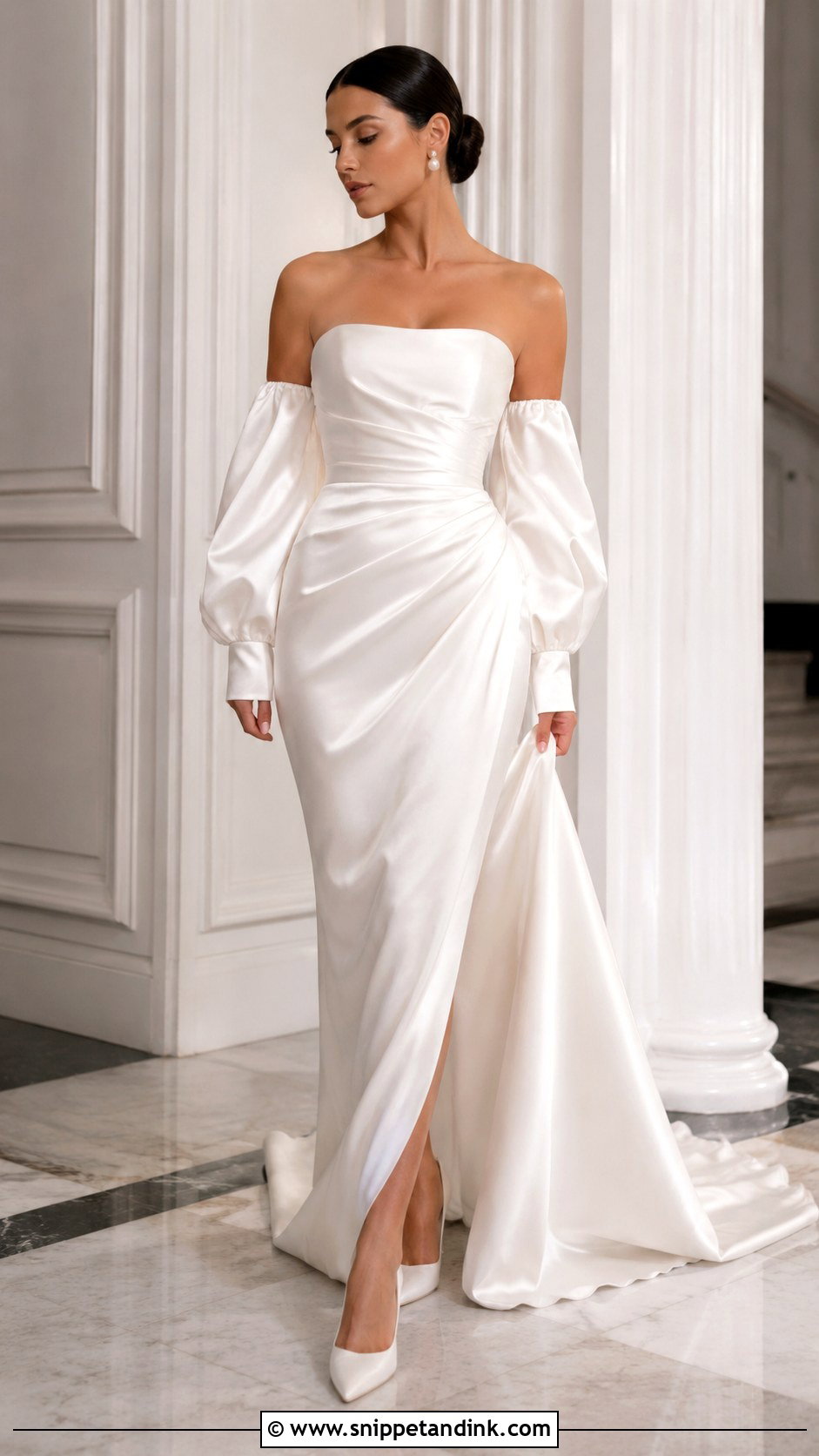
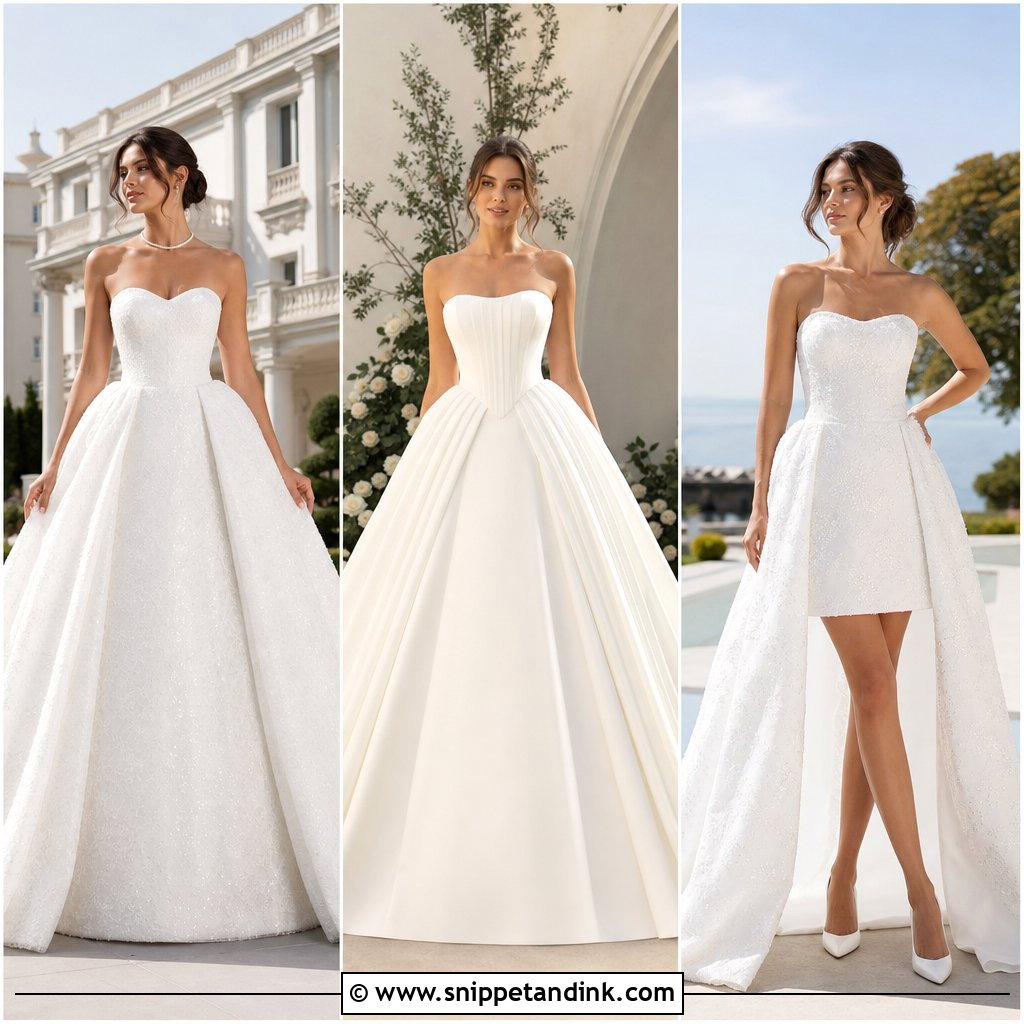
Satin sleeves on a strapless satin gown are the most traditional version of this soft transformation, and the one most likely to go wrong at the shoulder. Satin has weight, so a sleeve cut from the same fabric pulls downward and can drag a strapless neckline with it. I ask the seamstress to anchor the sleeve to a band that sits on the arm, not to the bodice edge. Then the bodice holds itself up and the sleeve simply rests against it. Pearl earrings and a low bun keep the ceremony look quiet, and once the sleeves are off you’re left with a clean, structured gown.
2. Lace Detachable Sleeves Wedding Dress
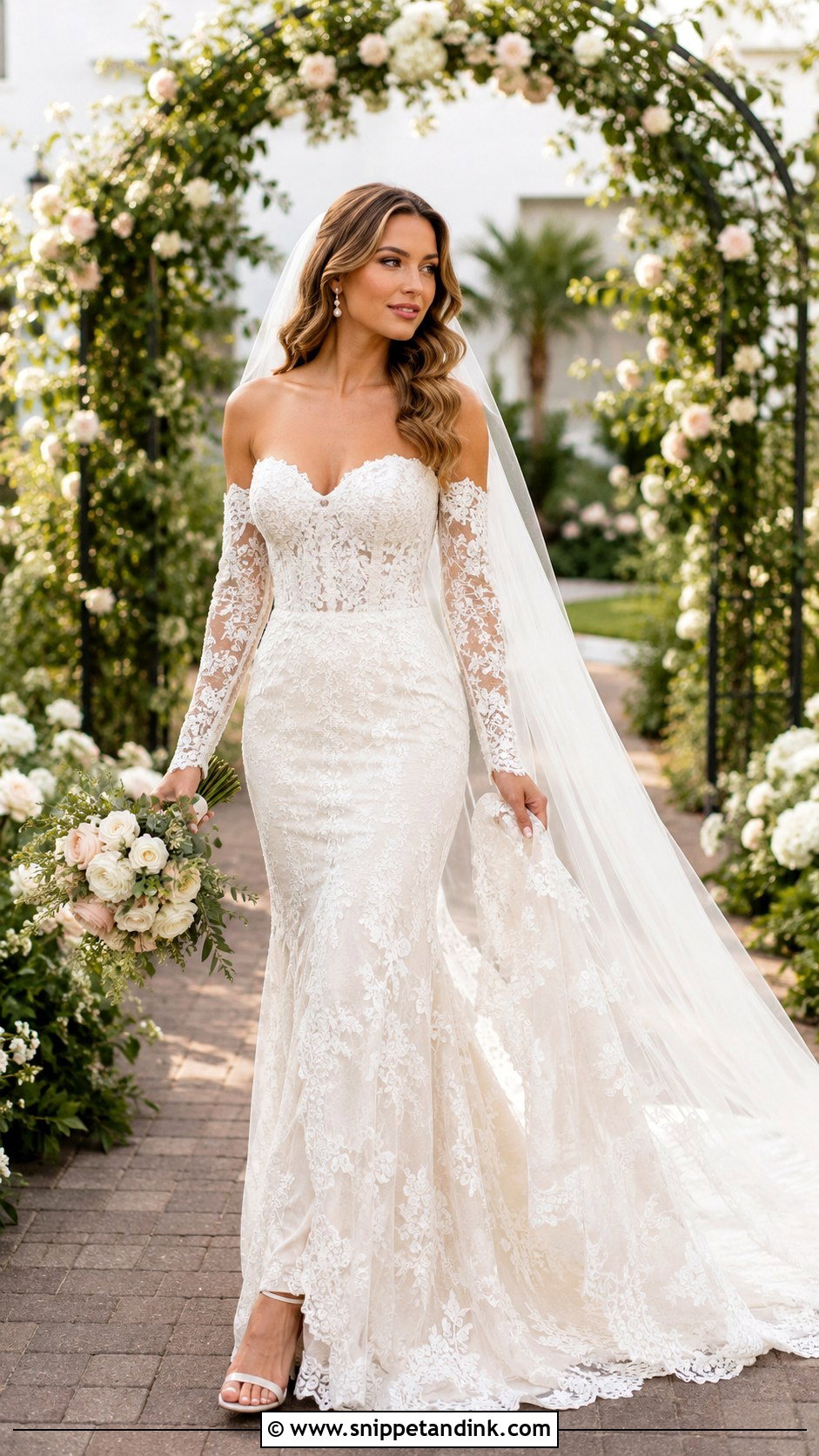
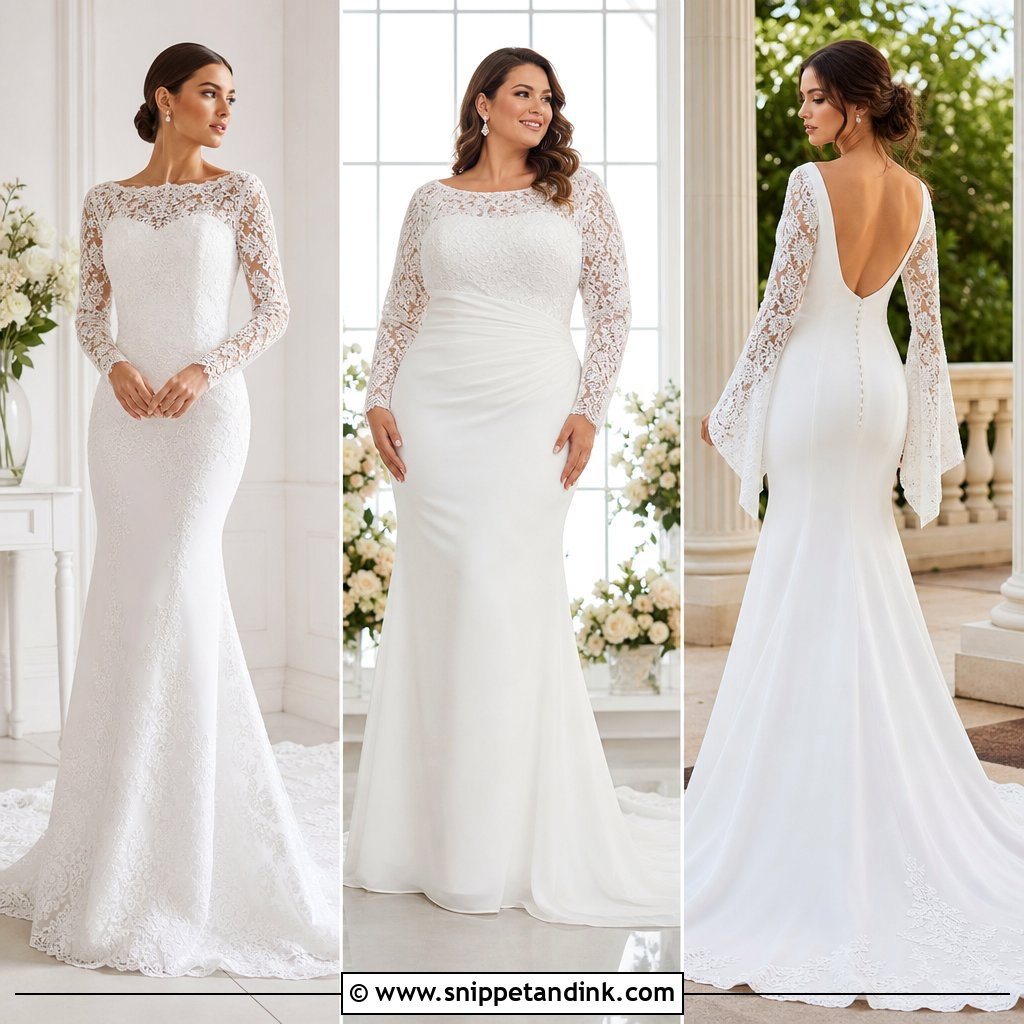
Lace sleeves add texture without much weight, which is why they’re the most common request I get. The base can be strapless, sweetheart or square, and the removable lace sleeves frame the shoulders. The detail that separates good from awkward is the lace match. Bridal lace comes in dozens of ivories, and a sleeve cut from a different bolt will read slightly yellow or grey next to the bodice in flash photos. Ask for offcuts from the gown’s own lace, or for motifs lifted straight from the skirt. Then, when the sleeves come off, the bodice still carries the same pattern.
3. Off Shoulder Detachable Sleeves Wedding Dress
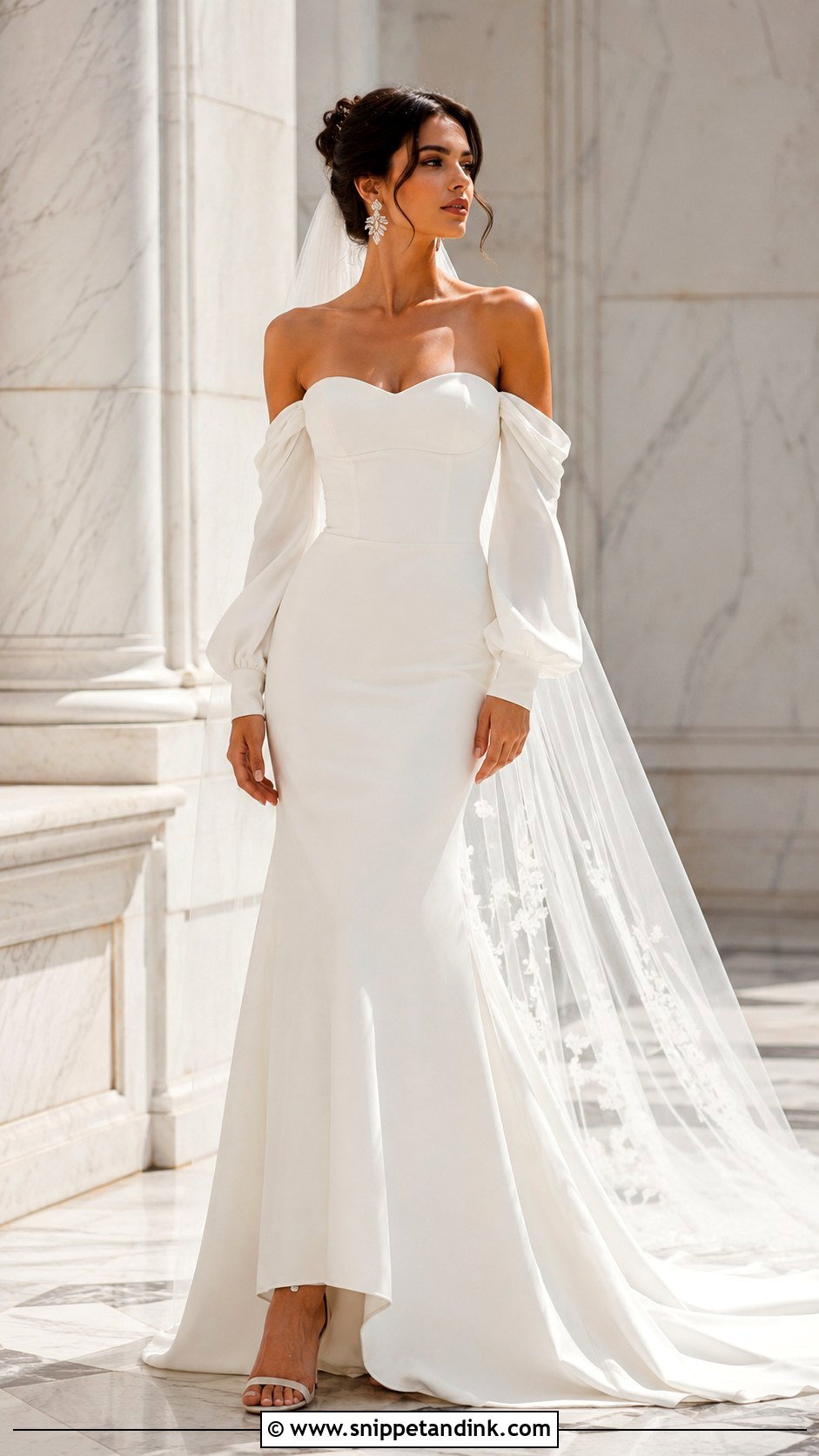
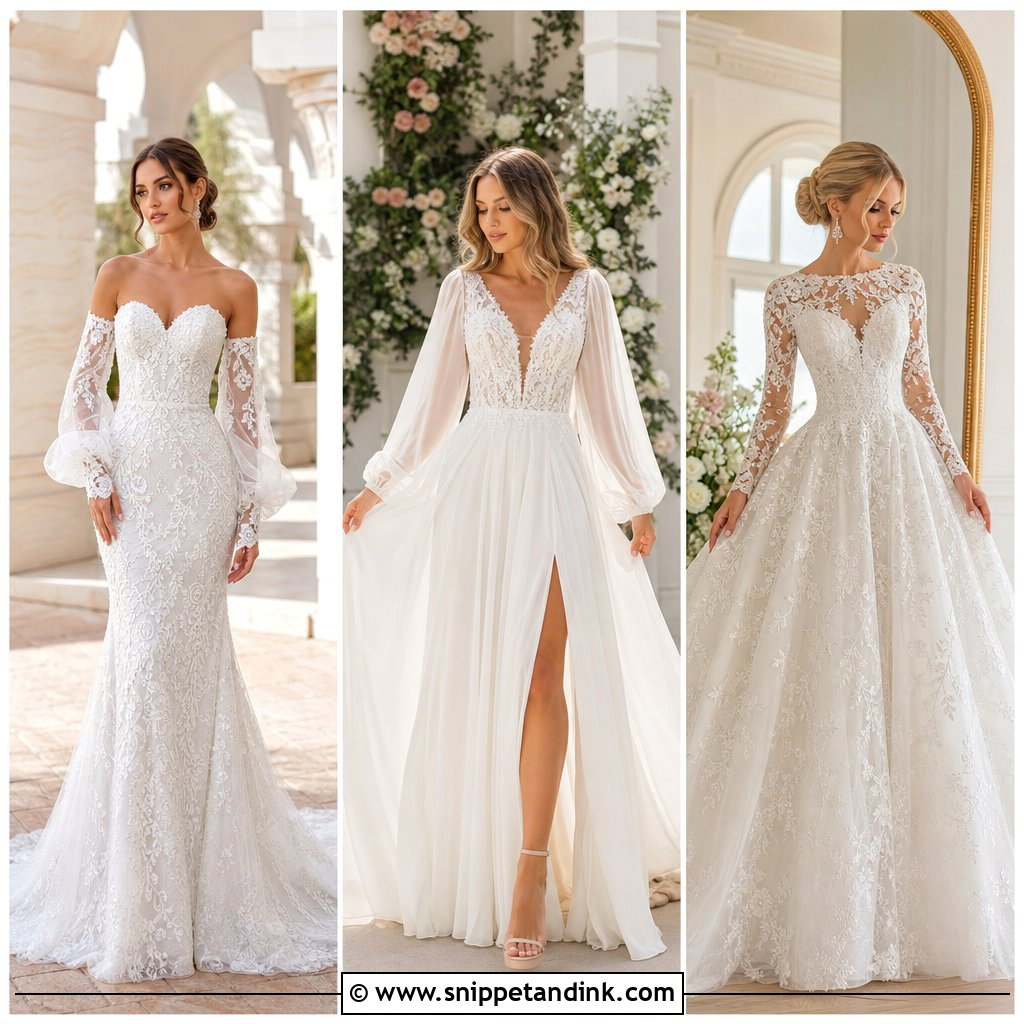
Off-shoulder sleeves sit below the shoulder point and leave the collarbone open. The catch is movement. Hug someone, lift a glass, throw your arms around your sister, and an off-shoulder sleeve rides up onto the shoulder. At a fitting I have brides do exactly that, and if the sleeve creeps more than an inch, it needs a silicone gripper strip or a firmer elastic on the inner edge. Skip the necklace with this neckline and let earrings do the work; a soft updo keeps the line open. They suit mermaid, A-line and satin ball gowns equally well.
4. Tulle Puff Detachable Sleeves Wedding Dress
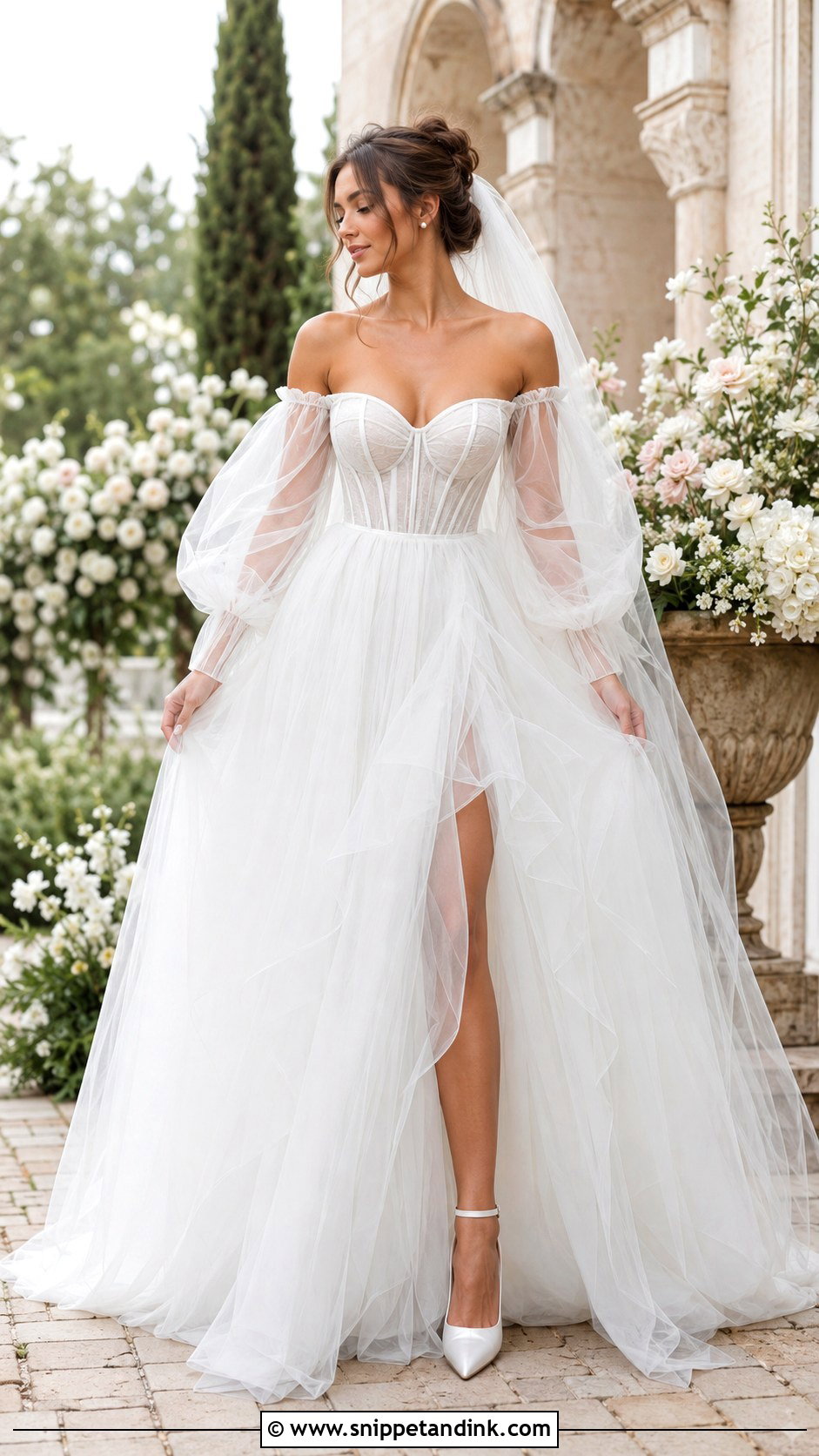
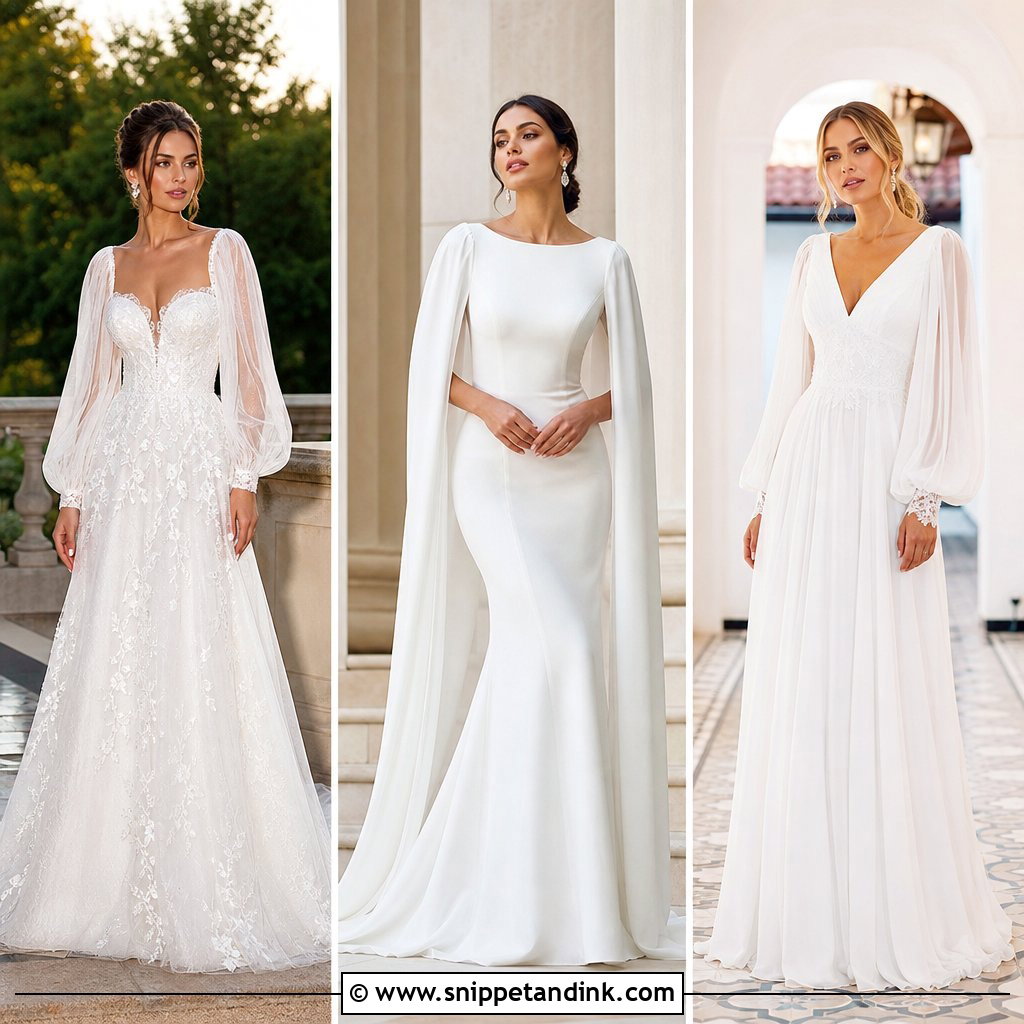
Tulle puffs give the most volume for the least weight, so they rarely drag a bodice down. What they do is crush. Tulle flattens in a garment bag, under a seatbelt and when you lean back in a car, so I pack a small handheld steamer in the getting-ready kit and give the puffs a quick lift before the ceremony. Pair them with a strapless corset bodice and keep the jewellery to tiny pearl studs, since the sleeves already take up the visual space around your face. Without them, the dress turns into a light, easy party gown.
5. Long Illusion Detachable Sleeves Wedding Dress
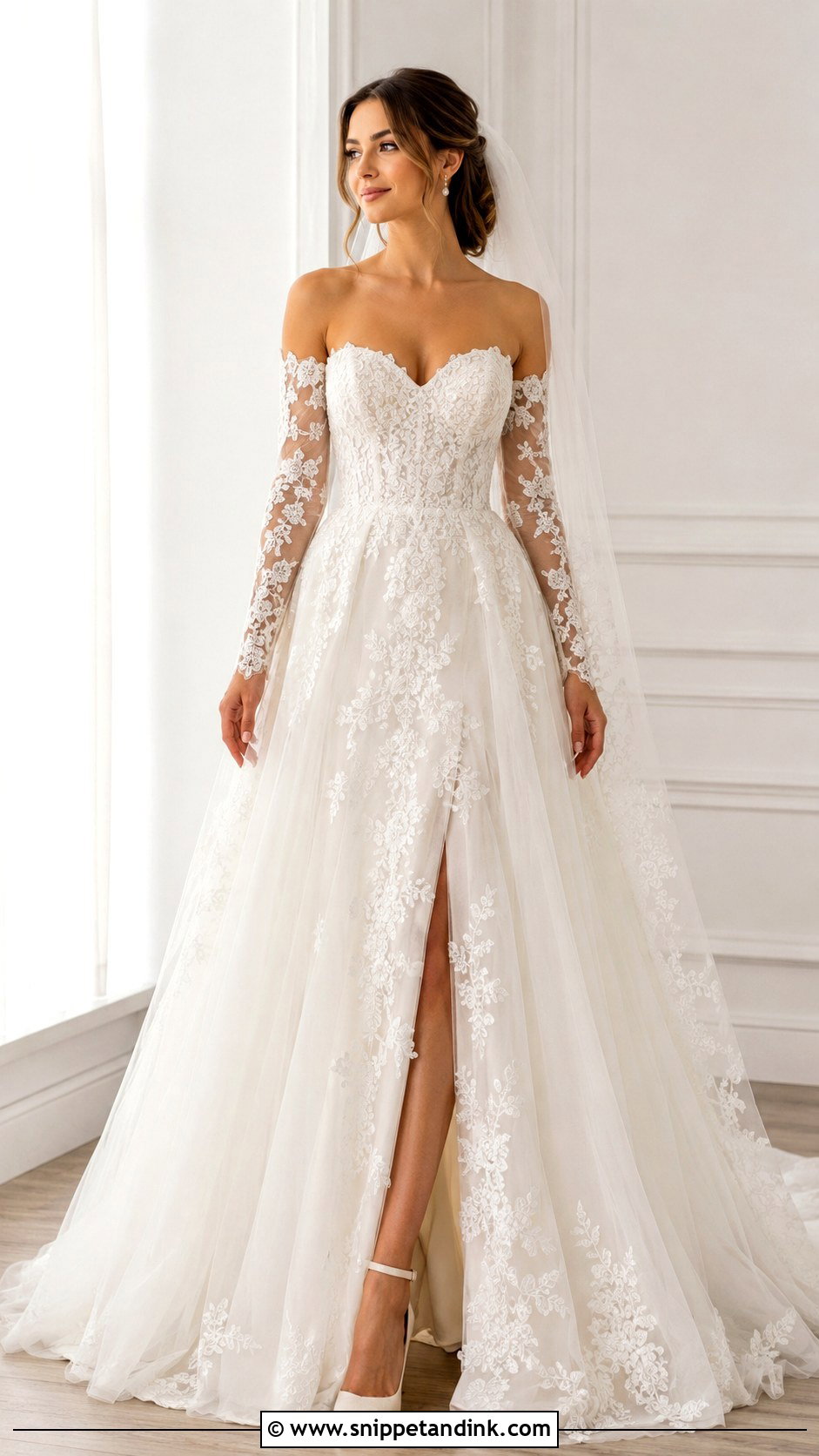
Long illusion sleeves are the answer when you need full-arm coverage that doesn’t feel heavy. The sheer mesh can carry lace appliqué, small pearls or light beading. The thing to get right is the colour of the mesh against your skin. Illusion fabric is dyed in a range of nude tones, and the wrong one shows as a visible band on camera. Hold two or three swatches to your inner arm in daylight before ordering. Repeating the lace motif on the veil edge ties the two together, and taking the sleeves off for the reception reveals a much simpler dress underneath.
6. Detachable Bishop Sleeves Wedding Dress
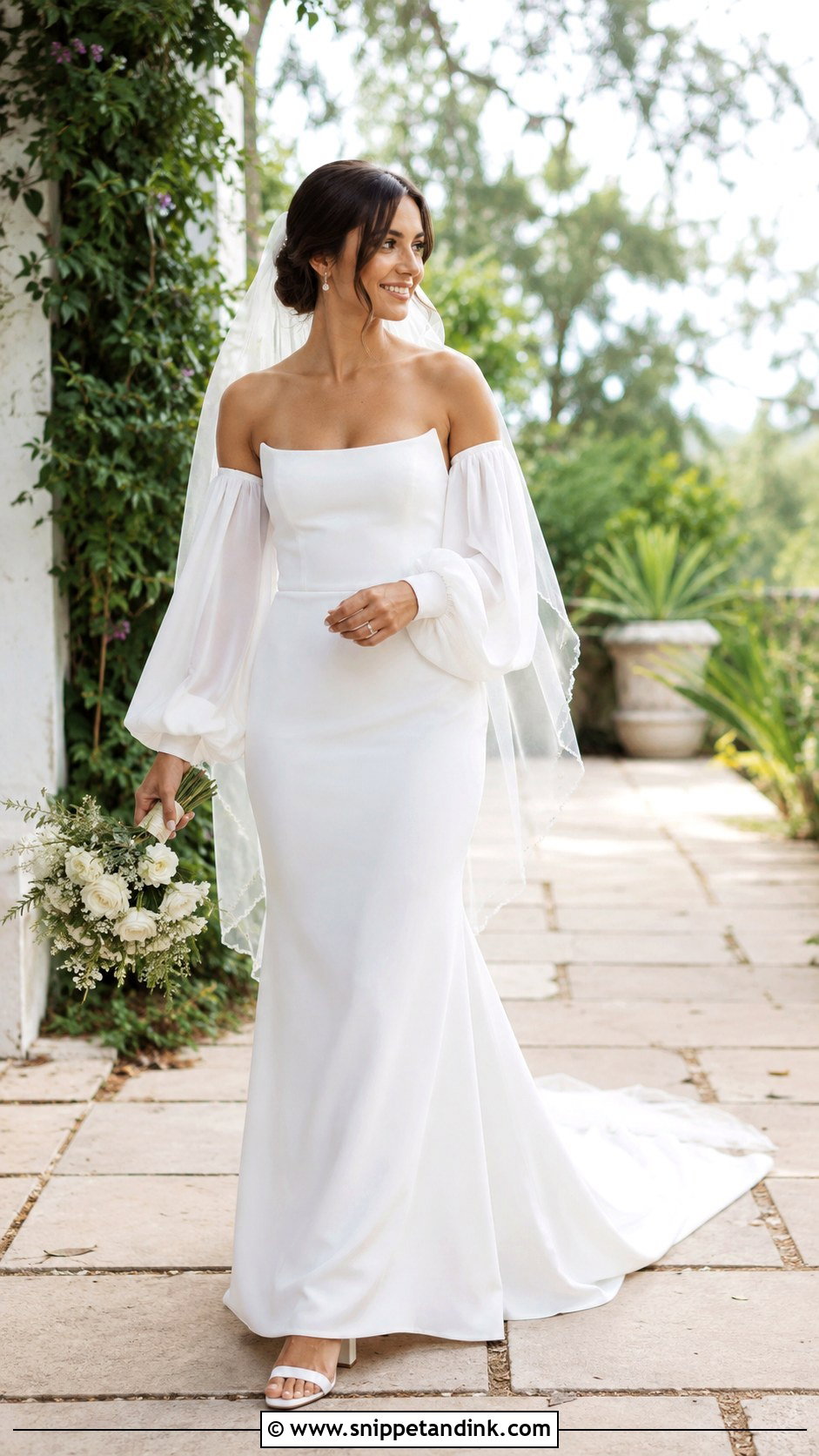
Bishop sleeves are full through the forearm and gathered into a cuff at the wrist. That cuff is where comfort lives or dies. If it closes with a row of tiny buttons, you’ll want a bridesmaid on hand, because doing them up on your own arm is fiddly and undoing them in a hurry for the reception swap is worse. Elastic cuffs are far easier. The shape suits chiffon, crepe and soft satin, and it balances a plain fitted bodice nicely. Choose block heels if the ground is grass. Garden weddings and autumn ceremonies are where I reach for this sleeve most often.
7. Detachable Bell Sleeves Wedding Dress
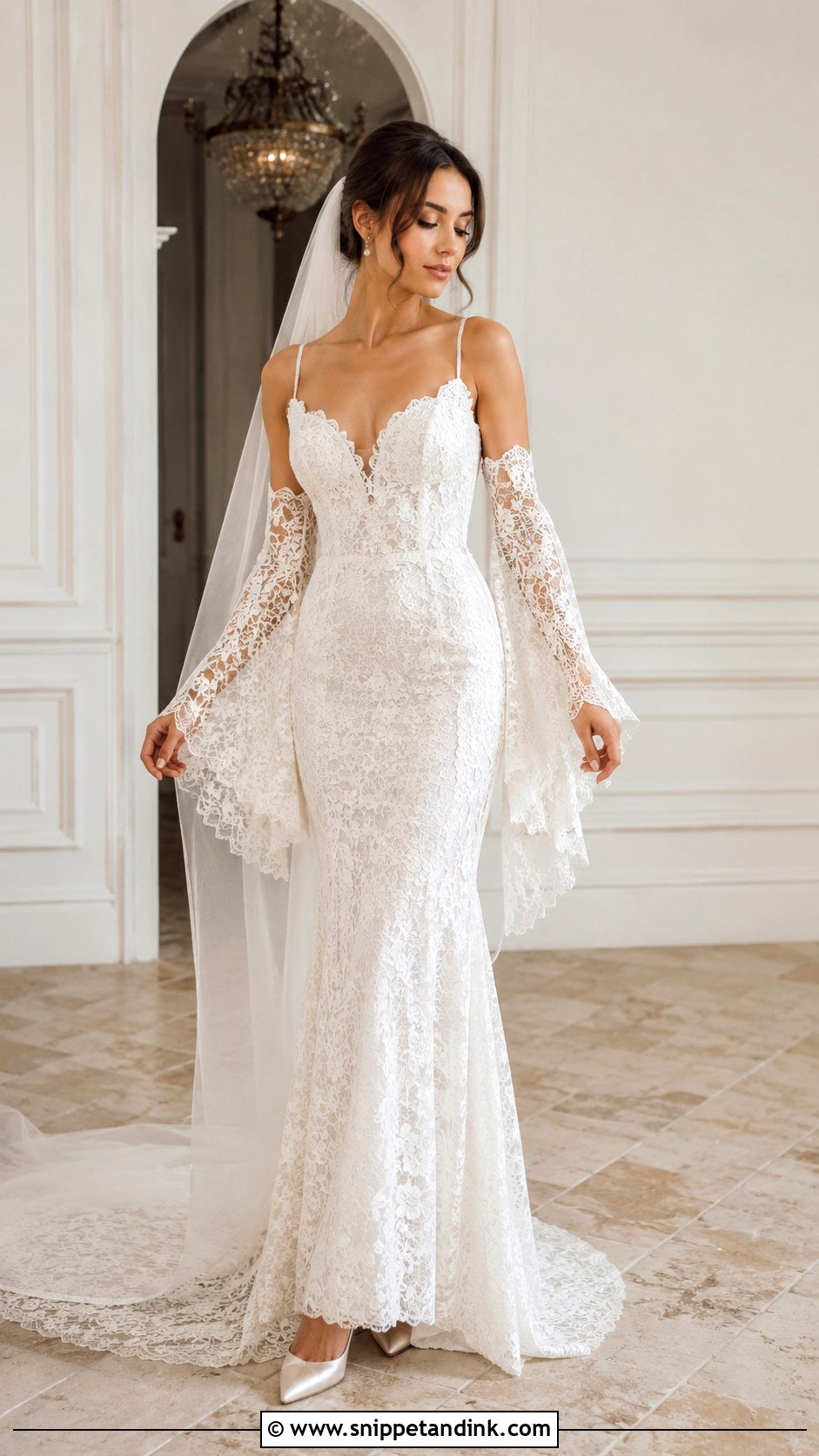
Bell sleeves flare toward the wrist and give a slightly vintage outline. I’d steer you away from them if you’re planning a buffet or a lot of hands-on hosting, because the open hem catches on table edges and trails through food. On slim crepe gowns, lace dresses and plain A-lines, though, the sleeve becomes the main detail, so keep the veil smooth and the jewellery small. If the cuff has lace trim, repeat that trim somewhere else: the veil edge, a garter, even the bouquet wrap. Once removed, the dress reads far more minimal.
8. Detachable Flutter Sleeves Wedding Dress
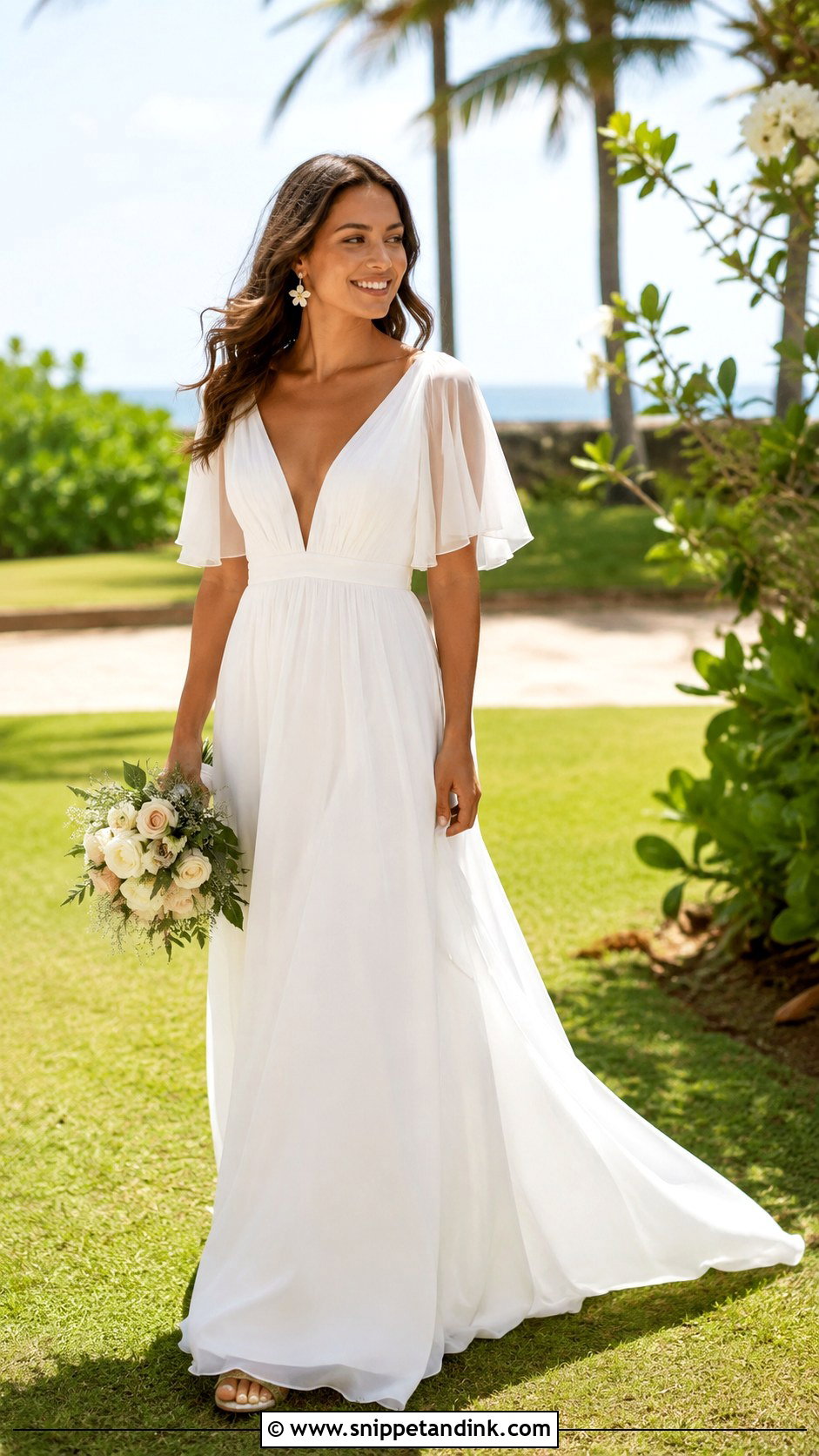
Flutter sleeves fall loosely over the upper arm and add almost no bulk, so they’re my first suggestion for warm-weather and outdoor weddings. In chiffon, organza or soft tulle they move with every breeze, which reads well in photos taken in natural light. The trade-off is that very light flutters can flip up in wind and show the attachment band underneath, so ask for a tiny weight stitched into the hem if your venue is exposed. Loose waves and low sandals suit the mood. Off they come, and the dress becomes a simple strapless or sleeveless gown.
9. Detachable Cape Sleeves Wedding Dress
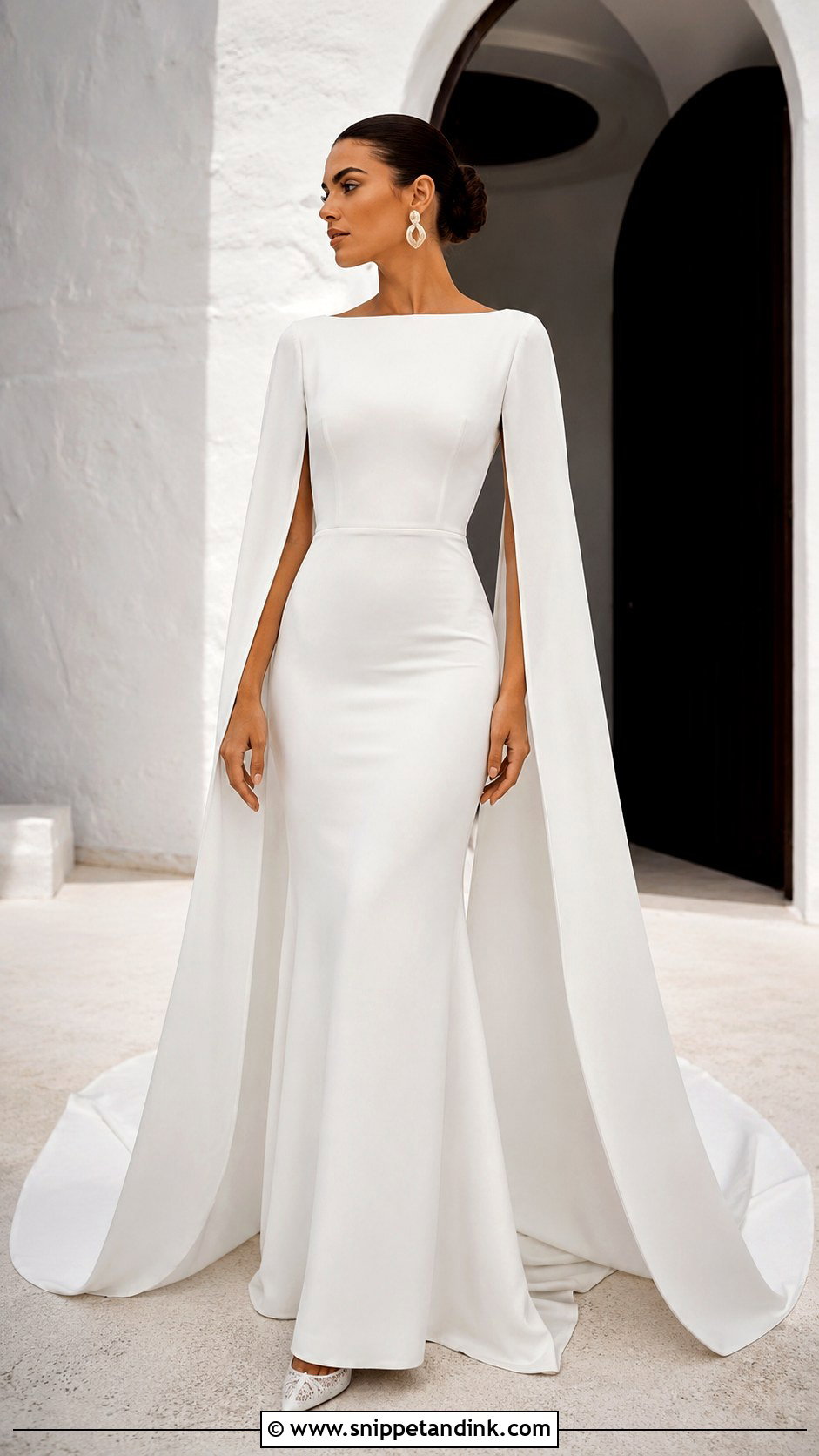
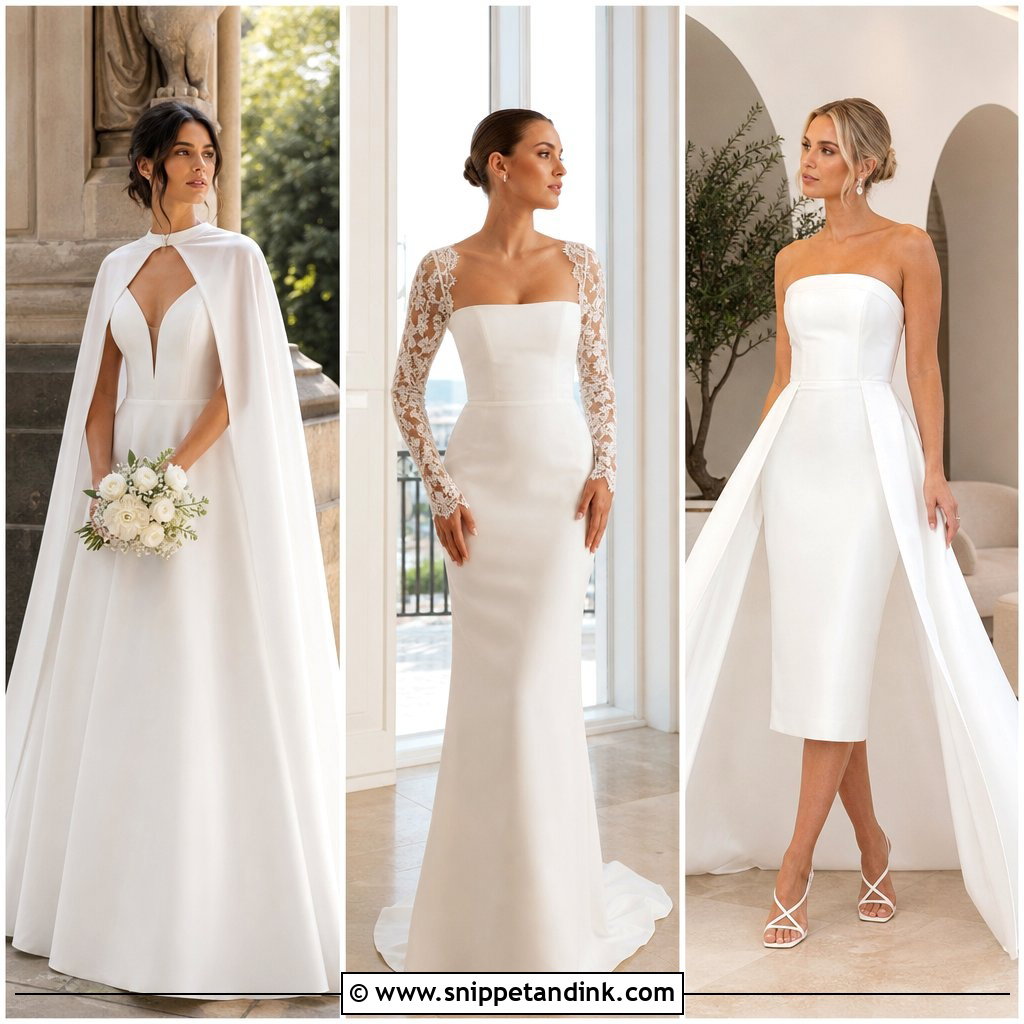
Cape sleeves drape from the shoulder or upper arm and do much of the work a veil would. I treat them as a veil decision, not a sleeve decision. If you wear both, the back gets crowded and the two fabrics compete, so most brides I style choose one. Over plain crepe or satin, the cape sleeve becomes the ceremony moment; add a sleek bun, minimal jewellery and pointed heels. Take it off for the reception and the gown slims right down. It gives you drama without committing to a full cape or extra train for the whole night.
10. Detachable Lace Bolero Sleeves Wedding Dress
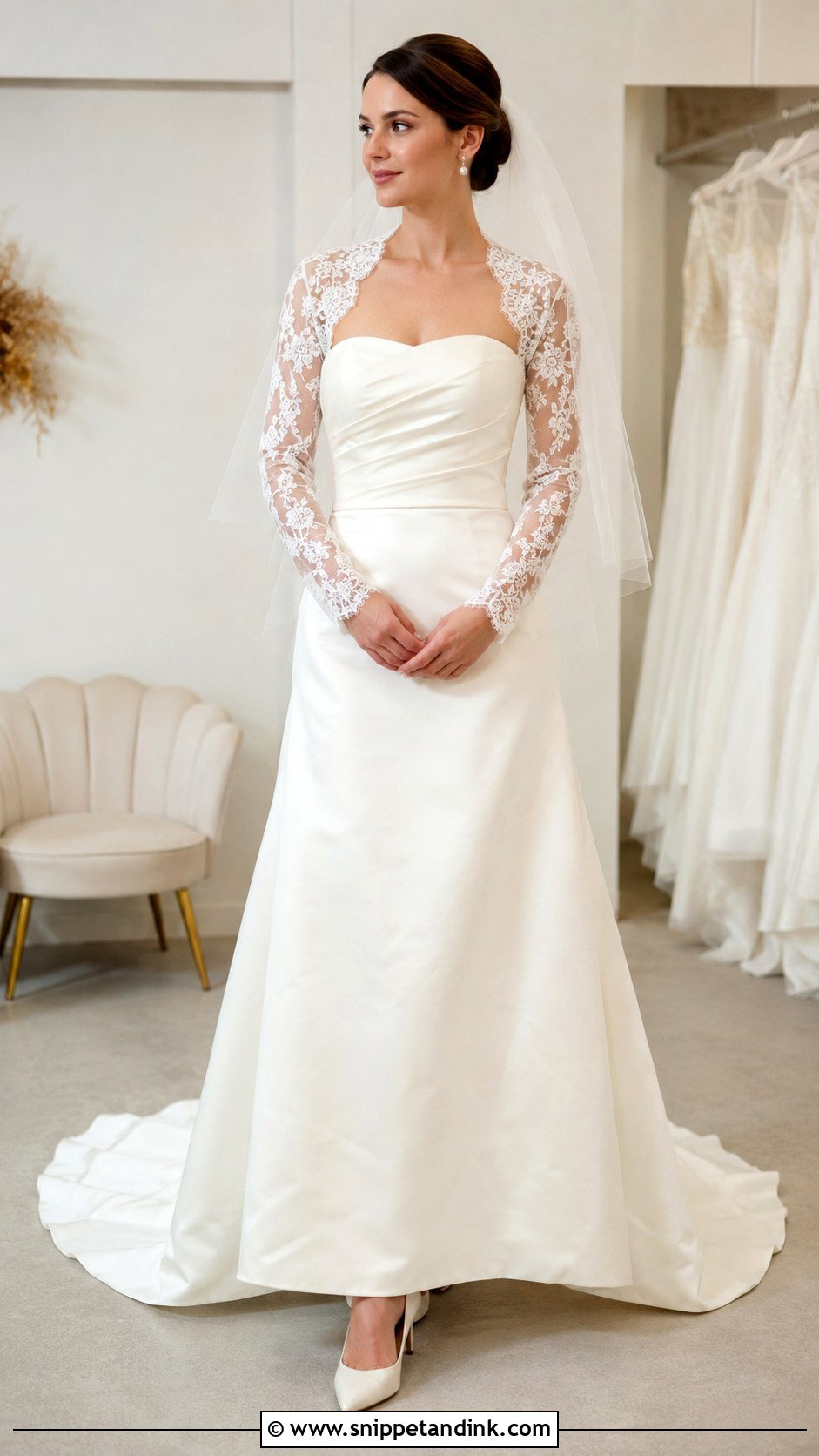
A removable lace topper or bolero covers both shoulders and arms in one piece instead of two separate sleeves. Practically, it’s the easiest version to get on and off, because there’s nothing to clip to the bodice; you simply slip it on like a jacket. It sits well over strapless and spaghetti-strap gowns. The colour must match closely, and the front edges need to be finished cleanly, since a bolero is seen from every side. Pearl earrings and satin pumps keep it classic. It’s also the simplest option if your ceremony venue asks for covered shoulders.
11. Detachable Sheer Sleeves Wedding Dress
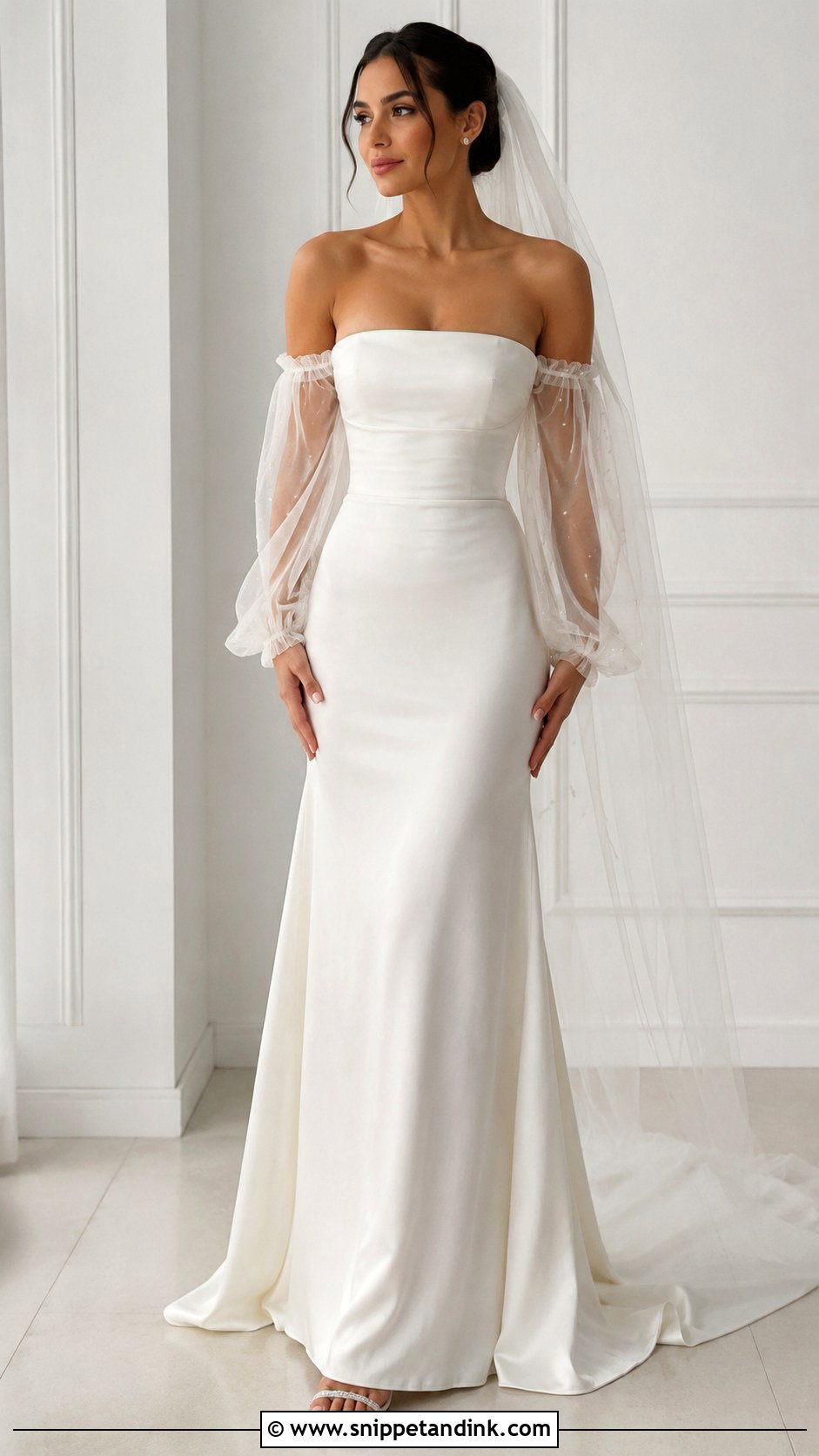
Plain sheer sleeves, sometimes gathered or closed with small buttons at the wrist, are the quietest choice here. Because the fabric is transparent, they read as coverage without hiding the gown or your shape. I like them on minimal satin, crepe or mikado. The thing I check is the seam allowance. A sheer sleeve shows every seam inside it, so ask for French seams or a narrow binding; a wide overlocked edge looks messy in close-ups. Diamond studs and a smooth veil keep everything clean, and without the sleeves the dress opens up for a city reception.
12. Detachable Pearl Sleeves Wedding Dress
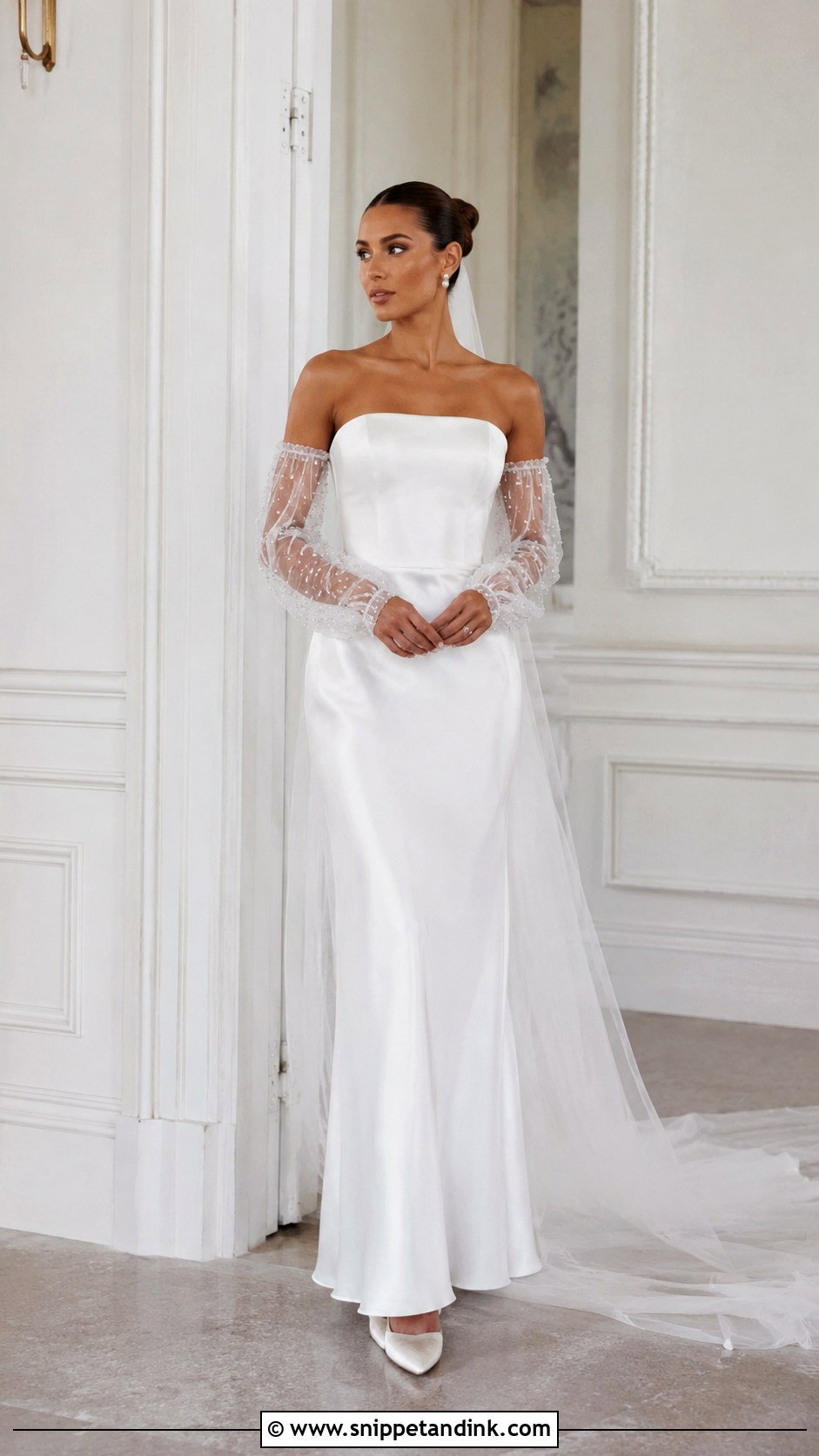
Pearl sleeves bring shine and texture, but pearls add up. A sleeve thick with them can weigh enough to pull at its attachment point by mid-afternoon, so I prefer pearls scattered on sheer mesh or kept to the cuff and shoulder line. Underneath, choose a simple satin column or strapless A-line so the gown and sleeves aren’t fighting. Pearl earrings and a smooth bun repeat the detail. When the sleeves come off, the earrings carry the pearl theme into the reception, so the two looks still feel like one outfit.
13. Detachable Beaded Sleeves Wedding Dress
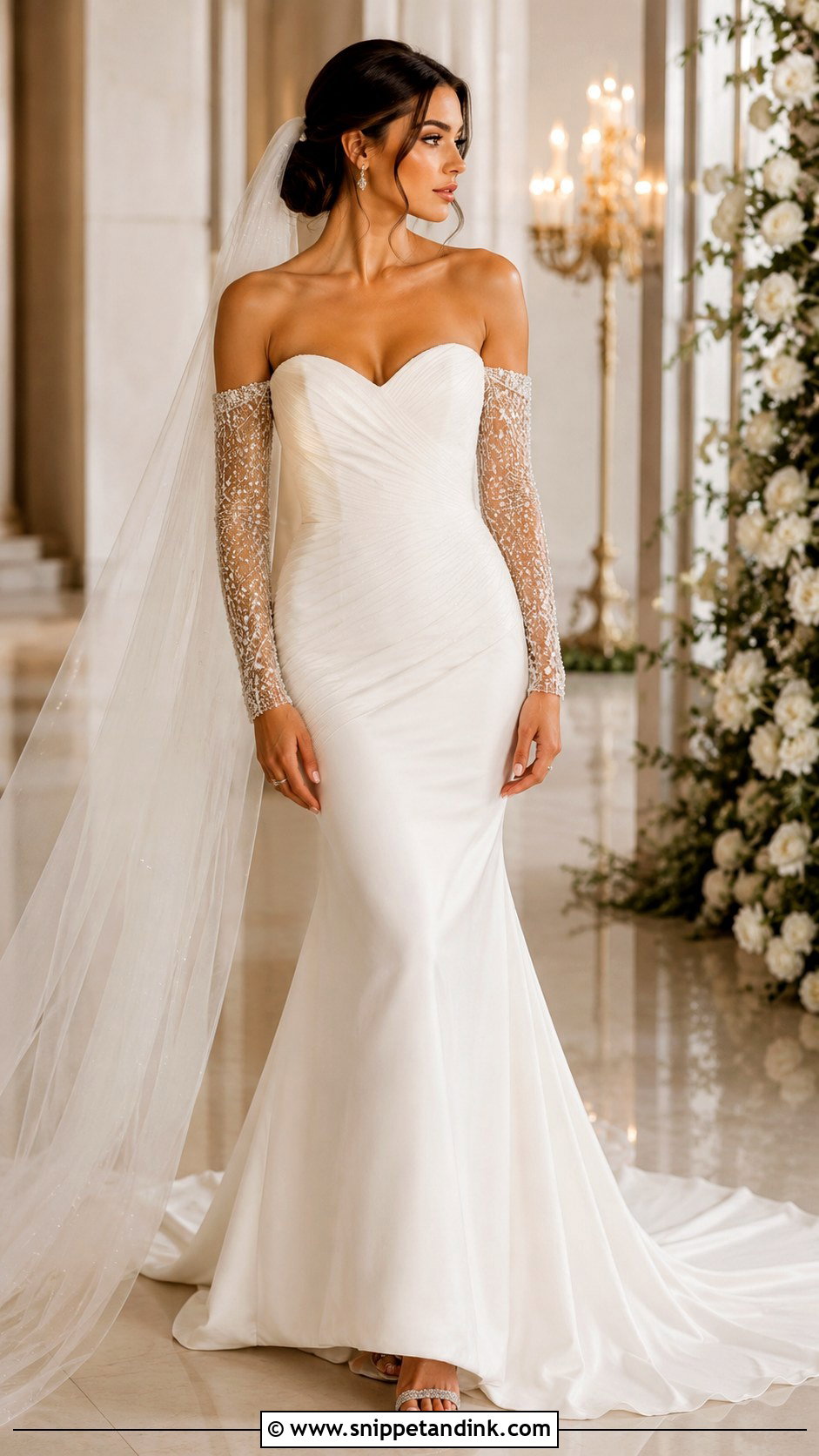
Beaded sleeves let you have sparkle for the ceremony without wearing a fully embellished gown for ten hours. Crystal, sequin or pearl beading catches candlelight and evening lighting well. Two practical warnings. Beading snags on lace, on tulle veils and on your partner’s jacket, so test a hug with the veil on at your fitting. And the inside of a beaded sleeve can scratch, so ask for a soft lining on the arm side. Keep the veil plain, wear a clean strapless bodice, and remove the sleeves when you’re ready to dance.
14. Detachable Organza Sleeves Wedding Dress
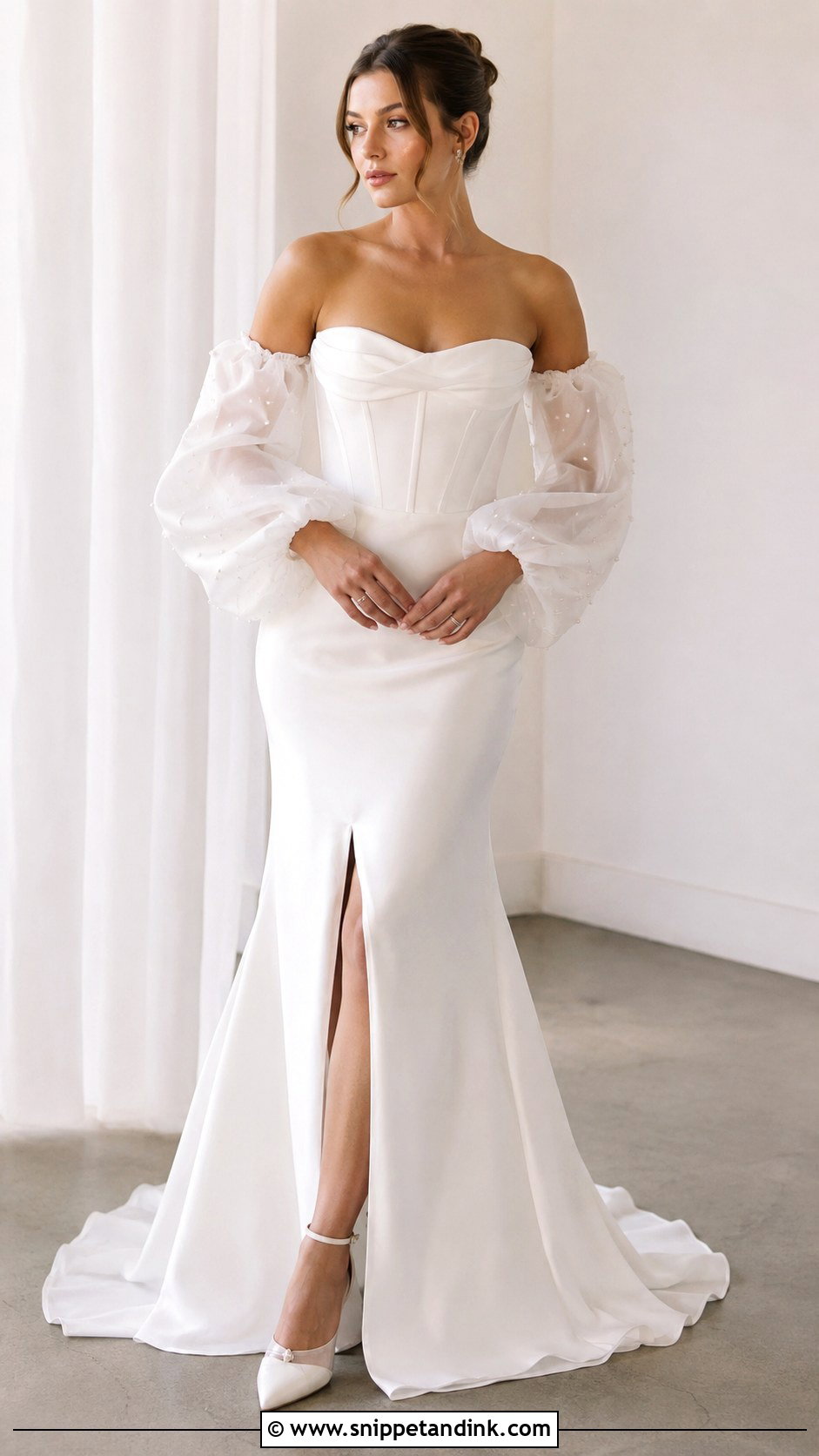
Organza is crisp and holds a shape that soft tulle can’t, which makes it the fabric I’d pick for structured puffs or light balloon shapes. It looks full without feeling heavy. The downside is creasing: organza marks where it’s folded and doesn’t fully relax, so the sleeves should travel flat or on their own padded hanger, never rolled into a bag. Over a plain satin gown or corset bodice they can be the one detail people remember. Pearl studs and a clean updo are enough alongside them.
15. Detachable Chiffon Sleeves Wedding Dress
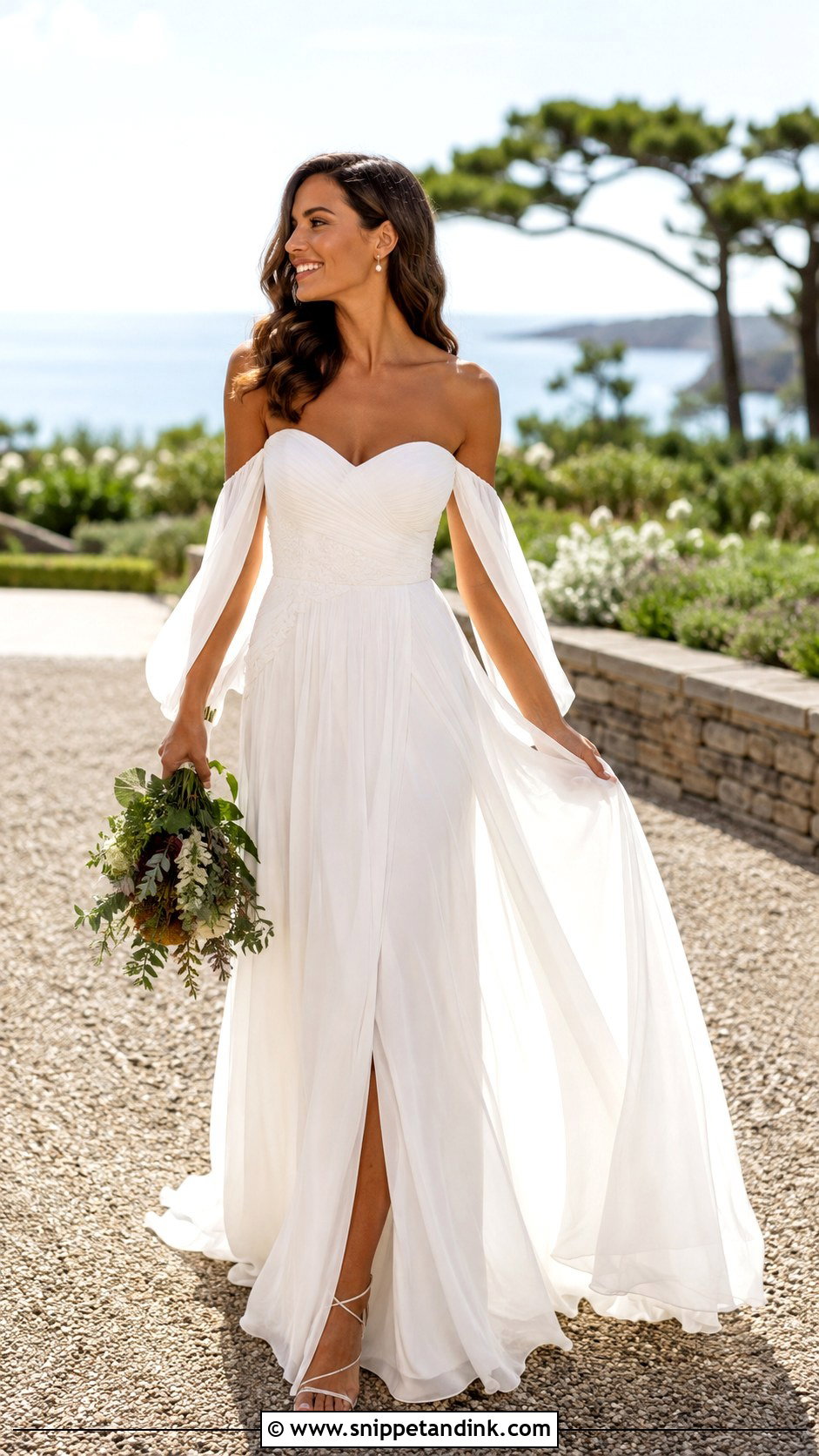
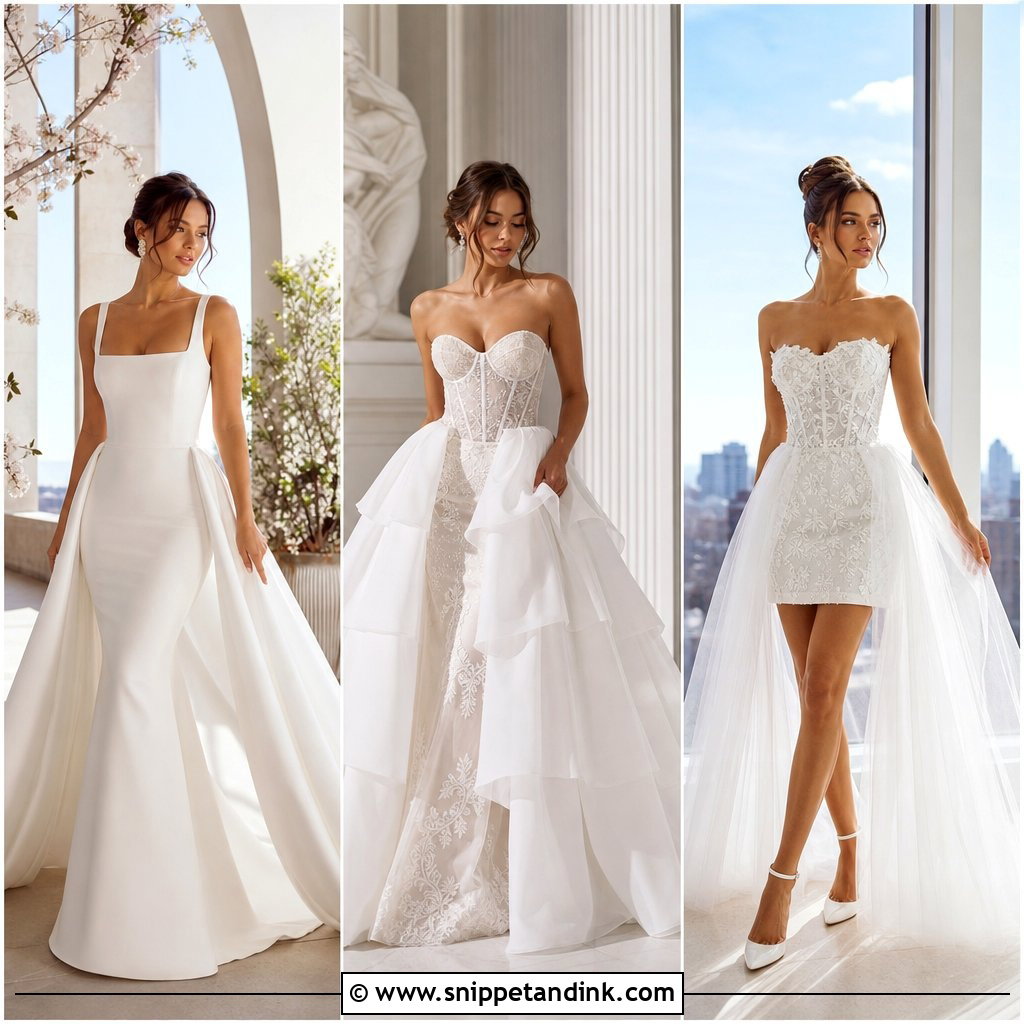
Chiffon moves with the slightest air, so it suits beach settings, garden ceremonies and hot days. Sleeves can be long and loose, fluttery, or draped off the shoulder. Chiffon is also forgiving if you want arm coverage without any structure, since it doesn’t hold a crease the way organza does. It does fray, though, so the hem must be rolled properly or it will start shedding threads by evening. Pair it with A-line, empire or sheath gowns, loose waves and low heels. Taking the sleeves off in the heat makes a real difference to comfort.
16. Detachable Satin Bow Sleeves Wedding Dress
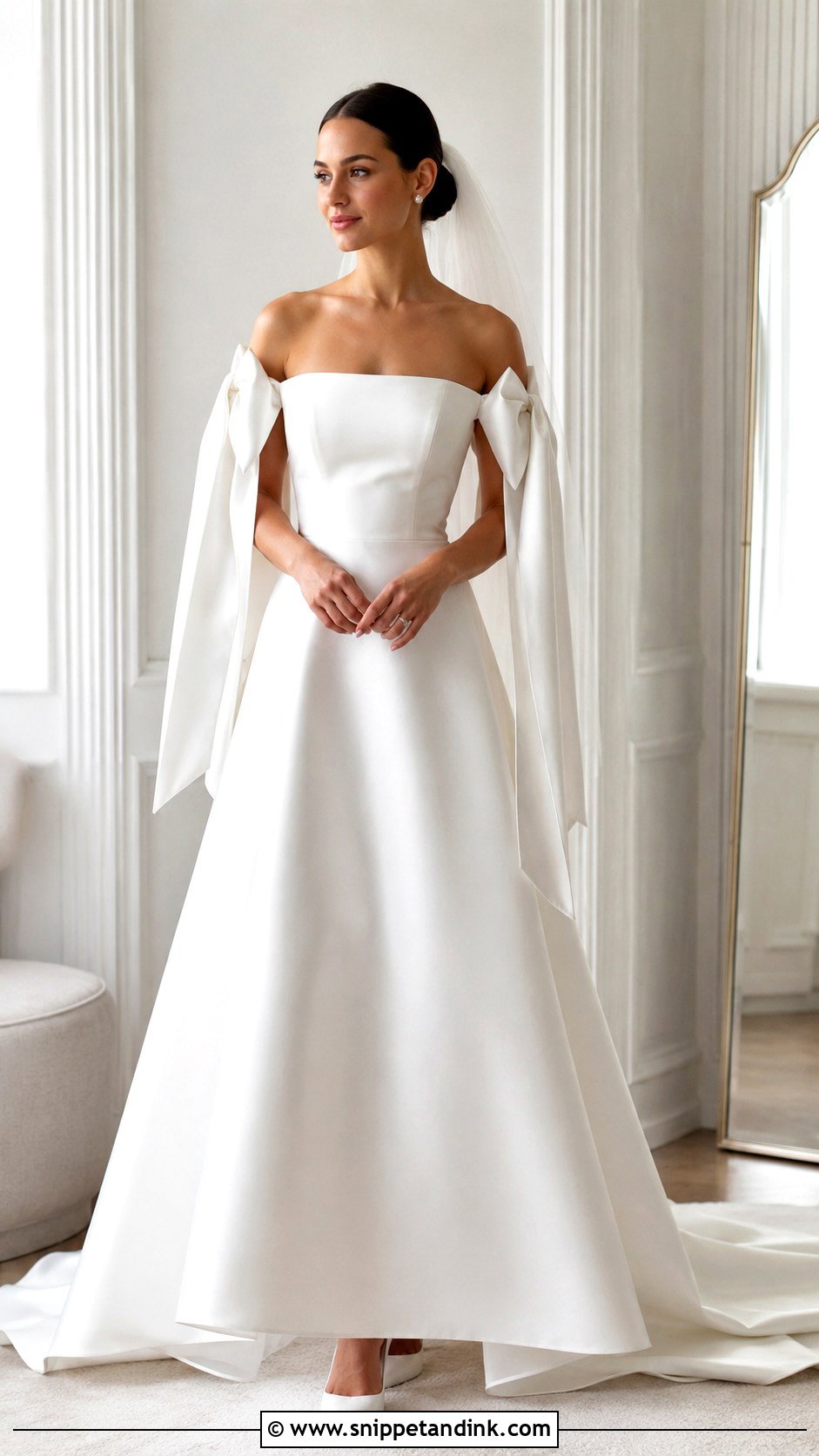
Satin bows on the upper arm, shoulder or back of the sleeve add a playful detail to a clean gown. I’d keep the base simple, a strapless satin A-line or fitted mikado, so the bows don’t fight other decoration. Check where the bow lands when you lift your arms. A bow placed at the back of the upper arm can flatten against a chair during the ceremony and dinner, so ask for a little interfacing inside to help it hold. A neat bun keeps the bows visible, and the dress becomes quietly understated once the sleeves come off.
17. Detachable Corset Wedding Dress With Sleeves
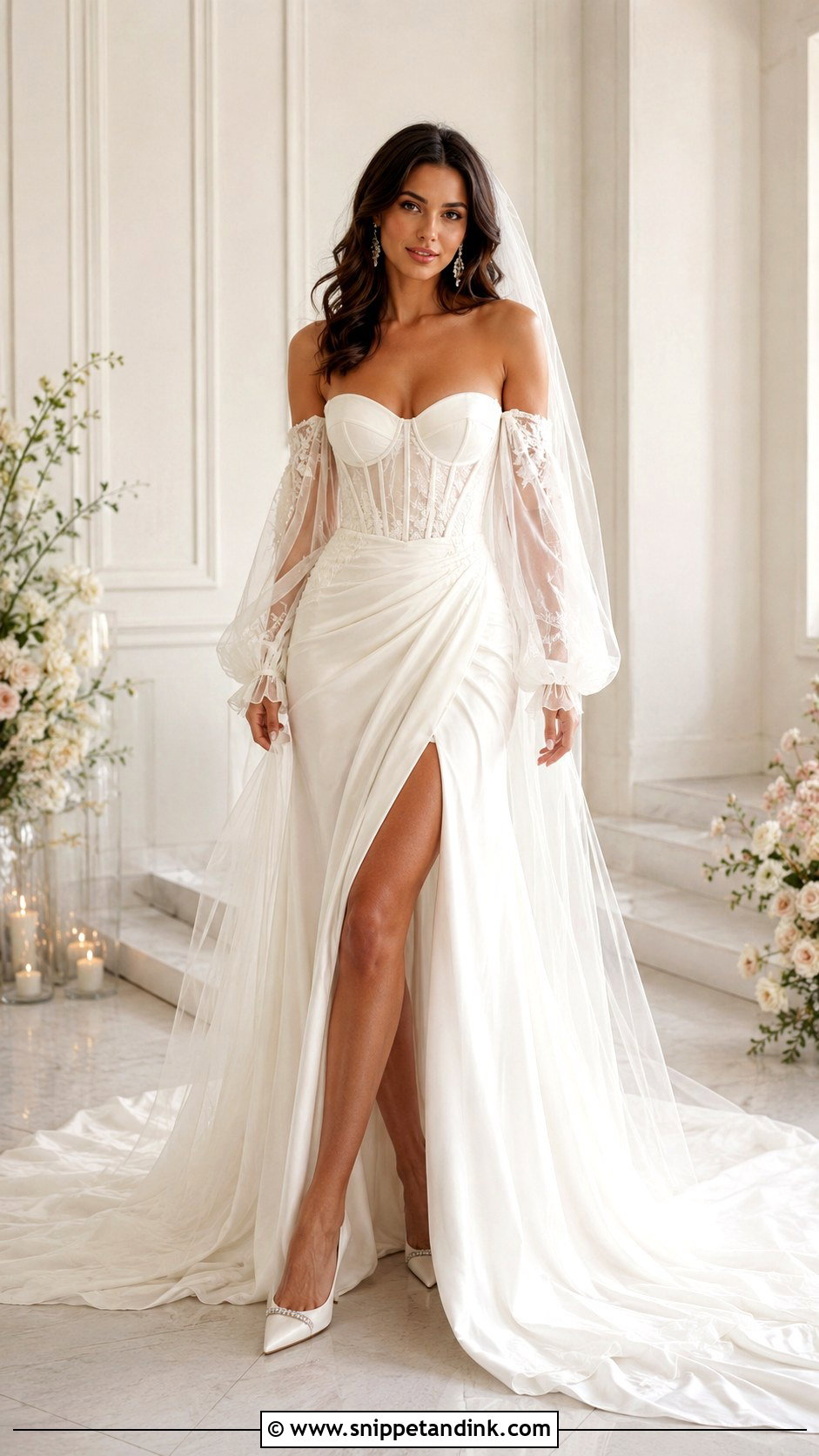
A corset bodice gives you shape and support, and a detachable sleeve softens it for the ceremony. The proportion matters. Visible boning reads strong, so very wispy sleeves can look like an afterthought next to it; tulle puffs, lace or long sheer sleeves balance better. Sleeves should never attach to the corset itself, because pulling on a boned edge can shift it. A separate arm band is safer. Add a simple veil, drop earrings and pointed heels. When the sleeves come off, the corset takes over as the main feature for a very clear day-to-night change.
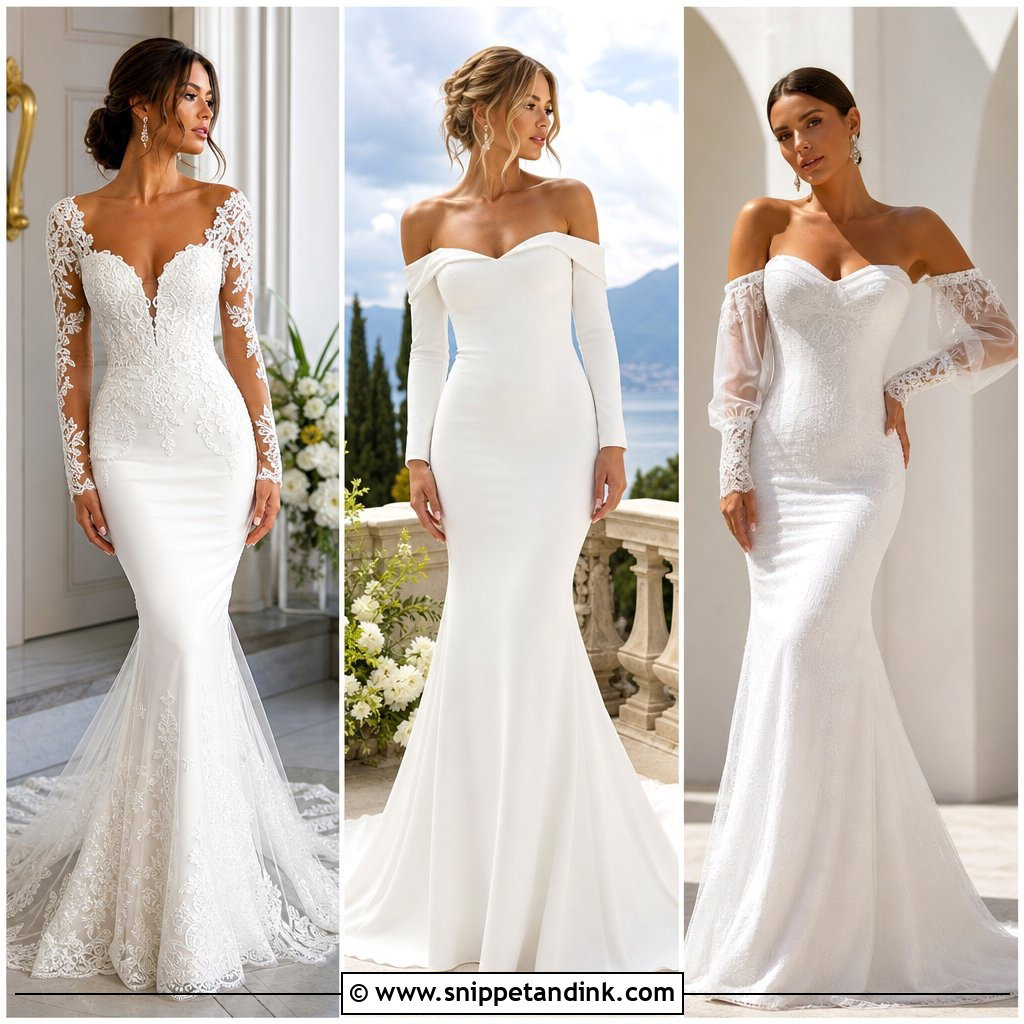
18. Mermaid Detachable Sleeves Wedding Dress
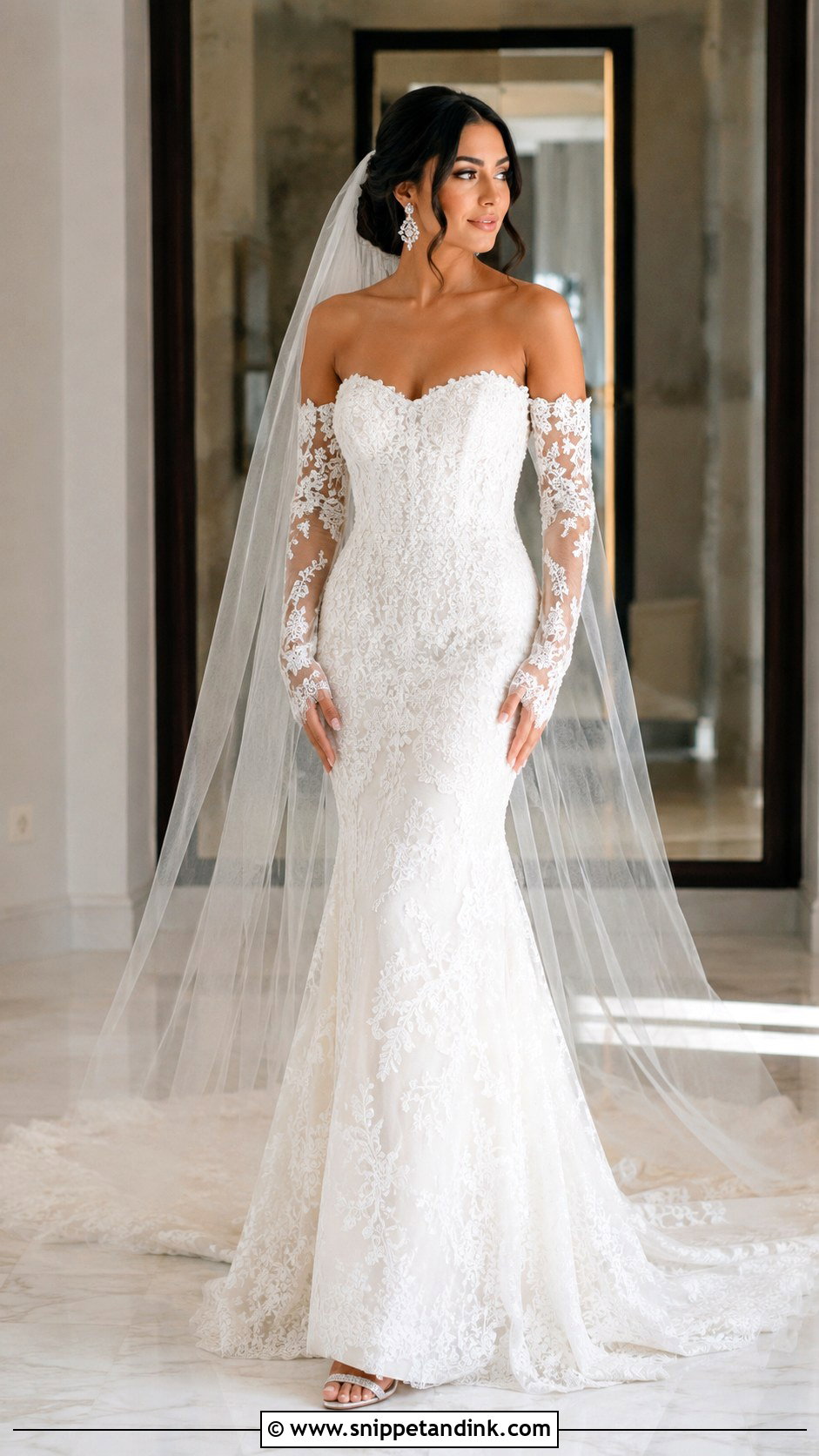
A mermaid gown fits close through the bodice, hips and thighs before flaring near the hem, so the eye goes straight to the curve. Detachable sleeves balance that by adding a little width up top. Off-shoulder, lace or long illusion sleeves sit well with this shape. Keep the sleeves light, because a mermaid already restricts how freely you can move, and heavy sleeves on top of that get tiring by dinner. A long veil and statement earrings finish the ceremony look. Later, take the sleeves off and the dress becomes noticeably easier to dance in.
19. Ball Gown Detachable Sleeves Wedding Dress
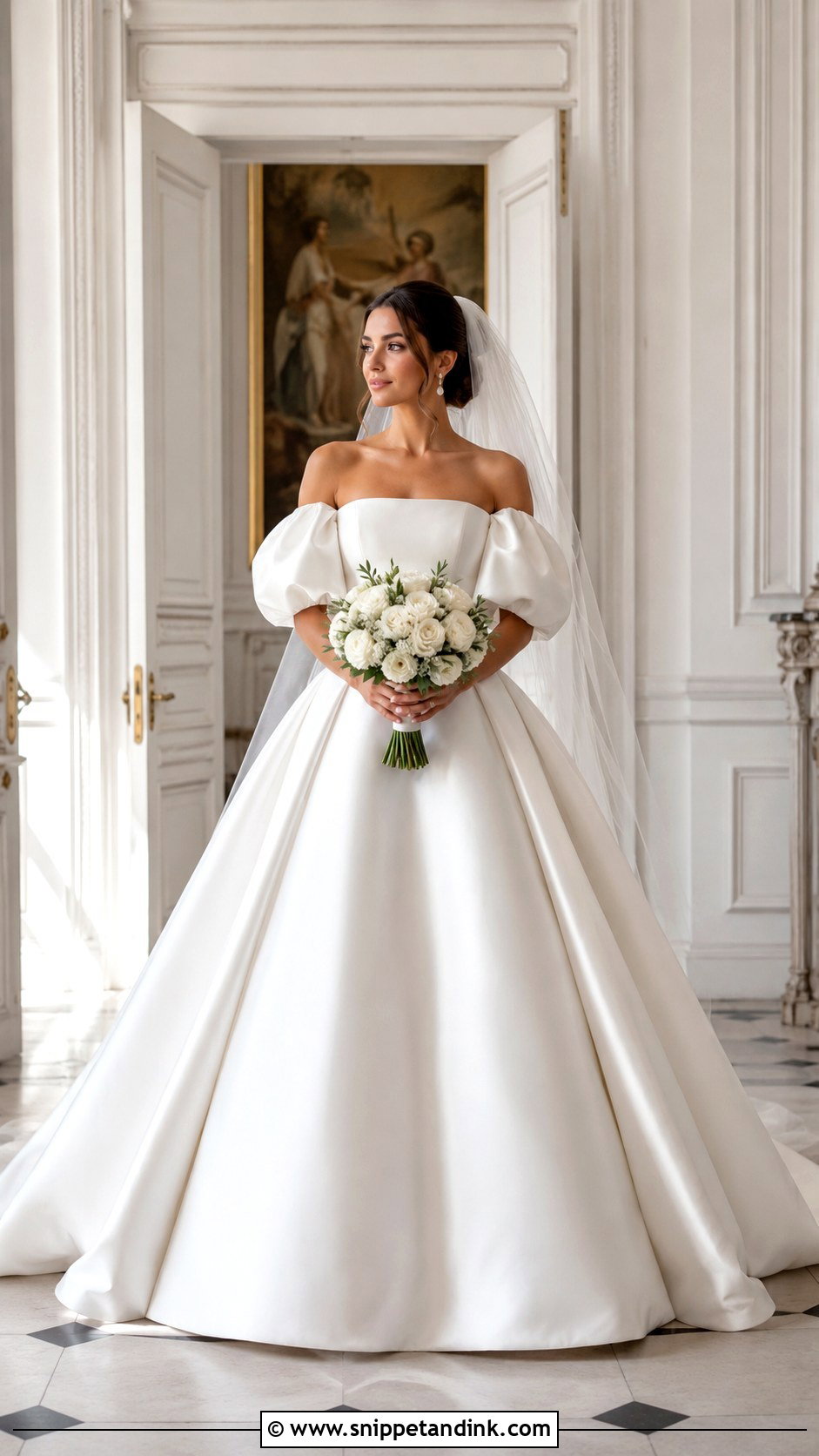
A ball gown’s full skirt sets up a grand entrance, and sleeves make the top half match that scale. Satin, mikado, organza and layered tulle all work. Off-shoulder, puff and long illusion sleeves pair well with the full shape. Where brides go wrong is going big on both ends: an oversized sleeve plus a huge skirt can swallow a petite frame, so I’d pick a moderate sleeve unless you want a fashion-editorial look. A structured veil and classic heels complete it, and removing the sleeves lightens the whole top half.
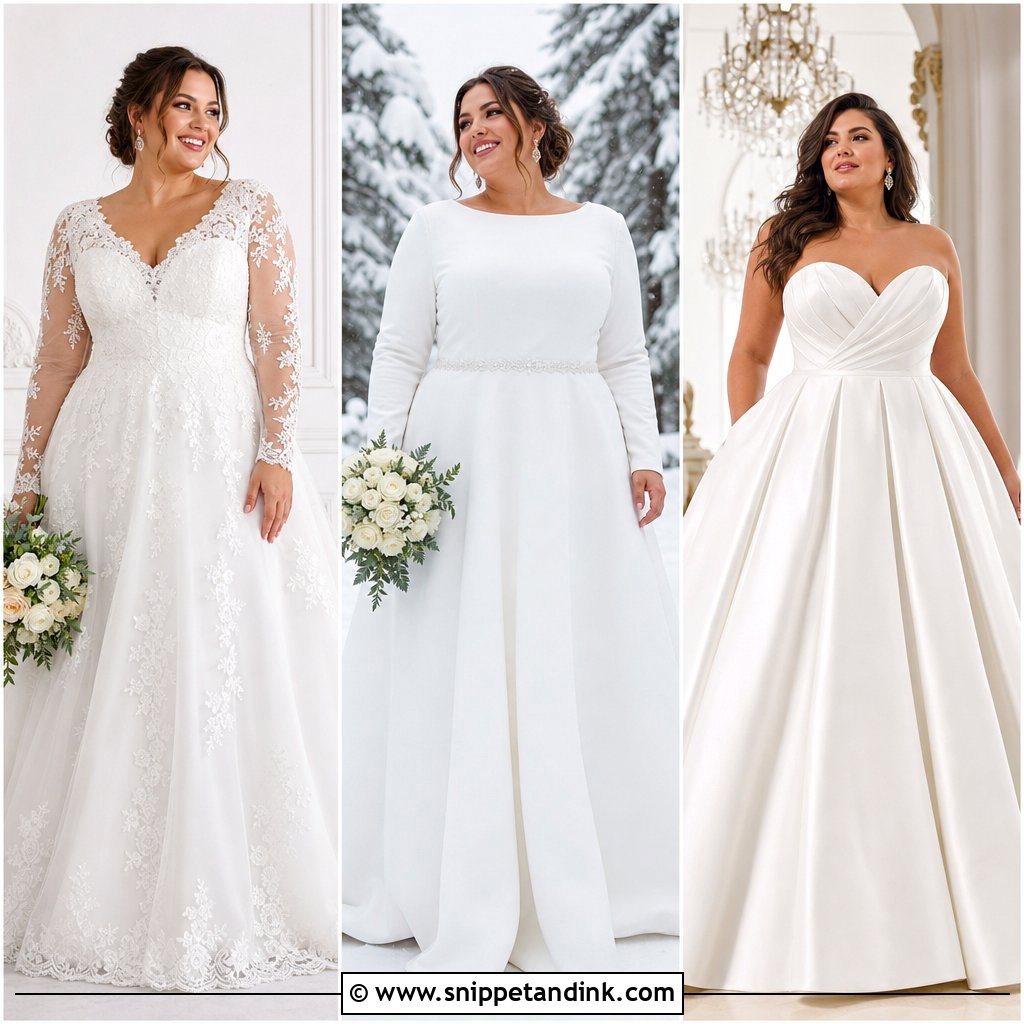
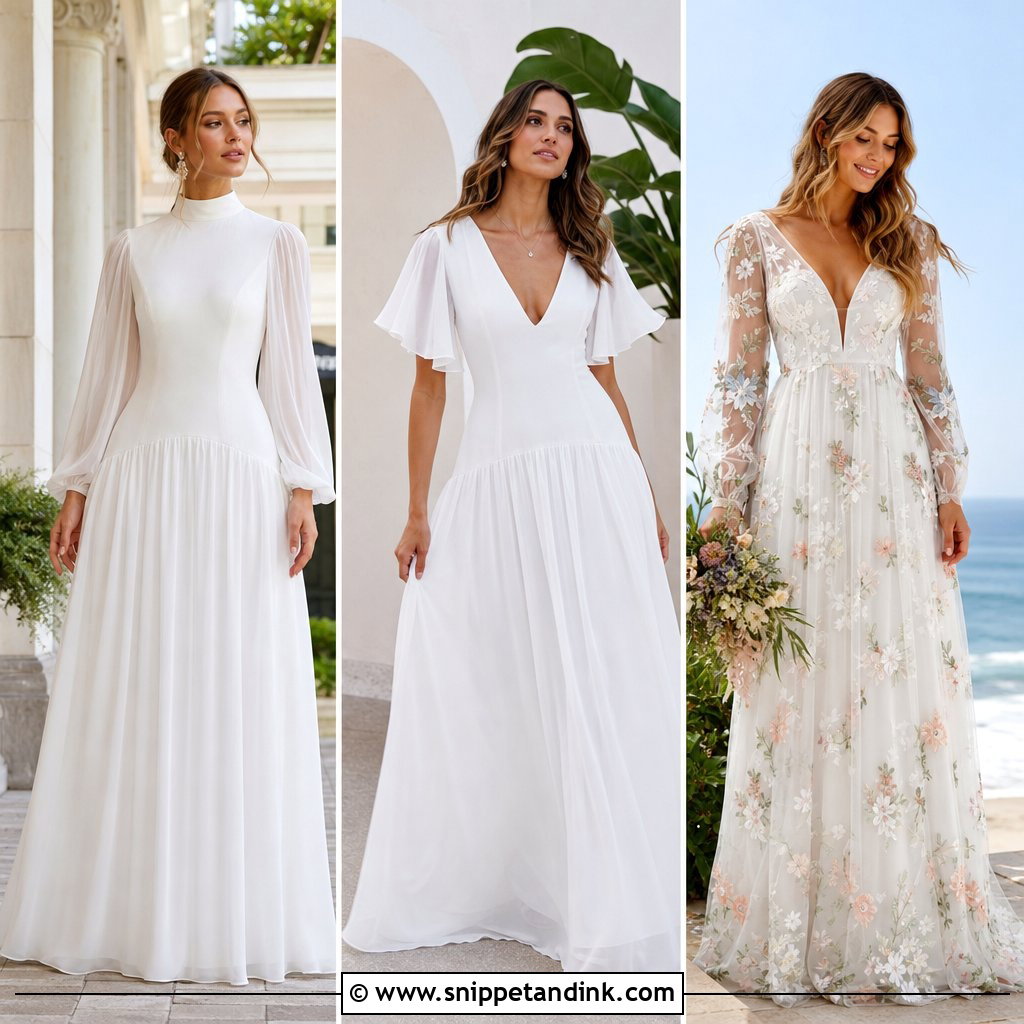
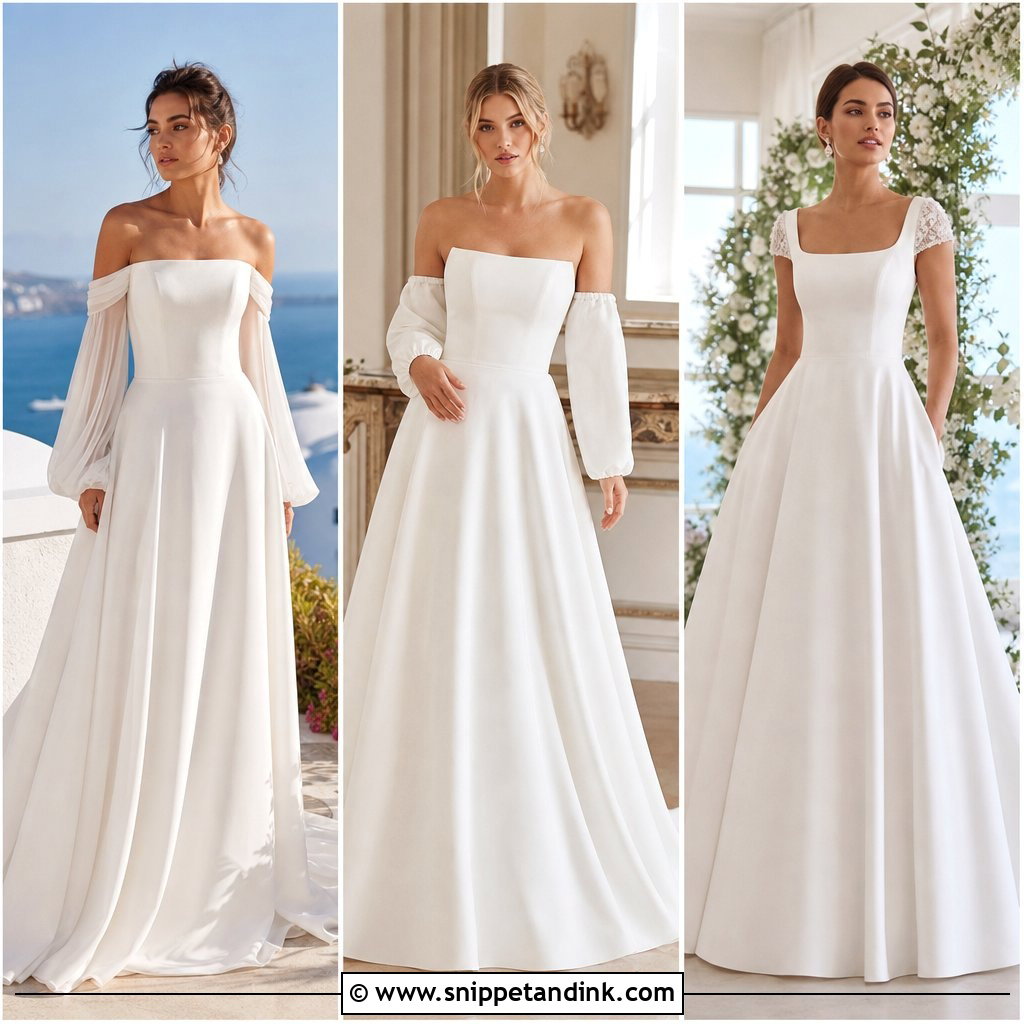
20. A Line Detachable Sleeves Wedding Dress
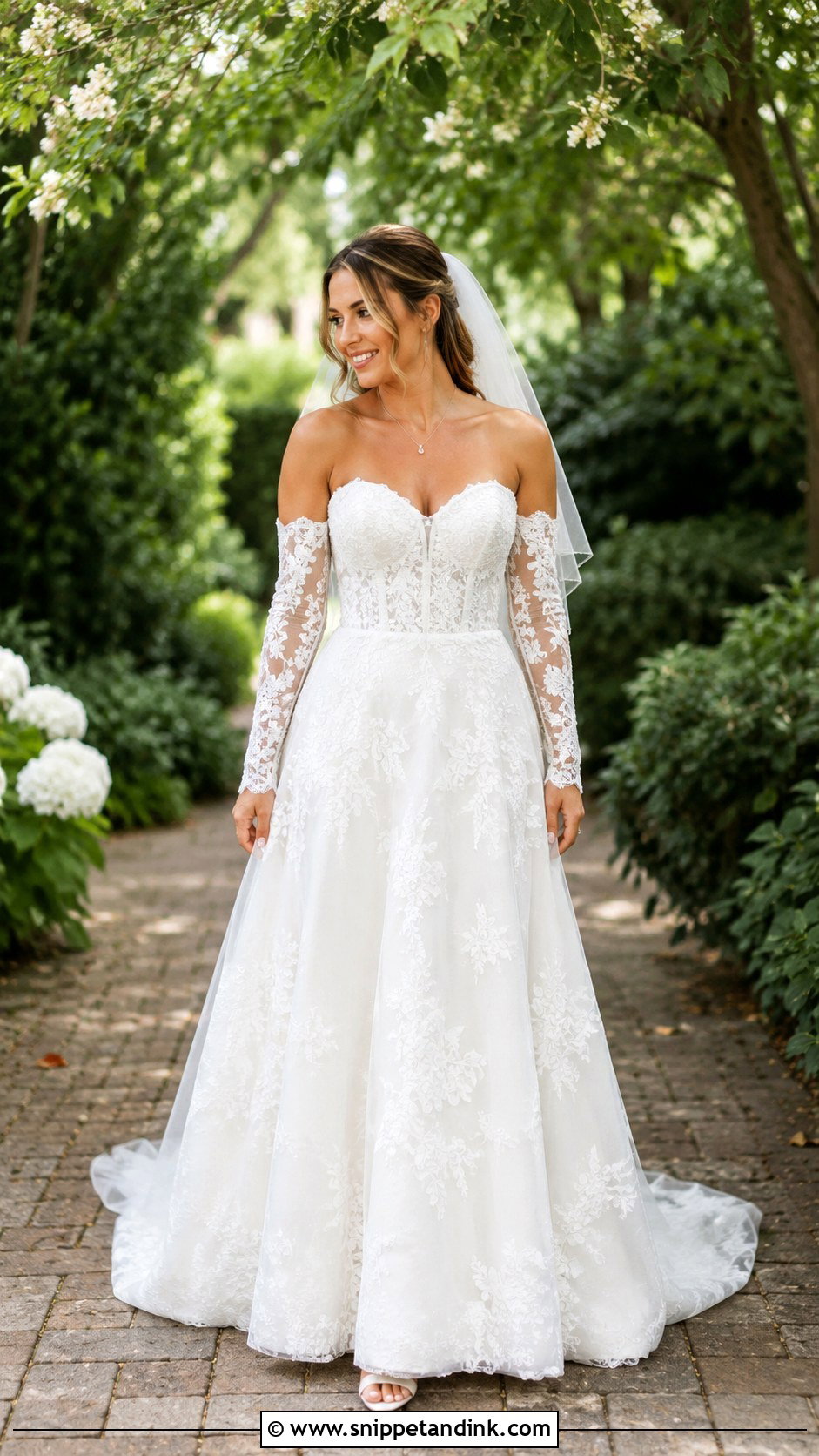
An A-line flows gently from the waist, defining it without clinging, which is why it suits so many bodies and venues. It’s also the easiest base for experimenting with sleeves, because almost any style balances it. Lace reads classic, chiffon soft, satin polished. My one suggestion is to bring the actual sleeve fabric to your shoe and veil decisions, since an A-line is so neutral that the sleeve sets the mood of the whole outfit. Comfortable heels, a mid-length veil and small jewellery keep it simple, and it lightens up for the reception once the sleeves come off.
21. Simple Crepe Detachable Sleeves Wedding Dress
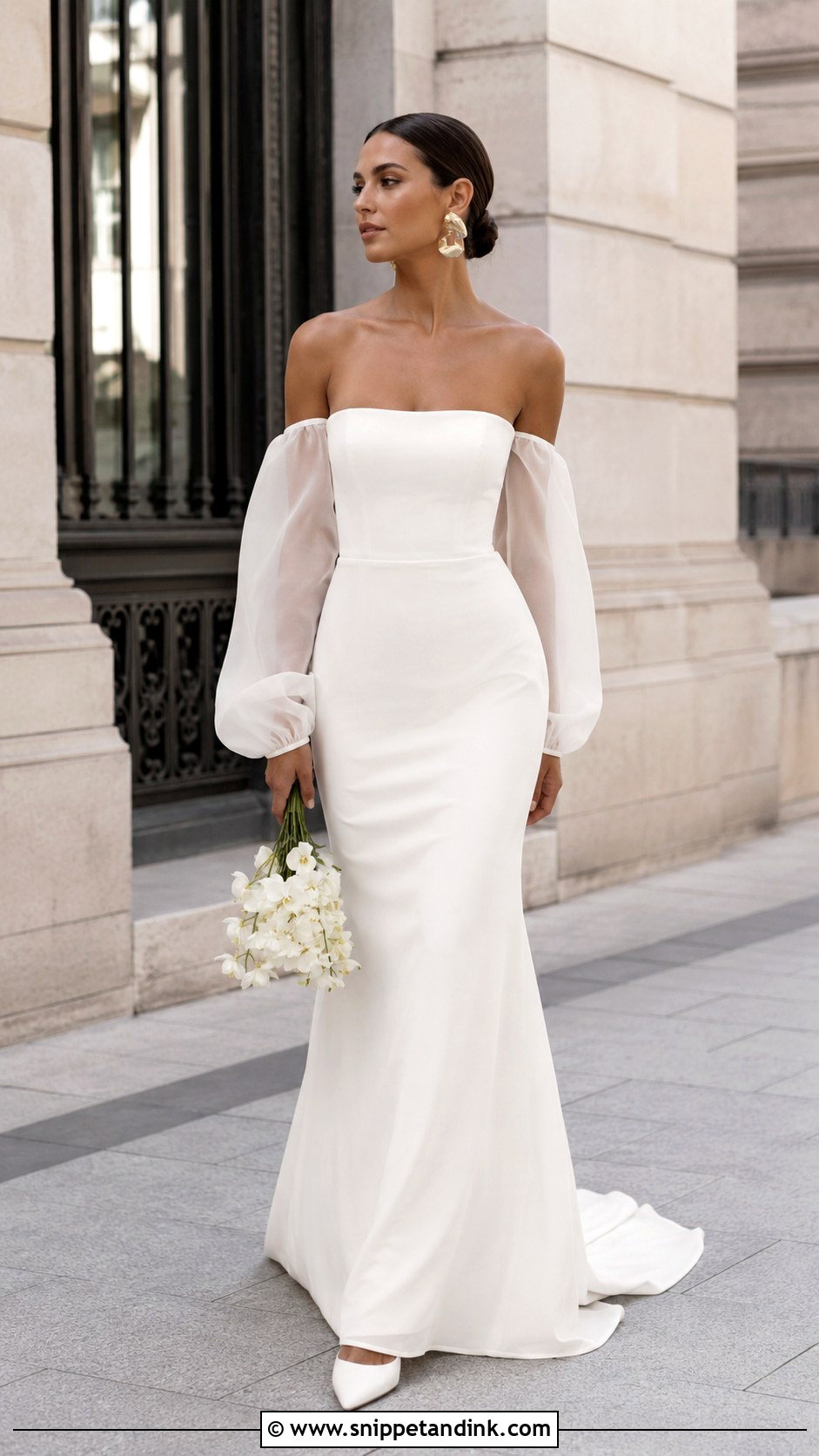
Crepe has a smooth, matte finish that follows the body without shine, so it reads modern and clean. Detachable sleeves soften it while keeping that clean line, as long as the sleeve fabric is just as plain; long fitted crepe sleeves, sheer sleeves or a cape are my picks. Crepe shows every pulled thread and pin mark, so I’d only let an experienced seamstress fit the attachment points. Wear a low bun, sculptural earrings and pointed pumps, with a plain veil or none. Take the sleeves off and you’re in about the sleekest gown here, which suits city weddings and courthouse ceremonies.
22. Floral Applique Detachable Sleeves Wedding Dress
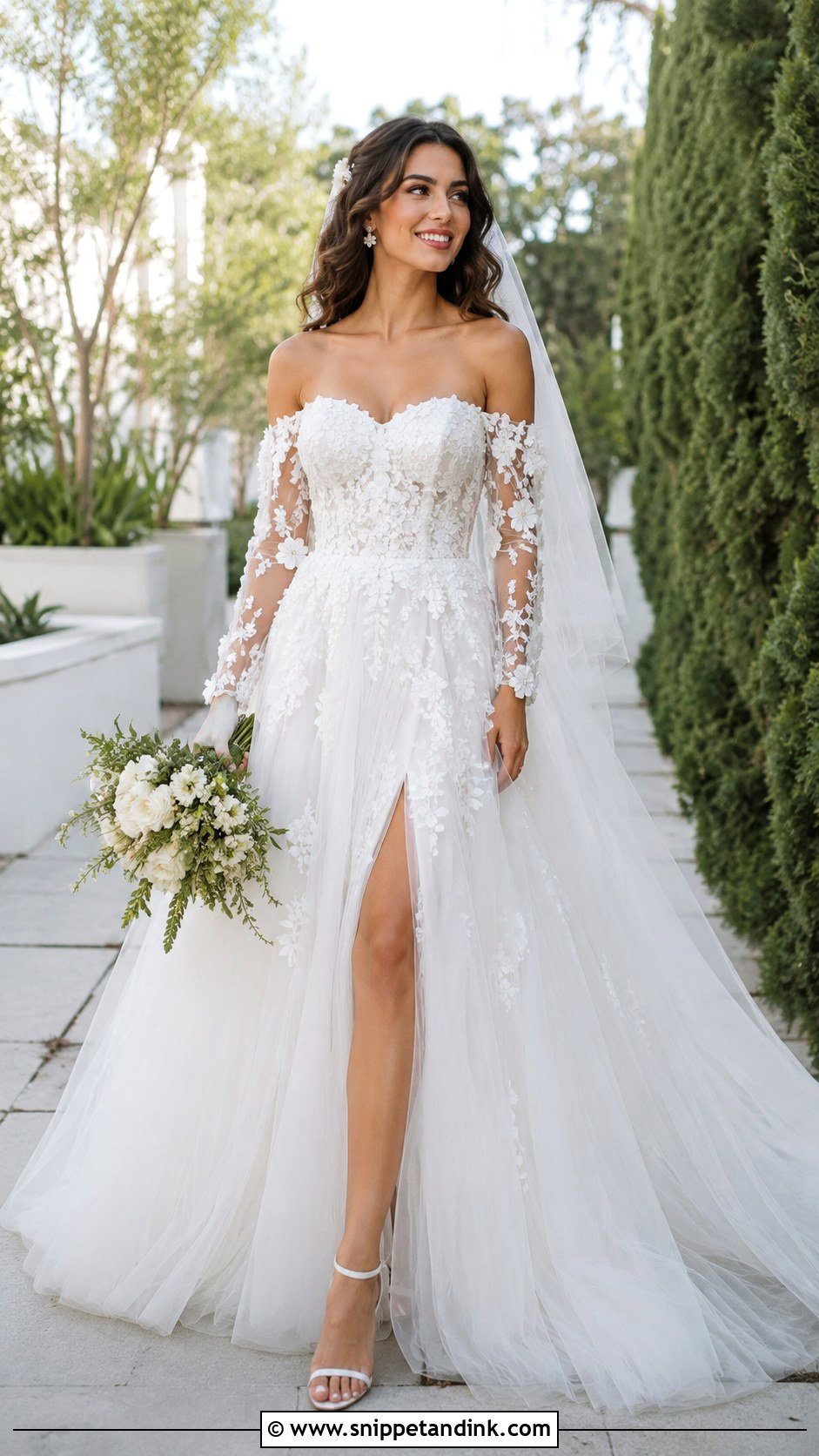
Floral appliqué that trails from the bodice onto the sleeves makes them look as though they were always part of the dress. The work is in the matching. Ask that the appliqué on the sleeves be cut from the same lace as the bodice, at the same scale; larger flowers on the arms than on the body look patched. On tulle, lace and soft A-line gowns it reads romantic and detailed in photos. Soft curls, a veil with light appliqué along its edge and ivory heels keep everything quiet, and the bodice and skirt still carry the flowers when the sleeves are off.
23. Beach Detachable Sleeves Wedding Dress
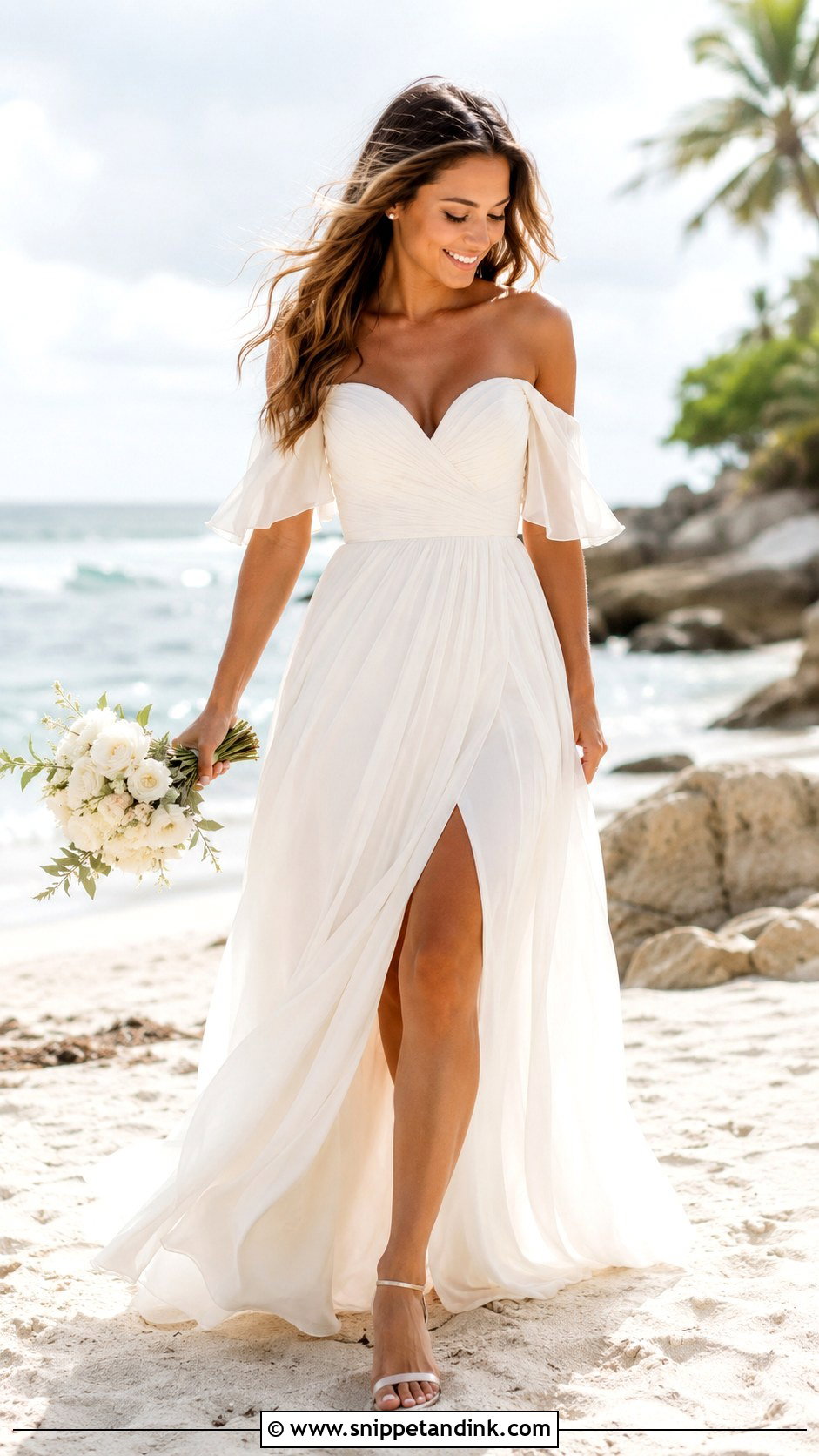
For a beach ceremony, I’d choose chiffon, soft tulle, lightweight lace or a breathable crepe, and keep the sleeves short or loose. Flutter, sheer or draped off-shoulder sleeves give coverage without trapping heat. Sand and salt are tougher on a dress than people expect; salt spray can leave pale marks on satin, which is one more reason to stay with light fabrics here. A shorter veil or hair clip handles coastal wind better than a long one. Flat sandals, pearl studs and loose waves suit the setting, and you can unclip the sleeves after portraits so the reception feels cooler.
24. Winter Detachable Sleeves Wedding Dress
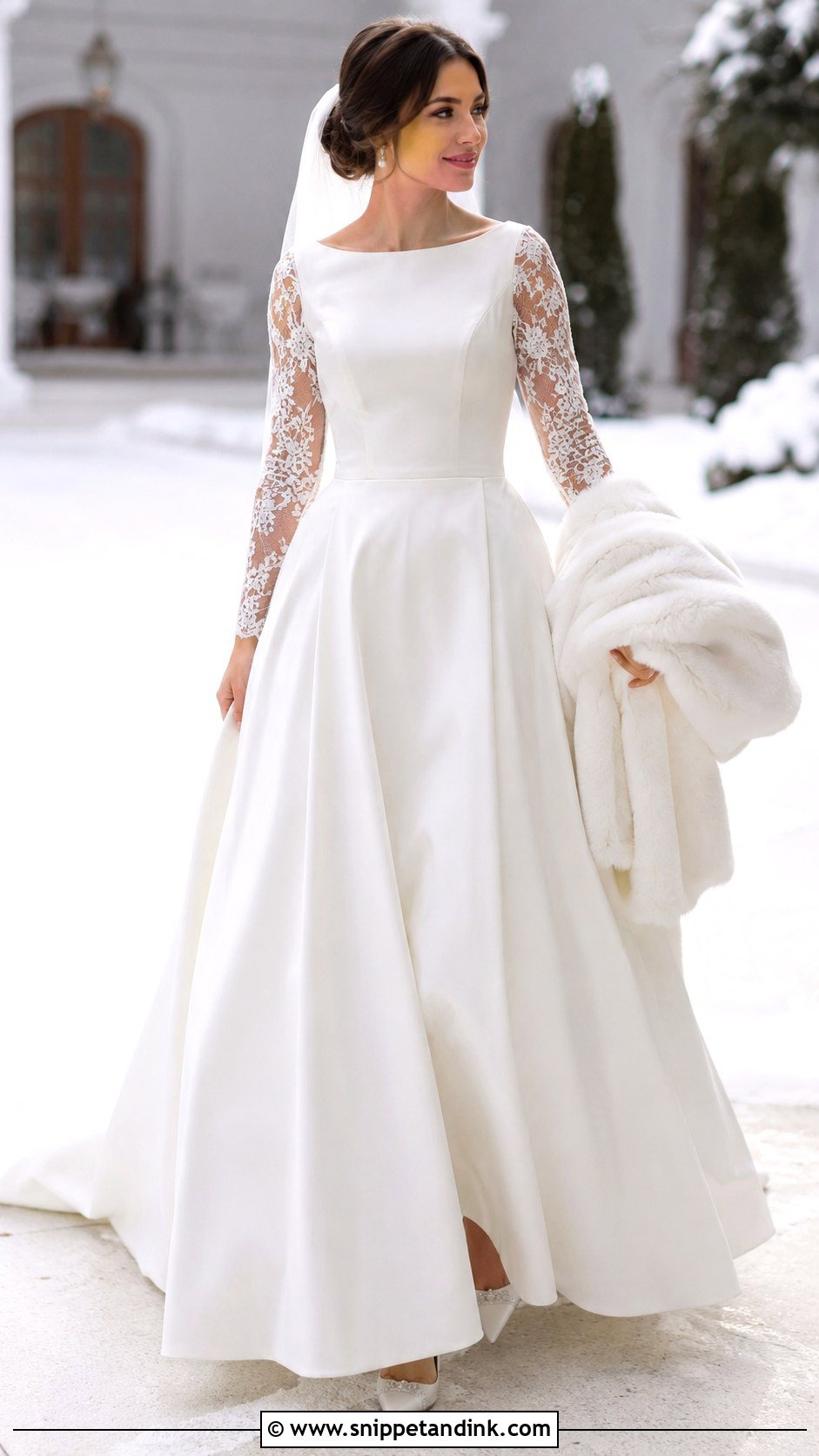
In winter, sleeves make the dress feel right for the season without committing you to coverage all evening. Long satin, lace or beaded illusion sleeves suit cooler weather, and heavier fabrics like mikado, satin and crepe hold their shape in cold air. For outdoor portraits, add closed-toe heels and a faux-fur wrap; just make sure the wrap goes over the sleeves, not under them, or the sleeve lace gets crushed. Indoors at the reception, taking them off keeps you from overheating on a crowded dance floor. Think snowy portraits, grand venues and evening celebrations.
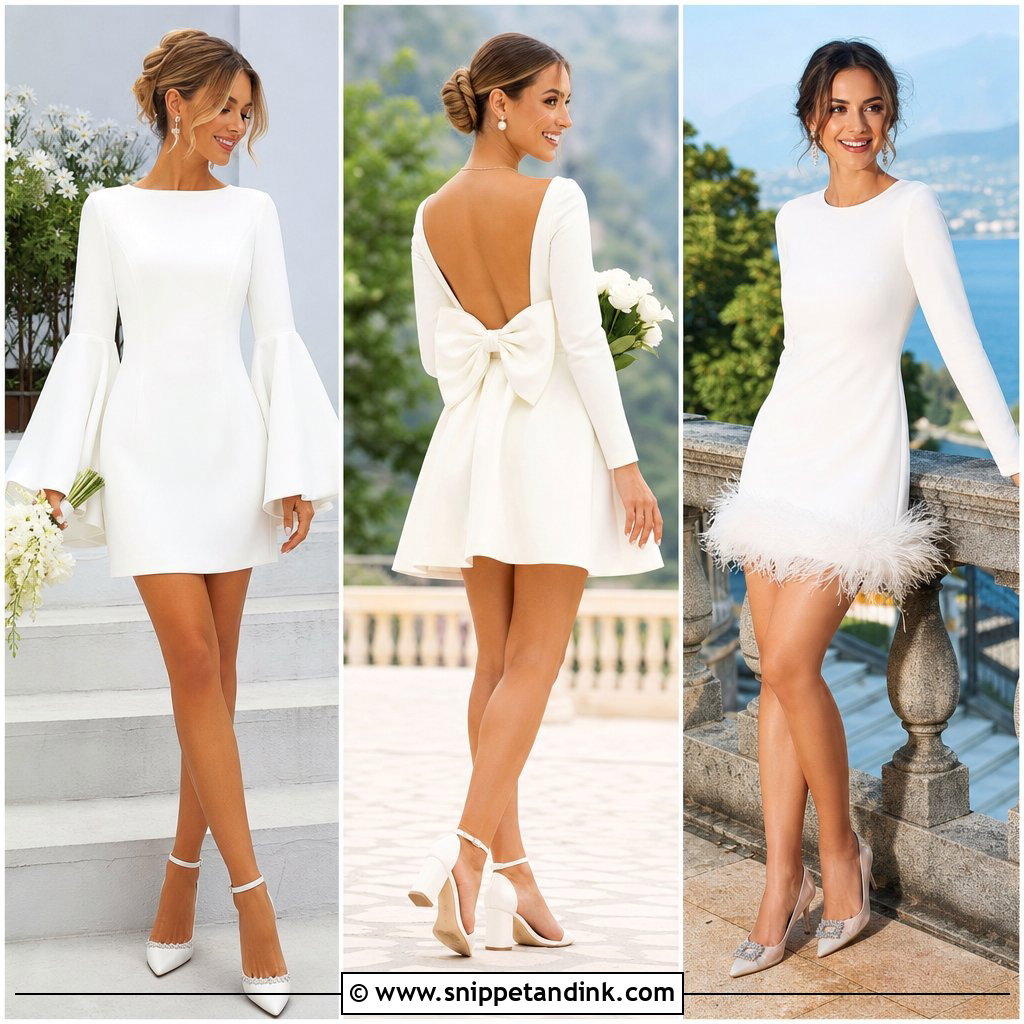
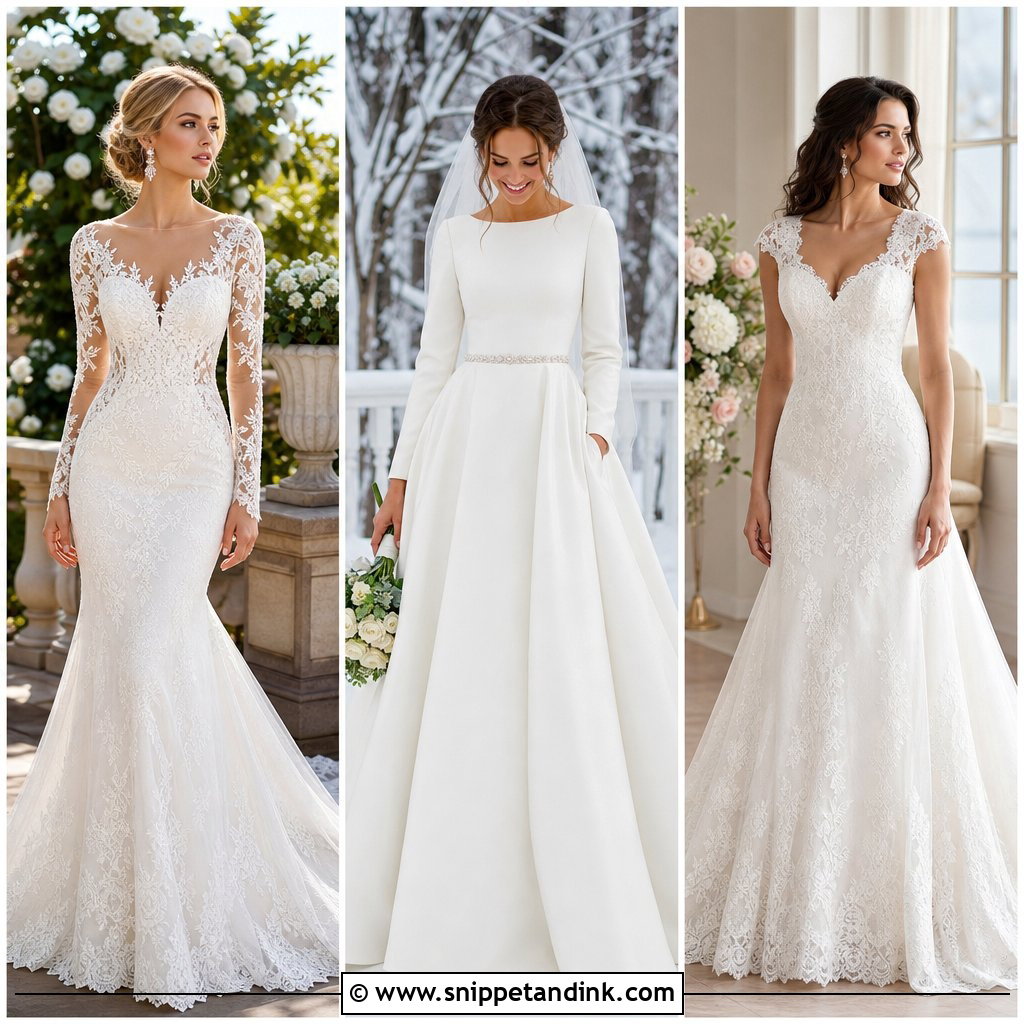
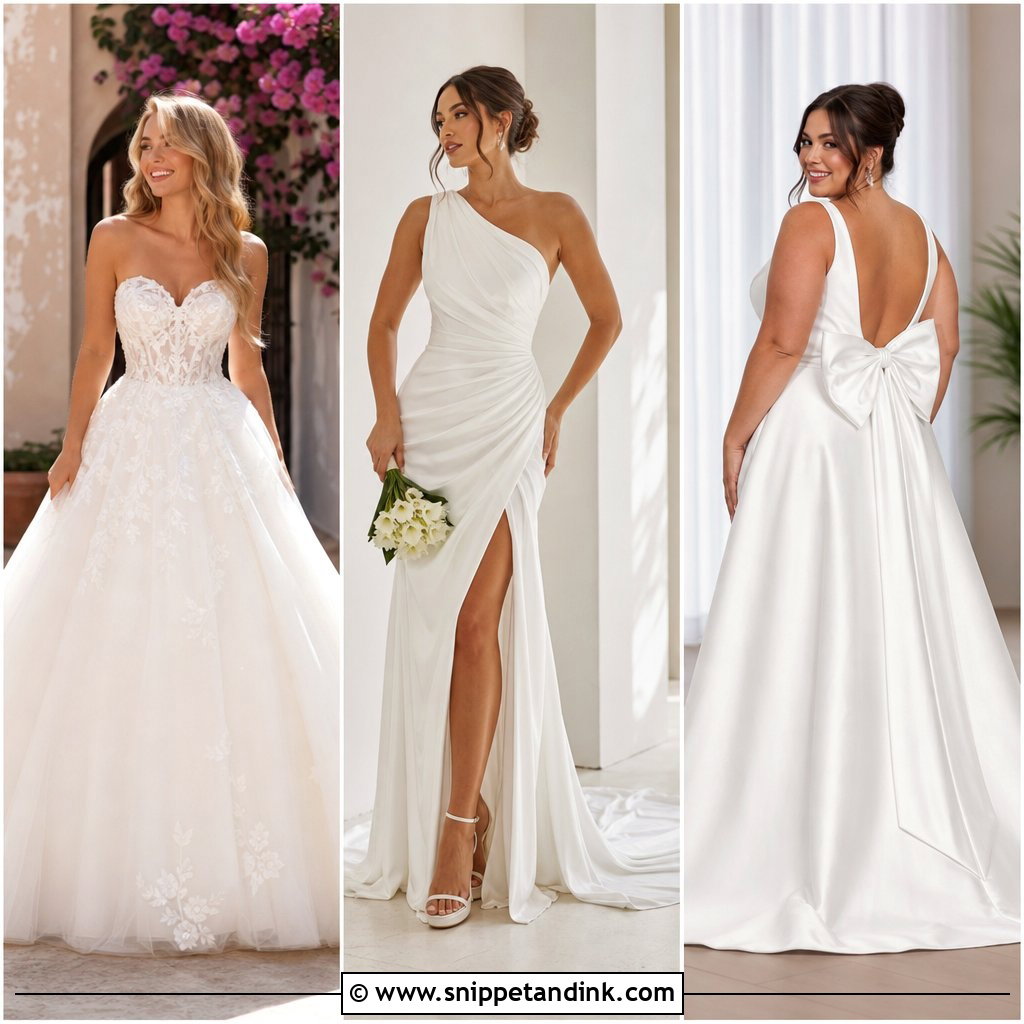
25. Reception Detachable Sleeves Wedding Dress
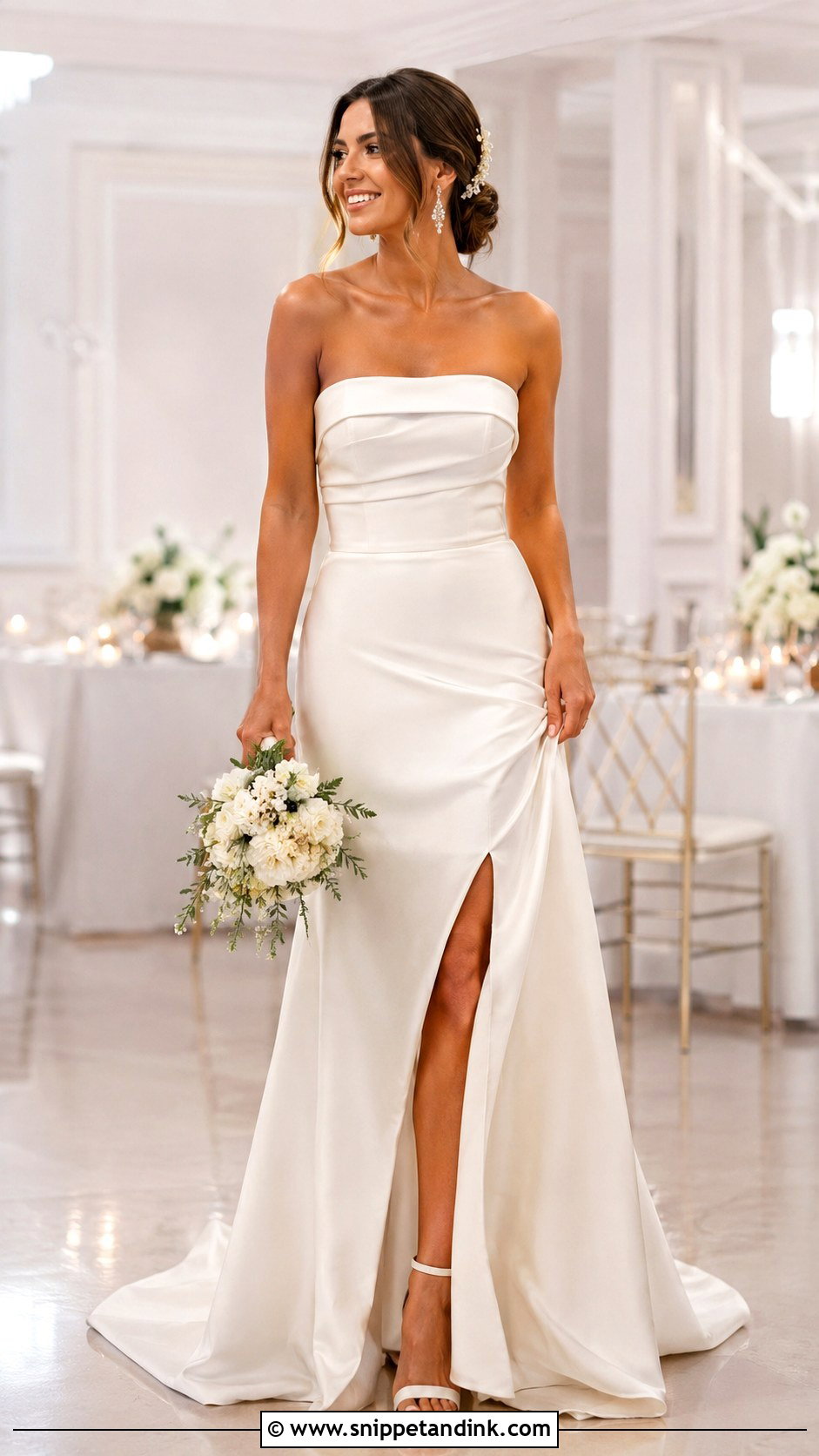
The reception version of the dress is the one brides think about least, and it’s the one they’ll wear for most of the night. Lace, puff or long sheer sleeves can carry the ceremony, but the base gown has to look complete without them. My test is simple: try the dress on with the sleeves off before you sign anything. If the neckline looks unfinished or the attachment points show, it’s not the right gown for this plan. A strong neckline, good bodice structure and decent fabric matter most. Swap the long veil for a clip and change your earrings for the second look.
The Reception Swap Takes Ten Minutes If You Plan It
Taking sleeves off sounds instant, and it rarely is. Hooks are behind the arm where you can’t see them, buttons are small, and you’ll be doing it in a dress you can’t easily bend in. I suggest choosing one bridesmaid as the person who knows the fastening, and walking her through it at the final fitting.
- Agree on where the change happens. A bathroom stall is too tight for a full skirt; ask the venue for a side room near the reception.
- Pack a small kit: a fabric-safe hanger or garment bag for the sleeves, a few safety pins, and a lint roller.
- Look at the bodice straight after. Snaps and hooks can leave small marks or puckers, and a quick smoothing by hand usually settles them.
- Give the sleeves to someone who will keep them flat. Tossing lace or organza into a tote for the night is how they get crushed or lost.
Storing the Sleeves With the Gown Afterward
Sleeves are small, which is exactly why they go missing after the wedding. Have them cleaned at the same time as the gown, since a cleaner can then check the colour still matches. Wrap each one in acid-free tissue, especially anything beaded or pearled, so the embellishment doesn’t press marks into the lace. Store them in the same box or bag as the dress, with a note of how they fasten. If the gown is ever altered or passed on, the next person will be glad to have it.
One more thought: sleeves can work for a vow renewal or a later formal event even if the dress itself never comes out again. Lace or illusion sleeves sometimes get reworked into a bolero, so it’s worth keeping them in good condition.
Two Looks, One Dress, and a Fitting That Proves It
Removable sleeves earn their place when the gown works without them and the attachment holds through a full day of movement. Match the sleeves to the dress in fabric, colour and proportion, test them by hugging, sitting and raising your arms, and decide the swap plan before the wedding. Lace, satin, tulle, chiffon or beading can all work. The right pair just needs to feel like part of the dress from the first fitting onward.
You'll Like These Ideas:


Leave a Reply