
Start with the day, not the dress. Where you’ll stand, how warm it will be, how far you’ll walk between ceremony and reception: those decide more about the right gown than any photo you’ve saved. I’ve laid out thirty options here, from ball gowns and slips to beach dresses, maternity gowns and courthouse looks, and with each one I’ve explained what I watch for when a bride puts it on. Some of these shapes will surprise you in the fitting room. A few will disappoint. Either result is useful.
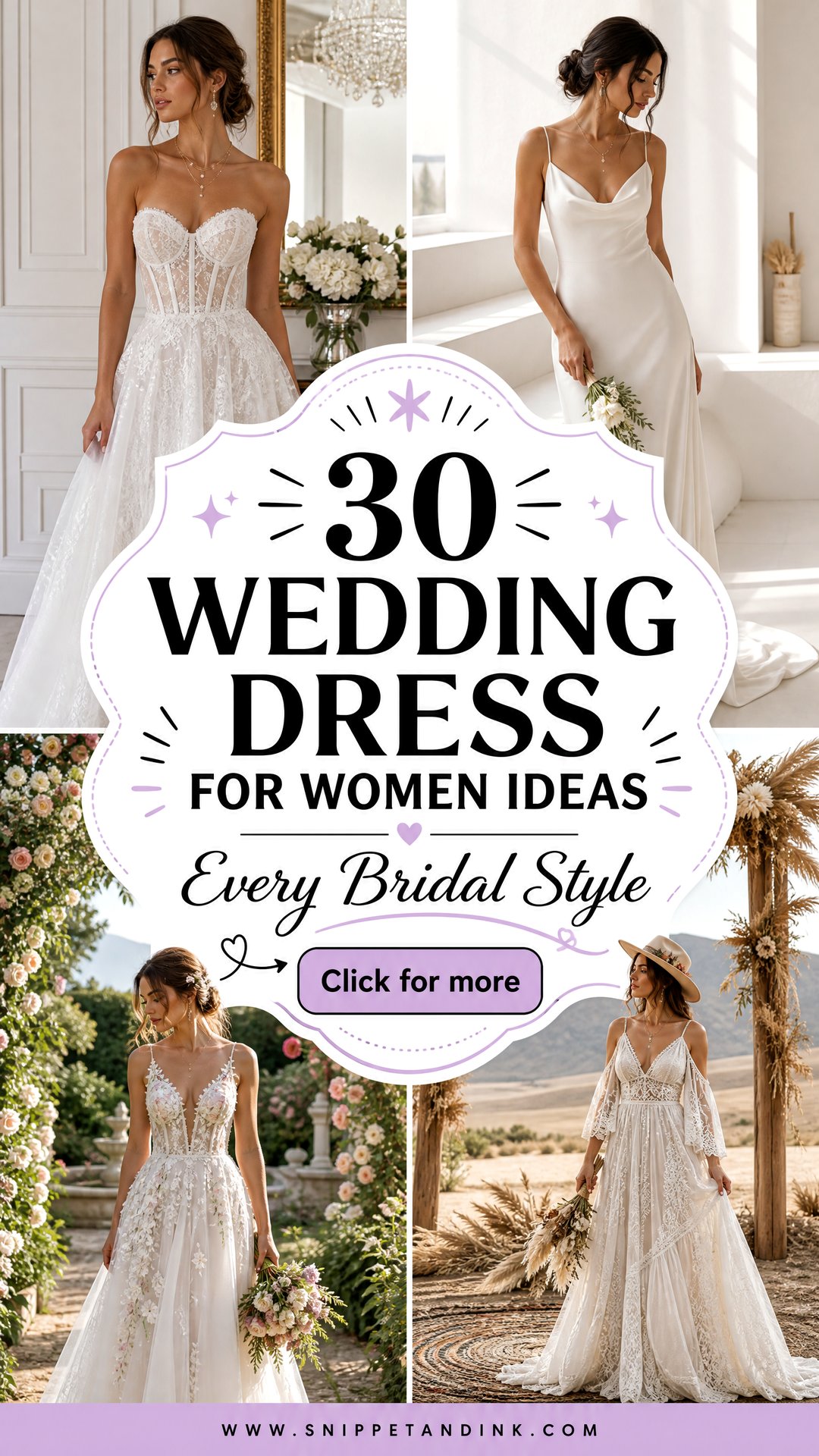
The Bra, Slip and Shapewear Each Neckline Needs
Undergarments change the fit of a gown more than most brides expect. A dress fitted over one bra and worn over another can sit a centimetre or two differently at the bust, which is enough to gape or pull. Buy your underwear before the first fitting and wear the same pieces every time.
- Strapless and sweetheart bodices: many have cups and boning sewn in. If yours doesn’t, ask the seamstress to add cups rather than wearing a separate strapless bra that can slide.
- Deep V and plunge necklines: a low-plunge bra, adhesive cups or fashion tape. Test whatever you choose for a few hours at home, since adhesives behave differently on warm skin.
- Open and low backs: a low-back body or adhesive cups. Check the depth in a mirror with your arms raised.
- Slips, crepe and satin sheaths: smooth, no-line shapewear in a shade close to your skin, not white, which can show through ivory fabric.
- Full skirts: a petticoat or crinoline is often built in. If you’re adding one, bring it to the hemming appointment, as it lifts the skirt.
Comfort matters as much as smoothness. Very firm shapewear can feel fine for an hour and unbearable by the speeches. Choose the lightest level of control that gives you the line you want.
1. A Line Wedding Dress
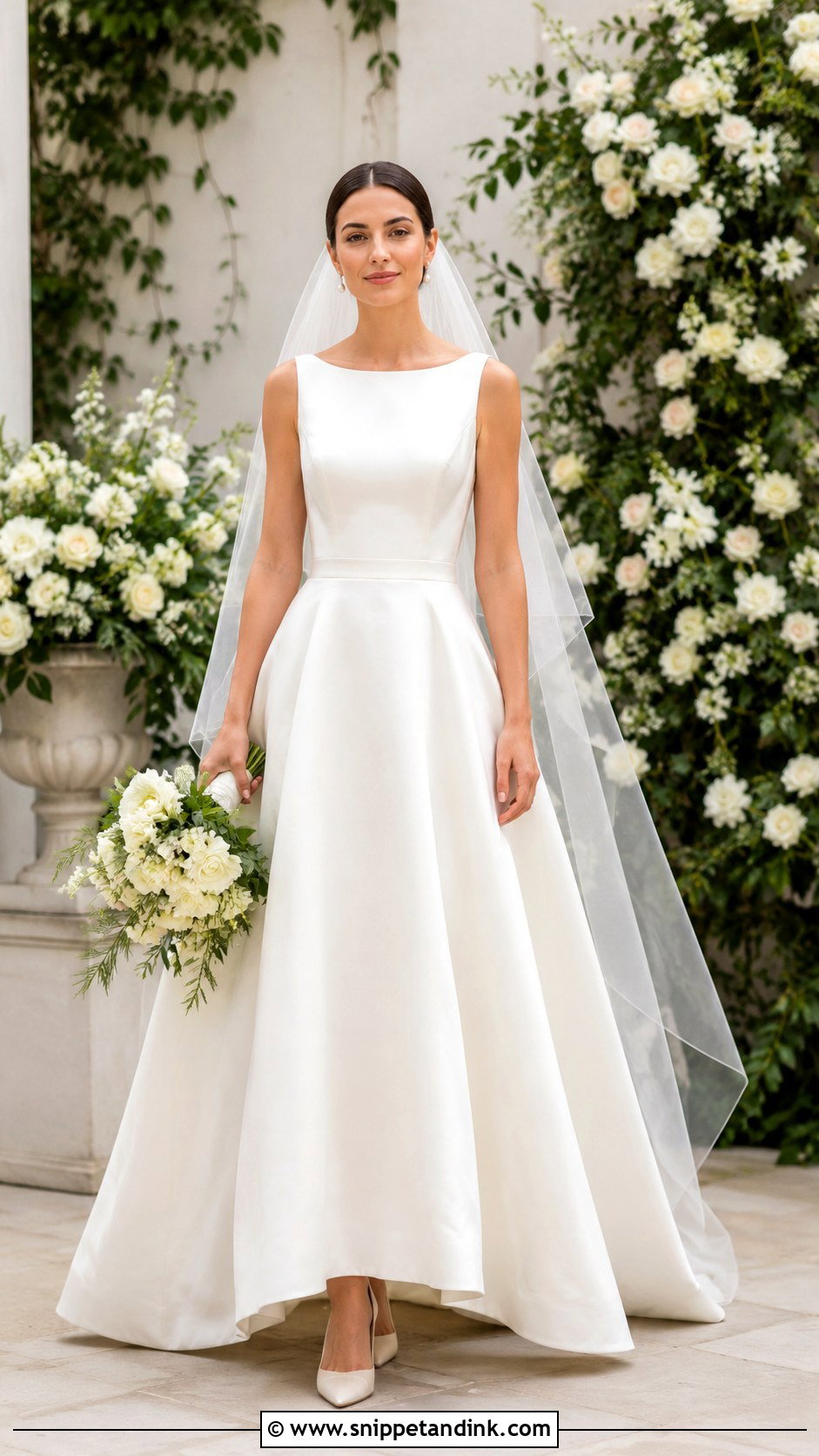
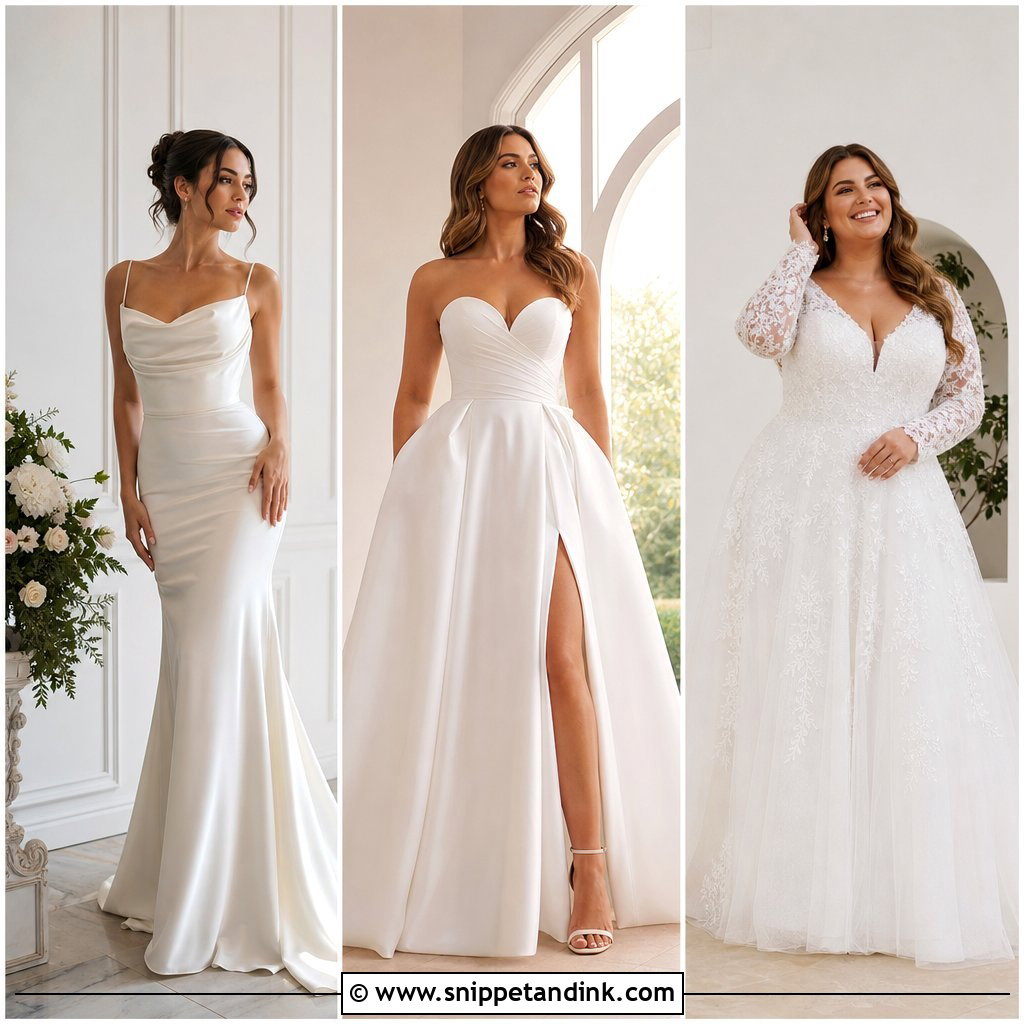
If I had to put one silhouette on a stranger without seeing her first, it would be the A-line. The bodice shapes the waist and the skirt drifts over the hips, so it rarely feels tight or overdone. Satin or mikado with a soft sweetheart neckline reads classic; lace appliqué or tulle layers soften it. Watch the skirt seam at the hip on lace versions, since pattern matching there shows whether a gown was cut with care. Pearl drops, a fingertip veil and pointed ivory heels finish it, with white roses, ranunculus or greenery in hand.
2. Ball Gown Wedding Dress
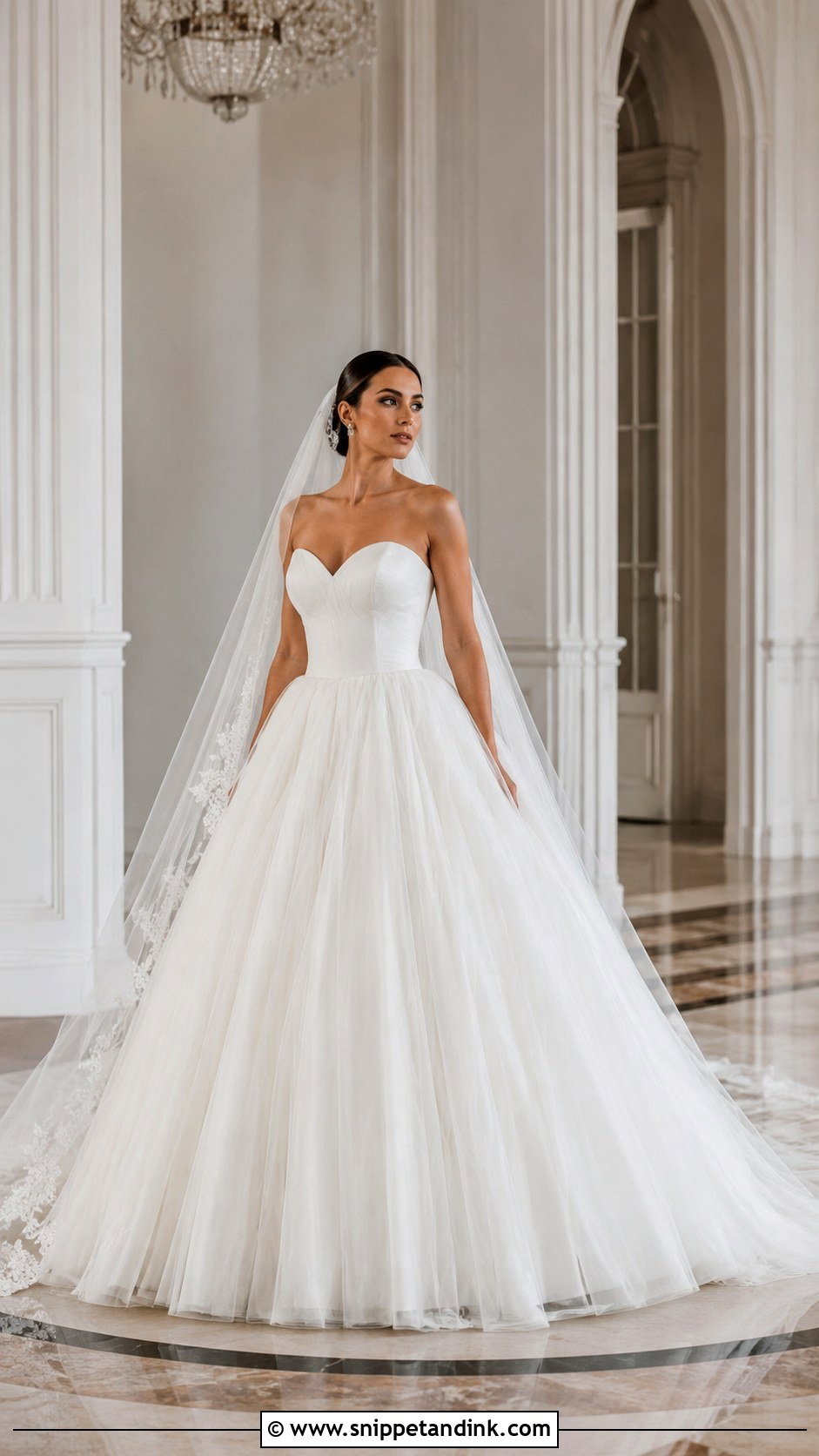
The ball gown is the entrance dress: fitted bodice, full skirt, a shape everyone recognises. A clean strapless version looks polished; lace sleeves over tulle look romantic. Keep the accessories small, crystal studs, a sleek bun and a cathedral veil, because the skirt is already loud. Platform heels hidden underneath add height without wobble. The thing nobody mentions is the bathroom. Practise with a bridesmaid holding the skirt before the day. Petite brides should look for lightweight tulle rather than layered satin.
3. Mermaid Wedding Dress
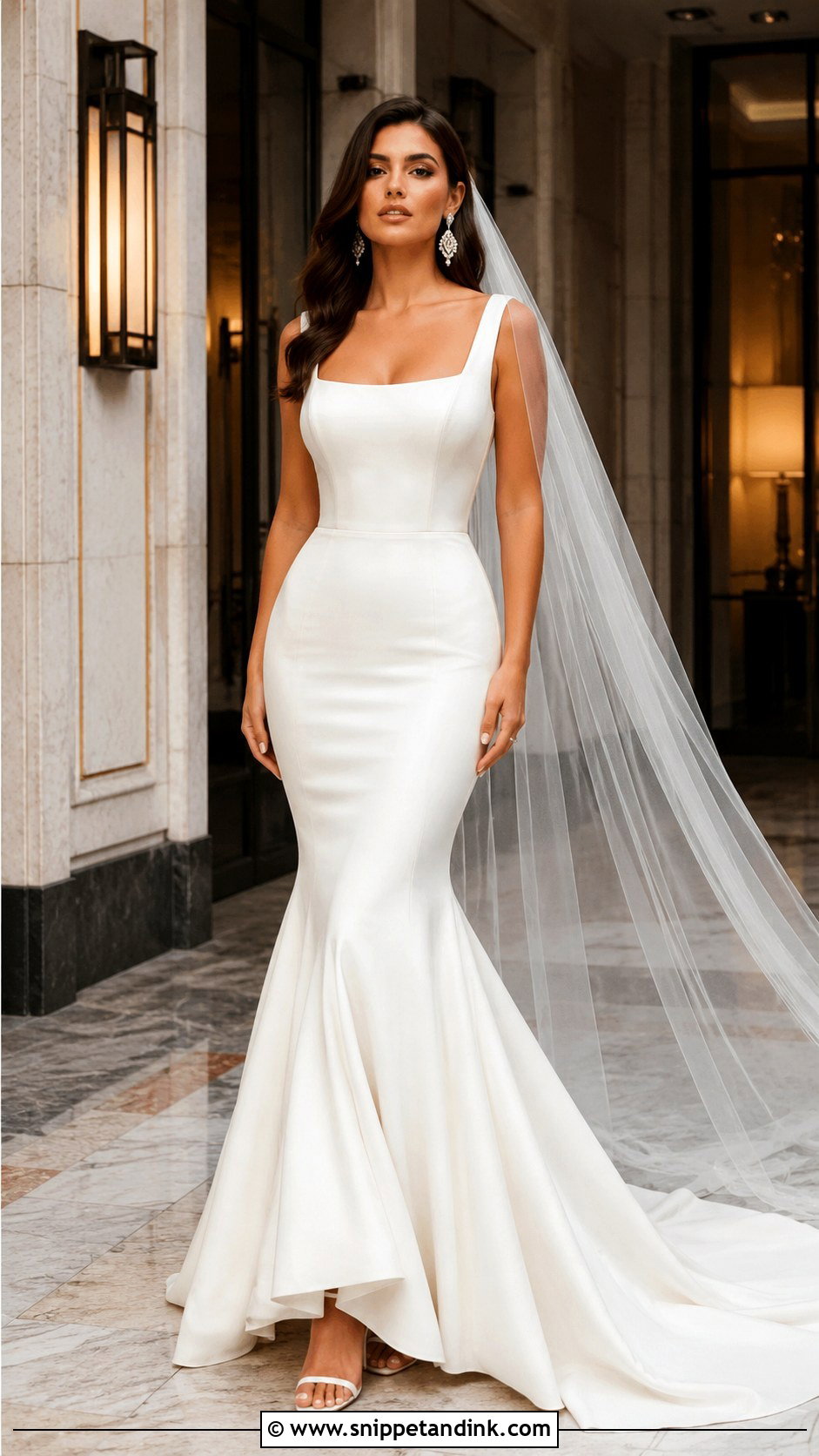
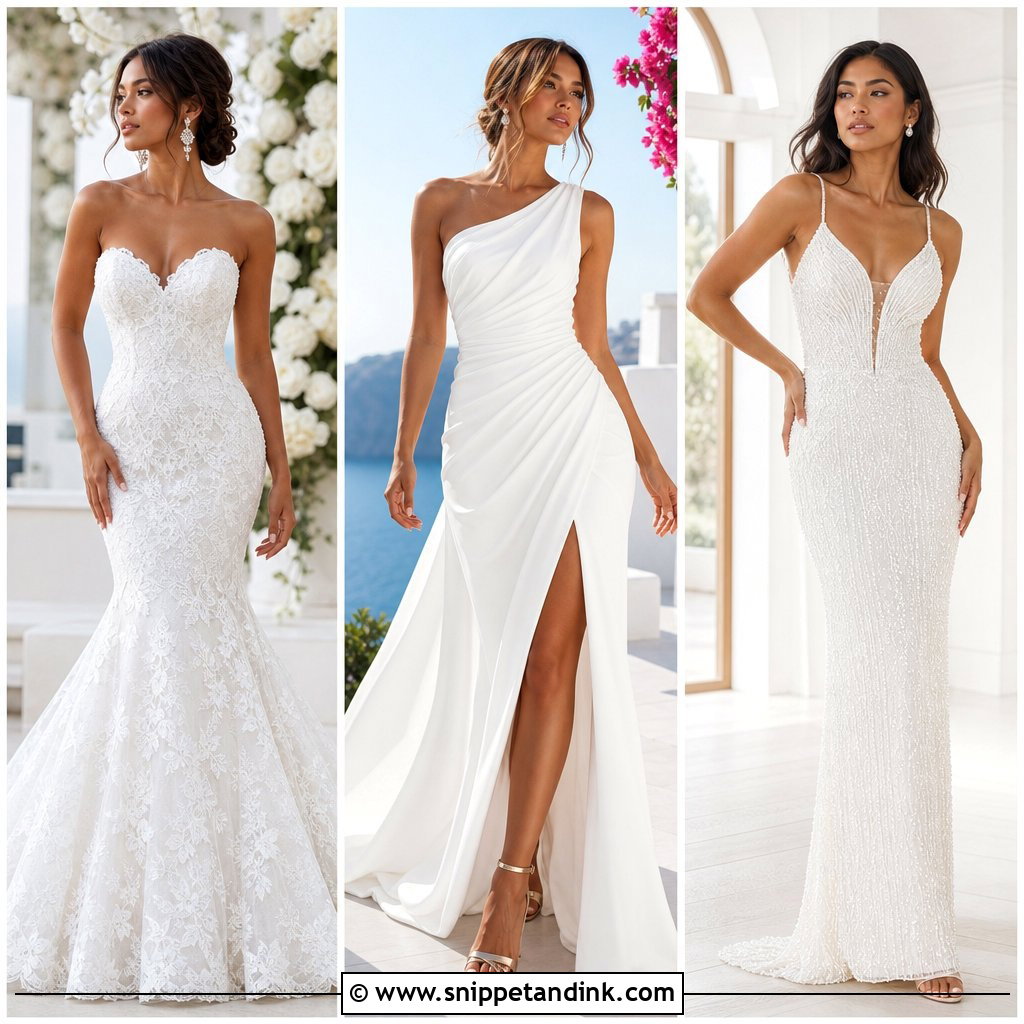
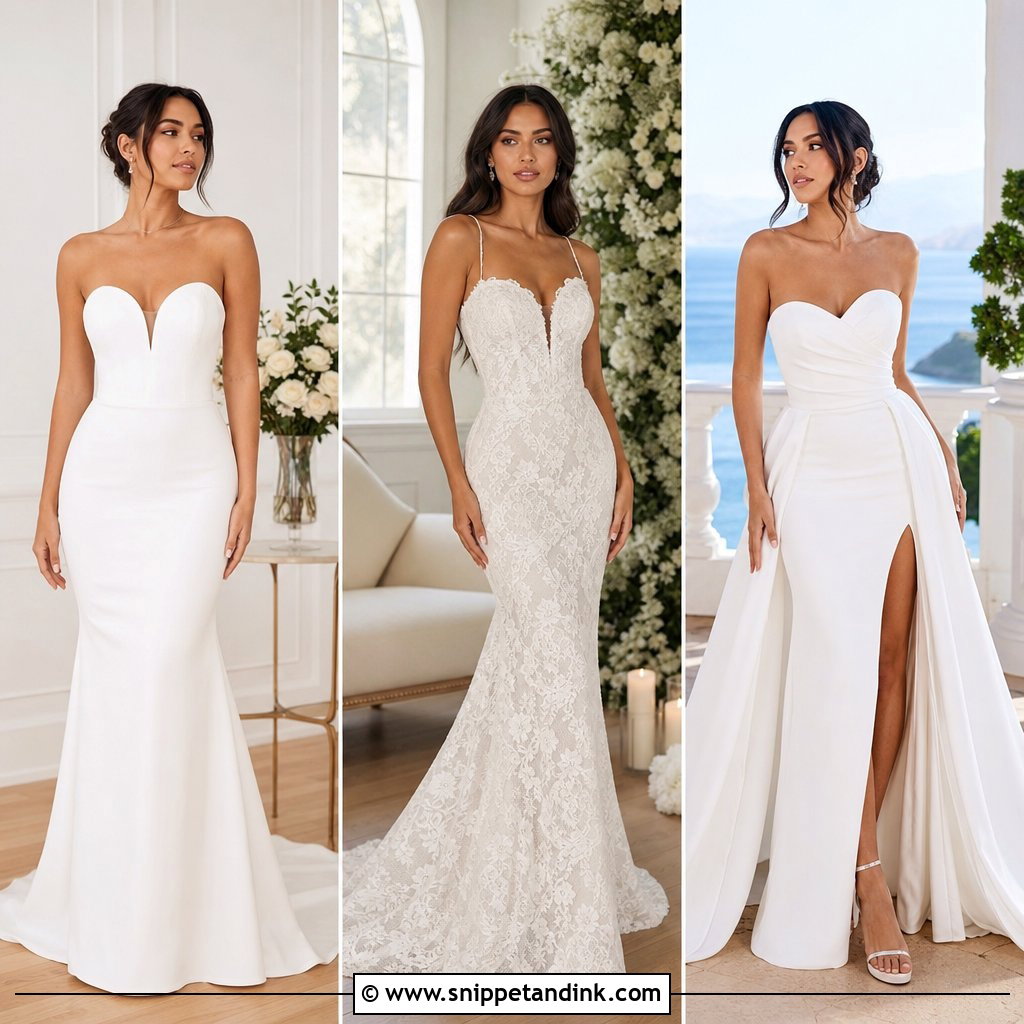
Close through the bodice, waist, hips and thighs, flaring near the knee: the mermaid is a gown you have to be willing to stand in. Stretch crepe looks sleek and is the most forgiving to move in; lace is more romantic. A long veil, sculptural earrings and strappy heels give it a red-carpet finish. At every fitting I’d have you sit fully back in a chair and walk down a flight of stairs. If either is a struggle, the flare needs moving. It looks its best under evening light in hotels and formal rooms.
4. Sheath Wedding Dress
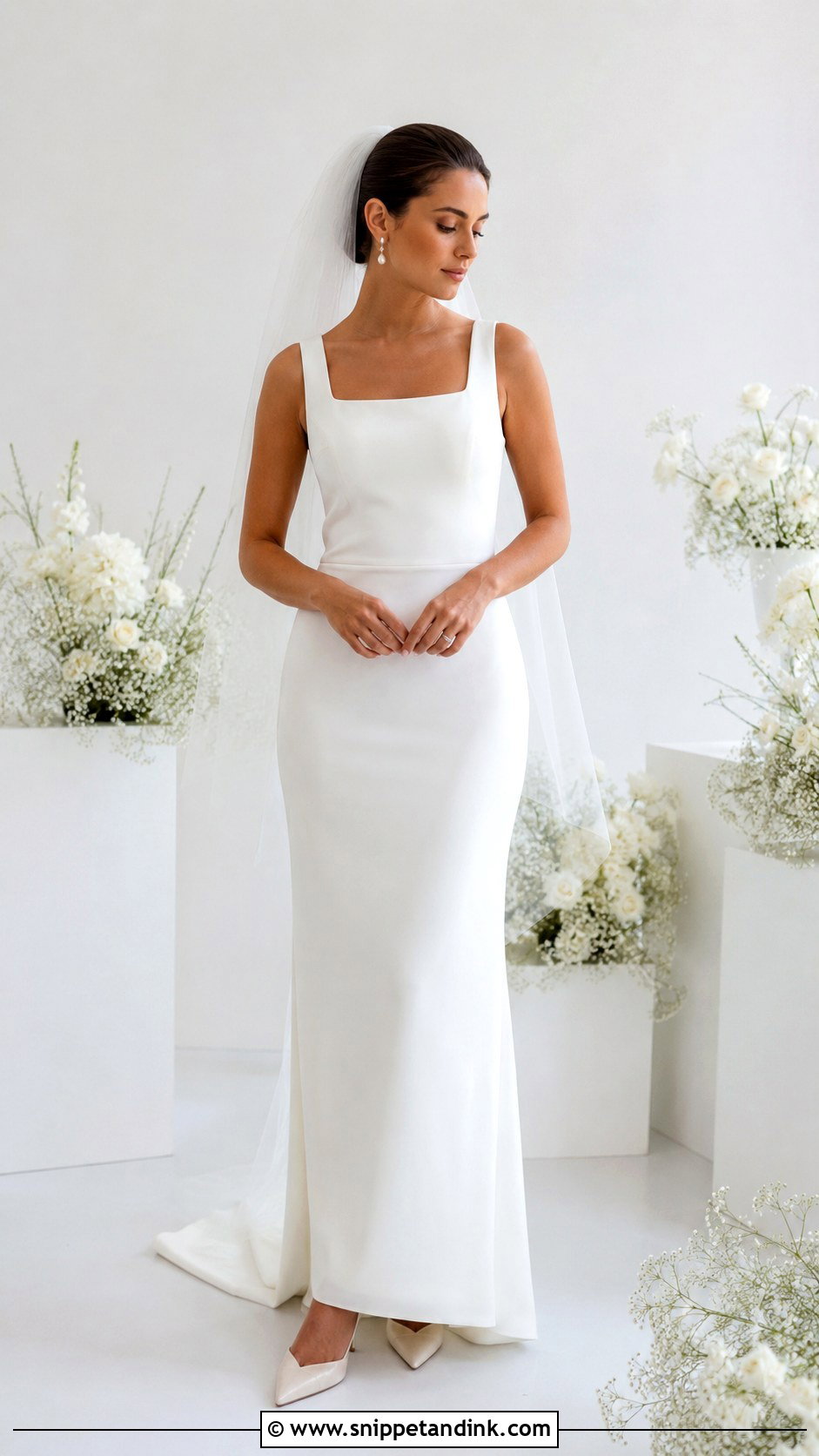
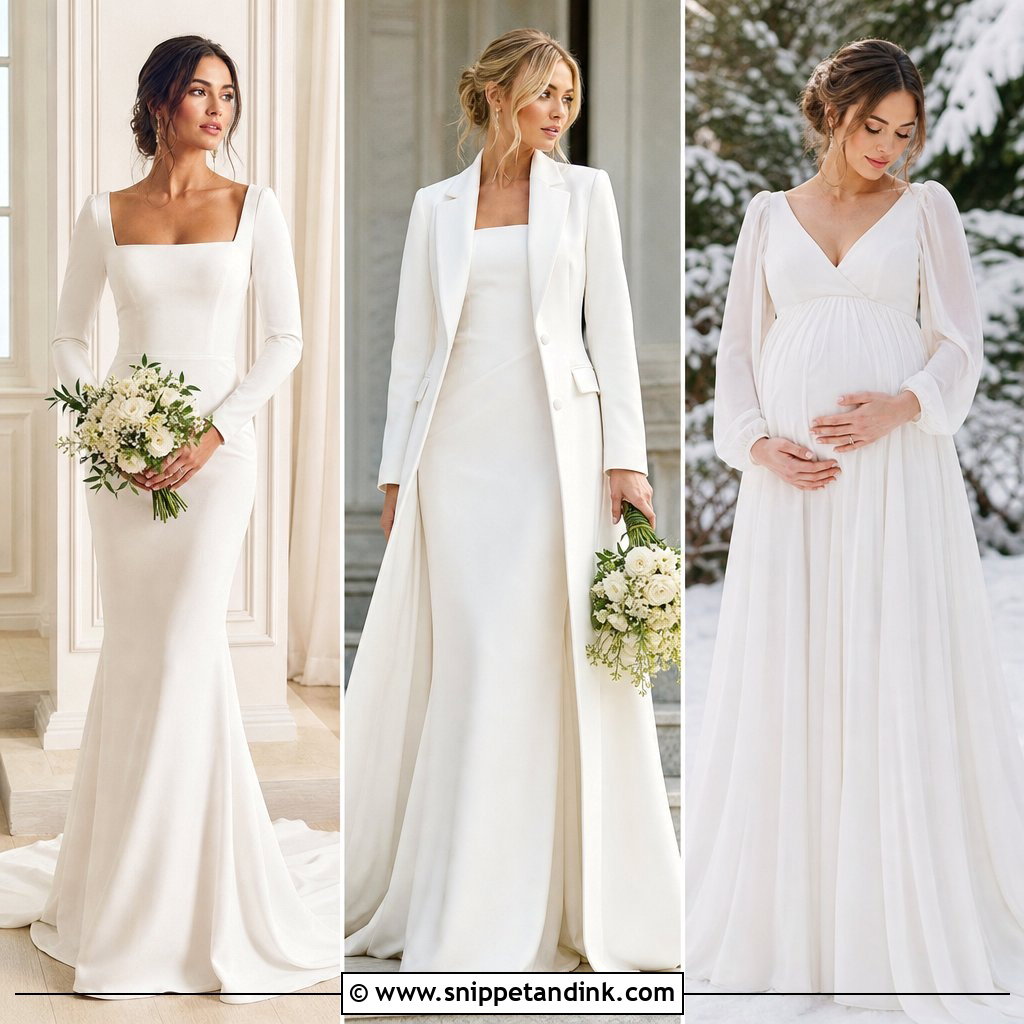
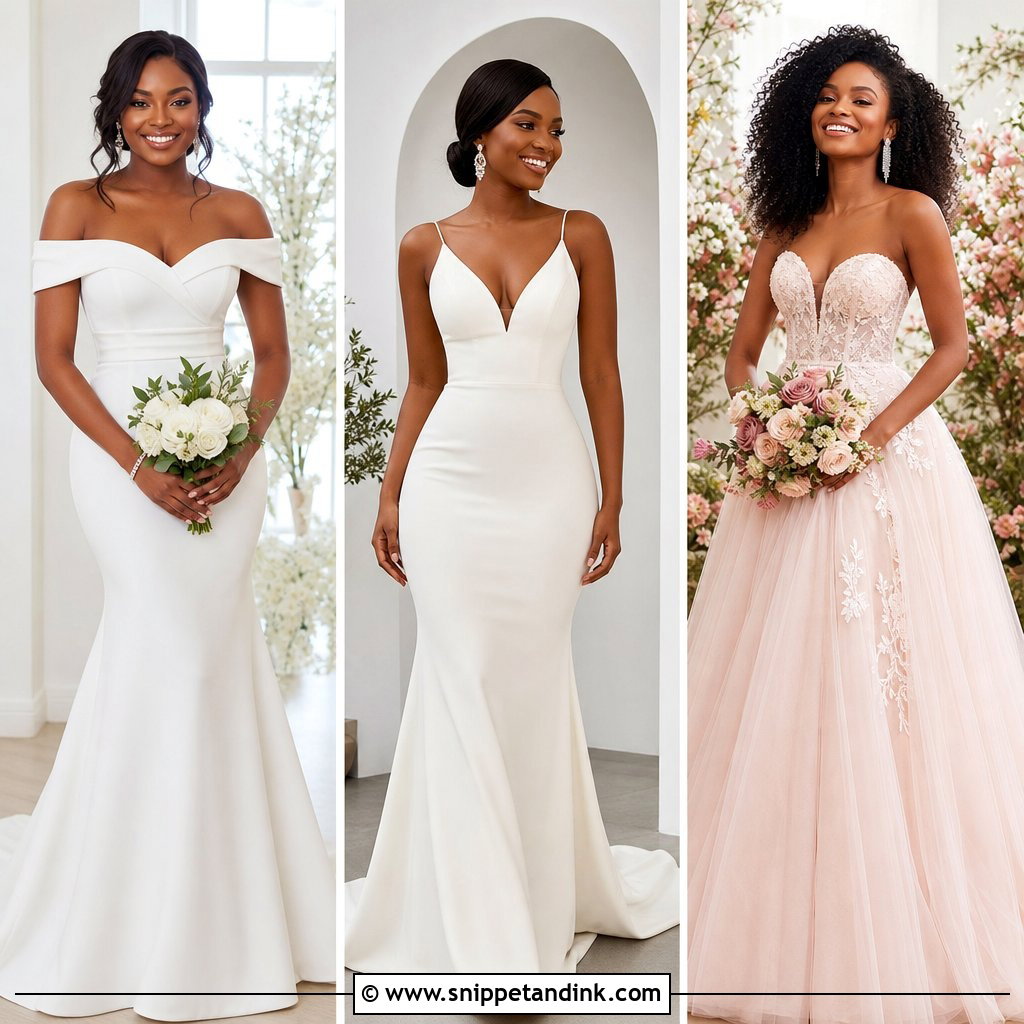
A sheath wedding dress follows the body in a straight line, so it feels light and easy all day. A crepe sheath with a square neckline, low bun, pearl earrings and slingbacks is as minimal as bridal gets. Lace, chiffon or beaded versions soften it. Sheaths cling, so they show what’s underneath; bring your actual underwear to the fittings, not just any bra. A narrow belt or gentle ruching adds shape if you want it. A long veil stands out beautifully against the clean outline.
5. Satin Wedding Dress
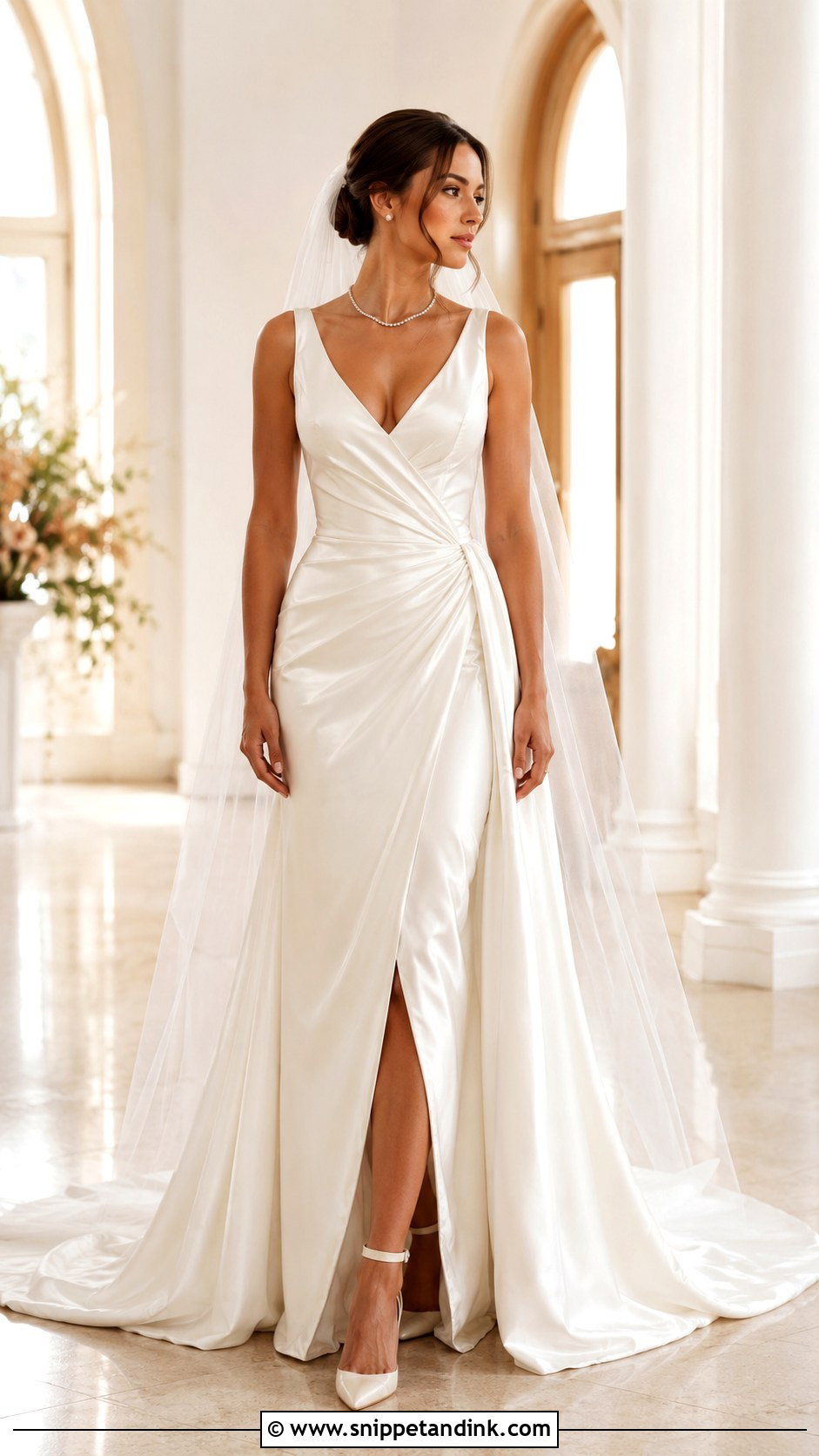
Satin has a soft sheen that catches light, which is why it looks so good in photographs. A satin A-line, fit-and-flare or slip gown all work. Weight matters more than people realise. Heavy duchess satin holds its shape and resists creasing, while thin, cheap satin wrinkles across the lap the first time you sit. Pearl studs, a sleek veil, soft waves and ivory heels keep it modern. Add a fine tennis necklace if the neckline is clean. Steam it on the morning, not the night before.
6. Lace Wedding Dress
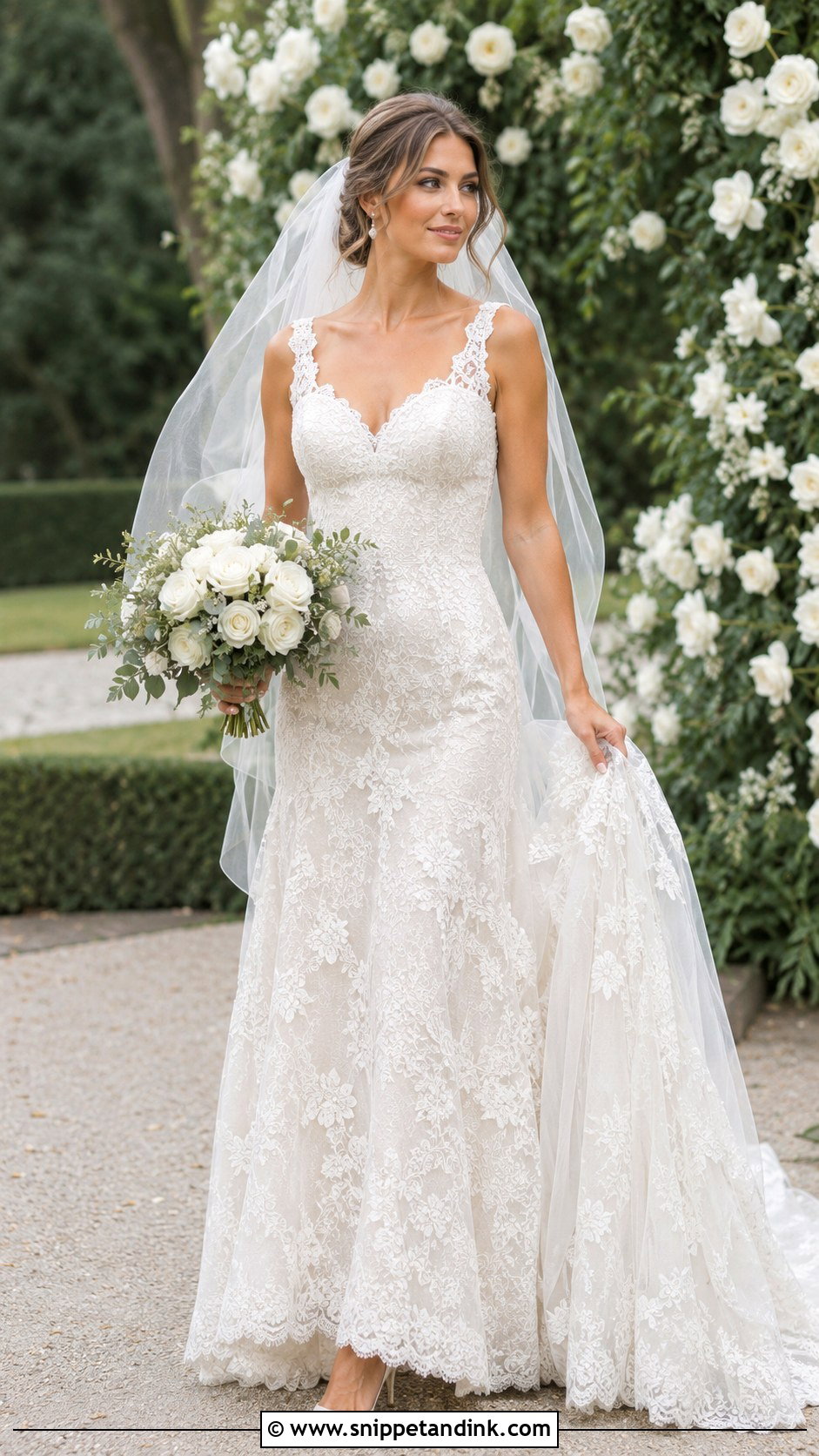
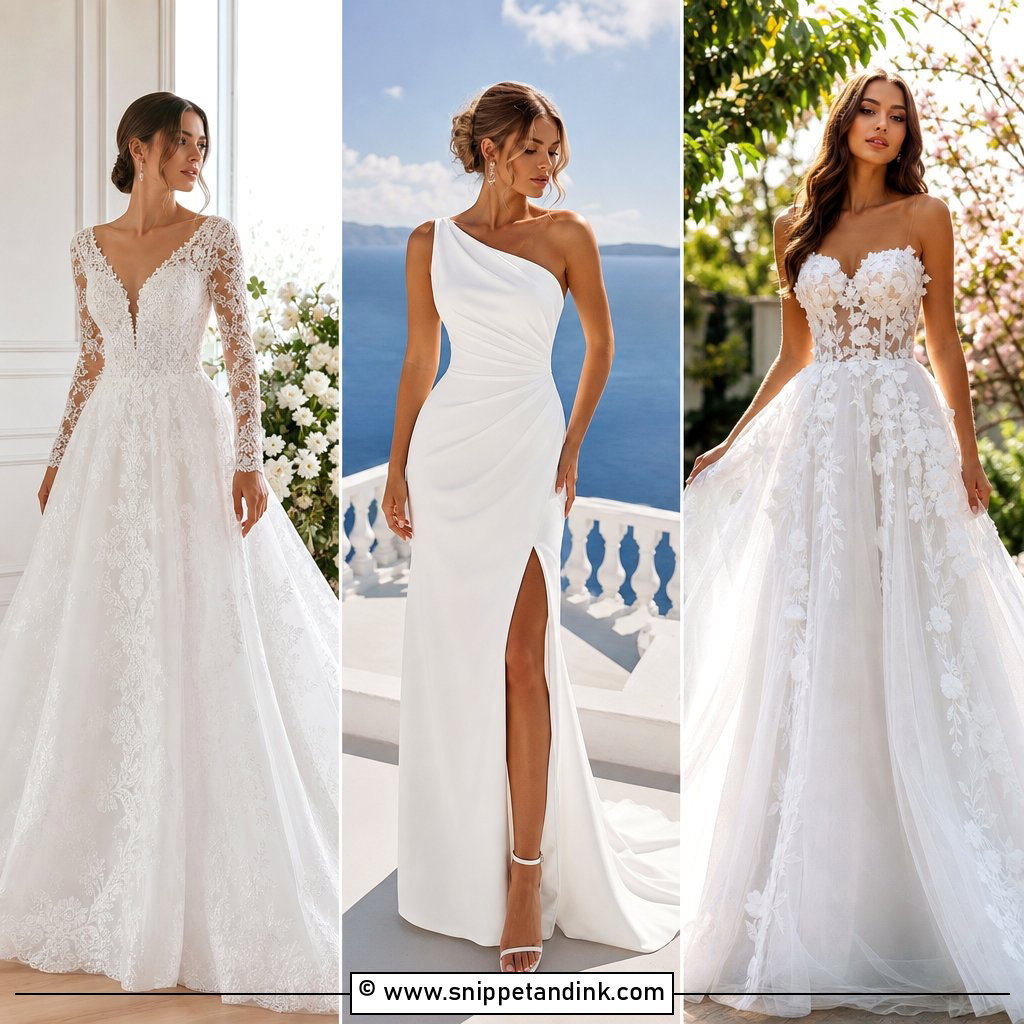
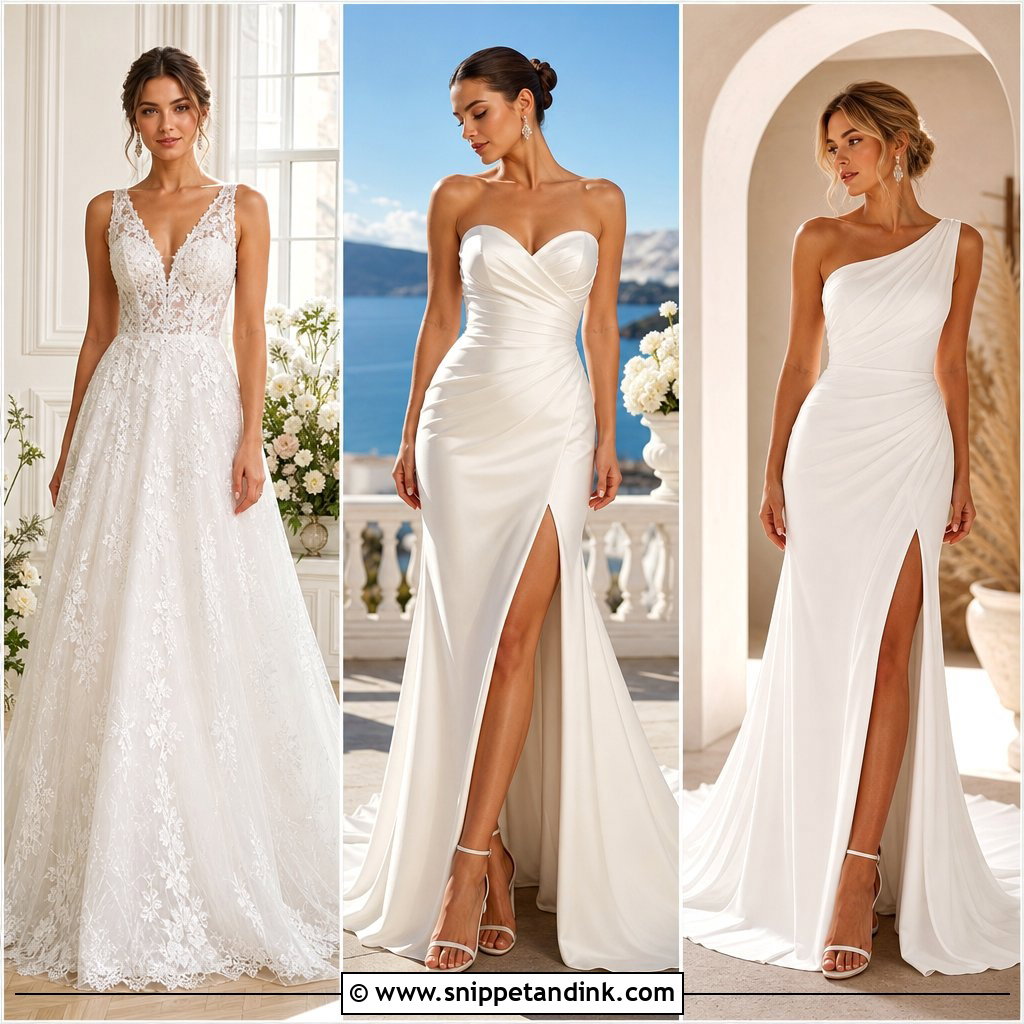
Lace changes character with its pattern: floral feels romantic, geometric feels sleek, and allover lace leans vintage or boho. A fitted lace bodice over a flowing skirt with nude or ivory lining looks soft; an allover lace sheath with long sleeves looks polished. Feel the inside before you fall for it. Some lace is backed with coarse netting that scratches at the underarm after a few hours. Keep accessories light so the lace isn’t competing, and carry a soft bouquet in blush, ivory and greenery.
7. Long Sleeve Wedding Dress
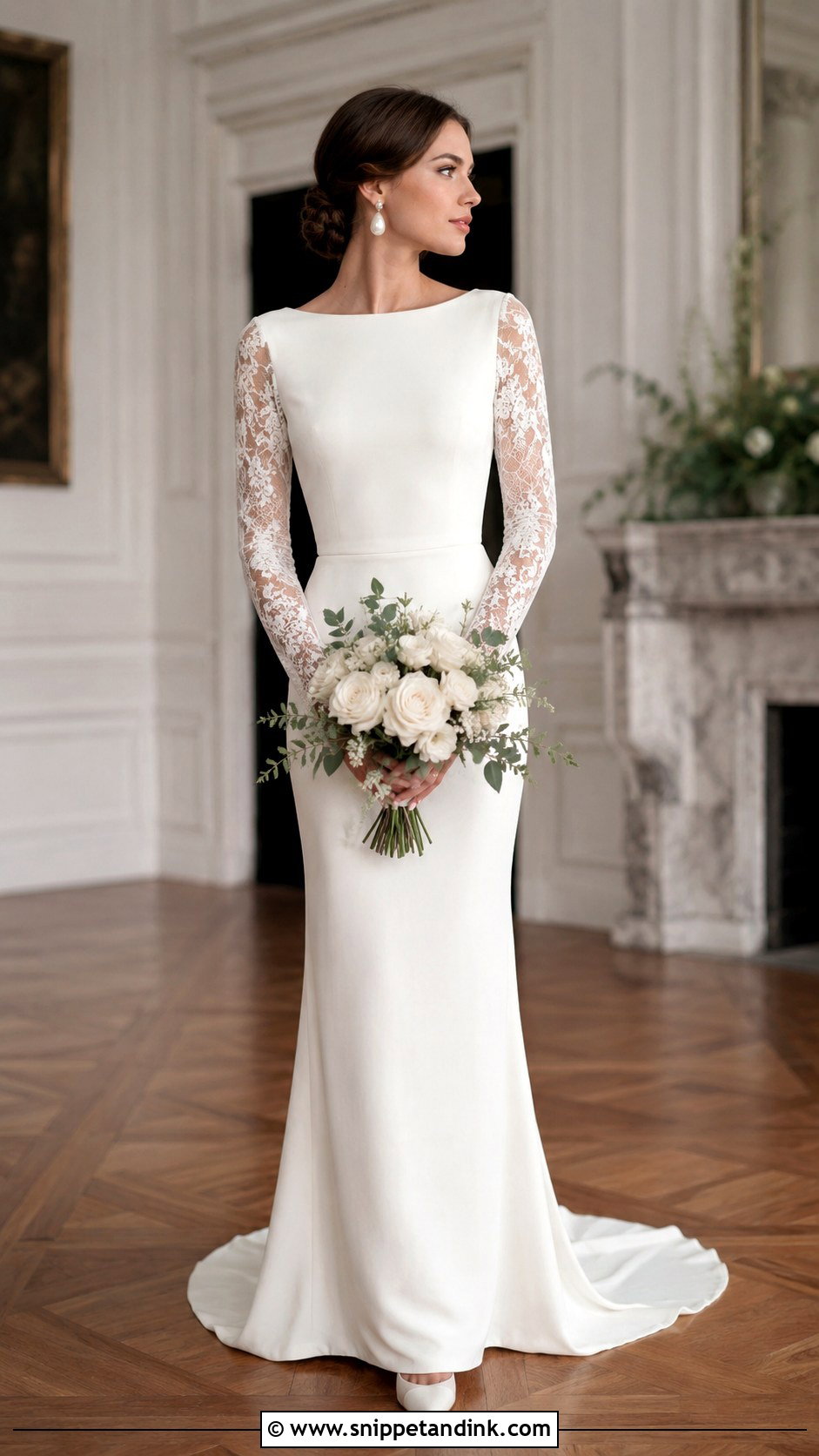
Sleeves add coverage and warmth, which matters for autumn and winter ceremonies. Lace, illusion tulle, crepe and satin all work; sheer lace feels delicate, structured satin sleeves look fashion-led. A bateau, V or square neckline balances them. Lift your arms above your head in the fitting. If the bodice rises or the sleeves pull, they need more ease at the underarm. An open back or illusion panels stop the dress feeling closed in. Pearl earrings, a low chignon and ivory pumps finish it.
8. Off Shoulder Wedding Dress
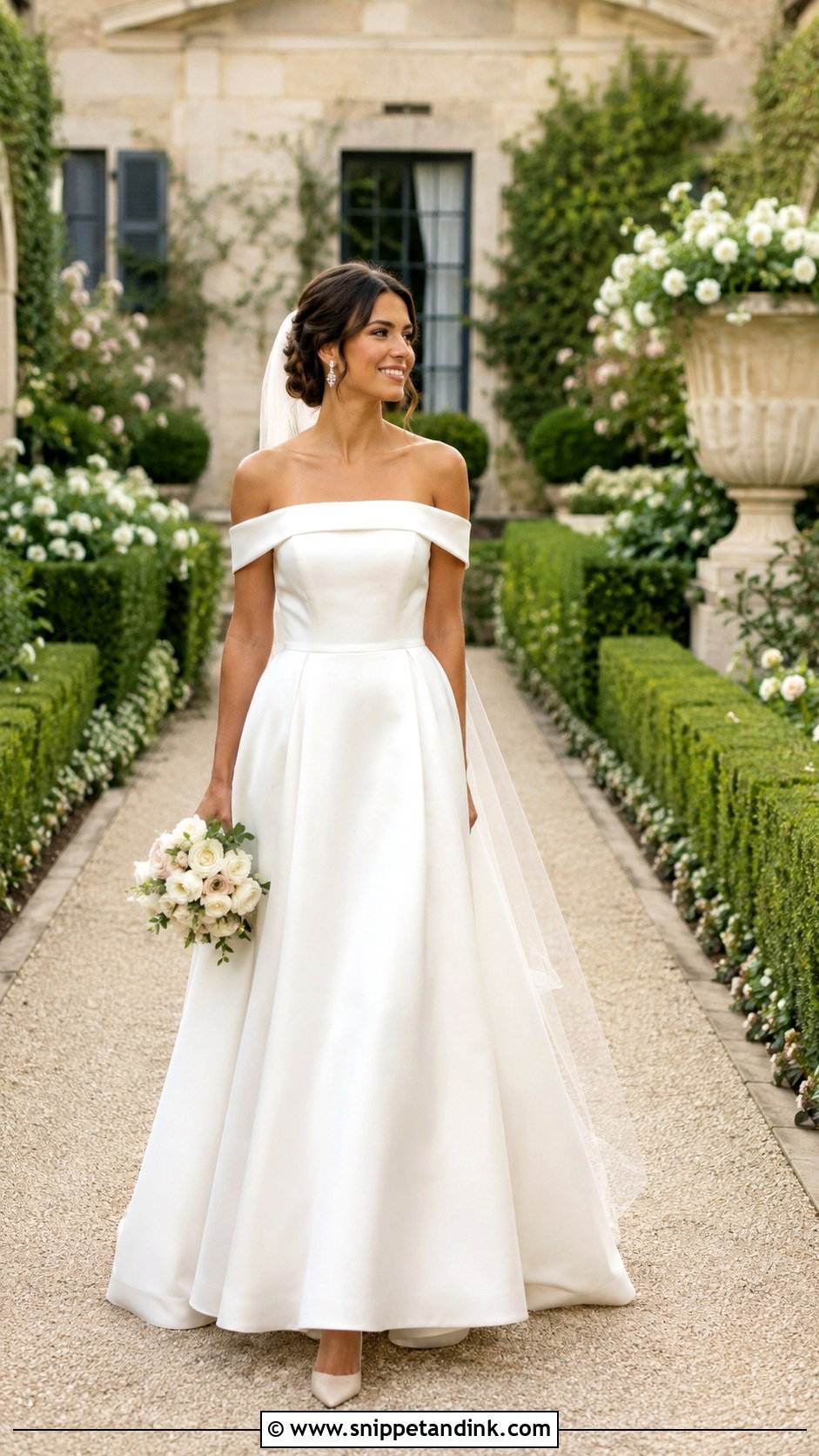
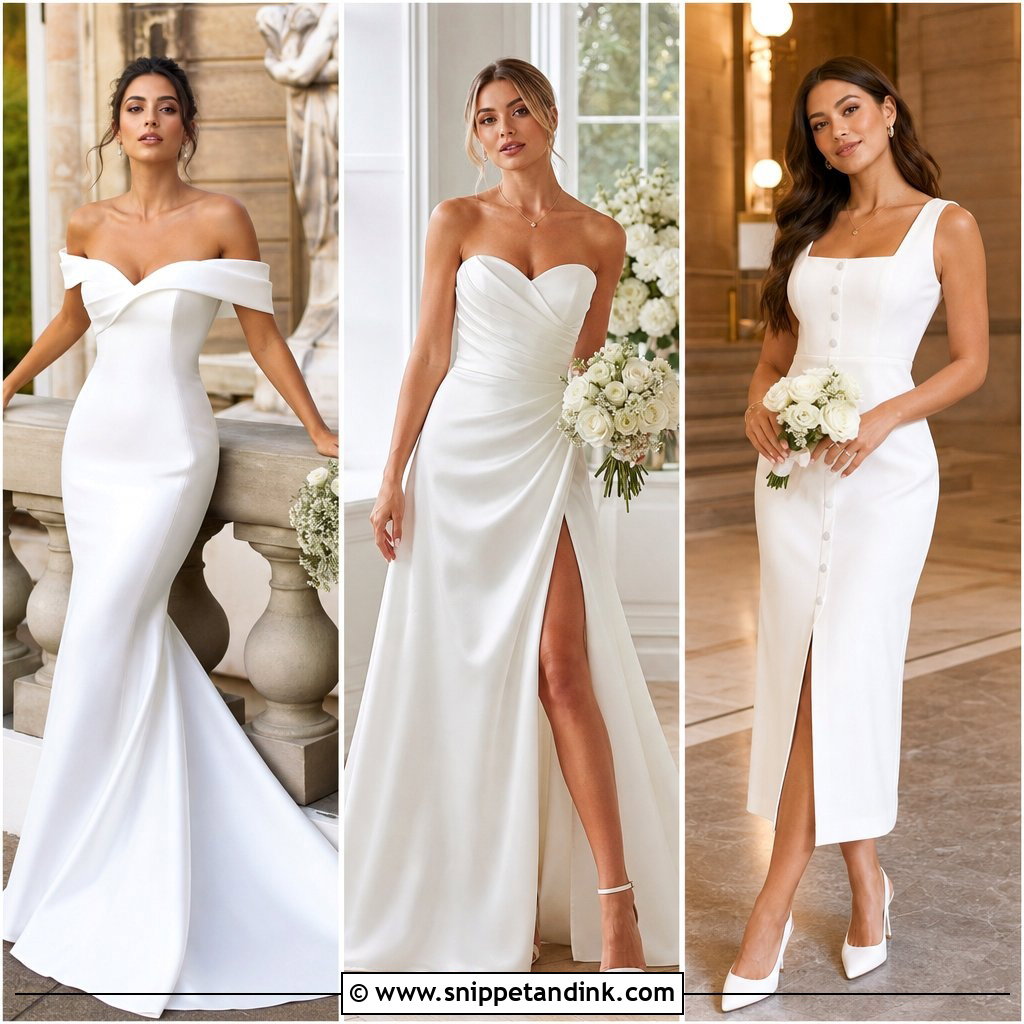
Off-shoulder necklines show the collarbone without revealing much, so they suit a wide range of brides. Satin looks clean; lace or tulle looks dreamier. The sleeves have to let you move. Ask the bride to hug someone at the fitting: if the bodice slips down or the sleeves pin your arms, it needs adjusting. It pairs with A-line, mermaid and ball gown skirts. Drop earrings, a loose updo and a veil set behind the shoulders keep the neckline visible for garden and estate weddings.
9. Strapless Wedding Dress
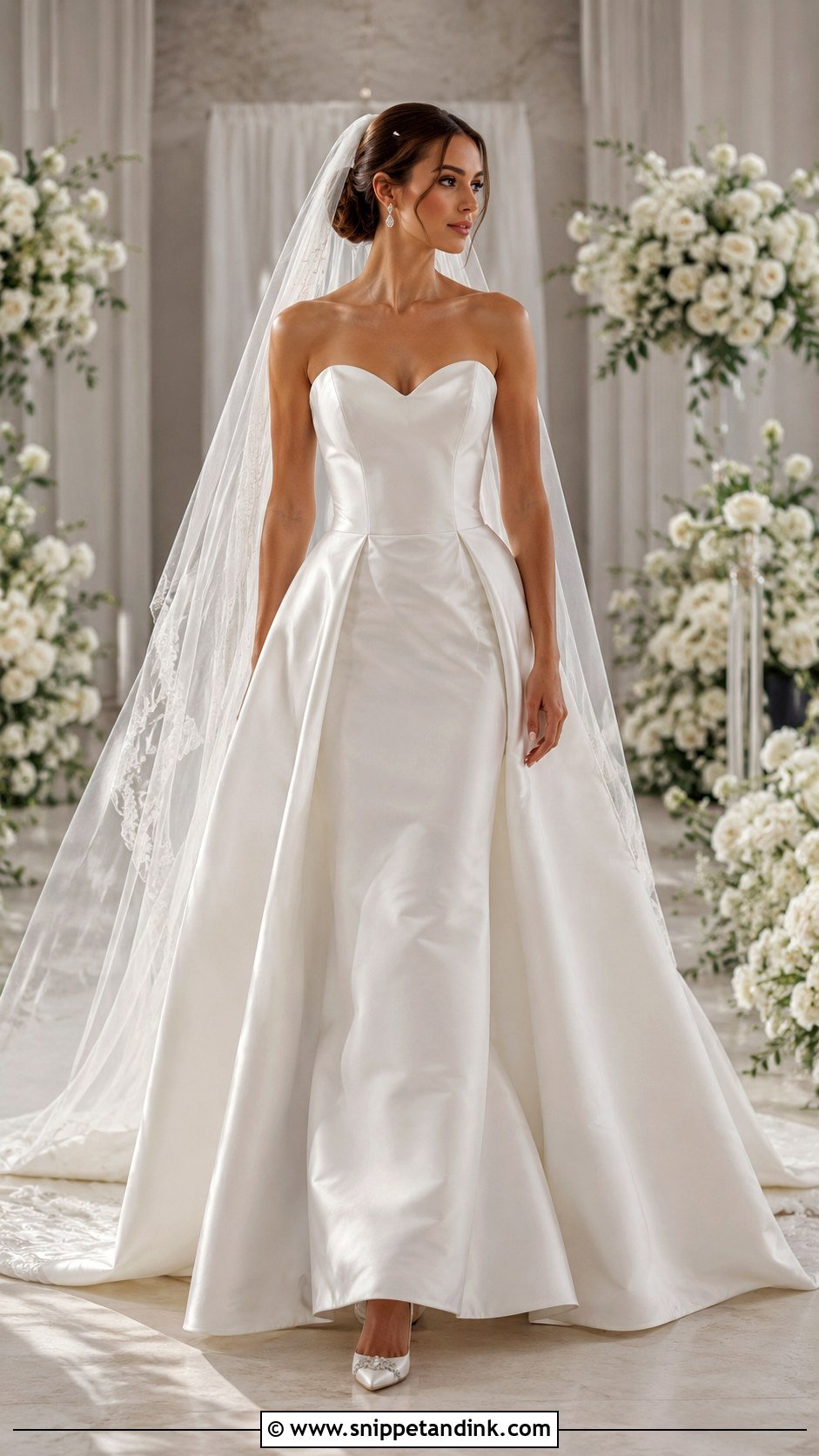
A strapless wedding dress puts the focus on your neckline, shoulders and face, so hair and earrings matter more than with any other shape. A strapless satin or crepe gown with a structured bodice, pointed heels and a cathedral veil is the classic version. Support comes from internal corsetry and a firm waist seam; if the bodice relies on squeezing the bust, you’ll be hitching it up all night. Sweetheart necklines feel softer, straight ones more modern. A detachable wrap or bridal jacket covers you for a cool or formal ceremony.
10. Square Neck Wedding Dress
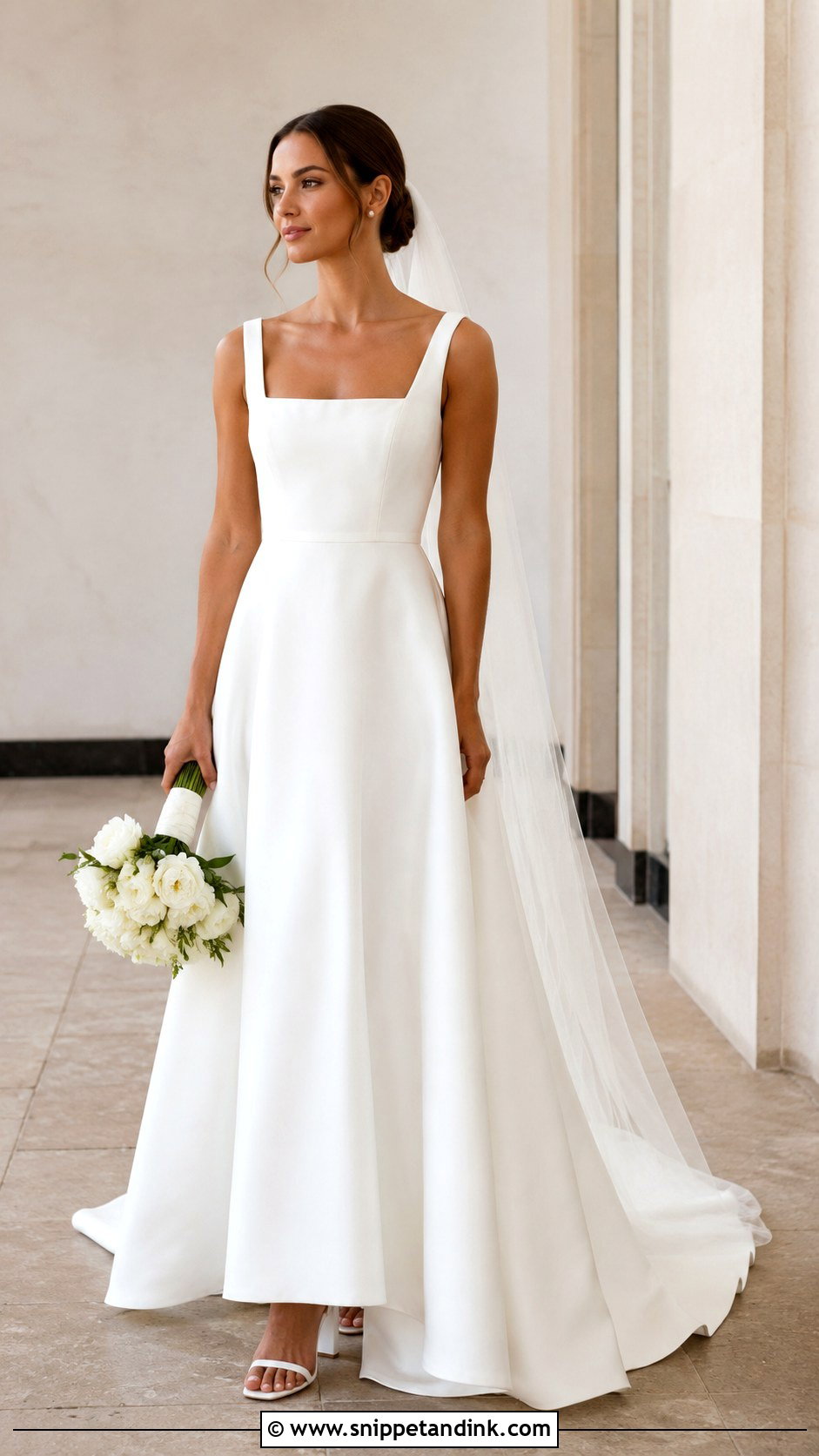
Square necklines frame the face and give the bodice a clean, architectural shape. Crepe, satin or mikado with a fitted bodice and soft A-line skirt keeps it minimal. Thicker straps, small cap sleeves or long sleeves all suit it. The corners should lie flat; on a fuller bust they can lift away from the body, which a good seamstress can fix with a little boning. Pearl studs, a smooth bun, a narrow veil and block heels finish it, with white tulips or calla lilies to match the clean lines.
11. V Neck Wedding Dress
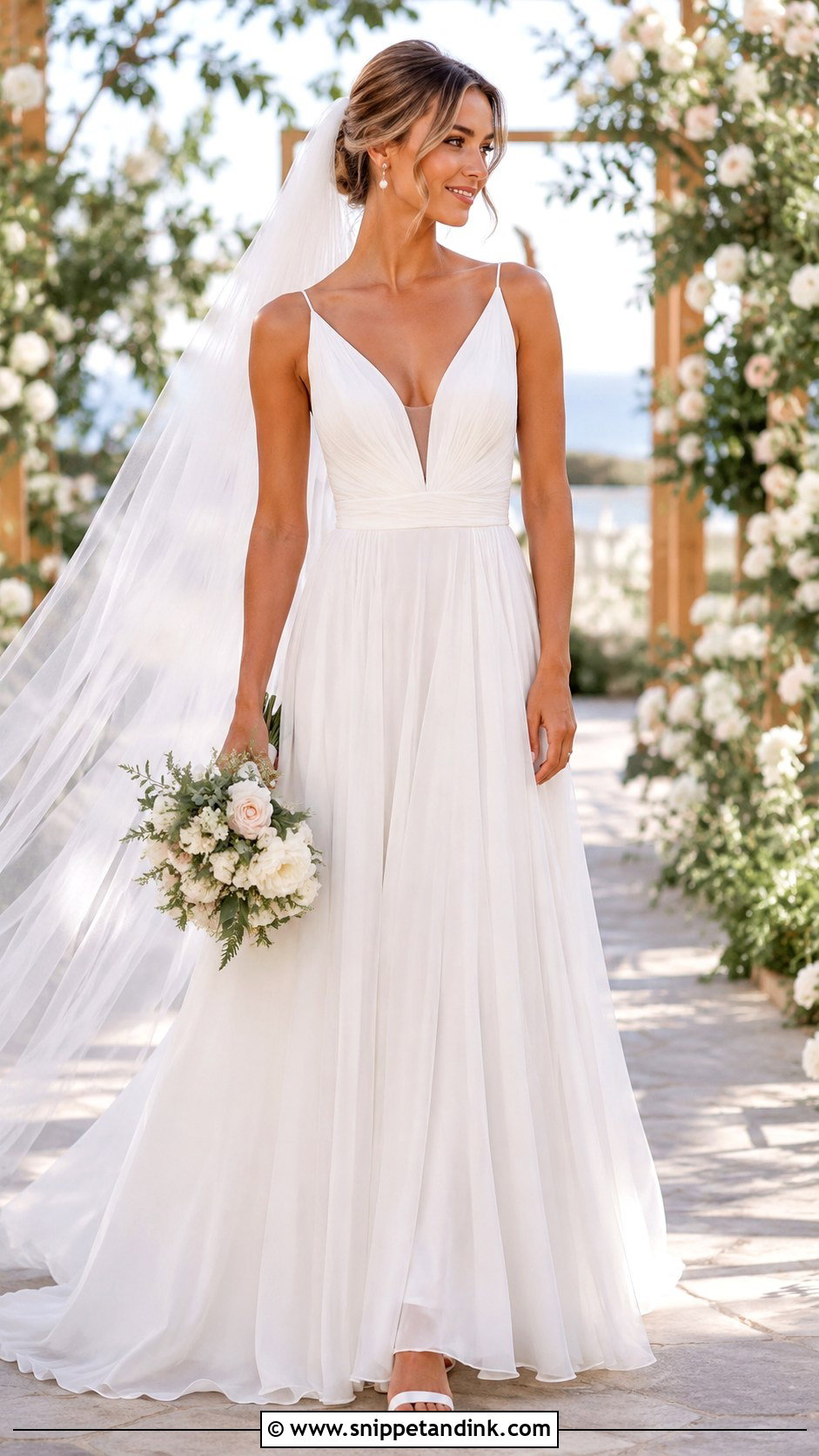
A V-neck draws a vertical line that lengthens the neck, and it works in flowing chiffon, fitted lace and sleek satin. Choose the depth for your support needs, not a photo. A deep V needs a built-in bra, fashion tape or an illusion insert, and the fitting is the time to test it by leaning forward. A soft V on an A-line with fine straps suits a garden or beach wedding; a deeper V with illusion mesh suits a formal venue. Skip the necklace. Loose waves and a natural bouquet complete it.
12. Halter Wedding Dress
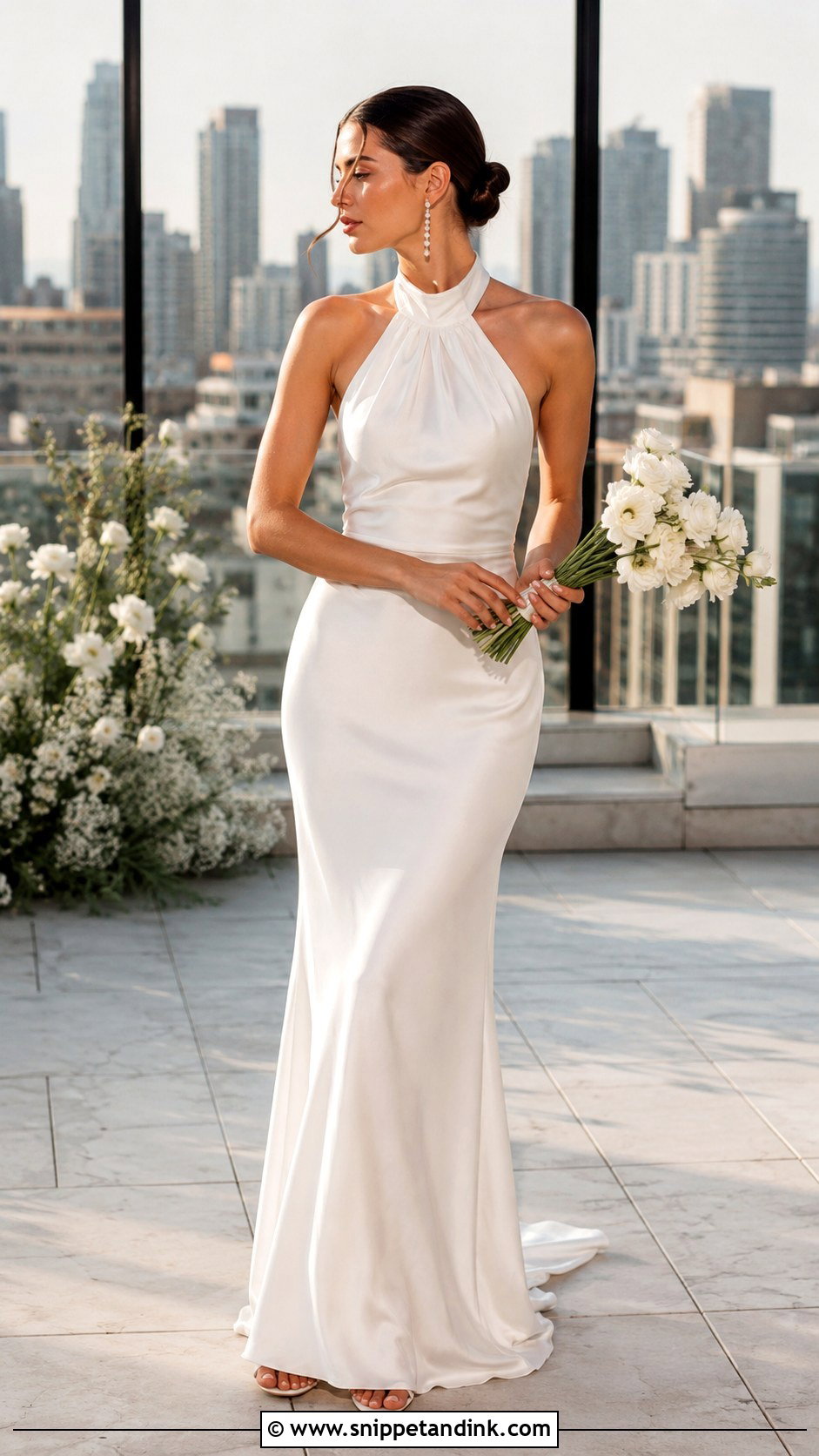
Halters show the shoulders and arms cleanly while giving support from the neck. Satin looks sleek; lace looks soft and boho. Halters hang weight from the back of the neck, so after a long day a heavy beaded halter can give you a headache. I’d steer heavy-busted brides toward wide halter straps or a different neckline. A low or open back balances a high halter. Statement earrings, a low bun and simple heels keep the neckline visible. Skip necklaces; a slim bracelet is enough.
13. Corset Wedding Dress
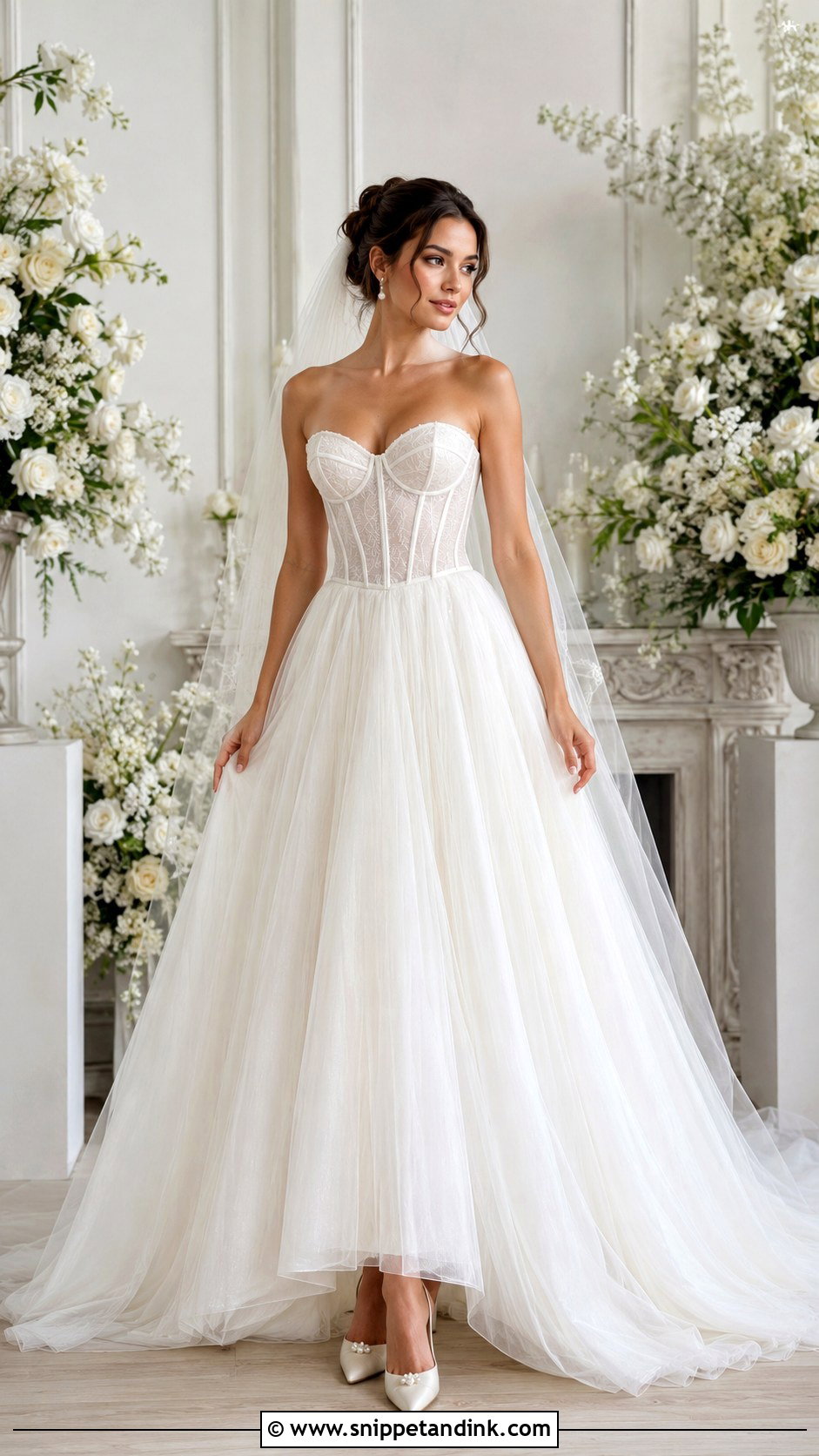
Corsets range from hidden internal support to visible boning seams, so you choose how much structure shows. A corset bodice over a soft tulle A-line looks romantic; a crepe or satin corset gown looks sleek. The bodice should feel secure but let you breathe deeply and eat dinner. Lace-up backs are easier to adjust on the day than zips if your body changes slightly before the wedding. A delicate veil, pearl earrings and ivory heels finish it.
14. Slip Wedding Dress
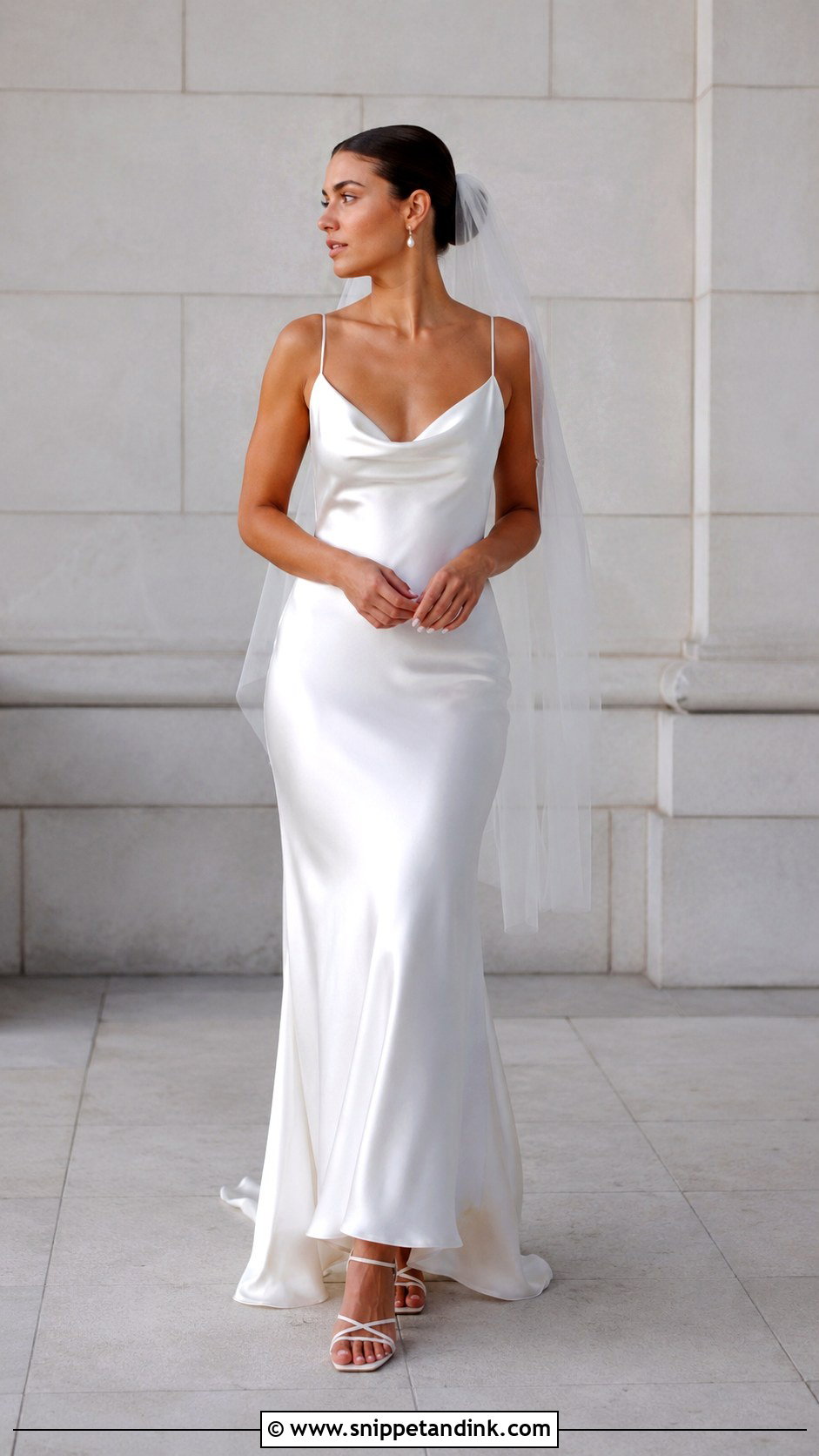
Silk, satin and charmeuse slips skim the body and move with every step. They suit brides who’d rather not wear structure. Bias-cut slips hang from the shoulders, so the strap length controls how the whole dress falls; that’s the first alteration to make. Pair a cowl or straight neck with strappy heels, pearl earrings, a sleek bun and a light veil. A sheer cape, lace bolero or tailored blazer adds coverage. Fabric quality shows instantly on a slip, so feel the weight before buying.

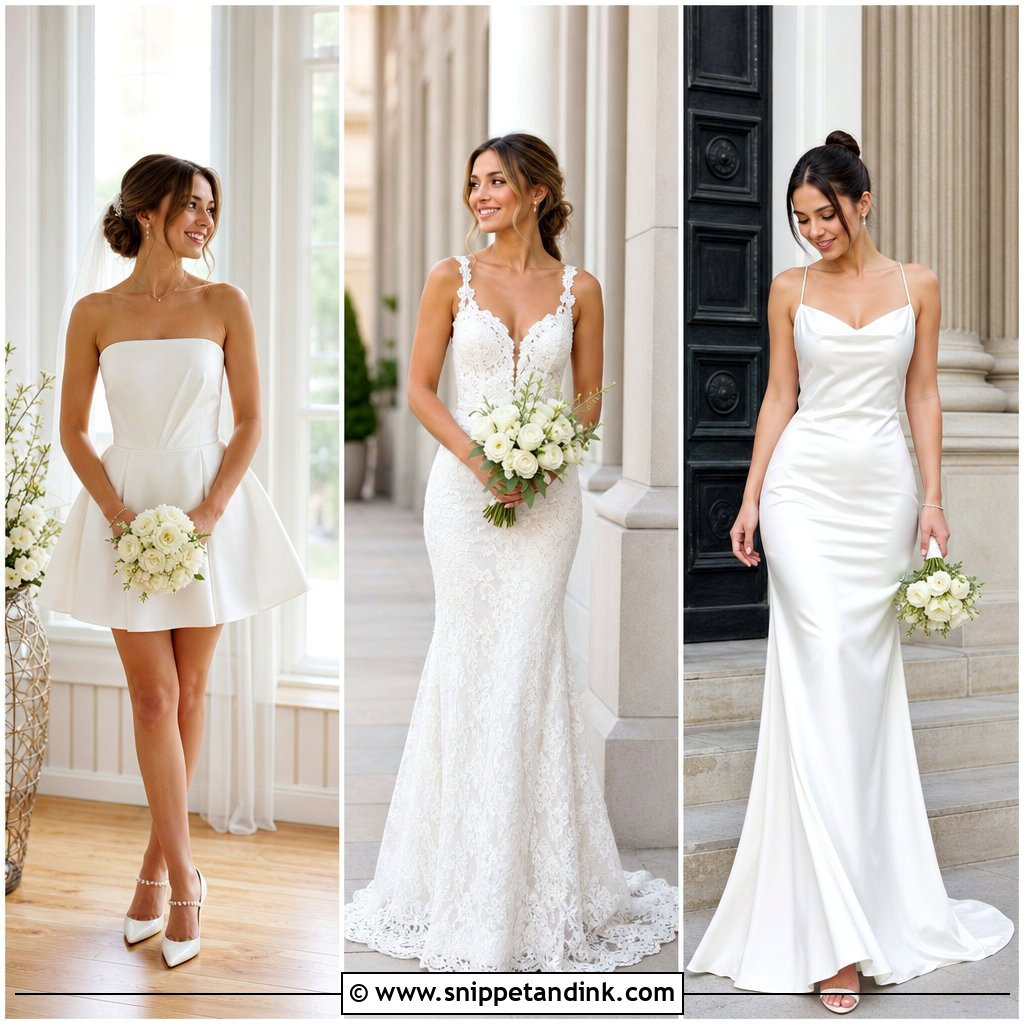
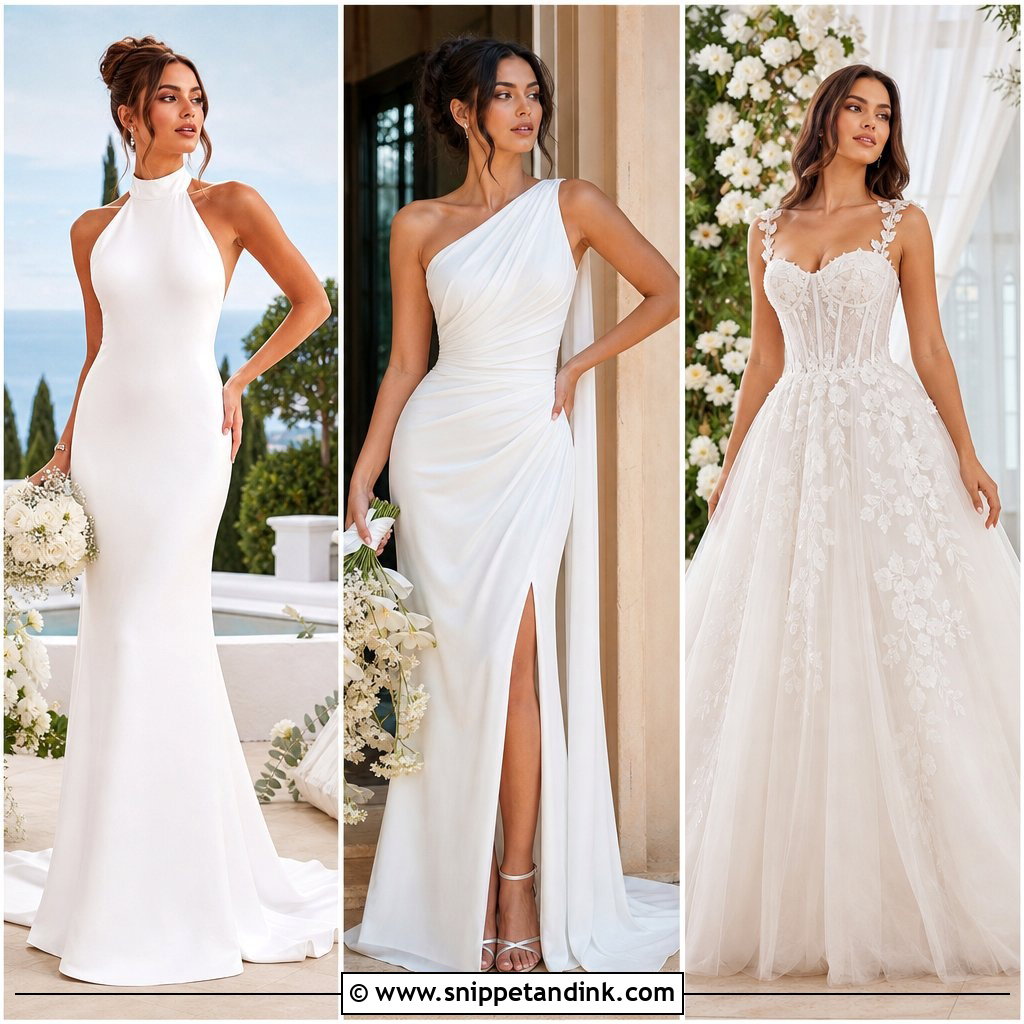
15. Short Wedding Dress
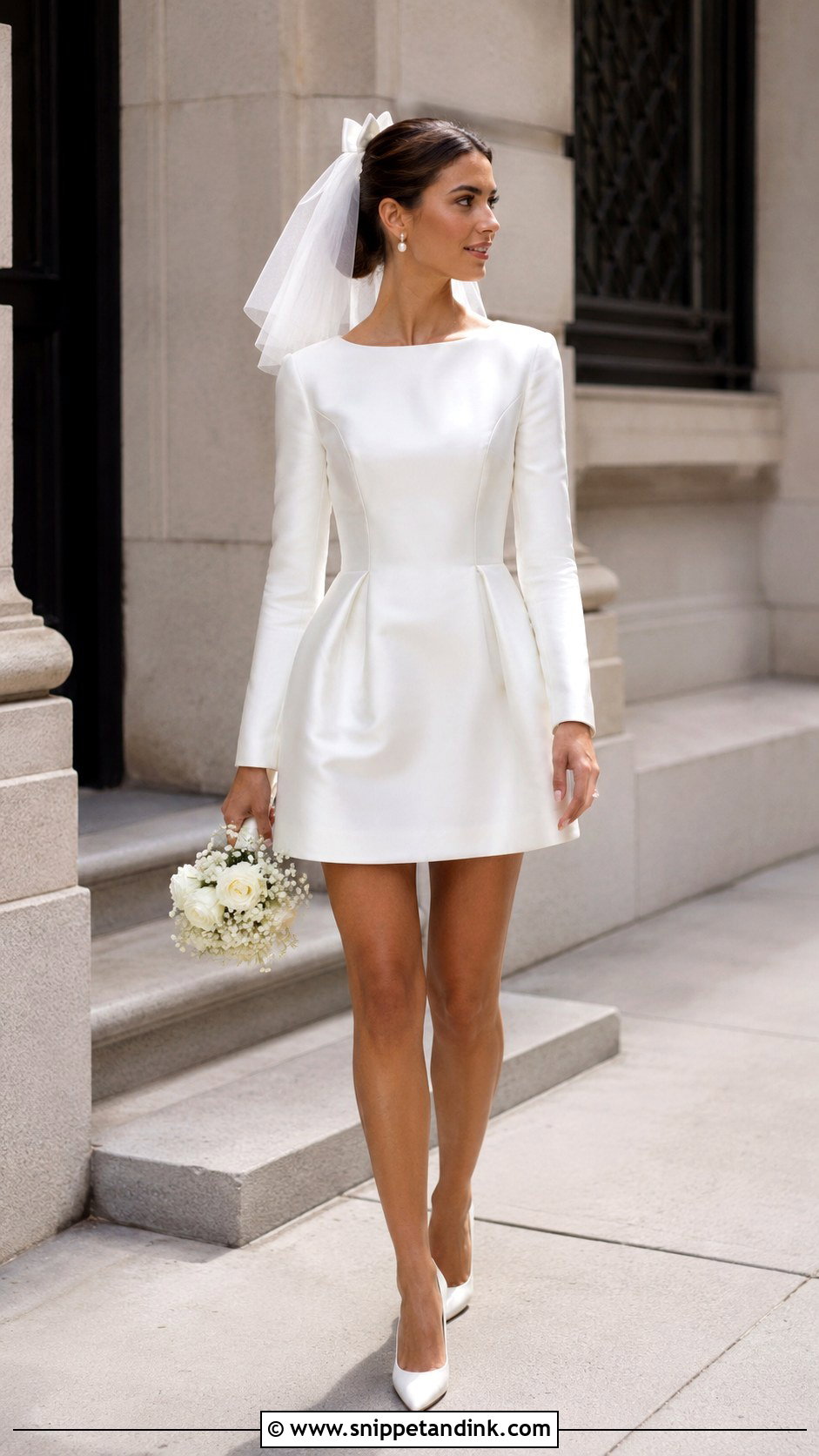
A short wedding dress lets you move freely, which suits civil ceremonies, second looks, receptions and hot days. A mini or knee-length dress with a structured bodice, pointed pumps, pearl earrings and a small veil or bow looks polished. Lace feels sweet and vintage; satin feels sharp. Long sleeves, a high neck or a detachable overskirt add drama. Short hems show your shoes and your legs, so plan the shoes first and hem the dress to them. Embellished heels or bridal flats both work.
16. Tea Length Wedding Dress
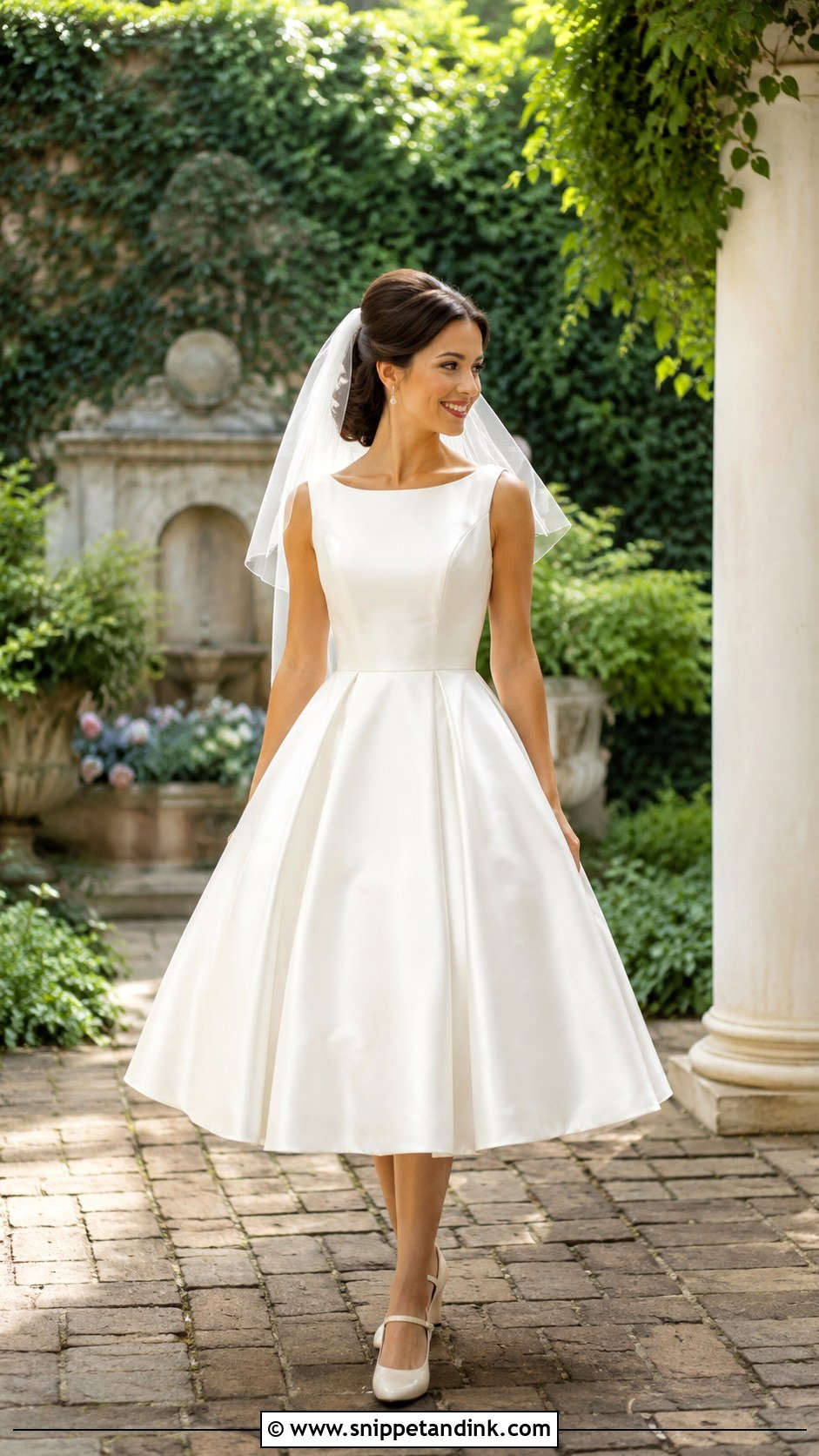
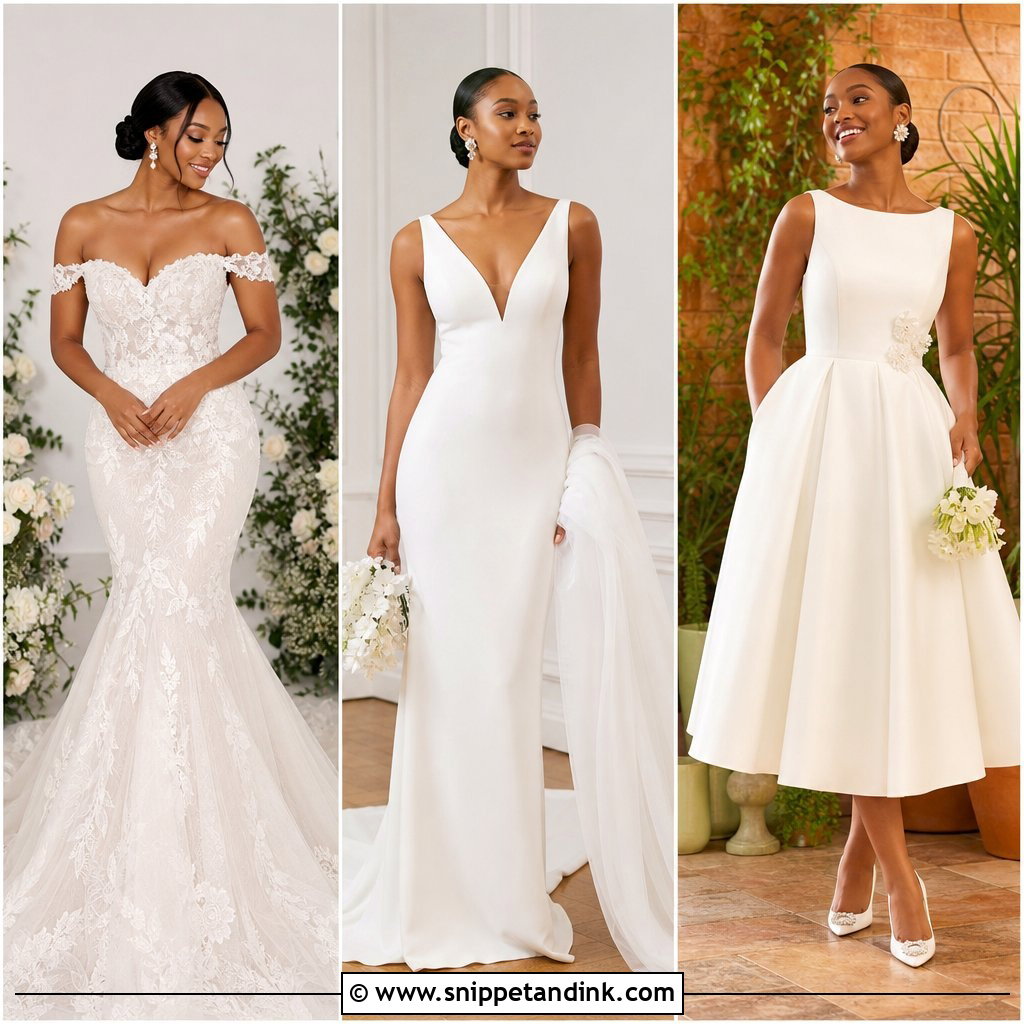
Tea length falls between knee and ankle, which gives a vintage shape with easy movement. A full skirt and fitted bodice, kitten heels, pearl earrings and a short veil are the classic outfit. Lace, satin, organza and tulle all hold the shape. Because the shoes are visible all day, they’re half the look: satin pumps, Mary Janes or pointed flats. I’d set the hem at the narrowest point of your calf, never across the widest part, which cuts the leg. Courthouses, gardens and brunch weddings suit it.
17. Courthouse Wedding Dress
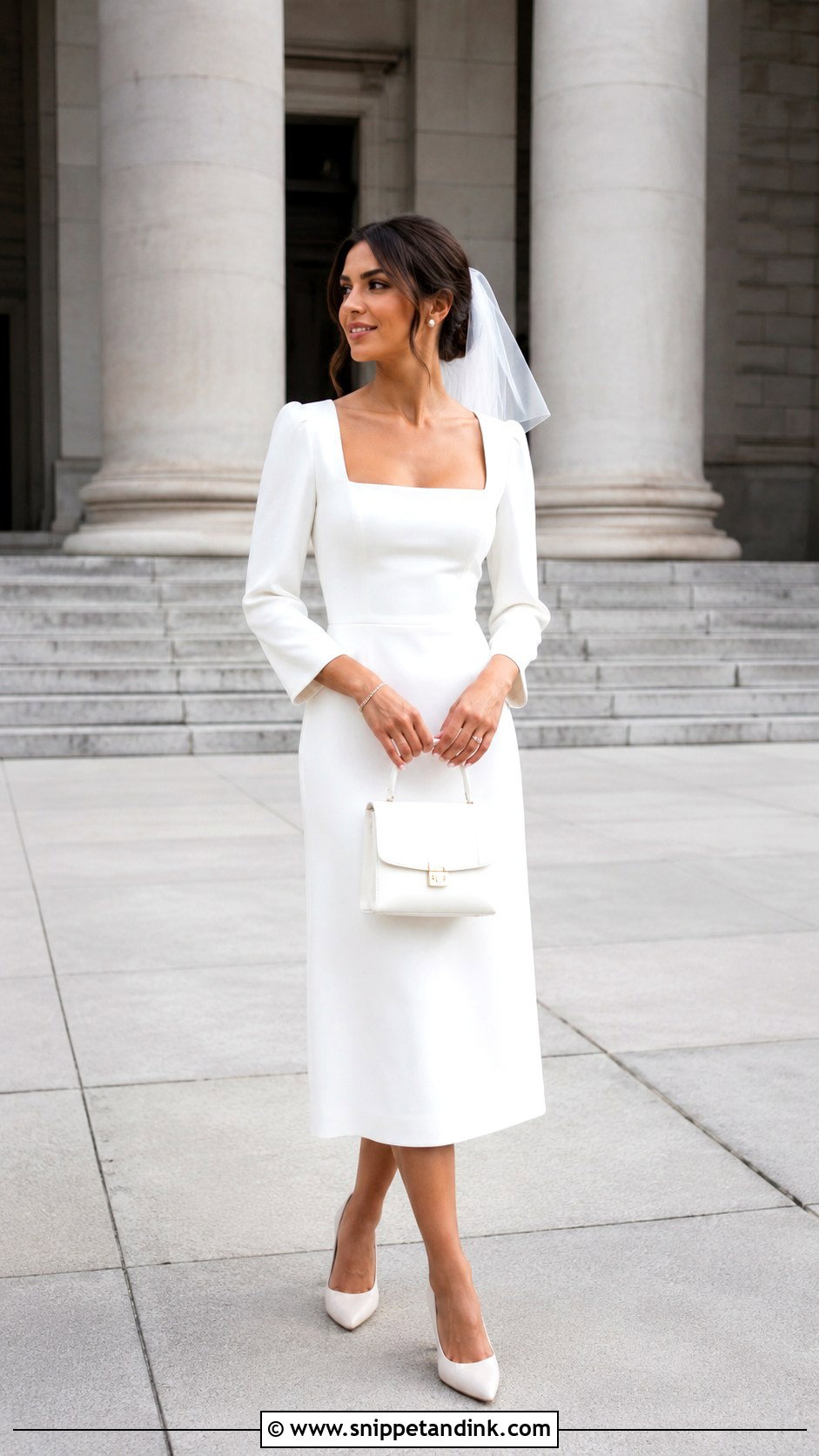
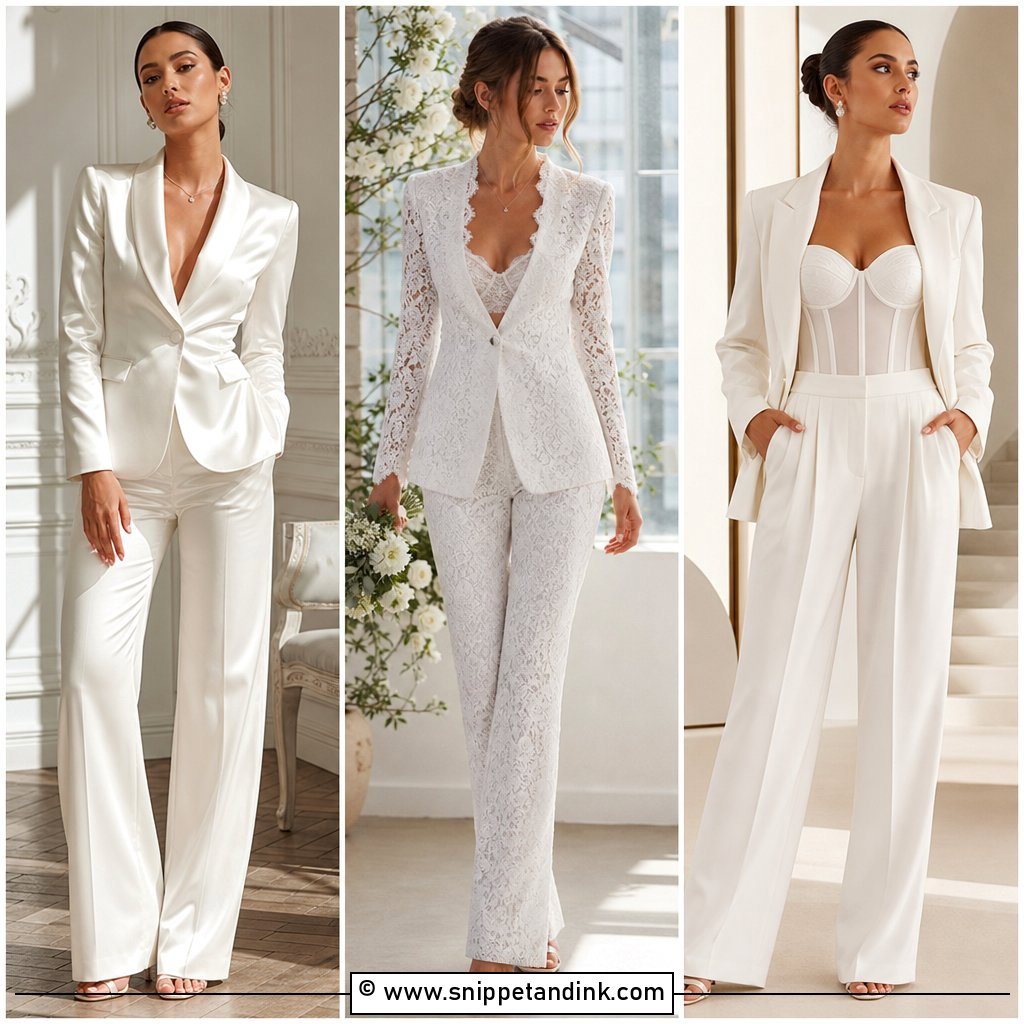
City ceremonies call for something polished and easy to wear on pavements and marble steps. A white midi, tailored mini, slip or blazer dress all work. A clean midi with low heels, a structured bag, pearl studs and a short veil or bow is a complete outfit. A bridal suit or sharply tailored dress looks modern. Choose a quality fabric, crepe, satin, jacquard or textured cotton, because at a small ceremony people stand close and see it. Accessories carry the personality when the setting is plain.
18. Beach Wedding Dress
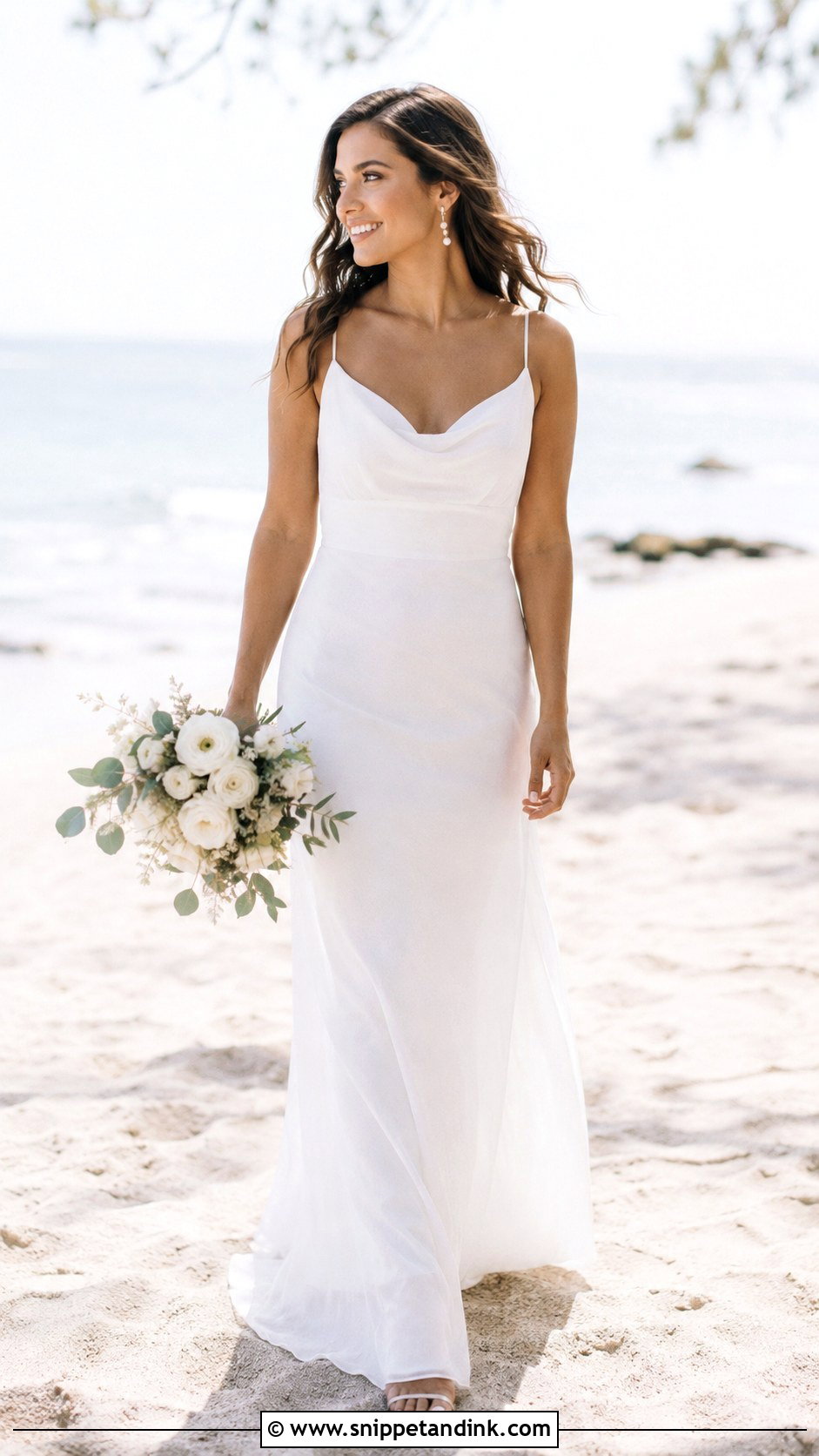
Heavy satin and stiff ball gown fabric are miserable on sand and in heat, so a beach dress should be light: chiffon, tulle, crepe or thin lace. A flowing sheath or A-line with fine straps, flat sandals, pearl earrings and loose waves suits the setting. Skip the train or keep it short, because sand clings to the underside. Wind turns a long veil into a sail, so floral pins or a short veil work better. Natural makeup, a relaxed bouquet and comfortable footwear finish it.
19. Garden Wedding Dress
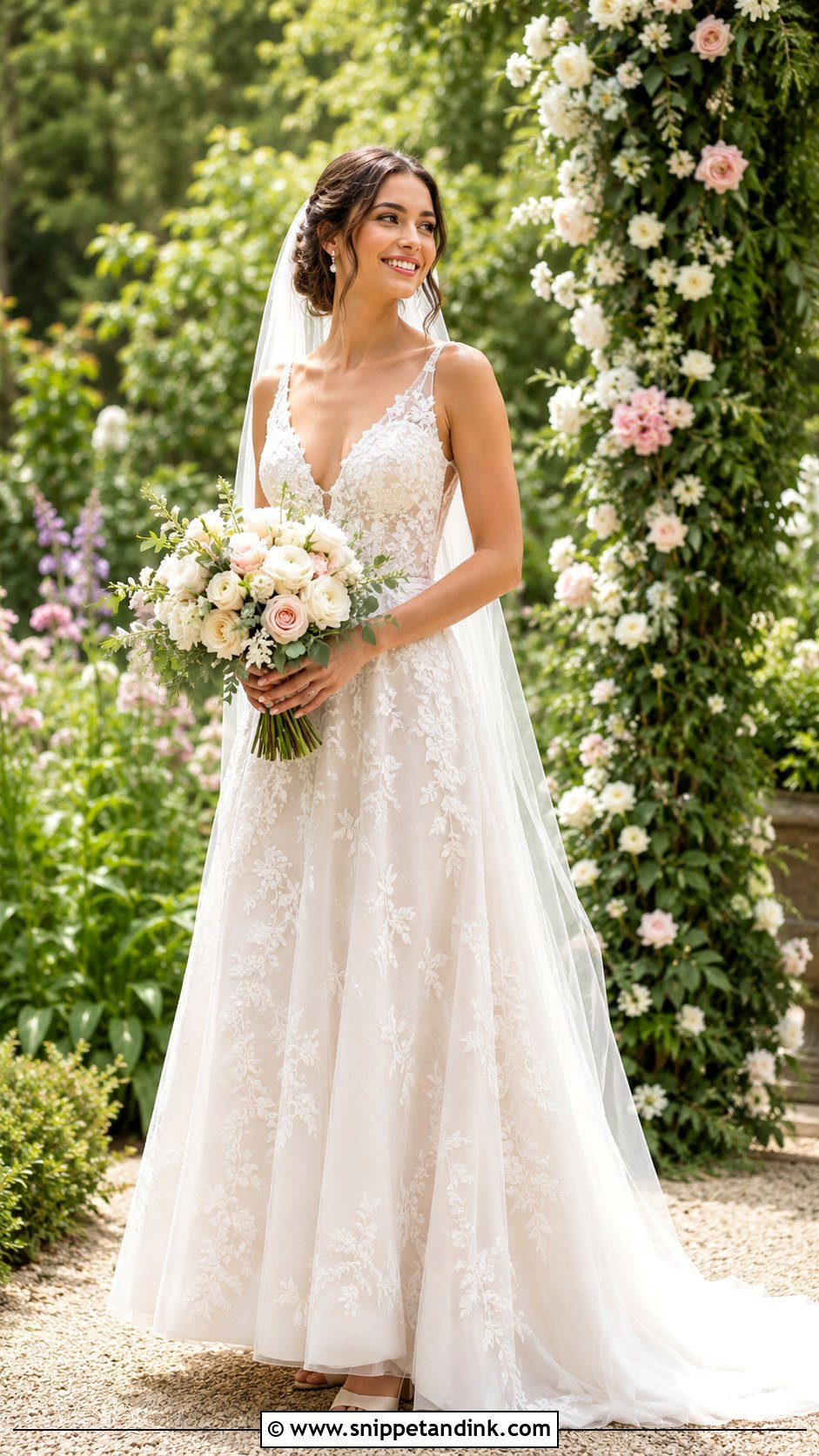
Floral lace, embroidered tulle, soft chiffon and appliqué connect a dress to a garden. An A-line with floral details, block heels or wedges, pearl earrings and a soft veil is the outfit I’d build. Block heels matter on lawns because stilettos sink into the grass with every step. Dew and damp ground stain hems, so a bustle helps for the walk to photos. White, blush and greenery in the bouquet suit the backdrop. Add a lace topper or sheer sleeve if the season is cool.


20. Winter Wedding Dress
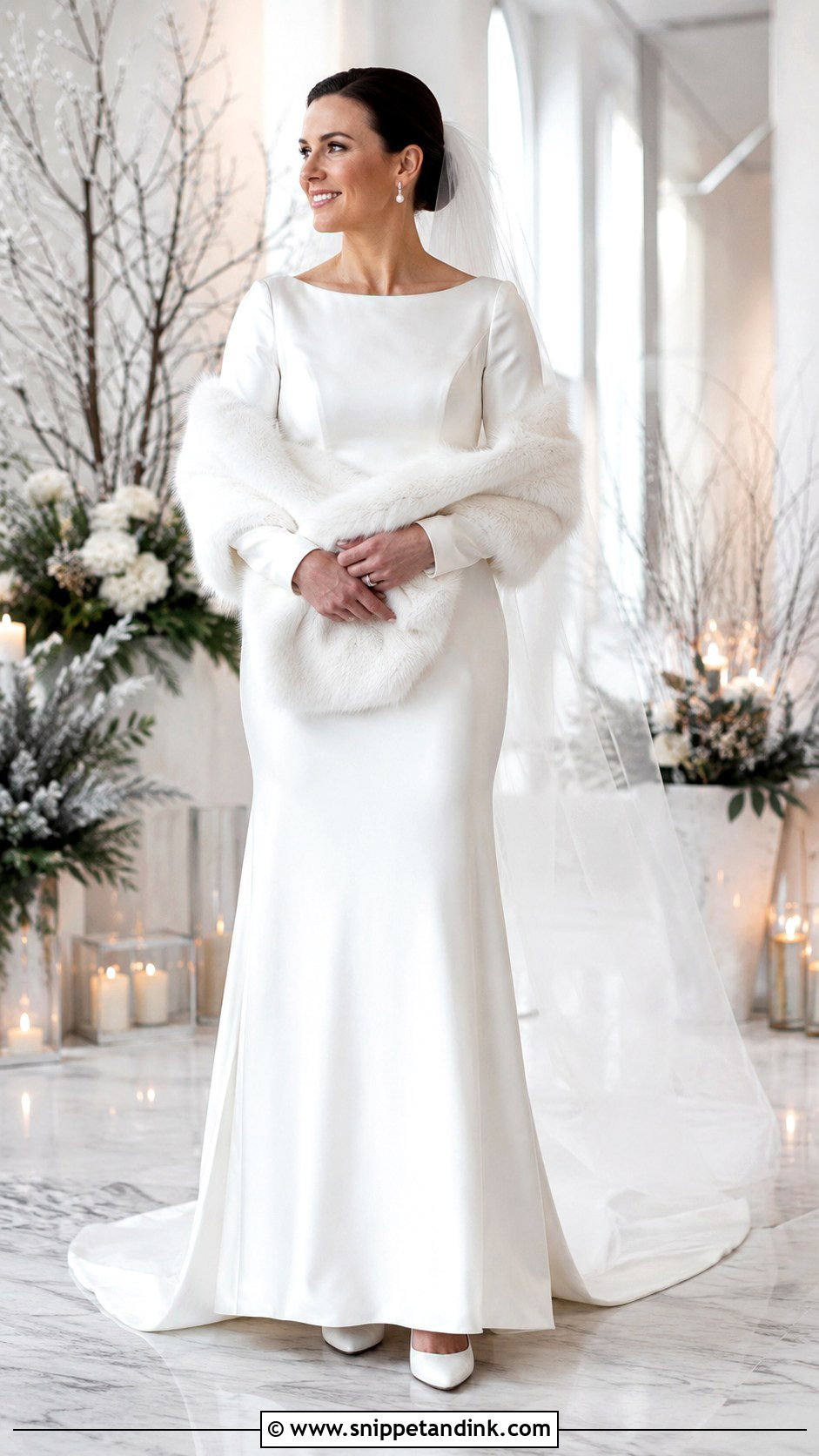
Winter gowns can feel rich without being heavy. Long sleeves, satin, mikado, crepe, velvet accents and structured shapes all suit the season. A long-sleeve satin or crepe gown with closed-toe heels, pearl earrings, a sleek veil and a faux fur wrap or cape is the full outfit. High and bateau necklines feel right in cold weather. The real issue is the transition: moving outside for photos chills you quickly, so plan short outdoor slots and keep a warm layer with a bridesmaid. Beading and satin look good under dramatic indoor lighting.
21. Summer Wedding Dress
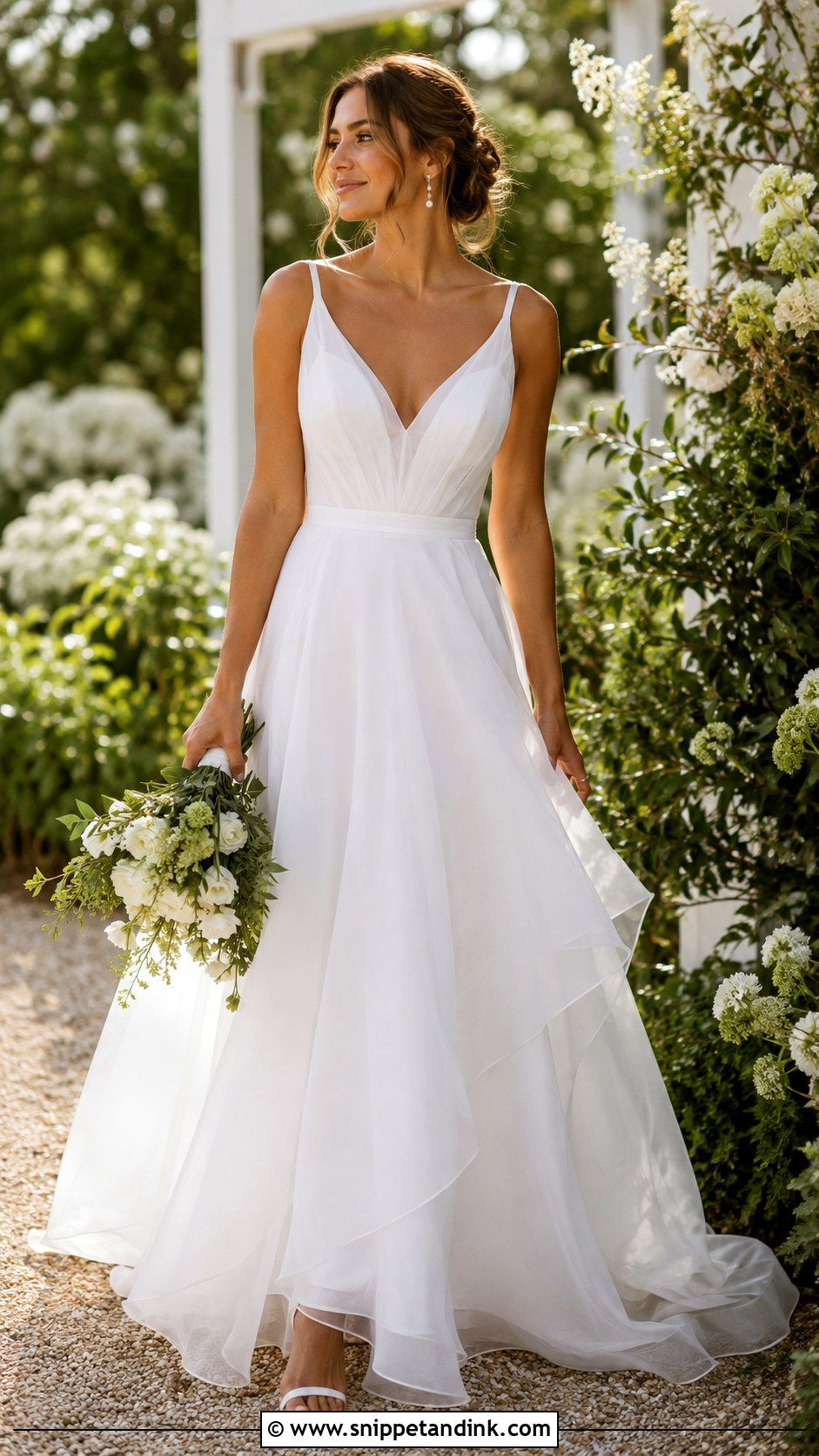
Heat changes everything about how a dress feels. Chiffon, organza, soft tulle, lightweight crepe and lace over an airy lining breathe best. A sleeveless A-line with strappy sandals, delicate earrings and a soft updo keeps you cool. Polyester linings trap heat; ask whether the lining is cotton or a breathable blend. A shorter train makes outdoor photos easier, and a lighter veil won’t weigh on your head in the sun. Keep accessories few so nothing sits hot against your skin.
22. Plus Size Wedding Dress
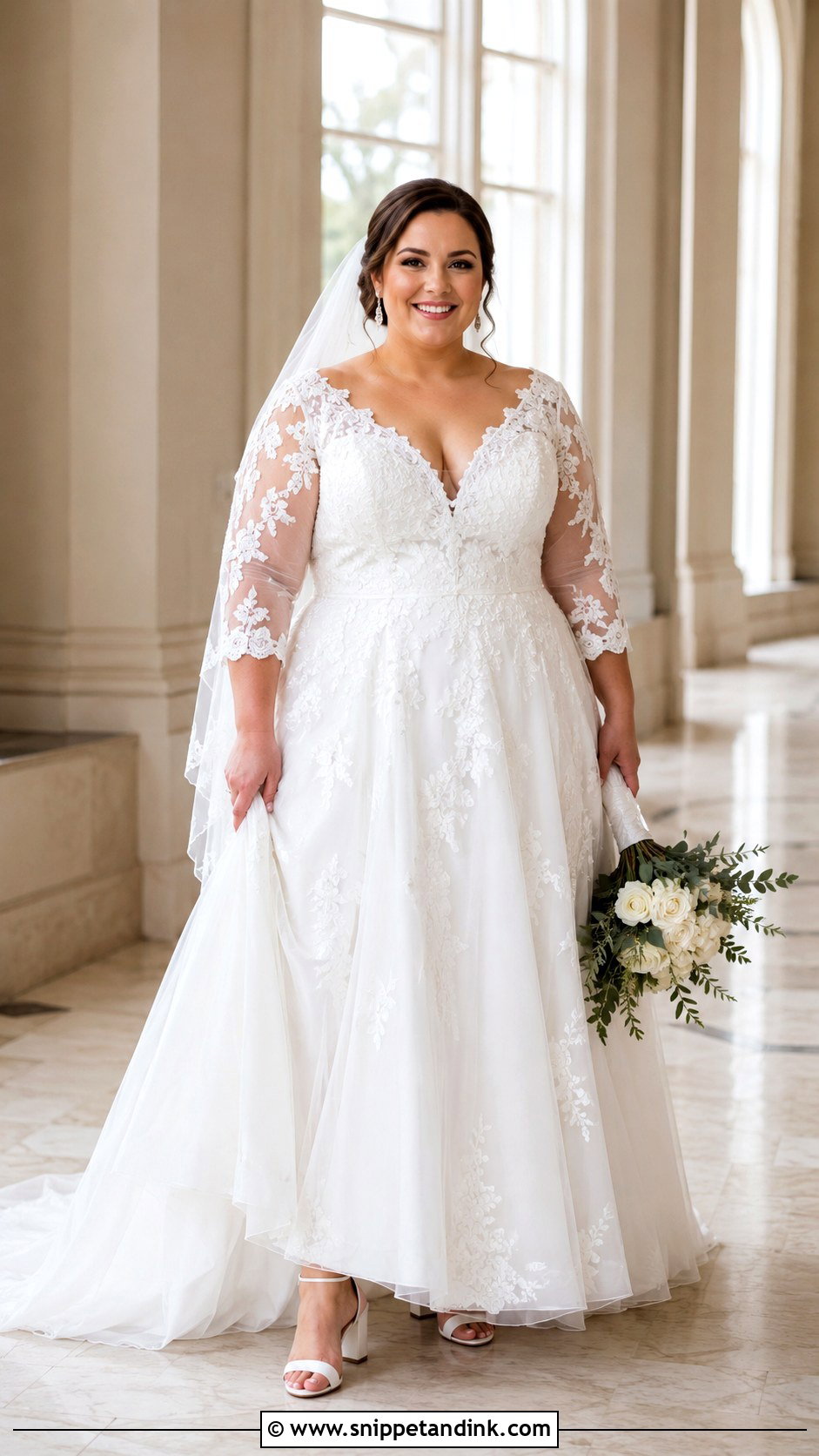
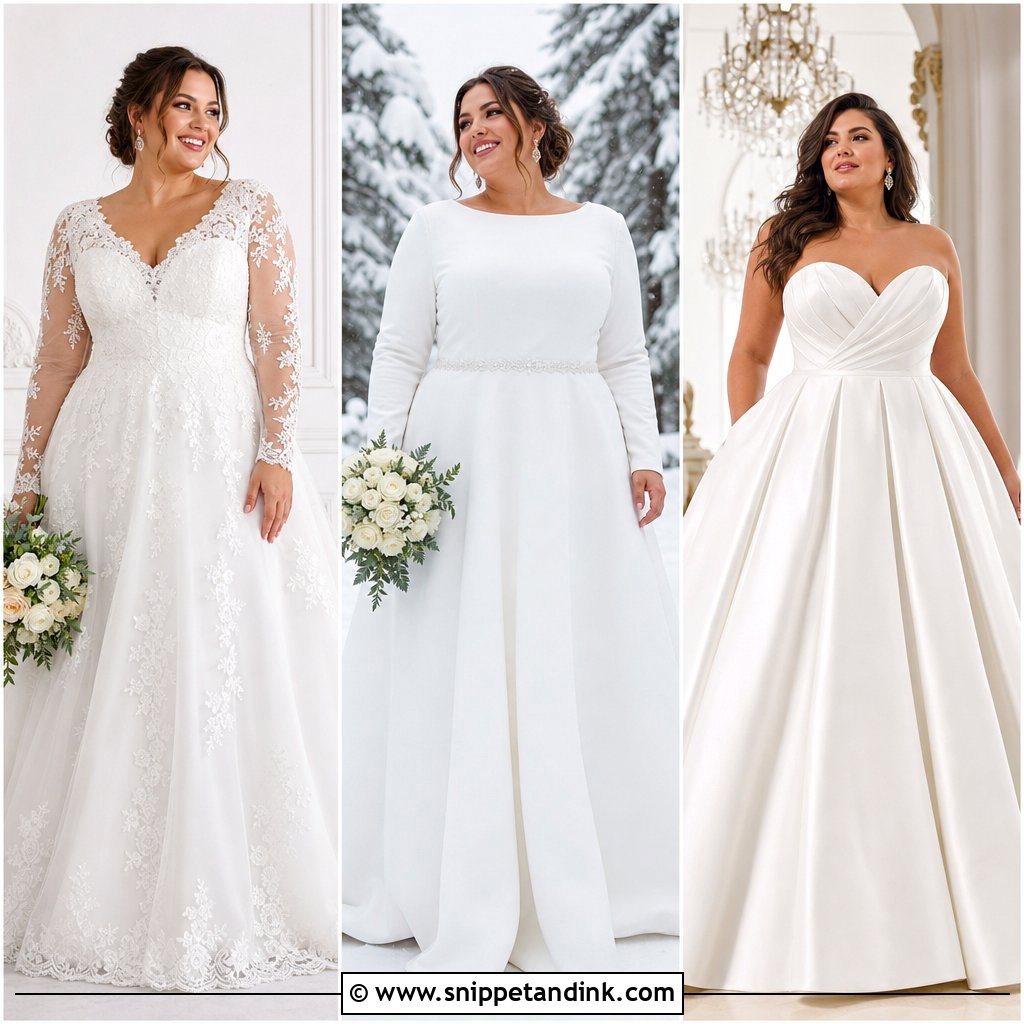
A plus size wedding dress should be chosen for fit, support and the shape you love, not old rules. A-lines, ball gowns, sheaths, fit-and-flare and empire waists all suit plus size brides when well tailored. Look for structure built into the bodice and fabric that feels good sitting and walking. A V-neck A-line with lace sleeves, pearl earrings, a soft veil and block heels is classic. If you love fitted shapes, a crepe mermaid or trumpet gown is worth trying. Order to your largest measurement; taking in is always easier than letting out.
23. Maternity Wedding Dress
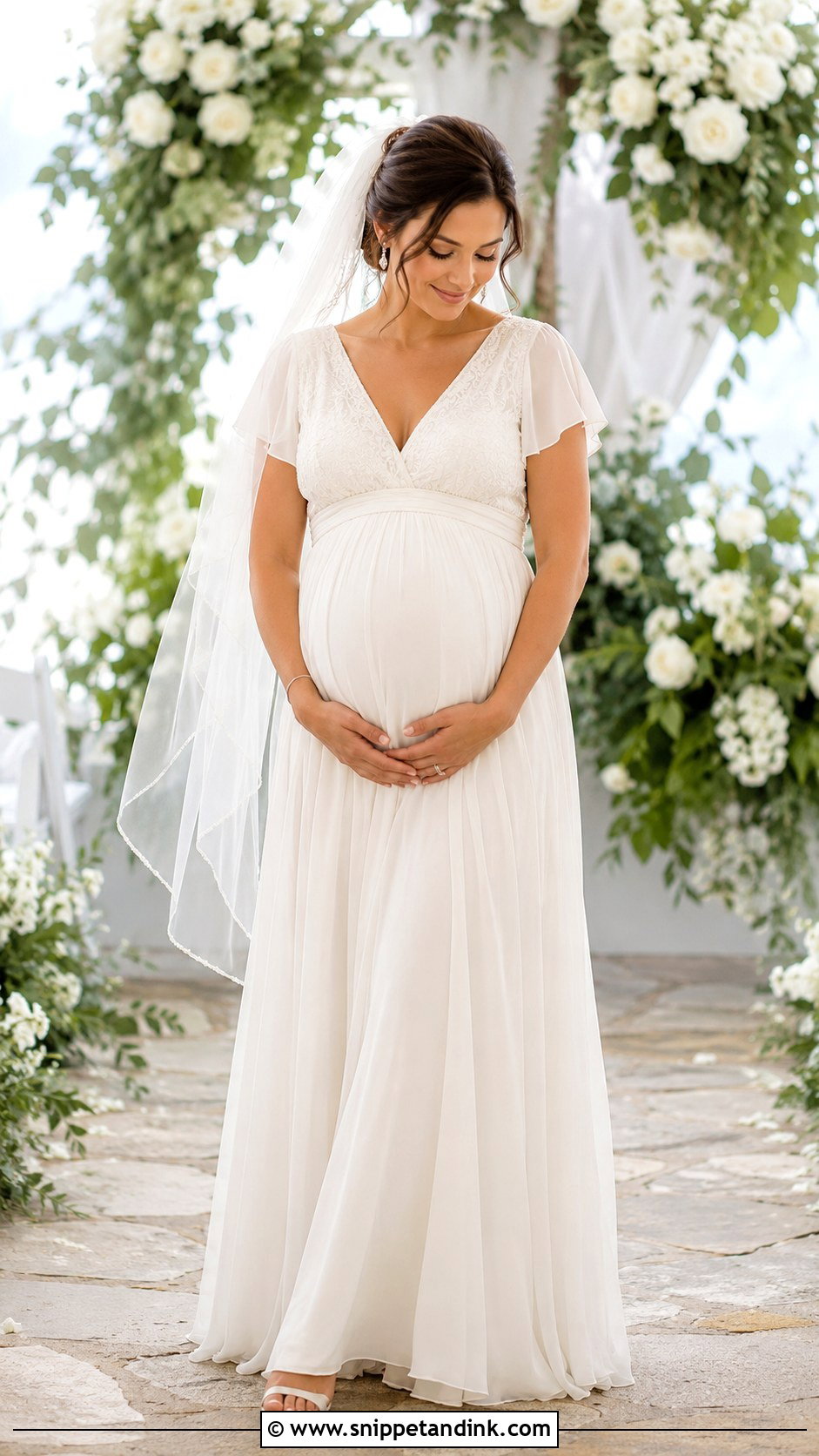
Maternity gowns need room to grow and support without pressure. Empire waists, soft A-lines, wrap bodices and flowing chiffon work well. A soft ivory gown with a raised waist, low heels, delicate earrings and a light veil is comfortable and pretty. Bodies change fast in pregnancy, so schedule the final fitting as close to the wedding as your seamstress allows, and ask for stretch lining or adjustable lacing. Avoid stiff, boned bodices unless they’re made for pregnancy. Flutter straps or light lace sleeves add softness.
24. Simple Wedding Dress
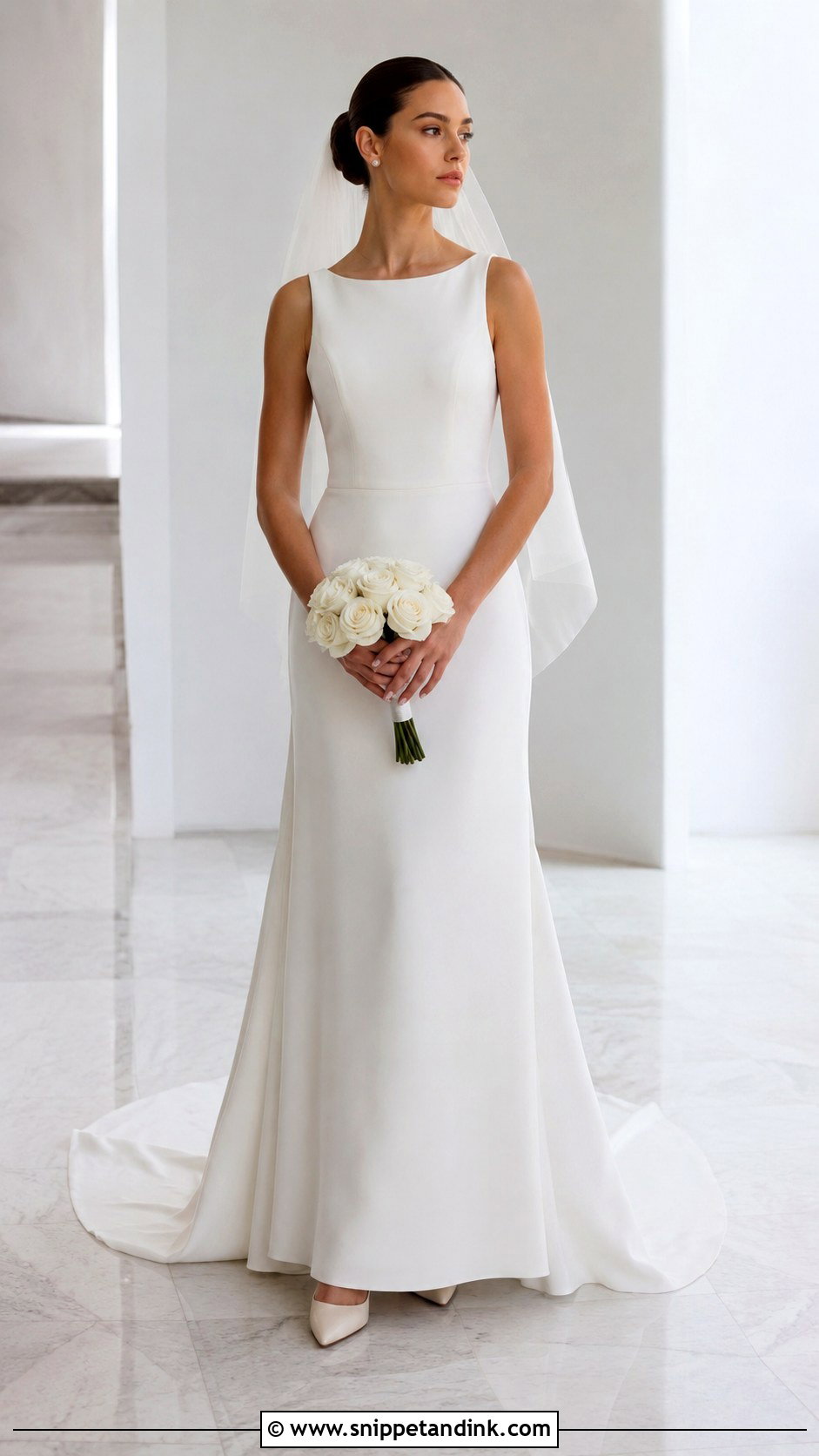
A simple dress relies on fabric, fit and proportion. A crepe sheath, satin A-line or square-neck gown all make a refined outfit. Pearl studs, a sleek bun, pointed heels and a soft veil finish it. With so little detail, alterations have to be perfect; a pulled seam or uneven hem has nowhere to hide. One standout accessory adds interest: a pearl-edged veil, sculptural earrings or a satin bow. It adapts to almost any venue and keeps attention on your face.



25. Boho Wedding Dress
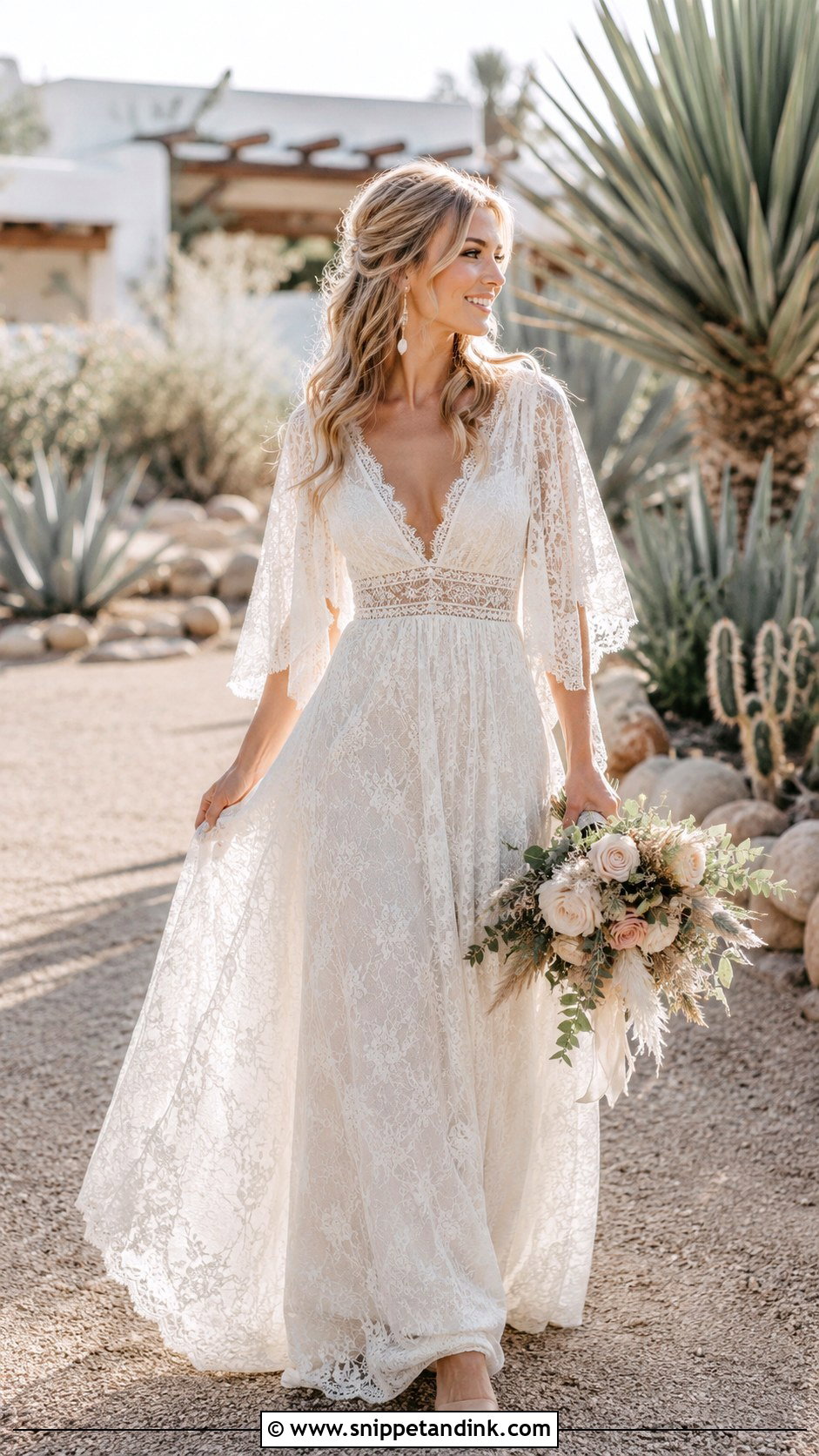
Boho dresses use soft lace, flowing sleeves, light skirts, crochet textures or subtle embroidery. A lace A-line or sheath with loose waves, delicate earrings, flat sandals or low block heels and a natural bouquet suits outdoor, desert, beach and rustic venues. Bell sleeves look romantic but drag through food and catch on chair backs, so I’d try eating in them before committing. A flower comb, soft veil or woven clutch fit the mood. Movement is the point, so check you can dance in it.
26. Vintage Wedding Dress
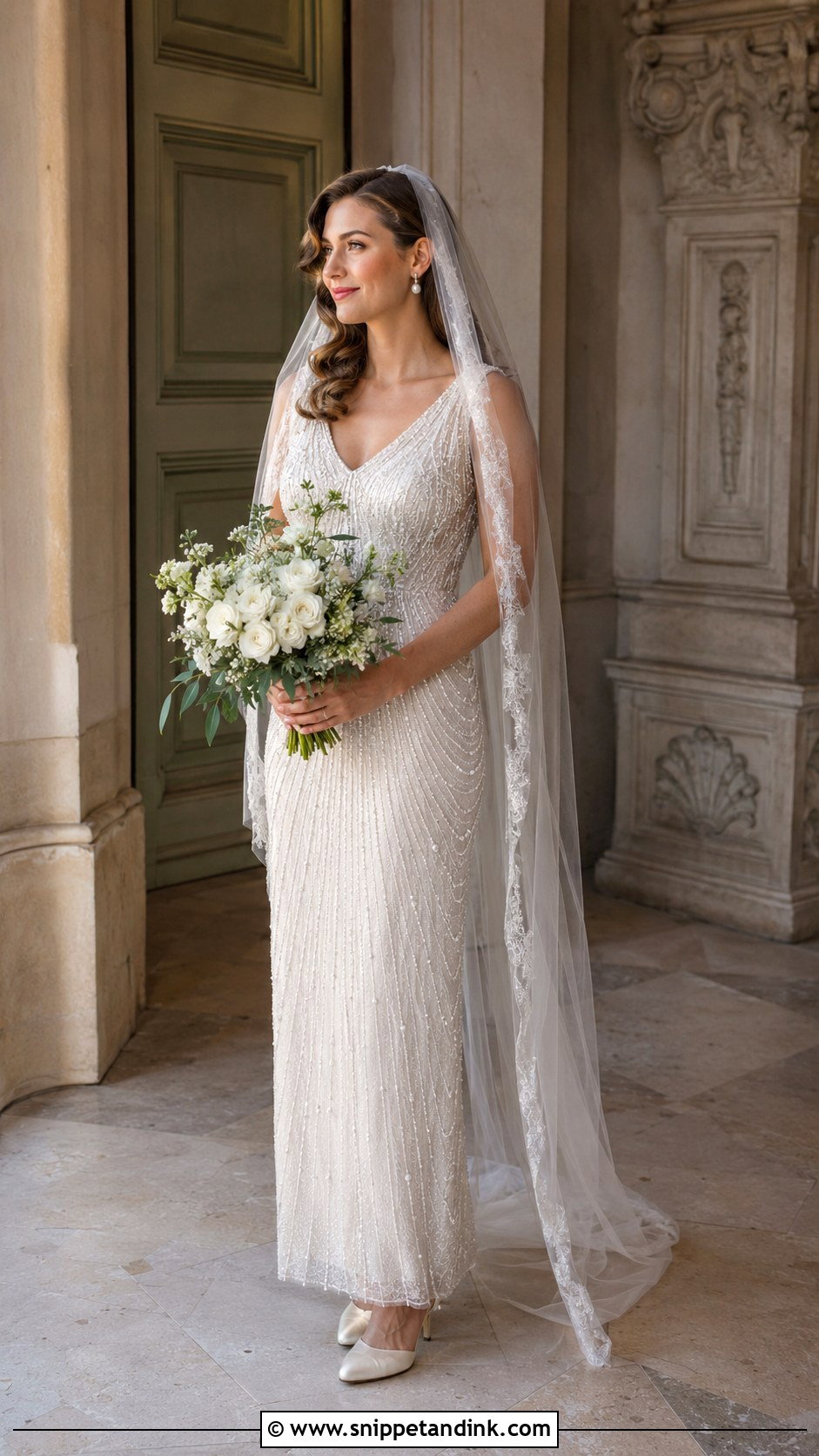
Vintage can mean the 1920s, 30s, 50s or 70s, and each era has a different shape. A beaded column feels glamorous; a tea-length dress feels sweet. Pair a vintage-inspired gown with pearl earrings, soft waves, satin heels and a delicate veil. An actual vintage dress needs inspecting before you buy: old silk can split, and yellowed fabric may not clean back to white. Modern vintage-inspired gowns give the same mood with sturdier construction. Historic venues, small weddings and city ceremonies suit it.
27. Minimalist Wedding Dress
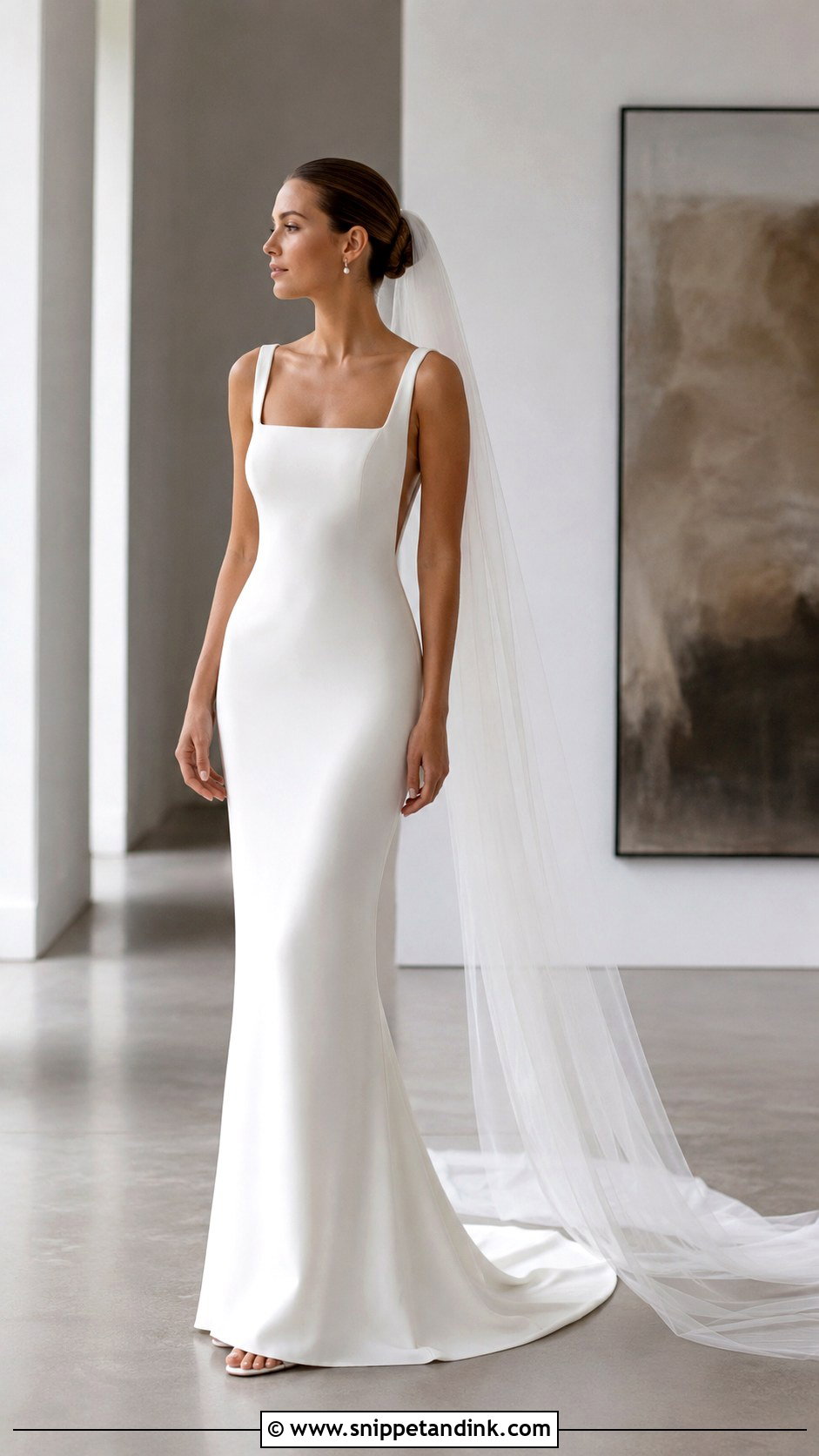
Minimalism is mostly tailoring. Sharp cuts, smooth fabric and a clean shape replace lace, sparkle and trim. A square-neck crepe gown, satin slip or structured column all work. Simple earrings, a smooth bun, barely-there heels and a clean veil keep it calm. Give it one bold detail, an open back, a high slit or an architectural bow, and nothing else. Spend on alterations rather than accessories. Galleries, hotels and city weddings suit it.
28. Floral Wedding Dress
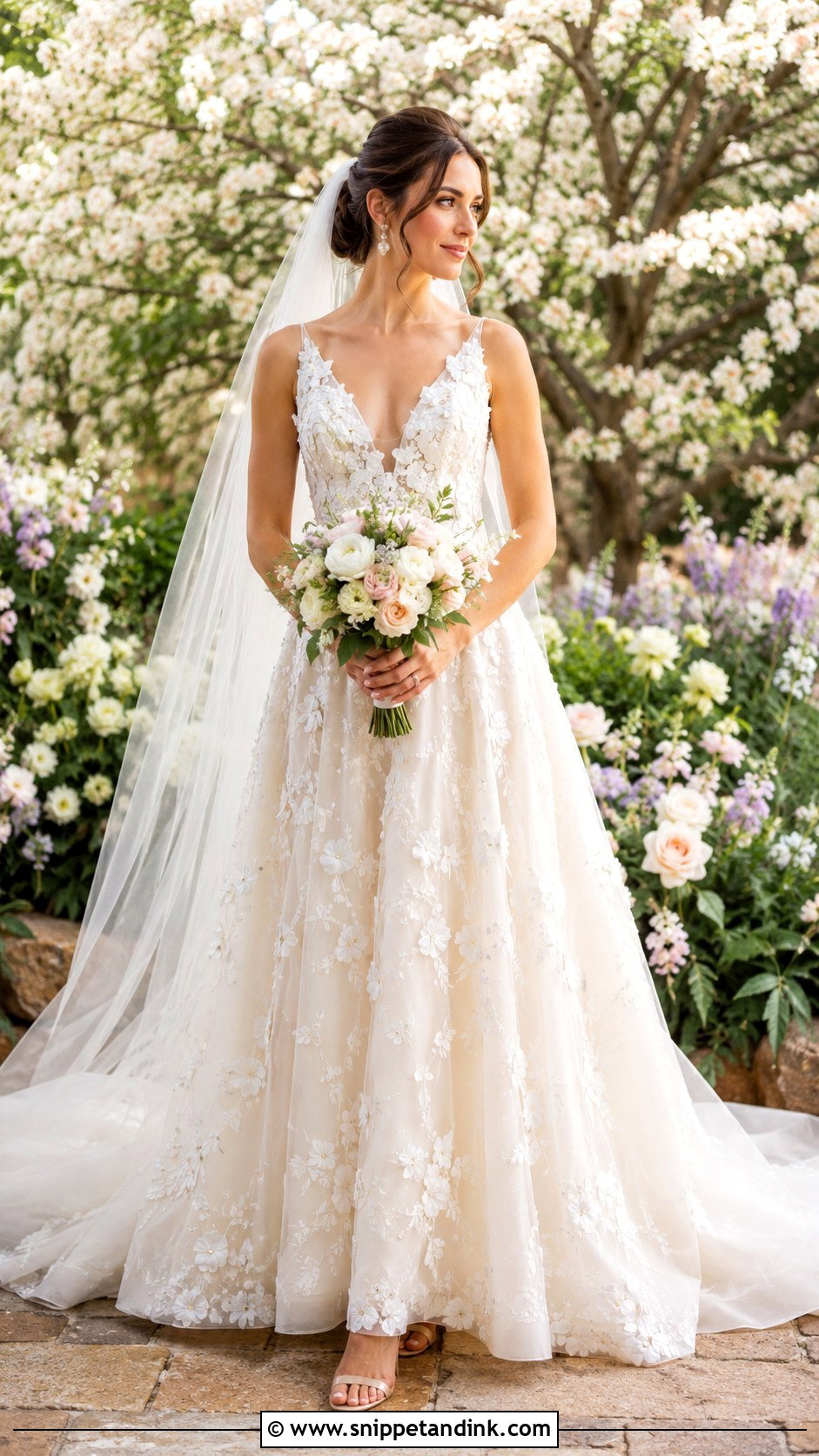
Floral gowns carry visible detail: appliqué, embroidered vines, 3D petals or printed organza. A floral A-line with simple heels, pearl earrings and a plain veil keeps the dress the focus. Blush, ivory or champagne undertones make the flowers stand out gently. When the dress carries colourful flowers, I’d ask the florist to keep the bouquet quieter, often all-white or a single bloom type, so the two aren’t competing. Spring weddings, gardens and romantic indoor rooms suit it.
29. Wedding Dress With Cape
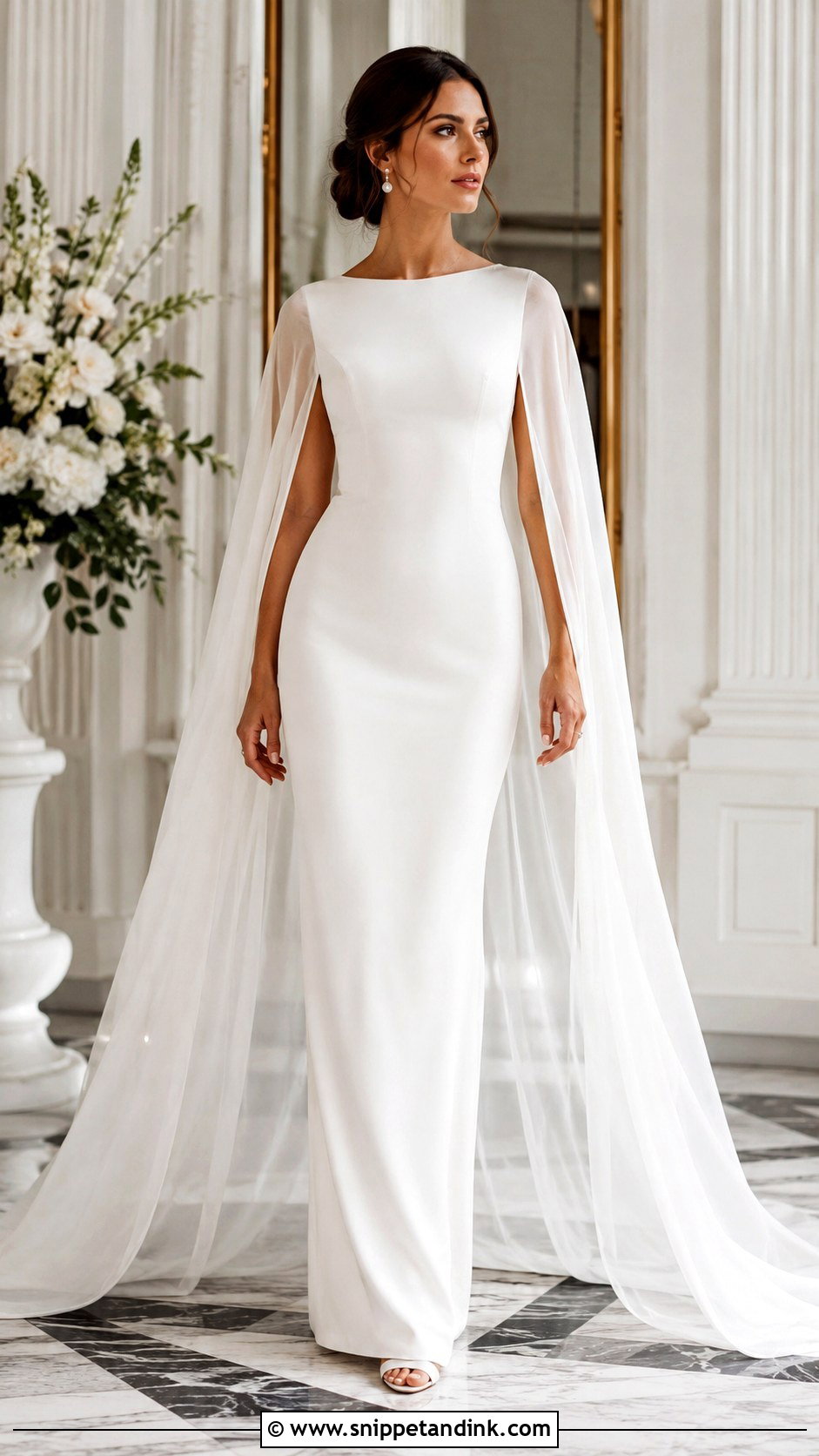
Capes give drama without a veil, and they come sheer, lace, tulle, satin, beaded or detachable. A clean sheath or A-line with a sheer cape, pearl earrings and elegant heels is the polished version. They also cover shoulders and arms lightly, which helps in winter or at a religious ceremony. Check the cape length against your train; if both are long, they tangle when you turn. Detachable capes let you change the look between ceremony and reception. Formal venues suit it.
30. Wedding Dress With Bow
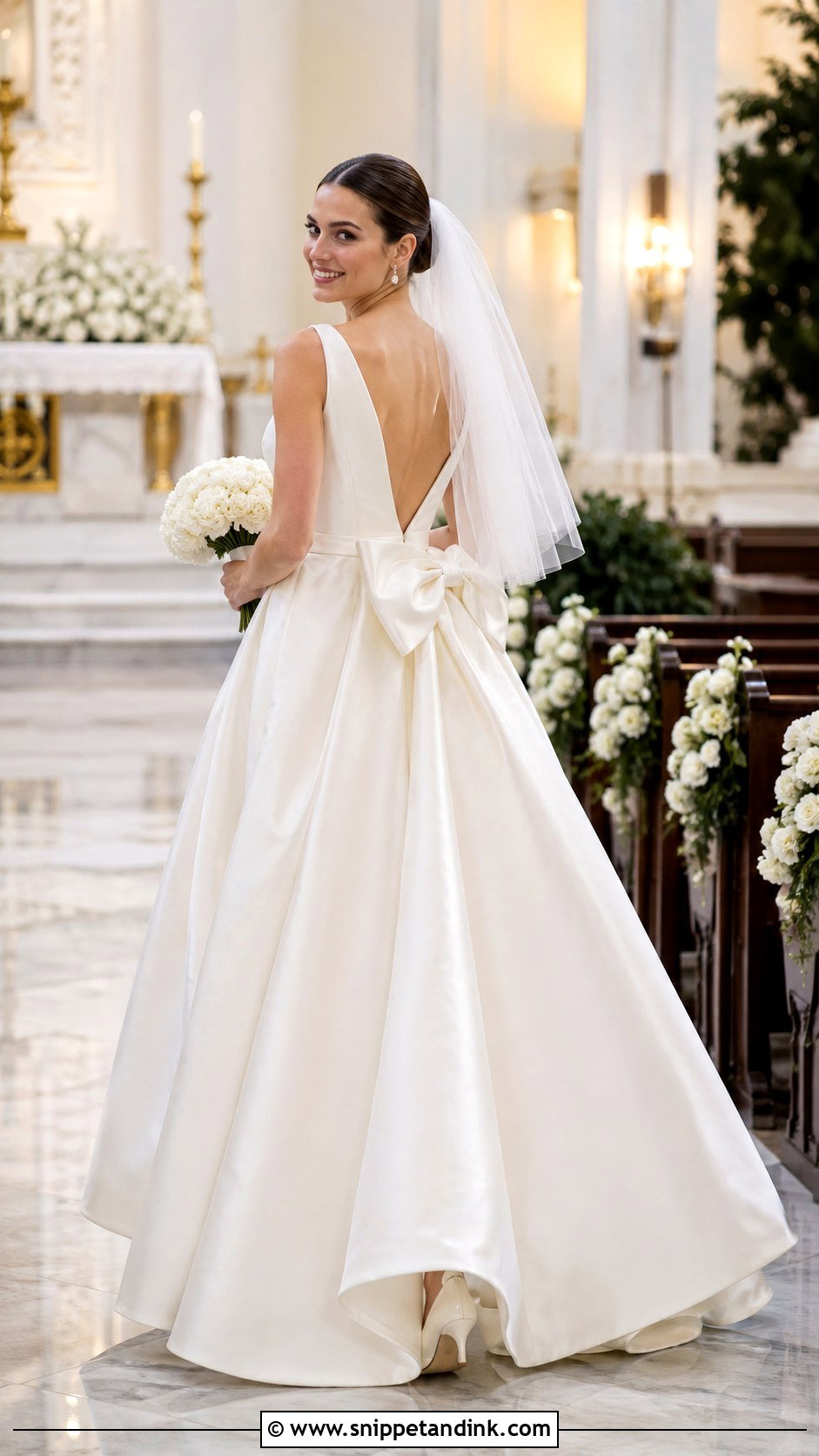
Bows can sit at the back waist, shoulder, neckline or train, and their scale sets the tone. A satin A-line with a large back bow, pearl earrings, a simple veil and pointed heels is the classic outfit; a mini with a shoulder bow or a column with a small waist bow looks modern. Stiff satin and mikado keep a bow crisp; soft fabric droops by evening. Keep other accessories clean. Since guests watch your back during the vows, it pays off in aisle shots at formal weddings, civil ceremonies and reception changes.
Sugar Stains, Acid-Free Tissue and the Gown’s Life After the Wedding
Most brides leave the dress in a heap on the hotel floor, and that’s fine for a night. The clock starts after that. Spills of champagne, cocktails or cake icing can be almost invisible at first, but sugar oxidises over time and turns into brown marks that are much harder to remove later. Get the gown to a specialist cleaner within a few weeks, and point out every spill you remember, even the clear ones.
For storage, cleaners usually offer a box with acid-free tissue, which stops the fabric yellowing where it’s folded. Keep the box somewhere dark with a steady temperature, never the loft or a damp basement. Avoid long-term plastic bags, which trap moisture. If you’d rather hang it, use a padded hanger and the inner hanging loops, so the shoulders don’t carry the whole weight, and store it in a breathable cotton garment bag.
Thinking of reselling, altering the gown into a second outfit or passing it on? Decide before cleaning, because some cleaners treat a gown differently if it will be worn again rather than stored.
Could You Wear It Through Dinner Without Thinking About It?
That question settles more decisions than any style rule. A-line gowns, ball gowns, short dresses, slips, capes, bows and beach dresses all appear above, and each can be right in the right setting. Think about your venue, season, how much you’ll move and the support you need, then picture yourself in the evening photos, not just the aisle shot. Try shapes you’d normally skip, put your budget into tailoring, and choose the dress that still feels good after hours in it.
You'll Like These Ideas:



Leave a Reply