
Dressing a petite frame isn’t about a list of banned shapes. It’s about where three lines sit on your body: the waist seam, the neckline and the point where the skirt starts to flare. Get those right and you can wear a train, long sleeves, heavy lace or even a ball gown. Get them wrong and a gown looks borrowed, however short the hem. Sample dresses are cut for a taller bride, so on a shorter frame the waist often lands low and the flare too close to the knee. The twenty gowns below each come with styling notes and the specific alteration I’d ask for.
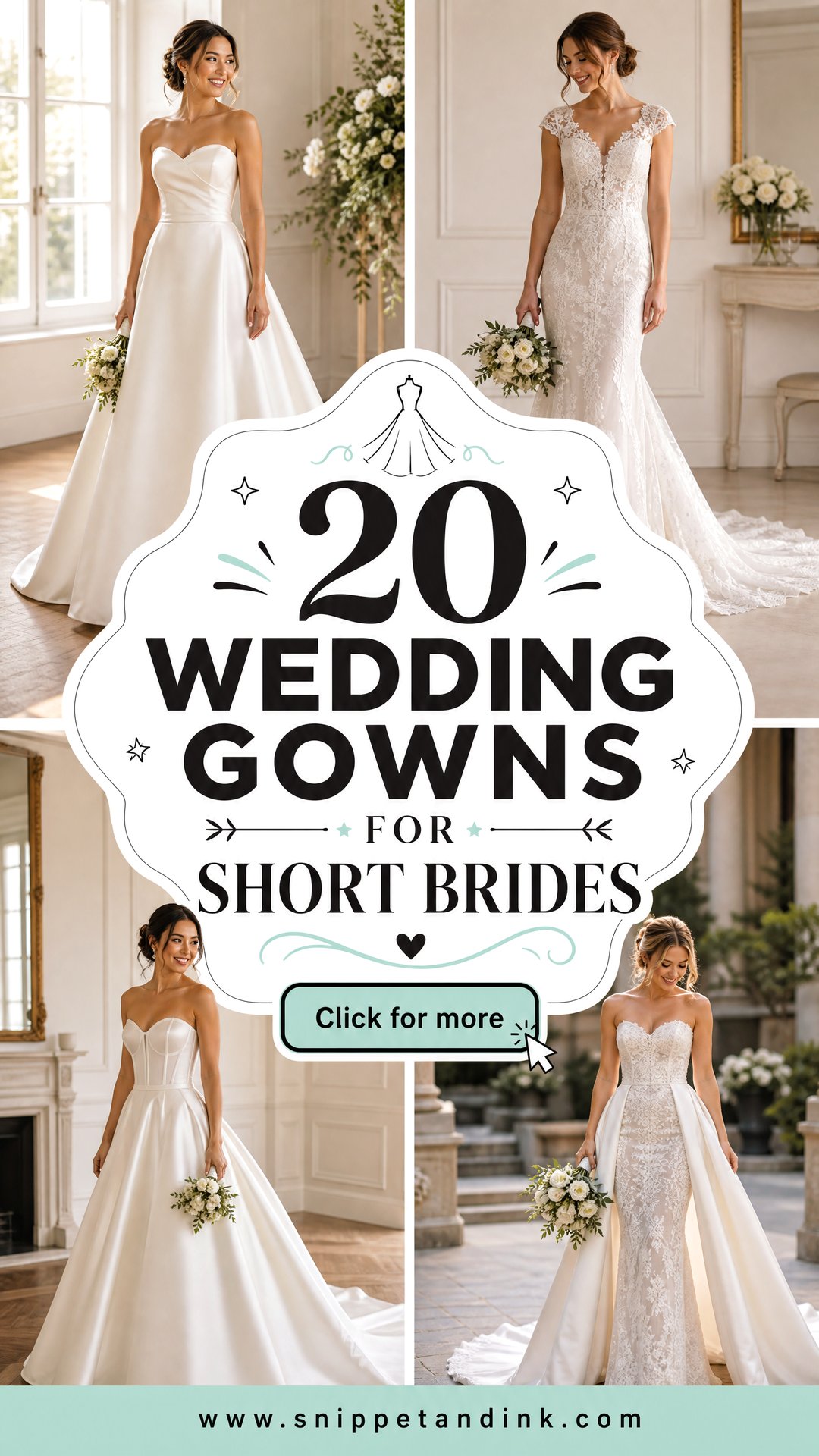
Shortening From the Waist Instead of the Hem
The most useful alteration for a petite bride is one many people haven’t heard of. Instead of cutting length off the bottom, a seamstress takes it from the top of the skirt, at the waist seam. The hem, with its lace border, horsehair edge or scalloped trim, stays untouched, and the train keeps the shape the designer intended.
It costs more than a straight hem and takes longer, because the skirt has to be detached from the bodice and re-set. It’s most worth it when:
- The hem has a lace border or scallops that would be lost by cutting.
- The bodice is also too long, so both problems are fixed in one go.
- The skirt is layered tulle, where a straight cut through many layers can look uneven.
- The train has a shaped curve that a hem cut would flatten.
Ask about it at the first fitting, not the last. If it isn’t possible on your gown, ask for a hem that keeps the border by unpicking and resewing it higher.
1. Petite A-Line Wedding Gown
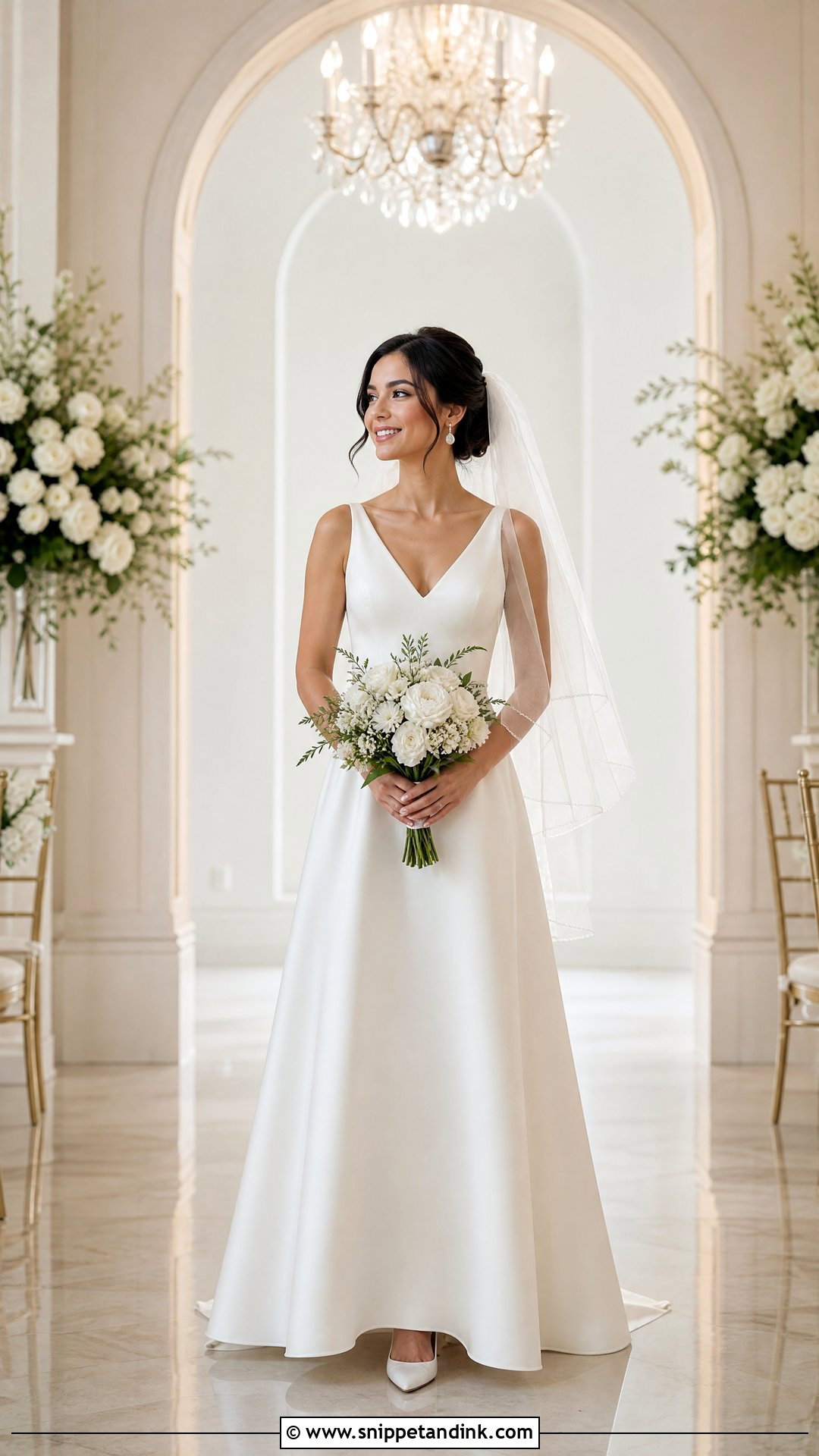
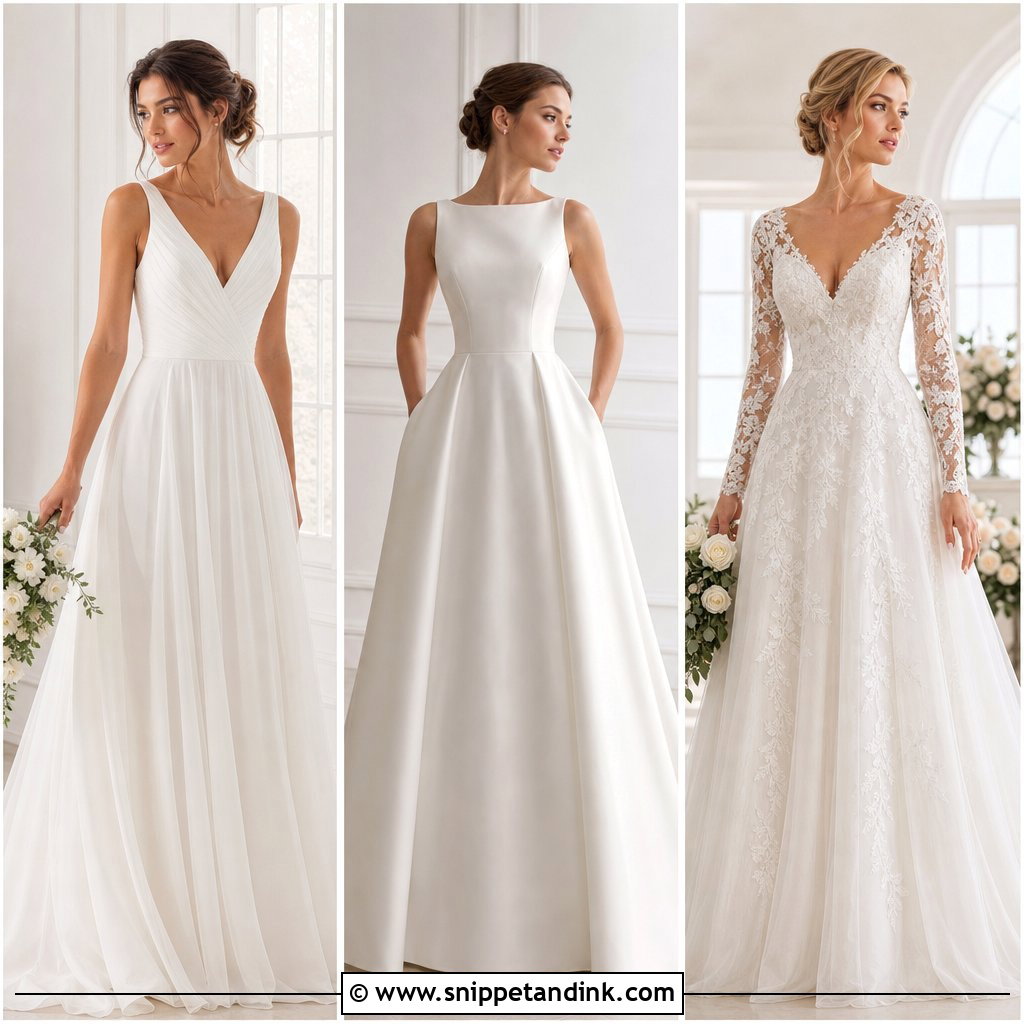
An A-line is the easiest place to start because the skirt widens gradually rather than all at once. The waist seam has to meet your natural waist, and on a sample it usually sits an inch or two low on a shorter bride, so the bodice may need shortening as well as the hem. Light satin, chiffon or soft tulle keeps the skirt from swamping you. A V-neck draws a longer line, and narrow straps keep the top from looking heavy. Pointed heels, pearl drops and a fingertip veil finish it. Ask about volume, too. A seamstress can often remove a layer of underskirt to bring the flare in closer.
2. V-Neck Crepe Sheath Wedding Gown
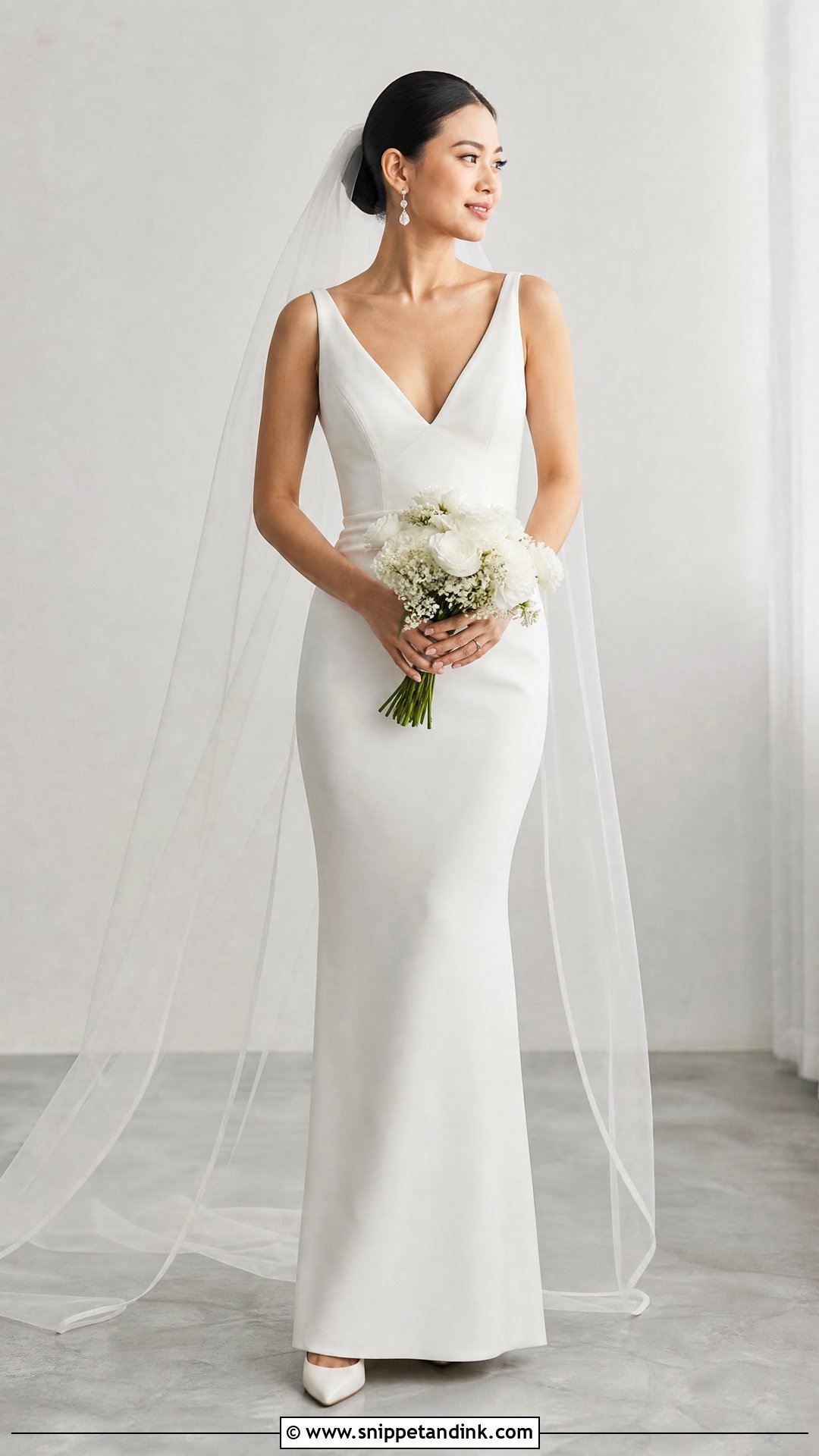
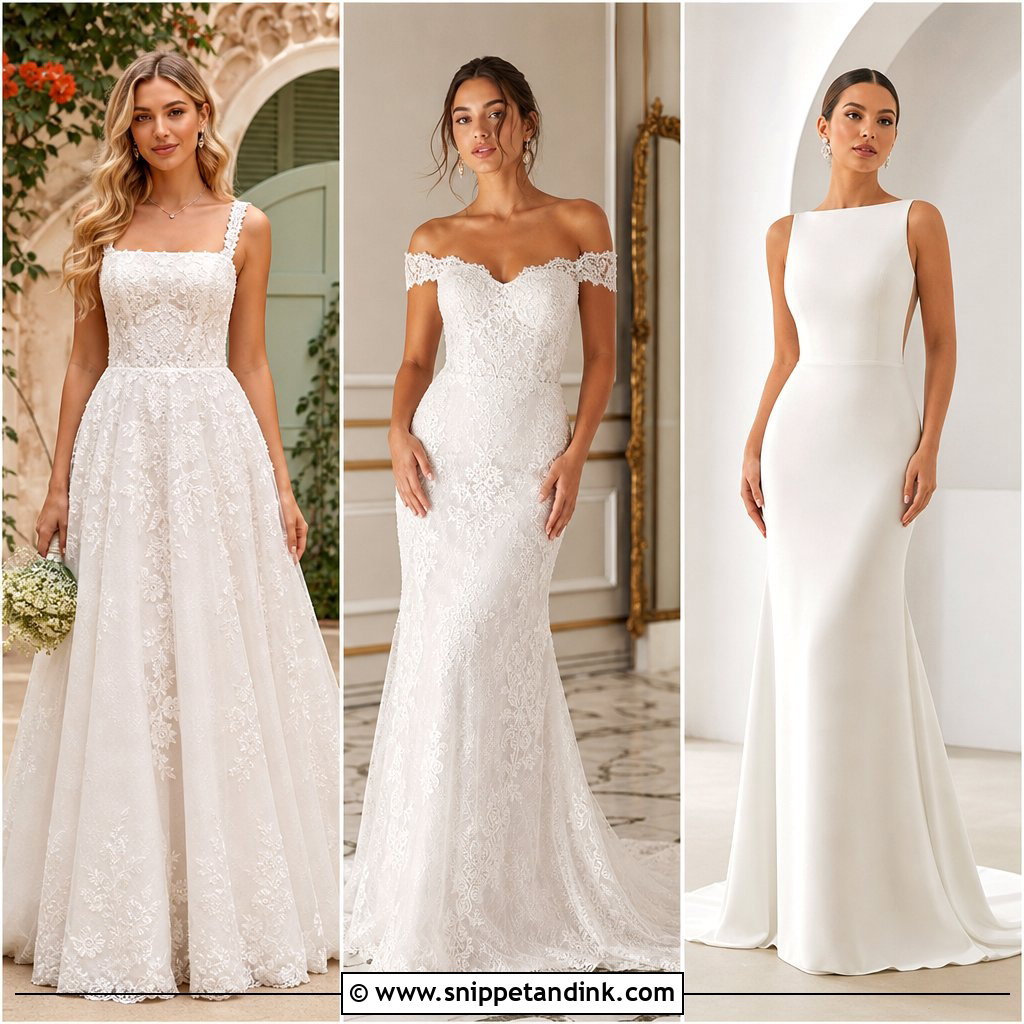
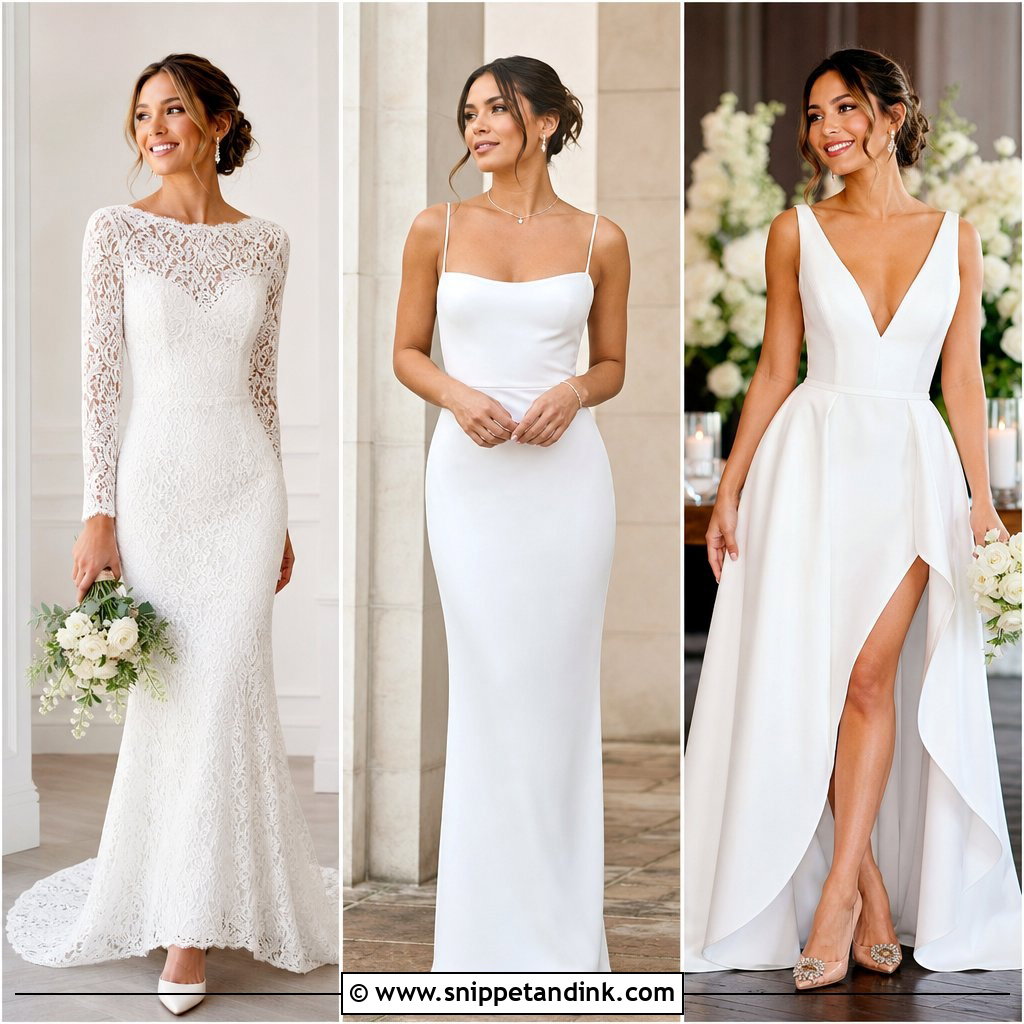
Crepe sheaths give one unbroken line from shoulder to floor, which is exactly what a shorter frame benefits from. A defined V-neck, solid inner construction and seams that follow the body without pinching are what to look for. The skirt should skim your hips and fall nearly straight. Wide hem borders or a low flare cut the leg line, so avoid them. Pointed pumps in ivory or close to your skin tone continue the line, with small crystal earrings, a slim bracelet and a chapel veil below a simple bun. Crepe shows every fit flaw, and when I fit petite brides, the shoulder seams are usually the first thing that needs moving in.
3. Empire Waist Chiffon Wedding Gown
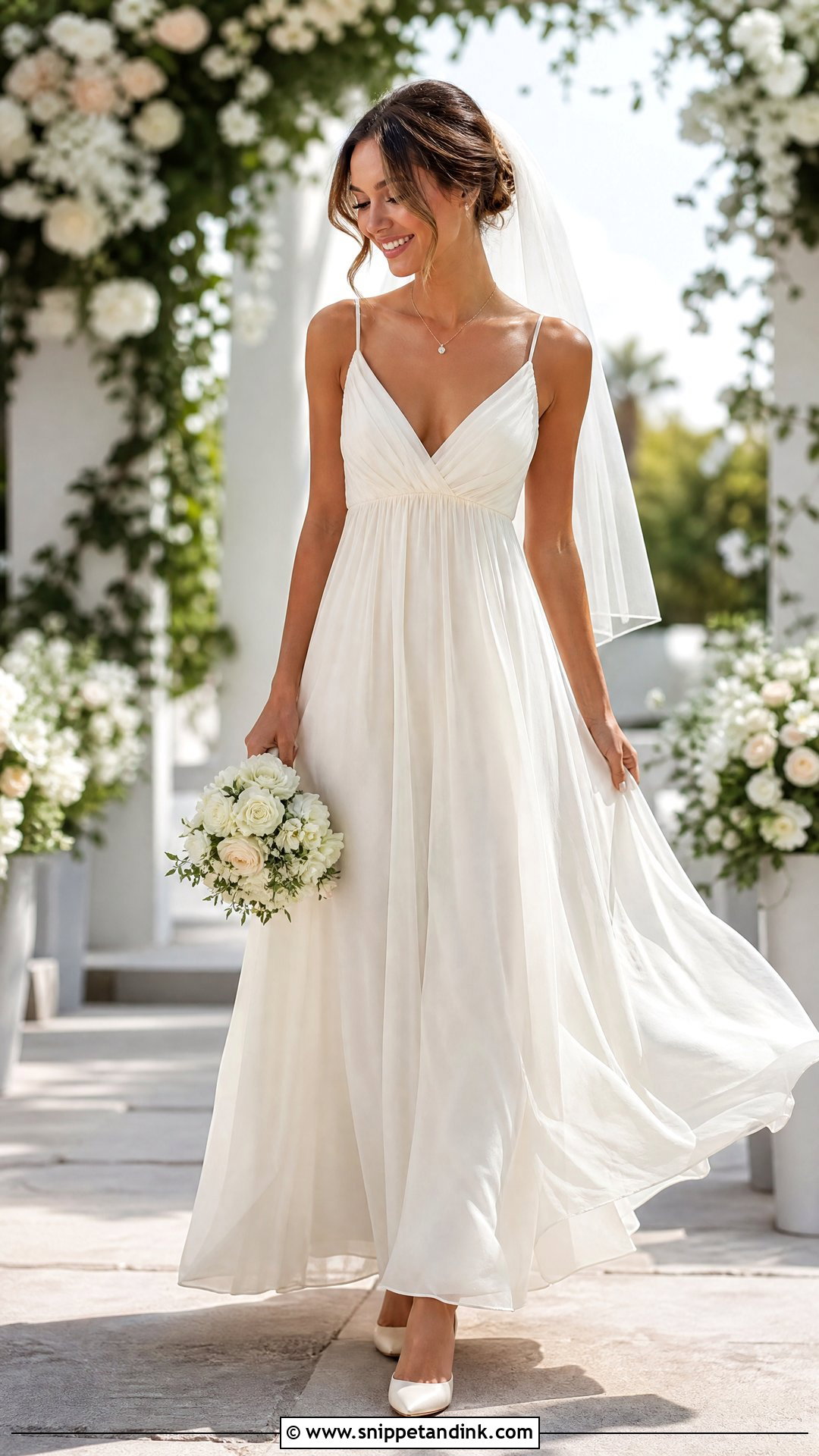
Can a soft floating gown add height without close tailoring? Often, yes. An empire waist puts the main seam just below the bust, so the skirt runs uninterrupted from there to the floor and your legs read longer. It’s comfortable, too, with nothing pressing at the waist. Keep the chiffon gathers light; too many and the skirt balloons out. A narrow V-neck bodice and fine straps keep the top open. Low pointed heels, a fine pendant and an elbow-length veil suit it. The seam must sit right under the bust. If it drops even a little, the bodice looks long and loose, which defeats the point.
4. Sweetheart Fit-and-Flare Wedding Gown
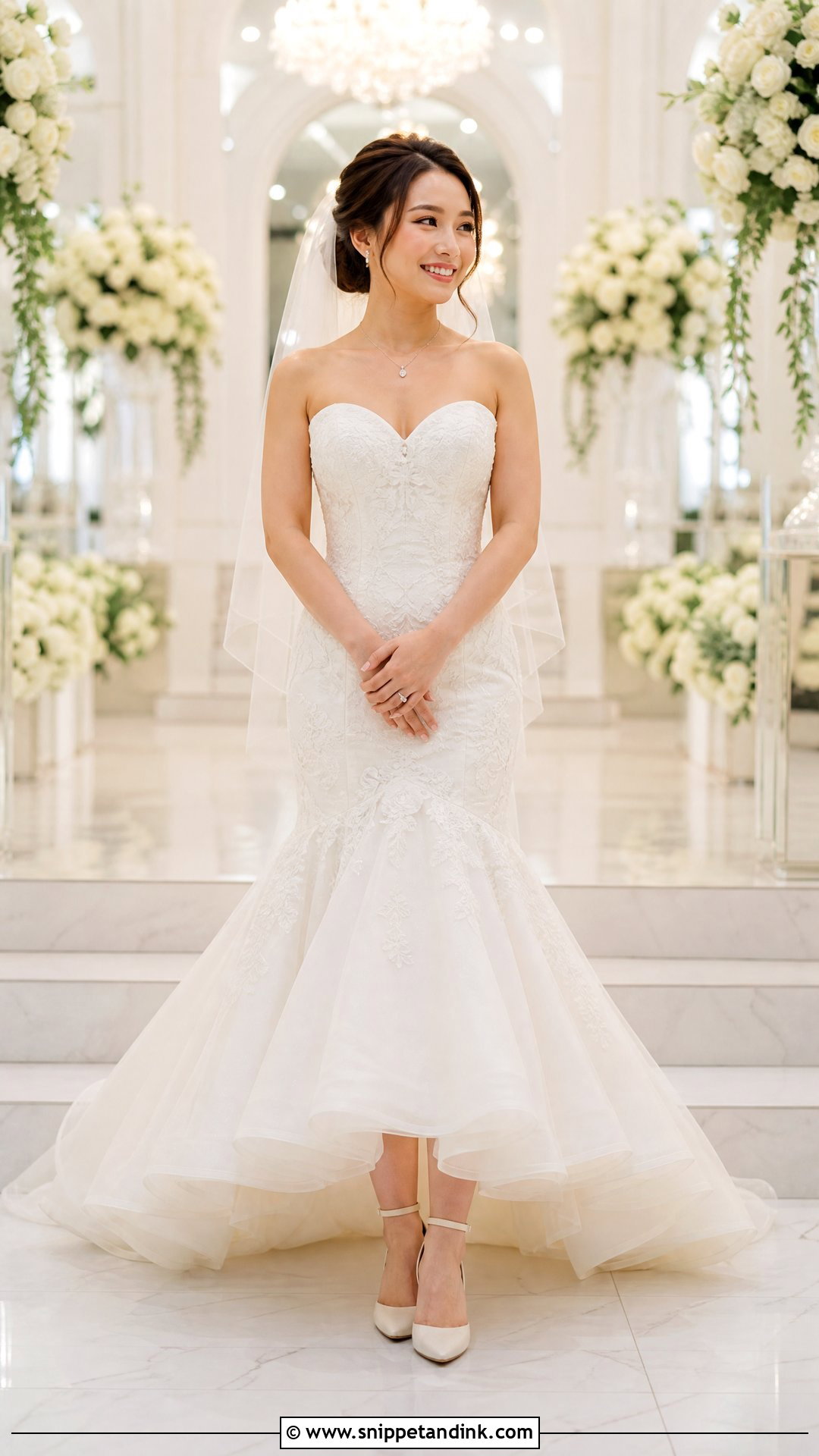
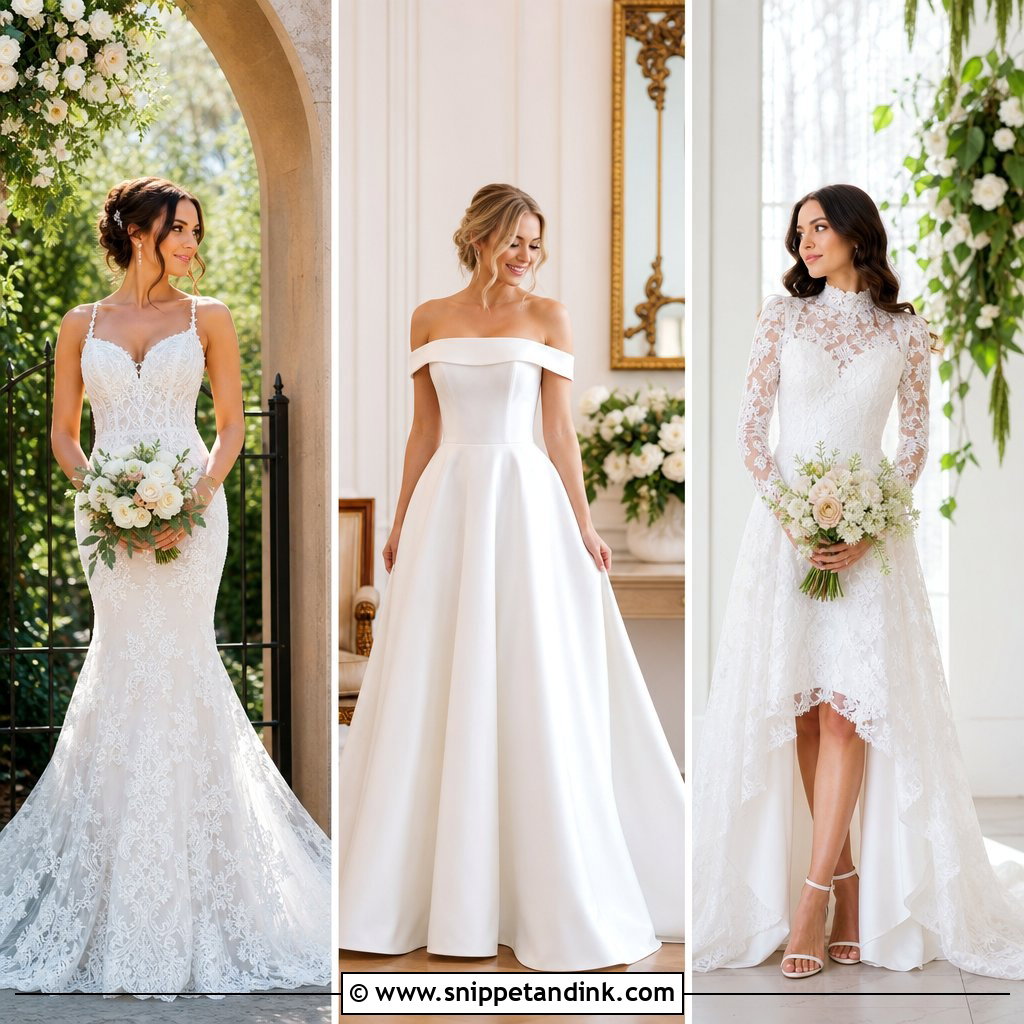
Fit and flare on a petite bride depends entirely on where the skirt opens. I’d ask for the flare at the upper thigh rather than near the knee. A low flare splits your legs into short sections and makes walking hard. A structured sweetheart bodice draws attention up and shapes the waist. Smooth satin or lightly embellished lace scales better than large dense appliqués. Slim heels, a delicate necklace, studs and a simple veil that doesn’t hide the silhouette suit it. Hemming alone rarely fixes this style; the torso length and flare point usually need adjusting too, which means opening the side seams.
5. Tea-Length Lace Wedding Gown
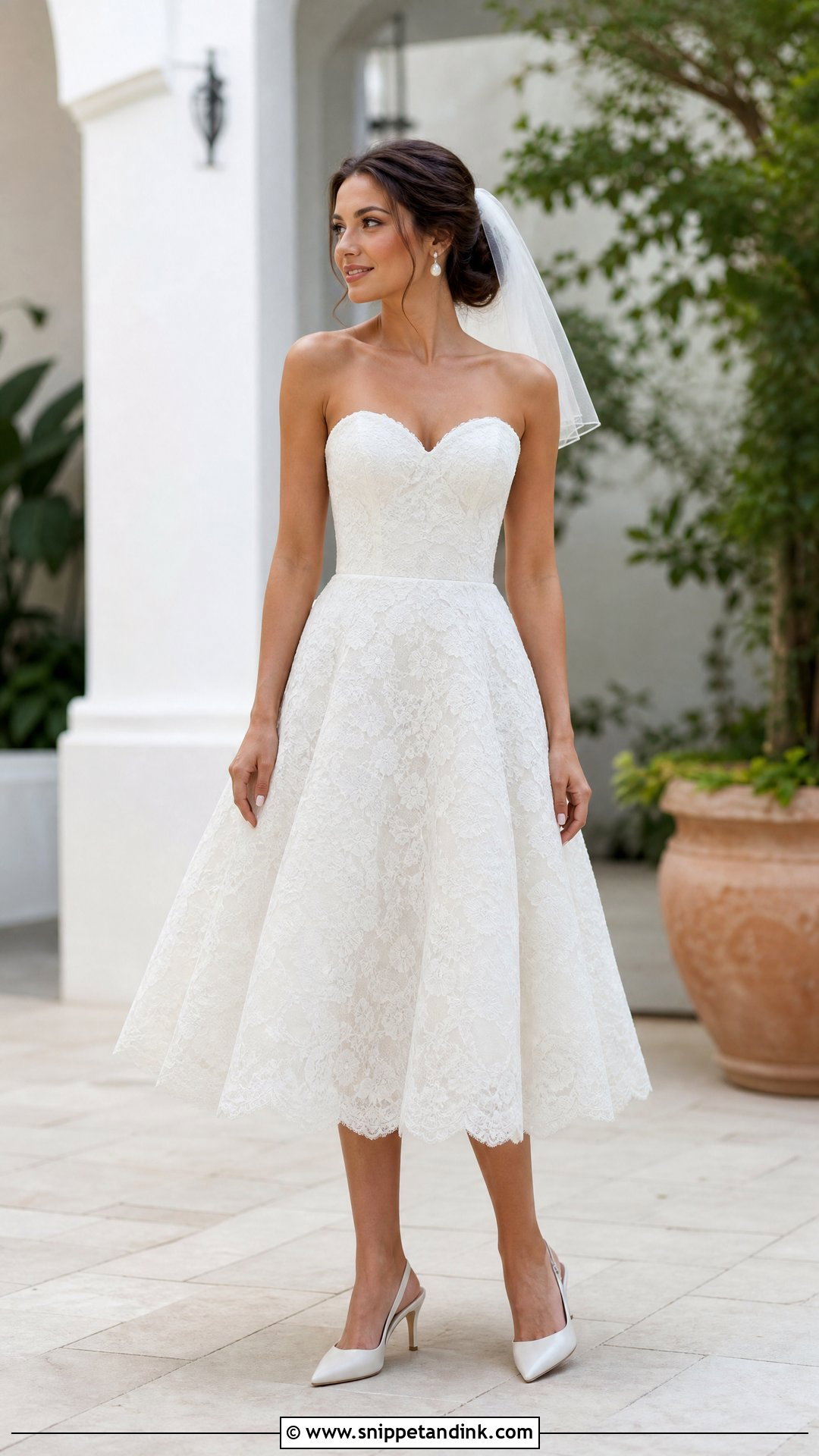
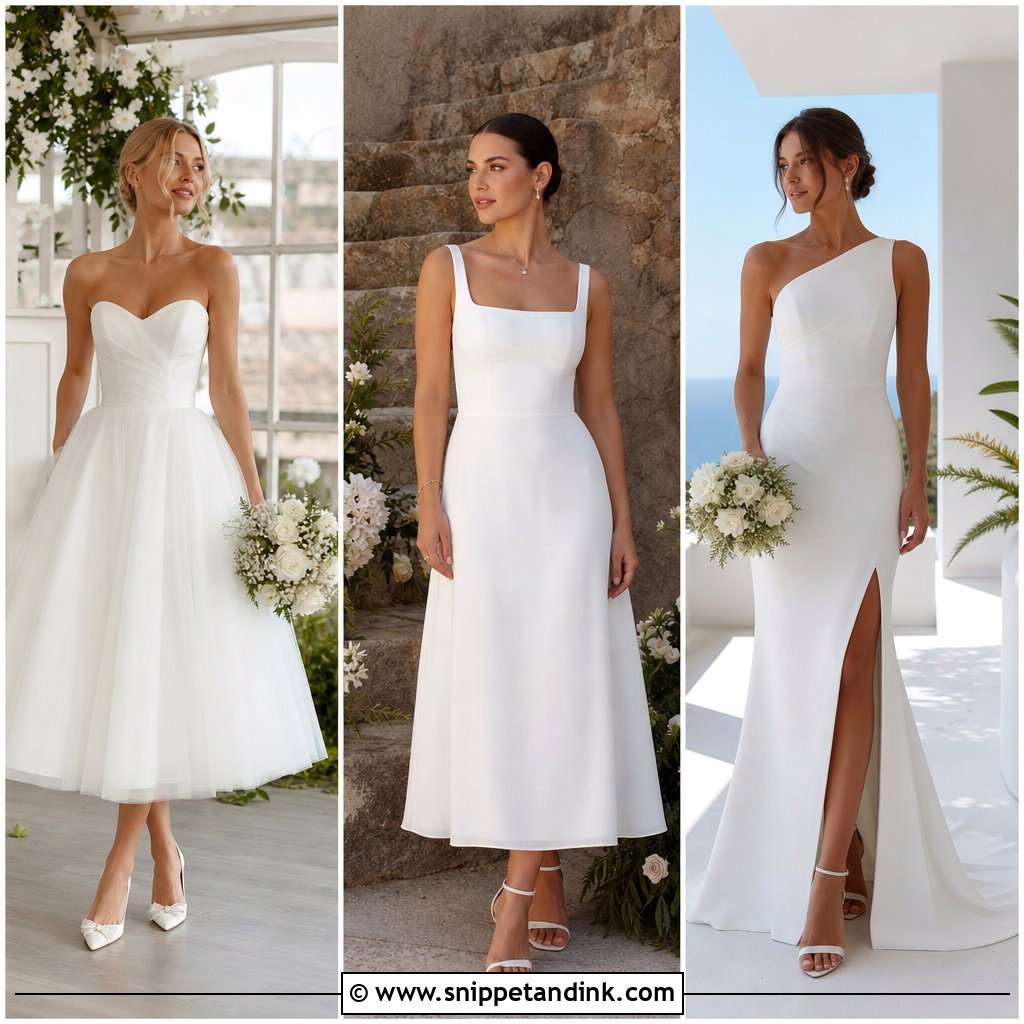
Tea-length lace defines the waist and shows off your shoes. Where the hem lands is the whole game. It should end at a narrow part of the calf, never the widest, and I pin several heights before deciding. A softly structured A-line gives movement without floor-length volume, over a fitted bateau, scoop or sweetheart bodice with lace motifs small enough for your scale. Pointed slingbacks, pearl studs and a short veil or hair bow suit it. Shoes close to the dress color keep the leg line unbroken. It’s a practical petite option, but test the hem in your actual wedding shoes, because an inch of heel changes where it falls on the calf.
6. Square-Neck Column Wedding Gown
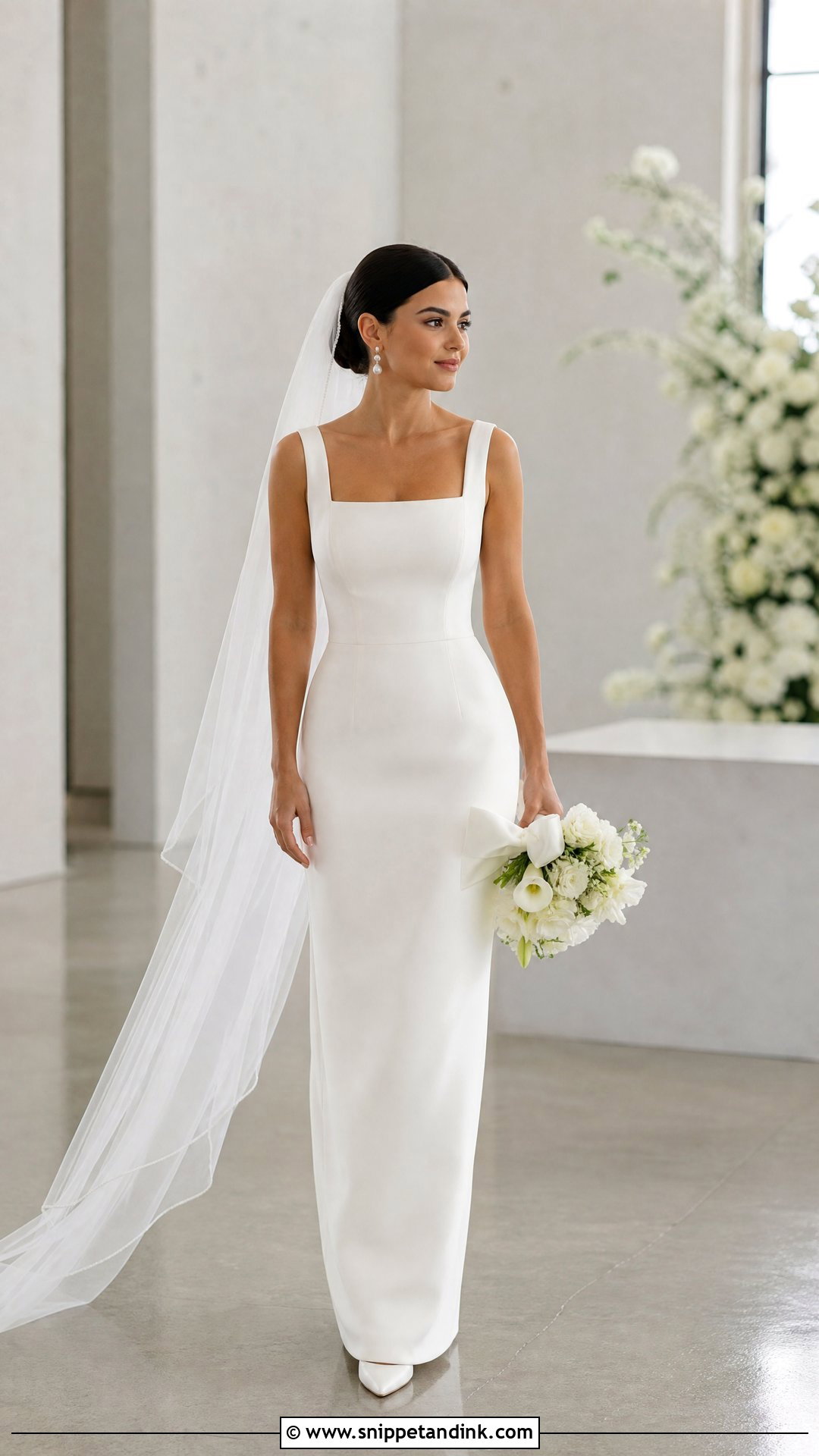
Square-neck columns look composed and modern. The straight neckline frames the face, and a narrow skirt keeps the line vertical. On a petite frame, strap width matters more than people expect: wide straps on narrow shoulders look heavy, so choose straps in proportion to yours. Shape the waist gently rather than cutting it with a strong seam. Crepe, matte satin or mikado give structure without decoration. Pointed pumps, a compact bouquet, drop earrings, a sleek low bun and a narrow raw-edged veil complete it. If you’re petite with a fuller bust, secure inner cups and boning stop the square corners gaping.
7. High-Low Wedding Gown
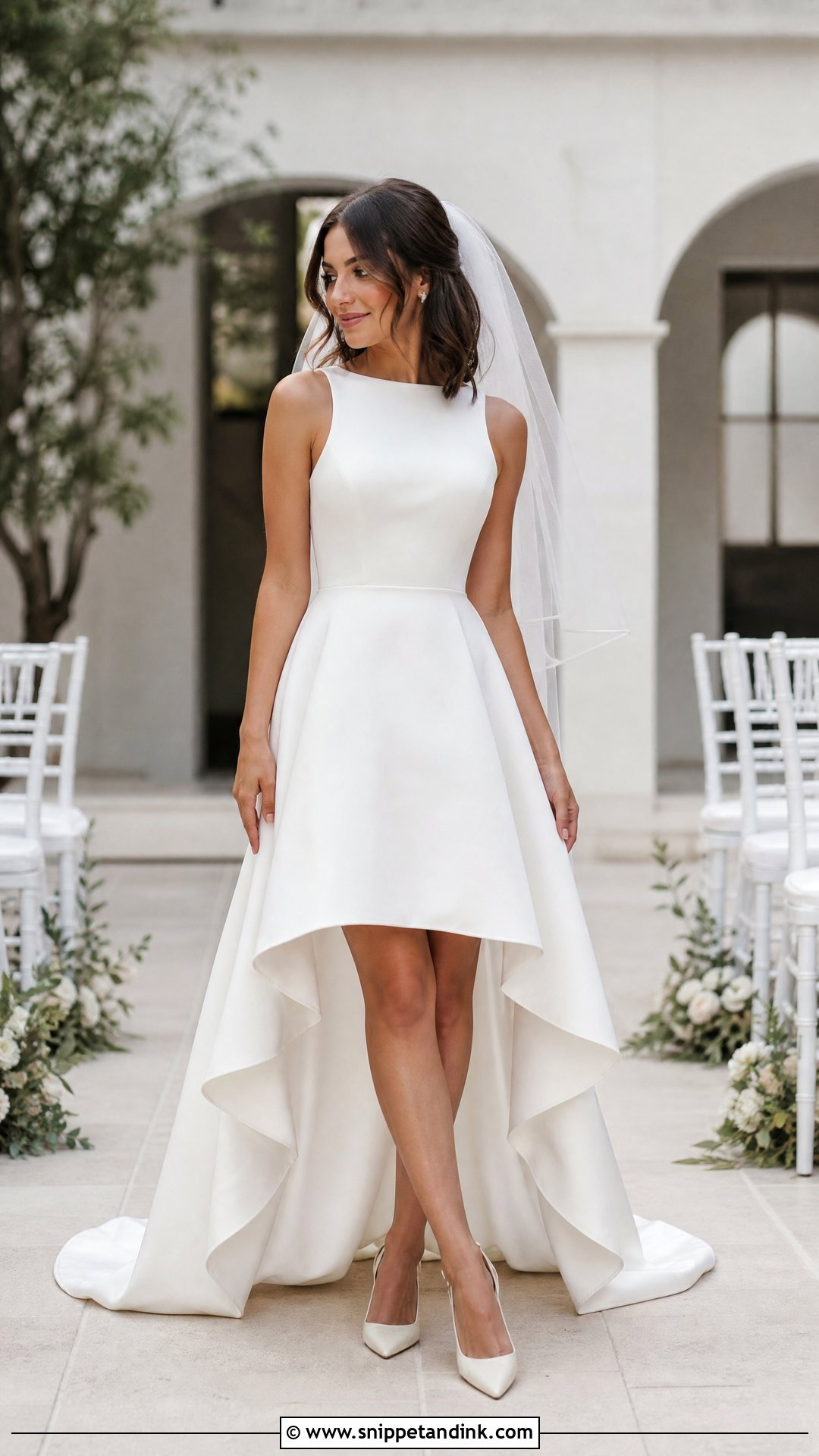
High-low gowns give you the ease of a short front and the movement of a longer back. Keep the curve gradual, with the front around or just below the knee and a modest back train; a steep drop from front to back looks like costume. A fitted sleeveless bodice, defined waist and light fabric keep proportions clear. Your shoes are on display, so choose pointed pumps or ankle-strap heels in ivory, plus small earrings and a shoulder-length veil. Sit down at the fitting to check the front hem stays decent. The back still needs a bustle for dancing.
8. Strapless Satin A-Line Wedding Gown
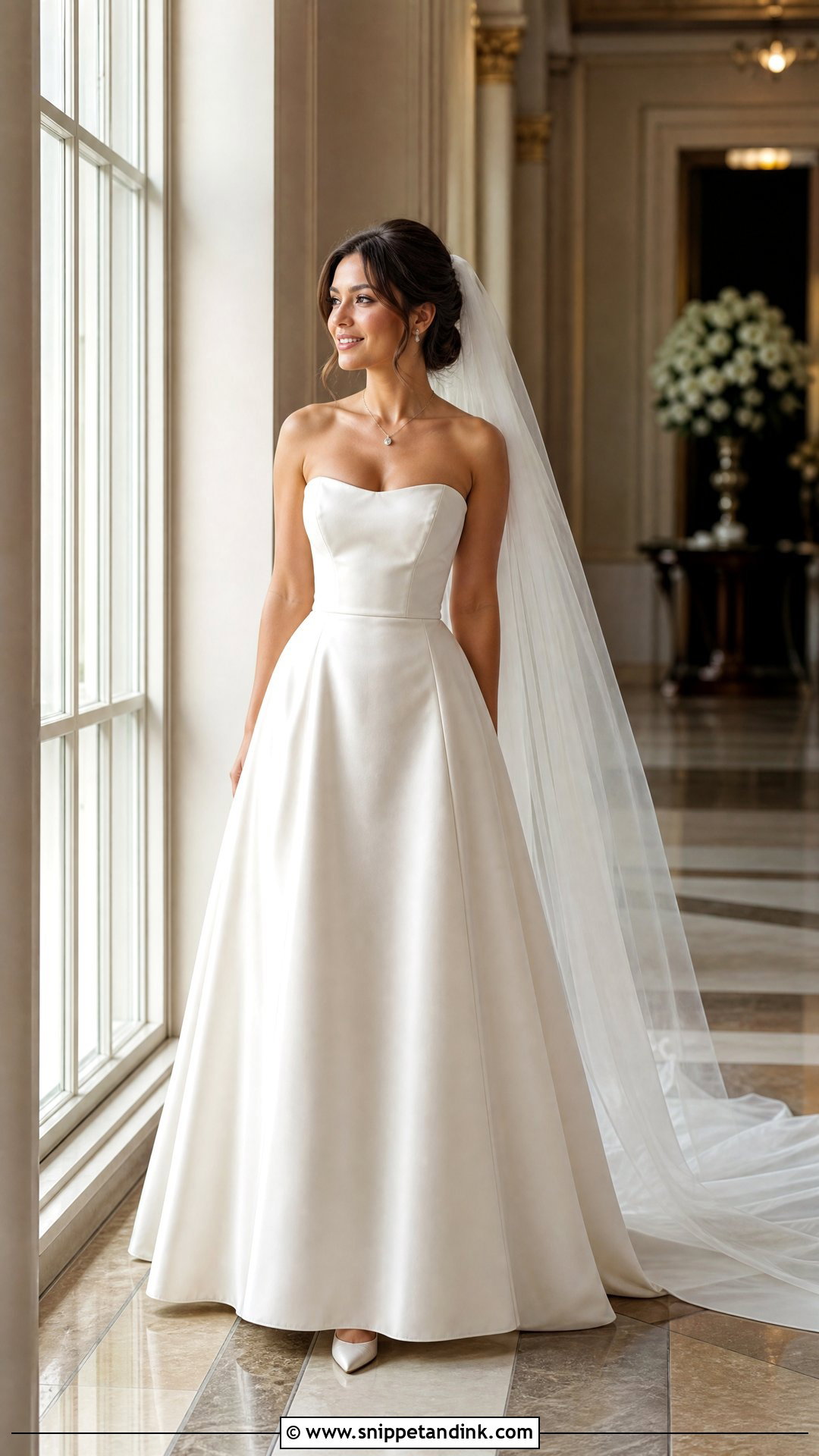
Satin reflects light softly, and a strapless A-line lets that sheen do the work without decoration. The bodice needs firm internal support so you’re not hitching it up all day. Keep the waist at your natural line and ask for the skirt to flare evenly, without heavy pleats bunched at the sides, which widen a short frame. A narrow belt is fine if it’s tone-on-tone; a contrasting one cuts you in half. Pointed satin heels, a fine pendant and a light cathedral veil work, since a long veil suits petite brides when it’s sheer and clean. The first thing I check is bodice depth. A strapless top that’s too long for your torso sits low and compresses the waist.
9. Spaghetti-Strap Slip Wedding Gown
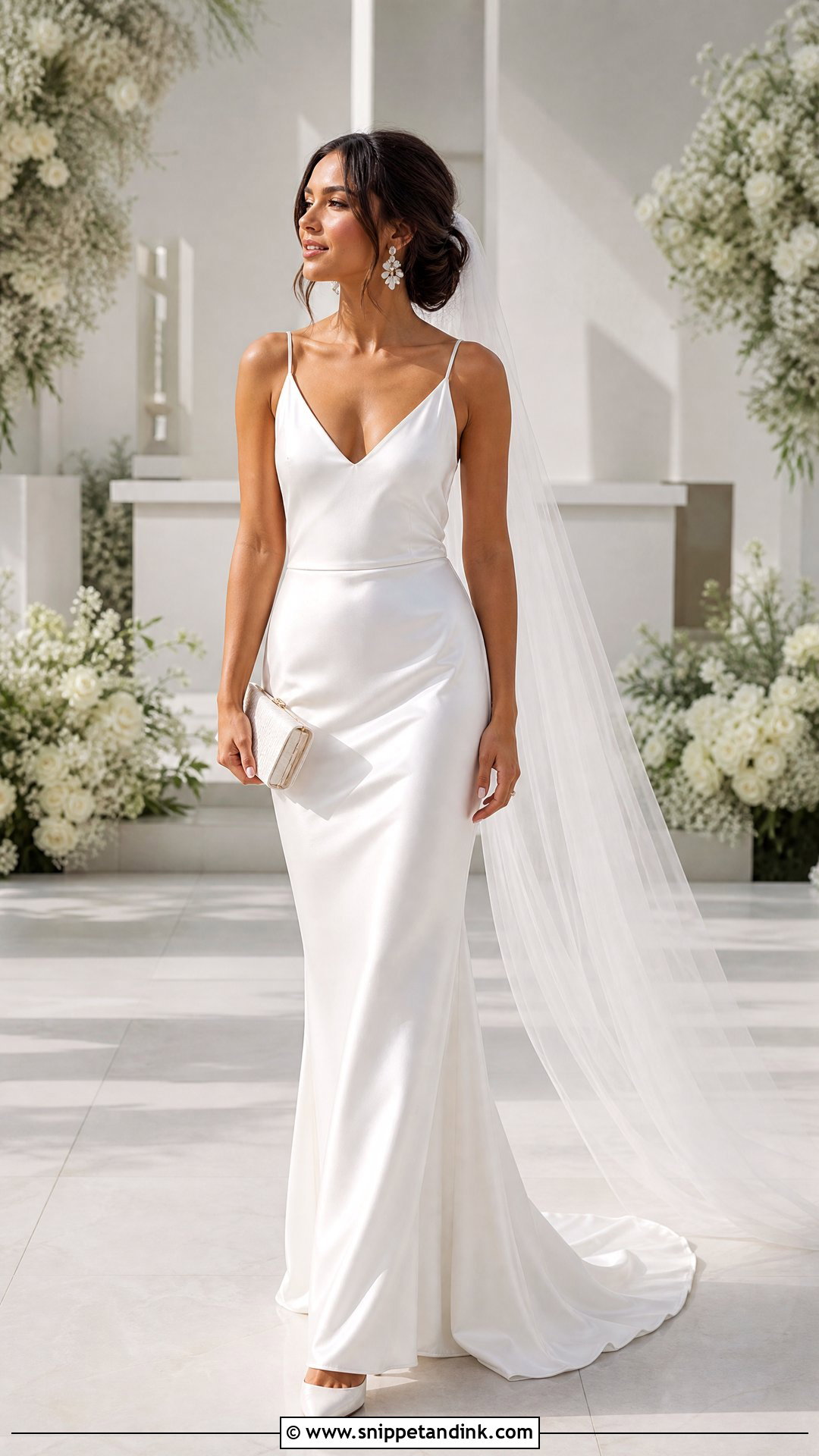
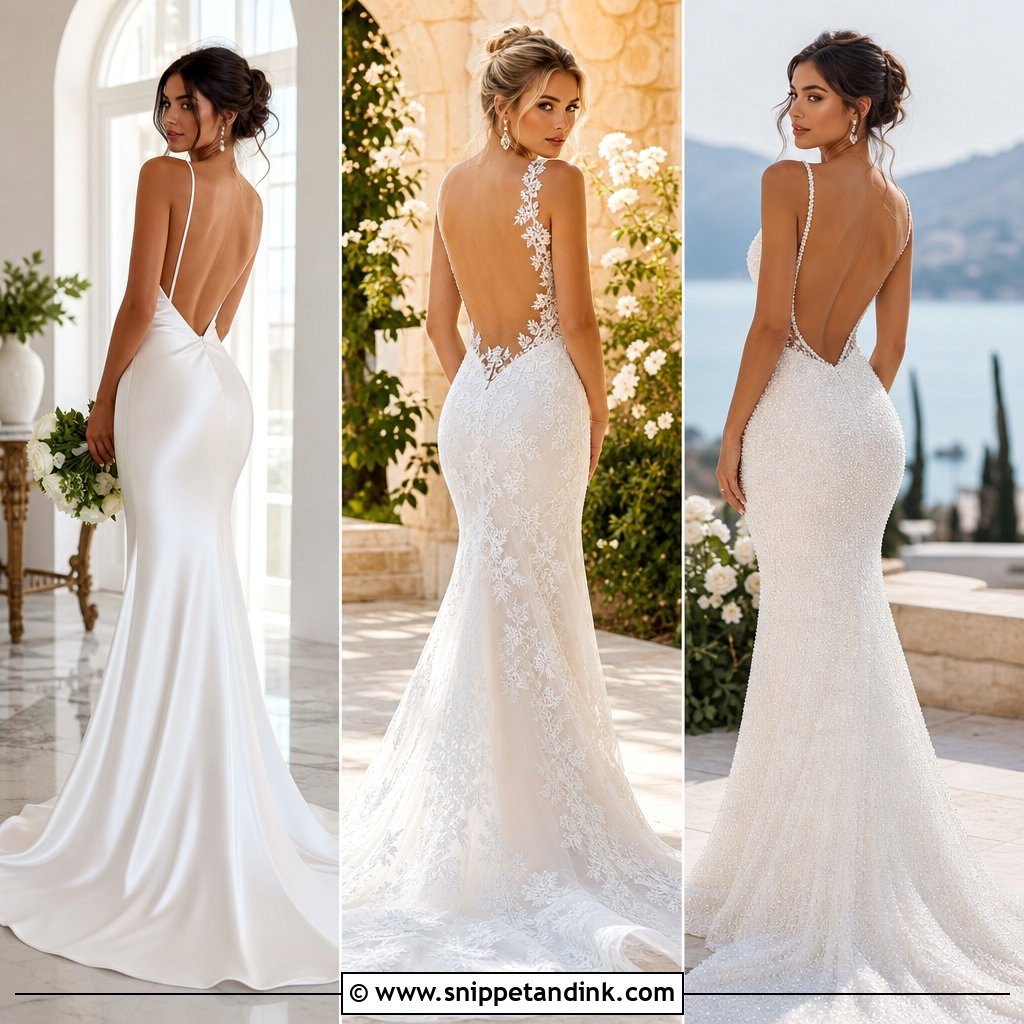
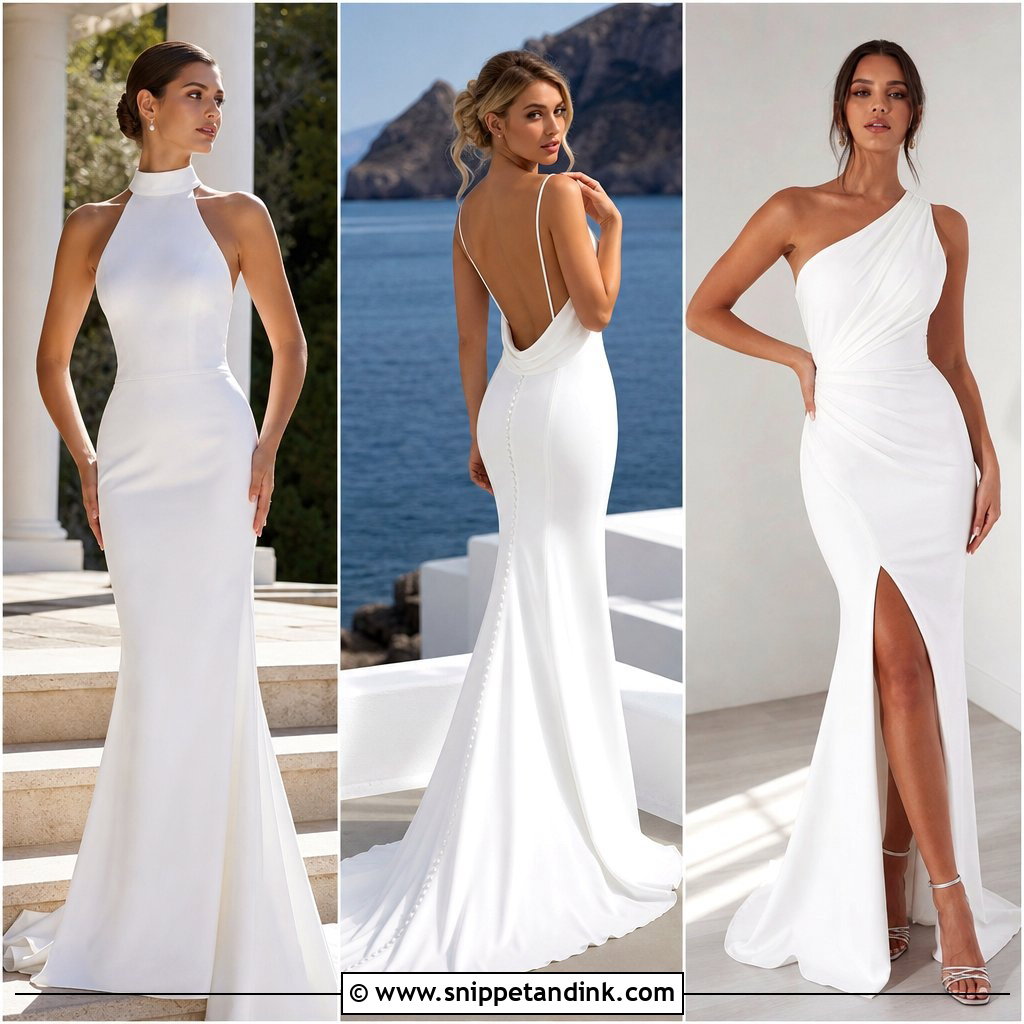
Slip gowns put the focus on you, not the dress. Bias-cut satin or fluid crepe follows your curves in one line from neckline to hem. Adjustable straps, a moderate V and gentle waist shaping are what to look for, and the skirt should skim, not cling. Slim pointed heels, sculptural earrings and a long single-layer veil suit it. The lack of structure means underwear and alterations need planning. On a shorter frame, bias-cut hems are tricky because the fabric can drop after cutting; let it hang for a while before the final hem, and do it in your exact shoes. A seamstress can add discreet cups if you need support.
10. Illusion Neckline Tulle Wedding Gown
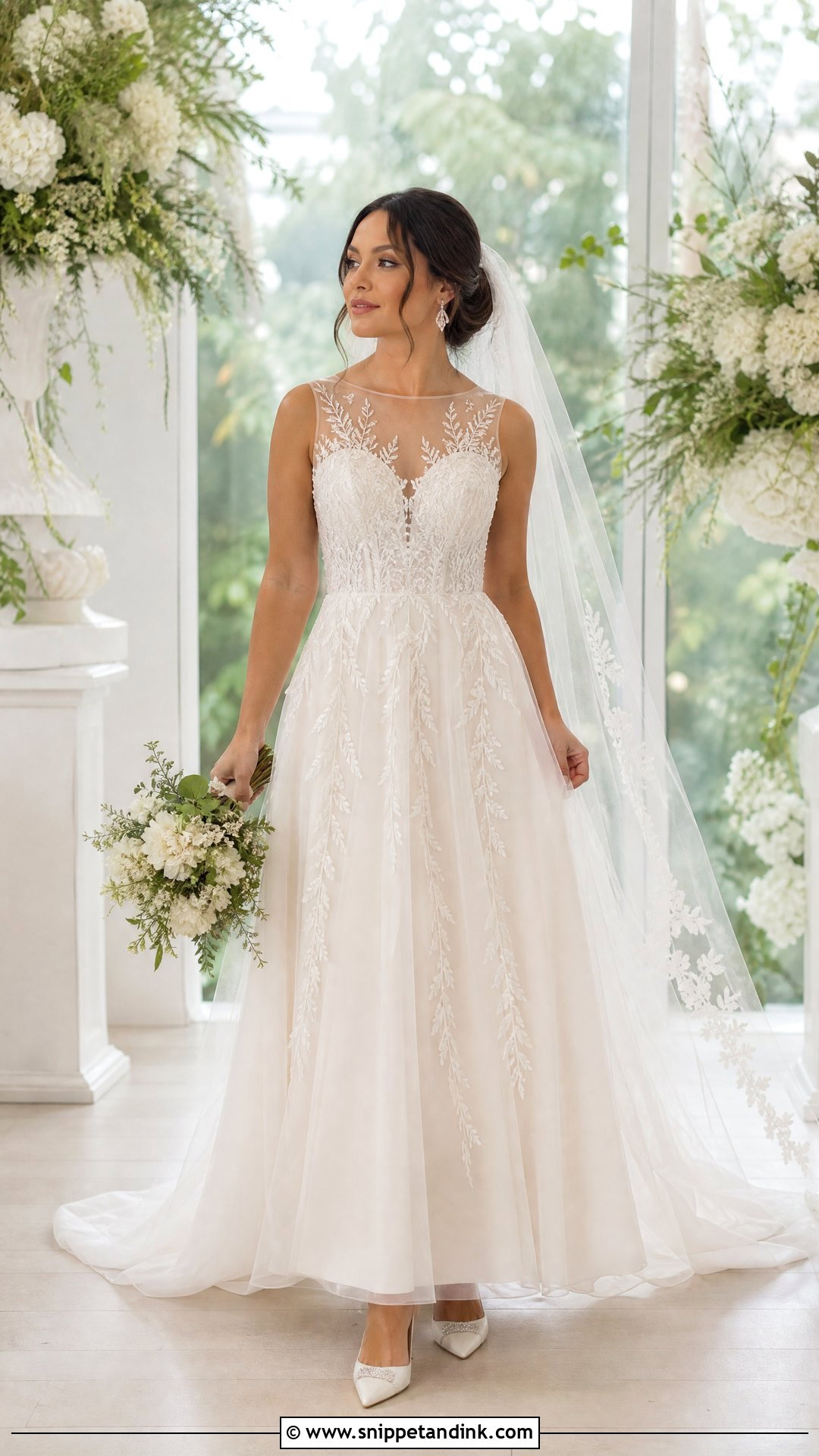
Illusion tulle gives coverage while keeping the upper body open, which helps a shorter bride look longer through the torso. Look for a sweetheart lining under a sheer neckline, with narrow appliqués running up toward the shoulders rather than a solid band of lace across the chest. A lightly gathered A-line or a narrow tulle sheath holds the shape without overwhelming you. Pointed heels, tiny crystal earrings and a veil with similarly small appliqués suit it, with hair lifted or swept back. Match the tulle to your skin tone and make sure it lies flat at the shoulders, as puckers show clearly in photos.
11. Off-the-Shoulder Trumpet Wedding Gown
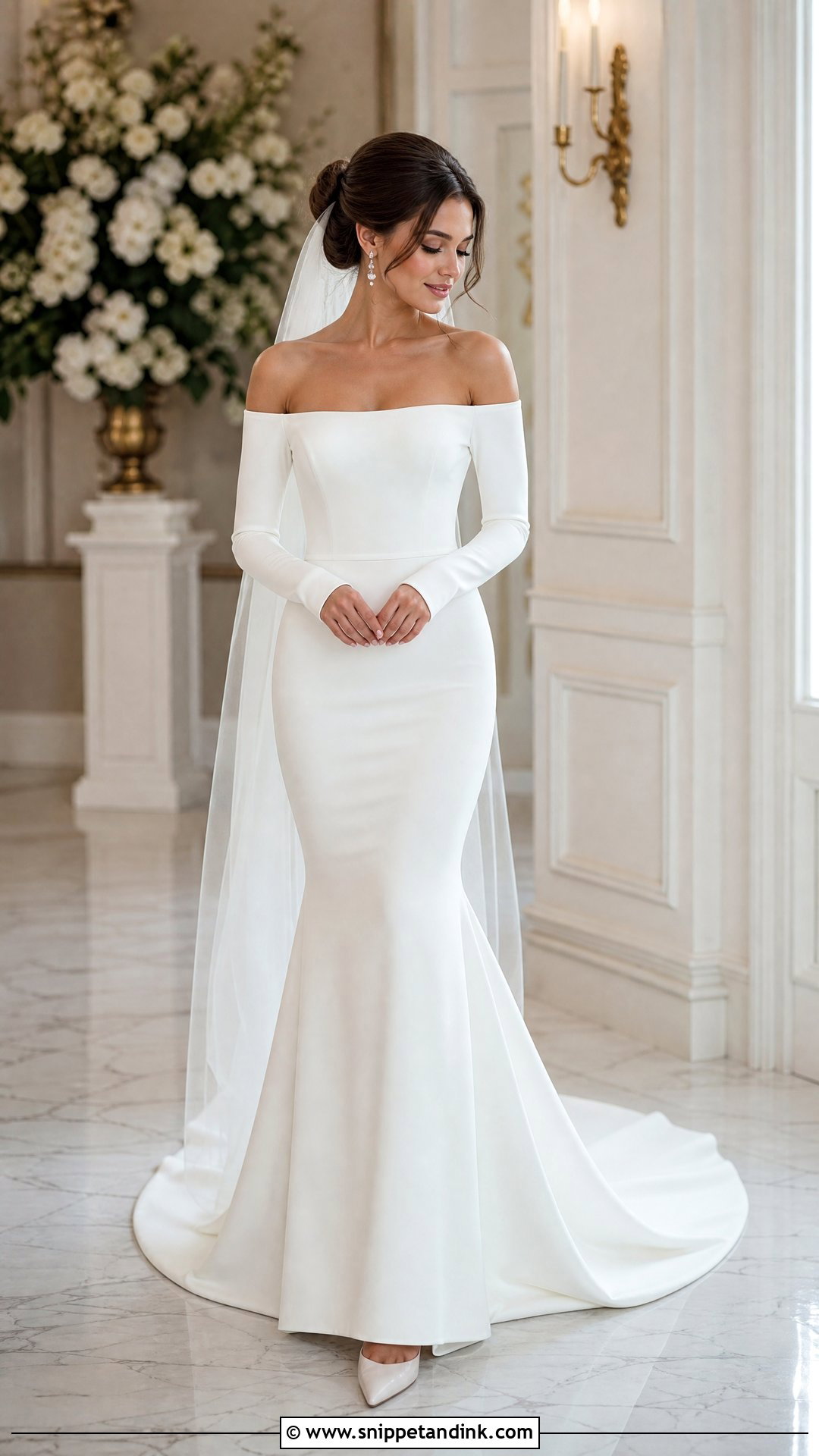
Off-shoulder trumpets show off the neckline and waist. Keep the fold or sleeve close to the arm. One that extends wide beyond the shoulders makes a petite frame look wider than tall. The gown should follow torso and hips, then open gradually above the knee, which gives you room to walk and keeps the legs long. Smooth crepe or satin is cleanest, with a touch of lace if you like. Pointed pumps, short drops and a veil under an updo work well. Test your arm movement before buying. A tailor can add a slim elastic or adjust the sleeve angle so it stays put.
12. Long-Sleeve Crepe Wedding Gown
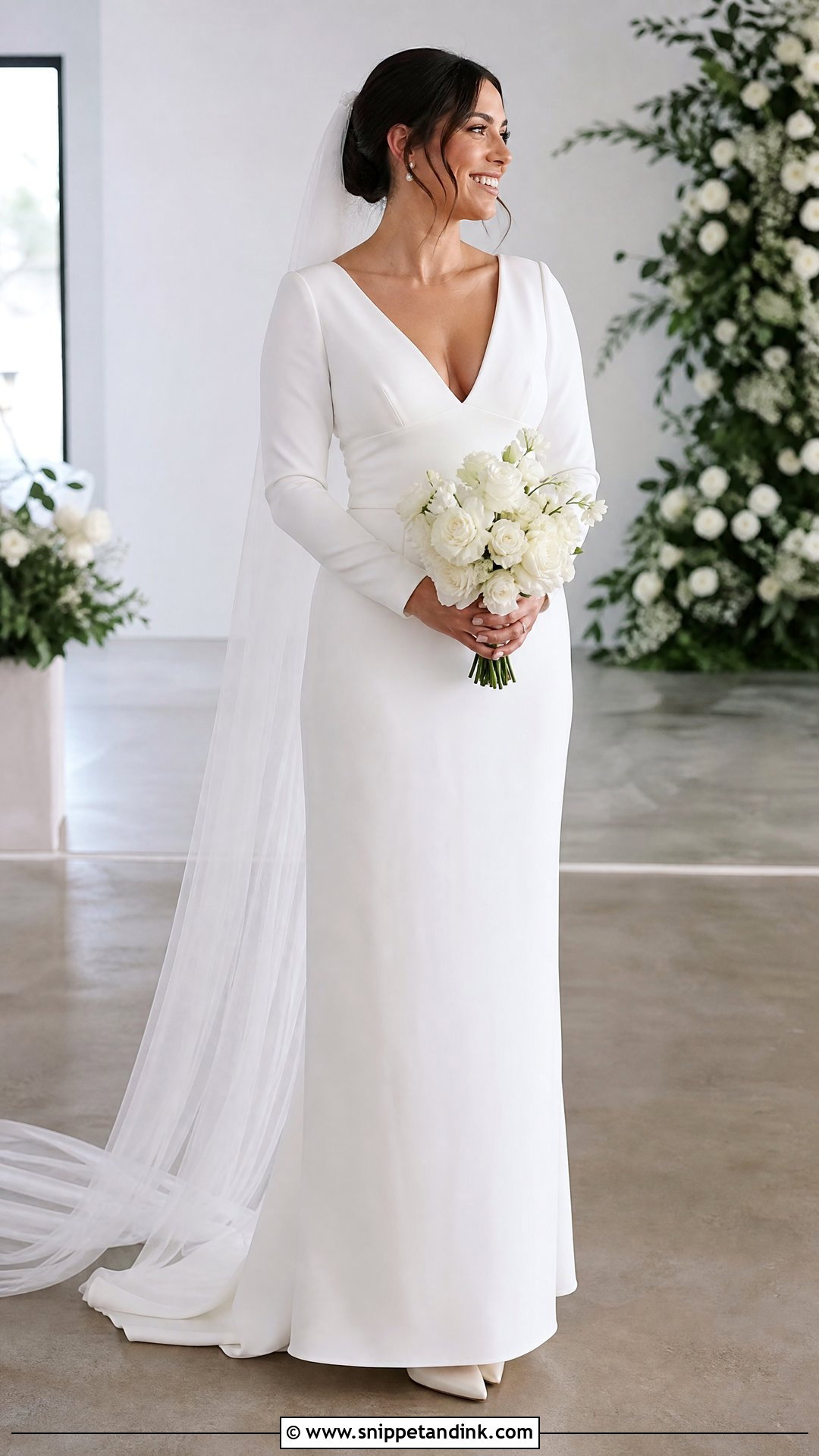
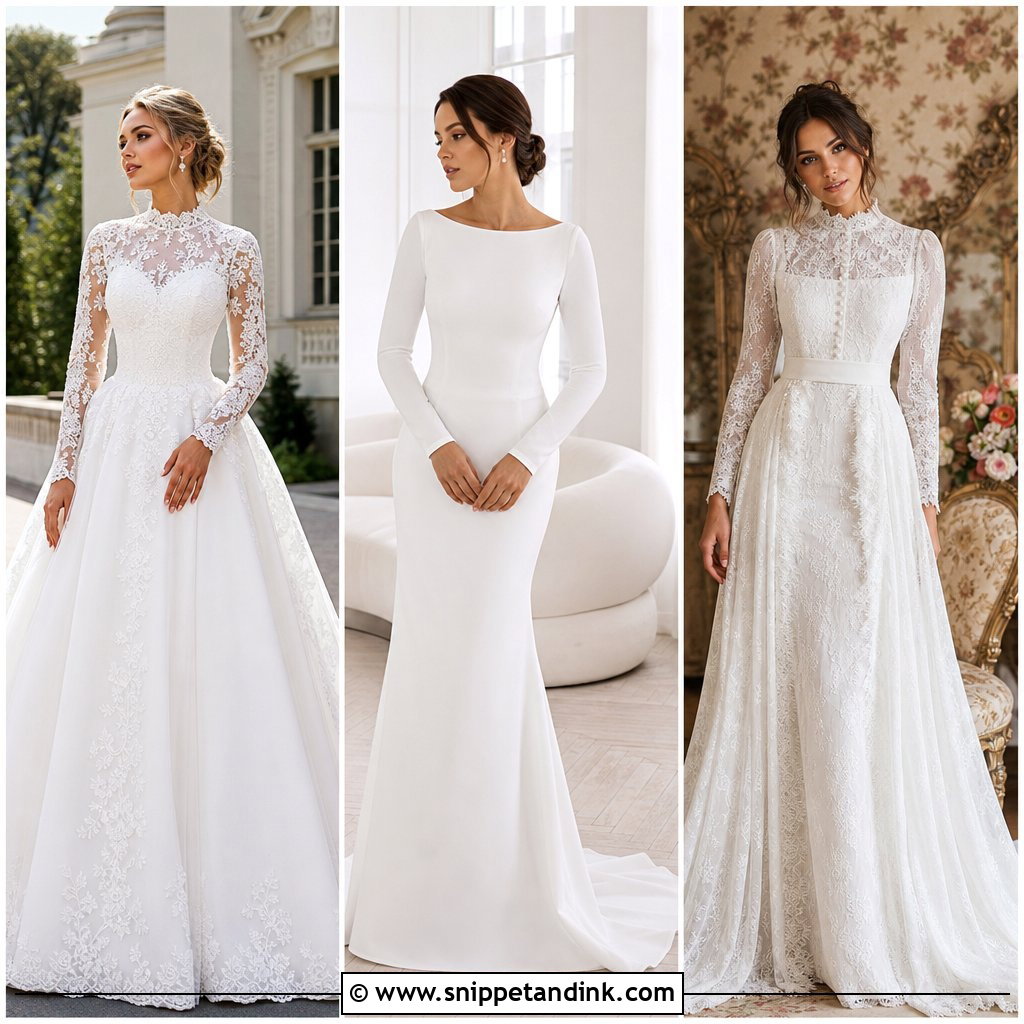
Long sleeves won’t swamp you if they’re narrow and the rest is clean. A fitted crepe gown with slim sleeves, a defined waist and a simple skirt creates one continuous shape, and a V-neck or open back balances the coverage. The sleeves should end exactly at the wristbone and lie smooth at the elbow. Extra length looks borrowed instantly. Pointed heels, pearl earrings and a narrow chapel veil complete it. I check shoulder width at the very first try-on. A sleeve and armhole that are wrong for your frame are a much bigger job to alter than a hem.
13. Corset-Bodice A-Line Wedding Gown
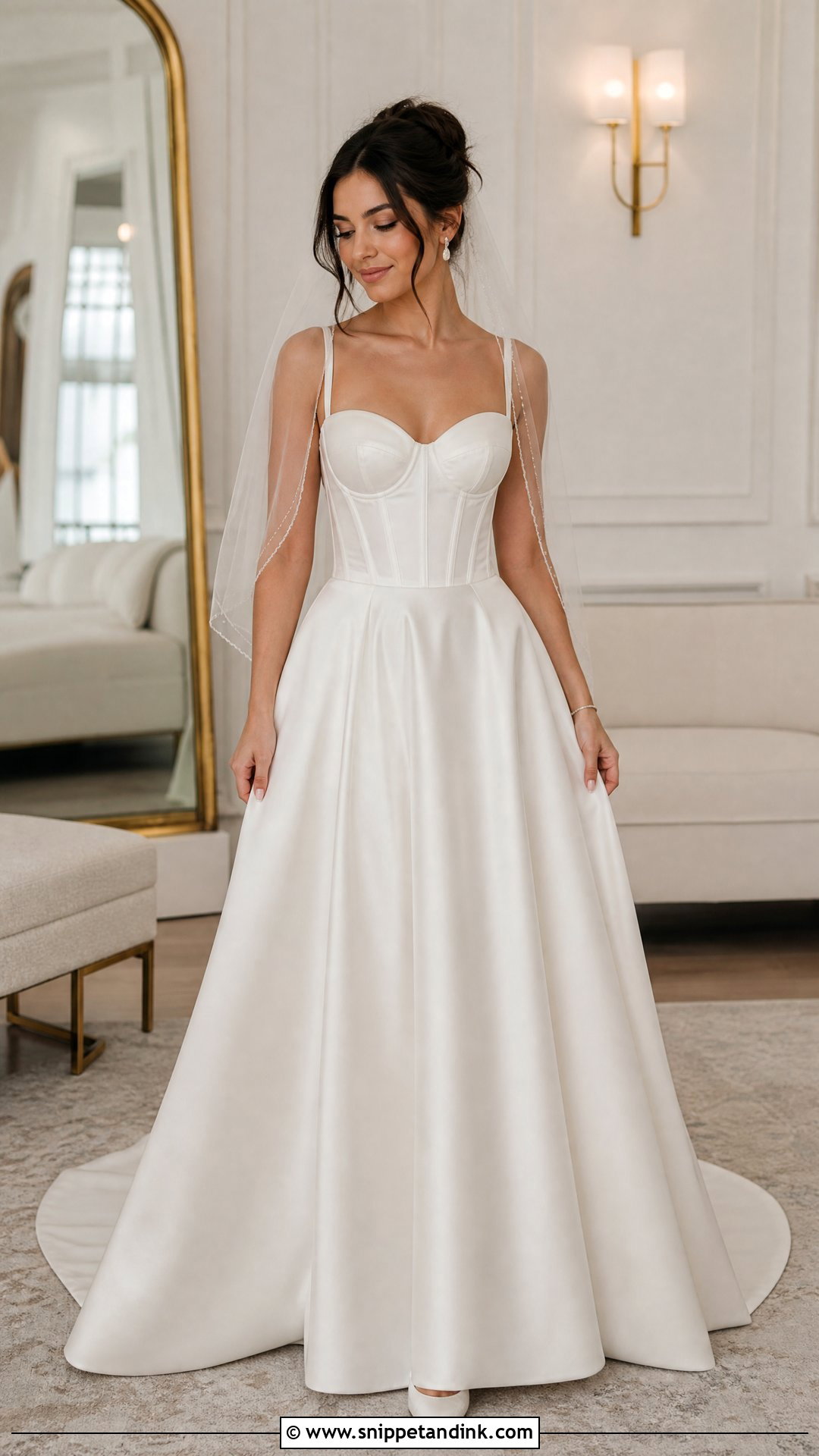
Corset bodices give shape and security, and vertical boning draws the eye upward. The catch for a petite bride is bodice length. A corset made for a longer torso ends low and digs into the hips when you sit, so the bodice may need shortening from the waist seam. Pair it with a soft satin or tulle skirt that widens gradually, and leave big bows, thick belts and waist embellishment off. Closed-toe heels, a tennis bracelet, small earrings and a fingertip veil suit it. Visible corsetry reads modern, a lined bodice traditional, and both work once cups, boning and seam are fitted to you.
14. Plunging-Neckline Wedding Gown
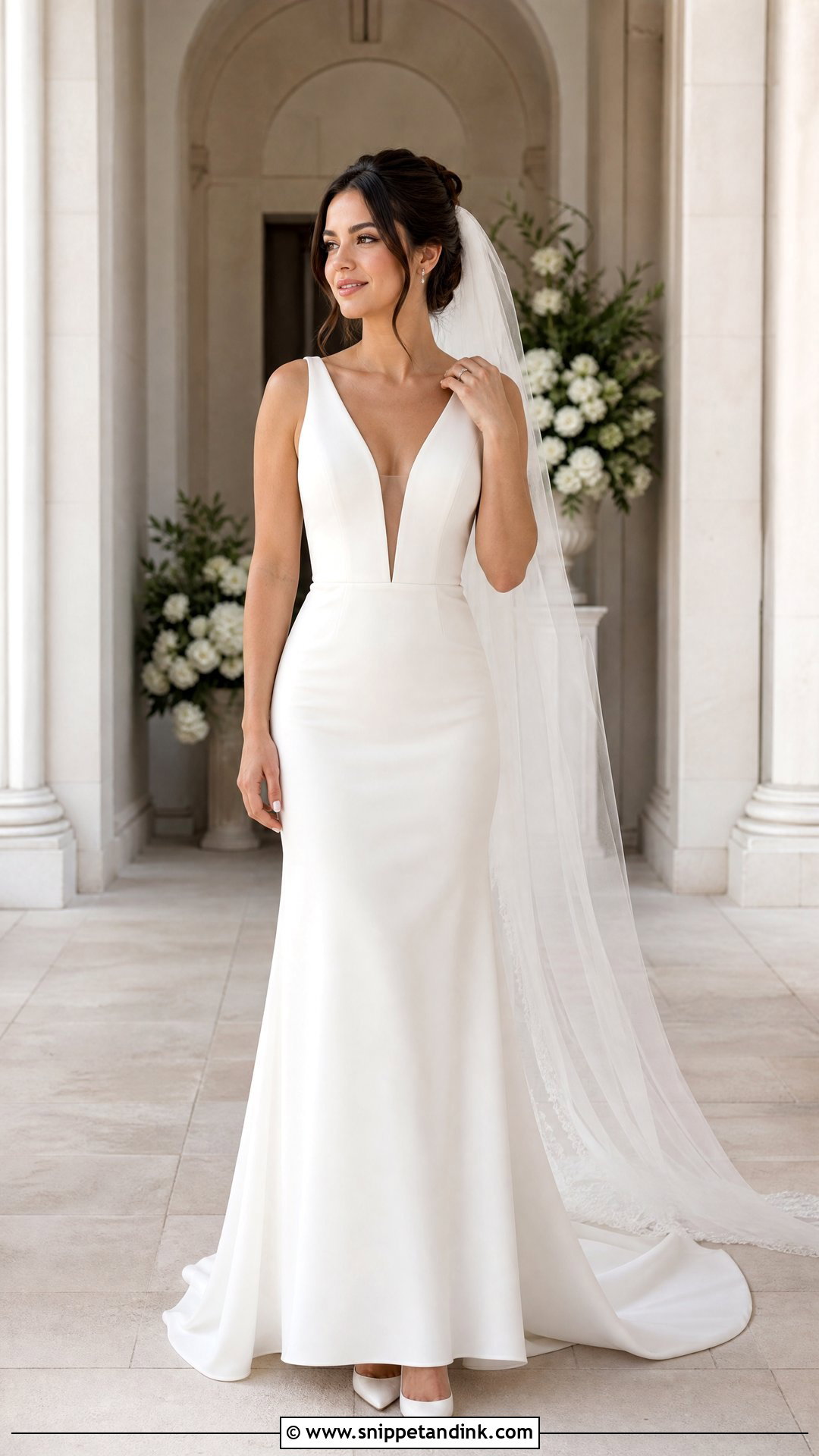
A controlled plunging neckline draws a strong vertical line and makes the upper body look longer. It needs supportive side panels, secure illusion mesh and a depth you’re comfortable with as you move. A narrow A-line or fitted skirt keeps the attention on the neckline. Smooth crepe, satin or fine lace works; avoid stacking heavy textures. Pointed heels, small earrings and a veil set at the back of the head finish it, with no necklace. Walk, sit and lean forward at the fitting. Tape helps a little, but the structure inside the bodice is what really holds a plunge in place.
15. Cap-Sleeve Lace Wedding Gown
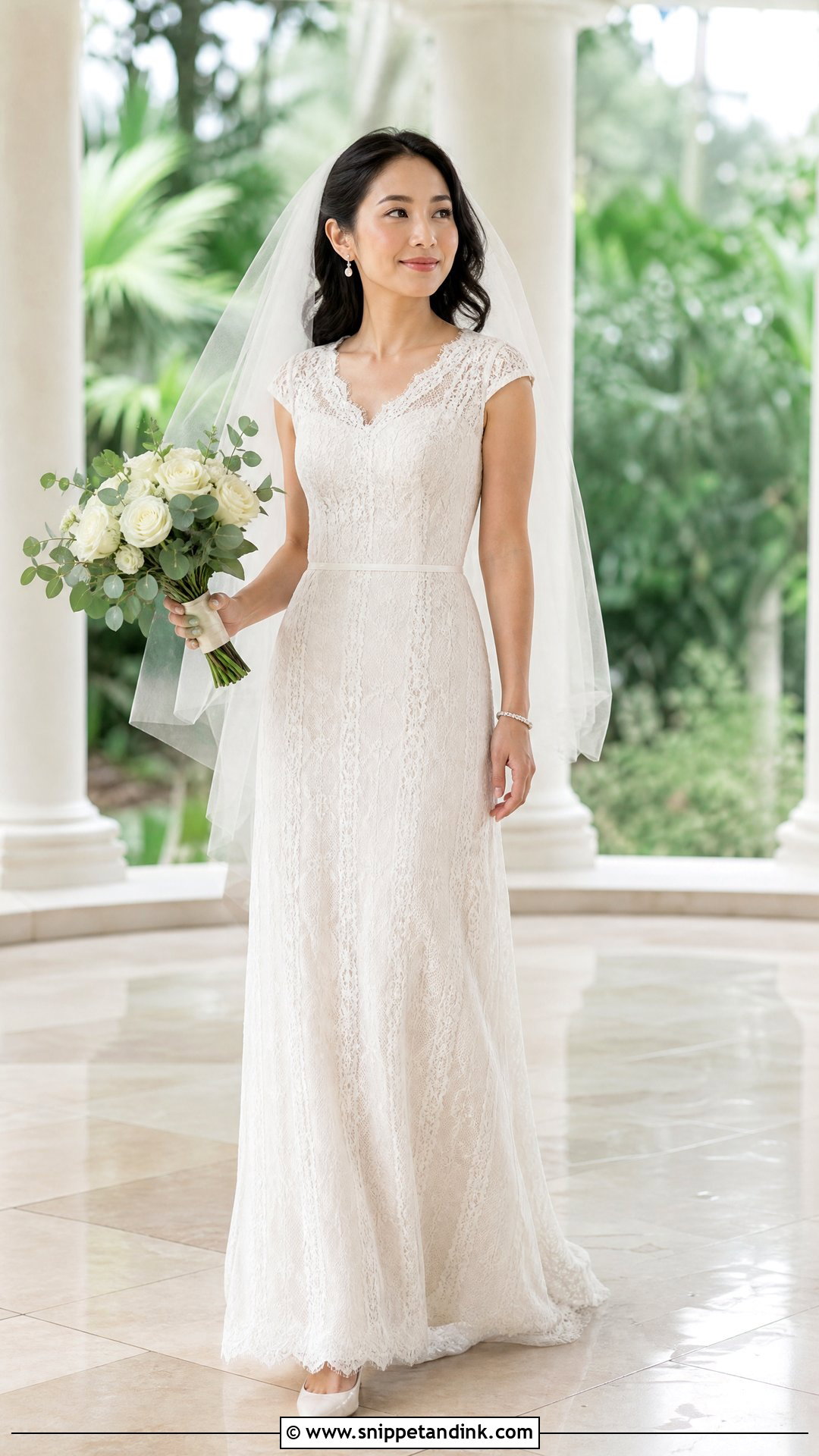
Small cap sleeves and fine lace give a little coverage without hiding the shoulders. Look at the lace pattern: motifs running vertically or diagonally lengthen you, while wide horizontal rows do the opposite. A fitted bodice and narrow A-line keep it balanced. The sleeve should sit close to the shoulder, not stand out stiffly. Low pointed heels, pearl earrings, a slim bracelet and a plain tulle veil are enough if the lace is busy. Lace alterations on a petite gown often mean lifting and repositioning motifs at the hem and waist, so choose a seamstress who does appliqué work regularly.
16. Basque-Waist Wedding Gown
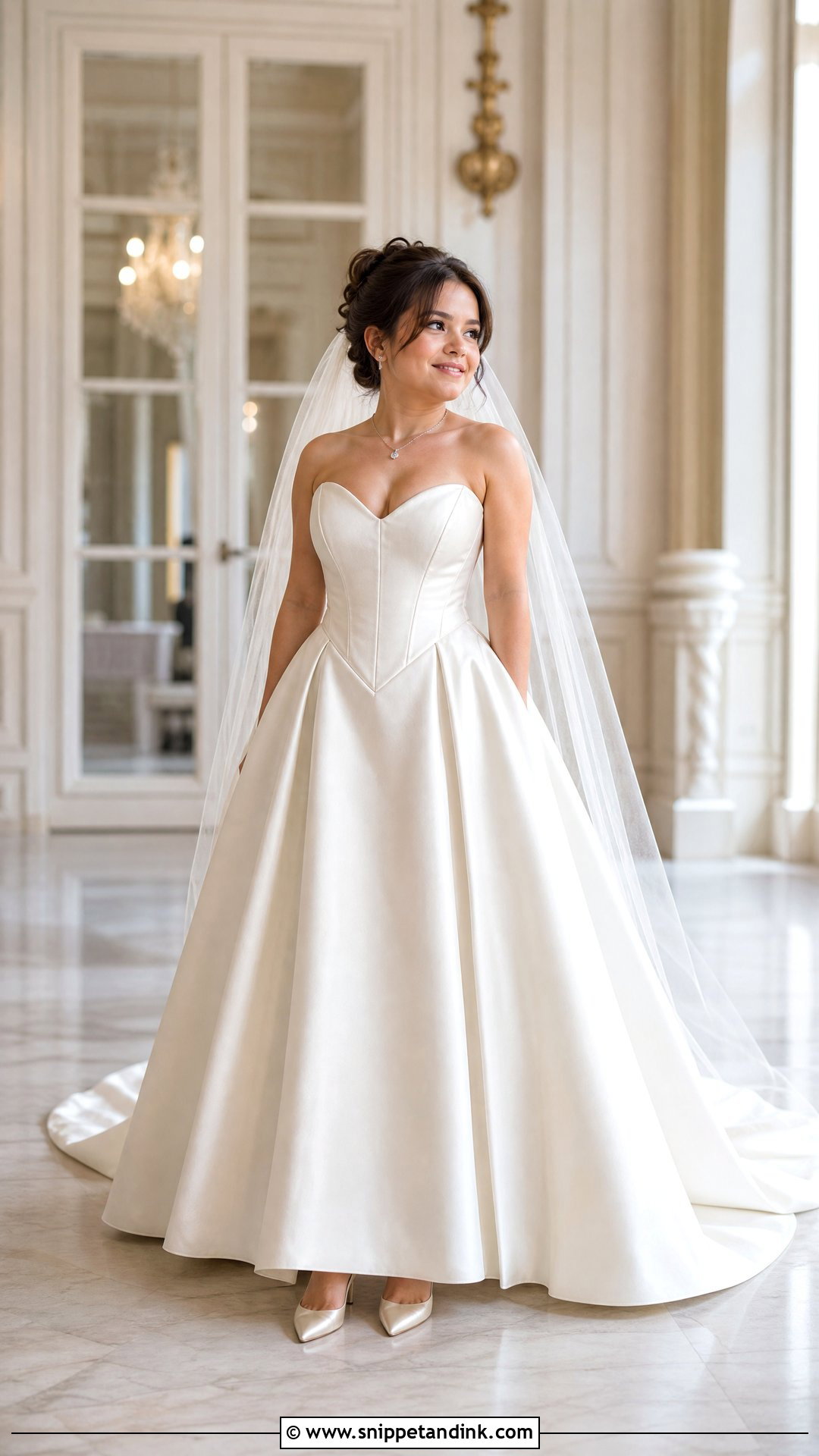
Basque waists dip to a soft point at center front and can add length to the torso when the point is subtle. On a petite frame, a compact bodice over a moderately full A-line works better than an extremely wide court shape, which buries a shorter bride. Smooth satin or mikado makes the construction look deliberate. Pointed heels, a delicate choker or short necklace and a long simple veil suit it. Ask for side pleats to be kept flat so the skirt doesn’t jut from the hips. Sit at the fitting to check the point stays centered and doesn’t buckle.
17. Minimalist Mermaid Wedding Gown
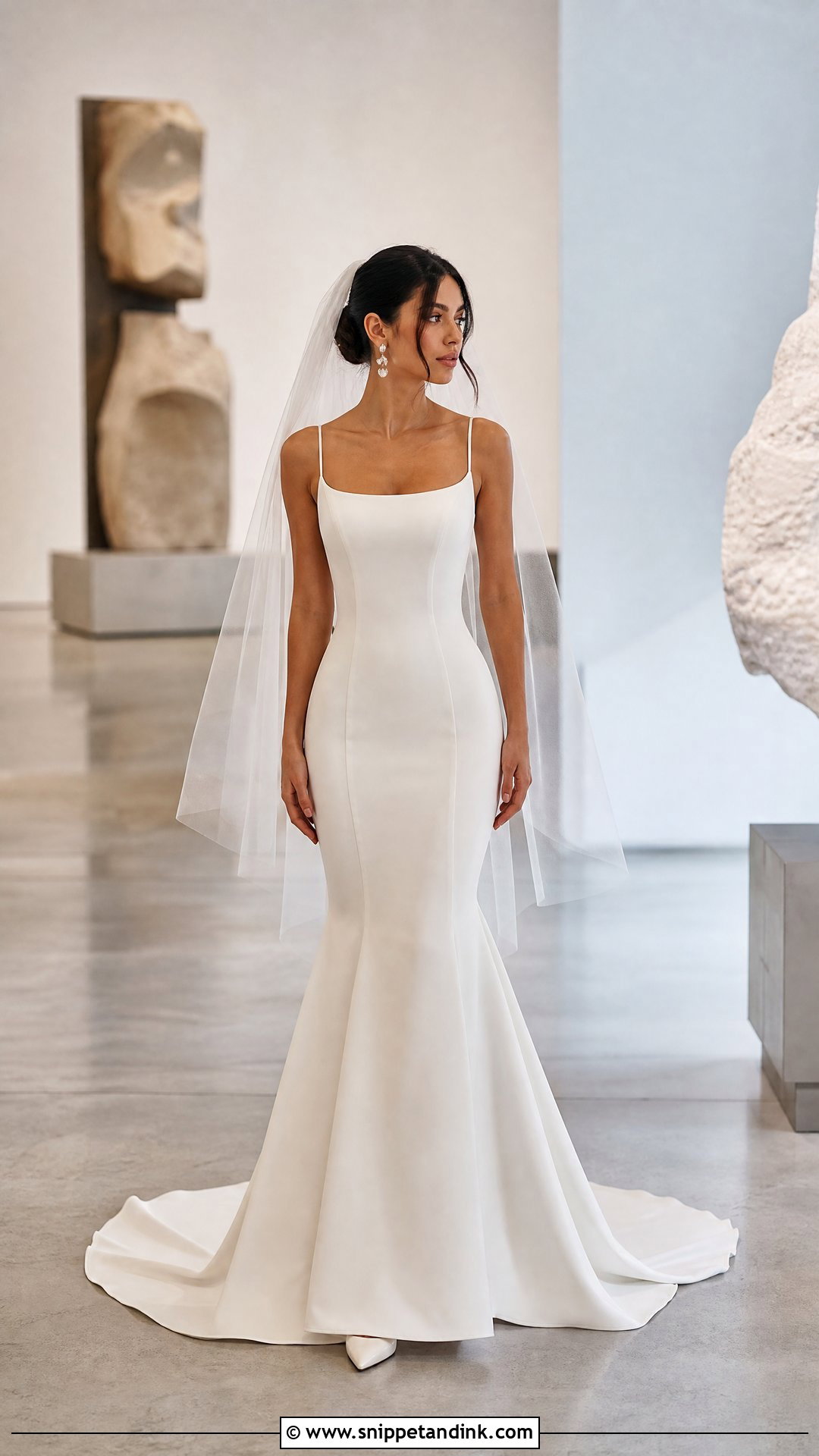
Minimal mermaids rely on shape, and on a petite bride the release point should be above the knee, flowing into a moderate train. A flare that starts too low shortens the legs and makes walking hard. The bodice should follow waist and hips smoothly, with princess seams for structure, and a scoop, V or strapless neckline depending on the support you need. Pointed pumps, statement earrings and a plain veil keep it clean. Skip oversized appliqués and ruffled hems together. Practice walking and climbing a step, and ask for a neat bustle plus enough room at the knee for the reception.
18. Detachable Overskirt Wedding Gown
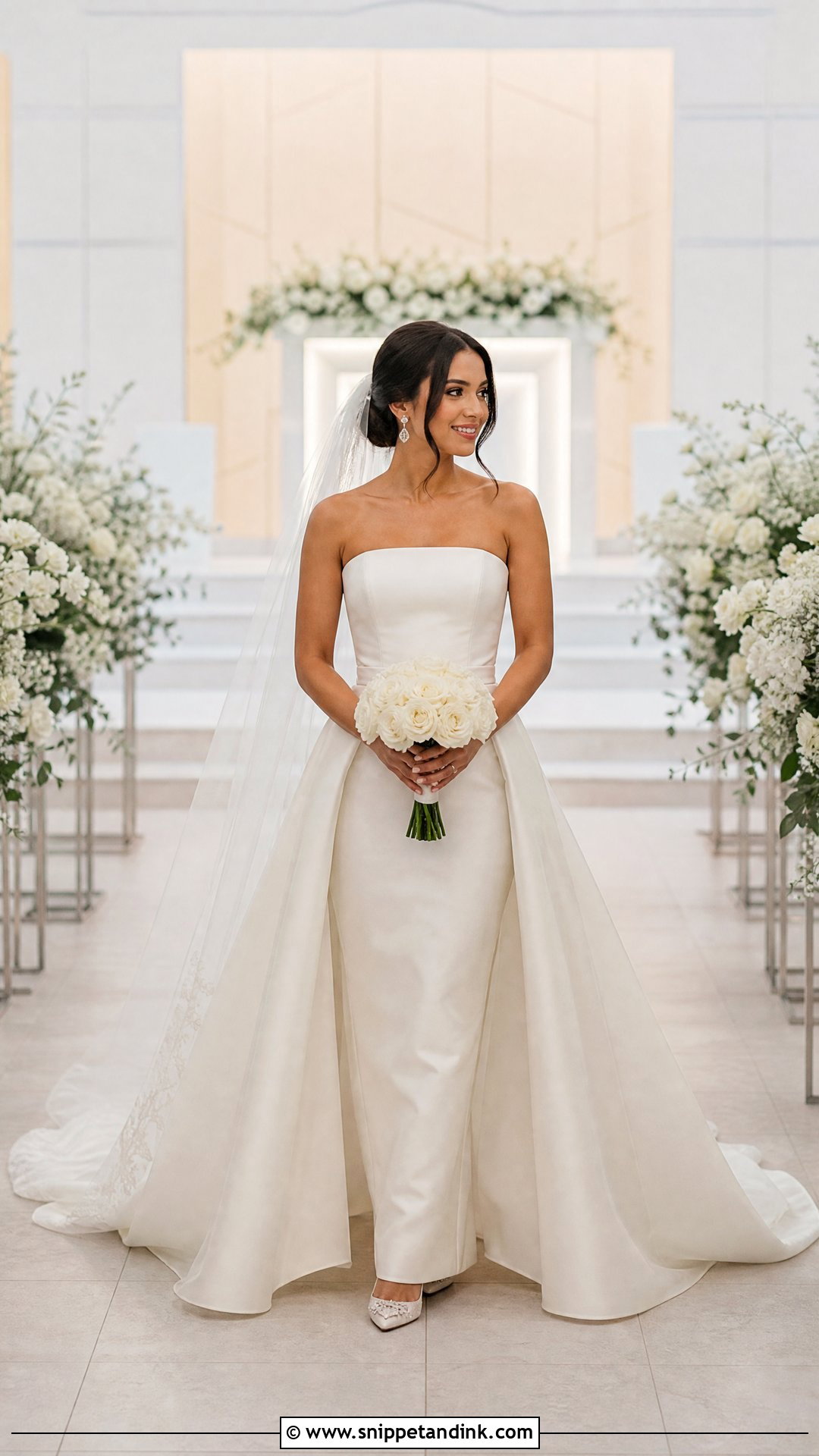
A detachable overskirt gives you two silhouettes without a full change. Start with a fitted column, sheath or fit and flare base cut to your proportions, then add a light overskirt at the natural waist for the ceremony, which reads as an A-line with a train. Petite brides should keep its volume controlled and the gathering minimal, otherwise the overskirt swallows you. The attachment needs to lie flat without a thick band. Pointed heels and refined earrings suit both looks. Rehearse removing it with your helper before the day.
19. Short Bridal Mini Wedding Gown
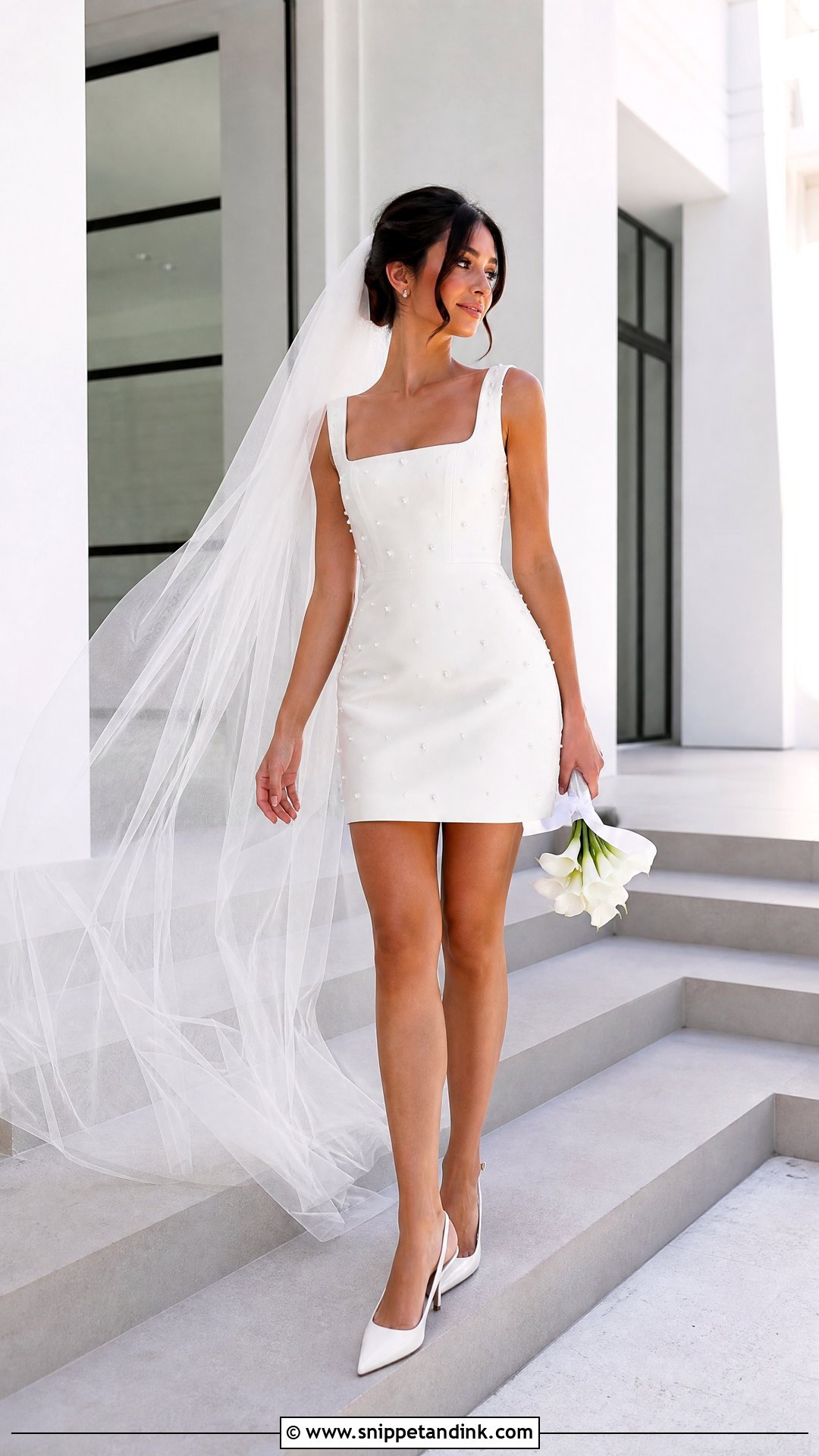
A bridal mini shows off your legs fully and feels confident and playful. Choose a hem you’re comfortable in and a tailored shape that still reads as bridal: a structured shift, a square-neck mini or a soft flare. Balance the short hem with a bridal detail such as pearl embellishment, a detachable bow or a dramatic veil. Pointed pumps, slingbacks or simple block heels suit it, though chunky shoes interrupt the leg line. Minis are no longer just the after-party dress, and I’ve seen them carry a whole ceremony when the accessories are formal enough. Bend and sit at the fitting to check the back hem.
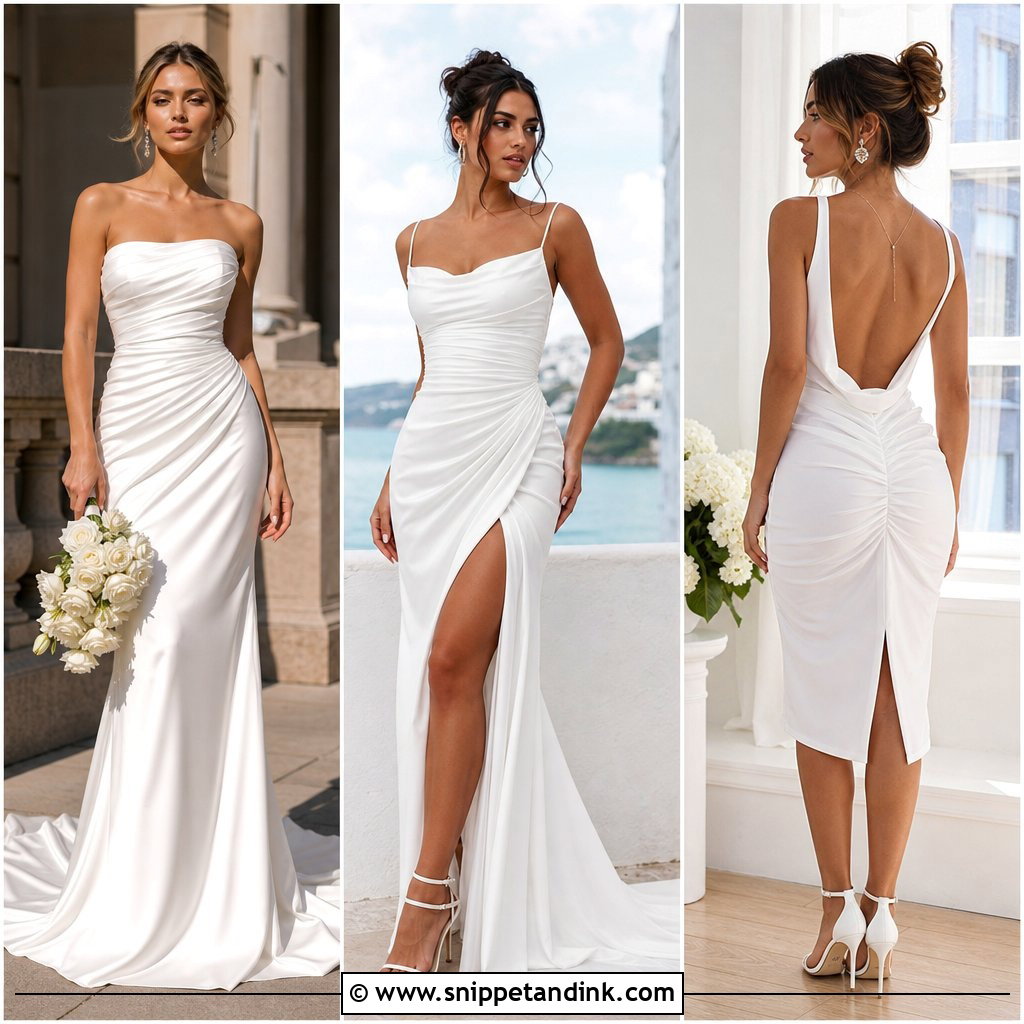
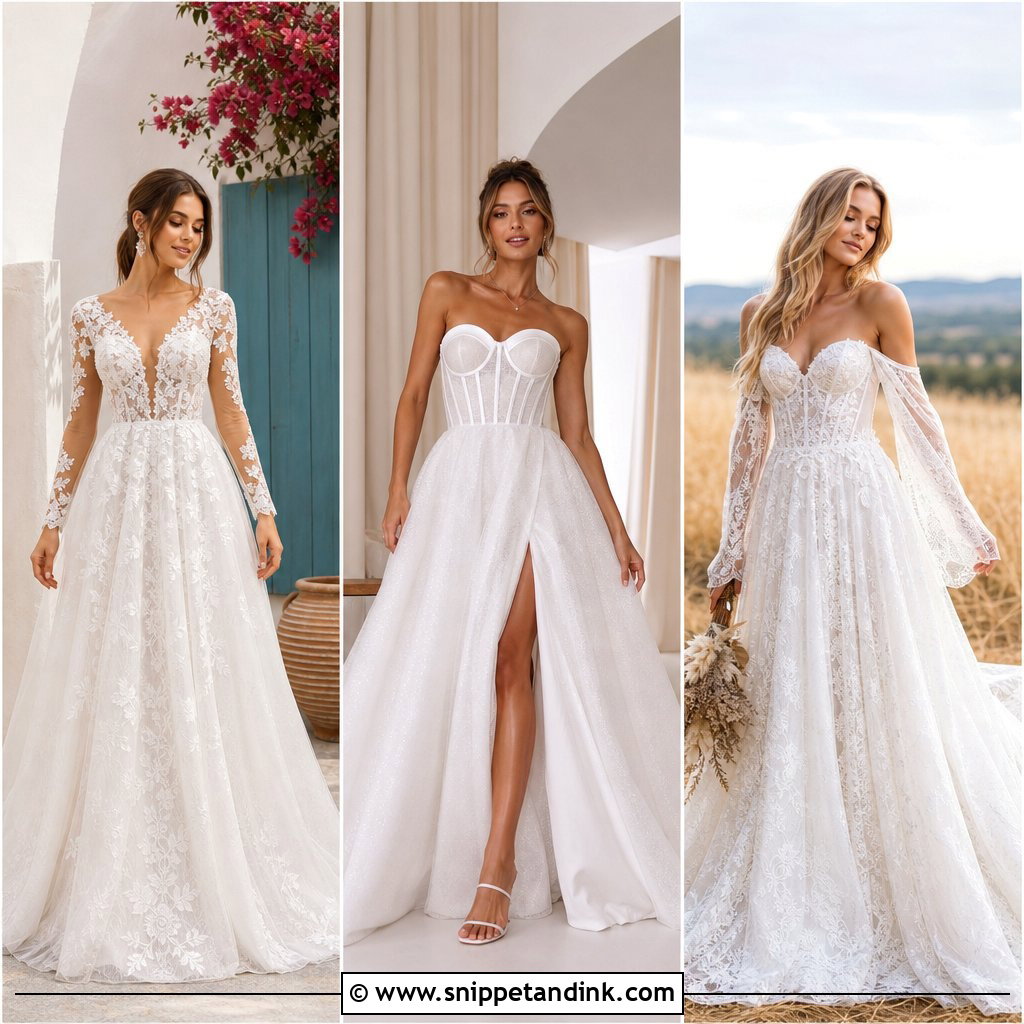
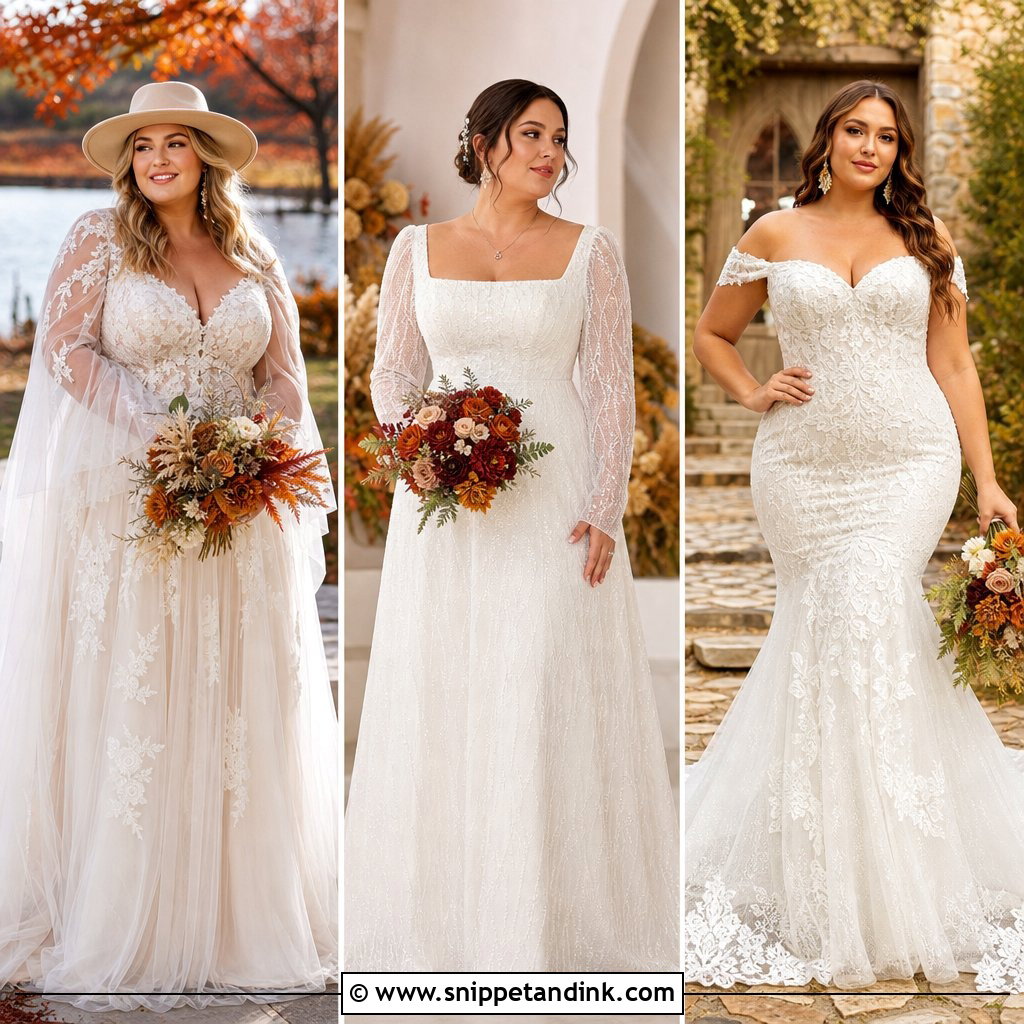
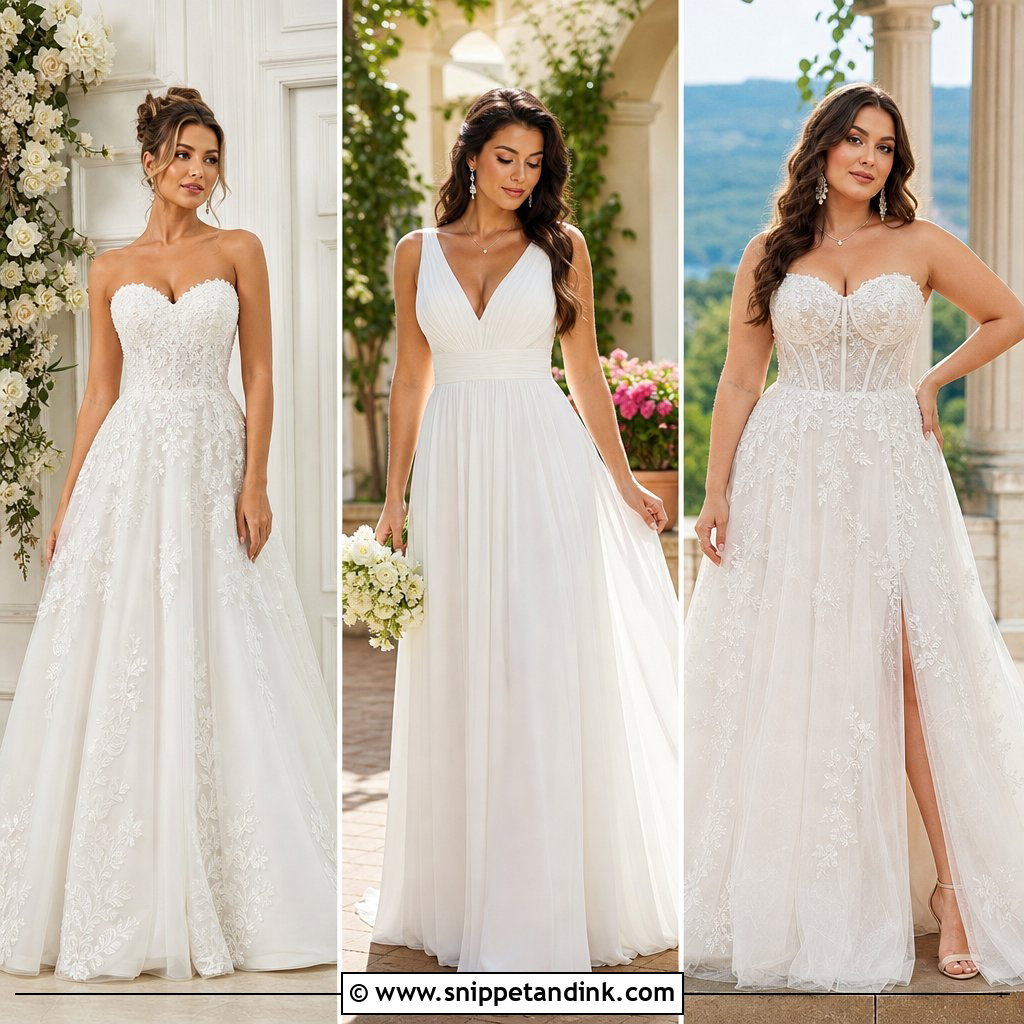
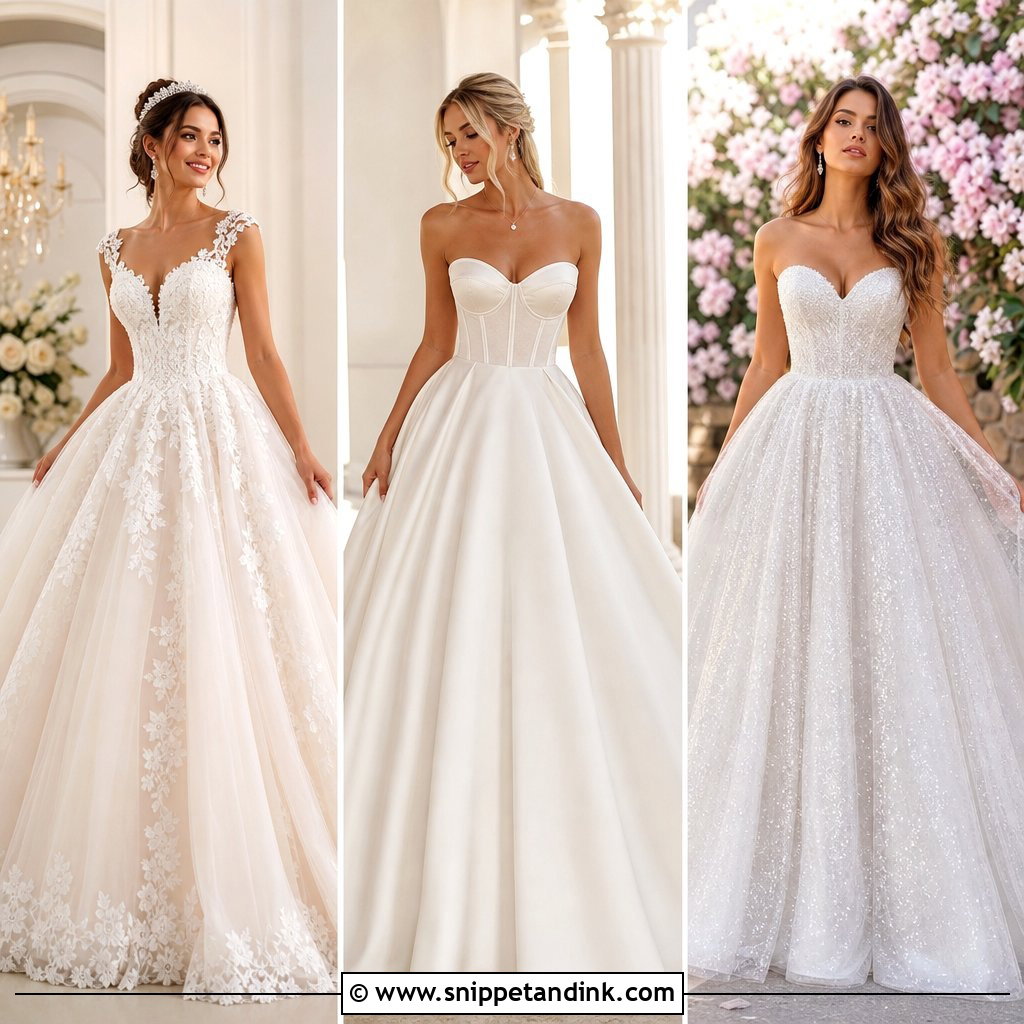
20. Petite Ball Gown Wedding Gown
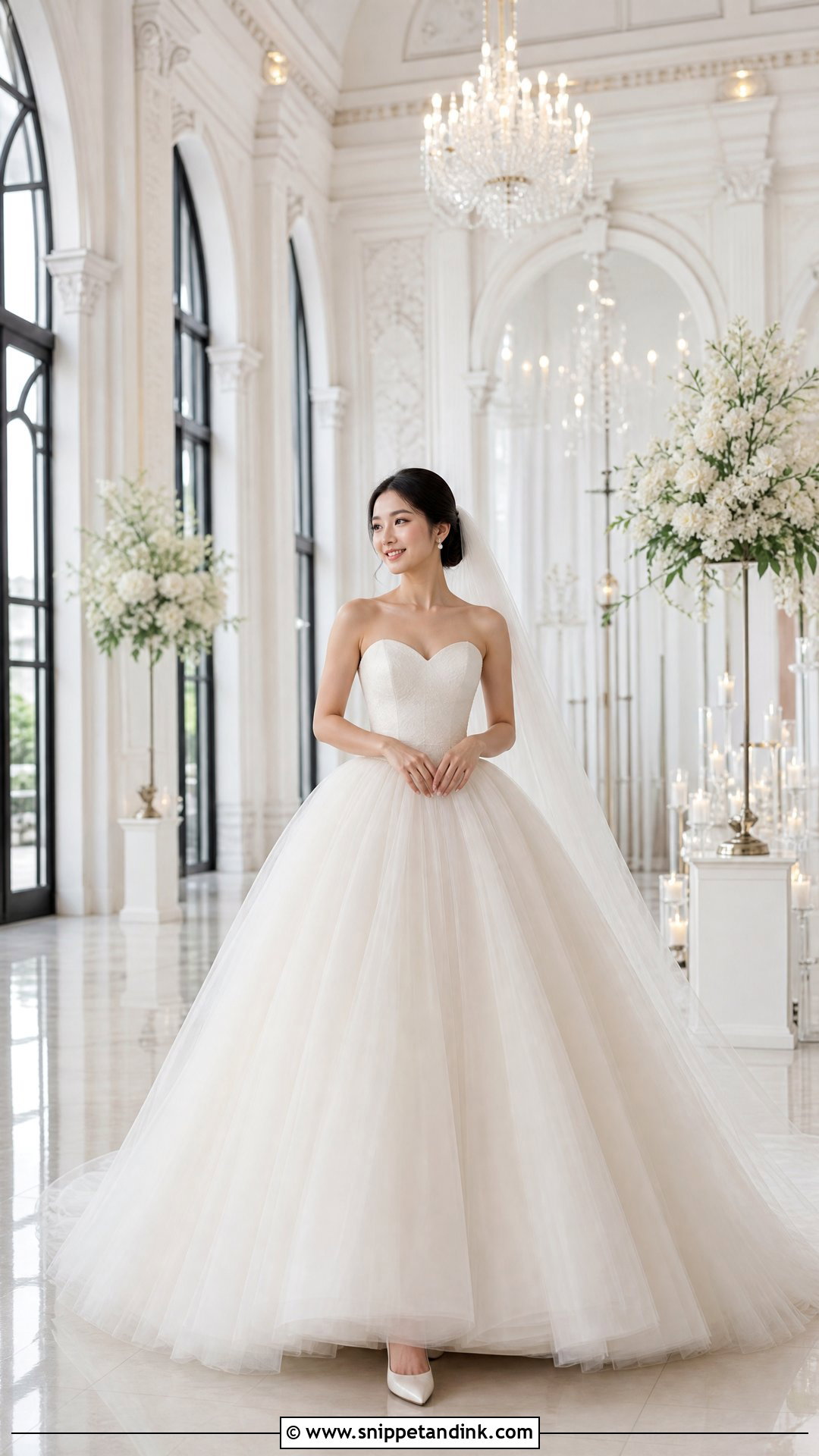
Yes, short brides can wear ball gowns. The skirt should gain fullness gradually rather than jut straight out from the hips, and lightweight tulle gives volume without the weight of stiff petticoats. A fitted bodice at your true waist and a V, sweetheart or narrow strapless neckline keep the top defined. Comfortable heels, a simple tiara or pearl earrings and a long minimally trimmed veil are enough. Don’t stack a huge skirt, a heavily embellished bodice, a wide belt and a thick-edged veil. Ask whether some underskirt layers can come out during alterations. That one change often turns an overwhelming ball gown into the right one.
Shoes Decide the Hem, So Buy Them First
Every floor-length hem is set to a particular heel height, and changing shoes after the final fitting means the dress either drags or shows your ankles. For petite brides that’s a bigger deal, since a lot of you will be in a higher heel than you wear day to day.
What I’d plan
Buy your wedding shoes before the first fitting and wear them to every appointment. If you’ll switch to flats for dancing, tell the seamstress. She can set the hem to a compromise or add a bustle that lifts the front a little. Break the shoes in around the house first; a heel you can’t stand in by the second hour usually gets kicked off, and then the hem drags anyway.
Platforms are a good petite option under a long skirt. They add height with less pitch than a stiletto, so you’ll stand straighter for longer. Nobody sees them under the gown.
One more thing to settle before the hem is pinned: whether the front should touch the floor or float just above it. I usually suggest a fraction of an inch of clearance at the front for petite brides, because a front hem that brushes the ground catches under the toe on every step, and that’s the moment a short bride trips.
Scale the Details to You, Not the Sample
Petite brides aren’t limited to one silhouette. A-lines, columns, minis, fitted gowns and carefully scaled ball gowns can all work. Focus on waist placement, skirt volume, vertical details and tailoring across the whole gown rather than just the hem. Bring your wedding shoes and undergarments to every fitting, take photos from a few angles, and walk and sit before deciding. Treat the usual petite advice as a starting point, then trust the mirror and a precise fit over any rule.
You'll Like These Ideas:


Leave a Reply