
A gown is easier to judge as a full outfit than as a hanger of fabric. That’s how I lay out every look below: the dress, then the shoes, earrings, veil and hair that make it work, plus the fitting checks I’d run before you sign an order. In the salon right now I’m pulling a lot of Basque waists, square necklines, sculpted draping and structured fabrics, yet the classic A-line and ball gown haven’t gone anywhere. None of that matters if you can’t sit, walk and hug people in the dress. Read through with your venue and your season in mind, and notice which shapes you keep returning to.
What to Pack for Your First Gown Appointment
Most salon appointments run about an hour to ninety minutes, and you’ll try on more dresses than you expect. A few things make that time count:
- A strapless nude bra or bodysuit and no-line underwear, so you can judge necklines and backs properly.
- Shoes close to the heel height you plan to wear. Samples are long, and standing on tiptoe in socks tells you nothing.
- Photos of the venue, the aisle and the reception room. I choose fabric weight very differently for a barn in August than for a ballroom in January.
- A firm budget that already includes alterations and a veil, which can add a noticeable amount to the total.
- Two or three people whose opinion you trust, not eight.
Expect samples that don’t fit you. Salons stock one size per style and clip it on with clamps, so look at the shape and fabric, not the gaps. And order early: many made-to-order gowns take several months to arrive, before any alterations start.
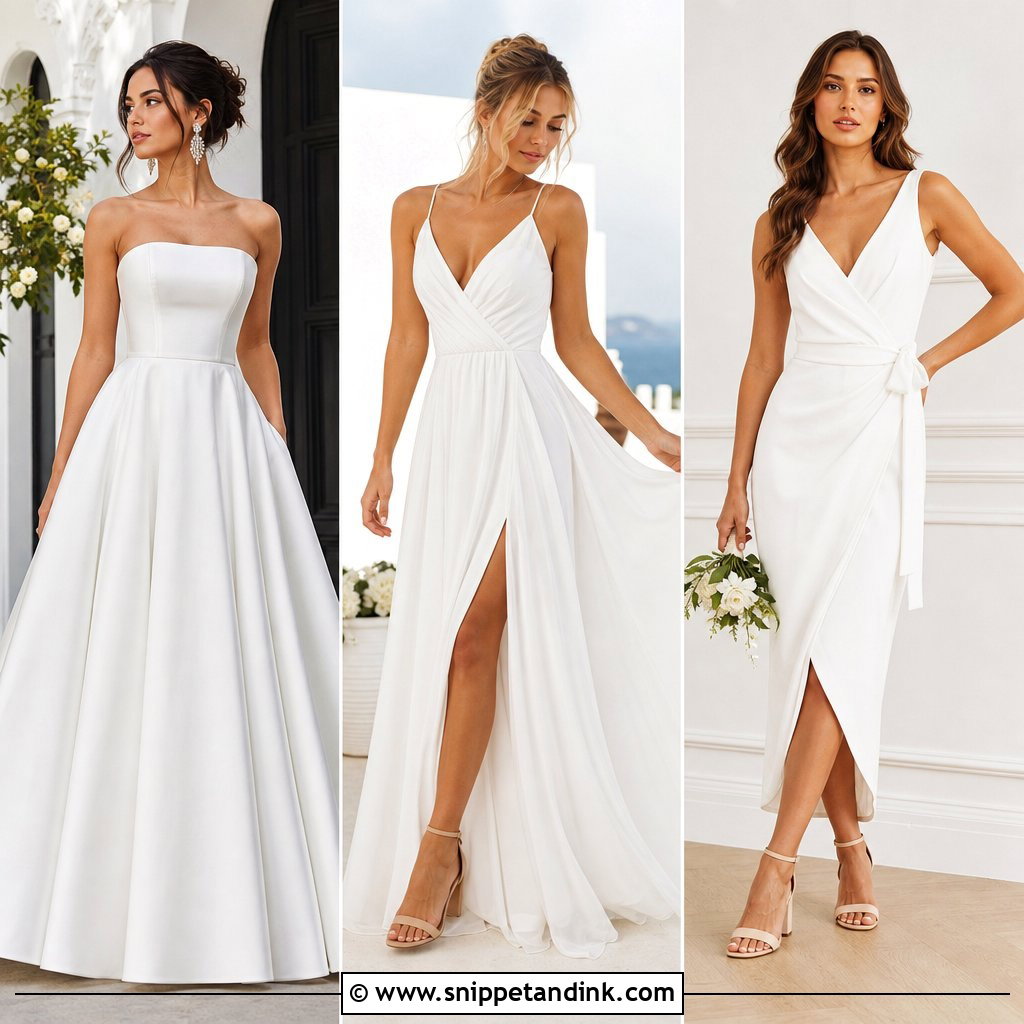
1. Satin A-Line Long Wedding Dress
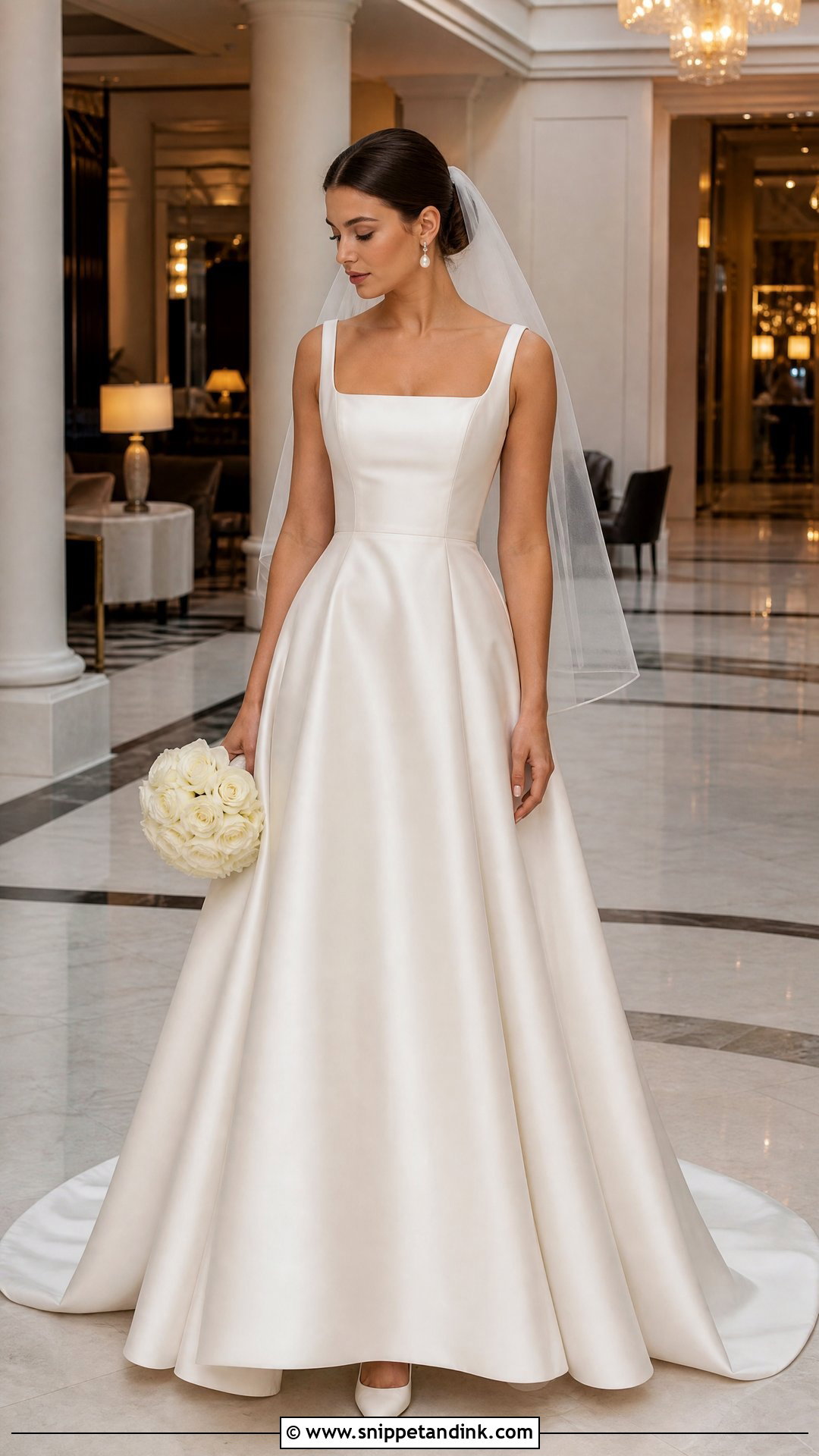
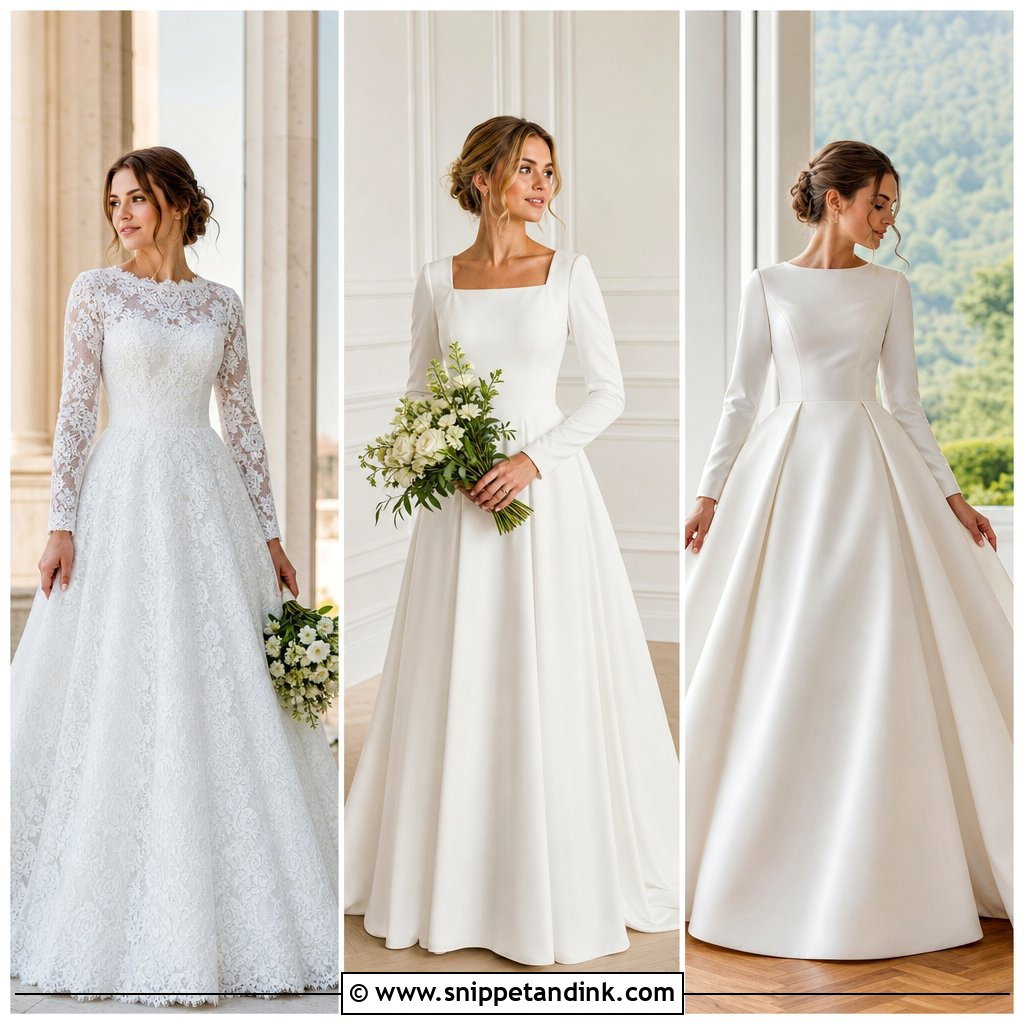
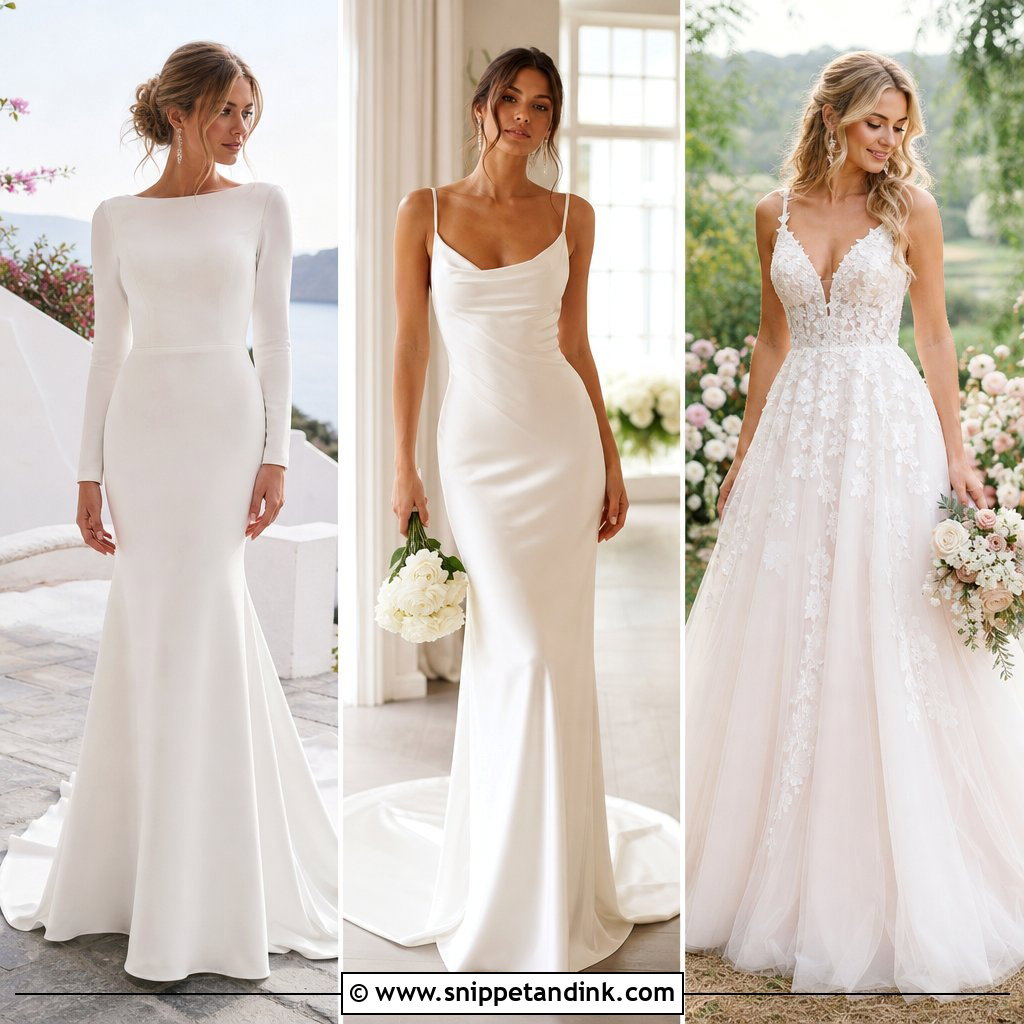
Satin A-lines are the dresses I reach for when a bride says she wants clean but not plain. A structured bodice with a square or soft scoop neckline shows the collarbone, and the skirt skims the waist before widening, so you can walk without kicking fabric. Satin is unforgiving about fit, though. A waist seam that’s a centimetre off will show as a ripple in every photo, so book a good seamstress before you book anything else. Pointed ivory pumps, pearl earrings and a medium veil are all it needs. Add a satin bolero or removable sleeves if the ballroom runs cold.
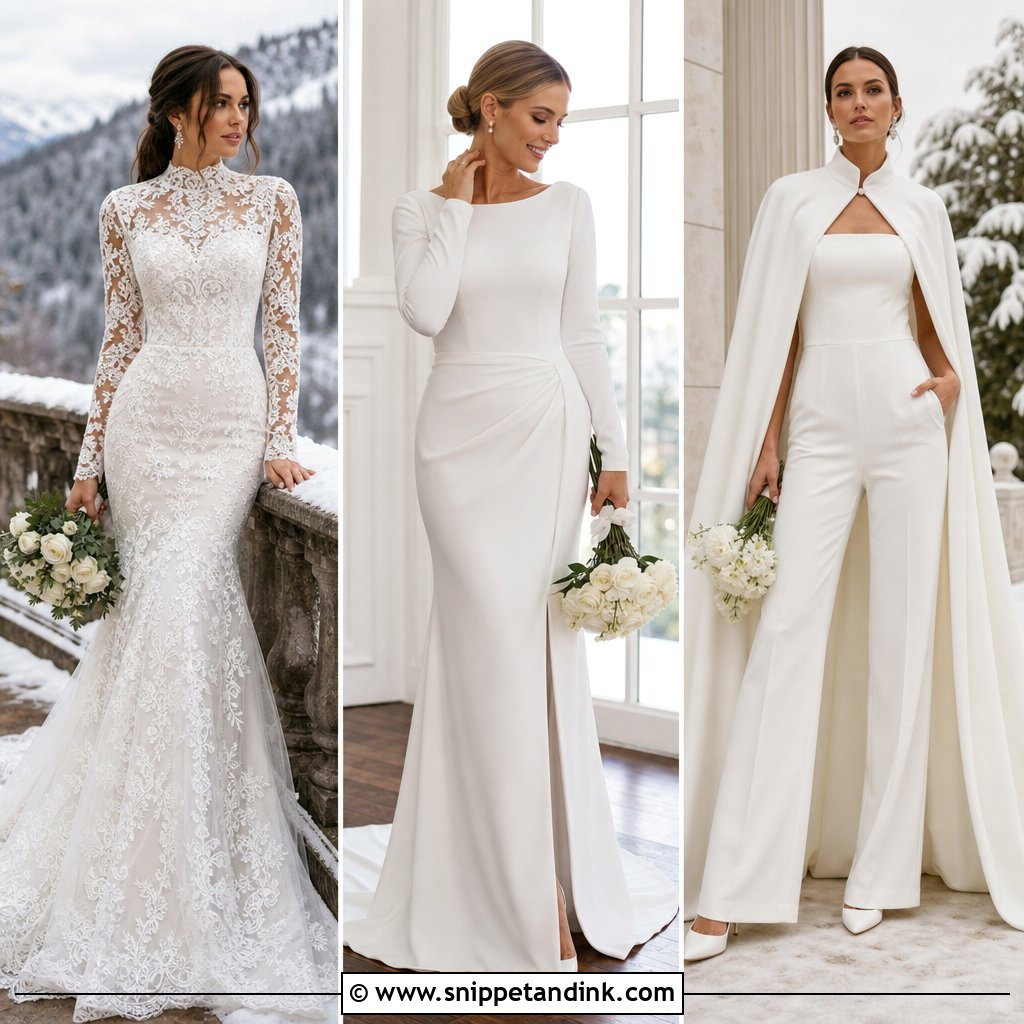
2. Lace Long Sleeve Long Wedding Dress
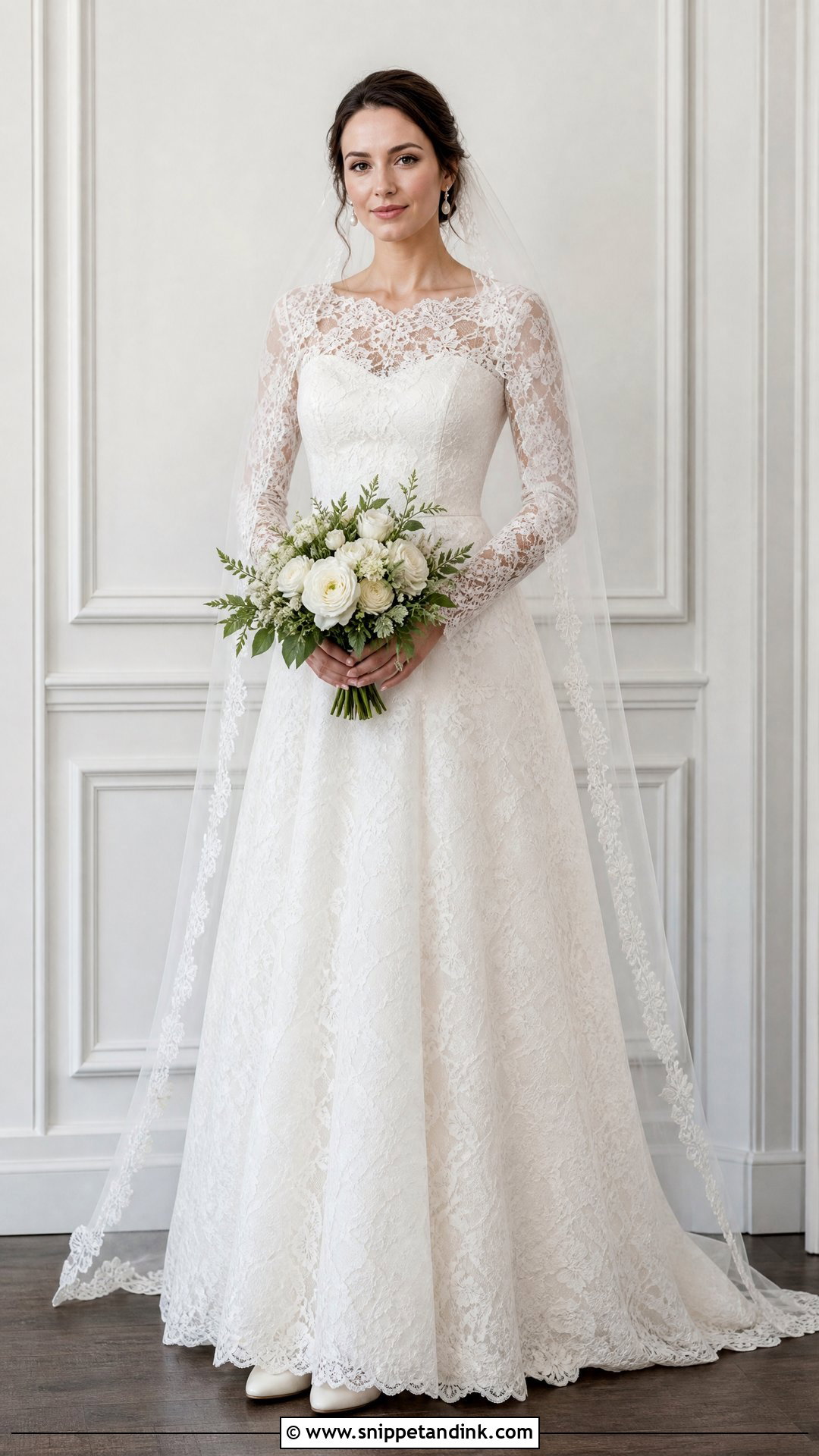
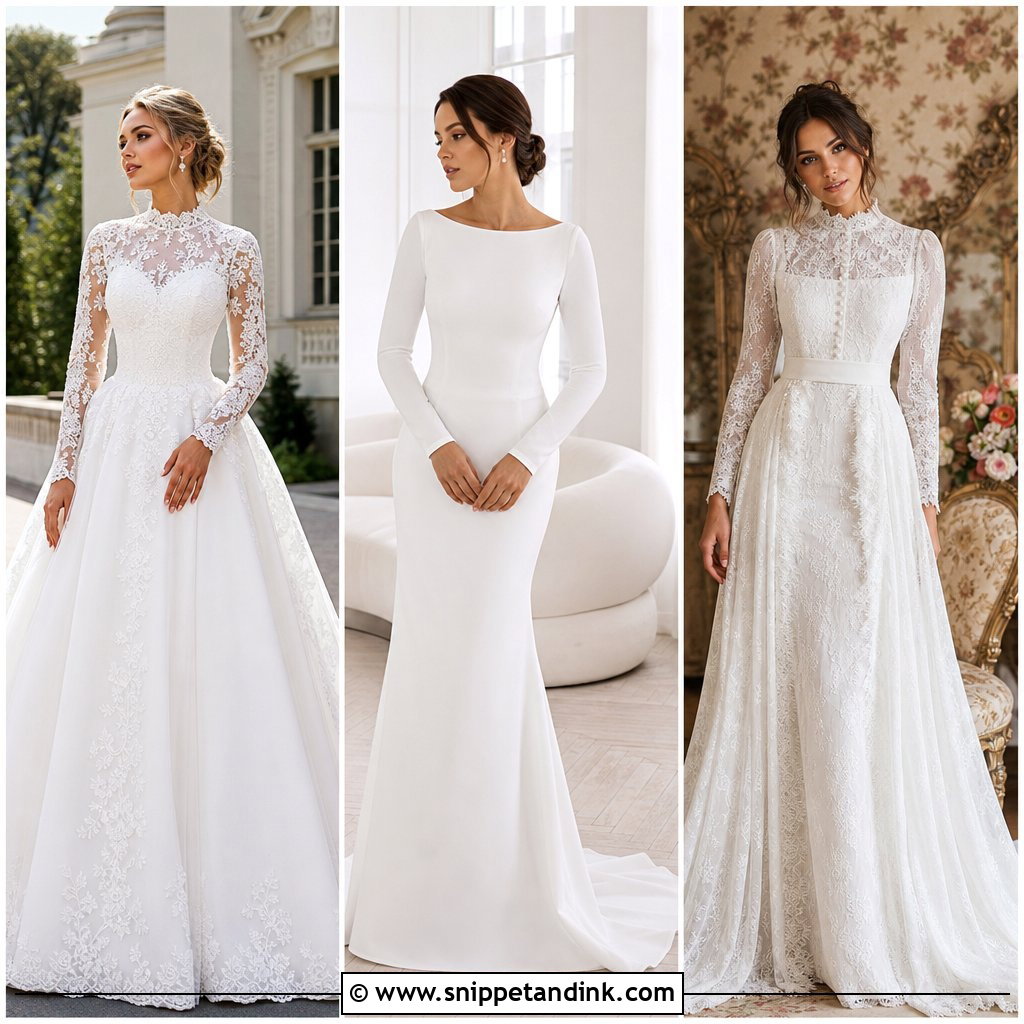
Lined bodice, sheer lace sleeves, a natural waist: this is the classic cool-weather gown, and it suits an air-conditioned hall just as well. A plain underlayer stops floral lace from looking busy. My one non-negotiable test happens before purchase. Raise both arms, then sit down. Lace sleeves that pull across the elbows or upper back will tear at the seam by the end of the night. A loose chignon keeps the neckline clear, and a fingertip veil edged in matching lace ties it together.
3. Strapless Ball Gown Long Wedding Dress
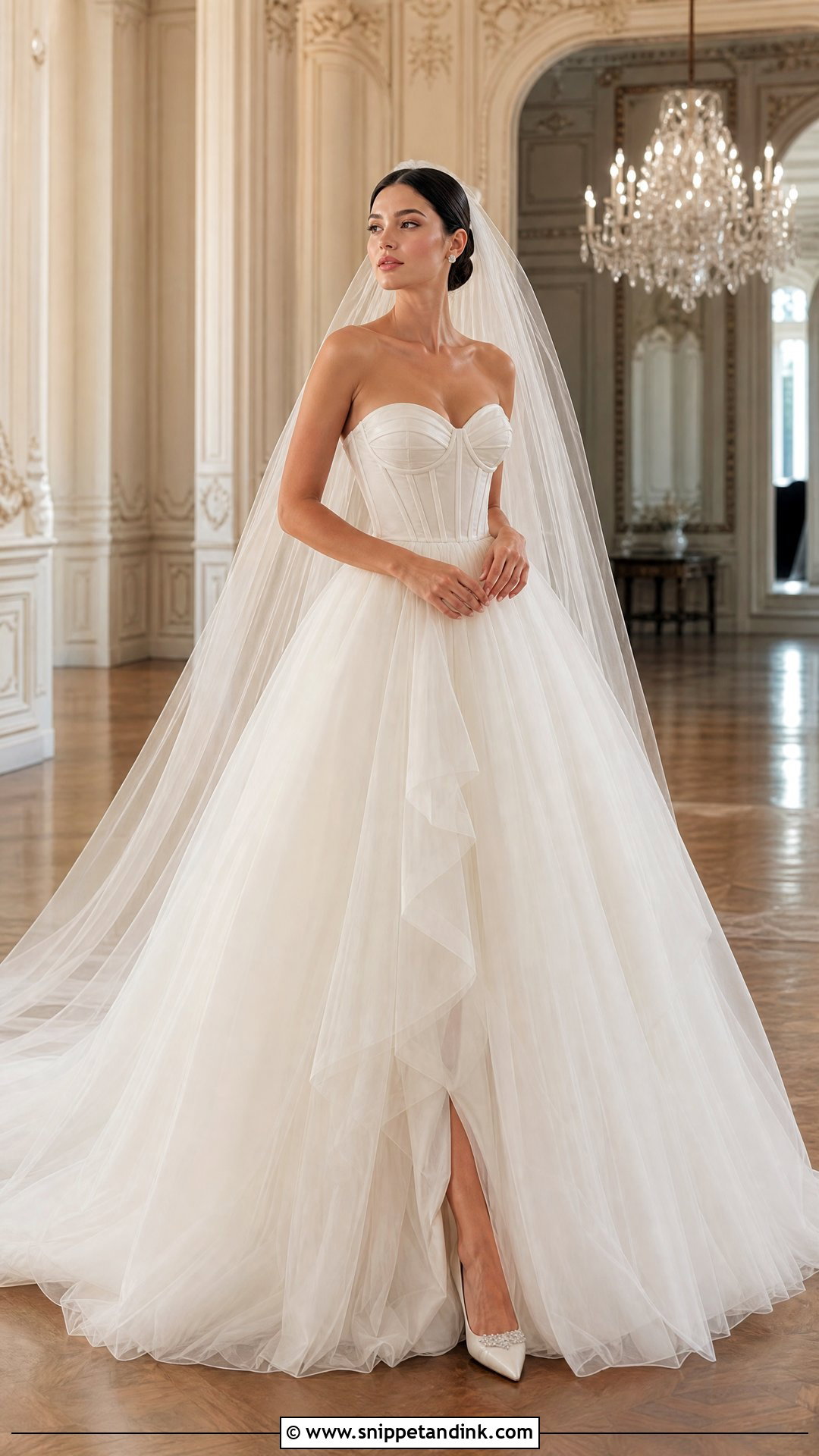
With a strapless ball gown, the corset inside the bodice does all the work. Several layers of tulle or organza are heavy, and without serious boning the bodice slides down under that weight. Choose a straight neckline or a gentle curve depending on how much coverage you want. Keep the rest quiet: crystal studs, a plain cathedral veil, pumps under the hem. I always ask for a secure bustle on this shape, and I check the bride can still turn in a doorway without the skirt jamming.
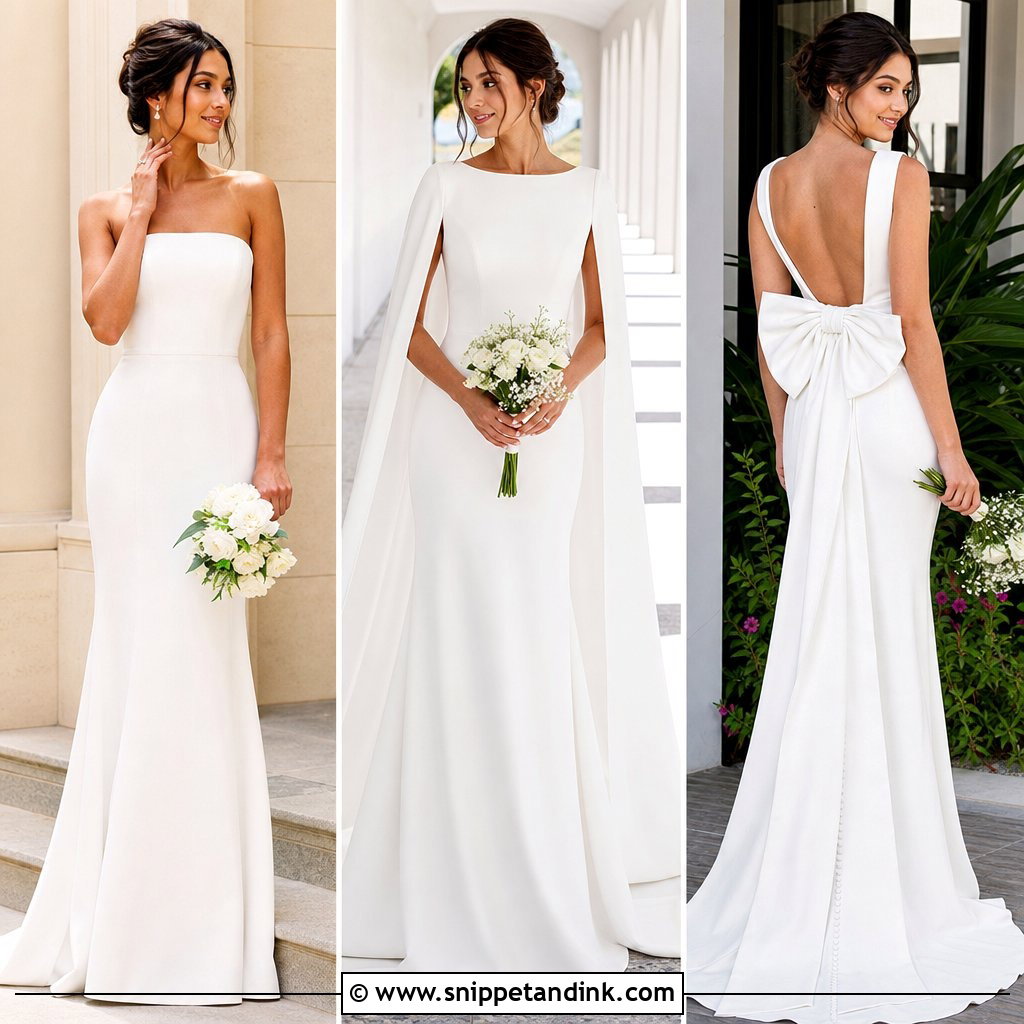
4. Crepe Mermaid Long Wedding Dress
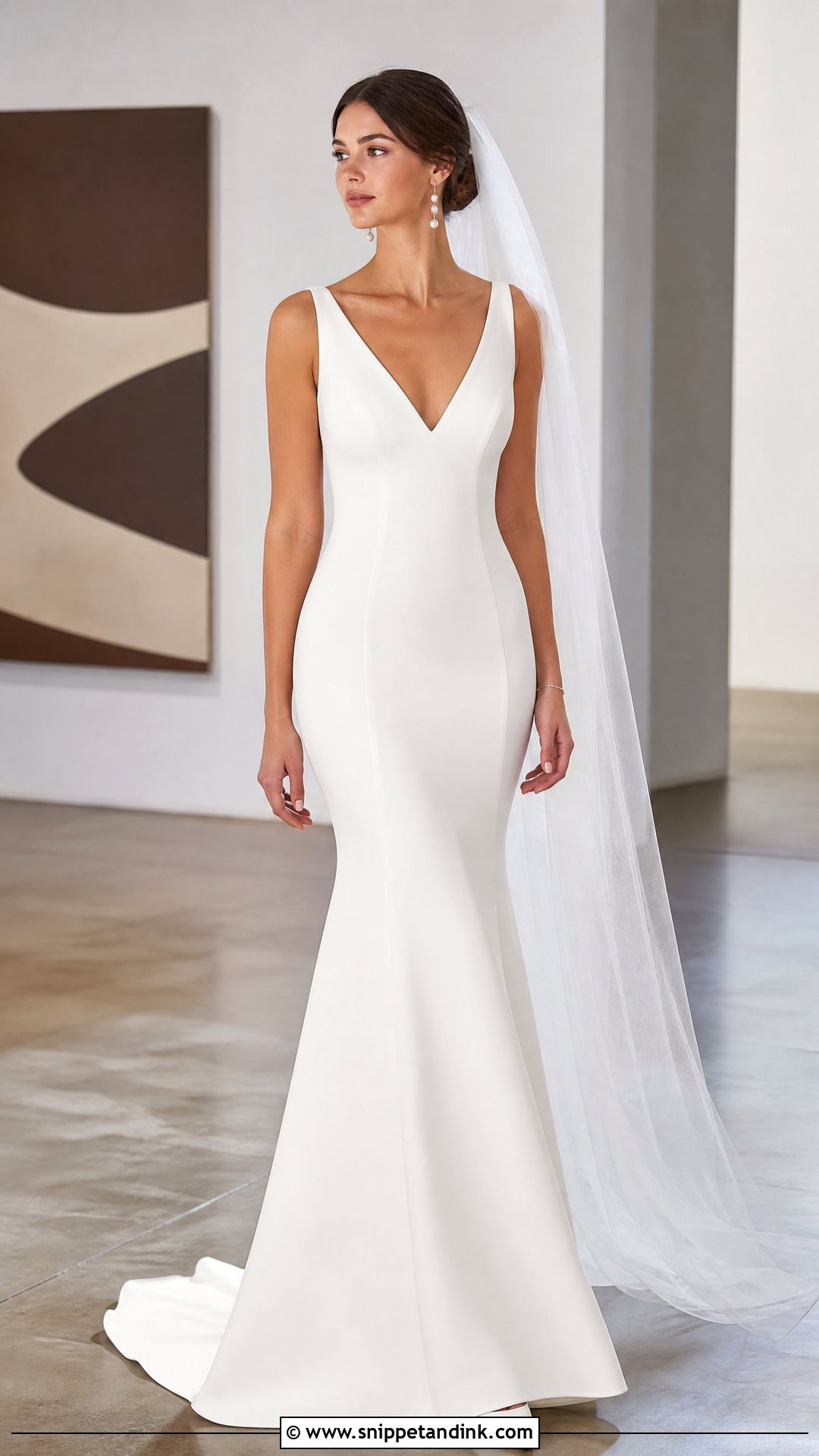
Crepe is unforgiving in a good way. On a fitted mermaid silhouette it shows the shape underneath and nothing else, which is exactly why undergarments matter so much here. Smooth, edge-free underwear and well-placed boning keep the line smooth from bust to knee, where the skirt opens out. A V-neck or clean off-the-shoulder neckline suits it. At fittings, take several full strides and sit down twice. If the flare starts too low, you’ll be shuffling by the first dance. Galleries, modern hotels and evening receptions suit this gown best.
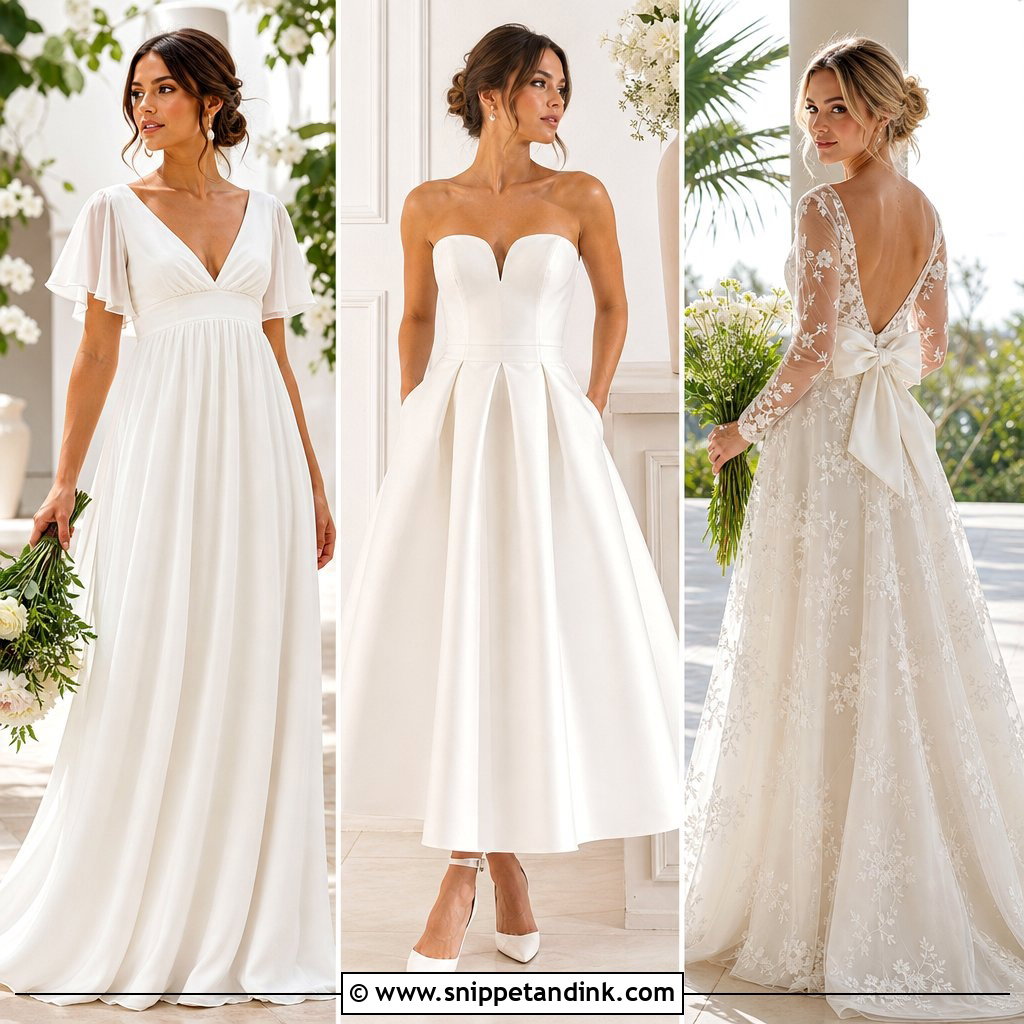
5. Chiffon Empire Waist Long Wedding Dress
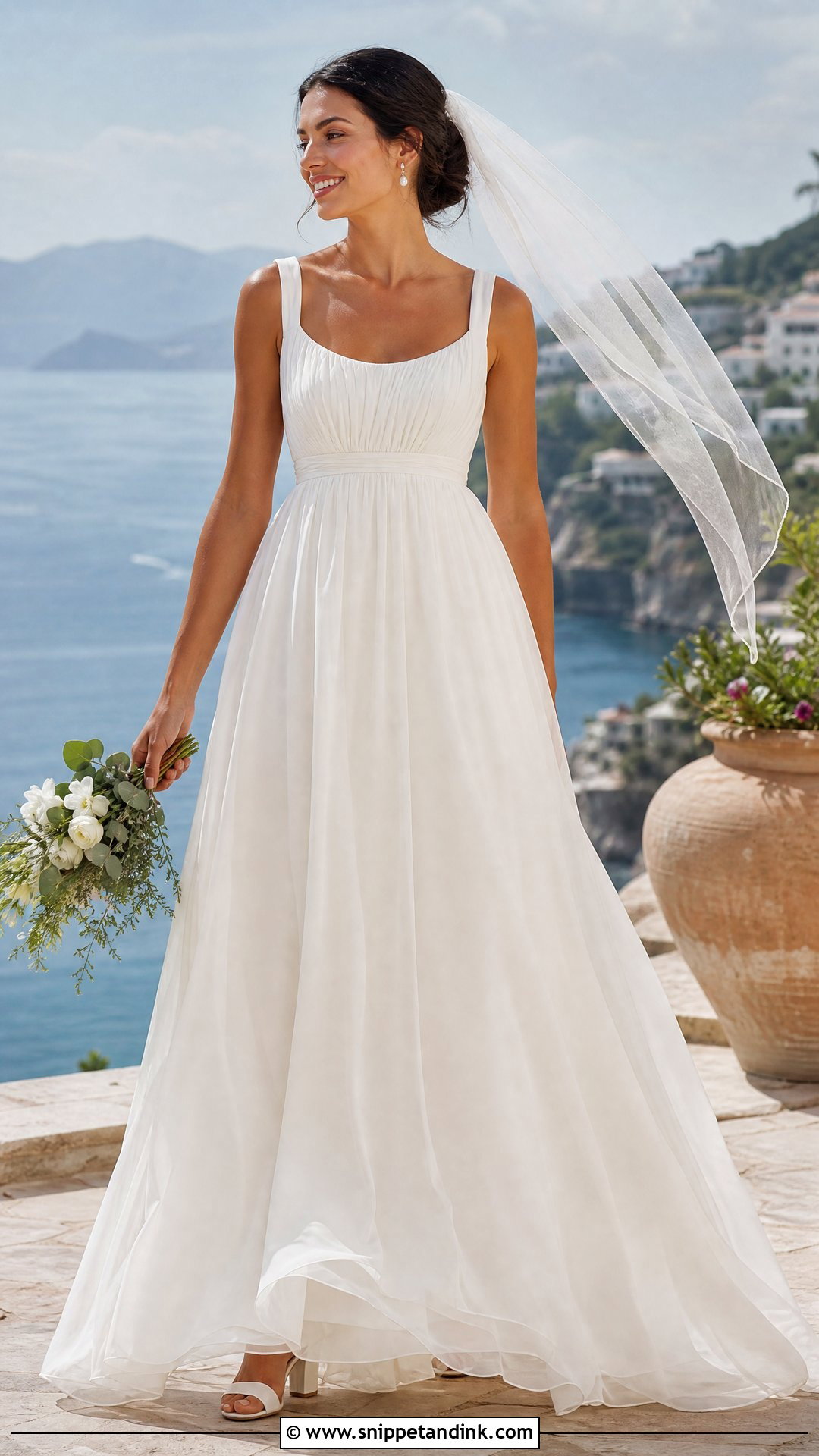
Chiffon is the lightest bridal fabric I work with, and an empire waist under the bust lets the skirt fall loose, so this is a dress you can wear for twelve hours without counting them. Wide straps or flutter sleeves give dependable support. Check the lining in strong light before you commit, because chiffon can turn see-through in direct sun. It also packs into a suitcase with far less bulk than satin or layered tulle, which matters for destination weddings. Block heels and a braided updo match its movement.
6. Basque Waist Long Wedding Dress
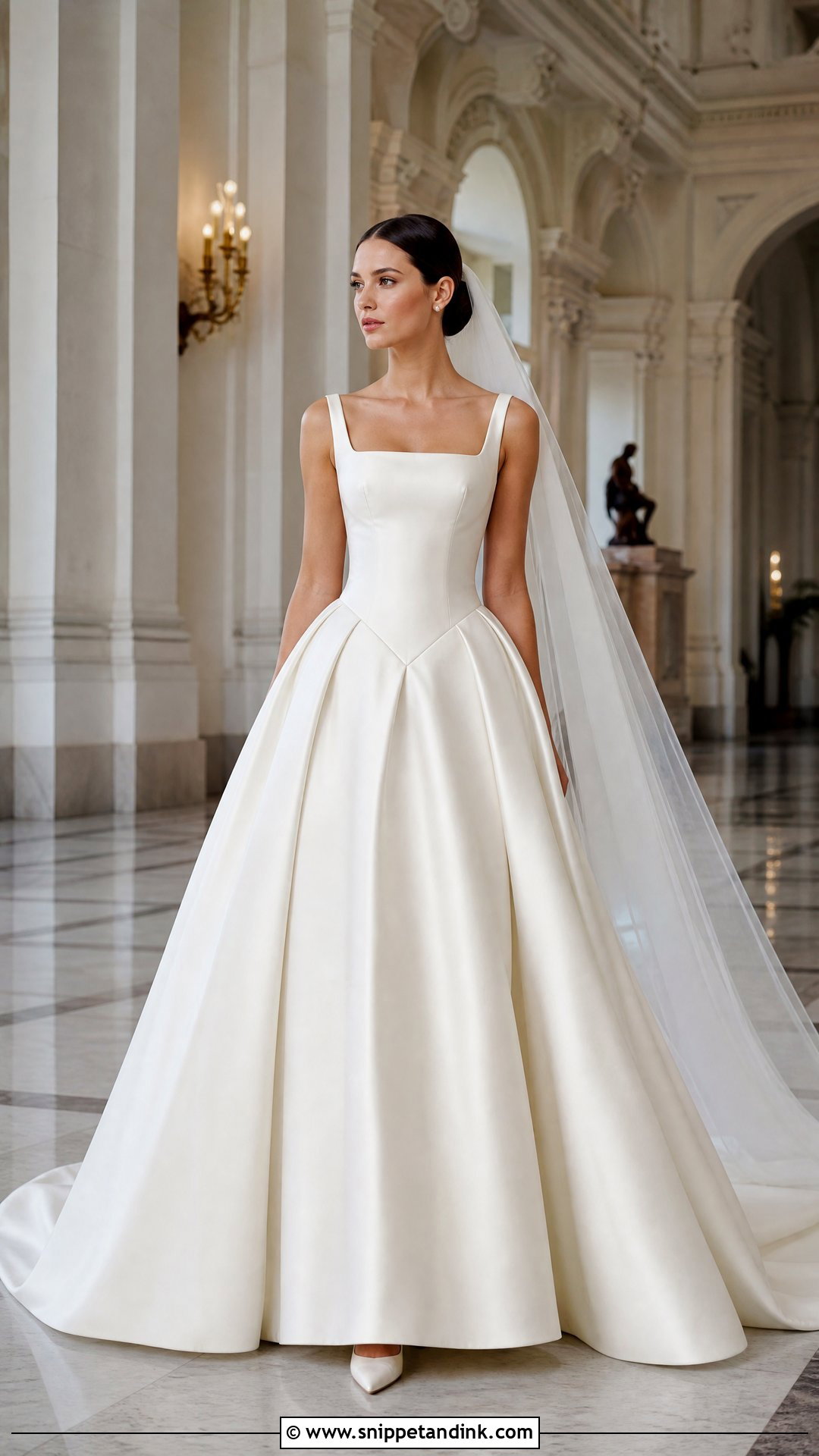
A Basque waist dips into a soft V below the natural waist, which lengthens the torso and gives the skirt a sculpted starting point. It needs a structured fabric, Mikado or heavy satin, to hold that point. During alterations I check one thing over and over: the tip of the V must sit dead centre and stay flat when you bend. If it folds, the bodice is too long for you. Pair it with pearl studs, a smooth cathedral veil and a low centre-parted bun, and skip a busy necklace if the seaming already shows.
7. Minimalist Column Long Wedding Dress
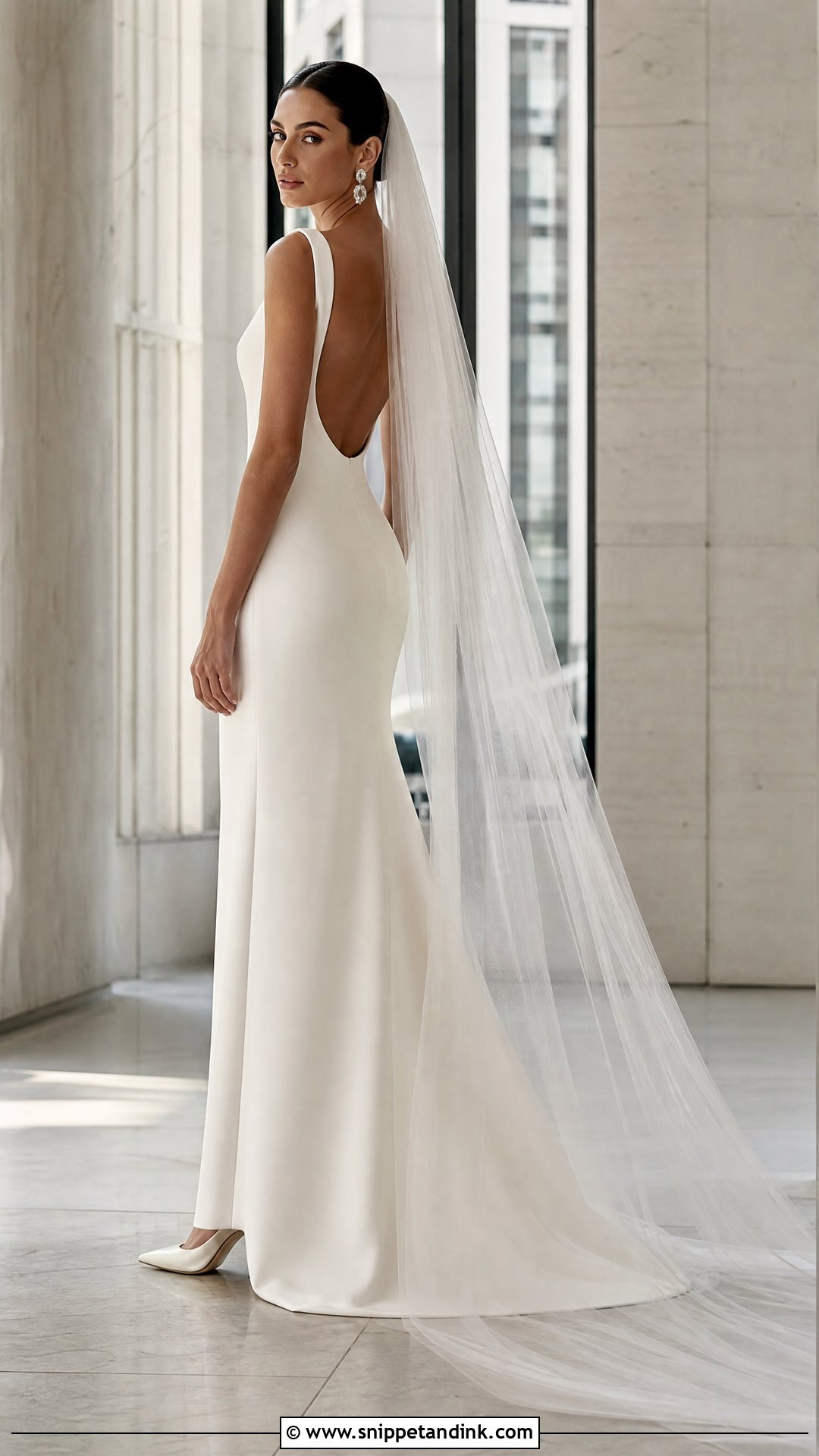
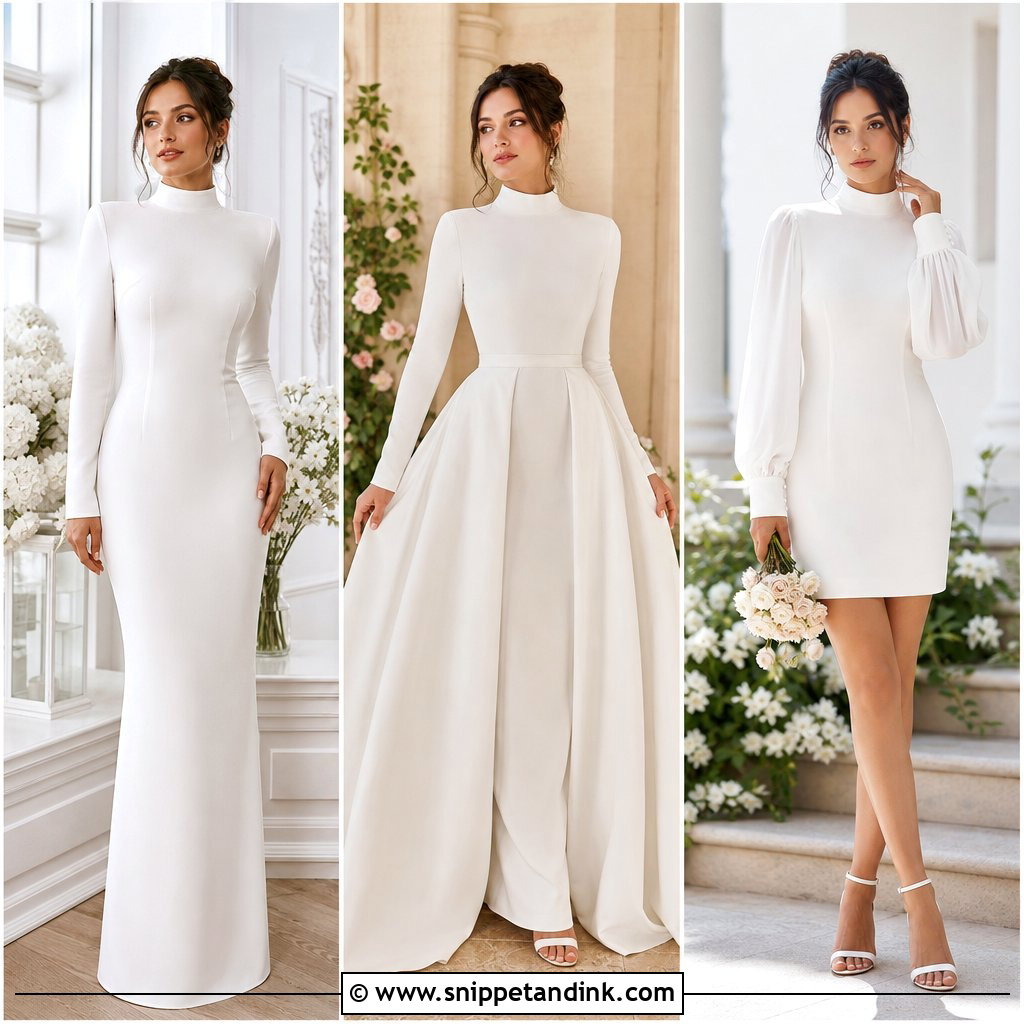
A column gown has nowhere to hide a construction fault. That’s the first thing I tell anyone who loves this shape. The fabric, a heavy crepe, silk or satin, should fall straight without clinging. Check that the side seams hang vertical and the back doesn’t bunch above the hips when you stand naturally. A bateau neck, open back or narrow square neckline gives the simple shape a focal point. Sculptural earrings, sleek pumps and a long plain tulle veil keep it sharp for a rooftop or city venue.
8. Off-The-Shoulder Long Wedding Dress
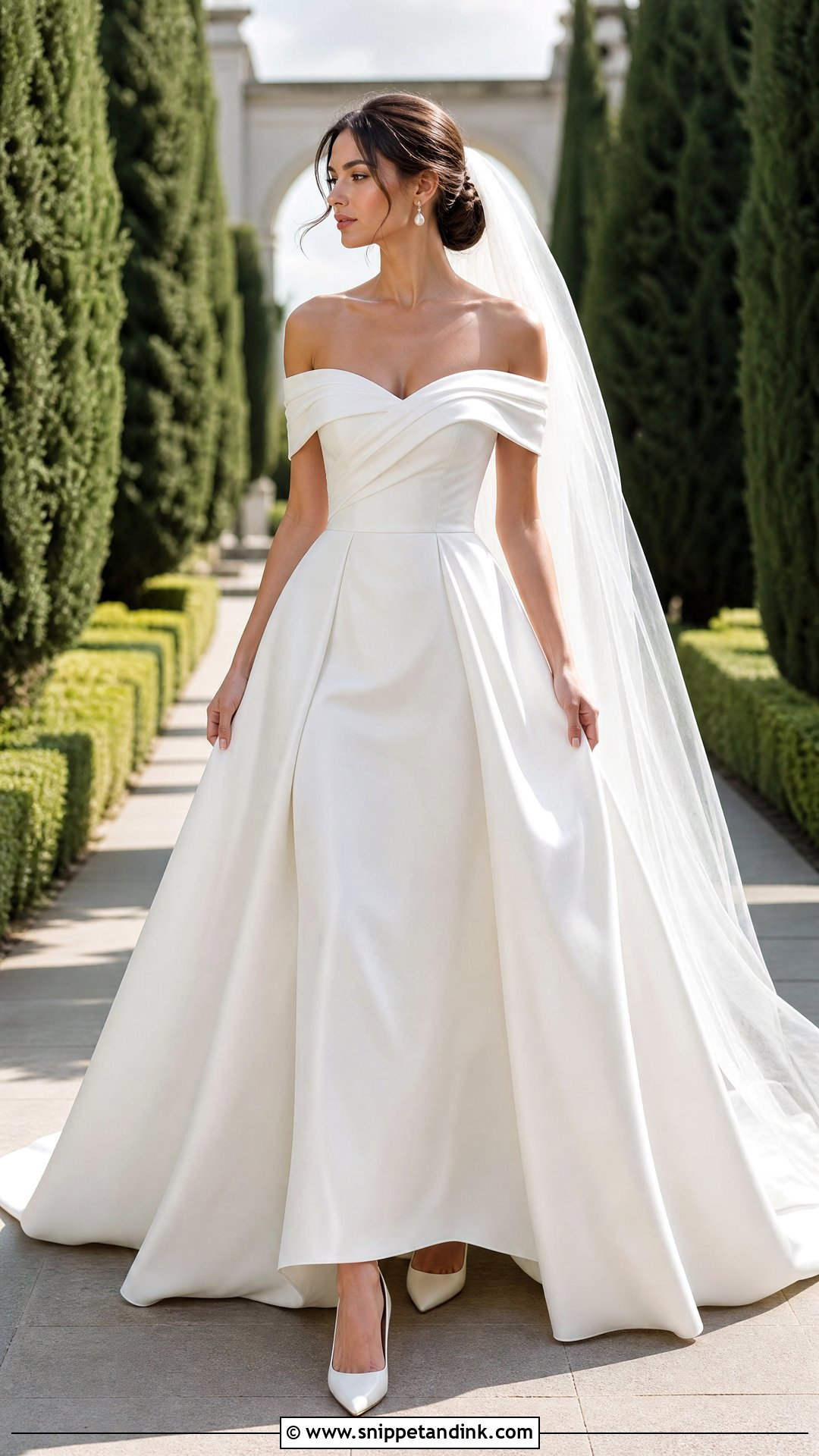
Off-the-shoulder bodices frame the collarbone well, but they’re the gown most likely to limit your arms. Before ordering, reach forward as if for a glass and lift your arms as if to dance. Some designs simply won’t let you. Removable straps solve that later in the evening. Draped satin bands look clean; lace sleeves feel more romantic. I attach the veil beneath a low updo so it falls behind the shoulders, then add a short necklace or pearl earrings, not both.
9. Halter Neck Long Wedding Dress
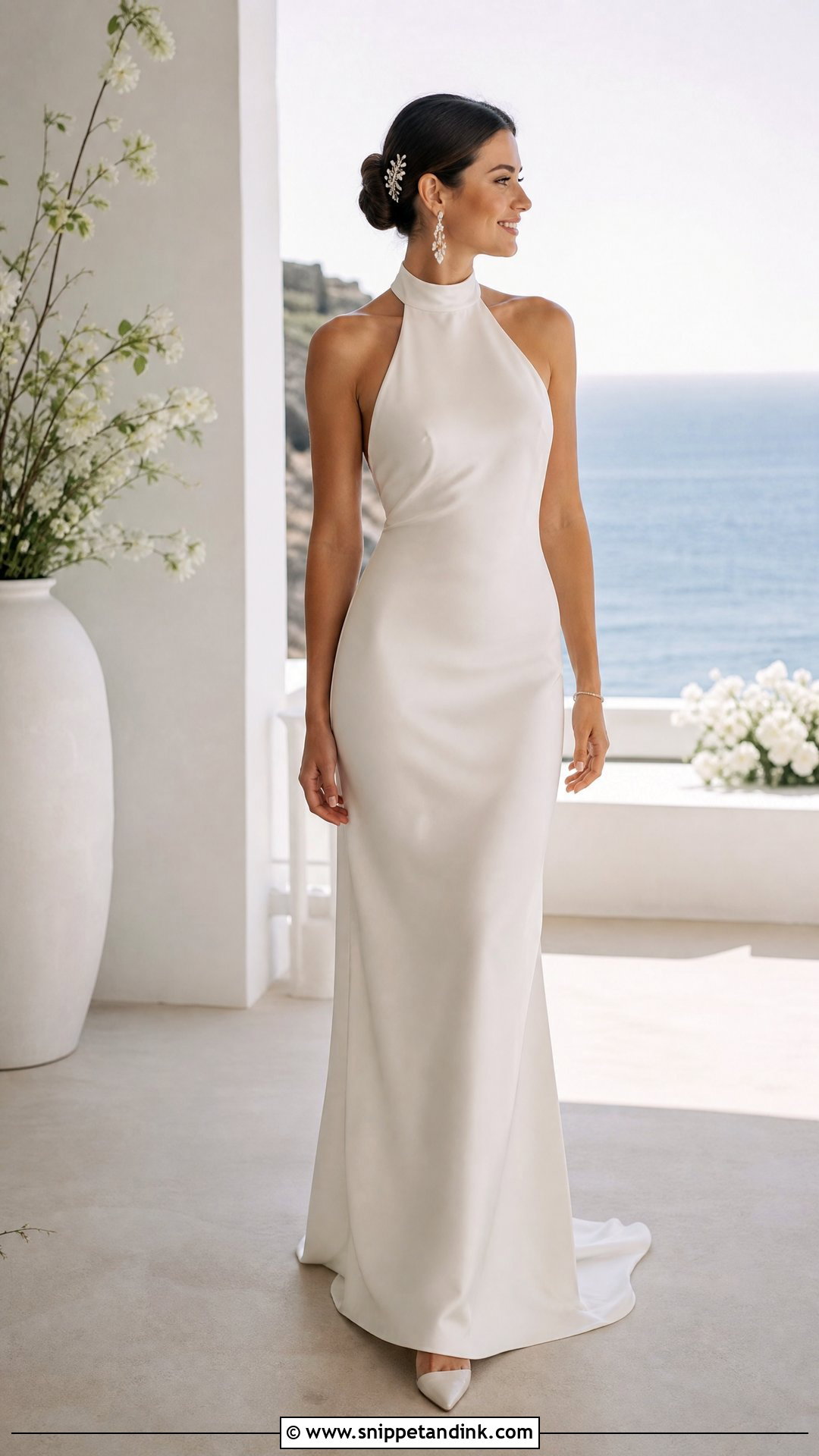
A halter neckline pulls the eye upward and suits a column, sheath or slightly flared skirt. Fluid satin moves; structured crepe gives a sharper outline. Since the neckline already frames the shoulders, I skip necklaces and go with statement earrings. The fit points I check are the strap at the back of the neck, which shouldn’t pull when you sit, and the armholes, which should lie close without gaping. It works well at coastal venues and small ceremonies where a ball gown would feel too heavy.
10. Sweetheart Corset Long Wedding Dress
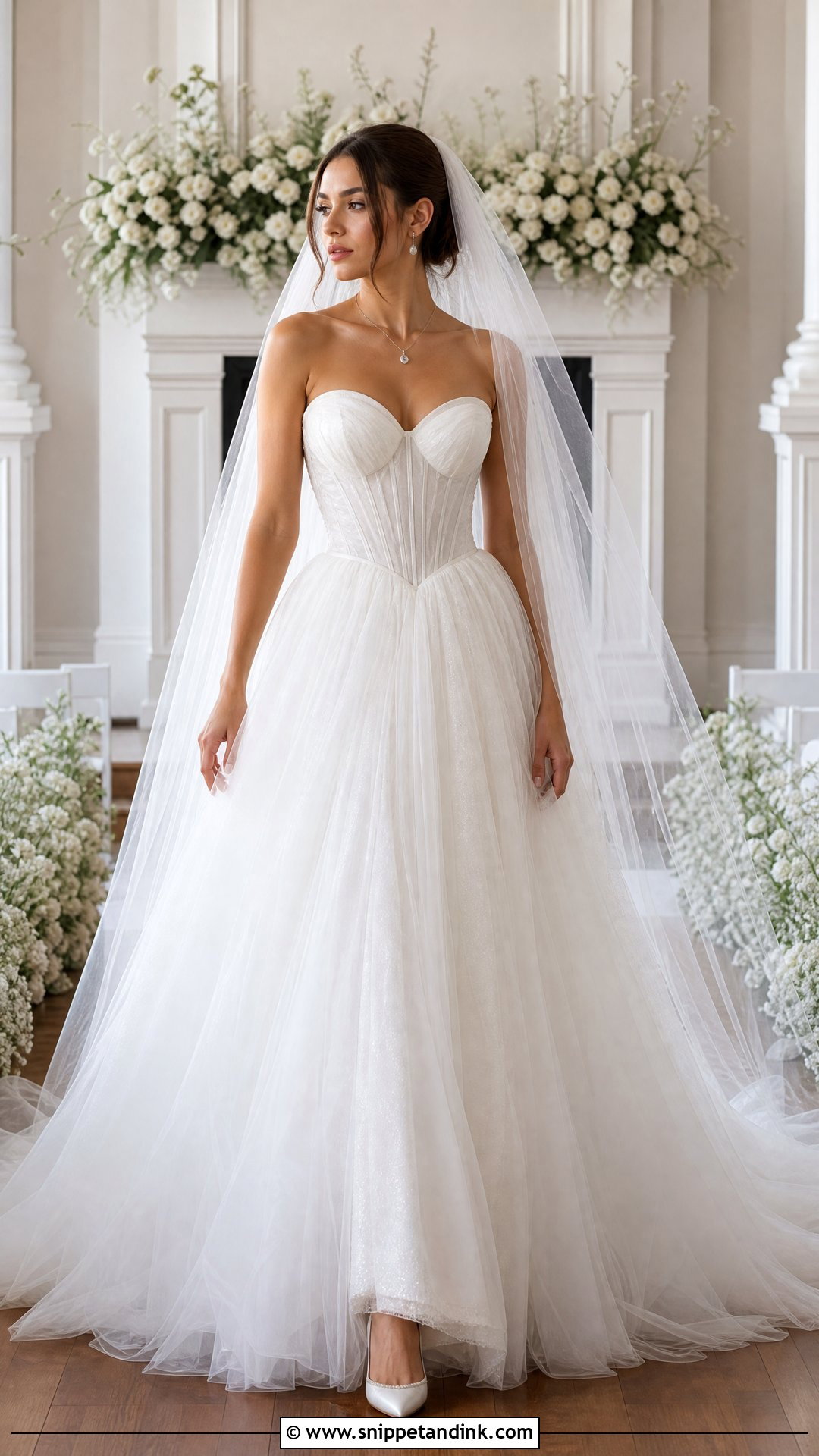
Sweetheart corsets combine visible structure with a curved neckline, and they live or die on the cups. Properly sized cups and secure boning keep everything in place. If the bodice includes sheer panels, look at them in daylight and with a phone flash, because some mesh turns opaque grey under flash. A layered tulle skirt is classic; satin is cleaner. Loose waves balance the structure. The corset should support you without pinching at the ribs or underarms when you sit and laugh.
11. High Neck Lace Long Wedding Dress
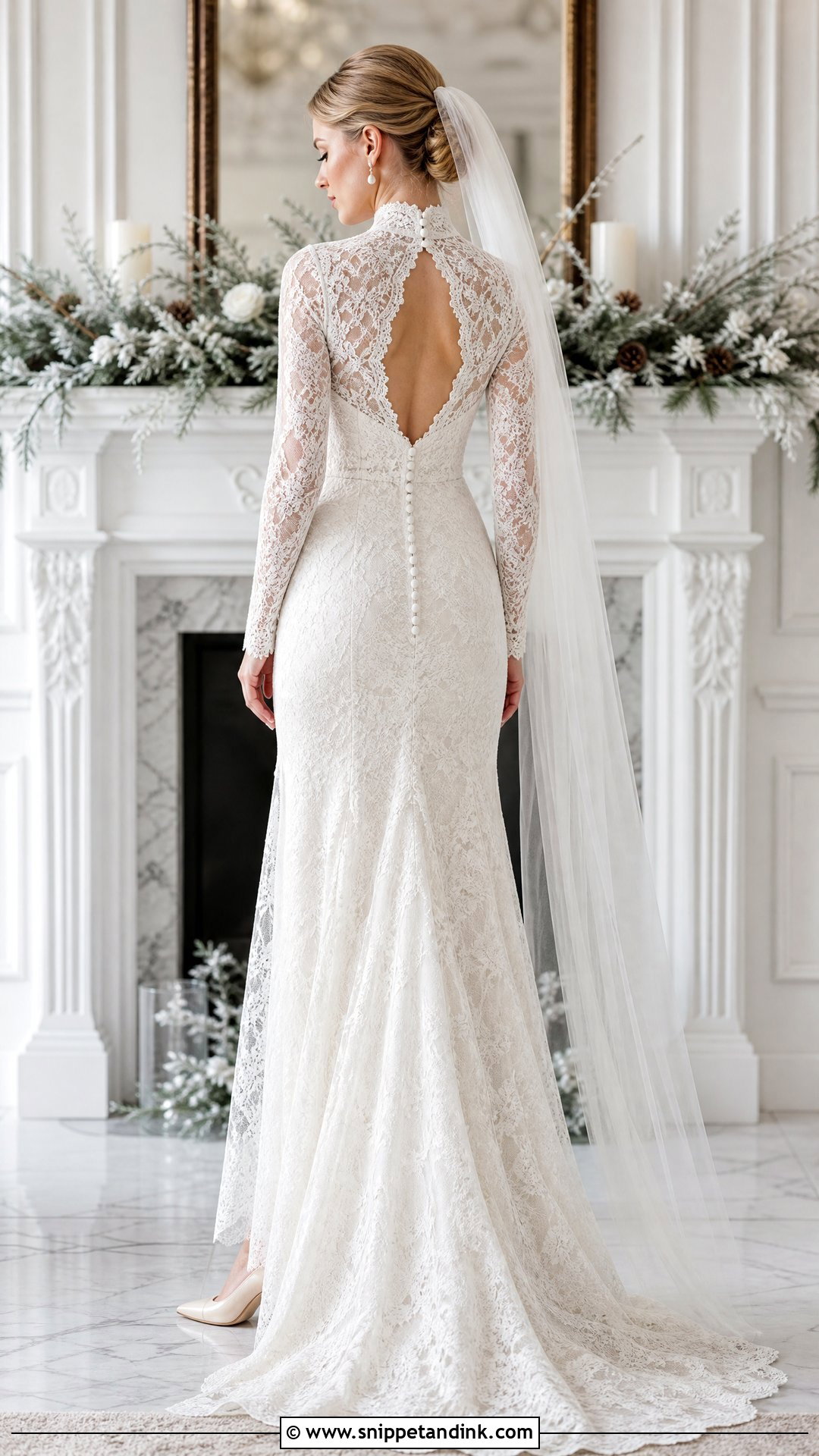
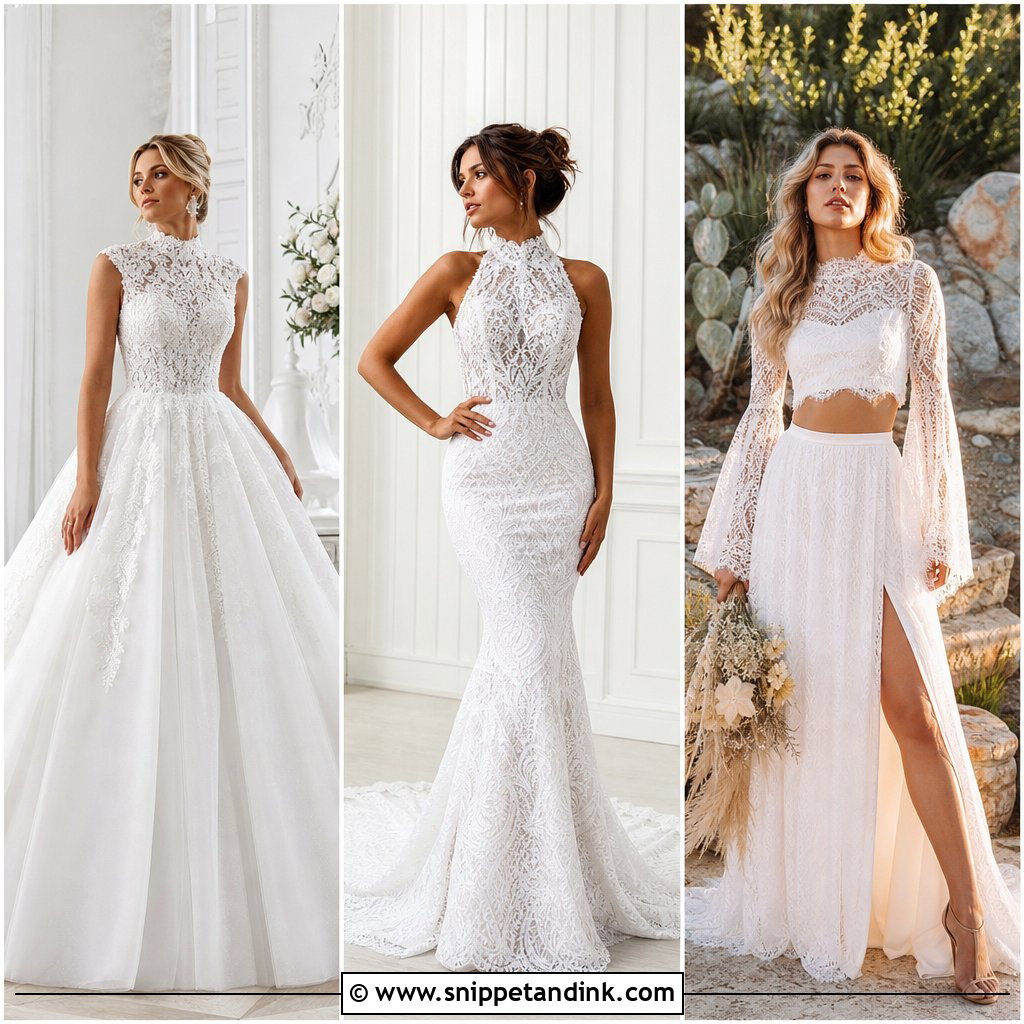
High lace necklines give coverage and detail at once. A fitted lace bodice over soft lining is comfortable, and a keyhole back or covered buttons keep the design from feeling closed in. Skip the necklace entirely; it crowds the collar. My fitting check is the inside of the collar. Rough lace against the throat for ten hours is miserable, so I ask for a soft binding or a lined collar if it scratches. Pearl studs and a bun or twisted updo keep the neckline visible for daytime and cooler-season ceremonies.
12. Scoop Neck Silk Long Wedding Dress
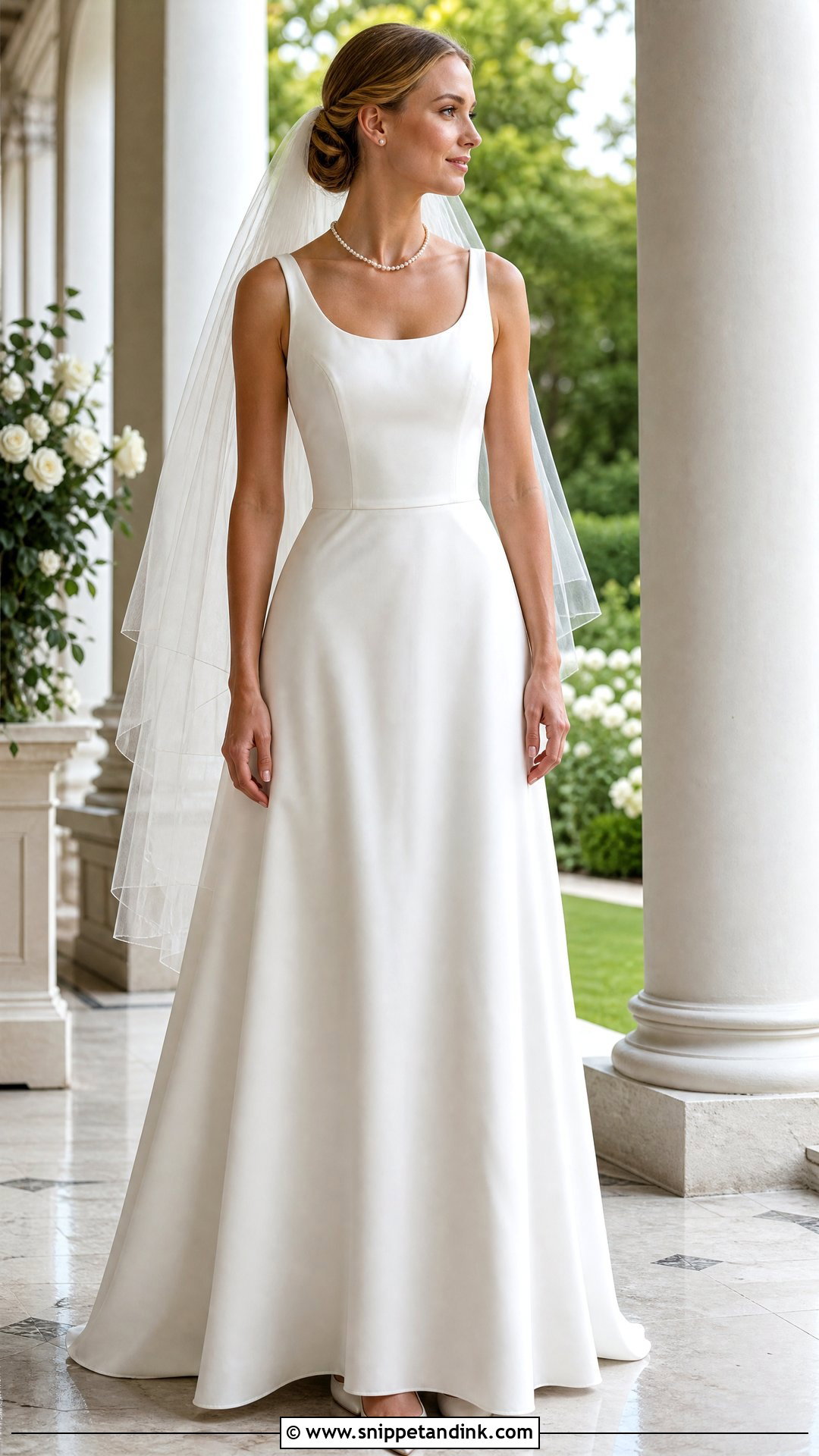
Silk reacts to everything: movement, light, the warmth of your skin. A scoop neck is softer than a deep V or sharp square, and on a bias-cut or fluid A-line skirt it looks quietly expensive. Because silk shows every line beneath it, I insist on proper lining and smooth no-line underwear and look at the dress from all sides under the salon lights. A short pearl strand, simple studs and a sheer fingertip veil suit it. This is a gown that crosses easily from a garden ceremony to an indoor reception.
13. One-Shoulder Long Wedding Dress
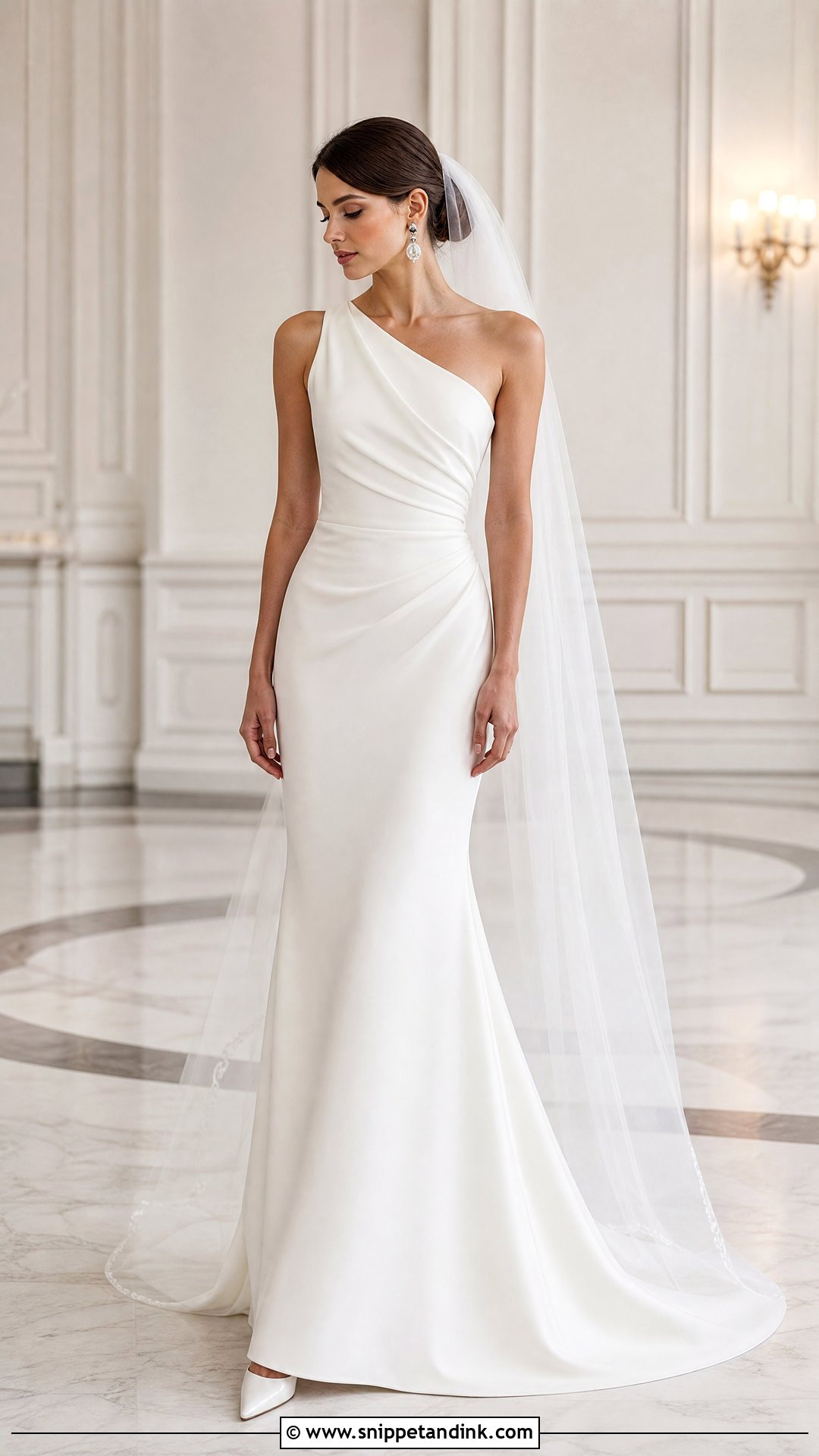
One-shoulder gowns are asymmetric, so I balance them with earrings rather than a necklace and sweep the hair to the side that’s bare. Crepe holds a modern shape, chiffon or satin lets the draping move. The single strap is the fit point. It must stay secure without cutting into the shoulder, and the bodice must stay level when you walk and sit. A slim clutch for later and a veil that falls evenly behind keep it tidy at a ballroom or destination venue.
14. Cap Sleeve Long Wedding Dress
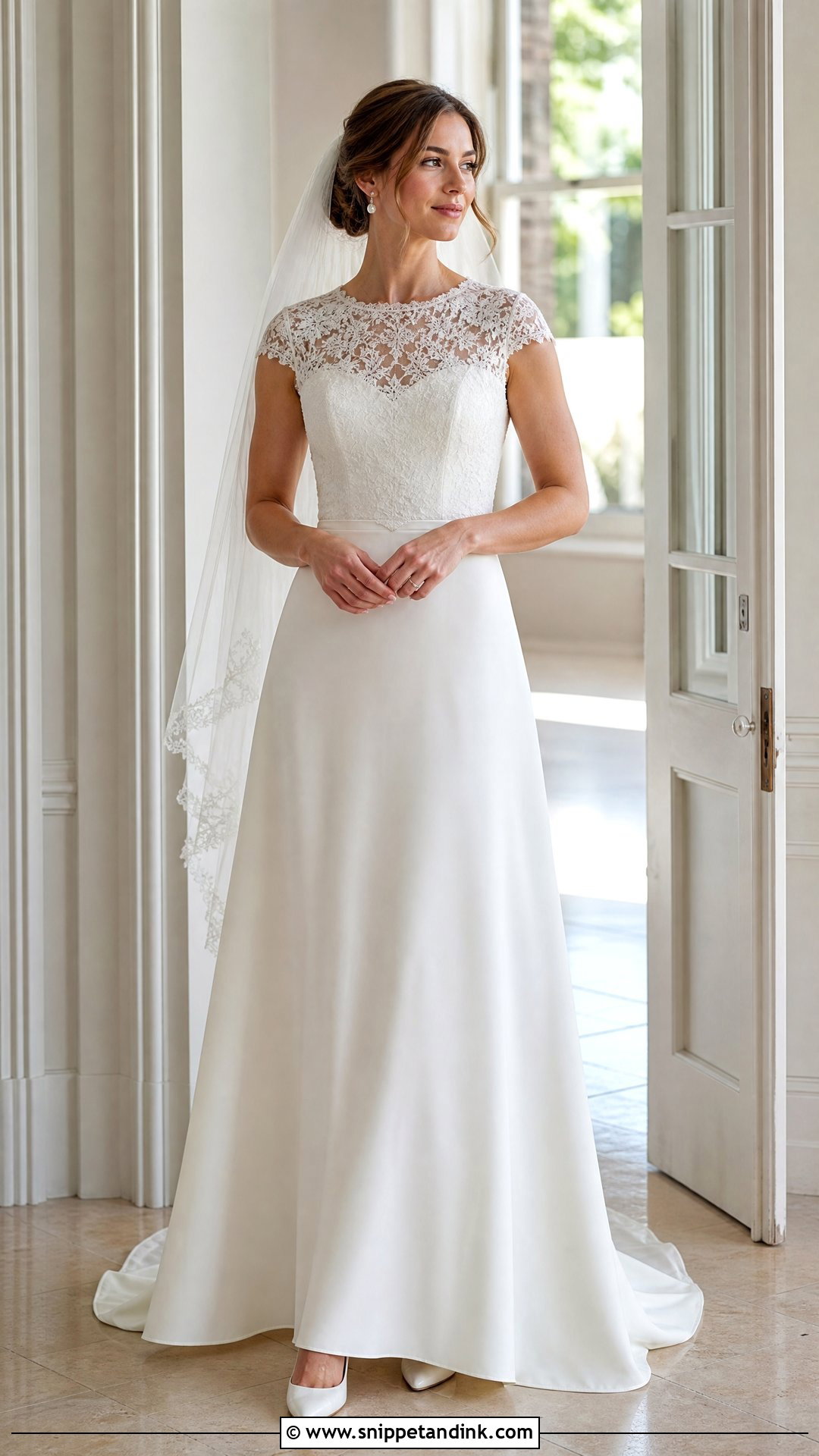
Cap sleeves give a little shoulder coverage with none of the heat of full sleeves. Lace caps on a flowing A-line feel romantic; structured satin caps look crisper. Where the sleeve ends matters. Too tight across the upper arm and it digs; cut too far down and it reads as a T-shirt. Lift and stretch your arms in the fitting room. If the bodice rides up when you do, the armhole needs work. Pearl earrings and a relaxed chignon keep it approachable in almost any season.
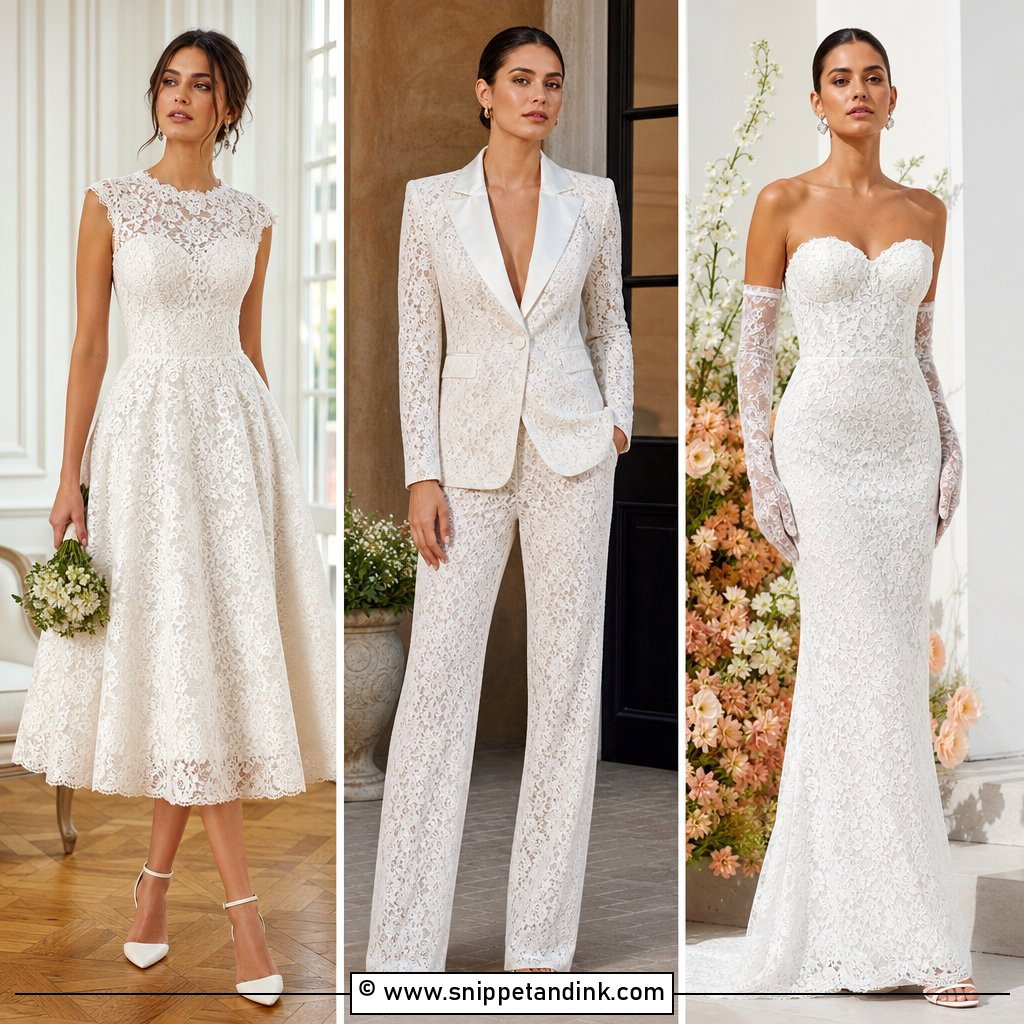

15. Floral Appliqué Long Wedding Dress
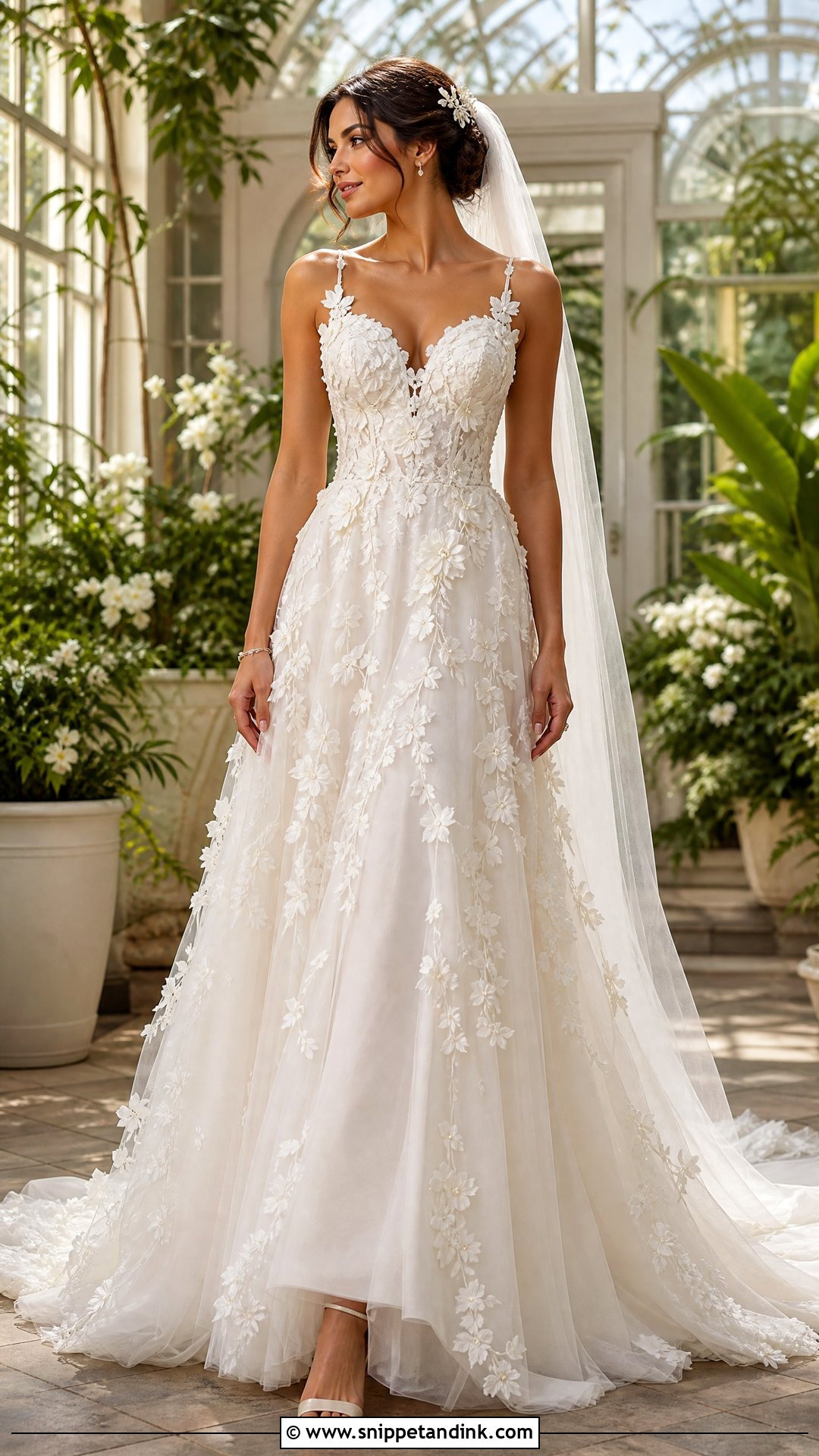
Dimensional appliqué turns a simple gown into the detail people walk over to look at. The best placement starts dense on the bodice and scatters down the skirt, so the eye travels without being overwhelmed. For an outdoor ceremony, leaf or vine embroidery mixed in feels natural. I run a hand over every raised flower before purchase, checking the stitching and whether petals catch on the veil. Keep accessories small, and if you add a floral hairpin, make sure it echoes the dress rather than starting a second flower story.
16. Pearl Beaded Long Wedding Dress
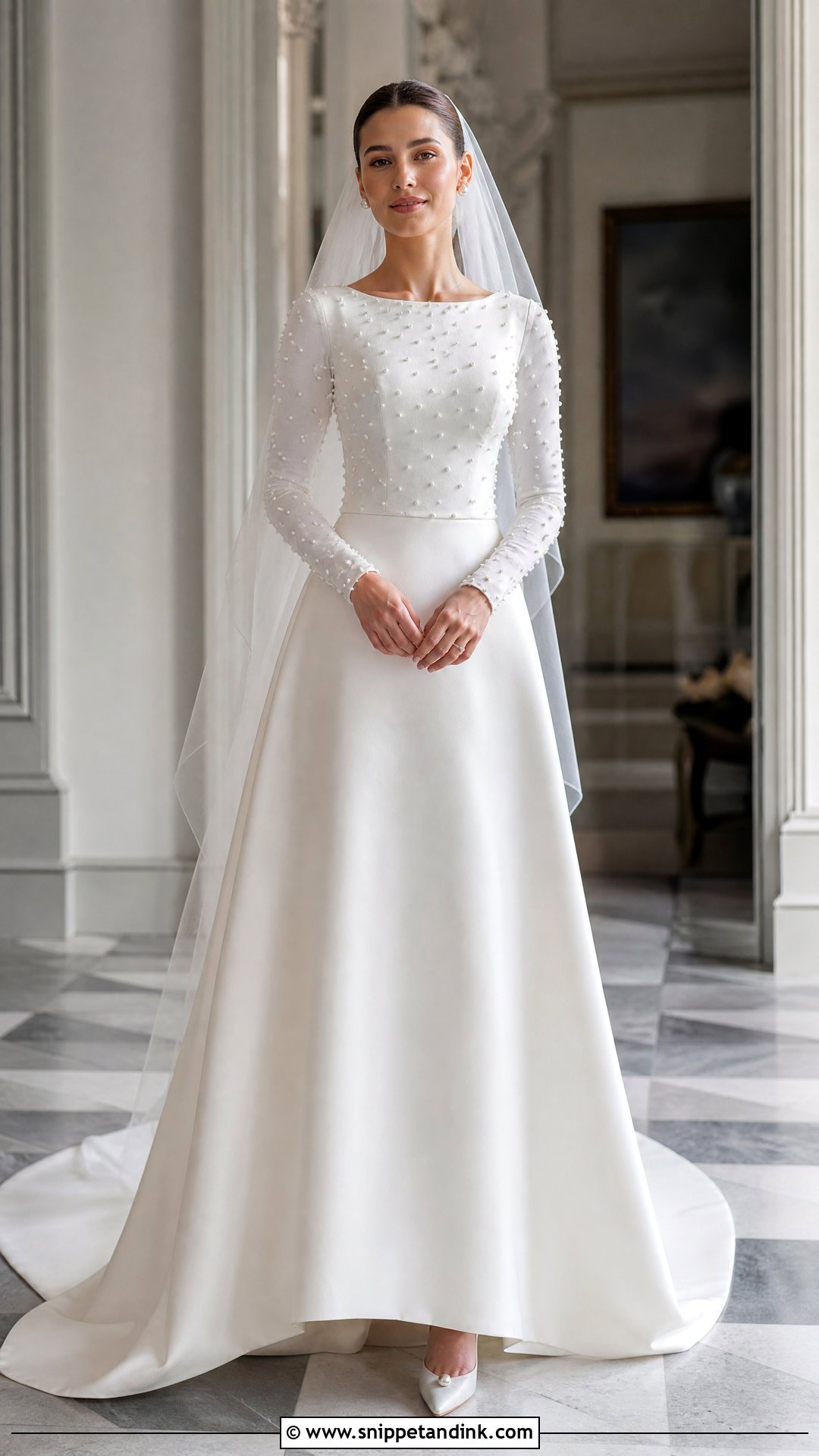
Pearls give texture with a soft sheen rather than the hard sparkle of crystals. A fitted bodice with scattered pearls over a plain skirt keeps the balance; an all-over pearl gown is best in a simple column. Run your fingers over the beadwork for loose threads or sharp edges that could scratch your arms. Weight is the hidden issue. Dense pearl work grows tiring after several hours, so I have brides wear the sample for a good while before deciding. A sleek bun stops the outfit going ornate.
17. Boho Bell Sleeve Long Wedding Dress
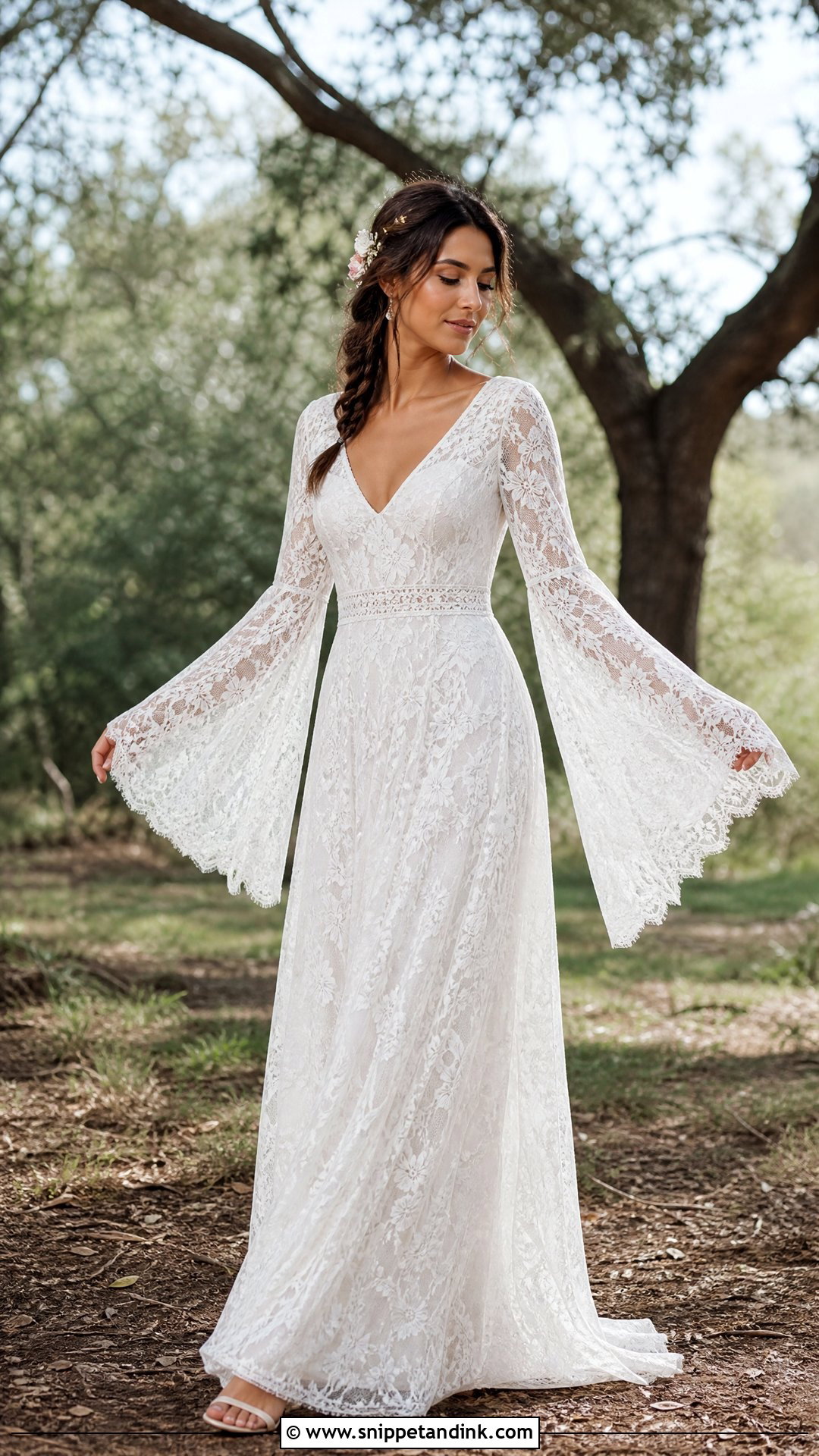
Bell sleeves bring movement and a relaxed mood, which is why I like them for woodland, coastal and retreat weddings. Lace or chiffon sleeves on a fitted bodice and a soft skirt keep things light. The practical test is eating. Wide sleeves dip into plates and catch on chair backs, so try holding a fork and reaching for a glass at the fitting before you commit. Skip bracelets, which snag the fabric. Low block heels or flats and a loose braid complete it.
18. Detachable Overskirt Long Wedding Dress
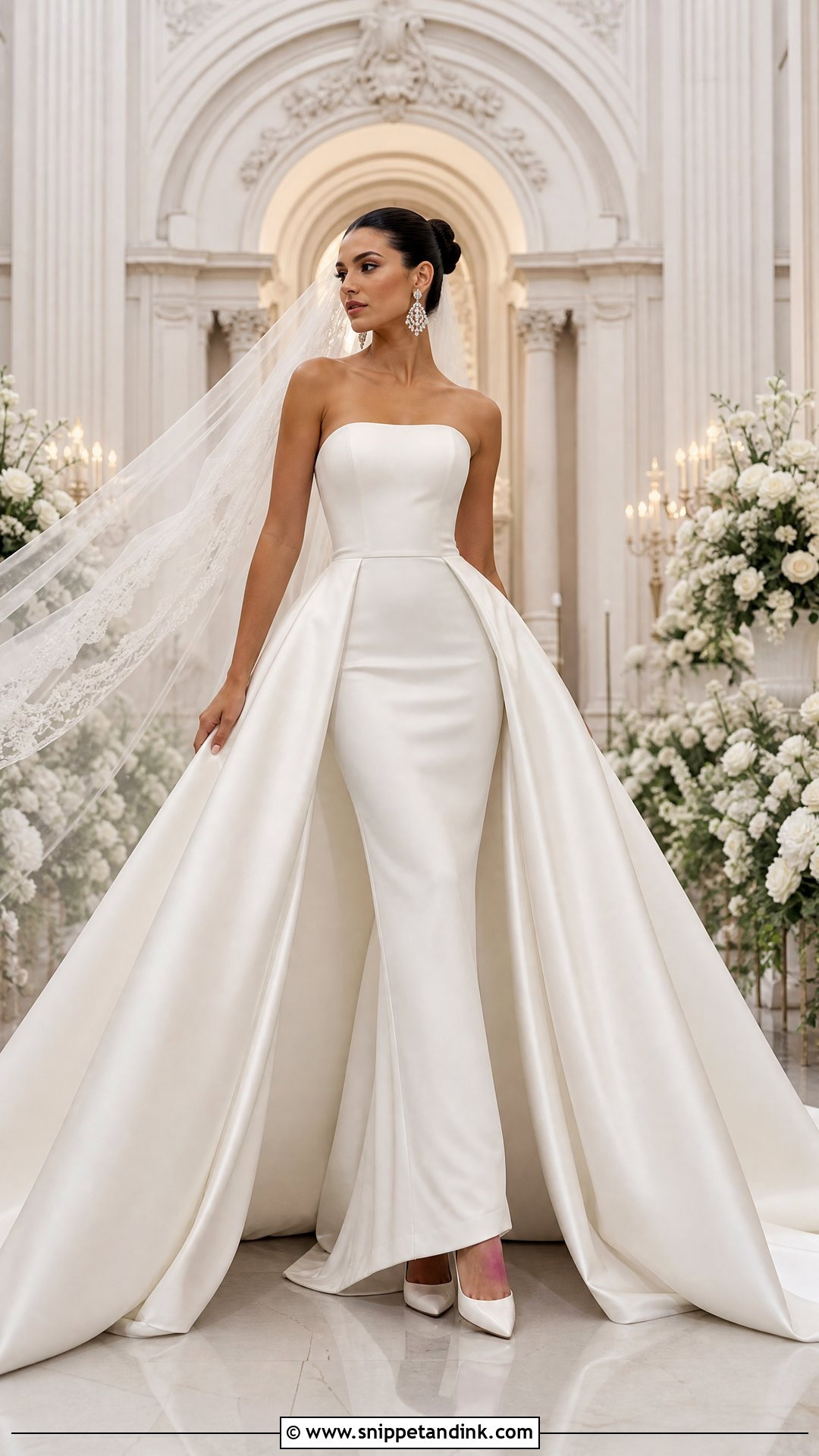
A detachable overskirt gives you two silhouettes without a full outfit change. Underneath is a fitted column or mermaid gown; over it, a satin, tulle or organza skirt clips on at the waist. The attachment should sit flat with no bulk at the hips. Pick one person from the wedding party to learn how to fasten and remove it, and have them practise at the final fitting while you’re in the dress. A sleek updo works for both versions, which saves a hair change mid-reception.
19. Cape Sleeve Long Wedding Dress
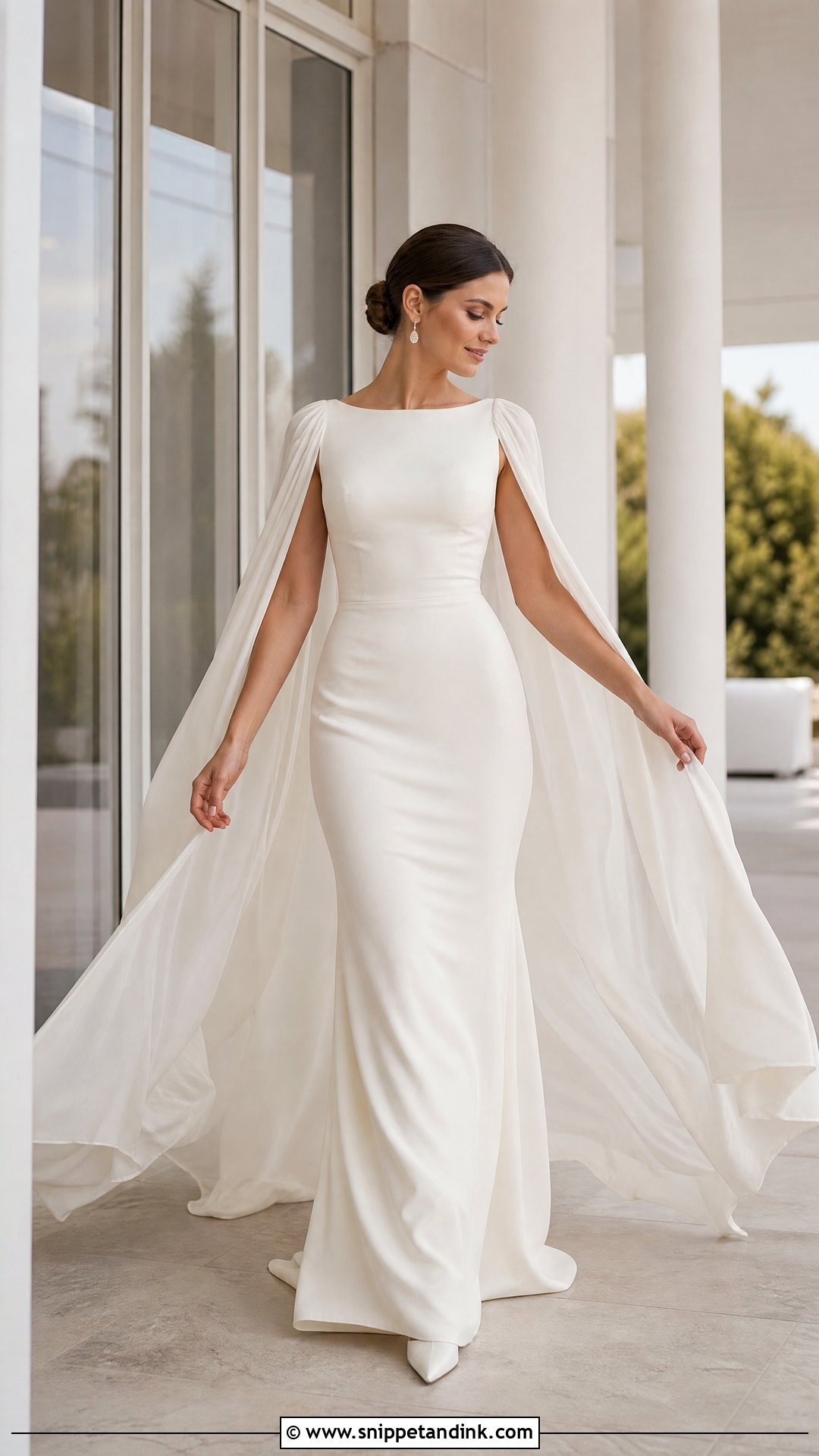
Cape sleeves give arm coverage with real movement. Sheer chiffon capes on a fitted crepe or satin gown look strongest at floor length; elbow-length capes are easier to manage. Usually I drop the veil with this style, because a cape and veil competing behind you look crowded. Ask whether the cape detaches for dancing. In spacious indoor venues and scenic outdoor locations the fabric catches air beautifully. Check, too, that the cape doesn’t drag the neckline backward or tangle with the train.
20. Bow Back Long Wedding Dress
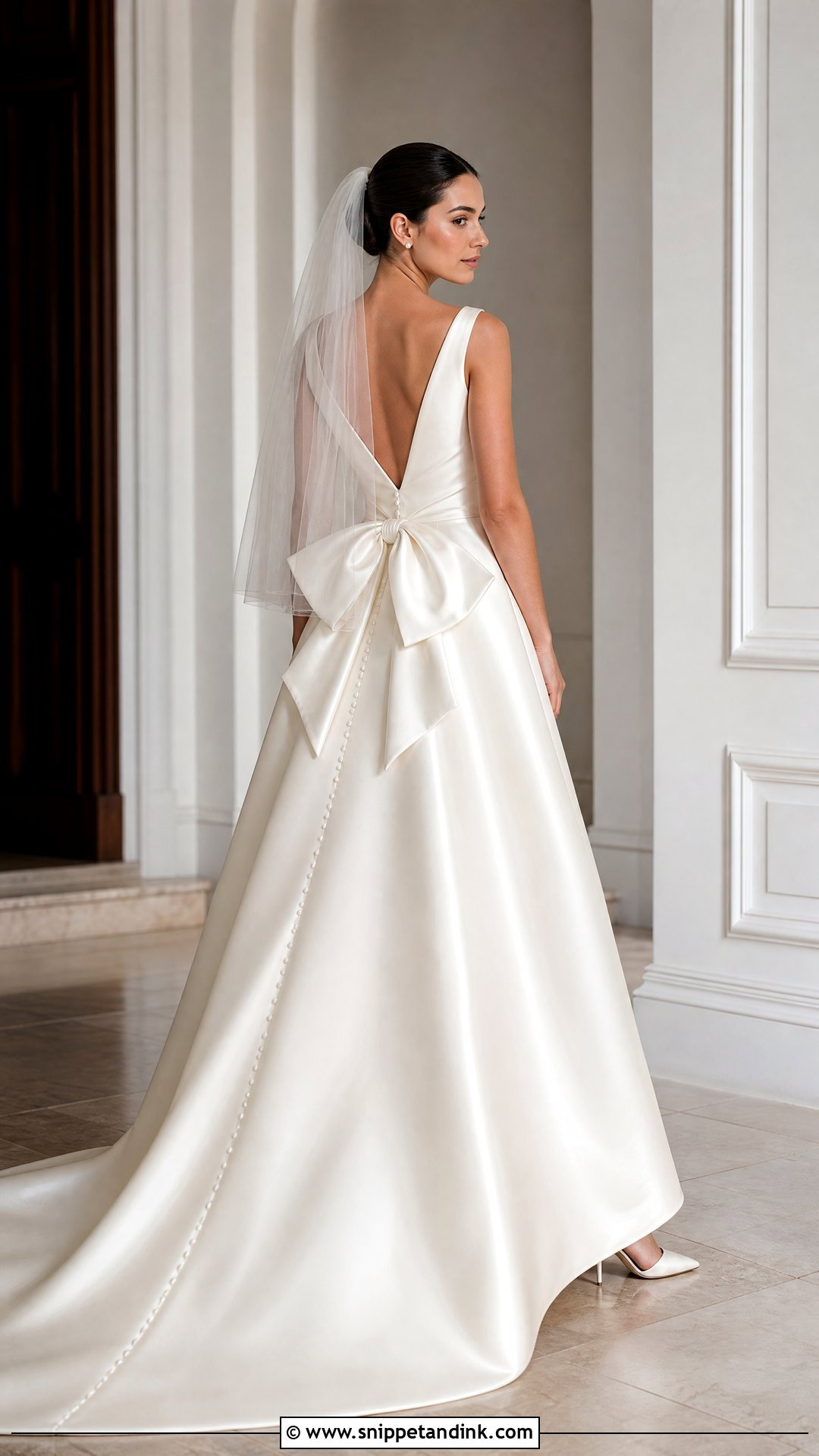
A bow-back gown puts the whole outfit’s interest in one place: the view as you walk away. Clean satin or Mikado keeps the bow the main detail. The bow must be in proportion to your frame. On a petite bride an oversized bow can swallow the back, so I pin a few sizes on at fittings. The veil should end above or below the bow, never across it. A smooth bun keeps the back clear. Removable bows give you a simpler gown for dancing.
21. Champagne Long Wedding Dress
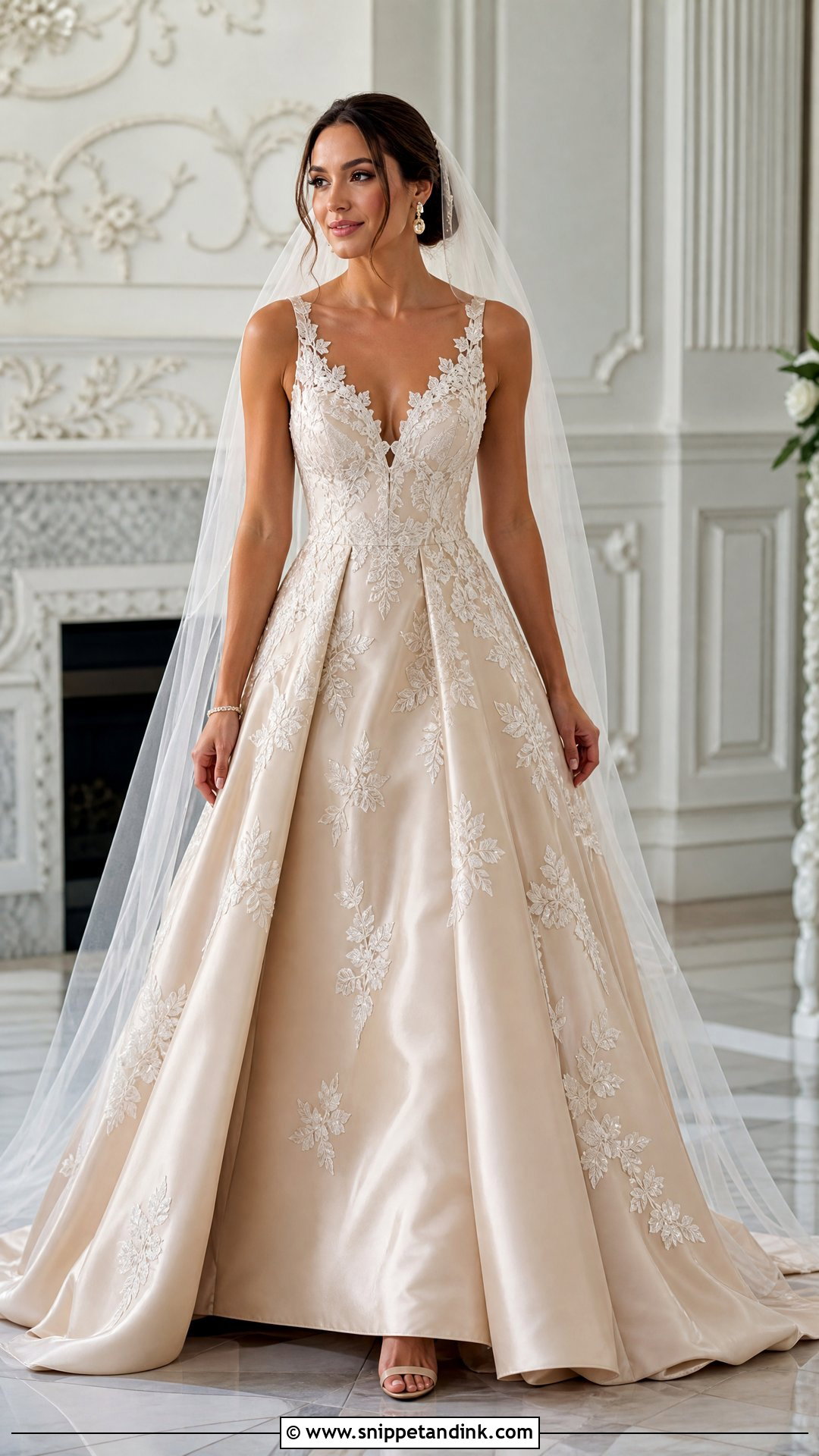
Champagne is warm without stepping away from bridal. The tricky part is that satin, tulle and lace all take the dye differently, and the shade shifts again between daylight and indoor bulbs. Ask for a fabric swatch and carry it when you buy shoes, the veil and jewelry, because champagne runs from pale beige to deep gold. Match the veil to the lightest tone in the dress. Gold or pearl jewelry and warm-toned makeup tie it together for brides who find bright white too stark.
22. Plus Size A-Line Long Wedding Dress
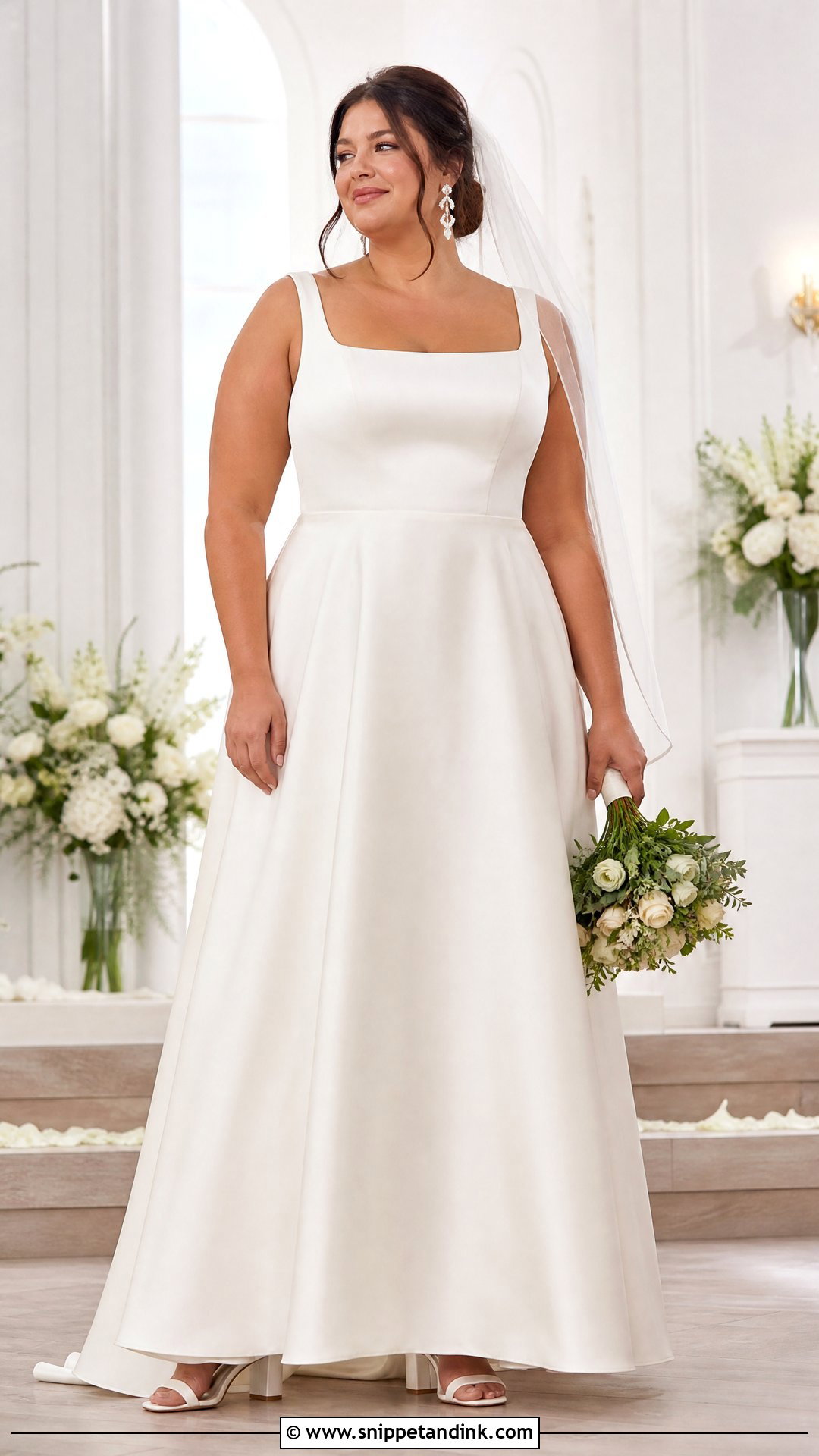
For plus-size brides, a supportive A-line is one of the most comfortable long gowns to wear all day. Look for a structured bodice, secure straps and a skirt starting at or slightly below the natural waist. My sizing advice never changes: order by your largest measurement and tailor everything else down, because letting out a gown is far harder than taking it in. Ask about internal cups, boning and bustle placement at the first fitting. A square, scoop or sweetheart neckline frames the upper body. The dress should feel secure without squeezing, slipping or needing to be hitched up.
23. Petite Sheath Long Wedding Dress
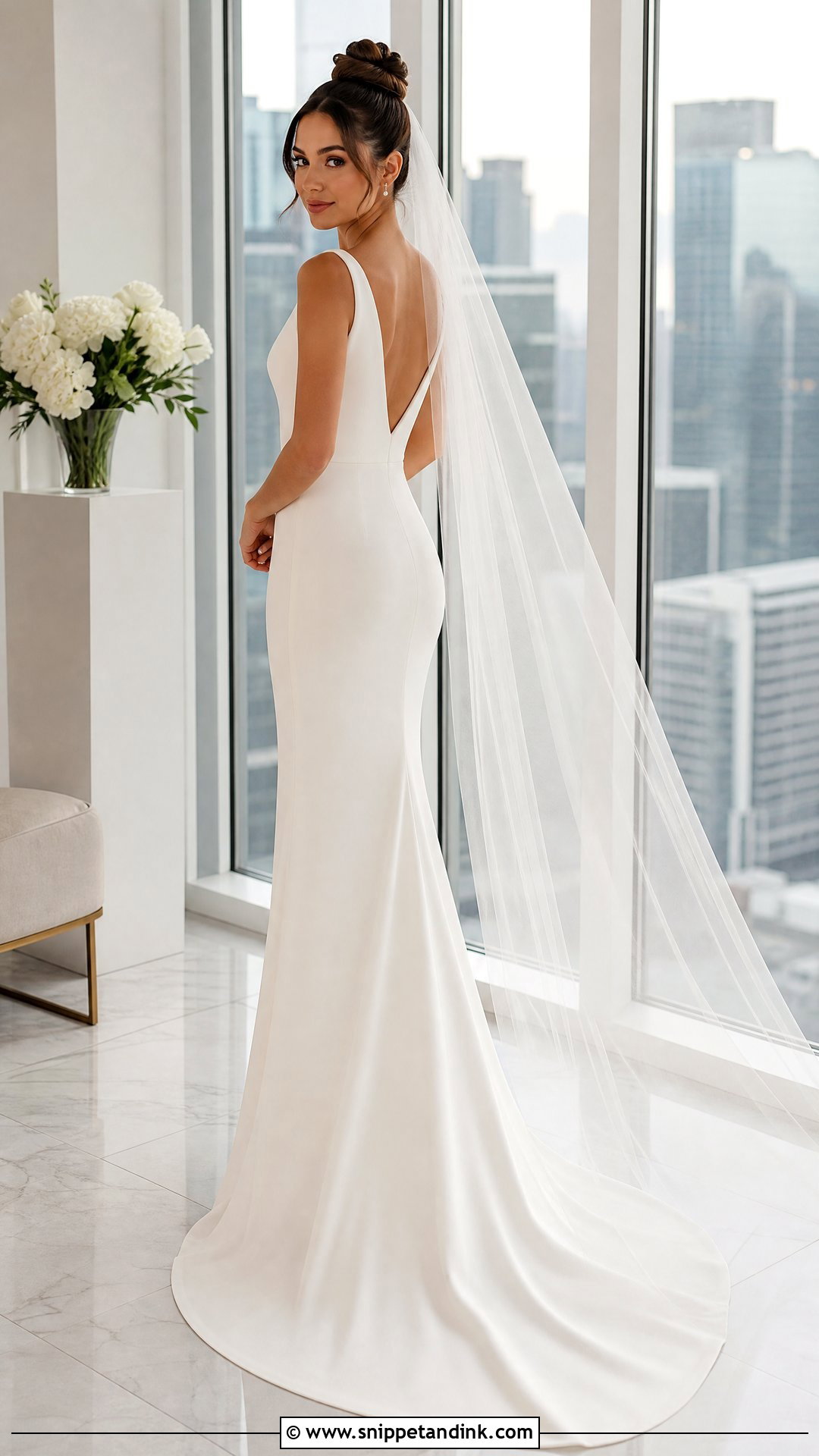
On a petite frame, a sheath dress works because it keeps one long vertical line. Avoid wide horizontal details and look for a slightly high waist. A narrow V, scoop neck or open back gives definition without crowding. Keep the train modest unless you really want drama. Here’s the fitting catch: shortening only from the hem can throw off a gown’s proportions, so a good seamstress may also take up the bodice or move the waist. Budget for that. A high bun adds a little length.
24. Maternity Empire Waist Long Wedding Dress
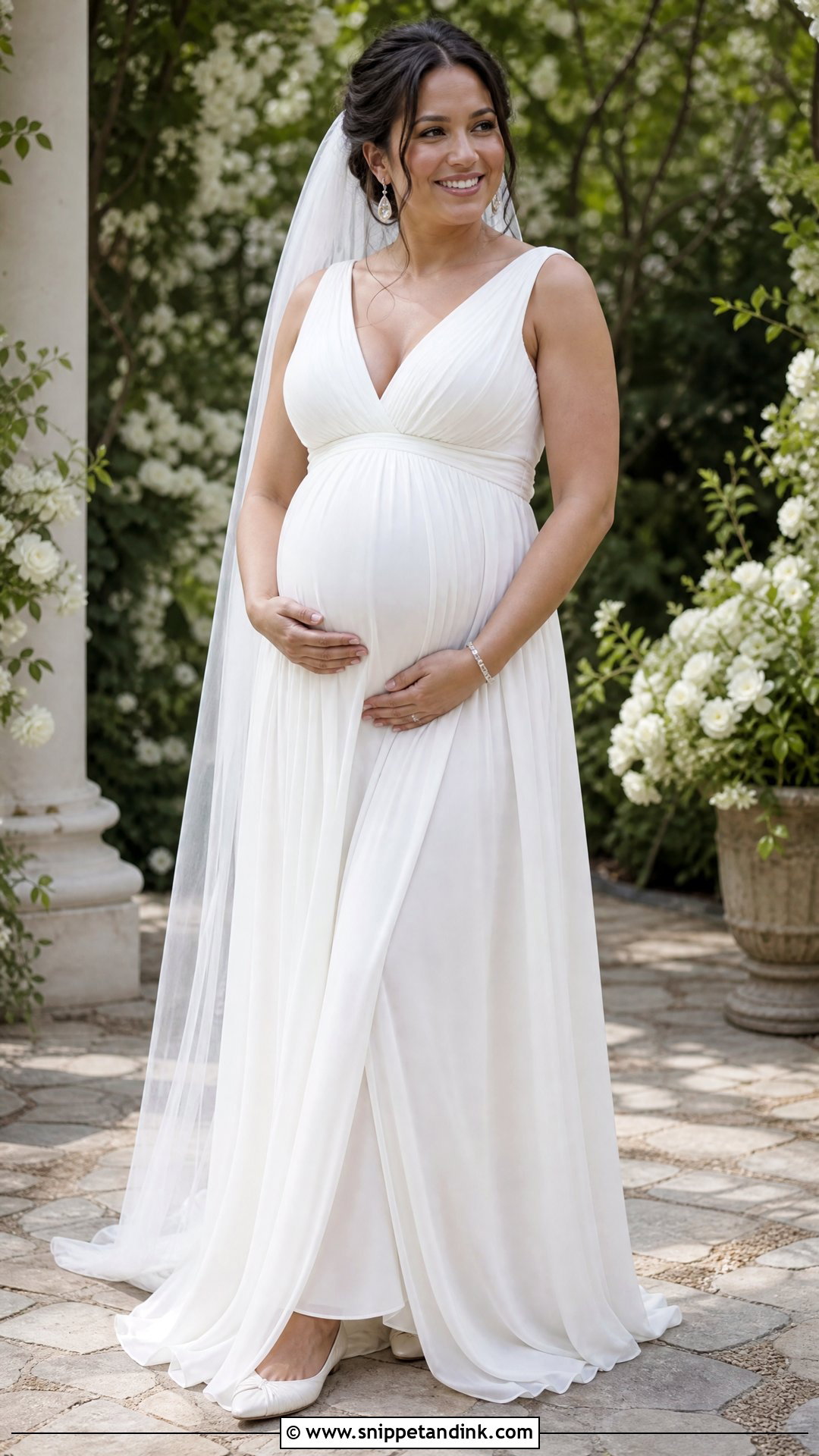
An empire-waist gown gives the bump room while keeping a graceful bridal line. The bodice should fit securely above the bump with a soft chiffon, jersey or light tulle skirt falling from just under the bust. Wide straps or flutter sleeves add support. I schedule the final alteration as close to the wedding as the seamstress allows, since measurements can change week to week in pregnancy. Avoid stiff waist seams and heavy internal construction, choose breathable lining, and keep the hem a touch shorter so there’s less to trip over. Low block heels or flats are kinder to your feet.
25. Modest Bateau Neck Long Wedding Dress
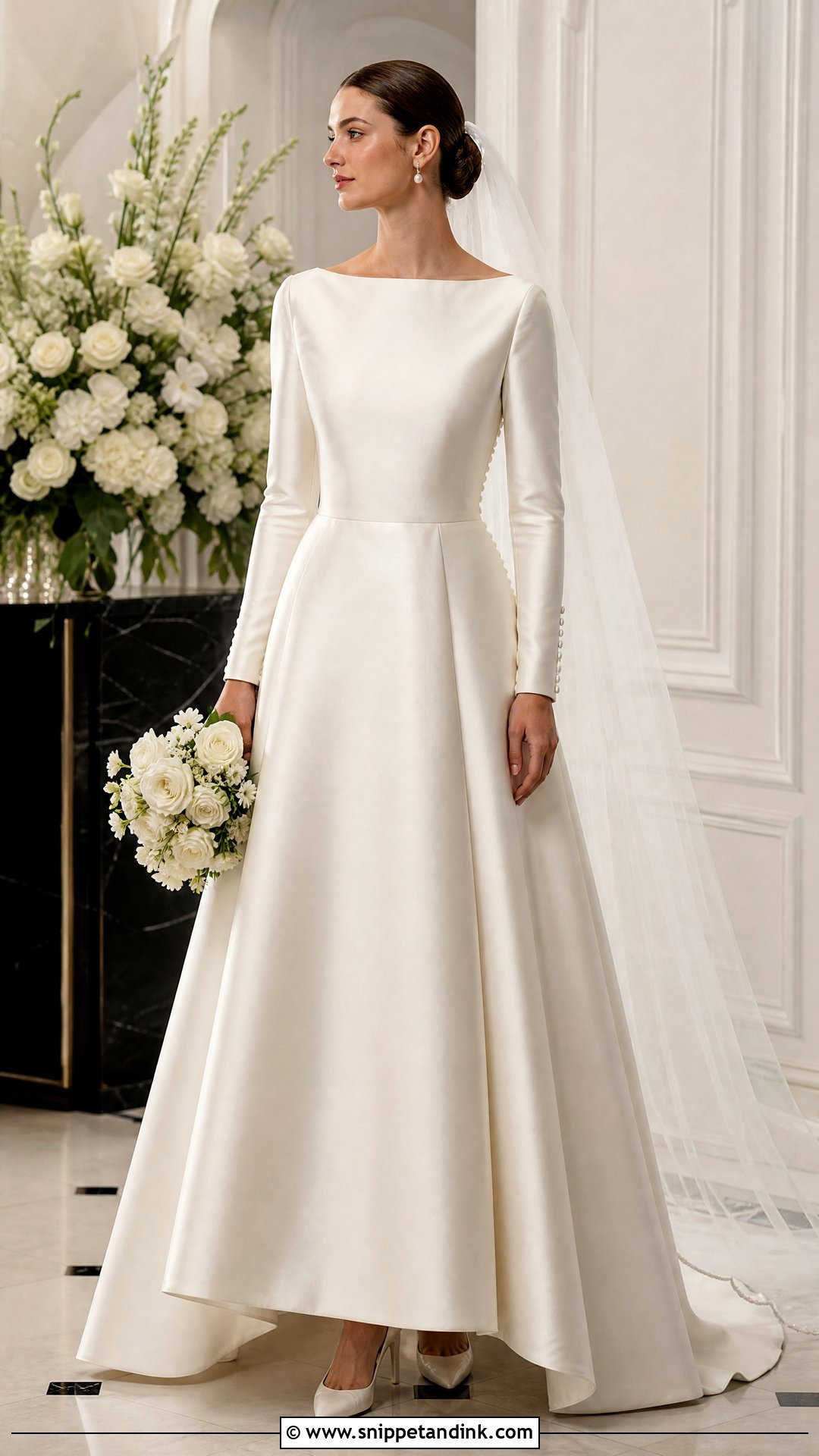
A bateau neck runs straight across from shoulder to shoulder, giving elegant upper-body coverage. Structured satin or Mikado keeps it clean; lace adds texture. Three-quarter or full sleeves pair well with the wide neckline. Watch for one thing at the fitting: when you sit, the neckline shouldn’t creep up toward your throat. If it does, the bodice needs adjusting. Covered buttons down the back add detail without reducing coverage. Pearl earrings and a chapel veil attached beneath a smooth bun suit formal, cooler-season ceremonies.
Why Your Bridal Size Won’t Match Your Closet
Bridal sizing usually runs smaller than high-street sizing, so a bride who wears an 8 every day is often measured into a 10 or 12. It’s a different chart, not a judgement. I ignore the number and work from three tape measurements: bust, waist and hips. The gown is ordered to the largest of the three, then the seamstress takes in the rest.
Fabric Behaviour in Heat, Cold and Damp Air
- Chiffon and light crepe breathe best in summer heat but can turn sheer in direct sun, so check the lining.
- Satin and Mikado hold their shape in cool rooms and show sweat marks and creases faster in humid ones.
- Tulle copes with heat but flattens in rain and damp air, so pack a hand steamer for a quick revive.
- Lace is the most forgiving overall. Small creases hide in the pattern, which is why I suggest it for long travel days.
- Silk marks with water. A light drizzle can leave spots, so keep an umbrella and a clean white towel close by.
If the forecast is uncertain, I’d choose the fabric for the worst likely weather, not the best. You’ll still look polished on a fine day.
The Dress You Forget You’re Wearing by the Speeches
Every gown above can be right for someone; the trick is finding the one that’s right for your body, venue and season. Start with the shape you feel most confident in, then check it against the weather, the fabric weight and how much moving the day will ask of you. Let accessories support the dress rather than compete with it. Leave enough time for alterations, and practise walking, sitting and turning in the finished gown. A dress that fits properly is one you stop thinking about, and that’s when you actually enjoy the day.
You'll Like These Ideas:




Leave a Reply