
Getting dressed for a second marriage is mostly a question of where you’ll be standing and for how long. A courthouse at ten in the morning and a ballroom at eight at night want different hems, fabrics and shoes, and most of the regret I hear from brides comes from ignoring that. You can wear white again, try a soft color, go full length or pick a midi you’ll wear for years afterward. The dresses below cover courthouse, garden, beach, formal and small-gathering weddings, with what I’d check on each before you buy. Shoes, a layer and the right hair accessory do the rest.
Matching the Hem and Fabric to the Ceremony Setting
Before we look at a single dress, I ask three questions: what time of day, indoors or out, and how much walking or standing is involved. The answers rule out half the racks straight away and save you falling for something that won’t work on the day.
- Courthouse or registry office: knee to mid-calf, structured fabrics such as crepe or a light suiting, and a layer for drafty corridors. Trains and big skirts get in the way in small rooms and lifts.
- Daytime garden or brunch: tea length or ankle length so the hem stays off damp grass, with breathable lace, cotton blends or chiffon.
- Beach or waterfront: lined chiffon or crepe, no train, and nothing that turns see-through in strong backlight.
- Evening, hotel or ballroom: floor length is at home here, and satin, beading and heavier crepe come into their own under warm indoor lighting.
- Winter or a long outdoor portrait session: sleeves or a planned coat or cape, and shoes you can swap for boots between locations.
Time of day matters for color as well. Pale blush, champagne and soft blue can look quite different by a window at noon and under candlelight at nine. If your ceremony and reception happen in different light, look at the fabric in both before you commit.
1. Simple A-Line Second Wedding Dress
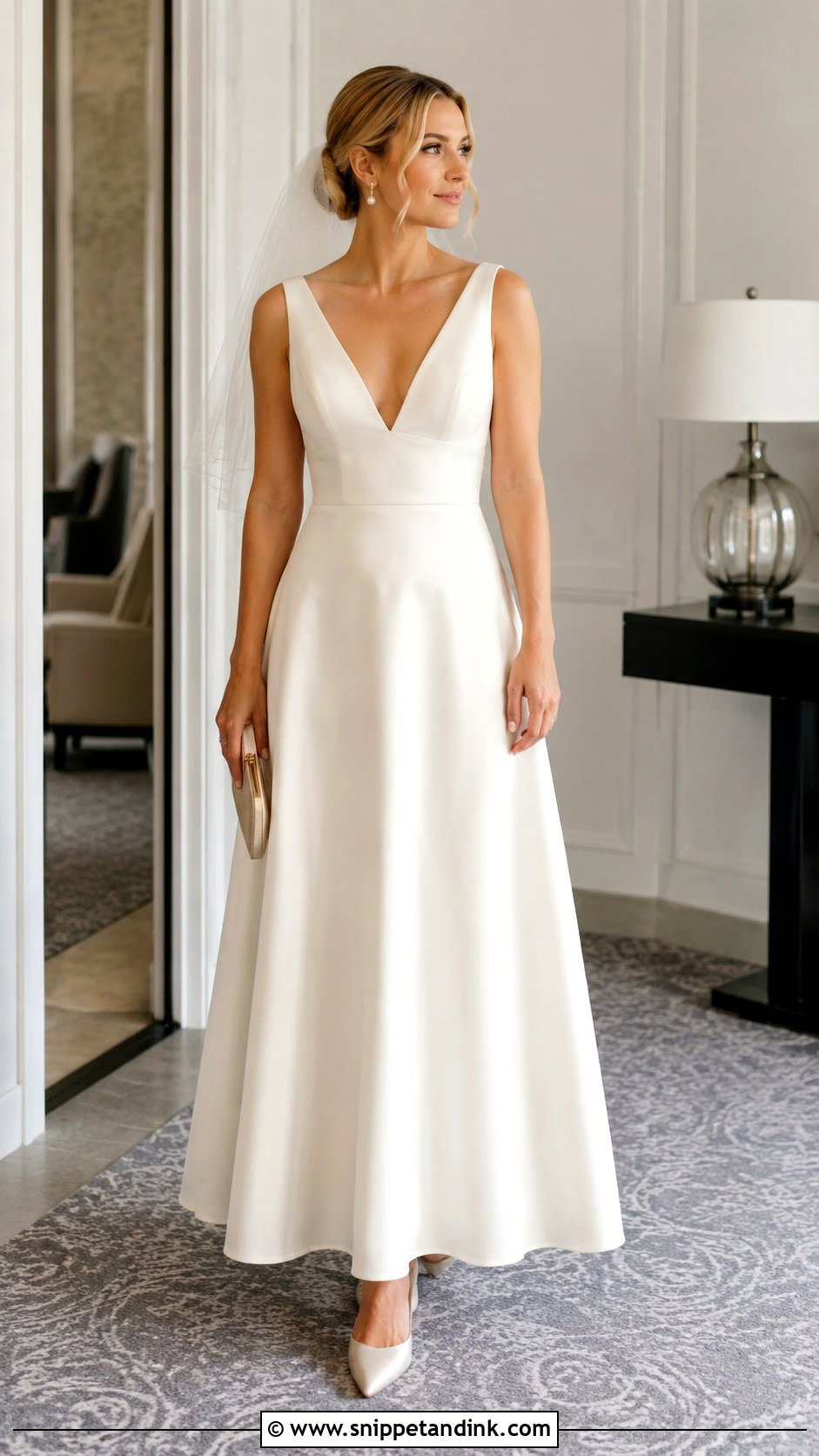
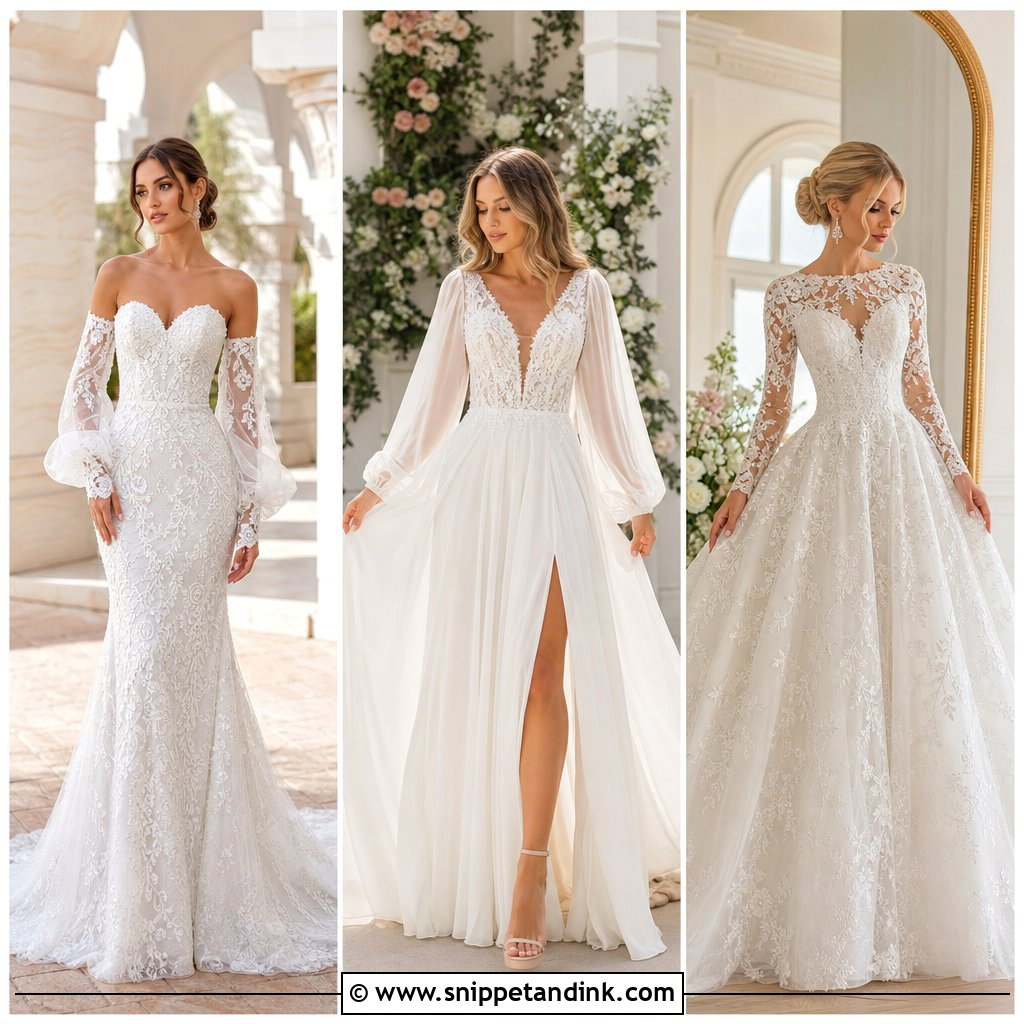
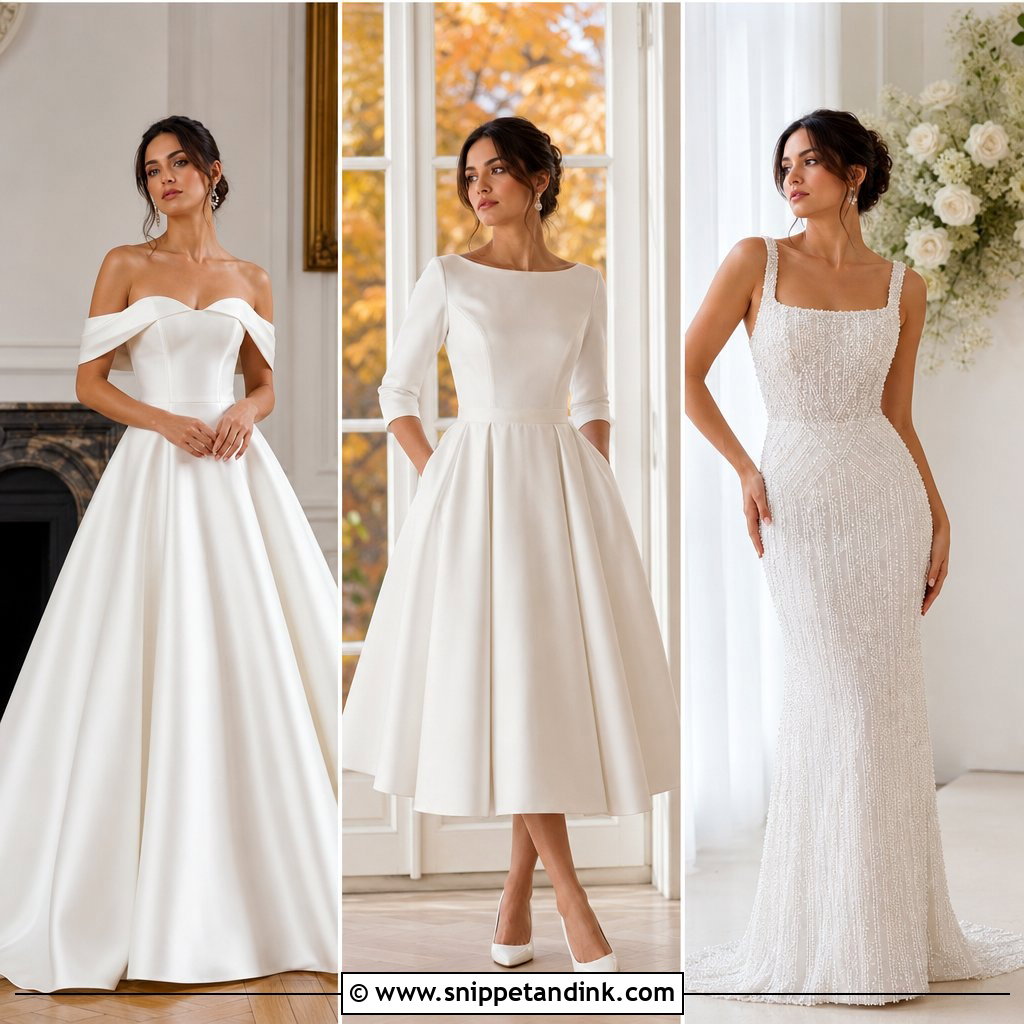
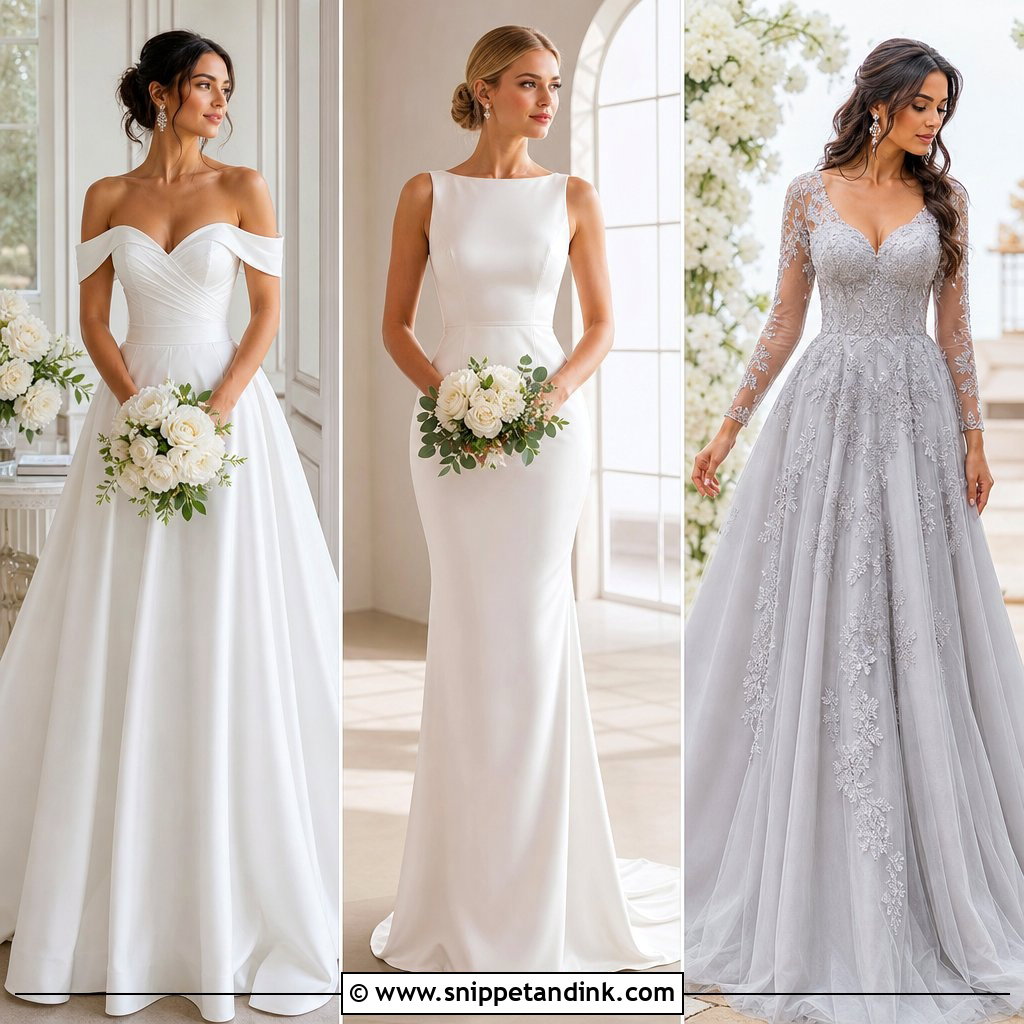
Start here if you’re unsure. A simple A-line flatters most figures because the skirt flares from the narrowest point and skims everything below. Ivory crepe or lightweight satin with a fitted bodice is the classic version, and a V-neck with wider straps gives support without needing a strapless bra all day. Add pointed pumps, pearl drops and a structured ivory clutch. A short tulle veil keeps it traditional; a pearl headband feels newer. Because the dress itself is plain, it’s the easiest canvas for something personal, like a family brooch pinned at the waist or a wrap in your favorite color.
2. Lace Midi Second Wedding Dress
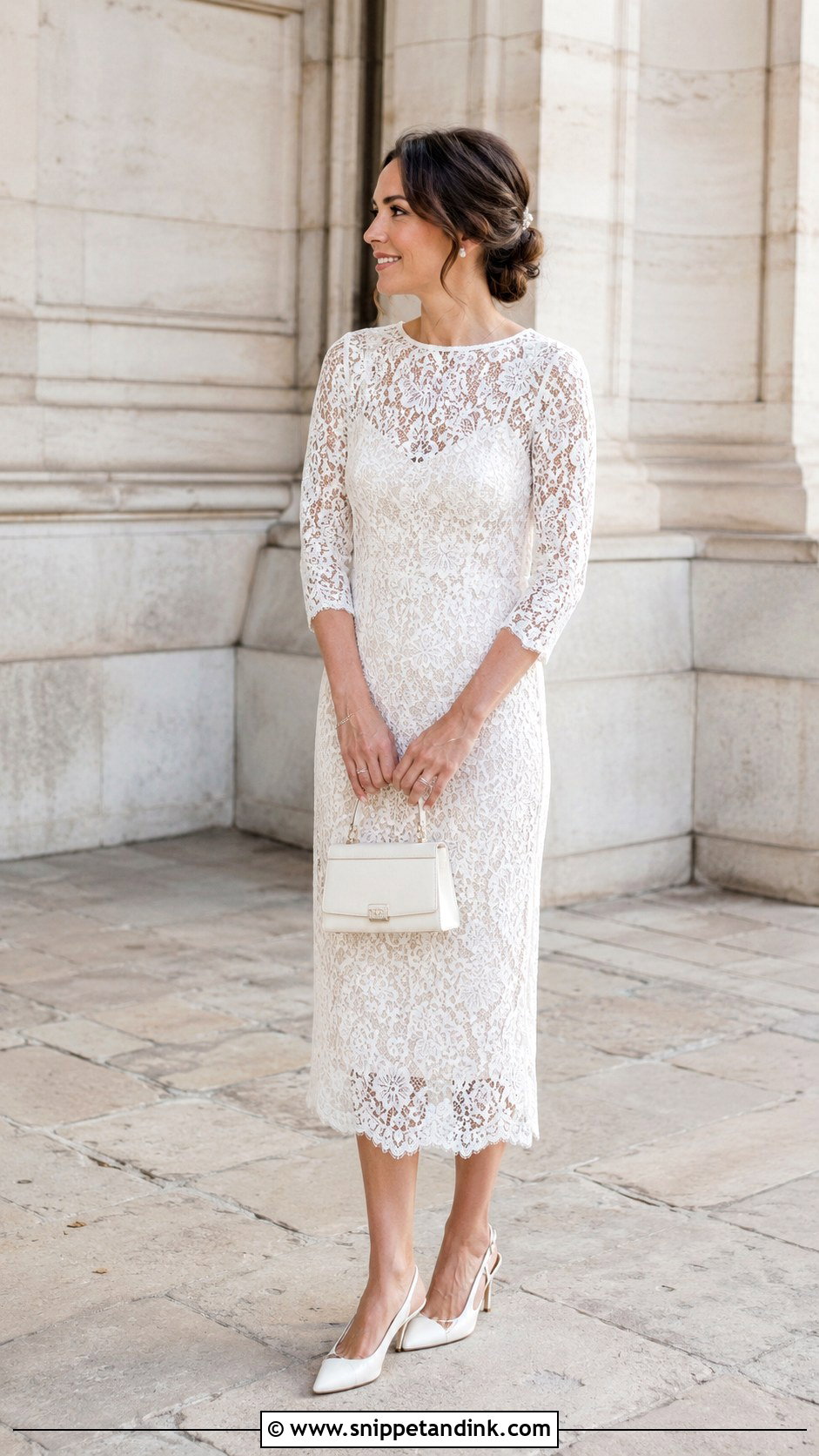
Lace at midi length looks bridal without any train to manage. Look for floral lace over a fitted ivory lining, a defined waist and a hem just below the knee, with three-quarter sleeves that carry it through spring and autumn. Nude or ivory slingbacks lengthen the leg. Add pearl studs, a small top-handle bag and a comb above a low bun. One thing I check: the scale of the lace pattern. Small, neat motifs read crisp in photos; large, heavy guipure on a shorter dress can look more like a tablecloth than a gown. Courthouses and afternoon gardens are where it shines.
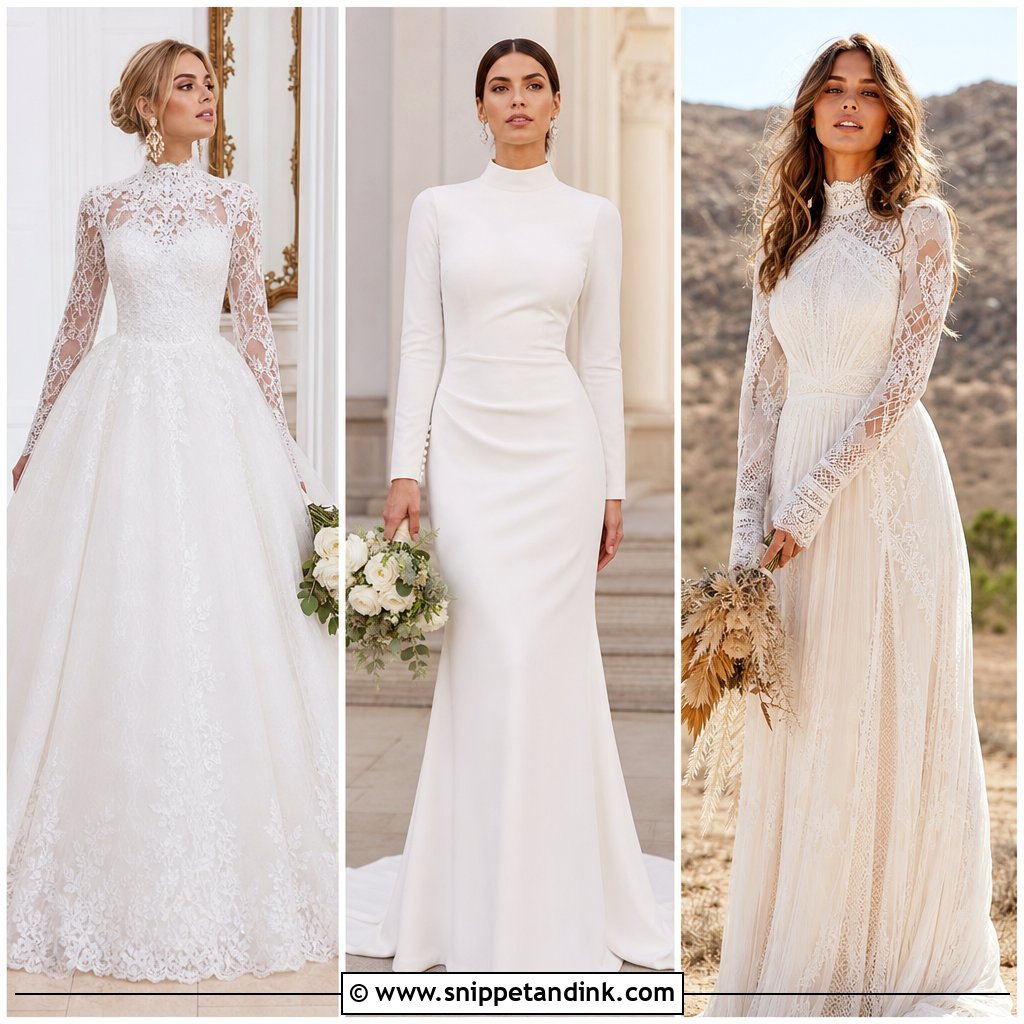
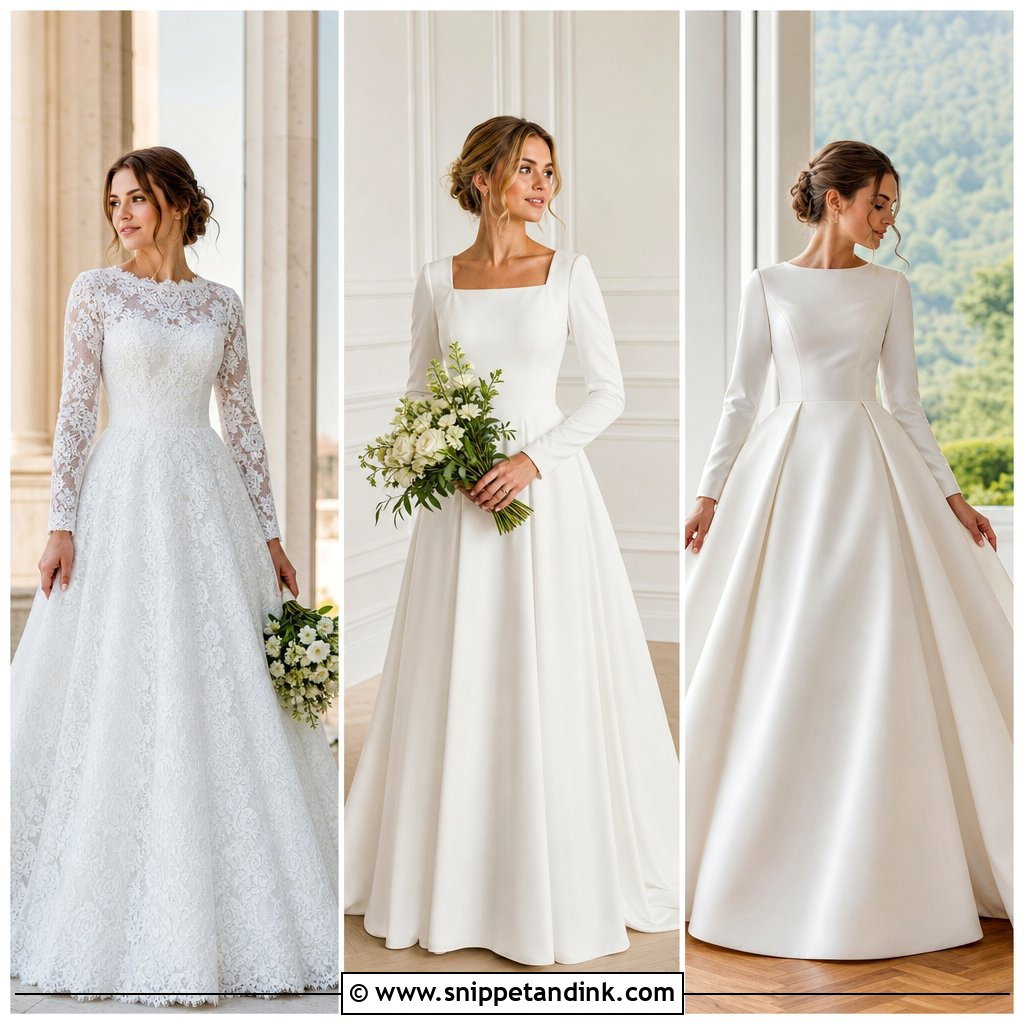
3. Long Sleeve Second Wedding Dress
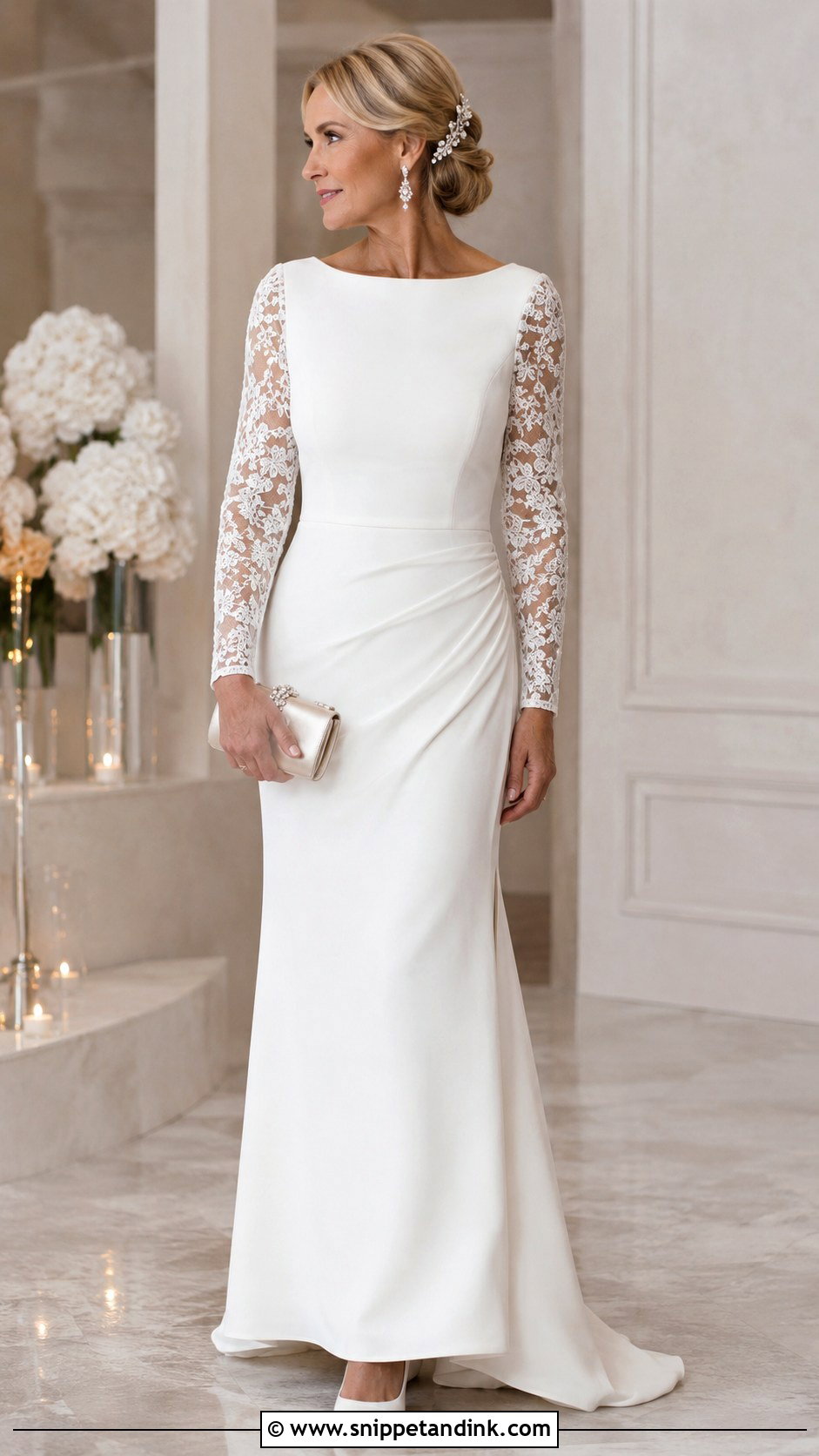
Long sleeves with sheer lace over a fitted crepe body give full coverage that still feels light. The skirt should skim, not cling, so ask about the lining weight. A bateau or modest V-neck keeps the front clean, and covered buttons down the back add detail for the ceremony, when guests mostly see you from behind. Closed-toe ivory heels, crystal earrings and a satin clutch suit it, with a fingertip veil or jeweled comb. Leave bracelets off, since they snag lace cuffs. I’d reach for this one first for cool-weather and evening ceremonies, with smooth undergarments under the crepe.
4. Satin Slip Second Wedding Dress
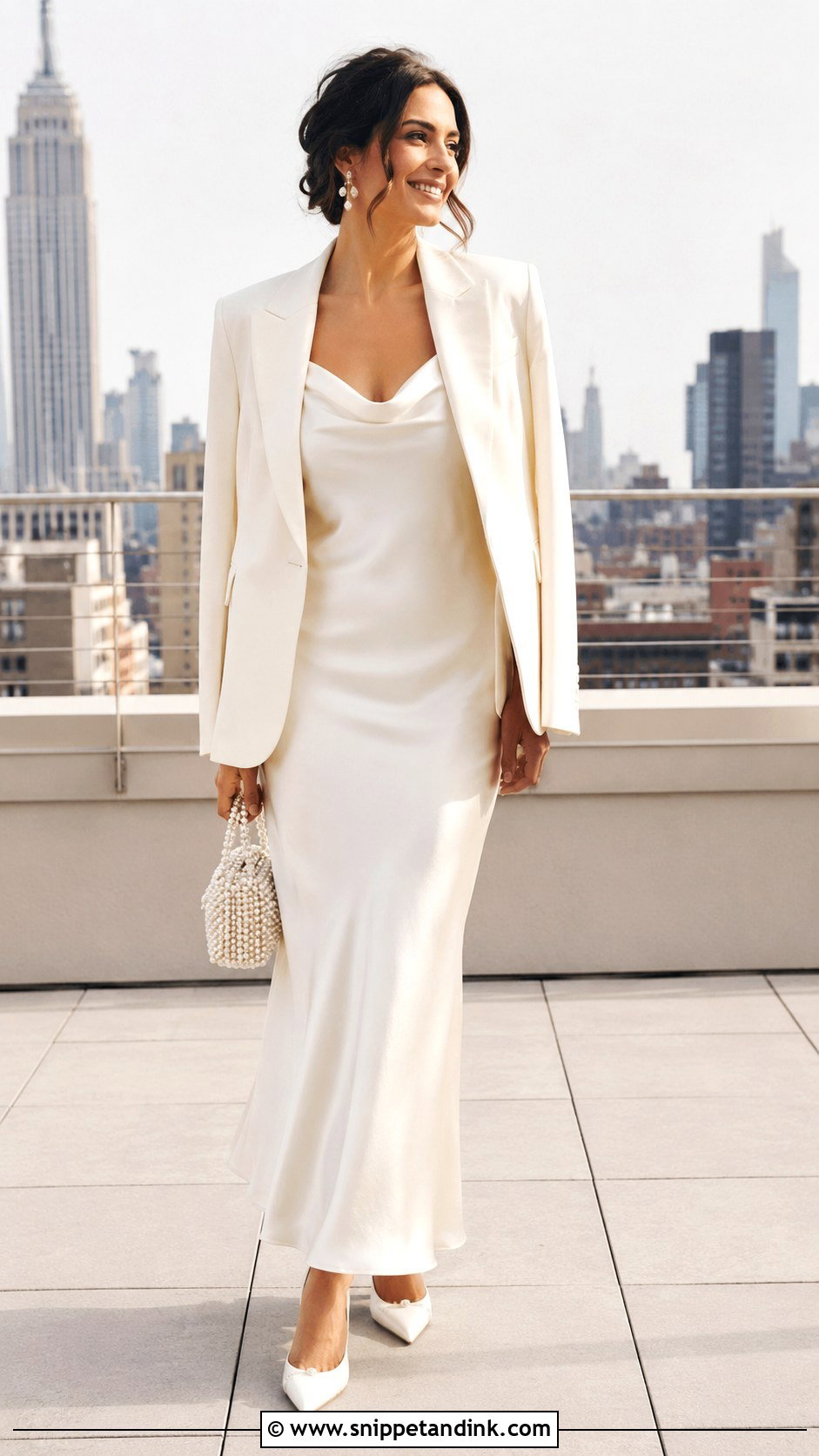
Satin slip dresses look relaxed and expensive at once, and they are the least forgiving dress on this list. Bias-cut satin follows every curve and shows underwear lines, creases from sitting and even water marks. Choose a weight heavy enough to hang rather than cling, with a draped neckline and straps that actually hold. Midi or ankle length both work. Kitten heels, fine metallic earrings and a small beaded bag add texture. A tailored ivory blazer covers you for the ceremony and comes off later. Wear a sleek low bun or brushed waves. City venues, rooftops and dinner receptions suit it best.
5. Tea Length Second Wedding Dress
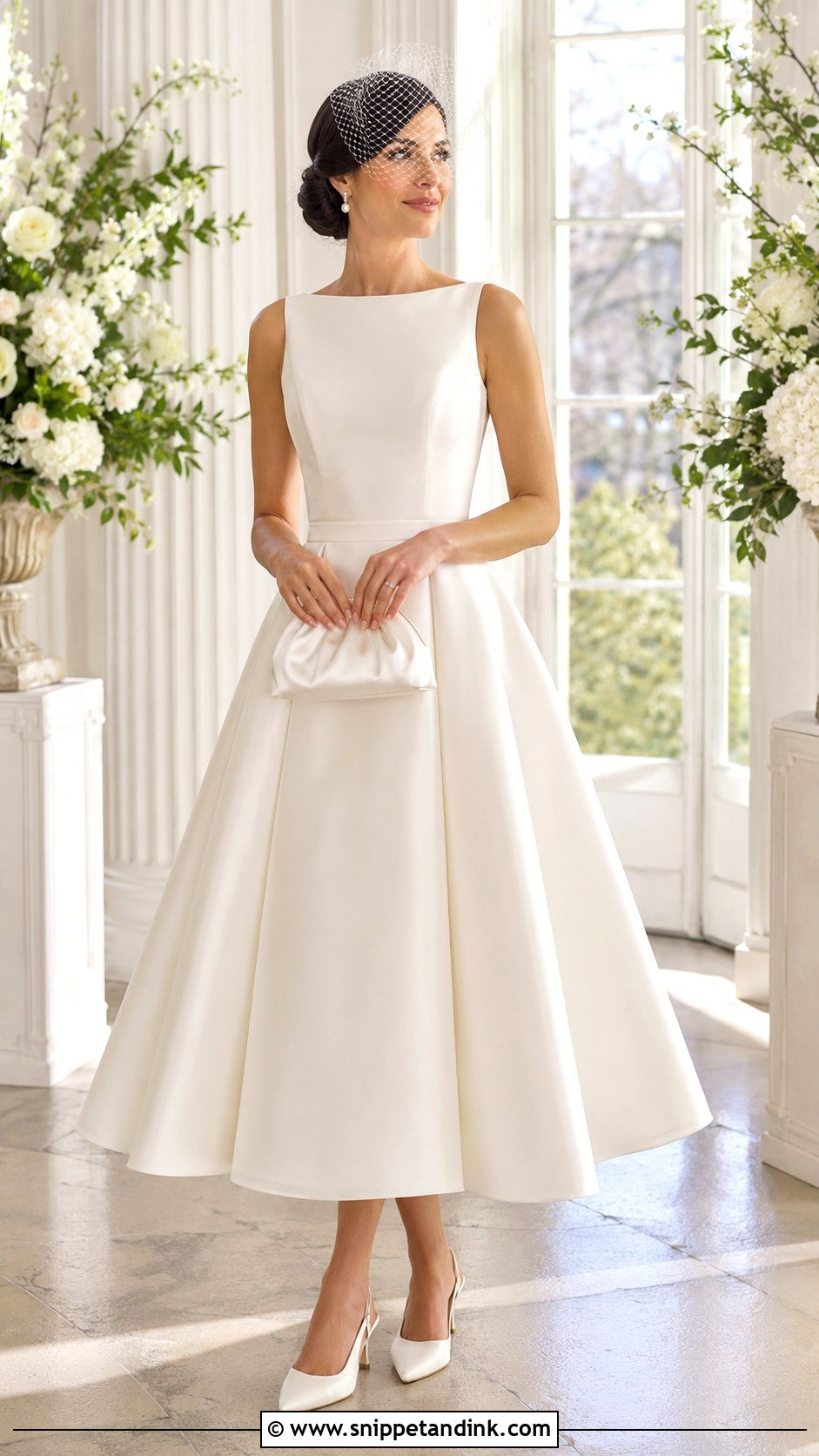
Tea length with a full skirt has a 1950s feel and moves easily. A structured ivory dress with a fitted bodice and defined waist, ending between knee and ankle, gives that shape, and a square or portrait neckline frames the shoulders. Slingback pumps, pearl earrings and a small satin bag suit it. A birdcage veil plays up the retro side; a simple bow in the hair softens it. Because the lower leg is on show, the shoes need a little detail, perhaps a pointed toe or a fine buckle. Full skirts like this usually rely on a petticoat or crinoline layer, so try it with the one you’ll wear.
6. Courthouse Second Wedding Dress With Blazer
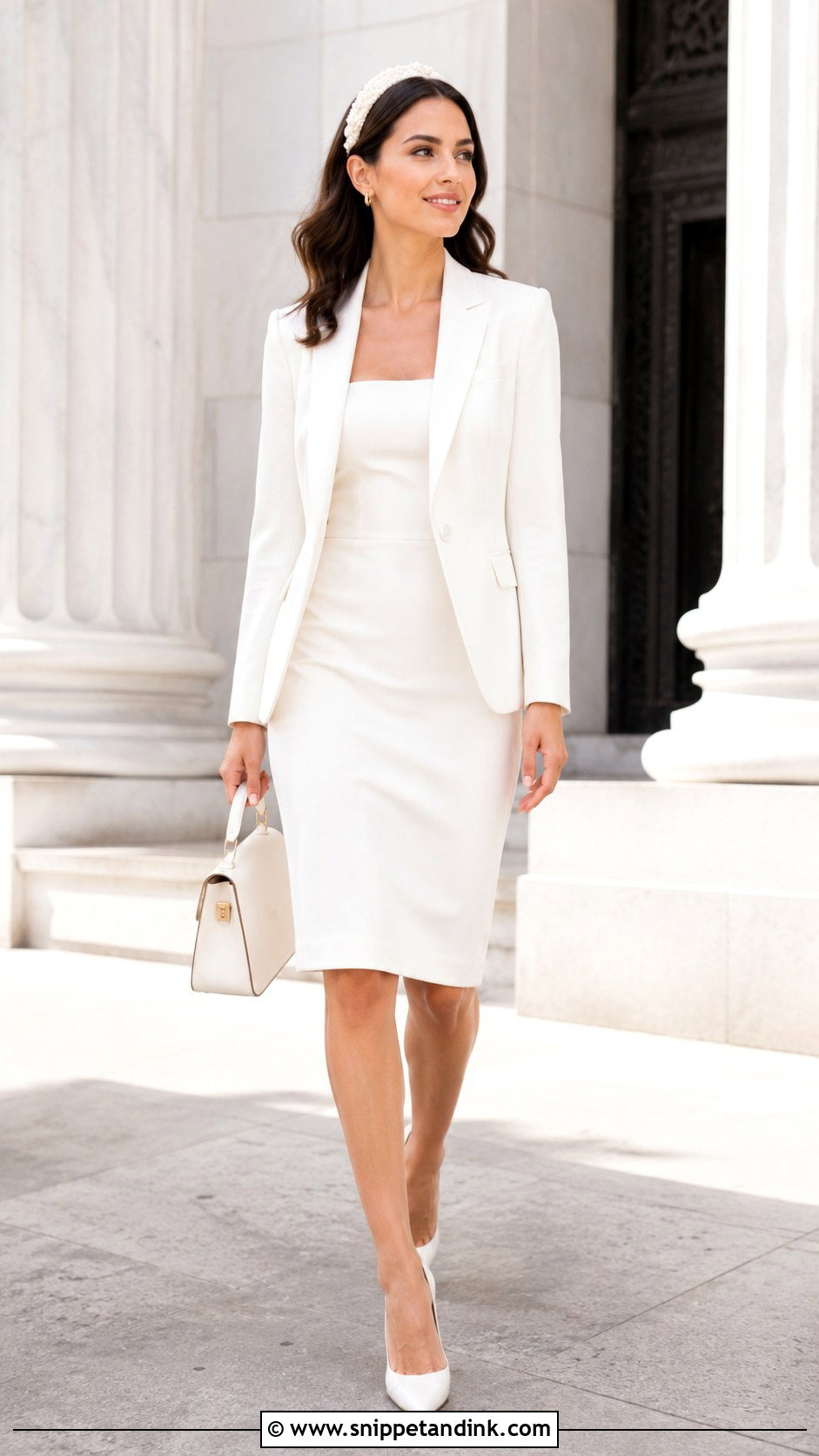
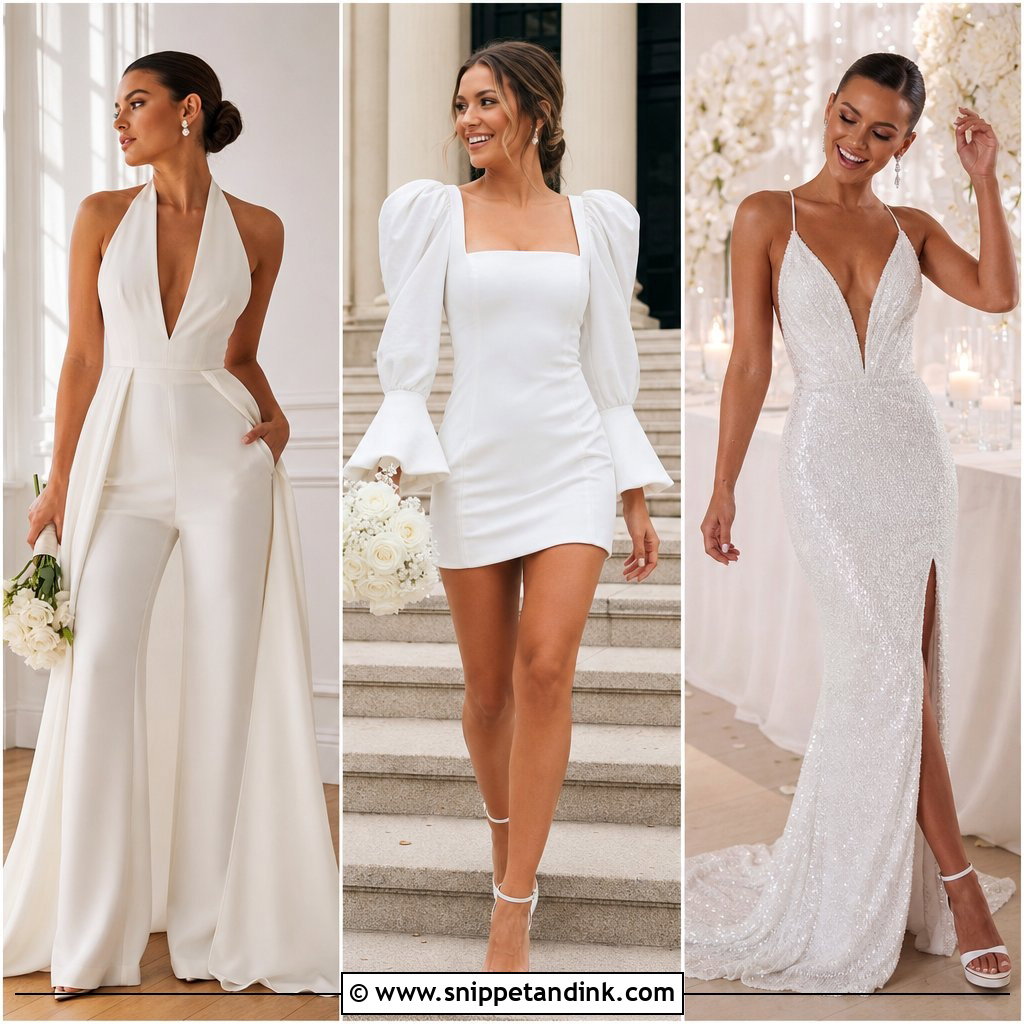
For a courthouse, a matching dress and blazer is my go-to recommendation. Start with a fitted white or ivory sheath at knee or mid-calf, then add a sharp single-breasted blazer in exactly the same tone; two slightly different whites look like a mistake in photos. Pointed pumps, small hoops and a structured top-handle bag finish it. Swap a full veil for a short net veil, a headband or a sculptural hair clip. Button the blazer for formal portraits and wear it open afterward. It handles the shuffle from clerk’s office to photo spot to dinner without needing anyone to carry a train.
7. Ivory Wrap Second Wedding Dress
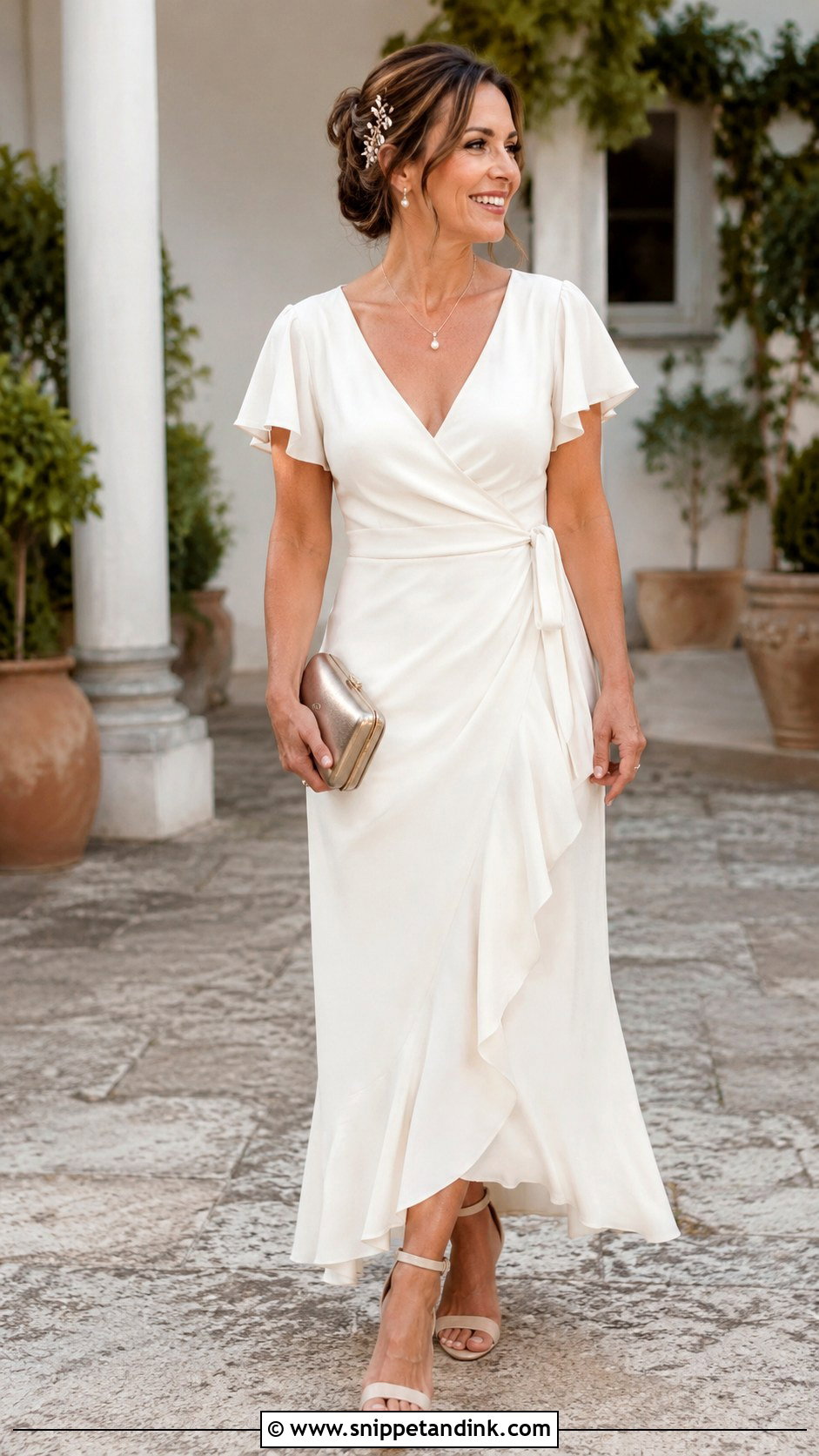
Could any dress be more comfortable than one that adjusts to you? An ivory wrap creates a V-neck and waist definition at once. Choose midi or ankle length in crepe, soft satin or a lightly textured fabric, with flutter sleeves and a gently flared skirt. Block-heel sandals, a pearl pendant and a small clutch in ivory or soft metallic suit it, and a floral comb can stand in for a veil. A true wrap tends to loosen as the day goes on. I add a hidden snap at the waist and a tiny stitch or fashion tape at the neckline so it stays put through hugs and dancing.
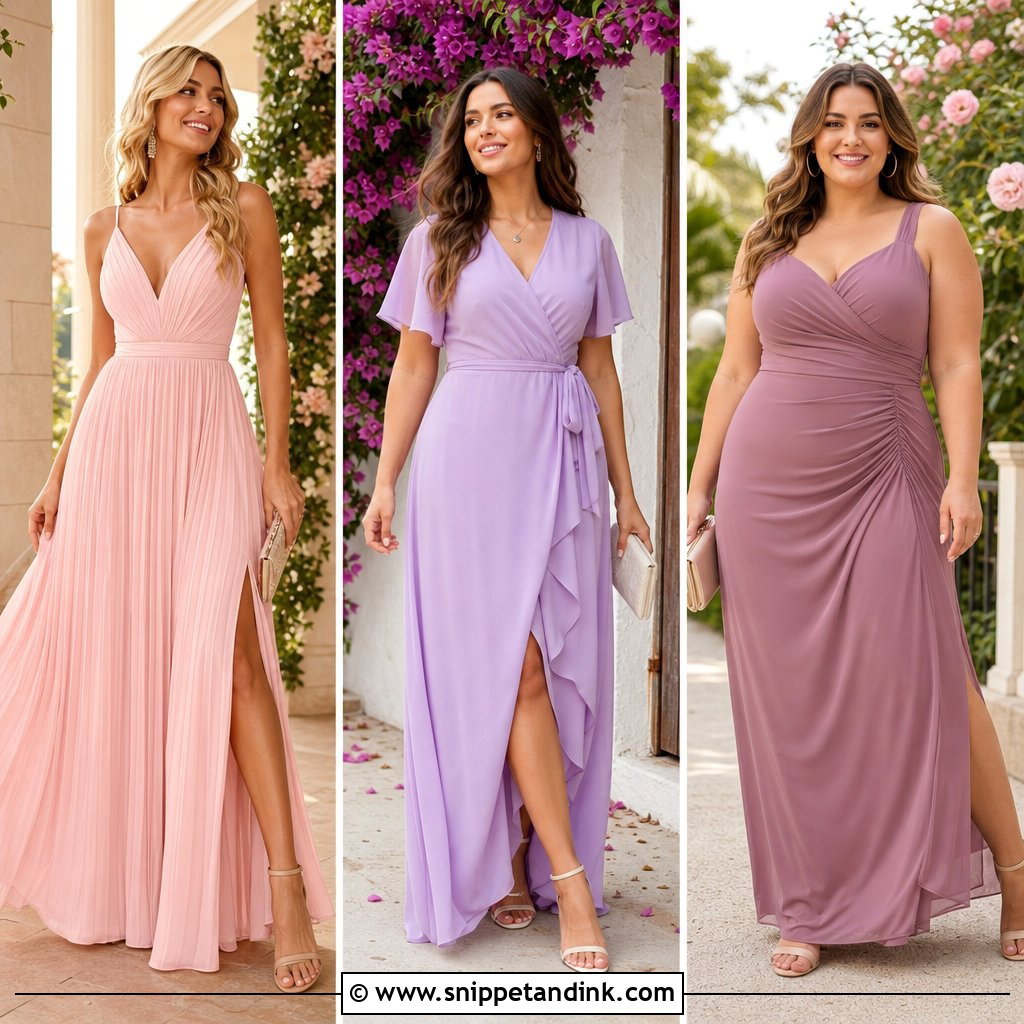
8. Blush Second Wedding Dress
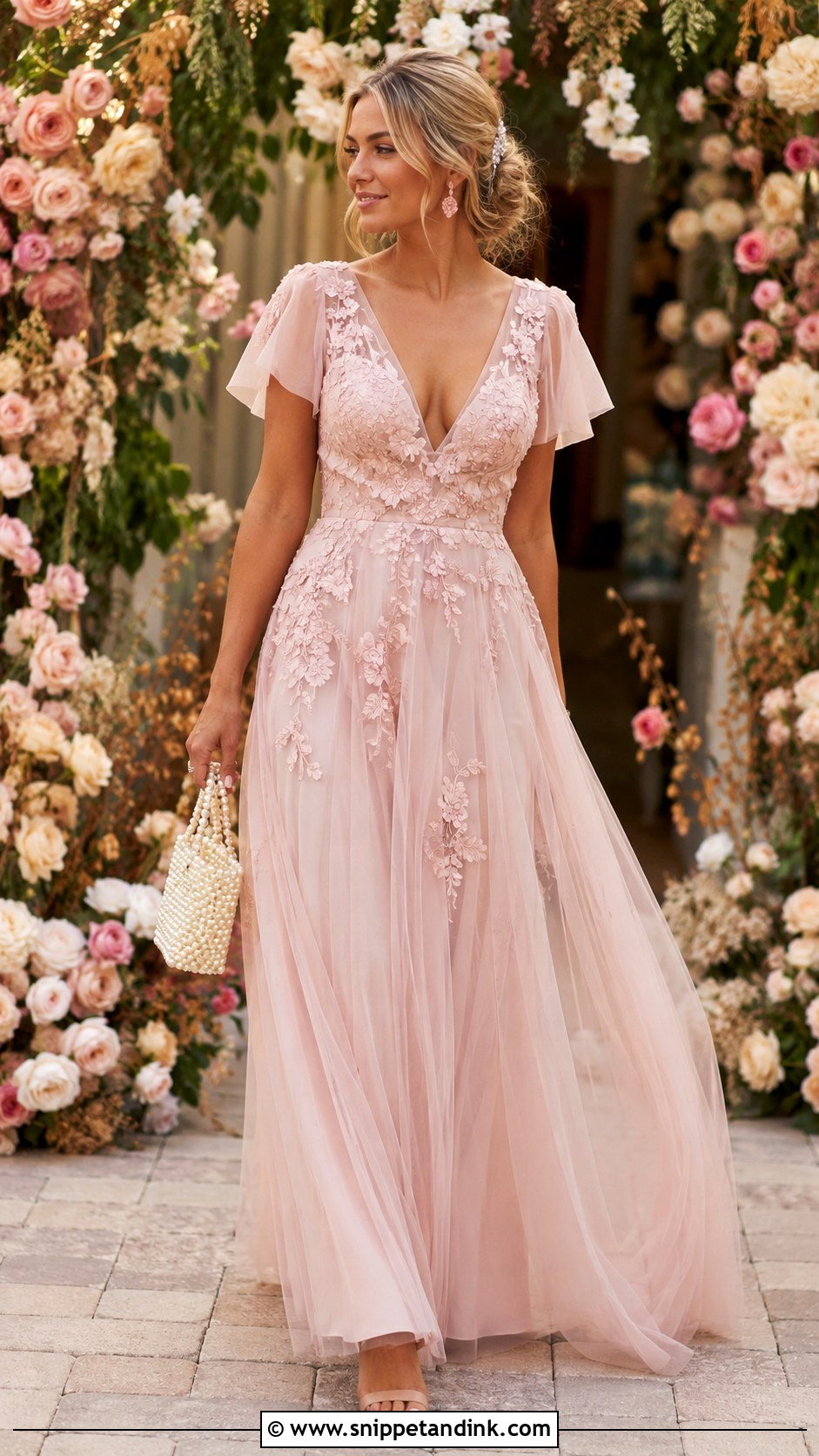
Blush gives you color while still reading as bride. A flowing chiffon gown with a fitted waist, layered skirt and delicate sleeves or wide straps is the most flattering way to wear it, and tonal appliqués add depth. Nude heels, rose-toned earrings and a small pearl bag keep the palette soft, as does a neutral comb in gathered hair. In cool weather, layer a pale ivory wrap; a dark jacket cuts the color in half. Blush varies a lot between makers, from peach to almost lilac. Hold swatches against your bare skin in daylight, since some shades make warm skin look sallow.
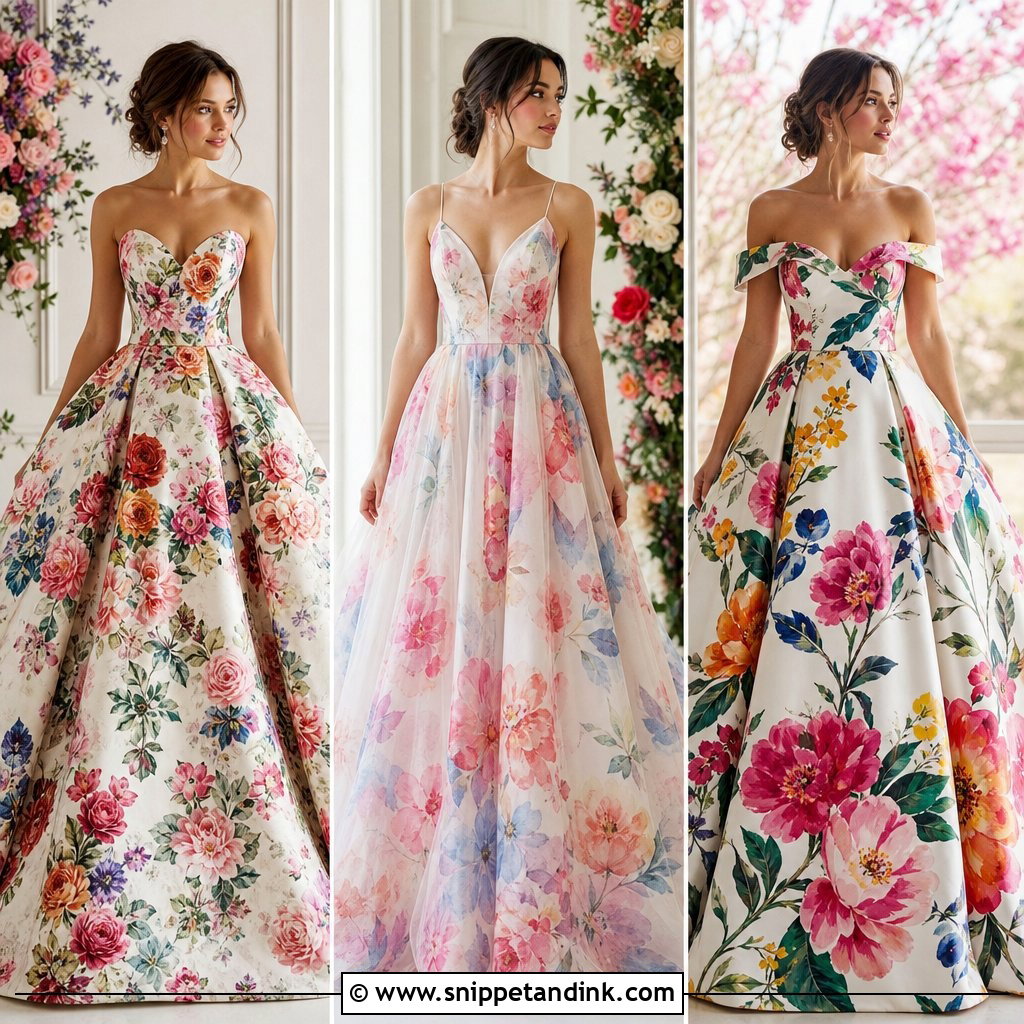
9. Floral Second Wedding Dress
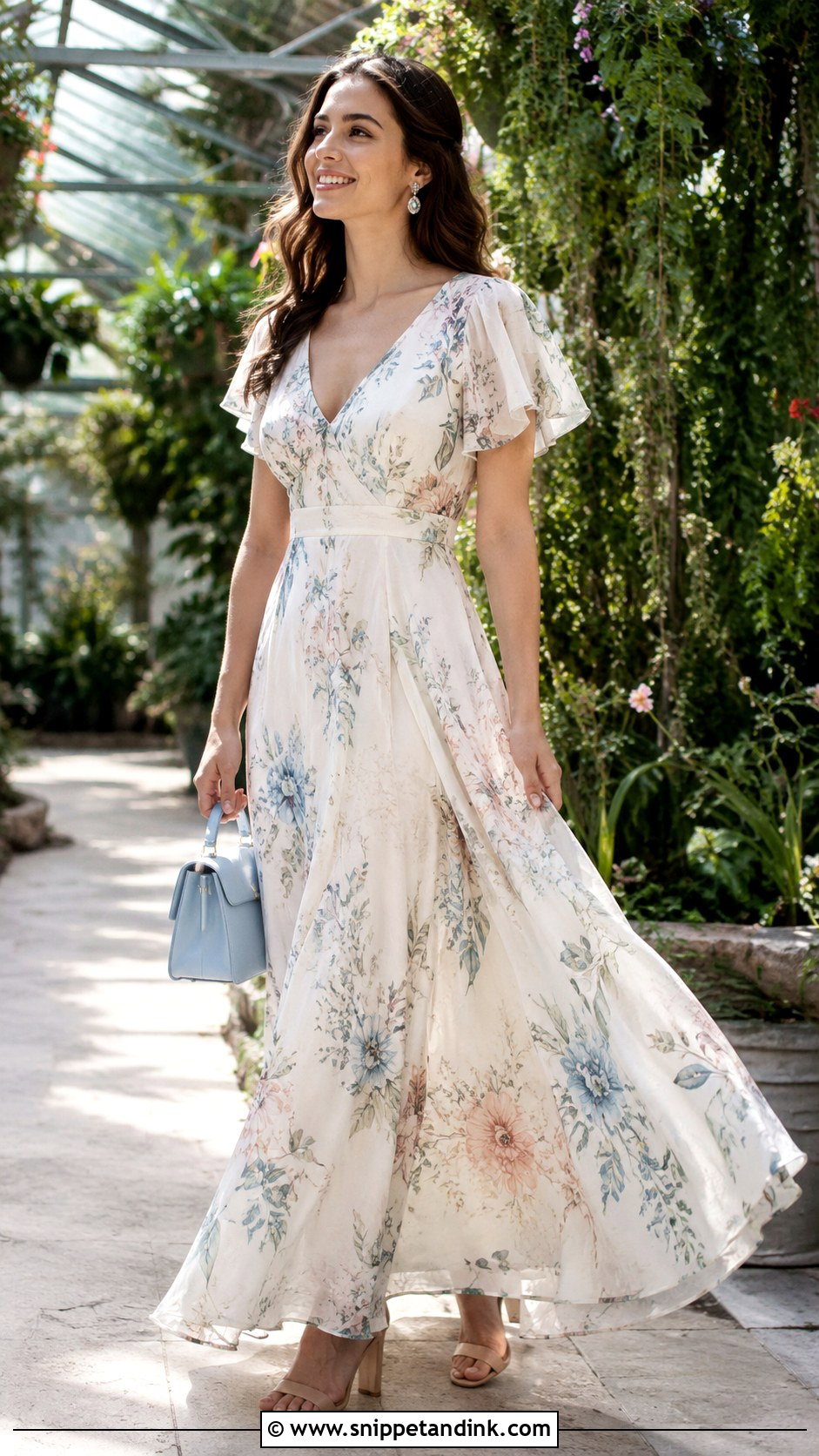
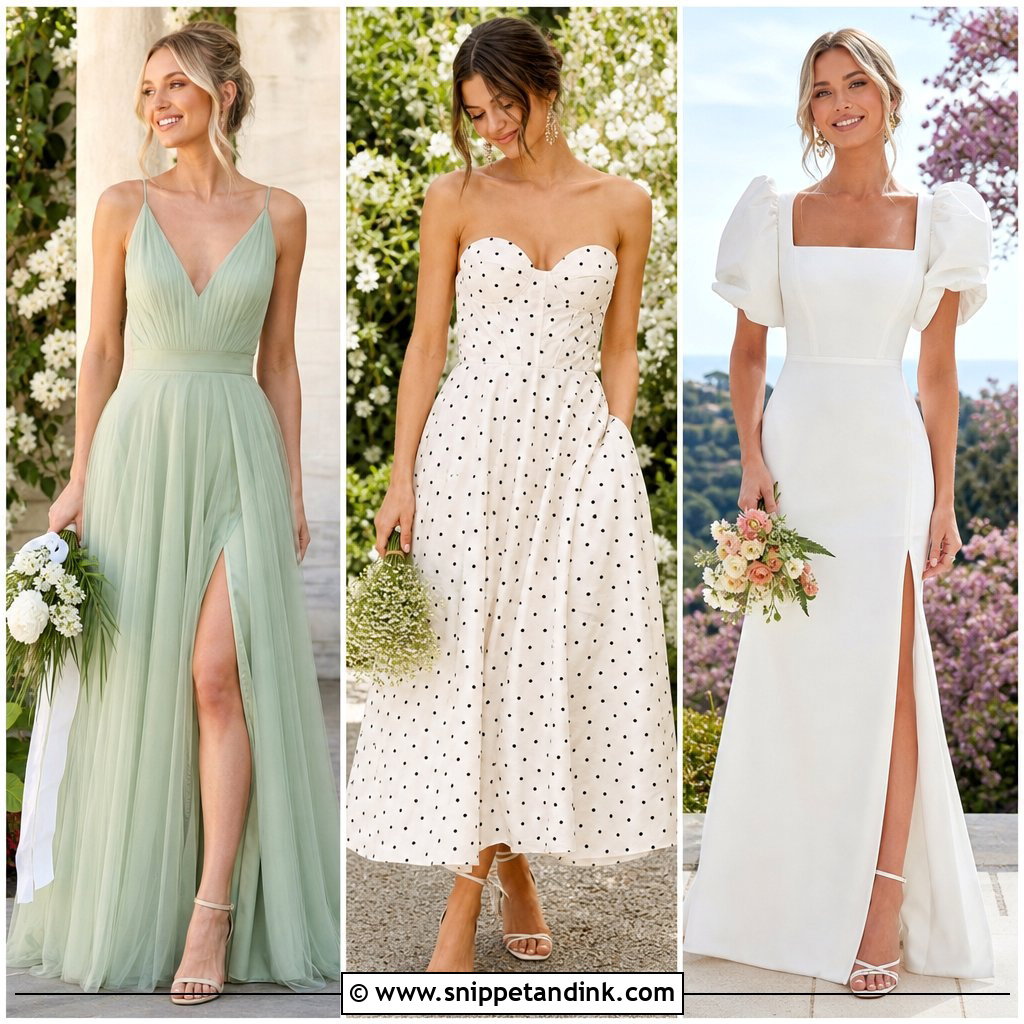
Florals feel cheerful and personal, which suits a relaxed second wedding. Look for an ivory midi or maxi with soft blue, pink, lavender or green flowers, a fitted waist and a flowing skirt. Pick up one muted color from the print for your bag, add neutral block heels and small gemstone earrings, and keep hair accessories plain. Print scale matters more than color here. A larger, well-spaced print reads clearly across a garden, while tiny ditsy flowers blur into a busy texture in photos taken from a distance. Botanical gardens, backyards and countryside venues are the natural fit.
10. Beach Chiffon Second Wedding Dress
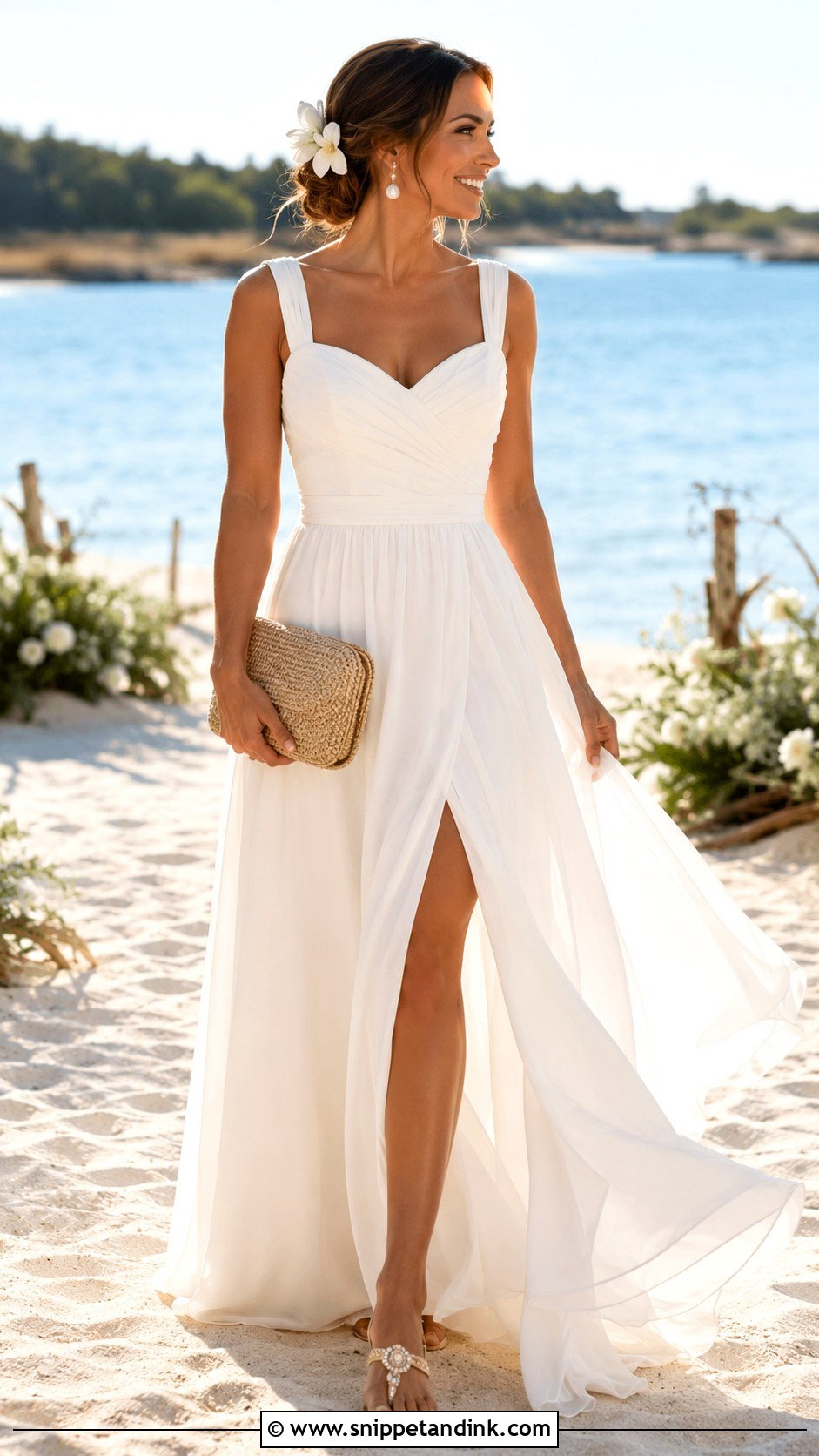
Picture chiffon moving beside the water as you walk to the ceremony. On a beach, wind is the real problem. Choose a floor-length A-line with a properly supported bodice, a lined skirt so the breeze doesn’t turn it sheer against the light, and straps wide enough to cover your bra. Flat embellished sandals or low wedges won’t sink, and you may end up barefoot anyway. Shell-inspired pearls, a small woven clutch and a floral pin are plenty. Skip a long train, since sand and salt water stain the hem. Pack a light wrap for after sunset.
11. Garden Second Wedding Dress With Sleeves
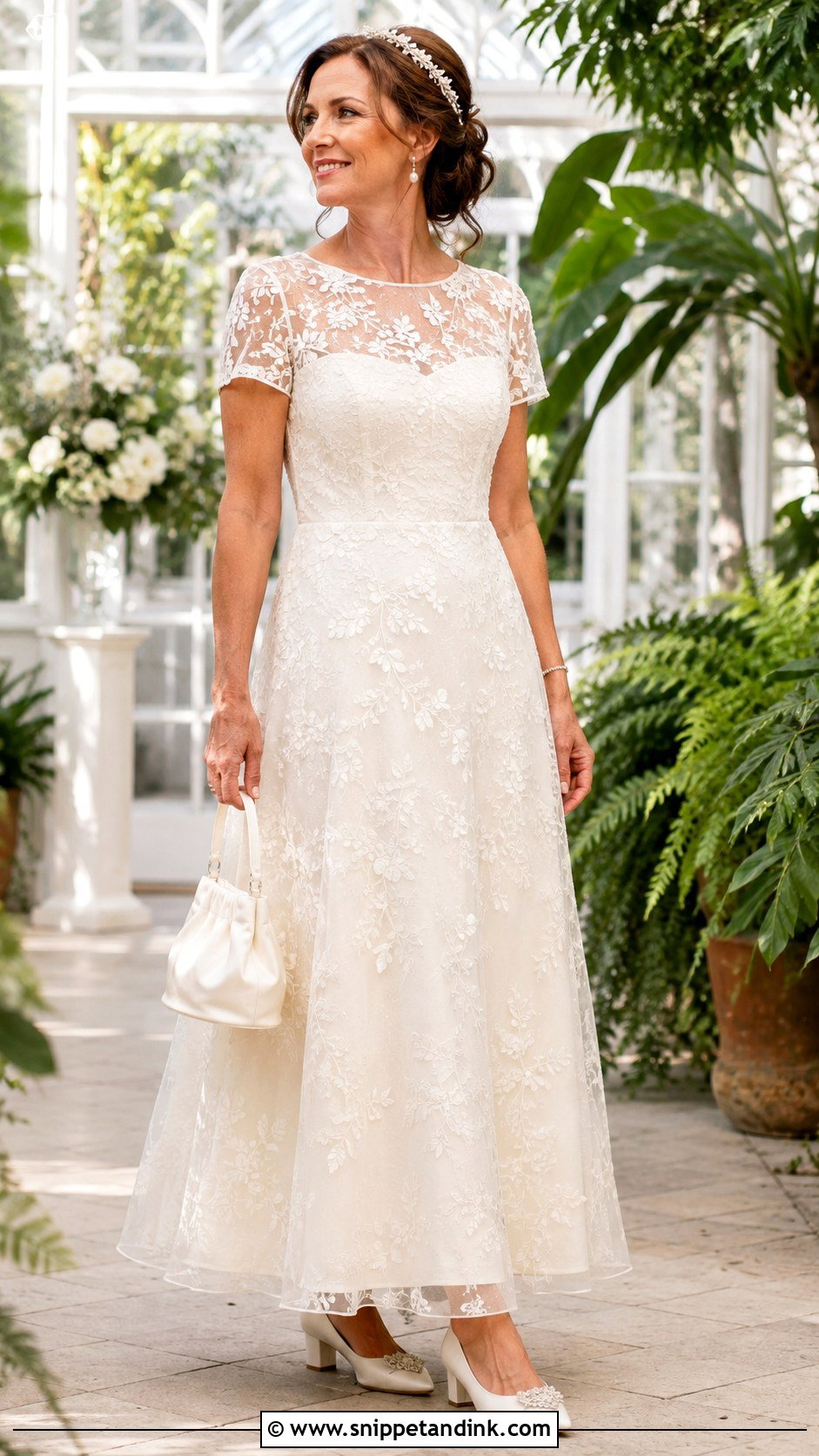
Gardens suit a softly detailed dress. An ivory A-line with botanical lace, short illusion sleeves and an ankle or floor hem echoes the setting without needing sparkle. Wear stable block heels that can cross grass, pearl earrings and a small satin bag, plus a floral comb or slim headband rather than a long veil that catches on hedges. A cropped jacket helps if the evening cools. If your hem is floor length, ask your seamstress to raise it a fraction for outdoor ground, since grass stains on ivory lace are stubborn to remove. Conservatories and courtyards work just as well.
12. Winter Second Wedding Dress With Cape
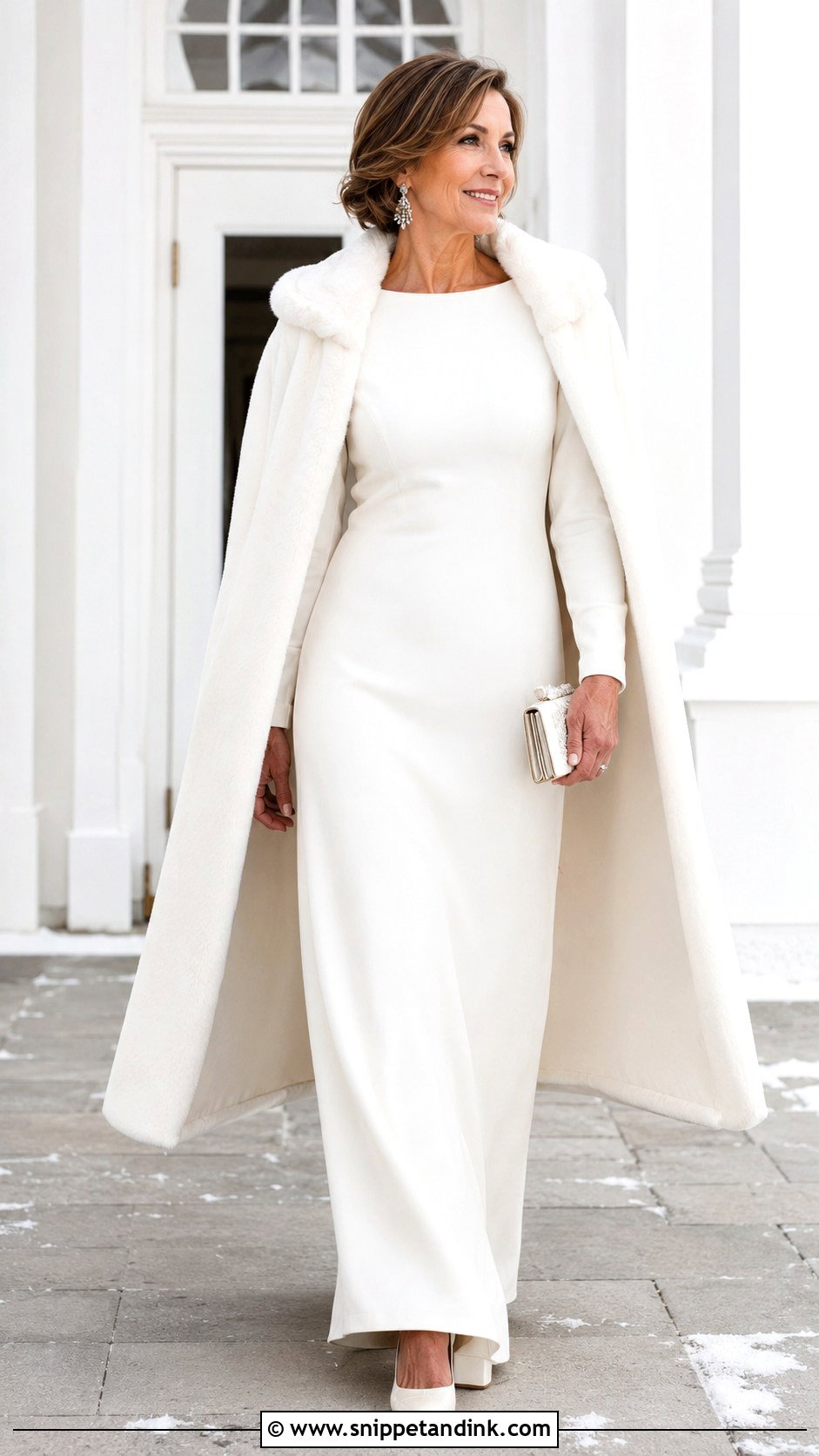
Winter lets you layer. Begin with a long ivory crepe gown with full sleeves, a high bateau neck and a softly fitted waist, then add a short faux-fur cape, a tailored wool coat or a floor-skimming bridal cape for outdoor photos. Closed-toe pumps, crystal earrings and a structured clutch finish it. If the ground might be wet, wear block heels and keep boots in the car for getting between locations. A neat chignon keeps the neckline and cape clear. Stay with silver-toned accessories, and check the coat’s ivory against the dress, because whites rarely match across fabrics.
13. Plus Size Empire Waist Second Wedding Dress
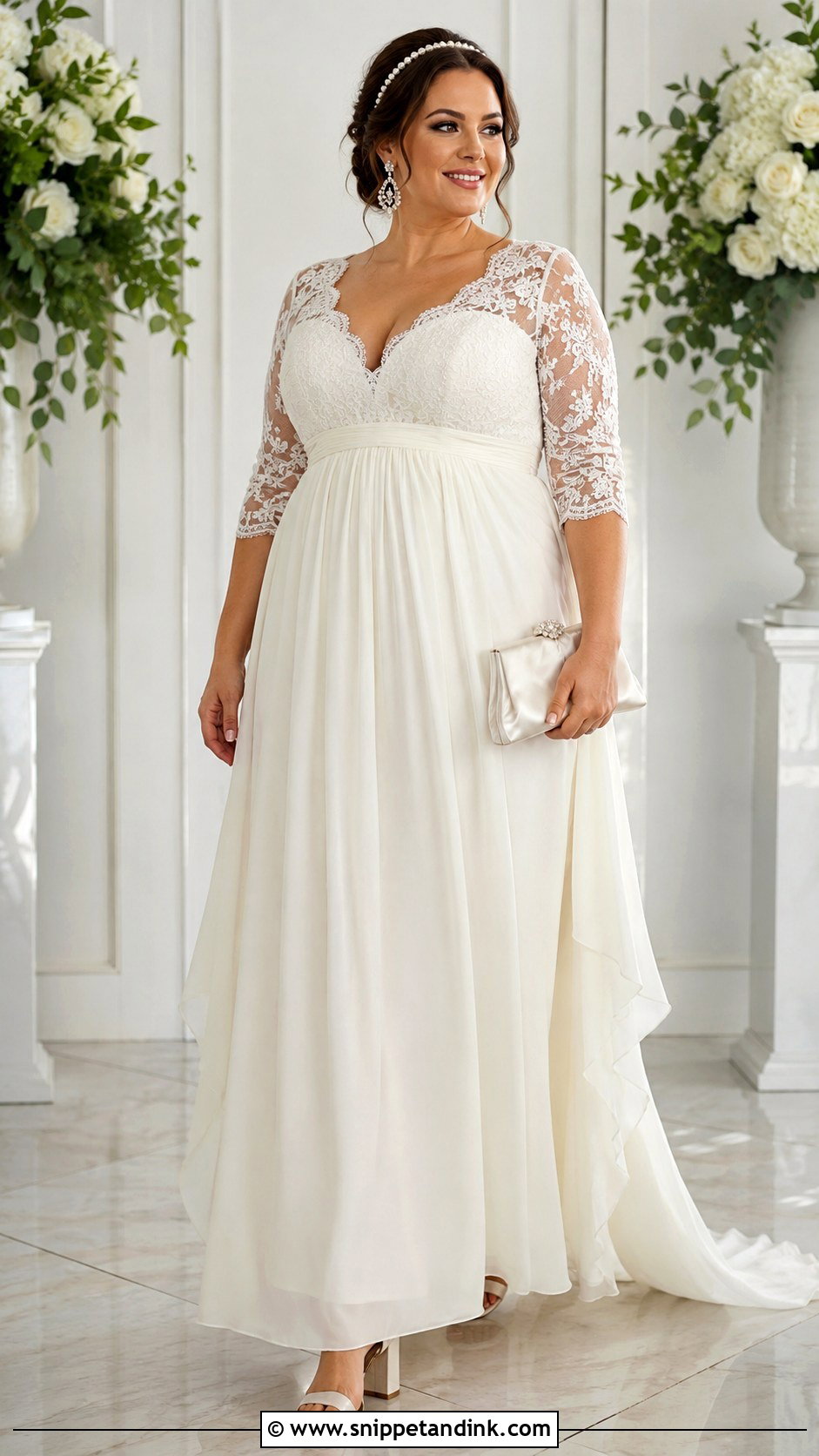
An empire waist starts just under the bust and falls in one long line, leaving room through the middle and hips. The bodice is where this dress succeeds or fails on a fuller figure. Look for real support: wide straps or lace sleeves, and ideally built-in cups or a well-fitted bra sewn in by a seamstress. Soft chiffon or crepe drapes without bulk. Comfortable block heels, statement earrings and a satin clutch work, with a fingertip veil, floral comb or pearl headband to match the formality. Spend your tailoring on bust, shoulders and hem, and ignore the size label entirely; bridal sizing runs small.
14. Second Wedding Dress Over 40
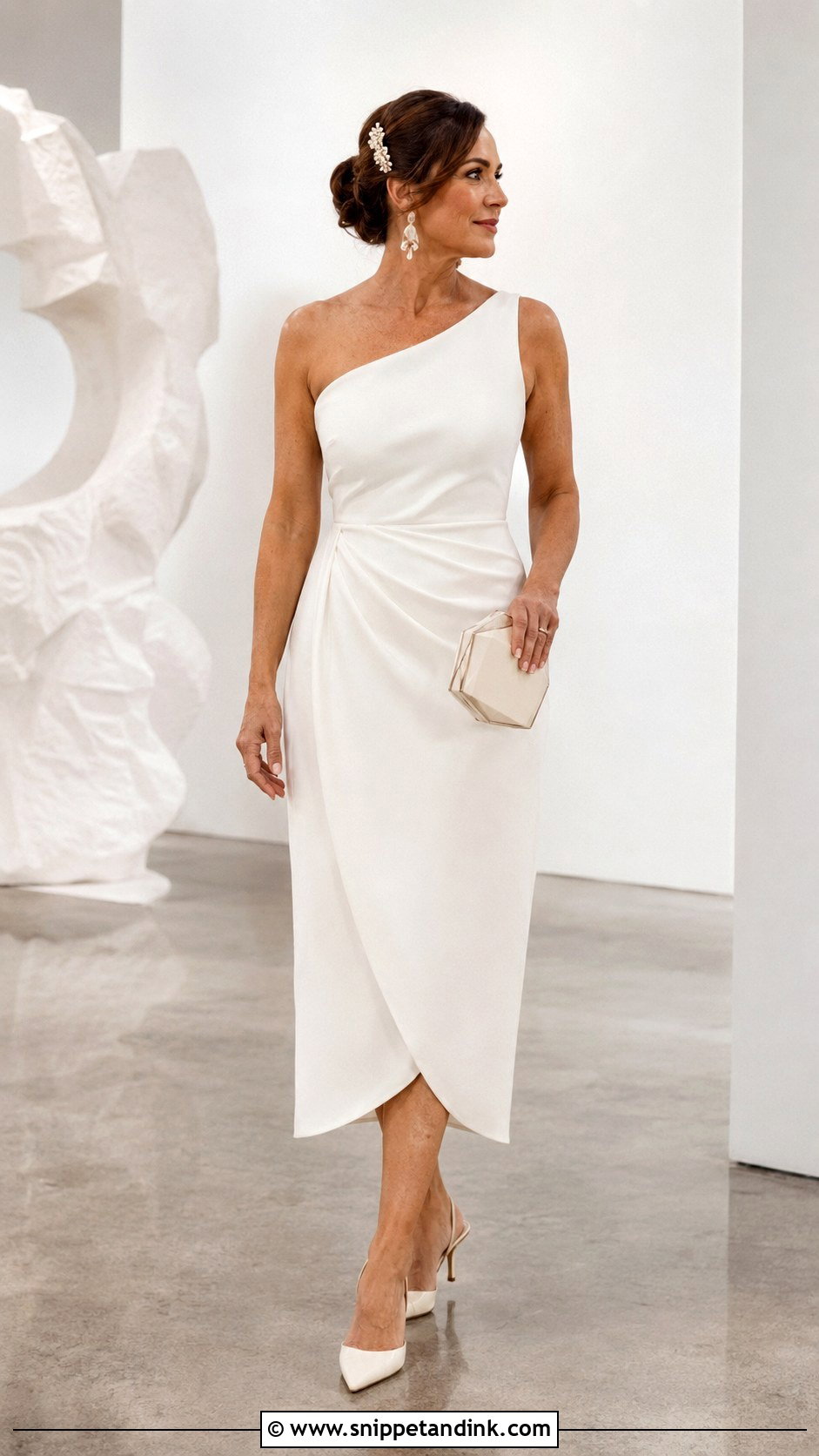
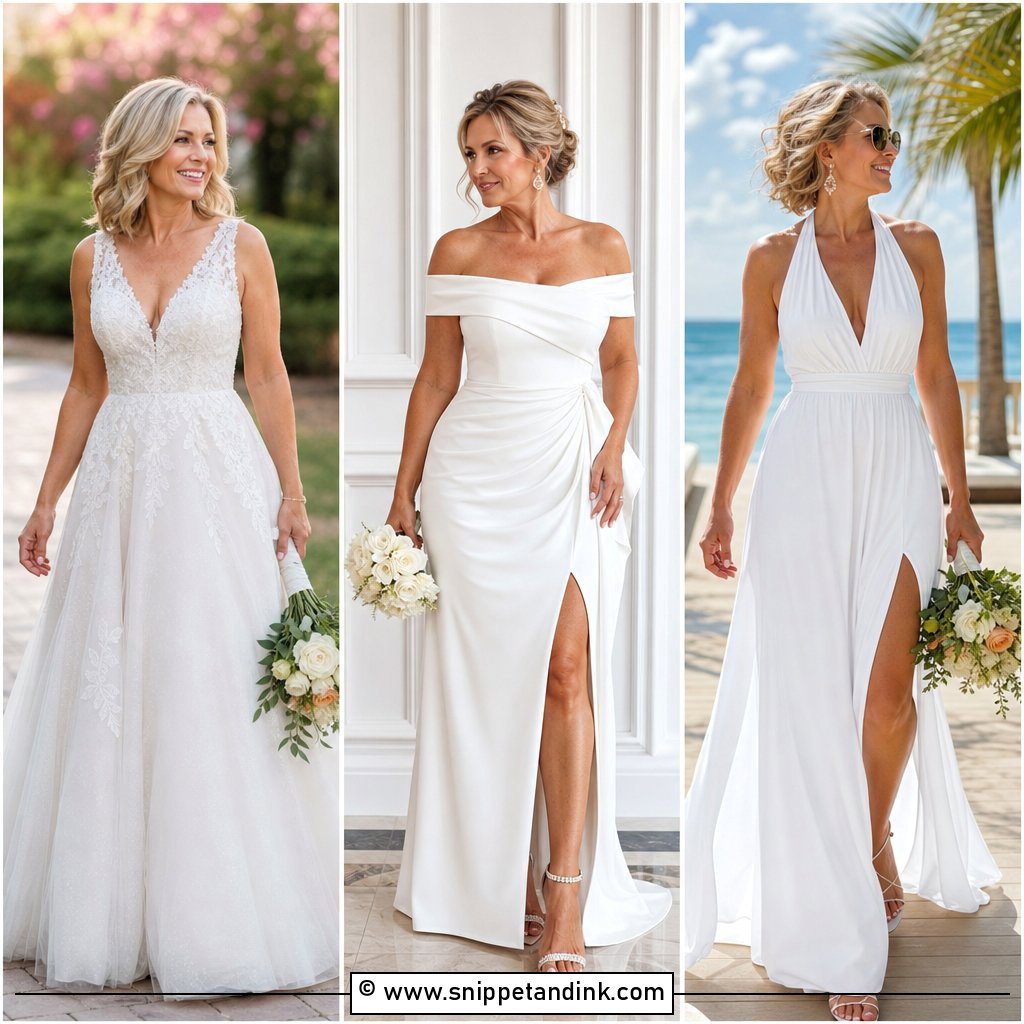
Over 40, I find most clients want shape without fuss. A midi with a defined waist, asymmetric neckline and softly draped skirt in ivory crepe does that, and subtle ruching smooths the midsection better than a plain fitted panel. Pointed slingbacks, sculptural earrings and a structured clutch keep it modern. A cropped jacket or light wrap lets you adjust through the day. For hair, polished waves, a low bun or a sleek bob with a small jeweled clip all suit it. It moves easily from courthouse to restaurant or gallery.
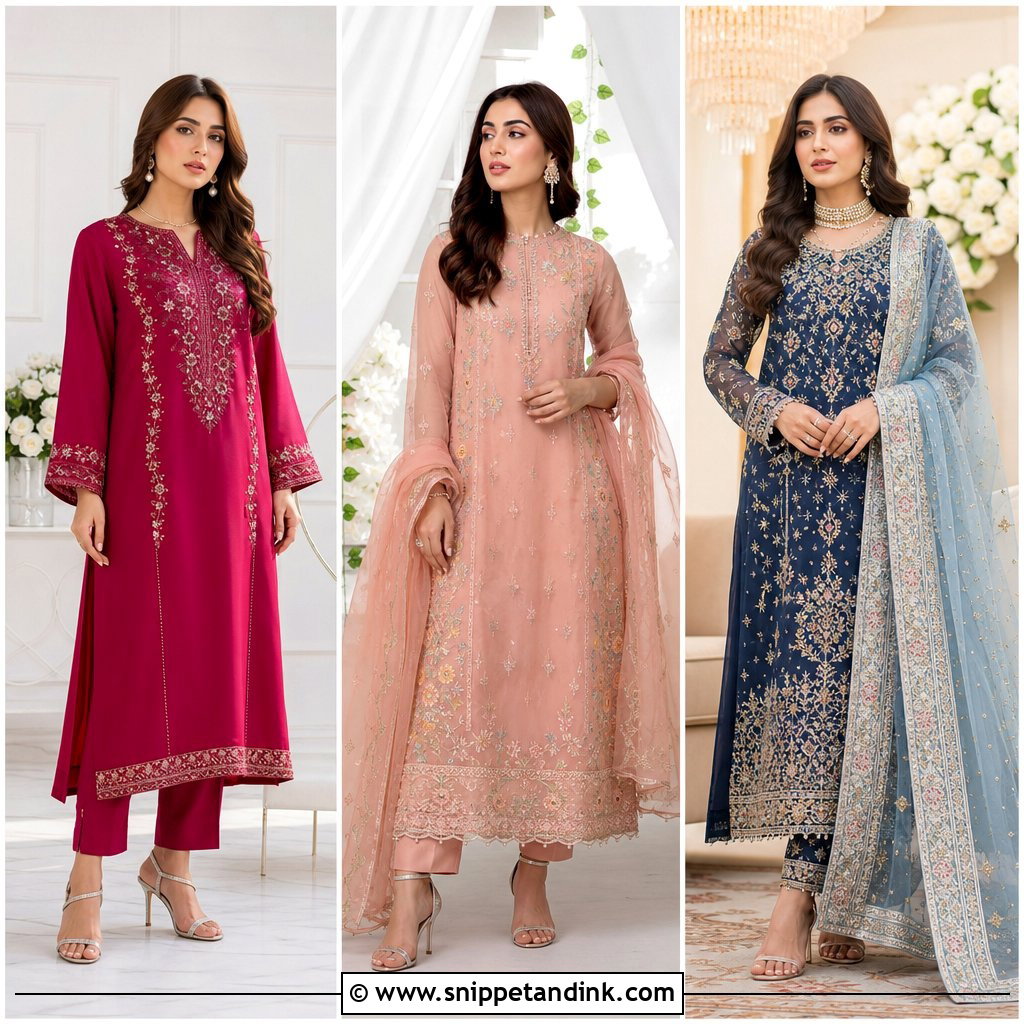
15. Second Wedding Dress Over 50
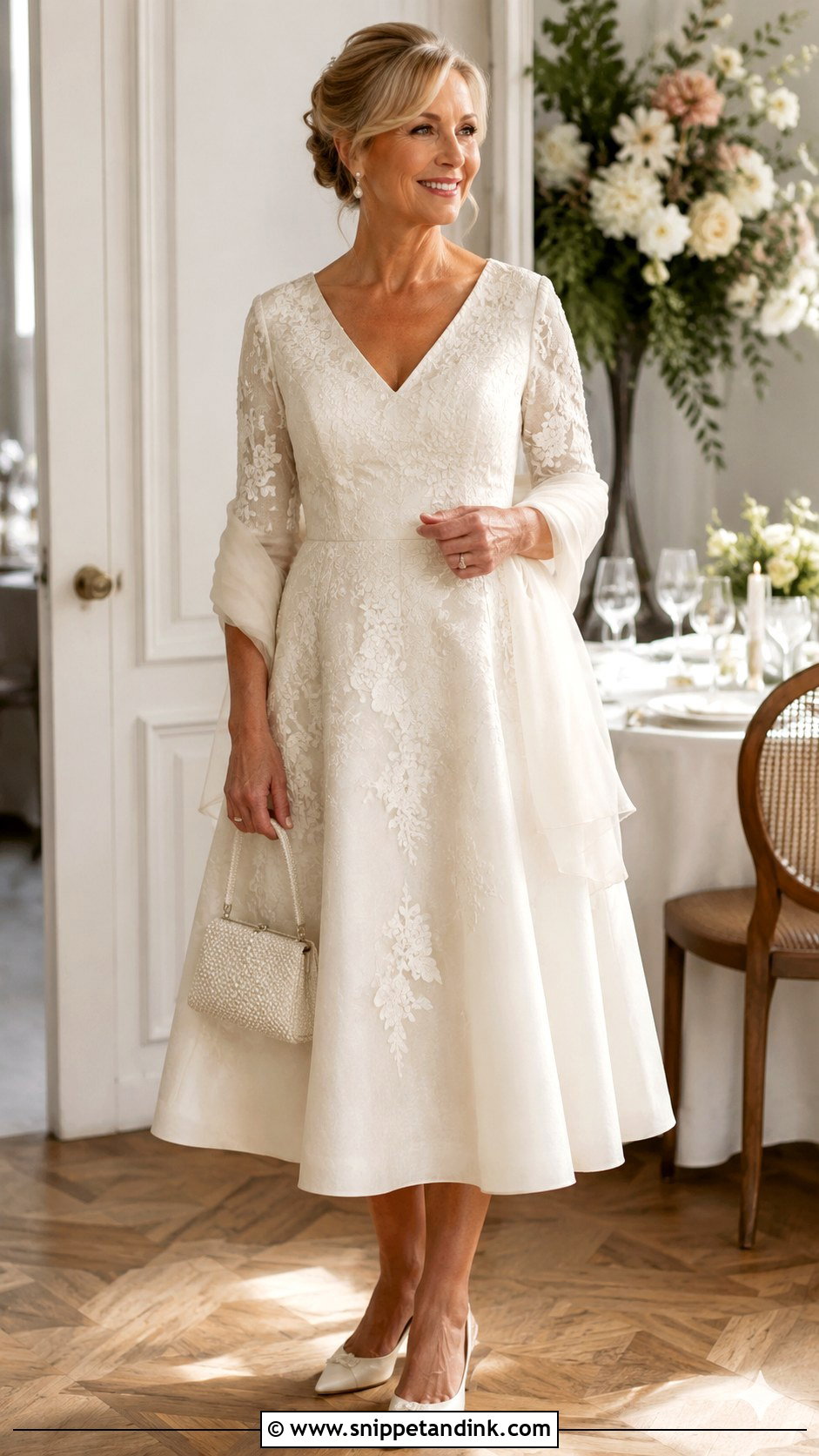
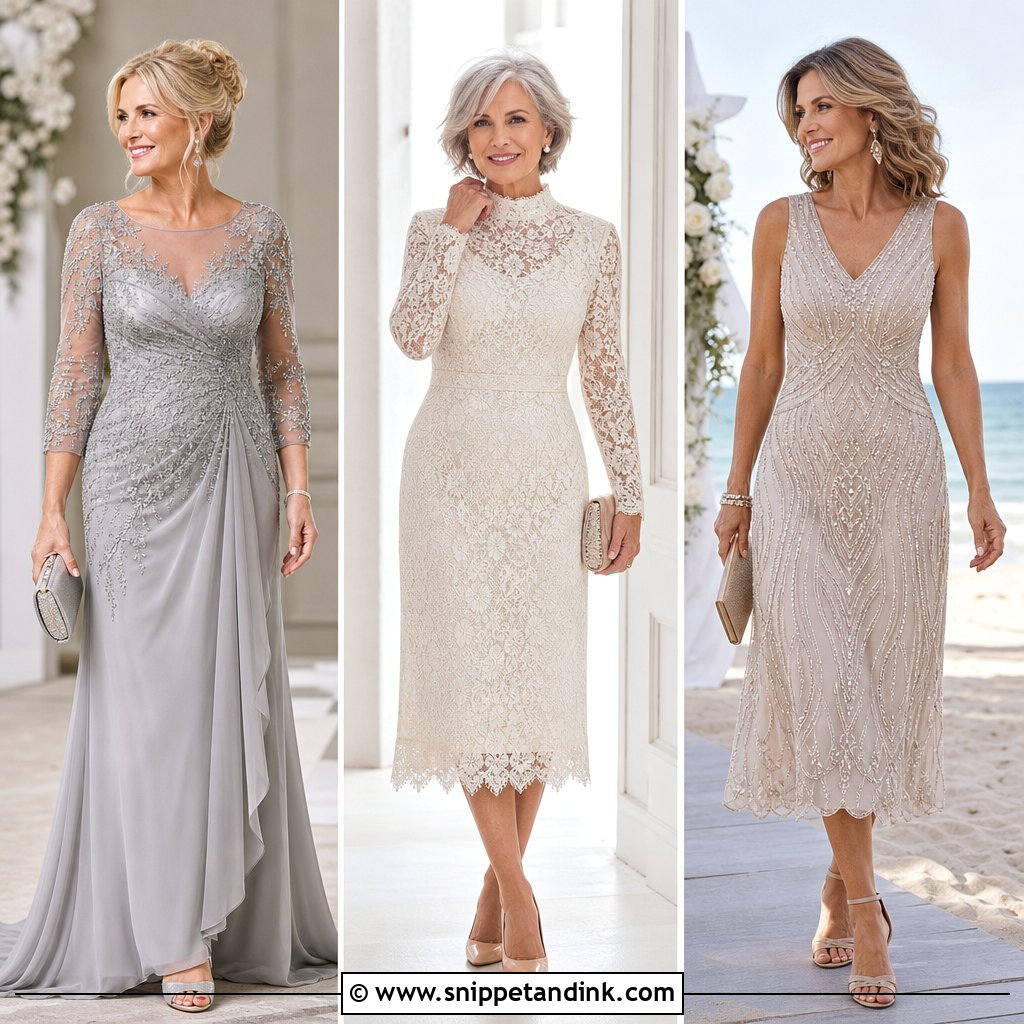
A well-cut dress can give comfort, coverage and occasion all at once. For many brides over 50, an ivory tea-length gown with three-quarter sleeves, a softly shaped waist and a modest V-neck is the sweet spot. Lace panels or tonal embroidery add depth. Low slingbacks, pearl drops and a compact top-handle bag suit it, with a light wrap or coat for cooler rooms. Choose jewelry you actually wear in daily life rather than buying pieces simply because they look bridal; you’ll feel like yourself in the photos. Three-quarter sleeves sit at the narrowest part of the forearm, which is why they flatter so widely.
16. Second Wedding Dress Over 60
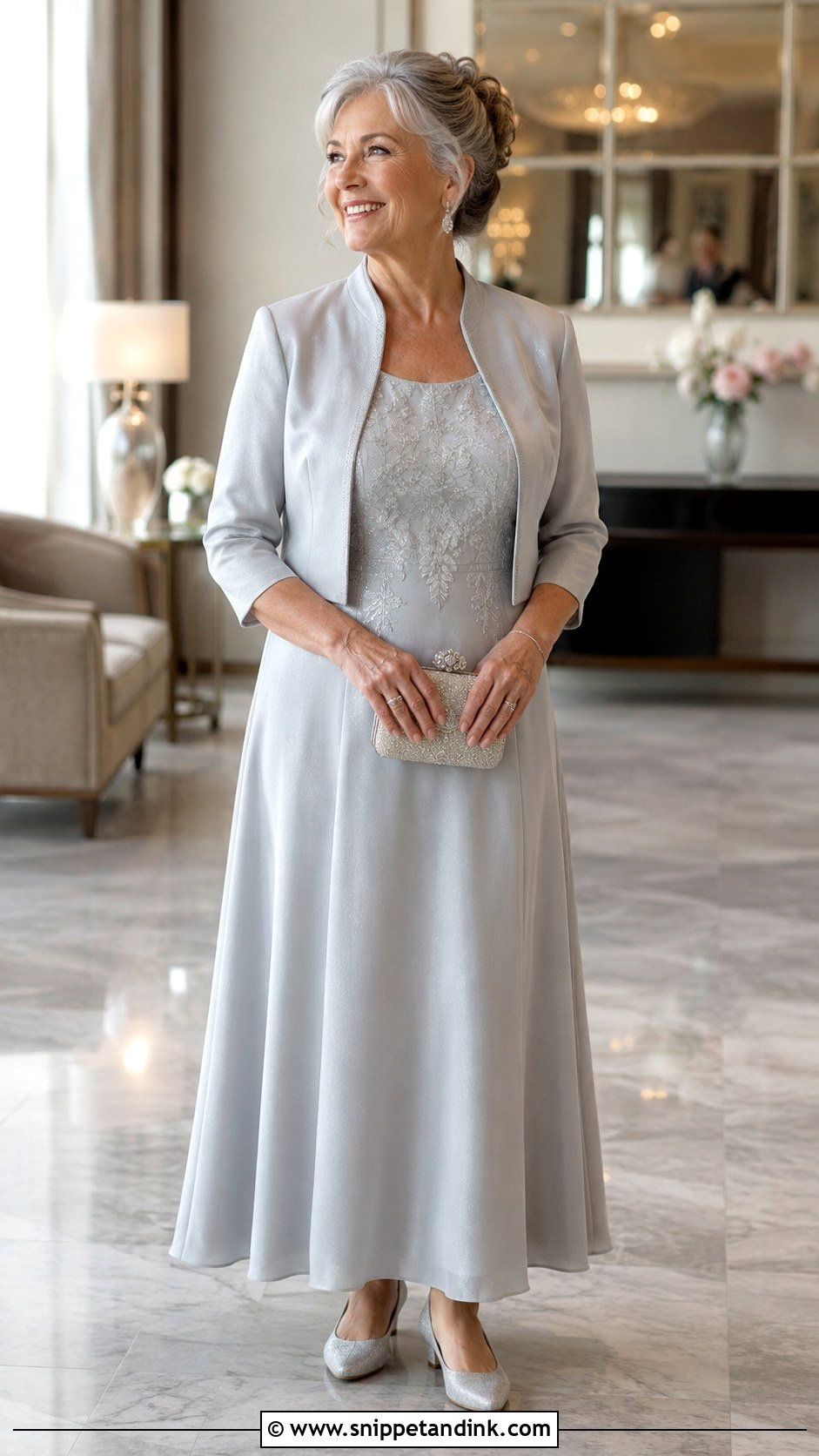
Fit comes first at every age, and over 60 comfort matters as much as polish. An ankle-length A-line in ivory, soft blue or pale silver is a graceful base. Elbow sleeves, a gently structured bodice and a flowing skirt let you move and sit easily. Low block heels or dressy flats are worth considering seriously, especially if you’ll stand for photos and greetings. Add a beaded clutch and pearl or crystal earrings. A matching jacket gives coverage without hiding the shape. Keep the neckline open enough for a simple pendant to frame the face. Ankle length also means no tripping on stairs.
17. Boho Second Wedding Dress
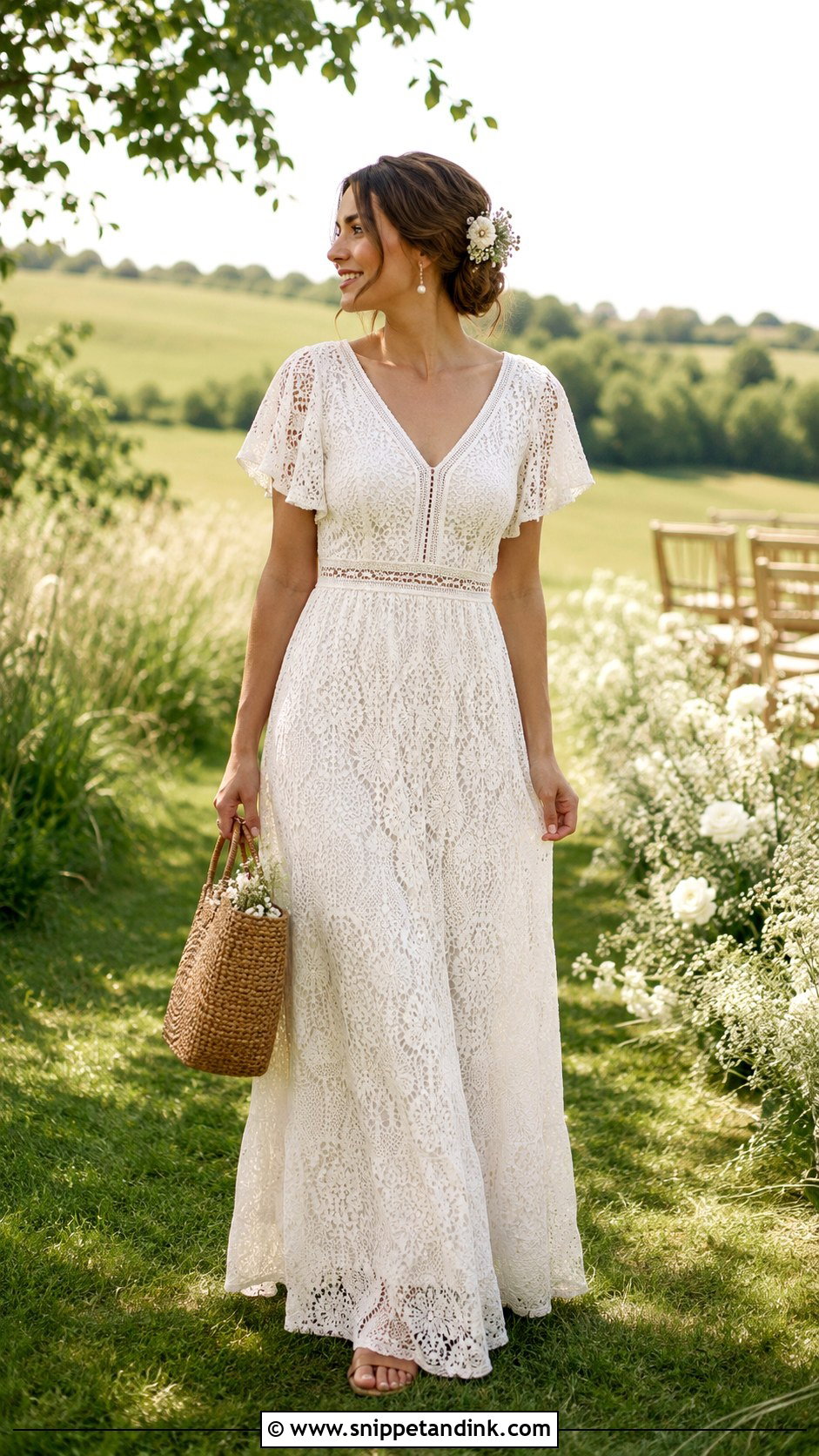
For a relaxed ceremony, a boho dress can feel romantic without being formal. An ivory maxi with soft crochet lace, flutter sleeves, a defined waist and a fluid skirt is the classic version. Make sure both bodice and skirt are lined; unlined crochet is more see-through than it looks in the shop. Low suede or leather-look sandals, natural pearl earrings and a small woven bag suit it, with a floral comb, loose waves or a simple braid instead of a structured veil. Keep accessories few, or the outfit drifts from bride toward festival-goer. Meadows, woods and rustic barns suit it.
18. Vintage Second Wedding Dress
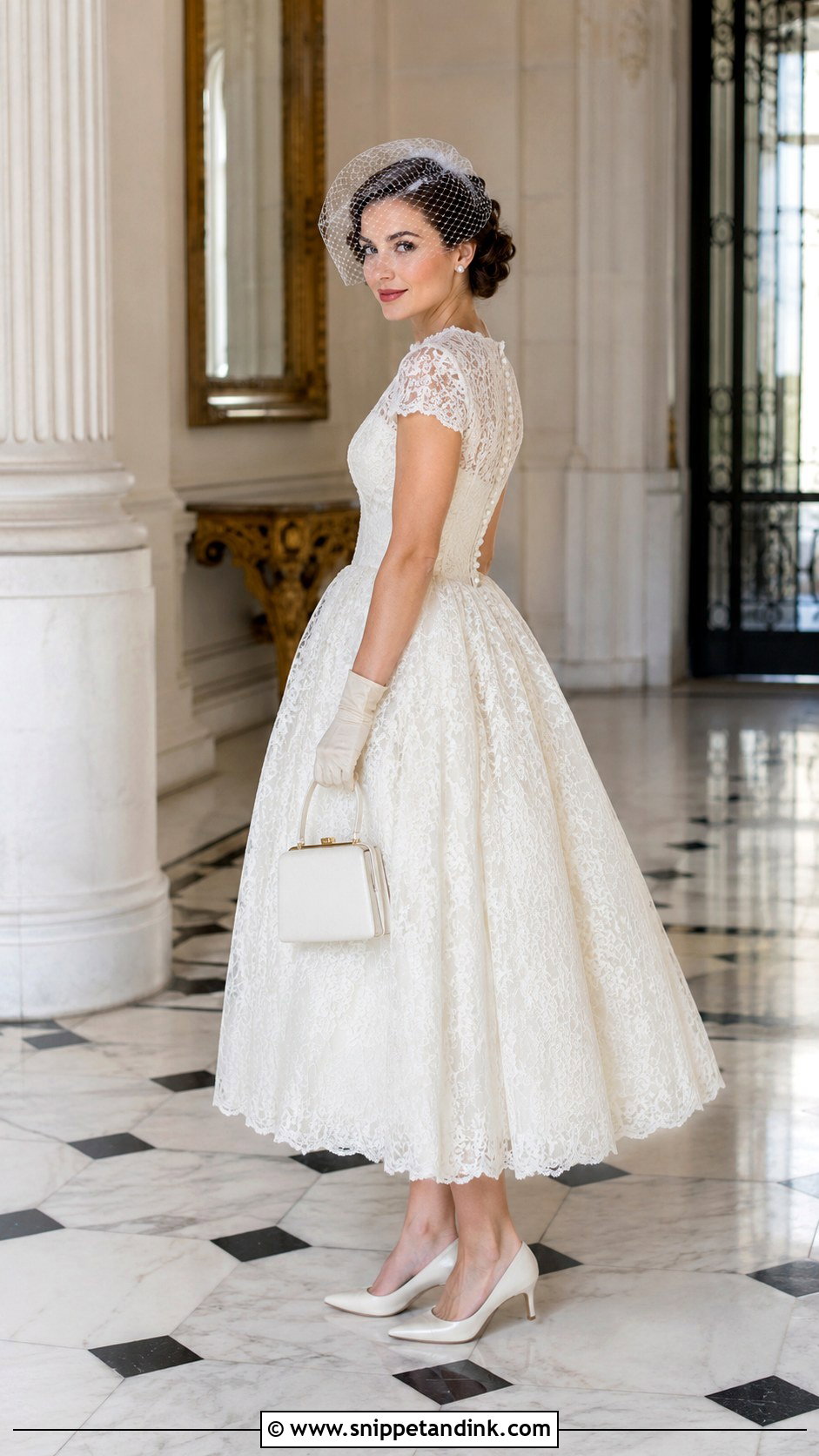
A vintage-style gown celebrates bridal tradition in a way that still feels like yours. A 1950s tea-length dress with a lace bodice, covered buttons and a full skirt pairs well with kitten heels, pearl studs, short gloves and a structured mini bag, plus a birdcage veil or a bow above a polished updo. If you buy a genuine vintage dress, have it inspected, cleaned, lined and altered by a specialist well before the date. Old silk and lace can split at the seams under stress, and underarms and closures often need reinforcing. Limit the retro accessories to two or three, or it tips into costume.
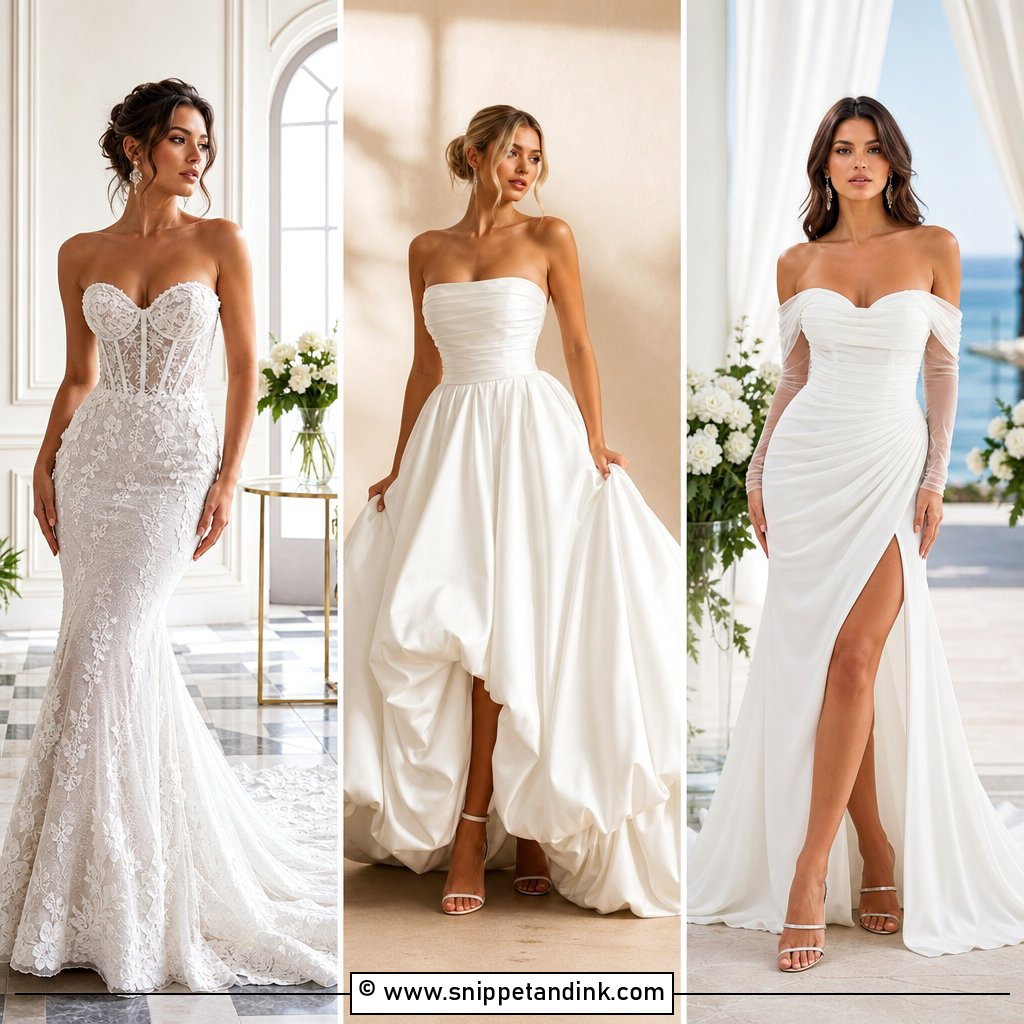
19. Minimalist Column Second Wedding Dress
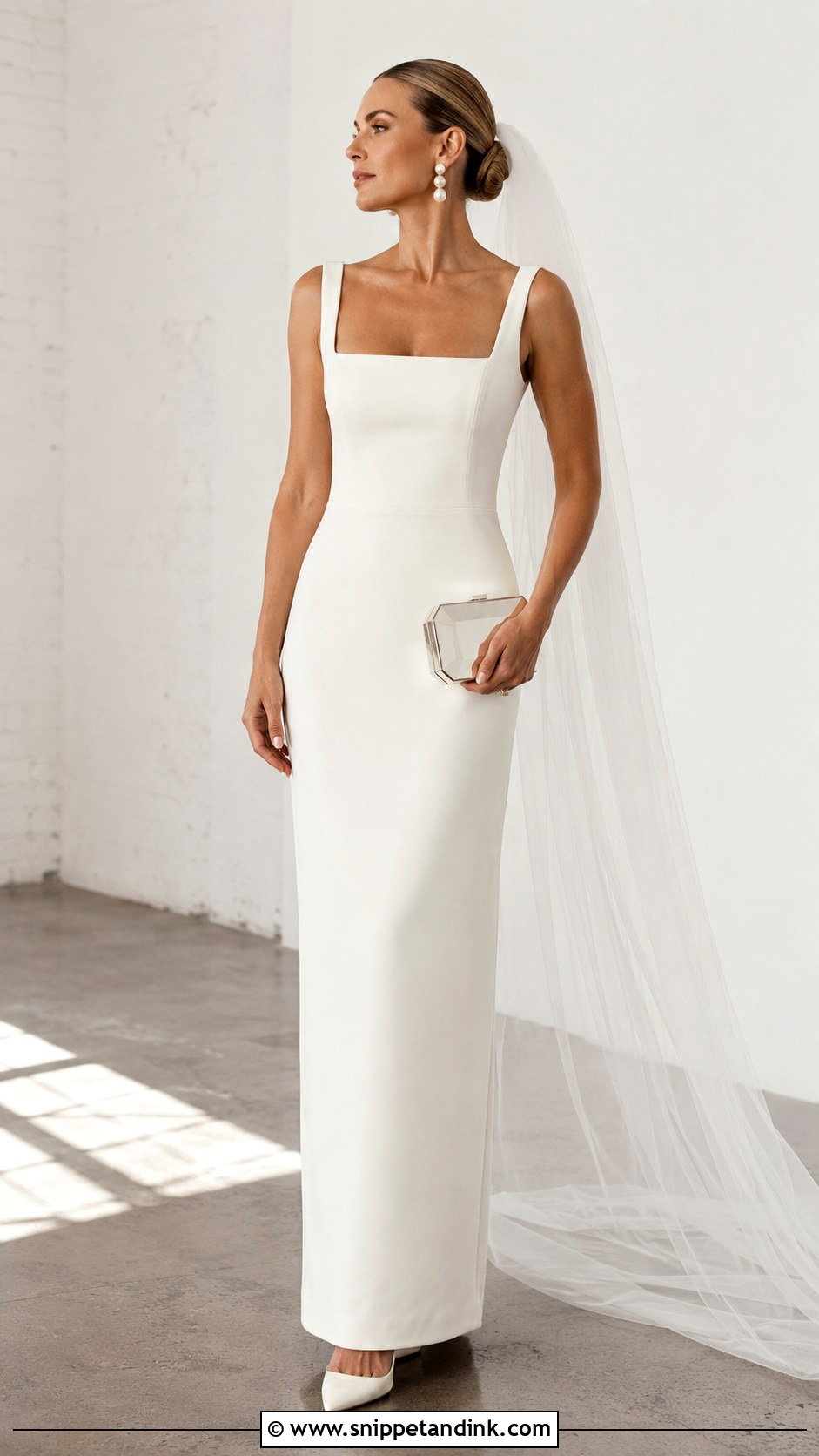
Column dresses show everything, good tailoring and bad. Choose ivory crepe or matte satin heavy enough to hang straight, with a square neckline, wide straps and a floor-length skirt. A small back slit is essential for walking and sitting. Pointed pumps, bold pearl earrings and a geometric clutch suit the clean lines; wear your hair in a smooth bun or tucked behind the ears to show off the neckline. A long, plain veil adds ceremony drama without cluttering the dress. Every seam is visible on an undecorated gown, so this is the one to have fitted by your best seamstress, not the cheapest.
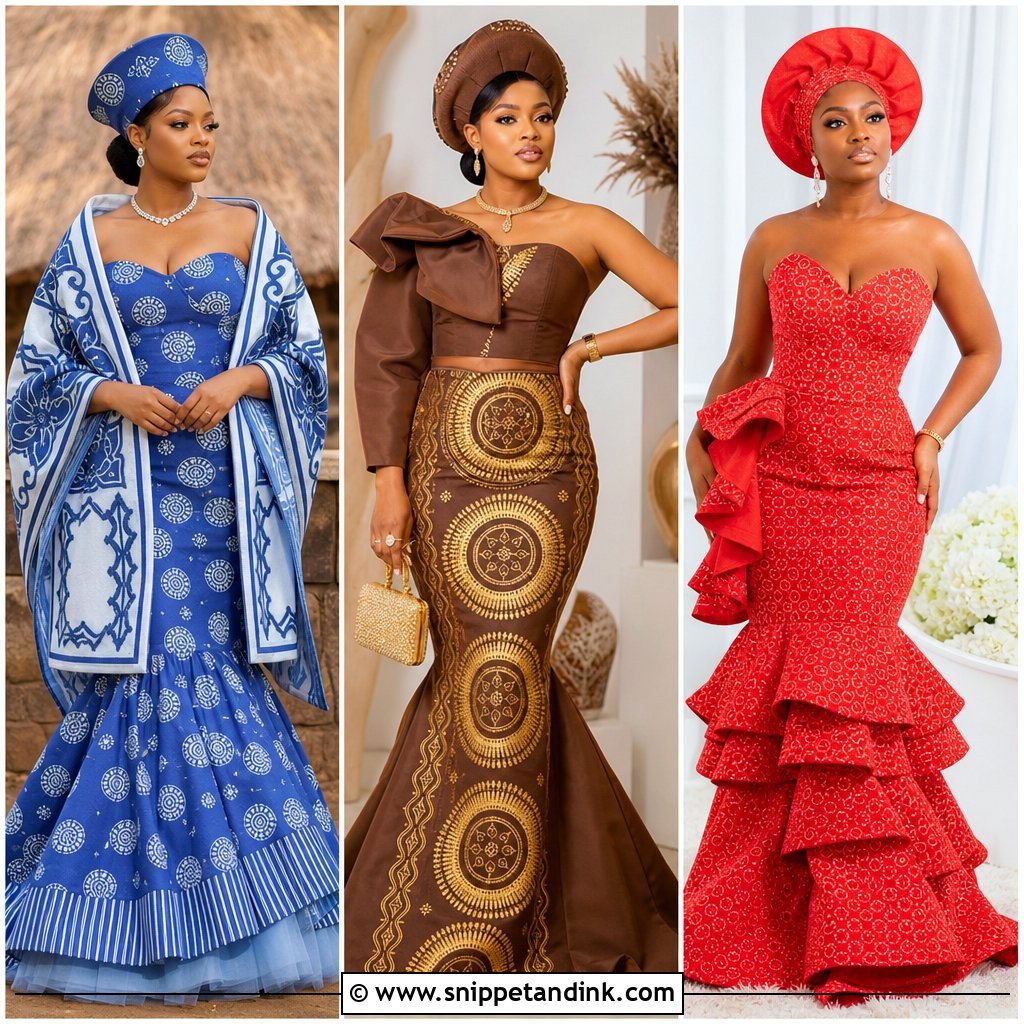


20. Sparkly Reception Second Wedding Dress
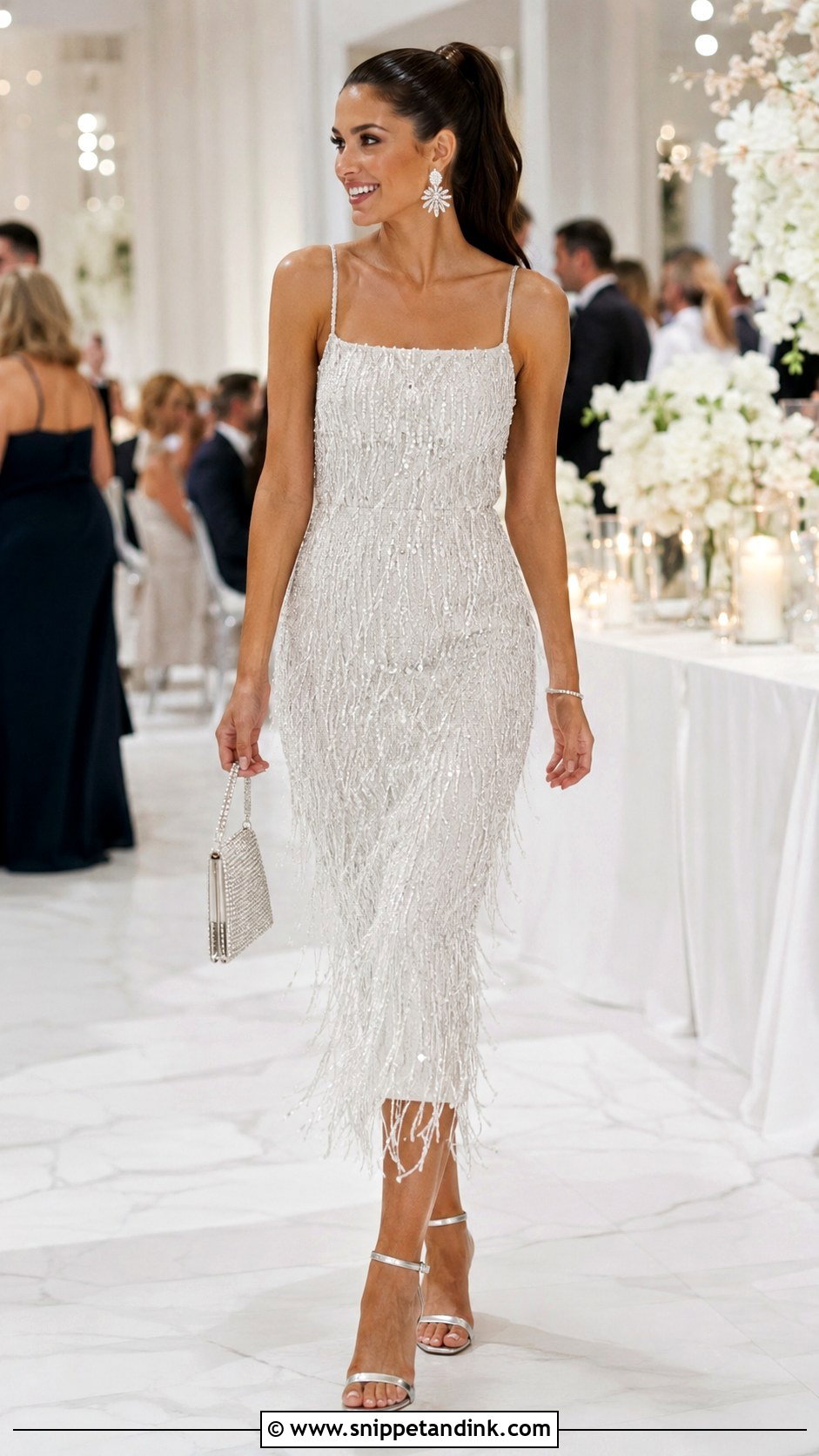
When the party picks up, a short sparkly dress is a lot of fun. A knee-length or midi covered in subtle sequins, crystal beading or shimmering fringe works as a reception change. Check the inside first: sequins and beads need a soft full lining, or they scratch the arms and underarms within an hour of dancing. Low metallic heels, statement earrings and a small wristlet that keeps your hands free are all you need. Wear a high ponytail, polished bob or swept-back bun so hair doesn’t catch on embellishment. It can also carry a festive evening civil ceremony on its own.
What Happens to the Dress After the Last Dance?
Many of the dresses here are midi or ready-to-wear styles, which means you can wear them again. It’s one of the nicest perks of a second wedding outfit, and it’s worth planning for when you buy.
Get it cleaned soon, even if it looks fine
Spilled champagne, sugary drinks and body oils are often invisible on the night but oxidize into yellow or brown marks over the following months. Take the dress to a cleaner experienced with bridal or delicate fabrics within a few weeks, and point out any spots you remember. Beaded and sequined pieces need someone who will check that the embellishment can handle their process.
Store it out of plastic
The plastic bag from the shop traps moisture and can yellow fabric over time. A breathable cotton garment bag or an acid-free box with acid-free tissue in the folds is kinder. Keep it somewhere dark, dry and at an even temperature, which rules out most attics and basements. Heavy or bias-cut gowns are better folded than hung, since their own weight stretches the shoulders.
Restyle it for the next occasion
A lace midi or ivory wrap dress can go to an anniversary dinner with a colored belt and different shoes. A sheath with a blazer becomes smart evening wear. Some brides have a long gown shortened to cocktail length afterward, which a good seamstress can do on most plain skirts.
Dress for the Room You’ll Actually Be Standing In
The most memorable outfit for a second wedding is the one that looks like you now. Bridal fashion can be traditional, colorful, relaxed, tailored or full of sparkle, and none of those is more correct than another. Begin with the venue and season, then work through silhouette, fabric, coverage and the shoes you can stand in for hours. Good tailoring will lift even the plainest dress. There’s no rule that says you must avoid, or repeat, anything from your first wedding. Pick the gown that fits your life today, supports your body and lets you forget about it once the celebrating starts.
You'll Like These Ideas:





Leave a Reply