
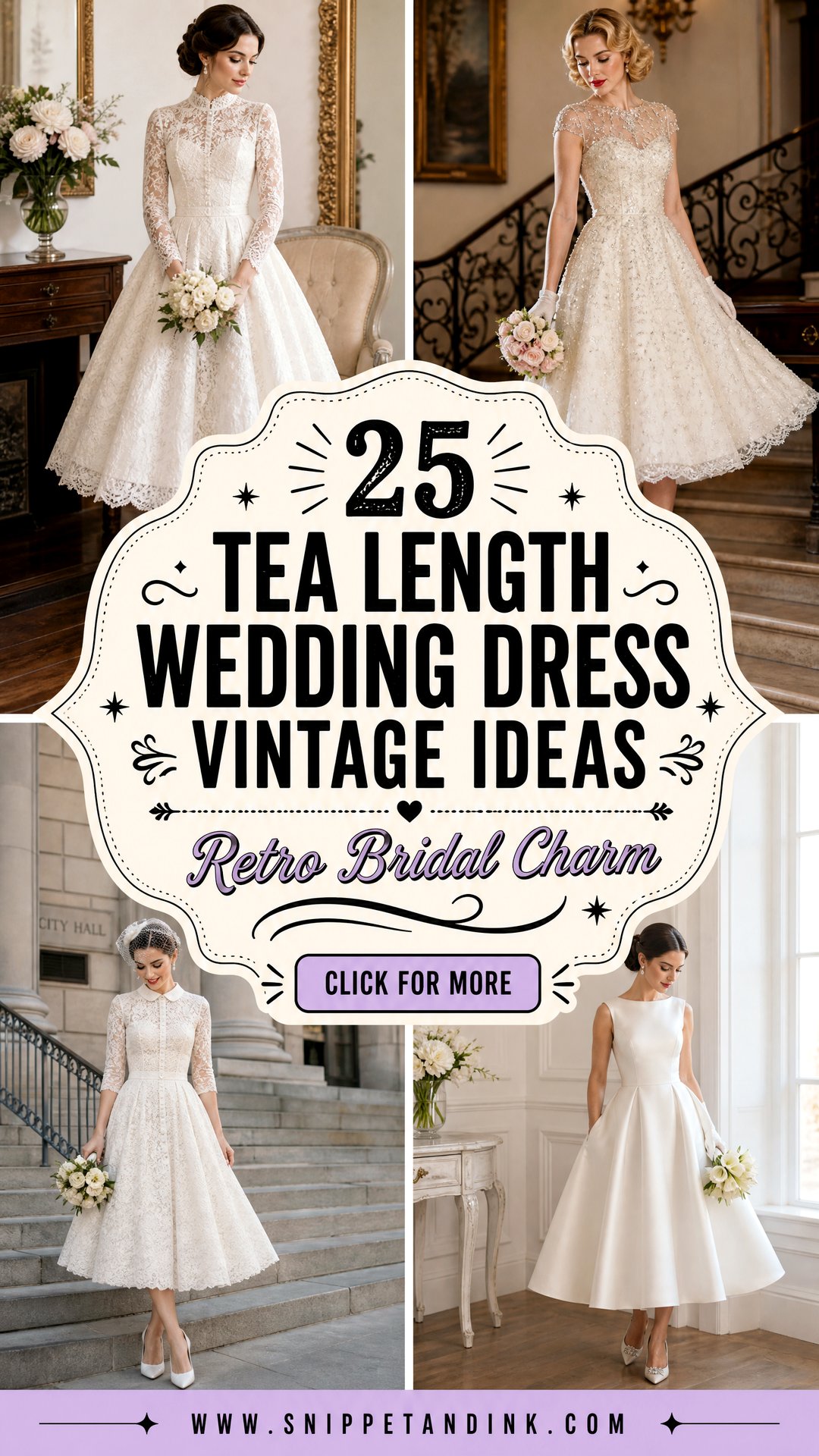
A tea-length gown is nostalgic and practical at once. It shows your shoes, clears the floor when you dance, and carries mid-century charm without tipping into costume. Vintage bridal style also covers far more than one decade now: 1950s full skirts, 1940s tailored sleeves, Edwardian lace, Old Hollywood satin, or a crisp courthouse dress with a retro edge. In fittings, I find the shorter hem makes brides relax; they can see their feet and move without gathering fabric. Below are the twenty-five tea-length styles I’d pull for city ceremonies, garden receptions, second looks and small celebrations, with what to watch for in each.
Where a Tea-Length Hem Should Land on Your Leg
Tea length is a range, not a single measurement. It runs roughly from just below the knee to just above the ankle, and the point you choose changes the whole dress. A hem that lands at the widest part of your calf shortens the leg; one that ends just below it, where the leg narrows, lengthens it. That’s why I never mark a hem from the size chart.
At the first fitting, wear the exact shoes and petticoat you’ll have on the day. Stand naturally, then I pin a test hem at two heights so you can compare them side by side in the mirror. Look from the side as well as the front, because a full skirt usually rises slightly at the front over the petticoat and may need levelling.
- Just below the knee: lively and modern, good with a full 1950s skirt and very easy for dancing.
- Mid-calf: the classic vintage length, but check it against the widest part of your calf first.
- Just above the ankle: closest to a formal gown, and the kindest choice if you’re unsure about showing your legs.
1. 1950s Tea Length Wedding Dress
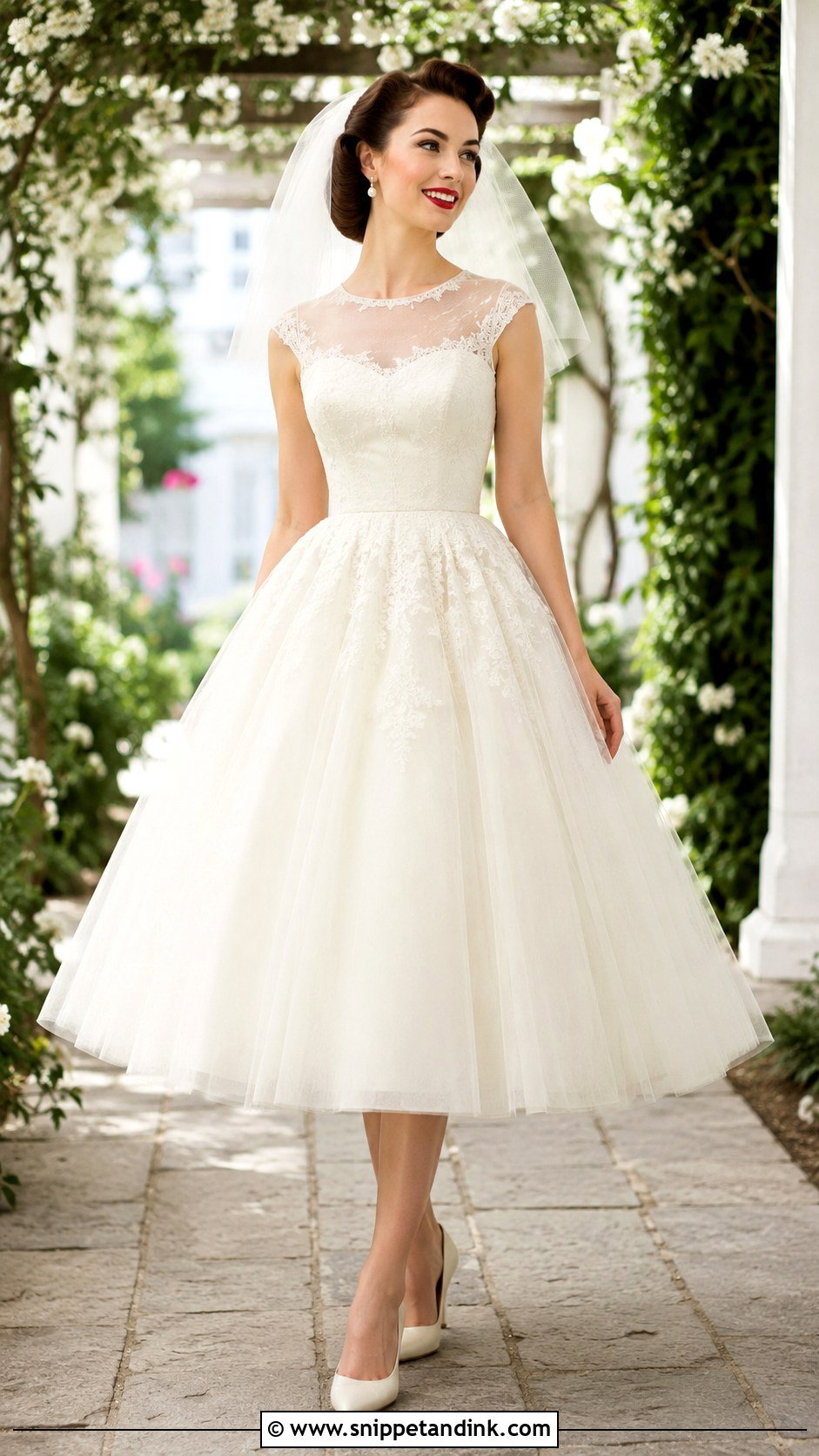
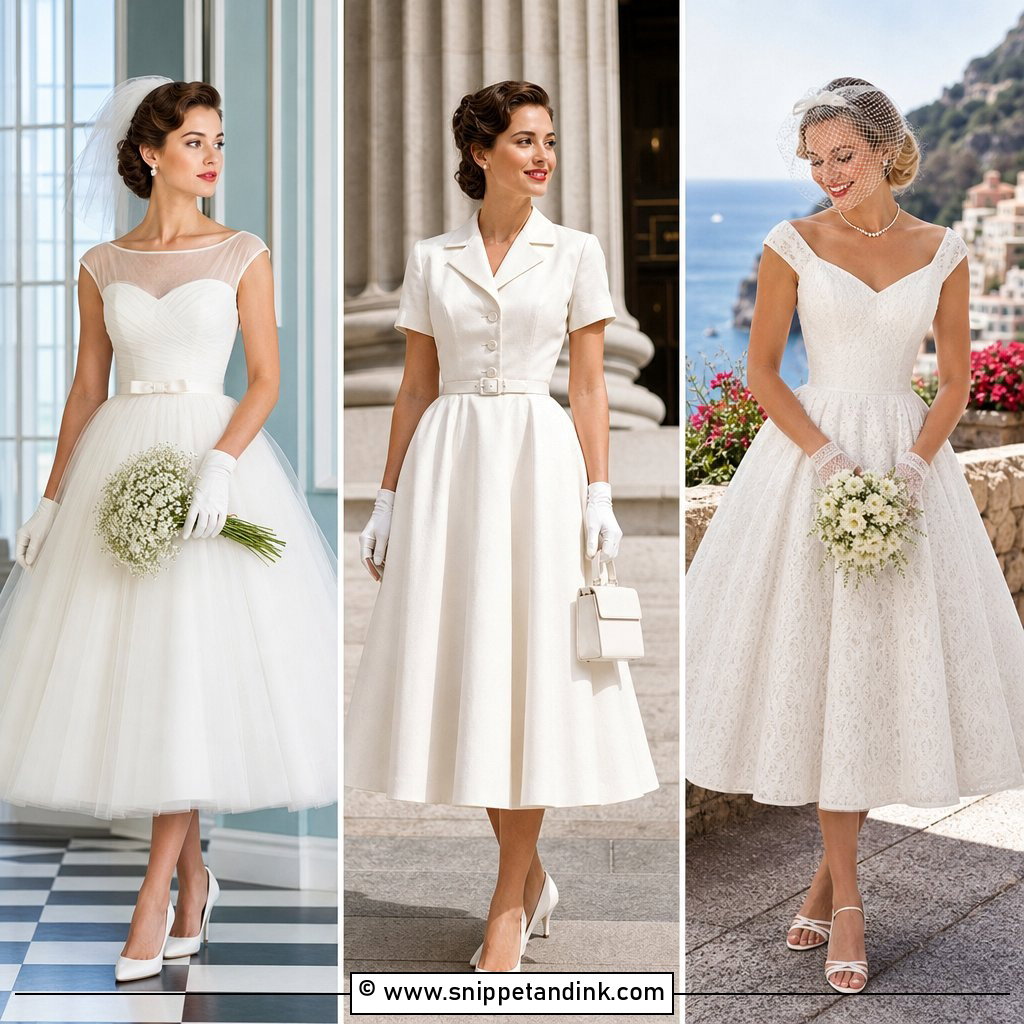
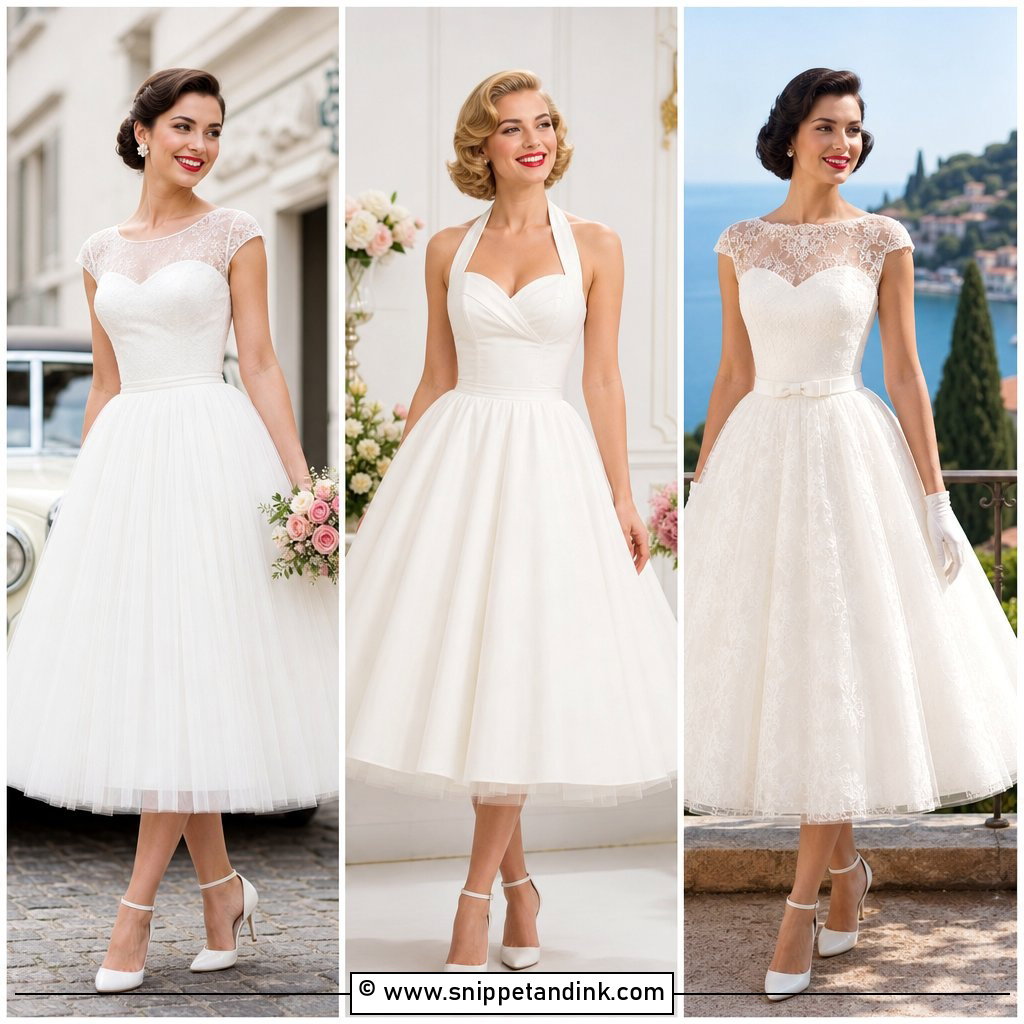
A 1950s tea length wedding dress is the shape most people picture first: fitted bodice, bateau neckline, nipped waist and a full tulle skirt ending between knee and ankle. The petticoat underneath does more work than people realise. A light crinoline gives bounce; a stiff one makes sitting awkward and pushes the hem higher at the front. I always pin the hem with the chosen petticoat on. Pearl earrings, a short veil, ivory pumps and a curled bob or low bun finish it.
2. Lace Tea Length Wedding Dress
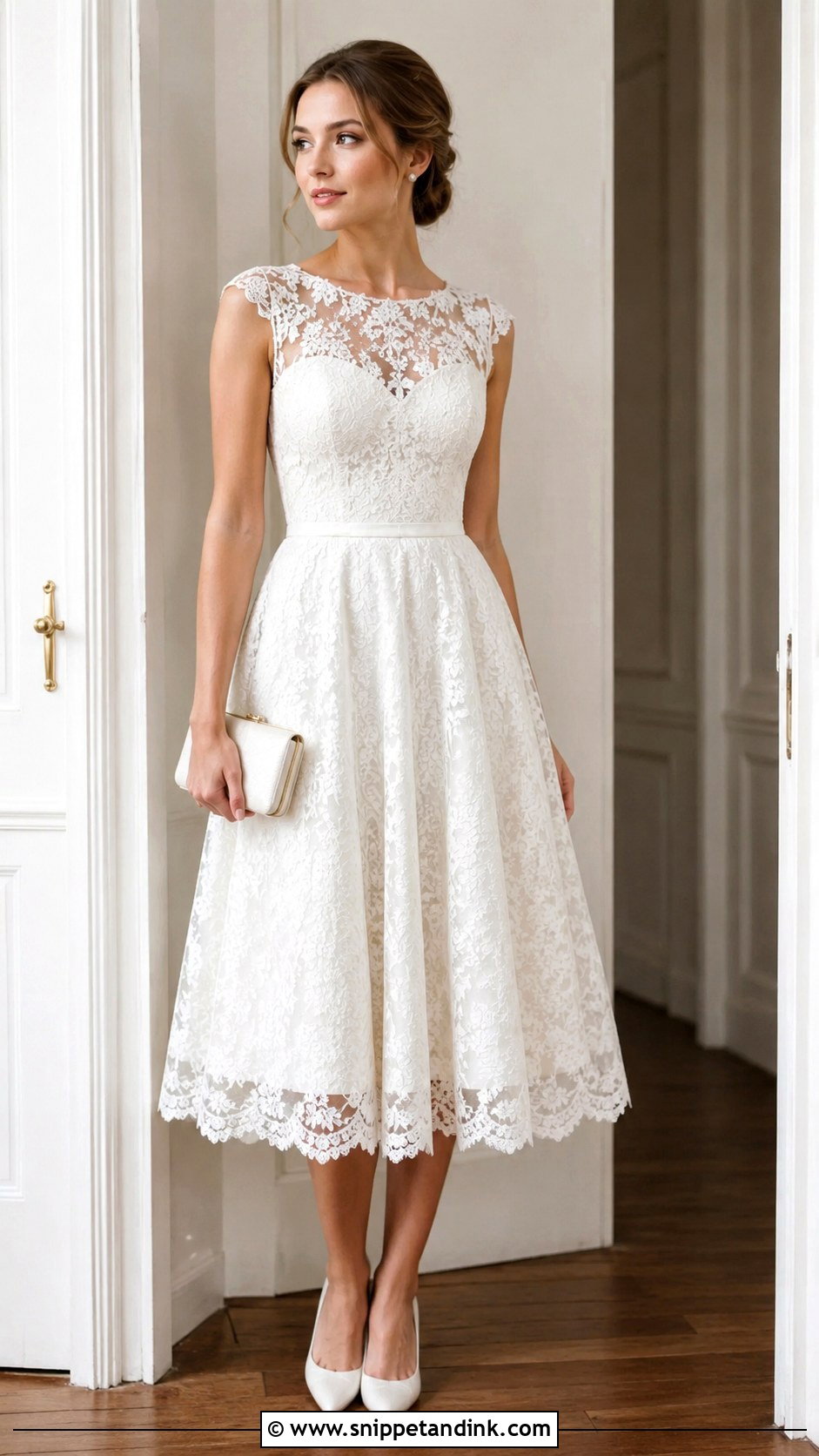
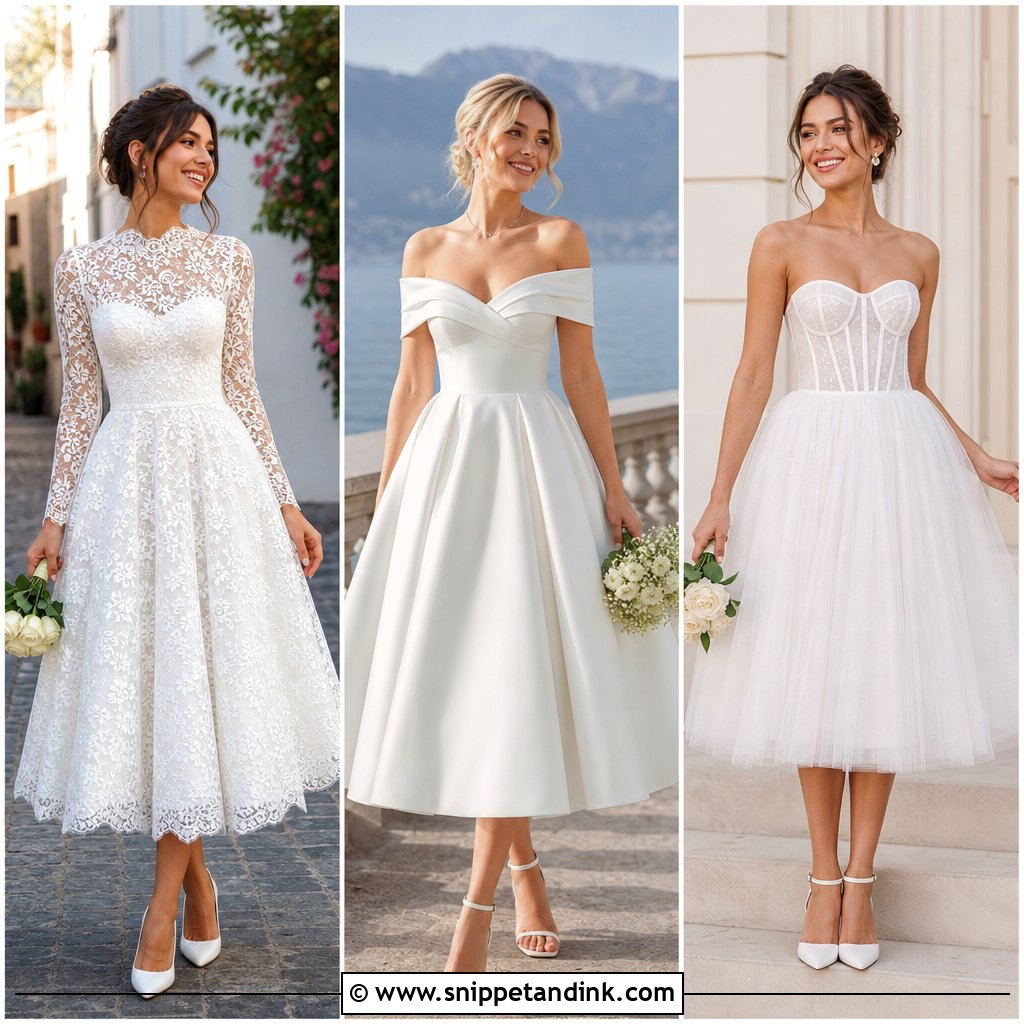
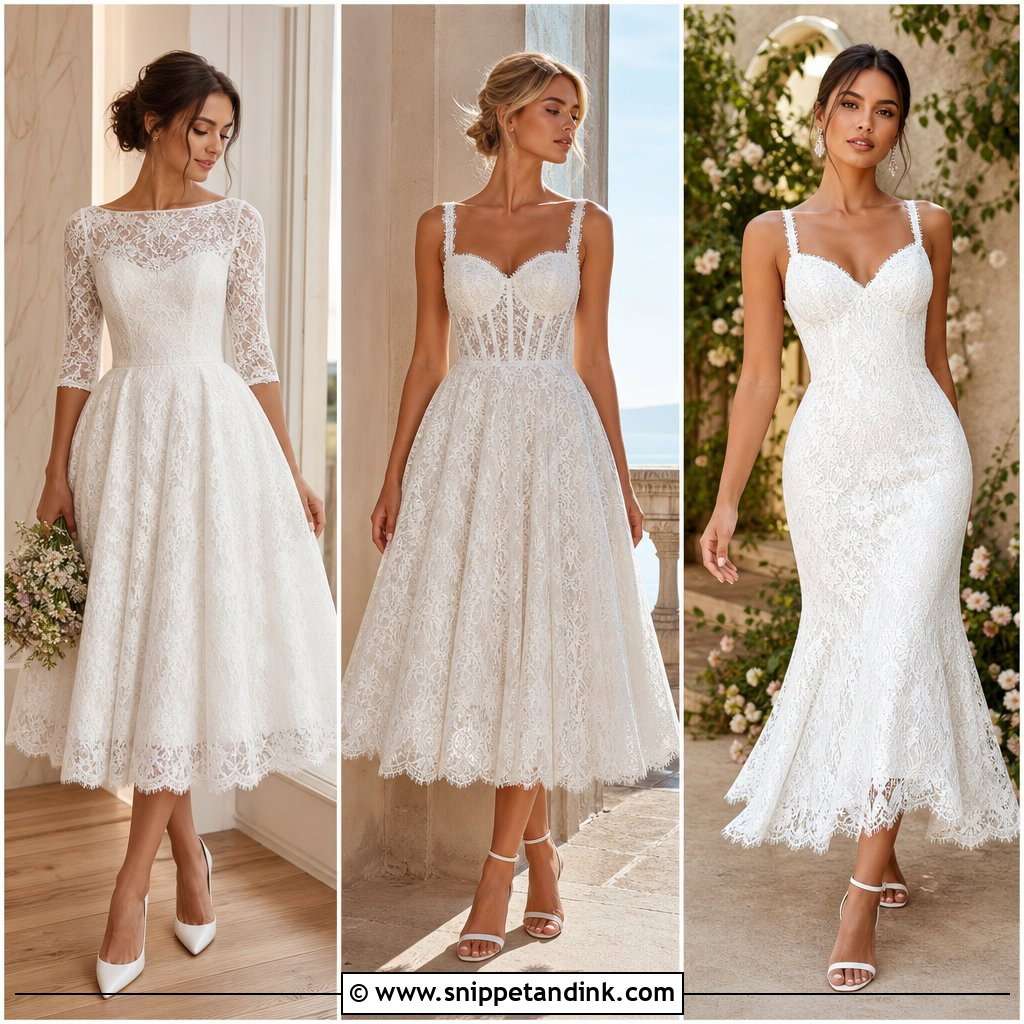
Lace gives a tea-length gown romance before you add a single accessory. Floral lace, Chantilly-style texture and embroidered overlays all read vintage while still looking current. A fitted bodice with a softly flared skirt suits most figures because it shapes the waist and leaves the legs free. My one check is the hem: lace with a scalloped edge should finish the skirt rather than be cut and turned, otherwise the bottom looks heavy. Pointed ivory heels and pearl studs are plenty, especially if the lace climbs to a high neck.
3. Satin Tea Length Wedding Dress
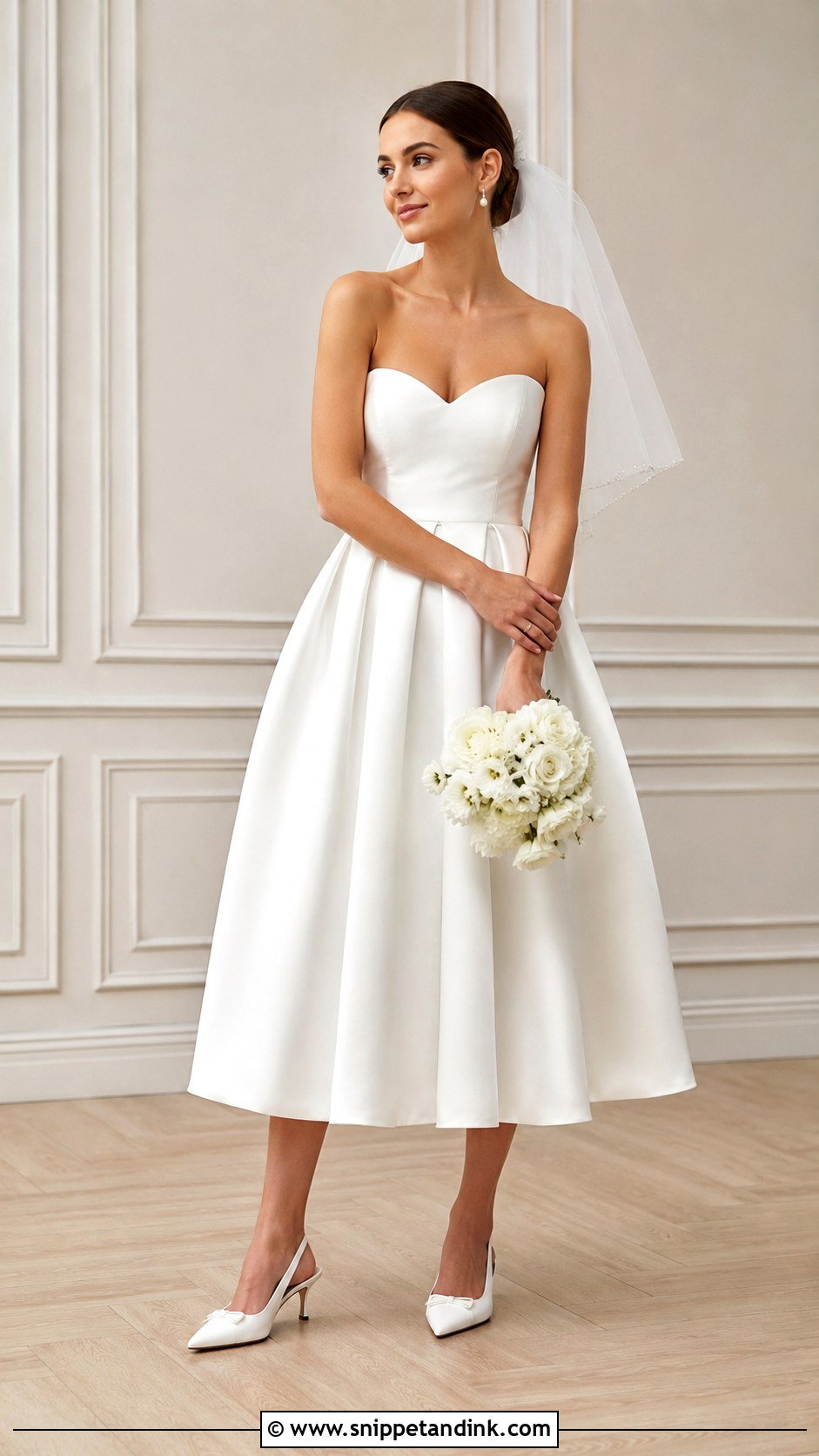
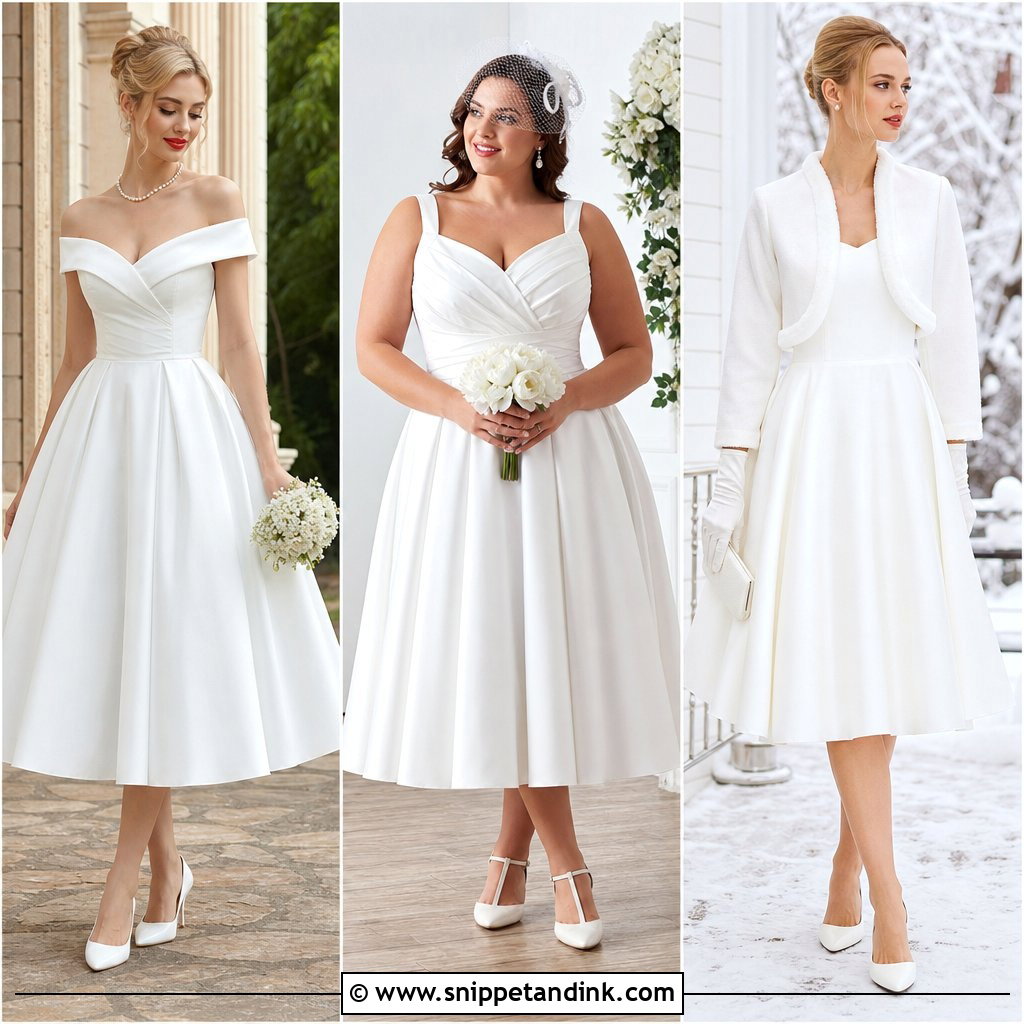
Satin is the fabric that shows tailoring most honestly. On a tea-length dress it catches light along every fold of a pleated skirt and every curve of a sweetheart or off-the-shoulder bodice, so seams need to be straight and the waist fitted closely. Expect creases at the lap once you’ve sat for the ceremony; a quick steam before portraits fixes it. Slingback heels, pearl drop earrings and a hair bow suit it. For a softer, daytime version, I add a cropped cardigan or short bridal jacket.
4. Tulle Tea Length Wedding Dress
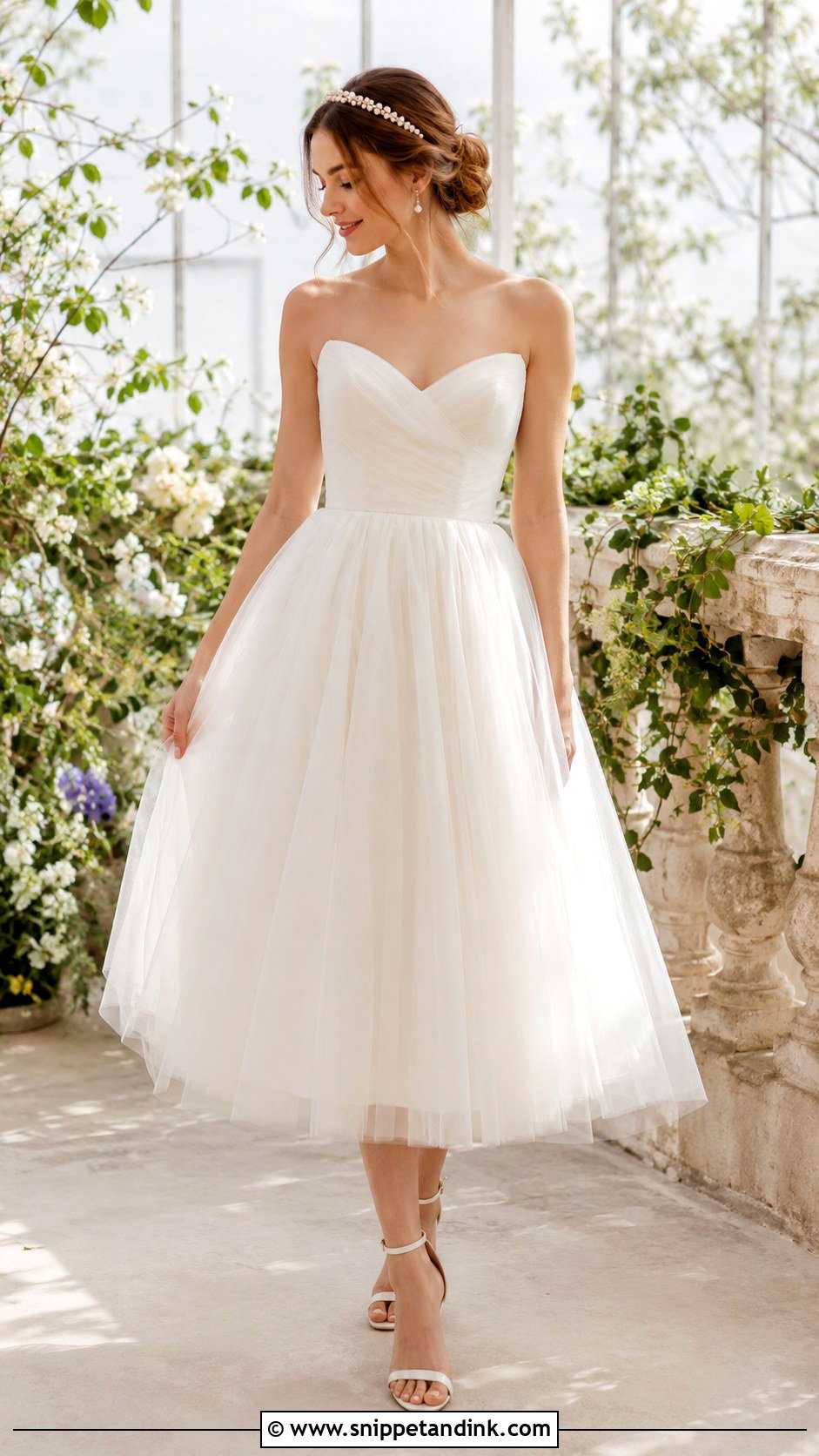
Tulle gives you the floaty ballerina shape without much weight. Several soft layers over a fitted bodice keep the volume balanced, and the shorter hem stops the skirt from swamping you. If you want more lift, choose a gown with a built-in petticoat rather than stacking extra ones underneath; too many layers make the skirt stand out like a lampshade. Ankle-strap heels, a pearl headband and small earrings are all it needs. Spring and summer weddings suit it best.
5. Long Sleeve Tea Length Wedding Dress
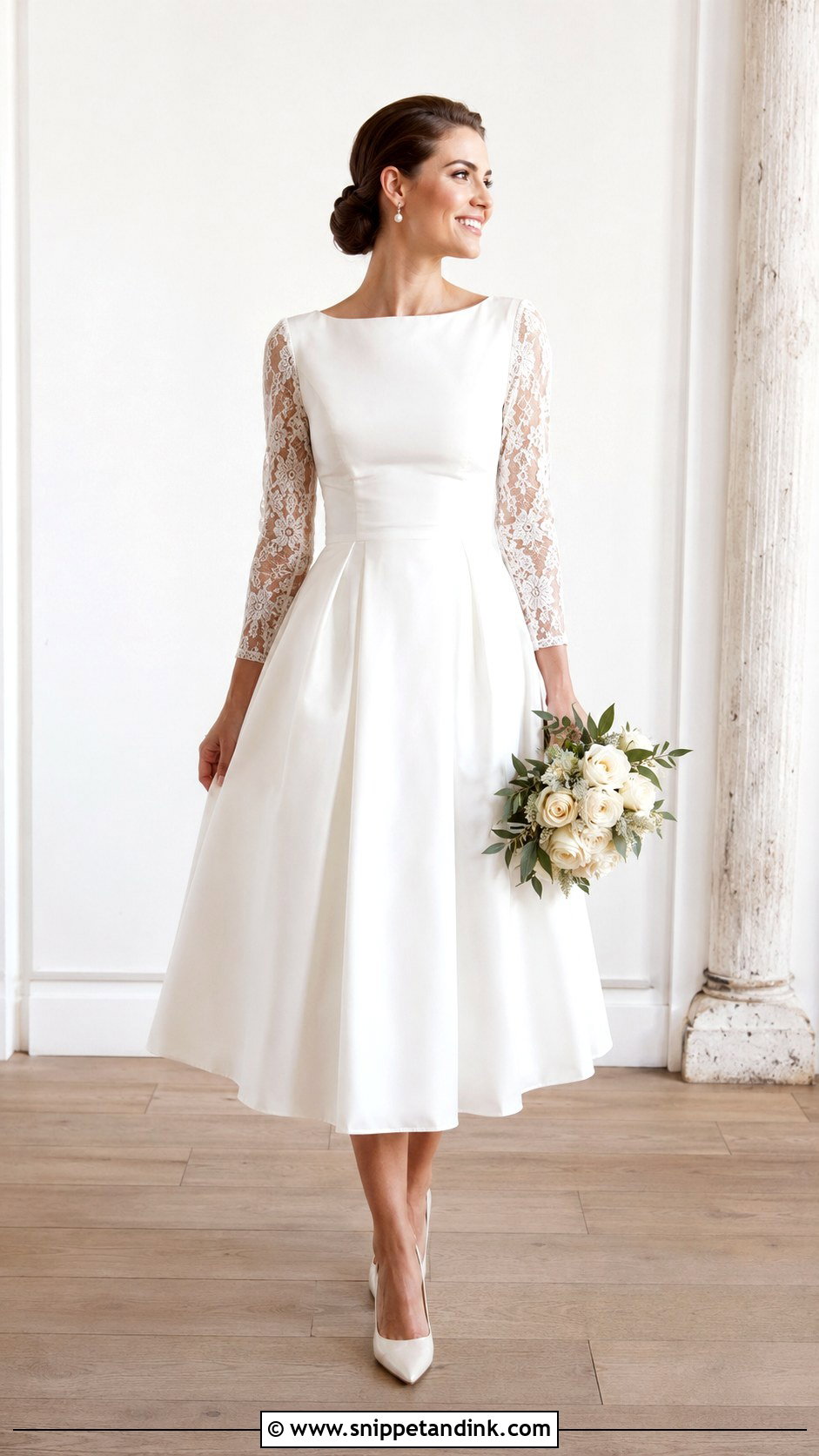
Long sleeves and a tea-length skirt balance each other: the coverage on top stops the shorter hem from feeling casual, and the hem stops the sleeves from feeling heavy. Lace sleeves look romantic, satin looks polished and sheer fabric keeps things light. I check that the armhole is cut high enough, because a low one restricts how far you can lift your arms. A nipped waist, soft A-line skirt and classic ivory heels finish the look. Autumn and winter ceremonies are its natural season.
6. Short Sleeve Tea Length Wedding Dress
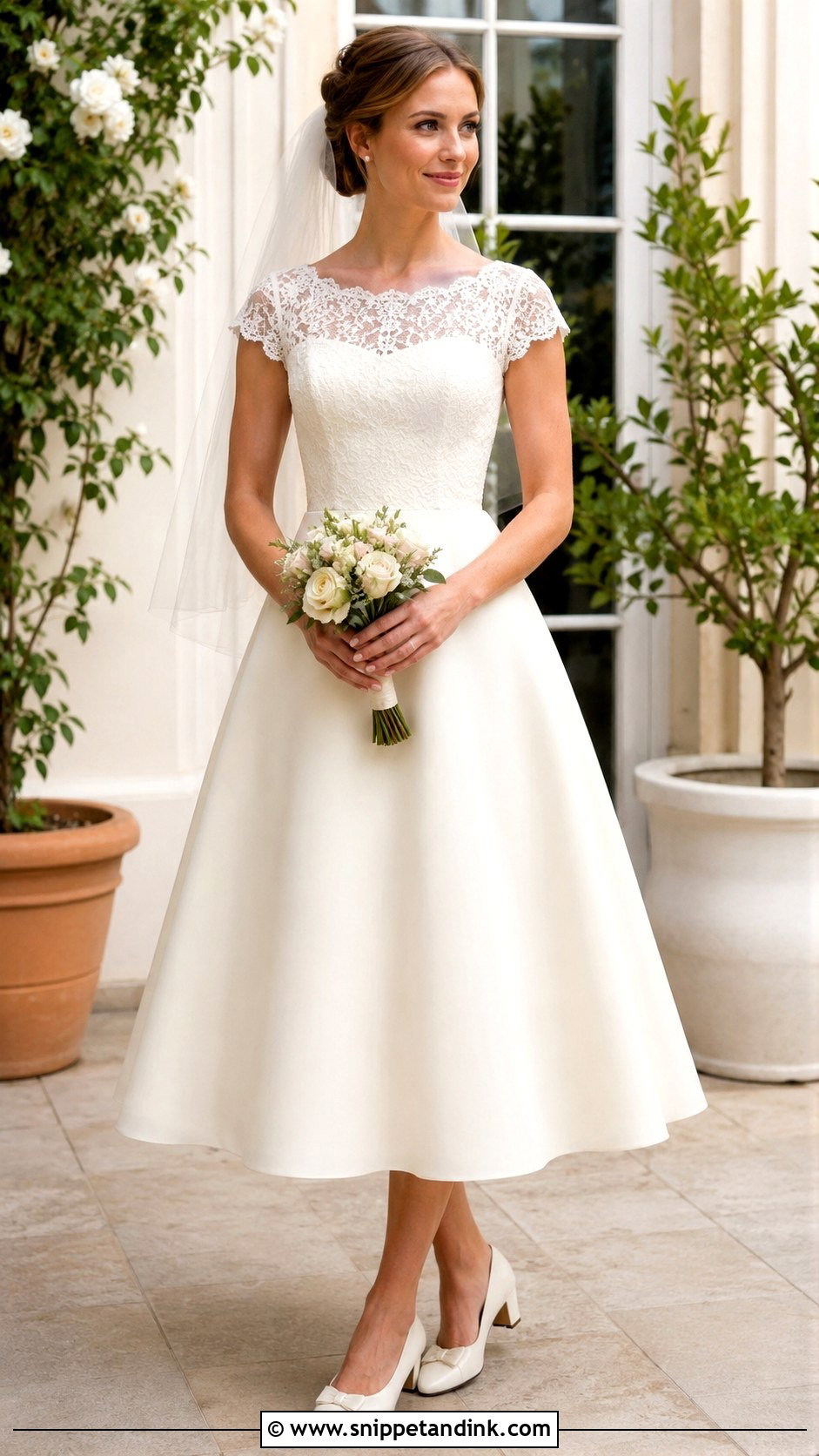
Cap, puff or simple fitted sleeves give arm coverage without the warmth of a full sleeve. A lace bodice with a plain skirt looks balanced; all-satin looks cleaner. Puff sleeves need a simple neckline, or the shoulders get busy. Watch the sleeve band: if it’s tight around the upper arm, it cuts in when you hold your bouquet. Low block heels, pearl studs and a small veil complete it, and it suits daytime and family-centred weddings.
7. Off Shoulder Tea Length Wedding Dress
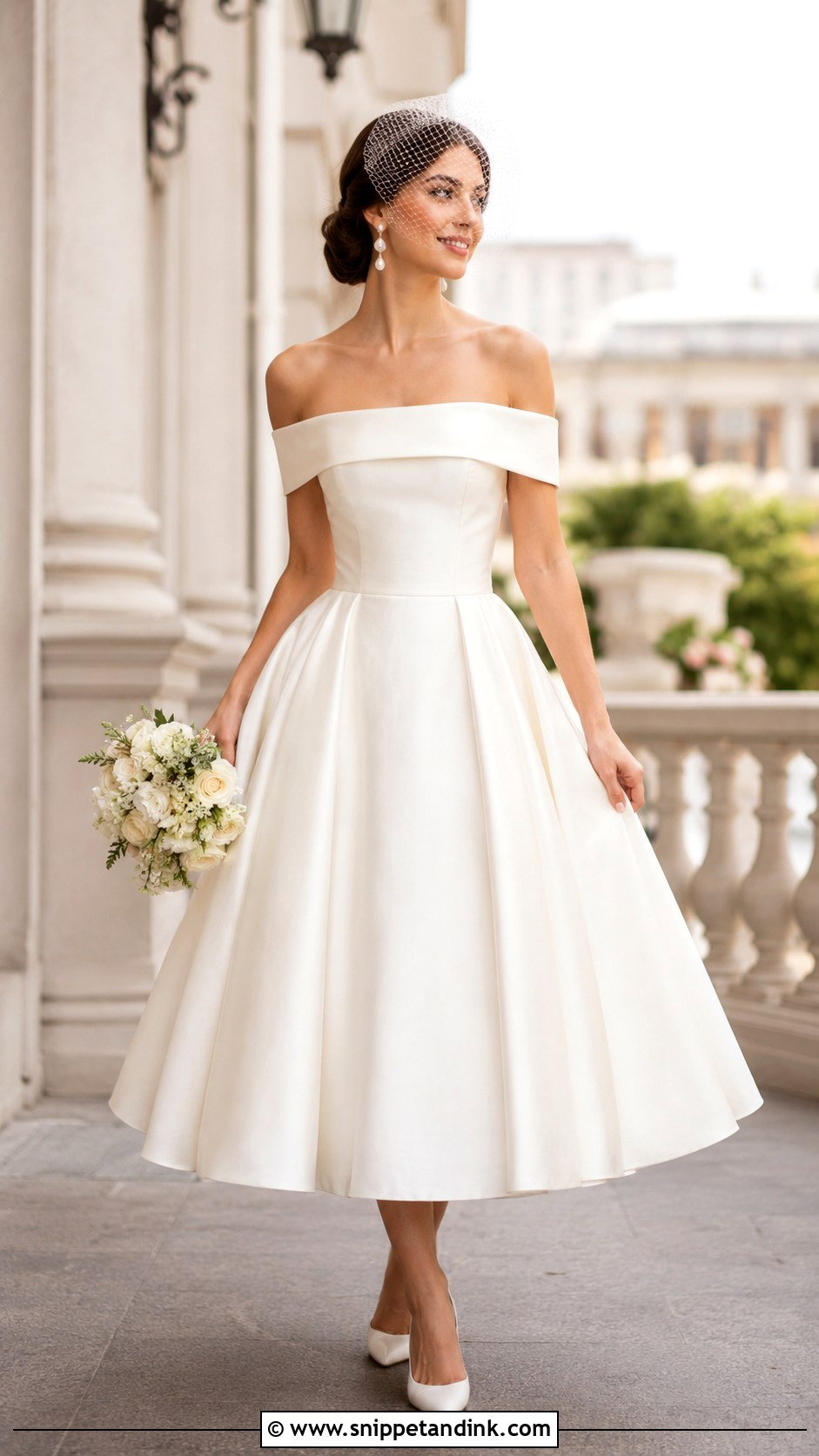
Off-shoulder necklines frame the collarbone and give a tea-length dress a romantic shape without any embellishment. Satin, lace or structured mikado with a fitted waist and full skirt all suit it. The bands must grip the upper arm firmly enough to stay put but loosely enough that you can raise your arms, so I always test a hug in the mirror. Pearl drop earrings, soft waves and pointed pumps work well, and a birdcage veil sits above the neckline without covering it.
8. High Neck Tea Length Wedding Dress
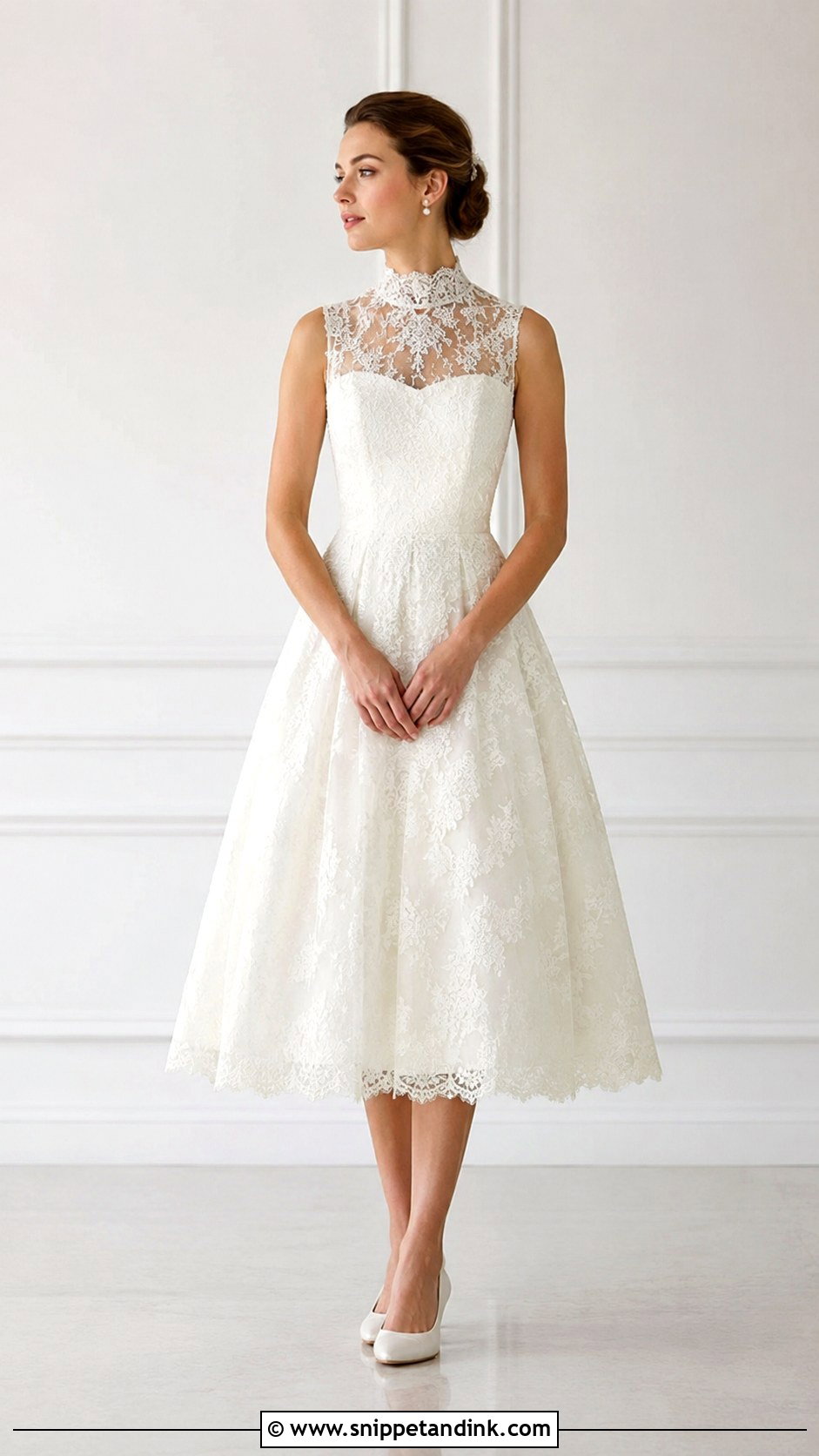
A high neckline has an old-world feel, and lace, illusion mesh or embroidered fabric stops it looking strict. The shorter hem then adds lightness. Skip a necklace entirely and let the neckline frame your face. I’d steer brides with a short neck or a very full bust toward a sheer illusion yoke rather than solid lace, because solid fabric to the chin can make the upper body look heavy. A fitted bodice, low bun and small pearl earrings suit it, and the detail reads well in close portraits.
9. Bateau Neck Tea Length Wedding Dress
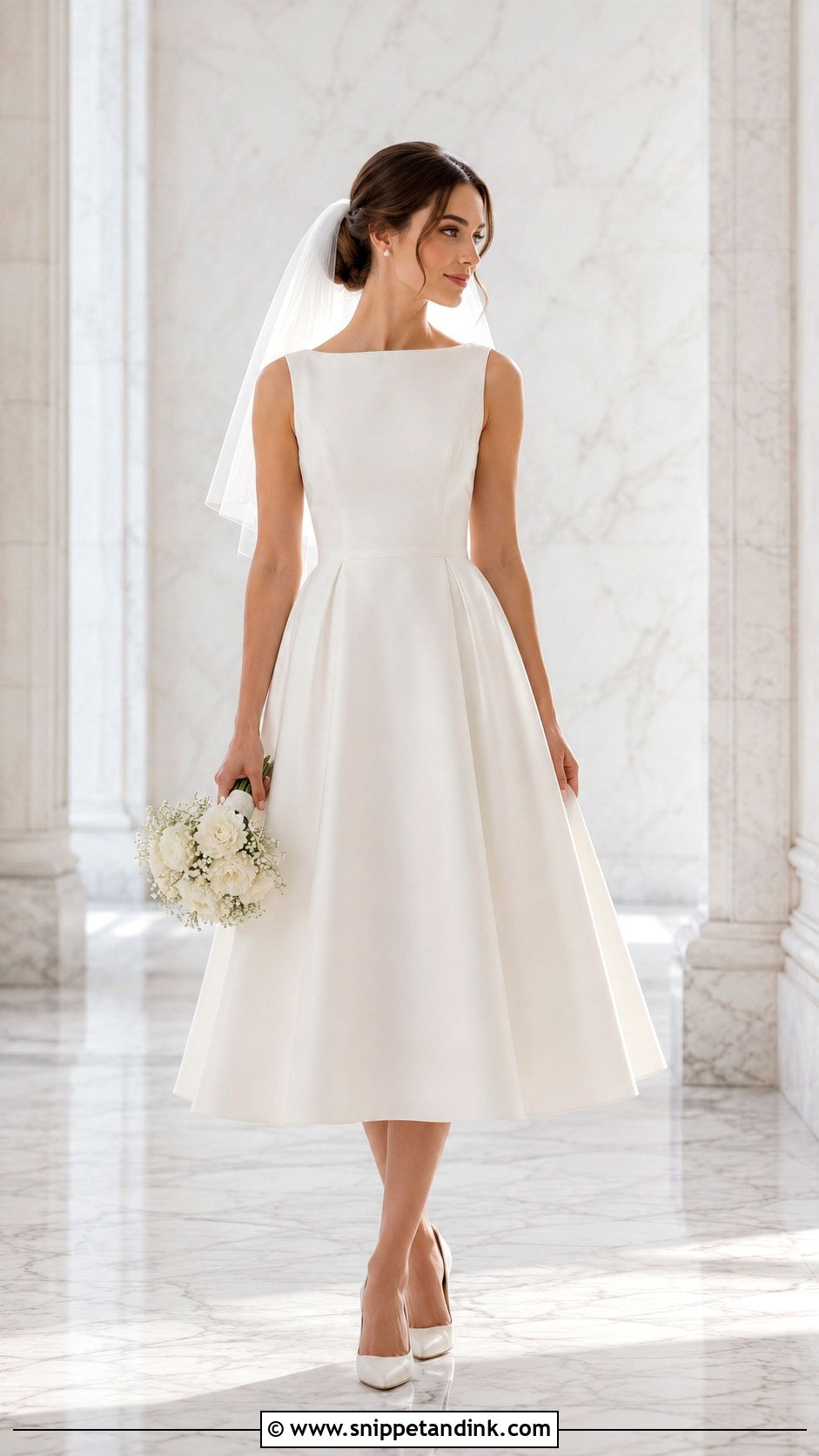
A bateau neck tea length wedding dress is the clean mid-century line I love for brides with narrow or sloping shoulders, because the wide neckline visually broadens them. Satin, crepe, lace and mikado all hold the shape. Bateau necklines can gape at the back if the shoulder seam isn’t fitted, so I check from behind before anything else. A fitted waist, gently full skirt, pearl studs and ivory pumps finish it. Courthouse weddings and small ceremonies are where it looks most at home.
10. Sweetheart Tea Length Wedding Dress
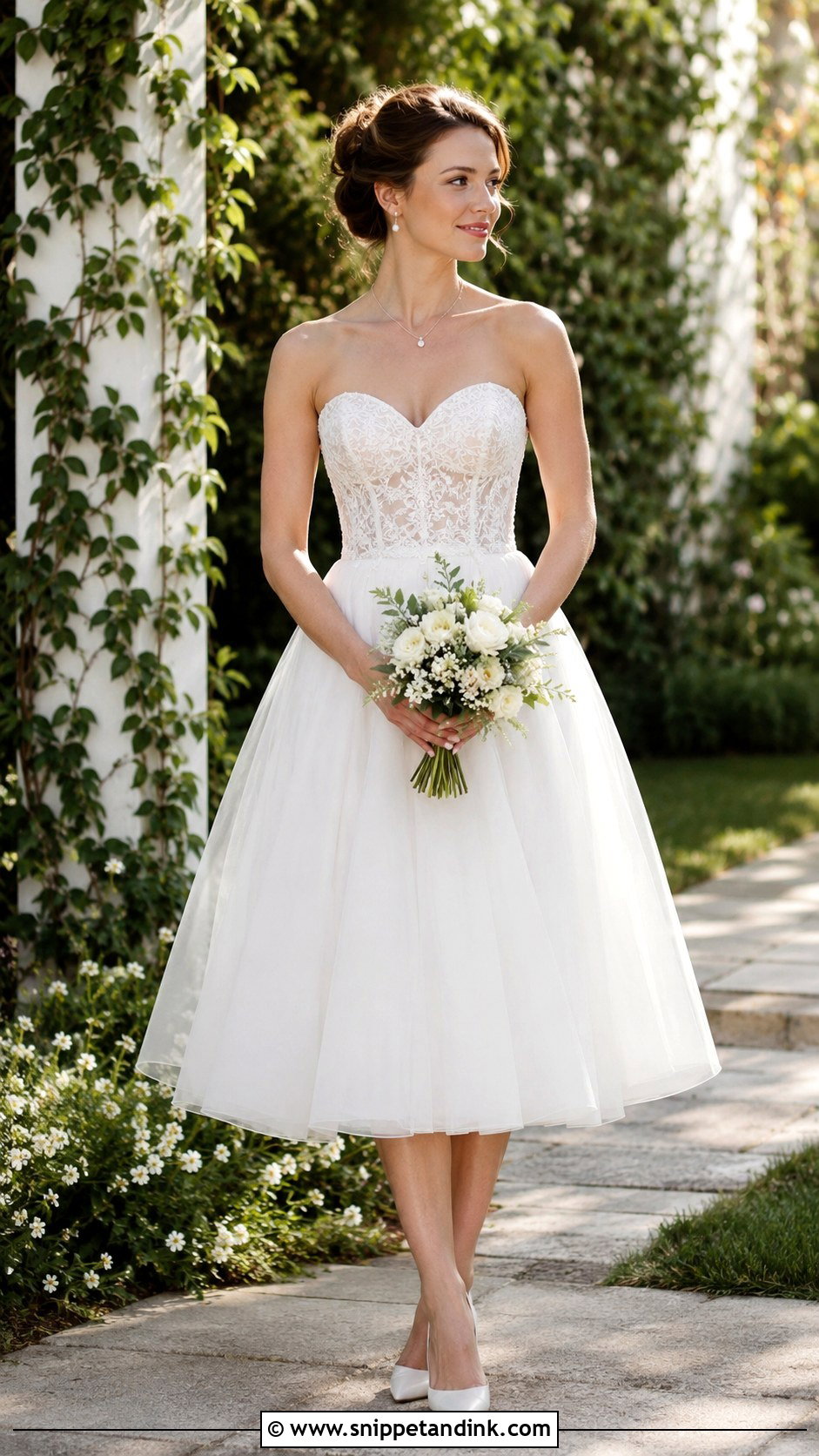
A sweetheart tea length wedding dress combines a curved bodice with a vintage hemline, and it’s one of the most supportive options here thanks to the structured top. Lace, satin and tulle all suit it. If the neckline is plain, a fine necklace fills the space; with lace or beading, leave it bare. Brides with a fuller bust usually feel most secure in this one. Pointed heels and pearl earrings complete it for a garden ceremony or a city celebration.
11. Square Neck Tea Length Wedding Dress
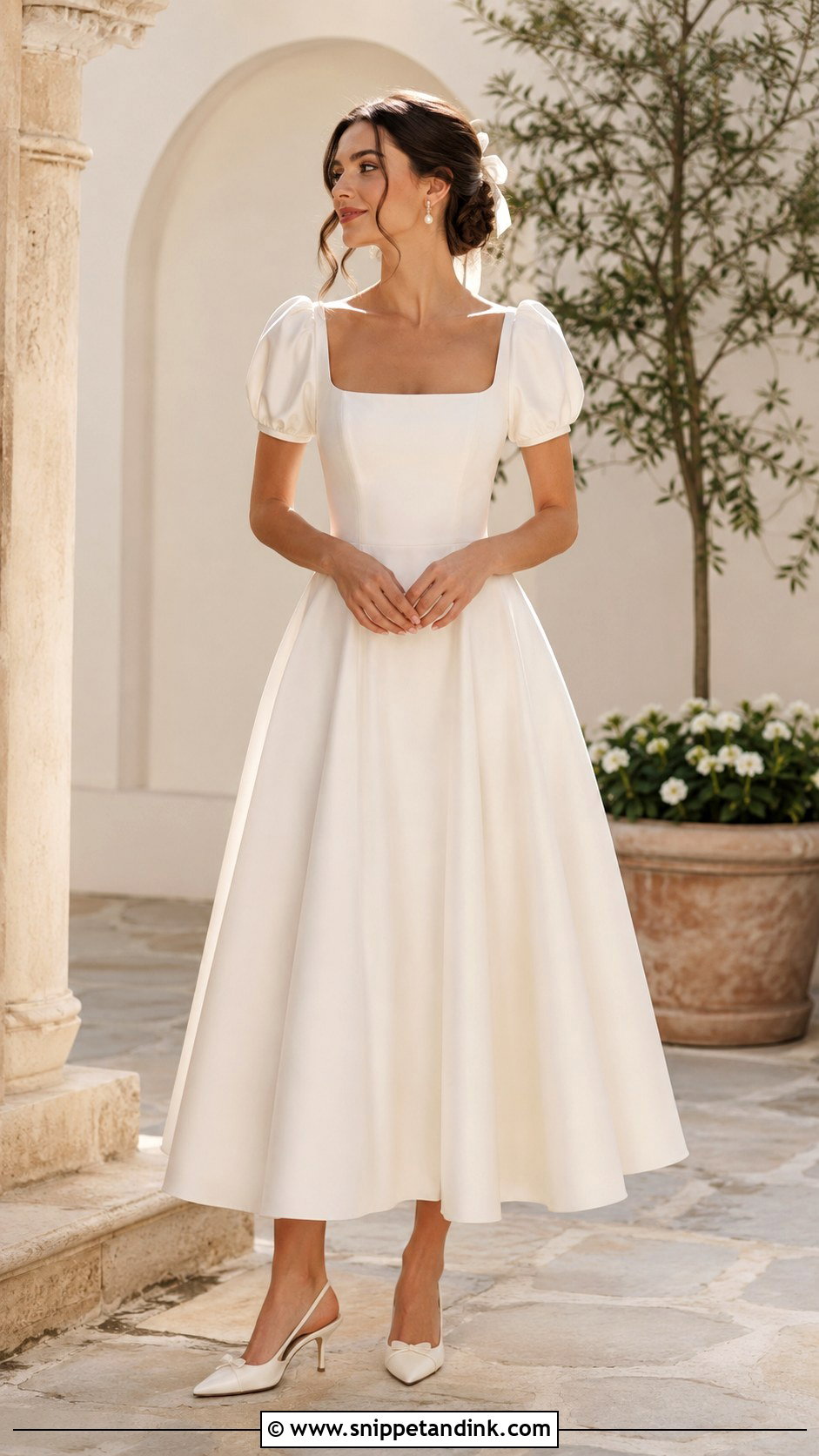
Square necklines look vintage and modern at once. The straight line gives structure, and it pairs naturally with puff sleeves, cap sleeves or wide straps. Fabric changes its mood more than anything: cotton lace for a daytime garden wedding, satin for something dressier, crepe for a minimal version. A square neck needs precise fitting at the corners, or they curl outward. Slingback heels, pearl earrings and a smooth low bun suit it, with a short veil or ribbon in the hair.
12. Button Back Tea Length Wedding Dress
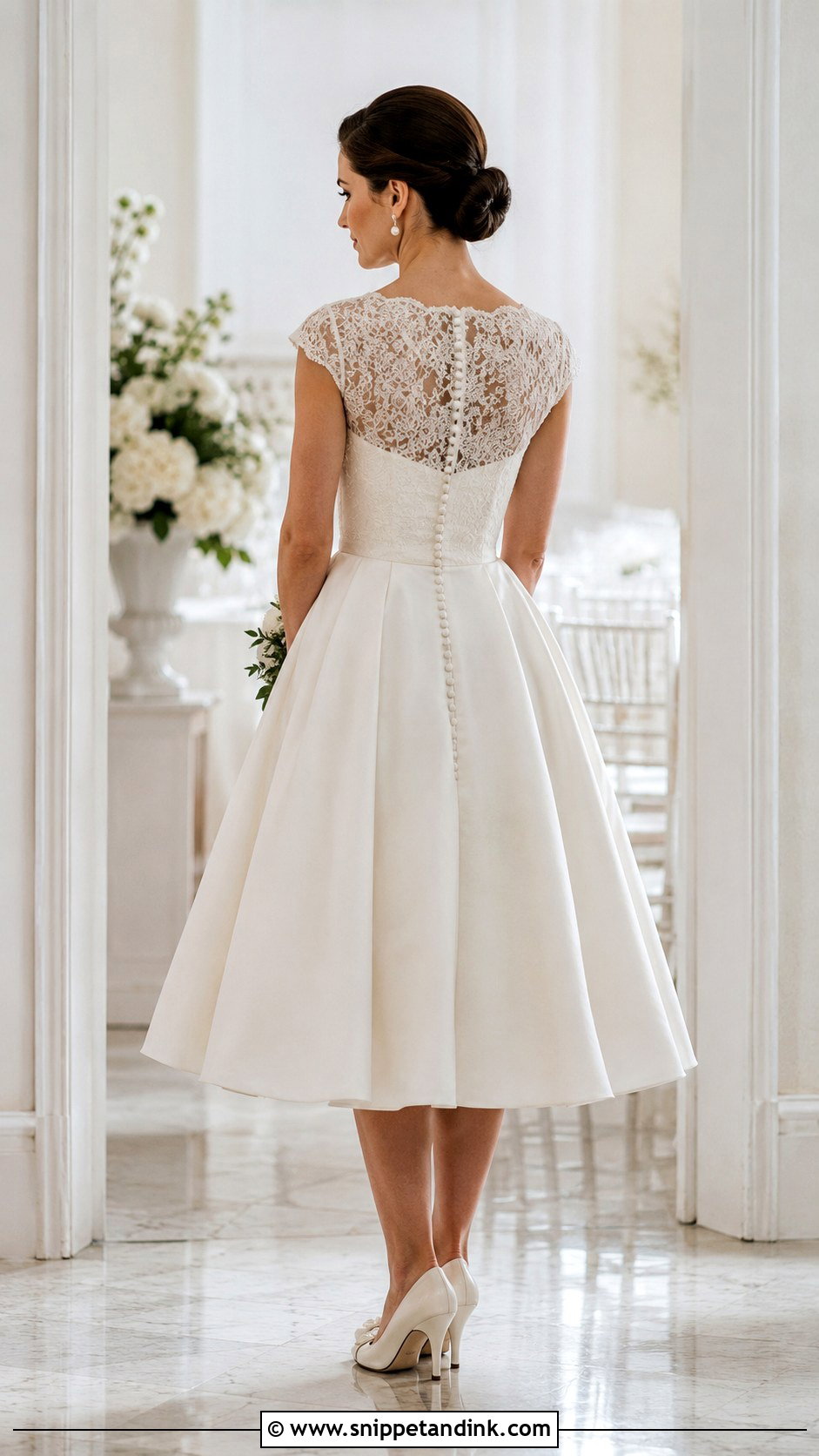
Covered buttons down the back give a tea-length dress a vintage detail that guests see during the whole ceremony. They suit lace, satin, crepe and tulle. Many button backs actually close with a hidden zip beneath decorative buttons, which I prefer, because a true row of thirty loops takes a long time to fasten and someone will have to do it in a hurry. A neat updo keeps the back on show, and pearl earrings with plain heels finish it.
13. Bow Tea Length Wedding Dress
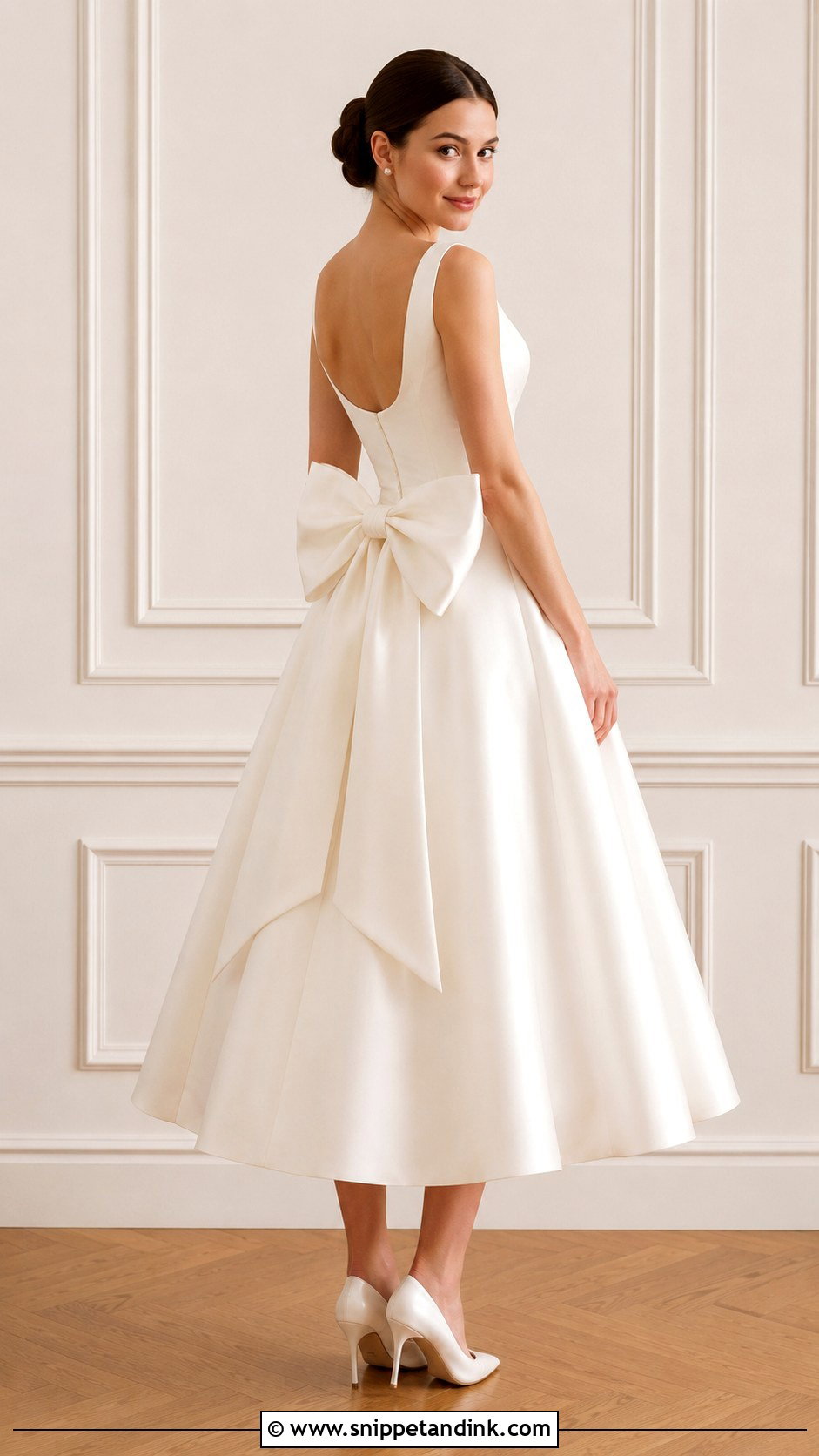
Bows can sit at the waist, back, shoulder or neckline, and their size sets the tone. A small satin bow at the waist is subtle; a large back bow is dramatic. Keep the rest of the outfit plain so the bow looks deliberate. One practical note: a big back bow gets crushed against chair backs, so I ask whether the bride will sit for a long dinner and suggest one that detaches if she will. Classic pumps, pearl studs and a smooth hairstyle complete it.
14. Polka Dot Tea Length Wedding Dress
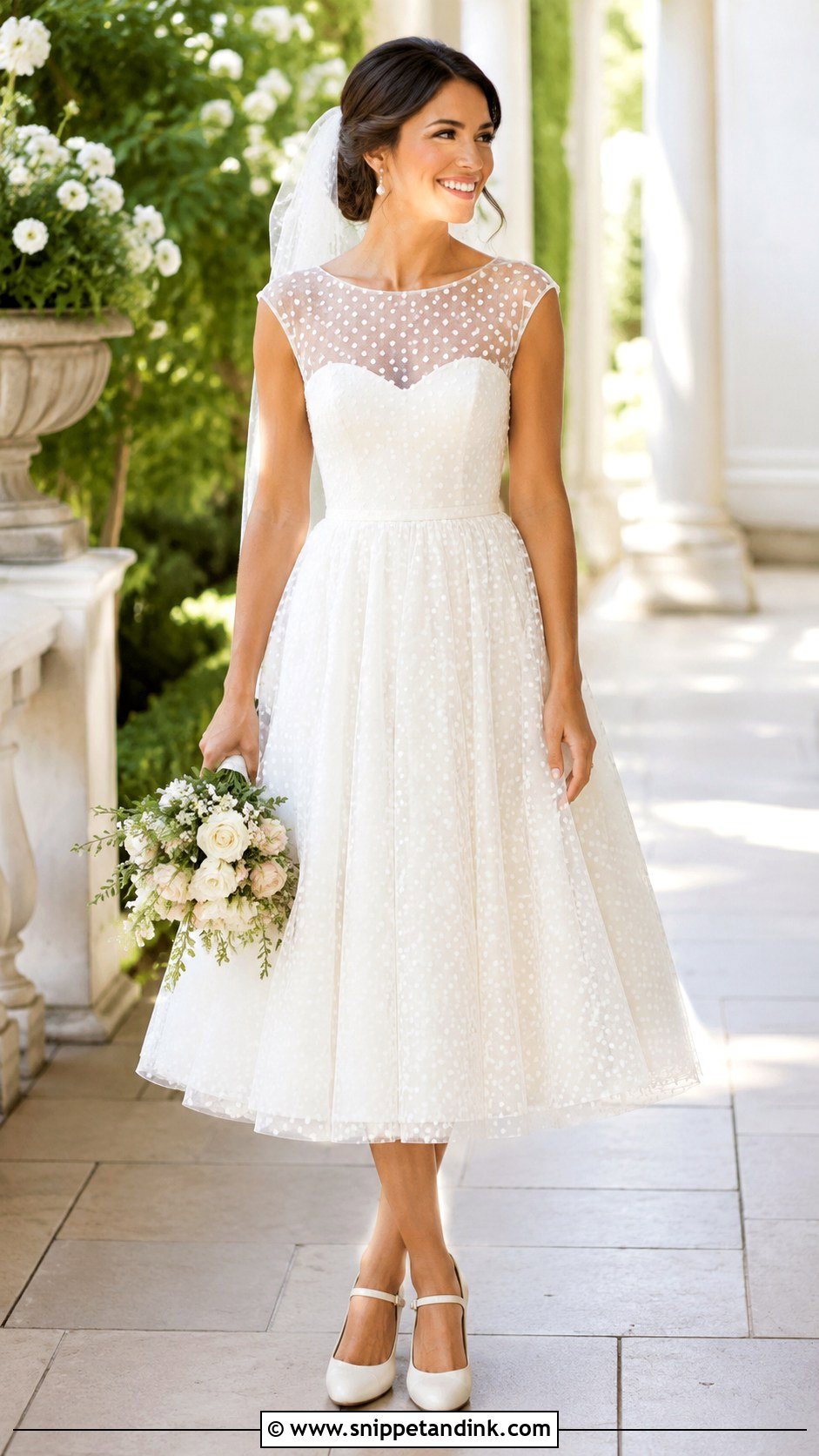
Polka dots sound casual until they’re done in ivory Swiss dot tulle or dotted lace, which reads as soft texture rather than print. The dots work best on a simple shape, usually an A-line skirt and fitted bodice. Swiss dot is lightweight and can look sheer in bright sun, so I check it against a window and add a lining if needed. Mary Jane heels, a short veil and pearl earrings make it fully retro, and daytime outdoor weddings suit it.
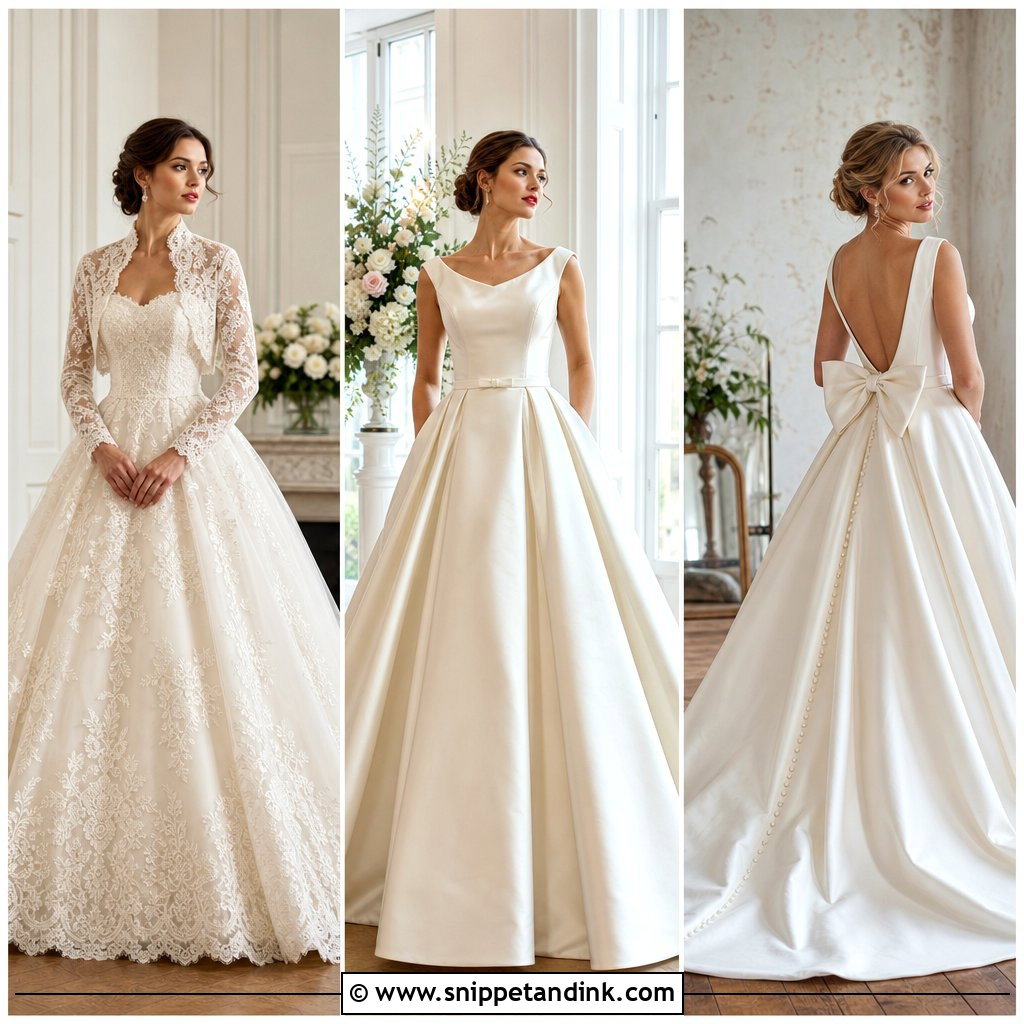

15. Floral Tea Length Wedding Dress
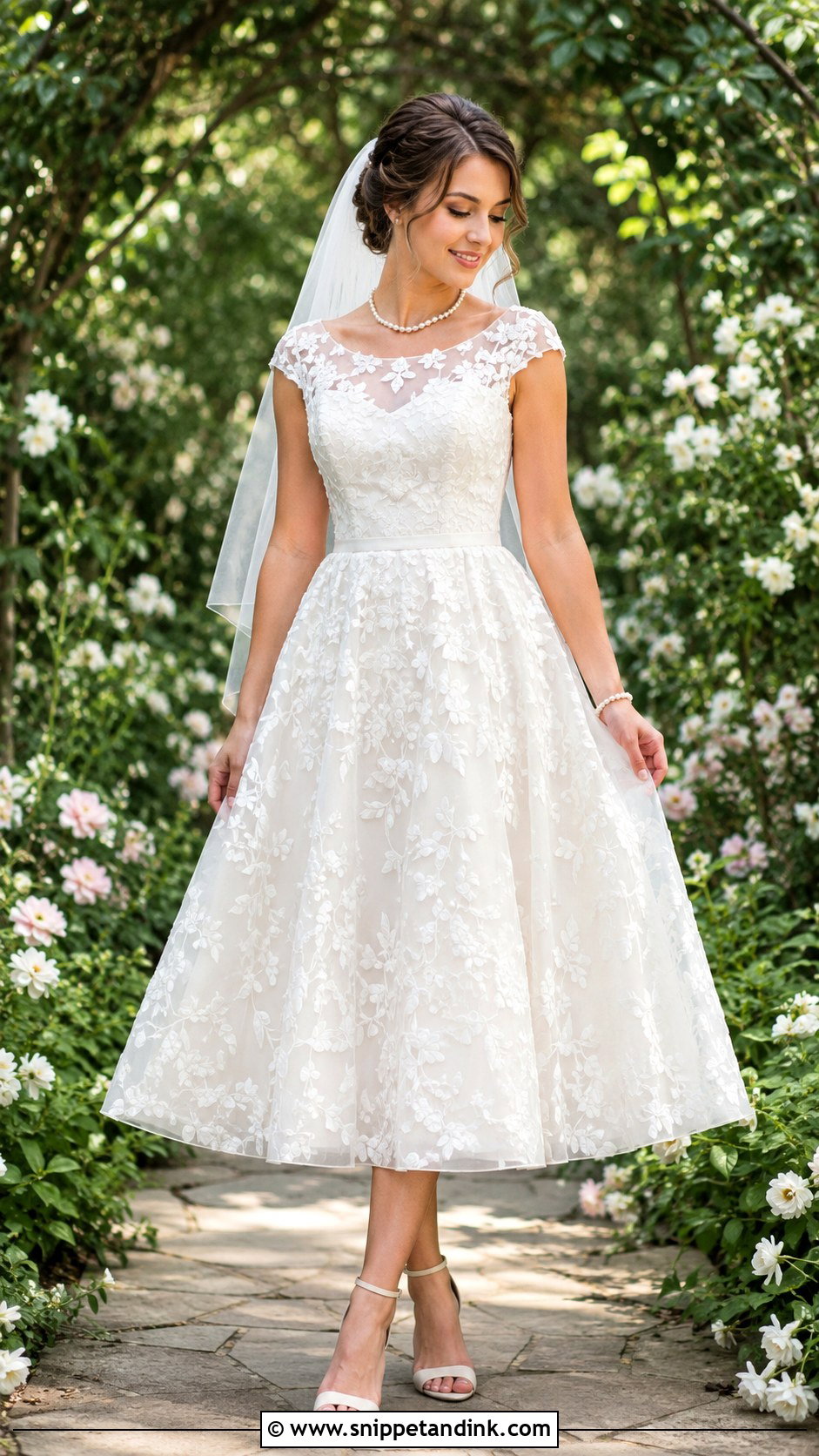
For a floral dress that still looks bridal, I steer brides to embroidered flowers, tonal lace blooms or appliqués rather than bold prints. A fitted waist and airy skirt keep the details graceful. A touch of blush or pale blue in the embroidery adds charm in spring or summer without taking over. Ivory heels and a simple veil suit it, and fresh, natural makeup matches the soft texture. Garden ceremonies are the obvious setting.
16. Embroidered Tea Length Wedding Dress
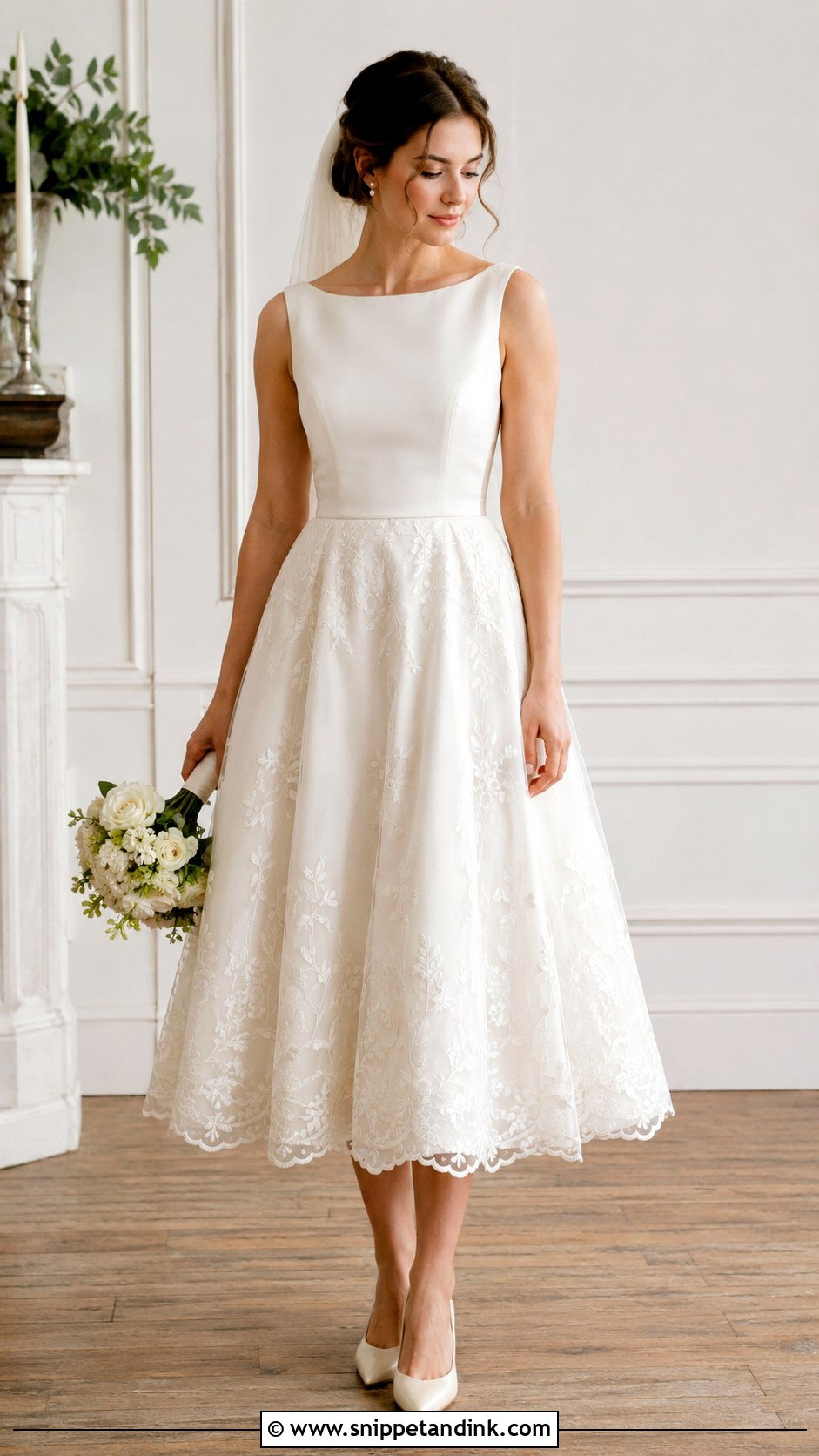
Embroidery looks handmade, and up close it is the detail guests remember. Floral vines, scalloped edges, tiny pearls and tonal threadwork all give a vintage effect. Because embroidery adds a lot of texture, the silhouette should stay simple: a clean bodice, defined waist and soft A-line skirt. Ask how the embroidery is backed. Heavy threadwork on thin fabric can pucker after alterations, and a good seamstress will tell you that before she cuts. Minimal heels, small earrings and a soft veil suit small, intimate weddings.
17. Beaded Tea Length Wedding Dress
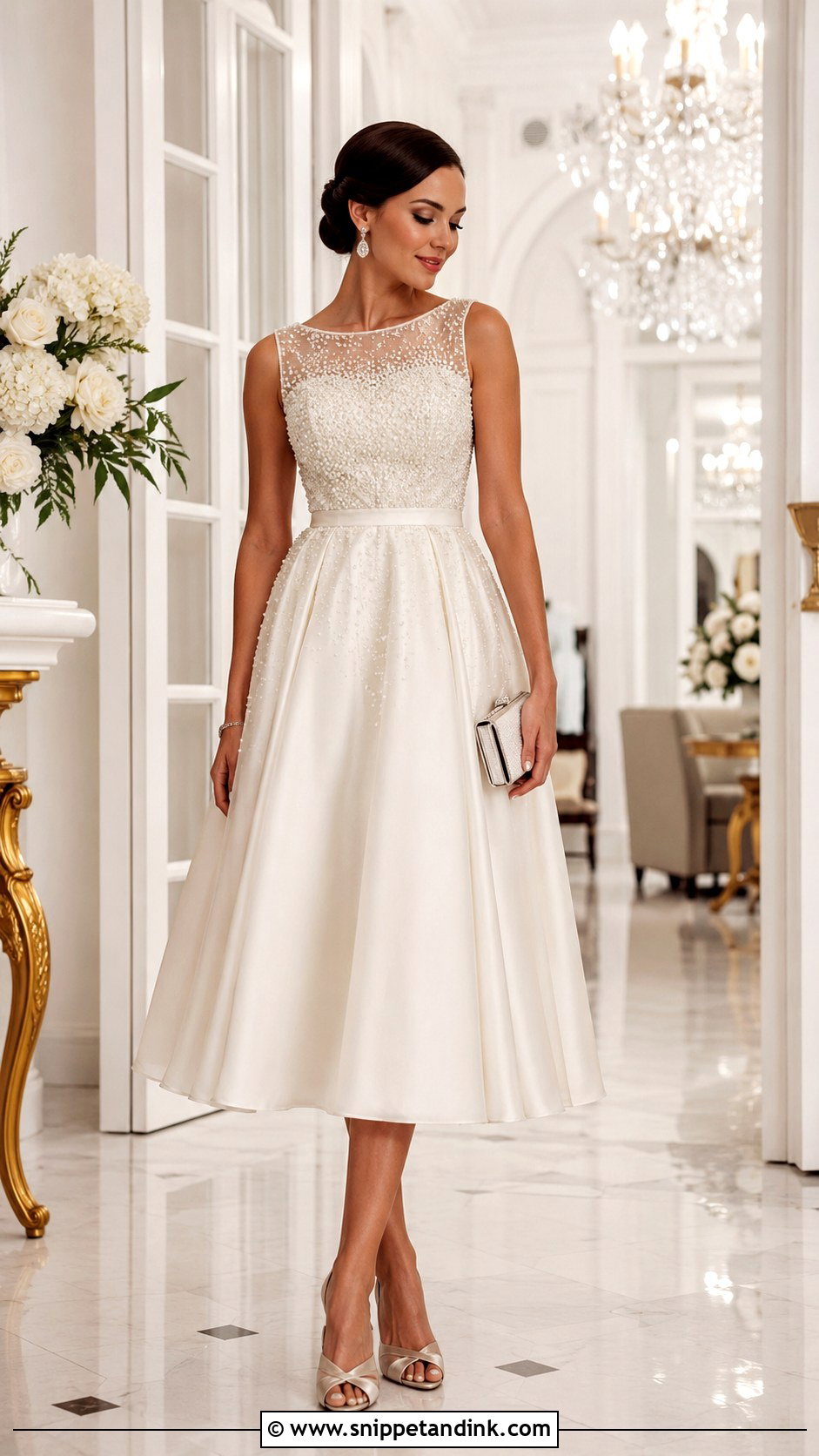
A beaded tea length wedding dress gives vintage glamour in a shorter shape, and the pattern decides the era: geometric beading reads 1920s, scattered crystals read Old Hollywood. Beads add weight, and on a short skirt that weight swings. Delicate beading on the bodice, neckline or waist is easier to move in than allover work. Sit, walk and dance in it at a fitting before committing. Satin heels, drop earrings, a sleek clutch and simple hair suit evening weddings and second looks.
18. 1940s Tea Length Wedding Dress
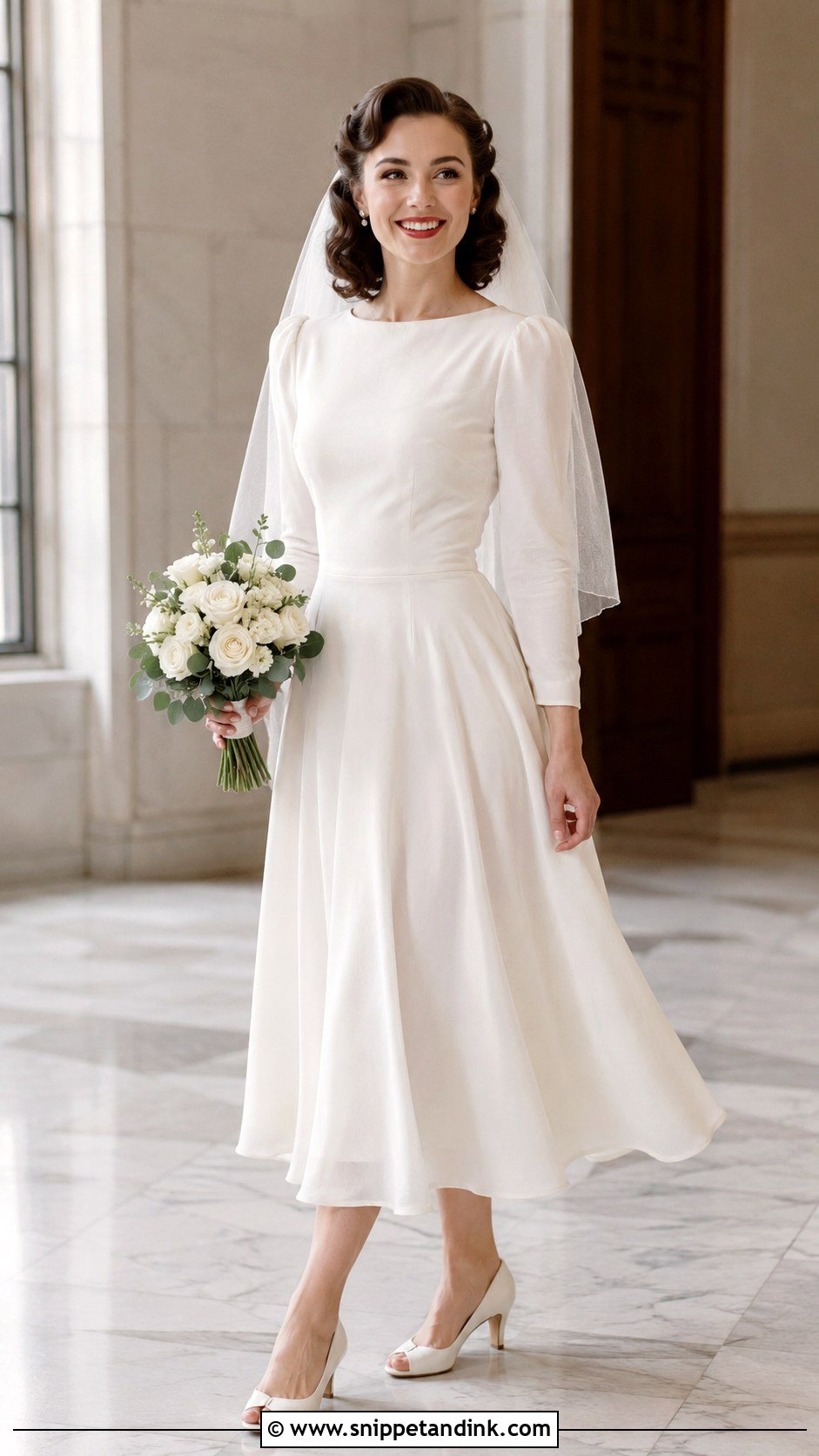
The 1940s look is quieter than the 1950s one. Think soft shoulders, modest necklines, gentle waist shaping and skirts that move without much volume. Crepe, satin and lace all work. Wartime dresses were often cut close and practical, so a 1940s-inspired gown should fit precisely at the shoulder and waist to look right. Peep-toe heels, pearl earrings, soft curled hair and a small veil or comb finish it. Brides who want vintage without a full skirt tend to love this era.
19. 1920s Tea Length Wedding Dress
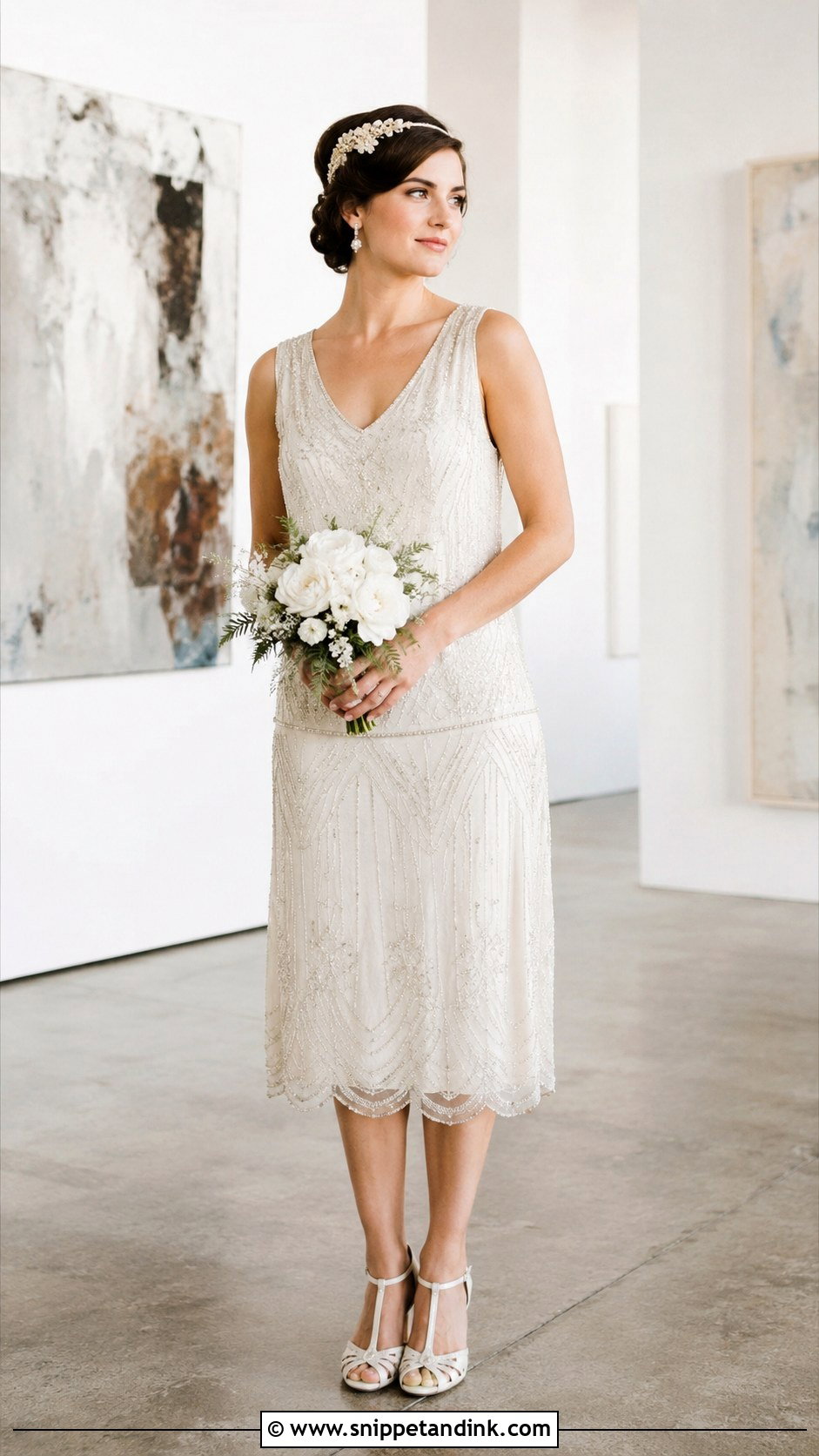
The 1920s silhouette is straight and relaxed rather than fitted: a dropped waist, gentle bias cut and no full skirt. Lace panels, pearl beading and scalloped hems add character. I’d steer away from this one if you want waist definition, because the whole point is a loose column. Bias-cut fabric clings to whatever is underneath, so smooth slip-style underwear matters. T-strap heels, a delicate headpiece and ivory tones keep it refined rather than flapper costume.
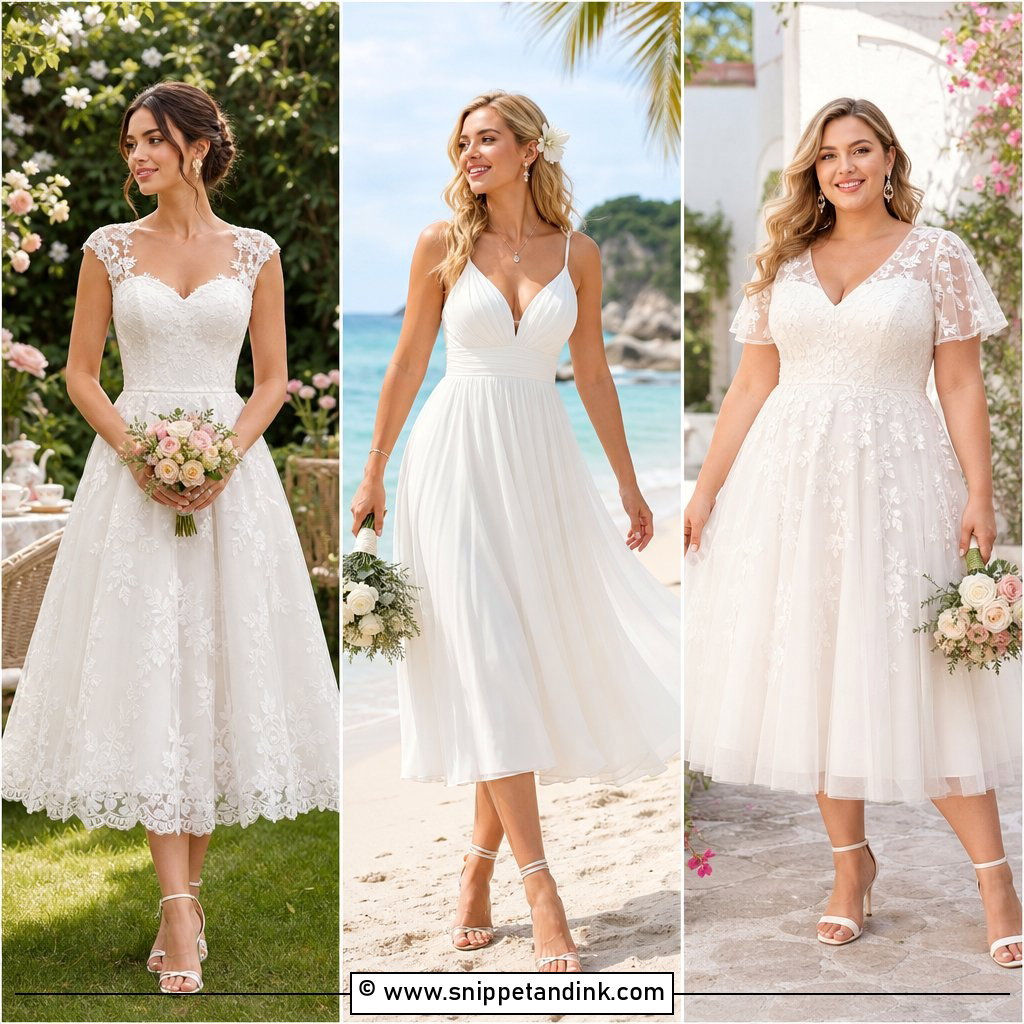

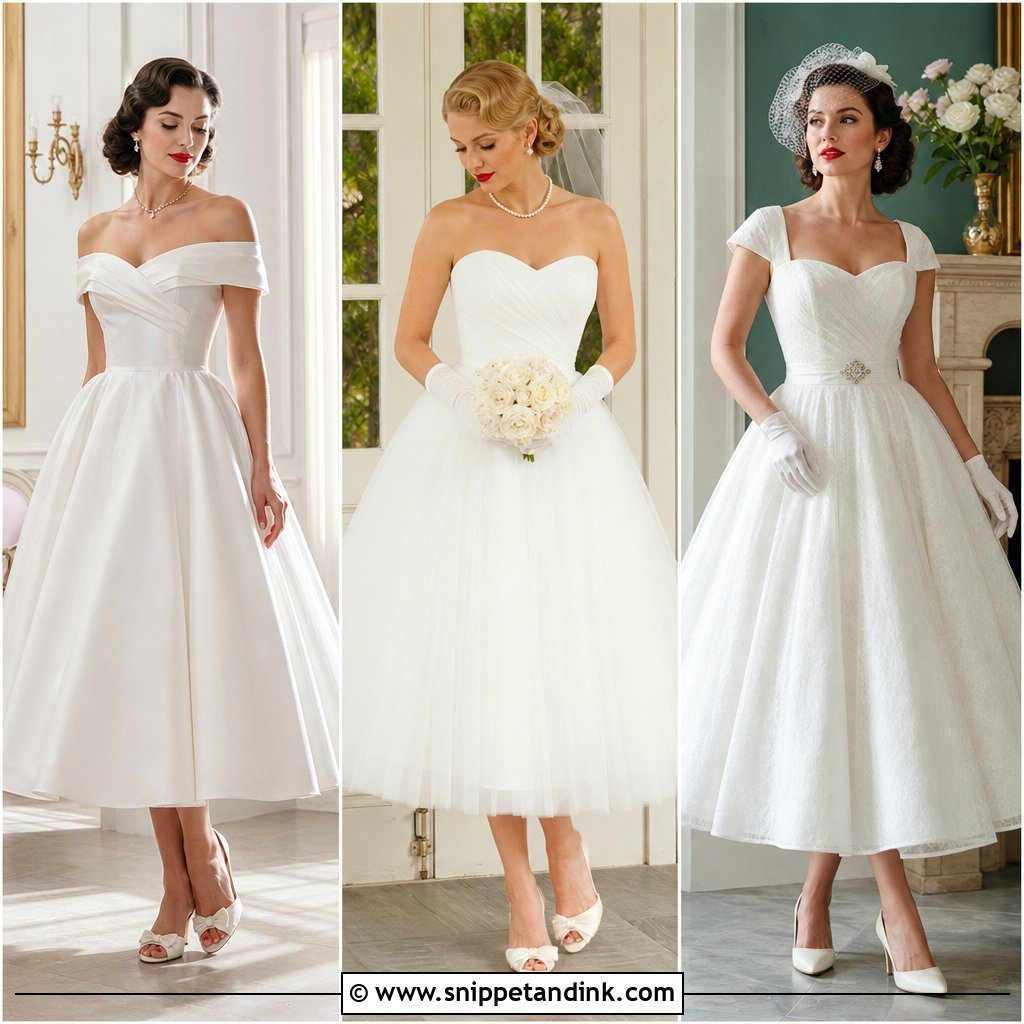
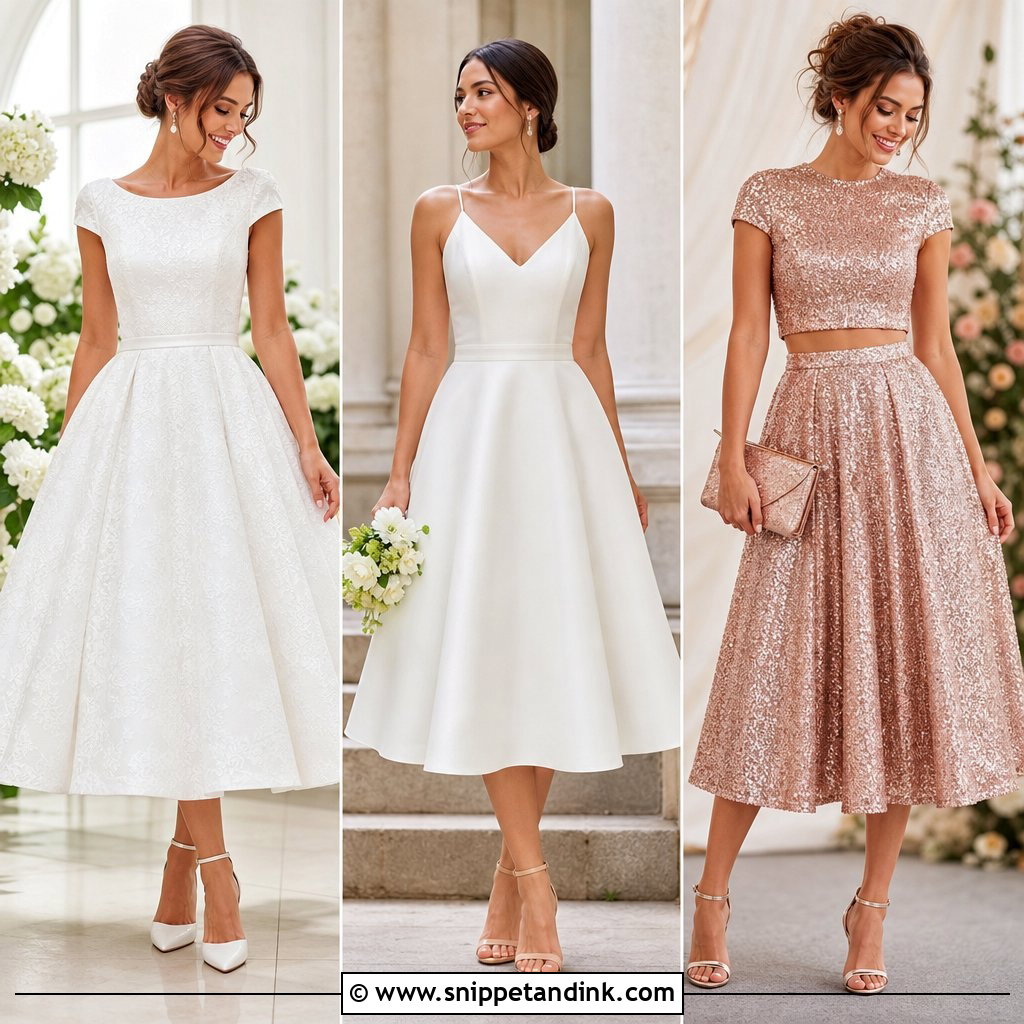
20. Courthouse Tea Length Wedding Dress
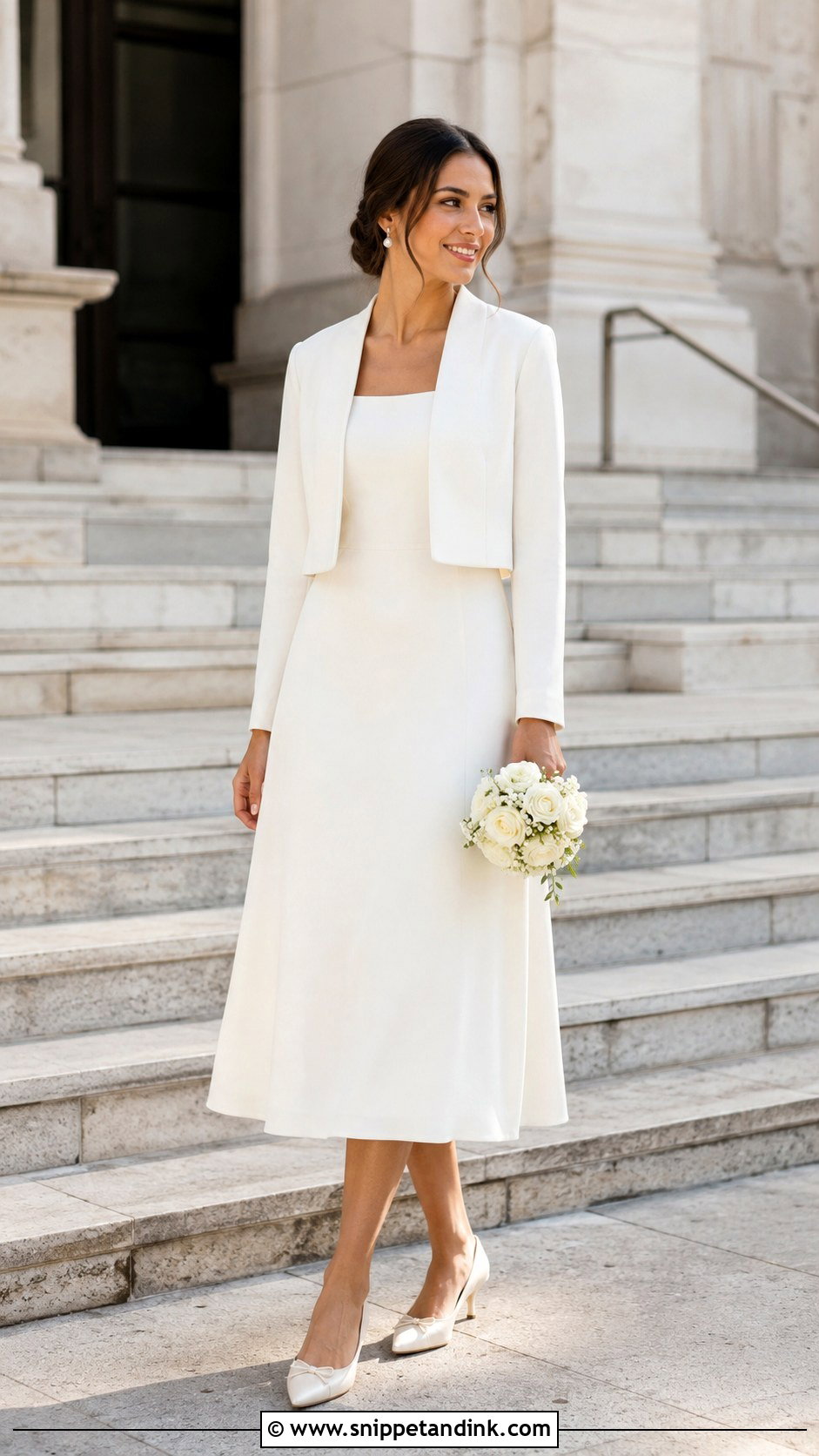
For a courthouse wedding, the dress needs to handle steps, sidewalks and quick portraits in a corridor. A simple satin, crepe or lace dress with a clean neckline does that well, and tea length keeps the hem off dirty city pavements. A cropped blazer or short jacket makes it city-ready and adds structure for cooler days. Low heels, pearl earrings and a small bouquet are all it needs. Do a quick test walk on stairs in the shoes you’ll wear.
21. Garden Tea Length Wedding Dress
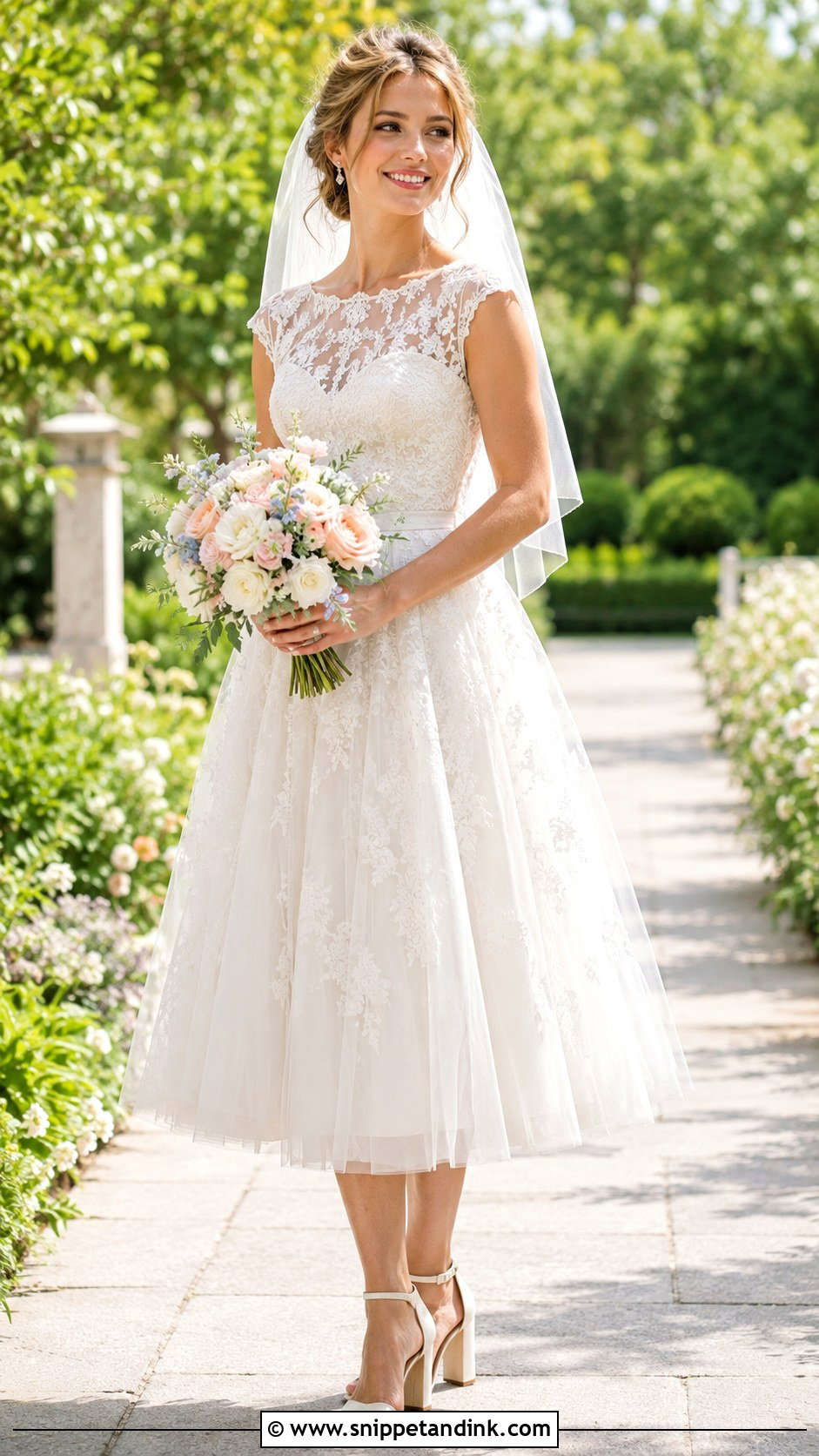
Garden ground decides this one. The hem must clear the grass so it doesn’t soak up dew, and thin stilettos sink into lawns, so I always suggest block heels or flats. Lace, tulle, embroidered flowers and soft cotton blends sit naturally in the setting. A loose updo, pearl earrings and a short veil give a soft vintage finish, and a bouquet in pale colours completes it. Spring and summer weddings suit it best.
22. Plus Size Tea Length Wedding Dress
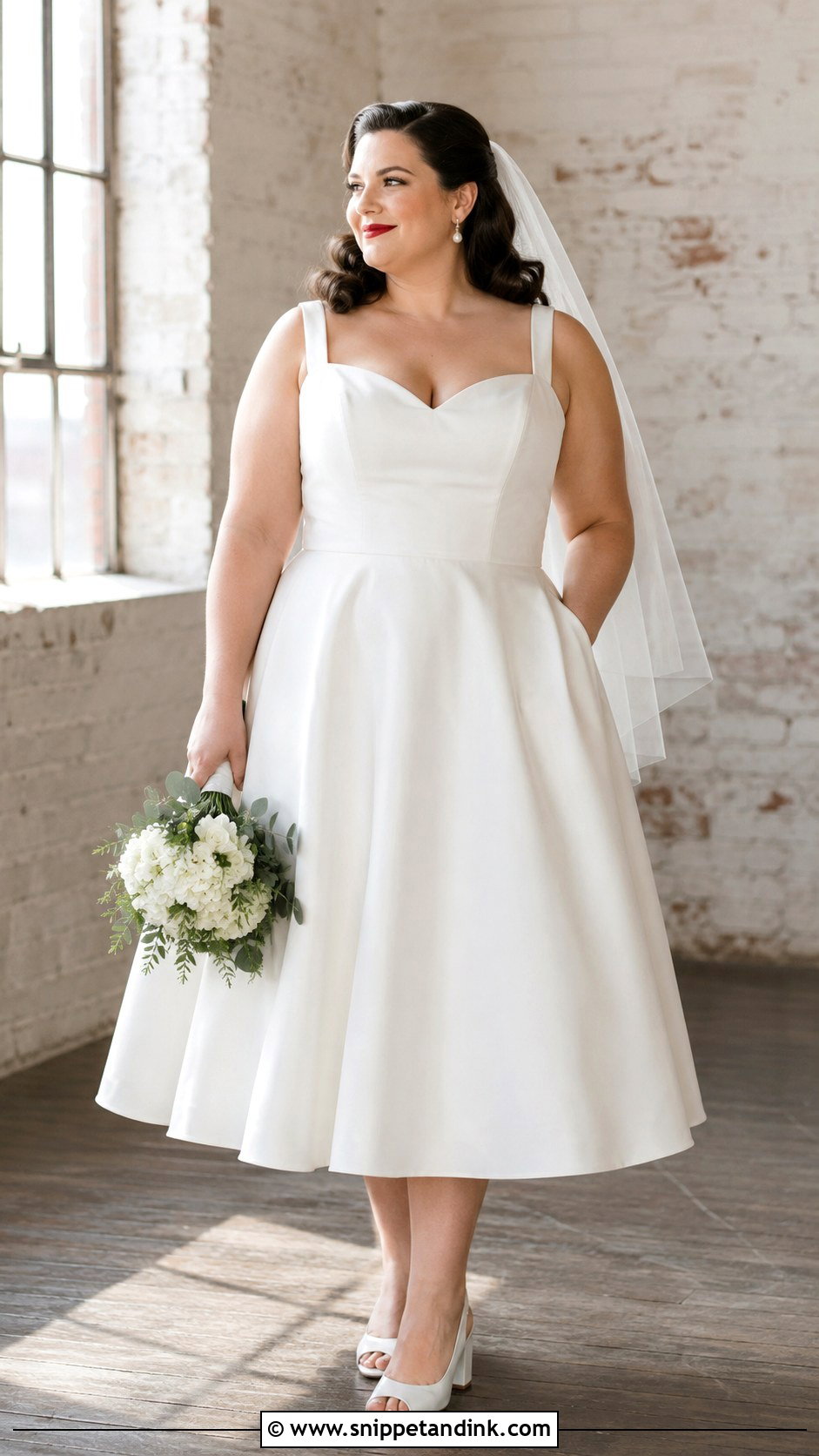
For plus size brides, a tea-length dress looks its best when the proportions are balanced and the bodice is truly supportive. A structured bodice, defined waist and a skirt that falls smoothly rather than clinging give the shape. Wide straps, sleeves, corset-style support or a well-fitted sweetheart neckline add comfort. I’d look at where the hem lands most carefully of all, because the narrowest part of the calf is the most flattering finish point. Comfortable block heels, pearl earrings and a veil matched to the dress length complete it, and you should be able to sit, hug and dance without thinking about it.
23. Petite Tea Length Wedding Dress
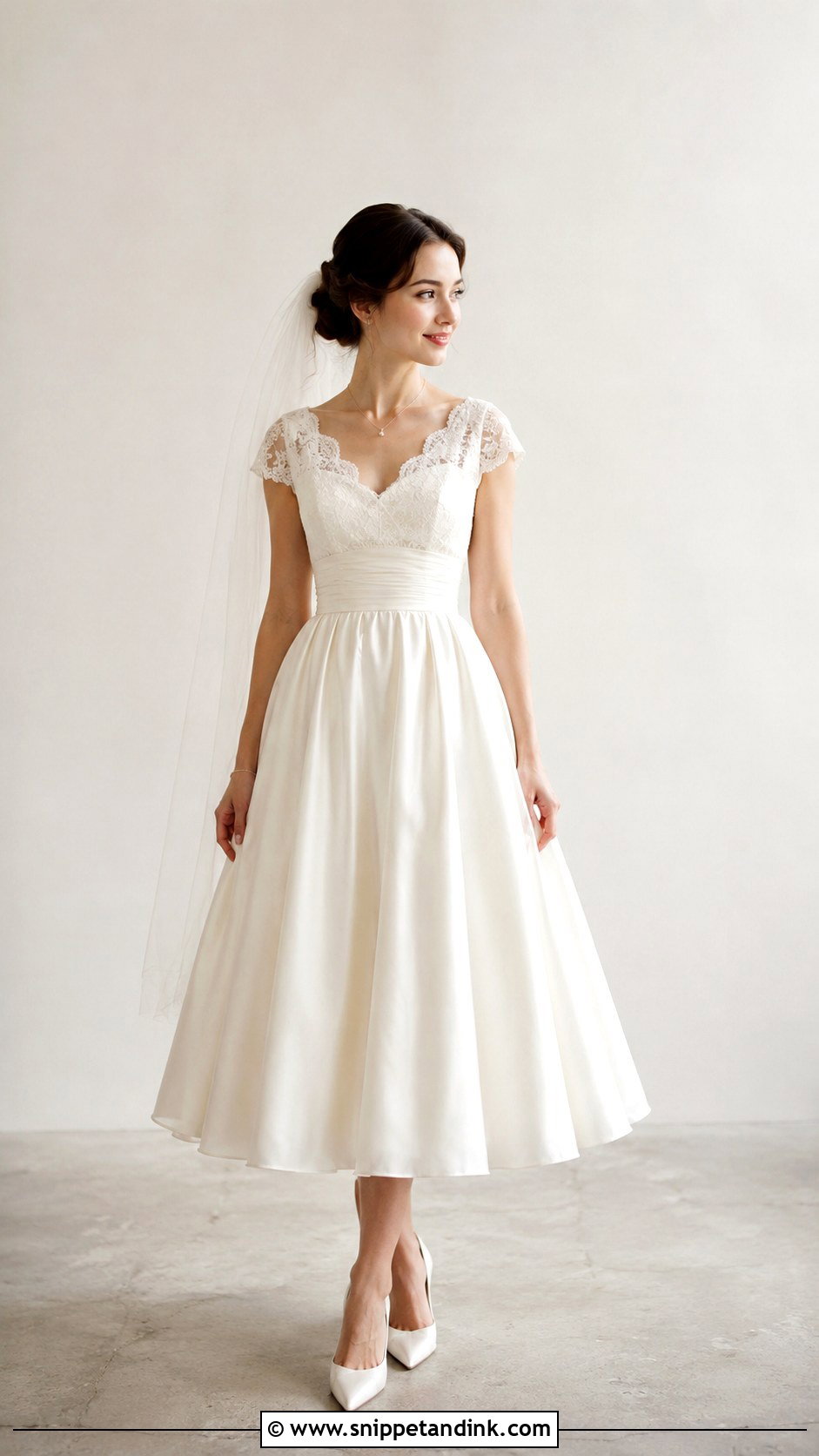
Petite brides often look best in a slightly shorter tea length that shows more ankle, since a hem at mid-calf can cut the leg at its widest point. A fitted bodice, higher waistline and simple skirt lengthen the frame, while heavy volume can overwhelm it. Vertical lace patterns and clean seams help too. Hems on petite gowns are usually taken up a lot, which can remove part of a lace border, so ask the seamstress to take the excess from the waist instead when possible. Pointed heels, fine jewelry and a narrow veil finish it.
24. Minimal Tea Length Wedding Dress
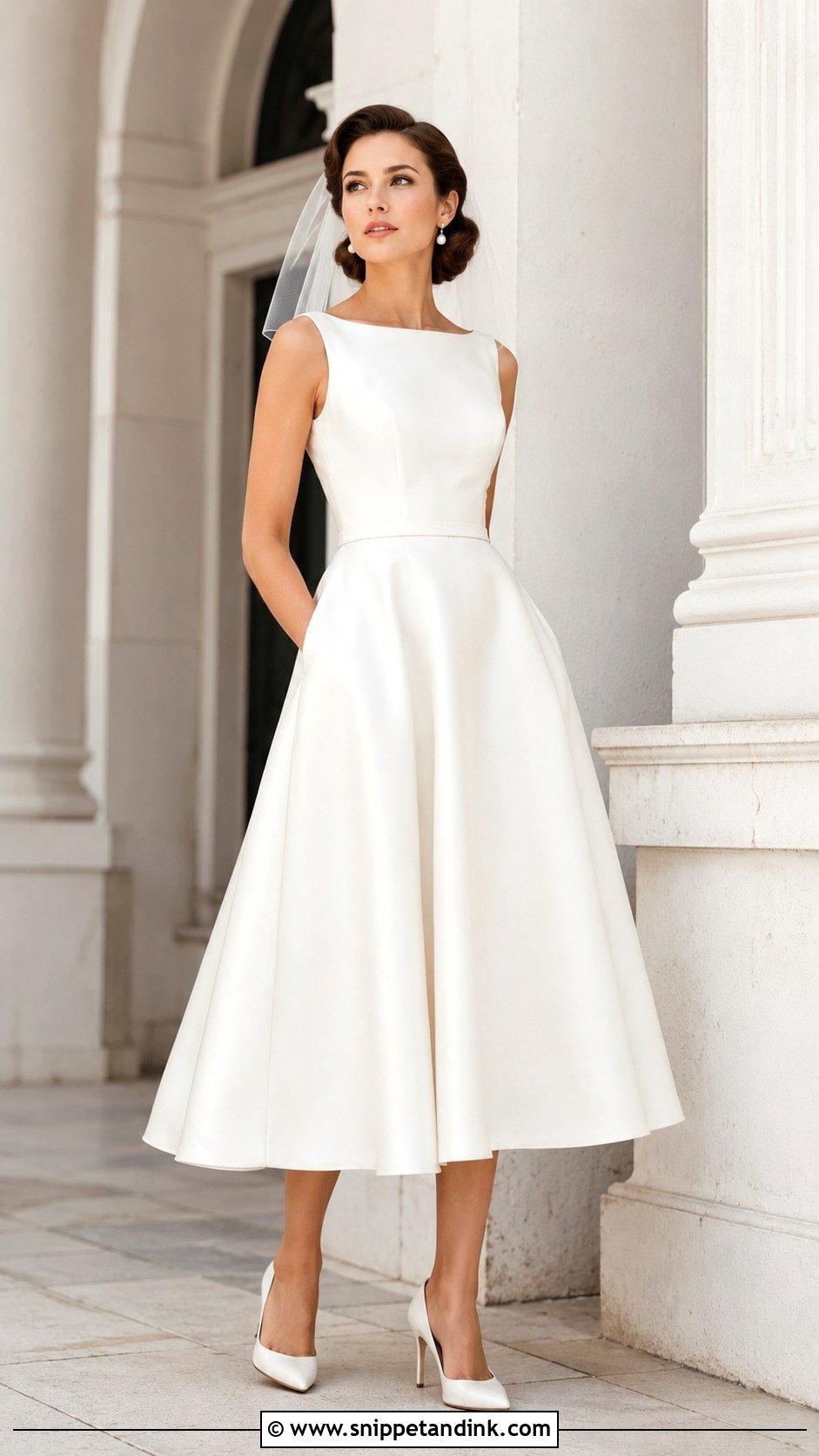
A minimal tea-length dress has no lace or embellishment to rely on. Clean satin, crepe or mikado looks striking only when the cut is right: a bateau, square or strapless neckline, a defined waist and a simple A-line skirt. Pearl earrings, sleek heels and a structured mini bag suit it, and a short veil adds bridal softness. Brides who love retro proportions but dislike fuss gravitate toward this one. Spend your budget on fitting, not extras.
25. Reception Tea Length Wedding Dress
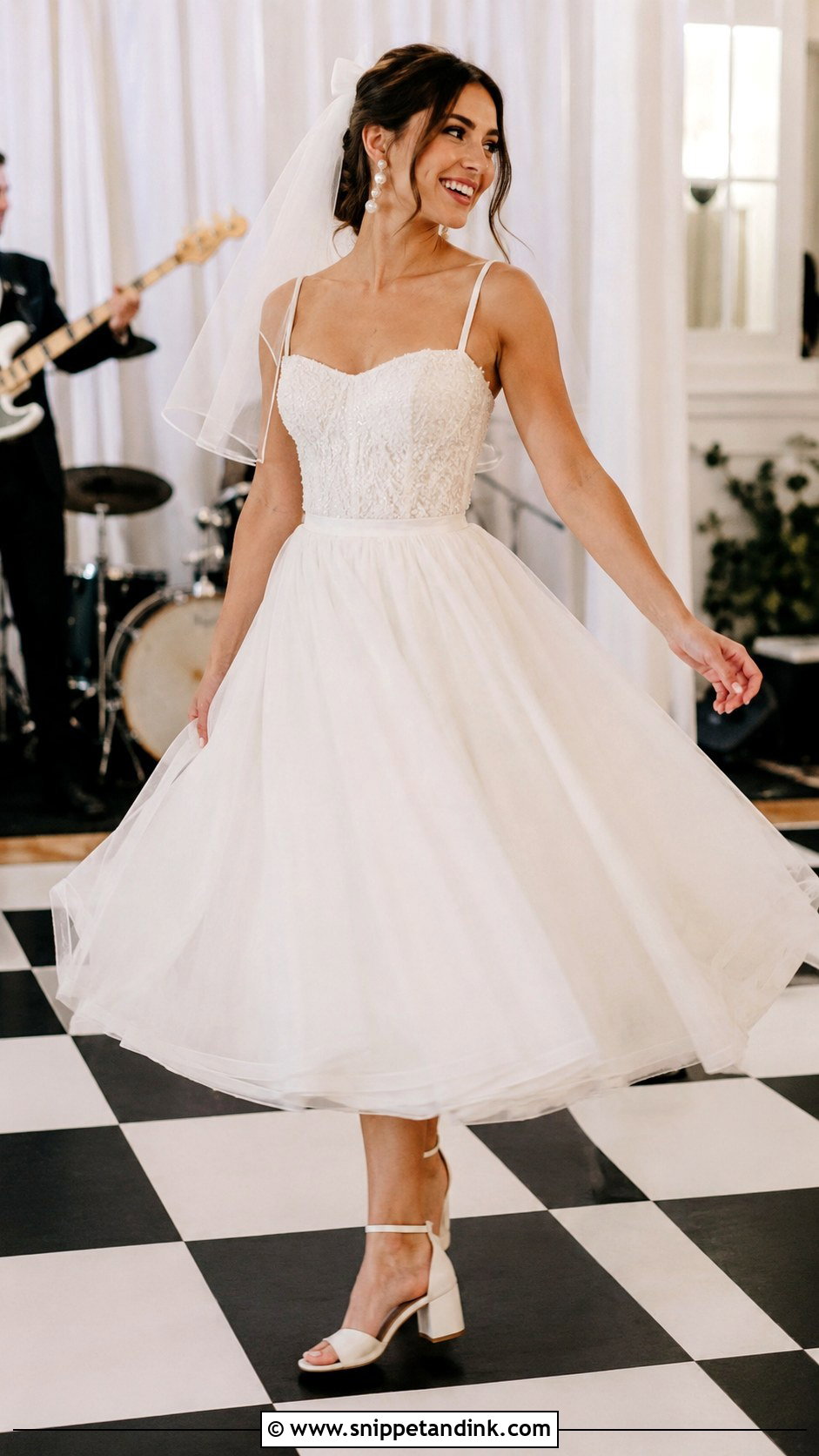
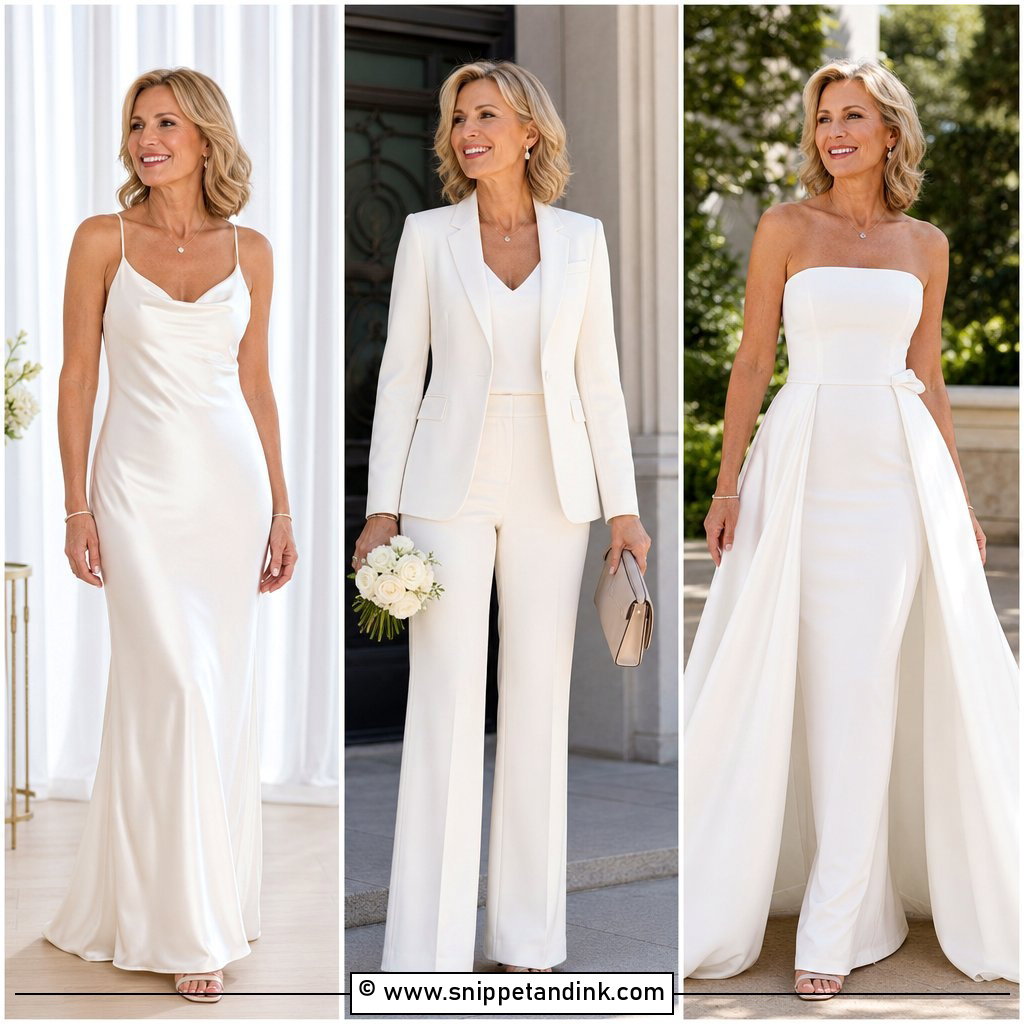
As a reception dress, tea length makes sense: nothing drags, nothing gets stepped on, and you can dance all night. It can be the second look after a long ceremony gown or the main dress. Tulle, satin, lace or beaded details all work. Choose shoes you can actually move in, such as block heels, low pumps or smart flats. Statement earrings, a hair bow or a short veil add personality. Plan the change before the reception begins so you don’t miss the first dance.
Genuine Vintage or a New Gown Cut the Old Way?
Many brides who fall for this style ask whether they should hunt for a true 1950s dress. It can be wonderful, but an old gown needs a different kind of inspection from a new one, and I’d go through it carefully before anyone pays.
What I check on a genuine vintage dress
- Yellowing and spots, especially at the underarms, waist and hem. Some lift with specialist cleaning; age spots on silk often don’t.
- Brittle fabric. Old silk satin can split along folds when it’s handled, so gently test a seam allowance before you plan any alterations.
- Size. Vintage sizing runs much smaller than modern labels, so go by your measurements, never the number inside.
- Seam allowance. Older dresses were often made with generous seams, which helps if you need letting out.
When a reproduction makes more sense
If you need a lot of adjustment, want stretch or modern support built in, or simply can’t find an original in your size, a new dress cut to a vintage pattern is the safer route. You get the silhouette without the fragility. Whichever you choose, give yourself time: a vintage piece may need cleaning and restoration before fittings even begin, so I’d start looking six months out or earlier.
Why a Shorter Hem Can Feel More Bridal, Not Less
Tea length lasts because it gives brides movement and personality without sacrificing a bridal feel. Lace, satin, tulle, bows, buttons, sleeves or clean lines all suit the hemline, and it adapts to many venues and body types. The details that matter most are where the hem lands, how the bodice fits and which shoes you’ll wear, because those three decide whether the dress looks vintage or simply short. Choose your shoes early, bring them to every fitting, and you’ll have a dress you can enjoy from the vows to the last song.
You'll Like These Ideas:






Leave a Reply