
Why Her Dress Looked So Clean in Photos
Before you look at the ideas, it helps to know what made the original gown read so clearly. It wasn’t decoration. It was three structural choices working together, and each one can be borrowed on its own.
A fabric with body
Her dress used a heavy woven cloth with the symbolic motifs in the weave itself. Heavy fabric hangs away from the body, so the bodice doesn’t wrinkle at the waist and the skirt keeps its outline when you sit. If you love the look but your budget points to a lighter satin, ask for an interlining in the bodice. It gives much of the same smoothness.
A folded neckline
The neckline was a wide fold across the shoulders, which frames the collarbones and makes the neck look longer. It suits most frames, but it needs precise fitting at the shoulder point. A folded band that is a little loose looks sloppy by the reception.
A back chosen with purpose
The low back was a personal decision, and it was meaningful because of what it showed. I’d treat yours the same way. If you have nothing you want to show, a high back with covered buttons is just as royal.
1. Princess Eugenie Low-Back Ball Gown
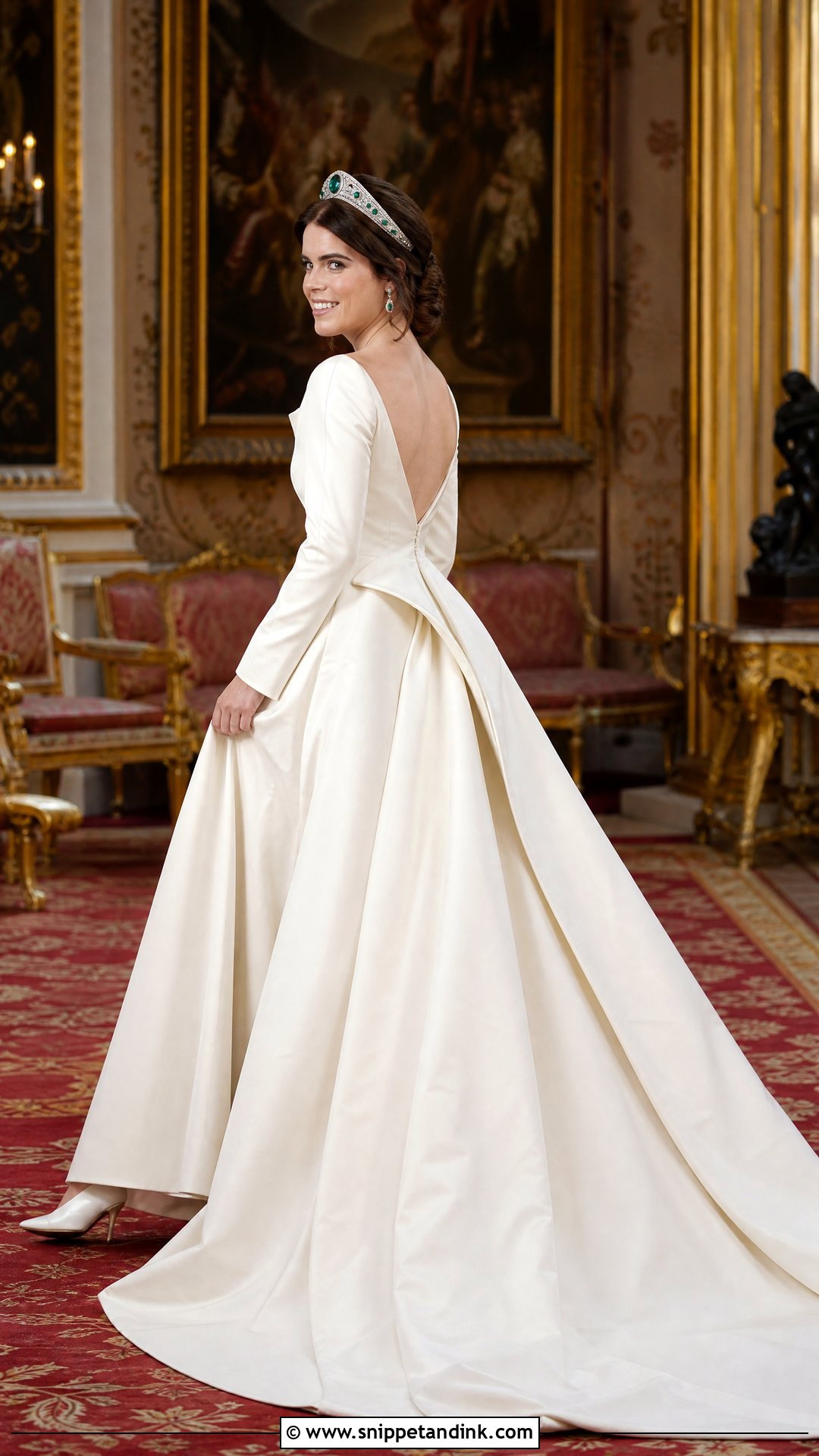
This is the closest you can get to the ceremony dress itself: a structured low-back ball gown in a heavy ivory fabric. Mikado or silk faille is what keeps a bodice like this smooth; a softer satin would wrinkle where the back opens. A wide portrait neckline frames the shoulders, and fitted long sleeves balance the full skirt. I set the depth of the back at a fitting with the bride standing, sitting and lifting her arms, because a back that looks right standing can gape once she hugs someone. An emerald-inspired tiara, small drops and ivory satin pumps finish it. No veil, so the back stays visible, and a low bun keeps the line clean.
2. Princess Eugenie Portrait Neckline Wedding Dress
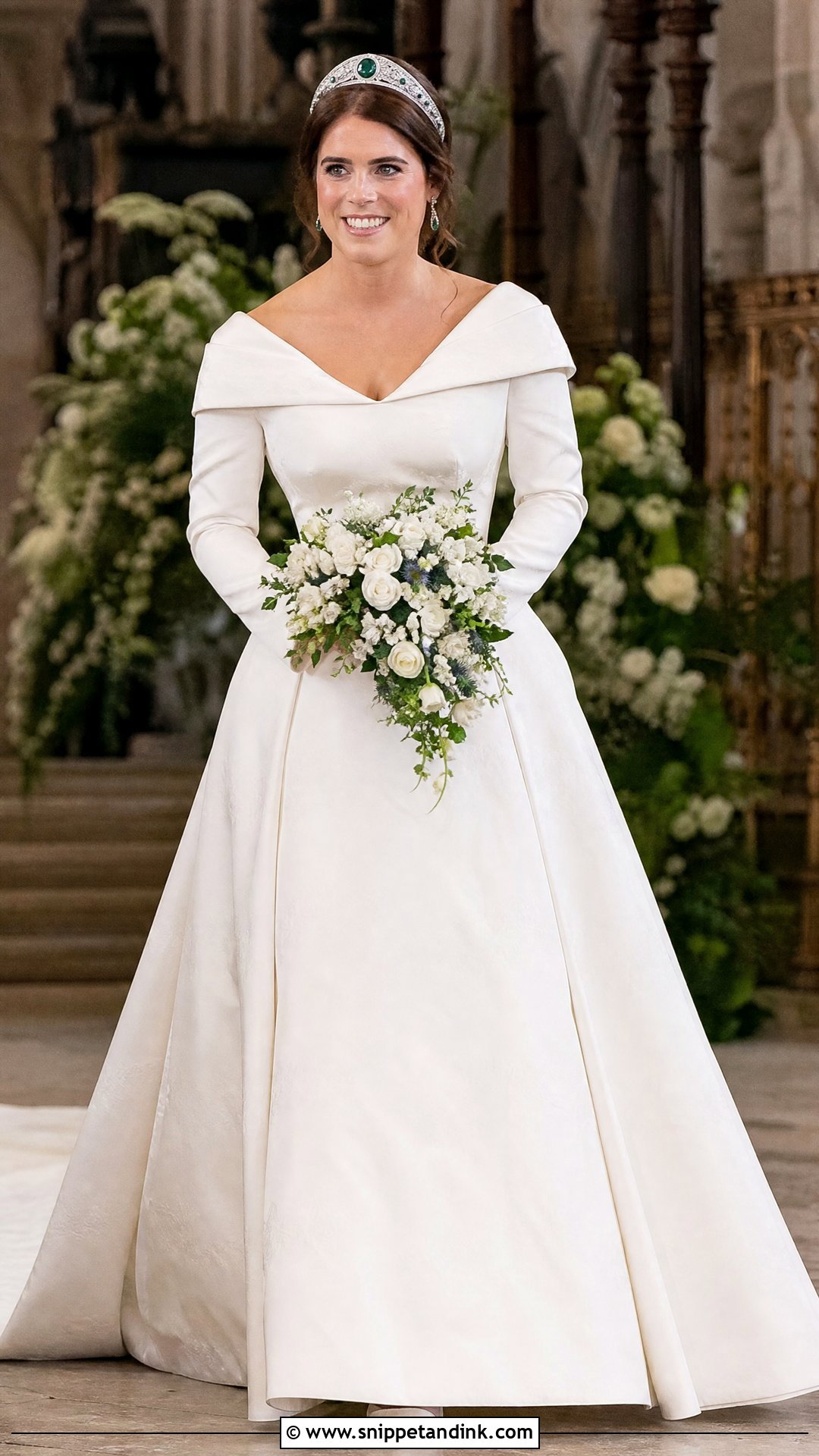
Her neckline is the detail most people recognize, and it’s harder to get right than it looks. A portrait neckline is a band of fabric folded across the shoulders, and if it’s cut even slightly too wide it slides off when you raise a glass. I’d ask the seamstress to anchor it with a hidden strap or a stay tape at the shoulder point. An A-line skirt is lighter than a ball gown and still formal. Ivory duchess satin has a soft sheen that photographs without glare. Pearl and emerald earrings, pointed satin heels and a neat chignon go with it; a slim jeweled headband is a quieter swap for a tiara.
3. Princess Eugenie Long-Sleeve Satin Gown
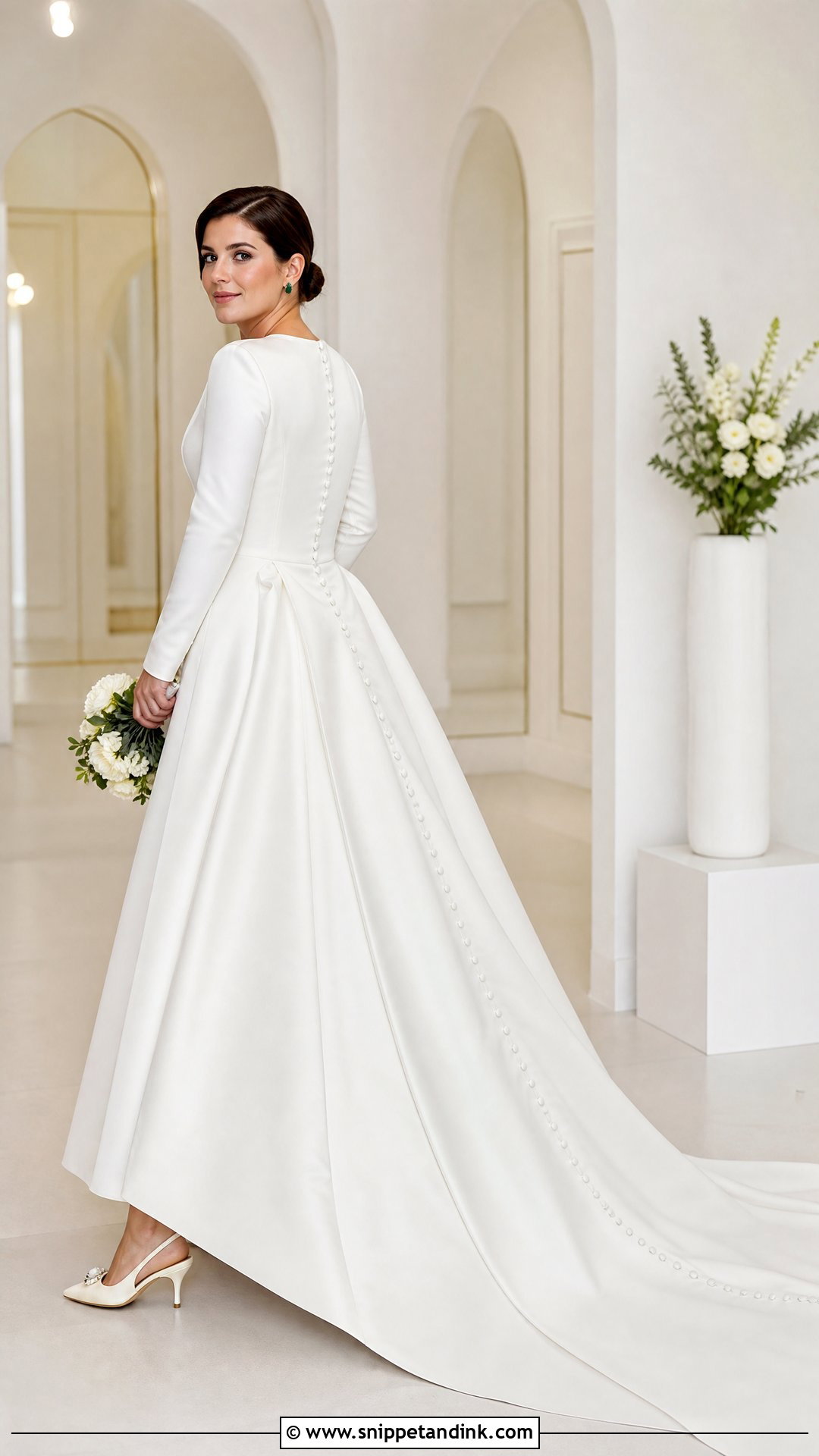
Plain satin with long sleeves suits a bride who wants the silhouette and none of the pattern. Look for a fitted waist, gently structured shoulders and a sweeping A-line skirt, with covered buttons down the low back. Long satin sleeves need room at the elbow: I always have brides bend their arms and hold a bouquet at the fitting, since a sleeve that is snug at the elbow pulls the whole shoulder seam forward. Emerald studs, ivory slingbacks and a structured mini bag for the reception. A detachable cathedral train gives you ceremony drama without a veil. Plain satin shows tailoring very clearly, so this one rewards a good seamstress on any body shape.
4. Princess Eugenie Jacquard Ball Gown
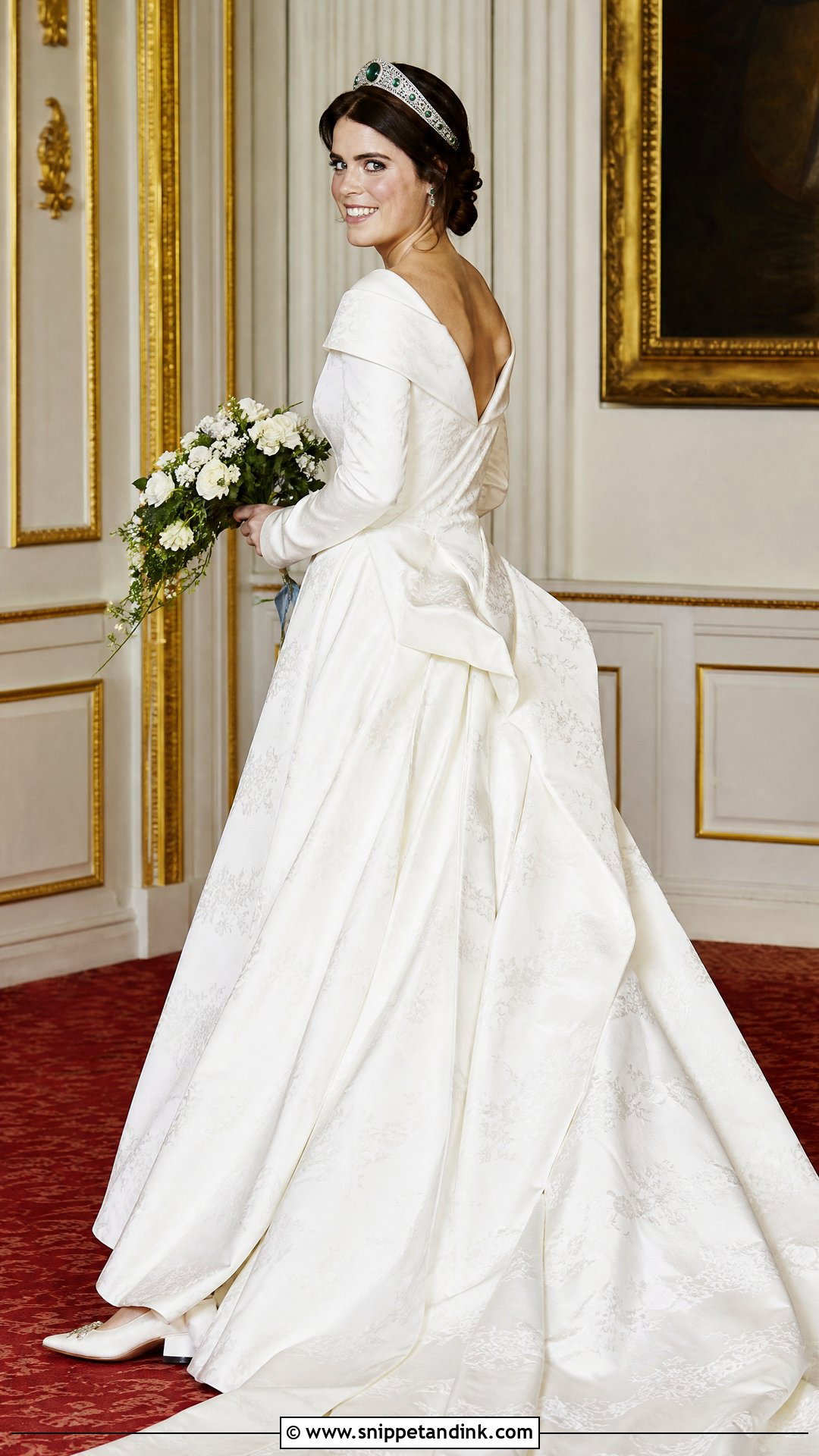
Jacquard is the real reference here, since the pattern in her dress was woven into the cloth rather than added on top. Floral jacquard brings texture to a Princess Eugenie wedding dress without lace or beading. I’d look for roses, leaves or vines in a tonal ivory, then keep the cut simple, a portrait-neck bodice and a full pleated skirt, so the pattern isn’t chopped up by seams. Long sleeves and a low V-back finish it. A green crystal headband, delicate drops and block-heel pumps under the skirt are enough. Jacquard already has depth, so a sleek hairstyle and a white rose bouquet tied with pale blue ribbon are all it needs.
5. Princess Eugenie Open-Back A-Line Dress
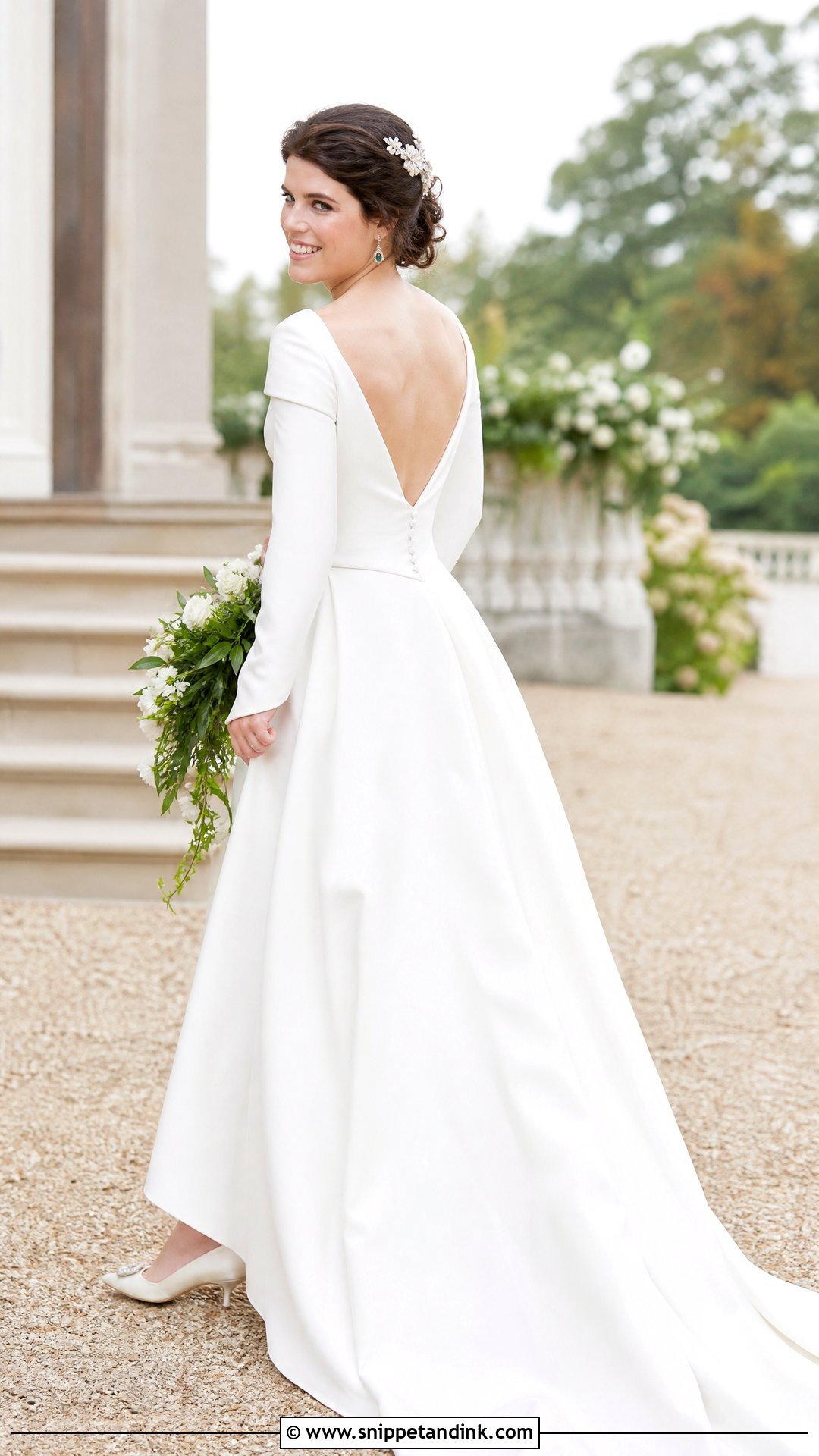
If a ball gown feels like too much dress, an open-back A-line keeps the royal outline and lets you move. A supportive fitted bodice, a wide neckline and a skirt falling from the natural waist do the work. Matte crepe or lightweight mikado holds the shape without bulk. With an open back, support has to come from inside the bodice, so I ask for built-in cups and boning before I suggest any adhesive bra. Cuffs can be tailored close or finished with covered buttons. A crystal comb, emerald drops and pointed ivory flats or low heels suit a garden estate. A loose low bun and a cascading white bouquet keep the back on show.
6. Princess Eugenie Off-Shoulder Wedding Gown
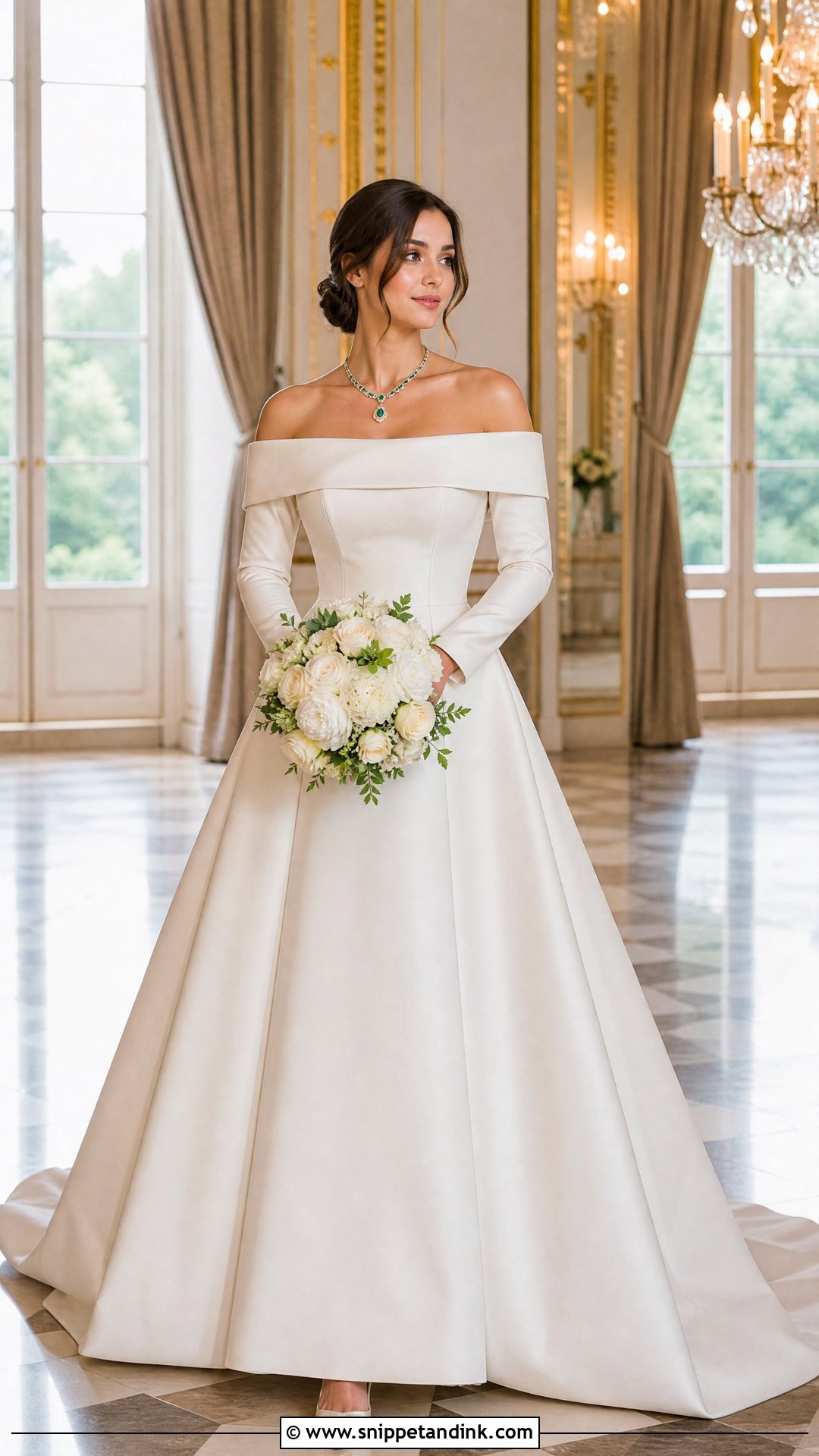
Off-the-shoulder is the romantic cousin of the portrait neckline: folded satin panels sit across the upper arm instead of the shoulder. A corseted bodice gives the support, and a full A-line skirt carries the formality. I’d only recommend it if you’re comfortable keeping your arms fairly low for photos, because lifting them pulls the panels up. Detachable fitted sleeves give ceremony coverage and come off for the reception. Style it with a green gemstone necklace, matching studs, ivory peep-toe heels and soft waves in a low ponytail. White garden roses suit the sculpted neckline. The panel width has to be set to your shoulders at a fitting, not ordered from a size chart.
7. Princess Eugenie V-Back Wedding Dress
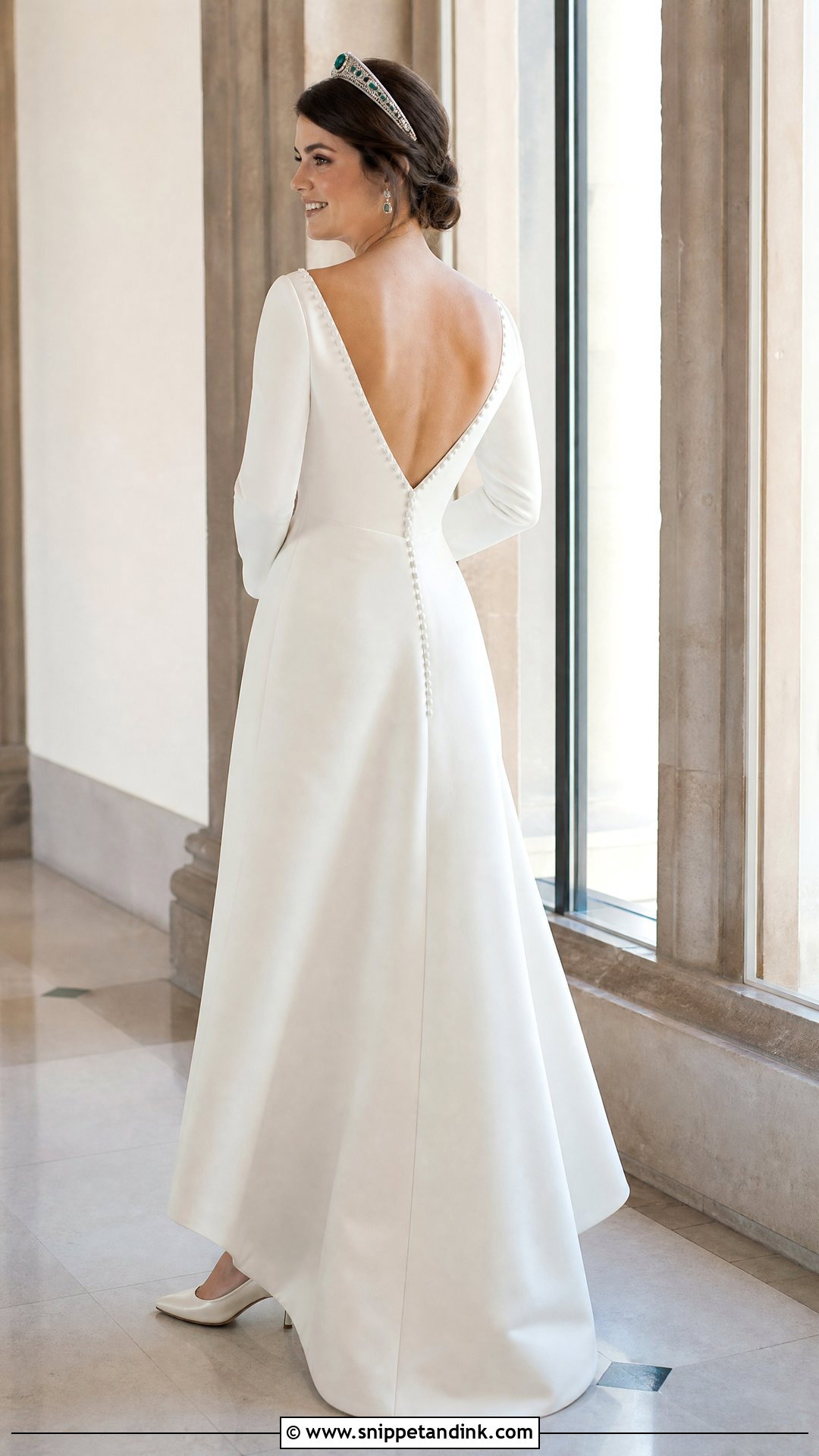
A deep V-back keeps the front completely demure and puts the drama behind you. Choose an ivory gown with a high boat neckline, fitted long sleeves and a defined waist, and a softly flared skirt that moves more freely than a full ball gown. Covered buttons tracing the V make the opening look designed rather than cut away. With a high neck in front and a deep back, the dress can drift backward over the day; a small clear elastic across the shoulder blades stops it. Green gemstone earrings, ivory kitten heels and a slim crystal headband suit it. An updo shows the back, and a few face-framing pieces stop it looking severe.
8. Princess Eugenie Square Neck Wedding Dress
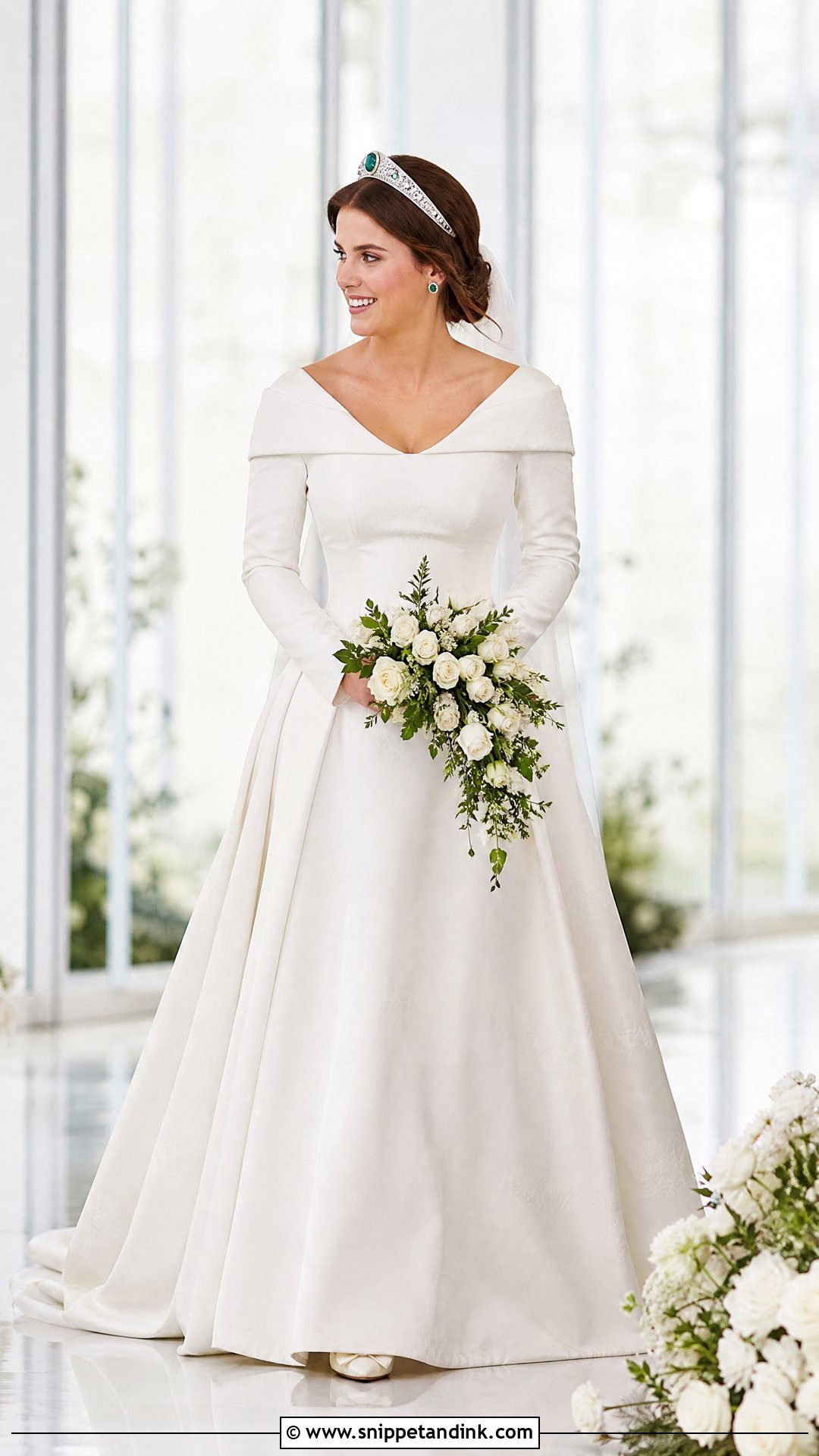
Square necks are the modern way to borrow her structure. A fitted bodice with full-length sleeves, a low square back, and heavy crepe, satin or mikado to keep the lines straight at the corners. Those corners are where a square neck fails: if the fabric is too soft, they curl inward by evening, so I check that the neckline is faced or stiffened. A gathered A-line skirt keeps it comfortable. Emerald studs, a narrow tiara and closed-toe ivory pumps go with a center-parted low bun. A short veil pinned below the bun adds tradition without covering the back. Long-stemmed white roses keep the vertical line.
9. Princess Eugenie Embroidered Wedding Gown
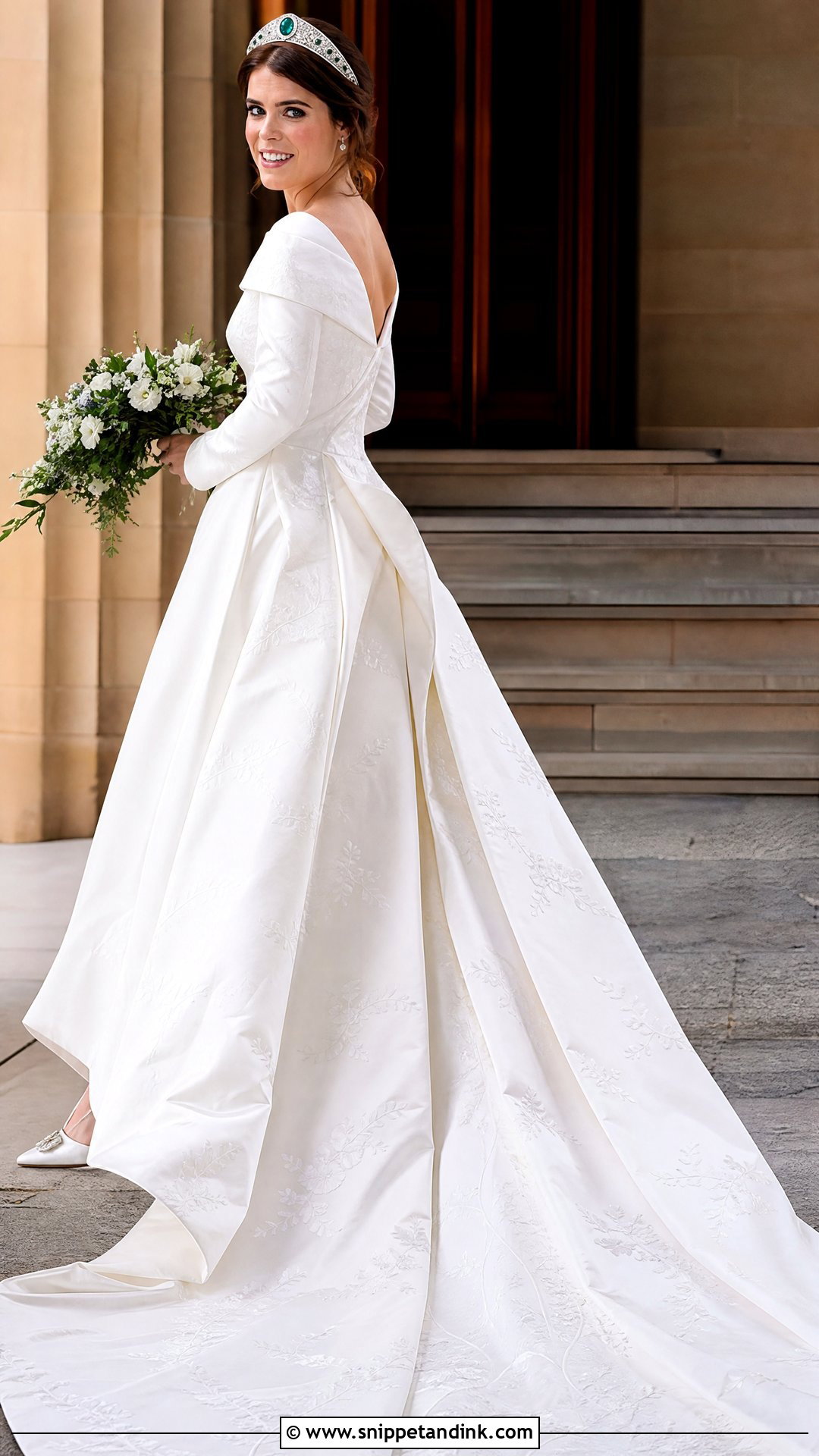
The most personal part of her dress was the symbolism, and this is where you can borrow the idea rather than the look. Start with an ivory A-line gown with long sleeves, an open back and tonal floral embroidery across the bodice and train. Choose motifs tied to your family, your heritage or the place you met. I’d put the densest embroidery on the hem and train, because that’s what full-length photos capture, and keep the bodice lighter so it doesn’t stiffen. A subtle green crystal tiara, simple earrings and satin block heels, with a sleek updo. Done this way, the gown becomes a treasured keepsake with your story stitched into it.
10. Princess Eugenie Ivory Mikado Dress
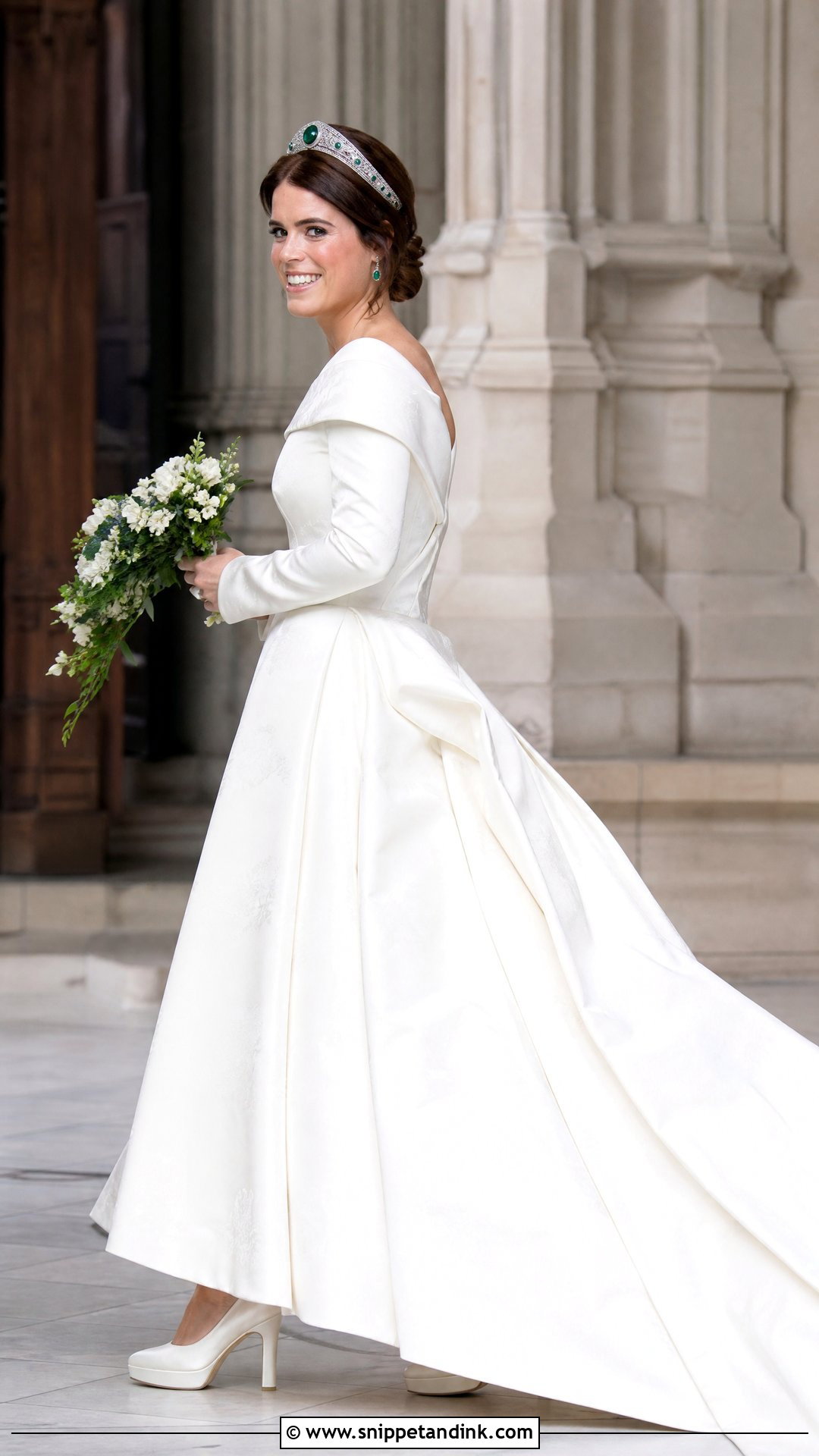
Mikado is the fabric for her silhouette. It’s a heavy silk or silk-blend weave with body, so it holds a pleat and a folded neckline without collapsing over a long day. A structured bodice, fitted sleeves and a low rounded back, with box pleats at the waist giving the skirt volume without ruffles. One honest trade-off: mikado is warm and it shows creases where you sit, so I steam the skirt again just before the ceremony. Emerald-colored drops, ivory platform pumps and a jeweled headband go with a low chignon. In a large cool-season venue, its weight matches the scale of the room.
11. Princess Eugenie Lace Sleeve Wedding Dress
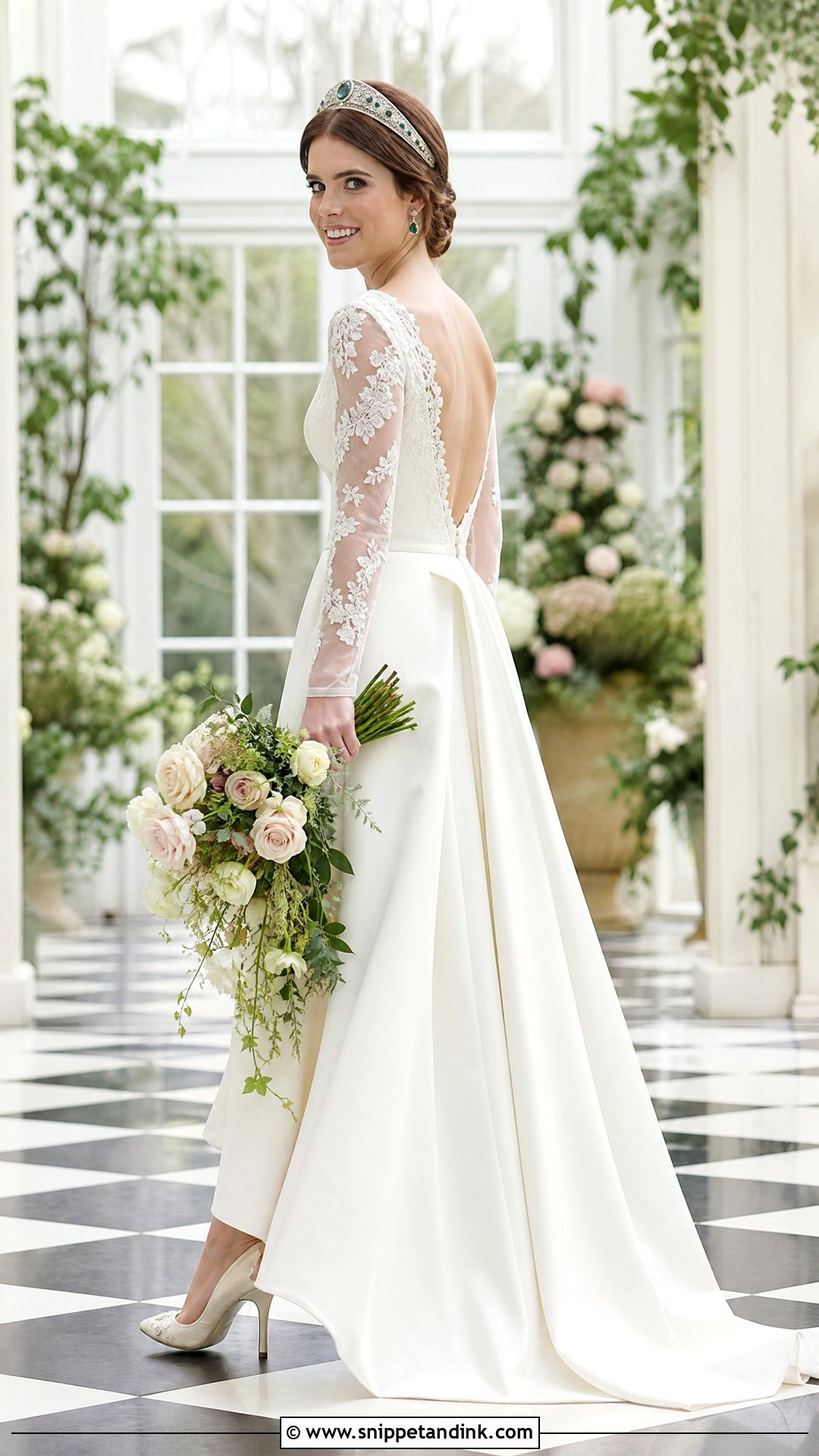
Lace sleeves soften the structure without changing the shape. A smooth satin bodice with a portrait neckline, sheer floral sleeves and an open back edged in matching lace, over a full A-line skirt. The lace must be tonal to the satin; ivory lace on a whiter satin looks grey in daylight, so I hold the two together by a window before anything is cut. Pearl-and-emerald earrings, ivory satin heels and a small crystal tiara suit it. A low braided bun gives texture without covering the back. White roses with airy seasonal flowers suit a spring ceremony in a traditional venue.
12. Princess Eugenie Detachable Train Gown
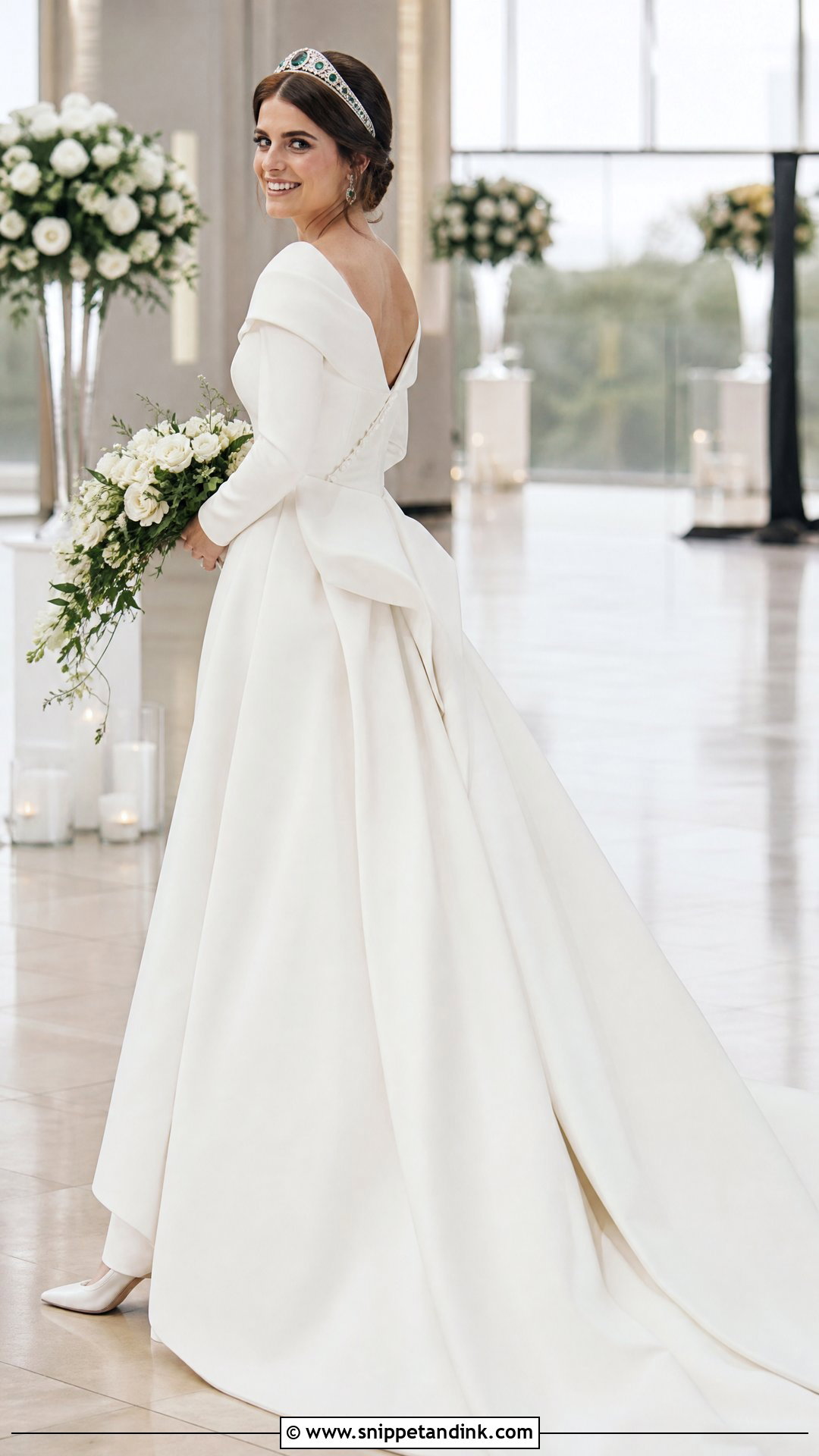
A detachable train gives you two silhouettes in one dress. Start with a fitted ivory crepe gown with long sleeves, a wide neckline and a low back, then attach a voluminous mikado overskirt or chapel-length train at the waist for the entrance. After photos it comes off and you have a floor-length dress you can dance in. I always assign one person, usually a bridesmaid, to practice the removal at the final fitting; hidden hooks and snaps are fiddly under pressure. A green gemstone headband, sculptural earrings, pointed pumps and a polished bun stay consistent across both looks.
13. Princess Eugenie Plus-Size Ball Gown
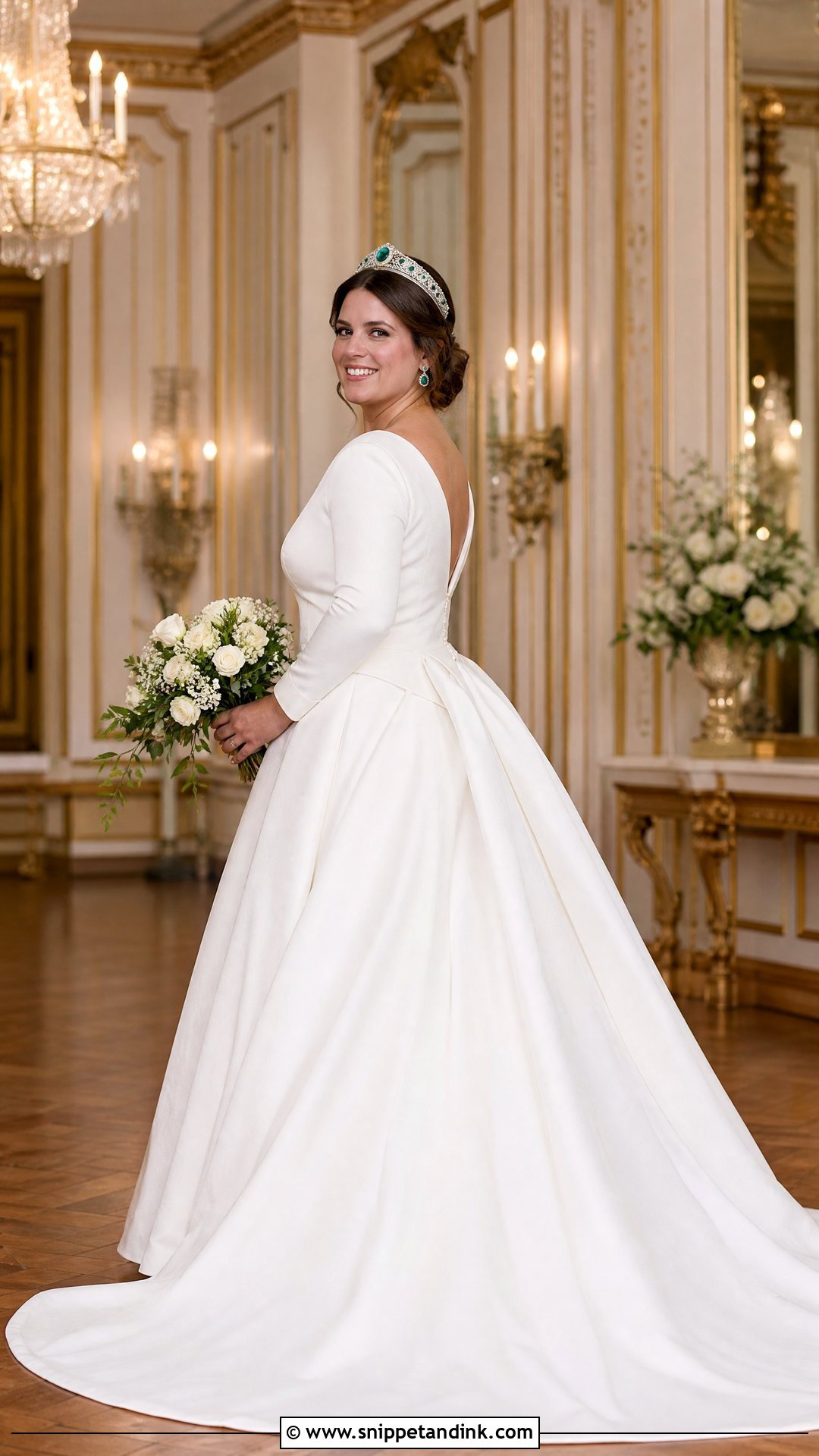
On a plus-size ball gown, support has to be built into the dress, not added afterward. Choose a structured portrait neckline that sits securely across the shoulders, a defined natural waist and a full skirt that falls smoothly from it instead of adding volume at the hip. Stretch mikado sleeves give easy movement. If you want a low back, the bodice can be cut to sit just above a supportive foundation garment, so bring that garment to every fitting. Emerald drops, a tiara, stable block heels and a lifted low bun. A medium bouquet keeps proportions right. The size on the label means nothing; a skilled bridal tailor refining the bodice, sleeves and hem means everything.
14. Princess Eugenie Blush Reception Dress
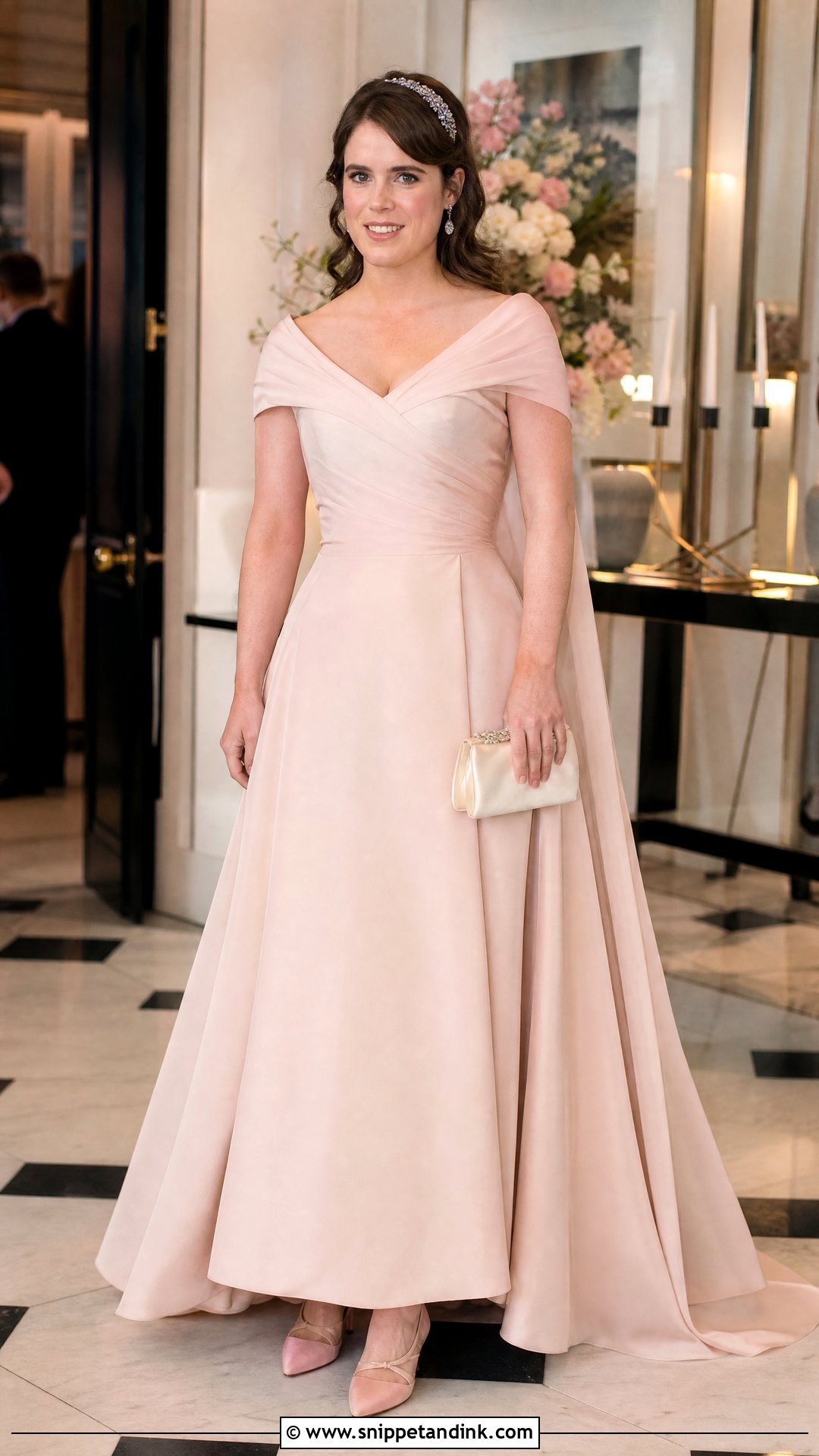
For the evening, she changed into a blush gown inspired by the White Rose of York, and a second look in pale pink follows that lead. Choose a fitted bodice, draped shoulders and a flowing floor-length skirt. A cape-like back or a soft gathered train adds movement without the formality of the ceremony dress. I’d check the blush against your skin in daylight: some pinks turn peach on warm skin tones and others go lilac on cool ones. Rose-gold earrings, blush satin heels and a crystal comb suit it. Let the hair down into brushed waves or a relaxed low bun so the change feels like an evening.

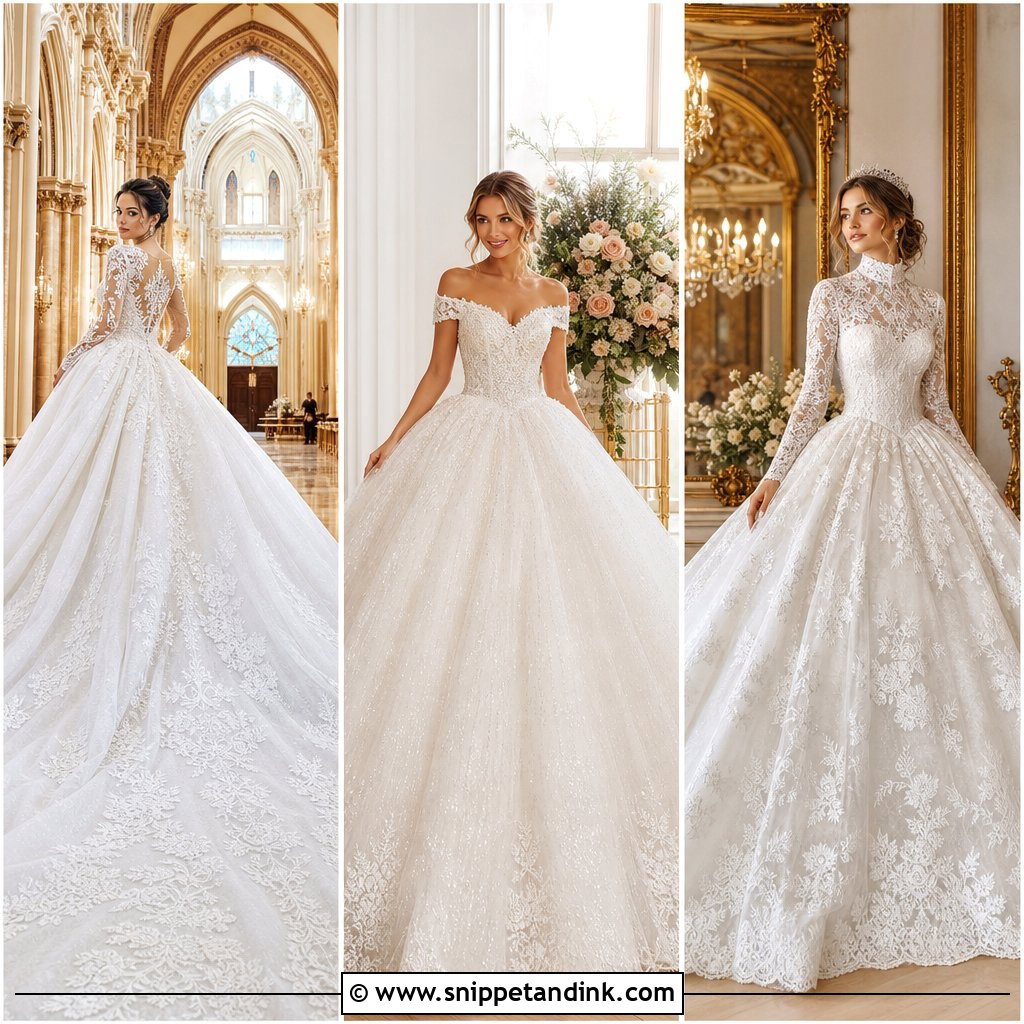
15. Princess Eugenie Rose Embroidered Gown
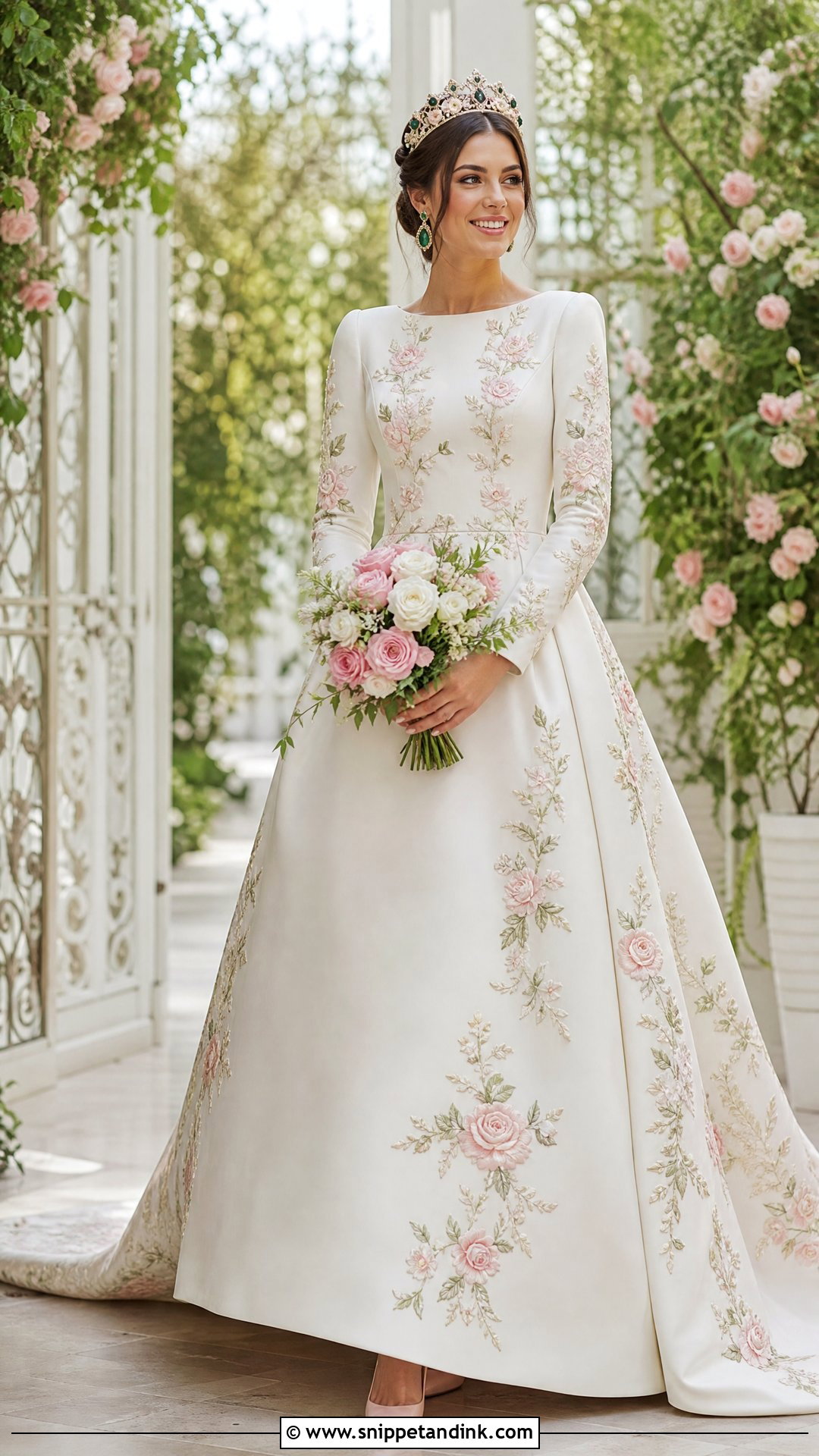
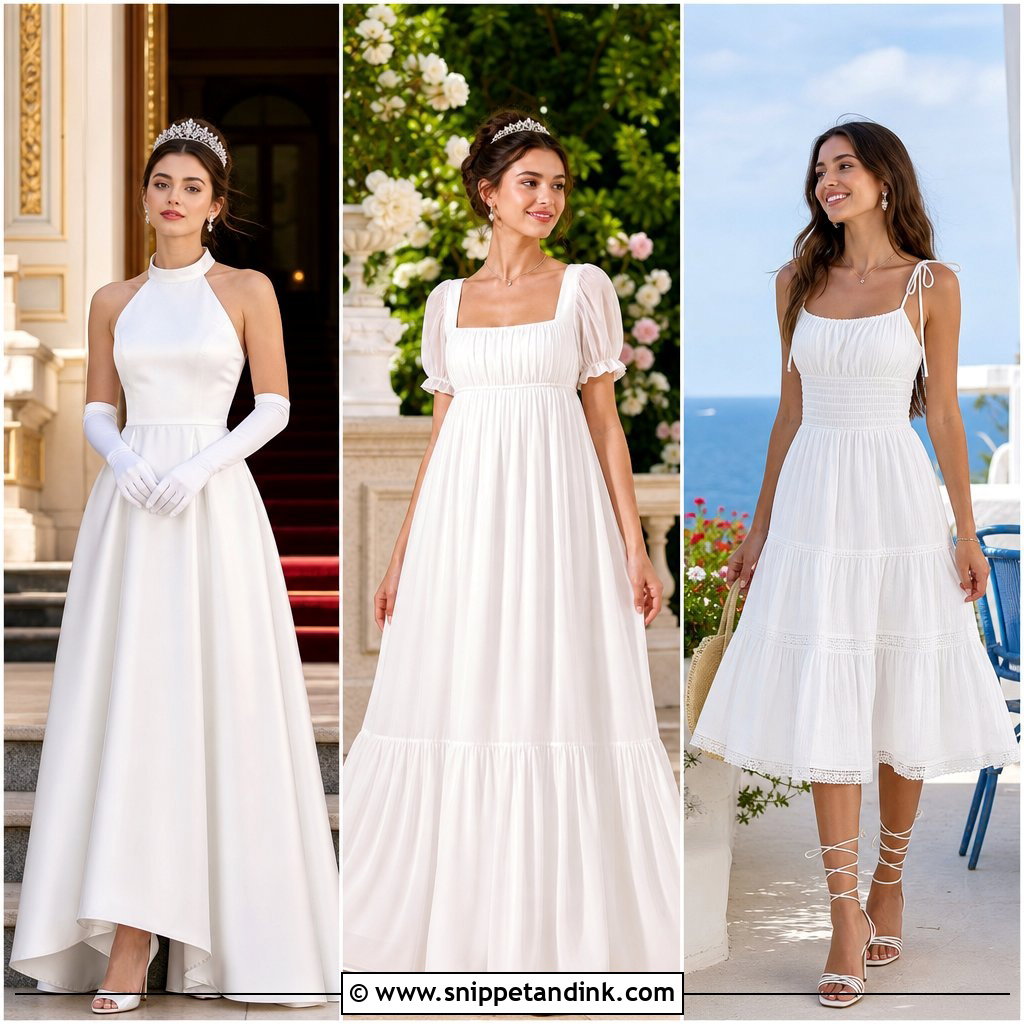
Rose embroidery ties the ceremony symbolism and the blush evening dress together in one gown. Select an ivory dress with tonal or pale pink roses scattered across the bodice, sleeves and skirt, concentrated at the neckline, waist and train. Scattered all over, they read busy; placed, they guide the eye. Pale pink thread on ivory can disappear entirely in bright sun, so I ask to see a sample outdoors before the embroidery is committed. Light green gemstone earrings, blush pumps and a delicate floral tiara go with a soft chignon. A bouquet of white and pale pink roses repeats the motif without extra greenery.
16. Princess Eugenie High Neck Wedding Gown
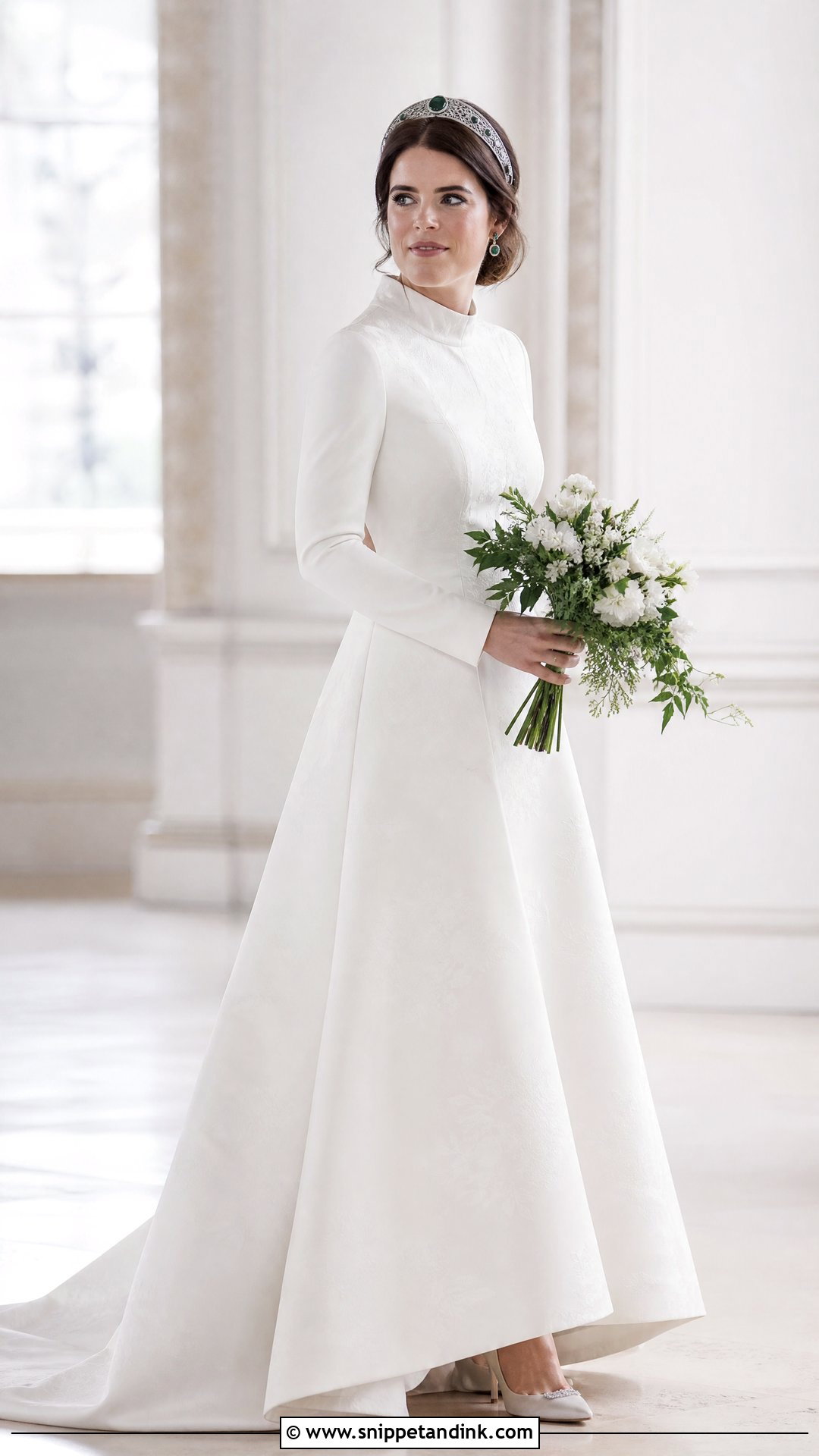
For more coverage than her portrait neckline gives, a high neck keeps the same dignity. A softly structured ivory dress with a clean mock neck, fitted sleeves, a low keyhole back and a full A-line skirt. Tonal embroidery at the collar and cuffs nods to her symbolic fabric without copying it. High necks sit close to the jaw, so I keep earrings to studs and set the bun at the nape, otherwise everything crowds together. Emerald studs, an Art Deco-inspired tiara and closed-toe satin heels suit it, with long-stemmed white flowers for a vertical line. Ballrooms in autumn and winter suit the covered shape.
17. Princess Eugenie Cape Sleeve Wedding Dress
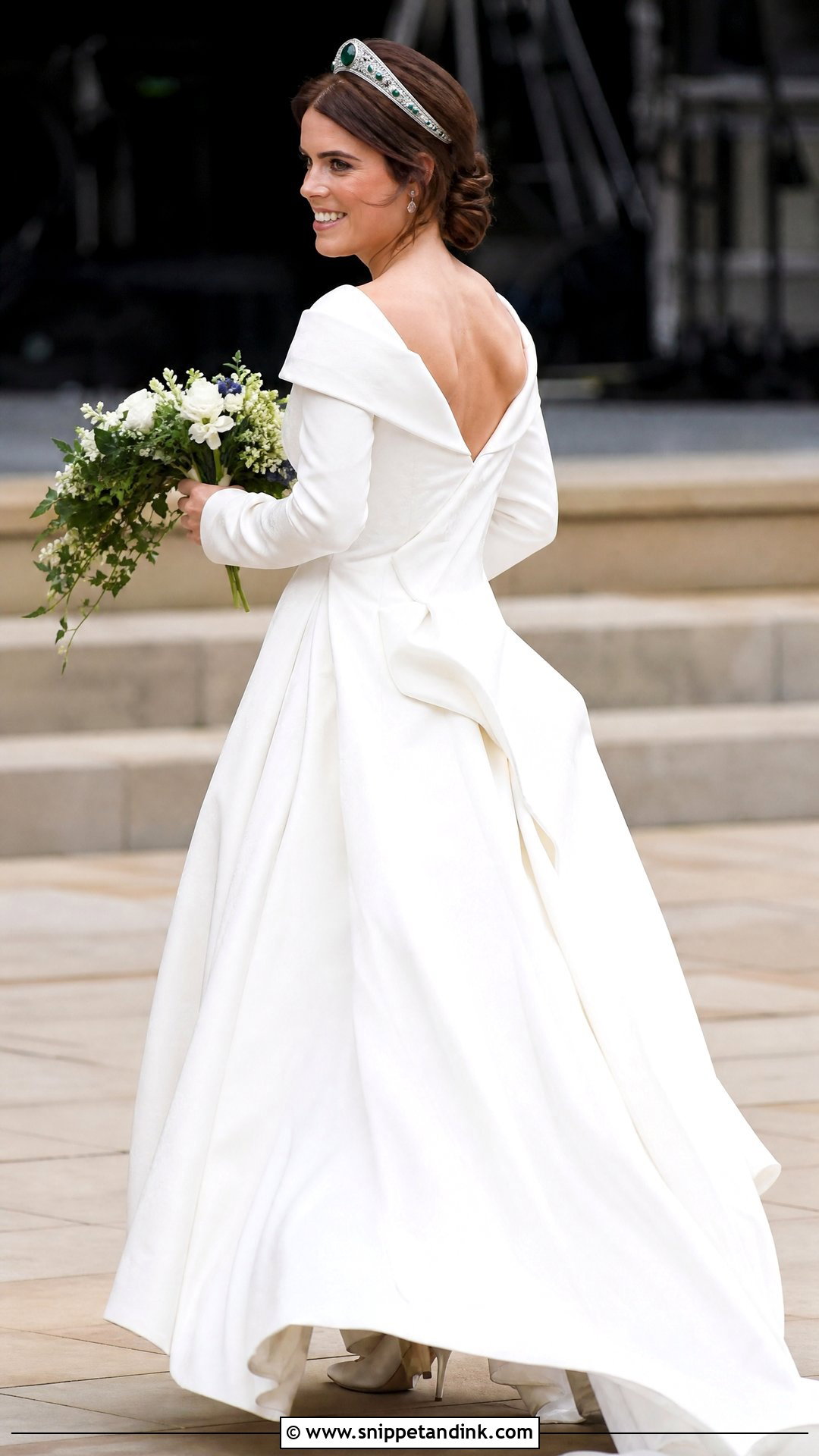
Cape sleeves give arm coverage without the tightness of a fitted sleeve. An ivory crepe gown with a fitted bodice, an open back and floor-length cape panels attached at the shoulders, with a skirt that skims before widening near the hem. Capes that long can trail and get stepped on during the recessional, so I measure them to stop an inch or two above the floor. A green crystal headband, understated earrings, ivory pointed pumps and a sleek low bun keep the cape and back visible. A narrow bouquet of calla lilies or roses follows the long lines. In motion the cape floats, which gives a walking photo real movement.
18. Princess Eugenie Tea-Length Wedding Dress
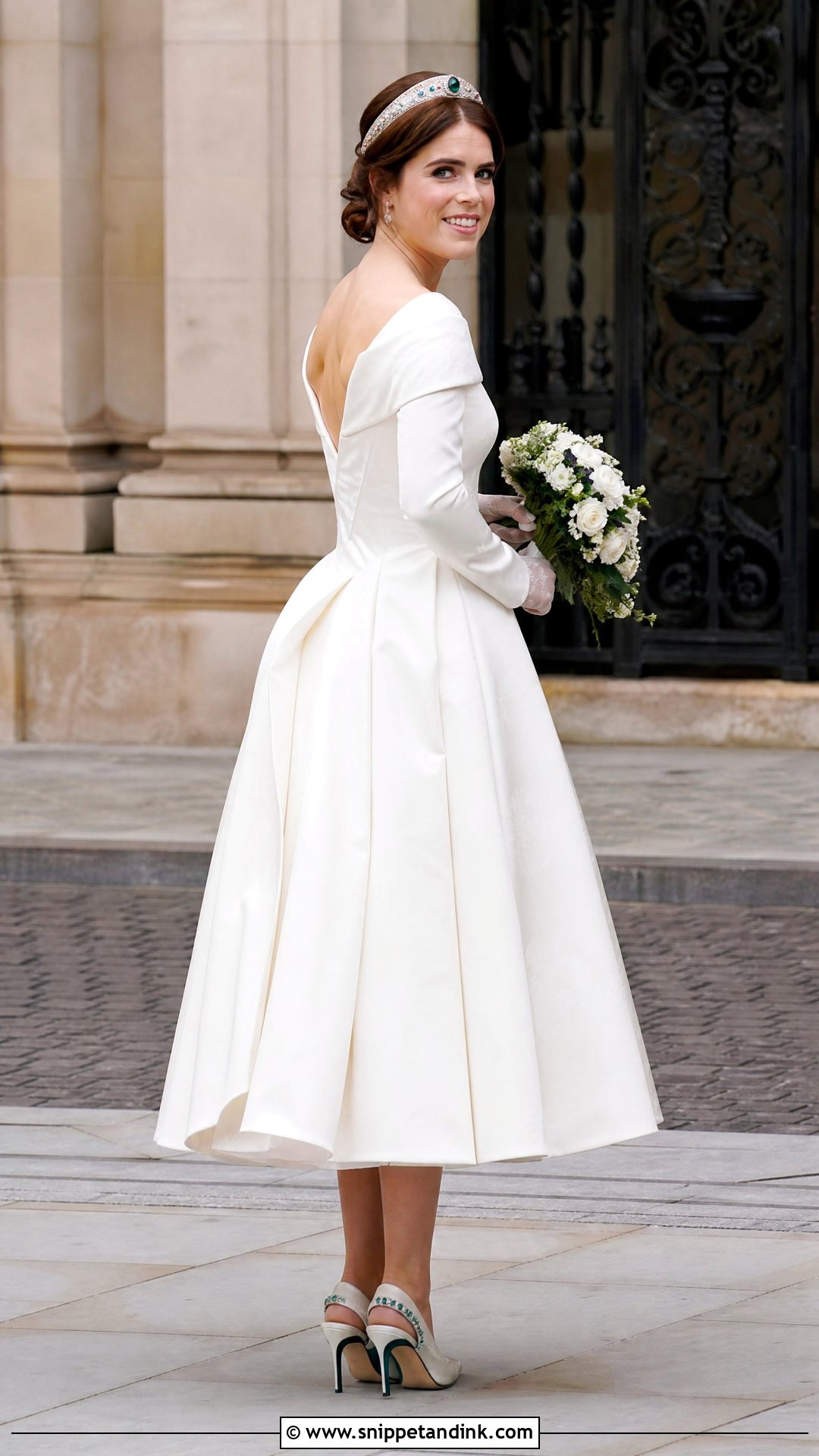
For a civil ceremony or a small wedding, a tea-length gown carries her polish into a shorter shape. An ivory mikado dress with a portrait neckline, fitted three-quarter sleeves and a full skirt ending below the knee, with a modest V-back. Shoes are on display at this length, so they matter more than with any other dress here: emerald-accented ivory pumps or classic satin slingbacks. I’d test the hem with the actual shoes, because a heel change of an inch shifts where the skirt falls on the calf. A petite jeweled headband, drop earrings and wrist-length gloves suit it, with a smooth bun and a compact white rose bouquet. Many brides wear the shoes again.
19. Princess Eugenie Minimal Crepe Gown
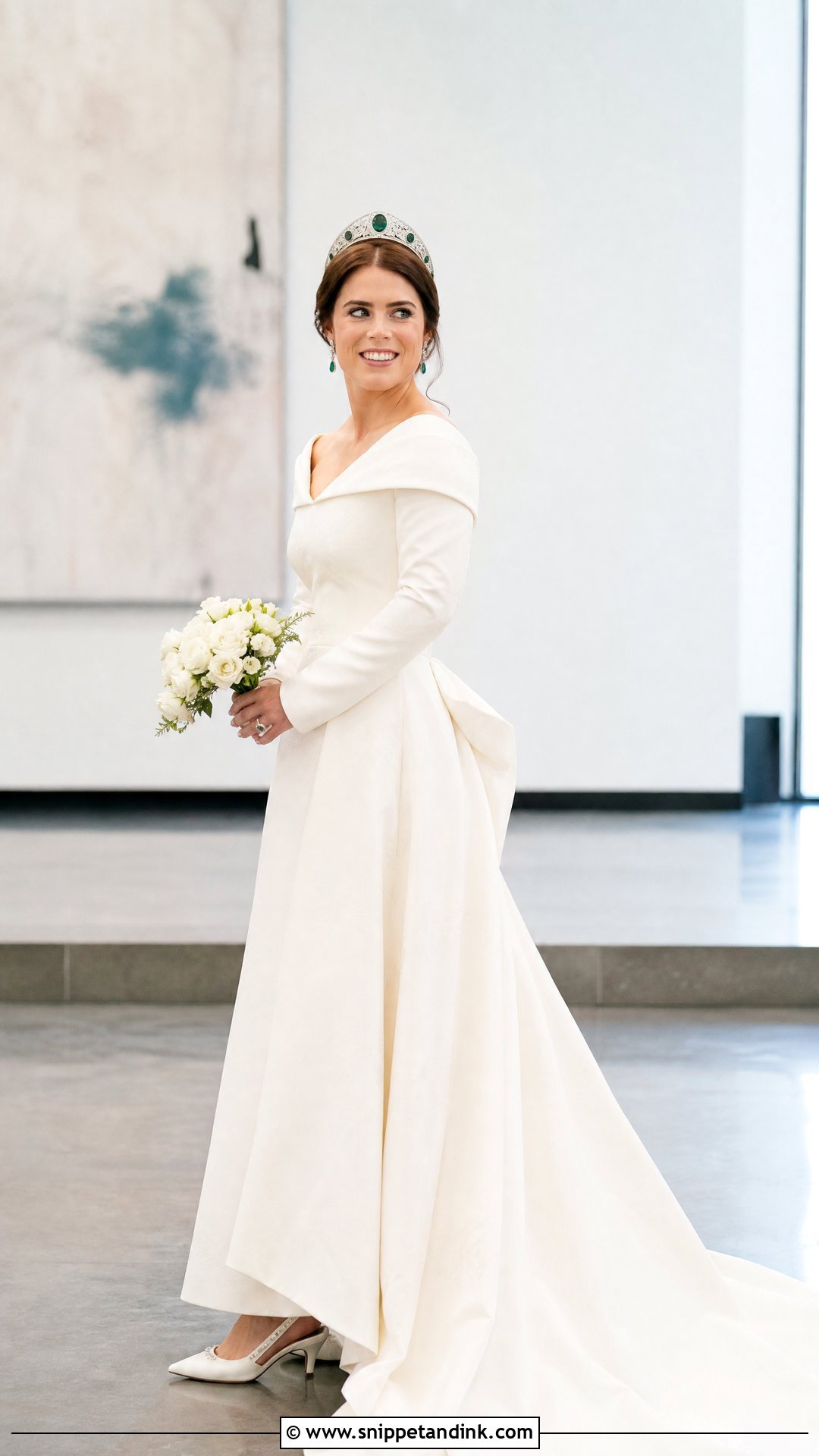
Minimal crepe strips her dress back to the neckline, sleeves and back. A wide folded neckline, full sleeves, a fitted waist and a low back, with a column or soft fit-and-flare skirt instead of ball-gown volume. With nothing on the surface, every seam shows, so I’d put the budget into tailoring and a crepe heavy enough to drop straight rather than cling. Emerald drops, a slim geometric tiara and ivory slingbacks. A sculpted low bun and luminous skin keep the finish simple. White roses with almost no greenery suit a modern venue.

20. Princess Eugenie Veil-Free Bridal Look
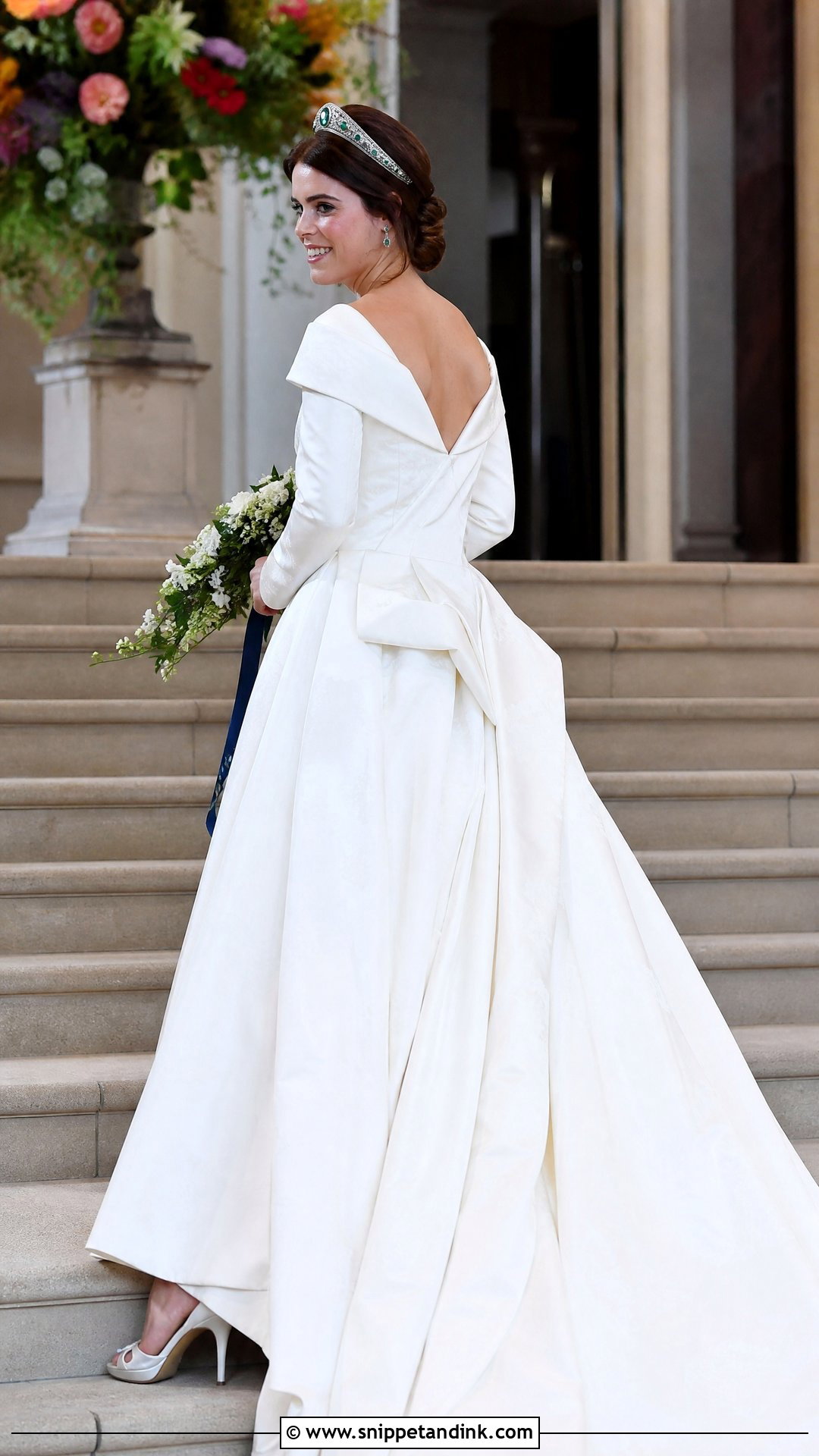
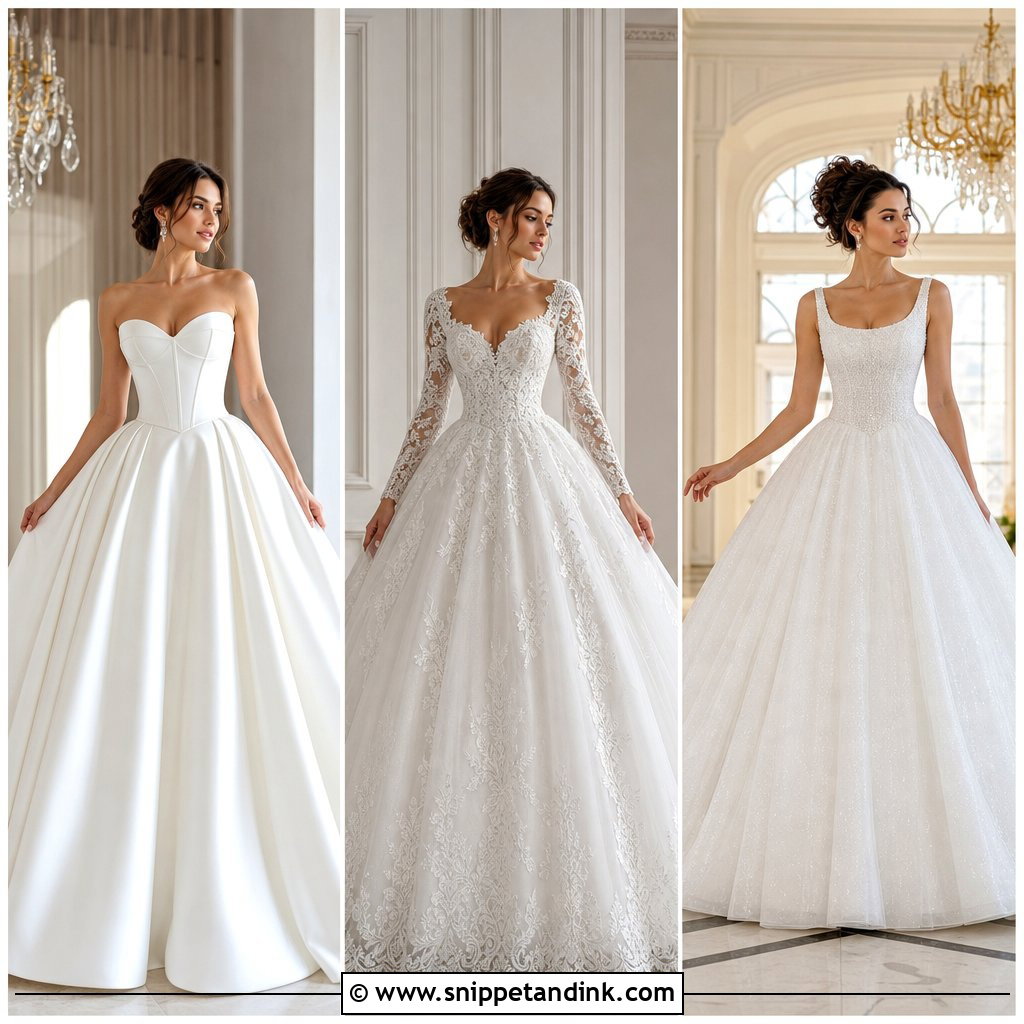
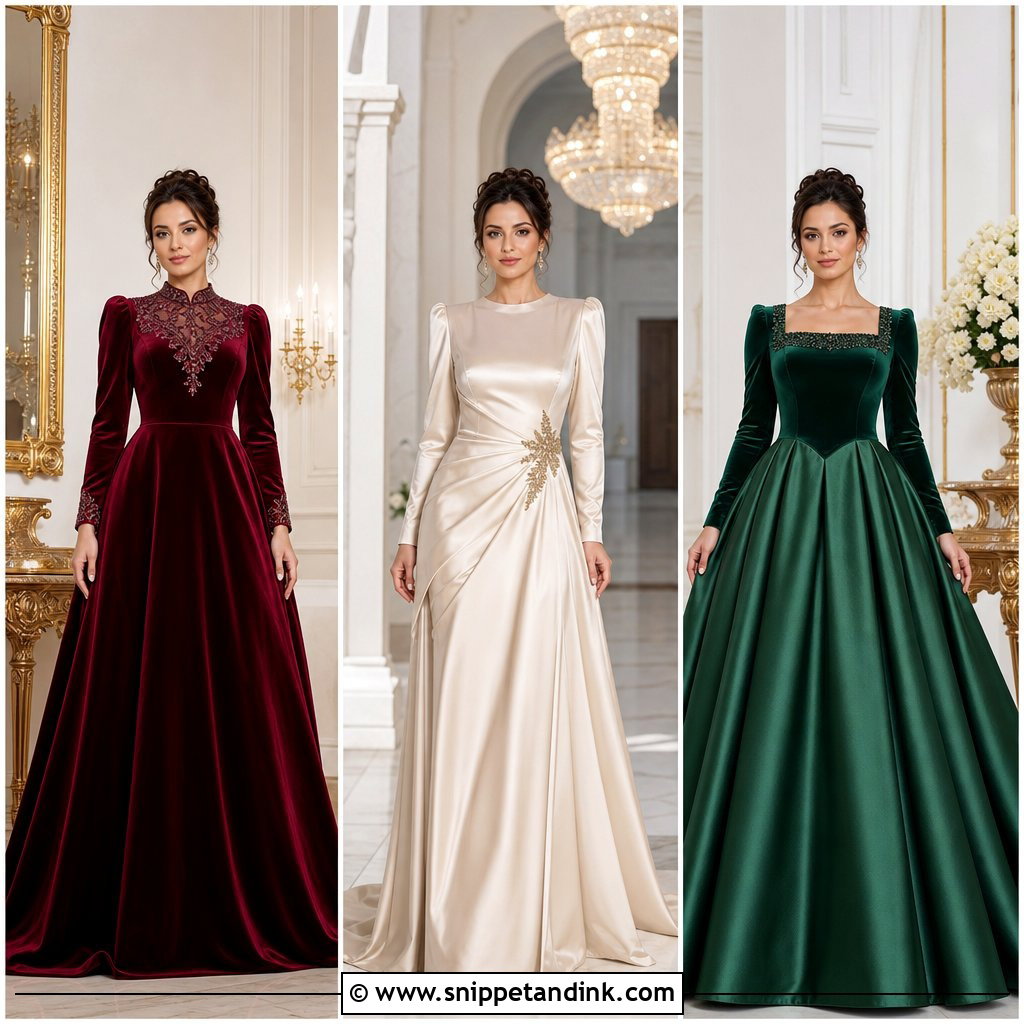
She wore no veil, and leaving it off keeps the neckline, the open back and any personal detail in full view. Begin with a long-sleeve ivory ball gown with a wide portrait neckline, a defined waist and a folded low-back panel. Make an emerald-inspired tiara the main accessory with small green gemstone earrings, and ivory satin peep-toe heels. Without a veil, the back of your hair is in every processional and altar photo, so I ask the hairstylist to finish the bun from behind as carefully as the front. A cascading white bouquet with a hint of blue ribbon completes it. It suits a bride who wants to show a scar, a tattoo or a family piece.
How Long a Structured Gown Actually Takes
Structured royal-style gowns are rarely bought off the rack. Most are made to order, and the timing catches brides out more than the design does. Lead times vary a lot between bridal houses, so treat these as a typical shape rather than a promise.
- Start shopping around nine to twelve months before the wedding. Made-to-order gowns commonly take several months to arrive after you order.
- Custom embroidery, a woven motif or a detachable train adds time. Ask for the production estimate in writing.
- Plan two or three fittings, with the first roughly two to three months before the wedding. Heavy fabrics take longer to alter because seams have to be pressed flat by hand.
- Bring your exact shoes and undergarments to every fitting. A different bra changes where a portrait neckline sits.
- Collect the gown a week or two before the wedding and keep it hanging in its bag, not folded.
Long Sleeves and a Bare Back in Warm Weather
Her look is long-sleeved and heavy, which is wonderful in autumn and hard work at a summer garden wedding. If your date is warm, I’d keep the shape and change the materials. Silk crepe or a lightweight mikado breathes better than a dense faille. Sheer sleeves in silk organza keep the long line with far less heat. And an open back actually helps; it lets air reach the skin where a closed bodice traps it.
One thing I would not compromise on in heat is the lining. A polyester lining under silk turns clammy within an hour, so ask for a cotton or silk lining in the bodice.
Take the Details, Not the Whole Dress
You don’t need a copy of the royal gown. Pick the one or two details that mean something to you, maybe the portrait neckline and the open back, or symbolic embroidery and an emerald headpiece, and build around them. Then let the fit decide the rest. I’d rather see a simple crepe dress tailored precisely than an exact replica that pulls at the shoulders. Mixing works too: a mikado skirt with lace sleeves, or a minimal gown with a jeweled tiara. Bring the photos of the ideas you like most to your first appointment and ask what each one would take to alter for your frame.
You'll Like These Ideas:









Leave a Reply